Expressing the sense of the Congress that continuation of the welfare reforms provided for in the Personal Responsibility and Work Opportunity Reconciliation Act of 1996 should remain a priority.
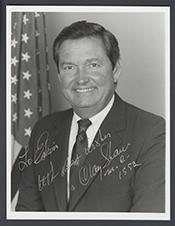 Rep. E. Clay Shaw Jr. (R-FL)
Legislative Activity
Stay on top of the latest movement without scrolling through every action
Received in the Senate and referred to the Committee on Finance.
July 19, 2006
View full timeline
Introduced in House
June 27, 2006
Referred to the Committee on Ways and Means, and in addition to the Committees on Energy and Commerce, Education and the Workforce, Agriculture, and Financial Services, for a period to be subsequently determined by the Speaker, in each case for consideration of such provisions as fall within the jurisdiction of the committee concerned.
June 27, 2006
Referred to the Subcommittee on Department Operations, Oversight, Nutrition and Forestry.
July 10, 2006
Referred to the Subcommittee on Health, for a period to be subsequently determined by the Chairman .
July 17, 2006
Mr. Herger moved to suspend the rules and agree to the resolution.
July 18, 2006 • 2:02 PM
Considered under suspension of the rules. (consideration: CR H5321-5327)
July 18, 2006 • 2:02 PM
DEBATE - The House proceeded with forty minutes of debate on H. Con. Res. 438.
July 18, 2006 • 2:02 PM
Passed/agreed to in House: On motion to suspend the rules and agree to the resolution Agreed to by voice vote.(text: CR H5321-5322)
July 18, 2006 • 2:50 PM
On motion to suspend the rules and agree to the resolution Agreed to by voice vote. (text: CR H5321-5322)
July 18, 2006 • 2:50 PM
Motion to reconsider laid on the table Agreed to without objection.
July 18, 2006 • 2:50 PM
Received in the Senate and referred to the Committee on Finance.
July 19, 2006
Floor Debate
12 membersWhat members said about H.Con.Res. 438 on the floor



 +7
+7
Floor Debate
12 membersWhat members said about H.Con.Res. 438 on the floor
Mr. Speaker, I yield myself such time as I may consume. We have before us today a Republican resolution that should be backdated to the last Democratic President, if it is to be honest, because when…
Mr. Speaker, I yield 2 minutes to the gentleman from Delaware (Mr. Castle), who has a different view of welfare reform as the Governor of a State who did a tremendous job in that capacity at the time…
Mr. Speaker, I move to suspend the rules and agree to the concurrent resolution (H. Con. Res. 438) expressing the sense of the Congress that continuation of the welfare reforms provided for in the…
Mr. Speaker, the majority says they want to recognize the past. What you are doing in this resolution is to twist it. So let me say again what the facts were. The bill was vetoed by Mr. Clinton, by…
Mr. Speaker, I thank the gentleman for yielding me the time. Mr. Speaker, this marks the 10th anniversary of the passage of the 1996 welfare bill, a measure I voted for. And the legislation certainly…
Show 7 more
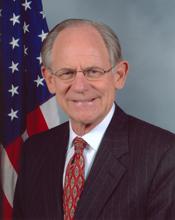
Mr. Speaker, I thank the gentleman for yielding and for the wonderful job he has done on this. We started on welfare reform in Delaware very early on, long before the Federal Government started to…

The resolution before us, Mr. Speaker, ignores the realities of increasing child poverty, stagnating wages and lost opportunities for those families and children left behind by the so- called success…

Mr. Speaker, I thank the gentleman from Florida for yielding me time. Mr. Speaker, I rise in support of this resolution. And I am somewhat mystified by some of the claims made by my colleagues on the…

Mr. Speaker, I want to thank the gentleman who as chairman of the Human Resources Subcommittee when I was a freshman was one of the key players in steering the welfare reform through. I was a…
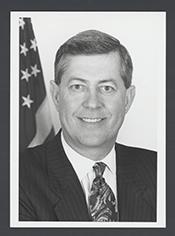
Mr. Speaker, I rise in strong support of H. Con. Res. 438, of which I am an original cosponsor, which expresses the sense of the Congress that historic welfare reforms begun with the 1996 Welfare…
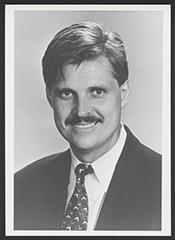
Mr. Speaker, I rise today in strong support of the welfare reforms provided in the Personal Responsibility and Work Opportunity Reconciliation Act of 1996. The House is considering H. Con. Res. 438…
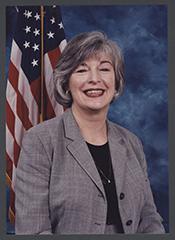
Mr. Speaker, this resolution is a celebration of bad policy. I voted against it when it was a Clinton proposal, and I voted against it because my fear was, based on having been a past welfare mom, my…
Bill Text
3 versions available
        [Congressional Bills 109th Congress]
[From the U.S. Government Publishing Office]
[H. Con. Res. 438 Referred in Senate (RFS)]

109th CONGRESS
2d Session
H. CON. RES. 438

_______________________________________________________________________

IN THE SENATE OF THE UNITED STATES

July 19, 2006

Received and referred to the Committee on Finance

_______________________________________________________________________

CONCURRENT RESOLUTION

Expressing the sense of the Congress that continuation of the welfare
reforms provided for in the Personal Responsibility and Work
Opportunity Reconciliation Act of 1996 should remain a priority.

Whereas the Temporary Assistance for Needy Families (TANF) program established
by the Personal Responsibility and Work Opportunity Reconciliation Act
of 1996 (Public Law 104-193) has succeeded in moving families from
welfare to work and reducing child poverty;
Whereas there has been a dramatic increase in the employment of current and
former welfare recipients;
Whereas the percentage of working recipients reached an all-time high in fiscal
year 1999 and held steady in fiscal years 2000 and 2001;
Whereas, in fiscal year 2004, 32 percent of adult recipients were counted as
meeting TANF work participation requirements, significantly above pre-
reform levels;
Whereas earnings for welfare recipients remaining on the rolls also have
increased significantly, as have earnings for female-headed households;
Whereas single mothers, on average, earned $13.50 per hour in 2004, almost three
times the minimum wage;
Whereas the increases have been particularly large for the bottom 2 income
quintiles, that is, those women who are most likely to be former or
current welfare recipients;
Whereas welfare dependency has plummeted;
Whereas, as of September 2005, 1,887,855 families, including 4,443,170
individuals, were receiving TANF assistance, and accordingly, the number
of families in the welfare caseload and the number of individuals
receiving cash assistance declined 56 percent and 61 percent,
respectively, since the enactment of the TANF program;
Whereas, since the enactment of welfare reform, the number of children in the
United States has grown from 69,000,000 in 1995 to 73,000,000 in 2004,
which is an increase of 4,000,000, yet 1,400,000 fewer children were
living in poverty in 2004 than in 1995--a 14 percent decline in overall
child poverty;
Whereas the poverty rates for African-American and Hispanic children also have
declined remarkably--20 percent and 28 percent, respectively, since
1995;
Whereas, as a Nation, we have made substantial progress in reducing teen
pregnancies and births, slowing increases in non-marital childbearing,
and improving child support collections and paternity establishment;
Whereas the birth rate to teenagers declined 30 percent from its high in 1991 to
2004. The 2004 teenage birth rate of 41.2 per 1,000 women aged 15
through 19 is the lowest recorded birth rate for teenagers since 1940;
Whereas, during the period from 1991 through 2001, teenage birth rates fell in
all States and the District of Columbia, Puerto Rico, Guam, and the
Virgin Islands;
Whereas such declines also have spanned age, racial, and ethnic groups;
Whereas there has been success in lowering the birth rate for both younger and
older teens;
Whereas the birth rate for those aged 15 through 17 declined 43 percent since
1991, the rate for those aged 18 and 19 declined 26 percent, and the
rate for African American teens--until recently the highest--declined
the most--falling 47 percent from 1991 through 2004;
Whereas, since the enactment of the Personal Responsibility and Work Opportunity
Reconciliation Act of 1996, child support collections within the child
support enforcement system have grown every year, increasing from
$12,000,000,000 in fiscal year 1996 to over $22,000,000,000 in fiscal
year 2004;
Whereas the number of paternities established or acknowledged in fiscal year
2003--over 1,600,000--includes an almost 300 percent increase in
paternities established through in-hospital acknowledgement programs
promoted by the 1996 welfare reforms, and there were almost 915,000
paternities established this way in 2004 compared to 324,652 in 1996;
Whereas child support collections were made in nearly 8,100,000 cases in fiscal
year 2004, significantly more than the almost 4,000,000 cases in which a
collection was made in 1996;
Whereas the Personal Responsibility and Work Opportunity Reconciliation Act of
1996 gave States great flexibility in the use of Federal funds to
develop innovative programs to help families leave welfare and begin
employment, and to encourage the formation of 2-parent families;
Whereas annual Federal funding for under the new TANF block grant program have
been held constant at the all-time highs set in 1995, despite
unprecedented welfare caseload declines and despite the fact that States
may spend as little as 75 percent as much as they spent spending under
the prior AFDC program;
Whereas total welfare and child care funds available per family increased over
130 percent between 1995 and 2004, from $6,934 to $16,185;
Whereas child care expenditures have quadrupled under welfare reform, rising
from $3,000,000,000 in 1995 to $12,000,000,000 in 2004;
Whereas, under the TANF program, States have enjoyed significant new flexibility
in making policy choices and investment decisions best suited to the
needs of their citizens;
Whereas, despite all of these successes, there is still progress to be made;
Whereas significant numbers of welfare recipients still are not engaged in
employment-related activities;
Whereas, while all States have met the overall work participation rates required
by law, in an average month, only 41 percent of all TANF families with
an adult participated in work activities for even a single hour that was
countable toward the State's work participation rate;
Whereas, in 2002, 34 percent of all births in the United States were to
unmarried women;
Whereas, despite recent progress in reducing teen pregnancy in general, with
fewer teens entering marriage, the proportion of births to unmarried
teens has increased dramatically to 80 percent in 2002 from 30 percent
in 1970;
Whereas the negative consequences of out-of-wedlock birth on the mother, the
child, the family, and society are well documented;
Whereas the negative consequences include increased likelihood of welfare
dependency, increased risks of low birth weight, poor cognitive
development, child abuse and neglect, teen parenthood, and decreased
likelihood of having an intact marriage during adulthood, and these
outcomes result despite the often heroic struggles of mostly single
mothers to care for their families;
Whereas there has been a dramatic rise in cohabitation as marriages have
declined;
Whereas an estimated 40 percent of children are expected to live in a
cohabiting-parent family at some point during their childhood;
Whereas children in single-parent households and cohabiting-parent households
are at much higher risk of child abuse than children in intact married
families;
Whereas children who live apart from their biological fathers are, on average,
more likely to be poor, experience educational, health, emotional, and
psychological problems, be victims of child abuse, engage in criminal
behavior, and become involved with the juvenile justice system than
their peers who live with their married, biological mother and father;
Whereas, despite the strenuous efforts of single mothers to care for their
children, a child living with a single mother is nearly 5 times as
likely to be poor as a child living in a married-couple family; and
Whereas, in 2003, in married-couple families, the child poverty rate was 8.6
percent: in households headed by a single mother the poverty rate was
41.7 percent: Now, therefore, be it
Resolved by the House of Representatives (the Senate concurring),
That it is the sense of the Congress that increasing success in moving
families from welfare to work, as well as in promoting healthy marriage
and other means of improving child well-being, as promoted by the
welfare reforms in the Personal Responsibility and Work Opportunity
Reconciliation Act of 1996, are very important Government interests and
should remain priorities for the responsible Federal and State agencies
in the years ahead
for assisting needy families and others at risk of poverty and
dependence on government benefits.

Passed the House of Representatives July 18, 2006.

Attest:

KAREN L. HAAS,

Clerk.