21st Century Access to Banking Act
Legislative Activity
Stay on top of the latest movement without scrolling through every action
Sponsor introductory remarks on measure. (CR 9/15/2004 H7158)
September 14, 2004
View full timeline
Introduced in House
February 13, 2003
Referred to the House Committee on Financial Services.
February 13, 2003
Referred to the Subcommittee on Financial Institutions and Consumer Credit.
March 10, 2003
Sponsor introductory remarks on measure. (CR 9/15/2004 H7158)
September 14, 2004
Floor Debate
24 membersWhat members said about H.R. 773 on the floor
 JAC
JAC JWO
JWO EJI
EJI MGO
MGO EB+19
EB+19
Floor Debate
24 membersWhat members said about H.R. 773 on the floor
Mr. Chairman, I yield myself such time as I may consume. With immense respect to my good friend, the Chairman of the Committee on Financial Services, the Congress has already passed the PATRIOT Act.…
Mr. Chairman, I yield myself such time as I may consume.
With immense respect to my good friend, the Chairman of the Committee on Financial Services, the Congress has already passed the PATRIOT Act. The Secretary of the Treasury was required under the PATRIOT Act to prescribe regulations that set forth minimum standards for financial institutions to open a bank account. The authorizers have already spoken on this, and the law requires the minimum requirements for banks to verify the identity of a person opening the account, to maintain records of that person's identity, and consult lists of known or suspected terrorists.
I would not have offered this amendment in subcommittee and full committee, and the Committee on Appropriations would not have felt it necessary to put this in the bill, had the Treasury Department honored the PATRIOT Act. In the opinion of the Committee on Appropriations, in the opinion of the Chairman of the Committee on the Judiciary, the gentleman from Wisconsin (Chairman Sensenbrenner) has objected to the Treasury Department's rule.
The gentleman from Wisconsin (Chairman Sensenbrenner) stated that he believes the reference to regulations adopted by Treasury are insufficient to address the intention of the PATRIOT Act to accurately identify and track individuals opening bank accounts. The law could not be any clearer. Yet the Treasury Department yielded to pressure from the banks, although the banks were required to verify identity, keep documents of records used to open the account. The Treasury adopted a rule which specifically allows the banks to shred photocopies of the person's identifying documents. So there is no record being kept.
I am quoting directly from the rule, in violation of the PATRIOT Act, the Treasury rule says that any foreign government-issued document that evidences nationality, as long as it bears a photograph, is valid to open a bank account. That is in complete violation of the PATRIOT Act. So the regulation the Treasury Department adopted does not even meet the express letter of the law in the PATRIOT Act. So we had no other choice but to cut off the funding to this regulation.
The parents of the families of the victims of September 11 have written a letter in opposition to this amendment because the parents, and I am quoting from the 9/11 Families For a Secure America, all of our members are aware of the fact that the 9/11 murderers relied upon government-issued identification to open bank accounts and charge accounts, rent cars and apartments and maintain an aura of legitimacy during the months that they planned, rehearsed, financed and carried out their conspiracy. Finally, on the morning of 9/11, government- issued IDs permitted them to board the planes they used to murder our loved ones.
For that reason, the parents of the families of 9/11 are scoring this vote. The parents of 9/11 are asking that Members vote against the Oxley-Frank amendment.
This is a straight-up national security vote because the FBI has testified, the Department of Justice also has objected strongly to this Treasury Department regulation. The Department of Homeland Security, all Federal law enforcement, uniformly objected to this Treasury Department regulation because, number one, these consular ID cards that foreign nationals would use to open bank accounts are widely known to be easily forged.
The FBI and the Department of Justice have concluded that the matricula consular is not reliable. It is not a reliable form of identification due to the nonexistence of any means of verifying the true identity of the cardholder.
So we have a situation today, Mr. Chairman, where we know the terrorists are coming back to hit us again between now and the election. The FBI agent in charge of the southern border in Texas has seen a large number of countries with al Qaeda connections that are exploiting the southern border, utilizing long-established and well- disciplined alien smuggling organizations in Mexico to transit individuals, foreign nationals through Mexico, into the United States. It was brought to my attention by Federal law enforcement authorities in Texas that they have now identified a number of individuals from Islamic countries changing their Islamic surnames to Hispanic surnames, coming across the border with all the illegals crossing the border.
So we have a situation where we are about to be hit. We have individuals using false identities, and we have a rule adopted by Treasury that essentially, according to the Committee on the Judiciary chairman and the FBI, is making it easier for individuals to create false identities and open bank accounts.
The Treasury regulation is so wide open that an Iraqi listed on the 50 Most Wanted List but who is not yet apprehended could open a bank account using an ID card printed in Arabic, issued in 2001, and the bank would still be in compliance. So the Treasury Department's already had their chance to comply with existing law, and they did not. So the appropriators had no choice.
If I could, if my subcommittee chairman, the gentleman from Oklahoma (Mr. Istook), is available, I will be sure to yield to him.
Mr. Chairman, I yield 2 minutes to the distinguished gentleman from California (Mr. Rohrabacher).
Mr. Chairman, I yield myself such time as I may consume to briefly say that the Department of Justice is on record in opposition to these regulations before they were issued, and then when they were issued the Department of Justice issued strong objections.
Mr. Chairman, I yield 4 minutes to the gentleman from California (Mr. Royce).
Mr. Chairman, I yield 4 minutes to the gentleman from California (Mr. Gary G. Miller).
(Mr. GARY G. MILLER of California asked and was given permission to revise and extend his remarks.)
Mr. Chairman, I yield 30 seconds to the gentleman from Illinois (Mr. Hyde).
Mr. Chairman, I yield myself such time as I may consume.
Had the Department of Treasury actually implemented the PATRIOT Act, the Committee on Appropriations would not have shut off funding to this regulation.
The Treasury-Transportation bill, and this is within our jurisdiction and the full Committee on Appropriations, cut off funding to implement or enforce the Treasury regulation which is on the books, and let me quote from it again, ``The Treasury regulation authorizes banks to open a bank account for any non-U.S. citizen who can produce any foreign government issued document with a photograph.''
Now that rule that Treasury adopted is in complete violation of the PATRIOT Act. That is the opinion of the gentleman from Wisconsin (Mr. Sensenbrenner), the chairman of the Committee on the Judiciary. Statute 326 has not been complied with by the Treasury Department. It requires Treasury to adopt a rule that requires banks to verify identity, maintain records of the person's identity and consult lists of known terrorists.
This rule is so bad and so broad, the banks can shred photocopies of the person's identifying documents as soon as you make the deposit. So the Appropriations Committee had no choice but
to shut off funding to this regulation. And before the regulation was adopted, the Justice Department and the FBI and Homeland Security were all opposed to it. The Department of Justice was on record.
I yield to the gentleman from Ohio.
I certainly agree under current law, but the rule adopted by Treasury, and again I am quoting from the Department of Justice, the Department of Justice objected very strongly to these last-minute changes in the Treasury rule because Treasury did change the rule at the last minute to allow these records to be destroyed and that is in the rule which is why we cut off the funding. This is the only way that we could stop the implementation of this rule which violates the spirit of the PATRIOT Act by cutting off the funding, because the Treasury ignored the PATRIOT Act's very clear requirements.
From the Justice Department today. Yes, the Justice Department is being a good team player. The Justice Department testified formally in objection to this rule July 31 when it was adopted. Quoting from the Justice Department:
``The Department of Justice believes that consular identification cards issued by foreign governments should not be among the documents that could be accepted by financial institutions.''
Once the Department of Justice made that argument, they lost that argument. Treasury adopted this very broad rule that allows anybody from a foreign country to walk in the door with any kind of photo ID and open a bank account. The Justice Department lost that argument, and obviously they have gotten on board.
Mr. Chairman, I yield 4 minutes to the gentleman from California (Mr. Cunningham).
Mr. Chairman, I yield 2 minutes to the gentleman from Florida (Mr. Weldon).
Mr. Chairman, I yield 2 minutes to the gentleman from Texas (Mr. Smith).
Mr. Chairman, I yield 1\1/2\ minutes to the gentleman from Oklahoma (Mr. Istook), the distinguished subcommittee chairman.
Mr. Chairman, I yield 2 minutes to the gentleman from California (Mr. Gallegly), the chairman of the Subcommittee on International Terrorism, Nonproliferation and Human Rights.
(Mr. GALLEGLY asked and was given permission to revise and extend his remarks.)
Mr. Chairman, I yield 30 seconds to the gentleman from Iowa (Mr. King).
(Mr. KING of Iowa asked and was given permission to revise and extend his remarks.)
Mr. Chairman, I yield myself such time as I may consume.
Mr. Chairman, this is a national security issue. The Congress has already spoken through the PATRIOT Act. Section 326 requires the Treasury Department to adopt rules requiring banks to verify the identity of persons opening an account, to keep records of that person's identity, and to consult lists of known terrorists.
The Treasury Department did not do that. The rule adopted by Treasury, against the advice of the FBI, against the advice of the Department of Justice, the rule that the Committee on Appropriations has cut off funding for, the rule the Treasury Department adopted, says that a bank can open an account of a non-U.S. citizen as long as that person shows any government-issued document with a photograph.
This is why the families of 9/11 have come out strongly in opposition to the gentleman from Ohio's (Mr. Oxley) amendment. This is why the Committee on Appropriations voted to cut off funding for this rule. To quote the families of 9/11, I think they say it so well: All the Members are aware that the 9/11 murderers relied upon government-issued IDs.'' The Committee on Appropriations cut off funding to this rule because the rule does not require banks to keep records. The rule does not allow banks to accept any kind of foreign government-issued identification. So it is important that Members understand that they need to vote ``no'' against this amendment in the interest of national security to ensure that Congress' intent in the PATRIOT Act is enforced. It is the only way to stop this Treasury rule from being implemented.
Mr. Chairman, I think we now have reached a second level of ignominy at this point because here we are now into a whole second bill which has not been authorized. It has not been authorized. It is…
Mr. Chairman, I think we now have reached a second level of ignominy at this point because here we are now into a whole second bill which has not been authorized. It has not been authorized. It is not a bill that is only 9 months or 11 months late of authorization, but rather the bill for the Federal Rail Administration and Amtrak is one that is a year and 11 months late at least, if not 2 years and 11 months late.
So while earlier items which have been stricken by the points of order dealt with highway administration programs and obviously will also apply to FTA, Federal Transit Administration programs, and have already stricken the two major safety programs that I mentioned earlier in my opening remarks which had been already cut by the Committee on Appropriations to only 75 percent, cut from the President's request, a dollar figure had been cut 25 percent or giving them only 75 percent of the President's request, those highway safety programs have already been stricken from this legislation. That is also carried with the general highway administration T&I authorization.
But here we are now in the Amtrak and highway administration bill. I just want to point out that this is an area where I intended to offer two different versions of an amendment to add funding.
Mr. Chairman, I will defer my comments to a striking of the last word immediately after the Chair sustains this point of order.
Mr. Chairman, I move to strike the last word.
Mr. Chairman, I am going to express some of my frustration, and maybe then the gentleman from Oregon (Mr. Blumenauer) will do the same.
We have now stricken what was already an appropriation of $900 million which was the President's request, true, but which was already low by $300 million, lower than what each of the last 2 years had appropriated after the final operation of the Committee on Appropriations and the conference committee reports for the operation of Amtrak.
It is silly to think they even could have operated within $900 million in this year without ending up in a shutdown situation, or without leaving us
with an ever-worsening deferred maintenance problem.
I want to use this time to point out that Amtrak is a hybrid program. It runs on 600 miles of the Northeast Corridor roughly, which is owned by Amtrak and is the direct responsibility of that governmental agency. That 600 miles of trackage takes more than half of all of the passengers that are being dealt with by Amtrak.
Now that is the part that we have direct responsibility for. The rest of the Amtrak lines operate on some 20,000 other miles of trackage that is run by private freight carriers and Amtrak has contracts with them and has priority to use that trackage. But we do not have specific direct maintenance of those. We have the responsibility of making certain that on the 600 miles the use of that track and that commutation that is involved will be safe, and we have some responsibility to make certain that the maintenance of that trackage does provide safety for the people who are using it.
Now Congress has said several times by appropriating, has said, keep the national rail system open; and Congress has not suggested that any particular lines are supposed to be cut out even though they are not profitable or ever may be profitable. We are waiting for an authorization; there is no authorization. But the use of Amtrak remains, and it is an exceptionally important use which moves a very large number of people, 20 million people or thereabouts, on the northeast line itself.
Furthermore, we have now eliminated by points of order that one thing that many people think is a wonderful idea for the future, namely high- speed rail. High-speed rail was already reduced by two-thirds from last year's appropriation, more than two-thirds; but it also now has been stricken and is not authorized either.
So high-speed rail, which is a process used in various parts of the world, in Japan, Europe, running 120 to 150 miles an hour, where one moves large numbers of people for relatively short distances between large metropolitan areas, manages to move people that otherwise would have to be in the air, and it is done that way much more efficiently.
Now we take out that possibility as well in the motions that have occurred.
Mr. Chairman, the Congress has appropriated $1.3 billion in the year 2003, $1.2 billion in the year 2004, an average of $1.1 billion over each of the last 5 years, some of which came under authorizations that were in effect, but the last two of which apparently occurred after there was no authorization, but we managed to get the job done; and the important thing is that we managed to get the job done. Even at the level of funding that Amtrak was appropriated for over the last couple of years, they cannot provide for the critical capital investments that are particularly needed on the Northeast Corridor where we are directly responsible for the maintenance and for the safety of the people who are using that program.
Mr. Chairman, I think it is well understood at this point that we should be appropriating at least what has been out there for the last couple of years, or we are not doing the duty that we have to the passengers who are using that system at the present time.
Mr. Chairman, I would just like to point out to the chairman that in every place, in every metropolitan area, at least that I know of in this country, that has commuter rail, those commuter rail systems are subsidized. None of them operate on a profitable basis. So the real unreality here has been always the concept that Amtrak, that our passenger rail system could operate and would operate on a profitable basis. There has been no passenger rail system that has been run in any industrialized country anywhere in the world that has operated on a profitable basis.
The rest of the unreality here is that at the same time that we are saying they should do that while leaving Amtrak with the mandate of providing a national rail system with routes which have been designated and mandated by the Congress and then blaming them for not being able to do this in a profitable way, the ultimate unreality, it seems to me, is what we started in the direction of high speed rail where we have created 10 corridors, hopefully in the belief that there may be some way of providing high-speed rail, which is extremely costly in its infrastructure development in the first place, in its capital cost, that that can possibly be done; and I do not disagree with the chairman that there are things that probably ought to be done in dealing with a rail system and in trying to make them more efficient.
We are being totally unrealistic, but we still have a very large number of commuters who are using the system as we have it, and this Congress has not managed to pass an authorization suggesting how it is otherwise to be done. So we still have the problem; we still have people who are operating every day in an ever less safe manner because we are funding as low as we are and here we have stricken the money from the legislation. The unreality here is monumental.
I yield to the gentleman from Oregon.
Page 70, line 3?
Well, Mr. Chairman, I ask unanimous consent to return to page 68, line 16.
Mr. Chairman, I move to strike the last word.
Mr. Chairman, I want to point out, as I did in my earlier comments in the opening statement, that the IRS tax enforcement program has been underfunded by $286 million compared with the President's recommendation.
Mr. Chairman, the tax law enforcement program is an exceedingly important program. The President has requested $286 million more than the bill before us provides, and the Commissioner of the IRS has given us sworn testimony that the proper use of that money would afford us at least a 6-to-1 margin on revenue gained for the use of the $286 million.
Now, in fact, in my discussion with the IRS Commissioner, he has made it clear to me that that is an average over all of the administrative uses of the tax law enforcement program; and that, at least, if one were to use that in some areas of enforcement, that one might be able to get as much as a 15- or 20-to-1 return for the amount of money; but that in the process of trying to organize an orderly program for the enforcement, that you try to balance that program, as we have been talking about a balanced transportation program, and only enforce very hard in one area or another; but that it is possible in some areas to mix what would be enforcement gains of as much as 15- or 20-to-1 with other places, so that we really ought to put some effort into where the gain may be only 2- or 3- or 4-to-1 and end up with an average in the range of approximately 6-to-1.
Now, with that money, the revenue gained by the use of such enforcement monies, which the President requested, of just under $300 million, then we have an opportunity to gain $2 billion of revenue, which can be used in a variety of ways: to cut the debt; to take care of problems such as we have in this bill even before the charade of all of the points of order that have been added here or have been taken here; or for what I originally called the most serious problems of lack of funding for things like transit new-starts for Amtrak and other things in the Highway Safety Administration.
Besides that, one has to think of exactly where this money is coming from. The Commissioner of the IRS points out that there is at least $300 billion every year of money which is owed under the law to the Government, which is not collected, which is evaded, in essence, evaded. And every time there is that kind of evasion, since that is roughly $1 of $6 or $7 of tax revenue that the whole Government raises, that when that happens, that people, honest people who have paid their taxes, as they ought to, in what is basically a voluntary system that we have, when those people pay their taxes, then the six out of seven or so that do pay the taxes that are owed under the law end up subsidizing the one out of seven that is evading the taxes and not paying any.
So those people, that six out of seven, have to put in a sum of money which is 10 percent higher or 15 percent higher by the rate in order to make up for those who are not paying taxes at all.
Mr. Chairman, I move to strike the last word. I yield to the gentleman from Florida. Mr. Chairman, I insist the point of order be expanded to lie against the entire paragraph; and as so expanded, I…
Mr. Chairman, I move to strike the last word.
I yield to the gentleman from Florida.
Mr. Chairman, I insist the point of order be expanded to lie against the entire paragraph; and as so expanded, I would concede the point of order.
Mr. Chairman, I insist that the point of order be expanded to lie against the entire paragraph; and as so expanded, I would concede the point of order.
Mr. Chairman, I move to strike the last word.
Mr. Chairman, of course the effect of the point of order raised is to take the money that was in the bill, $900 million, the amount requested by the administration for Amtrak, and to remove it. I regret that the people who are staunch proponents of Amtrak want to continue it the way that it is running now.
The administration opposes any more than $900 million for Amtrak without reforming it. Amtrak has not been authorized since December of 2002 when the prior authorization bill expired. I think it is important that we recognize why it has not been reauthorized. Until a couple of years ago, Amtrak was still telling us, oh, they are about to start making a profit and not to need Federal subsidies anymore.
After operating for 30 years, Amtrak has received over $40 billion in Federal subsidies. It still only provides one-half of 1 percent of all inner city transportation. Half of it is in the Northeast Corridor. In the last 5 years, the subsidies by taxpayers through the appropriations process have gone up 71 percent. In the same time, Amtrak's ridership is only up 11 percent. It is a huge gap.
It continues to operate with substantial losses. Why? Because we do not apply business principles. We do not apply proper principles to it. Amtrak is only, I think, about 5 percent of all the rail passenger service in the country. Most of the rail passenger service is commuter rail. Amtrak functions in many areas actually as commuter rail and the subsidies are astounding. If Amtrak is operating to provide commuter rail passenger service, why is all the subsidy dumped on the Federal taxpayer? Where are the States? Where are the cities? The administration wants to create partnerships with them to have participation of the people who benefit from Amtrak and who want a subsidized rail service which is limited to certain parts of the country. Those parts of the country need to be the ones that come to the table and say we want this and therefore we are willing to pay for part of it.
Amtrak passengers in some cases on some routes receive hundreds of dollars per passenger in taxpayer subsidies. There are plenty of examples where it is cheaper to hire a private limousine and driver to pick up somebody at their door in one city and transport them to another city to the door of their destination; it is cheaper to hire them a limo and a driver and give them personal service than to have them ride Amtrak in some situations.
We are not taking a realistic look at this. We should not be bemoaning the fact that Amtrak is not being given more taxpayers' money. If you want subsidized rail travel, you need to get your mayors, you need to get your Governors, you need to get your local communities and officials willing to pay for some of the costs of what operates for many of them as a commuter rail service.
If you take the train, as I have done, between Washington and New York City, so often you will find when it leaves Washington it does not have that many people on it. When it gets to Baltimore it still does not have that many people on it. Only when you get to the outskirts of New York City do you start picking up a lot of passengers because it is a commuter rail to them.
Why are we not talking to the communities about saying, you have a role in Amtrak if you want it. Do not tell us it is all a Federal responsibility. I know that the people feel passionately about it; but we have a failed approach to Amtrak, and it is time that we recognize it. If we want to do something about rail passenger service, we need a lot more realistic model than we have with Amtrak. I support the administration's proposal, which is to say we should not be increasing funding for Amtrak until such time as we have reform legislation that brings local and State people to the table and the private sector as partners in that.
Mr. Chairman, I insist that the point of order must be expanded to lie against the entire paragraph and, as so expanded, concede the point of order.
Mr. Chairman, I offer an amendment.
Mr. Chairman, due to the points of order that have been raised, we have many amounts, of course, that have been stricken from the bill. Some of the amounts would have added money to the bill through the point of order strikings. Some would have subtracted money from the bill. The net of those is this $1.7 billion figure. We need a place to put that. I know it might be nice to put it on the national debt or such, but that would still under parliamentary procedures allow people to offer an amendment to spend it someplace else.
We have in the General Services Administration the Federal Building Fund, an unmet backlog of I believe some $7 billion in unmet Federal construction needs. Although it is not my intent to keep this money back when this bill goes to conference, it is my intent essentially to restore and to resolve the parliamentary problems and to restore it to the accounts of which it was taken.
Nevertheless, for the purpose of this bill today, I offer this amendment to take this money that has been stricken from the bill and put it in the Federal Building Fund.
I reserve the right to object, Mr. Chairman.
I was trying to grant the gentlewoman the courtesy to state her intent, but I do intend to assert my objection.
Mr. Chairman, I object.
Mr. Chairman, I object to the unanimous consent request.
Mr. Chairman, I move to strike the last word.
Mr. Chairman, I very much appreciate the presentation by the gentlewoman from New York (Mrs. Kelly).
FinCEN financing in this measure is already increased by 12.7 percent over the last fiscal year. We have added significant dollars in the full committee to the FinCEN appropriations, and the FinCEN appropriations is at the level that was requested by the administration. However, for the gentlewoman from New York and other Members who are concerned, we will continue to work with them on this issue to make sure that we do not disagree, have a disagreement with the administration, and might perhaps be persuaded that there might be some different number that should be in the final vote of conference.
However, Mr. Chairman, I do not want to be constantly in this process with a long night ahead of us going back and reopening different parts of the bill that have been closed. We all know it is a slow moving process as it is. And if we start accepting every unanimous consent, we would not be completed.
Parliamentary Inquiry
Mr. Chairman, I ask unanimous consent that all debate on this amendment and all amendments thereto close in 1 hour and that the time be equally divided.
Mr. Chairman, that is satisfactory.
Mr. Chairman, I yield the time in opposition to the gentleman from Ohio's (Mr. Oxley) amendment to the gentleman from Texas (Mr. Culberson), a member of the subcommittee to let him control that debate.
Mr. Chairman, I rise in opposition to this amendment and in support of the language that is in this bill which was adopted in the Committee on Appropriations.
Certainly the arguments that are being heard today played out in the committee, and we decided that this was indeed an issue that relates to financial institutions, sure, but it relates to homeland security as well. The gentleman from Arizona that spoke before me, talking about the problems with porous borders, look at the latest issue of Time Magazine if they want to look at challenges of it and remember that we have adopted a great amount of legislation telling financial institutions they need to know their customer. We are talking about the financial center that is in the Treasury Department to track terrorism money. And if we do not have valid identification for the people when we are trying to track foreign assets in the United States and spot those that are using phony IDs to cover up terrorism, then why are we spending all the tens of millions and hundreds of millions and billions of dollars on homeland security if we say, oh, this is just a matter for the federally chartered, federally regulated financial institutions? We are going to put a loophole in the Federal law and all of our efforts to track foreign and potentially terrorism money are going to be undone because we can use unreliable identification. In the name of political correctness, we are going to accept the matricula consular? I think not.
I oppose this amendment. I ask that the Members reject the amendment and keep in the language that is put in this bill by the committee.
Mr. Chairman, I ask unanimous consent that the remainder of the bill through page 166, line 3 be considered as read, printed in the Record, and open to amendment at any point.
Mr. Chairman, I offer an amendment. Mr. Chairman, I would ask that half of my time be allocated to the gentleman from Massachusetts (Mr. Frank), the ranking member of the Committee on Financial…
Mr. Chairman, I offer an amendment.
Mr. Chairman, I would ask that half of my time be allocated to the gentleman from Massachusetts (Mr. Frank), the ranking member of the Committee on Financial Services.
Mr. Chairman, I yield myself such time as I may consume.
Mr. Chairman, I offer this amendment on behalf of myself and the ranking member of the Committee on Financial Services, as well as a respected member of the Committee on Appropriations, the gentleman from Arizona (Mr. Kolbe).
Our amendment will strike ill advised language adopted in the Committee on Appropriations that, if allowed to remain in the bill, would prevent the Treasury Department from enforcing regulations implementing customer identification provisions in the USA PATRIOT Act that are critically important to combating money laundering and disrupting the financing of terrorism.
I note at the outset that the Bush administration has issued a strongly worded statement of administration position opposing the language that the Oxley-Frank-Kolbe amendment would strike from this legislation.
My colleagues are going to hear a lot in today's debate about what whether one form of ID is better than another; but as the author of the USA PATRIOT Act's anti-terrorist financing provisions and as a former FBI, agent, let me set the record straight. Today's debate is not about good or bad ID. It is about whether we are going to ask financial services customers for any ID at all. My amendment says yes; and the bill, as currently constructed, says no.
By way of background, the regulations that the bill seeks to block were issued by the Treasury Department last year under section 326 of the USA PATRIOT Act, which I authored. That provision was intended to enhance the ability of financial institutions to detect and prevent money laundering and the financing of terrorism by requiring those institutions to develop comprehensive procedures for verifying customer identity at the time of account opening. Among other things, the provision requires financial institutions to consult lists of known or suspected terrorists or terrorist organizations when opening accounts for new customers.
In implementing section 326, the administration ultimately decided to give institutions the flexibility to tailor their customer identification programs to the risks of money laundering or terrorist financing posed by their products, services, and customer base. Consistent with this risk-based approach, the final regulations give financial institutions the discretion to determine which forms of identification issued by foreign governments they will accept and under what circumstances.
Make no mistake, the regulations do not mandate or require the acceptance of the matricula consular card. If financial institutions are concerned about their validity, they are free to reject the use of those cards as identification.
These regulations were finalized only after two lengthy public comment periods, which included extensive input from the financial services industry, law enforcement agencies, and a host of other interested parties, and after careful analysis and study by the Treasury Department and other financial regulators. The regulations, effective last year, are currently being enforced by Treasury and the Federal financial regulators and implemented by financial institutions across the country.
The so-called Culberson amendment throws into question the obligation of financial institutions to verify the identities of their customers and ties Treasury's hands in enforcing one of the centerpieces of the post-September
11 congressional response to the terrorist financing threat.
Indeed, when he appeared before our committee last month, 9/11 Commission Vice Chairman Lee Hamilton, a former distinguished colleague of ours, singled out section 326 for particular praise, calling it a ``significant tool to assist fast-moving terrorism investigations.''
Failure to adopt this amendment will result in this critical tool being taken from the Government's hands. I would suggest to my colleagues that now is not the time to be unilaterally disarming in the financial war against terrorists.
The Bush administration and the Treasury Department have registered their strong support for this amendment, arguing that denying access to the mainstream financial system serves only to drive consumers into the underground financial economy, making it virtually impossible to track their financial activity and frustrating the Government's efforts to enforce antimoney laundering and antiterrorist financing laws. In the words of Secretary Snow, if the section my amendment seeks to strike becomes law, ``it will be a step backwards in the financial war on terror.''
Let us be very serious and understand that that is what the PATRIOT Act is all about. This is an effort to repeal part of the PATRIOT Act that has worked so successfully in protecting American citizens.
Finally, let me express my frustration with this kind of back-door legislating in appropriations bills. This is simply not the way we should be operating in this House.
My colleagues have a simple choice before them: vote for our amendment and give our financial regulators the ability to track, seize, and freeze terrorist funds or vote against us and drive terrorist money laundering even further underground. The choice is clear.
Support our fight against the funding of terror. Support the Oxley- Frank-Kolbe amendment.
Mr. Chairman, I reserve the balance of my time.
Mr. Chairman, I yield 3 minutes to the gentleman from Arizona (Mr. Kolbe).
Mr. Chairman, I yield 3\1/2\ minutes to the gentleman from Alabama (Mr. Bachus), a subcommittee chairman of the Committee on Financial Services.
(Mr. BACHUS asked and was given permission to revise and extend his remarks.)
I yield to the gentleman from Massachusetts.
Mr. Chairman, will the gentleman yield?
I thank the gentleman for yielding. I think there has been a very broad misunderstanding about the destruction of those photographs and/or records. The law clearly requires that the financial institutions keep those documents for 5 years. That is not a change in policy. Treasury has recognized that for a number of years. The law has recognized that for a number of years. Financial institutions have recognized that for a number of years. It is simply not accurate to say that those records are destroyed immediately by the banks. They are required by law to keep those records for 5 years.
If the gentleman will continue to yield, let me just quote from the letter from the Department of Justice: ``The Justice Department supports the administration's determination to permit the acceptance of matricula consular cards by financial institutions under circumstances where financial institutions reasonably believe they can properly identify the new customer.''
That is from the letter of the Justice Department.
That letter was dated today. The Justice Department clearly supports the Oxley amendment.
I thank my good friend from California for yielding.
Mr. Chairman, let me say, this bill was drafted in our committee. I was the lead sponsor of the legislation. We have fully determined the efficacy of using these matricula consular cards. By the way, it is not the only form of identification. As a matter of fact, matricula consular is not even mentioned in the statute, nor is it mentioned in the rules and regulations from Treasury Department.
I would invite the gentleman and the gentleman from Texas to introduce a bill and to have it referred to the appropriate committee, the Committee on Financial Services.
Mr. Chairman, I yield 1 minute to the gentleman from Arizona (Mr. Flake).
Mr. Chairman, I yield 1 minute to the gentleman from Alabama (Mr. Bachus).
Mr. Chairman, I yield myself such time as I may consume.
Mr. Chairman, for my part in closing, I first want to say it has been a pleasure to work with the gentleman from Massachusetts (Mr. Frank), my ranking member.
I do not think any of us take a back seat, I know I do not, in fighting terrorism. And our committee was in the thick of passing the PATRIOT Act, and one of the proudest moments I have had as chairman was the section 326 and what we did in the Act, and to see the President sign that was indeed a real honor.
This provision that we had is important in the fight on terrorism. And I regret some of the arguments that indicate otherwise because our committee had it right the first time, and what I regret, frankly, is the Committee on Appropriations stepping into an area that the authorizing committee has the knowledge and the expertise in.
Mr. Chairman, I demand a recorded vote.
Mr. Chairman, I make a point of order against section 143, on page 27, lines 10 through 17. Mr. Chairman, the second sentence of section 143 would prevent any State or agency from enforcing the U.S.…
Mr. Chairman, I make a point of order against section 143, on page 27, lines 10 through 17.
Mr. Chairman, the second sentence of section 143 would prevent any State or agency from enforcing the U.S. Department of Transportation hours-of-service regulations for operators of utility service vehicles. This provision imposes a new duty on the Department and the States and agencies. This section is legislative in nature and is in violation of clause 2 of rule XXI.
Mr. Chairman, I raise a point of order.
Mr. Chairman, page 32, line 26, through page 33, line 5, I would make a point of order against the last proviso of the Railroad Rehabilitation and Improvement Program paragraph. The proviso begins on page 32, line 26, and ends on page 33, line 5. This proviso would require Amtrak to repay its loan and interest in full to the Federal Railroad Administration within 30 days; it is legislative in nature and in violation of clause 2 of rule XXI.
Mr. Chairman, I must confess I share the frustration of the gentleman from Massachusetts. We produced out of the Committee on Transportation and Infrastructure a bipartisan bill a year ago that has never been brought to floor action.
Mr. Chairman, I move to strike the last word.
Mr. Chairman, there is an ongoing debate that I find somewhat ironic. There is, on behalf of some of my colleagues, an almost theological belief that the United States should be the only industrialized country in the world that does not have subsidized passenger rail service, that it is not an integral part of our transportation system. We have Amtrak today because the private sector that had rail passenger service from the 1830s until 1970 and was mammothly subsidized by the Federal Government to do so, reached the point where it was not particularly profitable for them to do it. Then the private rail roads with Congress and the Nixon administration, created Amtrak so that there would be a rail passenger alternative.
Some people now think that somehow the private sector is going to step in and run a national system so that we would not be actually the only country without passenger rail. Even most Third World countries have rail passenger service as well as all the developed countries that surpasses the United States. I find that somewhat ironic because this Congress year after year after year puts billions of dollars into the air passenger service which in its long illustrious history of being force fed by Federal subsidies, starting with airmail, dealing with air traffic control and the construction of airports, in its entire history has a net profit of zero. And we continue, appropriately, to put billions of dollars into it because it is an important part of the Federal transportation infrastructure.
Now there are those that want to pull the plug on Amtrak. We passed out of our Rail Subcommittee and then our Transportation and Infrastructure Committee a year ago with broad bipartisan support, there may have been one or two people who voted against it, in the largest committee in Congress, maybe one or two, but I cannot remember them, that bill has been languishing for 1 year because the Republican leadership cannot somehow bring it to the floor and allow the will of Congress to be worked.
So we have this travesty today where we have a program that is not authorized despite the fact that the authorizing committee did its work a year ago.
This embarrassing charade, and I am embarrassed for the majority party that we are going through this, is not going to be sustained. As George Will pointed out in his column of June 2003 when we were going through the last shutdown charade, that support for Amtrak is strong enough among all regions, ages, education levels, and income groups. A CNN/Gallup/USA Today poll put it, at the height of last year's funding crisis, at 70 percent American public support. No indication of anything that that is not even stronger today.
So ultimately we will bump along, we will go through this, we will fund Amtrak. Unfortunately, the inability of this Congress to move forward to meet the other body in a responsible fashion and put a reasonable authorizing bill on the floor means Amtrak is going to continue to be hamstrung. You will not kill it because the public will not let you. When we will have a crisis like 9/11 where if we did not have our rail transportation system, the east coast would have been shut down in gridlock from Alexandria to New Haven. Ultimately, this bill will fail, but it continues to cut away at the ability of the new administration in Amtrak to move forward, to build on the strong ridership increase and to build the private and public partnerships with State and local government that will be necessary, ultimately, to have a successful program.
I as a Member of Congress am embarrassed that we are going through this again. As somebody who cares about a balanced transportation system, transit, air, road and rail, I am embarrassed because we need this as a critical component. We will get there, but today's failure makes it harder, more expensive, as Congress is increasingly marginalized.
Mr. Chairman, will the gentleman yield?
Mr. Chairman, I had hoped to deal with just the notion that somehow Amtrak had promised that it was going to turn a profit. I sat in committees and watched people browbeat the previous administration; but what people made clear is that it was going to be necessary to fund the capital requirements of Amtrak.
There is a planned infrastructure improvement over 5 years, reconstructing interlockings; installation of almost a million concrete ties to improve efficiency; 423 miles of track undercutting; new rail, 352 miles; rebuilding of major bridges; cable signal replacement. These are things that will improve the efficiency of the operation.
Congress has never fully funded the capital requirements, making it inherently inefficient and chipping away at it. The Amtrak administration has requested a reasonable capital budget to be able to move it forward to meet the mandate that Members of Congress had for more efficiency.
I would respectfully suggest when we look at the funding that we lavish on the capital for airlines, what we do for highways, only a portion of which comes from the user fee, only a portion of which comes from the user fee, that we are selling this important element short at a time when, if we would enhance it, it would actually reduce demand on the roads. We would also reduce demand in congested airports when now a third of our flights are 350 miles or less. We are not thinking this through in a proper fashion.
I appreciate the gentleman's yielding to me because I wanted to make that point about its capital investment, which is critical if it is ever going to operate the way my friend on the other side of the aisle knows I would like to see, but we cannot starve Amtrak first.
Mr. Chairman, I make a point of order against section 161, which begins on page 37, line 23, and ends on page 38, line 25. Section 161 would require the Department of Transportation to develop and implement a procedure of competitive bidding for State-supported passenger rail routes, to require Amtrak to provide service in some routes and a compensation determined by the Secretary and to allow the Secretary to reprogram up
to $2.5 million from Amtrak operating funds to support this effort. This is clearly legislative in nature and is in violation of clause 2 of rule XXI.
Show 8 more

Mr. Chairman, I move to strike the last word. Mr. Chairman, I would like to make a couple of observations, in a sense give a progress report on what has happened on this bill so far, given what the…
Mr. Chairman, I move to strike the last word.
Mr. Chairman, I would like to make a couple of observations, in a sense give a progress report on what has happened on this bill so far, given what the Rules Committee did in exposing this bill to these points of order. There are a lot of things that have happened to this bill so far, but I would like to simply talk about the values that have led the House at this point to strike certain programs from the bill, while not striking others.
As I understand the actions that have been taken so far by points of order raised by Members of the majority, as I understand it, we have so far eliminated formula highway grants to the States; we have done serious damage to the essential airline service for small rural airports; we have done significant damage to FAA grants for airports, all of which will impact States' and localities' ability to develop their economies. But let me describe something that has not been eliminated from this bill.
This bill still contains--and it is interesting that this provision was not stricken by any of those who lodged their motions--this bill contains a provision that extends government-offered reduced rate insurance for airlines operating in the domestic United States. Premiums are set under that program at no more than twice what commercial rates were 3 years ago. This means that airlines only pay about one-fifth what they would pay if they were forced to obtain their insurance from the private sector.
My understanding is that this year airlines will pay about $150 million for government-subsidized risk insurance as opposed to $700 million they would have to pay on the open market. So, once again, we are keeping a let-us-pretend industry afloat, an industry which for all practical purposes is bankrupt. All you have to do is watch what has happened with USAir, I do not know how many times USAir, Continental will go bankrupt before they are bankrupt; but all you have to do is watch that to understand that if you are big enough in this society, you have a safety net created which holds you up no matter how many times you tend to fall. But we do not provide that same kind of safety net to average workers in this country.
What it demonstrates, for instance, is that the Federal Government is now willing to provide this huge subsidy in order to provide insurance to big airline corporations around the world or around the country, at the same time that this Congress continuously refuses to provide health insurance for 45 million Americans. I find that distinction interesting. I do not find it surprising, given the values of this Congress that I have come to expect, unfortunately; but it does say something about our national priorities.
If we are willing to exempt from our parliamentary purity our concern about language in this bill when it affects some of the big industries in the country, but we are not willing to skip over it when it comes to inconveniencing and damaging State economies and the transportation ability of small units of government, I find it especially interesting that while the Congress continues to deny actions that would provide health insurance for the 45 million Americans who do not have it, and every time we talk about doing that work we are being for socialized medicine; yet we are willing to socialize risk when it comes to insurance costs for the airline industry. That is a great set of values, isn't it?
Mr. Chairman, I move to strike the last word.
Mr. Chairman, I would like to note my agreement with the comments of the distinguished gentleman from Florida. Even before this bill came to the floor, we were faced with the prospect of having a miserable record in producing appropriation bills and finishing them before the end of the fiscal year before we go home to face our constituents in the new elections.
The House has passed all but, I believe, two appropriation bills, this one and the VA-HUD bill. And many of the bills that have passed have, I think, been in pitiful shape, but at least they have passed. None of them, except Defense, has been signed into law.
This bill was at least on track to pass in inadequate though meaningful form before we leave here for the election, but now, as the gentleman from Florida has said, we are facing an even bleaker situation. We are going to leave here in October with even less of the people's business done than would have been the case if this debacle had not occurred on the floor today.
What has happened is essentially this: The transportation authorizing committee, the Committee on Transportation and Infrastructure, or the No Transportation, No Infrastructure Committee, as it probably ought to be called, their basic highway authorization, for instance, expired 9 months ago. They have not yet been able to renew that basic legislation. The reason for that is that they have a three-corner debate going with themselves.
There is a debate between the Committee on Transportation and Infrastructure members in the House, those in the Senate, and the wizards in the White House Budget Office, and none of them want to give. So, as a result, what do we have here? The authorizing committee has not been able to get its job done, so the Committee on Appropriations has tried to at least keep these programs afloat while we continue to go through this Little League debate between the White House and the authorizers.
But in fact now I guess the situation is that if the Committee on Transportation and Infrastructure cannot pass their legislation, they do not want anybody else to pass meaningful legislation either, or perhaps they somehow think they are producing leverage for themselves by shredding this bill. This is, as I said earlier, this is a sad case.
My great friend and mentor Dick Bolling, who used to be the chairman of the Committee on Rules, and in my view is the greatest Member of this body who never became Speaker. Dick Bolling used to deride Members who practiced what he called dung hill politics, Members who were more interested in protecting the jurisdiction of their own committee than they were in protecting the legislative reputation and record of the House as a whole.
What we have seen today is a sad, sad example of what Dick Bolling worried about when he referred to that practice of ``dung hill politics.'' I wish the House were in a more mature mood, and I wish that the leadership had led so we could have avoided this point today.
There is no point, in my view, in proceeding further with this bill. I intend to vote against it on final passage because there will be nothing left of it except the title. We have a motion around here called ``striking the enacting clause.'' Instead, I suggest today we should probably strike everything except the enacting clause because we will have almost done that by the time we get to the last page of this bill. All we will have done is waste a day and a half of the House's time when we could have been dealing with more serious business, and that, indeed, is a shame.
Mr. Chairman, I would ask unanimous consent that the gentlewoman from New York and others be allowed to submit statements on this subject of this amendment that has been objected to. Mr. Chairman,…
Mr. Chairman, I would ask unanimous consent that the gentlewoman from New York and others be allowed to submit statements on this subject of this amendment that has been objected to.
Mr. Chairman, parliamentary inquiry. Are we at the point of the bill dealing with section 216?
Mr. Chairman, reserving the right to object, I just want to point out there is a difference between ending in 1 hour and 1 hour of debate; namely, whether or not the clock stops.
I would agree if we are talking about 1 full hour of debate, but if we are talking about 1 hour on the clock I would object.
Mr. Chairman, equally divided, I assume?
Mr. Chairman, I yield myself 30 seconds to point out that the last I looked, no bank was sitting in the White House. We are talking about a policy issued under the authority of the President of the United States and supported by the Justice Department. So this very transitory populism on the part of some of my Republican colleagues, denouncing the bank, may sound right; but this is not any bank's policy we are talking about.
These are regulations issued by George Bush's Department of Treasury, supported by George Bush; and the George Bush administration supports this particular amendment.
Mr. Chairman, I yield 3 minutes to the gentleman from Arizona (Mr. Pastor).
(Mr. PASTOR asked and was given permission to revise and extend his remarks.)
Mr. Chairman, I yield myself 45 seconds to
say that I agree we have a forgery problem, but it is greater than Members may think. It is not of the matricula consular. Apparently someone has forged a letter from the United States Department of Justice. Because I have a letter today, I know my chairman has it, signed by a man who purports to be James B. Comey, the Deputy Attorney General, and it is on the letterhead of the U.S. Department of Justice and it supports this amendment. And it says, ``The Department of Justice fully supports the administration's current policy under the USA PATRIOT Act that requires banks and financial institutions to establish reasonable procedures. Therefore, the Department supports the Oxley-Frank-Kolbe amendment that preserves these regulations.''
So it is not just the matricula consular that is being forged. Apparently there is somebody forging letters from the Department of Justice. So maybe we should suspend the proceedings and send out the Sergeant of Arms. Contempt of Congress.
Now, I think, frankly, that forgery has been somewhat exaggerated in this debate, but the biggest exaggeration is this: So, yes, a couple of years ago people said various things, but there has been an evolution and we now have the policy of President Bush, supported by the Department of Justice and the Department of Treasury, and that is what is being assailed here today.
Mr. Chairman, I yield 3 minutes to the gentleman from Texas (Mr. Hinojosa).
(Mr. HINOJOSA asked and was given permission to revise and extend his remarks.)
Mr. Chairman, I yield myself 15 seconds to make one point.
The notion that people will stop coming here illegally if they do not have a matricula consular is totally at variance with logic and experience. People who want to stop illegal immigration have a very good point, but the notion that people will come to the border and say, Oh, my God, I forgot my matricula consular, I am staying home, has no basis in reality.
Mr. Chairman, I yield 2 minutes to the gentleman from Illinois (Mr. Gutierrez).
Mr. Chairman, will the gentleman yield?
Mr. Chairman, the FBI and Justice want us to pass this amendment.
Mr. Chairman, I yield myself 15 seconds to make what I think is a central point. Whether or not the card exists, whether or not it is honored by banks will have zero effect on immigration. No one gets to the border deciding to come here without legal authorization and says, Whoops, I can't cross that river without my matricula consular.
Illegal immigration is a problem, but it is a wholly irrelevant one to this.
Mr. Chairman, I yield 1 minute to the gentlewoman from Texas (Ms. Jackson-Lee).
(Ms. JACKSON-LEE of Texas asked and was given permission to revise and extend her remarks.)
Mr. Chairman, I yield 1 minute to the gentleman from Texas (Mr. Green).
(Mr. GREEN of Texas asked and was given permission to revise and extend his remarks.)
Mr. Chairman, I yield 1 minute to the gentleman from California (Mr. Farr).
(Mr. FARR asked and was given permission to revise and extend his remarks.)
Mr. Chairman, I yield the balance of my time to the gentleman from New Jersey (Mr. Menendez).
Mr. Chairman, I thank the chairman for yielding to me.
I would just stress no one who understands what drives immigration, legal or illegal, thinks that illegal immigration will decrease by one person if they do not have the matricula consular. I have never heard anyone argue that it is the ability to have the matricula consular that brings people here illegally. So the question is, as the chairman has phrased it, whatever we can do or not do to stop illegal immigration, this has nothing to do with it. There will be people here. This is part of an effort to try to identify some of the people who are here. It is a separate question. And, again, I would ask does anyone really think that if we get rid of the matricula consular that this would decrease illegal immigration by as much as one person? I see no argument for that. And then once we accept that fact, the chairman's argument is correct, that it is a way of dealing with facts that are here, while we try to diminish them to other means, that do have the support of law enforcement because better information is helpful.
Mr. Chairman, I make a point of order against section 642 as legislation in an appropriations bill.
No, Mr. Chairman. I think it is pretty clear.
Mr. Chairman, I make a point of order that section 643 is legislation in an appropriations bill.
I make the same argument as I made on the previous point of order.
Mr. Chairman, I make a point of order that section 644 is legislation on an appropriations bill and therefore should be stricken.
Yes, Mr. Chairman.
Mr. Chairman, I think if the Members back in their offices were listening to this debate, they would be sufficiently confused. I think the reason they would be confused is because something said by…
Mr. Chairman, I think if the Members back in their offices were listening to this debate, they would be sufficiently confused. I think the reason they would be confused is because something said by both the opponents and the proponents of this amendment is true. I think there is a great deal of frustration over the use of these cards, and I think that is the reason that the gentleman from Texas and others are supporting this amendment.
Unfortunately, the amendment does not accomplish what they want to accomplish, and that is to make our Nation more secure. I do not question the sincerity of the gentleman and the frustration of he and the supporters of this amendment, but I simply ask us all to take a deep breath and to actually look at what this amendment does.
Now, the underlying section is section 326, and it has been called the cornerstone of our money laundering efforts. We have letters from the Department of Justice and from the Treasury Department saying it is absolutely essential for an effective anti-money laundering program. Section 326, it is there.
Now, because of frustration with these cards, the gentleman from Texas has offered an amendment which stops the Treasury Department and FinCEN from issuing regulations or carrying out regulations or enforcing the provisions of 326.
Now, just 2 weeks ago, the vice chair of the 9/11 Commission came to this Congress and testified before our committee and commended our committee for the passage of 326. Unfortunately, what we are all caught in here tonight is that section 326 is not self-executing. It requires regulations to be issued.
So the gentleman from Texas has offered, and successfully in the subcommittee, an amendment which really prevents Treasury from administering or enforcing regulations pursuant to section 326. Now that is what the gentleman's amendment does. I hope we can all agree to that. It basically shuts down 326. For that reason, I have to oppose it.
Several of the things the gentleman said tonight, I think, are true. I think there are problems with this card. I think some of the things that the proponents have said are also true about the policy of excluding a certain nationality. That is also very troublesome.
In conclusion, I cite a letter from the Department of Justice which also says, ``including the FBI''; this letter is signed by the deputy attorney general. And I know the gentleman from Texas (Mr. Culberson) was probably caught off guard because when he first rose in this body, he said Treasury was on one side, and law enforcement and Justice was on the other side. That is really not true.
I think, had the gentleman gotten an effective remedy, that is true, but the Department of Justice, including the FBI, asked that we defeat this and says, if we do not, there will be many dangers associated.
If the gentleman from Ohio will continue to yield, that is right, they are in favor of the Oxley-Frank-Kolbe amendment, and I include for the Record this letter to that effect.
Department of Justice, Office of
the Deputy Attorney General,
Washington, DC, September 14, 2004.
Hon. J. Dennis Hastert,
Speaker, House of Representatives,
Washington, DC.
Dear Mr. Speaker: The Department of Justice fully supports
the Administration's current policy under the USA PATRIOT Act
that requires banks and other financial institutions to
establish reasonable procedures for the identification and
verification of new account holders, which is set forth in
regulations of the Department of the Treasury. Therefore the
Department supports the Oxley-Frank-Kolbe amendment to H.R.
5025 that preserves these regulations.
One concern addressed by the regulations is the danger
associated with driving sectors of the population into
unregulated, underground financial service providers, such as
unregulated hawalas, where persons may be more exposed to
elements involved in money laundering and terrorist
financing. In order to counter this concern, the Justice
Department supports the Administration's determination to
permit--but not encourage--the acceptance of Matricula
Consular cards by financial institutions, under circumstances
where financial institutions reasonably believe they can
properly identify the new customer. Of course, the
Administration will continue to evaluate the security and
reliability of identification documents, including Matricula
Consular cards, that potentially are subject to misuse.
The Department of Justice, including the FBI, continue to
work closely with the Treasury Department on this and other
issues related to halting all financing of terrorists. If we
can be of further assistance regarding this or any other
matter, please do not hesitate to contact this office.
Sincerely,
James B. Comey,
Deputy Attorney General.
Mr. Chairman, I thank the gentleman from Iowa and the gentleman from New Jersey, who certainly disagree, but they both have one thing in common: They are both wrong.
This is about 326, which is a terrorist financing bill. That is what it is about. And to try to unscramble this egg, I do not think I have ever seen this body so confused, but let us say we took the gentleman's amendment off and we took 326 off because that is what will happen either way tonight, and then what we will have is we will go back to the present system where 350 banks today are accepting these cards. So if the gentleman's amendment passes, we will have no regulations, no monitoring, and they will continue to accept the cards. If the gentleman from Ohio's (Mr. Oxley) amendment passes, then the banks can accept the cards. The 350 will probably go ahead and accept them. The others will not, and as the gentleman from Arizona (Mr. Flake) said, nothing in the regulations say that a bank has to accept these cards. Some of them are doing it now, and they can continue to do it. And the Members need to know that. They are accepting them today, and these regulations are not in force.
Mr. Chairman, I rise today in strong support of and as a proud cosponsor of this amendment. I want to thank my colleagues for all their support, especially the chairman, the gentleman from Ohio (Mr.…
Mr. Chairman, I rise today in strong support of and as a proud cosponsor of this amendment. I want to thank my colleagues for all their support, especially the chairman, the gentleman from Ohio (Mr. Oxley) for offering this amendment.
Mr. Chairman, I have been working on the matricula consular I.D. card issue for quite some time with a number of different groups and individuals. I want to express my particular appreciation for all the assistance that the Democratic leader, the gentlewoman from California (Ms. Pelosi), the gentleman from Massachusetts (Mr. Frank), and their staff have provided during that time.
On February 13, 2003, I introduced H.R. 773, entitled the 21st Century Access to Banking Act. My legislation would authorize U.S. financial institutions to accept the matricula consular I.D. card as valid forms of identification for the purpose of opening an account, thus bringing unbanked individuals into the U.S. banking system and resulting in a more efficient regulation of currency in the United States.
My legislation would result in an increased infusing of cash into our banks, credit unions, and other financial institutions and, ultimately, our economy on the whole.
This legislation would allow hardworking families to enter the mainstream U.S. financial system. It would enable them to open checking and savings accounts, establish a credit history and possibly even eventually purchase a car or home. It would help improve our sagging economy by enabling these struggling families to avoid being preyed upon by sometimes unscrupulous check cashers and payday lenders.
The chairman of the Subcommittee on Financial Institutions and Consumer Credit, the gentleman from Alabama (Mr. Bachus), was kind enough to hold the first hearing on the importance of the matricula consular card to the U.S. economy and to the economies of our trading partners, And I want to take this opportunity to thank Chairman Bachus for holding this hearing at my request and for supporting the card.
I was also pleased when Treasury promulgated its rule on section 326 of the USA PATRIOT Act, allowing financial institutions to accept the matricula card as a form of identification. However, I was deeply disappointed when the House Committee on Appropriations adopted an amendment to this legislation that would ban certain Hispanics from using their matricula consular I.D. card to open an account at a financial institution in the United States.
When it is adopted, this amendment we offer today will right that wrong. Because the United States is a party to the Vienna Convention on Consular Relations, we do not have the authority to prevent Mexican consulates from issuing the matricula consular I.D. card to Mexican nationals residing in this country. Similarly, foreign countries do not have the right to prevent United States consulates from issuing similar cards to its citizens overseas.
I want to stress this latter point. Our United States does issue cards similar to the matricula card to its own citizens in foreign countries. It seems to me that the question then becomes whether or not we should allow financial institutions in the United States to accept the card as a valid form of I.D. to open an account. The answer to that question is a very simple yes.
Should my colleagues vote to overturn the misguided anti-matricula card language currently in this bill? The answer is yes. The card is a safe, reliable form of identification. The card has over a dozen security features, including a hologram and infrared band. As the Washington Times reported in 2002, the matricula card is ``A high-tech I.D. that is more fraud proof than many State driver's licenses.''
Approximately 163 counties, 1,180 police departments, 377 cities, 33 States and 178 financial institutions accept the matricula card as a valid form of identification.
The police departments support the use of the card because it helps undermine the market for illegal identification and fraudulent documents. It helps them to quickly identify witnesses, victims, and suspects.
Immigrants with consular identification are more likely to report crimes and cooperate in police investigations. These police departments do not believe that the acceptance of the card by financial institutions will increase immigration.
Despite what its detractors and opponents might claim, the card does not legalize the status of any immigrant.
It cannot be used to obtain any immigration or citizenship benefits such as work authorization or to obtain public benefits. It cannot be used to cross the U.S./Mexico border, and it is only available to foreign nationals already in the United States. Moreover, Mexican consulates clearly explain the nature of the document to assure their Nationals know that the card does not regularize their immigration status.
If we allow financial institutions to continue to use the card, with consultations between the U.S. and Mexican governments, the result will not only be an improvement in the U.S. economy. It will also lead to increased transparency and strength in our line of defense against terrorists gaining access to our financial institutions.
For these reasons and more, I strongly encourage my colleagues to support and vote ``yes'' on the Oxley-Frank-Kolbe-Pastor-Hinojosa amendment.
Mr. Chairman, I ask unanimous consent to return to page 66 of this bill. Mr. Chairman, I have an amendment at the desk. Mr. Chairman, I move to strike the last word. Mr. Chairman, my unanimous…
Mr. Chairman, I ask unanimous consent to return to page 66 of this bill.
Mr. Chairman, I have an amendment at the desk.
Mr. Chairman, I move to strike the last word.
Mr. Chairman, my unanimous consent request has been turned down. However, that unanimous consent request was for an amendment to be considered as the Kelly - Oxley - Frank - Gutierrez - Royce - Maloney - Lowey amendment.
Today I have a solidly bipartisan amendment to offer to this bill on page 66 to increase funding for the Financial Crimes Enforcement Network within the Treasury Department also known as FinCEN. FinCEN is probably not one of the more well known agencies within our government, but it is an increasingly important one as we continue to sharpen our government's abilities to fight terror finance.
I want to thank the gentleman from Oklahoma (Mr. Istook) because I know that he recognizes the important role of FinCEN which he did by meeting the level of the administration at the start of this year. I offer this amendment, however, because I believe that a relatively modest increase for FinCEN above the current House level would significantly improve our government's efforts to combat terrorist financing and other financial crimes.
Mr. Chairman, I have held 3 years of hearings on following terrorist crimes and terrorist financing. As many Members know, FinCEN is the Treasury bureau responsible for administering our anti-money laundering system. They are also the bureau responsible for collecting, analyzing and when necessary sharing information with law enforcement and intelligence agencies regarding illicit financial activity.
The importance of these responsibilities to our national security is very clear. As Secretary Snow pointed out earlier this year, our ability to combat terrorist financing is linked with our ability to combat money laundering. And as many of my fellow members of the Committee on Financial Services will remember, 9/11 Commissioner Vice Chairman Lee Hamilton recently testified before our committee about the critical importance of enforcing our anti-money laundering law. I am quoting his statement.
``Vigilance in this area assists in preventing notorious and open fund-raising. It forces terrorists and their sympathizers to raise and move money clandestinely, therefore raising the costs and risks involved.''
Unfortunately, it has become clear that we are not doing as well in this fundamental aspect of our fight against terror finance. In spite of this important role in our fight against terrorism, FinCEN still lacks important resources it sorely needs to be an effective center point in combating terror financing and money laundering.
It must be understood by Members that FinCEN while responsible for our anti-money laundering law has few tools of its own. It is reliant on eight different regulatory bodies, most of which do not fall within the Treasury Department's jurisdiction, and as we have found through the Inspector General reports and highly publicized regulatory failures such as Riggs Bank, this fragmented system has had a serious interaction problem which has prevented the synchronized effective regime that circumstances clearly want.
This amendment would bring forth more effective and streamlined focus to our efforts to trace money laundering and combat terrorist financing. Progress can only be made through a strong, substantive commitment to equipping FinCEN with new assets, which is what this amendment would do.
I would like to point out that the President's request of FinCEN was made prior to several high profile regulatory failures. This legislation before us was considered in committee prior to the 9/11 Commission's report and the Commission's subsequent testimony to the Committee on Financial Services on terrorist financing. Since then, there has been significant evidence that our government has made many improvements to combat money laundering. However, we must enhance the tools that we have to combat terrorist financing and FinCEN is one of those.
The authorities have all indicated it requires new and different tools. That is why there is such strong bipartisan support for my amendment. Increasing funding for FinCEN by a small amount will have a significant impact on our government's ability to fight the war against terrorism in a more negative way than it would if my amendment were accepted. In fact, it is estimated that the agency needs $25.5 million to expand and improve its capabilities. This additional funding will help FinCEN secure the appropriate application of state of the art technology that would dramatically improve its ability to track terrorist financing. It will also enable the agency to hire much needed full-time employees to support more effective and extensive examination.
That being said, having heard my plea, I would again ask unanimous consent to return to page 66.
Mr. Chairman, I do rise in opposition, and I thought what I might do is simply quote some of the testimony before this Congress, starting with Steve McCraw of the Federal Bureau of Investigation, the…
Mr. Chairman, I do rise in opposition, and I thought what I might do is simply quote some of the testimony before this Congress, starting with Steve McCraw of the Federal Bureau of Investigation, the Office of Intelligence, and he says of these cards: ``It is the terrorist threat presented by matricula consular that is most worrisome. The ability of foreign nationals to use the matricula consular to create a well-documented but fictitious identity in the United States provides an opportunity for terrorists to move freely within the United States without triggering name-based watch lists that are disseminated to local police officers.'' Now, that is problem number one.
Problem two, as the FBI says, ``It also allows them to board planes without revealing their true identity.'' Mr. McCraw goes on to say that ``Federal officials have discovered individuals from many different countries in possession of matricula consular cards, and that is because the documents are easy to forge.'' He testified that ``An individual of Middle Eastern descent has also been arrested and was in possession of a matricula consular card.''
What we are doing here, if we pass this amendment, is legalizing a method that would make it easy for terrorists to gain access to our financial system, thereby enabling the next group of terrorists to freely move money around the United States and finance their operations. This flies in the face of the 9/11 Commission's recommendations to strengthen I.D.'s.
I do not know how many of my colleagues sat through the hearings and heard the chairman and cochairman say that instead of permitting the use of new forms of I.D.'s from other countries that are not secure and not verifiable, we should be strengthening our own I.D. and visa systems. We heard the testimony like that from Lee Hamilton, former chairman of our Committee on International Relations, that we should adopt biometric identification systems for everyone who comes into the country. And, frankly, this flies in exactly the opposite direction.
I strongly urge my colleagues to oppose this amendment, and I would just like to further quote from the FBI document. ``A September 2002 bust of a document production operation in Washington State illustrated the size of this trade. A huge cache of fake Mexican birth certificates was discovered. It is our belief that the primary reason a market for these birth certificates exists is the demand for fraudulently obtained matricula consular cards. In some locations, when an individual seeking a card is unable to produce any document whatsoever, he will still be issued a card by the Mexican Consular official if the official feels that he filled out the questionnaire and satisfies the official that he is who he purports to be.''
That is another problem. In addition to being vulnerable to fraud, the matricula consular is also vulnerable to forgery. As this FBI agent says, ``There have been several generations of the card and even the newest version can be easily replicated despite its security features. It is our estimate that more than 90 percent of these cards now in circulation are the earlier versions of the cards, which are little more than simple laminated cards without any security features.''
As a result of these problems, as the FBI says, ``There are two major criminal threats posed by the cards and one potential terrorist threat. The first criminal threat stems from the fact that the cards can be a perfect breeder document for establishing a false identity. Such false identities are particularly useful to facilitate the crime of money laundering, as the criminal is able to establish one or more bank accounts under completely fictitious names. Accounts based upon such fraudulent premises greatly hamper money laundering investigations once the criminal activity is discovered.''

Mr. Speaker, I rise today in opposition to the amendment offered by the gentleman from Ohio (Chairman Oxley) and the gentleman from Massachusetts (Mr. Frank), the ranking member. No matter how we…
Mr. Speaker, I rise today in opposition to the amendment offered by the gentleman from Ohio (Chairman Oxley) and the gentleman from Massachusetts (Mr. Frank), the ranking member.
No matter how we spin it, the fact of the matter is this amendment is not about banking, it is about making it easier for illegal immigrants to remain in the United States.
U.S. immigration authorities have said the matricula consular is virtually worthless as an identity document. In fact, if Members do not believe them, all one has to do is look at the reputation of these cards in Mexico. Mexican banks themselves do not recognize the matricula consular card as a valid identity document. In fact, no bank in Mexico accepts this card to open a bank account.
Despite the fact that its own banks do not accept this card, for 3 years, the Mexican government has aggressively lobbied U.S. banks to accept the document. Mexico's actions to advance acceptance by U.S. banks is a blatant attempt to make illegal immigrants in Mexico as inconspicuous as possible, while facilitating uninterrupted transmission remittances back to Mexico.
According to the FBI, matricula consular cards are almost exclusively used by illegal immigrants. Anyone here legally has valid identity documents they can present to open a bank account, such as a driver's license, Social Security number or passport.
As a representative from part of the country that bears much of the burden of illegal immigration, it is $5 billion a year in California, I feel compelled to tell Members who do not represent areas impacted by illegal immigration about the impact this amendment will have on those who are forced to live with the problem on a daily basis.
Illegal immigration places a strain on our society, and I want every Member in this body to understand, California bears the brunt of the burden of the failed immigration policies of the Federal Government. California has the highest number of illegal immigrants residing within its borders. The estimated number of illegal residents in California is 2.2 million people, or 32 percent of the total number of illegal immigrants in the United States.
The cost of illegal immigration in terms of governmental expenditures for education, criminal justice and emergency medical care are significant. For emergency health care, California spends the most of any State treating illegal immigrants in our hospitals. The cost of health care costs for illegal immigrants for California are nearly $650 million per year. For education in California, $2.2 billion each year is spent on educating the children of illegal immigrants.
While incarceration of illegal immigrants while securing our Nation's borders falls under the exclusive jurisdiction of the Federal Government, it is State and local government who must bear the cost when illegal immigrants are incarcerated, and California incurs greater cost than any other State. In fact, 15 percent of California's inmates are illegal immigrants, costing the State over $500 million a year.
It is always easy to come to Washington and speak about compassion for those less fortunate, but when it comes to illegal immigration, the price California pays for Congress's so-called compassion is steep, and it is unacceptable. The fact that States must bear the cost of the government's failed immigration policies make illegal immigration an unfunded mandate.
If Congress wants to continue to pass policies to encourage illegal immigration, then we must be willing to reimburse the States for the high costs they incur as they are forced to live with the impact of Congress's unfunded mandate. This amendment should be accompanied by a $5 billion check each year to California for problems of illegal immigration. I oppose this amendment.

Mr. Chairman, I raise a point of order against the phrase ``notwithstanding any other provision of law,'' on page 16, line 4. This phrase violates clause 2 of rule XXI. It changes existing law and,…
Mr. Chairman, I raise a point of order against the phrase ``notwithstanding any other provision of law,'' on page 16, line 4.
This phrase violates clause 2 of rule XXI. It changes existing law and, therefore, constitutes legislating on an appropriations bill, in violation of House rules.
Mr. Chairman, I raise a point of order against page 16, line 13, through line 20. This provision violates clause 2 of rule XXI. It changes existing law and, therefore, constitutes legislating on an appropriations bill in violation of the House rules.
Mr. Chairman, I move to strike the last word.
Mr. Chairman, I will not take the 5 minutes, but just very briefly in response, I did start out the consideration of this bill with the point that the Committee on Transportation and Infrastructure has certain prerogatives, and that is what we wanted to exercise tonight.
This House of Representatives works under a set of rules, and that rule is our charter of jurisdiction; and if we go outside of the rules or outside of the committee's jurisdiction and get into other areas, we can create chaos.
Each of the points of order that have been, in fact, raised, that I have raised, tonight deal with the charter that is set forth of responsibilities for conduct of legislative business of this House, and each of those have been ruled on by the Chair in a favorable manner.
I chose to propose a narrow scope in some of the limitations and some of the points of order that have I raised because we want programs to continue; and quite frankly, they are going to continue. I did not choose to expand them to wipe out these programs. So I think some of the accusations that have just been made are not accurate.
We are concerned about essential air service. We are concerned about airlines that may be going out of business, although I do not support the government underwriting losing-business propositions. I do support health care for everyone and am concerned about those who may lose their benefits if businesses go out of business, but that is not the intent of this.
We have a set of rules by which we operate, by which the Committee on Transportation and Infrastructure can operate. I cannot get up here and appropriate money. I would love to have that power. These are some of the most powerful people in the United States of America. The chairman of the full committee I respect from Florida; the gentleman who controls a lot of the transportation agenda and appropriations, the gentleman from Oklahoma (Mr. Istook). All are honorable individuals and doing their job.
I am trying to do my job on behalf of the 70-plus members of the Committee on Transportation and Infrastructure and do it in a responsible fashion.
Mr. Chairman, I stand and graciously and humbly raise a point of order against section 123 on page 22, line 20, through page 23, line 2.
This provision clearly violates clause 2 of rule XXI. It does, in fact, change existing law; and, therefore, it constitutes legislating on an appropriations bill, which is in clear violation of House rules.
Mr. Chairman, I raise a point of order against section 125 on page 23, line 14, through line 22.
This provision violates clause 2 of rule XXI. It changes existing law and, therefore, constitutes legislating on an appropriations bill, in clear violation of House rules.
Mr. Chairman, I raise a point of order against section 127.
Mr. Chairman, I raise a point of order against section 127 on page 24, line 5 through line 12. This provision clearly violates clause 2 of rule XXI. It changes existing law by addressing funds in other acts and therefore constitutes legislating on an appropriations bill in violation of House rules.
Show 11 more
Mr. Chairman, I thank the gentleman for yielding me this time, and I rise in strong support of the Oxley-Frank-Kolbe amendment. This language that is included in the Transportation-Treasury bill…
Mr. Chairman, I thank the gentleman for yielding me this time, and I rise in strong support of the Oxley-Frank-Kolbe amendment. This language that is included in the Transportation-Treasury bill regarding the matricula consular card is a classic case of confusion about an issue.
Let me take my time for a moment here to tell my colleagues what this is not about. This is not about giving driver's licenses to illegal aliens. This is not about giving social services to any illegal aliens. This is not about allowing any other illegal aliens to enter this country. It is not about an I.D. card that may be used to obtain any government service. In fact, what the language does, in effect, is limit the ability of the Federal Government, the language that is in the bill now, that was adopted in committee, limits the ability of the Federal Government to track the money of people who are in this country. We do not even know who they are. At least we ought to know something about where their money is going.
Now, if this legislation were adopted with this language in it, the Treasury Department would be prohibited from issuing any regulations about identification to the banks, because the language specifically does not speak about any particular document and, therefore, the matricula consular card could be included in it and, therefore, they could not issue any kind of documentation about it.
The administration is not confused about this. There has been a lot of talk today about this. I have been hearing this going around here, that, oh, really and truly the FBI and the Justice Department supports this. Well, they do not support this. They have sent a letter which makes it very clear that the
Justice Department does not support the language that is in the bill. They support the Oxley-Frank-Kolbe amendment.
Secretary Snow made that very clear when we debated this in the Committee on Appropriations. They do not support adding such language that prohibits the use of the matricula consular card, because it is one form of identification that we do not have.
This is not a Department of Homeland Security issue. This is a Department of Treasury issue that has to do with private banks identifying people so that they can open bank accounts. And DHS, Department of Homeland Security, has not said anything about whether these cards should be used for banking purposes or not.
Treasury does not use a list of particular documents. They set the standard for what the verification ought to be. The standard accommodates local conditions as well as innovations of verification techniques. And the government ought not to be in the business of saying yes to this document, no to that document, because any document can be forged or counterfeited. What we need to do is set standards for verification of those documents, and banks need to have some kind of standard for that.
They look to this as one more piece of documentation they can use. Police departments like it very much because it is one more piece of documentation they can use when they pick up somebody and the person does not have a driver's license, for example. It is an added piece of identification that can help to identify an individual.
This decision ought to be left to the Committee on Financial Services, if we are going to get into the business at all of trying to micromanage the regulation being written by the Treasury Department.
The real argument is over whether we are going to have a secure form of ID. Should we be in the position of saying no to private institutions? If banks are to be secure, I urge us to vote in favor of the Oxley-Frank amendment.

Mr. Chairman, as the ranking member on the immigration committee in Judiciary, we have been asking this Republican Congress to give us comprehensive reform on immigration. To the 9/11 families, let…
Mr. Chairman, as the ranking member on the immigration committee in Judiciary, we have been asking this Republican Congress to give us comprehensive reform on immigration. To the 9/11 families, let me tell you that this is post-9/11. We understand the concern, and we have changed things in America. My understanding is there was no person of Mexican descent on the 9/11 planes. And so this issue of juxtaposing terrorism and threatening on this very point is really misusing this debate.
First of all, I am confident that the matricula card is a secure form of identification. You do not get the card in Mexico. You get it in the United States. The consular office of Mexico is in my congressional district. I know their intensity and their sincerity in making this card secure. The person requesting a card must produce an original birth certificate and an official Mexican identification card, such as a passport or a Federal electoral card. There is a computer system to this that requires a fluorescent light that reveals the letters ``SRE'' across the front of the card. An infrared band appears on the upper back of the card.
Mr. Chairman, these are wrong arguments. This is wrong and misdirected. This card is for people in the United States, it is issued right here in the United States, and we should support the Oxley amendment and dismiss this irrelevant debate.
I rise in support of this amendment, which would strike Sec. 216 of the Transportation, Treasury Appropriations bill, H.R. 5025. That section prohibits the Department of Treasury from implementing regulations which provide for Mexico's matricula consular card to be used as a form of identification when opening a bank account or renting a safe deposit box.
Opponents of the Matricula will argue that the documents is not secure. I disagree. I am confident that the Matricula is a secure form of identification. The person requesting a Matricula must produce an original birth certificate and an official Mexican identification card such as a passport or a federal electoral card, and his photograph will be taken by the consulate office, on the consulate premises.
In addition, the Matricula has been modernized with the use of new technologies to improve its security features. The Mexican government uses security standards in making the Matricula that are similar to the ones by the United States Government in its own official documents.
It has visible security features such as green security paper with the official Mexican seal printed in a special security pattern, and a colored hologram with a seal that appears over the holder's photograph and changes color from green to brown.
It also has security features that are visible only under fluorescent light. The fluorescent light reveals the letters ``SRE'' across the front of the card. An infra red band appears on the upper back of the card.
In case this is not enough, there are security marks visible only with the use of a special decoder. The decoder reveals the word ``Mexico'' printed on the left side of the card, next to the holder's photograph. ``Matricular Consular ID Card'' is printed at the bottom. And, ``SRE'' is printed three times on the right side.
Consequently, I see no reason why matricula consular cards should be prohibited from use as a form of identification when opening a bank account or renting a safe deposit box. I urge you therefore to vote for this amendment to strike Sec. 216 of the Transportation, Treasury Appropriations bill, H.R. 5025.
Mr. Chairman, I rise today in opposition to this amendment. This amendment would strip language in the bill that represents a small but absolutely necessary step toward restoring some sense of sanity…
Mr. Chairman, I rise today in opposition to this amendment. This amendment would strip language in the bill that represents a small but absolutely necessary step toward restoring some sense of sanity to our national immigration policy.
Ever since September 11, we have endured proposals to reward those who come here illegally, while efforts to enact responsible immigration reform have been defeated.
It just doesn't make sense. It seems that we have made no progress whatsoever in controlling illegal immigration.
Time Magazine has just reported that 3 million illegals will enter our country this year, adding to the 10 million who are already here.
This is the largest number since 2001, the year we were attacked. Is this progress?
Instead of cracking down on illegal immigrants and enforcing law and order, our borders are more porous and chaotic than ever.
Not only does this huge amount of illegal immigrants endanger our national security, but our crime rates and taxes are also adversely affected.
I say enough is enough. No more enticing or rewarding illegal immigrants with promises of amnesty or benefits. No more putting our national security at risk.
This means ending the acceptance of Matricula Consular cards, which are issued as a form of identification in Mexico.
Unfortunately, these cards can be easily forged or counterfeited, and they often are.
The FBI reports that there is no centralized database for issuing these cards, there are no uniform standards for its issuance, and in some cases all an applicant has to do to receive a card is say that he is who he purports to be.
The FBI determined that these are not adequate standards, that they are fraught with fraud, and I wholeheartedly agree.
This means that those with criminal backgrounds can easily assume false identities, come here, and break our laws.
This means that even those who are not Mexican can abuse the process and obtain one of these cards.
And don't think that people from Middle Eastern countries aren't trying to enter America over the Mexican border, because they are.
The FBI has noted that an Iranian national was recently found in possession of one of these cards.
And just a few weeks ago, the Associated Press reported that suspected al Qaeda member Adnan El Shurkrijamah might try to cross into Arizona or Texas.
This suspected terrorist has been identified by the FBI as the apparent mastermind of an al Qaeda plot to ``launch a mass-casualty attack in the United States.''
Mr. Chairman, none of us want illegal aliens using these cards to cross our border or to escape detection once they get here.
None of us want illegal aliens using these cards as a way to obtain driver's licenses or other forms of state-issued ID. Thirteen states, by the way, allow these cards to be used as ID for obtaining a driver's license.
And nobody wants these cards to be used to threaten our national security.
If people are here legally, God bless them, they should be eager to get a state-issued ID, because it's a benefit of citizenship.
And as was mentioned earlier in this debate by opponents of this amendment, there are sufficient measures in place to fight terrorist financing.
Mr. Chairman, I ask my colleagues to support the Department of Homeland Security, to secure our banking system, and to oppose this amendment.
Mr. Chairman, I rise in support of this bipartisan amendment and thank my colleagues for bringing it up. When we passed the PATRIOT Act in 2001, we asked the Department of the Treasury to develop…
Mr. Chairman, I rise in support of this bipartisan amendment and thank my colleagues for bringing it up.
When we passed the PATRIOT Act in 2001, we asked the Department of the Treasury to develop customer identification programs subject to evaluation. This was done to tighten security to our banking systems and to improve our ability to monitor.
Since these rules were established, matricula consular ID cards have widely been accepted as a legitimate form of identification at a bank. Similar cards are issued by our consulates for our citizens who live in other nations. These cards do not confer citizenship. They do not confer the right to a driver's license. All they do is say that Gene Green lives at a certain address, whether it be in Guadalajara, Mexico, or Frankfurt, Germany.
My concern about this, without adopting this amendment, we are going to limit our own consular office's ability to do this for our citizens. I would expect retaliation from countries who we are doing this to their consulates to do the same thing to us. I have some concern about it because we have thousands of our residents who retire to Mexico, retire to lots of places who may need this assistance from our own consulates. But in all honesty, we do need to have some type of identification for our local law enforcement to be able to deal with people that they can show.
Mr. Chairman and fellow Members, I rise today to support this amendment and I thank my colleagues for bringing it to this floor with bipartisan support.
When we passed the PATRIOT Act in 2001, we asked the U.S. Department of the Treasury to develop customer identification programs subject to evaluation. This was done to tighten security to our banking systems and to improve our ability to monitor financial transactions.
Since these rules were established, Matricula Consular I.D. cards have been widely accepted as a legitimate form of identification to open a bank account. Similar cards are issued by our consulates for our citizens who live in other nations.
If we do not amend this bill to keep the Matricula Consular identification card as a legal form of identification, it will be the only identification document explicitly banned as proof of identity in opening a bank account.
What bothers me most about the provision that we are trying to amend is it specifically targets a form of I.D. issued by the Mexican government. We could see retaliation against cards issued by our government.
Businesses in my home state of Texas conduct billions of dollars of business with Mexican companies. The need for Mexican nationals to come to the United States and establish legitimate bank accounts is imperative to the success of our state's economy.
The Department of the Treasury has examined this issue thoroughly and decided that a flexible standard which accommodates local conditions is the best and most secure for our nation.
Matricula Consular I.D. cards allow authorities to pursue those who are breaking our banking laws and then prosecute them diligently.
Without these I.D. cards, it will be more difficult for Treasury. I urge my colleagues to vote in favor of this amendment.
Mr. Chairman, again I rise to offer a point of order. Mr. Chairman, on page 15, line 4, to page 15, line 22, I raise a point of order on that language because it provides an appropriation for an…
Mr. Chairman, again I rise to offer a point of order.
Mr. Chairman, on page 15, line 4, to page 15, line 22, I raise a point of order on that language because it provides an appropriation for an unauthorized program and, therefore, violates section 2(a) of rule XXI. Clause 2 of rule XXI states in pertinent part, an appropriation may not be in order for an expenditure not previously authorized by law.
Mr. Chairman, this program is not authorized, and I insist on my point of order.
Mr. Chairman, I raise a point of order on page 24,
line 15, to page 25, line 20, because it provides an appropriation for an unauthorized program and therefore violates section 2(a) of rule
Mr. Chairman, I raise a point of order on page 25, line 21, to page 26, line 19, because it provides an appropriation for an unauthorized program and therefore violates section 2(a) of rule
Mr. Chairman, I raise a point of order on page 27, line 19, to page 28, line 10, because it provides an appropriation for an unauthorized program and therefore violates section 2(a) of rule
Mr. Chairman, I raise a point of order on page 28, line 11, to page 28, line 22, because it provides an appropriation for an unauthorized program and therefore violates section 2(a) of rule
Mr. Chairman, I raise a point of order on page 29, line 1, to page 29, line 14, because it provides an appropriation for an unauthorized program and therefore violates section 2(a) of rule
Mr. Chairman, will the gentleman yield?
Mr. Chairman, I thank the gentleman for yielding to me.
Again, I want to explain, for those who did not hear the first explanation, that the reason for these points of order is very simple.
The authorizing committee has decided to raise certain points of order in this bill that will make the bill at least $1 billion over our 302(b) allocation. So in order to bring the bill back down to within the 302(b) allocation, we have to raise these additional points of order to strike out projects that were not authorized.
Mr. Chairman, everybody knows the way this system works; that is, we have authorizing committees and we have appropriating committees. The Committee on Appropriations appropriates for those projects and programs that are authorized. In this case, the authorizing committee did not pass a bill; did not pass authorizations; and, frankly, are not even able to extend the existing transportation authorizations to keep the programs going. That is why we find ourselves in this dilemma.
The system is not working the way it is supposed to. The authorizers did not authorize, so the appropriators had to do the best we could within our budgetary limitations to make this bill stay within the 302(b) allocations as set by our 302(a) budget allocation.
I appreciate the chairman of this subcommittee for yielding to me so that I could make this brief explanation.
Mr. Chairman, I raise a point of order on page 29, line 15 to page 30, line 20, because it provides an appropriation for an unauthorized program and therefore violates section 2(a) of rule
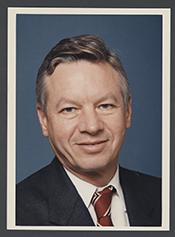
Mr. Chairman, I raise a point of order. Mr. Chairman, I raise a point of order against page 31, line 6, beginning with ``provided further'' through line 19. This provision violates clause 2 of rule…
Mr. Chairman, I raise a point of order.
Mr. Chairman, I raise a point of order against page 31, line 6, beginning with ``provided further'' through line 19.
This provision violates clause 2 of rule XXI. It changes existing law and therefore constitutes legislating on an appropriation bill in violation of House rules.
Mr. Chairman, I make a point of order.
Mr. Chairman, I make a point of order against section 162 on page 39, line 1 through 23.
This provision violates clause 2 of rule XXI, changing existing law and therefore constitutes legislating on an appropriation bill in violation of House rules.
Mr. Chairman, was the previous point of order against the language of the entire paragraph?
Including all of page 41 and page 42 through line 16?
And page 42 through line 16, Mr. Chairman?
Mr. Chairman, I make a point of order against the phrase ``notwithstanding any other provision of law'' on page 43, line 20.
This phrase violates clause 2 of rule XXI. It changes existing law and therefore constitutes legislating on an appropriation bill in violation of House rules.
Mr. Chairman, I reserve a point of order.
Mr. Chairman, I do not.
Mr. Chairman, I make a point of order against section 174 on page 48, line 25, through page 49, line 15.
This provision violates clause 2 of rule XXI. It changes existing law and therefore constitutes legislating on an appropriation bill in violation of the rules of this House.
Mr. Chairman, I raise a point of order against this section.
Mr. Chairman, I raise a point of order against section 177 on page 50, line 7 through line 15.
This provision violates clause 2 of rule XXI. It changes existing law and, therefore, constitutes legislating on an appropriations bill in violation of the rules of this House.
Mr. Chairman, I reserve the right to object.
Mr. Chairman, under the unanimous consent request, at what point in the subsequent proceedings would it be in order to raise points of order? Could they be done at any time, or is there any particular time that they would have to be raised?
And they should be made forthwith?
Mr. Chairman, I withdraw my reservation of objection.
Mr. Chairman, I raise a point of order against section 505.
Mr. Chairman, I raise a point of order against section 505 on page 117, line 7 through line 10.
This provision violates clause 2 of rule XXI. It changes existing law and, therefore, constitutes legislating on an appropriations bill in violation of House rules.
Mr. Chairman, I raise a point of order against the language on page 148, lines 11 through 21.
The language referred to constitutes a violation of House rule XXI which prohibits provisions, changing existing law in a general appropriations bill, especially since it contains the language ``or any other act,'' which clearly changes existing law, and includes a proviso relating to a specific determination by the agency which also changes substantive law. This is legislating on an appropriations bill in violation of the rules of the House.
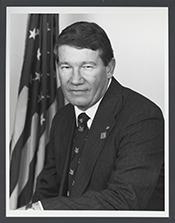
Mr. Chairman, the gentleman from Ohio knows good and well, so does my counterpart on the Democrat side, we have testimony before the committee from the Justice Department, from the FBI, from law…
Mr. Chairman, the gentleman from Ohio knows good and well, so does my counterpart on the Democrat side, we have testimony before the committee from the Justice Department, from the FBI, from law enforcement that this is not a good idea. And you know under President Clinton or President Bush, if they say this is what we want out of the White House, those Secretaries and those Department heads are going to say, Aye-aye, three bags full. That is what they have done in your letter today.
You are putting this country at risk today. FBI has testified that these matricula cards, some individuals have up to 30 of these things. You say Mexico requires a birth certificate. Have you ever tried to get something in Mexico? I have been down there a lot, and a few dollars will get you anything. There is no database.
You want to work on a bipartisan bill? You want to work something bipartisan? Let us have our U.S. Government with a database issue a card, I will support it, that is controlled by our homeland security, our FBI; but to take a Costco card out of Mexico and risk our national security, I am disappointed in this White House, I am disappointed in my own party, and I am disappointed in those on the other side that support this amendment.
The gentleman from Ohio is my friend, but he is wrong on this. I have been here 14 years and nothing has ever bothered me as much from my own party to put us at risk. These cards are fake. Every single day they use these cards illegally. It is not about financial services. The FBI testified, they use these cards to gain driver's licenses. And guess what? They can get on an airplane, and they can blow it up. FBI has testified to this. Justice Department. I do not care what letter you got out of the White House or these guys that are going to say, okay, Mr. President, we'll give you a letter to support your position. It means nothing. You look at today's situation, with these folks coming over that are illegal, with these cards, using them every day, and that is wrong. I am so disappointed in my own party, I cannot believe it.
I yield to the gentleman from Ohio.
Taking my time back, why do we not do a U.S.-side card that has a database? Mexico has no database whatsoever. You can go from area to area and get a different matricula card like this. Why do we not work this out to where a U.S.-side matricula card that has a database that can actually control the services and not allow additional IDs to be formed so that these guys can drive airplanes and bomb this country? Why do we not do that?
I will be happy to. In the meantime, I do not want to support your amendment which in my opinion is a disaster to national security in this country. Special interests in banking, a caucus over on this side and people that want to support this, I disagree 100 percent. If you say I am fighting the White House, you are absolutely 100 percent right.
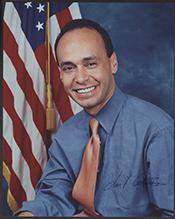
Mr. Chairman, I rise in support of this amendment to strike the Culberson provision. It says something that this amendment is supported by such a diverse coalition, the Bush administration, the…
Mr. Chairman, I rise in support of this amendment to strike the Culberson provision. It says something that this amendment is supported by such a diverse coalition, the Bush administration, the banking industry, immigration groups, Members from both sides of the aisle joining together to remove language that is at its heart designed to keep immigrants out of the regulated banking system.
This issue is one that I have worked on since I was elected 12 years ago to the Congress of the United States, and that is, how do you transfer money back to loved ones that really need it?
If we want to have a debate on immigration, let us have a debate on immigration. I think that is a substantive debate we should have. As a matter of fact, it was the President of the United States who, on January 7, said we should take people who live in obscurity and are exploited; the leader of the Republican Party, as I saw him at the convention in New York, in command of the Republican Party and your candidate for President, who said we
should deal with this immigration issue.
As a matter of fact, it is President Bush who Members are attacking here tonight who are saying is making our system unfair because it is President Bush and his administration that supports this amendment. Let us make that absolutely clear and have no quibbles about whose policy this is. This is the Bush administration's. Since the PATRIOT Act, we dealt with the regulation and the Treasury Department for more than a year before these provisions were enacted.
Mr. Chairman, I do not know how Members of the President's party can say the banking industry is trying to sugarcoat this.
Members know what they get with the matricula consular. Ten million people live in the United States who are probably undocumented. We should know something about them. Where is the political will in this country and the requisite resources to deport those 10 million people? This Congress has never had a serious debate about deporting and putting the resources towards 10 million people. We never will.
Some Members walk up here and say there are 2 million undocumented Mexicans in California as if they are just there. Do Members know what they are doing? They are cleaning bathrooms. They are picking the grapes. They are doing the arduous work that many of us born in this country will not do. Let us face up to it, they are working, and they are contributing to our economy. They are not just here stagnant.
Let us have a real debate, but the matricula consular is not the place to have debate on immigration policy. They are going to continue to come. They came before the matricula consular; they will come after the matricula consular. Let us give an identification that local economies and local administrations want. That is the matricula consular.
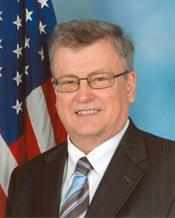
Mr. Chairman, I make a point of order. Mr. Chairman, I raise a point of order against the fourth proviso under the heading, ``High Intensity Drug Trafficking Areas'' program on page 85, lines 10 to…
Mr. Chairman, I make a point of order.
Mr. Chairman, I raise a point of order against the fourth proviso under the heading, ``High Intensity Drug Trafficking Areas'' program on page 85, lines 10 to 19. This provision violates clause 2(b) of House rule XXI and proposes to change existing law within the jurisdiction of the Committee on Government Reform and, therefore, constitutes legislating on an appropriations bill in violation of the House rules.
Mr. Chairman, this provision is clearly authorizing language in appropriations legislation, and I am disappointed that it is in the bill. It directly violates language used in H.R. 2096, the Office of National Drug Control Policy Act 2003.
Not only did this pass the House, it passed our subcommittee and full committee unanimously, which is no small feat. Four major committees of this House either waived or sent additional information into the Committee on Rules, the Committee on Education and Workforce, the Committee on Energy and Commerce, the Committee on the Judiciary, and the Permanent Select Committee on Intelligence. Then it came to the floor of the House and passed unanimously.
So I do not understand why in the relations with other committees they would not have worked with us when they choose to authorize on an appropriations bill.
Let me get to the specifics of this. This has to do with High Intensity Drug Trafficking Areas. What has happened to this program, which was supposed to focus on High Intensity Drug Trafficking Areas, it has become a pork program in many cases to move money around to individual Members' personal HIDTAs. The bill that passed the House unanimously says that will give flexibility to the appropriators, but there has to be a fixed amount that goes to the southwest border HIDTA, which is the number one drug trafficking point we have in the United States, and then next to the seven HIDTAs originally authorized and appropriated by the Committee on Appropriations, and then the rest of the money can be divided; but you have to have some priority system in the HIDTA program.
We have passed this unanimously in the House. We see the changing patterns of drug trafficking. We know we need more HIDTAs. We know we need more money. We have methamphetamine problems across the country. But when we establish a program and we have rules of the House, that needs to be followed.
So I appreciate all of the work that the chairman has done in the drug area, and I regret that I have to make a point of order; but I believe that without this point of order, this bill is in clear violation of the House rules and would also devastate our High Intensity Drug Trafficking Program.
Mr. Chairman, first of all, the language of the bill only deals with one identification card. It is the matricula consular. So it is specific to a card that is issued by the Mexican consulate, and…
Mr. Chairman, first of all, the language of the bill only deals with one identification card. It is the matricula consular. So it is specific to a card that is issued by the Mexican consulate, and the Mexican consulate has been issuing this card since 1871.
A Mexican resident has to go to the consulate, show proof of citizenship, Mexican citizenship, a photo ID to show that that is the person, and thirdly, proof of the residence that they are having in this country. That is the requirement.
Since 9/11, the Mexican Government has made this card harder to get and also more authentic in terms of a fraud-free card to the best of their ability.
Since 9/11, because of the U.S. PATRIOT Act, according to section 219, the Treasury, in cooperation and consultation with the various departments, Department of Justice, FBI, et cetera, accepted a regulation that allows this card to be used as primary identification for a bank or financial institution.
Now, we have heard a number of allegations. All throughout this debate, at the subcommittee and the full Committee of Appropriations, the only letter that has come to the Committee on Appropriations has been the letter signed by the Secretary of the Treasury. The FBI has not sent a letter. Today, we have a letter before us that is signed by the Deputy Attorney General from the U.S. Department of Justice saying that they agree with the regulation of the Treasury and would like to continue the use of its card.
I have to tell my colleagues that when we talk about terrorist acts, and I also am concerned about them. But I must say that there are a number of cities and towns in this country who have accepted this consular card as a form of I.D., because it allows an entity, city, county or State, to know the residence of a person who is here undocumented. If that person did not identify themselves through this card, we would never know where they live. So sheriffs, police departments, city governments, county governments, because of the fear of terrorism, accept this card because they now know where an undocumented person resides in this country. So it is not only the financial I.D. aspect of this card but it is also the security provided by this card that we must vote for the amendment.
The allegations that have been made that the FBI did not support this card and Homeland Security did not support this card, was done months ago, and the only notification that we have from this administration is the Treasury saying they want to keep the regulation and now from the Department of Justice saying they support the regulation.
Mr. Chairman, as we all learned just over three years ago, on September 11, 2001, protecting the American people from terrorist attack has become the highest priority of all of us here in the House…
Mr. Chairman, as we all learned just over three years ago, on September 11, 2001, protecting the American people from terrorist attack has become the highest priority of all of us here in the House of Representatives. Shortly after that terrible day, this body came together and passed the USA Patriot Act to enable our law enforcement agencies to more effectively investigate and apprehend foreign terrorists on U.S. soil.
One of our goals when crafting the Patriot Act was to strengthen the ability of our government to track and eliminate funding sources and illicit bank accounts which we know terrorists have used to carry out their deadly attacks. To that end, section 326 of the Patriot Act requires financial institutions to establish ``reasonable procedures'' to verify the identity of customers seeking to open a new account.
This particular provision of the Patriot Act was written to improve the ability of financial institutions to detect and prevent money laundering and terrorist financing. If we were to block funding for this provision, as the underlying legislation seeks to do, we would be prohibiting the Treasury Department from telling financial institutions that they must verify the identity of the customers. We would also be pushing people toward an underground economy, where tracking terrorist financing becomes even more difficult. And we would be reversing a key anti-money-laundering provision of the Patriot Act, which was specifically singled out by the 9/11 Commission as an important defense against terrorism.
I am, however, very sensitive to concerns regarding the reliability of the Matricula Consular card, in particular, as a valid form of identification. And I recognize that both the Department of Justice and the Federal Bureau of Investigation have stated concerns regarding possible fraudulent use of the Matricula Consular ID.
Because of these concerns, I want to say that I plan to work with my good friend from Texas, Mr. Culberson, to address this very important issue. At the end of the day, I am hopeful that we will be able to implement a system that both allows us to root out terrorist financing and give us confidence in the validity of identification documents used at financial institutions. In the meantime, I think it would be wholly short-sighted to cripple our ability to track terrorist financing by supporting the existing language in the bill.
Bill Text
Latest available legislative text
        [Congressional Bills 108th Congress]
[From the U.S. Government Publishing Office]
[H.R. 773 Introduced in House (IH)]

108th CONGRESS
1st Session
H. R. 773

To amend section 5318 of title 31, United States Code, to authorize
financial institutions to accept matricula consular issued in the
United States as a valid form of identification.

_______________________________________________________________________

IN THE HOUSE OF REPRESENTATIVES

February 13, 2003

Mr. Hinojosa (for himself, Mr. Rodriguez, Mr. Gutierrez, Ms. Velazquez,
Mr. Reyes, Mr. Gonzalez, Mrs. Napolitano, Mr. Ortiz, Mr. Baca, Ms.
Solis, Mr. Pastor, Mr. Acevedo-Vila, Ms. Linda T. Sanchez of
California, Mr. Serrano, and Mr. Grijalva) introduced the following
bill; which was referred to the Committee on Financial Services

_______________________________________________________________________

A BILL

To amend section 5318 of title 31, United States Code, to authorize
financial institutions to accept matricula consular issued in the
United States as a valid form of identification.

Be it enacted by the Senate and House of Representatives of the
United States of America in Congress assembled,

SECTION 1. SHORT TITLE.

This Act may be cited as the ``21st Century Access to Banking
Act''.

SEC. 2. FINDINGS.

The Congress finds the following:
(1) As financial institutions more carefully scrutinize
identifying documents presented by foreign nationals seeking to
open new accounts, they are increasingly accepting the
matricula consular as the primary form of identification for
Mexican citizens residing in the United States.
(2) The matricula consular is a water-sealed photo
identification card issued by the Government of Mexico to
Mexican nationals who--
(A) complete an application form in person at any
of the 47 consulate offices of the Government of Mexico
within the United States; and
(B) submit a certified copy of a birth certificate,
present an official picture ID issued by any Mexican or
U.S. authority, and show proof of residence in the
consular district by presenting a phone, rent, or power
bill.
(3) The card known as the matricula consular contains a
serial number, the individual's name, date and place of birth,
the United States address of such individual, as well as the
card's date of issuance and expiration.
(4) Mexican consulate offices in the United States are also
developing a telephone verification service that will allow
financial institutions and other persons to confirm the
authenticity of any matricula consular.
(5) Accepting matricula consular as a form of
identification allows Mexican immigrants to enter the financial
mainstream and provides banks and other financial institutions
with a new, fast-growing market.
(6) Opening a bank account is often impossible for Mexican
nationals who lack the generally required 2 forms of
identification and as a consequence, they often use expensive
check-cashing services to cash payroll checks and wire services
to send money to relatives in Mexico and carry large sums of
cash, which has increasingly made them targets of crime.
(7) Institutions located in areas with large Hispanic
populations have established a variety of programs to meet the
needs of this growing segment of the population, including the
maintenance of bilingual automated teller machines, the
employment of bilingual staff, and the establishment of loan
packages and business banking services geared to Hispanic
businesses.
(8) The acceptance of the matricula consular issued by
consulates of the Government of Mexico as a form of
identification is consistent with the proposed customer
identification verification regulations prescribed under
section 5318(l) of title 31, United States Code.

SEC. 3. ACCEPTANCE OF MATRICULA CONSULAR FOR IDENTIFICATION AND
VERIFICATION OF CUSTOMERS WHO OPEN ACCOUNTS AT FINANCIAL
INSTITUTIONS.

(a) In General.--Paragraph (6) of section 5318(l) of title 31,
United States Code, is amended to read as follows:
``(6) Matricula consular.--Subject to regulations
prescribed under this subsection, a matricula consular issued
in the United States by a duly authorized consular officer of
the Government of Mexico shall be a valid form of
identification of the individual to whom the card is issued for
purposes of this subsection.''.
(b) Effective Date of Regulations.--The Secretary of the Treasury
shall prescribe such regulations in final form as may be necessary to
give effect to the amendment made by subsection (a) before the end of
the 90-day period beginning on the date of the enactment of this Act.
<all>