Save Our Children: Stop the Violent Predators Against Children DNA Act of 2003

Legislative Activity
Stay on top of the latest movement without scrolling through every action
Referred to the Subcommittee on Crime, Terrorism, and Homeland Security.
March 6, 2003
View full timeline
Introduced in House
January 7, 2003
Referred to the House Committee on the Judiciary.
January 7, 2003
Referred to the Subcommittee on Crime, Terrorism, and Homeland Security.
March 6, 2003
Floor Debate
14 membersWhat members said about H.R. 89 on the floor
 FJSSJL
 BD
BD CBM
CBM RL+9
RL+9
Floor Debate
14 membersWhat members said about H.R. 89 on the floor
Mr. Speaker, pursuant to House Resolution 823, I call up the bill (H.R. 5107), to protect crime victims' rights, to eliminate the substantial backlog of DNA samples collected from crime scenes and…
Mr. Speaker, pursuant to House Resolution 823, I call up the bill (H.R. 5107), to protect crime victims' rights, to eliminate the substantial backlog of DNA samples collected from crime scenes and convicted offenders, to improve and expand the DNA testing capacity of Federal, State, and local crime laboratories, to increase research and development of new DNA testing technologies, to develop new training programs regarding the collection and use of DNA evidence, to provide post-conviction testing of DNA evidence to exonerate the innocent, to improve the performance of counsel in State capital cases, and for other purposes, and ask for its immediate consideration.
Mr. Speaker, I yield myself such time as I may consume.
Mr. Speaker, I rise today in support of H.R. 5107, the Justice for All Act of 2004. This bill is called ``justice for all'' because it will enhance the rights and protections of all persons who are involved in the criminal justice system.
It does this through two different but complimentary mechanisms. First, a new set of statutory victims' rights that are both enforceable in a court of law and supported by fully-funded victims-assistance programs; and, two, a comprehensive DNA bill that seeks to ensure that the true offender is caught and convicted of the crime.
Victims of crime have long complained that theirs are the forgotten voices in the criminal justice system. For example, Roberta Roper, whose daughter Stephanie was kidnapped, brutally raped, tortured and murdered in 1982, testified before the Subcommittee on the Constitution that, unlike her daughter's killers, she had no right to be informed, no rights to attend the trial and no rights to be heard before sentencing.
Her experience, and that of many others like her, have led victims' rights advocates to push for a victims' rights statute to counterbalance the rights provided to the accused under the Constitution.
The victims' rights portion of this bill originated with S. 2329, which passed the Senate on April 22, 2004, by a vote of 96 to 1. Like S. 2329, this bill contains eight enumerated rights for the victim, including the right to be reasonably protected from the accused, the right to timely notice of public court proceedings involving the crime, the right not to be excluded from such public court proceedings, the right to be reasonably heard at those proceedings, the reasonable right to confer with the prosecutor, the right to restitution, the right to proceedings free from unreasonable delay and the right to be treated with fairness and respect.
Each of these rights is enforceable by both the prosecutor and the crime victim. The crime victim and the prosecutor may assert the crime victim's right and, if necessary, seek a stay of any proceedings in which the victim's rights are being denied. The government or the crime victim can then seek a writ of mandamus from the appropriate Court of Appeals to ensure that the crime victim's rights are protected.
In addition, the Justice for All Act contains important provisions to ensure that the criminal justice system will continue to operate in an efficient manner and that there will be an appropriate level of finality to all proceedings.
Finally, this legislation will provide funds for victims' assistance programs at both the Federal and State level. Of particular importance are funds to support programs that provide legal counsel for crime victims. These funds will help to develop a body of laws to protect the rights of victims in the Federal courts. The National Crime Victim Law Institute is but one example of an organization that provides the type of legal counsel envisioned by the bill.
The bill is not identical to the Senate-passed bill, but it is close. Since Senate passage, the committee has worked with many interested parties on these issues. That process resulted in H.R. 5107 which, as introduced, addressed many of the concerns raised by S. 2329. However, at the Committee on the Judiciary's markup, I stated that we will continue to work on this bill until we have the best bill possible. After several more weeks of negotiations, I believe that the manager's amendment, which I will offer in a bit, moves even further in the right direction and now represents that best possible bill.
The second important element of the Justice for All Act contained in titles II through IV pertains to the use of DNA technology. These provisions come from H.R. 3214 which passed the House by a vote of 357 to 67 on November 5, 2003, but continues to await action in the Senate. The DNA portion of the Justice for All Act as introduced was identical to the version of H.R. 3214 passed by the House last November.
Titles II through IV of the Justice for All Act seek to resolve another problem that victims face, the frustration and depression over the length of time it takes to track down and apprehend the attacker. DNA samples can help to quickly apprehend offenders and solve crimes if law enforcement agencies have access to the most up-to-date testing capabilities. Additionally, DNA technology is increasingly vital to ensuring accuracy and fairness in the criminal justice system. DNA can identify criminals with incredible accuracy when biological evidence exists, and DNA can be used to clear suspects and exonerate persons mistakenly accused or convicted of crimes.
The current Federal and State DNA collection and analysis system needs improvement. The Justice for All Act will provide the necessary funding to ensure these critical programs have access to the necessary equipment and training. It will provide funds to eliminate the backlog of DNA samples in need of testing and provide greater access to potentially exculpatory evidence to those who may have been wrongfully convicted of a crime.
However, as we did with the victims' rights portion of the bill, we have continued to work with all parties to address concerns relating to the DNA testing portions of the bill. Those changes, which are reflected in the manager's amendment, greatly improve the bill, and I will describe them in greater detail when the amendment comes up.
As I mentioned earlier, this bill has been the process of lengthy negotiations among many different parties. Most of the parties have worked to get this result, and I think they now believe that this is a good product. Unfortunately, however, the Department of Justice was unable to come to this conclusion. I, and the other cosponsors of this legislation, bent over backwards to satisfy their concerns. No matter how much we bent, nothing would satisfy them. As chairman of the committee with the authorizing jurisdiction over the department, I am very disappointed with its position on this bill. This bill contains many, many good things for the department, and its absolute obstinence despite many, many efforts to compromise is completely unreasonable.
This reminds me of the debate over the breakup of the Immigration and Naturalization Service in 2002, a clearly dysfunctional agency that needed reform. Out of blind bureaucratic inertia, the department opposed that much-needed legislation until the very last moment. In short, Mr. Speaker, I sincerely hope that the department will come to its senses, throw off its blinders and endorse this good and important legislation.
I would finally like to thank those who did cooperate in this process. The chairman of the Subcommittee on the Constitution, the gentleman from Ohio (Mr. Chabot) has been a tireless advocate for victims' rights, as well as the gentleman from Michigan (Ranking
Member Conyers), the gentleman from Massachusetts (Mr. Delahunt), the gentleman from Wisconsin (Mr. Green), the gentleman from Illinois (Mr. LaHood), the gentlewoman from New York (Mrs. Maloney), and all of the other important cosponsors for this important bill.
In addition, I want to thank my own staff, Katy Crooks, and general counsel, Philip Kiko, Jay Apperson, and Stewart Jeffries, as well as staffers of the gentleman from Massachusetts (Mr. Delahunt), Mark Agrast and Christine Leonard. This would not have happened without their tireless work. I urge my colleagues to support this very good bill.
Mr. Speaker, I reserve the balance of my time.
Mr. Speaker, I yield 2 minutes to the original author of the Innocents Protection Act, the gentleman from Illinois (Mr. LaHood).
(Mr. LaHOOD asked and was given permission to revise and extend his remarks.)
Mr. Speaker, I yield 3 minutes to the gentleman from Ohio (Mr. Chabot), the chairman of the Subcommittee on the Constitution.
Mr. Speaker, I yield 2 minutes to the gentleman from Wisconsin (Mr. Green).
Mr. Speaker, I yield 2 minutes to the gentleman from Arizona (Mr. Flake).
Mr. Speaker, I yield myself the balance of my time.
Mr. Speaker, the issue raised by the gentleman from Arizona (Mr. Flake) was one of the most vexatious issues in the negotiations that are leading up to the manager's amendment, which I will offer shortly. And the most difficult of the issues that the manager's amendment deals with relates to the time limit for seeking post-conviction DNA testing.
On one side there were a group of people who wanted to have no time limit at all, and a motion could be made at any time as long as the defendant was still alive and in jail. On the other side, there were people who wanted to have a hard and fast limit, and the shorter the limitation possible they were in favor of. Those people said that defendants would simply game the system waiting until the witnesses had died and the DNA had evaporated and, consequently, there would not be enough evidence to conduct a retrial.
The compromise that was worked out, I think, is a fair one. For the first 5 years after conviction, there is a rebuttable presumption in favor of the test. After 5 years, there is a rebuttable presumption against the test, but the defendant can get a motion granted if the court finds that the applicant was incompetent at trial, there is newly discovered DNA evidence, or that denial of the motion to retest would result in manifest injustice or for good cause shown.
So, for the first 5 years, the burden is on the prosecution to show that the test should not be granted. After 5 years, the burden effectively is on the defendant to show that the test should be granted for the reasons that I have enumerated.
I believe that takes care of the concerns that the gentleman from Arizona (Mr. Flake) has expressed, and I would
urge adoption of the manager's amendment and overwhelming support of the bill.
Mr. Speaker, I ask unanimous consent that a letter from the National District Attorneys Association expressing support for the manager's amendment to H.R. 5107 be included in the Record.
National District Attorneys
Association,
Alexandria, VA, October 6, 2004.
Hon. Jim Sensenbrenner,
Committee on the Judiciary, Rayburn House Office Building,
Washington, DC.
Hon. John Conyers Jr.,
Committee on the Judiciary, Rayburn House Office Building,
Washington, DC.
Dear Chairman Sensenbrenner and Congressman Conyers: As
President of the National District Attorneys Association I
want to express my support for the Managers Amendment that I
understand has been offered to H.R. 5107 the ``Justice For
All Act.''
The Amendment has addressed our major concerns with the
``Advancing Justice Through DNA Technology Act.'' The clear
indication that Capital Resource Centers are not to be funded
through federal funds is important as is the stipulation that
the funding is to be used for training counsel in capital
cases.
While the compromise standard for new trials does not reach
our criteria of a ``preponderance'' it is a marked
improvement over prior efforts.
The importance of DNA to our system of criminal justice
cannot be over emphasized and the problems that our
laboratories and courts are encountering are in our daily
headlines. ``The Justice For All Act'' provides the resources
desperately needed by the states to overcome serious
impediments to the effective use of DNA to seek justice and
truth in our criminal justice system.
Sincerely,
Paul F. Walsh Jr.,
District Attorney, Bristol County, MA,
President, National District Attorneys Association.
Mr. Speaker, I yield back the balance of my time.
Mr. Chairman, I offer an amendment.
Mr. Speaker, I yield myself such time as I may consume.
Mr. Speaker, on September 22, 2004, the Committee on the Judiciary met and considered this combined Victim Rights-DNA bill. It was reported voted favorably, without amendment, on a voice vote. At the time, I assured my colleagues who raised concerns about the legislation that we would work with them as well as the Department of Justice to address the concerns. I believe this amendment represents a positive compromise in our efforts to address those concerns while protecting victims and ensuring DNA testing will be available to exonerate the innocent and to identify the guilty.
In the victims' rights portion of the legislation, we worked out a number of provisions with the authors of that part of the bill and the victims' rights groups to address issues raised by the Department of Justice, the courts, and outside groups. The result was a compromise that I believe effectively addresses the needs of victims of crime to be more involved in the criminal justice process but will not result in delaying court proceedings nor infringing on the right of a defendant to a speedy trial.
To address privacy concerns raised about DNA databases, my amendment includes increased penalties for misuse of DNA analyses from $100,000 to $250,000, and the possibility of a year in prison to discourage any person who would seek to misuse DNA for personal gain.
The amendment also requires a report to Congress if the Justice Department plans to modify or supplement the core generic markers needed for compatibility with the national DNA database. This is essential to reassure those who raise civil liberty concerns that DNA samples entered into the combined database would not be used for inappropriate purposes.
The legislation authorizes a substantial amount of money to provide grants to States to eliminate their DNA backlogs. Some have raised the concern that there may be some States that do not have a substantial backlog and, thus, would not receive funds. To ensure that the States are effectively using their resources, the amendment allows a State that has no DNA backlog to apply for grants for other forensic sciences.
With regard to the provision relating to the post-conviction DNA testing, the amendment offers a compromise, as I have previously stated, between those who wish to have no time limit on the ability of convicted persons seeking DNA testing and those who insist on a limitation of time, lest convicted persons game the system by waiting until the witnesses have died or waiting until the evidence has evaporated, thus effectively preventing a retrial.
The compromise provides for a 5-year period in which there would be a rebuttable presumption in favor of granting the DNA test. After 5 years, there is a presumption against granting a test unless the court finds that the applicant was incompetent, there is newly discovered DNA evidence, denial would result in a manifest injustice, or for other good cause shown. The amendment also includes tighter language to ensure that defendants cannot make repetitive motions for relief.
Because some of my colleagues in the Department of Justice raised concern about the standard for granting a new trial, the amendment increases the standard for obtaining a new trial to require that there be compelling evidence that a new trial would result in an acquittal. This represents a compromise from the preponderance of evidence and clear and convincing evidence.
With respect to funding prosecution and defense representation in capital cases, the original bill and this amendment do not allow funds to be used directly or indirectly to fund representation in specific capital cases. Additionally, report language on the DNA provision prohibits the creation of capital resource centers.
This amendment tightens the provisions relating to the training and appointment of capital counsel. The amendment specifies that no less than 75 percent of the funds shall be used to carry out training for representation and the creation of an effective system at the trial court level. No more than 25 percent of the funds shall be used to carry out training and systems for appellate representation.
The amendment also reduces the authorization of grants to States to provide training to defense attorneys and prosecutors, and to establish a system of appointment of counsel in capital cases.
Finally, the amendment provides for notification 180 days before the destruction of biological evidence, and provides that the time period will not begin to run until any direct appeal of the conviction was complete. This will ensure that the evidence in the case is preserved to benefit both the defendant and the government if the conviction is reversed.
I believe this amendment represents a good compromise package which will help ensure justice for all. I urge my colleagues to support it.
Mr. Speaker, I reserve the balance of my time.
Mr. Speaker, on that I demand the yeas and nays.
Mr. Speaker, I wish to offer my sincere applause to the gentleman from Massachusetts (Mr. Delahunt) and the gentleman from Illinois (Mr. LaHood). I know the work they have done and the effective work…
Mr. Speaker, I wish to offer my sincere applause to the gentleman from Massachusetts (Mr. Delahunt) and the gentleman from Illinois (Mr. LaHood). I know the work they have done and the effective work our chairman has done. The gentleman from Wisconsin (Mr. Sensenbrenner) has done a very effective job, along with the gentleman from Michigan (Mr. Conyers).
I mentioned in the rule the very important elements, and I want to again refer very quickly to those important elements of this legislation and to the legislation that I introduced, H.R.89, Save Our Children: Stop the Violent Predators Against Children DNA act of 2003. This legislation that we will be passing, and I hope we can work it out with the Senate, will lay the groundwork for legislation that will help enhance victims' rights and bring about justice.
I happen to represent an organization that I have worked with over a number of years, called Justice For All, a victims' rights organization, and this is a good day for them because it does have elements of protecting or respecting victims. As the co-chair and founder of the Congressional Children's Caucus, I have deeply been impacted by the negative violent acts against our children, and I believe the legislation I coauthored will be a wonderful complement to this.
We realize the important role that archived DNA evidence played in the case of Elizabeth Smart who was kidnapped from her bedroom at knifepoint in 2002 by Mitchell, 50, and his wife, Wanda Barzee. So we realize this can be an important component to this legislation.
We also know this legislation will be helpful to the DNA labs around the country. I have mentioned the Houston judicial system, which convicted Josiah Sutton in 1998 of the rape of a woman whose body was dumped in a Fort Bend County field. The court eventually granted him bail in March after an independent lab determined that he was sentenced to 25 years in prison for a rape he did not commit, but he stayed in prison for a very long period of time.
This DNA bill will help get us back on track for the victims and the innocent. Attorney Neufeld remarked that the most important question for the people of Houston and the people of Texas is what went wrong that allowed this young man to be convicted for a crime he did not commit?
Now, Mr. Speaker, let me indicate that I happen to think that the 5- year provision on filing a motion could be extended, but I am grateful that lawyers can show that, if there is compelling evidence or show that there is an added reason to go beyond the 5 years, that they will have it. I would have preferred a straight 10-year period, because, Mr. Speaker, I can assure you that people incarcerated do not have the resources, do not hear about it, do not know, and there are not all these lawyers running around to represent incarcerated persons. This balance is for the victims' families and the tragedy that comes about.
And the last thing I will say is that I hope we look at the standards so that we can be assured of the victims' rights but also the protection of this bill. Again, this is a blow against injustice. This is a strike for justice and fairness as relates to those incarcerated unfairly or charged unfairly and for our victims. And I ask my colleagues to support this legislation.
Mr. Speaker, I rise in support of this important legislation that is the result of much work and bi-partisan collaboration. Our work on this legislation, H.R. 5107, the Justice For All Act of 2004 will have far- reaching implications for victims of violent or sexual crimes, suspected perpetrators of these crimes, and individuals who have been wrongfully implicated for the commission of these crimes. Therefore, it is vital that we have good faith collaboration among our colleagues in passing it through this body and on the Floor of the Committee of the Whole.
While I am a co-sponsor of this legislation, as I was of one of its components, H.R. 3214, the Advancing Justice Through DNA Technology Act, I hope that I am able to work with my colleagues to incorporate important provisions of legislation that I introduced, H.R. 89, the ``Save Our Children: Stop the Violent Predators Against Children DNA Act of 2003'' into this legislation as we move to debate before the Committee of the Whole.
As co-founder and chair of the Congressional Children's Caucus, I am deeply committed to doing everything possible to ensure the safety of our children and the expeditious capture of predators that seek to do them harm. The thrust of my legislation is to create a DNA database of child sexual offenders, to supplement the database currently maintained by each of the 50 States, so that we can better protect America's children from these criminals.
I introduced this legislation, in part, as a result of the important role that property-kept and archived DNA evidence played in the case of Elizabeth Smart, who was kidnapped from her bedroom at knifepoint in 2002 by Mitchell, 50, and his wife Wanda Barzee, 58. The safe return of Elizabeth Smart has shown
us that the involvement of DNA evidence can help prevent what otherwise might have been a tragic ending.
The technological tool that this legislation employs must be improved because it plays such a key role in streamlining and expediting our criminal justice system. Our law enforcement agencies are becoming increasingly more reliant upon the analysis of deoxyribonucleic acid (DNA) to verify or rule out the identity of a suspect or a charged individual in processing criminal cases. The more reliant we become, the more our individual rights are at stake. We must, however, significantly raise the bar of our technology and the standards of review for DNA and ballistics crime lab accreditation to minimize mistakes that cost people years of their lives.
Provided that our bipartisan coalition is fortunate enough to pass this legislation today, as I stated before, I hope to engage with my colleagues to fashion the inclusion of provisions of my legislation in the bill as transmitted to the Committee of the Whole.
On July 7, I offered an amendment to H.R. 4754, the Commerce, Justice, and State Department Appropriations bill. The Jackson-Lee amendment called for a $10 million increase of the Community Oriented Policing Services (COPS) program that deals with DNA analysis and sought to minimize the margin of error that threatens individual liberties and rights.
crime lab accreditation
The certification of our crime labs for conformance to our accepted standards is done by groups such as the American Society of Crime Laboratory Directors (ASCLD). The accreditation process is part of a laboratory's quality assurance program that should also include proficiency testing, continuing education and other programs to help the laboratory give better overall service to the criminal justice system. Certification and accreditation are done via a process of self- evaluation led by individual crime laboratory directors.
Our labs are not functioning at optimum levels, and this sub-par performance translates to the miscarriage of justice and prosecution of innocent people. Improvement of lab performance begins with tighter employment policies for the lab staff. For example, the ASCLD's Credential Review Committee has a DNA Advisory Board and codified standards for its technical staff. The following was taken from its website:
DNA Advisory Board Standard 5.2.1.1 provides a mechanism
for waiving the educational requirements for current
technical leaders/technical managers who do not meet the
degree requirements of section 5.2.1 but who otherwise
qualify based on knowledge and experience. Consequently,
ASCLD has established this procedure for obtaining a waiver.
One waiver is available per laboratory if the current
technical leader/technical manager does not meet the degree
requirements of DAB Standard 5.2.1. Waivers are available
only to current technical leaders/technical managers. Waivers
are permanent and portable for the recipient individual. A
laboratory may request a second waiver if the first
recipient leaves the employ of the laboratory.
Although experience is quite important in selecting staff, formal education and increased resources are vital when it comes to technical performance and the legal implications of that performance. I hope that the State and local grant programs found in sections 204, 206, 304, 308, and 412 will help cities like Houston vastly improve the standards of its DNA/ballistics lab accreditation.
texas law and crime lab accreditation
In 2001, Texas passed a law formalizing a process for post-conviction access to DNA testing. The Texas Court of Criminal Appeals, however, has not applied the law as it was designed to work and has denied access to testing in a number of cases.
The Texas House passed a bill in April of last year requiring crime laboratories that test DNA to meet accreditation standards, a law designed to prevent future scandals like the one that recently plagued the Houston Police Department.
The Houston Judicial System convicted Josiah Sutton in 1998 for the rape of a woman whose body was dumped in a Fort Bend County field. But the Court eventually granted him bail in March after an independent lab determined that he was sentenced to 25 years in prison for a rape he didn't commit. An audit and an ongoing series of retesting of DNA samples by the Texas Department of Public Safety and a crime lab professional from Tarrant County revealed potential contamination problems at the subject lab as well as poor working conditions and inadequate training.
Attorney Neufeld remarked that:
[t]he most important question for the people of Houston and
the people of Texas is, ``What went wrong that allowed this
young man to be convicted for a crime he didn't commit?''
And it is absolutely clear that what you have going on is a
system of malpractice by the Houston crime laboratory that
allows its criminalists to distort and conceal evidence.
What I fear about the dangers of poor training and placement of checks may be summed up by what Neufeld added:
One of the biggest problems of . . . [crime labs] is that
they [are] much more concerned with being a servant to the
police and prosecutors than they [are] to science . . . [a]nd
if people want to pursue a career in science, the word
science has to come before law enforcement.
The objectivity that is required to make forensic science effective must be divorced from the latitude exercised by some of our law enforcement personnel. Therefore, we must include adequate technology and resources to prevent injustice and the ruination of young lives like the young Houston man, Josiah Sutton.
Furthermore, other problems with DNA testing in criminal cases affect the inmate directly. The discretion with which the decision whether to use DNA testing leaves room for inconsistent adjudication and differential treatment of convicted persons. Statutory guidelines regarding when to order the test would exclude some cases that might not meet the standards but still might deserve testing. Moreover, some inmates who seek exoneration may request executive clemency. In addition to requiring very difficult measures to achieve justice, some argue that the tests administered are inadequate because they do not provide specific, clear, and fair procedures for inmates to bring claim of innocence.
In addition to negligent handling or unskilled analysis of DNA evidence, the backlog of cases causes our criminal justice system to crumble despite the level of sophistication of our technology. Houston police have turned over about 525 case files involving DNA testing to the Harris County district attorney's office, which has said that at least 25 cases warrant re-testing, including those of seven people on death row. The numbers will grow significantly as more files are collected and analyzed, according to the assistant district attorney supervising the project.
The Fort Worth police crime lab's serology/DNA unit has been criticized recently for a backlog that was slowing down court cases. The unit's performance suffers from understaffing and overworking.
My concern as to the practice of using these DNA tests is that the inmates' civil liberties and rights to due process are continually placed into jeopardy because of a lack of resources. Furthermore, our staffing and personnel problems threaten to undermine the benefits of technology.
Mr. Speaker, with this legislation, I hope that the problems that I have enumerated can be mitigated and addressed. I support this legislation and ask that my colleagues do the same.
Mr. Speaker, I yield myself such time as I may consume. Mr. Speaker, as the chairman of the Committee on the Judiciary, the gentleman from Wisconsin (Mr. Sensenbrenner) just indicated, this is really…
Mr. Speaker, I yield myself such time as I may consume.
Mr. Speaker, as the chairman of the Committee on the Judiciary, the gentleman from Wisconsin (Mr. Sensenbrenner) just indicated, this is really the culmination of an extraordinary bipartisan effort towards a common goal. I would echo his kudos for so many Members on both sides of the aisle, as well as staff. My colleague, the gentleman from Illinois (Mr. LaHood) who has been here from the beginning; this has been an odyssey, if you will, of some 4 or 5 years. On our side of the aisle, I want to make particular note of the efforts of the gentleman from New York (Mr. Weiner), the gentleman from California (Mr. Schiff), the gentleman from Virginia (Mr. Scott), the gentlewoman from New York (Mrs. Maloney) and, of course, my friend who I serve with on the Committee on the Judiciary, my colleague, the gentleman from Wisconsin (Mr. Green). But it has to be stated that without the efforts of the distinguished chairman of the committee, the gentleman from Wisconsin (Mr. Sensenbrenner), we would not be here today. It is really that simple, and I want to acknowledge his Herculean efforts.
This comprehensive legislation seeks to repair, if you will, the two sides of injustice when mistakes happen. I encourage my colleagues, Mr. Speaker, to consider today that the victims of the criminal justice system do not always look alike; they just get caught in this system in different ways. Think of victims like Debbie Smith of Virginia for whom title II of this bill is named. As she has said, and these are her words, ``It gives no comfort to the victims and their families to know that the wrong person is behind bars and the real perpetrator is free to walk the streets'' and commit that crime again.
Debbie Smith is a courageous advocate who has done so much to help her fellow survivors of sexual assault. Yet, it took 6 years for the DNA evidence to be tested in her case, evidence that ultimately led to the capture of that rapist. Only then was she free from what she has called an ``emotional prison.''
And there are other categories of victims in America today, individuals charged with false accusations and imprisoned based on wrongful convictions. Like my friend, Kirk Bloodsworth of Maryland, the first death row inmate to be exonerated by DNA testing after 10 years on death row. Kirk had to convince his lawyer to get the test. DNA established Kirk's innocence, and it also led to the identification and conviction of the real perpetrator, the real murderer, within this past year.
Debbie Smith and Kirk Bloodsworth are both among the innocent whom we seek to protect, Mr. Speaker. Think of the human costs when an innocent person is executed or spends long years in jail. Imagine the scars of a victim who waits years to know the identity of their assailant. Mr. Speaker, we are not talking about hypothetical scenarios here; we are talking about real people, ordinary Americans facing the most extreme miscarriages of justice.
Just this past week in Michigan, a murder case was thrown out of court after DNA evidence demonstrated that the defendant was innocent. Almost every week there is a news story about the use of DNA evidence to exonerate the innocent. Earlier this year in Texas, DNA exonerated Josiah Sutton. During Mr. Sutton's trial, he asked for a DNA test, but his attorney told him that he did not have enough money to obtain it. Mr. Sutton was convicted on charges of rape and sentenced to 25 years in prison.
Four and a half years into that sentence, Mr. Sutton benefited from a moment of serendipity, pure chance, if you will. Listening to the radio, his mother heard about an investigation into DNA testing problems at a Houston crime lab. She called reporters, who agreed to investigate. A UCLA professor conducted an analysis of the DNA evidence and concluded there was no basis for Mr. Sutton's conviction. Since then, he has been fully exonerated, and the crime lab has been shut down.
Well, this bill would help the States protect victims. This comprehensive legislation, as the chairman indicated, contains four titles. I will not review them now; the chairman has done a more than adequate job. It also includes the original bill that was filed by myself and the gentleman from Illinois (Mr. LaHood) entitled the Innocence Protection Act. And here, in the final hours of this legislative session, the version of the Innocence Protection Act that is included in this bill, it is not all that we wanted, but it is an important step forward, and as I just enumerated by pointing just to two different cases, it is long overdue.
Mr. Speaker, the criminal justice system is about the search for the truth, and like all human enterprises, it is fallible. Judges and jurors and police, eye witnesses, defense counsel and prosecutors are all human beings and all make mistakes. I served as a prosecutor for some 20 years. I made mistakes, and those mistakes are etched forever in my mind.
But we have the means now at our disposal to minimize the possibility of error, and especially where lives are at stake, we have no choice, we have no option, we must take advantage of them. Because this bill at its core is about restoring public confidence in the integrity of the American justice system, that system, which really does set us apart, sets our democracy apart among the family of nations, that makes us the viable, healthy democracy that we are.
So I would encourage my colleagues to accept the manager's amendment, to pass this bill, and, hopefully, in the course of the next several days, there will be an awakening, if you will, elsewhere in this city, and the bill should be signed before too long, because our system is at stake.
Mr. Speaker, I reserve the balance of my time.
Mr. Speaker, I yield 3\1/2\ minutes to the gentleman from California (Mr. Schiff), a distinguished colleague and prominent member of the House Committee on the Judiciary.
Mr. Speaker, I yield 3\1/2\ minutes to the gentleman from New York (Mr. Weiner), a member of the committee who has championed a particular title in this bill and who has brought to the attention of the Committee on the Judiciary the need to do something about testing for rape kits.
Mr. Speaker, I yield 4 minutes to the gentleman from New York (Mr. Nadler), one of the leaders on the Democratic side on the House Committee on the Judiciary.
Mr. Speaker, I yield 4\1/2\ minutes to the gentlewoman from New York (Mrs. Maloney), who also has been a champion in terms of protecting the victims of rape and making an effort to secure the apprehension of those who perpetrated that particularly heinous crime.
Mr. Speaker, I yield 2\1/2\ minutes to the gentleman from Illinois (Mr. Rush), my friend, who has championed justice throughout his career. And I would point out that it was in Illinois, through the efforts of some students at the Northwestern School of Journalism that first brought this to the attention of the country, and that a former governor in Illinois, George Ryan, had the courage to raise this issue, to make it a national issue and to bring it to the attention of those who are concerned about the search for truth.
Mr. Speaker, I yield 2\1/2\ minutes to the gentlewoman from Texas (Ms. Jackson-Lee), my friend and colleague and a leader on the Committee on the Judiciary.
(Ms. JACKSON-LEE of Texas asked and was given permission to revise and extend her remarks.)
Mr. Speaker, I have no further requests for time, and I yield back the balance of my time.
Mr. Speaker, I yield myself such time as I may consume, and I support the amendment offered by the chairman for the reasons that he has enumerated.
I would also make the observation, Mr. Speaker, in line with the points made by the gentleman from Wisconsin (Mr. Green), the gentlewoman from New York (Mrs. Maloney), and particularly the gentleman from New York (Mr. Weiner) regarding the ability of law enforcement to identify sexual predators in the aftermath of the efforts made in New York City to reduce that backlog of DNA tests in those boxes that were sitting in that cold storage warehouse somewhere in Long Island.
I would remind those that are concerned about removing sexual predators from the streets of our communities in this country, and particularly let me remind our colleagues in government at the Department of Justice, the passage of this bill will undoubtedly lead, not to hundreds but to thousands of rapists and other sexual predators being identified. And as the gentleman from New York indicated, there is a likelihood, particularly in this category of criminals who tend to have a
high rate of recidivism, that they are committing these crimes again all over this country.
Let me suggest that this particular act, Justice for All, is and will be, if signed by the President, one of the most effective means of reducing the incidence of sexual violence in this country. We have an opportunity here to defend women and others that are victims of sexual predators. I would think that that fact alone would compel those who are in opposition to this bill, whoever they may be, to rethink their position and support it.
Let me conclude by saying again to the gentleman from Wisconsin (Mr. Sensenbrenner), this has been a remarkable effort, and to you, Mr. Speaker. This proposal before us today, this resolution, really does reflect a good-faith effort to address concerns raised by victims organizations, lawyers, civil liberties groups, prosecutors, and all those who have an interest in justice.
I urge the passage of the manager's amendment.
Mr. Speaker, I yield back the balance of my time.
Mr. Speaker, I thank the gentleman for yielding me time and for his leadership on so many important issues before this body. Mr. Speaker, I rise in strong support of the Justice for All Act, and I…
Mr. Speaker, I thank the gentleman for yielding me time and for his leadership on so many important issues before this body.
Mr. Speaker, I rise in strong support of the Justice for All Act, and I would like to commend the truly heroic leadership of the gentleman from Wisconsin (Chairman Sensenbrenner), the gentleman from Michigan (Ranking Member Conyers) and the efforts of many, the gentleman from New York (Mr. Nadler), the gentleman from New York (Mr. Weiner), the gentleman from Illinois (Mr. LaHood) and especially the gentleman from Massachusetts (Mr. Delahunt) for his tireless work on the Innocence Protection Act and for my colleague, the gentleman from Wisconsin (Mr. Green), who has worked selflessly on passing the Debbie Smith Act for many, many years.
This marks the second time this bill has passed this body this year, and I do not understand why both bodies cannot come together to pass the same legislation, which so many people support in a bipartisan manner, that will lock up the guilty and free the innocent. The longer we delay, the longer the victims of sexual assault and rape must wait to see their attackers put in prison.
This bill includes provisions to protect the rights of crime victims, as well as legislation, the Advancing Justice Through DNA Technology Act, which includes the Debbie Smith Act and the Innocence Protection Act; and the House overwhelmingly passed, last year, both of these to improve the use of DNA technology in prosecuting criminals.
DNA is accurate, it never forgets, it cannot be intimidated by a prosecutor; and we have to put this technology to use in convicting criminals and freeing the innocent.
In the 105th Congress, I offered legislation to provide funding to process the backlog of DNA evidence in rape cases. After holding a hearing, along with former Representative Steve Horn, with a courageous rape survivor, Debbie Smith, she recounted how in 1989 she was dragged from her kitchen and raped in her backyard while her husband was asleep upstairs. She lived in fear for years because the rapist said that he would come back and kill her. Then she finally learned after 6 years that, through DNA processing, they had found a cold hit identifying her assailant, who had been jailed 6 months after her assault for another crime, but for 6 long years she literally lived in agony.
It was because of Debbie Smith's story that I introduced the Debbie Smith Act, which would help combat the epidemic of violence against women in the United States, where a sexual assault occurs every 2 minutes.
We know that DNA processing techniques could serve as a conclusive proof in countless other rape cases, and many of us were outraged when we learned that there were hundreds of thousands of backlogged rape kits collecting dust across this country, but they did not have adequate support for the crime labs and adequate government funding to process them.
The bill would accomplish several critical objectives in Title II of the bill, the Debbie Smith Act, which includes providing funding to process the backlog of DNA evidence, setting national standards for DNA evidence collection, creating a national DNA file in the FBI for rapists and criminals who cross State lines, and providing grant money for a sexual assault forensic examiner program. The police tell us if they have the evidence from the same program, it almost always leads to a conviction. It also provides funding to train law enforcement authorities on the collection and handling of DNA evidence.
I want to say that the dismal reality in this country is that only 6 percent, according to the FBI, only 6 percent of women who have been raped will ever see their attacker spend a day in jail. Yet we know that each unprocessed DNA kit represents a life like Debbie Smith's, and it represents a rapist which the FBI tells us will attack, on the average, eight times. By processing this evidence, we may be able not only to convict rapists, but to prevent them from harming other men and women in our country.
So this is tremendously important legislation, and the gentleman from Massachusetts (Mr. Delahunt) and the gentleman from Wisconsin (Mr. Sensenbrenner) and the gentleman from Illinois (Mr. LaHood) have talked about other aspects of it. We should all join in passing it. I hope that every Member of this body will join in supporting this important effort.
May I add that Lifetime Television started a national petition in support of this bill. Many, many organizations, RAINN and others, have worked tirelessly with this body to pass it. We thank them, too.
Mr. Speaker, I offer my thanks to the chairman of the committee for hanging in there with us and being so persistent about this important piece of legislation. My thanks to the gentleman from…
Mr. Speaker, I offer my thanks to the chairman of the committee for hanging in there with us and being so persistent about this important piece of legislation. My thanks to the gentleman from Massachusetts (Mr. Delahunt) for also hanging in there with us 5 years ago when he and I collaborated on this and introduced this bill. I think we had an idea it would take this long, but I think we are getting close. And if we can persuade the other body that this is the right approach and a good bill, I think we will have come a long way over the last 5 years to perfect a bill.
I really thank the chairman of the Committee on the Judiciary, the gentleman from Wisconsin (Mr. Sensenbrenner). He really has helped us perfect this idea that there has to be 100 percent certainty in capital cases and in death penalty cases.
As a proponent of capital punishment, I believe very strongly that it can be a deterrent, but there has to be 100 percent certainty; and that is really what one of the titles the Innocents Protection Act's title of this bill really allows for and provides for. We could not be here today without really the leadership of the chairman. So I am grateful to him.
When we look in the eyes of people like Kirk Bloodsworth and Debbie Smith and to be able to tell them that we are getting close to solving some very serious problems and really trying to get to perfection in a flawed system. I am very proud of the students at the Northwestern University in Chicago for the work that they did that really highlighted the flaw in this system after a study where they looked at all death penalty cases in Illinois.
And as a result of their study, 12 people were released from death row because it was found that they were innocent. And at that point I think we all realized that there were 12 people on the street that were guilty of the crimes that were free people. And that kind of initiative and that kind of study really emboldened us to move ahead with this legislation. We could not have done it without them.
We could not have done it without the determination of people like Kirk Bloodsworth and Debbie Smith and the chairman and the gentleman from Massachusetts (Mr. Delahunt).
Mr. Speaker, I have prepared remarks that really go into more detail, but I just wanted to be here today to say thanks to all those who have had the determination to make this happen. I ask all Members to support this bill.
Mr. Speaker, I rise today as a supporter of the death penalty, and supporter of this bill. In the 106th and 107th Congresses, I sponsored the Innocence Protection Act with Mr. Delahunt, which is now included as section 3 in the Justice For All Act.
I am a proponent of the death penalty, as a deterrent to violent crime, and this bill provides the materials necessary to repair our flawed system. I believe that those of us that support the death penalty have a responsibility to ensure it is applied fairly. As a just society, we must condemn the guilty, exonerate the innocent, and protect all Americans' fundamental right to truth. It is my belief that this legislation allows us to save the death penalty, to know that we are utilizing it in instances where we are confident of wrongdoing.
Mr. Speaker, we cannot afford one more innocent life to be lost due to inexperienced counsel, or unprocessed DNA kits. We must permit inmates access to post-conviction DNA testing to establish innocence and compensate those who have served time for crimes they did not commit.
In order to continue to rightfully punish our guilty, we must establish minimum standards of competency for counsel in capital cases. As long as innocent Americans are on death row, the guilty remain on our streets. This legislation would increase public confidence in our Nation's judicial system as it relates to the death penalty. Individuals have spent years on death row for crimes they did not commit.
A death sentence is the ultimate punishment. Its absolute finality commands that we be 100 percent certain of an individual's guilt. In protecting the innocent, we also make sure the guilty do not go free.
I applaud the chairman for his determination in crafting this bipartisan piece of legislation that assures fundamental accuracy and fairness in our judicial system.
Show 8 more
Mr. Speaker, it is remarkable that in DNA people see this issue through many different prisms, all of them positive. For those of us in this Chamber who are concerned about law enforcement, DNA is…
Mr. Speaker, it is remarkable that in DNA people see this issue through many different prisms, all of them positive. For those of us in this Chamber who are concerned about law enforcement, DNA is truly a miracle. It is better than a fingerprint. It is better than a video tape. It is better than an eye witness. It is better than a lie detector. With DNA we can find out who did a crime, and as other speakers have spoken to here, we can also find out who did not do it.
But the prism I look at this issue through was formed early in my congressional career. The prism I look at DNA through is a series of cardboard boxes all stacked in a refrigerated warehouse in Long Island City. That is where I found rape kits that were evidence for crime scenes, completely anonymous except for the numbers written on the side of these cardboard boxes, 16,000 of them in early 1999 when I was first elected, all collected at crime scenes in New York City, all that had not been analyzed, all that had not been processed, all representing a victim that was awaiting justice.
That backlog is heartrending. That backlog does not represent a simple number on the box. That backlog represent an individual, an individual crime. And the mystery was that it was not being stored in that refrigerated warehouse because of any bureaucratic problem. It was not being stored there because of any legal loggerhead. It came down to one thing: money.
In 1999 I was proud to introduce in this House for the first time an authorization for congressional funding to help cities and states dig out of their backlog. With former Congressman Gilman and former Congressman McCollum we passed for the first time the Backlog Elimination Act. Because of that law, now localities across this country have been able to reduce their backlogs. They have not been eliminated. Also authorized in that law was a study that we learned the problem was not just in New York City; it was in small-town sheriffs' offices all around this country, in suburbs, in communities large and small.
The analysis of those rape kits did not just provide statistics; it provided hits on cold cases. In New York City alone 154 cold cases that had been put on the shelf literally and figuratively were solved. They got leads in more than 200 other cases.
Let us remember the nature of sexual assault. Experts tell us again and again that it is a recidivist crime. Someone that we are able to catch once and take off the street could conceivably not only solve several crimes but prevent several more from happening.
Last year the gentleman from Wisconsin (Mr. Green) and I tried to ramp up this issue one more time. And we realized that we had in partnership the gentleman from Massachusetts (Mr. Delahunt), the gentleman from Illinois (Mr. LaHood), who also saw DNA testing as an enormous opportunity. I believe we have crafted under the guidance of the gentleman from Wisconsin (Mr. Sensenbrenner), frankly, a bill that in anyone's prism would be seen as positive. There is no reason even in this moment of pitch partisanship in this House and in the other body, even in this time there is no reason why we should sit any longer on this legislation.
I would urge in the strongest possible terms that we pass this legislation. We have passed in similar ways out of the committee and on this floor before. We have unified this House behind the issue of using DNA to bring justice to those who did crimes, justice to those who did not do crimes, and justice to those victims of crimes and their families.
I would urge in the strongest terms possible that we not allow election-year politics to stop the other body from doing justice by this legislation. I urge passage of H.R. 5107.
Mr. Speaker, as a co-sponsor of the Advancing Justice Through DNA Technology Act of 2003, which passed overwhelmingly in the House in November 2003, I rise in strong support of the bill on the floor…
Mr. Speaker, as a co-sponsor of the Advancing Justice Through DNA Technology Act of 2003, which passed overwhelmingly in the House in November 2003, I rise in strong support of the bill on the floor today, the Justice For All Act, which I am also proud to be an original co-sponsor of.
At the outset I want to compliment my colleague, the gentleman from Massachusetts (Mr. Delahunt). From the very beginning we spoke about this bill, two former prosecutors, and while I had been focused mainly on the power of DNA to solve unsolved crimes, to go after violent felons who still walk the streets, my good friend, the gentleman from Massachusetts (Mr. Delahunt), made the equally compelling point that DNA evidence has the power to exonerate those charged with the most serious crimes, to exonerate those on death row even; as has been proved the case, not merely calling into question evidence in an original trial, but rather proving conclusively the innocence of people who faced the ultimate penalty.
The DNA database improvements in this bill will help solve countless crimes and also exonerate innocent individuals wrongly imprisoned.
As a former prosecutor, I have witnessed the powerful force that DNA profiles have in solving crimes. The FBI's DNA database contains around 2 million DNA profiles and has yielded thousands of matches in criminal investigations, but thousands of additional matches can and should be made. For this reason I worked on legislation last year to increase the effectiveness of DNA databases. This legislation was aimed at replicating on a nationwide basis the tremendous State successes in solving crimes using DNA.
States have taken the lead in expanding DNA and crime-solving efforts. For example, in Virginia those efforts have yielded tremendous results with forensics officials making over a thousand cold hits, finally providing resolution to a great number of unsolved crimes. The legislation before us today makes important changes in Federal law in order to replicate these tremendous successes on a nationwide basis. These additional tools will provide additional database searching capabilities for Federal, State and local law enforcement agencies, helping to solve thousands of cold cases including unsolved murders and unsolved rape cases.
In addition, the authorization of much needed funding to eliminate the current backlog of unanalyzed DNA samples in the Nation's crime labs and the important Innocents Protection Provision will help ensure that inmates have access to DNA testing to establish their innocence.
I am pleased the House of Representatives is poised to approve these changes in a bipartisan fashion, and I hope this legislation will be approved by the Congress as a whole and quickly enacted into law.
In conclusion, I want to again thank my colleague, the gentleman from Massachusetts (Mr. Delahunt), for his pioneering efforts on the Innocents Protection Act for bringing really to this body an awareness of the power of DNA to exonerate those who have been wrongly convicted of the most devastating cases facing the ultimate penalty. We could not have more important work before this body.
I want to compliment the commitment of the chairman of the Committee on the Judiciary, the gentleman from Wisconsin (Mr. Sensenbrenner), for his superlative leadership in this legislation, without which we would not be here on the floor today.
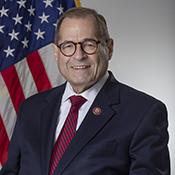
Mr. Speaker, I thank the gentleman for yielding me time. I rise in support of the Advancing Justice Through DNA Act. Although the science of DNA analysis has vastly improved our ability to identify…
Mr. Speaker, I thank the gentleman for yielding me time.
I rise in support of the Advancing Justice Through DNA Act. Although the science of DNA analysis has vastly improved our ability to identify the guilty and to exonerate the innocent, neither our laws nor the resources we have made available have allowed our criminal justice system to make full use of that technology. This legislation would go a long way toward correcting that terrible gap.
I want to congratulate, in particular, the gentleman from Massachusetts (Mr. Delahunt) who introduced the Innocence Protection Act several years ago and has worked tirelessly on this matter ever since. We all owe him a great debt of gratitude. No one whose innocence can be proved by DNA evidence should languish in prison because of procedural or financial obstacles to the use of that DNA evidence, and no one whose guilt can be proved by DNA evidence should remain unconvicted and free to menace others because of procedural or financial obstacles to the use of that DNA evidence.
It is imperative, in connection with one of the titles of this bill, that we eliminate the shameful backlog of untested rape kits, and this bill will go a long way towards that goal. I have worked with NOW, RAINN and Lifetime Television to raise awareness of this issue and to build consensus for decisive action. Together, we have pushed, prodded and demanded that Federal funding be provided to test these kits quickly. Today, we are one step closer to that goal.
I am pleased that this bill includes a provision very similar to the Rape Kit DNA Analysis Backlog Elimination
Act, which I introduced in March of 2002. That legislation would have provided $250 million to eliminate the rape kit backlog. I am also pleased that, like my bill and like the bill introduced by the gentleman from New York (Mr. Weiner) and the gentlewoman from New York (Mrs. Maloney), this legislation adds funding specifically for rape kits.
But we are not there yet. These programs still need to be funded, and I am hopeful that we will not simply authorize funding for these programs, as this bill does and as I hope the Senate will go along with, but I am hopeful that we will also actually appropriate the money we are today acknowledging is needed to do the job right.
This issue is too important to ignore. Police departments must have the resources they need to solve crimes and put criminals behind bars.
This legislation represents a serious effort to combat crime, to locate and apprehend rapists, to use powerful evidence to put them in prison, and in the larger sense, it also represents a serious effort to take out of prison people who do not belong there in light of the capability of DNA evidence to prove their innocence.
We have adopted similar legislation before. I urge its adoption now, and I hope the Senate will go along.
I thank the gentleman for yielding me time.
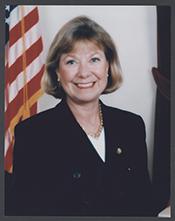
Mr. Speaker, as a woman, a former prosecutor and judge, and Federal representative for Ohio's 15th district, I rise today in support of H.R. 5107, the Justice For All Act. Sadly, for far too many…
Mr. Speaker, as a woman, a former prosecutor and judge, and Federal representative for Ohio's 15th district, I rise today in support of H.R. 5107, the Justice For All Act.
Sadly, for far too many women, the grief of rape and other forms of sexual assault is compounded by the lack of apprehension, prosecution and conviction of the perpetrator. As my community has recently witnessed first hand with the arrest of accused serial rapist Robert Patton, Jr. in the Columbus area, linking DNA obtained at rape scenes to the DNA of felons already convicted of crimes through the FBI's combined DNA Index System is often the best change we have to close a painful chapter in the lives of women who have been the victims of rape and sexual assault. It is also the best chance to put rapists behind bars before they have a chance to repeat their crimes.
Last year, the Federal government provided $100 million to speed up the processing of untested DNA through the Department of Justice and the DNA Index System. And recently, the House passed legislation to increase this amount by over 75 percent to $176 million--mirroring the President's budget request.
Funding is critical, but it is only part of the solution. Making needed improvements to the way the system operates is also essential.
That's why I signed on as an original cosponsor and plan to vote for the Justice for All Act today. This legislation will not only increase the amount of funding available for DNA analysis, but it will also lift some of the barriers that currently stand in the way of ensuring DNA technology is used effectively and efficiently. Specifically, it will focus on eliminating the backlog of DNA samples collected from crime scenes and convicted offenders and improving the DNA testing capacity of federal, state, and local crime laboratories. These two initiatives will have a direct effect on crime fighting in my state of Ohio, which has an extensive backlog of DNA samples that need to be tested.
I pledge to continue to work with my colleagues to further identify the gaps in our system and push for, and implement, effective solutions. And I call upon our partners at the state and local level to do the same. Together, with the support of law enforcement and the citizens in our community, we can put into place a speedier and fairer justice system for victims of rape and sexual assault, always keeping in mind our ultimate goal of preventing these heinous crimes in the first place.
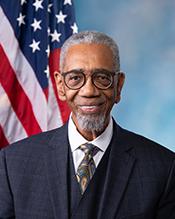
Mr. Speaker, I rise in support of the bill, H.R. 5107. Mr. Speaker, I want to congratulate the gentleman from Wisconsin (Mr. Sensenbrenner), the chairman of the full committee, and I certainly want…
Mr. Speaker, I rise in support of the bill, H.R. 5107.
Mr. Speaker, I want to congratulate the gentleman from Wisconsin (Mr. Sensenbrenner), the chairman of the full committee, and I certainly want to congratulate and commend the gentleman from Massachusetts (Mr. Delahunt).
The gentleman's tireless work, his dedicated work over the many years has certainly borne fruit in this legislation, and I want to extend my congratulations to all those who have played such a vital role in bringing this legislation to the floor here this morning.
Mr. Speaker, the legislation that we are considering provides grants, approximately $2 billion over 5 years, to States and local governments for DNA testing. This bill would help eliminate the backlog in the testing of DNA samples from criminal defendants and inmates, including those from rape kits. It would also enhance access to DNA analysis by inmates and improve the quality of legal representation in State capital cases. But, Mr. Speaker, more importantly, this bill will also provide victims of crimes with new rights, such as the right to a reasonable, accurate and timely notice of any public court proceeding involving the crime of or the release or the escape of the accused, so vital, so necessary for the victims of crime in our country today. It would also allow victims to be reasonably heard at any public proceeding involving the release, plea or sentencing of the accused.
Mr. Speaker, as it has been stated time and time again, something is wrong with our criminal justice system here in America. I believe that the criminal justice system here in America is broken. Time and time again we have seen innocent people spend years on death row for crimes that they did not commit.
Mr. Speaker, we can all agree that a death sentence is the ultimate punishment in the criminal justice system, and the imposition of such a sentence warrants absolute certainty, a 100 percent certainty that the person accused is guilty of the crime committed. That said, Mr. Speaker, all safeguards should be utilized, including DNA testing, before capital sentences are imposed.
Mr. Speaker, the gentleman from Massachusetts (Mr. Delahunt) and others have alluded to the actions of our State, our Governor, and, Mr. Speaker, I am proud to stand in support of this legislation. I think it is a testimony to his courage that the Congress is now considering this bill.
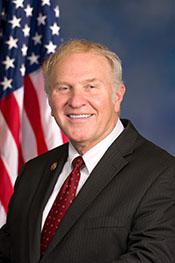
Mr. Speaker, I want to commend the chairman and thank him for his leadership, particularly the aspect of the bill which promotes and supports victims of crime. Providing crime victims with dignity…
Mr. Speaker, I want to commend the chairman and thank him for his leadership, particularly the aspect of the bill which promotes and supports victims of crime.
Providing crime victims with dignity and respect through an established and enforceable set of rights ensures that justice is not reserved only for the accused but extends to those who have personally been affected by the crimes. And after all, we have thousands and thousands of people in this country that are affected in an adverse way by crime every single year.
The proposal before us today, the Justice For All Act, H.R. 5107, draws heavily from the Crime Victim's Rights legislation providing victims with substantive enforceable rights such as the right to be present during proceedings and the right to confront assailants at those proceedings and the right to be notified about the release or escape of the perpetrator from custody.
I would like to thank the gentleman from Wisconsin (Mr. Sensenbrenner) also for including in the bill protections that DNA testing can afford families who may have members missing or their remains unidentified.
I want to particularly thank and recognize the courageous person in the greater Cincinnati area, that is Deborah Culberson, who lost her daughter, Keri, to a terrible murder, and the perpetrator is behind bars, but they have not been able to locate or identify her daughter's remains. And she has stepped forward and she has been just a very forceful person behind making sure that we have a DNA database which families who have lost loved ones may be able to identify and, therefore, provide at least some closure to that family. It is a terrible tragedy.
This may not directly benefit her, but it may benefit others in the future who face these tragedies in their own families.
There is no question that the rights afforded by H.R. 5107 are a positive step toward making certain justice is served not only for the accused but for the innocent victims. I would strongly encourage very strong bipartisan support for this legislation. It is important legislation. Some of it is a first step and many of us think we may in the future be able to go further. But I think this is a very positive step. I want to once
again thank and recognize the gentleman from Wisconsin (Mr. Sensenbrenner) for his leadership on this.
Mr. Speaker, I thank the gentleman for yielding me time. I just want to thank the gentleman from Wisconsin (Chairman Sensenbrenner) for such hard work on this bill and for making the changes that…
Mr. Speaker, I thank the gentleman for yielding me time.
I just want to thank the gentleman from Wisconsin (Chairman Sensenbrenner) for such hard work on this bill and for making the changes that they have made to it to make it a better bill. I also want to commend the gentleman from Massachusetts (Mr. Delahunt) for his untiring work on this issue over so many years, and certainly we need something like this bill. We need to make sure that those who are innocent have their day in court, all they need in court.
I do have some concerns about this bill. I feel compelled to note them. There are still some problematic areas here.
For example, H.R. 5107 contains a provision permitting post- conviction DNA testing of convicts who have pleaded guilty. Even though those convicts may have not even requested DNA testing that was available at the time of their trial, this will permit defendants to reopen cases, to retraumatize victims and waste resources, even if there is no reason to think that testing will change the outcome of the case.
The bill also contains a 5-year limitation on the duration of its proposed post-conviction DNA testing remedy, but it also contains a large loophole. A convicted inmate may seek new testing more than 5 years after the conviction if they can prove that it is in the interest of justice. This is an opportunity to flout the time limits and will undoubtedly attract lawyers to do so. There is no reason to permit this testing past the 5-year mark. To do so simply invites abuse and retraumatizes victims.
A person who is actually innocent, think about it, they have every reason to seek relief promptly, to request an available test immediately. Those who seek to delay that are simply looking to hide something. They are looking to delay until it is impossible for the government to retry the case. Think about it. Years later, if we have a case where eyewitness and other testimony might conflict or actually supplement or add to DNA testing there, it is impossible to retry a case 20 years later because witnesses may be gone, other evidence may be gone. So we need to make sure
that the remedies are sought early, not later.
With that, I hope that these other concerns are addressed with the other body so that we can have a good bill on this subject.
Mr. Speaker, let me begin by joining my voice with others in saluting the chairman. Without his tireless efforts, quite simply we would not be here today, and also, of course, the gentlewoman from…
Mr. Speaker, let me begin by joining my voice with others in saluting the chairman. Without his tireless efforts, quite simply we would not be here today, and also, of course, the gentlewoman from New York (Mrs. Maloney), the gentleman from Massachusetts (Mr. Delahunt), the gentleman from Illinois (Mr. LaHood), the gentleman from Ohio (Mr. Chabot), and the gentleman from New York (Mr. Weiner). Their ideas have made this bill so much better, so much stronger and we are all in their debt.
Mr. Speaker, over 300,000 women and 92,000 men are raped each year in this country, the United States. Those numbers represent lives destroyed and families shattered. Today we fight back. We will put an end to headlines like this one from CNN dated June 29, 2004: ``A suspected serial rapist on the street while his DNA sat in the police crime lab for years.''
The rapist in that case reported assaulting upwards of 50 women since 1988, and yet his DNA sat untested for 2\1/2\ years in an Ohio crime lab. I wish I could tell my colleagues that that case was unique. Hardly.
There are thousands and thousands and thousands of untested crime scene DNA kits collecting dust on shelves. That means that there are likely innocent Americans wrongly sitting behind bars, and even more likely, guilty Americans still walking the streets. How can we not act and act today?
This bill will help. This bill will save lives.
Title II of the bill, the Debbie Smith Act, will provide grants to State and local authorities to get rid of their backlogs, to train more experts, to ensure better handling and processing of evidence.
In fact, some estimate that it could quickly lead to solving as many as 66,000 open rape and murder cases. That is 66,000 victims and their families who would finally have a little justice and, perhaps, just perhaps, a little peace of mind.
How can we not act on this measure? How can we not offer this lifeline to victims and their families? How can we not act to prevent future crimes by tracking down those who have already attacked and will most certainly attack again?
This is good work. It is important work. I urge my colleagues' support. Let us get this done.
Show 1 more
Mr. Speaker, I am pleased that the Crime Victims' Rights Act was included in H.R. 5107, the Justice for All Act. I have long been an advocate of victim's rights. I am the author of the first State…
Mr. Speaker, I am pleased that the Crime Victims' Rights Act was included in H.R. 5107, the Justice for All Act. I have long been an advocate of victim's rights. I am the author of the first State anti-stalking law in the country. At the Federal level, I introduced the Interstate Stalking Punishment and Prevention Act, which was signed into law, making it a felony to cross State lines to stalk someone.
As a State senator, I worked to establish rights for crime victims in California's state constitution as author and campaign co-chair of Proposition 115, the Crime Victims/Speedy Trial Initiative. I have been working for the passage of a Federal victims' rights bill for quite sometime. I introduced a victim's rights bill in the House and cosponsored the Chabot bill, included in H.R. 5107.
Because victims' rights vary from State to State, a Federal law would help ensure that all victims have at least a minimum level of rights in the criminal justice process. Our legal system must properly protect the rights of the accused and it should provide similar protection for the rights of victims. The bill establishes enhanced rights and protections for all victims of crime and spells out how these rights are to be enforced. In addition, the bill helps States implement and enforce victim's rights laws and retain their full power to protect victims in the ways most appropriate to local concerns and local needs.
This bill is a positive step forward for crime victims' rights and I look forward to it becoming law.
Bill Text
Latest available legislative text
        [Congressional Bills 108th Congress]
[From the U.S. Government Publishing Office]
[H.R. 89 Introduced in House (IH)]

108th CONGRESS
1st Session
H. R. 89

To create a separate DNA database for violent predators against
children, and for other purposes.

_______________________________________________________________________

IN THE HOUSE OF REPRESENTATIVES

January 7, 2003

Ms. Jackson-Lee of Texas introduced the following bill; which was
referred to the Committee on the Judiciary

_______________________________________________________________________

A BILL

To create a separate DNA database for violent predators against
children, and for other purposes.

Be it enacted by the Senate and House of Representatives of the
United States of America in Congress assembled,

SECTION 1. SHORT TITLE.

This Act may be cited as the ``Save Our Children: Stop the Violent
Predators Against Children DNA Act of 2003''.

SEC. 2. FINDINGS.

Congress finds the following:
(1) Only 22 State sex offender registries collect and
maintain DNA samples as a part of registration.
(2) The single age with the greatest proportion of sexual
assault victims reported to law enforcement was age 14.
(3) There were more victims of sexual assault between 3 and
17 than in any individual age group over age 17, and more
victims age 2 than in any age group over 40.
(4) Children like 5-year-old Samantha Runnion of
California, who was abducted, sexually violated, and murdered,
are most likely to be victims of sexual assault, with over one-
third of all sexual assaults involving a victim who was under
the age of 12.
(5) One of every seven victims of sexual assault is under
the age of 6.
(6) Over a four-to-five year period, 13.4 percent of sex
offenders recidivated with another sexual offense.
(7) Murder is the only major cause of childhood deaths that
has increased over the past three decades.
(8) Between 300,000 and 400,000 children are victims of
some type of sexual abuse or exploitation every year.
(9) More attention should be given to seeking solutions to
violence against children.

SEC. 3. DNA DATABASE FOR VIOLENT PREDATORS AGAINST CHILDREN.

(a) In General.--The Attorney General shall establish and maintain,
separate from any other DNA database, a database solely for the purpose
of collecting the DNA information with respect to violent predators
against children. Under regulations issued by the Attorney General,
Federal, State, and local agencies and other entities may submit DNA
information to the Attorney General for inclusion in the database and
may compare DNA information against other DNA information in the
database.
(b) Authorization of Appropriations.--There are authorized to be
appropriated $500,000 to establish the database required by subsection
(a).

SEC. 4. INCENTIVE GRANTS.

(a) Program Authorized.--From amounts made available to carry out
this section, the Attorney General shall make grants to each State that
has in effect one or more programs that decrease the rate of recidivism
among violent predators against children, for use by the State to
implement improvements to such programs.
(b) Authorization of Appropriations.--There are authorized to be
appropriated to carry out this section such sums as may be necessary.

SEC. 5. CONSEQUENCES FOR VIOLENT PREDATORS AGAINST CHILDREN.

Notwithstanding any other provision of law, if a person who is a
violent predator against children commits a crime that would, in and of
itself, establish that person as a violent predator against children,
the sentence imposed on that person for that crime shall, without
regard to any mitigating circumstance that would otherwise apply at
sentencing, be the maximum authorized by law.

SEC. 6. DEFINITION.

As used in this Act, the term ``violent predator against
children'' means a person who commits a crime of violence (including a
sex crime) against the person of an individual who has not attained the
age of 18 years.
<all>