Patient Navigator Outreach and Chronic Disease Prevention Act of 2004
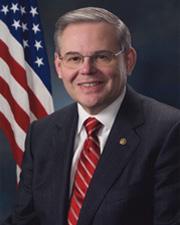 Rep. Robert Menendez (D-NJ)
Legislative Activity
Stay on top of the latest movement without scrolling through every action
Received in the Senate.
October 6, 2004
View full timeline
Introduced in House
February 26, 2003
Referred to the Committee on Energy and Commerce, and in addition to the Committee on Resources, for a period to be subsequently determined by the Speaker, in each case for consideration of such provisions as fall within the jurisdiction of the committee concerned.
February 26, 2003
Sponsor introductory remarks on measure. (CR E308)
February 27, 2003
Ordered to be Reported (Amended) by Voice Vote.
September 30, 2004
Reported (Amended) by the Committee on Energy and Commerce. H. Rept. 108-727, Part I.
October 5, 2004
House Committee on Resources Granted an extension for further consideration ending not later than Oct. 5, 2004.
October 5, 2004
Placed on the Union Calendar, Calendar No. 447.
October 5, 2004
Mr. Barton (TX) moved to suspend the rules and pass the bill, as amended.
October 5, 2004 • 1:47 PM
Considered under suspension of the rules. (consideration: CR H8064-8069)
October 5, 2004 • 1:47 PM
DEBATE - The House proceeded with forty minutes of debate on H.R. 918.
October 5, 2004 • 1:47 PM
Passed/agreed to in House: On motion to suspend the rules and pass the bill, as amended Agreed to by voice vote.(text: CR H8064-8065)
October 5, 2004 • 2:12 PM
On motion to suspend the rules and pass the bill, as amended Agreed to by voice vote. (text: CR H8064-8065)
October 5, 2004 • 2:12 PM
Motion to reconsider laid on the table Agreed to without objection.
October 5, 2004 • 2:12 PM
The title of the measure was amended. Agreed to without objection.
October 5, 2004 • 2:12 PM
Received in the Senate.
October 6, 2004
Floor Debate
7 membersWhat members said about H.R. 918 on the floor
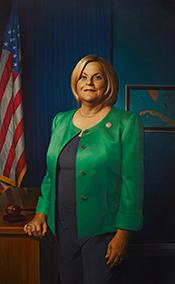 +2
+2
Floor Debate
7 membersWhat members said about H.R. 918 on the floor
Mr. Speaker, I move to suspend the rules and pass the bill (H.R. 918) to authorize the Health Resources and Services Administration, the National Cancer Institute, and the Indian Health Service to…
Mr. Speaker, I want to thank my colleague from Ohio (Mr. Brown) as well as the gentleman from Michigan (Mr. Dingell), ranking member on the Committee on Energy and Commerce, as well as the gentleman…
Madam Speaker, I thank the gentleman for yielding me this time, and I want to begin by commending the gentleman from Texas (Mr. Barton), the distinguished chairman of the Committee on Energy and…
Mr. Speaker, I rise today to join my colleague Congressman Robert Menendez of New Jersey in the passage of H.R. 918, the Patient Navigator, Outreach, and Chronic Disease Prevention Act of 2003. As…
I thank the gentleman for yielding me this time. While there is no question, Mr. Speaker, that tremendous progress has been made across our country in the fight against cancer and other diseases,…
Show 3 more

Mr. Speaker, I rise today to ask my colleagues to join me in recognizing the week of April 18-24, 2004 as National Minority Cancer Awareness Week. This national campaign, initiated by Congress in…
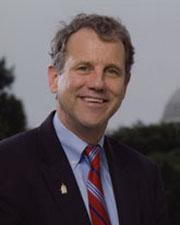
Madam Speaker, I yield myself 2 minutes, and I want to begin by thanking the chairman, the gentleman from Texas (Mr. Barton), for his good work today with this whole slew of eight or nine bills that…
Mr. Speaker I would like to thank the following supporters of H.R. 918: American Cancer Society National Council of La Raza National Association of Community Health Centers American Diabetes…
Bill Text
4 versions available
        [Congressional Bills 108th Congress]
[From the U.S. Government Publishing Office]
[H.R. 918 Received in Senate (RDS)]

2d Session
H. R. 918

_______________________________________________________________________

IN THE SENATE OF THE UNITED STATES

October 6, 2004

Received

_______________________________________________________________________

AN ACT

To amend the Public Health Service Act to authorize a demonstration
grant program to provide patient navigator services to reduce barriers
and improve health care outcomes, and for other purposes.

Be it enacted by the Senate and House of Representatives of the
United States of America in Congress assembled,

SECTION 1. SHORT TITLE.

This Act may be cited as the ``Patient Navigator Outreach and
Chronic Disease Prevention Act of 2004''.

SEC. 2. PATIENT NAVIGATOR GRANTS.

Subpart V of part D of title III of the Public Health Service Act
(42 U.S.C. 256) is amended by adding at the end the following:

``SEC. 340A. PATIENT NAVIGATOR GRANTS.

``(a) Grants.--The Secretary, acting through the Administrator of
the Health Resources and Services Administration, may make grants to
eligible entities for the development and operation of demonstration
programs to provide patient navigator services to improve health care
outcomes. The Secretary shall coordinate with, and ensure the
participation of, the Indian Health Service, the National Cancer
Institute, the Office of Rural Health Policy, and such other offices
and agencies as deemed appropriate by the Secretary, regarding the
design and evaluation of the demonstration programs.
``(b) Use of Funds.--A condition on the receipt of a grant under
this section is that the grantee agree to use the grant to recruit,
assign, train, and employ patient navigators who have direct knowledge
of the communities they serve to facilitate the care of individuals,
including by performing each of the following duties:
``(1) Acting as contacts, including by assisting in the
coordination of health care services and provider referrals,
for individuals who are seeking prevention or early detection
services for, or who following a screening or early detection
service are found to have a symptom, abnormal finding, or
diagnosis of, cancer or other chronic disease.
``(2) Facilitating the involvement of community
organizations providing assistance to individuals who are at
risk for or who have cancer or other chronic diseases to
receive better access to high-quality health care services
(such as by creating partnerships with patient advocacy groups,
charities, health care centers, community hospice centers,
other health care providers, or other organizations in the
targeted community).
``(3) Notifying individuals of clinical trials and
facilitating enrollment in these trials if requested and
eligible.
``(4) Anticipating, identifying, and helping patients to
overcome barriers within the health care system to ensure
prompt diagnostic and treatment resolution of an abnormal
finding of cancer or other chronic disease.
``(5) Coordinating with the relevant health insurance
ombudsman programs to provide information to individuals who
are at risk for or who have cancer or other chronic diseases
about health coverage, including private insurance, health care
savings accounts, and other publicly funded programs (such as
Medicare, Medicaid, and the State children's health insurance
program).
``(6) Conducting ongoing outreach to health disparity
populations, including the uninsured, rural populations, and
other medically underserved populations, in addition to
assisting other individuals who are at risk for or who have
cancer or other chronic diseases to seek preventative care.
``(c) Grant Period.--
``(1) In general.--Subject to paragraphs (2) and (3), the
Secretary may award grants under this section for periods of
not more than 3 years.
``(2) Extensions.--Subject to paragraph (3), the Secretary
may extend the period of a grant under this section, except
that--
``(A) each such extension shall be for a period of
not more than 1 year; and
``(B) the Secretary may make not more than 4 such
extensions with respect to any grant.
``(3) End of grant period.--In carrying out this section,
the Secretary may not authorize any grant period ending after
September 30, 2010.
``(d) Application.--
``(1) In general.--To seek a grant under this section, an
eligible entity shall submit an application to the Secretary in
such form, in such manner, and containing such information as
the Secretary may require.
``(2) Contents.--At a minimum, the Secretary shall require
each such application to outline how the eligible entity will
establish baseline measures and benchmarks that meet the
Secretary's requirements to evaluate program outcomes.
``(e) Uniform Baseline Measures.--The Secretary shall establish
uniform baseline measures in order to properly evaluate the impact of
the demonstration projects under this section.
``(f) Preference.--In making grants under this section, the
Secretary shall give preference to eligible entities that demonstrate
in their applications plans to utilize patient navigator services to
overcome significant barriers in order to improve health care outcomes
in their respective communities.
``(g) Coordination With Other Programs.--The Secretary shall ensure
coordination of the demonstration grant program under this section with
existing authorized programs in order to facilitate access to high-
quality health care services.
``(h) Study; Reports.--
``(1) Final report by secretary.--Not later than 6 months
after the completion of the demonstration grant program under
this section, the Secretary shall conduct a study of the
results of the program and submit to the Congress a report on
such results that includes the following:
``(A) An evaluation of the program outcomes,
including--
``(i) quantitative analysis of baseline and
benchmark measures; and
``(ii) aggregate information about the
patients served and program activities.
``(B) Recommendations on whether patient navigator
programs could be used to improve patient outcomes in
other public health areas.
``(2) Interim reports by secretary.--The Secretary may
provide interim reports to the Congress on the demonstration
grant program under this section at such intervals as the
Secretary determines to be appropriate.
``(3) Interim reports by grantees.--The Secretary may
require grant recipients under this section to submit interim
reports on grant program outcomes.
``(i) Rule of Construction.--This section shall not be construed to
authorize funding for the delivery of health care services (other than
the patient navigator duties listed in subsection (b)).
``(j) Definitions.--In this section:
``(1) The term `eligible entity' means a public or
nonprofit private health center (including a Federally
qualified health center (as that term is defined in section
1861(aa)(4) of the Social Security Act)), a health facility
operated by or pursuant to a contract with the Indian Health
Service, a hospital, a cancer center, a rural health clinic, an
academic health center, or a nonprofit entity that enters into
a partnership or coordinates referrals with such a center,
clinic, facility, or hospital to provide patient navigator
services.
``(2) The term `health disparity population' means a
population that, as determined by the Secretary, has a
significant disparity in the overall rate of disease incidence,
prevalence, morbidity, mortality, or survival rates as compared
to the health status of the general population.
``(3) The term `patient navigator' means an individual who
has completed a training program approved by the Secretary to
perform the duties listed in subsection (b).
``(k) Authorization of Appropriations.--
``(1) In general.--To carry out this section, there are
authorized to be appropriated $2,000,000 for fiscal year 2006,
$5,000,000 for fiscal year 2007, $8,000,000 for fiscal year
2008, $6,500,000 for fiscal year 2009, and $3,500,000 for
fiscal year 2010.
``(2) Availability.--The amounts appropriated pursuant to
paragraph (1) shall remain available for obligation through the
end of fiscal year 2010.''.

Passed the House of Representatives October 5, 2004.

Attest:

JEFF TRANDAHL,

Clerk.