Expressing the sense of the House of Representatives regarding the systematic human rights violations in Cuba committed by the Castro regime, calling for the immediate release of all political prisoners, and supporting respect for basic human rights and free elections in Cuba.
Legislative Activity
Stay on top of the latest movement without scrolling through every action
Motion to reconsider laid on the table Agreed to without objection.
April 8, 2003 • 5:37 PM
View full timeline
Introduced in House
April 7, 2003
Referred to the House Committee on International Relations.
April 7, 2003
Ms. Ros-Lehtinen moved to suspend the rules and agree to the resolution.
April 8, 2003 • 2:36 PM
Considered under suspension of the rules. (consideration: CR H2887-2895)
April 8, 2003 • 2:36 PM
DEBATE - The House proceeded with forty minutes of debate on H. Res. 179.
April 8, 2003 • 2:36 PM
At the conclusion of debate, the Yeas and Nays were demanded and ordered. Pursuant to the provisions of clause 8, rule XX, the Chair announced that further proceedings on the motion would be postponed.
April 8, 2003 • 3:31 PM
Considered as unfinished business. (consideration: CR H2910-2911)
April 8, 2003 • 5:30 PM
Passed/agreed to in House: On motion to suspend the rules and agree to the resolution Agreed to by the Yeas and Nays: (2/3 required): 414 - 0, 11 Present (Roll no. 117).(text: CR H2887-2888)
April 8, 2003 • 5:37 PM
On motion to suspend the rules and agree to the resolution Agreed to by the Yeas and Nays: (2/3 required): 414 - 0, 11 Present (Roll no. 117). (text: CR H2887-2888)
April 8, 2003 • 5:37 PM
Motion to reconsider laid on the table Agreed to without objection.
April 8, 2003 • 5:37 PM
Voting History
1 vote recorded • Roll call available
Floor Debate
24 membersWhat members said about H.Res. 179 on the floor
 IR
IR TD
TD HAW
HAW JMM
JMM CBR+19
Floor Debate
24 membersWhat members said about H.Res. 179 on the floor
Mr. Speaker, I move to suspend the rules and agree to the resolution (H. Res. 179) expressing the sense of the House of Representatives regarding the systematic human rights violations in Cuba…
Mr. Speaker, I move to suspend the rules and agree to the resolution (H. Res. 179) expressing the sense of the House of Representatives regarding the systematic human rights violations in Cuba committed by the Castro regime, calling for the immediate release of all political prisoners, and supporting respect for basic human rights and free elections in Cuba.
Mr. Speaker, I ask unanimous consent that all Members may have 5 legislative days within which to revise and extend their remarks on the resolution under consideration.
Mr. Speaker, I yield myself such time as I may consume.
Nobel peace laureate Eli Wiesel has said: ``. . . to remain silent and indifferent is the greatest sin of all . . .''
Indifference breeds evil. Indifference is the enemy of freedom. Indifference helps cloak the deplorable actions of tyrants.
Cuba's ruthless dictator counts on this indifference. Taking advantage of global attention being focused on Iraq and noting the worldwide tendency to ignore or minimize the deplorable human rights condition in Cuba, the Castro regime has launched a full-scale assault on those who are struggling to bring freedom and democracy to this enslaved nation. Courageous men and women such as Marta Beatriz Roque, an independent economist and leading pro-democracy advocate, are being sentenced to harsh prison terms of 20 years. Marta Beatriz had previously spent nearly 3 years in prison for publishing, along with three other colleagues, a paper calling for democratic reforms. Independent journalists such as Raul Rivero, who is highlighted in the resolution before us, as the dean of the independent dissident Cuban journalists, was sentenced to 20 years. Fellow journalists such as Ricardo Gonzalez Alfonso and Hector Maseda Gutierrez also received 20- year sentences.
Other victims of this wave of repression include Jose Daniel Ferrer, a member of the Christian Liberation Movement, whose penalty was increased to death per a special request by the puppet whom the regime has as the presiding judge. There is also independent union labor leader Oscar Espinosa Chepe, and Manuel Vazquez Portal, Nelson Molinet Espino and Nelson Alberto Aguiar.
I enter into the Record their names and their sentences.
Pinar del Rio
Victor Rolando Arroyo Carmona, Periodista Independiente--
Life in prison.
Horacio Julio Pina Borrego, Periodista Independiente--12
years.
Eduardo Diaz Fleitas, opositor--15 years.
Fidel Suarez Cruz, opositor--12 years.
Ciudad Habana
Raul Rivero Castaneda, Periodista Independiente--Life in
prison.
Jorge Olivera Castillo, Periodista Independiente--Life in
prison.
Ricardo Gonzales Alfonso, Periodista Independiente--Life in
prison.
Hector Maceda Gutierrez, Periodista Independiente--Life in
prison.
Manuel Vazquez Portal, Periodista Independiente--16 years.
Osvaldo Alfonso Valdez, opositor--Life in prison.
Pedro Pablo Alvarez Ramos, opositor--Life in prison.
Hector Palacio Ruiz, opositor--Life in prison.
La Habana
Miguel Galvan Gutierrez, Periodista Independiente--Life in
prison.
Jose Ubaldo Izquierdo Hernandez, Periodista Independiente--
20 years.
Hector Raul Valle Hernandez, opositor--15 years.
Villa Clara
Librado Linares Garcia, Periodista Independiente--20 years.
Lester Gonzalez Penton, Periodista Independiente--20 years.
Omar Ruiz Hernandez, Periodista Independiente--18 years.
Margarito Broche Espinosa, opositor--25 years.
Omar Pernet Hernandez, opositor--25 years.
Isla de Pino
Favio Prieto Llorente, Periodista Independiente--20 years.
The list seems endless as the daunting reality of what the dictatorship has done sinks into our consciousness. Since March 18, Mr. Speaker, Castro's security agents have been storming into the homes of dissidents and other opposition leaders across the island, confiscating typewriters, books, papers, and other professional and personal belongings. And what have been their so-called crimes? Engaging in such ``threatening'' activities such as possessing and lending books by authors such as Vaclac Havel, Ghandi and Martin Luther King. Hector Palacios Ruiz, for example, was engaged in such ``treasonous'' behavior, to quote the regime, as helping to draft the document in December of last year which called for ``free hiring of employees.'' He was also found in possession of books such as ``Castro's Final Hours'' and ``A Manual for Education in Human Rights'' as well as children's games.
Every day more and more opposition leaders are sentenced to languish in squalid jail cells and subjected to the most inhumane and degrading treatment. We cannot and must not be silent. We cannot and must not be indifferent to the anguish and misery endured by the Cuban people just 90 miles off our shores at the hands of the depraved and cruel dictator and his agents of terror.
The European Union has issued statements condemning the arrests and demanding that these prisoners of conscience be immediately released. Amnesty International urged Cuba to release all of its prisoners of conscience and reform the laws which make such detentions possible. Human Rights Watch called on the United Nations Commission on Human Rights to condemn these abuses and do so strongly and unequivocally. Human Rights International, the American Society of Newspaper Editors, and the Inter-American Press Association have all denounced this incredible Stalinist crackdown. Newspapers such as the Houston Chronicle, the San Diego Union Tribune, the Pittsburgh Post-Gazette have run editorials with headlines underscoring that: ``Saddam and Fidel are Birds of a Feather''; ``Crackdown in Cuba: A Reminder that Castro is Still a Tyrant''; and ``Castro's Regime as Repressive as Ever.''
The Los Angeles Times led its editorials by saying: ``After years of calling for liberalized relations with Cuba, this editorial page must now urge American policymakers to hit the brakes.''
Just today the Washington Post ran an editorial by Richard Cohen which said: ``I would like to hear some moral outrage about Castro . . . Fidel Castro is a thug and a fool.''
But it is our turn now to speak. It is our time for the U.S. Congress to stand behind the Cuban people, side by side, as it has done for so many times before and is so doing with the Iraqi people.
This resolution is a strong first step. House Resolution 179 details the sequence of events which have transpired in recent weeks and places particular emphasis on the plight of these political prisoners such as Juan Carlos Gonzalez Leyva, a blind human rights dissident imprisoned for over a year who is gravely ill and has yet to receive medical attention.
Mr. Speaker, I reserve the balance of my time.
Mr. Speaker, I yield 5 minutes to the gentleman from Florida (Mr. Lincoln Diaz-Balart), the author of this resolution.
Mr. Speaker, I yield myself 1 minute to explain what this bill actually does. I have had some Members ask.
House Resolution 179 establishes the nexus which exists between the current wave of repression and the 59th session of the United Nations Commission on Human Rights which is currently being held in Geneva. And in doing so, it takes into account the dictatorship's systematic and gross human rights violations and its repeated demonstrations of contempt for the mandates issued by the U.N. Commission on Human Rights.
Further, it calls for a resolution to be offered and passed at the Human Rights Commission, which accurately reflects this grim reality. It seizes the opportunity which presents itself in May of this year when Cuba's membership on the commission expires. It does so by calling on the Nation of Latin America and the Caribbean group to oppose and deny the regime a seat on this human rights body. More importantly, this resolution calls for the immediate release of all Cuban prisoners of conscience. It sends a strong, definitive message that the United States Congress stands with the dissidents, the independent journalists, and all pro-democracy activists, and not with their oppressor.
Mr. Speaker, I reserve the balance of my time.
Mr. Speaker, I thank the gentleman from New York for his statement of support.
Mr. Speaker, I yield 1\1/2\ minutes to my good friend, the gentleman from Arizona (Mr. Flake), a member of our Committee on International Relations
Mr. Speaker, I yield 2 minutes to the gentleman from Missouri (Mr. Blunt), the distinguished majority whip.
Mr. Speaker, I ask unanimous consent that each side be granted an additional 5 minutes.
Mr. Speaker, I yield 30 seconds to the gentleman from Michigan (Mr. McCotter), a member of our Committee on International Relations.
Mr. Speaker, I yield 3 minutes to the gentleman from New Jersey (Mr. Smith), the vice chairman of our Committee on International Relations.
Mr. Speaker, I yield 1 minute to my colleague, the gentleman from Florida (Mr. Feeney).
Mr. Speaker, I yield myself 1 minute. After speaking, I will yield to the gentleman from Florida (Mr. Mario Diaz- Balart) to close.
Mr. Speaker, I started my remarks quoting Eli Wiesel, and I would like to end the remarks that I have on this resolution by this same gentleman who has meant so much for freedom and human rights and free expression of ideas throughout the world.
Eli Wiesel said, ``Just as despair can come to one only from other human beings, hope too can be given to one only by other human beings.''
Let us be that beacon of hope for the Cuban people. Let us support this resolution. Let us support those freedom fighters, those valiant fighters for free thought who are actually given sentences for possession of typewriters, for possession of books, for possession of computers, for giving interviews to foreign journalists. Let us be that beacon of hope that Eli Wiesel spoke about.
Mr. Speaker, I yield the remaining time to the gentleman from Florida (Mr. Mario Diaz-Balart).
Mr. Speaker, on that I demand the yeas and nays.
Mr. Speaker, pursuant to the order of the House of April 7, 2003, I call up the Senate bill (S. 380) to amend chapter 83 of title 5, United States Code, to reform the funding of benefits under the…
Mr. Speaker, pursuant to the order of the
House of April 7, 2003, I call up the Senate bill (S. 380) to amend chapter 83 of title 5, United States Code, to reform the funding of benefits under the Civil Service Retirement System for employees of the United States Postal Service, and for other purposes, and ask for its immediate consideration.
Mr. Speaker, I ask unanimous consent that all Members may have 5 legislative days within which to revise and extend their remarks on the Senate bill under consideration.
Mr. Speaker, I yield myself such time as I may consume.
Mr. Speaker, S. 380, the Postal Civil Service Retirement System Funding Reform Act of 2003, is a bipartisan bill in the Senate. Its House counterpart is sponsored by the gentleman from New York (Mr. McHugh), the gentleman from California (Mr. Waxman), the gentleman from Illinois (Mr. Davis), myself and others. It reforms the way the Postal Service funds its obligations to the Civil Service Retirement System. It prevents the Postal Service from overfunding its obligations to CSRS and postpones a rate increase for the American people and postal ratepayers.
Last year the Office of Personnel Management, at the request of GAO, reviewed the status of the Postal Service's funding of its CSRS benefits. OPM found that based on payments currently required by law, the Postal Service would overfund its CSRS benefits by more than $70 billion. OPM proposed a legislative solution modeling the Postal Service's payments to CSRS after its payments to the current Federal Employee Retirement System. This would result in a reduction in the Postal Service's annual obligation to CSRS, allowing the Postal Service to delay its next rate increase beyond 2004 to at least fiscal year 2006.
The bill we are considering today, S. 380, differs from OPM's proposal in that it places tight restrictions on how the Postal Service uses the savings. The bill requires the Postal Service to work with the Department of the Treasury to apply the funds saved to pay down its debt to Treasury in fiscal years 2003 and 2004 and directs the Postal Service to use the savings in 2005 to delay an anticipated rate increase. Subsequently, the Postal Service and OPM are to calculate the difference between the cost to fund CSRS under the bill and under the current law.
The Postal Service will develop a proposal for the use of the funds. Without congressional action on the Postal Service proposal, the funds would be placed in escrow.
This legislation will also require the Postal Service to fund the portion of retirement benefits attributable to the prior military service of postal employees which, again, models the Postal Service's payments to CSRS after the current Federal Employee Retirement System, or FERS.
I think this is an issue that demands further study because no other agency in the Federal Government that I am aware of funds its CSRS military obligations within the department. It may ultimately be unfair to make postal customers and ratepayers fund military retirement benefits.
Working with the gentleman from California (Mr. Waxman), my ranking member, I prepared an amendment to the House version of the bill, H.R. 735, requiring the Department of the Treasury, the Office of Personnel Management, and the Postal Service to develop proposals on this issue. So this is an issue that will be revisited.
The Committee on Government Reform and the Senate Committee on Government Affairs will look at those proposals and revisit the issue. This amendment was incorporated in S. 380, so we do not need to offer it today. I also understand the gentleman from California (Mr. Waxman) will be offering and withdrawing an amendment on this subject in a few moments in order to further highlight its importance, and I thank and congratulate him for his leadership in highlighting this issue and pledge to him that we will continue to work on this; and this is, in my judgment, not the end of the matter.
Many people do not know this, but the Postal industry, including ancillary businesses, represents approximately 9 percent of the gross domestic product, the GDP. The industry has been hit hard in the last several years, first by the economic slowdown and then by events of September 11, 2001 and subsequent anthrax attacks. During this same period, postal rates increased three times within 18 months. The Postal industry needs relief.
The Postal Service will be able to hold off on a rate increase if this legislation passes. This gives money back to the Postal customer and allows us all to hold on to our 37-cent stamps for 2 more years. It also stabilizes the Postal Service financially, securing the jobs of nearly 9 million people in the postal industry.
Postal consumers have implored us to address this problem before it is too late. The United States Postal Service, all four postal unions, the postal management associations, and a very broad coalition of postal customers support this bill. I hope that we can pass it expeditiously and put off the next rate increase until at least 2006.
Mr. Speaker I urge adoption of S. 380.
Mr. Speaker, I reserve the balance of my time.
Mr. Speaker, I yield 5 minutes to the gentleman from New York (Mr. McHugh) who has been the former chairman of the Subcommittee on the Postal Service and one of the real experts on this issue to address this issue and put his stamp of approval.
Mr. Speaker, I yield 2 minutes to the gentleman from Indiana (Mr. Burton), the former chairman of the full committee and a leader in postal reform.
Mr. Speaker, I am pleased to yield 2 minutes to the gentleman from Florida (Mr. Putnam), a member on the Committee on Government Reform.
Mr. Speaker, I am happy to yield 4 minutes to the gentlewoman from Macomb County, Michigan (Mrs. Miller).
Mr. Speaker, I yield 5 minutes to the gentleman from South Dakota (Mr. Janklow), former Governor.
Mr. Speaker, I have no other requests at this time. I would urge adoption of this measure.
Mr. Speaker, I yield back the balance of my time.
Mr. Speaker, I rise in opposition to the amendment.
Mr. Speaker, I yield myself such time as I may consume.
Mr. Speaker, as I stated before, I agree in principle with the concept behind the gentleman's amendment. This bill, which adopts the administration's approach on the treatment of military funding, would make the postal service the only agency responsible for the military costs of the CSRS retirees. I do not think it is right. I do not think it is fair to postal rate payers. Unlike other agencies in government, this is an enterprise fund that is paid for by the rate payers who should not have to bear this burden. I think it puts strains on the post office that should not be there.
The postal service's mandate is to charge rate payers for its operating and overhead expenses and to break even over time. While the postal service does pay for military benefits for its FERS employees, it has never been required to for its CSRS employees, and neither is any other agency in government.
However, the administration is categorically opposed to any treatment of military funding other than the FERS model that they propose. The bill's principle sponsor, the gentleman from New York (Mr. McHugh), is going to speak on this more fully in just a moment. But with so much at stake in this legislation, I think we have to move forward on what we can agree on and follow the administration's approach at this time.
We will carefully consider the results of the studies that we have mandated in this bill. But still, I want to thank my colleague from California (Mr. Waxman) for highlighting this important issue.
Mr. Speaker, I yield 2 minutes to the gentleman from New York (Mr. McHugh).
Mr. Speaker, on that I demand the yeas and nays.
Mr. Speaker, I yield myself such time that I may consume. I rise in support of the legislation before us. As the ranking member of the Committee on Government Reform, I support this bill, S. 380, and…
Mr. Speaker, I yield myself such time that I may consume.
I rise in support of the legislation before us. As the ranking member of the Committee on Government Reform, I support this bill, S. 380, and before I begin my remarks on the bill, I would like to commend my colleagues, the gentleman from Virginia (Chairman Tom Davis) and the gentleman from Illinois (Mr. Davis) and the gentleman from New York (Mr. McHugh) for the time and effort they have spent in refining this proposal. The bill in S. 380, is identical to the version of the bill we reported out of committee with the exception of a provision requiring a new study on military pensions that I worked out with the gentleman from Virginia (Chairman Tom Davis). This is a very positive bipartisan start for our committee.
I would also like to commend our Senate colleagues, Senators Susan Collins and Joseph Lieberman, for their work on this issue.
The bill we are considering today corrects the calculation of the Postal Service's contributions to its pension fund and provides immediate and needed financial relief to the Postal Service. The legislation would credit the Postal Service for the real value of Civil Service Retirement System contributions it made in the past and change how contributions will be computed in the future. Under S. 380, the Postal Service will save $9 billion over the next 3 years and $36 billion over the next 10 years. S. 380 divides the money saved by the Postal Service into two parts. For the savings received in fiscal years 2003, 2004, and 2005, the bill provides that the Postal Service will use the money to pay down the debt and hold postage rates stable. This will allow the Postmaster General to keep his commitment to hold off on any rate increases through the year 2006.
For fiscal years beyond 2005, the bill requires the Postal Service to submit to Congress a plan for using the savings. This plan must then be reviewed by the General Accounting Office and approved or modified by Congress. The planning provisions contained in the bill provide an opportunity for Congress to review how the Postal Service will use the savings to address a number of long-term challenges facing the service such as its debt load, underfunded capital projects, and unfunded liabilities for post-retirement health care.
This legislation is being acted upon quickly because without it, the Postal Service faces an increasing financial crises. In fact, the Postmaster General and the Postal Board of Governors have indicated that in the absence of such a change, the Postal Service will be forced to apply for a rate increase later this year.
S. 380 has broad support among the postal community and it deserves our passage today.
Mr. Speaker, I reserve the balance of my time.
Mr. Speaker, I am pleased to yield such time as he may consume to the gentleman from Illinois (Mr. Davis), the ranking Democrat on the Postal Task Force of the Committee on Government Reform.
Mr. Speaker, I am pleased to yield such time as he may consume to the gentleman from Maryland (Mr. Cummings), a very important member of our committee.
Mr. Speaker, I yield 3 minutes to the gentlewoman from New York (Mrs. Maloney).
Mr. Speaker, I thank the gentleman for his comments. I thank everybody involved with this legislation for their efforts. I think this is a bill that we can all look at with pride.
Mr. Speaker, we have no further requests for time on our side, so I yield back the balance of my time.
Mr. Chairman, I offer an amendment.
Mr. Speaker, I yield myself such time as I may consume.
Mr. Speaker, I support S. 380. The bill strengthens the Postal Service, lowers their debt, and protects postal consumers. The legislation, however, is not perfect. In particular, I do not believe that requiring the Postal Service to pay the pension costs associated with the military service, the previous military service of their employees, is a good idea.
Under current law, the Department of the Treasury pays the costs of retirement benefits related to military service for employees who are part of the Civil Service Retirement System. My amendment would maintain the status quo, keeping the responsibility for paying these costs with the Federal Treasury where they have always been, and where they belong.
In contrast, S. 380 shifts the burden of paying these costs from Treasury to the Postal Service. The legislation even has the effect of requiring the Postal Service to reimburse the Treasury for payments that have already been made. This shift will require the Postal Service to pay billions more than it otherwise would have to pay.
I believe it is wrong and unfair to require the Postal Service to shoulder this burden.
Many believe that the Postal Service should run more like a private business, yet no private business, including the Postal Service's competitors, is required to pay benefits for military service. S. 380 would also make the Postal Service the only entity in the Civil Service Retirement System that has to pay for military benefits.
I will not seek a vote on this amendment because, for reasons that I do not understand, the White House has signaled that it would oppose this legislation if my amendment were included. Thus, the result of adopting the amendment would be to bring down a bill that has many other worthwhile components.
Instead of pursuing this amendment, S. 380 contains language that we worked out with the gentleman from Virginia (Chairman Davis) that calls for a study of whether the Department of the Treasury or the Postal Service should be responsible for pension costs associated with military service with reports to the Congress. I do not believe this study language is as good as my amendment, yet at least it preserves this issue for further consideration.
Under the language of the study provision, the submission and evaluation of the proposals regarding military pension are timed to coincide with our review of the Postal Service's proposed use of the savings resulting from this legislation. I hope that at that point in time, we will reconsider our approach toward military costs.
At the appropriate time, Mr. Speaker, I will seek to withdraw this amendment.
Mr. Speaker, I reserve the balance of my time.
Mr. Speaker, I yield 2 minutes to the gentleman from Illinois (Mr. Davis).
Mr. Speaker, I yield myself such time as I may consume.
Mr. Speaker, I think we have made our point on this amendment. We will have this issue out there for further consideration at another time; but in the interest of moving this legislation forward and getting a good bill enacted into law, I will withdraw my amendment.
Mr. Speaker, I withdraw my amendment.
Mr. Speaker, I thank the gentleman for yielding me this time. The puns notwithstanding, I deeply appreciate his very kind comments, and, Mr. Speaker, I certainly welcome this chance in the next 5…
Mr. Speaker, I thank the gentleman for yielding me this time.
The puns notwithstanding, I deeply appreciate his very kind comments, and, Mr. Speaker, I certainly welcome this chance in the next 5 minutes to add my words of great appreciation and approval to I think a very important piece of legislation and certainly one that I hope bodes well for the future, because we have before us here today a bipartisan agreement, as the ranking member so correctly stated, one that sets and bodes very well a brighter future for this full committee, and, I am hopeful, as someone who has had the honor and opportunity to delve into postal issues over the past several years, a fine start to continued bipartisan cooperation in terms of our continuing efforts to modernize the Postal Service in even broader measures. And I, too, deeply appreciate the great leadership, the very hard work of the gentleman from Virginia (Mr. Tom Davis), the chairman of the standing committee; the gentleman from California (Mr. Waxman), the ranking member; and my long partner in these postal issues, the gentleman from Illinois (Mr. Davis) for their very concerted effort to bring this very necessary and, as the ranking member and the chairman both said, very timely piece of legislation to the floor at this moment.
Both the chairman and the ranking member, I think, have struck on the major points of importance her, very eloquently and very appropriately. But let me just highlight for a moment the very critical nature of what we are doing. Certainly to the Postal Service's future viability, its ability, as the gentleman from California (Mr. Waxman) said, to dedicate these savings that will accrue from what I hope the House is about to do here today toward all of those issues to ensure even better mail delivery service, to ensure their continued viability, to say to those some 800,000 dedicated Postal employees that we understand the great challenges that they face, that where the opportunities present themselves we are not just willing, but here through this bill apparently able to assist in that very worthy effort.
But this is an important piece of economic development legislation as well, Mr. Speaker. Just as way of illustration, the Postal Service, the entire postal delivery sector today represents some $635 billion annually in direct economic activity in the production of mail and delivery services. Mail advertising alone generates some $725 billion in economic activity each and every year. And the parcels handled by the Postal industry, including all postal and parcel carriers, have a value exceeding $850 billion.
A lot of us spend a lot of time, understandably and rightfully so, delving into the issue of what we can do to stimulate this economy, and this bill today in supporting those significant segments of our economic activity and our economic sector certainly would go a long way towards boosting the economic activities of this Nation as a
whole into the future, and they certainly speak of the absolutely essential nature of this bill, S. 380. And my compliments to Ms. Collins and to Mr. Lieberman, our colleagues in the Senate, for their leadership and their great work.
The gentleman from California (Mr. Waxman) said it, and he is absolutely right. Time is of the essence. Without this initiative it is likely, in fact absolutely certain, the Postal Service would be forced to impose a potential rate increase in postage rates within a matter of weeks, and through this action we can forestall that, as has been said here repeatedly on the floor, until at least the fiscal year 2006 to help the Postal Service expand its declining mail volumes, to help it become even more viable into the future.
And as the gentleman from California (Mr. Waxman) and others have said, rarely do we have a chance on this floor to support a piece of legislation so uniformly supported by all the affected parties. The Postal Service, the administration, the postal unions, the very vital mail industry throughout this Nation all see this as the proper thing to do.
I want to just say for the record, I understand and in large measure support what both the ranking member and the chairman have said with respect to the treatment of military pay. I think we do have to take a look at that.
I commend the gentleman from California (Mr. Waxman) for not clouding the issue at this particular moment, but there are others who have differing opinions, and I think we need to have a full discussion on that. So I urge the full support of the House on this bill.
Mr. Speaker, I thank the gentleman for yielding me time.
Let me express my appreciation, as well, to the ranking member, the gentleman from California (Mr. Waxman), for raising this issue. I think it is a very appropriate question, and it needs full and total debate, and also for having the diplomatic position of withdrawing it because of the problems.
And I am certainly one who would support any measure that brings an added $18 billion or even more to the postal service and all the good that that could accrue. But I think it is important for the House to know as we set the stage here for future debate that, as the chairman said, the administration has serious concerns about this. And their argument is simply that if we are going to use the FERS model, which is indeed what applies here and accrues the nearly over-$70 billion in savings, that the FERS modeling should indeed be applied across the board, which under FERS does require military retirement to be paid by the agency instead of by the Federal Treasury.
I should note as well, whether or not we agree with them, the OPM has, in meetings that all of us sat in on, our staffs, that if this provision were to be included, they would strongly recommend a veto which I think underscores again the gentleman from California's (Mr. Waxman) willingness to deal with this particular issue of the funding question and then get on to the equally important debate with respect to the military obligation.
Mr. Speaker, I want to thank again the chairman and the ranking member for working this out. And certainly I am hopeful we can work with the administration to try to bring about an agreement that accrues to the most possible good for the postal service and its customers.
Mr. Speaker, I rise in support of this legislation without any hesitation. Most all Americans, and certainly those in this House, are strong advocates for democracy all over the world, and we had…
Mr. Speaker, I rise in support of this legislation without any hesitation.
Most all Americans, and certainly those in this House, are strong advocates for democracy all over the world, and we had hoped that the seeds of democracy would have grown in Cuba. Many of us have taken different approaches how we would want to do this, but one thing is abundantly clear: It has taken too long for Castro to recognize the importance of open elections and, certainly, no Americans can find any justification of the wanton and massive arrests of people, many of whom who were advocates of normalization, all of whom were advocates of democracy, to have been arrested with closed and secret trials and without any evidence that their conduct was a threat to the security of the people in Cuba.
While we also are reminded that some of us are old enough to have supported the July 26 resolution against Batista and recognize that we do not want those days ever to return, still we are not satisfied with the progress that has been made in terms of moving toward democracy, and it is hard for us to believe that the Cuban Government wants us to believe that these people were arrested because they were involved in a conspiracy with the United States of America to overthrow their government. If they truly believe that the United States intended to overthrow their government, they should have exercised their right to have kicked out the chief of the U.S. Interests Section there, and then not to hold their people hostage and subject
to the painful sentences that have been imposed upon them.
I join in urging the Cuban Government to release these people, to open up these courthouses, and to whatever complaints they have about the conduct of any Americans that are in Cuba, to let the whole world see it. But I am glad to stand with my colleagues and ask for an immediate response to the call of this House, and that is to release the prisoners forthwith.
Mr. Speaker, I rise in support of the resolution introduced by my colleague, Congressman Lincoln Diaz-Balart condemning the actions of the government of Cuba in violation of the rights of its citizens. It is not the resolution that I would have drafted, but it comes close enough in reflecting my objections to these actions.
Representatives of the Cuban government want us to believe that their actions in arresting and prosecuting Cuban citizens were based on evidence of their involvement in a conspiracy with the United States to overthrow their government. The Cuban citizens being prosecuted--many of them journalists and advocates of open elections and supporters of normalization of relations with the United States--allegedly consorted with the Chief of the U.S. Interests Section in Havana in this conspiracy at private meetings, including visits to each others' homes.
The so-called evidence is that the United States government provided the Cuban activists with millions of dollars with which to carry out the conspiracy and that these Cuban citizens, therefore, were in violation of Cuban law.
It is hard to believe that the Cuban government feels so insecure that these mass arrests had to be carried out, that the trials had to be held in secret, without any evidence exposed to the Cuban people or to the international community, or that the God-given right of Cuban citizens would be so violated. It is even harder to believe that if this conspiracy theory held water, the person who was at the center of the conspiracy--the Chief of the U.S. Interests Section in Havana-- would be allowed to remain in Cuba.
Hardly anyone could disagree that Castro-led revolution of 1959 had improved the lives of the great majority of Cuban citizens. But we've waited too long for the revolution to take the next step in offering true democracy to all Cubans. Some Americans believe that the best way to bring democracy to Cuba is a policy of embargo, cutting off all food, medicines, travel, trade and social and family contacts.
Some of us believe that--as with other communist countries, such as China and North Vietnam--a better way is to tear down barriers and allow the Cuban people to see the benefits of democracy. In my view, such a policy of engagement is far better than the use of propaganda and the distribution of radios and pamphlets. U.S. citizens are the most effective ambassadors of democracy.
Despite the ability of supporters the embargo to sustain that failed policy for over 40 years, there has been a great deal of progress in the movement toward normalization of relations between our countries. Just as in February 1996, when the Cuban government shot down two unarmed private aircraft piloted by Cuban-Americans based in Miami, this time there was no threat to the security of the Cuban government. Just as the shooting incident set back the development of our relationship for several years, that unwarranted violation of the rights of ordinary Cubans, in my humble opinion, has further set back the efforts of the Cuban and American people to move toward democracy and free trade.
For 30 years, I have been part of a sometimes unpopular effort to improve relations between our countries. I would be less than honest if I did not say now that the response of the Cuban government to concerns raised from many quarters has been less than adequate. I will continue to support any effort by our two countries to improve that relationship, but I cannot support this action taken by the Cuban government. Indeed, I am forced to condemn it.
I know that this view is shared by many of my colleagues, and I hope that the Cuban government will seek ways to undo this unfortunate setback to relations between our countries.
I hope that they will reconsider this action against people who were seeking to demonstrate their political differences with their government. I hope that the government will take the most drastic action for any government to take, to reverse itself and release the prisoners.
Show 8 more
Mr. Speaker, I rise today in support of H.R. 179 that condemns the brutal crackdown of the Cuban Government on the island's peaceful pro-democracy movement and calls for the immediate release of all…
Mr. Speaker, I rise today in support of H.R. 179 that condemns the brutal crackdown of the Cuban Government on the island's peaceful pro-democracy movement and calls for the immediate release of all Cuban political prisoners.
Mr. Speaker, I have addressed this House on several occasions regarding Castro's continued assault on and disregard for human rights and democracy. I and several of my colleagues have spoken recently of Castro's decision to arrest and try over 80 nonviolent human rights advocates, pro-democracy leaders, and independent journalists in what has become a campaign by the regime to silence all voices of peaceful opposition on the island.
Inside of a month Castro has arrested, arraigned, tried, and sentenced many of the dissidents, some receiving prison terms as long as 27 years.
Mr. Speaker, there is an article in today's New York Times that I would like to enter into the record, and it mentions James Cason, the U.S. diplomat that has been spoken of, and it says that the reason this is happening is because they have become such effective advocates that the government attacks them.
The reason this is happening is these dissidents are having an impact. People believe in them in Cuba. They are having an impact on basically changing and reforming the government ultimately. They have become voices of change. That is why it is so important that we here in the United States basically condemn what Castro is doing, because otherwise people like them will not continue.
Mr. Speaker, I strongly urge my colleagues to support this resolution. These recent actions by the Castro regime are simply the next step in the systematic denial of even the most basic human rights for the citizens of Cuba. Congress must send a strong message to Castro that despite his hopes that the world would be looking the other way, that his actions have not gone unnoticed and will not be allowed to continue.
[From the New York Times, April 8, 2003]
Cuban dissidents Get Prison Terms as Long as 27 Years
(By David Gonzalez)
Miami, Apr. 7.--Cuban courts today began handing out prison
terms of up to 27 years to dozens of dissidents, including
journalists and librarians, who had been advocating
democratic reforms, according to human rights groups and news
reports from Havana.
The harsh sentences capped five days of trials in which
state security agents who had infiltrated dissident groups
testified against their supposed colleagues on charges of
subversion and collaborating with American diplomats. Almost
80 people were arrested in an islandwide sweep that started
last month and that has been condemned by numerous human
rights advocates, the European Union and foreign leaders.
Hector Palacios, a key organizer of the Varela Project,
which seeks democratic reforms, was sentenced to 25 years.
Marta Beatriz Roque, an independent economist who angered
authorities when she invited the chief American diplomat in
Cuba to her home in February, received a 20-year sentence.
Omar Rodriguez Saludes, an independent journalist who
covered the news scooting around Havana on a battered
bicycle, was handed the longest sentence: 27 years.
Cuban authorities said the dissidents had conspired with
James Cason, the United States diplomat, and they brought
charges against them under a law that makes illegal any
support of measures like the American trade embargo that
would harm the island's economy or sovereignty. During an
appearance at the University of Miami today, Mr. Cason had a
one-word reply when asked if he thought--as the Cuban
government had suggested--that he provoked the crackdown by
his repeated meetings with dissidents.
``Lies,'' he said.
He defended his contacts with the dissidents as a normal
part of his work, saying that the American mission in Havana
provided people with books, Internet access and newspaper
clippings, among other services. They did not, he said, pay
the groups or give them their marching orders, but supported
their call for a quick and peaceful transition to democracy.
``We should be clear, the opposition is not a shadow
government waiting to move into power,'' Mr. Cason said in
his speech. ``They are simply among the few who openly say
what so many others believe, that it is time for change.
Because they have become effective advocates, the
government attacks them, labeling them subversive
traitors.''
International groups condemned the sentences, saying those
arrested were exercising fundamental freedoms protected by
the Universal Declaration on Human Rights, of which Cuba is a
signer. Several Latin nations have introduced a proposal to
censure Cuba at the current session of the United Nations
Commission on Human Rights in Geneva.
``It's perverse that there's a massive crackdown in Cuba
just at the moment that the United Nations is examining
Cuba's human rights record,'' said Jose Miguel Vivanco, the
Americas director of Human Rights Watch. ``The commission
must condemn these abuses, and do so strongly and
unequivocally.''
Relatives of some dissidents denounced the lengthy prison
terms as effective life sentences. Raul Rivero, a poet and
the dean of the island's independent journalists, who was
given a 20-year sentence, suffers from phlebitis and other
illnesses.
``This is so arbitrary for a man whose only crime is to
write what he thinks,'' said Mr. Rivero's wife, Blanca Reyes.
``What they found on him was a tape recorder, not a
grenade.''
Mr. Cason said that the United States would offer moral
support to those who would assume the work of those now in
jail.
The Cuban government put limits on Mr. Cason's movements
after he traveled some 6,000 miles around the island in his
first six months. Some have speculated the government might
decide to keep him out of the country, a possibility he
accepted.
``They can shoot the messenger if they want,'' Mr. Cason
said. ``There will be more messengers coming.''
Mr. Speaker, I yield myself such time as I may consume and rise in strong support of this resolution. Mr. Speaker, first I would like to thank my friend, the gentleman from Illinois (Chairman Hyde),…
Mr. Speaker, I yield myself such time as I may consume and rise in strong support of this resolution.
Mr. Speaker, first I would like to thank my friend, the gentleman from Illinois (Chairman Hyde), for expediting consideration of this resolution; and I want to congratulate my good friend, the gentlewoman from Florida (Ms. Ros-Lehtinen), for her powerful and eloquent statement and for her leadership on this resolution, as well as my colleagues, the gentleman from New Jersey (Mr. Menendez) and the gentleman from Florida (Mr. Lincoln Diaz-Balart).
Mr. Speaker, after several years of masquerading as a liberalizing regime, the brutal and deplorable nature of Fidel Castro's sickening communist state has manifested itself once again.
In the last couple of weeks, Castro's thugs have arrested and detained approximately 80 Cubans. Their crime? They sought to express their disagreement with their government, provide an independent media voice, stock their shelves with banned literature that reports the interests of independent labor, and otherwise improve the lot of their fellow citizens.
Among those arrested, Mr. Speaker, were prominent political dissidents, such as Marta Beatriz Roque; independent journalists, such as Raul Rivero and Ricardo Gonzalez; independent labor advocates, like Pedro Pablo Alvarez; and civil society activists, such as Antonio Diaz Sanchez of the Varela Project.
The Castro regime intends to place these and other individuals on trial in what have been called kangaroo courts for allegedly collaborating with the United States to harm Cuba and its economy.
Just yesterday, a sham court sentenced Marta Beatriz Roque, Antonio Diaz Sanchez and Ricardo Gonzalez Alfonso, among others, to 20 years in prison for ``acts of conspiracy.'' Neither representatives of the diplomatic corps nor the international press were permitted to witness the summary trials, which does not surprise those of us who have experienced the tactics of the Gestapo in Hitler's time and the KGB under Stalin. Fidel Castro is a worthy follower of both of these outrageous dictators.
Not only are the trumped-up charges against these political dissidents indefensible; Castro and his henchmen are convicting individuals for practicing their profession and exercising their fundamental political and civil liberties.
Accordingly, Mr. Speaker, our resolution calls upon the international community to recognize these outrageous violations of human rights and to exclude Cuba from the United Nations Commission on Human Rights after its term expires at the end of this year.
Mr. Speaker, while Castro and his henchmen seem intent to break the backs of many political dissidents and their growing organizations in a manner not seen since the 1960s, the regime has concentrated much of its fury against the Varela Project. Founded and led by Oswaldo Paya, the Varela Project asks Cubans to sign a petition calling for a referendum on open elections, freedom of speech, freedom for political prisoners, and free enterprise. Despite gigantic risks, over 30,000 courageous Cubans have penned their names to the petition in the hope for change.
Mr. Speaker, we have had many contentious disagreements, both in committee and on this floor, on how best to bring about change in Cuba; but today this body stands united in solidarity with those who endure torture, incarceration, and deprivation of all types because they dare to strive for freedom.
We stand together in strong condemnation of these cowardly arrests and the outrageous prosecution and persecution of those 80 individuals, and we demand their immediate release and the release of all political prisoners in Castro's jails. We stand together in our conviction that, despite the Castro regime, democracy will prevail in Cuba.
Mr. Speaker, I strongly urge all of my colleagues to support this resolution.
Mr. Speaker, I reserve the balance of my time.
Mr. Speaker, I am very pleased to yield 5 minutes to my good friend, the gentleman from New Jersey (Mr. Menendez), the ranking member on the Subcommittee on the Western Hemisphere, the chairman of the Democratic Caucus and an indefatigable fighter for freedom in Cuba.
Mr. Speaker, I am delighted to yield 2 minutes to the gentleman from New York (Mr. Rangel), the distinguished ranking member of the Committee on Ways and Means, and an indefatigable fighter for human rights across the globe.
(Mr. RANGEL asked and was given permission to revise and extend his remarks.)
Mr. Speaker, I am delighted to yield 6 minutes to the gentleman from Massachusetts (Mr. Delahunt), one of the leaders on the House Committee on International Relations, and our acknowledged expert on Latin America.
Mr. Speaker, I ask unanimous consent that each side may have an additional 10 minutes so all of our colleagues may be heard.
Mr. Speaker, I would like to request my colleague to reconsider his objection. This is a matter of great principle. Several colleagues would like to speak on this subject, and I think it is singularly unfair to deny them the opportunity to do so.
Mr. Speaker, would my friend agree to 5 minutes on each side?
Mr. Speaker, I yield 2 minutes to the gentleman from Massachusetts (Mr. McGovern).
Mr. Speaker, I yield 2 minutes to my good friend, the gentleman from New Jersey (Mr. Pallone).
Mr. Speaker, I have no additional speakers, and I yield back the balance of my time.
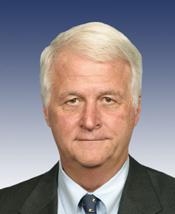
Mr. Speaker, I thank the gentleman for yielding me this time. As others have stated, this for me, too, is a day of disappointment and sadness, profound sadness, of human rights violated, and of…
Mr. Speaker, I thank the gentleman for yielding me this time.
As others have stated, this for me, too, is a day of disappointment and sadness, profound sadness, of human rights violated, and of diplomatic opportunities squandered. As a sovereign nation, only Cuba can decide how to attend to its own national security. But over the last 3 weeks, decisions have been made in Havana that seriously undermine efforts to normalize relationships with the United States.
I come to the floor today as part of a group, the so-called Cuba Working Group. It is bipartisan in nature, 25 Republicans, 25 Democrats. We have spent considerable time and effort to tear the wall down that has divided our people for some 40 years. This has put us at odds with the White House. It has put us at odds with many of our colleagues that are sitting here today. But we are not at odds today.
At this moment, we stand together. In the past I have called on President Bush to lift the U.S. restrictions on travel by Americans to Cuba, to let our people go. Well, today, I call on President Fidel Castro to let his people go.
For me, this issue is more than political, it is personal, because some of those who have been arrested are my friends. I want to speak about 2 of them. My colleagues have heard their names here. Hector Palacios, a Varela Project organizer, and Oscar Dhepe, an independent journalist. Their arrests and convictions pain me more than anyone in this Chamber can comprehend. They are men of exceptional character and integrity who seek peaceful change. They are not agents of violence or insurrection. Far from it. They acknowledge Cuba's advances in health and education brought about by the revolution, and they want to accelerate that progress in other areas, so they work through modest, small, yet courageous acts within the Cuban Constitution. They create and have made every effort to create political space.
Hector's apartment houses one of the first so-called independent libraries in Cuba, a few shelves devoted to old medical encyclopedias and geography texts, some children's books donated by members of my office. But when Hector was arrested, these books were taken away. Doctor Seuss is not a threat to the Cuban revolution.
During our visits, we talk about how to hasten a climate of mutual respect between the people of our 2 countries, between our governments. Ironically,
they argued persuasively for an end to the embargo and travel restrictions on Americans to Cuba. Let me quote from Oscar Chepe, who presently is incarcerated for 20 years in a Cuban jail. This is his quote. These are his words: ``Experience demonstrates that isolation breathes life into totalitarianism. On the other hand, contact between peoples free individuals from falsehoods and from the lives without dignity that they are forced to lead.''
As the gentleman from New York (Mr. Rangel) indicated, we are told that these arrests had nothing to do with the content of their words. Rather, they are intended to send a message to the United States in response to a perceived pattern of illegal provocations from our own State Department.
Well, I submit that the message we have received is very different and deeply disturbing. It is that diversity of thought is not welcome in Cuba, even at the expense of jeopardizing progress toward normalization. How else can we explain 20- and 25-year sentences for Hector and Oscar and dozens of others after only cursory consultations with their lawyers and quick trials, closed to the public, foreign diplomats, and the international media.
It is inconceivable, if one knows these men, that they were conspiring with the United States. Like dozens of other detainees, they were working in behalf of the Cuban people. Nobody else. They posed no threat to the Cuban Government.
As I said, I disagree with some of my colleagues in Cuba. For example, I have chosen to travel there, to visit with people like Hector Palacios and Oscar Chepe. And unlike my friends from Florida, some of my friends, I oppose U.S. policies which prevent ordinary Americans from offering the same solidarity to those seeking change in our relationship with Cuba, a relationship that has been stated so eloquently by another prominent Cuban dissident who was recently released from serving 5 years in a Cuban jail. His name is Vladimiro Roca, and he said that the relationship ought to be characterized by dialogue, negotiation, and reconciliation. Again, those are his words.
But that is a debate for another day. I might have written this resolution somewhat differently, but I commend my colleagues for bringing it to the floor of the House; and I urge my colleagues all of my colleagues to support it; and I ask the Cuban Government to release these people.
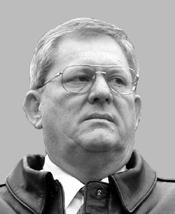
Mr. Speaker, I thank the gentleman for yielding me this time, and I thank the gentleman from California (Mr. Waxman) and clearly the gentleman from New York (Mr. McHugh) for taking the leadership to…
Mr. Speaker, I thank the gentleman for yielding me this time, and I thank the gentleman from California (Mr. Waxman) and clearly the gentleman from New York (Mr. McHugh) for taking the leadership to move forward on this.
Mr. Speaker, it is an unusual day in America when people can look to the Congress and understand that we may really solve a problem. If we can agree on something being a problem, it should not be hard to fix it. The debate ought to be around what does it take to bring about a solution, but we have to agree there is a problem.
There is no question but that when one charges more for a monopoly like the Postal Service, when one charges more money for something than one is supposed to, then that is an unfair tax on the people, just as if the Congress had passed the tax. Two, it has a stifling effect on the economy and all of those businesses, but just as importantly, all of those individual human beings that use the Postal Service for everything from mailing their monthly bills to mailing out anniversary and Christmas cards. Three, they have not been able to figure out in the past how to take care of funding the Civil Service Retirement System adequately.
It is a red letter day when the Republicans and Democrats can come together on a bill that they agree solves a problem.
Mr. Speaker, that is what we have here today. We have had anthrax in the Postal Service, we have had the situation of rate increases in the Postal Service, we have had the situation in the Postal Service where we are dealing with a down economy, but this is a real shot in the arm for this organization. One, we are going to be able to use the excess monies to go into funding the operational aspects for fiscal years 03, 04 and 05. The second thing we are going to be able to do is to fix the Civil Service Retirement System. And the third thing we are going to be able to do is to move the Postal Service more towards a sound financial setting.
I have heard from the mail carriers, I have heard from the postmasters, I have heard from the newspaper organizations and the magazine organizations. The one group that I have not heard from are the consumers of America, the individual people, because they have not been aware that this problem has been going forward.
So, Mr. Speaker, it is really an exciting day, truly an exciting day when people can come together in this Congress, in this House, and solve problems.
Now, having said that, I think we all have to recognize that this gives the Postal Service a couple additional years of opportunity to look at their organization, to look at the things they have to do, to make this a more efficient, more effective service. It is the largest single business in this country. There is no business bigger. We always talk about the Fortune 500 or the top 100 or whatever. There is no business in this Nation that is as large as the U.S. Postal Service in terms of its economic impact, its economic might, and its economic power. It can also be an economic drag, because this Nation cannot run without that service.
So to the extent that we are able to find billions of dollars and move them into the operational side, move them into the side to reduce the capital expenditure demands for increased funding, there is no question but what that does is give us the ability to be able to more effectively deal with the economy of this country.
This is a couple billion dollars a year, but the cumulative effect would have been $70 billion, 7 followed by 0, 0, 0, 0, 0, 0, 0, 0, 0. As Senator Dirksen once said, If you take a billion here and a billion there, pretty soon it adds up to real money.
So what we are doing today is taking the first giant step towards solving a real money problem for the American people. What we are doing today is starting the long-range fix of the problem in the Postal Service to the benefit of the employees, to the benefit of the consumers, to the benefit of the users, and to the benefit of the economy of America.
I say to the gentleman from Virginia (Mr. Davis), I sincerely applaud you as the chairman of the committee that has drafted this in the first couple of months in the Congress. The gentleman from California (Mr. Waxman) has done the same thing. They have come together in a committee that had historically a lot of contention. They have come together to move forward on something that is for the good of all of the people of this great country, and so I thank the gentleman from New York (Mr. McHugh) for having planted the seed and kept the tree nurtured until the others could seize upon it.
This is a red letter day for the people of America, and I urge my colleagues to support it unanimously.
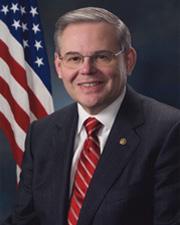
Mr. Speaker, I thank the distinguished gentleman for yielding me time and for his statement before as well. Mr. Speaker, where is the outrage? Where is the outrage regarding the latest barbarity from…
Mr. Speaker, I thank the distinguished gentleman for yielding me time and for his statement before as well.
Mr. Speaker, where is the outrage? Where is the outrage regarding the latest barbarity from the dictatorship of Fidel Castro?
Where is the outrage that a blind dissident, Juan Carlos Gonzalez Leiva, is detained in the harshest of political prisons and that the Castro regime denies him his needed medication; that Leonardo Bruzon, an Amnesty International prisoner of conscience who suffers from the ill-effects of a hunger strike, is denied needed medical attention?
Where is the outrage, that three of the four brave authors of the pro-democracy essay, ``La Patria Es De Todos,'' the nation belongs to everyone, Marta Beatriz Roque, Rene Gomez Manzano and Felix Bonne, have been mercilessly thrown in jail and face sentences raging from 20 years to life?
Ms. Roque, who had the audacity to call herself an independent economist and criticized Cuba's economy, has already been sentenced to 20 years. The fourth author, the Afro-Cuban leader, Dr. Oscar Elias Biscet, who already served 3 years for displaying national flags upside down in an act of civil disobedience, will also be sentenced. His three colleagues having the audacity to fast peacefully to protest his detention.
Where is the outrage, that the independent journalists movement in Cuba, led by journalist and poet Raul Rivero, have been rounded up, had their houses ransacked by state security thugs, and their professional personal belongings taken from them?
We learned this morning that Raul Rivero was sentenced to 20 years. Among the dangerous materials that Rivero possessed was a collection of Martin Luther King's speeches autographed by former President Jimmy Carter on his recent trip to the island.
It was taken as evidence of subversive thought.
Where is the outrage, that those who gathered the signatures of 30,000 brave men and women who, much like our Founding Fathers, with the stroke of a pen, had the courage to peacefully demand a referendum calling for democratic changes, were unceremoniously rounded up and are being sentenced in show trials reminiscent of Hitler and Stalin?
Where is the outrage that independent union activists have been rounded up, that this crackdown occurs when the U.N. Human Rights Commission meets in its annual session in Geneva? The Castro dictatorship's membership of that commission is itself a mockery and a travesty.
The show trials have begun, with the same coerced confessions and the same betrayal of dissident organizations by Castro's security agents who infiltrated these groups.
And what are the verdicts? Guilty. Guilty of criminal association. Guilty of enemy propaganda. Guilty of dangerousness. Guilty of contempt for authority, of resisting authority. Guilty of seeking democracy and a respect for human rights. That is Castro's socialism.
So far, 47 peaceful dissidents have been sentenced to between 12 and 27 years in prison in what the State Department calls ``Kangaroo courts'' that began proceedings last Thursday.
Let me just mention a few of those sentenced.
Omar Rodriguez Saludes, an independent journalist known to ride his bicycle to news conferences with a camera dangling by a strap from his neck: 27 years, the hardest sentence so far. Hector Palacios, one of the key figures promoting the Varela Project: 25 years. Oscar Espinosa Chepe, who wrote critical articles about the Cuban economy for the Internet: 25 years. Ricardo Gonzalez Alfonso, Raul Rivero's editor at ``De Cuba'' magazine: 20 years.
And it goes on and on.
So to all who go sip wine with Castro, smoke his cigars and are regaled by his soliloquies, where is the outrage?
Mr. Speaker, the expression of international outrage has begun from European governments to Jimmy Carter to the AFL-CIO. May we all raise our voices to join the growing chorus of outrage and condemnation of this dictatorship heard around the world, heard everywhere, except for these hallowed halls. May this Congress not sit silent now as the show trials proceed. May this Congress stand in solidarity with those dissidents and human rights activists who heeded Pope John Paul's words during his visit to Cuba: ``Do not be afraid.'' ``Do not be afraid.''
Let us in this bastion of democracy also not be afraid to vote for this resolution.
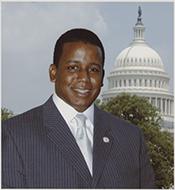
Mr. Speaker, I rise today in strong support of this resolution. I also thank my South Florida colleagues, Lincoln Diaz-Balart, Ileana Ros-Lehtinen and Mario Diaz-Balart for bringing this resolution…
Mr. Speaker, I rise today in strong support of this resolution. I also thank my South Florida colleagues, Lincoln Diaz-Balart, Ileana Ros-Lehtinen and Mario Diaz-Balart for bringing this resolution to the floor. I stand with them today to condemn the brutal and inhumane attacks by Fidel Castro on innocent human rights activists, trade union leaders, journalists and ordinary citizens in Cuba.
Fidel Castro has taken advantage of the power he has in his country and over his citizens for years. Today, he is taking advantage of the world's focus on the war in Iraq to once again suppress Cuban dissidents who are trying to exercise basic rights of freedom of expression, seeking a peaceful evolution towards a democracy he so obviously deplores.
Mr. Speaker, here in the United States, protesters are using their First Amendment rights to speak their minds on the war in Iraq. Whether they support the Bush administration or not and whether we agree with them or not, people in this country rally to voice their concerns over the war, and other issues, without the fear of being brutally attacked and imprisoned for the rest of their lives.
In Cuba however, the freedom to express your mind is nonexistent. The imprisoned dissidents in Cuba are part of a growing movement who are continuously followed, harassed, phone-tapped and detained.
For merely stating their opinions, signing petitions and writing articles advocating the end of the dictatorship in Cuba, these activists are charged as criminals. They are threatened for gathering in each other's private homes to talk about the resurrection of a better life in Cuba for themselves and for future generations to come.
Mr. Speaker, these callous and repressive acts by Castro's regime are nothing new. They have been occurring long before my colleagues and I came to Congress. Many of the prisoners will probably face years of imprisonment, joining several hundred political prisoners who have been previously sentenced for similar harmless acts. For decades now, Castro has repeatedly used the repression of his citizens as a means of retaining authority and control over his country and over his people.
It is for these reasons I stand in strong support of this resolution and ask my fellow colleagues to join me to condemn the arrests of these individuals and insist the immediate release of all political prisoners in Cuba.
Mr. Delay. Mr. Speaker, on March 17th of this year, Fidel Castro initiated his most draconian crack-down on political dissidents in recent years.
He has ordered the arrest of more than 80 pro-democracy activists. He has tried them in proceedings the State Department called a ``kangaroo court.'' And he has sentenced them to decades in prison on illegitimate charges.
Castro was wrong to think he could tighten his choke-hold on the human rights of his people under the radar of the civilized world.
The United States may be engaged in armed conflict on the other side of the world, but no fog of war can conceal Castro's barbarism.
And no freedom-loving nation can reward such behavior with trade policies that, however well-intentioned, would enrich a terrorist regime 90 miles off our shores.
If Castro cared about the Cuban people, he would stop brutalizing members of the pro-democracy movement. He would release all his political prisoners, and restore individual liberties to his people.
He would recognize the human rights of all Cubans, especially those with the courage to speak the truth about his goon squad of a government.
This resolution calls on the Cuban dictator to do all of these things, and it puts the House of Representatives once again on the side of our oppressed neighbors and against their oppressor.
I urge all Members to support it.
Mr. Speaker, I thank the gentleman from California for yielding me time. Mr. Speaker, as the ranking minority member of the Committee on Government Reform's Special Panel on Postal Reform and…
Mr. Speaker, I thank the gentleman from California for yielding me time.
Mr. Speaker, as the ranking minority member of the Committee on Government Reform's Special Panel on Postal Reform and Oversight, I rise in support of S. 380, the Postal Civil Service Retirement System Funding Reform Act of 2003. As an original cosponsor of the House version, H.R. 735, I am pleased to join my colleagues in the consideration of S. 380, legislation which will correct the way payments are made to the Civil Service Retirement System.
At this time, Mr. Speaker, I want to thank especially the chairman of this committee, the gentleman from Virginia (Mr. Tom Davis), and the ranking member, the gentleman from California (Mr. Waxman), for their ability to come together in a unified, bipartisan way, to reach agreement and bring to the floor this legislation in a very timely manner.
I also want to thank the gentleman from New York (Mr. McHugh), who has provided leadership on postal issues for a number of years, and all of their staffs, as well as my staff, for the enormous time and effort spent in crafting H.R. 735.
I am particularly proud of the fact that we have worked together in a productive, constructive, and bipartisan manner. We have begun the 108th Congress on a very positive note, and we look forward to the continuation of that in our committee.
I would also like to thank the Senate for striking their language and substituting the language from our bill, H.R. 735, and including the military study language of the gentleman from Virginia (Mr. Tom Davis).
Since the introduction of the House postal pension bill and throughout the committee's markup process, I received hundreds of letters from members of the business mailing community expressing support of the legislation and urging quick action. I was pleased to have been contacted by so many businesses in the Chicago area and within the State of Illinois.
In the face of a depressing economy and a swift and steady decline in mail volume, businesses and consumers are in no mood for postage rate increases. To that end, I am pleased that the bill before us not only corrects the calculation of the postal service's contributions to the CSRS fund, it will also allow the postal service to hold off on rate increases for at least 2 years, while allowing the postal service to reduce its $11.9 billion debt.
Mr. Speaker, I appreciate the opportunity to express my support for this important legislation. Although this is a good bill, it is not a perfect bill. At the appropriate time, I certainly expect to express support for the military amendment of the gentleman from California (Mr. Waxman), an amendment which would retain current law with respect to Treasury paying the costs related to the military service of employees in the Civil Service Retirement System.
Practically all of the postal service's stakeholders are in support of this legislation: printers, mailers, the unions, and the consuming public. It is a good bill. I urge its passage.
Again, I commend the chairman and ranking member for their leadership.
Mr. Speaker, I simply rise in support of the Waxman amendment. But I also rise in support of the agreement that the gentleman from Virginia (Mr. Tom Davis) and the gentleman from California (Mr. Waxman) have been able to arrive at.
I think once again this is an indication of the manner in which the chairman and ranking member of the Committee on Government Reform have been able to provide leadership that moves us from the discussion point to
the position of being able to actually do something. And so I commend both of the gentlemen for their diplomacy, for their leadership, and for their legislative skill.
Mr. Speaker, the exercise of political and civil liberties, including freedom of expression, assembly, association, movement, press, and the right to multiparty elections, are fundamental rights.…
Mr. Speaker, the exercise of political and civil liberties, including freedom of expression, assembly, association, movement, press, and the right to multiparty elections, are fundamental rights. These fundamental rights belong to every individual, be it in the United States, Iraq, or Cuba; these rights are universal.
Nevertheless, regardless of this truth, the Cuban Government has carried out summary trials to expeditiously sentence prodemocracy leaders to try to intimidate and silence other prodemocracy activists on the island, while world attention is primarily focused on Iraq.
The oppressive Cuban Government has attempted to suppress the will of its own people on fabricated charges, accusing pro-democracy activists for purportedly ``working with a foreign power to undermine the government.'' Fearing a peaceful transition to democracy in Cuba, under two draconian laws, the Fidel Castro regime has tried to silence the inherent right of individuals to freedom.
I rise to vehemently denounce these actions.
Mr. Speaker, in early 2003, dozens of supporters of the Oswaldo Paya's Varela Project were harassed, jailed, and threatened. On February 18, 2003, two members of the Oswaldo Paya's Christian Liberation Movement, Jesus Mustafa Felipe and Robert Montero, were sentenced to 18 months in prison on charges of contempt and resisting arrest.
On March 18, 2003, the Cuban Government began a massive crackdown on democracy activists. About 80 activists were arrested and made subject to swift trials and prosecutions that began on April 3, 2003. Foreign journalists and diplomats were excluded from the trials. Within days, over 50 of the activists had received prison terms ranging from 6 to 28 years. These sentences, which are an example of the dependency of the judiciary branch on the will of Fidel Castro, further call into question the legitimacy of Castro's regime. I condemn the illegitimacy of the Cuban judiciary system, and the Cuban Government.
In a further deterioration of Cuba's rule of law, on April 11, 2003, the Cuban Government executed three men who had hijacked a ferry in Havana in an attempt to reach the United States. The men were executed by firing squads after summary trials that were held behind close doors; four other ferry hijackers received life sentence while another received 30 years in prison.
Although their crimes should have been punished, this dismal excuse for a judicial system never allowed the suspects a chance. In one of the most deplorable signs of judicial dependency of the past decade, the three men accused of hijacking the ferry never received a fair trial. Under the Cuban ``Kangaroo Courts,'' they were found guilty in three days, and only given a few days to appeal their sentences before being executed by a firing squad a day later. I am appalled at these murders.
Disgusted by the crudeness of the Cuban Government's repression, on April 8, 2003, I supported House Resolution 179, which condemns the Cuban Government's crackdown, calls for the immediate release of all political prisoners, and endorses basic human rights and free elections in Cuba.
I will continue my high level of advocacy for a democratic Cuba in the 108th Congress, supporting a variety of legislative initiatives regarding sanctions, human rights, and drug interdiction cooperation. But more importantly, I will tirelessly labor to help bring democracy and respect for human rights to the island of Cuba.
In conclusion, I praise the courage of those Cubans who have been targeted in this most recent government crackdown, and strongly condemn the recent arrests and murders committed by Castro's regime.
Show 11 more
Mr. Speaker, I certainly thank the gentleman for yielding me this time. The Postal Civil Service Retirement System Funding Reform Act of 2003 is a very, very long name, but appropriately so, because…
Mr. Speaker, I certainly thank the gentleman for yielding me this time.
The Postal Civil Service Retirement System Funding Reform Act of 2003 is a very, very long name, but appropriately so, because it addresses reform that is certainly very long overdue. The Postal Service, in fact, has not seen any real reform since 1971 when the Congress passed the Postal Reorganization Act. Since then, of course, the Postal Service has dramatically expanded.
Consider some rather startling numbers. Today, the mailing industry accounts for 9 million jobs, $900 billion in commerce, and 9 percent of the United States gross domestic product. S. 380, as approved by the Senate, is really nearly identical to H.R. 735 which was passed by the Committee on Government Reform under the extraordinary leadership of our great chairman, the gentleman from Virginia (Mr. Davis).
The purpose of this legislation is to change the manner in which the Postal Service pays into the Civil Service Retirement System.
This legislation is so very necessary because under current law, the Postal
Service will overpay its obligations to the Civil Service Retirement System by more than $70 billion. In effect, the Postal Service would be forced to subsidize the retirement obligations of other Federal agencies.
The net result is that the Postal Service has to continually implement rate increases which would otherwise be unnecessary.
S. 380 does not affect the payment of retiree benefits. It has no negative impact on retirees. It simply addresses how those benefits are funded.
The anticipated savings from this bill would be utilized in two ways: first of all, to pay down the total debt that the Postal Service currently has with the Department of the Treasury; and secondly, to delay any rate increases on consumer and commercial mailings until fiscal year 2006.
Certainly, for most of us if one has a postal rate increase, it might just be a nuisance, just 1 cent or 2 cents. That kind of an increase might not mean too much if you send only a few letters per month. However, if you are a business who is sending literally millions of pieces of mail, this is a tremendous increase in your costs, and we can just think about the impact that a postal rate increase has on the mail order catalog businesses or on magazine businesses or so many businesses that rely on the United States Postal Service to conduct their business.
If the 108th Congress does not act on this legislation, it will necessitate a postal rate increase, and we will, in effect, be levying an unfair tax increase on the American consumer.
Passage of this bill would be very much the first stage of substantial postal reform that will bring the service into the 21st century. I think it is important that this Congress demonstrate to the citizens of our Nation that it will be committed to improving the cost- effectiveness and the efficiency certainly of government, and this legislation is an excellent first step in that direction.
No other governmental entity serves its customers more directly than the Postal Service. Almost every citizen of our Nation is impacted at varying degrees by the Postal Service. Customer service should not be a novel concept within the Federal Government. It should be an operative phrase for us.
S. 380 will allow post offices to better serve their customers and, by voting in favor of this legislation, Congress will be voting to fix a wrong that has hampered the Postal Service for years. I certainly urge my colleagues to vote in favor of S. 380.
Mr. Speaker, I thank the gentlewoman for yielding me time. Mr. Speaker, I wish to also thank the gentleman from Illinois (Chairman Hyde) and the gentleman from North Carolina (Chairman Ballenger), as…
Mr. Speaker, I thank the gentlewoman for yielding me time.
Mr. Speaker, I wish to also thank the gentleman from Illinois (Chairman Hyde) and the gentleman from North Carolina (Chairman Ballenger), as well as the ranking members, the gentleman from California (Mr. Lantos) and the gentleman from New Jersey (Mr. Menendez), for expediting this important resolution. It is important it be considered today because the dictatorship is in the midst of a brutal crackdown on the peaceful pro-democracy movement in Cuba.
Since the world's attention has been focused on Iraq for some weeks, the Cuban tyrant decided to crack down on the peaceful pro-democracy movement, including independent librarians, independent journalists, independent physicians, and many others; rounded them up and has thrown them in dungeons.
Some of the so-called summary trials have already taken place. Perhaps the best known independent journalist in Cuba, Raul Rivero, was already sentenced in one of those sham Roman circus trials, sentenced for having a typewriter, for having some articles published. For having articles published in Spain and in the United States and for other such ``crimes,'' Raul Rivero has been sentenced to 20 years.
Marta Beatriz Roque, mentioned by the distinguished gentleman from California, perhaps one of the best known of the political prisoners rounded up in this totalitarian crackdown, was sentenced to 20 years. Her indictment makes interesting reading, if it can be called an indictment.
The dictatorship charged her with having created a Web page, with having a computer in her home, with utilizing a server in the United States for her Web page, for having spoken on Radio Marti, for having published articles in an independent publication known as ``Encuentro,'' for having in her possession in her home a fax machine of the mark Panasonic, and for having a copy machine, a Canon copy machine.
That is in the so-called indictment in the year 2003, in this hemisphere, by the Cuban tyrant, the indictment prepared by the Cuban tyrant of Marta Beatriz Roque, who has been sentenced to 20 years.
I think that much of the responsibility for what is going on in Cuba today, unfortunately, lies with the fact that the international media does not report sufficiently with regard to what happens in Cuba.
A distinguished new colleague of ours recently actually told me she had witnessed a Special Order that we did precisely on this crackdown, a number of us last week, the distinguished new gentlewoman from Michigan (Mrs. Miller of Michigan). She asked me, ``Where can we read about what is going on? Why don't we read in our major newspapers about the details of this totalitarian brutal crackdown in a country 90 miles away?'' I think she has a very legitimate point. I think the media has a responsibility to report about such things in a neighboring country 90 miles away.
So today is the day, Mr. Speaker, when we need to as a Congress of the United States set our differences aside and concentrate on the brutal totalitarian crackdown that is taking place in Cuba and speak with one voice that this Congress, as it has so many times in the past, stands for human rights and demands human rights, starting
with the cessation of the brutal crackdown being perpetrated on the Cuban people. And as the resolution continues to state, we call for the respect of all elemental human rights, including the right of self- determination, which can be manifested only through free and fair multiparty elections.

Mr. Speaker, I thank the gentleman for yielding me time, and I thank him for his leadership on this issue and so many others, and, of course, thank the gentleman from Virginia (Mr. Tom Davis) and…
Mr. Speaker, I thank the gentleman for yielding me time, and I thank him for his leadership on this issue and so many others, and, of course, thank the gentleman from Virginia (Mr. Tom Davis) and subcommittee minority member, the gentleman from Illinois (Mr. Davis), for their work on this important bill.
I rise in strong support of S. 380, the Postal Civil Service Retirement System Funding Program. As a member of the Committee on Government Reform's Special Panel on Postal Reform and Oversight and a cosponsor of H.R. 735, the House companion, I am very pleased that the House is taking up this very important legislation today that is important to the postal service and important to the American consumer.
With the postal service facing $11 billion in debt over the next few years and the General Accounting Office listing the postal service on their high-risk list, S. 380 and its stabilizing effects on the postal service is very good news for our country.
S. 380 corrects the formula used to determine the amount of annual lump-sum payments the postal service makes to the Civil Service Retirement System. If current law remains unchanged, the postal service-required share of this Federal Government retirement fund will result in a very significant long-term overpayment of more than $70 billion.
S. 380 will credit the postal service for its past payments, which is only fair, to seed SRS, and change how contributions will be made in the future. The bottom line is that the postal service will get some very needed fiscal relief, a cash inflow of money, and the American people get a promise of stable postal rates until 2006. The American public and all postal customers will enjoy a 3-year rate freeze on the cost of postage because of this fix.
I would like to thank my colleague, the gentleman from New York (Mr. McHugh), along with others, the gentleman from Illinois (Mr. Davis) and, of course, the chairman and ranking member, as well as the postal service and the very diverse coalition of postal, labor unions, management groups, business and industry and other postal consumers, all of whom support this legislation.
The mailing industry is tremendously important to the economy of our Nation. The United States Postal Service is the second largest civilian employer in the Nation, employing over 770,000 talented and dedicated workers, workers who lately have had to do their job under tremendous pressure with the threat of anthrax attacks and terrorist attacks.
The mail industry is 8 percent of our GNP, a $900 billion industry that includes not only the Postal Service, but also 9 million Americans in the private sector who work in this industry. I represent many businesses that rely greatly on the Postal Service, and this bill will not only benefit the Postal Service directly, but because this will stabilize the rates, and this is very important, because it will help struggling and ailing businesses like the magazine industry, which happens to be headquartered in the district that I represent. And they have seen many longtime popular magazines fail, like Mademoiselle, Mode, and Brill's Content shut down operations because of the tough economy and also because of the escalating postal rates. All USPS customers need the best service possible from the Postal Service, and certainly a healthy Postal Service is vital to a healthy economy.
Mr. Speaker, I am very pleased that the House is taking action today to help strengthen the Postal Service.
Mr. Speaker, I thank the gentlewoman for yielding the time to me, and I also want to thank the gentleman from Florida (Mr. Lincoln Diaz-Balart) for bringing this resolution to the floor. We have…
Mr. Speaker, I thank the gentlewoman for yielding the time to me, and I also want to thank the gentleman from Florida (Mr. Lincoln Diaz-Balart) for bringing this resolution to the floor.
We have heard about this horrible thing that is going on just 90 miles away from the United States coast, these people getting arrested. What are they getting arrested for? What have they gotten convicted for? Let me just mention Raul Ramon Rivero, an independent journalist and leader of the Cuba press newspapers service who, by the way, has been sentenced to 20 years, Mr. Speaker, 20 years in prison for the following reasons:
Because he created an independent press organization, 20 years for that. Because he is circulating materials published by human rights groups, 20 years for that, Mr. Speaker. Because he is a member of the Cuban Society of Independent Journalists, 20 years in prison for that, Mr. Speaker. Because, the audacity, he has a Sony tape recorder. Mr. Speaker, furthermore, he has the audacity of having a Samsung computer; and if that was not enough to deserve 20 years in prison, it is because he has had meetings in his home with other independent journalists.
That is the reason, Mr. Speaker, why he is serving 20 years, why the tyranny has sentenced him for 20 years in prison. It is not a joke. It is not a cruel joke. Those are the reasons, and like reasons for why these people are being sentenced to 20 years or life imprisonment just 90 miles away from our coast.
Mr. Speaker, some still do business with that tyrant, with Castro; and some want to do business with Castro, with the Castro regime. Doing business with the Castro regime, Mr. Speaker, which is Castro's will, that is what he wants, he says it every single day, doing business with that tyrant, Mr. Speaker, and let us make it very clear, is doing business with a criminal. It is doing business with an international terrorist. It is doing business with a thug, with a tyrant. Mr. Speaker, it is doing business with a murderer; and yes, just listen to him, what he says, it is doing business with a mortal enemy of the United States of America and the American people.
Let us remember what Marta Beatriz Roque, who now has been sentenced to prison for these same types of issues, what she has been saying time and time again. One of the reasons that she is going to prison is because she has said that we must keep the sanctions on the tyranny; we must keep the pressure on until finally there are free elections in Cuba.
That is the goal, Mr. Speaker. That is what we need to do. That is what we need to succeed in achieving for the Cuban people, and that is why it is important. That is a step to free elections. That is a step to freedom in Cuba.
We overwhelmingly support this resolution and want to make sure that the world sees that everybody understands that we will not tolerate, we will not tolerate this type of behavior; and we are not going to do business with that kind of anti-American thug, criminal, assassin and terrorist just 90 miles away from our shores.
Mr. Speaker, I thank the gentlewoman for yielding me time. Mr. Speaker, since mid-March the Castro dictatorship has carried out a massive crackdown on human rights defenders, independent journalists,…
Mr. Speaker, I thank the gentlewoman for yielding me time.
Mr. Speaker, since mid-March the Castro dictatorship has carried out a massive crackdown on human rights defenders, independent journalists, and trade unionists and other brave and noble pro-democracy activists throughout Cuba.
Not satisfied with the ongoing torture and mistreatment and incarceration of approximately 400 political prisoners, Castro has begun a new, ominous, and shameful attack on another 80 of the best and brightest and most courageous of Cuba. Now, as we meet here today, his people and his thugs are beating, victimizing, and sentencing to very long prison sentences those who are the cream of the crop in Cuba, who believe in freedom and democracy.
Castro, with all eyes diverted on Iraq and the war in Iraq, is trying to silence dissent with violence, ``show'' trials, and incarceration. This latest manifestation, Mr. Speaker, of cruelty by the Castro dictatorship is but another, but a highly significant other, reminder of the true character of this regime. It is cruel, brutal and an egregious violator of human rights.
Mr. Speaker, Castro's brutal actions hopefully will serve as a wake- up call to those in the United States, especially those in the United States Congress who argue that it is time to lift the travel ban and sanctions against Cuba. I especially want to focus, Mr. Speaker, on those in the European Union who have been trading with the island country of Cuba for so many years without any linkage whatsoever to human rights. Trade, trade, trade, while this barbaric dictatorship gets worse and worse and worse.
In previous Congresses, Mr. Speaker, I have offered an amendment to lift the travel ban, if and only if political prisoners are freed and felons who have committed acts of violence in the United States against U.S. police, including a trooper from the State of New Jersey, are brought to the U.S. in order to be held accountable. That amendment, sadly, lost.
Now, today on the floor we are united in rhetoric and sentiment for those who are being incarcerated and mistreated. But we also need linkage, Mr. Speaker. We need to recognize that actions, and particularly those that are linked to trade and travel bans, can be very efficacious--actions always speak louder than our words. I call upon the European Union, Mr. Speaker, to engage the human rights abuses of Castro with something more than rhetoric. Members of the EU have been trading, as has Canada, for so many years. What have they gotten for it? Maybe they made a few bucks or a few Euros or a few Canadian dollars, but they have,
however unwittingly, aided and abetted this brutal tyrant in horrific repression against his people.
I urge strong support for the gentlewoman from Florida's (Ms. Ros- Lehtinen) resolution, and I hope this is a wake-up call about what this regime is all about.

Mr. Speaker, I thank the gentleman for yielding me time. Mr. Speaker, I rise in support of this resolution. All voices must condemn the recent crackdown by the Government of Cuba against political…
Mr. Speaker, I thank the gentleman for yielding me time.
Mr. Speaker, I rise in support of this resolution. All voices must condemn the recent crackdown by the Government of Cuba against political dissent. Those arrested include two dozen independent journalists, leaders of independent trade unions and opposition political parties, and pro-democracy activists involved in the countrywide reform effort known as the Varela project.
It makes no difference whether you are for or against change in U.S. policy towards Cuba. On this matter we speak with one voice. These arrests are unacceptable. The summary trials and harsh sentences merit universal condemnation.
Mr. Speaker, I have had the privilege of traveling to Cuba many times and have met directly with Cuban independent journalists and members of the dissident community. Many of these individuals were arrested in the latest crackdown. They are receiving harsh sentences for actions we take for granted here in the United States: the right to hold meetings, have discussions, and express opinions different from those held by our government.
The Cuban Government has said that these arrests are in response to actions by U.S. Ambassador Cason and the U.S. Interests Section that are perceived as deliberate attempts to foment subversion in Cuba.
Mr. Speaker, those grievances should be raised and resolved between the two governments, but no action of the United States Interests Section justifies in any way these recent arrests. The right of diplomats to meet with people who represent a range of views, including people who peaceably dissent from the policies and priorities of their own governments, should not be impeded. In fact, Mr. Speaker, I believe the restrictions on U.S. diplomats in Cuba and Cuban diplomats in the United States are just plain wrong.
Mr. Speaker, I am seriously concerned about the increased tensions and hardening of positions in U.S. Cuban relations. They do little to advance human rights or open political space in Cuba; in fact, quite the opposite. I fear that without a concerted effort to change our policies towards one another for the better, it will only lead to greater restrictions in both countries and fewer opportunities for moderate voices in both countries to engage directly with one another. I will conclude by urging the Cuban Government to release immediately all these prisoners and all prisoners of conscience.
Mr. Speaker, I thank the gentleman for yielding me time. I agree with what my colleague with the great voice, the gentleman from Illinois (Mr. Davis), just said; and I rise in support of the Postal…
Mr. Speaker, I thank the gentleman for yielding me time.
I agree with what my colleague with the great voice, the gentleman from Illinois (Mr. Davis), just said; and I rise in support of the Postal Civil Service Retirement System Funding Reform Act of 2003. I commend the gentleman from Virginia (Chairman Tom Davis) on our side of the aisle for guiding this bill through this legislative body at this time.
It is very important that we have a strong and viable postal service, and that is why during the last Congress I was disappointed when we did not pass the Postal Accountability and Enhancement Act. The gentleman from New York (Mr. McHugh) and others worked very hard on that legislation, and it would have helped a great deal.
As the gentleman from Virginia (Mr. Tom Davis) just said a few minutes ago, there are a lot of problems with the postal service that need to be addressed, but this is a very important one; and that is why I am happy to see this bill before us today.
Why is immediate action needed? Because, if we do not do anything, that simply is not an option. If Congress does not correct the retirement benefit formula in current law, postal rates will probably increase in the not-too-distant future, and everybody who deals with the postal service and has businesses understands how important that is. Such an increase in postal rates in the current economic environment threatens the postal service, its employees and the entire country, as well as the mailing industry.
Congress has a duty to ensure that the U.S. Postal Service is on a sound fiscal footing and to protect the American postal customers from unstable rates. Changing the way the U.S. Postal Service retirement payments are made is going to go a long way toward accomplishing that goal. Without this change, businesses throughout the country will continue to be unfairly taxed by having postal rate increases.
This bill is very, very needed and will ensure stable postal rates into the foreseeable future, and I think will help facilitate an economic recovery in many sectors of the economy.
Once again I want to thank the gentleman from Virginia (Chairman Tom Davis) for his hard work on this. He is doing a great job as a new chairman, and I appreciate that.
Mr. Speaker, I thank the gentleman for yielding me time. Mr. Speaker, I would like to recognize the gentleman from Virginia (Mr. Tom Davis) and certainly the gentleman from California (Mr. Waxman),…
Mr. Speaker, I thank the gentleman for yielding me time.
Mr. Speaker, I would like to recognize the gentleman from Virginia (Mr. Tom Davis) and certainly the gentleman from California (Mr. Waxman), the gentleman from New York (Mr. McHugh) and the gentleman from Illinois (Mr. Davis) for their fine work on this bill.
The gentleman from New York (Mr. McHugh) has worked tirelessly on postal issues for several years. S. 380 contains the same language as H.R. 735. As such, I am pleased to support S. 380, a bill that goes a long way to ensure the viability of the postal service.
This bill provides financial relief to the postal service by reducing the
amount that the postal service has to pay into the Civil Service Retirement System. The postal service will save $9.1 billion over the next 3 years and $35.6 billion over the next 10 years.
I am also pleased that S. 380 contains language that calls on the postal service and other Federal agencies to study the military pensions and report back to the Congress. Currently, the postal service is paying billions of dollars more into CSRS each year than is needed to fully fund its pension obligations. The Office of Personnel and Management determined that by changing the funding formula the postal service could reduce the amount of money needed to pay into the fund. The funding formula would be more like the one used in the Federal Employees Retirement System.
This bill requires the postal service to work with the Treasury Department, applying the saved funding to pay down its debt in the first 2 years. In fiscal year 2005, the bill allows for the money saved to be used to keep postal rates stable through 2006.
Mr. Speaker, this bill enjoys broad support from the postal service, postal labor unions, mailing industry representatives, and postal consumers. Passage of this legislation will ensure that the postal service pays down its debts and will forestall the need for another postage rate increase until 2006. This legislation strengthens the postal service, lowers the postal service's debts, and protects postal consumers. I urge all of my friends in the Congress to vote in favor of
Mr. Speaker, I rise today to offer my strong support for H. Res. 179. The recent crackdown by the Cuban government on political dissidents is without reason or measure. The Cuban government must…
Mr. Speaker, I rise today to offer my strong support for H. Res. 179. The recent crackdown by the Cuban government on political dissidents is without reason or measure. The Cuban government must recognize that if it wants to become a full member of the family of democratic nations, and re-establish ties with the United States, it must abide by the fundamental rules of a democracy. At the very top of that list is freedom of expression.
I believe that the United States can assist Cuba in its move towards greater freedom and openness. The American Congress and the Administration can lead by example, by lifting the travel ban, and lifting the trade embargo. How can we advocate for greater freedom when we prevent American companies and consumers from benefiting from trade with Cuba? How can we call for greater openness when we do not let American citizens exercise
their constitutional right to travel freely, to Cuba if they so desire. America can also lead by example by avoiding needless antagonization of Cuba. Wherever they are, our diplomatic community must always act diplomatically.
Current U.S. policy towards Cuba has proved a failure. It makes no sense to continue down the path of isolation. The recent actions by the Cuban government, while reprehensible, do not change that central fact. U.S. policy should be based on U.S. national interests, not a system of rewards and punishments for good or bad behavior. In this instance, the Cuban government has behaved badly and they should be properly sanctioned for it, in America and in the world community. This resolution is an appropriate measure. I do not think, however, that it should affect policy. This should not lead to greater restrictions. To the contrary, the response should be greater exchange between the U.S. and Cuba. Greater freedom and openness will lead to a more free and open Cuban society. As we call on Cuba now to change its policy, we must also ask ourselves what we can do to have a more free and open policy. Lifting the travel and trade ban on Cuba would be a good start.

Mr. Speaker, I rise in strong support of this resolution. The world has condemned Cuba's recent crackdown on human rights and democracy activists. What is most troubling is that this is nothing new.…
Mr. Speaker, I rise in strong support of this resolution.
The world has condemned Cuba's recent crackdown on human rights and democracy activists. What is most troubling is that this is nothing new. The recent crackdown is merely a continuation of the systematic human rights violations in Cuba committed by the Castro regime.
Today I was most discouraged to learn of the prison sentences that have been handed down to dozens of these dissidents, who have been charged with ``subversion'' and collaborating with American diplomats, among other charges. Hector Palacious is but one I'll mention. Along with Oswaldo Paya Sardinas, Mr. Palacios has been a key organizer of the Varela Project, an effort to win Cuban popular support for a referendum on open elections, freedom of speech, freedom for political prisoners, and free enterprise. Yesterday he was sentenced to 25 years in prison for advocating democratic reforms.
Today I join my colleagues in condemning Cuba's crackdown on democracy, in calling for the release of all Cuba's political prisoners, in supporting the right of the Cuban people to exercise their political and civil liberties, and in calling on the world to insist in the strongest terms that the Government of Cuba adhere to international human rights standards.
I enclose for the record a letter to me from former Secretary of State Madeleine Albright, now Chairman of the National Democratic Institute for International Affairs. NDI has worked with organizers of the Varela Project to promote the movement internationally, and last year NDI honored Oswaldo Paya Sardinas for his courageous efforts to promote democracy. Enclosed also is a statement from him calling for the immediate release of the activists. Mr. Paya calls this moment the ``Spring of Cuba'' because for the first time, a peaceful movement is flourishing there. We must do all we can to help it take root.
Mr. Speaker, I rise today in strong support of S. 380, which contains the same language as H.R. 735. This legislation, as has been said earlier, is critically important to our Nation's economy,…
Mr. Speaker, I rise today in strong support of S. 380, which contains the same language as H.R. 735. This legislation, as has been said earlier, is critically important to our Nation's economy, especially in these uncertain times.
S. 380 is good for the American consumers because it means that we will be able to hold the line on postal rate increases for at least 2 more years. It also relieves pressure on those who rely heavily on the postal service to deliver their products, allowing them to reinvest that savings into their local communities and provide more jobs. Most importantly, by freezing rates for 2 years, the postal service and its customers are afforded great stability in their mailing and long-term planning budgets.
As has been said earlier, this involved the support of all of the postal service customers, the unions, the administration; and it involved a great deal of compromise for those folks to come on board, setting the tone for long-term structural reform of the postal service.
The bill buys everyone valuable time to develop a comprehensive long- term solution to the post office's solvency, while avoiding the temptation to micromanage post offices.
Mr. Speaker, I would like to thank my good friend, the gentleman from New York (Mr. McHugh), a congressional leader on postal issues, and my chairman, the gentleman from Virginia (Mr. Tom Davis), for his hard work bringing the bill so swiftly to the floor. The gentleman from Virginia (Chairman Tom Davis) has demonstrated his leadership in legislative capabilities as chairman of the Committee on Government Reform in a very short period of time, and I appreciate his work on this issue.
Mr. Speaker, I urge my colleagues to support this bill.
Bill Text
2 versions available
        [Congressional Bills 108th Congress]
[From the U.S. Government Publishing Office]
[H. Res. 179 Engrossed in House (EH)]

In the House of Representatives, U.S.,

April 8, 2003.
Whereas the Cuban Government continues to repress all peaceful attempts by the
Cuban people to bring democratic change to the island by denying
universally recognized liberties, including freedom of speech, assembly,
association, movement and of the press;
Whereas on March 9, 2003, many of Cuba's prominent dissidents issued a statement
titled ``Joint Statement'' to the European Union, wherein they
reaffirmed their view of the Cuban Government's ``total vocation to
immobility and its refusal to respect internationally recognized human
rights or accept the existence of legitimate political opposition'' and
further stated that ``in recent times the Cuban Government has
intensified its political and social repression'';
Whereas commencing on March 17, 2003, the Cuban Government carried out a
massive, island wide crackdown on members of Cuba's pro-democracy
movement, which included the arrest of over 80 dissidents, among them
many who signed the ``Joint Statement'', activists of the Assembly to
Promote Civil Society, promoters of the Varela Project, independent
journalists, and numerous members of Cuba's nascent independent civil
society;
Whereas the Cuban Government arbitrarily searched the homes and confiscated
personal items belonging to pro-democracy activists;
Whereas independent journalists were among those incarcerated in this massive
crackdown, including Raul Rivero, known as the dean of the dissident
independent journalists in Cuba;
Whereas independent librarians, who make their homes available so that the Cuban
population may have access to publications otherwise censored by the
Cuban Government, also became victims of repression, as many were
arrested, their homes ransacked and searched, and publications and other
belongings confiscated;
Whereas Marta Beatriz Roque, and other leaders of the ``Assembly to Promote
Civil Society'', an islandwide movement seeking to coordinate the
various sectors of Cuba's nascent independent civil society who work for
a democratic transition, were incarcerated and face lengthy sentences,
including life sentences;
Whereas activists who have collected or signed petitions for the Varela Project
were also incarcerated in this crackdown and may also face life
sentences;
Whereas more than 80 pro-democracy leaders who work for a peaceful transition to
democracy in Cuba have been incarcerated and sentenced under ``Law 88''
and ``Law 91'', two draconian totalitarian laws that call for long
sentences of 10, 15, or 20 years, or life imprisonment, or even death
for pro-democracy activity;
Whereas there is concern for the well-being and safety for all of Cuba's
political prisoners, particularly Juan Carlos Gonzalez Leyva, who is a
blind human rights activist incarcerated since March of 2002 without
being formally charged, and Leonardo Bruzon Avila, who has been denied
medical attention according to Amnesty International, despite the
effects of a prolonged hunger strike while in prison.;
Whereas a plea for solidarity was made from within the notoriously harsh prison
in Cuba known as ``Combinado del Este'' and signed by 21 political
prisoners, among them Dr. Oscar Elias Biscet, Francisco Chaviano, Rafael
Ibarra, and Jorge Luis Garcia Perez ``Antunez'' to the member states of
the 59th Session of the United Nations Human Rights Commission;
Whereas the Cuban Government has carried out ``summary trials'' to expeditiously
sentence pro-democracy leaders to try to intimidate and silence other
pro-democracy activists on the island, while world attention is
primarily focused on Iraq;
Whereas the Castro regime has engaged in mass arrests of dissidents while the
United Nations Commission on Human Rights, of which Cuba is a member, is
meeting in Geneva;
Whereas certain member countries of the Latin American and Caribbean group
(GRULAC) at the United Nations Commission on Human Rights are currently
drafting a resolution on the violations of human rights by the Cuban
Government;
Whereas the Cuban Government has repeatedly violated the rights enshrined in the
Universal Declaration of Human Rights, the Inter-American Convention on
Human Rights, and other international and regional human rights
agreements, and has violated the mandates issued by the United Nations
Commission on Human Rights;
Whereas foreign diplomats and members of the international press have been
barred by the Cuban Government from being present at the ``summary
trials''; and
Whereas pro-democracy leaders on the island have come together to call for the
immediate release of all Cuban political prisoners, and are requesting
international solidarity with the internal opposition, as reflected in a
March 31, 2003, statement signed by some of the most prominent
dissidents on the island: Now, therefore, be it
Resolved, That the House of Representatives--
(1) condemns the brutal crackdown of the Cuban Government on the
island's peaceful pro-democracy movement;
(2) calls for the immediate release of all Cuban political
prisoners;
(3) supports the right of the Cuban people to exercise fundamental
political and civil liberties, including freedom of expression,
assembly, association, movement, press, and the right to multiparty
elections;
(4) calls on the United States Permanent Representative to the
United Nations and other International Organizations in Geneva,
Switzerland, to work with the member countries of the United Nations
Commission on Human Rights to ensure a resolution that includes the
strongest possible condemnation of the current crackdown of dissidents
and of the gross human rights violations committed by the Cuban
Government; and
(5) calls on the Latin American and Caribbean group (GRULAC) at the
United Nations Commission on Human Rights to exclude Cuba from its slate
of candidates for the United Nations Commission on Human Rights and
urges all member nations to oppose renewing Cuba's membership on the
United Nations Commission on Human Rights until the Government of Cuba
adheres to international human rights standards, such as those
delineated in the Universal Declaration of Human Rights.
Attest:

Clerk.