Waiving a requirement of clause 6(a) of rule XIII with respect to consideration of certain resolutions reported from the Committee on Rules.

Legislative Activity
Stay on top of the latest movement without scrolling through every action
Motion to reconsider laid on the table Agreed to without objection.
April 11, 2003 • 12:01 AM
View full timeline
Introduced in House
April 10, 2003
The House Committee on Rules reported an original measure, H. Rept. 108-70, by Mr. Hastings (WA).
April 10, 2003
Placed on the House Calendar, Calendar No. 23.
April 10, 2003
Considered as privileged matter. (consideration: CR H3279-3286)
April 10, 2003 • 10:51 PM
DEBATE - The House proceeded with one hour of debate on H. Res. 190.
April 10, 2003 • 10:52 PM
The previous question was ordered without objection.
April 10, 2003 • 11:42 PM
Passed/agreed to in House: On agreeing to the resolution Agreed to by the Yeas and Nays: 223 - 203 (Roll no. 139).(text: CR 4/10/2003 H3280)
April 11, 2003 • 12:01 AM
On agreeing to the resolution Agreed to by the Yeas and Nays: 223 - 203 (Roll no. 139). (text: CR 4/10/2003 H3280)
April 11, 2003 • 12:01 AM
Motion to reconsider laid on the table Agreed to without objection.
April 11, 2003 • 12:01 AM
Voting History
1 vote recorded • Roll call available
Floor Debate
12 membersWhat members said about H.Res. 190 on the floor
 DD
DD JMS
JMS JPM
JPM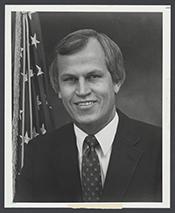 CWSDH+7
Floor Debate
12 membersWhat members said about H.Res. 190 on the floor
Mr. Speaker, I rise in strong support of this rule. None of us are ecstatic about the fact that we are here, but we have a requirement that we complete this budget process. We have spent a great deal…
Mr. Speaker, I rise in strong support of this rule. None of us are ecstatic about the fact that we are here, but we have a requirement that we complete this budget process. We have spent a great deal of time on it already this year. We have had a full and very vigorous debate on the budget, and we had a very close vote that took place here. And now we have gone through the conference process.
So as I listen to people say that they have had no chance to look at this whatsoever, it is very clear the Committee on the Budget did its job. And the conferees met, and they have come forward with this report.
Now, one of the things that we just discussed upstairs in the Committee on Rules is that, whether you like it or not, it is often a prerequisite to actually meet deadlines if we are going to get things done and have deadlines set. And everyone is enthused about the prospect of meeting our deadline to have this done by the 15th of April. Everyone is enthused about the prospect of our adjourning for the district work period that is upon us. And we want to deal with a couple of things.
We want to deal right now with completion of this budget conference report; and we also, when we pass another rule, look forward tomorrow to consideration before we leave of the supplemental appropriations bill which will pay for the war effort.
Now, I see my good friend from Texas (Mr. Stenholm) here with whom I am very pleased to work on a wide range of issues, and we have just been working upstairs. And I wanted to clarify one issue, and that is rule XXVII clause 2 makes it very clear that there is not a 10-year requirement, but when specificity is designed as is outlined in this measure, a 1-year debt ceiling increase is in fact allowed under the rules of the House.
Now, let me say, Mr. Speaker, that we are all continually concerned about an increase in the national debt. We are concerned about increases in spending. And I think my friend was very correct in raising the fact that things changed on September 11 of 2001. And while he talked about the fact that he believed that the overall program for economic growth should change because of what took place on September 11 of 2001, we have found that it is absolutely essential for us to deal with things that did change on September 11.
We embarked on that day on a war on terrorism which has cost us over $100 billion just for the war on terrorism itself. We know that with the war that is, actually, we hope very much, coming to an end right now, that we will be able to realize what we have spent. Tomorrow we will be dealing with the spending of $74.7 billion, and so it is true that things have changed. But we feel very strongly that the most important thing for us to do is to put into place an economic growth plan that will generate the kind of revenues that we need to pay for the war on terrorism, to pay for this $74.7 billion in supplemental appropriations that will be necessary to deal with the expenses dealing with the war in Iraq in which we have all strongly supported our troops in a bipartisan way on that and had a great celebration of that today here in Statuary Hall.
So, Mr. Speaker, our plan is to try and get the economy growing. We all realize that during the 1990s, the latter part of the 1990s, we saw a strong, bold, dynamic economy. We saw rates of growth at 6 percent and even beyond that. We have seen this diminution, the flow of revenues to the Treasury, not only because of increases in spending, not only because of the war on terrorism, not only because of the war that we are dealing with in Iraq, but because we have seen a slowing in our economy.
We happen to believe that reducing the tax burden on working Americans, putting into place plans to have growth-oriented tax cuts will, in fact, generate the kind of revenues that we need to deal with this. And so I would say to my friends who are now talking about a level of fiscal irresponsibility, that what we are trying to do is we are trying to get the economy growing.
I yield to the gentleman from Massachusetts.
Reclaiming my time, Mr. Speaker, I am happy to say that virtually every economist, virtually every economist has acknowledged that had we not put into place the tax cuts, the economic growth plan that we did in 2001, that the slowing in the economy would have been even greater than what we have suffered in the past and the recession which began as we all know during the last two quarters of the year 2000 was, in fact, during those two quarters in 2001, in a position where we were in economic recession, but it is clear that the plan that we had did, in fact, diminish the slow down that we witnessed.
I am happy to yield to my friend.
Reclaiming my time, Mr. Speaker, the gentleman said that
repetition is sometimes good, and so I guess I repeat once again.
He talked about the fact that we put into place what we considered to be an economic growth plan in 2001, and that economic growth plan was put into place before September 11, 2001. So I am repeating again what I said earlier, we have had to expend $100 billion-plus in the war on terrorism, and we know that September 11 played a big role in creating an economic slow down; and we also know that the cost of the war, which we have just gone through, has also played a role in slowing the economy, with increased oil prices and a wide range of other concerns.
We know that as we look at the challenge, Mr. Speaker, of trying to get this economy growing, doing things like reducing the top rate on capital gains for new investment, which is a measure that I have been pushing for a while, which would take the top rate and cut it from 20 down to 10 percent for new investment, if there were a 1-year holding period. I have talked to a wide ring of economists, Democrats and Republicans, and they believe that that would provide an incentive for new investment and could play a role in getting the economy growing.
So, Mr. Speaker, my point is that we need to have growth-oriented tax cuts. Our goal is to do just that, so that we will have the revenues that we need so that we will not have a further debt burden, so that we will not have the kinds of deficits that unfortunately we are going to have to deal with because of these economic challenges that we face for a while.
Let me just say that I know that there is time on the other side of the aisle. I have enjoyed having this exchange with my colleagues and appreciate my friend for yielding me the time.
Mr. Speaker, I thank my friend for yielding time to me, and I would be happy to yield to my friend from Texas.
Reclaiming my time, Mr. Speaker, I simply say that we believe that we have the potential to get back, if we can unleash this economy to the kind of bold, dynamic economic growth that we saw in the latter part of the 1990s, if we do that, if we do that, I am convinced that we will have a level of revenues that outpaces even the kinds of projections that are included in this budgeting process itself.
So I thank my friend. We have shared interests here. We have shared goals. I believe that Democrats and Republicans alike very sincerely want us to get this economy growing so that we can have the revenues that we need to balance the budget and to deal with our priorities. Along with homeland security, along with the war that we have dealt with in Iraq, we can deal with education, transportation, health care, a wide range of other concerns that are out there; and I thank my friend for his thoughts.
Announcement by the Speaker Pro Tempore
Mr. Speaker, we have before us a conference report, but everyone should understand there has been no conference in which the House or Senate Democrats have had any role or any part whatsoever. This…
Mr. Speaker, we have before us a conference report, but everyone should understand there has been no conference in which the House or Senate Democrats have had any role or any part whatsoever.
This conference report comes to the floor in the same spirit, under a cram-down rule. Take it or leave it, here it is, a conference report that will spend $2.2 trillion, one-fifth of our gross national product, which we have had less than 30 minutes to look over, 30 minutes to give the most cursory sort of examination to.
The rules of the House, Mr. Speaker, prohibit such unseemly haste when things are this important. The rules of the House require that a budget report of this kind lay over for at least 1 day before being called up. But our Republican colleagues, by this martial law rule, would take a chain saw to the rules of the House.
That is why this is called a martial law rule, it brooks no dissent. It mows right over the speed brakes we have set up to make sure that our decisions made here in the great House of Representatives of the United States are made carefully and deliberately and thoughtfully. This rule rips up those cautionary measures, those speed brakes, so that this budget resolution can be railroaded through this House.
Mr. Speaker, I choose my words carefully. That is what is happening here tonight in the cloak of darkness when this $2.2 trillion budget resolution is being brought up. This resolution shows a disdain, indeed a contempt, for the process of deliberative government which we are all sworn to defend. It says, essentially, the majority has made up its mind; the minority should get out of the way.
There is a reason for this unseemly haste. It is not that we are about to go on the Easter vacation and do not have enough time to get it done tomorrow. No, that is not the reason we are pushing this thing, railroading this budget through the House.
The real reason is that it will not bear scrutiny. Republicans do not want a lengthy debate because it would reveal that this budget will raise the national debt by $5 trillion, more than $5 trillion over the next 10 years. That is right, this budget will raise the national debt from $6 trillion to $11 trillion over the next 10 years.
Everybody who votes for it should understand that this budget entails deficits of that size, debt accumulation
of that amount. It raises the national debt of the United States from just over $5 trillion to over $11 trillion over the next 10 years. Those are the plain consequences of it. That is the arithmetic of this budget resolution. There is no way around it. That is why it is being railroaded through here.
There is another reason, I think, that our colleagues on the other side do not want this budget debated. This budget is their economic policy. Their economic policy will not stand scrutiny. The economy is sagging, the number of jobs is decreasing, and rather than propose a budget that deals with these problems, they are bending the rules, they are distorting the process, they are doing whatever it takes to pass another round of tax cuts almost as large as the last round, which will go primarily to the wealthy and will drive deficits out of sight.
The objective is obvious: it is to pass this budget as quickly as possible and cut off debate before people realize the contents and, even worse, the consequences.
When they adopt a rule like this, Mr. Speaker, they diminish the minority and the role we play as the loyal minority, adversaries, ferreting out problems, thoughtfully going through major decisions like this. They diminish our role.
When they diminish my role and my colleagues' role, they do not diminish us or our party, but they diminish this great institution called the House of Representatives. They take that well, which should be a forum for ideas, a crucible where we grind out great policies for the good of this country, and they stifle debate, they cut off debate, they truncate debate.
When they do that, they do not just cut us off, they stifle this institution, this great institution. They violate the Constitution of the United States.
Mr. Speaker, this resolution should be defeated by every thoughtful, respectful Member who respects the prerogatives of this House. We should not be taking this matter up in such haste and we should not be taking it up without an opportunity to see it. We should not be rushing this through, railroading it through to passage. This is the wrong way to deal with a matter of such gravity, a budget that will spend $2.2 trillion.
Some would say, spend it in such a fashion and provide for tax cuts that will leave us with deficits that are almost intractable for the foreseeable future, well into the future, and will accumulate nearly $6 trillion of debt over the next 10 years.
Mr. Speaker, will the gentleman yield?
Mr. Speaker, I believe the correct number is $984 billion over the next 12 months. And under rule 27, if it applied, the debt increase would go up every year, staircase for the next 10 years, and the public debt subject to statutory limitation would increase from just over $5 billion to a bit over $11 trillion in 10 years, if the fiscal policies implemented by this rule are actually passed and carried out.
Mr. Speaker, for the record and for clarity, we only got this document minutes before coming to the floor. It is hundreds of pages long; but if you turn to about page 70, you will see just for clarity our debt limit now is $6.4 trillion. Vote for this resolution and you will raise that to 7.384 trillion, 984 billion in 1 year. Over the next 10 years, the deficits entailed by this budget resolution will require the debt ceiling to be raised to $12.040 trillion. Those are your numbers in your resolution, and that is what you will be voting for if you vote to adopt this budget resolution.
Mr. Speaker, I yield myself 4 minutes. I thank the gentleman from Washington for yielding me this time. Mr. Speaker, I rise to strongly oppose this undemocratic rule that will impose martial law on…
Mr. Speaker, I yield myself 4 minutes. I thank the gentleman from Washington for yielding me this time.
Mr. Speaker, I rise to strongly oppose this undemocratic rule that will impose martial law on this House. Frankly, Mr. Speaker, this assault on regular order is appalling. The conference report was filed only a couple of hours ago, and here it is, hundreds of pages. Just a few minutes ago, the Committee on Rules met and reported the conference report to the floor.
I would only ask, have Members had the opportunity to read or review this conference report? Were Members briefed on the details of this conference report? How about an outline? Have they read the summary? The answer, sadly, is no.
I would say to my friends on the other side of the aisle, this is not the renaming of a post office we are working on tonight. This is not a Sense of Congress resolution commending a football team. This is the budget of the United States. This is a big deal, and we owe it to the American people to treat it that way.
I know there are even Members on the other side of the aisle who have grave concerns about hundreds of billions of dollars in tax cuts for the wealthy during a time of war, recession, and deficits. These are important issues, and they deserve to be debated fully.
For anyone who may have questions about what exactly is going on here, let me try to explain.
The majority has brought a rule before the House that forces Members to consider the conference report on the budget resolution on the same day as the report is filed. In other words, if this unfair rule is approved, Members will be voting on the conference report without having any chance to read and study the language.
Now, my friends on the other side of the aisle will undoubtedly say, ``This is basically the same budget we debated and voted on a few weeks ago. Trust us, you do not need to see all the details,'' they will tell us. I would only say to them that over the past few years I have seen too many bills rewritten behind closed doors, too many important issues decided by a handful of Members and their staffs, to take comfort in their assurances.
The Congressional Budget Act of 1974 mandates that a budget resolution be in place by April 15. Today is April 10. I would be delighted if someone could please tell me, what is the rush to complete the conference report tonight. We will be here in session tomorrow trying to finish the energy bill, as well as considering the conference report for the supplemental appropriations bill.
Why can we not wait at least 1 day before we consider this bill?
I would be more than happy to work through the weekend if necessary on a matter that is so important to our country's future. Even the distinguished Chair of the Committee on the Budget conceded during the Committee on Rules meeting just a few minutes ago that this process was indefensible.
Mr. Speaker, I fear that the leadership just wants to get this over with, to shove this mess through the House as quickly as possible before anyone has a chance to really study it.
If the majority has nothing to hide, then I urge every Member to oppose this rule. Let this House and the people we represent read the budget conference report. Let us study and understand it. Let us fulfill our responsibilities as Members of Congress. Let us do the job we were elected to do.
I would urge my colleagues to oppose this undemocratic rule. I would say to my friends on the other side of the aisle, out of respect for this House, both Democrats and Republicans, and out of respect for the American people, vote ``no'' on this rule.
Mr. Speaker, I yield 5 minutes to the distinguished gentleman from South Carolina (Mr. Spratt).
Mr. Speaker, I yield 3 minutes to the gentleman from Virginia (Mr. Scott), a member of the Committee on the Budget.
Mr. Speaker, I yield myself such time as I may consume.
Mr. Speaker, I would ask, does the gentleman from Washington (Mr. Hastings) have any speakers who want to defend this indefensible rule?
Mr. Speaker, I yield myself such time as I may consume.
Mr. Speaker, I take the gentleman's comments to mean that he does not have any other speakers.
Mr. Speaker, I yield 3 minutes to the gentleman from Illinois (Mr. Emanuel), a member of the committee.
Mr. Speaker, I yield 5 minutes to the distinguished gentleman from Texas (Mr. Stenholm).
Mr. Speaker, I yield 2 minutes to the gentlewoman from Oregon (Ms. Hooley).
Mr. Speaker, how much time is remaining?
Mr. Speaker, I yield 3 minutes to the gentlewoman from Texas (Ms. Jackson-Lee).
(Ms. JACKSON-LEE of Texas asked and was given permission to revise and extend her remarks.)
Mr. Speaker, we do not have a lot of time. I would have appreciated the distinguished chairman yielding to the gentleman from Texas (Mr. Stenholm).
Mr. Speaker, I want to thank the distinguished chairman of the Committee on Rules for agreeing to that dialogue.
Mr. Speaker, I yield 30 seconds to the gentleman from South Carolina (Mr. Spratt).
Mr. Speaker, I yield 2 minutes to the gentleman from Tennessee (Mr. Tanner).
(Mr. TANNER asked and was given permission to revise and extend his remarks.)
Mr. Speaker, I yield 2 minutes to the gentleman from Maryland (Mr. Hoyer), the distinguished minority whip.
Mr. Speaker, I yield 1\1/2\ minutes to the gentleman from California (Mr. Sherman).
Mr. Speaker, I object to the vote on the ground that a quorum is not present and make the point of order that a quorum is not present.
Mr. Speaker, I thank the gentleman for yielding time to me. I wish to ask the gentleman from Washington if he might respond. I want to ask the gentleman a question regarding this resolution. As I…
Mr. Speaker, I thank the gentleman for yielding time to me.
I wish to ask the gentleman from Washington if he might respond. I want to ask the gentleman a question regarding this resolution.
As I understand it, this is the martial rule, and this is necessary in order to bring up the budget resolution that just came out of the Committee on Rules.
I would ask the gentleman, is that correct?
I yield to the gentleman from Washington.
That is the point I want to clarify, following House rules.
Does this resolution follow rule 26 by increasing the debt ceiling every year for the next 10 years?
But not for 10 years?
So we are not exactly following House rules. Let me ask then, is it true that this resolution that will follow this same-day rule that will follow the other rule will increase our national debt by approximately $900 billion in the next 12 months?
Nine hundred billion.
I yield to the gentleman from South Carolina.
Reclaiming my time, I see several Members on the floor, including the chairman of the Committee on the Budget.
I think it is very critical for all Members to understand, when you vote for this rule you are setting in motion the passage of a budget that no one on this side of the aisle has read and I doubt very many on that side has read, and we are going to borrow 984 billion additional dollars. That is on top of $450 billion we have borrowed since we increased the debt ceiling 8 months ago. That is $1.430 trillion.
Now, Mr. Speaker, I arrived in this body in 1979. In 1981 I watched our debt ceiling for our country increase through the $1 trillion mark. We are about to borrow and spend $1.400 trillion more than we have got, and we are going to do that within a period of 1 year following the economic game plan that we cannot get a majority on this side of the aisle to say is not working.
Now, I respect the right of the majority, and I respect all of my colleagues on this side of the aisle that for whatever reason find it impossible to change a plan that was put into effect last year. But I honestly do not understand when so many of you privately are concerned about this but publicly feel like, at 11:20 at night, you have got to have a martial rule, jam it through, pass it, which is every right of the majority to do; but when you do, you are going to be voting to increase the debt ceiling by $1.400 trillion in less than a year's time.
Now, that used to bother folks on this side of the aisle and I used to vote with you. In fact, I have done it more times than I have the other way. But what has happened to you? Why is it tonight that you are not worried about borrowing and spending $1.400 trillion in a 1-year period of time? September 11, 2001. Changed a lot of things. It should change the economic game plan that we are under; but if you are bound and determined to do it, be my guest. But no one walk out of here tomorrow and complain that we could not do better. We could do better.
Mr. Speaker, would the gentleman yield?
Mr. Speaker, I thank my friend for yielding to me, and I think the spirit of the debate, and precisely what you have been arguing is why I so strongly oppose what you are about to do tonight because the very economic game plan that you have once again articulated by your own scorekeepers, if it works exactly like you have got it planned, if all of the things happen that you believe will happen with it, we are going to owe almost $13 trillion at the end of the 10 years. We are going to owe another $3 trillion almost at the end of 5 years if we do it just like you are doing it.
That is why some of us are asking you respectfully, take a look at that rhetoric that you have been repeating since 2001 that you do again tonight. I know you believe it sincerely. I do not question that, but how can you continue to make that argument when the result of it in the budget that we are passing, we are going to have to borrow another trillion dollars almost in the next 12 months, and even if it works exactly like you have articulated so well, as you can do, tonight, we are still going to be borrowing that amount of money?
Mr. Speaker, by direction of the Committee on Rules, I call up House Resolution 190 and ask for its immediate consideration. Mr. Speaker, for the purpose of debate only, I yield the customary 30…
Mr. Speaker, by direction of the Committee on Rules, I call up House Resolution 190 and ask for its immediate consideration.
Mr. Speaker, for the purpose of debate only, I yield the customary 30 minutes to the gentleman from Massachusetts (Mr. McGovern), pending which I yield myself such time as I may consume. During consideration of this resolution, all time yielded is for the purpose of debate only.
Mr. Speaker, House Resolution 190 waives clause 6(a) of rule XIII requiring a two-thirds vote to consider a rule on the same day it is reported from the Committee on Rules against certain resolutions reported from the Committee on Rules. The waiver authorized by this resolution applies to any special rule reported on the legislative day of April 10, 2003, providing for the consideration of or disposition of a conference report to accompany the concurrent resolution, H. Con. Res. 95, establishing the congressional budget for the United States Government for fiscal year 2004, and setting forth appropriate budgetary levels for fiscal years 2003 and 2005 through 2013.
Mr. Speaker, I would advise my colleagues that adoption of this resolution is made necessary because the work of the conferees on the budget resolution has taken longer than anticipated. Fortunately, however, the conference has now completed its work, and it is imperative that the House consider the proposed conference report on the budget before beginning its April district work period.
So accordingly, Mr. Speaker, I urge my colleagues to support H. Res. 190.
Mr. Speaker, I reserve the balance of my time.
Mr. Speaker, I yield myself such time as I may consume.
I think this is a very fair rule because, as I pointed out right from the start, we have to comply with the law which says we have to have a resolution passed by both bodies by April 15.
We all know that the Easter break we have is always a week before and a week after Easter. I congratulate the conferees on both the House and Senate for getting a budget done this year.
I would remind the gentleman, if he recalls, last year we did not have a budget. We did have a budget in the House, we did not have a budget in the Senate. As a result, we had a very difficult time putting the appropriation bills together. So I think that the conferees have done an excellent job.
This rule simply provides for consideration of the budget today.
Mr. Speaker, will the gentleman yield?
Mr. Speaker, this is a rule to allow for same-day consideration of the budget resolution when the conferees finish their conference, which they did today. There is a layover of time from the time the conference was done until they reported it in the House, so we complied with the House rules.
My understanding of the provision in the rules of the House means that an adoption of this budget this year will raise the debt ceiling, which, of course, we are running deficits because of the war effort and the downturn of the economy for this year.
No. However, if our rules continue to have the provision that allows a budget vote to raise the debt, then we will take this up next year. But my understanding is this is for this year.
That is correct.
Mr. Speaker, I yield such time as he may consume to the gentleman from California (Mr. Dreier), the distinguished chairman of the Committee on Rules.
(Mr. DREIER asked and was given permission to revise and extend his remarks.)
Mr. Speaker, I am pleased to yield as much time as he may consume to the gentleman from California (Mr. Dreier), the distinguished chairman of the Committee on Rules.
Mr. Speaker, I yield myself the remaining time.
This is a rule that allows us to consider the budget resolution that we have to get out by law so we can plan for the appropriation process, which I know will be difficult. So I urge my colleagues to support this resolution that allows us to consider a rule and ultimately the budget resolution.
Mr. Speaker, I yield back the balance of my time, and I move the previous question on the resolution.
The previous question was ordered.
Show 7 more

Mr. Speaker, Ronald Reagan once said: Facts are stubborn things. Since the economic management in the last 2 years, 2\1/2\ million Americans have lost their jobs; 5 million Americans are without…
Mr. Speaker, Ronald Reagan once said: Facts are stubborn things. Since the economic management in the last 2 years, 2\1/2\ million Americans have lost their jobs; 5 million Americans are without health care who had health care before; $1 trillion worth of corporate assets, small and large, have been foreclosed on; and 2 million Americans have walked out of the middle class to poverty. Those are the facts of the economic performance of the Republican administration and the Republican Congress.
Tomorrow, we are going to be asked to vote for reconstruction for Iraq. They will be provided funds for 20,000 units of housing in Iraq. Yet in this budget, in this economic plan for America's, there are only enough dollars for 5,000 units of housing.
There will be 13 million Iraqis who will get universal health care in tomorrow's vote. In this, not a single dollar for the working uninsured in America. Twenty-five thousand schools in Iraq will be rebuilt; not a single dollar to modernize a single American school will be provided for in this budget.
There are 12,500 schools in Iraq that will get basic books and supplies. In this budget, we are asking teachers to take it out of their wages here in America. Four million Iraqi children will be given early childhood education; yet this budget, this economic plan, calls for 28,000 children to be cut from Head Start.
There will be 3,000 roads paved, enough to reach from New York to California, in the budget for Iraq. This budget cuts $6 billion from America's infrastructure.
A port in Iraq, the only deep port, will be rebuilt from beginning to end; yet this budget cuts 10 percent from our Corps of Engineers. Reconstruction for Iraq, rebuilding Iraq, we are asking our troops to come home to a diminished American dream, a smaller American dream.
We are providing for Iraq an economic plan that envisions a future. The future envisioned here in America is one with less education, one with less health care, one with less infrastructure, one with a less promising future.
When the fog of war is lifted, the facts on the ground will be 2\1/2\ million Americans without work, 5 million Americans without health care, $1 trillion worth of foreclosed corporate assets, and 2 million more Americans who walked out of the middle class into poverty. Those are the facts of this economic performance and economic mismanagement.
We can do better. Our troops expect more. They are coming home to a smaller American dream, a diminished American future. We are talking about reconstruction for Iraq, yet this deconstructs America's future. We can do better.
This budget, this economic plan, has resulted in a diminished future for our children; yet, we are asking our people to finance a bigger, stronger, and a fairer future for Iraq.
There should not be that disconnect between Iraq's future and the one here in America.
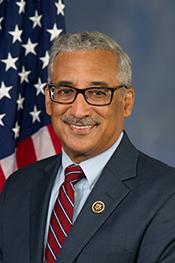
Mr. Speaker, just about an hour before the Committee on Rules meeting, the Democratic side got one copy of the budget, so it is impossible to coherently discuss the budget. That is why this process…
Mr. Speaker, just about an hour before the Committee on Rules meeting, the Democratic side got one copy of the budget, so it is impossible to coherently discuss the budget. That is why this process is unfair.
Let us discuss the best way we can where we are and where we are going. This chart shows the deficit over the years showing Johnson, Nixon, Ford, Carter, Reagan. We went into a surplus under Clinton, and in 1 year under the Bush administration we are back into serious deficits. This does not include the war, so if Members actually wrote the amended numbers, it would be off the chart.
Let us see how we got in that mess. That is because we passed all these tax cuts. Who got them? The bottom 20 percent, 20 percent, the top 20 percent got the lion's share of the tax cuts. They call it a growth package. Give me a break. Private sector jobs created since World War II, we go over, administration by administration, the worst job creation since World War II, the worst economic growth in an administration, the worst economic growth since World War II. Do not tell me this is a growth package.
This has implications, because when we run up all that debt, we have to pay interest on the national debt. We are paying about $4,500 a year for a family of four's proportionate share, $4,500 interest on the national debt. That is going to go, under this budget, up to $8,500 each and every year, interest on the national debt. So every time they cut another tax they have to pay interest, and this number is going up.
They are also cutting spending. Education, up about 12 percent every year, the last 5 years. They are cutting education. They say it is waste, fraud and abuse. We are budgeting. We have to have a line item. We are cutting, in this budget, school lunches, school lunches, student loans. They are cutting the line item that says school lunches, student loans, veterans' benefits. They are cutting those line items in the budget.
The fact of the matter is that this is an irresponsible budget. This is caused by the tax cuts, and this is a bad process. It is a bad budget.
This rule, which requires us to take this budget up tonight in the middle of the night, after virtually no notice, we have gotten the budget here in the middle of the night, it is an impossible process.
I would hope that Members would defeat this resolution and take the bill up tomorrow, where we can discuss it and point out even more problems with the budget.

Mr. Speaker, the gentleman is correct, there is no honor in this. Think about what you are doing tonight. Your majority leader said, and I will read quickly, Between now and the next Presidential…
Mr. Speaker, the gentleman is correct, there is no honor in this. Think about what you are doing tonight. Your majority leader said, and I will read quickly, Between now and the next Presidential election, through the end of the fiscal year 1996, the public debt will increase by almost $1.3 trillion. During President Reagan's first term, the debt ceiling was increased from $935 billion to $1.8 trillion. That is an increase of $889 billion. It took us over 200 years to get to $1 trillion in debt, over 200 years, and in the last 10 years we have gone to over $4 trillion of debt.
All of that so-called stimulus package is deficit spending. None of that spending, none of it is paid for. All of it borrows money to pay for it. That is part of why we are raising the debt ceiling.
He was speaking in opposition to the kind of action you are taking tonight and then the gentleman from Indiana (Mr. Burton) said this, ``We need to do other things to balance the budget. Let us do it. But first and foremost, we have to shoot straight with the American people, and hiding things like this debt ceiling increase is not the way to do that.''
How many of you campaigned and said you were against raising the debt limit? How many of you campaigned on the fact that you were going to balance the budget? I voted for the balanced budget amendment. I believe in balancing the budget; and very frankly, under the Clinton administration, we took the Reagan-Bush deficits into surplus for the first time for 4 years in a row, the first time in 80 years.
Do you have no honor? Are you not ashamed of the hypocrisy that this budget resolution that you bring before us represents? Is there no honor in this House? Is there no fiscal integrity? Is there no concern for generations yet unborn who, as the gentleman from Tennessee says, will have to pay this bill and the young men and women we have in Iraq today will have to return here to pay the bill? Can we not stand up as Americans, proud of our country, proud of our objectives and say to them, we will pay as you fight, and together, we will win this battle for a better America?
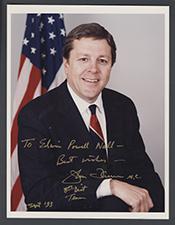
Mr. Speaker, it is almost midnight here on the east coast, and I hope that whoever is up and watching will understand what I am about to say. What we are witnessing here tonight is the largest,…
Mr. Speaker, it is almost midnight here on the east coast, and I hope that whoever is up and watching will understand what I am about to say.
What we are witnessing here tonight is the largest, long-term, structural tax increase on the American people in the history of this Republic because every year we borrow money, we have to pay interest on it, a tax on the American people, the Blue Dogs call the debt tax, that cannot be repealed.
Mr. Speaker, you have heard under their budget resolution, if it works like they say, we are going to incur $1.2 trillion in additional debt in the next 12 months, in addition to what we have already done and seen the last eight. Mr. Speaker, at 4 percent interest that is $40 billion a year that the American taxpayers have to pay every year.
This is the largest, long-term structural tax increase in the history of this Republic, and nobody can doubt that. At 5 percent, it is over $50 billion a year in perpetuity.
If that is not bad enough, Mr. Speaker, what really is happening here is we have sent young men and women from this Nation to die for other people in the Middle East; and Mr. Speaker, what we are doing is saying we are going to take a tax cut while they go over there and die, and we are going to send the bill for this war and we are borrowing the money to fund and borrowing the money for the tax cut, we are going to send the bill to these young men and women in uniform, the only people who are being asked to sacrifice anything at all in this war, send it to them and their children; some of whom do not have a daddy now because they are dead in Iraq.
Mr. Speaker, where is the honor? Where is the sacrifice? Where is the honor of this House when we try to do something like this? That is exactly what is going on tonight.
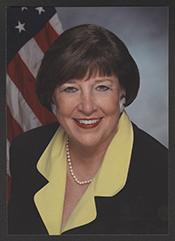
Mr. Speaker, I thank my colleague, the gentleman from Massachusetts (Mr. McGovern), for yielding me time. Mr. Speaker, this is ridiculous. We are here tonight to consider one of the most important…
Mr. Speaker, I thank my colleague, the gentleman from Massachusetts (Mr. McGovern), for yielding me time.
Mr. Speaker, this is ridiculous. We are here tonight to consider one of the most important resolutions that we will take up this year in Congress, the budget. This is the blueprint for everything we do. And we do not even get a chance to read it before we vote on it.
As a member of the Committee on the Budget, I have spent a lot of time addressing the concerns on this budget, and we spent an entire day from early morning until early the next morning on the budget process looking at amendments. We knew what we were voting on. We had a chance to debate it. Yet, tonight when we are voting on final passage of the budget of the United States, members of the Committee on the Budget and Members of the House have not had a chance to see the product they are voting on. This process is wrong.
Members deserve a chance to review this document before voting on it. If leadership is determined to consider this resolution before the approaching recess, that is fine. Give us a day, give us a half a day, give us some time to see what is in this budget. I have a responsibility to my constituents just like everyone does to consider measures carefully, to know what is in that measure before we vote on it. Yet, I cannot thoughtfully consider this legislation because I have not had a chance to review it.
This is an awful process. I urge my colleagues to defeat the martial law rule so we can have adequate time to review this budget.

Mr. Speaker, I thank the gentleman for yielding time to me. I have been trying to figure out this process because normally an organization that works only 2 days a week should be able to get its work…
Mr. Speaker, I thank the gentleman for yielding time to me.
I have been trying to figure out this process because normally an organization that works only 2 days a week should be able to get its work done without working till 3 in the morning, and so if the House was run competently we would not be here till 3 in the morning. So I thought it might be incompetence, and then I realized, this is chicanery masquerading as incompetence.
The reason we are here late at night is because what we are doing would not stand the light of day. We are creating a system where our friends on the other side of this building can say they are only voting for a $350 billion tax cut. We over here can say it is a $550 billion tax cut, but ultimately, the resolution tells us that we are on our way to a $1.2 trillion tax cut.
The plan is simple. They will pass the most obnoxious provisions of their $350 billion tax cut over there. It will go to conference. It will come back as 550. It will be passed on both sides by their majority vote, and that will be the portion of the tax cut loaded exclusively to the most wealthy.
Then, having cut the taxes in an unbalanced way, then another tax bill will be prepared, including the least egregious provisions, and they will be packaged in such a way that they can pass without a filibuster on the other side. If only the light of day would shine and the country knew what we were doing.

Mr. Speaker, will the gentleman yield? Mr. Speaker, I thank the gentleman for yielding to me. I think repetition is often relevant in this body; but when the gentleman talks about how we needed tax…
Mr. Speaker, will the gentleman yield?
Mr. Speaker, I thank the gentleman for yielding to me.
I think repetition is often relevant in this body; but when the gentleman talks about how we needed tax cuts, a significant amount, to get the economy growing, did he give the exact same speech that he gave in 2001 when we were told that large tax cuts would stimulate the economy?
Mr. Speaker, if the gentleman will continue to yield?
Mr. Speaker, I know as you get old your memory goes, but I do not remember hearing that this is new. I remember rehearing that this will get the economy going. I do not remember the defense of the 2001 tax cut being this will prevent the economy from slowing down so rapidly. There was no acknowledgment that there was going to be a slow down; and I asked people to go back to 2001, and we heard in 2001 these same arguments.
Bill Text
2 versions available
        [Congressional Bills 108th Congress]
[From the U.S. Government Publishing Office]
[H. Res. 190 Engrossed in House (EH)]

In the House of Representatives, U.S.,

April 11 (legislative day, April 10), 2003.
Resolved, That the requirement of clause 6(a) of rule XIII for a two-thirds
vote to consider a report from the Committee on Rules on the same day it is
presented to the House is waived with respect to any resolution reported on the
legislative day of April 10, 2003, providing for consideration or disposition of
a conference report to accompany the concurrent resolution (H. Con. Res. 95)
establishing the congressional budget for the United States Government for
fiscal year 2004 and setting forth appropriate budgetary levels for fiscal years
2003 and 2005 through 2013.
Attest:

Clerk.