Providing for consideration of the bill (H.R. 1527) to amend title 49, United States Code, to authorize appropriations for the National Transportation Safety Board for fiscal years 2003 through 2006, and for other purposes.
Legislative Activity
Stay on top of the latest movement without scrolling through every action
Motion to reconsider laid on the table Agreed to without objection.
May 15, 2003 • 12:21 PM
View full timeline
Introduced in House
May 13, 2003
The House Committee on Rules reported an original measure, H. Rept. 108-97, by Mr. Diaz-Balart, L..
May 13, 2003
Rule provides for consideration of H.R. 1527 with 1 hour of general debate. Previous question shall be considered as ordered without intervening motions except motion to recommit with or without instructions. Measure will be read by section. Bill is open to amendments.
May 13, 2003 • 7:28 PM
Placed on the House Calendar, Calendar No. 39.
May 13, 2003
Considered as privileged matter. (consideration: CR H4151-4157)
May 15, 2003 • 11:14 AM
DEBATE - The House proceeded with one hour of debate on H. Res. 229.
May 15, 2003 • 11:16 AM
On ordering the previous question Agreed to by the Yeas and Nays: 220 - 205 (Roll no. 190).
May 15, 2003 • 12:21 PM
Passed/agreed to in House: On agreeing to the resolution Agreed to by voice vote.(text: CR H4151)
May 15, 2003 • 12:21 PM
On agreeing to the resolution Agreed to by voice vote. (text: CR H4151)
May 15, 2003 • 12:21 PM
Motion to reconsider laid on the table Agreed to without objection.
May 15, 2003 • 12:21 PM
Voting History
1 vote recorded • Roll call available
Floor Debate
19 membersWhat members said about H.Res. 229 on the floor
 JPM
 JLO
 JLMLD
 NP+14
Floor Debate
19 membersWhat members said about H.Res. 229 on the floor
Mr. Speaker, I yield myself 7 minutes, and I thank the gentleman from Florida for yielding me the customary 30 minutes. Mr. Speaker, fortunately we have before us today legislation that is the model…
Mr. Speaker, I yield myself 7 minutes, and I thank the gentleman from Florida for yielding me the customary 30 minutes.
Mr. Speaker, fortunately we have before us today legislation that is the model of bipartisanship and should be the standard for legislation considered by this body. Unfortunately, this bill is the exception and not the rule. Most of the time our colleagues on the other side of the aisle treat bipartisanship as a sign of weakness, as something to be avoided if at all possible.
Last week, for example, the majority forced one of the most important bills that will be debated this year, the $550 billion tax cut for the wealthy, through this body without even allowing the Democrats the traditional substitute. This bill, by contrast, is thoughtful, sensible, and bipartisan. I would only say to my friends on the other side of the aisle, this is not that hard.
By adopting this rule, the House will be able to consider H.R. 1527, the National Transportation Safety Board Reauthorization Act. This bill was reported out of the Committee on Transportation and Infrastructure. It is not controversial and I am confident that the House will approve it with broad bipartisan support.
Mr. Speaker, I had the great honor of serving on the Committee on Transportation and Infrastructure prior to my appointment to the Committee on Rules; and during my time on the Committee on Transportation and Infrastructure, I had the privilege of working with the distinguished chairman, the gentleman from Alaska (Mr. Young); and the distinguished ranking member, the gentleman from Minnesota (Mr. Oberstar). I have always believed that the Committee on Transportation and Infrastructure is one of the most collegial, bipartisan panels in the Congress; and I know firsthand the good work that this committee is capable of producing, and this is one of those bills.
Having said that, there is still much work that needs to be done before the Memorial Day work period. Over 6,100 people in my home State of Massachusetts have lost their jobs in the past month and almost 168,000 have lost their jobs since President Bush took office. Unemployment continues to rise, and if this body does not act, millions of workers will lose their unemployment compensation at the end of May.
We must extend unemployment insurance for these workers, and we must do it now. There are families all across this country who are struggling very, very hard; and this House should do the right thing. I would urge my colleagues to join me in urging the Republican leadership to bring to the floor legislation extending unemployment insurance as soon as possible.
At the end of the debate on this rule, I will move the previous question; and if the previous question is defeated, I will call to the floor legislation extending unemployment insurance. I urge my colleagues to join me in voting ``no'' on the previous question. Unemployed Americans cannot afford to lose this assistance.
Mr. Speaker, H.R. 1527, the National Transportation Safety Board Reauthorization Act of 2003 is, simply stated, a good bill for an important agency that serves a critical public service. The NTSB is an independent Federal agency charged by Congress with the authority to investigate and determine the likely causes of transportation accidents, including all civil aviation accidents and selected accidents occurring in other modes of transportation.
It is perhaps most often recognized as the agency that coordinates all Federal assistance to the families of victims of catastrophic airplane crashes. In the midst of these tragedies, the NTSB has demonstrated time and again its unique and expert ability to mobilize top-notch investigators to search and find answers, and accordingly, to provide some measure of comfort to the haunting questions that will come with all such fatal accidents.
Since its inception in 1967, the NTSB has investigated more than 114,000 aviation accidents and 10,000 surface transportation accidents; and as a result of their diligence, the NTSB has earned the reputation as one of the world's foremost accident investigative authorities. They are on call 24 hours a day, 365 days a year, prepared to go anywhere, at any time, to perform the difficult job we have assigned to them.
We are grateful to the NTSB for the service they provide, and this bill and the corresponding funding levels reaffirm our collective confidence in their performance.
Mr. Speaker, perhaps not as well known is the significant role that they play in shaping national transportation safety policies. In addition to its investigative function, the NTSB conducts numerous safety studies and issues recommendations designed to prevent future transportation accidents. In fact, the NTSB has issued more than 11,600 such safety recommendations in all modes of transportation.
Since 1990, the NTSB has refined these recommendations and published a Most Wanted list of safety improvements to highlight certain issues; and despite its lack of regulatory authority, the NTSB has actually succeeded in seeing 80 percent of its safety recommendations adopted in some fashion or another.
This success rate is no doubt due in large part to the credibility and respect the NTSB commands among Federal transportation agencies, Members of Congress, and the transportation industry.
Mr. Speaker, it is precisely because of the NTSB's sterling reputation that I am concerned that they have not done more comprehensive analysis around the issue of the size and weight of big trucks on our Nation's highways.
As I have already expressed, I have high regard for the NTSB. However, while they have published several safety studies on individual and discrete components of big trucks, it has not fully addressed the more pressing issue of truck size and weight. In my estimation, the absence of truck size and weight on the NTSB's Most Wanted list of safety improvements is a glaring omission.
There are few transportation safety issues that represent a greater threat to public safety than the need to freeze the size and weight of trucks on our roadways. Five thousand people die each year and another 100,000 are injured in crashes with heavy trucks. In my home State of Massachusetts, 31 people died and another 385 were injured in 2001 in crashes with heavy trucks.
I shudder to think how these numbers will climb if the trucking industry succeeds in convincing Members of this body that still bigger trucks are somehow necessary, that 120-foot triple-long trailer trucks on our Nation's highways are actually a good idea.
The alarming statistics I have just cited only begin to describe the human cost of bigger trucks. They do not even begin to describe the economic devastation that bigger trucks will also cause to our Nation's roads and bridges which are already in deplorable conditions. In Massachusetts, more than 50 percent of the bridges have been determined to be structurally deficient or functionally obsolete. The U.S. DOT has estimated that longer combination vehicles could cause Americans as much as $319 billion in total. This is a cost we cannot afford.
Mr. Speaker, the issue of truck size and weight deserves the expert analysis of the National Transportation Safety Board; and most importantly, the American driving public deserves to be protected from the danger of bigger trucks on our roads and highways.
Again, Mr. Speaker, I urge my colleagues to vote ``no'' on the previous question. We need to bring up the issue of unemployment compensation.
Mr. Speaker, I reserve the balance of my time.
Mr. Speaker, I yield 2 minutes to the gentlewoman from Ohio (Mrs. Jones).
Mr. Speaker, I yield such time as she may consume to the gentlewoman from California (Ms. Pelosi), the Democratic leader.
Mr. Speaker, I yield 3 minutes to the gentleman from Michigan (Mr. Levin).
(Mr. LEVIN asked and was given permission to revise and extend his remarks.)
Mr. Speaker, I yield 4 minutes to the gentleman from Maryland (Mr. Cardin), who, along with the gentleman from New York (Mr. Rangel), has been a leader on this issue of extending unemployment benefits to struggling workers.
(Mr. CARDIN asked and was given permission to revise and extend his remarks.)
Mr. Speaker, I yield 2 minutes to the distinguished gentleman from California (Mr. George Miller).
Mr. Speaker, I yield 2 minutes to the gentleman from Ohio (Mr. Ryan).
Mr. Speaker, I yield myself such time as I may consume.
The silence on the other side of the aisle is really quite incredible. The Republican majority here is turning this Congress into a place where important and urgent issues not only do not get a chance to be voted on by Members of this House but they do not even get debated. There are millions of people in this country who are unemployed. There are millions of people who are struggling right now. They deserve their day on this House floor. That is what we are struggling to try to achieve here so we can vote on something that really makes a difference to the American people, that is more than just a soundbite but something that is real.
Mr. Speaker, I yield 3 minutes to the gentleman from New York (Mr. Israel).
Mr. Speaker, I yield myself such time as I may consume.
Mr. Speaker, I will call for a vote on the previous question. If the previous question is defeated, I will offer an amendment to the rule. My amendment provides that immediately after the House passes the National Transportation Safety Board reauthorization, it will take up H.R. 1652, the Unemployment Benefits Extension Act. This bill will extend Federal unemployment benefits by 26 weeks and will give an additional 13 weeks to those unemployed workers whose benefits have been exhausted.
Mr. Speaker, unemployment rates continue to rise. They increased to 6 percent in April, the third month in a row that the economy has lost jobs. For every one available job, there are three Americans looking for work. Of the 8.8 million unemployed, nearly 2 million have been out of work for 27 weeks or more. This does not even count those who are working part time or those who have simply given up looking. These Americans need relief, and they need it immediately. Current Federal unemployment benefits run out at the end of May, in only 2\1/2\ weeks. Republicans in the House have voted against extending these critical benefits three times in the last 10 days. Three times. Do not let unemployed Americans down a fourth time. Bring this badly needed relief to the floor for an up-or-down vote today. Let us show American workers that we intend to stand by them in their time of need.
Let me make it very clear that a ``no'' vote on the previous question will not stop consideration of the NTSB reauthorization, but a ``no'' vote will allow the House to vote on both H.R. 1527 and on H.R. 1652. However, a ``yes'' vote on the previous question will prevent the House from passing the desperately needed extension of Federal unemployment benefits to our unemployed workers.
I want to point out that this vote is the only opportunity the House will have to vote on extending Federal unemployment benefits. I strongly urge a ``no'' vote on the previous question.
Mr. Speaker, the issue before us is very, very simple. Members either believe that we should help unemployed struggling workers or they do not believe we should help unemployed struggling workers. I think the majority of Americans want us to vote on this issue. The workers of this country who are unemployed, they need our help and they need it now. They do not need excuses. They do not want us to hide behind procedural smoke screens; or they do not want the leadership, the Republican leadership, protecting their Members from having to vote up or down on this issue. I urge my colleagues to vote ``no'' on the previous question.
Mr. Speaker, I ask unanimous consent that the text of the amendment and a description of the amendment be printed in the Record immediately before the vote on the previous question.
Mr. Speaker, I yield back the balance of my time.
If the gentleman will yield, they will expire in 2\1/2\ weeks.
Mr. Speaker, parliamentary inquiry?
Mr. Speaker, I object to the vote on the ground that a quorum is not present and make the point of order that a quorum is not present.
Mr. Chairman, I thank the gentleman for yielding me this time, and I want to compliment the gentleman from Oregon (Mr. DeFazio) on this first major bill under his leadership on our side on the…
Mr. Chairman, I thank the gentleman for yielding me this time, and I want to compliment the gentleman from Oregon (Mr. DeFazio) on this first major bill under his leadership on our side on the Subcommittee on Aviation. I also want to express my appreciation to the gentleman from Alaska (Chairman Young) and the gentleman from Florida (Chairman Mica) for their bipartisan cooperation in fashioning this bill, working it through subcommittee and full committee, and bringing it to the floor today.
As the gentleman from Florida (Mr. Mica) said just a moment ago, the NTSB has been without an authorization for the last year. That is not appropriate. We have to do our job. We were delayed in getting there by the events of the last Congress; but we now bring this bill, very proudly and appropriately, to the floor for the agency that I consider to be the Nation's premier, definitive authority on safety in transportation.
We are very fortunate to have a great many Federal Government agencies for whom the public gets full value of its investment in the support funding. But we get more than full value out of the National Transportation Safety Board. Its recommendations, its vigilance on safety result in improvements in the way we conduct the business of transportation in all of the modes: maritime, railroading, trucking, automotive vehicular transportation and, of course, pipelines and aviation, which gets perhaps the greatest visibility for the NTSB when there is a tragedy in aviation. But that should not overshadow nor cause anyone to forget the very significant and important work done in the other modes of transportation.
Time and again, the NTSB's recommendations that are written for changes in safety oversight by agencies and conduct of safety by the private sector as well as by public entities are written into practice and result in saving lives, preventing property damage, and making transportation more dependable, safer all throughout this vast land of ours.
The new Chair, Ellen Engleman, comes to this position from another safety responsibility as the head of the Research and Special Projects Administration, RSPA, of DOT, where she had primary responsibility for pipeline safety and was the subject of NTSB recommendations for improvements in pipeline safety and responded very well, very thoughtfully, and very appropriately. I look forward to Ms. Engleman's tenure as Chair of the
NTSB where I know she will bring the same dedication and vigor to that responsibility as she did to RSPA.
The unique role of the National Transportation Safety Board in its conduct of investigations of transportation accidents, after evaluating the evidence, making findings of fact is then to make recommendations that are normative, not determined by cost-benefit analysis, not driven by one or another interest group; but to do what, in the best judgment of its seasoned safety professionals, is in the best public interest for the conduct of safety in that particular mode. It is then for the modal administrations to evaluate benefits and costs and to make judgments in the rulemaking afterward; but it is up to the NTSB to be above the fray to be normative, to set standards that in its judgment are in the best public interest. And that it has done.
In the last 5 years, there have been 8,124 accident investigations in aviation alone, 166 highway accidents, 82 railroad accidents, 41 pipeline accidents, 24 maritime accidents; and a total of 881 safety recommendations have been issued.
Unfortunately, not all of those safety recommendations have been implemented by the modal administrations of the Department of Transportation, and that is without regard to which party has been in charge of the executive branch. There is a very serious problem here. When our premier investigative agency looks at an accident, then relates it to a class or category of accidents and prescribes a remedy for it, the modal administrations ought to respond forthwith. The FAA has the best record of any of the modal administrations in responding, but that is a record that is not good enough.
This legislation requires an annual report from DOT on the status of regulations to implement all of the significant safety recommendations from NTSB, which is widely known as its Most Wanted list. We will get that report. We will evaluate each year the progress of the modal administrations; and then, through our oversight responsibility and authority on the committee, we will bring those administrations up to our committee and grill them on why they have not been compliant, or compliment them for being so if, in fact, they are. But this will put a lot of pressure on those modal administrations to clean their slate and respond to and comply with these recommendations of the NTSB.
In 2000, our committee authorized the transfer of investigative priority from the safety board to the FBI in the event of an accident caused by intentional criminal act. What we overlooked at the time was a mechanism to transfer responsibility for dealing with the families of victims of accidents in the event of an intentional criminal act.
Since the tragedy of September 11, 2001, the Safety Board now believes the FBI would be the best entity to handle that responsibility, and this legislation provides for transferring of family affairs responsibility from NTSB to the FBI in the event of a finding of an intentional criminal act and, of course, of an accident investigation.
One of the best initiatives undertaken by the NTSB in many years is to develop a training academy to teach the state-of-the-art investigative techniques for transportation accidents. The Safety Board has always worked hard on training and improving the caliber and quality of its investigative personnel, a very lean staff, a very small staff, but one that works extremely well, very creatively, but can always benefit from improved training. And this new training academy will be a huge benefit for the NTSB.
I would like to mention another matter, and that is also one that is not generally or widely recognized, and that is that the NTSB serves as a model for other countries throughout the world to establish civil investigative agencies. Time and time again the NTSB has been asked by other, especially emerging, democracies and those emerging from the end of the Cold War in the former Soviet Union to help them in formulating the establishment of a transportation safety board. Again, the NTSB stands as the world standard for safety investigation, for honesty, integrity, for quality of investigation, and for the quality of its recommendations for improvements of safety.
Finally, I would like to make a note of a matter of aviation history. Yesterday it was reported that L. Welsh Pogue died at the age of 103. Welsh Pogue was asked by President Franklin D. Roosevelt, as the allies were nearing the end or could see the end of World War II, to convene the meeting of all nations of our allies who would have an interest in a postwar aviation regime, to set up a process by which agreement could be negotiated in the new world to follow World War II. It was Welsh Pogue who recommended that the conference, known as the Chicago Conference, in November 1944, establish an open skies aviation trading regime.
The other countries convened at that meeting felt that the United States emerging relatively unscathed from the war and with a very strong domestic, but still emerging, commercial aviation sector would dominate the world marketplace. It was in the end L. Welsh Pogue who negotiated the idea of individual bilateral agreements that would be in the mutual interest of the two negotiating parties.
Don Phillips of the Washington Post 3 years ago wrote, ``When L. Welsh Pogue was born, the Wright brothers were running a bicycle shop in Dayton, Ohio. But as Franklin D. Roosevelt's aviation pointman in 1944, Pogue cobbled together the compromise regulatory scheme that governs international aviation to this day.''
On Monday of 1999, of May 1999, the 100-year-old Pogue, aided only by a cane, walked to the podium in the same hotel ballroom where the world's fledgling aviation nations reached their historic agreement on December 7, 1944. He brought down the house with his wry memory of 1944 and his vision for aviation future.
At the end of his remarks, Pogue predicated the world would divide itself into regions for air traffic purposes. It will be slow, he said, but do not give up in despair. Turn to those things that are possible.
L. Welsh Pogue taught us all what was possible in the field of aviation. We owe him a great debt of gratitude. It was my great privilege and honor to come to know L. Welsh Pogue over the many years I had served as chair of the Subcommittee on Aviation and subsequently in my current position on our committee. I revere and love this man who is a legend in their field of aviation.
Mr. Chairman, will the gentleman yield?
Mr. Chairman, I very much appreciate the gentleman bringing this issue before us at this
time and in this context. And as the chairman of the subcommittee has indicated already, there is a problem of germaneness.
But there is nothing ungermane about the point the gentleman makes.
Years ago, during debate in committee, in this body and in conference with the other body, on the termination of the ICC, the Interstate Commerce Commission, I tried to do this very same thing, something very similar to this, to require a commercial driver's license for those drivers who would pilot these 15-passenger vans. We were not able to reach agreement on that in the conference. There was resistance from the other body to moving in that direction.
I subsequently appealed to the NTSB to undertake an inquiry into the stability of this caliber of vehicle, and the board is working on a report to address the issue of passenger van stability and whether those vehicles are more likely to roll over and cause passenger injury.
A year ago, the National Highway Traffic Safety Administration, NHTSA, issued a cautionary warning to users of these vans because of increased rollover risk.
Mr. Chairman, there is no question that there is a serious safety problem here. It cannot be ignored. We are in the process of crafting the successor to TEA-21. There will be an opportunity I hope in the safety provisions of that legislation to address the gentleman's concerns, and I look forward to working with him and the majority on the committee to address this matter; and I appreciate him raising the issue here before us.
Mr. Chairman, I hope the gentleman from Florida, if the gentleman from Colorado would yield to the gentleman from Florida, I hope he will concur in our consideration.
Mr. Chairman, will the gentlewoman yield?
Mr. Chairman, the gentlewoman raises very valid points, the rail safety. The impact of rail on both rural and urban communities is very significant. The appropriate place for such a study for this issue to be raised would be in the successor legislation to TEA-21, which our committee will be considering.
Mr. Chairman, if the gentlewoman will continue to yield, the flight surgeon of the FAA has over a period of 20 years conducted studies of the appropriateness of the age 60 rule. The conclusion of the FAA is that it is best left in place as it is. The NTSB does not have the personnel expertise to conduct a study of the magnitude the gentlewoman is proposing. The appropriate venue is the FAA, which does continue to monitor this issue, and we will be glad to continue to discuss with the gentlewoman her concern about this matter in another venue.
(By unanimous consent, Ms. Jackson-Lee of Texas was allowed to proceed for 30 additional seconds.)
Mr. Chairman, I yield myself such time as I may consume. I am pleased to join the gentleman from Alaska (Chairman Young) and the gentleman from Oregon (Mr. DeFazio), the ranking member of the…
Mr. Chairman, I yield myself such time as I may consume.
I am pleased to join the gentleman from Alaska (Chairman Young) and the gentleman from Oregon (Mr. DeFazio), the ranking member of the subcommittee. I want to thank both of them and also the gentleman from Minnesota (Mr. Oberstar), the ranking member of the full committee, for their leadership. The gentleman from Alaska has done an incredible job in bringing together the diversity of more than 70 members on the Committee on Transportation and Infrastructure to not only bring forth this reauthorization bill, but to soon vote for the successor to AIR-21 and TEA-21, our important transportation measures and policy for the Federal Government.
Mr. Chairman, this bill that is before us today is very similar to the legislation that was considered under suspension of the rules and agreed to by voice vote of the House on June 4 of last year, and that was H.R. 4466, for my colleagues' reference. This legislation reauthorizes the National Transportation Safety Board for a period of 4 years. It provides funding during those years for the amounts as follows: $73.3 million, $78.7 million for next year, $83 million, and $87.5 million during that 4-year period of authorization.
The National Transportation Safety Board is the agency which is responsible for investigating transportation accidents and also for promoting transportation safety. The board investigates, conducts safety studies, and coordinates all Federal assistance for families of victims of catastrophic transportation accidents. It also has the responsibility to review appeals of certificate and civil penalty actions against airmen and certificate actions against seamen.
Most importantly, the NTSB makes safety recommendations based on its investigations of Federal, State, and local government agencies; and the transportation agencies take actions that hopefully will prevent similar accidents in the future. The aviation safety record is remarkably good, and the safety board deserves a lot of credit for that success. This is a small, well-run, lean, and effective Federal agency.
This legislation makes some changes, however, to the agency's governing statute that should help make the board even more effective. The bill again reauthorizes the agency for 4 years and provides modest increases in expenditures which are authorized, funding levels that I have mentioned. H.R. 1527 also authorizes a much-needed increase in the NTSB emergency fund. This is the fund that pays the necessary expenses for accident investigations not otherwise provided specifically for; and unfortunately, we have had instances where sometimes the cost of some of these investigations is substantial.
The bill also authorizes funding for the National Transportation Safety Board Academy. The bill directs the NTSB to notify aircraft owners and operators of their right to appeal accident determinations, except those where there is a loss of life. The bill requires the board to establish procedures for those appeals. This legislation, again, H.R. 1527, requires the Department of Transportation to report to Congress and the board on the regulatory status of each significant safety recommendation made by the board. The Department must continue, and this is a change and something I am pleased to have helped craft with bipartisan support, the Department must continue to report on the regulatory status of each recommendation each and every year until the final regulatory action is taken.
One of the things we found in our hearing with the very capable former Chair of the NTSB, Marion Blakley who is now heading up FAA, was the recommendation to us that we did not have a follow through; that there would be investigation of these accidents and there would be recommendations and not much was done. This will require repetitive alerting of both the Congress and the Department for implementation of those recommendations until something is, in fact, taken as far as positive action.
Finally, the legislation provides a procedure whereby the safety board would turn an investigation over to the FBI when a criminal act may be involved.
Mr. Chairman, the NTSB has been without authorization for a year. I would urge my colleagues to vote in favor of this bill.
Mr. Chairman, I reserve the balance of my time.
Mr. Chairman, I have no additional speakers, and I yield back the balance of my time.
Mr. Chairman, I reserve a point of order on the amendment.
Mr. Chairman, will the gentleman yield?
Mr. Chairman, I thank the gentleman from Colorado for his remarks, also for his very sincere commitment to this issue.
As a member of the Committee on Transportation and Infrastructure and with the committee's jurisdiction on this legislation, I look forward to working with the gentleman from Colorado on this issue.
Mr. Chairman, I reserve a point of order against the amendment.
Mr. Chairman, just a point of clarification here. The Clerk read the amendment, but we want to make certain it is ``page 5, line 2, before the period insert the following.''
Mr. Chairman, the gentleman wishes to engage in a colloquy, and I want to say that I agree with the gentleman that grade crossings are a serious problem in this country. There has been good progress over the past several years, but in the first month of 2003, 30 people were killed in grade crossing accidents.
I was going to ask that the gentleman withdraw the amendment, but I think we have an agreement to accept the amendment now.
The STB has jurisdiction over some of this matter, particularly relating to grade crossing safety improvements. The appropriate place to address this measure will, in fact, be in the reauthorization legislation and also with the Federal Railroad Administration. I think that the gentleman is correct in his pursuing this matter through that particular legislation and those appropriate agencies.
Our proposed Ride-21 bill will provide $60 billion in new infrastructure funding, including the elimination of all grade crossings on new highway speed passenger lines. Perhaps we would also welcome the gentleman as a cosponsor on this important legislation, and I am pleased that the gentleman has modified this particular proposal so that it is acceptable.
Yes, Mr. Chairman.
Mr. Chairman, I make a point of order against the amendment.
Mr. Chairman, I believe I have a copy of the Cardin amendment that is being proposed at this point, and I make a point of order against the amendment on the grounds that it violates clause 7 of rule XVI of the rules of the House because it is not germane to the bill.
Clause 7 of rule XVI provides that no motion or proposition on a subject different from that under consideration shall be considered under color of amendment.
The gentleman from Maryland's amendment deals with an entirely different subject. The amendment that I have here deals with title II provisions relating to unemployment compensation, again having absolutely nothing to do with the subject under consideration.
The subject of the amendment is not addressed in the underlying text of the bill under consideration. The subject matter of the bill is confined to the National Transportation Safety Board or matters relating to the National Transportation Safety Board. And the amendment falls outside the confines of the bill. The amendment, therefore, Mr. Chairman, I believe is not germane.
Mr. Chairman, I insist on the point of order.
Mr. Chairman, will the gentlewoman yield?
Mr. Chairman, we appreciate very much the issues that have been raised by the gentlewoman from Texas. I think she makes some very valid points. They are issues that need to be considered, but we do not think they should be in the context of this particular legislative item before us. We are willing to work with her and also consider them in other appropriate legislation. So we thank the gentlewoman, and we hope that she would consider withdrawing her amendment.
Mr. Speaker, by direction of the Committee on Rules, I call up House Resolution 229 and ask for its immediate consideration. Mr. Speaker, for purposes of debate only, I yield the customary 30 minutes…
Mr. Speaker, by direction of the Committee on Rules, I call up House Resolution 229 and ask for its immediate consideration.
Mr. Speaker, for purposes of debate only, I yield the customary 30 minutes to the gentleman from Massachusetts (Mr. McGovern), pending which I yield myself such time as I may consume. During consideration of this resolution, all time yielded is for the purposes of debate only.
(Mr. LINCOLN DIAZ-BALART of Florida asked and was given permission to revise and extend his remarks.)
Mr. Speaker, House Resolution 229 is an open rule, providing for the consideration of H.R. 1527, the National Transportation Safety Board Reauthorization Act of 2003. The rule provides 1 hour of general debate, evenly divided and controlled by the chairman and ranking minority member of the Committee on Transportation and Infrastructure.
Finally, the rule provides one motion to recommit, with or without instructions. Obviously, this is a fair rule. It is a totally open rule, one that provides ample opportunity to debate this important reauthorization before us today.
Last year, the House passed essentially the same bill by suspension, but the other body failed to consider the legislation. The House then must again act this year to ensure that the NTSB has the funding necessary to carry out its important tasks.
The NTSB was established in 1967 as an independent agency with the task of investigating transportation accidents, conducting transportation safety studies, issuing recommendations, aiding victims' families after disasters, and promoting general transportation safety.
Since 1967, NTSB has investigated over 114,000 aviation accidents. The NTSB's constant participation in transportation safety, evidenced through 12,000 recommendations to regulators, operators and users of transportation systems, has made them the government leader in crash investigation. I think what is even more impressive is that 82 percent of their recommendations have actually been adopted by these regulatory and transportation bodies.
This bill will increase the effectiveness of the board by authorizing funding through fiscal year 2006 at levels necessary to carry out their investigative mission both here and at aviation disasters abroad.
The bill requires that the Department of Transportation issue an annual report on the progress and adaptation of the board's safety recommendations. It is crucial that the Department of Transportation and that this Congress work to ensure that all recommendations are being met by the public.
Finally, Mr. Speaker, the bill requires that the NTSB turn over their involvement in an aviation disaster to the FBI in the case of an intentional criminal act. This action would be taken by the Attorney General in consultation with the chairman of the NTSB. I think it is very important that in the event of any criminal aviation disaster, such as the one experienced during 9/11, 2001, the rescue of survivors obviously remain a first priority, but the apprehension of those involved commence immediately.
H.R. 1527 is a good bill, important to the continued transportation safety of the Nation, in not only responding to accidents but taking steps, through recommendations, to prevent further tragedies.
The underlying legislation was reported favorably out of committee by voice vote. I would like to thank the gentleman from Alaska (Mr. Young) for his extraordinary leadership on this issue, as well as his ranking member, the gentleman from Minnesota (Mr. Oberstar). Mr. Speaker, this important bill recognizes, by reauthorizing essential funding to the board, the importance of this activity charged with investigating tragedies and promoting transportation safety.
This has been a bipartisan effort throughout the consideration of the bill, from consideration in the Committee on Transportation and Infrastructure to this very obviously fair rule reported out of the Committee on Rules, which continues, I think, this constructive debate by allowing all amendments in order under the rule.
Mr. Speaker, I urge my colleagues to support both this important underlying legislation as well as the rule before us to bring it to the floor.
Mr. Speaker, I reserve the balance of my time.
Mr. Speaker, we reserve the balance of our time.
Mr. Speaker, I yield myself such time as I may consume.
Under the rules of the House, the majority has the obligation of setting the agenda. I think part and parcel of not only the rules obviously of the House but of democracy is to let the minority speak about whatever the minority wants to speak about. We have seen an example of that today. In case somebody has been paying attention to this discussion, I think it is important to remind us of what the bill before us is, the bill that the Committee on Rules has brought to the floor today, and, that is, the reauthorization of the National Transportation Safety Board. The National Transportation Safety Board is a very important agency. It carries out really a fundamental mission with regard to airline safety and investigation of accidents, studies and reports with regard to increasing the safety of transportation. That is what is before us. Obviously, we would never attempt to stop the minority from speaking about anything. But what we are here today on is the National Transportation Safety Board Reauthorization Act.
The issue chosen today, for example, that we learned today was chosen by the minority to speak on is an important issue. Unemployment benefits have not expired. Many of us on this side of the aisle, in the majority, have not only supported unemployment benefits but continue to do so, and they have not expired.
I will not yield. I did not interrupt the gentleman.
Again, to get us back to what we are bringing to the floor today, and to remind colleagues on what they will in fact be voting on today, it is the National Transportation Safety Board Reauthorization Act of 2003.
We have brought this forward. We have brought it forward with a rule that permits all amendments that may be proposed by any Member to be brought forward and to be debated. Again, we did not know what, if any, opposition would exist with regard to this bill, and we will soon see, but I think it is important, as I said, Mr. Speaker, to remind Members what we are, in fact, here voting on today and what we are not voting on today, even though there are many issues obviously of importance that could be debated, because freedom is the essence of this House, and obviously any Member can talk about any issue under the sun.
No, Mr. Speaker.
Mr. Speaker, this rule brings forth the National Transportation Safety Board Reauthorization Act, an open rule, absolutely fair rule.
Mr. Speaker, I yield back the balance of my time, and I move the previous question on the resolution.
Mr. Speaker, I thank the gentleman for yielding me this time, and I rise in opposition to the previous question to the rule. The bill before us to authorize the National Transportation Safety Board…
Mr. Speaker, I thank the gentleman for yielding me this time, and I rise in opposition to the previous question to the rule.
The bill before us to authorize the National Transportation Safety Board is a good bill, which I support. I strongly support it. However, after it is passed, we should immediately approve the bill proposed by my colleagues, the gentleman from New York (Mr. Rangel) and the gentleman from Maryland (Mr. Cardin), to extend unemployment benefits to the millions of Americans whose benefits will run out at the end of the month.
In December, the Republican majority allowed this vital program to expire just before Christmas. That left millions of families without work and without benefits. We cannot let that happen again as we go toward the end of May, the expiration date.
Mr. Speaker, since January 20, 2001, when President Bush was sworn in, 2.7 million private sector jobs have been lost, the worst record of job creation or lack thereof of any administration since the Great Depression. That is the worst record, as my colleagues can see here. Every President since the war has had job creation above the line. President Bush, 2.727, 100,000 jobs a month since he became President, have been lost. That means that for every working hour of every working day, 563 people become unemployed, more than serve in the House and the Senate. It is as if every hour the House and the Senate would lose its jobs.
Now, some people may think that is a good idea, if we do not have more relevance to the lives of the American people and understand when people are out of work that they need these benefits. The American people do not need a dividend tax cut. The American workers need jobs.
Earlier this month, the Department of Labor announced that April's unemployment rate reached 6 percent, with nearly 9 million Americans out of work. Another 9 million Americans have either given up looking for work or are working part time. Millions of families are struggling with the hardship and the uncertainty of life without a paycheck. Without unemployment benefits many of these families would have nowhere to turn. Indeed, some of them told me yesterday they would become homeless.
Temporary Federal benefits expire on May 31, but President Bush and the Republican leadership have refused to include any extension of benefits in the tax bill that passed the House last week and what is now under consideration in the Senate. This extension is important to America's working families and to our economy.
Economists tell us that extending unemployment benefits is the most effective way to quickly grow the economy and create jobs. It is fair, fast-acting and fiscally sound. For every dollar that the Federal Government invests in unemployment benefits, the return is $1.73 to the economy. In contrast, for every dollar the Federal Government provides to cut taxes on dividends, the return to the economy is 9 cents. This is nonsensical.
The plan proposed by the gentleman from New York (Mr. Rangel) and the gentleman from Maryland (Mr. Cardin), and I commend them for their leadership, would provide a 6-month extension of the Federal unemployment benefits program. It would provide 26 weeks of Federal benefits for workers who lose their jobs, and another 13 weeks for workers who have already exhausted their benefits without finding a new job in this stagnant economy. None of the Republican tax plans, the President's, the House Republicans and the House Senate Republicans, provides one thin dime for unemployed workers.
Again, I want to reiterate why this is important, because contrary to what the Republicans are proposing, which provides 9 cents to the economy, extending Federal unemployment benefits puts $1.73 into the economy. Why? Because it puts money into the hands of unemployed workers and their families. They need that money to spend on necessities. The spending of that money injections demand into the economy, thereby creating jobs. The tax dividend proposal does not do that.
The unemployment rate today is higher than when the temporary Federal unemployment benefits were first approved in March of last year, but Republicans have decided that instead of helping unemployed workers, they should give people who make $1 million a year an average of $100,000 in tax breaks. How can that be right?
While Republicans insist on tax breaks for those who need it least, our Democratic priorities are clear: We will fight to get the economy back on track, we will create jobs, and we will help unemployed workers. I urge my colleagues to vote ``no'' on the previous question on the rule; vote ``yes'' to extend unemployment benefits for 9 million Americans who cannot find work in this stagnant economy.
How can we go down this course of action where we make the same mistake twice? The President came in and gave over a trillion dollars in tax cuts. Now 2.7 million Americans lose their jobs, and they step up to the plate again and offer more of the same. Job losers. Do not even take my word for it, take the word of the Joint Taxation Committee, which is Republican, which is directed by the rules of the 108th Congress to score dynamically, giving every benefit of every doubt to the plan. It is a job loser by their estimation.
So we have to take a different course of action. One remedy that helps the
economy and helps unemployed workers is extending the unemployment benefits. I commend my colleagues, the gentleman from New York (Mr. Rangel) and the gentleman from Maryland (Mr. Cardin), for their leadership on this.
Show 8 more

Mr. Chairman, I offer an amendment. Mr. Chairman, this amendment is based on my Passenger Van Safety Act Bill, H.R. 1641. It deals with the dangers of 15-passenger vans. These vans have been…
Mr. Chairman, I offer an amendment.
Mr. Chairman, this amendment is based on my Passenger Van Safety Act Bill, H.R. 1641. It deals with the dangers of 15-passenger vans. These vans have been associated with more than 500 traffic fatalities since 1990.
In 2001, the National Traffic Highway Safety Administration found that when these vans are fully loaded, they have a rollover risk that is six times higher than when there are only five people in the van. I became alarmingly aware of the danger of these vans when a church group from my district rolled over two and a half times while driving to a religious retreat. Four passengers died in this tragic accident. Only later did I find out that these vans were infamous for getting out of control of the driver and rolling over.
This happened again last year when a van carrying firefighters who were on their way to fight a wildfire raging in Colorado lost control and rolled over more than four times, killing four of the firefighters.
These vans were initially designed to carry freight, not people; but now they are widely used by airports, hotels, and other organizations to transport customers and school children.
I offer my amendment to help ensure these needless tragedies end and that our most precious cargo, our children, get home safe and sound. This amendment would require, first, 15-passenger vans to undergo much of the same National Traffic Highway Safety Administration testing other passenger cars currently undergo, and require the Department of Transportation to finalize rules to make sure that hired drivers of these vans have the proper training.
In addition, the amendment would require NTHSA to work with van manufacturers to evaluate and test the potential of new technologies to help drivers maintain control of their vans.
Second, it would end the near 30 years that we have had this van loophole that has allowed schools to purchase used 15-passenger vans. In 1974, it became illegal for schools to purchase these vans new because of safety concerns. Why then should we continue to allow schools to purchase them used?
The 1974 law also included a $1,000 penalty for purchasing these vans. My amendment would increase the penalty to $25,000 and would be retained by the Transportation Department to be used to prevent these vans from being used illegally.
I think the amendment is a good one. I think it is a necessary one. I think it is a needed one. But I understand there may be a technical objection to including it in this bill.
Accordingly, I will withdraw the amendment. But first I would like to engage in a colloquy with my colleague, the gentleman from Oregon (Mr. DeFazio).
My amendments are based on a bill of mine that is now pending in the Committee on Transportation and Infrastructure. It is cosponsored by the distinguished gentleman from Illinois (Mr. Hyde). The bill and the amendments were prompted by several tragedies that have happened in Colorado and other States. These tragedies have made me acutely aware of the danger of 15-passenger vans. In fact, these vans have been associated with more than 500 traffic fatalities since 1990, and this is particularly alarming because so many of them are used as school buses.
The vehicles are highly susceptible to rollover, particularly when they are fully loaded. In fact, they are six times more likely to roll over when they are fully loaded than when there are only five people on board. Unfortunately, I found out how true this is when a van belonging to a church in my district and carrying young people crashed on the way to a retreat. That van rolled over two and a half times, and four people died. Then during last year's forest fires, four firefighters were killed in Colorado when their van rolled over more than four times.
I have seen repeated pictures of these kinds of tragedies, like the one I have here on the floor, and believe me, one is more than enough. There is nothing new about this danger. In fact, since 1974 schools have been not allowed to purchase new 15-passenger vans; but there is nothing to prevent them from purchasing the same vans once they have been used. This loophole needs to be closed.
The intent of the 1974 law was to not have our kids transported in these dangerous vans whether they were new or used, and I would hope that the gentleman agrees with me about that particular concern.
I yield to the gentleman from Oregon.
I think we both agree that more safety testing needs to be done. There are a couple of tests that these vans do not undergo that other passenger vehicles do. One is the dynamic rollover testing program. Another is the new car assessment program.
Mr. Chairman, I thank the gentleman from Minnesota (Mr. Oberstar) for the 2 additional minutes.
Another is the new car assessment program, which currently does not include vehicles that carry 10 to 15 passengers. These tests provide crash data, including information about rollovers that consumers ought to have. I hope the gentleman agrees with me about that as well.
I yield to the gentleman from Minnesota.
Mr. Chairman, if I might reclaim the time, I thank the ranking member for his comments and I look forward to working with him, and I think we both agree that this important legislation should be brought forward to the proper committees and to the full House when the time arrives.
I yield to the gentleman from Florida.
Mr. Speaker, this rule brings to the floor a bill to reauthorize the National Transportation Safety Board, which is perfectly fine, but I must tell my colleagues that it is in no danger. It is funded…
Mr. Speaker, this rule brings to the floor a bill to reauthorize the National Transportation Safety Board, which is perfectly fine, but I must tell my colleagues that it is in no danger. It is funded through the end of this fiscal year, so there is no rush to reauthorize this program. On the other hand, unemployment insurance will expire at the end of this month. We only have 6 legislative days left before millions of Americans will no longer qualify for Federal unemployment insurance benefits. For that reason I urge my colleagues to reject the previous question so that we can bring up today the extension of Federal unemployment insurance.
Mr. Speaker, extended benefits for unemployed workers have been less generous during this economic downturn compared to the last recession. Republicans have been very reluctant to extend unemployment insurance benefits to unemployed workers. During the last recession, in the 1990s, Congress kept an extended benefit program in place for 27 months and generally guaranteed benefits for 20 to 26 weeks. Today's program is scheduled to expire after only 15 months and providing only 13 weeks of benefits.
The economy has lost twice as many private sector jobs as we lost in the 1990s, with 2.7 million private sector jobs having been lost in the last 2 years. That is a 2.3 percent decline in private employment. In the 1990s, we lost 1.5 percent. There are now 3.4 people unemployed for every job opening in this Nation, and there is no sign of recovery. The U.S. economy has lost more than 500,000 jobs in the last 3 months alone. The current downturn represents the longest period in negative job growth since the Great Depression.
The funds are there for the extension of Federal unemployment insurance benefits, with $21 billion in the Federal Unemployment Trust Accounts, funds expressly for this purpose, to deal with a recession. And there is no better immediate stimulus to the economy to create economic activity than to extend unemployment insurance benefits. For every dollar we expend in Federal unemployment insurance benefits, the Department of Labor indicates we will generate $2.15 in additional economic activities in each of our communities.
So for all of these reasons, Mr. Speaker, the urgency is to bring up the unemployment insurance extension bill. That is what we should be doing today. We have a chance to do it. I urge my colleagues to vote against the previous question so that the Federal unemployment insurance benefits can be extended.
Mr. Chairman, I offer an amendment.
Mr. Chairman, if I might, let me raise three points as to why this amendment should be made in order.
The first, the bill deals with transportation safety. Over 70,000 people in the aviation industry alone have lost their jobs in the last 2 years. They are covered by the underlying amendment, and there are many more in the transportation industries that have lost their jobs; and without the unemployment insurance benefits that are provided for with the amendment that I have offered, it will jeopardize safety here in our country.
Secondly, Mr. Chairman, if I might, during the consideration of the rule, I know the Chair may not have been on the floor, so I want to make sure I quote this accurately. During the consideration of the rule on the floor, the floor manager on behalf of the majority stated very clearly that the rule allowed any amendment by any Member. Mr. Chairman, this is an amendment, and I am a Member.
Mr. Chairman, let me point out the third reason. We have shown resourcefulness in this body as the people's House, the body that is closest to the people, to let democratic procedures go forward to determine urgent issues. The underlying amendment deals with the extension of Federal unemployment insurance benefits that are due to expire at the end of this month.
This House, as I said before I was interrupted, this body has shown resourcefulness in the rulings of the Chair, resourcefulness within the actions of our Members to deal with legislation in a timely way when there is an urgent issue. We are the people's House.
As I pointed out, 1 million people have lost their unemployment insurance. They have exhausted it. Two million people will exhaust their State unemployment insurance benefits within the next 6 months. This underlying bill simply extends the Federal unemployment insurance benefit program for 6 months. It allows for those who have exhausted benefits to be able to receive their benefits, another million people, and makes it easier for us to deal with those who are seeking part-time employment.
I would urge the Chair to exercise the discretion of the Chair, with only 6 days remaining before the expiration of this program, to permit this amendment to be in order, considering the statements of the floor managers, considering so many people that are in the transportation industry that are affected by being unemployed.
Mr. Chairman, I respectively move to appeal the ruling of the Chair.
Mr. Chairman, I demand a recorded vote.
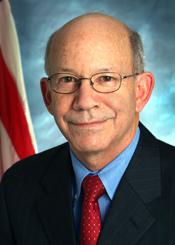
Mr. Chairman, I yield myself such time as I may consume. Mr. Chairman, I rise in support of the bill. Just following up on the remarks of the esteemed chairman, I am really pleased that he has…
Mr. Chairman, I yield myself such time as I may consume.
Mr. Chairman, I rise in support of the bill. Just following up on the remarks of the esteemed chairman, I am really pleased that he has strongly supported and we have included in the bill a mandate that on an annual basis we have a report of essentially the 10 ``most wanted,'' is the way I would phrase it.
Too many times we have seen in the past where the National Transportation Safety Board raises serious concerns in the aftermath of an aviation incident or accident; and oftentimes, because of various pressures or bureaucratic inertia, we find that those recommendations never again see the light of day.
Minimally, we would want to see a substantive response on each and every important recommendation that would track it and give us a meaningful document that shows why it was implemented, why it was not implemented, or where we are in the implementation process or what modifications the FAA has made to it in moving forward with the implementation.
So I think that is an excellent addition to the authority of the NTSB and will enhance their status as the world's number one transportation safety watchdog. And that, indeed, is what the NTSB is.
They are sought after in accidents overseas, have conducted some very,
very difficult investigations and technically assisted in very, very difficult investigations and recovery efforts. So I am also pleased to see that there is a modest increase in the funding for the NTSB recommended here and for the NTSB Academy, which provides the world- class standard of training for accident investigators.
And then finally, there is a provision regarding families of passengers. The NTSB does not have really the extensive resources on an ongoing basis to provide assistance to the families and the bereaved of passengers in accidents; and this bill would move that on to other, more appropriate Federal agencies at the appropriate point in the investigation, something which today, unfortunately, often languishes so that neither the NTSB and their principal functions are served, nor are the bereaved family members of the passengers.
So also I think this bill is an improvement and a long-needed reauthorization of the NTSB.
Mr. Chairman, I reserve the balance of my time.
Mr. Chairman, I yield such time as he may consume to the gentleman from Minnesota (Mr. Oberstar), the distinguished ranking member of the full committee.
Mr. Chairman, I yield back the balance of my time.
Mr. Chairman, will the gentleman yield?
Certainly, Mr. Chairman. I thank the gentleman from Colorado (Mr. Udall) for his leadership on this issue.
The tragedies are not unique to Colorado. We have had similar tragedies in the Pacific Northwest, and I think it raises very, very severe questions about whether these vans should be on the road at all. And I certainly would encourage the continued study and action on the safety of these vehicles.
Yes. As I said in my earlier statement, my understanding is that the NTSB is continuing to study the van stability issue for these 15-passenger vans and to see whether or not they are more likely to roll over and cause injury or death. And since they are too important just to be put aside, I certainly congratulate the gentleman in his persistence in his legislation, and I believe we will accommodate, at least partially, his concerns in a subsequent amendment.
Mr. Chairman, I ask unanimous consent that the remainder of the bill be considered as read, printed in the Record, and open to amendment at any point.
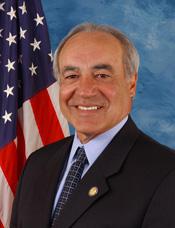
Mr. Chairman, I urge my colleagues to vote ``no'' on the previous question. Defeating the previous question will allow us to bring up today legislation on Temporary Extension of Unemployment…
Mr. Chairman, I urge my colleagues to vote ``no'' on the previous question. Defeating the previous question will allow us to bring up today legislation on Temporary Extension of Unemployment Compensation (TEUC) authorized by Ways and Means Ranking Member Charles Rangel.
Thousands, if not millions, of hard working Americans stand to loose their only lifetime in just 6 days. And, what do Republicans do? Where is the compassion?
Thousands, if not millions, of hard working Americans stand to loose their only lifetime in just 6 days. And, what do Republicans do? Where is the compassion?
Congress created the temporary extension of unemployment benefits later year in response to continuing poor economic performance. The need has only increased since then!
The total job loss in this Bush economy has risen to a staggering 2.5 million private jobs since the President took office.
Instead of doling tax cuts to the wealthy and allowing corporations to steal their employee's pensions, our government should be granting another extension of unemployment benefits. These are benefits that millions of Americans are depending on to pay for groceries, utilities, and rent.
The unemployment rate is now at 6 percent, and still climbing. In many states, like California, the rate is even higher. Yet, many of these hard working Americans have already exhausted their unemployment insurance (UI) benefits.
Millions of American families are working hard to succeed, but they need relief to help them find new jobs, save for the future, and invest in their family's future.
While the shelves at food banks are empty Republicans are cutting back on government programs like food stamps, welfare and others that help people during difficult times.
While school districts are suffering from a nationwide state budget crisis, Republicans aim to deny states the money owed to them from the No Child Left Behind act.
On top of that, President Bush is looking to privatize a significant portion of the Federal workforce and prohibited legal immigrants from working many Federal and civilian jobs, for example: airport workers.
President Bush parades around the nation telling working class families that he cared for
them. Yet, it is his policies that are increasing working class tax burdens, taking away their right to overtime pay, and making it so employers can take back their employees retirement pensions.
President Bush's disastrous economic policies and risky tax schemes are coming straight from the Enron playbook--deceive those at the bottom, so those at the top can prosper.
This is a tale of two Bushes. One is gentle and caring for the workingman. The other takes away our right to unionize, endangers our retirement pensions, and wants to privatize social security. This administration seems intent on saying one thing, and doing the exact opposite.
Yet this much is clear, unemployment is growing and it is hitting our community the hardest.
Americans are finding themselves without jobs!
Without health insurance!
The only thing they are finding is a growing sense of frustration, despair, and fear of their government.
Mr. Chairman, I wish to express my disappointment at this administration's and the Republican Congress's economic policy, a policy that leaves the working class and our nation's minorities behind.
We need an extension of unemployment benefits now!
I urge my colleagues to vote ``no'' on the previous question.
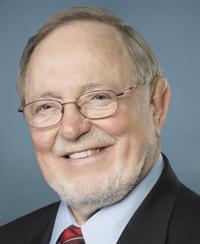
Mr. Chairman, I yield myself such time as I may consume. Mr. Chairman, I rise in support of H.R. 1527, the National Transportation Safety Board Reauthorization Act of 2003. The NTSB is a small, but…
Mr. Chairman, I yield myself such time as I may consume.
Mr. Chairman, I rise in support of H.R. 1527, the National Transportation Safety Board Reauthorization Act of 2003. The NTSB is a small, but extremely, important part of the Federal Government. Its dedicated staff investigates a broad range of transportation accidents each year.
The bill before us now supports this important work by authorizing increased funding levels for the NTSB for fiscal years 2003 through 2006.
The bill also requires the NTSB to notify aircraft operators of their right to appeal a board employee's decision that an event constituted an ``accident,'' whether an event is classified as an incident or an accident can have serious implications for an airline's license to fly and the insurance premiums the operator will pay. This problem was first brought to my attention by Coyote Air, a small airline in Alaska.
In addition, the bill addresses the problem of delays in implementing important NTSB recommendations. While the NTSB has a good track record of working with agencies to ensure that its recommendations are implemented, some important NTSB recommendations remain open for years.
For example, the NTSB's recommendations to improve runway safety have been on the NTSB's Most Wanted list of safety improvements since the year 1990. Also on the Most Wanted list is the board's recommendation to reduce fuel tank flammability. This recommendation was issued in December of 1996 after the crash of TWA Flight 800. Over 5 years later, this recommendation is still open.
While we cannot expect instant results on complicated issues such as these, neither can we afford to wait 5, 10 years or more to address important aviation safety problems.
To address this problem, H.R. 1527 requires that the Secretary of Transportation submit an annual report to Congress and the NTSB on the status of each recommendation that is included in the NTSB's Most Wanted list of safety improvements.
The Most Wanted list represents the board's best judgment regarding which of these recommendations should be expedited. H.R. 1527 will bring needed attention to these recommendations.
Finally, the bill authorizes the NTSB's family assistance responsibilities to be transferred to another Federal agency under certain circumstances. Under the bill, this transfer would occur when the accident investigation is transferred because it is determined the crash was caused by a criminal act.
I join with the full committee ranking member, the gentleman from Minnesota (Mr. Oberstar); the Subcommittee on Aviation chairman, the gentleman from Florida (Mr. Mica); and the ranking member of that subcommittee, the gentleman from Oregon (Mr. DeFazio), with whom I introduced H.R. 1527, in urging the immediate passage of this bill.
I commend the NTSB for its tireless efforts to improve transportation safety; and I do urge the passage of this bipartisan bill, with the least amendments necessary.
Mr. Chairman, I reserve the balance of my time.
Mr. Chairman, I ask unanimous consent that the gentleman from Florida (Mr. Mica), the chairman of the Subcommittee on Aviation, be allowed to manage the remaining time on this side.
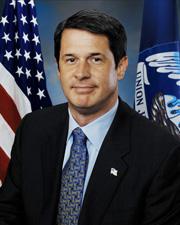
Mr. Chairman, I move to strike the last word. Mr. Chairman, I just wanted to briefly thank my colleagues who worked diligently on the last amendment; and of course, I join the gentleman from Texas…
Mr. Chairman, I move to strike the last word.
Mr. Chairman, I just wanted to briefly thank my colleagues who worked diligently on the last amendment; and of course, I join the gentleman from Texas (Mr. Green) and the gentleman from Colorado (Mr. Udall) on that.
I also want to specifically thank the gentleman from Florida (Mr. Mica) and the gentleman from Alaska (Mr. Young) for their leadership on the overall bill.
A particular provision of the last amendment, specifically medical certifications for a commercial driver's license, is a very important issue for me and for tragic reasons.
Sunday, of course, we all celebrated Mother's Day, but it was also the fourth anniversary of a terrible tragedy and accident in Louisiana. The Mother's Day Bus Crash which was 4 years ago was the fourth worst bus accident in U.S. history. Twenty-two passengers were killed. The bus driver and 20 other passengers received injuries.
The driver, who survived the accident, actually died 3 months after the deadly crash from congestive heart failure, diabetes, and kidney ailments. He also had tested positive after the crash for marijuana. His congestive heart failure was spotted at a medical exam prior to the crash, which should have sidelined him automatically under Federal law, but he was recertified anyway.
The NTSB, of course, did a thorough investigation of this horrible crash; and basically, they blamed in the end the 1999 accident on the driver's poor health which had been caught and should have yanked him from behind the wheel. The agency also cited fatigue and the use of marijuana as contributing factors, and so that is why I worked with the gentleman from Texas (Mr. Green) and the gentleman from Colorado (Mr. Udall) on this amendment and why I am so happy the leadership on the bill has accepted it, particularly the provisions regarding medical certifications for a commercial driver's license.
I also want to thank and congratulate the administration and the Department of Transportation. They just recently made announcements regarding certain provisions they will be pushing regarding the TEA-03 bill, and those recommendations included major implementation of these issues regarding medical certifications for commercial driver's license.
Mr. Chairman, unfortunately, this is a continuing issue. Just Tuesday, another Louisiana bus crash occurred in Lake Charles, Louisiana. A bus carrying 53 passengers, most of them elderly, crashed into a pickup truck, sending both vehicles into a ditch. Fortunately, the injuries were minor, and the accident is currently under investigation, but it certainly underscores the importance of these issues, particularly the medical certification issue which was at the absolute heart, the root cause of the deadly Mother's Day crash 4 years ago.
I want to thank again the authors, co-authors of the amendment, and the leadership on this bill.
Amendment Offered by Mr. Cardin
I thank the gentleman for yielding me this time. Mr. Speaker, on Tuesday the House of Representatives considered seven bills under suspension of the rules. We met for 2 hours and 24 minutes of…
I thank the gentleman for yielding me this time.
Mr. Speaker, on Tuesday the House of Representatives considered seven bills under suspension of the rules. We met for 2 hours and 24 minutes of legislative business. Yesterday we considered six more bills under suspension. We convened at 10. We completed our legislative business by 4:22, 5 hours and 35 minutes of doing the people's business. And what was the people's business that we did?
We directed the commandant of the Coast Guard to convey the Cutter Bramble to the Port Huron Museum of Arts and History; we renamed three Federal facilities; we honored the life and work of the former Speaker of the Pennsylvania House of Representatives; we made funds available for the fruit and vegetable pilot program in the school lunch program; we established the Carter G. Woodson Home National Historic Site; we authorized the Secretary of the Interior to revise a repayment contract with a Texas county and to grant an easement to facilitate access to the Lewis and Clark Interpretive Center in Nebraska City, Nebraska.
All we did not do is extend temporary emergency unemployment compensation to millions of American workers who will fall off a cliff at the end of this month. Today we convened at 10. We are going to go home at 2 o'clock, back to our districts, spend the weekend there, come back next week and still we will not have helped those 2 million Americans who will fall off a cliff without a paycheck and without temporary emergency unemployment compensation. How is it possible that this House can find time to do all of those activities this week and not do what the American people want us to do, to help them, to assist them? If this bill came to the floor now, it would pass, because none of my colleagues are willing to go back to their districts and look in the eyes of a worker who has lost his job and say, I couldn't help you, I wouldn't help you, I didn't help, but I did rename three Federal facilities this week. This bill would pass if it were allowed to the floor.
The gentleman from Maryland (Mr. Cardin) and the gentleman from New York (Mr. Rangel) have introduced legislation to extend temporary unemployment compensation. I have introduced a special rule to allow it to the floor immediately. We have to do this. We have no choice because those millions of workers have no choice, have no paycheck, have no help. This economy is pushing them off that cliff. We are the only people who can bring them back from the brink. If we go home to our districts without having done that, we have done a massive disservice to them, slapped them in the face, and further endangered and damaged our economy.

I thank the gentleman for yielding me this time. Mr. Speaker, I too rise in opposition to the previous question so that we would have an opportunity to offer an extension of unemployment benefits. As…
I thank the gentleman for yielding me this time.
Mr. Speaker, I too rise in opposition to the previous question so that we would have an opportunity to offer an extension of unemployment benefits. As the minority leader has said, this is the most efficient economic stimulus that we can provide to our economy. It helps people who are out of work. It helps the economy because they must spend the money on the necessities and what our economy needs is demand.
My colleagues do not have to believe me. Just look at the figures that were published yesterday. And that is, in fact, that consumers are running out of gas, retail demand is down in the country, and the stock market was down yesterday as a result of that. That comes on the heels of what the Republicans have offered and that is additional tax cuts.
It is rather interesting, though, when we see the people who are now commenting on the tax cuts in terms of the economy, we see that the Republican-controlled Joint Committee on Taxation says that even under dynamic scoring, the tax cut will lead only to more job loss, higher deficits, more debt for our children and grandchildren. Kevin Hassett of the American Enterprise Institute was quoted in The Washington Post yesterday as saying that the dividend plan is one of the most patently absurd tax policies ever proposed. Then today the senior economist for Goldman Sachs says that these tax cuts being offered are not stimulative.
What is that telling us? That is telling us that people are going to continue to be unemployed, that the economy is going to continue to soften; and the Republicans are not concerned. The Republicans simply do not share a concern for people who have lost their jobs. Their number one priority since the Bush administration has come to town was and always has been tax cuts, tax cuts for the wealthy. The unemployed are incidental to their concerns. That is why my colleagues ought to vote against the previous question on this rule so we can immediately offer unemployment extension benefits for millions of Americans who are out of work to help their families. The last time the Republicans did this, they dropped the ball. They did not get them reauthorized at the end of December, so these families had weeks of uncertainty before they knew whether or not they were going to be able to continue to pay the mortgage, to try to keep their car from being repossessed, to educate their children. We owe these families better than this. The Republicans ought to start showing a little bit of compassion for these families who are in very hard times because of the lousy Bush economy.
Show 6 more
Mr. Chairman, I offer an amendment. Mr. Chairman, I am offering an amendment not only on my behalf but also the gentleman from Colorado (Mr. Udall) and the gentleman from Louisiana (Mr. Vitter), from…
Mr. Chairman, I offer an amendment.
Mr. Chairman, I am offering an amendment not only
on my behalf but also the gentleman from Colorado (Mr. Udall) and the gentleman from Louisiana (Mr. Vitter), from what I understand, to require the Secretary of Transportation to report to Congress, on my part of the amendment, and the NTSB on the status of any recommendation that the NTSB has made on railroad grade crossing safety.
I appreciate the gentleman from Alaska (Mr. Young) and the gentleman from Florida (Mr. Mica) on the Committee on Transportation and Infrastructure agreeing to discuss the ways we can address this problem further in future legislation. I would also like to thank the ranking members, the gentleman from Minnesota (Mr. Oberstar) and the gentleman from Oregon (Mr. DeFazio), for working with me so well on this amendment.
My community in Houston has a serious problem with railroad grade crossings; but it is a national problem, also. There are roughly 260,000 at-grade crossings in the U.S. In 4 years, from 1999 to 2002, over 1,600 people were killed in crossing accidents.
Thousands of these at-grade crossings have no protection devices at all, no lights, no barriers. Even in urban areas we have no protection.
I would like to enter into a colloquy with the gentleman from Florida (Mr. Mica).
I yield to the gentleman from Florida.
Mr. Chairman, again, I would be more than happy to cosponsor the Ride-21, and we know, while the STB does have jurisdiction over all rail lines and crossings of these lines, it is true that their ability to enforce safety considerations is unclear.
I suspect they choose not to use this authority, if they have it. If in fact they have no authority on grade crossing safety, that needs to be changed immediately, but I realize I will have to come back on the STB authorization bill, and I thank the Chairman for his commitment to address grade crossing safety issues that affect highway agencies in the highway bill.
Mr. Speaker, I join the minority leader, the gentleman from New York (Mr. Rangel), the gentleman from Maryland (Mr. Cardin), and others. The Federal extended benefit program will expire in just a few…
Mr. Speaker, I join the minority leader, the gentleman from New York (Mr. Rangel), the gentleman from Maryland (Mr. Cardin), and others.
The Federal extended benefit program will expire in just a few days. Why do we bring this up every day? Every day? Because every day the number of people who have exhausted their State and Federal benefits grows. Americans are looking for work and unable to find it. And those who were in the millions as of a few months ago are facing more and more dire circumstances. And every day the number of people who are on State benefits, who are going to exhaust them, face the peril of looking for work without any help.
So when we add this all together, we are talking about 2\1/2\, perhaps 3 million people in this country of ours looking for work, who cannot find it, and on the Republican side here in the House they say to them, get a job. They are looking for a job, but there are none to be found.
The response of the Republicans in this House has been, to put it in its best frame of reference, inaction. It has really been worse than that. It has been indifference, and perhaps even worse than that. I simply ask that they go back home and meet the people out of work, looking for work, without benefits or facing that prospect, look them in the eye and tell them that you here are sitting idly by.
As mentioned by the minority leader, the benefit of extending benefits is that it is a growth package. Giving people who are unemployed money to help their families is money that is going to be spent, and well spent. The studies are clear that that helps to move the economy upwards.
So do vote ``no'' on moving the previous question. I would hope there would be a few brave souls on the Republican side who will not simply march the robotic line, all in sync, voting against the interests of America and its unemployed workers looking for work.
I thank the gentleman for yielding me this time. Mr. Speaker, I rise today to urge my colleagues to vote ``no'' on the previous question. Mr. Speaker, the government is a tool to help people. We have…
I thank the gentleman for yielding me this time.
Mr. Speaker, I rise today to urge my colleagues to vote ``no'' on the previous question.
Mr. Speaker, the government is a tool to help people. We have an opportunity coming up with the unemployment insurance running out for 36,500 Ohioans to help; 167,000 Ohioans have lost their jobs. These people need help. We hear a lot in this Chamber, and we have heard a lot in Washington, D.C. over the last couple of years about compassion. What could be more compassionate than to help people who have lost their jobs? If the airline industry was going belly up or the pharmaceutical industry was going belly up, we would be tripping over ourselves to help them out. But average people need help, and we are not there to help them.
But what is most confusing to me and what I do not understand is what I read on the AP line today: Operating capacity sank to 7.4 percent in April, the lowest since 1983, as big industry throttled back production amid lackluster demand. People are now worried and the Fed is now worried about deflation. There is too much surplus in labor and in goods. There is too much supply. The answer, supply side economics. We do not need more supply. We need demand in this economy. If you give the businesses a tax break, they are not going to produce any more because no one is buying anything, because there are millions of people who do not have jobs. No matter what you are producing, they do not have the money to go buy it.
The major economists are saying the best stimulus is to invest in middle America, average people, people who do not have unemployment insurance so they will get their money, they will go out in the market, they will buy products and they will turn this economy around and begin to stimulate this economy. It is about the demand side, not the supply side. Let us stop the madness.
Mr. Speaker, I rise encouraging my colleagues to vote ``no'' on the previous question, and I rise today because right now in the State of Ohio since 2001 more than 167,800 people have lost their…
Mr. Speaker, I rise encouraging my colleagues to vote ``no'' on the previous question, and I rise today because right now in the State of Ohio since 2001 more than 167,800 people have lost their jobs. In the city of Cleveland, more than 53,900 people have lost their jobs.
We must, as the body of the people, on behalf of working people throughout this country, put in place additional unemployment dollars to cover these people who are without jobs.
We are all talking about a tax cut that would improve the economy and bring jobs to people at some time in the future, but the people in the city of Cleveland, State of Ohio, and across this country need support right now.
As I look out at my colleagues seated here, I see my colleague from Youngstown, Ohio, and I know the people in Youngstown, Ohio, deserve and need unemployment benefits. It is past time, it is way past time that we do something for the economy of the United States; that we put money in the hands of the people who have not had money to spend.
So I urge my colleagues to vote ``no'' on the previous question, and I urge this Congress to pass unemployment benefits before we go home for Memorial Day to memorialize all the veterans who have served on our behalf throughout this country. Let us help some of those who are on unemployment right now.
Mr. Chairman, the National Transportation Safety Board (NTSB) is a small agency charged with some big tasks. Besides investigating transportation accidents, conducting transportation safety studies,…
Mr. Chairman, the National Transportation Safety Board (NTSB) is a small agency charged with some big tasks. Besides investigating transportation accidents, conducting transportation safety studies, and issuing safety recommendations, they are also charged with aiding victim's families in aviation disasters and promoting transportation safety.
I believe this legislation will improve the effectiveness of the NTSB and its ability to investigate serious accidents. The tragic plane crash of Senator Wellstone has undoubtedly highlighted the importance of the legislation before us today. I would like to thank Chairman Young and my Ranking Member, Mr. Oberstar, who has poured his heart and soul into this issue, for their diligent work on this legislation.

DIAZ-BALART of Florida. Mr. Speaker, I reserve the balance of my time.
DIAZ-BALART of Florida. Mr. Speaker, I reserve the balance of my time.
Bill Text
2 versions available
        [Congressional Bills 108th Congress]
[From the U.S. Government Publishing Office]
[H. Res. 229 Engrossed in House (EH)]

In the House of Representatives, U.S.,

May 15, 2003.
Resolved, That at any time after the adoption of this resolution the Speaker
may, pursuant to clause 2(b) of rule XVIII, declare the House resolved into the
Committee of the Whole House on the state of the Union for consideration of the
bill (H.R. 1527) to amend title 49, United States Code to authorize
appropriations for the National Transportation Safety Board for fiscal years
2003 through 2006, and for other purposes. The first reading of the bill shall
be dispensed with. General debate shall be confined to the bill and shall not
exceed one hour equally divided and controlled by the chairman and ranking
minority member of the Committee on Transportation and Infrastructure. After
general debate the bill shall be considered for amendment under the five-minute
rule. Each section of the bill shall be considered as read. During consideration
of the bill for amendment, the Chairman of the Committee of the Whole may accord
priority in recognition on the basis of whether the Member offering an amendment
has caused it to be printed in the portion of the Congressional Record
designated for that purpose in clause 8 of rule XVIII. Amendments so printed
shall be considered as read. At the conclusion of consideration of the bill for
amendment the Committee shall rise and report the bill to the House with such
amendments as may have been adopted. The previous question shall be considered
as ordered on the bill and amendments thereto to final passage without
intervening motion except one motion to recommit with or without instructions.
Attest:

Clerk.