Mr. Speaker, I rise in support of this resolution commending Second Harvest and other food banks around the country who do such a wonderful job in providing essential assistance to people who need…
Mr. Speaker, I rise in support of this resolution commending Second Harvest and other food banks around the country who do such a wonderful job in providing essential assistance to people who need it. I am thankful each and every day that they are able to provide help to hungry people, as are the people who receive the food.
As the ranking member on the Subcommittee on Agricultural Appropriations, I have been torn over the level of funding we provide for our many food assistance programs. I am happy that we are able to provide as much funding as we do, while recognizing that there are still are other programs like WIC, Commodity Supplemental Feeding, and the Senior Farmers Market Nutrition Program, that could still use more.
I am unhappy about the growth in these food programs because they are supposed to be countercyclical. If our funding levels are high, then it means many among us, including many who have full time jobs, are not doing well economically. They need these food programs to help make ends meet.
Consider the following: In fiscal 2001, we provided $20.1 billion for Food Stamps. In the fiscal 2005 bill approved by the House in July, we included $33.6 billion, an increase of 67 percent in that one program. Do the additional 5.8 million program receiving these benefits think they are better off than they were four years ago?
According to testimony provided by USDA, in 2002, 47 percent of all infants born in the nation--1.9 million out of 4.1 million--were receiving benefits under the WIC program. What happened to meaningful jobs for their parents?
Last year the Toledo Blade reported of cases in which the families of individuals called up for active National Guard or Military Reserve Duty had to seek assistance from the WIC program because of lost family income. This is taking care of our servicemen and women and their families?
A population survey from the Census Bureau found that 12.1 percent of Ohioans were living in poverty in 2003, up from 11 percent in 2001. There is definitely a connection between increases in poverty and the thousands of jobs that have been lost in Ohio since 2001;
In 2003, the Toledo-Northwest Ohio Food Bank reported that food pantries and soup kitchens in the area served 28,000 households. By the end of June of this year, this number increased to 40,000 households. People who in past years had donated to food banks are now becoming recipients.
Local grocery stores had been generous in their support of food banks in prior years, but because of local closures and consolidations, the food banks are finding that the donations they are receiving are down while the need for the program has increased.
As a nation, while we support these programs of assistance because it is the right thing to do, no one should ignore the fact that there are reasons why people are on these programs. America needs more jobs that pay a living wage. America needs an increase in the minimum wage to be sure that families can live in dignity, not in despair. America needs to end the harsh choices we expect too many young families and too many elderly to make--do they pay the rent, pay for utilities, pay for health care, or leave money for food?
America, frankly, needs better days than we have seen for the past four years.
I ask unanimous consent to include at this point in the Record an article from the October 3rd issue of the Toledo Blade, entitled ``Ranks of Area's `Invisible' Poor are Increasing''.
[From the Toledo Blade, Oct. 3, 2004]
Ranks of Area's ``Invisible'' Poor are Increasing
More Ohio, Michigan residents are living on the edge than ever
(By Karamagi Rujumba)
Gary Robertson was laid off from his warehouse job eight
months ago. With no steady income and the bills piling up, he
soon lost his apartment. A couple of friends put him up for a
while, but that didn't last for long. So one day, he was
finally forced to do something he never imagined: He spent a
night at a men's homeless shelter at the Cherry Street
Mission. ``I was homeless and that was hard for me to accept.
I had never been to a food pantry or a shelter,'' said Mr.
Robertson, a native of Alabama who moved to Findlay 17 years
ago and got a job at an area warehouse. ``I was doing well
until I lost my job,'' Mr. Robertson said. He came to Toledo
hoping for better luck in a larger city, but has since failed
to find a regular job here. He has been working odd jobs to
make his portion of the rent for an apartment he shares. When
he needs food, he goes to the Cherry Street Mission's food
pantry. Mr. Robertson is far from alone.
``We are seeing an increasing number of people who rely on
pantries and soup kitchens, especially this year,'' said Lisa
Hamler-Podolski, the executive director of the Ohio
Association of Second Harvest Foodbanks, a Columbus-based
agency that donates food to food banks across the state. A
U.S. Census Bureau report released last month confirmed what
many volunteers at area food pantries and soup kitchens have
known for a long time--that more people in Ohio and Michigan
live in poverty today than in past years.
Area Census figures
Poverty is defined in terms of family size and income. For
2003, the Census Bureau reported that a family of four living
on a total annual income of $18,810 or less is considered to
be in poverty. And statistical benchmarks show poverty is on
the rise in Toledo, Ohio, and Michigan: In the last Census
report, Toledo was ranked eighth among cities that have the
highest number of children living in poverty. A recent
population survey from the Census Bureau found that 12.1
percent of Ohioans were living in poverty in 2003, up from
11.9 percent in 2002, and 11 percent in 2001. In Michigan,
11.4 percent of the population was living in poverty last
year, compared to 11.6 percent in 2002 and 9.4 percent in
2001. In 2003, the Toledo-Northwest Ohio Food Bank, Inc.,
reported that the various food pantries and soup kitchens to
which it distributed served 28,000 households. By the end of
the first six months of 2004, the same pantries and kitchens
reported that 40,000 households were dependent on their
services.
``The people we are talking about appear to be invisible,
but you see them everyday. They serve you at restaurants,
take care of your parents in nursing homes, and make your
beds in hotels,'' Ms. Hamler-Podolski said. ``They are the
new poor. People who have always had jobs and now, due to
plant closings and downsizing, find themselves struggling to
put food on the table.''
Demand high at pantries
Julie Chase Morefield, the director of marketing and
operations at the Toledo-Northwest Ohio Food Bank, agreed.
``The demand at area pantries and kitchens is way up and it
has been a problem finding enough food to distribute,'' she
said. Her agency serves 330 pantries and soup kitchens in
eight northwest Ohio counties, including Lucas, Defiance,
Fulton, Henry, Ottawa, Sandusky, Williams, and Wood counties.
``It is worse than we have ever seen it. We've never really
seen numbers this high,'' Ms. Morefield said. ``There are a
lot of people out there who are really struggling.''
John Urban, a retired vacuum cleaner salesman is one of
them. Standing in line for a food bag at the Helping Hands of
Saint Louis pantry in East Toledo one recent Tuesday morning,
Mr. Urban said his Social Security income of $900 a month no
longer was enough to sustain him. ``I come here once a month
and they give me enough food to last a couple of weeks,''
said the 64-year-old, who was born on the city's east side.
After showing his proof of residence and income, Mr. Urban
was handed a brown bag stuffed with loaves of bread, bagels,
macaroni, spaghetti sauce, several cans of soup, and powdered
milk.
The line at the pantry on this particular morning was not
very long. That is because it was the beginning of the month,
said Linda Lupien, the director of Helping Hands. ``The
middle and the end of the month are usually very tough
because that's when people run out of money,'' Ms. Lupien
said. ``We are seeing new faces every day and people who are
hitting the pantry line because they simply cannot make it
anymore.''
Al Baumann, a retired pastor at Saint Mark's Lutheran
Church in East Toledo, is the director of the Toledo Area
Council of Churches, which runs the Feed Your Neighbor
program. ``There are a lot more people in Toledo who rely on
food donations. You see them everyday, but you just don't
know it,'' Mr. Baumann said. ``We serve more than 30,000
families a year through our program.'' Feed Your Neighbor is
a food voucher system involving 12 Toledo churches that was
started in 1975, when the council of churches
started distributing emergency food supplies because of the
drastic economic downturn of the 1970s. While the current
economic climate is not as dire, Mr. Baumann said the number
of people in need of food is growing every month. ``We're
finding more people, even in the suburbs, who can no longer
make ends meet,'' he said. ``A lot of people are not aware of
the economic hardships their neighbors might be experiencing
because of the way that we are economically segregated as a
society.''
Cutting food stamps
Drastic cuts in federal government subsidies to food stamp
and similar programs serving the poor is another reason that
more people are lining up at food pantries, Mr. Baumann
said. According to the Lucas County Department of Jobs and
Family Services, there are now 27,784 households receiving
food stamps and 4,574 families on cash assistance through
the Ohio Works First program. The county has seen a steady
increase in the number of people seeking cash and food
assistance, said Cindy Ginter, the program manager at
Lucas County's Department of Jobs and Family Services. In
2003, the county had 25,286 households on food-stamp rolls
and 3,736 families on cash assistance.
``We would like to not have seen this kind of increase, but
because of the economy, the numbers just keep increasing,''
Ms. Ginter said. The sluggish economy also is cited by the
county's Women, Infants, and Children program for the record
number of low-income earning families that depend on its
services, said Tom Kuhn, the agency's director. In 1999, WIC,
an agency of the Ohio Department of Health's Bureau of
Nutrition Services, served 12,326 families in the county.
This year, that number has jumped to more than 15,000
families. ``The numbers have been steadily rising, but this
is the highest they have ever been,'' Mr. Kuhn said.
Sheldon Danziger, a professor of public policy at the
Gerald R. Ford School of Public Policy at the University of
Michigan, said the federal and state governments are not
doing enough to stave the rising numbers of people living in
poverty.
The Ohio Department of Jobs and Family Services came under
fire last week because $431 million in federally-allocated
funds have been sitting unused for months in the state's
Temporary Assistance for Needy Families account. Director Tom
Hayes confirmed the funds are being held while the state and
counties design programs to spend the money.
Economic problems
Mr. Danziger argued that it isn't because of a failure of
antipoverty programs that poverty has remained high for
Americans since the 1970s. He said it's because the economy
has not delivered the benefits of prosperity to all workers,
and because politicians and the public have lost faith in the
ability of government to deal with the problem of poverty.
``Wage stagnation is one of the reasons that we still see
people lining up at food pantries,'' Mr. Danziger said.
``Since the 1990s, labor market changes have meant that
workers with a high school education or less have had wage
rates that have not grown relative to the rate of
inflation.'' He said the government has failed to implement
public policies like a higher minimum wage adjusted for
inflation, which would be the quickest way to help people who
are struggling. The last time the minimum wage was adjusted
was in 1997, when it was raised to $5.15 per hour. If it were
to be adjusted to current inflation, the professor said, the
minimum wage would be $6.10 per hour.
Global poverty increase
Mr. Danziger said the gap between the rich and poor is not
only increasing here, but in many developing nations of the
world where more than a billion people continue to face
extreme poverty. According to a report released by the World
Commission on the Social Dimension of Globalization in
February, more than a billion people lived on less than $1
per day in 2000. The commission, which was established in
2002 by the International Labor Organization, a United
Nations agency, reported the gap between the richest and
poorest countries has widened dramatically in the past four
decades. In the U.S., increasing unemployment benefits and
implementing more tax credit programs for low-wage earners
would be a critical step in helping the unemployed get back
on their feet, Mr. Danziger said. According to the Center on
Budget and Policy Priorities, a Washington think tank, 17
States and the District of Columbia so far have enacted
earned income tax credits for low income residents, which
supplement the federal government credits.
Ohio and Michigan, however, are not among them.
These tax credits, Mr. Danziger argued, go a long way in
meeting day-to-day expenses for low-wage earners. George
Garcia, a Toledo truck driver, said he could have used some
help when he almost lost his house after breaking both his
legs in an accident that left him unemployed for more than
six months. ``I was down to the last week and $1,500 behind
on my mortgage. I had to tell the children that we were about
to lose our home,'' said the 39-year-old father of three.
After borrowing from several friends, he kept the family's
home. But because he had no health insurance, he spent all
his money on medical bills and had to turn to the Cherry
Street pantry for food. ``The pantry was great. I always got
enough food and when I took it home, it was like I had just
come from the grocery store,'' he said. Though he now makes
enough to support his family most of the time, Mr. Garcia
acknowledged that ``every now and then, I have to go to the
pantry to get by.''
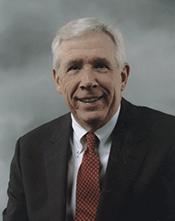 Rep. Frank R. Wolf (R-VA)


 +2
+2