Calling for the immediate and unconditional release from prison of certain Kurdish members of the Parliament of the Republic of Turkey.

Legislative Activity
Stay on top of the latest movement without scrolling through every action
Referred to the House Committee on International Relations.
June 26, 2003
View full timeline
Introduced in House
June 26, 2003
Referred to the House Committee on International Relations.
June 26, 2003
Floor Debate
13 membersWhat members said about H.Res. 302 on the floor
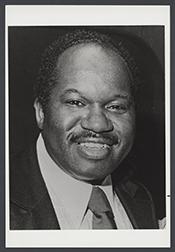 MRO
MRO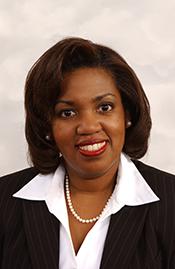 DLMBF
DLMBF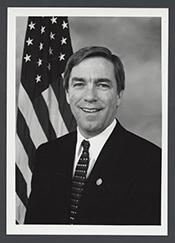 DO
DO JL+8
JL+8
Floor Debate
13 membersWhat members said about H.Res. 302 on the floor
Mr. Speaker, I rise in strong support of H. Res. 303, a resolution honoring the life of Maynard Jackson, Jr. Mr. Speaker, Maynard Jackson was a shining example of strength, resilience and undeniable…
Mr. Speaker, I rise in strong support of H. Res. 303, a resolution honoring the life of Maynard Jackson, Jr. Mr. Speaker, Maynard Jackson was a shining example of strength, resilience and undeniable charisma. As classmates at Morehouse College in Atlanta, GA we had the opportunity to spend a lot of time together as part of an experimental program sponsored by the Ford Foundation. Even then Maynard exhibited an intellectual curiosity well beyond his years. Maynard's strong faith and ability to stand steadfast even during troubling times served him well after the sudden death of his father.
Many of the skills Maynard developed during his early years at Morehouse helped him become the first African-American mayor of Atlanta. Under this leadership Atlanta was well on its way to becoming the new symbol for the south. Atlanta became an international city known for it's southern hospitality as well as it's fine dining and tourist attractions. As the shining example of the new south, Maynard led the way by introducing new initiatives that helped increase the number of minority contractors. As a result of his hard work local businesses flourished and a new generation of African-American millionaires was born. As mayor, Maynard endured criticism from proponents of the ``old south'' to lead the city to unprecedented growth, and prosperity which culminated in the expansion of the Atlanta airport.
Mr. Speaker, even after Maynard Jackson left office he continued to fight for the under-served and bring vital financial resources to Atlanta. His involvement with the U.S. Olympic committee led to Atlanta's selection as the site of the 1996 Summer Olympics. The city of Atlanta, the state of Georgia and the nation owes Maynard Jackson a debt of gratitude. Maynard's foresight and wisdom opened the door for African-American politicians throughout the nation. Today we mourn the man, but we remember the contributions he made in the name of fairness and equality. We will miss Maynard Jackson.
Mr. Speaker, on June 25, 2003, I spoke in memory and praise of Maynard Holbrook Jackson.
The speech follows:
In Memory and Praise of Maynard Holbrook Jackson
(Speech of Hon. Major R. Owens of New York, in the House of
Representatives, Wednesday, June 25, 2003)
Mr. OWENS. Mr. Speaker, I join with all of my colleagues,
with the family and with all Americans in mourning the
passage of a great political leader and a personal friend,
Mayor Maynard Jackson. I rise to salute the outstanding
achievements of the former Mayor of Atlanta who was also a
national political leader and a major asset of the Democratic
Party. But before I sound the loud trumpets which are
appropriate for the highlighting of Mayor Jackson's public
life, I would like to pause and note my fond personal
memories of Maynard.
In the Morehouse College class of 1956 he was my classmate.
But even more intimate than that space were the roles we
shared as part of an experimental program sponsored by the
Ford Foundation. Maynard and I were two of 30 college
freshmen who had been admitted without completing the last 2
years of high school. Most of the so-called ``Ford Boys''
were 16 years old. Maynard was the youngest at age 14.
Maynard was a native of Atlanta, the location of Morehouse
College. He was a member of one of the oldest African
American leadership families. Maynard even at that early age
had a strong sense of mission and personal responsibility.
Despite his youth he became the host for our group of 30
special students. We were from very different worlds. My
father was a factory worker who had never earned more than
the minimum wage. But during that freshman year Maynard's
father who was the minister of one of Atlanta's most
prestigious churches, died suddenly. My mother also died in
the Spring of that year. Few understand better than I did the
sudden escalated maturation of the 14 year old Maynard. It
was probably the first great crisis of his life but he
rallied his personal resources and he overcame that great
emotional obstacle. It was a challenge which set a pattern
for the rest of his life and career.
My classmate, Mayor Maynard Jackson leaves a clear and
shining legacy for all to see and for African American
leaders to utilize as a guiding beacon. Mayor Maynard sought
power and through a very creative strategy and set of tactics
he won power. But the truly distinguishing achievement of
Mayor Maynard Jackson was his bold and uncompromising use of
his power to further empower the African American community
of Atlanta. In very concrete dollar and cents terms he
confronted the business elite of Atlanta and forced the
opening of new doors of significant business opportunities
for minorities.
Under Mayor Jackson's early leadership as Mayor, Atlanta
City contracts soared from less than 1 percent in 1973 to 39
percent within 5 years. Many of these contracts were related
to the construction of the expanded world class Atlanta
airport. It is believed that several dozen new black
millionaires were created via Maynard's mandated joint
venture models. It is important to note that the airport
expansion was still completed ahead of time and under budget.
For African Americans unprecedented new opportunities were
opened up as a result of the Mayor's confrontation with the
white business establishment. Maynard Jackson could never be
called an ``empty suit'' concerned only with the ceremony and
symbolism of being the first Black Mayor of Atlanta. The
legacy he leaves is a lesson for all African American
leaders: power is acquired for the purpose of empowering
those who lacked power before. Martin Luther King's movement
and the Voting Rights Act were constructed, not to install
peacocks with their limited agendas for personal wealth and
fame; instead the assumption of public office is a method of
extending the struggle.
Let it be noted and fully understood that Maynard Jackson
had to pay a price for his courage and his boldness on behalf
of the continuing struggle. When he left office as Mayor, the
white establishment attempted to lynch him economically by
denying him an appropriate berth in the private sector.
Fortunately, it was one more hurdle which Maynard overcame.
More of the story of the battle of Atlanta must be told in
order for the legacy to be understood clearly. Mayor Maynard
Jackson was more than just a successful politician. He was a
trailblazer, a
hero who set high standards that all African American public
officials must measure up to in performance.
Mr. Speaker, the City of Atlanta, the State of Georgia, and the United States of America mourn the passing of an important civic and civil rights figure. Maynard Holbrook Jackson, Jr. lived as a…
Mr. Speaker, the City of Atlanta, the State of Georgia, and the United States of America mourn the passing of an important civic and civil rights figure. Maynard Holbrook Jackson, Jr. lived as a trailblazer, paving the way for future black politicians throughout the country. Furthermore, Maynard Jackson was not only a prominent political figure, but a man of character as well; strong, genuine, and always full of heart.
Former Mayor Jackson was born in Dallas, Texas in 1938 into a family of civil rights activists. This strong background influenced Jackson to become involved in public affairs at an early age. The assassination of Dr. Martin Luther King, Jr. and the birth of Jackson's first child, occurring within days of each other, proved a pivotal turning point in Jackson's life and inspired him to commit to serving the public interest.
Jackson demonstrated immense courage when he challenged a popular, long-sitting United States Senator during his first run for public office in 1968. By becoming the first African-American to run for the Senate from the State of Georgia, Jackson cleared hurdles and opened new opportunities for African-American political ambition. Five years later, Jackson once again raised the bar of public service and made history with his successful campaign for the office of Mayor of the City of Atlanta. This victory made Jackson both the first black mayor of a major southern city and, at age 35, the youngest mayor in the United States. His election marked a turning point for both the City of Atlanta and our entire nation, as Jackson came to embody a rising political tide of young and energetic African-American politicians, along with the likes of Coleman Young and Tom Bradley, who possessed a sincere ambition to reinvigorate urban politics. The three terms that Jackson would go on to serve during the next twenty years would make him the second longest serving mayor in Atlanta history, a milestone in and of itself.
While each of these accomplishments are impressive and significant, Jackson's record as Mayor of Atlanta is equally admirable. His record shows a deep commitment to equality and a bold desire to reform the traditional Atlanta business community to make it more inclusive. During his tenure in office, Jackson launched an aggressive program to increase the number of minority contractors employed by the city. He also succeeded at creating ``joint venture'' programs in which minority and white contracting firms worked together for the construction of the mid-field terminals at Hartsfield International Airport. Jackson's efforts in reshaping and marketing the city have been credited with supplying the Atlanta region with much of its growth over the past quarter century. Maynard Jackson turned what was a regional town into a national and international business center.
Finally, Jackson gained international prominence during his final term as Mayor in the early 1990's. Once again, he did his utmost to use his position to bolster the prestige and notoriety of his hometown. His most visible accomplishment in office was surely his intimate involvement in the effort to bring the 1996 Centennial Olympic Games to Atlanta. We fondly remember the televised images of Mayor Jackson hugging and congratulating other city officials immediately following the announcement that Atlanta had been successful in its bid for the Olympics. Two years later, Jackson went before an international audience during the closing ceremonies of the Barcelona Olympics and proudly waved the Olympic flag on behalf of the City of Atlanta and the United States of America.
In recent years, Jackson sought to extend his sincere commitments to equality and progress to the national level. Jackson led a national initiative within the Democratic National Committee (DNC) to encourage African-American voter participation by heading the DNC's Voting Rights Institute. In this he sought to empower those who lacked a significant political voice.
During Jackson's career in public service, his tireless efforts have transformed a city, empowered its citizens, and brought it international recognition. Time and again, Maynard Jackson was a strong advocate for economic equality and high levels of civic participation within the African-American community. While this is likely the most noticeable aspect of his legacy, he has always desired to be known for his accomplishments on behalf of all individuals.
Indeed, our entire nation experienced a great loss when Jackson passed away on June 23, 2003. He was 65 years old and left behind a tremendous political legacy. Maynard Jackson inspired an untold number of potential political leaders, so many of whom will benefit from the doors that he opened and the barriers that he shattered. He will be greatly missed by people of all races, Democrats, Republicans, Georgians and non-Georgians alike.
Public servants such as Maynard Holbrook Jackson, Jr., who have had a significant impact in local and national politics, leave not only action, but legacy. As was said upon the passing of John Adams and Thomas Jefferson, ``They are no more . . . but how little is there of the great and good which can die! To the country they yet live, and live forever.''
Mr. Speaker, I rise today to spend a few minutes to talk about some developments recently in the country of Turkey, some of which we celebrate, some of which we have great concern about. Let me…
Mr. Speaker, I rise today to spend a few minutes to talk about some developments recently in the country of Turkey, some of which we celebrate, some of which we have great concern about.
Let me first, by the way, extend my condolences to victims of yesterday's terrorist bombings in Turkey and to the families of the victims. Certainly we want the perpetrators brought to justice quickly.
But I rise to celebrate a small, but very important, victory for human rights that took place last week. Four human rights prisoners in Turkey were released. Leyla Zana, a prominent Kurdish advocate for human rights, and her colleagues, Hatip Dicle, Slim Sadak and Ornhan Dogan, were released from prison following a June 9 appeals court ruling in their favor.
These were Kurdish citizens of Turkey. These were citizens who were elected by majority vote to the Turkish Parliament. These were Kurds who had the nerve to speak their own native language, Kurdish, in the Turkish Parliament; and they were arrested and sentenced to 15 years in prison.
Amnesty International declared them prisoners of conscience. They have been there 10 years.
Leyla Zana was probably the best known of the four prisoners. She was the first Kurdish woman elected to Turkey's Parliament who openly and proudly identified herself as a Kurd. In fact, the European Parliament awarded her a Sakharov Prize in 1995 for defending human rights.
I had the great pleasure of getting to know her husband, Mayda, who traveled around the world to talk about the injustice of his wife being in prison. I spent time with her son Ronee who was for a short time a student in Los Angeles. This was a whole family dedicated to human rights for all, and especially to the Kurdish minority who has been denied them in Turkey.
The release of these prisoners of conscience was a result of international pressure, and I want to thank the 21 Members of Congress who joined with me in H. Res. 302 that called for the release of these four parliamentarians. The Kurdish community in the United States, as well as human rights advocates across the country, played an important role in gaining their release.
So we welcome the release of these prisoners of conscience, as well as other reforms in Turkey, including the introduction of public broadcasting in minority languages. However, serious human rights and repression of the Kurds continue in Turkey.
From June 8-10, Human Rights Watch, Amnesty International, and the International Federation for Human Rights joined with Turkish human rights groups in a joint delegation to investigate the situation in Turkey. They heard continuing allegations of torture and violations of freedom of expression, assembly, association, religion, and the right to a fair trial. They expressed concern about prisons, national minorities, the lack of independent investigations into human rights violations, and internal displacement.
The State Department human rights report, released just in February, also found that serious human rights problems exist. The report says that security forces killed 43 people last year and participated in widespread torture, beatings, and other abuses. The Turkish Government continued to limit free speech in the press and, in particular, restricted expression by people sympathetic to Kurdish cultural or nationalist viewpoints.
So we are pleased at the release of Leyla Zana and her colleagues, but we are not placated by this good news. We demand greater progress. The European Union should insist that Turkey take greater strides to improve its human rights record and treatment of the Kurds before joining the European Union. Turkey needs to realize that its Kurdish citizens enrich the country rather than threaten it.
President Bush will visit Turkey for a NATO summit next week. He should use this opportunity to press for greater respect for human rights. I would hope that he meets with Leyla Zana and shows his respect for human rights for the Kurdish minority in Turkey.
Mr. Speaker, I move to suspend the rules and agree to the resolution (H. Res. 303) honoring Maynard Holbrook Jackson, Jr., former mayor of the City of Atlanta, and extending the condolences of the…
Mr. Speaker, I move to suspend the rules and agree to the resolution (H. Res. 303) honoring Maynard Holbrook Jackson, Jr., former mayor of the City of Atlanta, and extending the condolences of the House of Representatives on his death.
Mr. Speaker, I ask unanimous consent that all Members may have 5 legislative days within which to revise and extend their remarks on the resolution under consideration.
Mr. Speaker, I yield myself such time as I may consume.
Mr. Speaker, H. Res. 303 introduced by my colleague from the State of Georgia (Mr. Lewis) honors Maynard Holbrook Jackson, Jr., former mayor of the city of Atlanta and extends the condolences of the House of Representatives on his death.
Mr. Speaker, today we do honor a great American leader. Maynard Jackson courageously guided the city of Atlanta for three terms as mayor. He was inspired to enter public service, catch this date, on April 4, 1968, when he was a 30-year-old hard-working lawyer in Atlanta. Why does that date register with us? On that terribly bittersweet day, Maynard Jackson welcomed his first child into the world and Reverend Dr. Martin Luther King, Jr., was tragically assassinated. The combination of these two events moved Mr. Jackson to enter politics.
Only 2 months later, he unhesitatingly launched a grassroots campaign that challenged, albeit unsuccessfully, a powerful incumbent senator. His campaign earned him 200,000 votes, but in 1973, he again challenged a well-known incumbent as he ran for mayor of Atlanta, and this time he won. He was elected the first black mayor in Atlanta's history.
Maynard Jackson went on to become one of the most influential civic officials in the history of Georgia, the South and our entire Nation.
Mr. Speaker, last month, on June 23, Maynard Jackson sadly collapsed and died from a heart attack right here in Washington at the age of 65. He once was quoted as saying, with perhaps too great an understanding of the way we tend to simplify history, that ``I could see my full name will be Maynard Jackson, first black mayor of Atlanta.'' Certainly his civic accomplishments are not to be overlooked.
Today, we seek to remember him more as the wonderful principled man that he was with a memorable booming voice and a giant, friendly handshake. His life was truly one worthy of commendation by this House, and I am proud that we are taking up this legislation.
I urge all Members to support the adoption of H. Res. 303 that honors the life and accomplishments of the honorable Maynard Holbrook Jackson, Jr. I thank my colleague from Georgia for introducing this worthwhile measure.
Mr. Speaker, I reserve the balance of my time.
Mr. Speaker, I continue to reserve the balance of my time.
Mr. Speaker, I yield 1 minute to the gentleman from Georgia (Mr. Marshall).
Mr. Speaker, I yield 1 minute to the gentlewoman from California (Ms. Lee).
Mr. Speaker, I yield 1 minute to the gentleman from Georgia (Mr. Scott).
Mr. Speaker, I yield myself such time as I may consume.
Mr. Speaker, I do want to add my condolences to those of my colleagues here. I cannot match their eloquence this morning. Their words are very well spoken. The majority side concurs in the extension of condolences to the family. I urge all Members to support the adoption of House Resolution 303.
Mr. Speaker, I yield back the balance of my time.
Mr. Speaker, I yield myself such time as I may consume. Mr. Speaker, I rise today to remember, to honor and celebrate a great citizen and a dear friend, Maynard Jackson. Maynard Jackson's untimely…
Mr. Speaker, I yield myself such time as I may consume.
Mr. Speaker, I rise today to remember, to honor and celebrate a great citizen and a dear friend, Maynard Jackson.
Maynard Jackson's untimely death was shocking and is still unbelievable. I have known Maynard Jackson for more than 35 years; and, Mr. Speaker, I must tell my colleagues Maynard Jackson was a man who thought the impossible was possible. In 1973, he was the first African American to be elected mayor of the city of Atlanta. He served 12 years as mayor of the city.
During his tenure as mayor of Atlanta, he began encouraging and fostering an interracial understanding, transforming the city into a new Atlanta, to the gateway to the South, the city that was too busy to hate. I truly believe that Maynard Jackson must be looked upon as one of the founding fathers of the new Atlanta, the new South and the new America.
Maynard Jackson was a strong supporter of affirmative action, civil rights and expansion of social and economic gain for minorities. As our current mayor Shirley Franklin stated a few days ago, Maynard Jackson was a lion of a man. He was a champion of inclusion for all people and never wavered in his commitment to Atlanta.
In fact, Mr. Speaker, Maynard Jackson helped create an Atlanta that we all could be proud of. He was not afraid or scared to do what was unpopular. He was not scared to take a chance. Maynard Jackson was not afraid to do the right thing.
Because of his leadership, vision and dedication, our city, State and Nation will never be the same. We will miss you, Maynard. Atlanta will miss you, the Nation will miss you, but we would never, ever forget you. You have left your mark on each and every one of us. Thank you for your service. Thank you for giving your heart and your soul. As you take your passion and energy to the great beyond, again a grateful Nation, a grateful people and a grateful city say thank you.
Mr. Speaker, I reserve the balance of my time.
Mr. Speaker, I yield 3 minutes to the gentleman from Baltimore, Maryland (Mr. Cummings)
Mr. Speaker, I yield 2 minutes to the gentleman from North Carolina (Mr. Ballance).
(Mr. BALLANCE asked and was given permission to revise and extend his remarks.)
Mr. Speaker, I yield 2 minutes to my colleague, the gentleman from Georgia (Mr. Marshall), the former mayor of the city of Macon.
Mr. Speaker, it is my pleasure to yield 2 minutes to the gentlewoman from California (Ms. Lee).
Mr. Speaker, I yield 3 minutes to the gentleman from Georgia (Mr. Scott).
Mr. Speaker, I yield myself such time as I may consume.
Mr. Speaker, I would like to thank all of the Members who participated this morning and thank the gentleman from California (Mr. Ose) for yielding so much time.
Mr. Speaker, I want to say to the family and friends of Maynard Jackson and to all of the citizens of Atlanta and the citizens of our Nation that we have lost a son of America, a citizen of the world. Maynard Jackson was a very proud graduate of Morehouse College. He loved the school, the glee club; he loved the citizens of our city. He will be deeply missed, but we take this as an opportunity to honor and pay tribute to him for all of the good things that he did to make our city, our State, our Nation, and our world a better place.
Mr. Speaker, I yield back the balance of my time.
Show 8 more
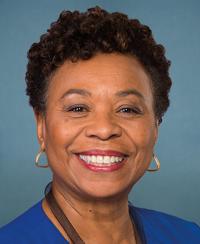
Mr. Speaker, I want to thank the gentleman for yielding me this time and for introducing this resolution. It gives us the opportunity to reflect upon a great man. I rise in strong support of this…
Mr. Speaker, I want to thank the gentleman for yielding me this time and for introducing this resolution. It gives us the opportunity to reflect upon a great man.
I rise in strong support of this resolution honoring Maynard Jackson, most famously known as the first African American mayor of Atlanta, but who will be remembered for much more than his outstanding service as mayor to the people of Atlanta.
Maynard Jackson's accomplishments were far-reaching. He was an extraordinary leader in business, law, and public service. He successfully brought the world's largest airport, the Olympics, and a new world-class reputation to the City of Atlanta. Because of his efforts, the city boasts a booming economic center that is now home to one of the most prosperous African American business communities in the world.
The Honorable Maynard Jackson was a staunch supporter and pioneer of affirmative action initiatives. His legacy is particularly important at a time when the Nation has renewed its commitment to diversity as a compeling State interest through the Supreme Court's landmark decision. The transforming power of targeted efforts toward diversity and inclusion is clearly evidenced in Jackson's work. As mayor of Atlanta, he authored initiatives that laid the foundation for many of the minority firms in Atlanta's thriving business community. Additionally, Jackson successfully incorporated some of the most marginalized communities into the core of the city's political activities.
Early in life, Maynard Jackson proved he was exceptional by graduating from Morehouse College at the age of 18. He also held a law degree from North Carolina Central University. In addition to serving three mayoral terms, Jackson created several successful business ventures. He most recently chaired the Democratic National Committee Voting Rights Institute.
He believed in serving the larger community, but he also believed in giving back on an individual level. He did so by serving as a mentor to many young potential, aspiring, upcoming young leaders. Those leaders now have great shoes to fill with Maynard's passing, but are able to step up to the challenge and lead us into tomorrow, a great tomorrow, because of his care and his guidance.
I honor Maynard Jackson for his life's work. He created opportunities where none really existed. He advocated for communities that had been disregarded and disenfranchised. Every leader can learn from the way in which he facilitated the breaking of racial and class divides to achieve collective progress, prosperity, and peace for all Atlantans and all Americans.
To Jackson's credit, Atlanta is now a sophisticated and progressive city, an example to the country and to the world. His work points the way to a more equitable society and has left us numerous methods as to how that society can be achieved. For that, we are deeply grateful.
Mr. Speaker, on behalf of my congressional district, the Ninth Congressional District of California, who knew and loved Maynard Jackson, I join today with our colleagues, Maynard's family and friends, and, indeed, the entire Nation, as we mourn his passing, but also as we celebrate his life and his monumental accomplishments. Maynard Jackson will forever remain in the hearts and the minds of the American people.
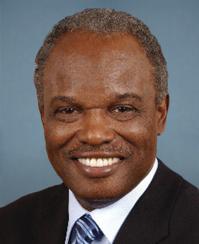
Mr. Speaker, I thank my colleague, the gentleman from Georgia (Mr. Lewis), for yielding me this time. This is an extraordinary moment that we pay tribute in these hallowed halls of Congress to an…
Mr. Speaker, I thank my colleague, the gentleman from Georgia (Mr. Lewis), for yielding me this time. This is an extraordinary moment that we pay tribute in these hallowed halls of Congress to an extraordinary man, an extraordinary American, a man of soaring magnitude whose contribution and legacy speak right to the core of the foundation upon which this country was built: that is freedom, that is equality, that is making the best of us.
Maynard Jackson came on the scene at an extraordinary time in the history of this country. It was in 1968, when two very monumental things happened that directed his life from that moment on. In 1968, Dr. Martin Luther King, Jr. was assassinated, and it moved Maynard Jackson to enter into the world of politics. The second monumental thing that happened was he chose to challenge Senator Talmadge, a legendary figure also of soaring magnitude, and in many ways in a different direction.
That was a monumental crossroads in the history of Georgia and started us on a path of inclusion for African Americans in the world of politics, but especially in Georgia. I stand here as a Member of Congress and unashamedly say to my colleagues that had it not been for Maynard Jackson taking that chance in 1968 against Herman Talmadge, many of us African Americans who are in politics today might very well not have been in politics or had the opportunity.
Mr. Speaker, in 1968 when Maynard Holbrook Jackson chose to challenge Herman Talmadge, it opened up a new era. He did not win that election, but he got over 25 percent of the vote and he set us on a course. The very next year, 1969, he became vice mayor of Atlanta, the first African American to do so. Following that in 1973, he was elected to become the first African American mayor of the City of Atlanta.
During that period, there was a burgeoning of political participation the likes of which Georgia had never seen. I am a beneficiary of that because as a kid in 1973 I was out helping Maynard Jackson get elected to become the first African American mayor of Atlanta. Exactly 1 year later, Maynard Jackson was in the streets of Atlanta helping David Scott get elected to the Georgia House of Representatives in 1974, at that time to become the youngest person to be elected in the history of the Georgia legislature.
It is so much to contain such a life, but not only in politics. Maynard Jackson made great contributions in opening up so many doors of opportunity, not just for African Americans, but for white Americans and for women, doors that were closed. He built, yes, he built the Atlanta International Airport. He built it on the foundation of many others, but it was Maynard Jackson that used that airport to open up tremendous business opportunities and partnerships for black and white Georgians
and for Americans, and for that we are eternally grateful. As I pass almost two or three times a week, I look down at that point where he fell in Reagan National Airport, and I say a silent prayer; and that prayer is Dear God, thank you for sending Maynard Jackson our way.
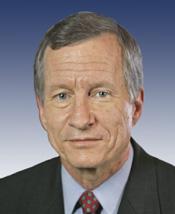
Mr. Speaker, I was elected mayor of Macon in 1995. Macon is a small town of a little over 100,000 people located 80 miles or so south of Atlanta. One of the first things I did after being elected was…
Mr. Speaker, I was elected mayor of Macon in 1995. Macon is a small town of a little over 100,000 people located 80 miles or so south of Atlanta. One of the first things I did after being elected was to visit Maynard Holbrook Jackson, Jr.
Maynard Jackson was elected mayor of Atlanta in 1973 at the age of 35, the first African American mayor of a major city in Georgia as well as the southeast. He served two 4-year terms and became known for promoting majority-minority partnerships to improve access for African Americans to the world of contracting and supplying governments.
Maynard Jackson was elected again as mayor in 1989 and served one term. When I went to see him as a newly elected mayor, it was to get his advice, any advice he would care to offer. I had no particular agenda, just a hope that he would impart some wisdom, given his experience in both government and business. Maynard Jackson spent hours of his time with me that day.
Of course, I cannot recall all that we spoke of, but I found his advice very valuable. I will always remember how cordial and engaged he was, someone who really did not need to give me the time of day, but, instead, gave me several hours. Maynard and I became
friends who saw one another infrequently but who always responded quickly to one another's calls, e-mails, or letters.
The last time I spent any significant amount of time with him was just this February in Macon at the Georgia Music Hall of Fame for the opening of an exhibit honoring black classical musicians in Georgia. Maynard's aunt, Ms. Mattiwilda Dobbs, was the guest of honor for the occasion; but Maynard was the star who could have easily stolen the show. Instead, he remained out of the limelight, allowing his aunt to fully enjoy the attention she deserved as a world-famous artist, the first African American soprano to perform at the Metropolitan Opera House in New York.
When I heard of Maynard's passing, I recalled that evening I spent with him in February at the Music Hall of Fame, and I remembered one touching incident. As we were all examining the memorabilia gathered for this exhibit honoring classical American artists of Georgia, the walls for this section of the museum were covered with photographs. Maynard grabbed my arm and pulled me toward one. It was a picture of the Morehouse College Glee Club that appeared quite old. And with great pleasure Maynard pointed to one of the young men in the picture. It was his father, a father who had passed away when Maynard was quite young.
Now Maynard himself has passed away too young, leaving us in his prime, but leaving a legacy of remarkable accomplishments for Atlanta and all of Georgia. Mr. Speaker, it is right and just that this body honor Maynard Holbrook Jackson, Jr. with this resolution prepared by the gentleman from Georgia (Mr. Lewis). Maynard Jackson will be sorely missed by his family and many friends. May he rest in peace knowing that his life was well lived.
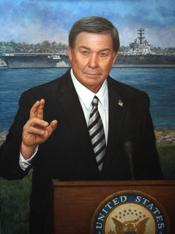
Mr. Speaker, based on the misleading and erroneous statement made by the gentleman from Maryland, Mr. Hoyer, I feel compelled to correct the record. In an effort to suggest inconsistencies in my…
Mr. Speaker, based on the misleading and erroneous statement made by the gentleman from Maryland, Mr. Hoyer, I feel compelled to correct the record. In an effort to suggest inconsistencies in my historical support and commendation of the troops, Mr. Hoyer stated that on December 13, 1995, I voted against a resolution regarding Armed Forces deployment to Bosnia that resolved, ``That the House of Representatives unequivocally supports the men and women of the United States Armed Forces who are carrying out their mission in support of peace in Bosnia and Herzegovina with professional excellence, dedicated patriotism, and exemplary bravery.'' However, a simple examination of the record tells a different story.
What the gentleman from Maryland failed to note, is that on December 13, 1995, the House considered two competing resolutions on the deployment of the United States Armed Forces to Bosnia--House Resolution 302 sponsored by Mr. Buyer and House Resolution 306 sponsored by Mr. Hamilton. If the Hamilton resolution had consisted of only the resolved clause, which my colleague quoted, I would have supported it. However, H. Res. 306 was compiled mostly of whereas clauses that justified the deployment of our Armed Forces to the former Yugoslavia. Had my colleague thoroughly researched this, he might have noticed that, also on December 13, 1995, I opposed this deployment by voting for Mr. Dornan's bill, H.R. 2770, which would have prohibited federal funds from being used for peacekeeping operations or any implementation force in the Republic of Bosnia and Herzegovina.
I, instead, voted for the Buyer resolution, which expressed dissatisfaction with the President's policy of deployment and his disregard of the action taken by the House on two separate occasions to disallow the use of United States Armed Forces for these purposes. Nonetheless, this resolution also declared that the House of Representatives, ``. . . is confident that the members of the United States Armed Forces, in whom it has the greatest pride and admiration, will perform their responsibilities with professional excellence, dedicated patriotism, and exemplary courage. . . .''
Incidentally, the Buyer resolution passed the House by a vote of 287 to 141, with one voting present. The resolution Mr. Hoyer criticized me for voting against, the Hamilton resolution, failed by a vote of 190 to 237, also with one voting present.
It is truly unfortunate that Mr. Hoyer made such a misleading statement and questioned my unfailing dedication to the young men and women of our Armed Forces.
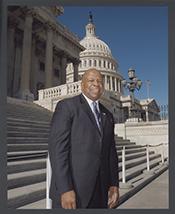
Mr. Speaker, I rise today in support of House Res. 303, a resolution to honor the former mayor of the City of Atlanta, the Honorable Maynard Jackson, Jr. And I want to thank my colleague, the…
Mr. Speaker, I rise today in support of House Res. 303, a resolution to honor the former mayor of the City of Atlanta, the Honorable Maynard Jackson, Jr. And I want to thank my colleague, the gentleman from Georgia (Mr. Lewis), for this resolution.
It is often said, Mr. Speaker, that when a person dies in our lives, and if it is somebody who is close to us, a part of us dies. The untimely death of one of our foremost leaders was a tragedy, and he will be sorely missed. But as I listened to the gentleman from Georgia (Mr. Lewis), I cannot help but think about the fact that when Maynard Jackson became mayor back in 1973 of the great City of Atlanta, I was graduating from Howard University, and I can remember many of us being inspired by his leadership and the fact that he was a strong man who stood up. We had a saying back then, that he did not scratch where he did not itch and he did not laugh at jokes that were not funny. But he was a strong man, a strong African American man, and he inspired many of us student government leaders.
The Honorable Maynard Jackson was a pioneer for civil rights. He graduate cum laude from North Carolina Central University School of Law and went on to become the first African American mayor of Atlanta where he left a legacy of contributions that would pave the way for both African American leadership in the 21st century and a new standard of public service and commitment.
After being elected to office in 1973, at the age of 35, which I find amazing, Maynard Jackson, Jr., began to foster and encourage interracial understanding as well as serving as a guide in leveling the vastly uneven social and economic playing fields for minorities. He was a great advocate for diversity and fairness in all areas of life. The Honorable Maynard Jackson, Jr., was also the catalyst for the design of Atlanta's Hartsfield International Airport. He played an essential part in securing Atlanta's selection as the site of the 1996 Summer Olympics. He also played an integral role in increasing voter turnout by establishing the nonpartisan American Voters League.
Finally, Mr. Speaker, Maynard Jackson was an outstanding leader who was greatly influential. He was and will continue to be held in the highest esteem by his community, his colleagues, the State of Georgia, and the entire Nation. We should all aspire to such greatness. Please join me in honoring his life and accomplishments.
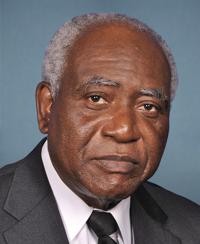
Mr. Speaker, I yield myself such time as I might consume. Mr. Speaker, Maynard Jackson, Jr., who took on Atlanta's establishment as the city's first black mayor and later helped plan for its role in…
Mr. Speaker, I yield myself such time as I might consume.
Mr. Speaker, Maynard Jackson, Jr., who took on Atlanta's establishment as the city's first black mayor and later helped plan for its role in the 1996 Olympics, died last month at the age of 65.
Maynard Jackson first made history in 1973 when he was elected the first black mayor of Atlanta. He made his presence known immediately by taking on the predominantly white business leadership and demanding that doors be opened for blacks. That is why many people called him Mr. Affirmative Action in this country.
He was reelected to a second term in 1977 where he led the city through one of its darkest periods, the string of slayings of young blacks from 1979 to 1981. When he left office after 2 years, barred from seeking a third consecutive term, he could boast of many accomplishments, including the expansion of Hartsfield Atlanta International Airport and the opening of the city's rapid rail system.
A lawyer by training, Maynard Jackson, Jr., was born in Dallas, Texas, on March 23, 1938, the third of six children. His father, Maynard Jackson, Sr., was a Baptist minister and his mother, Irene Jackson, was a college language teacher with a doctorate's degree in French. When Maynard was seven, his family moved to Atlanta to take over as pastor of the Friendship Baptist Church.
He enrolled at Morehouse College in Atlanta as an early admissions scholar and earned a BA degree in political science. He later earned a law degree from North Carolina Central University.
Maynard Jackson's family was active in early voting rights efforts. His grandfather was co-chairman of the Atlanta Negro Voters League, and his father founded the Georgia Voters League.
Maynard Jackson can be credited with not only what was accomplished
during his terms in office but also for laying the foundation for Atlanta's continuing success as one of the most desirable places in the country to live.
Mr. Speaker, I ask unanimous consent to yield the rest of the time to the gentleman from Georgia (Mr. Lewis), the author of this resolution, a person from Atlanta who is well-known throughout America, to finish managing our time.
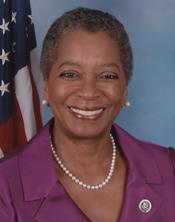
Mr. Speaker, I join my colleagues today in tribute to the life of Maynard Jackson Jr. and in strong support of H. Res. 302 which honors the life of this truly outstanding public servant. Mr. Speaker,…
Mr. Speaker, I join my colleagues today in tribute to the life of Maynard Jackson Jr. and in strong support of H. Res. 302 which honors the life of this truly outstanding public servant.
Mr. Speaker, Maynard Jackson served as a strong voice for African- Americans and all the citizens of Atlanta, Georgia. As the first African-American mayor elected in 1973, at the age of 35, Maynard Jackson became the first African-American mayor of a major Southern city and as mayor he dedicated his service to improving Atlanta in all the ways he could do.
Maynard Jackson was a vocal voice in this country for civil rights and for increased opportunities for all minorities. By the conclusion of his first term as mayor of Atlanta, the percentage of city contracts going to minority-owned firms had increased from 0.13 percent at the time he took office to 38.6 percent by the end of his term. His leadership helped mold Atlanta into a city that not only offered hope and opportunities for African-American businesses, but for all of the citizens he represented.
Mr. Speaker, Maynard Jackson strongly believed in the ideals of the Democratic Party and worked diligently to engage more citizens in the political process. Mr. Jackson served as a much-needed voice for those at the grassroots level and tirelessly strived to get people involved in communities across the country.
Mr. Speaker, Maynard Jackson was a selfless leader who strongly believed in the potential of young people. Helping to invest for a better future, he gave much of his time in helping to develop their talents for leadership. As a mentor for these individuals, Mr. Jackson guided them by communicating about his own experiences to help better prepare these future leaders for the large task of making all communities brighter.
Mr. Speaker, Mayor Jackson not only worked hard to make Atlanta a better city to live in, but also stands out as a role model for all people. I express my deep condolences to his family and all of his friends and may God grant him eternal rest.
Mr. Speaker, it is my high honor and privilege to stand and speak today on H. Res. 303, sponsored by my esteemed colleague, the gentleman from Georgia (Mr. Lewis), which is honoring the late, great…
Mr. Speaker, it is my high honor and privilege to stand and speak today on H. Res. 303, sponsored by my esteemed colleague, the gentleman from Georgia (Mr. Lewis), which is honoring the late, great Mayor Maynard Holbrook Jackson, Jr.
It is said that time, like an ever-flowing stream, bears all its sons and daughters away. I suppose I am unique among the speakers today, in that I had the great pleasure of meeting and studying with Maynard Jackson beginning in 1963 at North Carolina Central University Law School, where I was and he had transferred from Boston. There in Durham, North Carolina, during a pivotal chapter in the civil rights struggle, Maynard transferred to be where his mother, Dr. Irene Dobbs Jackson, was a professor at North Carolina Central University.
We established a close friendship which spanned a period of almost 40 years, through his three terms as mayor of Atlanta and his entering back into the business world, where he was serving at the time of his untimely death.
Maynard's contributions to his adopted city of Atlanta and to America are unparalleled in our times, and he will be remembered as a giant in not only the political world but in the social and economic world as well, and his legacy will extend for all times.
Bill Text
Latest available legislative text
        [Congressional Bills 108th Congress]
[From the U.S. Government Publishing Office]
[H. Res. 302 Introduced in House (IH)]

108th CONGRESS
1st Session
H. RES. 302

Calling for the immediate and unconditional release from prison of
certain Kurdish members of the Parliament of the Republic of Turkey.

_______________________________________________________________________

IN THE HOUSE OF REPRESENTATIVES

June 26, 2003

Mr. Filner (for himself, Mr. Towns, Mr. Cooper, Mrs. Tauscher, Mr.
McGovern, Mr. Abercrombie, Mr. Pallone, Mr. Kirk, and Mr. Kucinich)
submitted the following resolution; which was referred to the Committee
on International Relations

_______________________________________________________________________

RESOLUTION

Calling for the immediate and unconditional release from prison of
certain Kurdish members of the Parliament of the Republic of Turkey.

Whereas the friendship between the peoples of the United States and the Republic
of Turkey is based on a mutual respect and a shared commitment to
democracy, human rights, and the rule of law;
Whereas Turkey is now a candidate for membership in the European Union, a
community of nations likewise based on shared values of democracy and
human rights;
Whereas four former parliamentarians from the now banned Kurdish-based Democracy
Party (DEP), Leyla Zana, Hatip Dicle, Orhan Dogan, and Selim Sadak,
remain imprisoned at Ankara's Ulucanlar Prison; and
Whereas 153 Members of the United States Congress in 1997 signed a letter to
President Clinton calling for Leyla Zana's immediate and unconditional
release ``so that we may again welcome her to our shores'': Now,
therefore, be it
Resolved, That the House of Representatives declares that the
immediate and unconditional release from prison in the Republic of
Turkey of the parliamentarians Leyla Zana, Hatip Dicle, Orhan Dogan,
and Selim Sadak is a vital step in upholding due process in Turkey and
facilitating Turkey's integration into the European Union.
<all>