Remembering and honoring the March on Washington of August 28, 1963.
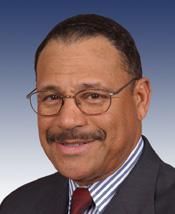 Rep. Sanford D. Bishop, Jr. (D-GA)
Legislative Activity
Stay on top of the latest movement without scrolling through every action
Motion to reconsider laid on the table Agreed to without objection.
September 16, 2003 • 7:08 PM
View full timeline
Introduced in House
September 3, 2003
Referred to the House Committee on Government Reform.
September 3, 2003
Committee Consideration and Mark-up Session Held.
September 12, 2003
Ordered to be Reported by Unanimous Consent.
September 12, 2003
Mrs. Blackburn moved to suspend the rules and agree to the resolution.
September 16, 2003 • 2:53 PM
Considered under suspension of the rules. (consideration: CR H8234-8239)
September 16, 2003 • 2:53 PM
DEBATE - The House proceeded with forty minutes of debate on H. Res. 352.
September 16, 2003 • 2:53 PM
At the conclusion of debate, the Yeas and Nays were demanded and ordered. Pursuant to the provisions of clause 8, rule XX, the Chair announced that further proceedings on the motion would be postponed.
September 16, 2003 • 3:19 PM
Considered as unfinished business. (consideration: CR H8255-8256)
September 16, 2003 • 7:00 PM
Passed/agreed to in House: On motion to suspend the rules and agree to the resolution Agreed to by the Yeas and Nays: (2/3 required): 426 - 0 (Roll no. 504).(text: CR H8234)
September 16, 2003 • 7:08 PM
On motion to suspend the rules and agree to the resolution Agreed to by the Yeas and Nays: (2/3 required): 426 - 0 (Roll no. 504). (text: CR H8234)
September 16, 2003 • 7:08 PM
Motion to reconsider laid on the table Agreed to without objection.
September 16, 2003 • 7:08 PM
Voting History
1 vote recorded • Roll call available
Floor Debate
12 membersWhat members said about H.Res. 352 on the floor
 +7
+7
Floor Debate
12 membersWhat members said about H.Res. 352 on the floor
Mr. Speaker, I thank the gentleman very much for yielding the time. I rise today in support of H. Res. 352, a resolution remembering and honoring the march on Washington of August 28, 1963. Let me…
Mr. Speaker, I yield myself such time as I may consume. Mr. Speaker, the march on Washington, August 28, 1963 marks a cornerstone in American history and especially in African American history. It…
Mr. Speaker, I very much appreciate the leadership of the gentleman from Illinois and his counterpart on the other side of the aisle for her leadership in bringing forward this important resolution.…
Mr. Speaker, I would like to thank my colleague from Georgia for introducing this important resolution that we are considering on the House floor today. Over 40 years ago, hundreds of thousands of…
Mr. Speaker, I want to thank my friend and colleague the gentleman from Illinois (Mr. Davis) for yielding the time. I also, Mr. Speaker, want to thank my good friend and colleague from the State of…
Show 7 more
Mr. Speaker, I rise today in support of H. Res. 352, a resolution honoring the March on Washington of August 28, 1963, a turning point in the long road to justice and equality. In the struggle for…
Mr. Speaker, I move to suspend the rules and agree to the resolution (H. Res. 352) remembering and honoring the march on Washington of August 28, 1963. Mr. Speaker, I ask unanimous consent that all…
Mr. Speaker, I am here today to express my support of H. Res. 352, a resolution to remember and honor the historic March on Washington of 1963. This 40th anniversary of the historic March on…
Mr. Speaker, I rise today to honor the 40th Anniversary of the March on Washington when over 250,000 Americans convened near the steps of the Lincoln Memorial, brought together by a common cause--…
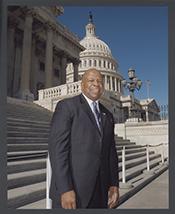
Mr. Speaker, it is with a profound sense of pride that I rise today in support of H. Res. 352, which remembers and honors the March on Washington of August 28, 1963. Mr. Speaker, our nation recently…
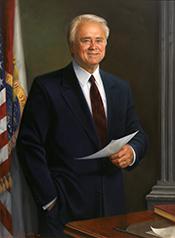
Mr. Speaker, pursuant to clause 12 of rule XXII, I move that meetings of the conference between the House and the Senate on H.R. 2658 be closed to the public at such times as classified national…
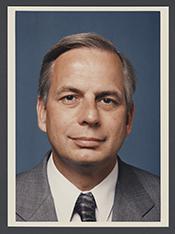
Mr. Speaker, I was unavoidably detained on rollcall vote 503 on H.R. 2658, the motion to close the conference. Had I been present, I would have voted ``aye.''
Bill Text
2 versions available
        [Congressional Bills 108th Congress]
[From the U.S. Government Publishing Office]
[H. Res. 352 Engrossed in House (EH)]

In the House of Representatives, U.S.,

September 16, 2003.
Whereas the first call for a march on Washington was initiated in 1941 by A.
Philip Randolph, President of the Brotherhood of Sleeping Car Porters,
in response to the blatant discrimination that had become a constant
hardship in the lives of African-American workers;
Whereas in the spring and summer of 1963, more than 20,000 United States
citizens were arrested and detained while nonviolently protesting the
racial injustice that was widespread throughout the southern United
States at that time;
Whereas Randolph told President Kennedy that the African-American population was
going to march peacefully on Washington to demand their full and equal
constitutional rights in the face of severe civil rights violations and
harsh economic inequality;
Whereas in June of 1963 the ``Big Six'' civil rights leaders--Martin Luther
King, Jr., James Farmer, John Lewis, Whitney Young, Roy Wilkins, and A.
Philip Randolph--convened to plan a mass protest that would begin at the
Washington Monument and end in front of the Lincoln Memorial;
Whereas the march was initially termed the ``March on Washington for Jobs and
Freedom'', and aimed to advance support for a new Federal jobs program
and a higher minimum wage;
Whereas the Big Six expanded the focus of the march to include civil rights
injustices due to the disturbing events that had occurred in the months
prior to the march, such as police dogs attacking peaceful demonstrators
in Birmingham, the assassination of Medgar Evers in Jackson, and the
lack of congressional support for President Kennedy's civil rights bill;
Whereas Government officials were concerned about the outbreak of violence, but
many civil rights organizations held orientation meetings before the
march that taught and stressed the intrinsic non-violent principles of
the movement;
Whereas on August 28, 1963, people from throughout the country arrived in
Washington by plane, bus, train, and foot to express the urgent need for
forceful and immediate action on the issue of civil rights;
Whereas demonstrators pledged their commitment and continued participation in
the struggle for civil rights;
Whereas March leaders met with President Kennedy and Members of Congress to
discuss the importance and consequential impact of the pending civil
rights bill that aimed to end discrimination of African-Americans in the
work place, voting booth, educational facilities, and all other public
domains;
Whereas the demonstrators peacefully marched through the streets of the capital
and, at the Lincoln Memorial, heard empowering and inspiring words from
the Big Six leaders, as well as Walter Reuther, Rev. Eugene Blake
Carson, Rabbi Joachim Prinz, Matthem Ahmann, and Floyd McKissick;
Whereas police officers had their days of leave cancelled, suburban forces were
given special control training, and 15,000 paratroopers were put on
alert, but no Marchers were arrested or jailed and the march dispersed
without incident;
Whereas the March was one of the first events to be televised worldwide, and
thus brought international attention to the social and economic plight
of African-Americans;
Whereas 15 Senators and 60 Representatives attended the rally at the Lincoln
Memorial and witnessed the commitment of the demonstrators to the
struggle for domestic and universal human rights;
Whereas the March sparked the passage of the Civil Rights Act of 1964 and the
Voting Rights Act of 1965;
Whereas the public display of humanity exhibited by the March educated the
public and helped to correct some of their misconceptions, and
demonstrated the possibility that an entire country could be changed
through non-violent protest; and
Whereas the 1963 March on Washington was the largest political demonstration in
United States history and proved to the nation that prejudice and
discrimination against African-Americans and other minorities could be
successfully fought by a collective force committed to the principles of
non-violence: Now, therefore, be it
Resolved, That the House of Representatives--
(1) honors the 1963 March on Washington as one of the largest
political demonstrations in United States history;
(2) recognizes the monumental importance of the 1963 March on
Washington in the on-going struggle for civil rights and equal rights
for all Americans; and
(3) extends its gratitude to the organizers and participants of the
1963 March on Washington for their dedication and commitment to equality
and justice.
Attest:

Clerk.