Expressing the sense of the House of Representatives regarding the urgent need for freedom, democratic reform, and international monitoring of elections, human rights, and religious liberty in the Lao People's Democratic Republic.
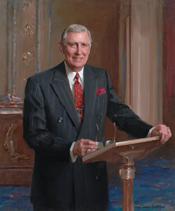 Rep. Dan Burton (R-IN)
Legislative Activity
Stay on top of the latest movement without scrolling through every action
Motion to reconsider laid on the table Agreed to without objection.
May 6, 2004 • 1:18 PM
View full timeline
Introduced in House
October 16, 2003
Referred to the House Committee on International Relations.
October 16, 2003
Committee Agreed to Seek Consideration Under Suspension of the Rules, by Voice Vote.
March 31, 2004
Mr. Burton (IN) moved to suspend the rules and agree to the resolution.
May 5, 2004 • 5:47 PM
Considered under suspension of the rules. (consideration: CR H2607-2614)
May 5, 2004 • 5:48 PM
DEBATE - The House proceeded with forty minutes of debate on H. Res. 402.
May 5, 2004 • 5:48 PM
At the conclusion of debate, the Yeas and Nays were demanded and ordered. Pursuant to the provisions of clause 8, rule XX, the Chair announced that further proceedings on the motion would be postponed.
May 5, 2004 • 6:09 PM
Considered as unfinished business. (consideration: CR H2679-2680)
May 6, 2004 • 1:08 PM
Passed/agreed to in House: On motion to suspend the rules and agree to the resolution Agreed to by the Yeas and Nays: (2/3 required): 408 - 1, 1 Present (Roll no. 149).(text: CR 5/5/2004 H2607-2608)
May 6, 2004 • 1:18 PM
On motion to suspend the rules and agree to the resolution Agreed to by the Yeas and Nays: (2/3 required): 408 - 1, 1 Present (Roll no. 149). (text: CR 5/5/2004 H2607-2608)
May 6, 2004 • 1:18 PM
Motion to reconsider laid on the table Agreed to without objection.
May 6, 2004 • 1:18 PM
Voting History
1 vote recorded • Roll call available
Floor Debate
12 membersWhat members said about H.Res. 402 on the floor
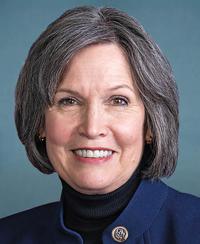

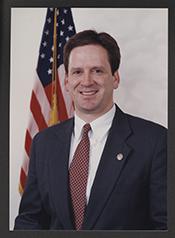
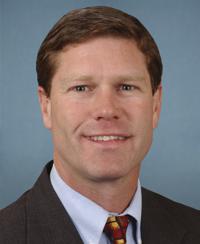 +7
+7
Floor Debate
12 membersWhat members said about H.Res. 402 on the floor
I thank the gentleman from California (Mr. Lantos) for his kind words. Mr. Speaker, I rise today in support of this resolution, urging improved human rights, democratic reform and religious freedom…
I thank the gentleman from California for yielding me this time. Mr. Speaker, I have just returned from several days of meetings in Vientiane and Luang Prabang not only with our own very able…
Mr. Speaker, before this House today I would like to restate my strong support for H. Res. 402, of which I am a cosponsor. As a leading critic of the Laotian government in the U.S. House of…
Mr. Speaker, I thank my friend from California for yielding me this time and for his leadership on this issue, and I thank my colleague from Indiana for offering this resolution of which I am a proud…
Mr. Speaker, I move to suspend the rules and agree to the resolution (H. Res. 402) expressing the sense of the House of Representatives regarding the urgent need for freedom, democratic reform, and…
Show 7 more

Mr. Speaker, I yield myself such time as I may consume. I rise in strong support of this resolution, and I urge my colleagues to do so as well. First, I want to commend my good friend from Indiana,…
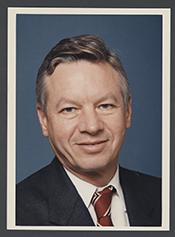
Mr. Speaker, as a long time supporter of Hmong veterans and their families in Wisconsin and across the United States, I am pleased to be a cosponsor and express my support for House Resolution 402…
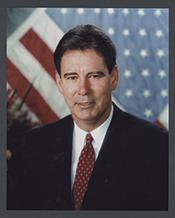
Mr. Speaker, I was absent from the House on Thursday, May 6th, due to an unavoidable commitment. Had I been present, I would have voted the following way; rollcall vote 147, H. Res. 628, providing…
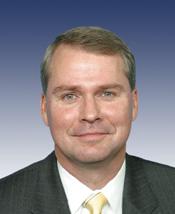
Mr. Speaker, it has come to my attention that I am recorded as ``not voting'' on May 6, 2004 on rollcall #149. I ask that the Record reflect that had my vote been recorded, I would have voted ``yes''…
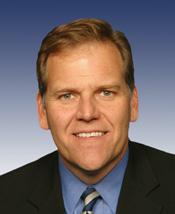
Mr. Speaker, on the legislative day of Thursday, May 6, 2004, the House had a vote on H. Res. 402, a resolution urging the Lao People's Democratic Republic to provide unrestricted access to Laos for…
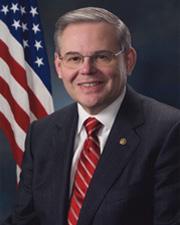
Mr. Speaker, I rise to offer a personal explanation. Earlier today, I was unavoidably detained on rollcall votes 147, 148, and 149 due to a prior obligation. Had I been present, I would have voted…
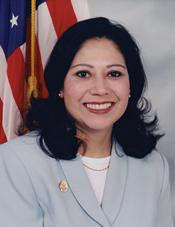
Mr. Speaker, during rollcall vote No. 149 on H. Res. 402-- Laos People's Democratic Republic, I was unavoidably detained. Had I been present, I would have voted ``yea.''
Bill Text
2 versions available
        [Congressional Bills 108th Congress]
[From the U.S. Government Publishing Office]
[H. Res. 402 Engrossed in House (EH)]

In the House of Representatives, U.S.,

May 6, 2004.
Whereas, in 1975, the Kingdom of Laos, a constitutional monarchy and important
ally of the United States during the Vietnam War, was overthrown by the
Marxist Lao People's Revolutionary Party with the assistance of the
People's Army of North Vietnam;
Whereas the Lao People's Democratic Republic was established as a one-party
regime in 1975 following the communist takeover;
Whereas tens of thousands of Laotian and Hmong people, a prominent highland
minority group, were killed or died at the hands of communist forces
while attempting to flee the Lao communist regime, and many others
perished in reeducation and labor camps;
Whereas tens of thousands of Laotian and Hmong became refugees, eventually
resettling in the United States where they now reside as American
citizens and lead constructive lives as members of their communities;
Whereas the only political party allowed by law in Laos is the communist Lao
People's Revolutionary Party;
Whereas, in 1989, Laos held its first elections since the establishment of the
Lao People's Democratic Republic, but only candidates who were approved
by the communist Lao People's Revolutionary Party were allowed to seek
public office;
Whereas, in 1991, Laos adopted its first constitution which purports to
guarantee the people of Laos a wide range of freedoms, including the
freedoms of speech, assembly, and religion;
Whereas the Lao People's Revolutionary Party Congress meets every five years and
controls or influences the organs of the state in Laos, including the
armed forces, the security services, and the National Assembly;
Whereas the Lao People's Revolutionary Party promulgates the five-year state
plans that control the economy and do not need to receive the approval
of the National Assembly;
Whereas, in 1999, peaceful pro-democracy demonstrations held by Laotian students
in the capital of Vientiane calling for political and economic reforms
were suppressed by force by the Lao government, which arrested many of
the students;
Whereas Amnesty International reports that many Laotian student leaders from the
1999 pro-democracy demonstrations continue to be held by the Lao
government and languish in the Lao prison system or remain unaccounted
for;
Whereas, in 2001, Olivier Dupuis, a Member of the European Parliament, was
arrested and jailed in Laos along with a group of pro-democracy
activists after peacefully protesting for the release of the Lao
students and for democratic and human rights reforms in Laos;
Whereas international election monitors are currently not permitted to enter
Laos to monitor elections;
Whereas Laos remains a one-party communist state that continues to prohibit the
organizing of opposition political parties to the Lao People's
Revolutionary Party;
Whereas, in 2002, elections for the Lao People's Democratic National Assembly
were held nearly a year earlier than scheduled and excluded all
candidates from political parties other than the Lao People's
Revolutionary Party, as well as all overseas Laotians;
Whereas Amnesty International and other independent human rights organizations
are not permitted to enter Laos to monitor or investigate the human
rights situation or reports of alleged human rights violations;
Whereas, in 2003, the United States Commission on International Religious
Freedom issued a country report on religious persecution in Laos,
recommending that the President designate Laos as a ``country of
particular concern'';
Whereas the Department of State reported in its most recent Country Report on
Human Rights Practices in Laos that Laos restricts its citizens from
enjoying the freedoms of speech, assembly, and religion, and from
undertaking activities to change their government;
Whereas, in 2003, the United Nations Committee on Elimination of Racial
Discrimination stated that the Lao government had failed to honor its
obligations, and the Committee expressed its grave concerns at the
information it had received of serious and repeated human rights
violations in Laos;
Whereas, in October 2003, Amnesty International issued a statement detailing its
concern about the use of starvation by the Lao government as a weapon of
war against civilians in Laos and the deteriorating situation facing
thousands of family members of ethnic minority groups, predominantly the
Hmong;
Whereas, in 2003, Amnesty International's International Secretariat, in a
statement further detailing its concerns about Laos, condemned in the
strongest terms the use of starvation as a weapon of war against
civilians and cited it as a clear and serious violation of the Geneva
Conventions that Laos has ratified;
Whereas because many Laotians and Hmong, including those in the overseas
communities, are not members of the Lao People's Revolutionary Party,
they do not meet with its approval as political candidates, but they are
nevertheless successful businessmen, technocrats, and community and
religious leaders with democratic aspirations and concern for the people
of Laos; and
Whereas the United States has a vital interest in the worldwide promotion of
democratic principles and respect for human rights, and supports
democratic reforms in Laos: Now, therefore, be it
Resolved, That the House of Representatives strongly supports the following
points and urges the Government of the Lao People's Democratic Republic, the
United Nations, the European Union, and the Association of South East Asian
Nations--
(1) to work to provide unrestricted access to Laos by international
election monitors for upcoming presidential and National Assembly
elections;
(2) to work to provide unrestricted access to Laos, including
special closed military zones and closed provinces, by international
human rights organizations, the United Nations, the United States
Commission on International Religious Freedom, and humanitarian aid
organizations;
(3) to work to ensure that opposition political parties and their
candidates are allowed to run for public office in multi-party elections
without regard to gender, race, ethnicity, religion, economic standing,
or political affiliation, and that all adult citizens of Laos, including
overseas Laotian citizens, are permitted to vote and run for public
office;
(4) to allow the citizens of Laos to assemble and peacefully protest
against the Government of Laos, the Lao People's Revolutionary Party,
and individual public officials, and to freely organize opposition
groups and independent political parties;
(5) to heed the call by the United Nations Committee on Elimination
of Racial Discrimination for the Lao People's Revolutionary Party to
halt immediately all acts of violence against the Hmong population and
provide them with humanitarian assistance;
(6) to work to gain the immediate release of those students and
their family members arrested and jailed in connection with the 1999
pro-democracy demonstrations, as well as all other political prisoners,
prisoners of conscience, and those jailed for their religious beliefs or
ethnicity; and
(7) to work to implement the recommendations of the United States
Commission on International Religious Freedom with respect to promoting
religious freedom in Laos.
Attest:

Clerk.