Honoring Mother Teresa and her many contributions to the world through her mission.

Legislative Activity
Stay on top of the latest movement without scrolling through every action
Referred to the House Committee on International Relations.
October 24, 2003
View full timeline
Introduced in House
October 24, 2003
Referred to the House Committee on International Relations.
October 24, 2003
Floor Debate
13 membersWhat members said about H.Res. 413 on the floor
 DLM
DLM GM
GM MB
MB MK
MK HP"+8
HP"+8
Floor Debate
13 membersWhat members said about H.Res. 413 on the floor
Mr. Speaker, what does a woman say to those who have paved her way? We, each of us women in the Congress, could not have done it without you, Rosie. It certainly wasn't an easy haul, and we are still…
Mr. Speaker, what does a woman say to those who have paved her way? We, each of us women in the Congress, could not have done it without you, Rosie. It certainly wasn't an easy haul, and we are still fighting, but you picked up a hammer, literally, and tore down the barrier. It took years for them to stop putting it up again, after all your hard work and patriotic dedication, but here we are.
Women of today have the Rosies to thank for ground gained in women's empowerment. Often thought of as the first substantial force of working women, you have certainly earned your place in history.
Across the Nation, more than 6 million Rosies departed from their everyday routine. And in my home state of Georgia, we have our very own Rosies still living and serving as an example of what it means to blaze a trail, to fight, to sacrifice, and to be an American patriot. As we honor these women who stayed on the home front and supported the war effort by passing House Concurrent Resolution
413, I want to thank Georgia's Rosies: Mary Isobel Keena, Atlanta; Constance Hagen, Hiawassee; Emery Gantz, Lawrenceville; Elizabeth Bolen Minton, Pine Mountain Valley; and Jeannie Mae Euler, whose family lives in Athens, GA, for all they have given to the country and the confidence of America's women.
These and all the other Rosies throughout the United States deserve our thanks as we honor each of them today--you taught the women of our country not only that we could do it, but that we can do anything.
Ms. JACKSON-LEE of Texas. Mr. Speaker, I would like to thank my colleague, especially Representatives Slaughter, Capito Solis and Brown-Waite, the four co-chairs of the Congressional Caucus for Women's Issues. I was delighted to join my colleagues recently in meeting many of the ``Rosie'' women at an exhibit at Arlington Cemetery honoring their power and their commitment.
I am pleased to be here today to honor the contributions of the women, symbolized by ``Rosie the Riveter'', who served on the homefront during World War II. During World War II, 6,000,000 women stepped forward to work in homefront industries to produce the ships, planes, tanks, trucks, guns, and ammunition that were crucial to achieving an Allied victory; Women transcended gender barriers and worked in homefront industries as welders, riveters, engineers, designers, and managers, and held other positions that had traditionally been held by men.
``There cannot be true democracy unless women's voices are heard. There cannot be true democracy unless women are given the opportunity to take responsibility for their own lives. There cannot be true democracy unless all citizens are able to participate fully in the lives of their country.''--Hillary Rodham Clinton
Rosie the Riveter gave women a chance to have their voices heard and time to show their skills. The need for labor in homefront industries during World War II opened new employment opportunities for women from all walks of life and dramatically increased gender and racial integration in the workplace. I have always believed that women are essential to breaking down barriers and creating a more egalitarian society. The Rosie the Riveter era proves just that.
World War II marked an unprecedented entry of women into jobs that had traditionally been held by men and created a lasting legacy of the ability of women to succeed in those jobs. The needs of working mothers resulted in the creation of child care programs, leading to the lasting legacy of public acceptance of early child development and care outside the home. Now more than ever we must implement polices to show women that we will continue their work. If we can provide childcare for the ``Rosies,'' we certainly owe it to later generations as well.
I want to close with a story of a true Rosie the Riveter; Katie Grant. Katie and Melvin Grant moved from Oklahoma to California in 1943 with their 6-week-old daughter, Laquetta. After working together as fruit packers, Melvin found a job at a fish cannery in Point San Pablo and Katie worked in the Richmond Shipyards. By December, Melvin had joined the Marine Corps and, until his return in August 1945, fought in the Pacific theatre. Katie's testimonial states:
``I worked the graveyard shift 12:00-8:00 a.m., in the shipyard. I took classes on how to weld. I had leather gloves, leather pants, big hood, goggles and a leather jacket. They said you weld like you crochet.
``Well, I did not know how to do that, but I could sew and make a neat stitch. We held the welding rod with one hand and the torch fire in the right hand. Placed the rod in a seam and melted it down in a small bead seam and brushed it off with a steel brush.
``They put me forty feet down in the bottom of the ship to be a tacker. I filled the long seams of the cracks in the ship corners full of hot lead and then brushed them good and you could see how pretty it was. The welders would come along and weld it so it would take the strong waves and deep water and heavy weight. I liked it pretty good. I don't remember how much I got paid for working. Lots of people came to Richmond to work in the shipyards. Lots of women went to work to help with the war. I told Melvin later that I helped to make a ship for him to come home in.''
Ms. SLAUGHTER. Mr. Speaker, today we are honoring the work carried out by all of the ``Rosie the Riveters'' during World War II.
I would like to thank all those from both sides of the House who have shown strong support for H. Con. Res. 413.
I am pleased to state that every woman Representative has already joined together in an unprecedented, bipartisan demonstration of unanimous support by the entire Congressional Caucus for Women's Issues in cosponsoring this historic resolution.
This resolution allows us to:
Honor the extraordinary contributions of the women who dedicated service on the home front during World War II;
Recognize the lasting legacy of equal employment opportunity and support for childcare and health care developed during the ``Rosie the Riveter'' era; and
Call on the people of the United States to take the opportunity to study, reflect on, and celebrate the stories and accomplishments of women who served during World War II.
In conjunction with the dedication to the World War II Memorial on the National Mall this past Memorial weekend, we would like to take the opportunity today to reflect on the contributions made by women who served the country on the home front during World War II.
When 10 million people were abruptly departed from civilian duty, industries servicing the war recruited over 6 million women to fill those positions.
From across the country, and from all different backgrounds, women answered the call to service.
It was the ``Rosies'' who worked on the home front as welders, riveters, engineers, designers, managers and all kinds of other positions that had been traditionally held by men.
Women showed skill and dedication in often dangerous tasks that needed urgency in completion, and did so in record-breaking times.
These contributions showed us the admirable passion, drive and desire that the ``Rosies'' had.
For example, the women who worked at the Ford assembly plant in Richmond, California, built over 49,000 jeeps and prepared for shipment more than 20 percent of all combat vehicles used by the United States during World War II.
More than 25 percent of the Kaiser shipyard workforce in Richmond was made up of women, and produced more ships than any other shipyard in the United States.
The accomplishments Rosies achieved are not exclusive to the war alone. Their efforts of 50 years ago have helped strengthen women's position in society today.
The Rosies demonstrated:
That women are just as able to do the work that only men had been permitted to do;
That women are not inferior to men, and that they are just as able to succeed and even surpass men in the workforce; and
That it was women who stepped up to keep our country running during the war, and deserve to be appreciated by our entire Nation for their achievements.
The Rosie the Riveter/World War II Home Front National Park in Richmond, California is one of the steps we have taken to ensure the efforts of women during World War II are not forgotten.
This park will help preserve for the benefit of the United States the sites, structures and areas located in Richmond that were instrumental in war time efforts and success.
Finally, I would like to make a special note of one of the Rosies whom I had the opportunity to meet 2 weeks ago at a congressional reception that we had in honor of the Rosies.
One of my ``former constituents''--had I been serving in Congress at the time--Lois Turner worked as a mechanic at Bell Aircraft in Niagara Falls, NY, from 1943 to 1945.
I understand that because she had small hands, she was able to do the safety wiring in areas of the plane that others couldn't reach, often being held upside down for 15 minutes at a time to get to especially tight spots.
To Lois, and to all of the Rosies who have honored us with their presence for the celebrations in Washington, DC, over the past few weeks, as well as all Rosies everywhere--I thank you for your courageous service and dedication to our nation.
I urge my colleagues in the House of Representatives to pass this resolution unanimously, in a strong demonstration of our thanks to the millions of Rosie the Riveters who so valiantly served our country.
Mr. Speaker, I yield myself 5 minutes. Mr. Speaker, I would like to begin by thanking the House Women's Caucus led by the gentlewoman from New York (Ms. Slaughter) and the gentlewoman from West…
Mr. Speaker, I yield myself 5 minutes.
Mr. Speaker, I would like to begin by thanking the House Women's Caucus led by the gentlewoman from New York (Ms. Slaughter) and the gentlewoman from West Virginia (Mrs. Capito) for their sponsorship and their
pushing for this resolution to come to the floor and to thank the House and Senate cosponsors of our resolution, including California's two Senators, Senator Boxer and Senator Feinstein, and Richmond's Rosie the Riveter superintendent Judy Hart from the National Park Service and, obviously, the 6 million women who helped build American history.
Many people have learned about the Rosie the Riveter story recently from the great work being done by Ford Motor Corporation to encourage Rosies to come forward and tell the story of the Rosies, along with the National Park Foundation.
This legislation that we are voting on today honors the millions of women who answered the call to service on the homefront during World War II. The Rosies, as they are known, built tanks and ships, working as welders, machinists, mechanics, pipe fitters, electricians and boilermakers and so many other trades and professions during the Second World War while so many men were off in the battles of combat. They learned the skilled jobs previously reserved for men. They earned men's wages, and they gained new independence. The effort by these women made victory abroad possible.
Those who have studied the history of the period will remember how unprepared America was to enter the Second World War. It is because of the effort by these Rosies that we met the challenge and succeeded in winning the Second World War. But it also was a time when there was some dramatic change in the workforce in America. Women and minorities were gaining access to high-paying jobs and industry for the first time. Health care and services for employees and their families were available on a full-time basis for the first time in many instances. Services, including child care, to help parents balance family and work for the first time became available.
The oldest continuous child care center in the program is in my district that was part of the Kaiser Shipyards in the San Francisco Bay area, and it was named after Ruth Powers who was a teacher and a Rosie at that time, and it continues in service today.
We saw these incredible partnerships created between government, industry and the labor unions to take care of the workforce and to train the workforce and to make sure they could report to work every day. It is also clear that this contribution is absolutely tantamount to our winning the Second World War.
This weekend we will have a rivet cutting at the Rosie the Riveter World War II Homefront National Park in Richmond, California, where we will cut the ribbon on the new Visitors Center that is being created there.
Kaiser shipyards in Richmond, where they produced a Liberty ship every day, women comprised over a quarter of the workforce. Their shipyard was the largest and most productive of World War II. The war transformed the economy of California. The State population grew by nearly 75 percent. Richmond grew from 23,000 people to a booming town of 100,000 people in support of the warfront industries that were related there at that time.
Many people today think that 24-7 is a term that came out of the technology revolution, out of the dot.com revolution. Mr. Speaker, 24-7 was a watchword in Richmond, California. We had 24-hour supermarkets because people worked three shifts. We had 24-hour rooming houses where people changed beds according to the shifts that they were working. We had 24-hour child care for families, 24-hour physician services, 24- hour health care, because the effort there was to keep the workforce working so that they could meet the demands of the war, which they did.
It also provided for the most rapid and deep integration of the American workforce up to that time in history, as did much of World War II in the industry base. It changed the economy, it changed our society, it changed the women's movement in this country and their role in American society.
If you have met the Rosies, you understand the pride that they demonstrate when many of them can still show their journeyman's card, when many of them can describe the fear they had on the first day of work when they showed up for jobs that they had never heard of or seen done before, and also the pride when they now recognize what they contributed to: the winning of the Second World War.
I want to thank the cosponsors of this legislation, the House women's organization for pursuing this.
Mr. Speaker, I reserve the balance of my time.
Mr. Speaker, I yield 2 minutes to the gentlewoman from California (Ms. Woolsey).
Mr. Speaker, I yield 2 minute to the gentlewoman from California (Ms. Solis).
Mr. Speaker, I yield 2 minutes to the gentlewoman from Ohio (Ms. Kaptur), the original author of the World War II memorial legislation.
(Ms. KAPTUR asked and was given permission to revise and extend her remarks.)
Mr. Speaker, I yield 2 minutes to the gentlewoman from Texas (Ms. Eddie Bernice Johnson).
Mr. Speaker, I yield myself 4 minutes.
Mr. Speaker, this decision to go in to work in the industrial forces of this country during World War II was not a decision that could be taken lightly. The fact of the matter is this was dangerous, hard, heavy work that these women were engaged in, in many of these professions. We are told that between Pearl Harbor and January 1 of 1944, 37,000 people were killed in these industrial factories and shipyards and airplane factories, and over 210,000 were permanently disabled, and almost 4 million were temporarily disabled, 60 times the count on the battlefront in that situation. So these women were making serious sacrifices in many instances and, in some cases, their lives.
This weekend, as I mentioned, we will do a ribbon-cutting on the Visitors Center of the Rosie the Riveter World War II homefront Park in Richmond, California, and it is symbolic of so many of the activities that took place on the homefront in the San Francisco Bay area and elsewhere in the Nation. There are other sites around the Nation that will be added to this park where these homefront activities took place.
But in the western United States prior to the war, for the decade prior to the war, we had produced no merchant ships and, all of a sudden, with the advent of the war, we produced 4,600 ships in 1,300 days. In one instance we produced a ship, the SS Robert Peary, a liberty ship, in 4 days, 15 hours, and 29 minutes from start to finish. That ship was produced and sent on its way to contribute to the war. That effort was possible because of the participation of women in the workforce, the Rosie the Riveters, and the contributions that they made to the homefront campaign to not only ready America for the war, to keep it engaged in the war, but to win that war in Europe and in the Pacific campaigns.
Thousands and thousands of workers migrated across the country to come to California to work in the war industries, to work on the West Coast, in Seattle, in Puget Sound, and elsewhere in those war industries. As they did, they changed, as so many of our colleagues have already spoken to, they changed the face of the workforce, they changed the race of the workforce, they changed the makeup of the workforce, and they changed the attitudes of employers toward workers. Because at the Kaiser Shipyard they knew that they needed to keep every employee on the job all of the time.
That is why we saw what is now the Kaiser health care system. The largest HMO in the country today was started in the Kaiser shipyards in Richmond, California. It was there because they provided full health care coverage for all of their workers and their families. In my district, of those people who have health care insurance, I think roughly three out of four are enrolled in the Kaiser insurance plan.
That is a legacy of the Rosie the Riveter days of the homefront effort during the war and is the model for child care in the workplace in this country. It was begun in these industries because of the necessity of making sure that these women could balance the care of their children, the good health of their children, and the need of this country to have them engage in the workforce.
I am very proud that one of my aunts, Laura Kerry, was a Rosie the Riveter in the shipyards. My father worked as a labor arbitrator for the shipyards between the workforce and the employers at that time.
So, again, I want to thank the gentlewoman from West Virginia (Mrs. Capito) for sponsoring this resolution, and the Women's Caucus and the gentlewoman from New York (Ms. Slaughter) for her sponsorship on this side of this legislation.
Mr. Speaker, I urge all of my colleagues to support this measure.
Mr. Speaker, I yield back the balance of my time.
Mr. Speaker, on that I demand the yeas and nays.
Mr. Speaker, I yield myself such time as I may consume. Mr. Speaker, I rise in strong support of H. Con. Res. 413. Today, we are honoring these millions of women who, although they have never been to…
Mr. Speaker, I yield myself such time as I may consume.
Mr. Speaker, I rise in strong support of H. Con. Res. 413. Today, we are honoring these millions of women who, although they have never been to a battlefield, they really served valiantly during some of our Nation's darkest hours. I think we have all heard stories from our moms and relatives and from individuals who really rolled up their sleeves and got to work to be of service to our Nation. Of course, there are women from all walks of life, all ages, and they really heeded the call of this Nation in shipyards, dockyards, steel mills, lumber mills, wherever they were needed. They worked in defense industries and support services to power the American productivity that helped win World War II.
The sight of women outfitted in overalls and wielding industrial tools was popularized in the 1942 song ``Rosie the Riveter.'' The image and the song created an instantly recognizable nickname for those homefront heroes. Today, that nickname and that image is still recognized and loved.
Mr. Speaker, these women demonstrated skill and dedication in difficult and often very dangerous jobs, but their work produced urgently needed military equipment at record-breaking speeds. They were efficient, and they defined many of the standards we hold today. The legacy of these Rosies is still seen across America. Their service on the homefront marked the start of an unprecedented entry of women into the workplace and created a lasting legacy of women leaders for us to look up to.
One such Rosie now lives on a 70-acre farm in my district in Tennessee. Lois Turner worked as a mechanic at Bell Aircraft in Niagara Falls, New York, from 1943 to 1945. She had many roles at Bell. She worked in machine gun manufacturing; and with her delicate hands, she was able to do much of the safety wiring in parts of our warplanes that most others could not reach. She spent 15 minutes at a time held upside down to reach those tight spots. Lois' skill and care helped keep our soldiers safe.
Mr. Speaker, the Rosies of World War II put heart and soul into their work because their work meant the safety and security of their loved ones on the battle front.
As many Members will recall, in 2000 Congress recognized the significance of America's World War II industrial achievements and the legacy of the women who helped make those achievements possible by establishing the Rosie the Riveter World War II Home Front National Historical Park in Richmond, California. It is a unit of the National Park System. As we did then, we pause again today to remember the women who have given so much to their country.
Their love of country, their hard work, their prayers for our soldiers were in the steel and plate of every American battleship. They were then, and remain today, deep in the soul of our war effort and a great victory for freedom and peace.
We should all thank our colleague, the gentlewoman from West Virginia (Mrs. Capito), for her leadership in honoring these women and for sponsoring this resolution, so that America will never forget these wonderful patriots.
Mr. Speaker, I reserve the balance of my time.
Mr. Speaker, I yield 3 minutes to the gentlewoman from West Virginia (Mrs. Capito), the sponsor of this legislation.
Mr. Speaker, I yield 2 minutes to the gentlewoman from Michigan (Mrs. Miller).
Mr. Speaker, I yield 1\1/2\ minutes to the gentlewoman from Illinois (Mrs. Biggert).
Mr. Speaker, I yield 3 minutes to the gentleman from Michigan (Mr. Smith).
Mr. Speaker, I yield myself such time as I may consume.
I want to again thank the gentlewoman from West Virginia (Mrs. Capito) for her work on this legislation and for bringing forth the opportunity that we could all take a few minutes and say thank you to the women that we know, the Rosies, who have been here and who have worked.
I think that one of the things that they have done is that they set forth for us, as we have heard from so many of our speakers today, more or less a role model for how they lived patriotism, how they worked each and every day, and how they displayed that love of freedom. As some of our colleagues have talked, it was through victory gardens, it was through keeping other children, it was through enabling the women who could head into the factories and head into the workplace to be there and to do a great job. And, of course, they did change the face of the workplace.
But I think that, probably more than that, one of the things that they accomplished and did a tremendous job in accomplishing was giving us a peace dividend. That is something that their children and their grandchildren have enjoyed and continue to enjoy today, and it is because of the extraordinary effort of so many of the Rosie the Riveters. What a pleasure it is today for us to join together and to thank each and every one of them for those efforts.
Mr. Speaker, I have no further requests for time, and I yield back the balance of my time.
Mr. Speaker, I thank the gentleman from California for yielding me this time and am pleased to rise as a member of the Women's Caucus and a cosponsor of House Resolution 413 to honor Rosie the…
Mr. Speaker, I thank the gentleman from California for yielding me this time and am pleased to rise as a member of the Women's Caucus and a cosponsor of House Resolution 413 to honor Rosie the Riveter, the millions of Rosie the Riveters, who helped the United States of America to win that great victory of liberty over tyranny a half century ago.
It is very rewarding to be able to stand here today and to say that the Veterans History Project that is a part of what our Library of Congress is assembling will allow all people in our country who either served in the military or here on the home front, including women in our war industries, factories, as air-raid wardens, as cadet nurses, to tell their story on audio and video, and that as a part of this resolution I want to encourage all women or their families and loved ones to begin to put this down, and through your Member of Congress get the application blank so that your story can become part of America's permanent history, because, in fact, Rosie the Riveters changed America forever.
Today, nearly two-thirds of the women in this country work outside the home. At the time the war started, less than 25 percent did.
This happens to be a photo of Willys-Overland in Toledo, Ohio, that still makes the Jeep. Nowadays they call it Daimler Chrysler. But that particular company in 1940 received a $25 million contract from the Department of Defense, and in all our community received nearly $1 billion, pushing employment figures at that plant alone to the highest levels that they had been since the Great Depression. Other plants, like Acklin, went on 24-hour, 7-day-a-week production.
Our own mother, Cherie Rogowski Kaptur, worked at the Champion Spark Plug factory making spark plugs that she knew went into airplanes. She became a union leader, a member of the United Auto Workers local in that plant, so that they could make perfect plugs, so that no pilot would lose a life because a spark plug did not fire. I can remember her talking about that, even until her golden years.
Women were very responsible, just as they are in the home. When men began going to war, women began to work outside the home by the millions.
So today we honor those woman. Through their service, America changed forever as unprecedented numbers of women worked not just inside the home, but outside the home, and in many ways helped to educate the generation that now serves our Nation inside this Congress of the United States.
The character of Rosie first appeared in the 1942 song ``Rose the Riveter,'' written by Redd Evans and John Jacob Loeb and recorded by big-band leader Kay Kyser.
``All the day long,
Whether rain or shine,
She's a part of the assembly line.
She's making history,
Working for victory,
Rosie the Riveter
The number of women in the American workforce increased by more than 50 percent over the war years.
Some six million women joined the war effort on the homefront.
In about July 1940, Toledo's Willys-Overland Jeep factory announced a $25 million dollar contract. In all, Toledo received over $900 million dollars in defense orders, enough to put employment figures at the highest they'd been since 1929. Many plants, including Acklin, went to 24 hour, 7 day a week production.
With many men going to war, women began going to work outside the home by the thousands. In 1942 the first nursery opened in Toledo in order to meet the demands of mothers working in the factories. These women didn't only work in factories however. In fact, they filled a variety of positions from auto-mechanics and bus drivers to freight handlers for the Railway Express Agency.
Mr. Speaker, I move to suspend the rules and agree to the concurrent resolution (H. Con. Res. 413) honoring the contributions of women, symbolized by ``Rosie the Riveter'', who served on the…
Mr. Speaker, I move to suspend the rules and agree to the concurrent resolution (H. Con. Res. 413) honoring the contributions of women, symbolized by ``Rosie the Riveter'', who served on the homefront during World War II, and for other purposes.
Mr. Speaker, I ask unanimous consent that all Members may have 5 legislative days within which to revise and extend their remarks on H. Con. Res. 413.
Mr. Speaker, I yield myself such time as I may consume.
Mr. Speaker, I rise in strong support of H. Con. Res. 413 and urge each of my colleagues to support this important resolution.
Mr. Speaker, this weekend in Washington, DC, President Bush dedicated the World War II Memorial, the first national memorial dedicated to all who served during the Second World War. As it should, this memorial honors all military veterans of the war, the citizens on the homefront, the Nation at large, and the high moral purpose and idealism that motivated the Nation's call to arms.
Today, we pause to recognize in particular the contributions to those who may not have faced enemy fire but were no less a part of our decisive victory in those dark times: the millions of Americans who across the Nation heeded a call to serve when their country needed them.
After the bombing of Pearl Harbor in 1941, the young men of America poured out of the factories and offices to line up at the recruiting offices. The young women of America lined up at the factories and arsenals to fill jobs left vacant by those who went off to fight.
These women, symbolized by Rosie the Riveter, wore hard hats and coveralls and pulled the same load as many of the men they replaced. They operated heavy cranes, milling machines and countless other heavy tools that most women had never heard of before the war. They bagged gunpowder, made weapons, crated ammunition and did whatever else was asked of them so that their fathers, husbands, sons and sweethearts could win the war and come back home again. Indeed, the Rosie the Riveter movement is credited with helping push the number of working women to 20 million during the 4 years of war, a 57 percent jump from 1940.
The image of Rosie the Riveter has become familiar to all of us and symbolizes the contribution of those millions of mothers, daughters and sisters who, as their loved ones were sent overseas to fight the Axis, picked up the work vital to our Nation's productivity and security. At a time when sacrifice was asked of every American, both at home and abroad, these brave young women rose to the call and served their country with honor and pride. As we honor the contribution of each American to the World War II effort, so today do we properly honor our ``Rosies.''
Mr. Speaker, I had an Aunt Lil who was a Rosie the Riveter in World War II. She is not with us today, but I wish she could be to see this honor presented to her and other women who filled the call and served as Rosie the Riveter. I urge each of my colleagues to support this important legislation.
Mr. Speaker, I reserve the balance of my time.
Mr. Speaker, I ask unanimous consent to yield the balance of my time to the gentlewoman from Tennessee (Mrs. Blackburn) and that she may control the time for the majority.
Show 8 more
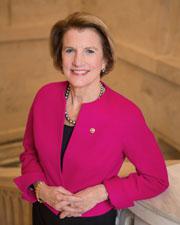
Mr. Speaker, I am exceedingly proud to be the sponsor of House Concurrent Resolution 413. I am also extremely proud that all 62 women Members of Congress are cosponsors on this legislation as well.…
Mr. Speaker, I am exceedingly proud to be the sponsor of House Concurrent Resolution 413. I am also extremely proud that all 62 women Members of Congress are cosponsors on this legislation as well.
During World War II, a remarkable band of women picked up the rivet guns left on factory floors and shipyard docks by departing workers. Many of those workers were husbands, boyfriends, sons and dads; and those women started building the tanks, airplanes, and ships that America needed to win the war.
This group of women became known as Rosie the Riveters, the bandana- brazing, tight-muscled woman depicted in posters with the slogan ``We Can Do It.''
Earlier this month, I called on all the Rosies from West Virginia to send me their stories so younger generations of West Virginians could learn about this important part of their history.
It is clear the important role that the Rosies played during the war. I received a letter from a woman from Elkview, West Virginia, who worked on the wing sections of B-29 Superfortress bombers at the Goodyear plant in Akron, Ohio. The B-29 was the military's most sophisticated propeller-driven bomber.
Another Rosie from Winfield, West Virginia, worked as a riveter at General Machinery in South Charleston, West Virginia, building rockets that her husband used thousands of miles away in the Pacific.
Just last week, several Rosies came to Washington to tell their stories. Leona Phares from Elkins, West Virginia, came; and she had a very touching comment. I asked her what she did when her husband left her. Her husband was originally in the factory with her, and he was called to duty. I said, What did you do? She said, I worked as long and as hard and as fast as I could, because I wanted him home as quick as he could get there.
We also learned that one of the Rosies from the district of the gentlewoman from New York (Ms. Slaughter) was held upside down for 15 minutes at a time because her hands were so small she could get up under and rivet in certain areas.
Extraordinary women. We always say we can do twice as much in half the time, but upside down at the same time?
This resolution honors the extraordinary contributions of the women pioneers who have inspired future generations, whose dedicated service on the home front during World War II was instrumental in achieving an Allied victory. The resolution urges citizens to study, reflect upon, and celebrate the stories and accomplishments of the Rosies.
The Rosies are a vital part of American history. This band of remarkable women should be honored and remembered.
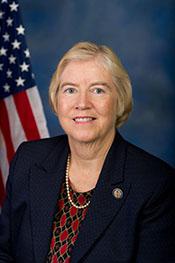
Mr. Speaker, I thank the gentlewoman for yielding me time. Mr. Speaker, I rise today in support of House Concurrent Resolution 413. It is certainly an honor to stand here and publicly thank the women…
Mr. Speaker, I thank the gentlewoman for yielding me time.
Mr. Speaker, I rise today in support of House Concurrent Resolution 413. It is certainly an honor to stand here and publicly thank the women who worked on the home front as this Nation fought World War II.
As the years go by, our Nation has become, I think, more able to fully understand the incredible contribution of both the men and the women who have been rightfully called our Greatest Generation. Certainly the World War II memorial which we dedicated just this past weekend honors this Greatest Generation and all of those who fought in the deadliest war in the history of mankind.
With the adoption of this resolution, we can honor the women who were instrumental in winning that war and securing the freedom, not only of our Nation, but in fact of the entire world.
It seems that it is hard to believe sometimes that it has actually been 60 years since the end of World War II. As the great leaders of America and war machine were actually developing their plans of engagement, here in the United States literally millions of Americans were preparing for the invasion by building the greatest force the world has ever known. Among that workforce were more than 6 million American women, women who were faced with enormous challenges, women who met that challenge in the defense of freedom.
There was a very famous Saturday Evening Post cover, actually painted by Normal Rockwell, I think in 1943, and it showed an American woman who was carrying a rake, a hoe, an oil can, a pipe wrench, a sewing machine, bottles of milk, as well as air-raid warning equipment. Along with her red, white and blue outfit, she also wore a civil defense cap under a nurse's cap.
That is how it was during World War II. American women were expected to hold down the home front and do all of the jobs left behind by the men who were off fighting the war.
Certainly today it is our great privilege to honor these American women, women who symbolize an icon known as Rosie the Riveter. And because of the contributions of millions of Rosies, our wartime factories were transformed into the arsenal of democracy, as they literally built the armaments that led the entire world to peace.
American women became welders, riggers, crane operators, and dock workers; and they provided the American war machine with the tools that we needed to win the war. And we are
truly, truly grateful. Their service to our Nation and to the freedom- loving people of the world cannot be repaid. They are great Americans, and may God bless them.

Mr. Speaker, I thank the gentlewoman for yielding me this time. Mr. Speaker, I would like to relate some of my memories of World War II. I was born in 1934. I was about 7, 8, 9 and 10. In our…
Mr. Speaker, I thank the gentlewoman for yielding me this time.
Mr. Speaker, I would like to relate some of my memories of World War II. I was born in 1934. I was about 7, 8, 9 and 10. In our community what allowed Rosie the Riveter to go into the workforce and our factories was other women on the homefront, that substituted for taking care of children. So some of the women in our community went and babysat for other women to allow them to go into our factories to do some of this work.
So I am pleased that one of the resolved clauses reads, ``honors the extraordinary contributions of the women whose dedicated service on the homefront during World War II was instrumental in achieving the Allied victory.'' Those women that made the effort, that got in the physical conditioning to allow them, really unheard of before, to do man's work was also supplemented by so many mothers and so many other women in every home in most every community of the Nation.
In our rural area of Michigan, women were the ones that were encouraging the savings of string and tinfoil and saving all of their bacon fat and encouraging their children to contribute to the war effort. So it was not only
the work in the factories, but it was the inspiration that mothers and other women gave to their communities. So it was more than the factories. It was women going in to become members of the school board, to help guide the community and to substitute in public service organizations, where women came forward to really start a new era in America of women proving themselves to be so effective in achieving goals.
So I commend the resolution, I commend the effort of these women, especially as we have just finished the dedication of the memorial of World War II. Because that memorial is a dedication not only to those that died but to all of our fighting men and their families. The women during World War II were what kept the spirit up in a very strenuous time for many families in many communities as we saw relatives and loved ones die in service.
So I would just like to expand the commendation of women during World War II to the knitting of scarves and the collecting of cookies and all of the work that went on, in addition to those women that allowed us the production of planes and ships and guns and ammunition.
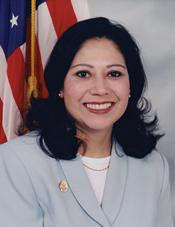
Mr. Speaker, I rise today in support of the Rosie the Riveter resolution that recognizes the hard-earned contributions of women on the home front during World War II. Rosie symbolized the millions of…
Mr. Speaker, I rise today in support of the Rosie the Riveter resolution that recognizes the hard-earned contributions of women on the home front during World War II.
Rosie symbolized the millions of women who broke through the glass ceiling and showed this Nation that women could perform paid work in nontraditional jobs.
There were an estimated 18 million women who worked in World War II defense industries and support services, including steel mills, foundries, lumber mills, aircraft factories, offices, hospitals, and even daycare centers. Today, there are well over 68 million women in our civilian labor force, which is almost 60 percent of all women over the age of 16.
As an icon of strength and will, women during World War II bonded together to secure our Nation's factories and future. Their legacy of equal employment opportunity and support for child care and health care that developed during Rosie the Riveter's era has served men, women, and families since that time.
I would also like to thank the gentlewoman from West Virginia (Mrs. Capito) for taking us to the memorial service for Rosie the Riveter in honor of all the women that have served our great country. It was a wonderful ceremony that took place last week at Arlington National Cemetery, where members of the Women's Caucus from both sides of the aisle came together to help celebrate the many contributions of women in the Armed Forces, as well as Rosie the Riveters who participated in our country's establishment.
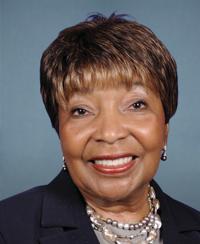
Mr. Speaker, thanks to the authors for bringing forth this resolution. I rise to salute Rosie the Riveter. Women affectionately known as ``Rosies'' revived the image of the feminine ideal. Rosie the…
Mr. Speaker, thanks to the authors for bringing forth this resolution.
I rise to salute Rosie the Riveter.
Women affectionately known as ``Rosies'' revived the image of the feminine ideal. Rosie the Riveter's slogan of ``we can do it'' helped mobilize millions of American women who sowed the seeds for the women's rights movement.
During World War II, as more and more American men were sent off to battle, over 6 million women did their part to ease the hardship for America by taking over jobs that had been previously exclusively male.
Rosies filled the void in America's workforce by working under very poor conditions for very little pay in factories doing welding, machining, building aircrafts, fixing tanks and armament factories.
Although the average Rosie the Riveter's salary was $31.21 a week for her labor, as compared to $54.56 a week for the men that still remained, these women fought social discrimination, gender harassment, and physical abuse.
Rosie the Riveter's image of a strong, competent woman was a symbol of patriotic womanhood.
Rosies all over the country showed their strength and their power and their pride.
We thank these women who paved the way for women's empowerment. Women are capable of doing anything. It is too bad that it took a war to make everyone see it. Times would never be the same again.

Mr. Speaker, I am proud to join my colleagues and all the women Members of Congress in cosponsoring this resolution and honoring the contributions of the women who served the homefront during World…
Mr. Speaker, I am proud to join my colleagues and all the women Members of Congress in cosponsoring this resolution and honoring the contributions of the women who served the homefront during World War II. Symbolized by ``Rosie the Riveter,'' these women answered the call to aid America at a pivotal time in our Nation's history.
Millions of ``Rosies'' produced the planes, ships, tanks, trucks, guns, and ammunition that America needed to win the war. They were the indispensable workforce at home that helped our Nation achieve victory abroad.
The Rosies not only equipped our country to win the war, they also made it a better place for women. These courageous and hardworking women broke down traditional barriers surrounding women and the workplace. Shattering stereotypes, the Rosies were not only successful workers but were also dedicated wives and mothers.
The Rosies created new opportunities for women in all parts of our society. They blazed a trail that American women continue to follow today. Sixty years later, ``Rosie the Riveter'' has become a lasting symbol of women's rights and an icon of the can-do spirit of women. As the famous Rosie poster said, ``We can do it.''
The Rosies helped build our military at a critical time, and they helped build a better America. We are all forever in their debt.
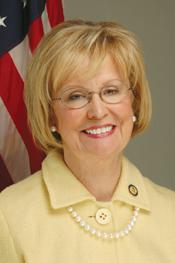
Mr. Speaker, I thank the gentlewoman for yielding me time. Mr. Speaker, I rise today to support this resolution, which appropriately honors American women who responded to our Nation's call during…
Mr. Speaker, I thank the gentlewoman for yielding me time.
Mr. Speaker, I rise today to support this resolution, which appropriately honors American women who responded to our Nation's call during World War II.
At a time when many men left to serve our Nation on foreign shores, the jobs that had long been held by these men fell to the responsibility of women. Women were propelled out of their traditional roles as housewives and mothers as they readily filled the void created by the departure of their fathers, sons, and brothers.
Putting on their hard hats, they embraced a new life as riveters and welders, assembling bombs, building tanks and ships and making ammunition. It is no wonder that the iconic image of Rosie the Riveter has become synonymous with World War II. That singular woman represents the more than 6 million women in America who aided the war effort and changed forever the role of women.
Without these women, the Allied victory could not have been a reality. Today, we honor their patriotism and their unwavering dedication to their country. I take off my hard hat to them.
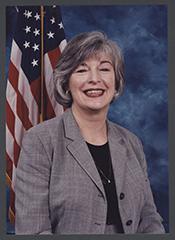
Mr. Speaker, I am pleased to join my colleagues in recognizing the enormous contributions made by American women on the home front during World War II. Embodied by Rosie the Riveter and the…
Mr. Speaker, I am pleased to join my colleagues in recognizing the enormous contributions
made by American women on the home front during World War II. Embodied by Rosie the Riveter and the empowering slogan ``We Can Do It,'' women from around the Nation filled industrial jobs left empty by their husbands, their brothers and neighbors fighting abroad during World War
Bill Text
Latest available legislative text
        [Congressional Bills 108th Congress]
[From the U.S. Government Publishing Office]
[H. Res. 413 Introduced in House (IH)]

108th CONGRESS
1st Session
H. RES. 413

Honoring Mother Teresa and her many contributions to the world through
her mission.

_______________________________________________________________________

IN THE HOUSE OF REPRESENTATIVES

October 24, 2003

Mr. Kennedy of Minnesota submitted the following resolution; which was
referred to the Committee on International Relations

_______________________________________________________________________

RESOLUTION

Honoring Mother Teresa and her many contributions to the world through
her mission.

Whereas Gonxha Agnes Bojaxhiu, known commonly throughout the world as Mother
Teresa, was born in Skopje, Yugoslavia, on August 26, 1910, the daughter
of Albanian parents;
Whereas recognizing her interest in missionary work from a young age, she left
home at eighteen to join the Sisters of Loreto, an Irish community of
nuns with a mission in Calcutta;
Whereas as a sister in the Loreto convent she was given the name Sister Mary
Teresa, later to become Mother Teresa in 1937;
Whereas after twenty years of service to the Sisters of Loreto, noted for her
charity, unselfishness, courage, and capacity for hard work, Mother
Teresa was given the opportunity to start her own order in Calcutta;
Whereas on October 7, 1950, Mother Teresa's new congregation, the Missionaries
of Charity, was officially established which, by the 1990s, had expanded
to 123 countries worldwide working with the poorest of the poor;
Whereas Mother Teresa's work received widespread acclaim, including the Indian
Padmashri Award in 1962, the Nehru Prize for her promotion of
international peace and understanding in 1972, the Balzan Prize for
promoting peace and brotherhood among the nations in 1979, the Nobel
Peace Prize in 1979, the United States Medal of Freedom in 1985, and the
Congressional Gold Medal in 1997;
Whereas in 1996 Mother Teresa became the 4th person to be made an honorary
citizen of the United States;
Whereas Mother Teresa's entire life was spent serving with joy and love, and
honoring the human dignity of each and every person as well as inspiring
thousands of others to do the same; and
Whereas on October 19, 2003, Pope John Paul II beatified Mother Teresa for her
legacy of uncompromising faith and extraordinary charity: Now,
therefore, be it
Resolved, That the United States House of Representatives honors
Mother Teresa and her many contributions to the world through her
mission on the occasion of her beatification.
<all>