Providing for consideration of the joint resolution (H.J. Res. 75) making further continuing appropriations for the fiscal year 2004, and for other purposes.
Legislative Activity
Stay on top of the latest movement without scrolling through every action
Motion to reconsider laid on the table Agreed to without objection.
October 29, 2003 • 12:28 PM
View full timeline
Introduced in House
October 28, 2003
The House Committee on Rules reported an original measure, H. Rept. 108-332, by Mr. Linder.
October 28, 2003
Rule provides for consideration of H.J. Res. 75 with 1 hour of general debate. Previous question shall be considered as ordered without intervening motions except motion to recommit with or without instructions.
October 28, 2003 • 8:28 PM
Placed on the House Calendar, Calendar No. 116.
October 28, 2003
Considered as privileged matter. (consideration: CR H9989-9991)
October 29, 2003 • 10:38 AM
DEBATE - The House proceeded with one hour of debate on H. Res. 417.
October 29, 2003 • 10:38 AM
The previous question was ordered without objection.
October 29, 2003 • 10:51 AM
POSTPONED ROLL CALL VOTE - The Chair put the question on adoption of the resolution and by voice vote, announced that the ayes had prevailed. Mr. Hastings of Florida demanded the yeas and nays and upon ordering the rollcall, the Chair subsequently postponed further proceedings on the question of adoption of the resolution until later in the legislative day.
October 29, 2003 • 10:51 AM
Considered as unfinished business. (consideration: CR H9995-9996)
October 29, 2003 • 12:06 PM
Passed/agreed to in House: On agreeing to the resolution Agreed to by the Yeas and Nays: 311 - 112 (Roll no. 574).(text: CR H99989)
October 29, 2003 • 12:28 PM
On agreeing to the resolution Agreed to by the Yeas and Nays: 311 - 112 (Roll no. 574). (text: CR H99989)
October 29, 2003 • 12:28 PM
Motion to reconsider laid on the table Agreed to without objection.
October 29, 2003 • 12:28 PM
Voting History
1 vote recorded • Roll call available
Floor Debate
11 membersWhat members said about H.Res. 417 on the floor
 DRO
DRO CWB
CWB BLC
BLC PAD
PAD ALH+6
ALH+6
Floor Debate
11 membersWhat members said about H.Res. 417 on the floor
Mr. Speaker, I yield myself such time as I may consume. Mr. Speaker, as everyone knows, we are supposed to have our appropriation bills done by the beginning of the fiscal year on October 1. Right…
Mr. Speaker, I yield myself such time as I may consume.
Mr. Speaker, as everyone knows, we are supposed to have our appropriation bills done by the beginning of the fiscal year on October 1. Right now, even if we pass the Interior bill today, the bill to which the distinguished gentleman from Florida has just referred, we will still have 9 of 13 appropriation bills that are pending, and only God knows when we are going to finish them.
This continuing resolution keeps the government open until November 7. It is a very short CR, highly unrealistic in my view, if people have any expectation that this is going to be the last CR that we need. That means that the good news is we are going to get to do this all over again next week and the following week and probably the following week. I distinctly hope that we can be finished here by Thanksgiving. I desperately hope that we can, but my experience and my instincts are beginning to tell me that that is not at all likely.
I notice that the reports this morning in the National Journal's Congress Daily, I notice the report there, and in one of the newspapers this morning, I have forgotten if it was Roll Call or The Hill, which indicated that the Speaker himself is contemplating the possibility of our adjourning until January 15 because of the inability of the House and the Senate to get together on a variety of bills, not just appropriation bills, but also bills like the energy bill and the Medicare bill.
If we wind up doing that, it will be in essence a repeat of last year. And it means that we will be still dealing with last year's business midwinter of next year, and that will put the entire system again months behind where it ought to be, and God help us, there is an election year coming up, Presidential election year which is going to chew up a good piece of July and August.
So I see here confusion and chaos. And I would point out that when this happened in the last Congress, the majority party had a convenient target. They tried to blame it all on good old Tom, Tom Daschle, the then-majority leader in the Senate. Well, to paraphrase what President Nixon said once, the majority party does not have the Democratic majority to kick around anymore because the party, the Republican Party is in control of both Houses. And the White House. And so any delays that we have in passing appropriation bills or other bills for that matter, any delays we are experiencing come because the Republican majority is having an argument with itself, between its House Members and its Senate Members.
I think one of the reasons that this is dragging everything behind again is because, as we all know, there has been a conscious decision, certainly on the part of the leadership of this House, there has been a conscious decision on the part of the Republican leadership to run this House on the narrowest of partisan majorities, rather than putting together bipartisan compromises on each of the 13 appropriation bills. The most spectacular example of that is the Labor Health appropriation bill. The choice has been made to try to govern with only Republican votes.
Now, if you have 300 people who are in support of a bill, it makes it a whole lot easier to get your work done because you have a much wider margin of error. But if you are only trying to run the House with a narrow margin of 220 or 230 votes, then every time you lose five or six votes, it is a big problem because that slows the train down.
So I think there is a lesson in here somewhere if the Republican Party leadership wants to hear it, and the lesson is, that if you reach out and try to reach bipartisan conclusions, the House runs more smoothly and you have a much better chance of not having every little disagreement within your own party lead to delay, delay and more delay. That is just a pragmatic observation, and I would urge that the House leadership take it to heart. I have no expectation that they will, Mr. Speaker, but I wish they would.
I think the problem that we have is that even within the Republican Party, there are a substantial number of Members, if not in this House then in the other body, who have substantial concerns about some of the appropriation bills. Example: Veterans health care has been a huge issue since the President presented his budget, and veterans groups all over the country are objecting to the inadequate level provided for veterans health care, but the VA HUD bill that left the House did not contain sufficient funding for veterans health care even to satisfy Republican Senators. So we had the Senate adopt, because they could not get the VA HUD bill to the floor, we had the Senate Republicans offer a motion which added $1.3 billion for veterans health care to, of all bills, the Iraqi supplemental.
Last night, the conference jettisoned that $1.3 billion and promised that they would put it on the VA HUD bill, but we have no idea whatsoever of how that will be done, whether it will be done by busting the caps, whether it will be done by providing emergency funding, whether it will be done by an across-the-board cut in other items in that bill. We just do not know.
And in that same bill, we have the problem of inadequate funding for local
law enforcement because the White House budget tries to pretend that it is funding homeland security items by reducing funding for the normal aid to local governments, local police departments, in the form of the Byrne Grants and other regular law enforcement programs.
We also have the problem of the Labor Health and Education bill where the education funding falls billions of dollars behind the No Child Left Behind Act which the President trumpeted so loudly just 2 years ago. We have a dispute between Republicans in both Houses over adequate funding levels for NIH, and I think there is considerable discomfort within the Republican Party, and certainly within ours, about the inadequate level of funding for special education for handicapped children.
My point is simply that we are here, late in the year certainly it is not unprecedented. It has happened before under both parties, but I do not recall in quite some time it being this chaotic. And I also believe that it would have been very easy to avoid had we had at least modest efforts at reaching a bipartisan approach to the budget resolution, for instance, which has caused the squeeze on appropriation bills.
So, Mr. Speaker, I think we have no choice but to pass this continuing resolution, but I think it is simply another small bridge to next week when we will have to pass yet another one, and I think the best way to break through this problem is not by exhorting people to reach agreement where there is no agreement. I think the best way to break through this problem is by changing the parameters so that we consider a broader-based compromise on some of these bills than has been considered to date.
That is the only way that I see that we can get out of here before Thanksgiving turkey time with any degree of satisfaction and self- respect. Certainly the gentleman from Florida was able to put his bills through the House in a timely fashion, but when such limitations have been imposed, as is the case in this session, it becomes almost impossible for the House and the Senate to reach agreement on time, even when one party is in control of all the levers of government as the majority party now is.
Mr. Speaker, I reserve the balance of my time.
Mr. Speaker, I think we have two additional speakers at this time. I yield 5 minutes to the gentleman from Arkansas (Mr. Berry) a distinguished member of the committee.
Mr. Speaker, I yield 5 minutes to the distinguished gentleman from Oregon (Mr. DeFazio).
Mr. Speaker, I yield 3 minutes to the distinguished gentleman from Pennsylvania (Mr. Murtha), the ranking Democrat on the Subcommittee on Defense of the Committee on Appropriations.
Mr. Speaker, I yield myself 1 minute.
Let me simply say, Mr. Speaker, in response to the gentleman from California, that the last year the Democrats were in control, I was chairman. We finished every appropriation bill before the end of the fiscal year, not because there was anything special about me, but because my party leadership allowed me to walk across the aisle to work out a bipartisan allocation between the 13 subcommittees. Even then, we had two-thirds of the Republicans voting against the final product much of the time. But at least I was allowed to put together a bipartisan allocation of dollars, and that is why we were able to finish it on time.
That is in contrast to the instruction that the gentleman from Florida has unfortunately been given by his leadership, which has led to the fact that the Republicans at this point in the House and the Republicans in the Senate are losing an argument with themselves. That is the problem.
Mr. Speaker, how much time do we have remaining?
Mr. Speaker, I yield 5 minutes to the gentleman from Maryland (Mr. Cardin).
Mr. Speaker, I yield myself the balance of my time.
Mr. Speaker, since I first came to this body in 1969, we have had divided control of government for all but 6 years. The only time we have had Democratic control of all of the power levels of government was the 4 year period under President Carter and the first 2 years under President Clinton. For the rest of that time, we have had divided government until the Republicans took the whole shebang in the last election.
It is clear that regardless of what we want to talk about in yesterday's chapters, the chapter being written today makes clear that the majority party is in control of all of the power levers of government, and they are in a very big debate with themselves. As a consequence, we again, as was the case last year, do not have the work done. That is not the fault of the gentleman from Florida. I do believe it is the fault of those who have decided that every issue will be decided within the Republican caucus rather than trying to work out more broad-based bipartisan bills.
Nonetheless, that having been said, we have no choice but to pass this resolution. I would hope that we would have a sense of realism about how to get the job done between now and Thanksgiving. I doubt that we are going to, so I am afraid the gentleman from Florida (Mr. Young) and I will be back on the floor next week and the following week pursuing these week-to-week extensions. Sooner or later, we simply have to change the mind-set which has allowed this drift to continue.
Mr. Speaker, I ask for an ``aye'' vote on the resolution.
Mr. Speaker, will the gentleman yield?
Mr. Speaker, what the previous Member said was not in any way directed at the Committee on Appropriations. The Member was pointing out in a number of the authorizing committee conferences, that Members of the minority were excluded; and I might point out in the process, probably the public interest was excluded as well.
Mr. Speaker, I object to the vote on the ground that a quorum is not present and make the point of order that a quorum is not present.
Mr. Speaker, pursuant to House Resolution 417, I call up the joint resolution (H.J. Res. 75) making further continuing appropriations for the fiscal year 2004, and for other purposes, and ask for its…
Mr. Speaker, pursuant to House Resolution 417, I call up the joint resolution (H.J. Res. 75) making further continuing appropriations for the fiscal year 2004, and
for other purposes, and ask for its immediate consideration.
Mr. Speaker, I yield myself such time as I may consume.
Mr. Speaker, I rise to explain the bill before us. It is a continuing resolution to extend the original CR until the 7th of November, 2003. This CR is basically noncontroversial. We need this CR because we have not completed all the appropriations bills in conference, although the House passed all of our appropriations bills in the summer. But we are making progress.
After we do the CR today, we will be dealing with the conference report on the interior appropriations bill. Also, I have just filed the conference report on the Iraqi supplemental, which we expect to get a rule on and we expect to have on the floor some time this evening, and which we hope to conclude by tonight.
The CR does include a few technical corrections to the first CR and adds a provision that codifies the term ``rate for operations'' under the CR, pursuant to OMB bulletin No. 03-05.
Again, Mr. Speaker, I believe this CR is noncontroversial, and I urge the House to move this legislation to the Senate so that the government can continue to function smoothly and efficiently and so that we can continue to finish our work on the appropriations bills.
Mr. Speaker, I reserve the balance of my time.
Mr. Speaker, I have no further requests for time, and I only have a brief closing statement. I wonder if the gentleman from Wisconsin has any additional speakers.
Mr. Speaker, will the gentleman yield?
Mr. Speaker, the answer is that I agree with the gentleman, that we will not conclude our work prior to the 7th and we will need another CR. But that will not be due to any problems in the House. That will be because we are having some very difficult negotiations in the conference on the remaining bills, and also the fact that the other body has not even passed four of the bills in their own House.
So I would suspect that the gentleman is correct, that we will need another CR; and maybe I can have a better explanation at that point.
If the gentleman will continue to yield, I would say that the resolution before us today is the resolution that the chairman of the committee has presented, and that was a decision that was made at my level and at other levels.
Mr. Speaker, I yield myself the balance of my time.
First, I want to needle the gentleman from Pennsylvania (Mr. Murtha) and then I am going to compliment the gentleman from Wisconsin (Mr. Obey), and then I am going to have a few comments about the issues on the CR.
When the gentleman from Pennsylvania (Mr. Murtha) said in a friendly way that he was going to needle me, I want the gentleman to know that I have been needled so many times there is not much room left to put needles in, but I am prepared, willing, and able.
Mr. Speaker, I want to compliment the gentleman from Wisconsin (Mr. Obey) for several reasons. The truth of the matter is that the House's part of this appropriations process has worked very well. The gentleman from Wisconsin (Mr. Obey) has been a major player in making this process work. Now, I would say we do not always agree with each other. In fact, we disagree a lot. But occasionally we agree with the gentleman from Wisconsin and we support what he wants to do. But when we do not agree, we do not agree; and we are the majority so we can outvote him.
The year when the gentleman from Wisconsin (Mr. Obey) was chairman, we did not have any CRs. All 13 appropriations bills were passed by October 1, which is the beginning of the fiscal year, and I compliment the gentleman for that because that does not happen very often. In fact, in the last 16-18 years, it has only happened twice. Once was under the watch of the gentleman from Wisconsin (Mr. Obey), and he deserves a lot of credit for that. But I would also remind the gentleman that he had 82 more Democrats than Republicans, and that made his life a lot easier.
Mr. Speaker, the House has been very successful this year. Let me just relate quickly what we have done in the House. The gentleman from Wisconsin (Mr. Obey) said he did not want a repeat of last year, and I say Amen to that. We do not want a repeat of last year when we could not even get our bills brought to the floor, although we had marked them up in committee.
So at the beginning of this year, we completed 11 of last year's 13 appropriations bills. We completed, conferenced, and passed them, and they were signed into law. We have also completed, in the House and conference, one major supplemental. We have passed all 13 of our regular fiscal year 2004 bills. We have also passed a mini-supplemental that has been conferenced and sent to the President which has now been signed. We have filed the major Iraqi supplemental, which we will take up in the House this afternoon. So we have had a very, very busy year on the Committee on Appropriations front, here in the House of Representatives.
Our work is not done yet. When we pass the Department of Interior bill today, that will be only four of the 13
bills completed. There are four more in conference: military construction, energy and water, Labor-HHS and transportation. We expect to send to conference the foreign operations bill next week. There are still four bills in the Senate waiting action by the full Senate, Commerce-State-Justice, the Veterans and HUD appropriation bill, the District of Columbia appropriation bill, and the agriculture appropriation bill. We cannot go to conference until they pass those bills.
But to suggest, as one Member did, that there is hardly any action at all, this Committee on Appropriations has been pretty busy and pretty effectively busy.
Another Member suggested that Democrats are excluded from our conferences. I only go to conferences on appropriations bills, but since I have had the privilege of chairing this committee, no Member of either party has been excluded from the work we are doing or from our conferences.
I yield to the gentleman from Wisconsin.
Mr. Speaker, I appreciate the gentleman's comments, and he is exactly right. On the Committee on Appropriations bills, the gentleman from Wisconsin (Mr. Obey) and I communicate on a regular basis. I try to make sure that the gentleman and the minority are aware of anything that we are planning. We often consult and ask them how they would deal with issues. On the appropriations process, we have a good arrangement and I think we provide a good product. We do not exclude Members.
I know there are some strong feelings about a 7-day CR or a 15-day CR, and probably it would have been more realistic to go a little later into the month when I think we could conclude our bills. I know Members are anxious to adjourn, but for Members on either side who want to complain about getting done so we can get out of here, I have to remind them, that we get paid 12 months a year, and the people should expect us to work 12 months a year. And if it takes 12 months, we are going to do it. Members sign up to get their paychecks every month, and should be prepared to work. We are still not at the end of the year. We will conclude our business before then, but if someone is really anxious to get out of here, maybe they should look for different employment.
Mr. Speaker, I yield back the balance of my time and ask for a yes vote on the CR.
Mr. Speaker, let me thank the gentleman from Wisconsin for yielding me this time and acknowledge the fact that the work done by the distinguished chairman of the Committee on Appropriations and the…
Mr. Speaker, let me thank the gentleman from Wisconsin for yielding me this time and acknowledge the fact that the work done by the distinguished chairman of the Committee on Appropriations and the ranking minority member in moving the appropriation bills through this body has been on time. We understand that. And we understand that there is a political process that must go forward in order to reconcile the differences.
I agree completely with the ranking member that the parameters in which we are operating under make it very difficult for us to work this out, and we should acknowledge that sooner rather than later so that we can finish the appropriation bills.
I also understand it is unlikely we will finish all our work by November 7. But, Mr. Speaker, I would think that we would use this time to get our work done, rather than a very short week and not dealing with the business that needs to be done. The committee I serve on, the Committee on Ways and Means, has two very important issues we have to resolve before Congress adjourns, and yet we are not doing any work as a collective body on those two issues.
One of the two issues I refer to is unemployment insurance, which is scheduled to expire at the end of December; and yet our committee has not even held a hearing or done any work at all on extending the unemployment insurance bill. One would think that we would use this time in order to make sure that we do not do what we did last Christmas and adjourn leaving those people who cannot find employment
without the help they need and deserve through monies that are held in the Federal unemployment trust account. There is $20 billion there. We should be using this time to extend the unemployment insurance system for people who are going to need that help. Instead, another week goes by with no action at all.
Mr. Speaker, let me mention the second issue which my friend from Arkansas mentioned earlier, and that is the prescription drug issue. Since last week, I have had three or four town hall meetings in my district in which the seniors have asked me what is going on on the prescription drug issue, and I have to tell them I do not know because the conference has not met in the open. The House Democrats have been excluded from the conference. I do not know why that is true. After all, one would think that this is an issue that we would want to get completed this year, where we have a real benefit within the Medicare system for our seniors to cover their prescription drug needs.
In my district, there are literally thousands of seniors who cannot afford their prescription drugs. They are cutting their pills in half. They are taking a pill every other day when they should be taking it every day. We need to get that done before Congress adjourns. But the only way, as my friend from Arkansas pointed out, that that is going to be done is if we have a true, open conference in which Democrats and Republicans can work together to bring out a bill that really provides a real benefit within the Medicare system to get our work done.
So I understand we are going to extend the CR for another 7 days so that Congress can try to work its will on the appropriation bills. I also understand we are nearing the end of the session, whether it is Thanksgiving or Christmas; and one of the, I would hope, must-do bills is the prescription drug bill. But not just any bill; not a bill that will hurt seniors, not a bill that is going to affect those who already have prescription drugs and they are going to find out their employer is going to terminate their prescription drug coverage because of what we are doing here; not a prescription drug bill that has no true benefit our seniors can rely on; not a prescription drug bill that has gaps in coverage where seniors are wondering why they are paying high premiums and not getting any benefits; not a prescription drug bill that does not do something to bring down the cost of prescription drugs in our country. That is not what they want.
The only way we are going to make sure that we carry out our commitment on prescription drugs is we openly meet, with the public looking at what we are doing, and resolve these differences in a way that makes sure that we get our job done well and right.
So, Mr. Speaker, I hope that we use these next 7 days not only to reconcile the differences on the nine remaining appropriation bills that should have been passed by October 1, which we should have done well before this date, but we reconcile our differences on the other mandatory bills before Congress adjourns to provide prescription drug benefits for seniors who desperately need it within the Medicare system, a real benefit, a benefit that they know will help them deal with the ever-increasing costs of prescription medicines, and a bill that will extend the unemployment benefits not just to those 80,000 Americans every week who are exhausting their State benefits, but also the million and a half who already have exhausted their Federal benefits that need extra weeks that are included in the legislation that has been filed by the gentleman from New York (Mr. Rangel) and me.
Mr. Speaker, I thank the gentleman from Wisconsin (Mr. Obey) for yielding me this time so we can put this particular legislation in context. It is not just about extending government, it is also giving us an opportunity to get our work done before we adjourn this session of Congress.
Mr. Speaker, I thank the gentleman for yielding me this time. I do not believe that either the chairman of the committee, and I certainly know that the ranking Democrat on the committee is not…
Mr. Speaker, I thank the gentleman for yielding me this time.
I do not believe that either the chairman of the committee, and I certainly know that the ranking Democrat on the committee is not comfortable with this process, not comfortable with the allocations that have been put forward for crucial legislation for the American people.
At issue and still hanging out there are everything that goes to Health and Human Services and Education that the government does, things crucial to the health of our people, crucial to the education of many; also the issue of veterans health care, as the gentleman from Wisconsin said. We still have not adequately funded and taken care of identified problems with veterans health care, and yet money to do that in the bill coming up later today was stripped from the legislation late in the night.
We have the issue of homeland security. I serve on the Select Committee on Homeland Security, and we know that we are not meeting the needs adequately of aviation security; of port security; of the other aspects of homeland security; of first responders, those who we are going to call on, our fire, our police, and others in our home States who do not have the tools they need to respond day to day, let alone to potentially catastrophic emergencies and terrorist attacks. Yet here we find ourselves again on the floor of the House, yet again continuing through a temporary measure the operations of the government.
I guess things would not be this way if the Republicans held the White House and controlled both the House and the Senate. Oh, well, actually, they do. That is right, I forgot. So it must be the Democrats that are holding things up. Maybe it is Bill Clinton who is responsible for this. I think maybe it is his fault, actually, because he left us with a surplus and now we have a $500 billion deficit and we do not have the money to adequately fund these programs, so we are hung up and cannot get the votes together to pass anemic bills that will not meet the needs of homeland security, will not meet the needs of America's young people, will not meet the needs of our veterans or our seniors. We just do not have the money to do it. We do not have any money at all. We are just stuck here.
Except, wait a minute, later today we are going to take up a bill to borrow $87 billion to continue the conflict in Iraq and to build Iraq; to build an economy for Iraq, to build an infrastructure that is gold plated, a wonderful gold-plated infrastructure; but we do not have money here in the United States to perform some of the same functions. We are going to put another $50 million into the Port of Umm Qasr. I cannot get $8 million to dredge the ports in my district. The President says we are simply out of money. But we can borrow $50 million for the Port of Umm Qasr, and we will be voting on that later today.
Mr. Bremer, the proconsul in charge of Iraq, is appalled that many people
get their water through lines from open canals. He thinks they need a modern water system. The city of Albany in my State is doing a bond measure to meet Federal mandates for water supply because they get their water supply through an open unlined ditch, but they cannot get a penny from the Federal Government to help with that project; but we can borrow the money to do it in Iraq.
How is it we can borrow money for all these projects in Iraq and we cannot find enough money here, under arbitrary limits, to fund education programs for Americans, to fund veterans health care programs, to fund homeland security? What is wrong with this picture? Well, it turns out that the Republicans themselves cannot agree, between the White House and the House and the Senate. So we find week after week we do these temporary bills, temporary bill after temporary bill; and yet they do not deliberate toward any real result.
I am certainly not on this esteemed committee, but I am on another committee that will be the subject of debate later today; and I was just involved in a conference committee, except the conference committee never met. The result was dictated by the White House, something that I believe will jeopardize public health and safety, and it was accepted by the majority party. But then they found they could not get the votes to do what the House was dictating they should do. Same thing is happening here with our education programs, with our veterans health care, with our first responders, with our homeland security. The dictates have come down from above the level of this committee that say this is all the money there is.
We can borrow money for Iraq, but we cannot borrow money to fund these vital programs here in the United States of America; and we put a higher priority on cutting taxes. Therefore, we cannot get the bills passed. The votes are not here. This is a very sad state of affairs.
Mr. Speaker, I yield myself such time as I may consume. I thank my good friend, the gentleman from Georgia (Mr. Linder), for yielding me the time. I oppose this closed rule and the underlying…
Mr. Speaker, I yield myself such time as I may consume. I thank my good friend, the gentleman from Georgia (Mr. Linder), for yielding me the time. I oppose this closed rule and the underlying legislation.
Mr. Speaker, I wondered to myself last night as the Committee on Rules majority Republicans passed yet another closed rule which stifles debate and shuts off meaningful contributions from all of the Members of this Chamber, what is the problem? Congress has only had since January 3 of this year to complete work on the 13 annual appropriations bills, the so-called ``must pass'' bills that Congress works on every year. In case anyone is unclear, so far Congress has passed three of the 13 appropriations bills that must pass before September 30. Defense appropriations, done. Homeland security, done. And, of course, the bill which funds this very institution, Congress, done. Everything else, military construction; veterans affairs; labor, health and human services; commerce, judiciary; education, all just kind of out there somewhere in this vacuous air inside the Beltway.
And the sad part? No one to blame but the party in control. Despite the fact that just yesterday I heard a Member of the other body blame former President Clinton, I do not think the American people are buying that. The fact is the last time there was single-party control of Congress at the beginning of President Clinton's administration, control of Congress and the White House, all 13 appropriations bills were passed by September 30.
We had a balanced budget, and, oh, yes, we had budget surpluses as far as the eye could see.
My, how times have changed. Well, thank you, Mr. President. Thank you, my good friends, the Republican Congress. Now, we have debt in our Nation as far as the eye can see, and, in many respects, disdain from a large portion of the rest of the world.
In my view, the majority is the modern day reincarnation of Nero. The majority fiddles while the Nation burns, or, to put it another way, we are drowning in a sea of red ink.
It will surprise no one, then, that I think we should not pass this rule. We should not pass the underlying legislation. We should stop working 2-day workweeks like we did last week, and we should stay here and finish our work; yes, work maybe even 7 days a week, until we do what the people have elected us to do. What a crazy suggestion.
Enough already. Let us get to work.
Mr. Speaker, I reserve the balance of my time.
Mr. Speaker, I am privileged at this time to yield 3 minutes to my good friend, the gentlewoman from Texas (Ms. Jackson-Lee).
Mr. Speaker, I yield 2 minutes to the gentleman from Massachusetts (Mr. McGovern), my good friend and colleague on the Committee on Rules.
Mr. Speaker, I yield myself such time as I may consume.
Mr. Speaker, the points that have been made are echoed all throughout this Chamber.
Mr. Speaker, I yield back the balance of my time.
Mr. Speaker, on that I demand the yeas and nays.
Show 6 more
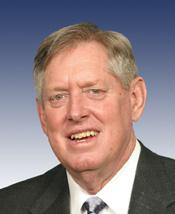
Mr. Speaker, I think that we have indeed on the Committee on Appropriations had good leadership. I compliment the gentleman from Florida on the great job he has done leading that committee. I…
Mr. Speaker, I think that we have indeed on the Committee on Appropriations had good leadership. I compliment the gentleman from Florida on the great job he has done leading that committee. I compliment my own ranking member the gentleman from Wisconsin (Mr. Obey) for the wonderful work that he does, but I think, Mr. Speaker, rather than just pass another CR and let us see how long we can stall dealing with the problems of the American people, facing up to the reality that we have got some massive problems in this country, it is time to realize that we have some serious problems, and the way to fix those problems is for us to work together like we have under the leadership of the gentleman from Florida and the gentleman from Wisconsin. Let us face our problems, come to some realistic solutions that do not involve enriching our friends, do not involve enriching large corporations, do not involve further enriching the pharmaceutical industry in this country.
One of the things that is holding up the completion of this year's work is the Medicare reform bill. One of the things that is holding it up is the massive debt that we are creating for our children and grandchildren with absolutely no plan, no plan whatsoever to deal with it. Our seniors do not have the medicine that they need, and we know how to fix this problem. We can actually fix this problem without spending a large amount of government money.
We should not leave this Chamber again until we solve these problems or at least come to some mutual agreement as to how we are going to work to try to get this done. We should stay in this Chamber day and night for as long as it takes to get the job done for the American people.
This is not about Republicans. It is not about Democrats. The senior citizens in the 1st District of Arkansas do not give a hoot whether it is Republicans or Democrats, but they do care about the fact that they get robbed by the prescription drug manufacturers of this country to the point where they cannot buy their own food and they are not going to be able to heat their homes this winter. They care about that, and I care about it for them.
It is time that we face the reality of the problems and quit trying to take care of those that have patronized us and work in a cooperative way between the parties, with the leadership of good men like the gentleman from Florida and the gentleman from Wisconsin, to lead us through these efforts and get the job done for the American people.
Let us work together to do this, but let us not leave this Chamber again until it is done.
Mr. Speaker, by direction of the Committee on Rules, I call up House Resolution 417 and ask for its immediate consideration. Mr. Speaker, for the purpose of debate only, I yield the customary 30…
Mr. Speaker, by direction of the Committee on Rules, I call up House Resolution 417 and ask for its immediate consideration.
Mr. Speaker, for the purpose of debate only, I yield the customary 30 minutes to the gentleman from Florida (Mr. Hastings), pending which I yield myself such time as I may consume. During consideration of this resolution, all time yielded is for the purpose of debate only.
Mr. Speaker, H. Res. 417 is a closed rule that provides for the consideration of H.J. Res. 75, a continuing resolution that will ensure further appropriations for the fiscal year 2004. The rule provides for 1 hour of debate in the House equally divided and controlled by the chairman and ranking minority member of the Committee on Appropriations. The rule waives all points of order against consideration of the joint resolution and provides for one motion to recommit.
Mr. Speaker, we passed the first continuing resolution, H.J. Res. 69, during the final days of September and it became Public Law 108-84. The provisions of H.J. Res. 69 are scheduled to expire this Friday, October 31. Therefore, under the joint resolution that this rule makes in order, the provisions of that first continuing resolution will be extended until November 7, 2003. In brief, for the fiscal year 2004 appropriations bills that have been enacted into law, the continuing resolution provides an additional week of funding for government agencies.
Mr. Speaker, we did pass a continuing resolution last week that conjoined the six fiscal year 2004 appropriations bills that have been passed by
the House, but the other body clearly needs additional time to complete the funding work for the coming year. The House has passed each of the 13 regular appropriations bills. However, to ensure that essential government services continue to operate, this rule makes in order another continuing resolution to give us the additional time to complete the appropriations process in an orderly manner.
This rule was approved by the Committee on Rules yesterday. I urge my colleagues to support it. I know all of us in the House wait with great anticipation the completion of the appropriations work by the Members of the other body. Until that time, this resolution will provide a continuation of funding for government agencies until these important issues are resolved.
Mr. Speaker, I reserve the balance of my time.
Mr. Speaker, I have no further requests for time, I yield back the balance of my time, and I move the previous question.
The previous question was ordered.

Mr. Speaker, I thank my colleague for yielding me the time. Mr. Speaker, I have a list here from the NFL of the top punters in the NFL. The top 3 punters are Shane Lechler from Oakland, Brian Moorman…
Mr. Speaker, I thank my colleague for yielding me the time.
Mr. Speaker, I have a list here from the NFL of the top punters in the NFL. The top 3 punters are Shane Lechler from Oakland, Brian Moorman from Buffalo, and Scott Player from Arizona. And as talented and experienced and skilled as these punters are, they have nowhere near the ability that the Republican leadership in this House has when it comes to punting, because that is what we are doing today. We are punting once again, because the Republicans in this House cannot get along with the Republicans in the other body, and they cannot get their work done.
The main job that the leadership of this House has is to pass 13 appropriations bills, work with the other body to get them passed and get them on the President's desk by September 30. This leadership has failed in doing that. They cannot do their job.
The Republicans cannot get along with Republicans. They cannot blame a Democratic Senate because they have a Republican Senate. They cannot blame a Democrat in the White House because they have a Republican in the White House. They control the House, they control the Senate, they control the White House, they even control the courts, and they still cannot get their job done.
So it is important for all of my colleagues to understand at this critical moment that we are here because the leadership in this House cannot get their work done. They cannot coordinate with Members of their own party. They cannot do the work that they are supposed to do.
I would just hope, and I say this especially to those who are watching this, that they understand, that these are the people who said give us the power and we will impress you with our ability and our skill and our efficiency.
Well, they have the power. Again, they have the power because they control the House, they control the Senate, they control the White House, and they cannot get their work done.
So we are going to punt until November 7, but I want to make a prediction right now, we are going to punt again. And it is kind of sad, because they are not doing the work they are supposed to do. They are not getting the job done.
Mr. Speaker, I want to ask the chairman a question. Why are we only doing this for a week? We are going to have to do this whole thing in another week? We get up here with all this debate, but could…
Mr. Speaker, I want to ask the chairman a question. Why are we only doing this for a week? We are going to have to do this whole thing in another week? We get up here with all this debate, but could the gentleman tell me why? He knows we are not going to get done in a week; he knows it will take until Thanksgiving. Why are we only doing this for a week? Can the gentleman tell me?
I yield to the gentleman from Florida.
Mr. Speaker, reclaiming my time, I just do not understand. We know it is going to take longer. I do not understand why we would be forced to go through this same administrative procedure every week. We know we are going to pass the CR. I just do not understand. Are we controlling this from the appropriation side, or is this above our pay grade?
I yield to the gentleman from California.
Mr. Speaker, reclaiming my time, if the gentleman would not mind, let me just respond that I always went for the longest possible CR. I did not want ever to bring up a CR where we had to go through this every week, every 7 days, every 10 days. It is always easier to get it done in a reasonable time. But I understand what the gentleman is saying.
Mr. Speaker, reclaiming my time once again, I know the chairman wanted to extend this, but I just wanted to needle him a bit about doing this every week.

Mr. Speaker, will the gentleman yield? Mr. Speaker, I very much appreciate the gentleman from Pennsylvania yielding to me. I might mention, because the chairman certainly would not say this, that we…
Mr. Speaker, will the gentleman yield?
Mr. Speaker, I very much appreciate the gentleman from Pennsylvania yielding to me.
I might mention, because the chairman certainly would not say this, that we are going through this routine, I know in large part, or maybe in small part, because for 40 years the Democrats ran the place and that gave us time to learn a lot by watching what they did. And from time to time they were even smart enough to understand that there was a need to put pressure on the other body, because that other body operates in a way that is hard for me to imagine.
Mr. Speaker, if my friend from Pennsylvania would continue to yield, I know that he is one of the smartest guys in this place, and the leadership has difficulty getting everybody to be as smart as he is. And I would note, Mr. Speaker, that the gentleman from Pennsylvania is speaking today longer than I have seen him speak in the entire time I have been in the Congress. That is how smart he is. And it is a pleasure doing business with him.
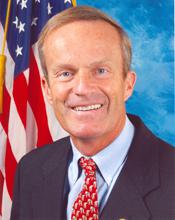
Mr. Speaker, on Wednesday, the 29th of October, I was involved in a briefing with the Central Intelligence Agency. As a consequence, I was unavoidably detained and could not cast a vote for H. Res.…
Mr. Speaker, on Wednesday, the 29th of October, I was involved in a briefing with the Central Intelligence Agency. As a consequence, I was unavoidably detained and could not cast a vote for H. Res. 417. Had I been present at the time of the vote, I would have voted in the affirmative.
Bill Text
2 versions available
        [Congressional Bills 108th Congress]
[From the U.S. Government Publishing Office]
[H. Res. 417 Engrossed in House (EH)]

In the House of Representatives, U.S.,

October 29, 2003.
Resolved, That upon the adoption of this resolution it shall be in order
without intervention of any point of order to consider in the House the joint
resolution (H.J. Res. 75) making further continuing appropriations for the
fiscal year 2004, and for other purposes. The joint resolution shall be
considered as read for amendment. The previous question shall be considered as
ordered on the joint resolution to final passage without intervening motion
except: (1) one hour of debate on the joint resolution equally divided and
controlled by the chairman and ranking minority member of the Committee on
Appropriations; and (2) one motion to recommit.
Attest:

Clerk.