Condemning the terrorist attacks on Istanbul, Turkey, on November 15 and 20, 2003, expressing condolences to the families of the individuals murdered and expressing sympathies to the individuals injured in the terrorist attacks, and expressing solidarity with Turkey and the United Kingdom in the fight against terrorism.

Legislative Activity
Stay on top of the latest movement without scrolling through every action
The title of the measure was amended. Agreed to without objection.
November 21, 2003 • 3:17 PM
View full timeline
Introduced in House
November 19, 2003
Referred to the House Committee on International Relations.
November 19, 2003
Mr. Smith (NJ) moved to suspend the rules and agree to the resolution, as amended.
November 21, 2003 • 11:54 AM
Considered under suspension of the rules. (consideration: CR H12133-12137)
November 21, 2003 • 11:54 AM
DEBATE - The House proceeded with forty minutes of debate on H. Res. 453.
November 21, 2003 • 11:54 AM
At the conclusion of debate, the Yeas and Nays were demanded and ordered. Pursuant to the provisions of clause 8, rule XX, the Chair announced that further proceedings on the motion would be postponed.
November 21, 2003 • 12:20 PM
Considered as unfinished business. (consideration: CR H12172-12173)
November 21, 2003 • 3:07 PM
Passed/agreed to in House: On motion to suspend the rules and agree to the resolution, as amended Agreed to by the Yeas and Nays: (2/3 required): 426 - 0 (Roll no. 657).(text: CR H12133)
November 21, 2003 • 3:17 PM
Motion to reconsider laid on the table Agreed to without objection.
November 21, 2003 • 3:17 PM
On motion to suspend the rules and agree to the resolution, as amended Agreed to by the Yeas and Nays: (2/3 required): 426 - 0 (Roll no. 657). (text: CR H12133)
November 21, 2003 • 3:17 PM
The title of the measure was amended. Agreed to without objection.
November 21, 2003 • 3:17 PM
Voting History
1 vote recorded • Roll call available
Floor Debate
24 membersWhat members said about H.Res. 453 on the floor
 JI
JI TU
TU BG
BG CWS
CWS MU+19
MU+19
Floor Debate
24 membersWhat members said about H.Res. 453 on the floor
Mr. Speaker, I respectfully demand one-third of the time under clause 8 of rule XXII. Mr. Speaker, I yield myself such time as I may consume. (Mr. INSLEE asked and was given permission to revise and…
Mr. Speaker, I respectfully demand one-third of the time under clause 8 of rule XXII.
Mr. Speaker, I yield myself such time as I may consume.
(Mr. INSLEE asked and was given permission to revise and extend his remarks.)
Mr. Speaker, it is abundantly clear to all of us of all political persuasions and parts of the country that we need a vigorous, well-funded, well-prioritized hazardous fuels reduction program in our national forests.
The Nation needs that because of a ``perfect storm,'' if I may use that term, of enormous changes in our climate which have led to drought, particularly in the western United States, leaving the most explosive conditions due to the lack of moisture in over 100 years and because of our misguided and mutually ignorant policy over the last several decades, if not century, of suppressing all fire, thereby allowing certain additional density to increase. All of us know we need a well-prioritized, well-funded, well-defined hazardous fuels reduction program.
But I, regretfully, cannot support this bill because it fails in several fundamental ways. It fails to prioritize the taxpayers' dollars where they ought to be prioritized which is the protect of human health and property first. It fails to protect our most treasured crown jewels in our Forest Service of our roadless areas, which I have to tell the Members in the part of the world where I come from, we treasure the roadless areas on our weekends and afternoons. It is part of our culture and our families, and they are unprotected in this bill. Third, it fails to adequately solve the problem as to why we cannot get these programs completed, which is money, and I will come back to that. We today change the law, but not the appropriations that we need to get this job done.
Let me start with a failure to prioritize in this bill. If I may, this ought to be job one for the U.S. Congress when it comes to hazardous fuels reduction. Job one for the U.S. Congress ought to be protecting, with a protective buffer, the homes and towns and cabins and barns in our thousands of acres from voracious forest fire, and this bill does not follow a fundamental precept that when we have got job one and when we have got limited dollars, we prioritize. To govern is to choose, and this bill consciously chose not to give the majority of funds in this program to protect these areas with moats, if I may, to protect them from this horrendous fire. And we have seen what happens in California when that occurs. And it ought to be a totally unanimous agreement here that the majority of our funds in our program ought to be directed to the areas around our towns and cities rather than spent up in Timbuktu harvesting commercial lumber.
We have seen that they split the baby 50/50, but spliting the baby 50/50 is not always right nor is it fair, and I will tell my colleagues why. This conference report says 50 percent of this money will go to the Wildland-Urban Interface. It will not do to tell people in this community that we have saved half their houses, and we have sacrificed the other half to the demands of those who want to continue commercial logging in our roadless areas. We failed in our duty to prioritize our precious dollars where they belong, and we have offered a modest amendment to improve that in the conference committee which were rejected out of hand.
And let me tell the Members why this prioritization is so important. Of the dollars we have spent next year, if we double the amount that has been appropriated by the majority party, whom I respect, and I respect their positions on this bill, but if we even double the amount that was spent in the last 3 years, we will still only do 2 to 3, maybe 4 percent of the acreage of the millions of acres that need to be treated. We have to prioritize. This bill did not do it.
The second thing this bill did not do, it did not protect our roadless areas. We have 58 million acres of roadless areas which are the crown jewels of our national forest, which are pristine, and everyone loves the trees in our roadless areas. The problem is some of them love them vertically and some of them like them horizontally. This bill does not protect our roadless areas from the ones who want to do commercial logging so that they will be horizontal. It does not protect them one wit in those roadless areas, and that is most discomforting, and I will tell the Members why. We should have been able to fashion a unanimous way to protect those roadless areas. Let me just suggest one way to do it. I offered an amendment in the conference committee that would simply say that if we have to, if there is some terrible disease- ridden patch in the roadless area that we have to build a road to get to it, to do an emergency program that would be allowed under this bill, okay; but let us at least restore the road after the project is completed to its original topography. How can anyone object to that? How could anyone object to that precept? If we are building a road in a roadless area to do a hazardous fuels reduction program, when we are done with the program, why not put the road back in its natural topography. Who could object to it? I will tell the Members who does object to it. The timber industry who wants to use these roads to punch them into the heart of our most virginal forests and then make them available for commercial harvest, and we do not need to do that to accomplish our ends here, and it is regrettable we did not solve that problem.
The third thing that this bill does not do, it does not cut to the heart of the problem. This bill, its whole fundamental idea is if we just cut off those pesky environmentalists, by gum there will not be any more forest fires. I will give the Members bad news. We can outlaw environmentalists if we want to, and I see some nods. My friend over on this side of the aisle would like to do that. I take a different view. They are my constituents. They are people who like to go up and have clean water out of the roadless areas. They are people who like to go on a picnic in the roadless areas, and they know, as I do, that if all we try to do to fix this program is to cut off citizen participation,
we will not solve the problem of getting these fuels reduction programs in line, and I will tell the Members why we will not. The reason we have we are not getting the job done and giving therapy to our forests is that we have not appropriated one tenth of the money that is necessary to get this job done. It is not appeals. Come on. The GAO, in their last study, after four rounds to make sure they got it right, said that 92 percent of all of these fuels reduction projects go lickity-split right through the process without any problems and only 3 percent of them were litigated. Ninety-seven percent of these projects go through without litigation. So why have we not cut the mustard? Why have we not done enough therapy on these forests? It is because we have not invested the money to do it. We have only invested enough money to do 2 to 3 percent, and that is not going to significantly improve in this bill. Doubling does not even cut it, even if we got the appropriation. So we are united, I think, unanimously on this floor in the belief that we need to have a strong fuels reduction program, but we cannot say that this bill will provide what the American people need to get this job done in a reasonable fashion.
The fourth, if I can, problem with this bill: It is clear that we have got to cut down a whole bunch of trees to solve this problem because they are dense, they have grown up because of our misguided fuels suppression program, and now we have got this cataclysmic fire situation. But the question is what do we cut and where? That is really the issue we need to resolve on the floor of this House. And here is a tree, a mature tree. I wish I could tell the age, marked for cutting in the fuels reduction program. There is no reason to cut that tree except for commercial purposes. We needed to develop a firm definition, so that the Forest Service can use it to determine what trees to cut, and it would have been easier if we provided them adequate money to do it, so they do not have an incentive to log bigger trees to generate money for this program. But we did not do it, because the appropriations process did not cut the mustard. So we have a problem that we have not given adequate definition of what to cut and where.
Mr. Speaker, I reserve the balance of my time.
Mr. Speaker, I yield 3 minutes to the gentleman from New York (Mr. Hinchey).
Mr. Speaker, I yield 2 minutes to the gentleman from New Mexico (Mr. Udall).
(Mr. UDALL of New Mexico asked and was given permission to revise and extend his remarks.)
Mr. Speaker, I will be closing, so when the appropriate order comes, I will take my turn.
Mr. Speaker, how much time do I have remaining?
Mr. Speaker, I yield myself such time as I may consume.
Mr. Speaker, I commend all of the people who have worked on this bill. There are a lot of technical and difficult issues trying to fashion a hazardous fuels reduction program. And I am unable to support this and I hope my colleagues will join me and the Sierra Club and the League of Conservation Voters and other main-line commonsense groups who have committed their lives to protecting our national forests in defeating this bill and moving on to a better one, and I hope that my colleagues will join me.
Underlying that position is the basic belief that the medicine that we are providing here is both inadequate and misguided. It is misguided because it is based on a myth; and that myth rising to an urban legend is that these fires have consumed thousands of acres because people have questioned what some government officials have done, and that is an abject falsehood.
The GAO report shows that 92 percent of these projects go ahead unimpeded. In California, you know why the California projects did not get done? It was not environmental project appeals. In the last 3 years, there has not been one hazardous fuel reduction program that held up national forests in Southern California the last 3 years. The reason some of this work did not get done is Uncle Sam, us, did not appropriate enough money for California to do the job. The State of California asked for $430 million last April to solve this problem. And what did Uncle Sam do in the Bush administration? They did not give it to them. And the fires occurred.
This is a failure of appropriations, not a failure because certain citizens once in a blue moon have the temerity to stand up on their back legs and question decisions by the Forest Service to do disguised commercial logging which has on occasion happened, thankfully not very often. Maybe 2 percent of the time. We are not doing enough to really solve this problem.
What we have done is in one of the most serious reductions of citizens' ability to question their government is reduce the ability to have their oversight of our Federal officials.
Now, it is kind of a conservative position to be rightfully sometimes distrustful of our Federal officials. Now, I have got to say there have been occasions, thankfully few, where these projects have been disguised timber sales. And the reason is because we are not appropriating enough to the Forest Service to do their job. And when that has happened, less than three pearls of the time there has been a brief appeal of that decision, and most frequently these things get worked out. But until we increase tenfold our appropriations, we are not going to cut the mustard in this program.
Now, let me mention something else, too. We have not talked about what the real debate is about here. The debate is as much about roads as it is about forests, because the real issue here is where we are going to build roads. We have 440,000 miles of Forest Service roads in our forests, 440,000 miles. They are falling apart, and we ought to be putting our money in and fixing those roads before we punch new roads into roadless areas.
Let me put this into real-life perspective. Take a couple in northeast Washington who is not getting adequately protected by this bill. Their house is surrounded by pine trees in the national forest. We have not prioritized those pine forests around their home for treatment like we should have in this bill. We did not do it. Now, when that couple leaves their home to drive over to the Olympic Peninsula to the Jupiter Ridge Roadless Area, if they hike out to a nice little picnic spot, they will find two trees. They are about maybe 6, 7, 8 feet in diameter, cedars, right next to each other. We call them Jefferson and Washington.
In this bill, neither protects that couple in their home surrounded by the pine forest, nor the two trees they go to visit in the roadless area.
Their home is not protected from fire adequately, and those two trees are not protected from chainsaws adequately in this bill.
It is my hope that this bill will be defeated and we will come back and make some very modest but important improvements on it to solve both of those problems.
Mr. Speaker, I yield back the balance of my time.
Mr. Speaker, I compliment the gentleman from Washington (Mr. Inslee) for his management of this bill. Let me just talk a little bit about the judicial review test here, because I think that we are…
Mr. Speaker, I compliment the gentleman from Washington (Mr. Inslee) for his management of this bill. Let me just talk a little bit about the judicial review test here, because I think that we are embarking on new ground. When we put in a test that talks about short-term and long-term, really what we are ending up doing is saying that if you cut down the whole forest and it is okay in 100 years, then that is all right. I mean, that is the kind of test that we are putting into this piece of legislation. We do not know what that means. And so we are encroaching into the judicial arena, trying to tell the courts what to do. This is a new test. It is a new standard. It has never been used before.
And what is going to happen? We hear all the talk about lawsuits and litigation from this side of the aisle. Guess what, folks? This is going to be a lawyers employment bill. If there is anything that is going to come out of this, it is going to be more litigation, it is going to be more billable time, it is going to be more lawyers involved in this process. And I think what is going to happen further, if we allow this to happen, if we allow this to happen, we are going to see this appear across the board in other areas, workers' rights, OSHA, any place where Federal agency decision-making is going on, this is going to be imposed on the Federal courts. And I think that is why the committees that supervise in the Congress judicial review have such a hard time with this provision.
With that, I would just urge my colleagues to vote against this bill.
The recent firestorm in Southern California acted to once again remind us of the gravity of rampant wildfires in the west. However, this issue is of such great importance that I am extremely concerned about, and strongly object to, the manner that this legislation was brought before us today.
You may recall that the Committee Print of the Healthy Forests Restoration Act was released to the members of the Resources Committee during a recess period, on the Friday afternoon before it was scheduled to be marked up in Resources committee, a few days later.
Similarly, we are called upon today to vote on the Healthy Forests Conference Committee report. This report was just released yesterday. It is my understanding that the rules for the House call for a minimum of 3 days of review of a conference report before it is voted upon.
So, in what now seems to be standard operating procedure of the House, we have barely had twenty-four hours, if that, to read and digest its contents. One day is hardly sufficient to allow all Members to carefully and thoughtfully consider this vital legislation.
I would like to point out that H.R. 1904 was not the sole option available for our protection from wildfire devastation. Mr. Udall of Colorado and I introduced H.R. 1042, the Forest Restoration and Fire Risk Reduction Act.
Had we had an opportunity to hold hearings on our bill, Mr. Udall and I would have been able to formally raise some of the issues that I view are not adequately addressed in H.R. 1904 or the conference report, but that are critically important to wildlife prevention and protection.
Our bill would place greater emphasis on protection of the ``wildland/urban interface'' without imposing the unprecedented deadlines and standards for injunctive relief on the Federal judiciary, and without emasculating our environmental laws that are present in both H.R. 1904 and the Report.
While the results of the conference are better than the version passed by the House, the provisions that I view to be most controversial remain in the text. The agreement places a greater emphasis on thinning forests very close to communities, but, like the House bill, it significantly limits environmental reviews of forest thinning projects and insect infestation field research projects.
I reemphasize that I believe that we must conduct thinning projects to help reduce the likelihood of unusually severe fires. However, I do not support the contention that to facilitate such projects we need to expunge our environmental laws and procedures for public comment and participation.
The limits placed on fire-risk reduction projects from environmental review and administrative appeals, especially in the wildland
urban interface, in effect constrain the provisions of the National Environmental Policy Act. Furthermore, denying the public the full and fair opportunity to have viable alternatives to agency action considered circumvents established policy of public participation.
Such participation is an important aspect of our democratic process for making decisions affecting public lands. Limiting public comment and ignoring the provisions of NEPA and other laws designed to protect our environment does not assist in developing sound forest management.
I believe, however, that the conference report is a better bill than the version passed by the House. The Report contains specific provisions to protect the wildland urban interface. Furthermore, the report authorizes tribal watershed management programs for Indian tribes, an issue that I have strongly advocated for since we began working on this legislation in the 107th Congress.
Nonetheless, I am afraid that this legislation is just another assault by the Bush Administration on our Nation's forests. Most of the attacks over the last year have been below the radar--in arcane rules, stealth riders and misnamed legislation. In this many-fronted assault, big timber is the winner.
Under the guise of buzz words such as forest health, catastrophic- wildfire prevention and streamlining, the Administration's initiatives transform forest policy in ways that are staggering in their scope as well as in their implications for democracy.
The changes revamp laws fundamental to sound forest management, including the National Forest Management Act, the Appeals Reform Act and NEPA. The cumulative effect of these changes is to undermine or eliminate open decisionmaking, agency accountability, resource protection and recourse in the courts.
It began in December 2002, when the Administration proposed a forest- planning regulation that renders public involvement virtually meaningless. The rule ignores scientific involvement, eliminates fish and wildlife protection, and fails to protect roadless areas.
It skews the planning process to favor logging, mining and off-road vehicle use. It renders plan standards more discretionary, further reducing agency accountability. Most shocking, the final rule, due out imminently, exempts forest plans from environmental analysis and eliminates the opportunity for the public to appeal the final plan.
The Forest Service assured critics that it would undertake in-depth environmental studies when specific logging projects were proposed. Not so.
In June 2003, the Administration abolished environmental review of logging done in the name of ``hazardous fuels reduction'' on up to 1,000 acres of land as well as post-fire rehabilitation projects on up to 4,200 acres.
One month later, the Administration carved out more loopholes for National Environmental Policy Act exemptions for commercial logging by setting acreage limits of 70 acres for timber sales and 250 acres for salvage sales. These projects have few, if any, meaningful constraints.
For example, the projects must be ``consistent'' with local forest plans. Yet, under the soon-to-be final planning regulations, forest plans can be amended simply by changing the plan on an interim basis with no public notice.
Under the banner of hazardous fuels reductions, large-scale, intensive commercial logging projects may take place virtually anywhere in our forests, regardless of forest type or tree size. In effect, the conference report allows logging and associated road building with limited environmental analysis, administrative appeals, judicial review and public involvement.
The Appeals Reform Act of 1992 gave citizens a statutory right of appeal after the Forest Service tried to eliminate appeals on timber sales. Although billed as part of the ``Healthy Forests Initiative,'' changes to these regulations significantly curtail rights to appeal a broad range of timber sales and land management decisions--not just those pertaining to fire risk.
H.R. 1904 sets no time frames for appeal, no required stay of action provision during the appeal, and no guaranteed right to appeal. Instead, the Forest Service would have 30 days after enactment of this legislation to develop the new administrative appeals process.
This legislation also pushes citizens out of the picture. In addition to altering the intentions of the Appeals Reform Act, H.R. 1904 reduces environmental review on logging projects not already given a wholesale exemption and severely restricts opportunities for public involvement.
Furthermore, it encroaches upon the courts' ability to review the legality of logging projects almost anywhere on our publicly owned forests, including roadless areas and old growth. If bug and disease- control are the purported reasons for logging, projects up to 1,000 acres will bypass all environmental review and appeals.
With millions of dollars authorized in the act for any hazardous fuels project on public lands, logging without laws can proceed throughout the backcountry.
The synergistic effects of these radical rollbacks are breathtaking. I predict that the assault will only foment more controversy and stimulate more distrust of the Forest Service for years to come.
I urge my colleagues to vote ``no.''
Mr. Speaker, pursuant to House Resolution 457, I call up the conference report on the bill (H.R. 1904) to improve the capacity of the Secretary of Agriculture and the Secretary of the Interior to…
Mr. Speaker, pursuant to House Resolution 457, I call up the conference report on the bill (H.R. 1904) to improve the capacity of the Secretary of Agriculture and the Secretary of the Interior to plan and conduct hazardous fuels reduction projects on National Forest System lands and Bureau of Land Management lands aimed at protecting communities, watersheds, and certain other at-risk lands from catastrophic wildfire, to enhance efforts to protect watersheds and
address threats to forest and rangeland health, including catastrophic wildfire, across the landscape, and for other purposes.
Mr. Speaker, I ask unanimous consent that the gentleman from California (Mr. Pombo), chairman of the Committee on Resources, be recognized for 10 minutes for the purposes of controlling debate.
Mr. Speaker, I yield myself such time as I may consume.
Today, we are finally able to bring the Healthy Forests Restoration Act, H.R. 1904, for a vote. In spite of a severely flawed process to arrive at this point, we have driven a hard bargain, and we have got a bill that the President will sign. I believe it will make a difference on the ground, but it is only a first step towards fixing what is wrong with the management of our public lands.
I worked with two other distinguished full committee chairmen, the gentleman from California (Mr. Pombo) of the Committee on Resources and the gentleman from Wisconsin (Mr. Sensenbrenner) of the Committee on the Judiciary, to craft a bipartisan bill that passed earlier this year by an overwhelming, and bipartisan, majority. I also want to note the outstanding efforts of my counterpart in the other Chamber, Agriculture Committee Chairman Cochran, and our distinguished ranking member, the gentleman from Texas (Mr. Stenholm), for their efforts.
This bill seeks to address the issues that have tied the hands of our forest managers: National Environmental Policy Act analysis that drags on for months, administrative appeals that spring up at the last minute, and court actions that stall projects for so long that areas proposed for treatment frequently are destroyed by fires long before the judicial process concludes. The conference process has produced a bill that does not do as much as I would like to address on these issues. I understand there are many in both Chambers who would like to have seen a stronger product. But this bill creates the first real relief from bureaucratic gridlock after over 8 years of legislative effort. It sends a clear signal that the Congress favors results over process and that protecting our communities, our watersheds, and our people is more important than producing mountains of paperwork.
There are over 190 million acres of forests and rangelands which remain at risk of catastrophic wildfires, insect and disease, a landmass larger than New England. Our bill takes the modest step of addressing the hazardous conditions on only 20 million acres of this total. This bill also takes an innovative approach to forest health on private lands, creating new nonregulatory, incentive-based approaches to promote conservation on private lands. In short, it takes a national approach to a national problem.
H.R. 1904 has enjoyed broad support from groups such as the Society of American Foresters, the National Volunteer Fire Council, the International Association of Fire Chiefs and others. Professional wildlife managers, sportsmen, and serious conservation groups all support this bill.
We as a Congress have more work to do to perfect our forest management laws. Forest fires are a symptom of a land management system that suffers from procedural, managerial, and practical gridlock. Our forest management laws, environmental laws, and procedural laws do not work well together. They create a process that only highly trained legal minds can comprehend; and while claiming to encourage citizen participation, they often achieve just the opposite. So we need to do more, but we should be proud of what we are doing today. We are taking a bipartisan step toward better management of our forests. We are saying that protecting our communities, our watersheds, and our people comes before protecting the dilatory tactics of those who oppose any type of sensible land management.
I applaud President Bush for helping to bring this about. We would not be on the verge of passing this bill without his leadership. I hope he continues to exert leadership in this field to ensure that the Federal land managers act aggressively to implement this program as quickly as possible. I will do my utmost to ensure that bureaucratic inaction does not delay implementation. I urge my colleagues to support this conference report.
Mr. Speaker, I reserve the balance of my time.
Mr. Speaker, I yield 2 minutes to the gentleman from Minnesota (Mr. Gutknecht), chairman of the Department Operations, Oversight, Nutrition, and Forestry Subcommittee of the House Committee on Agriculture.
Mr. Speaker, I yield 1 minute to the gentleman from Montana (Mr. Rehberg).
Mr. Speaker, I yield 1 minute to the gentleman from Georgia (Mr. Burns).
Mr. Speaker, I yield 1 minute to the gentlewoman from Colorado (Mrs. Musgrave).
Mr. Speaker, will the gentleman yield?
Mr. Speaker, I will clarify a point that the gentleman from Texas (Mr. Stenholm) is interested in. Let me state that the projects authorized by title IV are primarily scientific efforts, and scientific methods should be the primary means of assessing them. While we encourage multiparty monitoring, it is not our intent to require it, particularly for projects conducted under title IV.
Mr. Speaker, I yield myself such time as I may consume.
Let me start by thanking the gentleman from Texas (Mr. Stenholm) for yielding me 2 additional minutes for this close, but more importantly for the very cooperative way in which the House Committee on Agriculture has produced this legislation. This is truly the example of why this bill will pass by an overwhelming margin here today.
It passed out of the House Committee on Agriculture originally on a voice vote; and when it came to the floor, I believe, 19 of the 24 Democrats on the committee, Members who represent rural areas, Members who represent areas that are forests, voted for this legislation, nearly 80 percent.
Had we had that kind of support elsewhere in the Congress, this legislation would have been adopted a long time ago. It has been 8 years that we have been working on it. And I would have to say to the gentleman from Washington State (Mr. Inslee) that if we were not to pass this conference report, not to send it to the President, we would be working on this for many more years. We would see more years like this year where 6\1/2\ million acres of forest land in this country were burned to the ground.
That is what we are faced with. That is why we need to begin this first step of solving this problem by giving the Forest Service the tools that it needs.
It is absolutely incorrect that these forest fires are not related to the problems that the Forest Service is presented with. Certainly, money is a problem. Certainly, we are going to have to deal with that, but in addition, massive parts of the Western part of this country are tied up in legal cases, including the entire southern California area that is tied up over litigation related to the spotted owl. This is clearly, clearly needed to address the problems that we face across the country.
I want to thank also the gentleman from California (Mr. Pombo). He recognizes very clearly the nature of this problem, and the gentleman from Colorado (Mr. McInnis), I want to congratulate him on his leadership in bringing this bill to the floor as well. He is leaving the Congress at the end of this term, and this is his signature bill. This is his legacy in the Congress. So I commend him as well.
I also commend Members who have fought against this process like the gentleman from California (Mr. George Miller) and the gentleman from Oregon (Mr. DeFazio). They have seen the light. They understand what it takes. They understand that it is time to get about the business of solving the problem, rather than another 8 years of fighting, and I would say to those few remaining who do not understand, get on board, get this done.
Yes, there is additional work that needs to be done. Yes, we will look forward to working with them in future
Congresses, but now is the time to give the President the ability to sign a bill that will put our Forest Service to work, to get this problem underway. We will come back for additional legislation because this problem is going to persist, and this is only a beginning.
Support this conference report. It is a good one.
Mr. Speaker, on that I demand the yeas and nays.
No, Mr. Speaker, I am in favor of the conference report. Mr. Speaker, I yield myself such time as I may consume. Mr. Speaker, I rise in strong support of the Healthy Forests Restoration Act…
No, Mr. Speaker, I am in favor of the conference report.
Mr. Speaker, I yield myself such time as I may consume.
Mr. Speaker, I rise in strong support of the Healthy Forests Restoration Act conference report, and I am pleased to be here on the verge of completing legislation that will give us a chance to return America's cherished forests back to a healthy landscape. For the last century, public land managers have suppressed all forms of wildfire, including natural small-scale fires that restore forest ecosystems.
The unintended result of this policy is a decades-long buildup of forest fuel, woody biomass, and dense underbrush that is as close as the next lightning strike or escaped campfire from exploding into a massive fire. In some areas, tree density has increased from 50 trees per acre to as many as 500 trees per acre, according to the Forest Service and fire ecologists. These unnaturally dense forests are a small-scale ignition away from a large-scale wildfire. These natural small-scale fires burn at the ground level and at relatively low temperatures, allowing some trees to survive and, in the process, renewing the forest.
The suppression of these natural small-scale fires, however, has resulted in an accumulation of fuel that supports catastrophic wildfires of unnatural intensity that burn hotter, spread faster and cause long-term severe environmental damage, sometimes even sterilizing the soil. America's forest ecosystems are being decimated at an alarming rate by large-scale catastrophic wildfire and massive outbreaks of disease, insect infestation, and invasive species. Federal foresters estimate that an astounding 190 million acres of land managed by the Secretary of Agriculture and the Secretary of the Interior are at unnatural risk to catastrophic wildfire. Of that, over 70 million acres are at extreme risk to catastrophic wildfire in the immediate future.
During the second year of the National Fire Plan implementation, we witnessed the second largest fire season this Nation has seen in half a century. An early widespread drought, unparalleled since the Dust Bowl of the 1930s, affected 45 percent of the country. On June 21, 2002, the national level of readiness rose to the highest level possible, 5 weeks earlier than ever before, and remained at that level for a record- setting 62 days. In fact, wildland fires burned 7.2 million acres, or nearly double the 10-year average. Colorado, Arizona and Oregon recently recorded their largest timber fires of the century. And then we saw the devastation in Southern California.
Forest ecologists, professional land managers, and many environmental groups agree, the exploding incidence of catastrophic wildfire and disease and insect infestation pose a massive threat to the health, diversity, and sustainability of America's national forests. The Nature Conservancy, one of
the world's largest and most acclaimed environmental groups, has been a leader in the environmental community in building public awareness about the environmental calamities that catastrophic wildfires cause.
Of the three factors that most influence wildland fire behavior, weather, topography and fuel, land managers can effectively affect only fuel. Unless we take a proactive approach to fuel reduction, the remaining components of the National Fire Plan, which include firefighting, rehabilitation, community assistance and research, will only continue to increase in cost. Local governments, volunteer firefighters, professional foresters, conservationists, and labor organizations agree, it is time to act to protect our forests.
Fortunately, the Healthy Forests Restoration Act addresses these concerns by giving Federal land managers the opportunity to restore our forests to a more natural balance while maintaining important environmental requirements. The conference report before us allows for authorized hazardous fuel reduction projects on Federal lands, helps communities in the wildland-urban interface prepare for wildfires, improves the NEPA analysis process, and augments public involvement and review. Additionally, the report includes titles allowing grants to use biomass, providing watershed forestry assistance, addressing insect infestation research, and establishing private forest reserves.
In closing, let me remind Members that this is not a new issue to come before the United States Congress. We have been talking about this issue for years. I remember the tremendous work done by former House Agriculture Committee chairman Bob Smith and his efforts to reach out and find a compromise, only to go down in flames because of the inability of extreme sides of this question to come together.
I am disappointed that certain Members of the House were excluded from the process that got us here today. That certainly has not been the case with the House Committee on Agriculture. I commend Chairman Goodlatte for his bipartisanship and leadership on this important issue. We all have differing opinions about the various components of the legislation before us; but in passing this legislation, we will restore America's treasured landscapes by reducing the risks of catastrophic wildfires and insect and disease infestations.
Mr. Speaker, I reserve the balance of my time.
Mr. Speaker, I yield 3 minutes to the gentleman from Oregon (Mr. DeFazio).
Mr. Speaker, I yield 2 minutes to the gentleman from Michigan (Mr. Stupak).
Mr. Speaker, I yield 2 minutes to the gentlewoman from Oregon (Ms. Hooley).
Mr. Speaker, I yield 1 minute to the gentleman from Pennsylvania (Mr. Peterson).
Mr. Speaker, I yield 2 minutes to the gentleman from California (Mr. Dreier).
(Mr. DREIER asked and was given permission to revise and extend his remarks.)
Mr. Speaker, I yield 1 minute to the gentleman from Michigan (Mr. Smith).
(Mr. SMITH of Michigan asked and was given permission to revise and extend his remarks.)
Mr. Speaker, I ask unanimous consent to give two of my remaining minutes to the gentleman from Virginia (Mr. Goodlatte) for the purposes of closing.
Mr. Speaker, I yield myself such time as I may consume.
I will yield to the gentleman from Virginia (Mr. Goodlatte) if he would like to engage in a colloquy on monitoring.
I yield to the gentleman from Virginia.
Mr. Speaker, I will state I certainly agree with the chairman. I understand the benefit of multiparty monitoring. However, the chairman is correct in expressing that our intent with respect to projects conducted under title IV are to be scientifically conducted and multiparty monitoring is not a requirement of these projects.
Mr. Speaker, I would like to conclude by thanking all who have worked so diligently for so long to bring us to this point to where we truly have a compromise that will move our forest policy in a desirable direction.
I thank the staff, all who have worked on both sides on the aisle so diligently under somewhat trying conditions from time to time as we have had some of the internal strife that unfortunately finds its way into this House of Representatives. But that certainly has not been the case regarding
the House Committee on Agriculture, and the bipartisan support there is something that I have enjoyed and working with the chairman and the gentleman from California (Mr. Pombo) and others as we have strived to put together what is basically a good bill.
When you read the bill, much of the complaints about what we have heard today are not in the bill. If you are going to have sound forests, if you are going to have a sound forest policy, sound science, common sense has got to replace the opinions of many who have a difference of opinion regarding what is good conservation, what is good management, and how we do, in fact, manage our forests so that we do have lumber for housing and other projects.
So all in all, this is a good sound compromise worthy of overwhelming support of this body. I thank all of those who have worked on it. It certainly has been something that I personally have worked on for many, many years. I am glad to see it is getting to this point. I urge a very strong vote in favor of the project.
Mr. Speaker, I am going to vote for this conference report. It has flaws. But if its provisions are properly implemented it can help reduce the risk of severe wildfire damage that now threatens lives…
Mr. Speaker, I am going to vote for this conference report.
It has flaws. But if its provisions are properly implemented it can help reduce the risk of severe wildfire damage that now threatens lives and property in many communities in Colorado and other States--and for me that is the bottom line.
I am convinced we need to act to protect our communities and their water supplies. For that, a variety of things must be done, including working to reduce the built-up fuels that can increase the severity of the wildland fires that will periodically occur nearby.
That's why I have introduced legislation to expedite those thinning projects. It is also why last year I joined with my Colorado colleague, Representative McInnis, and other Members to develop a bill that was approved by the Resources Committee.
I voted for that bill last year, and if H.R. 1904 as it came to the House floor earlier this year had been the same as that bill, I would have voted for it again. But it wasn't the same bill, which was why I voted against it.
Instead of building on last year's work in the Resources Committee, the Resources and Agriculture Committees this year brought forth a quite different measure--one that added a long list of new provisions while omitting some of the key parts of last year's bill. As a result, it has taken much longer than I though it should have for us to reach the point of being ready to vote on a measure that has a good chance of clearing both chambers and being sent to the President for signing into law.
Because H.R. 1904 as passed by the House rejected key compromises that we worked our last year, the bill encountered more resistance in the Senate than otherwise would have been the case, and it was that much harder to shape compromises on a number of difficult points.
However, in the end the Senate passed a bill that made important improvements on the House version--and this conference report, while far from perfect, is itself a definite improvement over the legislation that I voted against earlier this year.
Let me briefly outline some of the ways in which the conference report is enough of an improvement over the House bill that I can and will vote for it today:
funding focus
Like the Senate bill, the conference report requires that at least 50 percent of all thinning-project funds be spent in the interface areas. Last year's Resources Committee bill would have required 70 percent of the money to be spent in the interface, but H.R. 1904 as passed by the House did not include any such requirement. So, the conference report is an improvement over the House bill in this area.
wildland/urban interface
I think the highest priority for fuel-reduction work needs to be on the forest lands where accumulated fuels present the most immediate risks to our communities--those within the wildland/urban interface, or the ``red zone,'' as it is called in Colorado--and to municipal water supplies. These are the places where forest conditions present the greatest risks to people's lives, health, and property, and so they should be where our finite resources--time, money, and people--are concentrated.
To properly focus on these areas, we have to properly identify them. In that regard, I had no quarrel with the provisions of H.R. 1904 as passed by the House. By referring to lands within either an ``interface'' or ``intermix'' community, it provided an appropriate limitation on the discretion of the agencies without drawing an arbitrary mileage line that would not appropriately reflect the reality that a community's exposure to the risk of wildfire depends on terrain, forest conditions, and other factors that can vary greatly from one place to another and over time.
However, proper focus also requires assured priority status for funds to carry out projects to protect communities and their water supplies. The bill reported by the Resources Committee last year required that at least 70 percent of the funds provided a for fuel-reduction purposes would have to be used for such projects--but no similar provision is included in H.R. 1904. I offered an amendment to restore the provision, and its absence was a major reason I voted against the House bill.
The Senate bill had a basic limit of one-half mile from a community's boundary, with some exceptions--if a larger area was identified in a community protection plan developed through a collaborative process; or if land near a community was steep; or if there was a geographical feature that would provide a firebreak within three-quarters of a mile, in which case the interface would go to that feature. The ``community protection plan'' provision was particularly good, in my opinion, because it did not require an arbitrary cutoff, and because it allowed both Federal and non-Federal land to be included. The rest of the definition was problematical.
The conference report improves somewhat on the Senate bill. It (1) retains the ``community protection plan'' part of the definition; (2) keeps the basic one-half mile limit; but (3) allows the interface to go to 1\1/2\ mile, if the slopes are steep or if there is a firebreak- feature within that distance and the lands are very susceptible to fire. Like the Senate bill, it
also defines the interface as including a route identified as necessary for escape from a threatened community.
I think it is well established that reducing the fuels closest to structures pays big dividends in terms of reduced fire risks. However, I do into favor defining the interface in terms of arbitrary lines on the map, because fires do not respect those lines and because our experience in Colorado has shown that some of the high-priority ``red zone'' areas are extensive. A prime example is the Hayman fire--it was among the largest in our State's history, but all of the lands involved were within the ``red zone'' as defined by our State Forester (a definition that is included in my bill, H.R. 1042).
Nonetheless, on balance, I think the conference report is acceptable on this point because of the emphasis that it puts on community- protection plans. This should encourage at-risk communities, like those along the Front Range, to develop protection plans and to encourage owners of non-Federal lands to join in working to reduce fire risks.
Show 8 more

Madam Speaker, I move to suspend the rules and agree to the resolution (H. Res. 453) condemning the terrorist attacks in Istanbul, Turkey, on November 15, 2003, expressing condolences to the families…
Madam Speaker, I move to suspend the rules and agree to the resolution (H. Res. 453) condemning the terrorist attacks in Istanbul, Turkey, on November 15, 2003, expressing condolences to the families of the individuals murdered and expressing sympathies to the individuals injured in the terrorist attacks, and standing in solidarity with Turkey in the fight against terrorism, as amended.
Madam Speaker, I ask unanimous consent that all Members may have 5 legislative days within which to revise and extend their remarks and to include extraneous material on the resolution under consideration.
Madam Speaker, I yield myself such time as I may consume.
Madam Speaker, the resolution before us condemns the terrorist attacks in Istanbul last Saturday as well as yesterday morning. I want to thank the gentleman from Florida (Mr. Hastings), my friend, for proffering this resolution and for the prompt consideration that is being given to it by our leadership in scheduling it very quickly before the body today.
This resolution conveys our deepest and heartfelt sympathy to the victims and their families and states that the United States stands in solidarity with the Turkish people in the fight against terrorism. These attacks, Madam Speaker, bear all the hallmarks of al Qaeda, and that terrorist group has claimed responsibility for these cruel and cowardly acts.
This demonstrates, once again, that the target of global terrorists is not just the United States of America, but all those who reject their hateful vision of a clash of civilizations and governments by religious extremism.
I thought President Bush in the United Kingdom the other day said it so well when he said, ``I want to express my deep sympathy for the loss of life in Turkey. The nature of the terrorist enemy is evident once again. We see their contempt, their utter contempt, for innocent life. They hate freedom,'' the President went on. ``They hate free nations. Today, once again, we saw their ambitions of murder. The cruelty is part of their strategy. The terrorists hope to intimidate; they hope to demoralize. They particularly want to intimidate and demoralize free nations. They're not going to succeed.''
Madam Speaker, despite some significant human rights issues, and no one has been more of a critic of Turkey than I have in the past, although they are making some progress, despite all of that, Turkey remains one of the few successful democracies in the Muslim world, with a tradition of religious tolerance. The Turkish Republic is an example of how a predominantly Muslim country can enjoy a secular, democratic government. Turkey has shown that the Islamic faith of its citizens and a secular democracy can flourish side by side.
By targeting synagogues and Turkish citizens of the Jewish faith on Saturday, the terrorists attacked the notion that Muslims can live in peace and harmony with other faiths. It was a profoundly anti-Semitic act. The terrorists know that the successful example of Turkey lays bear the emptiness of their own hateful vision. It is working in Turkey, and yet now they are trying to give a different impression to the world.
By targeting the British Consulate General and a leading British bank, these terrorists viciously illustrated that all of our allies and their targets must remain united with our allies in the fight against terrorism.
Madam Speaker, these contemptible acts killed almost 50 people, including the British Consul General in Istanbul, and injured more than 750 innocent people. Our deepest condolences go out to their families and to their nations.
Turkey has been a strong American ally, as we all know, the underbelly of NATO for more than 50 years. By agreeing to this resolution, we affirm our mutual commitment to that common defense.
I would remind my colleagues that after the September 11 of 2001 attacks, NATO invoked its collective defense clause, declaring that the al Qaeda attacks in the United States were attacks against the entire alliance.
I thought British Prime Minister Tony Blair summed it up very well when he said, ``And when they say is this an attack directed against our alliance, indeed, it is directed against anybody who stands in the way of that fanaticism'' he went on to say, ``That is why our response has got to be to say to them as clearly as we possibly can, you are not going to defeat us because our will to defend what we believe is, in actuality, and in the end, stronger, better, more determined than your will to inflict damage on innocent people.''
Madam Speaker, let me conclude by saying this: Turkey and the United Kingdom both played important roles to drive al Qaeda from its base in Afghanistan and to replace the Taliban government that harbored those terrorists. They were the first two countries to command the International Security Assistance Force, which has stabilized the Kabul region and supported the Karzai government. Turkey and the United Kingdom stood by the United States when our Nation was the target of global terrorism. By passing this timely resolution today in a bipartisan way, Democrats, Republicans, moderates, liberals and conservatives, we affirm our determination to stand by our longtime allies and to defeat the terrorists who bear the guilt for these highly reprehensible acts.
Madam Speaker, I reserve the balance of my time.
Madam Speaker, I yield such time as he may consume to the gentleman from Kentucky (Mr. Whitfield), my good friend and colleague.
Madam Speaker, I have no further requests for time, and I yield back the balance of my time.
Madam Speaker, on that I demand the yeas and nays.

Madam Speaker, this Member, as a cosponsor of the resolution and a committed friend of the Turkish people, rises in strong support of H. Res. 453. This Member would like to thank the distinguished…
Madam Speaker, this Member, as a cosponsor of the resolution and a committed friend of the Turkish people, rises in strong support of H. Res. 453. This Member would like to thank the distinguished gentleman from Florida (Mr. Hastings) for introducing this very timely resolution. Mr. Hastings has worked closely with Members and staff of the Committee on International Relations and its Europe Subcommittee--including the distinguished ranking members of the full committee and subcommittee, Mr. Lantos and Mr. Wexler--to craft the resolution that is before us this morning.
This Member would also like to thank the distinguished gentleman from New Jersey (Mr. Smith) for his leadership on this issue and his very thoughtful remarks. Mr. Smith is the leader of the U.S. delegation to the Parliamentary Assembly of the Organization for Security and Cooperation in Europe, and Mr. Hastings is an active member of that delegation, and this Member commends them for their work.
Madam Speaker, this Member serves as President of the NATO Parliamentary Assembly (NATO PA) and Chairman of the House Delegation. Though such assemblies, Members get to know their counterparts from other nations first-hand and to visit these nations to understand more about these lands and their people.
This Member already has written to Mr. Vahit Erdem, the chairman of the Turkish delegation, expressing our deepest sympathies to the Turkish parliament and the Turkish people, particularly the families of the victims.
One year ago, the NATO PA met in Istanbul, in a conference center overlooking the Bosporus straits, separating Europe from Asia. From our hotel rooms, we could look south to see the Taksim neighborhood that was devastated by the bombing of the British Consulate General yesterday. Indeed, several of us had the opportunity at night to stroll the busy, historic streets of that district.
As we discussed the key issues in the transAtlantic relationship, we also had an opportunity to experience the great city of Istanbul, one of the most historically important cities in the world. Istanbul literally lies between Europe and Asia, the only city in the world on two continents, and its history is that of a bridge between east and west.
The reprehensible terrorist attacks of last Saturday, directed against Turks of the Jewish faith, were an attempt to directly assault the religious tolerance that has been a hallmark of the Turkish Republic. Yesterday's attacks, against the British Consulate and a British bank, were an attack on the strong ties between Turkey and its allies in Europe and in North America and on the long and extraordinary transAtlantic relationship between the United Kingdom and the United States of America by further inflaming the British critics of the Iraq war and our transAtlantic relationship.
Sadly, they remind us that international terrorism remains a grave threat to all nations of the North Atlantic Alliance. Two years ago, when NATO invoked Article 5 of the North Atlantic Treaty, both Turkey and the United Kingdom showed that they were prepared to play a leading role in the war against terrorism, both alternatively taking the command of the International Security Assistance Force in Afghanistan. We remember their clear and strongly anti-terrorism, pro-American response to the al-Qaeda attacks on the United States, and in this resolution today, we pledge our support to Turkey in response to this latest terrorist atrocity.
NATO already has declared that the September 11, 2001, attacks by al Qaeda constituted an attack on the entire Alliance. Likewise, these attacks on an ally are an attack on all allies. Article 5 has already been invoked against al Qaeda. As a result NATO today is in Afghanistan, working to defeat that terrorist organization and their Taliban allies.
In the words of Lord Robertson, the NATO secretary general: ``If we fail, we will find Afghanistan on all of our doorsteps. Worse still, NATO's credibility will be shattered, along with that of every NATO government. Who will stand with us in the war against terror if we take on a commitment such as this and then fail to deliver?''
The bombings in Istanbul are a vicious reminder of the stakes in the global war on terrorism and the need to ensure that Afghanistan never again becomes a haven for those who seek to murder our people and destroy our societies. We all must provide the resources needed to win this war and protect our citizens.
Madam Speaker, in closing, this Member urges his colleague to pass this resolution.
Madam Speaker, I want to begin by thanking my good friend of long-standing here in the House of Representatives and a vigorous fighter for human rights and the protector of the rights of people who…
Madam Speaker, I want to begin by thanking my good friend of long-standing here in the House of Representatives and a vigorous fighter for human rights and the protector of the rights of people who are set upon as this despicable act has done. I would also like to thank the gentleman from New Jersey (Mr. Smith), my friend, and have him to know that I, along with him, am deeply saddened because so many of our colleagues that we serve with in the Organization for Security and Cooperation in Europe were affected. I have contacted Bruce George, our President's office from the U.K., and Dr. Yaleintas, or Professor Yaleintas, and expressed our condolences to them.
Most importantly, I would like to thank the gentleman from Illinois (Chairman Hyde), as the gentleman from California (Mr. Lantos) has already, for expediting this matter for us and giving us an opportunity to go to the majority leader and the minority leader; and I thank them for expediting this process. The majority leader's office has been extremely helpful in that regard.
It would be remiss of me if I did not take this opportunity to commend the gentleman from Florida (Mr. Wexler), who is my good friend and my soulmate geographically in Florida, as well as in our friendship; the gentlewoman from Texas (Ms. Granger) and the gentleman from Kentucky (Mr. Whitfield) from the majority side, my good friends that I have gotten to know through our efforts, not only in this resolution, but others; and also the gentlewoman from Nevada (Ms. Berkley); and countless others who have had direct involvement.
I had the good fortune less than 2 months ago to travel to Turkey with Brent Scowcroft, and it was the most illuminating and enlightening experience. It was not my first visit to Turkey; I have been there now a total of seven times.
On November 15, 2003, two explosions set off minutes apart devastated Nev Shalom Synagogue, Istanbul's largest synagogue and symbolic center to the city's 25,000-member Jewish community, and the Beth Israel Synagogue about 3 miles away. In addition, yesterday, explosions hit the Turkish headquarters of the London-based HSBC Bank and the British Consulate General, killing at least 26 people, including Roger Short, someone that I knew and the British Consul-General, and wounding over 450.
In the span of 5 days, terror claimed over 50 lives and injured more than 800 people in Turkey.
The House of Representatives gathers here today united in expressing that we abhor and denounce these hateful, repugnant, and loathsome acts of terrorism. We gather here to, in unison, make sure that the world understands our outrage by this week's attacks.
The United States is determined to stand by Turkey in the fight against the scourge of terrorism. The acts of murder committed in Istanbul were a cowardly and brutal manifestation of the moral vacuum directing the disease of international terrorism. My and all of our heartfelt condolences go out to the victims and their families.
Madam Speaker, the United States and Turkey are natural allies based on our shared values and common interests in building a stable, peaceful, and prosperous world. Moreover, as a predominantly Muslim nation with a secular government, Turkey is an example, as the gentleman from New Jersey (Mr. Smith) has pointed out, of a successful secular Muslim democracy. Turkey is a pivotal showcase of the Muslim world that fundamentalists hate. Turkey is an ally of the United States and a friend of Israel and is NATO's only predominantly Muslim member. It has supported the war against terrorism, commandeering and offering peacekeeping forces in Afghanistan and offering peacekeepers for Iraq.
Terrorism respects neither boundaries nor borders. Instead, it intends to harm every nation that respects democracy, freedom, equality, and the rule of law.
These acts further demonstrate that the war on terrorism is not a war between civilizations. The attacks in Turkey were perpetrated by Muslim terrorists against a predominantly Muslim nation. They suggest that this is not a religious war, but one that is based on politics, culture, and our way of life.
Madam Speaker, I conclude by once again denouncing these vial, anti- Semitic, and anti-Muslim attacks against men, women, and children and expressing my sympathies to the individuals and families of the victims. I urge my colleagues to support this resolution.

Madam Speaker, I yield myself such time as I may consume. I am strongly in support of this resolution. First, let me pay tribute to my dear friend, the gentleman from Florida (Mr. Hastings), for…
Madam Speaker, I yield myself such time as I may consume. I am strongly in support of this resolution.
First, let me pay tribute to my dear friend, the gentleman from Florida (Mr. Hastings), for initiating this important legislation and to recognize the contributions of my friends, the gentleman from Florida (Mr. Wexler) and the gentleman from New Jersey (Mr. Smith). I particularly want to thank the gentleman from Illinois (Chairman Hyde) for being so gracious late yesterday afternoon in expediting the handling of this legislation.
Madam Speaker, at least 50 people are dead and over 700 are injured in a sickening and appalling wave of suicide bombings in Istanbul over this past week. The attacks targeted Jewish places of worship and British governmental and business institutions; but the overwhelming majority of the victims are Muslim Turks, proof positive of the total cynicism and utter phoniness of these so-called Islamist assassins.
This is not just a war on the Jews, though it is also that. It is not just a war on the British or on our own country, although it is that. It is a war on the entire civilized and democratic world and its values. It is now clear that al Qaeda and its Turkish supporters have declared war on the democratic Republic of Turkey as part of that overall assault. Al Qaeda recognizes that the existence of Turkey, 99 percent Muslim, pro-Western, a secular democracy on the frontiers of the Western world, makes a mockery of al Qaeda's religious extremism. These terrorists want to roll back Western values by destabilizing and destroying Turkish democracy.
Madam Speaker, the Turkish Government has behaved admirably in this dark hour. It condemned the action and it vowed to catch the perpetrators, and I have no doubt that they shall. Now, the hard work of finding these terrorists, destroying their cells, and preventing future attacks begins.
The Turkish Government and the Turkish people should know that the American people will be steadfast in our support of them in this dark hour. All civilized nations must do likewise. The Turkish Interior Minister is correct to dismiss what he calls the crocodile tears of those who express condolences, but do nothing to fight terrorism.
Madam Speaker, we mourn the deaths, we pray for the wounded, and our hearts go out to the families of all of the victims. And to all the citizens of Istanbul and all of Turkey whose lives have been so brutally violated, let us honor them by joining with Turkey and with all who believe in freedom to fight the extremist criminals who want to end our way of life. They will fail and we shall prevail. I strongly support this resolution, and I urge all of my colleagues to do likewise.
Madam Speaker, I am delighted to yield 6 minutes to the distinguished gentleman from Florida (Mr. Hastings), my good friend and the author of this resolution.
Madam Speaker, I am very pleased to yield 3 minutes to the gentlewoman from Nevada (Ms. Berkley), a distinguished member of the Committee on International Relations and a steadfast fighter against global terrorism.
Madam Speaker, I yield 3 minutes to the gentleman from Florida (Mr. Wexler), my good friend, a distinguished member of the Committee on International Relations.
Madam Speaker, I yield myself such time as I may consume.
Madam Speaker, before yielding back our time, I would merely like to mention that a number of us coming back from Baghdad were in Ankara, Turkey's capital, just a couple of weeks ago. We had a lengthy and significant discussion with the distinguished Foreign Minister of Turkey. We reaffirmed, as did our Turkish counterparts, our firm commitment to fight terrorism globally. These tragic events in Istanbul since our visit to Ankara underscore the urgency and the importance of our stand. I call on all of our colleagues to support this very important resolution.
Madam Speaker, I have no further requests for time, and I yield back the balance of my time.

Mr. Speaker, our Committee on Agriculture is a great committee in terms of Republicans and Democrats working together. Our forests in this country are one of our strong resources that not only help…
Mr. Speaker, our Committee on Agriculture is a great committee in terms of Republicans and Democrats working together.
Our forests in this country are one of our strong resources that not only help us economically but also help the environment, and conserving the environment is important. Our forests certainly are an important part of Michigan, but they are also a very important part of our economic strength in the United States.
In the West, catastrophic wildfires recently have decimated those forests over the last several years. We have made a mistake over how we want to control forests. And sometimes in our overzealousness to protect from fires, we have increased the potential of additional damage. Two days ago, we
passed an energy bill. In this bill there is also language to utilize the natural renewable resources of our woodlands of America to also contribute to energy.
Removing some of the bureaucratic red tape for performing fire prevention measures is not only environmentally friendly but also fiscally responsible, as fire prevention costs American taxpayers approximately one-fourth of what it costs to fight catastrophic forest fires. The Healthy Forests Restoration Act authorizes the Bureau of Land Management (BLM) to reduce the amount of underbrush and deadwood buildup in forests that serve as kindling and fuel for the hottest, most dangerous fires. It would regulate BLM's activities by putting limits on the tree removal and road construction that has provoked controversy at times in the past. This would give BLM the tools it needs to confront the increasing threat of destructive forest fires on federal lands that have had serious impacts both on people and wildlife.
The bill takes additional measures to improve our forests. These include provisions to encourage energy production from renewable energy sources, protection of watersheds in forest areas and the creation of a forest reserve program aimed at preserving and rehabilitating up to one million acres of degraded and rare forest lands.
Disease and insect infestations are not only detrimental to our woodlands, but also to our tree-lined streets and backyards. In southeast Michigan, we are combating an exotic beetle known as the Emerald Ash Borer. The bettles' larvae feed on the sapwood and eventually kill branches and entire trees. This invasive pest has resulted in the quarantine of all ash products in six counties and southeastern Michigan. There are 28 million ash trees in the six quarantined counties and an estimated 700 million ash trees in Michigan. We are not finding that the pest is spreading into Ohio. The magnitude of this problem is serious. Preliminary data from the Forest Service estimates that the potential national impact of the Emerald Ash Borer is a loss of ash trees up to 2 percent of total timber with a value loss of between $20-60 billion.
Following discussions with Secretary Veneman and gaining the support of the Michigan delegation, Michigan Department of Agriculture, and DNR we were able to get the approval of substantial millions of dollars in emergency assistance from USDA to combat the Emerald Ash Borer. This federal funding will supplement resources provided by state and local authorities and will be used for pest surveillance, quarantine of infected areas, and some tree removal. In order to more efficiently combat destructive pests like the Emerald Ash Borer, the Healthy Forest Restoration Act puts in place measures that will allow accelerated information gathering on such insect infestations. By removing bureaucratic red tape and being more proactive in maintaining forest health, the Healthy Forest Restoration Act is a step in the right direction towards efficiently managing our forests, preventing catastrophic fires, controlling damaging insect infestations, and protecting our environment.
Madam Speaker, I rise today to express my sorrow and rage over the Saturday bombings of the Neve Shalom and Beth Israel synagogues and the Thursday bombings of the British Consulate and HSBC Bank in…
Madam Speaker, I rise today to express my sorrow and rage over the Saturday bombings of the Neve Shalom and Beth Israel synagogues and the Thursday bombings of the British Consulate and HSBC Bank in Istanbul, Turkey. Tragically, 51 innocent victims of the War on Terror have died in Turkey this week and over 750 were wounded. These victims died or were wounded simply because they gathered to pray on a Saturday morning in honor of Shabbat, the Jewish day of reflection and rest, or were going about their normal daily lives in Istanbul.
Turkish officials have identified the bombers of the Neve Shalom and Beth Israel synagogues as Turkish militants, with possible connections to al Qaeda, who loaded bombs, each with about 500 pounds of ammonium sulfate, nitrate, and fuel oil, into trucks they pulled in front of the synagogues and detonated nearly simultaneously. Among those who died were 6 Jews and 17 Muslims--each buried near the remains of the 22 victims killed in a 1986 bombing at Neve Shalom. Initial reports indicate that truck bombs were also used in the terrorist attacks against the British Consulate and London based HSBC Holdings, which killed at least 27 and wounded over 450 people.
Madam Speaker, approximately 30,000 Jews live in Turkey--a 99.8% Muslim nation. For years Jews have lived peacefully and freely and have in fact thrived in a predominately Muslim nation. Much of this is due to Turkey's historically good treatment of its Jewish residents--dating back to the early influx of Jews during the Spanish Inquisition and later to Turkey's refusal to deport and exterminate its Jewish population during the Holocaust despite its longstanding relationship with Germany. Today, a benevolent relationship has grown between the Turkish and Israeli governments who share close ties and hold joint military exercises.
The attacks in Turkey this week aim to undermine the relationship between Turkey, the U.S., and Britain, and highlight the growing resurgence of al Qaeda and its worldwide network. The attacks in Turkey follow the suspected hand of al Qaeda in incidents in Saudi Arabia, Indonesia, and Morocco. The attacks on Thursday also highlight the fact that Turkey is a secular Muslim country that leans West through its business dealings, culture, and government affairs. The terrorists are determined to undermine the links between Turkey and the Western world.
Madam Speaker, as fighting has flared up in Iraq and al Qaeda has again regrouped and gained strength, and as President Bush returns from his trip to England while Israel and the Palestinian Authority tentatively reach out to each other in hopes of a cease fire and peace, now is not the time to turn our backs on the War on Terror. Now is the time to stand together with our friends and allies around the world as we all mourn those who died in Turkey this past week and those we have lost to terror attacks in the past, while jointly taking a stand to continue to fight for our survival in our war of self-defense against these madmen. We must work to ensure that all our allies help us root out terror at its source by sharing intelligence, auditing finances and doing whatever else is necessary in the hopes that like the Jews and Muslims have done for years in Turkey: we can all live together in peace.
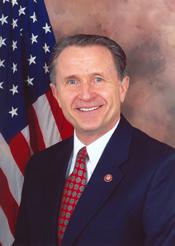
Mr. Speaker, I rise in strong support of H.R. 1904, the ``Healthy Forests Restoration Act of 2003.'' For the Northern California Congressional District I represent, this bill is long overdue. My…
Mr. Speaker, I rise in strong support of H.R. 1904, the ``Healthy Forests Restoration Act of 2003.'' For the Northern California Congressional District I represent, this bill is long overdue. My District comprises 5 national forests, and wildfires are an annual and growing threat. Each day, month and year that good forest management is stymied, communities are placed in greater danger.
Mr. Speaker, in my view, this bill doesn't go far enough to address our monumental and compounding forest health crisis. With 190 million acres of forests at risk, and only 2 million acres being treated annually, we have to do much, much more. But it takes an important first step forward in the face of tremendous resistance from the radical environmentalists. And I want to commend my colleagues-- Chairman Pombo, Chairman Goodlatte, Chairman McInnis and Congressman Walden--for their staunch leadership and dedication in fashioning a collaborative bill that is able to win a majority of the House and Senate. President Bush also deserves a great deal of credit and thanks for his efforts in bringing our growing forest health crisis to the attention of the American public, and to the forefront of our environmental policy debate.
An extraordinarily cumbersome environmental review process, which can delay forest health projects for years, has elevated the review ``process'' over good management and professional judgment. The Forest Service Chief, Dale Bosworth, testified to Congress that his agenda spends 40% of its time on planning and process activities. Litigation and an appeals process that is ripe for abuse have been utilized by radical environmental groups to stop community-supported forest health projects. A General Accounting Office study indicated that 59% of all projects eligible for appeal are appealed, the vast majority from radical environmental groups. The percentage is even higher in California. Meantime, our forests are literally burning up. Lives are being lost. Catastrophic fires are causing billions in property damage and costing the taxpayer billions in suppression and rehabilitation costs. Public health and safety demands that something be done.
For too long radical environmental groups have hijacked our forests to advance their own so-called ``environmental agenda.'' Their handiwork has contributed to an immense forest health crisis where lives and property are threatened, billions of taxpayer dollars are spent to suppress destructive fires--instead of on common sense forest health projects that could prevent them--and millions are wasted on endless environmental reviews and litigation. It's high time for the rest of us to take our forests back.
This bill will not solve this enormous and compounding crisis. But it takes an important step forward by streamlining environmental reviews and preventing abuses of the appeals process, which will allow urgently needed management to move forward in a small portion of our at-risk forests. It will give forest professionals the tools they desperately need, and provide positive momentum for continuing active management throughout all of our forests to restore them to a healthy condition, and address a very serious and growing threat to lives and property. I urge my colleagues to support it.
Mr. Speaker, my home state of California has just been through a terrible series of wildfires. The fires burned more than 800,000 acres, destroyed over 3,300 homes, caused over $12 billion in…
Mr. Speaker, my home state of California has just been through a terrible series of wildfires. The fires burned more than 800,000 acres, destroyed over 3,300 homes, caused over $12 billion in property damage, and tragically took the lives of 22 people.
What could have been done to prevent it? What should we do now to prevent such occurrences in the future?
The answer, it seems to me, is active management and control of overgrown areas near development, usually referred to as the Woodland- Urban Interface. This will go a long way to preventing fires from destroying homes and worse, killing our citizens.
We have a bill in front of us today, H.R. 1904, The Health Forests Initiative, that its proponents tell us will help prevent the kind of devastation that we endured in California.
This conference report is certainly better than the initial House version of the bill. In the House bill, money used for clearing would have had to come from nearby logging activities. In the chaparral of Southern California, there is no logging, and that means no removal of forest fuels would have occurred to protect our homes and our families.
The House-Senate compromise that is before us today is a step in the right direction. Most importantly, it provides $760 million to fund clearing forest fuels to prevent catastrophic wildfires. Nevertheless, there remain some fundamental problems with the bill.
First of all, the Healthy Forests Initiative is only effective for federal lands. Roughly two-thirds of the lands that burned in California was not federal land, and therefore would be unaffected by the healthy forests initiative.
Second, only half of the $760 million is set aside for forest clearing within 1\1/2\ miles of structures--the Wildlife-Urban Interface. The other half will go toward thinning in other areas. Moreover, where in the initial bill the clearing was paid for by nearby profitable logging, now we are giving $365 million to commercial loggers for these thinning activities. So, instead of asking logging companies to contribute their fair share to forest management and fire mitigation, we are subsidizing them to do it.
I am disappointed with this bill. We had an opportunity to craft a bipartisan bill, one that would have addressed the pressing issue of protecting lives and property in the Wildlife-Urban Interface. Instead, the Healthy Forests Initiative puts commercial logging interests ahead of protecting our vulnerable communities. Once again, the Republican- controlled Congress has it priorities all wrong.
While this bill does not sufficiently address this important priority, I am supporting an effort that does. I am working to provide more funding for community and individual-initiated and driven initiatives to clear fire fuels in their areas. We should be empowering local communities to clear these areas--they have the greatest knowledge of the environments in which they live, and the greatest personal stake in the success of these efforts. I am hopeful that this initiative will generate broad bipartisan support.
In the meantime, I regret that I must oppose the Health Forests Initiatives, principally because it uses a great deal of resources, but it won't do very much to make our Southern Californian forests any healthier.
Show 11 more
Mr. Speaker, I appreciate the yeoman's work of the chairman and the guidance of making sure that we could get this bill through. I also wish to acknowledge deeply the gentleman from Virginia's (Mr.…
Mr. Speaker, I appreciate the yeoman's work of the chairman and the guidance of making sure that we could get this bill through. I also wish to acknowledge deeply the gentleman from Virginia's (Mr. Goodlatte) service and especially the service of the staff who have worked so hard in making sure that we could come together on this side of the aisle so that when we approached this side of the aisle we had a package that had common sense. We had a package that people like the gentleman from Texas (Mr. Stenholm), the gentleman from California (Mr. George Miller), and the gentleman from Oregon (Mr. DeFazio) could come to the table and work with us on. And a lot of that was guided, a lot of the going back and forth was guided by someone who I consider an artist and that is the gentleman from Oregon (Mr. Walden), somebody who can negotiate between both the Republicans and the Democrats.
It was about 99 years ago when Teddy Roosevelt used his State of the Union address to urge Congress to create a national forest system to ensure proper stewardship of these tremendous assets that we have in our huge public lands. And by the way, I live in a district that has 23 million acres of public lands. It is fitting now that 99 years later, 99 years later we have one of the most significant pieces of forest legislation that has come in since.
What this piece of legislation does is over the 99 years we have seen the leadership, the guidance, the expertise and the science taken away from the Green Hats, who I complimentarily refer to as our Forest Service people, the people who understand the forests, the people who dream of running the forest, the people who have been educated in the forests. We have seen through some very tactical maneuvers their power and their authority taken by the Sierra Club-types and moved to the courts and moved to the Congress.
What this bill does is this bill allows this authority to go back to those people on a commonsense approach, on a balanced approach which is demonstrated by the fact that this will pass with bipartisan support, to let it go back to the Green Hats, to let the Forest Service manage those forests.
The passage of this legislation today means that the Congress, all of us are responding to the America forests health crisis, the crisis that was demonstrated recently in the State of California, the crisis which we have seen in the State of Oregon, the crisis through bug infestation, not just fires, but bug infestation down in the South. Storm King Mountain, the mountain that I grew up on, the mountain that I took bodies off of, we finally are responding and we are coming back. I am pleased that we are coming back and giving that authority where Theodore Roosevelt thought that authority ought to exist, and that is with the United States Forest Service.
Once again I want to compliment my colleagues on the Democratic side that have worked with us. And I want to point out those who have not. It amazes me that one like the gentleman from New York City (Mr. Hinchey) would stand up and make the kind of statements that he made and speak from a wooden podium. A little ironic.
This is a good bill. It is bipartisan, and it is going to make a big, big difference.
Madam Speaker, I would like to thank the gentleman from California (Mr. Lantos) for giving me the opportunity to speak and share my thoughts with my colleagues, and the gentleman from New Jersey (Mr.…
Madam Speaker, I would like to thank the gentleman from California (Mr. Lantos) for giving me the opportunity to speak and share my thoughts with my colleagues, and the gentleman from New Jersey (Mr. Smith) for being stellar on this issue.
I rise today, Madam Speaker, in strong support of House Resolution 453, condemning the terrorist attacks in Istanbul, Turkey, on November 15 of this year and expressing my sincerest condolences to the victims and their families.
This past Saturday, as they gathered together to observe the holy Sabbath, two explosions devastated the Jewish community in Istanbul, Turkey. The first occurred at the city's largest synagogue and symbolic center to the city's 25,000-member Jewish community and the second at Beth Israel synagogue about three miles away.
More than 20 people lost their lives and more than 300 were injured as terrorism, yet again, tore the fabric of civilized society and shattered innocent lives. Most of those killed in the blasts, ironically, were Muslim Turks who lived or worked near the synagogues who were passing by when the bombs exploded. This is not the first time that al-Qaeda has targeted the Jewish institutions. In 2002, they killed 12 people in an attack at a synagogue in Tunisia.
The Turkish Government immediately condemned the terrorist attacks in the strongest possible terms and I am pleased that the Turkish people have reacted in strong solidarity with the Nation's small and long- established Jewish community.
Madam Speaker, as a youngster growing up in Las Vegas, I belonged to the Jewish youth groups, and occasionally the Anti-Defamation League would bring in films of the liberation of the concentration camps in World War II. I cannot minimize the impact of those films and their impact on my life then and now. And I would sit there and watch the films and ask myself how could one human being do such a horrific thing to another, and how is it that more people throughout the world did not stand up and vilify this horrific act.
I am here in the United States of America because my grandparents walked across Europe in order to come to this country to escape the persecution that 6 million of my fellow Jews were unable to escape in World War II. For me to have the opportunity to be on the floor of the House of Representatives and not condemn this horrific act of terrorism would be a shame and an insult to not only the 20 people that lost their lives recently in Istanbul, but the millions of other people across the world, Jewish and not Jewish, who have lost their lives senselessly and needlessly to terrorists.
I call upon my colleagues to join us, and vote for this resolution taking a strong stance against bigotry and intolerance, racism and anti-Semitism, violence and terrorism. These are very difficult and challenging times that we are living through. But it is incumbent upon all Americans, we in the House of Representatives leading the way, to stand up and condemn this sort of activity before it becomes pervasive and matter of fact.

Mr. Speaker, I thank the gentleman from Texas for yielding me this time, and I thank all of the members of the Committee on Agriculture and the Committee on Resources who have put so much time and…
Mr. Speaker, I thank the gentleman from Texas for yielding me this time, and I thank all of the members of the Committee on Agriculture and the Committee on Resources who have put so much time and effort into this. Yes, it was a long process, but I believe that a good result is worth the work. I wish we had got it done a year ago; but, hey, we are now finally going to get something in place long ahead of next year's fire season.
This bill, if properly implemented, will begin to carefully undo 100 years of mismanagement of our national forests. It recognizes that this is going to be a long and expensive process. It recognizes that it cannot be done for nothing. This bill includes a $760 million-a-year authorization. I think we could even go higher. Mr. Speaker, $1 billion a year could be productively spent in the West, given the magnitude of the problem; but it is a significant increase over the commitments we are currently making.
It will bring jobs to hard-hit rural areas in the forests. It sets a priority that half the funds should be spent in proximity to high-risk communities in the West, and it also sets priorities for protection of other high-value resources in high-risk areas.
If properly implemented and fully funded, I believe that we can begin to step incrementally away from the catastrophic, or potentially catastrophic,
conditions that exist throughout the West today.
It contains old-growth language that clearly reflects the intent of Congress that the objective is to return the forests to presettlement conditions, which means there will be large, fire-resistant trees more widely spaced, particularly in the inter-mountain areas; that we would leave native stands intact, but we would aggressively thin from below. We would remove ladder fuels, we would remove trees that are growing into the crowns of the larger trees.
I mentioned earlier the Davis fire in Oregon and the lodgepole that carried the fire into the crowns of the Ponderosa, that would have survived the fire otherwise, had we gotten in there and removed those lodgepoles, which have little commercial value. That is why this program will be expensive. In many areas, what needs to be removed has little or no commercial value. Where it has commercial value, we will use that to offset the costs and to amplify the program.
It does not unduly restrict the right of appeal. It does require that people participate meaningfully in the process if they are going to appeal, and that is the way it should be. I want people to be involved from the beginning in communities, meaningfully commenting on the plans and proposals of the Forest Service. It allows judicial review if the bill is misapplied by this or any future administration.
But it will move the process along, and we will begin to chip away at the backlog. But make no mistake, even if we get the $760 million a year, this is going to take a long time to return our forests to their natural state.

Mr. Speaker, I yield myself 2 minutes. I am glad that the gentleman from Washington (Mr. Inslee) claimed the time in opposition to this because I think it is important for everyone to see just how…
Mr. Speaker, I yield myself 2 minutes.
I am glad that the gentleman from Washington (Mr. Inslee) claimed the time in opposition to this because I think it is important for everyone to see just how difficult this bill has been to finally arrive at this point of developing a bill and a conference report that is so widely supported in both this Chamber and the Chamber across the Capitol, that we have brought together such divergent interests, so many people who may have initially opposed this bill that are now on board because of the great compromise that was reached to bring this bill to the floor.
The history behind the Healthy Forests initiative, it has been, I think, 8 years now since the very first bill was introduced and the work began to finally get to this point, and we have gone through, I believe, close to 75 hearings in Committee on Resources alone on this legislation. There has been a countless number of people that have testified, and we have gone back and forth. And these past 3 years, we actually have to give a lot of credit to two of my colleagues in the House, the gentleman from Colorado (Mr. McInnis), subcommittee chairman, and the gentleman from Oregon (Mr. Walden) for the work that they did in pulling together with all of the different interests to bring something together, the gentleman from California (Mr. George Miller), former ranking member on the committee, and the gentleman from Oregon (Mr. DeFazio) and others to put together a bill that was really a great balance between so many different interests. And I found with interest the gentleman from Washington's (Mr. Inslee) talk about a particular tree and saying that we need to resolve on the floor of the House whether or not that should be cut down. I have got to tell him, we do not know. That is the job of the professional foresters. The focus of this bill is to go out into the forests and let the professionals, the scientists, the people who really do understand what is going on out there, have them decide where the best place to do thinning projects is, not on the floor of the House. That is ridiculous to think that we on the floor of the House should be doing that.
But this is a grand compromise. It is a great bill, and I urge my colleague to support it.
Mr. Speaker, I yield 1 minute to the gentleman from California (Mr. Lewis).
Mr. Speaker, I yield 1 minute to the gentleman from Arizona (Mr. Hayworth).
Mr. Speaker, I yield 1 minute to the gentleman from Arizona (Mr. Renzi), who brought a renewed vigor to this debate.
Mr. Speaker, I yield 2 minutes to the gentleman from Oregon (Mr. Walden), the coauthor of the legislation.
Mr. Speaker, I have one additional speaker to close.
Mr. Speaker, I reserve the balance of my time.
Mr. Speaker, I yield the balance of our time to the gentleman from Colorado (Mr. McInnis), the subcommittee chairman and co-author of the legislation.
Mr. Speaker, this is an example of not just an act that will destroy good policy, but it also destroys the language; and it is consistent with the kind of thing that has been happening here recently,…
Mr. Speaker, this is an example of not just an act that will destroy good policy, but it also destroys the language; and it is consistent with the kind of thing that has been happening here recently, particularly with regard to environmental policy.
What is the name of this bill? The Healthy Forest Restoration Act. It reminds me very much of the Clear Skies Initiative that the President was pushing and the majority in this House was solidly behind. What did we get from the Clear Skies Initiative? Increased greenhouse gases, increased acid rain, a big gift to the polluters so that they do not have to upgrade their equipment. The same kind of thing occurs here.
The rationale behind this legislation as it is stated is that we need this act in order to carry out thinning processes in places where fires are likely to occur. Now, one would have the idea, based upon that, that these thinning processes are being held up. That is what they want us to believe, these thinning processes are being held up by litigation and things of that nature.
Well, what does the General Accounting Office say? The General Accounting Office has a lot of credibility around here. The General Accounting Office tells us that the appeals and litigation are not slowing thinning projects at all. In fact, 92 percent of the thinning projects are being completed without delay.
Now, why, then, are we engaged in this?
Well, the real reason is, just like under the Clear Skies Initiative, we were not interested in cleaning up the skies, and here we are not interested in healthy forests. What we are interested in is a big giveaway to the people who want to go out and cut down the trees that are on public land. That is what this is all about.
Now, another interesting aspect of it to me is a lot of people in this House who are dead set against any activity by the Federal Government, they want the Federal Government out of everything. Now, however, under this piece of legislation it is, no problem, just give them this authority, trust the administration, trust the Federal Government. They will do everything right. Totally inconsistent, obviously.
So what else does this bad bill do? It fails to focus on projects in communities that are actually in need of protection. It undercuts NEPA by eliminating the requirement to consider a full range of reasonable alternatives. It fails to treat or provide assistance to State, tribal, and private lands. It throws up unprecedented roadblocks to citizens across the country and their access to the courts, and it is a direct threat to the independence of the judiciary in this country on this specific issue. It curtails the rights to appeal bad projects and authorizes a new appeals process with no sideboards to be created by the Secretary.
This is an example of a bad bill and specious arguments driving bad policy.
Mr. Speaker, I rise today in support of H.R. 1904, the Healthy Forest Restoration Act. I would like to thank leadership for allowing this long overdue bill to come to the floor today, and most…
Mr. Speaker, I rise today in support of H.R. 1904, the Healthy Forest Restoration Act. I would like to thank leadership for allowing this long overdue bill to come to the floor today, and most importantly, I would like to thank Forest Subcommittee Chairman Scott McInnis, whose hard work and dedication this bill has brought us to this point today.
Mr. Speaker, there are many reasons to cut through the current procedural and bureaucratic thicket that has engulfed the U.S. Forest Service. It is time to eliminate the ``analysis paralysis'' of administrative appeals and litigation that has heretofore prevented the U.S. Forest Service from conducting badly needed thinning projects that are needed to protect communities and wildlife.
The fires of the last few years have ravaged the west. My district was no exception, where the 137,000 acre Hayman Fire tore through the Pike National Forest last year. That wildfire--the largest and most destructive in state history--burned homes, fouled streams and reservoirs, and may even have pushed an endangered butterfly into extinction. Fires like these have proven once and for all that no management on our public lands, is bad management.
Unfortunately, much of the destruction caused by these fires is attributable to the bureaucracy, appeals, and red tape that have hamstrung land managers for years. The Hayman Fire, for example, occurred in part in an area slated for treatment. Unfortunately, the treatments took years to plan because of arcane procedural rules, and were then further held up by frivolous appeals filed by a host of environmental groups. Before the treatments could begin, the fires reduced the area to ashes. This bill will seek to streamline that process, and curtail frivolous litigation so that we can avoid the large scale environmental devastation caused by these catastrophic fires in the future. In addition, the bill will help reduce costs to the American taxpayer.
The cost to extinguish these abnormally massive fires to protect communities and their water supplies has cost more than $1 billion. With the passage of H.R. 1904, rather than continuing to treat the expensive symptoms of this dangerous buildup of dead and diseased trees in our forests--we will finally get at the root cause of the problem.
Mr. Speaker, I believe every dollar we spent on a thinning project that prevents a fire, is several dollars saved in suppression and first responder costs when the fire starts. Restoring our forests to a healthier state by clearing out dead fuel and bug-infested trees before they feed wildfires isn't just good environmental policy, it's good fiscal policy too.

Mr. Speaker, the problem of forest fires in the West that are aggravated, in some cases caused, by human mismanagement has been a problem as long as I have been in Congress. I am pleased that with…
Mr. Speaker, the problem of forest fires in the West that are aggravated, in some cases caused, by human mismanagement has been a problem as long as I have been in Congress. I am pleased that with the work of Oregonians Representative Peter DeFazio, Senator Ron Wyden and Representative Greg Walden, the bill that's moving forward is better than the bill I voted against in the past.
I wish I could vote for H.R. 1904 in good conscience, but it still has three fundamental problems. First, the procedural fix far exceeds any procedural problem. This bill would undermine the National Environmental Protection Act, the judicial process, and the system of administrative appeals to fix a perceived problem of too many projects being tied up in environmental litigation. However, the Government Accounting Office estimates that only 1 percent of forest management projects have been tied up in litigation. This type of sweeping procedural change is unnecessary.
Second, the bill opens up our forests to much broader timber harvest. This should be debated on its own merits and not under the guise of forest health and fire prevention. If we want to substantially increase timber harvest on Federal lands we ought to be clear and deal with it directly.
Last, and most troubling of all for me, is that this bill does not adequately protect families whose lives and property are at risk because of forest fire hazard. This bill does not focus our resources on the interface between residential properties and forest land, in what we are coming to know as the ``flame zone.'' Focused hazardous fuel reduction around communities could substantially reduce the risk of fire damage by providing a buffer to help slow and stop advancing fires.
This is a better bill than before but it is still a missed opportunity. To adequately protect families and businesses we need to take a few, simple, proactive steps. We need to strengthen building codes and insurance requirements for ``firewise'' construction and ``defensible space'' landscaping. According to Forest Service scientists, these precautions can increase a home's ability to survive a wildfire by more than 90 percent. We need to educate homeowners of the dangers before wildfires start so they can adequately prepare, and make informed choices on where to live. We need to implement smart land-use planning that guides development away from fire-prone areas. And, we need to provide affordable, livable housing options for families away from danger.
Mr. Speaker, I rise in opposition to the conference report. Others will come to the floor to discuss the threat of wild fire to the health and general welfare of segments of the American population.…
Mr. Speaker, I rise in opposition to the conference report. Others will come to the floor to discuss the threat of wild fire to the health and general welfare of segments of the American population.
Others will come to the floor to discuss other elements of this legislation, such as its provisions concerning insect infestation which threatens some of our forests and forest industries.
I am not unmindful of the need to address the issues raised by the bill, but in our view, we would do so in a more prudent and responsible manner.
There is one issue in the pending legislation, however, which transcends the debate over forest fires and forest health: the independence of our judiciary and the right of Americans to seek redress from the courts when they believe they are aggrieved by a governmental action.
Indeed, the judicial review provisions of this bill would set a dangerous precedent for anybody concerned with civil liberties, civil rights, workers' rights and any other issue that may come before our judiciary.
Simply put, this legislation curtails access to the courts by American citizens by limiting where challenges can be brought, by whom, and on what issues.
This legislation interferes with how judges run their courtrooms. It arbitrarily requires courts to lift injunctions and stays after 60 days unless affirmatively renewed by the court.
A dangerous precedent and very bad policy. Our Constitution clearly delineates three branches of government. This conference report tramples on that tenant of our Constitution.
Incredible. Simply incredible.
This bill tells the court that litigation involving thinning trees is more important than prosecuting suspected Al Qaeda terrorists.
To judge suits over forest thinning projects more important than all other civil cases, let alone criminal cases, is seriously misguided. To make this policy law is absurd.
I have been here long enough to remember when conservatives did not trust the federal government and did not endorse expanded and unchecked federal powers.
It is unfortunate, it really is, that the sponsors of this bill chose to inject this controversial attack on the independence of our judiciary in a measure of this nature.
These provisions are a poison pill, and do a disservice to our addressing issues such as forest insect infestation and forest fires in a prudent and responsible fashion.
Madam Speaker, I want to also thank my good friend and close associate, the gentleman from Florida (Mr. Hastings), and my colleagues on the Congressional Turkey Caucus for initiating this vitally…
Madam Speaker, I want to also thank my good friend and close associate, the gentleman from Florida (Mr. Hastings), and my colleagues on the Congressional Turkey Caucus for initiating this vitally important resolution condemning the horrific terrorist attacks in Turkey over the past week. I also want to thank the gentleman from Illinois (Chairman Hyde), the gentleman from California (Ranking Member Lantos),
the gentleman from New Jersey (Mr. Smith), for especially expeditiously bringing this very important resolution to the Floor.
I rise to express my most profound and heartfelt condolences to the Turkish people and to the Turkish Government on the terrorist attacks in Istanbul and pledge the support of each Member of Congress as we listen to this debate in the full Congress to bring to justice those individuals responsible for these heinous acts. Americans know all too well the horrors of terror, and today we mourn with the Turkish and British people for this senseless loss of life.
Madam Speaker, the recent bombings in Turkey epitomize the fact that terrorism knows no boundaries and does not distinguish between religion, nation or culture. What these attacks demonstrate the common thread of terror facing the United States, Turkey, and our allies throughout the world. They also serve as a solemn reminder of our Nation's shared principles of democracy, freedom, tolerance, and the pursuit of peace.
For over 50 years Turkey has stood shoulder to shoulder with the United States as a valued strategic partner, Nato ally, and friend. It is in this same spirit of partnership that the United States and the American people stand today with the Turkish people, ready to assist in punishing those murderers who carried out these cowardly actions. Together we will continue our pursuit of justice so that we may ensure that all victims of terror, whether in Turkey, the United States or elsewhere throughout the world, will not have died in vain.
As the gentleman from Florida (Mr. Hastings) stated earlier, I too have had the privilege of visiting Turkey on many occasions. The Turkish people are a warm and caring people. They have great national pride, they are patriots. That will continue. And we, the American people, must continue to assist them in their pursuit of terrorism within their boundaries.

Mr. Speaker, I rise in strong support of this conference report. And I was told that I had to spend my entire 2 minutes praising the gentleman from Texas (Mr. Stenholm), but I am going to instead…
Mr. Speaker, I rise in strong support of this conference report. And I was told that I had to spend my entire 2 minutes praising the gentleman from Texas (Mr. Stenholm), but I am going to instead talk about the benefits of this bill. And I want to compliment my colleague, the gentleman from California (Mr. Pombo), and the chairman of the conference, our good friend, the gentleman from Virginia (Mr. Goodlatte), the chairman of the Committee on Agriculture, the gentleman from Oregon (Mr. Walden), and others who have been so involved in this measure.
I happen to represent the Los Angeles area in southern California. And the world knows that we have just suffered devastating fires in the southern California area. It impacted the districts of my colleague, the gentleman from California (Mr. Lewis) who represents the area in the Inland Empire to the east of Los Angeles, further east of the area I represent, and several others of our colleagues in San Diego. I know that my colleague, the gentleman from California (Mr. Hunter), as we all know, lost his home. And this impacted the district of the gentleman from California (Mr. Cunningham). And I can go through the litany of our colleagues. Many members of the California delegation had their districts impacted by this. We lost lives, we lost a tremendous, tremendous amount of property. I lost in excess of 50 homes in the area that I represent.
And I was very pleased when the gentleman from Virginia (Mr. Goodlatte) was before the Committee on Rules yesterday and talked about the fact that within this measure we will be able to have resources to deal with things like the bark beetle which has played a role in creating a problem in southern California when these trees were not cleared. And that played a role in starting these fires.
We know that some resources were provided through the Department of Agriculture to deal with this, but it was not handled appropriately from the reports that we had from the head of the Office of Emergency Services there. It is important for us to do everything that we can to ensure that the loss of life and property is diminished. I am convinced that passage of this conference report will go a long way towards doing just that. And I thank all my friends who played such an important role in making this happen.

Mr. Speaker, this legislation provides for major improvements in how we will manage our forests. First of all, it reduces unneeded government analysis. Second, it provides for actually more public…
Mr. Speaker, this legislation provides for major improvements in how we will manage our forests. First of all, it reduces unneeded government analysis. Second, it provides for actually more public involvement, especially in the beginning, through better notice and better participation requirements. It requires and reforms the appeals process so we can end the costly delays that do keep our professional foresters from doing the work they need to do to make our forests more healthy.
Finally, it does require the courts to more quickly move on appeals and, more importantly, consider the catastrophic affect on forest health of preventing these projects from going forward.
Now, we have heard today about the problem with the General Accounting Office, but let us talk about what the General Accounting Office actually found. This is what the GAO report found: 58 percent of eligible thinning projects in the United States were appealed in fiscal year 2001 and fiscal year 2002. Fifty-two percent of the eligible forest thinning projects proposed near communities in the wildland urban interface were appealed. Half the projects, half the projects right around communities were appealed. The GAO found an overwhelming number of Forest Service appeals were found to be without merit. Seventy-three percent of the appeals were rejected.
Ladies and gentlemen, we have to change the process. That is what we are doing today. We are going to fund the work that needs to be done. This year alone we are going to spend $420 million to go in and thin out our forests so we will not have catastrophic fires in the future. I would like to see this bill expanded beyond 11 percent of the forests that need this kind of treatment, but that is as far as we could get under this act. I want to see our communities protected.
This legislation relies on the underlying National Forest management plans to protect old growth forests. My colleague, the gentleman from Washington (Mr. Inslee) talks about protecting old growth. We do that in this bill because the underlying plans protect the old growth. And the alternative of defeating this bill is to have old growth forests that are blackened, burned and destroyed, and I will not stand for that. Vote for the bill.
Bill Text
2 versions available
        [Congressional Bills 108th Congress]
[From the U.S. Government Publishing Office]
[H. Res. 453 Engrossed in House (EH)]

In the House of Representatives, U.S.,

November 21, 2003.
Whereas in Istanbul, Turkey, on November 15, 2003, two explosions, set off
minutes apart during Sabbath morning services, devastated Neve Shalom,
the city's largest synagogue, and the Beth Israel synagogue, about three
miles away;
Whereas more than 20 people, both Muslims and Jews, were killed, and more than
300 people, both Muslims and Jews, were wounded, in the bombing attacks
on the synagogues;
Whereas on November 20, 2003, two bombs exploded at the Consulate of the United
Kingdom in Istanbul and at the HSBC Bank;
Whereas among the more than 25 killed and 450 wounded in the November 20 bombing
attacks on the consulate general and commercial buildings were Muslims
and Christians--Turks, British diplomats, and visitors to the Turkish
Republic;
Whereas the United Kingdom is an ally of the United States and Turkey in the
global war on terrorism;
Whereas the acts of murder committed on November 15 and 20, 2003, in Istanbul,
Turkey, were cowardly and brutal manifestations of international
terrorism;
Whereas the Government of Turkey immediately condemned the terrorist attacks in
the strongest possible terms and has vowed to bring the perpetrators to
justice at all costs;
Whereas the United States, the United Kingdom, and Turkey equally abhor and
denounce these hateful, repugnant, and loathsome acts of terrorism;
Whereas with anti-Semitic activities escalating the safety and security of
Jewish people throughout the world is a matter of serious concern;
Whereas since Turkey cherishes its traditions of hospitality and religious
tolerance and in particular its history of more than five hundred years
of good Jewish-Muslim relations, the attacks on synagogues and consular
premises came as a special shock to the Turkish people and to their
friends throughout the world;
Whereas the United States and Turkey are allied by shared values and a common
interest in building a stable, peaceful, and prosperous world;
Whereas Turkey, a predominantly Muslim nation with a seculargovernment, has
close relations with Israel and is also the only predominantly Muslim
member of the North Atlantic Treaty Organization; and
Whereas the acts of murder committed on November 15 and 20,2003 show again that
terrorism respects neither boundaries nor borders: Now, therefore, be it
Resolved, That the House of Representatives--
(1) condemns in the strongest possible terms the terrorist attacks
in Istanbul, Turkey, on November 15 and 20, 2003;
(2) expresses its condolences to the families of the individuals
murdered in the terrorist attacks, expresses its sympathies to the
individuals injured in the attacks, and conveys its hope for the rapid
and complete recovery of all such injured individuals;
(3) expresses its condolences to the people and government of the
Turkish Republic and of the United Kingdom over the losses they have
suffered; and
(4) expresses its solidarity with the United Kingdom, the Turkish
Republic, and all other countries which stand united against terrorism
and which work together to bring to justice the perpetrators of these
and other terrorist attacks.
Attest:

Clerk.