H.Res. 463
Waiving points of order against the conference report to accompany the bill (H.R. 1) to amend title XVIII of the Social Security Act to provide for a voluntary program for prescription drug coverage under the Medicare Program, to modernize the Medicare Program, to amend the Internal Revenue Code of 1986 to allow a deduction to individuals for amounts contributed to health savings security accounts and health savings accounts, to provide for the disposition of unused health benefits in cafeteria plans and flexible spending arrangements, and for other purposes.
Show full titleHide full title
Legislative Activity
Stay on top of the latest movement without scrolling through every action
Motion to reconsider laid on the table Agreed to without objection.
November 21, 2003 • 11:26 PM
View full timeline
Introduced in House
November 21, 2003
The House Committee on Rules reported an original measure, H. Rept. 108-394, by Ms. Pryce (OH).
November 21, 2003
Rule provides for consideration of the conference report to H.R. 1 with 1 hour of general debate.
November 21, 2003 • 3:41 PM
Placed on the House Calendar, Calendar No. 136.
November 21, 2003
Considered as privileged matter. (consideration: CR H12230-12246)
November 21, 2003 • 9:36 PM
DEBATE - The House proceeded with one hour of debate on H. Res. 463.
November 21, 2003 • 9:37 PM
DEBATE - The House resumed debate on H. Res. 463.
November 21, 2003 • 10:48 PM
On ordering the previous question Agreed to by the Yeas and Nays: 228 - 204 (Roll no. 665).
November 21, 2003 • 11:17 PM
Passed/agreed to in House: On agreeing to the resolution Agreed to by recorded vote: 225 - 205 (Roll no. 666).(text: CR H12230)
November 21, 2003 • 11:26 PM
On agreeing to the resolution Agreed to by recorded vote: 225 - 205 (Roll no. 666). (text: CR H12230)
November 21, 2003 • 11:26 PM
Motion to reconsider laid on the table Agreed to without objection.
November 21, 2003 • 11:26 PM
Voting History
2 votes recorded • Roll call available
Floor Debate
24 membersWhat members said about H.Res. 463 on the floor
DP LMS
LMS BLC
BLC STJ
STJ CWB+19
Floor Debate
24 membersWhat members said about H.Res. 463 on the floor
Mr. Speaker, by direction of the Committee on Rules, I call up House Resolution 463 and ask for its immediate consideration. Mr. Speaker, for the purpose of debate only, I yield the customary 30…
Mr. Speaker, by direction of the Committee on Rules, I call up House Resolution 463 and ask for its immediate consideration.
Mr. Speaker, for the purpose of debate only, I yield the customary 30 minutes to my colleague and friend, the gentlewoman from New York (Ms. Slaughter), pending which I yield myself such time as I may consume. During consideration of this resolution, all time yielded is for the purpose of debate only.
Mr. Speaker, H. Res. 463 is a standard rule waiving all points of order against the conference report to accompany H.R. 1, the Prescription Drug and Medicare Modernization Act of 2003. The rule also waives all points of order against its consideration.
Mr. Speaker, I rise today in full support of the rule and of the underlying bill. I would like to thank Chairman Thomas and Chairman Tauzin for their outstanding coordination, their remarkable leadership, and the inspiring vision that they have provided on this critical legislation. The conferees have all worked extraordinarily hard to
produce the most sweeping Medicare bill in generations.
Since 1965, Medicare has provided a guarantee of health care coverage for most all Americans. Stability, longevity, and integrity have been the hallmarks of this program, offering the promise of a secure retirement. But a lot has changed since 1965. Our investment in research and medicine has yielded us advanced medications, therapies, and technology that have paved the way for our seniors to live longer, healthier lives. Unfortunately, Medicare has not changed with these medical advancements. The most obvious shortcoming is the lack of prescription drug coverage, the best tool medicine has to offer.
Before us today is an opportunity to pass landmark legislation that addresses these shortcomings and finally propels the program of Medicare into the 21st century, most notably by covering these prescription drugs. If we do not act and pass this plan before us today, the future of our seniors will be in doubt, with their happy and healthy lives uncertain. And if we do not act today, the fate of Medicare will be certain: bankruptcy.
So today we will accomplish two long overdue goals. First, we will strengthen Medicare to save it for future seniors; and, second, we will enhance the program by providing much-needed prescription drug coverage, bringing this 1965 health care program into the 21st century. And to those who are telling us to slow down, I say seniors have waited too long. This House has passed a Medicare prescription drug plan three times since Republicans have controlled Congress, each time only to be scuttled. Today we will finally end the denial of benefits to our seniors and end the delay.
Folks in my district tell me that they cannot go another year without the help of Medicare prescription drug coverage. They want us to speed up the process. They tell me that when you are sick and you are elderly, Medicare is not just health care; it is peace of mind. Well, we listened and we acted, producing this historic package.
Our seniors are not the only ones who have spoken out in support of this plan. Let me tell you, some very knowledgeable folks on the front lines of health care delivery, people who understand the needs of our seniors and the problems with Medicare, have made their support for this bill very clear. Allow me to name just a few: the American Association of Retired Persons, the AARP, the largest senior group in the Nation representing 35 million seniors, card-carrying, dues-paying, voting seniors; the American Medical Association; the American Hospitals Association; employers Coalition on Medicare; the Alzheimer's Association; American Society of Radiology and Oncology; Rural Hospital Coalition; National Hospice and Palliative Care Organization; the College of Obstetrics and Gynecology; American Society of Anesthesiologists; American Physical Therapy Association; pathologists; nurse practitioners. The list goes on and on. It includes hundreds and hundreds of supporters. They back this plan because they know how important and long overdue it is, plain and simple.
There are many reasons to vote for this package, but I want to call attention to a few that are significant. First of all, this prescription drug plan is voluntary, universal, and guaranteed. Period. If you are over 65 and you qualify for Medicare, you qualify for this benefit. If you want it, you can have it. If you do not, you do not have to take it. With this benefit, 40 million seniors will begin receiving significant savings on their medications.
To begin with, we offer immediate savings with the prescription drug discount card that will offer up to 25 percent in savings early next year. This drug discount card is a tremendous first step while the larger benefit is implemented.
After the drug is fully phased in in 2006 it will work like this: After a $250 deductible, Medicare will pay 75 percent of seniors' drug cost up to $2,250 a year. Medicare will then provide catastrophic protection, giving seniors 95 percent coverage for out-of-pocket drug costs. That is beyond $3,600. On average this reduces seniors' cost of medication by 50 percent.
This package also switches the focus of health care from reactive disease treatment to proactive disease prevention. The old saying ``an ounce of prevention is worth a pound of cure'' could not be more appropriate in this instance. Gone are the days of waiting until the symptoms are so obvious and the disease is so advanced that the only options are expensive hospital stays and surgeries.
Twenty-first century medicine can prevent, preempt, and predict illnesses through advanced screenings and innovative tests. In many cases taking a pill is all that it takes to prevent a chronic disease from becoming a life-threatening illness. Medicare will cover the preventative medications that keep our seniors out of the hospitals and off of the operating tables. And with this revolutionary shift in focus, Medicare will cover the $20 prescription before the $6,000 surgery even becomes necessary. That is not only real savings for the American taxpayer, but it is a real life savings for our seniors.
This landmark bill improves health care for our seniors, especially those who need it most, through significantly increased assistance for so-called ``disproportionate share hospitals.'' Such hospitals, as the term implies, care for a disproportionate share of low-income patients, and the last thing they need is funding cuts. Under this plan the hospitals will see a significant increase and allow them to care for these low-income families and seniors.
In addition to its strong commitment to our lower-income seniors in general, the plan is particularly good news for women. Since women make up a majority of Medicare beneficiaries and tend to suffer more from chronic illnesses, this landmark improvement in the Medicare system will radically change their lives for better. Half of the senior women who are under Medicare will receive complete drug coverage, an extraordinary step forward for these women who are suffering unnecessarily high drug cost burdens even as we speak. The disease management aspect of this bill will help prevent the progression of the chronic illnesses from which a majority of senior women suffer.
Clearly, this plan means a better life for women and for all of our seniors, but it also will lessen the burden upon the Medicare program by creating a health savings account. Health savings accounts allow forward-thinking and penny-wise workers to start saving for their future medical costs tax free. These accounts are allowed to grow without burdensome taxation, providing all Americans with the opportunity to save for their own future medical expenses. Who can argue with the promotion of these strong values, values like personal responsibility, savings, financial discipline? These things have been gone from our health care delivery system for decades now. It is time we bring them back. And who can argue against a voluntary program that relieves the financial burden of Medicare and the taxpayers who fund it?
Finally, this package includes a provision that I have championed for many years. Under the current system, anticancer drugs are only covered if they are injected or intravenously delivered. But today with the new advances in cancer therapy, many anticancer drugs can be taken orally, and, therefore, are not covered by Medicare. This plan begins to change that finally.
The plan will deliver the comforting pain-relieving and cancer-curing drugs that these patients so desperately need to deal with their illnesses. They need these medications now, and they are going to start to get them now.
Mr. Speaker, there is a value attached to this legislation that resonates not only among our seniors but to all Americans. The value is the freedom to choose the plan that works best for someone in their own situation. Each senior is different with different needs and different family situations. With this plan these differences can, for the first time, be honored. Seniors who are happy with traditional Medicare in their current coverage are free to stay where they are, but if they choose, seniors will have many options available to them and they will be able to pick the coverage that best meets their health care needs. If they are not
content with the current coverage, they can choose from other plans to save on their medications and preventative care. This is a win-win solution, a commonsense approach. So today the vote is simple. It is either ``yes'' in favor of millions of seniors who plead for us to pass this bill, or it is another ``no,'' another ``no'' in favor of politics, another ``no'' in favor of partisanship, another ``no'' with an eye toward the upcoming election. In short, another ``no'' against American senior citizens and against the future viability of the Medicare system upon which they rely. Members can choose to listen to the seniors who are asking them to put partisanship, politics and election strategy aside, or they can oppose this bill.
But to those of my colleagues who plan to vote ``no,'' I would ask: How is this package not an improvement for our seniors who have no coverage and are struggling to pay for their medications? Why would they rather give our seniors nothing at all than give them this plan that will help them? How will they explain that to future generations, their children, their grandchildren why they did not support bringing Medicare up to speed with their generation and their needs?
I remember the opponents of the tremendously successful welfare reform of 1996. They predicted doomsday scenarios, millions of women and children out on the streets starving. The reality is that 7 years later, the welfare rolls have dropped from 14 million to 5 million. The reality is that welfare reform made the American Dream possible for millions of Americans who were previously trapped in generational cycles of poverty and helplessness.
These same naysayers are making the same claims about this Medicare plan today. I say to my friends, their shouts, their cries, their failed predictions were myths in 1996 and they are myths today. To those who plan to vote against strengthening America, I urge them to be bold, to exercise leadership and show courage by propelling America's health care system into the 21st Century. Vote for this bill. If the Members think this bill does good but does not go far enough to help our seniors, then I ask them to support it and let us work together to improve it in the future. Do not let the perfect become enemy of the very good. Our seniors deserve our support, all of our support.
I urge this Congress to pass the underlying bill, but first of all, let us pass this rule.
Mr. Speaker, I reserve the balance of my time.
Mr. Speaker, I yield such time as he may consume to the gentleman from California, the chairman of the Committee on Rules (Mr. Dreier).
Mr. Speaker, I am very pleased to yield 2 minutes to the gentleman from Florida (Mr. Lincoln Diaz-Balart), my friend and colleague from our Committee on Rules.
Mr. Speaker, I yield 3 minutes to gentleman from California (Mr. Dreier), the very distinguished Chairman of the Rules Committee.
(Mr. Dreier asked and was given permission to revise and extend his remarks.)
Mr. Speaker, I yield 3 minutes to the gentleman from Washington (Mr. Hastings), my friend from our Committee on Rules.
Mr. Speaker, I yield 2\1/2\ minutes to the gentleman from the State of New York (Mr. Reynolds), my very good friend from the Committee on Rules.
(Mr. REYNOLDS asked and was given permission to revise and extend his remarks.)
Mr. Speaker, I yield 1 minute to the gentleman from Indiana (Mr. Burton).
Mr. Speaker, I yield 2 minutes to the gentleman from the State of Florida (Mr. Shaw), from the Committee on Ways and Means, who worked so hard on this bill.
(Mr. SHAW asked and was given permission to revise and extend his remarks.)
Mr. Speaker, I yield for a unanimous consent request to the gentleman from Florida (Mr. Shaw), a member of the Committee on Ways and Means.
(Mr. SHAW asked and was given permission to revise and extend his remarks, and include extraneous material.)
I have one remaining speaker.
Mr. Speaker, will the gentleman yield?
Mr. Speaker, I appreciate that. Earlier today, and once again now, a statement was placed in front of me, a statement which was a long, drawn out document, and he was asking me to explain it, and it is very unfortunate that we were not provided with that in advance.
Mr. Speaker, may I inquire as to the time remaining and how many speakers the gentlewoman from New York has?
I have one speaker.
Mr. Speaker, I am very pleased to yield 2 minutes to the gentlewoman from West Virginia (Mrs. Capito), my friend and colleague.
Mr. Speaker, I yield myself such time as I may consume.
We have heard a lot of rhetoric tonight, as the gentlewoman from West Virginia (Mrs. Capito) mentioned. You would think we were talking about different bills. But the truth is the 35 million seniors that the AARP represents cannot be wrong. This bill is what America's seniors need. They know it and we know it. We have heard them.
And let me remind my colleagues that we have before us today a historic opportunity, an opportunity to make the most sweeping changes to the outdated Medicare program since it began in 1965. Bring our seniors the financial relief and the lifesaving medications that they so desperately need and deserve. Support this rule and the bipartisan legislation that it supports.
The text of the amendment referred to previously by Ms. Slaughter is as follows:
Strike all after the resolving clause and insert in lieu
thereof the following:
``That upon adoption of this resolution it shall be in
order to consider the conference report to accompany the bill
(H.R. 1) to amend title XVIII of the Social Security Act to
provide for a voluntary program for prescription drug
coverage under the Medicare Program, to modernize the
Medicare Program, to amend the Internal Revenue Code of 1986
to allow a deduction to individuals for amounts contributed
to health savings security accounts and health savings
accounts, to provide for the disposition of unused health
benefits in cafeteria plans and flexible spending
arrangements, and for other purposes. All points of order
against the conference report and against its consideration
(except those arising under clause 8(a)(1)(A) of rule XXII)
are waived.''
Mr. Speaker, I yield back the balance of my time, and I move the previous question on the resolution.
Mr. Speaker, I yield myself such time as I may consume. (Ms. SLAUGHTER asked and was given permission to revise and extend her remarks.) Mr. Speaker, I thank the gentlewoman from Ohio for yielding me…
Mr. Speaker, I yield myself such time as I may consume.
(Ms. SLAUGHTER asked and was given permission to revise and extend her remarks.)
Mr. Speaker, I thank the gentlewoman from Ohio for yielding me the customary 30 minutes.
Mr. Speaker, I want to repeat something I said earlier today when I heard the long list of people who support this bill. We have to ask ourselves do they know what in the world is in it? Because we certainly do not.
Seniors, we do know, are drowning from the high cost of prescription drugs and the Republicans are telling them to swim towards an HMO. To paraphrase the old saying, ``Congress giveth and Congress taketh away,'' but in this case it mostly takes away. Congress takes away any hope for meaningful prescription drug coverage. It takes away the existing employer-provided benefits and low-income protections from retirees, and it takes away Medicare as we know it. It lures seniors with the promise of generosity and then gives them a pittance. But when this bill does give, it is wonderfully generous.
The Medicare Prescription Drug and Modernization Act is a boon for the pharmaceutical industry and for the insurance companies but does absolutely nothing to control the skyrocketing prices of prescription drugs. In fact, the bill forbids the government from doing anything about it.
Drug prices have risen dramatically in the last 20 years, increasing 256 percent since 1980. For years seniors have called our Congress to do something about these crushing drug prices, but this plan does nothing to freeze or reduce the out-of-control prices of medications. What it does do, as I said, is prevent the government from using its market power to bring the prices down. The Veterans Administration has had great success in reducing drug prices by bargaining with the drug companies. Why would we purposely tie our own hands? Our health system is crumbling under the burden of the prescription drug costs. Tossing billions of dollars at insurance companies to get them to do what they do not want to do and 70 billion to corporations to get them to do what they should do and a boon to pharmaceutical companies by not allowing reimportation to please them is not going to buttress this health care system. That money would have been far better spent on the prescription drug program. But saddling the elderly with even greater drug costs and our children with even greater deficits is no way to solve a public health crisis.
A few years ago, I organized a busload of seniors to travel to Canada to purchase medicine at a fraction of the prices charged in the American market. We had dozens more people interested in the trip than we could accommodate, but the savings were anywhere from $100 to $650 on a 3-month supply of medication.
Would it not be wonderful if the seniors could save that much at their local drug store? Unfortunately, this bill will not let them go to Canada anymore. Despite having passed the House twice, money-saving drug reimportation would be banned. The out-of-pocket costs for prescription drugs would continue to consume more and more of the seniors' fixed income.
Almost 40 years ago, Mr. Speaker, Congress created the Medicare program and promised to help seniors with the burden of their health care costs. Private insurers did not want to offer the health insurance to older people any more than they do now. The premiums were raised to unaffordable levels, and seniors were dropped from health coverage altogether. Companies saw older people as a threat to the bottom line. So the Federal Government stepped in and filled the void in the marketplace.
And now we face a similar situation. If insurers thought they could make a dollar or two by offering prescription drug coverage to seniors, the plans would have already been in the marketplace. The bill creates a new benefits program unwisely relying on insurance products that do not exist. The Republicans are hoping that a $12 billion slush fund will entice the private insurers to develop prescription drug insurance. But the lucrative pharmaceutical industry with about a 30 percent profit yearly is the big winner in this game. A blank check is being written to the big drug companies, and in the first 8 years of this program, the companies stand to make a windfall of $139 billion over and above their current profits of 30 percent annually. The market recognizes this plan as a boon for drug companies because the stock prices of the major companies went up just over the news that this bill is nearing completion.
The proponents of privatizing Medicare also win. The scheme takes the first giant step to privatize Medicare. In six metropolitan areas, Medicare's guaranteed coverage would be replaced with what is essentially a voucher program to purchase private insurance with public money if they can find it. This ``demonstration'' could force up to 10 million seniors who want traditional fee-for-service Medicare to pay the higher premiums or turn to HMOs. Once Medicare is gone, there will never be another program ever like it in the United States paid for by payroll taxes. I am worried about the seniors that I represent, and it would be devastating for the seniors in western New York to lose those guaranteed benefits.
Mr. Speaker, the pharmaceutical companies, the HMOs, and the insurance industry had far more access to the negotiations than the Democrats did, as the Members have heard that story before, and I will not belabor it. But I do want to say something about the AARP. President William Novelli's endorsement of this plan is no surprise. The support is waved around as if it is the seal of approval of every American senior. But 210 national, State, and local organizations oppose the plan, and seniors from coast to coast are ripping up their AARP cards. Interestingly, Mr. Novelli is the founder of the firm Porter Novelli, the group behind the television ads that brought down
the efforts to reform health care in the 1990's. Do any of the Members remember ``Harry and Louise''? Is Mr. Novelli hostile to meaningful health care reform, or can he just be paid to do anything, because $20 million in this bill goes to AARP?
This is not the first time that Congress has messed with Medicare. Congress passed the Medicare Catastrophic Coverage Act of 1988 without even providing the Members sufficient opportunity to read its pages, much like tonight, and the fine print. The result was a momentous backlash. American seniors were outraged with the legislation, so outraged that Congress was forced to repeal the law the very next year.
Congress later created a Medicare+Choice program, which was also a failure. Within a few short years after its conception, private insurers dropped Medicare+Choice beneficiaries by the thousands, leaving them with no health benefits at all. My constituents are asking, does this face them again? I hope we remember our history and not repeat these mistakes and vote against this bill.
But the prescription drug proposal before us is a placebo, not a cure. It fails seniors, the out-of-control cost of prescription drugs will remain unchecked, and some will argue that this scheme is better than nothing. But believe me, a bad bill is worse than no bill. Medicare must be preserved. To dismantle this historic program is to break the sacred promise that Congress made to seniors.
Mr. Speaker, I yield for a unanimous consent request to the gentlewoman from California (Ms. Woolsey).
(Ms. WOOLSEY asked and was given permission to revise and extend her remarks.)
Mr. Speaker, I yield for a unanimous consent request to the gentlewoman from New York (Ms. Velazquez).
(Ms. VELAZQUEZ asked and was given permission to revise and extend her remarks.)
Mr. Speaker, I yield for a unanimous consent to the gentlewoman from Wisconsin (Ms. Baldwin).
(Ms. BALDWIN asked and was given permission to revise and extend her remarks.)
Mr. Speaker, I yield for a unanimous consent to the gentlewoman from Texas (Ms. Jackson-Lee).
(Ms. JACKSON-LEE of Texas asked and was given permission to revise and extend her remarks.)
Mr. Speaker, I yield for a unanimous consent request to the gentlewoman from Michigan (Ms. Kilpatrick).
(Ms. KILPATRICK asked and was given permission to revise and extend her remarks.)
Mr. Speaker, I yield for a unanimous consent request to the gentlewoman from New York (Mrs. Lowey).
(Mrs. Lowey asked and was given permission to revise and extend her remarks.)
Mr. Speaker, I yield for a unanimous consent request to the gentlewoman from Texas (Ms. Eddie Bernice Johnson).
(Ms. EDDIE BERNICE JOHNSON of Texas asked and was given permission to revise and extend her remarks.)
Mr. Speaker, I yield for a unanimous consent request to the gentlewoman from New York (Mrs. McCarthy).
(Mrs. McCARTHY of New York asked and was given permission to revise and extend her remarks.)
Mr. Speaker, I yield for a unanimous consent request to the gentlewoman from California (Ms. Watson).
We would be happy to cooperate. Mr. Speaker, is it correct that we can rise for the unanimous consent request to say that we oppose the bill?
Mr. Speaker, I am pleased to yield for a unanimous consent request to the gentlewoman from California (Ms. Linda T. Sanchez).
(Ms. LINDA T. SANCHEZ asked and was given permission to revise and extend her remarks.)
Mr. Speaker, I yield for a unanimous consent request to the gentlewoman from Ohio (Mrs. Jones).
(Mrs. JONES of Ohio asked and was given permission to revise and extend her remarks.)
Mr. Speaker, I yield for a unanimous consent request to the gentlewoman from California (Ms. Lofgren).
(Ms. LOFGREN asked and was given permission to revise and extend her remarks.)
Mr. Speaker, I yield for a unanimous consent request to the gentlewoman from Nevada (Ms. Berkley).
(Ms. BERKLEY asked and was given permission to revise and extend her remarks.)
Mr. Speaker, I yield to the gentlewoman from California (Ms. Lee) for a unanimous consent request.
(Ms. LEE asked and was given permission to revise and extend her remarks.)
Mr. Speaker, I yield for a unanimous consent request to the gentlewoman from California (Ms. Loretta Sanchez).
(Ms. LORETTA SANCHEZ of California asked and was given permission to revise and extend her remarks.)
Mr. Speaker, I yield to the gentlewoman from California (Mrs. Davis) for a unanimous consent request.
(Mrs. DAVIS of California asked and was given permission to revise and extend her remarks.)
Mr. Speaker, I yield to the gentlewoman from the Virgin Islands (Mrs. Christensen) for a unanimous consent request.
(Mrs. CHRISTENSEN asked and was given permission to revise and extend her remarks.)
Mr. Speaker, I yield to the gentlewoman from Georgia (Ms. Majette) for a unanimous consent request.
(Ms. MAJETTE asked and was given permission to revise and extend her remarks.)
Mr. Speaker, I yield to the gentlewoman from California (Ms. Millender-McDonald) for a unanimous consent request.
(Ms. MILLENDER-McDONALD asked and was given permission to revise and extend her remarks.)
Mr. Speaker, I yield to the gentlewoman from California (Mrs. Capps), who is also a nurse, for a unanimous consent request.
(Mrs. CAPPS asked and was given permission to revise and extend her remarks.)
Mr. Speaker, I yield to the gentlewoman from Ohio (Ms. Kaptur) for a unanimous consent request.
(Ms. KAPTUR asked and was given permission to revise and extend her remarks.)
Mr. Speaker, I yield to the gentlewoman from California (Ms. Solis) for a unanimous consent request.
(Ms. SOLIS asked and was given permission to revise and extend her remarks.)
Mr. Speaker, I yield to the gentlewoman from California (Ms. Waters) for a unanimous consent request.
(Ms. WATERS asked and was given permission to revise and extend her remarks.)
Mr. Speaker, I yield to the gentlewoman from Missouri (Ms. McCarthy) for a unanimous consent request.
(Ms. McCARTHY of Missouri asked and was given permission to revise and extend her remarks.)
Mr. Speaker, I yield to the gentlewoman from Connecticut (Ms. DeLauro) for a unanimous consent request.
(Ms. DeLAURO asked and was given permission to revise and extend her remarks.)
Mr. Speaker, I yield to the gentlewoman from California (Ms. Eshoo) for a unanimous consent request.
(Ms. ESHOO asked and was given permission to revise and extend her remarks.)
Mr. Speaker, I yield to the gentlewoman from Florida (Ms. Corrine Brown) for a unanimous consent request.
(Ms. CORRINE BROWN of Florida asked and was given permission to revise and extend her remarks.)
Mr. Speaker, I am proud to yield to the gentlewoman from California (Ms. Pelosi), our leader, for a unanimous consent request.
(Ms. PELOSI asked and was given permission to revise and extend her remarks.)
Mr. Speaker, I yield to the gentlewoman from New York (Mrs. Maloney) for a unanimous consent request.
(Mrs. MALONEY asked and was given permission to revise and extend her remarks.)
Mr. Speaker, I am pleased to yield to the gentleman from Florida (Mr. Hastings), my colleague on the Committee on Rules.
(Mr. HASTINGS of Florida asked and was given permission to revise and extend his remarks.)
Mr. Speaker, I yield 3 minutes to the gentleman from Massachusetts (Mr. McGovern).
(Mr. McGOVERN asked and was given permission to revise and extend his remarks.)
Mr. Speaker, I yield 3 minutes to the gentleman from Maryland (Mr. Hoyer), the minority whip.
(Mr. HOYER asked and was given permission to revise and extend his remarks.)
Mr. Speaker, I yield 2 minutes to the gentleman from New Jersey (Mr. Menendez), the minority caucus chairman.
Mr. Speaker, I yield 2 minutes to the gentleman from Ohio (Mr. Brown).
Mr. Speaker, I yield 1 minute to the gentlewoman from Illinois (Ms. Schakowsky).
Mr. Speaker, I yield 2 minutes to the gentleman from North Carolina (Mr. Price).
(Mr. PRICE asked and was given permission to revise and extend his remarks.)
Mr. Speaker, I yield 2 minutes to the gentlewoman from Connecticut (Ms. DeLauro).
Mr. Speaker, I am pleased to yield 2 minutes to the gentleman from Arkansas (Mr. Berry), actually a pharmacist.
Mr. Speaker, may I inquire from my colleague, does she have anymore speakers?
Mr. Speaker, I yield 2 minutes to the gentleman from Washington (Mr. Baird).
I have one more speaker.
Mr. Speaker, I yield 1 minute to the gentleman from Ohio (Mr. Kucinich).
Mr. Speaker, I reserve the balance of my time.
Mr. Speaker, I yield myself the remaining time.
I am going to ask for a no vote on the previous question so we can amend the rule and restore the right of all Members under the House rules to consider the report for 3 days before they vote on it. Voting no on the previous question will not block consideration of the report. It will simply give all the Members who were not in the secret, closed meetings a chance to read it and a chance to look before we leap.
Mr. Speaker, I ask unanimous consent that the text of the amendment be printed in the Record immediately prior to the vote on the previous question.
Mr. Speaker, I object to the vote on the ground that a quorum is not present and make the point of order that a quorum is not present.
Mr. Speaker, I demand a recorded vote.
Mr. Speaker, I am very disappointed. I had hoped that I would have an opportunity to vote for a real prescription drug benefit within the Medicare system, or at least I would be able to vote on a…
Mr. Speaker, I am very disappointed. I had hoped that I would have an opportunity to vote for a real prescription drug benefit within the Medicare system, or at least I would be able to vote on a bill that provides the foundation on which we could build a real benefit within Medicare. Instead, this conference report provides no guaranteed benefit whatsoever to our seniors for prescription drugs. It uses what is known as ``actuarial equivalent'' which depends solely upon private insurance companies.
We know what happened to Medicare+Choice with private insurance companies. The eight that were operating in my State of Maryland are all gone, leaving my seniors.
It has an ineffective mechanism to control prescription drug costs. It denies the government the tools that every other industrial nation in the world is using to bring down the cost of prescription medicines.
But worse than this, Mr. Speaker, it actually causes harm to our seniors. The Congressional Budget Office has estimated that 2.7 million retirees will lose their prescription drug benefits by the enactment of this bill. Mr. Speaker, this is not a voluntary bill for those 2.7 million Americans; they have no choice. It cost-shifts costs on to our seniors from basic Medicare because of premium support and triggers and caps. We overpay HMOs, using money that could be available to help our seniors. We make it more difficult for our seniors to get cancer treatment by the changes that we make on the reimbursement for cancer drugs.
So, Mr. Speaker, this bill does more harm than good. I support providing our seniors with a meaningful prescription drug benefit within the Medicare system that will strengthen Medicare. Therefore, I must oppose this conference report and urge my colleagues to do the same.
Mr. Speaker, I rise to express my disappointment with the conference report on HR 1. For the past several years, I have worked toward enactment of a prescription drug benefit for those who rely on the Medicare program for their health care needs.
A meaningful Medicare prescription drug benefit must be affordable, guaranteed, and available to all, it must contain an effective mechanism to lower the cost of medicines and it must be built on a sound structure that can be improved upon in future years.
I have carefully considered the legislation that is before us today, and it fails each of these tests. This Congress has missed an opportunity to enact far-reaching, bipartisan legislation that would provide the help that millions of seniors need and deserve.
Some have criticized the Medicare program as outdated, inefficient, a dinosaur. These members are ignoring Medicare's success in providing universal, comprehensive coverage. They are ignoring Medicare's low administrative costs--3%--relative to private insurers at 15 to 20 percent. They are ignoring Medicare's ability to cover a population that has been shunned by private insurers for decades.
Before Medicare was enacted, there was little private interest in covering elderly and disabled Americans. And there is still little private interest in doing so. That is why in my own state of Maryland, several hundred thousand seniors who once had the choice of eight Medicare HMOs, now have no HMO options available to them. As the options dwindled between 1998 and 2002, the remaining plans quadrupled their premiums, slashed their drug coverage and eliminated extra benefits. By 2003, the M+C HMO penetration rate in Maryland was zero percent. Nationwide, since 1997, more than 2.4 million seniors have been abandoned by private insurance plans, even though the plans were paid at 119 percent of fee-for-service Medicare costs.
This conference report changes the name ``Medicare+Choice'' to ``MedicareAdvantage,'' and adds $20 billion in subsidies to private plans, boosting their payments to equal more than 125 percent of the amount paid for traditional Medicare. But it cannot create private interest in the senior market. We have tried that and failed.
To be successful, a drug benefit must be within basic Medicare and based on a sound structure that can be improved over time. Only a benefit that is based on a solid foundation will give seniors the stability they need and deserve. Rather, this bill relies solely on the willingness of private insurance companies to offer the benefit. In the Ways and Means Committee, I fought for a fallback within Medicare that would be available to every beneficiary in the country. It would have a set premium, deductible, and copays that would always be there regardless of where seniors live and what plans enter their region. If the private sector offered a superior, more efficient plan, seniors would choose the private plan. But if the private plan never materialized, or if it offered a premium that was unaffordable, Medicare would be there for them. In rejecting my amendment, and choosing a ``fallback'' that could come and go from year-to-year, the conferees bypassed the opportunity to continue Medicare's promise of universally available health care for all seniors.
Ask your constituents if they want a choice of more private plans. They do not. They want a choice of hospitals and doctors, and they want stability, reliability, and real help with paying their prescription drug costs.
This conference report lets them down. It offers seniors an inadequate benefit. The President and the Republican leadership say that this plan gives seniors the same benefits enjoyed by Members of Congress and federal employees. That is untrue for several reasons. First, the benefit packages are nearly mirror images of one another. In most FEHBP plans, federal employees receive 80% coverage for prescription drugs. A federal employee with annual drug costs of $5,000, would pay about $1,000 out-of-pocket. But under this legislation, seniors with annual drug costs of $5,000 would have to pay $4,020 out-of-pocket.
Second, the Medicare drug benefit has a wide coverage gap that will leave many of our seniors paying premiums for several months when they are receiving no benefits. There is no plan approved by OPM that would require federal employees to continue paying premiums when we are receiving no benefits. Seniors should not have to do that either.
Third, under this bill, seniors who want to remain in traditional Medicare would have to enroll in a stand-alone drug plan to get prescription drug benefits, but there is no such plan in the under-65 market. The conference report does not guarantee them what their premium will be; only that a private company will offer them an actuarially equivalent benefit that can change from year to year. It is a level of uncertainty that our senior should not have to face.
Our seniors now know the details of this bill. They are calculating their prescription drug costs at kitchen tables across the country tonight. They are calling Congress to say how
disappointed they are at the inadequate benefits this bill provides, and they are urging us to vote no.
Rather than providing relief to our seniors, this bill shifts additional costs from government onto their backs. Although the drug benefit premium is estimated at $35, the conference report gives insurers license to charge much more. The Medicare Part B deductible will increase by ten percent in 2005 and then by program costs each year.
Some of my colleagues have tried for years to curtail Medicare spending by hundreds of billions of dollars, usually in the form of targeted provider cuts. But our hospitals, doctors, nursing homes and rehabilitation providers need fair reimbursement, and Congress has usually answered the call. In addition, these members have found difficult to argue the need for drastic cost containment given that Part A Medicare solvency is now the third longest in the history of the program. So the conferees have taken a surreptitious approach, adding a provision that was not in the House or Senate-passed bills. They created a new definition of insolvency that caps Medicare's use of general revenues at 45 percent of total Medicare costs and would force government to cut benefits or raise payroll taxes if this limit is exceeded. By triggering an increase in payroll taxes, which disproportionately affect lower-income Americans, this provision shifts the burden of Medicare away from those most able to support it to those who are least able, further jeopardizing Medicare's long-term stability.
Because we are limited to $400 billion in this bill, it would make sense to use every instrument possible to get the best price for prescription medicines. But the conference report contains an inadequate mechanism to lower the price of drugs, which have escalated steadily over the past few years, and show no signs of decreasing. This bill specifically prohibits the Secretary of HHS from using the federal government's purchasing power to negotiate lower drug prices, a tool that has been used effectively in nearly every other industrialized nation in the world. Instead, it relies on pharmaceutical benefit managers, which have had mixed results in past years.
I had hoped that this bill would improve health care for seniors. Unfortunately, the provisions affecting oncology drug reimbursement will do just the opposite for cancer patients and reduce their ability to get needed cancer care. The final bill still contains severe cuts to cancer care providers, nearly $1 billion annually. If this bill becomes law, many cancer centers will close, others will sharply reduce their staffs, and others will be forced to turn away patients.
The Ways and Means Committee and the Energy and Commerce Committee have examined this issue carefully. We recognize that the current payment system for cancer care needs to be fixed. Medicare over- reimburses for the drugs themselves, while it under-reimburses for the services that oncologists provide. I support appropriate reimbursement for cancer drugs, but we cannot make cuts of this magnitude without simultaneously paying oncologists fairly for the care they render. To do so will endanger the lives of cancer patients.
Finally I cannot support a conference report that harms currently covered retirees. I remain concerned about the impact of this bill on retirees with employer-sponsored drug coverage. Because of the inadequate reimbursements to retiree health plans, CBO estimates that 2.7 million retirees are expected to lose their benefits. The bill also encourages employers to drop the coverage they now provide by excluding private plan spending from counting toward the catastrophic limit. Because of provisions written into the bill, most seniors with retiree coverage and high drug costs will never reach the point at which Medicare resumes coverage. The authors of this bill say that the benefit they're devised is voluntary, but for those seniors who lose their private retiree health coverage, this plan won't be optional, it will be the only game in town.
Tonight's vote caps several years' efforts to provide Medicare beneficiaries with desperately needed prescription drug coverage. Unfortunately, the conferees have produced a bill that won't result in better health care for our seniors, a more efficient Medicare program, or fiscal responsibility. It will eventually do more harm than good to Medicare, and to those who depend on it for their health care needs. I support providing our senior a meaningful prescription drug benefit within the Medicare system that will strengthen Medicare. Therefore I must oppose this conference report and urge my colleagues to do the same.
Mr. Speaker, I am proud to have had the opportunity to serve my first year on the Committee on Ways and Means. And I think it is important for America to know that, finally, we had an African…
Mr. Speaker, I am proud to have had the opportunity to serve my first year on the Committee on Ways and Means. And I think it is important for America to know that, finally, we had an African American male on the Committee on Ways and Means who rose to ranking member, who rose to representation on the conference committee, and he was excluded from being part of the willing coalition.
I say to people across America, particularly the African Americans in this country, you were not at the table, your interests were not represented. Let me, in addition, say that since we have two Houses in this Congress, the House of Representatives and the Senate, that the House was not represented on the Democratic side in this report.
But let me address another issue. And I have got a written statement that I will submit for the Record. Everybody keeps saying about AARP and how renowned they should be. But they do not talk about that in the last 4 years AARP made $608 million in insurance-related expenses, 30 percent of its income. They do not talk about that AARP had a 10-year Medigap contract with some company and the business is now worth $3.7 billion. They do not talk about that AARP made $10.8 million last year by selling its member list to insurance companies. And they do not talk about the fact that AARP spends $7 million in support of this legislation. Talk about a conflict of interest. If there ever was one, it is right there. So I say to you, we are going to ruin neighborhood drug companies. We are not drug pharmacies. Do not vote for this bill. This bill is not in the interest of senior citizens.
Mr. Speaker, I rise in opposition and with great disapproval of the Medicare conference agreement. The republican leadership in the House of Representatives has excluded Democratic Members from the negotiations and has written a Medicare bill that bows to major drug companies and prevents Medicare from negotiating better prices. This agreement masquerades as an attempt to add a long-overdue prescription drug benefit, but this is really a Trojan horse designed to dismantle Medicare, as we know it.
This agreement is flawed in countless ways. Its concentration on privatization is misguided at best and devastating. This is a special interest giveaway to the insurance companies with provisions including a $12 billion slush fund to bribe HMO's and PPO's to participate, all at the expense of taxpayers and the elderly alike. The agreement leaves a substantial number of the 6.4 million low-income Medicare beneficiaries who are also eligible for Medicaid worse off by requiring them to pay higher co-payments for prescription drugs than they pay today. This agreement also prevents Medicaid from filling in the gaps of this new, limited benefit. This bill squanders $6 billion needed for coverage on tax breaks for the wealthy which in fact creates an unprecedented tax loophole that would undermine existing employer coverage and adds to the ever-growing number of uninsured. These funds should be used to prevent employers from dropping coverage or to improve the drug benefit. Even worse, this bill would force some low- income seniors who have modest savings to impoverish themselves in order to take advantage of the extra help allegedly available in this bill. A disproportionate share of African American Medicare recipients are disabled. The cut-off points chosen in this conference agreement will pigenhole African Americans into what is referred to as the ``donut'' on paying for the drug benefit. This will unreasonably hurt African American Medicare recipients, many of whom have chronic ailments. We are forcing our seniors to choose among purchasing food, prescription drugs or paying for a roof over their heads.
In closing, please let me inform America that this bill does not address the needs of our citizens. This bill would manufacture a crisis when an arbitrary cap on general revenue funding is reached, which would trigger a fast-track process for consideration of legislation to radically cut Medicare, including benefit cuts, payment cuts for hospitals, nursing homes, home health providers and increased cost sharing. Without hesitation, Congress provided $87 billion to rebuild Iraq; is it too much to provide the appropriate funding needed to give our Nation's seniors what they deserve--an affordable and guaranteed medicare drug benefit?
Mr. Speaker, I represent 206,000 constituents in my district who are 65 and older and are below the federal poverty level. The same constituents I promised that I would vote for a Medicare prescription drug bill that would be affordable with reasonable premiums and deductibles that are designed to significantly reduce the price of prescription drugs; a meaningful medicare prescription drug bill that would be defined, provide guaranteed benefits, there would be absolutely no gaps; no separate privatized plan; and most important, I repeatedly told my constituents that I would support a Medicare prescription drug bill that would be available to all seniors and disabled Americans. The results of the Medicare conference agreement is not what I expected. Dear colleagues, I ask that you join me and vote against this measure.
[From USA Today, Nov. 21, 2003]
AARP Accused of Conflict of Interest
(By Jim Drinkard and William M. Welch)
Washington.--AARP, the nation's leading lobbying force for
retirees, has a major conflict of interest in its backing for
a new Medicare prescription drug plan, opponents charge.
The organization receives millions of dollars a year in
royalties for insurance marketed under its name. It stands to
reap a windfall from the plan, which would pump $400 billion
into a new drug benefit and open Medicare to private
insurance competition.
AARP's annual reports show it has received about $608
million in insurance-related income over the four most recent
years for which data are available. That's 30% of its total
income, roughly equal to what it collects in membership dues.
``It's almost unimaginable that they wouldn't stand to
gain'' if the new benefit is passed, says David Himmelstein
of Harvard Medical School. He is a proponent of national
health insurance.
Much of AARP's insurance business is in policies that pay
costs not covered by Medicare--so-called Medigap insurance.
UnitedHealth Group signed a 10-year contract with AARP in
1998 to provide health coverage to its 35 million members.
The business was worth $3.7 billion last year to the
insurance company.
``The same folks who are in the Medigap market would want
to get into this, and the best route in is through the AARP
membership list,'' Himmelstein says.
AARP also collects millions of dollars a year from
insurance and drug companies that advertise in the magazine
it mails to members. It also makes money--$10.8 million last
year--by selling its members list to insurance companies.
From its earliest roots in the 1950s, AARP has been closely
tied to the insurance business. It grew out of a retired
teachers group that sought to provide health insurance to its
members. ``They have always had this commercial identity,''
says Jonathan Oberlander, a political scientist at the
University of North Carolina who has studied the politics of
Medicare.
The breadth of AARP's business activities--which include
not only insurance but credit cards, travel packages and
prescription drugs--has drawn unwanted attention before. In
1995, Sen. Alan Simpson, R-Wyo., convened hearings that
alleged the group was abusing its non-profit status. AARP was
forced to pay back taxes on its earnings from those
commercial ventures. and the group has faced periodic
questioning about whether its business interests at times
overshadow the interests of its members.
Simpson, now retired from the Senate, remains one of the
group's sharpest critics. ``If there was a sublime definition
of conflict of interest, it would be AARP from morning to
night,'' he says.
AARP is tax exempt and officially non-partisan. ``We made
public policy decisions without regard to business
considerations,'' says the group's policy director, John
Rother. Spokesman Steve Hahn says some of its Medigap
policies and mail-order pharmaceutical sales are likely to be
hurt by passage of the Medicare bill because it will increase
competition.
Democrats in Congress seemed stunned this week when AARP
announced it would support the Republican-drafted Medicare
compromise and pour $7 million into a TV ad campaign urging
passage.
Senate Minority Leader Tom Daschle, D-S.D., and House
Minority Leader Nancy Pelosi, D-Calif., say the legislation
would sell out the interests of senior citizens. It
``undermines Medicare and serves the agendas of big drug and
insurance companies,'' they wrote in a letter to AARP head
William Novelli. They asked Novelli to pledge not to profit
from any program that might be created.
Rep. Pete Stark, D-Calif., called the legislation a
``special-interest boondoggle'' that will split AARP's
leaders from its grass roots. On Thursday, a message board on
the group's Web site was peppered with angry postings from
members, including 839 new missives under the title, ``AARP
sellout.''
For a decade, AARP has been a sleeping giant. The
organization felt burned after its support for a catastrophic
insurance benefit in 1988 backfired with seniors and had to
be repealed. It had since been reluctant to take positions on
hot political issues. Its membership is evenly divided among
Democrats, Republicans and independents, making it hard to
take sides in policy fights.
But when the group does decide to engage, its clout is
unmatched. ``They are the most important and well-organized
association in Washington,'' says James Thurber, who teaches
lobbying at American University in Washington.
Mr. Speaker, as one who represents the largest groups of senior citizens, older Americans who are on Medicare and Social Security, I rise in support of this bill. Mr. Speaker, I rise in support of…
Mr. Speaker, as one who represents the largest groups of senior citizens, older Americans who are on Medicare and Social Security, I rise in support of this bill.
Mr. Speaker, I rise in support of H.R. 1, The Medicare Prescription Drug, Improvement, and Modernization Act of 2003. This is the most important and comprehensive improvement to the Medicare program since it was established 38 years ago.
For the first time, Medicare will provide prescription drug coverage for 40 million older Americans. It will provide lifesaving help for the millions of seniors who today forgo taking prescription drugs because they have no coverage and cannot afford them. It will allow seniors to take their full dose of medicine as prescribed rather than cut them in half or skip days to make the supply last longer. And it will eliminate the heart wrenching decisions many seniors must make over whether to buy food or prescription medicine, because they cannot afford both.
One of the reasons Americans are healthier and living longer is that prescription medication is available to control many chronic diseases such as high blood pressure, cholesterol, and diabetes. Unfortunately, these medicines are oftentimes not available to those living on fixed incomes. This legislation changes that by creating a tiered benefit program that provides prescription drug coverage for everyone eligible for Medicare. Yet it still allows those who receive prescription drug coverage through their employers or other health benefit plans to elect to retain that coverage.
Because of the complexity of bringing the new Part D prescription benefits on line, those benefits will not take effect until 2006. In the interim, however, Medicare beneficiaries will be eligible beginning next April to receive a Medicare-approved drug discount card. Seniors will take this card to their local pharmacy to receive discounts of 10 to 25 percent off their prescription medicine. This will provide immediate savings to seniors while preparations are underway to launch the full Medicare prescription drug program in 2006.
Once implemented, seniors electing prescription drug coverage will pay a monthly premium of $35. Following a $250 deductible, they will receive federal coverage for 75 percent of the costs of their prescription drugs up to $2,250. For each prescription filled, there will be a $2 co-payment for generic drugs and a $5 co-payment for brand name drugs. If a senior incurs catastrophic drug costs, exceeding $3,600 in out-of-pocket costs, Medicare will cover 95 percent of drug costs over that amount.
For those on small fixed, limited incomes (below $12,123 for individuals and $16,362 for couples), they will pay no deductible and no premium and there will be no gap in coverage between the initial coverage limit of $2,200 and the catastrophic coverage threshold of $3,600. For those with incomes between those levels and 150 percent of the federal poverty level ($13,470 for individuals and $18,180 for couples), the premiums and deductibles will increase on a sliding scale.
In addition, it is estimated that this legislation will drive down the price of prescription medication by as much as 20 percent, to yield further savings for seniors. It also sets in place new federal laws that will allow drug manufacturers to bring to market quicker, more affordable generic drugs.
In addition to the new prescription drug coverage, this legislation will improve the quality of care for seniors in a variety of other ways. Most notably, it provides coverage for the first time for important new preventative benefits. Beginning in 2005, all newly enrolled Medicare beneficiaries will be covered for an initial physical examination. All beneficiaries will be covered for cardiovascular and screening blood tests and those at risk will be covered for a diabetes screen. These new benefits will allow for the screening of patients to catch many illnesses and conditions early, allowing them to be treated and managed in a way that improves their health and quality of life while at the same time lowering medical costs to individuals and the program by preventing later serious health consequences.
Finally, this legislation will ensure that Medicare payments for physician and hospital services keep pace with inflation so that we do not lose health care providers who are available to care for the growing population older Americans. It also seeks to stabilize the reimbursement rates and drug coverage for cancer patients, who have faced increasing problems with the reduction in Medicare payments for these services over the past few years.
Mr. Speaker, as the representative of one of the largest populations of Medicare recipients in this Congress, I know first hand the life- line that this program provides for seniors. My highest priority in the development of this legislation was to ensure that we do nothing to diminish or endanger the health care coverage it provides. We have done a good job in seeing that just the opposite is true. With its enactment, H.R. 1 will provide expanded benefits and will ensure that these benefits are more affordable and more available to all.
H.R. 1 also responds to the three major concerns I have heard from my constituents throughout the development of this legislation. First, it guarantees access to the traditional Medicare program, services, and benefits that they currently receive. It will, however, allow those who are interested to consider new Medicare-approved plans where drug coverage is integrated into broader medical coverage or lower cost managed care plans offering expanded benefits.
Second, H.R. 1 maintains the full Federal commitment and backing of the Medicare program. Some were concerned that the final legislation would in some way privatize the delivery of these health care benefits. That is not the case in this bill.
Third, H.R. 1 does not in any way encourage employers or private health care plans to drop current employees or beneficiaries from their health care or prescription drug plans. Instead, it provides a number of important incentives for employers and private health care plans to retain employees and beneficiaries in their health care plans and allows the new Medicare benefits to supplement the benefits they already receive privately.
Addressing these concerns is one of the many reasons the American Association of Retired Persons has endorsed H.R. 1. In a statement earlier this week, AARP said, ``AARP believe that millions of older Americans and their families will be helped by this legislation . . . The bill represents an historic breakthrough and important milestone in the nation's commitment to strengthen and expand health security for its citizens at a time when it is sorely needed. The bill will provide prescription drug coverage at little cost to those who need it most: People with low incomes, including those who depend on Social Security for all or most of their income. It will provide substantial relief for those with very high drug costs, and will provide modest relief for millions more. It also provides a substantial increase in protections for retiree benefits and maintains fairness by upholding the health benefit protections of the Age Discrimination and Employment Act.''
Mr. Speaker, the historic legislation before us today provides long overdue reforms to the Medicare program. It provides for the first time prescription drug coverage for older Americans. For those seniors currently unable to afford their medicines, it provides important new access to many preventive drugs. It also provides access for them to treat serious conditions before they worsen and require emergency room or hospital care.
This legislation also improves Medicare coverage for preventative health care including physicals and cardiovascular health and diabetes screening tests. This too will improve the quality of medical care our seniors receive and will forestall many serious and costly medical problems.
Finally, this legislation modernizes the Medicare program to provide 21st Century solutions to give seniors more health care choices. It also will bring market forces to bear to ensure that they receive better medical care at more affordable and competitive prices.
This is the culmination of a six year legislative effort that included the consideration of three separate prescription drug bills in the House. Our colleagues in the House and Senate have taken a hard look at the problems facing older Americans who receive their care through Medicare and have agreed upon a thoughtful and comprehensive approach. Certainly we will identify problems that will need correcting as the next step in implementing this complex program begins. For our seniors, however, this legislation fulfills a promise to give them access to prescription drug coverage for the first time through the Medicare program. It is a good response to a long overdue problem and I urge support for its final passage.
Show 8 more
Mr. Speaker, I am one of those Republicans who grew up very poor. My dad was a Democrat. And I remember asking him why he was a Democrat, and he said because the Democrats protect the poor. What I am…
Mr. Speaker, I am one of those Republicans who grew up very poor. My dad was a Democrat. And I remember asking him why he was a Democrat, and he said because the Democrats protect the poor.
What I am hearing here tonight says the Democrats do not care about the poor. They do not care about the little old lady whose income is about $11,000, who only has Social Security, who cannot get prescription drugs today. That is the wrong message to be sending if they hope to be the savior of the poor and the drowntrodden.
I also teach health care. One of the things that I teach in my class are statistics. And the statistics are that the African American community and the Hispanic community pass away at a much earlier age from heart attacks, from coronary artery problems, and you know what? These are the prescription drugs that will be available under this prescription drug plan. How can they go back home and say that they are protecting the poor and the down-trodden? These are the same, the poor and the down-trodden, these are the people that are going to benefit from this prescription drug plan. I fully support it. It is a good bill for everyone.
Mr. Speaker, I rise today in support of the Bipartisan Medicare Prescription Drug, Improvement, and Modernization Act because it finally provides the much needed prescription drug relief seniors have asking for, offers help to our rural hospitals and our nation's doctors, and begins the real modernization and reform of a Medicare program in dire need.
Throughout my public service, I have heard a persistent question from my seniors how are you going to help us with the cost of prescription drugs? With the passage of this bill, I feel that I can finally begin to answer that question.
For the first time in history, we are going to provide all 40 million seniors and disabled Americans with prescription drug coverage.
It gives me great comfort to know that in 2006, with this Prescription Drug Plan, drug costs for seniors could be cut almost in half. And as early as next year, senior will begin to save an estimated 25 percent on prescription drugs with their Medicare prescription drug card. In the first year we expect seniors to save an estimated $365.
As a member of the Speaker's Prescription Drug Task Force, this is something we fought for, and this is something we got.
In addition, we are giving Americans more control over their health care by creating Health Savings Accounts, where they can contribute up to $2,500 a year into these tax-free accounts and citizens 55 years or older are permitted to make ``catch up'' payments. These accounts can be used for future medical expenses and may prove to be an additional much needed asset to our aging population.
Mr. Speaker, I would also like to bring to the attention of my colleagues a very important component to this bill. As we are all aware, in 2004, the prescription drug discount card in Medicare will offer seniors up to 25 percent off their drug costs and provide low- income seniors, those with incomes of less than 135 percent of poverty into account, a $600 subsidy on top of the discount card. That's great savings, especially for wealthier seniors.
But what if you have an income of over 135 percent of poverty and you're disqualified from receiving the cash subsidy? Currently, hundreds of thousands of seniors in this country are provided discount cards from the prescription drug companies that offer significant savings on medications that a particular company produces. The income- restrictions on these cards are in some cases up to 300 percent of poverty. This means virtually all seniors in my district are eligible for this savings, which in many cases equals up to 80 percent off the retail cost of the drug. For example, Mr. Speaker, Eli Lilly makes Prozac; and if one of my 5th district seniors needs assistance with the cost of that drug, they can sign up to receive a card from Eli Lilly that entitles them to receive a 30-day supply of any Eli Lilly product for just $12. If, due to the new Medicare discount card, these important voluntary programs were discontinued, many of our Nation's seniors would end up paying higher prices. My constituent would end up paying over $75 for the same Prozac he or she is now receiving for only $12. Just as there was a fear this benefit would cause employers to drop coverage once it became available, I was concerned that the drug card would cause drug manufacturers to discontinue their cards.
Mr. Speaker, working with you, Majority Leader DeLay, Majority Whip Blunt and many of my other colleagues in this House, I took the lead and fought to protect seniors who are benefiting from the current prescription drug cards.
Now, on page 64 of the report language addendum and addressing section 1860D-31 of Conference agreement; Section 105 of House bill; Section 111 of Senate Bill reads:
Seniors currently benefit from prescription drug assistance
programs offered by pharmaceutical companies. Conferees
intend that these programs continue to be offered until the
full implementation of the prescription
drug benefit. Nothing in this conference report shall be
interpreted as encouraging the discontinuation or diminution
of these benefits.
Additionally, I have secured several letters from drug manufacturers in this country indicating their commitment to continuing to offer these worthwhile and necessary card programs, copies of which I'd like to insert into the Record.
Mr. Speaker, I simply want to bring this to the attention of my colleagues on both sides of the aisle and especially to the seniors in my district. Neither conference staff nor most of the members of this body were aware of this glitch in the proposal and I am very proud of the work we were able to do together.
In closing, Mr. Speaker, friends, colleagues, the citizens of the 5th Congressional District of Florida elected me to this seat because they believed my voice would be heard and that I would stand with them in making a prescription drug benefit in Medicare a reality. It simply has been too long that our Nation's seniors have had to choose between life-saving drugs and food and this is unacceptable.
No one in this chamber believes that this bill is perfect, including myself, but I believe this bill is a good beginning and it signifies progress in our efforts to provide all of our constituents with the best, safest, and most affordable health care the world has to offer. In the months and years ahead, it is my hope and my promise that I will continue to work with Democrats and Republicans, to continue to make progress in our ongoing battle to improve health care for all Americans, including additional protections for retirees currently receiving health care benefits and addressing the rising costs of prescription drugs.
But tonight we have a choice to make--to take a step forward or to accept the status quo. Instead of concentrating on the weaknesses of this proposal, we must each embrace its strengths and dedicate ourselves to the next step forward. Accordingly, I urge my colleagues to vote in favor of the Prescription Drug and Medicare Modernization Act.
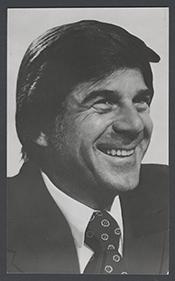
Mr. Speaker, I yield myself 2 minutes. I first start by reminding the distinguished gentlewoman from Washington that the Seattle Times said that one suspects that many conservatives do not really…
Mr. Speaker, I yield myself 2 minutes.
I first start by reminding the distinguished gentlewoman from Washington that the Seattle Times said that one suspects that many conservatives do not really care how the chips fall as long as they are heavy enough to break the back of traditional Medicare. All this talk about choice and updating or modernizing Medicare with market competition is pure malarky. So it does appear that somebody from the State of Washington understands what is going on here tonight.
But we are faced with a problem, and the Republican Party from the very top of its leadership to the very bottom have been lying to us. They have been lying to us about the war. They have been revising history. They have been going back on their word to give us 3 days. They have proven that we cannot trust them.
Just recently, the past few minutes, the chairman of the Committee on Ways and Means indicated that they had attempted to put in preventative measures. He seems to have forgotten that in 1995 he voted against colon cancer testing. He voted against prostate cancer testing. He voted against annual mammography. He voted against diabetes management. He has voted more often to cut Medicare benefits than he can remember, it appears.
So we are faced tonight with people who want to destroy Medicare. They will lie to us. They will lie to seniors for the pure purpose of their own messianic desires to destroy a system that will protect the fragile seniors in this country.
Mr. Speaker, I reserve the balance of my time.
Mr. Speaker, I am honored to yield 1\1/2\ minutes to the gentleman from Michigan (Mr. Levin), who understands that the United Steel Workers of America have said a vote for this measure is a vote to destroy the stability and long-term viability of the Medicare system.
(Mr. LEVIN asked and was given permission to revise and extend his remarks.)
Mr. Speaker, I am pleased to yield 1\1/2\ minutes to the gentleman from Maryland (Mr. Cardin), who knows that all of the other members of the Older Women's League understand that this bill was supposed to modernize Medicare, not eviscerate it; and to deny basic health services for those who need it most, to increase the profits of the health care industry is criminal.
(Mr. CARDIN asked and was given permission to revise and extend his remarks.)
Mr. Speaker, I yield 1\1/2\ minutes to the gentleman from Wisconsin (Mr. Kleczka), who agrees with the Arizona Daily Star from Tucson that by doing nothing to address the cost of medicines and by raising payments to private HMOs that want to compete with Medicare, the bill dooms the Medicare program to major problems down the road.
Mr. Speaker, I yield for the purpose of making a unanimous request to the gentleman from Minnesota (Mr. Oberstar).
(Mr. OBERSTAR asked and was given permission to revise and extend his remarks.)
Mr. Speaker, I yield 1\1/2\ minutes to the gentleman from Georgia (Mr. Lewis).
Mr. Speaker, I yield 1\1/2\ minutes to the distinguished gentleman from Massachusetts (Mr. Neal), who agrees with the Boston Globe that this experiment needs to be stopped before the Republicans in Congress damage a program that has served the elderly well for 38 years.
Mr. Speaker, I yield 15 seconds to the gentleman from Pennsylvania (Mr. Doyle).
Mr. Speaker, I yield 1\1/2\ minutes to the gentleman from Texas (Mr. Sandlin) who agrees with the Houston Chronicle, the Republicans are interested only in the illusion of providing a popular benefit, a Republican driven bill to, quote, improve Medicare is impossible.
Mr. Speaker, I yield 1\1/2\ minutes to the gentlewoman from Ohio (Mrs. Jones), who is a woman who agrees with Al Hunt, who wrote in the Wall Street Journal that this is an open rip-off by HMOs. There is a reason most Americans and, virtually all who have endured serious medical issues, despise HMOs. They are, with few exceptions, vultures.
(Mrs. JONES of Ohio asked and was given permission to revise and extend her remarks, and include extraneous material.)
Mr. Speaker, I am delighted to yield 2 minutes to the minority whip, the gentleman from Maryland (Mr. Hoyer).
Mr. Speaker, the Republicans can lock out two of the leading Democratic legislators from their conference committee, but just to show you that we are bigger than all that, we will turn the other cheek. I yield 2 minutes to the gentleman from Indiana (Mr. Burton).
Mr. Speaker, I yield myself 15 seconds.
I remind the gentlewoman from Connecticut (Mrs. Johnson) that the seniors do not need to be misrepresented. I will not call it lying, but nowhere in that bill does it mention any percentage that they will save on the drug discount. You cannot find it in the bill because it is not in there. So do not tell the seniors something that is not true. It is not respectful.
Mr. Speaker, I yield 45 seconds to the gentleman from Illinois (Mr. Emanuel).
Mr. Speaker, I yield myself such time as I may consume.
There they go again. I do not think they understand their own bill. Between 135 percent and 150 percent of poverty, there is a 15 percent copay, and regardless of what my colleague says, there are many, many poor seniors are going to pay more under this
bill than they do now, but it is sad that the people who wrote the bill do not know what they are talking about.
Mr. Speaker, I yield 45 seconds to the gentleman from Arkansas (Mr. Ross), the distinguished member of our caucus who is in the pharmaceutical business.
Mr. Speaker, I yield 45 seconds to the distinguished gentleman from New York (Mr. Crowley).
(Mr. CROWLEY asked and was given permission to revise and extend his remarks.)
Mr. Speaker, I yield 45 seconds to the gentleman from Texas (Mr. Reyes), who agrees with the Albany Times Union that what older Americans can least afford is for Congress to rush into a sweeping overhaul of a successful health care program without doing its research. This is not only an imperfect bill. It may also be a disastrous one.
(Mr. LAMPSON asked and was given permission to revise and extend his remarks.)
Mr. Speaker, I yield 45 seconds to the distinguished gentlewoman from Oregon (Ms. Hooley).
Mr. Speaker, I yield 45 seconds to the gentleman from New York (Mr. Hinchey), and pending that, I would like to remind the gentlewoman from Connecticut that 41,000 people in Connecticut are likely to lose employer-sponsored coverage under this bill.
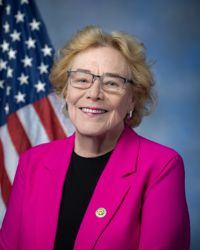
Mr. Speaker, I ask unanimous consent to revise and extend my remarks in opposition to the bill because it increases costs for the poorest who are mainly women. Mr. Speaker, the current Medicare…
Mr. Speaker, I ask unanimous consent to revise and extend my remarks in opposition to the bill because it increases costs for the poorest who are mainly women.
Mr. Speaker, the current Medicare Prescription Drug bill we are debating this evening, if passed, will force many low-income seniors to pay more for their Medicare coverage. Despite its $400 billion price tag, this legislation will leave some 6.4 million of the poorest and sickest Medicare beneficiaries who currently receive prescription drug coverage through Medicaid, worse off, as they will no longer be able to depend on assistance with their co-payments and will no longer depend on getting help paying for prescription drugs that are prescribed by their doctors but are not on the list of drugs and therefore not covered by the private insurers who will administer the new Medicare bill.
Mr. Speaker, this piece of legislation is not ``paid for.'' I expect that it will worsen the nation's long-term fiscal problems substantially adding to the deficit. Is the proposal good enough to justify this?
After weeks of secret hearings, in which not one Democratic Member of the House of Representatives was allowed to participate, we were presented with a Medicare prescription drug plan that is more geared towards benefiting industry, the HMOs, and insurance companies than in serving the healthcare needs of our elderly and disabled.
In the forty years since Medicare was created, it has been hailed as an affordable, defined, guaranteed, and comprehensive healthcare plan for all senior citizens. I agree that Medicare should evolve. I also understand that prescription drug costs are rising at an alarming rate of 17 percent per year. But the current proposal facing Congress does too little to help control drug costs, requires seniors to spend too much out-of-pocket, and compromises many of the basic principles that have made Medicare so valued and effective. This proposal prohibits the federal government from using its vast buying power to negotiate significant discounts for the millions of seniors and disabled who have come to rely on Medicare.
Mr. Speaker, my constituents and seniors across this nation believe that an affordable, guaranteed prescription drug benefit is urgently needed. Sadly, the prescription drug benefit in this bill would not go into effect until 2006.
Mr. Speaker, my constituents and seniors across this nation asked this Congress for a strong prescription drug benefit through Medicare, it did not ask this Congress to begin the process of privatizing Medicare. They believe that reforming Medicare does not mean privatizing Medicare. Under this bill, millions of Medicare beneficiaries are forced to pay more just to stay with their own doctors. Premium support, a provision included in this bill will allow private insurance plans to lure healthy seniors out of Medicare, leaving older and disabled seniors behind to pay higher premiums for the same coverage they're receiving today. Mr. Speaker, my district lies within Santa Clara County in California. Santa Clara County is in one of 41 metropolitan areas that could be selected to participate in this demonstration that would lead to the privatization of Medicare. Under this plan, seniors must be prepared to deal with changing benefits, premiums and access to care from year to year.
Mr. Speaker, these new benefits are not guaranteed. This Republican- drafted Medicare reform bill creates a major gap in coverage that will leave millions of seniors and disabled persons without any drug coverage during parts of the year. Once a senior's drug costs reaches a moderate level of $2,250, all coverage would be cut off. It isn't until the out-of-pocket prescription drugs costs rise to a much higher level--roughly $3600--that coverage kicks back in. It will also erode retiree coverage for up to 2.7 million seniors who, after years of hard work earned a prescription drug benefit through their retirement plans. Those lucky enough to have such coverage must now worry about whether or not they will lose that hard-earned benefit under this proposal.
Mr. Speaker, this bill is not comprehensive. The bill eliminates Medicare's promise to retirees by arbitrarily limiting the ability of Congress to fund the program. As baby boomers retire and require more physician visits, hospital services, and pharmaceutical coverage, Republicans want to limit the amount of money that would be spent on Medicare. This means the services seniors expect and deserve will be cut, premiums will increase, or reimbursements to physicians and hospitals will be severely restricted.
Mr. Speaker, I remind my colleagues and those trying to follow all the possible implications of this bill that the coverage offered under this plan is not, repeat not, like that offered to members of Congress and other federal workers. No Federal employee or member of Congress has a drug benefit that has a deductible, or a $2,850 coverage gap or donut hole in the benefit. In fact, during the debate on the drug benefit, Republican members of Congress voted to ensure that Federal employees' benefits would not be lowered to the level in the new drug plan.
There are many parts of this bill that I applaud. I am happy that the bill includes increased payments to doctors and to hospitals that will allow them to continue to offer services to Medicare patients. I am very happy that the bill includes critically needed funding for safety- net hospitals that serve our needy so well. Indeed in California, this provision alone will restore several hundred million dollars in reimbursements over the next ten years. Mr. Speaker, these provisions are the kind of reforms to Medicare that would pass this house nearly unanimously if they were presented separate from this bad bill.
Mr. Speaker, these good provisions do not override the potential devastating effects of this bill. I cannot support a bill that I feel will destroy the fundamental promise of Medicare, a program that seniors and the disabled have known and trusted for nearly 40 years. With the future of Medicare at stake, I believe that Congress can--and must--do better. Rather than pass a bad bill, we should defeat this bad
bill and stand firm as we fight for a prescription drug benefit that our seniors demand and deserve.
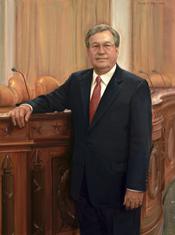
Mr. Speaker, on behalf of seniors and taxpayers, pursuant to House Resolution 463, I call up the conference report on the bill (H.R. 1) to amend title XVIII of the Social Security Act to provide for…
Mr. Speaker, on behalf of seniors and taxpayers, pursuant to House Resolution 463, I call up the conference report on the bill (H.R. 1) to amend title XVIII of the Social Security Act to provide for a voluntary program for prescription drug coverage under the Medicare Program, to modernize the Medicare Program, to amend the Internal Revenue Code of 1986 to allow a deduction to individuals for amounts contributed to health savings security accounts and health savings accounts, to provide for the disposition of unused health benefits in cafeteria plans and flexible spending arrangements, and for other purposes.
Mr. Speaker, I yield one-half of my time to the gentleman from Louisiana (Mr. Tauzin), chairman of the Committee on Energy and Commerce.
Mr. Speaker, I yield myself such time as I may consume.
Mr. Speaker, I called up this bill for seniors and for taxpayers. This evening you are going to hear some very harsh rhetoric. But what I really want to do is remind everyone here that since Republicans became the majority in this House in 1995, there has been a very positive and remarkable change to Medicare. Probably most important has been the introduction of preventive and wellness. For many years, it was available to be added to Medicare, but it was not. It took the Republican majority to add the testing and the education for diabetes, for osteoporosis, for improved mammography, for colorectal cancer screening, for prostate screening; and even today in this bill we continue with cholesterol screening and physical exams.
Tonight, the Republican majority is going to add prescription drugs to Medicare. We earnestly seek our friends across the aisle help in doing this. The conference report before us is bipartisan. It is bipartisan because of the House and the Senate structure. Tonight our friends across the aisle have a chance to make it bipartisan in the House. Our friends say that we are trying to destroy Medicare; but if we are trying to destroy Medicare, why is the American Association of Retired People supporting this proposal? Why is the AARP in favor of this bill? You have heard some very harsh rhetoric from my friends across the aisle describing their abandonment by the AARP. My friends, the AARP has not abandoned you. You have abandoned seniors. AARP has chosen to be with seniors, and they have chosen to be with us.
Fact: current Medicare cannot sustain itself financially. Question: Why in the world would we then be adding a $400 billion expansion of benefits under Medicare? Answer: today's medicine demands that we do so. Yesterday's medicine was hospitals and doctors. Hospitals and doctors still play a role, but prescription drugs play a central role. We simply would not be doing justice to our seniors if we did not try to add prescription drugs to Medicare.
But I also called this bill up for taxpayers, because if we add prescription drugs to Medicare, we need to be able to tell our taxpayers that we are also changing the funding structure of Medicare as well.
It cannot sustain itself, and we are adding an enormous new benefit. It would be irresponsible of us to simply think all we need to do is add prescription drugs. What we need to do is add prescription drugs, modernize Medicare, and make sure that those people who pay taxes today in the hopes of having a program tomorrow will be able to have one.
This bill protects low-income seniors. No one wants to place a financial burden on those unable to pay. But, Mr. Speaker, it is overdue to ask those who are financially well off enough to share.
We are hearing things from our friends across the aisle about how horrendous the suggested financial burdens are. For example, in today's voluntary, optional Part B Medicare, the premium is 75 cents on the dollar paid for by the taxpayers, 25 cents on the dollar paid for by the beneficiaries. This legislation is so radical, so extreme, that what it does is it asks people who are making $100,000 a year in retirement to pay 50 cents on the dollar and have the taxpayers pay 50 cents on the dollar. Ironically, that was the financial split when Part B Medicare began. All we are asking is for those who have the wherewithal to help share the financial burden. And where? There is an opportunity to provide a modest copay, one of the most significant factors in inhibiting overutilization. We ask those who are going to have a prescription drug, $2 on a generic prescription, $5 on a brand name. It will have a significant impact on utilization. It will also show that we understand, we need to be sensitive to taxpayers. Today they foot the bill, but tomorrow they also want a program. This bill is really all about a fair deal. Modernize Medicare with prescription drugs but put Medicare back on a sound financial basis as well.
We are going to hear a lot about what we are going to do for up to 40 million seniors in this legislation. Please understand with the modest structural changes we are asking for, there are going to be 140 million taxpayers who are going to be pleased as well.
This program cannot sustain itself. Add a new benefit and modernize the program. Medicare is not a Democrat program; they do not own it. Medicare is not a Republican program; we do not own it. It is a program that is in need of modernization, prescription drugs and better financing. The American people's Medicare, the seniors who receive the benefits, and the taxpayers who foot the bill deserve H.R. 1.
Mr. Speaker, I reserve the balance of my time.
Mr. Speaker, I yield the remainder of my time to the gentlewoman from Connecticut (Mrs. Johnson), the chairperson of the Health Subcommittee of the Committee on Ways and Means, and I ask unanimous consent that she control the remainder of my time.
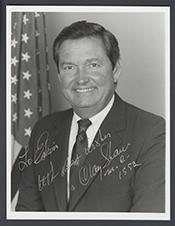
Mr. Speaker, I thank the gentlewoman for yielding me time. Medicare passed this Congress on July 27 of 1965 and was signed into law in Independence, Missouri, on July 30 of 1965. It is interesting,…
Mr. Speaker, I thank the gentlewoman for yielding me time.
Medicare passed this Congress on July 27 of 1965 and was signed into law in Independence, Missouri, on July 30 of 1965. It is interesting, and I was watching C-SPAN today and watching the goings on within the Committee on Rules. And I heard several of the Democrat witnesses come in and say, your party did not support Medicare in the first place and you want it to wither on the vine.
After hearing this over and over, I thought, well, it is about time somebody goes into the archives and finds out the truth. The truth is the majority of the Republicans in this House of Representatives in 1965 did support Medicare. So the big lie now can go down and be deflated.
Also, I have heard many witnesses on the other side say what a bonanza this is for big drug companies. Nobody is mentioning the fact that we are shortening the time that generics can get on the market. You think the big drug companies like that? Of course not.
Also, the discount card where prices will be negotiated and seniors will get
their drugs for less money. Nobody on that side is talking about that.
What this is actually is a cost-containment bill and probably the largest one that will ever be signed into law providing for the cost containment in drugs.
I sent out a survey as many of us do to some of our constituents and was just simply asking them did they want this drug bill. I received back the biggest number that I have ever received. They are still coming in and they are just now hitting and we already have 12,000 replies. And guess what? Only 100 said no. And most of them were misinformed by this bill thinking they might have lost the coverage that they had. This is a good bill. Let us do it for our seniors. Let us do it for the people at the lower economic levels who desperately need this.
Why would you deny this to them? Somebody can buy drugs for so little and be able to get a better quality of life. Life is meant to be enjoyed, not endured. Let us vote ``yes'' on the rule. Let us vote ``yes'' on the bill.
Mr. Speaker, I submit to the Record a letter of endorsement from the Republican Governors Association and a letter from my own Governor, Governor Jeb Bush, endorsing this bill.
State of Florida,
Office of the Governor,
Tallahassee, FL, November 21, 2003.
Hon. E. Clay Shaw, Jr.,
Rayburn House Office Building,
Washington, DC.
Dear Congressman Shaw: Today, there is very good news for
Florida's three million Medicare beneficiaries. The recent
bipartisan conference agreement for Medicare will provide
first-time access to prescription drug coverage. As the
second largest home to seniors, this drug benefit--along with
many other improvements and modernizations--will have the
most significant impact for residents in our State since the
enactment of Medicare in 1965.
Medicare will increase in value as our beneficiaries will
have available to them a prescription drug benefit, and
critical protections against high out-of-pocket drug costs.
New preventive benefits will keep our residents healthier,
and provide a higher quality of life. The new opportunities
to be screened for many illnesses and conditions will result
in far fewer serious health consequences.
Designed to provide enhanced coverage for the lowest income
beneficiaries, over 650,000 of Florida's low-income Medicare
beneficiaries--who are not eligible for Medicaid drug
coverage--will receive $10 billion in critical prescription
drug benefits from 2006 through 2015. The prescription drug
discount card will provide our seniors and disabled Medicare
beneficiaries with much-needed discounts, and a $600 per year
subsidy in transitioning to the new drug benefit.
Another 490,000 low-income individuals dually eligible for
Medicare and Medicaid will receive more than $6.7 billion
annually in prescription drug benefits, with no gap in
coverage. This new federal benefit will save the taxpayers of
Florida over $3 billion--in just the first 10 years. These
are state Medicaid costs that can be reinvested in other
health care needs.
This reform package will strengthen the Medicare program,
while providing beneficiaries a prescription drug benefit,
more choices and improved care options. All Floridians will
benefit from the option to accumulate tax-free health dollars
through Health Savings Accounts to pay for medical expenses.
Other reforms include a transition to electronic prescribing,
creating incentives for our hospitals and doctors to reduce
errors by using this new e-technology.
Seniors cannot afford to indulge the political appetites of
Washington, where the issue of prescription drugs has turned
into a search for the perfect. Our representatives must look
to those who are being denied the opportunity for life-saving
prescription drugs. Today's bill may not be ideal, but it is
just right for those who have been waiting too long.
AARP has led the long fight for a Medicare drug benefit,
and I commend their leadership in ensuring passage of this
bill. I join with them in urging you to support this historic
legislation. There has never been a greater opportunity to do
more for the seniors in Florida.
Sincerely,
Jeb Bush,
Governor.
Mr. Speaker, I ask unanimous consent to revise and extend my remarks on this Medicare proposal that takes Medicare from patient care. Mr. Speaker, I rise today to urge all my colleagues to vote…
Mr. Speaker, I ask unanimous consent to revise and extend my remarks on this Medicare proposal that takes Medicare from patient care.
Mr. Speaker, I rise today to urge all my colleagues to vote against the Medicare Conference Report offered by the Republican leadership. Seniors want a prescription drug benefit that is affordable and guaranteed under the Medicare system.
Passage of this bill would weaken prescription drug benefits, fail to lower drug costs, and weaken the Medicare program.
Congress needs to pass a good Medicare bill that actually helps seniors and not just any bill that benefits pharmaceutical companies, HMOs, and special interest. Our colleagues on the other side of the aisle have a take it or leave it attitude. They want the American public to believe that if this conference report is not passed then all opportunities for a real prescription drug benefit under Medicare is lost. However, I submit to you that if a true bipartisan effort was made at the conference table, then much could be accomplished.
Mr. Speaker, there are dozens of reasons why this conference report should be defeated and never become law. Many of these reasons have already been mentioned but I want to take this time to highlight a few.
The three Democratic House conferees were shut out of the process and were not allowed in the conferee meeting. The treatment of these House Members is reasons enough for every member of this body to reject this conference report.
The legislation would not create a prescription drug benefit until in 2006. However, HMOs, insurance companies, and pharmaceutical companies receive billions of dollars upon enactment of the conference report.
The bill also explicitly prohibits the Secretary of Health and Human Services from negotiating lower drug prices on behalf of America's 40 million Medicare beneficiaries.
The bill does not allow Americans to import drugs from Canada and other countries where prices are lower. International comparisons of pharmaceutical prices have shown that elderly and uninsured consumers in the United States often pay more for prescription drugs than consumers in other countries. As a result, more and more elderly consumers are traveling outside the country to find cheaper, more affordable prescription drugs. My district borders Windsor, Ontario, Canada, where I have known many of my seniors travel to get their prescriptions filled.
The GOP plan includes provisions that will privatize Medicare and force senior citizens into HMOs and other private insurance plans.
Millions of senior and Americans with disabilities currently covered by Medicare would actually find themselves worse off if the conference report becomes law. Low-income seniors who get additional assistance form Medicaid will pay more for their prescriptions because they will lose their Medicaid benefit.
Currently, Medicare beneficiaries who receive medicine through Medicaid either pay no co-payments or are charged nominal amounts per month per prescription. Under the new plan, people will pay three-to- five dollars per month, per brand-name prescription and one or two dollars for generic drugs. Depending on their income. These co-payments will increase each year.
The GOP plan creates an unlimited program of Health Savings Accounts (HSAs). This tax break benefits the healthy and wealthy and could dramatically raise health insurance premiums for other Americans-- particularly families with moderate incomes and those with high health expenses.
Seniors will lose their retiree health benefits. More than two million seniors in employer-based retiree plans are in jeopardy of being dropped from coverage because the bill creates incentives for employers to drop prescription drug coverage.
Mr. Speaker, the Medicare Conference Report before this body will have a detrimental effect on senior and disabled citizens in my home state of Michigan.
143,000 Medicare beneficiaries in Michigan will lose their retiree health benefits.
183,200 Medicaid beneficiaries in Michigan will pay more for the prescription drugs they need.
90,000 fewer seniors in Michigan will qualify for low-income protections than under the Senate bill because of the assets test and lower qualifying income levels.
44,980 Medicare beneficiaries in Michigan will pay more for Part B premiums because of income relating.
Providing affordable prescription drugs to our seniors and the uninsured should have been the goal. The Republican lead Congress squandered this opportunity to include a real prescription drug benefit within the Medicare plan.
Mr. Speaker, there are hundreds of national, state, and regional organizations that have
come out against the Medicare conference report. I stand today with the seniors in my district and across the nation in opposition to this bill.
I ask my colleagues to stand with me and vote against this Medicare Conference Report that fails to provide an affordable and reliable Medicare prescription drug coverage, gives billions to HMOs, insurance companies, and pharmaceutical companies, prohibits drug reimportation, and privatizes Medicare.

Mr. Speaker, I rise against this bill which, in my view, I used the yardstick to measure it by my mother; and in doing the calculations, my mother, at 89\1/2\ years old, will be hurt by this, as will…
Mr. Speaker, I rise against this bill which, in my view, I used the yardstick to measure it by my mother; and in doing the calculations, my mother, at 89\1/2\ years old, will be hurt by this, as will women her age across the country. She and they deserve so much better.
It's with great disappointment that I rise today to express my opposition to this Medicare Prescription Drug legislation. As the daughter of a Medicare beneficiary, I know first hand how important prescription drug coverage is for America's seniors, and I held out great hope that this would be the year we finally succeeded in providing seniors with an affordable, stable benefit.
Unfortunately, now that we have the long-awaited legislation before us, it is clear that it doesn't embody any of these important principles.
This bill does nothing to lower drug costs for America's senior citizens. It provides an unstable insurance benefit, undercuts the viability of the employer-provided retirement health insurance, and fundamentally undermines the Medicare program that has served seniors so well for nearly 40 years.
Specifically, the bill: Brings privatization to the Medicare program in 2010. Although this is being described as a ``demonstration project,'' this ``demonstration'' will affect as many as 7 million beneficiaries who will be forced to pay higher premiums and more money to keep the same benefits they have today if they don't join an HMO; has a $2800 gap in drug coverage that will leave millions of seniors without any help in paying for their drugs for part of the year, even though they will have to continue to pay their monthly premiums; Creates disincentives to employers to retain retiree drug coverage. An estimated 2 to 3 million seniors who have good drug coverage now through retiree health plans could lose it under the proposed plan.
In California, this means more than a quarter of a million seniors may lose their employer-sponsored health care. Real reform would encourage employers to expand retiree coverage, not take it away; Purposefully creates, for the first time, disparities between seniors across the country. Seniors living in different areas of the country will pay different premiums for the exact same benefits. In another first, this bill links how much a senior earns to how much they will pay in premiums. If a senior makes more than $80,000 they will pay higher premiums than the rest of the Medicare population.
Does not address the rising cost of prescription drugs for individuals, nor does it harness overall Medicare spending in future years. In fact, the bill specifically prohibits the Secretary of Health and Human Services from negotiating with drug companies for lower prices.
Jeopardizes coverage for cancer patients by drastically cutting funding for chemotherapy drugs.
Finally, this bill dramatically changes Medicare by limiting the total amount of money that can be spent on the program--meaning services will be cut and premiums will increase.
I do want to take a moment to highlight the few bright spots in this bill.
The bill reverses a recent decision by the Centers for Medicare and Medicaid Services (CMS) that threatened seniors' access to innovative treatments. For years biotechnology products, which often represent the most advanced treatments for diseases, were critically under- reimbursed. This bill ensures that these life-saving treatments will be available for all seniors by raising payment levels to an appropriate level. This bill also provides more speedy coverage of new medical device technologies and more streamlined processes by new technologies in the Medicare program.
Second, the bill includes critical funding for relief from the devastating payment reductions to Medicaid disproportionate share hospitals. This is very important for California which has a severe budget shortfall. The funding in the Conference Report restores several hundred million dollars to safety-net providers in California over the next 10 years. With more than six million MediCal recipients and 6.3 million uninsured residents in California, Medicaid DSH funds are invaluable to the safety net hospitals that serve low-income populations.
Unfortunately, these issues aren't enough to overcome the faulty foundation that this bill rests on. It's with a heavy heart that I say ``This Medicare Prescription Drug bill should be rejected.'' We have not honored the seniors who have done so much to make our country great, and I cannot justify a ``yes'' vote on a bad bill just for the opportunity to say we've succeeded in providing a drug benefit.
Mr. Speaker, I urge my colleagues to vote against the bill.
Mr. Speaker, I yield 2\1/2\ minutes to the gentlewoman from Washington (Ms. Dunn). Mr. Speaker, I yield 2 minutes to the gentleman from Pennsylvania (Mr. English). Mr. Speaker, I yield myself 1…
Mr. Speaker, I yield 2\1/2\ minutes to the gentlewoman from Washington (Ms. Dunn).
Mr. Speaker, I yield 2 minutes to the gentleman from Pennsylvania (Mr. English).
Mr. Speaker, I yield myself 1 minute and 15 seconds.
I would remind the gentleman from Michigan that 28 percent of his seniors will have no more costs than either $1 per generic or $2 per generic or $3 for prescription and $5, and 35 percent of Michigan seniors have incomes under 150 percent of poverty and will be totally protected under this bill.
Mr. Speaker, I think as we proceed in this discussion, we ought to remember that 38 States, 38 States provide Medicaid coverage for people whose income is 74 percent of the national poverty income. So 38 States are not even at 100 percent of poverty income. We cover people completely, everything, except $1 per generic or $2, depending on income, and $3 or $5 per prescription drug.
Do my colleagues understand that of the Medicare population, 57 percent are women? Mr. Speaker, 57 percent are women, and half of them, half of those women will pay no more than $2 per generic or $5 per prescription. They will have no other obligation, all the way up through catastrophic. Half the women on Medicare. This is a giant stride forward in women's health.
Mr. Speaker, I reserve the balance of my time.
Mr. Speaker, I yield myself 15 seconds.
Mr. Speaker, if the gentleman will note and other Members will note, and the listening public will note, on pages 49 to 53 of the bill, which is all on the Internet, they will see that there is what we call a hard fall-back. That is, if private plans do not offer prescription drugs to our seniors, the government will. The seniors will be guaranteed a drug plan; that is in the statute.
Mr. Speaker, I yield 2 minutes to the gentleman from Arizona (Mr. Hayworth).
Mr. Speaker, I yield myself 15 seconds.
I do not consider the AARP a special interest group, or the Coalition to Ensure Patient Access a special interest
group, or the Alzheimer's Association a special interest group, or the Kidney Cancer Association a special interest group.
Mr. Speaker, it is my time.
The Mental Health Association of Central Florida, the Larry King Cardiac Foundation, the Latino Coalition.
Mr. Speaker, I yield 1 minute to the gentleman from Georgia (Mr. Gingrey).
Mr. Speaker, I reserve the balance of my time.
Mr. Speaker, I yield 1 minute to my colleague, the gentleman from Pennsylvania (Mr. Peterson).
Mr. Speaker, I yield 1 minute to my colleague, the gentlewoman from Florida (Ms. Ginny Brown-Waite), who has experience legislating in the area of health care reform.
Mr. Speaker, I yield myself 10 seconds. I remind the gentleman from Maryland (Mr. Hoyer) that of his 713,000 seniors, 31 percent will get total drug coverage under this bill.
Mr. Speaker, I yield 2 minutes to the gentleman from Illinois (Mr. Weller), a member of the Committee on Ways and Means.
(Mr. WELLER asked and was given permission to revise and extend his remarks.)
Mr. Speaker, I yield for the purpose of making a unanimous consent request to the gentleman from Florida (Mr. Young).
(Mr. YOUNG of Florida asked and was given permission to revise and extend his remarks.)
Mr. Speaker, how much time remains on each side?
Mr. Speaker, I yield myself 30 seconds.
I would like to note that the 25 percent discount means you pay 25 percent less. And once the subsidies go into effect, you pay 75 percent less, and half the Medicare recipients are women and half of those women will be covered totally. So this is a big, powerful prescription drug bill that will help half the women on Medicare by providing all of their drug coverage.
Mr. Speaker, I yield 2 minutes to the gentleman from Iowa (Mr. Nussle), chairman of the Committee on the Budget.
Mr. Speaker, I yield 2\1/2\ minutes to the gentleman from Ohio (Mr. Portman), a member of the committee.
Mr. Speaker, I would like to inquire as to the time remaining.
Mr. Speaker, I yield 2 minutes to the gentleman from New York (Mr. Houghton).
Mr. Speaker, I ask what time remains on each side.
Mr. Speaker, I yield myself 10 seconds.
The gentlewoman from Oregon should know that with this prescription drug insurance plan Medicare recipients in Oregon who are covered will go from 60 percent up to 96.6 percent. This bill brings a benefit to Oregon.
Mr. Speaker, I reserve the balance of my time.
Show 11 more
Mr. Speaker, I rise in opposition to this conference report which will dismantle Medicare as we know it, harming millions of women who depend on that program. Mr. Speaker, I urge my colleagues to…
Mr. Speaker, I rise in opposition to this conference report which will dismantle Medicare as we know it, harming millions of women who depend on that program.
Mr. Speaker, I urge my colleagues to vote against this sham of a bill. It does not provide the real, guaranteed, affordable drug benefit that our seniors desperately need. Worse yet, this bill sets the stage for dismantling the entire Medicare program.
I think that all of my colleagues would agree with me when I say that one of the issues we hear most about is the need for affordable prescription drugs. Whether I am at the grocery store, at the airport baggage claim, or in meetings all across my district in Wisconsin, the one thing that I hear over and over is that seniors cannot afford to pay for their prescription drugs.
The bill on the floor today does not contain the prescription drug benefit that seniors deserve. Instead of providing an affordable prescription drug benefit, this bill creates an incomplete and expensive benefit--a benefit with a hole, where seniors will be paying premiums and receiving no benefit.
Aside from the meager benefit, there is nothing in this bill that addresses the ever-rising cost of prescription drugs. Instead of including measures to ensure that prescription drugs are affordable, this bill actually prohibits the federal government from negotiating lower drug prices for Medicare beneficiaries. Instead of helping seniors obtain affordable prescription drugs, this bill provides partial coverage of drug spending until total costs reach $2,250 and then leaves seniors high and dry. There is a huge gap in coverage where seniors must pay 100 percent out of pocket and continue paying premiums, until they reach a high out-of-pocket cap. Millions of seniors will fall into this gaping hole. I believe seniors deserve affordable drug coverage, and this bill fails to achieve that goal.
Further, this bill takes us down the dangerous road of privatizing Medicare. It is my strong belief that privatization of Medicare is unwarranted. Our Nation's seniors and persons with disabilities have counted on Medicare since it was first enacted in 1965. It has provided health care insurance to the oldest, sickest, and frailest in our society and done so in a cost-efficient manner. Why then, would we seek to dismantle such a successful program? This bill relies on private insurers to provide a prescription drug benefit. Seniors would have to join HMOs and private insurance plans to get the benefit, meaning that premiums and benefits would vary across the country and seniors would not be able to choose their own doctor or pharmacy.
In addition, this bill includes a provision that authorizes a massive ``demonstration'' project that could affect up to 6 million seniors. Starting in the year 2010, this ``demonstration'' project forces Medicare to compete with private plans. This competition is wholly unfair
and on an unlevel playing field. Seniors will be given a voucher to purchase health care insurance, either from Medicare or from private insurers. We know from past experience what will happen: the youngest and healthiest seniors will go to private insurers, leaving the sickest and frailest seniors in Medicare. This will automatically drive up Medicare's costs and will give Republican legislators ammunition for dismantling this program. Make no mistake about it; this massive ``demonstration'' project will be the beginning of the end of Medicare.
Today, we will vote on the most dramatic changes in the Medicare program since its inception. This bill does include unprecedented benefits--unfortunately the benefits will go predominantly to the politically-connected pharmaceutical and insurance industries, rather than to America's seniors who need relief. It saddens me that the legislation we vote on today will not provide seniors with what they need most: comprehensive prescription drug coverage and affordable prices. Seniors need a comprehensive prescription drug benefit that is affordable and dependable for all--with no gaps or gimmicks in coverage. The conference agreement before us fails on all these counts, and I urge my colleagues to vote against it.
Mr. Speaker, I rise against this sham Republican prescription drug bill that will harm, not help, elderly women. Mr. Speaker, I rise today to express my profound disappointment at the Medicare…
Mr. Speaker, I rise against this sham Republican prescription drug bill that will harm, not help, elderly women.
Mr. Speaker, I rise today to express my profound disappointment at the Medicare Conference Report and this squandered opportunity to help seniors afford the increasing cost of prescription drugs.
I want to make one thing abundantly clear to everyone here today: This debate is not about prescription drugs. Instead, the majority has taken this opportunity to advance a plan that will undermine the future of Medicare.
Seniors may think this final bill will help them with some of their prescription drug costs. While it will save some seniors a small amount of money after they pay an unspecified premium, this bill will give them little more than a false sense of security.
Seniors will read the newspaper headlines and believe that we have passed a drug benefit that will alleviate all of their financial hardships. They'll mistakenly think that they no longer have to choose between paying for groceries and paying for their prescriptions.
But imagine their surprise when they read the fine print. Our seniors need immediate help. Many will be shocked to learn that this bill won't give them a prescription drug benefit until 2006. If this is such a great plan, why must seniors wait 3 more years to reap its supposed benefits?
They'll find that their out of pocket costs are still enormous. Imagine their outrage, as they dutifully write a check to pay their monthly premium, even though they aren't receiving any drug coverage, because they have fallen into the ``donut hole'' coverage gap.
Seniors who currently enjoy quality prescription drug coverage many think this doesn't impact them, but they too are in for a rude shock. As many as 2 million will watch their prescription drug benefit provided by their former employer vanish into thin air.
Others will find their previously generous benefit slashed to the bare bones level of Medicare, complete with high deductibles, premiums, and a ``donut hole'' coverage gap. That's because employers will be eligible for subsidies if they provide any type of coverage--even if it's less than what they promised their employees.
But this bill is about far more than prescription drugs. This is the biggest bait and switch operation I've seen in quite some time. The majority is saving one thing and doing quite another. They'll talk all they want about providing prescription drugs. But their actions will ruin the Medicare program that for decades has so effectively provided seniors with access to health care.
You won't hear them talking about their large subsidies to private health plans. They won't talk about the voucher scheme that will begin in 2010. They'll employ the euphemism ``demonstration project'', instead of speaking honestly to seniors about their real goal: privatization.
They won't talk about the catastrophic impact this legislation will have on the poorest of the poor. By imposing an assets test on poor seniors who need additional help, this legislation could force a widow living only on her social security benefit to choose between selling her wedding ring and qualifying for an additional subsidy. She could be disqualified from receiving the help she needs because she has purchased a burial plot next to her husband's. This is tragic--and you won't hear about it from the majority.
They also won't talk about the ways in which they are helping their friends in the pharmaceutical industry. By continuing a long standing restriction on the reimportation of prescription drugs, and by prohibiting Medicare from negotiating lower prescription drug prices, the majority is assuring that seniors will continue to pay astronomically high prices for the medicines they need.
Our seniors deserve an honest and complete explanation of what this bill will do to Medicare. Seniors deserve a prescription drug bill that is actually about prescription drugs. Our seniors need a comprehensive benefit, not a false sense of security. I urge my colleagues to join me in opposing this bait and switch proposal.
Mr. Speaker, I ask unanimous consent to revise and extend my remarks about the premium support provisions in this conference report that will undermine the Medicare system on which the elderly in my…
Mr. Speaker, I ask unanimous consent to revise and extend my remarks about the premium support provisions in this conference report that will undermine the Medicare system on which the elderly in my district and around this Nation depend.
Mr. Speaker, I rise today in opposition to H.R. 1, the Medicare Prescription Drug and Modernization Act of 2003. I strongly support the inclusion of a prescription drug benefit as part of the Medicare program. Unfortunately, instead of providing a prescription benefit, this legislation includes dramatic changes in the entire Medicare program. As Washington Post columnist E.J. Dionne recently wrote, ``They went in to design a prescription drug benefit for seniors and came out with an aardvark.''
Mr. Speaker, in 1965, President Johnson and the Congress had the wisdom to create the Medicare program. The program accomplished its mission--it has ensured every single American's health coverage upon reaching 65 years of age. Since the bill's passage, Congress has made changes to the program to keep it current and to ensure that seniors received the highest quality care.
Now seniors are asking us to include a prescription drug benefit within the Medicare program. They want a benefit that offers comprehensive, affordable coverage to all seniors. I agree with them wholeheartedly. Instead of designing a prescription drug benefit, the majority created H.R. 1, which will end Medicare as we know it.
Mr. Speaker, this proposal is confusing and inadequate. For the first $2,000 of coverage, the consumer will pay over $1,100; for the first $5,000 of coverage, the consumer will pay approximately $4,000. If a consumer buys $5,000 of drugs a year, the consumer will pay 80 percent of that cost. Elderly women will be hardest hit.
Under this misguided plan, seniors will be forced to choose private prescription plans each year. A move between states, or even between towns, could force them to select another plan. In my district, seniors who chose to relocate from Kansas to Missouri could face the loss of their chosen prescription drug plan.
I am also concerned that this legislation will encourage companies that offer employer-provided drug coverage to drop or reduce their benefits. While the bill includes billions in subsidies for companies to maintain their benefits, more than 2.7 million retirees are likely to lose their employer provided coverage under this bill.
Seniors have been asking for a prescription drug benefit. They have not been asking for HMOs to take over Medicare. Yet that is what we are being asked to vote on today. This legislation includes ``cost containment'' provisions that will prompt significant cuts in the Medicare program if more than 45 percent of the costs of Medicare are borne from general tax revenues. Let's be clear--this cost cap would effectively end Medicare as a basic right for our seniors.
In a machiavellian effort to pass this misguided legislation, the authors have included billions in additional payments for doctors, hospitals, rural health facilities, and ambulance services among others. Sadly, these quality health care providers are forced to support this legislation even though many fear it will be bad for seniors and could unravel the Medicare program. Those funds should not be held hostage by this Medicare privatization scheme. I urge my colleagues to consider supporting stand alone legislation that would help our providers and save the Medicare program.
As E.J. Dionne wisely recommended, we should reject this flawed bill and ``let's then have a national debate on the future of Medicare, out in the open, and not in some congressional back room.'' Mr. Speaker, I urge all of my colleagues to reject this measure and go back to the basics. Give seniors what they deserve--a comprehensive Medicare prescription drug benefit.

Mr. Speaker, I thank the gentleman for the time. Mr. Speaker, let me see if I got this straight. In 1965, with a Democratic President, a Democratic House and a Democratic Senate the Medicare program…
Mr. Speaker, I thank the gentleman for the time.
Mr. Speaker, let me see if I got this straight. In 1965, with a Democratic President, a Democratic House and a Democratic Senate the Medicare program was founded. Am I to believe today with a Republican President, a Republican House and a Republican Senate that somehow you all are going to save a program you did not support in the first place? We have an expression in New York and all around this country, give me a break. You are not about saving Medicare or Social Security. You are about dismantling it, and in 40 years, when I look at my children and they ask me where were you when they tried to dismantle Medicare, I will look them in the eye and I will be able to tell them that I voted against the dismantling of this great program.
I will vote against this, and I will vote against any chance that you may bring up to this floor to dismantle Social Security as well.
Mr. Speaker, I rise to support Medicare and oppose the incredibly offensive bill before us tonight. Medicare was created nearly 40 years ago to protect the health of seniors. And today, sadly, Members of this Congress are seeking to destroy the very program that has been so helpful to so many. In its place, Republicans claim they are inserting a new, better, and expanded program. But the reality is that this is not a bill about providing drug coverage under Medicare.
This is a bill about giving billions of dollars to insurance companies and drug companies. This is a bill about killing the Medicare program that seniors have depended on for generations.
Seniors in my district want and deserve prescription drug coverage. This could not be more true, as far too many of them are struggling without it. But I have yet to hear from a senior in my district who is asking for a $17 billion slush fund to be created for private insurance companies. Not one senior has talked to me about making sure that big drug companies are able to protect their massive profits. Not one of them has asked me for a prescription drug benefit where they have to pay $4,000 out of their first $5,000 in prescription drug costs. Not one of them has asked for a bill that would force seniors out of Medicare and push them into HMOs. And yet that is exactly what Republicans are giving them with this bill.
This bill seeks to help drug companies and insurance companies at the expense of seniors and American taxpayers of all ages. This bill does essentially nothing to bring down drug prices. It does not appropriately provide for reimportation despite this body overwhelmingly voicing its support of reimportation. Moreover, it expressly prohibits the government from trying to negotiate lower drug prices like other government entities have been able to do with much success.
Incredibly, Republicans are electing to protect drug company profits over the cost to our government. I have to wonder whose side the Republicans are really on?
Tonight Republicans are asking us to vote for a bill they claim will help seniors with their drug costs. Only the catch is that, in the process, we have to destroy Medicare, give billions to insurance companies and drug companies, and push seniors into HMOs. This bill is a slap in the face of the ideals that Medicare has stood for. This bill is a slap in the face of seniors who have waited far too long for a real prescription drug benefit.
But don't take my word for it. Listen to what the lead author, Republican Congressman Bill Thomas of California said about this bill-- a bill he wrote--and I quote him, ``To those who say that the bill would end Medicare as we know it, our Republican answer is: We certainly hope so.'' Protect Medicare--oppose this sham bill.

Mr. Speaker, I ask unanimous consent to turn one-half of the time allotted to the distinguished gentleman from Michigan (Mr. Dingell), a member of the Committee on Energy and Commerce, the dean of…
Mr. Speaker, I ask unanimous consent to turn one-half of the time allotted to the distinguished gentleman from Michigan (Mr. Dingell), a member of the Committee on Energy and Commerce, the dean of the House of Representatives, the son of the author of the Medicare bill, who was denied admission into the conference.
Mr. Speaker, I yield myself such time as I may consume.
This must be a very important piece of legislation, Mr. Speaker. It is 10 minutes to 12. When else would the majority bring out an important piece of legislation but in the middle of the night?
But more importantly than that, tomorrow for many of us is a date that many of us will never, never forget, at least those of us that were old enough to know of and to love the late John F. Kennedy. Most all of us will remember where we were or what we were doing on November 22. And I suggest to the Members that history will record what we do this evening and what we do tomorrow. The arrogance that has been displayed on this landmark piece of legislation defies description tonight, but history will record it. The audacity for people to talk about bipartisan here where for hundreds of years we inherited a House of Representatives that whether one was a Republican or Democrat, liberal or conservative, we could say in this House the people rule, and we have enjoyed saying that. Where do the Republicans get the audacity to say that when there is a conference, they would select the willing coalition, that they could look at a person and because they are a Democrat, appointed by the Speaker of this great House of Representatives, they exclude them? And let me tell the Members something else I am proud of, not just being a Member of this House, but sitting on this side of the aisle and taking a look at the faces and the backgrounds of the Members and where they come from, from the rural areas, from the inner cities, from America. We do not have senior citizens? We do not have a contribution to make? We can be excluded? And then to have the audacity to come to this floor, even if it is in the middle of the night, and call it bipartisan because you borrowed two Democrats from the other side. That is shameful.
No, our citizens really will recall what we do tonight, what you have done for AARP, what you have done for the pharmaceuticals, what you have done for the private sector whom you have subsidized. The bill is only 1,100 pages, but seniors know that they asked for some help for prescription drugs. No, they did not ask for competition. They did not ask for you to set up paper outfits. They did not ask for, at the end of the day, that you try to run them out of business. And I am suggesting to you, how would you know what you are going to hear on this side when just common decency prevented you from allowing you to follow the mandate that the Speaker set when he said that the House and the Senate, Republicans and Democrats, please go to conference, and you locked the door? One thing is clear. Seniors understand it better than a whole lot of Members do because it may in the middle of the night, but tomorrow they will be reading what we have done tonight.
Mr. Speaker, I yield the balance of my time to the gentleman from California (Mr. Stark), who has worked hard for decades on this legislation, and I ask unanimous consent that he be allowed to administer the remainder of the time that has been allotted to me.
Mr. Speaker, I rise against this so-called Medicare proposal devised by former Speaker Gingrich and the pharmaceutical industry that will increase out-of-pocket expenses for the poorest and sickest…
Mr. Speaker, I rise against this so-called Medicare proposal devised by former Speaker Gingrich and the pharmaceutical industry that will increase out-of-pocket expenses for the poorest and sickest women.
Mr. Speaker, the sham Republican prescription drug bill will harm, not help, elderly women.
I oppose the Republican Medicare bill because it does not ensure that our seniors, especially our most venerably elderly women, get the long overdue Medicare prescription drug benefit that is available and affordable to all.
How will this Medicare Reform proposal hurt women? First you must realize that women account for the majority of people who are on both Medicare and Medicaid. To make matters worst, the proposal is harmful to the poorest and sickest women because their out of pocket cost would increase above what Medicaid currently allows.
I believe we must carefully draft legislation to protect the health and well-being of our citizens. It is shameful that many American seniors must regularly make the heartbreaking choice between paying for food and paying for prescription medicine. As a former nurse, I have spend much of my career working to ensure that our nation's health care system provides a wide range of affordable services.
But unfortunately, drug prices are going up over 3 times the rate of inflation giving the drug industry more profits than all others--the result: seniors can't afford the medicine they need.
Yet this proposal would actually prohibit Medicare from getting the best price for seniors. This bill states, and I quote, ``[Medicare] may not . . . interfere in any way with negotiations between . . . Medicare Advantage organizations . . . and drug manufacturers . . .'' In laymen's term that means Medicare must pay whatever the drug companies want to charge. This makes the new law a multi-billion dollar subsidy to the drug industry and a rip-off for America's senior citizens.
This is especially hurtful to women because nearly eight in ten women on Medicare use prescription drugs regularly. Because the bill doesn't allow for the government to negotiate price controls on drugs, our women will have to face higher drug cost, as well as the American Treasury.
Democrats have led the fight to add a drug benefit to Medicare. But what started as a fight to add a drug benefit has become a fight to save Medicare as we know it. Over and over again we have demonstrated our willingness to compromise and accept a less-than-perfect drug benefit when they approved a bipartisan Senate bill this summer. But instead of seeking bipartisanship, Republicans have insisted on including provisions that would turn Medicare into a voucher program and could cap government spending on Medicare. These provisions have nothing to do with providing beneficiaries affordable prescription drugs. They are intended to undermine Medicare.
Medicare was created because the private health care system would not provide affordable health insurance coverage for seniors. We shouldn't be turning back the clock to those times. But that's exactly what the Republican bill--as written--will do.
The American public should be outraged that the Republican leadership is playing politics with the health and well-being of millions of our citizens, and I hope the voters will remember this shameful abuse of power when they go the polls at election time.

Mr. Speaker, Medicare is one of the most important successful social programs in the history of this country. For nearly 40 years, Medicare has been a lifeline for our senior citizens. I certainly do…
Mr. Speaker, Medicare is one of the most important successful social programs in the history of this country. For nearly 40 years, Medicare has been a lifeline for our senior citizens. I certainly do not argue that Medicare is perfect. Thanks to extraordinary advances in medical science, it is clear that Medicare needs a real prescription drug benefit.
The program should be strengthened so that future generations have access to high quality, affordable health care, but I believe that Medicare is a sacred trust between the United States government and the seniors of this country. The Republican majority in this House clearly does not believe what I believe, because if they did, this bill would not be before us.
This is a bill that fails to give seniors the drug benefit they need and deserve and expect. This bill forces millions of seniors to pay more for their prescription drugs. This bill is a huge give-away to the HMOs and the drug companies. This bill does nothing to control the exploding costs of medicine. And worst of all, this bill shoves Medicare down the path to privatization. It ends Medicare as we know it. This is a defining issue. You can put all the bells and whistles and spin on it that you want. You can add a little money here or a tweak there to buy off a few interest groups or to make the bill more appealing to certain geographic areas. You can try to claw your way to a majority vote, and you might succeed. But your success will not mask the fact that this bill is bad for senior citizens.
So much of what people think is good about the Federal Government the supporters of this bill are ripping apart.
And let me say just a word, actually two words, about the processing used here. It is lousy. No one has had the time to properly review this. There are rules of this House, and we should follow them, especially with regard to giving Members of both parties the chance to actually see what they are voting on. But the Committee on Rules, once again, decided that the rules of this House do not matter. Maybe we should rename it the ``Break the Rules Committee.''
I guarantee you that for weeks to come we will be discovering lots of goods for special interests tucked into the dark corners of this legislation. The leadership of this House is more concerned with doing this bill fast than doing it right. If we take our time and do this right, it would give every Member the chance to read the fine print. Unless, of course, that is exactly what scares the leadership most.
Now, I have heard the argument out there that, well, this bill is not perfect. It is not even very good, but we have to pass something. Mr. Speaker, not if that something is a windfall for HMOs and drug companies. Not if that something is the privatization and dismantling of Medicare. Not if that something is a sound bite rather than a meaningful drug benefit.
There is a fundamental disagreement here because, to me, protecting Medicare is non-negotiable. If I voted for this bill I could not look at the people who sent me here and claim that I was representing their interests.
I believe our seniors deserve a defined, guaranteed, affordable prescription drug benefit under Medicare and that is what I am for. This bill does not even come close.
Vote no on the rule. Vote no on the bill.
Mr. Speaker, I thank the gentlewoman for yielding me time, and I thank her for her leadership as chair of the Subcommittee on Health, as well as the gentleman from California (Mr. Thomas), in getting…
Mr. Speaker, I thank the gentlewoman for yielding me time, and I thank her for her leadership as chair of the Subcommittee on Health, as well as the gentleman from California (Mr. Thomas), in getting us to this point.
This is not the first time we have had a Medicare prescription drug bill on the floor, but I think we have the best one. I think it is a great program that has been misdescribed tonight by a number of the speakers, and I just wanted to clarify a few things.
First of all, it is voluntary. People have come to the floor and talked about this is a mandate and people will be forced to get off their existing plans and get on this plan and so on. It is voluntary. If seniors do not choose to take up the prescription drug plans, they do not have to. Those who have looked at it, the Department of Health and Human Services, Special Budget Office, nonpartisan analysts think most seniors will, 90-some percent.
Second, I have heard people talk about the fact that, gee, some people have employer plans already. Let me give some statistics. In 1993, 40-some percent of employers provided coverage for their retirees. In 2002 it was 27 percent. It is happening. It is bleeding. People are not providing retiree benefits as they used to.
What I love about this bill is it goes the other way. It puts $88 billion into helping people be able to stay with their employer plans.
EBRI, which is a nonpartisan group that is called the Employee Benefit Research Institute, has studied this this week. Their analysis is that 2 percent, 2 percent of seniors will migrate from their existing retiree plans because their employers no longer offer it, into this. If this does not get passed, it will be greater than 2 percent. So those who have said this will result in a problem, I think it is just the opposite.
We are beginning to stop what is happening anyway. I think that is a good part of the plan.
People have talked about how puny the benefit is. Well, I have to tell you, over 35 percent of the American seniors, one figure says 38 percent, let us say over 35 percent of Americans who are seniors, who are low income, meaning they are less than 150 percent of poverty, their income, are going to be able to get prescription drug coverage with no premium, no deductible, no share. All they will do is pay a nominal co-pay, $5, $3.
That is over 35 percent of our seniors, represented by all of us. Some of us in this House have districts where that number will be as high as 60 percent. So a puny benefit, I do not know where that comes from.
For other seniors that additional, let us say, 65 percent of seniors more than half of their drug costs, some say as high as 70 percent, more than half of their drug costs for the average senior, that is no average senior, but average senior costs for drugs will be covered, more than half of the drug cost.
This is why the AARP supports this. This is why the AARP is standing up for their seniors. Some people on my side of the aisle think it is too generous. People on the other side of the aisle ought to look at this plan, at what it is, not the politics, but the substance. It is a good plan, and I hope people on both sides of the aisle tonight will support it.

Mr. Speaker, I rise against this misdirected Medicare proposal that will increase out-of-pocket expenses for the poorest and sickest women. Mr. Speaker, this is about as ugly as it gets. Just when I…
Mr. Speaker, I rise against this misdirected Medicare proposal that will increase out-of-pocket expenses for the poorest and sickest women.
Mr. Speaker, this is about as ugly as it gets. Just when I thought the Republican Leadership could not work any harder to undermine the Democratic process, to abuse their power, and to play politics with critical issues at the expense of the American people--they have just taken it to a higher, or should I say ``lower'' level. This bill is a sham and the rule is a sham.
When this process first began, and the President and the House and Senate Leaders proclaimed that they intended to produce a Prescription Drug Plan, my Democratic Colleagues and I tried to give them the benefit of the doubt. We tried to work in a bipartisan fashion. At one point, I wrote a letter to the Members of the House-Senate Conference Committee and encouraged them to include fair provisions for our physicians and hospitals, so that they would be able to afford to continue providing excellent care for our seniors. I am pleased to say that they did respond to that request, and have put in some funds for those deserving groups. But that is where the collaborations ended.
The Democrats on the Conference Committee, among them, had decades of experience in the field of health policy. No one could question their commitment to helping Seniors, but in a deeply cynical move by Republican Leadership, Democrats were barred from even entering conference meetings. That is against everything our Founding Fathers intended this ``People's House'' to be. We got our first glimpse of this bill just over 24 hours ago. Even in our haste to get it read, we have found numerous flaws and pitfalls in it. In 2006, if it is allowed to come into effect, I am sure our Seniors will find many more.
No one in this House has had a chance to really think through this monstrous conference report. We should all join together and raise a massive point of order against it, so that we will have the time to give it the consideration it deserves. The Rule does not let us make that happen.
The Rules Committee Chairman seems to be saying, ``well money is tight, so let's just take what we can get, and be happy with this bill. Let's just shove it through.'' But the conference report that we are now finally getting a glimpse of is so bad, it would actually leave millions of Senior Citizens worse off than they were without it. And as Doctors say in the Hippocratic Oath, the most important rule in healthcare is Do No Harm.
Furthermore, there is no rush to pass this bill. The Republican authors conveniently made their plan kick in in 2006, well after the presidential elections of 2004. Obviously, they don't want Seniors to go to the poll furious when they realize how bad this plan is. The point is, we can wait till Spring and do this job right--and still make their 2006 timeline.
This rule and this bill really are the epitome of just how bad partisanship and political demagoguery can get. Let's defeat this rule. Let's take a step back, get some fellowship back over Thanksgiving, and start fresh later. We can do this right. Our Seniors deserve it.
Mr. Speaker, I want to congratulate those that have worked on this very complicated bill. I was pleased this morning to receive from the Governor of Pennsylvania, Governor Rendell, an endorsement of…
Mr. Speaker, I want to congratulate those that have worked on this very complicated bill. I was pleased this morning to receive from the Governor of Pennsylvania, Governor Rendell, an endorsement of this plan. Why would a democrat governor from Pennsylvania support his plan? His people were here and reviewed it.
This allows states like Pennsylvania and 20 other states who have pharmacy plans to wrap around and make a really comprehensive pharmacy program for their state with a state effort and the Federal effort.
Now, those of you who come from rural America better think seriously about voting against this bill. Rural health care has been fighting for its life. This is a lifeline that will for once and forever help stabilize Medicare payments. In rural America what good does a pharmacy program do if you do not have a doctor in a hospital and a home health care agency for him or her to work in?
This program does more to help rural health care than has ever been done. The urban areas of this country have had Medicare Plus Plus while rural America has had Medicare Minus Minus. An unfair system. And this bill does more to equalize that. It also preserves cancer care that has been under threat. And it brings health savings accounts that will be an offering to our businesses more seriously considering about walking away from health care because they cannot afford the current plan.
Commonwealth of Pennsylvania,
Office of the Governor,
Harrisburg, PA, November 21, 2003.
Hon. John Peterson,
Cannon Building,
Washington, DC.
Dear Representative Peterson: I am writing to thank you for
your efforts to develop provisions in the Medicare
Prescription Drug bill to allow PACE to continue to be the
primary source of drug benefits for qualifying seniors in
Pennsylvania. As of early 2004, we expect approximately
325,000 Pennsylvania seniors to be in the PACE program, and
we owe it to all of them to ensure the program on which they
rely continues to work for them.
As the Medicare drug benefit legislation had been in
development, our goals have been to ensure seniors in the
PACE program would be able to benefit from the new federal
benefit without experiencing any changes in the way they
obtain prescription drugs and without being forced through a
bureaucratic process along the way. Federal legislation must
allow for a seamless transition for PACE beneficiaries while
at the same time allowing PACE to expand its prescription
drug program and services to more of our seniors.
I am informed that the language in the Medicare drug
benefit bill achieves our major goals relating to the PACE
program. This is good news for our constituents and I
appreciate very much all the hard work you and others in the
Pennsylvania delegation did to make this happen.
Should the legislation ultimately be enacted, I look
forward to working with you and Secretary Thompson to make
sure the PACE-related provisions are implemented as we all
believe they should be.
Thank you again for your efforts on behalf of
Pennsylvania's seniors.
Sincerely,
Edward G. Rendell,
Governor.
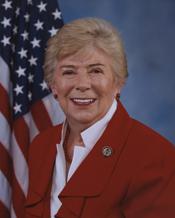
Mr. Speaker, I rise against the Medicare bill that is going to be giving billions of dollars of giveaway money that should be going for prescription drugs and not to the insurance companies and not…
Mr. Speaker, I rise against the Medicare bill that is going to be giving billions of dollars of giveaway money that should be going for prescription drugs and not to the insurance companies and not to the pharmaceutical companies.
Mr. Speaker, I rise, once again, in opposition to this flawed prescription drug bill. It is nothing more than a sheep in wolf's clothing.
I'm frustrated because this Medicare bill contains some provisions I feel are necessary. Indeed, hospitals and doctors may see higher reimbursement rates. It would provide a meager prescription drug benefit, and includes some protections for low-income seniors.
All of these provisions are a step in the right direction. Unfortunately, they are overshadowed by the bill's overall shortcomings.
I had hoped that the effort to add a prescription drug benefit to Medicare would be a discussion about freeing seniors from the skyrocketing costs of medicine.
But instead, it's become a struggle for the future of Medicare.
The bill starts us down the path to privatizing Medicare. It damages the safety net we've stitched for our vulnerable seniors. And worst of all, it does nothing to make drug companies keep the cost of their medicines down, which is what I thought this effort was all about in the first place.
Most of Long Island's seniors would be forced to go to private insurers for their drug coverage. In fact, this bill takes us down the same road Long Island has already traveled with Medicare+Choice HMOs. At first, we throw money at them, the private plans provide coverage, and everyone's happy. But over time, costs mount, federal reimbursements don't keep up, and the private insurers cut and run. This Medicare plan would throw billions more at HMOs and other private insurers with no guarantee that they'd continue to cover seniors. What happens when the HMO gravy train stops? Once again, our seniors will be left holding the bag. That goes against the very reason we created Medicare in the first place: to provide seniors with a safety net that the private insurance market could not and did not provide them with.
In addition, the bill would actually prohibit the government from negotiating lower drug prices. Veterans on Long Island benefit from
lower drug prices because the Veterans Administration negotiates prices on their behalf. If it works for veterans, why deny it to our seniors?
Finally, many seniors would find themselves in the ``doughnut hole,'' a gap in the very prescription drug coverage we are supposedly trying to provide them.
Simply put, the bill is not good enough, and I refuse to compromise the needs of our seniors in hopes of advancing a political agenda.
We must go back to the drawing board and create a real prescription drug benefit for seniors. We must do it without damaging their safety net or turning Medicare over to HMOs and insurance companies. Finally, we must do no harm, I learned years ago as a young nurse.
Mr. Speaker, this bill will do harm. I must vote against it.
Bill Text
2 versions available
        [Congressional Bills 108th Congress]
[From the U.S. Government Publishing Office]
[H. Res. 463 Reported in House (RH)]

House Calendar No. 136
108th CONGRESS
1st Session
H. RES. 463

[Report No. 108-394]

Waiving points of order against the conference report to accompany the
bill (H.R. 1) to amend title XVIII of the Social Security Act to
provide for a voluntary program for prescription drug coverage under
the Medicare Program, to modernize the Medicare Program, to amend the
Internal Revenue Code of 1986 to allow a deduction to individuals for
amounts contributed to health savings security accounts and health
savings accounts, to provide for the disposition of unused health
benefits in cafeteria plans and flexible spending arrangements, and for
other purposes.

_______________________________________________________________________

IN THE HOUSE OF REPRESENTATIVES

November 21, 2003

Ms. Pryce, from the Committee on Rules, reported the following
resolution; which was referred to the House Calendar and ordered to be
printed

_______________________________________________________________________

RESOLUTION

Waiving points of order against the conference report to accompany the
bill (H.R. 1) to amend title XVIII of the Social Security Act to
provide for a voluntary program for prescription drug coverage under
the Medicare Program, to modernize the Medicare Program, to amend the
Internal Revenue Code of 1986 to allow a deduction to individuals for
amounts contributed to health savings security accounts and health
savings accounts, to provide for the disposition of unused health
benefits in cafeteria plans and flexible spending arrangements, and for
other purposes.

Resolved, That upon adoption of this resolution it shall be in
order to consider the conference report to accompany the bill (H.R. 1)
to amend title XVIII of the Social Security Act to provide for a
voluntary program for prescription drug coverage under the Medicare
Program, to modernize the Medicare Program, to amend the Internal
Revenue Code of 1986 to allow a deduction to individuals for amounts
contributed to health savings security accounts and health savings
accounts, to provide for the disposition of unused health benefits in
cafeteria plans and flexible spending arrangements, and for other
purposes. All points of order against the conference report and against
its consideration are waived. The conference report shall be considered
as read.

House Calendar No. 136

108th CONGRESS

1st Session

H. RES. 463

[Report No. 108-394]

_______________________________________________________________________

RESOLUTION

Waiving points of order against the conference report to accompany the
bill (H.R. 1) to amend title XVIII of the Social Security Act to
provide for a voluntary program for prescription drug coverage under
the Medicare Program, to modernize the Medicare Program, to amend the
Internal Revenue Code of 1986 to allow a deduction to individuals for
amounts contributed to health savings security accounts and health
savings accounts, to provide for the disposition of unused health
benefits in cafeteria plans and flexible spending arrangements, and for
other purposes.

_______________________________________________________________________

November 21, 2003

Referred to the House Calendar and ordered to be printed