Providing for consideration of the bill (S. 610) to amend the provisions of title 5, United States Code, to provide for workforce flexibilities and certain Federal personnel provisions relating to the National Aeronautics and Space Administration, and for other purposes.
Legislative Activity
Stay on top of the latest movement without scrolling through every action
Motion to reconsider laid on the table Agreed to without objection.
January 28, 2004 • 10:28 AM
View full timeline
Introduced in House
January 27, 2004
The House Committee on Rules reported an original measure, H. Rept. 108-406, by Mr. Diaz-Balart, L..
January 27, 2004
Rule provides for consideration of S. 610 with 1 hour of general debate. Previous question shall be considered as ordered without intervening motions except motion to recommit with or without instructions. Measure will be considered read. Bill is open to amendments.
January 27, 2004 • 6:43 PM
Placed on the House Calendar, Calendar No. 140.
January 27, 2004
Considered as privileged matter. (consideration: CR H131-132)
January 28, 2004 • 10:15 AM
DEBATE - The House proceeded with one hour of debate on H. Res. 502.
January 28, 2004 • 10:16 AM
The previous question was ordered without objection.
January 28, 2004 • 10:27 AM
Passed/agreed to in House: On agreeing to the resolution Agreed to by voice vote.(text: CR H131)
January 28, 2004 • 10:28 AM
On agreeing to the resolution Agreed to by voice vote. (text: CR H131)
January 28, 2004 • 10:28 AM
Motion to reconsider laid on the table Agreed to without objection.
January 28, 2004 • 10:28 AM
Floor Debate
12 membersWhat members said about H.Res. 502 on the floor
 SB
SB TD
TD BG
BG SJL
SJL NL+7
NL+7
Floor Debate
12 membersWhat members said about H.Res. 502 on the floor
Mr. Chairman, I yield myself such time as I may consume. Mr. Chairman, I rise in strong support of S. 610 and I urge my colleagues to approve it and send it to the White House for the President's…
Mr. Chairman, I yield myself such time as I may consume.
Mr. Chairman, I rise in strong support of S. 610 and I urge my colleagues to approve it and send it to the White House for the President's signature.
This measure is a top priority of the entire administration, especially, of course, of the NASA Administrator. We have taken more than long enough to turn the bill into law.
The need for this bill, it seems to me, is beyond dispute. Events of the past year have highlighted NASA's need to attract and retain the best workforce imaginable, and yet NASA is on the brink of losing the talent that it already has.
Within just 5 years, 5 years, fully one-quarter of NASA's workforce will be eligible to retire. It is no wonder that the General Accounting Office has repeatedly cited strengthening human capital as one of NASA's top management challenges. We must stem the tide of the brain drain. S. 610 is a targeted, carefully crafted, moderate approach to giving NASA additional tools to meet that challenge. The bill does not make any radical departures from current law. Rather, it modifies and expands existing workforce authorities so that NASA can compete with the private sector in the labor market. That is just common sense.
Will changes in civil service laws solve all of NASA's workforce problems? Of course not. But NASA will not be better prepared to recruit and retain the workforce it needs if it is competing with one hand tied behind its back, as it is with current law.
This bill began as a proposal from NASA. We went over that proposal with a fine tooth comb, accepted some provisions, rejected others, and modified many more to clarify and target the new authority.
As a result of those negotiations and additional work in the other body, we
have finally ended up with the noncontroversial product that is before us today. A bill eagerly awaited by the administration, a bill that faces no opposition from organized labor, a bill that passed the Senate by unanimous consent.
In short, this is a bill that will make a real difference to NASA and the work we charge it to do without taking any untested approaches or crossing any ideological trip wires.
I should note that the bill before us is nearly identical to my original bill, H.R. 1085, as reported by the House Committee on Science almost 6 months ago.
The most significant difference between the two measures is that S. 610 no longer includes a provision that would have increased the number of employees who could participate in a personnel demonstration project. We are trying to minimize the number of people that can be in a pilot project. If we do not limit the number, we end up having a universal project. NASA was never able to give us any sense of how it would use the requested new authority, and I have no regrets that it has not remained in the bill.
I probably should also point out that we never included in H.R. 1085 authority the administration sought to allow private sector employees to work as government employees for a set period of time. This reverse Intergovernmental Personnel Act program seemed destined to confuse further the line between contract and government workers that already bedevils NASA.
The result of these kinds of decisions, once again, is that we have before us a bill that is not the least bit controversial, but is no less significant for that. It took a lot of work to get us to this point, but it will be worth it.
I want to thank the gentleman from Virginia (Chairman Tom Davis) and the rest of the Committee on Government Reform for working so closely with us on this measure. The gentleman from Virginia (Mr. Tom Davis) had his own NASA provision as a part of a larger workforce bill, H.R. 1836.
I also want to thank the gentleman from Tennessee (Mr. Gordon), our new ranking member, for getting us off to such an amicable start. It has been a pleasure to work with the gentleman from Tennessee (Mr. Gordon) all these years, and I welcome him to this position of new responsibility and authority and am confident he will serve us all well in this post and will carry on the tradition that we have established in the Committee on Science of working across the aisle, working together to sort out things, to minimize our differences and maximize the opportunities we have to address real problems and deal with them responsibly.
The gentleman from Tennessee (Mr. Gordon) was willing to look at this bill afresh in light of the work we had done with the Senate and events that had transpired since our markup. As a result, we are coming to the floor as a team. Not everyone in this Chamber would have been willing to do that, and I greatly appreciate it.
I also want to thank the gentleman from California (Mr. Rohrabacher), the chairman of our Subcommittee on Space and Aeronautics, who contributed important scholarship provisions to the bill, and to welcome the gentleman from Texas (Mr. Lampson), the new ranking member of the subcommittee, my friend and colleague.
Mr. Chairman, as I have mentioned, this bill is ready for the President's signature. I urge my colleagues to oppose any amendments that might arise and to give this bill the overwhelming support it deserves and that NASA so needs.
Mr. Chairman, I reserve the balance of my time.
Mr. Chairman, I yield 3 minutes to the gentleman from California (Mr. Rohrabacher), the distinguished chairman of the Subcommittee on Space and Aeronautics.
Mr. Chairman, I yield 3 minutes to the distinguished gentleman from Michigan (Mr. Ehlers), a very valued member of the Committee on Science.
Mr. Chairman, I yield myself such time as I may consume.
Mr. Chairman, I want to conclude my remarks by thanking our very capable staff of the Committee on Science on our side, David Goldston and Chris Shank, and this was the last bill worked on by our deceased former counsel, Mr. Barry Berringer, who always gave so much, such great value added to the committee with his outstanding work.
We cannot function in this Congress without the commitment, the ability and the hard work of dedicated professional staff, and we are blessed in the Committee on Science. But we are not the only ones. All across Capitol Hill, the people and the background are there every single day working hard to prepare us to deal responsibly in shaping public policy.
So I want to conclude my remarks by thanking the staff for their outstanding work.
Mr. Chairman, I submit for the Record letters to and from myself and the Chairman of the Committee on Government Reform regarding the appointment of conferees on this bill.
House of Representatives,
Committee on Government Reform,
Washington, DC, January 27, 2004.
Hon. Sherwood L. Boehlert,
Chairman, Committee on Science, House of Representatives,
Washington, DC.
Dear Mr. Chairman: Thank you for working with me in
developing the H.R. 1085, the NASA Flexibility Act of 2003.
As you know, the Committee on Government Reform reported the
bill, H.R. 1836, the Civil Service and National Security
Personnel Improvement Act. Included in that Act was Title
III, Subtitle B, National Aeronautics and Space
Administration. The House is scheduled to consider S. 610,
the Senate companion to H.R. 1085 tomorrow. Although S. 610
has been held at the Speaker's desk it is my understanding
that the bill would have been referred to the Committees on
Science and on Government Reform.
I support moving this important legislation forward
expeditiously; however, I do so only with the understanding
that this procedural route should not be construed to
prejudice the Committee on Government Reform's or the
Committee on Science's jurisdictional interest and
prerogatives on this bill or any other similar legislation.
I respectfully request your support for the appointment of
outside conferees from the Committee on Government Reform
should this bill or a similar bill be considered in a
conference with the Senate. Finally, I would ask that you
include a copy of our exchange of letters on this matter in
the Congressional Record during floor consideration of S.
610. Thank you for your assistance and cooperation in this
matter.
Sincerely,
Tom Davis,
Chairman.
Mr. Chairman, I rise in opposition to the amendment.
I want to thank the gentleman for his explanation of the amendment. The gentleman from Arizona is a very thoughtful Member, and he contributes significantly to the deliberations of this body. However, let me say a couple of things.
First of all, this legislation will give flexibility to NASA to work within the existing constraints. No new money, we are not coming up with a ton of new money or anything else. We are saying they have an existing budget for personnel and they have more flexibility with it. We are treating them like a business. I think that is very important.
We have to stem the tide of this brain drain. It is very serious. As the gentleman from Virginia (Mr. Tom Davis) pointed out, within 5 years, 25 percent of the workforce is eligible for retirement. We have 15 percent eligible for retirement right now. Those over 60 outnumber by three to one those under 30. It is a very serious problem. We tried to address it in a very responsible way. We did not address like some people around here suggest we address problems, give them a blank check. We did not do that. We said, no, they have to use their existing personnel accounts, no additional money; but we give them flexibility. Having said that, let me point out something else. There is a very practical reason why we should not accept this amendment and should go forward today. We have to get the bill to the President for his signature. This is a bill that has passed unanimously in the Senate, a bill that is going to pass by substantial margin here in the House, hopefully unanimously.
If we amend it, here is what is going to happen. This is something which has been cooking for months now. We just got the amendment today, and that is why I appreciate the explanation. I had not seen the amendment before. We received a thorough, sound, reasoned explanation; but if we pass this amendment, the bill is amended, and it goes back to the Senate, and we start all over again back and forth like a ping-pong match. We have preconferenced this bill. We worked it out with the Senate. They send it back here, we vote ``aye'' today, it goes to the President, he signs it, and we get on with the job of giving NASA the flexibility it needs.
I would urge my colleagues to vote against the amendment. I thank the gentleman from Arizona (Mr. Flake) for his thoughtful presentation.
I yield to the gentleman from Arizona.
I yield to the gentleman from Virginia.
Reclaiming my time, that is within the existing personnel allocation. This is not additional money, additional to the $2 billion. They are saying if NASA took advantage of all these programs, scholarships, retention incentives, moving expenses, the types of things that happen every single day in the business community, they have to do it with the existing personnel budget, no new money.
I am like the gentleman from Arizona, perhaps not as fiscally conservative, but I am moving in that direction. But the point is this does not add money; it allows more flexibility. The estimates that the gentleman from Arizona are referring to are estimates on what this could cost from the existing budget by using the flexibility that we are proposing.
Mr. Chairman, will the gentleman yield?
Mr. Chairman, that is a legitimate concern expressed by the gentleman. Let me assure him, this is not additional money. This says to NASA, using your existing personnel allocation, we are giving you flexibility.
We say constantly, why does government not operate more like business, like they do in the real world? We are trying to give NASA that opportunity. We are not giving them a blank check. We are not giving them the key to the Treasury. We are just saying, existing dollars, you have more flexibility to retain the workforce you need to do the job we expect you to do.
My counsel just advises me, it depends on what the appropriators do in future appropriations. But the answer is clearly ``no.'' I know what the gentleman's intent is, his intent as I understand it, and that is why I appreciate the thoughtful presentation he gave on the floor today. I wish we had had it earlier. As Chairman Rohrabacher has said, he takes a back seat to no one in being concerned about how we spend money around here.
So I agree with the basic intention. It is not to have additional money spent for NASA on personnel. It is to give them flexibility on the existing money we appropriate for them. Who knows, with the President's vision outlined, for this new Mars vision, eventually a generation or two ahead of us and the Moon in this generation, if the Congress decides to be supportive of that, there are going to be budget differences; but I want to assure the gentleman that our intent is to give NASA the flexibility to use existing dollars, not to add to the allocation or appropriation for NASA on personnel or any other thing.
That is right.
I thank the gentleman.
Mr. Chairman, I yield myself such time as I may consume. Mr. Chairman, for years we have been sounding the alarm that the Federal Government faces grave danger when it comes to losing highly…
Mr. Chairman, I yield myself such time as I may consume.
Mr. Chairman, for years we have been sounding the alarm that the Federal Government faces grave danger when it comes to losing highly specialized employees. NASA is certainly no exception. In fact, it leads the pack. Fifteen percent of NASA's workforce is currently eligible to retire. A quarter of the agency will be eligible to retire over the next 5 years. Scientists and engineers over 60 outnumber those under 30 by nearly three to one. The potential loss of institutional knowledge is staggering.
Why are we in the midst of a human capital crisis? When it comes to the kind of very smart, very well-educated, highly specialized people who work in our space program? It is largely because we are competing directly with the higher-paying private sector firms. But it is also because when it comes to the civil service, preserving traditions has become a tradition unto itself, and I think it is time to change that tradition.
NASA, as well as the country as a whole, scored a major victory this month by safely landing two unmanned rovers on the face of Mars. In order to make sure that NASA's successes such as this outweigh its failures, we need to provide NASA with as much flexibility as possible in order to recruit and retain the best and the brightest that this country has to offer for our space program.
The simple fact is that NASA's personnel policies are dated and are holding the agency back. The modernization that this bipartisan legislation promises marks a significant step in the right direction for NASA, for the government, for science and for taxpayers.
It has been over a year since NASA Administrator Sean O'Keefe first came to Capitol Hill requesting these much-needed personnel flexibilities. And while I wish we could have responded sooner, I am pleased to be here today to see the legislation finally making its way through the process.
The Committee on Government Reform, which I chair, marked up similar legislation last May, and the House Committee on Science marked up the legislation last July. I want to thank my friend and colleague, the chairman of the Committee on Science, the gentleman from New York (Mr. Boehlert) for his tremendous efforts in moving this important legislation forward, as well as the subcommittee chairman, the gentleman from California (Mr. Rohrabacher), and the ranking minority members as well; and I look forward to working with them in the future to improve workforce flexibilities available to NASA, as well as to other Federal agencies that work to expand the frontier of science.
One of the difficulties we have in recruiting employees today for NASA and other agencies, is that when they go to a job fair and they talk to a college recruiter, by the time they go back and go through all the rules and regulations in hiring, sometimes background checks, it is months before they can put an offer on the table. In the meantime, the private sector is up there with hiring bonuses, and they are up there with an offer on the table immediately with a job guarantee. We cannot compete in that kind of environment.
I know some of my friends on the Committee on Science on the other side of the aisle are concerned about paying bonuses, but this is commonplace in the private sector with which we are competing. We are talking about some of the brightest people in the world, scientists, engineers, literally rocket scientists that we want running our space program. We do not want to go second tier with people who are salaried and getting bogged down making sometimes one-tenth of what they could make in the private sector. It does not work that way.
So I support this legislation, and I am proud to see it moving forward.
Mr. Chairman, I reserve the balance of my time.
Mr. Chairman, I yield back the balance of my time.
Mr. Chairman, will the gentleman yield?
Mr. Chairman, my question is what are the CBO costs on this?
Mr. Chairman, I move to strike the last word.
Again, the gentleman from Arizona (Mr. Flake) and I have worked together on so many battles. I respect what the gentleman is trying to do here, but I have to oppose this amendment for several reasons.
First of all, as the chairman of the Committee on Science noted, if we amend this bill today, it goes back to the other body, the black hole. We have been waiting a long time to get these personnel changes into effect so we can go out and retain part of that workforce that is now contemplating retiring, and we can start retaining the best and brightest out of our universities. Every day we delay that, we lose flexibility to do that.
The NASA budget is $15.5 billion. The personnel costs are only $2 billion. If we want to go after NASA's budget or start holding it down, the way to control that is by their section 302(b) allocation through the appropriations process. It is designed that NASA will eat these costs under the current appropriations. They may pay a little more for personnel in some areas and may pay less in some areas, but they have to do it under the budget that we pass. This appropriates no additional money, but it does give them flexibility to pay people at the top, our top rocket scientists, top engineers, and top program managers, the kind of dollars that will keep them in the program and recruit some of our best people into our space program instead of going out into the private sector where they can gain a lot more money.
The costs of failure of not doing this are much greater. A failed launch, cost delays, those costs are literally astronomical, if we are to do that; and that is what we are trying to eliminate here, the downside of not passing this. It is a cost-avoidance issue.
We control this through the budget process, the section 302(b) allocations that we make and budget, and there are no additional monies appropriated. These costs will be eaten up within the NASA budget, and there is plenty of flexibility to do this. There is a $15.5 billion budget, $2 billion for personnel costs, and $80 million can be reallocated without any additional cost to American taxpayers; and we can retain and recruit some of the quality people that are needed to run this space program and keep it going on the right track.
It is for those reasons that I urge my colleagues to vote against this amendment.
Mr. Chairman, I yield myself such time as I may consume. First, Mr. Chairman, let me thank the gentleman from New York (Mr. Boehlert), my chairman, for his kind remarks; and let me concur in that our…
Mr. Chairman, I yield myself such time as I may consume.
First, Mr. Chairman, let me thank the gentleman from New York (Mr. Boehlert), my chairman, for his kind remarks; and let me concur in that our committee has a long tradition of working in a bipartisan manner. I cannot think of anyone that I would rather work with than our chairman, and I look forward to continuing that progress for our country.
Mr. Chairman, the NASA workforce is a critical national asset. We need to ensure that its strength is maintained if NASA is to undertake all the challenging activities envisioned for it in the coming decades. NASA's workforce is a highly skilled workforce. They truly are rocket scientists.
Yet the NASA workforce is under stress. Those stresses include infrastructure that is aging and in need of repair and upgrading, diversion of resources from existing tasks to provide money for proposed new initiatives, and outsourcing and privatization agendas that call into question the agency's commitment to careers at NASA. Last year, I would have added another item to that list, namely, a lack of long-term goals for the agency.
However, President Bush has now proposed an initiative to go back to the Moon and then at some point in the future send humans to Mars. I have long supported the idea that the space program needs some clear and compelling long-term goals. So I welcome the President's decision to propose an initiative. Of course, setting goals is an important first step, but we will still need to assess whether or not the President's plan to achieve these goals is viable. We will have a better idea of that once the fiscal year 2005 budget request is released next week and once NASA provides more information on specifics of the initiative.
Clearly, it will not send a good signal to NASA's workforce if the new initiative winds up being paid for by cannibalizing other important NASA activities. It will not be fair to the NASA workforce if they are tasked with a set of challenging and ambitious goals and a budget that is inadequate to achieve those goals.
Turning to S. 610, the NASA Flexibility Act of 2003, I believe that it is an improvement over the legislation considered by the Committee on Science last year. It modifies or eliminates a number of provisions that I and other Members have found objectionable; and at the same time, we should not lull ourselves into believing that this bill will solve all of NASA's workforce problems. For example, S. 610 includes a number of enhanced recruitment and retention bonuses. Yet I have been troubled by the indications from NASA's own data that NASA may not be using its existing authorities to the fullest extent due to competing budgetary pressures at the various centers, pressures that may well be increased.
Apparently my concerns are shared by NASA's inspector general. He has initiated an investigation into the extent to which NASA is making use of its existing workforce authorities. I look forward to hearing the results of that investigation.
With respect to the space shuttle, under the President's plan, the civil servants and contract personnel supporting the shuttle program will see their jobs disappear over the next 6 years. The best of those employees are not going to wait around for the inevitable. That fact puts the onus on NASA's management to ensure that the critical skills needed to fly the shuttle safely will be retained over the entire period. I certainly hope that NASA has a credible shuttle workforce retention plan ready to go. If not, NASA's management needs to put one in place as soon as possible if we are to avoid a hemorrhaging of critical skills from the shuttle program.
Finally, I remain concerned that S. 610 is a bill focused solely on the NASA workforce. However, the leadership of NASA has argued strongly that they need this legislation to maintain a strong workforce. As a result of that and as a result of the gentleman from New York (Chairman Boehlert) graciously accepting some improvements to the bill, I will support passage of S. 610 today; and I will be watching over the coming years to make sure that NASA's performance on workforce issues matches its stated intentions.
Mr. Chairman, I reserve the balance of my time.
Mr. Chairman, I yield 5 minutes to the gentleman from Texas (Mr. Lampson), the new ranking member of the Subcommittee on Space and Aeronautics.
Mr. Chairman, I yield myself such time as I may consume.
In conclusion, I want to thank the gentleman from Virginia (Mr. Tom Davis) and the gentleman from New York (Mr. Boehlert) for bringing forth a better bill, and also thank the gentleman from Texas (Mr. Lampson) for improving the bill and for the gentleman's accession as the ranking member on the Subcommittee on Space and Aeronautics and let the gentleman know he could not possibly find a better partner than the gentleman from California (Mr. Rohrabacher) as the chairman of their subcommittee.
Again, I thank the gentleman from New York (Chairman Boehlert) for helping us make this a better bill. I want to say to our Members that I intend to support this bill and recommend that they support it in final passage.
Mr. Chairman, I yield back the balance of my time.
Mr. Chairman, I move to strike the requisite number of words.
Mr. Chairman, we were not given notice of this amendment; but on quick and brief review, it seems to be a well-intentioned amendment that does not improve the bill. It seeks to solve a problem that does not exist, so I want to concur with the gentleman from Virginia (Mr. Tom Davis) and the gentleman from New York (Mr. Boehlert) in opposing this amendment.
Mr. Chairman, it is with mild apprehension that I rise today in support of S. 610, the NASA Flexibility Act. My vote today is not really an endorsement of this bill. Instead it is a vote of…
Mr. Chairman, it is with mild apprehension that I rise today in support of S. 610, the NASA Flexibility Act. My vote today is not really an endorsement of this bill. Instead it is a vote of confidence for the people at NASA, and a demonstration of my heart-felt desire to work together in a bipartisan fashion here in Congress, with the Administrator at NASA, and with the administration, to help NASA achieve the greatness of which it is capable.
NASA is at a turning point. The past two decades have seen drastic cuts in the NASA budgets and the NASA workforce. Its mission has been unambitious, and its programs have seemed to drift. We have lost two space shuttles and 14 brave astronauts. But today, there is unprecedented hope for the future. Two rovers on the surface of Mars are beaming back
data that could help us unlock some of the greatest mysteries of our universe. They have captured the imaginations of the American people, with over 30 million people logging on to the NASA website in the last weeks. The President has launched a dialog that could lead to a bold new mission for NASA, to go back to the Moon, then on to Mars, and beyond. The excitement in my district of Houston is palpable.
If we start this new phase on the right foot, there is nothing that NASA, driven by the American spirit, cannot accomplish. But if we stumble, we could set back human space exploration for generations. That would be tragic for our scientists, our society, and our economy.
When the Workforce Flexibility bill first came to us in the Science Committee, I was absolutely against it. It gave too much latitude to the Administrator to tinker with the loyal NASA workforce through huge demonstration projects. It allowed big bonuses for political appointees--and I don't hear anyone arguing that there is a critical need for more political appointees in this town. After some intense bipartisan work in the Science Committee, and with help from the unions, and with some strong leadership from Senator Hollings, the most egregious parts of the bill have been removed.
But the most important reason I was against the bill before us in Fall, is that I felt it was irresponsible to give the Administrator of NASA the flexibility to move faster--when we had no idea where he was going. We were hearing that they needed the ability to bring in key personnel, but they couldn't tell us what project those people were going to work on, because NASA was severely lacking in vision and mission. This is why I and many other of our colleagues supported Congressman Nick Lampson's Space Exploration Act of 2003, which would have set a series of bold, yet attainable goals for NASA. I am pleased that the President has heard our call, and has put forth his plan for the future of the manned-space mission of NASA.
We are far from finalizing that plan, but there has been a surge of momentum and enthusiasm, and I hope we capitalize on it. The bold new mission will take creativity at every level of NASA. That is why I am lending my voice in support of this workforce bill. But I am still concerned. I hope this and future NASA administrators are judicious in their use of this new ``flexibility.'' My district is a stone's-throw from Johnson Space Center, and I consider the people there my friends and neighbors. They come to Houston out of a noble sense of purpose, to do something extraordinary and be a part of something unlike anything else in the history of this planet.
Sure, bonuses and travel expenses like those authorized in this bill can make it a bit more comfortable for those in government jobs--but that is not what will keep the best people at NASA. They want a sense of purpose--and that will come from a bold mission. They want a sense of community--and that will come from stability and fairness in the workplace. They want to feel that they are making a difference--and that will come from changing the culture at NASA so that bright thoughtful people are heard and respected. And they want to feel safe-- and that will come from making safety a priority and not an afterthought as it has been in the past.
To make NASA all it should be, we will all need to work together. I will do my part, and by supporting this bill I am giving the Administrator the tools he says he needs to do his. But, I will be following closely as the future of NASA unfolds. Today we are hearing a new level of interest and commitment from the administration. However, as we have seen with education, and homeland security, and HIV/AIDS-- often the words are not backed up by adequate funding and political capital. I hope that will not be the case with NASA.
This act creates scholarship for work programs that will help get the best young people to choose NASA for their careers. I hope various retention bonuses will enable the Administrator to encourage top people to stay through the transition that will occur over the next decade as we move from the space shuttle and the space station, into the work beyond. For example, we must harvest the talents of the fabulous space shuttle team in Houston, and not risk letting them run to private industry while Congress or the administration sits on its hands.
It should be an exciting year for NASA, and space enthusiasts around the world. I hope this act will help drive NASA to greatness. I support it and urge my colleagues to do the same.
Mr. Chairman, I thank the gentleman from Tennessee (Mr. Gordon), the ranking member, and want to commend him on his ascension to being ranking member on the Committee on Science and thank him not…
Mr. Chairman, I thank the gentleman from Tennessee (Mr. Gordon), the ranking member, and want to commend him on his ascension to being ranking member on the Committee on Science and thank him not only for what he is going to be doing as ranking member but for the great work the gentleman has done on the committee along the way.
It is a pleasure also to work with the gentleman from New York (Chairman Boehlert) and the gentleman from California (Mr. Rohrabacher), the chairman of the Subcommittee on Space and Aeronautics, as well; and I look forward to that.
Mr. Chairman, I rise in support of S. 610; and even though it does not address all of the important issues facing the NASA workforce, including those outlined by the gentleman from Tennessee (Mr. Gordon) earlier, it is the only NASA workforce bill that we are likely to get out of this Congress this year, and as such, I intend to support it.
When a House version of this workforce legislation was marked up by the Committee on Science last year, I objected to the lack of any challenging goals for NASA's human space flight program. I offered an amendment to establish some specific goals. Unfortunately, my amendment was defeated on a party-line vote. I thought that was a mistake, and now it appears that President Bush agrees with me; and he has announced this ambitious, long-term exploration initiative that mirrors my amendment in earlier legislation that I had introduced; and I am very pleased to see that happen.
The challenge, however, will be in turning those goals into a reality in a manner that does not damage NASA's other important programs or take away from our commitments to those members of society who do indeed need our help.
Mr. Chairman, NASA's management has said that they need this workforce legislation. I am prepared to support it because I deeply care about the hardworking, dedicated men and women who work at NASA and especially at the Johnson Space Center, and I want to do whatever might help them achieve their full potential. Yet simply increasing the size of the bonuses available to NASA employees is not a cure-all, especially if NASA is not making full use of its existing bonus authority, a possibility that is being investigated, as we speak, by NASA's inspector general.
I do not believe that NASA's best and brightest are motivated primarily by money anyway. Rather, I think it is the chance to work on cutting-edge research and development and to attempt the near impossible that attracts them to NASA, and that is what is going to keep them there.
I remember a year or so ago getting up and leaving our table at the committee hearing and going out into the audience and sitting with about 20 or 25 college students and asking them, when we were talking about financial benefits that would supposedly motivate them to go to work for NASA, what it was that they wanted to see, and the response was destination goals: it will give me an opportunity to live my dream, give me an opportunity to go work on something that will make a difference to society.
That is also why I was so upset a few years ago when the NASA leadership decided to cancel the X-38 crew return vehicle project. The X-38/CRV was an exciting example of NASA employees coming up with an innovative, low-cost way of meeting an important space station requirement, and they were working hard to turn it into a reality. Yet it was cancelled just as it was nearing completion, and I might add, at a greater cost than it would have taken to complete it. The dedicated NASA team that had worked on that project was broken up and dispersed.
So where are we now? It appears that after several years of false starts on a more expensive project for the X-38/CRV, NASA leadership has now decided to pay the Russians to provide the same capability, create jobs in Russia.
I sponsored legislation to allow the United States to use the Soyuz after the Columbia tragedy, to give more flexibility to the administration.
The Congress is going to have to revisit the Iran Nonproliferation Act if we are going to rely on Soyuz, as the administration wants, to get us to and from the Space Station after the Shuttle is retired in 2010.
So whatever we may think of the wisdom of sending U.S. taxpayer dollars to Russia, it certainly does not strike me as being the way to reward innovation by the NASA workforce. Quite the contrary.
I intend to take a close look at NASA's plans for the Space Station and the Space Shuttle as we review the fiscal 2005 budget request over the coming months. We owe it to the NASA workforce to ask the tough questions. We need to ensure that they are being given sensible plans to implement, as well as the tools to carry them out. In the meantime, I think that S. 610 represents an improvement over legislation that we considered earlier, and I am prepared to support it.
Show 7 more

Mr. Speaker, I yield myself such time as I may consume. I thank the gentleman from Florida, Mr. Lincoln Diaz-Balart, for yielding me time. Mr. Speaker, I am pleased to rise in support of the NASA…
Mr. Speaker, I yield myself such time as I may consume. I thank the gentleman from Florida, Mr. Lincoln Diaz-Balart, for yielding me time.
Mr. Speaker, I am pleased to rise in support of the NASA Workforce Flexibility Act of 2003, as well as the rule providing for its consideration. As the majority member of the committee previously mentioned, the underlying legislation will provide NASA with greater personnel management flexibilities to provide bonuses, hiring and other management tools in order to enhance the agency's ability to recruit and retain qualified employees.
I have always been a friend and supporter of NASA and the U.S. program. I, like so many other Americans, have relished in the Earth- shaking rumbling of powerful shuttle engines launched from the Kennedy Space Center. The instant illumination of the night sky still sends a rush of excitement throughout the United States. Children and adults alike dream of the day when they will have an opportunity to see our Earth from beyond its atmosphere.
The U.S. space program has done so much for Americans, not just inspiring and educating us on space exploration, but constantly improving our quality of life. The returns on those investments are accrued all around us. Technologies of NASA's space program have had and continue to have a profound effect on the U.S. and its people. Many products utilized in our homes and workplaces and used for health, fitness and recreation are the direct result of space technology spin- offs.
It is important for Congress to be aware of the issues facing NASA when it comes to hiring and retaining the best and brightest minds of the scientific community. NASA's workforce differs significantly from other Federal agencies in that more than 60 percent of its makeup is scientists and engineers. These statistics place NASA in a difficult position as the number of graduates in the physical sciences, both under- and post-graduate, continues to decrease.
The NASA Workforce Flexibility Act allows NASA to suit up and engage in the fierce competition with the private sector for the most qualified candidates, thus allowing it to become more competitive in recruiting and retaining the kind of workforce NASA will need in the 21st century.
But while NASA suits up, so must Congress. We must provide guidance to this important Federal agency to ensure that it is recruiting and signing up the most qualified candidates from all colleges, universities and the private sector.
Our colleague, the gentlewoman from Texas (Ms. Jackson-Lee), offered an amendment to the underlying bill in committee that would have reinstated the Minority University and Research Programs as a division after NASA demoted it to program status. The amendment was, unfortunately, defeated. While I have been told that this program has not been stripped of any of its abilities to carry out its mission, I certainly hope that the defeat of this amendment is not the beginning of a striptease.
NASA scholarship opportunities should be equally distributed among institutions of higher education, including minority-serving institutions. Programs such as the one the gentlewoman from Texas (Ms. Jackson-Lee) sought to reinstate provide the necessary outreach needed to bring the most qualified and diverse candidates to the table.
Mr. Speaker, despite the progress that has been made, it is critical that we continue to move forward in diversifying the workplace. Lags have been particularly visible for minorities in the math and physical sciences. Democrats stand united and prepared to work with the majority to further ensure that Federal agencies, NASA included, are held accountable for their recruiting and hiring practices. Agencies must not only make good-faith efforts to recruit, employ, train, promote and retain members of underrepresented groups, but they must also show us results.
Mr. Speaker, I too want to thank the members of the Committee on Science, in particular the gentleman from New York (Chairman Boehlert) and the ranking member, the gentleman from Tennessee (Mr. Gordon), for their incredible work. I also want to thank the members of the Committee on Government Reform, particularly the gentleman from Virginia (Chairman Tom Davis) and the ranking member, the gentleman from California (Mr. Waxman), for all of their good work.
As I mentioned previously, I support the underlying legislation and I will not oppose the rule. I urge my colleagues to do the same.
Mr. Speaker, I have no further requests for time, and I yield back the balance of my time.
Mr. Speaker, by direction of the Committee on Rules, I call up House Resolution 502 and ask for its immediate consideration. Mr. Speaker, for the purpose of debate only, I yield the customary 30…
Mr. Speaker, by direction of the Committee on Rules, I call up House Resolution 502 and ask for its immediate consideration.
Mr. Speaker, for the purpose of debate only, I yield the customary 30 minutes to the gentleman from Massachusetts (Mr. McGovern), pending which I yield myself such time as I may consume. During consideration of this resolution, all time yielded is for the purpose of debate only.
Mr. Speaker, House Resolution 520 is an open rule that provides for the consideration of S. 610, the NASA Workforce Flexibility Act of 2003. The rule provides for 1 hour of debate, with 40 minutes equally divided and controlled by the chairman and ranking member of the Committee on Science, and 20 minutes equally divided between the chairman and ranking member of the Committee on Government Reform. The rule also provides one motion to recommit, with or without instructions.
Mr. Speaker, following the extraordinarily tragic Shuttle Columbia disaster, it was imperative that the United States take a deep look at its space program. The Columbia Accident Investigation Board and NASA continue to address needed safety concerns, but I think we must take steps to further innovation and scientific research, find new frontiers and unveil endless possibilities.
I believe NASA has undergone a positive transformation in recent weeks. With the stunning successes of the Mars rovers and President Bush announcing new long-term goals for manned space exploration, our national desire to comprehend the nature of our solar system and our universe has been reinvigorated. The underlying legislation provides NASA additional tools to recruit, train and keep the most talented scientists and engineers.
The legislation authorizes NASA to offer needed incentives to valued current and prospective employees, the same as most major corporations and research institutions would offer to compete. When the United States goes to space, Mr. Speaker, we need the brightest and the best in the industry to work to make our dreams of exploration a reality. As such, this legislation authorizes recruitment, relocation and retention bonuses as an incentive to NASA employees; term appointments to our most valued scientific minds; and the ability for Administrator O'Keefe to provide pay increases to those in critical positions and with superior qualifications. These are essential additions necessary for NASA to succeed in its newest missions.
Furthermore, the underlying legislation, Mr. Speaker, authorizes $10 million to begin a Science and Technology Scholarship Program. This funding is an important step for promoting the sciences in our high schools and colleges, while allowing less advantaged students a potential for higher studies.
Our superiority in science and the technologies, without any doubt, has declined since President Kennedy began our Nation on a path to the moon in 1961. It is our responsibility to ensure that when those highly trained NASA scientists retire, some of whom have participated in the entire history of our space program, that they know their replacements will be the best and the brightest from any background that this country has to offer.
I would like to quote Christa McAuliffe, a teacher, astronaut and American hero tragically lost in the explosion of the Challenger Space Shuttle. She said, ``Space is for everybody. It's not just for a few people in science or math, or for a select group of astronauts. That's our new frontier out there, and it is everybody's business to know about space.''
I believe that the underlying legislation, Mr. Speaker, will help NASA to continue our passionate exploration of the unknown. And we bring this legislation forward, Mr. Speaker, under an open rule. Any Member can bring forth to this House for the consideration of all of its membership any idea that Members may have. It is an open and a fair rule.
I would like to thank the gentleman from New York (Chairman Boehlert) and Senator Voinovich for their support on this issue. I urge Members to support both the rule and the underlying legislation.
Mr. Speaker, I reserve the balance of my time.
Mr. Speaker, I yield myself such time as I may consume.
Mr. Speaker, reiterating my support for the underlying legislation as well as the rule, I ask my colleagues to support both.
Mr. Speaker, I have no further requests for time, I yield back the balance of my time, and I move the previous question on the resolution.
The previous question was ordered.
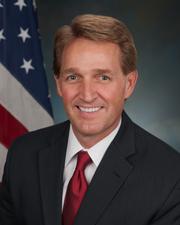
Mr. Chairman, I offer an amendment. Mr. Chairman, what the Flake amendment does, and I listened to the discussion about the merits of the bill, and I am compelled that we do need to do this. This is…
Mr. Chairman, I offer an amendment.
Mr. Chairman, what the Flake amendment does, and I listened to the discussion about the merits of the bill, and I am compelled that we do need to do this. This is a good bill. We need to give NASA the flexibility they need to hire good people and retain them. I am not questioning the merits of the bill at all. I am simply saying in this era of big deficits and the spending problem that we have in Congress, we ought to ensure that any new authorization is met with some spending restraint on the other side and we pay for the money we are spending here.
The Flake amendment would require NASA to submit to Congress a plan to offset new spending authorized under this legislation with budget reductions elsewhere in the NASA budget. The Flake amendment gives NASA the flexibility to choose which budget request to target for reduction. We are not telling them how to do it; we are simply saying please match this funding with similar reductions.
The report that NASA must give when they get this money must demonstrate that spending requests for provisions authorized under this legislation are matched with corresponding budget cuts in other specific budget items. Adoption of the Flake amendment gives Congress the opportunity to ensure that new spending authorization for must-have workplace flexibility is met with spending restraints.
The CBO estimates that S. 610 will cost $80 million over the 2004- 2008 period. There has been no indication that the new authorized spending will be prioritized against the spending accounts. While the workforce flexibility afforded to NASA under S. 610 is positive and market-oriented, NASA should identify areas of spending that can be reduced to offset new costs.
In November, Congress passed a $400 billion Medicare bill. The Senate passed the final omnibus package which totaled over $370 billion in spending. That has been signed into law. Two days ago, the CBO announced that we have a $477 billion projected deficit. If you include draws on the trust fund, that brings it all of the way up to just under $700 billion for the coming year. It is time to exercise some fiscal restraint. That is what the Flake amendment is designed to do.
Mr. Chairman, will the gentleman yield?
Mr. Chairman, I think it is not unreasonable to ask to go back to the Senate. I think Members agree this flexibility is needed. It is market-oriented. We need to make sure that NASA retains and hires good people.
Many of my colleagues that I have spoken to in the last day on this subject have indicated that they were informed this would not cost anything, this would be totally from NASA's own budget. Yet the CBO estimates that it will cost $80 billion over the next 4 years. If that is the case that it draws only on NASA's budget, if it is the case that it does not cost anything, I would submit that there is no problem here, that it does not increase spending.
So all our amendment says is to the degree it does, if it is going to increase spending and if we are going to have to authorize new spending, it should be matched with spending reductions elsewhere in the budget.
The NASA budget for personnel is $2 billion a year. I do not believe it is unreasonable to ask for those kinds of spending reductions.
Mr. Chairman, I would say to the gentleman that the personnel costs for NASA are $2 billion per year, with a ``B.'' The costs that CBO projects for this are $80 million.
Mr. Chairman, I ask unanimous consent to strike the requisite number of words.
Mr. Chairman, I would like to engage in a colloquy with the sponsor of the bill. There seems to be some confusion as to whether or not this is new authorization for additional spending over and above NASA's personnel costs which have already been approved.
I yield to the gentleman from New York.
Let me rephrase the question. If NASA takes advantage of the new flexibility given them to the fullest extent, will it have an additional draw on the Treasury or will it be totally within NASA's existing budget?
So the CBO estimates of the cost are simply within NASA's own budget?
With that explanation, I will withdraw the amendment assuming that we are on the same page.
Mr. Chairman, I ask unanimous consent to withdraw the amendment.
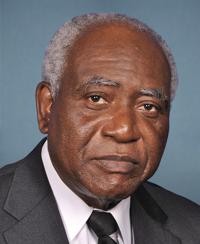
Mr. Chairman, I yield myself such time as I may consume. Mr. Chairman, in July 2001, the Office of Personnel Management updated its report entitled Human Resources Flexibilities and Authorities in…
Mr. Chairman, I yield myself such time as I may consume.
Mr. Chairman, in July 2001, the Office of Personnel Management updated its report entitled Human Resources Flexibilities and Authorities in the Federal Government. The report states that the government as a single employer remains sound public policy. Consequently, it is important to retain government-wide approaches, authorities, entitlements, and requirements in several areas, including collective bargaining, merit system principles, due process protections related to adverse actions and, among other things, veterans preference in employment and retention.
If, as the report states, government as a single employer is sound public policy, the overly broad and hastily developed human resources authorities granted to the Department of Homeland Security, the Department of Defense, and now the National Aeronautics and Space Administration, NASA, are simply not the best sound public policy.
That is not to say that the current civil service system is not in need of reform. It is. Members of Congress, their staffs and stakeholders have worked diligently to improve agency-specific reform proposals as they speed to enactment, but that is not the way to create a fair and equitable civil service. Congress, the Office of Personnel Management and Federal employee groups should be concentrating our efforts on government-wide reforms rather than agency-by-agency requests.
The bill being considered today is no exception. Although S. 610 has been greatly improved since its initial introduction, it serves only to further fragment the civil service. I applaud the fact that the bill includes a provision that mandates that NASA's Administrator submit a plan for OPM approval detailing the workforce needs of NASA, how NASA intends to use new workforce flexibilities to meet those needs,
and how the agency has utilized existing flexibilities.
NASA is also required to submit a workforce plan to Congress and provide it to all employees at least 60 days before exercising any of the flexibilities in the plan. These are very prudent steps for Congress to require NASA to take. However, they are steps that should have been taken before granting NASA the authority.
Mr. Chairman, I would urge that the Subcommittee on Civil Service and Agency Organization of the Committee on Government Reform exercise its authority over NASA and other agencies that have received new human capital flexibilities. If nothing else, we can examine how effective these agencies are in implementing these new flexibilities before granting them to other agencies.
There has been a great deal of effort to reach bipartisan agreement on this legislation. I commend the chairman of the Committee on Government Reform, the gentleman from Virginia (Mr. Tom Davis), and the ranking member, the gentleman from California (Mr. Waxman), for the leadership and civility that they have displayed. So I am going to vote in favor of this legislation and further urge that we continue to take a good, hard look at the implementation of these flexibilities before granting them to other agencies on an individual-by-individual agency request. I still believe that agency-wide reform throughout the entire government is the best approach.
Mr. Chairman, I yield back the balance of my time.

Mr. Chairman, I thank the gentleman for yielding me this time. Mr. Chairman, today I rise in strong support of S. 610, the NASA Flexibility Act. The Committee on Science chairman, the gentleman from…
Mr. Chairman, I thank the gentleman for yielding me this time.
Mr. Chairman, today I rise in strong support of S. 610, the NASA Flexibility Act. The Committee on Science chairman, the gentleman from New York (Mr. Boehlert), and the Committee on Government Reform chairman, the gentleman from Virginia (Mr. Tom Davis) are to be commended for working closely with our colleagues in the other body, as well as with NASA and NASA's unions, in crafting the moderate, targeted and careful package of civil service modifications that resulted in S. 610.
All proposals from NASA, its unions, the House and Senate were considered, refined, debated and discussed in a series of hearings in both the House and Senate committees. Differences were debated openly and in a straightforward manner. These measures were
carefully crafted after a year and a half of thorough deliberation. This has been an arduous process, but the outcome is an excellent piece of legislation with S. 610.
The real winner from all this hard work that went into this legislation will be the scientists and engineers at NASA. NASA is having a difficult time recruiting and retaining the best and the brightest workforce, as many NASA employees from the Apollo era have retired; and unfortunately, the bright, prospective, new talent we need in the agency is instead sometimes attracted to jobs paying more than the government can provide.
NASA does many amazing things, as the Mars exploration rovers have demonstrated, but the agency also faces a number of challenges in addressing the recommendations of the Columbia Accident Investigation Board report. S. 610 will help to revitalize the agency, and I ask all Members to support this bill.
Let me also mention another important aspect of this issue. We cannot do good science without good scientists, and we cannot do good engineering without good engineers. In our Nation, unfortunately, the engineering enrollments have been declining for 20 years, in a steady, slow decline. We are having problems in this Nation with getting good, bright engineers and scientists to do the work we need, not only at NASA but elsewhere.
I am very pleased that the President recognized this important factor in his State of the Union speech when he mentioned the need to improve math and science education in this Nation. Today, over half of the graduate students in science and engineering in our Nation are from other countries. Our students are not competing well on graduate student admissions. And when we trace it back, it is because they were not excited about science by the time they finished the K-12 system, even though many are excited going into it. We must address that problem.
We have addressed it to the best of our ability through math-science partnerships in the National Science Foundation and in the Department of Education. We must continue to support that, plus we also have to provide the resources for our Nation's teachers and our education system to provide the education that our future scientists and engineers need.
I believe a combination of improving our K-12 system plus this bill will be a great asset not only for NASA but also for our Nation in the years ahead.
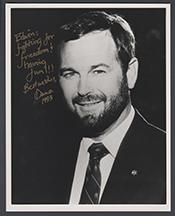
Mr. Chairman, I rise in support of S. 610, the NASA Flexibility Act of 2003. NASA engineers, scientists, and technicians have been the space agency's true pioneers. These talented men and women…
Mr. Chairman, I rise in support of S. 610, the NASA Flexibility Act of 2003. NASA engineers, scientists, and technicians have been the space agency's true pioneers. These talented men and women dedicated to pushing the technological envelope are credited with opening new vistas of progress for all of humankind. We must look at them as a valuable, valuable asset.
With the recent announcement of our President, NASA's workforce will again be looked upon to extend the reach of our capabilities, to extend our reach to the Moon and then farther on into the heavens. Let us hope that the can-do spirit of the past will be reawakened in NASA as a result of the President's visionary goals-setting coupled with what I consider to be a very pragmatic strategy as set forward by the President.
Let us hope the young people throughout America will hear the President's words and are excited and activated by this new goal- setting by the President of the United States and thus by the executive branch of the United States Government.
As we begin a new chapter in America's space experience, we are doing our job on the legislative end. S. 610 will help ensure that talented and creative people continue to commit their time and services to America's space effort so we can achieve the goals that I just referred to.
An aging workforce today threatens the future of our civil space program. In response to this impending crisis, this legislation calls for remedies aimed at helping NASA become more flexible in recruiting, retaining, and restructuring its workforce to address the agency's critical needs. For example, major provisions of the bill authorize NASA to provide greater pay and bonuses to individuals critical to the goals, missions, and objectives of the agency, as well as to authorize and set up a scholarship for a service program in which NASA can pay a student's tuition in exchange for accepting employment at NASA upon graduation; and I am particularly proud of that provision.
The gentleman from New York's (Chairman Boehlert) continuing leadership and all of his hard work have been making this reform possible; and given the administration's new vision for NASA, there is no better time for us to be tackling this workforce problem. I thank the chairman; I thank the ranking member; I thank the people on both sides of the aisle. We have worked on this in a bipartisan spirit, and this will give us the ability to accomplish great things in the future for our country.

Mr. Chairman, I am pleased to be here today to speak in favor of S. 610, the NASA Flexibility Act of 2003. Since its creation in 1958, NASA has been the foremost symbol of American ingenuity, daring…
Mr. Chairman, I am pleased to be here today to speak in favor of S. 610, the NASA Flexibility Act of 2003.
Since its creation in 1958, NASA has been the foremost symbol of American ingenuity, daring and accomplishment. Its talented employees have helped us explore new worlds and peek into distant galaxies. Time and again, NASA has shaped our Nation's future.
But in one respect, NASA is still stuck in the past. This bill will help us transform NASA's personnel system into a modern, flexible and responsive system, one that is absolutely necessary for a 21st Century workforce.
This legislation gives NASA powerful tools to win the recruitment and retention battles it faces everyday. Just last year, NASA Administrator Sean O'Keefe described the agency's personnel situation as ``alarming,'' given that 1 out of every 4 of the agency's scientists and engineers is eligible to retire, and that those above the age of 60 outnumber those below the age of 30 by a nearly 3-to-1 ratio. NASA faces a potential ``brain drain''--and that is not a scenario we can allow to happen.
By authorizing higher pay for certain exceptional employees, offering more vacation time to mid-career hires, and allowing for recruitment, retention and relocation bonuses, S. 610 addresses these concerns.
And this legislation has been created to address some of the concerns of employees, too. In exchange for these flexibilities, NASA is required to submit a written plan to the Office of Personnel Management stating the workforce needs of NASA, how NASA will use increased workforce flexibilities to meet those needs, and how NASA has used existing flexibilities. A workforce plan must also be submitted to Congress and to all employees at least 60 days before exercising any part of the plan. Prior to submitting a plan to Congress, however, a proposed plan must be provided to employee representatives and NASA is required to give their recommendations ``full and fair consideration.''
These are provisions that I had pushed for in the House version of this bill, H.R. 1085, and I am pleased that they will be included in the final version that is poised to become law.
Mr. Chairman, I urge passage of S. 610.
Bill Text
2 versions available
        [Congressional Bills 108th Congress]
[From the U.S. Government Publishing Office]
[H. Res. 502 Engrossed in House (EH)]

In the House of Representatives, U.S.,

January 28, 2004.
Resolved, That at any time after the adoption of this resolution the Speaker
may, pursuant to clause 2(b) of rule XVIII, declare the House resolved into the
Committee of the Whole House on the state of the Union for consideration of the
bill (S. 610) to amend the provisions of title 5, United States Code, to provide
for workforce flexibilities and certain Federal personnel provisions relating to
the National Aeronautics and Space Administration, and for other purposes. The
first reading of the bill shall be dispensed with. General debate shall be
confined to the bill and shall not exceed one hour, with 40 minutes equally
divided and controlled by the chairman and ranking minority member of the
Committee on Science and 20 minutes equally divided and controlled by the
chairman and ranking minority member of the Committee on Government Reform.
After general debate the bill shall be considered for amendment under the five-
minute rule. The bill shall be considered as read. During consideration of the
bill for amendment, the Chairman of the Committee of the Whole may accord
priority in recognition on the basis of whether the Member offering an amendment
has caused it to be printed in the portion of the Congressional Record
designated for that purpose in clause 8 of rule XVIII. Amendments so printed
shall be considered as read. At the conclusion of consideration of the bill for
amendment the Committee shall rise and report the bill to the House with such
amendments as may have been adopted. The previous question shall be considered
as ordered on the bill and amendments thereto to final passage without
intervening motion except one motion to recommit with or without instructions.
Attest:

Clerk.