Designating majority membership on the Committee on Rules.

Legislative Activity
Stay on top of the latest movement without scrolling through every action
Motion to reconsider laid on the table Agreed to without objection.
January 7, 2003 • 4:10 PM
View full timeline
Introduced in House
January 7, 2003
Considered as privileged matter. (consideration: CR H20)
January 7, 2003 • 4:09 PM
Passed/agreed to in House: On agreeing to the resolution Agreed to without objection.(text: CR H20)
January 7, 2003 • 4:10 PM
On agreeing to the resolution Agreed to without objection. (text: CR H20)
January 7, 2003 • 4:10 PM
Motion to reconsider laid on the table Agreed to without objection.
January 7, 2003 • 4:10 PM
Floor Debate
24 membersWhat members said about H.Res. 6 on the floor
 DH
DH EJM
EJM WJ(
WJ( JB
JB LMS+19
Floor Debate
24 membersWhat members said about H.Res. 6 on the floor
Mr. Speaker, by direction of the Committee on Rules, I call up House Resolution 189 and ask for its immediate consideration. Mr. Speaker, for the purpose of debate only, I yield the customary 30…
Mr. Speaker, by direction of the Committee on Rules, I call up House Resolution 189 and ask for its immediate consideration.
Mr. Speaker, for the purpose of debate only, I yield the customary 30 minutes to the gentlewoman from New York (Ms. Slaughter), pending which I yield myself such time as I may consume. During consideration of this resolution, all time yielded is for the purpose of debate only.
(Mr. HASTINGS of Washington asked and was given permission to revise and extend his remarks.)
Mr. Speaker, House Resolution 189 is a structured rule providing for the consideration of H.R. 6, the Energy Policy Act of 2003. The rule provides 1 hour and 30 minutes of general debate, with 30 minutes equally divided and controlled by the chairman and ranking minority member of the Committee on Energy and Commerce, and three periods of 20 minutes each to be equally divided and controlled by the chairman and ranking minority members of the Committees on Science, Resources, and Ways and Means.
The rule waives all points of order against consideration of the bill, and makes in order only those amendments printed in the Committee on Rules report accompanying the resolution.
The rule further provides that the amendments made in order may be offered only in the order printed in the report, may be offered only by a Member designated in the report, shall be considered as read, shall be debatable for the time specified in the report, equally divided and controlled by a proponent and opponent, shall not be subject to amendment, and shall not be subject to a demand for a division in the House or in the Committee of the Whole.
Finally, the rule waives all points of order against the amendments printed in the report and provides one motion to recommit, with or without instructions.
Mr. Speaker, H.R. 6 is a critically important piece of legislation that will provide for security and diversity in America's energy supply while enhancing energy conservation and research and development. The bill we will consider shortly is a comprehensive measure combining key elements from four separate bills reported by the respective committees of jurisdiction.
The first section of the bill passed by the Committee on Energy and Commerce seeks to expand domestic energy sources while striking a balance between State and Federal regulation of the Nation's electrical power grid. This section of the bill would also increase the strategic petroleum reserve to 1 billion barrels and contains provisions for a renewable fuel standard that requires increased production in the use of ethanol.
The second section of the bill passed by the Committee on Science authorizes $31 billion for energy-related research and development programs, including funding for the President's hydrogen initiative and FreedomCar program, with the balance of the funding going to improvement of renewable energy, energy efficiency, clean coal technology, and nuclear programs.
The third section of the bill passed by the Committee on Resources includes a provision that would open the Alaskan National Wildlife Refuge, or ANWR, to much-needed oil exploration in a way designed to ensure maximum environmental protection of that significant national resource.
Finally, the section of H.R. 6 reported by the Committee on Ways and Means means energy tax provisions amounting to $18.7 billion that would incentivize access to inexpensive energy, bolster our national security by decreasing U.S. dependence on foreign oil, and promote conservation and the use of renewable sources of energy.
As a Member of Congress from the Pacific Northwest, I am particularly pleased, Mr. Speaker, that the authors of this legislation have concluded provisions I have long supported which would streamline the process of renewing permits for major hydroelectric facilities. Many of those projects are located in our part of the country and provide a sizeable share of our region's electrical power needs.
In closing, Mr. Speaker, let me say that the war in Iraq has once again highlighted the importance of ensuring America's energy independence. This bill is designed to do that in an environmentally responsible way. Accordingly, I urge my colleagues to support both the rule and the underlying bill.
Mr. Speaker, I reserve the balance of my time.
Mr. Speaker, I am pleased to yield 5 minutes to the gentleman from Texas (Mr. Barton), chairman of the subcommittee that was dealing with the legislation that passed out of the Committee on Energy and Commerce.
Mr. Speaker, I yield 3 minutes to the gentleman from Illinois (Mr. Weller), a member of the Committee on Ways and Means.
Mr. Speaker, I reserve the balance of my time.
Mr. Speaker, I yield 1 minute to the gentleman from Texas (Mr. Barton).
Mr. Speaker, I reserve the balance of my time.
Mr. Speaker, may I inquire how much time is left?
Mr. Speaker, I am pleased to yield as much time as he may consume to the gentleman from California (Mr. Dreier), the distinguished chairman of the Committee on Rules.
(Mr. DREIER asked and was given permission to revise and extend his remarks.)
Mr. Speaker, I yield myself such time as I may consume to reiterate that this is a very fair rule. Over two- thirds of the amendments made in order are either bipartisan or amendments from the Democrat side of the aisle.
I also would like to say, Mr. Speaker, that the war in Iraq, I think, has awakened America to a need that we have to be more energy independent. This bill, this comprehensive bill, I think, allows for that in a long-term planning way, and I think it does it in a very environmentally friendly way.
The material previously referred to by the gentlewoman from New York (Ms. Slaughter) is as follows:
Previous Question for H. Res. 189--H.R. 6, the Energy Policy Act of
2003
The following are the amendments made in order under the
rule:
Berkely #67 Division A. Requires the General Accounting
Office to conduct a study to provide accurate and real costs
of indemnifying those who would be harmed by a potential
nuclear plant accident or attack.
Berkley #71 Division A. Establishes a program to make loan
guarantees for qualifying businesses investing in renewable
energy solutions.
Blumenauer #53 Division D. Extends the Transportation
Fringe Benefit to commuters who carpool, bicycle, or used
car-sharing and equalize the transit benefit with the current
level offered to qualified parking plans. Allows up to $50
per month for carpoolers, bicyclists, or those using car-
sharing to commute to work. Increases the benefit available
to transit commuters to $190 per month, the same amount as
qualified parking plans.
Boucher #6 Division A. Strikes the provision of the bill
related to the Federal Energy Regulatory Commission (FERC)
transmission siting authority on private lands and would
thereby leave decisions regarding the location of new
transmission facilities with individual states.
Boucher #7 Division A. Strikes the provision of the bill
related to the Department of Energy (DOE) transmission siting
authority on federal lands and would thereby leave the
decisions regarding the location of new transmission
facilities with the federal entities responsible for managing
such lands (e.g. the Department of Interior, the Bureau of
Land Management, the U.S. Forest Service, etc.).
Capps #23 Division A. Adds four-year national phase-out
gasoline MTBE.
Capps #25 Division A. Strikes section 12401 relating to
appeals for LNG siting decisions, the Coastal Zone Management
Act, and the National Environmental Protection Act.
Carson #76 Division A. Strikes the ``Indiana Amendment''
from the Uniform Tie Act of 1966.
Costello/Calvert #8 Division B. Terminates the DOE's
authority to regulate itself with regard to nuclear and
worker safety at the Department's non-military energy
laboratories within two years of enactment. Transfers
regulatory authority to the Nuclear Regulatory Commission and
to the Occupational Safety and Health Administration (OSHA).
It is estimated that enacting the external regulation at the
labs would save DOE up to $41 million annually.
Davis (VA)/Waxman #60 Division A. Requires that a small
percentage of the energy used to power federal facilities
come from renewable energy and fuel cells. Beginning in 2005,
federal agencies would be required to obtain from these
sources 1.5% of the energy used across their facilities,
gradually rising to 7% in 2012 and beyond. Agencies could
meet these requirements either by generating energy on-site
or by purchasing renewable electricity generated off-site.
Agencies would receive extra credit for on-site renewable
energy generation that also contributes to national security.
Allows the Secretary of Energy to waive the requirements if
the agency is taking all practicable steps and the
requirements would pose an unacceptable burden. Permits
federal agencies to count acquisitions of future technology
vehicles, such as fuel efficient hybrid-electric or fuel cell
vehicles, against alternative fuel vehicle acquisition
targets.
DeFazio #11 Division A. Current law provides that the
Strategic Petroleum Reserve may be drawn down in the event of
a ``severe energy supply disruption,'' which results in ``a
major adverse impact on the national economy.'' The DeFazio
amendment would add ``or on a State or regional economy,''
after ``national economy.''
DeFazio #12 Division A. Adds ``anticompetitive conduct'' by
foreign countries, or producers, refiners, or marketers of
petroleum products, to the list of circumstances under which
the Strategic Petroleum Reserve may be drawn down.
DeFazio #13 Division A. Strikes the section of H.R. 6 that
repeals Public Utility Holding Company Act (PUHCA). PUHCA's
restrictions on ownership of utilities, the diversification
of business operations, accounting, and mergers, among other
provisions, are critical to protecting consumers from the
business decisions of energy conglomerates.
DeFazio #14 Division A. Strikes the section of H.R. 6
directing FERC to establish so-called ``incentive-based''
rates for building transmission.
DeFazio #15 Division A. Establishes an Office of Consumer
Advocacy at the Department of Justice to protect the
interests of residential and small business users of
electricity and natural gas in proceedings before FERC and
other federal entities.
DeFazio #16 Division A. Sets benchmarks for the
commencement of regional transmission organizations (RTOs) on
FERC findings that such RTOs would result in net benefits to
consumers in each affected state and minimize cost shifts
among consumers. Also requires that RTOs have adequate
transmission capacity and no chronic congestion prior to
start-up, effective market monitoring, and that existing load
service obligations are protected, among other criteria.
DeFazio #17 Division A. Prohibits market-based rates from
being considered ``just and reasonable'' under the Federal
Power Act if the rate raises above the cost-based rate that
would otherwise apply.
DeGette #22 Division A. Holds the legislative branch to the
same acquisition requirements as all other federal agencies
regarding energy-using products, systems, or designs that
meet or exceed the energy efficiency standards established by
the Energy Star program of the Environmental Protection
Agency and the Department of Energy.
Dingell/Boehlert #30 Division A. Substitute amendment for
the hydroelectric relicensing title of the bill, which is
identical to the version that passed the House last year.
Introduces flexibility into the licensing and re-licensing of
hydroelectric facilities by allowing any party to a licensing
proceeding to propose alternatives to the resource and
fishway prescriptions made by the resource agencies. The
Secretary must accept the alternative, so long as he or she
determines it provides the same level of protection for
resources, fish, and wildlife and either costs less to
implement or would result in more efficient operation of the
hydroelectric facility. Requires the resources agencies to
establish a process to expeditiously resolve any disputes
involving resource or fish and wildlife conditions. Strikes
the incentive payment program for hydro-power contained in
this title.
Green (TX) #33. Division A. Changes the ``hold harmless''
Low-Income Home Energy Assistance Program (LIHEAP) threshold
from $1.95 billion to $1 billion.
Hastings (FL) #69 Division C. Directs the Secretary of
Energy to take all necessary steps and efforts to mitigate
any adverse impacts that U.S. energy policy and the
provisions of H.R. 6 may have on minority, rural, Native
American, and underserved communities. Requires the Secretary
of Energy to submit to Congress an annual report detailing
the Department's efforts to implement this requirement.
Inslee-Holt-Spratt #74 Substitute. Strikes all after the
enacting clause. Sets Energy Performance Goals for the
country. Provides the tools needed to achieve the Energy
Performance Goals. These tools include innovative use of the
tax code, investment in R&D, and federal expenditures in
existing infrastructure needs. Requires the Administration to
set up a monitoring system to track progress towards the
Energy Performance Goals. Should measures be needed in
addition to the tools provided, the amendment directs the
President to initiate voluntary, regulatory, or other
actions that may be needed to achieve the Energy
Performance Goals. All expenses are offset by freezing the
upper income tax cuts scheduled for 2004, closure of the
offshore corporate tax loophole, and removal of abusive
tax shelters.
Kind #27 Division C. Strikes heading for Title II of
Division C and inserts ``(Outer Continental Shelf).''
Establishes a framework for permitting alternative-energy-
related uses on the Outer Continental Shelf not already
expressly covered by existing statutes. Assigns authority for
this program to the Department of Interior's Minerals
Management Service which, under existing law, administers
federal leasing and operations for oil, gas, and other
mineral activities on the Outer Continental Shelf. Specifies
the types of areas that should be avoided, such as marine
protected areas, and provides for more State and public input
throughout the process. Provides a mechanism for identifying,
in advance, appropriate sites for developing offshore wind
energy facilities that provide the greatest source of energy
with the least damage to the environment. Also provides a
process for soliciting competing proposals for renewable
energy facilities in the same locations and compensation to
the government for the value of the license.
Levin #72 Placeholder. Division A. Replaces the vehicle tax
incentives provisions in Section D, Title I, of H.R. 6 with a
modified version of the Clean, Efficient Automobiles
Resulting from Advanced Car Technologies Act of 2003 (CLEAR
Act). Expands the alternative vehicle tax incentives, covers
a broader array of advanced vehicle technologies, and
provides additional incentives for the purchase of
alternative vehicles.
Maloney #20 Division C. Strikes Section 30201, a section
that makes permanent the Interior Secretary's authority to
take royalties-in-kind (RIK) instead of cash payments from
leaseholders for oil and gas removed from federal and Indian
lands.
Nadler #59 Division A. Adds $30 billion to help purchase
and secure excess Russian plutonium and highly-enriched
uranium. Authorizes funding to purchase excess Russian
plutonium, convert Russian plutonium pits to oxide, and to
immobilize and irradiate up to 100 megatons of excess
plutonium. Provides for funding to purchase highly-enriched
uranium and to make improvements to the security of nuclear
material in Russia. Also provides funds to employ
knowledgeable nuclear personnel and to downsize facilities.
Oberstar #44 Division A. Strikes section 12403 relating to
the permanent exemption for construction activities
associated with oil and gas exploratory and production
operations from storm-water discharge requirements of the
Clean Water Act.
Rahall #3 Amendment in the Nature of a Substitute to
Division C. Title I--Alaska Natural Gas Pipeline Project;
Title II--Western Area Power Administration; Title III--
Energy Alternatives and Efficiency Regarding Federal Lands;
Title IV--Establishment of Indian Energy Programs; Title V--
Insular Areas Energy Security; Title VI--Sensible Development
of Renewable Energy Resources of the Outer Continental Shelf;
Title VII--Surface Owner Property Rights and Protection;
Title VIII--Royalty Fairness; Title IX--Reclamation of
Abandoned Coal Mine Sites; Title X--Land and Water
Conservation Fund Enhancement; and Title XI--Coastal
Withdrawals. This amendment is identical to the substitute
offered by Mr. Rahall to the Committee Print at the Resources
Committee's markup on April 2, 2003.
Rahall #5 Division D. Strikes Section 42011 of Division D,
relating to the prepayment of premium liability for coal
industry health benefits.
Sandlin #75 Replaces the tax division of H.R. 6 and
replaces it with the text of H.R. 1436, the Energy
Independence and Security Act. Additionally, the
Sandlin amendment would offset the cost of the energy tax
incentives contained within the amendment by freezing the
cut in the highest marginal tax rate.
Stupak #47 Division C. Prohibits any new drilling to
extract oil or gas reserves from any bottomlands of the Great
Lakes under federal jurisdiction.
Sessions/Hall #34 Division A. Establishes a process to
identify and implement actions the federal government can
take that will ensure, to the maximum extent practicable, the
production of domestic natural gas supplies sufficient to
provide residential consumers with natural gas at reasonable
and stable prices; provide industrial, manufacturing, and
commercial consumers with natural gas at prices that do not
result in plant closures and job losses; facilitate the
attainment of national amient air quality standards under the
Clean Air Act; allow for reductions in greenhouse gas
emissions; and to support development of the preliminary
phases of hydrogen-based energy sectors. States the goal of
the United States should
be to produce from domestic natural gas reserves at least 85%
of the annual projected domestic demand for natural gas.
Solis #29 Division A. Amends Section 12201 on hydraulic
fracturing by striking the current section and inserting
language that requires: a completed EPA hydraulic fracturing
study and independent scientific review by the National
Academy of Science; a regulatory determination by the
Administration of the EPA; preservation of federal authority
to respond in the future where endangerment or adverse health
effects are established. Citizens would be precluded from
filing lawsuits to force states to regulate under the Safe
Drinking Water Act.
Udall (CO) #31 Division C. Provides for grants of up to $20
per ton to enable operators of biomass facilities to purchase
brush, small trees, and other material removed from forests
in order to reduce the risk of forest fires. Allows the grant
money to be used only to purchase material removed from
forest lands near communities.
Udall (CO) #32 Division C. Requires companies developing
onshore federally-owned oil or gas to: replace any damaged
water supplies; assure any water injected underground does
not damage an aquifer; comply with all federal and state laws
applicable to water not injected underground; submit a
proposed water-management plan with the application for an
oil or gas lease.
Udall (NM) #39 Division A. Requires retail electricity
suppliers (except for municipal and cooperative utilities)
obtain 15% of their power production from a portfolio of
renewable energy resources by 2020, increasing to 20% by
2025.
Udall (NM) #41 Division C. Requires the creation of surface
use agreements between private landowners, ranchers and
farmers, and the oil and gas industry prior to any
development of subsurface mineral rights owned by the federal
government.
Velazquez #28 Division A. Prevents a disproportionate share
of power plants from being sited in low-income and minority
communities. Gives citizens greater influence over the
permitting and siting process.
Waxman #35 Division A. Sense of Congress that summarizes
the current scientific understanding of climate change, its
potential effects, and the position of the United States
regarding climate change. States that it is the sense of
Congress that the United States should demonstrate
international leadership and responsibility in addressing
climate change.
Waxman #36 Division A. Requires the Administration to take
voluntary, regulatory, and other actions to reduce oil demand
in the United States by 600,000 barrels per day from
projected levels by 2010. Does not per se mandate changes to
C.A.F.E. standards.
Mr. Speaker, I yield back the balance of my time, and I move the previous question on the resolution.
Mr. Speaker, I thank the gentlewoman for yielding me time. This rule does not allow the Democrats to make the amendments which are appropriate on the environmental side. The gentleman from West…
Mr. Speaker, I thank the gentlewoman for yielding me time.
This rule does not allow the Democrats to make the amendments which are appropriate on the environmental side. The gentleman from West Virginia (Mr. Rahall) is looking at an innovative, more balanced approach to Federal lands, and the gentleman from Michigan (Mr. Dingell), to ensure that our hydroelectric laws are protected so that conservation and fishing and other issues are given the same weight as the generation of electricity.
The Waxman amendment would reduce imported oil by 600,000 barrels. The amount that we import from Iraq, that is not put in order.
The Oberstar amendment, which would change the relationship between the Clean Water Act and oil and gas drilling in the United States, reducing the amount of protections that are given against the water of our country being polluted.
And at a higher level, this bill, in general, is completely unbalanced.
I think the American people, as they are watching this debate, probably assume that since we put 70 percent of all of the oil which we consume in this country into gasoline tanks, that we will probably be changing that so we can reduce the amount of oil that SUVs and light trucks and automobiles consume in our country, so that Iran and Saudi Arabia and other countries, we are not sucked even deeper into their internal affairs. But no, the majority bill, the Republican bill, does not do anything about our dependence on imported oil, due to our ever- increasing dependence on imported oil because of the inefficiency of our vehicles.
The Democrats want to make these vehicles more efficient, keep the same size weight and the same safety, but make sure that they consume less oil. We are at 65 percent dependence upon imported oil today. We will be at 75 and 80 percent by 2010 and 2015 on imported oil unless we do something about where we put that oil after we bring it into our country.
This is not a fair rule. Other amendments should have been put in order. I urge a ``no.''
Mr. Speaker, will the gentleman yield?
Mr. Speaker, that is an excellent amendment. I am looking forward to the gentleman's support on that when we debate it, yes.
Mr. Speaker, that, as well, is an amendment which we are hoping for support.
Mr. Speaker, I am not saying it is a totally bad rule. Obviously, there are some amendments which have been put in order that are appropriate.
What we are saying is that the American people have an expectation that the Congress of our country, at a minimum, would look at all of the rest of the issues, as well, and not exclude them from debate here on the House floor.
Mr. Chairman, I thank the gentleman for yielding me time.
Mr. Chairman, this is a momentous debate. With 250,000 young men and women in Iraq fighting for all of us, we know that this Congress has a tremendous responsibility as we consider our national energy policy for the next decade to make decisions which will make it less likely that we are drawn into global conflicts in the future because of our dependence upon imported oil. That is why the provision which the gentleman from Michigan (Mr. Dingell) and others asked to be put in
order out here on the House floor, that is why the Waxman amendment, that is why the Dingell amendment, which deals with fraud in the electricity marketplace, that is why the Rahall amendment and so many of the other issues we were talking about, are so central.
The gentleman from Michigan (Mr. Dingell) is raising the issue in the electricity marketplace of whether or not we are going to deal with the issue of fraud, of ensuring that we have an audit trail, which is going to make it possible for us to track activity which undermines the integrity of the marketplace; and that debate is a critical one here today.
In addition, we are going to debate whether or not we should be drilling in the pristine Arctic wilderness. Should we be going to the pristine wilderness of our country before we ensure that the motor vehicles in our country, the SUVs, the light trucks, the automobiles that are in our national fleet, are made more efficient.
Under the majority provision here today, we do not do anything about that. Instead, we turn to this pristine area in our country first. I believe that that is morally wrong, that we have a responsibility first to deal with the technologies that consume the energy in our society.
Mr. Chairman, I rise in opposition to this legislation.
American needs a balanced and comprehensive national energy policy. But the bill before us today is neither balanced nor comprehensive.
it is a polluting bill. It unnecessarily sweeps aside a wide range of environmental and anti-pollution protections in the name of increasing oil and gas drilling throughout the country, and burning more and more fossil fuels that spew pollutants into our air and water.
It is also a dangerous bill. It rolls back key consumer protections in the electricity and natural gas markets, such as the Public Utility Holding Company Act, while simultaneously failing to give federal regulators the full power they need to serve as the ``cop on the beat'' and prevent the type of fraud and manipulation that we have seen in electricity and natural gas markets in recent years.
We need a more balanced approach to national energy policy. Democrats support reasonable measures to increase energy production, but we also want to see measures aimed at improving energy efficiency and promoting alternative renewable generation technologies. For the most part, this bill ignores efficiency and renewables.
Yes, there is a modest appliance efficiency title. But does that title direct the Department of Energy to stop trying to rollback central air conditioning efficiency standards from the standards adopted by the Clinton Administration? Does it fully address the problem President Bush has identified of ``energy vampire'' standby power or battery charger systems for VCRS, DVDs, computers, that waste electricity? No, it does not.
And what about motor vehicle fuel efficiency? Two-thirds of all the oil we consume is used by the transportation sector. Does this bill do anything to improve automobile fuel efficiency or close the SUV loophole and require light trucks to use commercially available technologies that the National Academy of Sciences says could be deployed today? No, it does not.
And on renewables, yes, there are some tax credits in this bill for renewables. But the House Republicans have now altered this provision so that a dirty facility that burns municipal solid waste to produce energy would now qualify for the renewables credit.
Now, there are some provisions of this bill that I support. The Committee adopted the Cox-Markey amendments barring any indemnification of contractors that ship nuclear technology to North Korea or other countries on the terrorism list, and outlawing any exports, re-exports, or transfers of nuclear technology, materials or information to such countries. This amendment will effectively end any further efforts to transfer light water reactors to North Korea, and would prevent any similar efforts from being undertaken in Iran or Syria in the future. I commend the gentleman from California (Mr. Cox) for his work on these measures, and I have been pleased to work with and support him in his endeavors.
The bill also contains amendments I attached to similar legislation in the last Congress which would require the NRC to issue new rules to increase the security of nuclear facilities on a permanent basis and the transportation of nuclear materials against the terrorist threat, and to assure public access to non-classified information about non- public NRC meetings. It also contains some new NRC and DOE whistleblower protection measures I authored that would close loopholes in the law and strengthen protections for those brave individuals that report wrongdoing at the NRC, DOE, or their contractors. I thank Chairman Barton, Chairman Tauzin, and Ranking Members Dingell and Boucher for working with me to include these provisions in the bill.
In addition, the bill includes an amendment I worked out with the gentleman from Louisiana and the gentleman from Texas directing the FERC to take action to assure public access to natural gas market price information. This provision is intended to ensure that FERC or its designee to obtain information from any party needed to enable it to compile accurate natural gas price indexes. A series of studies and investigations by FERC and other federal authorities has revealed widespread manipulation of existing natural gas price indexes, and this provision is aimed at ensuring that FERC, state regulators, and the public can obtain access to the type of information they need to monitor the markets or determine market prices. At the same time, the provision does not require sensitive, transaction-specific information to be made public--though such information would be accessible to federal or state regulators.
These are useful and important provisions, and I support them. At the same time, I cannot support this legislation in its current form because of other harmful provisions in the bill.
The electricity title contains provisions repealing the Public Utility Holding Company Act, enshrining incumbent utility monopolies with anti-competitive and discriminatory ``native load'' protections, so-called ``contract sanctity'' language that is clearly aimed at preventing FERC from assuring just and reasonable rates, and a figleaf ``round-tripping'' provision that outlaws only one of the many manipulative practices we have seen in the electricity markets, while leaving the others untouched.
The hydropower title replaces the bipartisan hydro agreement reached in the last Congress with an unfair provision that gives dam owners special status to change environmental or other conditions imposed as part of the re-licensing process. This upsets the balance between how power and non-power values (such as fish and habitat protection, recreation, navigation, and irrigation) are dealt with in the Federal Power Act.
The oil and gas-related provisions in the Commerce and Resources titles would strip away environmental protections relating to the oil and gas industry. It would: Restrict the ability of California and other states to protect their coastal areas by amending the Coastal Zone Management Act; amend the Federal Water Pollution Control Act to allow more water pollution by creating a permanent exemption from the Environmental Protection Agency's (EPA) storm water rule; prevent the EPA from barring the injection of diesel fuel into underground sources of drinking water during hydraulic fracturing by excluding oil and gas operations from the Safe Drinking Water Act; grant multinational oil and gas companies licenses to drill on public lands and in coastal waters while avoiding obligations to pay hundreds of millions in royalties, depriving the U.S. Treasury of a key source of revenue; further add to the taxpayer's burden by allowing oil and gas companies to be reimbursed for the costs of permitting their activities under the National Environmental Policy Act, an estimated $165 million over ten years.
If these provisions are not stripped from this bill, either today or later in the legislative process, H.R. 6 should be defeated.
Mr. Chairman, I yield myself 1\1/2\ minutes.
The United States has 3 percent of the oil reserves in the world. The Middle East has 75 percent. Technological genius is what we are all about. We see that in the Middle East right now. That is our strength.
We doubled the fuel economy in our country from 13 to 26 miles per gallon back in the middle of 1980s. With it, we had a plummeting of oil imports. Since 1987 we have slipped backwards in technology, and there has been a dramatic rise in the import of imported oil, up to 65 percent of our total oil. We can see the direct correlation between the power OPEC has over us and the increase in the number of SUVs and light trucks, with no controls, which are sold in our country.
When we reach 70 percent and 75 percent dependence upon imported oil, Iran and Syria and other countries that have large oil reserves over there, including Saudi Arabia, looking at us 10 years from now, will wonder why on the floor of the Congress with 250,000 troops over in the Middle East securing the oil fields of Iraq, we did not also increase the fuel economy standards of the Hummer 1s that are roaming the streets of the United States consuming gasoline at a rate of 11 miles per gallon.
It is one thing to have young men and women in these vehicles in the Middle East securing oil. It is another thing in our country not to have a plan to increase the fuel efficiency that reduces our oil consumption, to avoid the necessity of sending them back there again.
Mr. Chairman, I reserve the balance of my time.
Mr. Chairman, I yield 1 minute to the gentleman from Massachusetts (Mr. Olver).
(Mr. OLVER asked and was given permission to revise and extend his remarks.)
Mr. Chairman, I yield 30 seconds to the gentlewoman from Illinois (Ms. Schakowsky).
(Ms. SCHAKOWSKY asked and was given permission to revise and extend her remarks.)
Mr. Speaker, I rise in strong support of this rule. Let me commend Chairman Dreier and the Members of his Committee for crafting a rule that will allow the House to work its will on the full range of…
Mr. Speaker, I rise in strong support of this rule. Let me commend Chairman Dreier and the Members of his Committee for crafting a rule that will allow the House to work its will on the full range of energy policies that are contained in H.R. 6.
This bill represents the very hard work of several committees of the House, including Energy and Commerce, Ways and Means, Resources, Financial Services, and Science. It also includes provisions in the jurisdiction of a number of other committees, including Transportation, Armed Services, and Judiciary, with whom we have been working very closely. We have not enacted a comprehensive energy bill in eleven years. Much has changed in the world since then, and it's time that we reconfigure our energy policy to fit the 21st Century.
Division A of the bill before you--the bulk of my committee's work product--does just that. We dramatically increase energy efficiency and conservation measures. The bill provides for increased oil, gas, and hydropower production, and a safer nuclear future. We also modernize the Federal role in electricity regulation. And we have crafted a delicate compromise on reformulated gasoline that will provide environmental and energy-savings benefits.
Let me note for the Record that, if anything, this rule is even more fair than the one we employed two years ago during the comprehensive energy debate. That rule allowed just sixteen amendments, while the one before us allows over 20. All Members will have a full and fair opportunity to debate the energy policy of this nation.
Mr. Chairman, I yield myself 5 minutes.
Today we begin taking another step in doing what we have not done in over a decade, advancing a bipartisan, comprehensive American energy policy that will be signed into law. We came very close the last Congress to accomplishing that. Today, this year, with a strong vote on this floor, I believe we will go a long way to finishing the work of the last Congress.
The bill we are considering today reflects America's 21st century values, its technology and certainly our security needs. It advances a balanced approach to energy production and use by encouraging a responsible, diverse mix of energy sources and options along with a significant investment in conservation and increased efficiency. The Energy Policy Act charts a path toward increased energy security and a cleaner environment, in short, secure, reliable, affordable energy for all Americans in a growing economy.
I am proud of the bipartisan work our committee has done in writing several divisions of this bill. The gentleman from Texas (Mr. Barton), our Subcommittee on Energy and Air Quality chairman, forwarded his work to our full committee by a vote of 21 to 9, and just last week, after considering over 50 different amendments, the Committee on Energy and Commerce reported the bill by a vote of 36 to 17.
The House owes a great deal of thanks to the gentleman from Texas (Chairman Barton) and to the gentleman from Virginia (Mr. Boucher), ranking member, for the extraordinary cooperation, assistance, hard work and willingness to work together. Today, I hope that bipartisan spirit continues. There is no reason why it should not.
The Committee on Energy and Commerce components of the bill are very diverse. They cover everything from energy conservation to hydropower to nuclear energy and electricity, but particularly combined with the work product of the Committee on Resources, the Committee on Science, and the Committee on Ways and Means, they are really about our national security and our economy. Indeed, apart from the appropriations directly related to our war against terrorism and our remarkable success in Iraq, and God bless
those American heroes we have seen on television doing such a job for our country, this legislation may be the most important national security bill the Congress will vote on short of our national defense appropriations.
The Committee on Energy and Commerce has pursued two broad and necessary approaches to energy policy. First, it is outlined in the oil and gas title, the hydroelectric title, the nuclear title, the vehicles and fuels, and the electricity titles. First is to increase domestic energy supplies, both the fuels and electricity. That is essential to reducing our Nation's vulnerability to the kind of disruption in the supplies of fuel that we use to power our way of life today.
The other approach, covered in the titles on energy conservation, works on the demand side of energy by dramatically increasing energy efficiency by establishing energy efficiency goals for the Federal Government, by promoting new energy efficiency technologies, and other methods. This legislation will help close the gap between domestic energy supplies and consumption, and in the process, increase our security and our economic growth.
Just as an example, according to the American Council on Energy Efficient Economy, our energy efficiency production features, these provisions to increase the conservation and efficiency, will save 2.8 quadrillion Btus by the year 2020, eliminating the need for about 130 new power plants by the year 2020. That is a remarkable savings in energy this bill will increase.
The Members will hear a lot more about the incredible policy this bill advances, but let me conclude with this thought. Energy legislation has traditionally transcended party lines. What we did in legislating 2 years ago, we did on a bipartisan vote. We saw bipartisanship in the committees as they marked up these bills, and I hope and expect that spirit to prevail as we craft the energy policy for the 21st century.
Mr. Chairman, I reserve the balance of my time.
Mr. Chairman, I yield 3 minutes to the gentleman from Texas (Mr. Barton), the distinguished chairman of the Subcommittee on Energy and Air Quality of the Committee on Energy and Commerce.
(Mr. BARTON of Texas asked and was given permission to revise and extend his remarks.)
Mr. Chairman, I am pleased to yield 1 minute to the distinguished gentleman from Illinois (Mr. Shimkus).
Mr. Chairman, will the gentleman yield?
Mr. Chairman, I thank the gentleman for his comments. I believe it is important that we provide flexibility to retailers who have to be responsible for the renewable fuels program contained in title VII of our bill. As the new renewable fuels program is implemented, consistent with the schedule and waivers available in this title, we should strive to make sure that the current regulations make common sense.
We should not subject retailers to unnecessary requirements that do not provide discernible environmental or public benefit. As we prepare for conference with the Senate, I want the gentleman to know that we are going to work together to resolve this issue.
Mr. Chairman, I am pleased to yield 1 minute to the honorable gentleman from Nebraska (Mr. Osborne).
Mr. Chairman, I yield myself 1 minute.
Mr. Chairman, as we begin to debate the various titles of this bill, I think the American public will see that the work of the Committee on Ways and Means incentivizing energy production, incentivizing new fuels, incentivizing renewable fuels, combined with the work we have done in increasing programs like we do in this bill to make sure that clean coal technology is advanced, the STAR program on efficiency is advanced and other programs are advanced to increase conservation and efficiency in the country, as well as the programs that the Committee on Energy and Commerce will bring to us to make sure that we take full advantage of the resources of the lands that are producible in this country in an environmentally safe manner, when you look at all these provisions together, and the technology, science and technology provisions that the Committee on Science will bring, this is the most comprehensive energy package we have brought to the floor in many decades.
This deserves to be the law of the land for more than just one reason, more than just national security. This country is ready for an economic revival. This is the first step. Stable energy prices and stable supplies mean solid economic performance. This is our first step in revitalizing the American economy.
Mr. Chairman, I am pleased to yield 1 minute to the gentleman from Texas (Mr. Barton), the chairman of the Subcommittee on Energy and Air Quality of the Committee on Energy and Commerce.
Mr. Chairman, I am happy to yield 1 minute to the gentleman from Indiana (Mr. Buyer).
Mr. Chairman, I am pleased to yield 3 minutes to the distinguished gentleman from Georgia (Mr. Norwood).
Mr. Chairman, our Speaker will be closing on behalf of this side.
Mr. Chairman, just quickly, I want the gentleman to know that we will be accepting 9 of the 15 amendments that will be offered and supported by Democrats on the bill.
Mr. Chairman, let me take a second to say that, coming from the master himself, I take the words of the gentleman from Michigan (Mr. Dingell) as a compliment, but mainly to compliment him for the civility and the cooperation that he was provided as our committee has worked through these difficult issues.
Mr. Chairman, I yield the balance of my time to close to the gentleman from Florida (Mr. Stearns).
(Mr. STEARNS asked and was given permission to revise and extend his remarks.)
Mr. Chairman, I claim the time in opposition, and I ask unanimous consent to yield 7 minutes to the gentleman from Michigan (Mr. Dingell).
Mr. Chairman, I yield myself 1 minute.
What the gentleman from New York (Mr. Boehlert) failed to quote from the National Academy of Sciences' study is found in Finding 13 on Page ES-8: ``If an increase in fuel economy is effected by a system that encourages either downweighting or the production and sale of more small cars, some additional traffic fatalities would be expected.'' In fact, the study estimates that between 1,300 and 2,600 fewer deaths on the highway would have occurred had average weight and size of the light-duty motor vehicle fleet in that year, 1993, had we had that instead of the CAFE requirements.
Let me make a quick case in this 1 minute. This amendment is worse than the one we had last year on the floor. This amendment is so severe that if you consider a 3- to 5-year cycle to get a new vehicle in production, the vehicles in 2010 would have to have a 30-mile per gallon, or a 36-mile per gallon. That is as much as a 50 percent increase in fuel efficiency. The only way to achieve that is lighter vehicles, less safe vehicles, more deaths on the highway.
This amendment needs to get rejected.
Mr. Chairman, I reserve the balance of my time.
Mr. Chairman, I yield 1 minute to the gentleman from Michigan (Mr. Rogers), a distinguished member of the Committee on Energy and Commerce.
Mr. Chairman, I yield 1 minute to the distinguished gentleman from Wisconsin (Mr. Ryan).
Mr. Speaker, I thank the gentleman from the Committee on Rules for yielding time to me. Mr. Speaker, I rise in the strongest possible support of the rule for H.R. 6. I would like to point out a few…
Mr. Speaker, I thank the gentleman from the Committee on Rules for yielding time to me.
Mr. Speaker, I rise in the strongest possible support of the rule for H.R. 6. I would like to point out a few facts.
There are 22 amendments made in order under this rule. Fifteen of these 22 are either minority-sponsored amendments or bipartisan amendments that are sponsored by a member of the minority party and the majority party, 15 out of 22. That is over two-thirds of all the amendments that are going to be debated on the House floor either have a minority sponsor or a minority and a majority sponsor. I think that is exemplary in terms of bipartisanship.
I would also point out that we have made in order under this rule 1\1/2\ hours of general debate and 6 hours of debates on the amendments. That is 7\1/2\ hours of debate on H.R. 6. That is approximately double the average amount of time that is made in order under the House rules for authorization bills of this type. So I think the Committee on Rules has acted in a very appropriate fashion to make in order a large number of amendments, 22 amendments, which I believe are more amendments than were made in order for the bill last year. Again, 15 of the 22 have a minority sponsor or a minority and a majority sponsor.
Let me talk about the base bill. H.R. 6 is a combination of bills that have come out of the Committee on Ways and Means that deal with the tax issues for energy; the Committee on Energy and Commerce, where the bulk of the bill originates from, and deals with the basic energy policy of this country; the Committee on Resources, which deals with the issue of ANWR and our Federal lands use; and the Committee on Science, which deals with the R&D component of our energy policy.
I know the Committee on Energy and Commerce passed its bill on a bipartisan basis 36 to 17, with all the Republicans voting for it and 6 of the 23 Democrats that voted that night voted for it, and I believe the other bills also had bipartisan majorities as they came out.
What the bill attempts to do is set a broad-based energy policy for this country for all of our conventional energy sources and our emerging new energy resources, and combine that with a very comprehensive set of conservation and renewable environmental protections, and then begin to invest in the future in terms of the emerging issues like the hydrogen fuel initiative.
For the first time in the House, we have, I think, a very, very comprehensive title on electricity. Fifty percent of our energy is generated in the form of electricity, and in the bill that we reported out last year we did not have an electricity title. This year we not only have an electricity title, we have an electricity title that has been voted on on a bipartisan basis in subcommittee, and it has been voted on on a bipartisan basis in full committee.
What this electricity title would do if it becomes law, it would create a national transmission system for the 21st century for the movement of electricity around the country. It does this without violating States' rights. There are no Federal mandates in the electricity title where a State has to do this, a State has to join a regional transmission organization, a State has to allow Federal siting decisions. In fact, there is specific protection on the native load of closed States and those States that do not wish to subject their native load to any kind of Federal Energy Regulatory Commission jurisdiction.
So the electricity title which has been, at least in the bill from the Committee on Energy and Commerce, the most controversial part of the bill, I think has been well tested and modified and amended so it would address
many of the needs of Members on both sides of the aisle.
On the hydroelectric reform title that came out of the Committee on Energy and Commerce, the distinguished ranking member, the gentleman from Michigan (Mr. Dingell), is absolutely correct in that the House adopted a provision on hydro reform in last year's bill that he was very supportive of and very active in helping to reach a compromise.
We took what we did in last year's bill and built on it. The primary difference between last year's bill and this year's bill on hydroelectricity reform is that we took the situation where we have a mandatory condition, that a Federal agency can set a mandatory condition to renew a license of an existing hydro project. Under current law, that Federal agency, there is no appeal of it; there is really no alternative input to that setting of that mandatory condition. This year's bill says there has to be an alternative allowed if the applicant wishes to put forward an alternative, and I think that is an improvement.
Mr. Speaker, I rise in the strongest possible support and hope that we would pass this bill in a bipartisan fashion.
Mr. Speaker, I would like my good friend from Massachusetts (Mr. Markey) to come back to the microphone, please. I just want to ask my good friend if he is going to support the Boehlert- Markey amendment that was made in order under the rule on CAFE.
Is that one of the amendments that he is glad the rule made in order?
I yield to the gentleman from Massachusetts.
Mr. Speaker, what about the Markey-Johnson amendment that would prohibit drilling in ANWR? Is that an amendment that the gentleman is pleased that the rule made in order?
So it is not a totally bad rule. There are some amendments made in order under the rule that the gentleman thinks are appropriate?
Mr. Speaker, will the gentleman yield?
Mr. Speaker, who is the bicycle amendment from?
Mr. Chairman, I rise in very strong support of the bipartisan H.R. 6 comprehensive energy policy bill that is before this body at this point in time.
Our Nation badly needs a comprehensive energy policy. This bill achieves it. Our economic competitiveness, our national security, and our way of life will all be helped if this bill becomes law.
The bill before us today touches nearly every facet of our energy sector, including electricity. The first 68 pages of the bill are bipartisan measures on conservation and energy efficiency. They were agreed to during the energy conference last year. The bill also targets a diverse and stable portfolio of production so that we are never overly dependent on any one fuel.
For our Nation's security, we will reauthorize and expand the Strategic Petroleum Reserve. We will open for environmentally safe production the portion of Alaska that Congress long ago set aside for that very purpose. We will act upon the President's call in the State of the Union address for hydrogen fuel cell vehicles and the fueling infrastructure that will be needed to make them successful.
Today's bill is better than H.R. 4 that passed the last Congress. We include bipartisan reauthorization of the Price-Anderson Act, a much more sensible Renewable Fuels Standard, real changes to the hydroelectric relicensing process, and badly needed electricity reforms.
Legislation before the House today puts our Nation on a forward path towards better electricity markets. It should further the transition to more effective electricity markets in the following ways: It would increase transmission capacity; it would improve the operation of existing transmission; and it would make wholesale competition even more successful than it currently is today.
Mr. Chairman, I am very proud to be one of the authors of this bill. I am very proud of the work that the gentleman from Louisiana (Mr. Tauzin), my full committee chairman, has done, the gentleman from Michigan (Mr. Dingell) has done, the gentleman from Virginia (Mr. Boucher) has done and other members of the Committee on Energy and Commerce have done.
I am also very pleased with the work product of the other three authorizing committees that are bringing us this joint bill. This will actually help our Nation. In my opinion, it is the most comprehensive positive energy bill that has been before the Congress in the last 50 years, and I cannot do anything but strongly, strongly urge its adoption.
Mr. Chairman, I thank the distinguished full committee chairman for yielding me time.
Mr. Chairman, I want to comment just briefly on the electricity title in the bill. We did not have an electricity title in last year's bill because we really did not have a consensus on the issue and we were hopeful that by moving it as a stand-alone bill, we might could get that consensus. Since that time, we have worked very hard with the very stakeholders, the investor-owned utilities, the municipalities, the co- ops to try to get consensus.
I will not say we have total consensus, but I think we have solved some of the most vexing issues. We have volunteer participation in what are called RTOs, regional transmission organizations; we have an excellent reliability title; we have some transparency rules to try to prevent what happened in California several years ago in the spot market for electricity; we have native load protection for the closed States that would rather not open their States to retail competition; we have some exemptions for the more open States that are voluntarily developing these RTOs. All in all it is a very balanced title; it is a very good title.
It would help the electricity industry regain market confidence and would help get more transmission lines built.
Mr. Speaker, I yield myself such time as I may consume. (Ms. SLAUGHTER asked and was given permission to revise and extend her remarks, and include extraneous material.) Mr. Speaker, I rise today to…
Mr. Speaker, I yield myself such time as I may consume.
(Ms. SLAUGHTER asked and was given permission to revise and extend her remarks, and include extraneous material.)
Mr. Speaker, I rise today to agree that the United States does indeed need a coherent, comprehensive energy plan. The events of the summer of 2001 clearly illustrate this. The raging power prices and the rolling blackouts in California and the historic implosion of Enron vividly showed America that our energy policies are broken and need to be fixed.
A few weeks ago, the Federal Energy Regulatory Commission ruled that widespread manipulation and misconduct by Enron and 30 other energy companies and the failures of deregulation of the energy industry caused the energy crisis that plagued California in 2000 and 2001. Unfortunately, Mr. Speaker, the bill does not fix what is broken. H.R. 6 does not address any of the lessons learned from the California energy crisis.
The legislation does not provide the Federal Energy Regulatory Commission with any antifraud authority. It does not criminalize the legal abuses by energy corporations that contributed to the California energy crisis.
Instead of providing stronger protections for consumers, the bill would repeal the Public Utility Holding Company Act, which protects both consumers and investors. In fact, some have argued that proper enforcement of the Public Utility Holding Company Act could have prevented the Enron disaster.
The bill fails consumers, but it benefits the giant energy corporations.
When we are facing record deficits and tax cuts upwards of $700 billion, H.R. 6 gives the energy companies $18.7 billion in tax breaks and incentives without paying for them. It is something that we just simply do not do in Congress. Even the executive branch sought only $9 billion in tax incentives.
Examination of these tax breaks reveals that consumers lose again. The lion's share of this money goes to companies for energy production, and only one-third of the tax breaks are aimed at conservation and alternative fuels. Instead of putting so much money into pumping more oil, should not our goal be to reduce the country's dependence on oil?
Another windfall for energy companies is a generous royalty holiday. This legislation would waive royalty collections on large amounts of publicly owned oil and gas in the Gulf of Mexico and off the coast of Alaska. This amounts to a significant taxpayer subsidy of the oil and gas industry when there is no evidence that major oil companies, without the taxpayers' help, will abandon exploration in promising areas in the Gulf of Mexico and Alaska.
Additionally, this bill would allow companies to pay in-kind royalties to the Federal Government. According to the GAO findings, there is no evidence that in-kind royalties generate as much revenue as traditional cash payments. Again, the public loses, and the gentlewoman from New York (Mrs. Maloney) with her amendment to cure that was not allowed.
The environment and conservationists were also losers. In 1960, the Eisenhower administration protected the Arctic National Wildlife Refuge, recognizing it as an internationally important wildlife conservation area. This underlying area would allow leasing, exploration, and development of 1.6 million acres of the Arctic National Wildlife Refuge. Fortunately, we will be allowed a vote on a bipartisan amendment to preserve the current ban on drilling in ANWR.
Mr. Speaker, several important amendments to this bill were barred by the Committee on Rules. H.R. 6 abandons the bipartisan consensus reached in the previous Congress and adopts changes to the hydroelectric licensing process for the benefit of the hydropower industry at the expense of the environment and wildlife.
Yesterday, in the Committee on Rules hearing, the gentleman from Michigan (Mr. Dingell), the ranking Democrat on the Committee on Energy and Commerce, and the gentleman from New York (Mr. Boehlert), chairman of the Committee on Science, offered this agreement as a substitute amendment. Every Democrat on the Committee on Energy and Commerce, save one, voted for this amendment. However, the rule bars us from even considering the amendment.
It is also disappointing that an amendment in the nature of a substitute to the resources portion of H.R. 6 is not in order. The amendment offered by the gentleman from West Virginia (Mr. Rahall), the ranking member on the Committee on Resources, would, among other things, ensure that the American people receive just compensation from the development of oil and gas resources on Federal lands and waters.
Early this morning, the Committee on Rules, along party lines, refused to make in order an amendment by my friend, the gentleman from Florida (Mr. Hastings). This amendment would have the Secretary of Energy mitigate adverse and disproportionate effects that implementation of the energy bill may have on minority, rural, Native American, and other underserved communities.
This seems like common sense. I would hope that these factors would be taken into consideration anyway. It is disappointing that this body is denied the opportunity to discuss this most important issue.
Mr. Speaker, the need for a new and improved energy policy is great and the policy's effects ubiquitous. This is a major policy initiative that demands and deserves thorough deliberation. This special rule provides several hours of debate. In contrast, the other body has set aside 2 weeks for the consideration of energy policies.
Further, this rule only allows 29 percent of the amendments submitted to the Committee on Rules to be offered on the floor. This is not, above all, this is not thorough deliberation.
For all of these reasons and more, I urge my colleagues to oppose the rule and to oppose the underlying legislation.
Mr. Speaker, I reserve the balance of my time.
Mr. Speaker, I am pleased to yield 3 minutes to the gentleman from Michigan (Mr. Dingell).
(Mr. DINGELL asked and was given permission to revise and extend his remarks and include extraneous material.)
Mr. Speaker, I yield 2 minutes to the gentleman from West Virginia (Mr. Rahall).
Mr. Speaker, I yield 2 minutes to the gentleman from Massachusetts (Mr. Markey).
Mr. Speaker, I yield 1 minute to the gentleman from New York (Mr. Engel).
(Mr. ENGEL asked and was given permission to revise and extend his remarks.)
Mr. Speaker, I yield 2 minutes to the gentleman from Washington (Mr. Inslee).
(Mr. Inslee asked and was given permission to revise and extend his remarks.)
Mr. Speaker, I yield 3 minutes to the gentleman from Oregon (Mr. Blumenauer).
Mr. Speaker, I yield 2 minutes to the gentlewoman from New York (Mrs. Maloney).
Mr. Speaker, I yield 2 minutes to the gentleman from California (Mr. Schiff).
Mr. Speaker, I yield 2 minutes to the gentlewoman from Nevada (Ms. Berkley).
Mr. Speaker, I yield myself such time as I may consume.
If I can take a moment first just to say to my good friend from California, and he is my good friend, that we are not sure that 10 minutes is sufficient for a full debate on ANWR; but, nonetheless, that was my only remark.
Mr. Speaker, I yield 1\1/2\ minutes to the gentleman from New Jersey (Mr. Pallone).
Mr. Speaker, I yield 1\1/2\ minutes to the gentleman from Maryland (Mr. Wynn).
Mr. Speaker, I yield myself the balance of my time.
First, Mr. Speaker, I am going to ask for a ``no'' vote on the previous question. If the previous question is defeated, I will offer an amendment to the rule that will make in order all the Democratic amendments that were offered in the Committee on Rules yesterday. Fifty-five very responsible and thoughtful amendments were submitted by Democrats, but only 15 were made in order.
Please vote ``no'' on the previous question so we can add those amendments rejected by the Committee on Rules.
Mr. Speaker, I ask unanimous consent that a description of the amendments be printed in the Record immediately prior to the vote.
Mr. Speaker, I yield back the balance of my time.
Mr. Speaker, I object to the vote on the ground that a quorum is not present and make the point of order that a quorum is not present.
Mr. Speaker, I demand a recorded vote.
Show 8 more

Mr. Speaker, I thank the gentlewoman for New York (Ms. Slaughter) for yielding me time. Mr. Speaker, on behalf of majority of the Democratic Caucus of the Committee on Resources, I had sought to have…
Mr. Speaker, I thank the gentlewoman for New York (Ms. Slaughter) for yielding me time.
Mr. Speaker, on behalf of majority of the Democratic Caucus of the Committee on Resources, I had sought to have made in order an amendment which would have substituted the Committee on Resources' provisions of H.R. 6. Unfortunately, this amendment was not made in order, and it is worthwhile to note what we did proposed in that substitute alternative.
Rather than exploiting environmentally sensitive areas, we proposed to facilitate the delivery of over 35 trillion cubic feet of gas from developed
fields in the North Slope to the lower 48 States, and do so with the benefit of Buy American and project labor agreement protections.
Rather than grant a royalty holiday to oil and gas companies, we proposed to ensure that the American people receive a fair return for the disposition of their resources by cracking down on royalty underpayments. Rather than potentially disrupting the distribution of western water to farmers and cities by emphasizing hydropower over all other purposes, we proposed to relieve transmission constraints in the western power grid.
And, as Democrats, we also proposed to redouble the commitment to the Land and Water Conservation Fund.
The Democratic alternative to the Committee on Resources Republican energy provision was about energy development, empowerment and endowment; the development of renewable energy resources on our public lands in offshore areas and the development of a more efficient electricity transmission highway in the 15 States that lie within the Western Area Power Administration's territory; the empowerment of Indian country and the contribution they can make to our national energy mix; and the endowment to coastal communities of pristine beaches, environmental wildlife habit, and the economic prosperity these attributes make; the endowment to the coal-field communities of the necessary resources to combat the constant threat they face from abandoned coal mines.
Unfortunately, Mr. Speaker, the debate will not take place today on these issues due to the restrictive nature of the rules.
I would echo the words of the dean of the House, the ranking member on the Committee on Energy and Commerce, the gentleman from Michigan (Mr. Dingell), and say, let us defeat the bill, let us defeat the rule, and let us defeat the previous question.
Mr. Chairman, I yield myself such time as I may consume.
Mr. Chairman, it is no secret that I oppose much of what is contained in H.R. 6 and especially provisions approved by the Committee on Resources. However, I do want to publicly thank the Committee on Resources chairman, the gentleman from California (Mr. Pombo), for his fairness, his fairness in allowing all the amendments to be heard during the committee consideration of this bill in a very judicious manner, and I appreciate that.
Now, while I am disappointed that my substitute to the Committee on Resources provisions was not made in order, I do appreciate, as well, the Committee on Rules making in order my amendment to strike the Federal coal leasing provisions, as well as the gentleman from Wisconsin's (Mr. Kind) amendment to strike the non-ANWR oil and gas provisions.
Finally, to my friend, the gentleman from California (Mr. Thomas) the distinguished chairman of the Committee on Ways and Means, I thank him for having an amendment made in order to strike from this bill provisions which would have done great harm to retired coal miners and their widows; and the chairman and I have personally discussed this issue.
With that, Mr. Chairman, I end my kudos.
Today, this body is considering legislation that represents an unprecedented assault on America's resources and on American taxpayers under the guise of contributing to our energy security. The fact of the matter is that there is little in the way of relief for Americans at the gas pump in this bill. Adding insult to injury, the legislation would gouge Americans even further through a whole host of taxpayer subsidies to energy producers. This is misguided relief.
It is not for consumers but for multinational corporations drilling for oil and gas in Federal Gulf of Mexico waters by granting them a taxpayer-subsidized royalty holiday. They get to drill and the taxpayer foots the bill by forgoing royalty payments. An unwarranted drilling incentive at a time of high energy prices, a staggering budget deficit, and the yet unknown full cost of the war in Iraq.
In fact, this legislation contains so many royalty reductions and kickbacks that the Treasury stands to lose a mint. There are royalty holidays for deep-water wells, shallow water/deep wells, and marginal wells. Just name the site and there is a good chance a company will be relieved of its debt to the country. It is probably easier to identify who would actually have to pay a royalty rather than who would not if this bill were to become law. Robin Hood must be turning in his grave.
Even America's natural resource heritage would be placed at risk under this legislation, whether it be along the Rocky Mountain front, our national forests, ANWR or in Federal waters near beach communities. These areas are all targeted for increased energy development under the bill. Americans and the majority of Representatives in this body do not believe we must sacrifice our heritage and our prized natural treasures to achieve greater energy self-sufficiency.
Americans need real relief from energy prices, yes, without a doubt, and potential natural gas shortages. When it comes to enhancing domestic gas, as well as petroleum supplies, I think we need to start thinking outside the box. This bill does not do that.
In my view, a real energy policy could increase domestic gas supplies in a responsible fashion which would include the following element, which is also missing in H.R. 6:
If we really want to think outside of the box, we should provide incentives to the utility sector to build coal gasification plants. We have been pouring money into Energy Department research on clean coal technologies for over 20 years. The technology is there. For instance, South Africa, for many decades, powers its entire country with synthetic gas and petroleum provided and produced from coal under what it calls the Sasol technology.
Yet, today, there are only two coal gasification plants in commercial operation because it is far less expensive and easier for utilities to build small gas turbine generators. I believe it would be worthy to provide the utilities with an incentive to actually build coal gasification plants.
As my colleagues can see, I am not against well-thought-out, targeted energy incentives; but what I am opposed to are taxpayer subsidies for traditional oil and gas drilling at a time of high energy prices. That makes no sense. In my view, the economics of supply and demand will prevail without the government's meddling.
Mr. Chairman, I reserve the balance of my time.
Mr. Chairman, I yield 3 minutes to the gentleman from Wisconsin (Mr. Kind).
Mr. Chairman, how much time do I have remaining?
Mr. Chairman, I yield 2 minutes to the gentleman from New York (Mr. Engel).
(Mr. ENGEL asked and was given permission to revise and extend his remarks.)
Mr. Chairman, I yield myself the remaining time.
As I conclude, let me note that all is not lost just yet. There still will be opportunities to improve the Committee on Resources provisions. The gentleman from Wisconsin (Mr. Kind) will be offering an amendment to strike the non-ANWR oil and gas provisions, the giveaways, if you will, from this bill; and that means that one can be for drilling in ANWR. I am not, but my colleague can be for drilling and still vote for the Kind amendment.
Then I will be offering an amendment to strike the Federal coal leasing provisions that are anticompetitive and do real harm to consumers and coal miners in many States.
Mr. Chairman, I yield back the balance of my time.

Mr. Speaker, I rise in opposition to the bill, I rise in opposition to the rule, and I rise in opposition to the previous question. None of them are in the public interest and none of them should be…
Mr. Speaker, I rise in opposition to the bill, I rise in opposition to the rule, and I rise in opposition to the previous question. None of them are in the public interest and none of them should be voted for.
The simple fact of the matter is that if this bill is as good as the chairman of the subcommittee has just indicated, then they ought to give us a fair and an open rule. That is not before us today at all. It is a rule which denies a number of Members the opportunity to offer amendments, one of the traditional classical rights of a Member of this elected body, and one of the distinguishing characteristics of this body versus many of the others. That right is denied.
Very specifically, with regard to the question of the conservation in the hydro relicensing provisions, that provision is a bad provision. It is opposed by State conservation organizations, by State regulatory entities, and it is also opposed by every hunting, fishing, conservationist, and environmentalist group in the United States.
It is a bad provision. It puts the thumb of the electrical utility on the licensing and relicensing process. It denies citizens and citizens' groups rights to be heard before the Federal Energy Regulatory Commission. It sees to it that we have a skewed result.
It does not, for example, require that fishways be included in dams which are relicensed, so as to denigrate the opportunity of fish to migrate up and down the stream.
It does deny citizens the right to be heard before regulatory agencies. The communities of interest in this country oppose it. Conservationists say it denies them the right to be heard.
I had sought to have an opportunity to offer an amendment to this, one which would be the exact same language that was bipartisan last year and on which the chairman of the Committee, the gentleman from Louisiana (Mr. Tauzin), sent a Dear Colleague letter around describing the amendment that I would like to have offered today, saying, ``The hydroelectric licensing language contained in Division A of H.R. 4 is a bipartisan consensus provision that carefully balances energy and environmental priorities to achieve the significant breakthrough in licensing reform.''
They are afraid of that. They will not allow that amendment to come to the floor so they say, you cannot offer it. The reason is, it probably would have carried.
So if you were to believe that this is a bipartisan package, then my suggestion to you is, take a look at the rule and ask the Members of the Republican side why it is they do not allow us to offer amendments to this bill. What are they afraid of? Why is it they refuse to allow us to protect fish and wildlife and conservation values which were negotiated over many years with the industry in question and which would permit the industry a fair opportunity to be heard, but also the ordinary citizen?
Vote ``no'' on the bill. Vote ``no'' on the rule, and vote ``no'' on the previous question. All of the above are outrageous.
Mr. Chairman, I yield myself 2 minutes.
(Mr. DINGELL asked and was given permission to revise and extend his remarks.)
Mr. Chairman, this is a bad bill. It is an odd mishmash of special interest provisions, deregulatory actions, degradation of our environmental laws. It gives away billions of dollars to powerful industry, courtesy of the taxpayer. It undermines existing environmental protections.
In the area of hydroelectric power, the bill undercuts safeguards for dam relicensing, jeopardizing not only fish but the overall health of our river systems. It weakens the Safe Drinking Water Act and environmental protections and safeguards in oil and gas production.
H.R. 6 eliminates requirements for public participation and deference to the States in decisions where electric transmission lines can be sited and whether natural gas facilities should be constructed in coastal waters. It undercuts natural resource agencies' role in determining whether transmission lines should be constructed in our national forests and on other public lands.
But that is not all. Certain favored industries get big benefits. Energy consumers are left unprotected. I guess average customers and consumers were not in the room when the Vice President held closed-door meetings of his Energy Task Force.
It is hard to imagine a better case for increasing consumer protections than the debacle that took place in 2000-2001 in California and other West Coast electricity markets. In fact, a recent report by the Federal Energy Regulatory Commission, whose Chair was appointed during the administration, found that so many companies participated in Enron's scams that it was necessary to launch multiple new enforcement proceedings, many of which would be adversely impacted by this legislation.
Most shocking, FERC found some practices that significantly raised consumer prices were not only not illegal under current law, but would be sanctified under this legislation.
If there was ever a case for legislative reform, this is it, but this legislation is not legislative reform. It does not help consumers. It only includes cosmetic reforms while repealing important consumer protections under the Public Utility Holding Company Act and weakening protections under the Federal Power Act. Indeed, it also sanctifies fraud.
So if the Members like fraud, vote for the bill.
Mr. Chairman, I reserve the balance of my time.
Mr. Chairman, I yield 2 minutes to the distinguished gentleman from Virginia (Mr. Boucher).
(Mr. BOUCHER asked and was given permission to revise and extend his remarks.)
Mr. Chairman, I yield 2 minutes to the distinguished gentlewoman from California (Ms. Eshoo).
Mr. Chairman, I yield 1 minute to the distinguished gentleman from Texas (Mr. Green).
Mr. Chairman, I yield 2 minutes to the gentleman from Massachusetts (Mr. Markey).
Mr. Chairman, I yield 2 minutes to the distinguished gentlewoman from California (Mrs. Capps).
Mr. Chairman, I yield such time as he may consume to the gentleman from Pennsylvania (Mr. Doyle).
(Mr. DOYLE asked and was given permission to revise and extend his remarks.)
Mr. Chairman, I have one more speaker and he is not here right at the moment.
Mr. Chairman, I yield 3 minutes to the distinguished minority whip, my good friend, the gentleman from Maryland (Mr. Hoyer).
Mr. Chairman, before I yield my remaining 1 minute to the distinguished gentleman from Maryland (Mr. Hoyer) to close, I gather my good friend, the gentleman from Louisiana (Mr. Tauzin) has one speaker remaining, and that that speaker will be closing; is that right?
Mr. Chairman, I yield my remaining time to my good friend, the distinguished minority whip, the gentleman from Maryland (Mr. Hoyer).
Mr. Chairman, briefly reclaiming my time, they have very carefully strained these amendments in the Committee on Rules so that they are either inoffensive to my Republican colleagues, or they are ones on which the Republican colleagues would lose. My Republican colleagues have also denied us the right to offer the amendments which we would most assuredly have won on.
There is very great finesse in the Committee on Rules.
Mr. Chairman, I again yield the remaining time to the gentleman from Maryland (Mr. Hoyer).
Mr. Chairman, I yield 1 minute to the distinguished gentleman from Michigan (Mr. Stupak).
Mr. Chairman, I yield 1 minute to the distinguished gentleman from Michigan (Mr. Kildee).
Mr. Chairman, I yield 1 minute to the distinguished gentleman from Pennsylvania (Mr. Doyle).
Mr. Chairman, I offer an amendment. Mr. Chairman, I ask unanimous consent to yield 7 minutes to the gentleman from Massachusetts (Mr. Markey) for the purpose of control. Mr. Chairman, I yield myself…
Mr. Chairman, I offer an amendment.
Mr. Chairman, I ask unanimous consent to yield 7 minutes to the gentleman from Massachusetts (Mr. Markey) for the purpose of control.
Mr. Chairman, I yield myself such time as I may consume.
Mr. Chairman, I think all Members know what this amendment is about. In fact, we had a lengthy debate on a similar amendment by the gentleman from Massachusetts (Mr. Markey) and I when the energy bill came up just 2 years ago. So many of my colleagues may be wondering why do we have to have this debate again. Well, a lot has changed in the intervening 2 years, changes that make this amendment even more important and even harder to oppose. What has changed?
First, over the past 2 years our Nation's oil consumption has continued to rise, and we have become even more dependent on foreign oil. Guess what most of that oil is used for? Transportation. Not electricity generation, not home heating, not industrial production, but transportation.
As the chart beside me shows, domestic production can provide the oil we require to meet almost all of our needs except transportation. And our demand for oil for transportation just gets larger and larger and larger. We have an insatiable appetite. But that does not have to be the case. Other sectors of our economy have become more oil efficient, but transportation has not.
What else has changed over the last 2 years? We have finally learned that SUVs are not a boon to safety. In fact, Dr. Jeffrey Runge, the chief auto safety official for the Bush administration, has made pointing out the safety failings of SUVs something of a crusade.
Not only do SUVs make driving unsafe for the people that may collide with them, SUVs are not especially safe for the people who drive them. SUVs are three times as likely as cars to roll over and cause death. So the argument that we cannot change SUVs because they advance the cause of safety is pure hogwash.
The third change over the past 2 years is that we have learned beyond a shadow of a doubt that automakers are perfectly capable of building SUVs with greater mileage. In fact, every place but Washington, D.C. they brag about it, as they should. GM and Ford have both announced plans to bring out an SUV that gets 40 miles per gallon in the next model year, not years down, the next model year. What we are told is impossible on the House floor turns out to be perfectly possible on the auto assembly floor.
In fact, it is possible and affordable to make even further improvements in SUV mileage with current available technology. This page of Automotive News, hardly a left-wing rag, spells out those technologies and their costs specifically.
The other change that has occurred in the past 2 years is we have had time to absorb the findings of the National Academy of Sciences' study. My colleagues may remember that the academy released a major, long- awaited study on fuel economy standards on the eve of the energy bill which was debated 2 years ago. That timing enabled all sorts of ridiculous claims to be made about what the study said because few had the opportunity to actually read it.
Now we all know exactly what the experts have said. There is nothing in the academy study that suggests we cannot improve CAFE standards. That is why the auto companies tried so hard, and unsuccessfully, I might report, to challenge the study.
Probably the most important point the academy had to make is on page 70 of their report. The academy said, ``It is technically feasible and potentially economical to improve fuel economy without reducing vehicle weight or size and, therefore, without significantly affecting the safety of motor vehicle travel.'' I hope we will not be hearing any nonsense this year about CAFE standards threatening safety. Those arguments should be a dead letter.
Now, let me dispense with two changes over the past 2 years that the opponents of this amendment may bring up. The first is that the administration recently announced an increase in CAFE standards. The administration should be congratulated for acknowledging the need to improve fuel economy. Give credit where credit is due, but the 1.5 mile per gallon increase over 3 years sought by the administration is minuscule, far less than what is needed and far less than what is possible.
But frankly, the opponents of this amendment ought to be embarrassed to bring up the administration's proposal. After all, the last time around, the authors of H.R. 6 told us that any increase in CAFE greater than a half mile per gallon over a decade would spell disaster for the economy. Now they have changed their tune. In fact, the authors of H.R. 6 will defend whatever the status quo is at any given moment because that is easier than debating what we could actually be doing to improve fuel economy.
The second change my opponents may bring up is that this is not exactly the same amendment as 2 years ago. That is true. But the standard in this
amendment should not be any tougher to achieve. In fact, we have given the automakers more time to improve fuel economy than we did 2 years ago. Two years ago we proposed an average among all cars and light trucks of 27.5 miles per gallon by 2007.
This amendment translates roughly into 30 miles per gallon by 2010, 3 additional years, and this amendment, like our last one, is flexible. We all want to give flexibility when possible.
The acoumeters can decide whether they want to reach these levels by improving the mileage of cars or SUVs or both. It does not set a specific standard for SUVs.
So, in short, there is more reason than ever to approve this amendment. Without this amendment the bill will do nothing, absolutely nothing, to improve energy efficiency in the sector of our economy that uses the most oil.
How can we be silent on fuel efficiency if this bill is going to accomplish anything at all? Our amendment would save more oil than would be produced from drilling in ANWR even under the most optimistic scenarios, and those figures come from the nonpartisan Congressional Research Service. So it ought to be hard to argue against this amendment with a straight face.
This amendment will not prevent anyone from buying an SUV. This amendment will not reduce safety. This amendment will not require acoumeters to produce any vehicle they have not already announced that they are building. This amendment will save consumers money and, boy, we all want to do that. This amendment will put the Nation on the road to true energy independence. This amendment deserves widespread support, and I urge its adoption.
Mr. Chairman, I reserve the balance of my time.
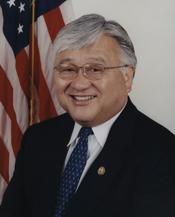
Mr. Chairman, I stand in opposition to the rule for consideration of H.R. 6. It is shameful, given the importance of energy to our national prosperity and the significance of the programs contained…
Mr. Chairman, I stand in opposition to the rule for consideration of H.R. 6. It is shameful, given the importance of energy to our national prosperity and the significance of the programs contained in this bill, that so little time was provided for debate on the bill and on the limited number of amendments that were made in order. Why does this rule so restrict the time for debate on amendments? The other side of the aisle will say we need to complete action on the bill before the recess, but no matter when we finish our bill, we will still have to wait for the other body to complete its work before the bill can go to conference.
I think the real reason we are spending so little time debating this bill and these amendments is that those on the other side of the aisle are afraid to expose this bill to the bright light of scrutiny. If the American public were given a real chance to see what is contained in this bill, the outcry against it would be deafening, so we are rushing it through with a minimum of debate.
There are very few things I like about the bill itself, either. However, I do support Division B, and I am proud to be a member of the Science Committee, which authored this portion of the bill. We have included such beneficial programs as energy efficiency and renewable energy research and development,
the next generation lighting initiative, and the clean school buses program.
We have also increased support for the basic sciences at the Department of Energy generally and focused on several programs in particular, such as nanotechnology research and development, U.S. participation in the ITER fusion energy project, and advanced scientific computing for energy missions. I commend the bipartisan leadership of the Science Committee for including these important provisions in the bill.
Unfortunately, I cannot say the same thing about the rest of the bill, and I urge my colleagues to support amendments that will be offered later by Chairman Boehlert, Mr. Dingell, Mr. Markey, Mr. Udall, and many of my colleagues from this side of the aisle.
I stand in support of the Boehlert/Markey amendment. The auto industry has claimed that if CAFE standards are raised, they might have to stop making SUVs. Yet their actions directly contradict these words. Recently Ford, Toyota, and GM all announced plans to introduce SUVs that travel over 35 miles per gallon during the next couple of years. Toyota has demonstrated with the Prius, which I drive, that hybrid technology works and consumers love it. Auto companies are showing that they have the technology to improve fuel economy--without sacrificing safety.
I stand in support of the Dingell amendment. The Federal Energy Regulatory Commission (FERC) has recently reported that during the California energy crisis, companies such as Enron, Reliant, and BP Energy deliberately manipulated the deregulated market to gouge consumers, but it is still not clear that consumers will receive the refunds they deserve. It seems clear to me that we need to improve consumer protections, not weaken them, but that is exactly what the H.R. 6 does. It promotes nationwide deregulation and repeals PUHCA (the Public Utility Holding Company Act). In contrast, the Dingell Amendment removes the deregulation provisions, increases FERC authority to combat fraud, and authorizes FERC to refund electricity overcharges back to the date when they began.
I am in opposition to the Wilson amendment. This amendment grossly misrepresents the actual areas of the coastal plain of ANWR that will be affected. The Interior Department estimates that drilling would actually affect 12,500 acres with roads, drill pads, processing facilities and airports, spread over hundreds of square miles. Drilling would also require 1200 acres for gravel mines needed to construct gravel roads within the 2000 acres, roads that are not subject to the 2000-acre rule. Existing oil field sprawl on the North Slope of Alaska has a ``footprint'' of 15,500 acres, but actually spreads across an area of more than 640,000 acres. I urge my colleagues to see the 2000- acre scam for what it is
I stand in support of the Markey/Johnson amendment. Why won't the other side of the aisle listen on this one? The public opposes drilling in ANWR. The other body voted to remove drilling provisions from the Budget. The distinguished chair of the other body's Energy Committee realizes that this will not be in a final energy bill and has said he will not bring it up. It isn't worth drilling in ANWR. There is less oil there than the U.S. consumes in 6 months, so it won't provide energy security. A policy that focuses on a clean, sustainable, and affordable energy supply would create more jobs than drilling in ANWR ever would, possibly 10 times as many. These would be permanent jobs, rather than the temporary jobs that ANWR drilling would bring. I urge my colleagues to protect our nation's largest and wildest natural treasure.
Finally, I stand in support of the Wu/Johnson amendment. In May of 2002, the General Accounting Office released a report that revealed an alarming disparity in salaries and rates of promotion between minorities when compared to white males in the same jobs at the Department of Energy's National Laboratories. GAO found that salaries for minority men and women and white women were lower than for white men, with the exceptions of Asian American men at Los Alamos and Sandia and Hispanic men at Lawrence Livermore. Comparing men and women of the same race/ethnicity, GAO found that White, Asian and Hispanic women earned less than their male counterparts.
The report also found that there are further areas for investigation. For example, with over 300 Asian American professional staff at Lawrence Livermore, not one was promoted to a managerial position between 1998 and 2000. When the report was released, I called for Congressional hearings to determine the cause of these inequities so that we may remedy them to ensure that the Department of Energy can recruit and retain the highest quality ethnically diverse workforce.
Unfortunately, the Science Committee took no action on this issue. The W/Johnson amendment would finally bring about some Congressional action, by requiring the Secretary of Energy to report to Congress on DOE lab's equal employment opportunity practices in promotion, pay raise, discipline, and recruitment and retention efforts.
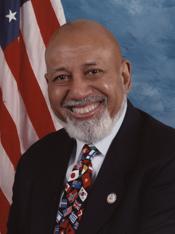
Mr. Chairman, I rise today not in support or opposition to the legislation before this body, but rather to bring to this body's attention the Majority's lack of consideration and complete disregard…
Mr. Chairman, I rise today not in support or opposition to the legislation before this body, but rather to bring to this body's attention the Majority's lack of consideration and complete disregard to issues of environmental justice.
Yesterday, during the Rules Committee hearing on H.R. 6, the Energy Policy Act of 2003, I offered an amendment that directed the Secretary of Energy to take all necessary steps and efforts to mitigate any adverse impacts that U.S. energy policy and the provision of H.R. 6 may have on minority, rural, Native American, and underserved communities. Additionally, it also requires the Secretary to submit to Congress an annual report detailing the Department's efforts to implement the requirement that I just described.
My amendment, as my colleagues and I in the Democratic Party see it, was non-controversial and essentially a reinforcement of a policy that already exists in the Department of Energy's. However, like in so many instances since 1994, the Republican Majority has neglected the responsibility that the Constitution instills upon us to always protect the rights of the minority and speak up for those whose voices all too often go unheard.
In 1994, then President Clinton signed Executive Order 12898 establishing an Interagency Working Group on Environmental Justice and directed all federal agencies and departments to make environmental justice part of their mission. Included in the Working Group were 17 departments and federal agencies, including the Department of Energy. The Working Group made a series of recommendations including the establishing of an Office of Environmental Justice within the Environmental Protection Agency (EPA). Under President Clinton, the EPA worked a great deal toward ensuring that environmental justice was a priority of all departments. However, like in so may other issues of equality
and justice, the Bush Administration and Republican Majority have done little to advance the cause. And in many instances, their policies create situations where environmental injustice thrives.
Commitments that have been made by the Majority to consider issues facing minority communities when crafting legislation has been nothing more than lip service in the 108th Congress. Today's debate on H.R. 6 provided a great opportunity for Congress to reaffirm its commitment to environmental justice. But Republicans on the Rule Committee, by a straight party line vote of 9 to 3, denied me the opportunity to offer my amendment on the floor of the House. In doing so, Republicans further denied House Members the opportunity to reaffirm to minority and other underserved communities that Congress is committed to ensuring environmental justice is a priority to U.S. policymakers. The only thing left is for me to question whether or not the Majority really is committed to protecting the rights of minorities--and in this case, Mr. Speaker, I'm not talking about political affiliation.
Mr. Chairman, it is virtually impossible for Congress to consider energy policy without taking into consideration the effects that new and existing legislation will have on the environment and communities living in areas that are most impacted by such policies. If environmental justice is to be a policy of this government, then Congress must also look at the origins of the problem that exist.
More times than not, environmental injustice arises as a result of poor energy policy. I am not just talking about toxic emissions into the air from unclean smokestacks disproportionately affecting minority and underserved communities living nearest to these plants. I am also talking about, for example, the siting of future factories, production of automobiles, and the location of a waste dump. All of these issues are part of this energy bill, and all of these issues adversely affect minority and other underserved communities.
Environmental justice can no longer just be a part of the mission of the Executive Branch. Instead, it must also be the practice of federal departments and agencies, as well as the Congress.
My amendment further links energy policy to issues of environmental justice. It does not change the policy or the mission of the Department of Energy. Instead, it recognizes that energy policy does play a role in achieving environmental justice and requires the Secretary of Energy to consider this reality in implementing the provisions of H.R. 6.
Though the House will never have the opportunity to consider my amendment, I submit its text to the Record so that the American public can see the injustice that was done this morning by the Republican Majority when it denied consideration of my amendment.
Amendment Offered by Mr. Hastings of Florida
In Division C, title IX, after section 30908 add the
following:
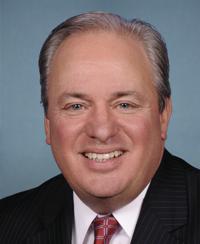
Mr. Chairman, I rise in support of the bill. Mr. Chairman, creating a national energy policy is a challenging but vital process. This country needs a comprehensive policy that reflects our diverse…
Mr. Chairman, I rise in support of the bill.
Mr. Chairman, creating a national energy policy is a challenging but vital process. This country needs a comprehensive policy that reflects our diverse energy portfolio and this bill achives that on many fronts.
I am pleased that this bill makes some real strides toward increasing utilization of some alternative energy technologies also. Language I worked on to create an advanced building efficiency testbed is included which will allow a university consortium to develop innovations in building technologies that will improve the efficiency of the energy systems in residential and commercial buildings while also reducing pollution.
During committee consideration, I offered with Lee Terry an amendment that will create an Advanced Power System Technology Incentive program. This will encourage further utilization of distributed power systems such as stationary fuel cells, turbines, and hybrid power systems. It will help reduce our dependence on foreign oil while also providing assured power to critical infrastructure facilities in a clean, environmentally friendly manner.
These are just a couple of the innovations included in the bill before us. Now I do have real concern with regard to language in the bill that would be detrimental to the pension plans of thousands of our mineworkers, and also with the fact that the tax provisions did not include important incentives for clean coal technology. My understanding is that these problems are being addressed and rectified
however which is extremely important to me and thousands of others.
The bill also contains an electricity title which, while not perfect, will allow the restructuring of our electricity industry to continue. Critics try to make blanket assertions that the restructuring path doesn't benefit the consumer, or won't produce any savings. But in my home State of Pennsylvania, we have found quite the contrary.
Pennsylvania has been a pioneer in retail electric competition and it has worked well. In a recent report from Penn Future, a noted public interest group in my home State, they concluded ``electricity is generally becoming a bargain'', and they gave competition and restructuring much of the credit.
The chairman of our Public Utility Commission, Glen Thomas, said in a recent interview that since restructuring in Pennsylvania:
Consumers pay less for electricity.
New generating facilities are being built to meet growing demand.
The reliability of the grid has been strengthened.
And consumers have more options to buy environmentally friendly ``green'' power generated by renewable resources like hydroelectric and wind facilities.
We need to continue these advances and expand the benefits throughout the entire country. I believe that the bill before us today will help those efforts and I urge Members to support it.
Mr. Chairman, I would respectfully add my voice to those opposing this amendment. While I can agree that we all want to reduce our imports of foreign oil, I have not been convinced that raising CAFE standards would actually accomplish this.
As I understand it, our import share of oil consumption was 35 percent in 1974. Since then our new fuel car economy has roughly doubled, but our oil import share has risen, nonetheless, to about 50 percent. For this reason, I am not convinced that the amendment, if adopted, would achieve what I believe is one of its primary goals.
Additionally, at this time, our economy is struggling. Unemployment is rising, new job growth is stagnating, and there is increasing concern throughout my district and the country about the direction our economy is headed. Yet this amendment could have a devastating impact on the automobile industry which is critical to our economy.
Even in my home State of Pennsylvania, which is not normally thought of as a State closely tied to the automotive industry, a total of 220,800 jobs are dependent on the industry.
Conference Report (H. Rept. 108-71)
The committee of conference on the disagreeing votes of the
two Houses on the amendment of the Senate to the concurrent
resolution (H. Con. Res. 95), establishing the congressional
budget for the United States Government for fiscal year 2004
and setting forth appropriate budgetary levels for fiscal
years 2003 and 2005 through 2013, having met, after full and
free conference, have agreed to recommend and do recommend to
their respective Houses as follows:
That the House recede from its disagreement to the
amendment of the Senate and agree to the same with an
amendment as follows:
In lieu of the matter proposed to be inserted by the Senate
amendment, insert the following:

Mr. Chairman, today we should be bringing to the American people an energy policy that is worthy of the 21st century. A policy that sets us on a path toward reliable sources and supplies of energy,…
Mr. Chairman, today we should be bringing to the American people an energy policy that is worthy of the 21st century. A policy that sets us on a path toward reliable sources and supplies of energy, and a cleaner environment. A policy that promotes efficiency and innovation, and provides more protection for consumers.
But the bill the Administration and the Republican leaders have brought to the Floor looks backward and not forward.
The Republican bill authorizes drilling in the most fragile untouched wilderness of the Arctic in search of a six-month supply of oil that won't reach the market for another 10 years.
The Republican bill makes our air less healthy and our water more dirty. It jeopardizes the health of our children. It allows companies to force diesel fuel into the ground in a way that could threaten the water table in order to fracture and retrieve oil deposits. It jeopardizes the protection of rivers and fish on behalf of hydroelectric companies.
The Republican bill allows oil and gas development on sensitive coastal lands and exempts oil and gas drilling sites from water pollution requirements. It includes a variety of taxpayer handouts to oil and gas companies, and protects corporate expatriates that have already moved overseas by grandfathering in their tax breaks.
And most significantly to those of us from California, this Republican bill strips out some of the few remaining federal protections for electricity consumers. In its place, we would be given a new, untested approach to electricity markets.
I have a word of warning for my colleagues: ``Remember California.'' At first, our new competitive electricity market was hailed as a boon for consumers.
Then came the price spikes and the blackouts, as energy companies learned how to game the system. On two particular days in June of 2000, an energy company shut down power plants to drive up electricity prices. These two days, alone, cost wholesale energy buyers at least an extra $13.8 million.
Federal regulators stood by and watched as Californians paid and overpaid to keep the lights on. And we are still paying, and we will continue to pay for years to come.
Finally, just last month, federal regulators announced that 37 energy companies and utilities violated energy trading rules.
There will be more indictments and admissions related to manipulative practices in California. But most of the money is gone, never to be recovered.
And yet, the energy policy the Republicans are bringing forward today will leave consumer all over the country even more vulnerable to the fraudulent and manipulative practices that led to the rolling brownouts and unreasonable prices we experienced in California.
It repeals an essential federal consumer protection that limits concentration of market power within the utility sector and helps protect ratepayers from the risky investments of the electrical utilities that serve them.
One of the laws repealed is more crucial today than ever to protect consumers from abuses in the utility industry. It is the law that prevents Enron from owning, and abusing, more than one electric utility.
Just imagine what would happen if Enron had owned and used two utilities to manipulate prices two years ago.
This is why it is important to vote for the Dingell amendment which would allow us to retain critical consumer protections and provide the Federal Energy Regulatory Commission broader authority to act against fraud in both electricity and natural gas markets.
Mr. Speaker, the energy policy in this bill is not worthy of the 21st century. It is a policy mired in the past that offers the American people more of the same bad choices--fewer consumer protections, and greater jeopardy for public health and the environment.
It is a policy that will lead to greater pollution of our lakes, our rivers, the air that we breathe and the water that we drink.
And, of course, the budget-busting title full of corporate giveaways to oil and gas companies--at the end of the day--will not yield the energy independence we seek for our future.
We can do better. We can look forward to 2050 instead of backward to 1950. We can bring to the Floor an energy policy that looks toward investment for new technologies, better efficiency standards and conservation policies that will truly lead us down the path to energy independence.
I urge my colleagues to have the vision to vote against this bill that takes us back to the past. Vote for the Democratic amendments that will take us into a secure and independent energy future.
Mr. Chairman, I yield myself such time as I may consume, and I rise in support of the entire bill, but particularly Division D of the bill. I yield to the gentleman from California for a colloquy…
Mr. Chairman, I yield myself such time as I may consume, and I rise in support of the entire bill, but particularly Division D of the bill.
I yield to the gentleman from California for a colloquy between the chairman of the full Committee on Ways and Means and the gentleman from Kentucky (Mr. Lewis).
I yield to the gentleman from Kentucky.
I continue to yield to the gentleman from California.
Mr. Chairman, I reserve the balance of my time.
Mr. Chairman, I yield myself such time as I may consume.
(Mr. McCRERY asked and was given permission to revise and extend his remarks.)
Mr. Chairman, lest anybody forget, we are debating the energy bill here this afternoon, and I would hope that is what we would focus on. However, there is contained in our bill a provision which gets to the problem that my friend from Massachusetts just talked about; and I agree with him that there is a problem with companies artificially reincorporating offshore in order to gain tax advantages. I differ with my friend from Massachusetts, though, on how we ought to solve that problem.
What we have done in this bill, though, is provide for a moratorium on any more such corporate inversions until we can work out a legislative solution that, I believe, will solve the problem without making our domestic United States corporations more vulnerable to foreign takeover.
So with that issue aside now, I would like to get back to the issue at hand, which is energy and improving the energy situation here in this country.
Our tax portion of this bill is a balanced approach. About one-third of the bill is for conservation; about one-third of the bill is for reliability, that is, making reliable our infrastructure for getting energy to the people who need it; and about one-third for increasing production, increasing the supply of energy resources here in this country.
So, Mr. Chairman, the Committee on Ways and Means, after several hearings last year in my subcommittee and one of the other Ways and Means subcommittees, put together a bill that we believe delivers a nice bang for the buck. We did have to downsize the package this year from the one we passed through the House last year, but we believe that this package will significantly increase the ability of the United States to provide the energy that our country needs.
Mr. Chairman, I reserve the balance of my time.
Mr. Chairman, I yield myself such time as I may consume.
There is a moratorium in this bill to keep corporations from doing just what the gentleman described. We are in agreement that should stop. The moratorium will give us time to plot the surest course to make sure that jobs are kept here in the United States and more jobs are created here in the United States.
As for the energy bill providing incentives for conservation and renewable sources, though, the previous speaker did not, I think, give the bill justice. Let me give some examples of the provisions in this bill which will conserve energy and encourage the development of renewable sources of energy. Tax credits for the installation of solar power and solar water heaters; it enhances incentives to generate electricity from wind, open-loop biomass, gas emitted by landfills, and the combustion of municipal solid waste. It speeds the development of fuel cells as a clean, efficient energy source, encourages consumers to purchase more fuel-efficient and fuel cell cars. It includes tax credits for homeowners and home builders investing in energy-efficient upgrades, tax credits for the combined installation of combined heat and power systems. It repeals the 4.3 cent general fund surtax on rail or barge which will encourage the transportation by a more efficient means, saving energy. It encourages production of cleaner-burning diesel fuel by taxing only the fuel content of diesel-water emulsions. The conservation title of the bill is $6.67 billion, 36 percent of the total cost of the bill.
Mr. Chairman, I would submit once again that this bill does do justice to the goal of conservation, but also recognizes the need for reliability of our infrastructure to get energy to consumers and also the need for more production of energy sources in this country.
With that, I would urge adoption of H.R. 6, and particularly urge Members to look at division D of the bill to see why this will finally give us a sound energy policy for this country.
Mr. Chairman, I yield back the balance of my time.
Show 11 more
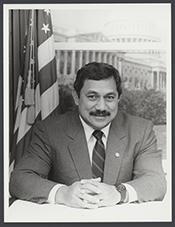
Mr. Chairman, today I rise in support of H.R. 6, the Energy Policy Act of 2003. H.R. 6 is a bill that addresses the need for a coherent and comprehensive national energy policy. It is a bill aimed at…
Mr. Chairman, today I rise in support of H.R. 6, the Energy Policy Act of 2003. H.R. 6 is a bill that addresses the need for a coherent and comprehensive national energy policy. It is a bill aimed at developing a competitive oil and gas leasing program, and a bill that recognizes the need for development of alternative modes of energy.
Mr. Chairman, I would like to take a moment to highlight a section in H.R. 6 of particular importance to the insular areas. The provision of this section requires a comprehensive energy report to be produced on consumption, importation, and potential for indigenous alternative energy in insular areas, which at present are highly dependent on energy imports. This provision is of vital importance to my district and those of my colleagues from the territories because it would provide for a process to help address some of the crucial energy needs of these insular areas.
This section also provides for creation of a grant program to fund projects for electrical power and distribution lines within the territories, which are highly susceptible to damages caused by hurricanes and typhoons. It is my hope that this legislation will begin to address our needs and move us toward the goal of giving the insular areas the tools we need to develop local sources of energy in a balanced and environmentally sound manner.
Mr. Chairman, I also want to express my support for opening the Arctic National Wildlife Refuge for oil and gas leasing programs. There has been much debate regarding this subject and I feel compelled to call attention to three key points.
As a staunch supporter of self-determination and economic development of indigenous peoples, I feel it important to recognize the opinions of those communities directly affected by the opening of the ANWR region. Surveys suggest, and even the National Research Council reports, that the resident of Kaktovik largely support the environmentally sensitive development of the 1002 area because it would provide significant economic resources to the Inupiqaq people. Additionally, the Alaska Federation of Natives recognizes the potential economic benefits to Alaska Natives and Alaska Native Corporations through the State, and as a result passed a resolution in support of legislation for opening the ANWR region.
Mr. Chairman, development of the ANWR also promises to provide jobs not only locally, but nationwide as well. Economic analyses forecast that as many as 735,000 jobs across the country could be created as a result of development of ANWR. As a nation we are enduring uncertain fiscal times and must consider all avenues available to help alleviate the burdens felt by states and individuals. The need for this legislation is reflected by that fact that many of the major labor unions, including the International Brotherhood of Teamsters, the Seafarers International Union, and the Laborers International Union, among others, back the development of 1002.
I would also like to emphasize the success of the Prudhoe Bay oil development program thus far. Since North Slope oil production began, the Central Arctic Caribou herd has to been detrimentally affected. It has, in fact, flourished. Since 1978, the herd has increased from 5,000 to approximately 30,000. We should look at the caribou as an example of how we can achieve a balance between technology and environment.
Mr. Chairman, the Resources committee had the honor of hearing testimony Ms. Tara Sweeney of the Inupiat tribe, who so eloquently expressed her peoples support of the opening of the ANWR area. We have heard a multitude of strong arguments on both sides of this issue, but perhaps none so compelling as
Ms. Sweeney's, who said, ``As a native people we do not have a hierarchy for traditional food. The caribou is just as important to our souls as the whale. We cannot live without both. That is an important point to remember when deliberating this issue. We would not recommend development if it sacrificed our access to caribou.''
While obviously there are many strong arguments both in favor and against development of ANWR, but the overwhelming support by the indigenous community in Alaska, along with the proven success of development thus far, is too often dismissed by opponents of this legislation. I am therefore supporting H.R. 6, and I urge my colleagues to support this bill as well.

Mr. Chairman, I yield myself 3 minutes. Mr. Chairman, we have a number of challenges when it comes to developing a balanced energy policy for the future of our country. First of all, we have to look…
Mr. Chairman, I yield myself 3 minutes.
Mr. Chairman, we have a number of challenges when it comes to developing a balanced energy policy for the future of our country.
First of all, we have to look at the future, and all of us can talk about where we want to go in terms of our future energy needs and how those needs are going to be met. We can talk about wind power and solar power, about fuel cell technology and all of the new things that are coming on line, and the technology that is being developed; and I think that is great. I think we all know that one day that is how we will solve the energy challenges that we have as a country.
But we also have to look at the needs of today and what we are currently using and what we are dependent on and how we meet those challenges. The solutions that we come up with in this bill identify both of those, needs and challenges. We have sections in the bill that deal with alternative energy and our future needs and how we are going to put money into research and technology, and the Committee on Science has done a great job with that and the Committee on Energy and Commerce has done a great job with that.
In our committees, the Committee on Resources, we also addressed those alternative energy needs, and that is extremely important; but when we look at our needs of today and how we are going to meet those needs, we have to look at increasing production in this country to take away the demands on foreign energy and the reliance we have on countries like Iraq and others for bringing that energy into this country.
Part of that is increasing production on public lands. The ANWR is part of that, the Arctic National Wildlife Refuge, and out of that 19- million-acre refuge, we are proposing that we take a very small part of that to help solve our Nation's needs. I think as we look towards how we put together a balanced energy policy, this bill accomplishes that.
Now, I know that we went through years in writing this bill. We went through hearing after hearing. We had mark-ups. We had amendments. We had more than a dozen amendments at the committee level, and many of those amendments came from my friends in the minority and several of them we accepted. And as we tried to put that bill together, we reached what was largely a bipartisan consensus on moving our titles of the bill. It passed out of committee with a 32-14 bipartisan vote coming out of the committee.
There was general consensus amongst the members on the committee that this was the right way to approach all of our problems. That does not mean that we all agree on everything, that all of us got everything we wanted. But what it means is that it was a compromise, and it is a bill that we can all be proud of; and I urge my colleagues to support the bill.
Mr. Chairman, I reserve the balance of my time.
Mr. Chairman, I yield 2 minutes to the gentleman from Nevada (Mr. Gibbons), the vice-chairman of the committee.
(Mr. GIBBONS asked and was given permission to revise and extend his remarks.)
Mr. Chairman, I yield 2 minutes to the gentleman from Montana (Mr. Rehberg).
(Mr. REHBERG asked and was given permission to revise and extend his remarks.)
Mr. Chairman, I yield 3 minutes to the gentlewoman from Wyoming (Mrs. Cubin).
Mr. Chairman, I yield myself the remaining time.
In conclusion, I would just say that, unfortunately, the choice that a number of my colleagues have offered is a false choice. What they have put up is we either can have energy production for today, or we can protect our environment. I believe that is a false choice.
I believe that we can take care of today's energy needs. We can develop the energy needs of the future, and we can protect our environment in the process.
Stripping out all of the oil and gas provisions in the bill, stripping out all of the coal provisions in the bill, stripping ANWR out of the bill, taking away all of our current production, the increase in our current production that we need today is not a responsible energy policy.
We agree on the future. We agree on the need for wind and solar and fuel cell technology. That we agree on, but we also have to agree on what we need today.
This was a bipartisan vote coming out of committee. I urge my colleagues to support it here on the floor today.
Mr. Chairman, I yield back the balance of my time.
Mr. Chairman, I thank the gentleman from Texas (Mr. Hall) for yielding me the time. I am in opposition to this bill because today I believe we are preparing to pass the oil industry's dream plan. It…
Mr. Chairman, I thank the gentleman from Texas (Mr. Hall) for yielding me the time.
I am in opposition to this bill because today I believe we are preparing to pass the oil industry's dream plan. It was drawn up in the secrecy of the vice president of the oil dynasty's office, Mr. Cheney. He has fought every attempt to tell us who was even in the meeting, much less what they talked about.
The bill was brought up to the Congress and the Committee on Ways and Means, and we could not get any amendments adopted, nothing. It has been put out by the White House, and that is good enough for the boys up in the Committee on Ways and Means.
Now, Rumsfeld and Bechtel were involved in this whole business with Iraq back in 1983. In December of 1983, Mr. Rumsfeld was there negotiating for a $2 billion pipeline from the southern Iraq fields to Aqaba, the Gulf of Aqaba, across Jordan.
Saddam negotiated with them a while, and then he said no. Ever since then, there has been all this interest in why can we not go in and have a regime change, because he would not roll over for what was going on.
Now, this is at the time, when Rumsfeld was negotiating with Saddam Hussein is exactly the time when he was bombing the Iranians with chemical weapons. We are over there making an oil deal, and this guy is doing this stuff out there. People act like we have such clean hands in this. This administration is going to get out of here with a bunch of money for oil.
I offered an amendment in the Committee on Ways and Means to put money up for buying solar panels. They did it in San Francisco; they passed a bond issue to put solar panels on every building in San Francisco. They are doing it all over California. Eight times the amount of energy they need in California falls out of the sky every day.
For this bill the chairman of the Committee on Ways and Means would not even consider that amendment. This is an oil company bill. It is oil, oil, oil. It has a greasy feeling to it.
Mr. Chairman, I thank the gentleman from Massachusetts for yielding me this time.
The other day I saw something in The New York Times that gave me hope. The White House had put in solar panels on one of the sheds out there. And I thought, well, my goodness, they must have some enlightenment down there at the oil ministry.
But when I offered an amendment in the Committee on Ways and Means that would have allowed us to have energy companies give tax-free bonds for the purpose of raising money for interest-free loans to homeowners to purchase solar equipment, every Republican in the committee voted ``no.'' I guess they did not get the message from the White House.
Mr. Chairman, it usually costs about $11,000 to put a solar panel on a home. It is not pie in the sky. Solar production has grown 600 percent since 1996. So this is something that everywhere else in the world they are doing, but not here, and certainly not in the Committee on Ways and Means, in a committee controlled by the oil industry.
We had a chance, if we had passed that amendment, to follow California. They always lead what is happening in this country. Watch and see. San Francisco puts panels on their buildings, Los Angeles, and Sacramento. They will be doing it, and all the rest of the country will be sitting around tied to these oil companies and saying to themselves, why is this?
Now, we gave an opportunity for the House to begin a program that would have had 2 million families with secure, clean energy. We could have gone a long way down the road toward meeting the Kyoto Accords. The President walked away from that and said, We cannot clean up the environment; no, sir, we cannot.
We cannot do anything, we are just hopeless, we Americans.
Well, if we put an area of 70 miles by 100 miles of solar panels in Nevada, we could provide all of the energy this country needs in one place. It can be done, and we have got to start it someday, but I guess this administration is going to keep drilling and drilling and drilling. It will not work, Mr. President.
Mr. Chairman, I yield myself such time as I may consume, and I rise in opposition to the legislation that is in front of us for a variety of reasons, but I want to speak specifically to a couple of…
Mr. Chairman, I yield myself such time as I may consume, and I rise in opposition to the legislation that is in front of us for a variety of reasons, but I want to speak specifically to a couple of issues in the tax portion of this bill that I think ought to raise the concern of every Member of this body.
Earlier today, Mr. Chairman, this House voted for a resolution drafted by the majority which calls for an end to tax loopholes, and not 1 hour later did the House begin consideration of an energy bill which cements into law a $4 billion tax loophole. Now, I know this might sound strange this far after April Fool's Day, but sadly it is true.
The bill we are considering today will protect all corporate expatriates who have already left. And for the viewers, understand these are corporations who have moved offshore for the purpose of avoiding American corporate taxes at the very same time that 400,000 men and women in uniform are in Iraq. But let us, for a couple of moments here, discuss who these privileged few corporate expatriates are, why they are being protected in this bill, and what this means for America's energy sector.
If Tyco, who left New Hampshire for Bermuda, paid the $400 million a year in U.S. taxes it now avoids through the Bermuda loophole, we could easily afford all of the new section 45 wind energy and other related credits called for in this bill.
If Ingersoll-Rand, who left New Jersey for Bermuda, paid the $40 million a year in U.S. taxes it now avoids, we could easily afford the new credit for energy efficiency improvements for existing homes called for in this bill.
If Cooper Industries, who left Texas for Bermuda, paid the $55 million a year in taxes it now avoids, in 1 year we could pay for an entire decade of business and nonbusiness-qualifying fuel cell tax credits called for in this bill.
That is not enough? Well, if Weatherford, who left Texas for Bermuda, paid the $40 million a year in U.S. taxes it now avoids by the Bermuda loophole, we could easily pay for the new electric and clean fuel vehicle tax credits called for in this bill.
Furthermore, if the loophole was closed today, rather than permanently granting special protection as this bill does, we could fund almost all of the conservation items in this bill. And yet, because we are not, we will be dipping into Social Security and Medicare to fund these broadly supported energy conservation incentives. Here is the frustration that the minority feels in this House.
Last year, I filed a bill to close the loophole that allows U.S. corporations to set up phony shell headquarters in Bermuda and thereby avoid paying U.S. income taxes. For a whole year that bill has languished, thwarted by the Republican leadership, that refuses to allow a floor debate on closing the Bermuda tax loophole. Mr. Chairman, the American taxpayer deserves better.
We are moving into the final weekend when average Americans are going to sort and move through a host of pieces of paper and receipts as they attempt to put together their tax obligation, and yet we cannot take the time over 12 months to close this Bermuda tax loophole.
I have repeatedly said on this House floor that we should bring this legislation to the floor; that there will be more than 300 votes for this legislation in this House of Representatives. It will sail through here. People will break their wrists trying to get to these small voting devices on the back of the seats so that they can vote ``yes'' on this provision to close that Bermuda tax loophole, which saves $4 billion as estimated by the Joint Tax Committee.
We can do much better, Mr. Chairman. Let us close the Bermuda tax loophole. And I urge my colleagues here, because of this loophole, to vote down this bill.
Mr. Chairman, I reserve the balance of my time.
Mr. Chairman, I yield 2 minutes to the gentleman from Washington (Mr. McDermott).
Mr. Chairman, I yield 3 minutes to the gentleman from Texas (Mr. Doggett).
Mr. Chairman, I thank my friend for yielding time to me, and I would also commend my ranking member on the Committee on Resources for the leadership that he has shown in regards to this issue. Mr.…
Mr. Chairman, I thank my friend for yielding time to me, and I would also commend my ranking member on the Committee on Resources for the leadership that he has shown in regards to this issue.
Mr. Chairman, I stand here today as the ranking member of the Subcommittee on Energy and Mineral Resources on the Committee on Resources, and stand here in great disappointment because I feel that this energy bill, which is so very important for the future of our growth needs and for our Nation as a whole, is a missed opportunity. Rather than coming forward with a very bold and innovative vision in regards to putting our Nation on track for true energy independence, this bill is more same-old, same-old. In fact, it is better suited for the challenges of a mid-20th century rather than the opportunities and the technological development that will present itself here in the 21st century.
If anyone has any doubt in regards to the necessity of establishing this type of energy vision of greater energy independence for our Nation, we need only look at the conflict that is taking place in the Middle East right now and our overreliance on the importation of those oil supplies from the Middle East; and if we could do one thing that would benefit the people in the Middle East and their society, it is to require them to start drilling the human capital for economic growth in their own nations rather than drilling their own natural resources for their wealth because of the great demand for oil from other nations, primarily from us.
Yet instead of putting forward an energy plan that calls on greater investment and reliance on alternative renewable energy supplies from wind, solar, geothermal, as my colleague just mentioned, and biofuels as well as the energy source of the future, hydrogen power, we are basically presenting a plan here which is to ``drill at taxpayer expense,'' increasing our reliance on oil consumption in our economy, rather than weaning ourselves off of it.
We only hold 2 percent of the oil reserves in the entire world within our borders. Clearly, if we continue to puesue an increased reliance on this energy source, we are not going to achieve the independence that we need. Instead, we need a bolder vision, an Apollo energy plan, so to speak, similar to Kennedy's call to put a man on the Moon by the end of the decade.
At the time when he said that in 1962, most of the best minds and scientists at the time looked at him and thought he was crazy. As we were launching the Saturn 2 and Jupiter missiles, we were lucky if they were not exploding on the launch pads. If they did get into the air, they did not last very long before they exploded into the ocean, let alone putting a human on top of one of those things, landing them on the Moon and safely returning them to the Earth. And yet that was achieved because the President presented a vision and the leadership and he marshalled the collective intellect and resources in our country to do it.
We can do the same thing today with a bold energy policy by investing in the alternatives and renewables and a quicker development of hydrogen power. Yes, there are some programs in this bill that would point in that direction, but it is not anywhere near enough of where we need to go to wean ourselves off fossil fuels while also addressing the global consequences of global warming.
Title II in particular, by granting royalty-in-kind and royalty holidays to the oil company, is nothing but a big subsidy, a big tax cut to these very companies at taxpayer expense. Something that then candidate Bush even opposed during his 2nd Presidential campaign.
We can do better, and I would encourage my colleagues to vote ``no'' so we have a chance to do better.
Mr. Speaker, I rise in strong support of this rule. Contrary to many of the things that have been said by my colleagues on the other side of the aisle, we have literally turned ourselves inside out…
Mr. Speaker, I rise in strong support of this rule. Contrary to many of the things that have been said by my colleagues on the other side of the aisle, we have literally turned ourselves inside out to try and accommodate the concern of the minority. Members of the Committee on Rules and staff stayed until two o'clock this morning, and the Committee on Rules convened at seven o'clock this morning, working very hard to go through the 77 amendments that had been filed for consideration.
As we look at the committee process, my friend, the gentleman from Louisiana (Mr. Tauzin), is here, the gentleman from California (Mr. Pombo) is in the back of the Chamber, two very important authorization chairmen of the committees that considered this effort. We also had the gentleman from New York (Mr. Boehlert) and the gentleman from California (Mr. Thomas), the other two committees that considered this. In their work they went through 88 amendments through this process.
I remember the gentleman from Louisiana (Mr. Tauzin) said in his testimony there were 32 votes that took place in his committee. Of the 88 amendments that were considered through this whole process, 74 of them were offered by minority Members, and 14 were offered in either a bipartisan way or by majority Members.
So we have obviously, through this process, with four very large committees involved, provided Members with an opportunity to consider a wide range of issues.
I heard my dear friend and fellow Californian (Mr. Schiff), I am honored to represent the district that adjoins him, stand up and talk about the debate on the Arctic National Wildlife Refuge. We are going to have a very full and vigorous debate on that issue. This rule allows for consideration of that measure.
We are going to have an opportunity to consider a wide range of other concerns that have come forward.
Mr. Speaker, back in 1992, energy legislation was considered in this House; and quite frankly, the percentage of minority Members' amendments that were offered were 27 percent. Twenty-seven percent of the Members that were Republicans at that point in 1992 that offered amendments, 27 percent of the amendments that were made in order at that time were offered by Members of the minority.
In this bill that we are going to be considering today, over 54 percent of the total amendments are offered by minority Members. That is a 38.3 percent increase in the number of minority amendments allowed from the 1992 bill.
We also have to realize that we have got four bipartisan amendments that are being offered of the total that we have made in order.
Mr. Speaker, this is a very fair rule. We are going to have a debate on a wide range of very important issues. It has been 11 years since this place has really moved ahead with a full debate on energy legislation. We all know how important this is.
Just down in Statuary Hall, Mr. Speaker, I was participating in a ceremony in which we are honoring our courageous men and women in uniform who have fought so vigorously over the past 21 days in Iraq, liberating the people of Iraq; and some have talked about the issue of that versus debate here. This is a very fair and balanced opportunity for us to consider a question that is going to be critical to our Nation's national security future and to our Nation's economic future, and so I hope very much that we can pass this rule in a bipartisan way.
Let me say again, I hope that we will have a bipartisan vote in support of this rule because we have worked very hard to try and make as many minority amendments in order as possible so that we can have that free-flowing debate.
Mr. Speaker, I thank the gentlewoman for yielding me time. I rise in opposition to this rule. Those of us who are on the committee wanted the opportunity, as we had in committee, to put forward some…
Mr. Speaker, I thank the gentlewoman for yielding me time.
I rise in opposition to this rule. Those of us who are on the committee wanted the opportunity, as we had in committee, to put forward some very, very important rules. We were denied that opportunity.
We discussed the renewable fuel standards, for instance, last week in the markup in the committee, in the dark of night. Now the Committee on Rules is refusing to allow us to debate the ethanol mandate in the light of day. The ethanol mandate will increase gasoline prices in New York and wherever else it is not readily available.
The Committee on Rules also refused to allow two amendments that I cosponsored to help reduce the impact that the ethanol mandate will have, particularly on New York. The first amendment was offered by the gentleman from California (Mr. Ose) and it would have allowed refiners to produce gas that is clean, if not cleaner than gas blended with ethanol, to receive a credit for ethanol.
The second was offered by the gentlewoman from California (Mrs. Capps) that would have authorized a national phase-out of MTBE.
I am deeply disappointed in this rule. We could have allowed one amendment, which really would have discussed the ethanol mandate, and it was rejected. It is really an unfair rule and I urge my colleagues to vote ``no.''
Mr. Chairman, I thank my friend for yielding to me.
Mr. Chairman, there are four committees that have jurisdiction over this bill, and one of them is the committee on which I serve, the Committee on Energy and Commerce; and I thank the ranking member of the Committee on Resources for giving me this opportunity.
This was not a bill that was crafted in the middle. This is not a bill that Republicans and Democrats got together to produce a bill that is moderate, that the American people want to see. This was a bill that was put together by the Republicans and jammed
down the throats of the entire Congress.
We were in committee last week until one o'clock in the morning, and every single Democratic amendment was voted down on virtually a party line vote. This is not the way to craft an energy bill for America. We need the talents of all the Members of the House in both parties to come together for the American people.
I am sorely disappointed that we are ignoring the underlying problem to national security, which is oil. There is nothing in this bill that reduces our consumption of oil. There is a lot of talking about drilling and production, but very little about conservation.
Rather than stimulating research and development into renewable generation, we continue to cede the development of alternative energy technology to Europe and Japan. Whereas once we were the leaders in exporting renewable technologies such as solar panels and wind turbines, the U.S. now lags behind.
At the same time, 72 percent of Americans believe that renewable energy sources should be our priority right now. We are missing a huge opportunity to create a renewable energy market that benefits both consumers and the environment. Our energy policy is tied to our national security and our economic well-being; and we need to ensure that this policy is diversified, reduces our dependence on oil, and creates skilled jobs by reducing energy costs.
We are missing a tremendous opportunity. This bill does not create a market for renewables. It mandates a fixed market for ethanol, while providing liability relief for manufacturers. This is wrong.
This bill does nothing to further laudable goals, and I urge my colleagues to join me in opposing H.R. 6.

Mr. Chairman, I thank my friend for yielding me this time. Mr. Chairman, this legislation is a comprehensive energy bill, but it is an incomplete energy policy. We need an energy policy that is…
Mr. Chairman, I thank my friend for yielding me this time.
Mr. Chairman, this legislation is a comprehensive energy bill, but it is an incomplete energy policy. We need an energy policy that is balanced; balanced regionally; balanced in terms of promoting energy development and protecting the environment; balanced in terms of production and delivery, in terms of streamlining regulations, while protecting consumer interests; and certainly, Mr. Chairman, balanced in terms of addressing short-term problems while creating long-term stability, and investing for the energy needs of future generations.
Yet, there is no real commitment in this legislation, I think, to promote new alternative resources or conservation. We are missing a major opportunity to invest in the technologies of efficiency, to do more with less. To help us manage our consumption and create thousands of jobs at home.
Democrats have amendments to address these deficiencies, but most, unfortunately, if not all, will be rejected, even though they are good policies that many of my friends on the other side of the aisle would want to support, but will not because the majority has made many parts of this rule partisan.
I am especially concerned, Mr. Chairman, about the new issues in this debate, first, electricity restructuring. This bill ignores the lessons that should have been learned from Enron and from California. A poorly structured market is more susceptible to manipulation and fraud than a market that is properly designed. This legislation actually weakens the oversight and tools that our regulatory agencies need to provide the necessary checks and balances, therefore making matters worse.
I urge my colleagues to support the thoughtful and reasonable provisions in the Dingell substitute to address these deficiencies.
Secondly, the fuel provisions include mandates that ignore regional disparities in supply and distribution that will lead to increased prices at the pump for consumers on both the East and West Coasts.
Mr. Chairman, we need a comprehensive energy policy that is balanced, competitively neutral, and that maximizes our resources. This bill, unfortunately, misses that opportunity. Thus, I urge my colleagues to oppose it.
Mr. Chairman, I thank my friend for yielding me the time to close.
I talked about, in the first 3 minutes, a comprehensive energy policy. I want to tell my friend, the chairman of the committee, I know he and the gentleman from Michigan (Mr. Dingell) worked closely together on this bill. I think it is very unfortunate on a matter of such great importance to our country, to our national security, and to our people that we do not have a bill on the floor that both the gentleman from Louisiana and the gentleman from Michigan could have supported.
Some amendments have been made in order. I would hope that perhaps the gentleman from Louisiana would support some of those amendments. I think they will improve the bill.
I yield to the gentleman from Louisiana.
Mr. Chairman, I thank the gentleman.
Mr. Chairman, in closing, let me say honestly that I think this issue is of such magnitude that we really ought to work together. We have missed an opportunity to do that. I hope in the future we will be able to do so.
I think the gentleman's experience, matched with the experience of the gentleman from Louisiana (Mr. Tauzin) and the Members on both sides of the aisle can come up with an energy policy of which we can all be proud. I feel we have not done that this day, and I think we have lost an opportunity.

Mr. Chairman, I had hoped that I would be able to vote for the energy bill before the House today. Now more than ever, this country urgently needs a balanced, forward-looking policy to meet America's…
Mr. Chairman, I had hoped that I would be able to vote for the energy bill before the House today. Now more than ever, this country urgently needs a balanced, forward-looking policy to meet America's energy requirements in the 21st Century. Unfortunately, the energy legislation before the House falls far short of even the minimum requirements of a balanced, comprehensive energy program. I therefore urge my colleagues to join me in opposing passage of this bill today.
The overarching flaw in this bill is its lack of balance. This legislation contains relatively few energy conservation provisions and instead places most of its emphasis on production of traditional energy sources. In so doing, the bill weakens important environmental protections and offers subsidies and incentives to industry, even in cases where none are required.
I am also extremely disappointed that one provision of this bill would open the Arctic National Wildlife Refuge to oil and gas drilling. This provision would do serious environmental harm to one of the last pristine wilderness areas in America. It might be argued that doing so could be justified if drilling in the Refuge would substantially lessen U.S. dependence on foreign sources of oil. But we know that this is not the case. According to a 1998 U.S. Geological Survey study, the mean estimate of economically recoverable oil in the Refuge is 3.2 billion barrels, an amount roughly equal to the amount of oil the U.S. consumes in six months. We can't drill our way to energy self sufficiency. We need to look at alternatives to oil and make better use of advanced technology to lessen U.S. dependence on it.
The $18.6 billion tax package contained in this legislation is similarly unbalanced. These incentives would overwhelmingly go to energy production and transmission at the expense of conservation, energy efficiency and developing alternative energy. In particular, the incentives provided for alternative fuel vehicles in the bill are inadequate.
I believe consumer-based tax credits are needed to accelerate the introduction of hybrid and other alternative fuel vehicles. Sales of hybrids and all other dedicated alternative fuel
vehicles in 2002 represented just two-tenths of one-percent of total vehicle sales. For example, Ford produces 375,000 Taurus cars each year. Honda sells 360,000 Accords. By comparison, the most popular hybrid automobile--the Toyota Prius--sold just 18,000 vehicles in 2002. Clearly, we need a meaningful tax incentive to prime the pump on hybrids and other alternative fuel vehicles. The federal government has a vital role to play in encouraging manufacturers to build, and consumers to purchase, these advanced technology vehicles.
If we go forward with an energy bill that lacks a meaningful incentive for alternative fuel vehicles, including an enhanced credit for hybrids, I believe we would be making a serious mistake.
At the end of the day, the energy bill before the House is unbalanced, incoherent, and environmentally risky. It deserves to be defeated.

Mr. Speaker, first let me applaud and cheer the gentleman from California (Mr. Thomas), the gentleman from Louisiana (Mr. Tauzin), the gentleman from California (Mr. Pombo), and the gentleman from…
Mr. Speaker, first let me applaud and cheer the gentleman from California (Mr. Thomas), the gentleman from Louisiana (Mr. Tauzin), the gentleman from California (Mr. Pombo), and the gentleman from New York (Mr. Boehlert) for their leadership in bringing this very, very important legislation to the floor.
This is important legislation. We are all very concerned about the economy today. This is the first major jobs-related legislation that has come to the floor. This legislation will create jobs and it will also reduce our dependence on imported sources of energy.
Today, I want to draw attention to a key conservation component that is included in this legislation before us. Conservation is a key component of this balanced legislation, and it is also a big win for consumers and for homeowners. This legislation includes the Save America's Valuable Resources Act; H.R. 1459 was included in the Energy Policy Act in 2003. This legislation is a big win for consumers and homeowners because it provides up to a $2,000 tax credit for homeowners to make their homes more energy efficient.
Think about this: Under this legislation they will be able to obtain up to a $2,000 tax credit, 20 percent of the first $10,000 they spend in making their homes more energy efficient. To qualify for this tax credit, homes must be made 30 percent more energy efficient according to the 2000 International Energy Conservation Code, a private-sector energy code used here in the United States. Covered supplies include windows, insulation, calking and sealers, air conditioning and heating units.
If you think about it, if you look at the statistics, residential use matters. It has a big impact on our consumption of energy in America. Recent figures show that homes account for almost one-fifth of all the energy that is consumed; twenty percent of the energy that is consumed in our country is used by residential consumers. Today, it costs the average American $1,500 to heat and cool their homes each year. That amounts to a cost of $150 billion annually that is spent by homeowners and consumers on heating and cooling and use of energy in their homes.
By simply making changes in energy efficiency in one's home, consumers can save real money. Consumers can save 10 percent or more on energy bills by simply reducing the number of air leaks in their homes by doing better sealing and calking. Double-paned windows with low- emissivity coating can reduce heating bills by almost a third in places like Chicago. And if all households upgraded their insulation to meet the International Energy Conservation Code level, the Nation would experience a permanent reduction of annual electric consumption totaling 7 percent of the total consumed.
This legislation is balanced. This legislation is a big win for consumers. It is also a big win for homeowners. This legislation reduces our energy dependence on foreign sources and creates jobs, our number one priority today in the Republican House of Representatives. It deserves bipartisan support.

Mr. Chairman, I yield myself such time as I may consume. I am pleased to support this legislation. It is the product of a lot of months of work, not only this year, but also in the last Congress we…
Mr. Chairman, I yield myself such time as I may consume.
I am pleased to support this legislation. It is the product of a lot of months of work, not only this year, but also in the last Congress we worked hard and worked on into the conference committee. We were able to preserve a lot of the language that was agreed to last year, but never formally adopted by the conferees. I was disappointed in that.
The members of the Committee on Science have worked well together on both sides of the docket to produce provisions that make the Federal Government an enabling partner in energy research and development to enable us to
develop the technologies necessary to conserve energy and use it more efficiently. Provisions in this bill also jumpstart the transition to a hydrogen economy and take the next step of exploring the possibility of fusion energy.
These, of course, are all high-risk, high-payoff, and long-lead time, and in my view an appropriate role for the Federal Government to play in energy.
However, in order to survive to the long term, we have to ensure that supplies of domestic oil and natural gas continue to flow. The transition from an oil and gas economy to one based on fusion and renewable energy will be extremely long. The fact is that it is easy to find and produce oil and gas. That amount has already been consumed. The challenge is getting it, I think, at the more difficult producing horizons. This legislation, I think, does that.
I have always said that the energy policy we need is an incentive to look for it and a reward for finding it. This program actually comes as close to that as any I have seen in the 20 years I have been here.
I am pleased that the Committee on Science has included my ultradeep and unconventional onshore exploration and production R&D provisions in division B. Mr. Chairman, in reality this is actually an important production provision masquerading as an R&D provision.
The estimated volumes of natural gas that can be produced from the middle and western Gulf of Mexico are truly astonishing, 69 trillion cubic feet by one estimate.
Under these provisions, an industry-led consortium will lead a crash program to develop the technologies necessary to drill and produce these hydrocarbons at extreme depths. A companion program will develop the technologies necessary to drill and produce the hard-to-reach oil and gas on shore. I think a crash R&D program will go a long way to meeting the increased demands for natural gas that are expected to occur in the next 15 years.
Mr. Chairman, I reserve the balance of my time.
Mr. Chairman, I yield 1\1/2\ minutes to the gentleman from Texas (Mr. Lampson).
Mr. Chairman, I yield 2 minutes to the gentleman from Washington (Mr. McDermott).
Mr. Chairman, I yield 1\1/2\ minutes to the gentlewoman from California (Ms. Watson).
Mr. Chairman, how much time do I have remaining?
Mr. Chairman, I yield the remainder of my time to the gentlewoman from Texas (Ms. Jackson-Lee), a very valuable member of our committee.
Bill Text
2 versions available
        [Congressional Bills 108th Congress]
[From the U.S. Government Publishing Office]
[H. Res. 6 Engrossed in House (EH)]

In the House of Representatives, U.S.,

January 7, 2003.
Resolved, That the following Members be, and are hereby, elected to the
Committee on Rules: Mr. Dreier of California, Chairman, Mr. Goss of Florida, Mr.
Linder of Georgia, Ms. Pryce of Ohio, Mr. Lincoln Diaz-Balart of Florida, Mr.
Hastings of Washington, Mrs. Myrick of North Carolina, Mr. Sessions of Texas,
and Mr. Reynolds of New York.
Attest:

Clerk.