Providing for consideration of the bill (H.R. 4759) to implement the United States-Australia Free Trade Agreement.
Legislative Activity
Stay on top of the latest movement without scrolling through every action
Motion to reconsider laid on the table Agreed to without objection.
July 14, 2004 • 2:00 PM
View full timeline
Introduced in House
July 13, 2004
The House Committee on Rules reported an original measure, H. Rept. 108-602, by Mr. Dreier.
July 13, 2004
During consideration of H.R. 4759 pursuant to H. Res. 712, notwithstanding the operation of the previous question, the Chair may postpone further consideration of the bill to a time designated by the Speaker.
July 13, 2004 • 7:11 PM
Placed on the House Calendar, Calendar No. 204.
July 13, 2004
Considered as privileged matter. (consideration: CR H5660-5669)
July 14, 2004 • 10:29 AM
DEBATE - The House proceeded with one hour of debate on H. Res. 712.
July 14, 2004 • 10:31 AM
The previous question was ordered without objection. (consideration: CR H5669)
July 14, 2004 • 11:33 AM
POSTPONED PROCEEDINGS - The Chair put the question on adoption of the resolution and by voice vote, announced that the ayes had prevailed. Mr. McGovern demanded a recorded vote and the Chair postponed further proceedings on the question of adoption of the resolution until later in the legislative day.
July 14, 2004 • 11:34 AM
Considered as unfinished business. (consideration: CR H5687)
July 14, 2004 • 1:38 PM
Passed/agreed to in House: On agreeing to the resolution Agreed to by the Yeas and Nays: 337 - 89 (Roll no. 371).(text: CR H5661)
July 14, 2004 • 2:00 PM
On agreeing to the resolution Agreed to by the Yeas and Nays: 337 - 89 (Roll no. 371). (text: CR H5661)
July 14, 2004 • 2:00 PM
Motion to reconsider laid on the table Agreed to without objection.
July 14, 2004 • 2:00 PM
Voting History
1 vote recorded • Roll call available
Floor Debate
21 membersWhat members said about H.Res. 712 on the floor
DD MK
MK PMC
PMC FPS
FPS THA+16
Floor Debate
21 membersWhat members said about H.Res. 712 on the floor
Mr. Speaker, by direction of the Committee on Rules, I call up House Resolution 712 and ask for its immediate consideration. Mr. Speaker, for the purpose of debate only, I yield the customary 30…
Mr. Speaker, by direction of the Committee on Rules, I call up House Resolution 712 and ask for its immediate consideration.
Mr. Speaker, for the purpose of debate only, I yield the customary 30 minutes to the gentleman from Massachusetts (Mr. McGovern), my very good friend and Committee on Rules colleague, pending which I yield myself such time as I may consume. During consideration of this resolution, all time yielded is for the purpose of debate only.
Mr. Speaker, this is a very exciting day. We are about to embark on the debate for a very important bipartisan issue. Let me at the outset say that there is so often attention, in fact, almost all of the attention that is focused on this institution, the United States Congress, both Houses of Congress, is on disagreements that take place, and of course those are very important. But very little attention is focused on the fact that we are able to craft major bipartisan agreements on a wide range of issues, and at this moment we are beginning debate on a measure which will enjoy very strong bipartisan support.
It is going to create an opportunity for us to expand one of the most important bilateral relationships that exists, and it is the U.S.- Australia Free Trade Agreement that will build upon the long-standing commercial ties that we have with Australia by eliminating terrorists, removing nontariff barriers, and providing better market opening opportunities for U.S. goods, services, and investment. It is a first- rate, state-of-the-art agreement that will spur growth and create jobs for Americans and Australians alike.
But the vote that we have before us today is bigger than just this one agreement. The Free Trade Agreement we have negotiated with Australia is a significant piece of our overall economic growth and trade liberalization agenda.
I want to begin by congratulating our great U.S. trade representative, Ambassador Bob Zoellick, for his tremendous work in negotiating agreements not only with Australia but with the Central American countries, with Morocco, with Bahrain, as well as his ongoing work in Thailand and the Andean countries, in Southern Africa, and in the Middle East.
Mr. Zoellick, with the support of this Congress, has made great strides in our fight to open the global marketplace to the free flow of goods, services, and capital; a marketplace where American producers, workers, consumers, and investors can freely compete; a marketplace where the U.S. is the clear global leader based on the power of our ability to innovate, adapt, and grow.
The Australia Free Trade Agreement is a significant part of moving this agenda forward. This agreement will create significant new opportunities for producers and consumers both here at home and in Australia. Under the Free Trade Agreement, tariffs on 99 percent of all U.S.-manufactured products will immediately drop to zero. Let me say that again. The tariffs on 99 percent of the products that we will be exporting, the manufacturing sector, to Australia will immediately go to zero, achieving the greatest immediate reduction ever attained in any U.S. Free Trade Agreement. This kind of comprehensive reduction would be significant in any agreement, but it is particularly significant and particularly beneficial in trade with Australia in which manufacturing actually makes up 93 percent of all U.S. exported goods.
This is also good news for States like California, which I am very honored to be able to represent here in the Congress. Our State exports almost $2 billion in goods every year. Australia is a huge market for California's high-valued manufactured goods, with computers, transportation equipment, chemicals, and machinery topping the list of major exports.
Huge gains will also be achieved in terms of market access for services, which is the fastest-growing sector both here at home and in Australia. Thousands of Americans are already employed by Australian service providers here in the United States. This Free Trade Agreement makes enormous progress in opening up service sectors in Australia to U.S. companies and investors. Market access gains were negotiated across virtually all sectors, from telecommunications to financial services to energy.
The Free Trade Agreement also contains unprecedented gains in access for U.S. entertainment products and services, something else that is very important to me as a representative from Southern California.
Protection of intellectual property rights in general represents another important achievement in the Australia Free Trade Agreement. The agreement guarantees strong protection for American innovations and encourages robust trade in cultural, scientific, and high-tech products. Patents, trademarks, content, test data, and trade secrets will be protected as well as governed by a transparent and fair regulatory process. And perhaps most important, Mr. Speaker, the Free Trade Agreement provides for strict, effective enforcement measures to protect U.S. innovators from pirates and counterfeiters.
The FTA will also expand the markets for U.S. farmers. I know that some agriculture sectors have opposed provisions in this agreement, but the fact is that this FTA will significantly increase market access in Australia for U.S. agricultural products. Our agricultural exports will immediately gain duty-free access.
Furthermore, significant progress has been gained on the large nontariff barrier to agricultural trade, that is, Australia's sanitary and phytosanitary standards. Nontransparent and often nonscientific- based rulings on the safety of U.S. agricultural goods have been a major barrier to the Australian market. But through the FTA negotiations, communication and cooperation between United States and Australia have been significantly improved. Strong commitments were also obtained to ensure that the review process is entirely science- based.
Even before passage and implementation of the Free Trade Agreement, we are seeing the effects of this greater cooperation in Australia's recent decision on pork products. U.S. pork exports have long faced a de facto ban because of Australia's animal health standards process. But through the leverage of the FTA negotiating process, U.S. trade and agricultural officials have succeeded in opening up the Australian market to processed as well as certain types of unprocessed pork. While this will no doubt be an ongoing battle as other products seek full access, there is no question that without the fuller engagement brought about by the Free Trade Agreement, U.S. farmers would still be facing formidable barriers for many of their products.
Similarly, the Free Trade Agreement makes great strides in increasing market access for our highly innovative pharmaceutical and biotech industries. The Australians made strong commitments on transparency and accountability as well as recognized the value of innovation.
In recent weeks there have been misleading assertions made that this Free Trade Agreement would permit Australia to levy sanctions against the United States if we were to enact a drug reimportation bill. I do not happen to be a supporter of the issue of drug reimportation, but I think it is important to make clear the disagreement in no way prevents the United States from enacting drug reimportation legislation. It is existing Australian law, existing Australian law, that prohibits the export of drugs purchased within their national health care system, the PBS, which constitutes over 90 percent of the market. In addition, it prohibits the export of
drugs purchased outside of their system except by the original manufacturer or their licensed Australian distributor. Unlike Canadian law, Australian law prohibits pharmacies from selling drugs outside of Australia.
Again, Australian domestic law prohibits reimportation, not the Free Trade Agreement. Therefore, any future reimportation law implemented in the United States would have no bearing whatsoever on the Australian system and would not be actionable as a trade dispute.
Clearly, the U.S.-Australia Free Trade Agreement is a win-win for producers, consumers, and workers in the United States and Australia. It will create new opportunities, spur investment, create good jobs, and increase access to high-quality consumer goods. It will also strengthen our relationship. This is one of the very important aspects of this, Mr. Speaker. This will strengthen our relationship with one of our most important and significant allies in the global war on terror.
Since the September 11 attacks on the Pentagon and the World Trade Center, we have seen Australia provide over 1,500 troops in addition to military equipment to support the U.S.-led coalition to combat global terrorism. Specifically, Australia has provided significant support for our mission in Iraq, an integral part of the war on terrorism, by contributing everything from fighter jets to reconnaissance forces.
While our partnership has been strong for many decades and we have clearly seen it most evident in this global war on terror and we all remember very vividly the brilliant address that was given to a joint session of Congress by Prime Minister Howard here in this body, we have seen the relationship with Australia grow even more, and they are one of our closest friends.
With this Free Trade Agreement we have an opportunity to strengthen even further our ties with that key ally of ours. It allows us to advance our agenda to improve American competitiveness, enhance our position as the global economic leader, and create thousands of new job opportunities for Americans.
Mr. Speaker, I look across the other side of the aisle, and I see the gentleman from New York (Mr. Crowley), who has worked very hard in working to bring about bipartisan support for this effort, and I do believe, again, that this is further evidence of our quest to work in a bipartisan way to bring about trade liberalization.
With that, I urge strong support of both the rule and the agreement itself.
Mr. Speaker, I reserve the balance of my time.
Mr. Speaker, I yield myself such time as I may consume to state once again that I am very gratified to see the strong and overwhelming bipartisan support for this important agreement, demonstrating that Democrats and Republicans alike can come together and address such a critical issue.
I would like to just take one moment before yielding to my friend, the gentleman from Georgia (Mr. Linder), to say what I did in my opening statement, and that is the issue of reimportation is one that exists not in this free trade agreement at all, but instead under the PBS, which is the Prescription Benefit System, the structure that exists in Australia today.
Now, I will say that there was a consultative process that was ongoing in a bipartisan way with this administration, the U.S. Trade Representative, and members of the subcommittees of Congress. In fact, we are in the process right now of getting the dates of those meetings and the consultation process as it took place, and I am going to be entering those into the Record, because I think it is important to note that there has been a very, very important discussion which has taken place between this administration and Democrats and Republicans in both Houses of Congress on this issue.
Mr. Speaker, I yield 4 minutes to the gentleman from Georgia (Mr. Linder), one of the most thoughtful advocates of trade liberalization, the chairman of the Committee on Rules Subcommittee on Technology, in the House.
Mr. Speaker, I yield myself such time as I may consume.
Mr. Speaker, I would just like to compliment my friend, the gentleman from New York (Mr. Crowley) for his very thoughtful statement.
I, too, want to join in extending congratulations not only to those on our side of the aisle who have worked in a strong bipartisan way on this issue, including the gentleman from Missouri (Mr. Blunt), the Chief Deputy Whip, the gentleman from Virginia (Mr. Cantor), an organization that the gentleman from California (Mr. Thomas) and I have had in place working on trade issues for a long period of time, reaching out to my friends, the gentleman from Michigan (Mr. Levin), and the gentleman from Oregon (Mr. Blumenauer), who has worked with us on trade issues for a long period of time. I would like to say how important this bipartisan effort has been.
Mr. Speaker, I reserve the balance of my time.
Mr. Speaker, I yield myself such time as I may consume.
It is great to see such extraordinary bipartisan support for this very important agreement.
Let me take just a few minutes to respond to the comments of my good friend from Ohio. As I said in my opening remarks, Mr. Speaker, the Australia Free Trade Agreement does not prevent Congress from passing legislation on drug reimportation. Under the U.S. Constitution, we all know that no trade agreement could do this.
We also need to know that there has been ongoing consultation between this administration, the U.S. Trade Representative and a bipartisan group here in the United States House of Representatives, as well as in the United States Senate.
We know that any law that is passed by the Congress will always trump any kind of Free Trade Agreement. There is nothing in the Australia Free Trade Agreement or in the implementing legislation, H.R. 4759, that changes U.S. patent law or the Federal Food, Drug and Cosmetic Act, FDCA.
We also think it is very important for our colleagues to understand that the patent provision in the Free Trade Agreement restates U.S. law and applies to all patents. It restates U.S. law and applies to all patents, Mr. Speaker, not just pharmaceuticals. Not including this provision would be devastating to U.S. intellectual property rights holders in every single sector of our economy.
It is one of the things I was talking about in my opening remarks. The issue of piracy, counterfeiting, intellectual property violations, those are violating property rights, and we clearly feel strong about the need to maintain those private property rights.
Australian law already bans the exportation of drugs dispensed under its pharmaceutical benefit scheme, the PBS. Unlike Canada, the law in Australia explicitly prohibits other parties, such as wholesalers or pharmacists, from exporting non-PBS dispensed drugs.
Therefore, I think that, as I listen to my friend from Ohio talking, he could not be more inaccurate in his assessment of how this came out or in his assessment of his relationship between those of who do truly want to do everything that we possibly can to lower the cost to consumers of pharmaceutical drugs, of basically any kind of consumer product.
We are here to do what we can to improve the standard of living and quality of life for our consumers.
We happen to believe in bringing about an agreement like this, and so I think it is important to note that any change in U.S. law would have no practical effect on reimportation from Australia due to Australian domestic law that exists, regardless of the free trade agreement; and, therefore, Australia would have no plausible basis to claim harm or to pursue any kind of sanctions.
I think it is very important, Mr. Speaker, for our colleagues to understand the fact that this is an agreement which is focused on ensuring the very important intellectual property
rights, but at the same time, working to ensure that consumers have access to the best quality product at the lowest possible price, whether it is a pharmaceutical drug or whether it is a product coming from my great entertainment industry in Hollywood.
Mr. Speaker, I reserve the balance of my time.
Mr. Speaker, let me once again thank my friend from Michigan for his strong and committed bipartisan support to this effort.
I do not have any further speakers. I plan to just make some closing remarks myself. If the gentleman has no further speakers and would like to yield back the balance of his time or make remarks, I look forward to them.
Mr. Speaker, I yield myself the balance of the time.
Mr. Speaker, with all due respect to my very good friend from Massachusetts, I have no idea whatsoever he is talking about when he talks about the economy that we are in today. Since January 1 of this year, 1.26 million new jobs have been created right here in the United States. We have seen the largest surge in 45 months of manufacturing jobs. We are seeing unanticipated revenues coming into the Federal Treasury because of the tax package
that this Congress, in a bipartisan way, passed and this President signed.
We are, I believe, poised to move towards a balanced budget earlier than had been anticipated, and we have undergone some of the most serious challenges that our Nation has ever felt during the past few years.
We all know that when President Bush came into office he inherited an economy that was already slowing. Within just a couple of months, we went into recession. That was two quarters of negative economic growth.
Mr. Speaker, since that period of time, we saw 7\1/2\ months after President Bush took office the worse attack in our Nation's history on American soil when 3,000 Americans were killed on September 11 of 2001.
We saw the tremendous problem of corporate abuse, corporate scandals; and we know the challenges that that created for our economy. We saw the global war on terror proceed; and we, of course, are still struggling as we work to liberate the people of Iraq and move towards political pluralism and the rule of law and free and fair elections.
With all of those challenges, we have seen tremendous economic growth. A very important aspect of that has been trade liberalization, a policy that has enjoyed bipartisan support. Usually it is Republican- led, I will acknowledge, and there are not many Democrats who do join; but in the past, there have been Democrats who have joined in, trying to bring about the very important market-opening opportunities that we see worldwide.
This agreement is going to enjoy tremendous bipartisan support; and, again, I will say that it has been great to work with our colleagues on the other side of the aisle. My colleague, the gentleman from California (Mr. Dooley), is going to be retiring; but he is a Democrat who has been very thoughtful and consistently pushing trade liberalization. He helped us with the passage of Trade Promotion Authority, and he has just done a terrific job, and I will miss him when he retires from this body at the end of this year.
The gentleman from New York (Mr. Crowley), who stood up and spoke very eloquently on the need to pass the U.S.-Australia Free Trade Agreement, has been a leader within the whip organization on the other side of the aisle, and I mentioned my colleague, the distinguished whip, the gentleman from Missouri (Mr. Blunt); the gentleman from Virginia (Mr. Cantor), the chief deputy whip; and a wide range of members; the gentleman from California (Mr. Thomas) providing the leadership that he has on the Committee on Ways and Means.
We have gotten to this point, Mr. Speaker, and this point is one which will allow us, Democrats and Republicans alike, to come together and underscore how trade liberalization is helping our economy. It is helping to create jobs.
Now, we have heard this argument raised about prescription drugs, and I will say what I have said throughout the debate. It is current law. It is current law in Australia, not part of the free trade agreement, that, in fact, ensures that reimportation will not take place. Nothing in this agreement whatsoever, nothing in this agreement will in any way impact the debate which has been ongoing in this body on the issue of drug reimportation; and if any change is made, the free trade agreement cannot in any way override that.
This issue of the administration and the consultation process, as the pharmaceutical drug question was addressed, taking place, there was broad consultation that took place, in a bipartisan way, Democrats and Republicans in both Houses of Congress, with this administration, with our U.S. Trade Representative, Ambassador Zoellick.
So, Mr. Speaker, I think it is very important to recognize that, on the specifics of this, it has been very, very well handled and, I think, is in many ways a model.
I will say to my friend from Massachusetts that in the U.S.-Singapore Free Trade Agreement that we put together, very similar language as we have in the Australia agreement on the pharmaceutical question. We feel strongly about the issue of intellectual property, we feel strongly about property rights, we do not like piracy, we do not like counterfeiting, and this agreement is designed to strengthen our ability to deal with that question.
Mr. Speaker, September 11 of 2001 was one of the most difficult days in our Nation's history. We were poised to hear an address before a joint session of Congress by Prime Minister John Howard, the great Prime Minister of Australia. Obviously, we were unable to do that, but Prime Minister Howard was, as I recall very vividly, here when President Bush came and addressed a joint session of Congress.
I am very proud, and I think I am the only Member who has a place in the U.S. Capitol where I have a quote from an Australian. I have a very important quote, which I would commend to my colleagues, and I will enter that into the record and not read through it right now, but I actually saw it when I visited the Australian parliament at Canberra several years ago, actually in December of 1998. I was struck by this quote by R.G. Menzies, who was one of the great, strong anti-Communist prime ministers of Australia. He talks about the importance of public service and the sacrifice that public service entails, and I have that quote hanging in the Committee on Rules upstairs, just above this Chamber.
Mr. Speaker, I think it is important for us to realize that Australia has been an important ally of ours in every single way. They have been unrelenting in their commitment to the global war on terror. They have been victimized themselves. Our September 11 was at one point an October 11, or October 6, it was an October date, that saw many Australians tragically become the victims of the challenge of international terrorism with the bombings that took place at Bali, killing many Australians. So they have suffered as well. They understand what it is like. So they have stood with us in Iraq, in Afghanistan, and in international fora in trying to deal with these challenges.
Our relationship is already, as I said, an extraordinarily strong relationship. But with the passage of this measure today, Mr. Speaker, we are going to strengthen even more that very important tie that exists between the United States of America and the wonderful people of Australia. So I urge strong support of this rule and strong support of the measure as we address it.
Mr. Speaker, I submit for the Record the quote by R.G. Menzies which I earlier referred to:
I believe that politics is the most important and
responsible civil activity to which a man may devote his
character, his talents, and his energy. We must, in our
interests, elevate politics into statesmanship and
statecraft. We must aim at a condition of affairs in which we
shall no longer reserve the dignified name of statesman for a
Churchill or Roosevelt, but extend it to lesser men who give
honourable and patriotic service in public affairs. In its
true that most men of ability prefer the objective work of
science, the law, literature, scholarship, or the immediately
stimulating and profitable work of manufacturing, commerce,
or finance.
The result is that our legislative assemblies are a fair
popular cross-section, not a corp d'elite. The first-class
mind is comparatively rare. We discourage young men of parts
by confronting them with poor material rewards,
precariousness of tenure, an open public cynicism about their
motives, and cheap sneers about their real or supposed search
for publicity. The reason for this wrong-headedness, so
damaging to ourselves, is that we have treated democracy as
an end and not as a means. It is almost as if we had said,
when legislatures freely elected by the votes of all citizens
came into being, ``Well, thank heaven we have achieved
democracy. Let us now devote our attention to something
new.'' Yet the true task of the democrat only begins when he
is put in possession of the instruments by which the popular
will may be translated into authoritative action. In brief,
we cannot sensibly devote only one per cent of our time to
something which affects ninety-nine per cent of our living.--
R. G. Menzies, New York Times Magazine, November 28, 1948.
Mr. Speaker, I yield back the balance of my time, and I move the previous question on the resolution.
The previous question was ordered.
Mr. Speaker, I thank the gentleman from Ohio, and I doubt anyone can hold a candle to him relative to trade. Mr. Speaker, I rise in opposition to this trade proposal, in a way reluctantly. I had held…
Mr. Speaker, I thank the gentleman from Ohio, and I doubt anyone can hold a candle to him relative to trade.
Mr. Speaker, I rise in opposition to this trade proposal, in a way reluctantly. I had held such hope that this particular proposal could be the template for trade agreements that could be negotiated between the developed democracies of the world, and that following on the Jordan Free Trade Agreement, we could actually produce the first trade agreement between developed democracies that would provide the gold standard for the world, that we could really use proactively. This one falls far short of doing that.
You might ask the question, Would we have this agreement before us if Australia did not have troops in Iraq? It is kind of interesting that this is coming up at this particular moment.
One of my concerns about this agreement is that Australia may become another back door trade route to the U.S., sort of the new Hong Kong, because of all the current difficulties in Hong Kong NOW. This agreement is imperfect. It does not really provide a comprehensive set of provisions to really deal with trade between nations that want higher standards of living, but that in fact you will get more Chinese goods and Chinese investment going into Australia and then coming here under this so-called ``free trade'' agreement because of all the economic and commerical difficulties that Hong Kong is having since the handover to the Chinese.
We know that this particular agreement would allow drug companies to challenge decisions on coverage and payment, so we further weaken the abilities of developed democracies to try to provide affordable health care for all their people.
The agreement is absolutely inadequate in terms of comprehensive labor and environmental standards. We should accept no less. In fact, my dream would be that we would learn how to strike trade agreements between developed countries, and then ask third world nations to join that consortium in order to raise standards of living around the world, rather than force all nations in this race to the bottom, including our own, where wages among the majority have fallen.
Mr. Speaker, I include for the Record an article from the Wall Street Journal, ``Trade Agreement May Undercut Importing of Inexpensive Drugs,'' and also a set of standards we should use in any trade agreement based on a review of some of our other trade agreements. There standards should be expected from any trade agreement this Nation negotiates.
I ask my colleagues to vote ``no.'' This agreement is too incomplete and imperfect.
[From the New York Times, July 12, 2004]
Trade Agreement May Undercut Importing of Inexpensive Drugs
(By Elizabeth Becker and Robert Pear)
Washington, July 11.--Congress is poised to approve an
international trade agreement that could have the effect of
thwarting a goal pursued by many lawmakers of both
parties: the import of inexpensive prescription drugs to help
millions of Americans without health insurance.
The agreement, negotiated with Australia by the Bush
administration, would allow pharmaceutical companies to
prevent imports of drugs to the United States and also to
challenge decisions by Australia about what drugs should be
covered by the country's health plan, the prices paid for
them and how they can be used.
It represents the administration's model for strengthening
the protection of expensive brand-name drugs in wealthy
countries, where the biggest profits can be made.
In negotiating the pact, the United States, for the first
time, challenged how a foreign industrialized country
operates its national health program to provide inexpensive
drugs to its own citizens. Americans without insurance pay
some of the world's highest prices for brand-name
prescription drugs, in part because the United States does
not have such a plan.
Only in the last few weeks have lawmakers realized that the
proposed Australia trade agreement--the Bush administration's
first free trade agreement with a developed country--could
have major implications for health policy and programs in the
United States.
The debate over the drug imports, an issue with immense
political appeal, has been raging for 4 years, with little
reference to the arcane details of trade policy. Most trade
agreements are so complex that lawmakers rarely investigate
all the provisions, which typically cover such diverse areas
as manufacturing, tourism, insurance, agriculture, and
increasingly, pharmaceuticals.
Bush administration officials oppose legalizing imports of
inexpensive prescription drugs, citing safety concerns.
Instead, with strong backing from the pharmaceutical
industry, they have said they want to raise the price of
drugs overseas to spread the burden of research and
development that is borne disproportionately by the United
States.
Many Democrats, with the support of AARP, consumer groups
and a substantial number of Republicans, are promoting
legislation to lower drug costs by importing less expensive
medicines from Europe, Canada, Australia, Japan and other
countries where prices are regulated through public health
programs.
These two competing approaches represent very different
ways of helping Americans who typically pay much more for
brand-name prescription drugs than people in the rest of the
industrialized world.
Leaders in both houses of Congress hope to approve the free
trade agreement in the next week or two. Last Thursday, the
House Ways and Means Committee endorsed the pact, which
promises to increase American manufacturing exports by as
much as $2 billion a year and preserve jobs here.
Health advocates and officials in developing countries have
intensely debated the effects of trade deals on the ability
of poor nations to provide inexpensive generic drugs to their
citizens, especially those with AIDS.
But in Congress, the significance of the agreement for
health policy has generally been lost in the trade debate.
The chief sponsor of the Senate bill, Senator Byron L.
Dorgan, Democrat of North Dakota, said: ``This administration
opposes re-importation even to the extent of writing barriers
to it into its trade agreements. I don't understand why our
trade ambassador is inserting this prohibition into trade
agreements before Congress settles the issue.''
Senator John McCain, an author of the drug-import bill,
sees the agreement with Australia as hampering consumers'
access to drugs from other countries. His spokesman said the
senator worried that ``it only protects powerful special
interests.''
Gary C. Hufbauer, a senior analyst at the Institute for
International Economics, said ``the Australia free trade
agreement is a skirmish in a larger war'' over how to reduce
the huge difference in prices paid for drugs in the United
States and the rest of the industrialized world.
Kevin Outterson, an associate law professor at West
Virginia University, agreed.
``The United States has put a marker down and is now using
trade agreements to tell countries how they can reimburse
their own citizens for prescription drugs,'' he said.
The United States does not import any significant amount of
low-cost prescription drugs from Australia, in part because
federal laws effectively prohibit such imports. But a number
of states are considering imports from Australia and Canada,
as a way to save money, and American officials have made
clear that the Australia agreement sets a precedent they hope
to follow in negotiations with other countries.
Trade experts and the pharmaceutical industry offer no
assurance that drug prices will fall in the United States if
they rise abroad.
Representative Sander M. Levin of Michigan, the senior
Democrat on the panel's trade subcommittee, voted for the
agreement, which could help industries in his state. But Mr.
Levin said the trade pact would give a potent weapon to
opponents of the drug-import bill, who could argue that
``passing it would violate our international obligations.''
Such violations could lead to trade sanctions costing the
United States and its exporters millions of dollars.
One provision of the trade agreement with Australia
protects the right of patent owners, like drug companies, to
``prevent importation'' of products on which they own the
patents. Mr. Dorgan's bill would eliminate this right.
The trade pact is ``almost completely inconsistent with
drug-import bills'' that have broad support in Congress, Mr.
Levin said.
But Representative Bill Thomas, the California Republican
who is chairman of the Ways and Means Committee, said, ``The
only workable procedure is to write trade agreements
according to current law.''
For years, drug companies have objected to Australia's
Pharmaceutical Benefits Scheme, under which government
officials decide which drugs to cover and how much to pay for
them. Before the government decides whether to cover a drug,
experts analyze its clinical benefits, safety and ``cost-
effectiveness,'' compared with other treatments.
Joseph M. Damond, and associate vice president of the
Pharmaceutical Research and Manufacturers of America, said
Australia's drug benefit system amounted to an unfair trade
practice.
``The solution is to get rid of these artificial price
controls in other developed countries and create real
marketplace incentives for innovation,'' Mr. Damond said.
While the trade pact has barely been noticed here, it has
touched off an impassioned national debate in Australia,
where the Parliament is also close to approving it.
The Australian trade minister, Mark Vaile, promised that
``there is nothing in the free trade agreement that would
increase drug prices in Australia.''
But a recent report from a committee of the Australian
Parliament saw a serious possibility that ``Australians would
pay more for certain medicines,'' and that drug companies
would gain more leverage over government decisions there.
Bush administration officials noted that the Trade Act of
2002 said its negotiators should try to eliminate price
controls and other regulations that limit access to foreign
markets.
Dr. Mark B. McClellan, the former commissioner of food and
drugs now in charge of Medicare and Medicaid, said last year
that foreign price controls left American consumers paying
most of the cost for pharmaceutical research and development,
and that, he said, was unacceptable.
Executive Summary
NAFTA and The Future of Global Trade
The North American Free Trade Agreement (NAFTA) is now ten
years old. At its heart, it embodies the new heroic struggle
of working men and women to gain a foothold in the rough and
tumble global economy dominated by multinational corporate
giants. Unfortunately, it pits local workers and farmers
against global investors. It pits Neustro Maiz, a peasant
tortilla co-op in southern Mexico, against ADM, the US grain
trade giant. It pits Norma McFadden of Sandusky, Ohio, who
lost her middle class job with benefits at Dixon Ticonderoga,
against Ana Luisa Cruz of Cuidad Juarez, who earns $7 a day
with no benefits. For NAFTA to be credible as a model for
future trade agreements, it must be amended. People should be
more important than goods. A human face to trade must be
negotiated. Without it, the global divide between poverty and
wealth will exacerbate. More popular unrest will result from
unfair trade, and the social compact so necessary for global
cooperation will be shattered.
NAFTA is important because it serves as the major template
for a new global economic order integrating rich and poor
nations through trade and investment. Mexico, Canada and the
U.S. were to integrate their economies and, as a result, be
better positioned to compete globally. It was touted as the
neo-liberal model that would lift the economic condition of
all people. All ships, no matter how small, were to be
brought forward. But NAFTA worked exactly in the reverse.
Affected workers in all three nations saw their wages and
working conditions lowered. As capital moved across borders
with no social policies in place, NAFTA has triggered an
international race to the bottom as even Mexico has lost
218,000 jobs to China, a lower wage environment with a
notorious record of human rights abuses.
Capital and wealth have become more concentrated in all
three nations. The middle class in the U.S. is experiencing a
growing squeeze on benefits and job quality. In Mexico, an
endless supply of ``starvation wage'' workers was unleashed.
Now the Bush Administration is trying to spread the same
model to Central America using Central American Free Trade
Agreement (CAFTA), and throughout the rest of the Western
Hemisphere with the Free Trade Area of the Americas (FTAA).
If these agreements are passed, it is clear that only the
same can be expected, that is, expanding job washout,
underemployment, and trade deficits in the U.S. without
improved living standards in the poor countries with whom it
trades.
A reformed trade model among trading nations is needed that
yields rising standards of living for workers and farmers.
This must be based on transparent and enforceable rules of
law concerning labor, environment and business. Continental
sustainable wage and labor standards should be adopted. Trade
accords must also incorporate industrial and agricultural
adjustment provisions, and currency alignment. An
infrastructure investment plan should be negotiated as a core
provision of any trade agreement. Along with complementary
systems for education and safe, reliable medical care for all
of their citizens, including the over 9 million immigrants
traveling as itinerant labor to the U.S. every year.
recommendations
Policy reforms are essential to amending NAFTA and other
trade agreements that have yielded such huge U.S. trade
deficits, job washout, and lowered standards of living.
a continental assessment of nafta should be launched to address its
shortcomings
An intracontinental parliamentary Working Group on Trade
and Working Life in America, comprised of U.S., Mexican, and
Canadian members, should be established with the goal of
amending NAFTA to address its shortcomings. Such a working
group should analyze the results of NAFTA and its impact on
workers, farmers and communities. The Working Group should
define a sustainable wage standard for workers in each
country and a continental labor registration system along
with enforceable labor and environmental standards. It would
identify the massive continental labor displacements that are
occurring, often with no social safety net in place. It would
explore options to deal with divergence in education and
health as well as currency fluctuations and impact of trade
on infrastructure, investment, and migration. It would
harmonize inequitable tax systems and augment credit systems
for the safe and non-usurious continental transfer of
remittances by mobile workers. It would also propose funds in
the form of adjustment assistance to cushion continental
economic integration. The organization would include as a key
component an intracontinental Agricultural Working Committee
to address the hardships faced by farmers and farm labor in
all three countries.
trade agreements should yield trade balances
If NAFTA were working in the interests of the U.S., there
would be a trade surplus with Canada and Mexico, as the U.S.
exported more than it imported. Exactly the reverse is true.
In 2003, the NAFTA trade gap equaled $100 billion--$42
billion with Mexico and $85 billion with Canada. This
represents a serious drag on U.S. gross domestic product and
a loss of wealth. Indeed the U.S.-NAFTA trade balance with
low-wage Mexico as well as Canada has turned decidedly more
negative, and worsened each year, contrary to NAFTA's stated
aims. When a trade agreement yields major and growing
deficits for more than three years, it ought to be
renegotiated.
develop an alternative trade block paradigm
Trade agreements must be structured to achieve rising
standards of living for a broad middle class, not just the
capital class. The current NAFTA model fails to address the
root causes of market dysfunction and growing U.S. trade
deficits i.e., the managed market and regulated trade
approaches being employed by its European and Asian
competitors. With NAFTA, the U.S. chose a low wage strategy
to meet this real competition from trading counterparts that
were gaining global edge. The U.S. must counter the managed
market and regulated trade approaches of its major
competitors.
harmonize quality of life up, not down
Rather than allowing transnational companies to set the
rules of engagement, democratic nations first should forge
international trade agreements with the world's developed
democracies and then invite in developing nations to
participate in this ``free world'' Global Trade Organization.
Such an effort holds the potential to transition these
nations upward to the same democratic, legal, and
environmental systems of the free world. Instead, the trade
relationships that have been forged link the economic systems
of first world democratic nations to Third World,
undemocratic, non-transparent systems. Social concerns like
education, environment, infrastructure, labor conditions, and
health have been ignored. The downward ``race to the bottom''
push of NAFTA continues to be felt in the U.S. as well as
Mexico and Canada.
trade accords should produce living wage jobs, less poverty and an
improved environment
If NAFTA were working, more good U.S. jobs would be
created, outnumbering job losses. In Mexico, workers would
experience a rising standard of living. Exactly the opposite
is true. Conservative estimates indicate the U.S. has lost
880,000 jobs due to NAFTA. These jobs are largely in U.S.
companies that merely relocate to Mexico paying ``hunger
wages.'' Wages in Mexico have been cut by a third. If NAFTA
were working in the interest of Mexicans, there would be a
reduction in poverty, a growing middle class, and
environmental improvement. Instead there is a rollback in
wages, deplorable working conditions, and growing economic
concentration of wealth in a few hands, forcing huge social
dislocation.
As U.S. jobs are sucked into Mexico, not only do more
people vanish from the middle class but also U.S. schools
lose property taxes. In a state like Ohio that has lost
nearly 200,000 jobs to Mexico, the economic decline is
visible. Ohio's income growth is declining. In 1999,
according to Ohio Department of Development statistics,
citizens in Ohio lost $30.7 billion in total income compared
to the past year. The state itself lost $15 billion. As a
result, college tuition has increased, with average student
undergraduate debt rising to record levels of $18,900.
Nursing homes are understaffed with low paid workers, and the
ranks of uninsured Ohioans has risen to 1.3 million. The
State is raising taxes on everything from sales, to gas
and to property to try to fill the gap of a fleeing
private sector. Quality of life is sliding backwards.
NAFTA-related environmental enforcement remains largely
nonexistent. If NAFTA were working, environmental
improvement in Mexico would be upgrading; it is sliding
backward.
Transition U.S./Canadian displaced workers to comparable
employment and Mexico's workers and peasants to land holding
and living wage standard.
NAFTA--displaced workers in the U.S. largely have been
abandoned in their efforts to reposition to new employment.
Unemployment benefits expire, training is inadequate, and
health benefits expire or are unaffordable. Experienced
workers rarely find jobs with comparable pay or benefits.
Mexico's vast underclass, underpaid, and exploited, lacks a
living wage, affordable elementary education, basic health
care, and systems to gain property ownership and affordable
credit even for basic purchases. In order to move forward
with any future trade agreements, NAFTA must acknowledge its
human toll and respond accordingly. NAFTA provisions have led
to the displacement of thousands of small business,
industrial and agricultural workers throughout the U.S.,
Mexico and Canada. Little provision has been made to assist
these workers, farmers, and communities with any transitional
adjustment assistance. In Mexico, this has caused masses of
people to stream toward the border and the maquiladora zones
in search for jobs.
The North American Development Bank, which was established
to help local communities build their human and physical
infrastructures, has been an abject failure. It should
promote economic investment in those regions of Mexico and
the United States where jobs have been hollowed out due to
NAFTA, or infrastructure is needed. Bank assets could be
enhanced by financial contributions that flow from trade-
related transactions.
Create new continental law enforcement body to combat
growing crime along U.S.-Mexico border region related to
border workers, drugs, and unsolved murders of hundreds of
Mexican women.
The United States Departments of Labor and Homeland
Security should be tasked not only with stopping the
trafficking of bonded laborers but devising a continental
labor identification card. Along with mass migration, the
border has seen an explosion in the illicit drug trade. Law
enforcement officers on both sides of the border must battle
smuggling in narcotics and persons. A continental working
group should be directed to recommend a new solution for
combating crimes that result from the illegal drug and bonded
worker trade that spans the border.
Mr. Speaker, I reserve the balance of my time. Mr. Speaker, I yield myself such time as I may consume. I want to remind my colleague that we can get into the debate on reimportation of drugs at some…
Mr. Speaker, I reserve the balance of my time.
Mr. Speaker, I yield myself such time as I may consume.
I want to remind my colleague that we can get into the debate on reimportation of drugs at some time when it is relevant, because it has no application to this agreement.
I am pleased that the House today will pass the long-overdue U.S.- Australia Free Trade Agreement. I applaud the efforts of President Bush and the USTR in negotiating an agreement that opens markets for U.S. exports by eliminating tariffs, reducing nontariff barriers, opening services markets, and strengthening intellectual property protections.
This is an important agreement. The U.S. enjoys a $9 billion trade surplus with Australia, and Australia is our ninth largest goods export market. Australian firms in the U.S. employ about 85,000 Americans, and it is estimated that U.S. exports to Australia support more than 150,000 U.S. jobs. Under the terms of this agreement, over 99 percent of U.S. exports of industrial goods to Australia will become duty-free immediately. U.S. manufacturers estimate that the elimination of tariffs could result in nearly $2 billion per year in increased U.S. exports of manufactured goods.
This agreement also gives our farmers new opportunities. All U.S. agricultural exports to Australia totaling more than $400 million will receive immediate duty-free access. Key agricultural products that will benefit from immediate tariff elimination include soybeans and oilseed products, fresh and processed fruits, vegetables and nuts, and pork products. Our dairy farmers also will have immediate access to the Australian market.
Mr. Speaker, this agreement is also very important to my State of Illinois, which is home to companies including Caterpillar, Boeing, Motorola, Abbott Labs, and Zurich Life. Illinois exports to Australia directly support approximately 4,400 jobs in the State of Illinois. Additionally, there are 20 Australian-owned companies in Illinois, employing over 2,000 people. Nine hundred of these positions are manufacturing jobs. Trade with Australia supports numerous other high- paying jobs in areas such as transportation, finance, and advertising; and between 1999 and 2003, Illinois exports to Australia grew by 12 percent. This Free Trade Agreement means more jobs, better jobs, and higher-paying jobs in Illinois and America.
As chairman of the Subcommittee on Trade, it has been my privilege to have been involved in the completion of this trade agreement, and I thank my colleagues who worked so hard to make this a reality.
I would also like to express appreciation to staff, including, to name just a few, Angela Ellard, Stephanie Lester, Matt Howard, Tim Reif, Viji Rangaswami, Mike Castellano, Brian Gaston, Sam Geduldig, Brian Diffell, Andrew Shore, John DeStefano, Amy Heerink, Rachael Leman, Janet Nuzum, James Koski, Greg Sheiowitz, Chris McConnell, and Vergil Cabasco. I thank them.
Mr. Speaker, I reserve the balance of my time.
Mr. Speaker, I yield myself such time as I may consume.
I would like to remind everyone of a Dear Colleague that was released yesterday by our ranking minority member on the Committee on Ways and Means Subcommittee on Trade, the gentleman from Michigan (Mr. Levin), and our ranking member on the full Committee on Ways and Means, the gentleman from New York (Mr. Rangel); and this is in their Dear Colleague letter: ``The Australia Free Trade Agreement is worthy of support. Article 17.9.4 of the Australia FTA essentially codifies existing U.S. law in an international trade agreement. Current U.S. law allows patent holders to bar the import of their patented products. The patent provision will not have a practical effect due to the fact that Australia's domestic law prohibits the export of drugs purchased through its government-subsidized program which accounts for over 90 percent of all drugs sold in Australia.
``Article 17.9.4 matters only to the extent that the United States is allowing the import of prescription drugs from Australia, or which are covered by a patent owned by an Australian firm. As a practical matter, with or without the Australia FTA, there is little possibility of importing prescription drugs from Australia.''
Mr. Speaker, I yield 3 minutes to the gentlewoman from Washington (Ms. Dunn), cochair of the U.S.-Australia Caucus and a member of our Committee on Ways and Means.
Mr. Speaker, I yield myself such time as I may consume.
Mr. Speaker, the Australia FTA does not prevent Congress from passing legislation on drug reimportation. Under the U.S. Constitution, no trade agreement could do this. Any law passed by Congress will always trump any FTA. There is nothing in the Australia FTA or H.R. 4759 that changes U.S. patent laws or the Federal Food, Drug and Cosmetic Act. The patent provision in the FTA restates U.S. law and applies to all patents, not just pharmaceuticals. Not including this provision would be devastating to U.S. intellectual property rights holders in every sector.
Australian law already bans the exportation of drugs dispensed under its pharmaceutical benefits scheme. Unlike Canada, Australian law expressly prohibits other parties such as a wholesaler or pharmacist from exporting non-PBS dispensed drugs. Therefore, any change in U.S. law would have no practical effect on reimportation to Australia due to Australia domestic law, regardless of the FTA; and, therefore, Australia would have no plausible basis to claim harm or pursue sanctions.
Mr. Speaker, I yield 2 minutes to the gentleman from Ohio (Mr. Portman), one of our colleagues on the Committee on Ways and Means.
Mr. Speaker, I yield myself such time as I may consume. The State of Vermont exported $12.8 million of merchandise to Australia in 2003. Vermont's high-value exports to Australia include food for infants, aircraft and sports equipment; and if the FTA was in place in 2003, 99.8 percent of Vermont's exports would have entered Australia duty free.
American exports to Australia directly and indirectly support over 270,000 jobs in the United States.
Mr. Speaker, I yield 1 minute to the distinguished gentleman from Texas (Mr. Brady).
Mr. Speaker, I yield 2\1/2\ minutes to the distinguished gentleman from Pennsylvania (Mr. English).
Mr. Speaker, I yield myself such time as I may consume.
Oregon is a trader with Australia right now, and Australia is the 10th largest market for Oregon goods that are exported with total exports valued at over $257 million in 2003. Oregon's high-volume exports to Australia include chassis trucks, fertilizers, vehicle parts, and helicopters.
Oregon exports to Australia directly support approximately 1,200 jobs. Additionally, there are 12 Australian-owned companies in Oregon employing over 300 people. Trade with Australia supports numerous other high-paying jobs in areas such as transportation, finance, and advertising.
Mr. Speaker, I yield 2 minutes to the distinguished gentleman from Michigan (Mr. Knollenberg).
Mr. Speaker, I yield 3 minutes to the distinguished gentlewoman from Connecticut (Mrs. Johnson).
Mr. Speaker, I yield myself such time as I may consume.
Australia is the eleventh largest market for Ohio goods exports, with total exports valued at around $389 million in 2003. Ohio primarily exports high-valued products to Australia, such as aircraft engines and parts, other aircraft parts, auto parts, forklifts, pet food, and household appliances. If the FTA was in place in 2003, over 93 percent of Ohio's exports would have entered Australia duty free.
Ohio's exports to Australia directly support approximately 1,854 jobs. Additionally, there are 17 Australian-owned companies in Ohio, employing 1,800 people, with 1,300 of these positions in manufacturing jobs. Trade with Australia supports countless other high-paying jobs in areas such as transportation, finance and advertising.
The Bureau of Economic Analysis reports that Australian businesses have more than $817 million invested in Ohio.
Mr. Speaker, I yield 2 minutes to the distinguished gentleman from Texas (Mr. Hensarling).
Mr. Speaker, I yield 2 minutes to my distinguished colleague, the gentleman from Illinois (Mr. Weller).
Mr. Speaker, I yield myself such time as I may consume to simply remind all those paying any attention to the debate that we enjoy a $9 billion trade surplus with Australia at the present time, and that will expand greatly with the passage of this free trade agreement.
Mr. Speaker, I reserve the balance of my time.
I am sorry I cannot yield my time, but I will, Mr. Speaker, use some of my time at the present moment.
Mr. Speaker, I yield myself such time as I may consume.
Mr. Speaker, the administration strongly supports H.R. 4759, which will approve and implement the U.S.-Australia Free Trade Agreement as signed by the United States and Australia on May 18 of this year. The U.S.-Australia FTA advances U.S. national economic interests and meets the negotiating principles and objectives set out by the Congress in the Trade Act of 2002.
The agreement enhances our close trade relationship with Australia and will further open Australia's market for U.S.-manufactured goods, agricultural products, and services. As soon as the FTA enters into force, tariffs will be eliminated on nearly all manufactured goods traded with Australia. In addition, Australia will eliminate tariffs on all exports of U.S. agricultural products.
The U.S.-Australia FTA further solidifies our relationship with an important partner in the global economy and a strategic ally. It sets a strong example of the benefits of free trade and democracy. Opening markets is part of
the President's six-point plan for continuing to strengthen America's economy and to create more opportunities for American workers and farmers.
Mr. Speaker, I reserve the balance of my time.
Mr. Speaker, I yield myself such time as I may consume.
Mr. Speaker, Australia is the 15th largest market for New Jersey goods exports, with total exports valued at nearly $307 million in 2003. New Jersey primarily exports high-valued products to Australia such as pharmaceuticals, printed media, medical equipment, perfumes, and chemicals. If the FTA was in place in 2003, 99.44 percent of New Jersey's exports would have entered Australia duty free. New Jersey's exports to Australia directly support approximately 1,400 jobs. Additionally, there are 13 Australian-owned companies in New Jersey, employing 900 people. Seven hundred of these positions are manufacturing jobs.
Trade with Australia supports numerous other high-paying jobs in areas such as transportation, finance, and advertising.
Mr. Speaker, I reserve the balance of my time.
Mr. Speaker, I yield myself such time as I may consume.
I want to congratulate my colleague from North Dakota on his support for this Free Trade Agreement and also explain to folks that Australia is the third largest market for North Dakota goods exports, with total exports valued at over $47 million in 2003. North Dakota's exports to Australia include tractors, front-end loaders, beans, and agricultural sprayers. These exports support approximately 220 jobs in North Dakota. The Australia-U.S. Free Trade Agreement provides tremendous opportunities for North Dakota businesses, offering them preferential access to a strong economy and growing market. And I think the gentleman's folks back home will particularly appreciate his support, as do all the rest of us, for this important Free Trade Agreement.
Mr. Speaker, I reserve the balance of my time.
Mr. Speaker, I yield myself such time as I may consume.
Mr. Speaker, I would like to reiterate a comment I made earlier from the Dear Colleague released yesterday by the gentleman from Michigan (Mr. Levin) and the gentleman from New York (Mr. Rangel). And it says: ``The patent provision will not have a practical effect due to the fact that Australia's domestic law prohibits the export of drugs purchased through its government-subsidized program which accounts for over 90 percent of all drugs sold in Australia.''
Mr. Speaker, I reserve the balance of my time.
Mr. Speaker, I yield myself such time as I may consume.
Mr. Speaker, I want to congratulate the distinguished gentleman from California (Mr. Dooley) for his commitment to these fundamental principles that are involved here in the best interest of this country as well as our good friend and ally Australia for all these years. I thank him.
Mr. Speaker, I yield 3 minutes to the distinguished gentleman from Florida (Mr. Shaw).
Mr. Speaker, I yield myself such time as I may consume.
Mr. Speaker, I would like to remind my colleague that the Australian government prohibits the export of drugs from Australia. They subsidize drugs for their own people, and they prohibit the export of those drugs.
Mr. Speaker, I yield 2 minutes to another gentleman from Florida (Mr. Mario Diaz-Balart). This is not a repeat. This is his younger brother.
Mr. Speaker, I yield 3 minutes to the distinguished gentleman from California (Mr. Cunningham).
Mr. Speaker, I yield 4 minutes to the distinguished gentleman from Arizona (Mr. Kolbe).
Mr. Speaker, I yield 2 minutes to our distinguished colleague, the gentleman from California (Mr. Rohrabacher).
Mr. Speaker, I yield 10 minutes to our distinguished colleague, the gentleman from California (Mr. Dreier), the chairman of the Committee on Rules.
(Mr. DREIER asked and was given permission to revise and extend his remarks.)
Mr. Speaker, I yield such time as he may consume to the
gentleman from California (Mr. Dreier).
Mr. Speaker, I yield myself such time as I may consume.
I would like to just reiterate in closing that this is an important agreement, and Australia is a close ally and friend of the United States. As the Australian Trade Minister Mark Vaile has said, this FTA is the commercial equivalent of the ANZUS treaty on security issues signed in 1951. This agreement represents the best FTA ever negotiated regarding industrial products, over 99 percent of which will become duty free immediately. And it is estimated that U.S. exports to Australia support more than 150,000 jobs currently. And in addition, Australian farms in the U.S. employ over 85,000 Americans. The U.S. already enjoys a $9 billion trade surplus with Australia, and this agreement is clearly in our national interest; and I strongly urge my colleagues to support this agreement. Vote ``yes'' on H.R. 4759.
Mr. Speaker, I yield back the balance of my time.
Mr. Speaker, I object to the vote on the ground that a quorum is not present and make the point of order that a quorum is not present.
Mr. Speaker, I yield 30 minutes of my time to the gentleman from New York (Mr. Crowley), and I ask unanimous consent that he be allowed to yield such time as he sees fit. Mr. Speaker, I yield myself…
Mr. Speaker, I yield 30 minutes of my time to the gentleman from New York (Mr. Crowley), and I ask unanimous consent that he be allowed to yield such time as he sees fit.
Mr. Speaker, I yield myself such time as I may consume.
I am in opposition to H.R. 4759, Mr. Speaker. It deals with issues of credibility, and it deals primarily with issues of pharmaceutical drugs and the possibility of reimportation, an issue dear to the hearts of many of the seniors in this country who are paying outrageous prices and are not being helped by the recent Republican pharmaceutical benefit.
We have been repeatedly either lied to or have had information withheld. I know many of my colleagues are aware that the actuaries in CMS knew that the drug bill was going to cost closer to $500 billion, or $550 billion rather than the $400 billion which was promised. That information was withheld.
For those of my colleagues who read The New York Times this morning,
they are aware of further withholding of information on the part of the Republicans. I guess it is not a lie, but I only bring it up at this point to indicate that I do not think we can trust any statements as to what the trade negotiator or trade representative may or may not be negotiating with Australia and what their intention is in the future.
We were told by OMB in the pharmaceutical drug bill that 2.4 million employees would lose their retiree prescription benefits when we voted for this last pharmaceutical bill under Medicare. Well, guess what? Just earlier this week, we received from the CMS, another branch of the administration, a memo showing that 3.8 million workers will lose their drug benefits as a result of the Republican drug bill. A mere mistake of 1.4 million Americans who are going to lose drug benefits after we were opportuned to pass that bill with the idea that only 2.4 million would lose coverage.
Now my colleagues may or may not care about another almost 1.5 million workers being denied their retirement drug benefits, I know the Democrats do, but I raise these two issues, a difference of almost $200 billion low-balling us on the cost of a drug bill and then subsequently, just today, finding out that 1.5 million more workers are going to lose their benefits. Now how can we depend on the administration to tell us anything straight that is in this trade bill?
I get now to my point. We are concerned that intellectual property language allows pharmaceutical manufacturers to contractually prohibit reimportation of prescription drugs from Australia. We know that. Once we approve this language, any attempt to pass reimportation language will immediately run afoul of the Australian Free Trade Agreement. This is not just about the U.S. and Australia. This is a bill that was engineered by the pharmacy lobby.
Let me point out, when the trade representatives met, they have a board, there were 15 members of the pharmaceutical industry sitting down to advise the trade representative and not one representative of the consumer community. What does that tell us? It tells us that certainly the trade representative representing the administration can undermine the will of the people in this country and the majority of Congress through trade negotiation power over which we are powerless to change after we vote today.
The last time that I checked, reimportation of pharmaceutical drugs was a domestic health policy issue that should be debated in Congress, and we should be making domestic health policy in this Chamber, not the U.S. Trade Representative.
Now, the trade representative is promising to use this language over and over again in future free trade agreements, and eventually it is going to come back to haunt us.
Now I have no doubt that the trade representative knows how to negotiate free trade, but I have a real question if he has any interest in protecting the health care of American citizens. Not only have we given PhRMA the keys to the kingdom, we are now letting them pillage their way through our health care programs.
In a brief moment of honesty, the U.S. Trade Representative admitted that transparency requirements in annex 2(c) of the Fair Trade Agreement actually do apply to a Medicare Part B drug reimbursement decision. In its current form, the proposed change to an average sales price reimbursement system does not meet the transparency requirements of the FTA, it opens the door to challenges, and it frustrates the ability of this body to pass reasonable, safe reimportation that will lower the cost of drugs for our senior citizens by, in many cases, 50 percent, far more than the mere 5 or 10 percent that this cockamamie Buck Rogers discount card that the administration has brought out.
So we are here with a subtle underlying problem, and that is the health care of 42 million seniors in this country, and now it turns out almost 4 million more employed Medicare beneficiaries or people who are receiving their benefits as retirees, and we cannot sell them down the river, Mr. Speaker. That is not the right thing to do.
We could argue the trade bill all day long, take some of these things out, and it is probably all right, but it is engineered not to be amended. We were not allowed to amend it in markup in committee, we cannot amend it here on the floor, it is up or down. So our only choice is to vote it down, send it back to the committee, do it right, and then proceed.
So I urge a no vote.
Mr. Speaker, at this point I yield the balance of my time to the gentleman from Ohio (Mr. Brown) and ask unanimous consent that he be allowed to yield that time as he sees fit.
Mr. Speaker, I rise today in opposition to H.R. 4759, the U.S.-Australia Free Trade Agreement (FTA). Once again the administration has given the pharmaceutical industry open access to the cookie jar. The result, to no one's surprise, is a free trade agreement that ensures the continued profitability of pharmaceutical manufacturers at the expense of average Americans who must buy drugs from other countries just to afford the prescriptions they need.
This agreement is about trusting the administration on prescription drugs. Unfortunately, the administration's recent record on this issue shows they are less than willing to tell the truth. During the debate on the Medicare prescription drug bill the administration hid the fact that the prescription benefit would cost $534 billion instead of the projected $400 billion.
Just today we learned that the administration has again missed the mark on an important estimate. According to this morning's New York Times 3.8 million people will lose retiree health coverage under the new Medicare law. This CMS estimate is 1.4 million people higher than the 2.4 million we were told during the Medicare debate.
The moral of the story is we can't trust the administration to make domestic health policy without congressional guidance. I don't trust USTR and the administration on prescription drugs, and you shouldn't either.
Less than one year ago, this House passed a bipartisan bill directing the Secretary of Health and Human Services to promulgate regulations allowing for reimportation of prescription drugs. There remain a number of pending proposals in the Senate that would legalize reimportation, as well. However, instead of fronting the reimportation issue in open debate, the administration took a back door approach, slipping language into the Australia agreement that effectively prohibits Congress from passing reimportation legislation.
Last time I checked, reimportation was a domestic health policy issue that should be debated in Congress. When the administration realized they were losing the battle, however, they turned to trade negotiation authority and their wealthy donor friends at the Pharmaceutical Research and Manufacturers of America (PhRMA), to find another alternative.
Last year the pharmaceutical industry spent $108 million on federal lobbying, and it is now clear they have purchased the keys to the kingdom. PhRMA used its power and influence during the FTA negotiations to obtain language that effectively precludes Congress from passing legislation allowing reimportation. As a result, U.S. citizens will never have access to affordable prescription drugs and the pharmaceutical manufacturers will continue to profit at the expense of Americans' health.
A vote for this FTA sets a dangerous precedent for the future of domestic pharmaceutical policy. Deputy U.S. Trade Representative Josette Shiner has already explained what will happen next. Testifying before the Senate Finance Committee, Ms. Shiner said the pharmaceutical provisions in the Australia FTA ``lay the groundwork for future FTAs,'' which will ``steer us in ongoing and future global, regional, and bilateral negotiations--including upcoming FTA negotiations and consultations with Canada and other major trading partners bilaterally and in international fora like the OECD.''
While I have no doubt the USTR knows how to negotiate a free trade agreement, I question whether they have any idea how their negotiations affect domestic health policy. During the negotiations with Australia, USTR pushed for language that would have decimated how the Veterans Administration and the Department of Defense buy drugs for our soldiers, veterans and their families. Though this language was later removed, the final agreement is so ambiguous, there are no guarantees Australia will not challenge our domestic drug procurement procedures. Besides the VA and Department of Defense, this could also affect Medicaid, Medicare and other federal programs.
In a brief moment of honesty, the Administration admitted that the transparency requirements in Annex 2-C of the FTA actually do apply to Medicare Part B drugs. Though no changes are currently necessary to comply with the FTA, there is no guarantee that we won't have to act in the future to change Medicare drug policy because of the Australia FTA and future agreements that share this transparency language. One possible problem in the near future is the switch to average sales price for Part B drugs in 2006. It is very clear that this payment policy change does not meet the transparency requirements of Annex 2-C, but as long as PhRMA is happy, I guess we should all rejoice and turn our backs on policies designed to lower the cost of Part B drugs for Medicare beneficiaries.
I urge all members today to think long and hard about what this vote means for the future of domestic prescription drug policy. Don't let anyone tell you that this vote is just about the U.S. and Australia and therefore you have nothing to worry about. If you have been touting the benefits of reimportation to constituents, but decide to vote for this FTA, I suggest you be prepared to deal with the backlash. If you truly care about reimportation and want to be able to use the issue on the campaign trail, vote against the U.S. Australia Free Trade Agreement.
Mr. Speaker, I rise in strong support of this legislation. I would like to take a few minutes to first follow up on the discussion that we had at the opening of the rules debate this morning on the…
Mr. Speaker, I rise in strong support of this legislation.
I would like to take a few minutes to first follow up on the discussion that we had at the opening of the rules debate this morning on the House floor.
One of our colleagues, I do not remember exactly who it was, I think it may have been my friend, the gentleman from Michigan (Mr. Levin), talked about the fact that there had been no consultation on the issue of this pharmaceutical drug reimportation issue; and I said at the time that I was going to get some information on the consultative process which took place as it relates to the free trade agreement, and it does include a great deal of discussion on the issue of the pharmaceutical question.
The administration, as I said this morning, held extensive, extensive consultations with Congress on the Australia Free Trade Agreement. There were, in fact, 29 briefings that were held with the Committee on the Judiciary and members of the Committee on Ways and Means on the FTA. There were actually eight briefings that were held specifically on the pharmaceutical question in a bipartisan way, and they related directly to the intellectual property rights issue, which is an important question.
So this argument that somehow there was no consultation with the Congress on the issue of the pharmaceutical question is a specious one. Actually, Members and staff who have clearances received the text on the intellectual property rights issue, which included patent provisions, in March of 2003, 16 months ago. So I think it is important for us to note that there has been an important process that took place.
My good friend and fellow Californian (Mr. Rohrabacher) was just here in the well, and I know that there has been, again, some confusion on this issue of whether or not the free trade agreement itself somehow includes a provision that would prevent the United States Congress from dealing with the reimportation issue. I will say right now what I said this morning when we were debating the rule: There is absolutely nothing whatsoever in this legislation that regards the issue of drug reimportation.
What I would like to do is say that the free trade agreement has nothing in it, the implementing language has nothing in it at all. Any law that the United States Congress passes always will trump the free trade agreement. So the very important thing that we need to realize is that our Constitution grants us that authority. So the patent provision in the free trade agreement restates U.S. law and applies to all patents, not just pharmaceuticals. Not including this provision would be devastating to the U.S. intellectual property rights holders in every sector of our economy, including pharmaceuticals.
I know my friend, the gentleman from California (Mr. Rohrabacher), is a great screenwriter. It would include, obviously, intellectual property when it comes to our very important entertainment industry as well.
Australian law states, already states that there is a ban on the exportation of drugs dispensed under the PBS, the Pharmaceutical Benefits Scheme that exists. Unlike Canada, Australian law explicitly prohibits other parties such as a wholesaler or a pharmacist from exporting nonPBS-dispensed drugs. That is Australian law. It has nothing whatsoever to do with the free trade agreement itself.
So I think we need, and I am happy that my friend is going to be supportive of this legislation and was going to be supportive earlier, but now what I want him to know is that he can be an even greater enthusiast in support of this now that we realize that there is nothing in this free trade agreement that deals with the issue of drug reimportation.
Now, let me just make a couple of comments on some things that had troubled me.
First, and this does not trouble me at all, it is simply praise for the gentleman from Illinois (Mr. Crane), the chairman of the Subcommittee on Trade. He educated me and a lot of others over the years on the importance of trade liberalization. Trade liberalization, breaking down barriers, does enhance opportunities for the free flow of goods, services, and capital and how that improves the quality of life worldwide. I learned so much of that from the gentleman from Illinois (Mr. Crane). He has been a great teacher on it.
The thing that has concerned me about this debate today is that some are trying to use the U.S.-Australia free trade agreement as an argument in opposition to other agreements. It is true that with Australia we have a very similar economy, and that is something that is important for us to recognize. It is also true, as my friend, the gentleman from California (Mr. Rohrabacher), and others have said, and I said when I was standing here this morning, that the alliance between Australia and the United States of America is an extraordinarily important one.
Prime Minister Howard was here on September 11 of 2001. He was going to be addressing a joint session of Congress, and he was here when President Bush addressed the Congress, and he stood with us consistently. In fact, he actually has used this term, he describes Australia as the sheriff for the United States of America. And it does underscore the importance of this agreement, how it will go even further in strengthening this critically important tie.
But as we look at the Australia agreement, how we can all of a sudden say the trade liberalization with countries that are trying to claw themselves onto the first rung of the economic ladder, how we did oppose those based on the fact that we have one structure with the U.S.-Australia agreement, is to me something that is very, very troubling.
I happen to be a strong proponent of the Central American Free Trade Agreement. I believe that it is critical for us, as the trade ministers, all the trade ministers said to me upstairs in the Committee on Rules just several weeks ago from five Central American countries, that to lock in democracy in Central America, to make sure that we improve the standard of living for the people of Central America, we must have the Central American Free Trade Agreement.
Now, many of us were in Seattle. I know I was there with my friend, the gentleman from Michigan (Mr. Levin), in December of 1999, the first week of December, 1999. We all know how that meeting fell apart. And I will never forget the cover of The Economist magazine, that great publication which, for a century and a half, has focused on the issue of trade liberalization as its priority. The cover of that magazine the week after the ministerial meeting broke down in Seattle had a picture of a starving baby in Bangladesh with the caption: ``Who was the real loser in Seattle?''
The reason is that it is important for us, if we are committed to making sure that these developing nations do, in fact, have an opportunity to succeed and, as I said, get onto the first rung of
the economic ladder, we need to work on trade liberalization with them. We need to help them find new opportunities to participate in the global economy. So that is why this is a very good agreement; and, similarly, other free trade agreements that we are going to be putting together that will break down barriers and encourage that free flow of goods and services and capital is something that we absolutely must continue with.
So, yes, we are going to have strong bipartisan support for this measure, but equally important and, in some ways, maybe even more important, Mr. Speaker, we need to have strong bipartisan support when it comes to these further agreements. Why? Because there are countries in this hemisphere and in other parts of the world that would love to have economies like Australia's or like the United States of America, and I happen to believe that the only way that we are going to create an opportunity for them to enjoy the wonderful standard of living that exists in both Australia and the United States of America is for us to have them enjoy the opportunity to participate in our global economy.
So I herald my colleagues who are going to be supporting this. I hope that everyone plays a role in understanding that this is part of our being on the cutting edge of the 21st century global economy. I congratulate President Bush for the leadership that he and Ambassador Zoellick have provided on this issue and my colleagues on both sides of the aisle for doing it. I look forward to a very, very strong vote in just a few minutes.
Mr. Speaker, I yield back the balance of my time.
Mr. Speaker, will the gentleman yield?
Mr. Speaker, I thank my friend for yielding me the time, and I would simply say that we all want to ensure that we do not see an engagement in the race to the bottom. That is not a goal that we have at all. What we want to do is we want to have in place policies, and the so-called race-to-the-bottom argument is one which was used as we were looking at the passage of fast track several years ago.
I yield to the gentleman from Michigan.
Mr. Speaker, reclaiming my time, let me say that we all want to do everything that we can to ensure that we do not engage in a race to the bottom. What we want to do is we want to make sure that we engage in a race to the top; and to get to the top, there are many countries that today may not be able to comply with every single standard that developed nations like Australia and the United States of America enjoy, and it is for that reason that we need to ensure and recognize that the best way for them to be able to qualify for that status is to see the economies of those countries grow.
Show 8 more
Mr. Speaker, I rise in support of the U.S.-Australia Free Trade Agreement, but with strong reservations about the pharmaceutical provisions. Australia is the 12th largest foreign market for the State…
Mr. Speaker, I rise in support of the U.S.-Australia Free Trade Agreement, but with strong reservations about the pharmaceutical provisions.
Australia is the 12th largest foreign market for the State of Maine. The State exported $29 million in goods and services to Australia last year. That amount will likely grow with this agreement, which eliminates 99 percent of all tariffs on manufactured goods, including on paper and wood products, and reduces barriers to Maine agricultural and services exporters.
Since Australia is a developed country with strong labor and environmental laws, this FTA does not involve a significant debate over the need to promote effective labor and environmental standards through trade agreements.
On balance, the agreement will benefit consumers and businesses in both countries by lowering barriers to trade in goods and services. However, the administration has included provisions, sought by the drug industry, that raise barriers to free trade in pharmaceuticals. This represents the first trade agreement to force changes in a trading partner's health regulations.
Australia is the first country to implement a comprehensive system that evaluates the comparative effectiveness and cost effectiveness of drugs. Under their innovative Pharmaceutical Benefits Scheme, PBS, the reimbursement rate for pharmaceuticals is based on the therapeutic value of a drug, rather than on the price that the manufacturer wants to charge. The system allows for higher reimbursements for truly innovative drugs. Pharmaceutical manufacturers are given ample opportunity to prove the value of their products, which results in a negotiation over the price at which the government will reimburse the manufacturer.
The U.S. pharmaceutical industry dislikes the Australian system because it shifts decision-making power over drug prices from industry executives to doctors and health professionals. Consequently, the Bush administration signaled that it wanted to make changes to the PBS through the U.S.-Australian Free Trade Agreement.
I am the sponsor, with Representative Jo Ann Emerson, of bipartisan legislation (H.R. 2356) to provide Federal funding for comparative effectiveness studies in the U.S. In October 2003, we sent a bipartisan letter to U.S. Trade Representative, USTR, Robert Zoellick expressing concerns that changes to the PBS could undermine our domestic efforts to promote comparative effectiveness. An exchange of letters followed.
Last winter, USTR offered a proposal to the Australians which, reportedly, would have undermined the pricing structure of the PBS. Fortunately, following objections by Members of Congress, public health groups, and the Government of Australia, that onerous provision was not adopted.
The pharmaceutical provisions that ultimately were included in the FTA were more limited, but not insignificant. My concerns are as follows:
First, Article 17.9.4 grants a patent holder like a pharmaceutical company the right to block re-importation of its patented product into the U.S. by contract or other means. By contrast, S. 2328, the Dorgan- McCain re-importation bill, contains provisions designed to prevent drug companies from restricting the ability of pharmacists or wholesalers to import drugs from approved countries (the bill lists Australia). The Senate re-importation bill, if enacted, could thus be challenged as inconsistent with trade law. The U.S. could be found to be in violation of obligations under
the U.S.-Australia FTA, and subject to sanctions until the re- importation law is repealed.
However, Australian law already prohibits this practice. Thus, the provision is not necessary. So why is it here? To set a precedent.
Deputy USTR Josette Shiner testified before the Senate Finance Committee on April 27 that the pharmaceutical provisions in the Australia FTA ``lay the groundwork for future FTAs,'' which will ``steer us in ongoing and future global, regional and bilateral negotiations--including upcoming FTA negotiations and consultations with Canada and other major trading partners bilaterally and in international fora like the OECD.''
The intent of the Bush Administration is clear. If the provision in this FTA were applied to trade relations with Canada (where re-export is legal), it would permit legal challenges, under trade law, to the re-importation bill that many of us favor as a source of affordable medicines for our constituents.
Second, the FTA opens up our Medicare program for potential changes, a fact acknowledged by USTR. Annex 2-C of the FTA imposes transparency obligations not only on Australia's PBS, but also on the pharmaceutical reimbursement policies of the Medicare Part B program. While USTR claims that these obligations do not require changes in U.S. law or regulation, it does set a worrisome precedent for modifying domestic health policies through trade agreements, where Congress has less say and the pharmaceutical industry has more influence.
Third, there are questions about whether the Australian FTA will affect the Department of Veterans Affairs' prescription drug benefit. An analysis by the Center for Policy Analysis on Trade and Health concludes that the Government Procurement Chapter of the U.S.-Australia FTA grants pharmaceutical companies standing to challenge VA procurement decisions, including decisions about the coverage and pricing of pharmaceuticals, as an unfair trade practice. USTR responds that the FTA imposes no new obligations on the VA beyond those already required by the World Trade Organization's Government Procurement Agreement. This question bears further investigation.
I have met with USTR officials, and came away with the impression that they went to great lengths to ensure that the pharmaceutical provisions in the U.S.-Australia FTA did not force changes to current U.S. health law or regulation. Even with the limited provision in the FTA, which makes relatively minor changes to the Australian PBS, U.S. negotiators couldn't avoid subjecting our Medicare program to the Agreement's obligations. They treaded carefully, but still crossed the line.
By the Administration's own admission, this FTA is part of a larger policy designed to dismantle so-called drug price control/reference pricing systems in other countries. Given the Australian experience, it is inconceivable that more aggressive pharmaceutical provisions in future FTAs won't have reciprocal, and likely adverse, effects on U.S. federal health programs.
Basically, by the same definition that labels the Australian, Canadian or German systems as ``price controls,'' our VA and DOD drug programs are price controls. Those who would use trade policy to dismantle price controls overseas will endanger the prescription drug benefits we offer to American veterans and military personnel.
Regardless of one's position on re-importation, the Australia FTA in general or the pharmaceutical provisions in particular, each of us should question whether it is appropriate to subject U.S. health laws to changes through trade negotiations. Under the Trade Promotion Authority procedure, Congress does not have the ability to amend an agreement once negotiated, and the principal House and Senate health policy committees are given little if any role.
Lastly, I question whether it is appropriate to use trade policy to interfere in other nations' health systems. We certainly wouldn't accept such a demand from other countries. The United States will win no friends if our trade agenda becomes a heavy handed tool to raise drug prices on the citizens of our trading partners.
The Bush Administration's excuse for not insisting on strong labor and environmental standards in trade agreements is that the U.S. has no business dictating other nations' labor and environmental laws. It is hypocritical for the Administration to take the opposite approach when it comes to health laws.
Australians like their PBS and believe it is a balanced and scientifically sound way of assessing value for money for pharmaceuticals. Who are we to conclude otherwise? Australians can get any drug they want that is approved by their equivalent of the Food and Drug Administration. There is a viable private market for the few drugs not listed on the PBS. In my opinion, USTR's cited justification under the Trade Act for the pharmaceutical provisions is wrong. Australians are not denied full market access to U.S. drug products.
The PBS section in the U.S.-Australian FTA has emerged as a major point of contention in Australia. Allegations that it will raise prices have forced a sensitive domestic political debate. This experience leads me to believe that a sure way for the Administration to slow down its trade agenda is to keep insisting on similar pharmaceutical provisions.
To conclude, I support the Australian FTA. This agreement by itself will have little or no impact on U.S. health care laws. But I want to make clear that similar provisions must be kept out of future trade agreements.
Mr. Speaker, it is my pleasure to yield 2 minutes to the gentlewoman from Guam (Mr. Bordallo), a very capable Congresswoman. Mr. Speaker, it is my privilege and pleasure to yield 2 minutes to the…
Mr. Speaker, it is my pleasure to yield 2 minutes to the gentlewoman from Guam (Mr. Bordallo), a very capable Congresswoman.
Mr. Speaker, it is my privilege and pleasure to yield 2 minutes to the very distinguished gentleman from Texas (Mr. Green).
Mr. Speaker, I yield 2 minutes to a very distinguished colleague of mine, the gentleman from New York (Mr. Meeks).
Mr. Speaker, I yield 1 minute to the gentleman from North Dakota (Mr. Pomeroy), my colleague on the Committee on Ways and Means.
Mr. Speaker, I yield 1\1/2\ minutes to the gentleman from California (Mr. Dooley).
Mr. Speaker, I reserve the balance of my time.
Mr. Speaker, I yield 3 minutes to the distinguished gentleman from Maryland (Mr. Hoyer), our distinguished whip.
Mr. Speaker, I yield myself 9 minutes.
Mr. Speaker, I want to mention right at the beginning that the gentleman from New York (Mr. Rangel) wished to be here. We share a very similar approach to this issue. But he had to leave to go to New York for a funeral, so he could not be with us.
This administration's economic policy, in a few words, has been a miserable failure. I have joined with others in opposing key parts of their approach to trade. I helped lead the fight against their Trade Promotion Authority and for our own alternative, and we have helped to point out time after time their lackluster record on enforcement.
In a word, we have opposed the administration for using a one-size- fits-all, a blind, a cookie-cutter approach to trade policy. I do not think it works for us to respond with our own cookie-cutter approach to trade.
So we have before us a specific agreement. It has some very important, positive features to it. For manufacturing, right now, 93 percent of the total value of goods that we send over to Australia are in manufacturing, and duties on more than 99 percent on these goods will be eliminated. This has real implications for autos and auto parts, for construction equipment, for electrical equipment, for appliances, for furniture, for information technology, for medical and scientific equipment. Also, there are important provisions here for agriculture. Australia will eliminate immediately all of their tariffs on food and on agriculture.
Let me say, though, despite these provisions, and there are some important provisions regarding services, I would vote against this bill if I thought it either undermined our position, our efforts, our commitment on core labor standards, or our firm commitment on the reimportation of drugs.
As to labor standards, Australia uses the standard ``enforce your own laws.'' That can work for countries that have solid laws that meet ILO standards and enforce them. That was the standard, ``enforce your own laws,'' in Jordan; and it worked because those standards are in their laws and they enforce them. It is the case in Australia.
I think the best approach is to say what will work for Australia will not work for nations with very different conditions. We will never agree to one-size-fits-all, to a blind application of provisions; and that is clearly true in terms of labor standards in Central American nations.
We on this side overwhelmingly, and I hope the same is true of many over there, will not vote for a CAFTA with a standard that would ratify very unsatisfactory conditions for their workers, for their nations, for our workers and our Nation, and can only lead to a race to the bottom.
As to prescription medicines, we were very concerned about this issue. A number of us, led by the leader, the gentlewoman from California (Ms. Pelosi), the gentleman from New York (Mr. Rangel), the gentleman from Maryland (Mr. Hoyer), the gentleman from California (Mr. Stark), the gentleman from California (Mr. Matsui), and others, as I look at the letter, opened up this question with our USTR in our letter of January 15.
Here is what we said: ``We are writing as members of the Democratic leadership of the House and senior members of the Committee on Ways and Means to express serious concerns about the administration's effort to modify Australia's National Pharmaceutical Reimbursement Program as part of the negotiations of a free trade agreement with Australia.''
We said in conclusion, ``Given these concerns, we urge you,'' this was a letter to the President, to the USTR, to Mr. Zoellick, ``to withdraw the proposal that would, in essence, interfere with their structure and would replace it with one that is derived after a meaningful dialogue with Congress.''
Australia resisted this effort by USTR. We supported Australia's resistance. That approach was, in essence, withdrawn; and it is not in this agreement.
Then as to prescription medicines, there is the issue of whether it forces changes in the law of Australia. We asked the ambassador from Australia to tell it straight, and here is what he said. We wrote it down. It reiterated today what he said earlier: ``In neither case with respect to listing or pricing decisions will we be changing Australian legislation. We are not changing the methodology for evaluating the effectiveness and the pricing of drugs. We are making changes to the process to allow greater consultation and transparency, to make the process more timely and to allow an independent review of the decision by the Pharmaceutical Benefits Advisory Committee. The final decision to list a drug, including the price, remains with the Minister for Health. Let me also refer briefly to the issue of whether it will force any other changes, and I think the answer is basically no.
Mr. Speaker, let me address the issue of reimportation for just a minute.
Australian law, as has been mentioned, prohibits the export of any drug that is subsidized by their system. That is 90 percent of their drugs. What was placed in this FTA was the laws of this country that relate to patents, including pharmaceutical drugs, but all other patents. I think it was a mistake to include it in this FTA. However, it has no practical effect in terms of reimportation because of the Australian system and their prohibition on the export of any drug that is subsidized. They do not want their subsidization to benefit us here in the United States.
So if we follow the principle that we will look at each agreement on its own, if we follow that principle, I think we will then approve Australia, we will approve this FTA, but we will make it very clear that if that provision is placed in another FTA where the conditions are very different and it could affect, practically speaking, reimportation of drugs to the U.S., we will do the same vis-a-vis such effort as we are going to do as to CAFTA, strongly oppose it, because we do not want provisions in one agreement placed in another where the conditions are very, very different and where there would be injury to the interests of the United States.
So, in a word, I do think, because of the positive provisions in this FTA relating to manufacturing, agriculture services, that we should approve this agreement. However, in doing so, it has to be absolutely clear: Do not use the standard as to core labor standards elsewhere where the conditions are different, and do not dare for a minute use this in any fair trade agreement which would actually inhibit our changes in law on reimportation.
Mr. Speaker, I reserve the balance of my time.
Mr. Speaker, I yield 1 minute to the gentlewoman from Texas (Ms. Jackson-Lee).
(Ms. JACKSON-LEE of Texas asked and was given permission to revise and extend her remarks.)
Mr. Speaker, I yield myself \1/2\ minute.
Two quick comments. The gentleman from California (Mr. Dreier) says that U.S. law will always trump a trade agreement, but it could create a violation of the trade agreement. In this case a violation is theoretical, but do not try the approach in a very different case.
Secondly, to the gentleman from California (Mr. Dreier), a race to the bottom does not help the people in developing nations or this Nation. That is why we want different agreements for different situations.
Mr. Speaker, will the gentleman yield?
Mr. Speaker, I would say to the gentleman from California (Mr. Dreier) enforcing your own laws in a situation where the laws are inferior and unenforced will lead to a race to the bottom.
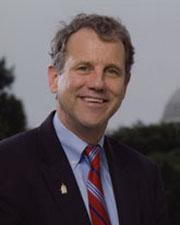
Mr. Speaker, I yield myself such time as I may consume. It has been a really good year for the drug industry. The pharmaceutical industry is at it again in this body, attempting to undermine U.S.…
Mr. Speaker, I yield myself such time as I may consume.
It has been a really good year for the drug industry. The pharmaceutical industry is at it again in this body, attempting to undermine U.S. efforts to secure cheaper prescription drugs for millions of Americans. First, the Medicare bill passed late last year specifically prohibited the U.S. Government from negotiating lower drug prices for America's seniors and consumers, the drug industry and the President and the Republican leadership all singing off the same page.
Then the pharmaceutical industry punishes American consumers by restricting the volume of prescription drug inventories in Canada to prevent importation to the U.S., the FDA, the President, Republican leadership and the drug industry again all singing off the same page.
Now the President, the United States Trade Rep together have included language in this U.S.-Australia trade agreement that would enable the drug companies to prevent prescription drug importation, again to the detriment of America's consumers. We can bet those provisions will be in all future trade agreements negotiated by this administration.
USTR and its drug industry allies, sometimes they are hard to tell apart, are doing all they can to drive up prices for Americans and the rest of the world. USTR and the drug industry were the only parties with a seat at the table for these FTA negotiations, no public interest groups, no senior groups, nobody advocating for reimportation.
My question is this: Do we trust the USTR and the President and the drug industry to negotiate lower drug prices? Connect the dots. The drug makers are using every tool at their disposal to put a stranglehold on America's seniors and America's consumers. The reimportation bill this House passed last year included Australia as a platform. The reimportation bill in the Senate includes Australia as a platform. Why would both these bills mention Australia if we were not going to at least attempt to reimport from there?
This FTA shuts the door on all possibilities now and in the future. Why would we do that, Mr. Speaker? The only way to maintain compliance if we pass this FTA is to remove Australia from that bill. Although Australia would likely not be a large reimportation platform, it is not currently impossible. This FTA slams the door on that possibility. It slams the door on any future agreement between Australia and us on the issue.
Now, I want to read for a moment a brief part of a fact sheet from the Australian embassy: ``Australian law does allow the export of nonsubsidized drugs, both generics and brand names,'' in spite of what we heard from my friend here, ``but only by a person who has been given marketing approval to do so, usually the manufacturer or Australian licensee.''
From the Australia embassy: ``Australian law does allow the export of nonsubsidized drugs.'' The drug industry argues the trade agreement is not damaging, because Australian law already prohibits the export of subsidized drugs purchased under its pharmaceutical benefit scheme. However, that prohibition does not include all cost-saving importation from Australia.
The importers of drugs from Australia to the U.S. do not have to purchase from the PBS. The provisions of this free trade agreement set a precedent for another misguided trade policy. We can be sure that this provision, this precedent that Members are going to vote on today, this precedent will be in all future FTAs negotiated by this administration. That is why a ``no'' vote is so very important so we do not set this precedent in this encouragement for the administration to continue to negotiate bad trade law, especially bad trade law for American consumers.
The drug makers are making sure they close off any opportunity for American consumers to obtain affordable prescription drugs. This, Mr. Speaker, is another nail in that coffin. If one supports reimportation of affordable prescription drugs, think twice about the precedent your vote sets here today. A vote for the U.S. free trade agreement with Australia is a move against American consumers and a move against reimportation.
Mr. Speaker, I reserve the balance of my time.
Mr. Speaker, I have been here 12 years and heard these same arguments. I look at my State, and we have lost one out of six manufacturing jobs, 190 jobs every day during the Bush administration, and I do not see how it adds up.
Mr. Speaker, I yield 3 minutes to the gentleman from Vermont (Mr. Sanders).
Mr. Speaker, I yield 2\1/2\ minutes to the gentleman from Oregon (Mr. DeFazio).
Mr. Speaker, I yield myself such time as I may consume to note that I wish our trade policy were working as well for American manufacturing as my friends say it is.
Mr. Speaker, could the Chair tell each of us how much time the three of us have remaining?
Mr. Speaker, I yield 2\1/2\ minutes to my colleague, the gentleman from Ohio (Mr. Strickland).
Mr. Speaker, I yield 2 minutes to the gentleman from Ohio (Mr. Kucinich).
(Mr. KUCINICH asked and was given permission to revise and extend his remarks.)
Mr. Speaker, how much time do we each have?
In light of that, Mr. Speaker, I would suggest the gentleman from Illinois (Mr. Crane) use some more of his time, because I am down to 9 minutes and the gentleman from Michigan (Mr. Levin) is down to 15. But perhaps the gentleman from Illinois would be willing to yield 5 minutes of his time over here, since he has no one to speak and we have so many speakers on this side.
Mr. Speaker, I yield 2 minutes to the gentleman from New Jersey (Mr. Pascrell), who has been a real leader on trade issues in the last few Congresses.
Mr. Speaker, I am glad the gentleman from North Dakota (Mr. Pomeroy) is voting ``no,'' also.
Mr. Speaker, I yield 2 minutes to the gentlewoman from Connecticut (Ms. DeLauro), and I thank her for her leadership on trade issues and fighting for American jobs.
Mr. Speaker, I yield 1 minute to the gentleman from Illinois (Mr. Emanuel).
Mr. Speaker, I yield myself such time as I may consume.
I am down to 4 minutes because of the passion on this side. I am the only opponent of the three, and it is pretty clear we are the biggest number of the House in the passion we share in opposition to this trade agreement.
Mr. Speaker, I reserve the balance of my time.
Mr. Speaker, I yield 2 minutes to the gentlewoman from Toledo, Ohio (Ms. Kaptur), who perhaps knows more than anybody in this body about international trade.
Mr. Speaker, I continue to reserve my time waiting, I believe, for the gentleman from Illinois (Mr. Crane) to close if he would like.
Mr. Speaker, I yield myself my final 2 minutes.
Mr. Speaker, I enjoy hearing the gentleman from California (Mr. Dreier) talk about a world of trade that never quite ends up the way that we promise in this institution.
For 3 years in this Congress with this President, we have turned our government over to special interest groups. The Medicare bill was written by the insurance industry, the drug industry. Social security privatization legislation was written by Wall Street. Energy legislation has been written by Enron and Halliburton. Environmental legislation has been drafted by the chemical companies. And now trade legislation again has been written, in these provisions that we have talked about, by the drug companies.
If you think that the prescription drug industry has too much influence in this Congress, if you think the prescription drug industry has too much influence on the Medicare bill, too much influence with FDA, too much influence on trade policy, then vote ``no'' on this U.S.- Australia FTA.
If you do not trust the Bush administration to stand up to the drug companies and you do not trust the Bush administration to work for lower prices, then vote ``no'' on this U.S.-Australia FTA. If you care about reimportation and close to 300 Members on both sides of the aisle, 300 Members of this body do care about reimportation, if you in fact do, then vote ``no'' on U.S.-Australia FTA.
And if you want to send a message to this Congress, if you want to send a message to the President and to the USTR that we should not allow the drug industry to write trade law in this country, then vote ``no.''
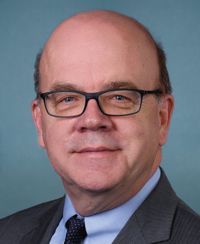
Mr. Speaker, I yield myself such time as I may consume. (Mr. McGOVERN asked and was given permission to revise and extend his remarks.) Mr. Speaker, I want to thank the gentleman from California (Mr.…
Mr. Speaker, I yield myself such time as I may consume.
(Mr. McGOVERN asked and was given permission to revise and extend his remarks.)
Mr. Speaker, I want to thank the gentleman from California (Mr. Dreier), the distinguished chairman of the Committee on Rules, for yielding me the customary 30 minutes.
Mr. Speaker, the U.S.-Australia Free Trade Agreement is the third Free Trade Agreement the Bush administration has sent to Congress under the Fast Track Authority granted in 2002, and it is the first trade agreement made between two affluent industrialized nations.
The United States and Australia have many similarities in terms of our economic development. This is particularly true in the manufacturing sector, and this agreement lifts 99 percent of the manufacturing tariffs between our two nations, which should provide many mutual benefits and comparable advantages.
The U.S. currently has an $8 billion trade surplus with Australia in the area of manufactured goods and also in several key agricultural exports. In these areas this agreement should continue to promote our economic interest, contribute to job creation here at home, and further strengthen our long-standing alliance in economic partnerships. These are all hallmarks of a Free Trade Agreement made among equals.
In the area of internationally recognized labor standards and rights, this trade agreement adopts the standard for each nation to effectively enforce its own laws. I want to be clear that I do not support this model, and I am disappointed that the Bush administration chose not to build on the model established in the U.S.-Jordan agreement and include enforceable labor standards in the core of the agreement.
Australia has very strong labor rights, an effective enforcement regime, and a strong independent judiciary. So I am not concerned that the labor provisions will prove detrimental to Australian or U.S. workers, but I do believe that, once again, we have squandered an opportunity to set a higher benchmark for future trade agreements, one that commits our trading partners to achieving the five core international labor standards and not just the mere enforcement of existing domestic labor laws, which can change at any time and are subject to the political whims of whatever government is in power.
We cannot and should not continue to pursue this one-size-fits-all approach to trade agreements, particularly in the area of labor standards, environmental standards, and the settlement of disputes and especially as we pursue trade agreements with countries in very different stages of economic development from our own.
I must admit, Mr. Speaker, that in general I have heard nothing but good things about the U.S.-Australia Free Trade Agreement. So imagine my surprise when I woke up Monday morning to read on the front page of the New York Times that this trade agreement may undercut the importing of inexpensive drugs.
Mr. Speaker, I ask unanimous consent to include this article in the Record.
Mr. Speaker, I yield 3 minutes to the distinguished gentleman from Maine (Mr. Allen).
Mr. Speaker, I yield 3 minutes to the gentleman from Oregon (Mr. Blumenauer).
Mr. Speaker, how much time is remaining?
Mr. Speaker, I yield 2\1/2\ minutes to the gentleman from New York (Mr. Crowley).
Mr. Speaker, I yield 3 minutes to the gentleman from Ohio (Mr. Brown).
Mr. Speaker, I yield 5 minutes to the distinguished gentleman from Michigan (Mr. Levin).
(Mr. LEVIN asked and was given permission to revise and extend his remarks.)
Mr. Speaker, how much time do I have remaining?
Mr. Speaker, I yield myself such time as I may consume.
As the gentleman from New York (Mr. Crowley) indicated earlier, a number of Democrats support the Australia trade agreement and feel it is fine as far as it goes, and the gentleman from Michigan (Mr. Levin) made the same comments as well.
However, I think it is important to note that this agreement covers less than 1 percent of U.S. trade, and it cannot make up for the Bush administration record of failing to vigorously enforce trade laws and trade agreements. It cannot make up for a failure to invest in research and development and in training American workers in cutting-edge skills and technologies to improve America's ability to compete in the global economy.
Our trading partners consistently violate the terms of their trade agreements with us; and the administration has failed to stop China, Japan, and other nations from manipulating their currencies. The administration has failed to break down barriers for American workers and American companies in key export markets such as Japan and Korea.
The Bush administration has failed to invest in the innovative technologies of the 21st century. The Bush budget has tried to eliminate the Advanced Technology Program and slashed the Manufacturing Extension Partnership and proposed cutting job-training programs by more than $1.5 billion over the past 3 years.
Republican policies have led to the loss of 1.8 million private sector jobs, and the average length of unemployment is at its highest level in 20 years, and the overall job picture is the worst in almost 40 years.
So as we take up consideration of the U.S.-Australia Free Trade Agreement, we also need to change direction and pursue policies in tax policy and job training and supporting our small and medium-sized manufacturers and R&D that will create jobs right here at home right now.
Mr. Speaker, I also want to say for the record once again that I regret very much the prescription drug provisions that are in this agreement. It is bad precedent. To my knowledge, this is the first time a prescription drug provision has been included in a trade agreement, and hopefully it will be the last time. I know that the big drug companies want to view this as what will be the norm in future trade agreements, but I will point out to my colleagues that there are millions and millions of Americans who deserve and who expect more from this administration or whatever administration is in power and from this Congress.
To the extent that there is bipartisanship on this agreement, let the record reflect that that bipartisanship will not be there. If in the future there are these prescription drug provisions included in future trade agreements, that is unacceptable.
Mr. Speaker, I yield back the balance of my time.
Mr. Speaker, on that I demand the yeas and nays.
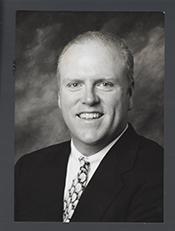
Mr. Speaker, I yield 3 minutes to the gentleman from Maryland (Mr. Cardin). Mr. Speaker, I yield myself 3\1/2\ minutes. Mr. Speaker, I rise today in strong support of the free trade agreement between…
Mr. Speaker, I yield 3 minutes to the gentleman from Maryland (Mr. Cardin).
Mr. Speaker, I yield myself 3\1/2\ minutes.
Mr. Speaker, I rise today in strong support of the free trade agreement between the United States and Australia, and I would like to thank all my colleagues on both sides of the aisle who have worked so hard to see that this bill passes with bipartisan support today.
It has been a pleasure for me to work with the gentleman from Missouri (Mr. Blunt), the majority whip; and my counterparts on the other side of the aisle, the gentleman from Virginia (Mr. Cantor), chief deputy whip; the gentleman from Alabama (Mr. Rogers); the dean of my home State, the gentleman from New York (Mr. Rangel); the gentleman from Michigan (Mr. Levin); the gentleman from California (Mr. Dooley); and the gentleman from Oregon (Mr. Blumenauer). I am proud to speak out in support of this historic bilateral free trade agreement between the United States and Australia.
This is a great day for our two countries and for what is arguably one of our truest and tried allies. From World War I to the war on terror in Afghanistan and in Iraq, Australia has stood shoulder to shoulder with the United States and has been a strong ally of ours throughout the world.
As someone who supports free trade and fair trade, I am proud to be a leader on the Democratic side supporting this free trade agreement. Concerns have been raised, though, about the issue of pharmaceuticals this week, in fact, as of Monday. And I would like to make note of that. I support the reimportation of prescription drugs and have concerns about this trade agreement becoming a precedent for other bilateral agreements; but I want to be clear that nothing, I believe, in this agreement will prohibit the United States from passing its own reimportation laws. And this agreement does not ban the United States from reimportation of prescription drugs.
Australia's domestic law prohibits the exportation of drugs purchased through its taxpayer-subsidized program, which accounts for over 90 percent of all drugs sold in Australia. Why would we ask the Australian taxpayer to subsidize Rx drugs for Americans?
The issue of lowering drug prices is something that this Congress should be working on. In fact, today my colleagues on both sides of the aisle have the opportunity to do that by signing the discharge petition to give the authority to Secretary Thompson, the ability to negotiate lower drug costs for Medicare patients that were stripped away under
Mr. Speaker, I ask unanimous consent for the gentleman from Michigan (Mr. Levin) to control the remainder of my time for purposes of yielding.
Mr. Speaker, I yield 2 minutes to the gentleman from Virginia (Mr. Moran).
Mr. MORAN OF Virginia. Mr. Speaker, I hesitate to use the term ``slam dunk'' any more, but if you cannot agree with this trade agreement, I do not know what trade agreement you are ever going to agree with. In fact, you would probably have to oppose agreements between the States of the United States.
The fact is, of the $28 billion of trade with Australia, we enjoy a surplus of $9 billion. That means Australia is buying $9 billion more of goods and services from us than we are buying from them.
The fact is that this is generating jobs in the United States. Trade can do that and trade will do that. The fact is that there is $700 million of agricultural products that we are selling to Australia, and they are now going to be able to be purchased more cheaply because there will be duty free access. We have National Treatment for our U.S. investors, guaranteeing fair and non-discriminatory treatment. Who could be opposed to that?
We have guaranteed, substantial access for U.S. service suppliers, telecom, financial services, professional service providers. Australia has agreed to improve its intellectual property laws so we do not have to worry about that. We are going to have the highest level of protection throughout the world for U.S. products in that area. Even more importantly to my Democratic colleagues, Australia has the highest level of labor and environmental standards. They are tougher than ours. So it just seems to me that under this agreement we have so much to gain and very little to lose.
And, again, with regard to this issue that has been brought up with regard to pharmaceutical products, Australia will not allow the export of subsidized pharmaceutical products; and 90 percent of its pharmaceuticals that are prescribed are, in fact, subsidized.
So, again, let us support this agreement. Do the right thing by America's workers and its employers.

Mr. Speaker, this Member rises today to express his support for the United States-Australia Free Trade Implementation Act (H.R. 4759). This Member would like to thank the distinguished gentleman from…
Mr. Speaker, this Member rises today to express his support for the United States-Australia Free Trade Implementation Act (H.R. 4759). This Member would like to thank the distinguished gentleman from Texas, the Majority Leader of the House of Representatives (Mr. DeLay) for introducing this legislation. Additional appreciation is expressed to both the distinguished gentleman from California, the Chairman of the House Ways and Means Committee (Mr. Thomas) and the distinguished gentleman from California, the Chairman of the House Rules Committee (Mr. Dreier) for their successful efforts in helping move this legislation to the House Floor.
This Member is very supportive of this free trade agreement, FTA, with Australia. To illustrate the importance of trade with Australia, this Member believes it is necessary to cite relevant statistics. Trade between the U.S. and Australia was over $28 billion in 2003. The U.S. currently enjoys a trade surplus in goods and services with Australia of $9 billion, which is the second largest with any U.S. trading partner. Moreover, in 2003, Australia ranked 14th among all foreign markets for U.S. If this FTA is enacted into law, our level of trade with Australia will significantly increase.
This legislation is very important to Nebraska since our state's economy is very export dependent. For instance, Australia is the eighth largest market for Nebraska exports, with a total of over $62 million in 2003. Specifically, Nebraska exports to Australia include combine harvesters, agricultural spraying equipment, agricultural motor vehicles and motor boats. This legislation is critical to help remove existing trade barriers to exports of Nebraska goods and services to Australia. If this FTA would have been in place in 2003, nearly 95 percent of Nebraska's exports would have been able to come into Australia duty free.
This Member is supportive of this FTA with Australia for the following three reasons, among others: 1. this FTA will create jobs in
the U.S.; 2. this FTA will give greater market access for U.S. businesses and farmers; and 3. Through the twentieth century and in this one, Australia has been a consistent and highly valued and dependable ally of the United States.
Mr. Speaker, in advancing the support of this Member for this FTA with Australia it should be noted that this FTA will create jobs in the U.S. It is estimated that currently 270,000 jobs are either directly or indirectly supported by U.S. trade with Australia. This number will increase significantly if this FTA is enacted into law. Specifically, the following industries nationwide will particularly benefit because of the FTA with Australia: aircraft and parts; telecommunications equipment, computers, and machine engines.
With respect to Nebraska, it is estimated that exports to Australia already support approximately 300 jobs in Nebraska. It is important to note also that Australian-owned companies in Nebraska employ approximately 500 people. If this FTA is enacted into law, it is expected that trade with Australia will continue to support high-paying jobs in Nebraska in areas such as transportation, finance and advertising.
Second, this FTA will give greater market access to Australian markets for U.S. businesses and farmers. To illustrate this point, it should be noted that almost 99 percent of U.S. manufactured exports to Australia immediately become duty free, which is estimated to result in an annual $2 billion increase in U.S. goods exports to Australia. Under this FTA, all Australian agricultural tariffs are to be eliminated immediately, which is to result in a projected $400 million benefit to U.S. farmers. Currently, Australia maintains tariffs as high as 30 percent on certain dairy products and has tariffs of 4 to 5 percent on fresh and processed fruits, vegetables, processed foods, grains, oilseeds and other products. This FTA also contains important safeguard measures to protect against surges on Australian beef imports into the
Mr. Speaker, I want to put in perspective why I support the rule and why I will vote for this agreement. It is a somewhat different perspective than the gentleman from California's (Mr. Dreier).…
Mr. Speaker, I want to put in perspective why I support the rule and why I will vote for this agreement. It is a somewhat different perspective than the gentleman from California's (Mr. Dreier).
There are some very strong provisions in this legislation, and we will talk about it more during the 2 hours, on manufactured goods, on agriculture, on services. These are solid provisions that work to the advantage of American workers and businesses.
As to prescription medicines, USTR did try to get Australia, through these negotiations, to consider changes within their structure. We sent a letter, a number of us, to USTR saying we did not consider that to be a legitimate effort, and they dropped it.
What is left here are two provisions, one regarding transparency, which will not affect U.S. law, and the other relates to reimportation. The fact is, in this agreement there is incorporated the general law protecting U.S. patent holders. It is put in this agreement; and I suppose theoretically, it could lead to someone saying that if we pass the reimportation law it would violate that agreement.
It does not become operational. As mentioned here, the laws of Australia prohibit exports to the United States. So, in essence, we have a provision here that can have no operational effect on the effort here, and I totally support it, to allow reimportation of medicines.
So what do we do as a result? We have the same dilemma when it comes to a nation enforcing its own laws when it comes to labor standards. I very much object to the use of that standard in general. In Australia, it does not matter because their labor laws are essentially the same as ours. So we have two provisions here, and how do we send a message?
My own judgment is, where the agreement is otherwise strong in terms of expanded trade for the benefit of our workers and businesses, for the American public, the consumers, to say, okay, but two things, do not dare put this provision relating to patents in any agreement which would affect reimportation of drugs, do not dare do it, and if they did, it would bring down the bill. As to the core labor standards, do not dare try it in an agreement where the conditions are the opposite of or very different from Australia.
Well, CAFTA is exactly what they did with labor standards, and that is why we very much oppose CAFTA. The gentleman from California (Mr. Dreier) talks about bipartisanship. There has been zero real bipartisanship when it comes to the negotiation of CAFTA, and that is why it is going to fail. That is why it will not be brought up on this floor because it would lose. Bipartisanship has to be more than consulting with us when they think we will agree but not when there is a legitimate disagreement between the parties in an effort to work it out.
So my suggestion is to vote for this FTA; but in our debate make it very clear, when it comes to prescription medicines, do not put this kind of a provision in a bill with a country that does not prohibit exportation, and number two, when it comes to using the standard for labor and the environment, do not put it in agreements with different nations or we will fight it to the end, and that is what we are doing.
I favor a CAFTA, not this one. So I say to the gentleman from California (Mr. Dreier), the effort to consult, the effort for a bipartisan approach to trade, that has failed under this administration mainly. We do not have the same bipartisan base that we once had. With Australia, all right; but in other cases, no.
So I think we need to send a signal to this administration as to our disagreements in terms of our opposition to CAFTA, their failure to actively enforce the laws that we have, their approach to China; but I do not think these differences should force us to vote against an expansion of trade that is basically positive; and for that reason, I urge support for the rule, support for this bill, but with those strong, strong caveats and messages that I have just enunciated.
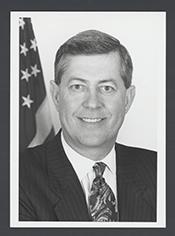
Mr. Speaker, I thank my friend and colleague, the gentleman from California (Chairman Dreier), for yielding me this time. I rise in strong support of H. Res. 712, the rule that provides for the…
Mr. Speaker, I thank my friend and colleague, the gentleman from California (Chairman Dreier), for yielding me this time.
I rise in strong support of H. Res. 712, the rule that provides for the consideration of H.R. 4759, the U.S.-Australia Free Trade Agreement Implementation Act. I urge all my colleagues in the House to join me in supporting this rule, as well as the underlying legislation.
The full House will be debating H.R. 4759 under a closed rule which is called for under the expedited procedures by which Congress considers legislation implementing free trade agreements. To the credit of all parties concerned, this bill has broad bipartisan support within the Committee on Ways and Means and across the aisle within the full House.
With regard to the U.S.-Australia Free Trade Agreement Implementation Act, it has been an honor for me to work with the gentleman from California (Chairman Dreier) and the House leadership in generating the needed support for this important trade agreement, and I am pleased that it is being considered on the House floor today.
Over the past century and through various wars, one of America's most important and dependent allies has been Australia. After September 11, 2001, Australia again showed its support and solidarity with the United States by being one of the first nations to commit troops to Afghanistan. Australia has continued its support for the war against terrorism by committing troops to Iraq as well.
With approximately $28 billion annually in two-way trade of goods and services, Australia is also a major trading partner of the United States. Of this $28 billion, the U.S. enjoys a significant surplus, $8 to $9 billion. Australia is America's ninth largest goods export market.
In addition to trade benefits on a national scale, Georgia, the State that I am proud to represent, has benefited from trade with Australia. In fact, in 2003 Georgia had the 13th largest number of exports to Australia in the United States, with total exports valued at almost $288 million. These exports have provided, and continue to provide, high-paying jobs, jobs to the citizens of my State.
With the enactment of the U.S.-Australia Free Trade Agreement, U.S. farmers, investors, workers, and companies will further benefit from our current relationship.
Under the FTA, U.S. workers and companies will receive the most significant immediate reduction of industrial tariffs ever achieved in a free trade agreement, as more than 99 percent of U.S.-manufactured products will immediately become duty free upon entry into Australia.
Some of the particular manufacturing sectors and Georgia goods that will benefit include transportation equipment, paper products, computer and electronic products and machinery manufacturers. All U.S. agricultural exports to Australia, totaling more
than $400 million, will also receive immediate duty-free access. The FTA also removes foreign investment screening for a range of U.S. foreign investment activities, including the establishment of all new businesses in Australia.
Mr. Speaker, in conclusion, Australia is a strategic ally and an important trading partner. Now is the time to strengthen the ties that bind our two countries. America must continue to strive toward expanded free trade and not retreat into the mistaken protectionism of the past. We must work to open markets, eliminate tariffs and barriers and ensure that our Nation remains at the forefront of global economic success. The freedom to trade is a basic human liberty, and its exercise across political borders unites people in peaceful cooperation and mutual prosperity.
I urge my colleagues to support the rule so that we may proceed to debate and adopt the underlying measure.
Show 11 more
Mr. Speaker, I certainly appreciate that the U.S. Trade Representative has addressed the important concerns related to agriculture in this free trade agreement. Agriculture is important to my…
Mr. Speaker, I certainly appreciate that the U.S. Trade Representative has addressed the important concerns related to agriculture in this free trade agreement. Agriculture is important to my district and the State of Minnesota. However, I cannot support the United States-Australia Free Trade Implementation Act due to the provisions related to pharmaceuticals that were included in this agreement.
On July 25, 2003, 242 of my colleagues joined me in supporting my legislation to implement a true, market-based system whereby consumers could access safe and affordable prescription drugs. I find it interesting that a free trade agreement would blatantly run counter to legislation that would, in effect, establish a market-based arena for prescription drugs.
Proponents of this language have said that it is practically meaningless because Australian law already bans the export of subsidized prescription drugs. Why then, do we feel the need to include such a meaningless provision in the trade agreement?
Let me illustrate why this language is not meaningless. In fact, it attempts to hamstring efforts to provide affordable prescription drugs for seniors, the uninsured and consumers who continue to pay 30 to 300 percent more for prescription drugs than anyone else.
In 2000, the MEDS Act included a provision that prohibited pharmaceutical manufacturers from entering into a contract or agreement if they included any language that would prevent the sale or distribution of prescription drugs. I have attached this language to be included in the Record, because it no longer exists in U.S. law. I discovered recently that the Medicare bill included a hidden provision which stripped this important language. This is outrageous.
So while proponents of this agreement claim that this language simply restates current law, current law is the result of hidden maneuvers without the knowledge of the 242 Members who support open markets for prescription drugs.
And who exactly provided the counsel to USTR while they drafted this supposedly innocuous language? Twenty-five members of the advisory committee advised the USTR on intellectual property rights regarding prescription drugs. Of those 25 members, at least 15 have interests in the pharmaceutical industry. There was not one senior, consumer or market access advocate on the panel.
With this language, when prescription drug market access legislation becomes law, and I believe it will, we will be in breach of the free trade agreement. The Australian government can enter into a dispute settlement case contending the law. Many have argued that this is not a likely scenario. It seems equally unlikely that American taxpayers would be forced to subsidize the research and development of prescription drugs for consumers around the world and still pay the world's highest prices, but we do.
I sat down with USTR representatives to give them a chance to tell their side of the story. When I asked who requested the prescription drug language, they had no answer. No one but the two negotiators were in the room and no one was taking notes. That seems a poor way to negotiate a free, fair and open agreement for trade. And it doesn't pass the smell test to me.
The free trade agreement could set a dangerous precedent that FDA--or other opponents of open markets for prescription drugs--will use to prevent American consumers access to affordable prescription drugs. I have always supported free and fair trade--this
agreement is neither free nor fair concerning prescription drugs.
Mr. Speaker, I rise in opposition to the rule and in opposition to the bill. The drug industry has had a pretty darn good year in this Congress. The drug industry and the Bush administration, which…
Mr. Speaker, I rise in opposition to the rule and in opposition to the bill.
The drug industry has had a pretty darn good year in this Congress. The drug industry and the Bush administration, which is kind of hard to tell them apart when you look at what the drug industry and the Bush administration fight for in this Congress, have had it their way on every single issue in front of this Congress. The drug industry comes to the Congress, goes to the administration. The administration comes to the Congress asking for whatever the drug industry asks the administration to do.
The Medicare bill, we all know by now, was, line and verse, written by the drug industry. That is why seniors are so generally unhappy with that prescription drug bill. That legislation, if you recall, had provisions to prohibit our government from negotiating lower prices for prescription drugs. That is what the drug industry wanted.
The Food and Drug Administration, once one of the best agencies of our Federal Government, has become almost an arm of the drug industry. It debates for the drug industry. It tries to educate the public on behalf of the drug industry. We see it over and over again.
Now the drug industry has its fingers in the U.S. Trade Rep's Office. You can look at what my Republican friend, the gentleman from Minnesota (Mr. Gutknecht), and Democratic friend, the gentleman from Illinois (Mr. Emanuel), sent a letter out to Members of Congress saying 15 of the 25 panel members on the industry sector advisory committee for this trade agreement, appointed by the United States Trade Rep, are from the drug industry. Fifteen of the 25 panel members are from the drug industry. Not one senior group or reimportation advocate was included in the panel. The drug industry has its tentacles in the Medicare bill, in the FTA, and in the U.S. Trade Rep's office.
Now, the question is why.
First of all, I think the obvious answer is the tens of millions of dollars that the drug industry gives to my friends on the Republican side of the aisle, especially the Republican leadership and to President Bush's reelection, the millions of dollars in campaign money. So we have really should not be surprised.
But I ask my friends on the Democratic side of the aisle, do we trust President Bush and the Republican leadership to do the right thing ever on an issue that affects the drug industry?
What this legislation has, the Australian Free Trade Agreement has, is provisions written by the drug industry, for the drug industry, which ultimately could potentially handcuff the U.S. to get our drug prices down. That is what the drug industry wants. That is what President Bush wants. I do not think my friends on the Democratic side of the aisle would want that.
Mr. Speaker, it is pretty clear. I know this Australia Free Trade Agreement is going to pass this Congress, but what is important is that we send a strong message that we do not like the drug industry influence in this Australia Free Trade Agreement bill. I am asking my friends who support reimportation, who support lower prescription drug prices, and there are many of them on both sides of the aisle, certainly not the Republican leadership, but many rank and file Republicans, almost all of the Democrats who support lower prescription drugs prices, it is important to vote no on this, to send that message that we will not allow the drug industry to infiltrate every part of our lawmaking process.
Mr. Speaker, I thank my good friend, the gentleman from Ohio (Mr. Brown), for yielding me time. I rise in strong opposition to this agreement. It seems to me that before we rush into yet another free…
Mr. Speaker, I thank my good friend, the gentleman from Ohio (Mr. Brown), for yielding me time.
I rise in strong opposition to this agreement. It seems to me that before we rush into yet another free trade agreement we should spend a little bit of time assessing the horrendous impact that past free trade agreements have had on the middle class and working families of this country. If you have a policy which is failing, failing and failing, why do you want to continue going along that path?
Mr. Speaker, for many years now, corporate America and the big money interests have told us how good unfettered free trade would be if they spent a fortune getting these agreements passed. What they forgot to tell us is that while these free trade agreements are in fact good for the big corporations and their well-paid CEOs, they have been a disaster for the middle class and working families of our country.
The reality is, despite tremendous increases in technology and productivity, the average American today is working longer hours for lower wages. The gap between the rich and the poor is getting wider, and poverty is increasing. The middle class in America is collapsing, and unfettered free trade is one of the reasons.
In the last 3 years alone, we have lost 2.7 million good manufacturing jobs, over 16 percent of the total, and now after the collapse of manufacturing we are beginning to see the hemorrhaging of good-paying information technology jobs. While large corporations throw American workers out on the streets and move to China, India, Mexico and other low-wage countries, the new jobs being created here for our people are mostly low wage with minimal benefits. In fact, according to the Bureau of Labor Statistics, 7 out of 10 of the fastest-growing professions in the next 10 years are going to be with high school degrees, minimal benefits, lower wages.
Is that the future that we want for our country?
To add insult to injury, Mr. Chairman, the President of the U.S. Chamber of Commerce, Tom Donohue, the leader of our country's big business organization, has urged, has urged American companies to send our jobs overseas. Urged them. That is the kind of contempt that corporate America has for the working families of this country. By continuing to pass unfettered free trade agreements, we accommodate Mr. Donohue's goal; and we will see the loss of more and more good-paying jobs in this country.
I understand that Australia is not China, and I understand that workers there earn comparable wages, and I understand they do not go to jail when they stand up for their rights, and we could perhaps negotiate good agreements here and there with Australia, but an unfettered free trade agreement is not good.
Let me conclude by mentioning two specific objections I have.
Number one, the gentleman from Ohio (Mr. Brown) is right about reimportation and prescription drugs. I worry very much about the precedent, if we want to lower prescription drug costs in this country by this agreement.
Second of all, dairy farmers in Vermont, New England and America will be significantly and negatively impacted by the importation of a lot of dairy products over the years from Australia.
Mr. Speaker, I rise in opposition to this legislation. The Australian Free Trade Agreement has been crafted in a way that repeats the flaws and weaknesses of previous agreements such as NAFTA.…
Mr. Speaker, I rise in opposition to this legislation. The Australian Free Trade Agreement has been crafted in a way that repeats the flaws and weaknesses of previous agreements such as NAFTA. However, this agreement is particularly bad for Wisconsin dairy farmers and Wisconsin seniors.
This agreement puts Wisconsin dairy producers at a disadvantage. It reduces and ultimately eliminates tariffs on a variety of Australian dairy products, including cheese, which is what most Wisconsin milk is used to produce. While the agreement does eliminate tariffs on U.S. dairy exports to Australia, this will not provide significant new export markets for American dairy producers. The Australian dairy industry is mature and stable, and Australia is a net exporter of dairy goods--they already export more than they import.
Another serious concern I have is how the agreement treats importation of Milk Protein Concentrate (MPC). MPC has been entering our country at an increasing rate since the mid-1990s. One of the biggest exporters of MPC is Australia. MPC can be imported in the U.S. under a very low tariff rate. This makes it an inexpensive substitute for domestically produced milk in American cheese vats and other dairy products. Simply put, MPC takes the place of U.S. milk in a variety of products, thereby reducing the demand for domestic milk, and lowering the price Wisconsin dairy producers receive for their high-quality product. Unfortunately, the agreement did not close the MPC import loophole--the tariff on MPC remains artificially low, and so imports of MPC will continue to displace U.S. milk in the domestic production of dairy products.
Further, I have serious concerns about provisions included in the agreement that relate to prescription drugs. The agreement allows pharmaceutical companies to prevent the importation of drugs to the United States. While this will have a very small practical impact on the importation of prescription drugs from Australia, it does hamper efforts of this Congress to provide our Nation's seniors with access to affordable prescription drugs. We simply cannot stand idly by while American seniors pay 30 percent-300 percent more for the exact same prescription drugs available in other countries. Allowing drug companies to prevent the importation of prescription drugs from Australia sets a dangerous precedent for future trade agreements. We should be expanding seniors' access to affordable drugs, not limiting it.
In addition, this agreement allows drug companies to challenge decisions made by Australia about what drugs should be covered under that country's health plan. This marks the first time that the United States has challenged how a foreign industrialized nation operates its national health program to provide inexpensive drugs to its own citizens. Instead of interfering with the Australian health program, we should learn from it. While our seniors continue to pay exorbitant prices for prescription drugs and lack comprehensive, reliable prescription drug coverage, Australia has developed a program that guarantees its citizens coverage for affordable prescription drugs. We should not be hampering their success.
Mr. Speaker, today, the House of Representatives considers the United States-Australia Free Trade Agreement (USAFTA). I support this trade initiative, because it's good for America and good for the…
Mr. Speaker, today, the House of Representatives considers the United States-Australia Free Trade Agreement (USAFTA). I support this trade initiative, because it's good for America and good for the people of Washington State in a number of important ways.
First, Australia is an important ally of the U.S. in an increasingly unstable world. Many Australian troops fought side-by-side American soldiers in the Vietnam War, in Afghanistan, and are providing resources to Americans in a part of the world where we increasingly need them.
Second, Australia has a long history of importing many American products--from agricultural goods grown in Washington, like apples and wheat, to products manufactured in
Washington, like electronics and airplanes. We enjoy a sizable trade surplus with Australia and since this agreement commits Australia to immediately remove tariffs on nearly every U.S. export to Australia, it will instantly provide further market access for products that come from the United States. In addition, Australia invests significantly in the United States, directly employing thousands and thousands of American jobs.
Third, Australia exports many products that Americans enjoy--like fine wines and many agricultural products. Since this agreement requires the U.S. to remove many of our tariffs on Australian goods, they immediately become more affordable to American consumers.
Although I support this agreement, I remain deeply concerned about the direction that the Bush Administration is taking this country, particularly with regard to our economy and our trade policy, which profoundly affects the ability of our country to maintain and create good paying jobs.
America's best export has always been the democratic values that we hold dear. While capitalism and open markets may boost trade flows, democratic values must also be a centerpiece of U.S. trade policy. Regretfully, this agreement continues to embody a short-sighted approach toward international trade that the Bush Administration has employed for the last 4 years. The USAFTA fails to lock in international labor and environment standards. It only requires the United States and Australia to continue to enforce their own labor and environment laws. This approach, if employed in future trade agreements with less developed countries, would do little to raise living standards in countries whose labor and environmental laws do not meet international standards. Furthermore, this approach would force American workers to compete on an uneven playing field. I do not think that is a direction that our country should go.
Today, however, the Congress considered liberalizing trade with Australia, a country that has well-developed labor and environmental laws, and a good track record for enforcing these laws, so I will not let Perfect be the enemy of Good. Our international assistance and trade programs should aim to raise living conditions here and abroad. Ultimately, I believe that the USAFTA advances these interests.
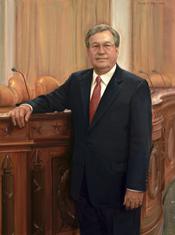
Mr. Speaker, pursuant to House Resolution 712, I call up the bill (H.R. 4759) to implement the United States-Australia Free Trade Agreement, and ask for its immediate consideration. Mr. Speaker, I…
Mr. Speaker, pursuant to House Resolution 712, I call up the bill (H.R. 4759) to implement the United States-Australia Free Trade Agreement, and ask for its immediate consideration.
Mr. Speaker, I yield myself such time as I may consume.
Mr. Speaker, I rise today in strong support of H.R. 4759, which is the instrument that implements the United States-Australian Free Trade Agreement.
This particular Free Trade Agreement is good, it is solid, it will benefit American workers, farmers, consumers, businesses, and the U.S. economy. It brings the United States and Australia closer together economically. No two countries in the world are closer in terms of their views of the world, especially in terms of strategic military concerns; and, frankly, as chairman of the Committee on Ways and Means, this agreement, in my opinion, is long overdue.
Mr. Speaker, I yield the remainder of my time to the gentleman from Illinois (Mr. Crane), the chairman of the Subcommittee on Trade; and I ask unanimous consent that the gentleman from Illinois control the remainder of my time.
Mr. Speaker, I rise today in strong support of H.R. 4759, to implement the United States--Australia Free Trade Agreement. The FTA is a solid agreement that will benefit American workers, farmers, consumers, businesses and the U.S. economy. The FTA also helps to solidify the economic component of our strategic relationship with Australia. While this bill has been proceeding through the legislative process, I have emphasized the commercial benefits that this agreement will bring. Today, I will focus on the broader picture because I think it is important to also consider this FTA in that context.
Australia is a very close friend and important ally of the United States. We share the belief in the power of freedom, democracy, and liberty, and our two countries are examples to the world of how these ideals can foster individual achievement. Australian troops have fought with American soldiers in all of the major conflicts of the 20th and 21st centuries.
Like a healthy marriage, our alliance cannot be taken for granted, and it must be continuously nurtured, assessed and adapted to accommodate modern times. Both countries believe that dynamic, open and efficient economies promote higher growth and better living standards and create more jobs in our respective countries.
Consistent with those beliefs, this Agreement will provide real benefits to the American and Australian peoples and our economies. This FTA will do for our economic relationship during the next 50 years what the ANZUS (Australia, New Zealand, and United States) treaty has done for the political and military relationship during the past 50 years.
The FTA will solidify a strong economic partnership in the World Trade Organization, where the United States and Australia share many goals. I encourage my colleagues to send an overwhelming message of approval to our friends ``down under'' and vote ``yes'' for this Agreement.
Mr. Speaker, I thank the gentleman for yielding me time. Let me begin by saying to the gentleman from Illinois that I want to congratulate him and thank him for his leadership in the area of trade.…
Mr. Speaker, I thank the gentleman for yielding me time.
Let me begin by saying to the gentleman from Illinois that I want to congratulate him and thank him for his leadership in the area of trade. Through the years, there has been no one in this House that has been a more stalwart proponent of opening markets abroad and in the U.S. to trade, and I think that his leadership has done a great deal to improve the lives of Americans. So I congratulate him on bringing this agreement to the floor.
I do rise in strong support of this agreement with Australia. I think it is worth noting that this is the first free trade agreement we have had with an industrialized nation in 17 years. It is an important trade agreement. It is one that demonstrates how U.S. leadership in international economic policy is continuing to expand free trade on a worldwide basis.
The amount of trade between the United States and Australia is substantial--$29 billion--which makes it the ninth largest trading partner of the United States: $19 billion of that amount reflects trade in agricultural and industrial production, and $9 billion, the fastest growing part, is the trade in services. Our exports to Australia include transportation equipment, notably aircraft and engine parts, telecommunications equipment, measuring instruments, internal combustion engines, and computers and all the components that go into those computers.
Mr. Speaker, I urge my colleagues to support this agreement. It is an agreement that is critically important for consumers here, for our families, and for workers here in the United States. Free trade with Australia helps to keep inflation rates low. It provides opportunities for a better quality of life for the U.S. worker and families through lower prices of imported goods.
We are pursuing this agreement in our national economic interests. But, without doubt, it also serves our national security and our foreign policy interests as well.
Let us make no mistake about it, and the gentlewoman from Ohio alluded to this: Australia has been a friend; it has been an ally in this war against terrorism. In the aftermath of the September 11 terrorist attacks, this ally has provided some 1,550 soldiers and military equipment to support the U.S.-led coalition to combat terrorism. Australia has contributed generously to the coalition effort to disarm Iraq by sending to Iraq fighter jets, transport aircraft and ships, reconnaissance forces, and dive team members.
So I want to commend Ambassador Zoellick and the team at USTR and the administration for successfully negotiating what I think is an important free trade agreement. It is not perfect. Members like myself would have wished to have increased market access for Australian exports of sugar. But, nonetheless, this is a good agreement and a significant accomplishment, and I urge my fellow Members to vote ``yes'' on this agreement.
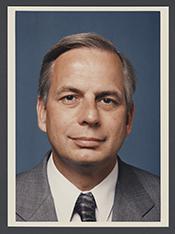
Mr. Speaker, I rise in support of the U.S.- Australia Free Trade Agreement and this bill we are considering today to implement it. With few exceptions, I have historically opposed our free trade…
Mr. Speaker, I rise in support of the U.S.- Australia Free Trade Agreement and this bill we are considering today to implement it.
With few exceptions, I have historically opposed our free trade agreements because most of them have been negotiated with developing countries with insufficient labor and environmental standards.
Now, following my colleague from Texas, obviously, we have different views on this free trade agreement. One of the things I am proud of is that not only do most of these earlier trade agreements have inadequate labor and environmental regulations and lower the standard of living for people residing in those countries, which inhibits the ability for U.S. companies to compete, when I opposed previous trade agreements it has always been on the basis that we are putting ourselves at a competitive disadvantage against countries that have significantly lower standards of living.
However, this agreement with Australia is different. It puts the U.S. on a level playing field with a country that has comparable labor and environmental standards and a minimum wage that exceeds our own. I wish that were true with CAFTA and NAFTA and a whole bunch of other of our agreements.
This is fair trade, and this is the kind of agreement I can support. This agreement will immediately eliminate 99 percent of all tariffs currently imposed on U.S. exporters. With 93 percent of all exports to Australia coming from the U.S. manufacturing sector, this agreement is estimated to boost our manufacturing exports to the tune of $2 billion.
Without a doubt, there are parts of this agreement that I feel are less perfect. The agreement contains language allowing Australian pharmaceutical patent holders to prevent the export of their products to the U.S. market. In considering, though, that 90 percent of Australian drugs are currently prohibited from being exported by their law, I do not believe this agreement, in a practical sense, would hurt our current reimportation effort. However, I do make clear my opposition to the use of this provision as a precedent for future agreements.
I would also like to note labor's concerns with the agreement. While not out-and-out opposing the agreement, the AFL-CIO has stated that the agreement is ineffective in protecting core worker rights in either the U.S. or Australia. As a former union printer, I take pride in working to strengthen labor rights in our own country; and I certainly agree that improvements can be made in our own country.
Yet, on the whole, both the U.S. and Australia have exemplary labor laws that, given our constitutional democracies, are not likely to reach levels that impose significant threats to the health and safety of our workers.
On balance, it is a fair agreement between two countries that value democracy, worker rights, and fair competition. It is not free trade. It is fair trade.
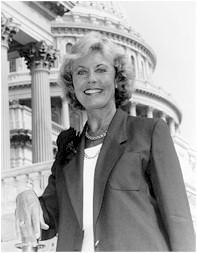
Mr. Speaker, I rise in support of this historic free trade agreement with Australia. Australia has been a true friend and ally. They have been there when it counted the most, on the shores of…
Mr. Speaker, I rise in support of this historic free trade agreement with Australia. Australia has been a true friend and ally. They have been there when it counted the most, on the shores of Normandy, on the
streets of Baghdad when the odds seemed insurmountable and the light of victory was far, far away.
Over 50 years ago, we began an alliance with Australia based on mutual security needs. Today we build on our security alliance in the past with an economic alliance for the future. Bismarck once said that ``politics is the art of the possible.'' While that is certainly true and an accurate description of the negotiations of this agreement, this trade agreement is also about a world of possibilities. There is a common thread that binds the fabric of both nations' past to the future. We are both nations that are built on possibilities. Whether our citizens arrived an Plymouth Rock in Massachusetts or the rocks in Sydney, many came for the possibility of new beginnings and the possibility of determining their own destiny; and just like those before us, this generation of Americans and Australians will paint the canvas of this trade agreement with their entrepreneurial spirit.
In doing so, we are reminded that the strengths of our nations are not in our governments, but in the thousands of our citizens who are turning possibilities into reality; and it is time for this Congress to make this trade agreement a reality.
This is a trade agreement that creates jobs. Two-way trade in goods and services between both countries is already $29 billion each year, supporting more than 270,000 American jobs, 12,500 of which are in my State of Washington alone.
While all States will benefit from this agreement, the Puget Sound region will have even more to gain, because Australia already is our fifth largest trading partner, and the State of Washington leads the Nation with more than $2.6 billion worth of exports to Australia each year. It is a trade agreement that will help businesses and farmers in the Northwest.
For the 25,000 Boeing workers that I represent, this agreement will ensure that Boeing remains competitive in Australia. Currently, nearly 95 percent of Qantas Airways' operating fleet is Boeing aircraft, making them one of Boeing's key customers in that region.
For our high-tech industry, strengthening intellectual property standards will help reduce counterfeiting and piracy, while encouraging capital investments.
For our farmers, eliminating agricultural tariffs and resolving technical and regulatory barriers will ensure that Northwest fruits will enter the Australian market.
Mr. Speaker, vote for this trade agreement, not out of a sense of obligation but because of a steadfast confidence that Americans and Australians can better face the challenges ahead by walking side by side.
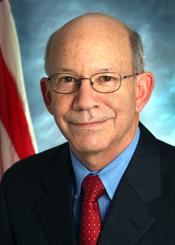
Mr. Speaker, Australia is exactly the type of nation we should seek trade agreements with, but not with a Xerox of our old and failed policies under fast track, with no amendments allowed here on the…
Mr. Speaker, Australia is exactly the type of nation we should seek trade agreements with, but not with a Xerox of our old and failed policies under fast track, with no amendments allowed here on the floor of the House.
There is only one new provision, strangely enough, one to prohibit the reimportation of less expensive prescription drugs. Where did that come from, I wonder? It must be American policy. No, I think it is pharmaceutical industry policy.
Now, we talk about Australia. We have a trade surplus. Why do we need this agreement? We had a trade surplus with Mexico. They talked about that how it was going to get bigger. Guess what, now we have a deficit. If we have a policy that is dramatically failing the Nation, our workers, our consumers, what do we do? In this Congress and with this administration, we do more of the same, $525 billion trade deficit, $1 million a minute of American wealth and jobs flowing overseas, mostly to unfair competition.
This agreement does not have enforceable labor standards. In fact, if we can have enforceable trademark and property standards, why can we not have an enforceable labor standard? And if we have not got one with Australia, who are we ever going to get one with?
It does not have enforceable environmental standards. If we cannot get enforceable environmental and consumer protection standards with Australia, who are we going to ever get one with? China? I do not think so.
Then why are pharmaceuticals in this agreement? Because this administration and their special trade representatives say this is a template for all future agreements, and they want to renegotiate our agreement with Canada to prohibit the reimportation of less expensive pharmaceuticals because it is undermining the obscene profits of the pharmaceutical industry. That is plain and simple.
Dairy and cheese and wheat, I think those are all questionable provisions; and, again, it undermines the ability of State and local governments to have contracting provisions that give preference to businesses of their choice.
Everything that is wrong with every other trade agreement that has led to the $525 billion trade deficit is wrong with the principles in this one. We are only lucky that it is a country that has a higher minimum wage, that has national health care, that has strong environmental laws, and that is not likely to change; but this will incorporate and further cement in these bad principles a new one that is absolutely atrocious, which protects the profits of the pharmaceutical industry against the health and welfare of the American people.
Vote ``no'' on this, and let us get a new trade policy that works for all Americans, not just a select few multinational corporations and special interests.
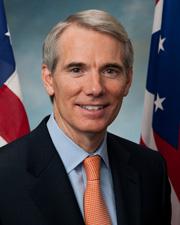
Mr. Speaker, I thank the gentleman for yielding me time, and I appreciate his clarification and also the clarification of the gentleman from New York (Mr. Crowley) as this legislation before us…
Mr. Speaker, I thank the gentleman for yielding me time, and I appreciate his clarification and also the clarification of the gentleman from New York (Mr. Crowley) as this legislation before us relates to the issue of importation of prescription drugs.
I do rise in very strong support of the U.S.-Australian Free Trade Agreement. As the gentleman from New York (Mr. Crowley) has said, we have a long-standing friendship with Australia. We also have a lot of economic interest and move forward with this particular legislation. Knocking down barriers always leads to a fairer and a more healthy relationship between countries
and for better economics between both countries.
In this case, this bipartisan agreement will give a boost to our large and growing investment links with Australia and will help strengthen the U.S. economy. President Bush and Ambassador Bob Zoellick deserve a lot of credit for moving forward strongly with this particular agreement and for their continued determination on bilateral agreements in general.
This agreement will help small business and manufacturers quite a bit in my home State of Ohio. Australia is now number 11 in terms of countries to which we export. Total exports are now valued at $389 million. Ohio primarily exports high-value products to Australia, aircraft engines and parts, auto parts, forklift trucks, pet food, household appliances. If the Free Trade Agreement was in effect last year, we would have seen over 93 percent of those exports, including again some of these manufactured high-quality, high-value exports, 93 percent of them would have entered Australia duty free.
Ohio's exports to Australia directly support about 1,800 good-paying jobs in Ohio. And, by the way, there are 17 Australian-owned companies in Ohio, which also employ roughly 1,800 people. 1,300 of those positions, by the way, are in manufacturing.
Trade with Australia supports countless other high-paying jobs in areas such as transportation, finance and advertising. This agreement is good for Ohio. It is good for jobs. It is good for relations with one of our great friends, Australia. Opening markets across the globe to Ohio businesses is the key to keeping our Buckeye economy strong.
The U.S.-Australia Free Trade Agreement is also important because Australia and the U.S. share a lot of similar goals in terms of international trade. We are both supporters of achieving trade liberalization in the current round of trade talks. We are both pursuing market access through regional and bilateral trade agreements. Another reason to support this agreement.
With overwhelming support today, we will be helping to fulfill President Bush's vision of a world that trades in freedom.
Bill Text
2 versions available
        [Congressional Bills 108th Congress]
[From the U.S. Government Publishing Office]
[H. Res. 712 Engrossed in House (EH)]

In the House of Representatives, U.S.,

July 14, 2004.
Resolved, That upon the adoption of this resolution it shall be in order
without intervention of any point of order to consider in the House the bill
(H.R. 4759) to implement the United States-Australia Free Trade Agreement. The
bill shall be considered as read for amendment. The bill shall be debatable for
two hours equally divided and controlled by the chairman and ranking minority
member of the Committee on Ways and Means. Pursuant to section 151(f)(2) of the
Trade Act of 1974, the previous question shall be considered as ordered on the
bill to final passage without intervening motion.
Sec. 2. During consideration of H.R. 4759 pursuant to this resolution,
notwithstanding the operation of the previous question, the Chair may postpone
further consideration of the bill to a time designated by the Speaker.
Attest:

Clerk.