Waiving points of order against the conference report to accompany the bill (H.R. 2443) to authorize appropriations for the Coast Guard for fiscal year 2004, to amend various laws administered by the Coast Guard, and for other purposes.
Legislative Activity
Stay on top of the latest movement without scrolling through every action
Motion to reconsider laid on the table Agreed to without objection.
July 21, 2004 • 11:50 AM
View full timeline
Introduced in House
July 20, 2004
The House Committee on Rules reported an original measure, H. Rept. 108-618, by Mr. Diaz-Balart, L..
July 20, 2004
Rule provides for consideration of the conference report to H.R. 2443.
July 20, 2004 • 5:07 PM
Placed on the House Calendar, Calendar No. 208.
July 20, 2004
Considered as privileged matter. (consideration: CR H6457-6458)
July 21, 2004 • 11:43 AM
DEBATE - The House proceeded with one hour of debate on H. Res. 730.
July 21, 2004 • 11:44 AM
The previous question was ordered without objection. (consideration: CR H6458)
July 21, 2004 • 11:50 AM
Passed/agreed to in House: On agreeing to the resolution Agreed to by voice vote.(text: CR H6457)
July 21, 2004 • 11:50 AM
On agreeing to the resolution Agreed to by voice vote. (text: CR H6457)
July 21, 2004 • 11:50 AM
Motion to reconsider laid on the table Agreed to without objection.
July 21, 2004 • 11:50 AM
Floor Debate
14 membersWhat members said about H.Res. 730 on the floor
 JLO
JLO FAL
FAL BF
BF BS
BS DY+9
DY+9
Floor Debate
14 membersWhat members said about H.Res. 730 on the floor
Mr. Speaker, will the gentleman yield? I greatly appreciate the gentleman's statement which has laid out very clearly the problem that we face on the Great Lakes. This is really a Great Lakes issue.…
Mr. Speaker, will the gentleman yield?
I greatly appreciate the gentleman's statement which has laid out very clearly the problem that we face on the Great Lakes. This is really a Great Lakes issue. It does not affect the rest of the Nation. The saltwater ports all have different regimes for pilotage. But this is not a new problem that the gentleman has laid out and detailed in a very clear manner. This goes back to the 1960s when we had a pilotage administration that was separate from the Coast Guard. It was run by a private sector, that is, a nonmilitary, non-Coast Guard, entity. And that was a failure. They did not manage the three pilotage districts, either in effectiveness in getting pilots when and where they were needed or in managing the pay.
Then the pilotage administration was absorbed from the Department of Transportation into the Coast Guard. For a while that worked, but the Coast Guard had a retired captain running the program, and he would on weekends be off at his farm in Virginia when they needed pilots to be assigned out of the reserves to guide ocean-going vessels into Great Lakes ports. That was unacceptable. We thought we had that fixed for a while. It was taken out of the Coast Guard, and now it is back in the Coast Guard again.
This is not acceptable for ocean shipping that enters the Great Lakes at a cost of as much as $15,000 a day when there are delays, when there is an inadequate reserve of pilots to guide the vessels. The gentleman has put his finger on it. The language that the gentleman offered on the floor which the chairman agreed to accept, which I accepted and which is in this bill, will hopefully prod the process along. But that is not good enough. We need to scrub this whole process from top to bottom, have an independent review of it, and find a better way to deal with pilotage. It is unacceptable that the Coast Guard has not resolved it, the Department of Transportation has not resolved it, and that the Department of Homeland Security got their hands in this mess when they have nothing to do with it and the whole pilotage rule was sent over to Homeland Security.
I see the chairman nodding his amusement over this mess which we knew was going to happen when the Coast Guard was taken out of the DOT and put over in Homeland Security. This is one of the fallouts of that whole mess. We have got to have this thing straightened out.
I pledge to the gentleman, with the support of our chairman who is a riverboat captain himself and knows how important it is to have good pilots, we will get this thing done and we will work with the gentleman from New Jersey (Mr. LoBiondo). We will get this straightened out because it has to be done.
Mr. Speaker, I thank the gentleman from Alaska for his observations. The gentleman's point and information is accurate, but the reason they are having difficulty getting pilots is for 2 years, pilots have been paid at the rate of a mate. The chairman of the committee knows very well what that means. A pilot ought to be paid better than the pay for a mate, and that pay has stayed there for 2 years and the Coast Guard has failed to act. And so the pilots are saying, We are out of here. They are quitting. You cannot bring a seasoned pilot on board with one season's experience. You are going to run that ship aground.
Because the Coast Guard has failed to act, because the pay has not been adjusted and the pilots are feeling abused, they are walking. What is happening is it is costing more for every piece of goods that comes into the Great Lakes. Every item that comes in on those vessels is taking longer, costing more than it would otherwise cost to be delivered to customers, and that means that our Great Lakes St. Lawrence system is less efficient and less competitive. That is not right. That is not fair. The Coast Guard needs to get this thing done and done quickly and fairly and equitably. If they are not going to do it, then we need to find another way to run this operation.
Mr. Speaker, I thank the gentleman for yielding me this time and for his splendid management of the bill on our side.
I compliment the gentleman from New Jersey (Mr. LoBiondo) for his steadfast dedication to the purposes of the Coast Guard and his distinguished leadership of the subcommittee on this matter and other Coast Guard-related matters, and the gentleman from Alaska (Mr. Young) for the steadfast support that we had in adhering to the principles of the committee as expressed by the House and passage of our version of the Coast Guard reauthorization.
This is a very happy day for the committee and for the Coast Guard. It is the first time in 2 years, in fact a little bit more than that, that actually we are on the point of passing a Coast Guard reauthorization bill in the normal legislative course of business. It had to be done in the appropriations process last year, Mr. Speaker, because although the House did its work, passed the bill, the other body could not come to a resolution on the matter, and we never even got to conference.
But this year, congratulations on both sides. The Coast Guard will have its charter spelled out legislatively as we need to do.
We make a number of improvements, a significant increase in personnel for the Coast Guard. The former Merchant Marine and Fisheries Committee was one of my first two committee assignments along with, then, Public Works when I was elected in 1974; and the personnel allocated to the Coast Guard in 1975 was listed at 39,000. It remained at that level for the next 30 years, and only recently have we begun to raise the number of personnel for the Coast Guard, while all along adding new responsibilities to the Coast Guard.
Congress so loved the Coast Guard and so admired the work it could do that it laid on 27 new authorities and responsibilities for the Coast Guard to carry out without adding the personnel to do the job, and only in the last 8 years, 9 years have we begun the Blue Water program and the program of adding extended endurance helicopters and fixed-wing aircraft and surface vessels and high-endurance, high-speed vessels to combat the illegal drug trade and immigration trade in the Caribbean and on the coastal waterways of the United States.
This legislation takes us significantly forward. We authorize Coast Guard to set hours of service limits for personnel working on towing vessels to avoid the kind of tragedies that occurred at South Padre Island. We require all commercial vessels to have electronic charts beginning in 2007.
We authorize establishment of a National Maritime Enhancement Institute on the Great Lakes to study maritime transportation needs on the Great Lakes, and full safety inspection of towing vessels.
We require the Coast Guard to set standards for adequate amounts of potable water on commercial vessels. After many years of studying this issue, we are finally going to deal with it.
And we extend the authority of ships operating on the Great Lakes to dispose of dry bulk cargo residue in accordance with standards already set by the Coast Guard for at least a decade.
The only disappointment I have with this legislation, and it is a major one, is that we did not come to a resolution of security issues along the lines that the committee agreed upon, the House voted on, and the motion to instruct conferees was passed with an overwhelming vote in this body, and that was to deal with security plans for foreign-flag vessels entering U.S. ports.
We passed the affectionately known Port Security Act, known properly as the Maritime Transportation Security Act of 2002. The gentleman from Alaska (Chairman Young) and I were at the White House for the signing of this bill, along with Members of the other body. We all patted each other on the back. There was not enough money in that bill on the one hand to carry out the intentions of the legislation, but there was very good and very strong language in that legislation to protect U.S. ports.
``An owner or operator of a vessel . . . shall prepare and submit to the Secretary a security plan for the vessel . . . for deterring a transportation security incident to the maximum extent practicable.''
It goes on to say, ``A vessel or facility for which a plan is required to be submitted to the Secretary under this subsection may not operate after July 1, 2004 unless, A, the plan has been approved by the Secretary; and, B, the vessel or facility is operating in compliance with the plan.''
Well, that seems, on the face of it, very clear language, a very clear directive to the Coast Guard, but hardly was the ink dry when they went to the International Maritime Association and negotiated something quite different and issued regulations saying that instead of reviewing foreign vessel security plans, the Coast Guard will simply accept the security certificates issued by the flag state or by a security organization approved by the flag state under which that vessel operates.
Many ships coming into U.S. harbors operate from a flag state country that we know as ``flag states of convenience'' or ``flags of convenience,'' those great seafaring nations of Panama, Malta, Cyprus. Cyprus may have been a seafaring nation B.C., but not in recent times. And under the Coast Guard regulations, the agency would have to accept approvals from these countries or their security organizations. Those countries do not inspire a great deal of security confidence in me or other observers of the security scene.
So we came back with the House bill to strengthen that language, make it clear what we intended; and the other body had a little different version. We tried mightily to come to an agreement. When we could not, the conferees agreed to delete language in both bills and leave current law standing.
That outcome and this conference report, Mr. Speaker, should not be construed as endorsing the Coast Guard's regulations. They are inconsistent with current law. Current law states very clearly that foreign vessels must have their security plans approved by the Secretary of the department in which the Coast Guard is operating. And those regulations are not in compliance, and they should be revised, not only not in compliance but not providing adequate security.
Under these regulations, this is what can and will and is happening. A foreign vessel enters U.S. waters. Under Coast Guard regulations, the Coast Guard will not examine the vessel's security plan unless there is clear evidence that the crew has insufficient knowledge of the security plans and procedures. And even if the Coast Guard finds that the crew does not have sufficient knowledge about security, regulations do not allow the Coast Guard to look at these areas of the security plan for that vessel, identifying restricted areas on the vessel and measures to prevent unauthorized access to those areas, procedures for responding to security threats or breaches of security, procedures for responding to security instructions of the flag state under which that vessel is operating.
Duties of shipboard personnel assigned security responsibilities and of other shipboard personnel on security aspects of their duties.
Procedures to ensure the inspection, testing, calibration, and maintenance of any security equipment on board the vessel.
Identification of the location where the ship's security alter activation point is located.
Procedures, instructions, and guidance on the use of the ship security alert system.
And yet, the Administration wants us to believe that under this system ships would be secure. This is not the type of security that we need. This is not what the law currently requires. The Coast Guard's regulations must be revised to comply with the law.
Apart from this difficult security issue, H.R. 2443 makes many substantive improvements to maritime safety and the quality of life for the men and women who serve in the Coast Guard.
I thank Chairman Young, Subcommittee Chairman LoBiondo, and Subcommittee Ranking Member Filner for the cooperation and teamwork in successfully concluding this Conference.
Mr. Speaker, I urge my colleagues to support adoption of this conference report.
Mr. Speaker, I thank the gentleman for yielding me this time and for his leadership of the full committee and this conference. I also want to thank the ranking members, the gentleman from Minnesota…
Mr. Speaker, I thank the gentleman for yielding me this time and for his leadership of the full committee and this conference. I also want to thank the ranking members, the gentleman from Minnesota (Mr. Oberstar) and the gentleman from California (Mr. Filner), as well as all of the conferees of the House and Senate.
Mr. Speaker, I too rise in strong support of the conference report on the Coast Guard Maritime Transportation Act. The conference report authorizes funding and personnel numbers for the Coast Guard and includes a number of other measures that will improve both the operational capability of the Coast Guard and the safety of our maritime transportation system.
This conference report also includes important provisions designed to build upon the work we did in the Maritime Transportation Security Act of 2001 to strengthen security at our ports.
H.R. 2443 includes language to clarify that members of the Coast Guard may make arrests for violations of Federal law while conducting security operations at our port facilities, to direct the Coast Guard to conduct vulnerability assessments of any waters adjacent to nuclear power plants to help ensure we are properly prepared for a waterborne threat to these facilities, and to authorize a new program to fund pilot projects that will test promising new technologies that could improve security at our ports.
I am particularly pleased that the other body has agreed with Members of the House regarding the need to accelerate Coast Guard's asset recapitalization program known as Operation Deepwater. This report authorizes a funding level of $1.1 billion for fiscal year 2005. This level of funding puts us on track to accelerate Deepwater's completion date to February 1, 2006, 5 years earlier than originally planned.
The effective accomplishment of the Coast Guard's national and homeland security missions, as well as its ability to sustain the level of performance of traditional missions, is predicated upon having a required funding level to replace its aging and rapidly failing assets sooner than the 20-year projected plan.
The need to accelerate is compelling. Over 20 110-foot patrol boats underwent emergency dry dock for breached hulls this past year, and the rest of the fleet is in immediate need of repair for structural corrosion. Over the past year, the HH-65 helicopters have suffered more than 125 in-flight main engine power losses, robbing the asset of its ability to hover and placing the lives of its crew, passengers and those below in grave danger.
These failures are increasing maintenance costs and are resulting in the direct loss of over 600 patrol days annually, severely affecting readiness and diminishing the service's ability to respond to terrorist threats and conduct its other vital missions.
I firmly believe that, as authorizers, it is our job to set goals and priorities for the service. The accelerated replacement of these assets is one of the Coast Guard's highest priorities. I commend my colleagues for their support of this critical issue and encourage our appropriators to work towards the goals we have established in this report.
We all praise the work of the men and women of the Coast Guard almost on a daily basis. We have seen the incredible footage of the videos of the rescues that they have made. We hear of their heroism on a day-in- and-day-out basis. While it is very nice to say thank you in words, we need to show it in deeds, so we are providing the men
and women of the Coast Guard the assets that they so dramatically need to complete their mission.
Finally, I would like to thank the staff on both sides for their tremendous work, particularly John Rayfield, Eric Nagel, Marsha Canter from our subcommittee, as well as Liz Megginson from the full committee, and John Cullather from the staff of the gentleman from Minnesota (Mr. Oberstar) for their efforts. I urge all Members to support this legislation.
Mr. Speaker, I reserve the balance of my time.
Mr. Speaker, I yield myself such time as I may consume.
I would like to thank the gentleman from Minnesota (Mr. Oberstar), the gentleman from California (Mr. Filner), the gentleman from Alaska (Mr. Young), and everyone aforementioned for their support in bringing this conference report to the floor.
I would like just to put a human face on it for a minute, that this is really about the men and women of the Coast Guard who are out there every day doing such a heroic job both here and abroad.
For those who think that the Coast Guard is only here on our shores, recently there was a Coast Guard helicopter crew that was in theater in Iraq. One of those engine failures that I talked about earlier was experienced. The captain of the helicopter really had a tremendous challenge on his hands when he had an engine failure and had to decide whether to set the helicopter down in Syria or do a hard landing on the deck.
We can just let our minds wonder a little bit about what it would have been like to have one of our Coast Guard helicopters having to set down in Syria and the implications of that. We can all see that that is not a good scenario.
He very heroically put the helicopter down without any injuries to himself, the crew, or damage to the helicopter. But it is symptomatic of why we have to make sure that they have the resources necessary. This authorization bill will be a critical, but first step in getting us to that point.
So I would urge all my colleagues to continue to understand the tremendous mission that the Coast Guard has undertaken, the tremendous job that they do day in and day out. I ask everyone to please support this legislation.
Mr. Speaker, I yield back the balance of my time.
Mr. Speaker, I ask unanimous consent to claim the time of the gentleman from Minnesota (Mr. Oberstar). Mr. Speaker, I yield myself such time as I may consume. Mr. Speaker, I thank the gentleman from…
Mr. Speaker, I ask unanimous consent to claim the time of the gentleman from Minnesota (Mr. Oberstar).
Mr. Speaker, I yield myself such time as I may consume.
Mr. Speaker, I thank the gentleman from Alaska (Chairman Young) for his remarks, and certainly the subcommittee chairman, the gentleman from New Jersey (Mr. LoBiondo), and the ranking member from Minnesota (Mr. Oberstar). I would say to the gentleman from Alaska, maybe we should ask unanimous consent to substitute the highway bill for this conference report!
Mr. Speaker, I rise today with Chairman Young to strongly support the conference report for H.R. 2443, the Coast Guard Authorization and Maritime Transportation Act of 2004.
This legislation is the culmination of our work in this Congress in examining the Coast Guard missions, with particular emphasis on the funding for the Maritime Transportation Security Act of 2002 and their new homeland security missions.
The bill authorizes over $8.2 billion for Coast Guard operations for fiscal year 2005. We believe this will be sufficient funding for the Coast Guard to carry out their many missions, including homeland security, search and rescue, marine safety, drug and migrant interdiction and law enforcement, which includes $5.4 billion for Coast Guard operating expenses, $1.5 billion for acquisition and construction projects, $24.2 million for research and development, and $19.65 million for alteration of bridges.
In particular, I am pleased that the conferees recommended that the Coast Guard should lease additional helicopters to establish a helicopter interdiction tactical squadron, HITRON, armored on the West Coast. Since their establishment in Jacksonville, Florida, the East Coast HITRON squadron has stopped over $4 billion in illegal drugs from entering the United States. Deployment of a HITRON squadron on the West Coast will help stem the flow of illegal narcotics through the eastern Pacific Ocean.
There is sufficient authorized funding in this bill for the Coast Guard to lease the helicopters required for this deployment. If one were to look at this using a cost-benefit analysis, the $39 million we spend to lease and deploy an armored HITRON squadron on the West Coast will stop drugs valued at more than 20 times that amount.
It is my strong view that the Coast Guard must increase existing airborne use of force assets for port security and drug interdiction. The lease option for these aircraft is already in place. The lease provides antiterrorist and antidrug coverage for the next 3 to 5 years while providing flexibility for the Coast Guard to engage in a competition to select a permanent multimission Cutter helicopter to meet the post-9/11 challenge. When these multimission helicopters are deployed, the HITRON helicopters can be returned to the manufacturer at the option of the Coast Guard.
We make a number of other substantive changes in the law, including providing critical skill training bonuses for enlisted members, providing legal authority to build new housing for Coast Guard and military personnel, extending the International Safety Management Code to all vessels operating in U.S. waters, and requiring electronic charts on ships to help prevent accidents such as the 1989 accident of the Exxon Valdez when they lost their way in Prince William Sound in Alaska. We also extend the oil spill response plans to cargo ships entering U.S. ports, not just tankers.
I thank the chairman of the full committee, the gentleman from Alaska (Mr. Young); the chairman of the subcommittee, the gentleman from New Jersey (Mr. LoBiondo); and the ranking member of the full committee, the gentleman from Minnesota (Mr. Oberstar) for their bipartisan effort to put the bill together.
Mr. Speaker, I strongly urge my colleagues to support the passage of the bill.
Mr. Speaker, I reserve the balance of my time.
Mr. Speaker, I yield 3 minutes to the gentlewoman from California (Ms. Loretta Sanchez).
Mr. Speaker, I yield 7 minutes to the gentleman from Michigan (Mr. Stupak).
Mr. Speaker, I yield 3 minutes to the gentleman from Ohio (Mr. Kucinich).
Mr. Speaker, I yield 1 minute to the gentleman from New York (Mr. Israel).
Mr. Speaker, I yield 2\1/2\ minutes to the gentleman from Maryland (Mr. Ruppersberger).
Mr. Speaker, I yield 2 minutes to the gentleman from New York (Mr. Nadler).
Mr. Speaker, I yield such time as he may consume to the gentleman from Minnesota (Mr. Oberstar), the ranking member of the full committee.
Mr. Speaker, on that I demand the yeas and nays.
Mr. Speaker, I thank the gentleman for yielding me this time. Mr. Speaker, I would like to thank the gentleman from Alaska (Chairman Young) for his support in including my provision in this bill that…
Mr. Speaker, I thank the gentleman for yielding me this time.
Mr. Speaker, I would like to thank the gentleman from Alaska (Chairman Young) for his support in including my provision in this bill that calls for the timely review and adjustment of pilotage rates by the United States Coast Guard; and of course, special thanks to the ranking member, the gentleman from Minnesota (Mr. Oberstar), for his continued efforts to advocate for the just treatments of our American maritime pilots.
Unfortunately for American maritime pilots, the review has been far from timely, and a permanent adjustment flat out has not happened. Last fall, during floor debate on this bill, I engaged in a colloquy with the gentleman from Minnesota (Mr. Oberstar) to raise the issue that no permanent rate adjustment for pilots had been made. At that time, I was vexed at how the Coast Guard, whose responsibility it is to set the rates that American pilots charge shipping companies for pilotage services, let the 2003 shipping season come and go without issuing a permanent rate adjustment.
The Great Lakes pilotage system performs critical safety and environmental functions for the Great Lakes. And not only that, it also requires by law that every vessel entering the Great Lakes has a maritime pilot on board. It does not make sense to underfund a pilotage system which is crucial to the largest freshwater body in the world, yet the Coast Guard failed to complete a permanent, full rate adjustment at all last year. At the end of last year, the Coast Guard finally did issue an interim rule which provided only a partial rate adjustment.
In a letter I received from the Commandant earlier this year, I was advised that a supplemental rule scheduled to be published in February was going to be delayed until May.
Mr. Speaker, Members, you might further understand my utter disbelief and complete frustration that a supplemental rule is still not out yet, and there are signs now it will not be out until October and maybe later.
Remember, the supplemental rule will not change the rate. It will just trigger another round of public comment.
Every day that goes by is another day that pilots are not getting the pay that they not only deserve but are entitled to. This is contrary to the Coast Guard's promise of last year to adjust the current pilot system funded at 1997 levels. This is particularly disturbing because the Coast Guard regulations require rates to be reviewed and adjusted on an annual basis. Setting rates to 1997 levels will inevitably result in the fraying of the Great Lakes pilotage system.
Foreign shipping companies and their agents in the United States have urged the Coast Guard to delay and reduce the proposed rate increase. This is not surprising because foreign shipping companies have an economic interest in reducing these rates, which they pay. However, it is the Coast Guard that by law bears the responsibility for ensuring that rate reviews and adjustments are completed in a timely manner and reflect the formula set out in detail in the agency's own regulations. It is simply not acceptable for the Coast Guard to have repeatedly missed its own deadlines of a rate adjustment. Such delays will only continue to subject the Coast Guard to the charge that it is placing the economic interests of foreign shipping companies ahead of the environmental protection and marine safety of the Great Lakes.
It is unbelievable to me that it is actually possible that another shipping season will come and go without a permanent adjustment. After having written five letters in the last year requesting a prompt establishment of a permanent Great Lakes maritime pilotage rate, that is five times we have written, enough is enough; and I believe we need to call on GAO to investigate this issue.
Again, I exhort the Coast Guard to follow its own rules and implement a full pilotage rate adjustment on the Great Lakes now. The pilots in my congressional district bordering Lakes Michigan, Superior, and Huron as well as pilots throughout the Great Lakes have waited long enough for the Coast Guard's empty promise to come to fruition.
I yield to the gentleman from Minnesota.
I thank the ranking member, and I think the chairman for his help and support.
Mr. Speaker, pursuant to House Resolution 730, I call up the conference report on the bill (H.R. 2443) to authorize appropriations for the Coast Guard for fiscal year 2004, to amend various laws…
Mr. Speaker, pursuant to House Resolution 730, I call up the conference report on the bill (H.R. 2443) to authorize appropriations for the Coast Guard for fiscal year 2004, to amend various laws administered by the Coast Guard, and for other purposes.
Mr. Speaker, I yield myself such time as I may consume.
(Mr. YOUNG of Alaska asked and was given permission to revise and extend his remarks.)
Mr. Speaker, I rise in strong support of the conference report on H.R. 2443, the Coast Guard Authorization and Maritime Transportation Act of 2004.
This conference report is the result of a very bipartisan effort. I notice this is a word being used often today on this floor, but I want to compliment especially the committee I serve on. It was worked out with the subcommittee chairman, the gentleman from New Jersey (Mr. LoBiondo), the ranking members from the full committee and the subcommittee, the gentleman from Minnesota (Mr. Oberstar) and the gentleman from California (Mr. Filner), and all of the conferees; and it deserves the support of all Members.
As this body's only licensed mariner and elected Member for all of Alaska, I am extremely interested in making sure the Coast Guard has the tools necessary to carry out its many varied missions. This bill gives the Coast Guard the resources and authorities necessary to protect the safety and security of lives and property on U.S. waters.
H.R. 2443 authorizes $8.2 billion to support activities of the Coast Guard for fiscal year 2005 and includes a number of provisions which will result in a safer, more effective system of maritime transportation.
My State of Alaska contains nearly one-third of the Nation's exclusive economic zone, the Nation's largest fishery, and significant cruise ship and oil tanker traffic. Therefore, I am concerned about the ability of the Coast Guard to carry out its traditional search, fisheries law enforcement, and vessel inspection missions.
Mr. Speaker, all of us recognize the exceptional work performed by the Coast Guard, often under dangerous conditions and circumstances. I urge all of my colleagues to support the conference report.
Mr. Speaker, I would like to recognize Mr. John Rayfield and Mr. Mark Zachares for their hard work, and thank the staff on both the Senate and House side. The staff has worked very hard to ensure this has been done correctly.
Again, may I stress, I hope we can do the same thing on the highway bill as we have done on this bill, and through a bipartisan effort, achieve our goal.
Mr. Speaker, I reserve the balance of my time.
Mr. Speaker, I yield 5 minutes to the gentleman from New Jersey (Mr. LoBiondo), the chairman of the subcommittee, who has done an outstanding job on this legislation.
Mr. Speaker, I yield 2 minutes to the gentleman from Ohio (Mr. Kucinich).
Mr. Speaker, will the gentleman yield?
I thank the gentleman for bringing this to our attention. I was unaware of this problem. I do appreciate his suggestions. We will look into it.
Concerning the previous conversation, in this legislation there is a provision in the bill to tell the Coast Guard to get off their you- know-what and get busy and finish that problem that the gentleman from Michigan was talking about, and we are going to take care of that.
With respect to the gentleman from Ohio's issue, I now will be contacting the pilots association to find out what is the problem. I was reading with dismay the amount of delays that did occur because there were no pilots available. I cannot quite understand that myself because these are fine-paying jobs; and very honestly, the revenue is quite attractive. I am anticipating my career, and I am really shocked. Maybe there is a place for me, after all, if I get out of this position. I will be working with the gentleman very closely to see if we can do it.
Mr. Speaker, I yield the balance of my debate time to the gentleman from New Jersey (Mr. LoBiondo) and, pending that, I ask unanimous consent that the gentleman be permitted to control the time.
Show 8 more
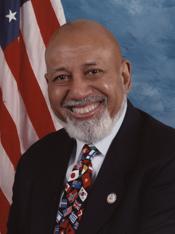
Mr. Speaker, I yield myself such time as I may consume, and I thank my colleague, my friend from south Florida (Mr. Lincoln Diaz-Balart), for yielding me the time. While the two of us, my colleague…
Mr. Speaker, I yield myself such time as I may consume, and I thank my colleague, my friend from south Florida (Mr. Lincoln Diaz-Balart), for yielding me the time.
While the two of us, my colleague and I, may have ideological differences from time to time, we are united in our support for the Coast Guard and the sometimes thankless work that they do every day to protect the ports and shores in our home State of Florida, as well as throughout this Nation.
Mr. Speaker, I rise today in support of the conference report to the Coast Guard Reauthorization Act.
As my colleague from the majority previously mentioned, the conference report authorizes nearly $8.2 billion in fiscal year 2005 for the Coast Guard. This amount is $169 million more than originally approved by the House last October and more than $400 million above what was approved by the other body. These increases are clear indications of this body's commitment to the Coast Guard's pressing needs.
The conference report also includes $1.5 billion for the Coast Guard's acquisitions, construction and improvements account, a $550 million increase above what was requested. This increase is to be used by the Coast Guard to improve its Integrated Deepwater System, as well as assist the Coast Guard to reduce the list of unfunded shore facilities that has grown significantly over the past 5 years.
Furthermore, the conference report increases the number of commissioned officers and includes significant authorizations which will assist the Coast Guard to better meet our port and maritime security needs.
The Department of Homeland Security is also directed in the conference report to provide Congress with reports regarding joint operational centers for port security and port compliance with security standards.
I mention these two reports because of the great work that is being done in my home county, Broward County, at Port Everglades. There are few ports in the country as innovative as Port Everglades when it comes to security. The Port of Palm Beach, located in the district I represent, has also made significant security improvement as a direct result of the port security grant authorized by this conference report.
Mr. Speaker, the Coast Guard is responsible for patrolling the more than 12,400 miles of coastline in the United States. Nearly 2,000 of these miles are located in mine and my colleague's, the gentleman from Florida (Mr. Lincoln Diaz-Balart), home State of Florida where the Coast Guard plays an integral role in patrolling our shores and protecting our citizens. The increase in funding provided in the underlying legislation for this important grant of the United States Armed Forces serves as a statement about the role of the Coast Guard in our global war on terrorism.
Reports have shown that America's ports remain susceptible to attack and infiltration by America's enemies. In the last year alone, south Florida's three major ports handled more than 13.2 million tons of cargo. In all, well over 1.5 million shipping containers were processed by south Florida longshoremen during the last year.
Certainly, these statistics highlight the pressing need to increase the number of Customs agents working in America's ports, but they also suggest that the roles of the Coast Guard and Federal Maritime Commission in protecting our ports are greater than ever.
Mr. Speaker, when Congress created the Department of Homeland Security,
it recommitted itself to the security of America. The conference report for the Coast Guard Authorization Act is an extension of that commitment.
I urge my colleagues to support the underlying conference report.
Mr. Speaker, I have no further speakers, and I yield back the balance of my time.
Mr. Speaker, by direction of the Committee on Rules, I call up House Resolution 730 and ask for its immediate consideration. Mr. Speaker, for the purpose of debate only, I yield the customary 30…
Mr. Speaker, by direction of the Committee on Rules, I call up House Resolution 730 and ask for its immediate consideration.
Mr. Speaker, for the purpose of debate only, I yield the customary 30 minutes to the gentleman from Florida (Mr. Hastings), pending which I yield myself such time as I may consume. During consideration of this resolution, all time yielded is for the purpose of debate only.
(Mr. LINCOLN DIAZ-BALART asked and was given permission to revise and extend his remarks.)
Mr. Speaker, House Resolution 730 is a rule that provides for the consideration of the conference report for H.R. 2443, the Coast Guard and Maritime Transportation Act of 2004. This is a standard rule for a conference report providing for 1 hour of general debate, evenly divided and controlled by the chairman and ranking minority member of the Committee on Transportation and the Infrastructure.
The legislation before us authorizes over $8 billion for the Coast Guard, including a commitment to 45,500 active duty personnel in fiscal years 2004 and 2005. This is extremely important legislation to strengthen the Coast Guard in its ever-increasing role of defense of our homeland.
This bill makes a new commitment to the long-term effectiveness of the Coast Guard. The Department of Homeland Security has called on the Coast Guard to be the defender of American ports while at the same time sending needed resources, soldiers and vessels to the battles against terrorism far away.
I am pleased to highlight the Integrated Deepwater Acquisition Program. This program provides the needed capital to carry out effective acquisition of the cutters, computer equipment and other resources that the Coast Guard so desperately needs. The Deepwater System has not received the funding outlined in 1998, but this bill makes up for the delay. The conference report authorizes over $1 billion for the program, accelerating the Deepwater System 5 years ahead of the original 20-year completion time line.
The Coast Guard is particularly important to the community and constituents that I am honored to represent in south Florida. The Coast Guard Integrated Support Command in Miami is essential to the safety and security of residents. The Coast Guard in south Florida coordinates integrated plans aimed at hurricane safety, recreational boater safety and, obviously, protection of our coastline.
The conference report before us was signed by every member of the conference. It is a good bill, essential really to our continued commitment to the security and safety of all citizens and residents of the United States.
I would like to thank the gentleman from Florida (Mr. Young), the gentleman from New Jersey (Mr. LoBiondo), as well as the ranking member, the gentleman from Minnesota (Mr. Oberstar) and the gentleman from California (Mr. Filner) for their important work.
I urge my colleagues to support both the rule and the underlying legislation.
Mr. Speaker, I reserve the balance of my time.
Mr. Speaker, I yield back the balance of my time, and I move the previous question on this resolution that is very important and urge my colleagues to vote favorably on the underlying legislation as well.
The previous question was ordered.
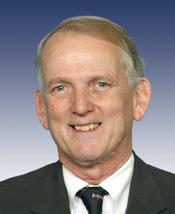
Mr. Speaker, I rise today to strongly support the conference report on H.R. 2443, the Coast Guard and Maritime Transportation Act, a bill to reauthorize Coast Guard operations for fiscal year 2005. I…
Mr. Speaker, I rise today to strongly support the conference report on H.R. 2443, the Coast Guard and Maritime Transportation Act, a bill to reauthorize Coast Guard operations for fiscal year 2005.
I thank Chairman Don Young and Frank LoBiondo, and Ranking Member Jim Oberstar for their hard work and leadership on behalf of our Coast Guard men and women. And
I thank my colleagues and fellow conferees for working with me to authorize the establishment of a National Coast Guard Museum in New London, Connecticut--where the Service first came ashore and established the Coast Guard Academy.
In 2001, I became one of the founding members of the National Coast Guard Museum Association. Our goal was to fund and construct the museum in New London. The seven-member board included our chairman, James Coleman, Jr., Connecticut State Senator Cathy Cook, Rear Adm. Richard Larrabee, USCG (ret.), Cmdr. Don Chapman, USCG (ret.), Richard Grahn and John Johnson. These civic-minded individuals dedicated their time and talent to make this project work.
Connecticut's two Senators Christopher Dodd and Joseph Lieberman, also supported this project and I thank them for their input and support. I am proud to have been part of the effort, which we anticipate will be completed with full support of the community.
The bill appropriately directs the Coast Guard Commandant to establish the museum in New London at, or in close proximity to, the Academy. This will ensure that future cadets, commissioned officers, warrants and petty officers attending the leadership school at the Coast Guard Academy will benefit from the collection and programs of the new museum.
The people of Connecticut and the New London area are proud of their Coast Guard and maritime heritage, and eager to support the new museum. I am confident that local leaders will support this effort and be diligent in securing a suitable location for the museum.
The Coast Guard is our major force in maritime safety and law enforcement, an integral part of our national defense, and an important member of our New London community. It is right to honor the service and sacrifice of the men and women in the Coast Guard by establishing this museum, and it is fitting to locate the facility in New London.
A National Coast Guard Museum will be a place to honor, preserve and share the story of our beloved ``Coasties.'' It is the proud story of brave men and women who live and serve by their motto--Semper Paratus. Always Ready.
Mr. Speaker, today this body is ready to say thank you. More than 70 museums across the country celebrate our military services, and H.R. 2443 pays a long overdue tribute to the Coast Guard in establishing the first museum dedicated to this Service. I am gratified to have the support of my colleagues in passing this bill.
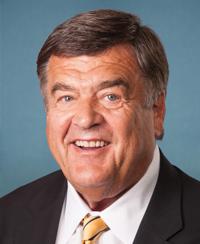
Mr. Speaker, I thank the gentleman from California (Mr. Filner) for yielding me this time to speak on this legislation. I rise today to support America's Coast Guard, and that is why I intend to…
Mr. Speaker, I thank the gentleman from California (Mr. Filner) for yielding me this time to speak on this legislation. I rise today to support America's Coast Guard, and that is why I intend to support the conference report for H.R. 2443, the Coast Guard Authorization Act.
I represent Maryland's Second Congressional District, which includes both the Port of Baltimore and the Coast Guard Yard. So while I applaud attempts to provide adequate funding for the Coast Guard and its mission to protect America's shorelines, I am disappointed that this conference report does not provide any language to protect the critical role and mission that the Baltimore Coast Guard Yard serves.
The Baltimore Coast Guard Yard is a unique and indispensable asset to this Nation and the Coast Guard itself. For over a century it has served as the service's sole ship construction and major repair facility. It is an essential part of the Coast Guard's core of industrial support base and supplier of depot-level services.
In the wake of the September 11 attack on America and the intensity of the national Coast Guard homeland security response, the yard capabilities and skill allowed the Coast Guard to sustain critical readiness for the fleet and our Nation. The yard plays a unique and indispensable role in both our homeland security and homeland defense priorities.
For example, it supported efforts in Iraq and Afghanistan through a joint Department of Defense and Coast Guard project. Engineers and tradesmen designed, tested, and constructed the custom shipping cradles needed to transport the 110 patrol boats needed in Iraq. The yard also answered an urgent request from the U.S. Army and Marine Corps to quickly repair over a dozen old-style bridge erection boats. These boats were refurbished and shipped to Iraq, allowing bridges to be built over the inland rivers permitting the transportation of personnel and supplies.
It is my understanding that the core logistics of the yard are being threatened, and I am deeply troubled by the absence of language in the conference report to protect the Coast Guard Yard's mission. This is an incredibly important issue to the security of our country. Protecting the yard and its shipbuilding and repair facilities is critical to all Americans.
I urge my colleagues to consider the tradition of excellent service the Baltimore Coast Guard Yard has provided in the defense of the Nation for over a century. The dedicated and skilled craftsmen working at the yard today are among this country's greatest assets protecting our way of life.
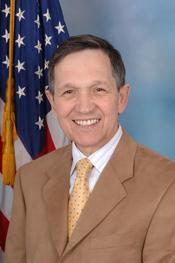
Mr. Speaker, continuing along with the concerns that the gentleman from Minnesota expressed, I have another matter to bring to the Members' attention that perhaps both the Chair and our ranking…
Mr. Speaker, continuing along with the concerns that the gentleman from Minnesota expressed, I have another matter to bring to the Members' attention that perhaps both the Chair and our ranking member with their experience can be of assistance. I am here to ask for help in remedying a situation on the Great Lakes that I have just been made aware of.
I received a letter today, as a matter of fact, from the Port of Cleveland raising serious concerns with a marine pilotage shortage that is causing shipping delays on the Great Lakes. Federal law and Coast Guard regulations require all ocean-going commercial ships to employ a marine pilot on board when navigating the Great Lakes. For reasons unknown, one of the pilotage associations has had trouble fulfilling its mission. This is beginning to create shipping delays. Since the beginning of this year, according to a study that has been provided to me, there have been over 582 hours of shipping delays according to the American Great Lakes Port Association and the St. Lawrence Seaway Development Corporation. A French cruise ship company has already ceased operations in the Great Lakes and other shipping companies are rumored to be wary of continued operations in the Great Lakes.
While I fully realize the Coast Guard must place a priority on safety and lifesaving, the Coast Guard can stop these delays. Since the Coast Guard regulates the pilot associations, I believe the Coast Guard must ensure that shipping delays are avoided when reasonably possible.
I ask the gentleman from Alaska (Mr. Young), the gentleman from Minnesota (Mr. Oberstar), and the gentleman from California (Mr. Filner) to work with me to explore this issue and to make sure that the Coast Guard is taking all necessary steps to avoid unnecessary shipping delays without impacting safety. To make this easier, I have provided both the chairman and the ranking member a list of delays and several letters of correspondence between the interested parties.
I yield to the gentleman from Alaska.
I yield to the gentleman from Minnesota.
I want to thank the gentleman from Minnesota (Mr. Oberstar), the gentleman from Alaska (Mr. Young), the gentleman from New Jersey (Mr. LoBiondo), and the gentleman from California (Mr. Filner) for their attention to this. The Port of Cleveland is essential to the economy of our region in northeastern Ohio. Their knowledge and cooperation is much appreciated here.
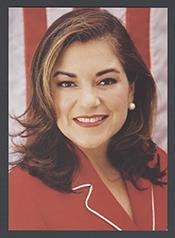
Mr. Speaker, I thank the gentleman from California (Mr. Filner) for yielding me this time. Mr. Speaker, I rise today in strong support of the conference report for H.R. 2443, the Coast Guard and…
Mr. Speaker, I thank the gentleman from California (Mr. Filner) for yielding me this time.
Mr. Speaker, I rise today in strong support of the conference report for H.R. 2443, the Coast Guard and Maritime Transportation Act of 2004. I would like to commend the members of the Subcommittee on Coast Guard and Maritime Transportation and all of the conferees for the great job they did on this bill.
My interest in this bill stems from the work I do on the Committee on Homeland Security and the strong need that we have to bolster the security at our Nation's ports. I am thankful that the conferees included the gentleman from California (Mr. Cox) and the gentleman from California (Mr. Thompson) on that committee. The traditional and homeland security missions of the Coast Guard must both be supported, and I think this bill addresses both of those areas well.
One provision requires the Department of Homeland Security to develop a long-range vessel tracking system. A true global, satellite-based tracking system that will give the Coast Guard worldwide maritime domain awareness. When we have the ability to track ships on their entire ocean voyage, we will be able to target the ships that exhibit atypical or erratic behavior as well as to ensure their safety throughout the journey.
The technology and infrastructure needed for such a tracking system is already available and in place, and I hope to see it will be used within months of passage of this legislation. I had previously introduced legislation addressing that important issue, and I am glad to see it is included in this bill. Tracking vessels is an important part of overall maritime intelligence.
The bill also requires the Department of Homeland Security to report to Congress on the maritime intelligence plan required by the Maritime Transportation Security Act.
Container security is another key provision in the bill which requires DHS to update Congress on container security technology, empty container inspection, cargo targeting and the deployment of radiation portal monitors at seaports.
Finally, this bill gives the Department of Homeland Security continued authority to issue port security grants and accelerates the Deepwater program implementation.
This bill will make the Coast Guard stronger and our Nation's ports more secure. I urge my colleagues to vote to pass this legislation.
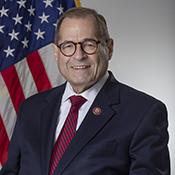
Mr. Speaker, I rise in support of the Coast Guard and Maritime Transportation Act. It has been almost 3 years since the September 11 terrorist attacks, and we still do not have sufficiently detailed…
Mr. Speaker, I rise in support of the Coast Guard and Maritime Transportation Act.
It has been almost 3 years since the September 11 terrorist attacks, and we still do not have sufficiently detailed information about what enters our ports. We know that approximately 6 million shipping containers enter the United States each year, but we do not know what all these containers contain nor do we know what it would cost to inspect all of these containers.
We also know that approximately 6- to 7,000 ships enter the United States each year, but that figure refers mainly to deep-draft vessels. How many smaller ships, or break bulk vessels, enter our ports? We do not really know.
When this bill was considered in the Committee on Transportation and Infrastructure last year, I offered an amendment that was accepted by committee, asking the Coast Guard to do a study. I wanted to know a complete breakdown of the number and types of containers and ships that enter the United States each year. I also wanted to know the cost that would be incurred if we were to inspect adequately all of these containers and ships.
Once we understand the different elements of what enters our ports, we can establish a better baseline on what we are currently spending on port security. More importantly, we will have a better understanding of how we can improve port security and the cost that will be entailed with each type of improvement.
I am pleased that this port security study provision has been included in the final conference report that is before us today, along with additional reporting requirements regarding container security inserted by the Senate.
This is a good bill that will authorize appropriations for the Coast Guard. It has good provisions that will enable us to get a better handle on proper security in our ports, and I urge my colleagues to support its adoption.
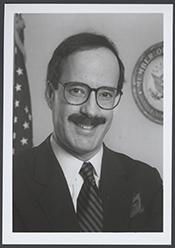
Mr. Speaker, I rise in strong support of H.R. 2443. I want to thank the chairmen and ranking members for all their hard work. The Coast Guard is an integral part of our Nation's homeland security…
Mr. Speaker, I rise in strong support of H.R. 2443. I want to thank the chairmen and ranking members for all their hard work. The Coast Guard is an integral part of our Nation's homeland security efforts.
I want to mention that I am a strong supporter of the Deepwater program that is replacing a number of aging vessels with new, high tech ships that I have no doubt will serve the Coast Guard and the American people very well.
Most of all, I want to thank my colleagues on the Transportation Committee for retaining and broadening language regarding security assessments at nuclear facilities. When the House debated its version of this bill, I offered and the chairs and ranking members generously accepted, an amendment to study the vulnerability of the Indian Point Nuclear power plant in Westchester County New York.
I am very pleased that during negotiations with the Senate on the final bill, this version was expanded to include all nuclear facilities that are adjacent to navigable waters.
We have a responsibility to ensure that our Nation is safe. We know that Al Qaeda has plans for our nuclear facilities. This assessment will help us in Congress and the Administration to better plan for protecting and preventing an attack that may be attempted.
I urge all my colleagues to vote ``yes'' on this important legislation.
Show 1 more
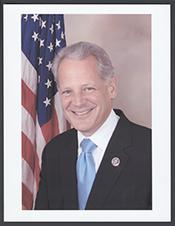
Mr. Speaker, Americans have always counted on the Coast Guard to enforce maritime law, to secure our waterways and ports, to rescue those in distress, and to intercept illegal drugs. In this new…
Mr. Speaker, Americans have always counted on the Coast Guard to enforce maritime law, to secure our waterways and ports, to rescue those in distress, and to intercept illegal drugs. In this new century, however, we are going to need to count on them even more. In the Iraqi theater, the Coast Guard is protecting key ports and oil platforms and helping speed the delivery of relief supplies to those in need.
This year, Petty Officer Third Class Nathan Bruckenthal became the first member of the Coast Guard to die in battle since Vietnam. His bravery and sacrifice shines a light on the often overlooked sacrifices made by our Coast Guard. When I spoke to Nathan's father, he said simply, ``My son served his country.'' Mr. Speaker, he did serve, and sacrifice.
We have to keep Nathan and his family in our prayers, in our budgets, and keep the Coast Guard the very best in the world. The Coast Guard is always ready to defend our Nation and rescue those in trouble. Now it is our turn. I urge my colleagues to support this conference report and to give the Coast
Guard the funds that it needs to meet the national security challenges of the 21st century in honor of the Bruckenthal family which served and sacrificed.
Bill Text
2 versions available
        [Congressional Bills 108th Congress]
[From the U.S. Government Publishing Office]
[H. Res. 730 Engrossed in House (EH)]

In the House of Representatives, U.S.,

July 21, 2004.
Resolved, That upon adoption of this resolution it shall be in order to
consider the conference report to accompany the bill (H.R. 2443) to authorize
appropriations for the Coast Guard for fiscal year 2004, to amend various laws
administered by the Coast Guard, and for other purposes. All points of order
against the conference report and against its consideration are waived. The
conference report shall be considered as read.
Attest:

Clerk.