Emergency Agricultural Disaster Assistance Act of 2003
Legislative Activity
Stay on top of the latest movement without scrolling through every action
Read twice and referred to the Committee on Agriculture, Nutrition, and Forestry.
January 9, 2003
View full timeline
Introduced in Senate
January 9, 2003
Read twice and referred to the Committee on Agriculture, Nutrition, and Forestry.
January 9, 2003
Floor Debate
24 membersWhat members said about S. 108 on the floor
 BLD
BLD JRB
JRB RFB
RFB JT
JT TH+19
TH+19
Floor Debate
24 membersWhat members said about S. 108 on the floor
Mr. President, I send an amendment to the desk and ask for its immediate consideration. Mr. President, I send an amendment to the desk. Mr. President, I ask unanimous consent that reading of the…
Mr. President, I send an amendment to the desk and ask for its immediate consideration.
Mr. President, I send an amendment to the desk.
Mr. President, I ask unanimous consent that reading of the amendment be dispensed with.
Mr. President, I have to chair a Democratic Policy luncheon in a few moments. I say to the manager and ranking member, I have two amendments to this bill. This is one. I will come back posthaste following the luncheon and offer the other. I don't want to hold up this bill. I want to have both amendments considered. I know you want to complete work on this important appropriations bill.
Let me describe the amendment that I have now offered dealing with something I think is very important.
We have in this country a livestock industry that is $175 billion. It is a very large industry, an important industry. In North Dakota, it is roughly $500 million, and it is important to our State. Ranching and farming, of course, represent the bread and butter of our economy in North Dakota.
Let me talk about some of the difficulties we face in the beef and livestock industry. We have had in some recent years outbreaks of something called BSE or more commonly referred to as mad cow disease. It is devastating. It is heartbreaking to see the consequences of an outbreak of mad cow disease on producers in a country where it occurs.
I hold up a chart that shows a pretty graphic picture of piles and piles of dead cattle with a fellow up here who is looking at all these cattle that have been slaughtered as a result of mad cow disease. This was in March 1997. The costs to that industry in England were devastating.
Our neighbor to the north, Canada, had one animal diagnosed with mad cow disease, an animal that appeared sick when it was slaughtered in January. They apparently severed the head and put it in a cooler, and some 4 months later they tested it and discovered that the animal, slaughtered in January, had mad cow disease or BSE.
As a result, we closed our border to the live import of cattle from Canada. It has been a devastating time for Canadian producers. Our hearts go out to them. It is a difficult situation for them. But what is important for us is to protect our industry, our beef industry, our livestock industry.
Last week the Secretary of Agriculture indicated that she is moving now toward putting Canada to a ``minimal risk'' status with respect to the import of cattle which would set up the capability of importing live cattle from Canada. We are not now importing them. We import some slaughtered beef products but not live cattle.
The amendment I offer is rather simple. The United States, with most other countries, belongs to the World Organization for Animal Health. That organization has protocols, describing the timeline for when you might allow imports into your country from a country that has mad cow disease or BSE.
Let me read the sense of the Senate: It is the sense of the Senate that the Secretary of Agriculture should not allow the importation of live cattle from any country known to have BSE, better known as mad cow disease, unless the country complies with the animal health guidelines established by the World Organization for Animal Health, and, No. 2, should abide by the international standards for continued health and safety of the U.S. livestock industry.
What are those guidelines? The guidelines may be changed. I am told there are discussions to do so. I am not necessarily opposed to changing them. But whatever the guidelines are, they are. At the moment those guidelines talk about a country or zone with minimal BSE risk:
The cattle population of a country or zone may be
considered as presenting a minimal BSE risk should the
country or zone comply with the following requirements:
The last indigenous case of BSE was reported more than
seven years ago.
There is another category more than 4 years ago.
In this case, the case of mad cow disease occurring in Canada, it was some 10 months ago, and it was disclosed only 6 months ago. We are talking now about opening the border to imports of cattle from Canada.
That could be a devastating risk to our livestock industry. We have a lot of ranchers trying to make a living. We ought to care about the risk posed to them if we import cattle from a country that had a case of BSE within recent months.
We have a lot to lose. Let me describe a circumstance, for example, with Japan. In the year 2000, beef consumption in Japan was at 1.577 million tons carcass weight equivalent. BSE was discovered in Japan in September 2001. That beef consumption dropped by 16 percent in 1 year. Compounding those problems, Japan just announced its second case of BSE in an animal less than 30 months of age. The most recent case is a cow 21 months of age. USDA is proposing a rule that would allow cattle 30 months or younger to be imported to the U.S.
We have organizations that say, well, it is not going to be a big problem. In fact, a Harvard risk assessment on BSE and its effects came to the conclusion: Even if infected animals entered into the U.S. animal agricultural system from Canada, the risk of it spreading extensively within the U.S. herd was low.
I am sorry. If we have a case of BSE, mad cow disease, in this country, the risk is dramatic for our beef industry, just as it was for Japan--a 16-percent reduction in beef consumption. It is a devastating blow to our industry if it occurs.
I believe at this point we ought to proceed with caution. We are not talking about 4 years or 7 years, which represents the guideline of the International Organization for Animal Health. We are talking just a matter of months past the time when a case of BSE was disclosed by our neighbors to the north. I regret that has happened to them. I know it is heartbreaking for them. I know they would like to move cattle into our marketplace as early as possible, but the fact is, our obligation is to try to find every way possible to prevent an outbreak of mad cow disease in this country because it would be devastating to a significant, vibrant industry, devastating to a lot of ranchers out there trying to make a living today.
We ought not have USDA move as quickly as they want to move. First, it is an abrogation of the guidelines we signed up for. The guidelines of the International Code of Animal Health don't describe a circumstance in which you change the rules and allow the importation of live cattle from a country which has had an experience with mad cow disease in just a matter of recent months.
The World Organization for Animal Health is made up of 164 nations, our Nation included, and Canada. One of the missions is to develop guidelines that relate to the rules that member nations use to protect themselves against diseases without setting up unjustifiable sanitary barriers. I agree with all that. But I am saying that the guidelines in this organization of which we are a member and to which we are a party are explicit. They do not include a circumstance in which we decide, some 6 months after the disclosure of mad cow disease, that we will take live cattle imported from that country into our marketplace. That poses significant risks to our producers.
The National Cattleman's Beef Association, NCBA, supports the amendment. The R-CALF organization supports this amendment. These are the two largest beef organizations in the United States. I offer it today hopeful for its consideration. It is a sense-of-the-Senate resolution.
As I indicated when I started, I have to chair a Democratic Policy Committee lunch in about 1 minute.
So what I would like to do is have this amendment be pending, and it would be preferable, if you want, to set it aside and take other amendments while I am at lunch. I will come back to the floor at 2 o'clock and say a few more words and perhaps I can get the ranking member and manager to agree to accept this amendment.
I yield the floor.
That is an offer I cannot refuse, although the not- talking proviso will not relate to my second amendment. I will come back--actually for the courtesy of the manager and ranking member, as I know they want to move the bill--and offer my second amendment. I am happy to do that if he is willing to take the amendment.
Mr. President, will the Senator yield for a unanimous consent request?
Mr. President, I ask unanimous consent if I might find my way into the order so I might also offer an amendment. I see the Senator from Wyoming, who I expect is wanting to speak, and because we will probably go back and forth, I wonder if I might get unanimous consent to be recognized following the presentation from the Senator from Wyoming. I know the Senator from South Dakota has now offered an amendment. My expectation would be the Senator from Wyoming will speak next, but might I receive consent to be recognized following the presentation from the Senator from Wyoming.
Mr. President, my colleague from South Dakota, Mr. Daschle, has proposed his amendment. I would like to speak in support of that amendment. Other colleagues have already spoken. This is an important amendment to consider.
Let me talk about the issue. We call it, this debate in the Congress, country-of-origin labeling: COOL. That does not mean anything to anybody. The question with this amendment and this issue is, Should the American people be able to determine where the meat they are purchasing at the meat counter comes from? Should they be able to know where this product comes from?
We have a roomful of people wearing neckties in this Chamber. If anyone looks at their necktie, they can find from the label where that necktie comes from. The same is true with shirts and shoes and trousers. The same is true with much of what we use in our daily lives. We require labeling. We demand it. Why? Because the consumer is advantaged by having it. Except meat and meat products. Go to the grocery store; take a look at the grocery store shelf and evaluate the meat. Consumers do not have the foggiest idea where the products came from--none.
Why is it important to be able to identify the origin of meat or meat products you purchase in this country? For a number of reasons. We produce the highest quality food in the world by far. Why? Because we have the highest standards, and we demand conformance to those standards. The American people, if they want to choose U.S.-grown beef, U.S.-produced beef or beef products or meat or meat products, at this point they cannot do it because the labeling does not exist.
Now, the labeling of meat and meat products has been done routinely in many other areas of the world. Other countries do it. It is not impossible. It is not even prohibitively expensive. It is just if you have the will to do it, you do it. In our country, at this point, we have not had the will.
Finally, the Congress passed a piece of legislation saying you must. We have a requirement that there be country-of-origin labeling, meat and meat products be labeled as to their origin, where they were produced.
Now the House of Representatives has passed an amendment that says they are going to shut off funding for that at a time when the Department of Agriculture has already dragged its feet in implementing it because they do not want to implement it.
Let me describe where this is important. Let me describe a May 1999 inspection in Hermosillo, Mexico, when inspectors went into a plant in this little town in Mexico. I will tell you what they found. U.S. inspectors paid a rare visit, we are told, to the plant in May 1999 and were greeted by filth and flies. They cut off trade at once--or at least they thought they did.
From the U.S. Department of Agriculture:
Shanks and briskets [were] contaminated with feces . . . .
In the refrigerator . . . . A disease-condemned carcass was
observed ready for boning and distribution in commerce.
Even before the inspectors left Mexico, Mexican officials were at work to restore this plant's right to sell meat to Americans. Over the following months, this plant regained its export license, switched owners, changed names, and yet the USDA has never returned.
So an American consumer buying meat from this plant, can they know it? Will they know it? Will they have information that tells them this is where the meat comes from? The answer at this point, regrettably, is, no, they will not know whether that meat comes from the most regulated laboratory or most inspected plant in the United States or from this plant in Mexico where inspectors were greeted by filth and flies and a disease-condemned carcass ready for boning and distribution in commerce.
Is it important for the American people to distinguish between cuts of meat that come from an inspected facility in this country that meets rigorous standards and a facility as described in this article that comes from that community in Mexico?
What about the issue of BSE or mad cow disease? We now hear this week we have another case of mad cow disease in Japan; a 21-month-old bull is the country's ninth known case. It is devastating for the Japanese, I know, to have cases of mad cow disease or BSE. We know our neighbors to the north have had a case of mad cow disease. In January, a sick cow, staggering in a lot, was nonetheless slaughtered with other cows. They severed the head and put the head on a shelf, and that head sat on the shelf for 4 months. Finally, they sent it away for testing, to discover that the cow they slaughtered in January, in May was determined to have had mad cow disease.
As a result, the Secretary of Agriculture cut off shipments of live cattle from Canada into this country. Why is that important? Because our beef herd is free of mad cow disease and has always been free of it. It is devastating to a beef industry, an industry in just North Dakota worth $500 million--half a billion. It is devastating to that industry to have an outbreak of mad cow disease. We want to protect our industry. That is why I offered the amendment earlier this afternoon that has been accepted. But we had USDA moving quickly last week to create what is called minimum risk for classification for Canada so younger animals from Canada can move into this marketplace. Should the American people, can
the American people, determine where their meat comes from--Canada, Mexico, Japan, or the U.S.?
The answer, for those of us who strongly support country-of-origin labeling laws, is the American people deserve that opportunity and need the right to know where their meat and meat products come from; they need to be able to make selections as consumers in a thoughtful, intelligent way.
Regrettably, that is not now the case. That is why the Congress previously passed legislation. Regrettably, the Department of Agriculture is dragging its feet, and the House of Representatives, in my judgment, has caved in to the big economic interests that want to scuttle this all together. They don't want to have anything to do with meat labeling. They say it costs too much.
Only in this town would we not laugh out loud at the cost estimates that come from the USDA. They are a joke. Only in this town would it become part of legitimate debate and thoughtful discussion about how many billions--yes, billions--of dollars this would cost, they claim, to administer. That is complete, sheer, utter nonsense and USDA knows it.
The question for this Congress is, Will it stand behind its previous decision and its previous judgment to require country-of-origin labeling on behalf of the American consumer? Will it stand behind that? I hope the answer is yes. If that answer is yes, then we need to support this bipartisan amendment that is offered by my colleague from South Dakota.
One final point. In the haste to try to discredit the country-of- origin labeling, the Department of Agriculture put out a notice that this would cost billions of dollars and they also indicated that it would have zero benefits. Does anyone really believe an estimate of the cost of the implementation of this law would provide no benefits--no benefits--to this country and the consumers of this country?
That is why this attack on the country-of-origin labeling is a joke. It is why we must adopt this amendment. We must stand for the American consumer. I know big economic interests swing big clubs in this area. I have been in conference committees where we thought we had this done before long ago and we had folks from the meat industry out in the halls buttonholing people. The fact is, we need to get this done, and it needs to be done now. That is why I support the amendment offered by my colleague from South Dakota.
While I have the floor, might I also indicate that the amendment I indicated to the Senator from Utah that I intended to offer is ready. I can offer it at the pleasure of the Senator from Utah and the Senator from Wisconsin. Senator Burns from Montana and I are both in the Chamber, and both of us would like to speak in support of our amendment. We very much hope the manager and the ranking member will be taking the amendment. But if not, of course, we will want a record vote.
I will certainly offer the amendment on behalf of myself and Senator Burns at your pleasure. So I would be happy to hear what the Senator from Utah would like to have happen with respect to that amendment.
Mr. President, I missed the comment by the Senator from Utah.
If Senator Harkin arrives on the floor, I will begin slowing down, if that is the question, and come to a complete stop at an appropriate moment.
I do not intend to speak at great length on this amendment. I know my colleague, Senator Burns, also wishes to speak, as well as my colleague, Senator Conrad, wishes to speak. My expectation is that the presentations will all be relatively brief, but I certainly would respect the interests of the Senator from Utah.
Mr. President, let me understand, the 30 minutes would be under my control?
I understand.
Amendment No. 2117
Mr. President, I can send the amendment to the desk if we wish to consider it now. My thought was it would be accepted and probably be put in a managers' amendment. I send the amendment to the desk and ask for its immediate consideration.
Mr. President, I ask unanimous consent that the reading of the amendment be dispensed with.
Mr. President, if I might describe this amendment--and I will do so rather briefly because I spoke about it yesterday--I think we are on the road perhaps to having this amendment accepted, in which case we would not need a recorded vote. As I indicated, I offer this amendment with my colleagues, Senator Burns of Montana and Senator Conrad of North Dakota. This amendment deals with a provision we put in the farm bill having the rural utility services create a broadband loan program.
During consideration of the farm bill, which we enacted in the Congress, we provided a very important provision that will provide for loans for the build-out of broadband capability throughout rural areas of our country.
The build-out was part of $100 million in direct spending to subsidize $3.5 billion of loan funds at good interest rates that would entice those who are interested in building out the infrastructure of broadband capability to rural areas to begin doing so.
Now, why is that important? It is important because if someone is on the wrong side of the digital divide and they do not have broadband capability in rural areas, their opportunity for economic development is gone. So we have been trying to find ways to help develop the build- out of the infrastructure for broadband capability in all areas of the country, especially and including rural areas.
The $100 million in that bill was going to provide an opportunity for $3.5 billion in broadband loans over the 6 years, as I indicated.
The Rural Utility Service announced they were going to combine $40 million in the farm bill for the first 2 years and package that up. They said they would make $1.4 billion in loans available for broadband buildout. As a result of that, they would provide not only loans but $80 million in loan guarantees, and so they would have $1.295 billion of loans at the Treasury rate of interest.
This is easily the biggest broadband loan program in the history of this country. Why is it important? Let me give an example, going back to the 1930s. In the 1930s, very few farms and rural areas were wired for electricity, so we created the Rural Electrification Act, the REA Program, and began stringing lines to the rural reaches of America. That program was remarkably successful in providing to small towns and family farms in this country the capability of using electricity to enhance their productivity. When we electrified rural America, we dramatically increased the productivity of America's family farms.
We now are in a circumstance where we talk about the information revolution and the new technology and information and something called broadband. Broadband simply describes the diameter of the pipes through which information flows. If you have dial-up connections, you have a computer, and you know there is a certain timeframe moving around your computer and moving around the Internet. If you have broadband or advanced communications services, it is a bigger pipe and you can move vast amounts of data very quickly.
The opportunity to do that is critically important to small areas, rural areas of the country in order for them to attract economic opportunity and economic development. Without it, they are consigned to a future without that kind of economic opportunity. That is why we are trying to provide it here, just as we did in the underlying 1996 act which I helped write. We talked about advanced services then, comparable services at comparable rates. You have broadband in most big cities now. The question is, will rural areas have the same opportunities?
What happened was RUS put this money together and they were going to put out nearly $1.3 billion of loans at 4.9 percent. Again, easily the most significant program of building out information infrastructure. What happened was they set a July 31 deadline for applications. They received applications for $1 billion in loans. That means there are people out there very anxious to move this capability out to rural areas. That is a big deal. This is not just some theoretical argument. This is talking about whether, in the rural reaches of America, you will have economic opportunity and jobs and growth again.
We have $1 billion in loan applications. Now the language that has been included in the Agriculture appropriations bill essentially eliminates the broadband section of the farm bill. It will put some money into loans, yes, but does so without the mandatory spending for it and would essentially cut in half the loan levels.
That is particularly bothersome because what is going to happen is they are going to have to start over down at USDA with a much smaller amount of money and much less impact on broadband capability.
The proposal I offer with my colleagues would provide an additional $6 million. This does not make us whole, but instead of going from $20 million down to $9 million, roughly we go back up to $15 million. It is not the full money we need, but it would increase the $9.1 million to $15.1 million. This is not a massive amount of money, given the bill we are talking about. It just is not. But it is very important for us to pass this amendment because otherwise we will have had a significant start, with great promise, and will have brought this to a grinding halt, and we will have the promise of broadband buildout all across rural America only to find out Congress put the brakes on it. That is not something we want to do.
I mentioned yesterday, recently when I was in my hometown of 300 people, a small community in northwestern North Dakota, I walked into what used to be my old boyhood home. I asked the folks if I could just stop in and see it. I hadn't been there for many years. The young woman who now lives there with her husband and children said she was happy to show me my old home. I looked around. In her kitchen--I hope she won't mind me saying this--on the shelf she had a piece of equipment. I couldn't recognize it at first, but it had a camera attached to it, and the camera was taking a picture of something on a spool, hanging on a metal spool. It was a bracelet. She said: I am taking a picture of this bracelet. Then I scan it and put it on the Internet, on eBay, because I sell things on eBay.
Here is a woman in a very small community in western North Dakota who is a merchant selling products on eBay. It shows that all over this country people have enterprising hopes about what they want to do, what kind of business they want to be engaged in. But if we do not have the capability to build out broadband services to rural areas, we will forever consign them to a dismal economic future.
Let me make one final point. That little town I grew up in, Regent, ND, a wonderful community, is part of Headinger County. My home county is larger than the State of Rhode Island. When I left it, there were 5,000 people living there. There are now 2,800 citizens living in Headinger County. The State demographer says in the year 2020 they expect it to be 1,800 people; 5,000 to 1,800 in a county the size of Rhode Island, slightly larger.
Those people want opportunity. They want to build and grow. They want some hope for the future. That woman, in that little home selling on eBay, represents that spark of enterprise, that hope that maybe things can be better. Maybe you can build businesses in those rural areas. But you simply cannot do it if you don't move ahead with this program we put in the farm bill.
I introduced legislation about 3 years ago. Much of it was put in the farm bill to create these loan funds. I was astounded to learn this appropriations bill effectively emasculates the funding that would have been automatic for the 6-year period, that would have created this aggressive broadband buildout. That is why we have to restore some of this funding. It is important.
People say it is a little issue. It is not a little issue to people in my hometown or other hometowns all across this country, living in rural areas, who want to make a living and want to have some hope for the future. That is what this is about.
We have already had a pattern and a template for how this works. It is the old REA Program. It worked in a wonderful way to electrify rural America and offer people light and hope. This is the same proposition. Let's not miss this opportunity.
Mr. President, I indicated Senator Burns, Senator Conrad, Senator Clinton, and Senator Leahy are cosponsors. I ask unanimous consent they be added.
I yield some time to the Senator from Montana, followed by time to my colleague from North Dakota. I yield 5 minutes to the Senator from Montana and if he wishes more, there is certainly more available.
Mr. President, I yield 5 minutes to Senator Conrad from North Dakota.
Mr. President, how much time is remaining?
Mr. President, I will take one final minute, and I think we are finished speaking on this side. And I will yield back the remainder of my time when we are finished.
Mr. President, I ask unanimous consent that Senator Harkin be added as a cosponsor.
Let me finish this discussion by adding another point. There is a book titled ``Distance is Dead.'' The book describes the information revolution. From almost anyplace you are a click away from anywhere. In North Dakota, we are a click away from the Hudson River. We are as close to Manhattan as the Hudson River with telecommunication and new technologies. But that is only the case if you have the buildout of broadband, if you have the capability to allow people to use this Internet in the way that most urban areas are able to do it.
We have in rural areas--I have mentioned my hometown--much that others aspire to recreate in our country: strong schools, good neighbors, great places to raise kids. We have a lot of things that make these small towns in rural areas wonderful places to live. But we need jobs there. We need economic opportunity development there.
If distance is dead, then opportunity is born in rural areas with information technology. If we are a click away from anywhere, if we are a nanosecond away by clicking a mouse and providing information anywhere, any time, then we have opportunities to attract businesses and create jobs in these wonderful areas of America's heartland. But if we do not have the buildout of the infrastructure, if you do not have similar opportunities with broadband development in rural areas, then you have what is called a digital divide.
If you are on the wrong side of that digital divide, if you live on the wrong side of that digital divide, you are in big trouble; your community is going nowhere. That is why this is an important issue. It is why we have been working on it for some long while and why this amendment deserves to be approved.
We have no further speakers. I know Senator Bennett has other things he wishes to do with the bill. I yield back the remainder of my time.
Mr. President, the chairman is correct. I don't plan on speaking on mad cow disease. I will speak for approximately 20 minutes. If anybody comes in with a relevant amendment, I will yield the floor.…
Mr. President, the chairman is correct. I don't plan on speaking on mad cow disease. I will speak for approximately 20 minutes. If anybody comes in with a relevant amendment, I will yield the floor. I am going to talk on the subject of Iraq.
Two days ago, the Congress completed action on the President's request for $87 billion. In fact, I think later today there is going to be a signing down at the White House for military operations reconstruction money for Iraq, as well as Afghanistan, that relates to that $87 billion request.
The debate we had in the Congress over that issue reflected more than our concern about the amount of money. I think it reflected more than the sticker shock that the American people felt when they heard the $87 billion number. I think it reflected the fact that there is a crisis in confidence in the President's leadership in Iraq. To put it more straightforward, there is a grave doubt about the policy we are engaging in now and its prospects for success.
The American people not only have those doubts, but I know, and we all know on the floor, that a number of Members on both sides of this aisle have doubts about the policy. I voted for the $87 billion, and I believe we needed to do that. But we cannot afford to fail in Iraq, and there was no option but the one before us.
It seems to me that we are going to have great difficulty succeeding in Iraq unless we act more wisely, and I want to discuss that very briefly today. I will be coming to the floor next week with a much more expanded speech on this subject. In order for us to succeed, I think we have to simply change our policy. We have to change the policy we are pursuing now in several very important ways.
First, in order to determine whether or not we think this policy is working, it seems we have to understand the situation on the ground in Iraq. There are two realities in Iraq right now. One is that there is some real progress being made: Schools are being opened; hospitals are open; there is a number of reconstruction projects underway; the setting up of local councils is occurring
and other things that are good. But all of that progress is being undermined by the other reality on the ground: our failure so far to get security, especially in the Sunni Triangle in Baghdad.
The failure to secure that area has undermined not only the progress we are making but, in my view, has created a circumstance where it becomes incredibly more difficult each day to get the kind of help we need to ultimately succeed. That is to the degree to which other nations, and to the degree to which Iraq is, and the degree to which the American people believe we are not making significant progress is the degree to which they withdraw their support or fail to offer support.
We need international support, we need the continued support of the Iraqi people, and we need the American people prepared to stay the course by spending billions of more dollars in order to get this done and, even more importantly, risking and losing American lives.
I am worried we are going to soon lose the support of the Iraqi people and the vast majority of the American people. The Iraqi people, to make it clear, are happy Saddam Hussein is no longer around. They very much want to build a better future. But the fact is, there has never been a government in Iraq that has been a democracy. In fact, as we all know, Iraq was a nation built and carved out of a colonial circumstance back at the end of the World War I, and it is very difficult, at best, to figure out how to put it together in any form of representative government. It is going to take some time.
So the job, No. 1, here for us, it seems to me, is getting the security right, controlling the streets, securing the weapons depots, getting much better intelligence. But that has always been the No. 1 job we have had, and all other success depends upon that occurring-- better security. It has always been the administration's responsibility, not the Congress's responsibility, to figure out how to get the security on the ground correct.
For some time, I have refrained from any prescriptive outline as to what I think should be done because we cannot dictate that kind of policy in the Senate. That is a matter for Presidents to determine, administrations to lead. But I am very concerned that we are on a downward spiral in terms of the prospects of getting it right in Iraq.
Now, it seems to me, right now, we are not getting the job done. It is not because of the lack of bravery and commitment and steadfastness of American troops or American personnel. These are serious people. These are brave young women and men. It seems to me they have been put in a circumstance that makes it very difficult for them to succeed.
Let me lay out very briefly now, and in greater detail next week, what I believe we need to do to succeed.
The bottom line is pretty simple. Three groups can provide security in Iraq: First, the Iraqis themselves; second, our U.S. troops and the few coalition partners we have with us there; and third, there is the possibility of a real international coalition of military forces.
Over the long term, obviously, the single best way to get security right in Iraq is for the Iraqis to provide that security through indigenous police forces and an indigenous army. That is our goal. Everyone agrees upon that goal. And it is their responsibility, ultimately. They can tell the good guys from the bad guys better than we can. But here is the rub: It takes time to build an effective--an effective--indigenous police force or military force.
When I was in Iraq in June, I was told by our experts there on the ground that it would take 5 years to recruit and train the 75,000 Iraqi police force that was needed. I was told it would take 3 years to recruit and train just 40,000 persons for the Army of Iraq--5 years for the police force and 3 years just to train 40,000 Iraqi soldiers.
We can and we are putting that effort into overdrive. Let's understand the risks that go into putting it into overdrive. The faster we go on our training, the poorer the training and less legitimate the police and army will be. Putting them in charge prematurely is a recipe for failure. They will lose the confidence of the Iraqi people, and we will lose the ability to recruit them to participate in the police force and/or in the military force.
Although it makes sense for us to try to speed up as rapidly as we can the training and the deployment of Iraqis, it is going to take time for it to work. Even on steroids, we are going to need a year at least before we can hand over the keys of security to the Iraqi people, the Iraqi military, and the Iraqi police.
The real question is, What do we do in the meantime? The reason I am so concerned about the meantime is that within a year, before we are even able, under this extended and intensive effort, to speed up the training and turn over the responsibility to the Iraqis, if we continue to have the attitude that pervades in Iraq today, or is beginning to pervade and is beginning to pervade in the United States that this is a difficult, if not hopeless, task, we are unlikely to accomplish the circumstance of being able to put the Iraqis in a position even a year from now. We have to do something now to make things better on the ground.
That brings us to option No. 2, and that is flood the zone with more U.S. troops. Putting in more troops now will allow us to get them out a lot faster. We especially need MPs, special forces, and civil affairs experts.
I listened to my friend John McCain--he and I have been on the same page on this issue for the last 5 months--I listened to him yesterday make a very compelling speech about the need to immediately increase, not decrease, the number of American forces. We understand--John McCain and I and others--that is not a very popular thing to say.
Guys like me who thought the administration went about this war wrongly in the first place are in the dubious position of being in the Chamber suggesting to the Americans who don't like the war that we should put more forces in Iraq immediately in order to take them out totally sooner while the administration announces that in the rotation of American forces through next spring, we are going to rotate troops, but we are also going to draw down the total number of American troops. It is somewhat perverse. Here are Biden and McCain talking about putting in more troops, and the administration is talking about taking out more troops.
The irony here is, we do not have control of the security on the ground. To the extent we don't, for every Chinook that is shot down, for every American who is killed, every Iraqi who is blown up, every Iraqi policeman who goes to a barracks now and is blown up, every Red Cross depot that is exploded--every one of those events undermines the willingness of the United States, the Iraqis, and the world to stay the course and do the job in Iraq.
I might note parenthetically, my real problem is the President has yet to tell the American people why this is so important. He keeps talking about and using the phrase, which is very catchy and very compelling--I am paraphrasing--if we don't fight the terrorists in Baghdad, we will fight them in New York, Washington, Seattle, or wherever. There is some truth to that.
The American people are a lot smarter. If you ask the American people if they think if we succeed in Baghdad or if we succeed in Iraq that is going to end terrorism in the United States, or conversely, whether or not that is the source of terrorism and the threat to the United States, about 60 percent of the American people will say no, they don't think that is it. They understand it. They understand the next terrorist attack, God forbid, in the United States is more likely to come from Somalia, Philippines, Iran, or any number of other countries, than it is going to be from something that has been planned in Baghdad.
That is not to suggest there is not terror in Baghdad; there is. But there are the beginnings of a classic counterinsurgency in Baghdad, aided and abetted by international terrorist operations that are beginning to mobilize in that area.
The real reason we have to succeed in Iraq and the real reason we had better get it straight pretty quickly before we lose the support of the American people is that if we fail to secure the peace in Baghdad and in Iraq, we are going to see a significantly emboldened and radicalized Iran with over 70 million people. We are going to see the prospect of-- that fancy word we use in foreign policy circles--modernity in the Middle East evaporate. The idea that
there are going to be more modern democratic states is going to diminish, not increase. We are going to see, I predict, a reconsideration of the attitude about whether to look East or West in Turkey from Ankara from an Islamic government. We are going to see the circumstances in Pakistan deteriorate because, sure as the devil, if things deteriorate in Iraq and we lose the peace there, we are going to lose it in Afghanistan as well. We will have two failed states.
It is absolutely essential that we succeed, even though most of us--I shouldn't say most; I speak for myself--even though I did not agree with the way the President went about the conduct of this war. The facts are, we are there and we must succeed.
What do we do? We need more civil affairs officers, we need more special forces, and we need more MPs. But this is hard stuff. Our forces are stretched way thin in Iraq already and in Afghanistan. We would have to bring folks back to Iraq for second or third tours, and that is a decision no one wants to make. We have to at least consider it if it would make our troops safer now, increase the chances of success and security in the triangle now being more likely than not because otherwise we just dribble this away.
Short of bringing in more U.S. troops, there are things we can do with our forces to get a better grip on security in the region. We have to deal with those ammo depots. There are more than 600,000 tons of ordnance in Iraq. That is one-third of all the munitions the United States of America possesses. Of that, less than 100,000 tons have been destroyed. There are also thousands of shoulder-fired missiles on the loose in Iraq, one of which probably brought down the helicopter last week. We are offering to buy those missiles back at 500 bucks a pop.
A recent Newsweek or Time Magazine article this week pointed out a young Iraqi came up to an American military person and said: Do you want to buy one of these missiles?
He said: Can you get more of them?
He said: Yes, I can get more of them.
He got a whole truckload of them and brought them back. I think he got paid $40,000 for them. He said he would have brought back more except the truck was not big enough.
We have tens, hundreds, if not thousands, of these shoulder-held missiles on the loose in Iraq. We are paying $500 for the retrieval of each one, and more than 350 have been turned in. The black market price for purchasing those shoulder-held missile launchers is $5,000 a missile. That is kind of hard to compete with.
If we had more forces in place, we could do a better job of guarding those depots, but even without those forces we should be getting Iraqis to fence off the depots, put sensors on the gates, put more UAVs in the air to patrol them.
We have to destroy the weapons faster. Let me acknowledge this is not a simple task. There are hundreds of depots, many of them used, and we have to be very careful in destroying them. We need to protect civilian populations, and we lack enough demolition experts who know how to destroy this stuff without starting a California-size blaze. The administration has to make securing these weapons a top priority. We need to have better intelligence on the ground. It is really hard for our folks to tell the good guys from the bad guys and that is where intelligence comes in.
The Army itself is finding that our intelligence specialists and the reserves trained in civilian affairs and psychological operations do not get the training they need before they are sent to Iraq, so they are not producing very good intelligence.
We do not have enough competent interpreters. We have to get help to rebuild Iraq from their own intelligence network. Here, too, we need a much greater sense of urgency.
The second way to do this is for the United States to do it itself, but it is going to take more personnel and a different kind of personnel to do that. The President has made clear he is not going to do that.
There is another way to buy time until the Iraqis can fend for themselves, and that is to make Iraq the world's responsibility, not just our own. We had that opportunity before the war, and we blew it. We had that opportunity after the war, and we blew it. At the end of the summer, when it became clear the security situation was not getting better, the administration decided it had to reach out, but it did not do it very well. The President's speech to the United Nations was not very well received, so for a third time the administration squandered the opportunity to get international support in significant ways.
This is not totally our problem, but for the most part only Americans are being killed. I am convinced we have one last shot to bring the world in to Iraq, and we must do everything in our power to seize that opportunity. This is the meat of what I have to say. I would like to see President Bush not figuratively but literally go to Europe, call a summit and ask for help. We will have to give up more authority in order to get that help, but as I keep saying, and I have been saying for the last 6 months, we should stop treating Iraq as if it is some sort of prize we won. It is not authority I am looking to possess. We would be giving up nothing as it relates to our security interests.
There are three things we can and should do to get more countries invested in Iraq with troops, police, and resources. The first is we should make Iraq a NATO mission. The model we should be using is not Afghanistan but Bosnia, Kosovo. There is a NATO general in charge of all the troops there. It happens to be an American most of the time because America runs NATO; America commands NATO. So it should be a NATO operation.
We are not getting other NATO forces in because they do not want to work alongside of and/or under the command of a totally US-led operation that is not a NATO operation. So we should make Iraq a NATO mission.
General Abizaid would be put in charge of the new NATO command because the way it always works with NATO, as it does with the U.N., whoever is putting up most of the responsibility, putting up most of the money, most of the troops, gets to be the one in charge. So this should be a NATO operation.
Secondly, we should create a high commissioner for Iraq who reports not just to President Bush or the Secretary of Defense, but who reports to an international board of directors, reports to the NATO countries, reports to those countries that are participating. That is what we did in Kosovo. We never lost control of Kosovo, but there was a high commissioner. The high commissioner was not an American. The first one happened to be a Frenchman. The second one was a Dutchman. They reported to all of the capitals that were participating in the reconstruction of Kosovo.
We have a long way to go in Kosovo and a long way to go in Bosnia, but thank God, knock on wood, there are no American casualties. There have not been American casualties as a consequence of hostile fire. People are not killing one another in those two countries. A lot more has to be done. There is no pure democracy there, but there are not a million people in the mountains about to freeze, there are not 250,000 dead, and Americans are not being shot. The place is secure, and we are only paying 15 percent of the price in terms of money and troops. If we want to get the rest of the world into this deal, because--and people say, well, Joe, why would they even contemplate coming in? They are kind of happy to see us bog down.
The reason they would be happy to come in if they had the right environment is because they have as much at stake in a failed state of Iraq as we do. For the Europeans, Iraq is their front yard. It is our backyard. We have to create the environment in which they are willing to participate. So instead of having Mr. Bremer running the operation-- and maybe Mr. Bremer should be the high commissioner. The phrase for that is ``double hatted.'' There has to be a much larger investment by other countries. In return, they have to have much greater participation.
As much as people will not like hearing me say this, the second thing we have to do is change Bremer's function into that of a high commissioner reporting to Washington, London, Berlin, Paris, et cetera. Otherwise, we will not get the kind of participation we need.
Thirdly, we should transform the Iraqi Governing Council into a provisional government with greater sovereign powers. Putting NATO in charge
of security in Iraq offers the possibility of building a truly multilateral force, with far more participation from Europeans, Asians, and neighboring countries. More countries will take part because they would be reporting to the North Atlantic Council, not to the Pentagon.
We are the North Atlantic Council as well. It is a model, as I said, that worked in the Balkans and now is beginning to work in Afghanistan. In the Balkans, for example, many non-NATO countries, including Russia and some Arab states, joined the effort because they were not joining the U.S. effort; they were joining a NATO effort.
The United States, in all of these models I am suggesting--and they are relatively drastic changes--would retain operational control on the ground with General Abizaid as head of this new NATO command. And we retain effective control in NATO, where the United States is the lead player.
Creating an International High Commissioner for Iraq and putting him or her in charge of reconstruction would also attract far more international participation. The recent donors conference in Madrid was a painful example of the price we pay for doing everything ourselves.
When you go into a country unilaterally, you get to handle the peace unilaterally. One we didn't need, the other we do.
Typically, as in the Balkans, the United States covers reconstruction efforts--pays for about 25 percent of the reconstruction costs after a major conflict. By that ratio, the $20 billion, or $18-point-something billion Congress just approved for Iraq reconstruction should have generated, in Madrid, about $60 billion from the rest of the world. Instead, we got $13 billion, of which $9 billion was loans.
As long as the CPA is the sole deciding authority on how Iraq will be rebuilt, other countries will be reluctant to fork over real money. They want a real say in how the money is spent.
Again, look at the model in the Balkans. Look at the model in gulf war No. 1, George the first, the first gulf war. We paid only about 20 percent of the total cost. The rest of the world came in and made up the remainder of that $60 billion.
What are we doing now? Again, in my view, the model we are operating under is broken. We should fix it. Otherwise, we own it all. This is not something we want to own alone.
If we go the route I am suggesting of a special representative who reports to the U.N. Security Council, of which we are a member--either way, that could be Bremer. Bremer could be double-hatted.
In Bosnia, the High Commissioner reports to a special steering committee led by the United States and the EEU. In Kosovo, the Secretary General of the United Nations designated a Special Representative who reports to the U.N. Security Council.
I ask a rhetorical question to any Americans who may be listening. Would it offend you that a high commissioner reporting to the U.N. Security Council was the model we were using? Would you be angry that we didn't own it all, that we weren't the one having to put up all the money, making all the decisions, and taking all the casualties? What is our reluctance?
I said, either way, in a de facto sense, we remain in charge.
Finally, it seems to me we should turn the Iraqi Governing Council into a true provisional government with more sovereign powers. This transfer of sovereignty should not be held hostage to the very important but very complicated and time-consuming process of writing a new constitution.
I happened to hear General Clark this morning on one of the morning news shows. He pointed this out. I thought it was a great example. He said: It took us 7 years to write our Constitution. Actually, it took a little longer. How would we have felt had the French said: We helped liberate you from the British; we are going to stay here as the regional power while you write your Constitution? I am not so sure we would have greeted that with a warm embrace.
So in order for this Iraqi Governing Council, which has not been all that responsible up to now in my view, to be able to function, it seems to me there has to be a transfer of authority that, in fact, should not be held hostage to the constitution having to be written first. It may require some changes in this provisional government to make it more representative, but that is what we should get on with now. Nothing would send a clearer message to the Iraqi people that the future is theirs to build and to inherit, and nothing would make it clearer to them that the enemies of that future are Saddam loyalists and international terrorists who are killing our troops, other than having sovereignty transferred to the Governing Council.
In conclusion, I am suggesting that the model we are operating under be changed.
No. 1, sovereignty, even requiring, if need be, more representation on the Governing Council, but more sovereignty transferred to the Governing Council.
No. 2, a high commissioner, in place of the system we have now, on the Bosnian model, reporting to more than one world capital--that may be Bremer being double-hatted, but it would be a high commissioner--and that to bring in the rest of the world to participate.
No. 3, that the military operation should be under NATO command and NATO responsibility.
I think by doing those things, we communicate several very important, practical, and substantive messages:
No. 1, we, the United States, have no designs on Iraq. We know we don't, but I am not sure the Iraqi people know we don't.
No. 2, it communicates the notion that we are not the sole determining power in that country, that it is not solely our problem, it is the world's problem.
No. 3, that the military operation is not a U.S. operation, it is a NATO operation.
All of those things, I believe, would significantly improve the prospects of success and significantly diminish the prospect that we will carry the entire load for as long as it takes.
I will elaborate on those points in more detail next week. But it seems to me we have to change the model now and begin the process. I thank the chairman for allowing me to speak and I yield the floor.
I ask unanimous consent that we resume consideration of I understand there are a number of amendments to be offered. Senator Dorgan has approached me about one he would like to offer. I have no…
I ask unanimous consent that we resume consideration of
I understand there are a number of amendments to be offered. Senator Dorgan has approached me about one he would like to offer. I have no particular preference as to the order in which the amendments come. I understand some Senators wish to make comments before we get into the amending process. I do not see the Senators in the Chamber who told me they planned to make some kind of a statement.
Senator Kohl and I are open for business.
Mr. President, I am thinking we should not plan on any votes until maybe 2 or 2:30. I understand there are some conflicts going on on both sides of the aisle. I would say to the Senator, if he is going to insist on a rollcall vote, we should stack it at that time.
I have a problem with the Senator's amendment in that the offset he cites is from buildings and facilities at the Department of Agriculture. One can say, well, you can always find an extra
$5 million, but that is an account that is committed to lease payments and other contracts that have been established for a while. It is $5 million, which in the scheme of things is not all that much money, but the offset is a bit problematical. We did fund this program at the requested level of $10 million, so it is going above the level.
These are the only comments I have on the amendment. I say to the Senator, if he insists on a rollcall vote, we possibly could set a time some time after 2 or 2:30 where the votes might occur, and I would hope to stack some votes at that time on amendments.
Mr. President, I thank my ranking member for his thoughtful analysis of this and concur. We will be happy to look through the bill and see if we can find an offset and, as he said, if not this year, then in future years, because I do think the issue the Senator from New Mexico has raised is a legitimate one.
Amendment No. 2115 Withdrawn
If the Senator will stay on the floor for a moment longer. If he doesn't talk when he comes back at 2 o'clock, we will accept the amendment now, at 1 o'clock; is that acceptable?
I am always happy to engage in a little humor with my friend. We served together as chairman and ranking member on another subcommittee. I assure him I am always happy to hear him at any time on any subject.
To move the bill forward, I have checked with Senator Kohl and he is fully in support of the Dorgan amendment. I have no objection to it. I ask unanimous consent that it be agreed to.
Mr. President, I see the senior Senator from Delaware here. I don't think he will talk about mad cow disease. I am happy to yield what time he might require for his statement. I ask him in advance if he will tell us how much time he will use.
I send the message out to those enjoying lunch, or those who are at the White House, or wherever, that we intend to finish this bill today. The assistant Democratic leader has told me that it is his desire from the other side that we finish this bill today. So I hope Senators who have amendments will come to the floor in a timely fashion. We will do the best we can to deal with the amendments in a timely fashion so we can finish the bill and get it on its way.
With that, I yield the floor.
Mr. President, I have no objection.
Mr. President, in an effort to establish a glidepath for us to bring this particular airplane in for a landing, in consultation with the assistant Democratic leader, I intend to offer a unanimous consent request that would set a time agreement for the debate on the country-of-origin labeling amendment. It would be my intention, once that time has expired, that we would turn to the amendment the Senator from North Dakota and the Senator from Montana wish to offer. At that time, I would be prepared to attach a time agreement to their offering of that amendment, as well as offering a time agreement to attach to the amendment to be offered by the Senator from Vermont, Mr. Leahy. As far as I know, those are the only three amendments remaining that would require a rollcall vote.
So I say to the Senator from North Dakota, I would ask him to support my unanimous consent request that I will now propound, with the commitment on my part that as soon as the time has expired on the country-of-origin labeling amendment, we would then go to his amendment. I think the appropriate thing would be for him to offer his amendment at that time and then go directly into debate of that amendment.
With that explanation, Mr. President, I ask unanimous consent that the time until 4:30 this afternoon be equally divided for debate on the Daschle amendment No. 2078; provided, that at 4:30 the amendment be temporarily set aside and a vote occur in relation to the amendment at a time to be determined by the majority leader, after consultation with the Democratic leader; provided further, that no amendments be in order to the amendment prior to the vote.
It is my understanding--if this unanimous consent request is agreed to--that debate on the Daschle amendment will cease at 4:30; we will then address the other amendments--only two of which I know of would require a rollcall vote--and if the majority leader and the Democratic leader so determine, we would then have a series of stacked votes on those three amendments.
Now, if other amendments arise, we can deal with them, but at the moment this is what we believe we have before us.
I thank the assistant Democratic leader and repeat his plea to Senators on our side of the aisle. If there are additional amendments, the time to call them to our attention is rapidly running out.
Mr. CRAIG addressed the Chair.
Mr. President, I ask how much time would the Senator like?
Mr. President, I yield 10 minutes to the Senator from Idaho in opposition to the Daschle amendment.
Mr. President, I yield myself 10 minutes.
Mr. President, I was interested to have one of the Senators point out that most Senators don't know anything about this because it was done in conference committee, and I certainly qualify as one who didn't know anything about it at the time the conference committee came to the floor. I have had a crash course in country of origin labeling since I became chairman.
I have come to several conclusions, which I will share with the Senate. No. 1, the bill was very badly written. I don't think there is any question about that. The idea of having consumer information with respect to food is a perfectly legitimate idea. It does indeed fit the pattern of consumers, and I have no problem with it. But it is clear, as we get into the details of this, that the bill that originally required it is very badly written. It uses the phrase, for example, ``born, raised, and slaughtered in the United States.''
I ask this question: What if you only get two out of three of those? What does that do to you with respect to the piece of beef you are talking about? Suppose it was born in one country, fed in another, and slaughtered in a third? That is not likely, but it is entirely possible. And from which country does it come?
You can say it is clearly not American beef if it was born in Canada, fed at feedlots in the U.S, and for some purpose, shipped to Mexico to be slaughtered, packed, and sent back. But what country is its country of origin? If you say it was born in Canada, it is Canadian.
Why does the law say ``born, raised, and slaughtered''--those three categories--if only one matters?
This is an interesting challenge because we have critters walking around on the range right now that were born somewhere prior to the passage of this law, and on which there are no records, which are going to end up in the food supply as hamburger or pot roast. Who is going to certify where they came from, with no records having been kept? That could be an argument for delaying the implementation of this legislation.
Ultimately, I say with some facetiousness but some seriousness, we are talking about a situation where, in order to comply with the law, every animal has to have a birth certificate and a passport. The passport has to be stamped every time it crosses State lines. Someone called me and said: Bob, we have to pass this because there are all kinds of piglets being born in Canada and then being shipped to the United States. I find that they are shipped to the United States within days after their birth. They are born in Canada, but they are shipped here, truly as piglets, almost within days or weeks after birth, and then the entire processing takes place in the United States. These are American jobs, American facilities that are handling them.
Do we say, because of their birth, they are Canadian, but because they are raised and slaughtered in the United States, does that make them naturalized American citizens or American pork, if you will? The law is badly written, and it clearly needs work or we would not be having this argument. Everyone I hear who opposes the Daschle amendment begins his statement by saying: I am in favor of country-of-origin labeling. But they are opposed to this particular legislation as it stands.
One of the other things that is wrong with it, in my view, is the $10,000-per-violation provision. If I am running a supermarket, and someone says, here is some American beef, and I am potentially liable for a $10,000 violation for every single one of those hamburger patties because each sale is a separate circumstance, I am going to say to the producer: I will not take your beef unless you are prepared to indemnity me against any lawsuits that might come from the Trial Lawyers Association if some consumer activist comes in here and can prove that particular hamburger pattie originated in Canada. I am not going to run that risk.
I think the Senator from Missouri was exactly right when he said the lawyers will be telling their corporate boards: Assume the worst and be as careful as you possibly can. Again, we have critters out there on the range that were born before the law was passed that are going to end up in the meat locker, and how are they going to be labeled? If they are mislabeled, there is a $10,000 fine for every pot roast that comes from those particular cows.
I am not sure the House solution is the right solution. I am not prepared to go to conference saying I will stand with the House language, because I think there is an alternative that might well be worked out, and should be worked out in conference, to say this is how we buy a little more time to deal with the uncertainties we have here, and we hope give the authorizing committee the opportunity to take another bite at the apple and see if they cannot write a country-of- origin labeling law that makes more sense than the present one.
But the Daschle amendment, by its nature, and by the debate and legislative history that is being laid down, is saying you enforce the law exactly as it stands, no changes. For that reason, I intend to vote against the Daschle amendment because I think there needs to be changes, and I think the debate demonstrates there needs to be changes. I hope the Daschle amendment is defeated.
When we get to conference, I hope the House language is modified and we use the vehicle of the conference to try to prod the authorizing committee in the direction of rewriting the basic bill so it can become workable.
One final example of how the statute is written that is unworkable, in my opinion, is that it prohibits the use of an identification mechanism to verify origin of the covered commodity. The Senator talked about putting an ear tag on the cow. That is illegal under this law. He is talking about the expense of it. It is the commonsense way to tag cattle. It is illegal, the way this thing is written.
So, as I say, as I have become acquainted with the whole matter, coming to it completely fresh and completely uneducated as to the issues before I had to look at it, I find myself in favor of the argument that consumers should know from which country the food comes. I have no problem with that at all, but I am convinced the law, as presently written, was so hastily put together that it has serious problems that cannot be fixed by regulations from USDA. I think they are acting in good faith in the regulations they drafted.
The question came up in the hearing when Secretary Veneman was asked: Why are you proposing such a cumbersome regulation?
She said: Because we believe it complies with the law.
She was asked: Whose interpretation tells you this complies with the law?
She said: The United States Department of Justice. The lawyers in the Justice Department looked at the law and said you have to have these burdensome regulations.
So I think there is a solution to this. I think we can work our way through it in time. There is time between now and November for us not to argue about should we implement the law as it stands, or should we prevent the law from going forward as it stands, but do what I think is the commonsense thing, which is simply rewrite the law.
Based on all of the research and evidence that has gone into the drawing of the regulation, we can now do it with a
little more leisure and more intelligence than was done the first time around.
I yield the floor.
Mr. President, I suggest the absence of a quorum and request that the time for the quorum call be charged equally to both sides.
Mr. President, I ask unanimous consent that the order for the quorum call be rescinded.
Further, I ask unanimous consent that the time running on the Daschle amendment be set aside and reserved.
And that we now allow the Senator from North Dakota to proceed with his amendment.
It would be my intention, when Senator Harkin arrives to speak on the Daschle amendment, to ask that the Senator from North Dakota summarize his remarks to allow the Senator from Iowa to speak. I ask if the Senator from North Dakota would agree to do that.
When Senator Harkin arrives--we have been saving time for him--I ask if the Senator from North Dakota would summarize his statement at that point and allow Senator Harkin to make his comments on the Daschle amendment, after which we could then return to the Dorgan amendment.
Could we enter into an agreement that the total time consumed on the Dorgan amendment, without allocation to one side or the other, would be 30 minutes under the control of Senator Dorgan?
That is correct, so that anyone who wished to speak would have to get the permission of Senator Dorgan, and that 30 minutes might be interrupted by Senator Harkin's presentation, but the full 30 would be under the control of the Senator from North Dakota.
There has been no objection to this amendment raised on this side. I ask now for a voice vote.
I move to reconsider the vote.
Mr. President, I understand now that Senator Leahy has an amendment that he would like to offer and debate. I ask the Senator if he would agree to a half an hour time limit on his amendment.
Yes, half an hour evenly divided.
Mr. President, I am happy to propound a unanimous consent agreement that there be 40 minutes equally divided devoted to the Leahy amendment with no second-degree amendments allowed.
Mr. President, I appreciate the intent of the amendment my colleague from Vermont is offering. It is an attempt to ensure USDA will carry out mandatory conservation programs as Congress intended in the farm bill, as he has explained.
However, the effect of the Leahy amendment would be to freeze the largest conservation program, the Conservation Reserve Program, until a permanent fix for the problem the Senator has outlined has been found.
I am not a member of the authorizing committee, but I am told by many who are this was not the intent of Congress, that they are not anxious to have the Conservation Reserve Program frozen for any reason, for any purpose, so the Leahy amendment is opposed by many members of the authorizing committee, including its chairman, Senator Cochran.
I asked Senator Cochran if he would be interested in speaking on this amendment, and he smiled and very graciously delegated that responsibility to me. I am grateful for the confidence, but I feel less equipped perhaps than the chairman himself might be.
Nonetheless, the effect of the Leahy amendment would mean money would flow out of EQIP, WHIP, FRPP, and other programs to pay for the technical assistance for the Wetlands Reserve Program. Many members of the authorizing committee, along with conservation groups and farm groups, agree there is a problem, but not that there is a consensus as to how to solve the problem.
The Senator from Vermont has offered one proposal. But as yet, within the authorizing committee, there is not a great deal of support for that proposal that I am aware of.
I am happy to yield.
Mr. President, I am not arguing, and I do not know anyone who is arguing, that we do not have a problem, nor am I arguing the Congress ought to ignore it or put it off. However, I do believe it is a fix that ought to be crafted in the Senate authorizing committee, the committee which the Senator from Vermont chaired at one point, the Committee on Agriculture, Nutrition, and Forestry. The chairman of that committee has also expressed his opposition to this amendment.
Because I am not a member of the committee, I am not equipped to get into all of the details pro and con, other than to stand here as a surrogate for the chairman and say I believe this belongs in the authorizing committee and not on this appropriations bill. For that reason, I intend to vote against it. I understand a large number of members of the Agriculture Committee also intend to vote against it.
I do not have an argument, as I say, with the substance of the problem. The Senator from Vermont is correct when he talks about the fact that we have a problem or the problem needs to be addressed. I am simply opposing the amendment on the grounds this is not the vehicle with which to do it, and the particular approach he has adopted does not enjoy a consensus that would justify us going forward at this particular time.
I would hope he would be able to craft a solution that would enjoy that kind of consensus, and that we could return to this issue as a Senate and get it resolved at some point in the future.
Mr. President, we are currently drawing up a unanimous consent request that would lock down the time. Does the Senator from Vermont yield back the remainder of his time?
The Senator from Utah is willing to yield back the remainder of the time in opposition to the Senator's amendment. We have an amendment that will be offered by the Senator from Pennsylvania on which it is my intention to have a voice vote and accept. We are getting the exact language, but it is my intention that the Senator from Pennsylvania be given 15 minutes.
I would ask if Senator Harkin is still planning to come over to take his 15 minutes of debate on the Daschle amendment. If he is, that would mean we could vote on the Leahy amendment and the Daschle amendment and then on final passage around 5:30.
It is my understanding that he does as well. We are working all of that out.
We will work that out in a way that will protect every Senator's rights. But to move us along now, time having been yielded back on the Leahy amendment, I would ask that the Chair recognize the Senator from Pennsylvania for 15 minutes to lay down his amendment. During that 15-minute period, we will codify all of these various agreements and bring that unanimous consent request forward.
It is my intention.
It was my intention to vote on Leahy first.
Then I have some perfecting amendments and then final passage.
The Senator has summarized the situation very well, as he always does. I hope the Senate will agree to that unanimous consent request.
Mr. President, I ask a further modification: That I be given an additional 5 minutes, if necessary, for a response.
Madam President, I will respond to the Senator by telling him I am in favor of his amendment and will carry that attitude into conference and do the best I can to see to it that it survives.
I thank the Senator from Pennsylvania. I believe that, in the interest of time, a voice vote would be sufficient. I think we should have a voice vote rather than just accept the amendment by unanimous consent, so that the record does show that a formal vote took place.
I move to lay that motion on the table.
The motion to lay on the table was agreed to.
As I understand it, Senator Harkin still has 10 minutes to speak on the Daschle amendment. Is that correct?
Yes, the two votes will be stacked. We have reserved 10 minutes for the Senator from Iowa to speak on the Leahy amendment and 10 minutes for him to speak on the Daschle amendment. If he wishes to yield back his 10 minutes on the Daschle amendment, there will be no objection.
I thank the Senator for his courtesy and kind words. I must now confess error. When we entered into the unanimous consent agreement, we inadvertently left off an opportunity for the chairman of the Agriculture Committee to offer an amendment. I apologize to Senator Cochran for that oversight.
I ask unanimous consent that an additional 10 minutes be set aside, equally divided, between Senator Cochran and any opponents to his amendment, to be taken care of before we proceed to the vote.
Madam President, I suggest the absence of a quorum to allow Senator Cochran to come to the floor.
Madam President, I ask unanimous consent the order for the quorum call be rescinded.
Senator Cochran is in the cloakroom and will be coming on to the floor momentarily. I simply want to once again apologize to him for our inadvertence in leaving his amendment off the list. I appreciate the indulgence of Senators to have this additional 5 to 10 minutes for the opportunity to dispose of this particular amendment.
Madam President, I ask for a voice vote.
Madam President, I understand that I had 5 minutes allocated to me under the unanimous consent agreement. I am prepared to yield that back and proceed to a vote.
Madam President, I suggest the absence of a quorum.
Madam President, I ask unanimous consent that the order for the quorum call be rescinded.
Madam President, it is my understanding that all time has been yielded. We are, therefore, ready to vote.
Vote on Amendment No. 2119
Madam President, have the yeas and nays been ordered?
Mr. President, I ask unanimous consent that there now be 2 minutes of debate equally divided prior to a vote in relation to the Daschle amendment. I further ask unanimous consent that the remaining two votes in this series, this one and the vote on final passage, be limited to 10 minutes each.
Mr. President, I yield back all of the remaining time.
Mr. President, I move to table the Daschle amendment, and I ask for the yeas and nays.
Mr. President, I rise also to talk a little bit about country-of-origin labeling. I guess I ought to tell the Senate, first, why I am inflicting my opinions on this subject on the Senate. I have the…
Mr. President, I rise also to talk a little bit about country-of-origin labeling. I guess I ought to tell the Senate, first, why I am inflicting my opinions on this subject on the Senate.
I have the honor of chairing the Subcommittee on Marketing, Inspection, and Product Promotion of the Agriculture Committee. I was not told, when I was given that assignment, that it included supervising the implementation of the country-of-origin labeling law, a law the Congress passed before I was here and on which I did not have an opportunity to express my opinion.
I know feelings run high regarding that law. I have had the opportunity to study the issue, and I have tried, from the beginning, to be an honest broker in this whole process, just to try to see that this law--which was passed before I got here and which is part of the law now--is implemented in a way that accomplishes what it was originally intended to accomplish.
In the course of doing that, I have, of course, read that statute. I have had a chance to talk to several of the Senators who were instrumental in writing it. It is pretty clear, from the statute, the gist of what the Congress intended. It is like reading an essay quickly; you sort of get the gist of it.
The problem I will get to in a minute is, when you go into the details of it, a lot of it is rather vague. That is going to raise problems in the implementation unless we do something. But I think the gist of it is pretty clear. I am going to restrict my remarks to beef even though, of course, the bill covers a whole wide range of different products. But for simplicity's sake, I will talk about beef.
From the bill, it is pretty clearly the intention is that all beef be labeled, that there be specific labels for American beef, that we begin to control what people are calling American beef.
The legislation references and, in some respects, in some sense, seems to want to be modeled on some existing labeling programs. But, as I will say in a minute, it does not make clear exactly what the legislation is. It puts the burden of compliance on the retailers, which is very significant in getting us where we are now with the implementation of it.
The legislation seems to contemplate that it be enforceable by the Department with some kind of a grace period. There is a section in the legislation relating to the grace period.
So if you read the legislation, it seems to me the gist of it, of what it intended, is pretty clear. I think what I have said is consistent with the conversations I have had with Senators who were very responsible and have acted in good faith from the beginning in writing this legislation and are now interested in its implementation.
The problem is, the legislation is vague in a lot of respects. It imposes a very serious potential liability on people, but in certain crucial aspects--in fact, in a lot of crucial aspects--it is really not clear exactly what they have to do to avoid that liability.
It is not that anybody intended the vagueness. I know what it is like when you are in the middle of a conference committee and trying to come up with legislation under all the pressures of time and the need to compromise and
to check with a bunch of different people. It is hard to do something that has 100 percent precision under those circumstances.
Let me go through some of the respects in which I think the legislation is a little difficult to understand.
As I said before, the statute lists certain model programs, and references them, such as the Florida labeling statute. It does not make clear, however, whether those programs are safe harbors--in other words, whether the people who are supposed to comply with this and who do it in a way that those programs operate, are safe from liability.
As a matter of fact, the suggestion in the legislation is it is reasonably clear they are probably not safe because the legislation seems to require things that are not in some of these model programs. But if those models are not safe harbors, then what are they? What purpose do they really have? It is just not clear from the statute.
The statute makes clear, it seems to me, that you can only call something American beef if that beef was born, raised, and processed in the United States. I think it is pretty clear that was one of the major purposes of the statute. But it does not say what the label ought to say, and it really addresses in no respect whatsoever what you should put on the label for beef that you do not want to claim was born, raised, and processed in the United States. It requires that foreign beef, within the meaning of the statute, be labeled, but it gives no clue whatsoever as to what that label ought to say--again, even given the fact that the statute does assign substantial liability if you get it wrong.
So the intent is pretty clear, with regard to American beef, that it has to be born, raised, and processed in the United States if you want to call it American beef. It does not say exactly what that label should say and is very unclear and supplies really no guidance as to what the label should say if you do not want to call it American beef.
The statute prohibits a mandatory tracing system in order to determine whether a label is correct. It says you cannot have a mandatory tracing system, but at the same time it requires that there be some kind of verification system. It certainly is not clear, I think, to anybody how we can have a mandatory verification system that does not include a mandatory tracing system. Now, I am not saying it is impossible; I am saying it is not clear.
Again, there are very substantial liabilities for people who make the best guess they can from the statute and then get it wrong. The statute says the Department of Agriculture can enforce it at up to about $10,000, potentially, per violation. It does not say whether that is the exclusive means of enforcement.
The statute is not clear whether there is some private cause of action, whether a class action in State or Federal court could be brought against a retailer that does have the burden of compliance that fails in some respect to comply with the statute.
The statute does not say how this statute, the country-of-origin labeling law, relates to other labeling statutes. So it is not clear whether a violation of the country-of-origin labeling law is also a violation, for example, of the food safety laws or the other labeling laws or consumer protection laws or how that is going to relate to State consumer protection laws.
I do not raise these issues as if this were some kind of a law school exam. I raise them because it is very important to understand this is a statute that people are going to have to follow regardless of what the regulations say, at least within limits.
Let me go on to the next point because I think it is essential we make it in order to focus exactly on where we are now. We can concede, again, the good faith of both sides on this. We certainly can concede the good faith and intentions of the Senators who drafted this bill and the Congress that passed it.
What we know is that the statute unquestionably does this. It imposes a labeling requirement with substantial liability for retailers, the last business organization to handle the food before consumers get it, if they violate that labeling requirement.
What I want to suggest to the Senate is that what the regulations say, while, of course, it is important because it bears on how the statute might be interpreted, is a lot less important in determining how this is practically going to be construed and implemented than what the companies, the chief retailers in the country think, as their lawyers examine this law. How this law is implemented is going to depend on the advice the general counsel for Wal-Mart and Safeway and Giant give their executives as they consider how to implement this law.
I have the documents. I have talked to people in this position. Given the vagueness in the law and the potential liability in the law, they are advising their clients to take the most conservative position possible in order to protect themselves against the worst case scenario for liability. They are not going to take a risk of some big class action lawsuit against them or some huge investigation by the Department of Agriculture with all the attendant negative publicity because they have taken a chance and interpreted this law as requiring less than perhaps it would require.
This is why we are hearing back--all of us who have farm State constituents, and many who don't--from people in the production chain, in the distribution chain of food who are saying: This law is going to require us to do this and this and impose this cost and take that measure, not necessarily because of what was originally intended, but because the confusing aspects of the statute give rise to vagueness that creates the potential for liability that these companies are simply not going to risk. They are going to do what they have to do to protect themselves. Whatever it costs, they are going to do it and pass it down the production chain. That is my concern, that we end up, as a result of unintended vagueness in the law--I will concede to the Senate--passing these costs of production down where eventually they will settle on the weakest competitors in the food chain, which is, of course, the producers.
So my cattlemen and yours may end up having to bear all these extra costs that are generated because of these concerns, and we end up hurting the very people, along with consumers, we are trying to help in passing this law.
What are some of the things the retailers may do? We have been collecting a lot of information. I ask unanimous consent that this letter be printed in the Record.
This is from IBP. They are packers. They are reporting what their major retail customers are notifying them that they have to do. Here is what the retail customers want us to do. I quote:
Stick all covered commodities with country of origin
information that complies with the law and USDA regulations.
Provide enough signage to ensure one sign for each retail
display in every shipment of product that cannot bear a
label.
Contract to maintain records and a verifiable audit trail
to establish the accuracy of the country of origin
information that retailers receive from packers for covered
commodities.
I will not read the whole letter. But suffice it to say, the major retailers are going to reorganize their inventory and distribution lines so they can keep separate these different kinds of beef. That is going to generate cost. They are going to require that as much beef as possible be prepackaged. This is interesting. It may result, unfortunately, in their laying off some meat cutters and people on the premises of the store who have been cutting meat fresh there. They are going to get it prepackaged because then they have to do as little as possible at the store. That may tend to encourage vertical integration in the production chain, which is the opposite of what we want.
They are going to set up an audit system and require packers to have software and other kinds of records that will network into the retailers systems so they can trace back. And with every piece of meat they have in the counter, they are going to want to be able to trace that back to a particular cow so they can protect themselves in the event they are audited.
Then, of course, this will domino down the line of production. The packers are going to have to have this software. They are going to reorganize some of their warehousing and inventory facilities. The auction barns and feedlots are going to have to have software which is compliant with this whole system. I visited auction barns, and they showed me how they are going to have to change where the cows are. They are going to tell the producers that they are going to have to be able to be compliant and network into their systems of verification and tracing when they bring cows to the auction barns to sell.
I don't think we intended any of this. As I read the statute, I can't even stand here and tell you that the statute suggests that is absolutely the intention. But that is a possible, plausible interpretation of it. Even if the regulation said something entirely different, I don't think it would make any difference.
The statute is what imposes the liability. The statute is supreme over the regulation. And the lawyers for these various retailers who are interpreting this are going to look first and foremost at the statute. They are going to act in a manner that protects their clients from the downside risk of substantial liability that arises because of certain unintended but, I think, nevertheless very real vagaries and vagueness in the law.
What are we left with? We can allow this process to play itself out, basically not do anything as the effective date of the act approaches, which is October of next year. It is already having an impact because people are raising cattle right now that they are going to sell after October of next year and that they are going to have to be able to trace back. That is the reason we are beginning to hear the lead edges of the concerns about this because they don't know what they are supposed to do to comply with the law. They are concerned they may have to do all these things I have talked about.
We can allow it to play itself out, kind of like a tragic play that you watch and just hope for a surprise good ending, and maybe we will get one. Maybe all this will sort itself out.
We can repeal the law and replace it with something that is voluntary. I know that is what a lot of people want to do. That is probably what a lot of people in the House want to do. I am going to say in candor to the Senate that my evaluation of the risk here is such that I would prefer at this stage, if the only two choices are no mandatory law or the law we have now with the downside risks we have now, I would rather have no mandatory law.
But there is a third alternative. We can fix the law. We don't have to end it. We can mend it. We can go in and in the same good faith in which this law was passed and the same good faith in which Senators have spoken on the floor today, and look at the areas that have given rise to uncertainty within the retailing community and the whole rest of the chain of production of this food, all the way down to the producers we are trying to help, and we can say: We can make our intention clear; we can give you the level of certainty you need to be able to implement this law and comply with this law in the manner that we all are saying now we originally intended.
The law we passed in the farm bill doesn't have to be our final statement on the matter. We don't have to be getting into these kinds of arguments. That is a third alternative in which I would be very happy to participate.
I will say, I don't intend to support this sense-of-the-Senate resolution--not because I don't understand the frustration that has led up to it; not because I necessarily disagree with what I have heard on the Senate floor about the motives that may have been working in the House; not because I am against, personally, a mandatory country-of- origin labeling law; not because, as the Senator from Nevada said, I am against what he was saying about consumers knowing where their food comes from. Maybe there is a good niche market available. Maybe if we can do this in a way that works, consumers will look at this and they will want to buy that American beef and it will help our producers. That would be great.
But it does seem to me now that nobody is really satisfied with these regulations. Some people believe the regulations are an accurate reflection of the law, and they are not satisfied with the law. But they don't like the fact that the regulations are the way they are.
Then there are people who think the regulations are not an accurate reflection of the law, and they don't like the regulations the way they are. So it does seem to me that maybe the House
has done the right thing--albeit, perhaps, for the wrong reason--in saying: Let's not implement the regulations.
I will say, if the House feels that not implementing the regulations means the law isn't going to go into effect, they need to consult some different lawyers. That law reads that the effective date is in October of next year. Whether there are regulations or not, that liability is going into effect then. If we have a level of discomfort, as I do at this stage, with how the statute reads, we better do something about it in time so the people we are trying to help will enjoy the benefits of the law we passed 2 years ago.
Mr. President, it has been an experience for me to investigate and oversee this implementation. At this point I will say I stand ready to work with anybody on either side in trying to make certain we get a result that is at least acceptable and, I hope, is good for our producers. In my discussions with Senators, I have come to have a great deal of respect for their sincerity and passion on this issue. I don't see, given that, why we cannot come up with something that will work better for everybody than what we have now.
With that, I will yield.
Yes.
I appreciate the Senator's question. I am happy to answer him in complete candor. I have not had the capacity in my subcommittee and in my office to be able to quantify what the costs are. I do know that actors in the chain of production, who I don't think have a big ax to grind--I am not talking about the packers here--have told me they are very concerned with what they are going to have to do to comply with this. It is chiefly the retailers, but not just them; also auction barns, and I have had producer organizations come; and I think their sense is that the thing that we are basically intending--as the Senator is saying, let consumers know where the beef comes from--is something we probably could handle at an affordable level.
But there is enough uncertainty in this, which they are not willing to risk, and the Senator can understand that they don't want to face-- or be the ones at risk of facing a huge liability if they get it wrong. So it is reasonable to believe that the potential cost of this is very substantial. I can say that to the Senator. I cannot say it is $2 billion or half a billion. I just cannot tell the Senator that.
I have. I have heard a number of things from retailers. One chain told me they are probably going to have to end up laying off many meatcutters because more of it will be prepackaged. I mentioned that in my remarks. I have retailers telling me they are going to advertise less for beef.
One fellow said: I don't want a lot of beef if I have this potential liability. I will simply advertise more for chicken. It will hurt the smaller stores in the more rural areas, and the bigger unionized stores to some extent. In fairness to the Senators who supported this, and in good faith still support it, I want to say a lot depends on how exactly these companies interpret the law and what risk level they are willing to go to.
My concern as a lawyer--and I think the Senator would probably agree--is that their general counselors are going to say: We are not going to take a chance. Tell everybody all up and down the production chain, this is what we want from them, and they are going to have to bear the cost.
I yield the floor.
Mr. President, reserving the right to object, I was trying to hear that. I ask for at least 10 minutes on the Leahy amendment and 10 minutes on the Daschle amendment. I may not take it all. I…
Mr. President, reserving the right to object, I was trying to hear that. I ask for at least 10 minutes on the Leahy amendment and 10 minutes on the Daschle amendment. I may not take it all.
I understand I am allowed 10 minutes to speak on the Leahy amendment.
Madam President, first, I commend the Senator from Vermont for raising the issue of funding for technical assistance for farm bill conservation programs. The technical assistance, as provided by the staff of the Natural Resource Conservation Service and other qualified providers such as engineers or agronomists, includes planning, designing, construction and implementation of conservation practices on agricultural land--this assistance is essential to allow farmers, ranchers, and landowners to carry out conservation practices.
This amendment, as I understand it, would cut off funding for technical assistance for the Conservation Reserve Program. For that reason, I cannot support the amendment.
Cutting off technical assistance would effectively preclude new enrollments in the CRP program, including the continuous CRP and the Conservation Reserve Enhancement Program, otherwise known as CREP, thus hurting the environment, wildlife, and land owners.
I only have 10 minutes. I will have to ask for more time if I can.
I appreciate the explanation of the Senator from Vermont. As I understand it, I ask the Senator from Vermont, does this not prevent the transfer of money from donor programs?
I could be wrong. I want to understand, if I can make a few more comments, and let the Senator from Vermont see if this is a correct interpretation. Prior to the passage of the farm bill in 2002, there was a shortage of technical assistance funding because the 1996 farm bill limited technical assistance funding to that amount available under section 11 of the CCC. That was $56 million a year. This became known as the section 11 cap.
The 2002 farm bill corrected this problem by providing an alternative source for technical assistance funds. What we did was we included a provision in the conservation title of the farm bill that technical assistance funding would come directly from the funds provided for each conservation program.
This approach was not novel or untested. Congress relied on similar language in the 1996 farm bill providing funding for technical assistance for the EQIP program, the Environmental Quality Incentives Program, directly from EQIP funds and outside the section 11 cap. We adopted this approach for all environmental programs to ensure there would be adequate funding for technical assistance. We all agreed on that approach. That is in the 2002 farm bill.
Soon after the passage of the farm bill, we got a big shock from the Bush administration because they announced that the section 11 cap still applied, despite the language we had put in the farm bill.
Despite the opinion of Nancy Bryson, General Counsel at USDA, and despite the opinion of the GAO, the General Accounting Office, that the 2002 farm bill provided new authority for funding technical assistance, not subject to the section 11 cap, the White House, through OMB and then the Department of Justice, decided that the farm bill's conservation program funds could not be used for technical assistance because they were limited to the section 11 cap, thereby, largely blocking implementation of the conservation programs.
We attempted to fix this in the fiscal year 2003 omnibus appropriations bill. As a result, funds from the dollar-limited conservation programs are now used to pay for technical assistance for all the conservation programs, including the Conservation Reserve Program and the Wetlands Reserve Program, which are acreage limited programs.
Senator Leahy, I believe, is correct that we now have a situation in which money that the farm bill provided for some conservation programs is being diverted to pay for technical assistance for others. Because of this problem, there is less conservation money going to producers and landowners than was intended or provided in the farm bill.
In fiscal year 2003, almost $91 million in conservation funds were lost because that amount of money was taken from some programs and used to provide technical assistance for other programs. If the White House had implemented the farm bill as intended and as we got the opinion from the general counsel at USDA, this would not have happened.
However, two wrongs don't make a right, and my problem, as I understand it, with the Leahy amendment--and I stand to be corrected by the author of the amendment--is that what would happen under this amendment is it would effectively mean that under the Conservation Reserve Program, we would not be able to enroll any new land. We would not be able to continue the continuous sign-up in the CRP program. We would not be able to continue the agreements we have in the CREP, the Conservation Reserve Enhancement Program.
That is why, as I understand the Senator's amendment, it says that the donor programs are not available for technical assistance funds for CRP, but doesn't provide an alternative source.
I ask the Senator from Vermont, does his amendment take away the section 11 cap? If we do away with the section 11 cap unequivocally and we go back to what we provided in the 2002 farm bill, then maybe the Senator's amendment is fine. That is not the way I read it.
I yield to the Senator to correct me if I am wrong.
I agree with the Senator that USDA should have followed the farm bill and the White House simply choose not to do so.
Madam President, I say to the Senator from Vermont that we go back to CCC, but the section 11 cap still applies and there would be no funding technical assistance for CRP. The Senator has to know that under the Senator's amendment, new enrollments for CRP will effectively come to an end.
Madam President, I ask for at least 5 more minutes, after yielding time.
Madam President, I understand what the Senator is doing, but two wrongs do not make a right. Now, if the Senator wants to have an amendment that would lift the section 11 cap, or that would clearly spell out that the farm bill once again in 2002--what we did--bypassed the section 11 cap, that is fine.
As I understand it, as I read his amendment, as my staff has informed me, as I have looked at it, that is not what the amendment does. The amendment simply, as the Senator said, builds firewalls. By building firewalls, that goes against what we did in the 2003 omnibus bill, because in the omnibus bill we provided for a mechanism that said we could then use these funds for technical assistance, and that is exactly what we are doing.
Again, I say that the Senator from Vermont is correct in that we have a
situation in which money that the farm bill provided for some conservation programs is being diverted to pay for technical assistance for others. I am all for changing that but not in the way the Senator wants, because the way the Senator wants effectively cuts off signing up for the CRP program.
I am a big supporter of the EQIP program, and FPP and WHIP and GRP. That is fine, and they should be fully funded, as they were in our farm bill, but we cannot abandon the CRP program. That is exactly what the effect of this amendment would do.
Those of us from those States in which we have the CRP program or the CRP program in which we have continuous signup, this would take money away from this very effective program. Almost all states have land enrolled in CRP and there are 23 states that have CREPs--new enrollments in those and continuous CRP would come to a halt.
We could solve this problem of TA funding for CRP and WRP for, according to estimates from USDA, $100 million a year or for $300 million from fiscal year 2004 to fiscal year 2006. Three hundred million dollars would take care of the whole thing. Yet the administration will not provide this money at all.
The President requested nearly $900 million this year for Iraq to have funds for irrigation equipment and the protection of marshlands in the Supplemental. So we have $900 million to go to Iraq for irrigation equipment and protection of marshlands, and $300 million would take care of our entire country in terms of the Conservation Reserve Program and the Wetlands Reserve Program for three years.
There are ways of fixing this, I say to my friend from Vermont, and ways that we agreed upon in the farm bill. The Senator from Vermont and I were together on the farm bill. We agreed on how to do this, but this is not the way to do it now.
I would join with the Senator in any kind of an amendment to get rid of the section 11 cap. That is the answer right there, get rid of the section 11 cap.
We effectively did that in the farm bill. The administration says no. Well, an amendment to that line would do that.
In closing, the major wildlife groups in this country, from Ducks Unlimited, Izaak Walton League of America, National Audubon Society, Pheasants Forever, the Wildlife Society, and Wildlife Management Institute do not support this amendment. They sent a letter to both Chairman Bennett and Ranking Member Kohl that said they can't support this amendment if it would have a chilling effect on CRP.
Again, I find myself in a strange position because in many ways I agree with the Senator from Vermont. He is right in what he is trying to do in terms of saying that we have to have more funding for technical assistance, but not in this manner because it would effectively stop the CRP program.
I am sorry. I did not realize the parliamentary situation. Are these two votes going to be lumped together?
I suggest the absence of a quorum.
Madam President, I ask unanimous consent that the order for the quorum call be rescinded.
Madam President, the 2002 farm bill included an important program, known as country-of-origin labeling, that adds value to farm products and gives consumers more information about the origin of foods they buy for their families. Opponents of the law have used scare tactics and false information in an attempt to water down or overturn this important program.
Unfortunately, the opponents of the law persuaded the House Appropriations agricultural subcommittee to cancel funding to carry out this program as it applies to labeling for meat. This is the wrong course. USDA needs the funding to continue the rule making process so the program is workable as it was intended by the farm bill.
A large number of other countries have country-of-origin labeling. The General Accounting Office has found that of the 57 U.S. trading partners, 48 require country-of-origin labeling for one or more of the commodities covered by our country-of-origin labeling law.
In this country, over 135 organizations, from the American Farm Bureau Federation, the National Farmers Union, and the Consumer Federation of America--broad support--support country-of-origin labeling for meat. These organizations represent the will of producers and consumers across our country.
Several academic studies in the last year have examined the benefits of country-of-origin labeling for meat. For example, the International Agricultural Trade and Policy Center at the University of Florida found that the benefits of labeling beef clearly outweighed the costs. Research by Colorado State University found that consumers were willing to pay an 11-percent premium on steak and a 24-percent premium for country-of-origin labeling on hamburger.
This research reflects the desire for country-of-origin labeling of meat. Country-of-origin labeling for meat is law. It is law right now. It became law when President Bush signed the 2002 farm bill. Whether or not the Agriculture appropriations bill funds the program, the law still requires meat to be labeled. Removing funding essentially creates a situation where retailers will still be legally required to label meat but USDA will have no funding to provide oversight and work out in a meaningful manner any problems that exist within the meat-labeling regulations.
Then again next year the same debate will come before Congress, asking us to remove funding, asking us to delay country-of-origin labeling for meat for another year. This is just a 1-year bill. The law is already there on the books. Removing funding as the House Appropriations Committee did does not solve any problems. It only creates more problems down the road for the program that is already in the law and that would provide consumers the information they want.
Madam President, it was interesting that in the House appropriations bill, they cut out funding for country-of-origin labeling for meat but, guess what, they left the money in there for country-of-origin labeling for peanuts. They
left the money in there for country-of-origin labeling for fish. They left the money for country-of-origin labeling in there for vegetables. They left the money for country-of-origin labeling in there for fruit. But not meat.
Right away you have to ask yourself a question: What is this all about? Why would they say consumers ought to have the right to know where their fish comes from, but not their meat? Why would they say consumers ought to have the right to know where their peanuts come from, but not their meat?
The fact is, a few in this country--a few, and I mean a few--are trying to overcome in the appropriations process what they could not succeed in doing when we passed the farm bill. They were there. They testified. They had their proposals. They didn't want country-of-origin labeling. We voted on it and it was passed in the House, it was passed in the Senate, it was kept in conference, and the President signed it. Now they are attempting to undo that through the appropriations process. That is why we have to speak loudly and clearly that we want to make sure the law is carried forward.
As I pointed out, even if you don't fund it, retailers will still have to abide by the law. They will still have to give us country-of- origin labeling on meat. It just means the Department of Agriculture will not be able to help them clear up any confusion that may arise. That is the worst possible position in which we could put our retailers. We ought to give them the assistance, the help, the support, the advice, the consultation the Department of Agriculture should do to implement this law.
Before I close, I want to take a moment to say I am pleased the Senate supported the amendment by Senators Dorgan and Burns, which I cosponsored, to increase the funding level of the Rural Broadband Loan Program. I worked to include the loan program in the 2002 farm bill to help bring high-speed Internet to rural farm communities across the country.
Since its launch, there have been more than $1 billion in loan applications to build the broadband infrastructure. This extra funding will go a long way to ensure this program remains strong and can provide the resources needed to ensure rural America keeps faith with its urban neighbors in the 21st century.
In closing, I don't know if I will have time to speak again on the bill. I think we are coming close to voting. First, let me commend the chairman and ranking member for putting together a great Agriculture appropriations bill. I thank them for accepting the rural broadband provisions, as well as many other very good provisions. If we can past the amendment that was just offered here, I think we will have a tremendous Agriculture appropriations bill.
I commend the chairman and commend the ranking member for the excellent job they have done on this bill.
I yield the floor.
Show 8 more

Mr. President, is the Senator from Utah suggesting a half hour evenly divided? I think that would be enough, but just to be on the safe side, I will check with a couple of Members. Could we say 40…
Mr. President, is the Senator from Utah suggesting a half hour evenly divided?
I think that would be enough, but just to be on the safe side,
I will check with a couple of Members. Could we say 40 minutes evenly divided? I assume I will be able to yield some of that back.
Mr. President, I send to the desk an amendment on behalf of myself, Senator Snowe, Senator Jeffords, Senator Collins, Senator Reed of Rhode Island, and Senator Clinton. I ask, first, that the pending amendment be laid aside and that I send the amendment to the desk.
Mr. President, I ask unanimous consent that reading of the amendment be dispensed with.
Mr. President, this amendment is quite straightforward. We offered it to restore the conservation funding commitment Congress and the administration made to farmers and ranchers in the 2002 farm bill. I was one of the conferees in that farm bill. I remember we went all night long. We went weekend after weekend. The final bill was a very delicately put together compromise between Republicans and Democrats in both bodies and the administration, between those in the East, those in the West, those in the Midwest. It was a very delicate balance because of the amount of money involved and how it would be allocated.
It was especially important because in this bill there was concern when it was passed whether those in the East would vote for the bill. Our amendment addressed the problem that Senators, if not all Senators, have been hearing about.
Despite the historic conservation funding levels of the 2002 farm bill, the family farmers and ranchers trying to restore wetlands are offering to change the way they farm to improve air and water quality are rejected when they seek USDA help. Producers are turning away because of a Department of Agriculture decision earlier this year to divert $158.7 million from working lands conservation programs, to pay for the conservation reserve and wetlands reserve. It goes directly against the clear directive in the 2002 farm bill. That directed the USDA use mandatory funds for the Commodity Credit Corporation to pay for CRP and WRP technical assistance.
This may sound technical, but the fact is, by not following what the Congress voted for, Republicans and Democrats alike, we end up having the administration raid the farm bill, raid working lands programs.
This chart shows what happens: $57 million diverted from EQIP, the Environmental Quality Incentives Program; $18 million diverted from the Farmland and Rangeland Protection Program; $9.6 million diverted from the Grasslands Reserve Program; and $5.6 million from the WHIP, Wildlife Habitat Incentives Program, to pay for technical assistance.
All these are included for different reasons. The Wildlife Habitat Incentives Program helps those who fish and hunt. They were part of the overall compromise. Their money is gone.
The language of the statute, a relevant colloquy, supports this interpretation, and the General Accounting Office concurred in a recent memo that we settled a very clear intent of the Congress how that money be spent. I ask unanimous consent that memo be printed in the Record.
This bipartisan amendment simply overrides the USDA decision and prevents funds from the Working Lands Incentive Programs such as EQIP, FRPP, GRP, and WHIP from being diverted. We are simply saying USDA should follow the law as any other Department has to follow the law.
I have been in the Senate a long time. I have been a member of the Senate Agriculture Committee for nearly 30 years. I am a former chairman of that committee. I have long been an advocate for the CRP program. Some of my colleagues may be concerned how this impacts CRP.
I assure everyone the amendment is a first step toward solving the dilemma the administration put us in by ignoring the 2002 farm bill. We need to solve the problem this year. Supporting the amendment assures it will be raised during conference.
We cannot allow this or any other administration, but especially one that has demonstrated total disregard for the environment, to pick winners and losers among the conservation programs. If we do not address this, we will continue to rob Peter to pay Paul and it defies the direct will of the Congress--again, the direct will in an agreement that was negotiated between Republicans, Democrats, House, Senate, and the administration. We have tried to hold our end of the deal. The administration has not.
We provided $6.5 billion for working lands programs in the 2002 farm bill. We want farmers to manage working lands to produce our food and fiber but also to enhance water quality and to enhance wildlife habitat. We are trying to put together a win-win situation: We enhance our water, improve wildlife habitat, and we still raise our food and fiber.
For example, EQIP helps share the cost of a whole lot of land management practices that help the environment, including more efficient use of fertilizers and pesticides, and greater use of innovative technologies to handle animal waste. It gives farmers the tools they need.
Every farmer and rancher I have heard from wants the money there. Every farmer and rancher I have heard from says: How come we are not following what the law requires?
If we continue to divert money, we are going to see programs such as EQIP, WHIP, and FRPP continue to face significant backlogs.
Let me show you this chart. This gives you an example of the unfunded applications.
In fiscal year 2002, USDA reported a $500 million backlog in the State of Texas, as I look at this chart. The national total is almost $1.5 billion--$1,486,000,944. There is a $17 million backlog in Arkansas, a $20 million backlog in California, a $36 million backlog in Florida, a $66 million backlog in Kansas, a $200 million backlog in Missouri, a $106 million backlog in Nebraska and, as I said, a $500 million backlog in Texas.
My little State of Vermont has a $7 million backlog. But look how much bigger it is in the rest of these States. So we have to go back. We know 70 percent of the American landscape is private land. We know farming dramatically affects the health of America's rivers, lakes, and bays. We have to go back to what we agreed when we passed the farm bill.
When farmers and ranchers take steps to improve air and water quality or assist rare species, they face new costs, new risks, or a loss of income. These conservation programs help share these costs, underwrite these risks, or offset these losses of income.
It helps our farmers and ranchers. They want it. They thought we agreed on it. We thought we had agreed on it. We should go back to what we agreed to.
My amendment, a bipartisan amendment, does that. It tells the administration to honor the 2002 farm bill by fully funding working lands conservation programs. The failure to adequately fund these working lands conservation programs is having a dramatic impact on both farmers and the farm economy.
Mr. President, how much time is remaining to the senior Senator from Vermont?
Mr. President, I reserve the remainder of my time.
(At the request of Mr. Daschle, the following statement was ordered to be printed in the Record.)
Will the Senator yield?
During the debate on the farm bill, there was a colloquy. The distinguished senior Senator from Mississippi, Mr. Cochran, asked the then-chairman of the Senate Agriculture Committee ``whether the legislation under consideration here today will fix the problem of the section 11 cap for conservation programs.''
The Senator from Iowa responded it would, and he said:
As a result, for directly funded programs, such as the
Conservation Security Program and the Environmental Quality
Incentives Program, funding for technical assistance will
come from the borrowing authority of the Commodity Credit
Corporation. . . .
For programs such as the CRP, WRP, and the Grasslands
Reserve Program . . . funding will come from the annual
program outlays . . . from the borrowing authority of the
Mr. President, I appreciate what the Senator from Utah has said. He is a dear friend of mine. I try to emulate him so much, I even go to the same barber as he does. But in his State, Utah, they are $4.753 million behind what they thought they had been promised.
I couldn't agree more. I have been on the Appropriations Committee for more than a quarter of a century. I don't like to see problems fixed in the Appropriations Committee that could have been fixed in the authorizing committee. But we did fix it in the authorizing committee. We did put in a GAO study. A colloquy between Senator Cochran and Senator Harkin and others makes it very clear we fixed it there. It is USDA that is not following the law.
That is why Texas is behind $500 million in this area, Nebraska is behind $106 million, and Missouri is behind $200 million. I will just read some of these figures. I hope people understand this is not an attack on the CRP program. I support CRP. I voted many times for the CRP in 29 years. What this amendment does is prevent the administration from raiding other conservation programs. Unfortunately, the administration pits conservation programs against one another. What they should do is take it out of the CCC account, as we said in the law.
But I hope when Senators vote, they realize, if they are from Arizona, they have $30 million in their State's EQIP unfunded application. If you are from Arizona, you have $30 million that your farmers are looking for. If you are from Alabama, you have $10 million they are looking for. If you are from Colorado, you have $36 million you are looking for; Florida, $36 million; if you are from Iowa, you have $30 million you are looking for but have not received. If you are from Kansas, you have backlogs of $66 million; Louisiana, $11 million; Missouri, $200 million; Nebraska, $106 million; Montana, $52 million; Oklahoma, nearly $25 million; Tennessee, $21 million; West Virginia, $15 million.
Obviously, every Senator can vote any way he or she wants, but I don't know, if I were from a State that had a backlog of $10 million, as Alabama does, or $30 million, as Arizona does, or $17 million, as Arkansas does, or $35 million, as Colorado does, or $36 million, as Florida does, or $30 million, as Iowa does, or $66 million, as Kansas does, or $12 million, as Louisiana does, or $200 million, as Missouri does, or $51 million, as Montana does, $106 million, as Nebraska does, $500 million, as Texas does, or $25 million, as Oklahoma does, or $8 million, as Pennsylvania does, I think I might want to vote for this and not go back and tell my State, ``Sorry.''
I ask unanimous consent to print in the Record the fiscal year 2002 EQIP unfunded applications that we now face.
Mr. President, the Senator from Utah is back. If he would
like, I would be prepared to yield back all time. I do ask for the yeas and nays on the amendment.
If the Senator from Utah intends to, yes, I will.
Madam President, will the Senator yield on that point just for 20 seconds?
I wanted to point out this amendment doesn't take it out of the CRP. As the Senator knows--he serves on the Agriculture Committee--I have been a strong supporter of CRP straight through. It is just that the original farm bill took it out of CCC.
What is happening now is the administration is playing one off against the
other with these various conservation programs instead of going to CCC like they are supposed to. All my amendment says is not to take it out of CRP--I am a strong supporter of CRP--but allow the Farm Bill to stand and take it out of CCC as they were supposed to in the first place.
This amendment simply follows the farm bill, and the distinguished Senator from Iowa was the chairman of that conference for the Senate. It was the farm bill on which we agreed.
Madam President, the Senator who helped put together that farm bill knows the farm bill itself took away the section 11 caps. My amendment in no way takes money from CRP or anything else. It simply builds a firewall around EQIP, FRPP, GRP and WHIP, which is what we all agreed to at the time when the chairmen of the House and Senate Agriculture Committees and others were trying to make sure they had votes to pass the farm bill. These programs were essential to get the support from the East where most of the tax dollars come to pay for this farm bill.
This amendment does not take from CRP. We are simply telling USDA to take it from the CCC. It tells the USDA to go back to the farm bill, which spoke of taking this money from the CCC. It just builds a firewall. That is all; nothing more, nothing less. The reason I care this much about it is that it was pointed out during the farm bill debate that the bulk of the money was going to the Midwest, yet the tax dollars were coming from much more populous States, mostly through the Northeast, to pay for it. Almost all the money was going to the Midwest and other farm areas, but this is the one area that we got anything.
EQIP is the only area where the Northeast States get some assistance--so it doesn't sound parochial, the backlog in my State is less than $8 million. The backlog in Iowa is about $29 million. We just want to build the firewall. That is all.
When the Congress, in a bill that had been debated for weeks and negotiated for weeks, tells the Department of Agriculture to do something, I like to think they are going to do something. GAO says they are not following our clear intent.
What we are saying is just build the firewall, not rob Peter to pay Paul from these conservation programs, especially CRP, which I support. CRP is used in the Senator's State of Iowa a great deal. I have always supported the other Senators.
All I am saying is go back to CCC where this is supposed to be. That is all.
If the Senator will yield, I thought in the unanimous consent request we divided the 5 minutes. I am told we did not so it is still the time of the Senator, but I would say all I want to do is what we did in the bill. I want the USDA to follow the bill, and I would read a colloquy. It says:
. . . funding for technical assistance will come from the
borrowing authority of the Commodity Credit Corporation, and
will no longer be affected by section 11 of the CCC Charter
Act. For those programs such as the CRP, WRP, and the
Grasslands Reserves Program, which involve enrollment based
on acreage, the technical assistance funding will come from
the annual program outlays apportioned by OMB--again, from
the borrowing authority of the CCC. These programs, too, will
no longer be affected by section 11 of the CCC Charter Act.
That was on the floor from the statement of the distinguished Senator from Iowa as the manager of that bill.
I do not know how much clearer I can say it. We are trying to get the Department of Agriculture to follow the law.
I know the Senator from Iowa has been a supporter of all of these programs, as I have of the programs that affect his State, not those of us in the East. I am just saying I want the Department of Agriculture to stick to the agreement they made with the conferees at the time we passed the bill, and the only way it seems we can get them to do that is to restate it in this amendment.
Mr. President, I am a bit confounded. I have to admit that some of the great concerns expressed about country-of-origin labeling for meat are being raised at a time when USDA has not yet issued a…
Mr. President, I am a bit confounded. I have to admit that some of the great concerns expressed about country-of-origin labeling for meat are being raised at a time when USDA has not yet issued a final statement about what the regulations are even going to be.
The USDA has considerable discretion, based on the legislation that passed this body and is now part of the farm bill. So a lot of this frenzy going on is about final regulations that are not yet in place.
Let me add that we are soon going to see Senator Daschle offer an amendment, a sense-of-the-Senate amendment, relative to country-of- origin labeling that the Senate conferees sought to stay with the Senate approach and reject the House approach to delay implementation. That effort on the part of Senator Daschle, joined by our Republican colleague, Senator Enzi of Wyoming, and myself, is supported by some 135 agricultural organizations, as Senator Reid has noted, including, I say to my friend and colleague from Missouri, Missouri Farmers Union, Missouri National Farmers Organization, Missouri Rural Crisis Center, and the Missouri Stockgrowers Association, not to mention the American Farm Bureau Federation and the National Farmers Union.
So from the left to the right, across the entire spectrum of agricultural and rural organizations, there is overwhelming support transcending party-line differences in support of this amendment that is going to be offered by Senator Daschle.
The amendment directs the Senate conferees to insist that the final Agriculture appropriations bill should not restrict or delay the implementation of country-of-origin labeling for meat.
Mr. President, there are interests in this country that have convinced the House to include language in its version of this year's Agriculture appropriations bill to interfere with the USDA rulemaking process by delaying for up to 1 full year implementation of country-of- origin labeling for meat and meat products only. The law in the current farm bill provides for country-of-origin labeling for fruit, vegetables, and for meat. But it is only meat that has been singled out for this delay, keeping in mind, of course, that the farm bill already provided for 2 years of delay in the implementation of a mandatory program as it is.
This interruption is simply not justified, and it serves to placate only those special interests who profit from the status quo by, frankly, camouflaging foreign meat products.
I understand there are certain interests that have foreign meat that comes
into the country, and this is not a trade barrier. We are suggesting there be no trade barrier. If people want to eat Argentine beef or Mexican meat, they are certainly entitled to make that choice, but it ought to be a knowing choice. That is all we are suggesting, that people get to know the origin of their shoes, shirts, and auto parts.
Why should the United States be among the last of the industrialized democracies in the world to allow our consumers to know the origin of the meat products they feed their families? It is a very simple question. It would strike most people as common sense that in this day and age, people ought to have the opportunity to know the origin of the products they are buying, especially products they are feeding their families.
The farm bill already included a very lengthy 2-year implementation process for country-of-origin labeling, and USDA is now just half way through the rulemaking procedure. To prematurely disconnect country-of- origin labeling for meat from this process is unfair and will harm U.S. livestock producers and American consumers alike who stand to benefit from a country-of-origin labeling program.
We need to allow USDA to continue with the process of allowing the public, both those opposed and those supportive of country-of-origin labeling, to interact with USDA in their responsibility to implement this law for the fall of 2004.
There has been submitted for the Record a letter signed by 135 farm, ranch, and consumer organizations supportive of our bipartisan sense- of-the-Senate resolution.
Mr. President, these organizations represent more than 50 million Americans. Additionally, the most important and influential farm and consumer groups in the Nation support country-of-origin labeling, including the National Farm Bureau, the National Farmers Union, and the Consumer Federation of America. I think it can be fairly said this is as much, even more so, a consumer issue as it is a livestock producer issue.
It is now the job of the Senate to stand up for the majority of U.S. citizens and fix what special interests have convinced the House to do. A delay in implementation of country-of-origin labeling for meat is a seriously misguided effort because country-of-origin labeling is the only method we have now to differentiate and identify meat that comes from our country as opposed to meat that comes from other countries; for instance, meat that may come from a BSE-infected, mad-cow-infected country. We don't claim country-of-origin labeling is, per se, a food safety issue, but it certainly is a consumer confidence issue at a time when meat may very soon be coming into the United States from Canada, a country where BSE was recently identified. Now USDA is talking about allowing these younger cattle to come into the country from Canada, while at the same time our Japanese friends are telling us that BSE is, indeed, possible in these younger livestock.
If we are going to preserve confidence in the high quality product United States livestock producers have available, have created for the American consumer, then consumers need to be able to make a knowing choice. You can argue for them, these are decisions other people can make for you, that you ought to simply take on blind faith the food inspection and safety of the meat that is served in America, that is sold in America. Why shouldn't the United States be among the few industrialized democracies in the world that says: No, we will not allow you to make that choice; this is information you don't need, and we'll decide for you that you don't need this information?
Last week, USDA announced a plan to open the U.S. border to imports of Canadian live cattle, a plan that could be implemented in the first quarter of the 2004 calendar year. I am disappointed USDA appears more serious to opening our border to Canadian cattle than they are to implementing country-of-origin labeling. If they open floodgates to nearly 1 million head of Canadian cattle early in 2004, and if Congress simultaneously postpones the implementation of country-of-origin labeling for meat, the American consumers will have no way to determine whether they are buying Canadian or U.S. beef.
Again, if their choice is to buy Canadian beef, they certainly have the legal right to do so, but they ought to have an opportunity to know. They ought to have an opportunity to make that choice, and it ought to be a knowing choice. That is what makes the market forces in America work so well; the sales are transparent. People get to know the quality and origins and the value of the products they buy, and they let the best product win.
To camouflage origins of meat is contrary to those free market decisionmaking processes. It is no secret, country-of-origin delay, matched with the deluge of Canadian cattle imports, recklessly places consumer confidence at risk and could lead to serious economic harm for United States cattle ranchers.
Furthermore, postponing implementation of country-of-origin labeling for meat neglects demands of our most important and valuable export markets. Japan and South Korea have written to the Department of Agriculture seeking our assurances to provide country-of-origin labeling for all U.S. beef exports to those countries because those countries do not want Canadian beef to be commingled with our exports.
The same day USDA announced their plan to allow Canadian cattle into the U.S., it was reiterated by Japan that the U.S. ought to guarantee no beef from Canadian-born cattle is exported to Japan. The only method to certify origin of beef exports to Japan and our other important trade partners is to implement country-of-origin labeling.
A delay of country-of-origin labeling seriously jeopardizes our most important exports of beef, which will certainly lead to economic injury to America's cattle men and women.
We face a simultaneous problem: One, that our own consumers are being denied the information they need to have confidence, to make knowing choices about the meat they serve their families and, at the same time, we are putting in great jeopardy the export market.
Japan is the largest buyer of American beef in the world, and they are saying: Look, we don't want to buy your beef if you can't certify to us this is, in fact, American beef you are selling us, We can't do that right now because we don't have a country-of-origin system in place. So we find ourselves not only doing a disservice to American consumers and American families, but we also are setting ourselves up in a circumstance where we can take a catastrophic hit to our export markets at the same time.
Eighty-four percent of our major trade partners already have country- of-origin labeling for food products, including meat--84 percent. That means 48 of our 57 major trade partners already have country-of-origin labeling. Clearly this is not rocket science. It does not have to be costly. In fact, in the United States, we already have country-of- origin labeling in some niche areas. It is required that meat that goes into the School Lunch Program be American meat. It is self-certified. It seems to work. We have a Black Angus Program, and we have other programs that already work. They are not costly. It is not that expensive.
This notion that somehow country-of-origin labeling has to be some immensely expensive and complicated process is foolishness. If all we did was keep track of the meat that comes into the United States, that alone would be enough to be able to certify everything else is American without requiring anything in particular of American livestock producers.
Well, the packers and retailers would like us to think that country- of-origin labeling is some enormously expensive and burdensome program, and they have been working very hard at trying to frighten both producers and consumers to think just that. There have been letters that have gone out and there has been a lot of scare talk that has been going on, and there is no doubt they enjoy taking the profits of mingling foreign meat with U.S. meat, selling it all off as a premium product, without allowing consumers to make a knowing choice. I appreciate there are those from certain parts of the United States who enjoy the benefit of bringing in Mexican feeder calves, fattening them and then selling them as an American product. They are able to
profit at a higher level than they would otherwise by not allowing American consumers to know what in fact it is they are buying.
We are not suggesting one cannot bring in feeder calves from anywhere one wants, one cannot bring in meat from anywhere one wants. We are suggesting consumers ought to know the difference.
Nearly a year ago, USDA said country-of-origin labeling would cost $2 billion. Then Senator Daschle and I asked the Government Accounting Office, the GAO, to assess whether USDA's cost was accurate. GAO said the Department of Agriculture's initial recordkeeping cost was ``questionable and not well supported.''
Now USDA has reduced their recordkeeping cost estimate by $1.5 billion of that $2 billion. Furthermore, country-of-origin labeling is not going to result in a mountain of red tape as some of the critics suggest. In fact, USDA's proposed rule states most livestock producers already maintain the types of records--birth, health, and so on--that would be relied upon to verify the origin of animals under country-of- origin labeling. People simply need to do what they are already doing.
Even if individuals have questions or concerns about country-of- origin labeling, the best way to ensure those questions and concerns are addressed is to allow USDA to continue forward with its very lengthy rulemaking process. It is through this process only that all parties can submit questions and develop alternatives to ensure implementation of country-of-origin labeling does not lead to red tape and overwhelming costs. We can move away from some of the scare talk and from some of the reckless rhetoric and in fact allow USDA to evaluate whatever issues are raised in a thoughtful, deliberative fashion, as they have the opportunity currently to do.
Every stakeholder group has 60 days to submit written comments to USDA with respect to their proposed rule to implement country-of-origin labeling. Then USDA will incorporate those comments into the final rule, which is not even going to be written until well into the year 2004.
USDA's proposed rule is far from perfect--I would be the first to say that--but compared to what it looked like nearly a year ago, USDA has been making improvements and has been making progress. With balanced public input and assurance that the implementation process will not be interrupted, maybe then those with questions and concerns can work with USDA in the coming year to help make the law and address the concerns they raise.
I commend Senator Daschle, Senator Enzi, and others in a bipartisan spirit, who have offered support for this amendment. I encourage my colleagues to support it. All this simply does is to say a law which is already law, which has been signed by the President, is part of the farm bill, is in the midst of the rulemaking process now, be allowed to go forward. Allow USDA to take the comments from the public, allow USDA to evaluate all of that, perhaps make still further changes on their way to a final regulation, and then we will see where we are.
To stop the process midway through the regulation listening process cannot possibly serve the American public, the American consumers, the American agricultural economy well.
Again, I thank Senator Daschle for his extraordinary leadership on this issue, and what he is trying to do to bring some sense to our deliberations on this Agriculture appropriations bill and to send some direction to the conferees to not prematurely pull the plug on the rulemaking process USDA is in the midst of now.
I urge my colleagues to be supportive of this sense-of-the-Senate amendment Senator Daschle is shortly going to formally introduce.
I yield the floor.
Amendment No. 2078
Mr. President, I rise to join the chorus of support for this amendment and to thank Senator Daschle for all his efforts on its behalf. Since I got to the Senate, Senator Daschle and I have been…
Mr. President, I rise to join the chorus of support for this amendment and to thank Senator Daschle for all his efforts on its behalf. Since I got to the Senate, Senator Daschle and I have been working on something I call the packer concentration. It is big business in this country that takes on the small producers of this country and beats them to a pulp.
When I first got here, I was a little leery about whether that happened. I am now firmly convinced and know it happens because of the way the lobbyists come in and grind on any of these bills we pass.
We did pass in the Senate country-of-origin labeling. It is part of the law right now. The USDA is supposed to be working toward putting that into place. But the packer concentration has worked on their friends in the USDA and said we have to make this so tough that nobody will want to do it. It will run up the costs so much that nobody will want to pay for it. That is kind of the status we were in for a while.
We have been making a little progress on it as it got closer to having a rule published. Now we have the chance to send the instructions, it is a sense of the Senate, to send the instructions to the conference committee to say that what we did before ought to move on. We are not changing the law. We are suggesting that it ought to continue so we can get a clearer definition of what is really happening so we can make sure that country-of-origin labeling happens for our producers and our consumers and to make sure it does not run up high costs.
At present, the Senate bill on appropriations is silent on country- of-origin labeling, effectively allowing it to be implemented as the law intended by September 2004.
The position of the House on this issue is much different, however. The House has stripped funding for the implementation of country-of- origin labeling for meat and meat products in their version of this legislation. The action of the House cannot go unchallenged by the Senate, which is why Senators Daschle and Thomas and Johnson and I are introducing this amendment today.
I have discussed this matter with my colleagues and it has become clear that there is need for education regarding country-of-origin labeling. Many of them were not here for the farm bill debate. For those who were, the issue
of country-of-origin labeling may not be familiar because it was not debated on the Senate floor. Country-of-origin labeling was included in the bill by way of an Agriculture Committee vote, and the final details of the law were worked out during a conference with the House.
Country of origin labeling is relevant for agricultural producers and consumers alike. In fact, the country of origin labeling law is based on the Consumer Right-to-Know Act of 2001, which I cosponsored. The law requires the U.S. Department of Agriculture to put in place a system for U.S. retailers to inform their customers when they buy beef, lamb, pork or other perishable agricultural commodities as to what country that product originated.
Food labeling can help increase consumer confidence by assuring consumers they are making informed and knowledgeable decisions about the products they buy. Consumers should know if the meat they are bringing home to feed their families has been produced here, or if it was imported from a country that may have fewer environmental, health and safety regulations on livestock production. The Consumer Federation of America and the National Consumers League advocate country of origin labeling and demonstrate consumer support for the program.
Producers support country of origin labeling too. On October 9, 132 producer and consumer groups from across the nation sent a letter to Senators indicating their support for country of origin labeling funding and my amendment. The letter was signed by groups such as the National Farmers Union, the American Farm Bureau Federation, the National Association of Counties, and the Wyoming Stockgrowers Association. They know that country of origin labeling will be a shot in the arm for agricultural producers because it will add value to American-grown food.
In the case of meat, the law intends for retailers to designate a product as having a U.S. country of origin only if the meat is from an animal that was born, raised and slaughtered in the United States. For beef alone, a recent study by the University of Florida indicated that a consumer's willingness to pay additional money for labeled beef is estimated to be worth $3.5 billion.
That is $3.5 billion of additional sales. Right now a lot of people think that a USDA stamp means the beef was grown in the United States-- not true. Opponents claim that today's beef prices are higher than they have been in recent memory. True. They claim the country-of-origin labeling is unnecessary. Wrong. I hate to break it to them, but prices are high because the Canadian border is closed. Packers have been forced to rely more heavily on U.S. products. Without country-of-origin labeling, the packers will switch to the flood of Canadian beef that will pass through our border as soon as it opens. If country-of-origin labeling is implemented, consumers will know if packers have chosen to pass up U.S. beef for Canadian beef.
Opponents refuse to recognize the benefits country-of-origin labeling has for both producers and consumers. That is how we have reached our current position and seen funding for the implementation of country-of- origin labeling stripped from the House bill.
Those who perpetrated this action in the House claim that they need more time to consider the ramifications of country-of-origin labeling. Time is one thing that the debate surrounding country-of-origin labeling has had. This issue was debated in the years before its inclusion in the farm bill. Since the law was passed, 2 years were granted for rulemaking to ensure its thorough implementation. During that time, opponents of country-of-origin labeling have waged a campaign to frighten and bully those who stand to benefit from its proper implementation. Livestock producers have been told that they will be saddled with tremendous burdens that aren't even mandated by the law.
The move to strip funding in the House bill did not arise as a noble gesture to protect producers by giving more time and thought to implementation, it is a covert attempt to gut and rescind country of origin labeling. Removing funding for implementation did not improve the process, it stopped the process cold. For those who have genuine concerns regarding the implementation of country of origin labeling, the answer is not to put off implementing the law, but to implement it properly.
Our conferees should not accept the House position. Instead, we should continue to fund the program. As we continue to receive genuine concerns, we should fund implementation and allow those concerns to be brought to the USDA where they will be addressed. We have a process for stopping the whole thing if it is not addressed. This is the legitimate way to solve problems, as opposed to avoiding them. In fact, this approach has already been successful.
On Monday, the USDA released their proposed rule for the mandatory country-of-origin label program. The process is working. The rule is not what it should be. It is time for people of this country to comment on that rule. I am sure you will hear comments about how difficult the rule is. But that is why we have a rulemaking process--so people can give their input. Then we can see if the Department of Agriculture follows that input. If they don't, we, in oversight, can stop the process. We shouldn't stop the process before it gets started. The process is working.
Since coming out with the voluntary rule, the USDA has responded to the concerns of industry and produced a better product than they were talking about originally. It is important to keep the regulations simple for producers and retailers. In the case of livestock producers, they do not even produce a product that is covered by the law.
Muscle cuts and ground meat products are covered but live animals are not. In addition, regulations should be simple for the retailer because they are the only recipient of information from the supplier. They don't produce the information.
The proposed rule addresses some of the liability concerns raised by retailers by clarifying that retailers will not be liable for the accuracy of information provided to them by suppliers. That is where they get their meat. In addition, rather than requiring stores to maintain the records they used to establish country of origin for 2 years, local grocery stores only have to maintain those records for 7 days after the product's sale. There are still areas of concern that need to be addressed, but the 60 day comment period before the final rule gives everyone an opportunity to improve it. That is what we ought to be doing.
The USDA included a cost benefit analysis in the proposed rule. Within that analysis is a breakdown their expected impacts to specific portions of the production chain. I was encouraged to see that the relative impact for producers was minimal. Even the USDA acknowledged that the cost for producers will be modest and primarily for recordkeeping. The USDA estimates that the cost per producer will be between $180 and $443. Unfortunately, the information is meaningless because it is based on an average per producer. Producers range largely in the size of their operations. The information that will assist producers understand the potential impact of the rule is the cost per product, or per head in my State. It is clear that the cost would be lower than $180 for someone with only a few head of cattle. The USDA did indicate that the rule should not have a disproportionate or larger impact on smaller producers.
I was pleased to see that the USDA had shifted down from their original $2 billion estimate for record keeping costs to $582 million. Although still high, this shift agrees with what I have been saying all along. The USDA's original cost estimate for record keeping was inflated and unsupported. The outrageous cost was based on an assumption that the an hour of recordkeeping for the producer was worth $25. My producers would love to have that cost for their recordkeeping time. It also assumed that an hour spent by retailers on recordkeeping was worth $50. Again, retailers would like to get $50 on that. I am sure that some ranchers and grocery store owners in Wyoming would love to be paid what the USDA thought 1 hour of recordkeeping was worth. In their proposed rule, the USDA admits that these are unsupported numbers and significantly scaled down the total recordkeeping costs. I think they will be scaled down considerably.
However, the USDA indicates that the total cost for implementation could range from $582 million to $3.9 billion. I am concerned with the $3.3 billion gap in these numbers. I think that takes away from the credibility. This is a proposed rule and the ultimate cost will depend entirely on its implementation. If the USDA takes comments of industry and producer into account, the implementation costs will be on the lower end of the estimate, or lower than the estimate, just like the case of the recordkeeping costs.
Finally, the USDA reports a potential for staggering costs but fails to recognize the benefits and potential for increased sales in their analysis. As I said earlier, a study has indicated that labeling beef as to its country of origin will increase consumer eagerness to pay for a product they prefer by a total of as much as $3.5 billion. The USDA did not accept this and other studies on the benefits of country-of- origin labeling and they did not conduct their own benefit analysis. They were unable to quantify the benefit using their own information so they did not include any benefit in their study. However, failure to study something does not mean it does not exist.
Even allowing for no benefit, the USDA stated a 1 to 5 percent increase in consumer demand would offset the costs to the economy of country-of-origin labeling. That is a powerful statement. Even a minimal increase in market share will cover the cost of the program.
Again, the key to the success of this program is how it is implemented. We are at the stage of the rules being published, the 60 days of comment. We still have a chance to make a difference on the rules and bring the costs down and simplify them for the producer and retailer. It is for this reason my colleagues and I are proposing the amendment today.
The Senate supports country-of-origin labeling. For those Senators who have concern with country-of-origin labeling, defunding the program is not an effective way to deal with those concerns. Our amendment states it is the sense of the Senate that conferees on the part of the Senate on this bill shall insist that no limits on the use of funds to enforce country-of-origin labeling for meat or meat products be included in the conference report. If my colleagues support country-of- origin labeling, they should vote for this amendment. If some of my colleagues have concerns about the implementation of country-of-origin labeling, they should vote for my amendment and ensure that USDA has the funding available to improve the rule. We passed the law and now we must remain vigilant to be sure it is implemented properly.
As I mentioned, even if your State is not a producer of meat and meat products, worry about your consumers so that they know from where their meat product came. I urge my colleagues to help me do that by passing this amendment.
I yield the floor.

If the Senator has given up the floor, I suggest the absence of a quorum. Mr. President, I extend my appreciation to the Senator from Iowa for his statement. I support the amendment that will be…
If the Senator has given up the floor, I suggest the absence of a quorum.
Mr. President, I extend my appreciation to the Senator from Iowa for his statement. I support the amendment that will be offered by the Democratic leader in a short time. It is important the American public recognizes speaking on behalf of the American consumer is a farmer, a Senator, but his first vocation is that as a farmer. We are so proud. I very much appreciate the strong, articulate statement of the Senator from Iowa on this most important subject. It affects my family, my children, my grandchildren. As the Senator said, if we buy a pair of pajamas, we know where they are made. When we buy a peach or beef steak, we should know where that comes from, also. I appreciate the statement.
I say through the Chair, to the chairman of the subcommittee, on our side, it appears we have about five more amendments. We have the Dorgan amendment, which we have heard about. We heard Senator Leahy will offer an amendment on conservation technical assistance. Senator Daschle will offer a country-of-origin amendment. Senator Feingold will offer a Buy America amendment. Senator Jeffords may offer an amendment on historic bonds. We are moving down the road with this legislation.
Mr. President, as I have already indicated, I rise in support of the Daschle amendment, which will be offered in the next little bit, and to express strong support of the Senate for the country-of-origin labeling requirements of the 2002 farm bill. I have a letter from agricultural and consumer groups across the country that support this amendment.
I ask unanimous consent this letter be printed in the Record. It is dated October 9 and is signed by 170 different organizations from all over America. These are organizations that cover the width and breadth of this land, including Oregon Cranberry Farmers' Association, Sustainable Earth, Texas Farmers Union, Montana Cattlemen's Association, Illinois Stewardship Alliance, Georgia Peanut Commission, Florida Fruit and Vegetable Association, American Meat Goat Association, Arkansas Farmers Union, American Corn Growers Association. It is important we recognize this is representative of groups all over America that support this amendment. This list could be multiplied by 10 if these organizations were given a little more time to gather signatures.
The reason the organizations signed up for this is because they support the right of American consumers to know the origin of the food we eat. In Nevada, the Cattleman's Association and Nevada Livestock Association strongly support this legislation.
We ask, after having heard the strong statement of the chairman of the Finance Committee, Senator Grassley, who opposes this? That is interesting. It is the House of Representatives. It is the law that there be country-of-origin labeling.
The House of Representatives, in their version of this appropriations bill, wants to prevent any moneys going forward from the Federal Government to enforce the country-of-origin labeling. That is unfair.
Who does not support it? The House of Representatives. As I indicated, in their appropriations bill dealing with agriculture, they inserted a little provision that would not allow us to implement country-of-origin labeling. This amendment would silence our effort to inform consumers about the food they eat by telling them where their meat, lamb, fish, and vegetables originate.
I was happy for my wife to buy me a pair of shoes. This pair of shoes, by the
way, is very comfortable. I stand a lot. These shoes are made in America. Allen Emmonds is the brand name. I had a choice. There was a Brazilian brand made for people who stand a lot like I do. There was a French brand. I bought American. I had a choice. The choice was very easy. I was happy to have that choice.
If I can go to a store and find out where the shoe is made, shouldn't I be able to go to a grocery store and find out where the steak I am going to buy comes from or the roast or the potatoes or the cauliflower, whatever the case might be. If you can do it for shoes, certainly it would seem you can do it for food.
This amendment in the House version of the bill would silence our effort to inform consumers about the food they eat. That is wrong. I cannot imagine anyone who would not want consumers to know what they are eating and from where it comes.
Who could be behind the position of the House? Is it just a bunch of very educated, in the way of farm products, Members of the House of Representatives? Is it just a group of enlightened staff people who suddenly said, we do not want them to enforce that law; it is not good politics; it is not good public policy for people to know where their food comes from.
In fact, why don't we just have Americans continue labeling this stuff ``American'' when it is not. That is what is happening now. That is a reason we need to stop this.
Why, then, is the House of Representatives so involved in this issue? It is quite clear. The authors of this House provision are people who have had looking over their shoulder people from the four major meatpackers in this country that oppose this labeling. This legislation comes from those packers. These packers, while they may not have a monopoly, have about as close as you can come to a monopoly. The packers control about 80 percent of the beef in the U.S. market.
If you think they had some hand in the House of Representatives putting this provision in the legislation, of course they did. The packers do not like the country-of-origin labeling because they want to continue to sell imported beef, in effect, made in the USA. They want to trick, to deceive, American consumers into believing they are buying food that is grown and made in America because it gives them an advantage to do so, just like my shoes, just like my American shoes.
Nope, this suit I am wearing is not made in America; most of my suits are. When I have a choice, I want to buy ``Made in America.'' I want to do the same with my food--or at least have the knowledge of where my food comes from. As I said, most of the suits I wear are made in America. Hickey Freeman, made in America.
I am looking forward to an amendment that will be offered, as I indicated, by my friend from Wisconsin about buying American.
That is what is behind the House of Representatives' provision in the bill. They simply have been overwhelmed by the four meatpackers in this country that control 80 percent of the beef in our market. Of course, that is not what the critics of the country of origin say to the public, but the public arguments are not better. Critics of the program claim it is too expensive to put into effect. With a multitrillion- dollar budget, it is not too expensive. The General Accounting Office recently found that the U.S. Department of Agriculture estimate was arbitrary and not well supported. Most cost estimates place the costs much lower than the Department of Agriculture. The Department of Agriculture has made other mistakes.
Some argue that the country-of-origin label violates trade agreements. That is a specious argument because 48 of our 57 trading partners already require country-of-origin labeling for their commodities.
This allows foreign consumers to choose whether they want to support their own farmers and ranchers. American consumers deserve the same choice. The House of Representatives, with its country-of-origin rider, would deny that right for American consumers.
I believe, as some of my colleagues have said and will say, that U.S. farmers and ranchers produce the highest, best quality food in the world. I also believe that if American consumers are given the power of information, and the right to know, they will choose to buy American food products.
As many of my colleagues will recall, we had a full and extensive debate about country-of-origin labeling during the consideration of the farm bill. It was one of the most hotly debated provisions during the House and Senate conference on the bill, again, because of the power of the four meatpackers in this country. The outcome of all that debate--a county-of-origin labeling requirement--was a victory for American consumers and American farmers and ranchers.
The House, with its anticonsumer, antifarmer, antirancher rider, is trying to sneak a provision through the back door that they could not prevail on in open debate. We know what the rules are on appropriations bills. It is very difficult to strike things out of bills.
Americans have a right to know what they are eating. This harmful House rider would deny them that right.
When the opportunity comes, I will support, with a ``yea'' vote, the Daschle amendment.
Reserving the right to object, Mr. President.
I have spoken to the managers of the bill and indicated to them that Senator Harkin cannot be here until 4 o'clock, so I would ask unanimous consent that the request be modified to allow Senator Harkin 15 minutes, beginning at 4 o'clock.
Just 15 of the 30 minutes for Senator Harkin.
Mr. President, if I could respond briefly to my friend from Utah and all the Senate--staff and other Senators listening--if there are other amendments in addition to the Dorgan and Leahy amendments, the two managers should be advised forthwith because we would expect this bill to be completed and the voting to start at 5:30 today.
Mr. President, if the Senator will yield, this would not prohibit Senator Harkin from coming later and speaking if desires.
One thing I want to bring to the attention of the Senate now: In today's Congress Daily PM--meaning the afternoon edition--the second paragraph communicates:
Democrats block consideration late Wednesday of fiscal year
2004 military construction conference report.
I want the record to be spread that that simply is not true. Whoever gave this reporter this information was either trying to mislead the reporter or simply didn't know what they were talking about. There was never any effort made last night to move the military construction bill in any way. We are ready to move this at any time. We believe the conference reports which have been completed--Military Construction, Energy and Water; those are the two I know of--should be completed immediately.
I want everyone to understand, not last night nor any other time have we ever blocked consideration of the fiscal year 2004 Military Construction appropriations conference report. In fact, not only did we not block it, no one asked us to participate in anything dealing with that conference report. I wish they had. I hope maybe tonight we can do something about this.
If I could say to my friend, Senator Harkin originally wanted to take 15 minutes on the Daschle amendment. But now what he would like to do is take 5 minutes on the Leahy amendment and 5 minutes on the Daschle amendment. So we actually save 5 minutes in the process. I hope that we can agree at this stage that Senator Harkin be recognized to speak for 5 minutes on the Leahy amendment and 5 minutes on the Daschle amendment. It is my understanding Senator Daschle wishes to speak prior to the vote on his amendment.
He wanted 10 minutes on that.
It seems we should get this tied down very quickly. I don't see why we can't do that.
Why don't we do it right now. It is my understanding we are going to vote on Daschle, Leahy, and final passage; is that correct?
Leahy, Daschle, and then you have some amendments you need to clear.
I would ask unanimous consent that Senator Specter be recognized to speak for 15 minutes on his amendment and that that be determined by a voice vote, as approved by the two managers; that following that, Senator Harkin be recognized to speak for 5 minutes for the Leahy amendment and 5 minutes for Senator Daschle's amendment, and Senator Daschle be recognized for 10 minutes; and following that, there be votes on or in relation to both amendments, Leahy being first; and that there be no second-degree amendments in order to either amendment.
Mr. President, I so modify my request to the Senate.
Mr. President, further, following the cleared amendments, all Members can be ready for a vote on final passage because I also ask unanimous consent that there be no further amendments in order other than those mentioned, including the amendments cleared by the two managers.
I announce that the Senator from North Carolina (Mr. Edwards), the Senator from Massachusetts (Mr. Kerry), the Senator from Connecticut (Mr. Lieberman) and the Senator Georgia (Mr. Miller) are necessarily absent.
I further announce that, if present and voting, the Senator from Massachusetts (Mr. Kerry) would vote ``yea.''

Mr. President, I ask unanimous consent that the order for the quorum call be rescinded. I send an amendment to the desk. Mr. President, I ask unanimous consent that the reading of the amendment be…
Mr. President, I ask unanimous consent that the order for the quorum call be rescinded.
I send an amendment to the desk.
Mr. President, I ask unanimous consent that the reading of the amendment be dispensed with.
Mr. President, this amendment is very straightforward. It would provide $5 million in additional funding to the nutrition education and training section of the School Lunch Program. The funds would serve to develop new programs and to implement existing programs in the Department of Agriculture Team Nutrition Program. Nutrition education programs are being chronically underfunded and have been for a great many years.
We have authorized in current law--the law about to expire, as I understand it--50 cents to be spent for every public school student to be served in this country. That is 50 cents per year. This is not 50 cents per day; this is 50 cents per year.
I was speaking to Senator Byrd from West Virginia and he said for nutrition education we ought to at least give them as much money as it costs to buy a candy bar. That is not an unreasonable goal to set for this great country. Last year, we did not begin to reach the 50 cents per student per year. Last year, we provided $10 million.
This chart shows the funding level beginning in 1996. In 1996, we provided $23.5 million. This is for the combined funding of the nutrition education training and the team nutrition. As I understand, this nutrition education training is essentially money that goes as grants to the States to help them provide some kind of nutrition instruction in their schools. We provided $23.5 million in 1996, $14.25 million in 1997, $11.75 million in 1998, and down to $10 million in 1999.
We are again, in the current fiscal year, being presented with an appropriations bill that calls for $10 million.
My amendment would increase that by another $5 million.
This team nutrition component in this Department of Agriculture effort is an integrated behavior-based comprehensive plan for promoting nutritional health among our Nation's schoolchildren. We have over 47 million children in school in this country--that is kindergarten through 12th grade--47 million in the public school system.
There are three behavior-oriented strategies the Department of Agriculture has tried to pursue. One is to provide trading and technical assistance for child nutrition food service professionals; that is, the people who provide lunches and breakfasts and serve meals so that the meals being served meet certain nutritional standards.
The second strategy is to provide multifaceted, integrated nutritional education for children and their parents. This tries to build some kind of motivation on the part of young people to remain healthy, to be healthy, to maintain some type of healthy lifestyle.
The third strategy is to provide support for healthy eating and physical activity by involving school administrators and other school and community partners.
The Agriculture appropriations bill proposes $10 million for this year's funding. In my view, that is woefully inadequate. It is inadequate because without additional funds, many States are not able to provide any nutrition instruction.
Why is it important at this point in our Nation's history to concern ourselves with nutrition instruction? It is important because over the last two decades obesity rates have more than doubled among children and they have more than tripled among adolescent children in our society. Today, heart disease, cancer, stroke, and diabetes are responsible for two-thirds of the deaths in this country. The major risk factors for these diseases and conditions are established in childhood through unhealthy eating habits, physical inactivity, obesity, and tobacco use. Those are the main causes that lead to the problem of obesity that leads to the other problems I have recounted.
Today, one in seven young people are considered obese; one in three are overweight. This is a crisis. It is a crisis for the future and a crisis for our health system.
The Surgeon General estimates that at the minimum we spend each year $100 billion dealing in our health care system--this is taxpayer dollars--$100 billion in our health care system, through Medicare and Medicaid, and other health programs, on diseases that are directly attributable to obesity. That is a rough figure, obviously. But they think that is a modest or conservative figure.
You compare that $100 billion to $10 million and you have a very interesting comparison: $10 million is not 1 percent of $100 billion, it is not one-tenth of 1 percent of $100 billion; it is one one- hundredth of 1 percent of $100 billion. We have all heard, all our lives, the expression an ounce of prevention is worth a pound of cure. We are not asking for anything like that ratio. If we were doing that, we would say we should provide one-sixteenth as much. Instead, we are providing one one-hundredth of 1 percent as much on nutrition education as we are spending to deal with the problems that could be avoided.
Obese children are twice as likely as nonobese children to become obese adults. The overweight problem results in all sorts of physical diseases: heart disease, diabetes, cancer, depression, decreased self- esteem, and discrimination. They face discrimination throughout their lives as a result of this problem.
There are only 2 percent of children who currently consume a diet that meets the five main recommendations for a healthy diet the U.S. Department of Agriculture food guide calls for, so the Department of Agriculture is in the business of trying to give young people and adults throughout our society advice. They do issue a food guide, the food guide pyramid, they call it. But, unfortunately, there is no followthrough instruction in our schools to try to really assist in getting this information to young people at a time when it can dramatically affect their habits for the rest of their lives.
I believe nutrition education is vital to growing a generation of healthy adults in this country. This amendment would be a very modest step toward getting some additional funds for this purpose. It would provide funding at the State level for implementation and administration of nutrition education training.
This is a program that has existed on the statutes for years. Unfortunately, it has not been funded. It is time to begin getting these figures up to a more reasonable level.
As I say, Senator Byrd from West Virginia made a suggestion which I think would be a good goal for us to set. He said we should at least provide as much funding per student per year as it would cost each of them to buy a candy bar. That is not unreasonable. I hope we can take this modest step and move ahead.
Let me cite a little bit more information because there was a good hearing on this subject that occurred earlier this year. I want to cite the testimony of the Department of Agriculture on the very issue I am talking about. This was a hearing on the reauthorization of the authorizing legislation here, and the Department of Agriculture representative at that hearing testified about their position. This is testimony from Eric Bost, who is the Under Secretary for Food, Nutrition, and Consumer Services, testifying before the Agriculture Committee in the Senate. He said in that testimony that the administration supports:
healthy school environments to address the epidemic of
overweight and obesity among our children by providing
financial incentives to schools that meet the dietary
guidelines. . . .
He said:
The immediate reasons for overweight among our children are
clear and uncomplicated. . . .
Then he goes through a list, of which one of the items in the list is:
the lack of strong program of nutrition education and
physical education in many schools. . . .
That is exactly what I am talking about. We have no strong program. You cannot have a strong program when you are spending $10 million in a nation of 280 million people, with 47 million young people in our elementary schools and our high schools.
He goes on, in that same testimony, to state, unequivocally:
We support expanded funding to support the delivery of
education messages and materials in schools.
When you look at this chart, it is obvious we have not been expanding the funding. Funding has been stagnant for most of a decade. In fact, it has dropped from where it was in 1996, very substantially.
The reasons for my amendment are very clear. The justification for it is overwhelming. In a wealthy nation like this, we can do better. We cannot afford to do as little in this area as we have traditionally done. The new crisis we face with obesity among children is a strong wake-up call to all of us that we need to begin doing something significant in nutrition education.
With that, Mr. President, I yield the floor.
Mr. President, I was hoping to get a resolution of my amendment before we switch to another amendment.
I do object at this point.
Mr. President, could I just ask the manager a question through the Chair.
I would be interested--obviously, my purpose is to get more resources for this activity. If the manager and the ranking member think they would be able to find a better offset, or find some other way to provide some resources for this or think that is a possibility, then I would be glad to defer to them. I picked this offset because I could not get any suggestion from anyone at the staff level, at least, of a better way to do this. If you think there may be a way to do this, I would be anxious to hear about it.
Mr. President, with that assurance, I will not go ahead and push this to a vote at this point. Let me thank my colleagues for their assurance and urge, if it is possible before we complete action on this appropriations bill, before it goes to the President for signature, that we find some additional funds this year. That would be most appreciated.
I will be glad to work with them with regard to next year as well. This obviously needs to be a multiyear effort, if we are going to get funding for nutrition education up to a level that actually has an impact. That would be my hope.
With that understanding, I withdraw the amendment and yield the floor.
Mr. President, while I have the floor, I would like also to say a few words about an amendment the Senate will be debating later today. The amendment will be offered by Senator Daschle and relates to country-of-origin labeling of meat and produce.
I have long supported mandatory labeling of country of origin and was pleased this provision was included in the farm bill the President signed into law last year. New Mexico Cattle Growers and the New Mexico Farm Bureau strongly endorsed this legislation.
I do believe consumers have a right to know where there food is coming from. I am disappointed that there are some in the meat packing industry and the administration that are trying to block implementation of this important legislation. Grudingly, the administration last month released a proposed rule for mandatory labeling.
I believe the administration's proposed rules are far more complicated than they need to be. However, I hope Congress will allow the comment period and rule making to continue to give both proponents and opponents of labeling a fair opportunity to weigh in on this issue.
I am pleased to cosponsor the Daschle amendment and hope that it passes.

Mr. President, reserving the right to object, am I to assume by that addition to the unanimous consent request that we are now looking at an hour and 15 minutes of additional debate or just 15 of…
Mr. President, reserving the right to object, am I to assume by that addition to the unanimous consent request that we are now looking at an hour and 15 minutes of additional debate or just 15 of your 30 minutes locked in for Senator Harkin?
All right. Am I also to assume we would move to other amendments and we would see a series of stacked votes on this amendment and others?
I thank the Senator.
Ten minutes.
Mr. President, I come to the floor this afternoon to oppose the Daschle amendment but with some degree of reluctance. I say that because in the 106th and the 107th Congresses I have been an outspoken advocate of country-of-origin labeling.
I agree with a fair amount of the argument that has already been made today, that there is a clear consumer right to know, that there ought to be an identification trail or process by which we do, in effect, identify cuts of meat for the consumer.
I am a firm believer that, as a U.S. consumer, I have a right to know what I am eating and from where it comes. I think it is a little foolish to compare it
with a silk tie or a piece of clothing. You do not just run cattle out of a factory. If you know the livestock process, you do not just label them at the time of birth. Maybe we will be. Maybe we will be putting a computer chip in the ear of every calf born and establish an identification trail from birth through to slaughter. I do not know. That may well be in the future of the livestock industry of this country. That might be a part of a process of national identification that the national cattle industry is talking about now as an important part of a trail.
What I spent time doing the last week is reading the new regulations that are being proposed by USDA. While the Senator from North Dakota stood on the floor and said, you just cannot believe those cost estimates, everybody out there in farmland believes them. Every cow and calf producer and every hog producer suggests that $10 a head in real costs to comply is probably fairly realistic and that if you fail to comply or if you break the chain of compliance, you are up for a $10,000 fine. That is something I don't think I want to put my producers into at this moment, especially when they don't understand the regulations and I can't understand the regulations.
There is a joke moving around out in cattle country today. If you go out and buy a truckload of cattle, you better take a trailer along to pull the paperwork with you because this is going to become a very complicated process.
I talked to a sale ring operator about an hour ago. We don't have many livestock auctions left in our country today, but there are a few operating in Idaho. He is trying to figure out, when 75 or 100 small farm, ranch producers come with their cattle to his sale ring--and I am talking about an area where you have a lot of small herds of 100 or less, not large herds, as we think about them today out West or anywhere else in the country--how do you identify all of these cattle and put them together? Are they all going to be ear tagged? Do they have to be? Is that going to be a requirement? We don't know.
More importantly, if you run those animals on public land and they are not in that nice, controlled, fenced, irrigated pasture--and almost all of my livestock run on public land during some time in the year, and I am talking about mountains and canyons and valleys and brush country--the ear tag that gets put in the ear as calves probably isn't there when they come home in the fall because they tore it off going through a brush thicket. That is the character of the industry.
No, it isn't a controlled and simple industry. We have thousands of producers out there today. Most everybody thinks there is the big rancher out there with thousands of head of cows. Not true. Well over 80 percent of the livestock is produced in herds of 50 or less. That is just the reality of the industry. Large feedlot operators put all of those cattle together, bring them to their feedlots. How does that paper trail exist? That is really the issue at hand.
I am a believer in country-of-origin labeling. I do believe the cost we are talking about here, as projected by USDA, has reality to it. Recordkeeping for development and operation, first year: $582 million; $458 million in the outyears to maintain and operate; direct cost, $582 million to $3.9 billion. Well, they back that off a little bit, but in reality we are still looking at direct cost to an industry that is struggling now to get back on its feet of about $1.7 billion.
Is there a cry and a demand to know? I am not sure there is. But I want to know. I do want a reasonable and realistic approach to accomplishing this. Go read the new proposed regulations that are out for comment today. Try to tell me how you create and follow an ID trail through that maze, and the two or three or four times a feeder animal might change ownership from the time they are birthed on the ranch until they are a nice cut of beef on a supermarket shelf. That we are not confident of.
You can darn well bet the processor and the retailer are going to try to pass that cost on, and they can at the consumer shelf. But I know the producer can't. The producer can't say to the feedlot operator or to the slaughterhouse: Well, because of this new regulation, you are going to have to pay me another $1 or $1.50 or $3 or $4, whatever it costs. That simply doesn't happen at that level of production, and it never has.
To liken this to a tie or to liken this to one or two products that may be produced by one or two producers around the country and therefore very easy to label and very easy to know where from whence it comes, when you are talking about thousands of producers, large and small, aggregate numbers being put together for purposes of feeding and finishing--and what about commingling on the slaughterhouse floor? How do you manage that kind of situation?
By the way, I don't think the Senator from Wyoming or the Senator from South Dakota mentioned, if you are selling a hamburger at McDonald's, you don't have to worry about it because you don't qualify. These regulations don't address you. Fifty percent of the industry's meat today is sold through fast foods, and they don't have to play the game. If you are a poultry raiser, do you have to play the game? No; you are exempt.
Why are we looking at this in a rather sporadic pattern? If we are going to develop uniformity, if we are truly going to search for the right to know and a label that deals with country of origin, should not all meat products be labeled in a way that the consumer knows from whence they come? I think that is the right and the appropriate thing to do. We ought not handicap the producer.
My livestock farmers and ranchers are split, to my knowledge, right down the middle. My Idaho cattle association opposes the regulation. I have the farm bureau who supports the regulation. I have the farmers union who I think continues to support it. I have our calf folks who strongly support it. Yet what I feel I am doing, if I vote to advance this rule into a fixed regulation, is putting some of those small producers out of business. I don't want to do that. There ought to be a simple way to do it, and yet what we have seen is a very complicated process. With that process, with those costs, I do believe it is reasonable for the U.S. Department of Agriculture to argue there may not be a benefit to it in relation to the cost.
The national livestock industry is working at this moment to voluntarily put a national identification program together. We ought to be able to track our livestock. We should be able to know. When it comes to mad cow disease, you darn bet we ought to be able to track it and to assure that we keep our livestock herds safe and clean, and we have to date. We are not Johnny-come-latelies to this. We have had strict protocol for a decade or more to make sure we are not a Japan and that we are not a Canada, nor are we a Great Britain. And we are not because our livestock herds are clean, well managed, and USDA has done its homework. They deserve credit for it. You don't need to add a new paper trail to it just to assure there is safety.
But I am still going to say we ought to try. I don't know that this is the way to do it. I don't know that you shove this out over the industry and force it down on them from the top down. There is a voluntary effort today to try to get this in place. If this were a pilot program or if we weren't going to implement it for a year but make sure we vetted it appropriately and established a pilot program in different livestock areas of the country--the western public land grazing industry is a good deal different from that in the South or that in the Midwest where herds are controlled and fenced and somewhat confined in the ability to shape herds and keep them, yet these rules and regulations are not reflective of those differences, and they are differences of real importance.
I don't know how we get there. At least I do believe that what we are proposing--and I should not say ``we,'' USDA, and they have already backed off some of their numbers and come with different ones--is maybe not the way to go. As someone who voted for country-of-origin labeling, I did it with S. 544 in the 106th and S. 617. In 1998, we did it again. Senator Burns of Montana and I looked at the grading system to try to find a way to get where we all want to get. Now we are saying: OK, we have a freight train on the track. She is building up speed. It is just a regulatory process. We are only into the comment period. Let that train roll
down the track. Let's start implementing it.
By the way, if you get caught up in it and you get fined $10,000 because you couldn't comply, you didn't comply, it was impossible to comply, and you broke the paper trail or the chain of identification, so be it.
I can't do that to my farmers and ranchers. I won't do that if it is my vote that does it. I am still going to insist we ought to try to comply in different ways to maintain a chain of understanding, a chain of information and knowledge and identification as to a point of origin where that meat came from. But remember, half of the meat you will consume after this becomes law will not be regulated by this law. So is there a blanket protection? No. Is there a consumer right to know? Well, 50 percent.
I yield the floor.
I move to lay that motion on the table.
The motion to lay on the table was agreed to.

Mr. President, I rise to speak on an amendment that I think is coming up this afternoon. The reason I would like to have permission of the Senate to speak about it now is that I will not be able to…
Mr. President, I rise to speak on an amendment that I think is coming up this afternoon. The reason I would like to have permission of the Senate to speak about it now is that I will not be able to be in the Chamber because of the Medicare conference.
Amendment No. 2078
Mr. President, I am speaking on the issue of the sense- of-the-Senate resolution by Senators Daschle, Enzi, Johnson, and Thomas on the legislation that is now on the books called country-of-origin labeling.
I believe the American consumer has a right to know the country of origin of the meat they are purchasing, just as consumers know the origin of their clothes, their cars, and their cameras. Even the U.S. Department of Agriculture cites in its rule that recently came out that the survey findings show that country-of-origin labeling is of interest to the majority of consumers.
I said even the U.S. Department of Agriculture has said this because I happen to believe, in observing the U.S. Department of Agriculture over the last 12 months, that it has worked against the country-of- origin labeling legislation ever since it passed into law as part of the 2002 farm bill.
The initial cost estimates of the U.S. Department of Agriculture were outlandish, and thankfully the General Accounting Office called the U.S. Department of Agriculture on the basis of its claims. The U.S. Department of Agriculture then revised its cost estimates by lowering the potential cost of the program. This newly revised figure allowed for an overall cost range of between $582 million and $3.9 billion in the first years.
Upon closer examination, even the revised cost estimates of the Department of Agriculture appear to consistently overestimate the costs involved in implementing the country-of-origin labeling law due to the estimate's reliance upon industry-provided sources of material--not independent but from industry.
Clearly, the industry which is vehemently opposed to this legislation, it
seems to me, would provide information which is self-serving. For that reason, I have a hard time accepting even the newest range of cost estimates even though it is far less than what came out last spring.
I am not here to say that everything the U.S. Department of Agriculture has done on this legislation is bad. The recently published proposed rules allow for the potential use of self-certification through affidavits to transfer original origin information from one level of the supply chain to the next. That leniency on self- certification is a good decision by the U.S. Department of Agriculture. Also, the Department estimates producers will have the least recordkeeping burden, with estimates that range between $180 to $443 per facility.
The reason I am giving U.S. Department of Agriculture credit for in part doing the right thing is that I want this process to continue. Clearly, I don't agree with every aspect of the recently published mandatory country-of-origin labeling law proposed rule, but at least the Department of Agriculture has given us something on which to chew. It is a decent start. We now have a 60-day comment period to improve the proposed rule.
I intend to not only do that myself but I intend to also let the Department know my views on it, and I am inviting Iowans--or let us say citizens from any State--to send in their information to the Department of Agriculture. They ought to even let their Congressmen and Senators know what they have told the Department about their view of this rule. This gives all of us a chance to get it even closer to the intent of the authors of the original legislation and to ensure that these rules and regulations aren't overly burdensome to the family farmer.
I believe we need to let the process go forward. The only way to do it is to protect funding for the mandatory country-of-origin labeling. That funding is in dispute because of action taken by the House of Representatives.
I hope through this sense-of-the-Senate resolution, we send a clear signal to the conferees that we should fund this program; in other words, funds going forward and the enforcement of the law that this Congress adopted in 2002 on the labeling of meat products.
It will be an awfully serious situation if we don't fund these rules and move forward with the enforcement of this law. People who don't want to fund it do not like the law, but it puts our entire food chain into jeopardy, on the one hand having to meet a law that went into effect in September 2002, and then in the next 12 months not having money to provide for the regulations to be carried out and make sure everybody knows exactly how this law is going to be enforced.
People who are opposed to this legislation ought to, if they do not like the law--obviously, I do like the law, and that is why I am for their sense-of-the-Senate resolution--introduce legislation and have it debated to see if they can repeal the old law. But they should not put the farmers, the processors, the wholesalers, the retailers, and eventually our consumers in jeopardy because of not having the money to move forward.
Not funding this is--as the other body has not funded it--subterfuge for the legislation not moving forward. Yet everybody is going to be involved with having a law on the books that is going into effect next year. The law is still the law. It is our job, if we put a law on the books, to make sure that it is enforced. If we don't want to enforce that law, we ought to repeal the law.
This issue of self-certification is very important. Originally, the idea from some people in the Department or the industry was that there ought to be third-party verification of the origin of the meat that the consumer is going to eat. Did it come from another country or did it come from America? Was it raised and processed here?
If you have third-party verification, you can understand why it costs the economy billions and billions of dollars. But that isn't how the Federal Government deals with the family farmers of America.
For all of the decades of farm programs we have had, the Federal Government has always dealt with the individual family farmer as an honest person. They would ask for certification from the farmer's point of view as to the law as he farmed, as he raised his crops, as he qualified for whatever help that might be involved from the Federal Treasury, and that the farmer was abiding by that law. There were always periodic and random audits that a farmer, including this farmer, would have to comply with, just as there might be a random audit of your income tax by the IRS. But the Federal Government has always assumed the farmer was honest when he certified something.
If that principle has been good for farm programs for the last 60 or 70 years, why isn't it good enough for a farmer claiming that livestock was raised in America and processed in America or whether it came across the line from some other country?
The last point I make is for the consumers of America and for the retailers of America.
For all of the years I have been in Congress, I have never heard from Montgomery Ward, Sears & Roebuck, Kohl Department Stores, or from Wal- Mart--I have never heard from anybody in America who processes or sells retail products--saying that products which come into this country from some other country shouldn't be labeled. I have never heard those business people complain about that. But all of a sudden, there is something to protect food for the consumer--just as we do with the consumer and any other retail product, not just to protect the consumer but to inform the consumer. Where does this product come from? T-shirts from Taiwan, South Korea, and China--you know it; it is on the label.
I have never heard any retailer or any wholesaler complain about that. But now that we are going to give the consumer the same knowledge about where their food comes from--from America or from some other country--somehow this is a big problem. You hear it from the packers, you hear it from the processors, and you hear it from the wholesaler and the retailer. For some ungodly reason, I am even hearing it from the national pork producers. I do not hear it from the Iowa pork producers. Are the national pork producers in bed with the big packers, the big processors, and the big retailers of America? Should the consumers of America not know whether that hog came from Canada or from a family farm in America?
The consumers are entitled to the same knowledge about the origin of the products they eat as what they wear on their body or what they use for a tool in their workplace. I think we need to move ahead with this country-of-origin labeling. That is why I hope my colleagues will support this sense-of-the-Senate resolution for a law that is on the books--a law that is going to go into effect in September of next year.
Why don't the people in the Congress of the United States who do not like that law and the interest groups outside that do not like that law have guts enough to come forward and repeal the law and have a clear- cut victory or a clear-cut defeat? Let us move on. Let us not have the subterfuge of not funding it.
I yield the floor.
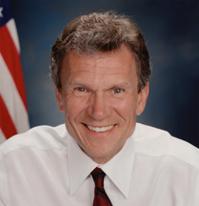
Mr. President, I have an amendment at the desk and I ask for its immediate consideration. Mr. President, I ask unanimous consent that the reading of the amendment be dispensed with. I would be happy…
Mr. President, I have an amendment at the desk and I ask for its immediate consideration.
Mr. President, I ask unanimous consent that the reading of the amendment be dispensed with.
I would be happy to yield.
Mr. President, I want to begin by complimenting the distinguished Senator from South Dakota for his remarkable statement. I am not sure anything is left to be said. I think he covered it so well and so eloquently.
He, as I think all of our colleagues recall, is the true author, the founder, the initiator of this issue during our deliberation on the farm bill itself. It is with great wisdom he spoke today and I think with great persuasion. We ought to listen to the Senator from South Dakota. Again, I thank him for all he has done to get us to this point and the efforts he has made to ensure we understand the consequences of our actions today.
Let me also thank the distinguished Senator from Wyoming, Mr. Enzi, for all of his work and help in making this amendment a bipartisan effort, to ensure that we, as colleagues interested in agriculture, a strong economy, and rural America, do the right thing with regard to this particular question involving better information and better choice for all consumers and an effort to help producers as well.
There are others also who have played a very significant role; my colleague from North Dakota, Senator Dorgan; Senator Grassley, who gave a passionate speech earlier today on this amendment, Senator Burns, Senator Bingaman, Senator Baucus, Senator Conrad, Senator Harkin, Senator Thomas; a number of Senators have expressed themselves and have been the driving force from the very beginning as we have urged careful thought about how the Congress ought to proceed with regard to this question.
The Senator from South Dakota made several important points, but if there is one that is most important it is simply we are now in a very delicate, deliberate rulemaking stage. What our colleagues in the House have chosen to do is to say, we want that stage to end; we want to terminate rulemaking before we even see what the rule is; we want to make a decision about the decision prior to the time the decision has even been made.
For us through legislation to interject our own voice, without allowing the Department of Agriculture to respond, as they are required to do in the farm bill itself, passed last year, I think is terrible policy but also premature.
What we said in the farm bill, and what my colleague from South Dakota
said so well this afternoon, is we ought to bring agriculture, consumer protection, and information into the modern era. As he noted, 48 other countries, 84 percent of our trading partners, already do that. They have already recognized the importance of good consumer information.
I find it ironic we can tell people where bananas come from, where lettuce comes from, where our clothing comes from, where just about everything else comes from, but we have those who say it is impossible for us to tell people from where our meat comes. When it comes to meat, we can tell people whether it is choice or whether it is prime, but we just cannot tell people from where it is imported. I do not think anybody can accept that logic.
If we can decide the difference between choice and prime, we can decide the difference between Mexico and the United States. That is all we are talking about, a recognition that consumers have just as much right to know where their meat comes from as they have a right to know how good the quality. When we passed the legislation, frankly on a overwhelming bipartisan basis, we said yes; we said the consumers ought to have that right.
That is what we are trying to do today: First, to allow the rulemaking process to go forward. But, second, to come down to a pretty fundamental question. It is pretty fundamental. Should consumers have the right to know? I believe the answer to that question is yes. I believe it is in keeping with a long tradition of legislation passed in this body, in both Republican and Democratic majorities.
I recall 13 years ago, so vividly, Congress passing legislation back then that we were told was impossible to enforce, impossible to administer. It was legislation that required nutrition labeling. Howard Metzenbaum, that Senator from Ohio who was a passionate advocate for consumers in so many ways, was the author of that legislation. I can recall at the time opponents of his bill said: We are going to see costs soar just as soon as this legislation is implemented; it is impractical to talk about how many calories, or what the nutrition balance is going to be, with every single product in the market. But Congress passed it anyway and, in fact, now the labeling law has become what is widely described as the most successful consumer information tool in all of history and now we consider it almost daily as a matter of course as we look at the labels when we buy the products, the packages.
There are those, in packing in particular, who have attempted to say for a lot of reasons that this legislation could carry that same ominous effect on the market once more. Four meatpackers control 80 percent of the meat market. They operate multibillion-dollar empires. We know how powerful they are and we know when they speak there are a lot of people who listen. But I believe we ought to go beyond what special interest concerns there are. We ought to have a right to know. When there is mad cow disease, as we have seen in Canada, if we are going to import meat from Canada, we ought to know those circumstances exist. And before we buy, if we have a choice between American beef and imported beef, whether it is Canada or Mexico or anyplace else, consumers ought to know. Consumers ought to have the right to make that choice for themselves.
I believe this may be one of the single most important consumer bills that our Congress is going to take up in this session of this Congress. We are told by the packers especially that this is too expensive, that we simply can't afford to implement the plan. Estimates rose as high as $2 billion. In fact, even USDA expressed real concern about the cost, advocating a review of the costs.
We did just that. We asked the General Accounting Office, as my colleague from South Dakota said, to look at the facts. Forget all the assertions; forget all the hyperbole. Let's really look at what the cost will be. They did that. They reported back not long ago and they said the cost is not $2 billion; it isn't even half of the $2 billion that was originally alleged to be the cost of the implementation of this rule. In fact they said the cost in the first year would be less than $600 million--about $582 million. I believe the USDA cost estimates are still too high because they don't take into account the extraordinary economic benefits that could be derived with this information.
Studies have shown that if we have this kind of information the actual sales of U.S. meat could increase anywhere from 1 percent to 5 percent, and that isn't taking into account bringing down the per- product cost. So, clearly, it is a fraction of the cost that was originally attributed to this rule.
The second problem we have with regard to the rule and the effort to thwart the rule is the packers are simply requiring too much paperwork and recordkeeping from the rule itself. We have to fix that. We have to ensure that we make this a practical application. I believe we can do that as well. I believe we can create the kind of opportunity for practical application of common sense just as we have shown in so many other instances--as we have shown with meat labeling, as we have shown with grading, as we have shown with consumer information provided routinely now throughout the marketplace.
I believe what we ought to do, in short, is give USDA the authority and the opportunity to work their will, to do what we hired them to do, to give us the rule, to allow us to analyze it. If we have problems at some point down the road, we can change it. We can ask the administration to work with us to come up with something better. But at least let's give them that opportunity to produce what they are required to produce under law.
I believe that is the right course of action. That is what this amendment says. It simply says, with a bipartisan voice, that we believe we are on the right track. We believe producers would benefit if consumers knew they could buy products made, produced, and marketed in this country. That is what the amendment says, and I urge its adoption.
I yield the floor.
Show 11 more
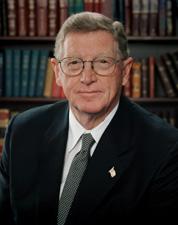
I thank my friend from North Dakota. Mr. President, if anyone in this body said the Government could invest $40 million and, in less than a year, generate commitments to invest or leverage $1.2…
I thank my friend from North Dakota.
Mr. President, if anyone in this body said the Government could invest $40 million and, in less than a year, generate commitments to invest or leverage $1.2 billion in job-creating, productivity-enhancing and life-improving infrastructure in some of America's most rural and remote areas, I would suspect the Members of this body and the public at large would judge that to be a successful and exciting economic development strategy. That is exactly what has happened.
This broadband loan program is administered by the Rural Utility Service of the United States Department of Agriculture. In 10 short months the RUS broadband loan program has generated about $1 billion in applications, primarily in Treasury rate-of-interest loans that contain at least 20 percent equity leverage. That is a pretty good return.
Let me build on what my friend from North Dakota said. I was pretty small when the debate on REA started, the Rural Electrification Administration. There is not one Senator in this body who has not gone to an annual meeting of an REA. My first line is always: If it had not been for REA, in the country areas we would be watching television by candlelight. That is a truism. Now we are in a different era. We are in an era when there is an infrastructure of the deployment of broadband. Broadband expanded services is as important to downtown America as it is to rural areas because of their ability to communicate instantly and to move massive amounts of information instantly.
We have heard of the digital divide. This is a just one small step that closes that gap or that divide. It is working. Figures back it up. I was as surprised as anyone when this funding was taken out of the bill because it was not working. That wasn't the reason at all. Broadband technologies, whether delivered by fiber, licensed or unlicensed spectrum, or satellite, have the power to transform communities.
High-speed access to the Internet is becoming as important to the rural economic development as good roads or good sewers or even electricity itself. It opens worlds of opportunities for rural businesses, farmers, and ranchers and provides up-to-the-minute market information; and rural schools for distance learning.
We still have a boarding school in my State of Montana. You take your high school students to school on Monday morning and you do not see them until Friday night. That is remote. That is frontier.
This technology is also a way to expand curriculum and allow those young people to have the same educational opportunities as young people in the more urban areas.
Think about what it does to the rural areas as far as telemedicine. We know we have an aging population in rural areas. I have 14 counties that have no doctors at all. The delivery of health care is completely different than it was years ago.
We have as much obligation to make sure there is a buildup of broadband as we had with electricity after World War II. I know what was in our house. Our house didn't have electricity until about 1949- 1950. I know that it transformed rural America. This provides the same possibility.
With this amendment, we have restored a tool which investors can use to build up this important piece of infrastructure which will become very important to rural America.
If the Federal Government could invest $40 million and in less than a year generate commitments to invest about $1.2 billion in job creating, productivity enhancing, life improving infrastructure in some of America's most rural and emote areas, I suspect most members of the body and the public at large would judge that to be a successful and exciting economic development strategy.
That is exactly what has happened in the broadband loan program administered by the Rural Utilities Service RUS, of the United States Department of Agriculture. In ten short months, the RUS broadband loan program has generated about a billion in applications primarily for treasury rate of interest loans that contain at least 20 percent equity leverage.
Broadband technologies whether delivered by fiber, licensed or unlicensed spectrum or satellite have the power to transform communities. High-speed access to the Internet is becoming as important to rural economic development as good roads and sewers. It opens worlds of opportunity for rural business, offers farmers up to the minute market information, rural schools the chance to offer advanced placement courses and rural health care facilities access to the finest medical advice and services available.
While many areas served by companies and cooperatives in the RUS telecommunications program had modern advanced services, too many rural communities were far outside the service territory of these broadband pioneers. The RUS broadband loan program offered an exciting opportunity to close this digital divide.
As one of the co-authors of the broadband loan provisions contained in the farm bill, I strongly believe that
the Senate must keep faith with the carriers, cooperatives, communities and consumers who have been inspired to launch plans to bring broadband services to hometown America.
The broadband loan program builds on a proven sixty-eight year model which has brought modern telephone, electric and water infrastructure to rural areas. The farm bill added a new broadband title to the Rural Electrification Act. It also created a reliable, predictable multi-year stream of mandatory funding to instill confidence that sufficient funds would be available until expended to encourage investment.
Unfortunately, the funding for this program which is so vital to the economic health of rural America has been severely cut. We should be doing everything possible to incentivize broadband buildout in rural America rather than targeting this creative program which promises to bring huge benefits to vast areas of the country. I call on my colleagues to support the Dorgan-Burns amendment to restore funding to this critical program. It is very important.
I thank the Chair.
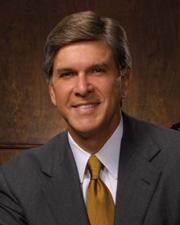
Mr. President, I rise today in reference to the Senator's sense-of-the-Senate. Obviously, there are strong emotions on this issue. One of the problems with this program is the ambiguous nature by…
Mr. President, I rise today in reference to the Senator's sense-of-the-Senate. Obviously, there are strong emotions on this issue. One of the problems with this program is the ambiguous nature by which Congress authorized it. In particular, I would call my colleagues' attention to the most recent regulation proposed by USDA.
During consideration of the 2002 farm bill, Congress wisely exempted processed foods from country of origin labeling requirements. The complex nature of such labeling would have discouraged the use of U.S. grown products as ingredients and thus would have harmed, not helped, American agriculture. Yet there is tremendous confusion in the food industry and at USDA, I might add, on what constitutes a processed product as it relates to country-of-origin labeling.
I also would like to remind my colleagues that many of these processed products, for example, frozen produce, are already required to be labeled. Frozen processed products of foreign origin are required to be labeled for country-of-origin under section 304 of the Tariff Act and have been so required since the Tariff Act was passed in 1930. I certainly do not believe it was the intention of Congress to create a costly, duplicative program that provides absolutely no benefit to American growers, consumers, or producers.
Some canned products would be covered by the program while others would not be covered. USDA's determination that frozen breaded shrimp is covered by the legislation is another example. As many of my colleagues are aware, USDA is using the Perishable Agricultural Commodities Act, PACA, as a blueprint for implementation of the Country-of-Origin Labeling program. Yet, at time of passage, breading is the type of process that would disqualify produce from getting a designation under PACA. It seems to me we are going to great lengths and undoubtedly expending great resources to mandate marking on processed products that it was no one's intention to cover.
It is just this type of confusion that USDA references in its cost- benefit analysis. We should not be concerned about whether or not we agree with the accuracy of the estimated costs. The fact is that the agricultural economy can not afford any of them. We ought to be clear that to the extent this program has support by producers, no one advocating extending its reach to processed foods. I reiterate my understanding that when the processed food exemption was included, Congress sought to avoid this excessive cost and the resulting confusion.
In fact, after reviewing USDA's proposed rule as mandated by the law, John Graham, administrator of OMB's Office of Information and Regulatory Affairs, OIRA, sent a letter to USDA's undersecretary for Marketing and Regulatory programs, Bill Hawks, which stated ``These figures indicate that this is one of the most burdensome rules to be reviewed by this administration.''
USDA's cost-benefit analysis raised several disturbing points. First, the USDA has said that ``Current evidence on country-of-origin labeling, however, does not suggest that U.S. producers will receive sufficiently higher farm prices for U.S.-labeled products to cover the costs of labeling. Moreover, it is even possible that producers could face lower farm prices as a result of labeling costs being passed back from retailers and processors.''
The USDA has also said that ``Annual costs to the U.S. economy in terms of reduced purchasing power resulting from a loss in productivity after a 10-year period of adjustment are estimated to range from $138 million to $596 million.''
I do not believe that when adopting Country-of-Origin Labeling legislation Congress intended to create such an expensive program that is detrimental to American agriculture, nor do I believe it was the intention to include processed products, including frozen produce. I hope we can work together to clarify the intention and the breadth of impact of this legislation and minimize the costs of its implementation. However, I do not believe that such a sufficient clarification can be achieved by simply defunding one portion of the program.
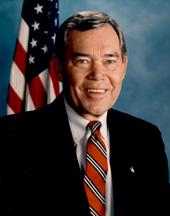
Mr. President, I rise to speak on country-of-origin myths versus facts. No. 1, Myth: U.S. consumers do not care about country-of-origin labeling. Facts: That is not what people in Wyoming and…
Mr. President, I rise to speak on country-of-origin myths versus facts.
No. 1, Myth: U.S. consumers do not care about country-of-origin labeling.
Facts: That is not what people in Wyoming and national surveys indicate. Consumers overwhelmingly support labeling because it provides product information, increased consumer choice and the chance to support American agriculture.
Two, of the largest consumer groups in the United States, Consumer Federation of America and the National Consumers League, strongly support mandatory COOL.
No. 2, Myth: Country-of-origin labeling violates our international trade agreement commitments.
Facts: Country-of-origin labeling law does not violate international trading agreements.
Marking products is allowed by international trading rules. Under Article IX of GATT, countries can require marks of origin on imported products. Many nations already require country-of-origin labeling on a variety of food products. A recent GAO study found that 48 of our 57 top trading partners require labeling for at least one of the commodities covered by COOL and 41 require labeling of meat at retail.
No. 3, Myth: The cost of compliance with the country-of-origin labeling law will be extravagant in the first year and will increase consumer food costs.
Facts: The USDA incorrectly assumed that new record keeping system requirements would meet to be established and implemented. The Majority of producers already keep records that can provide the required information.
GAO reports that USDA exaggerated its initial cost project. The $1.9 billion estimate was found to be ``questionable and not well supported.''
USDA current estimates are equally flawed. Consumer organizations estimate the average cost to individual consumers will only be about 13 cents per week.
Also, consumer surveys support COOL.
Fresh Trends, a 2002 survey, found that 86 percent of consumer respondents favor country-of-origin labeling. Of the 86 percent of consumers favoring COOL, 78 percent prefer mandatory labeling over voluntary labeling. And 60 percent of those questioned have been produce items in U.S. supermarkets that were grown in other countries. Also, 48 percent of the people identified South America as a source of produce, 33 percent Mexico, 12 percent Central America.
North Carolina State University, in February 2003, found that 74 percent of consumers believe the U.S. shouldn't buy all its food from other countries even if it is cheaper than food produced and sold here. Four out of 5 U.S. consumers believe that U.S.-grown food is fresher and safer. And 92 percent prefer to eat meat produced in the United States. Those surveyed were undecided about the safety of meat from outside the United States. Only 5 percent questioned are uncertain about U.S. produced meats. And two-thirds of consumers would pay more for food grown in the U.S. rather than abroad.
Florida Department of Agriculture & Consumer Services found that 37 percent of consumers would pay between 10 and 20 percent more for U.S. fruits and vegetables. More than two-thirds of consumers note the country where fresh produce is grown. Also, 56 percent of consumers believe that U.S. produce is safer than imported produce. And 62 percent of consumers would purchase U.S. produce if it had a COOL label. If price and appearance were equal, 61 percent of consumers would select U.S.-grown produce.
Colorado State University, in March 2003, found that 75 percent of consumers prefer to buy beef with country-of-origin labeling. And 73 percent of consumers would be willing to pay more for beef with country-of-origin labeling. Also, 69 percent of consumers are willing to pay more for steaks labeled, ``USA Guaranteed: Born and Raised in the United States'' than for those with no origin label. And 56 percent of that 69 percent were wiling to pay premiums.
Tarrance Group and Northern Illinois University, in June 2001, found that 81 percent of those surveyed want their food to come from the United States.
I urge passage of COOL.
Mr. President, I rise today to join my colleague, Senator Leahy, in offering an amendment to the fiscal year 2004 Agriculture appropriations bill that would preserve funding for our Nation's working…
Mr. President, I rise today to join my colleague, Senator Leahy, in offering an amendment to the fiscal year 2004 Agriculture appropriations bill that would preserve funding for our Nation's working lands conservation programs. This amendment parallels legislation I have cosponsored along with the Senator from Vermont. It would prohibit the U.S. Department of Agriculture, USDA, from diverting funding from key working lands programs, such as the Environmental Quality Incentives Program, EQIP, and the Farm and Ranchland Protection Program, FRPP, to pay for technical assistance.
The 2002 farm bill made it clear that the USDA should expand the opportunities for farmers across the country to participate in voluntary conservation programs that balance stewardship goals with on- farm production. This has not happened though.
In fiscal year 2003, the USDA transferred over $90 million away from working lands conservation programs to pay for technical assistance of the Conservation Reserve Program, CRP. This diversion of funds prevented countless numbers of farmers from signing up for working lands incentive programs. Unless this problem is corrected, the Department estimates that at least $77 million will be diverted in the coming fiscal year.
For many States, including my own, conservation programs are a critical source of Federal assistance and are a valuable tool for helping small and specialty crop growers enhance their production while caring for the land. Funds from these programs reach an array of producers, including fruit and vegetable farmers, dairy farmers, and ranchers. The amendment being introduced today ensures that conservation payments would reach a broad range of farmers.
Our amendment does not set new policy, rather, it reinforces the mandates Congress made in the 2002 farm bill. Congress recognized the importance of conservation in agriculture by significantly increasing funding for the working lands conservation programs. With the additional resources provided by the farm bill, Congress intended the USDA to expand the opportunity for farmers to practice farm and ranchland stewardship. Congress also anticipated the need to fund technical assistance for CRP and provided specific language in the 2002 farm bill directing the Department to use mandatory funding to pay for CRP technical assistance.
Unfortunately, the USDA has not followed through on congressional intent. Over the past year, the USDA has diverted over $90 million from working
lands incentive programs. Without corrective action, farmers' conservation options will be curtailed even more severely as the USDA transfers funding away from working lands incentive programs to pay for technical assistance for other programs in the Department.
The amendment simply, but explicitly, states that the USDA may not take funding from working lands conservation programs to pay for CRP technical assistance. This clarification will allow our working lands programs to retain the funding that Congress provides. It does not add or subtract funding, rather it makes sure that the funds are used by the program for which Congress intended.
Let me also emphasize that the amendment does not require USDA to shut down CRP in fiscal year 2004. It continues to allow the USDA to exercise its authority to provide CRP technical assistance through mandatory funding, exactly as Congress originally directed in the 2002 farm bill.
In closing, I join my distinguished colleagues today because I believe it is time that Congress step in and protect our working lands programs from being raided by the USDA. Until we can reach a broader agreement on implementation of the 2002 farm bill provision on conservation technical assistance, it is imperative that we hold our working lands conservation programs harmless. I urge my colleagues to support the amendment, and I yield the floor.
Madam President, I ask unanimous consent that we now consider my amendment No. 2080, which is pending. Madam President, this amendment provides that none of the funds made available by this act may…
Madam President, I ask unanimous consent that we now consider my amendment No. 2080, which is pending.
Madam President, this amendment provides that none of the funds made available by this act may be used to pay the salaries or expenses of employees of the Department of Agriculture to allocate the rate of price support in a manner that does not support the price of milk in accordance with section 1501(b) of the Farm Security and Rural Investment Act of 2002.
That bill provides, in unequivocal terms, that the price of milk shall be supported at the rate equal to $9.90 per hundredweight for milk containing 3.67 percent butterfat.
On July 8, 20 Senators wrote to the Secretary of Agriculture calling on the Secretary to observe the law with respect to that pricing. I ask unanimous consent that the text of this letter be printed in the Record.
Madam President, I was lead signatory of the letter. No Senator had received a reply, until today, when we were given a copy of a letter dated August 13, 2003--that is a date stamp, not the date of the letter, which purports to respond to that letter.
In effect, the letter from J.B. Penn, Under Secretary, Farm and Foreign Agriculture Services, concedes that the law was not being followed. The relevant portion reads, in part:
[W]e appreciate your concern that many dairy sector
representatives believe that cheese manufacturers are
reluctant to sell to CCC, which, in turn, causes monthly
Class III milk prices (milk use for cheese) to fall below the
$9.90 per hundredweight price support level.
Omitting some language not directly relevant, the concluding sentence of the paragraph is:
The perception is that these additional requirements and
the requisite costs lead to the reluctance.
I ask unanimous consent that that letter be printed in the Record.
Madam President, the consequence has been that the class III price of milk used to make cheese has been below the $9.90 support price 17 times since January 2000 and has been as low as $8.57 in November 2000 and $9.11 in February 2003.
The Secretary might make an argument that the average price isn't at $9.90, but factually that argument could not be made. What we are doing essentially is asking the Secretary of Agriculture to observe the law. It doesn't seem to me that that is too much to ask. We are not trying to rewrite the substantive law on milk pricing because it was enacted in 2002. But we are utilizing this appropriations bill to require that the Secretary observe the law, with the interdiction that she cannot spend any money under this bill unless she does observe the law with respect to this milk price.
We have had a considerable discussion back and forth as to whether the amendment would be accepted. I am prepared to vote on it, but I don't want to burden the record with a vote. I say to the distinguished chairman of the subcommittee of the distinguished Appropriations Committee, where I have served with the Senator from Utah for the past 13 years, in the absence of a recorded vote, which I think would be overwhelming, I am prepared to accept a voice vote. But I would like assurances that the manager will fight to keep this in conference.
This may be risky, but I direct the same question to the distinguished ranking member, the Senator from Wisconsin, my longstanding friend, Mr. Kohl.
That is very assuring. I am delighted to proceed, as I have discussed with the managers, to have a voice vote and have the amendment in effect accepted, if that is still agreeable to the distinguished Senator from Utah.
I ask for the voice vote on the amendment.
Madam President, I move to reconsider the vote.
Madam President, I thank the Chair and the Senator from Utah and the Senator from Wisconsin.
Mr. President, I thank my colleague, Senator Dorgan, for proposing this amendment and our friend and neighbor, Senator Burns from Montana, for cosponsoring it. This is an important amendment. I was…
Mr. President, I thank my colleague, Senator Dorgan, for proposing this amendment and our friend and neighbor, Senator Burns from Montana, for cosponsoring it. This is an important amendment. I was among the handful of negotiators of the farm bill representing the Senate as we negotiated with the House on the final provisions. These provisions were especially important to those of us who represent the most rural areas in the country. If you do not have broadband access in the modern world, you are left out and left behind, and your economic prospects are badly diminished.
On the other hand, if you are part of this extraordinary development, all of a sudden distance and the barriers of distance fall away.
We know the greatest difficulty for our State has been our distance from markets. That is what has disadvantaged the economic opportunity for people from North Dakota, Montana, and South Dakota. I see the Senator from Idaho--his State as well, and Wyoming, and so many other States in the heartland of America.
The provisions that were put into the farm bill were designed to give us a chance to open new opportunities and to reduce the barriers of distance. Twenty million dollars is a modest amount of money. But in the appropriations bill they cut it by more than 50 percent--to $9.1 million. We all know that amount of money in and of itself is not going to make an extraordinary difference. But that is not how it works. That small amount of money leverages much larger amounts of loans. It is more than 30 to 1. On a $6 million amount, you would increase, by at least $180 million, loans that are available across the country. I have been told it may be more than $300 million because what you are doing with a small amount of money is leveraging a large amount of lending to build broadband in the rural parts of this country.
This is a matter of fairness. It is a matter of economic development. It is a matter of keeping the promise that was made in the farm bill. Nothing could be more clear. Nothing could be more important in terms of economic opportunity in the rural parts of the country than to make sure they are part of this developing technology.
In the 1950s, Dwight Eisenhower recognized the importance of having a nation connected by an interstate highway system. He proposed the legislation that provided for Federal funding.
That is precisely what this does with the new technology--to provide broadband that ties America together that provides opportunity.
Every year, I put on an event in North Dakota which we call ``Marketplace for Entrepreneurs.'' Last year, there were 8,000 people in attendance. We have hundreds of classes. Some of them are on how you write a business plan or how to use the Internet or how to use broadband to develop your business, to expand your business, to create a business.
There is nothing more hopeful in terms of opportunity in rural areas than to have this new technology available.
Congress ought not to turn its back on a promise just made and cut the funding.
I am told now this $6 million will provide an additional loan amount of over $275 million--$6 million becomes $275 million in loans all across the rural part of the country. Why? How can that be? How can $6 million turn into $275 million? It is because you need just a little bit of a guarantee to get over the hump to cause lenders to make these loans. It gives some additional assurance that it is going to be repaid. It is very interesting. History shows that in fact the money is repaid. It works.
I urge my colleagues to support this legislation.
Mr. President, I am pleased to cosponsor this amendment, along with my colleagues Senators Leahy and Snowe. This amendment will protect the funding for important working lands conservation programs,…
Mr. President, I am pleased to cosponsor this amendment, along with my colleagues Senators Leahy and Snowe. This amendment will protect the funding for important working lands conservation programs, the Environmental Quality Incentives Program, EQIP, the Farm and Ranchland Protection Program, FRPP, the Wildlife Habitat Improvement Program, WHIP, and the Grassland Reserve Program, GRP. It will do so by prohibiting the U.S. Department of Agriculture from diverting funds from these working lands conservation programs in order to fund the technical assistance costs of another conservation program, the Conservation Reserve Program, CRP.
Working lands conservation programs provide vital assistance to a large number of farmers, but they are especially critical to small and specialty crop growers, such as the potato and blueberry growers in my State of Maine. These programs help farmers manage their land in ways that improve production while, at the same time, protecting the environment, reducing agricultural runoff, and enhancing wildlife habitat.
Unfortunately, despite the large increase in funding for these programs contained in the Farm Bill of 2002, a significant number of family farmers who wish to participate in these programs--who seek assistance in their efforts to change their farming practices in order to improve water quality and availability in their communities, or to restore wetlands--have been turned away.
They have been turned away because the U.S. Department of Agriculture decided to divert funds from these working lands conservation programs in order to pay for technical assistance for the Conservation Reserve Program. Although the Conservation Reserve Program is itself a worthy program, it serves a different purpose than the working land conservation programs. The most significant of the differences between these programs is that the Conservation Reserve Program provides payments to farmers who take farmland out of production, while the working land conservation programs provide assistance to farmers who want to keep farming their land--but to do so in a way that helps the environment.
When we enacted the farm bill of 2002, we recognized the value of both of these types of programs, the Conservation Reserve Program and the working lands conservation programs, and provided significant funding for both types of programs. The Department of Agriculture's decision to divert funds from the working lands conservation programs in order to pay for technical assistance for the Conservation Reserve Program is not consistent with the carefully crafted balance reached in the farm bill. It is also inconsistent with the commitment made by Congress and the administration to America's farmers and ranchers--a commitment to provide assistance to those who wish to participate in voluntary conservation programs while keeping their land in agricultural production.
This amendment closes the loophole that the U.S. Department of Agriculture has used to divert funds from these working lands conservation programs in order to pay for other priorities that the Department deems more important. With this amendment, we keep the commitment made to our farmers and ranchers in the farm bill of 2002--a commitment to support and assist them as they work to enhance their stewardship of the land. For these reasons, I urge my colleagues to support the amendment.
Mr. President, I rise in opposition to implementing the mandatory country-of-origin labeling, also known as COOL. This Legisition would devastate the U.S. meat industry, cost thousands of American…
Mr. President, I rise in opposition to implementing the mandatory country-of-origin labeling, also known as COOL.
This Legisition would devastate the U.S. meat industry, cost thousands of American jobs and raise food prices for the customers the law purports to benefit.
The USDA recently found the U.S. livestock industry would incur significannt costs and virtually no benefits from mandatory COOL. It concluded there was little evidence that mandatory country-of-origin labeling would lead to an increase in demand for commodities bearing the U.S. label, nor would it result in increased food safety. Rather, it found that COOL would impose up to $4 billion on ag industries in the first year and up to $600 million annually after the program had been in place for a decade. Inevitably,
these costs would be passed on to consumers in the form of higher prices at the supermarket.
A recent Texas A&M University study estimated that changes brought about by mandatory country-of-origin labeling would cost nearly 2,000 jobs in south Texas alone. Mandatory COOL would force many small producers with fewer and than 50 head of cattle out of business entirely. This would be a devastating blow just when our economy is beginning to show signs of recovery.
In addition to the impact on consumers and the American meat industry, the imposition of COOL raises serious trade ramifications that could invite retaliation from important trade partners. In the midst of negotiating free and fair trade agreements with nations around the globe, imposing severe restrictions such as COOL hamper our efforts to break down trade barriers and grow the global economy.
No one disputes that food safety is critical. But both supporters and opponents of COOL have stated this is a marketing issue and not one of food safety. When questioned by Congressman Charles Stenholm of Texas in a recent House Agriculture hearing on this issue, every witness, including supporters such as the American Farm Bureau Federation and the National Farmers Union agreed COOL should not be associated with food safety, but with the marketing of agriculture products.
U.S. agricultural industries provide the highest quality products in the world. Congressional actions should help, not hinder, their efforts. Imposing severe, costly restrictions that amount to nothing more than a marketing ploy is not the way to proceed.
I urge my colleagues to vote against the sense-of-the-Senate amendment and commit to a thoughtful and thorough debate on this important issue.

Will the Senator yield for a question? In fairness, I have supported this policy. When I return home and meet with people in grocery store chains that serve his State and mine, they have raised some…
Will the Senator yield for a question?
In fairness, I have supported this policy. When I return home and meet with people in grocery store chains that serve his State and mine, they have raised some legitimate questions, as far as I am concerned, about how much is required. It seems to me to be not a great burden to ask them to put some notice, for example, that the bananas are from Costa Rica or from some other country. Most of their concerns seem to be directed toward meat and whether or not they can legitimately trace the meat, and through all the requirements of the legislation and how much time is involved. I come to this issue realizing that whenever regulation is proposed, it is usually the first defense of the opponents to say it is going to cost 10 times as much as you would imagine to implement it.
I ask the Senator from Missouri--and this is an honest question, and I have no predisposition on his position on this issue--can he say, as he is standing there in opposition to this, that the cost estimates coming out are reasonable, in light of what is being asked of these grocery chains?
I would like to raise another issue. Really, I didn't think about it until August. I heard from two different grocery chains--one based in Chicago and one in St. Louis--about this legislation, and it goes as follows: If you establish a burden on a grocery store or a chain to follow these regulations, it necessarily involves manpower. People will have to keep records and label products, and all of that is part of it.
How much? As the Senator said, and I agree, I cannot quantify it. I don't know how much that is. The point made to me is that the Wal-Marts of the world, which pay rock-bottom wages, with no health benefits, will be able to come up with the manpower at a much lower cost than some of the major grocery store chains, some of which are union- organized, that pay a living wage and health benefits. They say to us, you are once again giving a competitive advantage to the Wal-Marts of the world that pay these low wages, with no benefits, to the disadvantage of grocery store companies who are trying to be good neighbors and good corporate citizens and provide decent wages and benefits.
Has the Senator heard this observation?
I thank the Senator.
Mr. President, I appreciate what my colleagues are trying to do. Clearly there is a problem. When we passed the farm bill, we made an unprecedented investment in conservation. First as chairman of…
Mr. President, I appreciate what my colleagues are trying to do. Clearly there is a problem.
When we passed the farm bill, we made an unprecedented investment in conservation.
First as chairman of the Agriculture Subcommittee with jurisdiction over conservation, then as the ranking member of the subcommittee, I worked closely with my colleagues on both sides to increase funding for EQIP and WHIP and the Farm and Ranchland Protection Program and to create the Grasslands Reserve Program and increase the acreage for CRP and WRP.
Unfortunately, I am unable to support this amendment, because while it attempts to correct an injustice, it does not fix the problem.
This amendment, if enacted into law, would stop the CRP program in its tracks.
The Conservation Reserve Program is one of the most successful conservation programs in agriculture. It is a win-win for agriculture and the environment. It benefits landowners and wildlife. In fact, it has been proved to be the most effective federal program for production of waterfowl in the United States.
In Idaho, we had more than 55,000 acres recently accepted into the program. If this amendment were enacted, those acres could not be enrolled because of lack of technical assistance funding.
Likewise, I have been a strong proponent for the Continuous CRP program. This important program provides tremendous benefits for the environment and maintains working lands. I have continually encouraged USDA to enroll more CRP acreage in this important part of the CRP program. However, this program would come to a screeching halt without technical assistance funding.
I share my colleagues' concerns and interest in finding a solution, but this is not a full solution. I cannot support an amendment that would have such a disastrous effect on the CRP program.
As chairman of the subcommittee, I am committed to working with Agriculture Committee Chairman Cochran and Ranking Member Harkin and other interested members to find a solution.
I urge my colleagues to seek a workable solution that protects all of our conservation programs.

Mr. President, I rise today to state my support for country-of-origin labeling. Manufactured goods sold in the United States have carried mandatory country-of-origin labels since the 1930s. Most of…
Mr. President, I rise today to state my support for country-of-origin labeling. Manufactured goods sold in the United States have carried mandatory country-of-origin labels since the 1930s. Most of our major trading partners, including Europe and Japan, already require American producers to provide this information on our agricultural exports. Today as the landscape of international trade continues to change and expand, our Nation's fruits, vegetables and meats need to carry the same important information.
Country-of-origin labeling will have two primary benefits. First, it will add value to our domestic commodities. American agriculture produces the highest quality products in the world, and they should be rewarded for that. Second, it will enable consumers to be knowledgeable about their purchases at the grocery store.
I am very concerned that the House eliminated funding for the implementation of country-of-origin labeling in their version of the 2004 Agriculture appropriations bill. It is important that the Senate conferees insist that no limits on the use of funds to enforce country- of-origin labeling requirements be included in the conference report. I urge my colleagues to support this sense-of-the-Senate resolution.
I understand that there are concerns about the implementation of country-of-origin labeling. I think country-of-origin labeling can and should be done in a way that does not overburden the retailer, the packer, or the producer.
And although the USDA's proposed rules for the implementation of country-of-origin labeling are an improvement over the previously proposed guidelines, I still believe that the proposed rules make country-of-origin more burdensome than it needs to be.
We need to let this implementation to go through so we can all work together to create a program that is simple, cost-efficient, and does not overburden the parties involved.
Bill Text
Latest available legislative text
        [Congressional Bills 108th Congress]
[From the U.S. Government Publishing Office]
[S. 108 Introduced in Senate (IS)]

108th CONGRESS
1st Session
S. 108

To provide emergency disaster assistance to agricultural producers.

_______________________________________________________________________

IN THE SENATE OF THE UNITED STATES

January 9, 2003

Mr. Nelson of Nebraska introduced the following bill; which was read
twice and referred to the Committee on Agriculture, Nutrition, and
Forestry

_______________________________________________________________________

A BILL

To provide emergency disaster assistance to agricultural producers.

Be it enacted by the Senate and House of Representatives of the
United States of America in Congress assembled,

SECTION 1. SHORT TITLE.

This Act may be cited as the ``Emergency Agricultural Disaster
Assistance Act of 2003''.

SEC. 2. CROP DISASTER ASSISTANCE.

(a) In General.--The Secretary of Agriculture (referred to in this
Act as the ``Secretary'') shall use such sums as are necessary of funds
of the Commodity Credit Corporation to make emergency financial
assistance authorized under this section available to producers on a
farm that have incurred qualifying crop losses for the 2001 or 2002
crop, or both, due to damaging weather or related condition, as
determined by the Secretary.
(b) Administration.--The Secretary shall make assistance available
under this section in the same manner as provided under section 815 of
the Agriculture, Rural Development, Food and Drug Administration, and
Related Agencies Appropriations Act, 2001 (Public Law 106-387; 114
Stat. 1549A-55), including using the same loss thresholds for the
quantity and quality losses as were used in administering that section.
(c) Crop Insurance.--In carrying out this section, the Secretary
shall not discriminate against or penalize producers on a farm that
have purchased crop insurance under the Federal Crop Insurance Act (7
U.S.C. 1501 et seq.).

SEC. 3. LIVESTOCK ASSISTANCE PROGRAM.

(a) In General.--The Secretary shall use such sums as are necessary
of funds of the Commodity Credit Corporation as are necessary to make
and administer payments for livestock losses to producers for 2001 or
2002 losses, or both, in a county that has received a corresponding
emergency designation by the President or the Secretary, of which an
amount determined by the Secretary shall be made available for the
American Indian livestock program under section 806 of the Agriculture,
Rural Development, Food and Drug Administration, and Related Agencies
Appropriations Act, 2001 (Public Law 106-387; 114 Stat. 1549A-51).
(b) Administration.--The Secretary shall make assistance available
under this section in the same manner as provided under section 806 of
the Agriculture, Rural Development, Food and Drug Administration, and
Related Agencies Appropriations Act, 2001 (Public Law 106-387; 114
Stat. 1549A-51).

SEC. 4. FUNDING.

Of the funds of the Commodity Credit Corporation, the Secretary
shall--
(1) use such sums as are necessary to carry out this Act;
and
(2) transfer to section 32 of the Act of August 24, 1935 (7
U.S.C. 612c), an amount equal to the amount of funds under
section 32 of that Act that were made available before the date
of enactment of this Act to provide disaster assistance to crop
and livestock producers for losses suffered during 2001 and
2002, to remain available until expended.

SEC. 5. REGULATIONS.

(a) In General.--The Secretary may promulgate such regulations as
are necessary to implement this Act.
(b) Procedure.--The promulgation of the regulations and
administration of this Act shall be made without regard to--
(1) the notice and comment provisions of section 553 of
title 5, United States Code;
(2) the Statement of Policy of the Secretary of Agriculture
effective July 24, 1971 (36 Fed. Reg. 13804), relating to
notices of proposed rulemaking and public participation in
rulemaking; and
(3) chapter 35 of title 44, United States Code (commonly
known as the ``Paperwork Reduction Act'').
(c) Congressional Review of Agency Rulemaking.--In carrying out
this section, the Secretary shall use the authority provided under
section 808 of title 5, United States Code.

SEC. 6. EMERGENCY DESIGNATION.

(a) In General.--The entire amount made available under this Act
shall be available only to the extent that the President submits to
Congress an official budget request for a specific dollar amount that
includes designation of the entire amount of the request as an
emergency requirement for the purposes of the Balanced Budget and
Emergency Deficit Control Act of 1985 (2 U.S.C. 900 et seq.).
(b) Designation.--The entire amount made available under this
section is designated by Congress as an emergency requirement under
sections 251(b)(2)(A) and 252(e) of that Act (2 U.S.C. 901(b)(2)(A),
902(e)).

SEC. 7. BUDGETARY TREATMENT.

Notwithstanding Rule 3 of the Budget Scorekeeping Guidelines set
forth in the Joint Explanatory Statement of the Committee of Conference
accompanying Conference Report No. 105-217, the provisions of this Act
that would have been estimated by the Office of Management and Budget
as changing direct spending or receipts under section 252 of the
Balanced Budget and Emergency Deficit Control Act of 1985 (2 U.S.C.
902) were it included in an Act other than an appropriation Act shall
be treated as direct spending or receipts legislation, as appropriate,
under section 252 of the Balanced Budget and Emergency Deficit Control
Act of 1985 (2 U.S.C. 902).
<all>