Sports Agent Responsibility and Trust Act
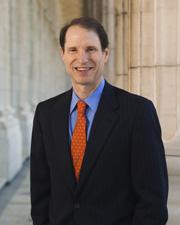 Sen. Ron Wyden (D-OR)
Legislative Activity
Stay on top of the latest movement without scrolling through every action
Read twice and referred to the Committee on Commerce, Science, and Transportation. (text of measure as introduced: CR S7245-7246)
June 3, 2003
View full timeline
Introduced in Senate
June 3, 2003
Sponsor introductory remarks on measure. (CR S7244-7245)
June 3, 2003
Read twice and referred to the Committee on Commerce, Science, and Transportation. (text of measure as introduced: CR S7245-7246)
June 3, 2003
Floor Debate
9 membersWhat members said about S. 1170 on the floor




 +4
+4
Floor Debate
9 membersWhat members said about S. 1170 on the floor
Mr. President, today I am introducing legislation designed to fulfill an important promise made by the Federal Government to the people of my State and my region some 38 years ago. I am speaking of…
Mr. President, I rise to introduce legislation that I believe will provide the necessary incentives to improve State efforts in the use of recycled materials in highway construction and maintenance.…
Mr. President, I want to speak briefly about low-income families and the recently passed tax bill. There has been much heat and very little light about what we have done in this bill. Most of the…
Mr. President, I believe ``home'' is one of the warmest words in the English language. At the end of a long day, I think the favorite phrase of every hardworking working man and woman in this country…
Mr. President, I rise today to discuss a particular public health problem--the growing rates of obesity. This epidemic has steadily increased to a level twice what it was thirty years ago. Obesity…
Show 5 more
Mr. President, I have sought recognition to introduce legislation that would reduce our Nation's dependence on imported oil. Last year, Senator Carper and I introduced this legislation as an…

Mr. President, I rise today, with my colleague Senator Kohl, to introduce S. 1177, the Prevent All Cigarette Trafficking, PACT Act of 2003. I do so because of my concern that contraband cigarettes…
Mr. President, summer is upon us. For many college athletes, that means leaving campus and heading back to a home in a different state. Some may take the opportunity to do some traveling, or even to…
Mr. President, summer is upon us. For many college athletes, that means leaving campus and heading back to a home in a different state. Some may take the opportunity to do some traveling, or even to…

Mr. President, I rise today to speak about a frightening epidemic in our Nation. A staggering 61 percent of adults and 13 percent of children and adolescents in our Nation are overweight or obese.…
Bill Text
Latest available legislative text
        [Congressional Bills 108th Congress]
[From the U.S. Government Publishing Office]
[S. 1170 Introduced in Senate (IS)]

108th CONGRESS
1st Session
S. 1170

To designate certain conduct by sports agents relating to the signing
of contracts with student athletes as unfair and deceptive acts or
practices to be regulated by the Federal Trade Commission.

_______________________________________________________________________

IN THE SENATE OF THE UNITED STATES

June 3, 2003

Mr. Wyden introduced the following bill; which was read twice and
referred to the Committee on Commerce, Science, and Transportation

_______________________________________________________________________

A BILL

To designate certain conduct by sports agents relating to the signing
of contracts with student athletes as unfair and deceptive acts or
practices to be regulated by the Federal Trade Commission.

Be it enacted by the Senate and House of Representatives of the
United States of America in Congress assembled,

SECTION 1. SHORT TITLE.

This Act may be cited as the ``Sports Agent Responsibility and
Trust Act''.

SEC. 2. DEFINITIONS.

As used in this Act, the following definitions apply:
(1) Agency contract.--The term ``agency contract'' means an
oral or written agreement in which a student athlete authorizes
a person to negotiate or solicit on behalf of the student
athlete a professional sports contract or an endorsement
contract.
(2) Athlete agent.--The term ``athlete agent'' means an
individual who enters into an agency contract with a student
athlete, or directly or indirectly recruits or solicits a
student athlete to enter into an agency contract, and does not
include a spouse, parent, sibling, grandparent, or guardian of
such student athlete, any legal counsel for purposes other than
that of representative agency, or an individual acting solely
on behalf of a professional sports team or professional sports
organization.
(3) Athletic director.--The term ``athletic director''
means an individual responsible for administering the athletic
program of an educational institution or, in the case that such
program is administered separately, the athletic program for
male students or the athletic program for female students, as
appropriate.
(4) Commission.--The term ``Commission'' means the Federal
Trade Commission.
(5) Endorsement contract.--The term ``endorsement
contract'' means an agreement under which a student athlete is
employed or receives consideration for the use by the other
party of that individual's person, name, image, or likeness in
the promotion of any product, service, or event.
(6) Intercollegiate sport.--The term ``intercollegiate
sport'' means a sport played at the collegiate level for which
eligibility requirements for participation by a student athlete
are established by a national association for the promotion or
regulation of college athletics.
(7) Professional sports contract.--The term ``professional
sports contract'' means an agreement under which an individual
is employed, or agrees to render services, as a player on a
professional sports team, with a professional sports
organization, or as a professional athlete.
(8) State.--The term ``State'' includes a State of the
United States, the District of Columbia, Puerto Rico, the
United States Virgin Islands, or any territory or insular
possession subject to the jurisdiction of the United States.
(9) Student athlete.--The term ``student athlete'' means an
individual who engages in, is eligible to engage in, or may be
eligible in the future to engage in, any intercollegiate sport.
An individual who is permanently ineligible to participate in a
particular intercollegiate sport is not a student athlete for
purposes of that sport.

SEC. 3. REGULATION OF UNFAIR AND DECEPTIVE ACTS AND PRACTICES IN
CONNECTION WITH THE CONTACT BETWEEN AN ATHLETE AGENT AND
A STUDENT ATHLETE.

(a) Conduct Prohibited.--It is unlawful for an athlete agent to--
(1) directly or indirectly recruit or solicit a student
athlete to enter into an agency contract, by--
(A) giving any false or misleading information or
making a false promise or representation; or
(B) providing anything of value to a student
athlete or anyone associated with the student athlete
before the student athlete enters into an agency
contract including any consideration in the form of a
loan, or acting in the capacity of a guarantor or co-
guarantor for any debt;
(2) enter into an agency contract with a student athlete
without providing the student athlete with the disclosure
document described in subsection (b); or
(3) predate or postdate an agency contract.
(b) Required Disclosure by Athlete Agents to Student Athletes.--
(1) In general.--In conjunction with the entering into of
an agency contract, an athlete agent shall provide to the
student athlete, or, if the student athlete is under the age of
18 to such student athlete's parent or legal guardian, a
disclosure document that meets the requirements of this
subsection. Such disclosure document is separate from and in
addition to any disclosure which may be required under State
law.
(2) Signature of student athlete.--The disclosure document
must be signed by the student athlete, or, if the student
athlete is under the age of 18 by such student athlete's parent
or legal guardian, prior to entering into the agency contract.
(3) Required language.--The disclosure document must
contain, in close proximity to the signature of the student
athlete, or, if the student athlete is under the age of 18, the
signature of such student athlete's parent or legal guardian, a
conspicuous notice in boldface type stating: ``Warning to
Student Athlete: If you agree orally or in writing to be
represented by an agent now or in the future you may lose your
eligibility to compete as a student athlete in your sport. Within 72
hours after entering into this contract or before the next athletic
event in which you are eligible to participate, whichever occurs first,
both you and the agent by whom you are agreeing to be represented must
notify the athletic director of the educational institution at which
you are enrolled, or other individual responsible for athletic programs
at such educational institution, that you have entered into an agency
contract.''.

SEC. 4. ENFORCEMENT.

(a) Unfair or Deceptive Act or Practice.--A violation of this Act
shall be treated as a violation of a rule defining an unfair or
deceptive act or practice prescribed under section 18(a)(1)(B) of the
Federal Trade Commission Act (15 U.S.C. 57a(a)(1)(B)).
(b) Actions by the Commission.--The Commission shall enforce this
Act in the same manner, by the same means, and with the same
jurisdiction, powers, and duties as though all applicable terms and
provisions of the Federal Trade Commission Act (15 U.S.C. 41 et seq.)
were incorporated into and made a part of this Act.

SEC. 5. ACTIONS BY STATES.

(a) In General.--
(1) Civil actions.--In any case in which the attorney
general of a State has reason to believe that an interest of
the residents of that State has been or is threatened or
adversely affected by the engagement of any athlete agent in a
practice that violates section 3 of this Act, the State may
bring a civil action on behalf of the residents of the State in
a district court of the United States of appropriate
jurisdiction to--
(A) enjoin that practice;
(B) enforce compliance with this Act; or
(C) obtain damage, restitution, or other
compensation on behalf of residents of the State.
(2) Notice.--
(A) In general.--Before filing an action under
paragraph (1), the attorney general of the State
involved shall provide to the Commission--
(i) written notice of that action; and
(ii) a copy of the complaint for that
action.
(B) Exemption.--Subparagraph (A) shall not apply
with respect to the filing of an action by an attorney
general of a State under this subsection, if the
attorney general determines that it is not feasible to
provide the notice described in that subparagraph
before filing of the action. In such case, the attorney
general of a State shall provide notice and a copy of
the complaint to the Commission at the same time as the
attorney general files the action.
(b) Intervention.--
(1) In general.--On receiving notice under subsection
(a)(2), the Commission shall have the right to intervene in the
action that is the subject of the notice.
(2) Effect of intervention.--If the Commission intervenes
in an action under subsection (a), it shall have the right--
(A) to be heard with respect to any matter that
arises in that action; and
(B) to file a petition for appeal.
(c) Construction.--For purposes of bringing any civil action under
subsection (a), nothing in this title shall be construed to prevent an
attorney general of a State from exercising the powers conferred on the
attorney general by the laws of that State to--
(1) conduct investigations;
(2) administer oaths or affirmations; or
(3) compel the attendance of witnesses or the production of
documentary and other evidence.
(d) Actions by the Commission.--In any case in which an action is
instituted by or on behalf of the Commission for a violation of section
3, no State may, during the pendency of that action, institute an
action under subsection (a) against any defendant named in the
complaint in that action.
(e) Venue.--Any action brought under subsection (a) may be brought
in the district court of the United States that meets applicable
requirements relating to venue under section 1391 of title 28, United
States Code.
(f) Service of Process.--In an action brought under subsection (a),
process may be served in any district in which the defendant--
(1) is an inhabitant; or
(2) may be found.

SEC. 6. PROTECTION OF EDUCATIONAL INSTITUTION.

(a) Notice Required.--Within 72 hours after entering into an agency
contract or before the next athletic event in which the student athlete
may participate, whichever occurs first, the athlete agent and the
student athlete shall each inform the athletic director of the
educational institution at which the student athlete is enrolled, or
other individual responsible for athletic programs at such educational
institution, that the student athlete has entered into an agency
contract, and the athlete agent shall provide the athletic director
with notice in writing of such a contract.
(b) Civil Remedy.--
(1) In general.--An educational institution has a right of
action against an athlete agent for damages caused by a
violation of this Act.
(2) Damages.--Damages of an educational institution may
include amd are limited to actual losses and expenses incurred
because, as a result of the conduct of the athlete agent, the
educational institution was injured by a violation of this Act
or was penalized, disqualified, or suspended from participation
in athletics by a national association for the promotion and
regulation of athletics, by an athletic conference, or by
reasonable self-imposed disciplinary action taken to mitigate
actions likely to be imposed by such an association or
conference.
(3) Costs and attorneys fees.--In an action taken under
this section, the court may award to the prevailing party costs
and reasonable attorneys fees.
(4) Effect on other rights, remedies and defenses.--This
section does not restrict the rights, remedies, or defenses of
any person under law or equity.

SEC. 7. LIMITATION.

Nothing in the Act shall be construed to prohibit an individual
from seeking any remedies available under existing State law or equity.

SEC. 8. SENSE OF CONGRESS.

It is the sense of Congress that States should enact the Uniform
Athlete Agents Act of 2000 drafted by the National Conference of
Commissioners on Uniform State Laws, to protect student athletes and
the integrity of amateur sports from unscrupulous sports agents. In
particular, it is the sense of Congress that States should enact the
provisions relating to the registration of sports agents, the required
form of contract, the right of the student athlete to cancel an agency
contract, the disclosure requirements relating to record maintenance,
reporting, renewal, notice, warning, and security, and the provisions
for reciprocity among the States.
<all>