Burmese Freedom and Democracy Act of 2003
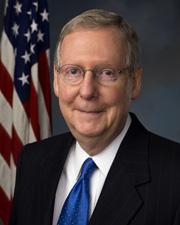 Sen. Mitch McConnell (R-KY)
Legislative Activity
Stay on top of the latest movement without scrolling through every action
Passed Senate with an amendment by Yea-Nay Vote. 97 - 1. Record Vote Number: 220. (text: CR S7700-7702)
June 11, 2003
View full timeline
Introduced in Senate
June 9, 2003
Introduced in the Senate. Read the first time. Placed on Senate Legislative Calendar under Read the First Time.
June 9, 2003
Read the second time. Placed on Senate Legislative Calendar under General Orders. Calendar No. 132.
June 10, 2003
Measure laid before Senate by unanimous consent. (consideration: CR S7690-7702)
June 11, 2003
Passed Senate with an amendment by Yea-Nay Vote. 97 - 1. Record Vote Number: 220. (text: CR S7700-7702)
June 11, 2003
Voting History
1 vote recorded • Roll call available
Floor Debate
15 membersWhat members said about S. 1215 on the floor

 +10
+10
Floor Debate
15 membersWhat members said about S. 1215 on the floor
Madam President, the situation in Burma is indeed dire and requires our immediate response. We will make that response within the next hour. S. 1215, which is now the pending business in the Senate,…
I thank the Chair, and I also thank the distinguished Senator from Kentucky for his leadership on this issue. I am very proud to join with him. Madam President, in 1996, Senator William Cohen and I…
Mr. President, I thank my colleagues for allowing me to speak on this legislation. The weekend before last, the military junta in Burma, ironically going by the name of the State Peace and…
Madam President, I ask unanimous consent that the order for the quorum call be rescinded. Madam President, I ask unanimous consent to be able to proceed on the time controlled by Senator Feinstein.…
Madam President, I thank my colleague from Kentucky, Senator McConnell, for his leadership, and I thank the Senator from California, Mrs. Feinstein. I thank Senator McConnell for his longstanding…
Show 8 more

Madam President, I strongly support the Burmese Freedom and Democracy Act of 2002 that has been introduced by Senators McConnell and Feinstein. The legislation, as was said, seeks to pressure the…

Mr. President, I wish to make a few comments on Medicare and the importance of strengthening and improving Medicare. We are addressing this in the Finance Committee currently and will have it on the…

Mr. President, I rise today to echo the condemnations of the military rulers of Burma that my colleagues have so forcefully offered. Burma should by all rights be a prosperous country. It has over 50…

Mr. President, I stand today in support of S. 1182, introduced by Senator McConnell that I am cosponsoring. This bill answers the rising concern that democracy cannot begin to take its first…

Mr. President, 13 years ago, Aung San Suu Kyi and her party, the National League for Democracy, won an election in Burma with 82 percent of the vote. It was a clear sign that the Burmese people had…

Mr. President, I rise today to support S. 1215 and to express my dismay about the current human rights situation in Burma. On May 30, opposition leader Aung San Suu Kyi and at least 17 officials of…
Mr. President, I will take very little time. To underscore where we are on the Burma sanctions issue, I tried to get this bill cleared for this morning for an hour equally divided and a rollcall…
Mr. President, reserving the right to object, this is obviously a very important matter, and we should address this in a very careful and appropriate way. I might say to Senators, this matter has not…
Show 11 more
Mr. President, we have been negotiating all day with Senator Baucus, the ranking member of the Finance Committee, in the hopes of getting the Burma bill cleared, but, regretfully, that has not…

Reserving the right to object. I will have none. But when the matters that have just been agreed upon have been completed, we will then have another amendment on the Energy bill. It will be offered…

Mr. President, today I am pleased to express my strong support for the Burmese Freedom and Democracy Act of 2003. This bill sends a powerful message to the ruling military junta in Burma that their…
Madam President, I understand that S. 1215 is at the desk, and I ask for its first reading. Madam President, I now ask for its second reading and object to further proceedings on the matter. Madam…

Mr. President, when Aung San Suu Kyi and her supporters were so viciously assaulted last month, Burma's brutal leaders were responsible for yet another major crime against human rights. The violent…
Mr. President, I understand that S. 1215 is at the desk and due for its second reading; is that correct? I ask unanimous consent that it be in order to read the title of the measure. I ask that the…

Reserving the right to object, the two leaders have indicated that we would have more debate on that in the morning, however, on the offshore oil inventory. I don't know what time they are going to…
Reserving the right to object, Mr. President, I know the deepness of the feelings of the Senator from Kentucky. I want the record to reflect that this is bipartisan legislation. One of the chief…
Madam President, I ask unanimous consent the Senate now proceed to the consideration of S. 1215, the Burma sanctions bill; that there then be 60 minutes of debate equally divided under the control of…
I announce that the Senator from Massachusetts (Mr. Kerry) and the Senator from New York (Mr. Schumer) are necessarily absent. I further announce that, if present and voting, the Senator from…
Reserving the right to object. Mr. President, I have been told by Senator Baucus and Senator Grassley that they object to this. I would say this, however; that people in Burma, toward whom this is…
Bill Text
3 versions available
        [Congressional Bills 108th Congress]
[From the U.S. Government Publishing Office]
[S. 1215 Engrossed in Senate (ES)]

108th CONGRESS
1st Session
S. 1215

_______________________________________________________________________

AN ACT

To sanction the ruling Burmese military junta, to strengthen Burma's
democratic forces and support and recognize the National League of
Democracy as the legitimate representative of the Burmese people, and
for other purposes.

Be it enacted by the Senate and House of Representatives of the
United States of America in Congress assembled,

SECTION 1. SHORT TITLE.

This Act may be cited as the ``Burmese Freedom and Democracy Act of
2003''.

SEC. 2. FINDINGS.

Congress makes the following findings:
(1) The State Peace and Development Council (SPDC) has
failed to transfer power to the National League for Democracy
(NLD) whose parliamentarians won an overwhelming victory in the
1990 elections in Burma.
(2) The SPDC has failed to enter into meaningful, political
dialogue with the NLD and ethnic minorities and has dismissed
the efforts of United Nations Special Envoy Razali bin Ismail
to further such dialogue.
(3) According to the State Department's ``Report to the
Congress Regarding Conditions in Burma and U.S. Policy Toward
Burma'' dated March 28, 2003, the SPDC has become ``more
confrontational'' in its exchanges with the NLD.
(4) On May 30, 2003, the SPDC, threatened by continued
support for the NLD throughout Burma, brutally attacked NLD
supporters, killed and injured scores of civilians, and
arrested democracy advocate Aung San Suu Kyi and other
activists.
(5) The SPDC continues egregious human rights violations
against Burmese citizens, uses rape as a weapon of intimidation
and torture against women, and forcibly conscripts child-
soldiers for the use in fighting indigenous ethnic groups.
(6) The SPDC has demonstrably failed to cooperate with the
United States in stopping the flood of heroin and
methamphetamines being grown, refined, manufactured, and
transported in areas under the control of the SPDC serving to
flood the region and much of the world with these illicit
drugs.
(7) The SPDC provides safety, security, and engages in
business dealings with narcotics traffickers under indictment
by United States authorities, and other producers and
traffickers of narcotics.
(8) The International Labor Organization (ILO), for the
first time in its 82-year history, adopted in 2000, a
resolution recommending that governments, employers, and
workers organizations take appropriate measures to ensure that
their relations with the SPDC do not abet the government-
sponsored system of forced, compulsory, or slave labor in
Burma, and that other international bodies reconsider any
cooperation they may be engaged in with Burma and, if
appropriate, cease as soon as possible any activity that could
abet the practice of forced, compulsory, or slave labor.
(9) The SPDC has integrated the Burmese military and its
surrogates into all facets of the economy effectively
destroying any free enterprise system.
(10) Investment in Burmese companies and purchases from
them serve to provide the SPDC with currency that is used to
finance its instruments of terror and repression against the
Burmese people.
(11) On April 15, 2003, the American Apparel and Footwear
Association expressed its ``strong support for a full and
immediate ban on U.S. textiles, apparel and footwear imports
from Burma'' and called upon the United States Government to
``impose an outright ban on U.S. imports'' of these items until
Burma demonstrates respect for basic human and labor rights of
its citizens.
(12) The policy of the United States, as articulated by the
President on April 24, 2003, is to officially recognize the NLD
as the legitimate representative of the Burmese people as
determined by the 1990 election.

SEC. 3. BAN AGAINST TRADE THAT SUPPORTS THE MILITARY REGIME OF BURMA.

(a) General Ban.--
(1) In general.--Notwithstanding any other provision of law
and except as provided in section 9, until such time as the
President determines and certifies to Congress that Burma has
met the conditions described in paragraph (3), no article may
be imported into the United States that is produced, mined,
manufactured, grown, or assembled in Burma.
(2) Ban on imports from certain companies.--The import
restrictions contained in paragraph (1) shall apply to, among
other entities--
(A) the SPDC, any ministry of the SPDC, a member of
the SPDC or an immediate family member of such member;
(B) known narcotics traffickers from Burma or an
immediate family member of such narcotics trafficker;
(C) the Union of Myanmar Economics Holdings
Incorporated (UMEHI) or any company in which the UMEHI
has a fiduciary interest;
(D) the Myanmar Economic Corporation (MEC) or any
company in which the MEC has a fiduciary interest;
(E) the Union Solidarity and Development
Association (USDA); and
(F) any successor entity for the SPDC, UMEHI, MEC,
or USDA.
(3) Conditions described.--The conditions described in this
paragraph are the following:
(A) The SPDC has made substantial and measurable
progress to end violations of internationally
recognized human rights including rape, and the
Secretary of State, after consultation with the ILO
Secretary General and relevant nongovernmental
organizations, reports to the appropriate congressional
committees that the SPDC no longer systematically
violates workers rights, including the use of forced
and child labor, and conscription of child-soldiers.
(B) The SPDC has made measurable and substantial
progress toward implementing a democratic government
including--
(i) releasing all political prisoners;
(ii) allowing freedom of speech and the
press;
(iii) allowing freedom of association;
(iv) permitting the peaceful exercise of
religion; and
(v) bringing to a conclusion an agreement
between the SPDC and the democratic forces led
by the NLD and Burma's ethnic nationalities on
the transfer of power to a civilian government
accountable to the Burmese people through
democratic elections under the rule of law.
(C) Pursuant to the terms of section 706 of the
Foreign Relations Authorization Act, Fiscal Year 2003
(Public Law 107-228), Burma has not failed demonstrably
to make substantial efforts to adhere to its
obligations under international counternarcotics
agreements and to take other effective counternarcotics
measures, including the arrest and extradition of all
individuals under indictment in the United States for
narcotics trafficking, and concrete and measurable
actions to stem the flow of illicit drug money into
Burma's banking system and economic enterprises and to
stop the manufacture and export of methamphetamines.
(4) Appropriate congressional committees.--In this Act, the
term ``appropriate congressional committees'' means the
Committee on Foreign Relations, the Committee on Finance, and
the Committee on Appropriations of the Senate and the Committee
on International Relations, the Committee on Ways and Means,
and the Committee on Appropriations of the House of
Representatives.
(b) Waiver Authorities.--
(1) In general.--The President may waive the prohibitions
described in this section for any or all products imported from
Burma to the United States if the President determines and
notifies the appropriate congressional committees that to do so
is in the vital national security interest of the United
States.
(2) International obligations.--The President may waive any
provision of this Act found to be in violation of any
international obligations of the United States pursuant to any
final ruling relating to Burma under the dispute settlement
procedures of the World Trade Organization.

SEC. 4. FREEZING ASSETS OF THE BURMESE REGIME IN THE UNITED STATES.

Not later than 60 days after the date of enactment of this Act, the
Secretary of the Treasury shall direct, and promulgate regulations to
the same, that any United States financial institution holding funds
belonging to the SPDC or the assets of those individuals who hold
senior positions in the SPDC or its political arm, the Union Solidarity
Development Association, shall promptly report those assets to the
Office of Foreign Assets Control. The Secretary of the Treasury may
take such action as may be necessary to secure such assets or funds.

SEC. 5. LOANS AT INTERNATIONAL FINANCIAL INSTITUTIONS.

The Secretary of the Treasury shall instruct the United States
executive director to each appropriate international financial
institution in which the United States participates, to oppose, and
vote against the extension by such institution of any loan or financial
or technical assistance to Burma until such time as the conditions
described in section 3(a)(3) are met.

SEC. 6. EXPANSION OF VISA BAN.

(a) In General.--
(1) Visa ban.--The President is authorized to deny visas
and entry to the former and present leadership of the SPDC or
the Union Solidarity Development Association.
(2) Updates.--The Secretary of State shall coordinate on a
biannual basis with representatives of the European Union to
ensure that an individual who is banned from obtaining a visa
by the European Union for the reasons described in paragraph
(1) is also banned from receiving a visa from the United
States.
(b) Publication.--The Secretary of State shall post on the
Department of State's website the names of individuals whose entry into
the United States is banned under subsection (a).

SEC. 7. CONDEMNATION OF THE REGIME AND DISSEMINATION OF INFORMATION.

(a) In General.--Congress encourages the Secretary of State to
highlight the abysmal record of the SPDC to the international community
and use all appropriate fora, including the Association of Southeast
Asian Nations Regional Forum and Asian Nations Regional Forum, to
encourage other states to restrict financial resources to the SPDC and
Burmese companies while offering political recognition and support to
Burma's democratic movement including the National League for Democracy
and Burma's ethnic groups.
(b) United States Embassy.--The United States embassy in Rangoon
shall take all steps necessary to provide access of information and
United States policy decisions to media organs not under the control of
the ruling military regime.

SEC. 8. SUPPORT DEMOCRACY ACTIVISTS IN BURMA.

(a) In General.--The President is authorized to use all available
resources to assist Burmese democracy activists dedicated to nonviolent
opposition to the regime in their efforts to promote freedom,
democracy, and human rights in Burma, including a listing of
constraints on such programming.
(b) Reports.--
(1) First report.--Not later than 3 months after the date
of enactment of this Act, the Secretary of State shall provide
the appropriate congressional committees a comprehensive report
on its short- and long-term programs and activities to support
democracy activists in Burma, including a list of constraints
on such programming.
(2) Report on resources.--Not later than 6 months after the
date of enactment of this Act, the Secretary of State shall
provide the appropriate congressional committees a report
identifying resources that will be necessary for the
reconstruction of Burma, after the SPDC is removed from power,
including--
(A) the formation of democratic institutions;
(B) establishing the rule of law;
(C) establishing freedom of the press;
(D) providing for the successful reintegration of
military officers and personnel into Burmese society;
and
(E) providing health, educational, and economic
development.
(3) Report on trade sanctions.--Not later than 90 days
before the date that the import restrictions contained in
section 3(a)(1) are to expire, the Secretary of State, in
consultation with the United States Trade Representative and
other appropriate agencies, shall submit to the appropriate
congressional committees, a report on--
(A) conditions in Burma, including human rights
violations, arrest and detention of democracy
activists, forced and child labor, and the status of
dialogue between the SPDC and the NLD and ethnic
minorities;
(B) bilateral and multilateral measures undertaken
by the United States Government and other governments
to promote human rights and democracy in Burma; and
(C) the impact and effectiveness of the provisions
of this Act in furthering the policy objectives of the
United States toward Burma.

SEC. 9. DURATION OF SANCTIONS.

(a) Termination by Request From Democratic Burma.--The President
may terminate any provision in this Act upon the request of a
democratically elected government in Burma, provided that all the
conditions in section 3(a)(3) have been met.
(b) Continuation of Import Sanctions.--
(1) Expiration.--The import restrictions contained in
section 3(a)(1) shall expire 1 year from the date of enactment
of this Act unless renewed under paragraph (2) of this section.
(2) Resolution by congress.--The import restrictions
contained in section 3(a)(1) may be renewed annually for a 1-
year period if, prior to the anniversary of the date of
enactment of this Act, and each year thereafter, a renewal
resolution is enacted into law in accordance with subsection
(c).
(c) Renewal Resolutions.--
(1) In general.--For purposes of this section, the term
``renewal resolution'' means a joint resolution of the 2 Houses
of Congress, the sole matter after the resolving clause of
which is as follows: ``That Congress approves the renewal of
the import restrictions contained in section 3(a)(1) of the
Burmese Freedom and Democracy Act of 2003.''
(2) Procedures.--
(A) In general.--A renewal resolution--
(i) may be introduced in either House of
Congress by any member of such House at any
time within the 90-day period before the
expiration of the import restrictions contained
in section 3(a)(1); and
(ii) the provisions of subparagraph (B)
shall apply.
(B) Expedited consideration.--The provisions of
section 152 (b), (c), (d), (e), and (f) of the Trade
Act of 1974 (19 U.S.C. 2192 (b), (c), (d), (e), and
(f)) apply to a renewal resolution under this Act as if
such resolution were a resolution described in section
152(a) of the Trade Act of 1974.

Passed the Senate June 11, 2003.

Attest:

Secretary.
108th CONGRESS

1st Session

S. 1215

_______________________________________________________________________

AN ACT

To sanction the ruling Burmese military junta, to strengthen Burma's
democratic forces and support and recognize the National League of
Democracy as the legitimate representative of the Burmese people, and
for other purposes.