Enhanced 911 Emergency Communications Act of 2003
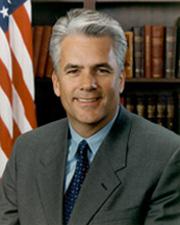
 Sen. Conrad R. Burns (R-MT)
Legislative Activity
Stay on top of the latest movement without scrolling through every action
Placed on Senate Legislative Calendar under General Orders. Calendar No. 254.
August 26, 2003
View full timeline
Introduced in Senate
June 12, 2003
Read twice and referred to the Committee on Commerce, Science, and Transportation. (text of measure as introduced: CR S7837-7838)
June 12, 2003
Committee on Commerce, Science, and Transportation. Ordered to be reported without amendment favorably.
July 17, 2003
Committee on Commerce, Science, and Transportation. Reported by Senator McCain under authority of the order of the Senate of 07/29/03 legislative day 07/21/03 without amendment. With written report No. 108-130.
August 26, 2003
Placed on Senate Legislative Calendar under General Orders. Calendar No. 254.
August 26, 2003
Floor Debate
12 membersWhat members said about S. 1250 on the floor



 +7
+7
Floor Debate
12 membersWhat members said about S. 1250 on the floor
Mr. President, I rise today to introduce legislation, the Homeland Security Grant Enhancement Act, to streamline and strengthen the way we help our States, communities, and first responders protect…
Mr. President, I rise today as Ranking Member of the Committee on Small Business and Entrepreneurship to introduce the Vocational and Technical Entrepreneurship Development Act of 2003, which is the…
Mr. President, I rise today to join my friend from Maine, Ms. Collins, in introducing the Homeland Security Grant Enhancement Act of 2003, legislation that greatly improves the method currently used…
Mr. President, I have come to the floor today to introduce legislation that will help many young families in America meet the financial challenges associated with raising children. The legislation I…
Mr. President, today, I join my esteemed colleague, the Senator from Massachusetts, Senator Kennedy, in introducing the Individuals with Disabilities Education Improvement Act of 2003. In the past,…
Show 7 more

Mr. President, it is a privilege to join with Senator Gregg to introduce the reauthorization of the Individuals with Disabilities Act. Our goal is a quality education for every disabled child. We…
Mr. President, I am proud to introduce, along with Senator Lugar, the Puerto Rico Karst Conservation Act of 2003. This very important bill will provide protection for Puerto Rico's karst region by…
Mr. President, I ask unanimous consent that the Committee on Banking, Housing, and Urban Affairs be authorized to meet during the session of the Senate on July 17, 2003, at 10:00 a.m. to conduct a…
Mr. President, I ask unanimous consent that the text of the bill I introduce today to improve health care quality and reduce costs under the Medicare program be printed in the Record.
Mr. President, I ask unanimous consent that the text of ``The TRICARE Retirees Opportunity Act of 2003'' be printed in the Record.

Mr. President, I ask unanimous consent that the text of the bill be printed in the Record.
Mr. President, I ask unanimous consent that the text of the bill be printed in the Record.
Bill Text
2 versions available
        [Congressional Bills 108th Congress]
[From the U.S. Government Publishing Office]
[S. 1250 Reported in Senate (RS)]

Calendar No. 254
108th CONGRESS
1st Session
S. 1250

[Report No. 108-130]

To improve, enhance, and promote the Nation's homeland security, public
safety, and citizen activated emergency response capabilities through
the use of enhanced 911 services, to further upgrade Public Safety
Answering Point capabilities and related functions in receiving E-911
calls, and to support in the construction and operation of a ubiquitous
and reliable citizen activated system and other purposes.

_______________________________________________________________________

IN THE SENATE OF THE UNITED STATES

June 12, 2003

Mr. Burns (for himself, Mrs. Clinton, Mr. Lautenberg) introduced the
following bill; which was read twice and referred to the Committee on
Commerce, Science, and Transportation

August 26, 2003

Reported under authority of the order of the Senate of July 29
(legislative day, July 21), 2003, by Mr. McCain, without amendment

_______________________________________________________________________

A BILL

To improve, enhance, and promote the Nation's homeland security, public
safety, and citizen activated emergency response capabilities through
the use of enhanced 911 services, to further upgrade Public Safety
Answering Point capabilities and related functions in receiving E-911
calls, and to support the construction and operation of a ubiquitous
and reliable citizen activated system and other purposes.

Be it enacted by the Senate and House of Representatives of the
United States of America in Congress assembled,

SECTION 1. SHORT TITLE.

This Act may be cited as the ``Enhanced 911 Emergency
Communications Act of 2003''.

SEC. 2. FINDINGS.

The Congress finds that--
(1) for the sake of our Nation's homeland security and
public safety, a universal emergency telephone number (911)
that is enhanced with the most modern and state-of-the-art
telecommunications capabilities possible should be available to
all citizens in all regions of the Nation;
(2) enhanced emergency communications require Federal,
State, and local government resources and coordination;
(3) any funds that are collected from fees imposed on
consumer bills for the purposes of funding 911 services or
enhanced 911 should go only for the purposes for which the
funds are collected; and
(4) enhanced 911 is a high national priority and it
requires Federal leadership, working in cooperation with State
and local governments and with the numerous organizations
dedicated to delivering emergency communications services.

SEC. 3. PURPOSES.

The purposes of this Act are--
(1) to coordinate emergency communications systems,
including 911 services and E-911 services, at the Federal,
State, and local levels;
(2) to provide stability and resources to State and local
Public Safety Answering Points, to facilitate the prompt
deployment of enhanced 911 services throughout the United
States in a ubiquitous and reliable infrastructure; and
(3) to ensure that funds collected on telecommunications
bills for enhancing emergency 911 services are used only for
the purposes for which the funds are being collected.

SEC. 4. EMERGENCY COMMUNICATIONS COORDINATION.

(a) In General.--Part C of title I of the National
Telecommunications and Information Administration Organization Act (47
U.S.C. 901 et seq.) is amended by adding at the end the following:

``SEC. 158. COORDINATION OF EMERGENCY COMMUNICATIONS.

``(a) Establishment of Task Force.--The Assistant Secretary shall
establish an Emergency Communications Task Force to facilitate
coordination between Federal, State, and local emergency communications
systems, emergency personnel, and public safety organizations. The task
force shall include the following:
``(1) Representatives from Federal agencies, including--
``(A) the Department of Justice;
``(B) the Department of Homeland Security;
``(C) the Department of Defense;
``(D) the Department of the Interior;
``(E) the Department of Transportation; and
``(F) the Federal Communications Commission;
``(2) State and local first responder agencies;
``(3) national 911 and emergency communications leadership
organizations;
``(4) telecommunications industry representatives; and
``(5) other individuals designated by the Assistant
Secretary.
``(b) Purpose of Task Force.--The task force shall provide advice
and recommendations with respect to methods to improve coordination and
communications between agencies and organizations involved in
emergency communications, including 911 services to enhance homeland
security and public safety.
``(c) Reports.--The Assistant Secretary shall provide an annual
report to Congress by the first day of October of each year on the task
force activities and make recommendations on how Federal, State, and
local governments and emergency communications organizations can
improve coordination and communications.
``(d) Miscelleanous Provisions.--Members of the task force shall
serve without special compensation with respect to their activities on
behalf of the task force.''.

SEC. 5. GRANTS FOR E-911 ENHANCEMENT.

Part C of title I of the National Telecommunications and
Information Administration Organization Act (47 U.S.C. 901), as amended
by section 4, is amended by adding at the end:

``SEC. 159. EMERGENCY COMMUNICATIONS GRANTS.

``(a) Matching Grants.--The Assistant Secretary, after consultation
with the Secretary of Homeland Security, shall provide grants to State
and local governments and tribal organizations (as defined in section
4(l) of the Indian Self-Determination and Education Assistance Act (25
U.S.C. 450b(l))) for the purposes of enhancing emergency communications
services through planning, infrastructure improvements, equipment
purchases, and personnel training and acquisition.
``(b) Matching Requirement.--The Federal share of the cost of a
project eligible for a grant under this section shall not exceed 50
percent. The non-Federal share of the cost shall be provided from non-
Federal sources.
``(c) Preference.--In providing grants under subsection (a), the
Assistant Secretary shall give preference to applicants who--
``(1) coordinate their applications with the needs of their
public safety answering points; and
``(2) integrate public and commercial communications
services involved in the construction, delivery, and
improvement of emergency communications, including 911
services.
``(d) Criteria.--The Assistant Secretary shall issue regulations
within 180 days of the enactment of the Enhanced E-911 Emergency
Communications Act of 2003, after a public comment period of not less
than 60 days, prescribing the criteria for selection for grants under
this section and shall update such regulations as necessary.
``(e) Authorization of Appropriations.--There are authorized to be
appropriated to the Assistant Secretary not more than $500,000,000 for
each fiscal year for grants under this section.''.

SECTION 6. STATE AND LOCAL 911 PRACTICES.

(a) Certification.--Part IV of title VI of the Communications Act
of 1934 (47 U.S.C. 631 et seq.) is amended by adding at the end the
following:

``SEC. 642. DIVERSION OF 911 FUNDS.

``(a) In General.--
``(1) Assessment and audit.--The Commission shall review,
no less frequently than twice a year--
``(A) the imposition of taxes, fees, or other
charges imposed by States or political subdivisions of
States that--
``(i) appear on telecommunications services
customers' bills; and
``(ii) are designated or presented as
dedicated to improve emergency communications
services, including 911 services or enhanced
911 services, or related to emergency
communications services operations or
improvements; and
``(B) the use of revenues derived from such taxes,
fees, or charges.
``(2) Certification.--Each State shall certify annually to
the Commission that no portion of the revenues derived from
such taxes, fees, or charges have been obligated or expended
for any purpose other than the purposes for which such taxes,
fees, or charges are designated or presented.
``(b) Notification of Congress and the Public.--If the Commission
fails to receive the certification described in subsection (a)(2),
then, within 30 days after the date on which such certification was
due, the Commission shall cause to be published in the Federal
Register, and notify the Senate Committee on Commerce, Science, and
Transportation and the House of Representatives Committee on Energy and
Commerce of--
``(1) the identity of each State or political subdivision
that failed to make the certification; and
``(2) the amount of revenues obligated or expended by that
State or political subdivision for any purpose other than the
purposes for which such taxes, fees, or charges were designated
or presented.
``(c) Withholding of Funds.--Notwithstanding any other provision of
law, the Assistant Secretary shall withhold any Federal grant funds
that would otherwise be made available under section 159 of the
National Telecommunications and Information Administration Organization
Act to a State or political subdivision identified by the Commission
under subsection (b)(1) in an amount not to exceed twice the amount
described in subsection (b)(2). In lieu of withholding grant funds
under this subsection, the Secretary may require a State or political
subdivision to repay to the Secretary the appropriate amount of funds
already disbursed to that State or political subdivision.''.

Calendar No. 254

108th CONGRESS

1st Session

S. 1250

[Report No. 108-130]

_______________________________________________________________________

A BILL

To improve, enhance, and promote the Nation's homeland security, public
safety, and citizen activated emergency response capabilities through
the use of enhanced 911 services, to further upgrade Public Safety
Answering Point capabilities and related functions in receiving E-911
calls, and to support in the construction and operation of a ubiquitous
and reliable citizen activated system and other purposes.

_______________________________________________________________________

August 26, 2003

Reported without amendment