Access to Medical Treatment Act
A bill to permit an individual to be treated by a health care practitioner with any method of medical treatment such individual requests, and for other purposes.
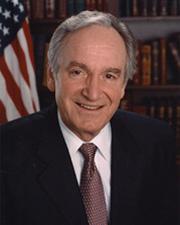 Sen. Tom Harkin (D-IA)
Legislative Activity
Stay on top of the latest movement without scrolling through every action
Read twice and referred to the Committee on Health, Education, Labor, and Pensions.
July 15, 2003
View full timeline
Introduced in Senate
July 15, 2003
Sponsor introductory remarks on measure. (CR S9422-9423)
July 15, 2003
Read twice and referred to the Committee on Health, Education, Labor, and Pensions.
July 15, 2003
Floor Debate
11 membersWhat members said about S. 1410 on the floor



 +6
Floor Debate
11 membersWhat members said about S. 1410 on the floor
Mr. President, I rise to introduce the ``Rebuild America Act of 2003,'' a bill to improve our national transportation and water infrastructure and to stimulate economic growth. This bill promises to…
Mr. President, our Nation is facing an affordable housing crisis. Recent changes in the housing market have limited the availability of affordable rental housing across the country and have…
Mr. President, I rise today to introduce the District of Columbia Personal Protection Act. This is an extremely important piece of legislation. Most importantly, this bill goes a long way toward…
Mr. President, today I am reintroducing a bipartisan bill to remedy a long-standing inequity in pesticide pricing between agricultural chemicals sold in Canada and similar use chemicals sold in the…
Mr. President, I rise today to introduce legislation along with Mr. Levin, that would stop the implementation of a new Metropolitan Statistical Area, MSA, in the Michigan counties of Kent, Ottawa,…
Show 7 more

Mr. President, today I am introducing the California Affordable Quantity and Quality Water Act of 2003, CAL-AQQWA. Nowhere is the need for a comprehensive water policy that includes innovative…

Mr. President, I rise today proudly to introduce legislation to rename the postal facility at 141 Weston Street in Hartford, CT, as the ``Barbara B. Kennelly Post Office Building.'' Barbara Kennelly…
Mr. President, today, I am joined by Senator Stevens in introducing the United States Olympic Committee Reform Act of 2003. This legislation is designed to reform the governance structure of the…
Mr. President. Today, I am introducing legislation called, ``The Access to Medical Treatment Act, AMTA'', on behalf of myself and my colleagues, Senators Hatch, Inouye, Grassley, and Daschle. This…
Mr. President. Today, I am introducing legislation called, ``The Access to Medical Treatment Act, AMTA'', on behalf of myself and my colleagues, Senators Hatch, Inouye, Grassley, and Daschle. This…

Mr. President, today I am pleased to introduce legislation to name the U.S. Post Office at 514 17th Street in Moline, IL after my friend, David Bybee, who suffered a fatal heart attack last year.…

Mr. President, I ask unanimous consent that the text of the bill be printed in the Record.
Bill Text
Latest available legislative text
        [Congressional Bills 108th Congress]
[From the U.S. Government Publishing Office]
[S. 1410 Introduced in Senate (IS)]

108th CONGRESS
1st Session
S. 1410

To permit an individual to be treated by a health care practitioner
with any method of medical treatment such individual requests, and for
other purposes.

_______________________________________________________________________

IN THE SENATE OF THE UNITED STATES

July 15, 2003

Mr. Harkin (for himself, Mr. Hatch, Mr. Inouye, Mr. Grassley, and Mr.
Daschle) introduced the following bill; which was read twice and
referred to the Committee on Health, Education, Labor, and Pensions

_______________________________________________________________________

A BILL

To permit an individual to be treated by a health care practitioner
with any method of medical treatment such individual requests, and for
other purposes.

Be it enacted by the Senate and House of Representatives of the
United States of America in Congress assembled,

SECTION 1. SHORT TITLE.

This Act may be cited as the ``Access to Medical Treatment Act''.

SEC. 2. DEFINITIONS.

In this Act:
(1) Advertising claim.--The term ``advertising claim''
means any representation made or suggested by statement, word,
design, device, sound, or any combination thereof with respect
to a medical treatment.
(2) Danger.--The term ``danger'' means an adverse reaction
to an unapproved drug or medical device that, when used as
directed--
(A) causes serious harm;
(B) occurred as a result of the medical treatment;
(C) would not otherwise have occurred; and
(D) is more serious than reactions experienced with
routinely used medical treatments approved by the Food
and Drug Administration for the same medical condition
or conditions.
(3) Device.--The term ``device'' has the meaning given such
term in section 201(h) of the Federal Food, Drug, and Cosmetic
Act (21 U.S.C. 321(h)).
(4) Drug.--The term ``drug'' has the meaning given such
term in section 201(g)(1) of the Federal Food, Drug, and
Cosmetic Act (21 U.S.C. 321 (g)(1)).
(5) Food.--The term ``food''--
(A) has the meaning given such term in section
201(f) of the Federal Food, Drug, and Cosmetic Act (21
U.S.C. 321(f)); and
(B) includes a dietary supplement as defined in
section 201(ff) of such Act.
(6) Health care practitioner.--The term ``health care
practitioner'' means a physician or other individual who is
legally authorized to provide health care services in the State
in which the services are provided.
(7) Interstate commerce.--The term ``interstate commerce''
means commerce between any State or territory and any place
outside thereof, and commerce within the District of Columbia
or within any other territory not organized with a legislative
body.
(8) Label.--The term ``label'' has the meaning given such
term in section 201(k) of the Federal Food, Drug, and Cosmetic
Act (21 U.S.C. 321(k)).
(9) Labeling.--The term ``labeling'' has the meaning given
such term in section 201(m) of the Federal Food, Drug, and
Cosmetic Act (21 U.S.C. 321(m)).
(10) Legal representative.--The term ``legal
representative'' means a parent or an individual who qualifies
as a legal guardian under applicable State law.
(11) Medical device.--The term ``medical device'' has the
meaning given the term ``device'' in section 201(h) of the
Federal Food, Drug, and Cosmetic Act (21 U.S.C. 321(h)).
(12) Medical treatment.--The term ``medical treatment''
means any food, drug, device, or procedure that is used and
intended as a cure, mitigation, treatment, or prevention of
disease or a health condition.
(13) Patient.--The term ``patient'' means any individual
who seeks medical treatment from a health care practitioner for
a disease or health condition.
(14) Secretary.--The term ``Secretary'' means the Secretary
of Health and Human Services.
(15) Seller.--The term ``seller'' means an individual or
organization that receives payment related to the medical
treatment of a patient of a health practitioner, except that
this term does not apply to a health care practitioner who
receives payment from an individual or representative of such
individual for the administration of a medical treatment to
such individual.
(16) Unapproved drug or medical device.--The term
``unapproved drug or medical device'' with respect to a drug or
medical device, means a drug or medical device that is not
approved or authorized for manufacture, sale, and distribution
in interstate commerce under section 505, 513, or 515 of the
Federal Food, Drug, and Cosmetic Act (21 U.S.C 355, 360c, and
360(e)) or under section 351 of the Public Health Service Act
(42 U.S.C. 262).

SEC. 3. ACCESS TO MEDICAL TREATMENT.

(a) In General.--Notwithstanding any other provision of law, and
except as provided in subsection (b), an individual shall have the
right to be treated by a health care practitioner with any medical
treatment (including a medical treatment that is not approved,
certified, or licensed by the Secretary) that such individual desires,
or that the legal representative of such individual authorizes, if--
(1) such practitioner has personally examined such
individual and agrees to provide treatment to such individual;
(2) the administration of such treatment does not violate
applicable licensing laws; and
(3) the health care practitioner complies with the
requirements of subsection (b).
(b) Medical Treatment Requirements.--
(1) In general.--A health care practitioner may/shall
provide the medical treatment requested by an individual
described in subsection (a) if--
(A) there is no reason for the practitioner to
conclude that, based on generally accepted principles
and current information, the medical treatment
requested, when used or provided as directed, will
cause danger to the patient;
(B) in the case of an individual whose treatment is
the administration of a food, drug, or device that has
to be approved, certified, or licensed by the
Secretary, but has not been so approved, certified, or
licensed--
(i) such individual has been informed in
writing that such food, drug, or device has not
been approved, certified, or licensed by the
Secretary for use as a medical treatment of the
medical condition of such individual; and
(ii) prior to the administration of such
treatment, the practitioner has provided the
patient a written statement that includes the
following provision: ``WARNING: This food,
drug, or device has not been declared to be
safe and effective by the Federal Government
and any individual who uses such food, drug, or
device does so at his or her own risk.'';
(C) such individual has been informed in writing of
the nature of the medical treatment, including--
(i) the contents and methods of such
treatment;
(ii) the anticipated benefits of such
treatment;
(iii) any reasonably foreseeable side
effects that may result from such treatment;
(iv) the results of past application of
such treatment by the health care practitioner
and others; and
(v) any other information necessary to
fully meet the requirements for informed
consent of human subjects prescribed by
regulations issued by the Food and Drug
Administration;
(D) except as provided in subsection (c), there
have been no advertising claims made with respect to
the efficacy of the medical treatment by the
practitioner, manufacturer, or distributor;
(E) the label or labeling of any food, drug, or
device that is a part of the requested medical
treatment is not false or misleading;
(F) such individual--
(i) has been provided with a written
statement that such individual has been fully
informed with respect to the information
described in subparagraphs (A) through (D);
(ii) desires such treatment; and
(iii) signs such statement; and
(G) the health care practitioner provides the
patient with a recommendation for the treatment
involved under circumstances that give the patient
sufficient opportunity to consider whether or not to
use such treatment.
(2) Burden of proof.--In any proceeding relating to the
enforcement of paragraph (1)(E) with respect to the label of a
drug, device, or food used in medical treatment covered under
this subsection, the provisions of section 403B(c) of the
Federal Food, Drug, and Cosmetic Act (21 U.S.C. 343-2(c)) shall
apply with respect to establishing the burden of proof that
such label is false or misleading.
(3) Rule of construction.--Nothing in this section shall be
construed to require informed consent for the prescription of
dietary supplements and foods not requiring such informed
consent prior to the date of the enactment of this Act.
(c) Claim Exceptions.--
(1) Reporting by a health care practitioner.--Subsection
(b)(1)(D) shall not apply to an accurate and truthful reporting
by a health care practitioner of the results of the
practitioner's administration of a medical treatment in
recognized journals, at seminars, conventions, or similar
meetings, or to others, so long as the reporting practitioner
has no direct or indirect financial interest in the reporting
of the material and has received no financial benefits of any
kind from the manufacturer, distributor, or other seller for
such reporting. Such reporting may not be used by a
manufacturer, distributor, or other seller to advance the sale
of such treatment.
(2) Statements by a practitioner to a patient.--Subsection
(b)(1)(D) shall not apply to any statement made by a health
care practitioner directly to a patient or prospective patient.
A health care practitioner shall not be held liable for any
advertising claims made by others unless the practitioner is a
party in the dissemination of the information in such claims.
(3) Dietary supplements statement.--Subsection (b)(1)(D)
shall not apply to statements or claims permitted under
sections 403B and 403(r)(6) of the Federal Food, Drug, and
Cosmetic Act (21 U.S.C. 343-2 and 343(r)(6)).

SEC. 4. REPORTING OF A DANGEROUS MEDICAL TREATMENT.

(a) Health Care Practitioner.--If a health care practitioner, after
administering a medical treatment, discovers that the treatment itself
was a danger to the individual receiving such treatment, the
practitioner shall--
(1) immediately cease the use of such treatment;
(2) refrain from recommending the use of any unapproved
drug or medical device that was a part of such treatment;
(3) report to the manufacturer and the Director of the
Centers for Disease Control and Prevention--
(A) the nature of such treatment;
(B) the results of such treatment;
(C) the complete protocol of such treatment; and
(D) the source from which such treatment or any
part thereof was obtained; and
(4) include as part of the reporting under paragraph (3),
an affidavit pursuant to section 1746 of title 28, United
States Code, confirming that all statements made in the report
under such paragraph are accurate.
(b) Secretary.--Upon confirmation that a medical treatment has
proven dangerous to individuals, the Secretary shall properly
disseminate information with respect to the danger of the medical
treatment and prohibit the further use of such treatment.

SEC. 5. REPORTING OF A BENEFICIAL MEDICAL TREATMENT.

If a health care practitioner, after administering a medical
treatment that is not an approved drug or medical device for a life-
threatening medical condition or conditions, discovers that such
medical treatment has, in the opinion of the health care practitioner,
positive effects on such condition or conditions that are significantly
greater than the positive effects that are expected from an approved
medical treatment for the same condition or conditions, the
practitioner shall--
(1) make a monthly reporting to the National Center for
Complementary and Alternative Medicine at the National
Institutes of Health of--
(A) the nature of such medical treatment (which is
not a conventional medical treatment);
(B) the general results of such treatment
administered in the month involved; and
(C) the protocol of such treatment; and
(2) provide an affidavit pursuant to section 746 of title
28, United States Code, confirming that all statements made in
the monthly reporting under paragraph (1) are accurate and
truthful.

SEC. 6. TRANSPORTATION AND PRODUCTION OF FOOD, DRUGS, DEVICES, AND
OTHER EQUIPMENT.

(a) In General.--Notwithstanding any other provision of the Federal
Food, Drug, and Cosmetic Act (21 U.S.C. 201 et seq.), an individual
may--
(1) introduce or deliver into interstate commerce a food,
drug, device, or any other equipment; and
(2) produce, transport, receive and hold a food, drug,
device, or any other equipment,
solely for use in accordance with this Act if there have been no
advertising claims by the manufacturer, distributor, or seller of the
food, drug, device, or equipment involved.
(b) Rule of Construction.--Nothing in this Act shall be construed
to limit or interfere with the authority of a health care practitioner
to prescribe, recommend, provide, or administer to a patient for any
medical condition or disease any unapproved drug or medical device that
is lawful under the law of the State or States in which the health care
practitioner practices.

SEC. 7. OTHER LAWS NOT AFFECTED BY THIS ACT.

Nothing in this Act shall be construed to--
(1) apply to the manufacturer, distribution, possession, or
use of any drug that is a controlled substance under the
Controlled Substances Act (21 U.S.C. 801 et seq.);
(2) apply to statements or claims permitted or authorized
under sections 403 and 403B of the Federal Food, Drug, and
Cosmetic Act (21 U.S.C. 3443, 343-2); or
(3) in any way adversely affect the distribution or sale of
dietary supplements (as defined in section 201(f) of the
Federal Food, Drug, and Cosmetic Act (21 U.S.C. 321 (ff)).

SEC. 8. PENALTY.

A health care practitioner who knowingly violates any provision of
this Act shall not be covered by the protections under this Act and
shall be subject to all other applicable laws and regulations.
<all>