Environmental Health Research Act of 2003
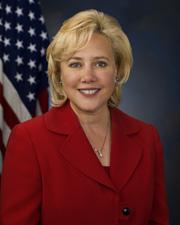 Sen. Mary L. Landrieu (D-LA)
Legislative Activity
Stay on top of the latest movement without scrolling through every action
Read twice and referred to the Committee on Health, Education, Labor, and Pensions. (text of measure as introduced: CR S11167-11169)
September 5, 2003
View full timeline
Introduced in Senate
September 5, 2003
Sponsor introductory remarks on measure. (CR S11167)
September 5, 2003
Read twice and referred to the Committee on Health, Education, Labor, and Pensions. (text of measure as introduced: CR S11167-11169)
September 5, 2003
Floor Debate
2 membersWhat members said about S. 1588 on the floor

Floor Debate
2 membersWhat members said about S. 1588 on the floor
Mr. President, I rise today to introduce, along with my colleague Senator Specter, the ``Reducing Crime and Terrorism at America's Seaports Act of 2003.'' About a year ago, the Independent Task Force…
Mr. President, today I rise to introduce the Environmental Health Research Act. Science has long since shown that the environment plays an important role in an individual's health. We have made the…
Mr. President, today I rise to introduce the Environmental Health Research Act. Science has long since shown that the environment plays an important role in an individual's health. We have made the…
Bill Text
Latest available legislative text
        [Congressional Bills 108th Congress]
[From the U.S. Government Publishing Office]
[S. 1588 Introduced in Senate (IS)]

108th CONGRESS
1st Session
S. 1588

To authorize the National Institute of Environmental Health Sciences to
develop multidisciplinary research centers regarding women's health and
disease prevention and conduct and coordinate a research program on
hormone disruption, and for other purposes.

_______________________________________________________________________

IN THE SENATE OF THE UNITED STATES

September 5, 2003

Ms. Landrieu introduced the following bill; which was read twice and
referred to the Committee on Health, Education, Labor, and Pensions

_______________________________________________________________________

A BILL

To authorize the National Institute of Environmental Health Sciences to
develop multidisciplinary research centers regarding women's health and
disease prevention and conduct and coordinate a research program on
hormone disruption, and for other purposes.

Be it enacted by the Senate and House of Representatives of the
United States of America in Congress assembled,

SECTION 1. SHORT TITLE.

This Act may be cited as the ``Environmental Health Research Act of
2003''.

SEC. 2. NATIONAL INSTITUTE OF ENVIRONMENTAL HEALTH SCIENCES; AWARDS FOR
DEVELOPMENT AND OPERATION OF MULTIDISCIPLINARY RESEARCH
CENTERS REGARDING WOMEN'S HEALTH AND DISEASE PREVENTION.

Subpart 12 of part C of title IV of the Public Health Service Act
(42 U.S.C. 285l et seq.) is amended by adding at the end the following
section:

``multidisciplinary research centers regarding women's health and
disease prevention

``Sec. 463B. (a) In General.--The Director of the Institute shall
make grants to public or nonprofit private entities for the development
and operation of not more than 6 centers whose purpose is conducting
multidisciplinary research on environmental factors that may be related
to the development of women's health conditions (as defined in section
486). The Director of the Institute shall carry out this section in
consultation with the Director of the Office of Research on Women's
Health and with the advisory council for the Institute.
``(b) Research, Training, and Information and Education.--
``(1) In general.--Each center under subsection (a) shall,
with respect to the purpose described in such subsection--
``(A) conduct basic and clinical research;
``(B) develop protocols for training physicians,
scientists, nurses, and other health and allied health
professionals;
``(C) conduct training programs for such
individuals;
``(D) develop model continuing education programs
for such professionals; and
``(E) disseminate information to such professionals
and the public.
``(2) Priority for prevention activities.--In carrying out
the activities described in paragraph (1), each center under
subsection (a) shall give priority to activities that are
directed toward preventing the development in women of the
diseases and conditions involved.
``(3) Stipends for training of health professionals.--A
center under subsection (a) may use funds under such subsection
to provide stipends for health and allied health professionals
enrolled in programs described in paragraph (1)(C).
``(c) Collaboration With Community.--Each center under subsection
(a) shall establish and maintain ongoing collaborations with community
organizations in the geographic area served by the center, including
those that represent women with disorders that appear to stem from
environmental factors.
``(d) Coordination of Centers; Reports.--The Director of the
Institute shall, as appropriate, provide for the coordination of
information among centers under subsection (a) and ensure regular
communication between such centers.
``(e) Structure of Center.--Each center assisted under subsection
(a) shall use the facilities of a single institution, or be formed from
a consortium of cooperating institutions, meeting such requirements as
may be prescribed by the Director of the Institute.
``(f) Duration of Support.--Support of a center under subsection
(a) may be for a period not exceeding 5 years. Such period may be
extended for 1 or more additional periods not exceeding 5 years if the
operations of such center have been reviewed by an appropriate
technical and scientific peer review group established by the Director
of the Institute and if such group has recommended to the Director that
such period should be extended.
``(g) Authorization of Appropriations.--For the purpose of carrying
out this section, there are authorized to be appropriated such sums as
may be necessary for fiscal years 2004 through 2007.''.

SEC. 3. AMENDMENT TO THE PUBLIC HEALTH SERVICE ACT TO PROVIDE FOR
RESEARCH ON HORMONE DISRUPTION.

(a) Findings.--The Congress finds as follows:
(1) Many compounds found or introduced into the environment
by human activity are capable of disrupting the hormone system
of humans and animals. The consequences of such disruption can
be profound because of the crucial role hormones play in
controlling development. No standardized and validated screens
or tests have been developed to routinely and systematically
assess chemicals for disruptive effects on hormone systems.
(2) In the last 30 years, the United States has experienced
an increase in the incidence of such human disorders as
childhood cancers, testicular cancer, hypospadias, juvenile
diabetes, attention deficit-like hyperactivity disorders,
autism, thyroid disorders, and auto-immune disorders. Exposure
to hormone-disrupting chemicals may be contributing to these
increases. The impact on children's health as a result of
prenatal exposures in particular needs further research.
(3) In 2001, the Centers for Disease Control and
Prevention's ``National Report on Human Exposure to
Environmental Chemicals'' reported on human exposure to 27
chemicals, and found unexpectedly high levels of certain chemicals used
in consumer products. The hazards to humans of these chemicals, singly
and in combination, are not well understood.
(4) Many wildlife populations have been affected by
hormone-disrupting substances, including birds, fish, reptiles,
and mammals. The effects vary among species and compounds.
(5) The effects in wildlife include thyroid dysfunction,
decreased fertility, decreased hatching success, gross birth
deformities, metabolic and behavioral abnormalities,
demasculinization and feminization of male organisms,
deformation and masculinization of female organisms, and
compromised immune systems. These effects may signal hazards to
human health.
(6) Laboratory studies have corroborated studies of effects
in wildlife and have identified biological mechanisms to
explain the effects shown.
(7) Since the chemicals found in wildlife are also found in
humans, humans are exposed to the same chemicals as wildlife.
(8) Hormone disruption can occur at very low doses,
especially when exposure occurs in the womb or immediately
after birth, periods during which rapid development is
occurring.
(9) In the Food Quality Protection Act of 1996 (21 U.S.C.
301 note), Congress recognized the special vulnerability of
infants and children to pesticides and requested that the
Environmental Protection Agency establish a program to screen
and test hormone-disrupting chemicals. The Environmental
Protection Agency has not yet required such screening or tests.
(10) In 1998, a research committee on hormone disrupters,
organized under the auspices of the Office of Science and
Technology Policy, concluded that ``scientific knowledge is
inadequate to fully inform public policy, and a government-wide
coordinated research effort that addresses the key scientific
uncertainties . . . is needed''.
(11) In 1999, in response to a request from Congress and
funded through the Environmental Protection Agency and the
Department of the Interior, the National Academy of Sciences
compiled a lengthy list of research, monitoring, and testing
priorities related to hormone disruption.
(12) The National Institute of Environmental Health
Sciences conducts much of the Federal Government's research on
hormone disruption, often working in partnership with other
agencies.
(13) While recognizing the many contributions of animal
testing to understanding toxic hazards, the Congress also
recognizes the desirability of speeding the use of validated
nonanimal screens and tests (to reduce animal suffering and to
reduce costs) and expediting judgments about hazards from toxic
chemicals.
(14) The United States Geological Survey (referred to in
this section as the ``USGS'') has considerable experience
assessing the occurrence of chemicals in the environment,
ecological health, and the hazards to wildlife health and
associated human health posed by chemicals in the environment,
as a result of monitoring by the USGS of the Nation's water
resources and wildlife disease, and research by the USGS on the
effects of chemicals on wildlife.
(15) The National Academy of Sciences has recognized the
expertise of the USGS in such areas as food web contamination
and water quality assessment and has encouraged more
coordinated work on human health between the USGS and the
National Institutes of Health.
(b) Amendment.--Subpart 12 of part C of title IV of the Public
Health Service Act (42 U.S.C. 2851 et seq.), as amended by section 2,
is further amended by adding at the end the following:

``directed national program of research on hormone disruption

``Sec. 463C. (a) Research.--
``(1) In general.--The Director of the Institute shall
establish within the Institute a comprehensive program to--
``(A) conduct research on the impact of chemicals
that affect human health through disruption of the
hormone systems;
``(B) conduct research on the occurrence of
hormone-disrupting chemicals in the environment and
their effects on ecological and wildlife health, in
cooperation with the United States Geological Survey
(referred to in this section as the `USGS');
``(C) coordinate the design of a multiagency
research initiative on hormone disruption;
``(D) coordinate research on hormone disruption in
the United States with such research conducted in other
nations; and
``(E) report to the public every 2 years on the
extent to which hormone disruption by chemicals in the
environment poses a threat to human health and the
environment.
``(2) Issues.--The program established under paragraph (1)
shall provide for the following:
``(A) Collection, compilation, publication, and
dissemination of scientifically valid information on--
``(i) possible human health effects of
hormone-disrupting chemicals, with emphasis on
exposures to low doses of individual chemicals
and chemical mixtures during critical life
stages of development, particularly effects of
prenatal exposures on children's health;
``(ii) the extent of human exposure to
hormone-disrupting chemicals, with particular
emphasis on exposures during critical life
stages of development and in residential and
occupational settings; and
``(iii) exposure of wildlife species to
hormone-disrupting chemicals and possible
health effects associated with such exposures.
``(B) Research on mechanisms by which hormone-
disrupting substances interact with biological systems.
``(C) Research on improved in vitro and in vivo
methods to screen and test hormone disruption.
``(D) Research on the identity, levels, transport,
and fate of hormone-disrupting chemicals in the
environment.
``(b) Director's Duties.--
``(1) In general.--The Director of the Institute shall have
principal responsibility, in consultation with the Director of
the USGS, for conducting and coordinating research on the
effects of hormone-disrupting chemicals on human health and the
environment.
``(2) Agreement.--Not later than 6 months after the date of
enactment of the Environmental Health Research Act of 2003, the
Director of the Institute and the Director of the USGS shall
enter into an agreement to carry out the research program
established under subsection (a).
``(3) Transfer of funds.--The Director of the Institute may
transfer funds to other Federal agencies to carry out the
Director's responsibilities under paragraph (1).
``(4) Report.--The Director of the Institute, in
consultation with the Director of the USGS, shall make
available to the public, every 2 years following the date of
enactment of the Environmental Health Research Act of 2003,
findings and conclusions on the extent to which hormone
disruption by chemicals in the environment poses a threat to
human health and the environment.
``(c) Interagency Commission.--
``(1) Establishment.--The Secretary shall establish a
commission to be known as the Hormone Disruption Research
Interagency Commission (referred to in this section as the
`Interagency Commission') to advise the Director of the
Institute and the Director of the USGS on the development of a
comprehensive agenda for conducting research on hormone
disruption.
``(2) Membership.--The Interagency Commission shall be
composed of 12 members, as follows:
``(A) The Director of the Institute, who shall
serve as the Chairperson.
``(B) The Director of the USGS, who shall serve as
the Vice Chairperson.
``(C) The Commissioner of the Food and Drug
Administration.
``(D) The Director of the Centers for Disease
Control and Prevention.
``(E) The Administrator of the National Oceanic and
Atmospheric Administration.
``(F) The Director of the National Institute for
Occupational Safety and Health.
``(G) The Administrator of the Agency for Toxic
Substances and Disease Registry.
``(H) The Director of the Fish and Wildlife
Service.
``(I) The Secretary of Defense.
``(J) The Administrator of the Environmental
Protection Agency.
``(K) The Chairman of the Consumer Product Safety
Commission.
``(L) The Director of the National Science
Foundation.
``(3) Staff.--Each department or agency represented by a
member on the Interagency Commission shall provide appropriate
staff to carry out the duties of the Interagency Commission.
``(4) Recommendations.--Not later than 12 months after the
date of enactment of the Environmental Health Research Act of
2003, the Interagency Commission shall recommend to the
Director of the Institute and the Director of the USGS a
research program, including levels of funding for intramural
and extramural research.
``(5) Public comment.--The Director of the Institute,
through publication of notice in the Federal Register, shall
provide the general public with an opportunity to comment on
the recommendations of the Interagency Commission.
``(6) Report.--Not later than 4 years after the date of
enactment of the Environmental Health Research Act of 2003, the
Interagency Commission shall conduct a review of the program
established under subsection (a) and submit a report on the
results of such review to the Director of the Institute and to
the Hormone Disruption Research Panel established under
subsection (e).
``(7) Termination.--The Interagency Commission shall
terminate not later than the end of the 5-year fiscal period
described in subsection (h)(1).
``(d) Financial Assistance.--The Director of the Institute may
provide financial assistance and enter into grants, contracts, and
interagency memoranda of understanding to conduct activities under this
section. Research conducted pursuant to interagency memoranda of
understanding may be conducted through intramural and extramural agency
research programs, subject to appropriate scientific peer review.
``(e) Hormone Disruption Research Panel.--
``(1) Establishment.--There is established in the Institute
a Hormone Disruption Research Panel (referred to in this
subsection as the `Panel').
``(2) Duties.--The Panel shall advise the Director of the
Institute concerning the scientific content of the program
established under subsection (a), the progress of such program,
and public outreach, and shall provide such other advice as
requested by the Director of the Institute.
``(3) Membership.--The Panel shall be composed of the
following:
``(A) 15 voting members to be appointed by the
President, in consultation with the Director of the
Institute.
``(B) Such nonvoting, ex officio members as the
Director of the Institute determines to be appropriate.
``(4) Voting members.--Of the 15 voting members of the
Panel--
``(A) at least 2 members shall be from
environmental protection organizations;
``(B) at least 2 members shall be from public
health and consumer organizations;
``(C) at least 2 members shall be from industry;
``(D) at least 1 member shall be from an animal
welfare organization; and
``(E) a majority of the members shall be selected
from among scientists and environmental health
professionals who--
``(i) are not officers or employees of the
United States;
``(ii) represent multiple disciplines,
including clinical, basic, public, and
ecological health sciences;
``(iii) represent different geographical
regions of the United States;
``(iv) are from practice settings, academic
settings, and for-profit or not-for-profit
research settings; and
``(v) have experience in review of research
on endocrine disruption.
``(5) Terms.--The members of the Panel shall be appointed
for an initial term of 3 years and shall be eligible for
reappointment for 1 additional term of 2 years.
``(6) Chairperson.--The members of the Panel appointed
under paragraph (3) shall elect a chairperson from among such
members.
``(7) Meetings.--The Panel shall meet at the call of the
chairperson or upon the request of the Director of the
Institute, but in no case less often than once each year.
``(8) Administrative support.--The Institute shall provide
administrative support to the Panel.
``(9) Termination.--The Panel shall terminate not later
than the end of the 5-year fiscal period described in
subsection (h)(1).
``(f) Conflicts of Interest.--All grants and contracts entered into
under this section shall include conflict-of-interest provisions that
require any person conducting a project under this section to disclose
any other source of funding received by the person to conduct other
related projects.
``(g) Definitions.--For purposes of this section:
``(1) Hormone.--The term `hormone' means a substance
produced in a cell or tissue that triggers a biological
response. Hormone activity may be localized to the cell in
which the substance is produced, or may be in nearby or distant
tissues or organs.
``(2) Hormone disruption.--The term `hormone disruption'
means interference by a substance with the synthesis,
secretion, transport, binding, action, or elimination of
natural hormones in the body that are responsible for the
maintenance of homeostasis, reproduction, development,
function, or behavior.
``(h) Authorization of Appropriations.--
``(1) General authorization.--There are authorized to be
appropriated such sums as may be necessary for the 5-fiscal-
year period beginning with fiscal year 2004 to carry out this
section. Amounts appropriated pursuant to this paragraph shall
remain available until expended.
``(2) Restrictions on use of funds.--
``(A) Construction and rehabilitation of facilities
and equipment.--Not more than 0.5 percent of the funds
made available under this section may be used for the
construction or rehabilitation of facilities or fixed
equipment.
``(B) Administrative expenses of the director.--Of
the total amount of funds made available under this
section for any fiscal year, not more than 2 percent of
such funds may be used for administrative expenses of
the Director of the Institute in carrying out this
section.
``(C) Public outreach.--Of the total amount of
funds made available under this section for any fiscal
year, at least 1 percent, but not more than 5 percent,
shall be used for outreach to the public concerning the
activities and results of the program.''.
<all>