Calling for 2-1-1 Act of 2003

Legislative Activity
Stay on top of the latest movement without scrolling through every action
Read twice and referred to the Committee on Commerce, Science, and Transportation.
September 17, 2003
View full timeline
Introduced in Senate
September 17, 2003
Sponsor introductory remarks on measure. (CR S11685-11686)
September 17, 2003
Read twice and referred to the Committee on Commerce, Science, and Transportation.
September 17, 2003
Floor Debate
17 membersWhat members said about S. 1630 on the floor
 HR
HR MD
MD MBE
MBE RJD
RJD RGL+12
Floor Debate
17 membersWhat members said about S. 1630 on the floor
Mr. President, this is a most important bill. I understand how important it is. I also understand it is normal procedure to have the chairman of the subcommittee speak first and the ranking member…
Mr. President, this is a most important bill. I understand how important it is. I also understand it is normal procedure to have the chairman of the subcommittee speak first and the ranking member speak second. But I feel it is appropriate, in talking about this bill, to respond very briefly to my friend from Kentucky.
It is obvious to anyone who understands Senate procedure why things did not go well last year. It is because the minority stopped us from doing our work. We worked very hard to allow these pieces of legislation to pass. We have been partners with them. The Senator from Kentucky can talk all he wants about leadership, but everyone knows that the situation where we now have, toward the last few days of this Congress, a time set aside--30 hours--to talk about judges, and the comments in that regard upstairs by Senator Daschle and by me indicated that was something we thought was amateurish.
Mr. President, one of the chief aims of the Commerce-State-Justice appropriations bill is to articulate the priorities of the United States on matters related to business and the economy.
This legislation contains funding for the Small Business Administration, U.S. Trade Representative, the National Trade Administration, the Bureau of Industry, the Economic Development Agency, the Minority Development Business Agency, and a lot more.
I think everyone today should understand we are not going to have any votes for a while. Maybe by 6 o'clock, if people still want to vote they can vote, but I am going to be talking until 6 o'clock today and, if necessary, talk longer than that.
I, of course, understand the rules relating to the Senate. I understand there is a rule that for the first 3 hours, a Senator has to be talking about issues relating to this bill. I can certainly do that. But I say to my friend--and I have the deepest respect and regard for the chairman of this subcommittee, a former Governor of New Hampshire, a former Member of the House of Representatives, and now a Senator-- that I am going to be talking for a while. If he wants to hang around and listen to me, he can do that. But this has certainly nothing to do with my friend from New Hampshire. It has everything to do with the way that I, speaking for myself, believe the Senate is being run.
I think it is inappropriate that we are not going to be able to work through this week; that we are going to take 2 days to talk about judges. I don't know the exact count anymore but I think it is about 168, 169 to 4, but yet we are going to take valuable time to deliver a message--I have been told the reason it is being done is to deliver a message to the base. I don't know what that means, except it is being done for reasons that I don't think are appropriate for the Senate.
The legislation that is now before the Senate is important. These entities that I have talked about serve one key mission, and that is to promote the development of American business and the American economy. As we think about how these agencies should carry out this important mission, it is appropriate to spend some time reviewing where the economy stands.
Certainly, one of the most important indicators of how the economy is faring is the unemployment rate. On Friday morning, the Department of Labor issued its report on the October 2003 unemployment figures. The unemployment rate was essentially unchanged, from 6.1 percent last month to 6 percent this month. We heard a lot about the fact that the economy grew by 126,000 new jobs in October. Sounds like a lot of jobs, until we understand it is catchup time and the 126,000 does not even keep up with the current population growth in the United States.
The administration lost no time putting out a series of press releases that said: Stronger growth; 126,000 new jobs in October show President's jobs and growth plan is working, but there is still more to do.
This bill, S. 1585, making appropriations for the Department of Commerce, Justice, State, the Judiciary, and related agencies for the fiscal year ending September 30, 2004, is important legislation. One reason it is important is to talk about how--
No. I will in half an hour or so.
When the Senator was off the floor--and I will repeat--I indicated my great respect and admiration for someone with a record of accomplishment that certainly is significant--Governor, Member of the House of Representatives, Senator, and I indicated publicly, and I will say again, my speaking today for an extended period of time has nothing to do with my regard for the Senator from New Hampshire. I am going to talk for probably 4 or 5 hours today.
I have answered the Senator's questions, and I would appreciate it if he would not interrupt.
I do not think the President's plan is working for 9 million Americans who are unemployed. I do not think it is working for 2 million of those people who have been out of work for longer than 6 months. Gaining 126,000 new jobs is certainly better than losing an average of 85,000 jobs a month, which is what the country did for the entire first half of the year, but it does not mean their plan is working, and it does not mean it is getting easier to find a job.
In fact, it is not. October job growth does not even keep up with the population growth. October is the best month we have had in a long time in terms of job growth. Even October's job creation does not keep up with the population growth. So that means for the average person who wants a job, it is getting more difficult to land a position, not less difficult. Let me say why.
The number of young people entering the workforce is greater than the number of people retiring out of the workforce. The population of people who want to work rises every month, so there must be some level of increase in the number of jobs every month just to keep pace with this growth. Put another way, between the beginning of the Bush recession in March 2001 and last month, the U.S. working age population increased by almost 8 million people. Since March 2001, the U.S. working-age population has grown by 3.4 percent. Because of this influx of working-age people, it is not enough just to keep employment level; we need to be adding jobs every month just to keep our heads above water. Most
economists say we need to create about 150,000 new jobs every month just to hold steady with population growth. That is 150,000 just to remain static. October numbers do not get us that far.
One of the chief aims of the Commerce-State-Justice appropriations bill is to articulate the priorities of the U.S. Congress and the American people in matters related to business and the economy.
My distinguished friend, the majority whip, indicated the great accomplishments of the Senate this year, and I think we have had some, but we have been complicit. We have been partners in passing that legislation. Just so everyone understands that compromise is important in the Senate, not in the House of Representatives. In the House of Representatives, the majority party can run right over the minority party, but in the Senate it cannot be done.
Senator Daschle and I agreed the week before last and last week that we would work today and tomorrow, full-time, even though tomorrow is a legal holiday, and then out of the blue we learned there is going to be 30 hours spent on judges all Wednesday night and all day Thursday until 12 midnight Thursday night. This is a one-man show to indicate that the Senate cannot necessarily be run unless we work together. So there can be votes, but they will be tonight sometime. They are not going to be early this afternoon, as the majority has indicated to some of its Members.
The Commerce-State-Justice appropriations bill is an important bill. As I indicated, we need 150,000 new jobs every month just to remain static. October numbers do not get us even that far. That is why this bill is so important.
The Departments of Commerce, State, and Justice have wide-ranging jurisdiction, and the 126,000 jobs that the economy generated in October will not even absorb the new entrants into the labor market last month. Given how bad things are, and that seems to be a pretty modest goal, keeping up with population growth, should we not please try to keep up with job growth? We cannot even grow enough jobs to make that happen, let alone make up for 3 million private sector jobs that we lost since the recession began.
How many jobs should have been created by now? The difference between the number of jobs--and I will get some charts in a minute when the floor staff brings them to me. They will show in very significant detail the difference between the number of jobs we actually had in October and the number of jobs we have had if we had merely kept up with the population growth since the beginning of the recession is over 7 million.
Not only did we lose 2.6 million jobs, but we also never created the 4.5 million jobs necessary to keep pace with the population growth. So we are over 7 million jobs in the hole since the beginning of the Bush recession, and the White House declares that their plan is working. If it is working, we are in deep trouble.
October job growth is less than the President promised in February. The administration continues to make promises it cannot keep when it comes to job creation. In February, when the President was trying to win votes for his latest tax cut, the White House predicted that his so-called jobs and growth plan would create an additional 1.4 million jobs. That was 1.4 million jobs over and above the 4.1 million jobs that it was projected would be created even if no new taxes were passed. So we are supposed to get a total of 5.5 million jobs before the end of the next year. So this bill we are talking about that helps create job growth is something that has to be looked at very closely. This bill making appropriations for the Department of Commerce provided for funding for responding to the threat of terrorism. That has had a tremendous negative impact on job creation, but the President has not responded appropriately, and we will talk about this later, as well as the unfunded mandates that he has passed on to the States.
This bill deals with drug enforcement, judicial process, conducting commerce within the United States--and I want to make sure the Parliamentarian hears that, conducting commerce within the United States. It would seem to me that a discussion about jobs would certainly deal with commerce within the United States. In February, the President was trying to obviously win votes for his latest tax plan, which was a tax cut, and predicted at that time that his so-called jobs and growth plan would create an additional 1.4 million jobs. He said it. I did not. That was 1.4 million jobs over and above the 4.1 million jobs that were projected would be created even if there were no new tax cuts.
We were supposed to get a total of 5.5 million jobs before the end of next year. That is a job creation pace of over 300,000 a month. That would represent some strong growth. I think that would be tremendous. If the U.S. economy was adding jobs at that rate over a long period of time, we would be in much better shape.
In fact, if the economy added 300,000 jobs per month starting today, by next summer we would be approaching the levels we were at when President Clinton was in office, before the Bush recession began. But of course we have not approached that level of growth in any month since the plan was adopted. We have not even come close.
As I said before, most months we have slid further and further into the hole. Mr. President, 126,000 jobs is better than no jobs, and that is what we have had in the past; it is better than negative jobs, but it is not good enough.
The failure of this administration's latest plan should come as no surprise. We all remember the White House promising that the 2001 tax cut would create 800,000 new jobs by the end of last year. It didn't work. Instead of creating the 800,000 new jobs, we lost 1.2 million jobs. That is a net change of 3.2 million jobs. October job growth was less than the Secretary promised. Last month, John Snow, Secretary of the Treasury, told the New York Times he thought the economy would create about 200,000 new jobs per month.
I think the reason he said that was there were signs that even the Republicans were beginning to realize the plan was not a success. That is 100,000 fewer jobs than Snow promised, than he had even predicted a few months before when they were trying to get the plan passed.
Revising their estimates down by a third is a pretty surprising admission that they know their policy isn't working. Then they failed to even meet their lowered expectations.
On Friday, the White House issued a statement saying:
The President's jobs and growth agenda is working. The
economy created 126,000 jobs in October. Employment has now
grown 3 months in a row for a total jobs gain of over a
quarter of a million. The President's jobs and growth
agenda is working.
That is what the administration says. That is not the reality. The administration promised us this plan would create 918,000 jobs over the past 3 months. Then the Treasury Secretary assured us it would create 600,000 in just 3 months.
This bill that talks about conducting commerce within the United States--jobs is commerce. I think it is very important we realize this legislation is dealing with commerce. Jobs is commerce. I think it is very important we spend some time talking about jobs.
The administration's Treasury Secretary assured us it would create 600,000 jobs in 3 months when we just heard previously it would be over 900,000 jobs. Now the administration is claiming its plan is working because it created over 250,000 jobs. Again, the math doesn't add up. We need 300,000 jobs just to keep up with the normal population growth. In fact, that is not keeping up with the pace the administration said the economy would achieve without the tax cut.
If this is a plan that is working, then it is sure not the same plan the administration told to Congress 6 months ago. That sounds like a plan the Enron accountants were involved in.
Let's not forget this was not an inexpensive proposal. We spent $350 billion on this scheme. Is the $350 billion plan a success? No, not because it created 250,000 jobs. It is a failure. They acknowledge, themselves, that without the tax cut, more jobs than that would be created. If my math is right, that works out to be $1.4 million per job.
We are here talking about the Commerce-State-Justice bill. It is an important piece of legislation. One of the
things this bill talks about in some detail is security and cooperation in Europe. It talks about judges, it talks about general administration, asset forfeiture, Office of Justice Programs. It talks about the National Institute of Standards and Technology. There are other matters, of course, that take up a significant amount of space in this dealing with Alaskan fisheries. It deals with noncredit business assistance. It is an important piece of legislation dealing with an automated biometric identification system. It deals with a joint automated booking system. It deals with detention trustees, administration reviews, counterterrorism fund, Office of Inspector General. It deals with the U.S. Parole Commission, Antitrust Division, National Childhood Vaccine Injury Act, salaries and expenses of the U.S. attorneys, U.S. Marshals Service, Foreign Claims Settlement Commission. It deals with courthouse security equipment all over the United States. It deals with the U.S. military construction programs all over the country, Marshals Service programs all over the country, interagency law enforcement, interagency crime and drug enforcement. It deals with programs with the FBI.
There are many programs there that we will come back and talk about later dealing with the FBI, including a polygraph program. They polygraph themselves, but of course it has been declared it doesn't work very well for others. The Bureau of Alcohol, Tobacco, Firearms, and Explosives; activation of new prison facilities in Hazelton, WV; Canaan, PA; Terre Haute, IN; Victorville, CA; Forrest City, AR; Herlong/Sierra, CA; Williamsburg, SC; Bennettsville, SC. There is a total of almost 10,000 beds for a prison facility.
So there is certainly a lot of meat in this bill, items to talk about other than the job loss that has been created in this country.
There are other things we could do to create jobs in this country. The President has talked about tax cuts. It has resulted in a few jobs, but in reality this President is headed for the worst record of job growth in more than 50 years. This goes back to the days probably of Herbert Hoover. All other Presidents created jobs. There was net job growth even in the 2 Eisenhower years--one term of his Presidency lost jobs overall, the other gained jobs.
In no other time have we had a President who has lost jobs--as you can see here, lots and lots of jobs. It is now over 3 million. Every other President has created jobs.
If things continue--and it appears they will--this will be ``George W. Hoover Bush's Presidency,'' creating no jobs, losing jobs. When they issue a press release saying, ``Boy, we are doing well; we created 126,000 jobs,'' understand that doesn't keep up with the 300,000 necessary to keep up with the population growth.
What are some of the other things we can do? Prior to September 11, I had a plan that was accepted by cities, counties, and States all over America. The National Council of Mayors met here in Washington and passed a resolution approving my suggested legislation. It would be a jobs program for sure. It would be the Federal Government spending money to create jobs in infrastructure development: highways, bridges, water systems, sewer plants. These are things that are in such desperate need of repair, renovation, and construction.
All over America there are blueprints stacked up gathering dust. They are ready to be effectuated, but there is no money. Why is this important? It is important that we do this to effect commerce in this country because for every $1 billion we spent, we would create 47,000 high-paying jobs. Those are direct jobs. And the spinoff from those jobs would certainly be more. People who work at those infrastructure development jobs would need more fuel for their cars, they would need more cars, they would need refrigerators, carpets, clothing--on and on. And every one of those products they buy, someone has to produce them, and it would create jobs in America.
The spinoff would be very significant.
That is how this administration should create jobs, but it has shown little interest in investing in our country.
This year's Transportation bill is one of the largest bills we have. Up until now--hopefully, they will join with us in producing a highway bill--we have fought for months to get a high enough number so we could have a highway bill. We hope to be able to mark something up on that maybe even this Wednesday if the judges issue doesn't get in the way of that.
But the highway bill, home building, highway construction--those are jobs that are created. I remember when I first came to Washington how important those two areas of commerce were--building houses and building roads.
We need to move beyond that and do something about the bridges. A significant number of bridges we have are in a state of disrepair. They won't allow school buses to drive over some of them because they are in such bad shape.
We know how important it is to do something about our water systems throughout the country. Sewer systems--we could have been much further down that line today and looking at significant job creation if the administration had focused on measures which we know work rather than squandering the surplus on tax cuts for the wealthy--for the elite. There is nothing wrong with being wealthy--for the elite.
The administration's $350 billion tax was supposed to be a jobs and growth act. Where are the jobs? If we spent $10 billion for needed road construction, for sewer systems which need to be repaired, and for water systems which are in need of renovation and repair in Colorado and Nevada, and the other 48 States, we would be creating thousands of jobs. If we spent $10 billion directly, we would create 470,000 jobs. Of course, $20 billion would create 920,000 jobs. The spinoff from those would be so absolutely, unbelievably powerful for this economy. But we are not doing that.
The jobs I am talking about can't be shipped overseas. If you are going to build a road, it will be built here in America. If you fix a sewer plant, it will be done here in America. If you repair a water system, it will be done here in America. If you fix a bridge, it will be an American bridge. You can't ship those overseas to the lowest bidder.
Where have all the jobs gone? What has happened to the jobs? They are going to different places. I have a few charts, and we have a lot of time today. We will spend a little time talking about that.
Goodyear Tire lost 1,100 jobs; Levi Strauss, San Antonio, TX, lost 800 jobs just this past month; Sumco in the State of Oregon, 190 jobs just last month; John Harland, Decatur, GA, 3,500 jobs last month; Johnson & Johnson, New Brunswick, NJ, almost 100 jobs in September of this year; DSM Pharma, Greenville, NC, 2,000 jobs in October--a month ago; TRW, Greenville, NC, 229 jobs, September 2003; Bluebird--you have seen Bluebird, the big, beautiful buses which I am told are the Cadillac of recreational vehicles--Fort Valley, GA, 400 jobs lost just last month; Dan River, Fort Valley, GA, 447 jobs last month; YKK, Macon, GA, 36 jobs the month before last; Timken, Torrington, CT, almost 200 jobs last month; Spring Industries, Lancaster, SC, 330 jobs the month before last; and, Bronx, NY, 100 jobs this month. Bronx, NY, is where the company that makes Everlast equipment is located. Boxers have Everlast on all of their boxing equipment, such as Everlast boxing gloves. They do not have many jobs left in Bronx, NY, anymore. They are checking out. They lost 100 jobs.
Brylane, Indianapolis, IN, 415 jobs; Olin Brass, Indianapolis, IN, 310 jobs gone; Inland Paperboard, 287; General Electric, Schenectady, NY, 400 jobs last month; Tysons, Hope, AR, birthplace of President Clinton, lost 500 jobs--I can imagine how significant that was in that little community--just the month before last; Kelly Springfield, Tyler, TX, lost 200 jobs in October of 2003; Bristol Compressors, Bristol, VA, 300 jobs; Internet, Radford, VA, 348 jobs the month before last; and Alcoa, Bellingham, WA, 200 jobs.
Throughout the afternoon we will refer to some of these. You can kind of get the picture of why jobs are leaving.
I am worried about my constituents. I am confident that every Member of this Senate is worried.
What am I supposed to tell the people in Nevada who are unemployed? Should I tell them that the $350 billion which was used to help mostly the wealthy is going to help put them back to work
when we have waited this long for two huge tax cuts to create new jobs? It only lost jobs. I voted against the plan because I didn't think it would create jobs. But once it passed, it was the only game in town. I hoped it would succeed, but it hasn't.
I am not in favor of higher taxes, not at all. I wish taxes were much lower. But we have to be realistic. We have to see that people are happier with jobs--not tax cuts for the elite of this country. I want to see my unemployed constituents have the opportunity to go back to work. Too many of them are still anxious and hurting and waiting. They have waited for a long time. It really tears at your heartstrings.
I don't see all of the letters. I wish I could. But I see a lot of them. I don't see all of the letters and the e-mails pouring in these days. But my staff picks out those that are representative of a large group of letters.
I have been hearing from large groups of people in Nevada who have never been unemployed in their whole lives. They have never been unemployed. These aren't people who are holding out for cushy, high- paying jobs. They are proud people with a strong work ethic who are willing to do whatever amount of hard work it takes to keep a roof over their heads and food on their tables, people who never thought they would be in this position. They are still having no luck finding work.
I received a letter a few weeks ago from a woman who lives in Spring Creek, NV. Spring Creek is a place in northeastern Nevada. It is a community that has grown up over the past 25 years. It is a beautiful community. She said she wrote to me and she wrote to the President and to Congressman Gibbons who is the Member of Congress who represents that part of the State of Nevada. She said:
I really do not expect any of you will actually read this
letter. It will probably go to an aide, and if I am lucky I
may get a response. But why am I writing this letter?
She answers her own question:
Because there are many other people in this country who are
unemployed and have run out of unemployment benefits. Many
people like me feel that writing a letter like this is a
waste of time. Many have no hope but I believe that one
person's voice can make a difference. I live in a small community in northern Nevada. There are at least 50 people applying for every job opening. We have thought about moving to other cities but the job market is tight everywhere. My husband is disabled and receives a small Social Security check every month, but it pays all but $15 for our first mortgage on our house. I have to supply the money to pay a second mortgage and all of our living expenses. The company that I was working for updated their computer system to make it easier to purchase items over the Internet web site. As a result, they laid off some people, including me. Since then I have sent out hundreds of resumes with little response. I am not writing this letter to get a handout or for sympathy. I have faith in God that he has a perfect job for me that he will provide for us. There are many thousands of people who do not have hope. They have been laid off multiple times and are eligible for little or no unemployment benefits. I have friends that were laid off over a year ago and are still trying to find work. Unemployment should not be a free ride. All I'm asking is that people who are truly trying to find work, get a fair chance to provide for their families while they seek employment. I would work a part-time job or two part-time jobs in lieu of a full time job if I could find one. So the solution is to get the economy going so the people like me can find a decent job or jobs. Gentlemen, this is the greatest country in the world. The middle class needs a break. I don't want a free ride, I just want a job or jobs to supply the basic needs of our family.
Mr. President, she is right. It is our job to get the economy going so she can get on with her life. It is astounding we spent $350 billion on a jobs proposal and it did not make a bit of difference in the circumstances she and many millions of people face.
We have job losses all over America. Bradford, WA, we talked about, 348 jobs; Alcoas Intelco in Bellingham, WA, 200 jobs lost last month.
My friend, Ron Wyden, the distinguished senior Senator from Oregon, said Oregon has the highest unemployment of any State in the Union--the beautiful State of Oregon, the highest unemployment of any place in America. That is too bad for Ron Wyden and Senator Gordon Smith and the people who live in Oregon.
Graphic Packaging, West Monroe, LA, 30 jobs. Think of that, 30 people who have a job one day and do not have a job the next day. What does this do to their families? Thirty people, that is what people say. Remember, are the 30 people going to be able to continue to make their house payments? The average person in America is out of work 5 months. The people who work at Graphic Packaging in West Monroe, LA, how will they handle bills for 5 months? Some get a job in 8 months, some in 4 months, unless things get worse. It averages 5 months. What do they do for car payments? Or the payments due when they bought the refrigerator they had to buy because the old one broke down? What about the house payments, the rental payments? What are those 30 people going to do? What are they going to do for Christmas? Remember, these people in West Monroe, LA, were laid off just the month before last. What are they going to tell their children come Christmastime? Is it a single-parent family that is taking care of the children and lost her job in West Monroe, LA? Is it a two-parent family with both working? We can envision the circumstances of those 30 people. It is scary. It is frightening. Only 30 people, some would say, but remember, every one of the 30 is a human being, with a job they no longer have.
Trane, Lacrosse, WI, 350 jobs last month; Bob's Candles, Albany, GA, 54 jobs. I have purchased Bob's Candles. There are 54 less people who are working at Bob's Candles. That happened last month. Parker Hamilton, 100 jobs, Akron, OH; Delphi Packard, Warren, OH, 214. I am confident this company is making parts of automobiles. Brach's Candy, based in Chicago, 1,000 jobs gone a month before last; Hussman in Bridgeton, MO, 250 jobs; Waterbury Plastics, Randolph, Vermont, 29 jobs--only 29 jobs--the month before last. Vermont is a sparsely populated State that has gotten a lot of attention in recent months because of a Presidential candidate, former Governor Dean of Vermont. Kodak, Rochester, NY. Many years ago when I was there I visited the man who ran the company then and went to his home in Rochester; 800 jobs; ConStar Plastics, Reserve, LA, 69 jobs; Kosa Textiles, Cleveland County, North Carolina, 150 jobs; Cone Mills, Rutherford County, North Carolina, 600 jobs.
I heard Senator Hollings from South Carolina talking about the textile industry being so devastated. North Carolina has a lot of new things happening and it is certainly good, but they are losing a lot of jobs--600 jobs at Cone Mills.
Radio Shack, Swannanoa, NC, 140 jobs; American Uniform, Robbinsville, NC, 34 jobs; Hewlett-Packard, Nashua, NH, 50 jobs; Delco Remy, Bay Springs, MI. They are losing jobs because of the auto industry. Trellborg Automotive, Logansport, IN, 454 jobs; Coca-Cola, Highstown, NJ, 900 jobs; Thompson Consumer Electric, Marion, IA, 820 jobs; Lear, Traverse City, MI, 300 jobs; Gateway, Hampton, VA, 450 jobs; Hamilton Beach, Washington, NC, 1,400 jobs. They all went to Mexico. Pfizer, Kalamazoo, MI, 615 jobs; Ramtex, Ramseur, NC, 90 jobs; Boeing, Seattle, WA, 710 jobs just last month; Outokampu, Buffalo, NY, 26 jobs; Motorola, Elma, NC, 60 jobs.
This is happening all over America; thousands and thousands of jobs are lost, and I have only talked about a few of them. I will talk about more later.
We could have done a better job to spend part of the $350 billion on infrastructure and investments which meet our basic needs. They are an amazing job stimulus, as I have spoken. All over the country we have an infrastructure need--roads that have been on the drawing board for years with no money to pay for them; airports in need of renovation, but there is no money to pay for them; sewer systems that need repairs, but there is no money to pay for them.
I held a hearing shortly before September 11 and I invited the mayors of Washington, DC, Atlanta, GA, I think maybe Denver, CO, Las Vegas, NV, and we talked about what was going on around their cities with the need for renovating and repairing sewer systems. I can remember very clearly the mayor of Atlanta, GA, said he was
looking forward to getting out of office and the reason he was so anxious to get out of office is because he is sure, in the foreseeable future, the whole water system in Atlanta will collapse. It is old and needs huge amounts of money to bring it up to a condition that is not one that will fail. That is basically what all the mayors say.
The mayor from Las Vegas had a different situation. There the growth is so tremendous--even though in Atlanta the growth is tremendous, their concern is in old Atlanta--in Las Vegas, with the new people moving in, just last month, 8,500 people moved to Las Vegas. They need help with the infrastructure.
Schools are crumbling. The average school in America is about 50 years old and in a state of disrepair.
In Las Vegas, the Clark County School District has a little different situation. We cannot keep up with the growth, even though we are dedicating one new school a month. We held the record 2 separate years. We built and dedicated and opened 18 new schools. We need some help.
But that is the way it is all over America. Other places need the money to renovate schools. It is something that is badly needed, but it is so important to not only creating jobs but giving kids a decent place to work on their school studies. With a lot of the old schools, we can get them all the new computer equipment you want, but they are not wired to handle the new computer equipment. They need to be rewired. They need to be fixed so they can use modern technology, which they cannot do now.
For every $1 billion, 47,000 direct high-quality new jobs are created. These new jobs create thousands of additional jobs through the ripple effect that I talked about. When someone gets a job as a surveyor for a new road, a bricklayer for a new school, one engineer for a water project, or a crew member on a road construction project, these jobs help all layers of our society--the educated, the people who are not educated in books but know how to run heavy equipment, as I indicated, those who lay brick; those who can do work in a house, carpenters.
These are the kinds of things that are important. This is the ripple effect I am talking about. As I said, someone gets a job as a surveyor for a new road. What follows that? Then you have to have someone come and do the engineering after the survey. That creates jobs. After that is done, you put it out to bid, and then the people come in.
As an example, in my little town of Searchlight, NV, we had--it is no longer the case--the busiest two-lane road in all of Nevada. It was a death trap: 36 miles of it from Railroad Pass to Searchlight, a two- lane road, traffic would back up for 4 or 5 miles. Big trucks would slow down traffic to 40, 45 miles an hour. People would get anxious and try to pass, and there would be head-on collisions, with many people killed.
We were able to get 18--or half that distance--put out to bid, and now that is completed. I was home this past weekend; I drove that 18 miles. It was so nice, so safe. Then the other 18 miles--which is put out to bid as we speak--it was not as bad as it used to be because there the congestion was not as much because people knew within 18 miles they would be out of the traffic jam. They were a little more patient.
But on that road to Searchlight, as I just indicated--with the heavy equipment there, graders and bulldozers, and those carryalls, those huge things that have to level the place where the road is going to be; and this is not a very hilly area, in fact, not hilly at all--people were there doing cement work for the culverts, and hundreds of people were put to work as a result of that job. I really do not know what the bid was on that, but I am sure it was $25-$30 million, and it created lots of jobs, as you can see.
These people who do this work--the people who built the road to Searchlight--every one of those people with these high-paying, good jobs were able to go out and have dinner more often than they had in the past. They were able to buy that coat for winter. They were able to take a little weekend trip, maybe to LA, or visit relatives someplace else, maybe in Salt Lake City, and spend a few dollars along the way.
That is what this is all about. They have money to spend on a car or a dishwasher. As I indicated, all over America we will have more people coming to Las Vegas. Multiply that person, that one person who is working on that road to Searchlight, by 47,000, and you suddenly have the business of the auto dealers, the hotels, and the airlines picking up. Soon they decide it is time to bring on more sales people, more hotel workers, more pilots. That is the ripple effect we need.
That is why this bill we are debating today from the Committee on Appropriations, making appropriations for the Departments of Commerce, Justice, and State, the Judiciary, is an important bill. It is a bill that I have talked about before that does a lot of things that are important for this country.
This bill provides for conducting commerce within the United States-- conducting commerce within the United States--among other things. That is a part of the bill I am talking about now: conducting commerce, jobs. There is no more important commerce in all of America, all the world, than jobs.
What is it like to have a job? What is it like not to have a job? I come from one of the smallest States, population-wise, although certainly for many generations we, population-wise, were the smallest State in the Union. We are now about 35th, 36th. There are a significant number of States smaller than we are but a lot of them bigger.
On the Senate floor, just the other day, I was having a dialog with my friend from the State of Michigan, the junior Senator from Michigan, Ms. Stabenow. She indicated that the State of Michigan has 9 million people in it. That same day, a few minutes later, I asked the Senator from Illinois how many people live in the State of Illinois. The senior Senator from Illinois indicated that 12.5 million people live in the State of Illinois.
Nevada, Mr. President, is approaching 2.5 million people, so it is significantly smaller than those States, but we still have tens of thousands of people who are not employed. We do not know the exact figures. Between 60,000 and 80,000 people are unemployed who are officially counted as unemployed. There are many more, of course, who are unemployed. The official classification undercounts the number of people who are interested in jobs and available for work. So the true number of unemployed people is significantly higher than the 60,000 or 80,000 I talked about.
These are tens of thousands of people anxious to find work but unable to do so. Think about that. Sometimes we get overwhelmed by statistics. But think about that piece of information for just a minute.
Let's take the lower figure. Let's say 60,000 people. I think it is higher than that, but let's say there are 60,000 people without a job. Each represents a family struggling or going without, the American dream deferred, sometimes disappearing forever.
I have already talked about people being concerned about losing a job. People are worried about how to make their next mortgage or rent payment. They are worried about what will happen if they encounter unexpected medical bills. They worry about buying clothes for their kids. They worry about how long this jobless recovery is going to last and what will become of them when it is over.
In America today, there are 44 million people with no health insurance. There are millions of others who are underinsured--people who have insurance, but it is not very good.
I would hope that we would spend some time on that. Wouldn't it be good if we spent 30 hours of the Senate's time debating health care for all Americans--health care for all Americans? But we are going to spend 30 hours talking about judges.
As Senator Trent Lott said when he was majority leader, every time he went back to Mississippi, no one ever asked him about judges. He said-- and I am paraphrasing--it is a nonissue. That is true, especially when you have what is taking place during the present President's tenure in office: 168 judges approved, 4 disapproved; 168 to 4. We are going to spend 30 hours nonstop of the Senate's time talking about a ratio of 168 to 4. I wonder if they would move to 30 hours if instead of having a 98-percent track record, it was 99 percent. Maybe that would only require 15 hours. If it was a 99.5-percent track
record, maybe they would only spend 10 hours talking about judges.
And I see constantly--I see constantly, Mr. President--statements being made that there has never been a filibuster before of a judge. In fact, there was a statement issued today. I have it here on my Blackberry. Here it is right here. I am sorry to hold up the Senate. Here it is right here. This is a statement from Senator Frist. He says:
What we are doing to move our judicial nominations forward. This year the Senate has suffered unprecedented obstruction of a Presidential judicial nominee by filibuster. In the history of our Nation, this has never been done before.
(Mr. CHAMBLISS assumed the Chair.)
Whoever prepared this for Senator Frist had better revise it. During the time I have been in the Senate, there have been filibusters. I can think of a couple. I can think of three filibusters that had to be ended by a vote of the Senate. Of course, previously there were all kinds of filibusters. We know that. So this is simply untrue: ``in the history of our Nation, this has never been done before.'' That is simply untrue.
Rather than spend this time on the 168-to-4 record this President has, the country would be well served if we spent 30 nonstop hours talking about the lack of health insurance in America. Forty-four million people have no health insurance. Many millions of others have a lack of health insurance. There are millions of people who have no jobs. We are going to spend 30 hours talking about four people who want a new job. They already have a job. They want a new job.
Thirty hours should be spent talking about the need for health care reform in America. The doctors would appreciate it. The patients would appreciate it. All over America, we see doctors making less money, we see patients getting less care. Where is the money going? It is going to the middlemen, HMOs, insurance companies. Why don't we spend the 30 hours talking about health care, have a real debate on that subject? We have no legislation dealing with health care. We have a Medicare bill through which we are trying to get prescription drug benefits to seniors. In fact, at 1 o'clock today, I understand, there was a meeting going on, a very important laydown of that legislation.
There is not now a bill dealing with prescription drugs for senior citizens, as all senior citizens in America know. It spilled over into Medicare in an attempt to revise Medicare, to privatize Medicare. The chairman of the House conferees has said that that is one of the most important issues, to develop ``privatization.'' They have a fancy new name for it, but that is all it means. The American people aren't going to stand for that. Why don't we have a debate for 30 hours dealing with health care?
These people in Nevada who are out of a job, they really understand how important it is to do something to create jobs. It is a bleak picture and can drag on and on for families in this situation. These people who used to get up every morning and go to work all day, who used to feel the sense of purpose and pride that comes with holding a job, now that security is gone.
Why don't we spend 30 hours talking about why we haven't increased the minimum wage? That would help commerce in this country. That would work within the confines of this legislation. The minimum wage is now $5.15 an hour. Take that math and figure out how tough it is. That is why two people are working two jobs, just like the woman whose letter I read into the Record saying she would work two minimum-wage jobs gladly.
Who are the people who have these minimum-wage jobs? Are they kids in high school at McDonald's flipping hamburgers? No. Sixty percent of the people who draw the minimum wage are women. For the majority of those women, that is the only job they have for their families. Why don't we talk about the minimum wage? Let's spend 30 hours talking about people who are working two jobs at $5.15 an hour, who have no benefits, no medical benefits, no retirement benefits. We should spend a little time on them, on the minimum wage. I think that would be something that would be very beneficial.
San Francisco just passed a citywide minimum-wage bill. It has been done in other places in the country. But in the Federal Government we can't do that. We are going to spend 30 hours talking about four people who already have jobs who want a new job. They want to be an appellate judge.
Estrada is not unemployed. Owens is not unemployed. Pryor is not unemployed. Pickering is not unemployed. In fact, Judge Pickering is already a Federal judge. Pryor is attorney general of the State of Alabama. Owens is a supreme court justice of California. Miguel Estrada is one of the highest paid lawyers in the community. But we are going to spend 30 hours talking about four judges or wannabe judges who already have jobs. But no time do we spend on the minimum wage. No way let's back away from that, because all that affects is a bunch of kids flipping hamburgers.
Why don't we talk about the majority of the people who draw the minimum wage who are women, desperate for work for themselves and their families. We are going to spend 30 hours, starting Wednesday at 6 o'clock, until midnight Thursday, talking about four people who already have jobs. We are not going to talk about the people who are unemployed in my State or about the minimum wage or about health care reform.
It is a bleak picture. Today, the average unemployed worker is out of work for up to 5 months. That is the average. The number of people unemployed for greater than 6 months is at a 20-year high.
It is time we look at some of the places we are losing jobs again. These are jobs that have been lost in the last few months. Just to talk about some of them: Central Textiles, Pickens, SC, 140 jobs, the month before last. I am not familiar with this company: Leica, Depew, NY, 55 jobs; a company called Tecumseh--that is an Indian name--Douglas, GA, 535 jobs last month; General Electric--we have heard that before; they must be cutting jobs all over the country--General Electric, Greensville, SC, 600 jobs just last month; Albany International, Greenville, again, South Carolina, 120 jobs, the month before last; Rockwell Collins, Cedar Rapids, IA, 155 jobs; General Electric again, Shreveport, LA, 200 jobs--that is 800 jobs; if you add all those on the other charts, it is well over 1,000--Carrier Corporation, 1,200 jobs, Syracuse, NY; Tolcheim, Washington, IN, I don't know how many jobs. That is off my chart so I am sorry about that; Nestles USA, Fulton, NY, 400 jobs; Sonoco Flexible Packaging, Fulton, NY, 1,300 jobs; Black Clawson, Fulton, NY, 322 jobs; Tyco, that has made a little bit of news lately; the guy had a birthday or anniversary party that cost $6 million--one of the bosses--Argyle, NY, 335 jobs. New management decided how to handle things: Just move the jobs to Mexico. That is what they decided to do.
Back to the chart: Maytag, Galesburg, IL, 380 jobs; Gates Corporation, Galesburg, IL, 76 jobs; Mettler-Toledo, Inman, OH, 150 jobs; Paper Converting, Green Bay, WI, 115 jobs; Slater Steel, Fort Wayne, IN, 418 jobs; Cognotti Industries, 100 jobs; Tolcheim, Fort Wayne, Freemont, IN, 454 jobs; International Paper, Sartell, MN, 542 jobs; R.J. Ray, Buffalo Grove, IL, 56 jobs;
These jobs were all lost within the last couple of months--some last month.
Playtex Products, Dover, DE, 94 jobs; Parker Hannifin, Marion, OH, 165 jobs; from Greencamp, OH, again, Parker Hannifin, 165 jobs; Amcast, Richmond, IN, 133 jobs; Delco Remy, 349 jobs, Anderson, IN; Dana Perfect Circle, Richmond, IN, 182 jobs; Royal Precision, Torrington, CT, 110 jobs, the month before last.
It is going on as we speak. We have this administration boasting they created 126,000 jobs, which doesn't keep up with growth. Although I was immensely relieved to see the economy stop losing jobs, I have been more than a little concerned about the administration's promise. It doesn't seem to know whether the current unemployment rate of 6 percent is a problem or not. I think it probably is.
During the last full month President Clinton was in office, the unemployment rate was 3.9 percent. The reversal has been enormous. On February 4, the President's Council of Economic Advisers published a report entitled ``Strengthening America's Economy: The President's Jobs and Growth Proposals.'' In that report, the President's
economic advisers laid out the case for a new tax cut, saying:
Thus far in the recovery, the labor market remains a weak
spot, with the unemployment rate reaching 6 percent in
November and December.
This past Friday, the White House issued a statement claiming, again:
The President's jobs and growth agenda is working.
The unemployment rate is 6 percent. How can this jobs plan be working now when the unemployment rate is exactly the same as when the President's smartest economic advisers called the labor market a ``weak spot.'' In February they considered 6 percent such an urgent problem that it was a justification for a $300 billion tax cut. Now 6 percent unemployment is reason to celebrate and claim credit for its successful economic plan.
We have a situation here where the distinguished majority whip came to the floor and criticized statements where we on this side talked about this 30 hours being something that was not very smart--for lack of a better word--to do. Then they talked about the one-vote majority. We had a one-vote majority, and now they have a one-vote majority. Now things are ``so much better.''
Well, I hope today people understand why they are so much better. We can help a lot, as we have this past year, in passing the legislation and the shortness of time on the appropriations bills we were unable to accomplish. We did not have the luxury of the cooperation of the minority. We have been cooperating. As you can see, today isn't the most cooperative day. I think the majority should learn the lesson they need to work with us, not against us. We can work together. We have worked together in the past. We will work together in the future. But everyone understands the Senate is a body created more than 200 years ago and it was created to protect the minority, not the majority. The majority can always protect itself. The minority needs help. What gives us that help is the Constitution. The majority should understand it just cannot run over us, say we are going to work Monday and Tuesday, then have 30 hours for judges, votes in the afternoon on Monday, and then we will decide what we are going to do Tuesday later. We need to be part of the plan, part of the program.
The Senate is an interesting place. Everything has to be done here by unanimous consent. If there is no unanimous consent, not much happens. Today, not much is happening because there is no unanimous consent. It is normal on a bill like this appropriations bill for the subcommittee chair to give a nice little statement, the ranking member gives a nice little statement, and then you go to amendments. We have been so cooperative. The reason the majority today has been able to pass these appropriations bills is because we have cooperated. We have not tried to stall them. We did not speak at extended lengths of time on amendments. I worked to get amendments taken off the list so we could move forward to the next appropriations bill. That is the way the Senate should work. We have set an example as a minority on how it should work. There should be an example set by the majority as to how things should work.
You just cannot run over us. The Senate is set up to protect one Senator. There are 49 of us. We need some protection, some help, some cooperation, some partnership. I hope everybody understands that when the majority decided to move along, we were whipping through these appropriations bills. I had many conversations with the Appropriations Committee chair, Senator Ted Stevens--a wonderful, fine friend and a great Senator--and we had a plan to finish these bills. We could have finished them. I don't expect anybody in the majority to publicly criticize their leader, but I believe there is criticism in the hearts of some of the people in the majority.
What a ridiculous thing to have 30 hours--a week before trying to get out of here--spent on the jobs of 4 people, when there are over 3 million people who have lost their jobs and more than that are unemployed. We are going to spend 30 hours on the lives of four judges. That just doesn't seem right to me. If people are wondering why we are not moving along, you can do all the name calling you want, but I think the history books will reflect how the leadership has been--at least during the past few days when you interrupt the ending days of a session to spend 30 hours on a wasteful exercise.
I agreed with the administration back in February when it believed the 6 percent unemployment indicated the economy was weak. That is why I look forward to this bill being done--this bill dealing with the legislation that is led by the senior Senator from New Hampshire and the senior Senator from South Carolina. It is important legislation. It is just not the number of people out of work that is disturbing; it is also the fact it is taking people so long to find something new. In fact, wages and salaries are falling precipitously. There is an increasing amount of slack in the labor supply.
It is impossible to truly understand how bad the job market is now without being aware of a couple factors:
First, the record length of time jobs have been declining; second, the growth in the working-age population since the recession began in 2001; third, the fact that many people have stopped looking for a job out of hopelessness, not because they no longer want to work, and they are no longer counted as unemployed. Until this job slump, the number of jobs had never fallen steadily for 2\1/2\ years. These numbers go back to 1939. As of November 2003, payroll jobs had fallen by 2.6 million below the level of March 2001. Unfortunately, at the same time that job market shrank 2 percent, the working-age population grew by 2.4 percent. Had job growth kept up with working-age population instead of falling, we would have 7.2 million more jobs right now.
I watched on TV--it may have been last night. I got home from Nevada last evening. It could have been last night. It could have been the day before. They did an interview about a young woman who had gotten her first job. She was so excited. She had graduated from college and for almost 2 years she was unable to find a job. She had finally gotten a job.
The picture I want to paint here is the fact that the people who are out of work are not just a bunch of people who are looking to dig ditches. They are people from a wide spectrum of our society, people like the woman I saw on TV, who is highly educated, and not just people who have no education. Everyone in between is out of work and needs a job.
This job deficit hits everybody. We should recognize that we have not only the problem of creating new jobs to fill the jobless market created by those people who lost work but also the new jobs that need to be created because of new people moving into the workforce. But, sad to say, job creation has occurred mostly in low-quality jobs.
As glad as we should be that any new jobs are actually springing up, it is still worth examining what kinds of jobs are growing in today's economy. The firm of Challenger, Gray, and Christmas analyzed the October job growth figures and determined that job creation was the heaviest in some of the sectors where the pay was the lowest--retail, temporary help service firms, bars, and restaurants.
Jobs, commerce--Commerce-Justice-State, it is a very important topic. I am going to talk about some of the other things in the bill later on dealing with the State Department and the Justice Department, but now I am just talking about the Department of Commerce--jobs, commerce for this country. Most of the jobs that have been created are low-quality jobs.
As I look back over my work career, I remember some of the jobs I have held. I have been very fortunate, I understand, to have the job I have now, a contract with the people of the State of Nevada. I have a little over a year left to run on that contract.
I have done a lot of jobs. I have worked with my hands. I dug ditches and got paid for doing that. I remember one job I had digging holes to put up wooden telephone poles for power to the top of a mountain, some kind of microwave relay station. The man I worked with didn't speak English. I was a young boy, maybe 16 years old. Oh, it was such hard work. We had a bar, and it was hard getting the dirt out of that hole. We spent all day together and we couldn't talk to each other, except by facial expressions. When it was time to eat, we kind of got that idea. That was one job. I was happy to have that job.
I drove a truck for two summers. I worked as a warehouseman. For many years--they were special summers--I worked in service stations where I pumped gas and tried to sell lubes, carburetors, greasing the bearings--doing minor mechanical work.
I was a janitor part time in college. I was a radio dispatcher for the city of Las Vegas building department. I was a Capitol policeman right here. I worked in a post office. I had lots of different jobs before I graduated from law school, but they were all jobs.
I was so fortunate. I never had to look for a job. I always had a job. I am very fortunate because for a lot of people that is not the case. There are lots of people who have never had a job.
We have a wonderful program in Nevada. We have given Federal appropriations to this program. It was originally started because of the largess, the generosity of Kirk Kerkorian, a very wealthy man, a former client of mine who is one of America's entrepreneurs. He wanted to set up a job-creating program in a high unemployment area in west Las Vegas. Now it is run by a conglomerate. Kerkorian got it started and has since given it up. Now the Federal Government is involved in it. Labor unions are involved in it.
What it did was create jobs, teach people how to work who had never worked before. It is an amazing program. We have lots of service jobs in Las Vegas. Las Vegas, as you know, has about 140,000 hotel rooms. We have more hotel rooms on the four corners of Tropicana and the strip than the entire city of San Francisco. We have lots of hotel rooms, and we need people to make beds in those rooms, to clean those rooms. We need people to be waiters and waitresses in those large hotels.
What we do at that facility that I just toured again a few weeks ago is teach people who have never worked before to work. We teach them the meaning of a job; why they have to be on time; why they are not supposed to take time off unless it is absolutely critical they take time off. It has worked well.
We place over 80 percent of these people. Those who are not placed we really would have trouble placing them anyplace because the jobs are not there.
We need to create jobs. We need to be involved in the creation of jobs. Even though we are creating many low--what is the word, not low quality because they are important jobs--jobs in the lower sector because they don't pay enough. We need to create jobs, like I got a job digging post holes. It was a very important job for me. It helped me get through school. It was important I had that job.
In these jobs where job creation has been the heaviest in recent years, including this group that is paid the lowest--that is the word I was thinking of--the firm of Challenger, Gray, and Christmas found weekly earnings in these work places--temporary service, bars, restaurants--average $336, $318, and $225 respectfully. Each of these sectors pays wages well below the average of $521 per week for all these industries.
This firm found that nearly one out of four unemployed Americans has been out of work for 6 months or more. The largest percentage, 47 percent of those experiencing extended unemployment, are white-collar workers in management, professional, sales, and office occupations. Of those unemployed, 1.4 million said they were able to find only part- time work. That figure represents a 27-percent increase from just a year ago when only 1.1 million workers were trapped involuntarily in part-time jobs. Now it is up another 200,000.
Mr. President, 7.5 million Americans worked two or more jobs in October, up from 7.3 million just a year ago. That is an increase of 200,000. The percentage of people for part-time jobs increased from 1.7 million to 1.8 million over the same course of the year.
I want to look at where some more of these jobs have been lost.
Hedstrom, Ashland, OH, 60 jobs, just last month; Laurel Hills, NC, Spring Industries, 120 jobs, month before last; Wolverine Tube, Bonneville, MS, 300 jobs, month before last; Rome Cable in Rome, NY, 240 jobs, month before last; Union Tools, Frankfort, NY, 80 jobs, month before last; Arvin Industries, Franklin, IN, 850 jobs, month before last; Alpine Electric, Greenwood, IN, 195 jobs; Standard Motor Products, Argos, IN, 150 jobs; Cavalier Specialty Yarn, Gaston County, SC, again Senator Hollings' home State, 120 jobs; Bowling Green Mill, Gastonia, NC, 160 jobs; Parkdale Mills, Belmont, NC, another 161 jobs.
In Wichita, KS, we have a situation where Boeing just laid off 4,800 people in the last year or so.
Tecumseh--we have seen that name before. Now we see it in New Holstein, WI, 300 jobs; Sheboygan, WI, 292; Perry Judd, Waterloo, WI, 372 jobs; Gateway, Sioux City, SD, 700 jobs in a small State such as South Dakota. They must feel that very significantly. International Polymers, Hamblen County, TN, 450 jobs; Lea Industries, North Carolina, 120 jobs; Chiquola, Kingsport, TN, 200 jobs; Modine Manufacturing, Clinton, TN, 200 jobs; Lucent, Genoa, IL.
These are the issues I have focus on today. There are more. This is not from the Bureau of Vital Statistics or the Department of Commerce. These are jobs that have been lost, that we have had staff pick up reading different news articles around the country. It is demonstrative of what is happening to jobs in America. They are leaving us.
The New York Times, I agree with it on occasion; I disagree with it on occasion. It is a newspaper that is a very substantial part of the American political body. People certainly view it as an important newspaper. The editorial section is probably one of the best in the world, if not the best. I was struck by a column written by Bob Herbert just a few days ago, on October 27. This article is so good, and the subject matter of it is so important that I thought I should read it.
I want to read what Bob Herbert said in the New York Times because, trying to paraphrase what he says does not capture all of his arguments in this October 27 column. It is entitled: ``There is a Catch: Jobs.''
He is, of course, referring to the economic growth announcement last week. Here is what he said:
The President tells us the economy is accelerating, and the
statistics seem to bear him out. But don't hold your breath
waiting for your standard of living to improve. Bush country
is not a good environment for working families.
In the real world, which is the world of families trying to
pay their mortgages and get their children off to college,
the economy remains troubled. While the analysts and
commentators of the comfortable class are assuring us that
the President's tax cuts and the billions being spent on Iraq
have been good for the gross domestic product, the workaday
folks are locked in a less sanguine reality.
It's a reality in which: The number of Americans living in
poverty has increased by three million in the past two years.
The median household income has fallen in the past two years.
The number of dual-income families, particularly those with
children under 18, has declined sharply.
The administration can spin its ``recovery'' any way it
wants. But working families can't pay their bills with data
about the gross domestic product. They need the income from
steady employment. And when it comes to employment, the Bush
administration's has compiled the worst record since the
Great Depression.
The jobs picture is far more harrowing than it is usually
presented by the media. Despite modest wage increases for
those who are working, the unemployment rate is 6.1 percent,
which represents almost nine million people. Millions more
have become discouraged and left the labor market. And there
are millions of men and women who are employed but working
significantly fewer hours than they'd like.
Jared Bernstein, a senior economist at the Economic Policy
Institute, has taken a look at the hours being worked by
families, rather than individuals. It's a calculation that
gets to the heart of a family's standard of living.
The declines he found were ``of a magnitude that's
historically been commensurate with double-digit unemployment
rates. It is not just that there were fewer family members
working. The ones who are employed were working fewer
hours.''
According to government statistics, there are nearly 4.5
million people working part-time because they have been
unable to find full-time work. In many cases, as the
outplacement firm Challenger, Gray & Christmas noted in a
recent report, the part-time worker is ``earning far less
money than his or her background and experience warrant--
i.e. a computer programmer working at a coffee shop.''
Economists expect some modest job creation to occur over
the next several months. But there is a ``just in time for
the election'' quality to the current economic surge, and
even Republicans are worried that the momentum may not last.
The President has played his tax-cut card. The spending on
Iraq, most Americans fervently hope, will not go on
indefinitely. And President Bush's
own Treasury secretary is talking about an inevitable return
to higher interest rates.
Where's the jobs creation miracle in this dismal mix?
Meanwhile, these are some of the things working (and jobless)
Americans continue to face: Sharply increasing local taxes,
including property taxes; steep annual increases in health
care costs; soaring tuition costs at public and private
universities. Families are living very close to the edge
economically, and this situation is compounded, made even
more precarious, by the mountains of debt American families
are carrying--mortgages, overloaded credit cards, college
loans, et cetera.
The Bush administration has made absolutely no secret of
the fact that it is committed to the interests of the very
wealthy. Leona Helmsley is supposed to have said that only
little people pay taxes. The Bush crowd has turned that into
a national fiat.
A cornerstone of post-Depression policy in this country has
been a commitment to policies aimed at raising the standard
of living of the poor and the middle class. That's over.
When it comes to jobs, taxes, education and middle-class
entitlement programs like Social Security, the message from
the Bush administration couldn't be clearer. You're on your
own.
Now, what did he say in this column? What did he say? He said that what is going on in this administration is not good for working men and women. He said, among other things, Bush country is not a good environment for working families. He said the administration can spin its recovery any way it wants, but working families cannot pay their bills with data about the gross domestic product.
As I said, people in America are more concerned about J-O-B, not GDP. They are more concerned about jobs than the gross domestic product.
I think it is interesting to note that Herbert also says that in addition to the gross domestic product not being something that people are concerned about--they are more concerned about jobs--economists expect some modest job creation to occur over the next several months. Remember, we need 300,000 jobs just to keep up with normal growth in this country. Meanwhile, those things that American families, the jobless Americans, continue to face, sharply increasing local taxes, sharply increased local taxes--Nevada was one of about 41 States during this year's legislative sessions that were in deep financial trouble. Nevada had three or four special sessions of the legislature called in an attempt to try to right the ship, to try to figure out some way that they could afford to handle this rapidly growing State.
As I indicated earlier, talk about commerce, this bill in Commerce- State-Justice, commerce in Nevada is very difficult because just last month, in September, we had 8,500 new people move into the Las Vegas area. I think we have to understand that the legislature had to keep up with the demand for services that we had throughout the State of Nevada, but they were faced with some unfunded mandates, such as Leave No Child Behind.
Clark County School District, I think, is the sixth largest school district, maybe the fifth now, 270,000 students or thereabouts, a difficult time because of what we passed on to them with Leave No Child Behind. We are leaving lots of children behind because we have not funded the Leave No Child Behind Act.
Homeland security, I had a conversation with Tom Ridge last week. Tom Ridge is a wonderful man. He is my friend. We came to Congress together in 1982. He was a good Governor of the State of Pennsylvania, one of our very highly populated States. I was happy to see the President select him as head of the Department of Homeland Security and now the Secretary of Homeland Security. He has a difficult job, and in Nevada we are faced with significant problems. We have huge responsibilities. We have responsibilities for people visiting Nevada from the State of Georgia. We have to take care of the people from the State of Georgia just like we have to take care of the people of the State of Nevada if there is some kind of emergency. There is no separation. But when we have, on any given day, 300,000 to 500,000 tourists in Las Vegas, it makes it really tough. We have had lots of added responsibilities because of the legislation we have passed dealing with homeland security.
I spoke with the Secretary about the need to try to do something to help an area where we have so many tourists on any given day. We need help. I am confident the Secretary understood and listened and will try to do his very best to help. But we have unfunded mandates because of that.
I heard my friend, the distinguished junior Senator from Tennessee, the former Governor of Tennessee, and he should understand what unfunded mandates are about. Lamar Alexander spoke in the Chamber last week on several occasions about an unfunded mandate dealing with the Internet tax debate we brought up last week. He said that is an unfunded mandate.
I don't know as much about that as I know about education and police work, but they are unfunded mandates. That is why there have been sharply increased local taxes all over America.
Mr. Herbert also says there are steep annual increases in health care costs. We have talked about that. Not only are there 44 million people with no health insurance, but we have 44 million people who have not only no health care insurance but those health care costs are increasing. I think that is very significant. Health care costs are going up, as Mr. Herbert said.
There are soaring tuition costs at public and private universities. There was an article in one of the weekly magazines--I don't remember whether it was Time, Newsweek, or U.S. News and World Report this week--that reported the most expensive private school in America, just for tuition, is $41,000 a year. State universities, which you would think would be significantly cheaper--some are cheaper; they are almost half as much. The highest State tuition, according to this weekly magazine, is almost $20,000 a year--soaring tuition costs at public and private universities. Why? They have to do that because there is no money coming from State governments. It is as simple as that. They have to do that.
But I think the most telling thing Mr. Herbert wrote about is when he said Leona Helmsley is supposed to have said only little people pay taxes. The Bush crowd has turned it into a national fiat.
Are unemployment benefits important? Of course they are important. During the first thousand days under Bush, unemployment is up, the rate of impoverished is up, debt is up, and judicial vacancies are the lowest in some 15 years. So what are we going to spend 30 hours on? We are not going to spend 30 hours on unemployment. We are not going to spend 30 hours on the impoverished of America. We are not going to spend 30 hours on the deficit. When the President took office, the surplus over 10 years was about $7 trillion. That is gone. We are now spending in the hole.
Is that important to commerce? I think so. But we are not going to spend 30 hours talking about the debt. This year we will have the largest debt in the history of this country. But we are not going to spend 30 hours talking about that. We are going to spend 30 hours talking about judges.
Judicial vacancies--are they up? They are down. They are the lowest in some 15 years. We are going to take 30 hours talking about the lowest judicial vacancy rate in 15 years. We are going to take 30 hours not talking about the things that should be down--unemployment should be down, impoverishment should be down, deficits should be down, debt should be down. We are going to talk about the thing that is up. We have no vacancies to speak of--the lowest in well more than a decade.
I think this administration has things turned around. Doesn't common sense dictate we should be spending 30 hours talking about unemployment? Talking about impoverishment? Deficit? Debt? They were up during the first thousand days of this President's administration. But no, we are going to talk about judicial vacancies, which have been the lowest in many years.
Later today I will have a few things to say about judicial pay and about the Justice Department. We can talk about Clinton judges being denied hearings, let alone votes. We can talk about the names. We have a judicial scoreboard chart. We can compare the Bush record and the Clinton record. We have a lot to talk about here.
I want the American people to understand what we are doing. We have said we believe it would be better if the Senate spent its time--30 hours, going from 6 o'clock Wednesday night to midnight on Thursday-- talking about issues we need to complete. I begged--well, that is a little strong. I certainly pleaded with the majority last week on at least five occasions to pass a military construction bill. I thought that
was very important, that we pass the military construction conference report. It was important to do. I believe it was a partisan attempt to hold up the bill for reasons I don't understand because it should be nonpartisan, because it deals with supporting our forces on military missions all over the world.
For Nevada, it would have a devastating result. While we delay, there will be no vehicle maintenance facility for Nellis Air Force Base, the premium aviator training facility in this country; no water treatment facility in Hawthorne, where we have the Army depot to store ammunition, a depot supplying munitions for our war effort in Iraq and Afghanistan. There will be no telecommunications security force building for the Reno Air National Guard, a Guard unit fully deployed on many fronts in the war on terrorism; no new hydrant fuel system for our planes and pilots in Nellis. We could go on.
The military has critical needs across the country and every Senator here knows how crucial these facilities are. I haven't mentioned the barracks and additional security measures this bill includes for our military around the world. Certainly they need the funding more than anyone, but apparently there has been a decision on the other side of the aisle not to turn to this bill and not to turn to the Syria Accountability Act, both of which have a direct connection for our national security and the security of our forces.
This bill we are now debating, the conference report on Commerce- State-Justice, is extremely important, dealing with jobs, and we spent a lot of time talking about jobs and we need to talk about jobs.
We have people dying every day. There is a global war on terror. And we are going to waste 30 hours so one side can try to secure some political points. What has happened to the urgency?
This bill we are now taking up, Calendar No. 274, from the Committee on Appropriations chaired by Senator Gregg, is an important piece of legislation. It covers a lot of different areas that are so important to our country.
We have this bill, which is H.R. 2799. We would like to complete this, as we have a number of our other appropriations bills, and go to conference. But we have been unable to do that for reasons that are quite obvious to everyone here.
I cannot understand why we cannot spend 30 hours of the people's time working on things the people care about, and not on things we should not be spending time on, like four people who want to get better jobs-- well, only three now, because Miguel Estrada has withdrawn his name-- Owen, Pickering, and Pryor. They want jobs, so we are down to three now. We are going to spend 30 hours--I guess 10 hours per judge.
(Mr. Coleman assumed the chair.)
Unemployment benefits--and certainly this legislation we deal with here is concerned about unemployment, as I indicated. We talked about this on previous occasions, about the people who have been unemployed, even within the confines of this legislation right here. People about whom I have talked, people on these charts, certainly are included within this bill. There are many people affected when this bill cuts back on a number of programs, people who have lost their jobs.
As I indicated here, we have unemployment that has gone up. Actually it was 3.89 percent. The number of impoverished has gone up, the number of uninsured has gone up, the budget deficit has gone up, the national debt has certainly gone up, and judicial vacancies have gone down. Rather than talk about these things in red--impoverishment, uninsured, budget deficit, national debt--we are going to spend 30 hours talking about the three who want a better job, not the over 3 million who are unemployed.
Last month I got a letter from a woman who lives in Las Vegas. She writes:
Dear Senator Reid: On July 2, 2003, I became a displaced
airline worker
--in fact, maybe I will read that letter a little bit later.
If I could have the people up front keep their voices down a little bit, please; sorry about that. It is a little distracting.
The report on the bill that is now before us goes through a number of issues. It talks about the purpose of the bill. It talks about the hearings that were held dealing with this legislation. Then it has a summary of the bill. The summary of the bill states:
The budget estimates for the departments and agencies
included in the accompanying bill are contained in the budget
of the United States for fiscal year 2004 submitted on
February 3, 2003. The total amount of new budget authority
recommended by the committee for fiscal year 2004 is
$37,637,536,000. This amount is a decrease of $362,290,000
below the appropriations for fiscal year 2003 for these
departments and agencies. The committee's recommendation is
$770,699,000 below the budget estimates.
The following paragraphs highlight major themes contained in this bill: terrorism, protecting America's children, information technology enhancement, reprogramming, reorganizations, and relocations.
This is an important bill. The two people who have operated the subcommittee for the last several Congresses are extremely good. I already earlier today complimented the senior Senator from New Hampshire about his stalwart public service. The senior Senator from South Carolina, Mr. Hollings, will go down in history as one of America's truly great Senators. He is the longest serving junior Senator in the history of this country as a result of the longtime service of then-senior Senator Strom Thurmond. Senator Hollings, to my disappointment, decided not to run for reelection. But he has not lost an ounce of his vigor, and he is a great Senator. He and Senator Gregg have done a wonderful job on this bill over the years. I look forward to completing this legislation when we have an opportune time to do that.
Some may ask, Why is the Senator taking so much time on the floor? I don't speak often on the floor. I speak often but not very long. The reason I am speaking today is because I think it is important people understand that the 100 Senators here have to get along. The majority has to be aware of the minority.
The Presiding Officer is a new Senator but he is someone who has been involved in government for a number of years. He will come to understand better than he does now that for the Senate to work well, we have to work together.
Just to repeat for those people within the sound of my voice, Senator Daschle and I have worked very hard. I have spent days of my life here on the Senate floor--not all of the time pleasing Democratic Senators. I have tried my best to make the trains run on time, as one Senator told me when he criticized me.
But I don't regret anything that I have done to help the Senate schedule. I think it is important the trains run on time in the Senate. That is why I have worked personally very hard with the Democratic Senators to move legislation. If a Senator has four amendments, can he get by with two? You ask for 45 minutes; can you squeeze your time down and take half an hour? As a result of that, we have been able to do some really good things. It is not because of me. It is because of the cooperation of the 48 others on this side of the aisle.
That is why Senator Daschle and I decided that it would be in the best interests of the Senate to go along with working on Monday starting early in the day, and work all day on a legal holiday, Veterans Day. I told the majority leader here on the floor publicly on more than one occasion that the veterans of America will understand that. They will understand why we have to work on Veterans Day because the work we do here is for them directly.
We are moving along well, even when we are, in effect, jabbed in the eye by being told, you can go ahead and have your Senators jam this time because what we have to do is allow 30 hours of time during supposedly the next to the last week we are in session to talk about four judges. For four failed judgeships, we are going to spend 30 hours beginning at 6 o'clock on Wednesday until midnight on Thursday.
I personally thought that wasn't the way to run the Senate. I think as history judges, history will agree with me. What is there that would create the desire to use our time to talk about judges? Senator Lott has said that there are more important issues. When he was majority leader, he said when he went home no one ever asked him about judges.
Rather than have the majority run the Senate today, as they want, I want everyone to understand that we have a voice in what goes on around here. We are in the minority--51 to 49. We are not too far behind the show here. Had it not been for the untimely death of the Senator from Minnesota, Paul Wellstone, it probably would have been 50 to 50. But it isn't. Paul Wellstone was killed. His death was untimely, and I grieve for him often. But the fact is that we also have a say in how this place is run.
I will yield for a question for up to 1 minute without losing my right to the floor.
Mr. President, on this floor, I have defended, advocated, and commended my friend, the senior Senator from Vermont, for his handling of the Judiciary Committee. It is a very difficult committee. But he has handled it masterfully. He has been fair.
As indicated by the record of accomplishments of President Bush, who is now in office, to look at the accomplishments of the Senator from Vermont, one need only look at what President Bush has accomplished with his judiciary. Mr. President, 168 of his judges are now serving lifetime appointments. Four were turned down. That is 168 to 4.
I would like you to put that chart back up.
I want my friend to understand what I just said. What I said is that the unemployment rate has gone way up; impoverished rate, way up; uninsured, way up; budget deficit, way up; national debt, way up; and, judicial vacancies, down.
Why are we going to spend 30 hours--not on the national debt, not on the budget deficit, not on unemployment, not on the impoverished, not on the uninsured--on 4 judges who have been turned down--4 of the 168? We are going to spend 30 hours of the Senate's time with the lowest judicial vacancy rate in about 15 years.
I say, through the Chair to my friend from Vermont, that I hope he holds his head high, as he knows he does, in working his way through these judges. Frankly, some of these judges I have not been wild about voting for, but I believe the President of the United States has a lot of latitude. But I also believe in the Constitution of the United States. This little document says Senators have the role of advising and consenting to the President's actions in certain cases, and judges is one of them. We have taken our constitutional prerogative and on four occasions said no, these are not people who should serve in the U.S. court at a level they are seeking.
I say to my friend, rather than spending our time on the unemployed, on impoverished people, on uninsured people, on the budget deficit, on the national debt, all of which are skyrocketing--this is not a close call. We had a surplus of $7 trillion. We now have debt of $5.6 trillion. Figure that out. Does this deserve a few minutes talk? What about the deficit? We will have the largest deficit in the history of our country this year. People are out there underinsured, uninsured, and poor. What is happening in America today, I am sad to report, is the rich are getting richer and the poor are getting poorer.
I spent time talking about the unemployed today. It would be nice to spend a little time talking about the unemployed. But no, we are going to take 30 hours, from 6 p.m. on Wednesday until midnight on Thursday, talking about how badly Miguel Estrada was treated; it was awful what we did to that man; We asked him to fill out a form; We asked him to give us his memo that he prepared at the Department in the Solicitor General's Office. No, he could not do that--no way. We picked on that man so badly. What a shame. It seems, if he wants the job, he should fill out the application. People are saying this guy is something, he is great. Well, if he is so great, let's see what he said in his memoranda in the Solicitor's Office. It is not as if he is out of work. He is a man with one of the best jobs in Washington. I don't know how much money he is making, but it's lots.
Then we had Priscilla Owen. The President's own lawyer, Judge Gonzales, who served on the Texas Supreme Court with Priscilla Owen, said she should not be there, basically. That was an opinion he wrote. Now they are trying to remedy that situation. She also has a job.
Then a man by the name of William Pryor wants to be a Federal judge. One problem: He has a record that is embarrassing. I don't know why they put him in. That was an easy vote because his record is so bad.
Then Judge Pickering. I wish we could have done something to help Judge Pickering because of my high regard for Trent Lott. I think the world of Trent Lott, and Judge Pickering is from Mississippi. Judge Pickering is from Mississippi. His son came to speak to me--a wonderful young man. But his father has a bad record. He is a Federal district judge. He should stay there and be happy. But he wants to be a Federal circuit court judge. Every civil rights group in America opposed that-- every one--because of what he had done while he was a judge.
I say to my friend, through the Chair, the distinguished Senator from Vermont--my friend--I compliment him, I applaud the job the Senator has done in representing not only the State of Vermont but the State of Nevada and the rest of the country in a dignified way. The Senator knows he has an obligation, even when he gets the worst of the worst. We have been very careful.
We make sure there has to be a unanimous vote out of the Judiciary Committee. We follow that almost perfectly. We look for certain things to do, a unanimous vote by our people that serve on our committees. The Senator has done a wonderful job.
I ask my staff to put on the board the chart about judges. I am not on the Judiciary Committee, but I have learned a lot about the judicial committee. This bill, of course, deals with the Federal Judiciary. One section of this bill deals with that, and we will get to that in more detail.
I failed to mention something important earlier. According to Estrada's financial disclosure forms, he makes about half a million a year where he now works. So we are going to spend 30 hours dealing with how poorly this man, who makes half a million a year, is treated--not talk about Americans making $50,000 a year; and not, as I talked about earlier today, about the jobs.
There are a few jobs being created in certain areas. From the Challenger firm, job creation was heaviest in the sectors where the pay was lowest: Retail, temporary, bars and restaurants, making weekly earnings of $366. So they work 10 weeks and they make not much money. That is $3,066; about $15,000 a year. That is the highest paid--in retail. The bars and restaurants make $225 a week.
I don't think there should be a lot of tears shed on Miguel Estrada because he makes $500,000 a year. I don't know the salaries of Pryor, Pickering, and Owen, but it makes these jobs that are being created look pretty bleak.
Before I get off the subject, I will point out some Clinton circuit nominees who were ``well qualified'' by the American Bar Association, who were blocked from being confirmed or delayed by Republicans who voted against them. Allen Snyder, never given a vote; Elena Kagan, never given a vote; Merrick Garland waited 559 days; Sonia Sotomayer, Second Circuit, 494 days; Robert Cindrich, never given a vote. Stephen Oaslofsky, never given a vote; James Beatty, never given a vote; Andre Davis, never given a vote; Elizabeth Gibson, never given a vote; Alston Johnson, never given a vote; Enrique Moreno, never given a vote; Jorge Rangel, never given a vote; Kathleen McCree Lewis, never given a vote. We had cloture votes with Berzon and Paez; there were other filibusters previous to that.
As Senator Daschle said when we took over the Senate, it was not payback time; we would work to get judges
approved. We have done that. It is the lowest vacancy rate in many years. We have turned down 4 and approved 168.
Some time ago, within the past hour or so, I said I got a letter from a woman who lives in Las Vegas. She wrote to me:
Dear Senator Reid: On July 2nd, 2003, I became a displaced
airline worker after 38 years as a TWA, now American
Airlines, flight attendant. I received no severance pay. My
unemployment benefits will expire January 2nd, 2004. Congress
has passed new legislation which made December 28, 2003, the
cut off date for temporary extended unemployment
compensation. After that day, there will be no more extended
unemployment compensation extensions. I'll miss the deadline
for extended unemployment benefits by five days. I'm a
single woman and sole supporter. I have no skills
applicable to this difficult job market, and my age makes
an already bad job market even more limited. It will take
time to learn skills to find a suitable job. Extended
unemployment benefits will be needed for my very survival.
I ask you to please support Senate bill 1708 which will
extend temporary unemployment compensation benefits and
provide additional unemployment benefits for those of us
who can't find jobs.
Thank you for your consideration in this matter.
It is important to be straight with the American people. The administration may be able to put out press releases declaring a dismal record a successful one, but the people know better. They know the administration's plan is not working. They know it from their own experience or from a friend, neighbor, or spouse who is unemployed and unable to work, from the overcrowded or rundown school their children attend, from the hours they spend in traffic every day.
Mr. President, $355 billion is a lot of money to invest in a plan-- any plan--to create jobs, but it is a plan that has failed. Instead of trying to turn a failure into a success by press release, and nothing more, this administration owes the American people a new course, a new plan that will actually put them back to work.
I have spent time going over the job creation of other administrations and what has happened in this administration. It is not a pretty picture, and that is an understatement. It is not a pretty picture. In this administration, for the first time, there has been job loss going back to the Hoover years. That is not good. That certainly is not good.
This bill is something that is important. It is important. It is also important to recognize we have an obligation as a Senate to work to try to get things done. But there have been efforts made in recent days to show how little we can get done. Does the majority think they are dictators as to what happens around here? They can say: We are going to have votes. Come on in, we are going to have votes. They can have votes, but not when they want them, if that is what they want to do.
As the Presiding Officer has learned in his short tenure in the Senate, one Senator can really mess things up around here. We need cooperation. We need people to work together. We do not need to be told, ``Come on in Monday, we will vote.'' ``What time?'' ``We don't know.'' ``What time can people go to their events, if at all?'' ``Well, we will find out later.''
I hope the ensuing days will include us a little more in what is going on around here. It may not be something the majority wants to do, but I am saying it is something the majority has to do. The majority has to work with us or nothing gets done.
I can say from experience the majority, which was the minority, pretty well understands that because they were able to stop us from doing lots of things. As the Senator from Kentucky pointed out this morning, when they, the Republicans, were in the minority, they did a good job of stopping us from doing things. We had difficulty passing appropriations bills. We got three passed. We have cooperated, and there have been 10 completed. That is because we have cooperated.
Because of us, the minority worked with the majority, and we will continue to do that at a subsequent time. But we want to be involved in what is going on around here. As I said, it is easier to be a dictator, to be a tyrant, to just tell us what we are going to do. That is not how the Senate works. You need to work with us. That is what this is all about today. You need to work with us. Because if you think you can just march down any road you want to go, you are going to find roadblocks in that road.
We have worked to pass important legislation, and we will continue to do that. Bills have been done and the budget was done this year because we worked to help them get done.
I want, before we leave this judges thing, and talking about why I think it is important to talk about unemployment, about jobs, to mention Judge Pickering now makes about $155,000 a year as a district court judge. Supreme Court Justice Owen makes $113,000. William Pryor, as attorney general of Alabama, makes $125,000. That pales in comparison to Miguel Estrada.
These are the four, the ``Big Four.'' We are going to spend 30 hours on the Big Four. The Big Four make a total of about a million dollars a year, and we are going to spend 30 hours lamenting how poorly these people have been treated, and we will not spend 30 seconds talking about the unemployed of this country, people who are out of work for an average of 5 months.
We have this administration, after years of job losses, coming forward and saying: Oh, we finally got it. Everything is in shape. We have had two huge tax decreases, and we were supposed to create millions and millions of jobs. We need 150,000 just to keep up with population growth. But we are not going to talk about that. We are not going to talk about the economy. We are going to spend 30 important hours of this body talking about judges--four judges--and how poorly they have been treated: Pickering, Estrada, Pryor, and, of course, Owen; 30 hours. It does not seem fair to me.
I repeat, more poor people, more unemployment, more deficit, more uninsured, and we are going to spend 30 hours telling how sad it is a man making $155,000 a year did not get a promotion, that a woman making $113,000 a year, whom the President's own lawyer does not think is very good, and an attorney general who makes $125,000 a year, plus the star of the lot, Estrada, who makes half a million dollars a year--we are going to spend 30 hours on them.
We do not have time to talk about the minimum wage because they make $5.15 an hour--$5.15 an hour. Why, if they work real hard, they will make over $40 a day. If they are lucky enough to work all week, they will get $200--$200--in a week.
Well, if that is not enough for them, let them find another part-time job; let them find another minimum-wage job. There are lots of them. Well, not as many as you would think. They are kind of hard to find, especially if you do not have a car or you can't pay the bus fare to get there. But we are going to spend 30 hours talking about 4 people who make a total of a million dollars a year, and we are not going to spend 5 minutes on the approximately 9 million people who are out of work in America today. Some people have been unemployed so long they do not even count them on the unemployment rolls anymore.
I wonder if it is important that we spend a little bit of time back here talking about education. We know how difficult it is for parents to send their kids to college. I have talked about that a little today. For one school, tuition is $41,000 a year.
Public education. I think the highest is about $18,000 a year. But it is very expensive. In Alabama, I think they are raising the tuition there by 30 or 40 percent to help pay for some of the shortages they have in the State budgets. I wonder if we should spend a little time talking about education. I think it would be a good idea.
I have a little school named after me in Nevada. It is a small school in Searchlight. I am proud to have that school named after me. It is a better school than the one I went to, at least physically. Where I went to school, it was a little different than now. But that little school needs a lot of additional things they do not have there. It is part of the very large Clark County School District. The Clark County School District, as I said, has about 270,000 students. They are fighting to build new schools, hire new teachers. Last year, they had to hire about 3,000 teachers just to keep up with growth.
Figure that out: Hire 3,000 new teachers. That is very hard to do. That is only 1 county out of the 17 counties in Nevada. Shouldn't we spend a little
time talking about school, about education? Shouldn't we talk about what helps our public educational system instead of tearing down our public educational system?
I don't know about how other people feel. But for me personally, other than my immediate family, the most important people in my life have been my teachers. They have altered the way that I think. They have changed who I am. Why did I go to law school? There was no lawyer in Searchlight, of course; none in Henderson where I graduated high school. I went to law school because of Mrs. Robinson, a part-time counselor and part-time government teacher who pulled me out of class when I was in junior high school. She said: We have looked over all your grades and all your aptitude tests. You should go to law school.
That was it for me. Mrs. Robinson told me I should go to law school, and I was headed for law school. That was it. I was going to become a lawyer. I had never been to a courthouse, never met a lawyer. But she told me I should go to law school.
I feel very strongly about the positive nature of our public educational system. I think we belittle teachers far too much. Teachers are so important. We have to give them better tools with which to teach. We need to build smaller schools. I called Bill Gates about a month ago. Bill Gates gave a very large grant to New York's public school system. The reason I called him is because he is getting it right. His money is only going for the development of small schools.
The problem in America today is not large school districts; it is large schools. Clark County is an example. We have several high schools that are about 5,000 students large. Why do they build large schools? Because they are cheaper to build.
We know the learning environment in a very large school is extremely difficult. We need to come up with some way of having school districts build smaller schools. It has worked before. One of the leading advocates of small schools in America is a woman named Deborah Meyer. She did wonderful things in New York. Bill Gates, as I said, is a very generous man, and he is spending some of his great wealth in making kids' lives better. He will do that with the smaller schools he is helping to build, to develop. That is so important.
There are areas in this bill that deal with education in many different ways, grants to different educational institutions, things of that nature, that certainly help what we do with education in America today. As a result, it is important we talk about that.
This bill probably needs to be talked about a little more anyway. It has wonderful people on the committee, the subcommittee. There is tremendous work that is done. As I indicated, the bill covers many different areas. I talked about some of them.
When we talk about education, one of things this bill deals with is the National Childhood Vaccine Injury Act, which is so important. The whole section we have been dealing with in the Justice Department is extremely important in this bill. I haven't talked about it, but the Antitrust Division is so important.
I know my friends in the insurance industry won't like this, but talking about antitrust, I think one of the areas that needs to be changed and we need to deal with in legislation is to have the insurance industry subject to the Sherman Antitrust Act. Most people don't realize that the only area other than professional major league baseball that is not subject to the Sherman Antitrust Act is insurance. That came about during the Depression by Nevada Senator McCarran and a man from Alabama, Ferguson. They said that things were bad during the Depression and that insurance companies should be able to meet and-- this is my word, not theirs--conspire, be able to fix prices and not be subject to the Sherman Antitrust Act.
That has been the law for almost 70 years. It is not a good law. Insurance should be no different than any other business. They should be subject to antitrust laws. They could live within the confines of that law just like other businesses do. There is no reason the insurance industry is not part of regular American commerce. They should be subject to the Sherman Antitrust Act. That is why in this bill, in the Antitrust Division, there is a huge amount of money spent there. This year it will be about $142 million. That is a ton of money. It is for a good cause. But I wish that the insurance industry was subject to the antitrust laws of the country.
This bill funds, for example, the national census. The census is critical to assuring taxpayer dollars are distributed fairly in Federal programs. This is so important to Nevada because, as I have already discussed, it is a rapidly growing State. Because we are a rapidly growing State, if you don't change the numbers that you base Federal program assistance on, you don't do it until 10 years has gone by, we suffer greatly. The State of Nevada is the fastest growing State in the Union. The census figures are important to us. But we wish they would be reviewed more often than what they are.
The condition of many public schools is dismal. We have a high dropout rate in Nevada, one of the highest in the country, one of the lowest graduation rates. This is nothing I am proud of, but it is a fact of life. We need to be working on this. And we don't do well in national reading, writing, and math tests. Per pupil, Nevada spends less money on students than all other programs. Why? Because we spend so much money building schools.
The former superintendent of schools, a wonderful man who was superintendent of schools for many years, said he was more of a construction superintendent than an education superintendent. That is the way the new superintendent is. Carlos Garcia, the new superintendent of schools, spends far more time in construction-related problems than he does in education because he has to build more than a new school every month.
So there is no easy way to fix the problems facing Nevada schools, except help us with school construction. We need it and other States do. Schools are primarily the responsibility of individual States. We know that. There is only so much the Federal Government can do to help, but the education of our children must remain one of our top priorities because they are the future of this country. We have to give them the tools they need to succeed. We have tried to do that with Leave No Child Behind.
I believe many of Nevada's problems stem from the fact its high growth rates prevent it from receiving its fair share of Federal education funding.
Nevada, and Las Vegas in particular, has the fastest growing population in the entire Nation. As a result, we find ourselves in a never-ending race to fund the growing demands for education. That is why the legislation this bill deals with, the census, is so important to us. Our schools struggle each year to make room for new students. Despite all this, Nevada is last in Federal per-pupil funding. It is because of the cost of building new buildings.
A recent Las Vegas Review Journal article makes a comparison between Las Vegas and Buffalo, NY.
According to the article, Buffalo received about $716 in low-income title I funding per child, while Las Vegas received $454. Why? It was distributed, despite the fact that Buffalo loses about 2,000 students per year, while Las Vegas had to build more than a dozen new schools last year to make up for growth. Those schools are too big, as I have already indicated.
I want to reiterate that the high growth problem is unique to Nevada. But it is interesting, schools in other States also face budget restraints for high population rates. Despite the rapid growth, the Census Bureau does not use statistics to reflect that expansion. The formulas that allocate Federal education dollars usually don't factor high growth rates into the calculations. So schools in Nevada and elsewhere are challenged even under the best fiscal conditions.
One can imagine how difficult the situation is in a time of record Federal and State budget deficits like we have experienced. All States deserve their fair share of Federal education dollars. It is an issue of fundamental fairness. I hope we will address the problem of proportional funding in a comprehensive manner the next time we revisit the No Child Left Behind Act, and I hope that is soon.
In the meantime, I hope we can correct a similar flaw in the way we fund
Head Start. Throughout its 38-year history, Head Start has helped put millions of at-risk children on a path to success, giving them the social and academic skills they need to succeed in elementary school. It is a text book example of a Federal program that has worked. Really, Mr. President, it is a holistic approach. This holistic approach addresses many of the underlying causes of poor academic performance by providing medical services and guidance for parents of at-risk children. But State budget crises have placed Head Start programs under siege, along with all other aspects of public education, and programs in high growth States are among the hardest hit.
That is why I introduced the High-Growth Head Start Assistance Act along with Senator Ensign. That bill would reward high-growth States, such as Nevada, for the commitment to Head Start by ensuring that programs in their State receive their fair share of Federal funds. Congresswoman Berkley introduced a similar bill in the House. I applaud her for her leadership on this issue.
This bill would make a difference in the lives of thousands of at- risk children in Nevada and across the country, and it would address the problem of inadequate census data. Most important, it represents a small but significant step forward, fulfilling the promise we made 2 years ago to leave no child behind; and in those 2 years, we have left lots of them behind.
As we continue consideration of the Commerce-State-Justice bill, the bill which funds our census, it is critically important to keep in mind the impact this small program has on the fundamental fairness of other important programs like education.
Mr. President, one of the things that I want to talk about is what has not been done in this legislation as it represents tribal trust fund litigation. This bill provides $3.06 million for tribal trust fund litigation. But it also directs the Department of Justice to seek reimbursement of these funds from the Bureau of Indian Affairs.
As we consider this bill, it is important to remember how and why these litigation expenses have been incurred--and the injustice done to Native Americans.
Filed over 10 years ago was Cobell v. Norton, a class action lawsuit in the district court in Washington, DC, to require the Federal Government to account for billions of dollars that belong to approximately 300,000 American Indians that has been held in trust since 1887.
On September 25, 2003, the U.S. district court, Judge Royce Lambert, ruled that the Government breached its trust obligations and has directed the Secretary of the Interior to conduct a full accounting of the trust money.
The U.S. has spent nearly $1 billion on this case.
There is no argument that the U.S. Government failed the Indian people in managing this trust in a debacle that has spanned more than 100 years.
Nobody disagrees that at least $13 billion has been generated from Indian lands for the life of these trusts--without interest. That is a huge number. At least $13 billion has been generated from Indian lands for the life of these trusts--with no interest.
Yet none of this money has ever been accounted for by the Department of the Interior.
We don't know how much of this money has reached the beneficiaries. We don't know how much money shall be allocated to each beneficiary. But we do know that we have obtained this extraordinary resource from the Nation's American Indians, without an accounting.
Moreover, in the Department of the Interior appropriations bill, language has been attached that will stop the accounting of these funds.
As Senator Daschle stated on the floor during consideration of the Interior appropriations bill, the rider in place tells the court how it must construe existing law and denies account holders a full accounting of their trust fund moneys and other assets.
I don't understand how, in one appropriations bill, our Government can block all litigation of this matter and, in another appropriations bill, fund the litigation of this matter. They fund it not within the Justice Department, but out of the poor Bureau of Indian Affairs, which is broke to begin with.
Rather than enacting legislation that is not only unconstitutional, but also will serve to delay an accounting of these trust funds, we should address this in a fair manner. I do believe there are some who are doing this only to delay the accounting of these trust funds, and for that reason only.
Once tribes have a full accounting of their own trust funds, they should be permitted access to those funds. I have tried to do this for the Western Shoshone people of Nevada in the Western Shoshone distribution bill, which passed out of the Senate earlier last month. This will distribute almost $150 million to the Western Shoshone people.
Last year, the Senate unanimously passed this bill that will, at last, release the funds that the U.S. has held in trust for the Western Shoshone people for almost a quarter century. But the House was unable to complete its consideration of the bill before Congress adjourned.
Historically, the Western Shoshone people have resided on land within the central portion of Nevada and parts of California, Idaho, and Utah. For more than a hundred years, they have not received fair compensation for the loss to their tribal land and resources.
In 1946, the Indian Claims Commission was established to compensate Indians for lands and resources taken from them by the United States
In 1962, the Commission determined that the Western Shoshone land had been taken through ``gradual encroachment.''
In 1977, the Commission awarded the tribe in excess of $26 million. The United States Supreme Court has upheld the Commission's award. It was not until 1979 that the U.S. appropriated over $26 million to reimburse the descendants of these tribes for their loss.
Like the hundreds of thousands of American Indians who are entangled in this accounting mess, the Western Shoshone are not a wealthy people. That is an understatement. A third of the tribal members are unemployed--a third. For many of those who have jobs, it is a struggle from one paycheck to the next. Wood stoves often provide the only source of heat in their aging homes.
Like other American Indians, the Western Shoshone continue to be disproportionately affected by poverty and low educational attainment. The high school completion rate of Indian people between the ages of 20 and 24 is dismal.
The American Indians have a dropout rate of 12.5 percent higher than other Americans.
For the Western Shoshone, the money contained in the settlement funds could lead to drastic lifestyle improvements.
After 24 years, the judgment funds still remained in the U.S. Treasury. The Western Shoshone have not received a single penny of the money--their money. In those 24 years, the original trust fund has grown to well over $144 million.
It is long past time that this money should be delivered into the hands of its owners. The distribution bill will provide payments to eligible Western Shoshone tribal members and ensure that future generations of Western Shoshone will be able to enjoy the benefit of the distribution in perpetuity.
Through the establishment of a tribally controlled grant trust fund, individual members of the Western Shoshone will be able to apply for money for education and other needs within the limits set by a self- appointed committee of tribal members.
I will continue my ongoing work with the members of the Western Shoshone and the Department of the Interior to help resolve any current land issues.
The Western Shoshone have affirmed and reaffirmed their choice to have these funds from their claim distributed without further delay.
They have voted twice--and we have voted unanimously twice--they voted 94 percent twice to decisively distribute this money. Members of the Western Shoshone gathered in Fallon and Elko, NV, in May of 1998. They cast a vote overwhelmingly in favor of distributing the funds. Again, about 4 years later they cast a vote overwhelmingly in support of the distribution of the judgment funds at a rate of
100 percent per capita--again, only a handful.
The final distribution of this fund has been lingering for many years. I have been assured by the House Members from Nevada that they will do everything within their power to push this bill through the House. We need it out of the House.
The Western Shoshone distribution bill is an example of legislation that--unlike the Indian trust rider that was attached to the Interior appropriations bill--will actually benefit American Indians across the whole Nation.
Mr. President, the legislation that is before this body is important. Why is the Senator from Nevada spending now about 2\1/2\ hours, or thereabouts--what time was the bill laid down, by way of parliamentary inquiry?
It has been 2 hours and 35 minutes or 36 minutes. Mr. President, in about 25 more minutes we will be past the so-called Pastore rule. After that, I don't have to talk about the bill. I can talk about the color of the ties. I can talk about the ties in this room. I can talk about the color of people's hair. I can tell how good these court reporters are. I can talk about anything I want. For the next 25 minutes or so, I have to stick with this bill. I am happy to do that.
One of the provisions in this bill is global warming. One of the agencies funded in this bill is the National Oceanic and Atmospheric Administration, or NOAA, as it is called. The bill funds critical research into climate change or global warming. As we consider this bill today, I would like to say a few words about global warming and this administration's stewardship of the environment over the past 2\1/ 2\ years.
This administration's environmental record has gone from bad to worse. The latest bad decision is the rollback of the Clean Air Act which was enacted under a Republican administration more than 30 years ago and has improved the air we all breathe. EPA announced several months ago it is relaxing Clean Air Act requirements to apply to some of our aging powerplants. This will result in more pollution and more greenhouse gases contributing to global warming.
Then when we thought it couldn't get any worse, just last week we learned that the Environmental Protection Agency is likely to drop a number of lawsuits in cases involving powerplants that are polluting our air and contributing to global warming. Global warming is real.
I so admire the senior Senator from Arizona, Mr. McCain. Senator McCain and I came to Washington together in 1982. We were freshmen Members of the House of Representatives. I go to the congressional prayer breakfast--not all the time; my schedule is as difficult as everyone's. I have been to the prayer breakfast in the House and the Senate on a number of occasions. I will never forget the prayer breakfast I went to in the House of Representatives which was led by John McCain. I will never forget the power of that morning.
John McCain talked about the first time they were able to get together and sing Christmas carols. This man spent--I don't know the exact time--about 7 years in a concentration camp. The vast majority of that time was in solitary confinement. This is a man who could have gotten out early. His father was the commander of the naval operations in the area of Vietnam, Admiral McCain.
John McCain could have gone early because of his father. They said to him: You can go. He wouldn't leave without the rest of them.
He was hurt when his airplane went down. His shoulders were broken and a lot of other damage. He was tortured unmercifully. When his shoulders healed, they broke them again.
I only lay this foundation to show that John McCain is a courageous man. As we know, he can be a pain in our side because he doesn't always do what we want him to do, Democrats or Republicans. It doesn't matter to me. It does not take away from my admiration of this American hero. He may do things that I think are wrong, but he does things that he thinks are right. He never does things that he doesn't believe in, as difficult as they are for the Members of the Senate to sometimes understand.
This is a man of great courage and, I have come to learn, of intellect. A demonstration to me of the strength of his convictions is what he has done on global warming. But for John McCain, we would not have debated for 2 days global warming. He forced us to do that. I, of course, would love to do it. I am on the environment committee. I have been chairman of that full committee twice.
Because of John McCain's leadership, the senior Senator from Arizona forced the leadership of this Senate--by the way, he is a Republican-- he forced his own leadership to bring this bill to the floor. It wouldn't have come to the floor otherwise.
John McCain knew that the lobbyists, the big powers--the automobile manufacturers and oil companies--he knew he wouldn't win, but he wasn't afraid of a fight because he knows, as I know and the vast majority of Americans know, that global warming is upon us. We saw that with the graphs, charts, and pictures of the icecap shrinking before our eyes. We know. We talked about global warming.
I hope the issue is big enough that we should be talking about global warming. I would like to start this coming Wednesday, the day after tomorrow, at 6 o'clock and go until midnight on Thursday. The people of America would appreciate that more than talking about three judges who didn't get promotions, who are making about $1 million a year, one of whom is making half a million dollars a year. That would not be a bad thing to do with our time.
John McCain said a few weeks ago when he displayed the dramatic photographs of our planet that all we have to do is believe what we see with our own eyes. As the administration made a bad decision to weaken the Clean Air Act, it has made a disastrous decision to ignore the problems of global warming.
I spread all over the record of this Senate my appreciation for the work of Senator John McCain on this issue alone. He is one rung ahead of me on seniority. Why? We came at the same time. We had the same service in the House. Why? Because the State of Arizona has more people in it than Nevada. That is why he is one notch ahead of me.
I have already made very clear how much I admire John McCain and how much I appreciate his bringing global warming before our eyes. Ignoring global warming isn't merely a bad decision; it is also a broken promise to the other nations of the world and a broken campaign promise to the Americans.
The administration talks about the difficulty of reducing greenhouse gases, but it isn't even willing to take the easy step of requiring our vehicles to be more fuel efficient. We need leadership from the White House. Reducing fuel efficiency is important. Requiring greater fuel efficiency would not only reduce the gases that cause global warming but also help us break our dependence on foreign oil which threatens to undermine our national security.
When it comes to producing electricity, we need to encourage the development of renewable resources, such as geothermal power, solar power, and wind power.
After I finished law school and moved back to Nevada, my wife and I decided to take a vacation. It was a wonderful trip. We had our little Valiant station wagon. We put our two little children in the back seat. I am sorry to say in those days there may have been seatbelts there but people did not use them. The kids laid down in the back of the station wagon and played around. We would never do that now but we did it then.
It was a wonderful, pleasurable trip we took to Yellowstone. I can remember lots of it, but what was most impressive to me about Yellowstone National Park was Old Faithful. A magnificent national treasure is the geyser we call Old Faithful. It was only a few months ago that I had a chance to go back. It had been many decades--I should not say many decades but it had been decades since I had been there. I had a chance to return to Yellowstone.
I only had a part of a day. I was doing something in the Big Sky area for Senator Max Baucus and we had a little downtime. We had a few hours. I was asked: Where do you want to go? I want to go see Old Faithful.
So we went to the geyser farm, as I call it, and it was tremendously interesting again. The geyser erupted a few
times while I was there, spewing thousands of tons of boiling water, 18 stories into the air, as high as an 18-story building. It is power. It is awesome. But even more impressive than this power is its reliability. Since man first set eyes upon Old Faithful, it has erupted without fail every 90 minutes or so, give or take a few minutes but very close to that. It is a marvel of nature, but it is not an isolated phenomenon because it sits among the largest concentration of geysers in the world.
When we went there this last trip, we took a little stroll. They have a little wooden path people can walk around in the geyser farm, and it was interesting because the buffalo would come and lay right near one of the geysers. We asked the guide who was taking us around, why would a buffalo walk through these people and lay down by a geyser? The reason was it kept the bugs off of him. Whatever insects bother the buffalo, they do not do it around all of that steam and stuff. So it is a marvel of nature, and they are studying it all the time.
Out west, though, we are surrounded by sources of reliable power-- mighty rivers, the brilliance of the Sun, the force of the wind and the heat within the Earth itself. These renewable resources can free us forever from energy shortages and unexpected price increases.
More importantly, they can produce reliable electricity without pumping more carbon into the atmosphere, carbon that contributes to global warming. As Nevada and other States begin to harness their power, we are forging a path that the Nation should follow.
The geysers that we saw at Yellowstone come from deep within the bowels of the Earth. In Nevada, we are fortunate to have not geysers but we have a lot of very hot water that is under the surface of the ground. During the times of the pioneers, these really became a problem until people understood what was going on. For example, on one of the immigrant trails that was traversed often, they would leave what is now Utah and come across an awfully difficult desert and they would get up around the place we now call Gerlach and they would see this beautiful water, big pools of water. The early travelers would rush to that little pond, that pool of water as big as this circle here that covers the members, the staff and the Presiding Officer, and they would die. It was boiling. It was hot. They were dying of thirst. They would rush in and they could not drink it. So they learned, as they had to, as Senator McConnell said earlier today; they would have to drain the water from the big pool and let it cool before the animals could drink it and the people could drink it.
We have hot water that goes from Gerlach clear down below Reno to the Carson City area and beyond, and we have geothermal power that has already been developed. We are known in Nevada as the Saudi Arabia of geothermal, but the problem is that the tax incentives for geothermal and solar simply are not there. It is for wind. Wind is as cheap now to produce as using standard fossil fuels. We hope in this Energy bill that is being worked on that the tax section will allow geothermal and solar to have the tax credit that wind has. If we did that, it could change things dramatically.
The President is talking about hydrogen. Hydrogen means nothing if we cannot produce it by alternative energy. We have to produce our hydrogen fuel by either wind, the Sun, or geothermal. Otherwise, we are just burning huge amounts of fossil fuel to take care of a problem that will only create more problems. So in Nevada we are looking forward to the tax incentives so we can cheaply produce electricity.
Senator Ensign and I have worked hard to stop the dangerous nuclear waste coming to Nevada, Yucca Mountain. We want the State to be a proving ground for renewable energy. Renewable energy is good for Nevada because it will create jobs and help our consumers. It is good for America because it will slow global warming. The work that is being funded in this appropriations bill includes convincing evidence that global warming is real. What more is needed is hard for me to comprehend. We have studied too much.
We have all heard the story about the frog that is placed in a pot of water. So far, so good. When the water is brought to a boil, the frog does not know it, so the water keeps getting hot until it scalds him. I hope, unlike the frog, we take notice of global warming before it is too late.
Global warming is here. It is not only like the frog, it is like the ostrich that hides its head in the ground not seeing what is going on around it.
Before I start another section talking about this bill, I want to again remind everyone what is going on today.
I appreciate that very much.
One of the things I have been concerned about for many years is the pay of judges in the Federal judiciary. I have had the good fortune of sending to Presidents the names of attorneys who are now Federal judges--very proud of every one of them. I have worked with Senator Ensign, during the time that President Bush has been President, in sending judges that Senator Ensign has had me take a look at.
We have a fine Federal judiciary in the State of Nevada, those who Senator Ensign and I have worked on and those who have come before. I think the thing that concerns me, though, about those judges, they should be paid for. To get the high quality of people we want to be Federal judges is not easy. Many people who I went to, Senator Ensign went to, who we thought would be good Federal judges, could not do it simply because they could not afford to do it.
This bill provided for the funding for the judiciary. I am pleased that the bill provides a 16\1/2\ percent pay increase for judges. That helps make up for the fact that judges have not received and do not receive annual cost-of-living adjustments. The 16.5 percent increase helps to right this wrong.
I would like to take a few minutes during our consideration of the bill to discuss the important issue of judicial pay. Before I came to work in the Congress, I practiced law. I am proud to be a lawyer. I have great respect and appreciation for the law and those involved in the judicial process. The very reason there has been such a great deal of debate on Federal judicial nominations is precisely that these positions are so important to the administration of a fair and effective legal system.
The individuals chosen to serve on our Federal bench make lifetime commitments to public service. Increasingly, however, that commitment comes at a fiscal price. In fact, the real pay for these jobs has declined drastically. The compensation for Federal judges has declined by 25 percent in the last three decades.
In testimony before the National Commission on the Public Service, Supreme Court Justice Stephen Breyer stated that while the real pay for Federal trial court and appellate court judges has declined by about 25 percent, there has been a 12.4 percent increase in real pay that the average American worker has enjoyed.
Justice Breyer also drew attention to the fact that since 1993, when Congress last comprehensively revised Federal salary statutes, real judicial pay has declined by approximately 10 percent.
How can we continue to attract the best of the best when low salaries are offered for lifetime tenures? The answer is simple. In order to continue to attract and retain the most talented men and women to the Federal bench, the salaries must be raised. The Founders recognized that Federal judicial compensation was integrally tied to judicial independence.
In 1989, Congress linked the salaries of its own Members to senior executives and to Federal judges. As a result, Federal judges did not receive cost-of-living increases for several years in the 1990s. Some of my colleagues may say there is no need to maintain ``inter-branch pay parity.'' However, there are fundamental differences between our respective branches.
While a judge and Congressman may each make the same salary, they do not each face the same financial future. In fact, the Federal bench is threatened by some of the best and brightest choosing to take early retirement as they are wooed away by the private sector.
Even the Justices of our highest court, the U.S. Supreme Court, make far less than leaders of educational institutions and not-for-profit organizations. Salaries of Federal district court judges and deans of prestigious law schools used to be competitive with one another. Not today. Today, according to a survey conducted by U.S. News and World Report, the average salary for law school deans is $301,639, about twice as much as we pay our Federal district court judges.
I believe the deans of our schools are important but no school-- Harvard, Yale, Stanford, none of the big name schools, none of the small schools--less prestigious schools, I should say--none of them has a dean who is more important than any Federal district court judge, none of them.
We pay our judges substantially less than either England or Canada. Our Constitution creates lifetime appointments to the Federal bench. Many men and women who accept these positions are giving up far more lucrative careers. Some suggest we may rely upon our judges' devotion to public service to keep them at their posts while we allow their purchasing power to dwindle. However, we should rely on their public- spiritedness only so far. Although they are aware the salaries are not of the level these individuals could demand in the private sector, it is only fair that they be adequately compensated.
Legislation to increase their salaries and sever them from yearly congressional authorization restores both fairness and the appeal of public service to the Federal judiciary by improving compensation. Better compensation means better quality judges, and quality judges instill greater public confidence in the Federal courts. Raising Federal judicial salaries by 16.5 percent and limiting the annual congressional authorization of cost-of-living adjustments for Federal judges helps to secure judicial independence.
Those who support the increase in compensation for Federal judges include the American College of Trial Lawyers, the United States Judicial Conference, the American Bar Association, the National Commission for Public Service, and many others.
In an editorial on May 5 of this year, the New York Times wrote:
The increase is warranted to make up for the erosion in
judicial pay caused by inflation and Congress's repeated
withholding of cost-of-living adjustments that are supposed
to be routine. A report in January by the National Commission
on the Public Service, a study group led by Paul Volcker, the
former chairman of the Federal Reserve, said that the
purchasing power of federal judicial salaries had dropped 24
percent since 1969. It said the decline was ``arguably
inconsistent with the Constitutional provision that judicial
salaries may not be reduced by Congress.'' A year ago, the
Supreme Court declined to accept a case raising that issue.
But it should not take a lawsuit to persuade members of
Congress to treat the judiciary fairly. The government cannot
match the salaries offered by big-time law firms. But to
recruit and retain quality judges--and for the sake of
fairness--Congress needs to provide salaries that bear a
reasonable relationship to other professional opportunities.
As part of the package, judges should be required to forgo
privately financed junkets that cast an ethical cloud on the
courts, as Senator Leahy has previously proposed. These are
matters that transcend the ongoing partisan battle over
President Bush's hard-right judicial nominees.
As we consider the funding bill for our Judiciary here today, I think it is important to highlight the issue of judicial pay.
This bill takes an important first step of providing a pay increase to make up for the many years that judges received no cost of living adjustment.
Going the extra step of delinking COLAs from congressional pay would benefit the administration of justice for the judges that serve our country.
Mr. President, the 3 hours are up. We are no longer bound by the Pastore rule. I can talk about anything I want to talk about now, but the first thing I want to talk about is the Senate schedule.
I participated in a press conference on Friday right upstairs. I thought we laid out our case pretty well--Senator Daschle and I and Senator Stabenow.
We were very concerned about what was going on in the Senate. I repeated, and I will continue to repeat, it seems so unfair that we would work so hard and cooperate so much to make sure that, at this stage, 10 of the 13 appropriations bills would pass. That couldn't have been done without us.
We were willing to work to complete the other three within the matter of the next few days, and suddenly we are struck with the 30-hour performance that will begin Wednesday at 6 o'clock where we will spend 30 hours on four people we have turned down; lamenting to you how bad things are in America today because Estrada, Owen, Pickering, and Pryor have been turned down. Isn't that just awful?
I was concerned about talking about unemployment, the impoverished, the uninsured, the budget deficit, the national debt, and so we, among other things, demanded we be given half of that 30 hours.
Since that press conference and the unanimous consent agreement that was entered while I was here in the Chamber, we get half of the 30 hours.
I think it is foolish that we are spending 30 hours, but we will take our half and talk about whatever we feel is appropriate.
During the press conference, I said I thought this was the most amateurish leadership I had seen in my years in Congress. I think name calling does not serve the Senate well. Perhaps this Senator could have used terms more descriptive. I didn't want anyone to think we have to resort to name calling. I spend a lot of time on this floor, and I don't want anyone to think less of me for name calling. If I offended the Republican leadership--that is, Senator Frist and Senator McConnell--by calling them the most amateurish leadership I have seen since I have been in Congress, I apologize for that. I apologize. They know and I know why I was upset. I try never to let my emotions override my mind, but perhaps it did that day. I have read the news articles from all over the country. The press loved ``amateurish,'' the word I used. I apologize in front of the Senate and millions of people by saying I shouldn't have used that word. I don't want to have to resort to name calling.
As I have said, I think it is absolutely wrong that Senator Frist allows this to go forward. He has his reasons for doing it. I have talked to him. I disagree with those reasons. But please strike from everyone's mind the fact that I used the words ``the most amateurish leadership'' since I have been in the Congress. I may have thought so for those few minutes I was up there, but it probably wasn't a very good thought.
Again, I apologize. I hope I didn't hurt anyone's feelings. I don't think I can say any more than that. I strike that, but everything else I said up there was just fine.
We have a lot of work to do here.
Why am I on the Senate floor today? I repeat I am here to show the Senate is a body where we have to work together. We have to work together. No one can demand that we be here to vote when no one tells us when the votes are going to take place or what the votes are going to be on. You can't do that. Everything done in the Senate, with rare exception, is done by unanimous consent. It means all 100 Senators have to say, That is OK, let us go ahead and do that. We spend a lot of time here dealing with individual Senators who do not like when we are going to vote, do not like when we begin debates, do not like the makeup of committees--all kinds of things. Everything has to be done by unanimous consent.
I hope when we finish here today people will better understand that Members over here want to work together. We want to be part of good things to happen in the Congress of the United States. But don't take us for granted. Don't think we are unimportant. Don't think we can be pushed around with no say in what goes on around here, because we have a say in what goes on around here. We can do things like I am doing today.
Some of my friends on the other side of the aisle said, Well, we have been told we will have a vote or two early and we can go back to our parade. People who serve in the western part of the United States can't do that. They can't go home today. Right now, if I left to go back to Nevada, if I were lucky enough to get a plane--there is one that leaves at 5:30--if everything left on time, I could get out there by 7:30 or 7:45 tonight. Remember, that is a 3-hour time difference. Coming back this way, it is almost impossible. Coming back this way, if you leave at noon, it
is 3 o'clock back here, and you get back here at 8 o'clock at night.
We need to be a part of what is going to go on. If we are going to have votes on Monday, tell us what the votes are. Somebody can make a choice about whether they want to make that vote or not.
Tomorrow is a holiday. It is a legal holiday. We originally thought we were going to work from early in the morning to late at night and get our work done around here. But now we don't know. We don't know. We have to debate 30 hours--we have to rest up for that--starting day after tomorrow at 6 o'clock and spend many hours--30, to be exact-- talking about the 4 judges who didn't get the job they wanted.
There are a few more things we need to talk about. One of the things which is important is that on Friday, August 29, as most Americans started a 3-day Labor Day weekend, President George Bush announced he was expanding the United States policy known as the global gag rule which denies United States family planning funds for foreign governmental organizations that use their own funds to counsel, perform, and advocate abortion. Apparently, the President didn't care the Senate voted just 2 months earlier to overturn this rule.
Remember that this wasn't to do abortions but just to educate about abortion. The President didn't realize or didn't care the Senate had voted just 2 months earlier to overturn this rule. Despite that vote, the President decided to expand a policy that violates free speech and endangers the lives of women around the world.
Just days after the President acted to expand this policy, the Senate Appropriations Committee reported my amendment to the Commerce-Justice- State bill and voted to block the expansion of the global gag rule. Prior to the President's action to expand this policy, the gag rule applied only to groups that received grants from the United States Agency for International Development; that is, their family planning program.
During consideration of the State Department's authorization bill in July, the Senate debated this policy and determined it is inconsistent with American values of free speech, and we adopted an amendment offered by Senator Boxer to rescind the rule. The President acted to expand this policy so it would apply to not just one program at the Department of State but to all population programs at the State Department. It is impossible to determine the impact of expansion of the global gag rule at this point in time, but the consequences of the original policy are well documented. Here are some examples.
No. 1, the Family Guidance Association of Ethiopia is the largest reproductive provider in Ethiopia. It operates 18 clinics, 24 youth service centers, 671 community-based reproductive care sites, and hundreds of other sites for health care services. The global gag rule has cost this group more than half a million dollars and has cut off the supply of condoms and other contraceptives even though abortion is illegal in Ethiopia. This group doesn't provide abortion services, but because the organization does not seek to educate policymakers in the country about the role unsafe abortion plays in Ethiopia's staggering mortality rate, it is unable to agree to the gag rule.
I will yield to my friend for a question as long as the question doesn't take more than 1 minute and without losing my right to the floor.
I am happy to respond to my friend. I will answer my friend, the distinguished Senator from New York, who is the ranking member of the subcommittee that has the burdensome job of weighing the merits and demerits of each of these judges. It is a difficult job.
The Senator has sifted pretty hard. There have been 168 judges come through your subcommittee of the full committee that have been approved. I say to my friend, the mystery as far as I am concerned is we are going to spend 30 hours starting Wednesday night and going until Thursday at midnight on 4 judges who have not been approved by the ranking member's subcommittee and the full committee.
I cannot imagine how we could do better. We have the lowest vacancy rate in some 15 years. We have approved, I repeat, 168 judges.
My friend is absolutely right. This side of the aisle is being criticized because too many bad judges are getting through. We have made a decision to only take the worst of the worst. That is why we stick together on these so well. We do not turn down everybody. We turned down less than 2 percent.
As I said earlier today, rather than turning down 2 percent, if we turn down 1.5 percent of the judges, would that cut the time down for taking away from valuable Senate time to maybe 25 hours? If we cut the rate down to 99 percent, maybe they would cut it down to 15 hours. Does this mean the Constitution of the United States says we should approve every judge they give to us? We are the minority. There are 49 of us. It does not take a mathematical scientist to tell you they vote en bloc. Once in a while we get a courageous Senator who joins in judges, but that is a rarity.
We have under the rules of this body something called cloture. It is used all the time. It has been used with judges before. We have used very discriminately, rarely, our ability to block judges. We have done it four times. That does not prevent them from getting a vote on the judge. They just have to get 60 votes. They have to get 60 votes. They have not been able to do that. That is why they are lamenting these four.
I don't know if the Senator from New York was here earlier today when I talked about the huge number of unemployed we have in America today, approaching 10 million. Wouldn't it be nice if we spent that 30 hours, or part of it, talking about the unemployed in America today instead of the 4 people who have good jobs? Miguel Estrada makes over half a million yearly, the others make about half a million a year. They are judges and have jobs. None of them are out of work. Rather than spend 30 hours on people who have jobs, shouldn't we spend time on people who do not have jobs? Would it not be better that we spend some time talking about minimum wage? I have talked about it a little bit today. I had to be careful what I talked about the first 3 hours; it had to be directly on the bill. As I told the staff earlier, later I may want to talk about the color of the ties and the color of her pretty shoes. We can talk about all kinds of things. Now the rules are that I can talk about anything.
One of the things that is not just anything is minimum wage. Wouldn't it be nice if people who went to work in interstate commerce in America, which covers it all, got at least $5.30 an hour, $5.50 an hour, or $6 an hour? The rate now is $5.15. They will not give us a vote on that. I would hope we could spend part of that 30 hours on minimum wage.
My friend from Michigan is here. The Senate is a much better place now that we have women in the Senate. I speak from experience. It is a much better place.
Minimum wage is not just employment for a kid flipping hamburgers at McDonald's. Sixty percent of the workers who draw minimum wage are
women, and a majority of the women need that money for their families. Would it not be nice if we spent time doing some work for our hard- working people who are doing everything they can to make a living? Most of these minimum-wage jobs certainly have no benefits, no pension benefits, they have no medical benefits. They are bad jobs, but they are jobs. They are jobs the American people need.
It is important we do something that is worth the dignity of the Senate. I don't know how the history books will report this. Here we are, a country that is staggering in debt. We started off with a national surplus when Clinton left office of over $7 trillion. We have now a debt of $5 trillion. When President Clinton was President the last 3 or 4 years, we were actually spending less money than we were taking in. We were paying down the debt. Now we are building the debt. We will have the largest debt in the history of this country this year, the largest deficit.
The percentage of unemployed is going up; poor people, going up; uninsured, going up. Everything we should be working on is going up, and we should be trying to get these percentages down. But we will not talk about that. We are going to talk about judicial vacancies, which are going down. How in the world can people take the Senate seriously when we have a world that is overcome with pollution, crime, kids cannot go to school, public schools are beaten down, old, decrepit, teachers need help, we have a war going on in Iraq--I don't know how many were killed over the weekend--and we are going to spend 30 hours talking about 4 people the dastardly Democrats turned down. How could they vote against these people? We are going to spend 30 hours. How is history going to account for the time we spent on this?
I will yield for a question without losing the floor, and if the question exceeds more than 3 minutes I will retake the floor.
I say to my friend, we take an oath right over here, each one of us. We raise our hand and swear to uphold the Constitution of the United States. I think one of the requirements I have is to advise and give consent to the President, as outlined in the Constitution of the United States. I think it would be better for him, but I do not understand this administration. They just want to jam us on everything.
Now, as I said to the ranking member of the committee the Senator from Vermont, earlier today, I do not like all the judges you guys have put out, quite frankly. I do not like some of them, I say through the Chair to my friend from New York. But I understand it is a winnowing process, and we have only been asked to respond to the worst of the worst.
Now, Miguel Estrada, I do not say he is a bad person. All I say is, if he wants a job, fill out the job application and give us the information so we know for whom we are voting. He could be the nicest guy in the world. I never met him. I have nothing against him personally. But he would have set a very bad standard for this country by just saying: I don't have to answer anything. I don't have to fill out this application. Those papers you wanted, no deal. President Bush said I don't have to answer them. I'm not going to answer them. He said: I don't have to give you that information--even though they have been given before, by Bork and others, Civiletti.
So I say to my friend, we, in turning down Estrada, Owen, Pryor, and Pickering, did our constitutional duty in and what we believed were bad people for good jobs. I cannot, for the life of me, understand why we should spend 30 hours talking about those people. As my friend from New York has said, I have heard the speeches--I have been here--about how they have been maltreated, they want an up-or-down vote--even though we had our own judges, and they did not give us up-or-down votes.
I read something from the majority leader today--he sends out to a lot of people e-mail that I get here, among others--that never has there been a filibuster of a Federal judge before. Absolutely false. Whoever gives the majority leader that information should be embarrassed because it is simply not true. I have been on the Senate floor when there have been filibusters. We had cloture motions filed, and we voted on them.
So we are going to go through this deal on Wednesday and into Thursday--a waste of valuable time that we could be spending on these things that are going up that should have been going down, such as the uninsured.
In my first elective job--I was first a city attorney, and that was an appointed job. Many years ago, my first elected job, in 1966, was to be on the board of trustees of the then-largest hospital district in Nevada, Southern Nevada Memorial Hospital. Now it is a teaching hospital. It was not then.
At that time I learned a lot about people who had no insurance. It was difficult. It is so much worse today. Forty-four million people have no health insurance, and we are not spending time talking about that. It is a serious problem.
I will yield in just 1 minute.
The poor: America should not be proud of the fact that, as we speak, the rich are getting richer and the poor are getting poorer. I have nothing against rich people. Before I came back here some would say I was rich. I have spent all my money. I don't have much anymore. But I have nothing against rich people. I think it is fine to be rich. But we also have an obligation, as a nation, to do something to take care of people who are poor through no reason of their own.
The homeless: I left my home today in downtown Washington, and I went out for my morning run. Every morning I go by there, and here are these men, and sometimes women. They are asleep--and they are not asleep, I am sure; they are just waiting for the day to go by as quickly as it can. They are poor people. They have no place to sleep. On occasion I see them roll up their sleeping bags and climb into a car and drive off.
Shouldn't we have some time spent on the Senate floor dealing with those people who are sleeping in the Nation's Capital? There are poor people who are unemployed.
I spent a lot of time here today talking about the unemployed. I talked about a program called Nevada Partners, where they work with people who have never had a job--never had a job. There are lots of people who are not kids who are in their thirties and their forties who have never had a job. They can be trained to work. This organization has had over an 80-percent success rate. They train them, they put them out on the Strip where they have good jobs. They have benefits.
But shouldn't we be spending some time dealing with the unemployed, how we can have more programs like Nevada Partners? It would never have started but for the largess of Kirk Kerkorian, a very wealthy man who wanted to start a program. Then the Government took it over.
Wouldn't it be nice if we spent some time on the budget deficit or the national debt and everything that is shown going up on this chart that we should be talking about? But we are going to talk about something that is going down, judicial vacancies.
So I would be happy to yield to my friend from Michigan for a question only, without losing my right to the floor.
The Senator is absolutely right. I talked about the State of Michigan earlier today. I talked about my having asked you a question last week, and you responded that 9 million people live in the great State of Michigan. A quarter of 1 million people are out of work that we know of. Those are the people who are still carried on the unemployment rolls. There are probably 150,000 more who have been on so long they are not even counted on the rolls. The Senator is absolutely right.
I finalize my answer to the Senator's question by referring to a letter I received from a woman today from Elko County, NV, a place called Spring Creek.
She wrote that she would work a part-time job or two part-time jobs. She would do anything she could. She has a desperate situation at home. She has a husband who is disabled. He can't move. For every job that opens, 50 people apply for the job. She ends her letter to the President and me by saying:
Gentleman. This is the greatest country in the world. The
middle class needs a break. I don't want a free ride. I just
want a job or jobs that will supply the basic needs of our
family.
That is all that people are asking. They want a job to take care of their families. I am at a loss. I am concerned. What are we doing here, spending 30 hours talking about four people who have jobs, when we have millions, we are approaching 10 million people who don't have jobs? We have millions of people who are not even counted on the rolls anymore because they have been out of work so long.
As I established earlier today, the average person is out of work in America today 5 months. If you lose a job, unless you are real lucky, you are not going to find another job until December, January, February, March, April--if you are lucky. That is the average. But you may have to wait until August or, if you get lucky, you might get one in February.
The point is, why can't we spend time on jobs for people who count, not the four, the big four, so to speak, we are going to spend 30 hours on?
The Senator from Michigan has read the press just as I have: This is something we have to do. We have to have the Senate be the Senate.
What does that mean? Does that mean we have to approve every judge who comes through? If we do that, if we are good boys and girls over here, they will let us go home at night or maybe let us spend a little bit of time talking about the environment. Do you ever think we might want to talk about the environment?
You know the Clean Water Act came to be not because somebody got a bright idea: Wouldn't it be great to have a Clean Water Act. It came to be because the Cayuga River in Ohio kept catching fire, a river kept burning. It was so polluted, it burned. President Nixon and others said: Well, you know--I don't know if he said this, but I am sure they thought it--I don't think that is a good idea to have rivers on fire. Maybe there is something wrong. And we passed the Clean Water Act. A Republican President, Democratic Congress, we passed the Clean Water Act. Why? Because rivers were on fire.
Wouldn't it be nice if we spent a little time on the environment? Pollution is causing kids all across America to have respiratory problems. Asthma is something that kids get. It is something that was rarely heard of in children. Now a lot of them have asthma and all kinds of respiratory problems. I would like to talk about the environment. Maybe not for 30 hours but a few hours would be nice if we had a debate here on that.
Of course unemployment, we need to talk about that. I appreciate very much the Senator from Michigan being as diligent as she is. I have talked a lot today about the minimum wage. Let me give you a few facts about that.
Three million more Americans are in poverty today than when President Bush took office. We are not talking about a few people; 3 million more people have gone into poverty than live in the State of Nevada in the last 3 years. The State of Nevada, if you stretch it, could get up to maybe 2.4 or 2.5 million people. More people than live in the State of Nevada have gone into poverty in the last 3 years. Is that something on which we should spend a few minutes?
Why is there so much poverty? What is going on? Why is the middle class shrinking? And the rich, that class is getting bigger and bigger and the poor are growing bigger and bigger. The middle class is going away. Today more than 34 million people live in poverty. Of that, 12 million are children, babies.
I remember, I wasn't raised with a lot of material things, but I was never hungry. I always had plenty to eat. I can remember in the little town of Searchlight, one of my friends--I don't know how old we were, maybe 11, I think that is about right--was hungry. I never had seen anything like this before. There was a refrigerator. He went into the refrigerator and there was nothing there except a bottle of syrup. And there was hardly anything in the bottle. So he went to the sink and
shook that up and drank that. That kid was hungry. There was nothing in the refrigerator. He shook up that little bit of syrup and he drank it. And I am sure it gave him a little bit of energy.
But 34 million people live in poverty, 12 million children. Some of those kids are like my friend was, who had nothing to eat and drank a bottle of weakened syrup. It was not Vermont pure maple, I will tell you that.
Among full-time, year-round workers, poverty has doubled since the 1970s, from about 1.3 million, and now we have an unacceptably low minimum wage as part of the problem. The minimum-wage employees work 40 hours a week, 52 weeks a year, earn $10,700 a year--more than $4,500 below the poverty line for a family of three. And we can't get on this floor even to debate the minimum wage. They won't let us. They stop us.
No, we are not going to talk about the minimum wage. We are more worried about tax cuts for the elite of this country. We can spend a lot of time talking about tax cuts for the elite, what we can do to make things better for rich people.
But poor people, people who live on the minimum wage--if a person works 40 hours a week, 52 weeks a year of course, they are not getting any vacation time--they make less than $11,000 a year. It is below the poverty line, $4,500 below the poverty line. The current minimum wage fails to provide enough income to enable minimum-wage workers to afford adequate housing any place in the country. Every day the minimum wage is not increased, it continues to lose value and workers fall further and further and further behind.
Minimum-wage workers have already lost all the gains of the 1997 increase. When we raised it, we didn't raise it enough to keep up with past problems. I think it is interesting to note the real value of the minimum wage is more than $3 below what it was in 1968. So whatever the minimum wage was in 1968, we are $3 below that.
The minimum wage today should be $8.15 to have the purchasing power it had in 1968. It is $5.15. Nearly 7 million workers would directly benefit from our proposed minimum-wage increase. And listen to who these workers are: 35 percent are their family's sole earner; 62 percent are women; one-third of these women, that is the money they get for the kids and them, that is all they have; 16 percent are African Americans; 19 percent are Hispanic Americans. A $1.15 increase for a full-time, year-round worker would add $3,000 to their income.
A gain of $3,000 would have an enormous impact on minimum-wage workers and families, even though it still wouldn't give them the buying power they had in 1968. It would be enough money for a low- income family of three to buy 11 months of groceries, 7 months of rent, 14\1/2\ months of utilities, and maybe, maybe send one of the kids to school at a community college.
I will without my losing my right to the floor.
Mr. President, I tell my friend that I read the list of hundreds of companies today that, in the last few months, have laid off people. With rare exception, every one of those jobs is a job where they had health insurance. They are thrown off the rolls because COBRA--that means you can buy the insurance, but they don't have the money to do that. So what happens is they go to an emergency room, which is the highest cost of care in America. That is where they are forced to go. It is a scandal and an embarrassment that we don't do more to help solve the health insurance crisis we have in America.
Wouldn't it be nice, I say to anybody within the sound of my voice, if we had a debate on the Senate floor about health insurance? Why do we have 44 million people with no health insurance? That number is going up. Every day, that number is going up. The first thousand days of the Bush administration should not be days he looks at proudly.
One of the very important issues we have to deal with--I have not talked about it at all today--is, What are we going to do about prescription drugs?
I am very fortunate. We in the Senate have a good health insurance plan. My wife asked me today, when I came to work, if I would call Grubbs Pharmacy--which is on the Hill, and they are very good to work with--if I would call her Las Vegas physician and have him call Grubbs for a couple of prescriptions she needs. We have the money to do that. There wasn't a question of whether we could afford it. I am in a position where we have health insurance.
Most people in America don't have that luxury. Prescription drugs for the elderly and for working-class Americans is very difficult. I want to say before my friend leaves, no one out of the 535 Members of Congress--I hope everybody in Michigan knows this--leadership or nonleadership, has worked as hard and been more devoted to trying to find a solution to the problem of prescription drugs than the junior Senator from Michigan, Ms. Stabenow. She understands the issue. She works hard on the issue. Wouldn't it be nice if, next Wednesday at 6 o'clock, we had a debate between the junior Senator from Michigan and anybody who wants on the other side? You would win the debate hands down. This is an issue we would be happy to debate. Let's take that time and start talking about prescription drugs. Why can we not do that--not only for seniors within the confines of Medicare but do something for everybody?
So we should be, as an institution, somewhat concerned--as busy as we are--with the issues about which we have talked. We have so many different things about which to talk. We have veterans. I have not spent time today talking about veterans. Tomorrow I will spend some time talking about veterans because they deserve some attention, too.
Are we going to talk about veterans on Wednesday at 6 o'clock? Not one word. In fact, Miguel Estrada--and it would not make any difference--is not a veteran. I don't see Pryor's service record, and the two women have not been in the military. So we are talking about four people, as far as I know, with no military experience. We are not going to spend any of the time talking about them from 6 o'clock on Wednesday until 12 o'clock Thursday.
Maybe we should talk about veterans a little bit or about emergency disaster assistance or about homeland security or education for at-risk children. We have not talked about pensions. We need to talk about the Equal Rights and Equal Dignity for Americans Act. That is important. It affects millions of people. There is plenty we need to talk about that will not be allowed to proceed, and we should not be bogged down by 30 hours, covering Wednesday night and all day Thursday into Thursday night, talking about Estrada, who was treated so badly--oh, out of the 30 hours, we will give him 25 percent of the time; we will spend 25 percent of the 30 hours on Owen from Texas; and then we will spend some time on Pickering because we should do that--he is entitled to 25 percent of the 30 hours--
and then, of course, we can wrap it up by spending the rest of the time on the attorney general of Alabama, recognizing that every one of these people has a good job.
So we are going to talk for 30 hours about people who have jobs--four people. We are not spending 30 seconds on the 9 million-plus Americans who have no jobs. We are not spending 30 seconds on the 44 million Americans who have no health insurance. We are not talking about the millions who are going into poverty as we speak, about the people I read about on the charts who are losing jobs now, as we speak. As we speak, decisions are being made to lay people off in America. And then we have the budget deficit and the national debt. That is what we should be doing. But no, we are not going to do that.
Finally, Mr. President, completing my statement for minimum wage, I indicated that if we gave a $1.50 an hour increase, we could give a family of three 11 months of groceries, 7 months of rent, 14\1/2\ months of utilities, and they could even pay tuition for most community colleges.
History shows that raising the minimum wage has not had any negative impact on jobs, employment, or inflation. In the 4 years after the last minimum-wage increase was passed, the economy experienced the strongest growth in more than 30 years. Nearly 11 million new jobs were added at a pace of 218,000 a month. There were 6 million new service and industrial jobs and a half a million retail jobs.
A fair increase is long overdue. Congress should act quickly to pass a minimum-wage increase to reflect the losses suffered as a result of the shameful inaction of the past. No one who works for a living should have to live in poverty.
Mr. President, we, as Members of the Senate, are always concerned about the schedule.
(Mr. CORNYN assumed the Chair.)
I am sure the Senator from Texas, in the few years he has been in the Senate, has asked his leadership a hundred times: When are we going to vote? What is the vote going to be on? People who have been here longer have asked thousands of times.
It is very important that Senators have some idea of what their schedule is going to be. It is very important that the minority be part of setting that schedule. There are certain rules of courtesy and fairness that need to be followed in the Senate. When we learn over here that out of nowhere--we read it in the paper, that is where we first read it, that they, the majority, were going to spend 30 hours-- 30 hours talking about four people who haven't gotten their jobs. It couldn't be anything else. They are the ones who didn't get their jobs. We approved everyone else. They say: We want to talk about other things. I don't know what else they can ask for. We have four people who didn't get their jobs--four people.
I assume tonight before we go out they will file cloture on a couple more judges. We can vote on a couple more on Wednesday. I assume that is possible also, if we want to spend more time on judges and not on appropriations bills. Maybe by the time Wednesday comes, instead of 4, it will be 5 out of 168, or 6 out of 168.
I really am at a loss to understand why things have to go the way they are. Why we are going to spend all this valuable time talking about people who are fully employed?
There are many important provisions in this Commerce-Justice-State legislation. It is an important bill. I know how important appropriations bills are. I have worked very hard on them in the past. One of the items in this bill is the National Endowment for Democracy. It is a great organization. We fund it and its affiliate institutions. It is about the promotion of democracy. I am glad it is funded in this bill. They have been growing very well, very strong for 20 years now, conducting important work to support fledgling democracies across the world.
As many people know--I refer to the National Endowment for Democracy as NED--NED has four affiliate institutions: the Free Trade Union Institute, the Center for International Private Enterprise, the National Republican Institute, and the National Democratic Institute. I am most familiar with the National Democratic Institute for International Affairs, or NDI. NDI's president, Ken Wollack, and board member, the former Secretary of State Madeleine Albright, have done a remarkable job in dozens of countries throughout the world. This doesn't take away from the other three institutes, but I just know more about this institute.
I have met with field representatives in Africa, Asia, and the former Soviet Union. These individuals are on the front line of a ditch of sorts. They are on the front line in the battle of ideas for freedom and justice. They generally arrive on scene in the midst of conflict or just following some internal revolution, without any kind of fanfare. They go about their important business of providing assistance to civic and political leaders helping build political and civic organizations, safeguarding elections, promoting citizen participation, openness and accountability in government.
There is no doubt the work they carry out on behalf of the American people is absolutely critical to ensuring peace, security, and democracy, and making sure they are sustainable in some of the toughest places in strategic hotspots in the world.
Democracy promotion, whether carried out by NDI, NRI, NED, Peace Corps, or any other American, is incredibly important to advancing our interests of freedom and justice across the globe. People deserve to live in freedom. It is an inherent right, but, unfortunately, it is not a right enjoyed by all. Much work still remains.
With this background, I was pleased to hear the President speak last week about the importance of promoting democracy in the Middle East. I am sorry, however, his comments came 3 years too late. I am sorry the words of the President are just that, words, because they have not been supported by actions.
Indeed, with regard to Iraq, for those of us who voted to support the President to use force in Iraq--I was one of them--I note I not only voted to support the President last fall, but I voted to support the President's father in 1990 and 1991. So I am certainly no dove, as you would see, when it comes to military action.
One thing we pleaded with the President to do was come up with a plan for postwar Iraq. How would we win this most difficult peace? I always said we could win the war, but can we win the peace? We were pushed aside. We were told we would be thrown bouquets as victors, but we have been thrown bombs as invaders.
We were told the Iraq oil revenues would pay for reconstruction. We were told occupation would be short and Iraqis would take over quickly. We were told costing dollars and U.S. lives would not be great. But the price Americans have paid in their national treasure--the sons and daughters--has been huge. Obviously, the financial cost is into the hundreds of billions of dollars. I suspect next year we will be asked to appropriate even more to rebuild this shattered country.
Why would the administration launch the attack without sufficient planning, without regard to development of a civil society, without regard to democracy promotion, without regard to our allies? Why do it, and then 3 years after the President takes office, 6 months after the war begins, talk about the importance of democracy promotion in the Middle East? If the cart was ever before the horse, this was it.
I suppose some would say it is consistent with the view of foreign policy adopted by this administration. In foreign policy, I think it is fair to say, you reap what you sow. I am sorry to say that for 3 years, this administration has sown some bad weather.
Let's talk about some specifics. Upon taking office, the administration pulled the plug on the Kyoto Treaty, pulled out of the ABM Treaty, disavowed the International Criminal Court, and cut off the engagement the Clinton administration had begun with the Iranians and North Koreans. Now, of course, we are back to talking with the North Koreans, and I am glad. I suspect we will even reverse course and soon be talking again to those young Iranians so interested in democracy. I hope so.
The President promised to get out of the conflict between the Israelis and the Palestinians, and he did just that. Predictably, spiraling violence ensued. It has been the worst that part of the
world has ever seen, except when they were in actual war.
Something else happened, too, over these last 3 years. Our State Department, led by one of America's heroes--I really do mean that sincerely. Colin Powell is one of the great Americans of our time. But his Department took a back seat to Secretary Rumsfeld and Under Secretary Paul Wolfowitz.
Democracy, public diplomacy, and other so-called soft aspects of our foreign policy took a back seat to Pentagon planners. National security was unilaterally, singly, viewed in the prism of the five walls of the Pentagon. I am sorry Colin Powell, Aid for International Development, and nongovernmental organizations, such as the National Endowment for Democracy and others, were not factored into our national security equation.
Don't get me wrong, I am and have been one of the most vocal supporters of our troops fighting the ongoing war on terror. Sadly, we live in a world where we have to strike at the enemy before they strike us. This is not preemption as the administration calls it. This is our right and long-understood concepts of self-defense.
Nevadans understand this. They are leading the fight on terrorism in every corner of the globe. Our predator fleet, for example, which is based at Indian Springs Air Force Base, which is part of Nellis Air Force Base, is one of the most effective tools in the arsenal in the war on terror. Our fighter pilots who are trained at Nellis and Fallon are also on the front line of Iraq and Afghanistan. Our National Guard is fighting in every major theater of operation.
I am proud of what they have done for the freedom and defense of this country. I couldn't be more proud of our troops, but I have stated I also couldn't be more disappointed with our policymakers.
For me, fighting terrorism should have always been a two track approach. Track one, of course, is the military track. We need the most lethal, agile, sophisticated, well-trained military anyplace in the world, because of the threats we face each day. We have that military force in place. We cannot sit back and wait for the terrorists to hit us. When we know where they are and where they are training, we need to go after these terror groups with speed and force.
Track two, however, is a nonmilitary approach. It is a track focused on diplomacy, engagement, leadership, and democratic values. These two tracks must run parallel to each other. Concurrently, they must run.
Track one deals with the current threats. Track two ensures that new threats do not emerge. It focuses on education, a civil society, democratic institutions, the rule of law, health care, and other factors that make society strong, so they can reject the extremism of today; strong so ideals of freedom, equality, and justice becomes the fuel that drives the engines of their societies, not hate, not fear, and not violence.
In the well-reported leak of the Rumsfeld memo a couple of weeks ago, he asked just that question. Secretary Rumsfeld asked: What are we doing to address the input side of the terrorist equation? It is a question he should have asked. I am glad he asked it. Again, I am sorry he asked it a few years late. But the short answer, Secretary Rumsfeld, is that we are doing nothing to address the input side because there is no second track to our approach to national security.
Young, uneducated, poverty stricken youth continue to flock to the madrassas where they learn to hate and become attracted to violence. So when the President shows up at the National Endowment for Democracy and talks about the importance of democracy, about the importance of democracy promotion and democracy development, I say, Mr. President, where have you been? Why have you waited so long? Why has this not been a priority of your administration and why was the power of American ideas not projected as loudly as the power of our military during the course of this administration? Why has your administration been controlled by bureaucrats at the Pentagon?
Speaking of bureaucrats, we learned last week that Richard Perle, a Defense Department adviser, was out in the Middle East last year conducting negotiations on behalf of the United States. Under what authority, I do not know. But he was rejecting offers from Iraqi authorities to head off the war.
I do not know how serious these offers were but that really is not the issue. The incident reflects the enormous authority played by the Defense Department and not the State Department in conducting our foreign policy. I hope to be able to ask Secretary Rumsfeld for a full accounting of the Perle negotiations and under what authority he was acting.
Others have already asked that question. I am not sure how a so- called adviser to the Defense Department, who apparently holds a very lucrative consulting contract with defense companies, was negotiating major foreign policy decisions for the American people. It is mysterious and preposterous. At the same time, I hope the Secretary of Defense has an explanation.
Back to the issue at hand, I do hope the President's speech at the National Endowment of Democracy will be more than just words. He does have 1 year left to prove that there will be action to follow up on sweeping rhetoric. No. 1, will he renew the commitment to Afghanistan, a country teetering on the edge of failure? No. 2, will he become engaged at the highest level in the Israeli-Palestinian conflict? No. 3, will he give up some degree of political control in Iraq so NATO can take some of the burden off our troops who are already stretched so thin and so the U.N. can come back in and take over some of the reconstruction efforts? No. 4, will democracy promotion and civil society develop? Will it become a central plank of our foreign policy? Will we put in the necessary resources in order to make our effort successful? Will the President engage our allies again as President Reagan did, as President Bush, Sr., did?
This engagement and leadership substantially helped the efforts at democratization in Central and Eastern Europe in the 1990s. It should not be forgotten that the western Europeans, the European Union, NATO, and others played such a huge role in these democratization efforts, and we did not do it by ourselves. We should not do it by ourselves in Iraq, either. We cannot. It will not work.
So I wait anxiously to see whether there will be action by this administration, action to make democracy a reality, action to make peace and security a reality, action that will make Afghanistan, Iraq, and other nations teetering on the edge a reality, make them more secure. Talking about democracy will not be enough.
Although you have discovered the National Endowment of Democracy 3 years in your administration, Mr. President, I say, better late than never. Let's now see what your administration can do. On this front, you have my full support. I will do everything I can to make this President's initiative a success.
I mention just briefly again how important minimum wage is. People who seek a higher minimum wage, they do not have lobbyists bringing and dropping them off in limousines. They do not have the $1,500 suits like lobbyists trying to help them. Nobody is trying to help them. The people who seek minimum wage have no lobbyists. They are on their own. No one is paying the huge fees we read about in the newspaper. Some lobbyists, on one account, receive hundreds of thousands of dollars a month. Regardless of how much is being paid, the people on minimum wage are paid, who are lobbyists for people on minimum wage? Nobody is a lobbyist for them. We are their lobbyists. The 535 Members of Congress are their lobbyists. We have to try to help them. We have to try to help these desperate people who want to work, and we need to make work better than welfare.
I watched a very interesting piece the other evening on 60 Minutes, I think that is what it was--no, it was not. No, it was not. I take that back. It was in a movie. It was a movie ``Bowling for Columbine.'' I watched that, and they had the story there about this woman who--a number of people who were on welfare and they got a job. They had to drive 50 miles one way, 100 miles every day, and how difficult it was for them. Of course, they are minimum-wage jobs. It would be nice if those people I saw depicted in that movie got a little bit of an increase.
I have indicated that in Nevada we have about 65,000 people who work for minimum wage. More would work for minimum wage if there were more jobs. If we increase the minimum wage to $6.65, that will raise it $1.50 an hour. This raise would help the economic security of thousands of Nevada's low-wage workers.
A worker earning the minimum wage must work 125 hours per week in order to afford a two-bedroom apartment in Nevada. Eight percent of Nevadans live in poverty. The last raise in the minimum wage did not have a negative effect on Nevada's economy. In fact, after the last raise of the minimum wage, Nevada experienced a great economic growth. Over 180,000 new jobs were created.
While retail is often cited as the industry hit hardest by an increase in the minimum wage, 39,700 new retail jobs were created in Nevada after we last passed an increase.
Additionally, unemployment dropped for 4 years, after we passed an increase, from 5.5 to 4.2. So it is time to set aside the old misconceptions about increasing the minimum wage. Congress should act now to give thousands of Nevadans the raise they deserve.
Some people will disagree. They will say, we cannot do that because if we do that people will have to be laid off. The facts do not bear that out, but that is what they say. What I say to that is those people who were talking about that have lobbyists. They have lobbyists who are pushing hard against minimum wage. They are paid large amounts of money every month to make sure nothing pops up on minimum wage.
On the other hand, these people who are seeking minimum-wage increases have nobody to help them, other than us, and we need to do something. We really need to do something to increase minimum wage.
Wouldn't it be nice if we had some time to talk about that, to talk about health care? I think it would be worth it to devote a little bit of our time to something that is certainly important.
We are going to spend our time for the next little bit talking about judges, starting, as I said, Wednesday, and then until Thursday night at midnight. I think it would be good if we talked a little bit about Afghanistan.
I read a book by James Michener. I read a lot of his books. He wrote a book called ``Caravans,'' which was about Afghanistan. That was the name of the book, ``Caravans.'' It was a very good book, written in the typical fashion of Michener, where he worked through the different generations until modern times in Afghanistan. I was struck by what a difficult time that country had always had. It is a country that doesn't have very much in the way of natural resources. Very unlike Iraq, they don't have oil; very limited amounts of water; it is extremely cold; their farm season is short. I would like to spend some time debating this, what more could we do to help?
We know the President has made a decision, basically, to protect just Kabul, the capital. We haven't done much to bring peace to the rest of that country. We should. It could be done. The rest of the country is being run by warlords. We can't leave Afghanistan again. We did it once and that brought about the Taliban. We need to do more than what we have done.
I want to talk about a problem that we have in Afghanistan, a serious problem. The CJS bill affects not only the Department of Justice but also the State Department. There is one problem that concerns me greatly that affects both of these Departments, the Department of Justice and the State Department. It is a problem that not only has serious implications for drug abuse and crime, but also on our relations with other nations in the world. That is the problem of cultivating poppies, which are used to produce heroin that finds it way into our cities and poisons our neighborhoods.
Heroin is an awful product. I mentioned before on occasion, and I will do it again, when I started practicing law in Nevada we did not have a public defender anyplace in the State--not a Federal public defender, nor any of the counties. As a young lawyer, I was appointed by the then-chief justice, David Zenoff, to represent a man by the name of Humbert Gregory Torus. He was known as Greg Torus.
When I went to see him in the old Clark County jail and looked through those bars, I was excited because it was my first criminal appointment. But as I looked through those bars, I saw a handsome young man, about 21, 22 years old--stunningly handsome. He was there on a couple of burglary charges. Why? He was addicted to heroin. He had been a heroin addict. He came from New York. He had been a heroin addict since he was 16 years old. His IQ was off the charts. It benefited him only in his ability to scheme deviously to get more heroin.
As my first criminal appointment, I spent many days of my life working with him. We were able to work out a deal. He got out of jail. He married a beautiful showgirl from Las Vegas, a girl from Ireland with beautiful red hair named Maurine. I haven't talked to her in a number of years, a beautiful woman. She didn't know what she was getting herself into. But she was forced to deal with a man she loved who was addicted to a poison, a substance called heroin. He would lie, he would cheat, he would steal his own family's money to satisfy his craving for this substance.
His wife had a baby while he was in prison. He got out of prison; he stole from his family again. I could go on for a long time about this tragedy of this man who could have been anything he wanted but for heroin as a 16-year-old boy. The last I heard from him, he was in prison someplace up in the Northwest. His wife had left, finally divorced him. She even traveled, lived in Carson City so she could be near her husband at the prison up there.
Heroin is bad. It is a poison. Is poisons our neighborhoods, and there are thousands and thousands of Gregory Torus's in the world. I hope he is OK now. I hope he is leading a good life someplace and has been able to kick that habit. The problem with heroin is very few people can kick the habit. The recidivism for heroin is upwards of 90 percent. They cannot kick it. It is a craving they can't overcome. There aren't many old heroin addicts. They are either in prison or dead.
But heroin comes from a lot of places. One of the places it is coming from in large quantities now is Afghanistan. The Washington Post ran a story today headlined, ``Afghan Poppies Sprout Again. Production Nears Record Levels, Worrying Anti-Drug Officials.''
Two years ago, Afghanistan was virtually poppy free. . . .
But in recent months . . . opium poppies have made a
spectacular comeback, nearly reaching the record-high
production levels of the 1990s.
According to a crime report released last month by the U.N.
Office of Drugs and Crime, Afghan poppies--whose sap was the
basis of three-fourths of the opium and heroin consumed
illegally abroad--are being grown on 197,000 acres across 28
of the country's 32 provinces. This year the country is
expected to produce [almost 4,000 tons] of opium worth about
$2.3 billion, which is equal to half of Afghanistan's gross
domestic product.
Afghanistan is not the only place where the cultivation of poppies is a problem for us. The same thing goes for our southern neighbor with whom we share a 2,000-mile border where economic conditions are particularly bad right now. Desperate people take desperate measures. Many people in Mexico are desperate.
A few years ago, Mexico seemed on the verge of an economic breakthrough. But today, Mexico's growth rate is half of what it was in the 1990s. More than half of all Mexicans, more than 50 million people, have an annual income of less than $1,400. Almost one-fourth of all Mexicans have an annual income of about $720, less than $2 a day.
There is little hope for these people in the Mexican countryside where coffee prices have plummeted, where homes and land values are falling because of the badly broken system of private property ownership. So these desperate people take desperate measures. Maybe they flee to Mexico City for a while, but there is not much hope there, either.
There is a debate going on in the world of which city is the most polluted, Cairo, Egypt, or Mexico City, Mexico. Our Foreign Service officers who serve there are given extra pay because the health conditions are so bad in those two cities. Most refugees from the countryside wind up in crowded shanty towns, breathing horrible air, living in filth. Or maybe they remain on the land, but instead of growing coffee, turn to illegal crop production,
growing either poppies or marijuana, or perhaps they put their lives in the hands of unscrupulous coyotes who promise to lead them across the desert to the land of plenty. If they don't die trying, they reach the United States where they place an added burden on our security officials and social services.
I don't condone illegal immigration. I certainly don't condone farmers growing illegal crops. But I understand desperate people doing desperate things in desperate conditions in Mexico affecting the United States. That is why I sponsored an amendment recently to the State Department authorization bill that extends a helping hand to our neighbor Mexico. It provides $10 million for microcredit lending to small businesses and for entrepreneurial development aid to small farmers and persons who have been affected by the collapse of coffee prices. It calls for programs to support Mexico's private coffee ownership system which is in dire need of repair.
My friend, Senator Ensign, supports this. He says this is what the free enterprise system is all about. I am grateful to all of my colleagues who voted for this amendment. It won't solve these problems overnight, but we have to start somewhere. Our neighbor needs help. We can't turn a blind eye to our friends in Mexico. This is not a handout; it is a commitment to a free-market-based program that will support long-term development and growth in rural areas of Mexico.
By extending a hand to our neighbor, we are also keeping our own Nation strong and keeping it secure. That is what our State Department should be looking at. That is what we need to do.
I remind everyone why we are here today. We have been doing very well this year, in spite of the very close makeup of the Senate. We have 51 Republicans and 49 Democrats. Senator Daschle and I said this is not payback time. We want to work for the good of this country. These aren't just words. Look at our record. Our record was recited by the majority whip today, Senator McConnell. We have passed 10 appropriations bills this year. As the Presiding Officer knows, in his limited time here--and he is a person who is certainly versed in the way we govern. He had a very impressive record before coming here as a Senator. As the Senator knows, in the Senate nothing happens unless there is unanimous consent. We all have to agree. On an appropriations bill, it is even more than that; you have to have a will to pass these bills. People love to offer amendments. They have been stopped from offering amendments in which they believe.
We have had to work on this side with Senators saying: We need to move these appropriations bills. It is for the good of the country. Let us work to move these appropriations bills. What can we do to help move this along?
We have worked. There have been many things we could do and many things that we have done to move these appropriations bills along. As a result, we have a great record. We passed 10 appropriations bills. Senator Daschle decided--and even though people didn't like it over here--OK, we are going to work on these appropriations bills, and we are even going to agree to work today, November 10, and on a national legal holiday. We are going to work Veterans Day. He said and I said that the veterans will understand that. We have the business of the country to do. Veterans, above all, will understand that.
With a little bit of lamenting on our side from some Members saying, How can you do this, it is a national holiday, they followed the leadership of Senator Daschle: OK, we will work Monday and Tuesday. Then, talk about a sucker punch.
The great Houdini got himself out of a lot of binds. He was a small man but would let the biggest man in the world hit him right in the stomach. No matter how big that man was, Houdini would let him hit him. But Houdini one time stood up and was not prepared to be hit. He was hit and it killed him. That was a sucker punch. He didn't know it was coming. That is what happened to us--a sucker punch.
We didn't know there was a plan to take up the sad plight of four people who are making a half million dollars a year. We are going to spend 30 hours of the Senate's time dealing with that. Well, that is enough. As I said here on the Senate floor, we turned the other cheek and maybe we should have turned it another time, but you can only be slapped around so many times. We thought that was a little much after how we have cooperated in an effort to do the business of this country. We agreed to work on November 10, and we even agreed to work on a national holiday, and they are going to spend--the leadership--30 hours on Estrada, Owen, Pickering, and Pryor when we have, as I have talked about today, approaching 9 million people out of work.
Everybody else has heard it. I see my friend from Illinois in the Chamber. Everything is going up--unemployment, poverty, uninsured, deficit, national debt. Everything is going up. We don't talk about that. We are going to spend 30 hours talking about what is going down-- the lowest vacancies in almost 15 years with Federal judges. And we are going to spend 30 hours talking about four people who have good jobs. One of them makes over half a million dollars. The rest make half a million dollars. And we are going to spend time on those judges? I don't think that is really fair.
I will yield to my friend from Illinois, without losing the floor, for a question.
Mr. President, that is something that is easy to answer. We have approved 168 judges, and we have turned down 4. I gave you their names: Estrada, Pickering, Owen, and Pryor. We have turned them down. Maybe the magic number is not 98 percent. Whether it is his way or no way, maybe we should have approved all of them. Maybe we should have swallowed very hard and approved people who the American people I am sure, if they understood what this is all about, wouldn't like very much. But they want to spend 30 hours on four judges.
My friend from Illinois came here in 1982. He is someone for whom I have great affection. I say to him through the Chair, when we were told we would be in on Monday: What is going to happen? I do not know. Well, we will have some votes. When? We will decide later when those votes will be. Maybe somebody knew. We didn't know. And Tuesday? Well, we don't know. Maybe some people on the east coast can go back to the festivities and the parades on Veterans Day.
We aren't a part of what is going on here. What this is all about today is the Senate is a partnership between the majority and the minority, especially when you have a difference of one--49 to 51. That is why the Republican majority must understand that we have to be part of what is going on around here. We cannot be taken for granted. We cannot be thought of as nothing. We cannot be treated as if we were Members of the House of Representatives. I have been in the House. I understand how the majority works. I have been there. If you are in the minority in the House of Representatives, you can be pushed around pretty hard. But in the Senate, the Constitution of the United States protects the minority. The Constitution was written not to protect the majority. The majority can always take care of themselves.
I will yield for a question without losing the floor.
I respond to my friend from Illinois, who I know is not only a lawyer but my recollection is that he was a parliamentarian of the Illinois State Senate and certainly understands parliamentary procedure. He certainly understands parliamentary procedure. I believe the words ``advice and consent'' mean just what they say. It means we have the obligation as a Senate to work with the President, to give him advice as to what we think should be done on some appointments set forth in the Constitution, and others not so directly defined, to give advice, and once we work with him, give him consent to select whoever he wants.
I say to my friend, I am not overjoyed with all 168, but the minority of the Judiciary Committee has done an extremely good job in sifting out people who just do not meet basic standards. I appreciate the work done by the Judiciary Committee. I have not served on the Judiciary Committee either in the House or the Senate, but I served in the Judiciary Committee when I was in the State legislature in Nevada.
Why bring in the Judiciary Committee? There are so many things you can work on and many things we need to work on here that we are not spending time on because of the time we are spending on judges. We have done a good job of getting rid of the backlog. It is the lowest in approximately 13 years.
I say to my friend, when we talked about this early in the day, Senator Daschle made a decision there is no payback time. We are not trying in any way to get even with the Republicans for holding up judges. If we did that, if we were trying to get even, there would not be 168 judges agreed to.
Here is a partial list of some of the difficulties we had when President Clinton was President. People are saying there has been no need to file cloture. Berzon, Paez, Barkett, you can say whatever you want, these were not serious cloture votes--and I don't know the difference between a serious and nonserious cloture--the only way these people could become judges is by filing cloture. For people to say we are not treating the judges fairly is simply wrong. We are treating the judges fairly. We are treating President Bush fairly. He has gotten 168 judges and we have turned down 4.
We are going to spend the valuable time of this Senate, 30 hours, on 4 people who already have jobs, when we have almost 10 million unemployed people, and we have done nothing about the minimum wage. We are doing nothing about the environment. We are doing nothing on appropriations bills. We have conference reports we have not taken up. We have pending a conference report on the Armed Services Committee that could be acted on at any time, Military Construction. We have the Syria Accountability Act. The defense authorization was not completed. I did not ask unanimous consent on that. I did on Military Construction and the Syria Accountability Act. I agreed that instead of taking 90 minutes we would take 30 minutes each and debate it just for an hour. No, they are more interested in these 4 people who already have jobs than the approximately 10 million people who do not have jobs. People are being driven into poverty, the deficit is going up, the debt is increasing.
I am happy to yield.
I say to my friend, through the Chair, I don't know. I am at a loss. I am not at a loss that when the Senate is in action, it takes both sides. You cannot do both things as a dictator. The majority leader of this Senate is not the Speaker of House of Representatives. He is the majority leader and leads under very delicate rules. To think we were just going to say, OK, we have worked like dogs, we have gotten a great record here, passing 10 appropriations bills and 3 other bills we could do, and we will take 30 valuable hours of the Senate time. We could debate the many things I talked about here, beginning with the environment. We could talk about minimum wage. We could talk about people who have lost their jobs in America today. We could talk about the need for a transportation bill. We could talk about the need for infrastructure development in this country. We could talk about farm programs we need to look at. The Senator from Nebraska talked about droughts all over the Midwest. We need to spend some time on that. But we do not have time to do that. No, because we are going to spend 30 nonstop hours on an agenda dealing with four people.
Let me go over this again. This is over four people. We do not want to lose track of what we are doing. The fact of the matter is, we as Democrats determined that under our rules, our advise and consent obligations, there were four people we thought should not have the support of the Senate Democrats.
Why did we have some concern about Miguel Estrada? Miguel Estrada could be the nicest person in the world. I don't know. But the fact is he was either given bad advice or had made some very bad decisions. We thought it would be important that Miguel Estrada fill out all the questions we asked him in his application. He would not do that. He was vague. He appeared to think he was smarter than anyone else and he did not have to answer those questions. When we said, OK, we want you to do that and we also want you to give us the memos when you were at the Solicitor's Office, what did he say? Drop dead; I will not give that to you. Some say, that would violate the attorney-client privilege. Come on. I know about attorney-client privilege. I know it has been done in the past. Other people who wanted to get Senate approval gave us those memos. I don't know if he did not give us those memos because he did not want to or he was afraid of what we would find. There is more, but basically that is why we did not approve Miguel Estrada.
Why didn't we approve Charles Pickering? As I have said before, I think the world of Thad Cochran. I think the world of Trent Lott. I work with them on the Senate floor. Just because of having worked with them so many years, and their close feelings toward
Pickering, it would have been nice if we could have done that; but we could not.
We could not because the man had created a record that was so in opposition to what fairness calls for in this country, that every human rights, civil rights group in America said: Please don't approve this guy.
Some of the most dynamic speeches I ever heard was when a group of civil rights people came to this Capitol and talked about why they did not want Charles Pickering. One of the fine speeches that day was given by Representative John Lewis, an American hero who has been beaten many times as a civil rights advocate at the left arm of Martin Luther King. He told us: You can't do that. He does not deserve it.
Then Priscilla Owen, we turned her down. She is a judge on the Texas Supreme Court. Her opinions are out of the mainstream of American jurisprudence. Even the President's own attorney said so.
Then we go to William Pryor, the attorney general of Alabama. His record is not very good, and that is an understatement.
So we turned them down. We turned all four of them down.
Now, I say to people who are watching this debate, that is 168 approved, 4 disapproved. Complain about it. Say we were wrong, we made bad decisions over here, but do not take 30 hours of the Senate's time and think you can just run over us and say: We're going to do that. If you don't like it, what can you do about it?
Well, we are showing you a little bit what we can do about it. The Senate only works if there is cooperation, if there is teamwork. So I say, Mr. President, this teamwork is going to have to be reenergized, reinvigorated, started over again.
The Senate is a body where one person can throw a monkey wrench into almost everything, and that monkey wrench has been thrown into it today by the Senator from Nevada simply because I thought it was fair to take care of people on this side of the aisle who did not know when votes were going to occur--we could not be told when they would occur--and just basically to show that there are 49 of us over here. You have to listen to us. You just cannot do things that we are not talked with, counseled with.
We know the powers the majority has. They can bring legislation to the floor. But as far as setting schedule, we have a lot to say about that. We are going to continue to have a lot to say about it. We cannot be treated the way we have been treated.
I know there are some who say we should be doing other things here today, and I would like to be doing other things today. I guess everybody is locked into the 30-hour debate, and it is too bad we are going to find ourselves in that position.
We could have finished last week--had this thing not occurred--we could have finished the Agriculture appropriations bill in 1 day instead of 2. This bill could have already been completed, and we would be going to the other appropriations bills. We could be doing Foreign Operations. We could be doing VA-HUD. I think that would just about complete all of our work. We could be doing that. But we are not doing that today.
We certainly could have completed, by Thursday, at midnight, all our appropriations bills--by Thursday, at midnight.
(Mr. ENSIGN assumed the Chair.)
Mr. President, we hear a lot about the ``special interests'' and how the general public lacks the lobbyists to look out for the public interests here in Washington, DC.
In fact, I talked about the people who get minimum wage, how they have no lobbyists to help them. But I rise today to draw attention to the exception to what does often seem the rule. This week, the Environmental Working Group, called EWG, will celebrate its 10-year anniversary of shaping the public debate on issues ranging from farm policy to the many other issues dealing with the environment.
The EWG was founded by Ken Cook 10 years ago to fill a void in the public interest community. While there were groups out there doing research and making policy proposals in the environmental arena, very few had the mission to readily translate that research and policy to the national stage and to the media.
Using the Internet and other Web-based tools, the Environmental Working Group has effectively taken those debates to the people, arming them with the information necessary to communicate with their elected Representatives. As important, EWG's work has helped to transform those debates in the media.
I extend my appreciation for the work they have done. They are an outstanding organization that gets facts to people who have never gotten facts before, such as through the Internet. I applaud and commend them on their very good work.
There are a number of other issues we need to talk about. One of the issues I wish to talk about is the Energy bill that is in conference. Some say that could come back any day. I traveled with the ranking Democrat on that committee who is involved in the Energy bill and the Medicare bill. Over the weekend, I traveled with him, and he thought the Energy bill would be worked out today. But as we flew into Dulles Airport last night, we got a Blackberry that said, no, it was not going to happen. I hope something like that does happen soon.
I know the conference report is not going to look like the bill we passed out of the Senate in July. I wish it did. I have not seen it yet, but I understand one of the terrible provisions negotiators intend to slip into the conference report will let the oil companies off the hook for cleaning up the mess they made with the MTBE. I don't know if that is the case, but I hope that is not the case.
MTBE is a human carcinogen and when leaked into water, even in small amounts, it causes water to take on the taste and smell of turpentine, rendering it undrinkable. We have had this problem in the Lake Tahoe area.
MTBE leaking from underground storage tanks, recreational watercraft, and abandoned automobiles has led to growing detections of MTBE in drinking water. In fact, the U.S. Geological Survey has estimated the MTBE may contaminate roughly one-third of drinking water supplies nationwide.
MTBE poses a different threat to drinking water relative to the other harmful constituents of gasoline because MTBE is more soluble, more mobile, and degrades slower than those other constituents.
Oil companies began adding MTBE to gasoline at least as early as 1979, using 215,000 tons in that year alone. By 1986, oil companies were adding 54,000 barrels of MTBE to gasoline each day. By 1991, 1 year before the Clean Air Act oxygenate requirement went into effect, oil companies were using more than 100,000 barrels of MTBE each day. By 1997, the volume of MTBE production was the second highest of any chemical in the United States.
These basic facts underscore two extremely important points about the committee's consideration of solutions to the MTBE contamination problem.
First, proposals that simply remove the Clean Air Act oxygenate--I have been here a little too long today maybe. At any rate, first, proposals that simply remove the CAA oxygenate requirement from the law without affirmatively banning MTBE will simply not end MTBE use. As noted above, MTBE was used for octane enhancement long before the Clean Air Act amendments of 1990. There is no reason to believe it would not be continued to be used if the Clean Air Act oxygenate requirement were removed from the law but no ban put in place.
In another example, in May 1999, two oil companies in the San Francisco area were found to have been adding substantial volumes of MTBE to gasoline. At the time, that area complied with air standards and, therefore, the Clean Air Act did not require the addition of an oxygenate. Again, companies were adding MTBE to gasoline for reasons wholly independent of the Clean Air Act amendments.
Second, these facts belie the oil companies' arguments that Congress made oil companies use MTBE and, therefore, lawsuits against oil companies should be terminated by Congress and taxpayers should pay to clean up MTBE contamination. MTBE was in use well before the passage of the Clean Air Act amendments.
The CAA does not mandate the use of MTBE. And the fact that there was any oxygenate requirement in those
amendments at all was due, in part, to oil industry lobbying.
For example, in 1989 testimony before the Senate Committee on Environment and Public Works, an ARCO official strongly recommended that the committee include a mandate for MTBE in the Clean Air Act Amendments of 1990, touting MTBE's benefits but not disclosing its devastating impact on drinking water. Hearings Before the Subcommittee on Environmental Protection of the Committee on Environment and Public Works on S. 1630, S. Hrg. 101-331 at 458, Sept. 28, 1989. Despite such lobbying, Congress did not adopt an MTBE mandate, but rather prescribed that reformulated gasoline contain an oxygenate without specifying a particular product.
At the time of such lobbying, oil companies knew they were recommending a product that would have a devastating impact on drinking water. Indeed, where courts have heard oil industry claims that they should not be held liable for MTBE contaminated drinking water supplies, they have not only rejected those claims but have found that companies acted with malice in not disclosing the risks of using MTBE.
In fact, over a dozen communities have sued oil companies for knowingly introducing a defective product into the marketplace. Several oil companies recently settled one such suit, South Tahoe Public Utility District v. Atlantic Richfield Company, et al., for $60 million. In South Tahoe, it was determined that oil companies were guilty of irresponsibly manufacturing and distributing MTBE because these companies knew it would contaminate drinking water.
It was also found by clear and convincing evidence that two companies had acted with ``malice'' by failing to warn of the environmental dangers of MTBE.
Together, documents and sworn testimony in South Tahoe demonstrated that several oil companies knew as early as 1980 that MTBE posed a significant threat to the Nation's drinking water, that they promoted MTBE to the State and Federal Governments without disclosing internal information demonstrating that threat, and that they attempted to discredit public scientific studies that began to demonstrate that threat.
Documents and sworn testimony in South Tahoe also revealed that oil company officials, showing a callous disregard for our environment, even gave MTBE telling nicknames such as ``Most Things Biodegrade Easier,'' ``Menace Threatening Our Environment'' and ``Major Threat to Better Earnings.'' Further the case also revealed that Shell and ARCO, the first refiners to add MTBE to gasoline, estimated that 20 percent of all underground storage tanks--tanks likely containing MTBE--were leaking. Several oil companies were shown to have both developed and promoted the concept of using reformulated gasoline to reduce air emissions.
For example, ARCO officials testified that ``EPA did not initiate . . . reformulated gasoline'' and that ``[T]he oil industry brought [reformulated gasoline] forward as an alternative to what the EPA had initially proposed.'' Documents and sworn testimony also revealed that in 1987 an ARCO representative testified before the Colorado Air Quality Control Commission that MTBE would aid in reducing air emissions but did not warn of the drinking water contamination threat. This representative testified that he also assisted Arizona and Nevada develop oxygenate programs that relied upon MTBE without disclosing the danger.
In 1986, the Maine Department of Environmental Protection issued a scientific report describing the threat posed by MTBE. Documents and sworn testimony in South Tahoe revealed a concerted strategy by the oil industry to discredit the article at the same time that internal industry documents admitted the soundness of the Maine warning. When the Maine paper prompted EPA to issue a notice to oil companies for more information regarding MTBE, ARCO responded in 1987 that there was little information to suggest MTBE was a threat despite internal ARCO documents showing the contrary.
As South Tahoe demonstrates, terminating the right of communities to seek legal redress against oil companies for MTBE contamination would be a grave injustice. It has not been embraced by the committee, it should not be embraced by the Senate, and it should not become law.
The first hearing of this committee on MTBE was chaired by Senator Boxer in December 1997, after Santa Monica lost the majority of its drinking water to contamination caused by a then little known fuel additive. Since Senator Boxer's first call to ban MTBE now over 5 years ago, this committee has conducted scores of hearings, considered alternate legislative approaches and ultimately approved various versions of legislation similar to S. 791.
Such legislation approved by this committee has consistently called for MTBE's phaseout. It has also consistently rejected terminating the right of communities affected by MTBE to seek redress against oil companies in court. As consideration of S. 791 moves to the full Senate, these two principles that have guided committee consideration of the MTBE issue must remain intact if the MTBE problem is to be truly and equitably solved.
We have in this bill dealing with Commerce-State-Justice appropriations a provision that funds the Board of Immigration Appeals. I would like to take a few minutes to discuss the board, immigration policy, and the importance of the Dream Act. In the past year, the Bush administration has attempted to dismantle the only judicial review process we have for our Nation's immigrants. The board is responsible for applying the immigration nationality laws uniformly throughout the United States. Accordingly, the board has given nationwide jurisdiction to review the orders of immigration judges and other immigration- related decisions. Decisions of the board are subject to judicial review in the Federal courts.
In September 2002, the Bush administration consolidated the Bureau of Indian Affairs appellate procedures by turning its three-judge panel process to a single judge. Review by three judges is only required where the BIA must correct clear errors of fact, interpret the law, or provide guidance regarding the exercise of discretion. The 2002 rule permits a single-judge decision-only brief. No written opinion is necessary. The purpose of this legislation was to enable the board to resolve simple cases quickly. The effect, however, has been anything but efficient.
In a 12-month period, the number of immigration administrative agency appeals filed in Federal court has tripled. The American Immigration Lawyers Association, or AILA, which represents over 8,000 of our Nation's immigration lawyers and law professors who practice and teach immigration law, has been a long-time human rights advocacy organization and has stated that in a 1-year period, the rate of rejected appeals has skyrocketed from 59 percent to 86 percent. The independence and impartiality of our immigration court system must be safeguarded. The Supreme Court, in Plyer v. Doe, stated that:
Whatever his status under immigration laws, an alien is
surely a person. Aliens, even aliens whose presence in this
country is unlawful, have long been recognized as persons
guaranteed due process of law by the 5th and 14th amendments
to our Constitution.
In October of 2003, the American Bar Association called upon the Board of Immigration Appeals to discard its new procedures and set forth suggested reforms to the backlog of cases. And we have the American Bar Association report, which we will get to at a later time. Streamlining the Board of Immigration Appeals process is just one example of an ongoing effort by this administration to shortchange our Nation's hard-working immigrants. While our Nation's immigration laws must be enforced to the fullest extent, I can't help but wonder why our Government is attacking the very people who help us build up our Nation. I think this is just an example of an ongoing effort by the administration to shortchange our Nation's hard-working immigrants.
I think our Nation's immigration laws must be enforced to the fullest extent. I cannot help but wonder why our Government is attacking the very people who help us build up our Nation. I think this is just an example of the ongoing efforts by the administration to shortchange our Nation's hard-working people. Our Nation's immigration laws
must be enforced to the fullest extent. I cannot help but wonder why our Government is attacking the very people who help us build up our Nation rather than targeting those who tear it down.
For example, in October 2003, Federal agents detained about 300 suspected illegal immigrants in a nationwide investigation of cleaning crews at Wal-Mart stores. The authorities took the immigrants into custody as they finished the night shift in 61 stores in 21 States.
Certainly, they would not want to interfere with Wal-Mart and arrest them before their shift was completed. The store might be dirty. We need the immigration policy along the lines of the DREAM Act that was introduced by Senators Hatch and Durbin, and I also cosponsored that. The DREAM Act gives States the discretion to grant State residency to certain youth and authorizes the Federal Government to grant undocumented students who are hoping to enter an institution of higher education conditional legal permanent resident status.
Currently, unauthorized immigrants are not eligible for Federal financial aid, are not legally allowed to work, and are vulnerable to removal from the country, regardless of the number of years they have lived there. The DREAM Act would allow college-bound, undocumented students to apply for Federal financial aid if they meet certain criteria, including continuous residency for the previous 5 years, a high school diploma or its equivalent, and good moral character.
This is the kind of immigration policy we should be enacting. I welcome the CGS committee report language for 2004, which states funds saved in this streamlined process are being spent three times over by the civil division, which must defend BIA's decisions in Federal court. Accordingly, the committee directed BIA to submit a report to the Committees on Appropriations no later than March 21, 2004, listing the single-judge decisions that have been appealed to the Federal courts and the civil division's cost to defend these decisions over the past 3 years.
I hope this body will enact the necessary immigration laws in this Congress.
Mr. President, I want to read a story that appeared in the newspaper on October 25:
Every night for months, Victor Zavala, Jr., who was
arrested on Thursday in a 21-State immigration raid, said he
showed up at the Wal-Mart store in New Jersey to clean
floors. As the store's regular employees left at 11 p.m., he
said, they often asked him whether he ever got a night off.
Zavala, identified by Federal agents as a cleaning immigrant
from Mexico, told the Wal-Mart workers that he and 4 others
employed by a cleaning contractor worked at the Wal-Mart in
Old Bridge every night of the year, except Christmas and New
Years.
Now Mr. Zavala feels cheated, saying he worked as hard as
he could pursuing the American dream, only to face an
immigration hearing that could lead to deportation for
himself, his wife, Eunice, and their 3 children, 10, 7, and 5
years old. He is one of 250 janitors employed by Wal-
Mart contractors who were arrested at 60 Wal-Mart stores
before dawn on Thursday.
Again, I think it is interesting that they waited until the stores were clean before they picked them up. They would not even consider offending Wal-Mart by having a dirty store for their workers. Maybe, you know, if these illegal immigrants were not hired and Wal-Mart gave these people workable wages, maybe they would hire other people--maybe people who were legal immigrants. But Wal-Mart can sell stuff pretty cheap because they don't pay them anything; they have no health care benefits, no retirement benefits. So they get by pretty cheaply.
I think it was nice of Immigration and Naturalization to wait until they cleaned the stores before they picked them up. That would give the contractor time to go find some other cheap labor. Maybe for a while they will have to pay a little more than what they were paying. Wal- Mart is great for low prices but the low prices are also given to their employees.
Most Wal-Mart employees--we have seen things written about this recently--have no health benefits, no retirement benefits, and no vacation benefits. They work for very low wages and most of the time not for 40 hours. They make sure they don't because they might be allowed some kind of benefits.
``My family is not happy about this,'' Mr. Zavala said. He
said he paid $2,000 to smuggle him into the U.S. 3 years ago.
``My children don't want to leave and go back to Mexico.''
I am sure that is true.
A Federal law enforcement official who spoke on condition
of anonymity, said yesterday that several current and
contract cleaning contractors for Wal-Mart, the Nation's
biggest retailer, were cooperating with the Government in its
investigation. On Thursday, Federal officials acknowledged
that they had wiretaps and recordings of conversations in
meetings among Wal-Mart executives and contractors. Federal
officials said as part of the Thursday raid, they searched
the office of midlevel management at Wal-Mart headquarters in
Bentonville, AR. Officials said the Government believed that
Wal-Mart executives knew the cleaning contractors were using
illegal immigrants.
Of course they did.
Federal officials noted that 102 illegal immigrants working
for Wal-Mart cleaning contractors had been arrested in 1998,
2001, and 13 Wal-Mart cleaning contractors had pleaded guilty
after those arrests. Those pleas remain under court seal.
Wal-Mart said yesterday it had begun an internal
investigation and would dismiss anybody who did not have
proper immigration papers. Wal-Mart also told its officials
to preserve any documents that might be relevant to the
Federal inquiry.
Isn't that nice?
Wal-Mart officials said the raid surprised them.
I'll bet.
They acknowledged yesterday that 10 immigrants arrested on
Thursday in Arizona and Kentucky were employed directly by
Wal-Mart. The company officials said they brought these
workers in-house after certain stores phased out the use of
contractors for whom the immigrants had worked. Wal-Mart
officials also said the company required contractors to hire
legal workers only.
Well, I say that Wal-Mart is involved in this, and I think it is an indication of why they can sell stuff so cheaply. They do it under the auspices of low prices.
I spent a lot of time here today. I thought I would do a little reading from my book. I wrote a book and not everybody has heard of it. I didn't sell too many, to be honest with you. I was hoping it would be a best seller. The only place it is a best seller is in Searchlight. Of course, Searchlight is not very big, so that doesn't mean too much. But I am going to skip the introduction and get right to the meat of the book.
Searchlight is like many Nevada towns and cities: it would
never have come to be had gold not been discovered. Situated
on rocky, windy, and arid terrain without artesian wells or
surface water of any kind, the place we call Searchlight was
not a gathering spot for Indian or animal.
Only fourteen miles to the east is the Colorado River. Ten
miles to the west is a modest mountain range, with fragrant
cedars, stately pines, and a few sheltered meadows, home to
an ancient Indian camp referred to as Crescent.
Mr. President, I am doing this because I have been talking for 5\1/2\ hours, or so, on a lot of substance. I think at least during the time I am going to talk, I should at least teach a little bit about Searchlight. I know the Presiding Officer is an expert on Searchlight and need not hear this. I am sorry he got the luck of the draw. I hope he will bear with me.
To the northeast lies the canyon called Eldorado. In the
eighteenth century the Spaniards explored and then mined this
area. The same location was exploited by Brigham Young, who
directed some of his Mormon followers to present-day Nevada
in search of minerals for his Utah civilization. To the
southwest, about fifteen miles distant, is the site of a U.S.
military frontier outpost, Fort Piute or Piute Springs.
Also, reading here, I might drum up some sales for my book. I hadn't thought of that. That would be something--although I don't directly benefit from that. I have a separate foundation and the proceeds go to Searchlight.
Anyone who wants to buy this book can get it on the Internet: ``Searchlight, The Camp the Didn't Fail.'' Proceeds go to the little town of Searchlight.
The mighty Colorado River was used for various routes along
the navigable portion of its course. The main impediment to
through passage from the north was the Grand Canyon, but the
river was usable for about a hundred miles above Searchlight
to as far south as the border of present-day Mexico.
During the Civil War the U.S. military tried to find better
routes for moving men and supplies. Captain George Price, who
had been commissioned by his superiors to find an easier
route from the area of Salt Lake City to the southern part of
the Utah Territory, led one such effort. He left Camp
Douglas, near Salt Lake, on May 9, 1864, and worked his way
south to Fort Mojave, near what is now Laughlin, Nevada. The
trip was
uneventful until he reached present-day Cedar City, Utah. The
route over the desert from there to Las Vegas was extremely
harsh and inhospitable. From Las Vegas to Eldorado was
easier, but the journey from Eldorado to Fort Mojave was
particularly brutal. The route then proceeded to Lewis Holes,
an area west of Piute Springs named after Nat Lewis, and
early Eldorado Canyon miner. After arriving at Fort Mojave,
Captain Price declared that the route was unsafe and
unsuitable for military use.
As an interesting note, during Price's journey his company
came upon a stray cow at a watering spot near Lewis Holes and
a place called Government Wells. Price's men killed and ate
the cow, and the watering hole was formally named Stray Cow
Wells in recognition of the event.
The accepted route that Captain Price and others traveled
was called the Eldorado Canyon Road, which went from Eldorado
Canyon to the Lanfair Valley and wound its way through the
Castle Mountains, ending at Lewis Holes. Many prospectors
traveled over the road, but written accounts have focused on
the condition of travel rather than describing the trail
itself.
This pioneer route came very close to present-day
Searchlight. As Dennis Casebier points out in his Mojave Road
Guide, ``Eldorado Canyon is usually a dry side canyon coming
in to the Colorado River from the west about 25 miles below
Hoover Dam. The route to the mines in the Canyon from Los
Angeles took the Mojave Road to this point. From here the
road angled off to the northeast via Lewis Holes toward the
present Searchlight, then turned northward to Eldorado
Canyon. Connections were developed from the Eldorado Canyon
to Las Vegas and the main Salt Lake Trail. This point was a
major road junction of the day. Here travelers had to decide
whether to go northeast toward Utah or continue directly east
on the Mojave Road toward Arizona and New Mexico. This
intersection fulfilled the same purpose as the present
junction of I-15 and I-40 in Barstow, California.''
Eldorado Canyon was the object of Anglo exploration long
before Brigham Young's forays and the U.S. Army's
expeditions, however. Clearly, the first white man to pass
through or near Searchlight was Father Francisco Garces in
1776. He left no physical sign of his passing, but his
journals are sufficiently detailed to indicate that he came
near the town.
Several of the mines in Eldorado Canyon have a long
unwritten history that some believe goes back two centuries.
Even though there is no written account of any Spanish or
Mexican mining enterprise in the canyon, it is clear that
such activity did take place. John Townley reports that
mining likely went on there between 1750 and 1850. The mining
operations never spilled over into Searchlight, but the
explorations came very close.
From its earliest days, Searchlight had significant
interaction with Eldorado Canyon. By the time Searchlight was
founded, Eldorado had long been in operation. The contact was
closest before the railroad came to Searchlight, when the
mines and the people depended more on the river. The landing
at the mouth of Eldorado Canyon was more important to the
mines, however, than the river at Cottonwood was to
Searchlight.
Reports like the following from a conversation with John
Riggs contrast the operations in Eldorado and Searchlight:
``John Powers, who is still living and who at one time owned
the Wall Street Mine, told me one evening about 1882 that an
outfit of Mexicans of the better class rode up to his camp at
the Wall Street, and asked him if he owned he mine. He
replied that he did. They then said that they had a very old
map of this country and that the Wall Street was marked on
the map. The map was evidently correct as they had come
straight to the mine. They stated that the map had been
made very long ago, probably by early Spaniards.'' The
Wall Street was one of the big producers of gold in
Eldorado Canyon for many years. Conversely, no mine in
Searchlight, with perhaps the exception of the Quartet,
was worked successfully for more than ten years.
Though we do not know when the activity in Eldorado Canyon
actually began, we do know that the mining district had a
hectic and eventful history in the latter part of the
nineteenth century. One account puts as many as 1,500 people
there during the Civil War.
The first documented records of contemporary mining in the
Searchlight area were provided by a mining company called
Piute, which was formed in 1870. This company owned 130 mines
in California and in southeastern Nevada. The most prominent
of the Nevada mines was the Crescent, located about ten miles
west of Searchlight. The company's promotional documents
described a road that passed near present-day Searchlight and
went to Cottonwood Island, below Searchlight on the Colorado
River. The road was said to be favorable, with a broad,
smooth path, much of it along a dry ravine.
In the early 1870s, a promoter named Johnny Moss attempted
to develop a city just off Cottonwood Island. The town, which
would be called Piute, was to be the freight head for the
mines headquartered at Ivanpah, some forty miles to the west.
The project never went beyond an artist's rendering, however.
The proposed mines were later developed, but San Bernardino
rather than Ivanpah emerged as the shipping terminus.
Indians traveled from the mountains above Searchlight to
the river, creating relatively extensive foot traffic near
the town's present location, and miners passed through the
area in their never-ending quest for the gold and silver of
their dreams.
When Searchlight was established at the end of the
nineteenth century, the mining camp with the unusual name had
a very primitive infrastructure, but it swiftly became
modern. Within a few years Searchlight was as fashionable as
any western town of its day. Its amenities were noticeably
contemporary. A modern water system was quickly created,
incorporating pumping facilities, a new storage tank, piping,
fire hydrants, and meters. The town even had a telephone
system, which for the time was very advanced, and a telegraph
system. An outdated railroad was soon replaced by a more
modern line that included passenger travel. Surprisingly,
early Searchlight had a modern system of electricity and its
own power plant.
The places of business in town were many and varied,
including a barbershop, several saloons and hotels, a
lumberyard, clothing stores, sundry shops, cafes, union
halls, boardinghouses, schools, garages, and stables. The
town even boasted a hospital with doctors and, of course, a
newspaper or two.
When the mines' production waned after 1908, the businesses
slowly began to cut back and in many instances simply failed.
The decline, though sporadic, was technologically regressive.
By the late 1940s and 1950s there was very little left of the
modern Searchlight. Fires and a lack of prosperity had
ravaged the once thriving community, and now there were no
barbershops, no hotel, no lumberyard, no clothing store, no
sundry shops, no union hall, and not even the trace of a
union. Of course, the need for a hospital had long since
ceased. There was no doctor, not even on a part-time basis.
In the town's early days, especially with the coming of the
railroad, the grocery stores carried a full line of food and
merchandise. Fresh produce came from the farms around the
area, including the river and Lanfair Valley, and beef came
by rail, stage, and truck, as well as from the nearby
ranches. Near its beginning, Searchlight had its own dairy,
but the dairy and the farms didn't survive for long. A
handful of ranches operated until the early 1990s, when
arrangements were made to ban all cattle grazing from the
area in order to comply with the federal Endangered Species
Act.
Searchlight may have not been favored by nature, but in the
years after gold was discovered, this desert place developed
into a microcosm of a frontier settlement worthy of
historical study.
Chapter 2, ``Money from Massachusetts''--what was the title of my first chapter? ``The Beginning.''
Chapter 2, ``Money from Massachusetts.''
The first accounts of the area around present-day
Searchlight came from nearby Summit Springs, which, except
for the workings at Eldorado Canyon twenty miles north, was
the main center of habitation. The site was believed to be
about three miles east of Searchlight, probably at what is
now known as Red Well, which is just off the blacktop road to
Cottonwood Cove, part of the new Lake Mohave formed after the
construction of Davis Dam.
More than a century before the discovery of gold at
Searchlight, prospectors combed the entire desert west of the
Colorado River for numerous minerals and hard metals,
including gold, virtually without success. They found float
(loose rocks that when panned showed some value) in some of
the washes, but no outcroppings of ore surfaced.
The discovery in Searchlight did not result from this
initial investigation. The area had been closely prospected
for many years; in Eldorado Canyon mineral exploration had
been routinely conducted since the days of Spanish rule. The
Colorado River, relatively close to Searchlight, had been
freely navigated during the nineteenth century. The
intercontinental railroad (the Atchison, Topeka, and Santa
Fe) was built only twenty-eight miles to the south, and the
U.S. Army and the U.S. mail were moved over the pass near
Piute Springs even before the Civil War. So the geography of
searchlight was not unexplored territory.
Some dispute exists as to whether the mining camp that
would become Searchlight was discovered in 1896 or 1897. The
latter date has been commonly used for almost a hundred
years, principally because all federal government
publications used it. The pioneers who settled Searchlight
and their descendants later disputed that claim and have
advocated the earlier date.
It seems clear that Fred Dunn, of Needles, California,
about fifty miles south of Searchlight, had for many years
corresponded with various eastern capitalists to secure
investments in his mining properties. One of those with whom
he communicated was a Boston investor named Colonel C.A.
Hopkins. In one of Dunn's letters, Hopkins read a description
of the Sheep Trail Mine, near Needles. The colonel replied to
Dunn, expressing interest in the claim, but by the time the
mail was delivered to Dunn, the Sheep Trail Mine was no
longer available for purchase.
Dunn again wrote to Hopkins in Boston and told him that
although he had been unable to secure an option on the
property Hopkins originally desired, other mining claims were
available. When he wrote the letter, however, Dunn actually
had no properties to offer, so he hired John C. Swickard to
locate claims for the consideration of $1 per claim. Swickard
began work immediately, concentrating his efforts in the
Crescent and present-day Searchlight areas. At
that time the Crescent Mountains, ten miles west of
Searchlight, were the site of vigorous mining activity
because of significant recent discoveries of turquoise. So
the general Searchlight area was being investigated with some
success before 1896.
When Dunn believed he had enough claims to interest
Hopkins, he invited him to come for a visit to inspect the
property. Hopkins came to the prospected area but
purchased nothing, though he did retain Dunn to look for
other properties.
Hopkins exhibited interest in the area around Searchlight
because of the preponderance of low-grade ore, which was more
than enough to intrigue him. Unfortunately for Hopkins,
although Dunn had retained Swickard, the latter owned almost
all the property that would eventually make up the claims
that became the famous Quartette Mine. The only claims that
Swickard did not own were two small fractions of 49.5 feet at
either end of the vein that he first saw when he began his
work for Dunn. These fractions were claimed by Fred Colton
and Gus Moore in 1897. In order to obtain sole ownership of
the entire outcropping of the vein, Swickard traded the soon-
to-be-duplex mining claim to Colton and Moore in exchange for
the fractional claims he wanted.
It seems clear that prospecting in the Searchlight area was
inspired not only by Hopkins's investment interest but also
the long-standing interest on the part of Dunn, Swickard, and
others in the triangle area where Nevada, Arizona, and
California met, near the Colorado River. By 1897 successful
mineral exploration activities had already been undertaken in
the Eldorado Canyon, Goodsprings, and Crescent areas.
Swickard was proud of his Quartette, and the meticulous
work he performed for Dunn was evident many years later. His
location monuments were unique. A Searchlight Bulletin more
than ten years after the association carries a description of
the monuments, which resembled a pawnbroker's sign consisting
of two stones and a pebble. To locate a claim, a prospector
would usually put in place a small post and attach a tobacco
can to it with the claim notice inside. Because he was being
paid $1 for each claim he located, Swickard moved forward in
a rapid and wide-ranging fashion, claiming outcropping after
outcropping.
Swickard decorated the Quartette property with large signs
that carried this message: ``Any sheepherding sons of bitches
that I catch digging in these here claims I will work
buttonholes in their pock-marked skins.'' Since Swickard was
always heavily armed, his threats were heeded.
Even though Swickard was extremely protective of his
claims, he shortly sold them to the trio of Benjamin
Macready, a Mr. Hubbard, and C. C. Fisher for a team of
mules, camping equipment, and $1,100. Though proud of his
effort in locating the Quartette claim, he sold because he
had no faith in the property; he believed the outcroppings
were a blowout of the vein and would have no depth. By
today's standards the consideration he received for his claim
seems paltry, but by the standards of 1898 and 1899 the
payoff was significant. It had been known since 1896 that
low-grade ore existed in the area that became Searchlight,
yet no exploration of more than a hundred feet in depth had
taken place, not even by 1899, when Macready sold the
Quartette to Hopkins. There is some evidence that Macready
obtained the interests of Hubbard and then combined his
holdings with Dunn's before selling to Hopkins and
Associates. The selling price this time was $150. Before
Hopkins could accept the deal, the price was raised to $200.
Highly insulted, Hopkins felt he should not consider the new
price. His mining engineer, Leo Wilson, intervened and for an
additional $50 Hopkins increased his fortune.
Dunn and Macready were forced to sell the Quartette
property because they had been unable to raise the capital
for an ongoing mining operation. After the sale, however,
they remained involved in the new operation. Dunn served as
the resident agent of the corporation, and Macready acted as
Hopkins's superintendent. Each maintained a minor ownership,
but the real financial force was the Bostonian, Colonel
Hopkins.
Money from Massachusetts had a similar impact on another
mining venture, in 1904, in the Robinson mining district of
White Pine County, Nevada. James Phillips Jr., a New York
financier, and Mark Requa, one of the owners of claims in the
Comstock Lode, persuaded the Loring brothers of Boston to
capitalize the Nevada Consolidated Copper company, which
later led to Kennecott's massive copper mine and processing
facilities near Ely. Some say that without Massachusetts
money, that important Nevada operation could never have been
developed. In fact, a look back through history shows that
nearly all of Nevada's mining enterprises were funded from
outside the state, except for a few operations developed
later in the century by Nevadans like George Wingfield.
I will yield to the Senator, without losing my right to retain the floor.
I say to my friend, through the Chair, we have worked very hard to complete a schedule the country could be proud of. The distinguished majority whip came to the floor today and talked about the accomplishments of this Senate. He talked about the 10 appropriations bills we have passed. Well, what he did not mention--and I am sure it was an oversight--is that that could not have been done without the absolute, total cooperation of the Senate Democrats. Those bills passed because we worked to help them be passed.
I say to my friend, we called our floor leader, who does a wonderful job, and he worked with me to make sure we worked with the majority to pass the appropriations bills. The Senator from Illinois is a distinguished member of the Appropriations Committee. We worked hard to get that done.
In fact, I repeat--and repetition is part of the answer--we had agreed, the minority agreed, with what the majority leader wanted: Let us work November 10, let us even work November 11, so we can complete these appropriations bills. We said, okay. We went back to our Senators. They were not happy about that, but they understand Senator Daschle is our leader and we follow the leader, with rare exception.
The decision was made almost 2 weeks ago to work on November 10 and 11, and we worked so hard. We wanted to get out of this place. We have people at home to take care of. Our responsibilities are more than in Washington, DC. We have hearings we need to conduct at home. We have events we need to go to, constituents to take care of, offices to oversee. So, I say to my friend, we worked so hard.
All of a sudden, we turn around and there is a hot poker that sticks me right in the eye. What is this hot poker? There is a decision made, in spite of all our hard work, we are going to spend 30 hours, starting Wednesday at 6 o'clock until 12 o'clock Thursday night, to talk about how poorly the majority has been treated about judges, even though the judicial vacancies in our Federal courts are at a decade-and-a-half low, although we have approved 168 judges for this President. We have turned down four judges--well, not judges. We have turned down two judges who want to become different kinds of judges. We turned down another man who works downtown and makes a lot of money, and we turned down the attorney general of Alabama--4 out of 168.
The Senator from Illinois works on the Appropriations Committee. OK, so we learned that is going to happen. Some questions come up:
What are we going to do Monday?
I don't know.
Are there going to be votes?
I think so.
When?
I don't know.
What are we going to do Tuesday?
Well, we'll decide later.
Tuesday is a legal holiday, by the way.
What is going on here today is an effort to show the world that the Senate is unlike any other institution in the world. In the U.S. Senate, one person has a lot of things he can do to be involved in what is going on here. I am here today representing my Democratic Senators. There may be one or two who disagree with me, but not more than that. They know that I am here speaking for them. They know they are not Members of the House of Representatives, which works like the British Parliament. If you are in the minority, tough; you are going to get run over. Not the Senate.
So the majority leader, who is new at his job--I like him a lot. He is a fine man, dedicating his life to public service. I appreciate it very much. He is a distinguished surgeon. He is a man who devotes whatever little off time he has to helping those in countries far away less privileged than he. I have a great
deal of respect and admiration for the majority leader.
But he has to learn, as I am sure he is, that the Senate is a partnership, a partnership between the majority and the minority. We want to be treated fairly in this partnership. To have 30 hours spent on an issue that involves four people, who have jobs--they are working, they have jobs--30 hours for four people is not fair.
I will yield to my friend from Illinois without my losing the floor.
I say to my friend, we not only can say what we will do, but we can talk about what we have done. We have a record of accomplishment of working with the majority. We worked very hard, not only on appropriations bills but other important pieces of legislation. The Fair Credit Reporting Act, that was difficult to get up from our side. We got it up. We had a very fine debate. That bill is now on its way, we hear, to becoming law.
The Healthy Forests initiative--that was a hard piece of legislation to get passed out of this Senate, but we did it. We did it because we cooperated. Either one of those two bills I mentioned, Fair Credit Reporting and the Healthy Forests initiatives--it would have been easy to spend a week on each one of those. We didn't do that.
We have a record of accomplishment. We share the accomplishments that were laid out by the Senator from Kentucky today. And I say also, respectfully, the only reason we did not pass more appropriations bills last year is we didn't get the same cooperation that the majority has gotten from us. But that has happened in the past, and we are now here where we are today.
We are part of the process. When the history books are written--and they will be written--I think they will look back on this decision made to address, out of the very important things focused in the eye on the American people--a war in Iraq, a war in Afghanistan, a war on terrorism globally. It is difficult to comprehend why that alone, together with the economy which is in such desperate shape, and problems dealing with health care, those who are medically uninsured, people who are desperately poor and need to be helped, our educational system--we could talk about any one of those and historians would think that is something we should do.
No, we are going to take 30 hours. When is the last time this Congress has spent 30 straight hours doing anything? Anything? What are we going to spend 30 hours doing? Thirty straight hours we are going to spend talking about four judges who, combined, make $1 million a year, one of whom makes a half a million dollars a year, all of whom have jobs. I think our priorities are a little out of kilter here--as I go back to my book.
Mr. President, Chapter 3:
One of the real difficulties facing early prospectors in
southern Nevada was that to file a claim, they had to travel
more than 200 miles to Pioche, a trip that took at least ten
days. This presented great hardship, especially in the winter
months, when the weather conditions around Pioche could be
severely inclement.
As early as 1898, articles appeared in periodicals touting
the discoveries made in the Searchlight area. The references
were actually to Summit Springs, with directions to the
specific site, for Searchlight had not yet been named. The
most definitive citation observed the following: ``At this
point, fifty miles north of Needles, California and some ten
miles west of the Colorado River, there is some excitement
caused by a promising gold strike made by a Mr. Colton. His
first shipment of the selected ore yielded at the rate of 72
ounces per ton. He is now shipping a carload that is expected
to produce some 200 dollars per ton. Conservative miners who
have recently visited the locality are pleased with the
outlook in this vicinity.''
On July 20, 1898, the mining district of Searchlight was
formed. The place chosen for the undertaking was the only
frame or wooden building in the whole camp, a little shack
located near the present-day Cyrus Noble Mine, not far from
where the Santa Fe Railroad depot would later be situated.
The founders were described nine years later as a ``small
bunch of adventuresome spirits who had undertaken the task of
unbuckling the girdling of the gold that encompasses this
immediate mineralized section, and [took] advantage of the
privileges allowed them under the United States mining
laws.''
The group of miners and prospectors involved in forming the
district drew up a set of bylaws and regulations. Rather than
drafting a list of crude, misspelled rules, they put into
effect a concise, systematic, and businesslike set of
standards covering every point necessary for the filing of a
mine claim.
The formation of the mining district did not obviate the
need for the ultimate filing with the county recorder in
Pioche, the seat of Lincoln County. Because Pioche was so far
away and winter weather often made travel impossible,
principals were allowed to establish the priority of the
claim by filing it initially with the district recorder, then
transfer the documentation to Pioche at a convenient time.
This arrangement prevented many claim disputes. The original
papers of formation were written on ordinary notebook paper
in handwriting and then pasted in a rusty book, which as of
July 19, 1907, was still preserved in the recorder's office.
Those who signed the formative papers were E.J. Coleman,
who acted as chairman; G.F. Colton, who acted as recorder;
Samuel Foreman; S. Baker; F.C. Perew; F.W. Dunn; H.P.
Livingston; C.C. Fisher; T.B. Bassett; J.F. Dellitt; W.O.
Camp; W.G. Lewis; G.B. Smith; and E.R. Bowman. It is
interesting that the two accounts of the formation of the
district agree on everything except one of the signatories of
the handwritten document establishing the mining district.
The Searchlight Bulletin of July 14, 1911, lists a woman by
the name of Mrs. Hattie Cook as one of the signers, but an
earlier account in the same paper on July 19, 1907, does
not mention her name. It may have been merely an oversight
that the name of the only woman who signed was left out,
or it might have been a subtle denial of a woman's role in
the founding of the town. Hattie Cook did, however,
subsequently locate her own mining claim, the Flat Iron.
Many claims had been recorded in Pioche before the
formation of the Searchlight district, including Fred
Colton's initial discovery, which started the rush to the
Searchlight area. But the first claim actually recorded as
``Searchlight,'' called the Happy Jack, was located on May 3,
1898, just a few days before the formation of the new
Searchlight district. This initial claim was located by J.F.
Dellitt, one of the people who formed the district. The
discovery of the big claim by G.F. (Fred) Colton on May 6,
1897, was not actually recorded in Pioche until the next
January. From this example alone it is clear why it was
necessary to form the district.
By October the mining camp had its own post office. That
same winter many more claims were filed, with the
accompanying speculation that all of them would yield riches.
These reports sparked an increase in the flow of people to
the new camp.
The development of Searchlight came at an opportune time in
the history of Nevada, since the Comstrock Lode was all but
exhausted by the time Colton struck gold in 1897. The
shipment of ore from the Searchlight district followed a
twenty-year slump in Nevada mining and gave the state
increased visibility nationwide.
It later became apparent that any ore of significant value
in Searchlight would be found at depths of more than 200
feet. Extracting ore at that depth was usually prohibitively
expensive for individual prospectors; consequently, many
operations followed the example of the Quartette and
consolidated their efforts.
The Engineering and Mining Journal often reported on such
consolidations. Among the transactions recorded there was the
New Era Mining Company, which incorporated in 1900 with
$300,000 in capital, a significantly large amount of money at
the time. The Duplex claim was developed with financing out
of Riverside, California, allowing the construction of a
mill and extensive underground development. The
Searchlight Mining and Milling Company, known thereafter
as the M&M, was capitalized in 1899 with sufficient
financial resources for continuous work until ore was
finally found in 1904.
But the Quartette was the mine that propelled Searchlight
out of the ranks of insignificant Nevada mining towns. The
Quartette was a great mine by any standard, and its dramatic
success allowed Searchlight to become a mining camp of world-
class proportions.
The finest mine in Searchlight almost never came into
existence, however. The original capitalization by the
Hopkins group was soon expended, but more money was sunk into
developing the mine. Suddenly, Fred Dunn, the company's
resident agent, acting on instructions from the owners in
Massachusetts, ordered the foreman, Jack Russell, to stop
work. Russell politely but firmly informed Dunn that he took
orders only from superintendent Macready, who was in Los
Angeles. Dunn then contacted Macready in Los Angeles by
telegraph, ordering him to close down the mine. Macready
could not return to Searchlight for four days, since the
train from Goffs to Manvel ran only three days a week. He did
not receive the message from Dunn until Thursday, so he had
to wait for the Monday train. Instead of biding his time
until the train ran, Macready wired two words to his foreman:
``Crosscut south,'' instructing the men to continue work but
to extend the work at an angle rather than straight down.
When Hopkins originally purchased the Quartette, the shaft
was 100 feet deep. At the time of the apparent depletion of
funding, the shaft had reached the 300-foot level, and the
findings were not encouraging. In fact, the ore was averaging
only $3.84 in gold per ton. Since all of the ore in other
Searchlight mines was being found at depths of less than 100
feet, Benjamin Macready was actually charting unknown
territory when he ignored the instructions from his owners
and ordered the miners to continue. When he arrived in the
camp four days later, they had struck a bonanza--and they had
reached the ore after only two more shifts. By the time the
mining boom ended, the Quartette accounted for more than 50
percent of all the gold taken out of the Searchlight mining
district.
Twenty-three miles southwest of Searchlight was a railroad
connection, originally called Barnwell after the first
telegraph operator at the station. The Quartette and other
Searchlight operations had to haul ore over this twenty-three
miles of incredibly rough terrain in freight wagons to the
small railroad line, originally called the Nevada Southern
and then the California Eastern. From here, the ore was
shipped to the central complex of smelters and mills in
Needles, California. It was a time-consuming and expensive
operation. To curry favor with the Atchinson, Topeka, and
Santa Fe, to which this thirty-mile line connected, in 1893
the small railroad changed the name of Barnwell to Manvel,
for the Santa Fe president. The small railroad was taken over
by the Atchinson, Topeka, and Santa Fe in 1901. Shortly after
Searchlight was discovered, the president died, and the name
of the site was changed back to Barnwell. Ultimately, the
railroad built a line to Searchlight.
With the significant gold production at the Quartette, and
the long, hard haul to Barnwell, management agreed to finance
the construction of a mill at the Colorado River, about
fourteen miles east of Searchlight. The haul to the river
made sense because the load would be heavy going downhill and
the freight cars would be empty on the arduous trek back up
the hill. The construction of the mill at the river also
solved the problem of the lack of water in the immediate
Searchlight area. In fact, even at the 300-foot level, where
the big strike had occurred, there was no sign of water, at
the Quartette or at any other place in the camp.
Building the mill was not a difficult engineering task, but
constructing a railroad to the river was more complex and
expensive. It was, however, necessary in order to save costs
in the production and processing of the ore, and so the
decision was made to proceed. The construction of the mill
and narrow-gauge railroad took nearly a full year, until May
1902. The mill ran continuously until June of the following
year.
A significant water supply was finally reached at the
Quartette about the 500-foot level, at just about the time
when the mill and railroad construction was completed. The
discovery of water in the mine reduced the need for the
riverside mill.
I am up to chapter 4. We are marching along with my book. As I said, it was quite a job to write it. I am sure it has been a harder task for some people to read it, but it is something I am proud of. As I said, it sold well at Searchlight. But, of course, that is not much in the way of large sales. I have about 25 more chapters to go. The chapters are not long. That is the good news.
I will take a little sip of water. That is pretty good today. That is all the water I have drunk. I have been pretty careful in my water intake.
Thank you very much, Mr. President. I remember the first time I talked for an expended period of time beginning my first year. Senator Byrd was the leader. He has never taken credit for this, but I think he probably was behind this. He kept bringing me water, and I didn't realize that was something I shouldn't have been doing. So I have learned my lesson since then. It is fairly easy to do. Not drinking a lot of water is more comfortable.
Theories about how the town of Searchlight was named have
provided ongoing controversy among the area's residents
almost since the founding of the town. One of the first
mentions of the name Searchlight occurred in a mining journal
of February 11, 1899: ``Miners flocking to the Searchlight
camp located about 100 miles north of Needles. Highgrade gold
quartz veins have been discovered.'' Note that the
specification of Searchlight's location is off by almost
fifty miles--Searchlight is only fifty miles from Needles,
not a hundred miles.
After Colton's initial discovery, the exploration and
mining activity began in earnest. It is noteworthy that even
though Colton and his family lived in Searchlight throughout
most of the next fifteen years, with brief visits to
California, neither he nor the family commented on the
initial prospected discovery. No interviews with George
Frederick Colton, the founder of Searchlight, can be located
in which he explains the details of his location of the
Duplex, or even how the name Searchlight was assigned.
Several competing versions of the town's naming have been
proffered, and Colton neither confirmed nor objected to those
differing versions. For example, descriptions of how the camp
got its name appeared in early Searchlight newspapers at a
time when Colton was a prominent citizen of the town. In the
decades following the decline of Searchlight, he came in and
out of the town, and members of his family lived in nearby
Las Vegas, but he left no traceable interview in which he
discusses the naming of the camp.
I have to finish a sentence. This is a significant point of the story.
During this time, however, other theories emerged about the
naming of Searchlight.
We are getting to a point--I want your attention, Mr. President. We are getting to a point now in this book where we are going to find out how Searchlight got its name. I hope the Chair will give me your full attention because it is one of the most asked questions there is: How did Searchlight get its name? That is what this chapter is all about. I hope you will give me your full attention.
I am happy to yield to my friend from Illinois for a question without my losing the floor.
I am happy to respond to that. I have not heard anything about votes in the last 6\1/2\ or 7 hours. That is a reason I am here.
I will put this exciting book down for a minute and respond to my friend. I know the Chair wants to hear that before the 8 p.m. hour arrives so he does not have to come back and ask me tomorrow. That is one of the reasons we are here. We were not told, other than there will be a vote sometime today. I personally thought--and I think my distinguished Democratic leader, Senator Daschle, agreed--that really was not fair. We tried to probe and find out what there would be. We know there are 30 hours starting Wednesday. We read about that first in the newspapers. As far as votes, I want to make sure those people with planes coming from the West will not be jammed with an early vote. I heard there would be votes at 2 or 3 and people would leave so they could go to their events on Veterans Day. We did not know.
As I said earlier, I say to my friend from Illinois, around here we have to work together. No one knows that better than the Presiding Officer, with whom I worked on a close basis on the Ethics Committee. I cannot say enough about the Senator from Kansas and his leadership. It was significant, strong. It was for the good of the institution.
I say to my friend from Illinois, around here we have to get along. To get along, we have to work together. As I said, speaking for my Senators, including the Senator from Illinois, who is not only a fellow Senator but a close personal friend, someone I care about a great deal--we have been together here for 21 years. I say to him, I don't know. Somebody can let me know, and I guess someone from the majority can ask me to yield and ask me a question, Did I know they were scheduling a vote at such-and-such a time? I don't know if they want more votes tonight. I don't know.
In the meantime, I am a soldier with a mission. That mission is to tell people around the world, C-SPAN and people within the breadth and width of my voice, about Searchlight and how it got its name.
Mr. President, I hope someday we can do maybe like a Democratic retreat, maybe a Senate retreat, in Searchlight. We only have one motel, but we are working on others. We have a McDonald's now, one of the highlights of the economic life of the last 25 years of Searchlight. You can get a McFlurry there, a Big Mac, really good fries. I am not a big fry fan. Good fries. I am kind of a McFlurry fan, myself. I am very happy; some of my
friends built that place. They have a concession, the Herbst family. They have a flag that flies over McDonald's, and I am not exaggerating, it must be 50 feet high, and I don't know how long it is. You can see it for miles around.
Anyway, Searchlight is coming along, and before too long maybe we can have a Senate retreat there. Colorado is not far. Below Searchlight we have the beautiful Lake Mohave, part of Lake Mead Recreation Area. Searchlight is a good place, and we need to find out how it got its name.
One version insists that it was named for an early miner in
the area, Lloyd Searchlight. There is, however, no record of
anyone by that name who ever lived nearby. The confusion
developed when a man known only as Mr. Lloyd started the
Lloyd-Searchlight Mining Company, a company that didn't begin
operations until the Searchlight mining district had long
been formed and named.
A Bulletin headline in 1906 read, Santa Barbarans pay
$40,000 for Bonanza Prospect. Lucky owners retain large
interest--will be known as Lloyd-Searchlight. The article
goes on to state that the development work would be under the
direction of Mr. Lloyd. ``Although the local management is
preserving clam-like silence, it is learned on the best of
authority that the Lloyd-Searchlight has struck it rich. In
point of discovery and development Lloyd-Searchlight is the
foremost property at Camp Thurman, fifteen miles south. Its
owners all reside in Santa Barbara, California.''
I only have two paragraphs for Mr. Lloyd but, frankly, that is about a paragraph more than he deserved. It was hard to fill all these pages. I gave him an extra paragraph.
I say to these pages, some of whom I am sure will be historians, I hope they will remember as they study history, this history lesson tonight. It may not be the best, but it is history and it is certainly better than some of the speeches we have heard.
A second version is more humorous. Prospectors congregating
at Summit Springs before the formation of the Searchlight
district used to joke about the miners John Swickard and Joe
Boland, who patiently ground their very low-grade ore in a
mule-drive crusher, saying, ``There is ore there alright, but
it would take a searchlight to find it.'' It was recalled
that they all laughed afterward, but when Fred Colton turned
up some high-grade ore three miles west of Summit Springs, he
remembered this joke and called the location Searchlight.
A Searchlight newspaper article lends credence to this
version because Colton and various members of his family were
living in Searchlight when it was written. Logically, if the
story were inaccurate Colton would have denied it.
Conversely, it could also be argued that if the story were
not true, Colton would not want to contradict it, since the
tale gave him greater standing in the town.
The newspaper stated in 1906: ``It might be interesting
here to relate how the camp originally got its name. A number
of prospectors had discovered some float in the valleys to
the east and west of town and had a camp established in a
gulch near where the Cyrus Noble is now located. Coming into
camp one evening tired, sore and disgruntled, Fred Colton,
the first discoverer of the camp, threw his canteen on the
ground and exclaimed, `there is something here boys, but it
would take a searchlight to find it.' Two or three days later
he found the ledge of the present Duplex and named it
Searchlight. And this was the christening of the camp.''
Another recently unearthed version of the town's naming was
buried in a 1911 Bulletin article. In naming the mine and the
town, Fred Colton was impressed with the wonderful view from
the Duplex Mine, which was situated on a large hill
overlooking the town. He is reported to have said, ``This
would be a nice place to mount a searchlight.''
Yet another version of the unusual name Searchlight
originated with a box of wooden matches, . . .
Maybe these young pages don't know what a box of wooden matches is, but when I grew up they were about all we had. You had a box and pulled out these wooden matches to light your fires. But there was a name-- well, anyway, let me read my book:
Yet another version of the unusual name Searchlight
originated with a box of wooden matches, which were essential
for lighting cigarettes, cigars, stoves, and for general
survival in the early part of this century. One of the most
popular brands was named Searchlight. The story is told that
a handy box of Searchlight matches was seen at the camp and
inspired miners to give the name of Searchlight to the desert
mining district.
George Colton's grandson, Gordon, has perpetuated the
matchbox version of the tale, spreading word that this is how
the town got its name. Gordon was very loquacious, but he did
not base his story on conversations with his grandfather. He
never lived in Searchlight until late in his life, and the
box-of-matches version of the story didn't appear until many
years after the camp was founded. (As an interesting side
note, Gordon was alleged to have played five years of high
school football at Las Vegas High School before embarking on
a professional football career with the Los Angeles Rams. His
classmates even assert that he was All-State at two different
positions. This is confirmed by his son, Stanton, a former
Nevada state treasurer. In his old age, Gordon became the
constable and deputy coronor of Searchlight.)
Most longtime residents of Searchlight agree that the name
came from Colton's being told--or saying--that one would need
a searchlight to find gold, but there is no surviving
interview at any time with the original developers of the
mining district that would shed light on the authenticity of
this version. The Searchlight newspaper opined, however, that
this version had ``the widest credence.''
The most credible version of how Searchlight got its name
is Colton's story of the need for a searchlight to find the
ore. A few have felt more support for Gordon Colton's box-of-
matches theory. But before a jury both his story and the
other versions would fail. Historian John M. Townley agrees,
conceding that the most logical version of the name's origin
is the one that centers around needing a searchlight to find
the gold, even though Colton never commented on the naming.
Townley does confirm, however, that even five years after the
discovery of gold in Searchlight, no one was certain as to
the origination of the name.
George F. Colton, the town's founder, was rarely
interviewed on any subject having to do with the beginnings
of the town. In 1906 he returned after about a year's absence
from Searchlight and said, ``I came here in 1897 and pitched
my tent near the present site of the Searchlight Hotel. . . .
This is not only a camp without a failure, but a camp with a
future. Jane Overy, resident historian of Searchlight and the
curator of its museum, insists that the place where Colton
pitched his tent is the present location of the post office
parking lot.
Possibly another reason that Colton did not make a big deal
out of his discovering the town and naming it is that perhaps
in his mind he didn't do either. It is clear that there was
significant prospecting in the area of Searchlight long
before 1897. This is confirmed by many sources, not the least
of which is a news article describing Colton as ``the father
of Searchlight, because of the fact that he discovered the
first interesting claims in the camp and built the first
house in town.'' The article recognizes him not as the
discoverer of gold in Searchlight but as the discoverer of
the first interesting claim. George Colton died in California
in 1916.
The same newspaper rightfully calls John Swickard the
father of Searchlight. In the early nineties, Swickard
prospected through this territory. His locations were the
first in the district. As early as 1896 he enlisted the
backing of Colonel Fred Dunn and, in 1897, he established the
first permanent camp, at Hall's Well.
In short, Searchlight is a camp with more than one father.
Mr. President, we are moving right along. We are headed into chapter 5, which is, just to give a little preview of chapter 5, called ``The Big Strike.'' It talks about the only really big mine in Searchlight. There are lots of mines, hundreds of them. I was there Saturday from about 10 o'clock at night to about 9:15 Sunday morning. As you drive through there, you can still see all these old abandoned mining claims. Most of them have been ordered by law to be fenced because some of them are very dangerous.
I see my friend from Idaho on the floor today.
One of things I hope we can do--I know he and I have worked very hard to do this over many years--is to do something about the mining law that is so old and so antiquated in many ways. We have been willing to reform that, the Senator from Idaho and the Senator from Nevada, but the problem has been those people who want to change the law want to change it so they get everything and the people who create the thousands and thousands of jobs--the highest-paid blue-collar jobs in America are in the mining industry.
I would hope the Senator from Idaho will work with us, as he has in the past, to try to figure out a breakthrough next year on how we can do that. There are some real injustices out there now. I was glad to see this administration overturn the mill site opinion that was written by one of Secretary Babbitt's assistants, which was one of the most illogical legal opinions I had ever seen on mill sites. This administration reversed that. I told Secretary Norton, when they did that, I would applaud publicly what they did, and I did do that. That helped quite a bit, having done that.
But one of the things I think is so bad is we are doing so many things to damage the ability of mining companies to not only continue their operations but develop new operations. I hope before too long we can change
that law. There is a way we can compromise this and give the environmental community some of the things they want but also certainly give the mining industry what I believe is a very powerful tool, which is one of the few businesses in America today that is a net exporter. We produce gold, and we export gold. It is wonderful we do that. We need more businesses in America where we produce more than we can use.
So I hope the Senator from Idaho--and I know he will--will work with us next year to figure out some way to make a breakthrough through this morass we find ourselves in. I have been working on this for many years to try to come up with some kind of compromise.
The mining companies bent over backwards for a compromise. We had a compromise in the Interior appropriations bill a number of years ago. We took it to conference, and the people in the House said: No, it is not good enough for us. We want everything. They got nothing. That has been now 7, 8 years ago, and that is too bad, really too bad.
Mr. President, chapter 5 is called ``The Big Strike.''
The purchase of the Quartette by the Hopkins group was
important to the success of Searchlight. Without the large
initial infusion of capital into the Quartette operation, the
mine would not have been sunk deeper than any other mine in
the history of Searchlight. Without the deep shaft and the
subsequent huge ore strike, mining in this area would never
have developed. The extensive mining and exploration that
later occurred was all based on the early success of the
Quartette.
The Searchlight, the newspaper of early Searchlight,
promoted the town as the ``camp without a failure.'' Until
1907, when the newspaper changed its name, this phrase was on
the masthead, proudly broadcasting the area's prosperity to
the state and nation. The newspaper hoped to attract new
capital and people to the southern part of Nevada.
Shortly after the fateful telegram was sent by Macready,
the Quartette seemed destined to become a real bonanza. by
1903 Searchlight was the talk not only of Nevada but,
according to the local newspaper, of the whole mining world.
At what seemed to be the height of Searchlight's success,
however, labor problems erupted.
Union activity in Searchlight was the result of
organizational efforts of the Western Federation of Miners
(WFM), founded at Butte, Montana, in 1893, shortly before the
discovery of gold in Searchlight.
Mr. President, this strike about which I refer was a union strike, about miners who struck.
Some have written that the creation of this union was the
``birth sign of the coming militant industrialism of the
Industrial Workers of the World. In the first decade of the
twentieth century this union enjoyed success in its
activities in goldfield and to a lesser extent in tonopah.''
A costly labor strike almost brought the mining boom in
Searchlight to a standstill in 1903. Even though the union
focused on the Quartette, other operations panicked, and most
closed down until the strike was resolved.
The union strike, called on June 1, 1903, was precipitated
by a number of disputes, primarily a law passed on February
23, 1093, by the Nevada Legislature that limited the workday
to eight hours for most mining-related jobs, particularly
underground positions.
On June 1, the mine owners posted a notice ordering all
workers not affected by the new law to work nine hours. This
gave the union an issue. It is interesting to note, however,
that the only workers affected by the Quartette order were
three men who did not work in the mine or the smelter but
were hoistmen and trammers who were not covered by the new
law. The law stipulated an eight-hour workday not only for
underground miners but also for those who worked in smelters
and all other positions involving the reduction of refining
ores and metals. The strike was ostensibly called because of
these three men, but it also provided an opportunity for this
new labor organization to flex its muscles.
Initially the union had the support of most people in town,
who thought that the workers deserved better pay and
improvements in working conditions. Even the newspapers that
covered Searchlight, the Searchlight and the DeLamar Lode,
appeared to favor the goals of the striking workers. It also
was clear that the real issue was not the basic economic one
but whether labor or management was to control the
Searchlight workforce.
After the company's notice was posted, the union committee
asked the mine superintendent what would happen if the union
called the workers off the job. Management replied that the
mine would be closed. In fact, the mine was closed on June 1,
without the union's ordering work stoppage.
Anticipating union action, the owners of the Good Hope Mine
and the Duplex also terminated operations the day after the
shutdown by the Quartette owners. The provocative nature of
the mine owners' actions is clear when one realizes that in
all three of these mines, only three men were working nine-
hour shifts, and that was at the Quartette.
At first, public comment about the way the union was
conducting the strike was very positive. The press and
Searchlight residents were favorably impressed that there was
no violence. In fact, the union helped foster positive public
relations by allowing four of its union men to be engaged in
working the pumps at the lower levels in the Quartette, where
water would have accumulated, damaging equipment and the
workings in the shaft and drifts, if the pumps had not been
kept operating.
The union movement in the western United States was in its
infancy at this time, especially in the mining industry.
Strategies for resolving impasses between labor and
management were not well developed, and the two parties were
experimenting with ways to end disputes like this. The union
wanted to appear tough and strong, even resilient, and the
mine owners wanted to put an end to the union before it
gathered strength.
In the early days of the strike there was considerable talk
of arbitration, but that was very short-lived. In the DeLamar
Lode of June 23, the prospects for settlement were more vague
than ever. In fact, the mine owners and managers had left for
Los Angeles almost as soon as the strike started. The owners
indicated they would receive union representatives only in
Los Angeles, stipulating that all negotiations would have to
be conducted somewhere other than in Searchlight. This action
only made relations between the warring parties worse, since
during the early days of the strike various union
representatives from the national office often visited
Searchlight with the intent of negotiating with the
owners. They soon learned there was no management to meet
with unless they went to Los Angeles. The papers reported:
``J.H. Vaughan, representative of the miners union, was in
the city Monday to see if the mine owners had anything to
say, or to see if they were desirous of a conference.''
The same newspaper article observed: ``John C. Williams,
Vice President of the Western Federation of Miners, is
expected to be in camp tonight to take hold of the union
and end the strike.''
The local newspaper strongly condemned the owners' and
managers' retreat to California at the strike's inception.
Precisely, the Searchlight also reported in its June 26
edition that it was the employers' intention to create an
issue to discredit the union. Again, the paper and the
townspeople clearly were on the side of the miners and not
the owners.
Because unionism was new in Nevada, and this type of labor
unrest was fresh in the western states, the union
representatives were continually trying to justify their
ability to sustain a long strike. When the owners, in effect,
refused to negotiate, the union announced that it had ample
funds to support the union miners for an indefinite period of
time. The company responded by announcing a policy inviting
nonunion men to apply for jobs.
As the contention continued, so did the competition for the
most marketable story describing the strike. Since the
Searchlight was published in Searchlight and was the paper
closet to the controversy, it seemed always to paint a
picture of peace and serenity during this time, wanting only
to project the image of a boomtown. The DeLamar Lode was the
newspaper in the town of Delamar, located in what was then
the upper part of Lincoln County, about 30 miles from
Caliente and 150 miles from Searchlight. On August 4, only
two months after the beginning of the dispute, the Lode
opined that only the bad people in the county were left in
Searchlight. The Lyon County Times, published in Yerington,
about 350 miles north of Searchlight, reported that the
miners at the Quartette struck to have their workday reduced
from twelve hours to eight. Such a report was ridiculous; at
no time in Searchlight's brief history had the miners been
required to work more than nine hours. The Searchlight wrote
a rare scathing editorial, attacking those who engaged in
perpetuating false rumors and emphasizing that the strike was
being conducted in a peaceful, orderly manner, on issues that
were strictly a matter of principle.
On July 3, 1903, Judge M.A. Murphy of the state district
court struck down the law establishing the eight-hour day in
mining-related work, ruling it unconstitutional. The court
declared that the legislation, being class in nature, was
invalid because it separated mining and milling from other
types of employment, violating the state constitution by
taking property without due process. In effect, the court
ruled that the Nevada Legislature had no right to dictate
hours to miners and mill workers when it did not set the same
standards for other types of work. Because of this, the
owners were being forced to work their property under
conditions that unfairly paralyzed them by having their
employees work fewer hours than other workers.
Immediately thereafter, the union, through John Williams, a
vice president, approved the strike despite the court's
interpretation of the recently passed law. The union again
declared its ability to withstand a long strike, since the
WFM had supplied the funding necessary for the duration of
the union activities.
Even though the owners and managers were not often in the
vicinity of Searchlight,
they had obviously been plotting to ruin the union and end
the strike. Their first move was to form the Desert Mine
Operators Association. Although the association's bylaws
prohibited discrimination against union members, everyone
knew that the purpose of the organization was to stamp out
the union. The association even included mines in California,
as well as Searchlight's Quartette, Duplex, Good Hope, New
Era, Cyrus Noble, Southern Nevada, and Ranioler. The
formation of this association was the beginning of the end of
the effectiveness of the labor movement in Searchlight. The
owners began to investigate ways to reopen the mines with or
without the union miners.
The commercial interests in town formed a citizens'
committee to arrange a conference with the owners and the
union and to act as a liaison, carrying messages of hope
between the two warring parties. The Quartette officials,
representing all the other companies, refused to talk to
the union but professed a willingness to resume operations
and to take back all former employees--with the same wages
and hours that were in effect before the strike. Company
officials also indicated that when the mines began making
a profit again they would entertain a different wage
scale. This decision by the owners meant that underground
workers, as well as blacksmiths and engineers (who were
traditionally treated like miners), would work eight hours
and aboveground men would work nine hours. All others,
such as laborers and those on temporary jobs, would work
nine-hour shifts. The union rejected that offer, holding
out for a fifty-cent raise and an eight-hour day for all
mine-related work.
It didn't take long for businesses to start feeling the
effects of the mines' closure. Though there was significant
independent prospecting being conducted during the labor
unrest, it generated very little commercial trade.
The first strikebreakers, two miners from Los Angeles,
arrived in September. They didn't stay long, since they were
persuaded by the union not to go to work. Several days later,
two stagecoaches arrived with men who were to begin work at
the Quartette. The Searchlight of September 25 reported that
the Quartette had gone back into operation with thirty-five
men on its payroll, including miners and guards. Even though
this is a small number of employees, the company's action
demonstrated its determination to get the valuable property
back into production. Conversely, the union was doing
everything it could to prevent the mine from adding
employees, even stationing pickets at various locations, like
Manvel, Ibex, Needles, Goffs, and San Bernardino, to deter
the further importation of strikebreakers and other anti-
union activities. The union also appealed to other labor
organizations in Los Angeles and San Francisco, urging them
to make every effort to keep workers from coming to
Searchlight until the strike was settled, and it advertised
in the Joplin, Missouri, area--the home base of the union--to
warn hirelings of the situation in Searchlight.
By early October, however, the Quartette had started a
stamp mill, located next to the mine. It was obvious to all
that for the mill to operate the mine had to be producing
ore. Nevertheless, the union still talked as if it was
winning the dispute, even though it was apparent that the
mine was operating with nonunion workers.
One incident that added to the excitement during these
tense times was when the union learned that thirty
strikebreakers were en route by train to Manvel, on their way
to the Searchlight mines. The union organized a march along
the twenty-three miles from Searchlight to Manvel to
intercept them. After the long, grueling walk, however, they
learned that not a single strikebreaker was on the train.
The editorial position of the Searchlight took its first
turn against the union on October 2, noting that the union
was hurting its own cause by not working harder to resolve
the dispute. Recognizing that nonunion men were already being
shipped in to work, the editor further elaborated that the
new law, on the basis of which the strike had been called,
had since been declared illegal. The article made the case
that the two sides were crushing the life out of the new town
of Searchlight and stated that the business of the town was
being ruined and the storekeepers forced to operate at a
loss. This was the first editorial calling for an end to the
strike.
Just a week after this editorial appeared, the Quartette,
the Good Hope, and the Southern Nevada mines were back to
full operation. Simultaneously, the union suffered several
other setbacks, including the arrival of twenty-one workers
from Joplin, Missouri, and several more from the mines of
Colorado. The strikebreakers went to work under the
conditions that had existed before the strike began.
About this time, the Quartette opened its own general store
and even built bunkhouses for its workers, which provoked
extremely negative reactions from both the merchants and the
general population. The Quartette, located about a mile and a
half from the center of the city, was becoming its own town.
The Searchlight condemned the actions of the mine owners.
They were particularly galling to the paper because it had
recently run editorials supporting these companies. In
desperation the paper called on the union to end the
strike, but the union remained defiant. The newspaper
finally declared that the union had lost the goodwill and
sympathy of the community.
Even at its most intense, however, the strike in
Searchlight was orderly and nonviolent. The sheriff from the
county seat of Pioche periodically visited Searchlight to
monitor the situation, always returning with reports of
nothing more than rumors of disturbances. The entire period
of the strike was unusually calm.
The peaceful nature of the Searchlight strike was similar
to the minimal labor strife that the Comstock has experienced
a generation earlier. The Western Federation of Miners formed
its first union in southern Nevada in Tonopah in the summer
of 1901, and Tonopah escaped any real labor problems until
after World War I.
At nearby Goldfield, however, there were significant labor
disputes, marked by numerous episodes of violence. The unions
had obviously learned from the losses of the wfm in
Searchlight, for they became powerful in Tonopah and
Goldfield. In 1907 Goldfield was an armed camp. Several
shootings occurred, with one reported death. Eventually
President Theodore Roosevelt, at Governor John Spark's
request, sent federal troops to quell the quarreling
factions. In comparison, Searchlight had been very calm.
In January 1904 the courts again surprised the entire
Nevada mining community with a long overdue decision. The
Nevada Supreme Court overruled the district court and
declared the wages-and-hours law constitutional. The reason
for the strike had come full circle. But like its
predecessor, this final decision did not change the fact that
the union had been broken. The union continued operating in a
strike mode for the next year, even though almost all of the
union men had gone back to work. Those who returned to the
mines were required to sign a card agreeing not to
participate in union activities, pursuant to the Desert Mine
Operators Association rules.
In 1907 the same card system was put into a place in
Goldfield just before Roosevelt ordered federal troops to
Esmeralda County. The right of the companies to have
employees sign such a card was affirmed by the Nevada state
legislature in 1907.
The strike had a tremendous impact on the new town. The
merchants suffered in not being able to develop commercial
enterprises as quickly as they otherwise could have. Many
people experienced economic hardship as a result of the
strike, and workers with known union sympathies were laid
off. For example, James Lappin, foreman of the Quartette
Mine, was laid off as a result of his union leanings. His
wife, Lula, opened an ice cream parlor to provide income for
the family, but the store failed and the Lappins migrated to
Southern California where, at age fifty, James began a second
career as a farmer. He died in Anaheim, in 1908, at age
fifty-five, just about five years after being run out of
Searchlight. James Lappin's story was repeated numerous times
in the lives of the early inhabitants of this boomtown.
The labor-management problem in early Searchlight had a
very limited effect, however, setting the progress of the
town back for only about three months. Though the union and
townspeople kept referring to the ``strike,'' in reality it
didn't exist--the strike was actually broken early in the
dispute.
As mentioned above, much of the friction was caused by the
competing newspapers, the DeLamar Lode and the Searchlight.
The Lode, for example, had the strike settled by September 20
when it reported: ``The backbone of the strike is broken. The
Quartette landed a number of men on its property yesterday to
begin work and to date things were moving as of old.'' The
Searchlight was more cautious. In its October 2 issue, it
reported: ``The strike situation that past week has shown
little change.''
The strike did have other, unintended consequences,
however. It was because of the pro-union stance taken by the
Searchlight and some of its advertisers that the Quartette
Company decided to start its own general store and other
competing businesses at the mine site. The action was clearly
an attempt to punish those businesses that went along with
the union leaders.
The dispute also caused the company to focus on labor
relations instead of on ways to improve the mine. One of the
Quartette's managers said in December 1903 that if the strike
had not occurred the company would have built a railroad from
Ibex to the camp.
In just three short months, the union was vanquished.
Though the exact date of the defeat is debatable, the
conclusion is not. Union activity disappeared and to this day
has never reappeared in Searchlight.
Mr. President, that is the end of chapter 5.
I got a call. The cloakroom called. I have a note that one woman from Frederick, MD, called. She likes the book. She called Barnes & Noble who said it would take 2 weeks to get a copy. She said it would be good if I would speak more slowly so she can hear and understand the book.
I don't think I can do that. I don't speak very fast to begin with. I appreciate her being interested, though. You can get it at Barnes & Noble. If she came to Searchlight, she could buy one right there.
As I said, Searchlight was part of the busiest two-lane road in all of Nevada. But we have been able to get four lanes there now, half the way. That helped a
lot. They opened it a couple of weeks ago. It is not hard to go to Searchlight. Lots of people go there. As I indicated earlier, we have a great new McDonald's there. We had a store there that was opened by a woman who was a fantastic artist. That young woman died at an early age, about a month ago. That closed that operation. But there is kind of a curio shop there. They would call it an antique shop here. They have old mining equipment and things of that nature. We have a nice restaurant and casino there. A long-time friend of mine added to inflation a lot about a year ago. For many years she advertised a nickel cup of coffee. She raised that to a dime. So now in Searchlight, you can drive through there and get a cup of coffee for a dime. You don't have to get anything else. I don't know how many people it draws, but she has a dime cup of coffee.
She hired a new chef. She had one many years ago named Bill. He loved to fish. The lake is only 14 miles away. He would get huge amounts of fish, save them up, and then Bill the cook would have a fish fry for the whole town. Great fish. But after he died, I have to tell you the food was not very good there. They no long refer to him as a cook. Now there is a chef in town. We have a chef in Searchlight. Every day, you see the special--things like stuffed pork chops, spareribs; he even had goulash one night. This guy knows what he is doing.
My wife and I look forward to going into Searchlight. My home is about a mile and a half, 2 miles out; we are still in the metropolitan area, I guess you would call it.
The town has grown since I grew up there. There must be 1,000, 1,200 people in the area. We love to go there now for one of the specials. So Searchlight is moving along.
We have a sewer system on one side of Searchlight. If you live on the east side of the highway, you have sewer. If you live on the west side, no luck: septic tanks.
I, was born there. I really left when I became a freshman in high school. I went back, of course, to visit with my parents. I fell in love with Searchlight. It is a place where I was born, where I grew up, and really developed a lot of the things I thought were right and wrong.
For many years in my congressional service, I didn't even have a real house. I had a mobile home I bought from my uncle, but I never felt good in it. So 2 years ago this next month, my wife and I, after we had gotten our five children through school and college, built ourselves a modest home in Searchlight. I love that place. It is such a nice retreat, going from the metropolitan Washington area out there 55 miles from Las Vegas.
We made a few mistakes in building that house. My wife actually did it. One of the mistakes she made was she put in a little sprinkler system and planted some stuff around the house. Well, the stuff was eaten by rabbits in about a week. They hadn't had a feast like that ever, probably. So we went to the extension service and said: We would like you to tell us what we can put in there that the rabbits won't eat--rabbitproof. They loved that. They came back in a week or so. We spent some more money planting again.
This was even better. The rabbits learned there was something there, and they finished this off in 3 days--3 nights. They won't eat in the daytime. Here we were. What were we going to do?
Looking around the desert, I noticed they didn't eat cactus, or I thought they didn't eat cactus. They didn't eat desert cactus. They ate my cactus. We planted a bunch of cactus. I can't imagine how they can do it, but they eat some cactus--not all of them. I don't know the names of the cactus they don't eat. Some of the names I know. They don't eat the cholla. They don't eat the beaver tails. They don't eat a plant that is not native to Searchlight, Ocotilla from Arizona, a long stringy plant with stems that go up very high. They don't eat those.
So I have replanted my house several times. They are good, these rabbits. What I did was, some of our big cactus, I told the cactus guy--Cactus Joe is his name--in Las Vegas. He brings his truck. ``Come and see what they ate, and bring something they don't eat.'' Oh, sure, they are happy to bring Tommy Lee and his crew out. They planted--oh, man, some of these things were big, beautiful green cactus. I got up the next morning, and they had ravaged my cactus.
They looked like these big things with big holes in them. They chomped them through. I called one of my friends in Las Vegas and said I needed some help--my friend Gary Bates. He responded and came out with some wire, pliers, and all that kind of stuff. We picked some of these cactus these rabbits wouldn't eat. Do you know, they figured a way to get through that wire. I don't know how they did that. I don't know how they got those big ears through there, but they did. They didn't ravage them; they just kind of chomped on them a little bit. I might be able to save some of them.
So that is my story of my cactus.
I was out there, as I said, Saturday night. I had dinner with a couple of my Senator friends in Searchlight. The first thing I did was look at my cactus crop. It was dark, and I couldn't see. I was pleased it wasn't worse than it was. We planted some more Ocotilla, which is rabbitproof, proven from prior plantings of my Ocotilla.
These rabbits are interesting animals. I used to always like those cottontails. In Searchlight, we have cottontails, cute little rabbits about so big. Then we have the big jackrabbits. I developed a strong dislike for cottontails because they are worse on my cactus than the jackrabbits.
Anyway, I will take a sip of water and go to chapter 6. I guess there is no word about votes around here, so I will just keep reading.
Let's see, at 8:16 it will be 7 hours. My only regret is I should have started earlier on my book. I was a little bit repetitive.
Before I start chapter 6, let me just say this. I understand the rules of the Senate pretty well, and I know today there could have been a vote offered by somebody if I hadn't gotten the floor. There could have been a vote on a motion to table somebody's amendment. I know the Senator from Arizona was going to offer an amendment because he told me so. Maybe it was an amendment the other side didn't like. I don't know. And tomorrow, or whenever we come in again, another amendment can be offered.
Under the rules of the Senate normally followed, when someone offers an amendment, the person who offers the amendment speaks on its behalf; those opposed to the amendment speak against that amendment. The person who offers it can speak for as long as they want, and the person who opposes it can speak for as long as they want. I wanted to make sure today that because of what we were told would happen, I was going to do what I could to see if it wouldn't happen.
I don't miss many votes. The only votes I have missed in recent years have been for my friend, the junior Senator from Nevada. I have paired with him on a number of occasions because of family issues; he has a young family, and I have been happy to do that. I don't mind missing a few votes. I was not missing them. I was here. But I am happy to pair. We used to do it a lot in the Senate. It was the thing to do. If somebody had something important, we would vote yes or no.
We have become so interested in voting records. We vote on things here that don't mean anything of importance. Most everything we vote on here passes overwhelmingly, but we have to have votes: I can't miss that judge's vote; oh, I can't do that. I say: It is going to pass; everybody is going to vote for him or her. Why worry about it? I can't miss a vote.
But anyway, I have paired with my friend from Nevada on occasion. The last time I paired with him, he had not been able to watch any of his son's football games the whole year because they don't play on Friday or Sunday.
He said: I sure would like to watch Trevor's game. I said: Go watch Trevor's game. It is more important than what we do on this occasion because a year from now, 2 years from now, your son's football game is going to be more important than the votes that happen here. I am glad he watched his son's football game.
My friend, Senator Ensign, is glad he watched his son's football game. The only point I am making is we have votes all the time. We can have a vote tonight. I do not care. I am going to be
here. It does not matter what time we have it. I am here all the time. We can have votes tomorrow, but I understand the rules of the Senate, and we have to work together.
I want the record to be spread, as it has been, that this 30-hour judges thing is not the way to run this place. It is simply not right. If we tried something like this I hope I would have the integrity to speak out against it. I believe I would. I hope I do.
When we have so many important things to do in this Congress, we do not have the time to spend 30 hours on our turndown of 4 judges that President Bush has put forward: We have approved 168 judges, turned down 4. That is not the way to operate things.
I am very cooperative most of the time. I apologize if I have caused any inconvenience to any of my friends today, but I want to make sure that the inconvenience caused to some today is something that will help us in the future have a more organized, friendly, cooperative partnership in the Senate. It is going to be hard for the next few days doing that when we are going to spend 30 hours, starting Wednesday at 6 going until midnight on Thursday, talking about how badly--that is wrong--we have treated Miguel Estrada, Justice Owen, Judge Pickering, and General Pryor, people who, I repeat, have well-paying jobs.
Is it important that we devote our time to that? I mean, have a vigil for 3 hours, not 30 hours. There is not going to be anything new said in 30 hours that could not be said in 3 hours. I am interested to see if anything new will be said in the whole 30 hours that has not been said already.
I yield to my friend from Illinois without losing the floor.
I say to my friend from Illinois, through the distinguished Chair, there has never been any suggestion that these nominees were treated like President Clinton's nominees and not given hearings. The answer is, no.
I also say to my friend, assuming for purposes of this debate only, that every one of the decisions we made--that is the Senate Democrats made--with these four nominees, that we were wrong, we should not have done it, is that any reason to take the time of this Senate to spend 30 hours on four nominees? I am only stating this for purposes of this debate, that even if we made four wrong decisions, should we spend 30 hours of our time talking about what is going on? Thirty hours? I just cannot believe that.
I would do that. Any time I hear someone shuffling around the room, I am always hoping it is people coming to hear more about my book. I am on chapter 6 and I can tell everybody it gets better. This is kind of the buildup. I thought the naming of the town was pretty good. I thought the strike was pretty good.
I would say I thought my dissertation on the rabbits and cactus was okay. In fact, I wish I had known at the time how bad those rabbits were, and I may have talked about them in my book. I am becoming more of a coyote fan all the time, hoping that they win more battles with the rabbits.
Anyway, I would be happy to yield to the Senator from Illinois for a question only, without losing my right to the floor.
I say to my friend, I personally do not care whether we vote or not. I think it is late. I am not sure we need a vote. I am not sure people are here to vote, but I really do not care. I simply want everyone to know, as I have said on several occasions, that someone who can be maybe not the most cooperative--but I think I am in the top 20 or so of being cooperative around here--I am happy to be cooperative in the future. But I repeat, on more than one occasion I have said today that we cannot be treated this way. We are part of the program here.
We cannot tell people who live in California there is going to be a vote. They ask, well, what time is that vote going to be on Monday?
Well, we don't know.
What is it going to be on?
We don't know, maybe something dealing with the Commerce-State- Justice.
Well, what if an amendment is going to be brought up, is it not going to be debated?
I don't know.
I had a call from somebody who had a schedule in the eastern part of the United States today. He said: Should I come?
I said: I don't know. I am going to try to protect you, but I don't know if I can.
Here we are. To compound things, tomorrow is a national holiday that Senator Daschle originally agreed to work and have votes on so we could get out of here.
So I don't know if there is going to be a vote. I don't know. I don't know if there is going to be a vote. I really don't know, but maybe when I finish there will be a decision made on that. Maybe tomorrow we will have a better idea of what the schedule is. I hope that in the scheduling for tomorrow we will have some definition tonight what that scheduling is going to be.
Those people in the West have lost their day. They cannot go West to enter into functions sponsored by veterans on Veterans Day. They cannot do that now. They have been brought back here for various and sundry reasons, none of which they understand. If people had some idea tonight, there are still things on the East Coast that people could still do tomorrow. I am sure maybe the Senator from Illinois, if he knew what the schedule was tomorrow he could return to the Chicago area or other parts of Illinois and do things. But those of us in the West cannot do that. So that is where we are.
Chapter 6, ``The Big Mine,'' M-I-N-E.
If one travels to Searchlight today and drives or walks
around the area, he or she will see scores of mines, mine
dumps, tailing remnants, gallows frames, and even collapsed
mill sites. The names of the mines are entertaining and
curious: Empire, Good Hope, Good Enough, New Era, Blossom,
Key, Tiger, Barney Riley, Rajah, Yucca, Shoshone, Ironclad,
Parallel, Searchlight Mining and Milling (M&M), Western,
Berdie, Pan American, Elvira, Mesa, Pompeii, Southern Nevada,
Telluride, Empire, Red Bird, Blue Bird, Saturn, Santa Fe,
Philadelphia, Eddie, Ora Flame, Carrie Nation, Magnolia,
Hyacinth, Poppy, Parrot, Spokane, Cushman, Dubuque, Golden
Garter, Silk Stocking, Eclipse, June Bug, Little Bug,
Cushman, Duplex, Water Spout, Cyrus Noble, Golden Rod,
Water Wagon, Bellevue, Chief of the Hills, Crown King, Quaker
Girl, Iditarod, Greyhound, New York, Stratford, Quintette,
Columbia, Gold Legion, Calivada, Annette, Gold Coin, Gold
Dyke--these are but a sampling of the myriad claims that make
up the Searchlight mining district. A few of the mines were
sporadically good producers, especially the Duplex, Blossom,
Good Hope, and Good Enough.
I will yield for a question not to exceed 1 minute, Mr. President, without my losing my right to the floor.
I actually know how Searchlight got its name, I say to my friend through the distinguished Presiding Officer. Searchlight got its name because someone said, ``I found gold,'' and someone said he would ``need a searchlight to find it.'' I feel fairly certain that was it.
I think, as I said in my book, if I took the naming of Searchlight to a jury I would win, but not every time. We know the Lloyd Searchlight thing is history that, as I said, only deserved one paragraph. I gave it two. But it is not much of a theory.
But the one dealing with the matches is pretty good. I think that is something that a jury once in a while--if we did it 10 times, maybe 2 out of the 10 would find that.
Under the same conditions.
Oh, yes, I say to my friend who remembers those little wooden matches.
He remembers those wooden matches. They still have them now but usually they are hard to find and usually they have the real long ones they use for lighting fireplaces.
Yes, the Senator from Kansas, I know, remembers those wood matches. I compliment the Senator from Kansas for being so attentive. You did pick up a lot. You were here for quite a few chapters.
Mr. President, the cactus is an ongoing saga. The cactus, I am working on that. I am not going to say in front of everybody how much money I have spent on cactus. My wife knows and is not very happy about it. I hope she is not watching because I just spent a few more dollars.
Oh, no, my home is much nicer than rubber tires. In fact, we do have a magnificent rock. I am glad you mentioned that.
In front of a great Joshua tree, we have a rock that was hauled to my home that is as big as, oh, probably, four of these Senate desks put together. The reason it is so meaningful to me is, in the days as I was a boy growing up, my father and uncles--and people in Searchlight-- would engage in single-jacking contests. Single-jacking contests are contests where a man with a piece of hardened steel that has been sharpened very sharp, with a big hammer that you handled with one hand but which had a great big head on it, not like a carpenter's hammer-- they would have contests during a 10-minute period of time to see how deep you could dig into that rock.
Now I have that rock, where a number of contests were held, driving these pieces of steel with a single-jack into these rocks. My dad participated in some of these events. As I drive into my home, there is this great big rock and I take people out and show them these holes. I don't know specifically which ones my dad was involved in, but he was a single-jacker in his earlier days.
I am glad you mentioned the rock.
My cousin, who has a master's degree--never used it--started mining from the time he was a few years younger than me. He started mining up at Crescent. I talked about him in the first part of my book because his dad was very into that.
His son, never having worked in mines, decided that was what he was going to do. He spent the last 25 years or so working up there, making very little money until the last few years. He didn't make any money from gold. But a Searchlight contractor came to him and saw this beautiful rock that he dug out. It had no gold in it but it was red and all variations in color. He said: How about selling me some of this? So he entered into a contract.
We build thousands of homes every year in Las Vegas. With water being as scarce as it is, there is a lot of desert landscaping going on in Las Vegas. My cousin has made a lot of money in recent years selling rock.
Under the same conditions, Mr. President.
Mr. President, my friend from Kansas is absolutely right. We probably should rock on.
I know this is not drawing a lot of people and certainly is not going to take away from Monday night football, but I did get a call from my friend who is a Congressman from Nevada by the name of Jim Gibbons. Jim is somebody who has a distinguished military record. On the first flights that went to Iraq the first time, he was in the first formation of airplanes that went into Iraq through all that flak and other stuff.
He is an American war hero. He is a lawyer and a geologist. He served in the Nevada State Legislature. He is now a long-time Congressman. When he was in the State legislature, he initiated an action that led to the amending of the Nevada State Constitution to require a two- thirds vote on all tax issues.
Jim said: I am from Sparks; say something nice about Sparks. So I will do that.
My first remembrance of Sparks, I say to my friend, Congressman Jim Gibbons, was when I was a little boy. My hair was not as red as that of one of the pages. She is not here tonight. But she has really red hair. People thought I had red hair, strawberry blonde, or red. It has turned gray.
The first thing I say to Congressman Gibbons about Sparks is, when I was a little boy, the bus used to stop in Searchlight. A woman got off the bus. I didn't know she had come from Sparks. Sparks is where the mental institution is. I was just standing there, this poor little kid. I must have been about 8 years old. She got off the bus and said: You little SOB, you have been following me. I am tired of it.
I was scared to death. That is my first memory of Sparks. I learned later she had just gotten out of the insane asylum. This woman haunted me for weeks. My parents explained to me that she had come from an insane asylum and she had not gotten it all together.
I say to Congressman Gibbons from Sparks, we still have the State mental institution. Sparks is a workingman's town. Sparks is connected to Reno. There is no space between the two towns. Sparks was a railroad town. They are working on a better version of a railroad museum that needs to be developed there. The railroad still goes through Sparks. It is still an important part of Sparks. It is a resort area. It is a very nice resort with a hotel and casino. It is a very nice place.
So, Congressman Gibbons, Sparks is a great place. It is part of what makes Nevada. One of the things that makes Nevada as good as it is is the people who come from Nevada, not the least of whom is Congressman Gibbons.
I probably should say something about Senator Ensign. I will have to say a few things, I guess, about everybody. I don't want to hurt anyone's feelings. Senator Ensign and I have comparable backgrounds in many respects. Senator Ensign is a long-time Nevadan. He spent most of his time in Nevada as he was growing up in the Lake Tahoe area. I don't remember exactly, but I think about 6th through the 10th grades. He was an athlete there. He still calls Lake Tahoe one of his favorite places in Nevada. Senator Ensign, as we all know, served in the House of Representatives. Prior to doing that, he was a veterinarian in Las Vegas. Senator Ensign and I hold the distinction of being alternates to the military academy. And we say for those people who want to go to the academy, if they can't make it to one of the academies, maybe they can wind up being a Senator. That is what happened to Senator Ensign, and that is what happened to me.
John has a wonderful family. His father and I have been friends for many years. Our congressional delegation is really growing. For many years--from the time we became a State in 1864 until 1982--we only had one Member of Congress. Now we have three House Members and two Senators. My old House seat is now held by Congresswoman Shelley Berkley.
I see the distinguished senior Senator from Michigan in the Chamber. He knows Shelley Berkley, a wonderful woman. She is so good at what she does. She has been a member of the State legislature in Nevada. She has been a member of the Board of Regents in Nevada. Now she is in her fourth term as a Member of the U.S. House of Representatives. She is a wonderful woman. She is married to a fine physician who is tremendously supportive of her. She has had some very difficult elections, but not anymore. That is her congressional district which she represents extremely well.
We have a new seat. The seat Congressman Gibbons holds is a heavily Republican district. The seat Congresswoman Berkley holds is a heavily Democratic district. The seat Congressman Jon Porter holds is one of the seats divided between Democrats and Republicans. He served previously as mayor of Boulder City, then as a member of the Nevada State Senate, and was elected in the first term as a Member of the House of Representatives.
I appreciate Congressman Gibbons. If he or his staff, or both, are watching what we are doing here today, as I said, I talked about Searchlight and Congressman Gibbons wanted to make sure I said something about Sparks. I am happy to do that. It is a pleasure to work with the people who serve in the Nevada Congressional Delegation. They are wonderful people. I am proud of each one of them.
I would be happy to. I know that by yielding for a question I don't give up the floor, but I always say ``without giving up my right to the floor'' just to make sure. Because the Chair changes all the time, I want to make sure the Chair understands I don't have to say ``without losing my right to the floor.''
I will be happy to yield for a question of my friend from Michigan as long as the question doesn't exceed 2\1/2\ or 3 minutes.
Mr. President, if I could say to my friend, my friend went through Pahrump, not Searchlight. That was Pahrump. Searchlight is very short. You are through Searchlight in less than a mile on the highway.
Pahrump is a town that is, by the way, now more than 40,000 people, unincorporated. It is a town that was blessed with large amounts of water. Pahrump is some Indian term dealing with water. It has lots of water. They actually grew cotton in large quantities in Pahrump for many decades. It is very water intense.
With the growth of Las Vegas, Pahrump has become almost a bedroom community for Las Vegas. It is one of gateways to Death Valley. It is a place just as the distinguished Senator described, a long, narrow town that goes on for miles. As I said, it is growing significantly and is part of Nye County, which is the second largest county in America, second only to San Bernardino County.
Let me say to my friend, I want the distinguished Senator from Michigan to know what a solace it is to me the Senator from Michigan is the leading Democrat, the number one Democrat, the ranking member on the Armed Services Committee. There are a lot of different personalities and character traits we all have in the Senate. The Senator from Michigan has a couple, all positive. One is, nothing gets by the Senator from Michigan. There is not a sentence in the bill the Senator is involved in that he does not understand. There is not any agreement they enter into that the Senator is a part of that he does not understand. When we deal with the defense and security of this Nation, it does my heart good to know the Senator from Michigan is involved in helping make our country safe and secure.
I appreciate his kind comments. In an effort to indicate to the Senate my fondness for the Senator from Michigan, the first time I met the senior Senator from Michigan, I was a member of the House of Representatives. We met. I proudly said to the Senator from Michigan, I came to Washington with your brother, Sandy Levin. I said how much I cared about him. The Senator from Michigan said it very quickly: My brother Sandy is not only my brother; he is my friend.
Having three brothers, that meant so much to me. I have always looked at the Senator from Michigan in the context of what he told me about his brother Sandy.
I also say to my friend from Michigan, I had other things to do today than be here and do what I am doing today. We are talking about Searchlight now. But for 3 hours I had to be aware of the Pastore rule and talk about the bill. I talked about that for approximately 3 more hours, about substantive issues. I tried to lay the groundwork in this body to show that we, as the Senate, should be concerned about a number of things.
We should be concerned, as in this chart, about the things that are going up. Uninsured medical, going up. This is during the Bush term of office, almost 3 years now. The number of poor is going up. The unemployed numbers are going way up. The budget deficit, the largest ever in this country; the national debt, going way up. I thought it would be better that we as the Senate talk about the issues that are going up rather than spending 30 hours on something going down, the lowest rate of Federal vacancies in the Judiciary in almost 15 years.
The Senator understands procedures of this body as well as I do. The Senator understands the Senate was developed by our Founding Fathers not to protect the majority; it was developed to protect the minority. The minority has trouble protecting itself and the majority never does. It was developed for more than protecting the Senate minority, but it was set up to protect the minority so that in pieces of legislation where people had no advocacy
and only the moneyed interests were pushing through, the minority could do something about it.
One area of responsibility we have as Senators is to protect what goes on in the Senate. The distinguished majority whip came to the floor the first thing this morning and said, I think it is unfair we have been criticized for poor leadership--we, the Republicans. We have done great things. We passed 10 appropriations bills; you only passed three. We have done lots of good things.
What he failed to say--and anyone who knows anything about the Senate knows you cannot do things on a one-party basis here. They passed 10 appropriations bills because we let them, because we thought it was good for this country.
When we were in the majority, they would not let us pass them, as we all remember. But this, as I said before, is not payback time. This is time to be responsible.
We were on the path to pass all 13 appropriations bills. I talked to Senator Stevens on several occasions about ways to help him. The Presiding Officer knows we could have passed the Agriculture bill in less than 1 day. Why didn't we? Because as we are working hard, agreeing to work today, November 10th and on a holiday, November 11th, there is a program being conducted to keep us in session from Wednesday at 6 until Thursday at midnight. To do what? To talk about unemployment? To talk about unemployment benefits? To talk about minimum wage? To talk about health care? To talk about the environment? To talk about all the important issues we have to deal with? No, we are going to talk about Federal judges for 30 hours. Can you imagine that? Thirty hours to talk about Federal judges.
What have we done that is such a bad job with judges? As I said to the Senator from Illinois a little while ago, I say to my friend, assume the four judges we turned down--Estrada, Owen, Pickering, and Prior--assume we were wrong. Just for purposes of argument, we were wrong, we made a bad decision on every one of them. Is that any reason to hold up the Senate, and the country, for 30 hours? But the fact is, we were not wrong. The fact is, we did the right thing for this country to keep out a man by the name of Pickering, who every civil rights group in America opposed. Every one. Every one. I am saying we did the right thing by keeping Miguel Estrada from going onto the bench. Why? Because he thought he was somebody who did not have to answer questions like everyone else. He thought because he was so smart and graduated first in his class that his intellectual abilities before the dumb Democrats on the Judiciary Committee--he didn't have to deal with those people. He could just waltz through. He didn't have to tell people how he felt. He showed more of his arrogance when he said, I don't have to give you the memorandum I wrote while I was in the Solicitor's Office. We did the country a favor by turning him down.
We have done the country a favor by turning down Justice Owen, a Texas Supreme Court Justice who even the President's lawyer doesn't want to be on the court. That is what he said in some of his opinions-- he dissented, she didn't--in Texas.
William Pryor--give me a break. We did the country another favor.
So we are going to spend 30 hours of this Senate's valuable time talking about 4 judges who were turned down. How many have we approved? One hundred sixty-eight. How many more on the calendar will we approve? I don't know, but we just have to arrange votes for them. I said to Members of the Judiciary Committee who came here today, I don't like a lot of the 168 we voted on and approved, but I believe the President should have wide latitude in picking these judges. We have given him wide latitude. We have only sifted out the very worst.
I would be happy to do that for my friend from Michigan.
The Senator from Michigan is absolutely correct. I say to the Senator from Michigan, until Friday, all the time was going to be taken by the majority. After public statements crying for fairness, in the unanimous consent agreement here Friday they said we can take half the time.
Mr. President, I say to my friend from Michigan, of course they have had hearings. Some of these people we voted on numerous times, and every time we vote on them it is the same argument. I can give the arguments. I have listened to them so many times on the other side. We are going to spend 30 hours. Is there going to be a single new thing brought up other than to berate us for destroying the system?
I repeat, Mr. President, on my blackberry here today I got something from the majority leader. Let me see if I can pull down to it here. I have been getting a lot of messages I have not returned today. Let's see what I can find. It is here on my blackberry. Here it is. Here is what it says: ``What we are doing to move our judicial nominations forward.'' That is the title of the deal here: Judges.
This year the Senate has suffered an unprecedented obstruction of a President's judicial nominees by filibuster. In the history of our Nation this has never been done before.
Of course it has been done before. It has been done while I have been here. I have not been here that long. It has been done just the last few years. I do not have it here--yes, I do. Lisa has it up here. We know that right here we have many judges who never even got a hearing, but for Barkett, Paez, Berzon, we had to file a petition to invoke cloture, and cloture was invoked before we got to vote on these.
Now, on these, remember, you need 41 votes to stop a cloture. They almost got it with Paez. For Berzon they got 34 votes; Barkett, 37 votes.
So I say to my friend, what makes it even worse than these people is what happened to my friend from Michigan. For my friend from Michigan, they would not even give his people hearings. They ignored him. They are gone.
So I say to my friend from Michigan, we have been fair. We have been fair in the treatment of judges. We have done what we feel is fair, 168. One hundred sixty eight, let's understand that. This is not anything that is too hard to understand. I know I am being somewhat facetious here: 168 to 4--168 to 4--168 judges approved during the less than 3 years this man has been President. We have turned down 4--1, 2, 3, 4. That is how many we have turned down.
Now, does that deserve something? Does that deserve 30 hours in the last few days, the waning hours of this Congress? I do not think so. I do not think so.
Now, we have said many times this is not payback time. And that is established by this 168 to 4. Look at what happened--look at what happened--during the Clinton years. Nominees blocked: 63. Percent blocked: 20 percent. Bush: 2 percent.
Now, as I said here earlier today, if we only blocked 2, and it dropped to 1 percent, do you think 15 hours is what they deserve for talking about judges--15 hours, I say to my friend?
Well, I think we have treated them fairly. I do not know how many of these 63 people who were treated poorly were from the State of Michigan, but I know of a couple because I have had conversations with my friend from Michigan. I so appreciate the Senator bringing this to the attention of the Senate through the questions that he has asked.
That is why we are here. As I said earlier, I have other things to do. We all do. But I am here today not as Harry Reid, a Senator from Nevada. I am here today as Harry Reid, the person representing the Democrats who feel it is unfair that we are going to spend 30 hours, beginning at 6 o'clock
on Wednesday, going until midnight on Thursday, when we have such important things to do, and when we have bent over backward to make this new majority leader's life a pleasant life. We have been so easy on him because we believe that is our function.
Yes. We have here Rosemary Barkett, Eleventh Circuit, where a cloture motion had to be filed.
I say to my friend, that is absolutely right. Barkett, Paez, and Berzon all required 60 votes--60 votes. Without 60 votes, these people could not serve. And so for someone to have the audacity to say: By filibuster, the first time it has been done in the history of our Nation; it has never been done before--it has been done not only here but other times. Other times it has happened.
Now, I say to my friend, there have been other occasions where the filibuster was conducted, and it was obvious to the nominee that person was not going to be able to break the impasse, so to speak, and they quit. We know that Abe Fortas, who wanted to become the Chief Justice of the Supreme Court, he withdrew when he saw he could not get enough votes to break the filibuster. So that is simply the fact. That is a fact of life.
So, please, I say to my friend, the majority leader, or anyone else, do not say it has never happened before. We have done it four times this year to protect our role. As the Senator from Illinois, Mr. Durbin, pointed out earlier today, our role, which article II, section 2 of the Constitution of the United States states, is that we advise and consent to the President of the United States. We believe that is our role as it relates to those Federal judges.
These are lifetime appointments. These are very important positions. They are prestigious. They are important. These judges have the ability of life and death through the stroke of a pen--life and death of an individual, of a company, a course of action, a labor union, a business.
So I think what we have done is appropriate. Would it be better for us to not have the advise and consent role--just say: President Bush, send them all up. We will take them all. In fact, we will vote on 20 at a time. Just bring them up. We will vote on them 20 at a time. We have nothing to say about it, so just put them on through.
Now the majority is going to come and say: Well, yes, but let's give them up-or-down votes. What they are saying is: We do not want to play by our rules. We want to play by somebody else's rules.
They demanded filibusters, and we were able to break those. Thank goodness there were some people on the other side who recognized this was not right. But do not say we have never had filibusters. We have had them.
I heard my friend, the distinguished Senator from Utah, the senior Senator, say: Yes, but those were friendly filibusters. Come on. What is a ``friendly filibuster''? I do not understand what that means. Even if that were not the case, there have been filibusters in the past.
So I say to the Senator from Michigan, I appreciate him being here tonight and talking about some of these issues with us. It is important that we understand that the reason the majority has been able to do as well as they have with the legislation this year is because we have worked with them.
I have no regrets about that. I think what we have done has been good. But I also say to the very experienced senior Senator from Michigan, the Senate is not a place where you can just run over people. The majority leader has a title, but it is not dictator. It is not: You do whatever I say.
The only way he is going to continue to be successful is if we work with him. And we will continue to do that. But we are not going to be stampeded.
When is the vote?
Oh, I don't know. Sometime on Monday.
Early or late?
Well, no, I haven't decided yet.
We have people living on the west coast who went home this weekend for various reasons. They have to live by a rule like that when tomorrow is a national legal holiday?
I will do that.
I say to my friend, Senator Daschle agreed that we would work today and tomorrow, when all of a sudden we learned toward the middle of last week that the schedule this week was going to be interrupted by 30 hours talking about four judges. We were dumbfounded. We thought the report we first got had been mistaken, that they had made it up. But we came to the realization that it is true. The majority leader made a deal with somebody that they could spend 30 hours talking about these four judges. So then we agreed to go to Agriculture, which we figured we would do that. We could have finished that more quickly than we did, but some of the Members were pretty upset. They were going to have to work Monday and Tuesday, when they had lots of things to do at home.
Then when it came time for the schedule today and tomorrow, it is so vague. It is obvious they are doing things to protect people over here and not telling us who they are protecting and why.
This isn't some big cabal to take over the Senate, but it is a cabal of one to make sure people understand around here that if the Senate is going to be productive, it takes both Democrats and Republicans to be productive.
We have set an exemplary record, as the history books will recount, of being very productive this year. We have allowed the production to go forward because we thought it was in the best interest of the country.
I yield without losing the floor.
I say to my friend, it is obvious. Think of that schedule, 30 hours beginning at 6 o'clock Wednesday going all night, all night until midnight the next night. Is that going to bring about a fatigue factor here? Of course, it will. People have to be here. All the staff has to be here working hard. Of course, it is going to slow things down. But not only slow down appropriations bills and conference reports, we have things here we should be doing.
I asked last week on several occasions, why can't we pass The Military Construction appropriations bill by voice vote? Well, it is obvious why not. They want to arrange it so that it is brought up here and a time for debate on it, just for lack of a better way to describe it, just to jerk us around. Why aren't we doing the Syria Accountability Act? I don't know. There is an hour and a half time set on that.
I am confident the reason they didn't do it is because they have some people who weren't here today. We don't know that, but that is why they didn't vote on it today. We know that. They are protecting certain people. None of us were protected because we weren't part of the schedule.
I would hope that we would do a better job of working together on a schedule. The Senator is right. We have worked together on trying to work out amendments so there wouldn't be as many amendments and we would have shorter time on the amendments. That is the only reason these bills got passed, not only the appropriations bills but a long string of bills that my friend from Kentucky this morning talked about, things that they have accomplished.
They haven't accomplished them. We have accomplished them. No one, no Republican or Democrat in the Senate can do it alone. This is a body where it takes, virtually for everything, unanimous consent. We all have to work on it.
I would certainly hope that we would do a better job working together in the future and not try to do all this freelancing. I thank the Senator for his participation.
Mr. President, I began a long chapter here. I am going to proceed with the town that my friend from Michigan almost came to but not quite. I spotted it in a second. He described it perfectly. We all know what Pahrump is like. It is just as it was described by the Senator from Michigan. There are wonderful people in Pahrump. I worked with him on a lot of different projects, not the least of which is a nice two- lane road which was killing so many people. The two-lane road is now a four-lane road.
One of my good friends, who was a prominent person in Pahrump, he and I served in the legislature together. He is a Republican. I am a Democrat. Tim Hafen is a fine man who has worked so hard to develop that town. He owns a lot of property. It has developed a lot. My brother lives in Nye County, Amargosa Valley.
There are a number of things going on there, not the least of which is a huge dairy farm, 15,000 cows, something like that. There are lots of them.
On we go with the big mine, chapter 6. I know there has been a lot of disappointment in that we weren't dealing with chapter 6 earlier. I got off the script dealing with rabbits.
I would just say this: I had always wanted so hard to find a picture of a coyote. They are such wiley animals, not seen very often.
So I was in Winnemucca. Someone was a sculptor there and they had this Western display in Winnemucca, NV. I said: Have you ever known anybody to sculpt a coyote? He said: No. I said: Would you do one for me? He said: Yes.
I have it in my office upstairs. He did a wonderful job. At the time I did that, I didn't realize I was pulling so hard for the coyotes and against the rabbits. Since I built my place in Searchlight, I have become even a bigger fan of coyotes than I was before.
It was, however, with anticipation and great hope that the
early Searchlighters approached the future. In May 1904 the
headline in the local newspaper blared that the area was the
premier desert mining district. The first years of the boom
created much speculation and investment. By 1904 there were
seven mills within a mile of one another: Cyrus Noble,
Quartette, Duplex, Southern Nevada, Good Hope, M&M, and Santa
Fe. Unfortunately, soon after construction, several of the
mills were left without any ore to process.
The Cyrus Noble earned its name because the claim was sold
for a bottle of Cyrus Noble whiskey. Ten days before the
assessment work on the claim was due, the owner walked into a
Searchlight bar and shouted, ``What am I offered for my
claim?'' ``I'll give a cigar,'' one patron said. The offer
was accepted. Immediately afterward, the new owner crowed,
``What am I offered for my claim? Another miner responded,
``I'll give you this bottle of Cyrus Noble.'' ``Sold,''
replied the new owner. The third owner made a good bargain
because, unlike many others, this claim did produce some
gold. Adjacent to the Cyrus Noble were other claims with
names that related to the bottle, such as the Little Brown
Jug.
I might say, Mr. President, that the Cyrus Noble, a whiskey company, produced a collection; they are collector's items now--the bottles of whiskey called Cyrus Noble. They are beautiful. I have most of them in my house in Searchlight. They are of a prospector, a man playing a piano, an assayer, and lots of different things. I think I have 11 of them. There may be more than that. Cyrus Noble is a famous little mine, by Searchlight standards.
The Duplex was the second-best mine in Searchlight, but it
was a very distant second place. Another good mine was the
Blossom, which was staked by George Butts. It produced a
small amount of high-grade ore, but Butts didn't have the
money to work it. While trying to sell the mine, he lived on
the property in abject poverty in a hut built of Joshua
trees. For more than a year he lived in these harsh
conditions, holding out for his price. George Butts was given
many offers for the claim, but he held out for $25,000, a
huge price in that day. After almost two years had gone by,
he got his $25,000. He died three days after the sale.
Speculation was not limited to minerals. In December 1907
news reached Searchlight that oil had been struck midway
between the town and Needles. According to the story, the
Wayne Oil Company was confident that a large oil deposit lay
beneath the surface. Like many other strike rumors, this one
also went bust. The story was never mentioned again, but the
anticipation must have been intense.
The only real world-class mine in the history of
Searchlight was the Quartette. From 1899, when Macready
disobeyed the order to stop further work in the Quartette,
this mine became Searchlight's biggest and best. For the
first decade of Searchlight's existence, the Quartette was
the premier mine. Anyone writing or talking about the camp
lifted up the mighty Quartette as a beacon of Searchlight's
progress. Even after mining had all but disappeared in the
area, it was still a fine mine, continuing to produce small
amounts of gold up until the 1960s. it was the best in
Searchlight.
During the decade of mining dominance, from 1899 to 1908,
not only was the Quartette the biggest producer in the whole
of southern Nevada, but several times it was also the largest
producer in Nevada and one of the biggest in the entire
United States.
From its inauspicious beginning, the Quartette developed
into a mine with multiple shafts. The main shaft, or the
glory hole, was sunk to a depth of 1,350 feet. As with many
mines of the day, an air shaft was usually sunk to help with
the circulation of air in the main shaft, its drifts,
crosscuts, and other diggings. The Quartette was no
different; it used an air shaft that initially started at the
600-foot level and then was raised to the surface. Eventually
the shaft was extended down to the 900-foot level when bad
air necessitated that fresh air be circulated to the lower
levels. Other shafts sunk over the years were distinguished
by the names the Carlton, the Crocker, and Shaft #3. These
were not cut to great depths, and most were used for ore
exploration purposes.
W.J. Sinclair, one of the first dozen men to enter Tonopah
and one of the wealthiest men of Nevada, stated in 1904: ``I
doff my hat to Searchlight, for you certainly have in the
Quartette, the biggest gold mine in the country. I have seen
many wonderful showings, but never the equal of the
Quartette.''
Mr. President, I have an illustration in my book that shows the hundreds and hundreds of mining claims in Searchlight history. It was a very big dig for a decade or more.
The Searchlight newspaper opined shortly thereafter:
``Searchlight is justly proud of the Quartette mine for it
is, as it stands today, the biggest and best mine in the
Southwest. As a free milling proposition it is unequalled by
any mine in the United States, and considering the amount of
development done it is one of the largest in the world.''
There was a strong basis for this optimism. In November
1903 the mine was working three full shifts, and the mill
would begin working three shifts by early 1905. Modern
equipment was installed that allowed electric arc lights to
shine in the night desert
sky, pointing out the location of the famous hole in the
ground. The electric lights on the surface were duplicated in
the underground workings as well. In 1904 the Quartette
milling operations were electrified. There were telephones on
the surface and in certain stations underground. At no time,
however, did the Quartette Company share its electrical power
generation capabilities with the town. Searchlight would
later have to develop its own system of electricity.
After the cessation of mining activities in the mine, there
was still much talk of the width and depth of the Quartette
ore vein; it was indeed the stuff of which legends are made.
At the 700-foot level the ore body was described as being
more than 14 feet high and averaging $100 per ton, a figure
representing more than four ounces per ton. By today's
standard this gold would be worth more than $1,500 per ton.
Currently, gold ore in Nevada is mined at significantly less
than four ounces per ton; many times are worked when the ore
grade has only one tenth of an ounce per ton and sometimes
even less. At just one station at the 700-foot level, the
stope (a steplike excavation underground for the removal of
ore that is formed as the ore is mined in successive layers)
was described as being 18 feet by 40 feet and needing 18,000
square feet of timbers for just that one station. By 1906,
when the mine had reached the 900-foot level, the vein was
measured to be 60 feet wide. In addition to these huge bodies
of moderately good ore, another strike occurred on the 700-
foot level, which assayed an astounding forty-four ounces per
ton; by today's standard, the ore would be worth more than
$17,750 per ton. The huge stopes dug out to retrieve the ore
were basically underground caverns supported by timbers or
by pillars of dirt not removed during excavation, even
though valuable, but left to provide support to keep the
ground from collapsing.
The early mining in the Quartette, and in all of the mines
in Searchlight, was performed by hand. Two methods of
drilling were used. The first was single jacking: one man
with a large hammer simultaneously hit and turned a sharpened
piece of steel. The other method was double jacking: one man
held a large, long-handled hammer or mallet with both hands,
striking a piece of steel that was held and turned by another
man. After the holes were drilled, dynamite was packed into
the cavities; a cap attached to a fuse was lit, causing the
cap to explode and ignite the dynamite charge. This same
method was used in shafts and for tunneling work.
Occupational safety was almost an afterthought. Miners
didn't wear hard hats in Searchlight until World War II. They
wore cloth hats with a mount on the front upon which to hook
their carbide lanterns. Carbide is a binary compound that
produces an ignitable gas when combined with water, thus
allowing miners to see underground.
After Hopkins purchased the Quartette, the work gradually
became mechanized. Gasoline combustion engines were used to
power hoists for removing muck and ore from the shafts. Hand
power was used to tram the material to the shaft from the
various tunnels--drifts, crosscuts, winces, and raises. This
waste and ore was placed in cars and trams that ran on iron
tracks laid like a miniature railroad. At the shaft, the
bucket or tram was put on skids and hoisted to the top.
In the smaller mines, the ore and waste products were
brought to the surface by various means, the cheapest being a
windlass. A windlass was normally a rounded wooden shaft with
a crank on one side end, which had the rope or cable wound
around it. When the crank was turned, the rope or cable wound
around the shaft, bringing the materials to the surface.
Other more elaborate hoisting methods used horses or mules to
turn the crank and bring the earth up to the surface.
Even the quarters for the mine bosses at the Quartette were
impressive. In 1905 new quarters constructed for the
superintendent and other supervisory personnel included
lounging and reading rooms. Colonel Hopkins had a complete
private suite, even though he spent most of his time
outside the district, in either Los Angeles or Boston.
It was reported in 1905 that even more modern provisions
would come to the depths of the mine, in the form of new
drilling equipment. A new compressor on the surface would
supply a new drilling apparatus for drilling uppers, making
it easier to place drill holes on the upper reaches of the
adit. This method replaced the single and double jacking for
much of the work in the Quartette. About the same time, a
small timber mill was installed, including a tip saw, swing,
cut-off, and wedge saw for the preparation of the mine
timbers.
When the main shaft reached the 800-foot level, the modern
hoisting equipment allowed the skip, which held three
thousand pounds of ore or waste, to go to the bottom and back
to the top in three minutes. The hoist was operated by a 60-
horsepower Fairbanks-Morse engine, at the time the largest
made in the world. Despite all the expenditures for supplies
and equipment, it was determined in the summer of 1905 that
it cost only $5 per ton to mine and process the Quartette's
ore.
Throughout its entire period of operation, the Quartette
required timbers in large quantities for square-set
timbering. The square-set process was invented by Philip
Deidesheimer, who was brought to Virginia City during the
Comstock era to solve the extremely dangerous problem of
cave-ins, which frequently caused injury and death. He
developed the system in just two weeks. His plan was to frame
timbers together in rectangular sets, each set being composed
of a square based, placed horizontally, formed of four
timbers, sills, and crosspieces from four to six feet long,
surmounted at the corners by four posts from six to seven
feet high, and capped by a framework similar to the base. The
cap pieces forming the tip of any set simultaneously
functioned as the sills or base of the next set above. These
sets could readily be extended to any required height and
could be spread over any given area, forming a series of
horizontal floors, built up from the bottom sets like the
successive stories of a house. The spaces between the timbers
were filled with waste rock, forming a solid cube, whenever
the maximum degree of firmness was desired.
Not only did this method of timbering provide strength, but
it also allowed the timbers to move with shifts in the
ground. The slight shifting of the ground would twist
normal braces of timbers loose, but with Deidesheimer's
square-set method, the bracing remained firm. In
Searchlight much of the ground required the square-set
method, and experienced timberers were always at a
premium.
The Quartette constantly had trouble finding a sufficient
supply of wood for its timbering. In September 1905 it was
reported that it became so difficult to get the timber from
Southern California suppliers that the company ordered
500,000 feet of the product from the Northwest. It was a time
when huge amounts of timbers were needed because the shaft
was reaching the 1,000-foot level.
In addition to the timbering method of shoring up the loose
and dangerous ground, many of the stopes were buttressed by
leaving pillars of ore to hold the ground from caving in. In
the later leasing years, even though the procedure was
dangerous, the pillars of ore would be taken, leaving the
ground without support.
The Quartette used timbering only as a last resort. This is
clear from early statements made by Colonel Hopkins, who,
when asked in 1906 if the company could take more ore than it
was currently processing, replied, ``It is not because we
have not the desire to take out as much metal as possible in
a given time, but simply because we are compelled to protect
our mine from the possibility of collapse owing to the
character of the walls. With an increased output it would be
for us necessary to do much costly timbering to keep the mine
from caving in that it would not be worthwhile, whereas at
present we are safe from disaster and are doing very well
indeed with our investment. In the course of time we will
reach a stage we can work upward and then will be asked to
mine on a larger scale.''
By June 1905 the Quartette had already produced more than
$800,000.
(Ms. MURKOWSKI assumed the chair.)
Madam President, that was a huge amount of money in 1905.
Before the end of the same year, the mine would have
produced more than $1 million, a huge sum of money for just
after the turn of the century. In August 1905, 325 men were
employed in the mines in Searchlight, this figure did not
include the many supporting workers such as teamsters,
millers, and the businesses that supported the town and the
mine workers. Seventy-five of these men were employed in
assessment work and by contract--that is, they were not
employed for wages as other miners were. By far the largest
employer in the county was the Quartette Company.
As late as 1908 there were those who wrote that because
gold was still present at depths of nearly 1,000 feet, the
mine would have a virtually inexhaustible supply of good ore.
About the same time that the Quartette's river mill began
operating with ore supplied by the company's own railroad,
water was hit at the mine. In fact, one of the interesting
phenomena in the Searchlight area was that some of the mines
hit water at relatively shallow depths. The Santa Fe, located
about a mile and a half from the Quartette, found water at
less than a hundred feet. The Quartette didn't hit water
until about the 500-foot level. The local newspaper reported:
``It is supposed to be the scarcest article in the desert,
but mine after mine here is developing water in unheard of
quantities.'' Even though the water came at relatively deeper
levels in Searchlight, when water was reached, it appeared in
large quantities. At the beginning of 1908, the Quartette was
pumping 200,000 gallons a day out of the mine.
The dewatering of the mine allowed the company to build a
mill closer to the mine site. By October 1906 the twenty-
stamp mill was crushing 2,000 tons monthly. Like the rest of
its operation, the mills of the Quartette were state-of-the
art facilities. By the end of the year the company had added
another full twenty-stamp mills and was then milling more
than 4,000 tons each month. These mill were used well into
the 1920s before they were replaced by ball mills, which were
much more efficient and less costly, requiring significantly
less maintenance.
By the summer of 1909 the 1,200-foot level had been reached
in the main shaft. In August ore of a very high value was
found in one of the drifts at the 1,100-foot level. At the
same time a new ore body was announced at sites between 400
feet and 500 feet down in the workings.
The bowels of this magnificent mine were extraordinary.
Even as early as 1906, the description of the mine was
inspirational: ``It would take several hours to make even a
hurried trip through the several miles of underground
workings. The mystical maze of drifts, slopes, upraises,
crosscuts and winces confuses one . . . and the visitor
simply loses what mental balance he has left and becomes
simply a human exclamation point and ejaculates an endless
strings of Oh's and Ah's.''
From the main shaft extended various drifts, nearly
horizontal mine passageways driven on or parallel to the
course of the vein. On the 200-foot level the drift west was
driven more than 1,000 feet.
Madam President, I have a couple pages more, and then I understand we will have the closing script, and I will take a look at it.
It is difficult to imagine the danger and hardship of
working in these huge caverns. The only preserved account of
the adversity came in 1934, from someone who had been in the
Quartette in 1912: ``The temperature was at 105 degrees, at
the 1,200 and 1,300 foot levels, with the ground being very
soft. The working conditions on the east face of the 1,200
and 1,300 foot levels were almost impossible even though the
ore was still good. The work at almost all levels was most
difficult because the stoping had been done improperly.''
This letter was written many years later, when Charles
Jonas, formerly the superintendent for Hopkins and a
subsequent lessee, was attempting to get financing for the
mine. He had firsthand knowledge of the operation because he
had been involved in the mine since at least 1912. Jonas
observed that ore was removed in such a manner that no others
would later be able to work the mine in the area where the
stoping had occurred. Not only was the ground bad and the
underground working hot, but miners were also constantly
fighting the never-ending encroachment of water. As late as
the 1940s, residents of Searchlight could still feel and hear
the Quartette's big stopes caving.
In 1909 the Great Quartette Mine was still producing
$500,000 a year, but even as early as 1908, there were rumors
that the mine was beginning to fail, and the owners were
reported to be negotiating a sale to an English syndicate for
$4 million.
The demise of the Quartette began when Colonel Hopkins
decided he wanted to turn the management over to others. In
January 1910 Hopkins's son, Walter, became the assistant mine
manager. Immediately afterward came the first mention of
leasing out operations, even though the reports showed
that the mine was doing well. But in June, thirty-five of
the forty stamps in the mill were silenced.
By the end of 1911 the Quartette was being leased to many
different individuals, much like sharecropping in the South.
Different areas of the old mine would be mined by lessees,
and the Quartette Company would receive a royalty or
percentage of the ore taken out by the lessees.
From a review of the mining statistics for the year ending
December 1909, the figure for Clark County, almost 12,000
tons, basically referred to mining in Searchlight--no
significant mining activity had gone on elsewhere in the
county during the preceding decade. For the same period in
1910, the tonnage dropped to 2,400 tons. The main obstacle to
further success was the extremely high cost of taking ore
from such deep areas of the mine. It is clear that the
leasing emerged for primarily economic reasons.
By July nine lessees were operating above the 100-foot
level in the Quartette. It was said that the mine was a
leaser's mecca because the lessees had some good luck
reworking the tailings. Most of the work was at the upper
levels of the mine, with some miners sinking new shallow
shafts. By the end of 1922 a significant amount of work was
being conducted near the surface of the old glory hole, the
shaft Macready had opened to start the Quartette. In January
and February lessees hit ore at 20 feet, 40 feet, and 1,350
feet.
Most of the mining camps in Nevada experienced much the
same evolution as Searchlight, with leasing following the
initial production. Tonopah, however, was unusual in that the
leasing came first. Within a year of the initial discovery of
gold in Tonopah, Jim Butler, the discoverer, had granted more
than a hundred leases on his property. He received a 25
percent royalty on the production of the ore. In Searchlight
the formation of the large mining companies came shortly
after the discovery of the valuable minerals. In Tonopah the
large companies came after the leasing era.
Some believed that the labor unrest of 1903 encouraged
miners to secrete certain valuable ore deposits during and
shortly after the strike. This information was a good basis
for the mystic mind of the miner who envisioned hidden
treasures of gold deposits. In the report to investors in
1934, Jonas would write, ``The prior leasing operations
success depended upon the secret knowledge held by certain
people who had secured this information from the unscrupulous
group who operated the mine prior to 1905.''
Leasing of any consequence at this great mine was basically
concluded by 1917. The success of the lessees is not fully
known. Though some miners did quite well, most made
insignificant profits. Montgomery-Jones earned $40,000; Post,
$20,000; Holmes-Jones, $80,000; Hockbee, $15,000; Pemberton,
$5,000; Hudgens, $40,000; and McCormick, $40,000. The
discovery of new ore deposits was negligible, with most of
the value coming from the recovery of ore left by the
Quartette Company for safety reasons. The lessees would
simply remove the dirt pillars, causing further degradation
of the mine. Several had good luck near the surface, such as
John Hudgens, who worked the surface east of the air shaft.
He removed $40,000 of ore from the Quartette by going after
some ore left behind by the Hopkins group. But years later,
in 1931, his son and grandson obtained another lease on the
Quartette. They took out about 60 tons that assayed at $50
per ton. This was a good find considering it came from an
area no larger than twenty feet by fifteen feet. McCormick
removed his value on the 600-foot level at a point of a drift
400 feet from the main shaft. This block of ore was
deliberately hidden by the crooked management of the 1903 era
and ran more than $200 per ton.
The mine that made Searchlight would continue to be
excavated for many years to come, but the glory hole was
rendered unusable, as were most all of the areas in the
Quartette that had been worked before 1917. The mine, with
its large caverns, was too dangerous even for the most
courageous and, at times, foolhardy miners. Most of the work
in the future would be promotional at best; never again would
the magnificent mine produce ore of any consequence. But
neither did any of the other mines in the district.
Mr. President, that is the end of chapter 6. I see here a closing script. Let us see what is going to happen tomorrow, if I may just glance over this. I understand the leader is on his way.
I think this is an excellent schedule for tomorrow.
I would be happy to yield to my friend from Vermont for a question only, without losing my right to the floor.
I say to my friend from Vermont, in answering his question, through the Chair, I have experienced on this floor many times my admiration and respect for the senior Senator from Vermont. As I said earlier today, I am proud of the record of the minority with the Judiciary Committee during the time we have been in the minority. I am proud of what we did when we were in the majority. I say to the former chairman, now the ranking member, we have done some outstanding things for this President, not the least of which is approving 168 judges. I hope the American people understand this, that what we have going on this coming Wednesday does not deal with anything important in this country. There is not a thing that will be said that will be different. We have heard the speeches ad nauseam.
The first time I ever heard this--I am not sure it was original with him--but my friend Mo Udall from Arizona, when he was in the House, when there was a big battle dealing with franking, he was chairman of the franking committee and there was some kind of a dispute, and he said, everything has been said but not everyone has said it.
As I say, I do not know if that is original with him, but that is the first time I heard it. And with Estrada, with Pickering, with Owen, and with Pryor, everything has been said more than once. What in the world do we accomplish as a country, as a Senate, by spending this inordinate amount of time on these judges? These two judges and two other people who want to be judges.
I have a chart here that is right next to my friend. We have 20 percent of President Clinton's nominees who were blocked. They were blocked by filibusters or simply not holding hearings. There are different ways of blocking judges.
What we have done is, we have held hearings. I commend my friend, the
senior Senator from Vermont. You have held hearings in this process, during the 3 years he has been President--and there will be a lot more. I bet by year's end that will be maybe 175, something like that, maybe even more than that. But it will be a larger number than 168. We have turned down 4.
So 20 percent of President Clinton's nominees blocked, 2 percent of President Bush's nominees blocked. Did we hold a vigil? We complained. But as then-Majority Leader Trent Lott said: When he goes home, he doesn't ever have anybody come up to him saying, Why aren't you doing something about the judges? He said it is a nonissue in Mississippi. It is a nonissue all over the country, except in the minds of these people who, for some reason, think we have no obligation under the Constitution to give advice and consent to the President of the United States. I think it is in the Constitution, and we are doing that. We don't do it very often. We don't advise very much because we are not asked very much, but we should advise more. We are advising the President without having been asked. Four of these nominees, we don't think they should be judges. To protect the American people, we have failed to invoke cloture.
I will be happy to yield to my friend for a question without losing my right to the floor.
Madam President, reclaiming my time, let me also remind the country--I don't need to remind the senior Senator from Vermont--during that period of time we had some difficult times. The Senator from Vermont received an anthrax threat; Senator Daschle, an anthrax threat that made people sick. We don't know where they came from. People died as a result of that anthrax. It closed down the Hart Office Building. But in spite of that, we held hearings.
I can remember going to a hearing in the basement of this Capitol-- jam-packed. It would have been easy for the Senator from Vermont to say we don't have room. We had the hearing.
One of the people the long hearing was held on was Judge Pickering. We held a hearing on Pickering. That was one when I was there. I know that.
There were lots of problems. In spite of all the many problems, we could have had lots of excuses, but we didn't say the Judiciary Committee room was blocked, that Senators on the Judiciary Committee couldn't go to their own offices. We didn't do that. We went ahead and processed these judges.
I extend my appreciation to the Senator from Vermont for an exemplary job as a committee chair.
I hope that, in the months to come, we will have a few more questions asked by the administration: What do you think about this person? Do you think he would be good? Let's talk about it.
We haven't had that. This is a White House where it is their way or no way.
It is amazing to me that we as a Senate, when we have a war going on as we speak--I have been here in the Chamber. I don't know what the news is. It is daytime now in Iraq. I don't know if there have been any more deaths today. There were three yesterday. I don't know what is going on in Afghanistan. But maybe we should spend some time talking about Afghanistan, Iraq, and the general war on terrorism rather than on four people who have jobs. I think that would be a pretty good use of the Senate's time.
I think we have a schedule that looks pretty good for tomorrow. I hope we can work this out pretty soon, have the leader come and do whatever closing business there is.
I have had a time today where I have been able to express what I think are the sentiments of the Senate on what we should be doing this coming Wednesday and how we could have, if you had used the time today and tomorrow to move toward the completion of this body's business. We could have had a more productive day on Wednesday and Thursday and Friday, except for this reasoning which is lost on me, where we are going to spend 30 hours on four people who have good jobs. Miguel Estrada, I understand, makes half a million dollars a year. The rest of the judges make about a half a million dollars between them.
We have staggering unemployment in this country--over 9 million people for sure. Many people are not on the rolls because they have been out of work so long.
I spent a lot of time today talking about the minimum wage and how desperate people are who work 40 hours a week at minimum wage, earning $10,700 a year--a year.
I read into the Record letters I got from people in Nevada where they are desperate for a job. One woman said for every opening, 50 people apply.
One woman wrote and said: I worked for the airlines for 38 years. They laid me off. I don't know what I'm going to do. She must be at least 58 years old. I assume she went to work for TWA when she was 20. She was laid off by American Airlines.
One of the women who wrote to me said she worked two minimum-wage jobs just to get money for her family. Her husband is disabled. She would move, but she can't afford to move. She is stuck.
We don't talk at all about these programs. As I said on several occasions, everything is going up; that is, the uninsured, the poor, the unemployed. Many such things that are going up should be going down. We aren't going to talk about those. No, we are going to talk about something that is going down--judicial vacancies. This is the lowest rate in almost 15 years.
So we have a lot of important work to do in the Senate, and a tremendous kink has been thrown into the apparatus. But I hope today, and I hope in a dignified way, we have shown the majority and the American people that the Senate is a partnership, a partnership between Republicans and Democrats. We can't get anything done here unless we work together. Secret schedules don't work--trying to let your Members know that on Monday we will have a couple of votes but we haven't ordered them.
What are we going to vote on? They haven't told us.
What time should our people come back? Well, votes during the day. On what? Well, State-Commerce-Justice.
As we all know, one Senator can offer an amendment and speak on it for 2 minutes or 2 hours. Another Senator has a right to offer an amendment. But what happens if suddenly the majority offers an amendment and moves to table that amendment immediately? They can do that.
They can do that. They have the majority. They can get a second on that.
It wasn't fair to our folks over here. We have been so fair to the majority. As the Senator from Michigan indicated, we work hard together. That is why it is disappointing when the majority whip came on the floor today and talked about all of their accomplishments and how little we accomplished when we were in the majority. The difference is that we worked with them to get things done. Now we stop things from happening. We can stop things from happening. We showed that today. I hope we don't have to do this on a regular basis. I think there is work that needs to be done, but it will only come to be if we work as partners and go back to the way we were a couple of weeks ago when we were working hard to pass amendments to get appropriations bills passed; where again we developed meaningful conferences where we saw people debating as has been the history of this body.
Fair credit reporting: Because of the tremendous relationship that the
chairman of the committee has with our ranking member, Senator Sarbanes, we were happy to go to conference on that which would be fair. I know Senator Shelby votes with both the majority and minority.
We have a lot to do in the Senate with so little time to complete it.
We live in a troubled world where people are so evil that they place explosive devices in cars and drive these cars and blow themselves up as well as many people as they can.
In Saudi Arabia over the weekend, with this war on terrorism, they drove into an area where there were no Americans but there were Arab workers. I don't know how many have died or who are going to die as a result of that but more than a score. Because of these senseless acts of violence, we need to work to bring about a higher standard of living--something these terrorists won't be able to appeal to the people who face very difficult economic conditions.
That is why I hope in Iraq we can have more involvement from the international community in the way of helping us pay for that situation, helping us bring in peacekeepers so they can help bring about peace in Iraq and work for a stable government run by Iraqis. Iraqis are so much more fortunate than the people of Afghanistan because of their great natural resources.
Senators Daschle, Frist, McConnell, and I met a short time ago with the Iraqi Governing Council. They said: People say we have the second largest oil reserves in the world. We don't have the second largest oil reserves in the world. They have the largest oil reserves in the world. They said in less than 2 years they will be producing 6 million barrels of oil a day.
In addition to the oil which they have, which is immense, they also have water. The Tigris and Euphrates Valley was spoken about. In early history, it was the garden basket of the world. They are very fortunate to live in a country with such economic potential.
Afghanistan doesn't have that same ability to develop. They need our help. They haven't been getting help as indicated by the supplemental appropriations bill. Virtually all of that went to Iraq. Hardly any went to Afghanistan. If there were ever a place for a grant, it would be Afghanistan. If there were ever a place for a loan, it is Iraq. Loan them the money and collateralize it with oil which will be produced in the future. I think it would be better for the Iraqis knowing they aren't getting handouts. That doesn't seem to be the way things are going. We need to continue to work our way through all of this.
I hope when we come back the two leaders will decide that the Commerce-State-Justice bill is something we should pass. I hope we can do it quickly. It is something that needs to be done. It is an important bill. I have gone over it in some detail.
One thing I wanted to do is talk a little bit about Veterans Day. I have talked about the veterans on several occasions today, but I hope leaders will do a good job of taking care of veterans in the future.
Like many soldiers who die on the battlefield, when Marine LCpl Donald Sparks died on the battlefield, the U.S. Government extended a helping hand to Tina, his widow, paying her a small death benefit of $6,000. With the other hand, however, Uncle Sam is reaching into her pocketbook to tax the same benefits.
As outrageous as it may be, taxing death benefits is just a symptom of a larger problem because of our failure to provide adequate benefits and incentives for the veterans and current troops of the All-Volunteer Army.
Fifty-nine years ago, we passed the GI bill for the 16 million veterans who served in World War II. Most of them went for a couple of years as the United States mobilized on a scale we hoped to never see again. The GI bill helped these veterans return to civilian life by providing opportunities for education and housing that they would not have otherwise enjoyed.
Today, our military is different. We rely on volunteers, and our security depends on our ability to maintain a steady force by recruiting and training good troops. It is in our national interest to keep turnover at a minimum.
How are we trying to accomplish this? Certainly not with a fat paycheck.
I let the majority leader know that whenever he is ready to come forward, I will be happy to yield the floor to him.
I heard from a constituent who was shocked that the Army had included applications for food stamps in the orientation material for his son- in-law, a sergeant with a young family. The fact is that soldiers' pay is barely enough for subsistence. Of course, nobody joins the military to get rich. Volunteers want to serve their country, and they appreciate the experience of military life. But in return for keeping our Nation secure, they deserve some security of their own. To provide that security, we need the GI bill which offers tax breaks, better health care, and expanded education benefits for veterans and their military families.
The Senate and House both passed military tax reform last week. President Bush should sign it into law as quickly as possible. These bills would double the death benefit to survivors to $12,000 and make it tax free. They also would allow military personnel to sell their homes without paying capital gains taxes regardless of whether they live in their houses long enough to claim a standard exemption.
As I was just reading this, I think the tax law in this country is that if you sell a home you don't pay taxes on it.
I will be happy to yield to my friend from Michigan without losing my right to the floor.
My friend is absolutely right. That is such an important bill and important element of the bill. I know that some veterans groups are dissatisfied. We have done so well to get as much as we have. We will work for more in the future. I compliment the Senator from Michigan and Senator Warner for the good work they have done. I admire and respect them for the work they have done.
I see the majority leader on the floor. I indicate that what I have talked about, this new bill, is not all encompassing. We also need to extend the child tax credit for working families; we need to renew the commitment we made in the original GI bill and restate that taking care of Veterans Day and military families should be as high a priority for our Nation as rebuilding Iraq. It is a key to maintaining a well- trained voluntary fighting force.
I say to the majority leader, if he is here ready to close, that is good. If he is not, I will have to go back to my book.
I say to my friend, I have done pretty well. If I could have the leader's attention, I hope the leader has been advised as to the apology that I made on the Senate floor. I tell the Senator that I indicated the remarks I made at the press conference last Friday were ill-chosen and showed my frustration. I apologize. I have already done that. But the leader is here and I am happy to do that. Although I did not mention his name specifically, I don't think it would be hard to figure out I was referring to the majority leader. I apologize for the choice of words. The Senator from Tennessee may be a lot of things but certainly he is not amateur. Previously today I talked about the deep
respect I have for the Senator from Tennessee, for his commitment to public service, having been a very dedicated and now famous surgeon who uses his skills all over the world when we are not in session.
I apologize, and I have done it publicly on two occasions, for using that choice of words. It showed my frustration as to what had gone on here. There is no need to talk about it now other than to say that hopefully Wednesday we can move on to bigger and better things.
Madam President, I appreciate everyone's patience and courtesy to me today. I especially apologize to the staff for keeping them as long as I have. I hope that I have been of some benefit to my friends on this side of the aisle. I hope I have not been too offensive to those on this side of the aisle.
I yield the floor.
Mr. President, I would like to take a few moments to talk about a bill I will be introducing today, along with Senator Chris Dodd, a bill that has to do with children. It is an issue that is…
Mr. President, I would like to take a few moments to talk about a bill I will be introducing today, along with Senator Chris Dodd, a bill that has to do with children. It is an issue that is difficult to think about or talk about but one that is critical to many children and their families in our Nation.
What I am taking about is what we do, or what we can do, when a child develops a life-threatening or terminal illness. What I am talking about is we need to make sure we do everything in our power to make sick children as comfortable as possible and as happy as possible-- everything in our power to ease their suffering. What I am talking about is the pressing need for comprehensive, compassionate, continuous care for children who are facing death as a result of serious illness; the need
to make palliative care available to any child who is seriously ill and who might possibly be facing death.
No parent or family member ever expects a child to die. With today's modern medicine and research advances, it is easy to think that only older people die, but, tragically, we all know that is not the case. That is why today, along with Senator Dodd and Congresswoman Pryce and Congressman Murtha, we are introducing a bill, the Compassionate Care for Children Act, 2003, in an effort to help ensure that very sick children receive a continuum of care and that young lives do not end in preventable pain or fear or sadness.
Every year, over 55,000 children die in the United States. Some children will die suddenly and unexpectedly, in a car accident, by drowning, or fire, or by choking. Some may even be murdered.
Others, though, thousands of children, will be diagnosed with life- threatening illnesses or disease that might eventually, over a period of time, take away their lives. Children with these kinds of illnesses are in and out of hospitals and clinics. They receive chemotherapy and radiation treatments. They might undergo multiple surgeries.
They might have nurses and doctors poking and prodding at them nearly all the time. Some of these children are old enough to realize that they might die if the treatments for their diseases might not work. Others are too young to understand that reality.
One poor girl--Liza--knew she was going to die. Shortly after her fourth birthday, she was diagnosed with a form of leukemia. For the next year, Liza's parents explored every possible medical option for her, and every possible treatment. They took her to doctor after doctor after doctor, and they had access to the most cutting-edge therapies available to treat Liza's disease. But nothing seemed to work. At the age of 5, Liza began to ask her mother about what would come next, and whether she would soon die after her bone marrow transplant--her last chance for a cure--had failed.
Once the medical treatments had failed, hospitals has little else to offer Liza. There was no discussion, tragically, about end-of-life care at the hospital for this little child. No one wanted to admit that they were out of treatment options, that there was no cure, that she wasn't going to get better, have her life restored and her health restored, and that she wasn't going to grow up and become an adult and have her own children someday. There was no discussion of that. No one in that hospital wanted to talk with Liza about death, even though this little girl pleaded with them to do so.
Liza's mother told the Washington Post that Liza asked her oncologist to tell her when death was near. This little 5-year-old girl asked her doctor to tell her when she was going to die. Yet on the final night of her life, as this little child lay dying in her mother's arms, near her father and her older sister, Liza asked, ``Why didn't the doctor call to tell me.''
Liza's parents were able to get some hospice care for their daughter during the last 3 months of her life. Tragically, fewer than 10 percent of children who die in the United States ever receive any sort of hospice care. When children like Liza are terminally ill, parents are forced to make decisions for their children under extremely emotional and stressful conditions. The decisions that confront these parents are ones that they never, of course, expected to have to make. Parents want what is best for their children. They want their children to get better and be healthy. They want their children to be pain free. They want their children to receive comfort and care when they are sick.
God forbid that parents find out their children are very sick--so sick they are never going to get better, so sick there are no more treatments and no more cures, and so sick they know their children are going to die. Those parents will try to do everything imaginable and everything possible in their power to help their children and make them comfortable, pain-free, and happy in their remaining days.
We have an obligation to help those parents achieve those goals.
Children with life-threatening diseases and illnesses require special medical attention to make their shortened lives more comfortable. We know that. Yet despite that knowledge, the fact is, current Federal law and regulations do not take into consideration the special care needs of a gravely ill or dying child. In fact, these Federal laws and regulations get in the way of taking care of these children.
The legislation we are introducing today would help correct the deficiencies in current law and help sick children facing possible death live more comfortably and live with dignity and would help them receive the comprehensive care they deserve and the comprehensive care we would expect for our own children.
Let me take a few moments to explain what our bill actually does.
First, it offers grants so doctors and nurses can receive training and education to enable them to better understand these issues and to help them provide end-of-life care for these kids. The goal of these grants is to improve the quality of care terminally ill children receive. One of the ways we do this is to make sure doctors and nurses truly understand these issues so they can provide the care and be better informed.
Our bill also provides money for the National Institutes of Health to conduct research in pain and symptom management in children. This research is critically important to improve the type of care dying children receive.
A recent article in the New England Journal of Medicine stated that 89 percent of children dying of cancer die experiencing ``a lot or a great deal'' of pain and suffering.
This does not have to happen. We can change that, and we must. This is simply not acceptable. Research has to be done so that children will not suffer needlessly.
In addition to grants, the second piece of our bill changes the way care is delivered to children with life-threatening illnesses. Right now, doctors, hospitals, and parents have to overcome significant insurance and eligibility barriers to enroll a dying child in hospice. First, to qualify for hospice, a doctor must certify that a child has 6 months or less to live. The problem with this ``6-month rule'' is that it is harder for a doctor to determine the life expectancy of a sick child than it is to determine the life expectancy of a sick adult or elderly person. A child dying of cancer, for example, may die in 6 months or 6 years, making that child ineligible for hospice care that would ensure a comfortable life while that child is alive. It is very difficult many times to estimate how long that child is going to live. This very rigid 6-month predictability rule which denies care is very inhumane for these kids. It is wrong, and we have to change that rule.
According to Dr. Joanne Hilden and Dr. Dan Tobin, ``Sick children are still growing, which is a biological process very much like healing. So when a child is diagnosed with illness such as cancer or heart disease, he is much more likely to be cured than an adult.''
Simply put, diseases progress differently in children than adults, and children with terminal diseases get lost in the health care system designed for adults--a health care system that does not take into consideration the special needs of children.
Furthermore, the current system does not allow a patient to receive curative and palliative care simultaneously. In other words, current law does not allow doctors to continue trying life-prolonging treatments--treatments that could cure an illness or extend their life, and also at the same time provide palliative care to that patient. In other words, current law does not allow the assistance, the doctors to go in to try to provide typical hospice care where you make that child comfortable and do all the things to alleviate the pain and at the same time you are still trying to save the child's life.
That is wrong. That is simply wrong. That presents a parent with a horrible choice, a choice that no parent should have.
That is tragic. Palliative care offers a continuum of care, care that involves counseling to families and patients about how to confront death, care that involves making the patient comfortable in his or her sickest hours, care that acknowledges that death is a real possibility.
Federal law requires a person who wishes to receive end-of-life care to discontinue receiving curative or life-prolonging treatment. When a child is involved, this means a parent must agree to no longer provide curative treatment, treatment that could cure the child--that is wrong--in order for their child to receive care and support for the possible end of life.
This should not be an either/or decision for parents. I don't know of any parent who would give up trying to cure a sick child when there was any chance that child might be saved. They should not be put in this position.
Current law places parents in impossible positions. We simply must fix this. End-of-life care should be integrated with curative care so that parents, children, and doctors have access to a range of benefits and services. As I said earlier, palliative care should not be confined to the dying. It should be available to any child who is seriously ill.
That is why our bill creates Medicare and private market demonstration programs to remove these barriers, making it simpler and easier for doctors and parents to make end-of-life decisions for children. the demonstration program will allow children to receive curative and palliative care concurrently. This means children can continue to receive treatment and life-prolonging care while receiving palliative care at the same time. The demonstration program also removes the 6-month rule so children can receive palliative care benefit at the time of diagnosis.
I take a moment to tell my colleagues about another girl, Rachel Ann. Rachel Ann was a little girl who did receive palliative care from the time she was diagnosed with a grave heart problem. Rachel Ann had a heart that doctors describe as ``incompatible with life.'' Most babies with heart malformations like Rachel Ann die within a matter of days after birth. Rachel Ann's parents were devastated and distraught to see their tiny baby connected to a sea of wire and tubes, clinging to life.
Rachel Ann's parents were referred to a pediatric hospice and decided to bring their daughter home from the hospital so she could experience life with her family, surrounded by parents, brothers, relatives and church community at home. Rachel Ann's parents say she seemed truly happy at home. She smiled and wiggled in response to voices and being held. Her brothers doted on their baby sister.
Rachel Ann was able to spend her life at home in comfort with her family. She lived for 42 days and her family was able to make every single moment count. On Christmas day, after spending the morning with her family, Rachel Ann passed away.
This is truly a tragic story. Fortunately, Rachel Ann and her family were able to spend as much time together as possible with Rachel Ann as comfortable as possible. Her brothers were able to know their sister and to talk with hospice professionals about what was happening to her. Rachel Ann's parents and grandparents also were able to talk about her condition with hospice professionals and maintained an active role in her care. There was a support system in place for this family.
The terminal illness of a child must be an incredibly difficult thing to confront for a parent and a family. No one wants to think about children dying. No one wants to believe that children suffer, especially in this age of great medical advances. It is a horrible situation. But it is one that we must face. We can always do more to improve the care that our children receive. We should continue to support research and finding cures for the diseases and illnesses from which children suffer. But until those cures are found, and as long as children die from these diseases, we must provide care and support for a dying child. We have an obligation to provide that care and that support.
The bill we will introduce later today will be an important step in this direction. It will provide tools and support networks to help grieving families in their time of need. It is the right thing to do. I encourage my colleagues to join us in cosponsoring this important piece of legislation.
Mr. President, I ask unanimous consent that the text of the bill be printed in the Record.
Mr. President, as I consulted the morning weather reports, the thought occurred to me that today's economic forecast sounds a lot like the weather forecast. There is good reason to believe dramatic…
Mr. President, as I consulted the morning weather reports, the thought occurred to me that today's economic forecast sounds a lot like the weather forecast. There is good reason to believe dramatic change is on the way. Yet, unlike the weather, how dramatic the economic change will be and how prepared we will be for it is in our hands. While we can't do anything about the weather, we can do something about helping America's workers get back to work.
We have already taken action to lay the groundwork for our economic recovery. We have ensured the presence of more capital in our economy which will lead to the creation of more jobs for our people. We have also begun to deal with the changing face of our Nation's economy. Because the kinds of jobs that will be available in the days to come will be different from those that were highly valued just months ago, we need to ensure that those who are looking for jobs find them. To do that we must ensure they have the training they will need for these new positions. We must also bring workforce supply and demand together to ensure that our businesses have the skilled employees they need to compete in a more global economy.
Workforce development is a powerful economic development tool. In these challenging times, the reauthorization of the Workforce Investment Act will give us an opportunity to improve the lives of millions of our workers, and increase the strength of our businesses and communities.
Legislation I am introducing today, the Workforce Investment Act Amendments of 2003, along with my colleagues Senator Kennedy, Senator Gregg and Senator Murray, will build upon the success of the Workforce Investment Act while addressing its shortcomings.
In 1998 the Workforce Investment Act was enacted to create a streamlined job training and employment system that would be responsive to the needs of employers and workers. The system may be fairly new, but we've already learned a great deal about its strengths and weaknesses. These lessons reinforce what I learned as a small business owner in Wyoming: real opportunity in America comes from the small business sector; economic development and workforce development go hand in hand; rural areas face unique workforce development challenges; Washington cannot--and should not--determine state, local and individual workforce needs; and overly burdensome administrative requirements divert resources from serving customers.
Prior to coming to the Senate, my wife and I owned a small chain of shoe stores. We were not shoe salesmen, we were shoe fitters. There is a big difference. Shoe fitters listen to their customers and then meet their need for footwear with something comfortable to wear. Some people may be born salesmen, but they have to be trained to be shoe fitters. We had a series of courses we put our employees through. Few people are aware that slight changes can be made in a shoe to make it especially comfortable as well as useful and attractive. They aren't aware of the possibilities because they haven't been coming to see shoe fitters-- they've been dealing with salesmen.
We taught listening, needs questioning, and technical fitting. Any staff person could advance through our training and begin filling foot doctor's prescriptions. The value of the training was that it made our stores special. We made sure our customers received the help they needed--even though they didn't know to ask for it--because they didn't know it was available.
Along the way we got to see some very special people achieve. One young returning Vietnam vet became a store manager, then bought that store--and later--bought a second store from us. Now he owns his own building and is also in the motel business. Bill Schepeler of Miles City, MT has and is playing a role in building three communities. I also consider him to be one of my good friends. He went through a workforce training program that we had approved in conjunction with the federal government.
My wife has also served on several boards that dealt with training and jobs and is currently on the Advisory Committee On Apprenticeship of the Department of Labor. She and I know that real opportunity in America comes from the small business sector where the American dream can still happen.
This bipartisan legislation I am introducing today wil help keep the American dream alive for millions of American workers. It will provide workers with the training they need to find new or better jobs.
Our bill improves upon the existing one-stop career center delivery system to ensure that it can respond quickly and effectively to the changing needs of employers and workers in the new economy and address the needs of hard-to-serve populations. The bill also better connects the job training system with the private sector and with post-secondary education and training, social services, and economic development systems. Doing so will prepare the 21st century workforce for career opportunities and skills in high-growing sectors. Our bill removes barriers in the laws that have discouraged business involvement in workforce training. As a result, job training and employment services will be more demand-driven and responsive to the needs of employers, both large and small.
One-stop career centers are the focal point of WIA's job training and employment system. However, distance can create a barrier to delivering job training and employment services in many rural and frontier areas, like Wyoming. A job seeker or employer in Dubois, WY has to travel 150 miles round trip to get to the nearest one-stop center in Lander. It isn't hard to understand the impact that traveling distances like that can have on a trainee or business owner. If you live in a big city-- there's probably a facility just down the road--or a short bus ride downtown. There is an answer to that problem--technology can effectively remove the barrier created by distance. This legislation will leverage technology to improve access to WIA services throughout each state, including rural areas.
Some states and localities have found creative ways to overcome the challenges imposed by current law. Wyoming has done a magnificent job with the resources they have been allotted, and I commend their ingenuity. With this legislation, we will give Wyoming and the other states and localities the tools they need to help the unemployed or underemployed.
I want to thank my colleagues on the HELP Committee for all their work on this bipartisan Workforce Amendment Act. I also want to thank the Department of Labor for their assistance. I look forward to working with my colleagues and the administration to expeditiously address outstanding issues and enact this vital legislation. A demand-driven, flexible, and accountable system that works in all areas of the country in all economic times is what we can achieve through the reauthorization of the Workforce Investment Act.
We can't do anything to change the path of Hurricane Isabel. However, we can do something to put our workers on the path to new and better jobs. In fact, this bill means more than just jobs--it means good, solid careers for the workers of this country.
I ask unanimous consent that the text of the bill be printed in the Record.
Mr. President, will the Senator yield? I thank the Senator for bringing this to the attention of the Senate and those who are following this proceeding. Can the Senator from Nevada tell…
Mr. President, will the Senator yield?
I thank the Senator for bringing this to the attention of the Senate and those who are following this proceeding.
Can the Senator from Nevada tell us--apparently there is a belief on the Republican side of the aisle that there is a disproportionate number of judicial nominees suggested by President Bush who have not been approved--the number of judges approved for President Bush and how many have been held up here in the Senate as of this time?
Mr. President, will the Senator yield for another question?
I would like to go back to this point. Since President Bush was elected to be President, he has had 168 of his judicial nominees approved by this Senate, and 4 have not been approved--the 4 the Senator from Nevada mentioned earlier.
I would like to ask the Senator from Nevada, am I mistaken that in this Constitution which we are all sworn to uphold, article II, section 2, it says that the President shall have the power to make his appointments with the advice and consent of the Senate? I would
like to ask the Senator what that phrase could possibly mean--advice and consent--if it is the position of the Republicans that every nominee has to be approved. If they believe that approving 98 percent is not adequate, that we have to approve 100 percent, I would like to ask the Senator from Nevada what the phrase ``advice and consent'' means. Shouldn't it just be ``consent''?
Will the Senator yield for another question without losing the floor?
Clearly, the Constitution gives the Senate the authority to say no to a judicial nominee. Is this a question of fairness? Are the Democrats in the Senate treating this Republican President unfairly by only giving him 98 percent of the people he has nominated? Is it fair to conclude when there was a Democratic President, the Republicans in control gave that President 100 percent of his judicial nominees? Does the Senator feel the Republicans are going through a display for 30 hours because we are fundamentally unfair in treating them in a fashion that they did not treat President Clinton?
If the Senator will yield for another question without yielding the floor.
If I understand this correctly, there is no constitutional basis for the Republicans to argue that we cannot turn down a nominee from the President. In fact, the Constitution is explicit that we have the power of advice and consent. The facts show us that 98 percent of the nominees sent by the President have been approved; 168 have been approved, and only 4 have been held back.
The Republicans cannot argue they treated President Clinton any better. In fact, the record reflects there were 60 nominees sent to the Senate by President Clinton who were never even given a hearing before the Republican-controlled Senate Judiciary Committee.
It leads me to a question of the Senator from Nevada, through the Chair, Why then are we going to take 30 hours to debate the obvious? If we have the constitutional right to say no to a nominee, if we have said yes to 98 percent of the President's nominees, if the Republicans, when they were in control, turned down an even greater percentage of President Clinton's nominees, why then wouldn't we get about the business of the people of this country, pass the important appropriations bills, try to do something to help the economy, instead of wasting 30 hours debating the obvious?
Will the Senator from Nevada yield for a question?
I hate to interrupt the Senator's history of Searchlight, NV, because it is something I would like to know a little bit more about. I think the Senator from Searchlight is going to fill me in about the history of his hometown, but I would like to ask the Senator, for those who may have just joined in this debate, if he could bring me up to speed as to where we are in terms of the business of the Senate with pending appropriation bills.
I ask, through the Chair, are there still appropriations bills that need to be worked on and resolved before this Senate will have finished its work? If so, could the Senator tell me if the schedule announced by the Republican majority leader this week is conducive to finishing that schedule?
Will the Senator yield for a question?
I ask the Senator from Nevada, is he representing that the Democrats in the Senate are prepared to work with the Republicans in the Senate to pass the remaining appropriations bills so we meet our obligation under the Constitution in a timely fashion? Is this a filibuster to stop taking up the appropriations bills?
Mr. President, the Senator from Nevada anticipated my question. I was going to ask him how Searchlight got its name. I understand he will reach that point in the book.
I ask a question of the Senator from Nevada. There are a number of colleagues asking, in terms of the presentation of the Senator from Nevada, if he has a goal in mind in terms of what he would like to present to the Senate before we reach a point where we might take a vote; has the Senator thought of that point?
Will the Senator yield for a question without yielding the floor?
I would like to ask the Senator from Nevada, through the Chair, as a member of the Senate Judiciary Committee, each of these nominees who has been contested, four nominees who have been contested--it is my understanding 168 of the President's nominees have been approved and four have been held, and as a member of this committee I can say to the Senator from Nevada, in preparation for my question, Miguel Estrada, I might mention there was a lengthy hearing. It may have been two hearings, if I am not mistaken, and a lot of questions asked by individual Senators and then several lengthy debates on the floor of the Senate leading to the cloture votes.
In the case of the nominee, Priscilla Owen, who is a Texas Supreme Court Justice, she was not only given a hearing and considered previously and rejected, she was brought again for another consideration by the committee and more debate on the floor.
When it comes to Attorney General Pryor of Arkansas, I can recall it was a very lengthy hearing in the large hearing room over at the Hart Building, the Senate Judiciary Committee, and then with Judge Pickering, another district court judge from Mississippi, who received two separate hearings, and then after those hearings was rejected, then brought back again, more lengthy debate. So I ask the Senator from Nevada, through the Chair, is it his belief that any of these four nominees have been treated rudely by the committee or denied an opportunity for a hearing or given a chance in the Senate to have had their qualifications considered before the votes were taken?
Will the Senator yield for another question, through the Chair, without yielding the time?
If the Senator would yield?
Well, being from Illinois, I cannot get into the rabbit and cactus debate as some of my colleagues, perhaps my colleague from Arizona might be able to, but I ask my colleague from the State of Nevada, through the Chair, the following question: Is it his hope this evening we will lead to a point where there is a vote so that Members will have a chance to vote before the end of the day? Is that the Senator's goal in taking the floor as he has?
Mr. President, I ask unanimous consent that the Committee on Armed Services be authorized to meet during the session of the Senate on Thursday, July 10, 2003, at 10:00 a.m., in open session to…
Mr. President, I ask unanimous consent that the Committee on Armed Services be authorized to meet during the session of the Senate on Thursday, July 10, 2003, at 10:00 a.m., in open session to consider the nominations of Thomas W. O'Connell to be Assistant Secretary of Defense for special operations and low intensity conflict; and Paul M. Longsworth to be Deputy Administrator for Defense Nuclear Nonproliferation, National Nuclear Security Administration.
Mr. President, I ask unanimous consent that the Committee on Banking, Housing, and Urban Affairs be authorized to meet during the session of the Senate on Thursday, July 10, 2003, at 10:00 a.m., to conduct a hearing on ``The Accuracy of Credit Report Information and the Fair Credit Reporting Act.''
Mr. President, I ask unanimous consent that the Committee on Energy and Natural Resources be authorized to meet during the session of the Senate on Thursday, July 10 at 10 a.m.
The purpose of the hearing is to discuss the reasons behind the high price of natural gas, its affect on the economy and to consider potential solutions.
Mr. President, I ask unanimous consent that the Committee on Finance be authorized to meet in open Executive Session during the session on Thursday, July 10, 2003, at 2 p.m., to review and make recommendations on proposed legislation implementing the U.S.-Singapore Free Trade Agreement and the U.S.-Chile Free Trade Agreement.
Mr. President, I ask unanimous consent that the Committee on the Judicary be authorized to meet to conduct a markup on Thursday, July 10, 2003, at 9:30 a.m. in SDG 226.
I. Continuation of S. 1125, Fairness in Asbestos Injury Resolution Act of 2003 (``The FAIR Act'') markup.
II. Nominations: William H. Pryor, Jr., to be United States Circuit Judge for the Eleventh Circuit; Allyson K. Duncan to be United States Circuit Judge for the Fourth Circuit; Robert C. Brack to be United States District Judge for the District of New Mexico; Samuel Der- Yeghiayan to be United States District Judge for the Northern District of Illinois; Louise W. Flanagan to be United States District Judge for the Eastern District of North Carolina; Lonny R. Suko to be United States District Judge for the Eastern District of Washington; Earl Leroy Yeakel III to be United States District Judge for the Western District of Texas; Karen P. Tandy to be Administrator of the Drug Enforcement Administration, United States Department of Justice; Christopher A. Wray to be Assistant Attorney General for the Criminal Division, United States Department of Justice; Michael J. Garcia to be Assistant Secretary, United States Department of Homeland Security; and Jack Landman Goldsmith III to be Assistant Attorney General, Office of Legal Counsel, United States Department of Justice.
III. Bills: S.J. Res. 1, A joint resolution proposing an amendment to the constitution of the United States to protect the rights of crime victims [Kyl, Chambliss, Cornyn, Craig, DeWine, Feinstein, Graham, Grassley]; S. 1280, A bill to amend the Protect Act to clarify the liability of the National Center for Missing and Exploited Children [Hatch, Biden]; S. Res. 140, A resolution designating the week of August 10, 2003, as ``National Health Center Week'' [Campbell, Biden, Durbin, Grassley]; S. 764, The Bulletproof Vest Partnership Grant Act of 2003; Proposed Free Trade Agreement with Chile; Proposed Free Trade Agreements with Singapore.
Mr. President, I ask unanimous consent that the Committee on Small Business and Entrepreneurship be authorized to meet during the session of the Senate for a Markup of the SBA Reauthorization Bill on Thursday, July 10, 2003, beginning at 9:30 a.m. in room 428A of the Russell Senate Office Building.
Mr. President, I ask unanimous consent that the Committee on Veterans' Affairs be authorized to meet during the session of the Senate on Thursday, July 10, 2003, for a hearing to consider pending legislation regarding VA-provided benefits programs. The hearing will take place in room 418 of the Russell Senate Office Building at 2:30 p.m.
Bills Relating to Veterans' Disability Compensation Benefits: S. 257, the proposed ``Veterans Benefits and Pensions
Protection Act of 2003''; S. 517, the proposed ``Francis W. Agnes Prisoner of War Benefits Act of 2003''; S. 1131, the proposed ``Veterans' Compensation Cost-of-Living Adjustment Act of 2003''. S. 1133, the proposed ``Veterans Programs Improvement Act of 2003''; S. 1188, the proposed ``Veterans' Survivor Benefits Act of 2003''; S. 1213, the proposed ``Filipino Veterans' Benefits Act of 2003''; S. 1239, the proposed ``Former Prisoners of War Special Compensation Act of 2003''; and S. 1281, the proposed ``Veterans Information and Benefits Enhancement Act of 2003''.
Bills Relating to Veterans' Benefits: S. 249, to provide that remarriage of the surviving spouse of a deceased veteran after age 55 shall not result in termination of dependency and indemnity compensation otherwise payable to that surviving spouse; S. 938, to provide for the payment of dependency and indemnity compensation to the survivors of former prisoners of war who died on or before September 30, 1999, under the same eligibility conditions as apply to payment of dependency and indemnity compensation to the survivors of former prisoners of war who die after that date; and S. 1132, the proposed ``Veterans' Survivors Benefits Enhancements Act of 2003''.
Bill Proposing to Amend The Soldiers and Sailors Civil Relief Act; S. 792, the proposed ``Servicemembers Civil Relief Act''; S. 806, the proposed ``Deployed Service Members Financial Security and Education Act of 2003''; and S. 1136, the proposed ``Servicemembers Civil Relief Act''.
Bills Relating to Other Matters: S. 978, the proposed ``Veterans Housing Fairness Act of 2003''; S. 1124, the proposed ``Veterans Burial Benefits Improvement Act of 2003''; S. 1199, the proposed ``Veterans Outreach Improvement Act of 2003''; S. 1282, to require the Secretary of Veterans Affairs to establish national cemeteries for geographically underserved populations of veterans; and S. 1630, to amend section 7105 of title 38, United States Code, to clarify the requirements for notices of disagreement for appellate review of Department of Veterans Affairs activities.
Mr. President, I ask unanimous consent that the Select Committee on Intelligence be authorized to meet during the session of the Senate on Thursday, July 10, 2003, at 2:30 p.m. to hold a closed hearing.
Mr. President, I ask unanimous consent that the Committee on Health, Education, Labor, and Pensions, Subcommittee on Children and Families be authorized to meet for a hearing on CSBG Reauthorization during the session of the Senate on Thursday, July 10, 2003, at 3 p.m.
Show 8 more
Mr. President, I wonder if the Senator will yield for a question without losing his right to the floor. Mr. President, I tried to catch as much as I possibly could about the Senator's exposition of…
Mr. President, I wonder if the Senator will yield for a question without losing his right to the floor.
Mr. President, I tried to catch as much as I possibly could about the Senator's exposition of Searchlight on the monitor in our offices. It is an absolutely fascinating history which he has shared with the Senate.
I point out that the Senator who is doing this tonight is surely one of the most patient, determined, and beloved Members of the Senate. I ask this question of him as somebody who I think in the Senate on both sides of the aisle is admired, as somebody who tries to keep this institution working, and who has accommodated every Member of this Senate over the years, be it Republicans or Democrats.
My question relates to Searchlight. I want to just see if the place I actually went through with my wife on our way to Death Valley, CA, might have been Searchlight. We went through it at night. It was a town in Nevada--a very long town. It was in a valley. It was probably 10 times longer than it was wide. It was one of those nights where all the lights of the town sparkled. I am sure Nevada probably has some of the clearest air in the world. I wonder whether or not that is the shape of Searchlight. Is it a very long, rectangular town?
Will the Senator yield for a question without losing your right to the floor.
Are there not two other factors involved here: One, that in all four cases there has been significant debate on each of those four judges before the votes that were cast, the cloture votes which were cast? As a matter of fact, there is a suggestion there may be additional cloture votes for which debates would be totally appropriate. If the majority is going to bring up additional cloture votes on any of those judges, there would be debate before cloture on those judges. But what the 30-hour proposal is, is something which does not lead to votes.
Is the Senator from Michigan correct, there are no votes at the end of the 30-hour use of the Senate's time?
(Mr. BENNETT assumed the Chair.)
Will the Senator yield?
Will the Senator yield for an additional question?
Without losing your right to the floor.
I wonder if your staff could put that other chart on with the judges because I just want to expand on one or two points. Some of the judges which the good Senator from Nevada pointed out were judges where cloture votes were required by the opponents of the judges; is that not correct, during the Clinton years, and it was required there be 60 votes in order to get those cloture motions adopted?
Now, does that not mean, for people who might be watching this, that it was required that the supporters of that judge produce 60 votes?
I wonder if the Senator will yield for an additional question without losing his right to the floor.
The Senator from Nevada, probably more than anybody, has made it possible for this Senate to run as smoothly as it does, even though there are huge numbers of bumps in the road. There would be 100 times as many bumps in the road but for the willingness of the Senator from Nevada to work with Members on both sides of the aisle to get legislation passed. He is constantly here in the well of the Senate asking people if they could cut the time down on their amendments, could they drop amendments, could they work cooperatively with somebody to work jointly on a bill. It is a constant effort to keep the wheels greased so we can accomplish as much as we do.
I ask the Senator from Nevada this question: As somebody who is known to every Member of this Senate as someone who makes it possible for us to get a whole lot of things done, which we could not get done but for that effort, is part of the cooperation which makes it possible for us to act cooperatively, to act with a sense of comity, which we do most of the time, is it not true that part of that is that there be a willingness to share scheduling information with the minority so the minority can schedule airplanes, come back when there are going to be votes, and that that is an essential part of a spirit of cooperation which is so essential to be President of the Senate, and whether that is something which the Senator is referring to when he talks about an unwillingness to give information about whether there would be votes and on what subjects today and tomorrow?
If the Senator will yield for one additional question.
Is the likelihood that we will be able to finish all the appropriations bills reduced when we spend 30 hours on some other subject which, again, does not lead to a vote on those judges, but nonetheless is it less likely that we will be able to finish all the appropriations bills as a result of allocating that time to that debate and, as a result, if we do not finish the appropriations bills individually, does this
mean it is more likely that we are going to end up with some kind of an omnibus appropriations bill which bollixes together three or four appropriations bills which should be and usually are treated separately, amended separately, debated separately in the light of day?
Mr. President, will the Senator yield for a question?
Mr. President, one of the areas which the Senator from Nevada has led us to is the question of concurrent receipts. We are going to make some progress on that this year. I say that 90 percent of the credit for the progress we are going to make in that area belongs to the Senator from Nevada. He was modest in mentioning it here in terms of what is before the Senate. The success we have had in overcoming a veto threat from the administration--that if we finally allow people who are disabled to receive both the disability benefit as well as a retirement benefit and not take away one benefit when they receive the other--we were finally able to accomplish that because of the leadership of the senior Senator from Nevada.
I want to ask him whether it is not accurate that one of the bills which awaits our consideration would be the conference report that accompanies the Defense authorization bill which contains the provision I just mentioned which would finally allow for at least the people who have 50-percent disability or more the concurrent receipt of both their disability benefit and their retirement benefit, and end the unfairness that you cannot get a retirement benefit.
Mr. President, I want to think you Len Roberts and the people of United Way for making this day possible. The tremendous board members, including Brian Gallagher and Dr. Johnnetta Cole. And Paul…
Mr. President, I want to think you Len Roberts and the people of United Way for making this day possible. The tremendous board members, including Brian Gallagher and Dr. Johnnetta Cole. And Paul Thornell and Bridget Gavaghan, of the staff.
I also want to thank Senator Dole for working with me on this project. Because of her long history with the Red Cross, she understands the important of 2-1-1, and I am so pleased to be working with her to champion the Calling for 2-1-1 Act. I know that she will be a tremendous help in getting this legislation passed into law.
Representatives Richard Burr and Anna Eshoo are leading this effort in the House and I appreciate their efforts.
I also want to thank you Major Dennis E. Fowler who was here this morning from Florida to share his perspective on the value of 2-1-1.
And of course, I have to mention George Clooney who is on the board of United Way and came to a press conference this morning to help publicize this legislation. I am always happy to thank people who take time away from K Street to help Main Street.
This is a piece of legislation whose time has come.
As you all know, I represent a State that experienced a horrible tragedy on September 11. The silver lining in that tragedy was the tremendous outgrowth of volunteerism. We saw thousands of individuals-- people from all over the country--who came to New York just to lend a hand.
But the biggest challenge the city experienced was coordinating those efforts. Making sure we knew exactly how many people were needed to heal the wounded, clean up debris at the site, donate blood, bring food and coffee to the firefighters and police officers who were working round the clock, and so much more.
The needs were great and the people of America rose to the challenge. But our infrastructure struggled to keep up.
As time wore on, the economic repercussions of the disaster became more and more apparent. More than 100,000 people lost their jobs. Close to 2,000 families applied for housing assistance because they couldn't pay their rent or mortgage. Ninety thousand people developed symptoms of posttraumatic stress disorder or clinical depression within 8 weeks of the attacks. Another 34,000 people met the criteria for both diagnoses.
Again, our communities rose to the challenge. Philanthropic organizations like United Way, along with corporations, foundations, and community organizations raise more than $1 billion to help the victims.
But our government did not have the infrastructure to handle the outpouring of support. In a study of the aftermath of September 11, the Brookings Institution and Urban Institute found that as the dislocated workers struggled to obtain assistance. people ``found it difficult to connect with resources due to a social-services infrastructure that does not support a simple and deficient method for people to learn about and access services and for agencies to coordinate their activities.''
That's what 2-1-1 is all about. It provides a single, efficient, coordinated way for people who need help to connect with those who can provide it.
The Federal Communications Commission land the groundwork for a 2-1-1 number in 2000 when it directed the telephone number to be reserved for information and referral to social- and human-services agencies. The 2- 1-1 system opens the way to a user-friendly social-services network, by providing an easy-to-remember and universally available phone number that links individuals and families in need to the appropriate non- profit and government agencies.
Where 2-1-1 is now active, it has done just that. 2-1-1 is helping our youth to navigate through difficult situations like exiting a gang, assisting a suicidal friend, and rejecting illegal drugs.
2-1-1 was already operating in Connecticut during September 11 and it was critical in helping identify the whereabouts of victims, connecting frightened children with their parents, providing information on terrorist suspects, and linking ready volunteers with coordinated efforts and victims with necessary mental and physical health services. 2-1-1 provided locations of vigils and support groups, and information on bioterrorism.
I want those services to be available to New Yorkers who continue to need services in the recovery process. Some have mental health problems. Other are still out of work. Others need legal and financial advice. Whatever the need, 2-1-1 can help.
So I am thrilled to announce today that I am introducing the Calling for 2-1-1 Act. I hope that we soon reach a day when all Americans have the 4-1-1 on 2-1-1 so it can help them through life's toughest challenges. Thank you.
Mr. President, I want to think you Len Roberts and the people of United Way for making this day possible. The tremendous board members, including Brian Gallagher and Dr. Johnnetta Cole. And Paul…
Mr. President, I want to think you Len Roberts and the people of United Way for making this day possible. The tremendous board members, including Brian Gallagher and Dr. Johnnetta Cole. And Paul Thornell and Bridget Gavaghan, of the staff.
I also want to thank Senator Dole for working with me on this project. Because of her long history with the Red Cross, she understands the important of 2-1-1, and I am so pleased to be working with her to champion the Calling for 2-1-1 Act. I know that she will be a tremendous help in getting this legislation passed into law.
Representatives Richard Burr and Anna Eshoo are leading this effort in the House and I appreciate their efforts.
I also want to thank you Major Dennis E. Fowler who was here this morning from Florida to share his perspective on the value of 2-1-1.
And of course, I have to mention George Clooney who is on the board of United Way and came to a press conference this morning to help publicize this legislation. I am always happy to thank people who take time away from K Street to help Main Street.
This is a piece of legislation whose time has come.
As you all know, I represent a State that experienced a horrible tragedy on September 11. The silver lining in that tragedy was the tremendous outgrowth of volunteerism. We saw thousands of individuals-- people from all over the country--who came to New York just to lend a hand.
But the biggest challenge the city experienced was coordinating those efforts. Making sure we knew exactly how many people were needed to heal the wounded, clean up debris at the site, donate blood, bring food and coffee to the firefighters and police officers who were working round the clock, and so much more.
The needs were great and the people of America rose to the challenge. But our infrastructure struggled to keep up.
As time wore on, the economic repercussions of the disaster became more and more apparent. More than 100,000 people lost their jobs. Close to 2,000 families applied for housing assistance because they couldn't pay their rent or mortgage. Ninety thousand people developed symptoms of posttraumatic stress disorder or clinical depression within 8 weeks of the attacks. Another 34,000 people met the criteria for both diagnoses.
Again, our communities rose to the challenge. Philanthropic organizations like United Way, along with corporations, foundations, and community organizations raise more than $1 billion to help the victims.
But our government did not have the infrastructure to handle the outpouring of support. In a study of the aftermath of September 11, the Brookings Institution and Urban Institute found that as the dislocated workers struggled to obtain assistance. people ``found it difficult to connect with resources due to a social-services infrastructure that does not support a simple and deficient method for people to learn about and access services and for agencies to coordinate their activities.''
That's what 2-1-1 is all about. It provides a single, efficient, coordinated way for people who need help to connect with those who can provide it.
The Federal Communications Commission land the groundwork for a 2-1-1 number in 2000 when it directed the telephone number to be reserved for information and referral to social- and human-services agencies. The 2- 1-1 system opens the way to a user-friendly social-services network, by providing an easy-to-remember and universally available phone number that links individuals and families in need to the appropriate non- profit and government agencies.
Where 2-1-1 is now active, it has done just that. 2-1-1 is helping our youth to navigate through difficult situations like exiting a gang, assisting a suicidal friend, and rejecting illegal drugs.
2-1-1 was already operating in Connecticut during September 11 and it was critical in helping identify the whereabouts of victims, connecting frightened children with their parents, providing information on terrorist suspects, and linking ready volunteers with coordinated efforts and victims with necessary mental and physical health services. 2-1-1 provided locations of vigils and support groups, and information on bioterrorism.
I want those services to be available to New Yorkers who continue to need services in the recovery process. Some have mental health problems. Other are still out of work. Others need legal and financial advice. Whatever the need, 2-1-1 can help.
So I am thrilled to announce today that I am introducing the Calling for 2-1-1 Act. I hope that we soon reach a day when all Americans have the 4-1-1 on 2-1-1 so it can help them through life's toughest challenges. Thank you.
Mr. President, I rise today to introduce the L-1 Visa Reform Act which affects intracompany transferees seeking entry to the United States. Congress created the L-1 visa to allow international…
Mr. President, I rise today to introduce the L-1 Visa Reform Act which affects intracompany transferees seeking entry to the United States. Congress created the L-1 visa to allow international companies to move executives, managers, and other key personnel within the company and into the U.S. temporarily. The L-1 is an important tool for our multi-national corporations, however, some companies are making an end-run around the visa process by bringing in professional workers on L-1 visas and then outsourcing those workers to a third party company. In other words, some firms are using the so-called ``L-1 loophole'' to become the international equivalent of temp agencies, or ``job shops.'' As a result, American workers are being displaced by foreign workers who are brought to the U.S. essentially for their labor. This must stop--my legislation targets the problem, closes the loophole, and protects U.S. jobs from inappropriate use of the L-1 visa.
The situation in question arises when a company with both foreign and U.S.-based operations obtains an L-1 visa to transfer a foreign employee who has ``specialized knowledge'' of the company's product or processes. The problem occurs only when an employee with specialized knowledge is placed offsite at the business location of a third party company. In this context, if the L-1 employee does not bring anything more than generic knowledge of the third party company's operations, the foreign worker is acting more like an H-1B professional than a true intracompany transferee. Outsourcing an L-1 worker in this way has resulted in American workers being displaced at the third party company. In these difficult economic times, we must ensure that American workers aren't losing their jobs to cheap foreign labor by those circumventing protections already in law.
Several weeks ago I held a hearing on L-1 visa concerns in the Immigration Subcommittee. We heard from a full-range of witnesses--from a displaced worker and labor unions to small and large U.S. companies to business immigration experts. The hearing clearly demonstrated a problem exists, and the testimony of our witnesses directed attention to Congress' intent in creating the L-1 visa. The bill I am introducing today clarifies Congress' intent and restricts the inappropriate use of the L-1 visa. The bill does so without forcing unnecessary restrictions on the visa that would only result in adverse effects on legitimate L-1 users.
The L-1 Visa Reform Act prevents companies from using the L-1 visa when an H-1B visa with its worker protections is appropriate. The legislation requires that any employee with specialized knowledge who is located offsite must, first, be controlled and supervised by the petitioning company and, second, be provided in connection with an exchange of products or services between the petitioning company and the third-party company. This will stop the practice of a consulting company bringing in foreign workers to send over to a manufacturer when the consulting company does nothing more than cut the foreign worker's paycheck once a month. Instead, the bill requires the third-party company to have a pre-existing business relationship with the petitioning company that is more than just supplying workers.
In addition, the legislation requires companies to employ a worker for at least one year before sending the employee over on an L-1 intra- company
transfer. One year is a reasonable amount of time to require an employee to have attained the specialized knowledge of the company's products, services or processes to qualify for the visa. The bill also mandates the Department of Homeland Security to maintain statistics differentiating between L-1 transferees who are managers and executives and those who are specialized knowledge employees. This will provide better accountability and fraud prevention when L-1 petitions are reviewed and approved.
We need the best people in the world to come to the United States, to bring their skills and innovative ideas, and to support our business enterprises. The L-1 visa is an important tool to achieve these purposes. But we must ensure that American workers are not displaced by foreign workers, particularly when we have safeguards in place albeit a loophole in law. The L-1 Visa Reform Act will close that loophole for the benefit of U.S. workers and for U.S. businesses who use the visa as it is intended.
I yield the floor.
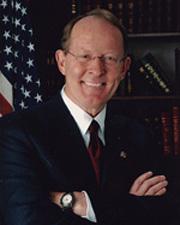
Mr. President, today is Citizenship Day. On this day in 1787 the Constitution of the United States was signed. In 1952, Congress passed a law designating Citizenship Day on this day with the intent…
Mr. President, today is Citizenship Day. On this day in 1787 the Constitution of the United States was signed. In 1952, Congress passed a law designating Citizenship Day on this day with the intent of recognizing those who had become American citizens during the preceding year.
In the ceremony where an immigrant becomes a naturalized citizen of this country, where he or she becomes a new American, he or she swears an oath of renunciation and allegiance.
Last week, on September 11, I noted that the oath of allegiance is currently a matter of mere Federal regulation and not a matter of law. I said that Congress ought to enshrine the oath in law.
Today, on behalf of Mr. Burns, Mr. Sessions, and 30 Members of the Senate, I rise to introduce legislation to do precisely that--to make the current oath of allegiance the law of the land. Doing so will give the oath of allegiance the same status enjoyed by other key symbols and statements of being an American--the American flag, the Pledge of Allegiance, the national anthem, and our national motto. All these symbols and statements have been specifically approved by Congress and are now a matter of law. The oath of allegiance ought to be treated with the same dignity.
The Bureau of Citizenship and Immigration Services--or BCIS--an agency of the Department of Homeland Security, was recently planning to change the oath of allegiance that immigrants take to become a citizen of this Nation. While those changes seem now to be on hold, it seems inappropriate to me that the BCIS, or any other Government agency, no matter how well intentioned, should have the power to alter the oath without congressional approval.
In the first 5 months of this fiscal year, 166,968 immigrants took the oath and were naturalized as new citizens of this country.
The oath assumed its present form in the 1950s and was first adopted in Federal regulations in 1929. But some of the language dates all the way back to 1790.
Yesterday, I attended a naturalization ceremony for new citizens. They were proud to take the oath of allegiance to the United States. They were proud to become Americans. This is the oath they took to become U.S. citizens--the oath which will become law if the bill I will introduce today should pass and be signed by the President.
I quote:
I--and the citizen states his or her name--hereby declare,
on oath, that I absolutely and entirely renounce and abjure
all allegiance and fidelity to any foreign prince, potentate,
state, or sovereignty of whom or which I have heretofore been
a subject or citizen; that I will support and defend the
Constitution and laws of the United States of America against
all enemies, foreign and domestic; that I will bear true
faith and allegiance to the same; that I will bear arms on
behalf of the United States when required by the law; that I
will perform noncombatant service in the Armed Forces of the
United States when required by the law; that I will perform
work of national importance under civilian direction when
required by the law; and that I take this obligation freely
without any mental reservation or purpose of evasion; so help
me God.
That is the oath of allegiance. That is quite an oath. It has strength. It has clarity. It sounds as if it might have been written by some rowdy patriots in Philadelphia or Williamsburg.
Yet, surprisingly, Congress has never voted on the content of this oath. We have left it to Federal regulators. It is time to protect it.
This is a straightforward bill that simply codifies the oath of allegiance as it presently stands. The bill I introduce today has, as I mentioned, already attracted 30 cosponsors, including the distinguished Senator from North Carolina who is presiding today.
I hope more Senators will join us in protecting this key statement on what it means to become an American.

Will my friend yield? Thank you very much, I say to my friend and colleague and our leader from Nevada. Before asking a question, I first want to rise on behalf of the people of Michigan to thank you…
Will my friend yield?
Thank you very much, I say to my friend and colleague and our leader from Nevada.
Before asking a question, I first want to rise on behalf of the people of Michigan to thank you today for coming to this floor and speaking about what is most important to the people I represent.
As you have said so eloquently, this 30 hours we are going to be doing is about four people who already have jobs who want to be promoted.
Well, in Michigan, we, right now, have over 263,000 people without jobs. They are not up for promotions. They do not have work at all because of, primarily, the loss of manufacturing jobs. They are grateful, as I am, that you have come to the floor to speak about this.
I want to just share with you today a few headlines from the papers. I have been traveling around northern Michigan this last weekend, and everywhere I go--Baldwin, MI, Reed City, Lake City--all around the State I hear the same thing about the loss of furniture makers, the loss of tool and die makers, the loss of other auto suppliers.
Here we have a headline from the Grand Rapids Press: ``2,700 Jobs in Danger as Electrolux Considers Closing Greenville Refrigerator Plant.'' The Holland Sentinel: ``Ford Sets Timetable for Plant Closings.'' Also, GM is laying off one shift in Lansing, my hometown.
Here is another headline: ``Straits Steel Closing Sad News for Plant's 180 Employees.'' From the Ann Arbor news: ``Eaton Plant to Become Condos.'' From the Lansing State Journal: ``Jobless Rate Could Rise in Winter.''
I ask my friend, as we look at what is happening, and as they talk about the change in the growth and the positive indicators in the economy, isn't it true that we are not seeing new jobs created? In many States, such as mine, we are seeing the best paying jobs, manufacturing jobs, evaporating for many different reasons? And isn't that something we should be talking about on the floor of the Senate, the loss of manufacturing jobs?
They cannot just all be in the service industry. We need to make things in this country.
That is what I do. That is what people in my State do very well, and they want to continue. Wouldn't my friend say we should be talking about the loss of manufacturing jobs and the people and the families?
Will the Senator yield for a question?
Just one more question for my friend. I thank the Senator again very much for laying out what we ought to be doing, our priorities, all of our debates about values and priorities. The Senator has certainly laid out what the values and priorities should be for our focus of time. As you were reading the list of items, I was thinking about that mom on minimum wage who is caring for her children. She probably has sleepless nights hoping they won't get sick because she is probably not covered for health insurance either.
As we look at the number of people in the country and in my State who have lost their jobs, and the number of people on minimum wage, they are not just losing a job; in most cases, they are losing their health care as well.
In Michigan now, one out of four people under the age of 65 has no health care. Many, as the Senator has talked about, are low-income people; but many of them are high-income manufacturing workers who have lost their jobs.
Would the Senator not agree that what we are seeing now, when people lose their jobs, is not just the loss of the income but a loss of the stability of the families and the ability to care for the health of the family because their health insurance is gone as well? Should we not be talking about what is happening in this country in terms of those who have no health insurance or the businesses that are trying to pay for the health insurance?

Mr. President, could I ask my colleague from Nevada to yield for the purpose of a question? I want to first tell my colleague I have been watching him in the other room, and he has been doing a…
Mr. President, could I ask my colleague from Nevada to yield for the purpose of a question?
I want to first tell my colleague I have been watching him in the other room, and he has been doing a masterful job on the CJS bill, and now on what has happened in the first 1,000 days of the Bush Presidency.
An area of particular concern to me, which I know my colleague has touched on, has been the judges. I simply ask my colleague if he says the judicial vacancies--it is on the chart. I can't read it, but I think it is down from 9 percent to 4.7 percent. He has been around here a lot longer time than I have. But does my colleague recall a time when we moved so many--knowing his knowledge of the history of the Senate-- judges so quickly and when any President could have gotten such a high percentage of the judges which he has asked for? Does my colleague agree with this? He might want to talk about this at some point. He was talking about the gag rule, but I was so interested in what he said on judges I wanted to come to the floor.
It is ridiculous, when 168 of 172 judges have been approved, to call the minority ``obstructionists'' given the record they have. I am hearing from many people in New York that we are letting too many judges through.
Will my colleague yield for the purpose of one additional question.
Even on the issue of judges, and my colleague is exactly on point, with all these other problems we have, to talk about four judges sounds like a totally misplaced priority. No one puts it better than he.
I ask one other question about another point. To solve the problem of the judges, when we are not able to come together, it would seem to me, and I ask my good friend from Nevada to comment, it is not that we need more talking. The other side will spend 30 hours talking about this, or now maybe 15 because of my friend from Nevada and his astute parliamentary request. Do you think they will say anything new? We have heard the arguments over and over and over and over and over and over again. No one is going to be educated about this. We all know their viewpoint.
It seems to me, and I ask my colleague this question, what we need on judges is not more speeches telling us what our colleagues on the other side of the aisle think--Lord knows we know that. We do not agree, but we know--but, rather, the President and the leaders of the Senate and the Judiciary Committee, sitting down with our side, and asking, Could we come to some agreement on who the judges ought to be? There is the constitutional role of advice and consent which has existed in this country for a very long time, and I tell the Senator as the ranking Democrat, I am never consulted about judges in New York. By the way, in New York we are filling all the vacancies because we have come to an agreement. I do not get every judge I want or even judges who are philosophically exactly like me, but there is some comity and some agreement.
So my question to my colleague is, Doesn't it seem that if they really want to solve the problem on the judges, instead of spending 30 hours repeating, ad nauseam, the same arguments we have heard over and over and over again, that, rather, they would sit down with us and, in good faith, say: How can we come to some kind of agreement instead of what they do say: My way or the highway. If you don't give us all 172, we're mad. I ask my colleague that question and yield the floor back to him.

Mr. President, will the Senator yield for a question without losing his right to the floor? Mr. President, I heard the Senator's question about delaying on this question of judges. Could it be that…
Mr. President, will the Senator yield for a question without losing his right to the floor?
Mr. President, I heard the Senator's question about delaying on this question of judges. Could it be that our friends on the other side, having blocked 61 of the President's nominees usually because of one Republican's objection, are concerned that Democrats have helped confirm a record number of President Bush's nominees, has stopped less than any President in recent history, and that maybe they want to obscure their own record and not be in the position to praise ours?
Will the Senator yield for a question?
Madam President, as always, I am impressed with my dear friend, the senior Senator from Nevada, one of the finest people out of the several hundred Senators with whom I have served in 29 years. I know the senior Senator from Nevada to be one who cares deeply about this institution and the way it works. He has been speaking at great length and on matters of great interest to all of us today.
I ask my distinguished friend from Nevada, is it not true the senior Senator from Nevada, like the senior Senator from Vermont and the senior Senator from Michigan who is on the floor, would have been very pleased if we had been doing the appropriations bills that by law we should have finished on September 30 rather than having to try to figure out the schedule the other side has put us in, a schedule that accomplishes, in this Senator's mind, absolutely nothing?
If I could ask him a question without his losing his right to the floor, I am sure the distinguished senior Senator from Nevada is aware of this, but he has talked about the record. Does he believe that people, including the press, might be surprised to know that in the 17 months the Democrats controlled the Senate during President Bush's current term, we confirmed 100 of President Bush's nominees and during the 17 months the Republicans were in charge of the Senate, they confirmed 68?
My point is not to say what a poor record they have; 68 would be a fine record, and they confirmed those 68 with the support of most of the Democratic Senators.
But my question to the senior Senator from Nevada is, does it seem like a little bit of crocodile tears when we hear from our friends on the other side, What is this terrible slow-up, when actually during the 17 months the Democrats were in charge, we confirmed more of President Bush's nominees, considerably more, than the Republicans had during the 17 months they have been in charge?
Madam President, with the concurrence of the distinguished majority leader, let me say that the majority leader, of course, is a dear friend, but the senior Senator from Nevada has been a very dear friend for many, many years. We campaigned the same year, I for reelection, he for the Senate. I have always been very proud of him.
When historians look back, they will see he did a great service for the Senate today in trying to put a lot of things in perspective. I will speak longer at a another time. I am doing this at the concurrence of the leader showing his usual courtesy. I will not exceed that. I will speak at a later time.
I appreciate my friend and also appreciate my friend from Tennessee.
I yield the floor.
Show 5 more
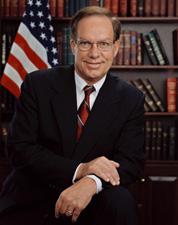
Mr. President, it gives me great pleasure to introduce today a bill to provide a tax credit for apprenticeship training programs for various construction trades recognized by the Bureau of Labor…
Mr. President, it gives me great pleasure to introduce today a
bill to provide a tax credit for apprenticeship training programs for various construction trades recognized by the Bureau of Labor Statistics (BLS), including masonry, electrical contract work, plumbing and heating and a host of other important vocations.
There are several reasons why I believe this legislation is necessary for apprenticeship training in these trades. First and foremost, these are highly skilled trades requiring many years of training. Second, there is a significant shortage of workers in these trades; in fact it is my understanding that many contractors often have to look outside the country to find a craftsman trained in one of these particular fields. Third, the average age of some of the workers in these crafts is over 50 and we must make every effort to ensure that we retain and recruit the most capable people in these jobs. And finally, many of these industries are very capital intensive and it makes sense to me to offer small businesses a short term tax credit to encourage productivity and stimulate economic growth and job creation.
During the last Congress a similar bill was introduced in the House of Representatives by Congressman Foley of Florida. Regrettably the bill was not met with a great deal of enthusiasm, primarily due to the price tag attached to it. The legislation I am introducing, the Apprenticeship Training and Education Act of 2003, has been modified to address budgetary concerns as well as the concerns of those in some of the building trades that the apprenticeship training programs were indeed legitimate ones that would ultimately produce certified craftsmen. I greatly appreciate the assistance of the Mason Contractors Association of America and the Independent Electrical Contractors in crafting a bill that is fiscally responsible and credible.
I believe this tax credit will go a long way toward encouraging companies with a certified apprenticeship program to hire and train new workers. As the population of these workers continues to age and decline, it is absolutely essential that we look for ways to attract more, younger workers to what I believe to be excellent, high-paying and high skilled jobs in these construction trades.
Under my bill, a tax credit of up to $10,000 per year for the first 2 years of a 4-year program would be provided and companies could hire three new apprentices each year. The normal business deduction taken for this expense would be offset by the amount of the tax credit. The bill also specifically targets trades in the construction industry recognized by the BLS and only those programs certified by a State's or the Federal Department of Labor would qualify for the credit.
In my view there are many companies across the country that would benefit tremendously from this tax credit. I commend this legislation to my colleagues and urge them to cosponsor it with me. These are jobs and trades to be proud of and I encourage other Members of this body to promote the skills and education necessary to keep them viable in the United States.
I ask unanimous consent that the text of the bill be printed in the Record.
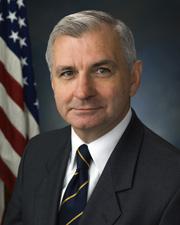
Mr. President, I rise today to introduce the Rhode Island Fishermen's Fairness Act of 2003. This legislation would address a serious flaw in our Nation's regional fisheries management system by…
Mr. President, I rise today to introduce the Rhode Island Fishermen's Fairness Act of 2003. This legislation would address a serious flaw in our Nation's regional fisheries management system by adding Rhode Island to the Mid-Atlantic Fishery Management Council (MAFMC), which currently consists of representatives from New York, New Jersey, Delaware, Pennsylvania, Maryland, Virginia, and North Carolina.
The MAFMC manages the following 13 species, all of which are landed in Rhode Island: Illex squid, loligo squid, Atlantic mackerel, black sea bass, bluefish, butterfish, monkfish, scup, spiny dogfish, summer flounder, surfclam, ocean quahog, and tilefish.
In 2001, the most recent year for which final data are available, Rhode Island fishermen brought in over 21 percent of MAFMC landings by weight--more than any of the MAFMC member States except New Jersey, which is responsible for about 56 percent of total MAFMC landings. In fact, with the exception of New Jersey, Rhode Island's total 2001 MAFMC landings, 44.1 million pounds, nearly equaled those of all other MAFMC member States combined, 45.9 million pounds.
If Rhode Island fishermen are responsible for a large percentage of overall MAFMC landings, these species make up an even larger proportion of landings within Rhode Island every year. Between 1995 and 2002, MAFMC species represented between 29 percent and 58 percent of all finfish landed in Rhode Island annually, for an average of 43 percent of total landings by weight. In eight of the years between 1990 and 2002, squid, Illex and loligo, was the number one finfish landed in Rhode Island, with a value of between $13 million and $20 million annually.
Yet Rhode Island has no voice in the management of these species.
Following council tradition and Federal fisheries law, the Rhode Island Fishermen's Fairness Act would create two seats on the MAFMC for Rhode Island: one seat nominated by the Governor of Rhode Island and appointed by the Secretary of Commerce, and a second seat filled by Rhode Island's principal State official with marine fishery management responsibility. The MAFMC would increase in size from 21 voting members to 23.
There is a precedent for this proposed legislation. In 1996, North Carolina's representatives in Congress succeeded in adding that State to the MAFMC through an amendment to the Sustainable Fisheries Act. Like Rhode Island, a significant proportion of North Carolina's landed fish species were managed by the MAFMC, yet the State had no vote on the council. Today, Rhode Island's share of total landings for species managed by the MAFMC is more than six times greater than that of North Carolina.
I look forward to working with my colleagues to restore a measure of equity to the fisheries management process by passing the Rhode Island Fishermen's Fairness Act. I ask unanimous consent that the text of the legislation be printed in the Record.
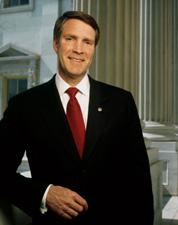
Madam President, I know Members have been wondering about the schedule. There will be no rollcall votes tonight. We were prepared to have votes throughout today and this evening, procedural or…
Madam President, I know Members have been wondering about the schedule. There will be no rollcall votes tonight. We were prepared to have votes throughout today and this evening, procedural or otherwise, but I think that will not serve any useful purpose at this late hour. The best course is probably to step back for the evening and begin fresh tomorrow, which we will do.
Today we were to begin considering a very important appropriations bill, Commerce-Justice-State appropriations bill. As a matter of fact, that bill has been pending since shortly after 1 o'clock today. Unfortunately, we were able to make no progress on that bill today. That was successfully obstructed.
I indeed respect every Senator's right to do just that, and the distinguished minority whip was within his rights to hold the floor throughout the entire afternoon and this evening.
We were prepared to offer and vote in relation to amendments to the Commerce-Justice-State bill, but that was not possible. We were told last week the other side of the aisle would not be offering their amendments today, on Monday. The two managers were working together to move forward on amendments that would be offered by Members on this side of the aisle today. Indeed, Republican Members were present today to offer and debate those amendments. I take it the other side of the aisle did not show up to do the Nation's business as it pertained to this Commerce-Justice-State bill.
I have stated repeatedly in the Senate that there is much, much work to do and that there is little time remaining to do it. Later this week, indeed, we will focus on judges as part of the unfinished business that remains before this body. I will continue to bring to the floor to the best of my ability each and every appropriations bill. If the other side of the aisle does not want to debate and discuss those bills as they are brought to the floor, that is their right.
Today our focus was on continuing the appropriations process. It is obvious that delay will occur on every front. Then, indeed, I think that is unfortunate given the amount of business we have to do.
I am sure that at some point in the future we will hear speeches about work that we did or did not get done or we were late in doing, and there will be Senators bemoaning the fact that the Senate has been unable to finish our business. Today was a missed opportunity to make progress on these important appropriations bills.
Will the distinguished Senator yield for a question? I thank the distinguished Senator. While sitting in my capacity as the acting Presiding Officer, going back to chapter four of your book, I got a…
Will the distinguished Senator yield for a question?
I thank the distinguished Senator. While sitting in my capacity as the acting Presiding Officer, going back to chapter four of your book, I got a little confused as to how the city of Searchlight actually was named Searchlight. I got mixed up between Lloyd Searchlight and the kitchen matches. I was wondering if you, with your intimate knowledge of who is a chef and who is a cook and poor Bill who has died--obviously you don't have any fish fries anymore, but I am interested in the goulash--but with your intimate knowledge of Searchlight, do you have a theory, a pet theory as to how Searchlight actually got its name, of the three hypotheses that you mentioned?
If the distinguished Senator would yield one more time--
Those were kitchen matches, not the modern?
Yes.
Mr. President, if I could just ask one more additional question of the Senator?
Did you ever solve the problem with the rabbits with regard to the cactus they would eat or wouldn't eat? And I was wondering if you thought about just basically desert rocks? They have some beautiful rocks out there and I doubt seriously if the rabbits would have eaten the rocks.
Rubber tires, perhaps?
Mr. President, if I could just ask one more question and I will desist.
I thought perhaps with your cousin, again, you could replace those cactus with rocks and I know the rabbits wouldn't eat the rocks. But in any case I think the operative thought would be to simply ``rock on.''
Will the Senator yield for a question? My question was going to be as to how much time the Senator is going to take? Will the Senator yield for a question? That is not a problem for myself. I would…
Will the Senator yield for a question?
My question was going to be as to how much time the Senator is going to take?
Will the Senator yield for a question? That is not a problem for myself. I would just like to know the approximate time.
Bill Text
Latest available legislative text
        [Congressional Bills 108th Congress]
[From the U.S. Government Publishing Office]
[S. 1630 Introduced in Senate (IS)]

108th CONGRESS
1st Session
S. 1630

To facilitate nationwide availability of 2-1-1 telephone service for
information and referral on human services, and for other purposes.

_______________________________________________________________________

IN THE SENATE OF THE UNITED STATES

September 17, 2003

Mrs. Clinton (for herself, Mrs. Dole, Ms. Cantwell, Mr. Bennett, Mr.
Bingaman, Mrs. Murray, and Ms. Landrieu) introduced the following bill;
which was read twice and referred to the Committee on Commerce,
Science, and Transportation

_______________________________________________________________________

A BILL

To facilitate nationwide availability of 2-1-1 telephone service for
information and referral on human services, and for other purposes.

Be it enacted by the Senate and House of Representatives of the
United States of America in Congress assembled,

SECTION 1. SHORT TITLE.

This Act may be cited as the ``Calling for 2-1-1 Act of 2003''.

SEC. 2. FINDINGS.

Congress makes the following findings:
(1) The Federal Communications Commission has assigned 2-1-
1 as the national telephone number for telephone service for
information and referral on human services, declaring that 2-1-
1 best satisfies the public interest in allotting the limited
resource of this abbreviated number. In 2005, the Commission
will assess the widespread utilization of the 2-1-1 telephone
number and evaluate whether to continue the assignment of that
telephone number for that service.
(2) The number ``2-1-1'' is an easy-to-remember telephone
number that facilitates critical connections between
individuals and families seeking services, volunteer
opportunities, or both and appropriate human service agencies,
including community-based and faith-based organizations and
government agencies.
(3) There are more than 820,000 nonprofit organizations in
the United States. Individuals and families often find it
difficult to navigate through a complex and ever-growing maze
of human service agencies and programs, spending inordinate
amounts of time trying to identify an agency or program that
provides a service that may be immediately or urgently required
and often abandoning the search from frustration or a lack of
quality information.
(4) At the Federal, State, and local levels, government
funding supports well-intentioned programs that are not fully
utilized because of a lack of access to and information on such
programs by the public. Program administrators have indicated
that there is a need for a simple way to connect those eligible
for programs with available program resources. 2-1-1 telephone
service will reduce the number of inappropriate calls to
government offices by directing consumers to the appropriate
human services agency, resulting in a more effective use of
government services.
(5) Many families need information on government and not-
for-profit services that address domestic violence, support
adequate and stable housing, alleviate hunger, and provide for
high-quality day care, afterschool activities, summer
activities, job training and assistance, elder care, and
disaster recovery.
(6) Individuals often need support, services, or both when
suffering emotional distress, having suicidal thoughts or
behavior, contemplating violence, or using drugs or alcohol.
(7) Americans desire to volunteer and become involved in
their communities. This desire, together with a desire to
donate to organizations which provide human services, are among
the reasons to contact a center which provides information and
referral on volunteer opportunities and human services.
(8) Following the September 11, 2001, terrorist attacks, an
estimated 400 telephone hotlines were established in New York,
New York, for various funds and services, creating a confusing
network for victims and volunteers to navigate. A Comptroller
General report on charitable aid following the terrorist
attacks found that ``families of victims generally believed
they had to navigate a maze of service providers in the early
months'' and that ``good information about and easy access to
available assistance could help survivors in the recovery
process''.
(9) The 107th Congress recognized the importance of 2-1-1
telephone service in community preparedness and response by
including use of that telephone number for public information
as an allowable use of funds under grants for preparedness and
response to bioterrorism and other public health emergencies
under section 319C-1 of the Public Health Service Act (42
U.S.C. 247d-3a), as added by section 131 of the Public Health
Security and Bioterrorism Preparedness and Response Act of 2002
(Public Law 107-188).
(10) While 20 percent of the population has access to 2-1-1
telephone service in 21 States, inadequate funding prevents
access to that telephone service throughout each of the States.
2-1-1 telephone service is currently available statewide only
in Connecticut and Hawaii.
(11) Rapid deployment nationwide of 2-1-1 telephone service
as a means of access to information about and referral on human
services requires collaboration among State governments,
comprehensive and specialized information and referral centers,
human service organizations and service providers, emergency
management and homeland security officials, telephone
companies, and other relevant entities.
(12) 2-1-1 telephone service facilitates the availability
of a single repository where comprehensive data on all
community services is collected, maintained, and updated
regularly, reducing costs and duplication of efforts. The
reliable data provided through 2-1-1 telephone service helps to
better assess the needs of our communities and to immediately
mobilize resources toward those needs.

SEC. 3. GRANTS TO FACILITATE NATIONWIDE AVAILABILITY OF 2-1-1 SERVICE
FOR INFORMATION AND REFERRAL ON HUMAN SERVICES.

(a) Grants Required.--The Secretary of Commerce shall award a grant
to each State to carry out a program for the purpose of making
available throughout such State 2-1-1 telephone service for information
and referral on human services.
(b) Grant To Be Available for Each State.--In awarding grants under
this section, the Secretary shall develop a formula for allocating
grant amounts among the States so that a grant may be awarded to each
State seeking a grant.
(c) Requirement on Share of Activities.--
(1) Requirement.--A State may not be awarded a grant under
this section unless the State ensures that at least 50 percent
of the resources of the program funded by the grant will be
derived from other sources.
(2) In-kind contributions.--The requirement in paragraph
(1) may be satisfied by in-kind contributions of goods or
services.
(d) Lead Entity.--
(1) In general.--A State seeking a grant under this section
shall carry out this section through a lead entity meeting the
requirements of this subsection.
(2) 2-1-1 Collaborative.--An entity shall be treated as the
2-1-1 Collaborative for a State under this subsection if the
entity--
(A) exists for such purpose under State law;
(B) exists for such purpose by order of the State
public utility commission; or
(C) is a collaborative entity established by the
State for such purpose from among representatives of--
(i) an informal existing 2-1-1 statewide
collaborative, if any, in the State;
(ii) State agencies;
(iii) community-based organizations;
(iv) faith-based organizations;
(v) not-for-profit organizations;
(vi) comprehensive and specialized
information and referral providers, including
current 2-1-1 call centers;
(vii) foundations; and
(viii) businesses.
(3) Requirements for preexisting lead entities.--An entity
described by subparagraph (A) or (B) of paragraph (2) may be
treated as a lead entity under this subsection only if such
entity collaborates, to the extent practicable, with the
organizations and entities listed in subparagraph (C) of that
paragraph.
(e) Application.--
(1) In general.--The lead entity on behalf of each State
seeking a grant under this section shall submit to the
Secretary an application therefor in such form as the Secretary
shall require.
(2) Information.--An application on behalf of a State under
this subsection shall contain information as follows:
(A) Information on the program to be carried out by
the lead entity of the State in order to plan to make
available throughout the State 2-1-1 telephone service
for information and referral on human services,
including information on the manner in which the lead
entity will develop, sustain, and evaluate the program.
(B) Information on the sources of resources for the
program for purposes of meeting the requirement in
subsection (c).
(C) Any additional information that the Secretary
may require for purposes of this section.
(f) Subgrants.--
(1) Authority.--In carrying out a program to make 2-1-1
telephone service available throughout a State at no charge to
the caller, the lead entity of the State may make subgrants to
such persons or entities as the lead entity considers
appropriate for purposes of the program, including subgrants to
provide funds--
(A) for the provision of 2-1-1 telephone service;
(B) for the operation and maintenance of 2-1-1 call
centers; and
(C) for such other purposes as the 2-1-1
Collaborative considers appropriate for purposes of the
program, including planning, public awareness,
training, accreditation, and evaluation.
(2) Considerations.--In awarding a subgrant under this
subsection, a lead entity shall consider--
(A) the ability of the person or entity seeking the
subgrant to carry out activities or provide services
consistent with the program;
(B) the extent to which the award of the subgrant
will facilitate equitable geographic distribution of
subgrants under this section to ensure that rural
communities have access to 2-1-1 telephone service; and
(C) the extent to which the recipient of the
subgrant will establish and maintain cooperative
relationships with specialized information and referral
centers, crisis centers, 9-1-1 call centers, and 3-1-1
call centers, if applicable.
(g) Use of Grant and Subgrant Amounts.--
(1) In general.--Amounts awarded as grants or subgrants
under this section shall be used solely to make available 2-1-1
telephone service for community information and referral on
human services, including telephone connections between
families and individuals seeking such services and the
providers of such services.
(2) Particular matters.--In making 2-1-1 telephone service
available, the recipient of a grant or subgrant shall, to the
maximum extent practicable--
(A) abide by the Key Standards for 2-1-1 Centers as
specified in the Standards for Professional Information
and Referral Requirements for Alliance of Information
Referral Systems (AIRS) Accreditation and Operating 2-
1-1 Systems; and
(B) collaborate with human service organizations,
whether public or private, to provide an exhaustive
database of services with which to provide information
or referral to individuals utilizing 2-1-1 telephone
service.
(3) Use of funds.--Amounts of a subgrant under subsection
(e) may be used by grantees for Statewide and regional
planning, start-up costs (including costs of software and
hardware upgrades and telecommunications costs), training,
accreditation, public awareness, evaluation of activities, and
the provision of 2-1-1 telephone service.
(h) Requirement on Allocation of Grant Amounts.--Of the amounts
awarded under this section, an aggregate of not less than 10 percent
shall be allocated for evaluation, training, and technical assistance,
and for management and administration of subgrants awarded under this
section.
(i) Reports.--The lead entity of each State awarded a grant under
this section for a fiscal year shall submit to the Secretary, not later
than 60 days after the end of such fiscal year, a report on the program
funded by the grant. Each report shall--
(1) describe the program funding by the grant; and
(2) assess the effectiveness of the program in making
available throughout such State 2-1-1 telephone service for
information and referral on human services in accordance with
the provisions of this section.
(j) Definitions.--In this section:
(1) Human services.--The term ``human services'' means
services as follows:
(A) Services that assist individuals in becoming
more self-sufficient, in preventing dependency, and in
strengthening family relationships.
(B) Services that support personal and social
development.
(C) Services that help ensure the health and well-
being of individuals, families, and communities.
(2) Information and referral center.--The term
``information and referral center'' means a center that--
(A) maintains a database of providers of human
services in a State or locality;
(B) assists individuals, families, and communities
in identifying, understanding, and accessing the
providers of human services and the human services
offered by the providers of such services; and
(C) tracks types of calls referred and received to
document the demands for services.
(3) State.--The term ``State'' means the several States,
the District of Columbia, the Commonwealth of Puerto Rico, the
Virgin Islands, Guam, American Samoa, and the Commonwealth of
the Northern Mariana Islands.

SEC. 4. AUTHORIZATION OF APPROPRIATIONS.

(a) In General.--There are authorized to be appropriated to carry
out this Act amounts as follows:
(1) For fiscal year 2004, $200,000,000.
(2) For each of fiscal years 2005 through 2009, such sums
as may be necessary.
(b) Availability.--Amounts appropriated pursuant to the
authorization of appropriations in subsection (a) shall remain
available until expended.
<all>