Wartime Treatment Study Act
 Sen. Russell D. Feingold (D-WI)
Legislative Activity
Stay on top of the latest movement without scrolling through every action
Sponsor introductory remarks on measure. (CR S308-309)
January 28, 2004
View full timeline
Introduced in Senate
October 1, 2003
Sponsor introductory remarks on measure. (CR S12278-12279)
October 1, 2003
Read twice and referred to the Committee on the Judiciary. (text of measure as introduced: CR S12279-12281)
October 1, 2003
Committee on the Judiciary. Ordered to be reported without amendment favorably.
October 16, 2003
Committee on the Judiciary. Reported by Senator Hatch without amendment and an amendment to the title. Without written report.
October 16, 2003
Placed on Senate Legislative Calendar under General Orders. Calendar No. 309.
October 16, 2003
Sponsor introductory remarks on measure. (CR S308-309)
January 28, 2004
Floor Debate
17 membersWhat members said about S. 1691 on the floor



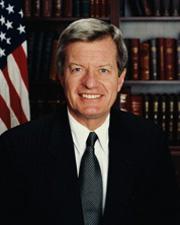 +12
+12
Floor Debate
17 membersWhat members said about S. 1691 on the floor
Mr. President, today I am introducing with Senators Craig, Sununu, Durbin, and Reid, my distinguished colleagues from Idaho, New Hampshire, Illinois, and Nevada, the Patriot Oversight Restoration Act…
Mr. President, I rise today to introduce a comprehensive bipartisan bill which will ensure the full use and availability of DNA technology in our criminal justice system. This bill, which enacts the…
Mr. President, I rise along with the distinguished senior Senator from Utah, Senator Hatch and several others of my colleagues, Senators Spector, Leahy, DeWine, and Feinstein, to introduce the…
Mr. President, I want to speak today about S. 1691, the Wartime Treatment Study Act. During World War II, the United States fought a courageous battle against the spread of Nazism and fascism. Nazi…
Mr. President, I rise today to introduce the Health Care Tax Credit Expansion Act of 2003. According to the most recent census figures, more than 41 million Americans lack health insurance coverage.…
Show 8 more

Mr. President, I rise today to cosponsor the Retirement Security Advice Act of 2003, introduced by my good friend from Wyoming, Senator Mike Enzi. I do so because this bill holds important…
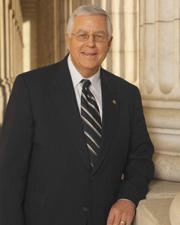
Mr. President, with the passage of the Sarbanes-Oxley Act, Congress acted swiftly and surely to restore investor confidence in our capital markets. Something needed to be done to assure people that…
Mr. President, today I introduce the Wartime Treatment Study Act. This bill would create two fact-finding commissions: one commission to review the U.S. Government's treatment of German Americans,…
Mr. President, today I introduce the Wartime Treatment Study Act. This bill would create two fact-finding commissions: one commission to review the U.S. Government's treatment of German Americans,…

Mr. President, I rise today to introduce a bill that will help address a growing problem in America--our ability to provide safe and affordable housing that meets the needs of older Americans.…
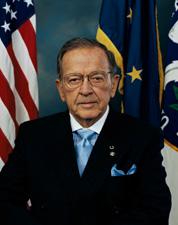
Mr. President, I ask unanimous consent that the Committee on Armed Services be authorized to meet during the session of the Senate on Thursday, October 16, 2003, at 9:30 a.m., in closed session, to…

Mr. President, I rise today to introduce the Health Care for Veterans of Project 112/Project SHAD Act of 2003. This bill will authorize health care assistance for veterans who participated in…
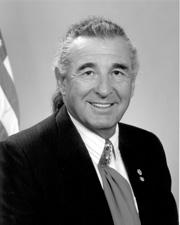
Mr. President, today I am pleased to be joined by Senator Inouye in introducing the Department of Health and Human Services Tribal Self Governance Amendments of 2003, a bill that will usher in the…
Show 6 more

Mr. President, I am pleased to join the distinguished Senator from Vermont, Senator Leahy, and our other colleagues in introducing the PATRIOT Oversight Restoration Act of 2003. I am one of those who…

Mr. President, today I am pleased to introduce, along with Senator Baucus, an extension of a bipartisan policy to help reduce the number of people living without health insurance today. In simplist…

I thank the Senator for yielding time. I would just say that I completely agree with the understanding of the Senators from Delaware and Utah on this. Would the Senator yield for another question? As…

Mr. President, today I am introducing legislation to require parental consent for intrusive physical exams, genital exams, administered under the Head Start program. Young children attending Head…

Mr. President, reserving the right to object, I have been informed that our leadership is working on a method for this proposal to move forward. I admire what the Senator is doing on a personal…
Mr. President, I ask unanimous consent that the order for the quorum call be rescinded.
Bill Text
2 versions available
        [Congressional Bills 108th Congress]
[From the U.S. Government Publishing Office]
[S. 1691 Reported in Senate (RS)]

Calendar No. 309
108th CONGRESS
1st Session
S. 1691

To establish commissions to review the facts and circumstances
surrounding injustices suffered by European Americans, European Latin
Americans, and Jewish refugees during World War II.

_______________________________________________________________________

IN THE SENATE OF THE UNITED STATES

October 1, 2003

Mr. Feingold (for himself, Mr. Grassley, Mr. Kennedy, and Mr.
Lieberman) introduced the following bill; which was read twice and
referred to the Committee on the Judiciary

October 16, 2003

Reported by Mr. Hatch, without amendment

_______________________________________________________________________

A BILL

To establish commissions to review the facts and circumstances
surrounding injustices suffered by European Americans, European Latin
Americans, and Jewish refugees during World War II.

Be it enacted by the Senate and House of Representatives of the
United States of America in Congress assembled,

SECTION 1. SHORT TITLE.

This Act may be cited as the ``Wartime Treatment Study Act''.

SEC. 2. FINDINGS.

Congress makes the following findings:
(1) During World War II, the United States successfully
fought the spread of Nazism and fascism by Germany, Italy, and
Japan.
(2) Nazi Germany persecuted and engaged in genocide against
Jews and certain other groups. By the end of the war, 6,000,000
Jews had perished at the hands of Nazi Germany. United States
Government policies, however, restricted entry to the United
States to Jewish and other refugees who sought safety from Nazi
persecution.
(3) While we were at war, the United States treated the
Japanese American, German American, and Italian American
communities as suspect.
(4) The United States Government should conduct an
independent review to assess fully and acknowledge these
actions. Congress has previously reviewed the United States
Government's wartime treatment of Japanese Americans through
the Commission on Wartime Relocation and Internment of
Civilians. An independent review of the treatment of German
Americans and Italian Americans and of Jewish refugees fleeing
persecution and genocide has not yet been undertaken.
(5) During World War II, the United States Government
branded as ``enemy aliens'' more than 600,000 Italian-born and
300,000 German-born United States resident aliens and their
families and required them to carry Certificates of
Identification, limited their travel, and seized their personal
property. At that time, these groups were the two largest
foreign-born groups in the United States.
(6) During World War II, the United States Government
arrested, interned or otherwise detained thousands of European
Americans, some remaining in custody for years after cessation
of World War II hostilities, and repatriated, exchanged, or
deported European Americans, including American-born children,
to hostile, war-torn European Axis nations, many to be
exchanged for Americans held in those nations.
(7) Pursuant to a policy coordinated by the United States
with Latin American countries, many European Latin Americans,
including German and Austrian Jews, were captured, shipped to
the United States and interned. Many were later expatriated,
repatriated or deported to hostile, war-torn European Axis
nations during World War II, most to be exchanged for Americans
and Latin Americans held in those nations.
(8) Millions of European Americans served in the armed
forces and thousands sacrificed their lives in defense of the
United States.
(9) The wartime policies of the United States Government
were devastating to the Italian Americans and German American
communities, individuals and their families. The detrimental
effects are still being experienced.
(10) Prior to and during World War II, the United States
restricted the entry of Jewish refugees who were fleeing
persecution and sought safety in the United States. During the
1930's and 1940's, the quota system, immigration regulations,
visa requirements, and the time required to process visa
applications affected the number of Jewish refugees,
particularly those from Germany and Austria, who could gain
admittance to the United States.
(11) Time is of the essence for the establishment of
commissions, because of the increasing danger of destruction
and loss of relevant documents, the advanced age of potential
witnesses and, most importantly, the advanced age of those
affected by the United States Government's policies. Many who
suffered have already passed away and will never know of this
effort.

SEC. 3. DEFINITIONS.

In this Act:
(1) During world war ii.--The term ``during World War II''
refers to the period between September 1, 1939, through
December 31, 1948.
(2) European americans.--
(A) In general.--The term ``European Americans''
refers to United States citizens and permanent resident
aliens of European ancestry, including Italian
Americans, German Americans, Hungarian Americans,
Romanian Americans, and Bulgarian Americans.
(B) Italian americans.--The term ``Italian
Americans'' refers to United States citizens and
permanent resident aliens of Italian ancestry.
(C) German americans.--The term ``German
Americans'' refers to United States citizens and
permanent resident aliens of German ancestry.
(3) European latin americans.--The term ``European Latin
Americans'' refers to persons of European ancestry, including
Italian or German ancestry, residing in a Latin American nation
during World War II.

TITLE I--COMMISSION ON WARTIME TREATMENT OF EUROPEAN AMERICANS

SEC. 101. ESTABLISHMENT OF COMMISSION ON WARTIME TREATMENT OF EUROPEAN
AMERICANS.

(a) In General.--There is established the Commission on Wartime
Treatment of European Americans (referred to in this title as the
``European American Commission'').
(b) Membership.--The European American Commission shall be composed
of 7 members, who shall be appointed not later than 90 days after the
date of enactment of this Act as follows:
(1) Three members shall be appointed by the President.
(2) Two members shall be appointed by the Speaker of the
House of Representatives, in consultation with the minority
leader.
(3) Two members shall be appointed by the majority leader
of the Senate, in consultation with the minority leader.
(c) Terms.--The term of office for members shall be for the life of
the European American Commission. A vacancy in the European American
Commission shall not affect its powers, and shall be filled in the same
manner in which the original appointment was made.
(d) Representation.--The European American Commission shall include
2 members representing the interests of Italian Americans and 2 members
representing the interests of German Americans.
(e) Meetings.--The President shall call the first meeting of the
European American Commission not later than 120 days after the date of
enactment of this Act.
(f) Quorum.--Four members of the European American Commission shall
constitute a quorum, but a lesser number may hold hearings.
(g) Chairman.--The European American Commission shall elect a
Chairman and Vice Chairman from among its members. The term of office
of each shall be for the life of the European American Commission.
(h) Compensation.--
(1) In general.--Members of the European American
Commission shall serve without pay.
(2) Reimbursement of expenses.--All members of the European
American Commission shall be reimbursed for reasonable travel
and subsistence, and other reasonable and necessary expenses
incurred by them in the performance of their duties.

SEC. 102. DUTIES OF THE EUROPEAN AMERICAN COMMISSION.

(a) In General.--It shall be the duty of the European American
Commission to review the United States Government's wartime treatment
of European Americans and European Latin Americans as provided in
subsection (b).
(b) Scope of Review.--The European American Commission's review
shall include the following:
(1) A comprehensive review of the facts and circumstances
surrounding United States Government actions during World War
II that violated the civil liberties of European Americans and
European Latin Americans pursuant to the Alien Enemies Acts (50
U.S.C. 21-24), Presidential Proclamations 2526, 2527, 2655,
2662, Executive Orders 9066 and 9095, and any directive of the
United States Government pursuant to such law, proclamations,
or executive orders respecting the registration, arrest,
exclusion, internment, exchange, or deportment of European
Americans and European Latin Americans. This review shall
include an assessment of the underlying rationale of the United
States Government's decision to develop related programs and
policies, the information the United States Government received
or acquired suggesting the related programs and policies were
necessary, the perceived benefit of enacting such programs and
policies, and the immediate and long-term impact of such
programs and policies on European Americans and European Latin
Americans and their communities.
(2) A review of United States Government action with
respect to European Americans pursuant to the Alien Enemies
Acts (50 U.S.C. 21-24) and Executive Order 9066 during World
War II, including registration requirements, travel and
property restrictions, establishment of restricted areas,
raids, arrests, internment, exclusion, policies relating to the
families and property that excludees and internees were forced
to abandon, internee employment by American companies
(including a list of such companies and the terms and type of
employment), exchange, repatriation, and deportment, and the
immediate and long-term effect of such actions, particularly
internment, on the lives of those affected. This review shall
include a list of all temporary detention and long-term
internment facilities.
(3) A brief review of the participation by European
Americans in the United States Armed Forces including the
participation of European Americans whose families were
excluded, interned, repatriated, or exchanged.
(4) A recommendation of appropriate remedies, including how
civil liberties can be better protected during war, or an
actual, attempted, or threatened invasion or incursion, an
assessment of the continued viability of the Alien Enemies Acts
(50 U.S.C. 21-24), and public education programs related to the
United States Government's wartime treatment of European
Americans and European Latin Americans during World War II.
(c) Field Hearings.--The European American Commission shall hold
public hearings in such cities of the United States as it deems
appropriate.
(d) Report.--The European American Commission shall submit a
written report of its findings and recommendations to Congress not
later than 18 months after the date of the first meeting called
pursuant to section 101(e).

SEC. 103. POWERS OF THE EUROPEAN AMERICAN COMMISSION.

(a) In General.--The European American Commission or, on the
authorization of the Commission, any subcommittee or member thereof,
may, for the purpose of carrying out the provisions of this title, hold
such hearings and sit and act at such times and places, and request the
attendance and testimony of such witnesses and the production of such
books, records, correspondence, memorandum, papers, and documents as
the Commission or such subcommittee or member may deem advisable. The
European American Commission may request the Attorney General to invoke
the aid of an appropriate United States district court to require, by
subpoena or otherwise, such attendance, testimony, or production.
(b) Government Information and Cooperation.--The European American
Commission may acquire directly from the head of any department,
agency, independent instrumentality, or other authority of the
executive branch of the Government, available information that the
European American Commission considers useful in the discharge of its
duties. All departments, agencies, and independent instrumentalities,
or other authorities of the executive branch of the Government shall
cooperate with the European American Commission and furnish all
information requested by the European American Commission to the extent
permitted by law, including information collected as a result of Public
Law 96-317 and Public Law 106-451. For purposes of the Privacy Act (5
U.S.C. 552a(b)(9)), the European American Commission shall be deemed to
be a committee of jurisdiction.

SEC. 104. ADMINISTRATIVE PROVISIONS.

The European American Commission is authorized to--
(1) appoint and fix the compensation of such personnel as
may be necessary, without regard to the provisions of title 5,
United States Code, governing appointments in the competitive
service, and without regard to the provisions of chapter 51 and
subchapter III of chapter 53 of such title relating to
classification and General Schedule pay rates, except that the
compensation of any employee of the Commission may not exceed a
rate equivalent to the rate payable under GS-15 of the General
Schedule under section 5332 of such title;
(2) obtain the services of experts and consultants in
accordance with the provisions of section 3109 of such title;
(3) obtain the detail of any Federal Government employee,
and such detail shall be without reimbursement or interruption
or loss of civil service status or privilege;
(4) enter into agreements with the Administrator of General
Services for procurement of necessary financial and
administrative services, for which payment shall be made by
reimbursement from funds of the Commission in such amounts as
may be agreed upon by the Chairman of the Commission and the
Administrator;
(5) procure supplies, services, and property by contract in
accordance with applicable laws and regulations and to the
extent or in such amounts as are provided in appropriation
Acts; and
(6) enter into contracts with Federal or State agencies,
private firms, institutions, and agencies for the conduct of
research or surveys, the preparation of reports, and other
activities necessary to the discharge of the duties of the
Commission, to the extent or in such amounts as are provided in
appropriation Acts.

SEC. 105. AUTHORIZATION OF APPROPRIATIONS.

From funds currently authorized to the Department of Justice, there
are authorized to be appropriated not to exceed $500,000 to carry out
the purposes of this title.

SEC. 106. SUNSET.

The European American Commission shall terminate 60 days after it
submits its report to Congress.

TITLE II--COMMISSION ON WARTIME TREATMENT OF JEWISH REFUGEES

SEC. 201. ESTABLISHMENT OF COMMISSION ON WARTIME TREATMENT OF JEWISH
REFUGEES.

(a) In General.--There is established the Commission on Wartime
Treatment of Jewish Refugees (referred to in this title as the ``Jewish
Refugee Commission'').
(b) Membership.--The Jewish Refugee Commission shall be composed of
7 members, who shall be appointed not later than 90 days after the date
of enactment of this Act as follows:
(1) Three members shall be appointed by the President.
(2) Two members shall be appointed by the Speaker of the
House of Representatives, in consultation with the Minority
Leader.
(3) Two members shall be appointed by the Majority Leader
of the Senate, in consultation with the minority leader.
(c) Terms.--The term of office for members shall be for the life of
the Jewish Refugee Commission. A vacancy in the Jewish Refugee
Commission shall not affect its powers, and shall be filled in the same
manner in which the original appointment was made.
(d) Representation.--The Jewish Refugee Commission shall include 2
members representing the interests of Jewish refugees.
(e) Meetings.--The President shall call the first meeting of the
Jewish Refugee Commission not later than 120 days after the date of
enactment of this Act.
(f) Quorum.--Four members of the Jewish Refugee Commission shall
constitute a quorum, but a lesser number may hold hearings.
(g) Chairman.--The Jewish Refugee Commission shall elect a Chairman
and Vice Chairman from among its members. The term of office of each
shall be for the life of the Jewish Refugee Commission.
(h) Compensation.--
(1) In general.--Members of the Jewish Refugee Commission
shall serve without pay.
(2) Reimbursement of expenses.--All members of the Jewish
Refugee Commission shall be reimbursed for reasonable travel
and subsistence, and other reasonable and necessary expenses
incurred by them in the performance of their duties.

SEC. 202. DUTIES OF THE JEWISH REFUGEE COMMISSION.

(a) In General.--It shall be the duty of the Jewish Refugee
Commission to review the United States Government's refusal to allow
Jewish and other refugees fleeing persecution in Europe entry to the
United States as provided in subsection (b).
(b) Scope of Review.--The Jewish Refugee Commission's review shall
cover the period between January 1, 1933, through December 31, 1945,
and shall include, to the greatest extent practicable, the following:
(1) A review of the United States Government's refusal to
allow Jewish and other refugees fleeing persecution and
genocide entry to the United States, including a review of the
underlying rationale of the United States Government's decision
to refuse the Jewish and other refugees entry, the information
the United States Government received or acquired suggesting
such refusal was necessary, the perceived benefit of such
refusal, and the impact of such refusal on the refugees.
(2) A review of Federal refugee policy relating to those
fleeing persecution or genocide, including recommendations for
making it easier for future victims of persecution or genocide
to obtain refuge in the United States.
(c) Field Hearings.--The Jewish Refugee Commission shall hold
public hearings in such cities of the United States as it deems
appropriate.
(d) Report.--The Jewish Refugee Commission shall submit a written
report of its findings and recommendations to Congress not later than
18 months after the date of the first meeting called pursuant to
section 201(e).

SEC. 203. POWERS OF THE JEWISH REFUGEE COMMISSION.

(a) In General.--The Jewish Refugee Commission or, on the
authorization of the Commission, any subcommittee or member thereof,
may, for the purpose of carrying out the provisions of this title, hold
such hearings and sit and act at such times and places, and request the
attendance and testimony of such witnesses and the production of such
books, records, correspondence, memorandum, papers, and documents as
the Commission or such subcommittee or member may deem advisable. The
Jewish Refugee Commission may request the Attorney General to invoke
the aid of an appropriate United States district court to require, by
subpoena or otherwise, such attendance, testimony, or production.
(b) Government Information and Cooperation.--The Jewish Refugee
Commission may acquire directly from the head of any department,
agency, independent instrumentality, or other authority of the
executive branch of the Government, available information that the
Jewish Refugee Commission considers useful in the discharge of its
duties. All departments, agencies, and independent instrumentalities,
or other authorities of the executive branch of the Government shall
cooperate with the Jewish Refugee Commission and furnish all
information requested by the Jewish Refugee Commission to the extent
permitted by law, including information collected as a result of Public
Law 96-317 and Public Law 106-451. For purposes of the Privacy Act (5
U.S.C. 552a(b)(9)), the Jewish Refugee Commission shall be deemed to be
a committee of jurisdiction.

SEC. 204. ADMINISTRATIVE PROVISIONS.

The Jewish Refugee Commission is authorized to--
(1) appoint and fix the compensation of such personnel as
may be necessary, without regard to the provisions of title 5,
United States Code, governing appointments in the competitive
service, and without regard to the provisions of chapter 51 and
subchapter III of chapter 53 of such title relating to
classification and General Schedule pay rates, except that the
compensation of any employee of the Commission may not exceed a
rate equivalent to the rate payable under GS-15 of the General
Schedule under section 5332 of such title;
(2) obtain the services of experts and consultants in
accordance with the provisions of section 3109 of such title;
(3) obtain the detail of any Federal Government employee,
and such detail shall be without reimbursement or interruption
or loss of civil service status or privilege;
(4) enter into agreements with the Administrator of General
Services for procurement of necessary financial and
administrative services, for which payment shall be made by
reimbursement from funds of the Commission in such amounts as
may be agreed upon by the Chairman of the Commission and the
Administrator;
(5) procure supplies, services, and property by contract in
accordance with applicable laws and regulations and to the
extent or in such amounts as are provided in appropriation
Acts; and
(6) enter into contracts with Federal or State agencies,
private firms, institutions, and agencies for the conduct of
research or surveys, the preparation of reports, and other
activities necessary to the discharge of the duties of the
Commission, to the extent or in such amounts as are provided in
appropriation Acts.

SEC. 205. AUTHORIZATION OF APPROPRIATIONS.

From funds currently authorized to the Department of Justice, there
are authorized to be appropriated not to exceed $500,000 to carry out
the purposes of this title.

SEC. 206. SUNSET.

The Jewish Refugee Commission shall terminate 60 days after it
submits its report to Congress.
Amend the title so as to read: ``A bill to establish
commissions to review the facts and circumstances surrounding
injustices suffered by European Americans, European Latin
Americans, and Jewish refugees during World War II.''.

Calendar No. 309

108th CONGRESS

1st Session

S. 1691

_______________________________________________________________________

A BILL

To establish commissions to review the facts and circumstances
surrounding injustices suffered by European Americans, European Latin
Americans, and Jewish refugees during World War II.

_______________________________________________________________________

October 16, 2003

Reported without amendment