Elderly Housing Plus Health Support Demonstration Act
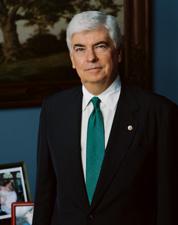 Sen. Christopher J. Dodd (D-CT)
Legislative Activity
Stay on top of the latest movement without scrolling through every action
Read twice and referred to the Committee on Banking, Housing, and Urban Affairs. (text of measure as introduced: CR S12288-12289)
October 1, 2003
View full timeline
Introduced in Senate
October 1, 2003
Sponsor introductory remarks on measure. (CR S12287-12288)
October 1, 2003
Read twice and referred to the Committee on Banking, Housing, and Urban Affairs. (text of measure as introduced: CR S12288-12289)
October 1, 2003
Floor Debate
14 membersWhat members said about S. 1697 on the floor


 +9
+9
Floor Debate
14 membersWhat members said about S. 1697 on the floor
Mr. President, today I am introducing with Senators Craig, Sununu, Durbin, and Reid, my distinguished colleagues from Idaho, New Hampshire, Illinois, and Nevada, the Patriot Oversight Restoration Act…
Mr. President, I rise today to introduce a comprehensive bipartisan bill which will ensure the full use and availability of DNA technology in our criminal justice system. This bill, which enacts the…
Mr. President, I rise along with the distinguished senior Senator from Utah, Senator Hatch and several others of my colleagues, Senators Spector, Leahy, DeWine, and Feinstein, to introduce the…
Mr. President, I rise today to introduce the Health Care Tax Credit Expansion Act of 2003. According to the most recent census figures, more than 41 million Americans lack health insurance coverage.…
Mr. President, I rise today to cosponsor the Retirement Security Advice Act of 2003, introduced by my good friend from Wyoming, Senator Mike Enzi. I do so because this bill holds important…
Show 8 more
Mr. President, with the passage of the Sarbanes-Oxley Act, Congress acted swiftly and surely to restore investor confidence in our capital markets. Something needed to be done to assure people that…

Mr. President, today I introduce the Wartime Treatment Study Act. This bill would create two fact-finding commissions: one commission to review the U.S. Government's treatment of German Americans,…
Mr. President, I rise today to introduce a bill that will help address a growing problem in America--our ability to provide safe and affordable housing that meets the needs of older Americans.…
Mr. President, I rise today to introduce a bill that will help address a growing problem in America--our ability to provide safe and affordable housing that meets the needs of older Americans.…
Mr. President, I rise today to introduce the Health Care for Veterans of Project 112/Project SHAD Act of 2003. This bill will authorize health care assistance for veterans who participated in…
Mr. President, today I am pleased to be joined by Senator Inouye in introducing the Department of Health and Human Services Tribal Self Governance Amendments of 2003, a bill that will usher in the…

Mr. President, I am pleased to join the distinguished Senator from Vermont, Senator Leahy, and our other colleagues in introducing the PATRIOT Oversight Restoration Act of 2003. I am one of those who…

Mr. President, today I am pleased to introduce, along with Senator Baucus, an extension of a bipartisan policy to help reduce the number of people living without health insurance today. In simplist…
Show 2 more
I thank the Senator for yielding time. I would just say that I completely agree with the understanding of the Senators from Delaware and Utah on this. Would the Senator yield for another question? As…
Mr. President, today I am introducing legislation to require parental consent for intrusive physical exams, genital exams, administered under the Head Start program. Young children attending Head…
Bill Text
Latest available legislative text
        [Congressional Bills 108th Congress]
[From the U.S. Government Publishing Office]
[S. 1697 Introduced in Senate (IS)]

108th CONGRESS
1st Session
S. 1697

To establish the elderly housing plus health support demonstration
program to modernize public housing for elderly and disabled persons.

_______________________________________________________________________

IN THE SENATE OF THE UNITED STATES

October 1, 2003

Mr. Dodd (for himself, Mr. Sarbanes, and Mr. Reed) introduced the
following bill; which was read twice and referred to the Committee on
Banking, Housing, and Urban Affairs

_______________________________________________________________________

A BILL

To establish the elderly housing plus health support demonstration
program to modernize public housing for elderly and disabled persons.

Be it enacted by the Senate and House of Representatives of the
United States of America in Congress assembled,

SECTION 1. SHORT TITLE.

This Act may be cited as the ``Elderly Housing Plus Health Support
Demonstration Act''.

SEC. 2. FINDINGS AND PURPOSES.

(a) Findings.--Congress finds that--
(1) there are at least 34,100,000 Americans who are 65
years of age and older, and persons who are 85 years of age or
older comprise almost one-quarter of that population;
(2) the Bureau of the Census of the Department of Commerce
estimates that, by 2030, the elderly population will double to
70,000,000 persons;
(3) according to the Department of Housing and Urban
Development report ``Housing Our Elders--A Report Card on the
Housing Conditions and Needs of Older Americans'', the largest
and fastest growing segments of the older population include
many people who have historically been vulnerable economically
and in the housing market--women, minorities, and people over
the age of 85;
(4) many elderly persons are at significant risk with
respect to the availability, stability, and accessibility of
affordable housing;
(5) one-third of public housing residents are approximately
62 years of age or older, making public housing the largest
Federal housing program for senior citizens;
(6) the elderly population residing in public housing is
older, poorer, frailer, and more racially diverse than the
elderly population residing in other assisted housing;
(7) two-thirds of the public housing developments for the
elderly, including those that also serve the disabled, were
constructed before 1970 and are in dire need of major
rehabilitation and configuration, such as rehabilitation to
provide new roofs, energy-efficient heating, cooling, utility
systems, accessible units, and up-to-date safety features;
(8) many of the dwelling units in public housing
developments for elderly and disabled persons are undersized,
are inaccessible to residents with physical limitations, do not
comply with the requirements under the Americans with
Disabilities Act of 1990, or lack railings, grab bars,
emergency call buttons, and wheelchair accessible ramps;
(9) a study conducted for the Department of Housing and
Urban Development found that the cost of the basic
modernization needs for public housing for elderly and disabled
persons exceeds $5,700,000,000;
(10) a growing number of elderly and disabled persons face
unnecessary institutionalization because of the absence of
appropriate supportive services and assisted living facilities
in their residences;
(11) for many elderly and disabled persons, independent
living in a non-institutionalization setting is a preferable
housing alternative to costly institutionalization, and would
allow public monies to be more effectively used to provide
necessary services for such persons;
(12) congregate housing and supportive services coordinated
by service coordinators is a proven and cost-effective means of
enabling elderly and disabled persons to remain in place with
dignity and independence;
(13) the effective provision of congregate services and
assisted living in public housing developments requires the
redesign of units and buildings to accommodate independent
living;
(14) most of the elderly who reside in public housing are
eligible for Medicaid to pay for the cost of their being
institutionalized in nursing homes;
(15) nursing home costs now exceed 42 percent of the entire
Medicaid program; and
(16) by providing a nursing home resident the choice of
assisted living in public housing instead, the Federal
Government can save as much as three-quarters of the long term
per capita Medicaid costs and at the same time allow a frail
senior to age in place.
(b) Purposes.--The purposes of this Act are--
(1) to establish a demonstration program to make
competitive grants to provide state-of-the-art, health-
supportive housing with assisted living opportunities for
elderly and disabled persons;
(2) to provide funding to enhance, make safe and
accessible, and extend the useful life of public housing
developments for the elderly and disabled and to increase their
accessibility to supportive services;
(3) to provide elderly and disabled public housing
residents a readily available choice in living arrangements by
utilizing the services of service coordinators and providing a
continuum of care that allows such residents to age in place;
(4) to incorporate congregate housing service programs more
fully into public housing operations; and
(5) to accomplish such purposes and provide such funding
under existing provisions of law that currently authorize all
activities to be conducted under the program.

SEC. 3. DEFINITIONS.

In this Act:
(1) Assisted living facility.--The term ``assisted living
facility'' means any public housing project for the elderly, or
for the elderly and the non-elderly disabled, that is operated
in accordance with applicable laws and provides to the
residents any combination of the following services:
(A) Meal service adequate to meet nutritional need.
(B) Housekeeping aid.
(C) Personal assistance.
(D) Transportation services.
(E) Health-related services.
(F) Such other services as are considered important
for maintaining independent living.
(2) Elderly and disabled families.--The term ``elderly and
disabled families'' means families in which 1 or more persons
is an elderly person or a person with disabilities.
(3) Elderly person.--The term ``elderly person'' means a
person who is 62 years of age or older.
(4) Person with disabilities.--The term ``person with
disabilities'' has the same meaning as in section 3(b)(3)(E) of
the United States Housing Act of 1937 (42 U.S.C.
1437a(b)(3)(E)).
(5) Public housing agency.--The term ``public housing
agency'' has the same meaning as in section 3(b)(6)(A) of the
United States Housing Act of 1937 (42 U.S.C. 1437a(b)(6)(A)).
(6) Secretary.--The term ``Secretary'' means the Secretary
of Housing and Urban Development.

SEC. 4. AUTHORITY FOR ELDERLY HOUSING PLUS HEALTH SUPPORT PROGRAM.

The Secretary shall establish an elderly housing plus health
support demonstration program (referred to in this Act as the
``demonstration program'') in accordance with this Act to provide
coordinated funding to public housing projects for elderly and disabled
families selected for participation under section 5, to be used for--
(1) rehabilitation or re-configuration of such projects or
the acquisition and rehabilitation of an existing assisted
living facility in cases where the public housing agency has no
elderly housing stock suitable for conversion;
(2) the provision of space in such projects for supportive
services and community and health facilities;
(3) the provision of service coordinators for such
projects; and
(4) the provision of congregate services programs in or
near such projects.

SEC. 5. PARTICIPATION IN PROGRAM.

(a) Application and Plan.--To be eligible to be selected for
participation in the demonstration program, a public housing agency
shall submit to the Secretary--
(1) an application, in such form and manner as the
Secretary shall require; and
(2) a plan for the agency that--
(A) identifies the public housing projects for
which amounts provided under this Act will be used,
limited to projects that are designated or otherwise
used for occupancy--
(i) only by elderly families; or
(ii) by both elderly families and disabled
families; and
(B) provides for local agencies or organizations to
establish or expand the provision of health-related
services or other services that will enhance living
conditions for residents of public housing projects of
the agency, primarily in the project or projects to be
assisted under the plan.
(b) Selection and Criteria.--
(1) Selection.--The Secretary shall select public housing
agencies for participation in the demonstration program based
upon a competition among public housing agencies that submit
applications for participation.
(2) Criteria.--The competition referred to in paragraph (1)
shall be based upon--
(A) the extent of the need for rehabilitation or
re-configuration of the public housing projects of an
agency that are identified in the plan of the agency
pursuant to subsection (a)(2)(A);
(B) the past performance of an agency in serving
the needs of elderly public housing residents or non-
elderly, disabled public housing residents given the
opportunities in the locality;
(C) the past success of an agency in obtaining non-
public housing resources to assist such residents given
the opportunities in the locality; and
(D) the effectiveness of the plan of an agency in
creating or expanding services described in subsection
(a)(2)(B).

SEC. 6. CONFIGURATION AND CAPITAL IMPROVEMENTS.

(a) Grants.--
(1) In general.--The Secretary shall make grants to public
housing agencies selected for participation under section 5, to
be used only--
(A) for capital improvements to rehabilitate or
configure public housing projects identified in the
plan submitted under section 5(a)(2)(A);
(B) to provide space for supportive services and
for community and health-related facilities primarily
for the residents of projects identified in the plan
submitted under section 5(a)(2)(A); and
(C) for the cost of acquisition by a public housing
agency of an existing assisted living facility that is
in need of rehabilitation in cases where the public
housing agency has no elderly housing stock suitable
for conversion.
(2) Source of funds.--Grants shall be made under this
section from funds made available for the demonstration program
in accordance with subsection (c).
(3) Inapplicability of other provisions.--Section 9(c)(1)
of the United States Housing Act of 1937 (42 U.S.C.
1437g(c)(1)) does not apply to grants made under this section.
(b) Allocation.--Grants funded in accordance with this section
shall--
(1) be allocated among public housing agencies selected for
participation under section 5 on the basis of the criteria
established under section 5(b)(2); and
(2) be made in such amounts and subject to such terms as
the Secretary shall determine.
(c) Authorization of Appropriations.--There are authorized to be
appropriated for the demonstration program, to make grants in
accordance with this section--
(1) $100,000,000 for fiscal year 2004; and
(2) such sums as may be necessary for fiscal year 2005 and
each subsequent fiscal year.

SEC. 7. SERVICE COORDINATORS.

(a) Grants.--
(1) In general.--The Secretary shall make grants to public
housing agencies selected for participation under section 5, to
be used only--
(A) for public housing projects for elderly and
disabled families for whom capital assistance is
provided under section 6; and
(B) to provide service coordinators and related
activities identified in the plan of the agency
pursuant to section 5(a)(2), so that the residents of
such public housing projects will have improved and
more economical access to services that support the
health and well-being of the residents.
(2) Source of funds.--Grants shall be made under this
section from funds made available for the demonstration program
in accordance with subsection (c).
(3) Inapplicability of other provisions.--Section 9(c)(1)
of the United States Housing Act of 1937 (42 U.S.C.
1437g(c)(1)) does not apply to grants made under this section.
(b) Allocation.--The Secretary shall provide a grant pursuant to
this section, in an amount not to exceed $100,000, to each public
housing agency that is selected for participation under section 5.
(c) Authorization of Appropriations.--There are authorized to be
appropriated for the demonstration program, to make grants in
accordance with this section--
(1) $2,000,000 for fiscal year 2004; and
(2) such sums as may be necessary for fiscal year 2005 and
each subsequent fiscal year.

SEC. 8. CONGREGATE HOUSING SERVICES PROGRAMS.

(a) Grants.--
(1) In general.--The Secretary shall make grants to public
housing agencies selected for participation under section 5, to
be used only--
(A) in connection with public housing projects for
elderly and disabled families for which capital
assistance is provided under section 6; and
(B) to carry out a congregate housing service
program identified in the plan of the agency pursuant
to section 5(a)(2) that provides services as described
in section 202(g)(1) of the Housing Act of 1959 (12
U.S.C. 1701q(g)(1)).
(2) Source of funds.--Grants shall be made under this
section from funds made available for the demonstration program
in accordance with subsection (c).
(3) Inapplicability of other provisions.--Other than as
specifically provided in this section--
(A) section 9(c)(1) of the United States Housing
Act of 1937 (42 U.S.C. 1437g(c)(1)) does not apply to
grants made under this section; and
(B) section 202 of the Housing Act of 1959 (12
U.S.C. 1701q) does not apply to grants made under this
section.
(b) Allocation.--The Secretary shall provide a grant pursuant to
this section, in an amount not to exceed $150,000, to each public
housing agency that is selected for participation under section 5.
(c) Authorization of Appropriations.--There are authorized to be
appropriated for the demonstration program, to make grants in
accordance with this section--
(1) $3,000,000 for fiscal year 2004; and
(2) such sums as may be necessary for fiscal year 2005 and
each subsequent fiscal year.

SEC. 9. SAFEGUARDING OTHER APPROPRIATIONS.

Amounts authorized to be appropriated under this Act to carry out
this Act are in addition to any amounts authorized to be appropriated
under any other provision of law, or otherwise made available in
appropriations Acts, for rehabilitation of public housing projects, for
service coordinators for public housing projects, or for congregate
housing services programs.
<all>