NICS Improvement Act of 2003
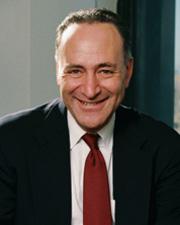 Sen. Charles E. Schumer (D-NY)
Legislative Activity
Stay on top of the latest movement without scrolling through every action
Read twice and referred to the Committee on the Judiciary.
October 2, 2003
View full timeline
Introduced in Senate
October 2, 2003
Read twice and referred to the Committee on the Judiciary.
October 2, 2003
Floor Debate
22 membersWhat members said about S. 1706 on the floor



 +17
+17
Floor Debate
22 membersWhat members said about S. 1706 on the floor
Mr. President, I rise to join many of my colleagues, led by Senator Reed of Rhode Island, to express the strongest opposition that I possibly can to the legislation before the Senate. I want to say,…
Mr. President, the Senator from California is now on the floor to offer her amendment. So we can expedite matters, under the unanimous consent agreement, the McCain-Reed amendment is to be set aside…
Mr. President, I am compelled to speak out against continuing this assault weapons ban proposed by Senator Feinstein. An assault weapon is a military firearm which can be fired either automatically…
Mr. President, I yield myself such time as I may consume from my time. I rise to support the McCain-Reed amendment and also the Feinstein amendment. I am a cosponsor, obviously, of both amendments. I…
Mr. President, I ask unanimous consent that the order for the quorum call be rescinded. Mr. President, I have an amendment at the desk. I ask for its immediate consideration. I ask unanimous consent…
Show 8 more

Mr. President, I strongly support this bipartisan amendment to close the gun show loophole. Americans overwhelmingly favor responsible gun safety measures. They want effective background checks for…

Mr. President, I am very proud to join Senators McCain, Reed, DeWine and our other cosponsors in proposing and supporting this critical amendment. Too often gun legislation has divided Members of…
I thank my colleague. Mr. President, before I make some comments on the amendment, No. 2623, which we discussed Thursday, listening to the Senator's comments about the so-called gun show loopholes…

Mr. President, I strongly support the extension of the assault weapons ban. I want to commend Senators Feinstein and Schumer for championing this important legislation for many years. We need to…

Mr. President, I thank my colleagues on both sides who support this gun show loophole amendment. We have just heard Senator McCain make a case to close this loophole. There doesn't seem to be any…

Mr. President, the issue before the Senate today can really be summed up in one word: Responsibility. I first started hunting with my cousins when I was a kid, and I still enjoy hunting today. I…

Mr. President, I rise today to make plain my strong opposition to the bill under consideration today, S. 1805, the ``Protection of Lawful Commerce in Arms Act.'' Let me state at the outset, I support…

I thank Senator Craig. Mr. President, I want to address this bill generally but then close my comments on the so-called gun show loophole amendment. I believe there are those who benefit from the…
Show 9 more

Mr. President, I wish to speak today on the bill before us, S. 1805, and some of the amendments relating to firearms that have been offered to it. Listening to the debate on this issue, the American…

I thank the Chair. Amendment No. 2637 Mr. President, I send an amendment to the desk. Mr. President, I ask unanimous consent that reading of the amendment be dispensed with. Mr. President, it is my…

Mr. President, I am pleased to rise today as a cosponsor of the amendment offered by Senators Campbell and Leahy, the Law Enforcement Safety Act. This legislation will take sensible steps to improve…
Mr. President, I thank the Senator for yielding. Most Senators have already made up their minds on how they are going to vote on the proposal by Senator McCain and Senator Reed on closing the gun…

Mr. President, I thank our distinguished colleague from California. I salute her leadership on this measure. I am very hopeful we can persuade the Senate this morning to continue this legislation.…
I, too, salute both my colleagues for their superb leadership on this issue. This bill, the assault weapons ban, is hanging by a thread. There is no good reason on God's green Earth why. It has been…

Mr. President, Senator McCain is not in the Chamber. We are ready to proceed on our side. I think we should do the time proportionately, so that it will be equal, proponents and opponents of the…

Mr. President, as we all know, law enforcement officers are never ``off duty.'' They are dedicated public servants who are sworn to protect public safety at any time and place that the peace is…

Mr. President, Senator Campbell and I have worked on this for some time. I serve in the Judiciary Committee where it passed nearly unanimously. Having served in law enforcement, I know what it is…
Bill Text
Latest available legislative text
        [Congressional Bills 108th Congress]
[From the U.S. Government Publishing Office]
[S. 1706 Introduced in Senate (IS)]

1st Session
S. 1706

To improve the National Instant Criminal Background Check System, and
for other purposes.

_______________________________________________________________________

IN THE SENATE OF THE UNITED STATES

October 2, 2003

Mr. Schumer (for himself, Mr. Hatch, Mr. Craig, Mr. Kennedy, Mr.
McCain, Mr. Chafee, Mrs. Lincoln, and Mr. Durbin) introduced the
following bill; which was read twice and referred to the Committee on
the Judiciary

_______________________________________________________________________

A BILL

To improve the National Instant Criminal Background Check System, and
for other purposes.

Be it enacted by the Senate and House of Representatives of the
United States of America in Congress assembled,

SECTION 1. SHORT TITLE; TABLE OF CONTENTS.

(a) Short Title.--This Act may be cited as the ``NICS Improvement
Act of 2003''.
(b) Table of Contents.--The table of contents for this Act is as
follows:

Sec. 1. Short title; table of contents.
Sec. 2. Findings.
Sec. 3. Definitions.

TITLE I--TRANSMITTAL OF RECORDS

Sec. 101. Enhancement of requirement that Federal departments and
agencies provide relevant information to
the National Instant Criminal Background
Check System.
Sec. 102. Requirements to obtain waiver.
Sec. 103. Implementation assistance to States.
Sec. 104. Penalties for noncompliance.
TITLE II--FOCUSING FEDERAL ASSISTANCE ON THE IMPROVEMENT OF RELEVANT
RECORDS

Sec. 201. Continuing evaluations.
TITLE III--GRANTS TO STATE COURT SYSTEMS FOR THE IMPROVEMENT IN
AUTOMATION AND TRANSMITTAL OF DISPOSITION RECORDS

Sec. 301. Disposition records automation and transmittal improvement
grants.
TITLE IV--GAO AUDIT

Sec. 401. GAO audit.

SEC. 2. FINDINGS.

Congress finds the following:
(1) Approximately 632,000 individuals were prohibited from
purchasing a firearm for failing a background check between
November 30, 1998 (the date the National Instant Criminal
Background Check System (NICS) began operating) and August 31,
2003.
(2) From November 30, 1998, through August 31, 2003, over
41,000,000 Brady background checks were processed through NICS.
(3) Although most Brady background checks are processed
through NICS in seconds, many background checks are delayed if
the Federal Bureau of Investigation (FBI) does not have
automated access to complete information from the States
concerning persons prohibited from possessing or receiving a
firearm under Federal or State law.
(4) Approximately 23,000,000 criminal records are either
not automated or not accessible by NICS and another 15,000,000
criminal records that are automated and accessible are missing
critical data, such as arrest dispositions.
(5) The primary cause of delay in NICS background checks is
the failure of the States to--
(A) update and make available criminal disposition
records; and
(B) provide automated access to information
concerning persons prohibited from possessing or
receiving a firearm because of mental illness,
restraining orders, or misdemeanor convictions for
domestic violence.
(6) The failure of the States to provide automated access
to this information is principally caused by the States'
failure to--
(A) computerize information relating to criminal
history, criminal dispositions, mental illness,
restraining orders, and misdemeanor convictions for
domestic violence; or
(B) make such information available to NICS in a
usable format.
(7) Helping States to automate these records will reduce
delays for law-abiding gun purchasers.
(8) Twenty States have failed to automate all of their
felony criminal conviction records.
(9) Only forty-five percent of the criminal history records
in the Interstate Identification Index, maintained by the FBI
and used by the NICS, have disposition information included.
(10) Many States do not submit fingerprint-based records of
misdemeanor convictions that may disqualify a person from
possessing or receiving a firearm under section 922(g)(9) of
title 18, United States Code.
(11) Forty States do not automate or make accessible
disqualifying mental health records to NICS.
(12) Only ten States have provided disqualifying mental
health records to NICS. Of this group, eight States have
provided less than forty such records, one State has provided
approximately 1,600 such records, and only one State has
provided close to complete records by having submitted more
than 50,000 such records.
(13) Eight States and four territories do not automate or
make accessible domestic violence restraining order records to
NICS.
(14) Fourteen States do not automate or make accessible
domestic violence misdemeanor conviction records to NICS.
(15) On March 12, 2002, the senseless shooting, which took
the lives of a priest and a parishioner at the Our Lady of
Peace Church in Lynbrook, New York, brought attention to the
lack of information sharing enabling Federal and State law
enforcement agencies to conduct a complete background check on
a potential firearm purchaser. The man who committed this
double murder had a prior disqualifying mental health
commitment and a restraining order against him, but passed a
Brady background check because NICS did not have the necessary
information to determine that he was ineligible to purchase a
firearm under Federal or State law.

SEC. 3. DEFINITIONS.

As used in this Act, the following definitions shall apply:
(1) Court order.--The term ``court order'' includes--
(A) a court order (as described under section
922(g)(8) of title 18, United States Code; and
(B) a protection order (as defined under section
2266(5) of title 18, United States Code.
(2) Mental health terms.--The terms ``adjudicated as a
mental defective'', ``committed to a mental institution'', and
related terms have the meanings given those terms in
regulations implementing section 922(g)(4) of title 18, United
States Code, as in effect on the date of enactment of this Act.
(3) Misdemeanor crime of domestic violence.--The term
``misdemeanor crime of domestic violence''--
(A) has the meaning given the term in section
921(a)(33) of title 18, United States Code;
(B) includes any Federal, State, or local offense
that--
(i) is a misdemeanor under Federal, State,
local, or tribal law or, in a State that does
not classify offenses as misdemeanors, is an
offense punishable by imprisonment for a term
of 1 year or less or punishable only by a fine
regardless of whether or not the State statute
specifically defines the offense as a crime of
domestic violence;
(ii) has, as an element of the offense, the
use or attempted use of physical force, such as
assault and battery, or the threatened use of a
deadly weapon; and
(iii) was committed by a current or former
spouse, parent, or guardian of the victim, by a
person with whom the victim shares a child in
common, by a person who is cohabiting with or
has cohabited with the victim as a spouse,
parent, or guardian, or a person similarly
situated to a spouse, parent, or guardian of
the victim; and
(C) does not include a crime described under
subparagraph (A) if--
(i) the person was not convicted by the
jurisdiction in which the proceeding was held;
(ii) the person was not represented by
counsel in the case and did not knowingly or
intelligently waive the right to counsel in the
case;
(iii) in the case of a prosecution for
which a person was entitled to a jury trial in
the jurisdiction in which the case was tried--
(I) the case was not tried by a
jury; and
(II) the person did not knowingly
or intelligently waive the right to
have the case tried by a jury, by
guilty plea, or otherwise; or
(iv) the conviction has been expunged or
set aside, or is an offense for which the
person has been pardoned or has had civil
rights restored unless--
(I) the pardon, expungement, or
restoration of civil rights expressly
provides that the person may not ship,
transport, possess, or receive
firearms; or
(II) the person is otherwise
prohibited by the law of the
jurisdiction in which the proceedings
were held from receiving or possessing
any firearms.

TITLE I--TRANSMITTAL OF RECORDS

SEC. 101. ENHANCEMENT OF REQUIREMENT THAT FEDERAL DEPARTMENTS AND
AGENCIES PROVIDE RELEVANT INFORMATION TO THE NATIONAL
INSTANT CRIMINAL BACKGROUND CHECK SYSTEM.

(a) In General.--Section 103(e)(1) of the Brady Handgun Violence
Prevention Act (18 U.S.C. 922 note) is amended--
(1) by striking ``Notwithstanding'' and inserting the
following:
``(A) In general.--Notwithstanding'';
(2) by striking ``On request'' and inserting the following:
``(B) Request of attorney general.--On request'';
(3) by striking ``furnish such information'' and inserting
``furnish electronic versions of the information described
under subparagraph (A)''; and
(4) by adding at the end the following:
``(C) Quarterly submission to attorney general.--If
a department or agency under subparagraph (A) has any
record of any person demonstrating that the person
falls within one of the categories described in
subsection (g) or (n) of section 922 of title 18, United States Code,
the head of such department or agency shall, not less frequently than
quarterly, provide the pertinent information contained in such record
to the Attorney General.
``(D) Information updates.--The agency, on being
made aware that the basis under which a record was made
available under subparagraph (A) does not apply, or no
longer applies, shall--
``(i) update, correct, modify, or remove
the record from any database that the agency
maintains and makes available to the Attorney
General, in accordance with the rules
pertaining to that database; or
``(ii) notify the Attorney General that
such basis no longer applies so that the
National Instant Criminal Background Check
System is kept up to date.
``(E) Annual report.--The Attorney General shall
submit an annual report to Congress that describes the
compliance of each department or agency with the
provisions of this paragraph.''.
(b) Provision and Maintenance of NICS Records.--
(1) Department of homeland security.--The Department of
Homeland Security shall make available to the Attorney
General--
(A) records, updated not less than quarterly, which
are relevant to a determination of whether a person is
disqualified from possessing or receiving a firearm
under subsection (g) or (n) of section 922 of title 18,
United States Code, for use in NICS background checks;
and
(B) information regarding all the persons described
under paragraph (1)(A) who have changed their status to
a category not identified under section 922(g)(5) of
title 18, United States Code, for removal, when
applicable, from the National Instant Criminal
Background Check System.
(2) Department of justice.--The Attorney General shall--
(A) ensure that any information submitted to, or
maintained by, the Attorney General under this section
is kept accurate and confidential, as required by the
laws, regulations, policies, or procedures governing
the applicable record system;
(B) provide for the timely removal and destruction
of obsolete and erroneous names and information from
the National Instant Criminal Background Check System;
and
(C) work with States to encourage the development
of computer systems, which would permit electronic
notification to the Attorney General when--
(i) a court order has been issued, lifted,
or otherwise removed by order of the court; or
(ii) a person has been adjudicated as
mentally defective or committed to a mental
institution.

SEC. 102. REQUIREMENTS TO OBTAIN WAIVER.

(a) In General.--Beginning 3 years after the date of enactment of
this Act, a State shall be eligible to receive a waiver of the 10
percent matching requirement for National Criminal History Improvement
Grants under the Crime Identification Technology Act of 1988 (42 U.S.C.
14601) if the State provides at least 90 percent of the information
described in subsection (c). The length of such a waiver shall not
exceed 2 years.
(b) State Estimates.--
(1) In general.--To assist the Attorney General in making a
determination under subsection (a), and under section 104,
concerning the compliance of the States in providing
information to the Attorney General for the purpose of
receiving a waiver under subsection (a), or facing a loss of
funds under section 104, each State shall provide the Attorney
General with a reasonable estimate, as calculated by a method
determined by the Attorney General, of the number of--
(A) criminal history records for misdemeanors and
felonies;
(B) State criminal history records with disposition
information;
(C) active court orders in the State; and
(D) State records of persons adjudicated mentally
defective or committed to a mental institution.
(2) Scope.--The Attorney General, in determining the
compliance of a State under this section or section 104 for the
purpose of granting a waiver or imposing a loss of Federal
funds, shall assess the total percentage of records provided by
the State concerning any event occurring within the prior 30
years, which would disqualify a person from possessing a
firearm under subsection (g) or (n) of section 922 of title 18,
United States Code.
(3) Clarification.--Notwithstanding paragraph (2), States
shall endeavor to provide NICS with all records concerning
persons who are prohibited from possessing or receiving a
firearm under subsection (g) or (n) of section 922 of title 18,
United States Code, regardless of the elapsed time since the
disqualifying event.
(c) Eligibility of State Records for Submission to the National
Instant Criminal Background Check System.--
(1) Requirements for eligibility.--
(A) In general.--From information collected by a
State, the State shall make electronically available to
the Attorney General records relevant to a
determination of whether a person is disqualified from
possessing or receiving a firearm under subsection (g)
or (n) of section 922 of title 18, United States Code,
or applicable State law.
(B) NICS updates.--The State, on being made aware
that the basis under which a record was made available
under subparagraph (A) does not apply, or no longer
applies, shall, as soon as practicable--
(i) update, correct, modify, or remove the
record from any database that the Federal or
State government maintains and makes available
to the National Instant Criminal Background
Check System, consistent with the rules
pertaining to that database; or
(ii) notify the Attorney General that such
basis no longer applies so that the record
system in which the record is maintained is
kept up to date.
(C) Certification.--To remain eligible for a waiver
under subsection (a), a State shall certify to the
Attorney General, not less than once during each 2-year
period, that at least 90 percent of all information
described in subparagraph (A) has been made
electronically available to the Attorney General in
accordance with subparagraph (A).
(D) Inclusion of all records.--The State shall make
every effort to identify and include all of the records
described under subparagraph (A) without regard to the
age of the record.
(2) Application to persons convicted of misdemeanor crimes
of domestic violence.--The State shall make available to the
Attorney General, for use by the National Instant Criminal
Background Check System, records relevant to a determination of
whether a person has been convicted in any court of a
misdemeanor crime of domestic violence. With respect to records
relating to such crimes, the State shall provide information
specifically describing the offense and the specific section or
subsection of the offense for which the defendant has been
convicted and the relationship of the defendant to the victim
in each case.
(3) Application to persons who have been adjudicated as a
mental defective or committed to a mental institution.--The
State shall make available to the Attorney General, for use by
the National Instant Criminal Background Check System, the name
and other relevant identifying information of persons
adjudicated as mentally defective or those committed to mental
institutions to assist the Attorney General in enforcing
section 922(g)(4) of title 18, United States Code.
(d) Privacy Protections.--For any information provided to the
Attorney General for use by the National Instant Criminal Background
Check System, relating to persons prohibited from possessing or
receiving a firearm under section 922(g)(4) of title 18, United States
Code, the Attorney General shall work with States and local law
enforcement and the mental health community to establish regulations
and protocols for protecting the privacy of information provided to the
system. The Attorney General shall make every effort to meet with any
mental health group seeking to express its views concerning these
regulations and protocols and shall seek to develop regulations as
expeditiously as practicable.
(e) Attorney General Report.--Not later than January 31 of each
year, the Attorney General shall submit to the Committee on the
Judiciary of the Senate and the Committee on the Judiciary of the House
of Representatives a report on the progress of States in automating the
databases containing the information described in subsection (b) and in
making that information electronically available to the Attorney
General pursuant to the requirements of subsection (c).

SEC. 103. IMPLEMENTATION ASSISTANCE TO STATES.

(a) Authorization.--
(1) In general.--From amounts made available to carry out
this section, the Attorney General shall make grants to States
and Indian tribal governments, in a manner consistent with the
National Criminal History Improvement Program, which shall be
used by the States and Indian tribal governments, in
conjunction with units of local government and State and local
courts, to establish or upgrade information and identification
technologies for firearms eligibility determinations.
(2) Grants to indian tribes.--Up to 5 percent of the grant
funding available under this section may be reserved for Indian
tribal governments, including tribal judicial systems.
(b) Use of Grant Amounts.--Grants awarded to States or Indian
tribes under this section may only be used to--
(1) create electronic systems, which provide accurate and
up-to-date information which is directly related to checks
under the National Instant Criminal Background Check System
(referred to in this section as ``NICS''), including court
disposition and corrections records;
(2) assist States in establishing or enhancing their own
capacities to perform NICS background checks;
(3) supply accurate and timely information to the Attorney
General concerning final dispositions of criminal records to
databases accessed by NICS;
(4) supply accurate and timely information to the Attorney
General concerning the identity of persons who are prohibited
from obtaining a firearm under section 922(g)(4) of title 18,
United States Code, to be used by the Federal Bureau of
Investigation solely to conduct NICS background checks;
(5) supply accurate and timely court orders and records of
misdemeanor crimes of domestic violence for inclusion in
Federal and State law enforcement databases used to conduct
NICS background checks; and
(6) collect and analyze data needed to demonstrate levels
of State compliance with this Act.
(c) Condition.--As a condition of receiving a grant under this
section, a State shall specify the projects for which grant amounts
will be used, and shall use such amounts only as specified. A State
that violates this subsection shall be liable to the Attorney General
for the full amount of the grant received under this section.
(d) Authorization of Appropriations.--There are authorized to be
appropriated to carry out this section $250,000,000 for each of the
fiscal years 2005 through 2007.
(e) User Fee.--The Federal Bureau of Investigation shall not charge
a user fee for background checks pursuant to section 922(t) of title
18, United States Code.

SEC. 104. PENALTIES FOR NONCOMPLIANCE.

(a) Attorney General Report.--
(1) In general.--Not later than January 31 of each year,
the Attorney General shall submit to the Committee on the
Judiciary of the Senate and the Committee on the Judiciary of
the House of Representatives a report on the progress of the
States in automating the databases containing information
described under sections 102 and 103, and in providing that
information pursuant to the requirements of sections 102 and
103.
(2) Authorization of appropriations.--There are authorized
to be appropriated to the Department of Justice, such funds as
may be necessary to carry out paragraph (1).
(b) Penalties.--
(1) Discretionary reduction.--During the 2-year period
beginning 3 years after the date of enactment of this Act, the
Attorney General may withhold not more than 3 percent of the
amount that would otherwise be allocated to a State under
section 506 of the Omnibus Crime Control and Safe Streets Act
of 1968 (42 U.S.C. 3756) if the State provides less than 60
percent of the information required to be provided under
sections 102 and 103.
(2) Mandatory reduction.--After the expiration of the
period referred to in paragraph (1), the Attorney General shall
withhold 5 percent of the amount that would otherwise be
allocated to a State under section 506 of the Omnibus Crime
Control and Safe Streets Act of 1968 (42 U.S.C. 3756), if the
State provides less than 90 percent of the information required
to be provided under sections 102 and 103.
(3) Waiver by attorney general.--The Attorney General may
waive the applicability of paragraph (2) to a State if the
State provides substantial evidence, as determined by the
Attorney General, that the State is making a reasonable effort
to comply with the requirements of sections 102 and 103.
(c) Reallocation.--Any funds that are not allocated to a State
because of the failure of the State to comply with the requirements of
this title shall be reallocated to States that meet such requirements.

TITLE II--FOCUSING FEDERAL ASSISTANCE ON THE IMPROVEMENT OF RELEVANT
RECORDS

SEC. 201. CONTINUING EVALUATIONS.

(a) Evaluation Required.--The Director of the Bureau of Justice
Statistics (referred to in this section as the ``Director'') shall
study and evaluate the operations of the National Instant Criminal
Background Check System. Such study and evaluation shall include
compilations and analyses of the operations and record systems of the
agencies and organizations necessary to support such System.
(b) Report on Grants.--Not later than January 31 of each year, the
Director shall submit to Congress a report containing the estimates
submitted by the States under section 102(b).
(c) Report on Best Practices.--Not later than January 31 of each
year, the Director shall submit to Congress, and to each State
participating in the National Criminal History Improvement Program, a
report of the practices of the States regarding the collection,
maintenance, automation, and transmittal of information relevant to
determining whether a person is prohibited from possessing or receiving
a firearm by Federal or State law, by the State or any other agency, or
any other records relevant to the National Instant Criminal Background
Check System, that the Director considers to be best practices.
(d) Authorization of Appropriations.--There are authorized to be
appropriated such sums as may be necessary for each of the fiscal years
2005 through 2007 to complete the studies, evaluations, and reports
required under this section.

TITLE III--GRANTS TO STATE COURT SYSTEMS FOR THE IMPROVEMENT IN
AUTOMATION AND TRANSMITTAL OF DISPOSITION RECORDS

SEC. 301. DISPOSITION RECORDS AUTOMATION AND TRANSMITTAL IMPROVEMENT
GRANTS.

(a) Grants Authorized.--From amounts made available to carry out
this section, the Attorney General shall make grants to each State,
consistent with State plans for the integration, automation, and
accessibility of criminal history records, for use by the State court
system to improve the automation and transmittal of criminal history
dispositions, records relevant to determining whether a person has been
convicted of a misdemeanor crime of domestic violence, court orders,
and mental health adjudications or commitments, to Federal and State
record repositories in accordance with sections 102 and 103 and the
National Criminal History Improvement Program.
(b) Grants to Indian Tribes.--Up to 5 percent of the grant funding
available under this section may be reserved for Indian tribal
governments for use by Indian tribal judicial systems.
(c) Use of Funds.--Amounts granted under this section shall be used
by the State court system only--
(1) to carry out, as necessary, assessments of the
capabilities of the courts of the State for the automation and
transmission of arrest and conviction records, court orders,
and mental health adjudications or commitments to Federal and
State record repositories; and
(2) to implement policies, systems, and procedures for the
automation and transmission of arrest and conviction records,
court orders, and mental health adjudications or commitments to
Federal and State record repositories.
(d) Authorization of Appropriations.--There are authorized to be
appropriated to the Attorney General to carry out this section
$125,000,000 for each of the fiscal years 2005 through 2007.

TITLE IV--GAO AUDIT

SEC. 401. GAO AUDIT.

(a) In General.--The Comptroller General of the United States shall
conduct an audit of the expenditure of all funds appropriated for
criminal records improvement pursuant to section 106(b) of the Brady
Handgun Violence Prevention Act (Public Law 103-159) to determine if
the funds were expended for the purposes authorized by the Act and how
those funds were expended for those purposes or were otherwise
expended.
(b) Report.--Not later than 6 months after the date of enactment of
this Act, the Comptroller General shall submit a report to Congress
describing the findings of the audit conducted pursuant to subsection
(a).
<all>