Medicare Ambulance Payment Reform Act of 2003
Legislative Activity
Stay on top of the latest movement without scrolling through every action
Read twice and referred to the Committee on Finance. (text of measure as introduced: CR S856)
January 15, 2003
View full timeline
Introduced in Senate
January 15, 2003
Read twice and referred to the Committee on Finance. (text of measure as introduced: CR S856)
January 15, 2003
Floor Debate
16 membersWhat members said about S. 171 on the floor
 AS
AS OGH
OGH JK
JK JM
JM TAD+11
Floor Debate
16 membersWhat members said about S. 171 on the floor
Mr. President, I have sought recognition to introduce the Health Care Assurance Act of 2004, which is legislation designed to cover the 43 million Americans who are currently not covered, and to…
Mr. President, I have sought recognition to introduce the Health Care Assurance Act of 2004, which is legislation designed to cover the 43 million Americans who are currently not covered, and to provide for offsets in cost to cover the expenditures in covering the 43 million Americans who are now not covered.
The United States has the greatest health care system in the world, and it is desirable, in my opinion, to incrementally change the health care system to cover those who are now not covered as opposed to having some vast bureaucracy take over, with the Government taking all of the responsibility.
I have introduced health care legislation in some detail during the course of my tenure in the Senate and have been privileged to be the chairman of the Appropriations Subcommittee on Health and Human Services since 1995, where, working collaboratively with Senator Harkin, the ranking, senior Democrat on the subcommittee, we have increased funding in the National Institutes of Health, done extensive work on stem cell research, and provided a great many health care programs. The legislation which I am introducing today I introduce on behalf of Senator Harkin and myself.
The essence of this legislation would provide for small employer and individual group purchasing so small employers or individuals can have the benefit of what large companies get by virtue of more purchasing power. That expenditure would run, over a 10-year period, at $300 million.
There is considerable loss of coverage when people change jobs. On the so-called portability, this legislation provides in some detail for covering people between jobs, at a cost of about $101 billion over the course of the 10-year period.
Financial incentives for young adults are provided. There is an outreach program for Medicaid-eligible low-income families. There is expanded coverage for the State Children's Health Insurance Program and their families.
The total cost of the programs over a 10-year period would be $540 billion. There are savings specified and identified in the course of this bill to make
up for that money, for one thing, improving the program integrity and efficiency in the Medicare Program by having more audits to stop fraud in a very active way by reducing medical errors. The Institute of Medicine published a report identifying up to 98,000 deaths a year due to medical errors. They specified a program for saving up to $150 billion over a 10-year period by reducing medical errors.
The Subcommittee on Health and Human Services, which I chair, had provided funding to move ahead in implementing the reduction in those errors. There would be savings from improving health care quality, efficiency, and consumer education, and there would be considerable savings in primary and preventative care providers.
There needs to be a great deal of additional education. One statistic which I found of concern was that there are 14 million Americans who qualify for Medicaid programs, being below the 200 percent of poverty, who don't seek the coverage and don't know of its availability. In our Health and Human Services bill, we are providing funding to try to move ahead with an educational program.
Last month, a nonpartisan campaign was launched to call attention to the plight of more than 43 million Americans under age 65 who lack health insurance coverage. Two former presidents--Gerald Ford and Jimmy Carter--cochaired the effort. They were supported by nine former Surgeons General and Department of Health and Human Services Secretaries, as well as some of the most influential organizations in this country, including the AFL-CIO and the U.S. Chamber of Commerce. Nearly 1,500 public events took place throughout the country, all designed to bring together diverse interests around a single objective: to insist that all Americans have access to health insurance coverage.
Here in the Senate, a special task force appointed by Majority Leader Frist and headed by my distinguished colleague Senator Judd Gregg issued a series of recommendations for addressing this problem.
Well before last month, we knew that, contrary to what some assume, the ranks of the uninsured consisted primarily of working families with low and moderate incomes--not just the unemployed.
We knew that the lack of insurance ultimately compromises a person's health because he or she is less likely to receive preventive care, is more likely to be hospitalized for avoidable health problems, and is more likely to be diagnosed in the late stages of diseases.
And we knew that the lack of insurance coverage leaves individuals and their families more financially vulnerable to higher out-of-pocket costs for their medical bills.
As I have said many times, we can fix the problems felt by uninsured Americans without resorting to big government and without completely overhauling our current system, one that works well for most Americans--serving over 82 percent of our non-elderly citizens. We must enact reforms that improve upon our current market-based health care system, as it is clearly the best health care system in the world.
When you hear the term ``uninsured'' you immediately think of men and women who are unemployed and their children. The unemployed make up approximately 18 percent of Americans who lack health insurance. However, nearly 26 million individuals are employed and still are without health care coverage. Approximately 14 million employed individuals have household incomes below 200 percent of the Federal poverty level and are eligible for public health insurance programs, but have not applied. This statistic includes 4 million children who are eligible for Medicaid and the State Children's Health Insurance program.
Because of early retirements, nearly 10 percent of people between the ages of 55 and 64, are uninsured.
Approximately 25 to 30 percent of young adults between the ages of 18 and 34 are uninsured.
Immigrants and their U.S.-born children represent more than 90 percent of the increase in the uninsured population since 1989.
In the United States, in 2003, $1.7 trillion was spent on health care or more than $5,800 per person. It is projected that annual health care expenditures will exceed $3.4 trillion by 2013 or 18 percent of gross domestic product. Costs of covering the uninsured in 2004 dollars is approximately $48 billion or $500 plus billion over 10 years. These costs are in addition to the $125 billion per year currently spent for Medicare and Medicaid payments, out of pocket expenses paid by the uninsured and other state and local programs.
Accordingly, today I am introducing the Health Care Assurance Act of 2004. This legislation would provide health care coverage for all Americans who are currently uninsured. The bill's $540 billion price tag, over the next 10 years, would be offset by improving program integrity and efficiency, a reduction in medical errors, increasing the use of medical technology, and preventive health measures, including improving health care quality and consumer education. Let me briefly summarize the provisions of this legislation.
(1) Small Employer and Individual Purchasing Groups: This legislation establishes voluntary small employer and individual purchasing groups designed to provide affordable, comprehensive health coverage options for employers, their employees, and other uninsured individuals and their families. Health plans offering coverage through such groups will: (1) provide a standard, actuarially equivalent health benefits package; (2) adjust community rated premiums by age and family size in order to spread risk and provide price equity to all; and (3) meet guidelines for marketing practices. This provision would cost $300 million over 10 years and provide coverage to approximately 15.6 million Americans who are currently uninsured.
(2) COBRA Portability Reform: For those persons who are uninsured between jobs and for insured persons who fear losing coverage should they lose their jobs, this legislation would reform the existing COBRA law by: (1) extending to 24 months the minimum time period in which COBRA may cover individuals through their former employers' plan; (2) expanding coverage options to include plans with a lower premium and a $1,000 deductible--saving a typical family of four 20 percent in monthly premiums--and plans with a lower premium and a $3,000 deductible--saving a family of four 52 percent in monthly premiums. This provision would cost $101.7 billion over 10 years and would cover 8.5 million people.
(3) State Based Program of Financial Incentives to Young Adults: This legislation creates a $4 billion a year grant program which consists of financial incentives for full-time independent college students, part- time students, recent graduates and other young adults without health insurance coverage. Coverage would be offered through existing State programs, such as State high risk insurance pools and would be limited so that when individuals are hired, they receive health insurance through their employer. This provision would cost $40 billion over 10 years and would cover 4 million people who are currently uninsured.
(4) Outreach Programs for Low-Income Families Who are Eligible to Enroll in Medicaid: This program is designed to improve coverage through existing public and private health care programs by making low- income parents aware of State child health insurance programs. The legislation would also improve knowledge concerning public health benefits of health insurance coverage, including the advantages of receiving prevention and wellness services. This new outreach program would involve the Departments of Agriculture, Health and Human Services, the Social Security Administration and other Federal agencies to improve knowledge about health insurance coverage available through public programs. Outreach will be targeted to eligible populations and be designed in a culturally appropriate manner and identify particularly hard to reach populations, including recent immigrants and migrant and seasonal farm workers. This provision would cost $4 billion over 10 years and would cover up to 3 million previously uninsured individuals.
(5) Expansion of the State Children's Health Insurance Program and Family Coverage: The legislation would increase the income eligibility to families with incomes at or below 235 percent of the Federal poverty level,
$44,486 annually for a family of four, and would also, for the first time, provide health insurance to the child's family. This provision would cost $394 billion over 10 years and would cover 12.4 million children and extend coverage to their families.
(6) Improving Program Integrity and Efficiency in the Medicare Program: The bill would raise the cap on Medicare contractor audit funding/program integrity from $720 million to $1 billion over a 5-year period. This provision would save an estimated $60 billion over the next 10 years.
(7) Reducing Medical Errors and Increasing the Use of Medical Technology: A provision is included that would provide for demonstration programs to test best practices for reducing errors, testing the use of appropriate technologies to reduce medical errors, such as hand-held electronic medication systems, and research in geographically diverse locations to determine the causes of medical errors. To assist in the development by the private sector of needed technology standards, the bill would provide for ways to examine use of information technology and coordinate actions by the Federal Government and ensure that this investment will further the national health information and infrastructure. This section of the legislation is projected to save $150 billion over the next 10 years.
(8) Improving Health Care Quality, Efficiency and Consumer Education: The legislation would set up demonstration projects to educate the public regarding wise consumer choices about their health care, such as appropriate health care costs and quality control information. The Department of HHS would be tasked with developing public service announcements to educate the public about their coverage choices, eligibility and preventive care services. Also included in this title is a provision on ways to improve the effectiveness and portability of advance directives and living wills. Projected cost savings of this section of the bill is $70 billion over the next 10 years.
(9) Primary and Preventive Care Services: Language is included to encourage the use of nonphysician providers such as nurse practitioners, physician assistants, and clinical nurse specialists by increasing direct reimbursement under Medicare and Medicaid without regard to the setting where services are provided. The bill also seeks to encourage students early on in their medical training to pursue a career in primary care and it provides assistance to medical training programs to recruit such students. The savings from this provision is estimated at $260 billion over a 10 year period.
The bill I am introducing today is distinct from my longstanding efforts regarding managed care reform. During the 105th, 106th, and 107th Congresses, I joined a bipartisan group of Senators to introduce the Promoting Responsible Managed Care Act of 1998, 1999, and 2001 balanced proposals which would ensure that patients receive the benefits and services to which they are entitled, without compromising the savings and coordination of care that can be achieved through managed care.
I have advocated health care reform in one form or another throughout my 24 years in the Senate. My strong interest in health care dates back to my first term, when I sponsored S. 811, the Health Care for Displaced Workers Act of 1983, and S. 2051, the Health Care Cost Containment Act of 1983, which would have granted a limited antitrust exemption to health insurers, permitting them to engage in certain joint activities such as acquiring or processing information, and collecting and distributing insurance claims for health care services aimed at curtailing then escalating health care costs. In 1985, I introduced the Community-based Disease Prevention and Health Promotion Projects Act of 1985, S. 1873, directed at reducing the human tragedy of low birth weight babies and infant mortality. Since 1983, I have introduced and cosponsored numerous other bills concerning health care in our country.
During the 102nd Congress, I pressed the Senate to take action on the health care market issue. On July 29, 1992, I offered an amendment to legislation then pending on the Senate floor, which included a change from 25 percent to 100 percent deductibility for health insurance purchased by self-employed individuals, and small business insurance market reforms to make health coverage more affordable for small businesses. Included in this amendment were provisions from a bill introduced by the late Senator John Chafee, legislation which I cosponsored and which was previously proposed by Senators Bentsen and Durenberger. When then-majority leader Mitchell argued that the health care amendment I was proposing did not belong on that bill, I offered to withdraw the amendment if he would set a date certain to take up health care, similar to an arrangement made on product liability legislation, which had been placed on the calendar for September 8, 1992. The majority leader rejected that suggestion, and the Senate did not consider comprehensive health care legislation during the balance of the 102nd Congress. My July 29, 1992 amendment was defeated on a procedural motion by a vote of 35 to 60, along party lines.
The substance of that amendment, however, was adopted later by the Senate on September 23, 1992, when it was included in a Bentsen/ Durenberger amendment which I cosponsored to broaden tax legislation, H.R. 11. This amendment, which included essentially the same self- employed tax deductibility and small group reforms I had proposed on July 29 of that year, passed the Senate by voice vote. Unfortunately, these provisions were later dropped from H.R. 11 in the House-Senate conference.
On August 12, 1992, I introduced legislation entitled the Health Care Affordability and Quality Improvement Act of 1992, S. 3176, that would have enhanced informed individual choice regarding health care services by providing certain information to health care recipients, would have lowered the cost of health care through use of the most appropriate provider, and would have improved the quality of health care.
On January 21, 1993, the first day of the 103rd Congress, I introduced the Comprehensive Health Care Act of 1993, S. 18. This legislation consisted of reforms that our health care system could have adopted immediately. These initiatives would have both improved access and affordability of insurance coverage and would have implemented systemic changes to lower the escalating cost of care in this country. S. 18 is the principal basis of the legislation I introduced in the last five Congresses as well as this one.
On March 23, 1993, I introduced the Comprehensive Access and Affordability Health Care Act of 1993, S. 631, which was a composite of health care legislation introduced by Senators Cohen, Kassebaum, Bond, and McCain, and included pieces of my bill, S. 18. I introduced this legislation in an attempt to move ahead on the consideration of health care legislation and provide a starting point for debate. As I noted earlier, I was precluded by majority leader Mitchell from obtaining Senate consideration of my legislation as a floor amendment on several occasions. Finally, on April 28, 1993, I offered the text of S. 631 as an amendment to the pending Department of the Environment Act, S. 171, in an attempt to urge the Senate to act on health care reform. My amendment was defeated 65 to 33 on a procedural motion, but the Senate had finally been forced to contemplate action on health care reform.
On the first day of the 104th Congress, January 4, 1995, I introduced a slightly modified version of S. 18, the Health Care Assurance Act of 1995, also S. 18, which contained provisions similar to those ultimately enacted in the Kassebaum-Kennedy legislation, including insurance market reforms, an extension of the tax deductibility of health insurance for the self employed, and tax deductibility of long term care insurance.
I continued these efforts in the 105th Congress, with the introduction of Health Care Assurance Act of 1997, S. 24, which included market reforms similar to my previous proposals with the addition of a new Title I, an innovative program to provide vouchers to States to cover children who lack health insurance coverage. I also introduced Title I of this legislation as a stand-alone bill, the Healthy Children's Pilot Program of 1997, S. 435, on March 13, 1997. This proposal targeted the approximately 4.2 million children of the working poor who lacked health insurance at that time. These are children
whose parents earn too much to be eligible for Medicaid, but do not earn enough to afford private health care coverage for their families.
This legislation would have established a $10 billion/5-year discretionary pilot program to cover these uninsured children by providing grants to States. Modeled after Pennsylvania's extraordinarily successful Caring and BlueCHIP programs, this legislation was the first Republican-sponsored children's health insurance bill during the 105th Congress.
I was encouraged that the Balanced Budget Act of 1997, signed into law on August 5, 1997, included a combination of the best provisions from many of the children's health insurance proposals throughout this Congress. The new legislation allocated $24 billion over 5 years to establish State Child Health Insurance Programs, funded in part by a slight increase in the cigarette tax.
During both the 106th and 107th Congresses, I again introduced the Health Care Assurance Act. These bills contained similar insurance market reforms, as well as new provisions to augment the new State Child Health Insurance Program, to assist individuals with disabilities in maintaining quality health care coverage, and to establish a National Fund for Health Research to supplement the funding of the National Institutes of Health. All these new initiatives, as well as the market reforms that I supported previously, work toward the goals of covering more individuals and stemming the tide of rising health costs.
My commitment to the issue of health care reform across all populations has been consistently evident during my tenure in the Senate, as I have taken to this floor and offered health care reform bills and amendments on countless occasions. I will continue to stress the importance of the Federal Government's investment in and attention to the system's future.
As my colleagues are aware, I can personally report on the miracles of modern medicine. Nearly 10 years ago, an MRI detected a benign tumor, meningioma, at the outer edge of my brain. It was removed by conventional surgery, with 5 days of hospitalization and 5 more weeks of recuperation.
When a small regrowth was detected by a follow-up MRI in June 1996, it was treated with high powered radiation using a remarkable device called the ``Gamma Knife.'' I entered the hospital on the morning of October 11, 1996, and left the same afternoon, ready to resume my regular schedule. Like the MRI, the Gamma Knife is an innovation, coming into widespread use only in the past decade.
In July 1998, I was pleased to return to the Senate after a relatively brief period of convalescence following heart bypass surgery. This experience again led me to marvel at our health care system and made me more determined than ever to support Federal funding for biomedical research and to support legislation which will incrementally make health care available to all Americans.
My concern about health care has long pre-dated my own personal benefits from the MRI and other diagnostic and curative procedures. As I have previously discussed, my concern about health care began many years ago and has been intensified by my service on the Appropriations Subcommittee on Labor, Health and Human Services, and Education, which I now have the honor to chair.
My own experience as a patient has given me deeper insights into the American health care system beyond my perspective from the U.S. Senate. I have learned: (1) our health care system, the best in the world, is worth every cent we pay for it; (2) patients sometimes have to press their own cases beyond doctors' standard advice; (3) greater flexibility must be provided on testing and treatment; (4) our system has the resources to treat the 40.9 million Americans currently uninsured, but we must find the way to pay for it; and (5) all Americans deserve the access to health care from which I and others with coverage have benefited.
I have long been convinced that our Federal budget of $2.4 trillion could provide sufficient funding for America's needs if we establish our real priorities. Over the past 10 years, I believe we have learned a great deal about our health care system and what the American people are willing to accept from the Federal Government. The message we heard loudest was that Americans do not want a massive overhaul of the health care system. Instead, our constituents want Congress to proceed at a slower pace and to target what is not working in the health care system while leaving in place what is working.
While I would have been willing to cooperate with the Clinton administration in addressing this Nation's health care problems, I found many areas where I differed with President Clinton's approach to solutions. I believe that the proposals would have been deleterious to my fellow Pennsylvanians, to the American people, and to our health care system as a whole. Most importantly, as the President proposed in 1993, I did not support creating a large new government bureaucracy because I believe that savings should go to health care services and not bureaucracies.
On this latter issue, I first became concerned about the potential growth in bureaucracy in September 1993 after reading the President's 239-page preliminary health care reform proposal. I was surprised by the number of new boards, agencies, and commissions, so I asked my legislative assistant, Sharon Helfant, to make me a list of all of them. Instead, she decided to make a chart. The initial chart depicted 77 new entities and 54 existing entities with new or additional responsibilities.
When the President's 1,342-page Health Security Act was transmitted to Congress on October 27, 1993, my staff reviewed it and found an increase to 105 new agencies, boards, and commissions and 47 existing departments, programs and agencies with new or expanded jobs. This chart received national attention after being used by Senator Bob Dole in his response to the President's State of the Union address on January 24, 1994.
The response to the chart was tremendous, with more than 12,000 people from across the country contacting my office for a copy; I still receive requests for the chart nearly ten years later. Groups and associations, such as United We Stand America, the American Small Business Association, the National Federation of Republican Women, and the Christian Coalition, reprinted the chart in their publications-- amounting to hundreds of thousands more in distribution. Bob Woodward of the Washington Post later stated that he thought the chart was the single biggest factor contributing to the demise of the Clinton health care plan. And during the November 1996 election, my chart was used by Senator Dole in his presidential campaign to illustrate the need for incremental health care reform as opposed to a big government solution.
The Department of Health and Human Services has stated that the health care, education, and child care for the 3.5 to 4 million low- birth-weight infants and children from their births to the time they reach 15 years old costs between $5.5 and $6 billion more than what it would have cost if those children had been born at normal weight. We know that in most instances, prenatal care is effective in preventing low-birth-weight babies. Numerous studies have demonstrated that low birth weight does not have a genetic link, but is instead most often associated with inadequate prenatal care or the lack of prenatal care. The short and long-term costs of saving and caring for infants of low birth weight are staggering.
It is a human tragedy for a child to be born weighing 16 ounces with attendant problems which last a lifetime. I first saw one pound babies in 1984 when I was astounded to learn that Pittsburgh, PA, had the highest infant mortality rate of African-American babies of any city in the United States. I wondered how that could be true of Pittsburgh, which has such enormous medical resources. It was an amazing thing for me to see a one pound baby, about as big as my hand. However, I am pleased to report that as a result of successful prevention initiatives like the Federal Healthy Start program, Pittsburgh's infant mortality has decreased 20 percent.
To improve pregnancy outcomes for women at risk of delivering babies of low birth weight and to reduce infant mortality and the incidence of low-birth-weight births, as well as improving the health and well-being of mothers and their families, I initiated action that led to the creation of the
Healthy Start program in 1991. Working with the first Bush administration and Senator Harkin, as chairman of the Appropriations Subcommittee, we allocated $25 million in 1991 for the development of 15 demonstration projects. This number grew to 22 in 1994, to 75 projects in 1998, and the Health Resources and Services Administration expects this number to continue to increase. For fiscal year 2004, we secured $98 million for this vital program.
To help children and their families to truly get a healthy start requires that we continue to expand access to Head Start. This important program provides comprehensive services to low income children and families, including health, nutritional and social services that children need to achieve the school readiness goal of Head Start. I have strongly supported expanding this program to cover more children and families. Since FY'00, funding for Head Start has increased from $5.3 billion to the FY'04 level of $6.8 billion. Additional funding has extended the reach of this important program to the current level of approximately 920,000 children.
Our attention to improved health of children shifts to the school house door, as all children enroll in schools throughout the Nation. And it is in the schools where we have taken our next steps to improve the overall health of the Nation and reduce preventable health care expenditures. In the past 15 years, obesity has increased by over 50 percent among adults and in the past 20 years, obesity has increased by 100 percent among children and adolescents. A recent analysis by the National Institute of Child Health and Human Development, NICHD, Study of Early Child Care and Youth Development found that third grade children in the study received an average of 25 minutes per week in school of moderate to vigorous activity, while experts in the United States have recommended that young people should participate in physical activity of at least moderate intensity for 30 to 60 minutes each day. That is why I have supported increased funding for the Carole M. White Physical Education for Progress program. Since it was first funded at $5 million in FY 2001, this program has grown to $70 million in FY 2004. These funds help school districts and community based programs across the country improve and expand physical education programs in school, while also helping children develop healthy lifestyles to combat the epidemic of obesity in the Nation.
The Labor-HHS bill also has made great strides in increasing funding for a variety of public health programs, such as breast and cervical cancer prevention, childhood immunizations, family planning, and community health centers. These programs are designed to improve public health and prevent disease through primary and secondary prevention initiatives. It is essential that we invest more resources in these programs now if we are to make any substantial progress in reducing the costs of acute care in this country.
As chairman of the Labor, HHS and Education Appropriations Subcommittee, I have greatly encouraged the development of prevention programs which are essential to keeping people healthy and lowering the cost of health care in this country. In my view, no aspect of health care policy is more important. Accordingly, my prevention efforts have been widespread.
I joined my colleagues in efforts to ensure that funding for the Centers for Disease Control and Prevention, CDC, increased $3.9 billion or 390 percent since 1989, for a fiscal year 2004 total of $4.9 billion. We have also worked to increase funding for CDC's breast and cervical cancer early detection program to $209.5 million in fiscal year 2004, almost double its 1993 total.
I have also supported programs at CDC which help children. CDC's childhood immunization program seeks to eliminate preventable diseases through immunization and to ensure that at least 90 percent of 2-year- olds are vaccinated. The CDC also continues to educate parents and caregivers on the importance of immunization for children under 2 years. Along with my colleagues on the Appropriations Committee, I have helped ensure that funding for this important program together with the complementary Vaccines for Children Program has grown from $914 million in 1999 to $1.8 billion in fiscal year 2004. The CDC's lead poisoning prevention program annually identifies about 50,000 children with elevated blood levels and places those children under medical management. The program prevents the amount of lead in children's blood from reaching dangerous levels and has grown from $38.2 million in fiscal year 2000 to $41.7 million in fiscal year 2004.
In recent years, we have also strengthened funding for Community Health Centers, which provide immunizations, health advice, and health professions training. These centers, administered by the Health Resources and Services Administration, provide a critical primary care safety net to rural and medically underserved communities, as well as uninsured individuals, migrant workers, the homeless, residents of public housing, and Medicaid recipients. Funding for Community Health Centers has increased from $1 billion in fiscal year 2000 to $1.6 billion in fiscal year 2004.
As former chairman of the Select Committee on Intelligence and current chairman of the Appropriations Subcommittee with jurisdiction over nondefense biomedical research, I have worked to transfer CIA imaging technology to the fight against breast cancer. Through the Office of Women's Health within the Department of Health and Human Services, I secured a $2 million contract in fiscal year 1996 for a research consortium led by the University of Pennsylvania to perform the first clinical trials testing the use of intelligence technology for breast cancer detection. My Appropriations subcommittee has continued to provide funds to continue these clinical trials.
In 1998, I cosponsored the Women's Health Research and Prevention Amendments, which was signed into law later that year. This bill revised and extended certain programs with respect to women's health research and prevention activities at the National Institutes of Health and the Centers for Disease Control and Prevention.
In 1996, I also cosponsored an amendment to the Fiscal Year 1997 VA- HUD Appropriations bill which required that health plans provide coverage for a minimum hospital stay for a mother and child following the birth of the child. This bill became law in 1996.
I have also been a strong supporter of funding for AIDS research, education, and prevention programs.
During the 101st Congress I cosponsored the Ryan White Comprehensive AIDS Resources Emergency Act of 1990 which amended the Public Health Service Act to direct the Secretary of Health and Human Services, through the administrator of the Health Resources and Services Administration, to make grants in any metropolitan area that has reported and confirmed more than 2,000 acquired immune deficiency syndrome, AIDS, cases or a per capita incidence of at least 0.0025, eligible area. This legislation requires that the grants be directed to the chief elected official of the city or urban county that administers the public health agency serving the greatest number of individuals with AIDS in the eligible area. This bill became law in 1990.
During the 104th Congress I cosponsored the Ryan White CARE Reauthorization Act of 1995 which provided federal funds to metropolitan areas and states to assist in health care costs and support services for individuals and families affected by acquired immune deficiency syndrome, AIDS, or infection with the human immunodeficiency virus, HIV. This bill became law in 1996.
Funding for Ryan White AIDS programs has increased from $757.4 million in 1996 to $2.02 billion for fiscal year 2004. Within the fiscal year 2004 funding, $73 million was included for pediatric AIDS programs and $749 million for the AIDS Drug Assistance Program, ADAP. AIDS research at the NIH totaled $742.4 million in 1989, and has increased to an estimated $2.9 billion in fiscal year 2004.
The health care community continues to recognize the importance of prevention in improving health status and reducing health care costs. The Balanced Budget Act of 1997 and the Consolidated Omnibus Appropriations Act of fiscal year 2001 established new and enhanced preventive benefits within the Medicare program, such as flu
shots, bone mass measurements, yearly mammograms, biennial pap smears and pelvic exams, and coverage of colonoscopy for high risk patients. However, some of these ``wellness'' benefits have cost obligations, such as co payments or deductibles. In this bill, I have also included provisions which refine and strengthen preventive benefits within the Medicare program, including coverage of yearly pap smears, pelvic exams, and screening and diagnostic mammography with no copayment or Part B deductible; and coverage of insulin pumps for certain Type I Diabetics.
During the 102nd Congress, I cosponsored an amendment to the Veterans' Medical Programs Amendments of 1992 which included improvements to health and mental health care and other services to veterans by the Department of Veterans Affairs. This bill became law in 1992.
During the 106th Congress, I sponsored the Veterans Benefits and Health Care Improvement Act of 2000 which increased amounts of educational assistance for veterans under the Montgomery GI Bill and enhanced health programs. This bill became law in 2000.
I also sponsored the Department of Veterans Affairs Long-Term Care and Personnel Authorities Enhancement Act which improved and enhanced the provision of health for veterans. This bill became law in 2003.
I cosponsored the Jobs and Growth Tax Relief Reconciliation Act which became law in 2003. This Act provided $20 billion in fiscal relief to the states, half of which went toward Medicaid relief.
In 1996, I cosponsored the Health Coverage Availability and Affordability Act, which improved the portability and continuity of health insurance coverage in the group and individual markets, combated waste, fraud, and abuse in health insurance and health care delivery, promoted the use of medical savings accounts, improved access to long- term care services and coverage, and simplified the administration of health insurance. This bill became law in 1996.
On November 29, 1999, the Institute of Medicine, IOM, issued a report entitled ``To Err is Human: Building a Safer Health System.'' The IOM Report estimated that anywhere between 44,000 and 98,000 hospitalized Americans die each year due to avoidable medical mistakes. However only a fraction of these deaths and injuries are due to negligence; most errors are caused by system failures. The IOM issued a comprehensive set of recommendations, including the establishment of a nationwide, mandatory reporting system; incorporation of patient safety standards in regulatory and accreditation programs; and the development of a non- punitive ``culture of safety'' in health care organizations. The report called for a 50 percent reduction in medical errors over 5 years.
After the report was issued I held a series of three LHHS hearings on medical errors: Dec. 13, 1999--to discuss the findings of the Institute of Medicine's report on medical errors; Jan. 25, 2000--a joint hearing with the Committee on Veterans' Affairs to discuss a national error reporting system and the VA's national patient safety program; Feb. 22, 2000--a joint hearing with the HELP Committee to discuss the Administration's strategy to reduce medical errors.
After hearing from Government witnesses and experts in the field on medical errors, I included $50 million in the FY 2001 Senate Labor, Health and Human Services and Education for a patient safety initiative. In the Senate report I also directed the Agency for Healthcare Research and Quality, AHRQ, to: (1) develop guidelines on the collection of uniform error data; (2) establish a competitive demonstration program to test ``best practices;'' and (3) research ways to improve provider training.
The committee also directed AHRQ to prepare an interim report to Congress concerning the results of the demonstration program within 2 years of the beginning of the projects. The FY 2002 Senate report directed AHRQ to submit a report detailing the results of its initiative to reduce medical errors. HHS combined both reports into one, which it submitted to me earlier this year.
Since FY 2001 the Labor/HHS Subcommittee has included within the Agency for Healthcare Research and Quality funding for research into ways to reduce medical errors. The FY 2002 appropriation was $55 million, in FY 2003 another $55 million was provided, in FY 2004 the appropriation was increased to $79.5 million and in FY 2005, while still pending Senate action a figure of $84 million is proposed.
Statistics find that 30 percent of Medicare expenditures occur during a person's last year of life and beyond the last year of life, a tremendous percentage of medical costs occur in the last month, in the last few weeks, in the last week, or in the last few days.
A New England Journal of Medicine article stated that as much as 3.3 percent of national health care costs could be saved yearly by reducing the use of end of life interventions. While some estimates of the end of life costs have been projected to be over $500 billion, over a 10- year period, the cost analysis in this bill does not include any of these estimates in the projected savings calculations.
The issue of cutting back on end of life treatments is such a sensitive subject and no one should decide for anybody else what that person should have by way of end-of-life medical care. What care ought to be available is a very personal decision.
Living wills give an individual an opportunity to make that judgment, to make a decision as to how much care he or she wanted near the end of his or her life and that is, to repeat, a matter highly personalized for the individual.
As part of a public education program, I included an amendment to the Medicare Prescription Drug and Modernization Act of 2003 which directed the Secretary of Health and Human Services to include in its annual ``Medicare And You'' handbook, a section that specifies information on advance directives and details on living wills and durable powers of attorney regarding a person's health care decisions.
As chairman of the Labor, Health and Human Services, and Education Appropriations Subcommittee, I have worked to provide much-needed resources for hospitals, physicians, nurses, and other health care professionals. The National Institutes of Health provides funding for biomedical research at our Nation's universities, hospitals, and research institutions. I led the effort to double funding for the National Institutes of Health over 5 years. Funding for the NIH has increased from $11.3 billion in fiscal year 1995 to $28 billion in fiscal year 2004.
An adequate number of health professionals, including doctors, nurses, dentists, psychologists, laboratory technicians, and chiropractors is critical to the provision of health care in the United States. I have worked to provide much needed funding for health professional training and recruitment programs. In fiscal year 2004, these vital programs received $436 million. Nurse education and recruitment alone has been increased from $58 million in fiscal year 1996 to $142 million in fiscal year 2004.
Once recruited and trained, health professionals must be given the resources to provide quality health care in all areas of the country. Differences in reimbursement rates between rural and urban areas have led to significant problems in health professional retention. During the debate on the Balanced Budget Refinement Act 2, which passed as part of the FY 2001 consolidated appropriations bill, I attempted to reclassify some Northeastern hospitals in Pennsylvania to a Metropolitan Statistical Area with higher reimbursement rates. Due to the large volume of requests from other states, we were not able to accomplish these reclassifications for Pennsylvania. However, as part of the FY 2004 Omnibus Appropriations bill, I secured $7 million for twenty northeastern Pennsylvania hospitals affected by area wage index shortfalls.
As part of the Medicare Prescription Drug and Medicare Improvement Act of 2003, which passed the Senate on November 25, 2003, a $900 million program was established to provide a one-time appeal process for hospital wage index reclassification. Thirteen Pennsylvania hospitals were approved for funding through this program in Pennsylvania.
The following table outlines the $540 billion in projected health care costs offset by the $540 billion in health care saving assumptions contained in the
provisions of the Health Care Assurance Act of 2004. These costs and savings are for a 10-year period.
Projected health
care costs Small Employer and Individual Purchasing Groups..... $300,000,000 COBRA Portability Reform............................ 101,700,000,000 Financial Incentives for Young Adults............... 40,000,000,000 Outreach Program for Medicaid Eligible Low-Income 4,000,000,000 Families........................................... Expanded Coverage for the State Children's Health 394,000,000,000 Insurance Program and Their Families...............
Mr. President, I rise with my esteemed colleague and friend, Senator Leahy, ranking Democrat Member of the Senate Judiciary Committee, to introduce the ``Inducing Infringement of Copyrights Act of…
Mr. President, I rise with my esteemed colleague and friend, Senator Leahy, ranking Democrat Member of the Senate Judiciary Committee, to introduce the ``Inducing Infringement of Copyrights Act of 2004.'' This Act will confirm that creative artists can sue corporations that profit by encouraging children, teenagers and others to commit illegal or criminal acts of copyright infringement. Senator Leahy and I are pleased that Majority Leader Frist and Minority Leader Daschle and Senators Graham and Boxer are co-sponsoring this important bipartisan legislation.
It is illegal and immoral to induce or encourage children to commit crimes. Artists realize that adults who corrupt or exploit the innocence of children are the worst type of villains. In ``Oliver Twist'', Fagin and Bill Sikes profited by inducing children to steal. In the film ``Chitty-Chitty Bang-Bang'', the leering ``Child-Catcher'' lured children into danger with false promises of ``free lollipops.'' Tragically, some corporations now seem to think that they can legally profit by inducing children to steal--that they can legally lure children and others with false promises of ``free music.''
Such beliefs seem common among distributors of so-called peer-to-peer filesharing (``P2P'') software. These programs are used mostly by children and college students--about half of their users are children. Users of these programs routinely violate criminal laws relating to copyright infringement and pornography distribution. Criminal law defines ``inducement'' as ``that which leads or tempts to the commission of crime.'' Some P2P software appears to be the definition of criminal inducement captured in computer code.
Distributors of some P2P software admit this. The distributors of EarthStation 5 state, ``While other peer 2 peer networks like Kazaa or Imesh continue to deny building their programs for illegal file sharing, at ES5 we not only admit why we built ES5, we actually promote P2P, endorse file sharing, and join our users in swapping files!''
Recently, in the Grokster case, a Federal court drew similar conclusions about the intent of other distributors of P2P software. It warned that some P2P distributors ``may have intentionally structured their businesses to avoid secondary liability for copyright infringement, while benefiting financially from the illicit draw of their wares.'' In other words, many P2P distributors may think that they can lawfully profit by inducing children to break the law and commit crimes.
They are dead wrong. America punishes as criminals those who induce others to commit any criminal act, including copyright infringement. The first sentence of our Criminal Code states:
Whoever commits an offense against the United States or
aids, abets, counsels, commands, induces, or procures its
commission, is punishable as a principal . . . .
Indeed, it is absurd to think that our law might be otherwise. No civilized country could let sophisticated adults profit by tempting its most vulnerable citizens--its children--to break the law.
I think we must understand how some corporations came to confuse child endangerment with a legal business model. Their confusion seems to arise from court cases misinterpreting a well-intended Supreme Court decision that tried to clarify two critical components of federal law: the law of secondary liability and the law of copyright.
The Supreme Court states that secondary liability is ``imposed in virtually all areas of the law.'' Secondary liability is universal because its logic is compelling. It does not absolve lawbreakers of guilt. But it recognizes that we are all human: We are all more likely to break the law if encouraged or ordered to do so. Secondary liability thus discourages lawlessness by punishing people who manipulate others into doing the ``dirty work'' of breaking the law. Secondary liability usually targets two types of persons: 1. those who induce others to break the law, and 2. those who control others who break the law.
Though secondary liability is nearly ubiquitous, it has almost always remained as a judge-made, common-law doctrine--and for a good reason. Secondary liability prevents the use of indirect means to achieve illegal ends. Consequently, the scope of secondary liability must be flexible--otherwise, it would just instruct wrong-doers on how to legally encourage or manipulate others into breaking the law. The common-law judicial process is ideally suited to evolve flexible secondary-liability rules from the results of many individual cases.
As a result, Congress rarely codifies secondary liability. It has codified secondary liability to narrow it, as in the Patent Act. Congress has codified secondary liability in the Criminal Code to ensure that the narrow construction given criminal statutes would not foreclose secondary liability. In the Digital Millennium Copyright Act, Congress codified a complex balance between opposed interests that expanded one type of secondary liability and narrowed another.
Congress has always assumed that infringers could readily induce consumers to accept infringing copies of works. It thus created ``a potent arsenal of remedies against an infringer . . . .'' But secondary liability often arises if a third party can be ordered or induced to make the infringing copies. Consequently, only after copying devices became available to people who might be induced to infringe did questions about secondary liability for infringement become pressing.
In 1984, these questions reached the Supreme Court in Sony Corp. v. Universal City Studios, Inc. Sony held that the makers of the Betamax VCR could not be held secondarily liable in a civil suit brought by copyright holders--even though some consumers would use VCRs to make infringing copies of copyrighted TV broadcasts.
Sony also created a broader limitation on secondary liability by importing a limitation that that Congress had codified only in the Patent Act; this was the substantial-noninfringing-use rule, also called the ``staple article of commerce'' doctrine. Sony intended this rule to strike, as between creators of works and copying equipment, the same ``balance'' that it had struck under the Patent Act between the
rights of patent holder and makers of staple products.
Under the Patent Act, the substantial-noninfringing-use rule bars secondary liability for selling a ``staple'' product that has a ``substantial noninfringing use''--even if that staple could also be used as a component in an infringing copy of a patented invention. This rule protects makers of staples without changing the nature of secondary liability. In particular, it does not immunize bad actors who intend to distribute ``patent-infringement kits.'' Even in the rare case of a novel invention that consists only of ``staple'' components, an ``infringement kit'' must bundle components and include assembly instructions. Neither the bundle nor the instructions will likely have a ``substantial noninfringing use.''
Sony intended this rule to strike the same admirable ``balance'' under the Copyright Act. Unfortunately, Sony also proposed that if this rule proved problematic, Congress should alter it on a technology-by- technology basis. This proposal was flawed: In 1976, Congress redrafted the Copyright Act to avoid the need to re-adjust copyrights on a technology-by-technology basis because legislation could no longer keep pace with technological change. Returning to this impractical technology-based approach would create an endless procession of ``tech- mandate'' laws that discriminate between technologies Congress deems ``good'' or ``bad.'' But technologies are rarely inherently either ``good'' or ``bad.'' Most can be used for either purpose; the effect depends on details of implementation impossible to capture--or predict--in prospective legislation.
Of course, the dysfunctional corrective mechanism that Sony proposed would have become problematic only if the Sony limitation was misunderstood or misapplied by lower courts. Unfortunately, that has now happened.
In cases like Napster and Grokster, lower courts misapplied the substantial-non-infringing-use limitation. These courts forgot about ``balance'' and held that this limitation radically alters secondary liability. In effect, these cases retained secondary liability's control prong but collapsed its inducement prong. The results of these cases prove this point: Napster imposed liability upon a distributor of copying devices who controlled infringing users; Grokster did not impose liability upon distributors who appeared to induce and profit from users' infringement.
A secondary-liability rule that punishes control and immunizes inducement is a public policy disaster. It seems to permit the distribution of ``piracy machines'' designed to make infringement easy, tempting, and automatic. Even Harvard's Berkman Center for Internet and society suggests that this is happening. The Center warns that ``it can be extremely difficult for a non-expert computer user to shut down'' the viral redistribution that can otherwise automatically make the user an international distributor of infringing works. The Center notes that the ``complexity of KaZaA's installation and disabling functions'' may leave many users unaware that they have become a contributor to global, for-profit copyright piracy. Unfortunately, ``piracy machines'' designed to mislead their users are just one of the perverse effects of a secondary liability rule that punishes control and immunizes inducement.
Perhaps the least perverse of these effects has been years of conflict between the content and technology industries. Content creators sought the tech-mandate ``corrections'' that Sony proposed. Technology industries opposed such laws because they too easily foreclose innocent or unforeseen applications. P2P software illustrates the problem: Today, most P2P software functions like Earthstation 5's ``piracy machine.'' Yet all agree that non-piracy-adapted implementations of P2P could have legitimate and beneficial uses.
A rule that punishes only control also produces absurd results. Secondary liability should focus on intent to use indirect means to achieve illegal ends. A rule that punishes only control degenerates into inane debate about which indirect means was used. Thus Napster and Grokster are regulated differently--though they function similarly from the perspective of the user, the distributor, or the copyright holder.
A rule that punishes only control also acts as a ``tech-mandate'' law: It mandates the use of technologies that avoid ``control''-- regardless of whether they are suited for a particular task. Napster was punished for processing search requests efficiently on a centralized search index that it controlled. Grokster escaped by processing search requests less efficiently on a decentralized search index that it did not control. Rewarding inefficiency makes little sense.
A secondary-liability rule that punishes only control also punishes consumers: It encourages designers to avoid ``control'' by shifting risks onto consumers. For example, Napster incurred billion-dollar liability because it controlled computers housing a search index that located infringing files. Programs like Kazaa avoid Napster's ``control'' by moving their search indices onto computers owned by unsuspecting consumers. Consumers were never warned about the risks of housing these indices. As a result, many consumers, universities, and businesses now control computers that house ``mini-Napsters''--parts of a search index much like the one that destroyed Napster. These indices could still impose devastating liability upon anyone who ``controls'' a computer housing them. A secondary-liability rule that punishes only control thus rewards Kazaa for shifting huge risks onto unsuspecting consumers, universities and businesses.
And search indices are just one of the risks that designers of P2P software seem to impose upon their young users to avoid control. For example, the designers of most filesharing software choose to lack the ability to remove or block access to files known to contain viruses, child pornography or pornography mislabeled to be appealing to children. This ability could create ``control'' and trigger liability. Aiding distributors of viruses and pornography may be just an unfortunate side effect of avoiding control while inducing infringement.
A secondary-liability rule that immunizes inducement also encourages attempts to conceal risks from consumers: It is easier to induce people to take risks if they are unsure whether they are incurring a risk or its severity. The interfaces of most P2P software provide no warnings about the severe consequences of succumbing to the constant temptation of infringement.
Another risk to users of P2P software arises when pornography combines with the ``viral redistribution'' that thwarts removal of infringing copies of works. Most filesharing networks are awash in pornography, much of it mislabeled, obscene, illegal child pornography, or harmful to minors. Anyone risks criminal prosecution if they distribute pornography accessible to minors over these child-dominated networks. As a result, one P2P distributor who does distribute ``adult'' content demands that it be protected by access controls. But every adult who uses this distributor's software as intended to download one of millions of unprotected pornographic files automatically makes that pornography available for re-distribution to millions of children. This distributor has sat silently--knowing that its software exposes millions of its users to risks of criminal prosecution that the distributor cannot be paid to endure.
Perhaps the worst effect of punishing control and rewarding inducement is that it achieves precisely what Sony sought to avoid: It leaves copyright holders with an enforcement remedy that is ``merely symbolic'': It seems real, but it is illusory.
In theory, a rule that immunizes inducement still permits enforcement against those induced to infringe. At first, this remedy seems viable because copyrights have traditionally been enforced in lawsuits against direct infringers who actually make infringing copies of works.
But a fallacy lurks here: The ``direct infringers'' at issue are not the traditional targets for copyright enforcement. In fact, they are children and consumers: They are the hundreds of millions of Americans--toddlers to seniors--who use and enjoy the creative works that copyrights have helped create.
There is no precedent for shifting copyright enforcement toward the end-
users of works. For nearly 200 years, copyright law has been nearly invisible to the millions who used and enjoyed creative works. Copyright law was invisible to consumers because the law gave creators and distributors mutual incentives to negotiate the agreements that ensured that works reached consumers in forms that were safe to use in foreseeable ways. Now, those incentives are collapsing. As a result, artists must now waive their rights or sue consumers--their fans.
Worse yet, artists must sue their fans for the sin of misusing devices designed to be easy and tempting to misuse. That is unfair: When inducement is the disease, infringement can be seen as just a symptom. Yet artists must ignore inducers who profit by chanting, ``Hey, kids, infringement is cool, and we will help you get away with it.'' Instead, artists can only sue kids who succumb to this temptation. They must leave Fagin to his work--and sue Oliver Twist.
This sue-Oliver ``remedy'' is a debacle. For example, immunizing inducement ensures that artists will have to sue their fans: Inducers will have both the incentive and the means to thwart less extreme measures, like educational campaigns. For example, RIAA tried to avoid lawsuits against filesharers by sending educational instant messages to infringers. Kazaa, for ``privacy'' reasons, disabled instant messaging by default in the next version of its software. Lawsuits then followed.
And imagine the poor parent who tries to tell a teenager that free downloading of copyrighted music is illegal. The teenager, confused because ``everyone is doing it,'' consults a leading technology-news site promising a ``trusted source of information for millions of technology consumers.'' There, the teenager finds a P2P distributor promoting ``Morpheus 4.0, the only American filesharing software ruled legal by a U.S. federal court.'' This statement is false: Grokster did not rule Morpheus ``legal''; in fact, the case only confirmed that downloading copyrighted works is illegal. Below this misinformation, the teenager will find an independent editorial review rating Morpheus 4.0 as a ``Recommended'' download and ``an excellent choice'' for those seeking ``the latest and greatest.'' Who will the teenager believe?
Worse yet, if artists must sue only the induced, they just feed the contempt for copyrights that inducers breed. Inducers know that people induced to break a law become that law's enemies: Once you break a law, you must either admit wrongdoing or rationalize your conduct. Rationalization is often so easy. You can blame the law: Copyright is a stupid law needlessly enshrined in the Constitution by naives like James Madison. You can blame the victim: Some rock stars still make money; I do not like the ``business model'' of the record labels. You can blame the randomness of enforcement: Everyone else was doing it, so why not me? Anyone who has talked to young people about filesharing has heard such rationalizations time and again.
And forcing artists to ignore inducers and sue the induced locks artists into a war of attrition that they are unlikely to win. If you imagine inducement as a bush, this ``remedy'' forces artists to spend their money to sever each leaf--while the inducer makes money by watering the root. Artists may not be able to sustain this unending battle.
This may let inducers attempt an extortionate form of ``outsourcing.'' Inducers can increase or decrease their devices propensity to encourage piracy. Inducers can thus tell American artists that if the artists pay the inducers to become licensed distributors of their works, perhaps fewer bad things will happen. Implicitly, if artists do not pay, perhaps more bad things will happen. Were artists to succumb to such tactics, jobs and revenues created by the demand for American creative works would go overseas to some unsavory locales.
Worst of all, inducers will inevitably target children. Children would be easily induced to violate complex laws like the Copyright Act. Any child is a terrible enforcement target. And because most adults never induce children to break laws, children induced to infringe copyrights would not even be ``bad kids.'' Indeed, they would probably be smart, mostly law-abiding young people with bright futures. Innocent, mostly law-abiding children make the worst enforcement targets--and thus the best ``human shields'' to protect an inducer's business model.
This threat to children is real. Today, artists are suing high-volume filesharers who cannot be identified until late in the process. One filesharer sued for violating federal law over 800 times turned out to be a 12-year-old female honor student. This otherwise law-abiding young girl and her family then faced ruin by the girl's favorite artists. The public knew that something was wrong, and it was outraged. So the people who gave that girl an easily misused toy--and profited from her misuse of it--exploited public outrage with crocodile tears about the tactics of ``Big Music.'' And then, I imagine, they laughed all the way to the bank.
The Supreme Court could not have intended to force artists to sue children in order to reduce the profits that adults can derive by encouraging children to break the law. No one would intend that. Yet it seems to be happening.
These are the inevitable results of a secondary-liability rule that immunizes inducement. This ``rule'' has created the largest global piracy rings in history. These rings now create billions of infringing copies of works, and reap millions in profits for leaders who insulate themselves from direct involvement in crime by inducing children and students to ``do the dirty work'' of committing illegal or criminal acts. These rings then thwart deterrence and condemn attempts to enforce the law. These rings may now use profits derived from rampant criminality to extort their way into the legal Internet distribution market--a market critical to the future of our artists and children.
This must stop--and stop now. Artists have tried: They targeted for- profit inducers. But artists were thwarted by a court ruling that held, in effect, that although artists can sue exploited children and families into bankruptcy, courts need ``additional legislative guidance'' to decide whether artists can, instead, sue the corporations that profit by inducing children to break the law. I find this assertion wholly inconsistent with the intent of both Congress and the Supreme Court. But until this fundamentally flawed ruling is overruled by legislation or higher courts, artists cannot hold inducers liable for their actions.
Fortunately, Congress has charged the Department of Justice to enforce the Criminal Code. In the Criminal Code, Congress made it a Federal crime to willfully infringe copyrights or to distribute obscene pornography or child pornography. Congress also made it a crime to induce anyone--child or adult--to commit any Federal crime.
Indeed, Congress codified many forms of criminal secondary liability in the Criminal Code. I have already quoted its first sentence. Here is its second: ``Whoever willfully causes an act to be done which if directly performed by him or another would be an offense against the United States, is punishable as a principal.'' One court has said that this ensures that ``[a] crime may be performed through an innocent dupe, with the essential element of criminal intent residing in another person.'' Not coincidentally, some Federal prosecutors worry that P2P software makes infringement so tempting, easy and automatic that many of its users will lack criminal intent. Perhaps--but their relative innocence will not protect their inducers.
The Criminal Code also codifies other forms of secondary liability, like this one:
If two or more persons conspire to injure, oppress,
threaten any person in any State . . . in the free exercise
or enjoyment of any right or privilege secured to him by the
Constitution or the laws of the United States, . . . [t]hey
shall be fined under this title or imprisoned not more than
ten years, or both. . . .
These examples of laws imposing secondary criminal liability have something in common: Congress codified no exceptions for ``substantial non-criminal uses.'' The message is clear: Those who induce others to commit crimes cannot avoid prison by showing that some of them resisted. I will work with my colleagues in Congress to ensure that the Department of Justice enforces the Federal laws that prevent
anyone from inducing violations of any Federal law by our citizens, our students, or our children.
Congress, too, must do its part by enacting the Inducing Infringement of Copyrights Act, S. 2560. This bill will protect American artists, children and taxpayers by restoring the privately funded civil remedy crippled by the Grokster ruling. Congress must act: A Federal court has held that artists can only enforce their rights by suing exploited children and students pending ``additional legislative guidance'' about whether artists can, instead, sue the corporations that profit by inducing children to break laws and commit crimes. Silence could be misinterpreted as support for those who profit by corrupting and endangering others. This bill will restore the tried, privately funded civil enforcement actions long used to enforce copyrights.
This bill will also preserve the Sony ruling without reversing, abrogating or limiting it. The Inducement Act will simply import and adapt the Patent Act's concept of ``active inducement'' in order to cover cases of intentional inducement that were explicitly not at issue in Sony. The Inducement Act also preserves the Section 512 safe harbors for Internet service providers.
The bill also contains a savings clause to ensure that it provides the ``guidance'' courts have requested--not an iron-clad rule of decision for all possible future cases. This flexibility is critical because just as infringement cases are fact specific, so should inducement cases center on the facts of a given case, with courts endowed with the flexibility to impose just results. This bill does not purport to resolve or affect existing disagreements about when copies made and used within an individual's home environment are permissible and when they are infringing.
Rather, this bill is about the intentional inducement of global distribution of billions of infringing copies of works at the prodding and instigation of sophisticated corporations that appear to want to profit from piracy, know better than to break the law themselves, and try to shield themselves from secondary liability by inducing others to infringe and then disclaiming control over those individuals.
I also want to thank everyone who has worked with us to craft a bill that addresses this serious threat to children and copyrights without unduly burdening companies that engage in lawful commerce in the wide range of devices and programs that can copy digital files. As Sony illustrates, clear knowledge that a copying device can be used to infringe does not provide evidence of intent to induce infringement. It was critical to find a way to narrowly identify the rare bad actors without implicating the vast majority of companies that serve both consumers and copyright-holders by providing digital copying devices-- even though these devices, like all devices, can be misused for unlawful purposes. In particular, I would like to thank the Business Software Alliance for its invaluable assistance in crafting a bill that protects existing legitimate technologies and future innovation in all technologies--including peer-to-peer networking.
Senator Leahy and I look forward to working with all affected parties to enact this bill and restore the balance and private enforcement that Sony envisioned. But until Congress can enact the Inducing Infringement of Copyrights Act, the duty and authority to stop inducement that targets children and students resides in the Department of Justice that Congress has charged to protect artists, commerce, citizens and children. The Department must act now to clarify some simple facts: America has never legalized the ``business model'' of Fagin and Bill Sykes. Modern ChildCatchers cannot lawfully profit by luring children into crime with false promises of ``free music.''
Mr. President, I urge all of my colleagues to support S. 2560, the Inducing Infringement of Copyrights Act.
I ask unanimous consent that the text of the bill be printed in the Record.
Mr. President, I rise today to introduce a bill that would authorize the Justice Department to issue judicially enforceable subpoenas in terrorism investigations. Here is how the JETS Act would work:…
Mr. President, I rise today to introduce a bill that would authorize the Justice Department to issue judicially enforceable subpoenas in terrorism investigations.
Here is how the JETS Act would work: it would allow the FBI to subpoena documents and records ``in any investigation of a Federal crime of terrorism.'' The bill would require the FBI to go to Federal court to enforce the subpoena in the event that the recipient declines to comply with it. It would also allow the recipient to make the first move and go to court to challenge the subpoena. The JETS Act also would allow the Justice Department to temporarily bar the recipient of a JET subpoena from disclosing to anyone other than his lawyer that he has received it. The FBI could bar such disclosure, however, only if the Attorney General certifies that ``otherwise there may result a danger to the national security of the United States.'' Also, the recipient of the subpoena would have the right to go to court to challenge the nondisclosure order. And finally, the JETS Act would protect the recipient from any civil liability that might otherwise result from his good-faith compliance with a JET subpoena.
At the outset, it bears mention that the FBI already has ways of obtaining a subpoena when it needs one for a terrorism investigation: it simply finds an Assistant U.S. Attorney and asks him to issue a grand-jury subpoena to investigate a potential crime of terrorism. The advantages of the JETS Act--of giving the FBI direct authority to issue subpoenas--are not so much substantive as procedural. These advantages principally are two: 1. A grand-jury subpoena's ``return date''--the date by which the recipient of the subpoena is asked to comply--can only be a day on which a grand jury is convened. Therefore, a grand- jury subpoena issued on a Friday evening cannot have a return date that is earlier than the next Monday. The JETS Act would allow the FBI to set an earlier return date, so long as that date allows ``a reasonable period of time within which the records or items [to be produced] can be assembled and made available.'' 2. Only an AUSA can issue a grand- jury subpoena. Therefore, whenever the FBI wants to use a grand-jury subpoena in a terrorism case, it must find an AUSA. This can be difficult and time consuming in remote locations. The JETS Act would allow the FBI to forego this exercise.
The Justice Department recently made its case as to why it
should be given JETS authority in its answers to Senator
Biden's written questions to Christopher Wray, the Assistant
Attorney General for the Criminal Division, following Mr.
Wray's testimony before the Judiciary Committee on October
21, 2003. Senator Biden asked Mr. Wray to cite ``instances
where your terrorism investigations have been thwarted due to
an inability to secure a subpoena from a grand jury in a
timely fashion.'' While Mr. Wray declined to provide the
details of those instances when the lack of direct authority
has posed a problem, he did offer the ``following
hypothetical situations, which could well arise, [and which]
illustrate the need for this investigative tool:''
``In the first scenario, anti-terrorism investigators learn
that members of an Al Qaeda cell recently stayed at a
particular hotel. They want to know how the cell members paid
for their rooms, in order to discover what credit cards they
may have used. When investigators ask the hotel manager to
produce the payment records voluntarily, the manager declines
to do so, explaining that company policy prohibits him from
revealing such information about customers without legal
process. If investigators had the authority to issue an
administrative subpoena, the hotel manager could disclose the
records about the Al Qaeda cell immediately without fear of
legal liability. In this situation, where the speed and
success of the investigation may be matters of life and
death, this disclosure would immediately provide
investigators with crucial information--such as the location
of the terrorists and the nature of their purchases--with
which to disrupt and prevent terrorist activity.
``In the second hypothetical situation, anti-terrorism
investigators learn on a Saturday morning that members of an
Al Qaeda cell have bought bomb-making materials from a
chemical company. They want to obtain records relating to the
purchase that may reveal what chemicals the terrorists
bought, as well as delivery records that might reveal the
terrorists' location. The investigators might seek quickly to
contact an Assistant United States Attorney, who might
immediately obtain a grand-jury subpoena for the records.
However, the third party who holds the records could lawfully
refuse to furnish them until the subpoena's `return date,'
which must be on a day the grand jury is sitting. Because the
grand jury is not scheduled to meet again until Monday
morning, investigators may not be able to obtain the
information for two days--during which time the Al Qaeda cell
may execute its plot. If investigators had the authority to
issue an administrative subpoena, which can set a very short
or immediate response deadline for information, they may be
able to obtain the records immediately and neutralize the
cell.''
Mr. Wray concluded his answer by noting that ``[g]ranting FBI the use of [JETS authority] would speed those terrorism investigations in which subpoena recipients are not inclined to contest the subpoena in court and are willing to comply. Avoiding delays in these situations would allow agents to track and disrupt terrorist activity more effectively.''
To place the JETS Act in context, it bears noting that granting the FBI direct authority to issue subpoenas in terrorism cases would hardly be anomalous. As the Justice Department's Office of Legal Policy recently noted in a published report, ``Congress has granted some form of administrative subpoena authority to most federal agencies, with many agencies holding several such authorities.'' (Report to Congress on the Use of Administrative Subpoena Authorities by Executive Branch Agencies and Entities, Pursuant to Public Law 106-544, Section 7.) The Justice Department ``identified approximately 335 existing administrative subpoena authorities held by various executive-branch entities under current law.'' Ibid.
Among the more frequently employed of existing executive-subpoena authorities is 18 U.S.C. Sec. 3486's permission for the Attorney General to issue subpoenas ``[i]n any investigation of a Federal health care offense.'' According to the Public Law 106-544 Report, in the year 2001 the federal government used Sec. 3486 to issue a total of 2,102 subpoenas in health-care-fraud investigations. These subpoenas uncovered evidence of ``fraudulent claims and false
statements such as `upcoding,' which is billing for a higher level of service than that actually provided; double billing for the same visit; billing for services not rendered; and providing unnecessary services.''
Executive agencies already have direct subpoena authority for many types of investigations. Thus it would not be exceptional for Congress to grant the same authority to the FBI for terrorism cases. Indeed, as Mr. Wray noted in his above-cited answers to questions, ``[b]ecause of the benefits that administrative subpoenas provide in fast-moving investigations, they may be more necessary in terrorism cases than in any other type of investigation.'' One can hardly contend that although the federal government can use subpoenas to investigate Mohammed Atta if it suspects that he is committing Medicare fraud, it should not be allowed to use the same powers if it suspects that he is plotting to fly airplanes into buildings.
Granting direct subpoena authority to the FBI for terrorism cases first was proposed by the President last year, near the time of the second anniversary of the September 11 attacks. There is one criticism of the President's proposal that was made at that time that I believe needs to be addressed. The New York Times, in a September 14 story, described unnamed ``opponents'' as denouncing the proposal for ``allow[ing] federal agents to issue subpoenas without the approval of a judge or grand jury.''
This criticism reflects a misunderstanding of grand-jury subpoenas. The anonymous opponents of the President's proposal appear to be under the impression that the grand jury itself issues a grand-jury subpoena. This is not the case. Instead, a grand-jury subpoena is issued by an individual federal prosecutor, without any prior involvement by a judge or grand jury. As the U.S. Court of Appeals for the District of Columbia has noted, ``[i]t is important to realize that a grand jury subpoena gets its name from the intended use of the . . . evidence, not from the source of its issuance.'' Doe v. DiGenova, 779 F.2d at 80 n. 11 (1985).
Like the grand-jury subpoenas currently used to investigate potential crimes of terrorism, JET subpoenas also would be issued directly by investigators, without pre-approval from a court. It is thus important to keep in mind that a subpoena is merely a request for information--a request that cannot be enforced until its reasonableness has been reviewed by a federal judge. As Mr. Wray noted on behalf of the Justice Department in his answers to Senator Biden's questions:
The FBI could not unilaterally enforce an administrative
subpoena issued in a terrorism investigation. As with any
other type of subpoena, the recipient of an administrative
subpoena issued in a terrorism investigation would be able to
challenge that subpoena by filing a motion to quash in the
United States District Court for the district in which that
person or entity does business or resides. If the court
denied the motion to quash, the subpoena recipient could
still refuse to comply. The government would then be required
to seek another court order compelling compliance with the
subpoena.
This system guarantees protection for civil liberties. The courts take very seriously their role in reviewing subpoena-enforcement requests. As the Third Circuit has emphasized, ``the district court's role is not that of a mere rubber stamp, but of an independent reviewing authority called upon to insure the integrity of the proceeding.'' Wearly v. FTC, 616 F.2d at 665 (1980). The prospect of judicial oversight also inevitably restrains even the initial actions of executive agents. As the Public Law 106-544 Report notes, ``an agency must consider the strictures of [a motion to quash or a challenge to an enforcement order] before issuing an administrative subpoena.'' And finally, the system of separated authority to issue and review subpoenas has itself been recognized to guard civil liberties. The federal courts have found that ``[b]ifurcation of the power, on the one hand of the agency to issue subpoenas and on the other hand of the courts to enforce them, is an inherent protection against abuse of subpoena power.'' United States v. Security State Bank and Trust, 473 F.2d at 641 (5th Cir. 1973).
The administrative subpoena is a well-established investigative tool with built-in protections for civil liberties. Its use in antiterrorism investigations should not pose a threat to individual freedom.
Finally, although the constitutionality of a tool so frequently used for so long might safely be assumed, it nevertheless merits describing exactly why subpoena power is consistent with the Fourth Amendment. A thorough explanation recently was provided by Judge Paul Niemeyer of the U.S. Court of Appeals for the Fourth Circuit. As Judge Niemeyer noted, the use a subpoena does not require a showing of probable cause because a subpoena is not a warrant--it does not authorize an immediate physical intrusion of someone's premises in order to conduct a search. Rather, subpoenas are subject only to the Fourth Amendment's general reasonableness requirement--and they are reasonable in large part because of the continuous judicial oversight of their enforcement. As Judge Niemeyer stated in his opinion for the court in In re Subpoena Duces Tecum, 228 F.3d at 347-49 (2000) (citations omitted):
While the Fourth Amendment protects people ``against
unreasonable searches and seizures,'' it imposes a probable
cause requirement only on the issuance of warrants. U.S.
Const. amend. IV (``and no Warrants shall issue, but upon
probable cause, supported by Oath or affirmation,'' etc.).
Thus, unless subpoenas are warrants, they are limited by the
general reasonableness standard of the Fourth Amendment
(protecting the people against ``unreasonable searches and
seizures''), not by the probable cause requirement.
``A warrant is a judicial authorization to a law
enforcement officer to search or seize persons or things. To
preserve advantages of speed and surprise, the order is
issued without prior notice and is executed, often by force,
with an unannounced and unanticipated physical intrusion.
Because this intrusion is both an immediate and substantial
invasion of privacy, a warrant may be issued only by a
judicial officer upon a demonstration of probable cause--the
safeguard required by the Fourth Amendment. See U.S. Const.
amend. IV (``no Warrants shall issue, but upon probable
cause''). The demonstration of probable cause to a neutral
judicial officer places a checkpoint between the Government
and the citizen where there otherwise would be no judicial
supervision.
``A subpoena, on the other hand, commences an adversary
process during which the person served with the subpoena may
challenge it in court before complying with its demands. As
judicial process is afforded before any intrusion occurs, the
proposed intrusion is regulated by, and its justification
derives from, that process.
``If [the appellant in this case] were correct in his
assertion that investigative subpoenas may be issued only
upon probable cause, the result would be the virtual end to
any investigatory efforts by governmental agencies, as well
as grand juries. This is because the object of many such
investigations--to determine whether probable cause exists to
prosecute a violation--would become a condition precedent for
undertaking the investigation. This unacceptable paradox was
noted explicitly in the grand jury context in United States
v. R. Enterprises, Inc., where the Supreme Court stated:
``[T]he Government cannot be required to justify the
issuance of a grand jury subpoena by presenting evidence
sufficient to establish probable cause because the very
purpose of requesting the information is to ascertain whether
probable cause exists.''
The U.S. Supreme Court first upheld the constitutionality of subpoena authority in 1911. United States v. Wilson, 31 S.Ct. at 542, concluded that ``there is no unreasonable search and seizure when a writ, suitably specific and properly limited in scope, calls for the production of documents which . . . the party procuring [the writ's] issuance is entitled to have produced.''
The Wilson Court also noted that the subpoena power has deep roots in the common-law tradition roots--that stretch at least to Elizabethan times:
``no doubt can be entertained that there must have been
some process similar to the subpoena duces tecum to compel
the production of documents, not only before [the] time [of
Charles the Second], but even before the statute of the 5th
of Elizabeth. Prior to that statute, there must have been a
power in the Crown (for it would have been utterly impossible
to carry on the administration of justice without such power)
to require the attendance in courts of justice of persons
capable of giving evidence, and the production of documents
material to the cause, though in the possession of a
stranger.''
The Supreme Court also has explicitly approved the use of subpoenas by executive agencies. In Oklahoma Press Pub. Co. v. Walling, 66 S.Ct. 494 (1946), the Court found that the investigative role of an executive official in issuing a subpoena ``is essentially the same as the grand jury's, or the court's in issuing other pretrial orders for the discovery of evidence.'' Nearly fifty years ago, the U.S. Supreme Court in Walling was able to conclude that
Fourth Amendment objections to the use of subpoenas by executive agencies merely ``raise[] the ghost of controversy long since settled adversely to [that] claim.''
Because granting direct subpoena authority to antiterror investigators would aid them in their important work, and would neither intrude upon civil liberties nor conflict with the Constitution, I propose the following bill, which would authorize judicially enforceable terrorism subpoenas.
Mr. President, I ask unanimous consent that the text of the bill be printed in the Record.
Mr. President, I rise to introduce legislation to authorize the distribution of judgment funds to eligible tribal members of the Gila River Indian Community in Arizona. Identical legislation…
Mr. President, I rise to introduce legislation to authorize the distribution of judgment funds to eligible tribal members of the Gila River Indian Community in Arizona. Identical legislation unanimously passed the Senate last year, but was not able to be considered by the House of Representatives prior to the adjournment of the 107th Congress.
The Gila River Indian Community Judgment Fund Distribution Act resolves two half-century old claims by the Gila River tribe against the United States for failure to meet Federal obligations to protect the community's use of water from the Gila River and Salt River in Arizona. The original complaint was filed before the Indian Claims Commission on August 8, 1951. In 1982, the United States Court of Claims confirmed liability of the United States to the community, and recently the settlement of these two claims was determined to be 7 million.
So much time has passed that the Indian Claims Commission formerly in charge of fund distributions no longer exists. However, a debt does not disappear. The judgment award has since been transferred from the Indian Claims Commission to a trust account on behalf of the community, managed by the Office of Trust Management at the Department of the Interior.
This judgment award was certified by the Treasury Department on October 6, 1999 for the final portion of the litigation to the two remaining dockets of the Gila River Indian Community. Since that time, the community has been working with the BIA in an attempt to finalize a use and distribution plan to submit to Congress for approval. As outlined in its plan, the community has decided to distribute the judgment award equally to eligible tribal members.
The purpose of this legislation is to comply with Federal regulations which requires congressional approval for distribution of judgment funds to tribal members. The terms of the legislation reflect an agreement by all parties for a distribution plan for final approval by the Congress. As part of this legislation, the BIA is also seeking to resolve remaining expert assistance loans by the Gila River Indian Community, the Oglala Sioux Tribe, and the Seminole Tribe of Florida, as originally authorized by the Indian Claims Commission.
Members of the Gila River Indian Community have waited half a century for final resolution of all their legal claims regarding this matter. After considerable delay, it is only fair to resolve this matter and provide compensation as soon as possible. I hope that my colleagues will act quickly to move this legislation through the process.
Mr. President, I am pleased to introduce legislation to continue Federal support for the U.S. Institute for Environmental Conflict Resolution. This legislation is identical to legislation which passed the Senate unanimously in September of last year.
The Congress enacted legislation to establish the U.S. Institute for Environmental Conflict Resolution in 1998, with the purpose of offering an alternative to litigation for parties in dispute over environmental conflicts. As we know, many environmental conflicts often result in lengthy and costly court proceedings and may take years to resolve. In cases involving Federal Government agencies, the costs for court proceeding are usually paid for by taxpayers. While litigation is still a recourse to resolve disputes, the Congress recognized the need for alternatives, such as mediation and facilitated collaboration, to address the rising number of environmental conflicts that have clogged Federal courts, executive agencies, and the Congress.
The Institute was placed at the Morris K. Udall Foundation in recognition of former Representative Morris K. Udall from Arizona and his exceptional environmental record, as well as his unusual ability to build a consensus amoung fractious and even hostile interests. The Institute was established as an experiment with the idea that hidden within fractured environmental debates lay the seeds for many agreements, an approach applied by Mo Udall with unsurpassed ability.
The success of the Institute is far greater than we could have imagined. The Institute began operations in 1999 and has already provided assistance to parties in more than 100 environmental conflicts across 30 states.
Agencies from the Environmental Protection Agency, the Departments of Interior and Agriculture, the U.S. Navy, the Army Corps of Engineers, the Federal Highway Administration, the Federal Energy Regulatory Commission, and others have all called upon the Institute for assistance. Even the Federal courts are referring cases to the Institute for mediation, including such high profile cases as the management of endangered salmon throughout the Columbia River Basin in the Northwest.
The Institution also assisted in facilitating interagency temawork for the Everglades Task Force which oversees the South Everglades Restoration Project. The U.S. Forest Service requested assistance to bring ranchers and environmental advocates in the southwest to work on grazing and environmental compliance issues. Even members of Congress have sought the Institute's assistance to review implementation of the Nation's fundamental environmental law, the National Environmental Policy Act, to assess how it can be improved using collaborative processes.
The Institute accomplishes its work by maintaining a national roster of 180 environmental mediators and facilitators located in 39 states. We believe that mediators should be involved in the geographic area of the dispute whenever possible and that system is working.
The demand on the Institute's assistance had been much greater than anticipated. At the time the Institute was created, we did not anticipate the magnitude of the role it would serve to the Federal Government. The Institute has served as a mediator between agencies and as an advisor to agency dispute resolution efforts involving overlapping or competing jurisdictions and mandates, developing long- term solutions, training personnel in consensus-building efforts, and designing international systems for preventing or resolving disputes.
Unfortunately, experience has also taught us that most Federal agencies are limited from participating because of inadequate funds to pay for mediation services. This legislation will authorize a participation fund to be used to support meaningful participation of parties to Federal environmental disputes. The participation fund will provide matching funds to stakeholders who cannot otherwise afford mediation fees or costs of providing technical assistance.
In addition to creating this new participation fund, this legislation simply extends the authorization for the Institute for an additional five years with a modest increase in its operation budget. The proposed increase is in response to the overwhelming demand on the Institute's services, an investment that will ultimately benefit taxpayers by preventing costly litigation.
I hope that we can consider this legislation expeditiously to ensure continuing support for the valuable services of the U.S. Institute for Environmental Conflict Resolution to our Nation.
Mr. President, I am reintroducing legislation today to authorize the Secretary of the Interior to conduct a special resource study of sites associated with the life of Cesar Estrada Chavez. Chavez is one of the most revered public servants in our history for his leadership in helping organize migrant farm workers, and for providing inspiration to those most oppressed in our society. He is an exemplary American hero. It is important that we honor his struggle and do what we can to preserve certain sites located in Arizona, California and other States that are significant to his life.
Cesar Chavez, a fellow Arizonan born in Yuma, was the son of migrant farm workers. He no doubt loved qualities of life associated with his family's Hispanic heritage, but he will be remembered for the sincerity of his American patriotism. He fought to help Americans transcend distinctions of experience, and share equally in the rights and responsibilities of freedom. He made America a bigger and better nation.
While Chavez and his family migrated across the southwest looking for farm work, he evolved into a defender to worker's rights. He founded the National Farm Workers Association in 1962, which latter became the United Farm Workers of America. Essentially, he gave a voice to those that had no voice. In his words: ``We cannot seek achievement for ourselves and forget about progress and prosperity for our community. . .our ambitions must be broad enough to include the aspirations and needs of others, for their sakes and for our own.''
I introduced this legislation last October and received an overwhelming positive response, not only from my constituents in Arizona, but from Americans all across the nation. Similar legislation was introduced by Congresswoman Hilda Solis, D-CA, in September 2001. The bill specifically authorizes the Secretary of the Interior to determine whether any of the sites meet the criteria for being listed on the National Register of Historic Landmarks. The study would be conducted within three years. The goal of this legislation is to establish a foundation for a future bill that will designate land for these sites to become historic landmarks.
Cesar Chavez was a humble man of deep conviction who understood what it meant to serve and sacrifice for others. He was a true American hero who
embodied the values of justice and freedom this nation holds dear. Honoring the places of his life will enable his legacy to inspire and serve as an example for our future leaders.
I ask unanimous consent that the text of the bill and a letter of support from the Cesar E. Chavez Foundation be printed in the Record.
Mr. President, today I am proposing bipartisan legislation to provide the basis for reform of the administration and management of the assets and funds held by the United States in trust for federally recognized Indian tribes and individual Indians. I am pleased that my two colleagues from South Dakota, Senators Daschle and Johnson, are once again joining me in this effort.
Last year, we introduced a similar bill to serve as a legislative vehicle in the event a consensus agreement could be reached during an extensive dialogue between a designated tribal task force and the U.S. Department of Interior on administrative and legislative reforms to federal management of trust funds and assets. Unfortunately, the dialogue resulted in a stalemate. While we received many favorable comments to move forward with this legislation, and conducted a full committee hearing to consider it, a sufficient consensus did not exist to approve the legislation prior to the adjournment of the 107th session.
We are reintroducing this legislation again because we believe it is important to continue to offer a legislative remedy to the management problems plaguing the Interior Department and instill a meaningful role for Indian tribes in the process. Indian trust funds management continues to be mired in controversy and systemic mismanagement. Native American beneficiaries
continue to be denied a full reconciliation of money rightfully belonging to them.
The history of Indian trust funds management is long, exhaustive and fraught with controversy. It is a problem inherited by successive Administrations yet only limited progress has been made. The major structural changes called for in the 1994 American Indian Trust Fund Management Reform Act have not been accomplished. Two Special Trustees have resigned in frustration and high-level government officials have twice been held in civil contempt by the U.S. District Court in Washington, D.C. for breach of fiduciary duties.
No one is more frustrated about the lack of resolution to these long- standing problems than the Native American beneficiaries. However, recent reorganization plans submitted to the Court by the Interior Department earlier this month have only raised more controversy and concern among Indian tribes and beneficiaries as to the extent the Department will fully account for lost and mismanaged trust accounts. Significant questions have also been raised as to the impact of these proposed plans on long-standing Federal policies of self-determination and the function of the Bureau of Indian Affairs.
I cannot speak as to the merits of the Department's recent plans. The fact is, many in the Congress were not notified of the Department's intended actions nor has there been an opportunity to evaluate these plans through the respective legislative committees of jurisdiction. I have sought a commitment from the incoming Chairman of the Senate Committee on Indian Affairs, Senator Ben Nighthorse Campbell, to hold hearings as soon as possible on recent Department proposals that will restructure trust funds management as well as to consider legislative proposals such as the one we're proposing today.
The purpose of this legislation we are introducing is simple. It focuses on two primary changes to the 1994 American Indian Trust Fund Management Reform Act, the underlying law governing Indian trust funds management. First, it creates a single line-of-authority in the Interior Department by establishing a Deputy Secretary for Trust Management and Reform; and second, the bill strengthens provisions for Indian tribes and beneficiaries to directly manage or co-manage with the Interior secretary trust funds and assets, based on successful self-determination policies.
A fundamental objective of this legislation is to raise the profile of Indian trust funds management within the Interior Department and provide a statutory basis for Indian tribes to assume a greater management role in future management of their trust funds and trust assets. The structure of this legislation is similar to the bill introduced last year, but it is modified to reflect comments received from Indian tribes.
The legislation affirms the fiduciary standards to be applied to the management of Indian trust funds and assets. The Office of Special Trustee is abolished and replaced with the Office of Trust Reform under the direction of a new Deputy Secretary. The existing Advisory Committee to the Special Trustee is replaced with a Task Force composed of representatives of the tribes and the Department who will work with the new Deputy Secretary to develop appropriate standards and further necessary changes.
Senator Daschle, Senator Johnson and I introduce this legislation as a demonstration of our continuing commitment to seek a real and meaningful trust reform solution that provides an active role for tribal participation and consultation. We hope this legislation will prompt the necessary dialogue to ensure reform to Indian trust funds and trust assets management in a way that increases accountability of the Interior Department and respects the fact that the tribes must be involved as active participants without the threat of termination of the trust responsibility.
I ask unanimous consent that the text of the bill be printed in the Record.
Mr. President, today I join Senators Boxer, Chafee, and others to introduce The Toxic Clean Up and Polluter Pays Renewal Act for. For more than 20 years, the polluter pays principle has been a…
Mr. President, today I join Senators Boxer, Chafee, and others to introduce The Toxic Clean Up and Polluter Pays Renewal Act for. For more than 20 years, the polluter pays principle has been a cornerstone of environmental policy. The Superfund toxic waste cleanup program, based on that principle, has made it possible to clean up hundreds of toxic waste dumps across the country, and has led to better management of industrial pollution and waste.
The polluter pays principle is now under attack. Last year, the Bush administration announced that it would not seek reauthorization of the taxes levied on oil and chemical companies that go into the Superfund trust fund, which is used to pay for cleanup of toxic waste sites.
The Superfund program established three ways to pay for the cost of cleanups: 1) the company or individual responsible for creating the site pays for its cleanup; 2) the Environmental Protection Agency performs the cleanups and recoups the costs from the responsible party or parties; and 3) for those ``orphan'' sites where no responsible party can be found, or the party is insolvent or no longer in business, the cleanup is paid for out of the trust fund.
The Superfund trust fund was created primarily with revenue from a corporate environmental income tax and excise taxes on petroleum and certain chemicals. The trust fund received about $1.5 billion per year before the legislative authority to collect the taxes expired at the end of 1995. The trust fund is expected to run out of money in 2004, having dwindled from a high of $3.8 billion in 1996 to $28 million this year.
There are 1,234 sites on the EPA national priority list of toxic waste sites that need to be cleaned up. One in four Americans live within 4 miles of a Superfund site. These sites contain hazardous pollutants like arsenic, cyanide, and agent orange. Last year, EPA Administrator Christine Whitman told Congress that 75 sites on the national priority list would be cleaned up in 2001 and 65 sites would be cleaned up in 2002. The Bush administration then revised its plan, requiring that only 47 site cleanups be completed in 2001 and 42 in 2002. For 2003, the Bush administration has proposed to further decrease cleanups. On October 25, 2002, the EPA Inspector General found that the Bush administration has cut funding at 55 Superfund sites in 25 states for which regional officials had requested cleanup. For Fiscal Year 2002, EPA regional officials requested $510 million to clean up waste sites. In response, EPA headquarters obligated only $280 million, resulting in a shortfall of $229 million, or 45 percent.
The program is insufficiently funded to allow sites that are already scheduled to be cleaned up to move forward. This results in increased risks to human health and the environment and increased cleanup costs in the long term. Reinstating the Superfund fee would restore a source of funding to the program at a time when the backlog of sites requires more resources if the program is to be successful. The Bush administration is the first administration since Superfund was enacted in 1980 to oppose reinstating this tax on polluters--a policy that either halts cleanup efforts or shifts the cost to rank-and-file taxpayers. Either result is unacceptable.
The administration's plan to cut the Superfund program would seriously compromise the health of our communities and amount to an enormous windfall for the oil and chemical industries. Funding is the key to cleaning up these sites and protecting communities from harm. The ``polluter pays'' principle has worked well over the last two decades, and the financial burden should not be shifted from polluters to average taxpayers. The administration should change course and find ways to restore the ``polluter pays'' principle to the program and aggressively fund cleanups at contaminated sites.
Mr. President, today I am joining with Senators John McCain and Tim Johnson in reintroducing legislation that will focus attention on the need to address and correct the longstanding problem of mismanagement of the assets and funds held by the United States in trust for federally-recognized Indian tribes and individual American Indians.
This is a problem that has festered for far too long outside the spotlight of public recognition. And it is a problem that is undermining urgently needed efforts to improve the quality of life in Indian Country.
Indian Country has faced many challenges over the years. Few, however, have been more important, or more vexing, than that of restoring integrity to trust fund management.
For over a hundred years, the Department of Interior has managed a trust fund funded with the proceeds of leasing of oil, gas, land and mineral rights for the benefit of Indian people. Today, the trust fund may owe as much as $10 billion to as many as 500,000 Indians.
To provide some perspective, the 16 tribes of the Great Plains in South Dakota, North Dakota and Nebraska comprise 10 million acres of trust lands representing over one-third of the tribal trust assets. Many enrolled members of the nine South Dakota tribes have individual trust accounts.
How these trust funds have been and will be managed is being litigated in Cobell v. Norton, and the resolution of this lawsuit will have far-reaching implications throughout Indian Country. It is foolhardly not to evaluate potential solutions in the context of this lawsuit.
There is clear consensus in Indian Country that the current administration of the trust fund is a failure. The daunting question has always been how to reform it.
In November 2001, the Secretary of the Interior unveiled her controversial plan to reorganize the Bureau of Indian Affairs, BIA, and segregate the oversight and accounting of trust-related assets in a new Bureau of Indian Trust Asset Management, BITAM. In testimony before the U.S. District Court, the Secretary acknowledged that, ``We undoubtedly do have some missing data, and we are all going to have to find a way to deal with the fact that some information no longer exists.''
The Secretary's controversial reorganization proposal, a hasty effort to avoid being held in contempt of court, was presented with minimal consultation with the tribes or individual Indian account holders, not to mention Congress.
In South Dakota, tribal leaders communicated to Tim Johnson and me their concern that the Secretary's solution appeared to be a fait accompli, conceived without meaningful participation of the stakeholders most directly affected by it. They felt strongly that this proposal should not be implemented without further consultation with the tribes. Meanwhile, the Secretary of the Interior and the Assistant Secretary on Indian Affairs, despite their reorganization plan, were both subsequently found in contempt of court.
In the early months of 2002, in the face of Administration assurances that its reorganization plan was not set in stone, the Interior Department requested that $200 million from the BIA and $100 million from the Office of the Special Trustee, be reprogrammed to ``a single organization that will report to the Secretary through an Assistant Secretary, Indian Trust.'' This contradiction set off red flags in Congress, and a clear and direct message was sent to Secretary Norton by Senators Inouye, Campbell, Byrd, Johnson and others that no action should be taken to implement her proposed reorganization plan administratively. Notwithstanding this clear signal, just this last December, while most members of Congress were out of town and with very little fanfare, the Secretary submitted yet another smaller request to reprogram BIA funds for trust fund reform activities.
Given these developments, Senators McCain, Johnson and I feel that Congress should be more assertive in forcing discussion of what role Congress might play in ensuring that tribes and individual Indian account holders have a voice on shaping trust reform policy. It is our hope that this bill will promote more constructive dialogue among the Congress, the Interior Department and Indian Country on this problem and lead to a true consensus solution.
With that goal in mind, the bill was received by representatives of the Great Plains tribes last Congress at a recent meeting in Rapid City. And earlier today, the Great Plains Tribal Chairman's Association urged me to re-introduce this legislation in the new Congress.
Mike Jandreau, Chairman of the Lower Brule Sioux Tribe and member of the Secretary's Trust Reform Task Force, has been an effective advocate and champion of trust reform, not only for his tribe, but also for all Indian people. He and Flandreau-Santee Sioux Tribal Chairman and Great Plains Tribal Chairman's Association President Tom Ranfranz led a very impressive and productive working sessions with tribal leaders from South Dakota, North Dakota and Nebraska. Mike and Tom have also worked with tribal leaders from Montana and Wyoming to raise awareness of the stakes of this issue and build support for the bill that regrettably died at the end of the 107th Congress due to Administration opposition.
I commend the willingness of these participating Great Plains and Rocky Mountain regional tribal leaders to be part of a public process that will hopefully will not stop until Indian Country feels comfortable with a final product they create. The McCain-Johnson- Daschle bill is intended to contribute to this result.
At this point, I would like to remind my colleagues some initial observations on this proposal that were raised in the last Congress by participating South Dakota treaty tribes and tribes of the Great Plains and Rocky Mountain regions that are still relevant in the 108th Congress. These comments demonstrate how thoughtfully Indian leaders are approaching the trust problem, and I fully expect that their suggestions will be considered and incorporated as the bill moves through the committee process.
The following issues are of great importance to the Great Plains Tribal Chairman's Association:
1. Providing the Deputy Secretary with sufficient authority to ensure that reform of the administration of trust assets is permanent. They do not believe the bill at present gives the Deputy Secretary the full and unified authority needed;
2. Including cultural resources as a trust asset for management purposes;
3. Incorporating the Office of Surface Mining and Bureau of Reclamation and other related agencies within the Department of the Interior and the Federal government under the purview of the Deputy Secretary;
4. Assuring that the legislation not infringe on tribal sovereignty by interfering with tribal involvement in the management of individual trust assets or tribal assets, or both;
5. Maintaining the Bureau of Indian Affairs' role as an advocate for tribe;
6. Maintaining current levels of Bureau of Indian Affairs employment;
7. Applying Indian employment preference to all positions created by the legislation;
8. Providing in law that Bureau of Indian Affairs funds not be used to fund the Deputy Secretary appointed by the legislation;
9. Stressing the importance of appropriating adequate funding to allow reform to succeed;
10. Reflecting in the legislative history that much of the funding needed for real trust reform be allocated at the local agency and regional levels of the Bureau of Indian Affairs; and
11. Placing more tribal representatives, including tribal resource managers, from various Bureau of Indian Affairs regions on the advisory board to the Office of Trust Reform.
The issues of trust reform and reorganization within the Bureau of Indian Affairs are nothing new to us here on Capitol Hill, or in Indian Country. Collectively, we have endured many efforts, some will intentioned and some
clearly not, to fix, reform, adjust, improve, streamline, downsize, and even terminate the Bureau of Indian Affairs and its trust activities.
These efforts have been pursued under both Republican and Democratic administrations. Unfortunately, they have rarely included meaningful involvement from tribal leadership, or recognized the Federal Government's treaty obligation to tribes.
I would be remiss if I did not commend this Administration for taking the time to travel to Indian Country to discuss this problem. Their interest in promoting dialogue with tribal leaders was welcome and appreciated. At the same time, however, talk must be supported by action if the trust management problem is to be successfully resolved.
The recent unveiling last month of the Department of the Interior's attempt to implement a trust reorganization plan without full tribal or congressional consultation in response to the Cobell v. Norton case was appalling and an egregious act by the federal government to Indian stakeholders. One tribal task force member described Interior's latest deceptive actions as ``a sham.'' That sentiment is widespread in Indian Country and exacerbates an underlying frustration and disappointment that is both understandable and disconcerting.
I share this frustration and disappointment. And I am concerned that the progress made jointly last year could be wasted away by a rising tide of disillusionment and mounting sense of betrayal.
The message I have heard from tribal leaders is clear. What is needed to achieve true reform are clear trust standards, one clear line of authority for trust management and the resources necessary to achieve meaningful reform, respect for self-determination, and meaningful consultation.
Meaningful consultation and acceptance of tribal status is the critical starting point if we hope to find a workable solution to the very real problem of trust management. The bill Senators McCain, Johnson and I are introducing today reflects this conviction.
There is no more important challenge facing the tribes and their representatives in Congress than that of restoring accountability and efficiency to trust management. And nowhere do the principles of self- determination and tribal sovereignty come more into play than in the management and distribution of trust funds and assets.
I am disappointed that this problem was not solved to the satisfaction of tribal leaders in the last Congress. Yet, that fight is not over, and my commitment to my South Dakota tribal constituents and Indian Country on this important issue has not diminished.
Last week, the Senate Democratic leadership introduced its priority bills for the 108th Congress. I am proud that trust reform is included as part of our civil rights legislation.
An effective long-term solution to the trust problem must be based on government-to-government dialogue. The McCain/Johnson/Daschle bill will not only provide the catalyst for meaningful tribal involvement in the search for solutions, it can also form the basis for true trust reform. I look forward to participating with tribal leaders, Administration officials and my congressional colleagues in pursuit of this essential objective.
Show 8 more
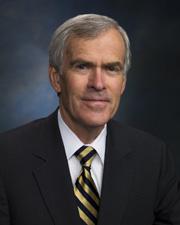
Mr. President, I rise today with my colleague Senator Lieberman to introduce a bill that would give the Congress a modest capability to assess the impacts of science and technology on the formulation…
Mr. President, I rise today with my colleague Senator Lieberman to introduce a bill that would give the Congress a modest capability to assess the impacts of science and technology on the formulation of public policy.
All of us in the Senate are all too aware how science and technology affects almost every aspect of policy we debate.
For instance, advances in science and technology are critical to our homeland defense oversight duties. There are many legislative proposals to deploy biological detection sensors in our cities. Yet, Congress does not get timely, in-depth advice on the policy implications on such issues as how many would be needed in a large city, or how will the data be integrated into a communications network, and would such a large volume of data be accurately analyzed and disseminated in a timely fashion. In another area of homeland defense, we are not confident on what the policy implications are for biometrics applied to border control. What are the costs for applying biometrics to the millions of visas we issue every year? How might these biometrics, which record our physiological features into a single database, invade our notions of privacy?
In the jurisdiction of my committee, Energy and Natural Resources, we would like to know how technology could mitigate the threat of wildfires, especially on urban regions adjacent to our national forests. We know that there are improvements in building materials and construction techniques that can reduce the danger of homes
suddenly catching fire and spreading to adjacent homes. However, the effect of such technology improvements on policy matters involving building codes, fire and disaster insurance, and coordination of communications between federal and local emergency response are unknown, yet critical to our law making duties.
There are other areas where technology affects law making and oversight duties. The Congress has supported efforts to integrate technology into one of the most crucial elements of democracy--voting. Nevertheless, questions remain on the accountability of each vote, and the cyber-security of electronic voting systems. These voting technology issues directly affect the public confidence in any law we may write to bring electronic voting into the mainstream.
I could go on and on, but these examples lead me to the bill I am introducing today.
Congress abolished the Office of Technology Assessment (OTA) in 1995. While I disagreed with this decision, the bill I am proposing today seeks to establish a smaller, less costly capability in the General Accounting Office (GAO).
The Congressional Research Service (CRS) and GAO have many technology-competent personnel, but neither assesses the effects of technology on policy-making. The CRS or GAO may study or catalog various technologies, they may assess the merits of one technology versus another, or even its economic benefits and costs, but they do not analyze how the technology can affect policy.
Some may assert the National Academy of Sciences performs such a function. The National Academies independently, through outside advisory committees, evaluates the technological merits of programs that involve technology, usually funded by the executive branch, and not directly by the Congress. The majority of the technology evaluations by the National Academies are not technology assessments, they do not consider what consequences a technology will have on the policies that the Congress considers. Because the Academy maintains a strong independence, the timing of their reports are not, and should not be, linked to the Congressional calendar.
I believe it is possible have an existing legislative branch agency such as the GAO give to neutral, objective technology assessments to the Congress in a timely fashion. I am of the opinion that the GAO can undertake this function without creating a large bureaucracy.
Let me first outline the history of the legislation I am proposing.
Three years ago, with the help of Senator Bennett, who then chaired the Legislative Branch Subcommittee on Appropriations, I was able to initiate a pilot program at the GAO to perform technology assessments of interest to the Congress. It was Senator Bennett who first suggested placing this pilot at the GAO, and when contacted, the GAO stepped forward to accept that challenge.
Since that time, the three-year pilot program at the GAO has conducted, or has underway, technology assessments on a wide range of topics, from biometrics for border control, cyber-security, cargo container security, and technology to mitigate the impact of wildfires on urban boundaries. All of these assessments were initiated by bipartisan and bicameral letters to the GAO.
I believe this pilot program to be a success. The first report on biometrics for border control has received good evaluations from industry and congressional staff. The GAO still testifies on the results from the report. The second report on cyber-security has just been released, experts across government and the private sector believe it is of high quality. A technology assessment on cargo container security is underway. A wildfire technology assessment has just been initiated.
In addition, this pilot program has undergone several reviews.
The first review occurred in October of 2002, when the first technology assessment on biometrics ended. A group of distinguished scientists, familiar with the technology assessment process, reviewed the GAO's organizational capability to conduct future technology assessments. While they were impressed with the quality of the GAO's effort, they made positive suggestions on how the GAO could improve the policy analysis phase of the technology assessment, as this crucial feature was new to the GAO. The group of experts reviewed the organizational mix of the GAO, and its ability to absorb the technology assessment process within their traditional audit and quality control structure. These experts found that the GAO's Center for Technology and Engineering, which performed the first biometrics assessment, was a capable organization, as it was accustomed to undertaking a wide range of technology-oriented problems. Finally, the experts commented on how the GAO could utilize nongovernmental entities to perform the data collection, thus reducing the potential to create a new bureaucracy. For the first biometrics report, the experts supported the GAO working with the National Research Council to conduct stakeholder workshops to gather a wide range of data, while the report writing would be by a legislative branch entity--the GAO.
The second review was a workshop held in July of 2003, at the National Academy of Sciences. A wide array of nongovernmental attendees evaluated the pilot program at the GAO in the context of other organization models for technology assessment, from recreating the old OTA to simply using the National Academies. This was the first time many nongovernmental persons were exposed to the GAO pilot and many were surprised that the GAO was willing to undertake such a program, and that its staff quickly adapted to the technology assessment process.
The third review occurred in December of 2003 at the request of the Senate Legislative Branch Appropriations Subcommittee. This review was conducted by the GAO. The subcommittee asked what would be required to conduct this pilot on a sustained basis. The GAO concluded that four full time staff would be required at a cost of $420,000, plus $125,000 for additional expenses to work with outside groups such as the National Research Council to collect data. This request has appeared as part of GAO's Fiscal Year 2005 budget submission. The GAO also requested additional legislative authorities so that the assessments could be part of their annual budget process.
This bill is in response to the December 2003 findings of GAO; it has been fully coordinated with the GAO and their findings. This bill also reflects the comments from the July 2003 National Academies workshop and the first review of the GAO by the expert panel in October of 2002.
Let me now outline several feature of this bill, and then I will comment on what this bill does not have.
First, the bill proposes to modify the GAO's organic act to give it the statutory authority to perform technology assessments as part of its advice to the Congress. In doing so, the GAO is directed make such technology assessments in a timely and objective fashion. One of the major issues with the OTA was that many of its reports were so in-depth that they missed the legislative cycle to make a substantive impact on a bill under consideration by the Congress. In addition to the longer, more in-depth reports, I expect that the GAO will give quick turn- around phone consultations on singular technology assessment questions by staff.
Second, it directs the Comptroller General to ensure that the GAO has the human resources expertise in technology and policy to ensure a high quality product.
Third, it directs the Comptroller General, to the maximum extent practicable, to be apprised of other ongoing efforts that may be providing information to the Congress.
Fourth, it directs the Comptroller to peer review all the technology assessment reports.
Fifth, it directs the Comptroller General to establish an advisory board in consultation with the National Academy of Sciences. This board shall provide external advice on the assessment topics, how they are selected, and methods to their improve timeliness and quality. Many times advisory boards are an extra overhead burden, but in this case, where the GAO is acting as a bridge between the outside technical community and the Congress, I feel it is important that some form of external peer review of the technology assessment process be present.
Sixth, it gives the GAO the necessary authority to enter into contracts with outside groups to obtain the information and technical feedback that does not reside within the GAO, thus avoiding the creation of a bureaucracy within the GAO.
Finally, it requires the GAO to submit an annual report to the Congress on its technology assessment activities from the prior year.
Let me explain what this authorization does not do.
First, it does not create a Technology Assessment Board consisting of members of Congress to help select topics. There was much concern that the OTA became almost beholden to its Technology Assessment Board to the dismay of other members of Congress. I have left the topic selection process to the GAO within their existing authorities, similar to the way they currently schedule and produce reports for members and committees. This process has been refined and tested over many years, and it is flexible enough to accommodate sudden high priority demands. I see no reason why scheduling technology assessments cannot be part of this bigger scheduling process, so that its demands are reflected in the overall scheduling priorities of the GAO.
Second, this legislation does not create a large legislative branch entity. The OTA had upwards of 200 people and a $30 million budget before it was disbanded in 1995. This authorization relies on a core internal group at the GAO that relies on outside entities to provide information where needed and to be a technical sounding board through workshops on a particular technology and its various policy implications.
This legislation strikes an important balance. It establishes some internal legislative branch capability to analyze how technology affects our policymaking duties. It fills a void left when the OTA was abolished by relying on a core team at the GAO using their existing authorities for topic selection. Finally, it provides an important bridge to the many nongovernmental entities and societies that give advice to the executive branch and Congress, while ensuring legislative branch objectivity and quality.
I hope my colleagues join me in supporting this legislation. I hope that it receives a hearing in the Governmental Affairs Committee, so that all sides of the fact finding process can be brought to bear on this bill's strengths and weaknesses, and in so doing, be improved and reported to the floor of the Senate for its full consideration and passage.

Mr. President, I rise today to join Senator Hutchison in introducing the Air Cargo Security Act, a bill that passed the Senate by Unanimous Consent in the 107th Congress. Today Senator Hutchison and…
Mr. President, I rise today to join Senator Hutchison in introducing the Air Cargo Security Act, a bill that passed the Senate by Unanimous Consent in the 107th Congress.
Today Senator Hutchison and I released a report from the General Accounting Office that demonstrates why the Congress and the Transportation Security Administration must, together, move quickly to shore up our vulnerabilities to protect against another terrorist attack.
I strongly believe that we must increase our defenses across the board to anticipate the next attack, not just correct the vulnerabilities that were already exploited by terrorists on September 11th.
After September 11th, Congress moved quickly to federalize the airport security screening workforce to prevent more hijackings, but we have not done enough to increase our air cargo security.
The General Accounting Office report shows that Congress must require the TSA to develop a strategic plan to screen and inspect air cargo to protect our Nation's air transportation system. According to this report, our air cargo system remains vulnerable to a terrorist attack because: first, there aren't enough safeguards in place to ensure that someone shipping air cargo under the ``known shipper'' program has taken the proper steps to protect against use by terrorists; second, cargo tampering is possible at various points where cargo transfers from company to company; third, air cargo handlers are not required to have criminal background checks, and they do not always have their identification verified; fourth and most importantly, most cargo shipped by air is never screened.
To address these problems, the GAO recommends that the Transportation Security Administration develop a comprehensive plan for improving air cargo security.
The legislation we are reintroducing today, directs the TSA to: 1. Develop a strategic plan to ensure the security of all air cargo; 2. Establish an industry-wide pilot program database of known shippers; 3. set up a training program for handlers to learn how to safe-guard cargo from tampering; and 4. Inspect air cargo shipping facilities on a regular basis.
The Aviation Security Act Congress passed after September 11 required the Transportation Security Administration to screen and inspect air cargo ``as soon as practicable.'' This report shows we cannot wait any longer. The time is now for the Senate to again take up this legislation, again pass this legislation, and for the TSA to prevent terrorists from tampering with the cargo loaded into the underbelly of our airplanes.
The General Accounting Office recommends that the Under Secretary for Transportation develop a comprehensive plan for air cargo security that includes priority actions identified on the basis of risk, costs, deadlines for completing those actions, and performance targets.
The TSA has a great deal of options at its disposal. The TSA could: screen air cargo for explosives; secure cargo with high-tech seals; control access to holding areas containing cargo; use cargo tracking systems; install more cameras in cargo areas at airports; use blast resistant containers; have more bomb-sniffing dogs; put cargo in decompression chambers before loading it onto an aircraft; require the identity of people making air cargo deliveries to be checked; establish an industrywide computer profiling system; require criminal background checks for employees at freight forwarders and consolidators; and require third party inspections.
We do not expect the TSA to X-ray and scan all cargo for explosives because shippers and carriers would be able to process only 4 percent of cargo received daily, which would severely disrupt the air cargo industry. However, the Federal Government can deploy a combination of the techniques I have listed to implement a comprehensive security plan for air cargo.
Since one half of the hull of each passenger aircraft is typically filled with cargo and 22 percent of all cargo transported by plane is loaded on passenger flights, I believe air cargo security is just as important as passenger security. In fact, you cannot keep passengers safe without stronger air cargo security.
Each time there is a major jet crash or bombing, we reexamine our aviation security. I hope it will not take another accident or attack for us to finally pass this legislation into law.
I would like to thank Senator Hutchison for her leadership on the issue of transportation security and I urge my colleagues to support our legislation.
Mr. President, I rise today to join my colleague Senator Boxer, to introduce the ``San Francisco Old Mint Commemorative Coin Act'' to authorize the United States Mint to issue a commemorative coin that will honor the San Francisco Old Mint and help restore this historic building in downtown San Francisco.
The San Francisco Old Mint Building is an important historical landmark for San Francisco, the State of California, and the United States. Beginning its operations in 1854, the San Francisco Mint was established to take advantage of the plentiful gold and silver mined in the West during the California Gold Rush. At one point, more than half of the money minted in the United States came from the San Francisco Mint, and it once held a third of the Nation's gold supply. Today the ``S'' Mint Mark is found on many rare coins as well as on many new proof coin sets.
The Old Mint Building, located in the heart of the city, has been standing for more than 125 years as the oldest stone building in San Francisco. It is the Old Mint opened in 1874, it was the largest Federal building in the West. Architect Alfred B. Mullet designed this building which is listed on the National Register of Historic Places. A.B. Mullet is the same architect who designed both the U.S. Treasury building and the Old Executive Office Building here in Washington D.C.
A product of America's ``Gilded Age,'' the Old Mint is architecturally reflective of a distinguished line of Greek revival- style buildings that were soon to be eclipsed by other designs at the turn of the century.
Aided by its magnificent stone structure, the Old Mint Building was able to survive the San Francisco earthquake and fire of 1906. In fact, the Mint was the only financial instruction that remained operable after the earthquake and the building was used as the treasury for the city's disaster relief funds.
The San Francisco Old Mint Building minted coins until 1937 when the building became too small and its operations moved to a larger space elsewhere in San Francisco. In the years since then, the building has deteriorated. In 1994, the Bureau of the Mint closed the Old Mint because it could not afford the then-estimated $20 million seismic retrofit to bring the building up to code. Since then the building, transferred to the General Services Administration, has remained closed.
Now, the San Francisco Museum and Historical Society has proposed an exciting project to restore and rejuvenate the Old Mint Building in downtown San Francisco. A fine history museum supported by shops, restaurants, community office space, a coin shop, and a visitors center will combine to make the building a striking and viable destination.
I am introducing this legislation to honor the history of the San Francisco Old Mint and the role it played in rebuilding the great ``City by the Bay'' after the 1906 Earthquake and Fire. This legislation will authorize the Secretary of the Treasury to mint and issue 100,000 $5 gold coins and 500,000 $1 silver coins, which will be emblematic of the San Francisco Old Mint Building and its importance to California and the United States.
The commemorative coin will also help provide funds for the building's restoration. The proceeds generated from the sale of these commemorative coins will be paid to the San Francisco Museum and Historical Society for the building's rehabilitation.
The San Francisco Old Mint is venerated by coin collectors as the ``Granite Lady'' and I believe it is worthy of a commemorative coin. I am very pleased to note that the Citizens Commemorative Coin Advisory Committee, CCCAC, has agreed and that its members have unanimously endorsed this legislation for a 2006 coin, a year that will mark the 100-year anniversary of the building's survival of the 1906 earthquake and fire.
2006 is also the year the U.S. Mint will issue the California quarter and I expect both coins will be attractive to coin collectors. The CCCAC's recommendation will be included in its 2002 annual report that will be delivered to Congress before the end of this month.
Collectors, Californians, and millions of Americans hold the San Francisco Old Mint in the highest regard as a national treasure. Because no other such icon of the numismatic community has been honored by the issuance of a commemorative coin, I believe the San Francisco Old Mint merits commemoration at this time.
I believe honoring and restoring the San Francisco Old Mint Building is an important historic preservation project. I hope my colleagues will join me to support the San Francisco Old Mint Commemorative Coin Act to honor the unique and proud history of the ``Granite Lady.''

Mr. President, today, I am introducing a bill that would repeal a provision in the Consolidated Appropriations Act of 2004, regarding the amount of time that records of approved gun sales can be…
Mr. President, today, I am introducing a bill that would repeal a provision in the Consolidated Appropriations Act of 2004, regarding the amount of time that records of approved gun sales can be retained.
This provision, which will be enacted within the next month, was a measure that the House and Senate conferees agreed to drop, but nonetheless was inserted at the last minute into the Conference Report. That provision is opposed by law enforcement and threatens public safety because each year, it would allow hundreds of convicted felons, fugitives, and possibly even terrorists, to have firearms--even though they are prohibited by Federal law from having one.
Under the Brady Handgun Violence Prevention Act, licensed firearms dealers generally are prohibited from transferring firearms to an individual until a search of the National Instant Criminal Background Check System (NICS) determines that the transfer would not violate applicable Federal or
State law. For example, these background checks determine if someone is a convicted felon; convicted of a crime of domestic violence or under a domestic violence restraining order; or a fugitive. Current regulations allow the records of approved firearms sales to be retained in a computer database, known as the NICS Audit Log, for up to 90 days, after which the records must be destroyed.
The NICS Audit Log provides many useful and necessary functions. First, it allows examiners to determine if, based on new information, someone who was allowed to receive a firearm is in fact prohibited by federal law from doing so. Second, the NICS Audit Log allows the FBI to search for patterns of fraud and abuse by both gun dealers and purchasers. Finally, it can help determine if gun buyers have submitted false identification in order to thwart the background check system.
The provision that my legislation today would repeal reduced the time these records may be retained from 90 days to 24 hours. This will decrease the effectiveness of the NICS Audit Log and have a dramatic, negative impact on public safety.
In July 2001, the Department of Justice proposed an almost-identical change to the NICS regulations. In response to that proposal, I asked the non-partisan General Accounting Office to conduct a study on its possible effects. The key finding of this study was: ``Regarding public safety, the FBI would lose certain abilities to initiate firearm- retrieval actions when new information reveals that individuals who were approved to purchase firearms should not have been. Specifically, during the first 6 months of the current 90-day retention policy, the FBI used retained records to initiate 235 firearm-retrieval actions, of which 228, 97 percent, could not have been initiated under the proposed next-day destruction policy.''
Therefore, if this provision is not repealed, each year, more than 450 people who are prohibited by federal law from having a firearm nonetheless will have one.
This number could even be much higher. In the 6 months examined by the GAO, the FBI determined that an additional 179 transactions were initially approved and reversed more than one day later, but did not result in actual firearm sales. In other words, during this six-month period, the background checks yielded a total of 407 mistakes that would not have been caught if the NICS record retention period had been shortened to 24 hours.
Given this negative effect on public safety, many law enforcement agencies and officials have expressed their opposition. For example, the Law Enforcement Steering Committee (LESC), a nonpartisan coalition of organizations representing law enforcement management, labor, and research, is ``concerned with provisions included in the omnibus bill addressing firearms purchasing and the reduction of law enforcement oversight.'' The nine organizations in the LESC are the following: the Federal Law Enforcement Officers Association, the International Brotherhood of Police Officers, the Major Cities Chiefs Association, the Major County Sheriff's Association, the National Association of Police Organizations, the National Organization of Black Law Enforcement Executives, the National Troopers Coalition, the Police Executive Research Forum, and the Police Foundation.
The Federal Bureau of Investigation Agents Association, a non- governmental professional association with a membership of nearly 9,000 current and more than 2,000 retired FBI agents nationwide has written: ``The more the retention period is reduced, the more difficult it would become to use the paperwork to investigate or prosecute crimes related to the use of sales of the firearms in question. Any such efforts can only complicate the already difficult task of law enforcement and jeopardize public safety.''
Although the FBI Agents Association does not speak for the official FBI, it is worth noting that the FBI's NICS Operations Report in March 2000 recommended extending the retention period from 90 days to one year and noted that the Advisory Policy Board concurred with that recommendation.
Finally, the International Association of Chiefs of Police, the world's oldest and largest association of law enforcement executives, with more than 19,000 members in 90 countries, stands behind its 2001 letter to the FBI, in which the IACP wrote: ``We believe that decreasing the amount of time the purchase records are kept will weaken the background check system and allow more criminals to illegally obtain weapons. . . . The IACP believes that the 90-day retention period should not be shortened. Decreasing the retention period of these records to one business day will not provide law enforcement with sufficient time to perform the necessary audits on the NICS system as established by the Brady Act.''
In addition to the threat to public safety, this provision will have monetary costs. According to the GAO report, the FBI has determined that when this change in the NICS retention policy is implemented, many of the audits currently conducted on a monthly or quarterly basis would have to be conducted on a real-time basis--either hourly or daily. The FBI has said it would need to add 10 staff members to conduct these real-time audits, which would bring the total number of audit staff to 19.
Especially in this time of increased attention to homeland security, this is not the proper allocation of our limited resources. Unless we repeal this provision, we will be funding ten additional FBI staff members to implement a policy that would allow hundreds of convicted felons and fugitives to keep their firearms. That clearly does not make sense.
The clock is ticking: this provision will go into effect in less than a month, before July 21, 2004. We must act now to keep firearms out of the hands of hundreds of convicted felons, fugitives, and terrorists each year. I urge my colleagues to join me in support of this important, commonsense legislation to promote public safety and to ensure that similar provisions are not enacted in future appropriation legislation.
Mr. President, I rise today with my colleague, Senator DeWine, to introduce legislation which will help maintain our leadership in a field Thomas Edison invented over 100 years ago, lighting. The…
Mr. President, I rise today with my colleague, Senator DeWine, to introduce legislation which will help maintain our leadership in a field Thomas Edison invented over 100 years ago, lighting.
The title of this bill is the Next Generation Lighting Initiative, or NGLI. The NGLI's purpose is to develop a partnership between our government, industry, and the research community, to enable the U.S. lighting to illuminate our surroundings using energy efficient semiconductors. This bill is structured along the lines of the well known government--industry semiconductor partnership called SEMATECH which the Congress authorized in the 1988 National Defense Authorization Act.
Lighting currently accounts for roughly 19 percent of the energy use in the United States. Lighting is a $40 billion dollar global industry. The United States occupies roughly one-third of that market. Today's lighting market primarily consists of two technologies. The first technology is incandescent
lighting, that's the one Thomas Edison invented over 100 years ago. Incandescent lighting relies on running a current through a wire to heat it up and illuminate your surroundings, but only 5 percent of the electricity in a conventional bulb is converted into visible light. The second type of lighting is fluorescent lights, which use a combination of chemical vapors, mainly mercury, to discharge light when current is passed through it. Fluorescent lights are six times more efficient than a light bulb.
In 1998, electricity from lighting cost about 47 billion dollars, which accounted for about 100 million tons of carbon equivalent from fossil energy plants.
Today, this paradign is changing, because some scientists recently made a leap ahead in lighting research. Technology leaps displace, very quickly, traditional markets. We know the stories all too well, the horse courier, the telegraph, the telephone and finally the Internet.
That's why we are proposing this legislation, because some advances have been made in the areas of solid state lighting that require a national investment that no one lighting industry can match. This emerging technology has the capability to disrupt our existing lighting markets. So quickly in fact, that other countries have formed consortia between their governments, industries, laboratories and universities. Solid state lighting is being taken very seriously around the world.
Let me describe solid state lighting. The best examples are red light emitting diodes, or ``LED's'', found in digital clocks. LED's produce only one color but they do not burn up a wire like a bulb and are seven times more efficient.
Until recently LED's were limited to yellow or red. That all changed in 1995. In 1995, some Japanese researchers developed a blue LED. Soon other bright colors started to emerge, such as green. That is when things started to change. Because, white light is a combination of red, blue, the recent Japanese breakthrough, and green or yellow. The recent Japanese breakthrough of that simple blue LED has now made it possible to produce white light from LED's ten times more efficient than a light bulb.
If it's successful, white light LED's will revolutionize lighting technology and will disrupt the existing industries. It's imperative that we move quickly on these advances. We need a consortia between our government, industry, research labs and academia to develop the necessary pre-competitive research to maintain our leadership role in this field.
I'd like to mention one other technology that will change lighting. That technology is found in your cell phone and on your computer screen. It's called conductive polymers. Three Nobel Prizes were just awarded for this technology. Conductive polymers offer the possibility of covering large surface areas and replacing fluorescent lamps. These materials will not only provide white light, but can display text or programmed color pictures. These technologies can be Internet controlled to adjust building lighting across the country.
Let me describe the Next Generation Lighting Initiative Act. If enacted, it will allow our country to capture these revolutionary mergers between lighting and information. It will supply the necessary pre-competitive R&D which no one industry alone can provide, and, which we as holders of the public trust of basic research owe a duty to further. It will keep the United States in a leadership role for commercial lighting and promote energy efficiency that is ten times that of incandescent lights and twice that of fluorescent lights. We need to enact this legislation now.
The Next Generation Lighting Initiative authorizes the Department of Energy to grant up to $460 million over ten years to a consortium of the United States lighting industry and research institutions. The goals of the Act are to have a 25 percent penetration of solid state lighting into the commercial markets by the 2013. The Next Generation's consortium will perform the basic and manufacturing research. The lighting industry will take this R&D and develop the necessary technologies to make it commercially viable.
This is precompetitive research. It is research that no one industry by itself can perform and which we have a duty to promote together with industry. It has implications for our country's energy policy far broader than economic competitiveness. The potential reduction in energy consumption makes it a national initiative. Once the pre- competitive research is transitioned to industry then it should be terminated, we think that will take about 10 years.
If this initiative is successful, then by 2025, it can reduce our energy consumption by roughly 17 billion watts of power or eliminate the need for 17 large electricity generating plants. That's as much as 17 million homes consume in a single day. That's more homes than in California, Oregon, and Washington combined.
Almost all of the language of this bill was worked out in detail with the House during the 107th Congress as part of the energy bill conference. We feel it is not only bipartisan but bicameral, and we hope that in this Congress it becomes law.
So let me conclude, by saying that the Next Generation Lighting Initiative will carry that U.S. lighting industry into the twenty-first century. It capitalizes on technologies that have the potential to displace our lighting industry. This Initiative will reduce our nation's energy consumption and greenhouse gas emissions. The research necessary to advance this technology requires a national investment that must be in partnership with industry.
I encourage my colleagues to review this bill, offer their comments, and join us in its support. I ask unanimous consent that the text of the bill be printed in the Record.
There being no objection the bill was ordered to be printed in the Record as follows:
Mr. President, today I am introducing legislation to repeal the death tax permanently, effective January 1, 2005. While I strongly believe that Congress must make all of the tax cuts enacted in 2001…
Mr. President, today I am introducing legislation to repeal the death tax permanently, effective January 1, 2005. While I strongly believe that Congress must make all of the tax cuts enacted in 2001 permanent, and I have introduced S. 96, the ``Contract with Investors,'' that would make this and other important tax law changes, I want to make a separate and special case for repealing the death tax forever.
It is an unfair, inefficient, economically unsound and, frankly, immoral tax that should not come back. In 2001, President Bush and Congress agreed to repeal the death tax. Repeal was tremendously popular. Even though most Americans may never be subject to the death tax, the vast majority know it is terribly unfair to allow Washington to seize more than half of a person's assets when he or she dies. According to a 2001 McLaughlin and Associates poll, 79 percent of respondents approve of the idea of abolishing the death tax.
It is unfair, first of all, to the decedent and to his or her heirs. A person who works hard throughout his or her life, perhaps starts a business, and buys a home in a fast-growing metropolitan area where real estate values are skyrocketing. Or perhaps the person owns a farm or just works hard in a company owned by others, but that person saves and invests and eventually accumulates a small but respectable nest egg. The American dream is to be able to leave these assets to one's children so that they might enjoy a slightly better life than their parents. It is simply unfair and immoral for the government to take more than half of these assets at death.
The impact of the death tax on small, family-owned businesses highlights another inequity, that small businesses often pay taxes at the highest individual rate, currently set at 38.6 percent, while the highest corporate tax rate is 35 percent. When the owner of a small business dies, the heirs may be forced to sell off the business to pay the applicable death tax. When the head of a C corporation dies, his or her heirs may have to sell some assets to pay the death taxes, but generally there is no need for the business to be sold. While Congress has tried to make provisions to ease the impact of the death tax on family businesses, the rules are so restrictive that a business owner can never be sure if he or she qualifies. Furthermore, the family business provisions restrict the size to which the business can grow and still quality for special treatment, creating a disincentive for businesses to expand and create new jobs. A far better solution is to repeal the death tax entirely and permanently.
The death tax also causes collateral damage. Take our small entrepreneur described above. Suppose the business employs 25, maybe 30 people, all of whom rely on the business for their livelihood, health insurance, and retirement savings. The entrepreneur's heirs may not have enough cash to pay the applicable death tax and, therefore, may be forced to liquidate the business. All its employees must now find other jobs. Or suppose the heirs cannot find a ready purchaser for the business and must sell it off in pieces. All of the companies that sold items to or bought items from this business must find other suppliers or customers, leaving a hole in the economy. Although the death tax brings in only about one-and-a-half percent of the Federal Government's annual revenue, it inflicts a disproportionately large and negative impact on the economy.
Not only does the death tax cost jobs directly when heirs are forced to liquidate businesses, it actually reduces Federal revenues by weakening the incentive to save and invest. One of the biggest problems our economy is facing now is that individuals are unwilling to invest at sufficient levels, leading to lower profits, interest, dividends and capital gains, not to mention reduced productivity and lower taxable wages. Economists Gary and Aldona Robbins estimate that repeal of the death tax would increase gross domestic product to such an extent that in 10 years' time, Federal tax revenue would be higher than it would be if the tax were retained. Of course, if the tax comes back after only one year of repeal, this growth will go unrealized.
Beyond lost jobs, liquidated businesses, and confiscatory tax rates, the death tax is inefficient because people pay tremendous sums to tax- planners in hopes of avoiding as much of the tax as possible. Alicia Munnell, a former member of President Clinton's Council of Economic Advisors, estimates that the costs of complying with death tax laws are roughly equal to the revenue raised, or about $23 billion in 1998.
In addition to being unfair and a drag on the economy, the current plan for repealing the death tax and then reinstating it the next year is incomprehensible to most Americans. Under current law, the exemption is $1 million in 2003, gradually raising to $3.5 million in 2009. At the same time, the tax rate drops from its original high of 55 percent down to 45 percent by 2007 and stays there until the death tax is repealed in 2010. In that year, heirs will only be taxed on any inherited property when they sell or otherwise dispose of the property, applying carryover basis, and then at capital gains rates and with an exemption of $1.3 million, and an additional $3 million for a surviving spouse. But, the entire death tax returns the following year at the 2001 rate of 55 percent, with the 2001 exemption of $675,000. The American people know that this makes absolutely no sense. We must fix this problem now and fix it permanently.
My legislation, the Permanent Death Tax Repeal Act of 2003, abolishes the death tax permanently, effective January 1, 2005. I suggest 2005 to give people time to plan for the altered date of repeal. I believe that fairness and sound economic policy require that we enact my legislation as soon as possible, so that people will know that when the death tax disappears, it will disappear for good. As Edward J. McCaffrey, a law professor from the University of Southern California and self-described liberal, said in testimony before the Senate Finance Committee a few years back: ``Polls and practices show that we like sin taxes, such as on alcohol and cigarettes. . . . The estate tax is an anti-sin, or a virtue, tax. It is a tax on work and savings without consumption, on thrift, on long term savings.'' We must end this tax on virtue, work, savings, job creation and the American dream, and we must end it permanently.

Mr. President, I rise today to introduce the Clean Water Infrastructure Financing Act of 2003, legislation which will reauthorize the highly successful, but undercapitalized, Clean Water State…
Mr. President, I rise today to introduce the Clean Water Infrastructure Financing Act of 2003, legislation which will reauthorize the highly successful, but undercapitalized, Clean Water State Revolving Loan Fund, SRF, Program administered by the U.S. Environmental Protection Agency, EPA. As many of my colleagues know, the Clean Water SRF Program is an effective and immensely popular source of funding for wastewater collection and treatment projects. Congress created the SRF in 1987 to replace the direct grants program that was enacted as part of the landmark 1972 Federal Water Pollution Control Act, or, as it is also known, the Clean Water Act. State and local governments have used the Federal Clean Water SRF to help meet critical environmental infrastructure financing needs. The program operates much like a community bank, where each State determines which projects are built.
The performance of the Clean Water SRF Program has been spectacular. Total Federal capitalization grants have been nearly doubled by non- Federal funding sources, including State contributions, leveraged bonds, and principal and interest payments. Communities of all sizes are participating in the program, and approximately 11,000 low-interest loans totaling more than $34.3 billion have been approved to date. As in many States, Ohio has needs for public wastewater system improvements which greatly exceed typical Clean Water SRF funding levels. For instance, in fiscal year 2002, a level of $1.35 billion was appropriated for the Clean Water [SRF program nationwide. However, according to the EPA's 1996 Clean Water] Needs Survey, Ohio's 20-year capital investment needs for publicly owned wastewater treatment facilities are $7.4 billion. Of that amount,
over $4 billion of improvements have been identified as necessary to address combined serve overflow, CSO, problems in over 100 communities in Ohio. The city of Akron, for example, has proposed to spend $377 million over 30 years to fix the city's CSO problems.
Due to the CSO problem, many Ohio communities face millions of dollars worth of wastewater infrastructure improvements and the likelihood of increased sewer rates without receiving outside funding. In recent years, Ohio cities and villages also have been spending more on maintaining and operating their systems in order to postpone the inevitable upgrades. Nevertheless, their systems are aging and will soon need to be replaced.
While the Clean Water SRF Program's track record is excellent, the condition of our Nation's overall environmental infrastructure remains alarming. A 20-year needs survey conducted by the EPA in 1996 documented $139 billion worth of wastewater capital needs nationwide. In 1999, the national assessment was revised upward to nearly $200 billion, in order to more accurately account for expected sanitary sewer needs. Private studies demonstrate that total needs exceed $300 billion, when anticipated replacement costs are considered. EPA's most recent Clean Water Gap Analysis projected a $6 billion per year capital payments gap for clean water over the next two decades.
Authorization for the Clean Water SRF expired at the end of fiscal year 1994, and the failure of Congress to reauthorize the program sends an implicit message that wastewater collection and treatment is not a national priority. The longer we wait to re-authorize this program, the longer it creates uncertainty about the program's future in the eyes of borrowers, which could delay or in some cases prevent project financing. In order to allow any kind of substantial increase in spending, reauthorization of the Clean Water SRF program is necessary.
The bill that I am introducing today will authorize a total of $15 billion over the next five years for the Clean Water SRF. Not only would this authorization help bridge the enormous infrastructure funding gap, the investment also would pay for itself in perpetuity by protecting our environment, enhancing public health, creating jobs and increasing numerous tax bases across the country. Additionally, the bill will provide technical and planning assistance for small systems, expand the types of projects eligible for loan assistance, and offer financially-distressed communities extended loan repayment periods and principal subsidies. The bill also will allow states to give priority consideration to financially-distressed communities when making loans.
The health and well-being of the American public depends on the condition of our nation's wastewater collection and treatment systems. Unfortunately, the facilities that comprise these systems are often taken for granted absent a crisis. Let me emphasize to my colleagues that the costs of poor environmental infrastructure cannot be ignored. Last year marked the 30th Anniversary of the Clean Water Act. We have come a long way since the Clean Water Act's implementation in 1972. Yet, we still have a long way to go. After 30 years since the passage of the Clean Water Act approximately 45 percent of U.S. waters are still not clean enough for fishing or swimming. The 30th Anniversary of the Clean Water Act is cause for celebration of our accomplishments. It is also an opportunity to recommit ourselves to achieving the goals of the Clean Water Act. The Federal Government must maintain a strong partnership with States and local communities and share in the financial burden of sustaining hard-won water quality gains and making additional improvements to the quality of the Nation's waters.
In just over a decade, the Clean Water SRF Program has helped thousands of communities meet their wastewater treatment needs. My bill will help ensure that the Clean Water SRF Program remains a viable component in the overall development of our Nation's infrastructure for years to come. I urge my colleagues to join me in cosponsoring this legislation, and I urge its speedy consideration by the Senate.
I ask unanimous consent that the text of the bill be printed in the Record.

Mr. President, nobody can deny that the digital age has brought many benefits and many challenges to all of us. In my home state of Vermont, the Internet has revolutionized how we work and how we…
Mr. President, nobody can deny that the digital age has brought many benefits and many challenges to all of us.
In my home state of Vermont, the Internet has revolutionized how we work and how we learn: Distance learning brings the best teaching tools right into rural communities, and new business models let Vermont businesses reach new and far-flung customers. As suppliers who use the Internet, we enjoy access to a range of goods and services unimagined when I was growing up, and the vast panoply of information and entertainment offerings on the World Wide Web are at the fingertips of many Vermonters. Of course, we must work to ensure that everyone can reap the benefits of the digital age, and I am striving both here in Washington and in my state to do what is necessary to bring affordable and reliable Internet access to every household.
I am confident that, with continued focus and perseverance, the day of universal access is coming and we will all take part in the many advantages of the digital age. But there are other problems that require immediate attention, because they threaten the development of the web. We will never be able to make the Internet an entirely trouble-free zone, but we will also never be justified in failing to make efforts to defend and improve it.
One important effort to improve it is the bill that I am proud to introduce today--along with Senators Hatch, Daschle, Frist, Boxer, and Graham of South Carolina--the ``Inducing Infringement of Copyright Act of 2004.''
The ``Inducing Infringement of Copyright Act of 2004'' is a straightforward bill. Our legislation treats those who induce others to violate copyrights as infringers themselves. This is not a novel concept; it is the codification of a long-standing principle of intellectual property law: that infringement liability reaches not only direct infringers but also those who intentionally induce illegal infringement. And while the legal principle is an old one, the problems of inducement for copyright are a relatively new byproducts of the digital age--an age in which it is easy, and often profitable, to induce others to violate copyrights through illegal downloading from the Internet.
The principle at the heart of this bill--secondary copyright liability--has long been in the common law. In fact, such secondary liability is provided for by statute in the patent law. The patent code provides liability for inducing infringement and for the sale of material components of patented machines, when the components are not a staple article of commerce suitable for substantial non-infringing use. This is because it has long been relatively simple and economically worthwhile to induce patent infringement. By contrast, until recently the ability to illegally download music, books, software, and films has not existed. Recent developments, however, now make it necessary for Congress to clarify that this principle also applies to copyrights.
What the inducement bill does not do is just as important as what it does: It does not target technology. Useful legislation on this topic must address the copyright issue and not demonize certain software. As a practical matter, if a law is targeted at certain software, the designers will simply design around the law and render it useless. And as a matter of effectiveness, if the law addresses only well-understood present threats, it will necessarily be too narrow to encompass future technologies that may pose the same threat to copyrights. A law that deals simply with
the copyrights--and their violation--is far less likely to be circumvented or out-dated before it can do any good. It will be both broad enough and sufficiently flexible to accommodate situations we cannot foresee.
This legislation is also carefully crafted to preserve the doctrine of ``fair use.'' Indeed by targeting the illegal conduct of those who have hijacked promising technologies, we can hope that consumers in the future have more outlets to purchase creative works in a convenient, portable digital format. Similarly, the bill will continue to promote the development of new technologies as it will not impose liability on the manufacturers of copying technology merely because the possibility exists for abuse. Finally, the bill will not affect Internet service providers who comply with the safe harbor provisions of the Digital Millennium Copyright Act.
Copyright law protecting intellectual property is one of the taproots of our economy and of our creativity as a nation. For copyright law to work as the Founders intended, it needs effective enforcement. That means adapting enforcement tools to meet new challenges, in the digital age or in any age. And that is the straightforward purpose of this bill.
I would like to take a moment also to emphasize another important, if obvious, point about this bill that some detractors have ignored. The law only penalizes those who intentionally induce others to infringe copyrights. Thus, the makers of electronic equipment, the software vendors who sell email and other programs, the Internet service providers who facilitate access to the Web--all of these entities have nothing to fear from this bill. So long as they do not conduct their businesses with the intention of inducing others to break the law--and I certainly have not heard from anyone who makes that claim--they should rest easy. The only actors who have anything to fear are those that are already breaking the law; this bill simply clarifies and codifies that long-standing doctrine of secondary liability.
The ``Inducing Infringement of Copyright Act of 2004'' is a simple fix to a growing problem. The bill protects the rights inherent in creative works, while helping to ensure that those same works can be easily distributed in digital format.
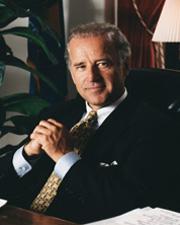
Mr. President, as another semester begins, many college students are worrying not only about their course loads and class work, but about how they will pay for school. Today, the average cost of…
Mr. President, as another semester begins, many college students are worrying not only about their course loads and class work, but about how they will pay for school. Today, the average cost of room, board and tuition at a public four-year college has jumped to over $9,000. Tuition and fees alone jumped 9.6 percent from last year. The average cost of room, board and tuition at a private four-year college has jumped to just over $25,000 with tuition and fees having risen 5.8 percent.
What do the rising costs of attending a college or university mean for American families? It means that despite their best efforts to save and plan ahead, hard working families have to spend a larger percentage of their income than ever before to send their children to school. To attend my alma mater, the University of Delaware, it costs nearly 20 percent of a Delaware family's average annual income to cover costs. In fact just a few months ago, tuition was increased from the Fall to Spring semester by $120 to make up for an expected $3.1 cut in state aid to the university. If a Delaware family wants to send their child to a private university, approximately 50 percent of their income is required.
To help counteract these spiraling costs, I come to the floor today to reintroduce ``The Tuition Assistance for Families Act,'' a comprehensive package of tax credits and deductions, grants and scholarships that will assist American families in sending their children to college. Building upon the previous efforts of mine and others, this legislation will provide more families with much needed assistance so that the decision to send one's child to school will not be overshadowed by the decision of how to pay for it.
Specifically, the ``Tuition Assistance for Families Act'' will raise the current tuition tax deduction for higher education expenses from $3,000 to $12,000. Based on legislation that I previously sponsored with Senator Schumer, this $9,000 increase will go a long way in helping middle class American families afford tuition.
The ``Tuition Assistance for Families Act'' expands tuition tax credits already in law, the Hope Scholarship and the Lifetime Learning Tax Credit. Currently, the Lifetime Learning Credit allows a 20 percent tax credit on the first $10,000 of one's higher education expenses. Under my bill, this percentage jumps to 25 percent while the amount of expenses subjected to the credit rises to $12,000. This means that a student who files a return in tax year 2003 under my plan could get up to $3,000 back in taxes. This is $1,000 more than the $2,000 maximum allowable credit available under current law. That means that under my plan, up to an additional $1,000 can go directly back into a student's pocket to pay for books, a computer or tuition. To maximize the utility of the tax credits, my bill also raises the income limits for both the Hope Scholarship and the Lifetime Learning Credit to up to $130,000 per family, per year. This will allow more families to access the help that they need.
My bill reintroduces the idea of a $1,000 merit scholarship to be awarded to each high school senior graduating in the top 5 percent of his or her class. These types of scholarships not only reward student achievement, they help to ensure that the best and brightest students have the ability to go on to college thereby increasing the pool of well-qualified Americans in the workforce.
Finally, the ``Tuition Assistance for Families Act'' will increase the maximum Pell Grant award from $4,000 to $4,500. During the 2001- 2002 school year, the maximum Pell Grant award covered approximately 42 percent of the average tuition, room and board at a public four-year university. During the 1975-76 it covered 84 percent of these same costs. Clearly, the purchasing power of these grants has declined dramatically over the years. As such, the debt load of American students and American families has increased as students have looked to federal and private loans to finance their education. Shockingly but not surprisingly, 64
percent of today's college students graduate with student loan debt at an average of $16,928, double the debt load of 1994.
It is the dream of every American parent to provide for their child a better life than they had themselves. Part of doing this involves sending your kids to college. This is why I have spent a great deal of my time in the Senate fighting to provide tax relief for middle class American families struggling with college costs. And while I was pleased when some of the ideas I advocated were adopted in the 1997 tax cut bill, it is clear that as tuition costs rise dramatically, Americans need additional assistance. The ``Tuition Assistance for Families Act'' will provide extra help so that more families can afford to give their children a brighter and better future. The ``Tuition Assistance for Families Act'' goes one step further in committing the federal government to making college more affordable for Americans.
I ask unanimous consent that the text of the bill be printed in the Record.
Show 6 more

Mr. President, today I am reintroducing a bill that addresses a critical gap that now exists in the funding for the clean- up of the Nation's most toxic waste sites. The Toxic Clean-up Polluter Pays…
Mr. President, today I am reintroducing a bill that addresses a critical gap that now exists in the funding for the clean- up of the Nation's most toxic waste sites. The Toxic Clean-up Polluter Pays Renewal Act restores fees on oil, chemical and other industries to ensure that the Superfund Trust Fund, is solvent and that polluters, not American taxpayers, bear the burden of cleaning up sites that pose a threat to the health and safety of our communities.
I am pleased to be reintroducing this bill with Senator Chafee. In the 107th Congress, we worked together on a number of issues as the Chair and Ranking Member of the Superfund Subcommittee of the Environmental and Public Works Committee. I look forward to continuing that relationship.
The threats posed by Superfund sites affect communities in every corner of the country. One in every four Americans lives within four miles of a Superfund site. That's 70 million Americans and that includes 10 million children who are at risk of cancer and other health problems.
My State of California has the second highest number of Superfund sites in the country after New Jersey. And more that 40 percent of Californians live within four miles of a Superfund site.
Anyone who lives anywhere near a Superfund site knows about the terrible damage these industrial sites do to the community. Parents worry if their kids are safe when they find out there is a toxic mess down the street; real estate values go down the drain; and major challenges must be overcome to get the responsible parties to own up to their responsibility.
Fortunately, after Love Canal in 1980, Congress enacted the Superfund law to address the serious threat posed by these sites. And this law worked. Great progress was being made. Since the creation of this program, over 800 sites have been cleaned up. During the last four years of the Clinton administration, an average of 87 final cleanups occurred each year.
Unfortunately, this program has seen a sharp decline since the start of the Bush administration. The pace of cleanups has slowed to a crawl. Instead of 87 National Priority List sites a year, less than half of that are now being cleaned up. In 2002, only 42 sites were cleaned up.
At the same time, the heart of the Superfund law is under attack: the principle that polluters must pay for cleanups. And that is the issue that my bill will address.
The Superfund Trust Fund, which includes funds from Superfund fees previously paid by oil, chemical, and other industries, is nearly gone. It will be depleted by 2004. These fees are not large in scope. For example, for every barrel of oil it would only cost 9.7 cents. Manufacturers would only pay $4.45 for every ton of arsenic or mercury they produce. In addition, corporations that have over $2 million in taxable income under the alternative minimum tax would be required to pay only 0.12 percent on taxable income above $2 million dollars. That means that a company that has a taxable income of $2,010,000 would pay only $12.
These companies make millions on their sales. This fee is a small price to pay for a healthy, safe environment.
Unfortunately, the polluter's fee expired in 1995. President Clinton repeatedly tried to get it reinstated. President Bush has refused to do so in his past budgets, and indications are that he will not do so in the future. This means that a greater and greater share of the cost of Superfund cleanups will be borne by taxpayers rather than polluters.
In fact, the general taxpayers contributed just 18 percent to the Superfund in 1995. The figure is rising and American taxpayers will pay 54 percent of the Superfund budget by 2003.
This is unacceptable. That is why we are introducing the Toxic Clean- up
Polluter Pays Renewal Act. The principle of ``polluter pays'' must be protected, and the Superfund fees must be reinstated.
Polluter pays is fair. Polluter pays works. And polluter pays must continue. To shift the burden to all taxpayers is wrong, and we will fight this Administration's attempt to turn it back on the health of the American people.
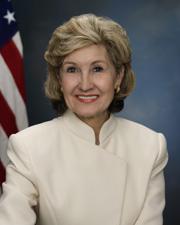
Mr. President, I rise today to introduce, along with my colleague Senator Feinstein, the Air Cargo Security Act. Since the 9/11 attacks, we in Congress, working with the Administration, the aviation…
Mr. President, I rise today to introduce, along with my colleague Senator Feinstein, the Air Cargo Security Act.
Since the 9/11 attacks, we in Congress, working with the Administration, the aviation industry, and the flying public have made tremendous progress in transportation security. Together we have created the new Department of Homeland Security, signifying the largest governmental reorganization in 50 years. We have created the Transportation Security Administration, TSA, and worked together with the Administration to hire and train over 40,000 new security employees. We have invested heavily in our personnel and equipment, and we have revamped screening procedures in virtually every aspect of passenger air travel.
Today, there is no doubt in my mind that the traveling public is considerably safer than we were on September 10, 2001. That is important to recognize. I think it is also important to note that our progress is due in large part to those Americans who continue to patiently cooperate with personnel during the security overhaul. The importance of their contributions and vigilance during this time cannot be overstated. With their cooperation, passengers today are screened more carefully. Bags are being checked more thoroughly, and we all are traveling under a more secure system.
While our efforts in the 107th Congress have dramatically improved our transportation security, we in the 108th must continue to strive for seamless security operations. This responsibility includes closing the cargo security loophole. It just does not make any sense to go to the trouble of inconveniencing airline passengers with security screening and baggage checking if we are then willing to leave the contents of the plane's belly unchecked. Currently, twenty-two percent of all air cargo in the U.S. is carried on passenger flights, only a tiny fraction of which is inspected. That is inexcusable.
The measures that I am introducing today, with my good friend from California, Dianne Feinstein, have already received the unanimous support of the full Senate, as well as the Commerce Committee last year. The purpose of the Air Cargo Security Act will be to strengthen air cargo security on all commercial flights. Specifically, this bill establishes a more reliable known shipper program by requiring random shipping facility inspections, creating an accessible shipper database, and providing for tamper-proof identification cards for airport personnel. It also gives the TSA the tools required to hold shippers accountable for the contents they ship by allowing the Administration to revoke the license of a shipper and freight forwarder engaged in unsound or illegal practices.
This legislation also requires the TSA to develop a comprehensive training program for cargo professionals as well as an approved cargo security plan. The rules and procedures that are strengthened in this bill were developed in consultation with the TSA, the airlines, and the cargo carriers to ensure that the requirements were aggressive. Working together has allowed us to remain sensitive to the airline industry that finds itself in dire financial straits.
What this vote boils down to is the simple question of, ``Are we going to
continue doing everything we can to ensure the safety of our passenger airplanes?'' By closing the cargo security loophole and passing the Air Cargo Security Act, we will demonstrate our commitment to finishing the job we started after 9/11/01.
To strengthen air cargo security and passenger safety, I urge my colleagues to support the Air Cargo Security Act of 2003.
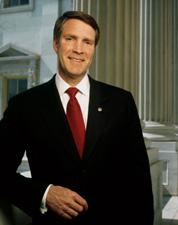
Mr. President, I rise in support of the Inducing Infringement of Copyrights Act of 2004 introduced today by Senators Hatch and Leahy. I am proud to be an original cosponsor. The Inducement Act…
Mr. President, I rise in support of the Inducing Infringement of Copyrights Act of 2004 introduced today by Senators Hatch and Leahy. I am proud to be an original cosponsor. The Inducement Act addresses the growing problem of online piracy--the illegal downloading of copyrighted music. Piracy is devastating the music community and threatening other forms of copyrighted work. This commonsense, bipartisan legislation takes important steps in protecting our Nation's intellectual property.
When I return home to Nashville and drive down Music Row, my heart sinks as I see the ``For Sale'' and ``For Rent'' signs everywhere. The once vibrant music community is being decimated by online piracy. No one is spared. It is hitting artists, writers, record companies, performing rights organizations, and publishers.
Every month 2.6 billion music files are illegally downloaded using peer-to-peer networks, and it is not unusual for albums to show up on the Internet before they make it to the record store. The effect of this theft of intellectual property is disastrous to the creative industry. In the end, rampant piracy dries up income and drives away professional musicians. We get fewer artists and less music.
Online piracy affects more than just the music industry. It affects a broad swath of the creative field, including the movie and software industries. Music, movies, books, and software contribute well over half a trillion dollars to the U.S. economy each year and support 4.7 million workers. When our copyright laws are blatantly ignored or threatened, an enormous sector of our economy and creative culture is threatened.
The intent of the anti-piracy bill being introduced today is simple. It holds liable those who intentionally induce others to commit illegal acts of copyright infringement. In other words, it targets the bad actors who are encouraging others to steal. In addition, the general cause of action in this bill is not new or revolutionary. It is based on the theory of secondary liability that is found squarely in our Nation's laws.
This bill should not and does not threaten in any manner the further advancement of technology. It is not a technology mandate. Only individuals or organizations which profit from intentionally encouraging others to violate our copyright laws should fear this legislation. It has been carefully crafted and will be thoroughly reviewed to ensure that its language accurately reflects its sound intent.
The future of the music community is with advancing technology, and I encourage those in the music field to continue to offer innovative choices to consumers. It is important to recognize, however, that no one in the music industry or any other intellectual property field can survive when his or her work is being stolen. Those who are intentionally and actively encouraging this theft should be held accountable.
I would like to thank Senator Hatch for his hard work on this bill and his dedication to this issue. I would also like to thank Senator Leahy for his work. This is truly a bipartisan issue, and I look forward to working with Members on both sides of the aisle to ensure that our intellectual property laws are respected and enforced.

Mr. President, I am pleased to introduce legislation that codifies the exclusion of irrevocable funeral trusts from Supplemental Security Income, SSI, resource calculations. Irrevocable funeral…
Mr. President, I am pleased to introduce legislation that codifies the exclusion of irrevocable funeral trusts from Supplemental Security Income, SSI, resource calculations.
Irrevocable funeral trusts are funds set aside for funeral and burial expenses. These funds cannot be accessed until after the owner's death. Until recently, these trusts were not included in SSI resource calculations, but an administrative misinterpretation in 2001 dropped this important exclusion.
This misinterpretation has since been corrected, but it had serious repercussions for many senior citizens while it was in effect. When irrevocable funeral and burial trusts were included in SSI calculations, it penalized those SSI applicants who chose to save for their funeral by inflating their actual individual wealth, even though the trusts could not be accessed. The end result was that many senior citizens' SSI applications were rejected. Because the SSI definition of resources and exclusions is used for Medicaid eligibility determinations, the inclusion also affected Medicaid applicants.
I am introducing this bill to codify the exclusion to give senior citizens certainty that future administrations will not be able to misinterpret Congressional intent.
In the past, Congress has recognized the value of funeral planning as good social policy. We have encouraged consumers to engage in ``pre- need'' funeral planning in a number of ways.
This legislation will encourage people to engage in pre-need planning. It will codify the existing practice of excluding irrevocable funeral trusts from SSI calculations and ensure that future misinterpretations are avoided. We must ensure that people are not penalized for providing for their own funerals. I encourage my colleagues to give this legislation serious consideration.
Mr. President, I ask unanimous consent that the text of the bill be printed in the Record.
Mr. President, I ask unanimous consent that the text of the bill be printed in the Record.
Mr. President, I ask unanimous consent that the text of the bill be printed in the Record.
Mr. President, I ask unanimous consent that the text of the bill be printed in the Record.
Bill Text
Latest available legislative text
        [Congressional Bills 108th Congress]
[From the U.S. Government Publishing Office]
[S. 171 Introduced in Senate (IS)]

108th CONGRESS
1st Session
S. 171

To amend the title XVIII of the Social Security Act to provide payment
to medicare ambulance suppliers of the full costs of providing such
services, and for other purposes.

_______________________________________________________________________

IN THE SENATE OF THE UNITED STATES

January 15, 2003

Mr. Dayton introduced the following bill; which was read twice and
referred to the Committee on Finance

_______________________________________________________________________

A BILL

To amend the title XVIII of the Social Security Act to provide payment
to medicare ambulance suppliers of the full costs of providing such
services, and for other purposes.

Be it enacted by the Senate and House of Representatives of the
United States of America in Congress assembled,

SECTION 1. SHORT TITLE.

This Act may be cited as the ``Medicare Ambulance Payment Reform
Act of 2003''.

SEC. 2. AMBULANCE PAYMENT RATES.

(a) Payment Rates.--
(1) In general.--Section 1834(l)(3) of the Social Security
Act (42 U.S.C. 1395m(l)(3)) is amended to read as follows:
``(3) Payment rates.--
``(A) In general.--Subject to any adjustment under
subparagraph (B) and paragraph (9) and the full payment
of a national mileage rate pursuant to paragraph
(2)(E), in establishing such fee schedule, the
following rules shall apply:
``(i) Payment rates in 2003.--
``(I) Ground ambulance services.--
In the case of ground ambulance
services furnished under this part in
2003, the Secretary shall set the
payment rates under the fee schedule
for such services at a rate based on
the average costs (as determined by the
Secretary on the basis of the most
recent and reliable information
available) incurred by full cost
ambulance suppliers in providing
nonemergency basic life support
ambulance services covered under this
title, with adjustments to the rates
for other ground ambulance service
levels to be determined based on the
rule established under paragraph (1).
For the purposes of the preceding
sentence, the term `full cost ambulance
supplier' means a supplier for which
volunteers or other unpaid staff
comprise less than 20 percent of the
supplier's total staff and which
receives less than 20 percent of space
and other capital assets free of
charge.
``(II) Other ambulance services.--
In the case of ambulance services not
described in subclause (I) that are
furnished under this part in 2003, the
Secretary shall set the payment rates
under the fee schedule for such
services based on the rule established
under paragraph (1).
``(ii) Payment rates in subsequent years
for all ambulance services.--In the case of any
ambulance service furnished under this part in
2004 or any subsequent year, the Secretary
shall set the payment rates under the fee
schedule for such service at amounts equal to
the payment rate under the fee schedule for
that service furnished during the previous
year, increased by the percentage increase in
the Consumer Price Index for all urban
consumers (United States city average) for the
12-month period ending with June of the
previous year.
``(B) Adjustment in rural rates.--For years
beginning with 2004, the Secretary, after taking into
consideration the recommendations contained in the
report submitted under section 221(b)(3) the Medicare,
Medicaid, and SCHIP Benefits Improvements and
Protection Act of 2000, shall adjust the fee schedule
payment rates that would otherwise apply under this
subsection for ambulance services provided in low
density rural areas based on the increased cost (if
any) of providing such services in such areas.''.
(2) Conforming amendment.--Section 221(c) of the Medicare,
Medicaid, and SCHIP Benefits Improvement and Protection Act of
2000 (114 Stat. 2763A-487), as enacted into law by section
1(a)(6) of Public Law 106-554, is repealed.
(b) Use of Medical Conditions for Coding Ambulance Services.--
Section 1834(l)(7) of the Social Security Act (42 U.S.C. 1395m(l)(7))
is amended to read as follows:
``(7) Coding system.--
``(A) In general.--The Secretary shall, in
accordance with section 1173(c)(1)(B), establish a
system or systems for the coding of claims for
ambulance services for which payment is made under this
subsection, including a code set specifying the medical
condition of the individual who is transported and the
level of service that is appropriate for the
transportation of an individual with that medical
condition.
``(B) Medical conditions.--The code set established
under subparagraph (A) shall--
``(i) take into account the list of medical
conditions developed in the course of the
negotiated rulemaking process conducted under
paragraph (1); and
``(ii) notwithstanding any other provision
of law, be adopted as a standard code set under
section 1173(c).''.
<all>