Streamlined Sales and Use Tax Act
Legislative Activity
Stay on top of the latest movement without scrolling through every action
Read twice and referred to the Committee on Finance.
October 15, 2003
View full timeline
Introduced in Senate
October 15, 2003
Sponsor introductory remarks on measure. (CR S12620)
October 15, 2003
Read twice and referred to the Committee on Finance.
October 15, 2003
Floor Debate
21 membersWhat members said about S. 1736 on the floor
 CJD
CJD HR
HR DF
DF RW
RW JM+16
JM+16
Floor Debate
21 membersWhat members said about S. 1736 on the floor
I yield to my colleague from Delaware. I know he has a comment he wants to make. I propound a unanimous consent request regarding time. My colleague from Arkansas wishes to speak for 10 minutes on a…
I yield to my colleague from Delaware. I know he has a comment he wants to make.
I propound a unanimous consent request regarding time. My colleague from Arkansas wishes to speak for 10 minutes on a subject unrelated to the matter before the Senate. I would like to follow her, if I might accommodate my Senator from Arkansas, on a subject matter unrelated to the matter before the Senate. I clearly know the priority is to get amendments up here. If I may, I make such a request, that the Senator from Arkansas be recognized for 10 minutes, and following her remarks I be recognized for 15 minutes to speak on a matter unrelated to the subject matter before the Senate.
Mr. President, before I begin my remarks, may I also make a unanimous consent request that at the conclusion of my remarks, the distinguished Senator from West Virginia, Mr. Byrd, be recognized for 20 minutes.
My remarks will be off the subject matter of the bill.
At the conclusion of my remarks, which are about 15 minutes off the subject matter of the bill, Senator Byrd of West Virginia be recognized for 20 minutes.
I do not know. I have not asked the Senator.
No, it is not. It is a tribute to a constituent.
Mr. President, I commend my colleague from Arkansas for her very eloquent remarks. While she addressed them to four specific individuals from her State, she could have been speaking for any one of our States in talking about any one of the several hundred young men and women who have lost their lives in Iraq over the last year. I thank her for the eloquence of her remarks, the sense of passion and commitment she brought to them. I know she is joined by all of us-- certainly this Senator--in expressing deep sorrow for the loss of these Arkansans. We will certainly keep them in our thoughts and prayers.
My remarks follow on a little bit with the remarks of my colleague from Arkansas. Later today or tomorrow, this body will be asked to vote on the confirmation of the first Ambassador to be sent to post-Saddam Hussein Iraq, John Negroponte. Presently, he is our Ambassador to the United Nations. Ambassador Negroponte has a very distinguished diplomatic career and is well suited to undertake what is surely going to be an extremely difficult and complex assignment, likely the most difficult one of his career, and certainly one of the most difficult in the history of the diplomatic corps, going back over the more than 200- year history of our Nation.
While we have had our differences from time to time, I happen to believe John Negroponte is eminently qualified to take on this post. I thank him for his willingness to assume this responsibility, if he is confirmed, and I believe he will be. I also thank his family for their willingness and understanding that our country needs John Negroponte's service at this critical hour.
During his nomination hearing before the Foreign Relations Committee, I stressed to Ambassador Negroponte
that it would be terribly important for him to be candid with this Congress and the American people about what is happening in Iraq and what is not occurring. As we send our sons and daughters, mothers and fathers, brothers and sisters in harm's way, as we have just heard our colleague from Arkansas so eloquently describe, the American people have every right to expect and demand that U.S. officials are telling them the truth about what is happening in Iraq because if they lose faith in what our government is telling them, the United States will not be able to sustain the long and difficult task we have undertaken in this faraway country. Ambassador Negroponte acknowledged his obligation to keep us informed. I am very confident he will do so.
While I intend to support Ambassador Negroponte's nomination when the Senate votes on this matter, I would not want that vote of support for him to be interpreted as an endorsement of the U.S. policy in Iraq, as it is presently being conducted. I am deeply troubled about the pace and direction of our policy in that country. The situation in Iraq could not be more volatile. Yet the Bush administration seems hell-bent to stick to the planned date of June 30 for the transfer of sovereignty to the Iraqi Government. Given the recent upsurge in violence in places such as Falluja and Najaf, given the absence of an effective Iraqi security force to deal with such acts, and given the inadequate numbers of U.S. and foreign troops in that country to restore and maintain stability, I wonder--and I assume others do as well--whether we are setting ourselves up for a catastrophic failure by rigidly adhering to this deadline of June 30.
This coming Saturday, May 1, will be the 1-year anniversary of President Bush's declaration of mission accomplished in Iraq. Recent events make it painfully obvious that nothing could be further from the truth; rather, our mission may be just beginning. Certainly the return of sovereignty to Iraq is a laudable goal which I support, as I assume most all of my colleagues do. It should and must be our end game. But a transfer of authority will not in and of itself be a panacea for all the problems Iraq faces. Moreover, if we do it prematurely, it could put our whole mission and the future of Iraq at risk.
This has been obvious to many of us for some time. But the Bush administration continues to plunge forward with the hope and prayer that everything somehow will work out after June 30. It does so without any clear sign that Iraq is ready for us to turn over authority or its institutions are at all capable at this juncture of successfully taking on this incredible responsibility. In fact, I would argue that all the evidence before us suggests that Iraq is not ready and will not be ready in the coming 62 days. Ironically, in light of recent events, with each step closer to June 30 we seem to be taking a step back in terms of our readiness to hand over control to the interim transitional Iraqi Government.
Last week, the Senate Foreign Relations Committee held three consecutive hearings on the situation in Iraq. I commend Senator Lugar and Senator Biden for holding the hearings. On Tuesday, the committee considered the nomination of Ambassador John Negroponte to be the first Ambassador to post-Saddam Hussein Iraq. Many questions were explored in the course of those hearings. Frankly, with respect to many of those questions, there were no or very few clear answers. However, we did receive some very excellent testimony from expert witnesses with very different backgrounds--from the U.S. military, from academia, from policing experience, and counterterrorism.
Despite their different expertise, all of the witnesses were in agreement on one thing: that is, a major course correction with respect to U.S. efforts in Iraq is badly needed, and needed immediately. I have come to a very similar conclusion. Let me be clear. This need for a correction in our policy is not because our men and women in uniform have somehow failed to do their jobs. Quite the contrary, these men and women have performed every task that has been asked of them with the highest degree of professionalism, patriotism, and heroism. Let there be no doubt about that in the mind of any single American. But it is now more than 1 year after the end of major combat, and arguably the dangers to our troops have never been greater 1 year later.
Why then are our troops in so much danger? I believe the answer, unfortunately, is quite simple. We have failed to craft and implement an effective stabilization plan for the nation of Iraq. This is not the fault of those in uniform; rather, it is the responsibility of top civilian officials in the Department of Defense and the White House who from the very beginning ignored--in fact, scoffed at and thwarted-- recommendations from leading uniformed officers, including GEN Eric Shinseki, that several hundred thousand troops would be needed to complete our mission in Iraq. In retrospect, it certainly seems that General Shinseki's judgment was right on the mark. More recently, military experts have concluded that we are likely, at least in the short term, to need an additional 50,000 U.S. troops if we are going to be able to secure the peace in that country.
We are also going to need a similar number from our European allies in NATO, and we need these reinforcements soon before events spin even further out of control than they already have.
Indeed, I wonder if last March we had sent a larger number of troops to Iraq--and had broad international participation--whether we would now be facing the same unacceptable lack of security throughout that country. I also wonder what effect increased security in Iraq would have had with respect to Iraqis' tolerance of a U.S. military presence in their country.
Unfortunately, this lack of security has been evident from the earliest days of the conflict, when it first became apparent that the administration had not paid sufficient attention to the security needs of Iraq. Museums were looted. Ordinary civilians took up arms to guard their neighborhoods. Lawlessness prevailed throughout much of the country. Most importantly, in that short period of time, we lost the confidence of the Iraqi people.
This isn't simply my observation. I was told very directly by an Iraqi during my trip to the nation back in December, well before the recent flareup in violence over the last several weeks--this Iraqi citizen is a Shiite, a moderate, a forward-looking individual. He very frankly told me that the lawlessness which followed the war negatively impacted Iraqis' confidence as to the intentions, preparedness, and capabilities of coalition forces to create a safe and secure Iraq.
His contention was reinforced by Hasan Zirkani, who in November 2003 listed the lack of law and order, rampant unemployment, and the lack of basic services as sources of Shiite unrest. I would note that Mr. Zirkani is a Shiite cleric who supports Moqtada al-Sadr, the radical leader who commands the loyalty of the group responsible for much of the recent violence and unrest in Iraq.
I also point to a February 2004 nationwide poll in Iraq, which showed that 64 percent of the Iraqi people consider regaining public security as their ``first priority'' over the next 12 months.
Disturbingly, the Bush administration has attempted to make up for its lack of security preparation in the same reactive and hasty manner as much of the planning for post-war Iraq was carried out. One example of this has been the assembling of the various Iraqi security forces, a process which most experts agree was done far too quickly, with little or no training, and with inadequate vetting. We all witnessed the consequences of these rushed activities during the recent upsurge in violence, when Iraqi forces collapsed in the face of armed resistance.
Insecurity in Iraq has also affected the ability of U.S. and foreign NGOs to perform the necessary humanitarian and reconstruction duties that would help them turn around the mood in the Iraqi streets. Unfortunately, due to the lack of security, many are unwilling or unable to operate in that country. In many places, reconstruction activities have come to a screeching halt. Contractors sit in hotel lobbies in Kuwait and Jordan, waiting for order to be restored so they can return to their projects.
The administration says we are on course for June 30. I ask: What is that course? Where is all this leading?
One thing is clear: From the very beginning, the Bush administration has done an inadequate job of preparing for the peace in Iraq. It has attempted to fix problems in shortsighted, often haphazard ways. It has only begrudgingly moved to adapt to the resulting strategic realities on the ground.
That is why I believe it is fair and responsible to question the administration's plans as they relate to the upcoming June 30 deadline. How much more complex will this situation be if we try to stand up an Iraqi authority prematurely--if we stubbornly adhere to this date? What happens if that authority crumbles?
I don't underestimate the problem of delaying the turnover. Clearly, if U.N. Special Envoy Brahimi were to announce that the turnover on June 30 is impossible, that would make our choice much easier. But we must recognize that the situation in Iraq is incredibly fragile. If this effort to build a stable and democratic Iraq is to succeed, it is going to need enormous international support. That support will not be forthcoming if the interim government in Iraq is not perceived as legitimate--both by the Iraqi people and the international community.
I emphasize again that I understand there will be a cost by delaying the June 30 date. My point is that whatever that cost is, the cost of adhering to that date, sticking to it prematurely I think would be far more precarious than whatever damage may be associated with delaying the date beyond the June 30 date. Indeed, for all the difficulties in delaying the turnover of authority in Iraq, they pale in comparison, in my view, to going forward and seeing the situation irreversibly spiral downward.
Equally troubling is that the administration is now saying that our handover of sovereignty to the Iraqis on June 30 will be ``limited.'' Mr. President, I don't quite understand what that means. I suspect the Iraqi people don't either. The law of administration for the state of Iraq, the so-called transitional law, which was drafted and approved earlier this year, calls for the establishment of a ``fully sovereign Iraqi interim government.''
Now it would appear that a yet-to-be-negotiated annex to that transitional law is going to spell out the limits of Iraq's sovereignty after June 30. Of course, nobody yet knows what that annex is going to look like--what concessions the administration will have to make to get the various Iraqi factions to sign off on the individuals who will make up the interim government, or whether those concessions, made in haste, in the long run will undermine our goal of a fully independent and democratic Iraq.
I don't pretend to have all the answers with respect to what needs to be done before sovereignty is handed back to the Iraqi people. But I will say that the rapidly deteriorating security situation, combined with the lack of legitimacy for the U.S. presence in Iraq, has created conflicting pressures on the administration with respect to the June 30 deadline.
Administration officials assert if we hand over authority to the Iraqis on schedule, the U.S. presence in that country will become less controversial. I disagree. The way to enhance U.S. legitimacy is to get the security situation turned around. That isn't going to happen by simply declaring Iraq a sovereign nation on July 1; it is only going to happen with a carefully planned and implemented stabilization program.
That stabilization program will require more troops on the ground-- our troops and troops from other nations sanctioned by a clear U.N. mandate. Whether that can be accomplished by June 30 remains to be seen. I think it is very unlikely.
As I mentioned earlier, we are only 62 days away from the turnover date. Yet, we still don't know who we are turning that authority over to. We don't know whether the individuals to be chosen by a U.N. special envoy will be acceptable to the Iraqi people.
What we do know is that virtually every day more Americans and more Iraqis are dying. Recent events have forced the Bush administration to acknowledge some of these realities. I do not think we should dismiss out of hand that a course correction may be called for that makes the primary focus of our efforts security; or that we put off, for a time, the standing up of an unelected interim government.
That would also give us additional time to make sure that when authority is transferred, it is transferred to a body that has legitimacy in the eyes of the international community and the Iraqi people. To help do this, we need to go to the U.N. and NATO before turning over authority, not after. The U.N. and NATO would be invaluable partners in tackling a task never before attempted from the outside: converting dictatorship into democracy. It would infuse our efforts with much-needed legitimacy.
There are roughly 9 weeks left before June 30. In the interim, a lot could be accomplished in Iraq that might make the turnover of sovereignty possible on the timetable the administration has laid out. We could have achieved, before that date, a clear and concrete U.N. mandate for nation building in Iraq. We could have a secured commitment for a significant NATO troop deployment in that nation. We could have deployed additional troops to address the security challenges of a growing insurgency movement--including troops from governments in the region. But we have not achieved any of those things yet. We need to be honest about that.
Mr. President, now is the time for a careful, informed debate in America about U.S. policy in Iraq, especially about the wisdom of our set deadlines--the pros and cons of moving forward as planned. After that debate, as June 30 draws nearer, we may in fact determine that sufficient progress has been made to go ahead as planned with the turnover of sovereignty. That may in fact be the right thing to do. But if on balance we conclude it is not, we in Congress need to say so publicly and on a bipartisan basis. The Bush administration needs to do so as well. Then we need to act accordingly.
Former U.S. Ambassador to Saudi Arabia, Chas Freeman, recently sent an e-mail to some of his friends concerning the situation in Iraq. It was printed in the Washington Post about 2 weeks ago. He concluded with these comments:
Military triumph does not necessarily equate to a political
victory. Wars end only when the defeated accept defeat, not
when the victor declares victory. A victory that does not
produce peace can be much more costly than protracted
confrontation that accomplishes deterrence. Arrogant
daydreams that inspire military actions can become
humiliating nightmares that produce political debacles.
Before our daydreams for a free and democratic Iraq become our nightmares of a bottomless quagmire, let us do the sensible thing and at least honestly take a hard look at our decision to turn back authority to the Iraqi people on June 30--before we are sure that ``victory is going to produce peace.'' Once we have allowed the Iraqi people to govern themselves, it is going to be virtually impossible to take that sovereignty back without enormous loss of the blood and treasure of both of our peoples.
That is something no one wants to see happen. I urge the administration to think about the wisdom of moving forward on the June 30 date.
He is gone. He retired. He was not fired.
Clearly, the message was quite clear that he had stepped out of line by saying what he thought from a military standpoint--he had a distinguished career of many years in military service--that in order to be successful, that number of troops was necessary. He was, in a sense, penalized, at the very
least rhetorically for suggesting as such.
I recall that.
That is exactly what happened. He was also highly condemned for suggesting a number that now looks small in comparison to what the real pricetag is going to be.
That number I think is roughly correct. Most of those, by the way, have died since May 1 of last year.
I think by anyone's estimation to declare that the mission was accomplished was a mistake.
I do recall that statement he made.
Mr. President, if I may take 1 additional minute, my point is, I voted in favor of the authority. I believe it was the right thing to do. My concern is the June 30 date. I am concerned, and I realize there is a cost in changing it. We need to evaluate whether turning sovereignty over at that date is going to serve our interests. That was the sum and substance of my remarks.
I appreciate the questions my colleague from Nevada raised. I made comments regarding holding rigidly to a date that could turn out to be a mistake.
Mr. President, before the leader yields, I thank the leader. This was a very gracious thing to do. We don't do it often enough. I commend the Democratic leader for taking out a few minutes to recognize people who make such a difference here every single day. The leader does this repeatedly, and I commend him for it.
I associate myself with his remarks, and I wish to express our deep gratitude to Tom and his family for remarkable service to this country. I hope the people out there realize with all that happens within the view of a television camera, there are literally hundreds of people who make this government of ours, in spite of all of its inefficiencies, function remarkably well, and Tom certainly falls within that category. I thank the leader for taking a few minutes out to recognize him.
I yield the time of the minority. cloture motion I announce that the Senator from Massachusetts (Mr. Kerry) is necessarily absent. I announce that the Senator from North Carolina (Mr. Edwards) and…
I yield the time of the minority.
cloture motion
I announce that the Senator from Massachusetts (Mr. Kerry) is necessarily absent.
I announce that the Senator from North Carolina (Mr. Edwards) and the Senator from Massachusetts (Mr. Kerry), are necessarily absent.
I announce that the Senator from North Carolina (Mr. Edwards) and the Senator from Massachusetts (Mr. Kerry) are necessarily absent.
Mr. President, I know the order is that the distinguished senior Senator from West Virginia gets the floor. I ask unanimous consent that I be able to ask, under my time postcloture, some questions of the Senator from Connecticut.
Is that OK with the Senator from West Virginia?
Mr. President, I have been fascinated with the statement of the Senator from Connecticut. What triggered my mind was the statements he made about General Shinseki who said we would need a couple hundred thousand troops over there. I ask the Senator from Connecticut, what happened to him? He is gone.
I ask the Senator, does he remember a man named Larry Lindsey? I suggest he was on the Board of Governors working with Alan Greenspan. He also was the chief economic adviser to President Bush. Does the Senator from Connecticut remember a time just a short time ago after the war started that he said he thought the war could cost as much as $200 billion?
He was even more lenient than that. The news article I have says it would be between $100 billion to $200 billion. The Senator recognizes that he was also given his walking papers; is that true?
Before asking my final question, I ask the Senator from Connecticut, I am confident he is aware of the last press conference that the President held; is that true? Does the Senator remember the question that was asked in that press conference where the President said, when asked the question about having made mistakes, he couldn't remember any? I ask the Senator from Connecticut if he thinks this is a mistake made by the President: No. 1, going on the aircraft carrier and having a banner above it saying ``Mission Accomplished''? The Senator is aware that since that time, about 700 American soldiers have been killed; is that true?
So it is fair, is it not, that could have been a mistake?
Does the Senator from Connecticut also think it was a mistake for the President to say--when asked about whether there would be any people who would cause trouble there, does the Senator from Connecticut remember him saying, ``Bring 'em on''?
I suggest to the President's people that they should advise him the next time he is asked that question, he could at least relate to those two things--No. 1, ``Mission Accomplished,'' and No. 2, ``Bring 'em on.'' Since the time of ``Bring 'em on,'' hundreds of soldiers have been killed and thousands maimed for life and injured in other ways.
I appreciate very much that statement of the distinguished Senator from Connecticut.
I say to my friend, I also voted for the resolution. I think it is extremely important that we who support the effort in Iraq, protecting the men and women who are representing our country over there, have the ability to speak out freely on this issue and not be criticized as having been unpatriotic for having done so.
The Senator from West Virginia was originally almost a lone voice speaking out against this event. Time has shown perhaps his vision was more meaningful than people realized at the time. I appreciate the Senator responding to my questions.
If I can, as a matter of trying to lay out what is ahead of us, Senator Wyden spoke with me and one other Senator indicating they worked to get cloture on this amendment that the Senator from Arizona filed. There has been an agreement--I have not been part of those agreements--that Senator Wyden, Senator Carper, and others would have an opportunity to offer amendments. The Senator from Arizona has indicated that he will do everything within his power to make sure those amendments are offered and debated in an orderly time.
My only statement to the Senator from Arizona is, I think it may be difficult to finish this bill today because he talked about extraneous matters. The Senator from West Virginia has a right to speak for 1 hour on this matter, as do I and others. No one is attempting to stall this legislation. The Senator from Arizona had a very important vote, but I hope this matter is not, in effect, going to be jammed through. This is an important piece of legislation. We will work with the majority as much as we can, but based on my experience in the Senate--the Senator from Arizona and I came on the very same day, so one does not have more experience than the other--I think it will be difficult to finish tonight. If we can, we will work with you. I think it is extremely difficult to finish tonight.
Mr. President, I ask unanimous consent the order for the quorum call be rescinded.
Mr. President, this morning we came to the floor and were confronted with a situation where we tried to get an extension of a highway bill. That was objected to by the senior Senator from the State of Missouri. We talked a little bit at that time, and what we talked about is, basically, if there is no extension given--which has been cleared on our side, by the way--there will be some 5,000 Federal employees of the U.S. Department of Transportation laid off. They may be able to wait until Monday, but certainly they will be able to wait no longer.
What does this mean? It means new highway and bridge projects will be shelved. It will stop reimbursement payments to the States for projects already incurred. It will halt safety grants to the States. It will stop work on transit construction in the Nation's cities and towns. It will interrupt enforcement of motor carrier safety regulations. It will disrupt inspection efforts at our Nation's borders. All we are asking is a temporary extension.
I said this morning, and I say tonight, Senator Inhofe has been a real soldier. He has been with us every step of the way to get a highway bill that is meaningful. No one can question the conservative credentials of Jim Inhofe from Oklahoma. The Senator from Oklahoma is noted for being a person who watches where the money is spent. But he recognizes the bill we reported and passed in the Senate, a bill that was some $318 billion, is legislation that is important for the country. It is important for the State of Oklahoma. It is important for the State of Nevada. It is important for the State of Rhode Island. It is important for the State of Virginia, and every other State I see represented on this Senate floor--which is no other State at this time.
This is something we have to do. I think it would be a terrible shame, and I can't imagine the reason that my friend, the distinguished senior Senator from Missouri, has used for wanting to object to this extension.
He says: I want a conference appointed.
Mr. President, we have said there are other ways of arriving at this. There are other ways of having legislation approved by the body, by the House, and sent to the President.
I have in my hand bills enacted into law without using conferencing. This is an effort to negotiate differences in language between the House and the Senate. We have, just in the 108th Congress, 21 different measures, important measures: TANF, military family relief, Tax Relief Act, veterans' benefits, and many other pieces of legislation--18 others, to be specific.
I think it is a tightrope I would not want to go to Nevada on, saying that I objected to the highway bill and I am closing the Department of Transportation because the minority won't agree to a conference. I don't think that is very good reasoning. I think the people of the country would also think it is not good reasoning.
We have worked, in a bipartisan manner, to produce a highway bill in the Senate. That legislation achieved 76 votes. We received a letter from 20 Republican Senators, dated today, supporting the Senate funding levels. These are Republican Senators, 20 Senators. These are Senators, any one of which----
I am happy to.
Three hours. Pastore works 3 hours after we take up a measure. So that wouldn't apply here.
I appreciate my friend's interest.
Certainly, I understand that totally. Mr. President, the reason I understand that is the legislation that is before this body, this Internet legislation, has so many ramifications that are important to what is going on in the country today. One of the things going on in the country today is how we have improved the way we work on transportation generally. But for the high-tech industry we couldn't do many of the things that are done today. There are many different things we do today that we didn't do 5 years ago, or even 10 years ago as a result of computerization.
The vehicles on the roads now, with some exceptions in the State of Nevada, Department of Transportation vehicles, have computers in them. So I have no qualms, using my hour's time on this legislation, talking about the importance of the highway bill and, of course, the fact is, with the highway bill there are many high-tech propositions that would be affected by this underlying legislation.
Mr. President, I have a letter. I would read all the names, but, frankly, I can't read them because I can't read some of the signatures. But I do see one signature that jumps out at me: Elizabeth Dole. She has been Cabinet Secretary two or three times, but one of those times she was a Secretary. In one of our President's Cabinets she was Secretary of Transportation.
Elizabeth Dole is one of those supporting the $318 billion bill. Virtually every Senator on the Democratic side supports it. That is 69 votes right there.
I hope what we are doing today is only for a short time. We need in the worst way to find out a way of getting Senator Bond to agree to this extension. This Nation expects nothing less.
The Republican leadership is going to meet today or tomorrow and talk about what they think should be the size of this bill. The vast majority--far more than 67 Senators, the veto-proof number of Senators--believe we should have a higher number.
It is very clear. If a bill came to the Senate or the House with $318 billion for highway transit, we would override any veto of the President. Why? Because this bill does not raise the debt. It is paid for out of trust fund money, and revenue streams are already in place.
Not only do we have a lot of people supporting this legislation, as I indicated earlier today--and it is now in the Record--but we have hundreds of organizations that support this legislation: U.S. Chamber of Commerce; Laborers International Union of North America; Associated General Contractors--they are not together very often on anything-- American Road & Transportation Builders Association; International Union of Operating Engineers; American Public Transportation Association; National Asphalt Pavement Association; National Stone, Sand & Gravel Association; Association of Equipment Manufacturers; American Waterways Operators; Air Transport Association; and Waterways Work.
These are only a few of the hundreds of organizations that want us to proceed.
I hope we can do this. It would be a shame to lay off 5,000 people. The impact it would have on their immediate families is important. But the impact it would have on this country--we are just beginning to come out of a recession, so I am told. We are really fighting for jobs. One way to work to have more jobs is to keep the highway program going.
This legislation that is before the Senate is about as high tech as you can get. We know for every $1 billion spent in infrastructure development, 47,500 jobs are generated. That is important. That is only for direct jobs, and thousands of other jobs are spun off from that.
I hope we can move forward. I understand the importance of consumer- friendly legislation. Let us please not have an objection to this legislation.
I am not going to ask unanimous consent until Senator Bond has some knowledge that I will do that. But I will do that later in the day.
I appreciate everyone's courtesy. I know they stretched the rule a little bit for me. I am very grateful. Even though the highway bill is high tech, I am not sure it is that high tech.
Mr. President, reserving the right to object, we have a bill that is about to be completed, and I do not want to interfere. I have a statement that will take a few minutes. But I want the Record spread with the fact that after I do object, sometime before the day is out I will renew my request for the 2-month extension together with a statement.
So at this time, I say to the two managers of the bill, do you want to do something on this bill that is now before the Senate? I ask, through the Chair, the distinguished chairman of the Commerce Committee, are you ready to do something right now on the bill? Otherwise, I will give my statement.
As I said to the Chair, I do not want to take away from moving this bill forward if people are ready to do something. But we are waiting for Senator Feinstein, I understand.
Mr. President, I will speak very briefly. When she shows up, I will finish within a couple minutes.
I object.
Mr. President, this will be the third extension of this very important legislation. The first extension was the 5-month extension. We did that because we could not get our act together: Senator Inhofe, Senator Jeffords, Senator Bond, and this Senator. As a result of that, we got a commitment from the majority leader and the minority leader we could take up this bill at a specified time in February. Everyone lived up to that agreement, and we did that. Within almost a record period of time, we passed this very important legislation. So that was the reason for the first extension.
The second extension was necessary because the House had not yet done their legislating. We asked for a 2-month extension on this matter on February 27.
At that time Senators McCain and Lieberman objected to that extension because they had some problems with the 9/11 Commission. As a result of that, a number of us came to the floor and said: How could Senator McCain and Senator Lieberman do such a thing? And in the process, statements were made, some of which were by the distinguished Senator from Missouri.
I quote from the Congressional Record of that date. I will not read the whole statement. I will read that which is pertinent. This is a quote from the distinguished Senator from Missouri:
What the Senators from Arizona and Connecticut are doing is
seeking to hold hostage the whole highway program in the
United States.
I agree. That is what is happening now.
The Senator further went on to say:
This extension expires on Sunday.
Just as it does now.
If we fail to extend this, there will be a shutdown of any
further contract authority for Federal aid highway projects
and a shutdown of payments for work already contracted for by
the States and performed by contractors. This means no
further projects can be approved or awarded. It also means
that not only the Federal Highway Administration but also the
National Highway Traffic Safety Administration, the Federal
Motor Carrier Administration, as well as the Bureau of
Transportation Statistics, will cease operation.
Skipping:
Not only are we talking about people's livelihoods, we are
shutting down the Federal agencies, which will have an
adverse consequence for our Nation's highways, motor carrier
safety, and consequentially for the condition and operation
of our Nation's surface transportation system.
Skipping down two more paragraphs:
Jobs will be lost in the private sector. An extension is
bad enough, but a complete disruption of the program when
there are crucial job needs across the country will have an
economic impact on the families directly, and on the economy.
Next paragraph:
We need the extension to stop playing politics with
people's jobs in this most important legislation.
I will shortly.
I could not have said it better myself. That is what we are facing right now. We are facing a shutdown of jobs. We will furlough 5,000 people in the agencies that were referred to on February 27 by my friend.
The people of this country should understand there are different ways of getting a bill to the President's desk. It is not necessarily with a conference. I have told Senator Inhofe and Senator Frist that does not mean we are not going to go to conference.
I say to my friends, anyone within the sound of my voice, if conferees were appointed right now, immediately, the first thing we would do is say: OK, staff, majority staff, minority staff, majority and minority staff from the House, get together and work on this. See what you can come up with. Bring it back to us. That would take a couple of weeks to do that.
Then we would work through whatever they couldn't work through themselves. Finally, the Members would agree on certain things. Then if there were things we could not agree on, we would take it to the full conference.
We are weeks and weeks away from that if we appoint a conference right now. The point is, we are not appointing conferences right now because, as I said before, we have on many occasions, more than 20 times already in this year's Congress, passed legislation by what we call preconferencing it. It does not matter what you call it.
I have the same goal as the Senator from Missouri. We want a highway bill. I appreciate and admire and respect his energy in helping arrive at this bill where we now have a bill that is good
for the American people, a 6-year bill, $318 billion that is good for roads and transit.
I hope the Senator has made his point, but I do believe we need to get this short 2-month extension done and then if there is something that comes up in 2 months that the Senator thinks we are not making progress on the legislation, then he may want to try something such as this again.
I yield to my friend who said he had a question.
Mr. President, in answer to the Senator from Missouri's question, I certainly understand the point he is making. I simply do not agree.
I, therefore, at a subsequent time before we adjourn this evening, will ask unanimous consent that the Senate pass a 2-month extension, something the House has already done.
At this time Senator Feinstein has arrived and I would only end by saying that I personally would not want to return to Nevada, recognizing that I would not agree to a 2-month extension. In Nevada, it would wreak havoc with the growth of the State there.
The fact is, even where there is not rapid growth, as in Nevada, there are repairs that must be done. The construction season is upon us. Some of these projects will never go forward.
Amendment No. 3105 to Amendment No. 3048
Reserving the right to object, I direct this question to the manager of the bill, Senator Dorgan. Is that correct, that all amendments have been offered?
I would say also to the two managers of the bill, then we should be advised there will be at least two more votes, perhaps on Feinstein and final passage.
I would say also to my two friends, I always like to have the trains run on time. This is excellent work. I appreciate this. I thought it couldn't be done today. I have no objection.
I move to lay that motion on the table.
The motion to lay on the table was agreed to.
Mr. President, I am pleased to join Chairman Hatch in introducing the Gang Prevention and Effective Deterrence Act of 2003, a bill to give law enforcement additional tools to fight the scourge of…
Mr. President, I am pleased to join Chairman Hatch in introducing the Gang Prevention and Effective Deterrence Act of 2003, a bill to give law enforcement additional tools to fight the scourge of gang violence and to fund prevention programs to stop the cycle of gang violence.
I thank and commend my good friend and colleague, Chairman Hatch, for his hard work in helping to develop this legislation. Since 1996, he and I have worked together to address the problem of gang violence in this country.
We have now introduced legislation in each of the last four Congresses--the 104th, 105th, 106th, and 107th. None of that legislation became law. But we have not given up.
The legislation we are introducing today addresses the many aspects of gang violence by focusing on new criminal offenses and increased penalties for individuals who engage in gang violence. Specifically, this legislation targets gang members who participate in criminal street gang by committing gang crimes like murder, sexual assault, robbery, and drug offenses to name a few, or by employing others to do so; recruit and use minors in gang crimes; commit violent crimes in furtherance of gang or drug trafficking activity; or travel in interstate commerce to intimidate and retaliate against witnesses.
This legislation also makes it easier to prosecute certain 16 and 17- year-olds as adults if they are engaging in violent gang activity.
We have also worked to provide for more cooperation between Federal and local law enforcement officials, and to make it easier for prosecutors to go after gang members who commit serious or violent crimes on behalf of their gangs.
We offer this comprehensive legislation because the problem of gang violence continues to get worse. I concur in the sentiments expressed by Los Angeles Police Department Chief William Bratton when he stated, ``There is nothing more insidious than these gangs. They are worse than the Mafia. Show me a year in New York where the Mafia indiscriminately killed 300 people. You can't.''
In 2002, there were over 650 homicides in Los Angeles, half of which were gang related. This year the Los Angeles Police Department reports approximately 400 murders and almost one-half of those murders are the result of gang violence.
The United States Attorney in Los Angeles testified before the Judiciary Committee last month about the gang problem in her city. She stated that in Los Angeles County alone, conservative estimates put street gangs at about 1,000 in number. The number of individual gang members in those street gangs is 150,000.
In addition, there are approximately another 20,000 gang members in Orange County, Ventura and San Bernardino Counties.
I am often struck by how vicious gang crimes can be, and how damaging they are to the victims and to the surrounding community.
Let me give a couple of examples from my own home city of San Francisco.
In 2000, two rival gangs had a shoot out in San Francisco's Mission District. An innocent bystander was caught in the crossfire and shot through both legs.
A brave eyewitness gave law enforcement the name of the shooting suspect, who was then arrested. The gang then tracked down the witness, put a 9 millimeter automatic to his head, and threatened to kill him for cooperating with the police.
And just recently, on September 28, 2003, 7-week-old Glenn Timmy Maurice Molex was killed in his home during a drive-by shooting in a Bayview district neighborhood in San Francisco. Law enforcement believe that gang members may have been involved in the shooting.
But this problem is not limited to any one city, of course.
In 1980, there were gangs in 286 jurisdictions. Today, they are in over 1,500 jurisdictions.
In 1980, there were about 2,000 gangs. Today, there are over 26,000 gangs.
In 1980, there were about 100,000 gang members. Today, there are more than 750,000 gang members.
I would like to explain how this legislation will help deter and punish gang-related crimes, and why Congress should act quickly to pass it.
First, the bill includes tough 10-year sentences for gang recruitment. This will serve to punish anyone who recruits a member to join--or forces a member to stay in--a criminal street gang with the intent to have that person commit a serious violent crime or a drug crime.
Second, if the person who was recruited was a minor, the offender will serve a mandatory minimum sentence of 3 years.
The purpose of this provision is to deter criminal gang recruitment. It is also to punish those who use minors to commit their crimes. And gangs specifically do go after juveniles because they know that, if the child is caught, he or she will probably receive lighter punishment than an adult.
I believe that we need to punish gang recruitment of children very severely. This bill would do that.
This legislation would also make it a crime for three or more people who work together to commit predicate gang crimes which are listed in the bill. Gang members who commit two or more predicate gang crimes or employ another individual to commit a gang crime would be punished under this new statute by up to 30 years in prison. If the predicate gang crime carries a greater penalty, the maximum would increase. If the gang member has previously been convicted of a predicate gang crime, that gang member's sentence would also increase.
And because juveniles are being used to commit these gang crimes, if the gang member employs a minor to commit the gang crime, the gang member would face a mandatory minimum sentence of 10 years.
The predicate gang crimes are felony crimes and include murder, attempted murder, manslaughter, gambling, kidnapping, robbery, extortion, arson, obstruction of justice, tampering with or retaliating against a witness, victim or informant, burglary, sexual assault, carjacking, or selling or possessing a controlled substance, firearm offenses, and illegal transportation of an alien.
The offenses that are listed as predicate gang crimes are those commonly pursued by gangs.
One study of gangs in various countries found that law enforcement reported that 55 percent of gang members were involved in aggravated assaults; 33 percent in robberies;
Fifty-eight percent in burglary and breaking and entering;
Fifty-two percent in motor vehicle theft; and
Seventy-two percent in drug sales.
Numerous gangs illegally launder their illicit drug profits. These include Russian and West African criminal gangs as well as street gangs such as the Bloods, Crips, Gangster Disciples, and Latin Kings.
This bill also allows property derived from gang crimes to be forfeited.
Third, the bill creates a new, RICO-like, anti-gang law to help prosecutors target the more serious gangs and gang members. In response to the problems of mafia-violence, the racketeering statute was created to punish violent crimes that are in furtherance of a racketeering enterprise. This legislation will do the same for violent crimes that are in furtherance of gang activity or drug activity.
The gang and drug crimes are those which I have described earlier-- murder, carjacking, drug distribution, robbery, firearms violations, and sexual assault. These crimes represent the heart of gang activity and those who commit them must be met with tough penalties.
The penalties range from a maximum of 10 years to the death penalty if death results from the crime.
This legislation also expands the Travel Act.
The Travel Act allows Federal prosecutors to charge certain interstate crimes such as extortion, bribery, and arson, and for business enterprises involving gambling, liquor, drugs, or prostitution.
This statute was passed in 1961 also with mafia-related criminal activity in mind.
Now criminal street gangs travel interstate for another purpose which strikes at the heart of our system of justice--intimidating and retaliating against witnesses, jurors, informants, and victims.
This bill would make it a crime to travel across state lines for that purpose and would allow for a sentence up to life imprisonment for someone who commits that crime.
Defendants who violate the Travel Act and kill someone will also face a possible death sentence for such actions.
This bill should ensure that prosecutors can use the Travel Act to act against crimes caused by the new Mafia: criminal street gangs.
The bill also amends several criminal statutes to address violent crimes frequently or typically committed by gangs.
These crimes include carjacking, assault, manslaughter, racketeering, illegal gun transfers to drug traffickers or violent criminals, the use of firearms in drug trafficking and violent crimes, and murder-for- hire.
These amendments make it easier for prosecutors to prove these crimes by eliminating or modifying the intent requirement for the crimes or by increasing the penalties for violations.
This legislation also changes the venue statute for capital cases so that capital cases can be brought where the murder occurs or where the racketeering conspiracy, drug conspiracy, or criminal street gang operates. So, if the gang, commits the bulk of its crimes in one State but commits a capital crime in another State, all of the crimes can be tried in the same State where the gang focused its criminal activity and the government can seek the appropriate punishment for that crime. The jury will then get the whole picture of how the gang operated and what they did.
Where a 16-year-old or 17-year-old has committed a Federal serious violent felony, this legislation facilitates Federal prosecution of such offenders. Surveys in 1996 and 1999 showed that 37-50 percent of gang members were under the age of 18. This legislation also calls upon the United States Sentencing Commission to create new sentencing guidelines for juvenile offenders who are charged as adults to address concerns specific to offenders of that age.
The bill permits the Attorney General to designate high intensity interstate gang activity areas, HIIGAs, and authorizes $100,000,000 for each of 5 years for these task forces.
These provisions are modeled after similar provisions creating high intensity drug trafficking areas, HIDTAs.
HIDTAs are joint efforts of local, State, and Federal law enforcement agencies whose leaders work together to assess regional drug threats, design strategies to combat those threats, and develop initiatives to implement the strategies.
HIDTAs are based on an equal partnership between different law enforcement agencies.
HIDTAs are based on an equal partnership between different law enforcement agencies.
HIDTAs integrate and synchronize efforts to reduce drug trafficking.
They eliminate unnecessary duplication of effort and maximize resources.
And they improve intelligence and information sharing both within and between regions.
HIDTAs are necessary because drug trafficking tends to be ``head quartered'' in certain areas of the country, from which it spreads to other areas.
Moreover, drug traffickers have been highly organized and developed sophisticated interstate and international operations.
These points are also true for many criminal gangs. So we have erected a new program of cooperation between law enforcement agencies to attack the gang problem like we attack the drug problem.
This bill authorizes $75 million over the next 5 years for the hiring of Federal prosecutors to identify and prosecute significant gangs within their districts under the Project Safe Neighborhoods program. Across the Nation, 94 Project Safe Neighborhoods Task Forces are working to implement the coordinated strategy to reduce gun violence, led by the U.S. Attorney in each of the Federal judicial districts. U.S. Attorneys have been working side by side with all law enforcement participants in their communities to identify the most pressing crime problems and attack those problems both through prevention and aggressive prosecution.
Finally, this legislation would authorize $100 million dollars over the next 5 years for States to update their technology, create and fund gang prevention and community prosecution programs, and create and expand witness protection programs.
Witness protection is a critical part of reducing gang violence. The president of the National District Attorneys Association, Robert McCulloch, who is also the district attorney in St. Louis, testified last month before the Judiciary Committee. He said that while his office is able to put witnesses in motels for a couple of days or a week or is able to send them on a bus ride to a relative's house, the solutions are not long-term. And as a result, the witnesses come back and are at risk. That is not acceptable. If witnesses are not confident that they will remain safe, they will not talk to law enforcement. It is as simple as that. We must give local and State law enforcement the tools to keep witnesses alive.
While criminal street gangs flourish in certain urban areas such as Los Angeles and Chicago, they typically use these cities as bases to invade more rural locales.
And the characteristics of a criminal street gang are extremely diverse. While some criminal street gangs are looser-affiliations of violent individuals who work together in furtherance of their gang, there are also some very highly disciplined, hierarchical ``corporations,'' often encompassing numerous jurisdictions.
MS-13, an international gang with roots in El Salvador's civil war has spread to at least 28 States and includes more than 8,000 members. In this gang there is no real command structure or national charter.
And in the Washington, D.C. metropolitan area, criminal street gangs are largely neighborhood-based associations of lifelong friends. They use no flashy names or symbols, but they bank together to commit crimes and sell drugs.
In the past three years, members of just three neighborhood-based gangs in Washington, D.C., called the 1-5 Mob, the K Street Crew and Murder Inc. by prosecutors, have been convicted of 57 murders and dozens of assaults and weapons offenses for gang crimes committed over the past ten years.
On the other hand, there are some very organized and structured ruthless gangs in this country.
The Gangster Disciples Nation, for example, has a chairman of the board, two boards of directors, one for prisons and one for streets), Governors, regents, area coordinators, enforcers, and ``shorties,'' youth who staff drug-selling sites and help with drug deals.
From 1987 to 1994, this gang was responsible for killing more than 200 people. Moreover, one-half of their arrests were for drug offenses and only one-third for nonlethal violence.
And just like MS-13, these gangs pop up all across the country.
In 1996, the Gangster Disciples Nation and other Chicago-based gangs were in 110 jurisdictions in 35 states.
Members of the Los-Angeles based 18th Street Gang have migrated outside of California into the southwest border up into the Pacific Northwest, out to New Jersey, Mexico, and El Salvador. Los Angeles gang members have been tracked to Indianapolis, Oklahoma, Omaha, Raleigh and St. Louis.
This bill is a necessary measure to target increasingly violent, increasingly sophisticated, and increasingly national gangs. This is not just a California problem, or a Chicago problem, or a District of Columbia problem--this problem is a nationwide in its scope, and we must craft a nationwide solution. This legislation will tackle that problem head-on. We simply cannot wait any longer.
I look forward to working with my colleagues to enact the Gang Prevention and Effective Deterrence Act of 2003.
Mr. President, I hope we can get cloture in a few minutes. Five minutes will be plenty, if that is acceptable to the leader. Mr. President, I will be very brief. We have had 3 full days of debate on…
Mr. President, I hope we can get cloture in a few minutes.
Five minutes will be plenty, if that is acceptable to the leader.
Mr. President, I will be very brief. We have had 3 full days of debate on the Internet tax question. I am hopeful we will be able to get cloture on the McCain substitute.
If the Alexander proposal, the alternative, is accepted, all across this country folks who now get a message that says ``You've got mail,'' will get a message that says ``You have special taxes.''
What Senator Allen and I have done over the last 3 days on the floor of the Senate is outline, under the Alexander proposal, the scores and scores of local jurisdictions that would be able to impose these special taxes on electronic commerce.
Over the last 7 years, we have heard these State and local projections by governmental bodies about how revenue would be lost. In each instance, colleagues, they have not come to pass. In 1997, for example, the National Governors Association said that our Internet tax freedom bill would cause the virtual collapse of the State and local revenue system. That next year revenue went up $7 billion.
All we are trying to do in the McCain compromise, and it is, in fact, a compromise--Senator Allen and I have sought a permanent ban on multiple and discriminatory taxes on electronic commerce. We are compromising now so that it is a 4-year proposal. We have made it clear to the other side regarding telephone calls made over the Internet, the way in which those are handled and taxed would not be changed. So this is a compromise proposal.
We have had 3 days of debate. It doesn't involve sales taxes or property taxes or utility taxes or any other kinds of taxes. This is a question of whether there ought to be double taxation on something folks have already paid for, and that is Internet access. I hope we will be able to invoke cloture on the McCain substitute and be able to go on with the amendment process. We have had 3 full days of debate. I compared it to prolonged root canal work because I know this is not inherently the most fascinating subject. I hope today we can invoke cloture on the McCain substitute and get about the task of amending and passing the bill, and I yield the floor.
Mr. President, I ask unanimous consent to speak very briefly after the Senator from New Jersey.
Mr. President, having been involved in this issue now for 8 years, I can say it has never been easy. Certainly what we have seen today demonstrates that once more.
But I think the Senate has made an important statement today; that is, as we try to lay out the policies that will say a lot about the future of the Internet, it is critically important this exciting opportunity for Americans not be subject to more discriminatory taxes.
We have said once again in the Senate, we want to try to find common ground around the principle of technological neutrality, for example. If we do not do that, we will be discriminating against the future, because if we do not work it out now in the amendment process, broadband services delivered through DSL would be taxed and Internet access through cable would not be taxed. That is not technological neutrality.
What is going to give Americans the best array of technologies at the cheapest prices is true competition where there is a level playing field for the various technologies. I have said repeatedly I don't want to see the people who now get the message ``You've got mail'' to get a message that says ``You've got special taxes.'' My colleagues on the other side of the aisle agree with that as well. We have a difference of opinion with respect to how we are going to get that done. Now we will be able to go to the amendment process.
I have compared this exercise repeatedly to something resembling root canal work. I make it clear to my friend from Tennessee, the Senator from Delaware that we are going to do everything possible to make sure there is an adequate opportunity for colleagues to offer their amendments and discuss them. These are very technical, complicated issues. I have spent about as much time on the Senate floor discussing these issues over the last 3 days as any Member. I intend to stay at this post so we give everybody who wants a chance to discuss these issues that kind of opportunity.
Over the last 7 years, we have seen a lot of reports about dire consequences that come about if we pass this legislation. That has not come to pass. I see the distinguished Senator from Connecticut.
We were told in 1997, if we pass that, we will bring the collapse of the revenue system in States and localities, and revenue went up $7 billion the next year. We have to deal with those issues. In the last two iterations of this legislation, I have said repeatedly that no one has brought forward an example of a local jurisdiction hurt by their inability to discriminate against electronic commerce. That is what this bill does; it makes sure you cannot single Internet out for special taxes.
We will use this amendment process now to address the concerns of various Senators. A lot of Members did not think we would get to this point today, but we have a chance, working with colleagues, to produce a bipartisan bill that will be passed overwhelmingly by the Senate. I intend to stay and work with the Senator from Tennessee and others to make sure they get the discussion on the topics they feel strongly about and that it is fair and thorough. That is my pledge.
I yield the floor.
Mr. President, I share the view of the chairman of the Commerce Committee and Senator Dorgan. I think the end is now in sight. I see the distinguished Senator from Virginia on the floor right now, and I commend him for all the effort and the relentless pursuit of a cause that he and I have shared for many years, going back to when he was Governor and when I was the original Senate sponsor.
We have held steadfast to the proposition that the Internet, this extraordinary national and global treasure, should not be subject to multiple and discriminatory taxes. I think the earlier Senate vote indicates that a majority of the Senate is prepared to support policies which will ensure that the Internet is healthy and vibrant for the future.
I see the chairman of the Commerce Committee on the floor. People felt strongly about the question of telephone calls over the Internet. The chairman of the Commerce Committee came, had a very constructive definition which made clear or clearer what Senator Allen and I have felt all along, and that is that there should not be a change in the status quo. That is very constructive.
My guess is that the big challenge over the course of the afternoon will be on the issue of definitions. Certainly there are definitions with respect to how what is called the backbone of the system, the architecture, is handled. Depending on how it is written, that definition could provide for taxes on BlackBerrys and e-mails and the kind of thing that the Senator from Virginia and I have opposed strongly. We will have to oppose that once again, but I want to make it clear, as I did earlier in the afternoon, that we are anxious to deal with the remaining issues in a collegial fashion with the Senator from Tennessee. The Senator from Tennessee has made it clear he wants to move this bill along.
I join my colleagues in saying that after 8 years of being at this, literally since the time I came to the Senate early in 1996, I suspect in a few hours the Senate will have acted once more in a bipartisan fashion.
I want to wrap up by commending the Senator from Virginia. He has been willing to compromise with respect to issues but he has never compromised on principle, and I appreciate that.
I yield the floor.
Before the Senator leaves the floor, I don't want to turn this into a bouquet-tossing contest, but I came to the Senate in the winter of 1996 as a new member of the Commerce Committee. The chairman of the committee was exceptionally helpful in terms of working on the legislation then. We have gone through two iterations already.
Senator Dorgan and I have spent untold numbers of hours talking about this vastly important bill, more than either of us would have wanted. The Senator from Virginia is here as well, and the fact that he has been involved so extensively has been an enormous help. The Senator from Virginia has consistently talked about standing up for freedom. He is absolutely right.
There is a reason the Gray Panthers, for example, are for this legislation. They and millions of other consumers understand how important it is that we not hammer Internet access.
We will have other debates with respect to the future of the Internet. Certainly the Senator from North Dakota has talked passionately, for example, about a project the Governors were talking about, the streamlined sales tax concept. So we will have these other debates.
But the chairman of the Commerce Committee, who was so gracious to me and the Senator from Virginia, helped us consistently through this 8- year-long battle. I want the chairman of the Commerce Committee to know I am very appreciative of all of the help and support he has given us in this cause.
We are going to be wrapping up the work of the Senate in just a few minutes, and a lot of people who have said it just was not in the cards, it just was not to be, the Senate was gridlocked--suffice it to say there will be further debates as we discuss this with the other body.
This is a very significant step forward. Every Member of the Senate, in my view--and I have talked to almost every Member about this on a personal basis--every Member understands the value to the opportunity of a healthy and vibrant Internet. What we had over the last few days is a debate about the best set of policies to attain that objective. This will not be the last debate. For example, even in an area where we have come to an agreement with respect to the taxation of telephone calls made over the Internet, this is not the last word. As the Senator from Tennessee and I have discussed, we still have the Federal Communications Commission in a position to take a more comprehensive look, for example, on how phone calls made over the Internet are going to be regulated and dealt with by the various jurisdictions.
This debate is sure to continue for many days ahead, but this is a banner day. This is a day when the Senate has made some judgments that will help keep the Internet healthy and vibrant in the days ahead. That is a great success. I commend my colleagues for being patient enough to deal with the subject.
I yield the floor.
Mr. President, I believe we have an agreement to share the time. I am allocated 10 minutes to speak on this amendment. I am not going to take 10 minutes, but it will come from the allocation under the agreement worked out by the chairman of the committee and the manager of the bill, Senator Dorgan.
Yes, that will be fine. I will not take 10 minutes.
Mr. President, the Senator from California knows how much respect I have for her, but I must profoundly disagree with this amendment. This amendment would essentially reward bad behavior. What we have is a number of jurisdictions doing what clearly is in violation of the law. We do not even think they are in California, but in jurisdictions around the country people are taxing DSL. We are convinced that is clearly against the law. It certainly promotes technological inequality because we have a situation where cable gets a free ride, and then they end up taxing DSL.
The Feinstein amendment would make the 2-year DSL grandfather 4 years. Some of these grandfathers in this bill are going to live longer than Methuselah. It certainly does not make sensible public policy, and it does not make sensible public policy when we would be discriminating against the future. The future is broadband, high-speed Internet access through DSL. This would allow folks to keep taxing DSL, which has certainly been contrary to the spirit of everything we have done over the last 7 years. It, in effect, would be rewarding bad behavior. It would certainly discriminate against DSL relative to cable.
I think this would be a significant mistake. Certainly, there are different technology platforms for Internet access, but for 8 years, the central proposition I tried to advance on this legislation is that there ought to be technological equality; that we ought not to treat all technologies differently. We had a number of jurisdictions violate that. They have gone out and stuck it to DSL. So DSL gets taxed, and cable does not get taxed. We don't think it happens in California, but it certainly has happened around the country.
I do not think we ought to let these grandfathers outlive us all. That is essentially where we are going on this issue. We just keep extending the life of these grandfathers. It is going to do great damage to the country's future by particularly discouraging broadband development through DSL.
I hope the Senate will oppose the amendment. I cannot say there is anybody I would rather not oppose than the Senator from California. I agree with her on virtually everything under the Sun with respect to public policy.
But, Mr. President, I say to the Senate, if they vote for the Feinstein amendment, they are rewarding bad behavior. They are encouraging technological inequality. We have already taken steps to let some of these grandfathers live longer than I certainly would. We are now saying that some of them are going to make Methuselah look young. I think it is a mistake. I urge my colleagues to oppose the amendment.
I yield the floor.
We agree.
Will the Senator yield briefly? Because I have been following this, along with the Senator from Arizona, and we may be able to have a colloquy to work this out.
California does not tax DSL now.
That is good. California does not tax the backbone of the communications system now. California does, based on these analyses that have been given you, tax various telecommunications services. I think it would be fair to all of us to say it is our desire to keep the status quo in California.
In other words, various services are paying telecommunications taxes now. The reading of our proposal indicates there is nothing which would prevent California from being able to continue to impose those taxes.
Would it be acceptable to the Senator from California to have a colloquy which would allow us to include some report language stipulating in those areas where communications services are being taxed now that there is nothing in the McCain proposal which would change that? If that would be acceptable to the Senator from California, we might be able to work out with the chairman of the committee and the Senator from Virginia report language and withdraw her amendment. That would protect the status quo in California. It would, however, make sure we are not rewarding bad behavior in other States around the country that tax DSL.
If the Feinstein amendment is offered in its current form, I will oppose it very strongly. The Feinstein amendment, if it is offered, and if we can't agree on a colloquy, would promote technological inequality. It would nail DSL and give cable a free ride.
I will urge the Senate to oppose the Feinstein amendment, but I would be open to report language with my colleague from California to make sure it is the intent of the Senate to keep the status quo in California where DSL isn't taxed and the backbone isn't taxed where the Senator has been concerned.
Mr. President, I intend to yield 3 minutes to the Senator from Tennessee and then yield the remainder of my time. I understand the Senator from North Dakota is going to yield the remainder of his…
Mr. President, I intend to yield 3 minutes to the Senator from Tennessee and then yield the remainder of my time. I understand the Senator from North Dakota is going to yield the remainder of his time also; is that correct?
Mr. President, I yield myself 20 seconds before then.
I commend to my colleagues this morning the Washington Post editorial entitled ``Energy Follies.'' I quote:
It would make far more sense for Senators who are
interested in some aspect of this legislation--whether
ethanol or electricity regulation or renewable fuels--to
design bills around those issues and vote on them separately,
judging each by its own merits. But that would be too
rational for this Senate, which almost seems to prefer doing
things sideways.
I ask unanimous consent that the editorial be printed in the Record, and I yield 3 minutes to the Senator from Tennessee.
Mr. President, I intend to yield back the remainder of my time.
I ask unanimous consent that there be 2 minutes equally divided prior to the second and third votes and that the votes be limited to 10 minutes each.
I yield the remainder of my time.
Mr. President, I urge my colleagues to vote against cloture on the Domenici amendment. It has really no business on an Internet tax bill. We all know that. I read again from the Washington Post of this morning:
It would make far more sense for Senators who are
interested in some aspect of this legislation, whether
ethanol or electricity regulation or renewable fuels, to
design bills around those issues and vote on them separately,
judging each by its own merits. But that would be too
rational for this Senate which seems almost to prefer doing
things sideways.
There is no need for this legislation on the bill. It has no place on it. I can assure my colleagues it would be dropped in conference if it were adopted.
I yield my 1 minute to the Senator from Virginia, Mr. Allen.
I ask unanimous consent that the Senator from Tennessee be allowed 1 minute.
Mr. President, I raise a point of order that the Daschle amendment is not germane and ask for a ruling from the Chair.
Mr. President, I thank all of my colleagues for the comity that has existed in addressing this bill.
I thank, of course, Senator Allen, Senator Lott and Senator Sununu, and many others who have helped to get this bill to the point where it is.
We are ready to consider amendments. I assured the opponents of this bill who have fought tenaciously--Senator Voinovich, Senator Alexander, and Senator Carper in particular--that if there is an amendment which they have filed which is not technically germane but is associated with the Internet tax, I would ask consent that it be considered because there was a feeling that they did not have their amendments properly considered. I hope we can give them that consideration.
I hope we can move forward soon with the amendments. As I last checked, there are about 30 which were filed. I hope we can move forward, debate, and dispose of those amendments. I thank all of my colleagues for their cooperation.
I yield the floor.
Will the Senator from West Virginia yield to me 30 seconds for a comment?
I thank the Senator from West Virginia.
It is the intention of all to finish this legislation tonight. I hope those with amendments will come over during the period that Senator Byrd makes his remarks so we can proceed with amending this legislation. I regret it, but I will object to further extraneous conversation or dialog until we finish consideration of this bill because I do not want to inconvenience Members by keeping them in late tonight. We have some 31 relevant amendments. We need to get about addressing them.
I thank the Senator from West Virginia for allowing me to comment.
If the Senator will yield for one additional comment, I appreciate what the Senator from Nevada said. He is very experienced at floor procedures. I point out we have been on this bill all week. I would hope we could finish it tonight. I see no reason why we cannot.
I understand his skepticism. In no way did I mean to criticise the very important statements being made on the vital issue of national security.
I thank the Senator from West Virginia for his indulgence. I yield the floor.
Mr. President, I thank the Senator from California for her courtesy.
I would like to report that after a very productive meeting amongst the principals who have been involved in this legislation, I might add, I was reminded, for about 8 years now, and thanks to the good offices of Senators Dorgan, Voinovich, Allen, Lott, Alexander, and Carper, I think we have the outline of an agreement that I hope can lead to a successful conclusion within the next hour or so.
We have refined the issues basically down to two. One of them is the issue of a moratorium. We expect Senator Lautenberg to come to the floor with an amendment on the issue of moratorium, the numbers of years of a moratorium for different protocols, and also one on the definition of the backbone. It is not clear whether the second issue will require a recorded vote.
We also reached an agreement on an amendment I will propose on behalf of all of us in a few minutes that has to do with the voice over Internet protocol issue, a definition to which we have agreed.
I inform my colleagues, I think it is very possible that we could have one or two more votes and then vote on final passage. At least I am hopeful of that outcome. I again thank my colleagues for their progress.
I will also mention that there are a couple of Senators who are being checked in who had amendments to make sure their concerns are being addressed in the amendments that may be proposed.
Mr. President, I yield the floor.
Mr. President, we await the arrival of Senator Lautenberg so we can move forward with his amendment. Then I am informed that at least Senators Alexander, Carper, and Voinovich do not intend to offer their amendment on definition, but there are other Senators who also have an interest in this issue. So it is not for sure that we are not going to have an amendment on that issue.
As I mentioned, moratorium and the grandfather issues need to be addressed, and Senator Lautenberg's amendment addresses the issue of grandfathering. So we await his arrival in hopes that we can get that disposed of, and then the Lott amendment and then we would be ready to move to final passage.
I yield the floor.
Parliamentary inquiry.
At what time does the Pastore rule apply?
I thank the chairman.
Mr. President, I would never, ever believe that my friend from Nevada would stretch any of the Senate rules. Of course, I appreciate his real knowledge of the rules of the Senate.
I yield the floor.
Mr. President, I thank the Senator from Mississippi for his very adroit, as always, capable work on this issue and moving this legislation along.
I thank my colleague from New Hampshire, Mr. Sununu, who feels very strongly about this issue. I know we will be revisiting this issue again.
I thank my colleagues. I strongly recommend that we agree to the amendment by voice vote.
I yield the floor.
Mr. President, there is no further debate on the amendment.
I have submitted an amendment to the desk on behalf of Senator Lautenberg, and I ask for its immediate consideration.
Senator Lautenberg's amendment calls for a GAO study on broadband for the effects of tax moratorium on State and local economies and other impacts of this Internet tax moratorium. I find it a very valuable amendment. It would be very helpful because this is a moratorium, not a permanent ban. It would be very helpful as we debate this issue, which I imagine will start again in a year or so.
The Lautenberg amendment is a good amendment. Senator Lautenberg is a conferee, and I know Senator Dorgan will agree we will fight to make sure this GAO study is included.
I yield the floor.
As far as I know--and Senator Dorgan is more aware than I am--we have one more amendment we agreed to which I hope to propose within a couple of minutes. Senator Feinstein may or may not be proposing an amendment. We will find out shortly. Then we would be prepared to go to final passage.
I yield the floor.
Mr. President, I ask unanimous consent that the order for the quorum call be rescinded.
Mr. President, while we are awaiting the amendment and the presence or decision on Senator Feinstein's amendment, I wish to make a couple of comments about individuals. I specifically speak of Senator Alexander, Senator Voinovich, and Senator Carper, who fought very hard and valiantly on this issue. We have honest differences of opinion on this issue.
It is very likely we will pass this legislation, but Senator Alexander, Senator Voinovich, Senator Carper, and Senator Dorgan have had an enormous impact. We have gone from a permanent ban to a 4-year moratorium. We are changing the definition of voice over Internet protocol. We have made significant changes to this legislation thanks to their efforts.
Throughout, our debate has been characterized by mutual respect and understanding that we just have fundamental differences of opinion. I congratulate them on a battle well fought. Although they may have lost in passage of the legislation, they improved it dramatically, and I say that from a position on both sides of the issue. They brought into play their backgrounds as Governors of their respective States and bring a much needed perspective to this body. I congratulate them for their very outstanding work, particularly over the long period of time we have been involved in this issue.
If we pass this bill shortly--and we may not--there are two individuals who deserve the credit: Senators Allen and Wyden, who took up this legislation years ago, and followed it. They have been relentless, dedicated advocates, and have brought their debate and discussion all over America. They have done an outstanding job. They are the ones who, I believe, deserve the credit on all of it for the magnificent work they have done on an issue that is of great importance and profound importance to small and large businesses all over America. I thank them for their valued efforts.
I yield the floor.
That is correct. Please proceed.
Mr. President, I have an amendment at the desk, and I ask for its immediate consideration.
Mr. President, I submit the amendment on behalf of myself, Senator Allen, Senator Voinovich, Senator Alexander, Senator Dorgan, Senator Carper, and Senator Wyden. It refines the language concerning the voice over Internet protocol. It is a product of an agreement of language between all of us. I ask for its consideration.
Before I do that, I believe Senator Feinstein has an amendment she wants to propose. I hope we can get an agreement, say, 40 minutes equally divided, if that would be agreeable.
Forty minutes equally divided, followed by a recorded vote, which would then be followed by final passage. I ask unanimous consent that after disposal of the pending amendment, no more amendments be in order, that there be 40 minutes equally divided between myself and Senator Feinstein, a vote on the amendment, followed immediately by a final passage recorded vote.
The Senator from Delaware would like to make a comment.
Mr. President, I move to reconsider the vote.
I yield to the Senator from Virginia such time as he may consume.
Mr. President, how much time do I have remaining?
Maybe the Senator could do that in the next few minutes while I make a couple of comments, if that is agreeable.
Mr. President, I would like to be clear that a tax on DSL services is a tax on Internet access. Seventeen States have cleverly found a way to get around the Internet tax moratorium. Right now, 17 States have gotten around at least the spirit if not the letter of the Internet tax moratorium by taxing DSL service.
The heart of this compromise to the original legislation had no grandfathering whatsoever--none, zero. So we put in a compromise that would have called for 3 years of non-DSL taxation, 2 years grandfathering in for non-DSL taxes. This would have given the DSL taxing States 2 years to adjust their budgets. Then we went from 3 years to 4 years' moratorium, lifting the moratorium for those who are taxing non-DSL taxes.
If we do this, we are gutting the compromise. It is unfair to DSL consumers. Why should consumers in one-third of all States be treated differently from the rest of the country?
I strongly oppose the amendment. I would like to work out the compromise as discussed between Senator Feinstein, Senator Wyden, and Senator Allen. I hope we can agree to it.
In the meantime, I ask unanimous consent to send an amendment to the desk on behalf of myself and Senator Hutchison which would then allow the State of Texas to have their ``access line fee'' included in the voice over IP compromise language.
Show 8 more
Mr. President, this amendment incorporates a whole energy bill. It has many provisions that are deeply flawed. But we are voting on whether to end debate on a complicated, flawed energy bill before…
Mr. President, this amendment incorporates a whole energy bill. It has many provisions that are deeply flawed. But we are voting on whether to end debate on a complicated, flawed energy bill before debate has even begun, making it very difficult to correct those flaws.
The Senate passed a comprehensive and balanced energy bill in July 2003. Then, after weeks of closed-door meetings with virtually no input from Democratic conferees, the Republicans put forward a ``take it or leave it'' energy conference report that was drastically different than the bill that the Senate passed. I voted against cloture on the conference report in November 2003 because it was deeply flawed and had been produced by a flawed process. The Domenici amendment, the energy bill, which is before the Senate today, suffers from that same problem. There are simply too many provisions on the negative side of the ledger for me to support it, and because this is a cloture vote, voting yes would make it difficult to consider amendments.
At a time when crude oil prices are at 13-year highs, gasoline prices are reaching new record highs daily, diesel prices are breaking records, and high jet fuel prices are straining our airline industry, the Senate should be considering legislation that would do something to lower oil prices. The bill however, would push oil, gasoline, diesel, and jet fuel prices even higher by directing the Department of Energy, DOE, to ``as expeditiously as practicable acquire petroleum in amounts sufficient to fill the Strategic Petroleum Reserve to the [1 billion] barrel capacity.'' By directing DOE to take tens of millions of barrels of oil off the market at a time when supplies are tight and prices high--as they have been for the past 2 years--this bill would tighten supplies in the commercial inventories even further, drive oil and gasoline prices even higher, and keep private sector inventories from building back to normal levels.
The bill would fill the SPR in a manner that is inconsistent with two recent amendments adopted by the Senate. Last fall, the Senate unanimously approved an amendment that Senator Collins and I offered to the Interior Appropriations bill, directing DOE to develop procedures to minimize the cost to the taxpayer and maximize the overall supply of oil in the United States when acquiring oil for the SPR. This amendment expressed the sense of the Senate that the DOE's current procedures for filling the SPR have raised oil prices, are too costly for the taxpayers, and have not improved our overall energy security. Unfortunately, this amendment was not included in the Interior Appropriations conference report, and the administration has continued to fill the SPR without regard to the price or supply of oil. This is a significant reason oil and gasoline prices are so high today.
In light of the continuing rise in oil and gasoline prices, and the administration's refusal to suspend SPR shipments, the Senate approved an amendment that Senator Collins and I offered last month to the budget resolution for FY 2005. Our amendment would cancel the planned delivery of 50 million barrels of oil to the SPR from now through sometime in 2005 that would have completed the filling of the reserve. The SPR is 93 percent filled already. Our amendment is being considered in the House-Senate conference on the budget resolution.
By directing the DOE to fill the SPR to 1 billion barrels--300 million barrels above its current capacity of 700 million barrels--the bill before the Senate today would worsen a SPR policy that is 180 degrees opposite from the direction the Senate just approved in the Senate budget resolution.
By increasing deposits in a government reserve at a time when commercial supply is scarce and prices are high, oil companies will meet the additional demand for crude oil for the reserve by removing oil from their own inventories rather than purchasing high-priced oil on the spot market. Since the price of oil is so closely tied to inventory levels, filling the SPR under these market conditions both depletes private sector inventories and pushes up prices for America's consumers.
Two years ago, the DOE's own staff explained this as follows: ``Essentially, if the SPR inventory grows, and OPEC does not accommodate that growth by exporting more oil, the increase comes at the expense of commercial inventories. Most analysts agree that oil prices are directly correlated with inventories, and a drop of 20 million barrels over a 6-month period can substantially increase prices.''
For these reasons, in 2002, DOE SPR staff recommended against buying more oil for the SPR in tight markets. The administration chose to ignore these warnings. SPR deliveries proceeded. As the DOE staff predicted, oil supplies tightened, private inventory levels fell, and prices climbed.
In summary, the direction in the bill to DOE to fill the Strategic Petroleum Reserve by another 300 million barrels, to a total level of 1 billion barrels, is likely to increase the cost of crude oil and crude oil products, such as gasoline, home heating oil, and diesel and jet fuel, to American consumers and businesses, with no benefits to our national security.
The electricity provisions of the bill before us are also deeply flawed. Instead of improving our current situation, I believe they will make it worse. The massive power failure of August 2003, on top of the massive price manipulation perpetrated by Enron and others, provided additional proof--proof that should not have been needed--that the United States' deregulated energy markets are not functioning well to secure a supply of energy against interruption.
The bill before us--the Domenici amendment--would repeal the Public Utility Holding Company Act of 1934, PUHCA, long-standing consumer and investor protection legislation governing energy industry structure and consolidation. With the repeal of PUHCA, the resulting provisions of the bill before us fail to provide adequate protections to prevent industry market manipulation and consumer abuses.
The Congress needs to enact mandatory reliability legislation, and while some provisions of the bill would be an improvement over the current voluntary system of reliability standards, other provisions of this bill would take us in the wrong direction and could, in fact, make things worse. The bill fails to ensure that regional transmission organizations, RTOs, will have the authority to enforce electric reliability standards in order to prevent, or respond effectively to, another blackout. Further, the ``participant funding'' provision of this bill shifts the cost of building new electric transmission such that transmission construction will be discouraged and utilities will be encouraged not to participate in RTOs. There is a strong need for a stand-alone electricity reliability bill that sets mandatory standards, requires utilities to join RTOs, and establishes consistent rules for enforcement of standards. But the bill before us today is not the right answer.
Two provisions of the bill would significantly impede the ability of federal
and state agencies to investigate and prosecute fraud and price manipulation in energy markets. If adopted, section 1281 would impede state and Federal authority, other than the Commodity Futures Trading Commission, to investigate and prosecute wrongdoing in financial and commodity markets. It would turn the CFTC into a gatekeeper for all other federal and state investigations into matters within CFTC- regulated markets, which would be an unprecedent intrusion into the enforcement of state and federal consumer protection laws.
Section 1282 would impose a higher, criminal standard, ``knowingly and willfully'', for filing false information and for improper phony round trip trading than exists under current law. The new round trip trading provision is inconsistent with current law and the Cantwell amendment that recently passed the Senate, which prohibited market manipulation in electricity markets.
Manipulation is difficult to prove even under current law. By raising the burden of proof, this provision will make it nearly impossible to prove illegal round trip trading or wash sales. Rather than weakening the laws preventing fraud and manipulation in energy markets, the Congress should be strengthening these prohibitions.
Over the past several years, the Permanent Subcommittee on Investigations, which I previously chaired and on which I am now the ranking minority member, has investigated how Enron, financial institutions, and others have manipulated financial energy markets and prices. The record we have established is clear and dramatic. Strengthened oversight and transparency are critical to the proper functioning of our energy and financial markets. The provisions in this amendment will weaken our ability to ensure these markets are functioning properly.
There are some provisions of the bill before us that I support. The amendment contains two provisions that appear on their face to partially address the unfair air quality restrictions placed on a number of Michigan counties. These provisions do not go far enough, however, to remedy the negative impacts that I have fought against for years.
According to the Michigan Department of Environmental Quality, the Environmental Protection Agency, EPA, would not be required to act on the results of the demonstrations study that is required by the so- called Upton language included in this amendment. It also would not relieve new major sources from state new source review regulations, and it would not release Southwest Michigan from Clean Air Act provisions that mandate specific local reductions following completion of the study. Finally, it would not prevent Southwest Michigan nonattainment areas from classification bump-up if the area is unable to attain the standard by the deadline.
The so-called Barton provisions contained in this amendment would help some for two Michigan counties, Cass and Muskegon, those are the only two counties subject to transport that have been designated under Subpart 2 of Section 181 of the Clean Air Act. However, the help is modest because it is workable only if those areas fail to meet the standard by the deadline and the EPA decides to ``bump them up'' to a higher classification.
We need to do more to prevent restrictions from being placed on areas that are impacted by overwhelming transport. The potential consequences of a nonattainment designation are significant. I will continue to work with the EPA and the Congress to ensure that the Clean Air Act provisions are applied with common sense so that counties are not required to take costly actions for problems that are created downwind, which would be illogical and unfair.
The Senate has worked to create a national energy policy for years, but the bill before us today is not the right answer. Even if we were to pass it today, it will get caught in a logjam between the House and Senate on energy policy that is centered on the issue of the fuel additive methyltertiarybutylether, MTBE. The energy bill conference report that I voted against in November contained a provision that would exempt its producers from liability. In Michigan, it has been estimated that MTBE has contaminated groundwater around over 700 leaking underground storage tank sites. There are similar problems in many other states.
The crux of the matter is that the Senate will not pass legislation that includes the MTBE provision and the House will not pass legislation without it. So we are in a logjam, and I believe that any legislation that we pass will eventually come back to this body containing the MTBE liability exemption, which would then again be rejected.
We should continue work to complete a long-term, comprehensive energy plan that provides consumers with affordable and reliable energy, increases domestic energy supplies in a responsible manner, invests in energy efficiency and renewable energy sources and protects the environment and public health. But the bill before us today, offered to legislation on a completely different matter, is not the right answer. Nor is voting ``aye'' to end debate on an important bill like energy before the debate has begun.
Mr. President, the question here today is not whether we want to tax people's access to the Internet. We don't. None of us want to do that. That is not the issue. The question is, are we going to say…
Mr. President, the question here today is not whether we want to tax people's access to the Internet. We don't. None of us want to do that. That is not the issue.
The question is, are we going to say to State and local governments that have collected a portion of their taxes for years from telecommunications, from telephone services, are we going to take away their ability to do that? We are going to reduce their ability to do that? We are going to reduce their revenue base but at the same time, whatever shortfall they realize, we are not going to make up for it?
Ever since the time of Alexander Graham Bell, State and local governments have been collecting taxes on traditional telephone services. What is at issue here is whether we are going to empty the State and local treasuries to the tune of as much as $20 billion in the years ahead, at a time when they are facing the greatest fiscal crisis they have faced since World War II.
Are we going to empty the treasury of California by another $836 million? It is already empty. Do we want to empty the treasury of the State of Connecticut by some $170 million, or $265 million out of Kentucky's treasury, or $110 million out of Louisiana's Treasury, or $225 million out of Massachusetts' treasury, or $360 million out of Michigan's treasury, or $285 million out of Minnesota's treasury, or $600 million out of New Jersey's treasury, or $370 million out of North Carolina's treasury, or $358 million out of Tennessee's treasury, or $200 million out of Wisconsin's treasury? The list goes on.
I have said on the Senate floor before and I will say it again: If we want to do something good for the telecommunications industry--I do, and I am supportive of a number of other initiatives for the industry-- if we are supportive of tax credits or allowing companies to expense their investments, we should pay for it as Federal legislators. It is wrong for us to say we are going to give a break to the telecommunications industry, or any other industry, and say not only are we not going to pay for it, but we will tell the State and local governments they have to pay for it. In my view, that is wrong. That is not treating other people the way we want to be treated, and it is something we shouldn't countenance today.
We are going to vote on cloture in a short while with respect to the McCain amendment. Let me say this: There is a reasonable compromise between where Senator Alexander and I stand and where Senator McCain stands. There is a reasonable compromise. We will get to that compromise with a ``no'' vote on cloture. I am convinced that we will get it.
I stood here last week and urged people to vote no on the cloture on the Frist bill on asbestos. I said if we do it, we will create a dynamic where real compromise and consensus can be built around asbestos--a very difficult issue. We voted no on cloture, and as we gather here right now, over in SH-216 in Hart there are serious meetings going on to get us to a real settlement on asbestos.
We need real negotiation. A ``no'' vote on cloture on McCain does not end prospects for consensus, but it actually creates it. I urge my colleagues to vote no.
I thank my colleague for yielding. I join Senator Alexander in congratulating Senator Wyden, Senator Allen, and Senator McCain for the vote on the cloture. All week I had a different point of view on how we wanted to approach this matter. Now that is behind us. We want to approach this in the spirit of comity and see if we cannot find a consensus.
I said yesterday and I reiterate again today, there are four areas of contention, as I see them. We are discussing going from a very narrow moratorium to a very broad moratorium and the issue of what is defined as exempt under the moratorium. It is a good deal broader than what we faced in recent years. That is a matter of concern. Going well beyond access fees and discriminatory taxes is a matter of second concern.
I appreciate Senator McCain's offer to go from a permanent moratorium down to 4 years. We were interested in 2 years. I don't know if there is a similar area there for compromise. I think there is a number between 2 and 4 that might work. That would be consistent with the third area of contention where the duration of the grandfather clause for State and local governments is 3 years. They are protected for 3 years, and the length of the moratorium is 4. If we could put those two together, 3 and 3--3 years for the moratorium and stick with the 3 years for the grandfather clause--I think that actually addresses that concern.
In conversation with Senator Wyden, Senator Allen, Senator McCain, Senator Voinovich, and Senator Alexander, everyone says nobody wants to deny State and local governments the opportunity to collect taxes from telephone services that they have collected for decades. I have not talked to anybody who wants to deny State and local governments that have been collecting taxes on telephone services almost since the day Alexander Graham Bell invented the telephone. Everyone says they do not want to deny the ability to collect that for State and local governments. The concern is, as telephone service and commerce communication migrate to the Internet, we want to make sure that as that happens State and local governments do not see those they traditionally rely on cut out.
Those are four areas, and I think there is middle ground--at least on three of them. I don't know if we can ever agree on the breadth and depth of the definition. We will approach it in a good spirit.
I thank Senator Dodd for yielding.
Mr. President, I have listened, and I understand we are debating--actually embracing--the McCain amendment to modify the language that would ensure States which have traditionally been able to derive revenue from telephone communications would continue to be able to do that. As we go forward in time--and those communications are expected to migrate to the Internet--we want to make sure we don't undercut the ability of States to continue to derive some revenues from this.
We had a good exchange an hour or so ago among Senators Alexander, Voinovich, myself, and our friends who have different views on the overall bill. I am pleased we were able to come to an agreement, not just in spirit but in letter as well. We all said we were interested in the same thing. We don't want to undercut the bill. The language in the original amendment did not appear to do that--at least to us. We would rather not have ambiguity going forward.
At a future date, if there is a court hearing and a judge is looking at the language, trying to figure out what we meant, we want the judge to understand very clearly that this body, the Congress, has no interest in taking away the ability of States to raise revenue from a longstanding traditional source--some say it goes back to the time when Alexander Graham Bell invented the telephone. I don't know if the tax has been around that long, but I think this preserves that for the States, and that is important, as telephone communications migrate to the Internet.
I thank my colleagues, Senators McCain, Allen, and Wyden, for working with us. In fact, our staffs helped thread the needle in a very constructive and tough way.
I thank Senator Feinstein for yielding time and particularly for offering this amendment. I would say to my colleagues, I believe we have made pretty good progress, not just today but over the last several weeks, maybe the last several months, in terms of narrowing our differences. I am encouraged by that. I hope others of us are as well.
One of the great concerns some of us had was a moratorium on the ability of State and local governments to collect certain kinds of revenues that lasted forever. I am pleased that is not the case anymore. We have a moratorium of a finite duration, and the duration of the moratorium will be 4 years. I am encouraged that we entered into a healthy negotiation on just how can we make sure State and local governments which traditionally derive revenue from telephone operations continue to do that. We had a good-faith negotiation, and that led to an amendment offered by Senator McCain that was accepted unanimously. That was a very important provision.
There is one more issue I believe needs to be addressed. It is addressed in the Feinstein amendment. If somehow the Feinstein amendment could be adopted, I believe we would have a bill--in fact, we would have a bill I would vote for. I know the Presiding Officer, Senator Alexander, with whom I have worked very hard on these issues, indicated he would very likely do the same thing. For us to come from sort of how far apart we were to the point where we could actually vote for this bill were this change enacted is no small amount of progress.
Some of my colleagues have said to me that this is a complex issue. It is. Some have said to me I don't really understand most of these issues. I have studied hard. I confess there is still a good deal I don't know. But I would share with my colleagues, whether you understand the intricacies of the backbone of the Internet and what DSL means, I think we understand this and I hope we could agree on this: If we are going to say that on the one hand we are going to extend the moratorium for 4 years, and we are going to say to State and local governments there are
certain things you can't do during those 4 years, I think there is a great virtue in saying to those States that are legally collecting revenues that they can continue to do that. They have not violated the law. In fact, the old moratorium enacted in 1998 explicitly said the moratorium did not apply to telecommunications services. That is what it said.
DSL has a telecom component in it. As such, States are not prohibited from taxing DSL. Around 17 States currently do. All we are asking in this amendment is that the grandfather clause, both for dial-up and for DSL, run coterminously with the term in the McCain compromise, and that is 4 years.
If we have a 4-year moratorium, why shouldn't we have a 4-year grandfather in States that are not doing anything illegal but, frankly, exercising their rights as sovereign States? I like that symmetry and balance. What I like maybe even more is it enables those of us who fought very hard over these issues in recent weeks and months to actually come together in the end and vote for this package.
So I say to my colleagues, if you voted earlier today, maybe, for cloture, and you thought in voting for cloture you were voting for a 4- year grandfather for State and local governments, you did not. What you thought you were voting for and what you thought you were getting, you did not get. You have the opportunity now to make amends for that, and I hope you will do that by voting for the Feinstein amendment: 4-year moratorium, 4-year grandfather. It is a good symmetry, and, frankly, it is a very good compromise and one that will enable us to go ahead and proceed on this bill and pass it and ultimately to enact it.
I yield the remainder of my time.
Mr. President, I note that the Washington Post is recommending support for the Alexander- Carper version of the legislation. This is not about taxes. This is not about the Internet. This is about…
Mr. President, I note that the Washington Post is recommending support for the Alexander- Carper version of the legislation. This is not about taxes. This is not about the Internet. This is about Senators and Congressmen coming to Washington, passing an expensive idea, and sending the bill home to State and local governments.
I am voting against cloture on the McCain proposal and against cutting off debate because this legislation breaks our promise to State and local government.
In 1994, 300 Republicans stood on the Capitol steps and said: No money, no mandate; break our promise, throw us out. In 1995, the Republican majority passed the Unfunded Mandate Reform Act. There are 62 Senators serving in this body today who voted for that.
This legislation breaks our promise in a big way. The Congressional Budget Office tells us it is an unfunded mandate. The National League of Cities says it is a nightmare. The National Governors Association says it can cost States up to $18 billion a year because of language in the proposal. The commissioner of revenue from the State of Tennessee says in a letter dated yesterday, to put it in dollar terms, Tennessee would lose $350 million a year, up to about 5 percent of the States budget.
I ask unanimous consent to have those three documents printed in the Record.
Mr. President, this proposal violates the Budget Act. It breaks our promise. While it has distinguished support among my colleagues, it is a political trick because it means lower taxes here and higher taxes there.
I suggest that my colleagues might go home and ask legislators and mayors whether they plan to fire teachers or raise local property taxes, whether they plan to raise college tuition or raise their State's tax on food, or whether they plan to let prisoners out of jail or put in a new State income tax.
This legislation has the wrong name. It at least has an incomplete name. It ought to be called the ``Higher Local Property Tax Act of 2004'' or the ``Higher State Income Tax Law of 2004'' because that is inevitably what would happen. This does not have to happen this way. There is a better way.
I support a 2-year ban on State and local taxation of the Internet. I have suggested four ways to fix the McCain substitute. I would take the Texas law that President Bush passed in 1999 and make it permanent, giving everybody up to a $25 credit on their tax.
We need to continue this debate. We need a comprehensive review. The industry doesn't need a subsidy. My hope is that Congress will continue to debate and decide if it intends to give an additional subsidy to the high-speed Internet access business that we in Congress pay the bill with Federal dollars rather than sending the bill back to State and local governments.
I thank the Chair.
Did I not have 1 minute?
Mr. President, since that would put two speakers on that side, I ask unanimous consent that one other speaker on the other side be permitted 1 minute to speak.
Mr. President, I am voting against cloture, against cutting off debate. The Senator from Arizona and the Senator from Virginia have worked hard to make this a good amendment. I and my group of colleagues have been working on this issue. We are for a 2-year ban on State and local taxation of Internet access but this does much more than that. A vote against cloture, against cutting off the debate, is a vote to do no harm to State and local governments. It will allow us to continue the debate. I urge my colleagues to vote against cloture.
Mr. President, I see other Senators waiting to speak, so I will be brief. I acknowledge and congratulate Senator McCain, Senator Allen, Senator Wyden, and others who have worked very hard on this issue. Their point of view on the cloture vote is prevailing. I congratulate them and thank them also for the discussions we have had, trying to assure Members that this legislation, in the end, would do the minimum amount of harm to State and local governments. I would like to continue to do that.
There are a number of amendments that have been filed. We need to have a few minutes to talk about exactly in what order we would like to bring up those amendments. I believe in some cases the Senator from Oregon, the Senator from Virginia, and I intend to do the same thing, but that our language does a different thing. To the extent there is a misunderstanding that produces concerns on my part and among the National Governors Association, the mayors, and the county executives of the country, perhaps we could work those things out by consensus.
I congratulate them on moving ahead with this step. I appreciate the offer to continue to work together. Within a few minutes, we will have an idea of which amendments and in what order we would like to proceed, and we will move along.
I yield the floor.
I suggest the absence of a quorum.
Is it appropriate for me to make a few remarks on the McCain amendment?
I won't take many minutes, but I wanted to do this while the chairman of the committee and Senators Wyden and Allen and Dorgan are all here. I intend to vote for this legislation tonight. This is a good result.
Senator Lott made some comments a few minutes ago about how the Senate can sometimes come to a good conclusion. Before I came to the Senate, I spent a year and a half teaching a course in American character at the Kennedy School of Government at Harvard. What we talked about there was what distinguishes our country is that we agree on a few principles. Professor Samuel Huntington pointed out that our politics is a conflict between those principles. We had a conflict here between laissez-faire free market principles and federalism, and they are both very important.
We have been working hard to come to agreement, and we got a good result. Senator Allen and Senator Wyden should feel very good about what they have been able to accomplish, and this has been a fashion of theirs for a long time. I feel good about the fact that Senators Carper, Voinovich, Graham, Feinstein, and others have been able to remind us of the importance of a strong Federal system as we debate our issues, and that we promise as a Congress to do our best to minimize harm to State and local governments as we take important actions here.
So what pleases me about the result is what Senator McCain talked about--moving from a permanent ban to 4 years. I think that is good. Far and away, the most important result is the clarification that Senator McCain has been able to achieve on the question of whether we are trying to decide what to do about telephone calls made over the Internet. That is not what we are trying to do with this legislation. We had that in our mind on both sides, but we have not been able to agree on that. That is far and away the biggest issue for State and local governments, because they collect up to $18 billion a year in taxes on telephone services. That may change as time goes on, but we did not want ambiguous language, or a misunderstanding, or to run the risk during the period of this moratorium--which we prefer to call a temporary timeout--that anyone would think we were trying to decide the issue of what to do about telephone calls made over the Internet.
Senator McCain's amendment makes that clear and it speaks for itself. Also, he has been able, through his final suggestion, to leave some grandfather extensions in the bill. I would like to see more. We will have a chance to vote on more in a minute.
The area where we did not go as far as we would like on our side was in the definition. It expands the tax exempt coverage to what we call the backbone and a number of other Internet activities. But this is a good result. It should be a wake-up call to Members of the Congress that this is the fastest-growing new technology in America. It is
going to change the way we live, and it should be a wake-up call to us who care about federalism--all of us, and Governors and mayors everywhere--that we are going to have to do careful, creative, constructive thinking about what the impact of this is on our Federal system. What does it do to Governors, mayors, and county commissioners?
We are making a temporary decision here, but the Commerce Committees of this Congress have already said they are going to take the issue up in November. So from where we started in December, to where we are today, I feel very good about it.
I especially thank the chairman of the Commerce Committee, who has, from the beginning, in terms of allowing me to testify before the committee--I am not a member of the Commerce Committee; this is not an area in which I am usually involved--he respected my effort, and that of others, to push the issue of federalism forward. I thank him for helping us create a very good result.
So while I intend to be a cosponsor of Senator Feinstein's bill, I believe that what we have achieved so far goes a long way in minimizing the effect of this legislation on doing harm to State and local governments. It taught all of us that this is an issue we need to learn more about to make sure we deal with it intelligently.
I thank you for the time. I thank the Senator from Arizona for his leadership. Also, Senator Allen and Senator Wyden have been congenial as well as effective in their work. I am grateful for that as well. I have enjoyed working with them.
Three minutes.
I thank the Senator from California for her leadership on this issue. From the beginning, because of her background as mayor of San Francisco, she has had a clear understanding of the effect of this debate on the ability of cities and States to do what they are expected to do, and the importance of our Federal system of government.
Now, Senators should consider on both sides of the aisle what this means. It means we have largely come to a consensus, at least from my point of view, about what we want to do. We have decided that for the States that were already taxing Internet access in 1998, they should have 4 years more as we have a 4-year moratorium on new taxes.
What the Senator from California is saying is, then the States that are taxing Internet access that is delivered in other kinds of ways should also have the same 4 years. I believe she is right. Senator Feinstein's position says no new taxes, no new harm, and treat all States the same. That is a fair result that fits with the consensus that we have developed for the rest of this legislation, and I will support it, vote for it, and cosponsor it. I hope our colleagues will do the same.
Mr. President, I yield myself up to 15 minutes. I hope I don't use all that time. Will the Chair advise me when I have used 10 minutes? Mr. President, we cut the cost by $6.7 billion. The amendment…
Mr. President, I yield myself up to 15 minutes.
I hope I don't use all that time. Will the Chair advise me when I have used 10 minutes?
Mr. President, we cut the cost by $6.7 billion. The amendment before us is not subject to a point of order and it can proceed without any concern in that regard.
We have been criticized heretofore because we had an MTBE safe harbor provision. That provided faulty product liability protection for the manufacturers of MTBE. When the conference report was on the Senate floor, I spent a great deal of time defending that position which was insisted upon by the House. I thought that provision was necessary, but because we could not get that provision accepted by the Senate, it is not in this legislation.
I feel very chagrined today to note, while it has not been to my ear where I have heard it, I understand the oil companies and their major lobbying groups are opposing this bill because of MTBE not being in it. I think that is a shortsighted approach. How are they going to get MTBE if we don't get a bill? If we don't get a bill, we stay right where we are, except we don't have an energy bill for America. What we have is no change in the MTBE law, but we do not have an energy bill.
I urge those who are taking that position to assume the reality of things. If they think we are going to change the original bill and get two more votes--remember, in a cloture situation on the original bill, we got 58 votes. I remind those who think we can go back and fix it that it is also subject to seven points of order. Sooner or later, it would have been defeated by a point of order.
For those who are sitting around thinking that we can get that, they just absolutely are talking irrelevant, they are talking things that cannot happen. Now let's talk about the bill.
I hope my friend Larry Craig comes to the Senate floor before we are finished because I could not have a better helper than he. He understands this bill. I want to suggest to all that this bill, in its slimmed-down manner, when coupled with the tax provisions that are in the tax bill that will come up in the Senate next week, will put before the American people one of the best energy bills we have ever done. The American people are watching as gasoline prices soar, and they are going to be looking today as Senators vote yes or no on keeping this bill alive.
I know it is tough to get 60 votes. I know that Senators have their particular reasons--one little piece of this bill--for voting no. I know there are some Senators even on my side who are being told: Wait around until we get MTBE. We are not going to get MTBE in the Senate. It is an absolute wish that cannot be accomplished. For those who are worried about it, they ought to let us get a bill and then see what happens.
Let me move to a few other issues. Senator Bingaman came to the Senate floor yesterday with a list of concerns. He does not support the hydroelectric relicensing provision, the Indian energy provisions, or the electricity title. I understand his perspective, but I contend that his views on these issues are the ones that are outside the consensus. We need consensus. We do not need what one Senator thinks we need; we need consensus. This bill has consensus.
Take the hydroelectric relicensing which is so important to Senators of both parties from the Northwest. We are not trying to build new dams or change the standards. All we are trying to do is streamline the process. Senator Craig has been active in that issue, and many Senators voted for it, even though they are not from that area.
Let's take the electricity provision about which many experts have said the future of America lies in the electric grid of America growing and becoming stronger and becoming better, and of all the things we can do, this is the most important.
When I became chairman, I assumed that issue would be an obstacle to reaching consensus in light of the great controversy over the Federal Energy Regulatory Commission's recent rulings. We worked for months to get an agreement, and the final product is, to my amazement, supported by almost all the players in the industry across this land. It is by far the greatest achievement of this bill that we could reach such an agreement in the months since we completed that conference. The agreement has held, and it is here. There are parts of this bill that some criticize, just as there are parts of this comprehensive legislation that, taken alone, I would criticize; however, on balance, this package is a middle ground in this Congress.
We know this bill is before us in an extraordinary way. We know that if after this vote the McCain vote succeeds, we are wiped out, we are removed from the calendar. We understand that. I guess the probability is that we cannot get cloture, but we are not giving up because we understand there is some kind of bipartisan support for getting cloture.
This bill also has that most attractive part for many Senators, the ethanol provisions, which 31 Republicans voted for when it was introduced. Senators can look at that and see if they voted for it or not, and if they did, they should vote for the Domenici bill. I hate to call it ``mine'' because it is the result of so many Senators working on both sides of the aisle. I think I would call it the ``consensus bill,'' but maybe people would not like that because they do not think it is consensus for them.
This bill provides great quantities of natural gas from American sources over the next 5 to 10 years--from Alaska and from underground off our shores without in any way violating the moratorium. It produces a modernization which addresses the drilling activities in our country so we can get more oil and gas without harming the environment.
It solves the electric problem. In addition to the grid I talked about, believe it or not, this bill provides that when there is gridlock, when you cannot proceed any further because you run into State lines or you run into somebody else's right-of-way, believe it or not, we got a consensus, including Republicans, that after negotiations that occur in the States or between the companies that are at loggerheads, we have a provision that eminent domain can apply. Nobody thought we would get that. That is an extraordinary position to get and bring before the Senate.
I know it does not sound sexy, as some political issues, but it is good. This bill is filled with very good things. I hope those who are looking at this bill with a microscope, and want to make sure every single provision meets with their satisfaction, understand that the American people are not looking at this bill with a microscope. They are looking at this bill to see if the Senate wants to pass an energy bill. This will be a signal of whether we want to put something together that will help America in this energy crisis.
If we do not want to, then we can send a signal that we do not like this provision and we do not like that provision, but at some point in time the American people are not going to look at that. They are going to see where were the Democrats, where were the Republicans, where were the leaders in trying to get a bill that will help solve America's energy problem.
I see the minority leader in the Chamber, and I understand his great concern on the ethanol front. I suggest that he has been very helpful in the past in trying to get a comprehensive bill which would include ethanol, and I understand that, but I submit there are an awful lot of people who are very shortsighted.
I will use 1 more minute and yield the time.
I understand the minority leader is in a predicament because of this being a bill that the consensus was worked out not by his side, although there were some, but predominately by this Senator on this side. I believe the American people are going to say on every major aspect of America's growing dependence, the price of gasoline, the price of natural gas, wiping out of the fertilizer industry in America which affects our agriculture, and on and on, they understand we need an energy bill.
We need this bill. This is as good as we will ever get. Having spoken as well as I can for as long as is prudent in the Senate where one can speak too long--the House does it in 2 or 3 minutes; if they would have forced me I guess I could have done that--but as I started out saying, as the chairman of this committee, it has been a good week and a few good things have happened. There has been some evidence that people want to get this bill done.
I yield the floor.
How much time do we have?
I yield my time to Senator Craig.
Mr. President, I did not have the opportunity to hear all of what the distinguished chairman of the committee has said, but what I did hear him say I find myself in agreement with. Let me first talk…
Mr. President, I did not have the opportunity to hear all of what the distinguished chairman of the committee has said, but what I did hear him say I find myself in agreement with.
Let me first talk procedurally for a moment and then I want to talk substantively. I hope, procedurally, we can reach an agreement to attempt to get to the votes earlier rather than later. I think it would be great if we could have the three cloture votes beginning at noon to accommodate our policy conference meeting. If that could be done, I think it would also accommodate a number of Senators' schedules.
With regard to the larger procedural question, this is not our first choice. This is not the way we ought to approach comprehensive energy legislation or targeted energy legislation, as my amendment did with ethanol. I have made no secret of my frustration and disappointment with regard to the conference process and the way in which Democrats again were locked out of the opportunity to express themselves.
I warned our House colleagues and our leadership on the other side with regard to putting MTBE legislation into the conference report. All those warnings, all those admonitions, all those concerns about being locked out have been expressed on a number of occasions.
As I said the other day, I am also very deeply concerned about the reported decision to delay any real debate about energy legislation until the fall. I think it was reported in the Energy Daily on Tuesday.
So for all of those procedural concerns, we had no choice but to act as we did the other day and to provide at least an opportunity for Senators to be heard and for us to vote once again on legislation that on a bipartisan basis this Senate has supported over and over.
The first vote we will cast this morning will be on the renewable fuels standard. I hope our colleagues will support cloture on it. Two- thirds of the Senate has voted for it in the past. All we need, of course, is 60 votes so I cannot imagine that anybody would flip their vote, having supported it on several occasions, and vote against it as we contemplate its consideration today.
It is the exact same legislation that we have offered. It eliminates the reformulated gasoline programs oxygen standard, replaces it with the renewable fuel standard, and sets a 10-year schedule for assured growth in alternative energy. It contains the same waiver authority agreed to in the energy conference report and it strikes all liability protection for MTBE and ethanol and bans MTBE within 4 years.
So this is an amendment that merits the bipartisan support that it has received before, and I hope our colleagues could support the amendment.
I hope my colleagues will support cloture on the comprehensive Energy bill. Senator Domenici did what he said he was going to do. He took out MTBE liability immunity. He has also taken out the provisions having to do with many of the tax incentives created originally in the Energy bill. This is a much different bill. So those who voted against it before I think ought to look very carefully at voting in favor of it this time.
One of the reasons on this side of the aisle that we have always opposed cloture is to protect Members' rights to offer amendments. In this case, there is no concern for the protection of a Senator's rights because they will be protected. We are only bringing cloture on the amendment. The bill is open as wide as it is now to any amendment that Senators wish to offer on energy or on anything else. So we are not in any way excluding or minimizing Senators' opportunities to be heard and to offer other legislation.
I might say the third cloture vote is the critical one. That is the cloture motion that I hope will be defeated, because I believe we have not had a good enough debate on the Internet tax bill. We have not had an opportunity to offer our amendments. We have not really had the kind of debate that an issue of this import requires.
There are very divergent views in the Senate on a bipartisan basis, and I think as we consider those divergent views it is critical for us to ensure the debate and the opportunity to reach consensus prior to the time we invoke cloture or bring this bill to a premature conclusion and have the vote that I think can be taken at some point as that debate produces the consensus for which we are looking.
So if we are going to accommodate the schedule that I have just suggested, I will not dominate the floor. Let me again reiterate that I hope my colleagues will support the cloture vote on ethanol. I hope they will support the cloture vote on energy. I hope they will oppose the cloture vote on the Internet tax bill.
I yield the floor.
Mr. President, who controls time?
That was my understanding. How much time remains?
How much time will the Senator from Oregon require?
I hope we can yield back as much time as possible to accommodate the votes as quickly as possible, but I am happy to yield to the Senator from Oregon 5 minutes and the Senator from Delaware 5 minutes.
Before I yield additional time, I know Senator Carper wanted 5 minutes, and I will yield to our distinguished manager, the Senator from North Dakota, 5 minutes. But I want to be sure people understand there will be three votes, regardless of the outcome of these votes. There will be a vote on the Daschle amendment; there will be a vote on cloture on the energy amendment offered by the Senator from New Mexico; and there will be a vote on McCain, a cloture vote on the McCain substitute, the amendment pending. There will be three cloture votes.
I know there was some question as to whether there would be a vote, given how the amendments may be resolved. The votes will be cast regardless.
I yield the floor to accommodate the requests made by my colleagues.
As I understand it, under the rule we had a minute to respond. Let me just say that I am disappointed that we didn't get cloture on the Daschle amendment. I am also troubled by the fact that we find ourselves in this position to begin with. We should not be on the Energy bill as an amendment to the Internet tax, but many of us have been asking to have an energy bill scheduled now for some time for good, open debate, given our failure to pass the conference report. This is our only option. This does not in any way preclude a Senator from offering other energy amendments on the Internet tax bill. It doesn't in any way undermine a Senator's right to be heard on an energy debate.
If we move to cloture, we bring this bill to an opportunity that otherwise we should have had, had the legislation been freestanding. So far that has not happened. I hope Senators will support cloture so we can move this energy legislation forward.
I yield the floor.
I ask unanimous consent to take 1 minute of leader time to respond.
Mr. President, I was 1 of those 74 Senators who voted for the motion to proceed. I want to see this bill completed. I would like to find a way to resolve the outstanding differences. I think that can happen.
We have now found ourselves in a position where cloture would deny Senators the opportunity to offer relevant amendments. They may not be germane but they certainly are relevant. So I would vote against cloture in the hope that we can find a way to continue this debate and allow for the offering of amendments that are relevant. My hope is that at the end of the day we can reach a conclusion procedurally as well as substantively.
Mr. President, I ask unanimous consent the order for the quorum call be rescinded.
I yield the floor.
I suggest the absence of a quorum.
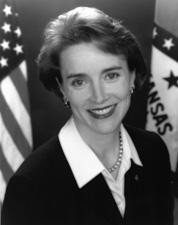
Mr. President, I rise today with a heavy heart but with a great sense of Arkansas pride as well to pay tribute to five members of the Arkansas 39th Infantry Brigade who lost their lives fighting for…
Mr. President, I rise today with a heavy heart but with a great sense of Arkansas pride as well to pay tribute to five members of the Arkansas 39th Infantry Brigade who lost their lives fighting for our country in Iraq this past weekend.
According to recent reports, Saturday was one of the deadliest days for the Arkansas service members since 1950 in the Korean War. On Saturday, four soldiers from the Arkansas 39th were killed in a mortar attack, and 27 hours later a fifth Arkansan was killed by a roadside bomb as he patroled the neighborhoods of Baghdad.
I think back to last fall when I had the honor of attending a sendoff ceremony for the 39th Infantry Brigade in Little Rock, AR. That ceremony brought together soldiers, families, friends, and loved ones to commemorate the occasion and wish them the best in their mission, to join together in prayer and send them off with the idea that we would be back soon to welcome them home safely.
The sendoff was not a celebration. In fact, it was a sobering occasion. After all, no one relishes the prospect of traveling halfway around the world, far from family and friends and home, to take on a dangerous mission. But even at such a somber occasion something special happens. Differences begin to fade away. The soldiers that were standing before me were no longer from big cities or small cities, they were no longer Black or White, and they were no longer male or female. Their differences did not exist. Those brave soldiers were Americans, and for the defense of this Nation, they become one of mind and one of mission.
The oneness of purpose that the 39th exhibited that day should serve as a lesson to those of us they leave behind. They are sacrificing their lives not just for their kind and kin but for every American who enjoys liberty and peace.
When a member of the 39th patrols Baghdad, he does not just patrol it for the sake and safety of Lewisville, AR, or Little Rock, AR, or Hazen or Humnoke or Batesville, AR; he patrols Baghdad for the sake and the safety of all Americans and the values and the ideals that we, as Americans, believe in and support. When a member of the 39th Infantry pays the ultimate price in battle, he does it not just for the sake of his children but also for the sake of my children and your children as well. In the end, these courageous souls are not only protecting our liberty, they are also teaching us what it means to be a part of one American family--one American family.
In this time, when so many Americans are willing to lay their lives on
the line, we in this body--we in this Nation--must become one America. We must understand what it takes to be one with the sacrifices that we, too, must undertake.
Unfortunately, carrying out the duty of a nation requires sacrifices, and some of those are sacrifices we would rather not take. This weekend, we were once again reminded of the sacrifices that are required to protect our Nation. We, too, as leaders in this body--all Americans--must make sacrifices, too--to govern, to protect, to get along, and to make this Nation strong. Our sacrifices are not even worthy to be compared to what these brave Americans have done and the sacrifices they have made, but our sacrifices, too, are all too important, that the sacrifices they have made will not have been done in vain, that our Nation can remain as strong as it has ever been, and that each of us--from big cities and small, men and women, Black and White, Republican and Democrat--must become one America.
Over the course of those 2 days, the State of Arkansas lost five brave soldiers who made the ultimate sacrifice to make the world a better place. I know that my colleagues in the Senate join me in paying tribute to CPT Arthur ``Bo'' Felder, 36 years old, of Lewisville, AR; CWO Patrick W. Kordsmeier, 49 years old, of North Little Rock, AR; SSG Stacey C. Brandon, 35 years old, of Hazen, AR; SSG Billy Joe Orton, 41 years old, of Humnoke, AR; and SP Kenneth A. Melton, 30 years old, of Batesville, AR.
Captain Felder served as a youth director at Saint Luke Missionary Baptist Church in North Little Rock. He was known as someone who felt at ease with children, who loved them, cared for them, and wanted to help prepare them for the future. It was reported in the Arkansas Democrat Gazette that Captain Felder was remembered by his friends as a person of faith and prayer.
Chief Warrant Officer Kordsmeier was killed as he rushed to the aid of his fellow soldiers. His selfless act illustrates the kind of courage which is necessary to keep this Nation strong and free.
According to the Arkansas Democrat Gazette, Sergeant Stacey Brandon was a prison guard for the State Department of Correction and later worked at the Federal prison in Forrest City, AR.
His friends said of him:
He was a very outstanding young man whose loss will affect
a lot of people. He was one of the young people you could
admire.
Sergeant Orton was loved by his family and friends. It is reported that when they learned of his death over 100 people gathered around his home to stand vigil and to support his family. It was noted by those there that Billy had given his life for the cause of freedom.
Many of Specialist Melton's fellow soldiers from Bravo Company were especially affected by his death. He had known and worked with many of them for years. It is reported that upon the announcement of Specialist Melton's death, his comrades did not think of the dangers of their mission but of comforting Specialist Melton's wife and children.
Saturday's deadly attack on Camp Cooke, the base camp for Arkansas' 39th Infantry, occurred at 5 a.m. Captain Felder, Chief Warrant Officer Kordsmeier, Sergeant Brandon, and Sergeant Orton were killed in the final moments of the attack when they took a direct mortar hit as they emerged from the bunker where they had been taking cover. On Sunday, Specialist Melton was killed by a roadside bomb as he manned a machine gun atop his Humvee.
These five brave men are a shining example of the citizen soldiers who are fighting in the deserts of the Middle East. Those serving in Iraq today are not only military men, but they are also doctors, lawyers, police officers, firemen, teachers, factory workers, business owners, and elected officials. Most importantly, they are husbands and wives, they are mothers and fathers.
In short, they are our American family. They are the leaders of their respective communities. Their loss will not only be felt on the battlefield but also by their families, friends, and communities who will miss their love and leadership.
When their Nation called, these brave men answered. They did so without regard to politics or party. They did so without regard to the many small differences we allow to divide us as a nation.
I am sure the entire Senate body will join with me as we send our condolences and sympathy to the families and friends of these brave Americans, to send our thanks for the courageous way they have served their country. They left their homes as family members, co-workers, and friends, and they return as heroes.
I am honored and humbled to pay tribute to their sacrifice. It is hard to find the words that you might think could match those sacrifices because there are no words. But we try. I challenge my colleagues today, let us not just use words. Let us use actions. Let our work be an example of the sacrifices we are willing to take by saying to one another, we will be one America.
Thank you, Mr. President.
I yield the floor.
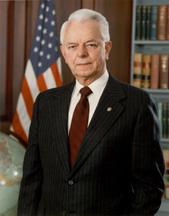
I thank the distinguished Senator. It is. Absolutely. Mr. President, on Easter Sunday, April 11, 2004, this Nation lost a fine soldier, a good man, a loving father and husband, and a faithful…
I thank the distinguished Senator.
It is.
Absolutely.
Mr. President, on Easter Sunday, April 11, 2004, this Nation lost a fine soldier, a good man, a loving father and husband, and a faithful Christian when SGM Michael Boyd Stack of C Company, 2nd Battalion, 5th Special Forces Group Airborne, was killed in an ambush in Iraq.
SGM Stack is 1 of more than 700 men and women who have given their lives in this conflict and 1 of the more than 100 who were killed in the month of April alone. Each is mourned. Each is honored. Each is sorely missed.
These men and women knew the meaning of duty, honor, and courage. They and their comrades in arms still serving are most emphatically not the summer soldier and the sunshine patriot whom Thomas Paine warned against, who shrink from the service of their country in times of crisis.
SGM Stack and his fallen comrades wore the uniform of the United States proudly and bravely. When told to go to Iraq and Afghanistan, they saluted and prepared to go. They said their farewells to their loving and fearful families and set off. From spare bivouacs, they patrolled dusty streets and lonely highways. They faced rocket- propelled grenades, improvised landmines, sniper fire, and ambush. They looked out for one another with humor and grace and caring. They gave their very best. In the end, they gave their all.
Soldier, rest!
Thy warfare oer,
Sleep the sleep that knows not breaking,
Dream of battled fields no more,
Days of danger, nights of waking.
So said Sir Walter Scott in the Lady of the Lake.
These fallen heroes made the ultimate sacrifice, bravely and unshirking. When all is said and done, all policy laid aside, out there at the sharp end of the spear, these men and women did what good soldiers do. They stood
shoulder to shoulder and did not flinch. In the heat of battle, in the threat of danger, in the face of death, they did not flinch.
SGM Stack had faced such dangers before. His 27-year Army career spanned the cold war, the first Gulf war, and the conflict in the Balkans. His experience and his cool head in tense situations made him a valued member of his company and his battalion. He volunteered for Airborne School and service in the 82d Airborne Division upon his enlistment in 1977. He joined the Special Forces in 1988, serving 16 years with the 3d, 5th, and 10th Special Forces Groups, and as an instructor in the 1st Special Warfare Training Group. Much of what he did will never be made public, but he earned the unqualified respect and admiration of his fellow soldiers. The high standard of professionalism, ability, teamwork, and fairness that SGM Stack exemplified and taught to new generations of Green Berets will be his legacy to the Army, as well as in the Armed Forces of other nations that he helped to train.
Even as a young platoon sergeant, he was known as ``No Slack Billy Jack Stack,'' in recognition of the high standards he expected, and required, of the men he led. He cared deeply for his men and died among them, manning a .50-caliber machine gun in the heat of battle, keeping them safe and striving, as always, to achieve the mission goals.
SGM Stack was a professional soldier, hard-eyed and competent, the very picture of a happy warrior, who might have inspired these words by the poet William Wordsworth:
Who is the happy Warrior? Who is he
That every man in arms should wish to be?
It is the generous Spirit, who, when brought
Among the tasks of real life, hath wrought
Upon the plan that pleased his boyish thought:
Whose high endeavors are an inward light
That makes the path before him always bright:
Who, with a natural instinct to discern
What knowledge can perform, is diligent to learn;
Who, doomed to go in company with Pain,
And Fear, and Bloodshed, miserable train!
Turns his necessity to glorious gain;
In face of these doth exercise a power
Which is our human nature's highest dower:
Controls them and subdues, transmutes, bereaves
Of their bad influence, and their good receives:
Whose powers shed round him in the common strife,
Or mild concerns of ordinary life,
A constant influence, a peculiar grace;
But who if he be called upon to face
Some awful moment to which Heaven has joined
Great issues, good or bad for human kind,
Is happy as a Lover; and attired
With sudden brightness, like a Man inspired;
And, through the heat of conflict, keeps the law
In calmness made, and sees what he foresaw.
In and out of uniform, SGM Stack set high standards for himself. He earned his college degree while serving in the Army. He was active in his church. He kept a Holy Bible in his desk at work, by his chair at home, and in the pocket of his battle dress uniform. He had the quiet confidence of a man who keeps the Lord close to his heart. Before leaving on his final patrol, SGM Stack asked the unit chaplain to say a prayer over his men.
He kept his family close as well. He went home to lunch most days. He lavished love on his young children and took great pride in the accomplishments of his older children. In his wife, Suzanne, he had a soulmate with whom he was planning a long and happy retirement, a retirement which never came. He relished quiet hours spent with family and friends, and he took justified pride in his cooking abilities at such times. He was slow to anger and quick to forgive. He left behind him a full measure of That best portion of a good man's life, His little, nameless, unremembered acts of kindness and of love.
SGM Stack is survived by his wife, Victoria Suzanne Stack; his children Milissa, Virginia, Jillian, David, and William; step-son Bryan, and grandchildren Jakob, Tylor, and Jesse. His father, Cecil, and mother, Antoinette Stack, also mourn him, as do his brother, Cecil Stack, Jr., and sisters Tammy, Kimberly, and Christina.
Military service was a tradition in the Stack family that stretches across generations. SGM Stack's father, brother, and nephew all serve or served in the Army. SGM Stack's father-in-law retired from the Air Force. The Nation owes a deep debt of gratitude to such families, who have answered the call to arms so often and so willingly in our history.
Today, as SGM Michael Stack is laid to rest at Arlington Cemetery, joining the quiet ranks of fallen heroes there, no words can truly comfort hearts that loved him and that are grieving. But at this Easter season, especially, we are reminded that death is not the end, but only a parting for a little while. Michael's faith gave him comfort as he stepped in front of danger; may that same faith sustain his family that they will surely be together again.
Once again, I reach for the words of William Wordsworth, from his Ode, Intimations of Immortality:
Though nothing can bring back the hour
Of splendor in the grass, of glory in the flower;
We will grieve not, rather find
Strength in what remains behind;
In the primal sympathy
Which having been must ever be;
In the soothing thoughts that spring
Out of human suffering;
In the faith that looks through death,
In years that bring the philosophic mind.
I offer the thanks of a grateful Nation to SGM Stack, who served his country in the Army, who served his country with great honor and distinction. To his family, I offer my sincere condolence for their loss. I pray that the Lord gives them strength to bear this sad burden until, in the fullness of time, they are all united again.
Mr. President, I yield the floor. I suggest the absence of a quorum.
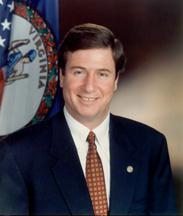
Mr. President, on behalf of Senator McCain, Senator Wyden, myself, and others who are in favor of Internet tax freedom, I respectfully urge my colleagues to vote for cloture on this amendment. What…
Mr. President, on behalf of Senator McCain, Senator Wyden, myself, and others who are in favor of Internet tax freedom, I respectfully urge my colleagues to vote for cloture on this amendment. What is at stake is whether 15- to 18-percent taxes will be imposed upon Internet access.
The Internet is a great invention for the advancement of ideas, of information, for commerce, for telemedicine, and for education. This country has been a leader in technology, although we are falling behind, particularly in broadband. I ask my colleagues to vote for cloture.
There can be germane amendments but allow us to go forward. A vote for cloture is a vote for freedom and opportunity for the American people. Stand on the side of that principle.
Objection.
Reserving the right to object, will the Senator from Connecticut restate what his request is?
I ask the Senator from Connecticut, is the subject of Senator Byrd's remarks the Internet tax issue?
Mr. President, I understand the nature of Senator Byrd's remarks. We all want to get to the amendments that might be proposed on the Internet tax issue, but knowing the subject matter of Senator Byrd's remarks, there is no objection.
Mr. President, the Senator from California mentioned waiting for 4 years while this bill ends. The reality is that those who are paying taxes right now because some States and localities have started taxing DSL in the last several years, that means consumers, with the amendment that was approved in the McCain amendment, that the consumers are going to be taxed for 2 more years. The design of this bill, as amended, is to protect taxpayers. It is to protect consumers. It is to expand opportunity, jobs, and commerce to people all across this country.
The grandfather clause that Senator McCain put in his amendments, particularly on the DSL, is different than what we passed out of the committee, which was to stop these DSL taxes immediately because what has happened in the last few years is some of these localities and States have figured out ways around the intent of the original Internet tax moratorium and, indeed, are taxing the backbone. Having a 4-year grandfather on DSL taxes, on the backbone, on high-speed broadband, rewards those who have been the most aggressive in looking at loopholes to tax. It is going to cause probably more litigation as well because it can always be argued over.
The reality of taxes is that they want to put them on DSL. They want telecommunications taxes. Telecommunications taxes on average across this country are about 15 to 17 percent. Some places it is worse than others. Richmond, VA, is about the worst in the whole country. About 27 percent is the local tax. These are the kinds of taxes that are going to be imposed on DSL bills, whether from the telephone, wireless, BlackBerrys or Y5.
The issue is this is the way that our Internet access bills should look, without DSL taxes on it. Here is the cost,
$23.90, $25, $37, whatever it may be, no taxes, clear, simple, understandable, and more affordable. If taxes are put on, the Internet service bill will look like what a telephone bill looks like right now, and this is just one page of it, but all the local taxes, all the State taxes, all the Federal taxes, again, on average in this country are about 17 percent. This is what we are trying to prevent.
The Feinstein-Alexander amendment, though, would allow this sort of taxation onto the Internet service access bill. One of the problems we have, and Senator Wyden brought it up, is how do we ever get rid of taxes? Guess what. Part of this tax was put in as a luxury tax on telephone service to finance the Spanish American War in 1898. Everybody is still paying that tax. That war has been fought and won over 100 years ago. That is how difficult it is, nearly impossible, to ever get rid of taxes.
The McCain compromise allows those who are taxing DSL to wean themselves off of that tax over 2 years. The reality is if the grandfather is allowed to go on 4 years, which is the duration of the entire measure on the moratorium, they will never take off those taxes. So I say to my colleagues, the time to act is now because this is how it will impact across the country.
Say someone wanted to e-mail from Washington, DC, to Los Angeles, CA. That is going to be routed to Chicago, which has a hub, another big hub in Austin, across all the way to the Bay area of San Francisco that has a hub, and then to Los Angeles. That is the way it would go. All of these jurisdictions in between that 3,000 miles are going to be able to put on these DSL taxes. This is what we are trying to stop.
The ones that have been doing it--and it is unclear how many States are doing it at this point. Some say 8, some say 12, some say 20. The point is, there is going to be 3,000 miles of taxes from localities, States, and jurisdictions in between.
The States will have enough time with the McCain compromise, which is, I think, very generous to those who are advocates of allowing taxation on the Internet, to have 2 more years to wean themselves off of it.
The big issue on the fiscal impact that one would hear all the time was voice over IP, worrying about telephone service migrating to the Internet. That has been resolved. The junior Senator from Tennessee, Mr. Alexander, and I debated and discussed it. All of us worked on it, and finally, this afternoon we were able to get language that everyone could agree upon.
So when folks say it is going to have such a big hit, a big cost on States and localities, the voice over amendment, which we all adopted unanimously, will take away those fiscal impacts.
What we are now talking about, though, is whether there is going to be 3,000 miles of taxation and subjecting Internet traffic to that sort of taxation. This is clearly undesirable, particularly when we are trying to get high-speed broadband built out to rural and small town communities. If we start increasing taxes on DSL and broadband, it is going to make it very difficult to get companies to invest, but most importantly it will mean more people will be unable to afford DSL or high-speed broadband services.
So I ask my colleagues to make sure we avoid this sort of taxation. Do not let all those States in America put on taxes like the ones we see on our telephone bill. Let us make sure we act on this amendment to defeat it. The defeat of this amendment will be a protection to consumers, and it also will be a vote to expand economic opportunity and prosperity for all Americans everywhere in our country.
I respectfully urge my colleagues to defeat or vote no on the Feinstein-Alexander amendment because it is contrary to the desirability of economic opportunity for Americans. Adding more taxes, or allowing these taxes to continue for 4 years, is not the policy to make this country more competitive, individuals more free, with greater opportunities.
I yield the floor.
Show 11 more

Mr. President, a few moments ago, my good friend from Nevada talked about how the highway transportation system in Nevada depends upon the Internet and all the technology there. And I agree with him.…
Mr. President, a few moments ago, my good friend from Nevada talked about how the highway transportation system in Nevada depends upon the Internet and all the technology there. And I agree with him. We are very proud of the technology, the intelligence transportation systems, and other things we have in our Missouri Department of Transportation, our highway entity.
I was very pleased he read off a list of people who support the measure we passed in the Senate. That just reinforces what I have said for a long time. We had an overwhelming vote to get the number of $255 billion for highways. We had an overwhelming vote to get a bill to the floor. We had an overwhelming vote of 76 to 21 to pass a good 6-year highway bill.
My good friend from Nevada worked very closely with us. I tell you, as long as I have been in the Senate, I do not know if we ever had better bipartisan cooperation than Senator Inhofe and I on the Republican side have had with Senator Jeffords and Senator Reid on the Democratic side.
Mr. President, 11 weeks ago, we passed this wonderful highway bill. This, what I hold in my hand, is the highway bill. It passed overwhelmingly. It is a 6-year, $318 billion bill for all of transportation. Do you know what? It is still sitting at the desk. I was on this floor raising Cain with our House colleagues because they would not move. I believe my friend from Nevada joined with us.
Well, they moved. It will be 4 weeks tomorrow that they moved. Now, something that maybe a lot of people don't understand is, when you pass a bill like this, it doesn't go into the President's hands; it doesn't become law. You have to take some procedural steps to move it out of here. You have to substitute this bill for the House bill. You have to insist on a conference. You have to name conferees and send it back to the House--procedural items.
For most of the time I have been here, it happens automatically. Once you have a conference, then the Republican and Democratic conferees from the House sit down with the Republican and Democratic conferees from the Senate, and you can move forward.
But do you know what. We are stuck. We are stymied. Senator Reid wants to know what we can do. I say, very simply, what we need to do is to stop blocking the transfer of this bill back into conference with the House. What part of ``yes'' don't you understand? This is a simple matter. Now we have kicked the can down the road. We have had extensions and extensions, and we can't sit down and talk with our House colleagues.
And I said: Wait a minute. We have intelligence transportation systems in Missouri and every other State in the Nation. We have a need for good highways, roads, and bridges, to promote our homeland security, to create jobs, to relieve congestion, to promote long-term economic growth, and for safety. At least a third of the 43,000 people killed on highways every year in the Nation are killed because of unsafe highways.
So my good friend from Nevada wants to know what he can do to get an extension; and I said so this morning. I said: It is very easy. Let us move forward on the bill. We have tough issues to work out with the White House. We cannot work on those issues until we can sit down with the House and move forward. We have been
blocked by the actions of the other side.
I asked unanimous consent this morning to move forward, and the distinguished minority whip on the other side had another unanimous consent request. I said I would be happy to accept his if he accepts this one. Let's move the process forward. This is not rocket science. This is a necessary procedural step.
I am going home to Missouri this weekend. And do you know what. People are going to ask me: Why haven't you passed a highway bill? I would not be surprised if at least 90 percent of the Members of this body are asked the same question: Why haven't you passed a highway bill? One simple answer: 76 Members of this body voted for it, but now the other side objects to the procedural steps we need to take to move this into conference.
Nothing is going to happen until we move this bill into conference. This is not some strange procedure. Up until this year, this has been the normal procedure. Maybe if my colleague is sufficiently concerned about the extension, maybe if I renewed my request, he would be willing to move the bill forward.
Therefore, Mr. President, I ask unanimous consent that the Senate proceed to the consideration of the House-passed highway bill, H.R. 3550; provided further that all after the enacting clause be stricken and the text of S. 1072, as passed, be inserted in lieu thereof; the bill then be read a third time and passed; further that the Senate then insist on its amendment, request a conference with the House, and the Chair then be authorized to appoint conferees on the part of the Senate, with a ratio of 11 to 10.
Mr. President, I am sorry there continues to be an objection. I do not want to hold up this bill any longer. I want to see the Internet tax moratorium bill pass. I want to see us move forward on highways and transportation. I felt it was necessary to come down to clarify, based on what my good friend from Nevada said, that I am trying to move the process along. And when he asks his unanimous consent, I would ask that my unanimous consent be added to it so we can move forward. That is all we are doing.
This is very simple, standard procedure. I appreciate the time of the managers and everybody else. But there are an awful lot of people in this country who are waiting for a good 6-year Transportation bill, one like we passed in this Senate.
I appreciate my colleagues' time. I thank the Chair and yield the floor.
Mr. President, will my colleague yield for a question?
Mr. President, I express my appreciation to the Senator from Nevada for reciting the deathless prose that I shared with this body the last time we were trying to get an extension. I made those statements because the highway bill is so important.
I ask my friend if he understands my message today--I know what the process is like; we go through this process of appointing conferees, and it takes a long time to get it done--if he understands that the way to move forward is to stop objecting to the simple procedural process of substituting this bill for the House bill, reading it a third time, passing it, naming conferees, sending it to the House and asking for a conference, all he has to do is to say yes to the unanimous consent request. I will say yes to his request and we can get on with the business. This is absolutely an unnecessary procedural delay. Every day we fail to appoint conferees, we are further down the road.
Did I make myself clear to my friend from Nevada? If he will agree to take the procedural steps, I will be happy to remove my objection to the extension.
That would be fine. Mr. President, I have sent a modification to the desk to amendment No. 3052. Mr. President, essentially, this is a one-line amendment. It takes page 5 of the bill and strikes the…
That would be fine.
Mr. President, I have sent a modification to the desk to amendment No. 3052.
Mr. President, essentially, this is a one-line amendment. It takes page 5 of the bill and strikes the date 2005 and inserts 2007.
Essentially, this amendment makes both grandfather clauses in the bill 4-years in duration. This would mean no new taxes for the industry that is concerned, and the cities and counties would not lose the revenue they currently receive, for at least 4 years.
I want to say again--I said this yesterday--not one single California company that supports this bill has contacted me, but I have heard from representatives of 478 cities in the State saying: Please, don't do this. It may well be because in California, local jurisdictions have very limited revenue sources. It is either the property tax or a small amount of sales tax or if they have a hotel tax, but there are not many tax vehicles. So utility user taxes, as well as telephone taxes, have for many cities been a critical part of their budget, for some up to 15 percent. That is just a fact. California may be an anomaly. Maybe I know this because I have been a mayor for 9 years and a county supervisor for 9 years.
This would affect telecommunications services, taxes that have been in place since the old moratorium was enacted, particularly local exchange.
For the city of Los Angeles, whose chief administrative officer, William Fujioka, has said his city could lose $40 million a year if local exchange service is not protected. So this grandfather clause to the largest city in my State is worth $40 million a year of taxes that have been levied, of revenues that are counted upon to balance the budget.
Senator Inouye joins me in cosponsoring this amendment, as do Senator Carper, Senator Alexander, Senator Voinovich, and Senator Hollings.
It seems to me that it is not unreasonable to say to hard-pressed cities and counties that you have 4 years to find other revenue sources or make the necessary cuts. This does not have to be done immediately. None of the companies who benefit from this bill are suffering. As a matter of fact, most of them are doing very well. It is the cities that have the hard time funding police officers, funding firefighters, and it is not easy. Nearly every city in the State of California has a deficit and is losing revenues. I cannot just stand here on the floor of the Senate and let this happen because I have news for everybody: Where people want their services is on the local level.
Some say: Oh, no, this will not happen. But when you ask the technical analysts and the attorneys of these communities whether it will happen, they say yes.
I very much appreciate the change that was made in the Voice Over Internet Protocol language of the bill. This goes a long way. I very much appreciate the 4-year grandfather clause given for Internet access. That goes a further distance.
There is this 2-year grandfather for those who use DSL or these local exchanges--and I do not understand why one is 4 years and the other is 2 years. I do not understand why these companies cannot wait 4 years before they are going to end up socking it to the cities. It may be that in some States this is not the case. I know it is the case in my State.
Again, I am very pleased to be joined by Senators Inouye, Alexander, Carper, Voinovich, and Hollings as cosponsors of this amendment. It seems to me to make sense. It seems a compromise which for the proponents should be relatively easy to make. I think it will make a big difference to the cities of California.
I yield the floor and reserve the remainder of my time.
This would come off Senator McCain's time.
Mr. President, I would like to be sure the record is correct. I appreciate the comments of the Senator from Oregon. He knows I respect him and enjoy working with him. There is no problem there.
Let me make sure the record is correct. California's cities do not tax DSL. We are not one of the 27 states.
That is not the issue. The issue is the local exchange and because of the particular ``proposition 13'' situation where local revenues are so restricted, property taxes are so restricted, it is extraordinarily difficult. So utility user taxes, local exchange taxes actually play a substantial role in some smaller cities' budgets. That is just a fact.
Los Angeles, the biggest city, a city with a lot of problems, a city with a big gang population, needs a lot of police. Some of that police force is actually funded from this local exchange money, which totals $40 million a year.
I yield time to the distinguished Senator from Tennessee. May I ask how much time he would like.
I yield 3 minutes of my time to Senator Alexander.
How much time do I have remaining?
I yield 4 minutes to the Senator from Ohio, Mr. Voinovich.
Mr. President, I thank the Senator from Ohio for his comments and for his leadership.
I yield 5 minutes to the Senator from Delaware, Mr. Carper.
Mr. President, I want to comment for a couple of minutes on the discussion that was had with Senator McCain, Senator Dorgan, and Senator Wyden and the concern here of the telecommunications taxes which have been exempted from the bill--in other words, those that have always been a legitimate source of revenue raising. I have an Ernst & Young study going back to 1999 that shows, for example, in the taxes collected by California in the year 1999, on telecommunications transaction taxes, the amount was $802 million. It doesn't say which precise taxes those are. This is the depth of this problem. This is not a small problem. What bothers me is we are moving on without really knowing. The finance officers of the larger cities of California tell me one thing. The Senator from Arizona believes that is not correct and says the intention of the bill is not, in fact, to make these non-DSL telecommunications services tax-exempt.
I would like to ask the Senator from Arizona.
Correct.
If I might respond to that question through the Chair, we have worked with a group--the Senator from Delaware, the Senator from Ohio, the Senator from Tennessee--all along on this. I don't know the particular situation of their States. I don't know whether they tax DSL. I do know that the bill exempts telecommunications, and telecommunications has been a legitimate source of revenue which is now affected by this grandfather clause. Obviously, if I could get half a loaf for my State, I do not want to sell out those whom I have been working with over the last week.
Mr. President, I would like an opportunity to talk with the Senator from Tennessee, the Senator from Ohio, and the Senator from Delaware to see if we can work something out that might meet the concern of the Senator from Oregon.

My guess is that most Senators understand the process and the procedure we are under, but there is a large body of interest that does not understand what we are doing at all. It is called the…
My guess is that most Senators understand the process and the procedure we are under, but there is a large body of interest that does not understand what we are doing at all. It is called the American consumer.
I can put it this way: The minority is trying to wrestle control of the floor away from the majority and set their own agenda. That is one way of looking at it. The other way of looking at it is to create an environment of false hope for that consumer who went to the gas pump today and paid more for gas than he or she has ever paid in their life.
I question the integrity of Senators who will argue and opine the problems of energy but set in motion a procedural event that denies us the opportunity to produce for the American consumer a national energy policy.
So go home to your voters and tell them it is no longer big oil's fault, that it is no longer the nuclear industry's fault, it is the politicians' fault because consistently over the last 5 years Democrats and Republicans alike have denied the American consumer a legitimate, comprehensive policy for national energy. So we are now held hostage for some 60 percent of our consumption by a foreign interest. Or we are held hostage by an environmental lawsuit that denies access. Or we are held hostage by the bickering of States who cannot agree that a transmission line ought to cross their territory.
Those are the realities of where we are today. We are going to tell the American farmers they are going to pay 30 percent more this year than they thought for input costs to produce their grains. But who is going to pay for it? The farmer can't. He is hardly breaking even. But the politician in the Senate has created the environment for that 30- percent increase in production costs. It is not the chairman of the Energy Committee, not this Senator who for 5 years has worked to build a comprehensive energy policy, but those who have decided they must have a small piece their way, and their way denies the American consumer the reality of energy.
So the average household--if you are wealthy, my goodness, $300 or $400 more in costs; 5 percent of your income this year will go to energy. But if you are making $29,000 a year, 20 percent of your income will go to energy. If you are making $10,000 a year as an American, 40 percent of your income will go to energy.
So let's not stand here and debate the small stuff. Let's say to the American consumer what is an honest statement, that the Senate has not been able to settle on the establishment of a national energy policy that would, had it been implemented, begin to hold down costs and bring production up and bring conservation up and improve the environment and do the very thing that quality energy has always done to the American economy and for the American worker: allowed them to be the most productive, most competitive of any economy and any workforce in the world.
But today that is less the case. Today, the petrochemical industry shuts down and goes offshore because they can't afford to produce in this country. Today, in lieu of natural gas we are going to establish ports and liquefy somebody else's gas and bring it here on a ship. Shame on us for that silly attitude that the American politician has developed.
Does he or she think the American consumer is going to roll over? I don't think so. I think that consumer grows angrier by the day; when they go to the gas pump, weekly, and all of a sudden it is not $1.50 for regular, it is $1.65, $1.75, $1.80. Last week it hit an all-time high. This week it will hit another all-time high. If you are out in California, you pay $2.50. If you are in Idaho, you are paying $2.00 for regular gas.
Now let's talk about the House. Let's talk about our inability to get out to western gasfields. Let's talk about the unwillingness to bring down gas out of Alaska. What have we done? Through the Clean Air Act we said the only way you can meet air shed standards is to generate electricity by the use of natural gas. We saw those turbines begin to go in place over the last good number of years when it was $2.30 a million cubic feet. Now it is $5, now it is $6, and those turbines are shut down.
Shame on us, and I do mean Senators. I do mean this procedure. I do mean this false process.
Is there cynicism afoot? You know, there ought to be. The American consumer ought to grow progressively cynical--become the cynic, I should say, of the process that denies them reasonable high-quality energy.
To the American producer, to the American farmer, to my farmers in Idaho--I know they are calling me. I hear them. They are frustrated and they are angry. They have a right to be. We will play this political game. I must tell you, shame on us because we cannot get it right and the vote today on the Daschle amendment will not get it right.
Tragically enough, the vote today on the alternative that I and others have worked on collectively in a bipartisan way will not be allowed to get it right.
If we fail, and if we go into the fall and gas prices keep ticking up and somebody over in the Middle East says, Got them where we want them, let's crank, I must say the American consumer has a right to grow angry and a right to be frustrated because their political process--and those of us who have been invested with the responsibility of making it work--have denied them reasonable, high-quality energy of the kind they ought to expect. Now they better start demanding it.
I yield the floor.
Mr. WYDEN addressed the Chair.
Mr. President, I move to reconsider the vote and to lay that motion on the table.
The motion to lay on the table was agreed to.
Change of Vote
Mr. President, the Senator from Arizona is absolutely right. Energy should not be on an Internet tax bill. But if you want to vote for energy this year, if you want to go home to your consumers and say: I voted for a comprehensive energy bill, this may be the last chance you will have. The reality is, if you vote for cloture on Domenici and then you vote for cloture on McCain, Domenici falls. So weigh it out. Weigh the odds. What do you want to go home and tell the consumer, who today is paying the highest price for energy in the history of this country? The reason they are paying it is because we can't produce a bill and change our policies.
We have an option. It is quite simple. We can vote for energy by voting for cloture. Then we can vote for McCain, because he is right, it should not be here. Domenici will fall. Then we get to where we ought to be today on an Internet tax bill. We didn't do this. Somebody else did this and fouled the process. Now let's clear it up. Clean it up. Vote for energy, vote for cloture.
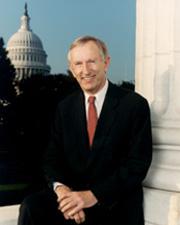
Mr. President, as the ranking member of the Senate Environment and Public Works Committee, I want to express my serious concern with the content of the amendment offered by Senator Domenici. This…
Mr. President, as the ranking member of the Senate Environment and Public Works Committee, I want to express my serious concern with the content of the amendment offered by Senator Domenici. This amendment differs even from the surprise energy bill that was introduced on February 12, 2004, and placed directly on the Senate's calendar.
Senators should make no mistake, this legislation is not the product of bipartisan consensus in the Senate committees of jurisdiction. In most respects, this amendment is the energy bill conference report we have already defeated. And most importantly, it is not the right energy policy for America.
I agree with Senator Daschle that we should try to reach consensus on targeted pieces of energy legislation. We could pass legislation on issues such as renewable motor fuels, as Senator Daschle has proposed with his amendment. We could enact fiscally responsible extensions of needed energy tax provisions, such as the wind energy tax credit. National electricity reliability standards are another area in which Senator Cantwell and I believe there could be agreement and we could pass a bill.
But there should be no agreement on the poor environment policy that is contained in this amendment. The Senate should reject this amendment, and oppose cloture.
As with the energy bill conference report, nearly a hundred sections of this amendment are in the jurisdiction of the Environment and Public Works Committee. We were not consulted on any of these provisions, and I have repeatedly raised concerns about them on the Senate floor.
This amendment does not represent the kind of forward-looking balanced energy policy that our Nation needs. The Senate should be able to ensure that our constituents have reliable electric power without polluting their drinking water. Our constituents deserve cleaner gasoline without requiring them to breath dirtier air. We should be able to promote renewable energy without waiving environmental laws.
This amendment seriously harms the environment. The supporters have said that a waiver of liability for MTBE producers is not contained in this amendment. That does not make the motor fuels provisions good or workable public policy. Though we know MTBE is environmentally harmful, the amendment would allow this product to be used for 10 more years before we pull it off of the market. In addition, the amendment allows the President to overturn the MTBE ban prior to June 30, 2014, and continue its use indefinitely.
The amendment unravels the ozone designation process in the Clean Air Act by delaying compliance with the national health-based air quality ozone standards until the air in the dirtiest city is cleaned up. Neither the Senate nor the House of Representatives has ever considered this damaging provision. It is a leftover from the failed energy bill conference report.
Changing cities' ozone compliance deadlines under the Clean Air Act doesn't increase our Nation's energy supplies. Exposing the public to continued levels of harmful dangerous air pollution emissions for far more time than allowed under existing law guarantees thousands of more asthma attacks, more hospital visits and more cases of respiratory distress, disease and illness. Recently, the EPA announced that there are record numbers of Americans, more than 165 million, who are breathing unhealthy air.
The change is also unfair to States that have worked hard to achieve compliance with the Clean Air Act's health-based national standards. Why should areas that have done little or nothing to reduce emissions be given a free pass from halting local pollution? This amendment also provides unprecedented relief for a single region of the country from application of the entire Clean Air Act, without a hearing in the Environment and Public Works Committee or Senate consideration.
The amendment continues the administration's drive to greater dependency on old technologies and fuel systems. This focus will increase greenhouse gas emissions and keep us on the wrong path that increases the risks from global warming and climate change.
This amendment also continues to include language from the failed energy bill that exempts oil and gas exploration and production activities from the Clean Water Act stormwater program. The Clean Water Act requires permits for stormwater discharges associated with construction activity. The amendment changes the Act to provide a special exemption for oil and gas construction activities from stormwater pollution control requirements. The scope of the provision is extremely broad. Stormwater runoff typically contains pollutants such as oil and grease, chemicals, nutrients, metals, bacteria, and particulates.
I have told colleagues this before but EPA estimates that this change would exempt at least 30,000 small oil and gas sites from clean water requirements. In addition, every construction site in the oil and gas industry larger than 5 acres
would be exempt as well. The large sites have held permits for 10 years or more. That is a terrible rollback of current law. I want Senators to imagine trying to explain to constituents why an oil drilling site that had to comply with the Clean Water Act for 10 years suddenly no longer needs to do so.
So let's review the contents of this amendment. This amendment pollutes our surface and groundwater by exempting oil and gas development from provisions of the Clean Water Act. It pollutes our drinking water by allowing MTBE to seep into our public and private drinking water systems for 10 more years. The amendment pollutes our land by accelerating development of energy installations on public lands, including parks, wildlife refuges, and sensitive areas. And this amendment pollutes our air in many different ways. It extends pollution compliance deadlines and continues to avoid serious progress in cleaning up our air.
There are too many serious problems with this amendment. We should not invoke cloture on it. The American people do not want energy security at the expense of the environmental quality. We should be passing the pieces of the energy bill where we can reach agreement to do so, like those issues I outlined.
We should not be rushing to pass legislation with such serious consequences. This is an aggressive, overreaching amendment, and it is deeply flawed. I will vote against cloture, and other Senators should as well.
Mr. President, it's time to bring competition back into our Nation's gasoline markets. Across America, gasoline prices have recently soared to the highest levels ever. Right now, gasoline costs 12…
Mr. President, it's time to bring competition back into our Nation's gasoline markets. Across America, gasoline prices have recently soared to the highest levels ever. Right now, gasoline costs 12 cents more than it did at this time last year. In my home State of Oregon, folks are paying a whopping 32 cents more per gallon than in October of last year.
Proven price manipulation is siphoning competition out of the gasoline markets and stealing money from Americans' wallets. It's time that government regulators opened their eyes to reality of rampant price manipulation by gas companies and protected American consumers from getting pummeled at the pump. That's why today I am introducing the Gasoline Free Market Competition Act.
Every extra penny Americans spend on the artificially inflated price of gasoline is a penny they aren't spending on other things--like clothes, groceries, or other consumer items. The difference is that buying a new washer dryer helps create jobs; paying extra for gas only creates a fatter bottom line for oil companies, nothing more.
With people losing their jobs and the economy in sorry shape, Congress should act right now to protect the American people from oil company price gouging. Artificially inflated gas prices hurt American families three ways: it steals dollars from their pocketbooks, slows down job creation, and often raises the price of the goods families need to buy due to increased transport costs.
Folks are looking to Congress to address gasoline price spikes and industry pricing policies that can't always be explained away by the market. But as the American people have called out for relief, the Federal government has stayed silent--refusing to respond in any meaningful way to the gas price crisis.
The Secretary of Energy says he's conducting an informal investigation to look into the issue. But under current law, the Department of Energy has no power to do anything about gasoline prices.
On the other hand, the Federal Trade Commission (FTC) does have the power to protect consumers from gas price manipulation. Yet they've done almost nothing. They turned aside evidence of serious, documented anti-consumer practices--such as redlining and zone price--that inflate gas prices. They've argued that they can only prosecute if they find out-and-out collusion, setting out a standard that is almost impossible to prove against savvy oil interests.
You can see the results of the FTC's inaction at gas stations in Oregon and all across America. Nationwide, gasoline markets in Oregon and at least 27 other States are now considered to be ``tight oligopolies'' with 4 companies controlling more than 60 percent of the gasoline supplies. The problem is particularly dire in the West, where California, Oregon, Washington and Idaho are four of the top six States for high gas prices today.
In these tightly concentrated markets, numerous studies have found oil company practices are driving independent wholesalers and dealers out of the market. One practice they employ, called ``redlining,'' limits where independent distributors can sell their gasoline. As a result, independent stations must buy their gasoline directly from the oil company, usually at a higher price than the company's own brand- name stations pay. With these higher costs, the independent stations can't compete.
Redlining is just the tip of the iceberg. Investigations have also found oil companies controlling not just stations' buying choices, but also distributors' selling prices. Companies engage in a practice called zone pricing, basing prices not on the cost of producing gasoline, but on the maximum a neighborhood will pay. They have squeezed out smaller refineries that could increase supply and introduce new competitions. They have exported gasoline and oil to Asia at rock-bottom prices, making up their profits by sticking West Coast consumers with the difference. So, stopping one anti-competitive practice, by itself, won't get the job done.
The solution is to update antitrust law to prohibit anti-competitive practices by single companies in concentrated markets. The current standard of collusion is unenforceable. Smart oil companies will never hole up in a room and collude to set prices; they don't need to.
Chevron/Texaco's North American President David Reeves admitted to a congressional panel that the West Coast gasoline market is so dominated by a limited number of large committed refinery/marketers whose individual actions can have significant market impact.
Here's how the Gasoline Free Market Competition Act would tackle the problem. First, the Federal Government would establish consumer watch zones for concentrated gasoline markets. Where control is concentrated, supplies can be manipulated, and competition restricted with ease. Where that capability is ready-made, the FTC should watch markets more carefully.
Oil companies employing anti-competitive practices in consumer watch zones should have to prove they're not hurting consumers. The whole litany of anti-competitive practices should be considered presumptively illegal. That includes exporting at a discount and pressuring independents--all the practices that manipulate supply or limit competition.
Consumer watch zones would also be empowerment zones for quick action by the FTC. In these zones, the agency could issue cease and desist orders to companies participating in these anti-competitive practices, forcing them to stop gouging consumers.
These legislative proposals are first steps toward bringing back competition to the Nation's gasoline markets. Congress should act now to address the problem of skyrocketing gasoline prices--because even the oil companies admit the market won't solve the problem on its own. Last month, a report by the Rand Corporation revealed that even oil industry officials are predicting more price volatility in the future. That means consumers can expect more frequent and larger price spikes in the next few years.
I have spent years documenting unethical and anti-competitive practices in this country's gasoline markets--practices that have driven prices up and driven consumers crazy at the pump. The American people deserve relief from high gas prices and the Congress should act on their behalf.
Mr. President, let me make a brief comment in response to the comments of my colleague from Idaho. He is quite correct. We have an urgent situation with respect to energy. We have two subjects at…
Mr. President, let me make a brief comment in response to the comments of my colleague from Idaho.
He is quite correct. We have an urgent situation with respect to energy. We have two subjects at this point. One is the underlying bill, the Internet tax bill, and the other represents amendments offered by my colleague, Senator Daschle, and an amendment offered by Senator Domenici. I intend to support cloture with respect to both of these initiatives.
I want to respond to my colleague from Idaho who says, Shame on us, this is false procedure, it is politics, and
someone is trying to take over the floor of the Senate, and so on.
If we believe that we have an urgent need to pass an energy bill-- incidentally, I was one of those who supported an energy bill when it came to the Senate floor, and it lost by two votes--if there is a time and place to do that, we are going to have a cloture vote. I suggest with respect to his suggestion about anger, hold your anger for a couple of hours until we see how we vote on cloture. If we want to debate energy, let us do that. I am in favor of debating energy. I am also in favor of concluding the bill dealing with Internet taxation.
Also, my colleague, Senator Carper, said that he is not in support of taxing access to the Internet. I am not, either. I have previously supported a moratorium on taxation. I hope before this process is over, I will be able to support this. But we are dealing with two different subjects.
My colleague from Idaho just described the subject of energy. My point on energy is very simple: There is a way to deal with energy sooner rather than later. The way to do that is vote for cloture in the next half hour or so, which I intend to do.
I yield the floor.
Yes.
Mr. President, I thank Senator McCain for his leadership. We did just conclude a meeting and, as a result of that meeting, it appears to me we should be able to complete this legislation likely this afternoon. We dealt with the question of the voice over Internet protocol, VOIP. I think Senator McCain will offer an amendment that reflects an agreement on all sides of that issue. That is one of the issues resolved.
There still remains some issues dealing with the grandfather issue. I believe Senator Lautenberg will offer an amendment on that issue. Senator Lott has an amendment. I am not certain whether they need votes. In any event, they will be working on those.
The other issue is the definition as to what extent this legislation applies to certain activities with respect to taxation of telephone and telecommunications issues and the Internet.
The underlying bill is a Federal preemption of taxation with respect to the Internet. The point of the legislation, as introduced, is to effectively prevent taxing the connection to the Internet, believing that the buildout of broadband services in this country is good for the country and will expand the economy and create jobs.
Almost all of us previously voted for a moratorium on taxes on the Internet. I voted for it, and so has most of my colleagues. This iteration of that moratorium has become increasingly complicated because since the moratorium, new technologies have developed, and it has caused more difficulties in negotiating. Even though we do not have agreement on every feature, my expectation is that in the next couple of hours the likelihood is this legislation could be completed in the Senate.
Again, I appreciate the leadership of Senator McCain. A group of us have been active in trying to see if we can find common definitions and common intent with respect to this important legislation.
Mr. President, I yield the floor.
Mr. President, I have no objections to the amendment that is being offered by my colleague from Mississippi. We discussed the amendment earlier today. It is an amendment
I support. I hope we can agree to it without a recorded vote. I think that makes sense.
I might say while addressing this at the moment that I am trying to get in touch with Senator Feinstein to determine whether she intends to offer an amendment on this subject. I believe that is perhaps the last amendment on our side of which we need to try to determine the disposition. As soon as we determine what that is, I will let Senator McCain know.
Once again, I do not object at all to the amendment offered by Senator Lott. I think a voice vote is in order.
I yield the floor.
Mr. President, I support the Lautenberg amendment. His suggestion makes a great deal of sense. I hope we can voice vote the Lautenberg amendment.
I suggest the absence of a quorum.
Mr. President, if I might respond, Senator Feinstein has actually left her office and is on her way.
Mr. President, to my knowledge, all of the amendments that have been previously noticed would not be offered. We have tried to check with the authors. A number of them would not be in order postcloture. We have checked with the authors of the amendments that were noticed. My understanding is that there are no amendments on this side other than Senator Feinstein. At least we have not been notified that there is an amendment out there other than Senator Feinstein.
Mr. President, Senator McCain has offered this amendment with agreement from all of us who have participated earlier today in a meeting to discuss areas of disagreement. This was one of the areas of disagreement. It is called VOIP, voice over Internet protocol. We had concern about the section of the McCain substitute that dealt with this topic.
After a meeting, we were able to reach agreement on the language. So what Senator McCain is now offering is an amendment to his substitute which actually deals with this issue in a manner that is consistent with the intent of everyone who has participated in the meeting. I am pleased to support it. I think it improves this bill and adds to the bill language that reflects the intent of all of us who have worked together on it.
So I fully support the amendment offered by Senator McCain. There is no objection to passing it by a voice vote.
Mr. President, I ask unanimous consent that the Senator from California be given 2 additional minutes.

Mr. President, I ask unanimous consent that the order for the quorum call be rescinded. Mr. President, I ask unanimous consent that I may proceed as in morning business for the next 10 minutes. Mr.…
Mr. President, I ask unanimous consent that the order for the quorum call be rescinded.
Mr. President, I ask unanimous consent that I may proceed as in morning business for the next 10 minutes.
Mr. President, I have heard my colleagues come to the Senate today criticizing the President about the handling of Iraq and the war on terrorism. I hate for it just to lie there and somebody not explain to the American people that we are at a war. This is a war that is as big as World War II or World War I. It is global in its size, but it is with a different enemy than we have ever known before in the history of this country or any other country. It is terrorism. It is performed by people who do not wear uniforms, who operate in the shadows and are faceless, are indiscriminate in whose life they take-- whether they be combatants or noncombatants, men or women, young or old--and a respecter of no nationality. That is the enemy.
Some would actually question the decision to move against Iraq or Afghanistan. Let me remind my fellow Americans and also my colleagues, we could go back as far as Beirut when a building was bombed there and over 200 marines lost their lives. It was a car
bombing. We had never experienced that before. It gave us a pattern of what was to come in later years.
We have heard the crying of the Iraqi people. I believe the spirit of freedom lives in their breast as it does in ours. But let's look at the track record, how we got to where we are today.
Do you recall the World Trade Center, the first time it was hit, February 26, 1993? Six people died. Cyanide gas and other chemicals were found in that building. Next, we move to June 25, 1996, when 19 Americans were killed and 372 were wounded at a place called Khobar Towers in Saudi Arabia. Nothing was done about either one of those attacks.
Then came August 7, 1998. Two embassies were bombed; one in Tanzania, one in Kenya, eastern Africa.
Then came October 12, 2000. The USS Cole was attacked in Yemen. Seventeen American sailors died.
Then we come to September of 2001--September 11; 9/11--and the World Trade Center, New York City. Two airplanes were flown into the two towers. Over 2,500 people were killed on that fateful day that most of us remember. There was another attack in Washington, DC, at the Pentagon on that same day. On that day some 3,000 people died. We did not even lose that many at Pearl Harbor when Japan attacked our forces, the U.S. Navy.
We could go on about Santiago, on September 27, 2001; the U.S. housing compound in Saudi Arabia--all of those terrorist attacks on American citizens.
Because we did nothing to answer any of those attacks, was that basically a green light to go ahead? How long do we have to apologize and say, Well, we are trying to find a way to take care of this cancer that has invaded our world?
So the decision was to say, after 9/11: Let's go after the cancer. And we did that. And al-Qaida, even though it operates, I will tell you, it does not operate as freely as it did.
The American people, have they forgotten we have not been hit by another terrorist act in this country since we made the decision to tear the heart out of the dragon?
And then the idea of Iraq and weapons of mass destruction, he had them. He used them. He manufactured them. People were even trained.
I do not think we need to apologize to anybody anymore for the actions we are taking. Enough is enough, for the protection of our country and for the protection of the people who live here, who work here, and long to be free.
Just ask the young men. For everybody who would say, Well, this thing is falling apart, do you realize our recruitments are up? People who are reenlisting in the service--those numbers are up. If you talk to our young people there in Iraq, who are doing those patrols--and I have done that; I have been there--they know what the mission is. They know the risk involved. They willingly accept it because they have a great heritage of generations before them. When called upon to make the sacrifice for national security, Americans have always answered the call--even in light of those who would be apologists.
So we as, say, the political arm also have an obligation to make sure they inherit the world they think they are getting. They are willing to die for it. We should support them because they understand the next generation will. If you wanted to take a poll on how many people wanted to be on Normandy Beach on June 6, 1944, I doubt you would get a majority of people who would like to have been there. But we went. We answered the call. That is what is important. We cannot lose our will as a people or a society or as our military forces. That is what I am hearing is our will. They understand what is at stake for the next generation. That is what has made this country great. We always think about the next generation. It is not about our own generation. It is about our kids. That is what this is all about.
If we keep backing and shrinking away, then our enemy will take whatever we give them, and we will pay an even higher price than we have already paid--Americans killed, innocently, going about their own business in their own way in a free country.
We have men and women who have answered the call and a Commander in Chief who is doing his level best to not only end it in an honorable way but to also secure the freedom and the safety of people in a part of the world where that has been done very few times. He is to be commended for it.
Mr. President, I yield the floor.

Mr. President, I rise today to introduce with my colleague, Senator Feinstein, a comprehensive bipartisan bill to increase gang prosecution and prevention efforts. This legislation, the Gang…
Mr. President, I rise today to introduce with my colleague, Senator Feinstein, a comprehensive bipartisan bill to increase gang prosecution and prevention efforts.
This legislation, the Gang Prevention and Effective Deterrence Act of 2003, authorizes approximately $650 million over the next 5 years to support law enforcement and prevention efforts. Of the $650 million, $450 million would be used to support Federal, State and local law enforcement efforts against violent gangs, and $200 million would be used for intervention and prevention programs for at-risk youth. The bill also increases funding for the Federal prosecutors and FBI agents needed to conduct coordinated enforcement efforts against violent gangs.
Additionally, this bill will create new criminal gang prosecution offenses, enhance existing gang and violent crime penalties to deter and punish illegal street gangs, enact violent crime reforms needed to prosecute effectively gang members, and implement a limited reform of the juvenile justice system to facilitate Federal prosecution of 16 and 17-year-old gang members who commit serious violent felonies.
I want to take a moment here and commend my dear friend Senator Feinstein for her long-time commitment to this issue. She has been a leader in California and in the Senate in the war against gangs and gang violence. She and I have worked together for many years on this important issue, and I look forward to our joint effort to enact meaningful legislation.
The problem of gang violence in America is not a new one, nor is it a problem that is limited to major urban areas. Once thought to be only a problem in our Nation's largest cities, gangs have invaded smaller communities.
The problem of gang violence is of great concern to the citizens of my State. According to the Salt Lake Area Gang Project, a multi- jurisdictional task force created in 1989 to fight gang crime in the Salt Lake area, there are at least 250 identified gangs in our region with over 3,500 members. What is perhaps most troubling, the juvenile gang members in Utah account for over one-third of the total gang membership.
Gangs now resemble organized crime syndicates who readily engage in gun violence, illegal gun trafficking, illegal drug trafficking and other serious crimes. All too often we read in the headlines about gruesome and tragic stories of rival gang members gunned down, innocent bystanders--adults, teenagers and children--caught in the crossfire of gangland shootings, and family members crying out in grief as they lose loved ones to the gang wars plaguing our communities.
Recent studies confirmed that gang violence is an increasing problem in all of our communities. Based on the latest available National Youth Gang Survey, it is now estimated that there are more than 25,000 gangs, and over 750,000 gang members who are active in more than 3,000 jurisdictions across the United States. The most current reports indicate that in 2002 alone, after five years of decline, gang membership has spiked nationwide.
While we are all committed to fighting the global war on terrorism, we must redouble our efforts to ensure that we devote sufficient resources to combating this important national problem--the rise in gangs and gang violence in America. I have been--and remain--committed to supporting Federal, State and local task forces as a model for effective gang enforcement strategies. Working together, these task forces have demonstrated that they can make a difference in our communities.
In Salt Lake City, the Metro Gang Multi-Jurisdiction Task Force has for years demonstrated its critical role in fighting gang violence in Salt Lake City. We must act in a bipartisan fashion to ensure that adequate resources are available to all of our communities to expand and fund these critical task force operations to fight gang violence.
I also am mindful of the fact that to be successful in reducing gang violence, we must address not only effective law enforcement strategies, but we must also take steps to protect our youth--so that the next generation does not all into the abyss of gang life, which so often includes gun violence, drug trafficking, and other serious crimes. The young people of our cities need to be steered away from gang involvement. We need to ensure that there are sufficient tools to intervene in the lives of these troubled youth. Federal involvement is crucial to control gang violence and to prevent new gang members from replacing old gang members.
We must take a proactive approach and meet this problem head on if we wish to defeat it. If we really want to reduce gang violence, we must ensure that law enforcement has adequate resources and legal tools and that our communities have the ability to implement proven intervention and prevention strategies, so that gang members who are removed from the community are not simply replaced by the next generation of new gang members.
I strongly urge my colleagues to join with me and Senator Feinstein in promptly passing this important legislation.
I ask unanimous consent that an analysis of the bill be printed in the Record.
Mr. President, I rise today to introduce the State Court Interpreters Grant Program Act of 2003. This bill would create a modest Federal grant program to support the State court interpreter services.…
Mr. President, I rise today to introduce the State Court Interpreters Grant Program Act of 2003. This bill would create a modest Federal grant program to support the State court interpreter services. Currently, court interpreting services vary greatly by State--some States have highly developed programs, others are trying to get programs running but lack adequate funds, and still others have no program at all. This inconsistency creates the potential for poorly
translated court proceedings, or court proceedings that are not translated at all. It is critical that we protect the constitutional right to a fair trial by funding State court interpreter programs.
According to the 2000 Census, 18 percent of the population over age five speaks a language other than English at home. As these individuals with limited English proficiency come into the court system to seek redress or to defend themselves against allegations of civil or criminal wrongdoing, it is critical to the fair administration of justice that they be able to understand their court proceedings.
At the Federal level, court interpreting services are provided as needed by trained and certified interpreters. Similarly, some States have robust and effective court interpreter programs in their State courts. These States recruit, train, test and certify individuals in all necessary languages. However, many States have limited programs which may test and certify interpreters for only one language. Such States may have only a small number of interpreters certified to interpret courtroom proceedings. Still other States have no program at all. We have heard horror stories of ``amateur'' interpreters attempting to translate courtroom events. For example, the Philadelphia Inquirer reports: ``In one juvenile court, a juvenile defendant had to interpret for his parents. In a Monroe County [Pennsylvania] court, a member of an anti-domestic violence group was asked to interpret for an alleged victim, despite having a clear bias.''
The skills required of a court interpreter differ significantly from those required of other interpreters or translators. Legal English is a highly particularized area of the language, and requires special training. Although anyone with fluency in a foreign language could attempt to translate a court proceeding, the best interpreters are those that have been tested and certified as official court interpreters.
A lack of qualified interpreters can create serious problems in the justice system. For example, a poorly interpreted trial may be appealed on the grounds that justice was not administered fairly. Those appeals clog up the courts. In addition, where there are inadequate resources available, interpreters may not be able to keep up with the caseload and trials may be delayed unreasonably and in violation of a defendant's right to a speedy trial.
This is not just a State issue. First and foremost, the right to a fair trial is a federally protected right under the Constitution. The Federal Government therefore has a role to play in ensuring that State courts are holding fair trials. In addition, State budget crises have reduced the ability of the courts to pay for interpreter services. At the same time, requests for interpreter services have skyrocketed over the past several years all around the country. Although Spanish is by far the most requested language to be translated in courtrooms, court officials report regular or occasional need for Russian, German, French, Mandarin, Cantonese, Japanese, Taiwanese, Korean, Vietnamese, Afghani, Armenian, Punjabi, Hindi, Arabic, Somali, Polish and many other languages. The coincidence of budget cuts and increased demand threatens federally-guaranteed due process and justifies Federal assistance.
This legislation addresses this problem by authorizing $15 million for each of the next five fiscal years for a grant program to the States. Those States that apply would be eligible for a $100,000 base grant allotment. In addition, $5 million would be set aside for States that demonstrate extraordinary need. The remainder of the money would be distributed on a formula basis determined by the percentage of persons in that State over the age of five who speak a language other than English at home.
Support for this legislation comes from State court administrators across the country. In fact, the Conference of Chief Justices and Conference of State Court Administrators this summer adopted a resolution urging Congress to establish a national program to assist State courts in providing court interpreters services.
I hope my colleagues will help the court systems in their States to provide critical court interpreting services to their constituents.
I ask unanimous consent that the text of the bill be printed in the Record.
Mr. President, I rise today with Senator Enzi and others to introduce legislation to address the long-standing issue of how to see that the sales and uses taxes which are owed on remote sales, i.e.,…
Mr. President, I rise today with Senator Enzi and others to introduce legislation to address the long-standing issue of how to see that the sales and uses taxes which are owed on remote sales, i.e., items bought from companies outside of the State in which the purchaser lives, can be fairly collected. The Simplified Sales and Use Tax Act which we introduce today will allow the States to require collection only after they have dramatically simplified their sales and use tax systems.
Collecting a sales tax in a face-to-face transaction on Main Street or at the mall is a relatively simple process. The seller collects the tax and remits it to the State or local government. But with remote sales--such as catalog and Internet sales--it's more difficult. States cannot require a seller to collect a sales tax unless the business has an actual location or sales people in the State. So most States, and many localities, have laws that require the local buyer to send an equivalent ``use tax'' to the State or local government when he or she did not pay taxes at the time of purchase.
The reality, of course, is that customers almost never do that. It would be a major inconvenience, and people are not accustomed to paying sales taxes in that way. So, despite the legal requirement, most simply don't do it, and the tax, which is already owed, goes unpaid. For years, State and local governments could accept this loss because catalog sales were a relatively minor portion of overall commerce. But, as e-commerce continues to grow so does the competitive divide between those businesses with and without the collection burden and the local governments who are losing an ever larger share of sales tax revenues.
In fact, it appears as if local governments are facing a perfect storm of dwindling economic activity, and a growing migration of commerce from Main Street to the Internet. As online consumer purchases have nearly doubled in the last 2 years estimates are that States and localities lost at least $13.5 billion in uncollected sales and use tax revenues in 2002, and that number is expected to grow to $45 billion by 2006.
Internet and catalog sellers correctly argue that collecting and remitting sales taxes would be a significant burden. Understandably, they contend that, unless things change, it would be difficult for them to have to comply with tax laws from thousands of different jurisidictions--46 States and thousands of local governments--with different tax rates and all of the idiosyncrasies regarding what is taxable and what is non-taxable.
This is a legitimate complaint, and I understand why the Supreme Court agreed with them when it decided that companies have to have a physical presence in a State before being required to collect sales taxes.
But, in so ruling the Court did two things: (1) it told the States to simplify their sales and use tax systems, and (2) it invited Congress to define how much simplification will be needed so that collection will no longer be an impermissible burden on interstate commerce.
The States have since responded to the Court's ruling with the ``Streamlined Sales and Use Tax Agreement.'' Approved by 34 States and the District of Columbia after extensive discussions with the business community this unprecedented agreement will dramatically simplify and streamline how State sales taxes are identified and collected. And, by harmonizing State sales tax rules, bringing uniformity to definitions of items in the sales tax base, significantly reducing the paperwork burden on retailers, and incorporating a seamless electronic reporting process the agreement will significantly reduce the burden of collection on all sellers. Once adopted by 10 States with at least 20 percent of the population, the Simplified Sales and Use Tax Act would give those States the authority to collect sales or use taxes equally from all retailers.
I understand that some have raised questions about how the small business exemption included in this legislation will be applied, and I intend to work with those interested parties to try to address this matter. However, sales and
use tax simplification is an important issue that Congress must address sooner rather than later. The legislation we introduce today is workable and strikes a fair balance between the interests of consumers, local retailers and remote sellers.
Mr. President, I urge my colleagues to support this much-needed bipartisan legislation.
Mr. President, I rise today to introduce the Streamlined Sales and Use Tax Act, a bill that will make it easier for American consumers and businesses to conduct sales from remote locations. Our bill…
Mr. President, I rise today to introduce the Streamlined Sales and Use Tax Act, a bill that will make it easier for American consumers and businesses to conduct sales from remote locations. Our bill will also help states begin to recover from years of budgetary shortfalls.
This bill is not a disguised attempt to increase taxes or put a new tax on the Internet. Consumer are already supposed to pay sales and use taxes in most States for purchases made over the phone, by mail, or via the Internet. Unfortunately, most consumers are unaware they are required to pay this use tax on purchases for which retailers choose not to collect sales tax at the time of purchase.
That means consumers who buy products online are required to keep track of their purchases and then pay outstanding use tax obligation on their State tax forms. Most people do not know this or comply with the requirement. As such, States are losing millions of dollars in annual revenue.
Our legislation will help both consumers and States by reducing the burden on consumers and providing a mechanism that will allow States to systematically and fairly collect the taxes already owed to them.
This bill is not about new taxes. Simply put, if Congress continues to allow remote sales taxes to go uncollected and electronic commerce continues to grow as predicted, other taxes--such as income or property taxes--will have to be increased to offset the lost revenue. I want to avoid that. That's why we need to implement a plan that will allow States to generate revenue using mechanisms already approved by their local leaders.
This bill is about economic growth. Sales and use taxes provide critical revenue to pay for our schools, our police officers, firefighters, road construction, and more. It will bring more money-- money that is already owed--into rural areas that are struggling economically. It will also help businesses comply with the complicated States sales tax systems. That means the business resources that have historically been spent on tax compliance could be used, among other things, to hire new people and buy new equipment.
This bill is about tax simplification. As the Supreme Court identified in the Quill versus North Dakota decision in 1992, the complicated State and local sales tax systems across this country have created an undue burden on sellers. Our bill will help relieve this burden by requiring States to meet the stringent simplification standards outlined in the Streamlined Sales and Use Tax Agreement. This bill requires States to implement and maintain these simplification measures before they can require any seller to collect and remit sales tax.
The Streamlined Sales and Use Tax Agreement includes dramatic simplification in almost every aspect of sales and use tax collection and administration, especially for multi-state sellers. Areas of simplification include exemption processing, uniform definitions, State level administration of local taxes, a reduced number of sales tax rates, determining the appropriate tax rate, and reduced audit burdens for sellers using the state-certified technology.
I firmly believe this bill, coupled with the Agreement, will facilitate a change to our taxing system that benefit local and State governments, Main Street and online businesses, and consumers. I recognize that this legislation may not be perfect, but I welcome the opportunity to continue working with retailers, local and State lawmakers and my colleagues to address any remaining concerns. Our intention is to close the sales tax loophole for remote sales, and I am ready and willing to engage in discussions to ensure that this bill fairly accomplishes that objective.
I thank my colleague, Senator Dorgan, for his tireless efforts on this issue. He has been instrumental in drafting this critical legislation, and I appreciate his insight and thoroughness. I would also like to thank my colleagues on both sides of the aisle who have agreed to be original cosponsors--Senators Dorgan, Breaux, Bingaman, Chafee, Bob Graham, Hagel, Hutchison, Johnson, Ben Nelson, Rockefeller, Voinovich, and my esteemed fellow Senator from Wyoming, Senator Thomas.
Bill Text
Latest available legislative text
        [Congressional Bills 108th Congress]
[From the U.S. Government Publishing Office]
[S. 1736 Introduced in Senate (IS)]

108th CONGRESS
1st Session
S. 1736

To promote simplification and fairness in the administration and
collection of sales and use taxes.

_______________________________________________________________________

IN THE SENATE OF THE UNITED STATES

October 15, 2003

Mr. Enzi (for himself, Mr. Dorgan, Mr. Chafee, Mr. Hagel, Mrs.
Hutchison, Mr. Voinovich, Mr. Thomas, Mr. Breaux, Mr. Bingaman, Mr.
Graham of Florida, Mr. Johnson, Mr. Nelson of Nebraska, and Mr.
Rockefeller) introduced the following bill; which was read twice and
referred to the Committee on Finance

_______________________________________________________________________

A BILL

To promote simplification and fairness in the administration and
collection of sales and use taxes.

Be it enacted by the Senate and House of Representatives of the
United States of America in Congress assembled,

SECTION 1. SHORT TITLE.

This Act may be cited as the ``Streamlined Sales and Use Tax Act''.

SEC. 2. CONSENT OF CONGRESS.

The Congress consents to the November 12, 2002, Streamlined Sales
and Use Tax Agreement.

SEC. 3. SENSE OF THE CONGRESS.

It is the sense of the Congress that the sales and use tax system
established by the Streamlined Sales and Use Tax Agreement, to the
extent that it meets the minimum simplification requirements of section
6, provides sufficient simplification and uniformity to warrant Federal
authorization to States that are parties to the Agreement to require
remote sellers, subject to the conditions provided in this Act, to
collect and remit the sales and use taxes of such States and of local
taxing jurisdictions of such States. The purpose of this Act is to
effectuate that limited authority, and not to grant additional
authority unrelated to the accomplishment of that purpose.

SEC. 4. AUTHORIZATION TO REQUIRE COLLECTION OF SALES AND USE TAXES.

(a) Grant of Authority.--Once 10 States comprising at least 20
percent of the total population of all States imposing a sales tax, as
determined by the 2000 Federal census, have petitioned for membership
under the Streamlined Sales and Use Tax Agreement in the manner
required by the Agreement, have been found to be in compliance with the
Agreement pursuant to the terms of the Agreement, have become Member
States under the Agreement, and the necessary operational aspects of
the Agreement have been implemented, any Member State under the
Agreement is authorized, notwithstanding any other provision of law, to
require all sellers not qualifying for the small business exception
provided under subsection (b) to collect and remit sales and use taxes
with respect to remote sales to purchasers located in such State. Such
authorization shall terminate for all States if the requirements of the
preceding sentence cease to be met or if the Agreement, as amended, no
longer meets the minimum simplification requirements of section 6. Such
authorization shall also terminate for any Member State if such Member
State no longer complies with the requirements for Member State status
under the terms of the Agreement. Determinations regarding compliance
with the requirements of this subsection shall be made by the Governing
Board (or, prior to the establishment of the Governing Board, by the
States petitioning for membership under the Agreement) subject to
section 5.
(b) Small Business Exception.--No seller shall be subject to a
requirement of any State to collect and remit sales and use taxes with
respect to a remote sale where the seller and its affiliates
collectively had gross remote taxable sales nationwide of less than
$5,000,000 in the calendar year preceding the date of such sale. No
seller shall be subject to a requirement of any State to collect and
remit sales and use taxes with respect to a remote sale where the
seller and its affiliates collectively meet the $5,000,000 threshold of
this subsection but the seller has less than $100,000 in gross remote
taxable sales nationwide.
(c) Reasonable Seller Compensation.--The authority provided in
subsection (a) is conditioned on acceptance and implementation by each
Member State of a requirement that the State provide reasonable
compensation for expenses incurred by sellers related to the
administration, collection and remittance of sales and use taxes.
Furthermore, the State shall provide compensation that covers all tax
processing costs of remote sellers. The additional compensation
provided to remote sellers shall remain in effect for a period of 4
years from the date that a State is granted the authority under this
Act to require remote sellers to collect and remit sales taxes with
respect to remote purchasers located in such State.

SEC. 5. DETERMINATION BY GOVERNING BOARD AND JUDICIAL REVIEW OF THAT
DETERMINATION.

(a) Petition.--Any person who may be affected by the Agreement may
petition the Governing Board for a determination on any issue relating
to the implementation of the Agreement.
(b) Review in Court of Federal Claims.--Any person who submits a
petition under subsection (a) may bring an action against the Governing
Board in the United States Court of Federal Claims for judicial review
of the action of the Governing Board on that petition if--
(1) the petition relates to an issue of whether--
(A) a State has met or continues to meet the
requirements for Member State status under the
Agreement;
(B) the Governing Board has performed a
nondiscretionary duty of the Governing Board under the
Agreement;
(C) the Agreement continues to meet the minimum
simplification requirements set forth in section 6; or
(D) any other requirement of section 4 has been
met; and
(2) the petition is denied by the Governing Board in whole
or in part with respect to that issue, or the Governing Board
fails to act on the petition with respect to that issue not
later than six months after the date on which the petition is
submitted.
(c) Timing of Action for Review.--An action for review under this
section shall be initiated not later than 60 days after the Governing
Board's denial of the petition, or, if the Governing Board failed to
act on the petition, within 60 days after the end of the six-month
period beginning on the day after the date on which the petition was
submitted.
(d) Standard of Review.--In any action for review under this
section, the court shall set aside the actions, findings, and
conclusions of the Governing Board found to be arbitrary, capricious,
an abuse of discretion, or otherwise not in accordance with law.
(e) Jurisdiction.--
(1) Generally.--Chapter 91 of title 28 of the United States
Code is amended by adding at the end thereof:
``Sec. 1510. Jurisdiction regarding the streamlined sales and use tax
agreement
``The United States Court of Federal Claims shall have exclusive
jurisdiction over actions for judicial review of determinations of the
Governing Board of the Streamlined Sales and Use Tax Agreement under
the terms and conditions provided in section 5 of the Simplified Sales
and Use Tax Act.''.
(2) Conforming amendment to table of sections.--The table
of sections at the beginning of chapter 91 of title 28, United
States Code, is amended by adding at the end the following new
item:

``1510. Jurisdiction regarding the streamlined sales and use tax
agreement.''.

SEC. 6. MINIMUM SIMPLIFICATION REQUIREMENTS.

The following criteria are the minimum simplification requirements
for the Agreement:
(1) A centralized, one-stop, multistate registration system
that sellers may elect to use to register with the Member
States; provided the seller may also elect to register directly
with a Member State; and further provided that privacy and
confidentiality controls shall be placed on the multistate
registration system so that it may not be used for any purpose
other than the administration of sales and use taxes.
(2) Uniform definitions of products and product-based
exemptions from which the Member States may choose their
individual tax bases; Member States may enact other product-
based exemptions without restriction if the Agreement does not
have a definition for the product or for a term that includes
the product.
(3) Uniform rules for sourcing and attributing transactions
to particular taxing jurisdictions.
(4) Uniform procedures for the certification of service
providers and software on which a seller may elect to rely in
order to determine State sales and use tax rates and
taxability.
(5) Uniform rules for bad debts.
(6) Uniform requirements for tax returns and remittances.
(7) Consistent electronic filing and remittance methods.
(8) Single, State-level administration of all State and
local sales and use taxes, and a single filing for each State.
(9) A single sales and use tax rate per taxing jurisdiction
for items other than those listed in section 308 C of the
Agreement as adopted on November 12, 2002, except that a State
may impose a second sales and use tax rate for items satisfying
the Agreement's definition for food, food ingredients, or
drugs.
(10) A provision that relieves a seller or service provider
from liability for collection of the incorrect amount of sales
or use tax, provided such seller has relied on information
provided by the Member States regarding tax rates, boundaries,
or taxing jurisdiction assignments.
(11) Uniform audit procedures for sellers, including an
option under which a seller may elect, by notifying the
Governing Board, to be subject to a single audit on behalf of
all the Member States or a single audit on behalf of each
Member State.
(12) Reasonable compensation for all sellers that
administer, collect and remit sales and use tax, with
requirements for remote seller compensation as provided in
section 4(d) of this Act.
(13) Appropriate protections for consumer privacy.
(14) Governance procedures and mechanisms to ensure timely,
consistent, and uniform implementation and adherence to the
principles of the streamlined system and the terms of the
Agreement.
(15) The Member States apply the minimum simplification
requirements under this subsection to transaction taxes on
communications by January 1, 2006, except that the requirement
for one uniform return shall not apply and the requirements for
rate simplification are modified to require one rate for each
type of transaction tax per jurisdiction. ``Transaction tax''
as used in this provision shall have the same meaning as in
section 116 of title 4, United States Code, except that
``communications services'' shall replace ``mobile
telecommunications services'' whenever such term appears.
(16) Uniform rules for ``sales tax holidays'' that provide
alternative mechanisms for remote sellers to participate.
(17) Uniform rules and procedures to address refunds and
credits for sales taxes relating to customer returns,
restocking fees, discounts and coupons, and rules to address
allocations of shipping and handling and discounts applied to
multiple item and multiple seller orders and sourcing rules
that contain provisions to prevent double taxation in
situations where a foreign country has imposed a transaction
tax on a digital good or service.
(18) Each amendment hereafter adopted to the Agreement is
within the scope of the subject matter currently covered by the
agreement.

SEC. 7. LIMITATION.

(a) In General.--Nothing in this Act shall be construed as
subjecting sellers to franchise taxes, income taxes, or licensing
requirements of a State or political subdivision thereof, nor shall
anything in this Act be construed as affecting the application of such
taxes or requirements or enlarging or reducing the authority of any
State to impose such taxes or requirements.
(b) No Effect on Nexus, Etc.--No obligation imposed by virtue of
the authority granted by section 4 shall be considered in determining
whether a seller has a nexus with any State for any other tax purpose.
Except as provided in subsection (a), and in section 4, nothing in this
Act permits or prohibits a State's--
(1) licensing or regulating any person;
(2) requiring any person to qualify to transact intrastate
business;
(3) subjecting any person to State taxes not related to the
sale of goods or services; or
(4) exercising authority over matters of interstate
commerce.

SEC. 8. EXPEDITED JUDICIAL REVIEW.

(a) Three-Judge District Court Hearing.--Notwithstanding any other
provision of law, any civil action challenging the constitutionality,
on its face, of this Act, or any provision thereof, shall be heard by a
district court of three judges convened pursuant to the provisions of
section 2284 of title 28, United States Code.
(b) Appellate Review.--Notwithstanding any other provision of law,
an interlocutory or final judgment, decree, or order of the court of
three judges in an action under subsection (a) holding this Act, or any
provision thereof, unconstitutional shall be reviewable as a matter of
right by direct appeal to the Supreme Court. Any such appeal shall be
filed not more than 20 days after entry of such judgment, decree, or
order.

SEC. 9. DEFINITIONS.

For the purposes of this Act the following definitions apply:
(1) Affiliate.--The term ``affiliate'' means any entity
that controls, is controlled by, or is under common control
with a seller.
(2) Governing board.--The term ``Governing Board'' means
the governing board established by the Streamlined Sales and
Use Tax Agreement.
(3) Member state.--The term ``Member State'' means a member
state under the Streamlined Sales and Use Tax Agreement.
(4) Nationwide.--The term ``nationwide'' means throughout
the territory of the United States, including any of its
territories and possessions.
(5) Person.--The term ``person'' means an individual,
trust, estate, fiduciary, partnership, corporation, or any
other legal entity, and includes a State or local government.
(6) Remote sale and remote seller.--The terms ``remote
sale'' and ``remote seller'' refer to a sale of goods or
services attributed to a particular taxing jurisdiction with
respect to which the seller did not have adequate physical
presence to establish nexus under the law existing on the day
before the date of enactment of this Act so as to allow such
jurisdiction to require the seller to collect and remit sales
or use taxes with respect to such sale.
(7) State.--The term ``State'' means any State of the
United States of America and includes the District of Columbia,
Puerto Rico, and any other territory or possession of the
United States.
(8) Streamlined sales and use tax agreement.--The term
``Streamlined Sales and Use Tax Agreement'' (or ``the
Agreement'') means the multistate agreement with that title
adopted on November 12, 2002, and as amended from time to time.
<all>