National Class Action Act of 2003
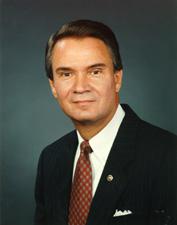 Sen. John B. Breaux (D-LA)
Legislative Activity
Stay on top of the latest movement without scrolling through every action
Read twice and referred to the Committee on the Judiciary.
October 21, 2003
View full timeline
Introduced in Senate
October 21, 2003
Read twice and referred to the Committee on the Judiciary.
October 21, 2003
Floor Debate
13 membersWhat members said about S. 1769 on the floor



 +8
+8
Floor Debate
13 membersWhat members said about S. 1769 on the floor
Mr. President, I yield myself 5 minutes under the time remaining. Mr. President, my colleagues, I am for reforming the so-called class action litigation system we have in place. I think a strong…
Mr. President, I oppose the Class Action Fairness Act, and I will vote against the motion to proceed. The main reason for my opposition is that notwithstanding its title, I do not think this bill is…
Mr. President, I rise today to address the Class Action Fairness Act of 2003. This legislation first was introduced and reported by a Judiciary subcommittee 5 years ago, during the 105th Congress. It…
Mr. President, I ask unanimous consent that the 5 additional minutes of morning business just consumed by the distinguished assistant majority leader be charged against the Republican time for debate…
I thank the Chair. Mr. President, I do not want to interfere with my friend from Nevada, but I understood we were going back and forth; is that correct? Has there been time reserved under the order…
Show 8 more

Mr. President, I would like to pick up where the distinguished Senator from Delaware left off because I could not agree more. This is an issue that should not divide us politically or even…

Mr. President, as a former business person and technology executive who has direct experience with class action litigation, I agree with the proponents of this bill that class action cases that…

Mr. President, I thank the Senator for yielding. This is an important vote. I think in some ways this may be the most important vote we have cast in the 2\1/2\ years I have been here. I want to speak…

Mr. President, I rise to ask my colleagues to vote in support of the motion to proceed to S. 1751, the Class Action Fairness Act of 2003. This bill is a fair and balanced solution to the growing…

Mr. President, I thank the Senator from Texas for yielding. We just heard that what class action lawsuits are really about is the little guys in our system. That may have been the way it was…
Mr. President, I rise in support of the Class Action Fairness bill. What those of us who are supportive of this bill are trying to do is simply get it to the floor where it can be debated, amended,…

Mr. President, I am clearly disappointed we have been denied the opportunity to proceed to this very important legislation, a bill we very much want to discuss, to debate, and to appropriately amend.…

I announce that the Senator from North Carolina (Mr. Edwards) and the Senator from Massachusetts (Mr. Kerry) are necessarily absent. I further announce that, if present and voting, the Senator from…
Bill Text
Latest available legislative text
        [Congressional Bills 108th Congress]
[From the U.S. Government Publishing Office]
[S. 1769 Introduced in Senate (IS)]

108th CONGRESS
1st Session
S. 1769

To provide for class action reform, and for other purposes.

_______________________________________________________________________

IN THE SENATE OF THE UNITED STATES

October 21, 2003

Mr. Breaux introduced the following bill; which was read twice and
referred to the Committee on the Judiciary

_______________________________________________________________________

A BILL

To provide for class action reform, and for other purposes.

Be it enacted by the Senate and House of Representatives of the
United States of America in Congress assembled,

SECTION 1. SHORT TITLE; TABLE OF CONTENTS.

(a) Short Title.--This Act may be cited as the ``National Class
Action Act of 2003''.
(b) Table of Contents.--The table of contents for this Act is as
follows:

Sec. 1. Short title; reference; table of contents.
Sec. 2. Coupon settlements in class action cases.
Sec. 3. Federal district court jurisdiction for national class actions.
Sec. 4. Removal of national class actions to Federal court.
Sec. 5. Effective date.

SEC. 2. COUPONS SETTLEMENTS IN CLASS ACTION CASES.

(a) In General.--Part V of title 28, United States Code, is amended
by inserting after chapter 113 the following:

``CHAPTER 114--CLASS ACTIONS

``Sec.
``1711. Definitions.
``1712. Coupons settlements.
``Sec. 1711. Definitions
``In this chapter, the following definitions shall apply:
``(1) Class.--The term `class' means all of the class
members in a class action.
``(2) Class action.--The term `class action' means any
civil action--
``(A) filed in a district court of the United
States under rule 23 of the Federal Rules of Civil
Procedure; or
``(B) any civil action that is removed to a
district court of the United States that was originally
filed under a State statute or rule of judicial
procedure authorizing an action to be brought by 1 or
more representatives on behalf of a class.
``(3) Class counsel.--The term `class counsel' means the
persons who serve as the attorneys for the class members in a
proposed or certified class action.
``(4) Class members.--The term `class members' means the
persons (named or unnamed) who fall within the definition of
the proposed or certified class in a class action.
``Sec. 1712. Coupons settlements
``(a) Contingent Fees in Coupon Settlements.--If a proposed
settlement in a class action provides for a recovery of coupons to a
class member, the portion of any attorney's fee to be paid to class
counsel based on the recovery of the coupons shall be based on the
value to class members of the coupons that are redeemed.
``(b) Other Attorney's Fee Awards in Coupon Settlements.--
``(1) In general.--If a proposed settlement in a class
action provides for a recovery of coupons to a class member,
and a portion of the recovery of the coupons is not used to
determine the attorney's fee to be paid to class counsel, the
attorney's fee shall be based upon the amount of time class
counsel expended working on the action.
``(2) Court approval.--Any attorney's fee under this
subsection shall be subject to approval by the court and shall
include an appropriate attorney's fee for obtaining equitable
relief, including an injunction, if applicable. Nothing in this
subsection shall be construed to prohibit application of a
lodestar with a multiplier method of determining attorney's
fees.
``(c) Attorney's Fee Awards Calculated on a Mixed Basis in Coupon
Settlements.--If a proposed settlement in a class action provides for
an award of coupons to a class member and also provides for equitable
relief, including injunctive relief--
``(1) that portion of the attorney's fee to be paid to
class counsel that is based upon a portion of the recovery of
the coupons shall be calculated according to subsection (a);
and
``(2) that portion of the attorney's fee to be paid to
class counsel that is not based upon a portion of the recovery
of the coupons shall be calculated according to subsection (b).
``(d) Settlement Valuation Expertise.--In a class action involving
the awarding of coupons, the court may in its discretion, upon the
motion of a party, receive expert testimony from a witness qualified to
provide information on the actual value of the settlement.
``(e) Judicial Scrutiny of Coupon Settlements.--In a class action
that provides for a recovery of coupons to a class member, the court
may approve a proposed settlement only after a hearing to determine
whether, and making a written finding that, the settlement is fair,
reasonable, and adequate for class members.''.
(b) Technical and Conforming Amendment.--The table of chapters for
part V of title 28, United States Code, is amended by inserting after
the item relating to chapter 113 the following:

``114. Class Actions........................................    1711''.

SEC. 3. FEDERAL DISTRICT COURT JURISDICTION FOR NATIONAL CLASS ACTIONS.

(a) In General.--Chapter 85 of title 28, United States Code, is
amended by adding at the end the following:
``Sec. 1370. National class actions
``(a) In addition to the jurisdiction conferred under this chapter,
a district court of the United States shall have jurisdiction over a
class action in which \1/3\ or fewer of the members of all proposed
plaintiff classes in the aggregate are citizens of the State in which
the action was originally filed.
``(b) A district court of the United States may, in the interests
of justice, decline to exercise jurisdiction over a class action in
which greater than \1/3\ but less than \2/3\ of the members of all
proposed plaintiff classes in the aggregate are citizens of the State
in which the action was originally filed based on consideration of--
``(1) whether the claims asserted involve matters of State
or local interest;
``(2) whether the claims asserted will be governed by laws
other than those of the State in which the action was
originally filed;
``(3) whether the forum for the class action was chosen
frivolously or in bad faith;
``(4) whether the number of citizens of the State in which
the action was originally filed in all proposed plaintiff
classes in the aggregate is substantially larger than the
number of citizens from any other State, and the citizenship of
the other members of the proposed class is dispersed among a
substantial number of States; and
``(5) whether the State claims asserted by class members of
the State in which the action was filed would be preempted by a
Federal class action.
``(c) A district court of the United States shall not exercise
jurisdiction over a class action in which--
``(1) \2/3\ or more of the members of all proposed
plaintiff classes in the aggregate are citizens of the State in
which the action was originally filed;
``(2) the primary defendants are States, State officials,
or other governmental entities against whom the district court
may be foreclosed from ordering relief; or
``(3) the number of members of all proposed plaintiff
classes in the aggregate is less than 100.
``(d) Citizenship of proposed class members in subsection (a), (b),
and (c) shall be determined on the date of filing the proposed class
action in Federal district court or State court.
``(e) This section shall not apply to any class action that soley
involves a claim--
``(1) concerning a covered security as defined under
16(f)(3) of the Securities Act of 1933 (15 U.S.C. 77p(f)(3));
``(2) that relates to the internal affairs or governance of
a corporation or other form of business enterprise and that
arises under or by virtue of the laws of the State in which
such corporation or business enterprise is incorporated or
organized; or
``(3) that relates to the rights, duties (including
fiduciary duties), and obligations relating to or created by or
pursuant to any security (as defined under section 2(a)(1) of
the Securities Act of 1933 (15 U.S.C. 77b(a)(1)) and the
regulations issued thereunder).
(f) Nothing in this section shall be construed to limit Federal
jurisdiction over any class action that meets diversity of citizenship
requirements under section 1332.''.
(b) Clerical Amendment.--The table of sections at the beginning of
chapter 85 of title 28, United States Code, is amended by adding at the
end the following:

``1370. National class actions.''.

SEC. 4. REMOVAL OF NATIONAL CLASS ACTIONS TO FEDERAL COURT.

(a) In General.--Chapter 89 of title 28, United States Code, is
amended by adding at the end the following:
``Sec. 1453. Removal of national class actions
``(a) A class action over which a district court would have
jurisdiction under section 1370 may be removed to a district court of
the United States, in accordance with this chapter, by--
``(1) any defendant without the consent of all defendants;
or
``(2) any plaintiff class member who has intervened, seeks
to be designated as a representative class member, and is not a
named or representative class member without the consent of all
members of such class.
``(b) The Federal district court which receives a class action
removed in accordance with this section shall make a determination
regarding the jurisdiction of the proposed class action before deciding
a motion to transfer to any other court under--
``(1) section 1391; or
``(2) section 1407.
``(c) Section 1446 (relating to a defendant removing a case) shall
apply to a plaintiff removing a case under this section, except that
the application of section 1446(b) (relating to the 30-day filing
period requirement) shall be met if a plaintiff class member files
notice of removal not later than 30 days after the receipt by such
class member, through service or otherwise, of the initial written
notice of class action.
``(d) This section shall not apply to any class action that solely
involves a claim--
``(1) concerning a covered security (as defined under
section 16(f)(3) of the Securities Act of 1933 (15 U.S.C.
77p(f)(3));
``(2) that relates to the internal affairs or governance of
a corporation or other form of business enterprise and that
arises under or by virtue of the laws of the State in which
such corporation or business enterprise is incorporated or
organized; or
``(3) that relates to the rights, duties (including
fiduciary duties), and obligations relating to or created by or
pursuant to any security (as defined under section 2(a)(1) of
the Securities Act of 1933 (15 U.S.C. 77b(a)(1)) and the
regulations issued thereunder).''.
(b) Clerical Amendment.--The table of sections at the beginning of
chapter 89 of title 28, United States Code, is amended by adding at the
end the following:

``1453. Removal of national class actions.''.

SEC. 5. EFFECTIVE DATE.

The amendments made by this Act shall apply to any civil action
commenced on or after the date of enactment of this Act.
<all>