Small State HOME Program Equity Act of 2003

Legislative Activity
Stay on top of the latest movement without scrolling through every action
Sponsor introductory remarks on measure. (CR S14808)
November 14, 2003
View full timeline
Introduced in Senate
November 12, 2003
Read twice and referred to the Committee on Banking, Housing, and Urban Affairs. (text of measure as introduced: CR 11/14/2003 S14808)
November 12, 2003
Sponsor introductory remarks on measure. (CR S14808)
November 14, 2003
Floor Debate
15 membersWhat members said about S. 1851 on the floor
 TL
TL RGL
RGL OGH
OGH CG
CG JRB+10
Floor Debate
15 membersWhat members said about S. 1851 on the floor
Mr. President, I rise to day to introduce, along with my colleagues Senator Smith from Oregon, the multiemployer Pension Plan Procedural Fairness Act of 2003. The purpose of this legislation is to…
Mr. President, I rise to day to introduce, along with my colleagues Senator Smith from Oregon,
the multiemployer Pension Plan Procedural Fairness Act of 2003. The purpose of this legislation is to provide a modest amount of procedural fairness with respect to claims filed against former employers under the multiemployer pension plan (MEPPA) rules.
By way of background, MEPPA makes an employer that completely or partially withdraws from participation in a multiemployer pension fund liable for the employer's share of the plans' unfunded vested benefits. That liability is referred to as ``withdrawal liability'' and can be collected from any member of the controlled group of employers that included the withdrawing employer. The process of collecting withdrawal liability can become quite unfair when the pension fund attempts to assert liability against a former employer or a former member of a controlled group of employers that, as a result of a legitimate business separation, such as a sale or spin-off transaction, ceased to be associated with the withdrawing employer several years before the compete or partial withdrawal occurred.
MEPPA provides that a former employer or former member of a controlled group can still be liable if ``a principal purpose'' of the business separation transaction was ``to evade or avoid'' withdrawal liability. The legislative history indicates that the ``evade or avoid'' provision was designed to prevent unscrupulous employers from dumping a distressed subsidiary in order to evade or avoid withdrawal liability. I firmly believe that unscrupulous companies that attempt to evade withdrawal liability should be held liable. However, companies that engage in legitimate transactions should be able to defend against withdrawal liability claims that arose from events which occurred many years after the business separation.
The simplest way to understand the issue is with an illustration. Assume that a parent company operates a subsidiary that makes contributions to a multiemployer plan. Assume further that, for valid business reasons, the parent company disposes of the subsidiary via a bona fide ``spin-off'' transaction. At the time of the spin-off, the subsidiary was current on all of its required contributions to the multiemployer pension fund, and the subsidiary continues to make contributions to the multiemployer plan after the spin-off. To complete the example, assume that several years after the spin-off, the spun-off subsidiary goes out of business and ceases to make contributions to the multiemployer pension fund. Under this scenario, the MEPPA rules allow the pension fund to claim that a principal purpose of the transaction was to evade or avoid withdrawal liability. Because the MEPPA rules do not provide any time restrictions for making these claims, a former parent company may be forced to defend against such a claim years, if not decades after the transaction in question. By contrast, the single- employer plan rules provide a 5-year safe harbor rule that protects employers against such claims.
While multiemployer plans should certainly be able to pursue claims against unscrupulous employers, there are two procedural rules in MEPPA that severely and unfairly hinder an employer's ability to defend itself against a claim for withdrawal liability under the evade or avoid standard when the transaction in question occurred several years before the date of a complete or partial withdrawal. The first rule is referred to as the ``pay to play'' rule, and the second rule involves the burden of proof borne by the employer.
Under MEPPA, if the pension fund makes a claim for withdrawal liability against the former parent company under the ``evade or avoid'' standard, the claim is sent to arbitration. However, the parent company must begin making payments to the multiemployer pension plan within 60 days after receiving a demand solely based upon the plan's unilateral decision to assert a withdrawal liability claim and long before any neutral third party finds that ``a principal purpose'' of the challenged transaction was to ``evade or avoid'' withdrawal liability. As a result, a company that engaged in a bona fide business transaction many years before the withdrawal occurred is forced to begin paying on the claim based on nothing more than the plan's demand.
According to the legislative history, this unique ``pay to play'' rule was enacted in response to what Congress perceived to be inefficient, cumbersome and costly procedures for collecting delinquent contributions from employers. Simple collection actions were converted into complex litigation through defenses that were unrelated to the multiemployer plan's entitlement to the contribution. However, the relevant MEPPA language is not limited to collection actions. While it may be appropriate to require a contesting employer to commence payments while the claim is being litigated, it is not fair to require prepayment in the case of an ``evade or avoid'' claim when the transaction in question occurred many years before the complete or partial withdrawal occurred.
The second procedural unfairness involves the burden of proof that an employer faces in rebutting a claim under the ``evade or avoid'' standard. MEPPA provides that a plan sponsor's determination is presumed correct, unless the contesting party shows by a preponderance of evidence that the determination is incorrect. The impetus behind Congress's decision to include such a presumption was the need to avoid a perceived potential for conflict and delay over the soundness of actuarial determinations of liability. Specifically, the presumption was crafted in order to prevent ``the likelihood of dispute and delay over technical actuarial matters with respect to which there are often several equally `correct' approaches. Without such a presumption, a plan would be helpless to resist dilatory tactics by a withdrawing employer--tactics that could, and could be intended to, result in prohibitive collection costs to the plan.'' However, the MEPPA presumption language is not limited to actuarial determinations, but reaches liability determinations as well.
Even if this presumption is appropriate when withdrawal liability is triggered shortly after a transaction occurs, it is unfair to apply the presumption when the transaction in question occurred several years before the withdrawal took place. In this situation, a company that engages in a bona fide transaction may be forced to prove a negative-- namely that a principal purpose of a transaction that occurred many years ago was not to evade or avoid withdrawal liability.
To summarize, under the MEPPA rules, an employer may find itself in a position where it has to respond to claims regarding a legitimate business transaction that occurred many years earlier. Furthermore, in defending against the claim, the employer must 1. prove that a principal purpose of the transaction was not to evade or avoid withdrawal liability, and 2. prepay the contested amount of the liability well in advance of any final determination of liability. This is patently unfair. Our legislation is a modest attempt to inject some notions of procedural fairness in this situation.
Our bill does not change the present-law rules regarding the determination of liability with respect to a complete or partial withdrawal from a multiemployer pension plan. However, it does change the procedural rules applicable to such a determination, but only with respect to a transaction that occurred five years or more before the date of the complete or partial withdrawal.
Under our bill, when a determination of an employer's withdrawal liability is based on a finding by the plan sponsor that a principal purpose of a transaction was to evade or avoid liability, and the transaction in question occurred five years or more before the date of the complete or partial withdrawal, the following rules would apply: 1. the determination by the plan sponsor is not presumed to be correct, and the plan sponsor has the burden to establish, by a preponderance of the evidence, each and every element of the claim for withdrawal liability, and 2. if an employer contests the plan sponsor's determination either through arbitration or through a claim brought in court, the employer is not obligated to make any withdrawal liability payments until a final decision in the arbitration, or in court, upholds the plan sponsor's determination. Our bill would apply to any employer that receives a notification after October 31, 2003.
I ask unanimous consent that the text of the bill be printed in the Record.
Mr. President, I rise to introduce the Sanctions Policy Reform Act. The fundamental purpose of my bill is to promote good governance through thoughtful deliberation on those proposals involving…
Mr. President, I rise to introduce the Sanctions Policy Reform Act.
The fundamental purpose of my bill is to promote good governance through thoughtful deliberation on those proposals involving unilateral economic sanctions directed against other countries. My bill lays out a set of guidelines and requirements for a careful and deliberative process in both branches of government when considering new unilateral sanctions. It does not preclude the use of economic sanctions nor does it change those sanctions already in force. It is based on the principle that if we improve the quality of our policy process and public discourse, we can improve the quality of the policy itself.
Numerous studies have shown that unilateral sanctions rarely succeed and often harm the United States more than the target country. Sanctions can jeopardize billions of dollars in U.S. export earnings and hundreds of thousands of American jobs. They frequently weaken our international competitiveness by yielding to other countries those markets and opportunities that we abandon. They also can undermine our ability to provide humanitarian assistance abroad.
Unilateral sanctions often appear to be cost-free, but they have many unintended victims--the poor in the target countries, American companies, American labor, American consumers and, quite frankly, American foreign policy. Sanctions can weaken our international competitiveness, lower our global market share, abandon our established market to others and jeopardize billions in export earnings--the key to our economic growth. They may also impair our ability to provide humanitarian assistance. They sometimes anger our friends and call our international leadership into question. In many cases, unilateral sanctions are well-intentioned, but impotent, serving only to create the illusion of U.S. action. In the worst cases, unilateral sanctions are actually undermining our own interests in the world.
Unilateral sanctions do have a place in our foreign policy. There will always be situations in which the actions of other countries are so egregious or so threatening to the United States that some response by the United States, short of the use of military force, is needed and justified. In these instances, sanctions can be helpful in getting the attention of another country, in showing U.S. determination to change behaviors we find objectionable, or in stimulating a search for creative solutions to difficult foreign policy problems.
But decisions to impose them must be fully considered and debated. Too frequently, this does not happen. Unilateral sanctions are often the result of a knee-jerk impulse to take action, combined with a timid desire to avoid the risks and commitments involved in more potent foreign policy steps that have greater potential to protect American interests. We must avoid putting U.S. national security in a straight- jacket, and we must have a clear idea of the consequences of sanctions on our own security and prosperity before we enact them.
To this end, I am offering this bill to reform the U.S. sanctions decision-making process. The bill will establish procedural guidelines and informational requirements that must be met prior to the imposition of unilateral economic sanctions. For example, before imposing unilateral sanctions, Congress would be required to consider findings by executive branch officials that evaluate the impact of the proposed sanctions on American agriculture, energy requirements, and capital markets. The bill mandates that we be better informed about the prospects that our sanctions will succeed, about the economic costs to the United States, and about the sanctions' impact on other American objectives.
In addition, this sanctions policy reform bill provides for more active consultation between the Congress and the President and for Presidential waiver authority if the President determines
it is in our national security interests. It also establishes an executive branch Sanctions Review Committee, which will be tasked with evaluating the effect of any proposed sanctions and providing appropriate recommendations to the President prior to the imposition of such sanctions.
The bill would have no effect on existing sanctions. It would apply only to new sanctions that are enacted after this bill became law. It also would apply only to sanctions that are unilateral and that are intended to achieve foreign policy goals. As such, it excludes trade remedies or trade sanctions imposed because of market access restrictions, unfair trade practices, or violations of U.S. commercial or trade laws.
Let me suggest a number of fundamental principles that I believe should shape our approach to unilateral economic sanctions: unilateral economic sanctions should not be the policy of first resort. To the extent possible, other means of persuasion and influence ought to be exhausted first; if harm is to be done or is intended, we must follow the cardinal principle that we plan to harm our adversary more than we harm ourselves; when possible, multilateral economic sanctions and international cooperation are preferable to unilateral sanctions and are more likely to succeed, even though they may be more difficult to obtain; we ought to avoid double standards and be as consistent as possible in the application of our sanctions policy; to the extent possible, we ought to avoid disproportionate harm to the civilian population. We should avoid the use of food as a weapon of foreign policy and we should permit humanitarian assistance programs to function; our foreign policy goals ought to be clear, specific and achievable within a reasonable period of time; we ought to keep to a minimum the adverse affects to our sanctions on our friends and allies; we should keep in mind that unilateral sanctions can cause adverse consequences that may be more problematic than the actions that prompted the sanctions--a regime collapse, a humanitarian disaster, a mass exodus of people, or more repression and isolation in the target country, for example; we should explore options for solving problems through dialogue, public diplomacy, and positive inducements or rewards; the President of the United States should always have options that include both sticks and carrots that can be adjusted according to circumstance and nuance; the Congress should be vigilant by insuring that his options are consistent with Congressional intent and the law; and in those cases where we do impose sanctions unilaterally, our actions must be part of a coherent and coordinated foreign policy that is coupled with diplomacy and consistent with our international obligations and objectives.
An unexamined reliance on unilateral sanctions may be appropriate for a third-rate power whose foreign policy interests lie primarily in satisfying domestic constituencies or cultivating a self-righteous posture. But the United States is the world's only superpower. Our own prosperity and security, as well as the future of the world, depend on a vigorous and effective assertion of our international interests.
The United States should never abandon its leadership role in the world, nor forsake the basic values we cherish. We must ask, however, whether we are always able to change the actions of other countries whose behavior we find disagreeable or threatening. If we are able to influence those actions, we need to ponder how best to proceed. In my judgment, unilateral economic sanctions will not always be the best answer. But, if they are the answer, they should be structured so that they do as little harm as possible to our global interests. By improving upon our procedures and the quality and timeliness of our information when considering new sanctions, I believe U.S. foreign policy will be more effective.
Mr. President. I rise to introduce with my colleagues, Senators Biden and Grassley, ``The Office of National Drug Control Policy Reauthorization Act of 2003.'' This bill is a forward-looking measure…
Mr. President. I rise to introduce with my colleagues, Senators Biden and Grassley, ``The Office of National Drug Control Policy Reauthorization Act of 2003.'' This bill is a forward-looking measure which will strengthen the Office of National Drug Control Policy as we face the new challenges posed by illegal drugs.
I want to thank my colleagues Senators Biden and Grassley for working with me to draft this important legislation. Senator Biden has a long and impressive record in addressing the problem of illegal drugs. He is considered the father of ONDCP. He had the vision, the commitment, and the dedication to make it a reality. I thank him again for his work on this proposal that we are introducing today.
I also want to thank Senator Grassley for his work on this important legislation. Senator Grassley has been a tireless advocate in fighting illegal drugs. As the chair of the Senate Caucus on International Narcotics Control, Senator Grassley has demonstrated leadership and commitment in addressing issues relating to domestic and international drug trafficking.
The bipartisan legislation we are introducing today reauthorizes ONDCP for 5 years and provides ONDCP with the necessary tools and resources to: Develop national drug control policy; coordinate and oversee the implementation of the national drug control policy; assess and certify the adequacy of national drug control programs and the budget for those programs; evaluate the effectiveness of National Drug Control Program agencies' programs; and develop specific goals and performance measurements needed to assess the effectiveness of the national drug control policy and the programs of the national drug control program agencies.
The legislation includes a number of reforms which will enhance ONDCP's ability to serve as the coordinator of Federal, State, and local policies aimed at reducing the availability of, and demand for, illegal drugs. The bill: 1. expands ONDCP's role and authority in overseeing the performance of federal agencies' drug control programs, and requires ONDCP to develop specific goals and measurements to assess the performance of Federal agencies; 2. requires ONDCP to develop a new performance measurement system which includes annual and 5-year objectives for assessing the National Drug Control Strategy; 3. expands and increases authorized funding for the High Intensity Drug Trafficking Areas Program designed to reduce illegal Drug trafficking and drug production activities in designated areas; 4. creates a new emerging threat fund for ONDCP to allocated to individual HIDTAs to respond to emerging drug trafficking threats in specific HIDTAs; 5. improves the Counter-Drug Technology Transfer program to provide increased technologies for State and local law enforcement agencies, and reforms the program to ensure timely delivery of such technologies; and 6. reauthorizes and enacts reforms to the National Youth Anti-Drug Media Campaign to ensure responsible use of Federal funds used to support the campaign.
I want to take a moment to address several specific issues. First, I am a strong supporter of the HIDTA program. The HIDTA program brings together Federal, State, and local law enforcement, promotes intelligence sharing among these law enforcement agencies, and ensures coordinated and effective law enforcement strategies. The HIDTA program has proven successful, and is even more important today because of the FBI's need to reallocate resources from drug enforcement to terrorism. Given this reality, it is critical that we support the HIDTA program as an important resource in the fight against illegal drug traffickers.
Second, I want to express my continued support for the National Youth Anti-Drug Medical Campaign. While I know the campaign has suffered from some management problems in the last few years, I am confident that the campaign is on the right track. I want to commend ONDCP Director John Walters and The Partnership for a Drug-Free America President Roy Bostock
for their commitment to working together, and for the steps they have taken to ensure that the campaign operates effectively.
The legislation includes specific reforms which will support the campaign and make sure that it operates in a cost-effective manner. Specifically, the bill: 1. Delineates the specific roles and responsibilities of ONDCP, the Partnership and a media buying contractor; 2. restricts the use of funds for creative development of advertisements, except for advertisements intended to reach a minority, ethnic or other special audience that cannot be otherwise obtained from the Partnership; 3. requires the Director to obtain no-cost matches of advertising broadcast times, print space or in-kind contributions which directly relate to substance abuse prevention and specially promote the purposes of the campaign; 4. disqualifies any corporation, partnership or individual from bidding on a media buying contract if such entity, within the last 10 years, in connection with the national media campaign has been convicted of any Federal criminal offense, subject to any Federal civil judgment or penalty in a civil proceeding involving the United States; or settled any Federal civil proceeding or potential proceeding; and 5. provides financial and performance accountability requirements for the campaign.
I also wanted to highlight title VII of the bill--Drug Abuse Education, Prevention, and Treatment. These provisions, which Senators Biden, Grassley, Leahy and I authored in the 107th Congress as part of S. 304, provide much-needed education, prevention and treatment resources which are so critical to reducing the demand for illegal drugs. As I have said before, our national drug strategy must embrace a comprehensive policy that reduces the demand for, as well as the supply of, drugs. To reduce the demand for drugs, we must redouble our efforts at prevention and treatment. This Nation's battle with substance abuse can be successful only through a balanced approach--one that supports law enforcement but at the same time promotes education, prevention and treatment.
Title VII of the bill includes a proposal to establish residential drug treatment facilities for drug-addicted women who have young children. Such facilities are in short supply in this the country, and the problem has grown worse with an ever increasing number of women with children who are abusing drugs.
Treatment is even more imperative for our troubled juveniles, the vast majority of whom will go on to lead productive lives if we can just break the addiction cycle. This bill provides substantial resources to States for juvenile residential treatment facilities and to Federal, State, and local agencies and private service providers to coordinate the delivery of mental health and substance abuse services to children at risk.
Finally, the bill eliminates a restriction in the Controlled Substances Act and will permit medical practitioners to provide drug addiction treatment in group practices. This provision will expand treatment options for thousands of patients who have been denied access to critical addiction treatments.
The proposed legislation we are introducing today will ensure that Congress provides the required oversight--and support of--ONDCP as it continues its critical role of coordinating our National Drug Control Strategy to ensure that we reduce the availability of, and demand for, illegal drugs in our country. I urge my colleagues to support this important legislation.
I ask unanimous consent that a section-by-section analysis be printed in the Record.
Mr. President, I rise today to add my comments to those of Senator Hatch and Senator Biden on the re-authorization of the Office of National Drug Control Policy. Drug use in America may not be on the…
Mr. President, I rise today to add my comments to those of Senator Hatch and Senator Biden on the re-authorization of the Office of National Drug Control Policy. Drug use in America may not be on the front page of the New York Times or Washington Post, but remains a deep concern for many people in small towns and local neighborhoods where the effects of drug abuse are painfully felt. Drugs pose an immediate threat to their lives, and the lives of their children.
The re-authorization of ONDCP is about the leadership role we expect the Federal government to play in confronting the issue. I want to take a moment to highlight a few revisions we have proposed in an effort to strengthen the leadership role that ONDCP should play.
The legislation we are introducing today will improve the capacities of the Office to coordinate our Federal efforts against drug use. We have strengthened the role of the Deputy Director of State and Local Affairs, because we recognize that the coordination of activities, information sharing, and resource allocations between Federal, State, and local law enforcement is increasingly critical.
As everyone is this body knows, there isn't enough money to go around to fully fund all of the worthy causes that are out there, and part of our job is making these tough choices. By increasing the coordination between resources that are already deployed, we can increase the effectiveness of these efforts without having to reinvent how business gets done. ONDCP is an ideal place to play broker over these efforts and move this forward.
We have also included provisions clarifying the authorities and responsibilities of the offices of Demand Reduction and Supply Reduction. Much of ONDCP's responsibilities involves coordinating the activities and focus of other Departments. There is no one simple solution to our drug problem, and ONDCP has a responsibility to ensure that Federal prevention, law enforcement, treatment, and interdiction initiatives cover the full spectrum of opportunities available. Accordingly, our bill clarifies the roles and responsibilities of the various Deputies at ONDCP to strengthen their ability to coordinate the counterdrug activities both within ONDCP and those of other Departments.
The Office of National Drug Control Policy also has responsibility for the execution and effectiveness of the High Intensity Drug Trafficking Areas program, or HIDTA program. The HIDTA program has proven to be an effective
mechanism for getting multiple law enforcement agencies from multiple levels of government to work together. For a relatively modest amount, participating law enforcement agencies have benefited tremendously from the increased information sharing and coordination that HIDTAs generate.
However, there was legitimate concern over the lack of performance measures for the HIDTA program. In addition, there seemed to be some confusion over what the overall purpose of a HIDTA designation was. finally, funding for the HIDTA program has been stifled because of a fear that ONDCP may cut the amount for one particular HIDTA in favor of another. Our legislation addresses these concerns in ways we believe will improve the effectiveness, accountability, and transparency of the program.
First, this legislation establishes that the purpose of the HIDTA program is fourfold: facilitating cooperation among Federal, State, and local law enforcement; enhancing intelligence sharing; providing reliable intelligence to law enforcement agencies for the design of effective enforcement strategies and operations; and supporting coordinated strategies designed to reduce the supply of illegal drugs within a designated area. By focusing the purpose of a HIDTA on improving the capabilities and capacities of those within the HIDTA, we will strengthen the effectiveness of these designated areas to go after drugs.
Second, the legislation creates an evaluation mechanism which requires ONDCP to first establish specific purposes and measures for each HIDTA, and then evaluate the performance of each HIDTA based on the purposes and measures that were established. Because threats each HIDTA faces are unique, the performance of each HIDTA will be evaluated against the goals which are established for that particular HIDTA, rather than an undefined National standard. Not only should this give Congress a better understanding of the performance of this program, but it should give ONDCP a mechanism to better evaluate and support the particular needs of individual HIDTAs.
Third, this legislation requires ONDCP to itemize how much it believes each HIDTA should be funded when the budget request is submitted, rather than waiting until after the appropriations process is complete. Combined with the previous two changes, these changes will combine to give ONDCP the flexibility it needs and the HIDTA program the credibility it needs to expand its leadership and funding for the coordination of law enforcement counterdrug operations.
The final section of this legislation that I would like to mention is the National Media Campaign. I will be honest: I am still not convinced that this program makes the best possible use of drug prevention dollars. But I am in the minority here. Almost everyone I've talked to believes our prevention efforts will be better with the campaign than without it--even if the evidence that the campaign makes a difference is questionable, at best. If the campaign is going to continue, and this legislation does extend the Campaign, I think it's important that it get back to the parameters that were established when it was initially pitched to and authorized by congress.
I think what we have here is a good start in this direction, and I appreciate my colleagues' willingness to take my concerns into consideration. The legislation we have drafted refocuses the campaign toward its initial, buy-one-get-one-free hypothesis. We've proposed enhancing the capacity of the campaign to measure its effectiveness, in an effort to move beyond the 6-month time lag that has hampered past measurements of performance. We have also included a clearer outline of what should, and should not, be paid for by the campaign. And we have created a clear role for the Partnership for a Drug Free America, who has been working on this effort for much longer than Congress has funded it.
All in all, I think we have a good bill. Not a perfect bill, but a good bill. I look forward to continue working with the Committee, our colleagues in the House, and the Administration with the hope that we can re-authorize ONDCP expeditiously.
Mr. President, I rise today to introduce legislation to reauthorize the so-called ``Drug Czar's'' office with Senator Hatch, the Chairman of the Judiciary Committee and Senator Grassley, the Chairman…
Mr. President, I rise today to introduce legislation to reauthorize the so-called ``Drug Czar's'' office with Senator Hatch, the Chairman of the Judiciary Committee and Senator Grassley, the Chairman of the Caucus on International Narcotics Control.
This bipartisan legislation will, I hope, result in speedy action to reauthorize the drug director's office for 5 years. No matter what perspective any of us have on a specific drug policy, this legislation is about whether we will have a drug director and a drug office to be responsible for developing, coordinating and enacting a national drug policy.
Some twenty years ago I began fighting to create the Office of National Drug Control Policy (ONDCP) because I believed then, as I believe now, that we needed a Cabinet-level official who would coordinate Federal drug policy. I argued that Cabinet-level status was necessary because this individual needed to have the clout to stop interagency feuding, fight for necessary budgetary resources and decertify inadequate agency drug budgets. But just as important, I believed that the public needed to have one high profile person to hold accountable for developing and implementing an effective national strategy.
In 1982 my bill creating a national drug director passed as part of a larger crime bill, but the President vetoed it. He, like all Presidents--both Democrats and Republicans did not like the idea of being held accountable for what was seen as an intractable problem. But I kept at it and six years later the bill became law.
Before we had a drug czar's office there was no official in charge of the Administration's drug effort. And because there was no one Cabinet official in charge, other members of the President's Cabinet could duck responsibility to talk about tough drug policy issues. And that meant no Administration talked enough or did enough about the drug problem and no Administration was held accountable on drug policy. I'm glad that those days are behind us.
As the person responsible for coordinating Federal drug policy, the drug czar deals with almost every federal agency, from the Department of Justice on drug courts to the Department of Homeland Security on interdiction issues to the State Department and the Department of Defense on Plan Colombia to the Department of Health and Human Services on groundbreaking research on how drug use changes brain chemistry. It is the drug director's job to make sure that all of these wide ranging issues are addressed in the annual drug strategy so that our national policy is a balanced one, giving proper attention to drug enforcement, drug treatment, drug prevention and research.
That is why the bill that Senator Hatch, Senator Grassley and I are introducing today retains the provision in current law requiring the Drug Director to submit to Congress an annual drug strategy, detailing how he proposes to address all aspects of our national drug problem. We also ask him to reach out to state and local officials not only to get their input but also to get their support to advance the national goals on the local level.
And just as with my original drug czar legislation, the reauthorization bill retains as its central goal holding every Administration and every President accountable on the drug issue by requiring ONDCP to evaluate the effectiveness of drug policy and programs and develop specific performance measurements and goals.
The bill also includes a number of changes to strengthen current drug control policies and programs. In the area of law enforcement, the bill reauthorizes and increases the funding for the High Intensity Drug Trafficking Area (HIDTA) program which helps to coordinate federal, state and local efforts to reduce drug trafficking and production in designated areas. The bill also requires an evaluation of each individual HIDTA to monitor the program's effectiveness and requires ONDCP to report to Congress on intelligence sharing among HIDTAs and other law enforcement entities.
In terms of prevention and treatment efforts, the legislation includes a number of important provisions. First, it reauthorizes the National Youth Anti Drug Media Campaign and modifies the program so that it will be more accountable. Second, it includes a number of provisions that the Senate passed unanimously last Congress as part of the Drug Abuse Education, Prevention and Treatment Act to expand drug treatment for rural states, economically depressed communities, juveniles and women with children as well as to create a demonstration project to fund drug treatment alternatives to prison programs administered by state and local prosecutors. And finally, the bill amends the Higher Education Act to clarify that those convicted of drug offenses are not prohibited from receiving federal student aid unless they commit a drug felony while they are receiving the grant, loan or work assistance.
I want to thank Senator Hatch and Senator Grassley for their cooperation in crafting a bipartisan bill to reauthorize the Office of National Drug Control Policy. Both Senators have been leaders on drug policy issues and I am glad to work with them on this important matter. I hope that the rest of my colleagues will support this legislation and that we can pass it without delay.
Show 8 more
Mr. President, I rise to introduce a joint resolution regarding the status of Jerusalem, and its potential in catapulting the Middle East Peace process forward. Just prior to returning from the…
Mr. President, I rise to introduce a joint resolution regarding the status of Jerusalem, and its potential in catapulting the Middle East Peace process forward.
Just prior to returning from the summer recess, I traveled to Israel for five days on one of the most important official trips I have made since coming to the Congress in 1994. I have been to Israel before, but this trip had a special meaning for me both in terms of who and what I saw.
I arrived in the aftermath of the bus bombing in Jerusalem that killed Yeshiva students going to the Wailing Wall. The same week I was there, Palestinian Prime Minister Abu Mazen lost a no confidence vote and conceded to a shake up of the Palestinian cabinet. A wave of Palestinian terrorism ensued and it appeared that no Palestinian leader, at that time, had the will or the desire to contain terrorism much less stamp it out so that President Bush's Roadmap for Peace could proceed.
On my way from the airport in Tel Aviv to the hotel in Jerusalem, I made a brief visit to a town called B'nei Berek, a small Orthodox suburb of Tel Aviv. B'nei Berek was established shortly after the founding of Israel. In the intervening 50 year period, this town has turned into a thriving city of over 200,000 people--a very special place for the Orthodox community in Israel.
While I was there I met with one of the most respected and senior Rabbis in Israel. This man lived in a very modest apartment on an average street, and you would never know that he was one of the most important theological scholars in Israel. His home was lined with volume after volume of theological text, but he spoke plainly and deliberately about the importance of his faith and the role of faith in the lives of the Jewish people. The history of the Jewish people seemed to be etched onto his face and into his eyes.
On this same trip I met with the Israeli Foreign Minister Silvan Shalom, Finance Minister Benjamin Netanyahu, Former Israeli Defense Force General Ephraim Eitam and Ambassador John Wolf, who is charged with monitoring the implementation of commitments in the peace process.
One evening, I went on a tour of the Western Wall and the tunnels that run underneath the current level of buildings around the old city wall. The tour took over an hour and explored some of the most exciting history about Israel, Jerusalem and the Temple.
There is a point in the tunnels that leads to an old entrance into the old city that, if opened, would lead to a special place below where the Temple once stood. This place, I'm sure my colleagues as children in Sunday school learned, is called the Holy of Holies.
The Temple was built around this place, and it could not be entered except by the High Priest on Yom Kippur. It is the place, described in the Book of Genesis, where Abraham was to sacrifice his son Isaac. It is also the place where the Ark of the Covenant was kept. This was a unique experience.
Jerusalem is a special place. It is extremely important to the peace process. In my hand is the ``Jerusalem Resolution,'' a proposition which I hope will propel the peace process forward by moving two big issues forward.
This resolution seeks to make it U.S. policy that prior to the recognition by the U.S. of a Palestinian State, the U.S. Embassy must be moved to Jerusalem and that Jerusalem be declared as the undivided capital of Israel. This resolution would establish an important, tangible asset on both sides for advancing the peace process.
For the past decade, we have attempted to forge a peace agreement between the Palestinians and Israelis on a design of land for peace. This model has failed. We should attempt a new way. If we address two major issues at the outset of vital interest to the ultimate desire for peace, we can help to create a powerful momentum for peace. This bill pushes for the resolution of the status of Jerusalem in conjunction with the recognition of a Palestinian state.
Jerusalem has been the capital of the Jewish people for three thousand years, and is the center of Jewish faith and culture. Jerusalem is the seat of Israel's Government, and is the only capital city designated by the host country in which the U.S. does not maintain an embassy nor recognize it as the capital.
In this resolution, three months prior to the recognition of a Palestinian state, the United States must move its embassy to Jerusalem and the status of Jerusalem must be resolved by the international recognition of Jerusalem as Israel's capital.
I hope that my colleagues will join me in my effort. The peace process is in need of a major paradigm shift. We can't continue to bog ourselves down in the mechanics of the process. We must think grand about this problem and move beyond the status quo.
This resolution is a challenge to this body to change its perspective on this issue. I hope in the coming months we can engage in serious debate over peace and the way toward it in the Middle East.

Mr. President, like every loyal Red Sox fan, I believe that next season, my team will be victorious. I bring this same level of optimism to my efforts to reduce the amount of wasted resources and…
Mr. President, like every loyal Red Sox fan, I believe that next season, my team will be victorious. I bring this same level of optimism to my efforts to reduce the amount of wasted resources and litter caused by discarded beverage containers. I rise today to introduce the National Beverage Producer Responsibility Act of 2003, the Bottle Bill, convinced that this is our year.
I have long been an advocate for increased recycling. Vermont passed its Bottle Bill in 1972 when I was State Attorney General. In 1975, during my first session as a Representative in the U.S. House, I introduced a national Bottle Bill, closely resembling Vermont's very successful example. Last Congress, as Chairman of the Environment and Public Works Committee, I convened the first congressional hearing in many years on recycling, in which the Committee heard expert testimony on the merits of a national program to recycle beverage containers.
The reason that I continue to push this issue is simple--it makes sense. Beverage container recycling is one of the simplest ways to see a dramatic improvement in our environment. One hundred and twenty billion--let me repeat, 120 billion with a ``B''--beverage containers were wasted by not being recycled in 2001. If we could raise the Nation's recycling rate to 80 percent, we would save the equivalent of 300 million barrels of oil over the next ten years and eliminate 4 million tons of greenhouse gas emissions annually. States that have enacted bottle bills also have benefited by reducing road side litter by up to 84 percent.
These savings may sound unrealistic. But, in Vermont alone, recycling efforts in 2001 reduced greenhouse gas emissions by 94,000 metric tons of carbon equivalent. That's equal to approximately two-thirds of all industrial carbon dioxide emissions from fossil fuel combustion in Vermont and 4.5 percent of greenhouse gas emissions. To me, those savings sound remarkable.
Why a refundable deposit program? Thirty years of experience demonstrates that refundable deposit bottle bills are dramatically more effective than voluntary efforts. The ten States that have implemented deposit laws recycle more containers than all of the other 40 States combined. While I applaud curbside and other voluntary recycling efforts, the 71 percent of Americans who live in non-bottle bill States account for only 28 percent of recycled beverage containers.
My bill, the National Beverage Producer Responsibility Act of 2003, strikes a balance between the wishes of industry, the authority of individual states, and the needs of a healthy environment. Unlike traditional bottle bills, this legislation would fully harness market incentives by setting an 80 percent recovery performance standard and allowing industry the freedom to design the most efficient deposit- return program to reach the standard. States that already have bottle bills will retain their authority to continue their programs in their own individual ways as long as they meet the national performance standard.
This Saturday, November 15, 2003, is America Recycles Day in Vermont and across the country. Two years ago, to help commemorate the 2001 America Recycles Day, I participated in a public service announcement to raise awareness regarding the need to buy recycled goods. The importance of recycling deserves, however, more than a 30-second public service announcement and more than its own day on the calendar. For it to work, recycling must be a commitment of all of ours each and every day of the year.
Vermont's commitment to recycling has provided some impressive statistics. For example, in 2001, 31 percent of Vermont's municipal waste was diverted from landfills. That year, 13,260 tons of containers were recycled through soft drink and beer distributors and materials recovery facilities. The benefit of these programs is, of course, that they help keep our Green Mountains green. I commend and thank Governor Jim Douglas for his many recent initiatives to encourage and improve the efficiency of recycling across Vermont. For example, under Governor Douglas' leadership, Vermont has implemented beverage container recycling programs at 20 State information centers. In the first phase, in less than two months, over 200 pounds
of aluminum, glass, and plastic were recovered from 51,000 visitors passing through one such information center in Williston, VT.
And today, the U.S. Senate's other Vermonter, Patrick Leahy, joins me and Senators Joseph Lieberman, Daniel Akaka, and John Kerry as original cosponsors as I introduce the National Beverage Producer Responsibility Act of 2003.

Mr. President, I rise today to introduce the Michigan Lighthouse and Maritime Heritage Act, a bill to promote and protect Michigan's Great Lakes history including its lighthouses and maritime…
Mr. President, I rise today to introduce the Michigan Lighthouse and Maritime Heritage Act, a bill to promote and protect Michigan's Great Lakes history including its lighthouses and maritime museums.
Before I discuss this bill, I want to say that it is extremely fitting that we are discussing the importance of Michigan's Great Lakes history, because today is an important day in that long history. Two years ago today, President Bush signed into law the FY 2003 Energy and Water Appropriations bill, which included a provision which I authored to place a two year ban on oil and gas drilling in the Great Lakes and protect them from the imminent threat of drilling.
At the time, Governor Engler's administration was moving forward with plans to issue permits for oil and gas drilling in the Great Lakes despite the overwhelming opposition of the citizens of Michigan and the Great Lakes region. The Great Lakes drilling ban had overwhelming bipartisan support of the Great Lakes Senators and House members; so much so, that Senator Voinovich and I worked together to re-extend the drilling ban for an additional two years, through the end of FY 2005, in last year's Omnibus Appropriations bill.
One of the reasons the Great Lakes drilling ban had such broad support is that as the elected stewards of this precious natural resource, we all understood how important the Great Lakes are to our region and the Nation. The Great Lakes make up 20 percent of the world's fresh water supply, and thirty-three million people rely on the Great Lakes for their drinking water, including 10 million for Lake Michigan alone. The Great Lakes' coastlines also are home to wetlands, dunes and endangered species and plants. Lake Michigan alone contains over 417 coastal wetlands, the most of any Great Lake.
The Great Lakes are not just an important natural resource, but they are a critical part of Michigan's economy and quality of life. Millions of people use the Great Lakes each year to enjoy their beaches, good fishing and boating. The latest U.S. Fish and Wildlife estimate shows that recreational fishing totals an $839 million boost to Michigan's tourist economy alone. Michigan has over one million registered boaters on file, more than any other State.
The Michigan Lighthouse and Maritime Heritage Act would help preserve the history of this precious natural resource for generations to come. The bill would require the National Park Service (NPS) to study and make recommendations as to the best way to promote and protect Michigan's lighthouses and maritime resources. After 18 months, the NPS would submit the study to Congress with its recommendations to link these wonderful resources such as establishing a lighthouse and maritime heritage trail, and to identify financial resources for Michigan's communities to preserve and restore their lighthouses, museums and other maritime resources. Congress could then move forward with establishing the lighthouse and maritime heritage trail, and implementing the NPS's recommendations. Hopefully, a Michigan lighthouse and maritime heritage trail would lead to increased visitors and tourism to these wonderful sites, which also would help bolster the local economy in these communities.
The Great Lakes are an inseparable part of Michigan's identity and cultural history, and Michigan's landscape reflects that bond. Michigan is home to over 120 lighthouses, more than any other state in the U.S. The oldest Michigan lighthouses are over 180 years, dating back to the 1820's. Michigan is also home to the country's only fresh water marine sanctuary, the Thunder Bay National Marine Sanctuary. This marine sanctuary is designated to protect over 100 shipwrecks through an area of Lake Huron known as shipwreck alley. Michigan is also home to numerous maritime museums and lighthouse museums which are located throughout the State.
The Michigan Lighthouse and Maritime Heritage Act will help protect these precious Great Lakes resources for future generations of Michiganians, and promote the wonderful history of the Great Lakes for all who visit Michigan to enjoy.

Mr. President, I have sought recognition today to introduce a bill to authorize Federal funding for the rehabilitation of the Benjamin Franklin National Memorial. This memorial, an attraction for…
Mr. President, I have sought recognition today to introduce a bill to authorize Federal funding for the rehabilitation of the Benjamin Franklin National Memorial. This memorial, an attraction for some 1 million visitors annually, is truly a national treasure and it has come under significant deterioration--threatening its very existence. I, along with my distinguished colleague from Pennsylvania, Senator Santorum, are introducing this bill to ensure that Federal funding is made available to preserve and protect our Nation's memorial to Benjamin Franklin, America's distinguished scientist, statesman, inventor, and diplomat.
Unveiled in 1938, the memorial is located in the Memorial Hall of the Franklin Institute Science Museum of Philadelphia, PA--one of the Nation's premier science and technology museums. The Institute became custodian of the memorial in 1972 when Public Law 92-511 designated the Memorial Hall as the Benjamin Franklin National Memorial. In 1973, a Memorandum of Agreement was executed by the U.S. Department of the Interior and the Franklin Institute and directed the Department to cooperate with the Institute in ``all appropriate and mutually agreeable ways in the preservation and presentation of the Benjamin Franklin National Memorial Hall as a national memorial.'' To date, the Department has not provided any Federal funding to the Franklin Institute other than $300,000, which Senator Santorum and I secured from the ``Save America's Treasures'' program in the Fiscal Year 2000 Interior Appropriations Act to help improve accessibility to the memorial.
Unlike other national memorials, the Benjamin Franklin National Memorial does not receive an annual allocation of Federal funds that provides for preventative maintenance or other important activities. The significant burden of maintaining this national memorial has become a challenge to the Franklin Institute. For example, under the terms of the 1973 Agreement, the Institute is required to admit the public to Memorial Hall free of charge. Accordingly, the Institute--a non-profit organization--has absorbed the sole responsibility for providing the funds necessary to preserve and maintain the memorial.
The legislation that Senator Santorum and I are introducing today finally provides the Franklin Institute with the Federal support necessary to ease the financial burden of maintaining a national memorial--enabling the Institute to continue its duties as its custodian. The bill authorizes up to $10 million in Federal funds to provide needed rehabilitation and to help enhance the experience at the memorial through the addition of exhibition space for the proper display of the finest existing collection of Franklin artifacts.
The Benjamin Franklin National Memorial at the Franklin Institute serves as the Nation's primary location honoring Franklin's life, legacy, and ideals. This was further solidified in July 2002, when President George W. Bush signed into law House Resolution 2362, which created the Benjamin Franklin Tercentenary Commission.
This commission, which I chair, is charged with studying and recommending activities appropriate for the 300th anniversary of Franklin's birth in 2006. As we expect visitors to the memorial from throughout the world for this celebration, it is important that the Franklin Institute, as custodian of the memorial, begin the meticulous restoration and enhancement of it promptly. I urge my colleagues to support this legislation to preserve this national tribute to Benjamin Franklin for years to come.

Mr. President, today, I am introducing a bill that would not only lower the retirement age for reservists but offer incentives for members of the National Guard and Reserves to remain longer in the…
Mr. President, today, I am introducing a bill that would not only lower the retirement age for reservists but offer incentives for members of the National Guard and Reserves to remain longer in the service of their country.
The bill, the Reservists Retention Act of 2003, lowers the age at which reservists could draw full retirement benefits. Under current law, reservists must complete 20 qualifying years, ``good years'', or more in order to retire at age 60. A number of bills have been introduced during this Congress that would lower the reserve retirement age in various ways: to age 55; or with immediate eligibility as soon as
the reservist completes 20 qualifying years; or with a two-for-one formula where for every two years served beyond 20, the reservist will earn a one-year drop in the retirement age.
These bills are all serious attempts to address the growing recognition that our Reserve Forces are overburdened and under- compensated. The Reservists Retention Act of 2003 aims to balance key provisions from these bills by allowing reservists who serve beyond the requisite 20 qualifying years to retire one year earlier for each year of service beyond 20, down to the age of 55. For example, a reservist who completes 23 qualifying years would be able to retire at 57; one who completes 25 or more years would be able to retire at 55, but no earlier than 55.
In the face of frequent and increasingly long deployments, offering this ``one-for-one'' retirement formula for extended service will aid in retaining experienced reservists in both the National Guard and Reserves beyond the 20-year mark.
I believe this bill is fair and recognizes the drastically changed nature of Reserve service. Since the end of the Cold War, employment of our Reserve Forces has shifted profoundly, from being primarily an expansion force to augment Active Forces during a major war, to the situation today where DoD admits that no significant operation can be undertaken without the Reserve Components.
Right now there are 155,000 National Guard and Reserves who are mobilized and on active duty. Another 43,000 reservists have been alerted that they can expect to be called up early next year. Those who are assigned to Iraq can expect to be away from their families for 18 months, with 12 months of that time in Iraq.
We need to clearly demonstrate our commitment to the well being of America's reservists and their families. The Reservists Retention Act of 2003 acknowledges the increasing stress associated with reserve service by providing an incentive to experienced personnel to remain in the Reserves or National Guard until retirement.
They are doing so much for us; we should do no less for them.
I hope my colleagues will join me in supporting this important measure. I ask unanimous consent that the text of the bill be printed in the Record.
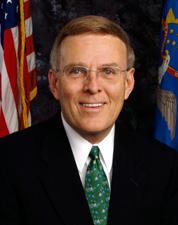
Madam President, I rise to support legislation that Senator Murkowski introduced last November that would bring some fairness to States such as North Dakota and Alaska with low populations. I am…
Madam President, I rise to support legislation that Senator Murkowski introduced last November that would bring some fairness to States such as North Dakota and Alaska with low populations. I am proud to cosponsor S. 1851, the Small State HOME Program Equity Act.
This legislation would increase the minimum funding level provided to low-population States for the U.S. Department of Housing and Urban Development's HOME Investment Partnerships Program. The HOME Investment Partnership Program distributes funds to State and local governments to expand housing for low-income families. It is one of the most important tools that States, local governments, and nonprofits have to respond to affordable housing needs. The program helps both renters and homebuyers across the country by rehabilitating substandard housing and funding new construction.
The HOME Investment Partnership Program has been enormously successful in providing housing for those in need, and I have been a strong supporter of annual appropriations for this important program. For the last several years, I have joined many of my colleagues in sending a letter to Senators Bond and Mikulski, the chairman and ranking member of the VA-HUD and Independent Agencies Appropriations Subcommittee, supporting robust funding for the HOME program.
Since 1992, the first year in which funds were appropriated for this program, HOME funds have been dispersed by a statutory formula, which is based in part on a State's population. At the time the program was created, a minimum funding level of $3 million was established for States which would receive a small amount of HOME funds under the allocation formula.
Over the last 10 years, inflation has significantly eroded the value of this minimum allocation and it is very difficult for States to meet their housing needs on only the minimum allocation of HOME funds. In Grand Forks County in North Dakota, for example, the wait list for HOME rehabilitation funding is estimated to be 11 years. I would imagine that the situation is similar in the 10 States that are not currently receiving a level of funding that allows them to run effective programs with their HOME dollars.
This is unacceptable. States with low populations deserve to have adequate funding to meet the unique housing needs of rural areas where construction and rehabilitation costs are often very high. The congressionally appointed, bipartisan Millennium Housing Commission also recognized this problem. It recommended increasing the minimum State funding level for the HOME program to $5 million in their May 30, 2002, report to Congress.
I look forward to working with Senator Murkowski on this important legislation to meet the housing needs of low-income families in rural America.
Mr. President, I rise to introduce a bill that will increase the minimum funding level for low population States for the U.S. Department of Housing and Urban Development's HOME Investment…
Mr. President, I rise to introduce a bill that will increase the minimum funding level for low population States for the U.S. Department of Housing and Urban Development's HOME Investment Partnerships Program.
The HOME program was created when the Cranston-Gonzalez National Affordable Housing bill was signed into law in 1990. Funds were first appropriated for this program in 1992. HOME program funds are disbursed to State and local governments for the purpose of assisting with the expansion of housing for low-income families. These governmental entities have a great deal of flexibility when using these funds to implement the program's purpose.
When this program was created, a minimum funding level of $3 million was created for States that would normally receive a small amount of HOME funds under the allocation formula, which is based on a State's population, among other parameters. Three States--Alaska, Delaware, and Nevada--received this level of funding for this program in fiscal year 2003. Assuming a three percent inflation rate per year between 1992-- when this program was first funded--and 2003, a $3 million allocation in 1992 dollars decreased in value to $2,145,904 in 2003.
This is unacceptable. My State is one of the most expensive areas in the country to develop housing, especially when one takes into account the cost to transport building materials to extremely remote areas of my State.
This legislation increases the minimum State funding level for the HOME program to $5 million. Based on fiscal year 2003 allocations for this program, ten States received less than $5 million. Those States are: Alaska, Delaware, Nevada, Hawaii, Montana, North Dakota, South Dakota, Utah, Vermont, and Wyoming. My proposed increase in funding would be offset by an overall decrease in allocations to other States. If a $5 million minimum funding level had been in place by fiscal year 2003, the other 40 States would only have experienced an overall decrease of less than $15 million. Bearing in mind that the amount appropriated in fiscal year 2003 for this program is just under $2 billion, such a decrease in funds seems reasonable considering no changes have been made to the minimum State funding level since the HOME program was first funded in 1992.
In addition, the congressionally-appointed, bipartisan Millennium Housing Commission recommended increasing the minimum State funding level for the HOME program to $5 million in their May 30, 2002, report to Congress.
It is imperative that we address this important issue so that we can address the housing needs of a greater amount of low-income families in low-population States.
I ask unanimous consent that the text of the bill be printed in the Record.
Mr. President, I rise to introduce a bill that will increase the minimum funding level for low population States for the U.S. Department of Housing and Urban Development's HOME Investment…
Mr. President, I rise to introduce a bill that will increase the minimum funding level for low population States for the U.S. Department of Housing and Urban Development's HOME Investment Partnerships Program.
The HOME program was created when the Cranston-Gonzalez National Affordable Housing bill was signed into law in 1990. Funds were first appropriated for this program in 1992. HOME program funds are disbursed to State and local governments for the purpose of assisting with the expansion of housing for low-income families. These governmental entities have a great deal of flexibility when using these funds to implement the program's purpose.
When this program was created, a minimum funding level of $3 million was created for States that would normally receive a small amount of HOME funds under the allocation formula, which is based on a State's population, among other parameters. Three States--Alaska, Delaware, and Nevada--received this level of funding for this program in fiscal year 2003. Assuming a three percent inflation rate per year between 1992-- when this program was first funded--and 2003, a $3 million allocation in 1992 dollars decreased in value to $2,145,904 in 2003.
This is unacceptable. My State is one of the most expensive areas in the country to develop housing, especially when one takes into account the cost to transport building materials to extremely remote areas of my State.
This legislation increases the minimum State funding level for the HOME program to $5 million. Based on fiscal year 2003 allocations for this program, ten States received less than $5 million. Those States are: Alaska, Delaware, Nevada, Hawaii, Montana, North Dakota, South Dakota, Utah, Vermont, and Wyoming. My proposed increase in funding would be offset by an overall decrease in allocations to other States. If a $5 million minimum funding level had been in place by fiscal year 2003, the other 40 States would only have experienced an overall decrease of less than $15 million. Bearing in mind that the amount appropriated in fiscal year 2003 for this program is just under $2 billion, such a decrease in funds seems reasonable considering no changes have been made to the minimum State funding level since the HOME program was first funded in 1992.
In addition, the congressionally-appointed, bipartisan Millennium Housing Commission recommended increasing the minimum State funding level for the HOME program to $5 million in their May 30, 2002, report to Congress.
It is imperative that we address this important issue so that we can address the housing needs of a greater amount of low-income families in low-population States.
I ask unanimous consent that the text of the bill be printed in the Record.
Show 3 more

Mr. President, I am pleased to join the chairman of the Committee on Agriculture, Nutrition and Forestry, Senator Cochran, to introduce the National Veterinary Medical Service Act. This bill will…
Mr. President, I am pleased to join the chairman of the Committee on Agriculture, Nutrition and Forestry, Senator Cochran, to introduce the National Veterinary Medical Service Act. This bill will offer veterinarians a valuable opportunity to serve where they are needed most, while receiving help in paying off their often burdensome student loans.
The cost of becoming a veterinarian is tremendous. Unless aspiring veterinarians come from a wealthy background, they will have accumulated substantial debt by the time they leave school. Because of this debt, their postgraduate opportunities for employment are greatly limited to the geographical areas and types of jobs where incomes meet the burden of student loan repayment. By defraying some of this debt, this bill will help veterinarians to take jobs where there are shortages of veterinarians--such as meat and poultry inspectors in the Federal Government, or in rural areas where large animal practitioners are needed.
Many of these unfilled positions are essential to ensuring the health and food security of Americans. We need to keep the Federal Government staffed with skilled veterinarians in order to maintain a safe food supply and the health of our livestock and poultry. We have all seen the devastating effects diseases such as E. coli O157:H7, Salmonella and Foot and Mouth Disease can have on the livestock and poultry industries and the human and economic toll they can take.
I have worked on many initiatives to address the uneven distribution of medical professionals. Although it often can require extra incentives to get these professionals where they are needed, they often transform these shortage areas by providing critically important services. I have been very happy with the ability of past bills to enable medical professionals to go where they are needed, and I am confident the National Veterinary Medical Service Act will be as successful for veterinarians. I am proud to cosponsor this bill, and I urge my colleagues to support it.

Mr. President, the United States is experiencing a serious shortage of veterinarians in rural agricultural and inner-city areas. Veterinarians are needed in these areas to support our Nation's…
Mr. President, the United States is experiencing a serious shortage of veterinarians in rural agricultural and inner-city areas. Veterinarians are needed in these areas to support our Nation's defense against bioterrorism, improve food safety, and prevent disease outbreaks. Unfortunately, the financial constraints of loan repayment obligations prevent many new veterinary graduates from working in these underserved areas.
Today, I am pleased to introduce, along with the distinguished Senator from Iowa, Mr. Harkin, legislation that addresses these challenges. The bill authorizes the Secretary of Agriculture to assist veterinarians in repaying their educational loans if they agree to provide veterinary medical services in areas where the Secretary has determined that a shortage of qualified veterinarians exist.
In addition, at the request of the United States Department of Agriculture, the bill authorizes the Secretary to provide additional loan repayment for those veterinarians in this program who agree to provide services to the Federal Government in emergency situations. When epidemics of animal diseases break out in specific locations in the United States, there is often a serious shortage of trained veterinarians available to respond. Examples include the Exotic Newcastle Disease outbreak in California and an outbreak of low pathogenic Avian Influenza in Virginia in 2002. This legislation would enable the Department of Agriculture to locate trained veterinarians where they are needed in an emergency situation.
This legislation has the support of the Department of Agriculture and the American Veterinary Medical Association which have worked together to develop this legislation to ensure that we have the veterinary health professionals available to protect our food supply. This is an important step in resolving the serious shortage of veterinarians.

Mr. President, I am pleased to be an original cosponsor for the National Beverage Producer Responsibility Act of 2003, a bill introduced today by Senator Jim Jeffords. This bill serves a need that we…
Mr. President, I am pleased to be an original cosponsor for the National Beverage Producer Responsibility Act of 2003, a bill introduced today by Senator Jim Jeffords. This bill serves a need that we already have seen in Hawaii--to reduce litter and increase recycling by encouraging businesses to work together in a partnership with government to reclaim glass, plastic bottles, and cans that accumulate on our shores, in our landfills, and along our streets.
The bill sets up a deposit charge that can be reclaimed when the beverage container is returned. The legislation sets a measurable performance standard of 80 percent recovery rate for used, empty beverage containers for recycling or reuse. The bill was crafted to address the concerns of industry, retain the authority of individual States, and promote a healthy environment. It empowers the beverage container industry to design a container recycling program that best fits its business requirements to meet the 80 percent goal. States like Hawaii and 10 other States across the Nation that already have bottle bills will be able to continue their programs as long as the programs meet the national performance standard. It aims to protect and preserve our Nation's natural resources and reduce costs to counties, cities, and residents. In my own State, Hawaii recently enacted a beverage container bill which will take effect in 2005.
As our Nation prepares to celebrate America Recycles Day on Saturday, November 15, I am optimistic that the National Beverage Producer Responsibility Act of 2003 will help keep our parks, beaches, and roadsides cleaner; reduce burdens on landfills; decrease ground water contamination; save energy; lower taxes for disposal costs; and create new industries and jobs.
Bill Text
Latest available legislative text
        [Congressional Bills 108th Congress]
[From the U.S. Government Publishing Office]
[S. 1851 Introduced in Senate (IS)]

108th CONGRESS
1st Session
S. 1851

To raise the minimum state allocation under section 217(b)(2) of the
Cranston-Gonzalez National Affordable Housing Act.

_______________________________________________________________________

IN THE SENATE OF THE UNITED STATES

November 12, 2003

Ms. Murkowski introduced the following bill; which was read twice and
referred to the Committee on Banking, Housing, and Urban Affairs

_______________________________________________________________________

A BILL

To raise the minimum state allocation under section 217(b)(2) of the
Cranston-Gonzalez National Affordable Housing Act.

Be it enacted by the Senate and House of Representatives of the
United States of America in Congress assembled,

SECTION 1. SHORT TITLE.

This Act may be cited as the ``Small State HOME Program Equity Act
of 2003''.

SEC. 2. ALLOCATION OF RESOURCES.

Section 217(b)(2)(A) of the Cranston-Gonzalez National Affordable
Housing Act (42 U.S.C. 12747(b)(2)(A)) is amended by striking
``$3,000,000'' each place it occurs and inserting ``$5,000,000''.
<all>