Minority Serving Institution Digital and Wireless Technology Opportunity Act of 2003
 Sen. George Allen (R-VA)
Legislative Activity
Stay on top of the latest movement without scrolling through every action
Referred to the Subcommittee on 21st Century Competitiveness.
July 21, 2003
View full timeline
Introduced in Senate
January 17, 2003
Sponsor introductory remarks on measure. (CR S1151-1152)
January 17, 2003
Read twice and referred to the Committee on Commerce, Science, and Transportation. (text of measure as introduced: CR S1152-1153)
January 17, 2003
Committee on Commerce, Science, and Transportation. Hearings held.
February 13, 2003
Committee on Commerce, Science, and Transportation. Ordered to be reported with amendments favorably.
March 13, 2003
Committee on Commerce, Science, and Transportation. Reported by Senator McCain with amendments. With written report No. 108-34.
April 7, 2003
Placed on Senate Legislative Calendar under General Orders. Calendar No. 60.
April 7, 2003
Measure laid before Senate by unanimous consent. (consideration: CR S5504-5511)
April 30, 2003
Passed Senate with amendments by Yea-Nay. 97 - 0. Record Vote Number: 136. (text: CR S5510-5511)
April 30, 2003
Message on Senate action sent to the House.
May 1, 2003
Received in the House.
May 1, 2003 • 10:05 AM
Referred to the Committee on Science, and in addition to the Committee on Education and the Workforce, for a period to be subsequently determined by the Speaker, in each case for consideration of such provisions as fall within the jurisdiction of the committee concerned.
May 1, 2003
Referred to the Subcommittee on Research.
May 7, 2003
Referred to the Subcommittee on 21st Century Competitiveness.
July 21, 2003
Voting History
1 vote recorded • Roll call available
Floor Debate
15 membersWhat members said about S. 196 on the floor
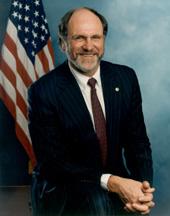
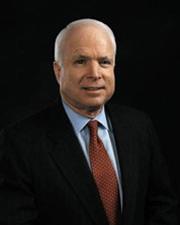
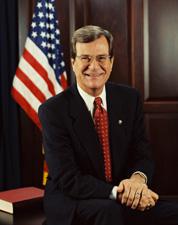
 +10
+10
Floor Debate
15 membersWhat members said about S. 196 on the floor
Mr. President, I send an amendment to the desk. Mr. President, I ask unanimous consent that further reading of the amendment be dispensed with. Mr. President, I ask unanimous consent that the…
Mr. President, I rise today to introduce a bill that represents an important step towards the goal of addressing the threats posed by global climate change. I am pleased to be joined on this bill by…
Mr. President, I begin by congratulating Senator Allen for his very important work on this legislation. Senator Allen has long been an advocate of equal opportunity, but he has also displayed a great…
Mr. President, I want to take this opportunity to rise in support of what I consider to be very significant legislation, S. 196, the Minority Serving Institution Digital and Wireless Technology…
Mr. President, I would like to thank Senator Allen for bringing this legislation, S. 196, to the floor today. As many of you know, this bill had its genesis with our former colleague, Senator Max…
Show 8 more

I thank my friend from Virginia for yielding, and I congratulate him for his great work in getting this bill together. It is very much needed. We cannot operate a modern college or university today…
Mr. President, today I rise with my colleagues--Senators McCain, Stevens, Hollings and Miller to introduce the Digital & Wireless Network Technology Program Act of 2003. Access to the Internet is no…
Mr. President, today I rise with my colleagues--Senators McCain, Stevens, Hollings and Miller to introduce the Digital & Wireless Network Technology Program Act of 2003. Access to the Internet is no…

I thank the Senator from Nevada, and I assure the Senator that Iowa and Illinois are not the same, as my colleague said. Iowa does grow more corn, but we grow more soybeans. I make that clear now. I…
During this era of economic slowdown and global threat, it is imperative that our Nation's institutions of higher education are prepared to produce a technologically advanced workforce. Rita Colwell,…
During this era of economic slowdown and global threat, it is imperative that our Nation's institutions of higher education are prepared to produce a technologically advanced workforce. Rita Colwell,…

Madam President, I rise today in support of S. 196, the Digital and Wireless Technology Program Act, which will provide $250 million annually for the next 5 years to address the technology needs of…

Mr. President, today I am introducing the Underground Storage Tank Compliance Act of 2003. While this bill is being introduced today, it already has a long history. The Superfund Subcommittee…
Show 11 more

Mr. President, today I am reintroducing the Early Education Act. This bill will enable millions of children to be prepared when they begin their academic careers. In 1989, the Nation's governors…
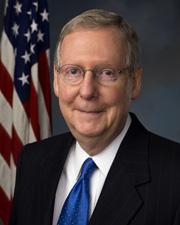
For the information of all Senators, following morning business, the Senate will take up S. 196, the digital and wireless technology bill. Under the agreement, the Senate will vote on the measure at…

Mr. President, I wish to applaud my distinguished colleague, Senator Allen, for his leadership. We are privileged in Virginia, primarily in the northern area, and then to an extent in the Tidewater…

Mr. President, there was some discussion on the floor today that the minority would move to the nomination of Prado tomorrow. That is a debatable motion when we are in executive session. We have been…
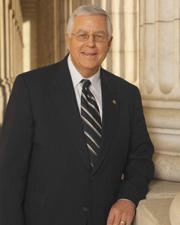
Mr. President, today the Senate will be in a period of morning business until 11 a.m. Following morning business, the Senate will begin consideration of S. 196, the digital and wireless technology…
Mr. President, the Senator from Iowa is yielded such time as he may consume. Rather, the Senator from Illinois. Madam President, reserving the right to object. Madam President, it is my understanding…
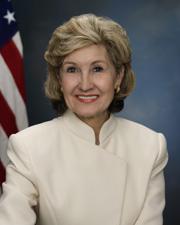
Mr. President, on behalf of the leader, Senator Frist, I announce the Senate will be in a period of morning business until 10 a.m. Following morning business, the Senate may begin consideration of…
Mr. President, I ask unanimous consent that when the Senate completes its business today, it stand in adjournment until 10 a.m., Wednesday, April 30. I further ask consent that following the prayer…
Mr. President, I ask unanimous consent that at a time to be determined by the majority leader in consultation with the minority leader, the Senate proceed to the consideration of Calendar No. 60, S.…
Mr. President, we have scheduled to appear in the Capitol today Secretary Wolfowitz from 2 to 3. I think it would be to everyone's best interest if we were not in session at that time. I would ask…
For the information of all Senators, the Senate will be in a period for morning business tomorrow until 10 a.m. The Senate could begin consideration of any of the conference reports that may be…
Bill Text
4 versions available
        [Congressional Bills 108th Congress]
[From the U.S. Government Publishing Office]
[S. 196 Referred in House (RFH)]

1st Session
S. 196

_______________________________________________________________________

IN THE HOUSE OF REPRESENTATIVES

May 1, 2003

Referred to the Committee on Science, and in addition to the Committee
on Education and the Workforce, for a period to be subsequently
determined by the Speaker, in each case for consideration of such
provisions as fall within the jurisdiction of the committee concerned

_______________________________________________________________________

AN ACT

To establish a digital and wireless network technology program, and for
other purposes.

Be it enacted by the Senate and House of Representatives of the
United States of America in Congress assembled,

SECTION 1. SHORT TITLE.

This Act may be cited as the ``Minority Serving Institution Digital
and Wireless Technology Opportunity Act of 2003''.

SEC. 2. ESTABLISHMENT OF OFFICE.

(a) In General.--There is established within the National Science
Foundation an Office of Minority Serving Institution Digital and
Wireless Technology to carry out the provisions of this Act.
(b) Purpose.--The Office shall--
(1) strengthen the ability of eligible institutions to
provide capacity for instruction in digital and wireless
network technologies by providing grants to, or executing
contracts or cooperative agreements with, those institutions to
provide such instruction; and
(2) strengthen the national digital and wireless
infrastructure by increasing national investment in
telecommunications and technology infrastructure at eligible
institutions.

SEC. 3. ACTIVITIES SUPPORTED.

An eligible institution shall use a grant, contract, or cooperative
agreement awarded under this Act--
(1) to acquire the equipment, instrumentation, networking
capability, hardware and software, digital network technology,
wireless technology, and infrastructure;
(2) to develop and provide educational services, including
faculty development, related to science, mathematics,
engineering, or technology;
(3) to provide teacher education, library and media
specialist training, and preschool and teacher aid
certification to individuals who seek to acquire or enhance
technology skills in order to use technology in the classroom
or instructional process;
(4) to implement joint projects and consortia to provide
education regarding technology in the classroom with a State or
State education agency, local education agency, community-based
organization, national non-profit organization, or business,
including minority businesses;
(5) to provide professional development in science,
mathematics, engineering, or technology to administrators and
faculty of eligible institutions with institutional
responsibility for technology education;
(6) to provide capacity-building technical assistance to
eligible institutions through remote technical support,
technical assistance workshops, distance learning, new
technologies, and other technological applications;
(7) to foster the use of information communications
technology to increase scientific, mathematical, engineering,
and technology instruction and research; and
(8) to develop proposals to be submitted under this Act and
to develop strategic plans for information technology
investments.

SEC. 4. APPLICATION AND REVIEW PROCEDURE.

(a) In General.--To be eligible to receive a grant, contract, or
cooperative agreement under this Act, an eligible institution shall
submit an application to the Director at such time, in such manner, and
accompanied by such information as the Director may reasonably require.
The Director, in consultation with the advisory council established
under subsection (b), shall establish a procedure by which to accept
and review such applications and publish an announcement of such
procedure, including a statement regarding the availability of funds,
in the Federal Register.
(b) Advisory Council.--The Director shall establish an advisory
council to advise the Director on the best approaches for involving
eligible institutions in the activities described in section 3, and for
reviewing and evaluating proposals submitted to the program. In
selecting the members of the advisory council, the Director may consult
with representatives of appropriate organizations, including
representatives of eligible institutions, to ensure that the membership
of the advisory council reflects participation by technology and
telecommunications institutions, minority businesses, eligible
institution communities, Federal agency personnel, and other
individuals who are knowledgeable about eligible institutions and
technology issues. Any panel assembled to review a proposal submitted
to the program shall include members from minority serving
institutions. Program review criteria shall include consideration of--
(1) demonstrated need for assistance under this Act; and
(2) diversity among the types of institutions receiving
assistance under this Act.
(c) Data Collection.--An eligible institution that receives a
grant, contract, or cooperative agreement under section 2 shall provide
the Office with any relevant institutional statistical or demographic
data requested by the Office.
(d) Information Dissemination.--The Director shall convene an
annual meeting of eligible institutions receiving grants, contracts, or
cooperative agreements under section 2 for the purposes of--
(1) fostering collaboration and capacity-building
activities among eligible institutions; and
(2) disseminating information and ideas generated by such
meetings.

SEC. 5. MATCHING REQUIREMENT.

The Director may not award a grant, contract, or cooperative
agreement to an eligible institution under this Act unless such
institution agrees that, with respect to the costs to be incurred by
the institution in carrying out the program for which the grant,
contract, or cooperative agreement was awarded, such institution will
make available (directly or through donations from public or private
entities) non-Federal contributions in an amount equal to \1/4\ of the
amount of the grant, contract, or cooperative agreement awarded by the
Director, or $500,000, whichever is the lesser amount. The Director
shall waive the matching requirement for any institution or consortium
with no endowment, or an endowment that has a current dollar value
lower than $50,000,000.

SEC. 6. LIMITATIONS.

(a) In General.--An eligible institution that receives a grant,
contract, or cooperative agreement under this Act that exceeds
$2,500,000, shall not be eligible to receive another grant, contract,
or cooperative agreement under this Act until every other eligible
institution that has applied for a grant, contract, or cooperative
agreement under this Act has received such a grant, contract, or
cooperative.
(b) Awards Administered by Eligible Institution.--Each grant,
contract, or cooperative agreement awarded under this Act shall be made
to, and administered by, an eligible institution, even when it is
awarded for the implementation of a consortium or joint project.

SEC. 7. ANNUAL REPORT AND EVALUATION.

(a) Annual Report Required From Recipients.--Each institution that
receives a grant, contract, or cooperative agreement under this Act
shall provide an annual report to the Director on its use of the grant,
contract, or cooperative agreement.
(b) Evaluation by Director.--The Director, in consultation with the
Secretary of Education, shall--
(1) review the reports provided under subsection (a) each
year; and
(2) evaluate the program authorized by section 3 on the
basis of those reports every 2 years.
(c) Contents of Evaluation.--The Director, in the evaluation, shall
describe the activities undertaken by those institutions and shall
assess the short-range and long-range impact of activities carried out
under the grant, contract, or cooperative agreement on the students,
faculty, and staff of the institutions.
(d) Report to Congress.--The Director shall submit a report to the
Congress based on the evaluation. In the report, the Director shall
include such recommendations, including recommendations concerning the
continuing need for Federal support of the program, as may be
appropriate.

SEC. 8. DEFINITIONS.

In this Act:
(1) Eligible institution.--The term ``eligible
institution'' means an institution that is--
(A) a historically Black college or university that
is a part B institution, as defined in section 322(2)
of the Higher Education Act of 1965 (20 U.S.C.
1061(2)), an institution described in section
326(e)(1)(A), (B), or (C) of that Act (20 U.S.C.
1063b(e)(1)(A), (B), or (C)), or a consortium of
institutions described in this subparagraph;
(B) a Hispanic-serving institution, as defined in
section 502(a)(5) of the Higher Education Act of 1965
(20 U.S.C. 1101a(a)(5));
(C) a tribally controlled college or university, as
defined in section 316(b)(3) of the Higher Education
Act of 1965 (20 U.S.C. 1059c(b)(3));
(D) an Alaska Native-serving institution under
section 317(b) of the Higher Education Act of 1965 (20
U.S.C. 1059d(b));
(E) a Native Hawaiian-serving institution under
section 317(b) of the Higher Education Act of 1965 (20
U.S.C. 1059d(b)); or
(F) an institution determined by the Director, in
consultation with the Secretary of Education, to have
enrolled a substantial number of minority, low-income
students during the previous academic year who received
assistance under subpart I of part A of title IV of the
Higher Education Act of 1965 (20 U.S.C. 1070a et seq.)
for that year.
(2) Director.--The term ``Director'' means the Director of
the National Science Foundation.
(3) Minority business.--The term ``minority business''
includes HUBZone small business concerns (as defined in section
3(p) of the Small Business Act (15 U.S.C. 632(p)).

SEC. 9. AUTHORIZATION OF APPROPRIATIONS.

There are authorized to be appropriated to the Director of the
National Science Foundation $250,000,000 for each of the fiscal years
2004 through 2008 to carry out this Act.

Passed the Senate April 30, 2003.

Attest:

EMILY J. REYNOLDS,

Secretary.