A bill to designate a Federal building in Harrisburg, Pennsylvania, as the "Ronald Reagan Federal Building".
Legislative Activity
Stay on top of the latest movement without scrolling through every action
Became Public Law No: 108-227.
May 7, 2004
View full timeline
Introduced in Senate
February 2, 2004
Sponsor introductory remarks on measure. (CR S374)
February 2, 2004
Read twice and referred to the Committee on Environment and Public Works.
February 2, 2004
Committee on Environment and Public Works. Ordered to be reported without amendment favorably.
March 10, 2004
Committee on Environment and Public Works. Reported by Senator Inhofe without amendment. Without written report.
March 10, 2004
Placed on Senate Legislative Calendar under General Orders. Calendar No. 457.
March 10, 2004
Passed Senate without amendment by Unanimous Consent. (consideration: CR S2823; text as passed Senate: CR S2823)
March 12, 2004
Received in the House.
March 16, 2004 • 12:30 PM
Message on Senate action sent to the House.
March 16, 2004
Referred to the House Committee on Transportation and Infrastructure.
March 16, 2004
Referred to the Subcommittee on Economic Development, Public Buildings and Emergency Management.
March 17, 2004
Mr. LaTourette moved to suspend the rules and pass the bill.
April 28, 2004 • 11:10 AM
Considered under suspension of the rules. (consideration: CR H2422)
April 28, 2004 • 11:11 AM
DEBATE - The House proceeded with forty minutes of debate on S. 2043.
April 28, 2004 • 11:11 AM
Passed/agreed to in House: On motion to suspend the rules and pass the bill Agreed to by voice vote.(text: CR H2422)
April 28, 2004 • 11:14 AM
On motion to suspend the rules and pass the bill Agreed to by voice vote. (text: CR H2422)
April 28, 2004 • 11:14 AM
Motion to reconsider laid on the table Agreed to without objection.
April 28, 2004 • 11:14 AM
Presented to President.
April 30, 2004
Signed by President.
May 7, 2004
Became Public Law No: 108-227.
May 7, 2004
Floor Debate
10 membersWhat members said about S. 2043 on the floor
 JIL
JIL MBE
MBE TAD
TAD CSB
CSB BB+5
BB+5
Floor Debate
10 membersWhat members said about S. 2043 on the floor
Mr. President, today Senator McCain and I are introducing legislation to extend the life of the National Commission on Terrorist Attacks Upon the United States so that it can complete its critically…
Mr. President, today Senator McCain and I are introducing legislation to extend the life of the National Commission on Terrorist Attacks Upon the United States so that it can complete its critically important investigation into the causes of the September 11th terrorist attacks, which claimed the lives of nearly 3,000 innocent people.
Under legislation Senator McCain and I authored in December 2001 to create the Commission, its final report was to have been completed by May 27, 2004. The Commission itself has asked for more time. So we are now proposing to extend that deadline until January 10, 2005 and to provide an additional $6 million for the Commission to complete its work. Senator McCain and I are grateful to the Minority Leader, Senator Daschle, for joining us in this effort. We are also happy to have the support of Senators Dorgan, Lautenberg, Corzine, Graham, Durbin, and Dodd. In the House, Representatives Fossella, Shays, Hinchey and Emanuel are expected to introduce companion legislation this week, and we welcome their support as well.
We want the Commission's final report to be as searching and complete as possible. We owe that to the memories of the 3,000 victims and their families. And we owe it to the Nation as a whole. In fact, our future security depends upon it.
George Washington once said we should look back ``to derive useful lessons from past errors, and for the purpose of profiting by dear- bought experience.'' That is the precise mission of this Commission to better understand what went wrong so we can prevent such a catastrophic attack from ever happening again. The Commission simply needs more time to do that.
From the beginning, Senator McCain and I have been motivated by the experience of the families of victims of September 11. Above and beyond the grief of their losses, they have endured terrible pain in not knowing the whole account of how something so horrific could have happened to them and those they loved. It was a tribute to the power of the families' message that our legislation creating the Commission passed the Senate on September 24, 2002, by a resounding vote of 90-8. And it is a tribute to the enduring power of their message that Senator McCain and I are seeking this extension.
Last week, the Commission asked Congress for at least an additional 60 days to finalize its interviews, hearings, and report. The families, however, expressed concern that two months may be an inadequate amount of time to accomplish all that must be done. They have called for a seven-and-a-half month extension so the Commission can conduct all the public hearings it had originally intended to hold, so that it can conduct thorough reviews of the President's daily intelligence briefings--a process barely underway--and so that it has the time to deal with the Administration's anticipated objections to declassifying material in the final report. Indeed, the Commissioners I asked have confirmed that they can benefit from more than the minimum two months requested.
I have therefore been convinced by the families and the Commissioners that the extra time is necessary. But I would also warn the Administration that this extension is not an excuse to engage in additional dilatory tactics.
I add this warning because the Bush Administration has a long record of opposing this Commission and an equally long record of making its work more difficult. Ever since Senator McCain and I first joined forces on this issue, we have faced White House intransigence. The President opposed the Commission for 10 months until the eve of a Senate vote he knew he would lose. During final negotiations over the details of the legislation, the White House negotiated to keep the Commission's duration as short as possible, rather than give it ample time to do a thorough job.
Once the Commission got underway, the Administration hampered the Commission's progress through slow document production and other stalling tactics, limiting the Commission's ability to proceed expeditiously with its investigation. Even now, the Administration is refusing to give the full Commission notes, taken by members of the Commission, that describe key White House documents. When one considers the obstacles generated by the White House, it is not in the least bit surprising that the Commission now needs additional time to finish the job.
I would note, however, that this extension does not preclude the Commission from releasing interim reports, as the original legislation establishing the Commission allows. Furthermore, the Commission is free to release its final report before the deadline, if it has completed its work. The Commission's hearings, questioning of witnesses, factual findings, and staff report issued last week proved exceptionally valuable in shedding light on some of the causes of the terrorist attacks. Future hearings and staff reports, no doubt, will continue to provide important new information about weaknesses in our defenses against terrorism.
Therefore, we encourage the Commission to continue to release its findings and recommendations as they become available, so that we can learn from the mistakes of our past as quickly as possible, and work harder to shore up existing vulnerabilities. Congress and the relevant federal agencies have a duty to develop new strategies and capabilities to deter and prevent future terrorist attacks, and expeditious reporting by the Commission will help enormously.
Major systemic problems have already surfaced, for example, that can point us in the right direction, or maybe even an entirely new direction, to address an array of vulnerabilities, particularly in our law enforcement and intelligence communities. Allow me to cite just a few examples from the Commission's work thus far to illustrate how many hands we will need, laboring in unison, to patch the breaches that remain in America's domestic security:
1. An immigration official at Orlando International Airport, Mr. Melendez-Perez, testified that on August 4, 2001, he turned away and sent home a suspicious, unresponsive, and belligerent Saudi national holding a one-way ticket with no departure plans and insufficient funds to stay in the U.S. and purchase a ticket home. This individual claimed that he was to meet a friend at the airport but would not name the friend. It turned out that one of the 9/11 hijackers, Mohamed Atta, was at the airport on that day. Amazingly, neither the FBI nor anyone else from the intelligence community has ever debriefed Mr. Melendez-Perez, even though the immigration inspector informed the FBI of the incident immediately after the 9/11 terrorist attacks.
2. The excellent performance of Mr. Melendez-Perez demonstrated that a vigilant and well-trained officer can spot suspicious behavior in the course of a routine interview. But the Commission's hearings and reports also revealed how infrequently that occurs. Government officials admitted in public testimony that consular employees are not expected to screen for possible terrorists during interviews of visa applicants, nor are they trained to do so. The Commission discovered that many of the hijackers had passports that were fraudulently altered or had other suspicious indicators, but between 1992 and September 11, 2001, the federal government had not attempted to disseminate, to border security or other relevant employees, available information about the travel and passport practices of Al Qaeda or other terrorist groups. All of the hijackers' visa applications were incomplete, and several contained false statements that were easily identifiable. The hijackers entered the United States, often more than once, without incident, despite the fact that several of them had violated immigration law. Hijackers referred to secondary inspections for more detailed scrutiny were nevertheless admitted.
3. New information has been revealed about the abundant knowledge the intelligence community had about three of the 19 hijackers, who held a strategy session in Malaysia and were extensively tracked by U.S. and foreign intelligence services. The story fleshed
out by the Commission underscores the fact that not only did the government fail to share information that might have kept the terrorists out of the country, but they also failed to share information that might have exposed the terrorists' September 11th plot. That is why I have focused personal attention on the Terrorist Threat Integration Center and the Directorate for Information Analysis and Infrastructure Protection at DHS to make sure that these new centers are receiving all intelligence information, mixing it together with skilled and intense analysis, and warning the relevant state, local, and federal officials of emerging terrorist plots.
4. All the evidence that consolidated watch lists might have prevented entry to some of the terrorists notwithstanding, the watch lists still haven't been consolidated despite numerous Administration promises to do so. The Commission learned from the Federal Aviation Administration that, prior to September 11th, the no-fly list created for the airlines had only 12-20 names on it, whereas the terrorist watch list at the State Department had tens of thousands of terrorists' names. We also learned that the no-fly list and the larger terrorist watch list are still not equal in numbers and that there are still terrorists on the larger list who might be permitted to fly if they evade other detection.
These disclosures demonstrate the Commission is accomplishing its assignment, and so it must be allowed to complete its investigation. I am certain the Commission will use the extra months wisely to complete a thorough investigation, continue its public hearings, interview all relevant government officials and complete a comprehensive final report for release as soon as possible.
It is a basic American principle that we must learn from the past in order to secure a better future. Our ability to counter, prevent, and defend against the next terrorist attack on our homeland depends in no small part on the Commission's ability to bring satisfactory closure to its work. If we only give the Commission the time, resources, and cooperation it deserves, the Commission's full, fair, and unflinching assessment of what went wrong will be of immediate value to our national security. And it will be of lasting value to the American people, who will finally discover the unvarnished truth.
I urge the Senate to approve this legislation in a timely manner so that the victims' families and the rest of America may have some measure of peace.
I ask unanimous consent that the text of the bill be printed in the Record.
Mr. President, I ask unanimous consent that the Committee on Banking, Housing, and Urban Affairs be authorized to meet during the session of the Senate on Wednesday, March 10, 2004, at 10 a.m., to…
Mr. President, I ask unanimous consent that the Committee on Banking, Housing, and Urban Affairs be authorized to meet during the session of the Senate on Wednesday, March 10, 2004, at 10 a.m., to conduct a hearing on ``Review of Current Investigations and Regulatory Actions Regarding the Mutual Fund Industry.''
Mr. President, I ask unanimous consent that the Committee on Commerce, Science, and Transportation be authorized to meet on Wednesday, March 10, 2004, at 10 a.m., on steroids.
Mr. President, I ask unanimous consent that the Committee on Energy and Natural Resources be authorized to meet during the session of the Senate on Wednesday, March 10, at 11:30 a.m., to consider pending calendar business.
Agenda
On Wednesday, March 10, at 11:30 a.m., the Committee will hold a Business Meeting in Dirksen 366 to consider the following items on the agenda:
Agenda Item 1: To consider the nomination of Susan Johnson Grant, to be Chief Financial Officer at the Department of Energy.
Agenda Item 8: S. 1307--A bill to authorize the Secretary of the Interior, acting through the Bureau of Reclamation, to assist in the implementation of fish passage and screening facilities at non-Federal water projects, and for other purposes.
Agenda Item 9: S. 1355--A bill to authorize the Bureau of Reclamation to participate in the rehabilitation of the Wallowa Lake Dam in Oregon, and for other purposes.
Agenda Item 10: S. 1421--A bill to authorize the subdivision and dedication of restricted land owned by Alaska Natives.
Agenda Item 12: H.R. 620--To authorize the Secretary of the Interior to provide supplemental funding and other services that are necessary to assist the State of California or local educational agencies in California in providing educational services for students attending schools located within the Park.
Agenda Item 17: H.R. 2696--To establish institutes to demonstrate and promote the use of adaptive ecosystem management to reduce the risk of wildfires, and restore the health of fire-adapted forest and woodland ecosystems of the interior West.
Mr. President, I ask unanimous consent that the full Committee on Environment and Public Works be authorized to meet on Wednesday, March 10, 2004, at 9:25 a.m., to conduct a business meeting to consider a GSA resolution and S. 1904, S. 2022, and S. 2043, and to conduct a hearing on the proposed FY 2005 EPA budget.
The hearing will be held in SD 406.
Mr. President, I ask unanimous consent that the Committee on Finance be authorized to meet during the session on Wednesday, March 10, 2004, at 2 p.m., in 215 Dirksen Senate Office Building, to hear testimony on ``United States Economic and Trade Policy in the Middle East.''
Mr. President, I ask unanimous consent that the Committee on Foreign Relations be authorized to meet during the session of the Senate on Wednesday, March 10, 2003, at 9:30 a.m., to hold a hearing on Nonproliferation and Arms Control Strategy.
Mr. President, I ask unanimous consent that the Committee on Foreign Relations be authorized to meet during the session of the Senate on Wednesday. March 10, 2003, at 2:30 p.m., to hold a hearing on ``A Fresh Start for Haiti? Charting the Future of U.S.-Haitian Relations.''
Mr. President, I ask unanimous consent that the Committee on Indian Affairs be authorized to meet on Wednesday, March 10, 2004, at 9:30 a.m., in room 485 of the Russell Senate Office Building to conduct an oversight hearing on the proposed reorganization of major agencies and functions related to Indian trust reform matters without the Department of the Interior.
Mr. President, I ask unanimous consent that the Committee on the Judiciary be authorized to meet to conduct a hearing on Wednesday, March 10, 2004, at 10 a.m. on ``Letting the People Decide: The Constitutional Amendment Authorizing Congress to Prohibit Physical Desecration of the flag of the United States,'' in the Dirksen Senate Office Building Room 226.
Witness List:
Panel I: The Honorable Daniel J. Bryant, Assistant Attorney General, Office of Legal Policy, Department of Justice, Washington, DC.
Panel II: Maj. Gen. Patrick Brady, Chairman of the Board, Citizens Flag Alliance, Recipient, Medal of Honor, Summer, WA; John Andretti, NASCAR Nextel Cup Series Driver, Mooresville, NC; Richard D. Parker, Williams Professor of Law, Harvard Law School, Cambridge, MA; Gary E. May, Associate Professor of Social Work, University of Southern Indiana (1981-1985), Evansville, IN; and Lawrence Korb, Former Assistant Secretary of Defense, Navy Veteran, Alexandria, VA.
Mr. President, I ask unanimous consent that the Committee on the Judiciary be authorized to meet to conduct a hearing on Wednesday, March 10, 2004, at 2:30 p.m. on ``Judicial Nominations'' in the Dirksen Senate Office Building Room 226.
Witness List:
Panel I: Senators.
Panel II: Peter W. Hall, to be United States Circuit Judge for the Second Circuit.
Panel III: Jane J. Boyle, to be United States District Judge for the Northern District of Texas; Marcia G. Cooke, to be United States District Judge for the Southern District of Florida; and Walter D. Kelley, Jr., to be United States District Judge for the Eastern District of Virginia.
Mr. President, I ask unanimous consent that the Committee on Rules and Administration be authorized to meet during the session of the Senate on Wednesday, March 10, 2004, at 9:30 a.m., to conduct a hearing on the scope and operation of organizations registered under Section 527 of the Internal Revenue Code.
Mr. President, I ask unanimous consent that the Committee on Veterans' Affairs be authorized to meet during the session of the Senate on Wednesday, March 10, 2004, for a joint hearing with the House of Representatives's Committee on Veterans' Affairs, to hear the legislative presentation of the Veterans of Foreign Wars.
The hearing will take place in room 216 of the Hart Senate Office Building at 10 a.m.
Mr. President, I ask unanimous consent that the Joint Economic Committee be authorized to conduct a hearing in Room 628 of the Dirksen Senate Office Building, Wednesday, March 10, 2004, from 10 a.m. to 12:30 p.m.
Mr. President, I ask unanimous consent that the Subcommittee on Emerging Threats and Capabilities of the Committee on Armed Services be authorized to meet during the session of the Senate on March 10, 2004, at 9:30 a.m., in open and closed session to receive testimony on the Nuclear Nonproliferation Programs of the Department of Energy and the Cooperative Threat Reduction Program of the Department of Defense, in review of the Defense Authorization Request for fiscal year 2005.
Mr. President, I ask unanimous consent that the Subcommittee on International Trade and Finance of the Committee on Banking, Housing, and Urban Affairs be authorized to meet during the session of the Senate on Wednesday, March 10, 2004, at 1 p.m. to conduct a hearing on ``Argentina's Financial Crisis.''
Mr. President, I ask unanimous consent that the subcommittee on public lands and forests of the committee on Energy and Natural Resources be authorized to meet during the session of the Senate on Wednesday, March 10th, at 2:30 p.m.
The purpose of the hearings is to receive testimony on the following bills: S. 1354, to resolve certain conveyances and provide for alternative land selections under the Alaska Native Claims Settlement Act related to Cape Fox Corporation and Sealaska Corporation, and for other purposes; S. 1575 and H.R. 1092, to direct the Secretary of Agriculture to sell certain parcels of federal land in Carson City and Douglas County, NV; S. 1778, to authorize a land conveyance between the United States and the City of Craig, AK, and for other purposes; S. 1819 and H.R. 272, to direct the Secretary of Agriculture to convey certain land to Lander County, NV, and the Secretary of the Interior to convey certain land to Eureka County, NV, for continued use as cemeteries; and H.R. 3249, to extend the term of the Forest Counties Payments Committee.
Mr. President, I ask unanimous consent that the subcommittee on Seapower of the Committee on Armed Services be authorized to meet during the session of the Senate on March 10, 2004, at 2 p.m., in open session to receive testimony on the posture of the U.S. Transportation Command, in review of the Defense authorization request for fiscal year 2005 and the future years defense program.
Mr. President, I ask unanimous consent that the subcommittee on Science, Technology and Space be authorized to meet on Wednesday, March 10, 2004, at 2:30 p.m. on NASA/Mars Exploration Program.
Mr. President, the Democratic and Republican commissioners on the blue ribbon commission investigating the September 11, 2001 terrorist attacks reached an important and bipartisan decision. They…
Mr. President, the Democratic and Republican commissioners on the blue ribbon commission investigating the September 11, 2001 terrorist attacks reached an important and bipartisan decision. They decided they needed more time--more time to get access to the documents and people that can help us understand what happened on that fateful day; more time to analyze this information so they can help us identify which corrective measures are needed to reduce the prospects for future 9/11s; in short, more time to do what they are required to do by law.
I come to the floor today to talk briefly about my views on this commission and its work, and to explain why I have joined with Senators McCain and Lieberman to offer legislation to give the commission the time needed to complete its task and provide the families of the victims of 9/11 and all Americans with a complete and thorough report.
The importance of this commission's work cannot be overstated. This independent commission represents the last and perhaps best hope for our Nation to understand how 19 individuals were able to execute the most deadly terrorist attack on American soil in this Nation's long history.
How did these terrorists get into this country? What is the source of funding they used to carry out these activities? How did the hijackers get themselves, and apparently knives and mace, past airport security? How were they able to hijack four aircraft and drive them to such a deadly end? Why could our intelligence community and policymakers not do more to prevent these heinous acts? What can the Government and individual citizens do in the future to prevent similar attacks?
These are but some of the difficult questions the commission has to address. Given the importance of their task, one would think that all parties--Democratic and Republican, Congress and the White House--would quickly agree to provide the commission whatever it needs.
Unfortunately, in the days immediately after the commissioners made their request, it became evident some parties may not believe the commission should be provided the time it needs to do what is required by law.
Quoting from the New York Times on January 28:
The White House and Republican congressional leaders have
said they see no need to extend the congressionally mandated
deadline . . . and a spokesperson for Speaker J. Dennis
Hastert said . . . Mr. Hastert would oppose any legislation
to grant the extension.
As unsettling as this position is, in hindsight, it should not be surprising to those who have followed the history of this commission. In the months immediately after the tragic events of September 11, 2001, President Bush and Vice President Cheney personally appealed to me and to other Members of Congress not to establish a bipartisan blue ribbon commission.
Vice President Cheney suggested to me that creating such an effort could detract from administration officials' efforts to get the terrorists responsible.
Fortunately, neither the families of the victims of 9/11 nor the American people accepted this argument. They understood, and properly in my view, that an independent investigation would enhance our efforts on the war on terror.
Far from endangering national security, an inquiry could actually help us pinpoint and correct flaws in our security and intelligence communities and identify the necessary corrective measures.
Despite the fact that the idea of a commission enjoyed the overwhelming support of the families of the victims and of the American people, the administration, and the House Republican leadership persisted in their efforts to see that this idea never took flight--in some instances, at the same time they were publicly professing their support for the commission.
For example, on the same day the White House spokesperson indicated President Bush supported the idea of a commission, his negotiators were on Capitol Hill vetoing a congressional agreement to establish one.
In October of 2002, the House and Senate Intelligence Committees announced they had reached a deal to include language to establish the commission in the intelligence authorization bill. The next day, the deal collapsed and negotiators involved laid the blame at the doorstep of the White House and the House Republican leadership.
According to the Washington Post, a senior Republican Senator said:
The House Republican leadership weighed in against [the
deal] and the deal collapsed. . . . It is no secret that the
White House works through the House Republican leadership.
Again, the families of the victims and supporters of the commission were not deterred. In fact, this commission would not exist were it not for the dedicated efforts of the families of the victims. They pressed on, and in November of 2002, they prevailed.
Congress passed the legislation creating the commission and the President signed it into law. The commission was given until May of 2004 to do its work. We all knew at the time that this deadline was both arbitrary and highly ambitious, given the scope of the work involved. Subsequent actions would make meeting this deadline impossible.
The commission was immediately embroiled in controversy over the selection and subsequent resignation of Henry Kissinger, who the President selected to chair its work. But the obstacles placed in front of this commission were just the beginning. In light of the sensitive nature of much of the information the commission would be examining, getting the commission high-level security clearances was the first priority.
However, for a variety of reasons, a process that could have taken weeks stretched into months, thereby preventing the commissioners from examining numerous important documents.
Then came open resistance from the Bush administration to commission requests for access to documents and individuals the commissioners deemed vital to their inquiry. The commission quickly became bogged down in negotiations over which documents and individuals it would have access to and under what terms and conditions.
Many agencies flat out refused to provide access. Others insisted the administration minders be present when the commission questioned Government employees.
The commission was forced to resort to subpoenas to obtain information from several Federal agencies, and press reports is actively considering issuing others.
As recently as this past week, it was reported that the administration is still placing roadblocks in front of the commission's vital work. Over the weekend, it was disclosed that the White House is refusing to allow the commission access to notes its own members have taken on briefings received by the President.
As a result of the administration's repeated failure to cooperate fully and immediately with the commission and its important work, it has become increasingly clear that it cannot fulfill the immense task placed before it and comply with the deadline imposed on it.
In order to meet this deadline, commissioners tell us they would have to cut corners. Scheduled hearings would have to be canceled. Interviews with key officials would have to be scrapped. Time to analyze their information and write their report would be short. All of these reasons led the commission, wisely in my view, to request additional time. All of these reasons led me to join the families of the victims, as well as Senators McCain and Lieberman, to conclude we must do everything possible to meet their requests.
I hope those who have opposed the commission and its work in the past will step aside. I hope they will allow us to provide the commission with the time it needs to give the families and America the report it deserves.
Mr. President, I rise today to introduce legislation that will designate the former Mallinkrodt Nuclear Production Facilities in Missouri as a Special Exposure Cohort (SEC) under the Energy Employees…
Mr. President, I rise today to introduce legislation that will designate the former Mallinkrodt Nuclear Production Facilities in Missouri as a Special Exposure Cohort (SEC) under the Energy Employees Occupational Illness Compensation Program Act (EEOICPA) of 2000. These facilities, which handled and processed highly radioactive materials during the Cold War, are located in Downtown St. Louis, Weldon Springs in St. Charles County, and Hematite in Jefferson County, MO respectively.
Energy workers at these sites handled and processed highly radioactive materials during the Cold War as part of the Manhattan Project and our nation's ongoing Atomic Weapons Program. The St. Louis Downtown or ``Destrahan'' Site operated from 1942 through 1958. From there, operations and most Mallinkrodt workers were moved out to the Weldon Springs Facility which operated until 1958. After that, work continued at the Hematite Facility in Jefferson County until 1969.
This legislation would add these facilities to the four existing Special Exposure Cohort (SEC) Sites across the country, which were written into the original EEOICPA. In addition to designating the existing SEC sites, the EEOICPA set up a process to add additional sites to the SEC list provided those sites meet certain criteria.
A Special Exposure Cohort (SEC) is comprised of a group of employees with specific cancers who worked at four specific nuclear facilities or participated in certain nuclear weapons tests, and who met other requirements under the EEOICPA. An SEC designation would provide former workers at these sites or their survivors with expedited compensation as opposed to requiring these workers to participate in the long, complex and cumbersome bureaucratic process known as dose reconstruction.
According to the National Institute of Occupational Safety and Health (NIOSH), there are two key statutory determinations required for adding a class of employees to the SEC. The first requirement is that it is not feasible to estimate with sufficient accuracy the radiation dose that the class of employees received. The second requirement is that there is a reasonable likelihood that such a radiation dose may have endangered the members of this class. After extensive research, which included several briefings with NIOSH, the Department of Energy, independent experts and former Mallinkrodt workers, I believe that there is strong evidence indicating that both statutory requirements for the SEC have been met with regard to the Mallinkrodt Sites.
In mid 2001, the Department of Energy (DOE) released a report indicating for the first time that the highly radioactive material plutonium was processed at the Weldon Springs Site. The report also stated that recycled uranium, another highly radioactive material, was processed at the site. Furthermore, in its recently completed site profile for the St. Louis Downtown Site, NIOSH admits that they have virtually no records or monitoring data on the workers at the site prior to 1948. NIOSH also stated that this could be a problem in calculating individual dose, thus requiring some assumptions to be made.
Both of the aforementioned issues, the presence of plutonium and the loss or destruction of individual monitoring records were reasons for writing the four existing SEC sites into the original EEOICPA.
In addition to these issues, long sought after documents from the former Chief Safety Officer for the Atomic Energy Commission (AEC) during the time described the Mallinkrodt St. Louis facility as one of the two worst plants with respect to worker exposures. Workers at this plant were exposed to excessive levels of airborne uranium dust relative to the standards in effect during the time, and many workers were exposed to as much as 200 times the preferred levels of exposure. NIOSH confirmed these intense levels at a recent presentation on the Mallinkrodt-St. Louis Site Profile
when it described the operations at this plant as a ``messy'' or ``dirty'' operation in terms of levels of radionuclides present.
Finally, NIOSH has informed claimants who worked at these sites or their survivors that if they are not interviewed as a part of the dose reconstruction process, it would ``hinder'' NIOSH's ability to conduct dose reconstruction for the claimant and may result in a dose reconstruction that ``incompletely or inaccurately'' estimates the radiation dose to which the energy employee named in the claim was exposed. So NIOSH is basically saying that they are relying on a former worker's memory or any information a survivor might have. What if the former worker cannot remember what he was exposed to or was never told? What if the survivor has no idea as to what materials the claimant might have been exposed? Keep in mind. Most of this happened anywhere from 40-60 years ago.
All of the previously mentioned points are evidence that the health of these workers was endangered and that an accurate dose reconstruction is not feasible. Therefore, I believe that the Mallinkrodt sites in Missouri should be designated as a Special Exposure Cohort.
To make matters even worse, the Department of Health and Human Services first published the Notice of Proposed Rulemaking (NPRM) concerning the Special Exposure Cohort on June 25, 2002, and as of today, January 27, 2004, this rule has yet to be finalized. Many of these former Mallinkrodt workers have died while waiting for the proposed SEC rule to be finalized, including some claimants who were waiting for dose reconstruction to be started or completed.
This is simply unacceptable! The EEOICPA was intended to provide long overdue compensation to these workers within a reasonable period of time. These brave workers answered the call and helped our nation win the Cold War. It is now time for our nation to help them and provide them with the immediate compensation that they deserve.
I ask unanimous consent that the text of the bill be printed in the Record.
Mr. President, today I am introducing the Secure and Verifiable Electronic Voting Act of 2004. The 2000 presidential election exposed a number of serious problems with the accuracy and fairness of…
Mr. President, today I am introducing the Secure and Verifiable Electronic Voting Act of 2004.
The 2000 presidential election exposed a number of serious problems with the accuracy and fairness of election procedures in this country, as well as the reliability of certain types of voting technology. As a result of these irregularities, many eligible voters were effectively disenfranchised and thus deprived of one of their most fundamental rights. This is not acceptable in a democracy such as ours.
Our constituents demanded better and we responded.
In 2002, Congress passed the Help America Vote Act (HAVA). This important legislation sets Federal minimum standards for voting systems, including requiring that the equipment used is reliable, accurate, and accessible to all. It encourages the use of direct recording electronic voting systems to replace the outdated punch card and lever machines. It also requires that voting systems provide voters the opportunity to correct errors and that they produce a permanent record with a manual audit capacity.
However, HAVA does not go far enough. As we move our voting systems into the 21st century, we need to ensure the greatest level of accountability possible. Voters need to have confidence in the technology that they're using, and they need to be assured that their votes will be counted exactly as they are cast. It is imperative that any voting system certified by the Federal Government provides these assurances.
In my home State of California, we are already using touch-screen voting machines in some areas--28 percent of the precincts by the March primary. But, these machines currently do not leave any paper trail and cannot be verified for complete accuracy. We need an electronic voting system that is modern, secure, and verifiable. The State of California is taking these steps. Secretary of State Kevin Shelley has required the use of voter-verified paper audit trails and safety measures, such as manufacturer security, local testing of machines, and random audits of system software. These practices need to be in place nationwide.
My bill, the Secure and Verifiable Electronic Voting Act--the SAVE Voting Act would require that a voter-verified paper trail for each vote cast be in place for the November 2004 elections. What that means is this: after an individual votes, he or she will have the opportunity to review the vote on a
piece of paper, before it becomes part of the official record. If there is a discrepancy, the voter will have an opportunity to change his or her vote before it is recorded in the official record. This paper record will then be the official permanent record used for any recount or verification.
The SAVE Voting Act would also create greater security standards by making sure that access to the software is limited to approved personnel who have had background checks. It would require that any software used is not transmitted over the Internet, that the Election Assistance Commission certifies any and all software used in voting systems, and that the certified code be made available to the public for review. These security measures help to ensure, up front, that the electronic voting systems we use are safeguarded.
The SAVE Voting Act would ensure that a permanent paper record is truly, a permanent paper record by banning the use of thermal paper. Thermal paper has many flaws, including the potential to fade or receive unintended marks, making the vote illegible.
Finally, recognizing the current cashed-strapped plight of the States, my legislation would provide immediate financial assistance to States to help cover the cost of adding printers to electronic voting systems.
In a democracy, the vote of every citizen counts. We must make sure that every citizen's vote is counted--and counted accurately and fairly so that the American people have confidence in the results. HAVA was a good first step. The SAVE Voting Act is the next step, and I encourage my colleagues to join me in this effort.
Show 8 more
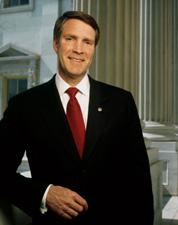
Mr. President, this week the Senate completed action on S. Con. Res. 95, the fiscal year 2005 budget resolution, under the tremendous leadership of Chairman Nickles. As we look over the last 4 days,…
Mr. President, this week the Senate completed action on S. Con. Res. 95, the fiscal year 2005 budget resolution, under the tremendous leadership of Chairman Nickles. As we look over the last 4 days, we have had a very busy course with debating and disposing of 64 amendments to the budget resolution. There were 25 rollcall votes in relation to the amendments, including passage.
We had a long day of voting yesterday until the early hours of this morning with 19 votes, and Senator Nickles guided the budget resolution to passage early this morning by a vote of 51 to 45.
In addition to that business, we were able to clear executive nominations. The Senate confirmed 17 nominations. Two of the nominations confirmed were district judges from Arizona and Mississippi. I am pleased we were able to clear these judicial nominations, and I look forward to continuing this process for the remaining nominations that are on the calendar.
Indeed, there are approximately 22 judges on the calendar, of which I believe 15 or so should move expeditiously. I will continue to work with the Democratic leader in scheduling these when we return from the recess. I understand the Democratic leader mentioned additional nominations, and I will be consulting with him on those as well. He mentioned them earlier today and last night, and we will be consulting on those nominations.
Late last night, as I mentioned earlier, the Senate confirmed the nomination of Mark McClellan to be Administrator of the Centers for Medicare and Medicaid Services.
Yesterday, the Senate also spoke with one voice with regard to a tragedy, the deadly attack yesterday against the people of Spain. Our condolences were expressed. We had a moment of silence yesterday to honor the people of Spain. In addition, we sponsored a resolution that condemned this
cowardly act. Our prayers continue to go out to the leaders and the people of Spain over what we know is a very difficult time.
In addition, we consider other matters that people do not see very much, and I won't go through all of them, but we passed S. 741, the animal drug bill that Senator Sessions sponsored that provides for new drugs on what are called minor animals.
We passed H.R. 3195 just this morning, a bill that extends Small Business Administration programs. That is Senator Snowe's bill.
We passed H.R. 254, which are amendments to the U.S.-Mexico Agreement on the Border Environment Cooperation Commission and the North American Development Bank. Senator Hutchison was instrumental in clearing this bill.
The list goes on. I did want to reflect the amount of work we were able to pull through over the course of the week.
In addition, we were able to ratify the United States-Japan Tax Treaty reported by Chairman Lugar and the Foreign Relations Committee. This is a very important treaty.
We just passed Senator Alexander's S. 1881, the Medical Devices and Technical Correction Act.
Senator Specter secured passage of S. 2043, which designates a Federal building in Harrisburg, PA, as the ``Ronald Reagan Federal Building.''
Senator Shelby assisted in passage of H.R. 3724.
So we had a very productive week by anyone's measure. I wanted to notice the hard work and efforts of all of my colleagues with respect to these legislative and executive accomplishments.
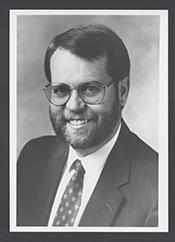
Mr. Speaker, I move to suspend the rules and pass the Senate bill (S. 2043) to designate a Federal building in Harrisburg, Pennsylvania, as the ``Ronald Reagan Federal Building''. Mr. Speaker, I…
Mr. Speaker, I move to suspend the rules and pass the Senate bill (S. 2043) to designate a Federal building in Harrisburg, Pennsylvania, as the ``Ronald Reagan Federal Building''.
Mr. Speaker, I yield myself such time as I might consume.
Mr. Speaker, S. 2043, introduced by Senator Specter of Pennsylvania, is similar to House bill H.R. 3923, which was introduced by the gentleman from the Ninth Congressional District of Pennsylvania (Mr. Shuster).
This bill designates the Federal building located at 228 Walnut Street in Harrisburg, Pennsylvania, as the Ronald Reagan Federal Building.
Many times I have come to the floor to honor Americans, politicians, judges and other great leaders. Perhaps no other American, however, has been as honored or as deserving of an honor as the 40th President of the United States, Ronald Wilson Reagan.
Ronald Reagan was born in Tampico, Illinois, in 1911. His early years are a model that we can all be proud of. The son of working-class parents, he attended the public schools in Dixon, Illinois, and then worked his way through Eureka College where he was on the football team and an actor.
One story that I think does not get told enough about Ronald Reagan is before President Reagan had an impact on the lives of billions, he had a more direct impact on the lives of people in his community of Dixon, Illinois. While growing up, Ronald Reagan earned extra money working as a lifeguard at Rock River. Over the course of 6 years, then- lifeguard Reagan pulled 77 swimmers out of the water who were struggling in the notorious swift current and were in need of assistance.
During his time in public life, Ronald Reagan always worked to improve the lives of everyday Americans, from his Economic Recovery Act, which he worked to pass even after an assassination attempt, to the 1986 tax bill which reduced the burdens of taxation on all Americans.
In foreign policy, he pursued a policy of ``peace through strength,'' a policy that brought about the end of the Soviet empire, bringing freedoms to millions in Europe and Asia.
This legislation bestows an appropriate honor to one who has given so much to his country.
I support the legislation, and I urge our colleagues to do the same.
Mr. Speaker, I reserve the balance of our time.
Mr. Speaker, I yield back the balance of my time.

Mr. President, I rise today to introduce a bill with my colleague from Florida, Senator Nelson. Our bill is non-controversial and will allow the Department of the Interior and the South Florida Water…
Mr. President, I rise today to introduce a bill with my colleague from Florida, Senator Nelson. Our bill is non-controversial and will allow the Department of the Interior and the South Florida Water Management District to perform a land exchange for the purpose of constructing the C-111 Spreader Canal Project under the Comprehensive Everglades Restoration Plan, known as CERP. Both the Department of the Interior and the State of Florida have approved the language of the bill, and Senator Nelson and I hope to expedite passage of the bill through the Energy and Natural Resources Committee and the full Senate.
CERP, which was authorized in the Water Resources Development Act of 2000, is the framework that guides our efforts to restore America's Everglades. It consists of over 60 major projects that will restore Everglades National Park and other areas of the greater Everglades ecosystem. The C-111 Spreader Canal Project is just one of the 60 component projects of CERP. The C-111 project will provide important environmental benefits to the Southern Glades and Model Lands and more natural sheet flow to Florida Bay while maintaining flood protection for surrounding agricultural and urban areas.
I am also pleased to report that Congressman Mario Diaz-Balart, who represents the relevant congressional district, and Congressman Jim Davis will introduce a companion bill in the House of Representatives.
2004 marks the beginning of the fourth year of CERP implementation and Everglades restoration. We have been hard at work getting through phase one--the planning and organizational phase of such an historic and monumental restoration project. We have now entered into phase two--building the projects that will deliver water to the Everglades and revive the dying ecosystem. As we continue to make progress on what has always been a bipartisan and bicameral project, I want to thank my colleagues for their support for the restoration of America's Everglades. I look forward to our continued work together to bring the River of Grass back to its former glory as the crown jewel of the national parks system.
Mr. President, I have sought recognition to introduce legislation, along with Senator Santorum, to honor former President Ronald Reagan by naming the Federal Building and Courthouse in Harrisburg,…
Mr. President, I have sought recognition to introduce legislation, along with Senator Santorum, to honor former President Ronald Reagan by naming the Federal Building and Courthouse in Harrisburg, PA, in his name.
President Ronald Reagan was a watershed force in 20th Century history. He was a master diplomat and statesman, largely responsible for winning the Cold War. His summits with former Soviet leader Mikhail Gorbachev were tours de force of negotiation and stagecraft. He was called ``the great communicator'' for good reason. He conveyed his message with power and precision, often convincing even his staunchest opponents to see things his way. His talents and his touch helped rally a Democrat-controlled Congress to support much of his legislative agenda, including bold fiscal reforms--defying conventional wisdom that predicted more partisan stalemate. He ran for President on the slogan ``Morning in America''--and delivered.
President Reagan also took bold steps on the social front. By transferring power from Washington to the States and cities, he showed that local governments can be laboratories for a wide range of public- policy experiments--with greater flexibility and sensitivity. The approach was in line with his general push from big government toward individual liberty.
To some, Ronald Reagan's greatest legacy was strengthening our national defense. The Berlin Wall toppled, it seemed, directly from his call, ``Mr. Gorbachev, Tear Down This Wall!'' The invasion of Grenada rescued American students and resulted in the overthrow of a Marxist government. His vision for a national missile defense system is leading to greater security for all of us.
President Reagan showed courage and charisma, even in crisis. As he was about to undergo surgery to remove a bullet that lay an inch from his heart, he told his wife, ``Honey, I forgot to duck.'' The next morning, the President met with aides in his hospital room and signed a bill into law.
For these reasons and many more, I urge my colleagues to join us in bestowing this honor upon this great American.
Mr. President, I have sought recognition to introduce legislation, along with Senator Santorum, to honor former President Ronald Reagan by naming the Federal Building and Courthouse in Harrisburg,…
Mr. President, I have sought recognition to introduce legislation, along with Senator Santorum, to honor former President Ronald Reagan by naming the Federal Building and Courthouse in Harrisburg, PA, in his name.
President Ronald Reagan was a watershed force in 20th Century history. He was a master diplomat and statesman, largely responsible for winning the Cold War. His summits with former Soviet leader Mikhail Gorbachev were tours de force of negotiation and stagecraft. He was called ``the great communicator'' for good reason. He conveyed his message with power and precision, often convincing even his staunchest opponents to see things his way. His talents and his touch helped rally a Democrat-controlled Congress to support much of his legislative agenda, including bold fiscal reforms--defying conventional wisdom that predicted more partisan stalemate. He ran for President on the slogan ``Morning in America''--and delivered.
President Reagan also took bold steps on the social front. By transferring power from Washington to the States and cities, he showed that local governments can be laboratories for a wide range of public- policy experiments--with greater flexibility and sensitivity. The approach was in line with his general push from big government toward individual liberty.
To some, Ronald Reagan's greatest legacy was strengthening our national defense. The Berlin Wall toppled, it seemed, directly from his call, ``Mr. Gorbachev, Tear Down This Wall!'' The invasion of Grenada rescued American students and resulted in the overthrow of a Marxist government. His vision for a national missile defense system is leading to greater security for all of us.
President Reagan showed courage and charisma, even in crisis. As he was about to undergo surgery to remove a bullet that lay an inch from his heart, he told his wife, ``Honey, I forgot to duck.'' The next morning, the President met with aides in his hospital room and signed a bill into law.
For these reasons and many more, I urge my colleagues to join us in bestowing this honor upon this great American.
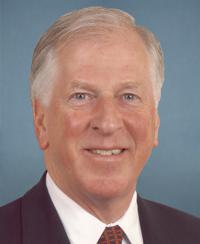
Mr. Speaker, I yield myself such time as I may consume. Mr. Speaker, this bill designates the Federal building located at 228 Walnut Street, Harrisburg, Pennsylvania, as the Ronald Reagan Federal…
Mr. Speaker, I yield myself such time as I may consume.
Mr. Speaker, this bill designates the Federal building located at 228 Walnut Street, Harrisburg, Pennsylvania, as the Ronald Reagan Federal Building. The bill was introduced by Senator Specter for himself and Senator Santorum. The House companion bill, H.R. 3923, was introduced by the gentleman from Pennsylvania (Mr. Shuster.)
Former President Reagan was our country's 40th President. He was a magnetic leader whose greatest legacy was perhaps his call to Mr. Gorbachev to ``tear down this wall.''
His talents and his personal touch enabled him to rally support for his programs, often convincing even his greatest critics to see things his way. His charisma along with his sense of humor have earned him a special place in our Nation's history.
I urge passage of this bill.
Mr. Speaker, I yield back the balance of my time.
Mr. President, I ask unanimous consent that the Senate proceed to the immediate consideration of S. 2043. Mr. President, I ask unanimous consent that the bill be read the third time and passed, the…
Mr. President, I ask unanimous consent that the Senate proceed to the immediate consideration of S. 2043.
Mr. President, I ask unanimous consent that the bill be read the third time and passed, the motion to reconsider be laid upon the table, and that any statements relating thereto be printed in the Record.
Mr. Speaker, I ask unanimous consent that all Members may have 5 legislative days within which to revise and extend their remarks and include extraneous material on S. 1904, H. Con. Res. 376, S.…
Mr. Speaker, I ask unanimous consent that all Members may have 5 legislative days within which to revise and extend their remarks and include extraneous material on S. 1904, H. Con. Res. 376, S. 2043, and H. Con. Res. 388, as amended.
Bill Text
6 versions available
        [Congressional Bills 108th Congress]
[From the U.S. Government Publishing Office]
[S. 2043 Enrolled Bill (ENR)]

S.2043

One Hundred Eighth Congress

of the

United States of America

AT THE SECOND SESSION

Begun and held at the City of Washington on Tuesday,
the twentieth day of January, two thousand and four

An Act

To designate a Federal building in Harrisburg, Pennsylvania, as the
``Ronald Reagan Federal Building''.

Be it enacted by the Senate and House of Representatives of the
United States of America in Congress assembled,

SECTION 1. RONALD REAGAN FEDERAL BUILDING.

(a) Designation.--The Federal building located at 228 Walnut
Street, Harrisburg, Pennsylvania, shall be known and designated as the
``Ronald Reagan Federal Building''.
(b) References.--Any reference in a law, map, regulation, document,
paper, or other record of the United States to the building referred to
in subsection (a) shall be deemed to be a reference to the Ronald
Reagan Federal Building.

Speaker of the House of Representatives.

Vice President of the United States and
President of the Senate.