A bill to require the Secretary of Homeland Security to develop and implement a plan to provide security for cargo entering the United States or being transported in intrastate or interstate commerce.
Legislative Activity
Stay on top of the latest movement without scrolling through every action
Read twice and referred to the Committee on Commerce, Science, and Transportation.
January 23, 2003
View full timeline
Introduced in Senate
January 23, 2003
Sponsor introductory remarks on measure. (CR S1483)
January 23, 2003
Read twice and referred to the Committee on Commerce, Science, and Transportation.
January 23, 2003
Floor Debate
9 membersWhat members said about S. 208 on the floor
 JBOJS
JBOJS JRB
JRB DF
DF JE+4
JE+4
Floor Debate
9 membersWhat members said about S. 208 on the floor
Mr. President, I am pleased today to again introduce legislation to protect several important archaeological sites in the Galisteo Basin in New Mexico. This bill identifies approximately two dozen…
Mr. President, I am pleased today to again introduce legislation to protect several important archaeological sites in the Galisteo Basin in New Mexico. This bill identifies approximately two dozen sites in northern New Mexico which contain the ruins of pueblos dating back almost 900 years. When Coronado and other Spanish conquistadors first entered what is now New Mexico in 1541, they encountered a thriving Pueblo culture with its own unique tradition of religion, architecture and art, which was influenced through an extensive trade system. We know that these sites remain occupied up through the Pueblo revolt in 1680. After that, the sites were deserted, although we still don't know why they were abandoned, after over 700 years of continuous use.
Through these sites, we have the opportunity to learn more not only about the history and culture of these Pueblos, but also about the first interaction between European and Native American cultures. The Cochiti Pueblo, in particular, is culturally and historically tied to these sites, which have tremendous historical and religious significance to the Pueblo. I am grateful for the continued support of the Pueblo de Cochiti for this legislation. This bill has strong local support, including the Santa Fe Board of County Commissioners, the City of Santa Fe, and the Archdiocese of Santa Fe. I would also like to thank the Archaeological Conservancy for its efforts over the past several years to identify and protect many of these sites, and in helping with this legislation.
Many of these archaeological sites are on Federal land administered by the Bureau of Land Management. BLM archaeologists have already provided extensive background research on many of these sites, and I was pleased that the agency supported a similar bill I introduced in the previous Congress. Last Congress the Energy and Natural Resources Committee held a hearing on this bill in Santa Fe. It was clear from that hearing that there is strong local support for protecting these sites. In fact nobody testified in opposition to the bill, at either the Santa Fe or Washington hearings.
This bill simply authorizes the BLM to work in a cooperative manner with interested landowners to protect sites on Federal and non-Federal lands. Last Congress we included several provisions to make clear that the bill did not infringe on private property rights.
Although the bill is non-controversial, we have been unable to get the legislation passed through both the House and Senate, although last Congress I was pleased that bill was favorably reported by the Energy and Natural Resources Committee and passed by the Senate as part of a larger public lands bill. In the years since I first introduced this bill, many irreplaceable archaeological resources have been lost, whether by vandalism, erosion, or other means. Enactment of the Galisteo Basin Archaeological Sites Protection Act will allow us to take the steps necessary to protect these resources and to allow for improved public understanding and interpretation of these sites.
I ask unanimous consent that the text of the bill be printed in the Record.
Mr. President, I rise today to reintroduce legislation to establish the Northern Rio Grande National Heritage Area in northern New Mexico. I am pleased that Senator Domenici is again joining me in sponsoring this bill. The Northern Rio Grande National Heritage Area will be established as part of a collaborative effort between local residents, Indian tribes, businesses and local governments, who are working together to preserve the area.
By establishing the Northern Rio Grande National Heritage Area, I hope to commemorate the significant but complex heritage of northern New Mexico communities and Indian tribes, from the pre-Spanish colonization period to present day. Establishing a National Heritage Area will benefit the northern New Mexico communities, local residents, students, and visitors, as well as help the local protection and interpretation of the unique cultural, historical, and natural resources of northern New Mexico.
Last Congress, similar legislation was considered and favorably reported from the Committee on Energy and Natural Resources and passed by the Senate by unanimous consent as part of a comprehensive heritage area bill. Unfortunately, the House was not able to consider the bill prior to the sine die adjournment of the Congress. Since the bill is non-controversial and has already passed the Senate, it is my hope that we will be able to move it through the Committee and to the floor as soon as possible.
I ask unanimous consent that the text of the bill be printed in the Record.
Mr. President, I rise today to introduce a bill that has significance for the entire Great Plains region of our Nation. It will establish a program for the hydrogeologic characterization, mapping, modeling and monitoring of the High Plains Aquifer, which extends from Wyoming to New Mexico and Texas. This legislation was the subject of a hearing last Congress before the Water and Power Subcommittee of the Senate Energy and Natural Resources Committee. It is the same as legislation that was unanimously agreed to by the full Senate last year. I am pleased to be joined by Senators Brownback and Domenici in introducing this bill.
The High Plains Aquifer, which is comprised in large part by the Ogallala Aquifer, extends under eight states: Colorado, Kansas, Nebraska, New Mexico, Oklahoma, South Dakota, Texas, and Wyoming. It is experiencing alarming declines in its water levels. This aquifer is the source of water for farmers and communities throughout the Great Plains region. The legislation I am introducing today is intended to ensure that sound and objective science is available with respect to the hydrology and geology of the High Plains Aquifer.
This bill, the ``High Plains Aquifer Hydrogeologic Characterization, Mapping, Modeling and Monitoring Act,'' would direct the Secretary of the Interior to develop and carry out a comprehensive hydrogeologic characterization, mapping, modeling and monitoring program for the High Plains Aquifer. The Secretary is directed to work in conjunction with the eight High Plains Aquifer States in carrying out this program. The U.S. Geological Survey and the States will work in cooperation to further the goals of this program, with half of the available funds directed to the State component of the program.
A reliable source of groundwater is essential to the well-being and livelihoods of people in the Great Plains region. Local towns and rural areas are dependent on the use of groundwater for drinking water, ranching, farming, and other commercial uses. Yet many areas overlying the Ogallala Aquifer have experienced a dramatic depletion of this groundwater resource. The problem we are confronting is that the aquifer is not sustainable, and it is being depleted rapidly. This threatens the way of life of all who live on the High Plains.
The bill I am introducing today would help ensure that the relevant science needed to address this problem is available so that we will have a better understanding of the resources of
the High Plains Aquifer. I ask that my colleagues join me in once again supporting this bill.
I ask unanimous consent that the text of the legislation be printed in the Record.
There being no objection the bill was ordered to be printed in the Record, as follows:
Mr. President, today I am pleased to introduce the Albuquerque Biological Park Title Clarification Act with the support of my colleague Senator Domenici. This bill, which passed the Senate during the 107th Congress, would assist the City of Albuquerque, by clearing its title to two parcels of land located along the Rio Grande. More specifically, it would allow the City to move forward with its plans to improve the properties as part of a Biological Park Project, a city funded initiative to create a premier environmental educational center for its citizens and the entire State of New Mexico.
The Biological Park Project has been in the works since 1987 when the City began to develop an aquarium and botanic garden along the banks of the Rio Grande. The facilities constitute just a portion of the overall project. In pursuit of the balance of the project, the City, in 1997, purchased two properties from the Middle Rio Grande Conservancy District, (MRGCD), for $3,875,000. The first property, Tingley Beach has been leased by the City from MRGCD since 1931 and used for public park purposes. The second property, San Gabriel Park, has been leased by the City since 1963, and also used for public park purposes.
In the year 2000, the City's plans were interrupted when the U.S. Bureau of Reclamation asserted that in 1953, in had acquired ownership of all of MRGCD's property associated with the Middle Rio Grande Project. The United States' assertion called into question the validity of the 1997 transaction between the City and MRGCD. Both MRGCD and the City dispute the United States' claim of ownership.
This dispute is delaying the City's progress in developing the Biological Park Project. If the matter is simply left to litigation, the delay with be both indefinite and unnecessary. Reclamation has already determined that the two properties are surplus to the needs of the Middle Rio Grande Project. Moreover, the record indicates that Reclamation had once considered releasing its interest in the properties for $1.00 each. Obviously, the Federal interest in these properties is low while the local interest is very high. This bill is narrowly tailored to address this local interest, affecting only the two properties at issue. The general dispute concerning title to project works is left for the courts to decide.
I hope my colleagues will work with me to help resolve this issue which is important to the citizens of my State. While much of what we do here in the Congress is complex and time-consuming work, we should also have the ability to move quickly when necessary and appropriate to solve local problems caused by Federal actions. I therefore urge my colleagues to support this legislation.
I ask unanimous consent that the text of the bill be printed in the Record.
Mr. President, I rise today to introduce, along with my colleague Senator Domenici, legislation to designate Fort Bayard in New Mexico as a National Historic Landmark.
Fort Bayard is significant not only for the role it played as a military post in fostering early settlement in the region, but for its role as a nationally important tuberculosis sanatorium and hospital. During the 99 years spanning its establishment in 1866 through its closing as a Veterans Administration hospital in 1965, Fort Bayard served as the most prominent evidence of the Federal Government's role in southwestern New Mexico. Fort Bayard has recently been listed on the National Register of Historic Places in recognition of the historical significance of the site.
From 1866 to 1899, Fort Bayard functioned as an Army post while its soldiers, many of them African-American, or Buffalo Soldiers, protected settlers working in the nearby mining district. These Buffalo Soldiers were a mainstay of the Army during the late Apache wars and fought heroically in numerous skirmishes. Like many soldiers who served at Fort Bayard, some of the Buffalo Soldiers remained in the area following their discharge. Lines of headstones noting the names of men and their various Buffalo Soldier units remain in the older section of what is now the National Cemetery. In 1992, these soldiers were recognized for their bravery when a Buffalo Soldier Memorial statue was dedicated at the center of the Fort Bayard parade ground. It gradually became apparent that the Army's extensive frontier fort system was no longer necessary. By 1890, it was clear that the era of the western frontier, at least from the Army's perspective, had ended. Fort Bayard was scheduled for closure in 1899.
Even as the last detachment of the 9th U.S. Cavalry prepared to depart the discontinued post, new federal occupants were arriving at Fort Bayard. On August 28, 1899, the War Department authorized the surgeon-general to establish a general hospital for use as a military sanatorium. This would be the first sanatorium dedicated to the treatment of officers and enlisted men of the Army suffering from pulmonary tuberculosis. At 6,100 ft. and with a dry, sunny climate, the fort lay within what proponents of climatological therapy termed the ``zone of immunity.'' By 1919, the cumulative effect of over 15 years of construction and improvement projects was the creation of a small, nearly self-sufficient community.
In 1920, the War Department closed the sanatorium and the United States Public Health Service assumed control of the facility. A second phase occurred in 1922 when a new agency, the Veterans' Bureau, was created within the Treasury Department and charged with operating hospitals throughout the country whose clientele were veterans requiring medical services. As a result, in the summer of 1922 the United States General Hospital at Fort Bayard was transferred to the Veterans' Bureau and became known as United States Veterans' Hospital No. 55. Its mission of treating those afflicted with tuberculosis, however, remained the same.
By 1965, there was no longer a need for a tuberculosis facility located at a high elevation in a dry climate, and the Veterans' Administration decided to close the hospital in that year. However, in part because of the concerns of the local communities that depended upon the hospital, the State of New Mexico assumed responsibility for the facility and 484 acres of the former military reservation. Since then, the State has used it for geriatric, as well as drug and alcohol rehabilitation and orthopedic programs. Because of the extensive cemetery dating to the fort and sanatorium eras at Fort Bayard, the State of New Mexico transferred 16 acres in 1975 for the creation of the Fort Bayard National Cemetery, administered by the Veterans' Administration.
For these and many other reasons, I believe it is clear that Fort Bayard is historically significant and merits recognition as a National Historic Landmark. Fort Bayard illuminates a rich and complex story that is important to the entire nation.
Last Congress identical legislation was considered and favorably reported by the Energy and Natural Resources Committee and included in a larger package of public land bills which passed the Senate by unanimous consent. Since there is broad local support for the bill, and it has already received the approval of the Senate, it is my hope that we can expeditiously consider the bill this year.
I ask unanimous consent that the text of the bill be printed in the Record.
Mr. President, I rise today to introduce legislation aimed at closing the dangerous cargo security loophole in our Nation's aviation security network. In the wake of September 11 terrorist attacks,…
Mr. President, I rise today to introduce legislation aimed at closing the dangerous cargo security loophole in our Nation's aviation security network.
In the wake of September 11 terrorist attacks, with the passage of the Aviation and Security Act of 2001, we reinvented aviation security. We overturned the status quo, and I am proud of the work we did. We put the Federal Government in charge of security and we have made significant strides toward restoring the confidence of the American people that it is safe to fly.
We no longer have a system in which the financial ``bottom line'' interferes with protecting the flying public. We also addressed the gamut of critical issues, including baggage screening, additional air marshals, cockpit security, and numerous other issues.
But there is more work to be done. We must not lose focus. If we are to fully confront the aviation security challenges we face in the after math of September 11, we must remain aggressive. We need a ``must-do'' attitude, not excuses about what ``can't be done,'' because we are only as safe as the weakest link in our aviation security system.
I believe one of the most troubling shortcomings, which persists to this day, is lax air cargo security infrastructure in this country. According to the GAO, a full 22 percent of all the cargo shipped by air in this country in 2000 was shipped on passenger flights and typically half of the hull of every passenger plane is filled with cargo. The Department of Transportation Inspector General has recommended that current air cargo controls be tightened, particularly the process for certifying freight forwarders and assessing their compliance with security requirements, and has warned that the existing screening system is ``easily circumvented.'' This must not be allowed to stand.
Moreover, according to a Washington Post report last summer, Internal Transportation Security Administration documents warn of an increased risk of an attack designed to exploit this vulnerability because TSA has been focused primarily on meeting its new mandates to screen passengers and luggage.
This is clear evidence that cargo security needs to be bolstered. And time is not on our side. We must act now. The bill I am introducing today is designed to tackle this issue by directing the TSA to submit a detailed cargo security plan to Congress that will address the shortcomings in the current system.
And while TSA is designing and implementing this plan, my bill would require interim security measures to be put in place immediately. The interim security plan would include random screening of at least 5 percent of all cargo, an authentication policy designed to ensure that terrorists are not able to impersonate legitimate shippers, audits of each phase of the shipping process in order to police compliance, training and background checks for cargo handlers, and funding for screening and detection equipment.
On September 11, terrorists exposed the vulnerability of our commercial aviation network in the most horrific fashion. The Aviation and Transportation Security Act of 2001 was a major step in the right direction, but we must always stay one step ahead of those who would commit vicious acts of violence on our soil aimed at innocent men, women, and children.
This bill is designed to build on the foundation we set in 2001. I urge my colleagues to join me in addressing this critical matter.
Mr. President, I rise today to support the Coastal Zone Enhancement Reauthorization of 2003. I am pleased to have bipartisan support for this bill and to be joined by the Chair and Ranking Democrats of the Commerce Committee and the Subcommittee on Oceans and Fisheries. Senators McCain, Hollings, and Kerry have been instrumental in developing the wide range of support for this bill and I appreciate their interest in improving the way we manage our Nation's valuable coastal and marine resources.
In 1972, Congress responded to concerns over the increasing demands being placed on our Nation's coastal regions and resources by enacting of the Coastal Zone Management Act. These pressures have greatly increased since the Act was originally authorized.
Although the coastal zone only comprises 10 percent of the contiguous U.S. land area, nearly 53 percent of all Americans live in these coastal regions, and more than 3,600 people are relocating there annually. This small portion of our country supports approximately 361 sea ports, contains most of our largest cities, and serves as critical habitat for a variety of plants and animals.
This bill reauthorizes and makes a number of important improvements to the Coastal Zone Management Act. Under the authorities in this Act, coastal States can choose to participate in the voluntary Federal Coastal Zone Management Program. States then design individual coastal zone management programs, taking their specific needs and problems into account, and then receive Federal matching funds to help carry out their program plans. State coastal zone programs manage issues ranging from public access to beaches, to protecting habitat, to coordinating permits for coastal development.
As a voluntary program, the framework of the CZMA provides guidelines for State plans to address multiple environmental, societal, cultural, and economic objectives.
The health of our coastal zone is vitally important not only to the multitude of plants and animals that inhabit this area, but also to the people and communities that are dependent on it for their livelihood. For example, coastal areas provide habitat for more than 75 percent of the U.S. commercial fisheries and 85 percent of the U.S. recreational fisheries. In turn, the commercial fishing industry, along with value- added services included, contributes $40 billion to the U.S. economy each year. Recreational fishing adds another $25 billion to the economy.
The Coastal Zone Management Program can be used to help balance the conservation of fish stocks with the demands that we place on coastal areas. In my State of Maine, a $150,000 study of the State's cargo needs led to a $27 million bond issue for cargo port improvements. As a result, Bath Iron Works built a new $45 million facility, creating 1,000 new jobs. Similar work needs to be done with our fishing ports so that when fisheries stock rebound, the fishermen will be able to realize the returns.
Unfortunately our precious coastal resources are being threatened by environmental problems, including non-point source pollution. Although the States are currently taking action to address this problem under existing authority, the Coastal Zone Enhancement Reauthorization of 2003 encourages, but does not require them to take additional steps to combat these problems through the Coastal Community Program.
This initiative provides States with the funding and flexibility needed to deal with their specific non-point source pollution problems. The States will have the ability to implement local solutions to a broad array of local problems. Many States are actively engaged in non- point source pollution programs and all can benefit from this new tool. I'm proud to say that Maine has risen to the challenge and already spends close to 30 percent of its funding on such activities. This has led to the reopening of hundreds of acres of shellfish beds and the restoration of fish nursery areas. Even with these successes, Maine is looking forward to this new opportunity to do more.
The Coastal Community Program in this bill also aides States in developing and implementing creative initiatives to deal with problems other than on-point source pollution. It increases Federal and State support of local community-based programs that address coastal environmental issues, such as the impact of development and sprawl on coastal uses and resources. This type of bottom-up management approach is critical.
The Coastal Zone Enhancement Reauthorization of 2003 significantly increases the authorization levels for the Coastal Zone Management Program, allowing States to better address their coastal management plan goals. The bill authorizes $135.5 million for fiscal year 2003, $141 million for fiscal year 2005 and increases the authorization levels by $5.5 million each year through fiscal year 2008. This increase in funding is necessary to allow the coastal programs to reach their full potential.
Additionally, the Coastal Zone Enhancement Reauthorization of 2003 increases authorization for the National
Estuarine Research Reserve System, NERRS, to $13 million in fiscal year 2004 with an additional $1 million increase each year through fiscal year 2008. NERRS is a network of reserves across the country that are operated as a cooperative federal-state partnership.
Currently, there are 25 reserves in 22 States. The provide an important opportunity for long-term research and education in these ecosystems. Additional funds will help strengthen this nationwide program which has not received increased funding commensurate with the addition of new reserves.
I would like to address a very serious problem facing the Coastal Zone Management Program that we have tried to rectify in this bill. The Administrative Grant program, section 306, serves as the base funding mechanism for the States' coastal zone management programs. The amount of funding each State receives is determined by a formula that takes into account both the length of the coastline and the population of each State.
However, since 1992, the Appropriations Committee has imposed a two million dollar cap per State on Administrative Grants. This was an attempt to ensure equitable allocation to all the participating states. Over the past eight years appropriations for Administrative Grants have increased by $19 million, yet the $2 million cap has remained. The result has been an inequitable distribution of these new funds. By fiscal year 2000, 13 States had reached this arbitrary $2 million cap. These 13 States account for 83 percent of our Nation's coastline and 76 percent of our coastal population.
It is not equitable to have the 13 States with the largest coastlines and populations stuck at a two million dollar cap, despite major overall funding increases. While smaller States have enjoyed additional programmatic success due to an influx of funding, some of the larger States have stagnated.
In an attempt to reassure members of the Appropriations Committee that a fair distribution of funds can occur without this hard cap in place, I have worked with Senator Hollings to develop language that has been included in this bill that directs the Secretary of Commerce to ensure that equitable increases or decreases between funding years for each State. It further requires that States should not experience a decrease in base program funds in any year when the overall appropriations increase.
I would like to thank Senator Hollings for his assistance in resolving this matter and his commitment over the years to ensuring that the States are treated fairly.
The Coastal Zone Management Program enjoys wide support among all of the coastal states due to its history of success. This support has been clearly demonstrated by the many members of the Commerce Committee who have worked with me to strengthen this program over the past several years.
I would like to thank Senator Kerry, the Ranking Democrat of the Oceans and Fisheries Subcommittee for his hard work and support of this bill. I would also like to express my appreciation to Senator McCain, the Chairman of the Commerce Committee, and Senator Hollings, the Ranking Democrat of the Committee, for their support of this measure and for their willingness to discharge this bill out of the committee so that we may begin working with our colleagues in the House of Representatives to enact this critical piece of legislation.
This is a solid, reasonable, and a realistic bill that enjoys bipartisan support on the Commerce Committee. It is time that we now turn to legislation reauthorizing a program with a long track record of preserving our coastal environment while allowing sensible development.
I am pleased to support this legislation that will provide the States with the necessary funding and framework to meet the challenges facing our coastal communities in the 21st century. I urge my colleagues to support it.
Mr. President, on October 7, 2002, the President of the United States said something very important about United Nations inspections in Iraq. He said: ``Clearly, to actually work, any new inspections…
Mr. President, on October 7, 2002, the President of the United States said something very important about United Nations inspections in Iraq. He said: ``Clearly, to actually work, any new inspections . . . will have to be very different. . . . To ensure that we learn the truth, the regime must allow witnesses to its illegal activities to be interviewed outside the country--and these witnesses must be free to bring their families with them so they are all beyond the reach of Saddam Hussein's terror and murder. And inspectors must have access to any site, at any time, without pre-clearance, without delay, without exceptions.''
The President was right on the money about inspections. This is how to get the information the world needs on Saddam Hussein's weapons of mass destruction. Inspections are vital to stripping him of those banned weapons.
The United Nations responded properly to the President's challenge. On November 8, the Security Council adopted Resolution 1441, which provided: . . . that Iraq shall provide UNMOVIC and the IAEA immediate, unimpeded, unconditional, and unrestricted access to any and all, including underground areas, facilities, buildings, equipment, records, and means of transport which they wish to inspect, as well as immediate, unimpeded, unrestricted, and private access to all officials and other persons whom UNMOVIC or the IAEA wish to interview in the mode or location of UNMOVIC's or the IAEA's choice pursuant to any aspect of their mandates; further decides that UNMOVIC and the IAEA may at their discretion conduct interviews inside or outside of Iraq, may facilitate the travel of those interviewed and family members outside of Iraq, and that, at the sole discretion of UNMOVIC and the IAEA, such interviews may occur without the presence of observers from the Iraqi government.''
The inspectors are given unprecedented authority. But how are they to implement it? Where will those weapons scientists and their families go, once they've told the truth about Saddam's weapons programs? They can't go home again. And at least in the short run, there will be no safe haven in the region for people who reveal Saddam's most terrible secrets.
Maybe some can go to Europe, although both al Qaeda cells and Saddam's agents have operated there. Maybe some can go to Canada, or to South America.
If the United States wants the world to show resolve in dealing with Saddam Hussein, however, then we must take the lead in admitting those people who have the courage to betray Saddam's nuclear, chemical, biological or missile programs. We have a large country in which to absorb those people, and, for all our problems, we have the best law enforcement and security apparatus to guard them.
What we do not have is an immigration system that readily admits large numbers of persons who were involved with weapons of mass destruction, have aided a country in the sop-called ``axis of evil,'' and are bringing their families. I introduced legislation last October, therefore, to admit to our country those personnel, and their families, who give critical and reliable information on Saddam's programs to us, to the United Nations, or to the International Atomic Energy Agency. On November 20, the Senate passed an amended version of that bill, S. 3079, with the strong support of the Administration; but there was not enough time for the House of Representatives to act on the legislation.
Two months have passed since inspections were resumed in Iraq. The new inspectors are gaining experience, as well as actionable intelligence from the United States and other countries. They are beginning to find unreported weapons; and every weapon destroyed is a weapon that will never be used to cause mass destruction or to attack U.S. forces.
But inspectors have had a hard time getting truthful information from the Iraqis they interview. Saddam Hussein terrorizes his people, including his weapons scientists, so effectively that they are afraid to be interviewed in private, let alone outside the country. They know that even the appearance of cooperation could be a death sentence for themselves or their families.
To overcome this obstacle, and to discover and dismantle Saddam Hussein's weapons of mass destruction,
UNMOVIC and the IAEA must interview relevant persons securely and with their families protected, even if they protest publicly against this treatment. Hans Blix may dislike running ``a defection agency,'' but that could be the only way to obtain truthful information about Saddam's weapons of mass destruction. The protests of those interviewed can actually be helpful, as they prevent Saddam from knowing which of his personnel may be willing to tell the truth once they and their families are given a secure environment.
The United States must help UNMOVIC and the IAEA to create that secure environment. So, today I am re-introducing the Iraqi Scientists Immigration Act.
I am joined by my esteemed colleague on the Judiciary Committee, Senator Specter of Pennsylvania, who co-sponsored the original bill, and also by the chairmen of the Foreign Relations Committee and the Judiciary Committee Senator Lugar of Indiana and Senator Hatch of Utah. I have been assured, moreover, that the Administration remains eager to see this bill enacted. This bill is not political. Rather, it is a bipartisan effort to help the President succeed in forcing Iraq to destroy all its weapons of mass destruction capabilities.
I urge my colleagues to support quick action on this legislation. Iraqis will not come forward unless we offer protection to them and their families. Those who are willing to provide truthful information will merit our protection. And their information will help disarm Saddam Hussein; it will save lives if we have to go to war; and it could even help us to disarm Saddam without a war.
Current law includes several means of either paroling non-immigrants into the United States or admitting people for permanent residence, notwithstanding their normal inadmissibility under the law. These are very limited provisions, however, and they will not suffice to accommodate hundreds of Iraqi scientists and their families.
The legislation that I am re-introducing, the ``Iraqi Scientists Immigration Act of 2003,'' will permit the Attorney General, on a case- by-case basis in coordination with the Secretary of State and the Director of Central Intelligence, to admit a foreigner and his family if such person: has worked in an Iraqi program to produce weapons of mass destruction or the means to deliver them; is willing to supply or has supplied critical and reliable information on that program to an agency of the United States Government; may be willing to supply or has supplied such information to United Nations or IAEA inspectors; and will be or has been placed in danger as a result of providing such information.
The Attorney General will also have the authority to give legal permanent resident status to persons who provide the promised information.
Finally, this legislation will be limited to the admission of 500 scientists, plus their families. If it works and we need to enlarge the program, we can do so.
The important thing to do now is to give our country the initial authority, and to give United Nations inspectors the ability to reassure Saddam's nuclear, chemical, biological and missile experts that they and their families will be protected if they help the world to bring those programs down.
President Bush, other world leaders, and the inspectors in Iraq are trying to disarm a tyrant whose arms programs make him a danger to world peace. And they are trying to do this without going to war, even as we prepare to wage that war if necessary. We owe it to the inspectors to give them every chance to succeed. We owe it to the President to give him the tools he needs to help those inspectors. We owe it to Iraq's people and its neighbors to do everything we can to dismantle its weapons of mass destruction programs. And we owe it to our own people to do all we can to achieve that end peacefully, and with international support.
This bill is a small, but vital step toward those ends. I urge my colleagues to give it their immediate attention and support.
I ask unanimous consent that the text of the bill be printed in the Record.
Mr. President, I rise to introduce legislation to give the National Guard an enhanced role in homeland security. I am pleased that Senators Bond, Leahy, Lieberman, Gregg, Murray, Johnson, Clinton,…
Mr. President, I rise to introduce legislation to give the National Guard an enhanced role in homeland security. I am pleased that Senators Bond, Leahy, Lieberman, Gregg, Murray, Johnson, Clinton, Breaux, and Feingold join me as cosponsors of the bill.
In essence, the bill would permit each governor to create a homeland security activities plan for the National Guard in his or her State, and authorize the Secretary of Defense to provide oversight and funding for such plans.
The legislation is modeled after the existing successful National Guard counterdrug program, which was established under 32 U.S.C. sect. 112.
Under this program, the National Guard is used to provide support to law enforcement to help stop illegal drugs from being imported, manufactured, and distributed, and in supporting drug demand reduction programs.
The bill is supported by the co-chairs of the Senate National Guard Caucus, the National Governors' Association, the Adjutants General Association of the United States, the National Guard Association of the United States, and National Guardsmen across the country.
Giving the Guard an enhanced role in homeland security makes sense because the Guard connects local communities to the Federal Government, is located in almost every American community, and has the capabilities, legal authority, and structure to help respond to attacks on the homeland.
In addition, such an enhanced role would return the National Guard more to what was envisioned by the founders of this country.
Colonial militias protected their fellow citizens from Indian attack, foreign invaders, and later helped win the Revolutionary War.
And during the 19th century, the militia provided the bulk of the troops during the Mexican war, the early years of the Civil War, and the Spanish-American War.
It was not until 1903 that Congress passed legislation to increase the role of the National Guard as a Reserve force for the U.S. Army
Now, the National Guard has a dual Federal/State mission. In their role as State militias, Guard units are often activated for homeland duty under Title 32 and thus come under the command of the State governor.
In this status, they are exempt from the Posse Comitatus Act, which generally restricts law enforcement to civil authorities, and thus are used as the armed forces' primary provider of support to civil authorities.
The National Guard's access to military command and control, discipline, training, and equipment also makes it well suited to coordinate with and aid police, fire, medical, and other emergency responders.
The Army National Guard maintains over 3,000 armories around the Nation and the Air National Guard has 140 units throughout the United States.
There are about 460,000 National Guard members that train throughout the year, 353,000 Army National Guard and 106,000 Air National Guard.
The approximate numbers of National Guard in individual States run from about 1,000 to 21,000, and vary according to the population of the State and recruitment efforts.
In light of the September 11 attacks on the World Trade Center and Pentagon as well as the October 2001 anthrax attacks on Congress and the media, many of us have come to believe that the National Guard should play a more central role in responding to terrorist attacks, particularly those with weapons of mass destruction.
In fact, the Guard has already played an important role in helping respond to these attacks, not only at the site of the attacks but also at airports, around the Capitol, and elsewhere.
For example, the National Guard currently has a number of Civil Support Teams that assess a suspected weapon of mass destruction event, advise first responders, and facilitate the assistance of additional military forces, if needed.
The National Guard is well-suited to performing an enhanced homeland security mission for many reasons. These reasons include that the fact the Guard is already: deployed in communities around the country; integrated into existing local, State, and regional emergency response networks; has ties with key players in local, State, and Federal government; is not bound by the Posse Comitatus Act while serving in Title 32 status and thus has maximum flexibility; is responsible for and experienced with homeland security missions, including air sovereignty, disaster relief, responding to suspected weapons of mass destruction events, and counterdrug operations; has existing physical, communications, and training infrastructure throughout the U.S.; has existing training facilities, distance learning training networks, and a number of highly skilled individuals who have left active forces; and helps preserve constitutional balance between State and Federal sovereign interests, given its unique dual State/Federal role.
Moreover, Department of Defense reviews and reports, including the 2001 Quadrennial Defense Review and Reserve Component Employment 2005 Study, have made clear that the National Guard should have an expanded role in homeland security.
Other experts agree. The Hart-Rudman and Gilmore terrorism commissions as well as the recent Hart-Rudman Terrorism Task Force have recommended that the National Guard be given a more direct role in the war on terrorism.
In sum, this legislation is a sensible, efficient way to make our country safer from terrorism. I look forward to working with my colleagues to pass it.
I ask unanimous consent that the text of the bill be printed in the Record.
Mr. President, as we all know, when terrorists struck America on September 11, 2001, the greatest loss of life occurred when the World Trade Center's two towers fell. These two towers were symbols of…
Mr. President, as we all know, when terrorists struck America on September 11, 2001, the greatest loss of life occurred when the World Trade Center's two towers fell. These two towers were symbols of America's strength and prosperity, and they were reduced to rubble by the two massive blows.
As we continue securing America against terrorist attacks, we need to give more attention to the security of large buildings, especially skyscrapers and arenas. There are approximately 500 skyscrapers in the United States that are regularly occupied by at least 5000 people, and there are 250 major arenas and stadiums that hold many times more. These buildings will be primary targets of potential terrorist attack. We must do more to ensure that these buildings are secure.
That is why I am introducing today the Building Security Act of 2003. The bill does two things: first, it supports the research and funding we need so that buildings can withstand extreme assaults, including terrorist attacks. Second, the bill takes steps so that buildings will be guarded by a security workforce that is adequately prepared to respond to these dangers.
Consider the construction of large buildings. Today, many older buildings lack fire retardants and blast-resistant materials that can save hundreds of lives in a disaster. As a result of the study of the attack on the Federal Building in Oklahoma City in 1995, we know that design changes that would have increased building costs by only 1 to 2 percent might have saved as many of 85 percent of the people killed in that attack. The early reports on the World Trade Center collapse have suggested that the two towers could have endured the impact of the planes, but that the extraordinary heat generated by the explosions weakened the steel structure of those buildings. Advanced technologies in building construction would surely have slowed their collapse. On the positive side, we know that improvements in the construction of the Pentagon mitigated the loss of life; the plane struck the Pentagon on the one side of the building where the windows were blast-resistant and the structural columns had been reinforced. Those changes likely saved many lives.
There are new, better construction practices and materials out there, but we are not using them as much as we should. Part of the reason is that today, our Nation's brightest scientists and most innovative companies do not have the resources needed to research, create, and implement these practices. We must enable these people to develop new methods and materials, and help industry meet the higher standards we need, and we must do all that as quickly and efficient as possible.
The bill I introduce today will provide $40 million for the National Institutes of Science and Technology, or NIST, to help improve construction standards. The needed research is happening now, but it needs to move much more quickly. This legislation will do three things: 1. undertake an intensive national research effort to determine both how to build strong buildings, and how to improve building codes and standards; 2. specifically research the question of how to ensure that these higher standards are actually met, whether by mandates, tax credits, or other incentives; and 3. provide technical guidance to builders in adopting the new standards and codes.
We also must address standards for private security officers. Our country's buildings are staffed by almost two million private security officers. While they have the critical responsibility of preventing emergencies and protecting building occupants from harm, these officers are often inadequately trained or compensated to do so. The industry suffers from low retention, deficient training, and meager salaries. The job turnover rate within the private security industry is as high as 300 percent per year. Recent studies show that 4 in 10 private security officers report no new security measures in their buildings since September 11, and 7 in 10 report that their buildings never conduct evacuation and emergency drills. And over half of the States have no clear oversight for their respective private security industries, nor do they have standards or screening requirements for new hires.
This legislation authorizes a review of the private security industry by a commission in the Department of Homeland Security that includes all those with critical knowledge of the industry. The commission is tasked with establishing industry guidelines and standards and developing a means to implement those guidelines and standards in a timely way.
Our Nation's buildings have been targeted before, and I believe that they will be targeted again. We must do much more to make these buildings secure. This bill is important step in the right direction.
Show 5 more
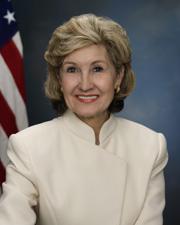
Mr. President, I am pleased to introduce legislation today that will enhance and encourage charitable giving in the United States. The Charitable IRA Rollover Act will allow individuals to rollover…
Mr. President, I am pleased to introduce legislation today that will enhance and encourage charitable giving in the United States. The Charitable IRA Rollover Act will allow individuals to rollover assets from an Individual Retirement Account, or ``IRA,'' to a charity without incurring income tax consequences.
One of my priorities has been to promote charitable giving and expand the role charities and faith-based institutions play in addressing social problems in the United States. I hope this legislation moves us further in that direction.
Government alone cannot solve society's most serious problems. In fact, government social programs often fail in their missions. The old welfare system is a perfect example of what often goes wrong when government tends to throw money at a problem.
Under the old system, while trying to help people, government actually encouraged them to stay on welfare. It encouraged out-of- wedlock births and discouraged fathers from living at home. Many of these unintended consequences were addressed with the welfare reform bill, which will be reauthorized this year. The success of these reforms are evident in welfare rolls, which have now dropped by half across the United States.
But government is not the solution. Charities change hearts and lives and have a superior track record to the government in tackling social ills.
America's top charities address a broad range of problems. From the Salvation Army to the Boys and Girls Clubs, and the American Cancer Society to the Red Cross, each plays a role in improving America's health, education and welfare. Their success has been documented. It has been demonstrated that mentors in the Big Brothers/Big Sisters program can cut drug abuse by 50 percent.
Charitable giving is an American tradition. Americans appreciate the role of charities and are actively involved in many philanthropic causes. Nearly half of all Americans volunteer in some capacity on a regular basis, including nearly 25 percent of Americans who are active volunteers in religious affiliated organizations. That is why it is logical to use faith-based organizations as a means of accomplishing objectives which can be more personal and tailored to the individual in need.
The legislation I am introducing today helps these organizations by making it easier for people to make charitable contributions. Individuals age 59\1/2\ and older will be able to move assets without penalty from an IRA directly to a charity or into a qualifying deferred charitable gift plan, such as a charitable remainder trust, pooled income fund or gift annuity. Current law requires taxpayers to first withdraw the IRA proceeds and pay taxes on them before contributing the remaining funds to a charity. While current law allows taxes on the withdrawal to be offset somewhat by the current charitable deduction, this ability is limited.
Americans currently hold more than $2 trillion in assets in IRAs, and nearly 40 percent of American households have IRAs. This bill would allow senior citizens who have provided well for their retirement to transfer IRA funds to charities without the government taking a slice. This will cut bureaucratic obstacles and disincentives to charitable giving and unlock a substantial amount of new funds that could flow to America's charitable organizations.
The time for promoting charitable giving has come.
This proposal benefits everyone involved. Individuals will be able to give more of their savings to charities of importance to them. Charities will benefit from increased philanthropy, enabling them to continue their important work. Those needing help will have increased access to services from these charities. And the government will have to take care of fewer of those in need as charities are better able to assume that burden.
This is not a partisan proposal. It is a common sense way to remove obstacles to charitable giving. Senators Durbin and Levin are original co-sponsors of this legislation. I look forward to working with them, the White House and many other colleagues to pass this bill. I hope the Senate will join in this effort to provide a valuable source of philanthropy for our nation's charities.
I ask unanimous consent that the text of the bill be printed in the Record.
Mr. President, I rise today to introduce legislation aimed at closing the dangerous cargo security loophole in our Nation's aviation security network. In the wake of September 11 terrorist attacks,…
Mr. President, I rise today to introduce legislation aimed at closing the dangerous cargo security loophole in our Nation's aviation security network.
In the wake of September 11 terrorist attacks, with the passage of the Aviation and Security Act of 2001, we reinvented aviation security. We overturned the status quo, and I am proud of the work we did. We put the Federal Government in charge of security and we have made significant strides toward restoring the confidence of the American people that it is safe to fly.
We no longer have a system in which the financial ``bottom line'' interferes with protecting the flying public. We also addressed the gamut of critical issues, including baggage screening, additional air marshals, cockpit security, and numerous other issues.
But there is more work to be done. We must not lose focus. If we are to fully confront the aviation security challenges we face in the after math of September 11, we must remain aggressive. We need a ``must-do'' attitude, not excuses about what ``can't be done,'' because we are only as safe as the weakest link in our aviation security system.
I believe one of the most troubling shortcomings, which persists to this day, is lax air cargo security infrastructure in this country. According to the GAO, a full 22 percent of all the cargo shipped by air in this country in 2000 was shipped on passenger flights and typically half of the hull of every passenger plane is filled with cargo. The Department of Transportation Inspector General has recommended that current air cargo controls be tightened, particularly the process for certifying freight forwarders and assessing their compliance with security requirements, and has warned that the existing screening system is ``easily circumvented.'' This must not be allowed to stand.
Moreover, according to a Washington Post report last summer, Internal Transportation Security Administration documents warn of an increased risk of an attack designed to exploit this vulnerability because TSA has been focused primarily on meeting its new mandates to screen passengers and luggage.
This is clear evidence that cargo security needs to be bolstered. And time is not on our side. We must act now. The bill I am introducing today is designed to tackle this issue by directing the TSA to submit a detailed cargo security plan to Congress that will address the shortcomings in the current system.
And while TSA is designing and implementing this plan, my bill would require interim security measures to be put in place immediately. The interim security plan would include random screening of at least 5 percent of all cargo, an authentication policy designed to ensure that terrorists are not able to impersonate legitimate shippers, audits of each phase of the shipping process in order to police compliance, training and background checks for cargo handlers, and funding for screening and detection equipment.
On September 11, terrorists exposed the vulnerability of our commercial aviation network in the most horrific fashion. The Aviation and Transportation Security Act of 2001 was a major step in the right direction, but we must always stay one step ahead of those who would commit vicious acts of violence on our soil aimed at innocent men, women, and children.
This bill is designed to build on the foundation we set in 2001. I urge my colleagues to join me in addressing this critical matter.

Mr. President, today I am introducing a bill that could have a large impact on reducing gun violence in this country. Last fall, two snipers terrorized the Washington, D.C. metropolitan area, killing…
Mr. President, today I am introducing a bill that could have a large impact on reducing gun violence in this country.
Last fall, two snipers terrorized the Washington, D.C. metropolitan area, killing ten victims and wounding others including children. Among the weapons used by the snipers was a high powered military-style assault rifle known as a Bushmaster XM15. Following the arrest of sniper suspects John Mohammed and John Lee Malvo, this weapon was linked to killings in Maryland, Virginia,Louisiana, and Alabama.
Agents from the Bureau of Alcohol, Tobacco and Firearms traced the Bushmaster weapon to a Tacoma, Washington gun dealership, the Bull's Eye Shooter Supply. Investigators even found the empty box in which the weapon was shipped.
But What the agents did not find was any record of the sale of the weapon because the gun dealer did not keep adequate records. If the gun was bought from Bull's Eye, we do not know when because there is no record of the Sale. There is no record of a gun application or a background check for John Mohammed. Had a background check been carried out, John Mohammed would not have obtained the weapon because a domestic violence restraining order had been field against him.
What is the weapon was stolen? If the owner of Bull's Eye had kept proper records and followed Federal law, he would have reported the weapon missing or stolen when it disappeared from the store. The knowledge that a Bushmaster XM15 was missing from a Tacoma area weapons store could have greatly aided investigators looking into the case.
The sloppy recordkeeping for this particular weapon was not an isolated case. it has been learned that inspectors had uncovered record-keeping violations in audits at Bull's Eye in 1998, 2000 and 2001. A total of 160 missing guns could not be accounted for in the 2000 audit.
This type of shoddy recordkeeping is dangerous. A small percentage of licensed dealers are responsible for a disproportionate number of crime guns. Specifically, 1.2 percent of all licensed gun dealers are responsible for the original sale of 57 percent of all firearms used in crimes, according to data from the ATF.
Gun dealers are not being punished when they ignore Federal recordkeeping laws. Why? Because in 1986, the National Rifle Association pushed a law through Congress that significantly weakened penalties for poor recordkeeping reducing maximum jail time for five years to one year. This meant that the crime was reduced from
a felony to a misdemeanor. With this change, the undermanned and underfunded Bureau of Alcohol, Tobacco and Firearms and Federal prosecutors simply could not afford to bring cases against gun dealers for misdemeanor violations.
It is time we restore record keeping violations to a felony and that is what my bill does. It is not a new gun law. It is merely making the penalties tougher for violations for existing law. Regardless of whether you support or oppose additional gun laws, we all agree that we need strong enforcement of existing laws. My bill would make enforcement easier and tougher. I hope my colleagues will support this common-sense legislation. I ask unanimous consent that the text of the bill and a letter of support from the Violence Policy Center be printed in the Record.

Mr. President, I am pleased to introduce, along with Senator Kay Bailey Hutchison, the charitable IRA Rollover Act of 2003. We have introduced this legislation in the last two Congresses. Senator…
Mr. President, I am pleased to introduce, along with Senator Kay Bailey Hutchison, the charitable IRA Rollover Act of 2003. We have introduced this legislation in the last two Congresses. Senator Hutchison and I sincerely hope that this legislation will finally become law this year.
The IRA Charitable Rollover Act has the support of numerous charitable organizations across the United States. The effect of this bill would be to unlock billions of dollars in savings Americans hold and make them available to charities. Our legislation will allow individuals to roll assets from an Individual Retirement Account into a charity or a deferred charitable gift plan without incurring any income tax consequences. Thus, the donation
would be made to charity without ever withdrawing it as income and paying tax on it.
Americans currently hold about $2 trillion in assets in IRAs. This represents over one-fifth of Americans' total retirement market assets and will likely grow due to the increased contribution limits enacted as part of the Economic Growth and Tax Relief Reconciliation Act of 2001. Recent studies show that assets of qualified retirement plans, such as IRAs, comprise a substantial part of peoples' net worth. Many of these individuals would like to give a portion of these assets to charity, but are reluctant to do so because of the tax consequences.
Under our current law, if money from an IRA is transferred to a charitable organization or into a charitable remainder trust, donors are required to recognize that as income. Therefore, absent the changes called for in the legislation, the donor will have taxable income in the year the gift is funded. This is a huge disincentive contained in our complicated and burdensome tax code. This legislation will unleash a critical source of funding for our Nation's charities. This legislation will provide millions of Americans with a commonsense way to remove obstacles to private charitable giving.
Under the Hutchison-Durbin plan, an individual, upon reaching age 59\1/2\, could move assets penalty- and tax-free from an IRA directly to charity or into a qualifying deferred charitable gift plan--e.g. charitable remainder trusts, pooled income funds and gift annuities. In the latter case the donor would be able to receive an income stream from the retirement plan assets, which would be taxed according to normal rules. Upon the death of the individual, the remainder would be transferred to charity tax free.
There are numerous supporters of this legislation including the Art Institute of Chicago, the University of Chicago, the Field Museum, the Catholic Diocese of Peoria, Northwestern University, the Chicago Symphony Orchestra, Georgetown University, and others. There are over 100 groups in Illinois alone that support this sensible legislation.
I hope the Senate will join in this bipartisan effort to provide a valuable new source of philanthropy for our Nation's charities. I hope that our colleagues will cosponsor this important piece of legislation and that it will be enacted into law this year. I thank the Senator from Texas, Senator Hutchison, for working with me and my staff in this effort.
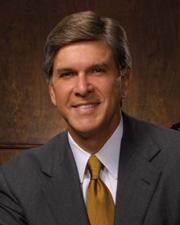
Mr. President, today I am introducing legislation to encourage a more environmentally friendly electricity future for the United States. The bill I am introducing would provide for a ten-year…
Mr. President, today I am introducing legislation to encourage a more environmentally friendly electricity future for the United States.
The bill I am introducing would provide for a ten-year extension of the tax credit for producing electricity from wind. I believe that an extension of this length will provide stability to this important emerging energy sector.
For the past several years, we have provided short-term extensions, sometimes retroactively, of this important tax incentive. The result has been that investors and utilities have been hesitant to commit the capital necessary to bring wind projects on line.
A major European wind turbine manufacturer had planned to build its first U.S. manufacturing facility in Portland, OR. The plant was expected to provide over 1,000 family-wage jobs once operational. Unfortunately, last November, the corporation announced it would put those plans on hold and lay off more than 500 employees. This happened at a time when Oregon already had one of the highest unemployment rates in the country.
The main reason given for putting on hold this facility was the failure of the Congress to clarify the production tax credit for wind energy. Slow demand in this economic downturn was also cited.
However, our economy is going to rebound. And when it does, the demand for electricity will increase. There is already over 180 megawatts of installed wind energy capacity, with another 150 megawatts of planned development. The Stateline Wind Energy Project, which straddles the Oregon-Washington border, has over 263 megawatts of installed capacity, making it the largest wind farm to date in the western United States.
When the Senate passed national energy legislation last year, there was a strong, bipartisan commitment to renewable energy resources. We can use the tax code to encourage the development of clean, renewable sources of electricity and a new generation of advanced technology vehicles. These vehicles can reduce our reliance on imported oil because their fuel efficiency is greatly improved and there are lower emissions of greenhouse gases and ozone-forming pollutants.
I have always held that if we use technology wisely, we can improve our environmental stewardship while maintaining our human stewardship and the standard of living we enjoy in this great Nation.
I would urge my colleague to join me in cosponsoring this important legislation.
Bill Text
Latest available legislative text
        [Congressional Bills 108th Congress]
[From the U.S. Government Publishing Office]
[S. 208 Introduced in Senate (IS)]

108th CONGRESS
1st Session
S. 208

To require the Secretary of Homeland Security to develop and implement
a plan to provide security for cargo entering the United States or
being transported in intrastate or interstate commerce.

_______________________________________________________________________

IN THE SENATE OF THE UNITED STATES

January 23, 2003

Ms. Snowe introduced the following bill; which was read twice and
referred to the Committee on Commerce, Science, and Transportation

_______________________________________________________________________

A BILL

To require the Secretary of Homeland Security to develop and implement
a plan to provide security for cargo entering the United States or
being transported in intrastate or interstate commerce.

Be it enacted by the Senate and House of Representatives of the
United States of America in Congress assembled,

SECTION 1. DEVELOPMENT AND IMPLEMENTATION OF CARGO SECURITY PLAN.

(a) In General.--Not later than March 31, 2003, the Under Secretary
for Border and Transportation Security shall develop and submit a
detailed plan to the Committee on Commerce, Science, and Transportation
of the Senate and the Committee on Transportation and Infrastructure of
the House of Representatives to--
(1) ensure the adequacy of security measures for the
transportation of cargo into and in the United States; and
(2) oversee the implementation, and ensure the adequacy, of
security measures with respect to cargo at airports and other
transportation facilities.
(b) Implementation of Interim and Final Plan.--
(1) Final plan.--Not later than March 31, 2004, the Under
Secretary for Border and Transportation Security shall fully
implement a plan to ensure cargo security for all cargo
entering the United States or cargo moving in intrastate or
interstate commerce in the United States.
(2) Interim cargo security measures.--Between the date of
enactment of this Act and March 31, 2004, the Under Secretary
for Border and Transportation Security shall implement the
following cargo security measures:
(A) Random screening of at least 5 percent of cargo
at airports and other transportation facilities.
(B) An authentication policy for shippers to ensure
that shippers use documents with adequate security
features to prevent shippers that are not known to the
Federal Government from shipping cargo under the name
of known shippers.
(C) Regular audits of shippers, freight forwarders,
air carriers, and other entities involved in aviation
shipping in order to ensure full compliance with
security procedures and background checks for cargo
handlers.
(D) Development of a training program for entities
that handle cargo to ensure that cargo is properly
handled and to safeguard cargo from security breaches.
(c) Authorization of Appropriations.--There are authorized to be
appropriated such sums as may be necessary to carry out the provisions
of this section and to ensure that airports and other transportation
facilities have state-of-the-art cargo screening equipment.
<all>