A bill to address the participation of Taiwan in the World Health Organization.
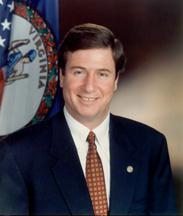 Sen. George Allen (R-VA)
Legislative Activity
Stay on top of the latest movement without scrolling through every action
Became Public Law No: 108-235.
June 14, 2004
View full timeline
Introduced in Senate
February 12, 2004
Read twice and referred to the Committee on Foreign Relations.
February 12, 2004
Committee on Foreign Relations. Ordered to be reported with an amendment in the nature of a substitute favorably.
April 29, 2004
Committee on Foreign Relations. Reported by Senator Lugar with an amendment in the nature of a substitute. Without written report.
April 29, 2004
Placed on Senate Legislative Calendar under General Orders. Calendar No. 492.
April 29, 2004
Passed Senate with an amendment by Unanimous Consent.
May 6, 2004
Received in the House.
May 10, 2004 • 12:02 PM
Message on Senate action sent to the House. (consideration: CR S5021-5022; text of measure as reported in Senate: CR S5021-5022)
May 10, 2004
Held at the desk.
May 10, 2004 • 2:36 PM
Considered by unanimous consent. (consideration: CR 5/21/2004 H3457-3458)
May 20, 2004 • 4:19 PM
Mr. DeLay asked unanimous consent to take from the Speaker's table and consider.
May 20, 2004 • 4:19 PM
Passed/agreed to in House: On passage Passed without objection.(text: CR 5/21/2004 H3457-3458)
May 20, 2004 • 4:19 PM
On passage Passed without objection. (text: CR 5/21/2004 H3457-3458)
May 20, 2004 • 4:19 PM
Motion to reconsider laid on the table Agreed to without objection.
May 20, 2004 • 4:19 PM
Presented to President.
June 2, 2004
Signed by President.
June 14, 2004
Became Public Law No: 108-235.
June 14, 2004
Floor Debate
3 membersWhat members said about S. 2092 on the floor
Floor Debate
3 membersWhat members said about S. 2092 on the floor
Mr. Speaker, I missed votes on May 19 and 20, 2004. The following is an explanation on how I would have voted had I been present: Rollcall No. 191 ``Yes,'' Previous question--budget rule. Rollcall…
Mr. President, I ask unanimous consent that the Senate now proceed to the immediate consideration of calendar No. 492, S. 2092. Mr. President, I ask unanimous consent that the committee substitute…
Mr. Speaker, I ask unanimous consent to take from the Speaker's table the Senate bill (S. 2092) to address the participation of Taiwan in the World Health Organization, and ask for its immediate…
Bill Text
5 versions available
        [Congressional Bills 108th Congress]
[From the U.S. Government Publishing Office]
[S. 2092 Enrolled Bill (ENR)]

S.2092

One Hundred Eighth Congress

of the

United States of America

AT THE SECOND SESSION

Begun and held at the City of Washington on Tuesday,
the twentieth day of January, two thousand and four

An Act

To address the participation of Taiwan in the World Health Organization.

Be it enacted by the Senate and House of Representatives of the
United States of America in Congress assembled,

SECTION 1. CONCERNING THE PARTICIPATION OF TAIWAN IN THE WORLD HEALTH
ORGANIZATION.

(a) Findings.--Congress makes the following findings:
(1) Good health is important to every citizen of the world and
access to the highest standards of health information and services
is necessary to improve the public health.
(2) Direct and unobstructed participation in international
health cooperation forums and programs is beneficial for all parts
of the world, especially today with the great potential for the
cross-border spread of various infectious diseases such as the
human immunodeficiency virus (HIV), tuberculosis, and malaria.
(3) Taiwan's population of 23,500,000 people is greater than
that of \3/4\ of the member states already in the World Health
Organization (WHO).
(4) Taiwan's achievements in the field of health are
substantial, including--
(A) attaining--
(i) 1 of the highest life expectancy levels in Asia;
and
(ii) maternal and infant mortality rates comparable to
those of western countries;
(B) eradicating such infectious diseases as cholera,
smallpox, the plague, and polio; and
(C) providing children with hepatitis B vaccinations.
(5) The United States Centers for Disease Control and
Prevention and its counterpart agencies in Taiwan have enjoyed
close collaboration on a wide range of public health issues.
(6) In recent years Taiwan has expressed a willingness to
assist financially and technically in international aid and health
activities supported by the WHO.
(7) On January 14, 2001, an earthquake, registering between 7.6
and 7.9 on the Richter scale, struck El Salvador. In response, the
Taiwanese Government sent 2 rescue teams, consisting of 90
individuals specializing in firefighting, medicine, and civil
engineering. The Taiwanese Ministry of Foreign Affairs also donated
$200,000 in relief aid to the Salvadoran Government.
(8) The World Health Assembly has allowed observers to
participate in the activities of the organization, including the
Palestine Liberation Organization in 1974, the Order of Malta, and
the Holy See in the early 1950's.
(9) The United States, in the 1994 Taiwan Policy Review,
declared its intention to support Taiwan's participation in
appropriate international organizations.
(10) Public Law 106-137 required the Secretary of State to
submit a report to Congress on efforts by the executive branch to
support Taiwan's participation in international organizations, in
particular the WHO.
(11) In light of all benefits that Taiwan's participation in
the WHO can bring to the state of health not only in Taiwan, but
also regionally and globally, Taiwan and its 23,500,000 people
should have appropriate and meaningful participation in the WHO.
(12) On May 11, 2001, President Bush stated in a letter to
Senator Murkowski that the United States ``should find
opportunities for Taiwan's voice to be heard in international
organizations in order to make a contribution, even if membership
is not possible'', further stating that the administration ``has
focused on finding concrete ways for Taiwan to benefit and
contribute to the WHO''.
(13) In his speech made in the World Medical Association on May
14, 2002, Secretary of Health and Human Services Tommy Thompson
announced ``America's work for a healthy world cuts across
political lines. That is why my government supports Taiwan's
efforts to gain observership status at the World Health Assembly.
We know this is a controversial issue, but we do not shrink from
taking a public stance on it. The people of Taiwan deserve the same
level of public health as citizens of every nation on earth, and we
support them in their efforts to achieve it''.
(14) The Government of the Republic of China on Taiwan, in
response to an appeal from the United Nations and the United States
for resources to control the spread of HIV/AIDS, donated $1,000,000
to the Global Fund to Fight AIDS, Tuberculosis, and Malaria in
December 2002.
(15) In 2003, the outbreak of Severe Acute Respiratory Syndrome
(SARS) caused 84 deaths in Taiwan.
(16) Avian influenza, commonly known as bird flu, has reemerged
in Asia, with strains of the influenza reported by the People's
Republic of China, Cambodia, Indonesia, Japan, Pakistan, South
Korea, Taiwan, Thailand, Vietnam, and Laos.
(17) The SARS and avian influenza outbreaks illustrate that
disease knows no boundaries and emphasize the importance of
allowing all people access to the WHO.
(18) As the pace of globalization quickens and the spread of
infectious disease accelerates, it is crucial that all people,
including the people of Taiwan, be given the opportunity to
participate in international health organizations such as the WHO.
(19) The Secretary of Health and Human Services acknowledged
during the 2003 World Health Assembly meeting that ``[t]he need for
effective public health exists among all peoples''.
(b) Plan.--The Secretary of State is authorized to--
(1) initiate a United States plan to endorse and obtain
observer status for Taiwan at the annual week-long summit of the
World Health Assembly each year in Geneva, Switzerland;
(2) instruct the United States delegation to the World Health
Assembly in Geneva to implement that plan; and
(3) introduce a resolution in support of observer status for
Taiwan at the summit of the World Health Assembly.
(c) Report Concerning Observer Status for Taiwan at the Summit of
the World Health Assembly.--Not later than 30 days after the date of
the enactment of this Act, and not later than April 1 of each year
thereafter, the Secretary of State shall submit a report to the
Congress, in unclassified form, describing the United States plan to
endorse and obtain observer status for Taiwan at the annual week-long
summit of the World Health Assembly (WHA) held by the World Health
Organization (WHO) in May of each year in Geneva, Switzerland. Each
report shall include the following:
(1) An account of the efforts the Secretary of State has made,
following the last meeting of the World Health Assembly, to
encourage WHO member states to promote Taiwan's bid to obtain
observer status.
(2) The steps the Secretary of State will take to endorse and
obtain observer status at the next annual meeting of the World
Health Assembly in Geneva, Switzerland.

Speaker of the House of Representatives.

Vice President of the United States and
President of the Senate.