Building Security Act of 2003
 Sen. John Edwards (D-NC)
Legislative Activity
Stay on top of the latest movement without scrolling through every action
Read twice and referred to the Committee on Commerce, Science, and Transportation.
January 23, 2003
View full timeline
Introduced in Senate
January 23, 2003
Sponsor introductory remarks on measure. (CR S1492)
January 23, 2003
Read twice and referred to the Committee on Commerce, Science, and Transportation.
January 23, 2003
Floor Debate
10 membersWhat members said about S. 216 on the floor
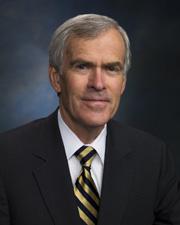


 +5
+5
Floor Debate
10 membersWhat members said about S. 216 on the floor
Mr. President, I am pleased today to again introduce legislation to protect several important archaeological sites in the Galisteo Basin in New Mexico. This bill identifies approximately two dozen…
Mr. President, I rise today to introduce legislation aimed at closing the dangerous cargo security loophole in our Nation's aviation security network. In the wake of September 11 terrorist attacks,…
Mr. President, on October 7, 2002, the President of the United States said something very important about United Nations inspections in Iraq. He said: ``Clearly, to actually work, any new inspections…
Mr. President, I rise to introduce legislation to give the National Guard an enhanced role in homeland security. I am pleased that Senators Bond, Leahy, Lieberman, Gregg, Murray, Johnson, Clinton,…
Mr. President, as we all know, when terrorists struck America on September 11, 2001, the greatest loss of life occurred when the World Trade Center's two towers fell. These two towers were symbols of…
Show 6 more
Mr. President, as we all know, when terrorists struck America on September 11, 2001, the greatest loss of life occurred when the World Trade Center's two towers fell. These two towers were symbols of…
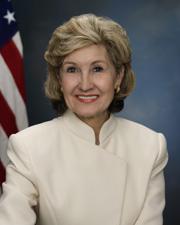
Mr. President, I am pleased to introduce legislation today that will enhance and encourage charitable giving in the United States. The Charitable IRA Rollover Act will allow individuals to rollover…

Mr. President, today I am introducing a bill that could have a large impact on reducing gun violence in this country. Last fall, two snipers terrorized the Washington, D.C. metropolitan area, killing…

Mr. President, I am pleased to introduce, along with Senator Kay Bailey Hutchison, the charitable IRA Rollover Act of 2003. We have introduced this legislation in the last two Congresses. Senator…
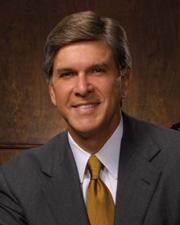
Mr. President, today I am introducing legislation to encourage a more environmentally friendly electricity future for the United States. The bill I am introducing would provide for a ten-year…

Mr. President, I ask unanimous consent that the Committee on Environment and Public Works be authorized to meet on Monday, February 24, 2003, at 5:30 p.m. to conclude a business meeting regarding S.…
Bill Text
Latest available legislative text
        [Congressional Bills 108th Congress]
[From the U.S. Government Publishing Office]
[S. 216 Introduced in Senate (IS)]

108th CONGRESS
1st Session
S. 216

To authorize the National Institute of Standards and Technology to
develop improvements in building and fire codes, standards, and
practices to reduce the impact of terrorist and other extreme threats
to the safety of buildings, their occupants, and emergency responders,
and to authorize the Department of Homeland Security to form a task
force to recommend ways to strengthen standards in the private security
industry, stabilize the workforce, and create a safer environment for
commercial building and industrial facility occupants.

_______________________________________________________________________

IN THE SENATE OF THE UNITED STATES

January 23, 2003

Mr. Edwards introduced the following bill; which was read twice and
referred to the Committee on Commerce, Science, and Transportation

_______________________________________________________________________

A BILL

To authorize the National Institute of Standards and Technology to
develop improvements in building and fire codes, standards, and
practices to reduce the impact of terrorist and other extreme threats
to the safety of buildings, their occupants, and emergency responders,
and to authorize the Department of Homeland Security to form a task
force to recommend ways to strengthen standards in the private security
industry, stabilize the workforce, and create a safer environment for
commercial building and industrial facility occupants.

Be it enacted by the Senate and House of Representatives of the
United States of America in Congress assembled,

SECTION 1. SHORT TITLE.

This Act may be cited as the ``Building Security Act of 2003''.

SEC. 2. FINDINGS.

Congress finds that--
(1) The terrorist attacks of September 11, 2001, resulted
in unprecedented death and destruction, and 2 of the worst
building disasters in human history;
(2) the war on terror is ongoing, and threats to American
targets, such as large buildings in the United States, are
substantial;
(3) there are approximately 500 skyscrapers in the United
States that are regularly occupied by at least 5000 people, in
addition to millions of smaller buildings that see high levels
of traffic;
(4) most buildings have not been built to the standard
needed to meet extreme threats, necessitating technological
improvements in every aspect of construction, including
structural elements, fireproofing, and facade integrity;
(5) to advance homeland security, the Federal Government is
obligated to ensure that building and construction standards
are as high as practicable, and that building owners have the
resources needed to meet these standards;
(6) the Federal Government, in its efforts to protect the
American people, is responsible for promoting research and
development by the public and private sectors that will provide
the technical basis for improved building and fire codes,
standards, practices, and materials;
(7) the National Institute of Standards and Technology is
in a unique position to work with the appropriate standards-
developing organizations to help the United States respond to
these new challenges, due to--
(A) the building and fire expertise in its
laboratories and quality program;
(B) its long history of working cooperatively with
the construction and standards industries;
(C) its strong influence on national standards; and
(D) its involvement in the assessment of the World
Trade Center collapse;
(8) efforts to pursue innovation and provide practical
guidance and tools to building owners, designers, and
contractors are necessary to ensure that new materials and
practices are widely accepted and used;
(9) it is in the national interest for the National
Institute of Standards and Technology to--
(A) accelerate its efforts in helping industry
develop the higher building and construction standards
that are necessary to heighten the safety of all
Americans; and
(B) identify the most effective ways to ensure that
these new standards are implemented in both existing
and new structures;
(10) as of January 2003, 2,000,000 private security
officers throughout the Nation are responsible for ensuring the
security of building occupants and must be able to effectively
respond to evacuations, crime, terrorist threats, emergencies,
and accidents;
(11) many of these private security officers are not
adequately prepared to best assist uniformed services, building
tenants, workers, and the public in the event of a natural
disaster or terrorism;
(12) the job turnover rate within the private security
industry is as high as 300 percent per year;
(13) a recent study found that more than \1/2\ of the
States are--
(A) failing to set standards for the training and
screening of private security officers; and
(B) not providing adequate oversight of the private
security industry;
(14) without proper guidelines and standards, the private
security industry cannot adequately provide the security
necessary in the current global environment;
(15) the Federal Government, in its efforts to protect the
American people, is responsible for enabling a proper review of
the private security industry and developing a means of
ensuring the industry's improvement; and
(16) it is in the national interest for the Department of
Homeland Security to create a private security review task
force, comprised of industry, union, government, and law
enforcement leaders, to help establish strong guidelines and
incentives for States, and to provide the needed structure for
training and workforce stability.

SEC. 3. HOMELAND SECURITY BUILDING AND FIRE RESEARCH AND DEVELOPMENT
PROGRAM.

(a) Establishment.--
(1) In general.--The Director of the National Institute of
Standards and Technology (referred to in this section as the
``Director'') shall establish a research and development
program to--
(A) provide the measurements and analysis for
improved building and fire codes, standards, and
practices; and
(B) generate findings and recommendations that can
be used to develop improved building and fire codes,
and higher construction standards in the United States.
(2) Consultation.--In carrying out this section, the
Director shall--
(A) consult, as appropriate, with the various units
of the National Institute of Standards and Technology
(referred to in this section as the ``Institute''),
including the Building and Fire Research Laboratory;
(B) build upon ongoing efforts of the Institute and
of the private sector; and
(C) involve consortia that include government and
industry.
(b) Research Activities.--
(1) Scientific research.--The Director shall work with
industry, trade associations, professional societies, and
others to conduct experimentation, analysis, testing,
verification, and demonstration of improved tools and practices
that identify--
(A) improved construction methods and materials
relevant to structural fire safety;
(B) mitigation of progressive collapse;
(C) building and ventilation vulnerability
reduction tools;
(D) equipment standards for first responders; and
(E) other ways to reduce the impact of extreme
threats to the safety of buildings, their occupants,
and emergency responders.
(2) Policy research.--The Director shall work with
industry, trade associations, professional societies, and
others to complete a study of the best methods to ensure full
implementation and encourage full compliance with the standards
developed in paragraph (1), including--
(A) tax incentives;
(B) grants to States that adopt those standards;
and
(C) other appropriate means.
(c) Dissemination and Technical Assistance Program.--The Director
shall oversee a dissemination and technical assistance program
(referred to in this section as the ``DTAP'') to assist with the
immediate dissemination and implementation of the practices, standards,
and codes developed by the Institute under subsection (b)(1).
(d) Publication of Studies.--The Director shall ensure that the
results and recommendations of the Institute under subsection (b) are
promptly published for use by the public and private sectors.
(e) Reports.--
(1) Initial report.--Not later than 60 days after the date
of enactment of this Act, the Director shall submit, to the
Committee on Commerce, Science, and Transportation of the
Senate and the Committee on Science of the House of
Representatives, a report detailing the Institute's proposed
schedule of studies and results, with anticipated dates of
implementation.
(2) Annual progress reports.--Not later than 1 year after
the date of enactment of this Act, and annually thereafter, the
Director shall submit a progress report to the committees
described under paragraph (1), which summarizes the Institute's
activities and determinations under subsection (b).
(f) Authorization of Appropriations.--There are authorized to be
appropriated to carry out this section, the following sums:
(1) $13,000,000 for fiscal year 2004.
(2) $9,000,000 for fiscal year 2005.
(3) $9,000,000 for fiscal year 2006.
(4) $9,000,000 for fiscal year 2007.

SEC. 4. PRIVATE SECURITY INDUSTRY TASK FORCE.

(a) Establishment.--The Secretary of the Department of Homeland
Security (referred to in this section as the ``Secretary'') shall
establish a Private Security Industry Task Force (referred to in this
section as the ``Task Force'') to--
(1) examine the limitations in training, screening,
standard-setting, retention, and oversight practice in the
private security industry;
(2) develop structural guidelines and standards of quality
for the private security industry; and
(3) determine the best way to help States to implement such
standards and guidelines in a timely and efficient manner.
(b) Membership.--The Task Force shall be composed of 25 members,
including members representing--
(1) private security employers;
(2) private security employees;
(3) the private insurance industry;
(4) the risk consulting industry;
(5) institutional investors;
(6) public safety and emergency management professionals;
(7) building owners and managers;
(8) commercial building tenants;
(9) trainers of private security officers;
(10) police officers;
(11) firefighters;
(12) the Office of Employment and Training Administration
of the Department of Labor;
(13) the Office of Justice Programs of the Department of
Justice;
(14) the Department of Homeland Security; and
(15) State agencies involved in homeland security from
different regions of the United States.
(c) Chair.--
(1) Appointment.--The Secretary shall appoint a Chair for
the Task Force from within the Department of Homeland Security.
(2) Responsibilities.--The Chair shall oversee all meetings
of, and communications from, the Task Force.
(d) Authorized Activities.--In carrying out the provisions of this
Act, the Chair and other members of the Task Force may conduct research
and coordinate and consult with industry, trade associations,
professional societies, and institutions of higher learning, and other
appropriate organizations to--
(1) examine the limitations in training, screening,
standard-setting, retention, and oversight practice in the
private security industry;
(2) develop structural guidelines and standards of quality
for the private security industry; and
(3) determine the best way to help States to implement such
standards and guidelines in a timely and efficient manner.
(e) Semi-Annual Reports.--Not later than 180 days after the date of
enactment of this Act, and every 180 days thereafter, the Chair shall
submit a report on the Task Force's activities and determinations under
subsection (c)(2) to--
(1) the Committee on Health, Education, Labor, and Pensions
of the Senate;
(2) the Committee on the Judiciary of the Senate;
(3) the Committee on Education and the Workforce of the
House of Representatives; and
(4) the Committee on the Judiciary of the House of
Representatives.
(f) Authorization of Appropriations.--There are authorized to be
appropriated $500,000 for each of the fiscal years 2004 and 2005 to
carry out this section.
<all>