Justice Enhancement and Domestic Security Act of 2003
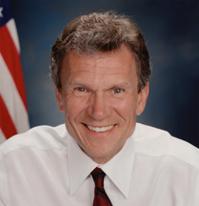 Sen. Thomas A. Daschle (D-SD)
Legislative Activity
Stay on top of the latest movement without scrolling through every action
Read twice and referred to the Committee on the Judiciary.
January 7, 2003
View full timeline
Introduced in Senate
January 7, 2003
Sponsor introductory remarks on measure. (CR 1/9/2003 S136-143)
January 7, 2003
Read twice and referred to the Committee on the Judiciary.
January 7, 2003
Floor Debate
22 membersWhat members said about S. 22 on the floor


 +17
+17
Floor Debate
22 membersWhat members said about S. 22 on the floor
Mr. President, I am pleased today to join Senator Daschle and other Democratic Senators in introducing the Justice Enhancement and Domestic Security Act of 2003. This comprehensive crime bill builds…
I thank the Senator. Go ahead. Mr. President, I begin my speaking with reference to my colleague, Ted Stevens. He is a beacon of reasoning. I was saying to my staff last night--or this morning, I…
Mr. President, I yield myself such time as I may consume. I do intend to yield to my distinguished friend from West Virginia anytime he wishes to start discussing his amendment. The amendment pending…
Mr. President, I commend my colleague from West Virginia for his leadership in providing the resources needed to enhance our national security. One of the most important aspects of the Byrd amendment…
I yield myself such time as I may consume. I appreciate the concerns of the Senator from West Virginia. We all admire his commitment to the issue as we all try to make sure we as a nation have…
Show 8 more
Mr. President, I rise to support the compelling notion that we need to as a Congress and as a Senate and, hopefully, with this administration, find a way to fully fund the Leave No Child Behind Act.…
Mr. President, first, I thank the Senator from Massachusetts for his great leadership on this specific item, but also his great leadership on all issues concerning education, both in this Congress…

I simply ask for 1 minute, or 2, I say to the distinguished Senator. Mr. President, I came to the floor last night to give extensive remarks about the tremendous importance of the amendment that has…
Mr. President, officially, the Congress that ended in December was the 107th Congress. But history will almost surely record it as the September 11th Congress. From the moment the first plane hit the…
Mr. President, I will use leader time that I have under the order of the day. Let me begin by congratulating the distinguished Senator from West Virginia for his eloquence and for his leadership on…
Mr. President, I rise today in strong support of the amendment proposed by Senator Byrd, which would restore a portion of the devastating cuts to this year's Senate-passed appropriations measures…
If it is all right with the Senator, 6 minutes. I thank my colleague. Mr. President, I stand here to back up our leader, the Senator from West Virginia, who has waged a long fight. First, I wish to…
Mr. President, I join the Senator from Massachusetts and all the others who have come before us this afternoon supporting this amendment. This amendment supports funding for two significant programs,…
Show 11 more

Mr. President, I note the presence of several of my colleagues. I will not take long. I commend our friend and colleague from Massachusetts for offering this amendment. He mentioned at the close of…
Mr. President, I am pleased today to strongly support the amendment by the Senior Senator from West Virginia to restore funds approved by the Senate Appropriations Committee last year to enhance our…
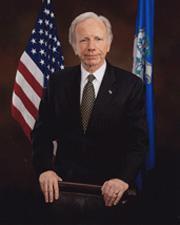
Mr. President, I am deeply troubled that the Bush administration has not done more since September 11, 2001, to close major gaps that remain in our domestic security. Senators Gary Hart and Warren…

Mr. President, I also want to speak in favor of the amendment my colleague from Massachusetts, Senator Kennedy, has offered. I commend him and Senator Harkin, in particular, for the leadership they…

Mr. President, I thank the distinguished Senator from West Virginia for yielding 5 minutes to me. I also share his great respect and admiration for the Senator and the processes in which he is…

Mr. President, I strongly support Senator Byrd's amendment to increase funding for homeland security. A little over a year ago, we experienced the worst terrorist attack in U.S. history. As a result,…

Will the Senator yield for a question? I have listened to this debate, and it appears, with the remarks from the distinguished Senator from New Hampshire, that these amounts in this amendment which…

Mr. President, there is nothing more important than America's homeland security. I support Senator Byrd's amendment because it provides essential funds for hometown security. It will improve our…
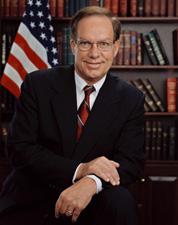
Mr. President, I would like to make a few brief comments about legislation I am introducing today. I also will talk briefly about some of the agenda items I have been looking at for this year.…
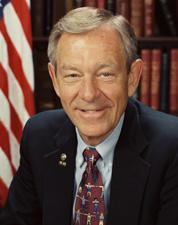
Mr. President, I rise today to correct some inaccuracies that were stated by my colleague from Nevada during last night's session regarding nuclear security and Senator Byrd's amendment to increase…

Mr. President, I support Senator Byrd's amendment to add $5 billion in homeland security funding to the omnibus appropriations bill for fiscal year 2003. I cannot be here for the vote, but if I were,…
Bill Text
Latest available legislative text
        [Congressional Bills 108th Congress]
[From the U.S. Government Publishing Office]
[S. 22 Introduced in Senate (IS)]

108th CONGRESS
1st Session
S. 22

To enhance domestic security and for other purposes.

_______________________________________________________________________

IN THE SENATE OF THE UNITED STATES

January 7, 2003

Mr. Daschle (for himself, Mr. Leahy, Mr. Biden, Mr. Kennedy, Mr.
Schumer, Mr. Durbin, Mrs. Clinton, Mrs. Murray, Mr. Dayton, Mr.
Corzine, and Mr. Reed) introduced the following bill; which was read
twice and referred to the Committee on the Judiciary

_______________________________________________________________________

A BILL

To enhance domestic security and for other purposes.

Be it enacted by the Senate and House of Representatives of the
United States of America in Congress assembled,
(a) Short Title.--This Act may be cited as the ``Justice
Enhancement and Domestic Security Act of 2003''.
(b) Table of Contents.--The table of contents of this Act is as
follows:

TITLE I--COMBATING TERRORISM AND ENHANCING DOMESTIC SECURITY

Subtitle A--Supporting First Responders

Sec. 1101. Short title.
Sec. 1102. Purpose.
Sec. 1103. First Responders Partnership Grant Program for public safety
officers.
Sec. 1104. Applications.
Sec. 1105. Definitions.
Sec. 1106. Authorization of appropriations.
Subtitle B--Border Security

Sec. 1201. Short title.
Sec. 1202. Authorization of appropriations for hiring additional INS
personnel.
Sec. 1203. Authorization of appropriations for improvements in
technology for improving border security.
Sec. 1204. Report on border security improvements.
Subtitle C--Military Tribunals Authorization

Sec. 1301. Short title.
Sec. 1302. Findings.
Sec. 1303. Establishment of extraordinary tribunals.
Sec. 1304. Procedural requirements.
Sec. 1305. Detention.
Sec. 1306. Sense of Congress.
Sec. 1307. Definitions.
Sec. 1308. Termination of authority.
Subtitle D--Anti Terrorist Hoaxes and False Reports

Sec. 1401. Short title.
Sec. 1402. Findings.
Sec. 1403. Hoaxes, false reports and reimbursement.
Subtitle E--Amendments to Federal Antiterrorism Laws

Sec. 1501. Attacks against mass transit clarification of definition.
Sec. 1502. Release or detention of a material witness.
Sec. 1503. Clarification of sunset provision in USA Patriot Act.
TITLE II--PROTECTING AMERICA'S CHILDREN AND SENIORS

Subtitle A--Children's Safety

Part 1--National AMBER Alert Network

Sec. 2111. Short title.
Sec. 2112. National coordination of AMBER Alert Communications Network.
Sec. 2113. Minimum standards for issuance and dissemination of alerts
through AMBER Alert Communications Network.
Sec. 2114. Grant program for notification and communications systems
along highways for recovery of abducted
children.
Sec. 2115. Grant program for support of AMBER Alert communications
plans.
Part 2--Prosecutional Remedies and Tools Against the Exploitation of
Children Today

Sec. 2121. Short title.
Sec. 2122. Findings.
Sec. 2123. Certain activities relating to material constituting or
containing child pornography.
Sec. 2124. Admissibility of evidence.
Sec. 2125. Definitions.
Sec. 2126. Recordkeeping requirements.
Sec. 2127. Extraterritorial production of child pornography for
distribution in the United States.
Sec. 2128. Civil remedies.
Sec. 2129. Enhanced penalties for recidivists.
Sec. 2130. Sentencing enhancements for interstate travel to engage in
sexual act with a juvenile.
Sec. 2131. Miscellaneous provisions.
Part 3--Reauthorization of the National Center for Missing and
Exploited Children

Sec. 2141. Short title.
Sec. 2142. Annual grant to the National Center for Missing and
Exploited Children.
Sec. 2143. Authorization of appropriations.
Sec. 2144. Forensic and investigative support of missing and exploited
children.
Sec. 2145. Creation of a Cyber-Tipline.
Sec. 2146. Service provider reporting of child pornography and related
information.
Sec. 2147. Contents disclosure of stored communications.
Part 4--National Child Protection and Volunteers for Children
Improvement

Sec. 2151. Short title.
Sec. 2152. Definitions.
Sec. 2153. Strengthening and enforcing the National Child Protection
Act and the Volunteers for Children Act.
Sec. 2154. Dissemination of information.
Sec. 2155. Fees.
Sec. 2156. Strengthening State fingerprint technology.
Sec. 2157. Privacy protections.
Sec. 2158. Authorization of appropriations.
Part 5--Children's Confinement Conditions Improvement

Sec. 2161. Findings.
Sec. 2162. Purpose.
Sec. 2163. Definition.
Sec. 2164. Juvenile Safe Incarceration Grant Program.
Sec. 2165. Rural State funding.
Sec. 2166. GAO study.
Sec. 2167. Family Unity Demonstration Project.
Subtitle B--Senior's Safety

Sec. 2201. Short title.
Sec. 2202. Findings and purposes.
Sec. 2203. Definitions.
Part 1--Combating Crimes Against Seniors

Sec. 2211. Enhanced sentencing penalties based on age of victim.
Sec. 2212. Study and report on health care fraud sentences.
Sec. 2213. Increased penalties for fraud resulting in serious injury or
death.
Sec. 2214. Safeguarding pension plans from fraud and theft.
Sec. 2215. Additional civil penalties for defrauding pension plans.
Sec. 2216. Punishing bribery and graft in connection with employee
benefit plans.
Part 2--Preventing Telemarketing Fraud

Sec. 2221. Centralized complaint and consumer education service for
victims of telemarketing fraud.
Sec. 2222. Blocking of telemarketing scams.
Part 3--Preventing Health Care Fraud

Sec. 2231. Injunctive authority relating to false claims and illegal
kickback schemes involving Federal health
care programs.
Sec. 2232. Authorized investigative demand procedures.
Sec. 2233. Extending antifraud safeguards to the Federal Employee
Health Benefits program.
Sec. 2234. Grand jury disclosure.
Sec. 2235. Increasing the effectiveness of civil investigative demands
in false claims investigations.
Part 4--Protecting Residents of Nursing Homes

Sec. 2241. Nursing home resident protection.
Part 5--Protecting the Rights of Elderly Crime Victims

Sec. 2251. Use of forfeited funds to pay restitution to crime victims
and regulatory agencies.
Sec. 2252. Victim restitution.
Sec. 2253. Bankruptcy proceedings not used to shield illegal gains from
false claims.
Sec. 2254. Forfeiture for retirement offenses.
TITLE III--DETERRING IDENTITY THEFT AND ASSISTING VICTIMS OF CRIME AND
DOMESTIC VIOLENCE

Subtitle A--Deterring Identity Theft

Part 1--Identity Theft Victims Assistance

Sec. 3111. Short title.
Sec. 3112. Findings.
Sec. 3113. Treatment of identity theft mitigation.
Sec. 3114. Amendments to the Fair Credit Reporting Act.
Sec. 3115. Coordinating committee study of coordination among Federal,
State, and local authorities in enforcing
identity theft laws.
Part 2--Identity Theft Prevention

Sec. 3121. Short title.
Sec. 3122. Findings.
Sec. 3123. Identity theft prevention.
Sec. 3124. Truncation of credit card account numbers.
Sec. 3125. Free annual credit report.
Part 3--Social Security Number Misuse Prevention

Sec. 3131. Short title.
Sec. 3132. Findings.
Sec. 3133. Prohibition of the display, sale, or purchase of social
security numbers.
Sec. 3134. Application of prohibition of the display, sale, or purchase
of social security numbers to public
records.
Sec. 3135. Rulemaking authority of the Attorney General.
Sec. 3136. Treatment of social security numbers on government
documents.
Sec. 3137. Limits on personal disclosure of a social security number
for consumer transactions.
Sec. 3138. Extension of civil monetary penalties for misuse of a social
security number.
Sec. 3139. Criminal penalties for misuse of a social security number.
Sec. 3140. Civil actions and civil penalties.
Sec. 3141. Federal injunctive authority.
Subtitle B--Crime Victim Assistance

Sec. 3201. Short title.
Part 1--Victim Rights in the Federal System

Sec. 3211. Right to consult concerning detention.
Sec. 3212. Right to a speedy trial.
Sec. 3213. Right to consult concerning plea.
Sec. 3214. Enhanced participatory rights at trial.
Sec. 3215. Enhanced participatory rights at sentencing.
Sec. 3216. Right to notice concerning sentence adjustment.
Sec. 3217. Right to notice concerning discharge from psychiatric
facility.
Sec. 3218. Right to notice concerning executive clemency.
Sec. 3219. Procedures to promote compliance.
Part 2--Victim Assistance Initiatives

Sec. 3221. Pilot programs to enforce compliance with State crime
victim's rights laws.
Sec. 3222. Increased resources to develop state-of-the-art systems for
notifying crime victims of important dates
and developments.
Sec. 3223. Restorative justice grants.
Part 3--Amendments to Victims of Crime Act

Sec. 3231. Formula for distributions from the Crime Victims Fund.
Sec. 3232. Clarification regarding antiterrorism emergency reserve.
Sec. 3233. Prohibition on diverting crime victims fund to offset
increased spending.
Subtitle C--Violence Against Women Act Enhancements

Sec. 3301. Transitional housing assistance grants.
Sec. 3302. Shelter services for battered women and children.
TITLE IV--SUPPORTING LAW ENFORCEMENT AND THE EFFECTIVE ADMINISTRATION
OF JUSTICE

Subtitle A--Support for Public Safety Officers and Prosecutors

Part 1--Providing Reliable Officers, Technology, Education, Community
Prosecutors, and Training in Our Neighborhoods

Sec. 4101. Short title.
Sec. 4102. Authorizations.
Part 2--Hometown Heroes Survivors Benefits

Sec. 4111. Short title.
Sec. 4112. Fatal heart attack or stroke on duty presumed to be death in
line of duty for purposes of public safety
officer survivor benefits.
Part 3--Federal Prosecutors Retirement Benefit Equity

Sec. 4121. Short title.
Sec. 4122. Inclusion of Federal prosecutors in the definition of a law
enforcement officer.
Sec. 4123. Provisions relating to incumbents.
Sec. 4124. Department of Justice administrative actions.
Subtitle B--Rural Law Enforcement Improvement and Training Grants

Sec. 4201. Rural Law Enforcement Retention Grant Program.
Sec. 4202. Rural Law Enforcement Technology Grant Program.
Sec. 4203. Rural 9-1-1 service.
Sec. 4204. Small town and rural law enforcement training program.
Subtitle C--FBI Reform

Sec. 4301. Short title.
Part 1--Whistleblower Protection

Sec. 4311. Increasing protections for FBI whistleblowers.
Part 2--Fbi Security Career Program

Sec. 4321. Security management policies.
Sec. 4322. Director of the Federal Bureau of Investigation.
Sec. 4323. Director of Security.
Sec. 4324. Security career program boards.
Sec. 4325. Designation of security positions.
Sec. 4326. Career development.
Sec. 4327. General education, training, and experience requirements.
Sec. 4328. Education and training programs.
Sec. 4329. Office of Personnel Management approval.
Part 3--FBI Counterintelligence Polygraph Program

Sec. 4331. Definitions.
Sec. 4332. Establishment of program.
Sec. 4333. Regulations.
Sec. 4334. Report on further enhancement of FBI personnel security
program.
Part 4--Reports

Sec. 4341. Report on legal authority for FBI programs and activities.
Part 5--Ending the Double Standard

Sec. 4351. Allowing disciplinary suspensions of members of the Senior
Executive Service for 14 days or less.
Sec. 4352. Submitting Office of Professional Responsibility reports to
congressional committees.
Part 6--Enhancing Security at the Department of Justice

Sec. 4361. Report on the protection of security and information at the
Department of Justice.
Sec. 4362. Authorization for increased resources to protect security
and information.
Sec. 4363. Authorization for increased resources to fulfill national
security mission of the Department of
Justice.
Subtitle D--DNA Sexual Assault Justice Act

Sec. 4401. Short title.
Sec. 4402. Assessment of backlog in DNA analysis of samples.
Sec. 4403. The Debbie Smith DNA Backlog Grant Program.
Sec. 4404. Increased grants for analysis of DNA samples from convicted
offenders and crime scenes.
Sec. 4405. Authority of local governments to apply for and receive DNA
Backlog Elimination Grants.
Sec. 4406. Improving eligibility criteria for backlog grants.
Sec. 4407. Quality assurance standards for collection and handling of
DNA evidence.
Sec. 4408. Sexual Assault Forensic Exam Program Grants.
Sec. 4409. DNA Evidence Training Grants.
Sec. 4410. Authorizing John Doe DNA indictments.
Sec. 4411. Increased grants for Combined DNA Index System (CODIS).
Sec. 4412. Increased grants for Federal Convicted Offender Program
(FCOP).
Sec. 4413. Privacy requirements for handling DNA evidence and DNA
analyses.
Subtitle E--Additional Improvements to the Justice System

Sec. 4501. Providing remedies for retaliation against whistleblowers
making congressional disclosures.
Sec. 4502. Establishment of protective function privilege.
Sec. 4503. Professional standards for government attorneys.
TITLE V--COMBATING DRUG AND GUN VIOLENCE

Subtitle A--Drug Treatment, Prevention, and Testing

Part 1--Drug Treatment

Sec. 5101. Funding for rural State and economically depressed
communities.
Sec. 5102. Funding for residential treatment centers for women and
children.
Sec. 5103. Drug treatment alternative to prison programs administered
by State or local prosecutors.
Sec. 5104. Substance abuse treatment in Federal prisons
reauthorization.
Sec. 5105. Drug treatment for juveniles.
Part 2--Funding for Drug-free Community Programs

Sec. 5111. Extension of Safe and Drug-Free Schools and Communities
Program.
Sec. 5112. Say No to Drugs Community Centers.
Sec. 5113. Drug education and prevention relating to youth gangs.
Sec. 5114. Drug education and prevention program for runaway and
homeless youth.
Part 3--Zero Tolerance Drug Testing

Sec. 5121. Grant authority.
Sec. 5122. Administration.
Sec. 5123. Applications.
Sec. 5124. Federal share.
Sec. 5125. Geographic distribution.
Sec. 5126. Technical assistance, training, and evaluation.
Sec. 5127. Authorization of appropriations.
Sec. 5128. Permanent set-aside for research and evaluation.
Part 4--Crack House Statute Amendments

Sec. 5131. Offenses.
Sec. 5132. Civil penalty and equitable relief for maintaining drug-
involved premises.
Sec. 5133. Declaratory and injunctive remedies.
Sec. 5134. Sentencing Commission guidelines.
Sec. 5135. Authorization of appropriations for a demand reduction
coordinator.
Sec. 5136. Authorization of appropriations for drug education.
Part 5--Cracking Down on Methamphetamine in Rural Areas

Sec. 5141. Methamphetamine treatment programs in rural areas.
Sec. 5142. Methamphetamine prevention education.
Sec. 5143. Methamphetamine cleanup.
Subtitle B--Disarming Felons

Part 1--Our Lady of Peace Act

Sec. 5201. Short title.
Sec. 5202. Findings.
Sec. 5203. Enhancement of requirement that Federal departments and
agencies provide relevant information to
the National Instant Criminal Background
Check System.
Sec. 5204. Requirements to obtain waiver.
Sec. 5205. Implementation grants to States.
Sec. 5206. Continuing evaluations.
Sec. 5207. Grants to State courts for the improvement in automation and
transmittal of disposition records
Part 2--Ballistics, Law Assistance, and Safety Technology

Sec. 5211. Short title.
Sec. 5212. Purposes.
Sec. 5213. Definition of ballistics.
Sec. 5214. Test firing and automated storage of ballistics records.
Sec. 5215. Privacy rights of law abiding citizens.
Sec. 5216. Demonstration firearm crime reduction strategy.
Part 3--Extension of Project Exile

Sec. 5221. Authorization of funding for additional State and local gun
prosecutors.
Part 4--Expansion of the Youth Crime Gun Interdiction Initiative

Sec. 5231. Youth Crime Gun Interdiction Initiative.
Part 5--Gun Offenses

Sec. 5241. Gun ban for dangerous juvenile offenders.
Sec. 5242. Improving firearms safety.
Sec. 5243. Juvenile handgun safety.
Sec. 5244. Serious juvenile drug offenses as armed career criminal
predicates.
Sec. 5245. Increased penalty for transferring a firearm to a minor for
use in crime of violence or drug
trafficking crime.
Sec. 5246. Increased penalty for firearms conspiracy.
Part 6--Closing the Gun Show Loophole

Sec. 5251. Findings.
Sec. 5252. Extension of Brady background checks to gun shows.
TITLE VI--THE INNOCENCE PROTECTION ACT

Sec. 6001. Short title.
Subtitle A--Exonerating the Innocent Through DNA Testing

Sec. 6101. DNA testing in Federal criminal justice system.
Sec. 6102. DNA testing in State criminal justice systems.
Sec. 6103. Prohibition pursuant to section 5 of the 14th Amendment.
Sec. 6104. Grants to prosecutors for DNA testing programs.
Subtitle B--Improving State Systems for Providing Competent Legal
Services in Capital Cases

Sec. 6201. Capital Representation System Improvement Grants.
Sec. 6202. Enforcement suits.
Sec. 6203. Grants to qualified capital defender organizations.
Sec. 6204. Grants to train prosecutors, defense counsel, and State and
local judges handling State capital cases.
Subtitle C--Right to Review of the Death Penalty upon the Grant of
Certiorari

Sec. 6301. Protecting the rights of death row inmates to review of
cases granted certiorari.
Subtitle D--Compensation for the Wrongfully Convicted

Sec. 6401. Increased compensation in Federal cases.
Sec. 6402. Sense of Congress regarding compensation in State death
penalty cases.
Subtitle E--Student Loan Repayment for Public Attorneys

Sec. 6501. Student loan repayment for public attorneys.
TITLE VII--STRENGTHENING THE FEDERAL CRIMINAL LAWS

Subtitle A--Anti-Atrocity Alien Deportation Act

Sec. 7101. Short title.
Sec. 7102. Inadmissibility and deportability of aliens who have
committed acts of torture or extrajudicial
killings abroad.
Sec. 7103. Inadmissibility and deportability of foreign government
officials who have committed particularly
severe violations of religious freedom.
Sec. 7104. Bar to good moral character for aliens who have committed
acts of torture, extrajudicial killings, or
severe violations of religious freedom.
Sec. 7105. Establishment of the Office of Special Investigations.
Sec. 7106. Report on implementation.
Subtitle B--Deterring Cargo Theft

Sec. 7201. Punishment of cargo theft.
Sec. 7202. Reports to Congress on cargo theft.
Sec. 7203. Establishment of advisory committee on cargo theft.
Sec. 7204. Addition of attempted theft and counterfeiting offenses to
eliminate gaps and inconsistencies in
coverage.
Sec. 7205. Clarification of scienter requirement for receiving property
stolen from an Indian tribal organization.
Sec. 7206. Larceny involving post office boxes and postal stamp vending
machines.
Sec. 7207. Expansion of Federal theft offenses to cover theft of
vessels.
Subtitle C--Additional Improvements and Corrections to the Federal
Criminal Laws

Sec. 7301. Enhanced penalties for cultural heritage crimes.
Sec. 7302. Enhanced enforcement of laws affecting racketeer-influenced
and corrupt organizations.
Sec. 7303. Increased maximum corporate penalty for antitrust
violations.
Sec. 7304. Technical correction to ensure compliance of sentencing
guidelines with provisions of all Federal
statutes.
Sec. 7305. Inclusion of assault crimes and unlicensed money
transmitting businesses as racketeering
activity.
Sec. 7306. Inclusion of unlicensed money transmitting businesses and
structuring currency transactions to evade
reporting requirement as wiretap
predicates.

TITLE I--COMBATTING

TERRORISM AND ENHANCING

DOMESTIC SECURITY

Subtitle A--Supporting First Responders

SEC. 1101. SHORT TITLE.

This subtitle may be cited as the ``First Responders Partnership
Grant Act of 2003''.

SEC. 1102. PURPOSE.

The purpose of this subtitle is to support first responders to
protect homeland security and prevent and respond to acts of terrorism.

SEC. 1103. FIRST RESPONDERS PARTNERSHIP GRANT PROGRAM FOR PUBLIC SAFETY
OFFICERS.

(a) In General.--The Director of the Bureau of Justice Assistance
is authorized to make grants to States, units of local government, and
Indian tribes to support public safety officers in their efforts to
protect homeland security and prevent and respond to acts of terrorism.
(b) Uses of Funds.--Grants awarded under this section shall be--
(1) distributed directly to the State, unit of local
government, or Indian tribe; and
(2) used to fund equipment, training and facilities to
support public safety officers in their efforts to protect
homeland security and prevent and respond to acts of terrorism.
(c) Minimum Amount.--Unless all eligible applications submitted by
any State or unit of local government within such State for a grant
under this section have been funded, such State, together with grantees
within the State (other than Indian tribes), shall be allocated in each
fiscal year under this section not less than 0.75 percent of the total
amount appropriated in the fiscal year for grants pursuant to this
section, except that the United States Virgin Islands, American Samoa,
Guam, and the Northern Mariana Islands shall each be allocated 0.25
percent.
(d) Maximum Amount.--A qualifying State, unit of local government,
or Indian tribe may not receive more than 5 percent of the total amount
appropriated in each fiscal year for grants under this section, except
that a State, together with the grantees within the State may not
receive more than 20 percent of the total amount appropriated in each
fiscal year for grants under this section.
(e) Matching Funds.--The portion of the costs of a program provided
by a grant under subsection (a) may not exceed 90 percent. Any funds
appropriated by Congress for the activities of any agency of an Indian
tribal government or the Bureau of Indian Affairs performing law
enforcement functions on any Indian lands may be used to provide the
non-Federal share of a matching requirement funded under this
subsection.

SEC. 1104. APPLICATIONS.

(a) In General.--To request a grant under this subtitle, the chief
executive of a State, unit of local government, or Indian tribe shall
submit an application to the Director of the Bureau of Justice
Assistance in such form and containing such information as the Director
may reasonably require.
(b) Regulations.--Not later than 90 days after the date of the
enactment of this subtitle, the Director of the Bureau of Justice
Assistance shall promulgate regulations to implement this section
(including the information that must be included and the requirements
that the States, units of local government, and Indian tribes must
meet) in submitting the applications required under this section.

SEC. 1105. DEFINITIONS.

For purposes of this subtitle--
(1) the term ``public safety officer'' means any person
serving a public agency with or without compensation as a law
enforcement officer, as a firefighter, or as a member of a
rescue squad or ambulance crew;
(2) the term ``State'' means each of the 50 States, the
District of Columbia, the Commonwealth of Puerto Rico, the
United States Virgin Islands, American Samoa, Guam, and the
Northern Mariana Islands;
(3) the term ``unit of local government'' means a county,
municipality, town, township, village, parish, borough, or
other unit of general government below the State level;
(4) the term ``Indian tribe'' has the same meaning as in
section 4(e) of the Indian Self-Determination and Education
Assistance Act (25 U.S.C. 450b(e)); and
(5) the term ``law enforcement officer'' means any officer,
agent, or employee of a State, unit of local government, or
Indian tribe authorized by law or by a government agency to
engage in or supervise the prevention, detection, or
investigation of any violation of criminal law, or authorized
by law to supervise sentenced criminal offenders.

SEC. 1106. AUTHORIZATION OF APPROPRIATIONS.

(a) Authorization of Appropriations.--There are authorized to be
appropriated to carry out this subtitle $4,000,000,000 for each of
fiscal years 2003 through 2005.

Subtitle B--Border Security

SEC. 1201. SHORT TITLE.

This subtitle may be cited as the ``Safe Borders Act of 2003''.

SEC. 1202. AUTHORIZATION OF APPROPRIATIONS FOR HIRING ADDITIONAL INS
PERSONNEL.

(a) INS Inspectors.--Subject to the availability of appropriations,
during each of the fiscal years 2004 through 2007, the Attorney General
shall increase the number of inspectors and associated support staff in
the Immigration and Naturalization Service by the equivalent of at
least 250 full-time employees over the number of inspectors and
associated support staff in the Immigration and Naturalization Service
authorized by the Uniting and Strengthening America by Providing
Appropriate Tools Required to Intercept and Obstruct Terrorism (USA
PATRIOT ACT) Act of 2001 (Public Law 107-56) and the Enhanced Border
Security and Visa Entry Reform Act of 2002 (Public Law 107-173).
(b) INS Investigative Personnel.--Subject to the availability of
appropriations, during each of the fiscal years 2004 through 2007, the
Attorney General shall increase the number of investigative and
associated support staff of the Immigration and Naturalization Service
by the equivalent of at least 250 full-time employees over the number
of investigators and associated support staff in the Immigration and
Naturalization Service authorized by the Uniting and Strengthening
America by Providing Appropriate Tools Required to Intercept and
Obstruct Terrorism (USA PATRIOT ACT) Act of 2001 (Public Law 107-56)
and the Enhanced Border Security and Visa Entry Reform Act of 2002
(Public Law 107-173).
(c) Authorization of Appropriations.--There are authorized to be
appropriated such sums as may be necessary to carry out this section,
including such sums as may be necessary to provide facilities, attorney
personnel and support staff, and other resources needed to support the
increased number of inspectors, investigative staff, and associated
support staff.

SEC. 1203. AUTHORIZATION OF APPROPRIATIONS FOR IMPROVEMENTS IN
TECHNOLOGY FOR IMPROVING BORDER SECURITY.

(a) Authorization of Appropriations.--In addition to funds
otherwise available for such purpose, there are authorized to be
appropriated $250,000,000 to the Immigration and Naturalization Service
for purposes of--
(1) making improvements in technology (including
infrastructure support, computer security, and information
technology development) for improving border security;
(2) expanding, utilizing, and improving technology to
improve border security; and
(3) facilitating the flow of commerce and persons at ports
of entry, including improving and expanding programs for
preenrollment and preclearance.
(b) Waiver of Fees.--Federal agencies involved in border security
may waive all or part of enrollment fees for technology-based programs
to encourage participation by United States citizens and aliens in such
programs. Any agency that waives any part of any such fee may establish
its fees for other services at a level that will ensure the recovery
from other users of the amounts waived.
(c) Offset of Increases in Fees.--The Attorney General may, to the
extent reasonable, increase land border fees for the issuance of
arrival-departure documents to offset technology costs.

SEC. 1204. REPORT ON BORDER SECURITY IMPROVEMENTS.

The Attorney General shall submit a report to the Committees on the
Judiciary of the Senate and House of Representatives within 60 days of
enactment of this Act, detailing all steps the Department of Justice
has taken to implement the increases in border security personnel and
improvements in border security technology and equipment authorized in
section 402 of the Uniting and Strengthening America by Providing
Appropriate Tools Required to Intercept and Obstruct Terrorism (USA
PATRIOT ACT) Act of 2001 (Public Law 107-56) and sections 101 and 102
of the Enhanced Border Security and Visa Entry Reform Act of 2002
(Public Law 107-173). The report shall also include the Attorney
General's analysis of what additional personnel and other resources, if
any, are needed to improve the security of our borders, particularly
the United States-Canada border.

Subtitle C--Military Tribunals Authorization

SEC. 1301. SHORT TITLE.

This subtitle may be cited as the ``Military Tribunal Authorization
Act of 2003''.

SEC. 1302. FINDINGS.

Congress makes the following findings:
(1) The al Qaeda terrorist organization and its leaders
have committed unlawful attacks against the United States,
including the August 7, 1998 bombings of the United States
embassies in Nairobi, Kenya, and Dar es Salaam, Tanzania, the
October 12, 2000 attack on the USS COLE and the September 11,
2001 attacks on the United States.
(2) The al Qaeda terrorist organization and its leaders
have threatened renewed attacks on the United States and have
threatened the use of weapons of mass destruction.
(3) In violation of the resolutions of the United Nations,
the Taliban of Afghanistan provided a safe haven to the al
Qaeda terrorist organization and its leaders and allowed the
territory of that country to be used as a base from which to
sponsor international terrorist operations.
(4) The United Nations Security Council, in Resolution
1267, declared in 1999 that the actions of the Taliban
constitute a threat to international peace and security.
(5) The United Nations Security Council, in Resolutions
1368 and 1373, declared in September 2001 that the September 11
attacks against the United States constitute a threat to
international peace and security.
(6) The United States is justified in exercising its right
of self-defense pursuant to international law and the United
Nations Charter.
(7) Congress authorized the President on September 18,
2001, to use all necessary and appropriate force against those
nations, organizations, or persons that he determines to have
planned, authorized, committed, or aided the September 11
terrorist attacks or harbored such organizations or persons, in
order to prevent any future acts of international terrorism
against the United States, within the meaning of section 5(b)
of the War Powers Resolution.
(8) The United States and its allies are engaged in armed
conflict with al Qaeda and the Taliban.
(9) Military trials of the terrorists may be appropriate to
protect the safety of the public and those involved in the
investigation and prosecution, to facilitate the use of
classified information as evidence without compromising
intelligence or military efforts, and otherwise to protect
national security interests.
(10) Military trials that provide basic procedural
guarantees of fairness, consistent with the international law
of armed conflict and the International Covenant on Civil and
Political Rights (opened for signature December 16, 1966),
would garner the support of the community of nations.
(11) Article I, section 8, of the Constitution provides
that the Congress, not the President, has the power to
``constitute Tribunals inferior to the Supreme Court; ...
define and punish ... Offenses against the Law of Nations; ...
make Rules concerning Captures on Land and Water; ... make all
Laws which shall be necessary and proper for carrying into
Execution the foregoing Powers and all other Powers vested by
this Constitution in the Government of the United States, or in
any Department or Officer thereof.''.
(12) Congressional authorization is necessary for the
establishment of extraordinary tribunals to adjudicate and
punish offenses arising from the September 11, 2001 attacks
against the United States and to provide a clear and
unambiguous legal foundation for such trials.

SEC. 1303. ESTABLISHMENT OF EXTRAORDINARY TRIBUNALS.

(a) Authority.--The President is hereby authorized to establish
tribunals for the trial of individuals who--
(1) are not United States persons;
(2) are members of al Qaeda or members of other terrorist
organizations knowingly cooperating with members of al Qaeda in
planning, authorizing, committing, or aiding in the September
11, 2001 attacks against the United States, or, although not
members of any such organization, knowingly aided and abetted
members of al Qaeda in such terrorist activities against the
United States;
(3) are apprehended in Afghanistan, fleeing from
Afghanistan, or in or fleeing from any other place outside the
United States where there is armed conflict involving the Armed
Forces of the United States; and
(4) are not prisoners of war within the meaning of the
Geneva Convention Relative to the Treatment of Prisoners of
War, done on August 12, 1949, or any protocol relating thereto.
(b) Jurisdiction.--Tribunals established under subsection (a) may
adjudicate violations of the law of war, international laws of armed
conflict, and crimes against humanity targeted against United States
persons.
(c) Authority To Establish Procedural Rules.--The Secretary of
Defense, in consultation with the Secretary of State and the Attorney
General, shall prescribe and publish in the Federal Register, and
report to the Committees on the Judiciary of the Senate and the House
of Representatives, the rules of evidence and procedure that are to
apply to tribunals established under subsection (a).

SEC. 1304. PROCEDURAL REQUIREMENTS.

(a) In General.--The rules prescribed for a tribunal under section
1303(c) shall be designed to ensure a full and fair hearing of the
charges against the accused. The rules shall require the following:
(1) That the tribunal be independent and impartial.
(2) That the accused be notified of the particulars of the
offense charged or alleged without delay.
(3) That the proceedings be made simultaneously
intelligible for participants not conversant in the English
language by including translation or interpretation.
(4) That the evidence supporting each alleged offense be
given to the accused.
(5) That the accused have the opportunity to be present at
trial.
(6) That the accused have a right to be represented by
counsel.
(7) That the accused have the opportunity--
(A) to respond to the evidence supporting each
alleged offense;
(B) to obtain exculpatory evidence from the
prosecution; and
(C) to present exculpatory evidence.
(8) That the accused have the opportunity to confront and
cross-examine adverse witnesses and to offer witnesses.
(9) That the proceeding and disposition be expeditious.
(10) That the tribunal apply reasonable rules of evidence
designed to ensure admission only of reliable information or
material with probative value.
(11) That the accused be afforded all necessary means of
defense before and after the trial.
(12) That conviction of an alleged offense be based only
upon proof of individual responsibility for the offense.
(13) That conviction of an alleged offense not be based
upon an act, offense, or omission that was not an offense under
law when it was committed.
(14) That the penalty for an offense not be greater than it
was when the offense was committed.
(15) That the accused--
(A) be presumed innocent until proven guilty, and
(B) not be found guilty except upon proof beyond a
reasonable doubt.
(16) That the accused not be compelled to confess guilt or
testify against himself.
(17) That, subject to subsections (c) and (d), the trial be
open and public and include public availability of the
transcripts of the trial and the pronouncement of judgment.
(18) That a convicted person be informed of remedies and
appeals and the time limits for the exercise of the person's
rights to the remedies and appeals under the rules.
(b) Imposition of the Death Penalty.--The requirements of the
Uniform Code of Military Justice for the imposition of the death
penalty shall apply in any case in which a tribunal established under
section 1303 is requested to adjudge the death penalty.
(c) Public Proceedings.--Any proceedings conducted by a tribunal
established under section 1303, and the proceedings on any appeal of an
action of the tribunal, shall be accessible to the public consistent
with any demonstrable necessity to secure the safety of observers,
witnesses, tribunal judges, counsel, or other persons.
(d) Confidentiality of Evidence.--Evidence available from an agency
of the Federal Government that is offered in a trial by a tribunal
established under section 1303 may be kept secret from the public only
when the head of the agency personally certifies in writing that
disclosure will cause--
(1) identifiable harm to the prosecution of military
objectives or interfere with the capture of members of al Qaeda
anywhere;
(2) significant, identifiable harm to intelligence sources
or methods; or
(3) substantial risk that such evidence could be used for
planning future terrorist attacks.
(e) Review.--
(1) Procedures required.--The Secretary of Defense shall
provide for prompt review of convictions by tribunals
established under section 1303 to ensure that the procedural
requirements of a full and fair hearing have been met and that
the evidence reasonably supports the convictions.
(2) United states court of appeals for the armed forces.--
The procedures established under paragraph (1) shall, at a
minimum, allow for review of the proceedings of the tribunals
by the United States Court of Appeals for the Armed Forces
established under the Uniform Code of Military Justice.
(3) Supreme court.--The decisions of the United States
Court of Appeals for the Armed Forces regarding proceedings of
tribunals established under section 1303 shall be subject to
review by the Supreme Court by writ of certiorari.

SEC. 1305. DETENTION.

(a) In General.--The President may direct the Secretary of Defense
to detain any person who is subject to a tribunal established under
section 1303 pursuant to rules and regulations that are promulgated by
the Secretary and are consistent with the rules of international law.
(b) Duration of Detention.--
(1) Limitation.--A person may be detained under subsection
(a) only while--
(A) there is in effect for the purposes of this
section a certification by the President that the
United States Armed Forces are engaged in a state of
armed conflict with al Qaeda or Taliban forces in the
region of Afghanistan or with al Qaeda forces
elsewhere; or
(B) an investigation with a view toward
prosecution, a prosecution, or a post-trial proceeding
in the case of such person, pursuant to the provisions
of this Act, is ongoing.
(2) Certification and recertification.--A certification of
circumstances made under paragraph (1) shall be effective for
180 days. The President may make successive certifications of
the circumstances.
(c) Disclosure of Evidence.--Evidence that may establish that an
accused is not a person described in subsection (a) shall be disclosed
to the accused and his counsel, except that a summary of such evidence
shall be provided to the accused and his counsel when the Attorney
General personally certifies that disclosure of the evidence would
cause identifiable harm to the prosecution of military objectives in
Afghanistan, to the capture of other persons who are subject to this
subtitle or reside outside the United States, or to the prevention of
future terrorist acts directed against Americans. A summary of evidence
shall be as complete as is possible in order to provide the accused
with an evidentiary basis to seek release from detention.
(d) Detention Review.--The United States Court of Appeals for the
District of Columbia Circuit shall have exclusive jurisdiction to
review any determination under this section that the requirements of
this section for detaining an accused are satisfied.
(e) Conditions of Detention.--A person detained under this section
shall be--
(1) detained at an appropriate location designated by the
Secretary of Defense;
(2) treated humanely, without any adverse distinction based
on race, color, religion, gender, birth, wealth, or any similar
criteria;
(3) afforded adequate food, drinking water, shelter,
clothing, and medical treatment;
(4) sheltered under hygienic conditions and provided
necessary means of personal hygiene; and
(5) allowed the free exercise of religion consistent with
the requirements of such detention.

SEC. 1306. SENSE OF CONGRESS.

It is the sense of Congress that the President should seek the
cooperation of United States allies and other nations in conducting the
investigations and prosecutions, including extraditions, of the persons
who are responsible for the September 11, 2001 attacks on the United
States, and use to the fullest extent possible multilateral
institutions and mechanisms for carrying out such investigations and
prosecutions.

SEC. 1307. DEFINITIONS.

In this subtitle:
(1) September 11, 2001 attacks on the united states.--The
term ``September 11, 2001 attacks on the United States'' means
the attacks on the Pentagon in the metropolitan area of
Washington, District of Columbia, and the World Trade Center,
New York, New York, on September 11, 2001, and includes the
hijackings of American Airlines flights 77 and 11 and United
Airlines flights 175 and 93 on that date.
(2) United states person.--The term ``United States
person'' has the meaning given that term in section 101(i) of
the Foreign Intelligence Surveillance Act of 1978 (50 U.S.C.
1801(i)).

SEC. 1308. TERMINATION OF AUTHORITY.

The authority under this subtitle shall terminate at the end of
December 31, 2005.

Subtitle D--Anti Terrorist Hoaxes and False Reports

SEC. 1401. SHORT TITLE.

This subtitle may be cited as the ``Anti Terrorist Hoax and False
Report Act of 2003''.

SEC. 1402. FINDINGS.

Congress makes the following findings:
(1) The expert resources available to the Government to
deal with Federal crimes involving actual, potential or
threatened use of chemical, biological, and nuclear weapons and
weapons of mass destruction are limited.
(2) False reporting of such crimes and actual hoaxes
involving such crimes almost invariably require the attention
of Federal investigative, scientific, and public health
officers and employees.
(3) Recent episodes demonstrate that even isolated false
reports and hoaxes present a serious threat to the Nation and
can have a substantial adverse effect on interstate and foreign
commerce, causing needless worry or even panic in the general
public, interrupting vital interstate and foreign travel and
communications facilities, disrupting commercial and business
activities that depend on interstate travel and communications,
and encouraging copycat episodes.
(4) State and local law enforcement and government agencies
are often the first responders to any report of a chemical,
biological, or nuclear threat or to a report of a weapon of
mass destruction, whether real or a hoax, and Federal law
enforcement authorities often work closely with, and depend
upon, State and local first responders in deploying scarce
Federal resources after such a report.
(5) A comprehensive prohibition on such false reports and
hoaxes is necessary to preserve scarce and vital Federal
resources, avoid substantial adverse effects on interstate and
foreign commerce, and to protect the national security of the
United States.

SEC. 1403. HOAXES, FALSE REPORTS AND REIMBURSEMENT.

(a) In General.--Chapter 41 of title 18, United States Code, is
amended by inserting after section 880 the following:
``Sec. 881. False information and hoaxes.
``(a) Unlawful Acts.--It shall be unlawful for any person--
``(1) to impart or convey or cause to be imparted or
conveyed false information, knowing the information is false,
concerning an attempt or alleged attempt being made, or to be
made, to do any act which would be a crime under section 175,
229, 831, or 2332a of this title, and under circumstances where
such information may reasonably be believed; or
``(2) to transfer or distribute or cause to be transferred
or distributed any device or material, knowing or intending
that the device or material resembles a nuclear, chemical, or
biological weapon, or other weapon of mass destruction (as
defined in section 2332a(c)(2) of this title), and under
circumstances where such device or material may reasonably be
believed to involve an attempt or alleged attempt to do an act
which would be a crime under section 175, 229, 831, or 2332a of
this title.
``(b) Criminal Penalties.--
``(1) Any person who violates subsection (a)(1) or (a)(2)
shall--
``(A) in the case of a first violation, be fined
under this title, or imprisoned not more than one year,
or both; and
``(B) in the case of subsequent violations, be
fined under this title, or imprisoned not more than
five years, or both; and
``(2) Any person who willfully and maliciously, or with
reckless disregard for the safety of human life, violates
subsection (a)(1) or (a)(2) shall be fined under this title, or
imprisoned not more than five years, or both.
``(b) Reimbursement.--
``(1) Notwithstanding and in addition to sections 3663 and
3663A of this title and any other civil or criminal penalty
authorized by law, the court shall order any person convicted
of an offense under subsection (a)(1) or (a)(2) to reimburse--
``(A) any person injured by the offense for any
losses and expenses incurred as a direct or proximate
result of such offense; and
``(B) any Federal, State, or local government
entity for any losses and expenses incurred incident to
an emergency or investigative response to the offense.
``(2) A person who is subject to an order of reimbursement
under this subsection shall be jointly and severally liable
with each other person, if any, who is subject to an order of
reimbursement for the same losses and expenses.
``(3) An order of reimbursement under this subsection
shall, for purposes of enforcement, be treated as a civil
judgment.
``(c) Civil Remedies.--
``(1) Any person aggrieved by reason of the conduct
prohibited by subsection (a)(1) or (a)(2) may commence a civil
action. In such an action, the court may award appropriate
relief, including injunctive relief and compensatory and
punitive damages, as well as the costs of suit and reasonable
fees for attorneys and expert witnesses. With respect to
compensatory damages, the plaintiff may elect, at any time
prior to the rendering of final judgment, to recover, in lieu
of actual damages, an award of statutory damages in the amount
of $5,000 per violation.
``(2) If the Attorney General of the United States has
reasonable cause to believe that any person or group of persons
has been injured by conduct prohibited by subsection (a)(1) or
(a)(2), the Attorney General may commence a civil action. In
such an action, the court may award appropriate relief,
including injunctive relief and compensatory damages to persons
aggrieved as described in paragraph (1) and to any Federal,
State, or local government entity that would be entitled to
reimbursement under subsection (b). The court, to vindicate the public
interest, may also assess a civil penalty in an amount not exceeding
$5,000 for a first violation, or $10,000 for any subsequent violation.
``(3) The imposition of a civil penalty under paragraph (2)
does not preclude any other criminal or civil statutory, common
law, or administrative remedy, which is available by law to the
United States or any other person.
(b) Clerical Amendment.--The table of sections at the beginning of
chapter 41 of title 18, United States Code, is amended by adding after
the item for section 880 the following:

``881. False information and hoaxes.''.

Subtitle E--Amendments to Federal Antiterrorism Laws

SEC. 1501. ATTACKS AGAINST MASS TRANSIT CLARIFICATION OF DEFINITION.

Section 1993(c) of title 18, United States Code, is amended--
(1) in paragraph (7), by striking ``and'' at the end;
(2) in paragraph (8), by striking the period at the end and
inserting ``; and''; and
(3) by adding at the end the following:
``(9) the term `vehicle' means any carriage or other
contrivance used, or capable of being used, as a means of
transportation on land, water, or through the air.''.

SEC. 1502. RELEASE OR DETENTION OF A MATERIAL WITNESS.

Section 3144 of title 18, United States Code, is amended to read as
follows:
``(a) Arrest of Material Witness.--Upon an application by a party
in any criminal case or by an attorney for the government in any
Federal grand jury proceeding, supported by affidavits showing probable
cause to believe that the testimony of a person is material to any
matter in such case or proceeding and that it may become impracticable
to secure the presence of the person by subpoena, a judicial officer
may order the arrest of that person as a material witness.
``(b) Release or Detention.--A person who is arrested pursuant to
an order issued under subsection (a) shall be treated in accordance
with section 3142, and may be detained only upon satisfaction of the
conditions in section 3142(f)(2), except that no material witness may
be detained because of inability to comply with any condition of
release if the testimony of that person can adequately be secured by
deposition or, in a matter before a grand jury, by appearance before
the grand jury.
``(c) Delay of Release.--The release of a person who is arrested or
detained under this section may be delayed for a reasonable period of
time until the deposition of the person can be taken pursuant to the
Federal Rules of Criminal Procedure or the person appears before the
grand jury, in a matter before a grand jury.
``(d) Residual Hearsay Exception.--If a person who is arrested or
detained under this section is released, and the appearance of that
person cannot be obtained through the reasonable diligence of the
United States at trial, the United States may seek admission of grand
jury testimony of that material witness given pursuant to this section,
and that testimony shall be deemed to satisfy the requirements of rule
807(C) of the Federal Rules of Evidence.
``(e) Rights and Privileges.--Except as otherwise provided in this
section, if a person is arrested pursuant to an order issued under
subsection (a), that person shall have the same rights and privileges
as a person who is arrested pursuant to a warrant issued for an offense
against the United States until the person is no longer detained or
subject to any condition of release imposed under this section.''.

SEC. 1503. CLARIFICATION OF SUNSET PROVISION IN USA PATRIOT ACT.

Section 224(a) of the USA PATRIOT ACT (Public Law 107-56) is
amended by inserting before the period the following: ``and any
provision of law amended or modified by this title and the amendments
made by this title (except for the sections excepted) shall take effect
January 1, 2006, as in effect on the day before the effective date of
this Act''.

TITLE II--PROTECTING AMERICA'S CHILDREN AND SENIORS

Subtitle A--Children's Safety

PART 1--NATIONAL AMBER ALERT NETWORK

SEC. 2111. SHORT TITLE.

This part may be cited as the ``National AMBER Alert Network Act of
2003''.

SEC. 2112. NATIONAL COORDINATION OF AMBER ALERT COMMUNICATIONS NETWORK.

(a) Coordination Within Department of Justice.--The Attorney
General shall assign an officer of the Department of Justice to act as
the national coordinator of the AMBER Alert communications network
regarding abducted children. The officer so designated shall be known
as the AMBER Alert Coordinator of the Department of Justice.
(b) Duties.--In acting as the national coordinator of the AMBER
Alert communications network, the Coordinator shall--
(1) seek to eliminate gaps in the network, including gaps
in areas of interstate travel;
(2) work with States to encourage the development of
additional elements (known as local AMBER plans) in the
network;
(3) work with States to ensure appropriate regional
coordination of various elements of the network; and
(4) act as the nationwide point of contact for--
(A) the development of the network; and
(B) regional coordination of alerts on abducted
children through the network.
(c) Consultation and Cooperation.--(1) In carrying out duties under
subsection (b), the Coordinator shall notify and consult with the
Director of the Federal Bureau of Investigation concerning each child
abduction for which an alert is issued through the AMBER Alert
communications network.
(2) The Coordinator shall cooperate with the Secretary of
Transportation and the Federal Communications Commission in carrying
out activities under this section.
(3) In preparation for carrying out duties under subsection (b),
the Coordinator shall consult with the National Center for Missing and
Exploited Children and other private sector entities and organizations
(including non-profit organizations) having expertise in matters
relating to such duties.

SEC. 2113. MINIMUM STANDARDS FOR ISSUANCE AND DISSEMINATION OF ALERTS
THROUGH AMBER ALERT COMMUNICATIONS NETWORK.

(a) Establishment of Minimum Standards.--Subject to subsection (b),
the AMBER Alert Coordinator of the Department of Justice shall
establish minimum standards for--
(1) the issuance of alerts through the AMBER Alert
communications network; and
(2) the extent of the dissemination of alerts issued
through the network.
(b) Limitations.--(1) The minimum standards established under
subsection (a) shall be adoptable on a voluntary basis only.
(2) The minimum standards shall, to the maximum extent practicable
(as determined by the Coordinator in consultation with State and local
law enforcement agencies), provide that the dissemination of an alert
through the AMBER Alert communications network be limited to the
geographic areas most likely to facilitate the recovery of the abducted
child concerned.
(3) In carrying out activities under subsection (a), the
Coordinator may not interfere with the current system of voluntary
coordination between local broadcasters and State and local law
enforcement agencies for purposes of the AMBER Alert communications
network.
(c) Cooperation and Consultation.--(1) The Coordinator shall
cooperate with the Secretary of Transportation and the Federal
Communications Commission in carrying out activities under this
section.
(2) The Coordinator shall also cooperate with local broadcasters
and State and local law enforcement agencies in establishing minimum
standards under this section.
(3) The Coordinator shall also consult with the National Center for
Missing and Exploited Children and other private sector entities and
organizations (including non-profit organizations) having an expertise
in matters relating to the minimum standards to be established under
this section in establishing the minimum standards.

SEC. 2114. GRANT PROGRAM FOR NOTIFICATION AND COMMUNICATIONS SYSTEMS
ALONG HIGHWAYS FOR RECOVERY OF ABDUCTED CHILDREN.

(a) Program Required.--The Secretary of Transportation shall carry
out a program to provide grants to States for the development or
enhancement of notification or communications systems along highways
for alerts and other information for the recovery of abducted children.
(b) Activities.--Activities funded by grants under the program
under subsection (a) may include--
(1) the development or enhancement of electronic message
boards along highways and the placement of additional signage
along highways; and
(2) the development or enhancement of other means of
disseminating along highways alerts and other information for
the recovery of abducted children.
(c) Federal Share.--The Federal share of the cost of any activities
funded by a grant under the program under subsection (a) may not exceed
50 percent.
(d) Distribution of Grant Amounts on Geographic Basis.--The
Secretary shall, to the maximum extent practicable, ensure the
distribution of grants under the program under subsection (a) on an
equitable basis throughout the various regions of the United States.
(e) Administration.--The Secretary shall prescribe requirements,
including application requirements, for grants under the program under
subsection (a).
(f) Authorization of Appropriations.--(1) There is authorized to be
appropriated for the Department of Transportation for fiscal years 2003
and 2004 such sums as may be necessary to carry out this section.
(2) Amounts appropriated pursuant to the authorization of
appropriations in paragraph (1) shall remain available until expended.

SEC. 2115. GRANT PROGRAM FOR SUPPORT OF AMBER ALERT COMMUNICATIONS
PLANS.

(a) Program Required.--The Attorney General shall carry out a
program to provide grants to States for the development or enhancement
of programs and activities for the support of AMBER Alert
communications plans.
(b) Activities.--Activities funded by grants under the program
under subsection (a) may include--
(1) the development and implementation of education and
training programs, and associated materials, relating to AMBER
Alert communications plans;
(2) the development and implementation of law enforcement
programs, and associated equipment, relating to AMBER Alert
communications plans; and
(3) such other activities as the Attorney General considers
appropriate for supporting the AMBER Alert communications
program.
(c) Federal Share.--The Federal share of the cost of any activities
funded by a grant under the program under subsection (a) may not exceed
50 percent.
(d) Distribution of Grant Amounts on Geographic Basis.--The
Attorney General shall, to the maximum extent practicable, ensure the
distribution of grants under the program under subsection (a) on an
equitable basis throughout the various regions of the United States.
(e) Administration.--The Attorney General shall prescribe
requirements, including application requirements, for grants under the
program under subsection (a).
(f) Authorization of Appropriations.--(1) There is authorized to be
appropriated for the Department of Justice for fiscal years 2003 and
2004 such sums as may be necessary to carry out this section.
(2) Amounts appropriated pursuant to the authorization of
appropriations in paragraph (1) shall remain available until expended.

PART 2--PROSECUTIONAL REMEDIES AND TOOLS AGAINST THE EXPLOITATION OF
CHILDREN TODAY

SEC. 2121. SHORT TITLE.

This part may be cited as the ``Prosecutorial Remedies and Tools
Against the Exploitation of Children Today Act of 2003'' or ``PROTECT
Act''.

SEC. 2122. FINDINGS.

Congress finds the following:
(1) Obscenity and child pornography are not entitled to
protection under the First Amendment under Miller v.
California, 413 U.S. 15 (1973) (obscenity), or New York v.
Ferber, 458 U.S. 747 (1982) (child pornography) and thus may be
prohibited.
(2) The Government has a compelling state interest in
protecting children from those who sexually exploit them,
including both child molesters and child pornographers. ``The
prevention of sexual exploitation and abuse of children
constitutes a government objective of surpassing importance,''
New York v. Ferber, 458 U.S. 747, 757 (1982) (emphasis added),
and this interest extends to stamping out the vice of child
pornography at all levels in the distribution chain. Osborne v.
Ohio, 495 U.S. 103, 110 (1990).
(3) The Government thus has a compelling interest in
ensuring that the criminal prohibitions against child
pornography remain enforceable and effective. ``[T]he most
expeditious if not the only practical method of law enforcement
may be to dry up the market for this material by imposing
severe criminal penalties on persons selling, advertising, or
otherwise promoting the product.'' Ferber, 458 U.S. at 760.
(4) In 1982, when the Supreme Court decided Ferber, the
technology did not exist to: (A) create depictions of virtual
children that are indistinguishable from depictions of real
children; (B) create depictions of virtual children using
compositions of real children to create an unidentifiable
child; or (C) disguise pictures of real children being abused
by making the image look computer generated.
(5) Evidence submitted to the Congress, including from the
National Center for Missing and Exploited Children,
demonstrates that technology already exists to disguise
depictions of real children to make them unidentifiable and to
make depictions of real children appear computer generated. The
technology will soon exist, if it does not already, to make
depictions of virtual children look real.
(6) The vast majority of child pornography prosecutions
today involve images contained on computer hard drives,
computer disks, and/or related media.
(7) There is no substantial evidence that any of the child
pornography images being trafficked today were made other than
by the abuse of real children. Nevertheless, technological
advances since Ferber have led many criminal defendants to
suggest that the images of child pornography they possess are
not those of real children, insisting that the government prove
beyond a reasonable doubt that the images are not computer-
generated. Such challenges will likely increase after the
Ashcroft v. Free Speech Coalition decision.
(8) Child pornography circulating on the Internet has, by
definition, been digitally uploaded or scanned into computers
and has been transferred over the Internet, often in different
file formats, from trafficker to trafficker. An image seized
from a collector of child pornography is rarely a first-
generation product, and the retransmission of images can alter
the image so as to make it difficult for even an expert
conclusively to opine that a particular image depicts a real
child. If the original image has been scanned from a paper
version into a digital format, this task can be even harder
since proper forensic delineation may depend on the quality of
the image scanned and the tools used to scan it.
(9) The impact on the government's ability to prosecute
child pornography offenders is already evident. The Ninth
Circuit has seen a significant adverse effect on prosecutions
since the 1999 Ninth Circuit Court of Appeals decision in Free
Speech Coalition. After that decision, prosecutions generally
have been brought in the Ninth Circuit only in the most clear-
cut cases in which the government can specifically identify the
child in the depiction or otherwise identify the origin of the
image. This is a fraction of meritorious child pornography
cases. The National Center for Missing and Exploited Children
testified that, in light of the Supreme Court's affirmation of
the Ninth Circuit decision, prosecutors in various parts of the
country have expressed concern about the continued viability of
previously indicted cases as well as declined potentially
meritorious prosecutions.
(10) In the absence of congressional action, this problem
will continue to grow increasingly worse. The mere prospect
that the technology exists to create computer or computer-
generated depictions that are indistinguishable from depictions
of real children will allow defendants who possess images of
real children to escape prosecution, for it threatens to create
a reasonable doubt in every case of computer images even when a
real child was abused. This threatens to render child
pornography laws that protect real children unenforceable.
(11) To avoid this grave threat to the Government's
unquestioned compelling interest in effective enforcement of
the child pornography laws that protect real children, a
statute must be adopted that prohibits a narrowly-defined
subcategory of images.
(12) The Supreme Court's 1982 Ferber v. New York decision
holding that child pornography was not protected drove child
pornography off the shelves of adult bookstores. Congressional
action is necessary to ensure that open and notorious
trafficking in such materials does not reappear.

SEC. 2123. CERTAIN ACTIVITIES RELATING TO MATERIAL CONSTITUTING OR
CONTAINING CHILD PORNOGRAPHY.

Section 2252A of title 18, United States Code, is amended--
(1) in subsection (a)--
(A) by striking paragraph (3) and inserting the
following:
``(3) knowingly--
``(A) reproduces any child pornography for
distribution through the mails, or in interstate or
foreign commerce by any means, including by computer; or
``(B) advertises, promotes, presents, distributes,
or solicits through the mails, or in interstate or
foreign commerce by any means, including by computer,
any material in a manner that conveys the impression
that the material is, or contains, an obscene visual
depiction of a minor engaging in sexually explicit
conduct;'';
(B) in paragraph (4), by striking ``or'' at the
end;
(C) in paragraph (5), by striking the period at the
end and inserting ``; or''; and
(D) by adding at the end the following:
``(6) knowingly distributes, offers, sends, or provides to
a minor any visual depiction, including any photograph, film,
video, picture, or computer generated image or picture, whether
made or produced by electronic, mechanical, or other means, of
sexually explicit conduct where such visual depiction is, or
appears to be, of a minor engaging in sexually explicit
conduct--
``(A) that has been mailed, shipped, or transported
in interstate or foreign commerce by any means,
including by computer;
``(B) that was produced using materials that have
been mailed, shipped, or transported in interstate or
foreign commerce by any means, including by computer;
or
``(C) which distribution, offer, sending, or
provision is accomplished using the mails or by
transmitting or causing to be transmitted any wire
communication in interstate or foreign commerce,
including by computer,
for purposes of inducing or persuading a minor to participate
in any activity that is illegal.'';
(2) in subsection (b)(1), by striking ``(1), (2), (3), or
(4)'' and inserting ``(1), (2), (3), (4), or (6)''; and
(3) by striking subsection (c) and inserting the following:
``(c) It shall be an affirmative defense to a charge of violating
paragraph (1), (2), (3), (4), or (5) of subsection (a) that--
``(1)(A) the alleged child pornography was produced using
an actual person or persons engaging in sexually explicit
conduct; and
``(B) each such person was an adult at the time the
material was produced; or
``(2) the alleged child pornography was not produced using
any actual minor or minors.
No affirmative defense under paragraph (2) shall be available in any
prosecution that involves obscene child pornography or child
pornography as described in section 2256(8)(D). A defendant may not
assert an affirmative defense to a charge of violating paragraph (1),
(2), (3), (4), or (5) of subsection (a) unless, within the time
provided for filing pretrial motions or at such time prior to trial as
the judge may direct, but in no event later than 10 days before the
commencement of the trial, the defendant provides the court and the
United States with notice of the intent to assert such defense and the
substance of any expert or other specialized testimony or evidence upon
which the defendant intends to rely. If the defendant fails to comply
with this subsection, the court shall, absent a finding of
extraordinary circumstances that prevented timely compliance, prohibit
the defendant from asserting such defense to a charge of violating
paragraph (1), (2), (3), (4), or (5) of subsection (a) or presenting
any evidence for which the defendant has failed to provide proper and
timely notice.''.

SEC. 2124. ADMISSIBILITY OF EVIDENCE.

Section 2252A of title 18, United States Code, is amended by adding
at the end the following:
``(e) Admissibility of Evidence.--On motion of the government, in
any prosecution under this chapter, except for good cause shown, the
name, address, social security number, or other nonphysical identifying
information, other than the age or approximate age, of any minor who is
depicted in any child pornography shall not be admissible and may be
redacted from any otherwise admissible evidence, and the jury shall be
instructed, upon request of the United States, that it can draw no
inference from the absence of such evidence in deciding whether the
child pornography depicts an actual minor.''.

SEC. 2125. DEFINITIONS.

Section 2256 of title 18, United States Code, is amended--
(1) in paragraph (1), by inserting before the semicolon the
following: ``and shall not be construed to require proof of the
actual identity of the person'';
(2) in paragraph (8)--
(A) in subparagraph (B), by inserting ``is obscene
and'' before ``is'';
(B) in subparagraph (C), by striking ``or'' at the
end; and
(C) by striking subparagraph (D) and inserting the
following:
``(D) such visual depiction--
``(i) is, or appears to be, of a minor
actually engaging in bestiality, sadistic or
masochistic abuse, or sexual intercourse,
including genital-genital, oral-genital, anal-
genital, or oral-anal, whether between persons
of the same or opposite sex; and
``(ii) lacks serious literary, artistic,
political, or scientific value; or
``(E) the production of such visual depiction
involves the use of an identifiable minor engaging in
sexually explicit conduct; and''; and
(3) in paragraph (9)(A)(ii)--
(A) by striking ``(ii) who is'' and inserting the
following:
``(ii)(I) who is''; and
(B) by striking ``and'' at the end and inserting
the following: ``or
``(II) who is virtually indistinguishable
from an actual minor; and''.

SEC. 2126. RECORDKEEPING REQUIREMENTS.

Section 2257 of title 18, United States Code, is amended--
(1) in subsection (d)(2), by striking ``of this section''
and inserting ``of this chapter or chapter 71,'';
(2) in subsection (h)(3), by inserting ``, computer
generated image or picture,'' after ``video tape''; and
(3) in subsection (i)--
(A) by striking ``not more than 2 years'' and
inserting ``not more than 5 years''; and
(B) by striking ``5 years'' and inserting ``10
years''.

SEC. 2127. EXTRATERRITORIAL PRODUCTION OF CHILD PORNOGRAPHY FOR
DISTRIBUTION IN THE UNITED STATES.

Section 2251 of title 18, United States Code, is amended--
(1) by striking ``subsection (d)'' each place that term
appears and inserting ``subsection (e)'';
(2) by redesignating subsections (c) and (d) as subsections
(d) and (e), respectively; and
(3) by inserting after subsection (b) the following:
``(c)(1) Any person who, in a circumstance described in paragraph
(2), employs, uses, persuades, induces, entices, or coerces any minor
to engage in, or who has a minor assist any other person to engage in,
any sexually explicit conduct outside of the United States, its
territories or possessions, for the purpose of producing any visual
depiction of such conduct, shall be punished as provided under
subsection (e).
``(2) The circumstance referred to in paragraph (1) is that--
``(A) the person intends such visual depiction to be
transported to the United States, its territories or
possessions, by any means, including by computer or mail; or
``(B) the person transports such visual depiction to the
United States, its territories or possessions, by any means,
including by computer or mail.''.

SEC. 2128. CIVIL REMEDIES.

Section 2252A of title 18, United States Code, as amended by this
Act, is amended by adding at the end the following:
``(f) Civil Remedies.--
``(1) In general.--Any person aggrieved by reason of the
conduct prohibited under subsection (a) or (b) may commence a
civil action for the relief set forth in paragraph (2).
``(2) Relief.--In any action commenced in accordance with
paragraph (1), the court may award appropriate relief,
including--
``(A) temporary, preliminary, or permanent
injunctive relief;
``(B) compensatory and punitive damages; and
``(C) the costs of the civil action and reasonable
fees for attorneys and expert witnesses.''.

SEC. 2129. ENHANCED PENALTIES FOR RECIDIVISTS.

Sections 2251(d), 2252(b), and 2252A(b) of title 18, United States
Code, are amended by inserting ``chapter 71,'' before ``chapter 109A,''
each place it appears.

SEC. 2130. SENTENCING ENHANCEMENTS FOR INTERSTATE TRAVEL TO ENGAGE IN
SEXUAL ACT WITH A JUVENILE.

Pursuant to its authority under section 994(p) of title 18, United
States Code, and in accordance with this section, the United States
Sentencing Commission shall review and, as appropriate, amend the
Federal Sentencing Guidelines and policy statements to ensure that
guideline penalties are adequate in cases that involve interstate
travel with the intent to engage in a sexual act with a juvenile in
violation of section 2423 of title 18, United States Code, to deter and
punish such conduct.

SEC. 2131. MISCELLANEOUS PROVISIONS.

(a) Appointment of Trial Attorneys.--
(1) In general.--Not later than 6 months after the date of
enactment of this Act, the Attorney General shall appoint 25
additional trial attorneys to the Child Exploitation and
Obscenity Section of the Criminal Division of the Department of
Justice or to appropriate U.S. Attorney's Offices, and those
trial attorneys shall have as their primary focus, the
investigation and prosecution of Federal child pornography
laws.
(2) Authorization of appropriations.--There are authorized
to be appropriated to the Department of Justice such sums as
may be necessary to carry out this subsection.
(b) Report to Congressional Committees.--
(1) In general.--Not later than 9 months after the date of
enactment of this Act, and every 2 years thereafter, the
Attorney General shall report to the Chairpersons and Ranking
Members of the Committees on the Judiciary of the Senate and
the House of Representatives on the Federal enforcement actions
under chapter 110 of title 18, United States Code.
(2) Contents.--The report required under paragraph (1)
shall include--
(A) an evaluation of the prosecutions brought under
chapter 110 of title 18, United States Code;
(B) an outcome-based measurement of performance;
and
(C) an analysis of the technology being used by the
child pornography industry.
(c) Sentencing Guidelines.--Pursuant to its authority under section
994(p) of title 18, United States Code, and in accordance with this
section, the United States Sentencing Commission shall review and, as
appropriate, amend the Federal Sentencing Guidelines and policy
statements to ensure that the guidelines are adequate to deter and
punish conduct that involves a violation of paragraph (3)(B) or (6) of
section 2252A(a) of title 18, United States Code, as created by this
Act. With respect to the guidelines for section 2252A(a)(3)(B), the
Commission shall consider the relative culpability of promoting,
presenting, describing, or distributing material in violation of that
section as compared with solicitation of such material.

PART 3--REAUTHORIZATION OF THE NATIONAL CENTER FOR MISSING AND
EXPLOITED CHILDREN

SEC. 2141. SHORT TITLE.

This part may be cited as the ``Protecting Our Children Comes First
Act of 2003''.

SEC. 2142. ANNUAL GRANT TO THE NATIONAL CENTER FOR MISSING AND
EXPLOITED CHILDREN.

Section 404(b)(2) of the Missing Childrens Assistance Act (42
U.S.C. 5773(b)(2)) is amended by striking ``$10,000,000 for each of
fiscal years 2000, 2001, 2002, and 2003'' and inserting ``$20,000,000
for each of fiscal years 2003, 2004, 2005, and 2006''.

SEC. 2143. AUTHORIZATION OF APPROPRIATIONS.

Section 408(a) of the Missing Childrens Assistance Act (42 U.S.C.
5777(a)) is amended by striking ``fiscal years 2000 through 2003.'' and
inserting ``fiscal years 2003 through 2006.''.

SEC. 2144. FORENSIC AND INVESTIGATIVE SUPPORT OF MISSING AND EXPLOITED
CHILDREN.

Section 3056 of title 18, United States Code, is amended by adding
at the end the following:
``(f) Under the direction of the Secretary of the Treasury,
officers and agents of the Secret Service are authorized, at the
request of any State or local law enforcement agency or the National
Center for Missing and Exploited Children, to provide forensic and
investigative assistance in support of any investigation involving
missing or exploited children.''.

SEC. 2145. CREATION OF A CYBER-TIPLINE.

Section 404(b)(1) of the Missing Children's Assistance Act (42
U.S.C. 5773(b)(1)) is amended--
(1) in subparagraph (F), by striking ``and'' at the end;
(2) in subparagraph (G), by striking the period at the end
and inserting ``; and''; and
(3) by adding at the end the following:
``(H) coordinate the operation of a Cyber-Tipline
to provide online users an effective means of reporting
Internet-related child sexual exploitation in the areas
of distribution of child pornography, online enticement
of children for sexual acts, and child prostitution.''.

SEC. 2146. SERVICE PROVIDER REPORTING OF CHILD PORNOGRAPHY AND RELATED
INFORMATION.

Section 227 of the Victims of Child Abuse Act of 1990 (42 U.S.C.
13032) is amended--
(1) in subsection (b)--
(A) in paragraph (1), by inserting ``, from a
nongovernmental source,'' after ``obtains'';
(B) by redesignating paragraph (3) as paragraph
(4); and
(C) by inserting after paragraph (2) the following
new paragraph:
``(3) In addition to forwarding reports of child
pornography to those agencies designated pursuant to paragraph
(2), the National Center for Missing and Exploited Children is
authorized to forward any such report to an appropriate
official of a state or subdivision of a State for the purpose
of enforcing State criminal law.'';
(2) in subsection (c), by inserting ``, or pursuant to,''
after ``to comply with''; and
(3) by amending subsection (f)(1)(D) to read as follows:
``(D) where the report discloses a violation of
State criminal law, to an appropriate official of a
State or subdivision of a State for the purpose of
enforcing such State law.''.

SEC. 2147. CONTENTS DISCLOSURE OF STORED COMMUNICATIONS.

Section 2702 of title 18, United States Code, is amended--
(1) in subsection (b)--
(A) in paragraph (5), by striking ``or'' at the
end;
(B) in paragraph (6)--
(i) in subparagraph (A)(ii), by inserting
``or'' at the end;
(ii) by striking subparagraph (B); and
(iii) by redesignating subparagraph (C) as
subparagraph (B);
(C) by redesignating paragraph (6) as paragraph
(7); and
(D) by inserting after paragraph (5) the following:
``(6) to the National Center for Missing and Exploited
Children, in connection with a report submitted under section
227 of the Victims of Child Abuse Act of 1990 (42 U.S.C.
13032); or''; and
(2) in subsection (c)--
(A) in paragraph (4), by striking ``or'' at the
end;
(B) by redesignating paragraph (5) as paragraph
(6); and
(C) by inserting after paragraph (4) the following:
``(5) to the National Center for Missing and Exploited
Children, in connection with a report submitted under section
227 of the Victims of Child Abuse Act of 1990 (42 U.S.C.
13032); or''.

PART 4--NATIONAL CHILD PROTECTION AND VOLUNTEERS FOR CHILDREN
IMPROVEMENT

SEC. 2151. SHORT TITLE.

This part may be cited as the ``National Child Protection and
Volunteers for Children Improvement Act of 2003''.

SEC. 2152. DEFINITIONS.

Section 5 of the National Child Protection Act of 1993 (42 U.S.C.
5119c) is amended--
(1) in paragraph (10), by striking ``and'' at the end; and
(2) by inserting after paragraph (10) the following:
``(10A) the term `qualified State program' means the
policies and procedures referred to in section 3(a)(1) of a
State that are in place in order to implement this Act,
including policies and procedures that require--
``(A) requests for national criminal history
background checks to be routinely returned to a
qualified entity not later than 20 business days after
the date on which the request was made;
``(B) authorized agencies to charge not more than
$18 for State background checks;
``(C) the designation of the authorized agencies
that may receive national criminal history background
check requests from qualified entities; and
``(D) the designation of the qualified entities
that shall submit background check requests to an
authorized agency;
``(10B) the term `routinely' means--
``(A) instances where 85 percent or more of
nationwide background check requests are returned to
qualified entities within 20 business days; or
``(B) instances where 90 percent or more of
nationwide background check requests are returned to
qualified entities within 30 business days; and''.

SEC. 2153. STRENGTHENING AND ENFORCING THE NATIONAL CHILD PROTECTION
ACT AND THE VOLUNTEERS FOR CHILDREN ACT.

Section 3 of the National Child Protection Act of 1993 (42 U.S.C.
5119a) is amended--
(1) in subsection (a)--
(A) in paragraph (1)--
(i) by striking ``A State may'' and
inserting the following: ``Request.--A State
may'';
(ii) by inserting after ``procedures'' the
following: ``meeting the guidelines set forth
in subsection (b)'';
(iii) by inserting after ``regulation)''
the following: ``or a qualified State
program''; and
(iv) by striking ``convicted of'' and all
that follows through the period and inserting
``convicted of, or is under pending arrest or
indictment for, a crime that renders the
provider unfit to provide care to children, the
elderly, or individuals with disabilities.'';
(B) in paragraph (2)--
(i) by striking ``The authorized agency''
and inserting the following: ``Response.--The
authorized agency'';
(ii) by striking ``make reasonable efforts
to'';
(iii) by striking ``15'' and inserting
``20''; and
(iv) by adding at the end the following:
``The Attorney General shall respond to the
inquiry of the State authorized agency within
15 business days of the request. A State is not
in violation of this section if the Attorney
General fails to respond to the inquiry within
15 business days of the request.''; and
(C) by striking paragraph (3), and inserting the
following:
``(3) Absence of qualified state program.--
``(A) Request.--Not later than 12 months after the
date of enactment of the National Child Protection and
Volunteers for Children Improvement Act of 2002, a
qualified entity doing business in a State that does
not have a qualified State program may request a
national criminal background check from the Attorney
General for the purpose of determining whether a
provider has been convicted of, or is under pending
arrest or indictment for, a crime that renders the
provider unfit to provide care to children, the
elderly, or individuals with disabilities.
``(B) Review and response.--The Attorney General
shall respond to the request of a qualified entity made
under subparagraph (A) not later than 20 business days
after the request is made.''; and
(2) in subsection (b)--
(A) in paragraph (4), by striking ``shall make''
and inserting ``may make''; and
(B) in paragraph (5)--
(i) by inserting after ``qualified entity''
the following: ``or by a State authorized
agency that disseminates criminal history
records information directly to qualified
entities''; and
(ii) by striking ``pursuant to subsection
(a)(3)''.

SEC. 2154. DISSEMINATION OF INFORMATION.

The National Child Protection Act of 1993 (42 U.S.C. 5119 et seq.)
is amended by adding at the end the following:

``SEC. 6. DISSEMINATION OF INFORMATION.

``Notwithstanding any other provision of law, the Attorney General
and authorized agencies of States may disseminate criminal history
background check record information to a qualified entity.

``SEC. 7. OFFICE FOR VOLUNTEER AND PROVIDER SCREENING.

``(a) In General.--The Attorney General shall establish an Office
for Volunteer and Provider Screening (referred to in this Act as the
`Office') which shall serve as a point of contact for qualified
entities to request a national criminal background check pursuant to
section 3(a)(3).
``(b) Model Guidelines.--The Office shall provide model guidelines
concerning standards to guide qualified entities in making fitness
determinations regarding care providers based upon the criminal history
record information of those providers.''.

SEC. 2155. FEES.

Section 3(e) of the National Child Protection Act of 1993 (42
U.S.C. 5119a(e)) is amended--
(1) by striking ``In the case'' and inserting the
following:
``(1) In general.--In the case''; and
(2) by adding at the end the following:
``(2) Volunteer with qualified entity.--In the case of a
national criminal fingerprint background check conducted
pursuant to section 3(a)(3) on a person who volunteers with a
qualified entity, the fee collected by the Federal Bureau of
Investigation shall not exceed $5.
``(3) Provider.--In the case of a national criminal
fingerprint background check on a provider who is employed by
or applies for a position with a qualified entity, the fee
collected by the Federal Bureau of Investigation shall not
exceed $18.''.

SEC. 2156. STRENGTHENING STATE FINGERPRINT TECHNOLOGY.

(a) Establishment of Model Program in Each State To Strengthen
Criminal Data Repositories and Fingerprint Technology.--The Attorney
General shall establish a model program in each State and the District
of Columbia for the purpose of improving fingerprinting technology
which shall grant to each State funds to either--
(1) purchase Live-Scan fingerprint technology and a State-
vehicle to make such technology mobile and these mobile units
shall be used to travel within the State to assist in the
processing of fingerprint background checks; or
(2) purchase electric fingerprint imaging machines for use
throughout the State to send fingerprint images to the Attorney
General to conduct background checks.
(b) Additional Funds.--In addition to funds provided in subsection
(a), funds shall be provided to each State and the District of Columbia
to hire personnel to provide information and training to each county
law enforcement agency within the State regarding all requirements for
input of criminal and disposition data into the national criminal
history background check system under the National Child Protection Act
of 1993 (42 U.S.C. 5119 et seq.).
(c) Funding Eligibility.--States with a qualified State program
shall be eligible for not more than $2,000,000 under this section.
(d) Authorization of Appropriations.--
(1) In general.--There is authorized to be appropriated to
carry out this section sums sufficient to improve fingerprint
technology units and hire data entry improvement personnel in
each of the 50 States and the District of Columbia for each of
fiscal years 2003 through 2008.
(2) Availability.--Sums appropriated in accordance with
this section shall remain available until expended.

SEC. 2157. PRIVACY PROTECTIONS.

(a) Information.--Information derived as a result of a national
criminal fingerprint background check request under section 3 of the
National Child Protection Act of 1993 (42 U.S.C. 5119a) shall not be
adjusted, deleted, or altered in any way except as required by law for
national security purposes.
(b) Designated Representative.--
(1) In general.--Each qualified entity (as defined in
section 5 of the National Child Protection Act of 1993 (42
U.S.C. 5119c)) shall assign a representative in their
respective organization to receive and process information
requested under section 3 of the National Child Protection Act
of 1993 (42 U.S.C. 5119a).
(2) Deletion of information.--Each representative assigned
under paragraph (1) shall review the requested information and
delete all information that is not needed by the requesting
entity in making an employment decision.
(c) Criminal Penalties.--Any person who knowingly releases
information derived as a result of a national criminal fingerprint
background check to any person other than the hiring authority or
organizational leadership with the qualified entity shall be--
(1) fined $50,000 for each violation; or
(2) imprisoned not more than 1 year.

SEC. 2158. AUTHORIZATION OF APPROPRIATIONS.

(a) In General.--There is authorized to be appropriated to carry
out this part--
(1) $100,000,000 for fiscal years 2003 and 2004; and
(2) such sums as may be necessary for each of fiscal years
2005 through 2008.
(b) Availability of Funds.--Sums appropriated in accordance with
this section shall remain available until expended.

PART 5--CHILDREN'S CONFINEMENT CONDITIONS IMPROVEMENT

SEC. 2161. FINDINGS.

Congress finds that--
(1) recent studies have established that youth are
developmentally different from adults, and these developmental
differences need to be taken into account at all stages and in
all aspects of the adult criminal justice system;
(2) pretrial release or detention of juveniles awaiting
trial in adult criminal court should only occur after
consideration of their special characteristics and the nature
of their offenses;
(3)(A) if detained or incarcerated, juveniles under the
jurisdiction of an adult criminal court should be housed in
institutions or facilities separate from adult facilities until
their eighteenth birthday; and
(B) those juveniles should not have sight or sound contact
with adult inmates;
(4) juveniles detained or incarcerated under the
jurisdiction of an adult criminal court should be provided
access to programs that address their educational, substance
abuse treatment, health, mental health, and vocational needs;
(5) juveniles detained or incarcerated under the
jurisdiction of an adult criminal court should be provided with
the mechanisms to report instances of physical, mental, or
psychological abuse or intimidation, and allegations of such
abuse or intimidation should be promptly investigated, and if
proven correct, should be properly remedied;
(6) transfer to and sentencing of juveniles in the adult
criminal court system should be based on consideration of the
individual characteristics of the juvenile and the nature of
the offense committed;
(7) according to recent studies, juveniles who are placed
in adult facilities are more likely to commit future crimes;
(8) housing juveniles with, or in close proximity to, adult
inmates creates difficulties and potentially unsafe conditions
for jail and prison personnel, and juveniles and adult inmates,
since many adult jails and prisons lack the physical structure,
programming, and trained personnel to manage juveniles effectively;
(9) according to the Department of Justice, the suicide
rate for juveniles in adult jails is nearly 8 times higher than
the rate in juvenile detention, and the highest rate of suicide
in jail occurs during the first 24 hours of commitment;
(10) according to the Department of Justice, juveniles in
adult facilities are 5 times more likely to be sexually
assaulted, twice as likely to be beaten by staff, and 50
percent more likely to be attacked with a weapon than
adolescents in a juvenile facility; and
(11) rural States and economically depressed communities
have pronounced difficulties in providing secure custody for
juvenile offenders apart from adult inmates.

SEC. 2162. PURPOSE.

The purpose of this part is to provide incentives and funding
assistance for States to reduce dangerous and unsafe conditions in the
detention and incarceration of juvenile offenders under the
jurisdiction of an adult criminal court, including separating those
juvenile offenders from adult prisoners and ensuring that corrections
officers who supervise them receive training in supervision issues
unique to juveniles.

SEC. 2163. DEFINITION.

In this part, the term ``juvenile'' means an individual who has not
reached the age of 18.

SEC. 2164. JUVENILE SAFE INCARCERATION GRANT PROGRAM.

(a) Grant Authority.--The Assistant Attorney General for the Office
of Justice Programs, established under section 101 of title I of the
Omnibus Crime Control and Safe Streets Act of 1968, in consultation
with the Office of Juvenile Justice and Delinquency Prevention, may
make grants to States, units of local government, and Indian tribes for
the development and implementation of programs designed to--
(1) alter existing correctional facilities, or develop
separate facilities, to provide separate facilities for
juveniles who are detained or are serving sentences in adult
prisons or jails under the jurisdiction of an adult criminal
court;
(2) provide correctional staff who are responsible for
supervising juveniles who are detained or are serving sentences
in adult prisons or jails under the jurisdiction of an adult
criminal court with orientation and ongoing training to address
the developmental, educational, vocational, and mental and
physical health needs of those offenders;
(3) provide ombudsmen to monitor the treatment of juveniles
who are detained or are serving sentences in adult prisons or
jails under the jurisdiction of an adult criminal court;
(4) provide access to educational programs, vocational
training, mental and physical health assessment and treatment,
and drug treatment for juveniles who are serving sentences
under the jurisdiction of an adult criminal court; or
(5) seek alternatives, including the expansion of juvenile
facilities, to housing juveniles under the jurisdiction of an
adult criminal court with adult inmates.
(b) Administration.--
(1) Guidelines.--The Assistant Attorney General may issue
guidelines necessary to carry out this section.
(2) Applications.--In addition to any other requirements
that may be specified by the Assistant Attorney General, an
application for a grant under this section shall--
(A) include a detailed implementation plan
addressing each of the purposes in subsection (a) and a
timeline for the implementation of those purposes;
(B) address the capability of the applicant to
continue the proposed program following the conclusion
of Federal support;
(C) describe the methodology that will be used in
evaluating the program; and
(D) certify that the State applicant (or the State
in which the applicant is located) has developed
guidelines on the use of isolation and separation and
on the appropriate use of force against incarcerated
juveniles, and has prohibited the use of electroshock
devices, 4-point restraints, chemical restraints, and
restraint chairs.
(c) Applications.--
(1) In general.--To request funds under this section,
applicants shall submit an application to the Assistant
Attorney General in such form and containing such information
as the Assistant Attorney General may reasonably require.
(2) Competitive grants.--Funding under this section shall
be awarded on a competitive basis based on criteria established
by the Assistant Attorney General and specified in program
guidelines.
(d) Federal Share.--
(1) In general.--The Federal share of a grant made under
this section may not exceed 75 percent of the total cost of the
program described in the application submitted for the fiscal
year for which the program receives assistance under subsection
(a), unless the Assistant Attorney General waives, wholly or in
part, the requirement of a matching contribution under this
subsection.
(2) In-kind contributions.--In-kind contributions may
constitute a portion of the non-Federal share of a grant under
this section.
(e) Geographic Distribution.--
(1) In general.--The Assistant Attorney General shall
ensure that, to the extent practicable, an equitable geographic
distribution of grant awards under this section is made, with
rural representation.
(2) Minimum allocation.--Unless all eligible applications
submitted by any State or unit of local government within such
State for a grant under this section have been funded, that
State, together with grantees within the State, shall be
allocated in each fiscal year not less than 0.75 percent of the
total amount appropriated in the fiscal year for grants under
this section.
(3) Indian tribes.--Indian tribes shall receive 0.75
percent of the total amount appropriated in the fiscal year for
grants under this section.
(f) Technical Assistance, Training, and Evaluation.--
(1) Technical assistance and training.--The Assistant
Attorney General may provide technical assistance and training
in furtherance of the purposes of this section.
(2) Evaluation.--In addition to any evaluation requirements
that may be prescribed for grantees, the Assistant Attorney
General may carry out or make arrangements for a rigorous
evaluation of the programs that receive support under this
section.
(3) Administration.--The technical assistance, training,
and evaluations authorized by this subsection may be carried
out directly by the Assistant Attorney General or through
grants, contracts, or cooperative arrangements with other
entities.
(g) Authorization of Appropriations.--
(1) In general.--There are authorized to be appropriated to
carry out this section such sums as may be necessary for fiscal
years 2003 through 2007.
(2) Permanent set-aside for research and evaluation.--The
Assistant Attorney General shall reserve not less than 1
percent and not more than 3 percent of the sums appropriated
under this subsection in each fiscal year for research and
evaluation of this program.

SEC. 2165. RURAL STATE FUNDING.

(a) In General.--The Assistant Attorney General, in consultation
with the Office of Juvenile Justice and Delinquency Prevention, shall
provide grants to provide custodial facilities appropriate for violent
juvenile offenders in rural States and economically distressed
communities that lack the resources to provide secure custody.
(b) Definition of Rural State.--In this section, the term ``rural
State'' has the same meaning as in section 1501(b) of the Omnibus Crime
Control and Safe Streets Act of 1968 (42 U.S.C. 3796bb(B)).
(c) Equitable Allocation of Awards.--In making awards under
subsection (a), the Assistant Attorney General shall ensure that the
awards are equitably allocated among the principal geographic regions
of the United States, subject to the availability of qualified
applicants for the awards.
(d) Evaluations; Dissemination of Findings.--
(1) Evaluations.--The Assistant Attorney General shall,
directly or through contract, provide for the conduct of
evaluations of programs carried out pursuant to subsection (a).
(2) Dissemination of findings.--The Assistant Attorney
General shall disseminate the findings made as a result of the
evaluation to the States and the Committees on the Judiciary of
the Senate and the House of Representatives.
(e) Authorization of Appropriations.--There are authorized to be
appropriated to carry out this section $20,000,000 for each of the
fiscal years 2003 through 2006.

SEC. 2166. GAO STUDY.

Not later than 1 year after the date of enactment of this part, the
General Accounting Office shall conduct a study and report to the
Committees of the Judiciary of the House of Representatives and the
Senate on the prevalence and effects of the use of electroshock
weapons, 4-point restraints, chemical restraints, restraint chairs, and
solitary confinement against juvenile offenders in the Federal and
State criminal and juvenile corrections systems.

SEC. 2167. FAMILY UNITY DEMONSTRATION PROJECT.

Section 31904(a) of the Family Unity Demonstration Project Act (42
U.S.C. 13883(a)) is amended by striking paragraphs (1) through (5) and
inserting the following:
``(1) $5,400,000 for fiscal years 2003 and 2004; and
``(2) such sums as may be necessary for each of fiscal
years 2005 through 2007.''.

Subtitle B--Senior's Safety

SEC. 2201. SHORT TITLE.

This subtitle may be cited as the ``Seniors Safety Act of 2003''.

SEC. 2202. FINDINGS AND PURPOSES.

(a) Findings.--Congress makes the following findings:
(1) The number of older Americans is rapidly growing in the
United States. According to the 2000 census, 21 percent of the
United States population is 55 years of age or older.
(2) In 1997, 7 percent of victims of serious violent crime
were 50 years of age or older.
(3) In 1997, 17.7 percent of murder victims were 55 years
of age or older.
(4) According to the Department of Justice, persons 65
years of age and older experienced approximately 2,700,000
crimes a year between 1992 and 1997.
(5) Older victims of violent crime are almost twice as
likely as younger victims to be raped, robbed, or assaulted at
or in their own homes.
(6) Approximately half of all Americans who are 50 years of
age or older are afraid to walk alone at night in their own
neighborhoods.
(7) Seniors over 50 years of age reportedly account for 37
percent of the estimated $40,000,000,000 in losses each year
due to telemarketing fraud.
(8) A 1996 American Association of Retired Persons survey
of people 50 years of age and older showed that 57 percent were
likely to receive calls from telemarketers at least once a
week.
(9) In 1998, Congress enacted legislation to provide for
increased penalties for telemarketing fraud that targets
seniors.
(10) It has been estimated that--
(A) approximately 43 percent of persons turning 65
years of age can expect to spend some time in a long-
term care facility; and
(B) approximately 20 percent can expect to spend 5
years or more in a such a facility.
(11) In 1997, approximately $82,800,000,000 was spent on
nursing home care in the United States and over half of this
amount was spent by the Medicaid and Medicare programs.
(12) Losses to fraud and abuse in health care reportedly
cost the United States an estimated $100,000,000,000 in 1996.
(13) The Inspector General for the Department of Health and
Human Services has estimated that about $12,600,000,000 in
improper Medicare benefit payments, due to inadvertent mistake,
fraud, and abuse were made during fiscal year 1998.
(14) Incidents of health care fraud and abuse remain common
despite awareness of the problem.
(b) Purposes.--The purposes of this subtitle are to--
(1) combat nursing home fraud and abuse;
(2) enhance safeguards for pension plans and health care
programs;
(3) develop strategies for preventing and punishing crimes
that target or otherwise disproportionately affect seniors by
collecting appropriate data--
(A) to measure the extent of crimes committed
against seniors; and
(B) to determine the extent of domestic and elder
abuse of seniors; and
(4) prevent and deter criminal activity, such as
telemarketing fraud, that results in economic and physical harm
against seniors, and ensure appropriate restitution.

SEC. 2203. DEFINITIONS.

In this subtitle:
(1) Crime.--The term ``crime'' means any criminal offense
under Federal or State law.
(2) Nursing home.--The term ``nursing home'' means any
institution or residential care facility defined as such for
licensing purposes under State law, or if State law does not
employ the term nursing home, the equivalent term or terms as
determined by the Secretary of Health and Human Services,
pursuant to section 1908(e) of the Social Security Act (42
U.S.C. 1396g(e)).
(3) Senior.--The term ``senior'' means an individual who is
more than 55 years of age.

PART 1--COMBATING CRIMES AGAINST SENIORS

SEC. 2211. ENHANCED SENTENCING PENALTIES BASED ON AGE OF VICTIM.

(a) Directive to the United States Sentencing Commission.--Pursuant
to its authority under section 994(p) of title 28, United States Code,
and in accordance with this section, the United States Sentencing
Commission (referred to in this section as the ``Commission'') shall
review and, if appropriate, amend section 3A1.1(a) of the Federal
sentencing guidelines to include the age of a crime victim as one of
the criteria for determining whether the application of a sentencing
enhancement is appropriate.
(b) Requirements.--In carrying out this section, the Commission
shall--
(1) ensure that the Federal sentencing guidelines and the
policy statements of the Commission reflect the serious
economic and physical harms associated with criminal activity
targeted at seniors due to their particular vulnerability;
(2) consider providing increased penalties for persons
convicted of offenses in which the victim was a senior in
appropriate circumstances;
(3) consult with individuals or groups representing
seniors, law enforcement agencies, victims organizations, and
the Federal judiciary as part of the review described in
subsection (a);
(4) ensure reasonable consistency with other Federal
sentencing guidelines and directives;
(5) account for any aggravating or mitigating circumstances
that may justify exceptions, including circumstances for which
the Federal sentencing guidelines provide sentencing enhancements;
(6) make any necessary conforming changes to the Federal
sentencing guidelines; and
(7) ensure that the Federal sentencing guidelines
adequately meet the purposes of sentencing set forth in section
3553(a)(2) of title 18, United States Code.
(c) Report.--Not later than December 31, 2003, the Commission shall
submit to Congress a report on issues relating to the age of crime
victims, which shall include--
(1) an explanation of any changes to sentencing policy made
by the Commission under this section; and
(2) any recommendations of the Commission for retention or
modification of penalty levels, including statutory penalty
levels, for offenses involving seniors.

SEC. 2212. STUDY AND REPORT ON HEALTH CARE FRAUD SENTENCES.

(a) Directive to the United States Sentencing Commission.--Pursuant
to its authority under section 994(p) of title 28, United States Code,
and in accordance with this section, the United States Sentencing
Commission (referred to in this section as the ``Commission'') shall
review and, if appropriate, amend the Federal sentencing guidelines and
the policy statements of the Commission with respect to persons
convicted of offenses involving fraud in connection with a health care
benefit program (as defined in section 24(b) of title 18, United States
Code).
(b) Requirements.--In carrying out this section, the Commission
shall--
(1) ensure that the Federal sentencing guidelines and the
policy statements of the Commission reflect the serious harms
associated with health care fraud and the need for aggressive
and appropriate law enforcement action to prevent such fraud;
(2) consider providing increased penalties for persons
convicted of health care fraud in appropriate circumstances;
(3) consult with individuals or groups representing victims
of health care fraud, law enforcement agencies, the health care
industry, and the Federal judiciary as part of the review
described in subsection (a);
(4) ensure reasonable consistency with other Federal
sentencing guidelines and directives;
(5) account for any aggravating or mitigating circumstances
that might justify exceptions, including circumstances for
which the Federal sentencing guidelines provide sentencing
enhancements;
(6) make any necessary conforming changes to the Federal
sentencing guidelines; and
(7) ensure that the Federal sentencing guidelines
adequately meet the purposes of sentencing as set forth in
section 3553(a)(2) of title 18, United States Code.
(c) Report.--Not later than December 31, 2003, the Commission shall
submit to Congress a report on issues relating to offenses described in
subsection (a), which shall include--
(1) an explanation of any changes to sentencing policy made
by the Commission under this section; and
(2) any recommendations of the Commission for retention or
modification of penalty levels, including statutory penalty
levels, for those offenses.

SEC. 2213. INCREASED PENALTIES FOR FRAUD RESULTING IN SERIOUS INJURY OR
DEATH.

Sections 1341 and 1343 of title 18, United States Code, are each
amended by inserting before the last sentence the following: ``If the
violation results in serious bodily injury (as defined in section
1365), such person shall be fined under this title, imprisoned not more
than 20 years, or both, and if the violation results in death, such
person shall be fined under this title, imprisoned for any term of
years or life, or both.''.

SEC. 2214. SAFEGUARDING PENSION PLANS FROM FRAUD AND THEFT.

(a) In General.--Chapter 63 of title 18, United States Code, is
amended by adding at the end the following:
``Sec. 1348. Fraud in relation to retirement arrangements
``(a) Definition.--
``(1) Retirement arrangement.--In this section, the term
`retirement arrangement' means--
``(A) any employee pension benefit plan subject to
any provision of title I of the Employee Retirement
Income Security Act of 1974;
``(B) any qualified retirement plan within the
meaning of section 4974(c) of the Internal Revenue Code
of 1986;
``(C) any medical savings account described in
section 220 of the Internal Revenue Code of 1986; or
``(D) a fund established within the Thrift Savings
Fund by the Federal Retirement Thrift Investment Board
pursuant to subchapter III of chapter 84 of title 5.
``(2) Certain arrangements included.--The term `retirement
arrangement' shall include any arrangement that has been
represented to be an arrangement described in any subparagraph
of paragraph (1) (whether or not so described).
``(3) Exception for governmental plan.--Except as provided
in paragraph (1)(D), the term `retirement arrangement' shall
not include any governmental plan (as defined in section 3(32)
of title I of the Employee Retirement Income Security Act of
1974 (29 U.S.C. 1002(32))).
``(b) Prohibition and Penalties.--Whoever executes, or attempts to
execute, a scheme or artifice--
``(1) to defraud any retirement arrangement or other person
in connection with the establishment or maintenance of a
retirement arrangement; or
``(2) to obtain, by means of false or fraudulent pretenses,
representations, or promises, any of the money or property
owned by, or under the custody or control of, any retirement
arrangement or other person in connection with the
establishment or maintenance of a retirement arrangement;
shall be fined under this title, imprisoned not more than 10 years, or
both.
``(c) Enforcement.--
``(1) In general.--Subject to paragraph (2), the Attorney
General may investigate any violation of, and otherwise
enforce, this section.
``(2) Effect on other authority.--Nothing in this
subsection may be construed to preclude the Secretary of Labor
or the head of any other appropriate Federal agency from
investigating a violation of this section in relation to a
retirement arrangement subject to title I of the Employee
Retirement Income Security Act of 1974 (29 U.S.C. 1001 et seq.)
or any other provision of Federal law.''.
(b) Technical Amendment.--Section 24(a)(1) of title 18, United
States Code, is amended by inserting ``1348,'' after ``1347,''.
(c) Conforming Amendment.--The analysis for chapter 63 of title 18,
United States Code, is amended by adding at the end the following:

``1348. Fraud in relation to retirement arrangements.''.

SEC. 2215. ADDITIONAL CIVIL PENALTIES FOR DEFRAUDING PENSION PLANS.

(a) In General.--
(1) Action by attorney general.--Except as provided in
subsection (b)--
(A) the Attorney General may bring a civil action
in the appropriate district court of the United States
against any person who engages in conduct constituting
an offense under section 1348 of title 18, United
States Code, or conspiracy to violate such section
1348; and
(B) upon proof of such conduct by a preponderance
of the evidence, such person shall be subject to a
civil penalty in an amount equal to the greatest of--
(i) the amount of pecuniary gain to that
person;
(ii) the amount of pecuniary loss sustained
by the victim; or
(iii) not more than--
(I) $50,000 for each such violation
in the case of an individual; or
(II) $100,000 for each such
violation in the case of a person other
than an individual.
(2) No effect on other remedies.--The imposition of a civil
penalty under this subsection does not preclude any other
statutory, common law, or administrative remedy available by
law to the United States or any other person.
(b) Exception.--No civil penalty may be imposed pursuant to
subsection (a) with respect to conduct involving a retirement
arrangement that--
(1) is an employee pension benefit plan subject to title I
of the Employee Retirement Income Security Act of 1974; and
(2) for which the civil penalties may be imposed under
section 502 of the Employee Retirement Income Security Act of
1974 (29 U.S.C. 1132).
(c) Determination of Penalty Amount.--In determining the amount of
the penalty under subsection (a), the district court may consider the
effect of the penalty on the violator or other person's ability to--
(1) restore all losses to the victims; or
(2) provide other relief ordered in another civil or
criminal prosecution related to such conduct, including any
penalty or tax imposed on the violator or other person pursuant
to the Internal Revenue Code of 1986.

SEC. 2216. PUNISHING BRIBERY AND GRAFT IN CONNECTION WITH EMPLOYEE
BENEFIT PLANS.

(a) In General.--Section 1954 of title 18, United States Code, is
amended to read as follows:
``Sec. 1954. Bribery and graft in connection with employee benefit
plans
``(a) Definitions.--In this section--
``(1) the term `employee benefit plan' means any employee
welfare benefit plan or employee pension benefit plan subject
to any provision of title I of the Employee Retirement Income
Security Act of 1974;
``(2) the terms `employee organization', `administrator',
and `employee benefit plan sponsor' mean any employee
organization, administrator, or plan sponsor, as defined in
title I of the Employment Retirement Income Security Act of
1974; and
``(3) the term `applicable person' means--
``(A) an administrator, officer, trustee,
custodian, counsel, agent, or employee of any employee
benefit plan;
``(B) an officer, counsel, agent, or employee of an
employer or an employer any of whose employees are
covered by such plan;
``(C) an officer, counsel, agent, or employee of an
employee organization any of whose members are covered
by such plan;
``(D) a person who, or an officer, counsel, agent,
or employee of an organization that, provides benefit
plan services to such plan; or
``(E) a person with actual or apparent influence or
decisionmaking authority in regard to such plan.
``(b) Bribery and Graft.--Whoever--
``(1) being an applicable person, receives or agrees to
receive or solicits, any fee, kickback, commission, gift, loan,
money, or thing of value, personally or for any other person,
because of or with the intent to be corruptly influenced with
respect to any action, decision, or duty of that applicable
person relating to any question or matter concerning an
employee benefit plan;
``(2) directly or indirectly, gives or offers, or promises
to give or offer, any fee, kickback, commission, gift, loan,
money, or thing of value, to any applicable person, because of
or with the intent to be corruptly influenced with respect to
any action, decision, or duty of that applicable person
relating to any question or matter concerning an employee
benefit plan; or
``(3) attempts to give, accept, or receive any thing of
value with the intent to be corruptly influenced in violation
of this section;
shall be fined under this title, imprisoned not more than 5 years, or
both.
``(c) Exceptions.--Nothing in this section may be construed to
apply to any--
``(1) payment to, or acceptance by, any person of bona fide
salary, compensation, or other payments made for goods or
facilities actually furnished or for services actually
performed in the regular course of his duties as an applicable
person; or
``(2) payment to, or acceptance in good faith by, any
employee benefit plan sponsor, or person acting on behalf of
the sponsor, of anything of value relating to the decision or
action of the sponsor to establish, terminate, or modify the
governing instruments of an employee benefit plan in a manner
that does not violate--
``(A) title I of the Employee Retirement Income
Security Act of 1974;
``(B) any regulation or order promulgated under
title I of the Employee Retirement Income Security Act
of 1974; or
``(C) any other provision of law governing the
plan.''.
(b) Conforming Amendment.--The analysis for chapter 95 of title 18,
United States Code, is amended by striking the item relating to section
1954 and inserting the following:

``1954. Bribery and graft in connection with employee benefit plans.''.

PART 2--PREVENTING TELEMARKETING FRAUD

SEC. 2221. CENTRALIZED COMPLAINT AND CONSUMER EDUCATION SERVICE FOR
VICTIMS OF TELEMARKETING FRAUD.

(a) Centralized Service.--
(1) Requirement.--The Federal Trade Commission shall, after
consultation with the Attorney General, establish procedures
to--
(A) log and acknowledge the receipt of complaints
by individuals who certify that they have a reasonable
belief that they have been the victim of fraud in
connection with the conduct of telemarketing (as that
term is defined in section 2325 of title 18, United
States Code, as amended by section 2222(a) of this
Act);
(B) provide to individuals described in
subparagraph (A), and to any other persons, information
on telemarketing fraud, including--
(i) general information on telemarketing
fraud, including descriptions of the most
common telemarketing fraud schemes;
(ii) information on means of referring
complaints on telemarketing fraud to
appropriate law enforcement agencies, including
the Director of the Federal Bureau
of Investigation, the attorneys general of the States, and the national
toll-free telephone number on telemarketing fraud established by the
Attorney General; and
(iii) information, if available, on the
number of complaints of telemarketing fraud
against particular companies and any record of
convictions for telemarketing fraud by
particular companies for which a specific
request has been made; and
(C) refer complaints described in subparagraph (A)
to appropriate entities, including State consumer
protection agencies or entities and appropriate law
enforcement agencies, for potential law enforcement
action.
(2) Central location.--The service under the procedures
under paragraph (1) shall be provided at and through a single
site selected by the Commission for that purpose.
(3) Commencement.--The Federal Trade Commission shall
commence carrying out the service not later than 1 year after
the date of enactment of this Act.
(b) Creation of Fraud Conviction Database.--
(1) Establishment.--The Attorney General shall establish
and maintain a computer database containing information on the
corporations and companies convicted of offenses for
telemarketing fraud under Federal and State law.
(2) Database.--The database established under paragraph (1)
shall include a description of the type and method of the fraud
scheme for which each corporation or company covered by the
database was convicted.
(3) Use of database.--The Attorney General shall make
information in the database available to the Federal Trade
Commission for purposes of providing information as part of the
service under subsection (a).
(c) Authorization of Appropriations.--There is authorized to be
appropriated such sums as may be necessary to carry out this section.

SEC. 2222. BLOCKING OF TELEMARKETING SCAMS.

(a) Expansion of Scope of Telemarketing Fraud Subject to Enhanced
Criminal Penalties.--Section 2325(1) of title 18, United States Code,
is amended by striking ``telephone calls'' and inserting ``wire
communications utilizing a telephone service''.
(b) Blocking or Termination of Telephone Service Associated With
Telemarketing Fraud.--
(1) In general.--Chapter 113A of title 18, United States
Code, is amended by adding at the end the following:
``Sec. 2328. Blocking or termination of telephone service
``(a) Definitions.--In this section:
``(1) Reasonable notice to the subscriber.--
``(A) In general.--The term `reasonable notice to
the subscriber', in the case of a subscriber of a
common carrier, means any information necessary to
provide notice to the subscriber that--
``(i) the wire communications facilities
furnished by the common carrier may not be used
for the purpose of transmitting, receiving,
forwarding, or delivering a wire communication
in interstate or foreign commerce for the
purpose of executing any scheme or artifice to
defraud in connection with the conduct of
telemarketing; and
``(ii) such use constitutes sufficient
grounds for the immediate discontinuance or
refusal of the leasing, furnishing, or
maintaining of the facilities to or for the
subscriber.
``(B) Included matter.--The term includes any
tariff filed by the common carrier with the Federal
Communications Commission that contains the information
specified in subparagraph (A).
``(2) Wire communication.--The term `wire communication'
has the same meaning given that term in section 2510(1).
``(3) Wire communications facility.--The term `wire
communications facility' means any facility (including
instrumentalities, personnel, and services) used by a common
carrier for purposes of the transmission, receipt, forwarding,
or delivery of wire communications.
``(b) Blocking or Terminating Telephone Service.--If a common
carrier subject to the jurisdiction of the Federal Communications
Commission is notified in writing by the Attorney General, acting
within the jurisdiction of the Attorney General, that any wire
communications facility furnished by that common carrier is being used
or will be used by a subscriber for the purpose of transmitting or
receiving a wire communication in interstate or foreign commerce for
the purpose of executing any scheme or artifice to defraud, or for
obtaining money or property by means of false or fraudulent pretenses,
representations, or promises, in connection with the conduct of
telemarketing, the common carrier shall discontinue or refuse the
leasing, furnishing, or maintaining of the facility to or for the
subscriber after reasonable notice to the subscriber.
``(c) Prohibition on Damages.--No damages, penalty, or forfeiture,
whether civil or criminal, shall be found or imposed against any common
carrier for any act done by the common carrier in compliance with a
notice received from the Attorney General under this section.
``(d) Relief.--
``(1) In general.--Nothing in this section may be construed
to prejudice the right of any person affected thereby to secure
an appropriate determination, as otherwise provided by law, in
a Federal court, that--
``(A) the leasing, furnishing, or maintaining of a
facility should not be discontinued or refused under
this section; or
``(B) the leasing, furnishing, or maintaining of a
facility that has been so discontinued or refused
should be restored.
``(2) Supporting information.--In any action brought under
this subsection, the court may direct that the Attorney General
present evidence in support of the notice made under subsection
(b) to which such action relates.''.
(2) Conforming amendment.--The analysis for chapter 113A of
title 18, United States Code, is amended by adding at the end
the following:

``2328. Blocking or termination of telephone service.''.

PART 3--PREVENTING HEALTH CARE FRAUD

SEC. 2231. INJUNCTIVE AUTHORITY RELATING TO FALSE CLAIMS AND ILLEGAL
KICKBACK SCHEMES INVOLVING FEDERAL HEALTH CARE PROGRAMS.

(a) In General.--Section 1345(a) of title 18, United States Code,
is amended--
(1) in paragraph (1)--
(A) in subparagraph (B), by striking ``, or'' and
inserting a semicolon;
(B) in subparagraph (C), by striking the period at
the end and inserting ``; or''; and
(C) by adding at the end the following:
``(D) committing or about to commit an offense under
section 1128B of the Social Security Act (42 U.S.C. 1320a-
7b),''; and
(2) in paragraph (2), by inserting ``a violation of
paragraph (1)(D), or'' before ``a banking''.
(b) Civil Actions.--
(1) In general.--Section 1128B of the Social Security Act
(42 U.S.C. 1320a-7b) is amended by adding at the end the
following:
``(g) Civil Actions.--
``(1) In general.--The Attorney General may bring an action
in the appropriate district court of the United States to
impose upon any person who carries out any activity in
violation of this section with respect to a Federal health care
program a civil penalty of not more than $50,000 for each such
violation, or damages of 3 times the total remuneration
offered, paid, solicited, or received, whichever is greater.
``(2) Existence of violation.--A violation exists under
paragraph (1) if 1 or more purposes of the remuneration is
unlawful, and the damages shall be the full amount of such
remuneration.
``(3) Procedures.--An action under paragraph (1) shall be
governed by--
``(A) the procedures with regard to subpoenas,
statutes of limitations, standards of proof, and
collateral estoppel set forth in section 3731 of title
31, United States Code; and
``(B) the Federal Rules of Civil Procedure.
``(4) No effect on other remedies.--Nothing in this section
may be construed to affect the availability of any other
criminal or civil remedy.
``(h) Injunctive Relief.--The Attorney General may commence a civil
action in an appropriate district court of the United States to enjoin
a violation of this section, as provided in section 1345 of title 18,
United States Code.''.
(2) Conforming amendment.--The heading of section 1128B of
the Social Security Act (42 U.S.C. 1320a-7b) is amended by
inserting ``AND CIVIL'' after ``CRIMINAL''.

SEC. 2232. AUTHORIZED INVESTIGATIVE DEMAND PROCEDURES.

Section 3486 of title 18, United States Code, is amended--
(1) in subsection (a), by inserting ``, or any allegation
of fraud or false claims (whether criminal or civil) in
connection with a Federal health care program (as defined in
section 1128B(f) of the Social Security Act (42 U.S.C. 1320a-
7b(f))),'' after ``Federal health care offense'' each place it
appears; and
(2) by adding at the end the following:
``(f) Privacy Protection.--
``(1) In general.--Except as provided in paragraph (2), any
record (including any book, paper, document, electronic medium,
or other object or tangible thing) produced pursuant to a
subpoena issued under this section that contains personally
identifiable health information may not be disclosed to any
person, except pursuant to a court order under subsection
(e)(1).
``(2) Exceptions.--A record described in paragraph (1) may
be disclosed--
``(A) to an attorney for the Government for use in
the performance of the official duty of the attorney
(including presentation to a Federal grand jury);
``(B) to government personnel (including personnel
of a State or subdivision of a State) as are determined
to be necessary by an attorney for the Government to
assist an attorney for the Government in the
performance of the official duty of that attorney to
enforce Federal criminal law;
``(C) as directed by a court preliminarily to, or
in connection with, a judicial proceeding;
``(D) as permitted by a court at the request of a
defendant in an administrative, civil, or criminal
action brought by the United States, upon a showing
that grounds may exist for a motion to exclude evidence
obtained under this section; or
``(E) at the request of an attorney for the
Government, upon a showing that such matters may
disclose a violation of State criminal law, to an
appropriate official of a State or subdivision of a
State for the purpose of enforcing such law.
``(3) Manner of court ordered disclosures.--
``(A) In general.--Except as provided in
subparagraph (B), if a court orders the disclosure of
any record described in paragraph (1), the disclosure--
``(i) shall be made in such manner, at such
time, and under such conditions as the court
may direct; and
``(ii) shall be undertaken in a manner that
preserves the confidentiality and privacy of
individuals who are the subject of the record.
``(B) Exception.--If disclosure is required by the
nature of the proceedings, the attorney for the
Government shall request that the presiding judicial or
administrative officer enter an order limiting the
disclosure of the record to the maximum extent
practicable, including redacting the personally
identifiable health information from publicly disclosed
or filed pleadings or records.
``(4) Destruction of records.--Any record described in
paragraph (1), and all copies of that record, in whatever form
(including electronic), shall be destroyed not later than 90
days after the date on which the record is produced, unless
otherwise ordered by a court of competent jurisdiction, upon a
showing of good cause.
``(5) Effect of violation.--Any person who knowingly fails
to comply with this subsection may be punished as in contempt
of court.
``(g) Personally Identifiable Health Information Defined.--In this
section, the term `personally identifiable health information' means
any information, including genetic information, demographic
information, and tissue samples collected from an individual, whether
oral or recorded in any form or medium, that--
``(1) relates to the past, present, or future physical or
mental health or condition of an individual, the provision of
health care to an individual, or the past, present, or future
payment for the provision of health care to an individual; and
``(2) either--
``(A) identifies an individual; or
``(B) with respect to which there is a reasonable
basis to believe that the information can be used to
identify an individual.''.

SEC. 2233. EXTENDING ANTIFRAUD SAFEGUARDS TO THE FEDERAL EMPLOYEE
HEALTH BENEFITS PROGRAM.

Section 1128B(f)(1) of the Social Security Act (42 U.S.C. 1320a-
7b(f)(1)) is amended by striking ``(other than the health insurance
program under chapter 89 of title 5, United States Code)''.

SEC. 2234. GRAND JURY DISCLOSURE.

Section 3322 of title 18, United States Code, is amended--
(1) by redesignating subsections (c) and (d) as subsections
(d) and (e), respectively; and
(2) by inserting after subsection (b) the following:
``(c) Grand Jury Disclosure.--Subject to section 3486(f), upon ex
parte motion of an attorney for the Government showing that a
disclosure in accordance with that subsection would be of assistance to
enforce any provision of Federal law, a court may direct the disclosure
of any matter occurring before a grand jury during an investigation of
a Federal health care offense (as defined in section 24(a) of this
title) to an attorney for the Government to use in any investigation or
civil proceeding relating to fraud or false claims in connection with a
Federal health care program (as defined in section 1128B(f) of the
Social Security Act (42 U.S.C. 1320a-7b(f))).''.

SEC. 2235. INCREASING THE EFFECTIVENESS OF CIVIL INVESTIGATIVE DEMANDS
IN FALSE CLAIMS INVESTIGATIONS.

Section 3733 of title 31, United States Code, is amended--
(1) in subsection (a)(1), in the second sentence, by
inserting ``, except to the Deputy Attorney General or to an
Assistant Attorney General'' before the period at the end; and
(2) in subsection (i)(2)(C), by adding at the end the
following: ``Disclosure of information to a person who brings a
civil action under section 3730, or the counsel of that person,
shall be allowed only upon application to a United States
district court showing that such disclosure would assist the
Department of Justice in carrying out its statutory
responsibilities.''.

PART 4--PROTECTING RESIDENTS OF NURSING HOMES

SEC. 2241. NURSING HOME RESIDENT PROTECTION.

(a) Protection of Residents in Nursing Homes and Other Residential
Health Care Facilities.--Chapter 63 of title 18, United States Code, is
amended by adding at the end the following:
``Sec. 1349. Pattern of violations resulting in harm to residents of
nursing homes and related facilities
``(a) Definitions.--In this section:
``(1) Entity.--The term `entity' means--
``(A) any residential health care facility
(including facilities that do not exclusively provide
residential health care services);
``(B) any entity that manages a residential health
care facility; or
``(C) any entity that owns, directly or indirectly,
a controlling interest or a 50 percent or greater
interest in 1 or more residential health care
facilities including States, localities, and political
subdivisions thereof.
``(2) Federal health care program.--The term `Federal
health care program' has the same meaning given that term in
section 1128B(f) of the Social Security Act.
``(3) Pattern of violations.--The term `pattern of
violations' means multiple violations of a single Federal or
State law, regulation, or rule or single violations of multiple
Federal or State laws, regulations, or rules, that are
widespread, systemic, repeated, similar in nature, or result
from a policy or practice.
``(4) Residential health care facility.--The term
`residential health care facility' means any facility
(including any facility that does not exclusively provide
residential health care services), including skilled and
unskilled nursing facilities and mental health and mental
retardation facilities, that--
``(A) receives Federal funds, directly from the
Federal Government or indirectly from a third party on
contract with or receiving a grant or other monies from
the Federal Government, to provide health care; or
``(B) provides health care services in a
residential setting and, in any calendar year in which
a violation occurs, is the recipient of benefits or
payments in excess of $10,000 from a Federal health
care program.
``(5) State.--The term `State' means each of the several
States of the United States, the District of Columbia, and any
commonwealth, territory, or possession of the United States.
``(b) Prohibition and Penalties.--Whoever knowingly and willfully
engages in a pattern of violations that affects the health, safety, or
care of individuals residing in a residential health care facility or
facilities, and that results in significant physical or mental harm to
1 or more of such residents, shall be punished as provided in section
1347, except that any organization shall be fined not more than
$2,000,000 per residential health care facility.
``(c) Civil Provisions.--
``(1) In general.--The Attorney General may bring an action
in a district court of the United States to impose on any
individual or entity that engages in a pattern of violations
that affects the health, safety, or care of individuals
residing in a residential health care facility, and that
results in physical or mental harm to 1 or more such
residents--
``(A) a civil penalty; or
``(B) in the case of--
``(i) an individual (other than an owner,
operator, officer, or manager of such a
residential health care facility), not more
than $10,000;
``(ii) an individual who is an owner,
operator, officer, or manager of such a
residential health care facility, not more than
$100,000 for each separate facility involved in
the pattern of violations under this section;
``(iii) a residential health care facility,
not more than $1,000,000 for each pattern of
violations; or
``(iv) an entity, not more than $1,000,000
for each separate residential health care
facility involved in the pattern of violations
owned or managed by that entity.
``(2) Other appropriate relief.--If the Attorney General
has reason to believe that an individual or entity is engaging
in or is about to engage in a pattern of violations that would
affect the health, safety, or care of individuals residing in a
residential health care facility, and that results in or has
the potential to result in physical or mental harm to 1 or more
such residents, the Attorney General may petition an
appropriate district court of the United States for appropriate
equitable and declaratory relief to eliminate the pattern of
violations.
``(3) Procedures.--In any action under this subsection--
``(A) a subpoena requiring the attendance of a
witness at a trial or hearing may be served at any
place in the United States;
``(B) the action may not be brought more than 6
years after the date on which the violation occurred;
``(C) the United States shall be required to prove
each charge by a preponderance of the evidence;
``(D) the civil investigative demand procedures set
forth in the Antitrust Civil Process Act (15 U.S.C.
1311 et seq.) and regulations promulgated pursuant to
that Act shall apply to any investigation; and
``(E) the filing or resolution of a matter shall
not preclude any other remedy that is available to the
United States or any other person.
``(d) Prohibition Against Retaliation.--Any person who is the
subject of retaliation, either directly or indirectly, for reporting a
condition that may constitute grounds for relief under this section may
bring an action in an appropriate district court of the United States
for damages, attorneys' fees, and other relief.''.
(b) Authorized Investigative Demand Procedures.--Section 3486(a)(1)
of title 18, United States Code, as amended by section 2232 of this
Act, is amended by inserting ``, act or activity involving section 1349
of this title'' after ``Federal health care offense''.
(c) Conforming Amendment.--The analysis for chapter 63 of title 18,
United States Code, is amended by adding at the end the following:

``1349. Pattern of violations resulting in harm to residents of nursing
homes and related facilities.''.

PART 5--PROTECTING THE RIGHTS OF ELDERLY CRIME VICTIMS

SEC. 2251. USE OF FORFEITED FUNDS TO PAY RESTITUTION TO CRIME VICTIMS
AND REGULATORY AGENCIES.

Section 981(e) of title 18, United States Code, is amended--
(1) in each of paragraphs (3), (4), and (5), by striking
``in the case of property referred to in subsection (a)(1)(C)''
and inserting ``in the case of property forfeited in connection
with an offense resulting in a pecuniary loss to a financial
institution or regulatory agency,''; and
(2) in paragraph (7), by striking ``In the case of property
referred to in subsection (a)(1)(D)'' and inserting ``in the
case of property forfeited in connection with an offense
relating to the sale of assets acquired or held by any Federal
financial institution or regulatory agency, or person appointed
by such agency, as receiver, conservator, or liquidating agent
for a financial institution''.

SEC. 2252. VICTIM RESTITUTION.

Section 413 of the Controlled Substances Act (21 U.S.C. 853) is
amended by adding at the end the following:
``(r) Victim Restitution.--
``(1) Satisfaction of order of restitution.--
``(A) In general.--Except as provided in
subparagraph (B), a defendant may not use property
subject to forfeiture under this section to satisfy an
order of restitution.
``(B) Exception.--If there are 1 or more
identifiable victims entitled to restitution from a
defendant, and the defendant has no assets other than
the property subject to forfeiture with which to pay
restitution to the victim or victims, the attorney for
the Government may move to dismiss a forfeiture
allegation against the defendant before entry of a
judgment of forfeiture in order to allow the property
to be used by the defendant to pay restitution in
whatever manner the court determines to be appropriate
if the court grants the motion. In granting a motion
under this subparagraph, the court shall include a
provision ensuring that costs associated with the
identification, seizure, management, and disposition of
the property are recovered by the United States.
``(2) Restoration of forfeited property.--
``(A) In general.--If an order of forfeiture is
entered pursuant to this section and the defendant has
no assets other than the forfeited property to pay
restitution to 1 or more identifiable victims who are
entitled to restitution, the Government shall restore
the forfeited property to the victims pursuant to
subsection (i)(1) once the ancillary proceeding under subsection (n)
has been completed and the costs of the forfeiture action have been
deducted.
``(B) Distribution of property.--On a motion of the
attorney for the Government, the court may enter any
order necessary to facilitate the distribution of any
property restored under this paragraph.
``(3) Victim defined.--In this subsection, the term
`victim'--
``(A) means a person other than a person with a
legal right, title, or interest in the forfeited
property sufficient to satisfy the standing
requirements of subsection (n)(2) who may be entitled
to restitution from the forfeited funds pursuant to
section 9.8 of part 9 of title 28, Code of Federal
Regulations (or any successor to that regulation); and
``(B) includes any person who is the victim of the
offense giving rise to the forfeiture, or of any
offense that was part of the same scheme, conspiracy,
or pattern of criminal activity, including, in the case
of a money laundering offense, any offense constituting
the underlying specified unlawful activity.''.

SEC. 2253. BANKRUPTCY PROCEEDINGS NOT USED TO SHIELD ILLEGAL GAINS FROM
FALSE CLAIMS.

(a) Certain Actions Not Stayed by Bankruptcy Proceedings.--
(1) In general.--Notwithstanding any other provision of
law, the commencement or continuation of an action under
section 3729 of title 31, United States Code, does not operate
as a stay under section 105(a) or 362(a)(1) of title 11, United
States Code.
(2) Conforming amendment.--Section 362(b) of title 11,
United States Code, is amended--
(A) in paragraph (17), by striking ``or'' at the
end;
(B) in paragraph (18), by striking the period at
the end and inserting ``; or''; and
(C) by adding at the end the following:
``(19) the commencement or continuation of an action under
section 3729 of title 31.''.
(b) Certain Debts Not Dischargeable in Bankruptcy.--Section 523 of
title 11, United States Code, is amended by adding at the end the
following:
``(f) A discharge under section 727, 1141, 1228(a), 1228(b), or
1328(b) does not discharge a debtor from a debt owed for violating
section 3729 of title 31.''.
(c) Repayment of Certain Debts Considered Final.--
(1) In general.--Chapter 1 of title 11, United States Code,
is amended by adding at the end the following:
``Sec. 111. False claims
``No transfer on account of a debt owed to the United States for
violating section 3729 of title 31, or under a compromise order or
other agreement resolving such a debt may be avoided under section 544,
545, 547, 548, 549, 553(b), or 742(a).''.
(2) Conforming amendment.--The analysis for chapter 1 of
title 11, United States Code, is amended by adding at the end
the following:

``111. False claims.''.

SEC. 2254. FORFEITURE FOR RETIREMENT OFFENSES.

(a) Criminal Forfeiture.--Section 982(a) of title 18, United States
Code, is amended by adding at the end the following:
``(9) Criminal Forfeiture.--
``(A) In general.--The court, in imposing a sentence on a
person convicted of a retirement offense, shall order the
person to forfeit property, real or personal, that constitutes
or that is derived, directly or indirectly, from proceeds
traceable to the commission of the offense.
``(B) Retirement offense defined.--In this paragraph, if a
violation, conspiracy, or solicitation relates to a retirement
arrangement (as defined in section 1348 of title 18, United
States Code), the term `retirement offense' means a violation
of--
``(i) section 664, 1001, 1027, 1341, 1343, 1348,
1951, 1952, or 1954 of title 18, United States Code; or
``(ii) section 411, 501, or 511 of the Employee
Retirement Income Security Act of 1974 (29 U.S.C. 1111,
1131, 1141).''.
(b) Civil Forfeiture.--Section 981(a)(1) of title 18, United States
Code, is amended by adding at the end the following:
``(H) Any property, real or personal, that constitutes or
is derived, directly or indirectly, from proceeds traceable to
the commission of, criminal conspiracy to violate, or
solicitation to commit a crime of violence involving, a
retirement offense (as defined in section 982(a)(9)(B)).''.

TITLE III--DETERRING IDENTITY THEFT AND ASSISTING VICTIMS OF CRIME AND
DOMESTIC VIOLENCE

Subtitle A--Deterring Identity Theft

PART 1--IDENTITY THEFT VICTIMS ASSISTANCE

SEC. 3111. SHORT TITLE.

This part may be cited as the ``Identity Theft Victims Assistance
Act of 2003''.

SEC. 3112. FINDINGS.

Congress finds that--
(1) the crime of identity theft is the fastest growing
crime in the United States;
(2) victims of identity theft often have extraordinary
difficulty restoring their credit and regaining control of
their identity because of the viral nature of identity theft;
(3) identity theft may be ruinous to the good name and
credit of consumers whose identities are misappropriated, and
victims of identity theft may be denied otherwise well-deserved
credit, may have to spend enormous time, effort, and sums of
money to remedy their circumstances, and may suffer extreme
emotional distress including deep depression founded in
profound frustration as they address the array of problems that
may arise as a result of identity theft;
(4) victims are often required to contact numerous Federal,
State, and local law enforcement agencies, consumer credit
reporting agencies, and creditors over many years, as each
event of fraud arises;
(5) the Government, business entities, and credit reporting
agencies have a shared responsibility to assist identity theft
victims, to mitigate the harm that results from fraud
perpetrated in the victim's name;
(6) victims of identity theft need a nationally
standardized means of--
(A) reporting identity theft to consumer credit
reporting agencies and business entities; and
(B) evidencing their true identity and claim of
identity theft to consumer credit reporting agencies
and business entities;
(7) one of the greatest law enforcement challenges posed by
identity theft is that stolen identities are often used to
perpetrate crimes in many different localities in different
States, and although identity theft is a Federal crime, most
often, State and local law enforcement agencies are responsible
for investigating and prosecuting the crimes; and
(8) the Federal Government should assist State and local
law enforcement agencies to effectively combat identity theft
and the associated fraud.

SEC. 3113. TREATMENT OF IDENTITY THEFT MITIGATION.

(a) In General.--Chapter 47 title 18, United States Code, is
amended by adding after section 1028 the following:
``Sec. 1028A. Treatment of identity theft mitigation
``(a) Definitions.--As used in this section--
``(1) the term `business entity' means any corporation,
trust, partnership, sole proprietorship, or unincorporated
association, including any financial service provider,
financial information repository, creditor (as that term is
defined in section 103 of the Truth in Lending Act (15 U.S.C.
1602)), telecommunications, utilities, or other service
provider;
``(2) the term `consumer' means an individual;
``(3) the term `financial information' means information
identifiable as relating to an individual consumer that
concerns the amount and conditions of the assets, liabilities,
or credit of the consumer, including--
``(A) account numbers and balances;
``(B) nonpublic personal information, as that term
is defined in section 509 of the Gramm-Leach-Bliley Act
(15 U.S.C. 6809); and
``(C) codes, passwords, social security numbers,
tax identification numbers, State identifier numbers
issued by a State department of licensing, and other
information used for the purpose of account access or
transaction initiation;
``(4) the term `financial information repository' means a
person engaged in the business of providing services to
consumers who have a credit, deposit, trust, stock, or other
financial services account or relationship with that person;
``(5) the term `identity theft' means an actual or
potential violation of section 1028 or any other similar
provision of Federal or State law;
``(6) the term `means of identification' has the same
meaning given the term in section 1028; and
``(7) the term `victim' means a consumer whose means of
identification or financial information has been used or
transferred (or has been alleged to have been used or
transferred) without the authority of that consumer with the
intent to commit, or to aid or abet, identity theft or any
other violation of law.
``(b) Information Available to Victims.--
``(1) In general.--A business entity that possesses
information relating to an alleged identity theft, or that has
entered into a transaction, provided credit, products, goods,
or services, accepted payment, or otherwise done business with
a person that has made unauthorized use of the means of
identification of the victim, shall, not later than 20 days
after the receipt of a written request by the victim, meeting
the requirements of subsection (c), provide, without charge, a
copy of all application and transaction information related to
the transaction being alleged as an identity theft to--
``(A) the victim;
``(B) any Federal, State, or local governing law
enforcement agency or officer specified by the victim;
or
``(C) any law enforcement agency investigating the
identity theft and authorized by the victim to take
receipt of records provided under this section.
``(2) Rule of construction.--
``(A) In general.--No provision of Federal or State
law prohibiting the disclosure of financial information
by a business entity to third parties shall be used to
deny disclosure of information to the victim under this
section.
``(B) Limitation.--Except as provided in
subparagraph (A), nothing in this section requires a
business entity to disclose information that the
business entity is otherwise prohibited from disclosing
under any other provision of Federal or State law.
``(c) Verification of Identity and Claim.--Unless a business
entity, at its discretion, is otherwise able to verify the identity of
a victim making a request under subsection (b)(1), the victim shall
provide to the business entity--
``(1) as proof of positive identification--
``(A) the presentation of a government-issued
identification card;
``(B) if providing proof by mail, a copy of a
government-issued identification card; or
``(C) upon the request of the person seeking
business records, the business entity may inform the
requesting person of the categories of identifying
information that the unauthorized person provided the
business entity as personally identifying information,
and may require the requesting person to provide
identifying information in those categories; and
``(2) as proof of a claim of identity theft, at the
election of the business entity--
``(A) a copy of a police report evidencing the
claim of the victim of identity theft;
``(B) a copy of a standardized affidavit of
identity theft developed and made available by the
Federal Trade Commission; or
``(C) any affidavit of fact that is acceptable to
the business entity for that purpose.
``(d) Limitation on Liability.--No business entity may be held
liable for a disclosure, made in good faith and reasonable judgment, to
provide information under this section with respect to an individual in
connection with an identity theft to other business entities, law
enforcement authorities, victims, or any person alleging to be a
victim, if--
``(1) the business entity complies with subsection (c); and
``(2) such disclosure was made--
``(A) for the purpose of detection, investigation,
or prosecution of identity theft; or
``(B) to assist a victim in recovery of fines,
restitution, rehabilitation of the credit of the
victim, or such other relief as may be appropriate.
``(e) Authority To Decline To Provide Information.--A business
entity may decline to provide information under subsection (b) if, in
the exercise of good faith and reasonable judgment, the business entity
believes that--
``(1) this section does not require disclosure of the
information; or
``(2) the request for the information is based on a
misrepresentation of fact by the victim relevant to the request
for information.
``(f) No New Recordkeeping Obligation.--Nothing in this section
creates an obligation on the part of a business entity to obtain,
retain, or maintain information or records that are not otherwise
required to be obtained, retained, or maintained in the ordinary course
of its business or under other applicable law.
``(g) Affirmative Defense.--In any civil action brought to enforce
this section, it is an affirmative defense (which the defendant must
establish by a preponderance of the evidence) for a business entity to
file an affidavit or answer stating that--
``(1) the business entity has made a reasonably diligent
search of its available business records; and
``(2) the records requested under this section do not exist
or are not available.
``(h) No private right of action.--Nothing in this section shall be
construed to provide a private right of action or claim for relief.
``(i) Enforcement.--
``(1) Civil actions.--
``(A) In general.--In any case in which the
attorney general of a State has reason to believe that
an interest of the residents of that State has been, or
is threatened to be, adversely affected by a violation
of this section by any business entity, the State, as
parens patriae, may bring a civil action on behalf of
the residents of the State in a district court of the
United States of appropriate jurisdiction to--
``(i) enjoin that practice;
``(ii) enforce compliance of this section;
``(iii) obtain damages--
``(I) in the sum of actual damages,
restitution, and other compensation on
behalf of the residents of the State;
and
``(II) punitive damages, if the
violation is willful or intentional;
and
``(iv) obtain such other equitable relief
as the court may consider to be appropriate.
``(B) Notice.--Before bringing an action under
subparagraph (A), the attorney general of the State
involved shall provide to the Attorney General of the
United States--
``(i) written notice of the action; and
``(ii) a copy of the complaint for the
action.
``(2) Intervention.--
``(A) In general.--On receiving notice of an action
under paragraph (1)(B), the Attorney General of the
United States shall have the right to intervene in that
action.
``(B) Effect of intervention.--If the Attorney
General of the United States intervenes in an action
under this subsection, the Attorney General shall have
the right to be heard with respect to any matter that
arises in that action.
``(C) Service of process.--Upon request of the
Attorney General of the United States, the attorney
general of a State that has filed an action under this
subsection shall, pursuant to Rule 4(d)(4) of the
Federal Rules of Civil Procedure, serve the Government
with--
``(i) a copy of the complaint; and
``(ii) written disclosure of substantially
all material evidence and information in the
possession of the attorney general of the
State.
``(3) Construction.--For purposes of bringing any civil
action under this subsection, nothing in this section shall be
construed to prevent an attorney general of a State from
exercising the powers conferred on such attorney general by the
laws of that State--
``(A) to conduct investigations;
``(B) to administer oaths or affirmations; or
``(C) to compel the attendance of witnesses or the
production of documentary and other evidence.
``(4) Actions by the attorney general of the united
states.--In any case in which an action is instituted by or on
behalf of the Attorney General of the United States for a
violation of this section, no State may, during the pendency of
that action, institute an action under this subsection against
any defendant named in the complaint in that action for
violation of that practice.
``(5) Venue; service of process.--
``(A) Venue.--Any action brought under this
subsection may be brought in the district court of the
United States--
``(i) where the defendant resides;
``(ii) where the defendant is doing
business; or
``(iii) that meets applicable requirements
relating to venue under section 1391 of title
28.
``(B) Service of process.--In an action brought
under this subsection, process may be served in any
district in which the defendant--
``(i) resides;
``(ii) is doing business; or
``(iii) may be found.''.
(b) Clerical Amendment.--The table of sections at the beginning of
chapter 47 of title 18, United States Code, is amended by inserting
after the item relating to section 1028 the following new item:

``1028A. Treatment of identity theft mitigation.''.

SEC. 3114. AMENDMENTS TO THE FAIR CREDIT REPORTING ACT.

(a) Consumer Reporting Agency Blocking of Information Resulting
From Identity Theft.--Section 611 of the Fair Credit Reporting Act (15
U.S.C. 1681i) is amended by adding at the end the following:
``(e) Block of Information Resulting From Identity Theft.--
``(1) Block.--Except as provided in paragraph (3) and not
later than 30 days after the date of receipt of proof of the
identity of a consumer and an official copy of a police report
evidencing the claim of the consumer of identity theft, a
consumer reporting agency shall block the reporting of any
information identified by the consumer in the file of the
consumer resulting from the identity theft, so that the
information cannot be reported.
``(2) Notification.--A consumer reporting agency shall
promptly notify the furnisher of information identified by the
consumer under paragraph (1)--
``(A) that the information may be a result of
identity theft;
``(B) that a police report has been filed;
``(C) that a block has been requested under this
subsection; and
``(D) of the effective date of the block.
``(3) Authority to decline or rescind.--
``(A) In general.--A consumer reporting agency may
decline to block, or may rescind any block, of consumer
information under this subsection if--
``(i) in the exercise of good faith and
reasonable judgment, the consumer reporting
agency finds that--
``(I) the information was blocked
due to a misrepresentation of fact by
the consumer relevant to the request to
block; or
``(II) the consumer knowingly
obtained possession of goods, services,
or moneys as a result of the blocked
transaction or transactions, or the
consumer should have known that the
consumer obtained possession of goods,
services, or moneys as a result of the
blocked transaction or transactions; or
``(ii) the consumer agrees that the blocked
information or portions of the blocked
information were blocked in error.
``(B) Notification to consumer.--If the block of
information is declined or rescinded under this
paragraph, the affected consumer shall be notified
promptly, in the same manner as consumers are notified
of the reinsertion of information under subsection
(a)(5)(B).
``(C) Significance of block.--For purposes of this
paragraph, if a consumer reporting agency rescinds a
block, the presence of information in the file of a
consumer prior to the blocking of such information is
not evidence of whether the consumer knew or should
have known that the consumer obtained possession of any
goods, services, or monies as a result of the block.
``(4) Exceptions.--
``(A) Negative information data.--A consumer
reporting agency shall not be required to comply with
this subsection when such agency is issuing information
for authorizations, for the purpose of approving or
processing negotiable instruments, electronic funds
transfers, or similar methods of payment, based solely
on negative information, including--
``(i) dishonored checks;
``(ii) accounts closed for cause;
``(iii) substantial overdrafts;
``(iv) abuse of automated teller machines;
or
``(v) other information which indicates a
risk of fraud occurring.
``(B) Resellers.--
``(i) No reseller file.--The provisions of
this subsection do not apply to a consumer
reporting agency if the consumer reporting
agency--
``(I) does not maintain a file on
the consumer from which consumer
reports are produced;
``(II) is not, at the time of the
request of the consumer under paragraph
(1), otherwise furnishing or reselling
a consumer report concerning the
information identified by the consumer;
and
``(III) informs the consumer, by
any means, that the consumer may report
the identity theft to the Federal Trade
Commission to obtain consumer
information regarding identity theft.
``(ii) Reseller with file.--The sole
obligation of the consumer reporting agency
under this subsection, with regard to any
request of a consumer under this subsection,
shall be to block the consumer report
maintained by the consumer reporting agency
from any subsequent use if--
``(I) the consumer, in accordance
with the provisions of paragraph (1),
identifies, to a consumer reporting
agency, information in the file of the
consumer that resulted from identity
theft;
``(II) the consumer reporting
agency is acting as a reseller of the
identified information by assembling or
merging information about that consumer
which is contained in the database of
not less than 1 other consumer
reporting agency; and
``(III) the consumer reporting
agency does not store or maintain a
database of information obtained for
resale from which new consumer reports
are produced.
``(iii) Notice.--In carrying out its
obligation under clause (ii), the consumer
reporting agency shall provide a notice to the
consumer of the decision to block the file.
Such notice shall contain the name, address,
and telephone number of each consumer reporting
agency from which the consumer information was
obtained for resale.''.
(b) False Claims.--Section 1028 of title 18, United States Code, is
amended by adding at the end the following:
``(j) Any person who knowingly falsely claims to be a victim of
identity theft for the purpose of obtaining the blocking of information
by a consumer reporting agency under section 611(e)(1) of the Fair
Credit Reporting Act (15 U.S.C. 1681i(e)(1)) shall be fined under this
title, imprisoned not more than 3 years, or both.''.
(c) Statute of Limitations.--Section 618 of the Fair Credit
Reporting Act (15 U.S.C. 1681p) is amended to read as follows:

``SEC. 618. JURISDICTION OF COURTS; LIMITATION ON ACTIONS.

``(a) In General.--Except as provided in subsections (b) and (c),
an action to enforce any liability created under this title may be
brought in any appropriate United States district court without regard
to the amount in controversy, or in any other court of competent
jurisdiction, not later than 2 years from the date of the defendant's
violation of any requirement under this title.
``(b) Willful Misrepresentation.--In any case in which the
defendant has materially and willfully misrepresented any information
required to be disclosed to an individual under this title, and the
information misrepresented is material to the establishment of the
liability of the defendant to that individual under this title, an
action to enforce a liability created under this title may be brought
at any time within 2 years after the date of discovery by the
individual of the misrepresentation.
``(c) Identity Theft.--An action to enforce a liability created
under this title may be brought not later than 4 years from the date of
the defendant's violation if--
``(1) the plaintiff is the victim of an identity theft; or
``(2) the plaintiff--
``(A) has reasonable grounds to believe that the
plaintiff is the victim of an identity theft; and
``(B) has not materially and willfully
misrepresented such a claim.''.

SEC. 3115. COORDINATING COMMITTEE STUDY OF COORDINATION AMONG FEDERAL,
STATE, AND LOCAL AUTHORITIES IN ENFORCING IDENTITY THEFT
LAWS.

(a) Membership; Term.--Section 2 of the Internet False
Identification Prevention Act of 2000 (18 U.S.C. 1028 note) is
amended--
(1) in subsection (b), by striking ``and the Commissioner
of Immigration and Naturalization'' and inserting ``the
Commissioner of Immigration and Naturalization, the Chairman of
the Federal Trade Commission, the Postmaster General, and the
Commissioner of the United States Customs Service,''; and
(2) in subsection (c), by striking ``2 years after the
effective date of this Act.'' and inserting ``on December 28,
2004.''.
(b) Consultation.--Section 2 of the Internet False Identification
Prevention Act of 2000 (18 U.S.C. 1028 note) is amended--
(1) by redesignating subsection (d) as subsection (e); and
(2) by inserting after subsection (c) the following:
``(d) Consultation.--In discharging its duties, the coordinating
committee shall consult with interested parties, including State and
local law enforcement agencies, State attorneys general,
representatives of business entities, including telecommunications and
utility companies, and organizations representing consumers.''.
(c) Report Distribution and Contents.--Section 2(e) of the Internet
False Identification Prevention Act of 2000 (18 U.S.C. 1028 note) (as
redesignated by subsection (b)) is amended--
(1) by striking paragraph (1) and inserting the following:
``(1) In general.--The Attorney General and the Secretary
of the Treasury, at the end of each year of the existence of
the coordinating committee, shall report on the activities of
the coordinating committee to--
``(A) the Committee on the Judiciary of the Senate;
``(B) the Committee on the Judiciary of the House
of Representatives;
``(C) the Committee on Banking, Housing, and Urban
Affairs of the Senate; and
``(D) the Committee on Financial Services of the
House of Representatives.'';
(2) in subparagraph (E), by striking ``and'' at the end;
and
(3) by striking subparagraph (F) and inserting the
following:
``(F) a comprehensive description of Federal
assistance provided to State and local law enforcement
agencies to address identity theft;
``(G) a comprehensive description of coordination
activities between Federal, State, and local law
enforcement agencies that address identity theft; and
``(H) recommendations in the discretion of the
President, if any, for legislative or administrative
changes that would--
``(i) facilitate more effective
investigation and prosecution of cases
involving--
``(I) identity theft; and
``(II) the creation and
distribution of false identification
documents;
``(ii) improve the effectiveness of Federal
assistance to State and local law enforcement
agencies and coordination between Federal,
State, and local law enforcement agencies; and
``(iii) simplify efforts by a person
necessary to rectify the harm that results from
the theft of the identity of such person.''.

PART 2--IDENTITY THEFT PREVENTION

SEC. 3121. SHORT TITLE.

This part may be cited as the ``Identity Theft Prevention Act of
2003''.

SEC. 3122. FINDINGS.

Congress finds that--
(1) the crime of identity theft has become one of the major
law enforcement challenges of the new economy, as vast
quantities of sensitive, personal information are now
vulnerable to criminal interception and misuse;
(2) in November 2002, Americans were alerted to the dangers
of identity theft when Federal prosecutors announced that 3
individuals had allegedly sold the credit and personal
information of 30,000 people, the largest single identity theft
case in United States history;
(3) hundreds of thousands of Americans are victims of
identity theft each year, resulting in an annual cost to
industry of more than $3,500,000,000.
(4) several indicators reveal that despite increased public
awareness of the crime, the number of incidents of identity
theft continues to rise;
(5) in December 2001, the Federal Trade Commission received
an average of more than 3,000 identity theft calls per week, a
700 percent increase since the Identity Theft Data
Clearinghouse began operation in November 1999;
(6) allegations of social security number fraud increased
by 500 percent between 1998 and 2001, from 11,000 to 65,000;
(7) a national credit reporting agency reported that
consumer requests for fraud alerts increased by 53 percent
during fiscal year 2001;
(8) identity theft violates the privacy of American
citizens and ruins their good names;
(9) victims of identity theft may suffer restricted access
to credit and diminished employment opportunities, and may
spend years repairing the damage to credit histories caused by
identity theft;
(10) businesses and government agencies that handle
sensitive personal information of consumers have a
responsibility to protect this information from identity
thieves; and
(11) the private sector can better protect consumers by
implementing effective fraud alerts, affording greater consumer
access to credit reports, truncating of credit card numbers,
and establishing other prevention measures.

SEC. 3123. IDENTITY THEFT PREVENTION.

(a) Changes of Address.--
(1) Duty of issuers of credit.--Section 132 of the Truth in
Lending Act (15 U.S.C. 1642) is amended--
(A) by inserting ``(a) In General.--'' before ``No
credit''; and
(B) by adding at the end the following:
``(b) Confirmation of Changes of Address.--If a card issuer
receives a request for an additional credit card with respect to an
existing credit account not later than 30 days after receiving
notification of a change of address for that account, the card issuer
shall--
``(1) not later than 5 days after sending the additional
card to the new address, notify the cardholder of the request
at both the new address and the former address; and
``(2) provide to the cardholder a means of promptly
reporting incorrect changes.''.
(2) Enforcement.--
(A) Federal trade commission.--Except as provided
in subparagraph (B), compliance with section 132(b) of
the Truth in Lending Act (as added by this subsection)
shall be enforced by the Federal Trade Commission in
the same manner and with the same power and authority
as the Commission has under the Fair Debt Collection
Practices Act to enforce compliance with that Act.
(B) Other agencies in certain cases.--
(i) In general.--Compliance with section
132(b) of the Truth in Lending Act shall be
enforced under--
(I) section 8 of the Federal
Deposit Insurance Act, in the case of a
card issuer that is--
(aa) a national bank or a
Federal branch or Federal
agency of a foreign bank, by
the Office of the Comptroller
of the Currency;
(bb) a member bank of the
Federal Reserve System (other
than a national bank), a branch
or agency of a foreign bank
(other than a Federal branch,
Federal agency, or insured
State branch of a foreign
bank), a commercial lending
company owned or controlled by
a foreign bank, or an
organization operating under
section 25 or 25A of the
Federal Reserve Act, by the
Board of Governors of the
Federal Reserve System;
(cc) a bank insured by the
Federal Deposit Insurance
Corporation (other than a
member of the Federal Reserve
System or a national nonmember
bank) or an insured State
branch of a foreign bank, by
the Board of Directors of the
Federal Deposit Insurance
Corporation; and
(dd) a savings association,
the deposits of which are
insured by the Federal Deposit
Insurance Corporation, by the
Director of the Office of
Thrift Supervision; and
(II) the Federal Credit Union Act,
by the Administrator of the National
Credit Union Administration in the case
of a card issuer that is a Federal
credit union, as defined in that Act.
(C) Violations treated as violations of other
laws.--
(i) In general.--For the purpose of the
exercise by any agency referred to in this
paragraph of its powers under any Act referred
to in this paragraph, a violation of section
132(b) of the Truth in Lending Act (as added by
this subsection) shall be deemed to be a
violation of a requirement imposed under that
Act.
(ii) Agency authority.--In addition to its
powers under any provision of law specifically
referred to in subparagraph (A) or (B), each of
the agencies referred to in those subparagraphs
may exercise, for the purpose of enforcing
compliance with section 132(b) of the Truth in
Lending Act, any other authority conferred on
such agency by law.
(b) Fraud Alerts.--Section 605 of the Fair Credit Reporting Act (15
U.S.C. 1681c) is amended by adding at the end the following:
``(g) Fraud Alerts.--
``(1) Defined term.--In this subsection, the term `fraud
alert' means a statement in the file of a consumer that
notifies all prospective users of a consumer report made with respect
to that consumer that--
``(A) the consumer's identity may have been used,
without the consumer's consent, to fraudulently obtain
goods or services in the consumer's name; and
``(B) the consumer does not authorize the issuance
or extension of credit in the name of the consumer
unless the issuer of such credit--
``(i) obtains express preauthorization from
the consumer at a telephone number designated
by the consumer; or
``(ii) utilizes another reasonable means of
communications to obtain the express
preauthorization of the consumer.
``(2) Inclusion of fraud alert in consumer file.--Upon the
request of a consumer and upon receiving proper identification,
a consumer reporting agency shall include a fraud alert in the
file of that consumer.
``(3) Notice sent by consumer reporting agencies.--A
consumer reporting agency shall notify each person procuring
consumer credit information with respect to a consumer of the
existence of a fraud alert in the file of that consumer,
regardless of whether a full credit report, credit score, or
summary report is requested.
``(4) Procedures to receive fraud alerts.--Any person who
uses a consumer credit report in connection with a credit
transaction shall establish reasonable procedures to receive
fraud alerts transmitted by consumer reporting agencies.
``(5) Violations.--
``(A) Consumer reporting agency.--Any consumer
reporting agency that fails to notify any user of a
consumer credit report of the existence of a fraud
alert in that report shall be in violation of this
section.
``(B) User of a consumer report.--Any user of a
consumer report that fails to comply with
preauthorization procedures contained in a fraud alert
and issues or extends credit in the name of the
consumer to a person other than the consumer shall be
in violation of this section.
``(6) Exceptions.--
``(A) Resellers.--
``(i) In general.--The provisions of this
subsection do not apply to a consumer reporting
agency that acts as a reseller of information
by assembling and merging information contained
in the database of another consumer reporting
agency or multiple consumer reporting agencies,
and does not maintain a permanent database of
the assembled or merged information from which
new consumer reports are produced.
``(ii) Limitation.--A reseller of assembled
or merged information shall preserve any fraud
alert placed on a consumer report by another
consumer reporting agency.
``(B) Exempt institutions.--The requirement under
this subsection to place a fraud alert in a consumer
file shall not apply to--
``(i) a check services company, which
issues authorizations for the purpose of
approving or processing negotiable instruments,
electronic funds transfers, or similar methods
of payments; or
``(ii) a demand deposit account information
service company, which issues reports regarding
account closures due to fraud, substantial
overdrafts, ATM abuse, or similar negative
information regarding a consumer, to inquiring
banks or other financial institutions for use
only in reviewing a consumer request for a
demand deposit account at the inquiring bank or
financial institution.''.

SEC. 3124. TRUNCATION OF CREDIT CARD ACCOUNT NUMBERS.

(a) In General.--Except as provided in this section, no person,
firm, partnership, association, corporation, or limited liability
company that accepts credit cards for the transaction of business shall
print more than the last 5 digits of the credit card account number or
the expiration date upon any receipt provided to the cardholder.
(b) Limitation.--This section--
(1) applies only to receipts that are electronically
printed; and
(2) does not apply to transactions in which the sole means
of recording the cardholder's credit card account number is by
handwriting or by an imprint or copy of the credit card.
(c) Effective Date.--This section shall take effect--
(1) on the date that is 4 years after the date of enactment
of this Act, with respect to any cash register or other machine
or device that electronically prints receipts for credit card
transactions that is in use prior to the date of enactment of
this Act; and
(2) on the date that is 18 months after the date of
enactment of this Act, with respect to any cash register or
other machine or device that electronically prints receipts for
credit card transactions that is first put into use on or after
the date of enactment of this Act.
(d) Effect on State Law.--Nothing in this section prevents a State
from imposing requirements that are the same or substantially similar
to the requirements of this section at any time before the effective
date of this section.

SEC. 3125. FREE ANNUAL CREDIT REPORT.

Section 612(c) of the Fair Credit Reporting Act (15 U.S.C.
1681j(c)) is amended to read as follows:
``(c) Free Annual Disclosure.--Upon the request of the consumer and
without charge to the consumer, a consumer reporting agency shall make
all the disclosures listed under section 609 once during any 12-month
period.''.

PART 3--SOCIAL SECURITY NUMBER MISUSE PREVENTION

SEC. 3131. SHORT TITLE.

This part may be cited as the ``Social Security Number Misuse
Prevention Act of 2003''.

SEC. 3132. FINDINGS.

Congress makes the following findings:
(1) The inappropriate display, sale, or purchase of social
security numbers has contributed to a growing range of illegal
activities, including fraud, identity theft, and, in some
cases, stalking and other violent crimes.
(2) While financial institutions, health care providers,
and other entities have often used social security numbers to
confirm the identity of an individual, the general display to
the public, sale, or purchase of these numbers has been used to
commit crimes, and also can result in serious invasions of
individual privacy.
(3) The Federal Government requires virtually every
individual in the United States to obtain and maintain a social
security number in order to pay taxes, to qualify for social
security benefits, or to seek employment. An unintended
consequence of these requirements is that social security
numbers have become one of the tools that can be used to
facilitate crime, fraud, and invasions of the privacy of the
individuals to whom the numbers are assigned. Because the
Federal Government created and maintains this system, and
because the Federal Government does not permit individuals to
exempt themselves from those requirements, it is appropriate
for the Federal Government to take steps to stem the abuse of
social security numbers.
(4) The display, sale, or purchase of social security
numbers in no way facilitates uninhibited, robust, and wide-
open public debate, and restrictions on such display, sale, or
purchase would not affect public debate.
(5) No one should seek to profit from the display, sale, or
purchase of social security numbers in circumstances that
create a substantial risk of physical, emotional, or financial
harm to the individuals to whom those numbers are assigned.
(6) Consequently, this part provides each individual that
has been assigned a social security number some degree of
protection from the display, sale, and purchase of that number
in any circumstance that might facilitate unlawful conduct.

SEC. 3133. PROHIBITION OF THE DISPLAY, SALE, OR PURCHASE OF SOCIAL
SECURITY NUMBERS.

(a) Prohibition.--
(1) In general.--Chapter 47 of title 18, United States
Code, is amended by inserting after section 1028 the following:
``Sec. 1028A. Prohibition of the display, sale, or purchase of social
security numbers
``(a) Definitions.--In this section:
``(1) Display.--The term `display' means to intentionally
communicate or otherwise make available (on the Internet or in
any other manner) to the general public an individual's social
security number.
``(2) Person.--The term `person' means any individual,
partnership, corporation, trust, estate, cooperative,
association, or any other entity.
``(3) Purchase.--The term `purchase' means providing
directly or indirectly, anything of value in exchange for a
social security number.
``(4) Sale.--The term `sale' means obtaining, directly or
indirectly, anything of value in exchange for a social security
number.
``(5) State.--The term `State' means any State of the
United States, the District of Columbia, Puerto Rico, the
Northern Mariana Islands, the United States Virgin Islands,
Guam, American Samoa, and any territory or possession of the
United States.
``(b) Limitation on Display.--Except as provided in section 1028B,
no person may display any individual's social security number to the
general public without the affirmatively expressed consent of the
individual.
``(c) Limitation on Sale or Purchase.--Except as otherwise provided
in this section, no person may sell or purchase any individual's social
security number without the affirmatively expressed consent of the
individual.
``(d) Prerequisites for Consent.--In order for consent to exist
under subsection (b) or (c), the person displaying or seeking to
display, selling or attempting to sell, or purchasing or attempting to
purchase, an individual's social security number shall--
``(1) inform the individual of the general purpose for
which the number will be used, the types of persons to whom the
number may be available, and the scope of transactions
permitted by the consent; and
``(2) obtain the affirmatively expressed consent
(electronically or in writing) of the individual.
``(e) Exceptions.--Nothing in this section shall be construed to
prohibit or limit the display, sale, or purchase of a social security
number--
``(1) required, authorized, or excepted under any Federal
law;
``(2) for a public health purpose, including the protection
of the health or safety of an individual in an emergency
situation;
``(3) for a national security purpose;
``(4) for a law enforcement purpose, including the
investigation of fraud and the enforcement of a child support
obligation;
``(5) if the display, sale, or purchase of the number is
for a use occurring as a result of an interaction between
businesses, governments, or business and government (regardless
of which entity initiates the interaction), including, but not
limited to--
``(A) the prevention of fraud (including fraud in
protecting an employee's right to employment benefits);
``(B) the facilitation of credit checks or the
facilitation of background checks of employees,
prospective employees, or volunteers;
``(C) the retrieval of other information from other
businesses, commercial enterprises, government
entities, or private nonprofit organizations; or
``(D) when the transmission of the number is
incidental to, and in the course of, the sale, lease,
franchising, or merger of all, or a portion of, a
business;
``(6) if the transfer of such a number is part of a data
matching program involving a Federal, State, or local agency;
or
``(7) if such number is required to be submitted as part of
the process for applying for any type of Federal, State, or
local government benefit or program;
except that, nothing in this subsection shall be construed as
permitting a professional or commercial user to display or sell a
social security number to the general public.
``(f) Limitation.--Nothing in this section shall prohibit or limit
the display, sale, or purchase of social security numbers as permitted
under title V of the Gramm-Leach-Bliley Act, or for the purpose of
affiliate sharing as permitted under the Fair Credit Reporting Act,
except that no entity regulated under such Acts may make social
security numbers available to the general public, as may be determined
by the appropriate regulators under such Acts. For purposes of this
subsection, the general public shall not include affiliates or
unaffiliated third-party business entities as may be defined by the
appropriate regulators.''.
(2) Conforming amendment.--The chapter analysis for chapter
47 of title 18, United States Code, is amended by inserting
after the item relating to section 1028 the following:

``1028A. Prohibition of the display, sale, or purchase of social
security numbers.''.
(b) Study; Report.--
(1) In general.--The Attorney General shall conduct a study
and prepare a report on all of the uses of social security
numbers permitted, required, authorized, or excepted under any
Federal law. The report shall include a detailed description of
the uses allowed as of the date of enactment of this Act and
shall evaluate whether such uses should be continued or
discontinued by appropriate legislative action.
(2) Report.--Not later than 1 year after the date of
enactment of this Act, the Attorney General shall report to
Congress findings under this subsection. The report shall
include such recommendations for legislation based on criteria
the Attorney General determines to be appropriate.
(c) Effective Date.--The amendments made by this section shall take
effect on the date that is 30 days after the date on which the final
regulations promulgated under section 3135 are published in the Federal
Register.

SEC. 3134. APPLICATION OF PROHIBITION OF THE DISPLAY, SALE, OR PURCHASE
OF SOCIAL SECURITY NUMBERS TO PUBLIC RECORDS.

(a) Public Records Exception.--
(1) In general.--Chapter 47 of title 18, United States Code
(as amended by section 3(a)(1)), is amended by inserting after
section 1028A the following:
``Sec. 1028B. Display, sale, or purchase of public records containing
social security numbers
``(a) Definition.--In this section, the term `public record' means
any governmental record that is made available to the general public.
``(b) In General.--Except as provided in subsections (c), (d), and
(e), section 1028A shall not apply to a public record.
``(c) Public Records on the Internet or in an Electronic Medium.--
``(1) In general.--Section 1028A shall apply to any public
record first posted onto the Internet or provided in an
electronic medium by, or on behalf of a government entity after
the date of enactment of this section, except as limited by the
Attorney General in accordance with paragraph (2).
``(2) Exception for government entities already placing
public records on the internet or in electronic form.--Not
later than 60 days after the date of enactment of this section,
the Attorney General shall issue regulations regarding the
applicability of section 1028A to any record of a category of
public records first posted onto the Internet or provided in an
electronic medium by, or on behalf of a government entity prior
to the date of enactment of this section. The regulations will
determine which individual records within categories of records
of these government entities, if any, may continue to be posted
on the Internet or in electronic form after the effective date
of this section. In promulgating these regulations, the
Attorney General may include in the regulations a set of
procedures for implementing the regulations and shall consider
the following:
``(A) The cost and availability of technology
available to a governmental entity to redact social
security numbers from public records first provided in
electronic form after the effective date of this
section.
``(B) The cost or burden to the general public,
businesses, commercial enterprises, non-profit
organizations, and to Federal, State, and local
governments of complying with section 1028A with
respect to such records.
``(C) The benefit to the general public,
businesses, commercial enterprises, non-profit
organizations, and to Federal, State, and local
governments if the Attorney General were to determine
that section 1028A should apply to such records.
Nothing in the regulation shall permit a public entity to post
a category of public records on the Internet or in electronic
form after the effective date of this section if such category
had not been placed on the Internet or in electronic form prior
to such effective date.
``(d) Harvested Social Security Numbers.--Section 1028A shall apply
to any public record of a government entity which contains social
security numbers extracted from other public records for the purpose of
displaying or selling such numbers to the general public.
``(e) Attorney General Rulemaking on Paper Records.--
``(1) In general.--Not later than 60 days after the date of
enactment of this section, the Attorney General shall determine
the feasibility and advisability of applying section 1028A to
the records listed in paragraph (2) when they appear on paper
or on another nonelectronic medium. If the Attorney General
deems it appropriate, the Attorney General may issue
regulations applying section 1028A to such records.
``(2) List of paper and other nonelectronic records.--The
records listed in this paragraph are as follows:
``(A) Professional or occupational licenses.
``(B) Marriage licenses.
``(C) Birth certificates.
``(D) Death certificates.
``(E) Other short public documents that display a
social security number in a routine and consistent
manner on the face of the document.
``(3) Criteria for attorney general review.--In determining
whether section 1028A should apply to the records listed in
paragraph (2), the Attorney General shall consider the
following:
``(A) The cost or burden to the general public,
businesses, commercial enterprises, non-profit
organizations, and to Federal, State, and local
governments of complying with section 1028A.
``(B) The benefit to the general public,
businesses, commercial enterprises, non-profit
organizations, and to Federal, State, and local
governments if the Attorney General were to determine
that section 1028A should apply to such records.''.
(2) Conforming Amendment.--The chapter analysis for chapter
47 of title 18, United States Code (as amended by section
3(a)(2)), is amended by inserting after the item relating to
section 1028A the following:

``1028B. Display, sale, or purchase of public records containing social
security numbers.''.
(b) Study and Report on Social Security Numbers in Public
Records.--
(1) Study.--The Comptroller General of the United States
shall conduct a study and prepare a report on social security
numbers in public records. In developing the report, the
Comptroller General shall consult with the Administrative
Office of the United States Courts, State and local governments
that store, maintain, or disseminate public records, and other
stakeholders, including members of the private sector who
routinely use public records that contain social security
numbers.
(2) Report.--Not later than 1 year after the date of
enactment of this Act, the Comptroller General of the United
States shall submit to Congress a report on the study conducted
under paragraph (1). The report shall include a detailed
description of the activities and results of the study and
recommendations for such legislative action as the Comptroller
General considers appropriate. The report, at a minimum, shall
include--
(A) a review of the uses of social security numbers
in non-federal public records;
(B) a review of the manner in which public records
are stored (with separate reviews for both paper
records and electronic records);
(C) a review of the advantages or utility of public
records that contain social security numbers, including
the utility for law enforcement, and for the promotion
of homeland security;
(D) a review of the disadvantages or drawbacks of
public records that contain social security numbers,
including criminal activity, compromised personal
privacy, or threats to homeland security;
(E) the costs and benefits for State and local
governments of removing social security numbers from
public records, including a review of current
technologies and procedures for removing social
security numbers from public records; and
(F) an assessment of the benefits and costs to
businesses, their customers, and the general public of
prohibiting the display of social security numbers on
public records (with separate assessments for both
paper records and electronic records).
(c) Effective Date.--The prohibition with respect to electronic
versions of new classes of public records under section 1028B(b) of
title 18, United States Code (as added by subsection (a)(1)) shall not
take effect until the date that is 60 days after the date of enactment
of this Act.

SEC. 3135. RULEMAKING AUTHORITY OF THE ATTORNEY GENERAL.

(a) In General.--Except as provided in subsection (b), the Attorney
General may prescribe such rules and regulations as the Attorney
General deems necessary to carry out the provisions of section
1028A(e)(5) of title 18, United States Code (as added by section
3133(a)(1)).
(b) Display, Sale, or Purchase Rulemaking With Respect to
Interactions Between Businesses, Governments, or Business and
Government.--
(1) In general.--Not later than 1 year after the date of
enactment of this Act, the Attorney General, in consultation
with the Commissioner of Social Security, the Chairman of the
Federal Trade Commission, and such other heads of Federal
agencies as the Attorney General determines appropriate, shall
conduct such rulemaking procedures in accordance with
subchapter II of chapter 5 of title 5, United States Code, as
are necessary to promulgate regulations to implement and
clarify the uses occurring as a result of an interaction
between businesses, governments, or business and government
(regardless of which entity initiates the interaction)
permitted under section 1028A(e)(5) of title 18, United States
Code (as added by section 3133(a)(1)).
(2) Factors to be considered.--In promulgating the
regulations required under paragraph (1), the Attorney General
shall, at a minimum, consider the following:
(A) The benefit to a particular business, to
customers of the business, and to the general public of
the display, sale, or purchase of an individual's
social security number.
(B) The costs that businesses, customers of
businesses, and the general public may incur as a
result of prohibitions on the display, sale, or
purchase of social security numbers.
(C) The risk that a particular business practice
will promote the use of a social security number to
commit fraud, deception, or crime.
(D) The presence of adequate safeguards and
procedures to prevent--
(i) misuse of social security numbers by
employees within a business; and
(ii) misappropriation of social security
numbers by the general public, while permitting
internal business uses of such numbers.
(E) The presence of procedures to prevent identity
thieves, stalkers, and other individuals with ill
intent from posing as legitimate businesses to obtain
social security numbers.

SEC. 3136. TREATMENT OF SOCIAL SECURITY NUMBERS ON GOVERNMENT
DOCUMENTS.

(a) Prohibition of Use of Social Security Account Numbers on Checks
Issued for Payment by Governmental Agencies.--
(1) In general.--Section 205(c)(2)(C) of the Social
Security Act (42 U.S.C. 405(c)(2)(C)) is amended by adding at
the end the following:
``(x) No Federal, State, or local agency may display the social
security account number of any individual, or any derivative of such
number, on any check issued for any payment by the Federal, State, or
local agency.''.
(2) Effective date.--The amendment made by this subsection
shall apply with respect to violations of section
205(c)(2)(C)(x) of the Social Security Act (42 U.S.C.
405(c)(2)(C)(x)), as added by paragraph (1), occurring after
the date that is 3 years after the date of enactment of this
Act.
(b) Prohibition of Appearance of Social Security Account Numbers on
Driver's Licenses or Motor Vehicle Registration.--
(1) In general.--Section 205(c)(2)(C)(vi) of the Social
Security Act (42 U.S.C. 405(c)(2)(C)(vi)) is amended--
(A) by inserting ``(I)'' after ``(vi)''; and
(B) by adding at the end the following:
``(II)(aa) An agency of a State (or political subdivision thereof),
in the administration of any driver's license or motor vehicle
registration law within its jurisdiction, may not display the social
security account numbers issued by the Commissioner of Social Security,
or any derivative of such numbers, on the face of any driver's license
or motor vehicle registration or any other document issued by such
State (or political subdivision thereof) to an individual for purposes
of identification of such individual.
``(bb) Nothing in this subclause shall be construed as precluding
an agency of a State (or political subdivision thereof), in the
administration of any driver's license or motor vehicle registration
law within its jurisdiction, from using a social security account
number for an internal use or to link with the database of an agency of
another State that is responsible for the administration of any
driver's license or motor vehicle registration law.''.
(2) Effective date.--The amendments made by this subsection
shall apply with respect to licenses, registrations, and other
documents issued or reissued after the date that is 1 year
after the date of enactment of this Act.
(c) Prohibition of Inmate Access to Social Security Account
Numbers.--
(1) In general.--Section 205(c)(2)(C) of the Social
Security Act (42 U.S.C. 405(c)(2)(C)) (as amended by subsection
(b)) is amended by adding at the end the following:
``(xi) No Federal, State, or local agency may employ, or enter into
a contract for the use or employment of, prisoners in any capacity that
would allow such prisoners access to the social security account
numbers of other individuals. For purposes of this clause, the term
`prisoner' means an individual confined in a jail, prison, or other
penal institution or correctional facility pursuant to such
individual's conviction of a criminal offense.''.
(2) Effective date.--The amendment made by this subsection
shall apply with respect to employment of prisoners, or entry
into contract with prisoners, after the date that is 1 year
after the date of enactment of this Act.

SEC. 3137. LIMITS ON PERSONAL DISCLOSURE OF A SOCIAL SECURITY NUMBER
FOR CONSUMER TRANSACTIONS.

(a) In General.--Part A of title XI of the Social Security Act (42
U.S.C. 1301 et seq.) is amended by adding at the end the following:

``SEC. 1150A. LIMITS ON PERSONAL DISCLOSURE OF A SOCIAL SECURITY NUMBER
FOR CONSUMER TRANSACTIONS.

``(a) In General.--A commercial entity may not require an
individual to provide the individual's social security number when
purchasing a commercial good or service or deny an individual the good
or service for refusing to provide that number except--
``(1) for any purpose relating to--
``(A) obtaining a consumer report for any purpose
permitted under the Fair Credit Reporting Act;
``(B) a background check of the individual
conducted by a landlord, lessor, employer, voluntary
service agency, or other entity as determined by the
Attorney General;
``(C) law enforcement; or
``(D) a Federal, State, or local law requirement;
or
``(2) if the social security number is necessary to verify
the identity of the consumer to effect, administer, or enforce
the specific transaction requested or authorized by the
consumer, or to prevent fraud.
``(b) Application of Civil Money Penalties.--A violation of this
section shall be deemed to be a violation of section 1129(a)(3)(F).
``(c) Application of Criminal Penalties.--A violation of this
section shall be deemed to be a violation of section 208(a)(8).
``(d) Limitation on Class Actions.--No class action alleging a
violation of this section shall be maintained under this section by an
individual or any private party in Federal or State court.
``(e) State Attorney General Enforcement.--
``(1) In general.--
``(A) Civil actions.--In any case in which the
attorney general of a State has reason to believe that
an interest of the residents of that State has been or
is threatened or adversely affected by the engagement
of any person in a practice that is prohibited under
this section, the State, as parens patriae, may bring a
civil action on behalf of the residents of the State in
a district court of the United States of appropriate
jurisdiction to--
``(i) enjoin that practice;
``(ii) enforce compliance with such
section;
``(iii) obtain damages, restitution, or
other compensation on behalf of residents of
the State; or
``(iv) obtain such other relief as the
court may consider appropriate.
``(B) Notice.--
``(i) In general.--Before filing an action
under subparagraph (A), the attorney general of
the State involved shall provide to the
Attorney General--
``(I) written notice of the action;
and
``(II) a copy of the complaint for
the action.
``(ii) Exemption.--
``(I) In general.--Clause (i) shall
not apply with respect to the filing of
an action by an attorney general of a
State under this subsection, if the
State attorney general determines that
it is not feasible to provide the
notice described in such subparagraph
before the filing of the action.
``(II) Notification.--With respect
to an action described in subclause
(I), the attorney general of a State
shall provide notice and a copy of the
complaint to the Attorney General at
the same time as the State attorney
general files the action.
``(2) Intervention.--
``(A) In general.--On receiving notice under
paragraph (1)(B), the Attorney General shall have the
right to intervene in the action that is the subject of
the notice.
``(B) Effect of intervention.--If the Attorney
General intervenes in the action under paragraph (1),
the Attorney General shall have the right to be heard
with respect to any matter that arises in that action.
``(3) Construction.--For purposes of bringing any civil
action under paragraph (1), nothing in this section shall be
construed to prevent an attorney general of a State from
exercising the powers conferred on such attorney general by the
laws of that State to--
``(A) conduct investigations;
``(B) administer oaths or affirmations; or
``(C) compel the attendance of witnesses or the
production of documentary and other evidence.
``(4) Actions by the attorney general of the united
states.--In any case in which an action is instituted by or on
behalf of the Attorney General for violation of a practice that
is prohibited under this section, no State may, during the
pendency of that action, institute an action under paragraph
(1) against any defendant named in the complaint in that action
for violation of that practice.
``(5) Venue; service of process.--
``(A) Venue.--Any action brought under paragraph
(1) may be brought in the district court of the United
States that meets applicable requirements relating to
venue under section 1391 of title 28, United States
Code.
``(B) Service of process.--In an action brought
under paragraph (1), process may be served in any
district in which the defendant--
``(i) is an inhabitant; or
``(ii) may be found.
``(f) Sunset.--This section shall not apply on or after the date
that is 6 years after the effective date of this section.''.
(b) Evaluation and Report.--Not later than the date that is 6 years
and 6 months after the date of enactment of this Act, the Attorney
General, in consultation with the chairman of the Federal Trade
Commission, shall issue a report evaluating the effectiveness and
efficiency of section 1150A of the Social Security Act (as added by
subsection (a)) and shall make recommendations to Congress as to any
legislative action determined to be necessary or advisable with respect
to such section, including a recommendation regarding whether to
reauthorize such section.
(c) Effective Date.--The amendment made by subsection (a) shall
apply to requests to provide a social security number occurring after
the date that is 1 year after the date of enactment of this Act.

SEC. 3138. EXTENSION OF CIVIL MONETARY PENALTIES FOR MISUSE OF A SOCIAL
SECURITY NUMBER.

(a) Treatment of Withholding of Material Facts.--
(1) Civil penalties.--The first sentence of section
1129(a)(1) of the Social Security Act (42 U.S.C. 1320a-8(a)(1))
is amended--
(A) by striking ``who'' and inserting ``who--'';
(B) by striking ``makes'' and all that follows
through ``shall be subject to'' and inserting the
following:
``(A) makes, or causes to be made, a statement or
representation of a material fact, for use in determining any
initial or continuing right to or the amount of monthly
insurance benefits under title II or benefits or payments under
title VIII or XVI, that the person knows or should know is
false or misleading;
``(B) makes such a statement or representation for such use
with knowing disregard for the truth; or
``(C) omits from a statement or representation for such
use, or otherwise withholds disclosure of, a fact which the
individual knows or should know is material to the
determination of any initial or continuing right to or the
amount of monthly insurance benefits under title II or benefits
or payments under title VIII or XVI and the individual knows,
or should know, that the statement or representation with such
omission is false or misleading or that the withholding of such
disclosure is misleading,
shall be subject to'';
(C) by inserting ``or each receipt of such benefits
while withholding disclosure of such fact'' after
``each such statement or representation'';
(D) by inserting ``or because of such withholding
of disclosure of a material fact'' after ``because of
such statement or representation''; and
(E) by inserting ``or such a withholding of
disclosure'' after ``such a statement or
representation''.
(2) Administrative procedure for imposing penalties.--The
first sentence of section 1129A(a) of the Social Security Act
(42 U.S.C. 1320a-8a(a)) is amended--
(A) by striking ``who'' and inserting ``who--'';
and
(B) by striking ``makes'' and all that follows
through ``shall be subject to'' and inserting the
following:
``(1) makes, or causes to be made, a statement or
representation of a material fact, for use in determining any
initial or continuing right to or the amount of monthly
insurance benefits under title II or benefits or payments under
title VIII or XVI, that the person knows or should know is
false or misleading;
``(2) makes such a statement or representation for such use
with knowing disregard for the truth; or
``(3) omits from a statement or representation for such
use, or otherwise withholds disclosure of, a fact which the
individual knows or should know is material to the
determination of any initial or continuing right to or the
amount of monthly insurance benefits under title II or benefits
or payments under title VIII or XVI and the individual knows,
or should know, that the statement or representation with such
omission is false or misleading or that the withholding of such
disclosure is misleading,
shall be subject to''.
(b) Application of Civil Money Penalties to Elements of Criminal
Violations.--Section 1129(a) of the Social Security Act (42 U.S.C.
1320a-8(a)), as amended by subsection (a)(1), is amended--
(1) by redesignating paragraph (2) as paragraph (4);
(2) by redesignating the last sentence of paragraph (1) as
paragraph (2) and inserting such paragraph after paragraph (1);
and
(3) by inserting after paragraph (2) (as so redesignated)
the following:
``(3) Any person (including an organization, agency, or other
entity) who--
``(A) uses a social security account number that such
person knows or should know has been assigned by the
Commissioner of Social Security (in an exercise of authority
under section 205(c)(2) to establish and maintain records) on
the basis of false information furnished to the Commissioner by
any person;
``(B) falsely represents a number to be the social security
account number assigned by the Commissioner of Social Security
to any individual, when such person knows or should know that
such number is not the social security account number assigned
by the Commissioner to such individual;
``(C) knowingly alters a social security card issued by the
Commissioner of Social Security, or possesses such a card with
intent to alter it;
``(D) knowingly displays, sells, or purchases a card that
is, or purports to be, a card issued by the Commissioner of
Social Security, or possesses such a card with intent to
display, purchase, or sell it;
``(E) counterfeits a social security card, or possesses a
counterfeit social security card with intent to display, sell,
or purchase it;
``(F) discloses, uses, compels the disclosure of, or
knowingly displays, sells, or purchases the social security
account number of any person in violation of the laws of the
United States;
``(G) with intent to deceive the Commissioner of Social
Security as to such person's true identity (or the true
identity of any other person) furnishes or causes to be
furnished false information to the Commissioner with respect to
any information required by the Commissioner in connection with
the establishment and maintenance of the records provided for
in section 205(c)(2);
``(H) offers, for a fee, to acquire for any individual, or
to assist in acquiring for any individual, an additional social
security account number or a number which purports to be a
social security account number; or
``(I) being an officer or employee of a Federal, State, or
local agency in possession of any individual's social security
account number, willfully acts or fails to act so as to cause a
violation by such agency of clause (vi)(II) or (x) of section
205(c)(2)(C), shall be subject to, in addition to any other
penalties that may be prescribed by law, a civil money penalty of not
more than $5,000 for each violation. Such person shall also be subject
to an assessment, in lieu of damages sustained by the United States
resulting from such violation, of not more than twice the amount of any
benefits or payments paid as a result of such violation.''.
(c) Clarification of Treatment of Recovered Amounts.--Section
1129(e)(2)(B) of the Social Security Act (42 U.S.C. 1320a-8(e)(2)(B))
is amended by striking ``In the case of amounts recovered arising out
of a determination relating to title VIII or XVI,'' and inserting ``In
the case of any other amounts recovered under this section,''.
(d) Conforming Amendments.--
(1) Section 1129(b)(3)(A) of the Social Security Act (42
U.S.C. 1320a-8(b)(3)(A)) is amended by striking ``charging
fraud or false statements''.
(2) Section 1129(c)(1) of the Social Security Act (42
U.S.C. 1320a-8(c)(1)) is amended by striking ``and
representations'' and inserting ``, representations, or
actions''.
(3) Section 1129(e)(1)(A) of the Social Security Act (42
U.S.C. 1320a-8(e)(1)(A)) is amended by striking ``statement or
representation referred to in subsection (a) was made'' and
inserting ``violation occurred''.
(e) Effective Dates.--
(1) In general.--Except as provided in paragraph (2), the
amendments made by this section shall apply with respect to
violations of sections 1129 and 1129A of the Social Security
Act (42 U.S.C. 1320-8 and 1320a-8a), as amended by this
section, committed after the date of enactment of this Act.
(2) Violations by government agents in possession of social
security numbers.--Section 1129(a)(3)(I) of the Social Security
Act (42 U.S.C. 1320a-8(a)(3)(I)), as added by subsection (b),
shall apply with respect to violations of that section
occurring on or after the effective date described in section
3133(c).

SEC. 3139. CRIMINAL PENALTIES FOR MISUSE OF A SOCIAL SECURITY NUMBER.

(a) Prohibition of Wrongful Use as Personal Identification
Number.--No person may obtain any individual's social security number
for purposes of locating or identifying an individual with the intent
to physically injure, harm, or use the identity of the individual for
any illegal purpose.
(b) Criminal Sanctions.--Section 208(a) of the Social Security Act
(42 U.S.C. 408(a)) is amended--
(1) in paragraph (8), by inserting ``or'' after the
semicolon; and
(2) by inserting after paragraph (8) the following:
``(9) except as provided in subsections (e) and (f) of
section 1028A of title 18, United States Code, knowingly and
willfully displays, sells, or purchases (as those terms are
defined in section 1028A(a) of title 18, United States Code)
any individual's social security account number without having
met the prerequisites for consent under section 1028A(d) of
title 18, United States Code; or
``(10) obtains any individual's social security number for
the purpose of locating or identifying the individual with the
intent to injure or to harm that individual, or to use the
identity of that individual for an illegal purpose;''.

SEC. 3140. CIVIL ACTIONS AND CIVIL PENALTIES.

(a) Civil Action in State Courts.--
(1) In general.--Any individual aggrieved by an act of any
person in violation of this part or any amendments made by this
part may, if otherwise permitted by the laws or rules of the
court of a State, bring in an appropriate court of that State--
(A) an action to enjoin such violation;
(B) an action to recover for actual monetary loss
from such a violation, or to receive up to $500 in
damages for each such violation, whichever is greater;
or
(C) both such actions.
It shall be an affirmative defense in any action brought under
this paragraph that the defendant has established and
implemented, with due care, reasonable practices and procedures
to effectively prevent violations of the regulations prescribed
under this part. If the court finds that the defendant
willfully or knowingly violated the regulations prescribed
under this Act, the court may, in its discretion, increase the
amount of the award to an amount equal to not more than 3 times
the amount available under subparagraph (B).
(2) Statute of limitations.--An action may be commenced
under this subsection not later than the earlier of--
(A) 5 years after the date on which the alleged
violation occurred; or
(B) 3 years after the date on which the alleged
violation was or should have been reasonably discovered
by the aggrieved individual.
(3) Nonexclusive remedy.--The remedy provided under this
subsection shall be in addition to any other remedies available
to the individual.
(b) Civil Penalties.--
(1) In general.--Any person who the Attorney General
determines has violated any section of this part or of any
amendments made by this part shall be subject, in addition to
any other penalties that may be prescribed by law--
(A) to a civil penalty of not more than $5,000 for
each such violation; and
(B) to a civil penalty of not more than $50,000, if
the violations have occurred with such frequency as to
constitute a general business practice.
(2) Determination of violations.--Any willful violation
committed contemporaneously with respect to the social security
numbers of 2 or more individuals by means of mail,
telecommunication, or otherwise, shall be treated as a separate
violation with respect to each such individual.
(3) Enforcement procedures.--The provisions of section
1128A of the Social Security Act (42 U.S.C. 1320a-7a), other
than subsections (a), (b), (f), (h), (i), (j), (m), and (n) and
the first sentence of subsection (c) of such section, and the
provisions of subsections (d) and (e) of section 205 of such
Act (42 U.S.C. 405) shall apply to a civil penalty action under
this subsection in the same manner as such provisions apply to
a penalty or proceeding under section 1128A(a) of such Act (42
U.S.C. 1320a-7a(a)), except that, for purposes of this
paragraph, any reference in section 1128A of such Act (42
U.S.C. 1320a-7a) to the Secretary shall be deemed to be a
reference to the Attorney General.

SEC. 3141. FEDERAL INJUNCTIVE AUTHORITY.

In addition to any other enforcement authority conferred under this
part or the amendments made by this part, the Federal Government shall
have injunctive authority with respect to any violation by a public
entity of any provision of this part or of any amendments made by this
part.

Subtitle B--Crime Victim Assistance

SEC. 3201. SHORT TITLE.

This subtitle may be cited as the ``Crime Victims Assistance Act of
2003''.

PART 1--VICTIM RIGHTS IN THE FEDERAL SYSTEM

SEC. 3211. RIGHT TO CONSULT CONCERNING DETENTION.

(a) Right To Consult Concerning Detention.--Section 503(c) of the
Victims' Rights and Restitution Act of 1990 (42 U.S.C. 10607(c)) is
amended by striking paragraph (2) and inserting the following:
``(2) A responsible official shall--
``(A) arrange for a victim to receive reasonable
protection from a suspected offender and persons acting
in concert with or at the behest of the suspected
offender; and
``(B) consult with a victim prior to a detention
hearing to obtain information that can be presented to
the court on the issue of any threat the suspected
offender may pose to the safety of the victim.''.
(b) Court Consideration of the Views of Victims.--Chapter 207 of
title 18, United States Code, is amended--
(1) in section 3142--
(A) in subsection (g)--
(i) in paragraph (3), by striking ``and''
at the end;
(ii) by redesignating paragraph (4) as
paragraph (5); and
(iii) by inserting after paragraph (3) the
following:
``(4) the views of the victim; and''; and
(B) by adding at the end the following:
``(k) Views of the Victim.--During a hearing under subsection (f),
the judicial officer shall inquire of the attorney for the Government
if the victim has been consulted on the issue of detention and the
views of such victim, if any.''.
(2) in section 3156(a)--
(A) in paragraph (4), by striking ``and'' at the
end;
(B) in paragraph (5), by striking the period at the
end and inserting ``; and''; and
(C) by adding at the end the following:
``(6) the term ``victim'' includes all persons defined as
victims in section 503(e)(2) of the Victims' Rights and
Restitution Act of 1990 (42 U.S.C. 10607(e)(2)).''.

SEC. 3212. RIGHT TO A SPEEDY TRIAL.

Section 3161(h)(8)(B) of title 18, United States Code, is amended
by adding at the end the following:
``(v) The interests of the victim (as defined in section
10607(e)(2) of title 42, United States Code) in the prompt and
appropriate disposition of the case, free from unreasonable delay.''.

SEC. 3213. RIGHT TO CONSULT CONCERNING PLEA.

(a) Right To Consult Concerning Plea.--Section 503(c) of the
Victims' Rights and Restitution Act of 1990 (42 U.S.C. 10607(c)) is
amended--
(1) by redesignating paragraphs (4) through (8) as
paragraphs (5) through (9), respectively; and
(2) by inserting after paragraph (3) the following:
``(4) A responsible official shall make reasonable efforts
to notify a victim of, and consider the views of a victim
about, any proposed or contemplated plea agreement. In
determining what is reasonable, the responsible official should
consider factors relevant to the wisdom and practicality of
giving notice and considering views in the context of the
particular case, including--
``(A) the impact on public safety and risks to
personal safety;
``(B) the number of victims;
``(C) the need for confidentiality, including
whether the proposed plea involves confidential
information or conditions;
``(D) whether time is of the essence in negotiating
or entering a proposed plea; and
``(E) whether the victim is a possible witness in
the case and the effect that relaying any information
may have upon the right of the defendant to a fair
trial.''.
(b) Court Consideration of the Views of Victims.--Rule 11 of the
Federal Rules of Criminal Procedure is amended--
(1) by redesignating subdivisions (g) and (h) as
subdivisions (h) and (i), respectively; and
(2) by inserting after subdivision (f) the following:
``(g) Views of the Victim.--Notwithstanding the acceptance of a
plea of guilty, the court should not enter a judgment upon such plea
without making inquiry of the attorney for the Government if the victim
(as defined in section 503(e)(2) of the Victims' Rights and Restitution
Act of 1990) has been consulted on the issue of the plea and the views
of such victim, if any.''.
(c) Effective Date.--
(1) In general.--The amendments made by subsection (b)
shall become effective as provided in paragraph (3).
(2) Action by judicial conference.--
(A) Recommendations.--Not later than 180 days after
the date of enactment of this Act, the Judicial
Conference of the United States shall submit to
Congress a report containing recommendations for
amending the Federal Rules of Criminal Procedure to
provide enhanced opportunities for victims to be heard
on the issue of whether or not the court should accept
a plea of guilty or nolo contendere.
(B) Inapplicability of other law.--Chapter 131 of
title 28, United States Code, does not apply to any
recommendation made by the Judicial Conference of the
United States under this paragraph.
(3) Congressional action.--Except as otherwise provided by
law, if the Judicial Conference of the United States--
(A) submits a report in accordance with paragraph
(2) containing recommendations described in that
paragraph, and those recommendations are the same as
the amendments made by subsection (b), then the
amendments made by subsection (b) shall become
effective 30 days after the date on which the
recommendations are submitted to Congress under
paragraph (2);
(B) submits a report in accordance with paragraph
(2) containing recommendations described in that
paragraph, and those recommendations are different in
any respect from the amendments made by subsection (b),
the recommendations made pursuant to paragraph (2)
shall become effective 180 days after the date on which
the recommendations are submitted to Congress under
paragraph (2), unless an Act of Congress is passed
overturning the recommendations; and
(C) fails to comply with paragraph (2), the
amendments made by subsection (b) shall become
effective 360 days after the date of enactment of this
Act.
(4) Application.--Any amendment made pursuant to this
section (including any amendment made pursuant to the
recommendations of the Judicial Conference of the United States
under paragraph (2)) shall apply in any proceeding commenced on
or after the effective date of the amendment.

SEC. 3214. ENHANCED PARTICIPATORY RIGHTS AT TRIAL.

(a) Amendments to Victim Rights Clarification Act.--Section 3510 of
title 18, United States Code, is amended--
(1) by redesignating subsection (c) as subsection (e); and
(2) by inserting after subsection (b) the following:
``(c) Application to Televised Proceedings.--This section applies
to any victim viewing proceedings pursuant to section 235 of the
Antiterrorism and Effective Death Penalty Act of 1996 (42 U.S.C.
10608), or any rule issued thereunder.
``(d) Standing.--
``(1) In general.--At the request of any victim of an
offense, the attorney for the Government may assert the right
of the victim under this section to attend and observe the
trial.
``(2) Victim standing.--If the attorney for the Government
declines to assert the right of a victim under this section,
then the victim has standing to assert such right.
``(3) Appellate review.--An adverse ruling on a motion or
request by an attorney for the Government or a victim under
this subsection may be appealed or petitioned under the rules
governing appellate actions, provided that no appeal or
petition shall constitute grounds for delaying a criminal
proceeding.''.
(b) Amendment to Victims' Rights and Restitution Act of 1990.--
Section 502(b) of the Victims' Rights and Restitution Act of 1990 (42
U.S.C. 10606(b)) is amended--
(1) by striking paragraph (4) and inserting the following:
``(4) The right to be present at all public court
proceedings related to the offense, unless the court determines
that testimony by the victim at trial would be materially
affected if the victim heard the testimony of other
witnesses.''; and
(2) in paragraph (5), by striking ``attorney'' and
inserting ``the attorney''.

SEC. 3215. ENHANCED PARTICIPATORY RIGHTS AT SENTENCING.

(a) Views of the Victim.--Section 3553(a) of title 18, United
States Code, is amended--
(1) in paragraph (6), by striking ``and'' at the end;
(2) by redesignating paragraph (7) as paragraph (8); and
(3) by inserting after paragraph (6) the following:
``(7) the impact of the crime upon any victim of the
offense as reflected in any victim impact statement and the
views of any victim of the offense concerning punishment, if
such statement or views are presented to the court; and''.
(b) Enhanced Right To Be Heard Concerning Sentence.--Rule 32 of the
Federal Rules of Criminal Procedure is amended--
(1) in subdivision (c)(3)(E), by striking ``if the sentence
is to be imposed for a crime of violence or sexual abuse,'';
and
(2) by amending subdivision (f) to read as follows:
``(f) Definition. For purposes of this rule, `victim' means any
individual against whom an offense has been committed for which a
sentence is to be imposed, but the right of allocution under
subdivision (c)(3)(E) may be exercised instead by--
``(1) a parent or legal guardian if the victim is below the
age of eighteen years or incompetent; or
``(2) one or more family members or relatives designated by
the court if the victim is deceased or incapacitated;
if such person or persons are present at the sentencing hearing,
regardless of whether the victim is present.''.
(c) Effective Date.--
(1) In general.--The amendments made by subsection (b)
shall become effective as provided in paragraph (3).
(2) Action by judicial conference.--
(A) Recommendations.--Not later than 180 days after
the date of enactment of this Act, the Judicial
Conference of the United States shall submit to
Congress a report containing recommendations for
amending the Federal Rules of Criminal Procedure to
provide enhanced opportunities for victims to
participate during the presentencing and sentencing
phase of the criminal process.
(B) Inapplicability of other law.--Chapter 131 of
title 28, United States Code, does not apply to any
recommendation made by the Judicial Conference of the
United States under this paragraph.
(3) Congressional action.--Except as otherwise provided by
law, if the Judicial Conference of the United States--
(A) submits a report in accordance with paragraph
(2) containing recommendations described in that
paragraph, and those recommendations are the same as
the amendments made by subsection (b), then the
amendments made by subsection (b) shall become
effective 30 days after the date on which the
recommendations are submitted to Congress under
paragraph (2);
(B) submits a report in accordance with paragraph
(2) containing recommendations described in that
paragraph, and those recommendations are different in
any respect from the amendments made by subsection (b),
the recommendations made pursuant to paragraph (2)
shall become effective 180 days after the date on which
the recommendations are submitted to Congress under
paragraph (2), unless an Act of Congress is passed
overturning the recommendations; and
(C) fails to comply with paragraph (2), the
amendments made by subsection (b) shall become
effective 360 days after the date of enactment of this
Act.
(4) Application.--Any amendment made pursuant to this
section (including any amendment made pursuant to the
recommendations of the Judicial Conference of the United States
under paragraph (2)) shall apply in any proceeding commenced on
or after the effective date of the amendment.

SEC. 3216. RIGHT TO NOTICE CONCERNING SENTENCE ADJUSTMENT.

Paragraph (6) of section 503(c) of the Victims' Rights and
Restitution Act of 1990, as redesignated by section 3213 of this Act,
is amended by striking subparagraph (A) and inserting:
``(A) the scheduling of a parole hearing or a
hearing on modification of probation or supervised
release for the offender;''.

SEC. 3217. RIGHT TO NOTICE CONCERNING DISCHARGE FROM PSYCHIATRIC
FACILITY.

Paragraph (6) of section 503(c) of the Victims' Rights and
Restitution Act of 1990, as redesignated by section 3213 of this Act,
is amended by striking subparagraph (B) and inserting:
``(B) the escape, work release, furlough, discharge
or conditional discharge, or any other form of release
from custody of the offender, including an offender who
was found not guilty by reason of insanity;''.

SEC. 3218. RIGHT TO NOTICE CONCERNING EXECUTIVE CLEMENCY.

(a) Notice.--Paragraph (6) of section 503(c) of the Victims' Rights
and Restitution Act of 1990, as redesignated by section 3213 of this
Act, is amended--
(1) by redesignating subparagraph (C) as subparagraph (D);
and
(2) by inserting after subparagraph (B) the following:
``(C) the grant of executive clemency, including
any pardon, reprieve, commutation of sentence, or
remission of fine, to the offender; and''.
(b) Reporting Requirement.--The Attorney General shall submit
biannually to the Committees on the Judiciary of the House of
Representatives and the Senate a report on executive clemency matters
or cases delegated for review or investigation to the Attorney General
by the President, including for each year--
(1) the number of petitions so delegated;
(2) the number of reports submitted to the President;
(3) the number of petitions for executive clemency granted
and the number denied;
(4) the name of each person whose petition for executive
clemency was granted or denied and the offenses of conviction
of that person for which executive clemency was granted or
denied; and
(5) with respect to any person granted executive clemency,
the date that any victim of an offense that was the subject of
that grant of executive clemency was notified, pursuant to
Department of Justice regulations, of a petition for executive
clemency, and whether such victim submitted a statement
concerning the petition.

SEC. 3219. PROCEDURES TO PROMOTE COMPLIANCE.

(a) Regulations.--Not later than 1 year after the date of enactment
of this Act, the Attorney General of the United States shall promulgate
regulations to enforce the rights of victims of crime described in
section 502 of the Victims' Rights and Restitution Act of 1990 (42
U.S.C. 10606) and to ensure compliance by responsible officials with
the obligations described in section 503 of that Act (42 U.S.C. 10607).
(b) Contents.--The regulations promulgated under subsection (a)
shall--
(1) establish an administrative authority within the
Department of Justice to receive and investigate complaints
relating to the provision or violation of the rights of a crime
victim;
(2) require a course of training for employees and offices
of the Department of Justice that fail to comply with
provisions of Federal law pertaining to the treatment of
victims of crime, and otherwise assist such employees and
offices in responding more effectively to the needs of victims;
(3) contain disciplinary sanctions, including suspension or
termination from employment, for employees of the Department of
Justice who willfully or wantonly fail to comply with
provisions of Federal law pertaining to the treatment of
victims of crime; and
(4) provide that the Attorney General, or the designee of
the Attorney General, shall be the final arbiter of the
complaint, and that there shall be no judicial review of the
final decision of the Attorney General by a complainant.

PART 2--VICTIM ASSISTANCE INITIATIVES

SEC. 3221. PILOT PROGRAMS TO ENFORCE COMPLIANCE WITH STATE CRIME
VICTIM'S RIGHTS LAWS.

(a) Definitions.--In this section:
(1) Compliance authority.--The term ``compliance
authority'' means one of the compliance authorities established
and operated under a program under subsection (b) to enforce
the rights of victims of crime.
(2) Director.--The term ``Director'' means the Director of
the Office for Victims of Crime.
(3) Office.--The term ``Office'' means the Office for
Victims of Crime.
(b) Pilot Programs.--
(1) In general.--Not later than 12 months after the date of
enactment of this Act, the Attorney General, acting through the
Director, shall establish and carry out a program to provide
for pilot programs in 5 States to establish and operate
compliance authorities to enforce the rights of victims of
crime.
(2) Agreements.--
(A) In general.--The Attorney General, acting
through the Director, shall enter into an agreement
with a State to conduct a pilot program referred to in
paragraph (1), which agreement shall provide for a
grant to assist the State in carrying out the pilot
program.
(B) Contents of agreement.--The agreement referred
to in subparagraph (A) shall specify that--
(i) the compliance authority shall be
established and operated in accordance with
this section; and
(ii) except with respect to meeting
applicable requirements of this section
concerning carrying out the duties of a
compliance authority under this section
(including the applicable reporting duties
under subsection (f) and the terms of the
agreement), a compliance authority shall
operate independently of the Office.
(C) No authority over daily operations.--The Office
shall have no supervisory or decisionmaking authority
over the day-to-day operations of a compliance
authority.
(c) Objectives.--
(1) Mission.--The mission of a compliance authority
established and operated under a pilot program under this
section shall be to promote compliance and effective
enforcement of State laws regarding the rights of victims of
crime.
(2) Duties.--A compliance authority established and
operated under a pilot program under this section shall--
(A) receive and investigate complaints relating to
the provision or violation of the rights of a crime
victim; and
(B) issue findings following such investigations.
(3) Other duties.--A compliance authority established and
operated under a pilot program under this section may--
(A) pursue legal actions to define or enforce the
rights of victims;
(B) review procedures established by public
agencies and private organizations that provide
services to victims, and evaluate the delivery of
services to victims by such agencies and organizations;
(C) coordinate and cooperate with other public
agencies and private organizations concerned with the
implementation, monitoring, and enforcement of the
rights of victims and enter into cooperative agreements
with such agencies and organizations for the
furtherance of the rights of victims;
(D) ensure a centralized location for victim
services information;
(E) recommend changes in State policies concerning
victims, including changes in the system for providing
victim services;
(F) provide public education, legislative advocacy,
and development of proposals for systemic reform; and
(G) advertise to advise the public of its services,
purposes, and procedures.
(d) Eligibility.--To be eligible to receive a grant under this
section, a State shall submit an application to the Director which
includes assurances that--
(1) the State has provided legal rights to victims of crime
at the adult and juvenile levels;
(2) a compliance authority that receives funds under this
section will include a role for--
(A) representatives of criminal justice agencies,
crime victim service organizations, and the educational
community;
(B) a medical professional whose work includes work
in a hospital emergency room; and
(C) a therapist whose work includes treatment of
crime victims; and
(3) Federal funds received under this section will be used
to supplement, and not to supplant, non-Federal funds that
would otherwise be available to enforce the rights of victims
of crime.
(e) Preference.--In awarding grants under this section, the
Attorney General shall give preference to a State that provides legal
standing to prosecutors and victims of crime to assert the rights of
victims of crime.
(f) Oversight.--
(1) Technical assistance.--The Director may provide
technical assistance and training to a State that receives a
grant under this section to achieve the purposes of this
section.
(2) Annual report.--Each State that receives a grant under
this section shall submit to the Director, for each year in
which funds from a grant received under this section are
expended, a report that contains--
(A) a summary of the activities carried out under
the grant and an assessment of the effectiveness of
such activities in promoting compliance and effective
implementation of the laws of that State regarding the
rights of victims of crime;
(B) a strategic plan for the year following the
year covered under subparagraph (A); and
(C) such other information as the Director may
require.
(g) Review of Program Effectiveness.--
(1) In general.--The Director of the National Institute for
Justice shall conduct an evaluation of the pilot programs
carried out under this section to determine the effectiveness
of the compliance authorities that are the subject of the pilot
programs in carrying out the mission and duties described in
subsection (c).
(2) Report.--Not later than 5 years after the date of
enactment of this Act, the Director of the National Institute
of Justice shall submit to the Committee on the Judiciary of
the House of Representatives and the Committee on the Judiciary
of the Senate a written report on the results of the evaluation
required by paragraph (1).
(h) Grant Period.--A grant under this section shall be made for a
period not longer than 4 years, but may be renewed for a period not to
exceed 2 years on such terms as the Director may require.
(i) Authorization of Appropriations.--
(1) In general.--There are authorized to be appropriated to
carry out this section, to remain available until expended,
$8,000,000 for fiscal years 2003 and 2004, and such sums as may
be necessary for fiscal years 2005 and 2006.
(2) Evaluations.--Up to 5 percent of the amount authorized
to be appropriated under paragraph (1) in any fiscal year may
be used for administrative expenses incurred in conducting the
evaluations and preparing the report required by subsection
(g).

SEC. 3222. INCREASED RESOURCES TO DEVELOP STATE-OF-THE-ART SYSTEMS FOR
NOTIFYING CRIME VICTIMS OF IMPORTANT DATES AND
DEVELOPMENTS.

The Victims of Crime Act of 1984 is amended by inserting after
section 1404C the following:

``SEC. 1404D. VICTIM NOTIFICATION GRANTS.

``(a) In General.--The Director may make grants as provided in
section 1404(c)(1)(A) to State, tribal, and local prosecutors' offices,
law enforcement agencies, courts, jails, and correctional institutions,
and to qualified private entities, to develop and implement state-of-
the-art systems for notifying victims of crime of important dates and
developments relating to the criminal proceedings at issue on a timely
and efficient basis.
``(b) Integration of Systems.--Systems developed and implemented
under this section may be integrated with existing case management
systems operated by the recipient of the grant.
``(c) Authorization of Appropriations.--There are authorized to be
appropriated to carry out this section, in addition to funds made
available by section 1402(d)(4)(C)--
``(1) $10,000,000 for fiscal years 2003 and 2004;
``(2) $5,000,000 for fiscal year 2005; and
``(3) $5,000,000 for fiscal year 2006.
``(d) False Claims Act.--Notwithstanding any other provision of
law, amounts collected pursuant to sections 3729 through 3731 of title
31, United States Code (commonly known as the `False Claims Act'), may
be used for grants under this section.''.

SEC. 3223. RESTORATIVE JUSTICE GRANTS.

(a) Purposes.--The purposes of this section are to--
(1) hold juvenile offenders accountable for their offenses;
(2) involve victims and the community in the juvenile
justice process;
(3) obligate the offender to pay restitution to the victim
and to the community through community service or through
financial or other forms of restitution; and
(4) equip juvenile offenders with the skills needed to live
responsibly and productively.
(b) Authority To Make Grants.--The Office of Justice Programs of
the Department of Justice shall make grants, in accordance with such
regulations as the Attorney General may prescribe, to units of local
governments, tribal governments, and qualified private entities to
establish restorative justice programs, such as victim and offender
mediation, family and community conferences, family and group
conferences, sentencing circles, restorative panels, and reparative
boards, as an alternative to, or in addition to, incarceration.
(c) Program Criteria.--A program funded by a grant made under this
section shall--
(1) be fully voluntary by both the victim and the offender
(who must admit responsibility), once the prosecuting agency
has determined that the case is appropriate for this program;
(2) include as a critical component accountability
conferences, at which the victim will have the opportunity to
address the offender directly, to describe the impact of the
offense against the victim, and the opportunity to suggest
possible forms of restitution;
(3) require that conferences be attended by the victim, the
offender and, when possible, the parents or guardians of the
offender, and the arresting officer; and
(4) provide an early, individualized assessment and action
plan to each juvenile offender in order to prevent further
criminal behavior through the development of appropriate skills
in the juvenile offender so that the juvenile is more capable
of living productively and responsibly in the community.
(d) Authorization of Appropriations.--There are authorized to be
appropriated to carry out this section--
(1) $10,000,000 for fiscal years 2003 and 2004 for grants
to establish programs; and
(2) $5,000,000 for each of fiscal years 2005 and 2006 to
continue programs established in fiscal years 2003 and 2004.

PART 3--AMENDMENTS TO VICTIMS OF CRIME ACT

SEC. 3231. FORMULA FOR DISTRIBUTIONS FROM THE CRIME VICTIMS FUND.

(a) Formula for Fund Distributions.--Section 4102(c) of the Victims
of Crime Act of 1984 (42 U.S.C. 10601(c)) is amended to read as
follows:
``(c) Fund Distribution; Retention of Sums in Fund; Availability
for Expenditure Without Fiscal Year Limitation.--
``(1)(A) Except as provided in subparagraphs (B) an (C),
the total amount to be distributed from the Fund in any fiscal
year shall be not less than 105 percent nor more than 115
percent of the total amount distributed from the Fund in the
previous fiscal year, provided that the amount shall at a
minimum be sufficient fully provide grants in accordance with
sections 10602(a)(1), 10603(a)(1), and 10603(c)(2) of this
title.
``(B) In any fiscal year that there is an insufficient
amount in the Fund to fully provide grants in accordance with
sections 10602(a)(1), 10603(a)(1), and 10603(c)(2) of this
title, the amounts made available for grants under sections
10602(a), 10603(a), and 10603(c) shall be reduced by an equal
percentage.
``(C) In any fiscal year that the total amount available in
the Fund is more than 2 times the total amount distributed in
the previous fiscal year, up to 125 percent of the amount
distributed in the previous fiscal year may be distributed.
``(2) In each fiscal year, the Director shall distribute
amounts from the Fund in accordance with subsection (d).
Notwithstanding any other provision of law, all sums deposited
in the Fund that are not distributed shall remain in reserve in
the Fund for obligation in future fiscal years, without fiscal
year limitation.''.
(b) Establishment of Base Amount for Total Victim Assistance
Grants.--Section 1404(a)(1) of the Victims of Crime Act of 1984 (42
U.S.C. 10603(a)(1)) is amended by adding at the end the following:
``Except as provided in subsection 10601(c)(1)(B), the total amount
distributed to States under this subsection in any fiscal year shall
not be less than the average amount distributed for this purpose during
the previous three fiscal years.''.
(c) Establishment of Base Amount for OVC Discretionary Grants.--
Section 1404(c)(2) of the Victims of Crime Act of 1984 (42 U.S.C.
10603(c)(2)) is amended by inserting after ``(2)'' the following:
``Except as provided in subsection 10601(c)(1)(B), the amount
available for grants under this subsection in any fiscal year shall not
be less than the average amount available for this purpose during the
previous three fiscal years.''.

SEC. 3232. CLARIFICATION REGARDING ANTITERRORISM EMERGENCY RESERVE.

Section 1402(d)(5)(C) of the Victims of Crime Act of 1984 (42
U.S.C. 10601(d)(5)(C)) is amended by inserting ``, and any amounts used
to replenish such reserve,'' after ``any such amounts carried over''.

SEC. 3233. PROHIBITION ON DIVERTING CRIME VICTIMS FUND TO OFFSET
INCREASED SPENDING.

(a) Purpose.--The purpose of this section is to ensure that amounts
deposited in the Crime Victims Fund (as established by section 1402(a)
of the Victims of Crime Act of 1984 (42 U.S.C. 10601(a)) are
distributed in a timely manner to assist victims of crime as intended
by current law and are not diverted to offset increased spending.
(b) Treatment of Crime Victims Fund.--Section 1402 of the Victims
of Crime Act of 1984 (42 U.S.C. 10601) is amended by adding at the end
the following:
``(h) For purposes of congressional points of order, the
Congressional Budget Act of 1974, and the Balanced Budget and Emergency
Deficit Control Act of 1985, any limitation on spending from the Fund
included in the President's budget or enacted in appropriations
legislation for fiscal year 2003 or any subsequent fiscal year shall
not be scored as discretionary savings.''.

Subtitle C--Violence Against Women Act Enhancements

SEC. 3301. TRANSITIONAL HOUSING ASSISTANCE GRANTS.

(a) In General.--The Attorney General, in consultation with the
Secretary of Housing and Urban Development and the Secretary of Health
and Human Services, shall award grants under this section to
organizations, States, units of local government, and Indian tribes
(referred to in this section as the ``recipient'') to carry out
programs to provide assistance to individuals, and the dependents of
individuals--
(1) who are homeless or in need of transitional housing or
other housing assistance as a result of fleeing a situation of
domestic violence; and
(2) for whom emergency shelter services or other crisis
intervention services are unavailable or insufficient.
(b) Grants.--Grants awarded under this section may be used for
programs that provide--
(1) short-term housing assistance, including rental or
utilities payments assistance and assistance with related
expenses such as payment of security deposits and other costs
incidental to relocation to transitional housing for persons
described in subsection (a); and
(2) support services designed to enable an individual, or
dependent of an individual, who is fleeing a situation of
domestic violence to--
(A) locate and secure permanent housing; and
(B) integrate into a community by providing that
individual or dependent with services, such as
transportation, counseling, child care services, case
management, employment counseling, and other
assistance.
(c) Duration.--
(1) In general.--Except as provided in paragraph (2), an
individual, or dependent of an individual, who receives
assistance under this section shall receive that assistance for
not more than 18 months.
(2) Waiver.--The recipient of a grant under this section
may waive the restriction under paragraph (1) for not more than
an additional 6 month period with respect to any individual, or
dependent of an individual, who--
(A) has made a good-faith effort to acquire
permanent housing; and
(B) has been unable to acquire permanent housing.
(d) Application.--
(1) In general.--Each eligible entity desiring a grant
under this section shall submit an application to the Attorney
General at such time, in such manner, and accompanied by such
information as the Attorney General may reasonably require.
(2) Contents.--Each application submitted pursuant to
paragraph (1) shall--
(A) describe the activities for which assistance
under this section is sought; and
(B) provide such additional assurances as the
Attorney General determines to be essential to ensure
compliance with the requirements of this section.
(3) Application.--Nothing in this subsection shall be
construed to require--
(A) victims to participate in the criminal justice
system in order to receive services; or
(B) domestic violence advocates to breach client
confidentiality.
(e) Report to the Attorney General.--
(1) In general.--A recipient of a grant under this section
shall annually prepare and submit to the Attorney General a
report describing--
(A) the number of individuals and dependents
assisted under this section; and
(B) the types of housing assistance and support
services provided under this section.
(2) Contents.--Each report prepared and submitted under
paragraph (1) shall include information regarding--
(A) the amount of housing assistance provided to
each individual, or dependent of an individual,
assisted under this section and the reason for that
assistance;
(B) the number of months each individual, or
dependent of an individual, received assistance under
this section;
(C) the number of individuals and dependents of
those individuals who--
(i) were eligible to receive assistance
under this section; and
(ii) were not provided with assistance
under this section solely due to a lack of
available housing; and
(D) the type of support services provided to each
individual, or dependent of an individual, assisted
under this section.
(f) Report to Congress.--
(1) Reporting requirement.--The Attorney General shall
annually prepare and submit to the Committee on the Judiciary
of the House of Representatives and the Committee on the
Judiciary of the Senate a report that contains a compilation of
the information contained in the report submitted under
subsection (e).
(2) Availability of report.--In order to coordinate efforts
to assist the victims of domestic violence, the Attorney
General shall transmit a copy of the report submitted under
paragraph (1) to--
(1) the Office of Community Planning and Development at the
United States Department of Housing and Urban Development; and
(2) the Office of Women's Health at the United States
Department of Health and Human Services.
(g) Authorization of Appropriations.--
(1) In general.--There are authorized to be appropriated to
carry out this section $30,000,000 for each of fiscal years
2003 through 2007.
(2) Limitations.--Of the amount made available to carry out
this section in any fiscal year, not more than 3 percent may be
used by the Attorney General for salaries and administrative
expenses.
(3) Minimum amount.--
(A) In general.--Except as provided in subparagraph
(B), unless all eligible applications submitted by any
States, units of local government, Indian tribes, or
organizations within a State for a grant under this
section have been funded, that State, together with the
grantees within the State (other than Indian tribes),
shall be allocated in each fiscal year, not less than
0.75 percent of the total amount appropriated in the
fiscal year for grants pursuant to this section.
(B) Exception.--The United States Virgin Islands,
American Samoa, Guam, and the Northern Mariana Islands
shall each be allocated 0.25 percent of the total
amount appropriated in the fiscal year for grants
pursuant to this section.

SEC. 3302. SHELTER SERVICES FOR BATTERED WOMEN AND CHILDREN.

(a) State Shelter Grants.--Section 303(a)(2)(C) of the Family
Violence Prevention and Services Act (42 U.S.C. 10402(a)(2)(C)) is
amended by striking ``populations underserved because of ethnic,
racial, cultural, language diversity or geographic isolation'' and
inserting ``populations underserved because of race, ethnicity, age,
disability, religion, alienage status, geographic location (including
rural isolation), or language barriers, and any other populations
determined by the Secretary to be underserved''.
(b) Secretarial Responsibilities.--Section 305(a) of the Family
Violence Prevention and Services Act (42 U.S.C. 10404(a)) is amended--
(1) by striking ``an employee'' and inserting ``1 or more
employees'';
(2) by striking ``of this title.'' and inserting ``of this
title, including carrying out evaluation and monitoring under
this title.''; and
(3) by striking ``The individual'' and inserting ``Any
individual''.
(c) Resource Centers.--Section 308 of the Family Violence
Prevention and Services Act (42 U.S.C. 10407) is amended--
(1) in subsection (a)(2), by inserting ``on providing
information, training, and technical assistance'' after
``focusing''; and
(2) in subsection (c), by adding at the end the following:
``(8) Providing technical assistance and training to local
entities carrying out domestic violence programs that provide
shelter, related assistance, or transitional housing
assistance.
``(9) Improving access to services, information, and
training, concerning family violence, within Indian tribes and
Indian tribal agencies.
``(10) Providing technical assistance and training to
appropriate entities to improve access to services,
information, and training concerning family violence occurring
in underserved populations.''.
(d) Conforming Amendment.--Section 309(6) of the Family Violence
Prevention and Services Act (42 U.S.C. 10408(6)) is amended by striking
``the Virgin Islands, the Northern Mariana Islands, and the Trust
Territory of the Pacific Islands'' and inserting ``the United States
Virgin Islands, the Commonwealth of the Northern Mariana Islands, and
the combined Freely Associated States''.
(e) Reauthorization.--Section 310 of the Family Violence Prevention
and Services Act (42 U.S.C. 10409) is amended--
(1) by striking subsection (a) and inserting the following:
``(a) In General.--
``(1) Authorization of appropriations.--There are
authorized to be appropriated to carry out this title
$175,000,000 for each of fiscal years 2003 through 2006.
``(2) Source of funds.--Amounts made available under
paragraph (1) may be appropriated from the Violent Crime
Reduction Trust Fund established under section 310001 of the
Violent Crime Control and Law Enforcement Act of 1994 (42
U.S.C. 14211).'';
(2) in subsection (b), by striking ``under subsection
303(a)'' and inserting ``under section 303(a)'';
(3) in subsection (c), by inserting ``not more than the
lesser of $7,500,000 or'' before ``5''; and
(4) by adding at the end the following:
``(f) Evaluation, Monitoring, and Administration.--Of the amounts
appropriated under subsection (a) for each fiscal year, not more than 1
percent shall be used by the Secretary for evaluation, monitoring, and
administrative costs under this title.''.
(f) State Domestic Violence Coalition Grant Activities.--Section
311 of the Family Violence Prevention and Services Act (42 U.S.C.
10410) is amended--
(1) in subsection (a)(4), by striking ``underserved racial,
ethnic or language-minority populations'' and inserting
``underserved populations described in section 303(a)(2)(C)'';
and
(2) in subsection (c), by striking ``the U.S. Virgin
Islands, the Northern Mariana Islands, and the Trust Territory
of the Pacific Islands'' and inserting ``the United States
Virgin Islands, the Commonwealth of the Northern Mariana
Islands, and the Freely Associated States''.

TITLE IV--SUPPORTING LAW ENFORCEMENT AND THE EFFECTIVE ADMINISTRATION
OF JUSTICE

Subtitle A--Support for Public Safety Officers and Prosecutors

PART 1--PROVIDING RELIABLE OFFICERS, TECHNOLOGY, EDUCATION, COMMUNITY
PROSECUTORS, AND TRAINING IN OUR NEIGHBORHOODS

SEC. 4101. SHORT TITLE.

This part may be cited as the ``Providing Reliable Officers,
Technology, Education, Community Prosecutors, and Training in Our
Neighborhoods Act of 2003'' or ``PROTECTION Act''.

SEC. 4102. AUTHORIZATIONS.

(a) COPS Program.--Section 1701(a) of title I of the Omnibus Crime
Control and Safe Streets Act of 1968 (42 U.S.C. 3796dd(a)) is amended
by--
(1) inserting ``and prosecutor'' after ``increase police'';
and
(2) inserting ``to enhance law enforcement access to new
technologies, and'' after ``presence,''.
(b) Hiring and Redeployment Grant Projects.--Section 1701(b) of
title I of the Omnibus Crime Control and Safe Streets Act of 1968 (42
U.S.C. 3796dd(b)) is amended--
(1) in paragraph (1)--
(A) in subparagraph (B)--
(i) by inserting after ``Nation'' the
following: ``, or pay overtime to existing
career law enforcement officers to the extent
that such overtime is devoted to community
policing efforts''; and
(ii) by striking ``and'' at the end;
(B) in subparagraph (C), by--
(i) striking ``or pay overtime''; and
(ii) striking the period at the end and
inserting ``; and''; and
(C) by adding at the end the following:
``(D) promote higher education among in-service
State and local law enforcement officers by reimbursing
them for the costs associated with seeking a college or
graduate school education.''; and
(2) in paragraph (2) by striking all that follows Support
Systems.--'' and inserting ``Grants pursuant to--
``(A) paragraph (1)(B) for overtime may not exceed
25 percent of the funds available for grants pursuant
to this subsection for any fiscal year;
``(B) paragraph (1)(C) may not exceed 20 percent of
the funds available for grants pursuant to this
subsection in any fiscal year; and
``(C) paragraph (1)(D) may not exceed 5 percent of
the funds available for grants pursuant to this
subsection for any fiscal year.''.
(c) Additional Grant Projects.--Section 1701(d) of title I of the
Omnibus Crime Control and Safe Streets Act of 1968 (42 U.S.C.
3796dd(d)) is amended--
(1) in paragraph (2)--
(A) by inserting ``integrity and ethics'' after
``specialized''; and
(B) by inserting ``and'' after ``enforcement
officers'';
(2) in paragraph (7) by inserting ``school officials,
religiously-affiliated organizations,'' after ``enforcement
officers'';
(3) by striking paragraph (8) and inserting the following:
``(8) establish school-based partnerships between local law
enforcement agencies and local school systems, by using school
resource officers who operate in and around elementary and
secondary schools to serve as a law enforcement liaison with
other Federal, State, and local law enforcement and regulatory
agencies, combat school-related crime and disorder problems,
gang membership and criminal activity, firearms and explosives-
related incidents, illegal use and possession of alcohol, and
the illegal possession, use, and distribution of drugs;'';
(4) in paragraph (10) by striking ``and'' at the end;
(5) in paragraph (11) by striking the period that appears
at the end and inserting ``; and''; and
(6) by adding at the end the following:
``(12) develop and implement innovative programs (such as
the TRIAD program) that bring together a community's sheriff,
chief of police, and elderly residents to address the public
safety concerns of older citizens.''.
(d) Technical Assistance.--Section 1701(f) of title I of the
Omnibus Crime Control and Safe Streets Act of 1968 (42 U.S.C.
3796dd(f)) is amended--
(1) in paragraph (1)--
(A) by inserting ``use up to 5 percent of the funds
appropriated under subsection (a) to'' after ``The
Attorney General may'';
(B) by inserting at the end the following: ``In
addition, the Attorney General may use up to 5 percent
of the funds appropriated under subsections (d), (e),
and (f) for technical assistance and training to
States, units of local government, Indian tribal
governments, and to other public and private entities
for those respective purposes.'';
(2) in paragraph (2) by inserting ``under subsection (a)''
after ``the Attorney General''; and
(3) in paragraph (3)--
(A) by striking ``the Attorney General may'' and
inserting ``the Attorney General shall'';
(B) by inserting ``regional community policing
institutes'' after ``operation of''; and
(C) by inserting ``representatives of police labor
and management organizations, community residents,''
after ``supervisors,''.
(e) Technology and Prosecution Programs.--Section 1701 of title I
of the Omnibus Crime Control and Safe Streets Act of 1968 (42 U.S.C.
3796dd) is amended by--
(1) striking subsection (k);
(2) redesignating subsections (f) through (j) as
subsections (g) through (k), respectively; and
(3) striking subsection (e) and inserting the following:
``(e) Law Enforcement Technology Program.--Grants made under
subsection (a) may be used to assist police departments, in employing
professional, scientific, and technological advancements that will help
them--
``(1) improve police communications through the use of
wireless communications, computers, software, videocams,
databases and other hardware and software that allow law
enforcement agencies to communicate more effectively across
jurisdictional boundaries and effectuate interoperability;
``(2) develop and improve access to crime solving
technologies, including DNA analysis, photo enhancement, voice
recognition, and other forensic capabilities; and
``(3) promote comprehensive crime analysis by utilizing new
techniques and technologies, such as crime mapping, that allow
law enforcement agencies to use real-time crime and arrest data
and other related information--including non-criminal justice
data--to improve their ability to analyze, predict, and respond
pro-actively to local crime and disorder problems, as well as
to engage in regional crime analysis.
``(f) Community-Based Prosecution Program.--Grants made under
subsection (a) may be used to assist State, local or tribal
prosecutors' offices in the implementation of community-based
prosecution programs that build on local community policing efforts.
Funds made available under this subsection may be used to--
``(1) hire additional prosecutors who will be assigned to
community prosecution programs, including programs that assign
prosecutors to handle cases from specific geographic areas, to
address specific violent crime and other local crime problems
(including intensive illegal gang, gun and drug enforcement
projects and quality of life initiatives), and to address
localized violent and other crime problems based on needs
identified by local law enforcement agencies, community
organizations, and others;
``(2) redeploy existing prosecutors to community
prosecution programs as described in paragraph (1) of this
section by hiring victim and witness coordinators, paralegals,
community outreach, and other such personnel; and
``(3) establish programs to assist local prosecutors'
offices in the implementation of programs that help them
identify and respond to priority crime problems in a community
with specifically tailored solutions.
At least 75 percent of the funds made available under this subsection
shall be reserved for grants under paragraphs (1) and (2) and of those
amounts no more than 10 percent may be used for grants under paragraph
(2) and at least 25 percent of the funds shall be reserved for grants
under paragraphs (1) and (2) to units of local government with a
population of less than 50,000.''.
(f) Retention Grants.--Section 1703 of title I of the Omnibus Crime
Control and Safe Streets Act of 1968 (42 U.S.C. 3796dd-2) is amended by
inserting at the end the following:
``(d) Retention Grants.--The Attorney General may use no more than
50 percent of the funds under subsection (a) to award grants targeted
specifically for retention of police officers to grantees in good
standing, with preference to those that demonstrate financial hardship
or severe budget constraint that impacts the entire local budget and
may result in the termination of employment for police officers funded
under subsection (b)(1).''.
(g) Definitions.--
(1) Career law enforcement officer.--Section 1709(1) of
title I of the Omnibus Crime Control and Safe Streets Act of
1968 (42 U.S.C. 3796dd-8) is amended by inserting after
``criminal laws'' the following: ``including sheriffs deputies
charged with supervising offenders who are released into the
community but also engaged in local community policing
efforts.''.
(2) School resource officer.--Section 1709(4) of title I of
the Omnibus Crime Control and Safe Streets Act of 1968 (42
U.S.C. 3796dd-8) is amended--
(A) by striking subparagraph (A) and inserting the
following:
``(A) to serve as a law enforcement liaison with
other Federal, State, and local law enforcement and
regulatory agencies, to address and document crime and
disorder problems including gangs and drug activities,
firearms and explosives-related incidents, and the
illegal use and possession of alcohol affecting or
occurring in or around an elementary or secondary
school;'';
(B) by striking subparagraph (E) and inserting the
following:
``(E) to train students in conflict resolution,
restorative justice, and crime awareness, and to
provide assistance to and coordinate with other
officers, mental health professionals, and youth
counselors who are responsible for the implementation
of prevention/intervention programs within the
schools;''; and
(C) by adding at the end the following:
``(H) to work with school administrators, members
of the local parent teacher associations, community
organizers, law enforcement, fire departments, and
emergency medical personnel in the creation, review,
and implementation of a school violence prevention
plan;
``(I) to assist in documenting the full description
of all firearms found or taken into custody on school
property and to initiate a firearms trace and
ballistics examination for each firearm with the local
office of the Bureau of Alcohol, Tobacco, and Firearms;
``(J) to document the full description of all
explosives or explosive devices found or taken into
custody on school property and report to the local
office of the Bureau of Alcohol, Tobacco, and Firearms;
and
``(K) to assist school administrators with the
preparation of the Department of Education, Annual
Report on State Implementation of the Gun-Free Schools
Act which tracks the number of students expelled per
year for bringing a weapon, firearm, or explosive to
school.''.
(h) Authorization of Appropriations.--Section 1001(a)(11) of title
I of the Omnibus Crime Control and Safe Streets Act of 1968 (42 U.S.C.
3793(a)(11)) is amended--
(1) by amending subparagraph (A) to read as follows:
``(A) There are authorized to be appropriated to
carry out part Q, to remain available until expended--
``(i) $1,150,000,000 for fiscal year 2003;
``(ii) $1,150,000,000 for fiscal year 2004;
``(iii) $1,150,000,000 for fiscal year
2005;
``(iv) $1,150,000,000 for fiscal year 2006;
``(v) $1,150,000,000 for fiscal year 2007;
and
``(vi) $1,150,000,000 for fiscal year
2008.''; and
(2) in subparagraph (B)--
(A) by striking ``3 percent'' and inserting ``5
percent'';
(B) by striking ``1701(f)'' and inserting
``1701(g)'';
(C) by striking the second sentence and inserting
``Of the remaining funds, if there is a demand for 50
percent of appropriated hiring funds, as determined by
eligible hiring applications from law enforcement
agencies having jurisdiction over areas with
populations exceeding 150,000, no less than 50 percent
shall be allocated for grants pursuant to applications
submitted by units of local government or law
enforcement agencies having jurisdiction over areas
with populations exceeding 150,000 or by public and
private entities that serve areas with populations
exceeding 150,000, and no less than 50 percent shall be
allocated for grants pursuant to applications submitted
by units of local government or law enforcement
agencies having jurisdiction over areas with
populations less than 150,000 or by public and private
entities that serve areas with populations less than
150,000.'';
(D) by striking ``85 percent'' and inserting
``$600,000,000''; and
(E) by striking ``1701(b),'' and all that follows
through ``of part Q'' and inserting the following:
``1701 (b) and (c), $350,000,000 to grants for the
purposes specified in section 1701(e), and $200,000,000
to grants for the purposes specified in section
1701(f).''.

PART 2--HOMETOWN HEROES SURVIVORS BENEFITS

SEC. 4111. SHORT TITLE.

This part may be cited as the ``Hometown Heroes Survivors Benefits
Act of 2003''.

SEC. 4112. FATAL HEART ATTACK OR STROKE ON DUTY PRESUMED TO BE DEATH IN
LINE OF DUTY FOR PURPOSES OF PUBLIC SAFETY OFFICER
SURVIVOR BENEFITS.

(a) In General.--Section 1201 of the Omnibus Crime Control and Safe
Streets Act of 1968 (42 U.S.C. 3796) is amended by adding at the end
the following:
``(k) For purposes of this section, if a public safety officer dies
as the direct and proximate result of a heart attack or stroke suffered
while on duty or within 24 hours after participating in a training
exercise or responding to an emergency situation, that officer shall be
presumed to have died as the direct and proximate result of a personal
injury sustained in the line of duty.''.
(b) Applicability.--Subsection (k) of section 1201 of the Omnibus
Crime Control and Safe Streets Act of 1968 (as added by subsection (a))
shall apply to deaths occurring on or after January 1, 2002.

PART 3--FEDERAL PROSECUTORS RETIREMENT BENEFIT EQUITY

SEC. 4121. SHORT TITLE.

This part may be cited as the ``Federal Prosecutors Retirement
Benefit Equity Act of 2003''.

SEC. 4122. INCLUSION OF FEDERAL PROSECUTORS IN THE DEFINITION OF A LAW
ENFORCEMENT OFFICER.

(a) Civil Service Retirement System.--
(1) In general.--Section 8331(20) of title 5, United States
Code, is amended by striking ``position.'' and inserting
``position and a Federal prosecutor.''.
(2) Federal prosecutor defined.--Section 8331 of title 5,
United States Code, is amended--
(A) in paragraph (27), by striking ``and'' at the
end;
(B) in paragraph (28), by striking the period and
inserting ``; and''; and
(C) by adding at the end the following:
``(29) `Federal prosecutor' means--
``(A) an assistant United States attorney under
section 542 of title 28; or
``(B) an attorney employed by the Department of
Justice and designated by the Attorney General of the
United States.''.
(b) Federal Employees' Retirement System.--
(1) In general.--Section 8401(17) of title 5, United States
Code, is amended--
(A) in subparagraph (C), by striking ``and'' at the
end;
(B) in subparagraph (D), by adding ``and'' after
the semicolon; and
(C) by adding at the end the following:
``(E) a Federal prosecutor;''.
(2) Federal prosecutor defined.--Section 8401 of title 5,
United States Code, is amended--
(A) in paragraph (33), by striking ``and'' at the
end;
(B) in paragraph (34), by striking the period and
inserting ``; and''; and
(C) by adding at the end the following:
``(35) `Federal prosecutor' means--
``(A) an assistant United States attorney under
section 542 of title 28; or
``(B) an attorney employed by the Department of
Justice and designated by the Attorney General of the
United States.''.
(c) Treatment Under Certain Provisions of Law (Unrelated to
Retirement) To Remain Unchanged.--
(1) Original appointments.--Subsections (d) and (e) of
section 3307 of title 5, United States Code, are amended by
adding at the end of each the following: ``The preceding
sentence shall not apply in the case of an original appointment
of a Federal prosecutor as defined under section 8331(29) or
8401(35).''.
(2) Mandatory separation.--Sections 8335(b) and 8425(b) of
title 5, United States Code, are amended by adding at the end
of each the following: ``The preceding provisions of this
subsection shall not apply in the case of a Federal prosecutor
as defined under section 8331(29) or 8401(35).''.
(d) Effective Date.--The amendments made by this section shall take
effect on the first day of the first applicable pay period beginning on
or after the date that is 120 days after the date of enactment of this
Act.

SEC. 4123. PROVISIONS RELATING TO INCUMBENTS.

(a) Definitions.--In this section, the term--
(1) ``Federal prosecutor'' means--
(A) an assistant United States attorney under
section 542 of title 28, United States Code; or
(B) an attorney employed by the Department of
Justice and designated by the Attorney General of the
United States; and
(2) ``incumbent'' means an individual who is serving as a
Federal prosecutor on the effective date of this section.
(b) Designated Attorneys.--If the Attorney General of the United
States makes any designation of an attorney to meet the definition
under subsection (a)(1)(B) for purposes of being an incumbent under
this section--
(1) such designation shall be made before the effective
date of this section; and
(2) the Attorney General shall submit to the Office of
Personnel Management before that effective date--
(A) the name of the individual designated; and
(B) the period of service performed by that
individual as a Federal prosecutor before that
effective date.
(c) Notice Requirement.--Not later than 9 months after the date of
enactment of this Act, the Department of Justice shall take measures
reasonably designed to provide notice to incumbents on--
(1) their election rights under this part; and
(2) the effects of making or not making a timely election
under this part.
(d) Election Available to Incumbents.--
(1) In general.--An incumbent may elect, for all purposes,
to be treated--
(A) in accordance with the amendments made by this
part; or
(B) as if this part had never been enacted.
(2) Failure to elect.--Failure to make a timely election
under this subsection shall be treated in the same way as an
election under paragraph (1)(A), made on the last day allowable
under paragraph (3).
(3) Time limitation.--An election under this subsection
shall not be effective unless the election is made not later
than the earlier of--
(A) 120 days after the date on which the notice
under subsection (c) is provided; or
(B) the date on which the incumbent involved
separates from service.
(e) Limited Retroactive Effect.--
(1) Effect on retirement.--In the case of an incumbent who
elects (or is deemed to have elected) the option under
subsection (d)(1)(A), all service performed by that individual
as a Federal prosecutor shall--
(A) to the extent performed on or after the
effective date of that election, be treated in
accordance with applicable provisions of subchapter III
of chapter 83 or chapter 84 of title 5, United States
Code, as amended by this part; and
(B) to the extent performed before the effective
date of that election, be treated in accordance with
applicable provisions of subchapter III of chapter 83
or chapter 84 of such title, as if the amendments made
by this part had then been in effect.
(2) No other retroactive effect.--Nothing in this part
(including the amendments made by this part) shall affect any
of the terms or conditions of an individual's employment (apart
from those governed by subchapter III of chapter 83 or chapter
84 of title 5, United States Code) with respect to any period
of service preceding the date on which such individual's
election under subsection (d) is made (or is deemed to have
been made).
(f) Individual Contributions for Prior Service.--
(1) In general.--An individual who makes an election under
subsection (d)(1)(A) may, with respect to prior service
performed by such individual, contribute to the Civil Service
Retirement and Disability Fund the difference between the
individual contributions that were actually made for such
service and the individual contributions that should have been
made for such service if the amendments made by section 4122
had then been in effect.
(2) Effect of not contributing.--If no part of or less than
the full amount required under paragraph (1) is paid, all prior
service of the incumbent shall remain fully creditable as law
enforcement officer service, but the resulting annuity shall be
reduced in a manner similar to that described in section
8334(d)(2) of title 5, United States Code, to the extent
necessary to make up the amount unpaid.
(3) Prior service defined.--For purposes of this section,
the term ``prior service'' means, with respect to any
individual who makes an election under subsection (d)(1)(A),
service performed by such individual before the date as of
which appropriate retirement deductions begin to be made in
accordance with such election.
(g) Government Contributions for Prior Service.--
(1) In general.--If an incumbent makes an election under
subsection (d)(1)(A), the Department of Justice shall remit to
the Office of Personnel Management, for deposit in the Treasury
of the United States to the credit of the Civil Service
Retirement and Disability Fund, the amount required under
paragraph (2) with respect to such service.
(2) Amount required.--The amount the Department of Justice
is required to remit is, with respect to any prior service, the
total amount of additional Government contributions to the
Civil Service Retirement and Disability Fund (over and above
those actually paid) that would have been required if the
amendments made by section 4122 had then been in effect.
(3) Contributions to be made ratably.--Government
contributions under this subsection on behalf of an incumbent
shall be made by the Department of Justice ratably (on at least
an annual basis) over the 10-year period beginning on the date
referred to in subsection (f)(3).
(h) Regulations.--Except as provided under section 4124, the Office
of Personnel Management shall prescribe regulations necessary to carry
out this part, including provisions under which any interest due on the
amount described under subsection (f) shall be determined.
(i) Effective Date.--This section shall take effect 120 days after
the date of enactment of this Act.

SEC. 4124. DEPARTMENT OF JUSTICE ADMINISTRATIVE ACTIONS.

(a) Definition.--In this section the term ``Federal prosecutor''
has the meaning given under section 4123(a)(1).
(b) Regulations.--
(1) In general.--Not later than 120 days after the date of
enactment of this Act, the Attorney General of the United
States shall--
(A) consult with the Office of Personnel Management
on this part (including the amendments made by this
part); and
(B) promulgate regulations for making designations
of Federal prosecutors who are not assistant United
States attorneys.
(2) Contents.--Any regulations promulgated under paragraph
(1) shall ensure that attorneys designated as Federal
prosecutors who are not assistant United States attorneys have
routine employee responsibilities that are substantially
similar to those of assistant United States attorneys assigned
to the litigation of criminal cases, such as the representation
of the United States before grand juries and in trials,
appeals, and related court proceedings.
(c) Designations.--The designation of any Federal prosecutor who is
not an assistant United States attorney for purposes of this part
(including the amendments made by this part) shall be at the discretion
of the Attorney General of the United States.

Subtitle B--Rural Law Enforcement Improvement and Training Grants

SEC. 4201. RURAL LAW ENFORCEMENT RETENTION GRANT PROGRAM.

Section 1703 of title I of the Omnibus Crime Control and Safe
Streets Act of 1968 (42 U.S.C. 3796dd-2) is amended by adding at the
end the following:
``(d) Retention Grants.--
``(1) In general.--The Attorney General may make grants to
units of local government and tribal governments located
outside a Standard Metropolitan Statistical Area, which grants
shall be targeted specifically for the retention for 1
additional year of police officers funded through the COPS
Universal Hiring Program, the COPS FAST Program, the Tribal
Resources Grant Program-Hiring, or the COPS in Schools Program.
``(2) Preference.--In making grants under this subsection,
the Attorney General shall give preference to grantees that
demonstrate financial hardship or severe budget constraint that
impacts the entire local budget and may result in the
termination of employment for police officers described in
paragraph (1).
``(3) Limit on grant amounts.--The total amount of a grant
made under this subsection shall not exceed 20 percent of the
original grant to the grantee.
``(4) Authorization of appropriations.--
``(A) In general.--There are authorized to be
appropriated to carry out this subsection $15,000,000
for each of fiscal years 2003 through 2007.
``(B) Set-aside.--Of the amount made available for
grants under this subsection for each fiscal year, 10
percent shall be awarded to tribal governments.''.

SEC. 4202. RURAL LAW ENFORCEMENT TECHNOLOGY GRANT PROGRAM.

Section 1701 of title I of the Omnibus Crime Control and Safe
Streets Act of 1968 (42 U.S.C. 3796dd) is amended by striking
subsection (k) and inserting the following:
``(k) Law Enforcement Technology Program.--
``(1) In general.--Grants made under subsection (a) may be
used to assist the police departments of units of local
government and tribal governments located outside a Standard
Metropolitan Statistical Area, in employing professional,
scientific, and technological advancements that will help those
police departments to--
``(A) improve police communications through the use
of wireless communications, computers, software,
videocams, databases and other hardware and software
that allow law enforcement agencies to communicate and
operate more effectively; and
``(B) develop and improve access to crime solving
technologies, including DNA analysis, photo
enhancement, voice recognition, and other forensic
capabilities.
``(2) Cost share requirement.--A recipient of a grant made
under subsection (a) and used in accordance with this
subsection shall provide matching funds from non-Federal
sources in an amount equal to not less than 10 percent of the
total amount of the grant made under this subsection, subject
to a waiver by the Attorney General for extreme hardship.
``(3) Administration.--The COPS Office shall administer the
grant program under this subsection.
``(4) No supplanting.--Federal funds provided under this
subsection shall be used to supplement and not to supplant
local funds allocated to technology.
``(5) Authorization of appropriations.--
``(A) In general.--There are authorized to be
appropriated $40,000,000 for each of fiscal years 2003
through 2007 to carry out this subsection.
``(B) Set-aside.--Of the amount made available for
grants under this subsection for each fiscal year, 10
percent shall be awarded to tribal governments.''.

SEC. 4203. RURAL 9-1-1 SERVICE.

(a) Purpose.--The purpose of this section is to provide access to,
and improve a communications infrastructure that will ensure a reliable
and seamless communication between, law enforcement, fire, and
emergency medical service providers in units of local government and
tribal governments located outside a Standard Metropolitan Statistical
Area and in States.
(b) Authority To Make Grants.--The Office of Justice Programs of
the Department of Justice shall make grants, in accordance with such
regulations as the Attorney General may prescribe, to units of local
government and tribal governments located outside a Standard
Metropolitan Statistical Area for the purpose of establishing or
improving 9-1-1 service in those communities. Priority in making grants
under this section shall be given to communities that do not have 9-1-1
service.
(c) Definition.--In this section, the term ``9-1-1 service'' refers
to telephone service that has designated 9-1-1 as a universal emergency
telephone number in the community served for reporting an emergency to
appropriate authorities and requesting assistance.
(d) Limit on Grant Amount.--The total amount of a grant made under
this section shall not exceed $250,000.
(e) Funding.--
(1) In general.--There are authorized to be appropriated to
carry out this section $25,000,000 for fiscal years 2003 and
2004, to remain available until expended.
(2) Set-aside.--Of the amount made available for grants
under this section, 10 percent shall be awarded to tribal
governments.

SEC. 4204. SMALL TOWN AND RURAL LAW ENFORCEMENT TRAINING PROGRAM.

(a) In General.--There is established a Rural Policing Institute,
which shall be administered by the National Center for State and Local
Law Enforcement Training of the Federal Law Enforcement Training Center
(FLETC) as part of the Small Town and Rural Training (STAR) Program
to--
(1) assess the needs of law enforcement in units of local
government and tribal governments located outside a Standard
Metropolitan Statistical Area;
(2) develop and deliver export training programs regarding
topics such as drug enforcement, airborne counterdrug
operations, domestic violence, hate and bias crimes, computer
crimes, law enforcement critical incident planning related to
school shootings, and other topics identified in the training
needs assessment to law enforcement officers in units of local
government and tribal governments located outside a Standard
Metropolitan Statistical Area; and
(3) conduct outreach efforts to ensure that training
programs under the Rural Policing Institute reach law
enforcement officers in units of local government and tribal
governments located outside a Standard Metropolitan Statistical
Area.
(b) Authorization of Appropriations.--
(1) In general.--There are authorized to be appropriated
$10,000,000 for fiscal years 2003 and 2004, and $5,000,000 for
each of fiscal years 2005 through 2008 to carry out this
section, including contracts, staff, and equipment.
(2) Set-aside.--Of the amount made available for grants
under this section for each fiscal year, 10 percent shall be
awarded to tribal governments.

Subtitle C--FBI Reform

SEC. 4301. SHORT TITLE.

This subtitle may be cited as the ``Federal Bureau of Investigation
Reform Act of 2003''.

PART 1--WHISTLEBLOWER PROTECTION

SEC. 4311. INCREASING PROTECTIONS FOR FBI WHISTLEBLOWERS.

Section 2303 of title 5, United States Code, is amended to read as
follows:
``Sec. 2303. Prohibited personnel practices in the Federal Bureau of
Investigation
``(a) Definition.--In this section, the term `personnel action'
means any action described in clauses (i) through (x) of section
2302(a)(2)(A).
``(b) Prohibited Practices.--Any employee of the Federal Bureau of
Investigation who has the authority to take, direct others to take,
recommend, or approve any personnel action, shall not, with respect to
such authority, take or fail to take a personnel action with respect to
any employee of the Bureau or because of--
``(1) any disclosure of information by the employee to the
Attorney General (or an employee designated by the Attorney
General for such purpose), a supervisor of the employee, the
Inspector General for the Department of Justice, or a Member of
Congress that the employee reasonably believes evidences--
``(A) a violation of any law, rule, or regulation;
or
``(B) mismanagement, a gross waste of funds, an
abuse of authority, or a substantial and specific
danger to public health or safety; or
``(2) any disclosure of information by the employee to the
Special Counsel of information that the employee reasonably
believes evidences--
``(A) a violation of any law, rule, or regulation;
or
``(B) mismanagement, a gross waste of funds, an
abuse of authority, or a substantial and specific
danger to public health or safety,
if such disclosure is not specifically prohibited by law and if
such information is not specifically required by Executive
order to be kept secret in the interest of national defense or
the conduct of foreign affairs.
``(c) Individual Right of Action.--Chapter 12 of this title shall
apply to an employee of the Federal Bureau of Investigation who claims
that a personnel action has been taken under this section against the
employee as a reprisal for any disclosure of information described in
subsection (b)(2).
``(d) Regulations.--The Attorney General shall prescribe
regulations to ensure that a personnel action under this section shall
not be taken against an employee of the Federal Bureau of Investigation
as a reprisal for any disclosure of information described in subsection
(b)(1), and shall provide for the enforcement of such regulations in a
manner consistent with applicable provisions of sections 1214 and 1221,
and in accordance with the procedures set forth in sections 554 through
557 and 701 through 706.''.

PART 2--FBI SECURITY CAREER PROGRAM

SEC. 4321. SECURITY MANAGEMENT POLICIES.

The Attorney General shall establish policies and procedures for
the effective management (including accession, education, training, and
career development) of persons serving in security positions in the
Federal Bureau of Investigation.

SEC. 4322. DIRECTOR OF THE FEDERAL BUREAU OF INVESTIGATION.

(a) In General.--Subject to the authority, direction, and control
of the Attorney General, the Director of the Federal Bureau of
Investigation (referred to in this part as the ``Director'') shall
carry out all powers, functions, and duties of the Attorney General
with respect to the security workforce in the Federal Bureau of
Investigation.
(b) Policy Implementation.--The Director shall ensure that the
policies of the Attorney General established in accordance with this
subtitle are implemented throughout the Federal Bureau of Investigation
at both the headquarters and field office levels.

SEC. 4323. DIRECTOR OF SECURITY.

The Director shall appoint a Director of Security, or such other
title as the Director may determine, to assist the Director in the
performance of the duties of the Director under this subtitle.

SEC. 4324. SECURITY CAREER PROGRAM BOARDS.

(a) Establishment.--The Director acting through the Director of
Security shall establish a security career program board to advise the
Director in managing the hiring, training, education, and career
development of personnel in the security workforce of the Federal
Bureau of Investigation.
(b) Composition of Board.--The security career program board shall
include--
(1) the Director of Security (or a representative of the
Director of Security);
(2) the senior officials, as designated by the Director,
with responsibility for personnel management;
(3) the senior officials, as designated by the Director,
with responsibility for information management;
(4) the senior officials, as designated by the Director,
with responsibility for training and career development in the
various security disciplines; and
(5) such other senior officials for the intelligence
community as the Director may designate.
(c) Chairperson.--The Director of Security (or a representative of
the Director of Security) shall be the chairperson of the board.
(d) Subordinate Boards.--The Director of Security may establish a
subordinate board structure to which functions of the security career
program board may be delegated.

SEC. 4325. DESIGNATION OF SECURITY POSITIONS.

(a) Designation.--The Director shall designate, by regulation,
those positions in the Federal Bureau of Investigation that are
security positions for purposes of this subtitle.
(b) Required Positions.--In designating security positions under
subsection (a), the Director shall include, at a minimum, all security-
related positions in the areas of--
(1) personnel security and access control;
(2) information systems security and information assurance;
(3) physical security and technical surveillance
countermeasures;
(4) operational, program, and industrial security; and
(5) information security and classification management.

SEC. 4326. CAREER DEVELOPMENT.

(a) Career Paths.--The Director shall ensure that appropriate
career paths for personnel who wish to pursue careers in security are
identified in terms of the education, training, experience, and
assignments necessary for career progression to the most senior
security positions and shall make available published information on
those career paths.
(b) Limitation on Preference for Special Agents.--
(1) In general.--Except as provided in the policy
established under paragraph (2), the Attorney General shall
ensure that no requirement or preference for a Special Agent of
the Federal Bureau of Investigation (referred to in this part
as a ``Special Agent'') is used in the consideration of persons
for security positions.
(2) Policy.--The Attorney General shall establish a policy
that permits a particular security position to be specified as
available only to Special Agents, if a determination is made,
under criteria specified in the policy, that a Special Agent--
(A) is required for that position by law;
(B) is essential for performance of the duties of
the position; or
(C) is necessary for another compelling reason.
(3) Report.--Not later than December 15 of each year, the
Director shall submit to the Attorney General a report that
lists--
(A) each security position that is restricted to
Special Agents under the policy established under
paragraph (2); and
(B) the recommendation of the Director as to
whether each restricted security position should remain
restricted.
(c) Opportunities To Qualify.--The Attorney General shall ensure
that all personnel, including Special Agents, are provided the
opportunity to acquire the education, training, and experience
necessary to qualify for senior security positions.
(d) Best Qualified.--The Attorney General shall ensure that the
policies established under this subtitle are designed to provide for
the selection of the best qualified individual for a position,
consistent with other applicable law.
(e) Assignments Policy.--The Attorney General shall establish a
policy for assigning Special Agents to security positions that provides
for a balance between--
(1) the need for personnel to serve in career enhancing
positions; and
(2) the need for requiring service in each such position
for sufficient time to provide the stability necessary to carry
out effectively the duties of the position and to allow for the
establishment of responsibility and accountability for actions
taken in the position.
(f) Length of Assignment.--In implementing the policy established
under subsection (b)(2), the Director shall provide, as appropriate,
for longer lengths of assignments to security positions than
assignments to other positions.
(g) Performance Appraisals.--The Director shall provide an
opportunity for review and inclusion of any comments on any appraisal
of the performance of a person serving in a security position by a
person serving in a security position in the same security career
field.
(h) Balanced Workforce Policy.--In the development of security
workforce policies under this subtitle with respect to any employees or
applicants for employment, the Attorney General shall, consistent with
the merit system principles set out in paragraphs (1) and (2) of
section 2301(b) of title 5, United States Code, take into consideration
the need to maintain a balanced workforce in which women and members of
racial and ethnic minority groups are appropriately represented in
Government service.

SEC. 4327. GENERAL EDUCATION, TRAINING, AND EXPERIENCE REQUIREMENTS.

(a) In General.--The Director shall establish education, training,
and experience requirements for each security position, based on the
level of complexity of duties carried out in the position.
(b) Qualification Requirements.--Before being assigned to a
position as a program manager or deputy program manager of a
significant security program, a person--
(1) must have completed a security program management
course that is accredited by the Intelligence Community-
Department of Defense Joint Security Training Consortium or is
determined to be comparable by the Director; and
(2) must have not less than 6 years experience in security,
of which not less than 2 years were performed in a similar
program office or organization.

SEC. 4328. EDUCATION AND TRAINING PROGRAMS.

(a) In General.--The Director, in consultation with the Director of
Central Intelligence and the Secretary of Defense, shall establish and
implement education and training programs for persons serving in
security positions in the Federal Bureau of Investigation.
(b) Other Programs.--The Director shall ensure that programs
established under subsection (a) are established and implemented, to
the maximum extent practicable, uniformly with the programs of the
Intelligence Community and the Department of Defense.

SEC. 4329. OFFICE OF PERSONNEL MANAGEMENT APPROVAL.

(a) In General.--The Attorney General shall submit any requirement
that is established under section 4327 to the Director of the Office of
Personnel Management for approval.
(b) Final Approval.--If the Director does not disapprove the
requirements established under section 4327 within 30 days after the
date on which the Director receives the requirement, the requirement is
deemed to be approved by the Director of the Office of Personnel
Management.

PART 3--FBI COUNTERINTELLIGENCE POLYGRAPH PROGRAM

SEC. 4331. DEFINITIONS.

In this part:
(1) Polygraph program.--The term ``polygraph program''
means the counterintelligence screening polygraph program
established under section 4332.
(2) Polygraph review.--The term ``Polygraph Review'' means
the review of the scientific validity of the polygraph for
counterintelligence screening purposes conducted by the
Committee to Review the Scientific Evidence on the Polygraph of
the National Academy of Sciences.

SEC. 4332. ESTABLISHMENT OF PROGRAM.

Not later than 6 months after the date of enactment of this Act,
the Attorney General, in consultation with the Director of the Federal
Bureau of Investigation and the Director of Security of the Federal
Bureau of Investigation, shall establish a counterintelligence
screening polygraph program for the Federal Bureau of Investigation
that consists of periodic polygraph examinations of employees, or
contractor employees of the Federal Bureau of Investigation who are in
positions specified by the Director of the Federal Bureau of
Investigation as exceptionally sensitive in order to minimize the
potential for unauthorized release or disclosure of exceptionally
sensitive information.

SEC. 4333. REGULATIONS.

(a) In General.--The Attorney General shall prescribe regulations
for the polygraph program in accordance with subchapter II of chapter 5
of title 5, United States Code (commonly referred to as the
Administrative Procedures Act).
(b) Considerations.--In prescribing regulations under subsection
(a), the Attorney General shall--
(1) take into account the results of the Polygraph Review;
and
(2) include procedures for--
(A) identifying and addressing false positive
results of polygraph examinations;
(B) ensuring that adverse personnel actions are not
taken against an individual solely by reason of the
physiological reaction of the individual to a question
in a polygraph examination, unless--
(i) reasonable efforts are first made
independently to determine through alternative
means, the veracity of the response of the
individual to the question; and
(ii) the Director of the Federal Bureau of
Investigation determines personally that the
personnel action is justified;
(C) ensuring quality assurance and quality control
in accordance with any guidance provided by the
Department of Defense Polygraph Institute and the
Director of Central Intelligence; and
(D) allowing any employee or contractor who is the
subject of a counterintelligence screening polygraph
examination under the polygraph program, upon written
request, to have prompt access to any unclassified
reports regarding an examination that relates to any
adverse personnel action taken with respect to the
individual.

SEC. 4334. REPORT ON FURTHER ENHANCEMENT OF FBI PERSONNEL SECURITY
PROGRAM.

(a) In General.--Not later than 9 months after the date of
enactment of this Act, the Director of the Federal Bureau of
Investigation shall submit to Congress a report setting forth
recommendations for any legislative action that the Director considers
appropriate in order to enhance the personnel security program of the
Federal Bureau of Investigation.
(b) Polygraph Review Results.--Any recommendation under subsection
(a) regarding the use of polygraphs shall take into account the results
of the Polygraph Review.

PART 4--REPORTS

SEC. 4341. REPORT ON LEGAL AUTHORITY FOR FBI PROGRAMS AND ACTIVITIES.

(a) In General.--Not later than 9 months after the date of
enactment of this Act, the Attorney General shall submit to Congress a
report describing the statutory and other legal authority for all
programs and activities of the Federal Bureau of Investigation.
(b) Contents.--The report submitted under subsection (a) shall
describe--
(1) the titles within the United States Code and the
statutes for which the Federal Bureau of Investigation
exercises investigative responsibility;
(2) each program or activity of the Federal Bureau of
Investigation that has express statutory authority and the
statute which provides that authority; and
(3) each program or activity of the Federal Bureau of
Investigation that does not have express statutory authority,
and the source of the legal authority for that program or
activity.
(c) Recommendations.--The report submitted under subsection (a)
shall recommend whether--
(1) the Federal Bureau of Investigation should continue to
have investigative responsibility for each statute for which
the Federal Bureau of Investigation currently has investigative
responsibility;
(2) the legal authority for any program or activity of the
Federal Bureau of Investigation should be modified or repealed;
(3) the Federal Bureau of Investigation should have express
statutory authority for any program or activity of the Federal
Bureau of Investigation for which the Federal Bureau of
Investigation does not currently have express statutory
authority; and
(4) the Federal Bureau of Investigation should--
(A) have authority for any new program or activity;
and
(B) express statutory authority with respect to any
new programs or activities.

PART 5--ENDING THE DOUBLE STANDARD

SEC. 4351. ALLOWING DISCIPLINARY SUSPENSIONS OF MEMBERS OF THE SENIOR
EXECUTIVE SERVICE FOR 14 DAYS OR LESS.

Section 7542 of title 5, United States Code, is amended by striking
``for more than 14 days''.

SEC. 4352. SUBMITTING OFFICE OF PROFESSIONAL RESPONSIBILITY REPORTS TO
CONGRESSIONAL COMMITTEES.

(a) In General.--For each of the 5 years following the date of
enactment of this Act, the Office of the Inspector General shall submit
to the chairperson and ranking member of the Committees on the
Judiciary of the Senate and the House of Representatives an annual
report to be completed by the Federal Bureau of Investigation, Office
of Professional Responsibility and provided to the Inspector General,
which sets forth--
(1) basic information on each investigation completed by
that Office;
(2) the findings and recommendations of that Office for
disciplinary action; and
(3) what, if any, action was taken by the Director of the
Federal Bureau of Investigation or the designee of the Director
based on any such recommendation.
(b) Contents.--In addition to all matters already included in the
annual report described in subsection (a), the report shall also
include an analysis of--
(1) whether senior Federal Bureau of Investigation
employees and lower level Federal Bureau of Investigation
personnel are being disciplined and investigated similarly; and
(2) whether any double standard is being employed to more
senior employees with respect to allegations of misconduct.

PART 6--ENHANCING SECURITY AT THE DEPARTMENT OF JUSTICE

SEC. 4361. REPORT ON THE PROTECTION OF SECURITY AND INFORMATION AT THE
DEPARTMENT OF JUSTICE.

Not later than 9 months after the date of enactment of this Act,
the Attorney General shall submit to Congress a report on the manner in
which the Security and Emergency Planning Staff, the Office of
Intelligence Policy and Review, and the Chief Information Officer of
the Department of Justice plan to improve the protection of security
and information at the Department of Justice, including a plan to
establish secure electronic communications between the Federal Bureau
of Investigation and the Office of Intelligence Policy and Review for
processing information related to the Foreign Intelligence Surveillance
Act of 1978 (50 U.S.C. 1801 et seq.).

SEC. 4362. AUTHORIZATION FOR INCREASED RESOURCES TO PROTECT SECURITY
AND INFORMATION.

There are authorized to be appropriated to the Department of
Justice for the activities of the Security and Emergency Planning Staff
to meet the increased demands to provide personnel, physical,
information, technical, and litigation security for the Department of
Justice, to prepare for terrorist threats and other emergencies, and to
review security compliance by components of the Department of Justice--
(1) $13,000,000 for fiscal years 2003 and 2004;
(2) $17,000,000 for fiscal year 2005; and
(3) $22,000,000 for fiscal year 2006.

SEC. 4363. AUTHORIZATION FOR INCREASED RESOURCES TO FULFILL NATIONAL
SECURITY MISSION OF THE DEPARTMENT OF JUSTICE.

There are authorized to be appropriated to the Department of
Justice for the activities of the Office of Intelligence Policy and
Review to help meet the increased personnel demands to combat
terrorism, process applications to the Foreign Intelligence
Surveillance Court, participate effectively in counterespionage
investigations, provide policy analysis and oversight on national
security matters, and enhance secure computer and telecommunications
facilities--
(1) $7,000,000 for fiscal years 2003 and 2004;
(2) $7,500,000 for fiscal year 2005; and
(3) $8,000,000 for fiscal year 2006.

Subtitle D--DNA Sexual Assault Justice Act

SEC. 4401. SHORT TITLE.

This subtitle may be cited as the ``DNA Sexual Assault Justice Act
of 2003''.

SEC. 4402. ASSESSMENT OF BACKLOG IN DNA ANALYSIS OF SAMPLES.

(a) Assessment.--The Attorney General, acting through the Director
of the National Institute of Justice, shall survey Federal, State,
local, and tribal law enforcement jurisdictions to assess the amount of
DNA evidence contained in rape kits and in other evidence from sexual
assault crimes that has not been subjected to testing and analysis.
(b) Report.--
(1) In general.--Not later than 1 year after the date of
enactment of this Act, the Attorney General shall submit to
Congress a report on the assessment carried out under
subsection (a).
(2) Contents.--The report submitted under paragraph (1)
shall include--
(A) the results of the assessment carried out under
subsection (a);
(B) the number of rape kit samples and other
evidence from sexual assault crimes that have not been
subjected to DNA testing and analysis; and
(C) a plan for carrying out additional assessments
and reports on the backlog in crime scene DNA testing
and analysis.
(c) Authorization of Appropriations.--There is authorized to be
appropriated to the Department of Justice to carry out this section
$500,000 for fiscal years 2003 and 2004.

SEC. 4403. THE DEBBIE SMITH DNA BACKLOG GRANT PROGRAM.

Section 2 of the DNA Analysis Backlog Elimination Act of 2000 (42
U.S.C. 14135) is amended--
(1) by striking the heading and inserting ``authorization
of debbie smith dna backlog grants.''; and
(2) in subsection (a)--
(A) in paragraph (2), by inserting ``including
samples from rape kits and samples from other sexual
assault evidence, including samples taken in cases with
no identified suspect'' after ``crime scene''; and
(B) by adding at the end the following:
``(4) To ensure that DNA testing and analysis of samples
from rape kits and nonsuspect cases are carried out in a timely
manner.''.

SEC. 4404. INCREASED GRANTS FOR ANALYSIS OF DNA SAMPLES FROM CONVICTED
OFFENDERS AND CRIME SCENES.

Section 2(j) of the DNA Analysis Backlog Elimination Act of 2000
(42 U.S.C. 14135(j)) is amended--
(1) in paragraph (1)--
(A) in subparagraph (B), by striking ``and'' at the
end; and
(B) by striking subparagraph (C) and inserting the
following:
``(C) $15,000,000 for fiscal year 2003;
``(D) $15,000,000 for fiscal year 2004;
``(E) $15,000,000 for fiscal year 2005;
``(F) $15,000,000 for fiscal year 2006; and
``(G) $15,000,000 for fiscal year 2007.
Amounts made available to carry out the purposes specified in
subsection (a)(1) shall remain available until expended.''; and
(2) in paragraph (2), by striking subparagraphs (C) and (D)
and inserting the following:
``(C) $75,000,000 for fiscal year 2003;
``(D) $75,000,000 for fiscal year 2004;
``(E) $75,000,000 for fiscal year 2005;
``(F) $75,000,000 for fiscal year 2006; and
``(G) $25,000,000 for fiscal year 2007.
Amounts made available to carry out the purposes specified in
paragraphs (2) and (3) of subsection (a) shall remain available
until expended.''.

SEC. 4405. AUTHORITY OF LOCAL GOVERNMENTS TO APPLY FOR AND RECEIVE DNA
BACKLOG ELIMINATION GRANTS.

Section 2 of the DNA Analysis Backlog Elimination Act of 2000 (42
U.S.C. 14135) is amended--
(1) in subsection (a)--
(A) in the matter preceding paragraph (1)--
(i) by inserting ``, units of local
government, or Indian tribes'' after ``eligible
States''; and
(ii) by inserting ``, unit of local
government, or Indian tribe'' after ``State'';
and
(B) in paragraph (3), by striking ``or by units of
local government'' and inserting ``, units of local
government, or Indian tribes'';
(2) in subsection (b)--
(A) in the matter preceding paragraph (1), by
inserting ``or unit of local government, or the head of
the Indian tribe'' after ``State'' each place that term
appears;
(B) in paragraph (1), by inserting ``, unit of
local government, or Indian tribe'' after ``State'';
(C) in paragraph (3), by inserting ``, unit of
local government, or Indian tribe'' after ``State'' the
first time that term appears;
(D) in paragraph (4), by inserting ``, unit of
local government, or Indian tribe'' after ``State'';
and
(E) in paragraph (5), by inserting ``, unit of
local government, or Indian tribe'' after ``State'';
(3) in subsection (c), by inserting ``, unit of local
government, or Indian tribe'' after ``State'';
(4) in subsection (d)--
(A) in paragraph (1)--
(i) in subparagraph (A), by striking ``or a
unit of local government'' and inserting ``, a
unit of local government, or an Indian tribe'';
and
(ii) in subparagraph (B), by striking ``or
a unit of local government'' and inserting ``,
a unit of local government, or an Indian
tribe''; and
(B) in paragraph (2)(A), by inserting ``, units of
local government, and Indian tribes,'' after
``States'';
(5) in subsection (e)--
(A) in paragraph (1), by inserting ``or local
government'' after ``State'' each place that term
appears; and
(B) in paragraph (2), by inserting ``, unit of
local government, or Indian tribe'' after ``State'';
(6) in subsection (f), in the matter preceding paragraph
(1), by inserting ``, unit of local government, or Indian
tribe'' after ``State'';
(7) in subsection (g)--
(A) in paragraph (1), by inserting ``, unit of
local government, or Indian tribe'' after ``State'';
and
(B) in paragraph (2), by inserting ``, units of
local government, or Indian tribes'' after ``States'';
and
(8) in subsection (h), by inserting ``, unit of local
government, or Indian tribe'' after ``State'' each place that
term appears.

SEC. 4406. IMPROVING ELIGIBILITY CRITERIA FOR BACKLOG GRANTS.

Section 2 of the DNA Analysis Backlog Elimination Act of 2000 (42
U.S.C. 14135) is amended--
(1) in subsection (b)--
(A) in paragraph (4), by striking ``and'' after the
semicolon;
(B) in paragraph (5), by striking the period at the
end and inserting a semicolon; and
(C) by adding at the end the following:
``(6) if the applicant is a unit of local government,
certify that the applicant participates in a State laboratory
system;
``(7) provide assurances that, not later than 3 years after
the date on which the application is submitted, the State, unit
of local government, or Indian tribe will implement a plan for
forwarding, not later than 180 days after a DNA evidence sample
is obtained, all samples collected in cases of sexual assault
to a laboratory that meets the quality assurance standards for
testing under subsection (d); and
``(8) upon issuance of the regulations specified in section
10(d), certify that the State, unit of local government, or
Indian tribe is in compliance with those regulations.''; and
(2) by adding at the end the following:
``(k) Priority.--In awarding grants under this section, the
Attorney General shall give priority to a State or unit of local
government that has a significant rape kit or nonsuspect case backlog
per capita as compared with other applicants.''.

SEC. 4407. QUALITY ASSURANCE STANDARDS FOR COLLECTION AND HANDLING OF
DNA EVIDENCE.

(a) National Protocol.--
(1) In general.--The Attorney General shall review
national, State, local, and tribal government protocols, that
exist on or before the date of enactment of this Act, on the
collection and processing of DNA evidence at crime scenes.
(2) Recommended protocol.--Based upon the review described
in paragraph (1), the Attorney General shall develop a
recommended national protocol for the collection of DNA
evidence at crime scenes, including crimes of rape and other
sexual assault.
(b) Standards, Practice, and Training for Sexual Assault Forensic
Examinations.--Section 1405(a) of the Victims of Trafficking and
Violence Protection Act of 2000 (42 U.S.C. 3796gg note) is amended--
(1) in paragraph (2), by inserting ``and emergency response
personnel'' after ``health care students''; and
(2) in paragraph (3), by inserting ``and DNA evidence
collection'' after ``sexual assault forensic examinations''.

SEC. 4408. SEXUAL ASSAULT FORENSIC EXAM PROGRAM GRANTS.

(a) Authorization of Grants.--The Attorney General shall make
grants to eligible entities to--
(1) establish and maintain sexual assault examiner
programs;
(2) carry out sexual assault examiner training and
certification; and
(3) acquire or improve forensic equipment.
(b) Eligible Entity.--For purposes of this section, the term
``eligible entity'' means--
(1) a State;
(2) a unit of local government;
(3) a college, university, or other institute of higher
learning;
(4) an Indian tribe;
(5) sexual assault examination programs, including sexual
assault nurse examiner (SANE) programs, sexual assault forensic
examiner (SAFE) programs, and sexual assault response team
(SART) programs; and
(6) a State sexual assault coalition.
(c) Application.--To receive a grant under this section--
(1) an eligible entity shall submit to the Attorney General
an application in such form and containing such information as
the Attorney General may require; and
(2) an existing or proposed sexual assault examination
program shall also--
(A) certify that the program complies with the
standards and recommended protocol developed by the
Attorney General pursuant to section 1405 of the
Victims of Trafficking and Violence Protection Act of
2000 (42 U.S.C. 3796gg note); and
(B) certify that the applicant is aware of, and
utilizing, uniform protocols and standards issued by
the Department of Justice on the collection and
processing of DNA evidence at crime scenes.
(d) Priority.--In awarding grants under this section, the Attorney
General shall give priority to proposed or existing sexual assault
examination programs that are serving, or will serve, populations
currently underserved by existing sexual assault examination programs.
(e) Restrictions on Use of Funds.--
(1) Supplemental funds.--Funds made available under this
section shall not be used to supplant State funds, but shall be
used to increase the amount of funds that would, in the absence
of Federal funds, be made available from State sources for the
purposes of this section.
(2) Administrative costs.--An eligible entity may not use
more than 5 percent of the funds it receives under this section
for administrative expenses.
(3) Nonexclusivity.--Nothing in this section shall be
construed to limit or restrict the ability of proposed or
existing sexual assault examination programs to apply for and
obtain Federal funding from any other agency or department or
any other Federal grant program.
(f) Authorization of Appropriations.--There are authorized to be
appropriated to the Department of Justice, to remain available until
expended, $30,000,000 for each of fiscal years 2003 through 2007 to
carry out this section.

SEC. 4409. DNA EVIDENCE TRAINING GRANTS.

(a) Authorization of Grants.--The Attorney General shall make
grants to eligible entities to--
(1) train law enforcement personnel and all other first
responders at crime scenes, including investigators, in the
handling of sexual assault cases and the collection and use of
DNA samples for use as forensic evidence;
(2) train State and local prosecutors on the use of DNA
samples for use as forensic evidence; and
(3) train law enforcement personnel to recognize, detect,
report, and respond to drug-facilitated sexual assaults.
(b) Eligible Entity.--For purposes of this section, the term
``eligible entity'' means--
(1) a State;
(2) a unit of local government;
(3) a college, university, or other institute of higher
learning; and
(4) an Indian tribe.
(c) Application.--To receive a grant under this section, the chief
executive officer of a State, unit of local government, or university,
or the head of a tribal government that desires a grant under this
section shall submit to the Attorney General--
(1) an application in such form and containing such
information as the Attorney General may require;
(2) certification that the applicant is aware of, and
utilizing, uniform protocols and standards issued by the
Department of Justice on the collection and processing of DNA
evidence at crime scenes;
(3) certification that the applicant is aware of, and
utilizing, the national sexual assault forensic examination
training protocols developed under section 1405(a) of the
Victims of Trafficking and Violence Protection Act of 2000 (42
U.S.C. 3796gg note); and
(4) if the applicant is a unit of local government,
certification that the applicant participates in a State
laboratory system.
(d) Restrictions on Use of Funds.--
(1) Supplemental funds.--Funds made available under this
section shall not be used to supplant State funds, but shall be
used to increase the amount of funds that would, in the absence
of Federal funds, be made available from State sources for the
purposes of this section.
(2) Administrative costs.--An eligible entity may not use
more than 5 percent of the funds it receives under this section
for administrative expenses.
(3) Nonexclusivity.--Nothing in this section shall be
construed to limit or restrict the ability of an eligible
entity to apply for and obtain Federal funding from any other
agency or department or any other Federal grant program.
(e) Authorization of Appropriations.--There are authorized to be
appropriated to the Department of Justice $10,000,000 for each of
fiscal years 2003 through 2007 to carry out this section.

SEC. 4410. AUTHORIZING JOHN DOE DNA INDICTMENTS.

(a) Limitations.--Section 3282 of title 18, United States Code, is
amended--
(1) by striking ``Except'' and inserting the following:
``(a) Limitation.--Except''; and
(2) by adding at the end the following:
``(b) DNA Profile Indictment.--
``(1) In general.--In any indictment found for an offense
under chapter 109A, if the identity of the accused is unknown,
it shall be sufficient to describe the accused as an individual
whose name is unknown, but who has a particular DNA profile.
``(2) Exception.--Any indictment described in paragraph
(1), which is found within 5 years after the offense under
chapter 109A shall have been committed, shall not be subject
to--
``(A) the limitations period described in
subsection (a); and
``(B) the provisions of chapter 208 until the
individual is arrested or served with a summons in
connection with the charges contained in the
indictment.
``(3) Definition.--For purposes of this subsection, the
term `DNA profile' means a set of DNA identification
characteristics.''.
(b) Rules of Criminal Procedure.--Rule 7 of the Federal Rules of
Criminal Procedure is amended in subdivision (c)(1) by adding at the
end the following: ``For purposes of an indictment referred to in
section 3282 of title 18, United States Code, if the identity of the
defendant is unknown, it shall be sufficient to describe the defendant,
in the indictment, as an individual whose name is unknown, but who has
a particular DNA profile, as defined in that section 3282.''.

SEC. 4411. INCREASED GRANTS FOR COMBINED DNA INDEX SYSTEM (CODIS).

Section 210306 of the DNA Identification Act of 1994 (42
U.S.C.14134) is amended--
(1) by striking ``There'' and inserting the following:
``(a) In General.--There''; and
(2) by adding at the end the following:
``(b) Increased Grants for CODIS.--There is authorized to be
appropriated to the Federal Bureau of Investigation to carry out
upgrades to the Combined DNA Index System (CODIS) $9,700,000 for fiscal
years 2003 and 2004.''.

SEC. 4412. INCREASED GRANTS FOR FEDERAL CONVICTED OFFENDER PROGRAM
(FCOP).

Section 3 of the DNA Analysis Backlog Elimination Act of 2000 (42
U.S.C. 14135a) is amended by adding at the end the following:
``(g) Authorization of Appropriations.--There is authorized to be
appropriated to the Federal Bureau of Investigation to carry out this
section $500,000 for fiscal years 2003 and 2004.''.

SEC. 4413. PRIVACY REQUIREMENTS FOR HANDLING DNA EVIDENCE AND DNA
ANALYSES.

(a) Privacy Protection Standard.--Section 10(a) of the DNA Analysis
Backlog Elimination Act of 2000 (42 U.S.C. 14135e(a)) is amended by
inserting before the period at the end the following: ``or in section
3282(b) of title 18, United States Code''.
(b) Limitation on Access to DNA Information.--Section 10 of the DNA
Analysis Backlog Elimination Act of 2000 (42 U.S.C. 14135e) is amended
by adding at the end the following:
``(d) Limitation on Access to DNA Information.--
``(1) In general.--The Attorney General shall establish, by
regulation, procedures to limit access to, or use of, stored
DNA samples or DNA analyses.
``(2) Regulations.--The regulations established under
paragraph (1) shall establish conditions for using DNA
information to--
``(A) limit the use and dissemination of such
information, as provided under subparagraphs (A), (B),
and (C) of section 210304(b)(3) of the Violent Crime
Control and Law Enforcement Act of 1994 (42 U.S.C.
14132(b)(3));
``(B) limit the redissemination of such
information;
``(C) ensure the accuracy, security, and
confidentiality of such information;
``(D) protect any privacy rights of individuals who
are the subject of such information; and
``(E) provide for the timely removal and
destruction of obsolete or inaccurate information, or
information required to be expunged.''.
(c) Criminal Penalty.--Section 10(c) of the DNA Analysis Backlog
Elimination Act of 2000 (42 U.S.C. 14135e) is amended--
(1) in paragraph (1), by striking ``discloses a sample or
result'' and inserting ``discloses or uses a DNA sample or DNA
analysis''; and
(2) in paragraph (2), by inserting ``per offense'' after
``$100,000''.

Subtitle E--Additional Improvements to the Justice System

SEC. 4501. PROVIDING REMEDIES FOR RETALIATION AGAINST WHISTLEBLOWERS
MAKING CONGRESSIONAL DISCLOSURES.

Section 7211 of title 5, United States Code, is amended--
(1) by inserting ``(a)'' before ``The right''; and
(2) by adding at the end the following:
``(b) Any employee aggrieved by the discrimination of an employer
in violation of subsection (a) may bring an action at law or equity for
de novo review in the appropriate district court of the United States,
which shall have jurisdiction over an action under this subsection,
without regard to the amount in controversy.
``(c) Any employee prevailing in an action under this section shall
be entitled to all relief necessary to make the employee whole,
including--
``(1) reinstatement with the same seniority status that the
employee would have had but for the discrimination;
``(2) the amount of back pay lost as a result of the
discrimination, with interest;
``(3) compensation for any special damages sustained as a
result of the discrimination, including litigation costs,
expert witness fees, and reasonable attorney fees; and
``(4) punitive damages, in appropriate cases.
``(d) Upon the request of the complainant, any action under this
section shall be tried by the court with a jury.
``(e) The same legal burdens of proof in proceedings under this
section shall apply as apply under sections 1214(b)(4)(B) and 1221(c)
in the case of any alleged prohibited personal practice described in
section 2302(b)(8).
``(f) For purposes of this section, the term `employee' means an
individual (as defined by section 2105) and any individual or
organization performing services under a contract with the Government
(including as an employee of an organization).''.

SEC. 4502. ESTABLISHMENT OF PROTECTIVE FUNCTION PRIVILEGE.

(a) Findings.--Congress finds the following:
(1) The physical safety of the Nation's top elected
officials is a public good of transcendent importance.
(2) By virtue of the critical importance of the Office of
the President, the President and those in direct line of the
Presidency are subject to unique and mortal jeopardy--jeopardy
that in turn threatens profound disruption to our system of
representative government and to the security and future of the
Nation.
(3) The physical safety of visiting heads of foreign states
and foreign governments is also a matter of paramount
importance. The assassination of such a person while on
American soil could have calamitous consequences for our
foreign relations and national security.
(4) Given these grave concerns, Congress has provided for
the Secret Service to protect the President and those in direct
line of the Presidency, and has directed that these officials
may not waive such protection. Congress has also provided for
the Secret Service to protect visiting heads of foreign states
and foreign governments.
(5) The protective strategy of the Secret Service depends
critically on the ability of its personnel to maintain close
and unremitting physical proximity to the protectee.
(6) Secret Service personnel must remain at the side of the
protectee on occasions of confidential conversations and, as a
result, may overhear top secret discussions, diplomatic
exchanges, sensitive conversations, and matters of personal
privacy.
(7) The necessary level of proximity can be maintained only
in an atmosphere of complete trust and confidence between the
protectee and his or her protectors.
(8) If a protectee has reason to doubt the confidentiality
of actions or conversations taken in sight or hearing of Secret
Service personnel, the protectee may seek to push the
protective envelope away or undermine it to the point at which
it could no longer be fully effective.
(9) The possibility that Secret Service personnel might be
compelled to testify against their protectees could induce
foreign nations to refuse Secret Service protection in future
state visits, making it impossible for the Secret Service to
fulfill its important statutory mission of protecting the life
and safety of foreign dignitaries.
(10) A privilege protecting information acquired by Secret
Service personnel while performing their protective function in
physical proximity to a protectee will preserve the security of
the protectee by lessening the incentive of the protectee to
distance Secret Service personnel in situations in which there
is some risk to the safety of the protectee.
(11) Recognition of a protective function privilege for the
President and those in direct line of the Presidency, and for
visiting heads of foreign states and foreign governments, will
promote sufficiently important interests to outweigh the need
for probative evidence.
(12) Because Secret Service personnel retain law
enforcement responsibility even while engaged in their
protective function, the privilege must be subject to a crime
or treason exception.
(b) Purposes.--The purposes of this Act are--
(1) to facilitate the relationship of trust and confidence
between Secret Service personnel and certain protected
officials that is essential to the ability of the Secret
Service to protect these officials, and the Nation, from the
risk of assassination; and
(2) to ensure that Secret Service personnel are not
precluded from testifying in a criminal investigation or
prosecution about unlawful activity committed within their view
or hearing.
(c) Admissibility of Information Acquired by Secret Service
Personnel While Performing Their Protective Function.--
(1) Protective function privilege.--Chapter 203 of title
18, United States Code, is amended by inserting after section
3056 the following:
``Sec. 3056A. Testimony by Secret Service personnel; protective
function privilege
``(a) Definitions.--In this section:
``(1) Protectee.--The term `protectee' means--
``(A) the President;
``(B) the Vice President (or other officer next in
the order of succession to the Office of President);
``(C) the President-elect;
``(D) the Vice President-elect; and
``(E) visiting heads of foreign states or foreign
governments who, at the time and place concerned, are
being provided protection by the United States Secret
Service.
``(2) Secret service personnel.--The term `Secret Service
personnel' means any officer or agent of the United States
Secret Service.
``(b) General Rule of Privilege.--Subject to subsection (c),
testimony by Secret Service personnel or former Secret Service
personnel regarding information affecting a protectee that was acquired
during the performance of a protective function in physical proximity
to the protectee shall not be received in evidence or otherwise
disclosed in any trial, hearing, or other proceeding in or before any
court, grand jury, department, officer, agency, regulatory body, or
other authority of the United States, a State, or a political
subdivision thereof.
``(c) Exceptions.--There is no privilege under this section--
``(1) with respect to information that, at the time the
information was acquired by Secret Service personnel, was
sufficient to provide reasonable grounds to believe that a
crime had been, was being, or would be committed; or
``(2) if the privilege is waived by the protectee or the
legal representative of a protectee or deceased protectee.''.
(2) Technical and conforming amendment.--The analysis for
chapter 203 of title 18, United States Code, is amended by
inserting after the item relating to section 3056 the
following:

``3056A. Testimony by Secret Service personnel; protective function
privilege.''.
(3) Application.--This section and the amendments made by
this section shall apply to any proceeding commenced on or
after the date of enactment of this section.

SEC. 4503. PROFESSIONAL STANDARDS FOR GOVERNMENT ATTORNEYS.

(a) Section 530B of title 28, United States Code, is amended to
read as follows:

``SEC. 530B. PROFESSIONAL STANDARDS FOR GOVERNMENT ATTORNEYS.

``(a) Definitions.--In this section:
``(1) Government attorney.--The term `Government
attorney'--
``(A) means the Attorney General; the Deputy
Attorney General; the Solicitor General; the Associate
Attorney General; the head of, and any attorney
employed in, any division, office, board, bureau,
component, or agency of the Department of Justice; any
United States Attorney; any Assistant United States
Attorney; any Special Assistant to the Attorney General
or Special Attorney appointed under section 515; any
Special Assistant United States Attorney appointed
under section 543 who is authorized to conduct criminal
or civil law enforcement investigations or proceedings
on behalf of the United States; any other attorney
employed by the Department of Justice who is authorized
to conduct criminal or civil law enforcement
proceedings on behalf of the United States; any
independent counsel, or employee of such counsel,
appointed under chapter 40; and any outside special
counsel, or employee of such counsel, as may be duly
appointed by the Attorney General; and
``(B) does not include any attorney employed as an
investigator or other law enforcement agent by the
Department of Justice who is not authorized to
represent the United States in criminal or civil law
enforcement litigation or to supervise such
proceedings.
``(2) State.--The term `State' includes a Territory and the
District of Columbia.
``(b) Choice of Law.--Subject to any uniform national rule
prescribed by the Supreme Court under chapter 131, the standards of
professional responsibility that apply to a Government attorney with
respect to the attorney's work for the Government shall be--
``(1) for conduct in connection with a proceeding in or
before a court, the standards of professional responsibility
established by the rules and decisions of that court;
``(2) for conduct reasonably intended to lead to a
proceeding in or before a court, the standards of professional
responsibility established by the rules and decisions of the
court in or before which the proceeding is intended to be
brought; and
``(3) for all other conduct, the standards of professional
responsibility established by the rules and decisions of the
Federal district court for the judicial district in which the
attorney principally performs his or her official duties.
``(c) Licensure.--A Government attorney (except foreign counsel
employed in special cases)--
``(1) shall be duly licensed and authorized to practice as
an attorney under the laws of a State; and
``(2) shall not be required to be a member of the bar of
any particular State.
``(d) Admissibility of Evidence.--No violation of any disciplinary,
ethical, or professional conduct rule shall be construed to permit the
exclusion of otherwise admissible evidence in any Federal criminal
proceeding.
``(e) Rulemaking Authority.--The Attorney General shall make and
amend rules of the Department of Justice to ensure compliance with this
section.''.
(b) Technical and Conforming Amendment.--The analysis for chapter
31 of title 28, United States Code, is amended, in the item relating to
section 530B, by striking ``Ethical standards for attorneys for the
Government'' and inserting ``Professional standards for Government
attorneys''.
(c) Reports.--
(1) Uniform rule.--In order to encourage the Supreme Court
to prescribe, under chapter 131 of title 28, United States
Code, a uniform national rule for Government attorneys with
respect to communications with represented persons and parties,
not later than 1 year after the date of enactment of this Act,
the Judicial Conference of the United States shall submit to
the Chief Justice of the United States a report, which shall
include recommendations with respect to amending the Federal
Rules of Practice and Procedure to provide for such a uniform
national rule.
(2) Actual or potential conflicts.--Not later than 2 years
after the date of enactment of this Act, the Judicial
Conference of the United States shall submit to the Chairmen
and Ranking Members of the Committees on the Judiciary of the
House of Representatives and the Senate a report, which shall
include--
(A) a review of any areas of actual or potential
conflict between specific Federal duties related to the
investigation and prosecution of violations of Federal
law and the regulation of Government attorneys (as that
term is defined in section 530B of title 28, United
States Code, as amended by this Act) by existing
standards of professional responsibility; and
(B) recommendations with respect to amending the
Federal Rules of Practice and Procedure to provide for
additional rules governing attorney conduct to address any areas of
actual or potential conflict identified pursuant to the review under
subparagraph (A).
(3) Report considerations.--In carrying out paragraphs (1)
and (2), the Judicial Conference of the United States shall
take into consideration--
(A) the needs and circumstances of multiforum and
multijurisdictional litigation;
(B) the special needs and interests of the United
States in investigating and prosecuting violations of
Federal criminal and civil law; and
(C) practices that are approved under Federal
statutory or case law or that are otherwise consistent
with traditional Federal law enforcement techniques.

TITLE V--COMBATING DRUG AND GUN VIOLENCE

Subtitle A--Drug Treatment, Prevention, and Testing

PART 1--DRUG TREATMENT

SEC. 5101. FUNDING FOR RURAL STATE AND ECONOMICALLY DEPRESSED
COMMUNITIES.

(a) In General.--The Director of the Center for Substance Abuse
Treatment shall provide awards of grants, cooperative agreement, or
contracts to public and nonprofit private entities for the purpose of
providing treatment facilities in rural States and economically
depressed communities that have high rates of drug addiction but lack
the resources to provide adequate treatment.
(b) Minimum Qualifications for Receipt of Award.--With respect to
the principal agency of the State involved that administers programs
relating to substance abuse, the Director may make an award under
subsection (a) to an applicant only if the agency has certified to the
Director that--
(1) the applicant has the capacity to carry out a program
described in subsection (a);
(2) the plans of the applicant for such a program are
consistent with the policies of such agency regarding the
treatment of substance abuse; and
(3) the applicant, or any entity through which the
applicant will provide authorized services, meets all
applicable State licensure or certification requirements
regarding the provision of the services involved.
(c) Requirement of Matching Funds.--
(1) In general.--With respect to the costs of the program
to be carried out by an applicant pursuant to subsection (a), a
funding agreement for an award under such subsection is that
the applicant will make available (directly or through
donations from public or private entities) non-Federal
contributions toward such costs in an amount that--
(A) for the first fiscal year for which the
applicant receives payments under an award under such
subsection, is not less than $1 for each $9 of Federal
funds provided in the award;
(B) for any second such fiscal year, is not less
than $1 for each $9 of Federal funds provided in the
award; and
(C) for any subsequent such fiscal year, is not
less than $1 for each $3 of Federal funds provided in
the award.
(2) Determination of amount contributed.--Non-Federal
contributions required in paragraph (1) may be in cash or in
kind, fairly evaluated, including plant, equipment, or
services. Amounts provided by the Federal Government, or
services assisted or subsidized to any significant extent by
the Federal Government, may not be included in determining the
amount of such non-Federal contributions.
(d) Reports to Director.--A funding agreement for an award under
subsection (a) is that the applicant involved will submit to the
Director a report--
(1) describing the utilization and costs of services
provided under the award;
(2) specifying the number of individuals served and the
type and costs of services provided; and
(3) providing such other information as the Director
determines to be appropriate.
(e) Requirement of Application.--The Director may make an award
under subsection (a) only if an application for the award is submitted
to the Director containing such agreements, and the application is in
such form, is made in such manner, and contains such other agreements
and such assurances and information as the Director determines to be
necessary to carry out this section.
(f) Equitable Allocation of Awards.--In making awards under
subsection (a), the Director shall ensure that the awards are equitably
allocated among the principal geographic regions of the United States,
subject to the availability of qualified applicants for the awards.
(g) Duration of Award.--The period during which payments are made
to an entity from an award under subsection (a) may not exceed 5 years.
The provision of such payments shall be subject to annual approval by
the Director of the payments and subject to the availability of
appropriations for the fiscal year involved to make the payments. This
subsection may not be construed to establish a limitation on the number
of awards under such subsection that may be made to an entity.
(h) Evaluations; Dissemination of Findings.--The Director shall,
directly or through contract, provide for the conduct of evaluations of
programs carried out pursuant to subsection (a). The Director shall
disseminate to the States the findings made as a result of the
evaluations.
(i) Minimum Allocation.--Unless all eligible applications submitted
by any State or unit of local government within such State for a grant
under this section have been funded, such State, together with grantees
within the State (other than Indian tribes), shall be allocated in each
fiscal year under this section not less than 0.75 percent of the total
amount appropriated in the fiscal year for grants pursuant to this
section.
(j) Definition of Rural State.--In this section, the term ``rural
State'' has the same meaning as in section 1501(b) of the Omnibus Crime
Control and Safe Streets Act of 1968 (42 U.S.C. 3796bb(B)).
(k) Authorization of Appropriations.--There are authorized to be
appropriated to carry out this section $50,000,000 for each of the
fiscal years 2003, 2004, 2005, and 2006.

SEC. 5102. FUNDING FOR RESIDENTIAL TREATMENT CENTERS FOR WOMEN AND
CHILDREN.

(a) In General.--The Director of the Center for Substance Abuse
Treatment shall provide awards of grants, cooperative agreement, or
contracts to public and nonprofit private entities for the purpose of
providing treatment facilities that--
(1) provide residential treatment for methamphetamine,
heroin, and other drug addicted women with minor children; and
(2) offer specialized treatment for methamphetamine-,
heroin-, and other drug-addicted mothers and allow the minor
children of those mothers to reside with them in the facility
or nearby while treatment is ongoing.
(b) Minimum Qualifications for Receipt of Award.--With respect to
the principal agency of the State involved that administers programs
relating to substance abuse, the Director may make an award under
subsection (a) to an applicant only if the agency has certified to the
Director that--
(1) the applicant has the capacity to carry out a program
described in subsection (a);
(2) the plans of the applicant for such a program are
consistent with the policies of such agency regarding the
treatment of substance abuse; and
(3) the applicant, or any entity through which the
applicant will provide authorized services, meets all
applicable State licensure or certification requirements
regarding the provision of the services involved.
(c) Requirement of Matching Funds.--
(1) In general.--With respect to the costs of the program
to be carried out by an applicant pursuant to subsection (a), a
funding agreement for an award under such subsection is that
the applicant will make available (directly or through
donations from public or private entities) non-Federal
contributions toward such costs in an amount that--
(A) for the first fiscal year for which the
applicant receives payments under an award under such
subsection, is not less than $1 for each $9 of Federal
funds provided in the award;
(B) for any second such fiscal year, is not less
than $1 for each $9 of Federal funds provided in the
award; and
(C) for any subsequent such fiscal year, is not
less than $1 for each $3 of Federal funds provided in
the award.
(2) Determination of amount contributed.--Non-Federal
contributions required in paragraph (1) may be in cash or in
kind, fairly evaluated, including plant, equipment, or
services. Amounts provided by the Federal Government, or
services assisted or subsidized to any significant extent by
the Federal Government, may not be included in determining the
amount of such non-Federal contributions.
(d) Reports to Director.--A funding agreement for an award under
subsection (a) is that the applicant involved will submit to the
Director a report--
(1) describing the utilization and costs of services
provided under the award;
(2) specifying the number of individuals served and the
type and costs of services provided; and
(3) providing such other information as the Director
determines to be appropriate.
(e) Requirement of Application.--The Director may make an award
under subsection (a) only if an application for the award is submitted
to the Director containing such agreements, and the application is in
such form, is made in such manner, and contains such other agreements
and such assurances and information as the Director determines to be
necessary to carry out this section.
(f) Priority.--In making grants under this subsection, the Director
shall give priority to areas experiencing a high rate or rapid increase
in drug abuse and addiction.
(g) Equitable Allocation of Awards.--In making awards under
subsection (a), the Director shall ensure that the awards are equitably
allocated among the principal geographic regions of the United States,
subject to the availability of qualified applicants for the awards.
(h) Duration of Award.--The period during which payments are made
to an entity from an award under subsection (a) may not exceed 5 years.
The provision of such payments shall be subject to annual approval by
the Director of the payments and subject to the availability of
appropriations for the fiscal year involved to make the payments. This
subsection may not be construed to establish a limitation on the number
of awards under such subsection that may be made to an entity.
(i) Evaluations; Dissemination of Findings.--The Director shall,
directly or through contract, provide for the conduct of evaluations of
programs carried out pursuant to subsection (a). The Director shall
disseminate to the States the findings made as a result of the
evaluations.
(j) Minimum Allocation.--Unless all eligible applications submitted
by any State or unit of local government within such State for a grant
under this section have been funded, such State, together with grantees
within the State (other than Indian tribes), shall be allocated in each
fiscal year under this section not less than 0.75 percent of the total
amount appropriated in the fiscal year for grants pursuant to this
section.
(k) Authorization of Appropriations.--There are authorized to be
appropriated to carry out this section $10,000,000 for each of the
fiscal years 2003, 2004, 2005, and 2006.

SEC. 5103. DRUG TREATMENT ALTERNATIVE TO PRISON PROGRAMS ADMINISTERED
BY STATE OR LOCAL PROSECUTORS.

(a) Prosecution Drug Treatment Alternative to Prison Programs.--
Title I of the Omnibus Crime Control and Safe Streets Act of 1968 (42
U.S.C. 3711 et seq.) is amended by adding at the end the following new
part:

``PART CC--PROSECUTION DRUG TREATMENT ALTERNATIVE TO PRISON PROGRAMS

``SEC. 2901. PROGRAM AUTHORIZED.

``(a) In General.--The Attorney General may make grants to State or
local prosecutors for the purpose of developing, implementing, or
expanding drug treatment alternative to prison programs that comply
with the requirements of this part.
``(b) Use of Funds.--A State or local prosecutor who receives a
grant under this part shall use amounts provided under the grant to
develop, implement, or expand the drug treatment alternative to prison
program for which the grant was made, which may include payment of the
following expenses:
``(1) Salaries, personnel costs, equipment costs, and other
costs directly related to the operation of the program,
including the enforcement unit.
``(2) Payments to licensed substance abuse treatment
providers for providing treatment to offenders participating in
the program for which the grant was made, including aftercare
supervision, vocational training, education, and job placement.
``(3) Payments to public and nonprofit private entities for
providing treatment to offenders participating in the program
for which the grant was made.
``(c) Federal Share.--The Federal share of a grant under this part
shall not exceed 75 percent of the cost of the program.
``(d) Supplement and Not Supplant.--Grant amounts received under
this part shall be used to supplement, and not supplant, non-Federal
funds that would otherwise be available for activities funded under
this part.

``SEC. 2902. PROGRAM REQUIREMENTS.

``A drug treatment alternative to prison program with respect to
which a grant is made under this part shall comply with the following
requirements:
``(1) A State or local prosecutor shall administer the
program.
``(2) An eligible offender may participate in the program
only with the consent of the State or local prosecutor.
``(3) Each eligible offender who participates in the
program shall, as an alternative to incarceration, be sentenced
to or placed with a long term, drug free residential substance
abuse treatment provider that is licensed under State or local
law.
``(4) Each eligible offender who participates in the
program shall serve a sentence of imprisonment with respect to
the underlying crime if that offender does not successfully
complete treatment with the residential substance abuse
provider.
``(5) Each residential substance abuse provider treating an
offender under the program shall--
``(A) make periodic reports of the progress of
treatment of that offender to the State or local
prosecutor carrying out the program and to the
appropriate court in which the defendant was convicted;
and
``(B) notify that prosecutor and that court if that
offender absconds from the facility of the treatment
provider or otherwise violates the terms and conditions
of the program.
``(6) The program shall have an enforcement unit comprised
of law enforcement officers under the supervision of the State
or local prosecutor carrying out the program, the duties of
which shall include verifying an offender's addresses and other
contacts, and, if necessary, locating, apprehending, and
arresting an offender who has absconded from the facility of a
residential substance abuse treatment provider or otherwise
violated the terms and conditions of the program, and returning
such offender to court for sentence on the underlying crime.

``SEC. 2903. APPLICATIONS.

``(a) In General.--To request a grant under this part, a State or
local prosecutor shall submit an application to the Attorney General in
such form and containing such information as the Attorney General may
reasonably require.
``(b) Certifications.--Each such application shall contain the
certification of the State or local prosecutor that the program for
which the grant is requested shall meet each of the requirements of
this part.

``SEC. 2904. GEOGRAPHIC DISTRIBUTION.

``The Attorney General shall ensure that, to the extent
practicable, the distribution of grant awards is equitable and includes
State or local prosecutors--
``(1) in each State; and
``(2) in rural, suburban, and urban jurisdictions.

``SEC. 2905. REPORTS AND EVALUATIONS.

``For each fiscal year, each recipient of a grant under this part
during that fiscal year shall submit to the Attorney General a report
regarding the effectiveness of activities carried out using that grant.
Each report shall include an evaluation in such form and containing
such information as the Attorney General may reasonably require. The
Attorney General shall specify the dates on which such reports shall be
submitted.

``SEC. 2906. DEFINITIONS.

``In this part:
``(1) Eligible offender.--The term `eligible offender'
means an individual who--
``(A) has been convicted of, or pled guilty to, or
admitted guilt with respect to a crime for which a
sentence of imprisonment is required and has not
completed such sentence;
``(B) has never been convicted of, or pled guilty
to, or admitted guilt with respect to, and is not
presently charged with, a felony crime of violence or a
major drug offense or a crime that is considered a
violent felony under State or local law; and
``(C) has been found by a professional substance
abuse screener to be in need of substance abuse
treatment because that offender has a history of
substance abuse that is a significant contributing
factor to that offender's criminal conduct.
``(2) Felony crime of violence.--The term `felony crime of
violence' has the meaning given such term in section 924(c)(3)
of title 18, United States Code.
``(3) Major drug offense.--The term `major drug offense'
has the meaning given such term in section 36(a) of title 18,
United States Code.
``(4) State or local prosecutor.--The term `State or local
prosecutor' means any district attorney, State attorney
general, county attorney, or corporation counsel who has
authority to prosecute criminal offenses under State or local
law.''.
(b) Authorization of Appropriations.--Section 1001(a) of title I of
the Omnibus Crime Control and Safe Street Act of 1968 (42 U.S.C.
3793(a)) is amended by adding at the end the following new paragraph:
``(24) There are authorized to be appropriated to carry out
part CC--
``(A) $75,000,000 for fiscal years 2003 and 2004;
``(B) $85,000,000 for fiscal year 2005;
``(C) $95,000,000 for fiscal year 2006;
``(D) $105,000,000 for fiscal year 2007; and
``(E) $125,000,000 for fiscal year 2008.''.

SEC. 5104. SUBSTANCE ABUSE TREATMENT IN FEDERAL PRISONS
REAUTHORIZATION.

Section 3621(e)(4) of title 18, United States Code, is amended by
striking subparagraph (E) and inserting the following:
``(E) $31,000,000 for fiscal year 2003; and
``(F) $38,000,000 for fiscal year 2004.''.

SEC. 5105. DRUG TREATMENT FOR JUVENILES.

Title V of the Public Health Service Act (42 U.S.C. 290aa et seq.)
is amended by adding at the end the following:

``PART G--RESIDENTIAL TREATMENT PROGRAMS FOR JUVENILES

``SEC. 575. RESIDENTIAL TREATMENT PROGRAMS FOR JUVENILES.

``(a) In General.--The Director of the Center for Substance Abuse
Treatment shall award grants to, or enter into cooperative agreements
or contracts, with public and nonprofit private entities for the
purpose of providing treatment to juveniles for substance abuse through
programs in which, during the course of receiving such treatment the
juveniles reside in facilities made available by the programs.
``(b) Availability of Services for Each Participant.--A funding
agreement for an award under subsection (a) for an applicant is that,
in the program operated pursuant to such subsection--
``(1) treatment services will be available through the
applicant, either directly or through agreements with other
public or nonprofit private entities; and
``(2) the services will be made available to each person
admitted to the program.
``(c) Individualized Plan of Services.--A funding agreement for an
award under subsection (a) for an applicant is that--
``(1) in providing authorized services for an eligible
person pursuant to such subsection, the applicant will, in
consultation with the juvenile and, if appropriate the parent
or guardian of the juvenile, prepare an individualized plan for
the provision to the juvenile or young adult of the services;
and
``(2) treatment services under the plan will include--
``(A) individual, group, and family counseling, as
appropriate, regarding substance abuse; and
``(B) followup services to assist the juvenile or
young adult in preventing a relapse into such abuse.
``(d) Eligible Supplemental Services.--Grants under subsection (a)
may be used to provide an eligible juvenile, the following services:
``(1) Hospital referrals.--Referrals for necessary hospital
services.
``(2) HIV and aids counseling.--Counseling on the human
immunodeficiency virus and on acquired immune deficiency
syndrome.
``(3) Domestic violence and sexual abuse counseling.--
Counseling on domestic violence and sexual abuse.
``(4) Preparation for reentry into society.--Planning for
and counseling to assist reentry into society, both before and
after discharge, including referrals to any public or nonprofit
private entities in the community involved that provide
services appropriate for the juvenile.
``(e) Minimum Qualifications for Receipt of Award.--
``(1) Certification by relevant state agency.--With respect
to the principal agency of a State or Indian tribe that
administers programs relating to substance abuse, the Director
may award a grant to, or enter into a cooperative agreement or
contract with, an applicant only if the agency or Indian tribe
has certified to the Director that--
``(A) the applicant has the capacity to carry out a
program described in subsection (a);
``(B) the plans of the applicant for such a program
are consistent with the policies of such agency
regarding the treatment of substance abuse; and
``(C) the applicant, or any entity through which
the applicant will provide authorized services, meets
all applicable State licensure or certification
requirements regarding the provision of the services
involved.
``(2) Status as medicaid provider.--
``(A) In general.--Subject to subparagraphs (B) and
(C), the Director may make a grant, or enter into a
cooperative agreement or contract, under subsection (a)
only if, in the case of any authorized service that is
available pursuant to the State plan approved under
title XIX of the Social Security Act (42 U.S.C. 1396 et
seq.) for the State involved--
``(i) the applicant for the grant,
cooperative agreement, or contract will provide
the service directly, and the applicant has
entered into a participation agreement under
the State plan and is qualified to receive
payments under such plan; or
``(ii) the applicant will enter into an
agreement with a public or nonprofit private
entity under which the entity will provide the
service, and the entity has entered into such a
participation agreement plan and is qualified
to receive such payments.
``(B) Services.--
``(i) In general.--In the case of an entity
making an agreement pursuant to subparagraph
(A)(ii) regarding the provision of services,
the requirement established in such
subparagraph regarding a participation
agreement shall be waived by the Director if
the entity does not, in providing health care
services, impose a charge or accept
reimbursement available from any third party
payor, including reimbursement under any
insurance policy or under any Federal or State
health benefits plan.
``(ii) Voluntary donations.--A
determination by the Director of whether
an entity referred to in clause (i) meets the criteria for a waiver
under such clause shall be made without regard to whether the entity
accepts voluntary donations regarding the provision of services to the
public.
``(C) Mental diseases.--
``(i) In general.--With respect to any
authorized service that is available pursuant
to the State plan described in subparagraph
(A), the requirements established in such
subparagraph shall not apply to the provision
of any such service by an institution for
mental diseases to an individual who has
attained 21 years of age and who has not
attained 65 years of age.
``(ii) Definition of institution for mental
diseases.--In this subparagraph, the term
`institution for mental diseases' has the same
meaning as in section 1905(i) of the Social Security Act (42 U.S.C.
1396d(i)).
``(f) Requirements for Matching Funds.--
``(1) In general.--With respect to the costs of the program
to be carried out by an applicant pursuant to subsection (a), a
funding agreement for an award under such subsection is that
the applicant will make available (directly or through
donations from public or private entities) non-Federal
contributions toward such costs in an amount that--
``(A) for the first fiscal year for which the
applicant receives payments under an award under such
subsection, is not less than $1 for each $9 of Federal
funds provided in the award;
``(B) for any second such fiscal year, is not less
than $1 for each $9 of Federal funds provided in the
award; and
``(C) for any subsequent such fiscal year, is not
less than $1 for each $3 of Federal funds provided in
the award.
``(2) Determination of amount contributed.--Non-Federal
contributions required in paragraph (1) may be in cash or in
kind, fairly evaluated, including plant, equipment, or
services. Amounts provided by the Federal Government, or
services assisted or subsidized to any significant extent by
the Federal Government, may not be included in determining the
amount of such non-Federal contributions.
``(g) Outreach.--A funding agreement for an award under subsection
(a) for an applicant is that the applicant will provide outreach
services in the community involved to identify juveniles who are
engaging in substance abuse and to encourage the juveniles to undergo
treatment for such abuse.
``(h) Accessibility of Program.--A funding agreement for an award
under subsection (a) for an applicant is that the program operated
pursuant to such subsection will be operated at a location that is
accessible to low income juveniles.
``(i) Continuing Education.--A funding agreement for an award under
subsection (a) is that the applicant involved will provide for
continuing education in treatment services for the individuals who will
provide treatment in the program to be operated by the applicant
pursuant to such subsection.
``(j) Imposition of Charges.--A funding agreement for an award
under subsection (a) for an applicant is that, if a charge is imposed
for the provision of authorized services to or on behalf of an eligible
juvenile, such charge--
``(1) will be made according to a schedule of charges that
is made available to the public;
``(2) will be adjusted to reflect the economic condition of
the juvenile involved; and
``(3) will not be imposed on any such juvenile whose family
has an income of less than 185 percent of the official poverty
line, as established by the Director of the Office for
Management and Budget and revised by the Secretary in
accordance with section 673(2) of the Omnibus Budget
Reconciliation Act of 1981 (42 U.S.C. 9902(2)).
``(k) Reports to Director.--A funding agreement for an award under
subsection (a) is that the applicant involved will submit to the
Director a report--
``(1) describing the utilization and costs of services
provided under the award;
``(2) specifying the number of juveniles served, and the
type and costs of services provided; and
``(3) providing such other information as the Director
determines to be appropriate.
``(l) Requirement of Application.--The Director may make an award
under subsection (a) only if an application for the award is submitted
to the Director containing such agreements, and the application is in
such form, is made in such manner, and contains such other agreements
and such assurances and information as the Director determines to be
necessary to carry out this section.
``(m) Equitable Allocation of Awards.--In making awards under
subsection (a), the Director shall ensure that the awards are equitably
allocated among the principal geographic regions of the United States,
as well as among Indian tribes, subject to the availability of
qualified applicants for the awards.
``(n) Duration of Award.--
``(1) In general.--The period during which payments are
made to an entity from an award under this section may not
exceed 5 years.
``(2) Approval of director.--The provision of payments
described in paragraph (1) shall be subject to--
``(A) annual approval by the Director of the
payments; and
``(B) the availability of appropriations for the
fiscal year at issue to make the payments.
``(3) No limitation.--This subsection may not be construed
to establish a limitation on the number of awards that may be
made to an entity under this section.
``(o) Evaluations; Dissemination of Findings.--The Director shall,
directly or through contract, provide for the conduct of evaluations of
programs carried out pursuant to subsection (a). The Director shall
disseminate to the States the findings made as a result of the
evaluations.
``(p) Reports to Congress.--
``(1) Initial report.--Not later than October 1, 2004, the
Director shall submit to the Committee on the Judiciary of the
House of Representatives, and to the Committee on the Judiciary
of the Senate, a report describing programs carried out
pursuant to this section.
``(2) Periodic reports.--
``(A) In general.--Not less than biennially after
the date described in paragraph (1), the Director shall
prepare a report describing programs carried out
pursuant to this section during the preceding 2-year
period, and shall submit the report to the
Administrator for inclusion in the biennial report
under section 501(k).
``(B) Summary.--Each report under this subsection
shall include a summary of any evaluations conducted
under subsection (m) during the period with respect to
which the report is prepared.
``(q) Definitions.--In this section:
``(1) Authorized services.--The term `authorized services'
means treatment services and supplemental services.
``(2) Juvenile.--The term `juvenile' means anyone 18 years
of age or younger at the time that of admission to a program
operated pursuant to subsection (a).
``(3) Eligible juvenile.--The term `eligible juvenile'
means a juvenile who has been admitted to a program operated
pursuant to subsection (a).
``(4) Funding agreement under subsection (a).--The term
`funding agreement under subsection (a)', with respect to an
award under subsection (a), means that the Director may make
the award only if the applicant makes the agreement involved.
``(5) Treatment services.--The term `treatment services'
means treatment for substance abuse, including the counseling
and services described in subsection (c)(2).
``(6) Supplemental services.--The term `supplemental
services' means the services described in subsection (d).
``(r) Authorization of Appropriations.--
``(1) In general.--For the purpose of carrying out this
section and section 576 there is authorized to be appropriated
such sums as may be necessary for fiscal years 2003, 2004, and
2005. There is authorized to be appropriated from the Violent
Crime Reduction Trust Fund $300,000,000 in each of fiscal years
2006 and 2007.
``(2) Transfer.--For the purpose described in paragraph
(1), in addition to the amounts authorized in such paragraph to
be appropriated for a fiscal year, there is authorized to be
appropriated for the fiscal year from the special forfeiture
fund of the Director of the Office of National Drug Control
Policy such sums as may be necessary.
``(3) Rule of construction.--The amounts authorized in this
subsection to be appropriated are in addition to any other
amounts that are authorized to be appropriated and are
available for the purpose described in paragraph (1).

``SEC. 576. OUTPATIENT TREATMENT PROGRAMS FOR JUVENILES.

``(a) Grants.--The Secretary of Health and Human Services, acting
through the Director of the Center for Substance Abuse Treatment, shall
make grants to establish projects for the outpatient treatment of
substance abuse among juveniles.
``(b) Prevention.--Entities receiving grants under this section
shall engage in activities to prevent substance abuse among juveniles.
``(c) Evaluation.--The Secretary of Health and Human Services shall
evaluate projects carried out under subsection (a) and shall
disseminate to appropriate public and private entities information on
effective projects.''.

PART 2--FUNDING FOR DRUG-FREE COMMUNITY PROGRAMS

SEC. 5111. EXTENSION OF SAFE AND DRUG-FREE SCHOOLS AND COMMUNITIES
PROGRAM.

Title IV of the Elementary and Secondary Education Act (20 U.S.C.
7104) is amended to read as follows:

``TITLE IV--AUTHORIZATIONS

``SEC. 4001. AUTHORIZATION OF APPROPRIATIONS.

``There is authorized to be appropriated for State grants under
subpart 1 and national programs under subpart 2, $655,000,000 for
fiscal years 2003, 2004, and 2005, and $955,000,000 for fiscal years
2006 and 2007, of which the following amounts may be appropriated from
the Violent Crime Reduction Trust Fund:
``(1) $300,000,000 for fiscal year 2006; and
``(2) $300,000,000 for fiscal year 2007.''.

SEC. 5112. SAY NO TO DRUGS COMMUNITY CENTERS.

(a) Short Title.--This section may be cited as the ``Say No to
Drugs Community Centers Act of 2003''.
(b) Definitions.--In this section--
(1) Community-based organization.--The term ``community-
based organization'' means a private, locally initiated
organization that--
(A) is a nonprofit organization, as that term is
defined in section 103(23) of the Juvenile Justice and
Delinquency Prevention Act of 1974 (42 U.S.C.
5603(23)); and
(B) involves the participation, as appropriate, of
members of the community and community institutions,
including--
(i) business and civic leaders actively
involved in providing employment and business
development opportunities in the community;
(ii) educators;
(iii) religious organizations (which shall
not provide any sectarian instruction
or sectarian worship in connection with program activities funded under
this section);
(iv) law enforcement agencies; and
(v) other interested parties.
(2) Eligible community.--The term ``eligible community''
means a community--
(A) identified by an eligible recipient for
assistance under this section; and
(B) an area that meets such criteria as the
Attorney General may, by regulation, establish,
including criteria relating to poverty, juvenile
delinquency, and crime.
(3) Eligible recipient.--The term ``eligible recipient''
means a community-based organization or public school that
has--
(A) been approved for eligibility by the Attorney
General, upon application submitted to the Attorney
General in accordance with subsection (e); and
(B) demonstrated that the projects and activities
it seeks to support in an eligible community involve
the participation, when feasible and appropriate, of--
(i) parents, family members, and other
members of the eligible community;
(ii) civic and religious organizations
serving the eligible community;
(iii) school officials and teachers
employed at schools located in the eligible
community;
(iv) public housing resident organizations
in the eligible community; and
(v) public and private nonprofit
organizations and organizations serving youth
that provide education, child protective
services, or other human services to low
income, at-risk youth and their families.
(4) Poverty line.--The term ``poverty line'' means the
income official poverty line (as defined by the Office of
Management and Budget, and revised annually in accordance with
section 673(2) of the Community Services Block Grant Act (42
U.S.C. 9902(2)) applicable to a family of the size involved.
(5) Public school.--The term ``public school'' means a
public elementary school, as defined in section 1201(i) of the
Higher Education Act of 1965 (20 U.S.C. 1141(i)), and a public
secondary school, as defined in section 1201(d) of that Act (42
U.S.C. 1141(d)).
(c) Grant Requirements.--The Attorney General may make grants to
eligible recipients, which grants may be used to provide to youth
living in eligible communities during after school hours or summer
vacations, the following services:
(1) Rigorous drug prevention education.
(2) Drug counseling and treatment.
(3) Academic tutoring and mentoring.
(4) Activities promoting interaction between youth and law
enforcement officials.
(5) Vaccinations and other basic preventive health care.
(6) Sexual abstinence education.
(7) Other activities and instruction to reduce youth
violence and substance abuse.
(d) Location and Use of Amounts.--An eligible recipient that
receives a grant under this section--
(1) shall ensure that the stated program is carried out--
(A) when appropriate, in the facilities of a public
school during nonschool hours; or
(B) in another appropriate local facility that is--
(i) in a location easily accessible to
youth in the community; and
(ii) in compliance with all applicable
State and local ordinances;
(2) shall use the grant amounts to provide to youth in the
eligible community services and activities that include
extracurricular and academic programs that are offered--
(A) after school and on weekends and holidays,
during the school year; and
(B) as daily full day programs (to the extent
available resources permit) or as part day programs,
during the summer months;
(3) shall use not more than 5 percent of the amounts to pay
for the administrative costs of the program;
(4) shall not use such amounts to provide sectarian worship
or sectarian instruction; and
(5) may not use the amounts for the general operating costs
of public schools.
(e) Applications.--
(1) In general.--Each application to become an eligible
recipient shall be submitted to the Attorney General at such
time, in such manner, and accompanied by such information, as
the Attorney General may reasonably require.
(2) Contents of application.--Each application submitted
pursuant to paragraph (1) shall--
(A) describe the activities and services to be
provided through the program for which the grant is
sought;
(B) contain a comprehensive plan for the program
that is designed to achieve identifiable goals for
youth in the eligible community;
(C) describe in detail the drug education and drug
prevention programs that will be implemented;
(D) specify measurable goals and outcomes for the
program that will include--
(i) reducing the percentage of youth in the
eligible community that enter the juvenile
justice system or become addicted to drugs;
(ii) increasing the graduation rates,
school attendance, and academic success of
youth in the eligible community; and
(iii) improving the skills of program
participants;
(E) contain an assurance that the applicant will
use grant amounts received under this section to
provide youth in the eligible community with activities
and services consistent with subsection (c);
(F) demonstrate the manner in which the applicant
will make use of the resources, expertise, and
commitment of private entities in carrying out the
program for which the grant is sought;
(G) include an estimate of the number of youth in
the eligible community expected to be served under the
program;
(H) include a description of charitable private
resources, and all other resources, that will be made
available to achieve the goals of the program;
(I) contain an assurance that the applicant will
comply with any research effort authorized under
Federal law, and any investigation by the Attorney
General;
(J) contain an assurance that the applicant will
prepare and submit to the Attorney General an annual
report regarding any program conducted under this
section;
(K) contain an assurance that the program for which
the grant is sought will, to the maximum extent
practicable, incorporate services that are provided
solely through non-Federal private or nonprofit
sources; and
(L) contain an assurance that the applicant will
maintain separate accounting records for the program
for which the grant is sought.
(3) Priority.--In determining eligibility under this
section, the Attorney General shall give priority to applicants
that submit applications that demonstrate the greatest local
support for the programs they seek to support.
(f) Payments; Federal Share; Non-Federal Share.--
(1) Payments.--The Attorney General shall, subject to the
availability of appropriations, provide to each eligible
recipient the Federal share of the costs of developing and
carrying out programs described in this section.
(2) Federal share.--The Federal share of the cost of a
program under this section shall be not more than--
(A) 75 percent of the total cost of the program for
each of the first 2 years of the duration of a grant;
(B) 70 percent of the total cost of the program for
the third year of the duration of a grant; and
(C) 60 percent of the total cost of the program for
each year thereafter.
(3) Non-federal share.--
(A) In general.--The non-Federal share of the cost
of a program under this section may be in cash or in
kind, fairly evaluated, including plant, equipment, and
services. Federal funds made available for the activity
of any agency of an Indian tribal government or the
Bureau of Indian Affairs on any Indian lands may be
used to provide the non-Federal share of the costs of
programs or projects funded under this section.
(B) Special rule.--Not less than 15 percent of the
non-Federal share of the costs of a program under this
section shall be provided from private or nonprofit
sources.
(g) Program Authority.--
(1) In general.--
(A) Allocations for states and indian tribes.--
(i) In general.--In any fiscal year in
which the total amount made available to carry
out this section is equal to or greater than
$20,000,000, from the amount made available to
carry out this section, the Attorney General
shall allocate not less than 0.75 percent for
grants under subparagraph (B) to eligible
recipients in each State.
(ii) Indian tribes.--The Attorney General
shall allocate 0.75 percent of amounts made
available under this section for grants to
Indian tribes.
(B) Grants to community-based organizations and
public schools from allocations.--For each fiscal year
described in subparagraph (A), the Attorney General may
award grants from the appropriate State or Indian tribe
allocation determined under subparagraph (A) on a
competitive basis to eligible recipients to pay for the
Federal share of assisting eligible communities to
develop and carry out programs in accordance with this
section.
(C) Reallocation.--If, at the end of a fiscal year
described in subparagraph (A), the Attorney General
determines that amounts allocated for a particular
State or Indian tribe under subparagraph (B) remain
unobligated, the Attorney General shall use such
amounts to award grants to eligible recipients in
another State or Indian tribe to pay for the Federal
share of assisting eligible communities to develop and
carry out programs in accordance with this section. In
awarding such grants, the Attorney General shall
consider the need to maintain geographic diversity
among eligible recipients.
(D) Availability of amounts.--Amounts made
available under this paragraph shall remain available
until expended.
(2) Other fiscal years.--In any fiscal year in which the
amount made available to carry out this section is equal to or
less than $20,000,000, the Attorney General may award grants on
a competitive basis to eligible recipients to pay for the
Federal share of assisting eligible communities to develop and
carry out programs in accordance with this section.
(3) Administrative costs.--The Attorney General may use not
more than 3 percent of the amounts made available to carry out
this section in any fiscal year for administrative costs,
including training and technical assistance.
(h) Authorization of Appropriations.--There are authorized to be
appropriated to carry out this section from the Violent Crime Reduction
Trust Fund--
(1) $125,000,000 for fiscal year 2003;
(2) $125,000,000 for fiscal year 2004; and
(3) $125,000,000 for fiscal year 2005.

SEC. 5113. DRUG EDUCATION AND PREVENTION RELATING TO YOUTH GANGS.

Section 3505 of the Anti-Drug Abuse Act of 1988 (42 U.S.C. 11805)
is amended to read as follows:

``SEC. 3505. AUTHORIZATION OF APPROPRIATIONS.

``There is authorized to be appropriated to carry out this chapter
such sums as may be necessary for each of fiscal years 2003, 2004,
2005, 2006, and 2007.''.

SEC. 5114. DRUG EDUCATION AND PREVENTION PROGRAM FOR RUNAWAY AND
HOMELESS YOUTH.

Section 3513 of the Anti-Drug Abuse Act of 1988 (42 U.S.C. 11823)
is amended to read as follows:

``SEC. 3513. AUTHORIZATION OF APPROPRIATIONS.

``There is authorized to be appropriated to carry out this chapter
such sums as may be necessary for each of fiscal years 2003, 2004,
2005, 2006, and 2007.''.

PART 3--ZERO TOLERANCE DRUG TESTING

SEC. 5121. GRANT AUTHORITY.

The Attorney General may make grants to States and units of local
government, State courts, local courts, and Indian tribal governments,
acting directly or through agreements with other public or private
entities, for programs that support--
(1) developing or implementing comprehensive drug testing
policies and practices with regard to criminal justice
populations; and
(2) establishing appropriate interventions to illegal drug
use for offender populations.
Applicants may choose to submit joint proposals with other eligible
criminal justice or criminal court agencies for systemic drug testing
and intervention programs, in which case, 1 organization must be
designated as the primary applicant.

SEC. 5122. ADMINISTRATION.

(a) Consultation; Coordination.--In carrying out section 5121, the
Attorney General shall coordinate with the other Justice Department
initiatives that address drug testing and interventions in the criminal
justice system.
(b) Guidelines.--The Attorney General may issue guidelines
necessary to carry out section 5121.
(c) Applications.--In addition to any other requirements that may
be specified by the Attorney General, an application for a grant under
section 5121 shall--
(1) reflect a comprehensive approach that recognizes the
importance of collaboration and a continuum of testing,
treatment, and other interventions;
(2) include a long-term strategy and detailed
implementation plan;
(3) address the applicant's capability to continue the
proposed program following the conclusion of Federal support;
(4) identify related governmental or community initiatives
which complement or will be coordinated with the proposal;
(5) certify that there has been appropriate consultation
with affected agencies and key stakeholders throughout the
criminal justice system and that there will be continued
coordination throughout the implementation of the program; and
(6) describe the methodology that will be used in
evaluating the program.

SEC. 5123. APPLICATIONS.

To request funds under section 5121, interested applicants shall
submit an application to the Attorney General in such form and
containing such information as the Attorney General may reasonably
require. Federal funding shall be awarded on a competitive basis based
on criteria established by the Attorney General and specified in
program guidelines.

SEC. 5124. FEDERAL SHARE.

The Federal share of a grant made under section 5121 may not exceed
75 percent of the total cost of the program described in the
application submitted for the fiscal year for which the program
receives assistance under section 5121, unless the Attorney General
waives, wholly or in part, the requirement of a matching contribution
under this section. In-kind contributions may constitute a portion of
the non-federal share of a grant.

SEC. 5125. GEOGRAPHIC DISTRIBUTION.

The Attorney General shall ensure that, to the extent practicable,
an equitable geographic distribution of grant awards under section 5121
is made, with rural and tribal jurisdiction representation.

SEC. 5126. TECHNICAL ASSISTANCE, TRAINING, AND EVALUATION.

(a) Technical Assistance and Training.--The Attorney General shall
provide technical assistance and training in furtherance of the
purposes of section 5121.
(b) Evaluation.--In addition to any evaluation requirements that
may be prescribed for grantees, the Attorney General may carry out or
make arrangements for a rigorous evaluation of the programs that
receive support under section 5121.
(c) Administration.--The technical assistance, training, and
evaluations authorized by this section may be carried out directly by
the Attorney General or through grants, contracts, or cooperative
agreements with other entities.

SEC. 5127. AUTHORIZATION OF APPROPRIATIONS.

There are authorized to be appropriated to carry out this part--
(1) $75,000,000 for fiscal year 2003; and
(2) such sums as may be necessary for each of fiscal years
2004 through 2007.

SEC. 5128. PERMANENT SET-ASIDE FOR RESEARCH AND EVALUATION.

The Attorney General shall reserve not less than 1 percent and no
more than 3 percent of the sums appropriated under section 5127 in each
fiscal year for research and evaluation of this program.

PART 4--CRACK HOUSE STATUTE AMENDMENTS

SEC. 5131. OFFENSES.

(a) In General.--Section 416(a) of the Controlled Substances Act
(21 U.S.C. 856(a)) is amended--
(1) in paragraph (1), by striking ``open or maintain any
place'' and inserting ``open, lease, rent, use, or maintain any
place, whether permanently or temporarily,''; and
(2) by striking paragraph (2) and inserting the following:
``(2) manage or control any place, whether permanently or
temporarily, either as an owner, lessee, agent, employee,
occupant, or mortgagee, and knowingly and intentionally rent,
lease, profit from, or make available for use, with or without
compensation, the place for the purpose of unlawfully
manufacturing, storing, distributing, or using a controlled
substance.''.
(b) Technical Amendment.--The heading to section 416 of the
Controlled Substances Act (21 U.S.C. 856) is amended to read as
follows:

``SEC. 416. MAINTAINING DRUG-INVOLVED PREMISES.''.

(c) Conforming Amendment.--The table of contents to title II of the
Comprehensive Drug Abuse and Prevention Act of 1970 is amended by
striking the item relating to section 416 and inserting the following:

``Sec. 416. Maintaining drug-involved premises.''.

SEC. 5132. CIVIL PENALTY AND EQUITABLE RELIEF FOR MAINTAINING DRUG-
INVOLVED PREMISES.

Section 416 of the Controlled Substances Act (21 U.S.C. 856) is
amended by adding at the end the following:
``(d)(1) Any person who violates subsection (a) shall be subject to
a civil penalty of not more than the greater of--
``(A) $250,000; or
``(B) 2 times the gross receipts, either known or
estimated, that were derived from each violation that is
attributable to the person.
``(2) If a civil penalty is calculated under paragraph (1)(B), and
there is more than 1 defendant, the court may apportion the penalty
between multiple violators, but each violator shall be jointly and
severally liable for the civil penalty under this subsection.
``(e) Any person who violates subsection (a) shall be subject to
declaratory and injunctive remedies as set forth in section 403(f).''.

SEC. 5133. DECLARATORY AND INJUNCTIVE REMEDIES.

Section 403(f)(1) of the Controlled Substances Act (21 U.S.C.
843(f)(1)) is amended by striking ``this section or section 402'' and
inserting ``this section, section 402, or 416''.

SEC. 5134. SENTENCING COMMISSION GUIDELINES.

The United States Sentencing Commission shall--
(1) review the Federal sentencing guidelines with respect
to offenses involving gamma hydroxybutyric acid (GHB);
(2) consider amending the Federal sentencing guidelines to
provide for increased penalties such that those penalties
reflect the seriousness of offenses involving GHB and the need
to deter them; and
(3) take any other action the Commission considers
necessary to carry out this section.

SEC. 5135. AUTHORIZATION OF APPROPRIATIONS FOR A DEMAND REDUCTION
COORDINATOR.

There is authorized to be appropriated $5,900,000 to the Drug
Enforcement Administration of the Department of Justice for the hiring
of a special agent in each State to serve as a Demand Reduction
Coordinator.

SEC. 5136. AUTHORIZATION OF APPROPRIATIONS FOR DRUG EDUCATION.

There is authorized to be appropriated such sums as necessary to
the Drug Enforcement Administration of the Department of Justice to
educate youth, parents, and other interested adults about the drugs
associated with raves.

PART 5--CRACKING DOWN ON METHAMPHETAMINE IN RURAL AREAS

SEC. 5141. METHAMPHETAMINE TREATMENT PROGRAMS IN RURAL AREAS.

Subpart I of part B of title V of the Public Health Service Act (42
U.S.C. 290bb et seq.) is amended by inserting after section 509 the
following:

``SEC. 510A. METHAMPHETAMINE TREATMENT PROGRAMS.

``(a) In General.--The Secretary, acting through the Director of
the Center for Substance Abuse Treatment, shall make grants to
community-based public and nonprofit private entities for the
establishment of substance abuse (particularly methamphetamine)
prevention and treatment pilot programs in units of local government
and tribal governments located outside a Standard Metropolitan
Statistical Area.
``(b) Administration.--Grants made in accordance with this section
shall be administered by a single State agency designated by a State to
ensure a coordinated effort within that State.
``(c) Application.--To be eligible to receive a grant under
subsection (a), a public or nonprofit private entity shall prepare and
submit to the Secretary an application at such time, in such manner,
and containing such information as the Secretary may require.
``(d) Use of Funds.--A recipient of a grant under this section
shall use amounts received under the grant to establish a
methamphetamine abuse prevention and treatment pilot program that
serves one or more rural areas. Such a pilot program shall--
``(1) have the ability to care for individuals on an in-
patient basis;
``(2) have a social detoxification capability, with direct
access to medical services within 50 miles;
``(3) provide neuro-cognitive skill development services to
address brain damage caused by methamphetamine use;
``(4) provide after-care services, whether as a single-
source provider or in conjunction with community-based services
designed to continue neuro-cognitive skill development to
address brain damage caused by methamphetamine use;
``(5) provide appropriate training for the staff employed
in the program; and
``(6) use scientifically-based best practices in substance
abuse treatment, particularly in methamphetamine treatment.
``(e) Amount of Grants.--The amount of a grant under this section
shall be at least $19,000 but not greater than $100,000.
``(f) Authorization of Appropriations.--
``(1) In general.--There is authorized to be appropriated
$2,000,000 to carry out this section.
``(2) Set-aside.--Of the amount made available for grants
under this section, 10 percent shall be awarded to tribal
governments to ensure the provision of services under this
section.''.

SEC. 5142. METHAMPHETAMINE PREVENTION EDUCATION.

Section 519E of the Public Health Service Act (42 U.S.C. 290bb-25e)
is amended--
(1) in subsection (c)(1)--
(A) in subparagraph (F), by striking ``and'' at the
end;
(B) in subparagraph (G), by striking the period and
inserting ``; and''; and
(C) by adding at the end the following:
``(H) to fund programs that educate rural
communities, particularly parents, teachers, and others
who work with youth, concerning the early signs and
effects of methamphetamine use, however, as a
prerequisite to receiving funding, these programs
shall--
``(i) prioritize methamphetamine prevention
and education;
``(ii) have past experience in community
coalition building and be part of an existing
coalition that includes medical and public
health officials, educators, youth-serving
community organizations, and members of law
enforcement;
``(iii) utilize professional prevention
staff to develop research and science based
prevention strategies for the community to be
served;
``(iv) demonstrate the ability to operate a
community-based methamphetamine prevention and
education program;
``(v) establish prevalence of use through a
community needs assessment;
``(vi) establish goals and objectives based
on a needs assessment; and
``(vii) demonstrate measurable outcomes on
a yearly basis.'';
(2) in subsection (e)--
(A) by striking ``subsection (a), $10,000,000'' and
inserting ``subsection (a)--
``(1) $10,000,000'';
(B) by striking the period at the end and inserting
``; and''; and
(C) by adding at the end the following:
``(2) $5,000,000 for each of fiscal years 2003 through 2008
to carry out the programs referred to in subsection
(c)(1)(H).''; and
(3) by adding at the end the following:
``(f) Set-Aside.--Of the amount made available for grants under
this section, 10 percent shall be used to assist tribal governments.
``(g) Amount of Grants.--The amount of a grant under this section,
with respect to each rural community involved, shall be at least
$19,000 but not greater than $100,000.''.

SEC. 5143. METHAMPHETAMINE CLEANUP.

(a) In General.--The Attorney General shall, through the Department
of Justice or through grants to States or units of local government and
tribal governments located outside a Standard Metropolitan Statistical
Area, in accordance with such regulations as the Attorney General may
prescribe, provide for--
(1) the cleanup of methamphetamine laboratories and related
hazardous waste in units of local government and tribal
governments located outside a Standard Metropolitan Statistical
Area; and
(2) the improvement of contract-related response time for
cleanup of methamphetamine laboratories and related hazardous
waste in units of local government and tribal governments
located outside a Standard Metropolitan Statistical Area by
providing additional contract personnel, equipment, and
facilities.
(b) Authorization of Appropriations.--
(1) In general.--There is authorized to be appropriated
$20,000,000 for fiscal years 2003 and 2004 to carry out this
section.
(2) Funding additional.--Amounts authorized by this section
are in addition to amounts otherwise authorized by law.
(3) Set-aside.--Of the amount made available for grants
under this section, 10 percent shall be awarded to tribal
governments.

Subtitle B--Disarming Felons

PART 1--OUR LADY OF PEACE ACT

SEC. 5201. SHORT TITLE.

This part may be cited as the ``Our Lady of Peace Act of 2003''.

SEC. 5202. FINDINGS.

Congress finds the following:
(1) Since 1994, more than 689,000 individuals have been
denied a gun for failing a background check.
(2) States that fail to computerize their criminal and
mental illness records are the primary cause of delays for
background checks. Helping States automate their records will
reduce delays for law-abiding gun owners.
(3) 25 States have automated less than 60 percent of their
felony criminal conviction records.
(4) 33 States do not automate or share disqualifying mental
health records.
(5) In 13 States, domestic violence restraining orders are
not automated or accessible by the national instant criminal
background check system.
(6) In 15 States, no domestic violence misdemeanor records
are automated or accessible by the national instant criminal
background check system.

SEC. 5203. ENHANCEMENT OF REQUIREMENT THAT FEDERAL DEPARTMENTS AND
AGENCIES PROVIDE RELEVANT INFORMATION TO THE NATIONAL
INSTANT CRIMINAL BACKGROUND CHECK SYSTEM.

(a) In General.--Section 103(e)(1) of the Brady Handgun Violence
Prevention Act (18 U.S.C. 922 note) is amended--
(1) by inserting ``electronically'' before ``furnish''; and
(2) by adding at the end the following: ``The head of each
department or agency shall ascertain whether the department or
agency has any records relating to any person described in
subsection (g) or (n) of section 922 of title 18, United States
Code and on being made aware that the department or agency has
such a record, shall make the record available to the Attorney
General for inclusion in the system to the extent the Attorney
General deems appropriate. The head of each department or
agency, on being made aware that the basis under which a record
was made available under this section does not apply or no
longer applies, shall transmit a certification identifying the
record (and any name or other relevant identifying information)
to the Attorney General for removal from the system. The
Attorney General shall notify the Congress on an annual basis
as to whether the Attorney General has obtained from each such
department or agency the information requested by the Attorney
General under this subsection.''.
(b) Immigration Records.--The Commissioner of the Immigration and
Naturalization Service shall cooperate in providing information
regarding all relevant records of persons disqualified from acquiring a
firearm under Federal law, including but not limited to, illegal
aliens, visitors to the United States on student visas, and visitors to
the United States on tourist visas, to the Attorney General for
inclusion in the national instant criminal background check system.

SEC. 5204. REQUIREMENTS TO OBTAIN WAIVER.

(a) In General.--Beginning 5 years after the date of enactment of
this Act, a State shall be eligible to receive a waiver of the 10
percent matching requirement for National Criminal History Improvement
Grants under the Crime Identification Technology Act of 1988 if the
State provides at least 95 percent of the information described under
subsections (b) and (c). The length of such a waiver shall not exceed 5
years.
(b) Eligibility of State Records for Submission to the National
Instant Criminal Background Check System.--
(1) Requirements for eligibility.--The State shall make
available the following information established either through
its own database or provide information to the Attorney
General:
(A) The name of and other relevant identifying
information relating to each person disqualified from
acquiring a firearm under subsection (g) or (n) of
section 922 of title 18, United States Code, and each
person disqualified from acquiring a firearm under
applicable State law.
(B) The State, on being made aware that the basis
under which a record was made available under
subparagraph (A) does not apply or no longer applies,
shall transmit a certification identifying the record
(and any name or other relevant identifying
information) to the Attorney General for removal from
the system.
(C) Any information provided to the Attorney
General under subparagraph (A) may be accessed only for
background check purposes under section 922(t) of title
18, United States Code.
(D) The State shall certify to the Attorney General
that at least 95 percent of all information described
in subparagraph (A) has been provided to the Attorney
General in accordance with subparagraph (A).
(2) Application to persons convicted of misdemeanor crimes
of domestic violence.--
(A) In general.--For purposes of paragraph (1), a
person disqualified from acquiring a firearm as
referred to in that paragraph includes a person who has
been convicted in any court, of any Federal, State, or
local offense that--
(i) is a misdemeanor under Federal or State
law or, in a State that does not classify
offenses as misdemeanors, is an offense
punishable by imprisonment for a term of 1 year
or less (or punishable by only a fine);
(ii) has, as an element of the offense, the
use or attempted use of physical force (for
example, assault and battery), or the
threatened use of a deadly weapon; and
(iii) was committed by a current or former
spouse, parent, or guardian of the victim, by a
person with whom the victim shares a child in
common, by a person who is cohabitating with or
has cohabitated with the victim as a spouse,
parent, or guardian, (for example, the
equivalent of ``common-law marriage'' even if
such relationship is not recognized under the
law), or a person similarly situated to a
spouse, parent, or guardian of the victim (for
example, 2 persons who are residing at the same
location in an intimate relationship with the
intent to make that place their home would be
similarly situated to a spouse).
(B) Convicted person.--A person shall not be
considered to have been convicted of such an offense
for purposes of subparagraph (A) unless--
(i) the person is considered to have been
convicted by the jurisdiction in which the
proceeding was held;
(ii) the person was represented by counsel
in the case, or knowingly and intelligently
waived the right to counsel in the case; and
(iii) in the case of a prosecution for
which a person was entitled to a jury trial in
the jurisdiction in which the case was tried--
(I) the case was tried by a jury;
or
(II) the person knowingly and
intelligently waived the right to have
the case tried by a jury, by guilty
plea, or otherwise.
(C) Pardon or set-aside of judgment.--A person
shall not be considered to have been convicted of such
an offense for purposes of subparagraph (A) if the
conviction has been expunged or set aside, or is an
offense for which the person has been pardoned or has
had civil rights restored (if the law of the
jurisdiction in which the proceedings were held
provides for the loss of civil rights upon conviction
of such an offense) unless the pardon, expungement, or
restoration of civil rights expressly provides that the
person may not ship, transport, possess, or receive
firearms, and the person is not otherwise prohibited by
the law of the jurisdiction in which the proceedings
were held from receiving or possessing any firearms.
(c) Application to Persons Who Have Been Adjudicated as a Mental
Defective or Committed to a Mental Institution.--
(1) Requirement.--The requirement of this subsection is
that the State shall provide the name of and other relevant
identifying information relating to persons adjudicated as
mental defective or those committed to mental institutions to
the Attorney General for inclusion in the national instant
criminal background check system.
(2) Adjudication as a mental defective.--For purposes of
paragraph (1), an adjudication as a mental defective occurs
when a court, board, commission, or other government entity
determines that an individual is mentally retarded or of marked
subnormal intelligence, mentally ill, or mentally incompetent,
including--
(A) defendants in criminal cases adjudicated as not
guilty by reason of insanity, or found incompetent to
stand trial;
(B) individuals who are a danger to others as a
result of a mental disorder or illness;
(C) individuals involuntarily committed to a mental
institution by a court, board, commission, or other
authority;
(D) individuals committed because they lack the
mental capacity to contract or manage their own
affairs; and
(E) individuals found to be a danger to themselves
as a result of a mental disorder or illness.
(3) Exception.--This subsection does not apply to--
(A) a person--
(i) in a mental institution for
observation; or
(ii) voluntarily committed to a mental
institution; or
(B) information protected by doctor-patient
privilege.
(4) Privacy protections.--For any information provided
under the national instant criminal background check system,
the Attorney General shall work with States and local law
enforcement and the mental health community to establish
regulations and protocols for protecting the privacy of
information provided to the system.
(5) State authority.--Notwithstanding any other provision
of this subsection, a State may designate that records
transmitted under this subsection shall be used only to
determine eligibility to purchase or possess a firearm.
(d) Attorney General Report.--Not later than January 31 of each
year, the Attorney General shall submit to the Committee on the
Judiciary of the Senate and the Committee on the Judiciary of the House
of Representatives a report on the progress of States in automating the
databases containing the information described in subsections (b) and
(c) and in providing that information pursuant to the requirements of
such subsections.

SEC. 5205. IMPLEMENTATION GRANTS TO STATES.

(a) In General.--From amounts made available to carry out this
section, the Attorney General shall make grants to each State, in a
manner consistent with the national criminal history improvement
program, which shall be used by the State, in conjunction with units of
local government and State and local courts, to establish or upgrade
information and identification technologies for firearms eligibility
determinations.
(b) Use of Grant Amounts.--Grants under this section may only be
awarded for the following purposes:
(1) Building databases that are directly related to checks
under the national instant criminal background check system
(NICS), including court disposition and corrections records.
(2) Assisting States in establishing or enhancing their own
capacities to perform NICS background checks.
(3) Improving final dispositions of criminal records.
(4) Supplying mental health records to NICS.
(5) Supplying court-ordered domestic restraining orders and
records of domestic violence misdemeanors (as defined in
section 5204) for inclusion in NICS.
(c) Condition.--As a condition of receiving a grant under this
section, a State shall specify the projects for which grant amounts
will be used, and shall use such amounts only as specified. A State
that violates this section shall be liable to the Attorney General for
the full amount granted.
(d) Authorization of Appropriations.--There is authorized to be
appropriated to carry out this section $250,000,000 for each of fiscal
years 2003, 2004, 2005, and 2006.
(e) User Fee.--The Federal Bureau of Investigation shall not charge
a user fee for background checks pursuant to section 922(t) of title
18, United States Code.

SEC. 5206. CONTINUING EVALUATIONS.

(a) Evaluation Required.--The Director of the Bureau of Justice
Statistics shall study and evaluate the operations of the national
instant criminal background check system. Such study and evaluation
shall include compilations and analyses of the operations and record
systems of the agencies and organizations participating in such system.
(b) Report on Grants.--Not later than January 31 of each year, the
Director shall submit to Congress a report on the implementation of
subsections (b) and (c) of section 5204.
(c) Report on Best Practices.--Not later than January 31 of each
year, the Director shall submit to Congress, and to each State
participating in the National Criminal History Improvement Program, a
report of the practices of the States regarding the collection,
maintenance, automation, and transmittal of identifying information
relating to individuals described in subsection (g) or (n) of section
922 of title 18, United States Code, by the State or any other agency,
or any other records relevant to the national instant criminal
background check system, that the Director considers to be best
practices.

SEC. 5207. GRANTS TO STATE COURTS FOR THE IMPROVEMENT IN AUTOMATION AND
TRANSMITTAL OF DISPOSITION RECORDS

(a) In General.--From amounts made available to carry out this
section, the Attorney General shall make grants to each State for use
by the chief judicial officer of the State to improve the handling of
proceedings related to criminal history dispositions and restraining
orders.
(b) Use of Funds.--Amounts granted under this section shall be used
by the chief judicial officer only as follows:
(1) For fiscal years 2003 and 2004, such amounts shall be
used to carry out assessments of the capabilities of the courts
of the State for the automation and transmission to State and
Federal record repositories the arrest and conviction records
of such courts.
(2) For fiscal years after 2004, such amounts shall be used
to implement policies, systems, and procedures for the
automation and transmission to State and Federal record
repositories the arrest and conviction records of such courts.
(c) Authorization of Appropriations.--There are authorized to be
appropriated to the Attorney General to carry out this section
$125,000,000 for each of fiscal years 2003, 2004, 2005, and 2006.

PART 2--BALLISTICS, LAW ASSISTANCE, AND SAFETY TECHNOLOGY

SEC. 5211. SHORT TITLE.

This part may be cited as the ``Ballistics, Law Assistance, and
Safety Technology Act of 2003'' or ``BLAST Act''.

SEC. 5212. PURPOSES.

The purposes of this part are to--
(1) increase public safety by assisting law enforcement in
solving more gun-related crimes and offering prosecutors
evidence to link felons to gun crimes through ballistics
technology;
(2) provide for ballistics testing of all new firearms for
sale to assist in the identification of firearms used in
crimes;
(3) require ballistics testing of all firearms in custody
of Federal agencies to assist in the identification of firearms
used in crimes; and
(4) add ballistics testing to existing firearms enforcement
programs.

SEC. 5213. DEFINITION OF BALLISTICS.

Section 921(a) of title 18, United States Code, is amended by
adding at the end the following:
``(35) Ballistics.--The term `ballistics' means a
comparative analysis of fired bullets and cartridge casings to
identify the firearm from which bullets were discharged,
through identification of the unique characteristics that each
firearm imprints on bullets and cartridge casings.''.

SEC. 5214. TEST FIRING AND AUTOMATED STORAGE OF BALLISTICS RECORDS.

(a) Amendment.--Section 923 of title 18, United States Code, is
amended by adding at the end the following:
``(m)(1) In addition to the other licensing requirements under this
section, a licensed manufacturer or licensed importer shall--
``(A) test fire firearms manufactured or imported by such
licensees as specified by the Secretary by regulation;
``(B) prepare ballistics images of the fired bullet and
cartridge casings from the test fire;
``(C) make the records available to the Secretary for entry
in a computerized database; and
``(D) store the fired bullet and cartridge casings in such
a manner and for such a period as specified by the Secretary by
regulation.
``(2) Nothing in this subsection creates a cause of action against
any Federal firearms licensee or any other person for any civil
liability except for imposition of a civil penalty under this section.
``(3)(A) The Attorney General and the Secretary shall assist
firearm manufacturers and importers in complying with paragraph (1)
through--
``(i) the acquisition, disposition, and upgrades of
ballistics equipment and bullet recovery equipment to be placed
at or near the sites of licensed manufacturers and importers;
``(ii) the hiring or designation of personnel necessary to
develop and maintain a database of ballistics images of fired
bullets and cartridge casings, research and evaluation;
``(iii) providing education about the role of ballistics as
part of a comprehensive firearm crime reduction strategy;
``(iv) providing for the coordination among Federal, State,
and local law enforcement and regulatory agencies and the
firearm industry to curb firearm-related crime and illegal
firearm trafficking; and
``(v) any other steps necessary to make ballistics testing
effective.
``(B) The Attorney General and the Secretary shall--
``(i) establish a computer system through which State and
local law enforcement agencies can promptly access ballistics
records stored under this subsection, as soon as such a
capability is available; and
``(ii) encourage training for all ballistics examiners.
``(4) Not later than 1 year after the date of enactment of this
subsection and annually thereafter, the Attorney General and the
Secretary shall submit to the Committee on the Judiciary of the Senate
and the Committee on the Judiciary of the House of Representatives a
report regarding the impact of this section, including--
``(A) the number of Federal and State criminal
investigations, arrests, indictments, and prosecutions of all
cases in which access to ballistics records provided under this
section served as a valuable investigative tool;
``(B) the extent to which ballistics records are accessible
across jurisdictions; and
``(C) a statistical evaluation of the test programs
conducted pursuant to section 5216 of the Ballistics, Law
Assistance, and Safety Technology Act of 2003.
``(5) There is authorized to be appropriated to the Department of
Justice and the Department of the Treasury for each of fiscal years
2003 through 2006, $20,000,000 to carry out this subsection,
including--
``(A) installation of ballistics equipment and bullet
recovery equipment;
``(B) establishment of sites for ballistics testing;
``(C) salaries and expenses of necessary personnel; and
``(D) research and evaluation.
``(6) The Secretary and the Attorney General shall conduct
mandatory ballistics testing of all firearms obtained or in the
possession of their respective agencies.''.
(b) Effective Date.--
(1) In general.--Except as provided in paragraph (2), the
amendment made by subsection (a) shall take effect on the date
on which the Attorney General and the Secretary of the
Treasury, in consultation with the Board of the National
Integrated Ballistics Information Network, certify that the
ballistics systems used by the Department of Justice and the
Department of the Treasury are sufficiently interoperable to
make mandatory ballistics testing of new firearms possible.
(2) Effective on date of enactment.--Section 923(m)(6) of
title 18, United States Code, as added by subsection (a), shall
take effect on the date of enactment of this Act.

SEC. 5215. PRIVACY RIGHTS OF LAW ABIDING CITIZENS.

Ballistics information of individual guns in any form or database
established by this part may not be used for--
(1) prosecutorial purposes unless law enforcement officials
have a reasonable belief that a crime has been committed and
that ballistics information would assist in the investigation
of that crime; or
(2) the creation of a national firearms registry of gun
owners.

SEC. 5216. DEMONSTRATION FIREARM CRIME REDUCTION STRATEGY.

(a) In General.--Not later than 60 days after the date of enactment
of this Act, the Secretary of the Treasury and the Attorney General
shall establish in the jurisdictions selected under subsection (c), a
comprehensive firearm crime reduction strategy that meets the
requirements of subsection (b).
(b) Program Elements.--Each program established under subsection
(a) shall, for the jurisdiction concerned--
(1) provide for ballistics testing, in accordance with
criteria set forth by the National Integrated Ballistics
Information Network, of all firearms recovered during criminal
investigations, in order to--
(A) identify the types and origins of the firearms;
(B) identify suspects; and
(C) link multiple crimes involving the same
firearm;
(2) require that all identifying information relating to
firearms recovered during criminal investigations be promptly
submitted to the Secretary of the Treasury, in order to
identify the types and origins of the firearms and to identify
illegal firearms traffickers;
(3) provide for coordination among Federal, State, and
local law enforcement officials, firearm examiners,
technicians, laboratory personnel, investigators, and
prosecutors in the tracing and ballistics testing of firearms
and the investigation and prosecution of firearms-related
crimes including illegal firearms trafficking; and
(4) require analysis of firearm tracing and ballistics data
in order to establish trends in firearm-related crime and
firearm trafficking.
(c) Participating Jurisdictions.--
(1) In general.--The Secretary of the Treasury and the
Attorney General shall select not fewer than 10 jurisdictions
for participation in the program under this section.
(2) Considerations.--In selecting jurisdictions under this
subsection, the Secretary of the Treasury and the Attorney
General shall give priority to jurisdictions that--
(A) participate in comprehensive firearm law
enforcement strategies, including programs such as the
Youth Crime Gun Interdiction Initiative, Project
Achilles, Project Disarm, Project Triggerlock, Project
Exile, Project Surefire, and Operation Ceasefire;
(B) draft a plan to share ballistics records with
nearby jurisdictions that require ballistics testing of
firearms recovered during criminal investigations; and
(C) pledge to match Federal funds for the expansion
of ballistics testing on a one-on-one basis.
(d) Authorization of Appropriations.--There is authorized to be
appropriated for each of fiscal years 2003 through 2006, $20,000,000 to
carry out this section, including--
(1) installation of ballistics equipment; and
(2) salaries and expenses for personnel (including
personnel from the Department of Justice and the Bureau of
Alcohol, Tobacco, and Firearms).

PART 3--EXTENSION OF PROJECT EXILE

SEC. 5221. AUTHORIZATION OF FUNDING FOR ADDITIONAL STATE AND LOCAL GUN
PROSECUTORS.

(a) Grants for State and Local Gun Prosecutors.--Title III of the
Violent Crime Control and Law Enforcement Act of 1994 is amended by
adding at the end the following:

``Subtitle Y--Grants for State and Local Gun Prosecutors

``SEC. 32501. GRANT AUTHORIZATION.

``The Attorney General may award grants to State, Indian tribal, or
local prosecutors for the purpose of supporting the creation or
expansion of community-based justice programs for the prosecution of
firearm-related crimes.

``SEC. 32502. USE OF FUNDS.

``Grants awarded by the Attorney General under this subtitle shall
be used to fund programs for the hiring of prosecutors and related
personnel under which those prosecutors and personnel shall utilize an
interdisciplinary team approach to prevent, reduce, and respond to
firearm-related crimes in partnership with communities.

``SEC. 32503. APPLICATIONS.

``(a) Eligibility.--To be eligible to receive a grant award under
this subtitle for a fiscal year, a State, Indian tribal, or local
prosecutor, in conjunction with the chief executive officer of the
jurisdiction in which the program will be placed, shall submit to the
Attorney General an application, in such form and containing such
information as the Attorney General may reasonably require.
``(b) Requirements.--Each application submitted under this section
shall include--
``(1) a request for funds for the purposes described in
section 32502;
``(2) a description of the communities to be served by the
grant, including the nature of the firearm-related crime in
such communities; and
``(3) assurances that Federal funds received under this
subtitle shall be used to supplement, not supplant, non-Federal
funds that would otherwise be available for activities funded
under this section.

``SEC. 32504. MATCHING REQUIREMENT.

``The Federal share of a grant awarded under this subtitle may not
exceed 50 percent of the total cost of the program described in the
application submitted under section 32503 for the fiscal year for which
the program receives assistance under this subtitle.

``SEC. 32505. AWARD OF GRANTS.

``(a) In General.--Except as provided in subsection (b), in
awarding grants under this subtitle, the Attorney General shall
consider--
``(1) the demonstrated need for, and the evidence of the
ability of the applicant to provide, the services described in
section 32503(b)(2), as described in the application submitted
under section 32503;
``(2) the extent to which, as reflected in the 1998 Uniform
Crime Report of the Federal Bureau of Investigation, there is a
high rate of firearm-related crime in the jurisdiction of the
applicant, measured either in total or per capita;
``(3) the extent to which the jurisdiction of the applicant
has experienced an increase in the total or per capita rate of
firearm-related crime, as reported in the 3 most recent annual
Uniform Crime Reports of the Federal Bureau of Investigation;
``(4) the extent to which State and local law enforcement
agencies in the jurisdiction of the applicant have pledged to
cooperate with Federal officials in responding to the illegal
acquisition, distribution, possession, and use of firearms
within the jurisdiction; and
``(5) The extent to which the jurisdiction of the applicant
participates in comprehensive firearm law enforcement
strategies, including programs such as the Youth Crime Gun
Interdiction Initiative, Project Achilles, Project Disarm,
Project Triggerlock, Project Exile, Project Surefire, and
Operation Ceasefire.
``(b) Indian Tribes.--
``(1) Federal grants.--Not less than 5 percent of the
amount made available for grants under this subtitle for each
fiscal year shall be awarded as grants to Indian tribes.
``(2) Grant criteria.--In awarding grants to Indian tribes
in accordance with this subsection, the Attorney General shall
consider, to the extent practicable, the factors for
consideration set forth in subsection (a).
``(c) Research and Evaluation.--Of the amount made available for
grants under this subtitle for each fiscal year, the Attorney General
shall use not less than 1 percent and not more than 3 percent for
research and evaluation of the activities carried out with grants
awarded under this subtitle.

``SEC. 32506. REPORTS.

``(a) Report to Attorney General.--Not later than March 1 of each
fiscal year, each law enforcement agency that receives funds from a
grant awarded under this subtitle for that fiscal year shall submit to
the Attorney General a report describing the progress achieved in
carrying out the grant program for which those funds were received.
``(b) Report to Congress.--Beginning not later than October 1 of
the first fiscal year following the initial fiscal year during which
grants are awarded under this subtitle, and not later than October 1 of
each fiscal year thereafter, the Attorney General shall submit to
Congress a report, which shall contain a detailed statement regarding
grant awards, activities of grant recipients, a compilation of
statistical information submitted by applicants, and an evaluation of
programs established with amounts from grants awarded under this
subtitle during the preceding fiscal year.

``SEC. 32507. DEFINITIONS.

``In this subtitle--
``(1) the term `firearm' has the meaning given the term in
section 921(a) of title 18, United States Code;
``(2) the term `Indian tribe' means a tribe, band, pueblo,
nation, or other organized group or community of Indians,
including an Alaska Native village (as defined in or
established under the Alaska Native Claims Settlement Act (43
U.S.C. 1601 et seq.)), that is recognized as eligible for the
special programs and services provided by the United States to
Indians because of their status as Indians; and
``(3) the term `State' means a State, the District of
Columbia, the Commonwealth of Puerto Rico, the Commonwealth of
the Northern Mariana Islands, American Samoa, Guam, and the
United States Virgin Islands.

``SEC. 32508. AUTHORIZATION OF APPROPRIATIONS.

``There is authorized to be appropriated to carry out this subtitle
$150,000,000 for fiscal years 2003 and 2004.''.
(b) Technical and Conforming Amendment.--The table of contents in
section 2 of the Violent Crime Control and Law Enforcement Act of 1994
is amended by inserting after the item relating to subtitle X the
following:

``Subtitle Y--Grants for State and Local Gun Prosecutors

``Sec. 32501. Grant authorization.
``Sec. 32502. Use of funds.
``Sec. 32503. Applications.
``Sec. 32504. Matching requirement.
``Sec. 32505. Award of grants.
``Sec. 32506. Reports.
``Sec. 32507. Definitions.
``Sec. 32508. Authorization of appropriations.''.

PART 4--EXPANSION OF THE YOUTH CRIME GUN INTERDICTION INITIATIVE

SEC. 5231. YOUTH CRIME GUN INTERDICTION INITIATIVE.

(a) In General.--
(1) Expansion of number of cities.--The Secretary of the
Treasury shall endeavor to expand the number of cities and
counties directly participating in the Youth Crime Gun
Interdiction Initiative (in this section referred to as the
``YCGII'') to--
(A) 75 cities or counties by October 1, 2004;
(B) 150 cities or counties by October 1, 2006; and
(C) 250 cities or counties by October 1, 2007.
(2) Selection.--Cities and counties selected for
participation in the YCGII shall be selected by the Secretary
of the Treasury and in consultation with Federal, State and
local law enforcement officials.
(b) Identification of Individuals.--
(1) In general.--The Secretary of the Treasury shall,
utilizing the information provided by the YCGII, facilitate the
identification and prosecution of individuals illegally
trafficking firearms to prohibited individuals.
(2) Sharing of information.--The Secretary of the Treasury
shall share information derived from the YCGII with State and
local law enforcement agencies through on-line computer access,
as soon as such capability is available.
(c) Grant Awards.--
(1) In general.--The Secretary of the Treasury shall award
grants (in the form of funds or equipment) to States, cities,
and counties for purposes of assisting such entities in the
tracing of firearms and participation in the YCGII.
(2) Use of grant funds.--Grants made under this part shall
be used to--
(A) hire or assign additional personnel for the
gathering, submission and analysis of tracing data
submitted to the Bureau of Alcohol, Tobacco and
Firearms under the YCGII;
(B) hire additional law enforcement personnel for
the purpose of identifying and arresting individuals
illegally trafficking firearms; and
(C) purchase additional equipment, including
automatic data processing equipment and computer
software and hardware, for the timely submission and
analysis of tracing data.

PART 5--GUN OFFENSES

SEC. 5241. GUN BAN FOR DANGEROUS JUVENILE OFFENDERS.

(a) Definition.--Section 921(a)(20) of title 18, United States
Code, is amended--
(1) by inserting ``(A)'' after ``(20)'';
(2) by redesignating subparagraphs (A) and (B) as clauses
(i) and (ii), respectively;
(3) by inserting after subparagraph (A) the following:
``(B) For purposes of subsections (d), (g), and (s)
of section 922, the term `act of juvenile delinquency'
means an adjudication of delinquency based on a finding
of the commission of an act by a person prior to his or
her eighteenth birthday that, if committed by an adult,
would be a serious drug offense or violent felony (as
defined in section 3559(c)(2) of this title), on or
after the date of enactment of this paragraph.''; and
(4) by striking ``What constitutes'' through the end and
inserting the following: ``What constitutes a conviction of
such a crime or an adjudication of juvenile delinquency shall
be determined in accordance with the law of the jurisdiction in
which the proceedings were held. Any State conviction or
adjudication of delinquency which has been expunged or set
aside or for which a person has been pardoned or has had civil
rights restored by the jurisdiction in which the conviction or
adjudication of delinquency occurred shall not be considered a
conviction or adjudication of delinquency.''.
(b) Prohibition.--Section 922 of title 18, United States Code is
amended--
(1) in subsection (d)--
(A) by striking ``or'' at the end of paragraph (8);
(B) by striking the period at the end of paragraph
(9) and inserting ``; or''; and
(C) by inserting after paragraph (9) the following:
``(10) who has committed an act of juvenile delinquency.'';
(2) in subsection (g)--
(A) by striking ``or'' at the end of paragraph (8);
(B) by striking the period at the end of paragraph
(9) and inserting ``; or''; and
(C) by inserting after paragraph (9) the following:
``(10) who has committed an act of juvenile delinquency.'';
and
(3) in subsection (s)(3)(B)--
(A) by striking ``and'' at the end of clause (vi);
(B) by inserting ``and'' after the semicolon at the
end of clause (vii); and
(C) by inserting after clause (vii) the following:
``(viii) has not committed an act of
juvenile delinquency.''.

SEC. 5242. IMPROVING FIREARMS SAFETY.

(a) Secure Gun Storage Device.--Section 921(a) of title 18, United
States Code, is amended by adding at the end the following:
``(35) Secure gun storage or safety device.--The term
`secure gun storage or safety device' means--
``(A) a device that, when installed on a firearm,
is designed to prevent the firearm from being operated
without first deactivating the device;
``(B) a device incorporated into the design of the
firearm that is designed to prevent the operation of
the firearm by anyone not having access to the device;
or
``(C) a safe, gun safe, gun case, lock box, or
other device that is designed to be or can be used to
store a firearm and that is designed to be unlocked
only by means of a key, a combination, or other similar
means.''.
(b) Certification Required in Application for Dealer's License.--
Section 923(d)(1) of title 18, United States Code, is amended--
(1) in subparagraph (E), by striking ``and'' at the end;
(2) in subparagraph (F), by striking the period at the end
and inserting ``; and''; and
(3) by adding at the end the following:
``(G) in the case of an application to be licensed
as a dealer, the applicant certifies that secure gun
storage or safety devices will be available at any
place in which firearms are sold under the license to
persons who are not licensees (subject to the exception
that in any case in which a secure gun storage or
safety device is temporarily unavailable because of
theft, casualty loss, consumer sales, backorders from a
manufacturer, or any other similar reason beyond the
control of the licensee, the dealer shall not be
considered to be in violation of the requirement under
this subparagraph to make available such a device).''.
(c) Revocation of Dealer's License for Failure To Have Secure Gun
Storage or Safety Devices Available.--The first sentence of section
923(e) of title 18, United States Code, is amended by inserting before
the period at the end the following: ``or fails to have secure gun
storage or safety devices available at any place in which firearms are
sold under the license to persons who are not licensees (except that in
any case in which a secure gun storage or safety device is temporarily
unavailable because of theft, casualty loss, consumer sales, backorders
from a manufacturer, or any other similar reason beyond the control of
the licensee, the dealer shall not be considered to be in violation of
the requirement to make available such a device)''.
(d) Statutory Construction.--Nothing in the amendments made by this
section shall be construed--
(1) as creating a cause of action against any firearms
dealer or any other person for any civil liability; or
(2) as establishing any standard of care.

SEC. 5243. JUVENILE HANDGUN SAFETY.

(a) Juvenile Handgun Safety.--Section 924(a)(6) of title 18, United
States Code, is amended--
(1) by striking subparagraph (A);
(2) by redesignating subparagraph (B) as subparagraph (A);
and
(3) in subparagraph (A), as redesignated--
(A) by striking ``A person other than a juvenile
who knowingly'' and inserting ``A person who
knowingly''; and
(B) in clause (i), by striking ``not more than 1
year'' and inserting ``not more than 5 years''.

SEC. 5244. SERIOUS JUVENILE DRUG OFFENSES AS ARMED CAREER CRIMINAL
PREDICATES.

Section 924(e)(2)(A) of title 18, United States Code, is amended--
(1) in clause (i), by striking ``or'' at the end;
(2) in clause (ii), by adding ``or'' at the end; and
(3) by adding at the end the following:
``(iii) any act of juvenile delinquency that, if
committed by an adult, would be an offense described in
this paragraph;''.

SEC. 5245. INCREASED PENALTY FOR TRANSFERRING A FIREARM TO A MINOR FOR
USE IN CRIME OF VIOLENCE OR DRUG TRAFFICKING CRIME.

Section 924(h) of title 18, United States Code, is amended by
striking ``10 years, fined in accordance with this title, or both'' and
inserting ``10 years, and if the transferee is a person who is under 18
years of age, imprisoned for a term of not more than 15 years, fined in
accordance with this title, or both''.

SEC. 5246. INCREASED PENALTY FOR FIREARMS CONSPIRACY.

Section 924 of title 18, United States Code, is amended by adding
at the end the following:
``(p) Except as otherwise provided in this section, a person who
conspires to commit an offense defined in this chapter shall be subject
to the same penalties (other than the penalty of death) as those
prescribed for the offense the commission of which is the object of the
conspiracy.''.

PART 6--CLOSING THE GUN SHOW LOOPHOLE

SEC. 5251. FINDINGS.

Congress finds that--
(1) more than 4,400 traditional gun shows are held annually
across the United States, attracting thousands of attendees per
show and hundreds of Federal firearms licensees and nonlicensed
firearms sellers;
(2) traditional gun shows, as well as flea markets and
other organized events, at which a large number of firearms are
offered for sale by Federal firearms licensees and nonlicensed
firearms sellers, form a significant part of the national
firearms market;
(3) firearms and ammunition that are exhibited or offered
for sale or exchange at gun shows, flea markets, and other
organized events move easily in and substantially affect
interstate commerce;
(4) in fact, even before a firearm is exhibited or offered
for sale or exchange at a gun show, flea market, or other
organized event, the gun, its component parts, ammunition, and
the raw materials from which it is manufactured have moved in
interstate commerce;
(5) gun shows, flea markets, and other organized events at
which firearms are exhibited or offered for sale or exchange,
provide a convenient and centralized commercial location at
which firearms may be bought and sold anonymously, often
without background checks and without records that enable gun
tracing;
(6) at gun shows, flea markets, and other organized events
at which guns are exhibited or offered for sale or exchange,
criminals and other prohibited persons obtain guns without
background checks and frequently use guns that cannot be traced
to later commit crimes;
(7) many persons who buy and sell firearms at gun shows,
flea markets, and other organized events cross State lines to
attend these events and engage in the interstate transportation
of firearms obtained at these events;
(8) gun violence is a pervasive, national problem that is
exacerbated by the availability of guns at gun shows, flea
markets, and other organized events;
(9) firearms associated with gun shows have been
transferred illegally to residents of another State by Federal
firearms licensees and nonlicensed firearms sellers, and have
been involved in subsequent crimes including drug offenses,
crimes of violence, property crimes, and illegal possession of
firearms by felons and other prohibited persons; and
(10) Congress has the power, under the interstate commerce
clause and other provisions of the Constitution of the United
States, to ensure, by enactment of this part, that criminals
and other prohibited persons do not obtain firearms at gun
shows, flea markets, and other organized events.

SEC. 5252. EXTENSION OF BRADY BACKGROUND CHECKS TO GUN SHOWS.

(a) Definitions.--Section 921(a) of title 18, United States Code,
is amended by adding at the end the following:
``(35) Gun show.--The term `gun show' means any event--
``(A) at which 50 or more firearms are offered or exhibited
for sale, transfer, or exchange, if 1 or more of the firearms
has been shipped or transported in, or otherwise affects,
interstate or foreign commerce; and
``(B) at which--
``(i) not less than 20 percent of the exhibitors
are firearm exhibitors;
``(ii) there are not less than 10 firearm
exhibitors; or
``(iii) 50 or more firearms are offered for sale,
transfer, or exchange.
``(36) Gun show promoter.--The term `gun show promoter' means any
person who organizes, plans, promotes, or operates a gun show.
``(37) Gun show vendor.--The term `gun show vendor' means any
person who exhibits, sells, offers for sale, transfers, or exchanges 1
or more firearms at a gun show, regardless of whether or not the person
arranges with the gun show promoter for a fixed location from which to
exhibit, sell, offer for sale, transfer, or exchange 1 or more
firearms.''
(b) Regulation of Firearms Transfers at Gun Shows.--
(1) In general.--Chapter 44 of title 18, United States
Code, is amended by adding at the end the following:
``Sec. 931. Regulation of firearms transfers at gun shows
``(a) Registration of Gun Show Promoters.--It shall be unlawful for
any person to organize, plan, promote, or operate a gun show unless
that person--
``(1) registers with the Secretary in accordance with
regulations promulgated by the Secretary; and
``(2) pays a registration fee, in an amount determined by
the Secretary.
``(b) Responsibilities of Gun Show Promoters.--It shall be unlawful
for any person to organize, plan, promote, or operate a gun show unless
that person--
``(1) before commencement of the gun show, verifies the
identity of each gun show vendor participating in the gun show
by examining a valid identification document (as defined in
section 1028(d)(1)) of the vendor containing a photograph of
the vendor;
``(2) before commencement of the gun show, requires each
gun show vendor to sign--
``(A) a ledger with identifying information
concerning the vendor; and
``(B) a notice advising the vendor of the
obligations of the vendor under this chapter; and
``(3) notifies each person who attends the gun show of the
requirements of this chapter, in accordance with such
regulations as the Secretary shall prescribe; and
``(4) maintains a copy of the records described in
paragraphs (1) and (2) at the permanent place of business of
the gun show promoter for such period of time and in such form
as the Secretary shall require by regulation.
``(c) Responsibilities of Transferors Other Than Licensees.--
``(1) In general.--If any part of a firearm transaction
takes place at a gun show, it shall be unlawful for any person
who is not licensed under this chapter to transfer a firearm to
another person who is not licensed under this chapter, unless
the firearm is transferred through a licensed importer,
licensed manufacturer, or licensed dealer in accordance with
subsection (e).
``(2) Criminal background checks.--A person who is subject
to the requirement of paragraph (1)--
``(A) shall not transfer the firearm to the
transferee until the licensed importer, licensed
manufacturer, or licensed dealer through which the
transfer is made under subsection (e) makes the
notification described in subsection (e)(3)(A); and
``(B) notwithstanding subparagraph (A), shall not
transfer the firearm to the transferee if the licensed
importer, licensed manufacturer, or licensed dealer
through which the transfer is made under subsection (e)
makes the notification described in subsection
(e)(3)(B).
``(3) Absence of recordkeeping requirements.--Nothing in
this section shall permit or authorize the Secretary to impose
recordkeeping requirements on any nonlicensed vendor.
``(d) Responsibilities of Transferees Other Than Licensees.--
``(1) In general.--If any part of a firearm transaction
takes place at a gun show, it shall be unlawful for any person
who is not licensed under this chapter to receive a firearm
from another person who is not licensed under this chapter,
unless the firearm is transferred through a licensed importer,
licensed manufacturer, or licensed dealer in accordance with
subsection (e).
``(2) Criminal background checks.--A person who is subject
to the requirement of paragraph (1)--
``(A) shall not receive the firearm from the
transferor until the licensed importer, licensed
manufacturer, or licensed dealer through which the
transfer is made under subsection (e) makes the
notification described in subsection (e)(3)(A); and
``(B) notwithstanding subparagraph (A), shall not
receive the firearm from the transferor if the licensed
importer, licensed manufacturer, or licensed dealer
through which the transfer is made under subsection (e)
makes the notification described in subsection
(e)(3)(B).
``(e) Responsibilities of Licensees.--A licensed importer, licensed
manufacturer, or licensed dealer who agrees to assist a person who is
not licensed under this chapter in carrying out the responsibilities of
that person under subsection (c) or (d) with respect to the transfer of
a firearm shall--
``(1) enter such information about the firearm as the
Secretary may require by regulation into a separate bound
record;
``(2) record the transfer on a form specified by the
Secretary;
``(3) comply with section 922(t) as if transferring the
firearm from the inventory of the licensed importer, licensed
manufacturer, or licensed dealer to the designated transferee
(although a licensed importer, licensed manufacturer, or
licensed dealer complying with this subsection shall not be
required to comply again with the requirements of section
922(t) in delivering the firearm to the nonlicensed
transferor), and notify the nonlicensed transferor and the
nonlicensed transferee--
``(A) of such compliance; and
``(B) if the transfer is subject to the
requirements of section 922(t)(1), of any receipt by
the licensed importer, licensed manufacturer, or
licensed dealer of a notification from the national
instant criminal background check system that the
transfer would violate section 922 or would violate
State law;
``(4) not later than 10 days after the date on which the
transfer occurs, submit to the Secretary a report of the
transfer, which report--
``(A) shall be on a form specified by the Secretary
by regulation; and
``(B) shall not include the name of or other
identifying information relating to any person involved
in the transfer who is not licensed under this chapter;
``(5) if the licensed importer, licensed manufacturer, or
licensed dealer assists a person other than a licensee in
transferring, at 1 time or during any 5 consecutive business
days, 2 or more pistols or revolvers, or any combination of
pistols and revolvers totaling 2 or more, to the same
nonlicensed person, in addition to the reports required under
paragraph (4), prepare a report of the multiple transfers,
which report shall be--
``(A) prepared on a form specified by the
Secretary; and
``(B) not later than the close of business on the
date on which the transfer occurs, forwarded to--
``(i) the office specified on the form
described in subparagraph (A); and
``(ii) the appropriate State law
enforcement agency of the jurisdiction in which
the transfer occurs; and
``(6) retain a record of the transfer as part of the
permanent business records of the licensed importer, licensed
manufacturer, or licensed dealer.
``(f) Records of Licensee Transfers.--If any part of a firearm
transaction takes place at a gun show, each licensed importer, licensed
manufacturer, and licensed dealer who transfers 1 or more firearms to a
person who is not licensed under this chapter shall, not later than 10
days after the date on which the transfer occurs, submit to the
Secretary a report of the transfer, which report--
``(1) shall be in a form specified by the Secretary by
regulation;
``(2) shall not include the name of or other identifying
information relating to the transferee; and
``(3) shall not duplicate information provided in any
report required under subsection (e)(4).
``(g) Firearm Transaction Defined.--In this section, the term
`firearm transaction'--
``(1) includes the offer for sale, sale, transfer, or
exchange of a firearm; and
``(2) does not include the mere exhibition of a firearm.''.
(2) Penalties.--Section 924(a) of title 18, United States
Code, is amended by adding at the end the following:
``(7)(A) Whoever knowingly violates section 931(a) shall be fined
under this title, imprisoned not more than 5 years, or both.
``(B) Whoever knowingly violates subsection (b) or (c) of section
931, shall be--
``(i) fined under this title, imprisoned not more than 2
years, or both; and
``(ii) in the case of a second or subsequent conviction,
such person shall be fined under this title, imprisoned not
more than 5 years, or both.
``(C) Whoever willfully violates section 931(d), shall be--
``(i) fined under this title, imprisoned not more than 2
years, or both; and
``(ii) in the case of a second or subsequent conviction,
such person shall be fined under this title, imprisoned not
more than 5 years, or both.
``(D) Whoever knowingly violates subsection (e) or (f) of section
931 shall be fined under this title, imprisoned not more than 5 years,
or both.
``(E) In addition to any other penalties imposed under this
paragraph, the Secretary may, with respect to any person who knowingly
violates any provision of section 931--
``(i) if the person is registered pursuant to section
931(a), after notice and opportunity for a hearing, suspend for
not more than 6 months or revoke the registration of that
person under section 931(a); and
``(ii) impose a civil fine in an amount equal to not more
than $10,000.''.
(3) Technical and conforming amendments.--Chapter 44 of
title 18, United States Code, is amended--
(A) in the chapter analysis, by adding at the end
the following:

``931. Regulation of firearms transfers at gun shows.'';
and
(B) in the first sentence of section 923(j), by
striking ``a gun show or event'' and inserting ``an
event''; and
(c) Inspection Authority.--Section 923(g)(1) is amended by adding
at the end the following:
``(E) Notwithstanding subparagraph (B), the Secretary may enter
during business hours the place of business of any gun show promoter
and any place where a gun show is held for the purposes of examining
the records required by sections 923 and 931 and the inventory of
licensees conducting business at the gun show. Such entry and
examination shall be conducted for the purposes of determining
compliance with this chapter by gun show promoters and licensees
conducting business at the gun show and shall not require a showing of
reasonable cause or a warrant.''.
(d) Increased Penalties for Serious Recordkeeping Violations by
Licensees.--Section 924(a)(3) of title 18, United States Code, is
amended to read as follows:
``(3)(A) Except as provided in subparagraph (B), any licensed
dealer, licensed importer, licensed manufacturer, or licensed collector
who knowingly makes any false statement or representation with respect
to the information required by this chapter to be kept in the records
of a person licensed under this chapter, or violates section 922(m)
shall be fined under this title, imprisoned not more than 1 year, or
both.
``(B) If the violation described in subparagraph (A) is in relation
to an offense--
``(i) under paragraph (1) or (3) of section 922(b), such
person shall be fined under this title, imprisoned not more
than 5 years, or both; or
``(ii) under subsection (a)(6) or (d) of section 922, such
person shall be fined under this title, imprisoned not more
than 10 years, or both.''.
(e) Increased Penalties for Violations of Criminal Background Check
Requirements.--
(1) Penalties.--Section 924 of title 18, United States
Code, is amended--
(A) in paragraph (5), by striking ``subsection (s)
or (t) of section 922'' and inserting ``section
922(s)''; and
(B) by adding at the end the following:
``(8) Whoever knowingly violates section 922(t) shall be fined
under this title, imprisoned not more than 5 years, or both.''.
(2) Elimination of certain elements of offense.--Section
922(t)(5) of title 18, United States Code, is amended by
striking ``and, at the time'' and all that follows through
``State law''.
(f) Gun Owner Privacy and Prevention of Fraud and Abuse of System
Information.--Section 922(t)(2)(C) of title 18, United States Code, is
amended by inserting before the period at the end the following: ``, as
soon as possible, consistent with the responsibility of the Attorney
General under section 103(h) of the Brady Handgun Violence Prevention
Act to ensure the privacy and security of the system and to prevent
system fraud and abuse, but in no event later than 90 days after the
date on which the licensee first contacts the system with respect to
the transfer''.
(g) Effective Date.--This part and the amendments made by this part
shall take effect 180 days after the date of enactment of this Act.

TITLE VI--THE INNOCENCE PROTECTION ACT

SEC. 6001. SHORT TITLE.

This title may be cited as the ``Innocence Protection Act of
2003''.

Subtitle A--Exonerating the Innocent Through DNA Testing

SEC. 6101. DNA TESTING IN FEDERAL CRIMINAL JUSTICE SYSTEM.

(a) In General.--Part VI of title 28, United States Code, is
amended by inserting after chapter 155 the following:

``CHAPTER 156--DNA TESTING

``Sec.
``2291. DNA testing.
``2292. Preservation of evidence.
``Sec. 2291. DNA testing
``(a) Application.--Notwithstanding any other provision of law, a
person convicted of a Federal crime may apply to the appropriate
Federal court for DNA testing by asserting under oath that the person
did not commit--
``(1) the Federal crime of which the person was convicted;
or
``(2) any other offense that a sentencing authority may
have relied upon when it sentenced the person with respect to
the Federal crime either to death or to an enhanced term of
imprisonment as a career offender or armed career criminal.
``(b) Notice to Government.--The court shall notify the Government
of an application made under subsection (a) and shall afford the
Government an opportunity to respond.
``(c) Preservation Order.--The court shall order that all evidence
secured in relation to the case that could be subjected to DNA testing
must be preserved during the pendency of the proceeding. The court may
impose appropriate sanctions, including criminal contempt, for the
intentional destruction of evidence after such an order.
``(d) Order.--
``(1) In general.--The court shall order DNA testing
pursuant to an application made under subsection (a) upon a
determination that--
``(A) the evidence is still in existence, and in
such a condition that DNA testing may be conducted;
``(B) the evidence was never previously subjected
to DNA testing, or was not subject to the type of DNA
testing that is now requested and that may resolve an
issue not resolved by previous testing;
``(C) the proposed DNA testing uses a
scientifically valid technique;
``(D) the proposed DNA testing has the scientific
potential to produce new, noncumulative evidence which
is material to the claim of the applicant that the
applicant did not commit, and which raises a reasonable
probability that the applicant would not have been
convicted of--
``(i) the Federal crime of which the
applicant was convicted; or
``(ii) any other offense that a sentencing
authority may have relied upon when it
sentenced the applicant with respect to the
Federal crime either to death or to an enhanced
term of imprisonment as a career offender or
armed career criminal; and
``(E) the identity of the perpetrator was or should
have been a significant issue in the case.
``(2) Limitation.--
``(A) In general.--The court shall not order DNA
testing under paragraph (1) if the Government proves by
a preponderance of the evidence that the application
for testing was made to interfere with the
administration of justice rather than to support a
claim described in paragraph (1)(D).
``(B) Government's claim.--The Government's claim
under subparagraph (A)--
``(i) may be supported by evidence of the
defendant's unexplained delay in seeking
testing;
``(ii) may be supported by evidence that
the defendant's attorney presented at trial an
affirmative defense that is factually
inconsistent with the current application; and
``(iii) shall succeed if the defendant
testified at trial in support of an affirmative
defense that is factually inconsistent with the
current application.
``(3) Testing procedures.--If the court orders DNA testing
under paragraph (1), the court shall impose reasonable
conditions on such testing designed to protect the integrity of
the evidence and the testing process and the reliability of the
test results, including a condition that the test results are
simultaneously disclosed to defense counsel, prosecuting
counsel, and the court of jurisdiction.
``(e) Cost.--The cost of DNA testing ordered under subsection (d)
shall be borne by the Government or the applicant, as the court may
order in the interests of justice, except that an applicant shall not
be denied testing because of an inability to pay the cost of testing.
``(f) Counsel.--The court may at any time appoint counsel for an
indigent applicant under this section pursuant to section
3006A(a)(2)(B) of title 18.
``(g) Post-Testing Procedures.--
``(1) Inconclusive results.--If the results of DNA testing
conducted under this section are inconclusive, the court may
order such further testing as may be appropriate or dismiss the
application.
``(2) Results unfavorable to applicant.--If the results of
DNA testing conducted under this section inculpate the
applicant, the court shall--
``(A) dismiss the application;
``(B) assess the applicant for the cost of the
testing;
``(C) submit applicant's DNA testing results to the
Department of Justice for inclusion in the Combined DNA
Index System; and
``(D) make such further orders as may be
appropriate, including an order of contempt.
``(3) Results favorable to applicant.--If the results of
DNA testing conducted under this section are favorable to the
applicant, the court shall order a hearing and thereafter make
such further orders as may be appropriate under applicable
rules and statutes regarding post-conviction proceedings,
notwithstanding any provision of law that would bar such
hearing or orders as untimely.
``(h) Rules of Construction.--
``(1) Other post-conviction relief unaffected.--Nothing in
this section shall be construed to limit the circumstances
under which a person may obtain DNA testing or other post-
conviction relief under any other provision of law.
``(2) Finality rule unaffected.--An application under this
section shall not be considered a motion under section 2255 for
purposes of determining whether it or any other motion is a
second or successive motion under section 2255.
``(i) Definitions.--In this section:
``(1) Appropriate federal court.--The term `appropriate
Federal court' means--
``(A) the United States District Court which
imposed the sentence from which the applicant seeks
relief; or
``(B) in relation to a crime under the Uniform Code
of Military Justice, the United States District Court
having jurisdiction over the place where the court
martial was convened that imposed the sentence from
which the applicant seeks relief, or the United States
District Court for the District of Columbia, if no
United States District Court has jurisdiction over the
place where the court martial was convened.
``(2) Federal crime.--The term `Federal crime' includes a
crime under the Uniform Code of Military Justice.
``Sec. 2292. Preservation of evidence
``(a) In General.--Notwithstanding any other provision of law and
subject to subsection (b), the Government shall preserve all evidence
that was secured in relation to the investigation or prosecution of a
Federal crime (as that term is defined in section 2291(i)), and that
could be subjected to DNA testing, for not less than the period of time
that any person remains subject to incarceration in connection with the
investigation or prosecution.
``(b) Exceptions.--The Government may dispose of evidence before
the expiration of the period of time described in subsection (a) if--
``(1) other than subsection (a), no statute, regulation,
court order, or other provision of law requires that the
evidence be preserved; and
``(2)(A)(i) the Government notifies any person who remains
incarcerated in connection with the investigation or
prosecution and any counsel of record for such person (or, if
there is no counsel of record, the public defender for the
judicial district in which the conviction for such person was
imposed), of the intention of the Government to dispose of the
evidence and the provisions of this chapter; and
``(ii) the Government affords such person not less than 180
days after such notification to make an application under
section 2291(a) for DNA testing of the evidence; or
``(B)(i) the evidence must be returned to its rightful
owner, or is of such a size, bulk, or physical character as to
render retention impracticable; and
``(ii) the Government takes reasonable measures to remove
and preserve portions of the material evidence sufficient to
permit future DNA testing.
``(c) Remedies for Noncompliance.--
``(1) General limitation.--Nothing in this section shall be
construed to give rise to a claim for damages against the
United States, or any employee of the United States, any court
official or officer of the court, or any entity contracting
with the United States.
``(2) Civil penalty.--
``(A) In general.--Notwithstanding paragraph (1),
an individual who knowingly violates a provision of
this section or a regulation prescribed under this
section shall be liable to the United States for a
civil penalty in an amount not to exceed $1,000 for the
first violation and $5,000 for each subsequent
violation, except that the total amount imposed on the
individual for all such violations during a calendar
year may not exceed $25,000.
``(B) Procedures.--The provisions of section 405 of
the Controlled Substances Act (21 U.S.C. 844a), other
than subsections (a) through (d) and subsection (j),
shall apply to the imposition of a civil penalty under
subparagraph (A) in the same manner as such provisions
apply to the imposition of a penalty under such section
405.
``(C) Prior conviction.--A civil penalty may not be
assessed under subparagraph (A) with respect to an act
if that act previously resulted in a conviction under
chapter 73 of title 18.
``(3) Regulations.--
``(A) In general.--The Attorney General shall
promulgate regulations to implement and enforce this
section.
``(B) Contents.--The regulations shall include the
following:
``(i) Disciplinary sanctions, including
suspension or termination from employment, for
employees of the Department of Justice who
knowingly or repeatedly violate a provision of
this section.
``(ii) An administrative procedure through
which parties can file formal complaints with
the Department of Justice alleging violations
of this section.''.
(b) Criminal Penalty.--Chapter 73 of title 18, United States Code,
is amended by inserting at the end the following:
``Sec. 1521. Destruction or altering of DNA evidence
``Whoever willfully or maliciously destroys, alters, conceals, or
tampers with evidence that is required to be preserved under section
2292 of title 28, United States Code, with intent to--
``(1) impair the integrity of that evidence;
``(2) prevent that evidence from being subjected to DNA
testing; or
``(3) prevent the production or use of that evidence in an
official proceeding,
shall be fined under this title or imprisoned not more than 5 years, or
both.''.
(c) Testing of Federal Inmates.--The Attorney General is authorized
to conduct a systematic review of Federal cases in which a defendant
was sentenced to death to identify cases in which DNA evidence is
readily accessible and DNA testing is appropriate and to conduct DNA
testing in such cases within 12 months of enactment of this Act.
(d) Technical and Conforming Amendments.--
(1) The analysis for part VI of title 28, United States
Code, is amended by inserting after the item relating to
chapter 155 the following:

``156. DNA testing..........................................    2291''.
(2) The table of contents for Chapter 73 of title 18,
United States Code, is amended by inserting after the item
relating to section 1520 the following:

``1521. Destruction or altering of DNA evidence.''.

SEC. 6102. DNA TESTING IN STATE CRIMINAL JUSTICE SYSTEMS.

(a) Certification Regarding Post-Conviction Testing and
Preservation of DNA Evidence.--If any part of funds received from a
grant made by any Executive agency is to be used to develop or improve
a DNA analysis capability in a forensic laboratory, or to collect,
analyze, or index DNA samples for law enforcement identification
purposes, the State applying for that grant must certify that it will--
(1) make post-conviction DNA testing available to any
person convicted of a State crime in a manner consistent with
section 2291 of title 28, United States Code, and, if the
results of such testing are favorable to such person, allow
such person to apply for post-conviction relief,
notwithstanding any provision of law that would bar such
application as untimely;
(2) preserve all evidence that was secured in relation to
the investigation or prosecution of a State crime, and that
could be subjected to DNA testing, for not less than the period
of time that such evidence would be required to be preserved
under section 2292 of title 28, United States Code, if the
evidence were related to a Federal crime;
(3) in cases where DNA evidence exonerates an inmate,
investigate the causes of such convictions, publish the results
of such investigations, and take steps to prevent such errors
in future cases; and
(4) establish a program under which State and local
prosecutors shall conduct a systematic review of cases in which
a defendant was sentenced to death to identify cases in which
DNA evidence is readily accessible and DNA testing is
appropriate and to conduct DNA testing in such cases not later
than 18 months after the date of enactment of this Act.
(b) Effective Date.--This section shall apply with respect to any
grant made on or after the date that is 1 year after the date of
enactment of this Act.

SEC. 6103. PROHIBITION PURSUANT TO SECTION 5 OF THE 14TH AMENDMENT.

(a) Findings and Purpose.--
(1) Findings.--Congress makes the following findings:
(A) Over the past decade, DNA testing has emerged
as the most reliable forensic technique for identifying
criminals when biological material is left at a crime
scene.
(B) Because of its scientific precision, DNA
testing can, in some cases, conclusively establish the
guilt or innocence of a criminal defendant. In other
cases, DNA testing may not conclusively establish guilt
or innocence, but may have significant probative value
to a finder of fact.
(C) While DNA testing is increasingly commonplace
in pretrial investigations today, it was not widely
available in cases tried prior to 1994. Moreover, new
forensic DNA testing procedures have made it possible
to get results from minute samples that could not
previously be tested, and to obtain more informative
and accurate results than earlier forms of forensic DNA
testing could produce. Consequently, in some cases
convicted inmates have been exonerated by new DNA tests
after earlier tests had failed to produce definitive
results.
(D) Since DNA testing is often feasible on relevant
biological material that is decades old, it can, in
some circumstances, prove that a conviction that
predated the development of DNA testing was based upon
incorrect factual findings. Uniquely, DNA evidence
showing innocence, produced decades after a conviction,
provides a more reliable basis for establishing a
correct verdict than any evidence proffered at the
original trial. DNA testing, therefore, can and has
resulted in the post-conviction exoneration of innocent
men and women.
(E) In more than 100 cases in the United States,
DNA evidence has led to the exoneration of innocent men
and women who were wrongfully convicted. This number
includes at least 12 individuals sentenced to death,
some of whom came within days of being executed.
(F) In more than a dozen cases, post-conviction DNA
testing that has exonerated an innocent person has also
enhanced public safety by providing evidence that led
to the identification of the actual perpetrator.
(G) Experience has shown that it is not unduly
burdensome to make DNA testing available to inmates.
The cost of that testing is relatively modest and has
decreased in recent years. Moreover, the number of
cases in which post-conviction DNA testing is
appropriate is small, and will decrease as pretrial
testing becomes more common.
(H) Under current law in many States, it is
difficult to obtain post-conviction DNA testing because
of time limits on introducing newly discovered
evidence. Motions for a new trial based on newly
discovered evidence must be made not later than 2 years
after conviction, and sometimes much sooner. The result
is that laws intended to prevent the use of evidence
that has become less reliable over time have been used
to preclude the use of DNA evidence that remains highly reliable even
decades after trial.
(I) Since New York passed the Nation's first post-
conviction DNA statute in 1994, a number of States have
adopted post-conviction DNA testing procedures, but
some of these procedures are unduly restrictive, and
many States have not adopted such procedures.
(J) In Herrera v. Collins, 506 U.S. 390 (1993), a
majority of the members of the Supreme Court suggested
that a persuasive showing of innocence made after trial
would render the execution of an inmate
unconstitutional. The principle is no different for one
who has been sentenced not to death, but to a term of
extended incarceration.
(K) It shocks the conscience and offends social
standards of fairness to deny inmates a right of access
to evidence for tests that could produce persuasive
evidence of their innocence.
(L) If biological material is not subjected to DNA
testing in appropriate cases, there is a significant
risk that persuasive evidence of innocence will not be
detected and, accordingly, that innocent persons will
be unconstitutionally incarcerated or executed.
(M) Given the irremediable constitutional harm that
would result from the punishment of an innocent person,
a Federal statute assuring access to evidence for the
purpose of DNA testing is a congruent and proportional
prophylactic measure to prevent constitutional injuries
from occurring.
(2) Purpose.--The purpose of this section is to prevent the
imposition of unconstitutional punishments through the exercise
of power granted by clause 1 of section 8 and clause 2 of
section 9 of article I of the Constitution of the United States
and section 5 of the 14th amendment to the Constitution of the
United States.
(b) Application for DNA Testing.--No State shall deny a prisoner in
State custody access to evidence for the purpose of DNA testing, if the
proposed DNA testing has the scientific potential to produce new,
noncumulative evidence which is material to the claim of the prisoner
that the prisoner did not commit, and which raises a reasonable
probability that the prisoner would not have been convicted of--
(1) the crime of which the prisoner was convicted; or
(2) if the prisoner was sentenced to death, any other
offense that a sentencing authority may have relied upon when
it sentenced the prisoner to death.
(c) Remedy.--A prisoner in State custody may enforce subsection (b)
in a civil action for declaratory or injunctive relief, filed either in
a State court of general jurisdiction or in a district court of the
United States, naming an executive or judicial officer of the State as
defendant.
(d) Finality Rule Unaffected.--An application under this section
shall not be considered an application for a writ of habeas corpus
under section 2254 of title 28, United States Code, for purposes of
determining whether it or any other application is a second or
successive application under such section 2254.

SEC. 6104. GRANTS TO PROSECUTORS FOR DNA TESTING PROGRAMS.

Section 501(b) of title I of the Omnibus Crime Control and Safe
Streets Act of 1968 (42 U.S.C. 3751(b)) is amended--
(1) in paragraph (27), as added by Public Law 106-177, by
striking ``and'' after the semicolon;
(2) in paragraph (28), by striking the period and inserting
a semicolon;
(3) by redesignating paragraph (27), as added by Public Law
106-561, as paragraph (29);
(4) in paragraph (29), as redesignated by paragraph (3), by
striking the period at the end and inserting ``; and''; and
(5) by adding at the end the following:
``(30) prosecutor-initiated programs to conduct a
systematic review of convictions to identify cases in which DNA
testing is appropriate and to offer DNA testing to inmates in
such cases.''.

Subtitle B--Improving State Systems for Providing Competent Legal
Services in Capital Cases

SEC. 6201. CAPITAL REPRESENTATION SYSTEM IMPROVEMENT GRANTS.

(a) Grant Authorization.--The Attorney General shall make available
grants to States for the purpose of improving the quality of legal
representation provided to indigent defendants in State capital cases.
(b) Definition.--In this subtitle, the term ``legal
representation'' means legal counsel and investigative, expert, and
other services necessary for competent representation.
(c) Purposes.--Grants awarded under subsection (a) shall--
(1) be used to establish, implement, or improve an
effective system described in subsection (d) for providing
competent legal representation to--
(A) indigents charged with an offense subject to
capital punishment;
(B) indigents who have been sentenced to death and
who seek appellate or collateral relief in State court;
and
(C) indigents who have been sentenced to death and
who seek review in the Supreme Court of the United
States;
(2) supplement, not supplant, existing State and local
funding; and
(3) not be used to fund representation in particular cases.
(d) Effective System.--An effective system for providing competent
legal representation is a system that--
(1) invests the responsibility for identifying and
appointing qualified attorneys to represent indigents in
capital cases in an entity that--
(A) is established by statute or by the highest
State court with jurisdiction in criminal cases;
(B) carries out its core functions independently of
the executive, legislative, and judicial branches of
State government, provided that the participation of
appellate judges is not precluded; and
(C) may be structured to take account of the size
and demography of the State;
(2) requires the entity described in paragraph (1) to--
(A) establish qualifications for attorneys who may
be appointed to represent indigents in capital cases;
(B) establish and maintain a roster of qualified
attorneys;
(C) appoint 2 attorneys from the roster to
represent an indigent in a capital case upon receiving
notice of the need;
(D) provide for periodic training programs for
attorneys representing indigents in capital cases; and
(E) monitor the performance of attorneys who are
appointed and their attendance at training programs,
and remove from the roster attorneys who fail to
deliver effective representation or who fail to comply
with such requirements as the entity may establish
regarding training programs; and
(3) provides attorneys appointed to represent indigents in
capital cases--
(A) reasonable compensation for actual time and
service, computed on an hourly basis, at a rate of
compensation that is comparable (subject to cost of
living differences among States) to the rate typically
paid to attorneys appointed to represent capital
clients in Federal court proceedings, except that the
requirement of reasonable compensation shall not be
interpreted to require a State to compensate counsel at
a rate in excess of the Federal rate; and
(B) reasonable reimbursement for the costs of
staff, investigators, experts, tests and other support
services in a manner comparable to the manner in which
such expenses are reimbursed in Federal capital cases.
(e) Factors.--In determining whether to include or maintain an
attorney on the roster of attorneys who may be appointed to represent
indigents in capital cases, an entity described in subsection (d)(1)
shall--
(1) consider whether, during the past 5 years, the
attorney--
(A) has been sanctioned by a bar association or
court for ethical misconduct relating to the attorney's
conduct as defense counsel in a felony case in Federal
or State court;
(B) has been found, after a final determination by
a Federal or State court, to have rendered
constitutionally ineffective assistance of counsel in a
felony case in Federal or State court; or
(C) has asserted under oath or in writing in
relation to 3 or more felony cases in Federal or State
court that he or she has rendered constitutionally
ineffective assistance of counsel, regardless of
whether a court found the attorney to have rendered
such ineffective assistance; and
(2) if a consideration in paragraph (1) pertains, consider
the nature of the act or omission that led to that sanction,
finding, or assertion.
(f) Applications.--
(1) In general.--The Attorney General shall establish a
process by which States may apply for a grant under this
section.
(2) Requirements.--Each application shall include, in
addition to such other information as the Attorney General may
reasonably require--
(A) a description of the communities to be served
by the grant, including the nature of existing capital
defender services within such communities;
(B) assurances that Federal funds received under
this section shall be used to supplement and not
supplant non-Federal funds that would otherwise be
available for activities funded under this section;
(C) a long-term statewide strategy and detailed
implementation plan that reflects consultation with the
judiciary, the organized bar, and the attorney general
of the State;
(D) a plan for obtaining necessary resources to
maintain the system following termination of Federal
support; and
(E) the State's agreement to submit to enforcement
suits under section 6202.
(g) Federal Share.--The Attorney General shall establish a schedule
to ensure that the Federal share of total expenditures to carry out the
purposes of a grant under this section shall decrease and the State's
share shall increase over the years in which a State receives
assistance under this section, except that a State shall have no
obligation to match any portion of the Federal expenditure in the first
fiscal year in which it receives such assistance.
(h) Report.--Each State receiving funds under this section shall
submit an annual report to the Attorney General--
(1) explaining the activities carried out with the funds
received;
(2) evaluating the effectiveness of such activities in
establishing or maintaining an effective system; and
(3) containing such additional information as the Attorney
General may require.
(i) Monitoring.--
(1) In general.--The Attorney General shall monitor whether
a State receiving funds under this section maintains an
effective system within the meaning of this section.
(2) Compliance.--If the Attorney General finds that a State
does not maintain an effective system, he shall direct the
State to take such measures as he deems necessary to achieve
compliance with the terms of the grant and may enforce such
measures in Federal district court. A State may challenge the
need for such measures in Federal district court.
(3) Enforcement suit.--An enforcement suit under section
6202 shall lie regardless of whether the Attorney General takes
action under paragraph (2).
(j) Reports to Congress.--
(1) Attorney general.--Not later than 90 days after the end
of each fiscal year for which grants are made under this
section, the Attorney General shall submit a report to Congress
that includes the size of the grant made under this section to
each State for such fiscal year and an assessment of each
State's system for providing competent legal representation to
indigents in capital cases.
(2) GAO.--Not later than 30 months after the date of
enactment of this Act, and every 24 months thereafter if grants
were made under this section during the preceding 24-month
period, the General Accounting Office shall submit a report to
Congress that includes, with respect to each State that
prescribes, authorizes, or permits the penalty of death for any
offense--
(A) a detailed description of any system for
providing representation, including counsel and
investigative, expert, and other services necessary for
effective representation, to indigent persons in
capital cases;
(B) an evaluation of the effectiveness of such
system in providing such representation, including an
assessment as to whether such system includes the
elements set forth in subsection (d); and
(C) a summary of the amounts actually paid by
governmental entities for such representation during
the fiscal years covered by the report.
(k) Authorization of Appropriations.--To carry out this section
there are authorized to be appropriated--
(1) for fiscal year 2003, $50,000,000;
(2) for fiscal year 2004, $75,000,000;
(3) for fiscal year 2005, $100,000,000;
(4) for fiscal year 2006, $100,000,000;
(5) for fiscal year 2007, $75,000,000; and
(6) for fiscal year 2008, $50,000,000.
(l) Special Authorization Rule.--In any fiscal year in which the
amount appropriated under this section falls below the amount
authorized, the Attorney General shall expend such portion of the sum
appropriated to carry out the programs under parts D and E of title I
of the Omnibus Crime Control and Safe Streets Act of 1968 (referred to
in this subsection as the ``Byrne programs''), or any successor
programs, as is necessary to ensure that the program authorized in this
section is funded at the authorized amount, provided that in no event
shall the portion of the funding for the Byrne programs used for this
purpose exceed 10 percent of the sums appropriated for the Byrne
programs.
(m) Conforming Change.--Section 506 of the Omnibus Crime Control
and Safe Streets Act of 1968 (42 U.S.C. 3756) is amended by adding at
the end the following:
``(g) Rule.--Funding under this section is subject to the special
authorization rule set forth at section 6201(l) of the Innocence
Protection Act of 2003.''.

SEC. 6202. ENFORCEMENT SUITS.

(a) Right of Action.--A person, acting on his own behalf and on
behalf of the United States, may commence a civil action in a United
States district court against an executive officer of a State that
receives a grant under section 6201, alleging that the officer fails to
maintain an effective system for providing competent legal
representation in capital cases within the meaning of section 6201.
(b) Limitations.--
(1) In general.--A suit may not be brought under this
section prior to the date that is 1 year after the date on
which the State receives a grant under section 6201.
(2) Refiling suit.--A suit dismissed with prejudice may not
be refiled within 1 year of the date on which the first suit
was dismissed.
(c) Consolidation.--All suits pending at the same time in 1 or more
Federal districts against the executive officers of a single State
shall be consolidated.
(d) Procedure.--
(1) Service.--A person who files a civil action authorized
by subsection (a) shall serve a copy of the complaint to the
Attorney General of the United States.
(2) Intervention.--Not later than 90 days after a filing
under paragraph (1), the Attorney General shall either
intervene in the action or notify both the person who filed the
action and the Court that the United States declines to
intervene.
(3) United states declines.--If the United States declines
to intervene, the person who filed the action shall be entitled
to conduct the action.
(4) Later intervention.--The United States may intervene at
a later time only with leave of Court on a showing of good
cause.
(5) Effect of united states intervention.--If the United
States intervenes--
(A) the Attorney General shall assume
responsibility for conducting the action; and
(B) the person who filed the action shall be
entitled to continue as a party and to participate in
all formal and informal pretrial, trial, and appellate
proceedings, including settlement negotiations.
(e) Relief.--
(1) In general.--If the court concludes that the State
system, for which the officer named as defendant is
responsible, is not effective within the meaning of section
6201(d), or fails to meet any other condition established by
the Attorney General under that section, the court shall order
appropriate declaratory or injunctive relief.
(2) Costs; fees.--The court shall also award costs and
fees, including attorney and expert witness fees, to the person
who commenced the action.
(f) Status of Grant.--
(1) In general.--The pendency of a suit under this section
shall not result in suspension of the grant under section 6201,
except as a court may order.
(2) Alternative grant disbursement.--If the court finds
that the State system, for which the officer named as defendant
is responsible, will not become effective in a reasonable
period of time, it may order that the grant be disbursed
pursuant to section 6203.

SEC. 6203. GRANTS TO QUALIFIED CAPITAL DEFENDER ORGANIZATIONS.

(a) Alternative Grants.--
(1) In general.--If a State that authorizes capital
punishment does not seek or does not qualify for a grant under
section 6201, the Attorney General shall award a grant to 1 or
more qualified capital defender organizations in that State in
an amount determined under subsection (d).
(2) Limitation.--A grant under this section may not be made
to an organization to provide services in a State in the same
fiscal year that State receives a grant under section 6201
except pursuant to section 6202(f).
(b) Qualified Capital Defender Organizations.--A qualified capital
defender organization eligible to receive a grant under this section is
a nonprofit organization or public defender organization comprised of
attorneys who specialize or have substantial experience in providing
legal services in the State to defendants in capital cases.
(c) Uses of Funds.--Grants made under this section may be used to--
(1) strengthen systems for providing competent legal
representation to--
(A) indigents charged with an offense subject to
capital punishment;
(B) indigents who have been sentenced to death and
who seek appellate or collateral relief in State court;
and
(C) indigents who have been sentenced to death and
who seek review in the Supreme Court of the United
States;
(2) recruit and train attorneys to provide competent legal
representation in capital cases; and
(3) augment the organization's resources for providing
competent legal representation in capital cases.
(d) Formula.--A grant under subsection (a) shall not be more than
the amount that results from calculating X percent of the sum
appropriated to carry out section 6201 pursuant to subsections (k) and
(l) of that section, and shall not be less than one-half that amount,
where X equals the general population of the State in which the grantee
will provide services divided by the aggregate general population of
all States that authorize the death penalty.
(e) Prohibition.--Grants made under this section may not be used to
sponsor any political activities, except that--
(1) a grantee may use grant funds to respond to requests
from a legislative entity regarding activities under the grant;
and
(2) nothing in this section shall interfere with an
attorney's duty to represent a client consistent with
applicable ethical rules.
(f) Considerations.--
(1) In general.--In selecting which qualified capital
defender organization or organizations providing services in a
State shall be awarded a grant under this section, the Attorney
General shall consider whether an organization--
(A) has been found to have filed large numbers of
frivolous claims in State capital cases, with the
effect of unreasonably delaying or otherwise
interfering with the State's administration of its
capital sentencing scheme; or
(B) employs 1 or more attorneys who, during the
past 5 years--
(i) has been sanctioned by a bar
association or court for ethical misconduct
relating to the attorney's conduct as defense
counsel in a felony case in Federal or State
court;
(ii) has been found, after a final
determination by a Federal or State court, to
have rendered constitutionally ineffective
assistance of counsel in a felony case in
Federal or State court; or
(iii) has asserted under oath or in writing
in relation to 3 or more felony cases in
Federal or State court that he or she has
rendered constitutionally ineffective
assistance of counsel, regardless of whether a
court has found the attorney to have rendered
such ineffective assistance.
(2) Nature of the act.--If a consideration in paragraph
(1)(B) pertains, the Attorney General shall further consider
the nature of the act or omission that led to the sanction,
finding, or assertion.
(3) Notice.--If the Attorney General intends to deny a
grant to an organization based in whole or in part on a
consideration described in paragraph (1), the Attorney General
shall notify, in writing, both the organization and the House
and Senate Committees on the Judiciary, describing with
specificity the basis for such finding. No grant under this
section shall be denied until 30 days after such notification
is provided.
(4) Consultation.--In carrying out this section, the
Attorney General shall consult with the Attorney General and
appropriate judicial officials and officials of the organized
bar of the State in which an organization provides services.

SEC. 6204. GRANTS TO TRAIN PROSECUTORS, DEFENSE COUNSEL, AND STATE AND
LOCAL JUDGES HANDLING STATE CAPITAL CASES.

(a) Competent Counsel Grant Program.--The State Justice Institute
Act of 1984 (42 U.S.C. 10701 et seq.) is amended by inserting after
section 207 the following:

``SEC. 207A. GRANTS TO TRAIN DEFENSE COUNSEL.

``(a) Grants Authorized.--The Institute may make grants to States
and units of local government to conduct training programs to improve
the performance and competency of defense counsel representing
defendants charged with capital offenses in State and local courts.
``(b) Eligibility.--Grants authorized by this section may only be
made for the training of defense counsel in a State that has capital
punishment.
``(c) Authorization of Appropriations.--There are authorized to be
appropriated $15,000,000 for fiscal years 2003 through 2007 to carry
out this section.

``SEC. 207B. GRANTS TO TRAIN STATE AND LOCAL JUDGES.

``(a) Grants Authorized.--The Institute may make grants to State
and local courts to conduct programs to train trial judges in handling
capital cases.
``(b) Eligibility.--Grants authorized by this section may only be
made to a State or local court in a State that has capital punishment.
``(c) Authorization of Appropriations.--There are authorized to be
appropriated $15,000,000 for fiscal years 2003 through 2007 to carry
out this section.''.
(b) Grants To Train Prosecutors.--
(1) Grants authorized.--The Attorney General may make
grants to States and units of local government to conduct
programs to train prosecutors in handling capital cases.
(2) Eligibility.--Grants authorized by this subsection may
only be made to a State or unit of local government in a State
that has capital punishment.
(3) Authorization of appropriations.--There are authorized
to be appropriated $15,000,000 for fiscal years 2003 through
2007 to carry out this subsection.

Subtitle C--Right to Review of the Death Penalty upon the Grant of
Certiorari

SEC. 6301. PROTECTING THE RIGHTS OF DEATH ROW INMATES TO REVIEW OF
CASES GRANTED CERTIORARI.

Section 2101 of title 28, United States Code, is amended by adding
at the end the following:
``(h) Upon notice that the requisite number of justices of the
Supreme Court have voted to grant certiorari, the Director of the
Bureau of Prisons, the Secretary of a military branch, or any other
Federal official with authority to carry out a death sentence, shall
suspend the execution of the sentence of death until the Supreme Court
enters a stay of execution or until certiorari is acted upon and the
case is disposed of by the Supreme Court.
``(i) For purposes of this section, the Supreme Court shall treat a
motion for a stay of execution as a petition for certiorari.
``(j) In an appeal from, or petition for certiorari in, a case in
which the sentence is death, a stay of execution shall immediately
issue if the requisite number of justices vote to grant certiorari. The
stay shall remain in effect until the Supreme Court disposes of the
case.''.

Subtitle D--Compensation for the Wrongfully Convicted

SEC. 6401. INCREASED COMPENSATION IN FEDERAL CASES.

Section 2513(e) of title 28, United States Code, is amended by
striking ``$5,000'' and inserting ``$10,000 for each 12-month period of
incarceration''.

SEC. 6402. SENSE OF CONGRESS REGARDING COMPENSATION IN STATE DEATH
PENALTY CASES.

It is the sense of Congress that States should provide reasonable
compensation to any person found to have been unjustly convicted of an
offense against the State and sentenced to death.

Subtitle E--Student Loan Repayment for Public Attorneys

SEC. 6501. STUDENT LOAN REPAYMENT FOR PUBLIC ATTORNEYS.

(a) In General.--The Higher Education Act of 1965 is amended by
inserting after section 428K (20 U.S.C. 1078-11) the following:

``SEC. 428L. LOAN FORGIVENESS FOR PUBLIC ATTORNEYS.

``(a) Purpose.--The purpose of this section is to encourage
qualified individuals to enter and continue employment as prosecutors
and public defenders.
``(b) Definitions.--In this section:
``(1) Prosecutor.--The term `prosecutor' means a full-time
employee of a State or local agency who--
``(A) is continually licensed to practice law; and
``(B) prosecutes criminal cases at the State or
local level.
``(2) Public defender.--The term `public defender' means an
attorney who--
``(A) is continually licensed to practice law; and
``(B) is a full-time employee of a State or local
agency, or of a nonprofit organization operating under
a contract with a State or unit of local government,
which provides legal representation services to
indigent persons charged with criminal offenses.
``(3) Student loan.--The term `student loan' means--
``(A) a loan made, insured, or guaranteed under
this part;
``(B) a loan made under part D or E; and
``(C) a health education assistance loan made or
ensured under part A of title VII of the Public Health
Service Act (42 U.S.C. 292 et seq.) or under part E of
title VIII of such Act (42 U.S.C. 297a et seq.).
``(c) Program Authorized.--For the purpose of encouraging qualified
individuals to enter and continue employment as prosecutors and public
defenders, the Secretary shall carry out a program, through the holder
of a loan, of assuming the obligation to repay (by direct payments on
behalf of a borrower) a qualified loan amount for a loan made under
section 428 or 428H, in accordance with subsection (d), for any
borrower who--
``(1) is employed as a prosecutor or public defender; and
``(2) is not in default on a loan for which the borrower
seeks forgiveness.
``(d) Terms of Agreement.--
``(1) In general.--To be eligible to receive repayment
benefits under this section, a borrower shall enter into a
written agreement that specifies that--
``(A) the borrower will remain employed as a
prosecutor or public defender for a required period of
service specified in the agreement (but not less than 3
years), unless involuntarily separated from that
employment;
``(B) if the borrower is involuntarily separated
from that employment on account of misconduct, or
voluntarily separates from that employment, before the
end of the period specified in the agreement, the
borrower will repay the Secretary the amount of any
benefits received by such employee under this section;
``(C) if the borrower is required to repay an
amount to the Secretary under subparagraph (B) and
fails to repay the amount described in subparagraph
(B), a sum equal to the amount is recoverable by the
Government from the employee (or such employee's
estate, if applicable) by such method as is provided
by law for the recovery of amounts owing to the Government;
``(D) the Secretary may waive, in whole or in part,
a right of recovery under this subsection if it is
shown that recovery would be against equity and good
conscience or against the public interest; and
``(E) the Secretary shall make student loan
payments under this section for the period of the
agreement, subject to the availability of
appropriations.
``(2) Repayments.--Any amount repaid by, or recovered from,
an individual (or an estate) under this subsection shall be
credited to the appropriation account from which the amount
involved was originally paid. Any amount so credited shall be
merged with other sums in such account and shall be available
for the same purposes and period, and subject to the same
limitations (if any), as the sums with which the amount was
merged.
``(3) Limitations.--
``(A) Student loan payment amount.--Student loan
payments made by the Secretary under this section shall
be made subject to such terms, limitations, or
conditions as may be mutually agreed to by the borrower
concerned and the Secretary in the agreement described
in this subsection, except that the amount paid by the
Secretary under this section may not exceed--
``(i) $6,000 for any borrower in any
calendar year; or
``(ii) a total of $40,000 in the case of
any borrower.
``(B) Beginning of payments.--Nothing in this
section shall be construed to authorize the Secretary
to pay any amount to reimburse a borrower for any
repayments made by such borrower prior to the date on
which the Secretary entered into an agreement with the
employee under this subsection.
``(e) Additional Agreements.--On completion of the required period
of service under such an agreement, the borrower concerned and the
Secretary may enter into an additional agreement described in
subsection (d) for a successive period of service specified in the
agreement (which may be less than 3 years).
``(f) Award Basis; Priority.--
``(1) Award basis.--The Secretary shall provide repayment
benefits under this section on a first-come, first-served basis
(subject to paragraph (2)) and subject to the availability of
appropriations.
``(2) Priority.--The Secretary shall give priority in
providing repayment benefits under this section for a fiscal
year to a borrower who--
``(A) received repayment benefits under this
section for the preceding fiscal year; and
``(B) has completed less than 3 years of the first
required period of service specified for the borrower
in an agreement entered into under subsection (d).
``(g) Regulations.--The Secretary is authorized to issue such
regulations as may be necessary to carry out the provisions of this
section.
``(h) Authorization of Appropriations.--There are authorized to be
appropriated such sums as may be necessary to carry out this section
for each fiscal year.''.
(b) Cancellation of Loans.--
(1) Amendment.--Section 465(a)(2)(F) of the Higher
Education Act of 1965 (20 U.S.C. 1087ee(a)(2)(F)) is amended by
inserting ``, or as a public defender (as defined in section
428L)'' after ``agencies''.
(2) Effective date.--The amendment made by this subsection
shall apply to--
(A) eligible loans made before, on, or after the
date of enactment of this Act; and
(B) service as a public defender that is provided
on or after the date of enactment of this Act.
(3) Construction.--Nothing in this subsection or the
amendment made by this subsection shall be construed to
authorize the Secretary to pay any amount to reimburse a
borrower for any repayments made by such borrower prior to the
date on which the borrower became eligible for cancellation
under section 465(a) of the Higher Education Act of 1965 (20
U.S.C. 1087ee(a)).

TITLE VII--STRENGTHENING THE FEDERAL CRIMINAL LAWS

Subtitle A--Anti-Atrocity Alien Deportation Act

SEC. 7101. SHORT TITLE.

This subtitle may be cited as the ``Anti-Atrocity Alien Deportation
Act of 2003''.

SEC. 7102. INADMISSIBILITY AND DEPORTABILITY OF ALIENS WHO HAVE
COMMITTED ACTS OF TORTURE OR EXTRAJUDICIAL KILLINGS
ABROAD.

(a) Inadmissibility.--Section 212(a)(3)(E) of the Immigration and
Nationality Act (8 U.S.C. 1182(a)(3)(E)) is amended--
(1) in clause (ii), by striking ``has engaged in conduct
that is defined as genocide for purposes of the International
Convention on the Prevention and Punishment of Genocide is
inadmissible'' and inserting ``ordered, incited, assisted, or
otherwise participated in conduct outside the United States
that would, if committed in the United States or by a United
States national, be genocide, as defined in section 1091(a) of
title 18, United States Code, is inadmissible'';
(2) by adding at the end the following:
``(iii) Commission of acts of torture or
extrajudicial killings.--Any alien who, outside
the United States, has committed, ordered,
incited, assisted, or otherwise participated in
the commission of--
``(I) any act of torture, as
defined in section 2340 of title 18,
United States Code; or
``(II) under color of law of any
foreign nation, any extrajudicial
killing, as defined in section 3(a) of
the Torture Victim Protection Act of
1991;
is inadmissible.''; and
(3) in the subparagraph heading, by striking ``Participants
in nazi persecution or genocide'' and inserting ``Participants
in nazi persecution, genocide, or the commission of any act of
torture or extrajudicial killing''.
(b) Deportability.--Section 237(a)(4)(D) of the Immigration and
Nationality Act (8 U.S.C. 1227(a)(4)(D)) is amended--
(1) by striking ``clause (i) or (ii)'' and inserting
``clause (i), (ii), or (iii)''; and
(2) in the subparagraph heading, by striking ``Assisted in
nazi persecution or engaged in genocide'' and inserting
``Assisted in nazi persecution, participated in genocide, or
committed any act of torture or extrajudicial killing''.
(c) Effective Date.--The amendments made by this section shall
apply to offenses committed before, on, or after the date of the
enactment of this Act.

SEC. 7103. INADMISSIBILITY AND DEPORTABILITY OF FOREIGN GOVERNMENT
OFFICIALS WHO HAVE COMMITTED PARTICULARLY SEVERE
VIOLATIONS OF RELIGIOUS FREEDOM.

(a) Ground of Inadmissibility.--Section 212(a)(2)(G) of the
Immigration and Nationality Act (8 U.S.C. 1182(a)(2)(G)) is amended to
read as follows:
``(G) Foreign government officials who have
committed particularly severe violations of religious
freedom.--Any alien who, while serving as a foreign
government official, was responsible for or directly
carried out, at any time, particularly severe
violations of religious freedom, as defined in section
3 of the International Religious Freedom Act of 1998,
are inadmissible.''.
(b) Ground of Deportability.--Section 237(a)(4) of the Immigration
and Nationality Act (8 U.S.C. 1227(a)(4)) is amended by adding at the
end the following:
``(E) Participated in the commission of severe
violations of religious freedom.--Any alien described
in section 212(a)(2)(G) is deportable.''.

SEC. 7104. BAR TO GOOD MORAL CHARACTER FOR ALIENS WHO HAVE COMMITTED
ACTS OF TORTURE, EXTRAJUDICIAL KILLINGS, OR SEVERE
VIOLATIONS OF RELIGIOUS FREEDOM.

Section 101(f) of the Immigration and Nationality Act (8 U.S.C.
1101(f)) is amended--
(1) by striking the period at the end of paragraph (8) and
inserting ``; and''; and
(2) by adding at the end the following:
``(9) one who at any time has engaged in conduct described
in section 212(a)(3)(E) (relating to assistance in Nazi
persecution, participation in genocide, or commission of acts
of torture or extrajudicial killings) or 212(a)(2)(G) (relating
to severe violations of religious freedom).''.

SEC. 7105. ESTABLISHMENT OF THE OFFICE OF SPECIAL INVESTIGATIONS.

(a) Amendment of the Immigration and Nationality Act.--Section 103
of the Immigration and Nationality Act (8 U.S.C. 1103) is amended by
adding at the end the following:
``(h) Office of Special Investigators.--
``(1) Establishment.--The Attorney General shall establish
within the Criminal Division of the Department of Justice an
Office of Special Investigations with the authority to detect
and investigate, and, where appropriate, to take legal action
to denaturalize any alien described in section 212(a)(3)(E).
``(2) Delegation of authority.--The Attorney General may
delegate to any office or other component within the Department
of Justice, all or part of the responsibility for
determinations of inadmissibility of aliens described in
section 212(a)(3)(E), determinations of deportability under
section 237(a)(4)(D), or the removal, prosecution, or
extradition of such aliens.
``(3) Factors to determine appropriate legal action.--In
determining the appropriate legal action to take against an
alien described in section 212(a)(3)(E), consideration shall be
given to--
``(A) the availability of prosecution under the
laws of the United States for any conduct that may form
the basis for removal and denaturalization; or
``(B) the removal of the alien to a foreign
jurisdiction that is prepared to undertake a
prosecution for such conduct.''.
(b) Authorization of Appropriations.--
(1) In general.--There are authorized to be appropriated to
the Department of Justice such sums as may be necessary to
carry out the additional duties established under section
103(h) of the Immigration and Nationality Act (as added by this
Act) in order to ensure that the Office of Special
Investigations fulfills its continuing obligations regarding
Nazi war criminals.
(2) Availability of funds.--Amounts appropriated pursuant
to paragraph (1) shall remain available until expended.

SEC. 7106. REPORT ON IMPLEMENTATION.

Not later than 180 days after the date of enactment of this Act,
the Attorney General, in consultation with the Commissioner of
Immigration and Naturalization, shall submit to the Committees on the
Judiciary of the Senate and the House of Representatives a report on
implementation of this subtitle that includes a description of--
(1) the procedures used to refer matters to the Office of
Special Investigations and other components within the
Department of Justice in a manner consistent with the
amendments made by this subtitle;
(2) the revisions, if any, made to immigration forms to
reflect changes in the Immigration and Nationality Act made by
the amendments contained in this subtitle; and
(3) the procedures developed, with adequate due process
protection, to obtain sufficient evidence to determine whether
an alien may be inadmissible under the terms of the amendments
made by this subtitle.

Subtitle B--Deterring Cargo Theft

SEC. 7201. PUNISHMENT OF CARGO THEFT.

(a) In General.--Section 659 of title 18, United States Code, is
amended--
(1) by striking ``with intent to convert to his own use''
each place that term appears;
(2) in the first undesignated paragraph--
(A) by inserting ``trailer,'' after
``motortruck,'';
(B) by inserting ``air cargo container,'' after
``aircraft,''; and
(C) by inserting ``, or from any intermodal
container, trailer, container freight station,
warehouse, or freight consolidation facility,'' after
``air navigation facility'';
(3) in the fifth undesignated paragraph, by striking ``one
year'' and inserting ``3 years'';
(4) in the penultimate undesignated paragraph, by inserting
after the first sentence the following: ``For purposes of this
section, goods and chattel shall be construed to be moving as
an interstate or foreign shipment at all points between the
point of origin and the final destination (as evidenced by the
waybill or other shipping document of the shipment), regardless
of any temporary stop while awaiting transshipment or
otherwise.''; and
(5) by adding at the end the following:
``It shall be an affirmative defense (on which the defendant bears
the burden of persuasion by a preponderance of the evidence) to an
offense under this section that the defendant bought, received, or
possessed the goods, chattels, money, or baggage at issue with the sole
intent to report the matter to an appropriate law enforcement officer
or to the owner of the goods, chattels, money, or baggage.''.
(b) Federal Sentencing Guidelines.--Pursuant to section 994 of
title 28, United States Code, the United States Sentencing Commission
shall review the Federal sentencing guidelines under section 659 of
title 18, United States Code, as amended by this section and, upon
completion of the review, promulgate amendments to the Federal
Sentencing Guidelines to provide appropriate enhancement of the
applicable guidelines.

SEC. 7202. REPORTS TO CONGRESS ON CARGO THEFT.

The Attorney General shall annually submit to Congress a report,
which shall include an evaluation of law enforcement activities
relating to the investigation and prosecution of offenses under section
659 of title 18, United States Code, as amended by this subtitle.

SEC. 7203. ESTABLISHMENT OF ADVISORY COMMITTEE ON CARGO THEFT.

(a) Establishment.--
(1) In general.--There is established a Committee to be
known as the Advisory Committee on Cargo Theft (in this section
referred to as the ``Committee'').
(2) Membership.--
(A) Composition.--The Committee shall be composed
of 6 members, who shall be appointed by the President,
of whom--
(i) 1 shall be an officer or employee of
the Department of Justice;
(ii) 1 shall be an officer or employee of
the Department of Transportation;
(iii) 1 shall be an officer or employee of
the Department of the Treasury; and
(iv) 3 shall be individuals from the
private sector who are experts in cargo
security.
(B) Date.--The appointments of the initial members
of the Committee shall be made not later than 30 days
after the date of enactment of this Act.
(3) Period of appointment; vacancies.--Each member of the
Committee shall be appointed for the life of the Committee. Any
vacancy in the Committee shall not affect its powers, but shall
be filled in the same manner as the original appointment.
(4) Initial meeting.--Not later than 15 days after the date
on which all initial members of the Committee have been
appointed, the Committee shall hold its first meeting.
(5) Meetings.--The Committee shall meet, not less
frequently than quarterly, at the call of the Chairperson.
(6) Quorum.--A majority of the members of the Committee
shall constitute a quorum, but a lesser number of members may
hold hearings.
(7) Chairperson.--The President shall select 1 member of
the Committee to serve as the Chairperson of the Committee.
(b) Duties.--
(1) Study.--The Committee shall conduct a thorough study
of, and develop recommendations with respect to, all matters
relating to--
(A) the establishment of a national computer
database for the collection and dissemination of
information relating to violations of section 659 of
title 18, United States Code (as amended by section
7201(a)); and
(B) the establishment of an office within the
Federal Government to promote cargo security and to
increase coordination between the Federal Government
and the private sector with respect to cargo security.
(2) Report.--Not later than 1 year after the date of
enactment of this Act, the Committee shall submit to the
President and to Congress a report, which shall contain a
detailed statement of results of the study and the
recommendations of the Committee under paragraph (1).
(c) Powers.--
(1) Hearings.--The Committee may hold such hearings, sit
and act at such times and places, take such testimony, and
receive such evidence as the Committee considers advisable to
carry out the purposes of this section.
(2) Information from federal agencies.--The Committee may
secure directly from any Federal department or agency such
information as the Committee considers necessary to carry out
the provisions of this section. Upon request of the Chairperson
of the Committee, the head of such department or agency shall
furnish such information to the Committee.
(3) Postal services.--The Committee may use the United
States mails in the same manner and under the same conditions
as other departments and agencies of the Federal Government.
(4) Gifts.--The Committee may accept, use, and dispose of
gifts or donations of services or property.
(d) Personnel Matters.--
(1) Compensation of members.--
(A) Non-federal members.--Each member of the
Committee who is not an officer or employee of the
Federal Government shall be compensated at a rate equal
to the daily equivalent of the annual rate of basic pay
prescribed for level IV of the Executive Schedule under
section 5315 of title 5, United States Code, for each
day (including travel time) during which such member is
engaged in the performance of the duties of the
Committee.
(B) Federal members.--Each member of the Committee
who is an officer or employee of the United States
shall serve without compensation in addition to that
received for their service as an officer or employee of
the United States.
(2) Travel expenses.--The members of the Committee shall be
allowed travel expenses, including per diem in lieu of
subsistence, at rates authorized for employees of agencies
under subchapter I of chapter 57 of title 5, United States
Code, while away from their homes or regular places of business
in the performance of services for the Committee.
(3) Staff.--
(A) In general.--The Chairperson of the Committee
may, without regard to the civil service laws and
regulations, appoint and terminate an executive
director and such other additional personnel as may be
necessary to enable the Committee to perform its
duties. The employment of an executive director shall
be subject to confirmation by the Committee.
(B) Compensation.--The Chairperson of the Committee
may fix the compensation of the executive director and
other personnel without regard to the provisions of
chapter 51 and subchapter III of chapter 53 of title 5,
United States Code, relating to classification of
positions and General Schedule pay rates, except that
the rate of pay for the executive director and other
personnel may not exceed the rate payable for level V
of the Executive Schedule under section 5316 of such
title.
(4) Detail of government employees.--Any Federal Government
employee may be detailed to the Committee without
reimbursement, and such detail shall be without interruption or
loss of civil service status or privilege.
(5) Procurement of temporary and intermittent services.--
The Chairperson of the Committee may procure temporary and
intermittent services under section 3109(b) of title 5, United
States Code, at rates for individuals which do not exceed the
daily equivalent of the annual rate of basic pay prescribed for
level V of the Executive Schedule under section 5316 of such
title.
(e) Termination.--The Committee shall terminate 90 days after the
date on which the Committee submits the report under subsection (b)(2).
(f) Authorization of Appropriations.--
(1) In general.--There are authorized to be appropriated
such sums as may be necessary to the Committee to carry out the
purposes of this section.
(2) Availability.--Any sums appropriated under the
authorization contained in this section shall remain available,
without fiscal year limitation, until expended.

SEC. 7204. ADDITION OF ATTEMPTED THEFT AND COUNTERFEITING OFFENSES TO
ELIMINATE GAPS AND INCONSISTENCIES IN COVERAGE.

(a) In General.--
(1) Embezzlement against estate.--Section 153(a) of title
18, United States Code, is amended by inserting ``, or attempts
so to appropriate, embezzle, spend, or transfer,'' before ``any
property''.
(2) Public money.--Section 641 of title 18, United States
Code, is amended by striking ``or'' at the end of the first
paragraph and by inserting after such paragraph the following:
``Whoever attempts to commit an offense described in the preceding
paragraph; or''.
(3) Theft by bank examiner.--Section 655 of title 18,
United States Code, is amended by inserting ``or attempts to
steal or so take,'' after ``unlawfully takes,''.
(4) Theft, embezzlement, or misapplication by bank officer
or employee.--Sections 656 and 657 of title 18, United States
Code, are each amended--
(A) by inserting ``, or attempts to embezzle,
abstract, purloin, or willfully misapply,'' after
``willfully misapplies''; and
(B) by inserting ``or attempted to be embezzled,
abstracted, purloined, or misapplied'' after
``misapplied''.
(5) Property mortgaged or pledged to farm credit
agencies.--Section 658 of title 18,  United States Code, is
amended by inserting ``or attempts so to remove, dispose of, or
convert,'' before ``any property''.
(6) Interstate or foreign shipments.--Section 659 of title
18, United States Code, is amended--
(A) in the first and third paragraphs, by inserting
``or attempts to embezzle, steal, or so take or carry
away,'' after ``carries away,''; and
(B) in the fourth paragraph by inserting ``or
attempts to embezzle, steal, or so take,'' before
``from any railroad car''.
(7) Within special maritime and territorial jurisdiction.--
Section 661 of title 18, United States Code, is amended--
(A) by inserting ``or attempts so to take and carry
away,'' before ``any personal property''; and
(B) by inserting ``or attempted to be taken'' after
``taken'' each place it appears.
(8) Theft or embezzlement from employee benefit plans.--
Section 664 of title 18, United States Code, is amended by
inserting ``or attempts to embezzle, steal, or so abstract or
convert,'' before ``any of the moneys''.
(9) Theft or embezzlement from employment and training
funds.--Section 665(a) of title 18, United States Code, is
amended--
(A) by inserting ``, or attempts to embezzle, so
misapply, steal, or obtain by fraud,'' before ``any of
the moneys''; and
(B) by inserting ``or attempted to be embezzled,
misapplied, stolen, or obtained by fraud'' after
``obtained by fraud''.
(10) Theft or bribery concerning programs receiving federal
funds.--Section 666(a)(1)(A) of title 18, United States Code,
is amended by inserting ``or attempts to embezzle, steal,
obtain by fraud, or so convert or misapply,'' before
``property''.
(11) False pretenses on high seas.--Section 1025 of title
18, United States Code, is amended--
(A) by inserting ``or attempts to obtain'' after
``obtains''; and
(B) by inserting ``or attempted to be obtained''
after ``obtained''.
(12) Embezzlement and theft from indian tribal
organizations.--Section 1163 of title 18, United States Code,
is amended by inserting ``attempts so to embezzle, steal,
convert, or misapply,'' after ``willfully misapplies,''.
(13) Theft from group establishments on indian lands.--
Section 1167 (a) and (b) of title 18, United States Code, are
each amended by inserting ``or attempts so to abstract,
purloin, misapply, or take and carry away,'' before ``any
money''.
(14) Theft by officers and employees of gaming
establishments on indian lands.--Section 1168 (a) and (b) of
title 18, United States Code, are each amended by inserting
``or attempts so to embezzle, abstract, purloin, misapply, or
take and carry away,'' before ``any moneys,''.
(15) Theft of property used by the postal service.--Section
1707 of title 18, United States Code, is amended by inserting
``, or attempts to steal, purloin, or embezzle,'' before ``any
property'' and by inserting ``or attempts to appropriate''
after ``appropriates''.
(16) Theft in receipt of stolen mail matter.--Section 1708
of title 18, United States Code, is amended in the second
paragraph by inserting ``or attempts to steal, take, or
abstract,'' after ``abstracts,'' and by inserting ``, or
attempts so to obtain,'' after ``obtains''.
(17) Theft of mail matter by officer or employee.--Section
1709 of title 18, United States Code, is amended--
(A) by inserting ``or attempts to embezzle'' after
``embezzles''; and
(B) by inserting ``, or attempts to steal,
abstract, or remove,'' after ``removes''.
(18) Misappropriation of postal funds.--Section 1711 of
title 18, United States Code, is amended by inserting ``or
attempts to loan, use, pledge, hypothecate, or convert to his
own use,'' after ``use''.
(19) Bank robbery and incidental crimes.--Section 2113(b)
of title 18, United States Code, is amended by inserting ``or
attempts so to take and carry away,'' before ``any property''
each place it appears.
(b) Securities Crimes.--
(1) Possession of tools.--Section 477 of title 18, United
States Code, is amended by inserting ``, or attempts so to
sell, give, or deliver,'' before ``any such imprint''.
(2) Uttering counterfeit foreign obligations or
securities.--Section 479 of title 18, United States Code, is
amended by inserting ``or attempts to utter or pass,'' after
``passes,''.
(3) Minor coins.--Section 490 of title 18, United States
Code, is amended by inserting ``attempts to pass, utter, or
sell,'' before ``or possesses''.
(4) Securities of states and private entities.--Section
513(a) of title 18, United States Code, is amended by inserting
``or attempts to utter,'' after ``utters''.

SEC. 7205. CLARIFICATION OF SCIENTER REQUIREMENT FOR RECEIVING PROPERTY
STOLEN FROM AN INDIAN TRIBAL ORGANIZATION.

Section 1163 of title 18, United States Code, is amended in the
second paragraph by striking ``so''.

SEC. 7206. LARCENY INVOLVING POST OFFICE BOXES AND POSTAL STAMP VENDING
MACHINES.

Section 2115 of title 18, United States Code, is amended--
(1) by striking ``or'' before ``any building'';
(2) by inserting ``or any post office box or postal stamp
vending machine for the sale of stamps owned by the Postal
Service,'' after ``used in whole or in part as a post
office,''; and
(3) by inserting ``or in such box or machine,'' after ``so
used''.

SEC. 7207. EXPANSION OF FEDERAL THEFT OFFENSES TO COVER THEFT OF
VESSELS.

(a) Vessel Defined.--Section 2311 of title 18, United States Code,
is amended by adding at the end the following:
```Vessel' means any watercraft or other contrivance used or
designed for transportation or navigation on, under, or immediately
above, water.''.
(b) Transportation of Stolen Vehicles; Sale or Receipt of Stolen
Vehicles.--Sections 2312 and 2313 of title 18, United States Code, are
each amended by striking ``motor vehicle or aircraft'' and inserting
``motor vehicle, vessel, or aircraft''.

Subtitle C--Additional Improvements and Corrections to the Federal
Criminal Laws

SEC. 7301. ENHANCED PENALTIES FOR CULTURAL HERITAGE CRIMES.

(a) Enhanced Penalty for Archaeological Resources.--Section 6(d) of
the Archaeological Resources Protection Act of 1979 (16 U.S.C.
470ee(d)) is amended by striking ``not more than 10,000'' and all that
follows through the end of the subsection and inserting ``in accordance
with title 18, United States Code, or imprisoned not more than ten
years or both; but if the sum of the commercial and archaeological
value of the archaeological resources involved and the cost of
restoration and repair of such resources does not exceed $500, such
person shall be fined in accordance with title 18, United States Code,
or imprisoned not more than one year, or both.''.
(b) Enhanced Penalty for Embezzlement and Theft From Indian Tribal
Organizations.--Section 1163 of title 18, United States Code, is
amended by striking ``five years'' and inserting ``10 years''.
(c) Enhanced Penalty for Illegal Trafficking in Native American
Human Remains and Cultural Items.--Section 1170 of title 18, United
States Code, is amended--
(1) in subsection (a), by striking ``or imprisoned not more
than 12 months, or both, and in the case of second or
subsequent violation, be fined in accordance with this title,
or imprisoned not more than 5 years'' and inserting
``imprisoned not more than 10 years''; and
(2) in subsection (b), by striking ``imprisoned not more
than one year'' and all that follows through the end of the
subsection and inserting ``imprisoned not more than 10 years,
or both; but if the sum of the commercial and archaeological
value of the cultural items involved and the cost of
restoration and repair of such items does not exceed $500, such
person shall be fined in accordance with this title, imprisoned
not more than 1 year, or both.''.

SEC. 7302. ENHANCED ENFORCEMENT OF LAWS AFFECTING RACKETEER-INFLUENCED
AND CORRUPT ORGANIZATIONS.

Section 1964 of title 18, United States Code, is amended--
(1) in subsection (b), by inserting after ``The Attorney
General'' the following: ``, the Attorney General of any State,
or the Securities and Exchange Commission''; and
(2) in subsection (d), by inserting before the period the
following: ``or any State''.

SEC. 7303. INCREASED MAXIMUM CORPORATE PENALTY FOR ANTITRUST
VIOLATIONS.

(a) Restraint of Trade Among the States.--Section 1 of the Sherman
Act (15 U.S.C. 1) is amended by striking ``$10,000,000'' and inserting
``$100,000,000''.
(b) Monopolizing Trade.--Section 2 of the Sherman Act (15 U.S.C. 2)
is amended by striking ``$10,000,000'' and inserting ``$100,000,000''.
(c) Other Restraints.--Section 3(a) of the Sherman Act (15 U.S.C.
3(a)) is amended by striking ``$10,000,000'' and inserting
``$100,000,000''.

SEC. 7304. TECHNICAL CORRECTION TO ENSURE COMPLIANCE OF SENTENCING
GUIDELINES WITH PROVISIONS OF ALL FEDERAL STATUTES.

Section 994(a) of title 28, United States Code, is amended by
striking ``consistent with all pertinent provisions of this title and
title 18, United States Code,'' and inserting ``consistent with all
pertinent provisions of any Federal statute''.

SEC. 7305. INCLUSION OF ASSAULT CRIMES AND UNLICENSED MONEY
TRANSMITTING BUSINESSES AS RACKETEERING ACTIVITY.

Section 1961(1) of title 18, United States Code, is amended--
(1) in subparagraph (A), by inserting ``assault with a
dangerous weapon, assault resulting in serious bodily injury,''
after ``extortion,''; and
(2) in subparagraph (B), by inserting ``section 1960
(relating to unlicensed money transmitting businesses),'' after
``murder-for-hire),''.

SEC. 7306. INCLUSION OF UNLICENSED MONEY TRANSMITTING BUSINESSES AND
STRUCTURING CURRENCY TRANSACTIONS TO EVADE REPORTING
REQUIREMENT AS WIRETAP PREDICATES.

Section 2516(1) of title 18, United States Code, is amended--
(1) in paragraph (c), by inserting ``section 1960 (relating
to unlicensed money transmitting businesses),'' after
``specified unlawful activity),''; and
(2) in paragraph (g), by inserting ``or 5324'' after
``section 5322''.
<all>