Bleeding Kansas National Heritage Area Act
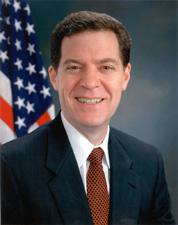 Sen. Sam Brownback (R-KS)
Legislative Activity
Stay on top of the latest movement without scrolling through every action
Read twice and referred to the Committee on Energy and Natural Resources. (text of measure as introduced: CR S2998-3000)
March 23, 2004
View full timeline
Introduced in Senate
March 23, 2004
Sponsor introductory remarks on measure. (CR S2997-2998)
March 23, 2004
Read twice and referred to the Committee on Energy and Natural Resources. (text of measure as introduced: CR S2998-3000)
March 23, 2004
Floor Debate
6 membersWhat members said about S. 2224 on the floor



 +1
+1
Floor Debate
6 membersWhat members said about S. 2224 on the floor
Mr. President, the great story of Kansas can be summed up in the State motto, ``Ad Astra per Aspera,'' to the stars through difficulties. Though only a short phrase comprised of four words, the…
Mr. President, I rise today to introduce the Anticounterfeiting Act of 2004, along with Senators Murray, Hollings, Smith, and Allen. Two years ago, I held a hearing entitled, ``Theft of American…
Mr. President, I am pleased to introduce, along with my distinguished colleague Senator Brownback, a bill designating the Bleeding Kansas and the Enduring Struggle for Freedom National Heritage Area.…
Mr. President, I rise today to introduce legislation to ensure that displaced workers whose jobs have moved overseas have access to affordable health care coverage. Under the Trade Assistance…
Mr. President, I am pleased to introduce today the Montana Mineral Exchange Act with Senators Burns and Campbell. This bill will enable the Northern Cheyenne Tribe and eastern Montana to create jobs…
Show 1 more

Mr. President, I ask unanimous consent that the text of the bill be printed in the Record.
Bill Text
Latest available legislative text
        [Congressional Bills 108th Congress]
[From the U.S. Government Publishing Office]
[S. 2224 Introduced in Senate (IS)]

108th CONGRESS
2d Session
S. 2224

To establish the Bleeding Kansas and the Enduring Struggle for Freedom
National Heritage Area, and for other purposes.

_______________________________________________________________________

IN THE SENATE OF THE UNITED STATES

March 23, 2004

Mr. Brownback (for himself and Mr. Roberts) introduced the following
bill; which was read twice and referred to the Committee on Energy and
Natural Resources

_______________________________________________________________________

A BILL

To establish the Bleeding Kansas and the Enduring Struggle for Freedom
National Heritage Area, and for other purposes.

Be it enacted by the Senate and House of Representatives of the
United States of America in Congress assembled,

SECTION 1. SHORT TITLE.

This Act may be cited as the ``Bleeding Kansas National Heritage
Area Act''.

SEC. 2. FINDINGS AND PURPOSE.

(a) Findings.--Congress finds the following:
(1) The Bleeding Kansas National Heritage Area is a
cohesive assemblage of natural, historic, cultural, and
recreational resources that--
(A) together represent distinctive aspects of
American heritage worthy of recognition, conservation,
interpretation, and continuing use;
(B) are best managed through partnerships between
private and public entities; and
(C) will build upon the Kansas rural development
policy and the new homestead act to recognize inherent
strengths of small towns and rural communities--close-
knit communities, strong local business networks, and a
tradition of entrepreneurial creativity.
(2) The Bleeding Kansas National Heritage Area reflects
traditions, customs, beliefs, folk life, or some combination
thereof, that are a valuable part of the heritage of the United
States.
(3) The Bleeding Kansas National Heritage Area provides
outstanding opportunities to conserve natural, cultural, or
historic features, or some combination thereof.
(4) The Bleeding Kansas National Heritage Area provides
outstanding recreational and interpretive opportunities.
(5) The Bleeding Kansas National Heritage Area has an
identifiable theme, and resources important to the theme retain
integrity capable of supporting interpretation.
(6) Residents, nonprofit organizations, other private
entities, and units of local government throughout the Bleeding
Kansas National Heritage Area demonstrate support for
designation of the Bleeding Kansas National Heritage Area as a
national heritage area and for management of the Bleeding
Kansas National Heritage Area as appropriate for such
designation.
(7) Capturing these interconnected stories through
partnerships with National Park Service sites, Kansas State
Historical Society sites, local organizations, and citizens
will augment the story opportunities within the prospective
boundary for the educational and recreational benefit of this
and future generations of Americans.
(8) Communities throughout this region know the value of
their Bleeding Kansas legacy, but require expansion of the
existing cooperative framework to achieve key preservation,
education, and other significant goals by working more closely
together.
(9) The State of Kansas officially recognized the national
significance of the Bleeding Kansas story when it designated
the heritage area development as a significant strategic goal
within the statewide economic development plan.
(10) Territorial Kansas Heritage Alliance is a nonprofit
corporation created for the purposes of preserving,
interpreting, developing, promoting and, making available to
the public the story and resources related to the story of
Bleeding Kansas and the Enduring Struggle for Freedom.
(11) Territorial Kansas Heritage Alliance has completed a
study that--
(A) describes in detail the role, operation,
financing, and functions of Territorial Kansas Heritage
Alliance, the management entity; and
(B) provides adequate assurances that Territorial
Kansas Heritage Alliance, the management entity, is
likely to have the financial resources necessary to
implement the management plan for the Heritage Area,
including resources to meet matching requirement for
grants.
(12) There are at least 7 National Historic Landmarks, 32
National Register properties, 3 Kansas Register properties, and
7 properties listed on the National Underground Railroad
Network to Freedom that contribute to the Heritage Area as well
as other significant properties that have not been designated
at this time.
(13) There is an interest in interpreting all sides of the
Bleeding Kansas story that requires further work with several
counties in Missouri interested in joining the area.
(14) In 2004, the State of Kansas is commemorating the
Sesquicentennial of the signing of the Kansas-Nebraska Act,
opening the territory to settlement.
(b) Purposes.--The purposes of this Act are as follows:
(1) To designate a region in eastern Kansas and western
Missouri containing nationally important natural, historic, and
cultural resources and recreational and educational
opportunities that are geographically assembled and
thematically related as areas that provide unique frameworks
for understanding the great and diverse character of the United
States and the development of communities and their
surroundings as the Bleeding Kansas National Heritage Area.
(2) To strengthen, complement, and support the Fort Scott,
Brown v. Board of Education, Nicodemus and Tallgrass Prairie
sites through the interpretation and conservation of the associated
living landscapes outside of the boundaries of these units of the
National Park System.
(3) To describe the extent of Federal responsibilities and
duties in regard to the Heritage Area.
(4) To further collaboration and partnerships among
Federal, State, and local governments, nonprofit organizations,
and the private sector, or combinations thereof, to conserve
and manage the resources and opportunities in the Heritage Area
through grants, technical assistance, training and other means.
(5) To authorize Federal financial and technical assistance
to management entity to assist in the conservation and
interpretation of the Heritage Area.
(6) To empower communities and organizations in Kansas to
preserve the special historic identity of Bleeding Kansas and
with it the identity of the Nation.
(7) To provide for the management, preservation,
protection, and interpretation of the natural, historical, and
cultural resources within the region for the educational and
inspirational benefit of current and future generations.
(8) To provide greater community capacity through inter-
local cooperation.
(9) To provide a vehicle, particularly in the four counties
with high out-migration of population, to recognize that self-
reliance and resilience will be the keys to their economic
future.
(10) To build upon the Kansas rural development policy, the
Kansas agritourism initiative and the new homestead act to
recognize inherent strengths of small towns and rural
communities--close-knit communities, strong local business
networks, and a tradition of entrepreneurial creativity.
(11) To educate and cultivate among its citizens,
particularly its youth, the stories and cultural resources of
the region's legacy that--
(A) reflect the popular phrase ``Bleeding Kansas''
describing the conflict over slavery that became
nationally prominent in Kansas just before and during
the American Civil War;
(B) reflect the commitment of American settlers who
first fought and killed to uphold their different and
irreconcilable principles of freedom and equality
during the years of the Kansas Conflict;
(C) reflect the struggle for freedom, experienced
during the ``Bleeding Kansas'' era, that continues to
be a vital and pressing issue associated with the real
problem of democratic nation building; and
(D) recreate the physical environment revealing its
impact on agriculture, transportation, trade and
business, and social and cultural patterns in urban and
rural settings.
(12) To interpret the effect of the era's democratic ethos
on the development of America's distinctive political culture.

SEC. 3. DEFINITIONS.

For the purposes of this Act:
(1) Management entity.--The term ``management entity''
means Territorial Kansas Heritage Alliance, recognized by the
Secretary, in consultation with the chief executive officer of
the State of Kansas, that agrees to perform the duties of a
local coordinating entity under this Act.
(2) Heritage area.--The term ``Heritage Area'' means the
Bleeding Kansas and the Enduring Struggle for Freedom National
Heritage Area in eastern Kansas and western Missouri.
(3) Secretary.--The term ``Secretary'' means the Secretary
of the Interior.
(4) Unit of local government.--The term ``unit of local
government'' means the government of a State, a political
subdivision of a State, or an Indian tribe.

SEC. 4. BLEEDING KANSAS AND THE ENDURING STRUGGLE FOR FREEDOM NATIONAL
HERITAGE AREA.

(a) Establishment.--There is established in the State of Kansas the
Bleeding Kansas and the Enduring Struggle for Freedom National Heritage
Area.
(b) Boundaries.--The Heritage Area shall include the following:
(1) An area located in eastern Kansas and western Missouri,
consisting currently of Allen, Anderson, Bourbon, Cherokee,
Clay, Coffey, Crawford, Douglas, Franklin, Geary, Johnson,
Labette, Leavenworth, Linn, Miami, Neosho, Pottawatomie, Riley,
Shawnee, Wabaunsee, Wilson, Woodson, Wyandotte Counties in
Kansas and tentatively including additional counties in Kansas
and western Missouri to be included in the development of the
management plan.
(2) Contributing sites, buildings, and districts within the
area will be recommended by the management plan.
(c) Map.--Final boundary will be defined during the management plan
development. A map of the Heritage Area shall be included in the
management plan. The map shall be on file in the appropriate offices of
the National Park Service, Department of the Interior.
(d) Management Entity.--The management entity for the Heritage Area
shall be Territorial Kansas Heritage Alliance, a nonprofit organization
established in the State of Kansas, recognized by the Secretary, in
consultation with the chief executive officer of the State of Kansas,
that agrees to perform the duties of a local coordinating entity under
this Act.

SEC. 5. AUTHORITIES, DUTIES, AND PROHIBITIONS OF THE MANAGEMENT ENTITY.

(a) Authorities.--The management entity may, for purposes of
preparing and implementing the management plan, use funds made
available under this Act to--
(1) prepare a management plan for the Heritage Area;
(2) prepare reports, studies, interpretive exhibits and
programs, historic preservation projects, and other activities
recommended in the management plan for the Heritage Area;
(3) pay for operational expenses of the management entity
incurred within the first 10 fiscal years beginning after the
date of the enactment of this Act designating the Heritage
Area;
(4) make grants or loans to entities defined in the
management plan;
(5) enter into cooperative agreements with the State of
Kansas, its political subdivisions, nonprofit organizations,
and other organizations;
(6) hire and compensate staff;
(7) obtain money from any source under any program or law
to be used for a regrant program requiring the recipient of
such money to make a contribution in order to receive it;
(8) contract for goods and services; and
(9) offer a competitive grants program to contributing
partners requiring a dollar-for-dollar match of Federal funds.
(b) Duties of the Management Entity.--In addition to developing the
management plan, the management entity shall--
(1) give priority to the implementation of actions, goals,
strategies, and standards set forth in the management plan,
including assisting units of government and other persons in--
(A) encouraging economic viability in the Heritage
Area in accordance with the goals of the management
plan;
(B) establishing interpretive exhibits in the
Heritage Area;
(C) increasing public awareness of and appreciation
for the cultural, historical, and natural resources of
the Heritage Area;
(D) supporting the restoration of historic
buildings that are--
(i) located in the Heritage Area; and
(ii) related to the themes of the Heritage
Area;
(E) the conservation of contributing landscapes and
natural resources; and
(F) the installation throughout the Heritage Area
of signs identifying public access points and sites of
interest;
(2) prepare and implement the management plan while
considering the interests of diverse units of government,
businesses, private property owners, and nonprofit groups
within the Heritage Area;
(3) conduct public meetings in conjunction with training
and skill building workshops regarding the development and
implementation of the management plan; and
(4) for any fiscal year for which Federal funds are
received under this Act--
(A) submit to the Secretary a report that
describes, for the year--
(i) accomplishments of the management
entity;
(ii) expenses and income of the management
entity;
(iii) each entity to which a grant was
made; and
(iv) an accounting of matching funds
obtained to meet grant guidelines;
(B) conduct an annual audit with a neutral auditing
firm and make available for audit by Congress, the
Secretary, and appropriate units of government, all
records pertaining to the expenditure of the funds and
any matching funds; and
(C) require, for all agreements authorizing
expenditure of Federal funds by any entity, that the
receiving entity make available for audit all records
pertaining to the expenditure of their funds.
(c) Prohibition of Acquisition of Real Property.--The management
entity shall not use Federal funds received under this Act to acquire
real property or an interest in real property.
(d) Other Sources.--Nothing in this Act precludes the management
entity from using Federal funds from other sources for authorized
purposes.

SEC. 6. MANAGEMENT PLAN.

(a) Requirements.--The management entity shall:
(1) Management plan.--Not later than 3 years after the date
funds are made available for this purpose, prepare and submit a
management plan reviewed by participating units of local
government within the boundaries of the proposed Heritage Area.
(2) Collaboration.--Collaborate with and consider the
interests of diverse units of government, businesses, tourism
officials, private property owners, and nonprofit groups within
the geographic area of the Heritage Area in developing and
implementing such a management plan.
(3) Public involvement.--Ensure regular public involvement,
including public meetings at least annually, regarding the
implementation of the management plan.
(b) Contents of Management Plan.--The management plan prepared for
the Heritage Area shall--
(1) present a comprehensive program for the conservation,
interpretation, funding, management, and development of the
Heritage Area, in a manner consistent with the existing local,
State, and Federal land use laws and compatible economic
viability of the Heritage Area;
(2) establish criteria or standards to measure what is
selected for conservation, interpretation, funding, management,
and development;
(3) involve residents, public agencies, and private
organizations working in the Heritage Area;
(4) specify and coordinate, as of the date of the
management plan, existing and potential sources of technical
and financial assistance under this and other Federal laws to
protect, manage, and develop the Heritage Area; and
(5) include--
(A) actions to be undertaken by units of government
and private organizations to protect, conserve, and
interpret the resources of the Heritage Area;
(B) an inventory of the resources contained in the
Heritage Area, including a list of any property in the
Heritage Area that is related to the themes of the
Heritage Area and that meets the establishing criteria
(such as, but not exclusive to, visitor readiness) to
merit preservation, restoration, management,
development, or maintenance because of its natural,
cultural, historical, or recreational significance;
(C) policies for resource management including the
development of intergovernmental cooperative
agreements, private sector agreements, or any
combination thereof, to protect the historical,
cultural, recreational, and natural resources of the
Heritage Area in a manner consistent with supporting
appropriate and compatible economic viability;
(D) a program for implementation of the management
plan by the designated management entity, in
cooperation with its partners and units of local
government;
(E) evidence that relevant State, county, and local
plans applicable to the Heritage Area have been taken
into consideration;
(F) an analysis of ways in which local, State, and
Federal programs may best be coordinated to promote the
purposes of this Act; and
(G) a business plan that--
(i) describes in detail the role,
operation, financing, and functions of the
management entity for each activity included in
the recommendations contained in the management
plan; and
(ii) provides, to the satisfaction of the
Secretary, adequate assurances that the
management entity is likely to have the
financial resources necessary to implement the
management plan for the Heritage Area,
including resources to meet matching
requirement for grants awarded under this Act.
(c) Public Notice.--The management entity shall place a notice of
each of its public meetings in a newspaper of general circulation in
the Heritage Area and shall make the minutes of the meeting available
to the public.
(d) Disqualification From Funding.--If a proposed management plan
is not submitted to the Secretary within 4 years of the date of the
enactment of this Act, the management entity shall be ineligible to
receive additional funding under this title until the date on which the
Secretary receives the proposed management plan.
(e) Approval and Disapproval of Management Plan.--The Secretary
shall approve or disapprove the proposed management plan submitted
under this title not later than 90 days after receiving such proposed
management plan.
(f) Action Following Disapproval.--If the Secretary disapproves a
proposed management plan, the Secretary shall advise the management
entity in writing of the reasons for the disapproval and shall make
recommendations for revisions to the proposed management plan. The
Secretary shall approve or disapprove a proposed revision within 90
days after the date it is submitted.
(g) Approval of Amendments.--The Secretary shall review and approve
substantial amendments to the management plan. Funds appropriated under
this title may not be expended to implement any changes made by such
amendment until the Secretary approves the amendment.

SEC. 7. TECHNICAL AND FINANCIAL ASSISTANCE; OTHER FEDERAL AGENCIES.

(a) Technical and Financial Assistance.--
(1) In general.--On the request of the management entity,
the Secretary may provide technical and financial assistance
for the development and implementation of the management plan.
(2) Priority for assistance.--In providing assistance under
paragraph (1), the Secretary shall give priority to actions
that assist in--
(A) conserving the significant cultural, historic,
and natural resources of the Heritage Area; and
(B) providing educational, interpretive, and
recreational opportunities consistent with the purposes
of the Heritage Area.
(3) Spending for non-federal property.--The management
entity may expend Federal funds made available under this Act
on non-Federal property that--
(A) meets the criteria in the approved management
plan; or
(B) is listed or eligible for listing on the
National Register of Historic Places.
(4) Other assistance.--The Secretary may enter into
cooperative agreements with public and private organizations to
carry out this subsection.
(b) Other Federal Agencies.--Any Federal entity conducting or
supporting an activity that directly affects the Heritage Area shall--
(1) consider the potential effect of the activity on the
purposes of the Heritage Area and the management plan;
(2) consult with the management entity regarding the
activity; and
(3) to the maximum extent practicable, conduct or support
the activity to avoid adverse effects on the Heritage Area.
(c) Other Assistance not Affected.--This Act does not affect the
authority of any Federal official to provide technical or financial
assistance under any other law.
(d) Notification of Other Federal Activities.--The head of each
Federal agency shall provide to the Secretary and the management
entity, to the extent practicable, advance notice of all activities
that may have an impact on the Heritage Area.

SEC. 8. PRIVATE PROPERTY PROTECTION.

(a) Access to Private Property.--Nothing in this Act shall be
construed to require any private property owner to permit public access
(including Federal, State, or local government access) to such private
property. Nothing in this Act shall be construed to modify any
provision of Federal, State, or local law with regard to public access
to or use of private lands.
(b) Liability.--Designation of the Heritage Area shall not be
considered to create any liability, or to have any effect on any
liability under any other law, of any private property owner with
respect to any persons injured on such private property.
(c) Recognition of Authority to Control Land Use.--Nothing in this
Act shall be construed to modify any authority of Federal, State, or
local governments to regulate land use.
(d) Participation of Private Property Owners in Heritage Areas.--
Nothing in this Act shall be construed to require the owner of any
private property located within the boundaries of the Heritage Area to
participate in or be associated with the Heritage Area.
(e) Land Use Regulation.--
(1) In general.--The management entity shall provide
assistance and encouragement to State and local governments,
private organizations, and persons to protect and promote the
resources and values of the Heritage Area.
(2) Effect.--Nothing in this Act--
(A) affects the authority of the State or local
governments to regulate under law any use of land; or
(B) grants any power of zoning or land use to the
management entity.
(f) Private Property.--
(1) In general.--The management entity shall be an advocate
for land management practices consistent with the purposes of
the Heritage Area.
(2) Effect.--Nothing in this Act--
(A) abridges the rights of any person with regard
to private property;
(B) affects the authority of the State or local
government regarding private property; or
(C) imposes any additional burden on any property
owner.

SEC. 9. REQUIREMENTS FOR INCLUSION OF PRIVATE PROPERTY.

(a) Notification and Consent of Property Owners Required.--No
privately owned property shall be governed by the management plan for
the Heritage Area until the owner of that private property has been
notified in writing by the management entity and has given written
consent for such inclusion to the management entity.
(b) Landowner Withdraw.--Any owner of private property included
within the boundary of the Heritage Area, and not notified under
subsection (a), shall have their property immediately removed from the
boundary by submitting a written request to the management entity.

SEC. 10. SAVINGS PROVISIONS.

(a) Rules, Regulations, Standards, and Permit Processes.--Nothing
in this Act shall be construed to impose any environmental,
occupational, safety, or other rule, regulation, standard, or permit
process in the Heritage Area that is different from those that would be
applicable if the Heritage Area had not been established.
(b) Water and Water Rights.--Nothing in this Act shall be construed
to authorize or imply the reservation or appropriation of water or
water rights.
(c) No Diminishment of State Authority.--Nothing in this Act shall
be construed to diminish the authority of the State to manage fish and
wildlife, including the regulation of fishing and hunting within the
Heritage Area.
(d) Existing National Heritage Areas.--Nothing in this Act shall
affect any national heritage area so designated before the date of the
enactment of this Act.

SEC. 11. AUTHORIZATION OF APPROPRIATIONS.

(a) In General.--There is authorized to be appropriated to carry
out this Act $10,000,000, of which not more than $1,000,000 may be
authorized to be appropriated for any fiscal year.
(b) Cost-Sharing Requirement.--The Federal share of the total cost
of any activity assisted under this Act shall be not more than 50
percent.

SEC. 12. TERMINATION OF AUTHORITY.

The authority of the Secretary to provide assistance under this
Act terminates on the date that is 10 years after the date of the
enactment of this Act.
<all>