Identity Theft Prevention Act
 Sen. Dianne Feinstein (D-CA)
Legislative Activity
Stay on top of the latest movement without scrolling through every action
Read twice and referred to the Committee on Banking, Housing, and Urban Affairs. (text of measure as introduced: CR S1676-1677)
January 28, 2003
View full timeline
Introduced in Senate
January 28, 2003
Sponsor introductory remarks on measure. (CR S1675-1676)
January 28, 2003
Read twice and referred to the Committee on Banking, Housing, and Urban Affairs. (text of measure as introduced: CR S1676-1677)
January 28, 2003
Floor Debate
12 membersWhat members said about S. 223 on the floor



 +7
+7
Floor Debate
12 membersWhat members said about S. 223 on the floor
Mr. President, I rise, along with Senator Grassley, Senator Corzine, and Senator Gregg to introduce the Identity Theft Prevention Act. This bill addresses the growing tide of identity theft cases by…
Mr. President, I rise today, along with my good friend, the senior Senator from Iowa, Senator Grassley, to introduce the Illicit Drug Anti-Proliferation Act. This legislation arises out of a hearing…
Mr. President, I come to the Chamber this morning, with a number of my colleagues, to discuss what is a critical issue in timber country across the United States, where men and women go to work every…
Mr. President, I rise today to re-introduce legislation that will promote competition in the radio and concert industries. This legislation will begin to address many of the concerns that I have…
Mr. President, I thank Senator Craig for his leadership on this issue, and also Senator Baucus and Senator Crapo, and a number of others whose States are being severely impacted by very unfair…
Show 8 more
Mr. President, I rise, along with Senator Grassley, Senator Corzine, and Senator Gregg to introduce the Identity Theft Prevention Act. This bill addresses the growing tide of identity theft cases by…
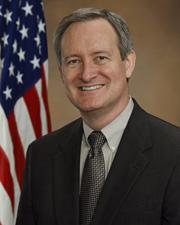
Mr. President, I appreciate the opportunity to join with my colleague from Idaho, Senator Craig, and with the other Senators he has listed who are cosponsoring this critical legislation. Senator…

Mr. President, I am pleased to join my colleague Senator Biden today in introducing the Illicit Drug Anti-Proliferation Act. This is a continuation of an effort he and I spearheaded last year to…

Mr. President, I am here today to cosponsor legislation that should help resolve the current crisis being faced by the U.S. softwood lumber industry, which continues to be devastated by the…

Mr. President, I rise today to discuss a much-needed clarification of current trade law. Misinterpretation of the current law hurts hundreds of American companies and thousands of American workers.…

Mr. President, I rise today to introduce a bill to reinstate a license surrendered to the Federal Energy Regulatory Commission, FERC, that authorized the construction of a hydroelectric power plant…

Mr. President, on behalf of Senator McCain and myself I am introducing legislation today that would codify the settlement of the Zuni Indian Tribe's water rights for its religious lands in…

Mr. President, I support the efforts of the Department of Commerce and United States Trade Representative to negotiate a fair trade agreement with Canada. We have a very important trading…
Bill Text
Latest available legislative text
        [Congressional Bills 108th Congress]
[From the U.S. Government Publishing Office]
[S. 223 Introduced in Senate (IS)]

108th CONGRESS
1st Session
S. 223

To prevent identity theft, and for other purposes.

_______________________________________________________________________

IN THE SENATE OF THE UNITED STATES

January 28, 2003

Mrs. Feinstein (for herself, Mr. Grassley, Mr. Corzine, and Mr. Gregg)
introduced the following bill; which was read twice and referred to the
Committee on Banking, Housing, and Urban Affairs

_______________________________________________________________________

A BILL

To prevent identity theft, and for other purposes.

Be it enacted by the Senate and House of Representatives of the
United States of America in Congress assembled,

SECTION 1. SHORT TITLE.

This Act may be cited as the ``Identity Theft Prevention Act''.

SEC. 2. FINDINGS.

Congress finds that--
(1) the crime of identity theft has become one of the major
law enforcement challenges of the new economy, as vast
quantities of sensitive, personal information are now
vulnerable to criminal interception and misuse;
(2) in November 2002, Americans were alerted to the dangers
of identity theft when Federal prosecutors announced that 3
individuals had allegedly sold the credit and personal
information of 30,000 people, the largest single identity theft
case in United States history;
(3) hundreds of thousands of Americans are victims of
identity theft each year, resulting in an annual cost to
industry of more than $3,500,000,000.
(4) several indicators reveal that despite increased public
awareness of the crime, the number of incidents of identity
theft continues to rise;
(5) in December 2001, the Federal Trade Commission received
an average of more than 3,000 identity theft calls per week, a
700 percent increase since the Identity Theft Data
Clearinghouse began operation in November 1999;
(6) allegations of social security number fraud increased
by 500 percent between 1998 and 2001, from 11,000 to 65,000;
(7) a national credit reporting agency reported that
consumer requests for fraud alerts increased by 53 percent
during fiscal year 2001;
(8) identity theft violates the privacy of American
citizens and ruins their good names;
(9) victims of identity theft may suffer restricted access
to credit and diminished employment opportunities, and may
spend years repairing the damage to credit histories caused by
identity theft;
(10) businesses and government agencies that handle
sensitive personal information of consumers have a
responsibility to protect this information from identity
thieves; and
(11) the private sector can better protect consumers by
implementing effective fraud alerts, affording greater consumer
access to credit reports, truncating of credit card numbers,
and establishing other prevention measures.

SEC. 3. IDENTITY THEFT PREVENTION.

(a) Changes of Address.--
(1) Duty of issuers of credit.--Section 132 of the Truth in
Lending Act (15 U.S.C. 1642) is amended--
(A) by inserting ``(a) In General.--'' before ``No
credit''; and
(B) by adding at the end the following:
``(b) Confirmation of Changes of Address.--If a card issuer
receives a request for an additional credit card with respect to an
existing credit account not later than 30 days after receiving
notification of a change of address for that account, the card issuer
shall--
``(1) not later than 5 days after sending the additional
card to the new address, notify the cardholder of the request
at both the new address and the former address; and
``(2) provide to the cardholder a means of promptly
reporting incorrect changes.''.
(2) Enforcement.--
(A) Federal trade commission.--Except as provided
in subparagraph (B), compliance with section 132(b) of
the Truth in Lending Act (as added by this subsection)
shall be enforced by the Federal Trade Commission in
the same manner and with the same power and authority
as the Commission has under the Fair Debt Collection
Practices Act to enforce compliance with that Act.
(B) Other agencies in certain cases.--
(i) In general.--Compliance with section
132(b) of the Truth in Lending Act shall be
enforced under--
(I) section 8 of the Federal
Deposit Insurance Act, in the case of a
card issuer that is--
(aa) a national bank or a
Federal branch or Federal
agency of a foreign bank, by
the Office of the Comptroller
of the Currency;
(bb) a member bank of the
Federal Reserve System (other
than a national bank), a branch
or agency of a foreign bank
(other than a Federal branch,
Federal agency, or insured
State branch of a foreign
bank), a commercial lending
company owned or controlled by
a foreign bank, or an
organization operating under
section 25 or 25A of the
Federal Reserve Act, by the
Board of Governors of the
Federal Reserve System;
(cc) a bank insured by the
Federal Deposit Insurance
Corporation (other than a
member of the Federal Reserve
System or a national nonmember
bank) or an insured State
branch of a foreign bank, by
the Board of Directors of the
Federal Deposit Insurance
Corporation; and
(dd) a savings association,
the deposits of which are
insured by the Federal Deposit
Insurance Corporation, by the
Director of the Office of
Thrift Supervision; and
(II) the Federal Credit Union Act,
by the Administrator of the National
Credit Union Administration in the case
of a card issuer that is a Federal
credit union, as defined in that Act.
(C) Violations treated as violations of other
laws.--
(i) In general.--For the purpose of the
exercise by any agency referred to in this
paragraph of its powers under any Act referred to in this paragraph, a
violation of section 132(b) of the Truth in Lending Act (as added by
this subsection) shall be deemed to be a violation of a requirement
imposed under that Act.
(ii) Agency authority.--In addition to its
powers under any provision of law specifically
referred to in subparagraph (A) or (B), each of
the agencies referred to in those subparagraphs
may exercise, for the purpose of enforcing
compliance with section 132(b) of the Truth in
Lending Act, any other authority conferred on
such agency by law.
(b) Fraud Alerts.--Section 605 of the Fair Credit Reporting Act (15
U.S.C. 1681c) is amended by adding at the end the following:
``(g) Fraud Alerts.--
``(1) Defined term.--In this subsection, the term `fraud
alert' means a statement in the file of a consumer that
notifies all prospective users of a consumer report made with
respect to that consumer that--
``(A) the consumer's identity may have been used,
without the consumer's consent, to fraudulently obtain
goods or services in the consumer's name; and
``(B) the consumer does not authorize the issuance
or extension of credit in the name of the consumer
unless the issuer of such credit--
``(i) obtains express preauthorization from
the consumer at a telephone number designated
by the consumer; or
``(ii) utilizes another reasonable means of
communications to obtain the express
preauthorization of the consumer.
``(2) Inclusion of fraud alert in consumer file.--Upon the
request of a consumer and upon receiving proper identification,
a consumer reporting agency shall include a fraud alert in the
file of that consumer.
``(3) Notice sent by consumer reporting agencies.--A
consumer reporting agency shall notify each person procuring
consumer credit information with respect to a consumer of the
existence of a fraud alert in the file of that consumer,
regardless of whether a full credit report, credit score, or
summary report is requested.
``(4) Procedures to receive fraud alerts.--Any person who
uses a consumer credit report in connection with a credit
transaction shall establish reasonable procedures to receive
fraud alerts transmitted by consumer reporting agencies.
``(5) Violations.--
``(A) Consumer reporting agency.--Any consumer
reporting agency that fails to notify any user of a
consumer credit report of the existence of a fraud
alert in that report shall be in violation of this
section.
``(B) User of a consumer report.--Any user of a
consumer report that fails to comply with
preauthorization procedures contained in a fraud alert
and issues or extends credit in the name of the
consumer to a person other than the consumer shall be
in violation of this section.
``(6) Exceptions.--
``(A) Resellers.--
``(i) In general.--The provisions of this
subsection do not apply to a consumer reporting
agency that acts as a reseller of information
by assembling and merging information contained
in the database of another consumer reporting
agency or multiple consumer reporting agencies,
and does not maintain a permanent database of
the assembled or merged information from which
new consumer reports are produced.
``(ii) Limitation.--A reseller of assembled
or merged information shall preserve any fraud
alert placed on a consumer report by another
consumer reporting agency.
``(B) Exempt institutions.--The requirement under
this subsection to place a fraud alert in a consumer
file shall not apply to--
``(i) a check services company, which
issues authorizations for the purpose of
approving or processing negotiable instruments,
electronic funds transfers, or similar methods
of payments; or
``(ii) a demand deposit account information
service company, which issues reports regarding
account closures due to fraud, substantial
overdrafts, ATM abuse, or similar negative
information regarding a consumer, to inquiring
banks or other financial institutions for use
only in reviewing a consumer request for a
demand deposit account at the inquiring bank or
financial institution.''.

SEC. 4. TRUNCATION OF CREDIT CARD ACCOUNT NUMBERS.

(a) In General.--Except as provided in this section, no person,
firm, partnership, association, corporation, or limited liability
company that accepts credit cards for the transaction of business shall
print more than the last 5 digits of the credit card account number or
the expiration date upon any receipt provided to the cardholder.
(b) Limitation.--This section--
(1) applies only to receipts that are electronically
printed; and
(2) does not apply to transactions in which the sole means
of recording the cardholder's credit card account number is by
handwriting or by an imprint or copy of the credit card.
(c) Effective Date.--This section shall take effect--
(1) on the date that is 4 years after the date of enactment
of this Act, with respect to any cash register or other machine
or device that electronically prints receipts for credit card
transactions that is in use prior to the date of enactment of
this Act; and
(2) on the date that is 18 months after the date of
enactment of this Act, with respect to any cash register or
other machine or device that electronically prints receipts for
credit card transactions that is first put into use on or after
the date of enactment of this Act.
(d) Effect on State Law.--Nothing in this section prevents a State
from imposing requirements that are the same or substantially similar
to the requirements of this section at any time before the effective
date of this section.

SEC. 5. FREE ANNUAL CREDIT REPORT.

Section 612(c) of the Fair Credit Reporting Act (15 U.S.C.
1681j(c)) is amended to read as follows:
``(c) Free Annual Disclosure.--Upon the request of the consumer and
without charge to the consumer, a consumer reporting agency shall make
all the disclosures listed under section 609 once during any 12-month
period.''.
<all>