High Risk Nonprofit Security Enhancement Act of 2004

Legislative Activity
Stay on top of the latest movement without scrolling through every action
Placed on Senate Legislative Calendar under General Orders. Calendar No. 797.
November 10, 2004
View full timeline
Introduced in Senate
April 1, 2004
Sponsor introductory remarks on measure. (CR S3579-3580)
April 1, 2004
Read twice and referred to the Committee on Governmental Affairs. (text of measure as introduced: CR S3580-3581)
April 1, 2004
Committee on Governmental Affairs. Ordered to be reported with amendments favorably.
July 21, 2004
Committee on Governmental Affairs. Reported by Senator Collins under authority of the order of the Senate of 10/11/04 with amendments. With written report No. 108-408. Minority views filed.
November 10, 2004
Placed on Senate Legislative Calendar under General Orders. Calendar No. 797.
November 10, 2004
Floor Debate
20 membersWhat members said about S. 2275 on the floor
 TC
TC CES
CES JSC
JSC PJL
PJL EFH+15
Floor Debate
20 membersWhat members said about S. 2275 on the floor
Mr. President, I am very pleased to present this appropriations bill to the Senate. It is the culmination of a lot of hard work by all of the members of our subcommittee, as we conducted hearings to…
Mr. President, I am very pleased to present this appropriations bill to the Senate. It is the culmination of a lot of hard work by all of the members of our subcommittee, as we conducted hearings to review the proposed budget from the Department of Homeland Security, and as we listened to those who have responsibilities for managing the various directorates and other agencies and activities that come within the ambit of the responsibilities of the Homeland Security Department.
We learned a lot in the hearings. We learned about new procedures that were being developed and deployed. We learned about new technologies that were being explored. In the bioterrorism area, we were learning about the research that is being done to make our capacity more sophisticated and capable of protecting the health and safety of all Americans from attacks in that area.
We have been challenged as we have never been challenged before to look again carefully at how we go about protecting the citizens of our great country. The experience of September 11, of course, stays in our mind as something that is unthinkable. The fact that it did happen is still unbelievable, and we realize that we have the responsibility-- representatives of the people of this country serving in Congress today--to try to get it right so that kind of thing can't happen again.
We are blessed to be served in the administration by people such as Tom Ridge, the new Secretary of the Department of Homeland Security. The President recommended this new Department be created. The Congress responded. The Governmental Affairs Committee, on which I served at that time, dealt with the challenge of the legal framework of defining the responsibilities of a new department and what activities would come under the Department. We brought together under this one Department 22 different Federal agencies, or at least parts of 22 different agencies. Some, such as the U.S. Coast Guard, were transferred underneath the jurisdictional responsibility of the Department to help make our effort more coherent, more effectively and efficiently managed, and to achieve the goal of making our country safer and more secure for the citizens who live in the United States. I think we have made great progress.
This bill specifically provides funding of $33.1 billion for the Department of Homeland Security for this next fiscal year, 2005. This is the second appropriations bill to fund the Department which began its operations short of a year and a half ago. The new Department has made substantial progress to merge the agency functions and the employees who were transferred under its responsibilities and to undertake its new duties to better secure and more effectively protect our great Nation.
We also have seen a new system put in place called the US VISIT Program to screen visaholders and to stop potential terrorists and those who may be dangerous, because they have committed crimes in the past, from entering our country to start with. US VISIT, through biometrics and other new innovations, has already identified, apprehended, or arrested more than 400 individuals. Through the science and technology directorate, the Department has aggressively moved forward on the successful testing of the first commercial portal monitors and handheld radiological identifiers to detect the smuggling of materials which could be used to build weapons of mass destruction. Federal air marshals have been deployed. State-of-the-art technologies have been introduced, and cockpit doors have been modified to increase the safety of air travel.
I know there can be criticism leveled at the efforts of the Transportation Security Administration which has been the agency identified with the responsibility for overseeing aviation security and many other areas of responsibility. But let me remind Senators--and this is contained in our committee report--I invite the attention of the Senate to the report, on page 31, where we talk about aviation security. My good friend, the distinguished Senator from West Virginia, mentioned people who might bring in bombs or material that can be used as explosives to blow up planes and otherwise harm us.
The Transportation Security Administration aviation
security account [in this legislation] provides for Federal
aviation security by employing the most efficient screening
of all passengers and baggage, deployment of onsite law
enforcement, continuation of a uniform set of background
requirements for airport and airline personnel, deployment of
the most current explosive detection technology, and creation
of a model workplace.
The aviation security activities include funding for
Federal and private contract passenger and baggage screeners,
including personnel compensation and benefits, training, and
human resource services; passenger checkpoint support; air
cargo security; procurement and maintenance of explosive
detection systems; and checkpoint support.
I suggest that the $4,386,083,000 for aviation security contained in this bill is designed to meet the needs we have for improved and safer air travel, working with the airlines who are spending
their own money in many of these and other areas. I suggest we have the safest air transportation system in the world. And we are going to continue to monitor the activities. We are going to continue to engage in oversight and interaction with the Federal agencies involved, as well as Department of Homeland Security officials, to see that we stay on course and that we continue to upgrade, improve, and take advantage of the latest technologies to guarantee the safety and security of American citizens.
Looking at another area, efforts have been undertaken to increase our stockpile of antibiotics, vaccines, and other medications to protect Americans in the event of a terrorist attack and to identify and develop new countermeasures to protect Americans against new biological threats. Today our first responders, those who work at the fire departments, the police departments, the emergency medical centers, have been provided with resources from the Federal Government to buy necessary equipment, to increase training to better protect our communities throughout the country.
Including the resources in this bill we are presenting today to the Senate, over $12 billion will have been appropriated to our State and local partners across the country, over $2.5 billion to firefighters alone.
The Department of Homeland Security has made important strides in this last year. The bill we present to you today will allow the Department to continue to build on its success and make our Nation even more secure.
If Senators look at the provisions in the bill, they will see that it reflects suggestions made by Senators on both sides of the aisle. This is a bipartisan bill. It is not a Republican bill or a Democratic bill, it is an American bill. It is a bill to protect the safety and security of all Americans. Our committee held hearings and listened to every suggestion made by all Senators for the levels of appropriations for all of these activities.
This is the second year of this bill, as I said, but I think we have made important strides forward. I particularly thank again the distinguished Senator from West Virginia for his cooperation, his support, and his assistance during the development of this bill and the conduct of our hearings and the presentation of the final work product to the Senate today.
I am going to close my remarks--and I will be prepared to receive any suggestions for changes in the bill or amendments or other statements from Senators--by quoting from something Tom Ridge said with which I was particularly impressed. Our Secretary of the Department of Homeland Security said:
Homeland security is about the integration of a nation,
everyone pledged to freedom's cause, everyone its protector,
and everyone its beneficiary. It's about the integration of
people and technology to make us smarter, safer, more
sophisticated, and better protected. It's about the
integration of our national efforts, not one department or
one organization, but everyone tasked with our Nation's
protection. Every day, we work to make America more secure.
Every day, the memories of September 11th inspire us to live
our vision of preserving our freedoms, protecting America,
enjoying our liberties, and securing the homeland.
I am happy to compliment the distinguished Senator for his description of the damages in Florida. We are all keenly aware, because the of the images on television, and the description in the newspapers, conversations with friends and family members in that State, how terrible those storms have been and the devastation that has been caused.
One thing that reminds me of the history of my own State is the terrible force of the wave action. I can remember when Hurricane Camille struck the Mississippi Gulf Coast in, I think, 1969, that storm did more damage than any other hurricane that had ever hit that part of the gulf of Mexico. I recall going down to the gulf of Mexico and visiting that area, seeing how devastating the damage was and how long it took to recover from it. As a matter of fact there are still scars. There is one shrimp boat about 2 blocks inland now that is sitting there as a reminder of the force of that hurricane.
The fact of the matter is, and the Senator is correct, the $2 billion the Congress has approved for a supplemental appropriation for the Federal Emergency Management Agency is targeted just to the Disaster Relief Fund. This is, as the Senator knows, to provide emergency assistance of food, shelter, debris cleanup--taking care of the emergency situation that exists. That fund was going to be exhausted this morning when the President signed the bill appropriating this additional money. So, with this funding, that account is taken care of.
As the Senator indicates, there is a lot of other damage that is outside the jurisdiction of the Federal Emergency Management Agency. The Department of Agriculture and other Federal agencies may have responsibilities and they may not have sufficient funds to meet all the needs for which some people are entitled to reimbursement or some kind of disaster relief under Federal law. For that reason the President indicated in his request to Congress which he submitted on September 6--and I'll read this. He said:
The enclosed request requires immediate action by the
Congress to ensure that the immediate response efforts to
these recent disasters continue uninterrupted. I anticipate
making a further request in the coming days that will provide
for a comprehensive response and recovery effort addressing
the impact of both of these hurricanes. In addition, federal
government agencies will continue their response and recovery
efforts using existing resources and programs.
What we get from that is the President is submitting and, we have been advised by the President's staff, that in the coming days there will be another supplemental appropriations bill requested by the President. It will not be the bill that we are considering today, though. This is the annual appropriations bill that funds the entire Department of Homeland Security, Coast Guard, the Secret Service--the 22 various agencies that are combined within the ambit of the Department of Homeland Security.
I suggest to the Senator we would welcome any suggestions he has for inclusions in the additional supplemental that will be before the Congress soon, at the request of the President.
Mr. President, before we start agreeing on times for votes, that is above my pay grade. We have a distinguished majority leader, and we will have to consult with him and other Senators.
It depends on what his amendment is. We may all rejoice and vote for it. Who knows? Again, we may not.
Mr. President, a point of order. I have no objection to the dispensing of the reading of the amendment, but a point of order. Is there already an amendment pending from the Senator at the desk? Is this the second amendment or is this a different amendment?
Fine.
Mr. President, it is always instructive to listen to the distinguished Senator from New York talk about programs and activities that are of major concern to his constituents, particularly in the New York City area, but New York State generally. We appreciate his observations and his expression of concern about technologies and advancements and new ways of protecting the citizens of his State and our country against nuclear threats or other threats to our security. We think the Department has made important progress in these areas, analyzing and understanding the technologies that are available.
We have included, for example, encouragement for additional investigations in this area. I am reading from page 84 of the committee report now. It says:
The Committee expects a significant expansion of the
Countermeasures Test Bed being conducted with the Port
Authority of New York and New Jersey in testing technologies
to detect radiation/nuclear threats to include railway,
general aviation facility monitoring, expanded roadways
coverage, and an additional seaport.
The Committee is aware of technology proposals developed
with national laboratories to facilitate the inspection of
containerized cargo for fissile materials as a part of the
normal off-loading process at the Nation's seaports.
The Department is focused on the importance that we all believe should be paid to this area of interest and concern. We know that existing technologies are being deployed by agencies at ports of entry, including the U.S. Coast Guard and the Bureau of Customs and Border Protection. They provide an effective nuclear countermeasure system, but continued focused development can considerably extend these capabilities in order to develop technologies for application to specific locations, including those in the intermodal transportation system, in the maritime domain, at border ports of entry, and in the aviation industry.
Specifically, the committee included in this section of the bill to which this amendment is directed great latitude in approving grants that can be the subject of applications from not only States but local jurisdictions such as port security areas.
Of the total provided by the committee for urban area security initiative grants, $150 million is for port security grants; $150 million is included for rail and transit security grants; $10 million is available for inner city bus security grants for the improvement of ticket identification, the installation of driver shields, the enhancement of emergency communications, and further implementation of passenger screening; $15 million is also included for trucking industry security grants to continue the Highway Watch Grant Program.
This committee had the responsibility of trying to help ensure that across the broad range of urban area security concerns funds were available for grants to local areas and to States to deal with these new challenges.
The committee believes the Department's practice over the past 2 years to allocate appropriated funds could be improved. We suggested, for example, that they all not be made available
early in the fiscal year but to leave some opportunities for later grantmaking authority so that if any new discoveries or intelligence of recent terrorist threat information became available, these funds could be targeted to higher risk areas and where we would get more for our money.
It is easy to offer an amendment to double an appropriation, and that is what this amendment does. We have $150 million in the bill for this one particular grant program within the broad urban area security initiative grants. What the Senator from New York is doing is asking that be doubled.
You can just about go through this bill, I suggest, and find every incremental amount that is in this bill and pick out one and offer an amendment to double it and make a good persuasive case why it would be better off if we could spend twice as much money as we have allocated for that one activity. That is a pretty easy argument to make. But it is also a cheap shot, and the reason I am calling it a cheap shot is that we have within this Urban Area Security Grant Program $1.2 billion for discretionary grants to high-threat urban areas. The Secretary has to make these decisions on the basis of the applications and the proposals that are submitted to the Department.
If we in the Congress are going to go back through the bill and try to second-guess every one of these accounts and double it and ask for a vote, you could easily double the whole cost of the bill. We have a $33.1 billion bill. It probably would be harder to get a vote to double that to $66 billion, but you could make some arguments why we could spend that amount of money. But could we spend it in a thoughtful way that would efficiently and responsibly use the taxpayers' dollars in this area of concern, homeland security?
We have had 2 years of experience in writing this bill. Last year, we ended up having to make points of order on the basis of the fact that some of the amendments were in excess of the allocation that was given to this subcommittee.
I understand the full committee has been meeting this afternoon during the last hour to review the amount of funding that would be available to each subcommittee of the Senate Appropriations Committee. And I understand soon, if it has not already been done, there will be filed with the Senate this allocation, and this subcommittee will have a limited amount of money to use in writing this bill.
I am not suggesting we have gotten the cart before the horse, but I am suggesting that before we vote on this amendment, I want to be sure I know what the allocation amount is for this subcommittee. It is not just targeted to the amendment of the distinguished Senator from New York that I do this, but any amendment that would come in and double an amount without any more justification than it would be good if we could spend twice as much as we are spending. And that is really the argument.
Sure, it would be good if we could spend twice as much as we are spending in a lot of areas, but we have to make the choices within a framework of funds available to the committee for a wide range of activities, all of which are very important. We have to choose among programs of the U.S. Coast Guard, programs of the Transportation Security Administration, of the Secret Service, of the Federal Emergency Management Agency, and many others whose accounts are funded in this annual appropriations bill.
I am hopeful we can withhold action on this particular amendment and let us have an opportunity to review the committee's work.
So awaiting the further advice of the chairman of the Appropriations Committee or his staff, Mr. President, I suggest the absence of a quorum.
Mr. President, the Senator talks about we have sort of rubberstamped what the President has asked for in some of these areas. We have agreed with the President on some of his initiatives because we thought he was right, but when we thought the administration was wrong or where they have requested funds, as he pointed out, in the railroad area, for security programs there, this committee has recommended and the Congress has agreed to add funds over and above what has been requested by the President.
In this particular area, where the Senator is coming in now and doubling the amount of money we have in this one particular grant program--we have appropriated for this program almost $500 million, specifically for port security grants, since fiscal year 2002. We are addressing this issue. This is the point, and I am not apologizing for the decisions this committee has made and that have been ratified by both Houses of Congress and approved in the appropriations conference report. We have appropriated almost $500 million specifically for this program. We have asked for another $150 million this year. That is not enough, he says; double it.
We can talk about it on and on and on and go into all the other accounts that involve security in urban areas, high threat areas, but we have to realize there is a limit. Some Senators think we can come in and double the amounts in individual accounts and it will not matter, but if we keep on doing that before this bill is passed, we will have added no telling how much to the deficit. We would have put the administration in a position where they are going to have to either ask for deferrals or recisions of funds. If they cannot possibly get grants out to people who are qualified to use the money or can justify the use of the funds, we cannot pour the money on the ground, and I am not going to stand here and go along with suggestions that amount to spending more because it sounds as if we are going to be doing more. It does not necessarily follow.
I am hopeful we will have in place within the next few minutes some information about the total allocation of funding to this committee, because without that we can continue to add money for individual accounts in this bill for the rest of today and tonight and on into the weekend and then we will have to go back through and start striking funds that have been added so we will be consistent with the allocation to the subcommittee.
What I am asking the Senate to do, and the reason I put in the suggestion for a quorum when I first made the point of order, is to await the advice of the Committee on Appropriations. I am told they sent the information over electronic device, but we need it written on paper so Senators can read it and can understand what the limitations are. So I am hopeful we can await the advice of the full committee on the action that has been taken today. I would appreciate it very much.
I suggest the absence of a quorum.
Mr. President, I ask unanimous consent that the order for the quorum call be dispensed with.
Mr. President, I indicated earlier that the Senate Appropriations Committee met earlier this afternoon to approve the subcommittee funding allocations. The allocations approved are the same as those provided earlier by the full committee, for this subcommittee's information. For Homeland Security appropriations, the approved fiscal year 2005 discretionary spending allocation is $32 billion in budget authority and $29.873 billion in outlays. The bill reported by the committee is at the $32 billion discretionary budget authority allocation and $144 million below the outlay allocation. The allocations for this bill are $897 million in budget authority and $730 million in outlay above the President's request, showing the priority the committee has placed on Homeland Security accounts and its appropriations.
This is a fiscally responsible allocation and Members will be required to provide offsets for any additional spending proposed by amendments to be added to this bill, or the amendment will be subject to a 60-vote Budget Act point of order, I am advised. Therefore, I make a point of order against the Schumer amendment under section 302(f) of the Congressional Budget Act that the amendment provides spending in excess of the subcommittee's 302(b) allocation.
Mr. President, I think the Senator asked for a parliamentary inquiry. I don't have standing to rule on parliamentary inquiries. That is the responsibility of the Chair.
Mr. President, I ask unanimous consent that the Senate vote on the motion to waive in relation to the pending Schumer amendment at 4:45 p.m. today, with the debate until that time equally divided in the usual form.
Mr. President, I ask unanimous consent that the order for the quorum call be rescinded.
Have the yeas and nays been ordered?
Madam President, it occurs to me that this is an issue that probably ought not be on this bill. As a matter of general principle, it is a legislative decision. It seems to me the committee of jurisdiction would probably be the committee chaired by the distinguished Presiding Officer.
Having said that, that doesn't make this amendment go away by itself. We have to dispose of it. We have to deal with it. Frankly, I am confused about how the amendment got added to the House Appropriations Committee bill. I am told it was an amendment offered on the floor and it was adopted by the House. This seems to me an amendment that ought to be at least discussed in conference. If we adopt the Leahy amendment without changing it at all, then we are stuck with the language, it seems to me. I don't know how you get away from having this provision in the final version of the bill, and this appropriations process would have been subverted and it would have been distorted.
This is not an appropriations amendment. We are not talking about an amount of money to be appropriated for any particular purpose. Immigration services are provided, of course, by the Department of Homeland Security and apparently the Department feels it ought to have flexibility in the administration of that program. We are singling out an employment circular to prohibit its effectiveness on an appropriations bill. I think it is fairly convoluted.
I don't like the process. The Senator from Wyoming comes in and offers a modification, which basically requires the Department to provide information on its intentions.
It must submit to Congress not later than 60 days before making an award.
This is an award for providing services under the auspices of the Bureau of U.S. Citizenship and Immigration Services. Before it makes an award to someone to provide these services, it has to go through certain steps and make this disclosure to the Congress.
It seems to me that this is an appropriate place to at least call time out and let us put this issue on hold and give the Appropriations Committee an opportunity to consider it in conference. We would have to resolve the differences between this amendment and this provision in the Senate and the one adopted by the House.
I fully support the amendment offered by the Senator from Wyoming.
Let me add one other note. The administration submits to the committee after we write a bill in the Appropriations Committee a Statement of Administration Policy. Looking at their Statement of Administration Policy on the bill as reported by our Appropriations Committee, you get down to the bottom of page 2 where it talks about competitive sourcing, it states:
The administration has adopted a reasonable and responsible
approach for ensuring the fair and effective application of
public-private competition. On a government-wide basis,
competitions completed in fiscal year 2003 are estimated to
generate savings, or cost avoidances, of more than $1 billion
over the next 3 to 5 years. The House version of the bill
contains a provision that would block DHS from using
competition to choose the best public or private sector
source to handle basic administrative tasks associated with
the processing of immigration applications and benefits. We
understand an amendment may be offered on the Senate floor
that would also preclude public-private competition and turn
back DHS' efforts to significantly improve customer service
for immigrants. If the final version of the bill were to
contain such a prohibition, the President's senior advisers
would recommend that he veto the bill.
So I can't stand idly by and see this provision be included in the bill and risk the veto of this Homeland Security appropriations bill that we have worked very hard to craft, after hearings and hearings, and with the good assistance of other Senators on the subcommittee such as the distinguished Senator from Vermont. I would hate to see all of our work go for naught and have to start over with a vetoed bill.
I am urging Senators to vote for the Thomas amendment and let us take this issue to conference and see if it can be resolved in a way that gets the bill signed and takes care of the concerns expressed by the distinguished Senator, my very good friend from Vermont.
Madam President, I ask unanimous consent that the order for the quorum call be dispensed with.
Mr. President, so there is no illusion about who is responsible for suggesting we have a vote on the Thomas amendment, it is me. It is not the majority leader. As the manager of this bill, I think we ought to follow the regular order. The Senator from Vermont laid down an amendment. The Senator from Wyoming offered an amendment to the amendment. It is in order.
We have had a debate on it. He is entitled to a vote on his amendment. We ought to have it. If his amendment prevails, then we vote on the amendment as amended. Nobody is going to filibuster the bill on this side. I am not going to. I am not going to filibuster my own bill because of this amendment. I want people to understand it is not this big an issue. It is not going to bring down the Senate and block consideration of this bill as far as I am concerned.
I will give a quick answer. I am not going to, by unanimous consent, deprive any Senator of a right to offer an amendment. That is what I would be doing if I would, by agreement, say that you can offer an amendment and have a vote on it without any other Senator having an opportunity to modify it.
That is not in the rules of the Senate. It is inconsistent with the traditions of the institution to do that.
Reserving the right to object, Mr. President.
Mr. President, I do not know what the amendment is. It was sent to the desk. It would be nice to know what it is so we would know whether we should agree to the unanimous consent request to limit 2 minutes to a side.
Mr. President, parliamentary inquiry. If this is an amendment that has already been before the Senate and to which an amendment has been added, is it in order for the Senator to put before the Senate the same amendment as an amendment?
Mr. President, I have no objection to the request for the time agreement.
I strongly urge Senators to vote against the Leahy amendment.
Mr. President, I send to the desk three amendments that are making technical changes to the bill. They have been cleared on both sides of the aisle. I ask they be considered and agreed to en bloc.
I ask my statement on each of these amendments be printed in the Record.
Madam President, this amendment makes necessary technical changes in the bill language authorizing the Government Accountability Office--GAO--to perform review activities to verify air carriers' calendar year 2000 security costs and makes funds available to GAO for this purpose.
Amendment No. 3587
This amendment makes a technical correction to the bill in conformance of Public Law 108-271 renaming the General Accounting Office the Government Accountability Office.
Amendment No. 3588
This amendment makes technical corrections to bill language for the Government Accountability Office to report on the progress of the Secure Flight program.
Madam President, it is certainly OK with me for Senator Byrd to offer his amendment any time he wants to offer it. We are not putting one Senator in front of another. But he is the distinguished ranking member of the subcommittee, and we would be happy to see him offer his amendment when he wants to in the morning.
If it suits Senator Byrd, it suits me. There are some amendments on the list that we have been reviewing hoping to agree those would be the only amendments in order to the bill. I don't know how close we are to reaching an agreement on that or whether the acting leader is empowered to sign off on those agreements. We probably should wait until Senator Byrd is here though.
Madam President, I encourage Senators to let us know if they intend to offer an amendment to this bill. We would like to have a finite list of amendments so we can expedite final conclusion of this bill tomorrow or as soon as possible.
Madam President, I suggest the absence of a quorum.
I thank the Senator from Alabama for his kind words. He is both a colleague and a neighbor to my State of Mississippi. As neighbors, our two States have a strong appreciation for a strong and capable Coast Guard.
As the Senator from Alabama is well aware, the Coast Guard has been moving slowly on the Maritime Patrol Aircraft Modernization pending a review of their requirements for specific types of aircraft throughout the Coast Guard. I am very sensitive to the Senator's concerns with this slow pace of Maritime Patrol Aircraft modernization. I would say to the Senator, that I firmly believe and am committed to the Coast Guard's modernization effort under the Deepwater program, which includes the Maritime Patrol Aircraft requirement.
I share the Senator's assessment that the extension of our maritime surveillance is critical to our security interests. The Coast Guard selected the CN-235 as the optimal solution for the Maritime Patrol Aircraft mission and I continually encourage the Commandant to aggressively pursue the modernization of all assets to address the mission needs of the Coast Guard. It is clear that the Maritime Patrol Aircraft requirement has been delayed due to the Coast Guard review and I support any expedited effort to ensure that the long-term maritime patrol mission requirement is addressed.
I thank my colleague from Nevada. I would be happy to set a time limit and then have a vote on the amendment. That is fine with me. Maybe we could have a few minutes for the majority and a few…
I thank my colleague from Nevada. I would be happy to set a time limit and then have a vote on the amendment.
That is fine with me. Maybe we could have a few minutes for the majority and a few minutes for the minority.
If my colleague will yield, I can assure him it is a good one.
Thank you, Mr. President. I will be offering an amendment on nuclear security in a few minutes. But first I would in general address this bill.
Let me first say at the outset I am glad we are doing this bill now. As you know, many of us on this side of the aisle asked that this bill come up much sooner. But to do it right here as our first order of business when we return from the summer break after the two conventions I think is very good. I am glad we are on this bill.
The second point I would make is this: I don't think anyone on this side--certainly not the senior Senator from New York--wants to obstruct or not have this bill pass. We want it to move forward. So there is no intention to delay. As my good friend from Mississippi has seen by my asking for a short period to debate this amendment, having spent 18 years in the House of Representatives, 45 minutes is a lifetime there, but here in the Senate it is a relatively short amount of time. There is no intention for dilatory tactics or anything of that sort.
I believe, being head of our Democratic Task Force on Homeland Security, and having talked to many of my colleagues about further amendments, my friend, our chairman of the Subcommittee on Homeland Security Appropriations, will find similarly short time limits are being called for. That is all the good news. The bad news is many of us think this amendment being brought before us is woefully inadequate. I would like to discuss that in general.
I have been quite hawkish on the war on terrorism, having supported the President's request to go into Iraq. I supported the $87 billion and I believe we need a strong and muscular foreign policy overseas. Mistakes are often made. We should do a lot better in terms of those mistakes. But inaction is perhaps the greatest mistake of all.
I am for fighting a vigorous war on terror overseas. I believe what our President said--former President Bill Clinton--is exactly right. To have strength and intelligence--that is exactly what he said, something to that effect--are not mutually exclusive categories when fighting a war on terror. If we are fighting a strong war on terror overseas, we are certainly not doing it here at home.
If I had to choose perhaps the greatest weakness of this administration in its war on terror, it would be the inadequacy of what we are doing here at home. The bottom line is this: We get a lot of rhetoric. We don't get the focus, the thoughtfulness, or the resources, the dollars to do what we need to do. Sure, if you think this is a 20- year plan, maybe we are doing enough. But we sure don't think it is a 20-year plan when we go overseas, nor should we. It is not a 20-year plan here.
Let me say this. This is my own view. We have a window in this global war on terror. In other words, my view is that this war on terrorism we face can be described in a single sentence; that is, the very technology which has blessed our lives and accounted for so much of the prosperity we have seen over the last two decades here at home has an evil underside, and that is that small groups of bad people can get hold of that technology and use it for terrible purposes. You can be in a cave in Afghanistan, and as long as you have a wireless connection to the Internet you can learn as much about America as any of us knows. If you took 500 random people anywhere on the globe from the most highly intelligent and well-read and studied to maybe the guy who sweeps the floors at night and injected them all with an evil virus so that they all decide to spend the next 5 years figuring out how to do terrible damage to the United States and then implement it, the odds are too high they can succeed.
This is not simply a war against al-Qaida. Al-Qaida is the first group who learned how to use this technology to cause the terrible events in the city from which I hail and which I so love. Al-Qaida is on the run. We have not done enough maybe in Afghanistan and Pakistan, but clearly al-Qaida is weaker today than it was then. But it is only a matter of time before new groups--maybe the Chechens, maybe the East Timorese, maybe even the skinheads in western Montana--figure out they can use this technology and do terrible damage. So we have a window. It may be 2 years, it may be 4 years, it may be 6 years, but it sure as heck ain't 10 or 20 where we can tighten up our defenses, because even though we have to fight the war on terror overseas we also have to prepare a defense at home.
If 500 people can do such terrible things, the odds we will be able to catch all of them before any of them implement the first strike against us is rather small.
Like anyone who follows sports knows, to win a game you need a good defense and a good offense. Whether you agree with this administration or disagree, you can't take away that they are focused on that offense. When it comes to defense, they are not home. They would be ranked as one of the worst defenses around. I have tried to figure out why this is, why we are doing so little on homeland security at home; why when it comes to our ports or our trucks or our rails or our borders, we are making such slow and halting progress, almost grudging progress, if you will.
I am not a person inside the brain of the President or his chief advisers, but having talked to people who have worked there and left-- some of them in disgust--I can tell you that part of it is a lack of desire to spend the dollars necessary. Spend whatever it takes overseas, fine; spend whatever it takes here to make us secure, the money is not there.
There is also the mistrust of Government, a sort of antigovernment view that Government is not a good thing, that Government is not going to do it right, that Government should be the place of last resort. Unfortunately, when it comes to the war on terror, it is only the Government that can do it, whether it be overseas or here at home.
But as a result, this administration, in my judgment, whatever grade you give them in fighting the war overseas, would get a D or an F in most areas in terms of fighting the war here at home.
Let me give some general places where we are not close to doing
enough. Regarding the air, we have done a good job making sure another September 11 does not happen specifically in the way it did; in other words, simply bolting the cockpits of all our planes greatly cuts down the average of a plane being hijacked. Putting air marshals on the planes makes a great deal of sense. We have made progress inspecting baggage and luggage. In fact, I think the TSA has done a good job and is an example that Government can do a good job. They are doing better than the private sector did when they were hiring people at minimum wage who hardly spoke English. However, even in the air we are vulnerable to terrorists using shoulder-held missiles and taking down our planes. We can stop that.
There will be an amendment offered here either by me or by somebody else that will push us to do more, much more quickly. Are we doing nothing in these areas? Absolutely not. We are doing a little bit. Again, if you believe that we can take 20 years to tighten our defenses before, God forbid, terrorists strike again, that is fine. If you believe we have a window that may be 3 or 4 or 5 years, it is a dereliction of duty. It is a dereliction of responsibility, the same as not protecting our troops overseas.
Take the rails. We learned in Madrid that terrorists may want to hurt people by blowing up trains and railway stations. The best way they do that, the most efficacious way, is by using regular explosives. We have the technology to develop devices that can be like smoke detectors. They can be put on every railroad car, in every railway or subway station. If someone walks in with nitrates, they will be detected. We do this, of course, on airplanes. We have sniffing devices which are now used in a few airplanes. I went through one of the devices in Rochester. It works well. That does not work for crowded trains and commuter rails and subways. We can increase the technology and it can be like a smoke detector. Place it on the ceiling, and it goes off if somebody carries explosives, thereby thwarting a blowing up of a train or a railroad station. We are not doing that.
Nor are we protecting the egress and ingress at most of our train stations in case, God forbid, something blows up. Penn Station, the busiest rail station in the country, still has tunnels a mile and a half long without ventilation and without escape routes. Two or three years ago we allocated $500 million to improve that. Only $100 million has been spent.
My colleague from California, Senator Boxer, will have an amendment on rail security that will address some of these concerns. She and I will be talking about that.
What about the ports? We are still only inspecting, at best, 5 percent of all incoming containers. I was speaking to a few people who run the container operations in parts of New York. They say it is more like 1 percent that we are inspecting. Who knows what is in the containers? Shoulder-held missiles, nuclear weapons, terrorists themselves. They caught someone actually in a container trying to smuggle himself into Toronto. We do not inspect these containers. Almost anything can be in them. Again, the technology is there to do more, quicker, and better inspections, to detect explosives or biological or radiological compounds and to put a lock on the container so it cannot be opened again and something be placed in it. My colleague from Washington will be offering an amendment on port security.
How about trucks? We have learned al-Qaida is now using truck bombs as a weapon of choice. This is what our intelligence picked up when we had the last scare that said something might occur during the political season, either at the conventions--which, thank God, it didn't--or maybe closer to the political season. There were indications that truck bombs might be used. There are things that can be done, things that are technologically available and feasible to deal with truck bombs. We can, for instance, require any truck that carries hazardous material have a GPS system so we know exactly where they are going. If they go off course, we will know. If they are stolen, we will know. A truck was stolen in Pennshauken, NJ, my neighboring state, that contained hazardous material. It is missing. It has been missing for 3 months. Who knows who has it. The odds are it was robbery, but it is always possible someone for far more evil purpose was stealing that truck.
In Brazil, a country hardly as technologically advanced as we, every truck has a GPS system. When they go off course, it cuts off so the truck cannot run any further if they are worried. Brazilian truck companies did this to prevent theft. Why aren't we requiring it here? The cost is minimal. Put a GPS system in your new Cadillac, it costs a couple hundred bucks more. We can do the same thing for trucks.
We can have some controls on how ammonium nitrate is sold, which is used in truck bombs. We cannot stop it or limit it; our farmers need it. But certainly when someone buys a lot we could require they identify themselves and call an 800 number to make sure they are not on a terrorist watch list or a previously convicted felon.
We can put taggants in the explosions. With nanotechnology, the marking devices are very tiny and do not interfere with either the cost or the effectiveness of the explosive. That way, we can find out who tried to buy certain materials. It serves as a deterrent, as well. We are doing virtually none of that.
By the way, there will be an amendment on truck security.
Are our chemical plants secure? Absolutely not. My colleague from New Jersey, Senator Corzine, has been the leader on this issue. His State is one of the leading chemical producing States in the country. A terrorist can easily scout out a chemical plant and make plans to blow it up, creating huge damage. All these areas are not areas where we do not know what to do. We know what to do. They are not areas where the technology is not yet able to be developed. It is able to be developed.
I have talked to experts in all of these areas until I am blue in the face. We do not have the urgency coming from this administration when, time and time and time again the Senator from West Virginia, who has been such a leader on this issue, Senator Byrd, or any who have been focused on this area, have brought amendments to the Senate to provide the dollars to make these things feasible, we have been told we do not have enough money.
I ask, would most Americans rather see these things being done and have maybe half a percent less cut on the top tax rate? In other words, say we go, instead of from 39 to 35.5 percent, that would give us enough money to do all of these things. This is not a political choice. This is hardly pork. This is protecting our homeland every bit as much as providing our soldiers overseas with the weaponry, the backup, that they need. Yet no one is home. There is some rhetoric, but every time the dollars aren't there, there is not the focus, there is not the alarm, the sense of urgency some Members feel.
As we debate this bill, many Members will offer a series of amendments on each of the areas I have talked about and then some others.
These amendments are not intended for any political purpose. They are intended out of a sense of urgency, out of a sense of anxiety, out of a sense of even anguish that we are just not doing enough. I will be here making sure we vote on every one of these amendments. It will probably take us a day to debate them all, a full day, and if others say we do not have that kind of time, I would argue we do. If the majority leader thinks we have to work late to consider these amendments, so be it. But we are just not doing the job.
One final issue which I will be bringing up is our first responders. Our hospitals, our police departments, our fire departments--Senator Mikulski will have an amendment on the fire grants--are stretched. They have done a great job in their respective areas. Our police do a great job on the war on crime. Our fire departments keep us safe. Our hospitals are more and more advanced. But each of them has been asked to do special things since 9/11. Each of them has new burdens placed upon them and we are not giving them the dollars they need to do it.
Now, you may say, well, let the localities pay for it. But the hospitals in the localities are not paying. With Medicare and Medicaid reimbursements what they are, with the HMOs being more and more efficient, they do not have the money on their own. So if we do not do it, no one will.
With police and fire, it is not much different. We all know how our localities' budgets are strapped. We all know that the property taxes are a huge burden on people. To ask them to raise the property tax burden to do this means it either will not be done or will not be done in the full way that it should. Yet we are not helping our first responders: our police, our firefighters, our hospitals.
So there will be another amendment, I neglected to mention, which I will offer to increase funding overall for first responders. Senator Mikulski will have an amendment on the fire grants. But the bottom line is this: There is, as I said, a dereliction of duty, a dereliction of responsibility on homeland security. This administration almost has a disconnect. Dollars do not matter when it comes to fighting the war overseas, when it comes to defending our soldiers. Dollars cannot because their lives are precious. But dollars almost are the end-all and be-all when it comes to homeland security, and we do not do close to what we should be doing.
So in terms of my general remarks, I look forward to debating this bill. I hope some of my colleagues on the other side of the aisle will join us in supporting these amendments.
The bottom line is very simple: No one knows how the war on terror is going to twist and turn over the next generation. That is why I tend to like proactive policies both abroad and at home. But no one is a genius. There are a few geniuses, but not enough of them. No one can foresee the future, so we do not know what is in store for us. We certainly want to cut down the odds of a terrible, terrible incident occurring again the way one did on 9/11 in my city.
I wear this flag in memory of those who we lost. I put it on September 12, and I wear this very flag every day. I knew some of the people. I was friends with a firefighter who died, a guy who I played basketball with in school who died, a businessman who helped me as I was on my way up politically. So it is sort of personal. But the anguish I feel is maybe one-tenth the anguish, one-one-hundredth the anguish, one-one-thousandth the anguish of the families who live with this every day. But they would want us to do everything we can, and we are not.
It is my hope this debate will, at the very least, elucidate places where we are not doing what we should, and maybe even provide the kind of dollars, resources, and focus that have been so sorely lacking thus far.
Amendment No. 3580
With that, Mr. President, I now send an amendment to the desk to address the critical issue of nuclear security in our ports in terms of research and development.
Mr. President, I ask unanimous consent that further reading of the amendment be dispensed with.
Mr. President, this amendment deals with, to me at least, the greatest nightmare that--how much time does our side have, Mr. President?
Oh, we did not have a time agreement? Thank you, Mr. President. I only intend to take another 10 to 15 minutes on my own, and then maybe if my colleague from Mississippi speaks in favor of the amendment I will not even speak further. But if he speaks against it, I will try to answer what he has to say.
Mr. President, if you think of all the terrible things that terrorists could do to us--and there are so many you almost run out of mental space thinking about them--perhaps the worst that I can imagine is that a nuclear weapon, and I am not talking about a dirty bomb, which would be bad enough, but a real nuclear weapon would be smuggled into this country and exploded anywhere in the country, but particularly in one of our large cities.
The damage would be unimaginable. It is guessed if it were even a 10- kiloton device--smaller than the devices that were exploded in Hiroshima and Nagasaki--that over 100,000 people would die immediately, hundreds of thousands more in the next month, and then perhaps even millions over the years from the radiation. The economic loss would be incredible, not just in the city where it was exploded but wherever the wind currents blew in terms of where the radiation blew. It would probably, in many ways, change the way of life that we cherish for every American, no matter in what part of the country you lived.
So it seems to me we should be doing everything we can to prevent a nuclear weapon from being exploded here. Part of that, of course, is to try to buy up the nuclear weapons we know parts of the former Soviet Union have had and a few other countries have had. We should be funding Nunn-Lugar. But the amendment does not go to that. The other is to prevent them from being smuggled in.
There is good news and bad news about nuclear material. The good news is, in terms of detection, every one of them emits something called gamma rays which can be seen and detected through metal, through anything but lead. Lead is very heavy, so it is hard to detect a device totally surrounded by lead. And then you can detect lead anyway.
The bad news is, right now the detection devices we have are not very proficient. They still have to detect the nuclear material at relatively close range. A Geiger counter needs 3 feet. Some of the other ones that have been developed need a little bit more space.
They are not foolproof, to say the least. I have talked to scientists in my State at Brookhaven National Laboratory and to scientists in many other States, and devices could be developed that, No. 1, detect any kind of nuclear materials from 70 or 80 feet away and detect them in a far more foolproof way than the present devices.
Now, the only way a nuclear device can be smuggled into this country very easily--the only remaining way--is in large containers that come into our ports by the tens of thousands every day or in a truck that goes over the Mexican or Canadian border.
It is very easy to imagine that we could place these detection devices on every crane that loads a container coming to our country. You may say: Well, there are thousands of cranes all over the world. That is true, but already we only allow containers to come into this country that are loaded from 15 ports. I do not have the list of them, but it is Antwerp, Singapore, places such as that. You do not want to detect them here because then they could be exploded while the ship approaches our shores and is not yet here. It could be placed on every toll booth. We would basically prevent any nuclear weapon from being smuggled into the country.
But the devices that really work well and can detect radiation far enough away and do it well and sensitively are not yet developed.
Scientists say that with a couple of years of research they can do it. They right now detect small amounts of nuclear material in cyclotrons and atom smashers at a great distance, but those devices are too large and delicate. They can't be bounced around very much to work.
All it takes is spending some dollars, maybe $150 million, maybe $250 million--it sounds like a lot, but it is not in terms of the $1.7 trillion budget--and then installing them in the ways that I have stated.
I have tried for 3 years to get this body to do it. A few years ago we accepted an amendment that would have at least put in $150 million for these devices. But when it came back from conference, only $35 million was left. Guess what. That was in the 2003 budget. They still haven't spent it. Is that amazing? It is $35 million to start on this research, and Homeland Security still has not let the contracts.
What is going on here? This is a huge catastrophe that could, God forbid, happen, and we are just asleep at the switch.
This amendment seeks to rectify that. This amendment will provide all of the necessary funding to develop the devices and then install them in places we need them. My guess is the whole process would take 2 to 3 years, if we really put the energy and the muscle into it. It is true that there are a few places where we are doing this with rudimentary, more primitive types of detection devices. Yes, one of them is in my harbor, Howland Hook on Staten Island. I have visited. I see how it works. It is better than nothing. But it isn't close to good enough. That is one container port, and there are 40 or 50 in New York alone.
We all know the terrorists have access to the Internet, and they know exactly where nuclear devices are being detected, the few ports that they are, and the huge number where they are not. They also know that the detection devices could be a lot bigger.
What we really want to do is develop a super Geiger counter, one that can detect nuclear materials from a distance and one that is more accurate. Again, you put it on every crane that loads a container bound for the U.S., on every toll booth that has a truck that will go into the U.S., you have dramatically reduced the odds of this type of catastrophe occurring.
Is there anyone who doesn't believe we should do that? Is there anyone who thinks the funding we are asking here, which is an additional $150 million, isn't worth the cost? Yet my guess is that when we have this rollcall vote in a short while, people will just march up to the podium and vote no, and there is no good answer.
I hope my colleagues will not do that. One hundred fifty million dollars is not going to break this bank. It is quite broken already. It is not going to break it much further, and it will do a world of good.
I urge my colleagues to support this amendment. I hope, if we are going to support the amendment, that we will see it through in conference and not do what happened a couple of years ago where it was knocked out in conference and a much smaller amount of money was provided for and then that money was not spent.
I am ready to sit down. I know my colleague from Mississippi wants to move the bill forward. I do not disagree with that. I think the argument is pretty clear and pretty succinct. I hope we will be off to a good start on this bill by supporting this amendment and by not ignoring homeland security, particularly a catastrophe that could occur if a nuclear weapon were smuggled into this country.
Amendment No. 3580, As Modified
Mr. President, I have a modification of my amendment at the desk, and I ask unanimous consent that it be so modified. It is just changing one number.
It is actually a reduction in the amount of money by $50 million.
I urge my colleagues to support this deeply significant but, in terms of dollars, modest amendment so we can cut down the odds of a nuclear weapon being smuggled into this country and, God forbid, creating a catastrophe.
I yield the floor.
Mr. President, I ask unanimous consent that the order for the quorum be dispensed with so I might answer my friend from Mississippi.
Mr. President, I make this point. We were here 2 years ago, and a year ago, and my good friend from Mississippi, with the same eloquence, made the same argument: The amount of money is the amount of money we have; yes, we could double it, but let's leave it up to the wisdom of the Department and the committee.
We did that, and in the last year, we have had no money spent on developing better nuclear detection devices. That is a cheap shot? In all due respect to my colleague from Mississippi, and I would say in all due respect this could happen in New York and it could happen in Houston, TX, and blow over to Mississippi--this could happen anywhere in the country, and I am sure just as I would want to protect the citizens of every other State, so would my colleague from Mississippi.
This is hardly an urban issue. Chernobyl did not occur in an urban-- it may have been in an urban setting, but it ruined millions of acres of farmland, which I know my colleague cares a great deal about, as do
Mr. President, parliamentary inquiry: My friend from Mississippi said the outlays were still $144 million below what had been allocated by the committee. If I were to ask unanimous consent to make this amendment instead of $150 million, $144 million, within the outlays, would a point of order still lie?
I ask the Chair. Given the Budget Act, if this amendment were to be modified instead of $150 million of new money, given what we just heard, if the outlays were below $144 million, below the full committee allocation to the subcommittee, would a point of order still lie?
Continuing my parliamentary inquiry, that would mean a point of order would lie even if we were within the outlays?
Just one further parliamentary inquiry: If we said zero budget authority but $144 million in outlays, would that be in order?
Mr. President, I imagine it is not. So pursuant to section 904 of the Budget Act of 1974, I move to waive the applicable section of that act for purposes of the pending amendment and ask for the yeas and nays.
Mr. President, I suggest the absence of a quorum.
Madam President, I ask unanimous consent to lay aside the pending amendments so I can propose an amendment to the current Homeland Security appropriations bill. Madam President, I send an amendment…
Madam President, I ask unanimous consent to lay aside the pending amendments so I can propose an amendment to the current Homeland Security appropriations bill.
Madam President, I send an amendment to the desk on behalf of myself and Senators Lautenberg, Schumer, and Boxer, and ask for its immediate consideration.
I ask unanimous consent that reading of the amendment be dispensed with.
Madam President, this amendment addresses one of the most serious security threats facing our Nation: the threat of a terrorist attack on
a chemical facility. As in my State, the great State of North Carolina has had some accidents with regard to chemical plants recently, and many people believe it is one of the greatest vulnerabilities in our infrastructure.
I have discussed this issue many times, as it is vital to my State, which has a heavy concentration of chemical plant facilities. There are thousands of these facilities across the Nation that can release and expose tens of thousands of Americans to highly toxic gases--some fatal, some leading to great illness. It should not be lost on the American public that we will be remembering the 20th anniversary of Bhopal this year where as many as 7,000 people have ultimately passed from a chemical plant explosion. It was tragic at the time.
There are many other instances, and there is a great risk associated with these plants. The reality is that many of them were built at an earlier time in our economy where now there are surrounding densely populated areas. That is why this has been a great concern to people who think about homeland security right in our neighborhoods. It is the reason we need to make sure that what could be attractive targets for terrorists are properly addressed in the Homeland Security appropriations process.
Unfortunately, there are currently no Federal standards for chemical facilities. The private sector has been left to do whatever it chooses completely on a voluntary basis. I believe there are many chemical facilities where people have done a good job. It is in their self- interest to protect their employees, themselves, their proprietary interests, and they have done a good job. But that does not mean that all facilities have. Quite frankly, since there are no standards and no accountability requirements, we don't know. We are vulnerable, at least according to all of the experts who review homeland security. We are putting at risk literally millions of Americans. It is an unacceptable risk, from my standpoint.
According to EPA, there are 123 facilities in 24 States where a chemical release could expose more than 1 million people to highly toxic chemicals. We have a chart showing where about 100,000 Americans are at risk. But there are 123, 8 of which are in my State, where 1 million people could be exposed to toxic chemicals. There are about 750 facilities in 39 States where a chemical release could expose more than 100,000 people, and there are nearly 3,000 facilities spread across 49 States where a chemical release could expose more than 10,000 people to toxic chemicals.
It is a broad problem around the Nation. It is acknowledged. I have discussed many times this issue in the Senate Chamber, on the Environment and Public Works Committee. It needs to be addressed. I don't think we ought to be discussing this after there is a problem; we ought to be talking about it and correcting the issue ahead of time. There are no standards. The numbers are pretty staggering.
There are others who might define exposure somewhat differently. I noticed recently the Department of Homeland Security, instead of looking at a 360-degree circumference around a chemical plant, has tried to talk about the prevailing wind patterns in an area and lower the numbers. But we are still talking about literally millions of Americans being exposed to the possibility of toxic air masses coming out of one of these plants. It is time to act. It is not enough to just use words and talk about voluntary standards. Frankly, there is ongoing work in the EPW Committee to come up with a compromise proposal. I am supportive of the idea that we want to move forward.
This security issue is real and present and needs to be dealt with. In fact, the Department of Justice, a year and a half before September 11, issued a report on April 16, 2000, about chemical plants. That was mentioned in the Hart-Rudman report. In almost every situation that someone speaks to homeland security, chemical plants show up in the discussion. But the Justice Department writes in the April 18, 2000, report:
We have concluded the risk of terrorists attempting in the
foreseeable future to cause an industrial chemical release is
both real and credible . . . Increasingly, terrorists
engineer their attacks to cause mass casualties to the
populace and/or large-scale damage to property. Terrorists or
other criminals are likely to view the potential of a
chemical release from an industrial facility as a relatively
attractive means of achieving these goals.
It couldn't be stated more clearly. And that was before September 11. If we thought there were risks then, we have to believe there are risks now. That report should have awakened us.
We have comments after September 11 from people who are importantly involved in our homeland security efforts. For example, in congressional testimony, Governor Ridge said:
The fact is, we have a very diversified economy and our
enemies look at some of our economic assets as targets. And
clearly, the chemical facilities are one of them. We know
that there have been reports validated about security
deficiencies at dozens and dozens of [plants].
Let me tell you about some of the reports to which Governor Ridge may have been referring. The Pittsburgh Tribune-Review conducted a major investigation about chemical plant security across the country-- Pennsylvania, Houston, Chicago, New Jersey, elsewhere. They found that intruders had unfettered access to some of the Nation's deadliest stockpiles of toxins and explosives. Security was so lax that in broad daylight a reporter could easily walk up to tanks, pipes, and control rooms. If there is any intellectual integrity in these reports, this is absolute proof that we have inconsistency, at best, with regard to implementation of security requirements or security arrangements at a lot of our chemical plants.
I am not just relying on press reports. In fact, I have visited chemical facilities myself, seen lax security, some in my own State. The fact is, we have to move on this. I visited one plant in New Jersey that had gaping holes in the security fence. Along with a reporter from CBS 60 Minutes, I walked right onto a plant. This is one that was a member of the society that is espousing voluntary standards. While it was not all that much fun moving into one of these plants, it was easy to have accomplished. Had we been terrorists with just a small explosive device, we could have easily caused a tragic and truly catastrophic release of toxic chemicals.
It is uncertain about what the loss of life would be, but it happened to be another plant in New Jersey that is located right under a freeway, with no guards or anything to keep somebody from pulling up, faking a flat tire, and tossing a hand grenade over the side wall of an overpass into a chemical plant facility. It is actually one of the largest exposures of the various plants in America. And, again, it was a plant that was a member of the Chemical Society, which talks about standards.
This is something which I think we need to recognize, that it is not always the highest common denominator we have to work with. We have to worry about the exposures at the lowest common denominator. It is a real threat and problem. We need to address that.
Let me add that I have not come down to bash the chemical industry, because I don't believe this is representative of everyone in the industry. Many are doing everything the standards ask and call for. We need to assure the American people we are doing that everywhere. We would not accept that we have OK security at one nuclear powerplant but not at another. We have standards and accountability applying to those situations because it is a risk to the people in and around those communities. We demand 100-percent attention to detail. These plants can be as deadly and as negative for the communities they are in as anywhere else.
We need to make sure everyone is acting in good faith--not only the good actors but everyone. That is why I feel so strongly that we need to move the kind of legislation Chairman Inhofe is working on in the EPW Committee. We all need to get together and get away from purely voluntary standards and into something that is actually more important for all of us to do in order to make sure all facilities are addressed.
That is why, 3 years ago, I first introduced the Chemical Security Act. My bill would have required chemical facilities to assess their vulnerabilities, establish priorities in the Nation, develop plans to improve security, and use inherently safer technologies. We have had to move away from that to get something done. But I think we still need those plans and we need accountability to make sure the plans
are in place. I would like to see us work with safer technologies that are available. I think we can help some of the companies transition financially if that were necessary. But I do think we need to move forward.
So far, we have not been able to get legislation passed and the exposure continues at least with some subset of the facilities around. I think it is time for us to move. I thought my approach was common sense, fairly simple, and it actually gave a lot of flexibility. It has been frustrating not to see this legislation dealt with. When it was first introduced, it got a 22-0 supporting vote in the EPW Committee, until the process of lobbying and other considerations came into play and a lot of folks backed away from it.
I am hopeful people will wake up to the reality that there is real exposure in our communities. It is time to act. Hot air and lots of words by people doing television shows, ``60 Minutes,'' and writing newspaper articles is not enough. We need to have accountability and real standards to protect the American people. I know I feel that way about our folks in New Jersey, and I am going to feel as if I have not done my job if one of our plants is attacked and people lose lives because we have not done what we need to do to make sure they are safe. This is a place that recognizes the problem--by the way, every time we send out a Code Orange, we cite plant facilities as one of the areas that needs to be attended to by State and local law enforcement. That is where my amendment comes in today. I am not actually talking about this particular bill at this point in time. It actually hasn't come through another process.
In this particular amendment, the appropriations bill, I think there is the opportunity to make a modest first step by appropriating money to support State and local efforts to enhance chemical plant security. As I said, when we raise the code levels, we are asking State and local folks to go out and provide extra security around these plants. By the way, you may wonder why the public is doing the work in providing the security; but since it is happening, I think we ought to provide resources to make that happen.
The amendment I am introducing would provide $100 million for that purpose. Funds could be used, for example, to strengthen law enforcement's presence around chemical plants, prepare officials for responding to a terrorist attack in a chemical facility--a complicated issue, not exactly like fighting fire; it is somewhat different. It will provide assistance to plant managers and other steps State and local officials might take to protect their communities.
This is a straightforward amendment. We need to put money and resources into this potentially deadly concern in our homeland security. Not unlike port and rail security, I think this is an area where there is general recognition that there is exposure and we need to move forward.
As I have said, there are literally millions of people who have exposure. We have a legacy of these chemical plants being located in densely populated areas, not everywhere. We should prioritize. We ought to have a different standard for ammonia plants in South Dakota than when you are in Carney, NJ, in the midst of 12 million people in the metropolitan area of New Jersey and New York. There is a difference. But we need to make sure we have security plans that people are held accountable to, both industry and the local communities. So I am hopeful we will be able to positively consider this $100 million first step--a small step--and I will ask for a positive conclusion.
Assuming that a point of order is raised against this amendment--I don't see anybody on the floor, but maybe the Chair will do it. It may not happen. I will leave that for another time. I hope we can have a positive consideration of this amendment to protect chemical plants.
Madam President, I see the Senator from Massachusetts rising. I certainly don't want to stand in the way of his accessing the floor. I was going to speak as in morning business on the economy. I intended it to be for 10 to 15 minutes.
I appreciate that courtesy from the Senator from Massachusetts.
Madam President, I ask unanimous consent for up to 15 minutes to speak as in morning business with respect to the economy.
Madam President, over the summer, I came to the floor and gave a series of various discussions on something I care deeply about, at least from my background, and have some reason to have opinions about, and that is the state of our economy.
It is absolutely vital for all of us in the Senate to try to get economic policies that put people to work and make sure the economy is growing in a way that everybody shares the benefits of America's bounty. I think there is a tremendous responsibility on all of our parts to be serious about examining policies that lead to long-term economic growth that can put us in a position where Americans are at work, they have access to health care, and they have access to a very constructive quality of life as we go forward.
Quite obviously, I think we can do better. In fact, I am one who believes the 1990s was one of the greatest periods of economic well- being our Nation has seen throughout its history. We can go through the litany of 22 million new jobs, incredibly solid productivity growth, went from huge budget deficits to a balanced budget.
As one who came from the private sector, I saw incredible entrepreneurial energy in the 1990s. It maybe got a little too energetic at the close of the decade, but the fact was that we were moving ahead. Real wages were moving ahead. We were reducing poverty. There were lots of good indicators going on. We were actually beginning to edge away a little bit at even the health insurance problem in this country.
Things have changed in the last 3\1/2\ years, for lots of reasons. We have suffered a very severe set of economic setbacks, in my view. One does not have to be a rocket scientist or analyst to understand that we have lost jobs, on balance, over the 3\1/2\ years. It may be growing at the moment, but the composite picture is we have lost jobs. We have not gained 22\1/2\ million; we have lost jobs. We have outsourced a lot of our high-quality jobs. We have lost whole industries to the exporting of jobs overseas.
A lot of our manufacturing jobs--in New Jersey, we are down to one auto manufacturing plant that is going to close in another 18 months. It used to be the heart and soul of our business. We had a great textile industry, just like I am sure was the case in North Carolina. It is gone. Many of those jobs have gone overseas. The quality of jobs that have replaced them has often been lacking, certainly, in economic well-being, absolute status of those jobs, and benefits that accompany them.
While we have had a recovery of sorts with regard to our stock market, we are still way off the top of where stock values were in the 1990s, and certainly for the last year we have been bouncing along. There has been no direction and it is not one that I think anybody would say is a strong economic boon for those who are interested in equity values.
Maybe more importantly, we have mortgaged our future. We have a budget deficit that exploded. We actually have another deficit, the trade deficit, the current account deficit, which are really long-run indicators of the eroding health of our economy. They may not bite us tomorrow or a month from now, but one cannot continue to have to borrow more money overseas to finance both personal debt and Federal Government debt--which is what we are doing right now with the kind of current account deficit--without having our dollar erode and the underlying values in America lost over a long period of time. It is coming. It is not whether, it is when.
We have a zero savings rate in this country. That is not the way to build productive capacity as we go forward.
There is a huge difference between the 1990s and where we are now. I think, though, when one puts all of this
together, maybe the most significant problem facing our country gets down to the human level. It is the issue that is on the minds of individual Americans, and that is the continuing and dreadful squeeze that we see on the middle class.
The vast majority of Americans who go to work every day, who drive this economy--two-thirds of our economy is driven by consumer expenditures, and that is the middle class. Those folks are suffering right now from what truly is a squeeze. Real income has declined. It is not debatable. It is real. The last 3\1/2\ years we have seen real income for the Americans who are in the lower 60 percent or the 60 percent from the bottom up diminish even more than the top. But every American on average has lost real income in the last 3\1/2\ years. They have been forced to pay higher prices that have outstripped income.
By the way, for the most vital elements of a family's budget, it is worse, it really is. Even though the Consumer Price Index might register one way, when one is talking about things that are absolutely vital to a family's well-being: health care, access to higher education, college tuition costs, energy prices to fuel the car and heat the home and keep the air-conditioner running, or property taxes, we may have cut taxes in Washington, but what is going on at the State and local level--in New Jersey, they are up about 10 percent each year over the last 3 years cumulative, and we have seen the real cost of living for individuals, apart from these questions of CPI and PPI and all the indexes, the things that really bite at an individual, the middle class family's pocketbook, has gone up.
I think there is a real problem. Between 2000 and 2003, family income fell by $1,535 or 3 percent. In fact, it has declined every year under the current administration, and the declines have been even steeper for those who are not lucky. I talked about the 60 percent of families, building up from the lowest level income in the country, and there it has declined by 4.6 percent. So it is a real deal. This is not something that can be denied. These are factual numbers. It is something that we seem to turn our backs on.
Contrast that with the record in the 1990s and during President Clinton's tenure in office. The typical family income increased $7,200 compared to a $1,500 decline. I think that is a pretty decent standard to measure whether things are working for middle class Americans and for Americans in general.
Let us look at what happened at the cost of living: gasoline prices up 19 percent over the last 3\1/2\ years, college tuition costs up 28 percent, family health care premiums up 45 percent. I did not put out the figures on property taxes but, as I said, they have gone up 10 percent each year in my home State. I know it is different in other places.
Another cost that has gone up under President Bush, an indicator of the current state of our economy, is the cost of Medicare. Just 1 week ago today, mysteriously the Friday before Labor Day, we had an announcement that there has been a 17-percent increase in Medicare premium costs. It kind of gets lost in the shuffle, although I do not think this one is going to get lost because people are going to find out that they are paying a heck of a lot more for their Medicare premiums. We tried to slip through this 17-percent increase, which by the way is reflective of a 72-percent increase in Medicare premiums in the last 3\1/2\ years.
By the way, from 1996 to 2000, it was 7 percent. Again, we are talking about the 1990s versus what we now see. Let us compare that with that little bit under 3-percent increase in Social Security benefits that has gone on over the same period of time. We are spending everything that comes out, or close to--actually it is about 60 percent of what we have had in increases in Social Security premiums right into Medicare premium increases that are being charged now.
This is a problem. Given these dramatic price increases and the decline of family income, there is no wonder that families feel squeezed. They have to. We are moving in the wrong direction on way too many of these indicators, and I think it is time that we take a look at the policies that are leading to this.
Under President Bush, moving on to another perspective, we have lost 1.6 million private sector jobs. Mysteriously we have actually created a lot of jobs in the Government sector. That reduces that job loss down to about a million. We are growing the Government, but we are not growing our private sector. I thought it was supposed to be the other way around. It is unprecedented in modern times that we are actually losing jobs.
Remember, the population is growing and productivity is going up. And we are losing jobs? We may have had a growth spurt of sorts--it has actually been pretty anemic by any historical standards because we need almost 200,000 jobs a month just to stay up with population growth. But the fact is, we have had the first administration since the 1930s--it is not that we have a Hoover-level economy, but it is the first President since Herbert Hoover that we have actually seen job losses in this economy.
It is hard to believe. That is a pretty tough standard. Americans want to work. They want to build a better world for their kids and their grandkids. Creating jobs is how we do that, and that is not happening. It is certainly not happening with quality jobs.
We have all heard when you lose a job and then you get a job, afterwards there is a big deterioration in the economic well-being associated with that job. On average it is $9,000 less. In those industries that are contracting versus where people are hired, going from $33,000 down to $24,000, that is not the way to drive a healthy economy, particularly one that is so consumer-driven. I believe people will spend a little less money if they were making $33,000 and now they are making $24,000. You can talk about it in terms of arithmetic or you can talk about it in terms of well-being of the family and ability to pay, this is a problem in terms of quality of jobs, numbers of jobs, and the ability of people to have real income.
I believe it is reflective of the poor policies to truly stimulate job growth in this country. We are putting all our eggs in a very narrow segment of people who are already doing well, whether it is through tax cuts or the advantages we have in this society. This is not a complaint about people doing well. That is great. But we need to have the resources to invest in other things that will make a difference in people's lives. We need to have tax breaks that get our American companies to produce jobs here at home, not outsource them. We need to have the resources to help corporate America and small business do something about health care. We need to share that burden so they are not cutting jobs because the cost of benefits is too high. We need to do something about that now, and we need the resources to do it without blowing up the budget deficit way beyond where it is when we have an entitlement problem just around the corner on Social Security and other elements.
We talked earlier about 19 percent fewer people have health care now. The reason is, it is so costly. A lot of individuals just avoid it because they can't stick with those costs. Companies are cutting their health care benefits because it has turned into the biggest expense they have, certainly the biggest growing expense. We need some policies that actually address that and are making an effort on that. We have not heard anything on that in the last 4 years.
There is a real plan on the table, talking about catastrophic health insurance, making sure every child is insured, making sure we have tax credits for small business and offering Federal employees health benefits to small business so we have bigger pools. There are a lot of things to do. We are not doing it, and it is undermining the basic health and well-being of our economic society. And that is outside the context of realizing that 5 million people are without health insurance.
There is a lot to be done here. There has been a lot lost. All of this is in the context of where we have gone from budget surpluses--a couple of hundred billion on an annual basis--to what was announced this week of a $422 billion deficit, the largest ever, and there is not much of a prospect we are going to get that under control in the next few years. This is from the bipartisan Congressional Budget Office. I think we are
talking about $2.3 trillion over the next couple of years, with a whole bunch of things missing. It is a difficult, severe economic circumstance that I believe our current set of policies allowed to be.
It is time for a change. I think our colleague Senator Kerry has great plans.
I ask for 1 additional minute.
There is so much to do--on health care, job creation, and job training. We need the resources to be able to do it. We need to have sound policies to be able to underwrite rational Medicare policy, health care policy. We have put ourselves into a position where we have no money to invest in that, not in a serious way.
There is a lot of work to do. The American people understand there is a difference between the economic success we have had because we had the discipline and the foresight to do the things that make a difference, to create those 22 million jobs, to create real income growth, and what we have had in the last 3\1/2\ years, which has done just the opposite and particularly has been heavyhanded and harsh on middle-class America. I hope when we get to elections we will make the economic choices that will relieve that economic squeeze and make a difference in people's lives because it is truly important if we are going to have a longrun, sustained economic well-being for the Nation in the years and decades ahead.
Madam President, I send to the desk an amendment and ask for its immediate consideration. Madam President, I ask unanimous consent that the reading of the amendment be dispensed with. Madam…
Madam President, I send to the desk an amendment and ask for its immediate consideration.
Madam President, I ask unanimous consent that the reading of the amendment be dispensed with.
Madam President, I have offered this amendment on behalf of myself, Senator Nelson of Nebraska, Senator Jeffords, Senator Lieberman, and Senator Feinstein.
I rise today to offer an amendment that would end an ill-advised attempt by the Department of Homeland Security to privatize jobs that are vital to keeping Americans safe. This amendment would prohibit DHS from spending money to contract out immigration information officer, contact representative, or investigative assistant positions. I am pleased to have Senators Ben Nelson, Lieberman, and Jeffords as cosponsors. The House voted for this exact amendment earlier this year by a vote of 242 to 163, with 49 Republicans supporting it. I trust that we will have a similar bipartisan majority in the Senate.
Immigration information officers, IIOs, are responsible for screening applications for immigration benefits for fraud and for performing criminal background checks on applicants. There are more than 1,200 IIOs and contact representatives around the Nation working for the Citizenship and Immigration Services, CIS, branch of DHS. The work they do in attempting to discover and prevent immigration fraud--and prevent dangerous people from abusing the immigration system--is clearly ``inherently governmental,'' making them an inappropriate target of a privatization effort.
As our Nation continues to face the threat of terrorism, CIS carriers a heavy burden in its attempt to process immigration and naturalization applications while ensuring that terrorists--along with other fraudulent actors--do not abuse our immigration system. Information officers have played a vital role in meeting this burden. Indeed, the agency's own job description requires that IIOs have the ``[s]kill to identify fraudulent documents in order to prevent persons from appealing for benefits for which they are not eligible,'' a skill that is obviously all the more important in this era. They are also required by DHS to have ``[k]nowledge and skill in interviewing techniques and observation of applicants in order to determine if an applicant is misrepresenting the facts in order to appear eligible for a benefit.'' I am offering this amendment because I believe that weeding out potential fraud in our immigration system must remain a responsibility of Government employees, especially when the perpetrator of the fraud may be a dangerous criminal or terrorist.
In addition to their security-related work, these IIOs perform duties that are directly related to achieving President Bush's goal, stated during his 2000 campaign and since, of providing more efficient services to lawful immigrants. IIOs increase efficiency by, as their job description states, exploring ``all avenues of assistance available to the customer; determin[ing] the benefit most advantageous if more than one exists, and try[ing] to motivate the customer to file the appropriate application(s).'' IIOs also have extensive knowledge and use discretion in their positions--they are required to have ``knowledge of the exclusion and deportation regulations'' and ``knowledge and familiarity with the immigration and nationality laws.'' As CIS continues its efforts to reduce the backlog faced by immigration applicants to 6 months, the last thing we should be doing is replacing knowledgeable immigration professionals with inexperienced contract workers.
Should a private contractor win the work currently performed by IIOs, that contractor will be responsible for adjudicating immigration benefits and detecting fraud and criminal activity, requiring the contractor to make decisions that are both sensitive to national security and have a huge impact on the lives of millions of immigrants. This would be a bad idea in any era, but it is particularly inappropriate now.
I have a personal interest in this issue because about 100 fine Vermonters currently work as IIOs. I know the fine work they do, and I know that my staff and, indeed, all of our staffs rely on them and their counterparts throughout the country when we are seeking to help our constituents. I know that our Nation will be better off if these fine men and women remain in their current positions.
Thirty-five members of this body are already on record in opposition to contracting out the IIO positions. We wrote to Secretary Ridge a year ago, seeking the cancellation of the A-76 process. I have since joined with Senators Lieberman, Byrd, and Kennedy in obtaining documentation from DHS about its decision to launch the A-76 process to hire private contractors to perform the work currently done by IIOs. The documents the Department has provided have proven illuminating. They have shown that officials within CIS did not think there should be private sector competition for these jobs, and believed that the IIOs were performing inherently governmental work. These officials took their concerns to the leadership at DHS, but their views were overruled, and the competition proceeded.
Grant Thornton and PEC Solutions, outside consultants hired by DHS, drafted memoranda and presentations to demonstrate that going forward with the job competition was unwise. These views, too, were ignored.
The decision to contract out these positions is all the more disturbing because it has the hallmarks of a decision made simply to meet a quota. The Bush administration set a goal of privatizing 15 percent of Government jobs shortly after it took office. When the original decision to submit the IIO positions to competition was made, they were still INS and Department of Justice employees. According to a senior official at CIS, that original decision was made when the Office of Management and Budget informed DOJ that it had only hours to submit 1,200 positions that could be privatized. Only James Ziglar, then the INS Commissioner, even knew that the IIO positions would be submitted to OMB.
After the INS was transferred to DHS, the new Department had to decide whether to continue with the competition. DHS announced its decision to subject the jobs to competition in August 2003, and DHS documents suggest that the 15-percent goal remained a major factor in the decision, with the leader of the DHS privatization office referring to the need to meet OMB's 15-percent goal as recently as October 2003. This was true even though Congress prohibited agencies in February 2003--10 months earlier--from applying or enforcing any numerical goals or targets for subjecting employees to public-private competition, and even though the administration grudgingly announced it would abide by the law forbidding this quota in July 2003.
This amendment would also protect the jobs of investigative assistants. These CIS employees work in the Fraud Detection Unit, searching a variety of private, governmental, and criminal databases to find information about applicants for immigration benefits. These positions were created in the aftermath of the September 11, 2001, attacks, to ensure that only qualified personnel would have access to highly sensitive databases. Despite the nature of the position and the circumstances under which it was created, DHS has demonstrated interest in privatizing these positions as well. This amendment would put a stop to that misguided effort as well.
In conclusion, this amendment would protect Federal employees who are trying to weed out fraud in the immigration system and assist lawful immigrants seeking benefits to which they are entitled. It had overwhelming bipartisan support in the House, passing with nearly 50 Republican votes. I urge my colleagues to support this amendment.
Madam President, I will summarize what this is about for my colleagues. There is an attempt to privatize a number of jobs in the Department of Homeland Security. These jobs are vital to our American security. I do not believe they should be privatized. A majority of the other body feels the same way.
My amendment would prohibit DHS, the Department of Homeland Security, spending money to contract out immigration information officer, contact representative, or investigative assistant positions. That is why I am glad Senators Nelson of Nebraska, Lieberman, Jeffords, and Feinstein have cosponsored this amendment.
This is not a partisan issue. The House voted for this exact amendment. They just copied the wording of it. They voted overwhelming for it, 242 to 163, with 49 Republicans supporting it. I hope we will have similar bipartisan support in the Senate.
Let me explain immigration information officers. We call them IIOs. They are the people who screen applications for immigration benefits for fraud. They perform criminal background checks on applicants. There are more than 1,200 of these IIOs and contact representatives around the Nation. They work for the Citizenship and Immigration Service, a branch of DHS.
The work they do in attempting to discover and prevent immigration fraud and prevent very dangerous people from abusing the immigration system is clearly inherently governmental.
This is not a custodial service. This is not a landscape service. These are things preventing immigration fraud. It is clearly inherently governmental. So it should not be part of a privatization effort.
As we all know, our Nation continues to face the threat of terrorism. CIS carries a heavy burden to attempt to process immigration and naturalization applications, but they have to ensure that terrorists, along with a lot of fraudulent actors, do not abuse our immigration system. They play a vital role in meeting this burden. In fact, the agency's own job description requires that ``they have the skill to identify fraudulent documents in order to prevent persons from appealing for benefits for which they are not eligible.'' That is a skill obviously all the more important in this era.
They are also required by DHS to have knowledge and skilled interviewing techniques in observation of applications. What they have to do comes from years of experience. They have to be able to find those people who are seeking a benefit who are not eligible.
I have spent a lot of time on immigration matters and I believe that weeding out potential fraud in our immigration system is a major responsibility of our Government. It is a major responsibility of our Government employees. We do not turn it over to somebody else, especially when the perpetrator of that fraud could be a very dangerous criminal or a terrorist. I do not want to have it turned over to Fraud Catchers USA. I want it within our Government so we know what standards are being followed.
They also perform duties that are directly related to achieving President Bush's goal of providing more efficient services to lawful immigrants. They increase efficiency, explore all avenues of assistance available to the customer to determine the benefit most advantageous when more than one exists, again based on vast experience.
The administration wants to reduce the backlog faced by immigration applicants to 6 months. Well, suddenly putting in a whole new service to do it makes little sense. If a private contractor does it, that contractor is going to be responsible for adjudicating immigration benefits and detecting fraud and criminal activity that will require the contractor to make decisions that are sensitive to our national security. It is also going to have a huge impact on the lives of millions of immigrants. I think this would be a bad idea in any era, but with the terror threat we face now, I think it is a very bad one.
The amendment would also protect the jobs of investigative assistants who work in the fraud detection unit. These positions were created in the aftermath of September 11 attacks. Despite the nature of the position, despite the circumstances under which it was created, DHS has demonstrated interest in privatizing these positions as well. I think that is a mistake.
As I said, this passed overwhelmingly in the other body, Republicans and Democrats alike supporting it. I hope we would do the same.
I see the distinguished Senator from Nebraska on his feet, and I yield the floor.
Madam President, I have great respect for the Senator from Wyoming. He is a friend. I understand what he is saying. Unfortunately, the reason why this position was not taken in the other body is what he has asked for is something they could do anyway, simply ask for a reporting requirement. What they have done, in asking for that, they simply put it over for another 60 days and then do exactly what they want. I don't think anybody questions the reporting that would come back from the very department that wants to do this would be to say: Do what you want to do. They accept the report, they accept the way it will be done. Rather than needing 60 days, they could probably do it in 6 minutes.
What I am concerned about is the reason why there is such a bipartisan support for this in the other body--not for the gutting amendment of the Senator from Wyoming but for our amendment--was this makes sure that these very critical services are in the hands of Government agencies.
There are jobs that can be privatized but I think sometimes we privatize what we should not. We sometimes privatize law enforcement and we have seen some of the problems we have had in our prisons when we have done that. Otherwise we privatize investigations and we find that people have their records and their reputations ruined by private companies that do not meet the standards they are supposed to follow and afterwards they say, Sorry, we made a mistake.
Frankly, if you vote for the second-degree amendment you are voting to outsource positions that are critical to our security. We have had 35 Senators who have already written to Secretary Ridge, asking him not to do this. Basically the second-degree amendment simply says tell us why you think you should do it and just go ahead and do it anyway.
I hope we would not vote for it.
Madam President, I have served for over a quarter of a century on the Appropriations Committee with the distinguished senior Senator from Mississippi. I hope this doesn't hurt him back home when I can state unequivocally that nobody works harder than he does. Nobody is more conscientious in going through legislation. I know he has worked very hard on the appropriations bill before us. As he knows, I have supported him in the subcommittee on a great deal of measures in this bill. We have similar views.
On the question of vetoes, I can remember the last time a piece of legislation I was working on with the White House, saying they would veto legislation if we put in the TRICARE provisions to provide health care for our National Guard and Reserve members and their families, even at a time when an extraordinary, unprecedented number of National Guard and Reserve members were being called up for the war in Iraq and were being required to serve way beyond the time anyone ever anticipated. Nobody could understand why the White House would do that which basically undercuts the brave men and women who are going over there. Fortunately, Republicans and Democrats came together in this body and the other body and passed the legislation with very strong bipartisan support and somehow the veto threat disappeared.
I suspect the same thing. This bill is not going to be vetoed on this issue. I understand the threats. I have been here for 30 years, and I have seen Democratic Presidents and Republican Presidents and administrations. It never comes through the Presidents. It says their senior advisers would recommend a veto threat. I have seen hundreds of these in my 30 years I have been in the Senate. I have probably seen about a dozen vetoes come out of the hundreds and hundreds of threats, even though they have been ignored.
The distinguished chairman of the subcommittee has a responsibility to bring that forward. But he knows, as I do, that we hear veto threats almost as though they were being printed and cranked out when any bill comes along.
I think it never would have passed a body as tightly controlled by the Republicans as the House of Representatives, it would never have passed with the overwhelming support had they really thought there would be a veto.
I ask unanimous consent that the distinguished Senator from Wisconsin, Mr. Feingold, be added as a cosponsor to my amendment to the underlying amendment.
Madam President, I would say only this: If the Thomas amendment is adopted, it effectively kills the Leahy amendment and allows the outsourcing to go forward on what is a critical governmental responsibility.
As I have said before, I would be happy to see a private enterprise stake. As we know, this administration has dramatically increased the number of Government employees. They went down substantially during the 8 years of President Clinton's administration, and they have increased more than any time in a dozen years by this administration. Maybe they could look for areas of outsourcing but not outsourcing in those areas that are critical to our lives and our national security and fight against terrorism.
I am perfectly willing to go to a vote on the Thomas amendment, but I would remind everybody that it kills the Leahy-Nelson et al amendment and allows at a time of heightened terrorist threat the Department of Homeland Security, which dramatically increased the number of employees, to take some very key governmental employees and turn them over to the private sector and say the private sector can handle our security from terrorists who might try to come in under the immigration rubric better than our own Government could do.
Madam President, I suggest the absence of a quorum.
I wonder if I might ask the senior distinguished Senator from Mississippi a question. He has said this matter has to go to conference. He is absolutely right. He will hold the majority votes in the conference. Why not this: Why not set both the Thomas amendment as a freestanding amendment, the Nelson-Leahy, et al, amendment, as a freestanding amendment, take them both to conference?
The reason I suggest it is because the Senator from Wyoming is in the Senate, and it is his amendment. That way he could be part of it.
The Senator from Mississippi is absolutely right. We go forward with a vote--I was suggesting a way to save having to put the other amendment up at another time. It still becomes a matter of conference. If the distinguished Senator from Mississippi wishes to go forward with the vote on the Thomas, that is fine with me.
I would state, as I have before, that is a defeat of the underlying Nelson-Leahy, et al, amendment which will come up in another form at a later time. I am perfectly willing to go ahead and vote now.
I ask for the yeas and nays.
Mr. President, I send an amendment to the desk on behalf of myself, Mr. Nelson of Nebraska, Mr. Lieberman, Mr. Jeffords, and Mrs. Feinstein, and ask for its immediate consideration.
Mr. President, I ask unanimous consent that the order for the quorum call be dispensed with.
Mr. President, if I could have the attention of the managers, we have had the basic debate on this amendment. I ask that we have 2 minutes on each side and then go to a vote, if that is agreeable. I will make that request.
I ask unanimous consent that we have 4 minutes equally divided and that it then be in order to request the yeas and nays and go to a vote.
I apologize. I thought the distinguished Senator from Mississippi had been advised of this amendment. It is basically my underlying amendment as freestanding.
Mr. President, as I said before, the amendment I have offered is the same amendment that passed overwhelmingly in the House of Representatives, with strong Republican support.
It says on these very critical--very critical--steps based in the former INS in which they try to weed out possible terrorists on immigration applications that this not be contracted out to a private company but be done by professionals. That is really the bottom line. We can talk about it for hours. We have had the debate before.
I withhold the remainder of my time, and I will ask for the yeas and nays once time is yielded back.
Mr. President, do I have time remaining?
Mr. President, we are talking about people who attempt to discover and prevent immigration fraud, prevent dangerous people from abusing the immigration system. This is inherently governmental. We have kept inherently governmental things like law enforcement within the Government. We should do it here with these 1,200 immigration information officers who contact representatives around the Nation. We have an inherent body of expertise that we need in this fight against terrorism.
I yield back my remaining time and ask for the yeas and nays.
I move to lay that motion on the table.
The motion to lay on the table was agreed to.
Amendment No. 3581, As Amended
Mr. President, less than 1 year ago, we wrapped up work on the port security bill that was signed into law as the Maritime Security Act of 2002, MTSA. That act mandated and outlined changes that are…
Mr. President, less than 1 year ago, we wrapped up work on the port security bill that was signed into law as the Maritime Security Act of 2002, MTSA. That act mandated and outlined changes that are needed to shore up security in our ports, and established for the first time a system to coordinate, plan and implement port security at U.S. seaports. While this was landmark legislation, much still needs to be done with respect to the implementation of the requirements mandated by this law.
I am very dissatisfied with the current Administration's disinterest in paying for port security, and would point out that we are approaching a crisis, as Federal mandates are being rolled out for security without Federal support. I have tried over and over to focus the attention of the Administration on this crucial need and pushed to no avail in the Senate to get the resources necessary to address this problem. But to date, I have gotten little support. In addition to appropriating much needed funds for port security, it has become apparent that keeping up with security needs at our ports is an ever evolving task, and that we may have to refocus our efforts and push harder to ensure that we coordinate our policies and maximize the limited resources that we have in this area.
Today, in order to keep up with these needs, I am introducing the ``Maritime Transportation Security Act of 2004'', along with Senator McCain, and Senator Breaux. I am pleased to have worked on this with Senator McCain, the Chairman of our Committee, as I often remark, while he has no coastline, he has worked with those of us who do have ports to work on these crucial port security issues. I am also pleased to introduce this legislation with Senator Breaux, for he has truly been one of the leading advocates of the importance of maritime shipping and the merchant marine in the U.S. Senate. He has done invaluable work for us on the Commerce Committee, and is a true expert in the field. He will be sorely missed for his expertise on all maritime issues, although I am sure, that in the future, he will still be the Captain of some small boat, yacht, or maybe even a ship.
Even though the Coast Guard, Customs and other agencies charged with the implementation of these measures have aggressively taken initial steps necessary to set up our future structure for seaport security there is still much to do, and effective action needs to occur to help coordinate and crystallize security policies and objectives. The Maritime Transportation Security Act of 2004 would attempt to mandate a coordinated Federal approach to several areas of concern in port security. It would also attempt to set performance standards for certain areas in port security and add a few enhancements to last year's legislation. Most importantly the bill would require a user fee to be established to help pay for the port security mandates.
Specifically, this bill would impose in rem liability to secure payment of penalties and fines under the Act and to help ensure compliance with the security requirements imposed by the MTSA. The bill would also include provisions to increase security in waterside cargo areas, and ensure that cargo contents of imported marine cargo containers would be required to be cleared within 5 days of entering a U.S. port, or alternatively removed after 5 days without being cleared, to a regulated warehouse where it would be opened and reviewed to verify its contents. This would in no way change any claim to possession of the goods. Importantly, the bill would require DHS to evaluate the policies and practices of sealing empty containers. According to the Federal Maritime Commission, over 4 million containers were imported into the United States empty. At a recent hearing, a representative from the ILWU longshoremen's union pointed out that treatment of empties and the sealing practices of these containers varied from locale to locale. This bill would require an analysis of current practices at U.S. ports in order to determine what steps need to occur in order to make sure that the transport of empty containers does not present a threat of terrorism, and whether a Federal policy is justified in this area.
The bill would require the Administration to produce a coordinated plan for collecting, analyzing, and disseminating maritime intelligence information collected by Federal agencies on ships, cargo, crew members and passengers. This intelligence is used to determine which ships, cargo, or crew warrant further inspection. This section of the bill requires further development of a maritime intelligence system to collect and analyze information concerning the crew, passengers and cargoes carried on vessels operating in waters under the jurisdiction of the United States. This mandate essentially restates existing law since it appears that the agencies have actually grown further apart since the passage of the Maritime Transportation Security Act. The provision in this bill would require a plan on how the Administration will coordinate collection and analysis of maritime information, and how agency personnel might be co-located to maximize resources and coordinate analysis. This plan must also indicate when long range vessel tracking will be integrated into this intelligence information. Additionally, the plan would require the government to analyze private sector resources to evaluate how they could be used to help monitor and differentiate legitimate moves of trade from those actions and players that are more suppositious. The Federal Government does not have a lot of experience monitoring commercial maritime activity, and I believe they will have to employ private sector expertise to assist in this endeavor.
The report shall also consider the abilities of the Department of Navy to collect and analyze commercial maritime information. The U.S. Navy probably has the most resources dedicated to the evaluation of commercial shipping activities, but are precluded from sharing this information. In light of our need for better information on commercial shipping, this policy has to be reevaluated. A maritime intelligence system needs to be set up to work together so that Federal agencies, State, local and the private sector can coordinate their law enforcement activities. Maritime intelligence on commercial ocean shipping is currently gathered by the Coast Guard, Customs, INS, and other agencies such as the Federal Maritime Commission under separate systems. Only the Coast Guard and the Navy currently work together. We lag far behind in this area, and each agency is operating independent of others. We are not getting the full picture of what is happening out there. It is crucial that we have the best information available so that we can target our relatively limited resources with maximum efficiency. Further, the information has to be disseminated in a fashion to maximize its utility, while still protecting that information which needs to be kept confidential. Collection and analysis of commercial maritime information is a key element of our port security that needs more focus and has to be addressed if we are to adequately protect our Nation.
Importantly, the bill will require the Administration to come up with cargo security plans to evaluate targeting systems to determine whether they are effective in deterring and protecting against potential acts of terrorism from cargo. In the event that targeting is inadequate protection, DHS would be required to increase the amount of cargo being non-intrusively inspected or x-rayed by two over the next year. The bill would also require the consolidation of intermodal cargo security programs that have the same security goals while establishing criteria and
performance goals for these security programs, which are currently operating completely independent of each other, and require certain other cargo security program enhancements. Voluntary cargo security programs are not the answer to the important problem of securing our Nation from terrorist attacks. Firm standards and goals must be in place to ensure that items that we know we don't want in marine containers are not actually in marine containers. The legislation will also require a report on the amount of actual inspections that are being done at foreign seaports.
While the Container Security Initiative was rolled out with great fanfare to work with foreign ports to inspect cargo before they get to U.S. ports, the question remains whether we are actually getting much bang for the buck. The fundamental question that needs to be addressed is whether foreign nations have been willing to use their security screening equipment for our benefit, and to what degree have they been willing to screen cargo for the benefit of our Nation. The legislation will require a report to determine whether this program needs adjustment, or is a cost-effective measure to ensure safe cargo movements into the U.S., and to update us on the progress in the installation of a system of radiation detection at U.S. ports.
Additionally, this legislation will redirect our efforts to help ensure that we can verify that security is in place to prevent an act of terrorism, and not place us in a position of having to rely on documentation and the attestations or documentation of third parties in order to determine whether we need to take actions to protect the public. The Administration has not even started to implement the certification program required to certify ``secure systems of transportation,'' 46 U.S.C. 70116, and they must get going on this vital initiative. Otherwise, it would only take one good liar to breach our system of defense. Although I understand we cannot inspect every piece of cargo, we have a credible system in place to actively increase cargo inspections, and implement a system that would ultimately allow us to reopen U.S. ports to commerce, in the event of an attack.
Additionally, the bill also would require a report from the Coast Guard on the benefits of utilizing joint operational centers at United States seaports to implement area security plans. This report should incorporate lessons learned from the three centers that have already been established, such as ``Operation SeaHawk'' in Charleston, SC, and consider which security programs could be effectively fused into these joint operational centers. The Commandant of the Coast Guard would be required by this bill to report on the effectiveness of these centers for port security and determine if it would be beneficial and cost effective to establish centers in additional areas that pose a significant security risk, and to utilize them to implement area security plans.
The bill will also make sure that port security grants are reviewed and approved, as was mandated under the terms of the MTSA, and all grants are subject to the review of the Coast Guard Captain of the Port, the regional Maritime Administration representative, and other Transportation Security Administration security officials as well as other DHS security experts, before the grants are approved. This grant program is not open-ended, it is intended to help the private sector and State and municipal governments achieve compliance with Federally approved facility plans and area maritime security plans, and the changes to the statute will ensure that the grant program operates the way we intended it to operate.
The bill also requires the Maritime Administration and the State Department to evaluate existing foreign assistance programs to determine whether the existing aid programs can be utilized to help foreign nations achieve compliance with the international standard set for port security. The MTSA requires the Coast Guard to set up a mechanism to review the practices of foreign ports to ensure that they have implemented adequate security measures, and ultimately, they can take steps that would result in the closure of commerce from ports in non-compliance with international security standards. It is in the best interests of everyone potentially impacted by such a policy implication, if we review our foreign aid programs to determine whether aid can be used to implement the necessary security measures.
The bill also requires the Maritime Administration to work with the Federal Law Enforcement Training Center, FLETC, and other DHS port security agencies such as TSA, Coast Guard and Customs to determine how to supplement their training programs to include a greater familiarization with commercial maritime practices. Port security law enforcement is much different in the aftermath of September 11, and officials involved in regulation and policing shipping will now have to approach it from a different perspective, and to be able to identify anomalies and irregularities, in order to best focus our limited police resources over an immense volume of trade. It is my understanding that the Maritime Administration has been utilizing resources at the U.S. Merchant Marine Academy and working with FLETC to formalize port security training. I think that this change will help our Federal agencies bolster their existing training programs, and achieve a greater understanding of potential security issues that could arise, and will be a healthy addition to work already done by the Maritime Administration and FLETC.
The bill rewrites the DHS mandate to conduct research and development, and would require the Science Directorate within DHS to be more accountable to Congress for those actions they are taking to develop the types of technology necessary to address security at our seaports. Importantly, the bill also requires the Coast Guard to evaluate the security risks and policies very carefully of nuclear facilities on or adjacent to navigable waterways to ensure that we have security policies in place to prevent acts of terrorism from occurring from on or under navigable waterways. Most nuclear facilities are on or adjacent to navigable waterways, and I want the Coast Guard to exercise the highest degree of security in their treatment of these facilities and the threat posed as a result of maritime commerce or the proximity to navigable waterways.
Most importantly, this bill attempts to address the fundamental issue that will face the nation as we implement the MTSA--will sufficient funding be in place to assure that our ports and agencies will robustly pursue security, or we will have to rely on sham security programs, or efforts severely restricted by funding that result in de minimus or desultory security efforts. When the Senate and House conferenced on the port security bill in the fall of 2002, the Senate conferees insisted on establishing direct funding for port security programs through a user fee, identical to the airline security fee, which would help defray the significant costs for the new port security mandates. The Administration declined to dedicate any resources for port security, and they declined to support the Senate's user fee. Unable to reach agreement with the House conferees and the Administration, I agreed to authorize just the necessary funds, but the President was required by law to report to Congress within 6 months on a funding proposal to assist States and their ports in complying with security mandates for Federal security plans. That report has never been prepared and is 9 months overdue.
When the President's budget for FY 2004 came out, after the U.S. Coast Guard had estimated that it would take $7.4 billion of funding in order to comply with the port security requirements, there was no funding for port authority compliance in that year's budget resolution. I offered an amendment to the FY 2004 Budget Resolution which was unanimously accepted to add $1 billion to help defray the first year costs of port security--ultimately it was dropped from Conference. Two weeks later, the President was presented with a direct opportunity to fund port security programs: Congressional consideration of his emergency supplemental appropriations bill to pay for the war in Iraq and bolster homeland security. Again, the Administration funding request included no funding for port authorities to help them comply with the Federal mandate, so I offered an amendment to add $1 billion to the supplemental specifically to help ports meet the new security mandates. Despite unanimous approval in
the Senate 3 weeks earlier, the amendment was opposed by the Administration and defeated on the Senate floor on a straight party line vote.
Last year, I made another effort to address the port security funding inadequacies during consideration of the FY 2004 Homeland Security Appropriations bill. Again, the Administration proposed no funding for port security grants in their 2004 request, so I offered an amendment to the bill to direct $300 million specifically to port security grants without increasing the overall cost of the bill. The Administration opposed the funding increase, and the amendment was defeated largely along party lines with only three Republicans supporting the amendment.
Until this year's budget the President has not requested one dime specifically for port security. He has opposed efforts to mandate the funds be raised from the users of the system, and this year's budget request is for only $46 million. Despite opposition from the White House, Congress has directed appropriations that have resulted in grants of $450 million to ports to help ensure compliance with the Federal security mandates, and so I know that this issue is an area of major concern. Ultimately, the funding issues must be addressed, and this bill proposes a user fee to pay for the costs of compliance of port security. I had considered the possibility of authorizing the Administration to either generate funds for port security via a user fee, or alternatively mandate that funds be directly transferred from funds collected by Customs duties, but because of jurisdictional issues determined not to do so. The maritime industry supports this approach, and I am not opposed to this approach, but want only to ensure, that one way or another, we have the necessary funding in place to set up the system of port security that this nation deserves. Simply put, there is just too much at stake to hope that security emerges.
This bill seeks to continue the work to correct the security and terrorism prevention needs at our maritime borders. There is much to be done and there is a continued need for government and industry cooperation. This bill works on some of that need, yet the major need is funding for port security, which I hope that we will be able to address in the Senate very soon.
I ask unanimous consent the text of the bill to be printed in the Record.
Show 8 more
Mr. President, I rise to introduce and send to the desk the 21st Century Citizen Soldier Benefits Act which I introduce on behalf of myself. I thought I would take a moment this afternoon to outline…
Mr. President, I rise to introduce and send to the desk the 21st Century Citizen Soldier Benefits Act which I introduce on behalf of myself.
I thought I would take a moment this afternoon to outline the framework and the context of this bill because it has to do with our Armed Forces. It has to do with a very important component of our Armed Forces, which is our Guard and Reserve units, part of our total force, a very important part of that total force as I hope to outline.
This is an attempt to put before the Senate and the Congress a comprehensive bill--one that I find and I know people in Louisiana across party lines and in very energetic and enthusiastic ways support because the need is so great--to support our men and women in uniform, particularly our Guard and Reserve components.
If the war on terror is teaching us anything--and we are learning some tough lessons each and every day as we move forward through this war--we all know we cannot defend this Nation adequately without the strength provided by our National Guard and Reserves.
Since 9/11 when this country was attacked, the first time in this large measure since the attack on Pearl Harbor many years ago, over 355,000 guardsmen and reservists have been mobilized.
To give a grasp of that number, our Navy today, arguably the most powerful in the world, has 375,000 sailors. So in 2\1/2\ years, we have called up almost enough guardsmen and reservists to man every ship in the United States Navy. That is a lot of manpower and a lot of womanpower, and they deserve our very best effort. They are not just backfilling for Active Forces. They are serving on the front lines, as we have seen today how brutal those front lines can be. They are being wounded and killed just like our Active Forces. In fact, 97 of the 600 deaths in Iraq have been Guard and Reserve deaths.
Today 176,000 citizen soldiers wear the uniform full time, and that number, as I will show, is growing exponentially. By May 1, 40 percent of the
troops in Iraq will be members of the National Guard and Reserve. These are men and women who have full-time jobs, who are coaches, small business owners, policemen, firemen, State workers, and waiters and waitresses in our restaurants. They hold many jobs, but they are then called up. They take off their daily dress clothes and put on the uniform and go to the front lines to protect us.
In Louisiana, and I know this is true in Texas, thousands of men and women have been called up.
We have 3,051 reservists on active duty right now. Over 6,000 Louisiana reservists have been activated since 9/11. For many, their activation periods have unfortunately lasted, because of the demand on our troops, sometimes in excess of 18 months to 24 months. The 528th Engineering Battalion from Monroe, LA, recently deployed to Afghanistan, 500 Louisianans on their way serving already. Marine Reserve Company B of Bossier City, 150 Marines have just been put on alert for mobilization. Company B has already been mobilized before.
Last month, the Department of Defense put another 18,000 National Guardsmen on alert status, including 3,800 members from Louisiana's 256th Separate Infantry Brigade. I will be visiting their leaders on Monday, in Lafayette, LA, and be visiting with their families to talk about the separation that is going to occur and how we are doing as a nation, as a State, and as a community, to help them through this difficult time as they help, protect, and give us their very best in this war effort.
The National Guard and Reserve, as I said, make up now 45 percent of our forces. We simply cannot fight without them. Yet as I am going to explain, the benefits, their pensions, their compensation, their GI benefits, their retirement benefits, and even their burial benefits do not match with their level of service and do not match with the contribution they are, in fact, making.
I understand why because when the framework for the Guard and Reserves was initially put together, they were thought of as sort of a backup, as a filler.
They do other things as well other than, of course, fighting wars. They help our States mobilize at times of national and natural disasters. So I am clear, as are many of us, about why initially, as the Guard and Reserve was created and the framework developed, those rules and regulations were put into place back in the 1940s, in the 1960s, and in the 1970s.
In 2004, the times are different. The demands are great and they are meeting this challenge. As a Congress we need to meet them more than halfway.
Nearly 35,000 have been mobilized more than once. Imagine returning from Afghanistan, reuniting with your family, getting your business restarted, getting back into the desk you left before you went to serve, only to be told to get ready because you are leaving in another few months, get ready to ship out again.
We have a retention and recruiting crisis looming on the horizon. I would like to show the number of troops, reservists, who have been called up from 1953 through 1989, through the Berlin crisis of 1961, through the Cuban missile crisis, and the Vietnam war, we called up a total of 199,877, about 200,000, through all of this, three times in 40 years. Since 1990, in the last 14 years, we have called up 634,984--the Persian Gulf war, the intervention in Haiti, Bosnian peacekeeping, Operation Southern Watch, the Kosovo conflict, now our ongoing war on terrorism, which has many fronts, primarily in Afghanistan and in Iraq. That is unprecedented in terms of our recent history.
The question to us should be: Are we doing what we should as we are increasing our military budget substantially? I, for one, have supported each and every increase and almost argued in many instances for more money going to our military. What portion of that increase is going to the Guard and Reserve to make sure their pensions are intact, that when they retire their compensation is fair, that their families are cared for at least at a decent and adequate level while they serve us so magnificently and so beautifully? So we can see we are calling more and more on our Guard and Reserve.
I ask unanimous consent to have printed in the Record an excellent article that appeared in the Washington Post in January of this year by Mr. Vernon Loeb, a very excellent staff writer.
According to this reporter:
The head of the Army Reserve said yesterday that the
205,000-soldier force must guard against a potential crisis
in its ability to retain troops, saying serious problems are
being ``masked'' temporarily because reservists are barred
from leaving the military while their units are mobilized in
Iraq.
He goes on to say:
Lieutenant General Helmly told his subordinates that he was
``really tired of going to see our reserve soldiers [and
finding] they're short such simple things as goggles. It's
about damn time you listen to your lawyers less and your
conscience more. They will probably get me in trouble. But I
told them, I want this stuff fixed.''
Not only are these men and women being called up in unprecedented numbers, not only are they being prevented from leaving, which is masking a potential readiness crisis, but they are also not being provided with some of the basic tools, equipment, and body armor that they need to protect themselves; therefore, contributing to a state of unease.
Not that these guardsmen and reservists are not patriotic, not that they would not walk across hot coals, and in many instances they do every day to protect us, but we should at least be able to take these modest steps to make sure we are strengthening them and honoring their service to us.
The operations in Iraq, Afghanistan, and Kosovo are ongoing, with no end in sight. We do not know if emergent threats around the world will become real and embroil us in yet other military operations, partially because our Active Forces are stretched so thin we need to call up our Guard and Reserve, and yet because of this we could face a retention crisis.
As I said, the deployments are lengthy, the benefits and legal protections are not sufficient in many instances, and the equipment is lacking. So let us hope we can take steps through this legislation and others to fix this situation.
I hope the bill I offer today and sponsor today--and I look forward to many cosponsors joining on this bill--will improve the Guard and Reserve benefits, and legal protections. As I said, we are calling it the 21st Century Citizen Soldier Benefit Act.
We have had two major changes or improvements to the Guard and Reserve framework, one in 1940 and one in 1994. It is time, 10 years later, this year, 2004, with the unprecedented nature of their service, to step up this framework of support for our Guard and Reserve. It is time for Congress, in my opinion, to take a comprehensive look at the benefits and protections afforded to the members of the Guard and Reserve.
We have not done so since 1994. It is time that we do this. My bill does it in several ways.
First, we call for equal benefits for equal service in the area of burial benefits, for activated Guard and Reserve should be the same as Active Duty. Guardsmen and Reservists cannot be buried in national cemeteries unless they are killed in action. Think about that. A man or a woman serves not just for 6 months, but maybe 2 years, comes home, is called back to go again, dodges the bullets, gets past the landmines, perhaps is seriously injured but escapes unscathed and comes home after serving valiantly, and then is denied burial benefits because they were not ``killed in action.'' I think because of what they have done, it is time for us to give them the right opportunities for burial in our national cemeteries if they are serving the time that our Active Duty serve, with all the dignity that they would deserve in such a situation.
The bill does not authorize every member of the Guard and Reserve to these burial rights, but it is inconceivable why someone who fought overseas for our Nation cannot be buried with his or her comrades simply because one soldier was in the Reserve and one soldier was active--fighting side by side, same foxhole, same patrol, same landmine but yet not the same burial ground.
No. 2, we hope in this bill that guardsmen and reservists activated for 2 years should have active duty GI bill benefits--the GI bill, which is probably one of the best pieces of legislation this Congress has ever passed, it is referred to hundreds of time in speeches on and off the floor, and is one of the bills Americans generally know about, quote, and can say what it does. It has enabled millions of American troops to enroll in college when they returned from World War II. The GI bill created a bedrock of middle-class Americans. It was one of the cornerstones that helped us build the middle class, and it ushered in 50 years of unprecedented economic growth. Why? Because when people get good training and good education, their earning potential goes up and the contribution they can make to their community rises in a significant way.
Today, members of the Active-Duty Forces receive more in GI benefits than the Guard and Reserve personnel, and if the Guard and Reserve personnel weren't contributing in equal ways to our active duty, I would not be here arguing for them, but they are contributing in equal ways, putting their lives in danger. Our bill will allow them to participate more equally in the GI benefits.
The third part of this bill would seek to create parity between Reserve components and Active Duty in terms of their retirement age. Right now, Active Duty can leave the military once they serve 20 years. We think that is a great benefit. It is one of the attractions to the military service. Many of our military men and women serve honorably for 20 years and then retire to go off and have yet a second and third career, as lifespans continue to increase. We are proud of that. We believe and know they contribute in many ways even past their service.
But Guard and Reserve today cannot collect retirement until 60 years of age. This bill would reduce it to 55 years and end what is an unjust situation and help them. Hopefully it will address part of this retention issue by making these benefits more generous.
The fourth and I think one of the most important issues this bill seeks to address is ending the pay gap faced by guardsmen and reservists. Mr. President, I don't know if in Texas you have had a lot of people complain to you about this, but I sure have had people in Louisiana come up and say to me, Senator, I can't possibly understand how we would ask someone to put on their uniform, go to Iraq, and take a 40-percent, 30-percent, or 20-percent cut in pay, to put their life on the line while we enjoy all the benefits staying home here in a safe place here on the homefront. It is not that we have not had challenges right here on the homefront, but not to the same degree and intensity as we are finding on the front lines of the battlefield.
Yet the fact is, because there is no tax credit in our law right now and because it is not mandatory for employers--or the Federal Government, I might add, which is something Senator Durbin and I have worked very hard on together--to maintain their salaries at the level before they leave, some of these guardsmen and reservists are actually taking a 30-percent or 40-percent cut in pay to serve us and to keep us safe. That means while they are making the sacrifice on the battlefield, which many of these men and women are willing to make, we are asking their spouses and their children to give up the car, sell the house, give up their college fund, and it is simply not fair in a country that has the resources we have. In this Congress we want to give tax credits to everybody in the world for everything under the sun. I don't know how we can't find the few hundreds of millions of dollars that it would take to give this tax credit to allow people to serve in the Guard and Reserve and just maintain their salary level while they serve so it doesn't put their families in jeopardy.
I am going to go visit our troops in Lafayette on Monday. I know the community comes together. I know the women, many of them, join together for bake sales and help out and pay each other's car payments. Sometimes the community pulls together to pay the mortgage on the house. I think that is wonderful and it is the good old American spirit. But I don't know if it is necessary, not when we are giving out tax credits to companies that are taking jobs overseas, not when we are giving out tax credits to people who make millions and are not putting on the uniform. The least we can do is help our businesses to write off what they would have as a voluntary compensation package to maintain this salary level for the men and women serving overseas to minimize the sacrifice made by their families here at home. It would also require the Federal Government to step up to the plate
and, as one of the largest employers in the Nation, to make sure those salaries are compensated.
Let me share stories, one or two, from these families. There was an April 22, 2003 article from USA Today that I will ask unanimous consent to have printed in the Record.
It starts:
Drastic pay cuts. Bankruptcy. Foreclosed homes. They aren't
exactly the kind of challenges that members of America's
military reserves signed up for when they volunteered to
serve their country. But for many, the biggest threat to the
home front isn't Saddam Hussein or Osama bin Laden. It's the
bill collector.
And that is a shame. I think the two enemies mentioned before the bill collector are people we need to actually be focusing our attention on, bringing them to justice in one case and finding them in the other. I don't think our troops need to be worried about bill collectors back home, but that is the position we have them in because we have not acted, will not act, refuse to act in the face of giving everybody else tax credits, but we can't seem to find room in the budget for these 634,000 of our bravest.
I want to say for the record, in Louisiana, Janet Wright's husband Russell is in the Marine Reserves. He made $60,000 a year. Russell was activated. He will only make $30,000. Mrs. Wright says she started putting water in her children's cereal and hopes her daughter can be quickly potty trained to save on diapers. Mrs. Wright has to count every penny.
This family is from Hammond, LA. I just don't think this is right. I think we can do something about it, and this bill attempts to do that. A 50-percent tax credit to those employers to continue to pay their salaries to fill this pay gap is part of this bill.
One other point of the bill, and then a short conclusion. We put a cap on interest rates. Many of us have loans out for a variety of different purposes--automobiles, perhaps some business loans that have been made for our businesses, obviously mortgages. We put in an interest rate cap so when you are deployed, you don't have to pay more than a 6-percent rate. When rates were 20 percent and 25 percent, that made a lot of sense and it was a great benefit. But as rates are relatively low today, this bill would make a modest change to either have it at 6 percent or prime plus 1. Again, it is not a huge amount of money, but it could potentially save a family a few hundred dollars a year. It is the least we can do as part of trying to help them make ends meet while their primary breadwinner in most cases is the one deployed.
As Congress works to best give our military the tools they need to succeed in the 21st century, we must reinforce and increase the benefits and protections for our Reserves. We have asked so much of them, and they have met every challenge with excellence. As we saw unfolding on our television screens yesterday and today, we couldn't ask them to do more. The least we can do is to look at the package of benefits,
upgrade it where we can, make sacrifices in other areas of our budget, and fund them first. They are the ones who are protecting us at this time. When we can provide greater legal protections to ease the stress on the homefront, we must, when and where we can. Failure to act will just exacerbate retention challenges. It will undermine our efforts to succeed in our war on terror.
I introduce this bill today. I hope we can have a speedy hearing.
I ask my colleagues to join me in sponsoring this bill so we can have a great bipartisan effort. There are many other things we can so the Guard and Reserve really know we appreciate them, because we just do not take pictures with them but we actually put them in our budget.
I yield the floor.
I thank the Chair. Mr. President, the Senate now has before it the fiscal year 2005 Homeland Security appropriations bill. I commend subcommittee Chairman Cochran and I commend him highly. I commend…
I thank the Chair.
Mr. President, the Senate now has before it the fiscal year 2005 Homeland Security appropriations bill. I commend subcommittee Chairman Cochran and I commend him highly. I commend his staff for their work on this important legislation. We had an excellent series of hearings this year that I believe helped the subcommittee to produce a bill that contains significant improvements to the President's request.
I also commend the thousands of men and women who are on the front lines of homeland security. We need to give these men and women the tools they need to do their jobs in order to support their strong commitment to serve the Nation every hour of every day of every week of every month.
On August 1, 2004, Secretary Tom Ridge increased the threat level for New York, New Jersey, and our Nation's Capital, to Code Orange, a high risk of terrorist attacks. This is the sixth time since September 11, 2001, that the threat level has been increased to Code Orange.
On July 14, Acting CIA Director John McLaughlin said, ``In the Summer of 2001, we had ample warning of attack, but we didn't know anything about specificity: timing, targets, and so forth. But we did have conviction that something big was coming at us. We have that same conviction now.''
On July 8, Secretary Tom Ridge and FBI Director Robert Mueller announced that al-Qaida cells are operating in the United States and that multiple simultaneous attacks are possible before the November elections.
In late May, the Attorney General announced that he had credible intelligence from multiple sources that al-Qaida plans to hit the United States hard in the next few months.
In the weeks following the Madrid railway bombings, the Washington Post reported that the President informed the Republican congressional leadership that he was all but certain that terrorists would attempt a major attack on the United States before the November elections.
It is past time that we begin debating this legislation as we approach the 3 year anniversary of the 9/11 terrorist attacks and as Congress reviews the recommendations of the 9/11 Commission. The Commission concluded that the terrorists who are intent on doing us harm are so cunning and agile, and sufficiently knowledgeable about this country that they would schedule their attacks when Congress was in session. These reports also indicate that on September 11, 2001, our Government agencies were not prepared to deter or respond to such attacks. I believe that we are still not prepared.
The bill before the Senate provides $33.1 billion, a level that is $896 million above the President's request. Regrettably, the allocation that is available for homeland security programs is inadequate. This is not a criticism of Chairman Cochran, nor is it a criticism of full committee Chairman Ted Stevens.
The fact is that limits placed on homeland security funding by the Bush White House constrain our ability to address known threats to the safety of the American people.
In response to the danger of terror attacks so often invoked by the President, the Attorney General, the Secretary of Homeland Security, and the FBI Director, it is hard to believe that the President would not request supplemental appropriations for securing our mass transit systems, for screening airline passengers for explosives, for inspecting more containers coming into our ports, for increasing inspections of air cargo, or for increasing the number of Federal air marshals. When the threat level was elevated to Code Orange, why did the President not seek a supplemental? Why does he not amend his fiscal year 2005 budget request to increase his anemic 2-percent proposed increase for the Department of Homeland Security? Why in Heaven's name?
Why, indeed, does the Department seem satisfied with a go-slow, business-as-usual approach to homeland security? The Department issued advice to mass transit systems for improving security, but provided no funding to increase law enforcement presence, or to deploy canine teams. Despite a 6-percent increase in airline flights this year, the Department has allowed the number of Federal air marshals to shrink precipitously--by 9 percent--and the President's budget would result in even deeper reductions next year. Despite concerns about the safety of our borders, the Department, in March, imposed a hiring freeze on Customs officers and immigration inspectors. What could possibly drive such decisions?
Millions of dollars that Congress approved for port security, bus security, and hazardous materials grants 11 months ago have not been awarded. Why? Millions of dollars that Congress approved in February of 2003, 18 months ago, for the purchase of additional emergency equipment for the 28 Urban Search and Rescue teams have not been spent. Why? Having this money sit in Washington, DC, does not make American citizens any safer.
As a result of the President's decision not to seek supplemental appropriations, the Transportation Security Administration was forced to cut funding for training passenger and baggage screeners and for purchasing equipment for airport checkpoints by $38
million. I am one Senator who believes that this administration is playing with fire.
It has been 2\1/2\ years since Richard Reid, the so-called shoe bomber, tried to blow up an aircraft in flight over the ocean with explosives that he carried onto the aircraft. Just 2 weeks ago, two Russian planes were simultaneously blown out of the sky. Preliminary investigations indicate that the planes were destroyed by explosives carried onto the planes by passengers. The 9/11 Commission concluded that we must give priority attention to screening passengers for explosives. Are we any closer to deploying a national system that could check passengers for explosives? The answer is no.
It has been over 2\1/2\ years since the Congress passed the USA PATRIOT Act and set a goal of tripling the border patrol and customs officers on the northern border. Have we met the goal? Again, no. We are 1,428 officers short of the goal.
It has been nearly 3 years since 9/11, when police and firemen in the World Trade Center could not talk to each other on their radios. As the 9/11 Commission concluded, many first responders failed to get the order to evacuate the towers, causing hundreds of them to perish. Are we any closer to providing police and firemen across the nation with interoperable communications equipment? Sadly, the answer is no.
The EPA has estimated that there are 100 chemical plants in this country, each of which, if attacked, could harm over 1 million people. In February of 2003, the National Infrastructure Protection Center, which is now part of the Department of Homeland Security, issued a threat warning that al-Qaida may attempt to launch conventional attacks on nuclear or chemical plants. A year and a half later, has the Department actually hardened the security of the chemical plants? You guessed it, no.
I simply do not understand why this administration thinks that homeland security is not important enough to fund. The President campaigns on being the best candidate to protect this Nation, yet each and every budget that he sends to Capitol Hill shortchanges the safety and security of whom? You guessed it, the American people.
Similarly, I am very concerned that we are about to make the same mistakes with our Nation's intelligence services.
The 9/11 Commission offered a large number of proposals to change our intelligence system, each of which needs to be carefully evaluated. Some may work and some may not, but adopting them all lock, stock, and barrel without carefully scrutinizing each proposal simply to beat the political clock is a surefire recipe for disaster. We should not create sheer chaos and bureaucratic turf battles within the very structure that is trying to ferret out another attack before it happens.
For instance, last month, the President signed three Executive Orders to begin implementing the 9/11 Commission reforms. But the Bush administration has not sent a single budget amendment to the Capitol to pay for those changes. Where is the money to operate the new National Counterterrorism Center that the President created by Executive Order? And if there is no new money, isn't the President just reshuffling the deck chairs? Is this the same old story being played out?
This is what we have seen with homeland security. There is great fanfare when the President signs a homeland security authorization bill. But then the appropriations bills and amendments are rejected by the Bush White House as ``extraneous spending''--the very amendments that would keep the promise of the administration's fanfare. When are we going to break this cycle of false promises to the people of this Nation?
Our intelligence services have problems that must be addressed. We have far too few people on the ground in key places on the globe. We have terribly inadequate intelligence technologies. We do not have sufficient backup facilities for our one-of-a-kind intelligence assets. The FBI Director has told every person who would listen about the critical vulnerabilities that he must address to meet today's threats. Yet, instead of taking on these tasks which we know must be done, this government seems all too eager to satisfy itself with shifting boxes and creating bureaucracies.
In the legislation before the Senate today, we try to break that cycle. The $896 million increase that is in the Senate bill will help to address some of the gaps in the President's homeland security budget. The bill includes $150 million for mass transit security, none of which was requested by the President. Instead of cutting port security by 62 percent, as proposed by the President, we are providing at least a modest increase over last year for port security. We are providing $98 million more than the President requested for replacing the Coast Guard ships and planes that are deteriorating at a dangerous pace. Funds are included to stop the loss of Federal air marshals. Additional funding is also provided for air cargo security and explosives-detection equipment and for additional radiation detectors that can be deployed at our ports.
We continue to fund effective programs that the President wanted to cut or reorganize, such as the fire grants program and the All Hazards Emergency Management Performance Grants program.
In addition, the bill contains an important protection for the privacy rights of Americans. I thank Chairman Cochran for his support of my amendment in subcommittee concerning CAPPS II, the Department's proposed new airline passenger profiling system. By restating the language that was in the 2004 act, this bill allows testing of the project to move forward, but ensures that the system will not be deployed until GAO confirms that privacy rights will be protected, that an appeals process is in place, that the data in the system is accurate, and that the data is protected from unauthorized use. On July 15, Secretary Ridge announced that CAPPS II, in its current form, would not be deployed. I am encouraged that he finally got the message that the Congress has been sending him for over a year about balancing our need for protection with our rights to privacy. On August 26, the Department announced a replacement program called Secure Flight, but details are not yet available. I look forward to hearing the details of the plan so that we can determine whether the privacy rights of our citizens are protected.
With the limited funds that were made available to the subcommittee under our allocation, Chairman Cochran has produced a good bill. And I commend him for it.
However, this Nation faces a turning point, as we are challenged, once again, by the threat of attack on our shores. We know that terrorists live among us. Yet we do not know where they will strike, we do not know when they will strike. We do not know. What we have are warnings from the Attorney General, from the FBI Director, and even from the President that al-Qaida is planning an attack here within our shores. Are we prepared to prevent such an attack? Are we prepared to respond to such an attack? Look at the funding levels and decide.
The bill that is before the Senate contains an increase of about 5 percent above the fiscal year 2004 level. The President is certain that America is going to be attacked again soon, yet the Senate is debating a bill that provides for a 5-percent increase. If an attack occurs, it will be on the head of this White House to explain why they pinched pennies with homeland security.
Congress has a responsibility to protect the Nation. So does the President. The country's serious vulnerabilities demand that we invest dollars where they are most needed.
That is why I intend to offer an amendment to this bill to target increased funding to those programs that have the most impact on well- documented vulnerabilities, such as rail security, port security, chemical security, fire and other first-responder programs, and border protection.
Mr. President, more than 95 percent of the Nation's overseas cargo moves through our ports. The U.S. Coast Guard estimates that a one- month closure of a major U.S. port would cost our national economy $60 billion. We inspect only 9 percent of the cargo containers that come into our seaports. The 9/11 Commission concluded that we must do better, and I agree. In order to
help secure those ports, the Coast Guard estimates that $1.1 billion is required to implement the Maritime Transportation Security Act in the first year, and $5.4 billion over 10 years. Yet the President requested only $46 million for port security grants, and this bill only provides $150 million. We need to do more.
On March 11 of this year, terrorists attacked commuter trains in Madrid, Spain, killing nearly 200 innocent passengers. The President has not requested a dime for mass transit security. We should be investing in additional guards, better training, additional canine teams and better surveillance. Chairman Cochran has initiated a $150 million program for mass transit security, but the Senate Banking Committee has reported a bill authorizing over $3.5 billion for fiscal year 2005 for mass transit security and the Senate Commerce Committee has reported a bill authorizing $1.2 billion for rail and Amtrak security. Americans use public transportation over 32 million times per workday. We need to do more.
The Hart-Rudman report on the terrorist threat in this country recommended a $98 billion investment in equipping and training for our first responders over the next 5 years. Yet, this bill cuts first- responder funding below the levels enacted last year. The committee report calls on the Department to finally issue Federal guidelines to assist State and local governments in making wise purchases with first responder funding, but guidelines are not a substitute for money. The bill would reduce first-responder funding by $778 million from the fiscal year 2004 level, including cuts in the fire grant program. That is not acceptable.
This is a good bill but it simply does not do enough. My amendment, which I shall offer, will not simply throw money at homeland security. It will address specific, known vulnerabilities. It will fund a number of the security weaknesses identified by the 9/11 Commission.
Last week, the President said:
This election will also determine how America responds to
the continuing danger of terrorism--and you know where I
stand. Three days after September 11, I stood where Americans
died in the ruins of the Twin Towers. Workers in hard hats
were shouting to me, ``Whatever it takes.'' A fellow grabbed
me by the arm and he said, ``Do not let me down.'' Since that
day I wake up every morning thinking about how to better
protect our country. I will never relent in defending
America, whatever it takes.
Whatever it takes? Well, Mr. President, it takes more than empty promises to protect this country from attack. If President Bush meant what he said last week, he would not accept a bill that cuts funds for first responders, that leaves first responders unable to communicate, that leaves airline passengers worrying about whether a fellow passenger has the means whereby to destroy the plane, whether a passenger has brought explosives on board, or that fails to adequately invest in securing our ports, our chemical facilities, and our trains.
Again, I commend Chairman Cochran for his work on this important legislation. He conducted hearings. He conducted fair hearings. I encourage Members to bring their amendments to the floor so that they can be considered and so that we can bring this bill to final passage and go to conference. We need to get a good freestanding bill to the President's desk. We have waited far, far too long.
Mr. President, I ask the Senate to support this bill.
Mr. President, I suggest the absence of a quorum.
Mr. President, I thank my colleague and good friend, Senator Kennedy, for his courtesy in allowing me to make these remarks at this time. Mr. President, this is a propitious moment. At exactly 8:46…
Mr. President, I thank my colleague and good friend, Senator Kennedy, for his courtesy in allowing me to make these remarks at this time.
Mr. President, this is a propitious moment.
At exactly 8:46 tomorrow--Saturday--morning, we will observe the third anniversary of the crash of American Airlines Flight 11 into the North Tower of the World Trade Center.
That moment changed our Nation and our world forever--and in the hours and days that followed the terrorist attacks of September 11, 2001, we in public office undertook an important obligation.
We vowed, in the memory of the nearly 3,000 innocent people who died that day, to take action to prevent attacks of that magnitude from ever happening again within our homeland.
In his speech delivered before a joint session of Congress on September 20, 2001, President Bush put it this way:
Americans are asking, How will we fight and win this war?
We will direct every resource at our command--every means
of diplomacy, every tool of intelligence, every instrument of
law enforcement, every financial influence, and every
necessary weapon of war--to the disruption and to the defeat
of the global terror network.
Unfortunately, one day before the third anniversary of 9/11, we have not met that commitment.
We have failed to adequately focus on what it will take to fight this new threat, one that calls for new thinking and new governmental infrastructure.
The No. 1 requirement for meaningful reform is strong and consistent Presidential leadership.
We have seen leadership lacking at several crucial turning points in recent history, both before September 11, 2001 and since.
I have believed for many months--since well before the final report of the independent 9/11 Commission was released in July--that the problems in our intelligence community are not a mystery, they are known weaknesses that simply have yet to be fixed.
I commend the 9/11 Commission for its fine work, especially chairman and former Governor of New Jersey Tom Kean and vice chairman and former Congressman from Indiana Lee Hamilton.
And I am optimistic that their report has shaken our nation's leaders out of their lethargy and caused them to focus on the need for reform of our intelligence gathering and analysis.
But the record is clear. The 9/11 Commission's work built on a series of commissions and studies that offered recommendations for reform of the intelligence community going back nearly a decade.
But those recommendations were--tragically--all but ignored.
Just to mention the reports that were before the Congress and before the President, I would date these efforts to 1995, when Congress created the Commission on the Roles and Capabilities of the United States Intelligence Community, also known as the Aspin-Brown Commission.
Its final report was issued on March 1, 1996.
Since then, there have been the Advisory Panel to Assess Domestic Response Capabilities for Terrorism Involving Weapons of Mass Destruction, also known as the Gilmore Committee, which issued the first of its five reports in December 1999, the National Commission on Terrorism, also known as the Bremer Commission, which issued its report in June 2000, and the National Commission on National Security in the 21st century, also known as the Hart-Rudman Commission, which issued its final report in January of 2001.
I ask unanimous consent to have printed in the Record the membership of each of these commissions, which demonstrates the quality of the individuals who studied these problems and made recommendations.
Mr. President, finally, there is the report of our own House-Senate Joint Inquiry into the intelligence failures that surrounded 9/11, which I had the honor of co-chairing with Representative Porter Goss.
The Joint Inquiry file our report with its 19 recommendations in December 2002.
I ask unanimous consent to have printed in the Record the names of the members of the House and Senate Intelligence Committees in the 107th Congress who served on the Joint Inquiry.
The declassified version was released to the public on July 24, 2003.
I filed legislation, S. 1520, September 11, the Memorial Intelligence Reform Act, to implement those recommendations 1 week later on July 31, 2003. Each of these panels, in common, concluded major changes were needed to better protect the American people, including such steps as much longer human intelligence capabilities. Yet we did not see the leadership that was needed to fully implement any of those recommendations. Rather, when it comes to reforming our intelligence community, our Nation's leaders can be described as lethargic, at best, negligent, at worst.
Let me be clear, my condemnation is not directed only at the current administration but previous administrations, as well. For instance, in my judgment, the Clinton administration was guilty of two principal failures. One, it did not seriously consider or initiate the changes necessary to move our intelligence agencies into the 21st century; second, it did not take adequate steps to wipe out the al-Qaida training camps in Afghanistan, camps which produced thousands of extremists trained in the effective skills of terrorism.
The blame is not totally at the White House. This Congress deserves blame for its failure to move with a greater sense of urgency. I will discuss those failures in a future date.
Now we have the 9/11 Commission report. We are likely to see passage of an intelligence reform package before the election. I am convinced the American people will recognize that valuable time has been lost in the 3 years since September 11, 2001, and should we suffer another terrorist strike on our land before these reforms are fully implemented, we will not be able to dodge tough questions about why we failed to respond sooner.
It is abundantly clear that had we heeded the lessons to be learned from September 11, we might have avoided the embarrassing failures of intelligence on weapons of mass destruction that led us into the war in Iraq. President Bush should have exercised his full powers as Commander in Chief in the hours immediately after September 11 by calling together the leadership of the agencies whose failures contributed to that tragedy. The President should, in the bluntest of terms, have demanded a full review and a report and steps to correct these deficiencies to be
submitted to the Oval Office within no longer than 100 days.
The No. 1 lesson of September 11 is obvious: Our intelligence on the terrorist threat was unreliable. It was subject to major gaps of necessary information and analysis. Had we applied exactly those same lessons learned as we prepared for the war in Iraq, the President would have had less confidence in the intelligence he was being given on issues such as weapons of mass destruction and the conditions that our military men and women would face during and after the initial assault.
Ponder this: What a difference that would have made as we learn from the Senate Intelligence Committee report on the problems of pre-Iraqi war intelligence. If we do not now take action to remedy those weaknesses, we will not be able to avoid accountability for our failure to detect and deter the next attack.
As has been demonstrated over the past decade, the fundamental opponent of intelligence reform is inertia and the natural tendency to maintain the status quo. Before we can get people to reject the status quo, there has to be, first, an agreement as to what are the problems to which the status quo has contributed.
I have found that the medical model of first diagnosing a problem and then prescribing a remedy to be a useful prescription with social problems. Today, I want to give the diagnosis of our intelligence community that a careful physician might offer. Next week, I will come to the Senate to offer my prescription.
This is what I consider to be five major problems and challenges facing American intelligence. One, the failure to adapt to a changing adversary and a changing global threat environment. Just as it was difficult 40 years earlier for the intelligence community to make the transition from the practices of the OSS against Germany and Japan, today's intelligence community has found it even more difficult to shift from the cold war to the war on terror.
Our new enemy is distinctly different than we are. It is a non-nation state, asymmetrical in the extreme. It is motivated by a religious belief that denies the legitimacy of governments which intrude on the direct relationship which should exist between all law and man. We are almost deaf to the numerous, frequently arcane languages that our new adversaries speak. As a people and as a nation, the United States has limited expertise in their cultures. By the failure to make the transition to this new world we inhabit and the new threats we face, American intelligence is rendering itself less and less capable of bringing the security which our citizens need and deserve.
A second failure is the repeated instances in which the intelligence community did not provide effective, strategic intelligence. In the summer of 2001, intelligence was reporting to American decisionmakers that, yes, al-Qaida was something of a threat to U.S. interests, but outside the country, not inside the homeland of the United States. So while we spent hundreds of millions of dollars to fortify our embassies abroad, we did virtually nothing to increase the safety of domestic commercial aviation.
As the planning for the war was intensifying in the winter and spring of 2003, Secretary of Defense Rumsfeld and Deputy Secretary of Defense Wolfowitz reached two conclusions which were validated by intelligence, much of which came from the intelligence agencies within the Department of Defense. They claimed that after the war the U.S. troops would be received as liberators and that the Iraqi people would shower our troops with flowers, as the American soldiers had been welcomed in Paris in 1944. They went on to say that the Iraqis would turn on the faucets of that nation's oil riches and pay for the occupation and rebuilding of their nation. Sadly, of course, neither of these projections has come true.
The third failure is the failure to establish within the intelligence community broad priorities and then to deploy the resources of the intelligence community behind those priorities. In December of 1998, former CIA Director George Tenet declared terrorism was the intelligence community's primary target, that America was at war with al-Qaida.
The problem is that within the CIA and the other intelligence agencies few heard the battle cry and even fewer responded.
Rather than set up intelligence systems to validate convenient political notions, we need a system that pursues mutually agreed-upon priorities
Fourth, the intelligence community has not implemented the policies necessary to recruit, train, reward or sanction, maintain the talents or diversify its human intelligence capabilities.
The U.S. human intelligence at the end of the cold war has been described as very deep in our knowledge of the Soviet target, almost ignorant about everything else.
In the places where we most need human intelligence, such as in the Middle East and Central Asia, we are woefully deficient.
The intelligence community's current recruitment and training regimes, which rely heavily on college campus career days, has been inadequate to overcome this handicap.
We are confronting terrorists with a band of men and women who are enthusiastic to perform the challenging intellectual work of an analyst or the dangerous undertaking of an operative, but often lack the necessary skills to be effective.
In my opinion, we need to rethink our system of intelligence recruitment, training, and performance evaluation.
The fifth failure is the failure to realize that many of the most important decisions made by the intelligence community that were previously described as tactical have now become strategic.
Unfortunately, the level and perspective of those tasking the gathering of that intelligence has not changed, often with highly adverse consequences.
One of the reasons that congressional oversight of the intelligence community exists is because in 1960, in the days before a planned summit between President Eisenhower and Soviet leader Nikita Krushvchev, the Soviet Union downed an American U-2 spy plane.
The tension surrounding the plane's mission and its downing aborted the summit, and that enraged Senator Mike Mansfield. This is what Senator Mansfield said:
Not a single member of the Cabinet nor the President
exercised any direct control whatsoever over the ill-fated U-
2 flight at the critical moment at which it was launched.
He continued that the decision to undertake the flight
``owes its origin more to bureaucratic inertia, lack of
coordination and control and insensitivity to its potential
cost than it does to any conscious decision of politically
responsible leadership.''
In other words, a tactical blunder had set back a strategic goal.
Today, even more than in 1960, tactical intelligence gathering operations need to show an appreciation--a greater appreciation than is true today--for their strategic implications.
Mr. President, it has been 3 years since we suffered the horror of September 11. The time to act is long since past.
In future days, I will discuss recommendations to address what I think are the major challenges we face, and to urge the courage and commitment, will and urgency, to protect the American people in the way that we failed to do on September 11, 2001.
Thank you, Mr. President.

Mr. President, I ask unanimous consent that the order for the quorum call be rescinded. Mr. President, we are considering a must-pass piece of legislation, the Homeland Security bill. Because of…
Mr. President, I ask unanimous consent that the order for the quorum call be rescinded.
Mr. President, we are considering a must-pass piece of legislation, the Homeland Security bill. Because of that, it is an appropriate vehicle to amend to pass other must-pass appropriations. The appropriation I am speaking of is hurricane relief for the battered State of Florida and, in some cases, parts of Georgia, as well, but particularly the State of Florida because of not only one hurricane but two hurricanes. Hopefully, the good Lord is not going to make it three hurricanes.
Hurricane Ivan is on a track, as of the latest advisory from 11 this morning from the National Hurricane Center, to come across Jamaica, up over the western side of Cuba and into the Gulf of Mexico, which is almost the identical track Hurricane Charley took 4 weeks ago.
Let us hope if it continues on that track that it continues on into the Gulf and does not take a right turn, which is what Hurricane Charley did, hitting the coast of Florida at Ground Zero, which was Punta Gorda, FL, with winds of 145 miles an hour coming straight off of the Gulf of Mexico and right up Charlotte Harbor.
We cannot do anything about that because that is the forces of Mother Nature, but what we can do is respond as a Federal Government in times of natural disaster emergency.
We started that process last night when we passed a $2 billion supplemental appropriation. That is not nearly enough for the first hurricane, let alone the second hurricane. The $2 billion appropriation was a figure the President requested, which is the ordinary procedure. Senator Graham of Florida and I had first ballparked only the FEMA portion at $2.5 billion and requested that of the President. The President chose a $2 billion figure and it is our normal custom, in times of national emergency, to go with the President's request. So with bipartisan unanimous support, we passed a $2 billion appropriation last night. That was quite timely because FEMA's coffers were running dry today.
Four weeks ago, FEMA had only $837 million in its emergency disaster relief fund. As of Monday, when I met with the FEMA director and his regional director who is now in place in a headquarters in Florida, they were down to less than $100 million and they were not able to pay bills and order supplies because they were fast running out of money. Thanks to the majority leader and minority leader and the leadership of the various committees of this body, the Senate passed what had been sent over from the House and $2 billion has now replenished the emergency disaster relief fund.
That is going to be used pretty quickly. That was only for FEMA. That does not say anything about the $500 million we are estimating through the Department of Agriculture in crop losses and all of the assistance from the Department of Agriculture not only for crop losses but for damage to equipment and buildings. Of course, that does not say anything about assistance to the Department of Transportation, where there was significant damage to airports in Florida, including the Orlando International Airport that got hit not once but twice.
That does not even say anything about a lot of that assistance that comes through the Small Business Administration, which is not only assistance for businesses but assistance to individuals, as well as low-interest loans to help people get back on their feet. That does not say anything about assisting the American Red Cross, which has been down there not once but twice now in helping people who are walking around in a daze with no power, with a home that has been completely destroyed.
So in times of natural disaster, the costs begin to mount up. I will give a means of comparison. Twelve years ago in the monster hurricane, Hurricane Andrew, that savaged south Florida, it was a hurricane that went over a relatively unpopulated part of the State, south Miami, south Dade County, the city of Homestead, but then it exited over the Everglades, an unpopulated part of Florida. Yet, 12 years ago, the cost of that hurricane to the Federal Government, just for FEMA, was $2.9 billion. The total cost to the Federal Government, including all of these other agencies, some of which I have mentioned, was over $6 billion, some $6.3 billion.
We are now dealing with not one hurricane, which was not as destructive as Hurricane Andrew for comparison, but now we are dealing with the second hurricane.
Now I will speak about this second hurricane, Hurricane Frances. By the time it hit the shore at Fort Pierce, its winds were down to 105 miles an hour. There were gusts of up to 120 miles an hour and those gusts were recorded at the Cape, what we refer to as the Cape,
Cape Canaveral, the Cape Canaveral Air Force station at the Kennedy Space Center. That center sustained considerable damage. The big vehicle assembly building, which used to be the largest building in volume in the world when it was constructed in the 1960s, used today to stack the space shuttle vertically to all of its component parts, was ravaged to the point of losing 1,000 panels, each panel being 10 feet by 4 feet, a total of over 50,000 square feet that is now open into the building.
I do not need to paint the picture of the disaster that could occur if this third hurricane were to come and hit the Kennedy Space Center, with the thousand huge, open windows allowing the forces of Mother Nature to go inside the vehicle assembly building. That could set back the American space program considerably if there were significant damage.
I had a little prayer session in the Commerce Committee with the administrator of NASA today about what we are going to do about this and how NASA itself has got to be a part of this emergency appropriation, as the Department of Defense was 12 years ago when Hurricane Andrew did so much damage to Homestead Air Force Base. So, too, we have this problem at the Space Center. By the way, it is not only the vehicle assembly building.
There is no excuse for why the building that manufactures the delicate silicon tiles that go on the underbelly of the Space Shuttle Orbiter was ripped apart when these winds came across the Cape. My colleagues should see pictures of it. Our ability to produce the thermal protection system for the space shuttle was savaged by these winds. There is no excuse for not having a building that is constructed to withstand hurricane force winds, and I have asked NASA to answer to that. The fact is, it has happened and it is going to have to be repaired, as is the roof of the building that handles the central computers that has now been ripped off. What I am saying is there are going to be a lot of costs because Mother Nature has dealt us a very savage blow.
The gentleman handling this legislation is the distinguished Senator from Mississippi, who is also an expert in agricultural appropriations.
I am sure the Senator has already gotten the reports that the first hurricane savaged the citrus crop 100 percent. Even more, because the young trees that snapped, that were loaded down with fruit, by the way, now have to be pruned back. So the loss of the orange crop is not just this year, 100 percent of the crop, but that loss will be sustained over several years as those pruned-back orange trees will take years to grow back. So that is the agricultural loss.
If that were not enough--let me call this to the attention of the chairman of the Agricultural Subcommittee of the Appropriations Committee. If that were not enough, here comes the second hurricane, and it ravages another part of the citrus growing region in Florida called the Indian River citrus region, where the delicacy fresh grapefruit is grown. There is no telling, I have not gotten the estimates of what happened, but if it is like the first one, even those grapefruits still on the tree, with the root rot going on with the floods, it is likely it is a 100 percent loss as well.
We can see the extraordinary destructive force of nature that has hit us. Lord forbid a third one, Ivan, comes to our State. We don't wish it to go to anybody's State.
Floridians are tired; they are stressed; they are hot; their patience is wearing thin. Yet they have been very appreciative of the response. One of the lessons that we learned from Hurricane Andrew was that it was total chaos afterward. One level of government was not talking to another level. That has been changed. There is communication and cooperation efficiently going on between all levels of government. However, when you get hit not once but twice, with the possibility of a third time, then the human endurance and the ability to respond to natural disaster begins to have a finite limit.
If there is one reason for the Federal Government to exist, it is to help its people in times of disaster. I will later on be offering some amendments to this bill. Most of what I have proposed here I would prefer that we strip off this bill and we handle it as a freestanding bill so it doesn't get mired in all of this. But I am only going on the instructions that the majority leader has given me, which is that we passed the $2 billion last night and he wanted to--and it was his words, many times over--attach it to the Homeland Security bill. So we can discuss what is the appropriate venue.
I yield to the distinguished Senator from Mississippi.
I thank the Senator for his comments. It would be this Senator's preference that we have an emergency supplemental just for the hurricane damage, including all of these agencies as well as--I didn't even mention the Army Corps of Engineers. We had severe beach erosion; in some cases, beaches disappearing. I just mentioned, for example, citrus, but we are talking about huge losses in nurseries, in vegetables, in cattle, hogs, the oyster/clam industry, timber--just to mention a few. It would be this Senator's preference clearly to have a stand alone supplemental. However it was Senator Frist, the majority leader, who called me saying he wanted to use this vehicle, the Department of Homeland Security, to which to attach those
additional emergency supplemental requests.
If there is a change in that, and I get assurance that in fact this other legislation will move because of the necessity of it--I remind you the $2 billion last night was just FEMA for the first hurricane, Charlie. That doesn't address all these other agencies and it doesn't address FEMA for the second hurricane, Hurricane Frances.
I will certainly work with the Senator. But I am one way or another going to make sure we have this appropriations request before the Senate under the emergency conditions that we find ourselves facing.
I yield the floor.
Mr. President, I ask unanimous consent that the Committee on Armed Services be authorized to meet during the session of the Senate on July 21, 2004, at 9:30 a.m., in open session to consider the…
Mr. President, I ask unanimous consent that the Committee on Armed Services be authorized to meet during the session of the Senate on July 21, 2004, at 9:30 a.m., in open session to consider the following nominations:
1. Vice Admiral Timothy J. Keating, USN, for appointment to the grade of Admiral and to be Commander, United States Northern Command/ Commander, North American Aerospace Defense Command;
2. Lieutenant General Bantz J. Craddock, USA, for appointment to the grade of General and to be Commander, United States Southern Command;
3. Peter Cyril Wyche Flory to be Assistant Secretary of Defense for International Security Policy; and
4. Valerie Lynn Baldwin to be Assistant Secretary of the Army for Financial Management and Comptroller.
Mr. President, I ask unanimous consent that the Committee on Banking, Housing, and
Urban Affairs be authorized to meet during the session of the Senate on Wednesday, July 21, 2004, at 10 a.m., to conduct an oversight hearing on ``Regulation N.M.S. and Developments in Market Structure.''
Mr. President, I ask unanimous consent that the Committee on Finance be authorized to meet during the session on Wednesday, July 21, 2004, at 10 a.m., to hear testimony on ``Bridging the Tax Gap.''
Mr. President, I ask unanimous consent that the Committee on Foreign Relations be authorized to meet during the session of the Senate on Wednesday, July 21, 2004 at 9:30 a.m. to hold a hearing on ``The Multilateral Development Banks.''
Mr. President, I ask unanimous consent that the Committee on Governmental Affairs be authorized to meet on Wednesday, July 21, 2004, at 10 a.m., to hold a business meeting to consider pending committee business.
Agenda
Legislation
1. S. 1230, a bill to provide for additional responsibilities for the Chief Information Officer of the Department of Homeland Security relating to geospatial information.
2. S. 2347, a bill to amend the District of Columbia Access Act of 1999 to permanently authorize the public school and private school tuition assistance programs established under the Act.
3. S. 2409, a bill to provide for continued health benefits coverage for certain federal employees.
4. S. 2628, a bill to amend chapter 23 of title 5, United States Code, to clarify the disclosures of information protected from prohibited personnel practices, require a statement in nondisclosure policies, forms, and agreements that such policies, forms, and agreements conform with certain disclosure protections, provide certain authority for the Special Counsel, and for other purposes.
5. S. 2536, the Homeland Security Civil Rights and Civil Liberties Protection Act of 2004.
6. S. 2635, a bill to establish an intergovernmental grant program to identify and develop homeland security information, equipment, capabilities, technologies, and services to further the homeland security needs of Federal, State, and local governments.
7. S. 2657, a bill to amend part III of title 5, United States Code, to provide for the establishment of programs under which supplemental dental and vision benefits are made available to Federal employees, retirees, and their dependents, to expand the contracting authority of the Office of Personnel Management, and for other purposes.
8. S. 2639, a bill to reauthorize the Congressional Award Act.
9. S. 2275, the High Risk Nonprofit Security Enhancement Act of 2004.
10. S. 593, Reservists Pay Security Act of 2003.
11. H.R. 3797, the 2004 District of Columbia Omnibus Authorization Act.
Post Office Naming Bills
1. S. 2501/H.R. 4427, a bill to designate the facility of the United States Postal Service located at 73 South Euclid Avenue in Montauk, New York, as the ``Perry B. Duryea, Jr. Post Office''.
2. S. 2640, a bill to designate the facility of the United States Postal Service located at 1050 North Hills Boulevard in Reno, Nevada, as the ``Guardians of Freedom Memorial Post Office Building'' and to authorize the installation of a plaque at such site, and for other purposes.
3. H.R. 3340, an act to redesignate the facilities of the United States Postal Service located at 7715 and 7748 S. Cottage Grove Avenue in Chicago, Illinois, as the ``James E. Worsham Post Office'' and the ``James E. Worsham Carrier Annex Building'', respectively, and for other purposes.
4. H.R. 4222, an act to designate the facility of the United States Postal Service located at 550 Nebraska Avenue in Kansas City, Kansas, as the ``Newell George Post Office Building''.
5. H.R. 4327, an act to designate the facility of the United States Postal Service located at 7450 Natural Bridge Road in St. Louis, Missouri, as the ``Vitilas `Veto' Reid Post Office Building''.
6. H.R. 4380, an act to designate the facility of the United States Postal Service located at 4737 Mile Stretch Drive in Holiday, Florida, as the ``Sergeant First Class Paul Ray Smith Post Office Building''.
Nominations
1. Neil McPhine to be Chairman, Merit Systems Protection Board.
2. Barbara J. Sapin to be a Member, Merit Systems Protection Board.
Mr. President, I ask unanimous consent that the Committee on Health, Education, Labor, and Pensions be authorized to meet in Executive Session during the session of the Senate on Wednesday, July 21, 2004.
Agenda
Mr. President, I ask unanimous consent that the Committee on Indian Affairs be authorized to meet on Wednesday, July 21, 2004, at 2 p.m. in Room 216 of the Hart Senate Office Building to conduct an oversight hearing on pending legislation to reauthorize the Indian Health Care Improvement Act.
Mr. President, I ask unanimous consent that the Committee on Indian Affairs be authorized to meet on Wednesday, July 21, 2004, at 10 a.m. in Room 485 of the Russell Senate Office Building to conduct a business meeting on pending Committee matters, to be followed immediately by a hearing on S. 519, the Native American Capital Formation and Economic Development Act of 2003.
Mr. President, I ask unanimous consent that the Committee on the Judiciary be authorized to meet to conduct a hearing on Wednesday, July 21, 2004, at 10 a.m., on ``An Overview of the Radiation Exposure Compensation Program'' in the Dirksen Senate Office Building room 226.
Witness List
Panel I: Jeffrey S. Bucholtz, Deputy Assistant Attorney General for the Civil Division, Department of Justice, Washington, DC.
Panel II: Helen Bandley Houghton, San Antonio, TX; Jeffrey Thompson, San Antonio, TX; Jeffrey Thompson, Jacksonville, AK; Rita Torres, Surprise, AZ.
Mr. President, I ask unanimous consent that the Committee on Health, Education, Labor, and Pensions, Subcommittee on Children and Families and Committee on Armed Services, Subcommittee on Personnel be authorized to meet for a joint hearing on The Needs of Military Families: How Are States and the Pentagon Responding, Especially for the Guard and Reservists? during the session of the Senate on Wednesday, July 21, 2004., at 2 p.m., in SD-430.
Mr. President, I ask unanimous consent that the Subcommittee on Personnel of the Committee on Armed Services be authorized to meet during the session of the Senate on July 21, 2004, at 2 p.m., in open session to receive testimony on how States have responded to military families' unique challenges during military deployments and what the Federal Government can do to support States in this important work.
Mr. President, I ask unanimous consent that the Subcommittee on Public Lands and Forests of the Committee on Energy and Natural Resources be authorized to meet during the session of the Senate on Wednesday, July 21, at 2:30 p.m.
The purpose of the hearing is to receive testimony on S. 738, to designate certain public lands in Humboldt, Del Norte, Mendocino, Lake, Napa, and Yolo counties in the State of California as wilderness, to designate certain segments of the Black Butte River in Mendocino County, California, as a wild or scenic river, and for other purposes; S. 1614, to designate a portion of White Salmon River as a component of the National Wild and Scenic Rivers System; S. 2221, to authorize the Secretary of Agriculture to sell or exchange certain National Forest System land in the State of Oregon, and for other purposes; S. 2253, to permit young adults to perform projects to prevent fire and suppress fires, and provide disaster relief on public land through a Healthy Forest Youth Conservation Corps; S. 2334, to designate certain National Forest System Land in the Commonwealth of Puerto Rico as components of the National Wilderness Preservation System; and S. 2408, to adjust the boundaries of the Helena, Lolo, and Beaverhead-Deerlodge National Forests in the State of Montana.
Madam President, I ask unanimous consent to speak for 15 minutes as in morning business. Madam President, there are now fewer than 72 hours from this hour, on this Wednesday afternoon, until we…
Madam President, I ask unanimous consent to speak for 15 minutes as in morning business.
Madam President, there are now fewer than 72 hours from this hour, on this Wednesday afternoon, until we observe the third anniversary of the terrorist attacks on this Nation when 19 hijackers took control of commercial airliners, converted them into weapons, and struck the symbols of our economic and military might.
When the House and Senate Intelligence Committees began the Joint Inquiry into the attacks of September 11, the first witness we called in public session was Kristen Breitweiser. Kristen's husband Ronald, who worked in the World Trade Center, was one of the 3,000 innocent lives lost that day. In his memory, she helped found the family group September 11th Advocates.
In her brave testimony, she described her husband's last words to her. She described her daughter placing flowers on an empty grave. On her right hand, she was wearing her husband's wedding band--charred, scratched, but intact--recovered from Ground Zero with a part of her husband's left arm.
Her testimony was deeply moving. Her closing words presented a call to action. This is what she said:
All we have are tears and a resolve to find the answers
because we continue to look into the eyes of our young
children who ask us why.
We have an obligation as parents and as a nation to provide
these innocent children with answers as to why their mother
or father never returned home from work that day.
We need people to be held accountable for their failures.
We need leaders with the courage to take responsibility for
what went wrong.
Mistakes were made and too many lives were lost.
We must investigate these errors so that they will never
happen again.
It is our responsibility as a nation to turn the dark
events of September 11th into something from which we can all
learn and grow, so that we, as a nation, can look forward to
a safe future.
As we debate the scope of reforms of our intelligence community, I hope we will keep in mind the challenge laid down by Kristen Breitweiser and the others whose lives have been touched by this tragedy.
Today, and over the next several days, I want to discuss with my colleagues the question of whether we have met her challenge. I, for one, do not believe we have. And then we need to look at the question of where do we go from here?
I will start my discussion this evening with a look at the history of our intelligence efforts and what that history tells us about the challenge of the future.
While America has understood the utility of intelligence since Paul Revere's midnight ride from Boston to Lexington, warning that the British were coming, America has never embraced intelligence. It was contrary to a nation that had fought a 7-year war to secure liberty from the very things that were the stock and trade of King George III's intelligence gathering: the late night knock on the door to separate a husband, father, or son from a frightened family; the use of torture to discover the rebellious plans of patriots; the clandestine search of private effects without notice or permission.
So it is of little surprise that the United States was the last advanced nation in the world to establish a permanent civilian intelligence agency--not until 1947--and that came only after two world wars when we realized that a new era--the cold war--was dawning.
When the Berlin Wall came down, the Soviet Union dissolved and the cold war ended, we had lost our single clear enemy, and our intelligence capabilities were allowed to wither.
There was no reliable and consistent source of funding for intelligence agencies, and the agencies failed to anticipate and adapt to the new threats of the 21st century.
That is clear from what we have come to know about the attacks of September 11. All Americans now realize that in this new world, an attack can come not only from an army of an enemy, but also in the form of a boat, a backpack, or a vial.
Now all Americans realize that intelligence has become a crucial shield, an evermore integral part of our national and personal security.
In this century, effective intelligence will be more important than it has ever been to this Nation for six reasons.
First, our adversary is different from any we have engaged in the past. It is not a nation but a tribe of tribes united by an ideology. The terrorists are not constrained by the global standards and values of the West but are instead a foe for which death and an afterlife in paradise are the highest goals of life. To know this enemy is essential to defeating this enemy, and Americans will be dependent on effective intelligence to gain that knowledge.
Second, we learned on September 11 that the Atlantic and Pacific are not the protective barriers to our domestic security they have been in the past.
Our new enemy was capable of insinuating 19 or more of its trained killers into our Nation, where they were able to refine a plan, practice and execute the most deadly attack on the continental United States in our history, and to do all of that in anonymity.
America will look to alert intelligence to do what two oceans can no longer do: protect us here at home.
Third, America can no longer abide by the rule of never striking first, waiting only until we have been acted upon. The consequences of waiting for threats to gather is too risky. But to be anticipatory, to be preemptive, requires the highest quality of intelligence, or we risk something else--the loss of lives of soldiers and civilians and the loss of our global credibility.
If we are to adhere to a doctrine of preemption, we have to be certain we know what it is we are preempting. We cannot afford to be deceived, manipulated, or blinded by ideology, as we have been in Iraq, or to waste time and resources fighting threats that are not real.
Fourth, sound intelligence will enhance our long-term security. America's political, economic, and security interests now span the globe. A vigilant intelligence community will alert us to emerging threats against our interests beyond the homeland. Through both strategic and actionable intelligence, we will be better able to confront terrorist threats abroad before those threats materialize at home.
But we face threats beyond terrorism--most especially the spread of weapons of mass destruction, including nuclear weapons. Accurate and actionable intelligence is absolutely necessary if we are able to make what many think is inevitable, an attack in the United States by terrorists with nuclear weapons, preventable.
Fifth, effective intelligence is important to maintaining our international relationships. Success in the 21st century will require alliances with nations that share our vision and our values, if not our views on all subjects. Credible information upon which wise judgments can be founded must be the bedrock of those alliances.
Sixth and finally, with better intelligence, our Nation and its leaders will be more able to focus on the challenges of the future rather than the failures of the past. The pace of technological change will only continue to accelerate, and the rising tide of globalization will lead to a new and complex web of relationships between state and nonstate actors. Better intelligence will help us keep up with the pace of change as we continue to identify new challenges.
For all of these reasons, in the 21st century, intelligence will have a role to play in almost every way we seek to provide greater security at home and advance our interests abroad.
I suggest the absence of a quorum.
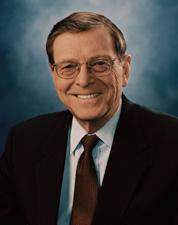
Madam President, I ask unanimous consent that the order for the quorum call be rescinded. Madam President, parliamentary inquiry: Is it appropriate now in morning business for the Senator from New…
Madam President, I ask unanimous consent that the order for the quorum call be rescinded.
Madam President, parliamentary inquiry: Is it appropriate now in morning business for the Senator from New Mexico to speak?
I ask unanimous consent I be permitted to speak for up to 10 minutes.
Madam President, I want to share some highlights from this week's news about oil and its effect on our economy. Yesterday's Washington Post quoted Dr. Alan Greenspan's testimony before the House Budget Committee.
The economy is doing reasonably well. If it weren't for the
oil spike, I would be very optimistic where the economy is
going.
Chairman Greenspan said the spring surge in energy prices weakened the economy more than analysts expected. He suggested that uncertainty about oil prices continues to cloud the economic outlook.
Financial analysts have also lowered the forecast expectations for our American economy growth over the next year. For example, an economist with Global Insight said:
Persistent high prices of oil remain a shadow over the
recovery.
On Wednesday, the President of OPEC stated that high oil prices would undermine the economies of the United States and Europe by 2 percent. These high prices exist primarily because of soaring demand for oil in tightly stretched markets.
In its weekly report, the Energy Information Administration reported that spare capacity to pump more oil is near the lowest in decades. EIA said global oil production is running around 99 percent of estimated capacity. Just yesterday, the EIA stated in its short-time market outlook that it expected oil prices to average $40 until mid-2005 despite OPEC efforts to increase oil production. Low surplus capacity is obviously with us. Similarly, the Paris-based International Energy Agency acknowledged the same. Given the limited spare capacity, some people are worried about whether there will be sufficient oil to meet demand. We all know what that will do if it continues.
Yesterday in the Wall Street Journal there was an article entitled, ``Demand for Oil Could Outstrip Supply.'' In the article, the Washington-based oil-forecasting group, PFC Energy, warned that the energy industry may be without the capacity to produce sufficient oil to meet the needs. In their study, the PFC maintains the world will not be able to produce more than 100 million barrels a day, only 20 percent more than the current global supply of 82 million barrels a day.
Oil analysts who believe we are running out of oil or that we have peaked are still in the minority, but the numbers are getting more and more ominous. We should heed these warnings.
PFC concluded that the limits of global oil production will mean the demand for oil will have to be curbed and alternative sources of energy will have to be found.
Herman Franssen, the President of PFC and a former chief economist for the International Energy Agency, said the PFC's conclusion tells policymakers that they have a decade to put our house in order. For instance, it takes that long to retool the car industry to use another fuel. We must begin working on that, and we are. Well, we do not have a decade to put our house in order. We cannot afford to wait until the house crashes in around us taking our economy, our energy security, and our future well-being down with it.
We need to act now before this session of Congress ends. We must show the American people that our economy and our energy security matter, that they are important.
We must show the American people we are willing to take steps to lessen our oil dependency by producing alternative sources of fuel that sends a signal to the world we are going to have more natural gas because we take steps, with far more renewables, that we are going to clean up coal so we can use it. Yes, we may even provide some incentives so we might produce, nuclear powerplants to add to this fast pace. We need to correct the shortcomings of our electricity supply so we do not have any blackouts anymore.
Well, guess where these things and more are found. They are not running around in the sky. They are not here in the rhetoric. They are in a bill. They are in an energy bill. We produced it and we lost it by two votes. Those who said they did not like it on the Democrat side said it was because of an additive clause regarding MTBE. It is a Government-approved additive. There was something in the bill that said we are going to protect those who manufacture it because they are not to blame for what happens downstream. However, we were led to believe that was enough to kill the bill. We took it out.
Madam President, up there at the desk, ready to be called up, ready to become our energy policy--because the House will accept it with some modification of MTBE that will not be the hold-harmless provision, but yet we do not get anything from the other side that indicates they would let us have a bill, they would let us pass a bill.
I think the American people--because we have not called the bill up and let them kill it like they did one time, two times--are wondering. But I do not want them to wonder anymore. We have a very good energy bill. We have it ready to get passed. If the question is, Why haven't you done it, it is not on this side. It is not on this chairman who worked 18 months to get a bill, with a lot of help from all sides, and ultimately the House. It is the Democrats who will not let us get this bill, plain and simple.
If anybody on that side in a position of authority--the leader on that side, Senator Bingaman on that side--would say, well, we need an energy bill, we are part of the problem in America, we want to solve it--if they just say that, Americans, we would have a bill in 24 hours. I urge that we try to do that.
I am very concerned we are short of oil, but we are not sending any signals that we are going to have a major policy shift that will permit us to have alternatives and not become dependent on the world for natural gas. Can you imagine that with the chief new energy source-- natural gas--we are moving in the direction, without this energy bill, where soon we will say: What happened? We are in the same muddle on natural gas as oil. We will become dependent on foreign countries.
Pretty soon we will say, well, we use natural gas to fuel our powerplants because it is clean. We are using it in our homes and businesses because it is great. But what do you think about that? We are dependent on foreign countries again.
We are leaving offshore natural gas, which can be drilled for, we are leaving it there because we need to change some rules or they cannot do it. We are leaving natural gas in Alaska that can be used--not the argument over crude oil in the wilderness area; that should be done for America, but that is not the issue in this bill. In this bill it is natural gas, in large quantities, delivered to Chicago for dispersion in America. Why don't we do that? Well, we cannot do it if we cannot pass a bill.
So I do not need the whole 10 minutes. Perhaps I made my point. I hope so. I have been here twice this week. I guarantee you, if we do not make some movement soon, some people on the other side are going to get tired of seeing me down here, but I will be here.
I yield the floor.
I send an amendment to the desk. Madam President, I ask unanimous consent that the reading of the amendment be dispensed with. Madam President, I offer this as a second degree to the pending…
I send an amendment to the desk.
Madam President, I ask unanimous consent that the reading of the amendment be dispensed with.
Madam President, I offer this as a second degree to the pending amendment of the Senator from Vermont. The amendment specifically restricts the Department's ability to conduct competitions under President Bush's competitive sourcing initiative, which is an integral part of his management agenda. As a strong supporter of the competitive sourcing process and consistent advocate for a smaller and more efficient government, I offer this second degree to ensure that any attempts to restrict the Department of Homeland Security in implementing its competitive sourcing efforts are limited.
The positions in question, immigration information officers, have been identified by the Department as noninherently governmental functions. They have been identified by the Department in that category. They are commercial activities and can be performed in the private sector without endangering our homeland security efforts.
The Department of Homeland Security is simply complying with the FAIR Act by subjecting these positions to public/private competition in order to determine if they could best be performed by the private sector or remain in house. This competition was initiated by the Department of Justice prior to the transfer to DHS. It is critical to significantly improving first line services associated with processing immigration applications and benefits. DHS is in the process of completing its competition in these very positions, and the amendment of the Senator would prohibit DHS from completing this competition. Numerous studies have confirmed that competitions create opportunities for innovative, improved data management, economic, and performance improvements. They are confident that competition has already provided a powerful incentive for both the public and the private sector sources to identify new and better ways of meeting the requirements.
This information has to do with these positions. The IIOs are GS-5s, 7s, and 8s, with supervisors at the GS-9 level, who perform only first line procedural processing for a range of immigrant applications/ benefits. They are not performing inherently governmental work, are not policymakers or regulators, do not bind the Government to a course of action. Adjudicators, who have authority to investigate, correct, overrule and make final decisions regarding immigration status, are a separate function within the Citizenship and Immigration Service, but are not covered by this proposed, or any other, DHS competition.
The DHS has opened its commercial activity currently performed by Government employees to competition from the private sector in order to improve services, improve the opportunity for innovation, improve levels of security, and create the possibility of cost savings. The Government and private sector will compete for the work based on quality and cost.
The agency has written that on a governmentwide basis, competitions completed in fiscal year 2003 are estimated to generate savings and cost avoidances of over $1 billion over the next 3 to 5 years. The House version of the bill contains a provision that would block DHS from using competition to choose the best public or private sector sources to handle tasks associated with the processing of immigration applications. We understand an amendment may be offered on the Senate floor that would preclude public-private competition and turn back DHS efforts to significantly improve customer service for immigrants. If the final version of the bill were to contain such a prohibition, the President's senior advisor would recommend he veto the bill.
We have been through this a number of times. It always is presented as if these are replacing Government jobs
with private sector jobs which, first of all, I don't think is a bad idea but nevertheless that is not the case. This is competition. This is an opportunity for both those in the Government service and in the private sector to have an opportunity to deal with these administrative first level jobs--these are people who do not make the decisions, they simply go through the details of this--and to allow this agency to continue to seek to make their work more effective and more efficient. Somehow, every time this comes up we have this opposition to this program that has been in place, is in place, and the fact is it has already been proven to save considerable amount of money. It is already proven in most cases, as a matter of fact, because of the improvement on the part of the Federal employees; they remain there through the competition.
It just seems to me it is a mistake for us to get into this program and say you can't do that anymore. Clearly these people are not the people who are decisionmakers. They are the folks who are doing the administrative work that brings it to the decisionmakers.
Additionally, my amendment would not result in the closure of any immigration service centers or district offices currently in operation, which appears to be the concern of some of the sponsors.
I hope we can take a long look at this and that we can try to allow this program of efficiency, of cost saving, to be continued by this department. Let them make the decision as to who can best do this task.
I yield the floor.
Madam President, are we going to vote? Fine. I would like to be able to make a closing statement pretty much as my friend from Vermont did.
I want you to remember that this is an effort that is being made throughout the Government to try to find a way to be more efficient. It is not outsourcing; it is competition; and whoever does the best job ends up doing this activity.
I further remind you that these are not people who make decisions with regard to terrorism. These are the people who do the detail work and report to folks who make the decisions.
I also remind you that this Department is in the process of doing this now, is willing to come to the Senate as we proceed and report where they are. This is part of the program that has been ongoing. It has been proven to work. We ought to continue to do it here.
I yield the floor.
We just voted on this same issue. We have voted on it a dozen times. What we have here is an effort by this Government to try to be more efficient, more cost saving, by having competition. That is what is involved.
Let me say that these immigration information officers are GS-5s, 7s, and 8s, with supervisors at the GS-9 level, who perform only first-line procedural processing. They are not performing any ``inherently governmental'' work. They are not policymakers or regulators. They do not bind the Government to a course of action. This is already underway in this administration. They have looked at doing this. Who knows who is going to do it more efficiently? We are saying to the Government that you cannot do that. You have to leave things the way they are, and we don't want to have any opportunity to do things better than we have been doing them. That is what it is all about. I urge a ``no'' vote.
Show 11 more
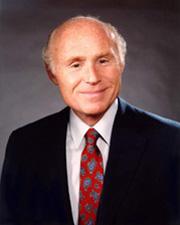
Mr. President, in recent weeks, consumers all across the Nation have watched gas prices rise, seemingly without any end in sight. On March 24, U.S. gasoline prices reached a record high average of $…
Mr. President, in recent weeks, consumers all across the Nation have watched gas prices rise, seemingly without any end in sight. On March 24, U.S. gasoline prices reached a record high average of $ 1.74 a gallon. And, if consumers weren't paying enough already, just yesterday the OPEC nations decided to cut production by a million barrels a day, an action sure to drive prices even higher. Such blatantly anti-competitive action by the oil cartel violates the most basic principles of fair competition and free markets and should not be tolerated. It is for this reason that I rise today, with my colleagues Senators DeWine, Specter, Leahy, Feingold, Schumer, Coleman and Grassley, to reintroduce the ``No Oil Producing and Exporting Cartels Act'' ( ``NOPEC"). This legislation is identical to our NOPEC bill introduced in the last two Congresses, a bill which passed the Judiciary Committee unanimously in 2000.
Real people suffer real consequences every day in our nation because of OPEC's actions. Rising gas prices are a silent tax that takes hard- earned money away from Americans every time they visit the gas pump. Higher oil prices drive up the cost of transportation, harming thousands of companies throughout the economy from trucking to aviation. And those costs are passed on to consumers in the form of higher prices for manufactured goods. Higher oil prices mean higher heating oil and electricity costs. Anyone who has gone through a Midwest winter or a deep South summer can tell you about the tremendous personal costs associated with higher home heating or cooling bills.
We have all heard many explanations offered for rising energy prices. Some say that the oil companies are gouging consumers. Some blame disruptions in supply. Others point to the EPA requirement mandating use of a new and more expensive type of ``reformulated'' gas in the Midwest or other ``boutique'' fuels around the country. Some even claim that refiners and distributors have illegally fixed prices. On this issue, Senator DeWine and I have asked the Federal Trade Commission to investigate these allegations. As a result of our inquiries, the FTC has put a task force in place to find out if those allegations were true. While we continue to urge the FTC to be vigilant, the FTC has to date found no evidence of illegal domestic price fixing as a cause of higher gas prices.
But one cause of these escalating prices is indisputable: the price fixing conspiracy of the OPEC nations. For years, this conspiracy has unfairly driven up the cost of imported crude oil to satisfy the greed of the oil exporters. We have long decried OPEC, but, sadly, no one in government has yet tried to take any action. NOPEC will, for the first time, establish clearly and plainly that when a group of competing oil producers like the OPEC nations act together to restrict supply or set prices, they are violating U.S. law. It will authorize the Attorney General or FTC to file suit under the antitrust laws for redress. Our bill will also make plain that the nations of OPEC cannot hide behind the doctrines of ``Sovereign Immunity'' or ``Act of State'' to escape the reach of American justice.
The most fundamental principle of a free market is that competitors cannot be permitted to conspire to limit supply or fix price. There can be no free market without this foundation. And we should not permit any nation to flout this fundamental principle.
Some critics of this legislation have argued that suing OPEC will not work or that threatening suit will hurt more than help. I disagree. Our NOPEC legislation will, for the first time, enable our authorities to take legal action to combat the illegitimate price-fixing conspiracy of the oil cartel. It will, at a minimum, have a real deterrent effect on nations that seek to join forces to fix oil prices to the detriment of consumers. This legislation will be the first real weapon the U.S. government has ever had to deter OPEC from its seemingly endless cycle of price increases.
There is nothing remarkable about applying U.S. antitrust law overseas. Our government has not hesitated to do so when faced with clear evidence of anti-competitive conduct that harms American consumers. A few years ago, for example, the Justice Department secured record fines totaling $725 million against German and Swiss companies engaged in a price fixing conspiracy to raise and fix the price of vitamins sold in the United States and elsewhere. Their behavior harmed consumers by raising the prices consumers paid for vitamins every day and plainly needed to be addressed. As this and other cases show, the mere fact that the conspirators are foreign nations is no basis to shield them from violating these most basic standards of fair economic behavior.
Even under current law, there is no doubt that the actions of the international oil cartel would be in gross violation of antitrust law if engaged in by private companies. If OPEC were a group of international private companies rather than foreign governments, their actions would be nothing more than an illegal price fixing scheme. But OPEC members have used the shield of ``sovereign immunity'' to escape accountability for their price-fixing. The Foreign Sovereign Immunities Act, though, already recognizes that the ``commercial'' activity of nations is not protected by sovereign immunity. And it is hard to imagine an activity that is more obviously commercial than selling oil for profit, as the OPEC nations do. Our legislation will correct one erroneous twenty-year-old lower federal court decision and establish that sovereign immunity doctrine will not divest a U.S. court from jurisdiction to hear a lawsuit alleging that members of the oil cartel are violating antitrust law.
In the last few weeks, I have grown more certain than ever that this legislation is necessary. Between OPEC's decision yesterday to cut oil production and the FTC's conclusion for the last several years that there is no illegal conduct by domestic companies responsible for rising gas prices, I am convinced that we need to take action, and take action now, before the damage spreads too far.
For these reasons, I urge that my colleagues support this bill so that our nation will finally have an effective means to combat this selfish conspiracy of oil-rich nations.
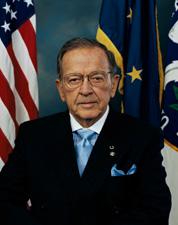
Mr. President, I ask unanimous consent that the order for the quorum call be rescinded. Mr. President, although I will be speaking on intelligence matters and other matters relating to the CR, I ask…
Mr. President, I ask unanimous consent that the order for the quorum call be rescinded.
Mr. President, although I will be speaking on intelligence matters and other matters relating to the CR, I ask unanimous consent that my statement not be considered a violation of the Pastore rule and I be able to speak on general matters.
Mr. President, a lot of people are talking about a continuing resolution for appropriations this year. This is not a normal year. This is the end of Congress. This Congress goes out of being. We will come back next year and have to deal with new bills. I want to talk a little bit about the problem of a continuing resolution for a series of bills.
For instance, my State had over 5 million acres of timberland burned this year. Forest fires were just enormous. We have provided in the Interior bill moneys for hazardous fuels reduction to try to reduce the fires, really, on some of the wildlands of the United States. If we had that money we could probably prevent what we call follow-on fires. Where lightning fires strike, the next year they strike almost in the same place. The next year they strike almost in the same place. But as they do in years following a fire, they are hitting timber that has been dried out, burned, dried out, and it is just like kindling. It just causes the whole area to burn more and then more and then more. The way to stop that is to do the hazardous fire reduction program, go into the area that burned and take that timber out--try to plant new trees, but at least do something to prevent a follow-on fire the following year. If the Interior bill doesn't pass, there will not be that money available.
We have additional money for the Indian Health Service this year. We have had substantial problems in health areas in the Indian community. That money wouldn't be available under a CR.
Many people don't know what a CR is. It is a continuing resolution which continues the moneys that were appropriated in 2003 to be spent in 2004; now that same amount of money is going to be spent in 2005. Judgments of 2003 of what should be happening in 2004 are not valid in 2005. We need each of these bills this year more than we ever have before.
Take, for instance, the hurricanes that just happened. We have in the budget request what is called the beach renourishment policy. It is a one-time funded program to try to replace some of these beaches that have been lost in the hurricane season. There are approximately 43 projects already outlined that have to be funded this year in order to undertake this new concept. It is sort of like the fires concept. If we move in and repair these beaches now, a subsequent follow-on hurricane will not aggravate the damage and leave even further destruction in the area. Again, unless we get the Energy and Water bill, it will not be done. There will be no dredging of the low-use waterway and harbors that have had extensive damage. These hurricanes change the bottom of the sea in the areas adjacent to the shore of where the hurricanes come ashore. We need new money to deal with that. The only way to get it is to get an Energy and Water appropriations bill passed.
If you look at the Department of Energy, we have a whole series of items requested by the President and approved by the Appropriations Committee on energy and water. The budget this year requests $1.16 billion more than was enacted for this fiscal year of 2004. A continuing resolution will carry the figures for 2004 forward as long as the continuing resolution continues until Congress passes a bill next year.
But meanwhile, the money that is needed for security and the safeguard problems of our national weapons labs, the President asked for $706 million to make those laboratories more safe and more secure.
He asked for $6.9 billion in energy environmental management activities. That is an increase over 2004. This is expected to have a specific effect on the environmental cleanup activities in Tennessee, Washington, Idaho, and South Carolina.
In terms of energy supply, we have money this year for energy research, including renewable resources such as hydrogen, solar, wind, and biomass. The President's request this year is $835 million, a 13- percent increase over 2004.
I will come back later. I don't want to monopolize the time. I keep reminding the Senate that we cannot operate under a CR for 2005. It is not possible.
Take the Department of Agriculture: The 2005 bill is not passed and the medical device user fee authority expires at the end of this fiscal year because we did not provide the required level of funding authority. This bill takes care of that. If the bill does not pass, there won't be funding to maintain the participation rates for the WIC Program.
The budget request is underestimated by over $300 million. That would be required to continue the program in 2005. That would not be available under 2004 money.
This Homeland Security bill is an example. If it does not pass, the counterterrorism food safety money for FDA will not be available.
There are a whole series of things. I am sure the chairman, my distinguished friend from Mississippi, has described that in more detail.
But the real problem with our thinking about a continuing resolution is money would not be available to other Departments to meet emergency situations--some caused by natural events such as hurricanes and fires and others caused by changes in the security requirements of the departments of the Government which have security requirements. They are conducting their business differently now after the Department of Homeland Security examined how they handled buildings and security of employees. Each one of them now has a mandate to change the way they do business. We have provided the money for those new directions in the 2005 bills. That money for the security of the Federal buildings will not be available under the 2004 program without substantial reprogramming, which couldn't be done until well into next year.
I am trying to make the case for the Members of the Senate to think about getting all of these bills done this year. Don't think about a continuing resolution. A continuing resolution will not work for the appropriations process this year.
I yield the floor.
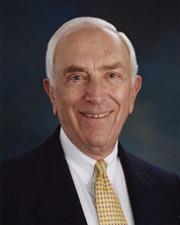
Madam President, I ask unanimous consent to set aside the pending business, and I call up amendment No. 3617, which is currently at the desk. Madam President, I rise to address an amendment that will…
Madam President, I ask unanimous consent to set aside the pending business, and I call up amendment No. 3617, which is currently at the desk.
Madam President, I rise to address an amendment that will ensure the Coast Guard will have adequate funding to complete its homeland security missions without sacrificing its traditional duties. In this appropriations bill, the one that is before us, the Senate would provide $5.15 billion in operating expenses for the Coast Guard. That is $250 million less than the amount authorized and $20 million less than the President's request.
This amount is supposed to cover operations for all Coast Guard missions, both nonsecurity and security related. But the General Accountability Office has found that in times of elevated security levels, the Coast Guard has had to delve into the budget for traditional missions that are currently performed by the Coast Guard. This amendment will cover the shortfall by adding $100 million for work on nonhomeland-security-related missions.
We have even appropriated money for the Iraqi Coastal Defense Force. With $260 million in the emergency supplemental last year for border enforcement in Iraq, we have gone out and purchased Chinese-built patrol boats shipped by a German company to Iraq, where we are training their crews to perform antismuggling operations, harbor and coastline defense, search and rescue operations, and various other operations in Iraq. If we can find money for the Iraqi Coastal Defense Force, surely we can fully fund our own Coast Guard.
One month ago we enacted the Coast Guard and Marine Transportation Act of 2004 which reauthorizes the Coast Guard for fiscal years 2005 and 2006. Due to the leadership of Chairman McCain, Ranking Member Hollings, as well as subcommittee leaders, Chairman Snowe and Ranking Member John Kerry, this important legislation was enacted. This law authorizes some very important work and gives even more responsibility to the Coast Guard, which the occupant of the chair knows, coming from a coastal State like North Carolina. The Coast Guard is always being given more work, more demands, performing with less resources, fewer people, and still doing an outstanding job. But there is a point at which they just can't do that anymore. The work they do, we forget, includes work on oil pollution, marine safety, improved fisheries enforcement, and work finding alternatives to double-hull vessel designs. This authorizes adequate funding. This authorization provided for the additional $100 million in my amendment to ensure that the budgets for traditional missions are not raided. The President signed this act into law 1 month and 1 day ago, so there is an established need for this amendment.
I want to be clear. My amendment does not add back the entire $251 million that was authorized but was left out here. Rather, it recaptures only $100 million out of that. The amendment would not affect the homeland security budget of the Coast Guard.
Last year my staff heard from a New Jersey constituent who is in the Coast Guard. We have Coast Guard training facilities in the State of New Jersey.
He told my staff that due to budget cuts, his unit was forced to share personal equipment like specialized suits and other gear intended to be worn by one individual.
He said that this made it difficult to do his job, but he and his colleagues were making do.
Nonetheless, I find this disturbing.
Because of inadequate budgeting, even the Coast Guard Commandant, Admiral Collins, has been forced to do what I like to call the ``OMB Dance.''
This is the ``Dance'' where agency heads come before Congress and squirm while they tell us that they can ``made do'' with a clearly inadequate budget.
They don't volunteer details about how these funding shortfalls threaten their ability to carry out their missions effectively.
Some of the traditional missions of the Coast Guard include search- and-rescue, marine safety, drug interdiction, aids to navigation, ice breaking operations, living marine resources, migrant interdiction, marine environmental protection, and other law enforcement activities.
In their report, the GAO discovered that ``resource hours'' for many of traditional functions are still well below pre-9/11 levels. For instance, search-and-rescue is down 22 percent. Foreign fishing enforcement is down 16 percent, permitting further abuse of the available supply of fish life. And interdiction of illegal drugs is down 44 percent.
When we send Coast Guard cutters to the Middle East, it affects us at home.
The administration will tell you, and I am sure you will hear during debate, that based on ``performance factors,'' these areas have not been hurt--that they are doing their job more efficiently now, with better intelligence. Once again, you can only squeeze so far.
But how do you measure how many drug shipments were not seized?
How do you measure how many illegal aliens where not intercepted?
Or how many foreign fishing vessels violated international treaties and fished in U.S. waters without getting caught?
Under this bill, some of these functions are now considered ``defense-related,'' but not all of them.
We must provide adequate resources for the Coast Guard to complete all of their missions.
If we continue to treat their non-homeland budget as a security slush fund, we will end up paying for it in other ways.
I urge my colleagues to support this amendment.
We have an understanding that there will be a vote on this amendment on Monday afternoon.
I yield the floor.

Mr. President, I wish to talk this afternoon about a bill that my colleagues, Senator Kohl, Senator Grassley, Senator Feingold, Senator Specter, Senator Schumer, Senator Leahy, Senator Coleman, and I…
Mr. President, I wish to talk this afternoon about a bill that my colleagues, Senator Kohl, Senator Grassley, Senator Feingold, Senator Specter, Senator Schumer, Senator Leahy, Senator Coleman, and I are introducing, which is called the No Oil Producing and Exporting Cartels Act of 2004. We are introducing this bill to address the longstanding problem of foreign governments acting in the commercial arena to fix, allocate, and establish production and price levels of petroleum products.
Every consumer in America knows that gasoline prices have reached record highs over the last couple of weeks. The national average has reached a new record high for self-serve unleaded gas. That is approximately $1.80 per gallon. But over the last week in my home State of Ohio gas prices have been even higher. In Marietta, gas was $1.84; in Cleveland, $1.86; in Columbus, it topped out at $1.88 in some stations. Many analysts predict that prices could get as high as $2 per gallon, or higher, by the summer.
This is of particular interest to me because Ohio and the Midwestern States always seem to be hit especially hard by gas prices spikes. These spikes are acutely painful to persons who commute long distances and to those who live on fixed incomes such as the elderly.
What is the cause? Certainly there are many causes, but as we might expect, there are a number of factors at play. But there is surprising agreement among industry experts about the primary cause of high gas prices and that is the increase in imported crude oil prices.
We also know the biggest factor in setting crude oil prices is OPEC. The unacceptably high price of imported crude oil is a direct result of collusive agreements among OPEC nations to maintain the price of oil.
Despite the fact that gasoline prices are going through the roof, OPEC members met yesterday in Austria and decided to cut the output of oil even further. We have been through this process more than enough to know what that means for the American consumer. When demand is high and supplies are cut, that obviously means higher prices. That is exactly what OPEC did to us yesterday. It ripped off American consumers by raising gas prices even more.
this is an outrage. In fact, OPEC is probably the most notorious example of an illegal cartel in the world today, even at a time when it is widely understood that such conduct is counterproductive and ill- suited for our global economy. Supreme Court Justice Scalia in a recent case described collusion among competitors as ``the supreme evil of antitrust.'' Nation after nation has adopted antitrust enforcement principles that recognize the illegality of price fixing and output restrictions among competitors. In 1998, the Organization for Economic Cooperation and Development, then composed of twenty-nine member nations, issued a formal recommendation denouncing price fixing. OPEC's continued actions, in ongoing defiance of American and international antitrust principles, should not be tolerated.
Until now, however, OPEC has effectively received special treatment under U.S. antitrust laws--despite the fact that oil is a commodity that touches the lives of nearly every American consumer. It is time that we take steps to assure that oil is subject to the principles of the free market. The bill that we are introducing today would do just that and help in the fight to lower gas prices.
Senator Kohl and I have introduced this bill twice before--in 2000 and 2001. It is an idea whose time has come. The purpose of our NOPEC bill is simple--it would treat OPEC like any other cartel. If OPEC were a group of private companies colluding on prices, the executives could be prosecuted and sent to jail, and the firms would pay millions of dollars in fines or maybe even billions in fines. Unfortunately, however, for years enforcement has been constrained by two related court opinions.
In 1979, a Federal District Court found that OPEC's price-setting decisions were ``governmental'' acts and accordingly that they were given sovereignty status and protected by the Foreign Sovereign Immunities Act. Subsequently, in 1981, a Federal Court of Appeals declined to consider the appeal of that antitrust case based on the so- called ``act of state'' doctrine.
NOPEC would effectively reverse these decisions by making it clear that OPEC's activities are not protected by sovereign immunity and that the Federal courts should not decline to hear such a case based on the ``act of state'' doctrine. As a result, under NOPEC, the Department of Justice and the Federal Trade Commission could bring a legal antitrust enforcement action against foreign states engaging in the restraint of trade regarding oil and other petroleum products. Simply put, NOPEC assures that our U.S. antitrust agencies have jurisdiction and authority to bring such cases.
We don't intend to give up the fight for lower gasoline prices. Today, I want the members of OPEC to hear a message loud and clear--we won't quit fighting for American consumers. When OPEC wants to do business with America, it must abide by our antitrust laws.
I ask unanimous consent that the text of the bill be printed in the Record.

Mr. President, I am delighted to join with my friend and colleague Senator Mikulski to introduce today the Environmental Enforcement and Security Act (EESA) of 2004. This bill will increase…
Mr. President, I am delighted to join with my friend and colleague Senator Mikulski to introduce today the Environmental Enforcement and Security Act (EESA) of 2004. This bill will increase substantially enforcement of our Nation's environmental laws, increase environmentally related homeland security, and further protect our Nation's water supply from terrorist attack.
Our families and environment deserve communities free from intentional violators of environmental laws and terrorists who would attack our drinking water supplies.
With this dramatic new commitment to environmental enforcement and drinking water security, we will tell those who would intentionally harm us that we are coming after them.
The environment and health of our communities need vigorous prosecution of intentional violations of our Nation's environmental laws. The U.S. Environmental Protection Agency (EPA) Criminal Enforcement program investigates the most significant and egregious violators of environmental laws that pose a significant threat to human health and the environment. However, the number of EPA Criminal Enforcement Special Agents has remained constant for the last several years.
In addition, in our post-9/11 world, EPA Special Agents are needed for homeland security duties to detect, investigate and respond to terrorist threats involving chemical or biological hazards.
EPA Special Agents support the Department of Homeland Security, Federal Bureau of Investigation and the Department of Justice. EPA Special Agents are members of FBI Counter-Terrorism Response Teams and Evidence Response Teams.
However, with this new post-9/11 need to respond to the threat of terrorism, some are concerned that environmental violations may not be receiving the attention they deserve. A recent report by the EPA Inspector General, an internal review by the EPA Enforcement and Compliance Assurance program, and various media accounts tell how EPA needs more resources to meet both its environmental and homeland security duties.
Our bill responds to these calls with a dramatic new commitment to EPA's enforcement program. My bill will put 50 new EPA Criminal Enforcement Special Agents on the environmental beat. EESA will also provide for 80 Special Agents to support homeland security duties.
With our bill, we will no longer need to make a choice between protecting our homeland and protecting our environment.
With out bill, those who would intentionally hurt our families and communities through environmental harm will know that we are sending the manpower and resources needed to come after them.
We are also sending local communities new funding to protect our drinking water supplies. Every family and every business needs clean and safe drinking water. Every mother needs to know that when she turns on the tap in her kitchen sink, clean and safe water will come out.
That is why our bill devotes $100 million for additional drinking water security protections. EESA will send grant funds directly to water systems to protect against terrorist attack with fencing, intruder detection, access control and water monitoring. The need is great, but the federal government will attempt to do its share.
Our bill will also enhance EPA's ability to protect the environment and human health in several other ways. EESA will double the number of enforcement trainers and triple EPA's enforcement training budget. EESA funds will train Federal, State and local inspectors, law enforcement agents and prosecutors with the training they need to pursue environmental violations.
Our bill will also improve the environment by doubling compliance assistance funds to fill gaps in enforcement coverage, reach regulated facilities not visited by inspectors, and help the regulated community, especially small businesses, to understand EPA's complex and extensive regulatory requirements.
Our bill will also make EPA's enforcement actions more efficient and targeted by fully funding a strategic enforcement targeting program. EESA will enhance EPA's ability to target its enforcement actions to where the environment needs them most. Strategic targeting will also improve EPA's ability to identify and respond to increased noncompliance with environmental laws.
Our Nation's environmental laws exist to protect our families, our communities and our natural resources. Those who would intentionally violate our environmental laws deserve the full force of the government to stop them.
Our families and communities also deserve our most vigorous efforts to protect them from the specter of terror. Chemical and biological threats represent one of the most sinister means for men to terrorize each other.
We will send our homeland security agencies the environmental expertise and personnel they need to confront these threats.
We will also send our local communities new help for additional drinking water security protections.
Our environment deserves no less, our families deserve no less. I urge my colleagues to support passage and funding of the Environmental Enforcement and Security Act of 2004.

Mr. President, today I am introducing the Clean Cruise Ship Act of 2004. I am proud to be joined by Senators Lautenberg, Corzine, Feinstein, Kennedy and Boxer in offering this legislation. I also am…
Mr. President, today I am introducing the Clean Cruise Ship Act of 2004. I am proud to be joined by Senators Lautenberg, Corzine, Feinstein, Kennedy and Boxer in offering this legislation. I also am honored to be working with Congressman Farr, who is leading companion legislation
in the House and is a co-chair of the House Oceans Caucus.
America's oceans span nearly 4.5 million square miles, an area 23 percent larger than the nation's land area. They are a resource for travel, commerce, recreation and the global ecosystem. They comprise 70 percent of our planet.
We cannot continue to take this vast resource for granted. The Pew Commission found in June 2003 that our oceans are in crisis. The report cites five priorities: implementing a sustainable national ocean policy; coordinating the governance of ocean resources; reorienting our fisheries policy to emphasize sustainability; protecting ocean habitat and managing coastal development; and controlling the sources of pollution threatening our marine ecosystems. Today I want to concentrate on the fifth priority: controlling pollution.
With growing amounts of pollution caused by human activity, we are significantly degrading the marine environment. According to the EPA, pollution has rendered 44 percent of tested estuaries and 12 percent of ocean shoreline miles unfit for swimming, fishing or supporting aquatic life. The Coast Guard estimates that marine debris is responsible for the deaths of more than 1 million birds and 100,000 marine mammals each year. About 90 percent of Florida's coral reefs are believed to be dead or dying.
We have taken some actions to protect our oceans, but we still have a long way to go. We need to improve enforcement of our existing environmental protection laws, but we also need to update them to accommodate for the changing times.
Specifically, we need to address pollution from passenger cruise ships. The cruise line industry has grown significantly over the past 34 years. In 1970, cruise ships carried 500,000 passengers in the United States. In 2002, the cruise line industry carried 6.5 million passengers in about 150 ships in the United States, and that number has continued to grow.
In addition to a tremendous increase in the number of passengers, cruise ships themselves have grown. Today the average cruise vessel accommodates 3,100 passengers and crew. Carnival recently built the largest passenger ship in the world, the Queen Mary 2: it's 1,132 feet long, which is more than twice as long as the Washington Monument is tall; it is 236 feet high, about the height of a 23-story building; and it weights about 151,400 long tons, the rough equivalent of 390 fully loaded 747 jets.
According to the EPA, a typical 3,000 passenger cruise ship each week generates 210,000 gallons of sewage; 1 million gallons of gray water, including runoff from baths, laundry machines and dishwashers; and 37,000 gallons of oily bilge water. Ships of the size of cruise vessels today, which generate the amount of waste of today, did not exist when the Clean Water Act and other environmental laws were written in the 1970s. Therefore, our laws regarding cruise ships are grossly inadequate.
My colleagues may be shocked to learn that it is legal to dump raw sewage 3 miles from shore; and it is legal to dump sewage within 3 miles so long as it is run through a machine, which complies with a standard that is over 20 years old and which is never rigorously tested once installed. Also it is legal to dump gray water--which can contain harmful toxins and nutrients--anywhere in the ocean. Only Alaskan waters are protected by strong federal legislation enacted in 2000 that regulates sewage and graywater.
The legislation I am introducing today,the Clean Cruise Ship Act of 2004, would draw from key provisions of the federal law in place in Alaska and the Clean Water Act. This bill would: first, create a no discharge zone that would prevent dumping of sewage, graywater and oily bilge water within 12 miles of shore--to protect our coasts and estuaries; second, apply the current Alaskan standards to sewage and graywater discharges outside of 12 miles from shore; third, allow the Coast Guard and EPA to jointly issue discharge requirements based on the best available technology, with the goal of zero pollutants by 2015; and finally, strengthen enforcement.
Studies show that the Alaskan standards, which our bills applies to the rest of the country, can be achieved. Indeed, ships that have been upgraded to treat sewage and graywater with modern technology are easily meeting or exceeding standards for such constituents as fecal coliform and chlorine.
Not only is this bill technologically feasible: it is affordable. The cost to upgrade each ship will be more than $3 million. To put this into context, Carnival Cruise Lines just spent $800 million to build the new Queen Mary 2, and earned $6.7 billion in revenues last year.,
The Clean Cruise Ship Act of 2004 is a reasonable approach to an urgent problem. I urge my colleagues to support this important legislation.
Mr. President, today I rise on behalf of myself and Senators Specter, Murray, Clinton, Landrieu, Dayton, Schumer, Daschle and Lieberman, to introduce the High-Risk Non-Profit Security and Safety…
Mr. President, today I rise on behalf of myself and Senators Specter, Murray, Clinton, Landrieu, Dayton, Schumer, Daschle and Lieberman, to introduce the High-Risk Non-Profit Security and Safety Enhancement Act of 2004. This bill provides homeland security assistance for high-risk non-profits to protect them against foreign terrorist attacks. This legislation is critical to help protect the ``soft targets'' of terrorism all over the United States.
We are all aware of recent terrorist attacks in the United States, Spain, Germany, Iraq, Tunisia, Kenya, Morocco and Turkey. These attacks by Al Qaeda on an international Red Cross building, synagogues, train stations, hotels, airports, restaurants, night clubs, and cultural centers, show its willingness to attack ``soft targets'' of all types in order to conduct its campaign of terror.
I want to make sure that our communities are protected and the buildings where citizens live, learn and work are as secure as possible to safeguard American lives from a potential terrorist attack. Local communities are on the front lines in our war against terrorism. This Congress must do its share to make sure that they do not have to bear the full cost of this war. This bill helps us do that by providing funds for security enhancements in buildings that Americans visit everyday and by providing local law enforcement with added support for the costs they incur in helping to guard these local buildings and community centers.
Specifically, this legislation will provide up to $100 million in assistance to 501(c)(3) organizations demonstrating a high risk of terrorist attack based upon very specific standards. Organizations wishing to receive security enhancements under this Act must demonstrate that they have experienced specific threats by international terrorist organizations, there were prior attacks against similarly situated organizations, there is vulnerability of the specific site, the symbolic value of the site as a highly recognized American Institution, or that they have a specific role in responding to terrorist attacks.
This bill allows the Department of Homeland Security to contract for security enhancements to help these high-risk non-profit organizations. These funds can only be used for security enhancements, such as concrete barriers, and ``hardening'' of windows and doors, as well as technical assistance to assess needs, develop plans, and train personnel. Funding under this Act can never be used for enhancements that would only be reasonably necessary to protect from neighborhood crime.
This bill also helps our vital first responders, those who are on the frontline everyday helping to protect these ``soft targets.'' These men and women have the responsibility for protecting institutions against the possibility of terrorist attack, while they are also responding to the public safety needs of the entire community. By authorizing $50 million in grant funds for local police departments, this bill provides real relief to local law enforcement who bear the growing costs associated with providing heightened security to high-risk non-profits.
As a Nation our priority in fighting the war on terror is to be able to better detect, prevent and respond to acts of terrorism. This bill gets us one step closer to meeting those goals by helping vulnerable targets better detect and prevent terrorist attacks and by making sure that if terror strikes one of these facilities, security and safety measures are in place to protect the lives of those inside and around these buildings.
Nothing the Senate does is more important than providing America security and Americans safety. I urge my colleagues to support this legislation because it does exactly that. It makes sure that there is added security for these ``soft targets'' that Americans visit everyday and it adds funding to support the local police, fire and rescue workers who are the first responders when there is a threat to one of these organizations. In the battle to protect our Nation from terrorist attacks, we must be sure to provide assistance to these high-risk non- profit organizations that provide vital health, social, cultural, and educational services to the American people.
I know others share my concerns about protecting these ``soft targets'' in our war against terrorism and that is why the United Jewish Communities, the American Red Cross, United Way, the American Hospital Association, the American Association of Museums, the National Association of Independent Colleges and Universities (NAICU), American Jewish Congress, the Theatre Communications Group, and the YMCA of the USA are all united in supporting this legislation.
This bill not only supports homeland security, it supports hometown security, making our communities stronger and safer, and I encourage my colleagues to join me in supporting this legislation and ask unanimous consent to print in the Record a letter from organizations supporting this effort and I ask unanimous consent that the text of the bill be printed in the Record.
Mr. President, today I rise on behalf of myself and Senators Specter, Murray, Clinton, Landrieu, Dayton, Schumer, Daschle and Lieberman, to introduce the High-Risk Non-Profit Security and Safety…
Mr. President, today I rise on behalf of myself and Senators Specter, Murray, Clinton, Landrieu, Dayton, Schumer, Daschle and Lieberman, to introduce the High-Risk Non-Profit Security and Safety Enhancement Act of 2004. This bill provides homeland security assistance for high-risk non-profits to protect them against foreign terrorist attacks. This legislation is critical to help protect the ``soft targets'' of terrorism all over the United States.
We are all aware of recent terrorist attacks in the United States, Spain, Germany, Iraq, Tunisia, Kenya, Morocco and Turkey. These attacks by Al Qaeda on an international Red Cross building, synagogues, train stations, hotels, airports, restaurants, night clubs, and cultural centers, show its willingness to attack ``soft targets'' of all types in order to conduct its campaign of terror.
I want to make sure that our communities are protected and the buildings where citizens live, learn and work are as secure as possible to safeguard American lives from a potential terrorist attack. Local communities are on the front lines in our war against terrorism. This Congress must do its share to make sure that they do not have to bear the full cost of this war. This bill helps us do that by providing funds for security enhancements in buildings that Americans visit everyday and by providing local law enforcement with added support for the costs they incur in helping to guard these local buildings and community centers.
Specifically, this legislation will provide up to $100 million in assistance to 501(c)(3) organizations demonstrating a high risk of terrorist attack based upon very specific standards. Organizations wishing to receive security enhancements under this Act must demonstrate that they have experienced specific threats by international terrorist organizations, there were prior attacks against similarly situated organizations, there is vulnerability of the specific site, the symbolic value of the site as a highly recognized American Institution, or that they have a specific role in responding to terrorist attacks.
This bill allows the Department of Homeland Security to contract for security enhancements to help these high-risk non-profit organizations. These funds can only be used for security enhancements, such as concrete barriers, and ``hardening'' of windows and doors, as well as technical assistance to assess needs, develop plans, and train personnel. Funding under this Act can never be used for enhancements that would only be reasonably necessary to protect from neighborhood crime.
This bill also helps our vital first responders, those who are on the frontline everyday helping to protect these ``soft targets.'' These men and women have the responsibility for protecting institutions against the possibility of terrorist attack, while they are also responding to the public safety needs of the entire community. By authorizing $50 million in grant funds for local police departments, this bill provides real relief to local law enforcement who bear the growing costs associated with providing heightened security to high-risk non-profits.
As a Nation our priority in fighting the war on terror is to be able to better detect, prevent and respond to acts of terrorism. This bill gets us one step closer to meeting those goals by helping vulnerable targets better detect and prevent terrorist attacks and by making sure that if terror strikes one of these facilities, security and safety measures are in place to protect the lives of those inside and around these buildings.
Nothing the Senate does is more important than providing America security and Americans safety. I urge my colleagues to support this legislation because it does exactly that. It makes sure that there is added security for these ``soft targets'' that Americans visit everyday and it adds funding to support the local police, fire and rescue workers who are the first responders when there is a threat to one of these organizations. In the battle to protect our Nation from terrorist attacks, we must be sure to provide assistance to these high-risk non- profit organizations that provide vital health, social, cultural, and educational services to the American people.
I know others share my concerns about protecting these ``soft targets'' in our war against terrorism and that is why the United Jewish Communities, the American Red Cross, United Way, the American Hospital Association, the American Association of Museums, the National Association of Independent Colleges and Universities (NAICU), American Jewish Congress, the Theatre Communications Group, and the YMCA of the USA are all united in supporting this legislation.
This bill not only supports homeland security, it supports hometown security, making our communities stronger and safer, and I encourage my colleagues to join me in supporting this legislation and ask unanimous consent to print in the Record a letter from organizations supporting this effort and I ask unanimous consent that the text of the bill be printed in the Record.
Mr. President, this is quite an important amendment for our Nation's security. I think it will help strengthen a key component of our national security strategy. We all know our Nation's security…
Mr. President, this is quite an important amendment for our Nation's security. I think it will help strengthen a key component of our national security strategy. We all know our Nation's security begins here at home, by securing our land borders, our airspace, and also our maritime ports. As we work to get the latest explosive screening technology in our airports, or to inspect more containers arriving in our Nation's ports, we should not forget the critical role of our vast northern border.
Contrary to what some people may think, out on the northern border we are no strangers to illegal crossings. The topography in my State of Montana makes it very difficult to protect our border. Customs and Border Patrol are doing a great job with the resources they have, but Immigration and Customs enforcement investigators are just a little bit undermanned. They share valuable information they collect on illegal entries with numerous agencies.
But when it comes to tracking and intercepting unauthorized aircraft, our military planes fly much too high and too fast to provide proper service along our northern border. As we beef up our security on other borders, especially in the South and on the coasts, the northern border has become the Nation's backdoor that we cannot afford to leave unlocked.
While I am pleased the Department of Homeland Security has just established the first of five planned airbases along the northern border that Congress authorized nearly 2 years ago, I am also quite concerned. Why? Because the pace is so slow in standing up these bases. One of the sites the Department of Homeland Security has chosen is in Great Falls, MT. Between Malmstrom Air Force Base, the Air Force National Guard at Great Falls International Airport, and the community that supports these assets, we are ready to take on this new mission. We are ready. We are set. We are happy. We are glad. We want to do it. The mission is to help secure the northern border, not just for our State of Montana but for all Americans.
However, we are told we will have to wait. We will have to wait for more than 3 years to get the planned airbase up and running in Great Falls. With all due respect, I do not think as a nation we can wait. We cannot afford to wait.
There are too many problems with the current funding schedule for the northern border air wing. First, the schedule is stretched out over far too long a period of several years. Once the first base in Bellingham, WA, is really up and running, what is going to happen? It is pretty obvious. Drug runners and other would-be terrorists and malcontents will simply move eastward toward Montana's northern border, and still further east over other parts of our northern border.
Under the current funding schedule, they are going to enjoy a full 3 years of exploiting the gaps in our Air Wing coverage before all five bases along the northern border--that is, the States of Washington, Montana, North Dakota, Michigan, and New York--have been established.
There is a second problem. What is that? It is that the budget allows just enough money to buy each base its requisite planes: two helicopters and a fixed-wing aircraft. But once each base opens its doors, it won't even be able to operate 5 days a week for 8 hours a day. The dollars just are not there for the operation. So I say, when it comes to securing our Nation, obviously, this is not good enough. We have to get up and running right away.
Two months ago, when a plane deviated from its course over Washington, DC--we all remember it--the Air and Marine Operations Command and Control at March Air Force Base in Riverside, CA, was watching--way out in California. Local aircraft were dispatched, and the Capitol complex was emptied. Luckily, it was just the Governor of Kentucky. I should not say ``just.'' It was the eminent Governor of Kentucky. But the system worked because a local plane was available and staffed to respond. The folks in Riverside are responsible for detecting unauthorized aircraft flying at low altitudes anywhere in the United States, but so far they have just one plane, staffed barely 40 hours a week, in Washington State, to dispatch if they get a hit anywhere on the 3,000-plus-mile-long northern border.
So let's be clear. Congress has already authorized the establishment of a northern border air wing with five airbases that will be responsible for tracking, identifying, and intercepting any unauthorized aircraft that attempts to cross the northern border into U.S. airspace. But if we are going to take securing the northern border seriously, then we must take funding seriously. So my amendment makes sure the funding is there to get all five airbases operational 7 days a week this next year.
I thank very much the chairman of the subcommittee, Senator Cochran, and thank Senator Byrd, and many others, for helping to work to get this crucial amendment in order so it will be adopted and, more importantly, to make America safer.
I yield the floor.
Mr. President, today I rise to support and cosponsor Senator Frist's second-degree amendment to provide much-needed funding for homeland security. This amendment provides increased funding in three…
Mr. President, today I rise to support and cosponsor Senator Frist's second-degree amendment to provide much-needed funding for homeland security. This amendment provides increased funding in three vital areas, Federal air marshals, fire grants and emergency management grants, and for the first time, it would give assistance to nonprofit institutions that are at high risk of terrorist attack.
Insuring that the brave men and women who are our first responders have the resources they need is one of my highest priorities. We must do our best to protect the protectors and they protect us everyday. These are the people who risk their lives to keep us safe. The bill before us today actually cuts funding and the step we take today to increase funding by $50 million for the fire grant program is a step in the right direction. But it is a first step.
Our Nation's firefighters need more resources. They need to replace aging fire engines and rescue vehicles, and they need self-contained breathing masks. Additional money for the Fire Grant Program is not just about new equipment--it is about saving lives. It is about making sure that our firefighters and rescue workers are well prepared, whether it is a terrorist attack or a hurricane. These brave men and women will be the first on the scene and we need to make sure that they have the tools they need to protect against threats to American lives.
It is my hope that as we proceed with this bill in the coming days, we will be able to add additional funding to provide the resources that fire departments across the Nation so desperately need. That is why I applaud my colleagues for taking this first step--the next step is to ensure that we include additional funding to bring this model program up to the full funding level of $900 million. On Monday, I will offer an amendment to take that final step and make sure that our firefighters have all the resources that they need. I hope that my colleagues will join me then as we have all joined Senator Frist today, in supporting those much needed increases in fire grant funding.
This amendment also takes a great first step in helping nonprofit organizations who are at risk for terrorist attack. As the majority leader knows, I have worked closely with my colleague from Pennsylvania, Senator Specter on legislation to create a program to help nonprofits who serve communities throughout the Nation but who are threatened daily by the risk terrorist attack. Today, I am proud to provide funding to make our communities stronger and safer by protecting these ``soft targets'' of terrorism all over the United States.
We are all aware of recent terrorist attacks in the United States, Spain, Germany, Iraq, Tunisia, Kenya, Morocco, and Turkey. These attacks by al-Qaida on an international Red Cross building, synagogues, train stations, hotels, airports, restaurants, night clubs, and cultural centers, show its willingness to attack ``soft targets'' of all types in order to conduct its campaign of terror.
I want to make sure that our communities are safe and the buildings where citizens live, learn, and work are strong and secure to safeguard American lives in the vent of a terrorist attack. Local communities are on the front lines in our war against terrorism. This Congress must do its share to make sure that they do not have to bear the full cost of this war. We can do that by helping to provide funds for security enhancements in buildings that Americans visit everyday.
In this amendment we simply provide an additional $50 million to enhance the security and safety of high-risk nonprofits. This funding will jumpstart the effort to make security improvements to these ``soft targets'' of terrorism. These nonprofits are worried now, they are under threat now, and then need our help now. This Congress must act now to make these nonprofits and the communities that they serve safer and stronger.
As a Nation, our priority in fighting the war on terror is to be safer, stronger, and smarter so that we are able to better detect, prevent and respond to acts of terrorism. This bill gets us one step closer to meeting those goals by making vulnerable targets smarter in detecting and preventing terrorist attacks and by making sure that if terror strikes one of these facilities, security
and safety measures are in place to protect the lives of those inside and around these buildings.
Nothing the Senate does is more important than providing America security and Americans safety. I urge my colleagues to support this amendment because it does exactly that. In the battle to protect our Nation from terrorist attacks, we must be sure to provide assistance to first responders and to these high-risk nonprofit organizations that provide vital health, social, cultural, and educational services to the American people.

Madam President, I ask unanimous consent that the order for the quorum call be dispensed with. Madam President, I have sought recognition to discuss an amendment which I have been discussing with the…
Madam President, I ask unanimous consent that the order for the quorum call be dispensed with.
Madam President, I have sought recognition to discuss an amendment which I have been discussing with the manager of the bill which would allocate $50 million for high-risk organizations as defined under section 501(c)(3) of the Internal Revenue Code with the priority of that $50 million to be determined by the Secretary of Homeland Security. The $50 million figure is firm, and there is no doubt that there will be a need for more than $50 million. This is a start. This is a start on the protection of 501(c)(3)s and the discretion of the Secretary of Homeland Security is limited to establishing the priority for the use of the $50 million. The Secretary does not have the authority to put up the $50 million. The $50 million will be firm under this amendment, with the discretion of the Secretary to establish the priority.
This amendment, which is currently being reworked, is expected to have $50 million dedicated for assistance to nonprofit organizations as defined under section 501(c)(3) of the IRS Code 1986 which are at high risk of international terrorist attack, with priority funding to be determined by the Secretary of Homeland Security.
An earlier draft of this amendment was to be cosponsored by Senator Mikulski, Senator Santorum, Senator Murray, Senator Lugar, Senator Kennedy, and Senator Lieberman, but they are not being added as cosponsors at this point because they have to look over the change in wordage. But the substantive thrust is exactly the same, to provide $50 million for these 501(c)(3) institutions which are at high risk.
The Director of Central Intelligence has stated that al-Qaida has turned its attention to so-called ``soft targets.'' Al-Qaida's willingness to attack soft targets of all kinds has been made readily apparent with the attacks in the United States, England, Canada, Spain, Germany, Iraq, Tunisia, Kenya, Morocco, and Turkey, including an International Red Cross building, synagogues, train stations, hotels, airplanes, restaurants, nightclubs, and cultural and community centers.
There is broad national support for this initiative with the following organizations illustrative of the support: the American Association of Homes
and Services for the Aging; the American Jewish Committee; the American Jewish Congress; the American Red Cross; the American Society of Association Executives; the Association of Art Museum Directors; the Association of Jewish Aging Services of North America; Independent Sector; National Assembly of Health and Human Service Organizations; National Association of Independent Colleges and Universities; Theater Communications Group; Union of Orthodox Jewish Congregations; United Jewish Communities, representing 155 Jewish federations; the United Synagogue of Conservative Judaism; the United Way of America; and the YMCA of the United States of America.
This assistance would be delivered pursuant to pending legislation which Senator Mikulski and I have introduced as Senate bill 2275 which was marked up by the Governmental Affairs Committee and is now on the docket of the Senate.
I would have waited until tomorrow to make this presentation, but I will be traveling with President Bush in Pennsylvania so I will not be here to offer the amendment. The amendment has been discussed, as I say, with the manager. I believe it is going to be accepted, but it cannot be offered at the present moment because the senior Senator from West Virginia, Senator Byrd, has an amendment which he intends to offer which is broader in scope and, if enacted, may well cover this amendment. It is hard always to say what is going to happen if any amendment is offered in the future, but in the event the Byrd amendment is not accepted, then this amendment will be offered.
To repeat, I think it will be acceptable to the managers; however, no commitments were made. If the Byrd amendment is not accepted, or voted for and adopted, this amendment may still be in order, depending on the precise language of the amendment to be offered by Senator Byrd.
I wanted to lay out the provisions. It is very important that churches, synagogues, YMCAs, and other religious institutions have some specified protection under this Homeland Security bill.
The authorizing legislation which Senator Mikulski and I produced has been marked up and approved by the Governmental Affairs Committee. It authorizes some $100 million. But in discussions with the manager, the $50 million figure appears to be acceptable. We want to proceed on that basis.
I suggest the absence of a quorum.
Bill Text
2 versions available
        [Congressional Bills 108th Congress]
[From the U.S. Government Publishing Office]
[S. 2275 Reported in Senate (RS)]

Calendar No. 797
108th CONGRESS
2d Session
S. 2275

[Report No. 108-408]

To amend the Homeland Security Act of 2002 (6 U.S.C. 101 et seq.) to
provide for homeland security assistance for high-risk nonprofit
organizations, and for other purposes.

_______________________________________________________________________

IN THE SENATE OF THE UNITED STATES

April 1, 2004

Ms. Mikulski (for herself, Mr. Specter, Mrs. Murray, Mrs. Clinton, Ms.
Landrieu, Mr. Schumer, Mr. Lieberman, Mr. Daschle, Mr. Dayton, Mr.
Reid, Ms. Collins, Mr. Smith, Mrs. Boxer, Mr. Dodd, Mr. Baucus, and Mr.
Coleman) introduced the following bill; which was read twice and
referred to the Committee on Governmental Affairs

November 10, 2004

Reported under authority of the order of the Senate of October 11,
2004, by Ms. Collins, with amendments
[Omit the part struck through and insert the part printed in italic]

_______________________________________________________________________

A BILL

To amend the Homeland Security Act of 2002 (6 U.S.C. 101 et seq.) to
provide for homeland security assistance for high-risk nonprofit
organizations, and for other purposes.

Be it enacted by the Senate and House of Representatives of the
United States of America in Congress assembled,

SECTION 1. SHORT TITLE.

This Act may be cited as the ``High Risk Nonprofit Security
Enhancement Act of 2004''.

SEC. 2. FINDING.

Congress finds that there is a public interest in protecting high-
risk nonprofit organizations from international terrorist attacks that
would disrupt the vital services such organizations provide to the
people of the United States and threaten the lives and well-being of
United States citizens who operate, utilize, and live or work in
proximity to such organizations.

SEC. 3. PURPOSES.

The purposes of this Act are to--
(1) establish within the Department of Homeland Security a
program to protect United States citizens at or near high-risk
nonprofit organizations from international terrorist attacks
through loan guarantees and Federal contracts for security
enhancements and technical assistance;
(2) establish a program within the Department of Homeland
Security to provide grants to local governments to assist with
incremental costs associated with law enforcement in areas in
which there are a high concentration of high-risk nonprofit
organizations vulnerable to international terrorist attacks;
and
(3) establish an Office of Community Relations and Civic
Affairs within the Department of Homeland Security to focus on
security needs of high-risk nonprofit organizations with
respect to international terrorist threats.

SEC. 4. AUTHORITY TO ENTER INTO CONTRACTS AND ISSUE FEDERAL LOAN
GUARANTEES.

The Homeland Security Act of 2002 (6 U.S.C. 101 et seq.) is amended
by adding at the end the following:

``TITLE XVIII--PROTECTION OF CITIZENS AT HIGH-RISK NONPROFIT
ORGANIZATIONS

``SEC. 1801. DEFINITIONS.

``In this title:
``(1) Contract.--The term `contract' means a contract
between the Federal Government and a contractor selected from
the list of certified contractors to perform security
enhancements or provide technical assistance approved by the
Secretary under this title.
<DELETED>    ``(2) Favorable repayment terms.--The term
`favorable repayment terms' means the repayment terms of loans
offered to nonprofit organizations under this title that--
</DELETED>
<DELETED>    ``(A) are determined by the Secretary, in
consultation with the Secretary of the Treasury, to be
favorable under current market conditions;</DELETED>
<DELETED>    ``(B) have interest rates at least 1 full
percentage point below the market rate; and</DELETED>
<DELETED>    ``(C) provide for repayment over a term
not less than 25 years.</DELETED>
``<DELETED>(3)</DELETED> (2) Nonprofit organization.--The
term `nonprofit organization' means an organization that--
``(A) is described under section 501(c)(3) of the
Internal Revenue Code of 1986 and exempt from taxation
under section 501(a) of such Code; and
``(B) is designated by the Secretary under section
1803(a).
``<DELETED>(4)</DELETED> (3) Security enhancements.--The
term `security enhancements'--
``(A) means the purchase and installation of
security equipment in real property (including
buildings and improvements), owned or leased by a
nonprofit organization, specifically in response to the
risk of attack at a nonprofit organization by an
international terrorist organization;
``(B) includes software security measures; and
``(C) does not include enhancements that would
otherwise have been reasonably necessary due to
nonterrorist threats.
``<DELETED>(5)</DELETED> (4) Technical assistance.--The
term `technical assistance'--
``(A) means guidance, assessment, recommendations,
and any other provision of information or expertise
which assists nonprofit organizations in--
``(i) identifying security needs;
``(ii) purchasing and installing security
enhancements;
``(iii) training employees to use and
maintain security enhancements; or
``(iv) training employees to recognize and
respond to international terrorist threats; and
``(B) does not include technical assistance that
would otherwise have been reasonably necessary due to
nonterrorist threats.

``SEC. 1802. AUTHORITY TO ENTER INTO CONTRACTS AND ISSUE FEDERAL LOAN
GUARANTEES.

``(a) In General.--The Secretary may--
``(1) enter into contracts with certified contractors for
security enhancements and technical assistance for nonprofit
organizations; and
``(2) issue Federal loan guarantees to financial
institutions in connection with loans made by such institutions
to nonprofit organizations for security enhancements and
technical assistance.
``(b) Loans.--The Secretary may guarantee loans under this title--
``(1) only to the extent provided for in advance by
appropriations Acts; <DELETED>and
<DELETED>    ``(2) only to the extent such loans have favorable
repayment terms.</DELETED>
``(2) under such terms and conditions as the Secretary
considers to be appropriate, consistent with section 503 of the
Federal Credit Reform Act of 1990 (2 U.S.C. 661b); and
``(3) only to the extent that the terms and conditions
include a requirement that the decision to provide a loan
guarantee to a financial institution and the amount of the
guarantee does not in any way depend on the purpose, function,
or identity of the organization to which the financial
institution has made, or intends to make, a loan.

``SEC. 1803. ELIGIBILITY CRITERIA.

``(a) In General.--The Secretary shall designate nonprofit
organizations as high-risk nonprofit organizations eligible for
contracts or loans under this title based on the vulnerability of the
specific site of the nonprofit organization to international terrorist
attacks.
``(b) Vulnerability Determination.--In determining vulnerability to
international terrorist attacks and eligibility for security
enhancements or technical assistance under this title, the Secretary
shall consider--
``(1) threats of international terrorist organizations (as
designated by the State Department) against any group of United
States citizens who operate or are the principal beneficiaries or users
of the nonprofit organization;
``(2) prior attacks, within or outside the United States,
by international terrorist organizations against the nonprofit
organization or entities associated with or similarly situated
as the nonprofit organization;
``(3) the symbolic value of the site as a highly recognized
United States cultural or historical institution that renders
the site a possible target of international terrorism;
``(4) the role of the nonprofit organization in responding
to international terrorist attacks; <DELETED>and
</DELETED>    ``(5) any recommendations of the applicable
<DELETED>State Homeland Security Authority established</DELETED>
designated State agency under section 1806 or Federal, State,
and local law enforcement authorities<DELETED>.</DELETED>; and
``(6) the likelihood of physical harm to persons at the
site or in the area surrounding the site.
<DELETED>    ``(c) Documentation.--In order to be eligible for security
enhancements, technical assistance or loan guarantees under this title,
the nonprofit organization shall provide the Secretary with
documentation that--</DELETED>
<DELETED>    ``(1) the nonprofit organization hosted a
gathering of at least 100 or more persons at least once each
month at the nonprofit organization site during the preceding
12 months; or</DELETED>
<DELETED>    ``(2) the nonprofit organization provides services
to at least 500 persons each year at the nonprofit organization
site.</DELETED>
``<DELETED>(d)</DELETED> (c) Technical Assistance Organizations.--
If 2 or more nonprofit organizations establish another nonprofit
organization to provide technical assistance, that established
organization shall be eligible to receive security enhancements and
technical assistance under this title based upon the collective risk of
the nonprofit organizations it serves.

``SEC. 1804. USE OF LOAN GUARANTEES.

``Funds borrowed from lending institutions, which are guaranteed by
the Federal Government under this title, may be used for technical
assistance and security enhancements.

``SEC. 1805. NONPROFIT ORGANIZATION APPLICATIONS.

``(a) In General.--A nonprofit organization desiring assistance
under this title shall submit a separate application for each specific
site needing security enhancements or technical assistance.
``(b) Content.--Each application shall include--
``(1) a detailed request for security enhancements and
technical assistance, from a list of approved enhancements and
assistance issued by the Secretary under this title;
``(2) a description of the intended uses of funds to be
borrowed under Federal loan guarantees; and
``(3) such other information as the Secretary shall
require.
``(c) Joint Application.--Two or more nonprofit organizations
located on contiguous sites may submit a joint application.

``SEC. 1806. REVIEW BY <DELETED>STATE HOMELAND SECURITY AUTHORITIES</DELETED>
DESIGNATED STATE AGENCIES.

``(a) <DELETED>Establishment of State Homeland Security Authorities</DELETED>
Designated State Agencies.--In accordance with regulations prescribed
by the Secretary, each State <DELETED>may establish a State Homeland
Security Authority</DELETED> shall designate a State agency to carry
out this title.
``(b) Applications.--
``(1) Submission.--Applications shall be submitted to the
applicable <DELETED>State Homeland Security Authority</DELETED>
designated State agency.
``(2) Evaluation.--After consultation with Federal, State,
and local law enforcement authorities, the <DELETED>State
Homeland Security Authority</DELETED> designated State agency
shall evaluate all applications using the criteria under
section 1803 and transmit all qualifying applications to the
Secretary ranked by severity of risk of international terrorist
attack.
``(3) Appeal.--An applicant may appeal the finding that an
application is not a qualifying application to the Secretary
under procedures that the Secretary shall issue by regulation
not later than 90 days after the date of enactment of this
title.

``SEC. 1807. SECURITY ENHANCEMENT AND TECHNICAL ASSISTANCE CONTRACTS
AND LOAN GUARANTEES.

``(a) In General.--Upon receipt of the applications, the Secretary
shall select applications for execution of security enhancement and
technical assistance contracts, or issuance of loan guarantees, giving
preference to the nonprofit organizations determined to be at greatest
risk of international terrorist attack based on criteria under section
1803.
``(b) Security Enhancements and Technical Assistance; Followed by
Loan Guarantees.--The Secretary shall execute security enhancement and
technical assistance contracts for the highest priority applicants
until available funds are expended, after which loan guarantees shall
be made available for additional applicants determined to be at high
risk, up to the authorized amount of loan guarantees. The Secretary may
provide with respect to a single application a combination of such
contracts and loan guarantees.
``(c) Joint Applications.--Special preference shall be given to
joint applications submitted on behalf of multiple nonprofit
organizations located in contiguous settings.
``(d) Maximizing Available Funds.--Subject to subsection (b), the
Secretary shall execute security enhancement and technical assistance
contracts in such amounts as to maximize the number of high-risk
applicants nationwide receiving assistance under this title.
``(e) Applicant Notification.--Upon selecting a nonprofit
organization for assistance under this title, the Secretary shall
notify the nonprofit organization that the Federal Government is
prepared to enter into a contract with certified contractors to install
specified security enhancements or provide specified technical
assistance at the site of the nonprofit organization.
``(f) Certified Contractors.--
``(1) In general.--Upon receiving a notification under
subsection (e), the nonprofit organization shall select a
certified contractor to perform the specified security
enhancements, from a list of certified contractors issued and
maintained by the Secretary under subsection (j).
``(2) List.--The list referred to in paragraph (1) shall be
comprised of contractors selected on the basis of--
``(A) technical expertise;
``(B) performance record including quality and
timeliness of work performed;
``(C) adequacy of employee criminal background
checks; and
``(D) price competitiveness.
``(3) Other certified contractors.--The Secretary shall
include on the list of certified contractors additional
contractors selected by senior officials at <DELETED>State
Homeland Security Authorities</DELETED> designated State
agencies and the chief executives of county and other local
jurisdictions. Such additional certified contractors shall be
selected on the basis of the criteria under paragraph (2).
``(g) Ensuring the Availability of Contractors.--If the list of
certified contractors under this section does not include any
contractors who can begin work on the security enhancements or
technical assistance within 60 days after applicant notification, the
nonprofit organization may submit a contractor not currently on the
list to the Secretary for the Secretary's review. If the Secretary does
not include the submitted contractor on the list of certified
contractors within 60 days after the submission and does not place an
alternative contractor on the list within the same time period (who
would be available to begin the specified work within that 60-day
period), the Secretary shall immediately place the submitted contractor
on the list of certified contractors and such contractor shall remain
on such list until--
``(1) the specified work is completed; or
``(2) the Secretary can show cause why such contractor may
not retain certification, with such determinations subject to
review by the Comptroller General of the United States.
``(h) Contracts.--Upon selecting a certified contractor to provide
security enhancements and technical assistance approved by the
Secretary under this title, the nonprofit organization shall notify the
Secretary of such selection. The Secretary shall deliver a contract to
such contractor within 10 business days after such notification.
``(i) Contracts for Additional Work or Upgrades.--A nonprofit
organization, using its own funds, may enter into an additional
contract with the certified contractor, for additional or upgraded
security enhancements or technical assistance. Such additional
contracts shall be separate contracts between the nonprofit
organization and the contractor.
``(j) Expediting Assistance.--In order to expedite assistance to
nonprofit organizations, the Secretary shall--
``(1) compile a list of approved technical assistance and
security enhancement activities within 45 days after the date
of enactment of this title;
``(2) publish in the Federal Register within 60 days after
such date of enactment a request for contractors to submit
applications to be placed on the list of certified contractors
under this section;
``(3) after consultation with the Secretary of the
Treasury, publish in the Federal Register within 60 days after
such date of enactment, prescribe regulations setting forth the
conditions under which loan guarantees shall be issued under
this title, including application procedures, expeditious
review of applications, underwriting criteria, assignment of
loan guarantees, modifications, commercial validity, defaults,
and fees; and
``(4) publish in the Federal Register within 120 days after
such date of enactment (and every 30 days thereafter) a list of
certified contractors, including those selected by
<DELETED>State Homeland Security Authorities</DELETED>
designated State agencies, county, and local officials, with
coverage of all 50 States, the District of Columbia, and the
territories.

``SEC. 1808. LOCAL LAW ENFORCEMENT ASSISTANCE GRANTS.

``(a) In General.--The Secretary may provide grants to units of
local government to offset incremental costs associated with law
enforcement in areas where there is a high concentration of nonprofit
organizations.
``(b) Use.--Grant funds received under this section may be used
only for personnel costs or for equipment needs specifically related to
such incremental costs.
``(c) Maximization of Impact.--The Secretary shall award grants in
such amounts as to maximize the impact of available funds in protecting
nonprofit organizations nationwide from international terrorist
attacks.

``SEC. 1809. OFFICE OF COMMUNITY RELATIONS AND CIVIC AFFAIRS.

``(a) In General.--There is established within the Department, the
Office of Community Relations and Civic Affairs to administer grant
programs for nonprofit organizations and local law enforcement
assistance.
``(b) Additional Responsibilities.--The Office of Community
Relations and Civic Affairs shall--
``(1) coordinate community relations efforts of the
Department;
``(2) serve as the official liaison of the Secretary to the
nonprofit, human and social services, and faith-based
communities; and
``(3) assist in coordinating the needs of those communities
with the Citizen Corps program.

``SEC. 1810. AUTHORIZATION OF APPROPRIATIONS AND LOAN GUARANTEES.

``(a) Nonprofit Organizations Program.--There are authorized to be
appropriated to the Department to carry out the nonprofit organization
program under this title, $100,000,000 for fiscal year 2005 and such
sums as may be necessary for fiscal years 2006 and 2007.
``(b) Local Law Enforcement Assistance Grants.--There are
authorized to be appropriated to the Department for local law
enforcement assistance grants under section 1808, $50,000,000 for
fiscal year 2005 and such sums as may be necessary for fiscal years
2006 and 2007.
``(c) Office of Community Relations and Civic Affairs.--There are
authorized to be appropriated to the Department for the Office of
Community Relations and Civic Affairs under section 1809, $5,000,000
for fiscal year 2005 and such sums as may be necessary for fiscal years
2006 and 2007.
``(d) Loan Guarantees.--
``(1) Authorization of appropriations.--There are
authorized to be appropriated in each of fiscal years 2005,
2006, and 2007, such amounts as may be required under the
Federal Credit Act with respect to Federal loan guarantees
authorized by this title, which shall remain available until
expended.
``(2) Limitation.--The aggregate value of all loans for
which loan guarantees are issued under this title by the
Secretary may not exceed $250,000,000 in each of fiscal years
2005, 2006, and 2007.''.

SEC. 5. TECHNICAL AND CONFORMING AMENDMENT.

The table of contents under section 1(b) of the Homeland Security
Act of 2002 (6 U.S.C. 101(b)) is amended by adding at the end the
following:

``TITLE XVIII--PROTECTION OF CITIZENS AT HIGH-RISK NONPROFIT
ORGANIZATIONS

``Sec. 1801. Definitions.
``Sec. 1802. Authority to enter into contracts and issue Federal loan
guarantees.
``Sec. 1803. Eligibility criteria.
``Sec. 1804. Use of loan guarantees.
``Sec. 1805. Nonprofit organization applications.
<DELETED>``Sec. 1806. Review by State Homeland Security Authorities.
</DELETED>``Sec. 1806. Review by designated State agencies.
``Sec. 1807. Security enhancement and technical assistance contracts
and loan guarantees.
``Sec. 1808. Local law enforcement assistance grants.
``Sec. 1809. Office of Community Relations and Civic Affairs.
``Sec. 1810. Authorization of appropriations and loan guarantees.''.

Calendar No. 797

108th CONGRESS

2d Session

S. 2275

[Report No. 108-408]

_______________________________________________________________________

A BILL

To amend the Homeland Security Act of 2002 (6 U.S.C. 101 et seq.) to
provide for homeland security assistance for high-risk nonprofit
organizations, and for other purposes.

_______________________________________________________________________

November 10, 2004

Reported with amendments