A bill to amend the Communications Satellite Act of 1962 to extend the deadline for the INTELSAT initial public offering.

Legislative Activity
Stay on top of the latest movement without scrolling through every action
Became Public Law No: 108-228.
May 18, 2004
View full timeline
Introduced in Senate
April 8, 2004
Sponsor introductory remarks on measure. (CR S4052-4053)
April 8, 2004
Read twice and referred to the Committee on Commerce, Science, and Transportation. (text of measure as introduced: CR S4053)
April 8, 2004
Senate Committee on Commerce, Science, and Transportation discharged by Unanimous Consent.(consideration: CR S4443)
April 27, 2004
Senate Committee on Commerce, Science, and Transportation discharged by Unanimous Consent. (consideration: CR S4443)
April 27, 2004
Passed Senate without amendment by Unanimous Consent. (text: CR S4443)
April 27, 2004
Received in the House.
April 28, 2004 • 10:04 AM
Message on Senate action sent to the House.
April 28, 2004
Referred to the House Committee on Energy and Commerce.
April 28, 2004
Referred to the Subcommittee on Telecommunications and the Internet.
April 29, 2004
Considered by unanimous consent. (consideration: CR H2600)
May 5, 2004 • 4:56 PM
Mr. Upton asked unanimous consent to discharge from committee and consider.
May 5, 2004 • 4:56 PM
Passed/agreed to in House: On passage Passed without objection.(text: CR H2600)
May 5, 2004 • 4:56 PM
On passage Passed without objection. (text: CR H2600)
May 5, 2004 • 4:56 PM
Motion to reconsider laid on the table Agreed to without objection.
May 5, 2004 • 4:56 PM
Presented to President.
May 7, 2004
Signed by President.
May 18, 2004
Became Public Law No: 108-228.
May 18, 2004
Floor Debate
15 membersWhat members said about S. 2315 on the floor
 CG
CG JIL
JIL JM
JM HRC
HRC OJS+10
Floor Debate
15 membersWhat members said about S. 2315 on the floor
Mr. President, I would like to pose a question to the Chamber today. What would you call it if Americans were paying up to 300 percent more for the same product as consumers from other countries were…
Mr. President, I would like to pose a question to the Chamber today.
What would you call it if Americans were paying up to 300 percent more for the same product as consumers from other countries were paying? Back in Iowa, we would call that ``highway robbery.'' Yet, highway robbery is what is happening every day in this country, and it is happening over prescription drugs.
Yes, prescription drugs are being sold at prices that are 30 to 300 percent higher in the United States than in places like Canada or Europe.
Here are some examples.
The price in Canada of Nexium which is for heart burn and ulcers, is about 40 percent of the price in the U.S. Nexium would cost about $120 for 28 20-milligram capsules if you bought it here in the States. If you order the same Nexium from Canada, you'd pay about $51.
Here is another example: The price in Canada for Vioxx which is for arthritis pain, is also about 40 percent of the price in the U.S. If you purchased 30 12.5-milligram tablets in Canada, you would pay about $36 and here in a U.S. pharmacy, you would pay about $86.
And why is that, Mr. President? The reason is the importation of prescription drugs, those very same drugs that patients are using in Canada, and Australia, and Japan, is illegal in this country. So consumers in other countries get price breaks from the drug manufacturers and the American public doesn't.
One way to look at this is that by paying those higher prices, the American public is paying more than its fair share for the cost of research and development for future new drugs. That is not fair.
This means when a new drug comes on the market, the American consumer has paid for the research but consumers in other countries benefit from the new therapy.
I have supported amendments to permit Canadian drug purchases before. We have had numerous votes in this Chamber on legalizing importation. We had a vote most recently during the Medicare debate.
Last year, the House overwhelmingly passed a drug reimportation bill by a vote of 243 to 186. But, in the end, the conference report for the Medicare bill watered down the possibility of legal importation such that it was meaningless.
I was very disappointed about that. I think it was victory by subterfuge for the pharmaceutical industry.
So, I decided to roll up my sleeves and go to work on drafting my own bill that would address the problems surrounding importation. In fact, I was working very closely since the beginning of the year with my friend and colleague from Massachusetts, Senator Kennedy. We were working together until 3 weeks ago to create a bipartisan piece of legislation. We made a lot of progress. We still had some issues to work out but we were very close to having a final agreement.
With my leadership on the Finance Committee, and Senator Kennedy's leadership on the HELP Committee, let alone his expertise on the Food, Drug, and Cosmetics Act, I figured we had a good shot at getting something done.
Our discussions certainly created a lot of buzz around town. I had reporters and all manner of interest groups asking me and my staff about the bill and when we would introduce it. But those discussions have since evaporated. Apparently, the Democratic caucus was concerned that things were moving too quickly or that too much momentum was building behind a bipartisan effort. What I do know is that our bipartisan product was no longer the priority.
I was disappointed about that too. Senator Kennedy and I work well together. In fact, we are joining forces even now to get the Family Opportunity Act to the floor and passed out of the Senate.
You can understand why I was discouraged to learn that Senator Daschle had determined lowering the costs of prescription drugs through importation was going to be a partisan issue.
Members can understand why I was discouraged to learn that Senator Daschle determined lowering the cost of prescription drugs through importation was going to be a partisan issue. This reminded me of what happened in the year 2002 with the Medicare prescription drug debate. There, too, Senator Daschle became concerned that the Finance Committee--then chaired by my friend, Senator Baucus--would report a bipartisan prescription drug benefit for seniors.
Senator Daschle, in 2002, as the majority leader, bypassed the Finance Committee and took the prescription drug bill straight to the floor. That is not how we get legislation passed in the Senate, and everyone around here knows it. As I say so often to my colleagues, nothing gets done in the Senate if it is not bipartisan or at least somewhat bipartisan.
In the year 2002, it resulted in a very partisan debate in the Senate over
competing Medicare drug benefit proposals. There were multiple partisan proposals by the Senator from Florida, Mr. Graham. I had a proposal supported by both Republicans and Democrats. The Democratic caucus fought our bill, which was dubbed the tripartisan bill because one of the key authors, Senator Jeffords from Vermont, sits in the body as an Independent.
What happened in the final analysis in 2002? The Senate did not pass a Medicare drug benefit proposal that year. The debate fell apart in partisan bickering in the Senate. That happened because partisan politics intervened to prevent a bipartisan compromise.
It looks to me that this is what is happening now on the issue of the importation of drugs into the United States to help our seniors. When we go to the pharmacist to pick up a prescription, I don't remember the pharmacist asking if you are a Republican or a Democrat. When you pay your health insurance premium, I don't think the insurance company looks for an ``R'' or a ``D'' by your name before they accept your payment.
No, I don't see the importation of drugs as a partisan issue. Being forced to pay higher prescription prices because there is a lack of competition in the global pharmaceutical industry is not a partisan issue. That is why I decided to move ahead and introduce the bill I am introducing today.
This bill I am introducing today in a large degree is the bill on which I worked very closely with Senator Kennedy when our efforts got superseded by the Democratic caucus. I made a few changes, but this bill is basically what Senator Kennedy and I were working on together before partisan politics got in the way. I thought what we had was a good proposal. We were close to having all the details worked out. I am going ahead and introducing that bill today by myself.
Let me explain the bill. Quite simply, it would legalize immediately the importation of prescription drugs from Canada. After 2 years, consumers would be able to order their drugs from other countries, as well. It creates a practical and safe system to do it.
Today the law prohibits the importation of prescription drugs until the Secretary of Health and Human Services certifies that importation can be done safely. Under current resources and under current authority, the Food and Drug Administration has not been able to provide such assurance on the safety of drugs coming in from other countries. We have had Health and Human Service Secretaries in both the Clinton administration and the Bush administration. This is not Republicans protecting pharmaceuticals, if you want to look at it this way. It is both Democrat Presidents and Republican Presidents making a decision that the certification and safety of drug importation was not legally permitted.
Even though the law says you can import drugs, because of the lack of certification, they cannot come into the country. More and more people have been getting prescriptions filled in Canada, regardless of what the law says. Technically, that is illegal today.
The Food and Drug Administration and our customs officials have been looking the other way. The Food and Drug Administration has said there are serious safety issues with drug importation from other countries. They say this because no public health authority is overseeing many of the prescriptions coming in from other countries. In fact, the Canadian Government has said it will not take responsibility for assuring the safety of drugs being shipped to the United States from Canada. They have basically told the U.S. consumer: You are on your own from the standpoint of safety--I suppose, as far as the Food and Drug Administration, efficacy as well as safety.
Today, importation is no longer limited to organized bus trips across the border to pharmacies in Canada. Instead, it is becoming a booming mail-order pharmacy operation with customers all over the United States. We see press accounts on a regular basis describing Americans who log on to the Internet to purchase drugs from Canada and elsewhere.
The Permanent Subcommittee on Investigations of the Senate Committee on Governmental Affairs conducted an investigation into drug importation. They found about 40,000 parcels containing prescription drugs come through JFK Airport every day. JFK Airport houses the largest international mail branch in the United States. From Miami, 30,000 packages of drugs come into the United States; 20,000 packages come into Chicago each day of the year. About 28 percent of the drugs coming in are controlled substances. These are addictive drugs that require close supervision from physicians.
From where are most of these drugs coming? I was surprised to hear it was not only Canada, but also Brazil, India, Pakistan, the Netherlands, Spain, Portugal, Mexico, and Romania.
My bill immediately halts unsafe importation from rogue operators but permits individuals to obtain prescriptions from licensed Canadian pharmacies on an interim basis while the Food and Drug Administration gets a new drug importation system up and it runs well.
The American public is tired of waiting for the Federal Government to take action to legalize importation and to assure the safety of imported drugs. Under my bill, the Food and Drug Administration is required to issue final regulations for the new drug importation system within 90 days of enactment. Under the new importation system, individuals and pharmacies could purchase qualified drugs for import into the United States from foreign exporters that register with the Food and Drug Administration. To be registered, the foreign exporters must demonstrate compliance with safety measures, must submit to the jurisdiction of U.S. courts, and take other steps to assure the safety of imported drugs.
A user fee charged to registered exporters would provide the financing needed for the Food and Drug Administration to register and oversee foreign drug exporters and assure the state of imported drugs.
The drugmakers do not want to see their lower priced products from other countries coming into the United States. That is certain because the present laws do not permit this competition to them. They would say it undermines their profits here. They will want to do everything they can to stop drug importation.
Even though this bill might pass, these companies will find some way to keep these drugs out of the country. So I have to deal with that fact in this legislation.
So under my bill, drugmakers that take steps to prevent importation of their products from these registered drug importers will lose their tax deduction for their advertising costs.
Now, that is going to upset the trade associations that deal with advertising. That is going to upset TV and newspapers and magazines that get a lot of money from advertising. I have had a long history of supporting the deductibility of advertising expenses as a legitimate business expense. I have not changed my mind in regard to that, not at all. In fact, I have a history of voting against amendments that are offered on the floor of the Senate that would make advertising not deductible.
But we are not talking about not allowing the deductibility of advertising costs. Only if a company tries to do something illegal and keep drugs from coming in from out of this country, then they will pay the penalty of not having their advertising costs deducted. But I assume, when we pass this bill, these drug companies are going to abide by this law. There will not be one cent of advertising that cannot be deducted as a legitimate expense, so I do not want the advertising fraternity to get upset with this legislation, when I have been a backer of the legitimate writeoff of advertising expenses.
Now, this not only has the stick that I just described, but we have a carrot as well, to encourage companies to abide by this law and not try to keep imported drugs from coming into this country by some sort of requirement they would put on supplies outside the country not to ship drugs into this country; and that is, they will get a 20-percent benefit--a 20-percent benefit--by having an increase in their R&D tax credit.
I am going to discuss that further, but going back to the advertising costs, I do sense, from my people in Iowa--at every town meeting some person complains about the advertising of
drugs on TV. I defend the advertising of drugs on TV because that is commercial free speech. I think our citizenry ought to be as educated about drugs as they can be, so they are not beholden to their own doctor or doctors for what might be applied. I think we ought to have an educated patient group, so this advertising is very good. But I still have to say that my Iowa constituents are pretty fed up with all those drug ads they see on TV, and how they are probably adding to the cost of prescription drugs.
I am fully in favor of this free speech, and I do not, in any way, want to prohibit companies from running the ads they want to run. But if drug companies are not going to allow U.S. consumers to have access to these lower prices in other countries, then, under this legislation, they would lose the tax deduction for the cost of those advertisements.
Now, on the other hand, I said there is a carrot out there. The drugmakers complain to us that these lower prices might take money from research and development. They would rightly say: Where are we going to get the money to have the next generation of ``magic'' drugs that we have? We want that to happen, because when I buy a drug today, my mother or grandmother, when they bought pills, paid for that research for the generation of drugs I take. I want my children and grandchildren to have a new generation of drugs for the future. So we do not want to hurt research and development.
So my bill, then, creates an incentive for drug companies that do not fight this importation of drugs. Companies that do not prevent importation from registered exporters will get a 20-percent increase in their R&D tax credit. I hope everybody will think that is very fair.
I have a more detailed summary of this bill that I am going to put in the Record. I ask unanimous consent that this summary and a question and answer document be printed in the Record following my statement.
I believe that free trade principles argue in favor of permitting the importation from Canada and perhaps from other developed countries as long as we can implement a system for safe importation.
Today, there is no assurance of safety--no one is watching the store--and products are coming in from all over the world.
My legislation has two objectives. First, it will put an immediate end to the unregulated and unsafe situations of drug imports that we have today by default. This is key because the situation today threatens the safety of our Nation's drug supply and puts patients who obtain these drugs at risk of harm.
Second, the legislation will provide the Food and Drug Administration with the resources and authority to ensure the safety of imported drugs, and importation will only be permitted by registered exporters who submit to the Food and Drug Administration authority.
Now, this bill will get referred to the Finance Committee because it has tax provisions in it, but the bulk of my bill falls under the jurisdiction of the HELP Committee, and my friend, Senator Gregg, as chairman of that committee, has announced he will hold a markup this year on a drug importation bill.
I do not intend to assert jurisdiction over this proposal, and I believe we should rely upon that regular committee process to work. That is how we get legislation passed in the Senate. Because that is where bipartisanship is formulated, at the committee level.
I hope my colleagues will look at this bill. I wanted to get these ideas out here for discussion. I hope some of my colleagues will want to cosponsor this bill. It is time we got this done, and this is the year to get it done, particularly following upon the vote that was in the House of Representatives last year.
We must not let partisan politics get in the way, and I think it is getting a little bit in the way right now. I hope we overcome that. I hope I am able to develop a relationship with Democrats, once again, to work on this bill in a bipartisan way. If we do not do this, I think there is going to be a penalty paid at the ballot box in November.
The American consumers are waiting. Let's get the job done.
I ask unanimous consent that a summary be printed in the Record.
Madam President, I rise today, along with my friend and colleague from Nebraska, Senator Hagel, to introduce the Greater Middle East and Central Asia Development Act of 2004. This would be a Marshall…
Madam President, I rise today, along with my friend and colleague from Nebraska, Senator Hagel, to introduce the Greater Middle East and Central Asia Development Act of 2004. This would be a Marshall Plan for the Greater Middle East.
Let me put it in the context of the news we are receiving from Iraq today. While public opinion surveys that have been taken by independent groups have shown recently that the substantial majority of the people of Iraq, quite understandably, are grateful that Saddam Hussein is no longer in power, and while a majority of them are optimistic about their future--a better life for themselves and their children--it is clear, of course, every day there is a growing group of Saddam loyalists left over from the previous regime, and terrorists, fanatical jihadists, insurgents who will attack and kill Americans and Iraqis to stop the forward movement of progress and freedom and prosperity in Iraq.
We clearly have to respond to that with force in defense of our values, of liberty, of freedom for the Iraqis. We have, if you will allow me to use Scriptural words, to employ our swords. But it is also true in Iraq and throughout the world that we will only win the war on terrorism if we use not just our swords but plowshares as well. That is what this piece of legislation Senator Hagel and I are introducing today is all about.
I want to speak for a few moments about it. Senator Hagel will be over later in the day to offer his remarks on the bill.
Madam President, a half century ago, at the dawn of the cold war, Congress authorized the Marshall Plan for Europe--a bold initiative inspired by Secretary of State George Marshall and premised on a simple but transformational idea: that to stop communism, we had to rebuild and democratize Europe. The Marshall Plan offered monetary aid, of course, but it offered much more. It was a national commitment of American values to transform the future of Europe by offering the Europeans the blessings of liberty and prosperity, and thereby
linking, in the deepest way, Europe's future with our own. The same ideals and goals of the Marshall Plan can and must now be applied to the people of the Greater Middle East.
The predominantly Muslim countries of the Middle East and Central Asia have, unfortunately, emerged at this moment in history as the cradle of fanatical Islamic jihadist terrorism. There is a great civil war being fought in the Arab world between the peace-loving, law- abiding majority of Muslims and the minority of jihadists. This civil war unleashed the violent terrorist forces that led to September 11, 2001, the attacks on America; March 11, 2004, the attacks on Spain; and the repeated attacks in places such as Fallujah in Iraq that are occurring almost every day. The outcome of our war against Islamic terrorists will be determined by the way in which we use our swords and our plowshares to determine the outcome of the civil war in the Muslim world.
To stop al-Qaida and other terrorist groups from expanding this civil war and recruiting a new generation of killers, we must use all of our military power to capture and kill the enemy. We must drain the swamps of terrorists in Iraq and wherever they grow.
At the same time we must combat the conditions that fuel terrorism and drive recruits to al-Qaida and hate and despair. To do this we must seed the garden, not just drain the swamp, with freedom, hope, and economic opportunity. If we invest in the political and economic future of the Middle East and Central Asia in our time, as we did in Europe with the Marshall plan after the end of the Second World War and at the beginning of the cold war, we will expand democracy's reach, choke off the terrorists, strengthen our own national security, and move the world toward greater peace.
That is the underlying premise of the legislation Senator Hagel and I are introducing today. It is designed to complement our swords in the war against terrorism with the plowshares of political and economic assistance.
Our legislation is not soft. It is not welfare. It is in fact a different kind of warfare on the battlefield of ideas and ideologies, visions for the future. Although there are compelling humanitarian reasons for offering assistance to the people of the Greater Middle East, there are also compelling American national security reasons for doing so. The political and economic assistance Senator Hagel and I are proposing might be though of as additional weapons in America's arsenal in the fight against terrorists.
Let me summarize what our legislation contains. We advocate making a major financial investment in the future of the Middle East and Central Asia. How we propose making this investment is in some ways as significant as how much we propose investing. The key to the success of our Marshall plan for the Middle East, as it was of the Marshall plan for Europe, is it is not a detailed list of programs. It is a statement of values and purposes. It is the creation of a structure to carry out those values and purposes, and it is a commitment of American and international resources to realize those purposes.
Our legislation would create three new international institutions that will support economic and political development in the Greater Middle East and Central Asia, open institutions that will require participation by representatives of the countries benefiting from this support, a partnership. Institutionalizing involvement of a wide group of donors and recipients will promote better cooperation and give ownership and accountability to the impacted nations and to the private reformers in those nations--key ingredients to successful foreign assistance.
The first new institution Senator Hagel and I would create is a trust for democracy for the Middle East that would support the development of civil society in the region, not unlike efforts we made to help those who had the dream of freedom and opportunity in countries of the former Soviet Union, now living to experience that dream. Modeled on the Balkan Trust for Democracy, this institution we propose would marshal the support of civic leaders and reformers as well as private foundations to provide grants to worthy grassroots projects that support free association and promote civic responsibility, the building blocks of democracy.
Second, Senator Hagel and I would build a multilateral development foundation that would provide a second track for assistance, together with other donors, assistance that would be additional to that already being provided bilaterally by the U.S. and other international donors. This foundation will be a public place where we and other donors can come together with the countries of the region to set priorities together, to work together for the greater good of this troubled region. Many countries in the Greater Middle East are richer than they are developed, meaning their wealth has not translated to economic progress for most of the people. We would invite all governments in the region to sit on the board of this foundation, and we would ask all to contribute financially and programmatically to it.
Finally, our legislation would establish a new Middle East and Central Asia development bank, like the European Bank for Reconstruction and Development. This bank would include private sector participation and would underwrite large-scale infrastructure projects in the region. It would also have a microcredit lending facility and a project development facility.
We also believe it is important and necessary to make American assistance more effective. That is why we are calling for the establishment of an office of the coordinator for Greater Middle East and Central Asia at our Department of State. The creation of such an office would help ensure all assistance provided by any government agency of ours is in line with the overarching goals and objectives of our foreign policy. It would also give other donors and countries of the region a simple place to go when seeking information about the programs we would create.
With this collaborative structure in place, Senator Hagel and I would authorize $5 billion in assistance over the next 5 years. That is no small sum. But it is in fact small in comparison to the tens of billions of dollars in today's money that were spent on the Marshall plan in Europe 50 years ago and the hundreds of billions of dollars we are spending now and will continue to have to spend for the military side of the war against terror. That figure, we believe, is the minimum required to have a positive, measurable impact in the region and to signal the seriousness of our intentions.
Earlier this month, civil society leaders from all over the Arab world gathered in Alexandria, Egypt to discuss an Arab reform agenda. At that meeting participants agreed on a declaration that calls for significant reforms that encompass the ``political, economic, social, and cultural aspects'' of society. The fact is the reforms those Arab world reformers seek are at least as far-reaching as those that are being suggested by others from the outside, including from the United States. I know there are similar reform efforts underway in Central Asia. They deserve our support.
In introducing this legislation today, Senator Hagel and I hope to give new impetus to the discussions taking place in Washington and elsewhere about what we collectively can do to support political and economic reform in the Greater Middle East and to give the people in those great regions an alternative to a better life than the hatred and suicidal death al-Qaida offers.
The Bush administration has put forward serious proposal along the same lines as ours. It certainly has the same goals. This bill Senator Hagel and I are introducing today is intended to build on that effort. We hope it helps shape the debate of the best method to implement, which should be one of partnership and collaboration along with a serious commitment of American resources.
In June, the United States will host the G-8 summit in Sea Island, GA. That summit will be followed by the U.S.-EU and NATO summits also in June. The future of the Greater Middle East will be placed high on the agenda of all those important meetings.
By introducing this legislation today, Senator Hagel and I hope to enable our Government to go into these summits with the bipartisan support of the Congress and also to provide some direction as to what we believe should be done and how it might best be done.
Senator Hagel and I hope our colleagues will take a look at this proposal and join us in cosponsoring it and sending thereby a message no less profound and no less necessary than the message of the Marshall plan half a century ago, that the United States is serious about improving the lives and expanding the freedoms of the millions of people who live in the Greater Middle East and Central Asia.
Today, that is our most urgent international imperative. At the dawn of the cold war, America answered the challenge of communism by seeding a garden of peace, hope, and prosperity in Europe. Today, at the dawn of our current war against terrorism, it is equally essential that we answer the inhumane, barbaric threats of terrorism and acts of terrorism with all necessary force, but also by seeding the same kind of garden of peace, hope, and prosperity in the Greater Middle East.
Mr. President, today, joined by Senator Sununu, I am introducing legislation to fundamentally reform our Nation's intercity rail passenger program. The proposal adopts the core concepts for reform…
Mr. President, today, joined by Senator Sununu, I am introducing legislation to fundamentally reform our Nation's intercity rail passenger program. The proposal adopts the core concepts for reform advanced by the administration in its Amtrak legislation--cost- sharing with the States, a network of trains that makes economic sense, and fair and open competition for Amtrak. However, in recognition of the magnitude and complexity of the task of restructuring Amtrak, the legislation takes a more moderate, realistic approach to reform. While I would prefer to see more accomplished in the next 6 years, enactment of the restructuring and reforms we are proposing today would represent meaningful progress toward creating an intercity passenger rail program that makes economic sense and meets the needs of the traveling public.
It is past time for Congress to come to terms with Amtrak's problems and why it is largely a failure. Year after year, for more than 3 decades, Congress has funded an essentially nationalized passenger railroad, that in most areas of the country neither meets a market demand nor provides needed public transportation. After 34 years and $27 billion in taxpayer subsidies, Amtrak still serves less than 1 percent of intercity travelers.
My colleagues and I may not agree on exactly how Amtrak should be restructured, but we should agree that what exists today is far from ideal. Amtrak loses over $1 billion annually. Its debt stands at almost $5 billion, a legacy the taxpayers will bear for years to come. It has mortgaged nearly every asset it owns, including a portion of New's York's Penn Station, to avoid bankruptcy. It operates routes, many of them in the middle of the night, that lose hundreds of dollars per passenger. And despite a Federal investment of $3.2 billion for high- speed service on the Northeast Corridor, the Acela service has been plagued by equipment and operating problems. In a report prepared at my request, the General Accounting Office recently found that Amtrak mismanaged the project, blatantly ignoring the Federal master plan and failing to complete 51 of the project's 72 work elements.
It is past time to end the status quo. If the collective wisdom of Congress is to continue to fund intercity passenger rail service, then we should do so in a manner that makes economic sense. The legislation we are introducing today would restructure the passenger rail program in a realistic way and provide responsible funding for existing service and new corridor development.
First, the legislation would make cost-sharing on shorter-distance corridor routes more equitable. Today, California, Washington, Oregon, and a number of other States play an active role in funding and managing passenger service on corridor routes in their States, while other States pay nothing. This legislation would require equitable cost-sharing for all corridor trains. By the end of the 6-year reauthorization period, States would be required to fund 70 percent of the operating losses on corridor services, the level of contribution already being made by California, the Pacific Northwest, Oklahoma, Missouri, and several other States. Furthermore, the Federal share of operating subsidies would be payable as grants to the States. Where States have taken an active role in managing Amtrak service, there has been more accountability, better customer service, and a higher level of efficiency.
Second, the legislation would restructure Amtrak's long distance routes. I am not proposing, as many of my colleagues would expect, to ``whack'' every long distance train. In fact, closure and consolidation would be a last resort under my proposal. The ultimate goal would be to reduce the annual operating subsidy required for these routes by at least 50 percent whether by restructuring the route, reducing operating expenses, contracting out service to a private operator, or securing State financial support. Amtrak operates 16 long distance trains, including the Sunset Limited, a train that runs through Arizona on its 3-day odyssey from Los Angeles to Orlando and loses over $400 per passenger. Reducing the burden of these trains on the taxpayer is one of my top priorities.
This proposal would also establish fair and open competition for Amtrak. If, after 34 years of being told by Amtrak that profitability is just a few years away or, more recently, that it is on a ``glide- path'' to self-sufficiency, we are now to conclude that Amtrak will always run operating and capital deficits. Our duty to the taxpayers is to ensure that service is operated as efficiently as possible to minimize subsidies. To achieve this goal, there must be fair and open competition for Amtrak from private sector companies and commuter authorities.
Some of my colleagues contend that the private sector would not be interested in operating passenger service, noting that Amtrak was created because the freight railroads did not wish to continue providing what had become unprofitable service with the development of air travel and the Interstate Highway System. But times have changed. Norfolk Southern recently told transportation officials in Georgia that it wants to be considered to run the State's planned commuter service between Atlanta and Macon. Herzon, a private company headquarted in Missouri, operates commuter services in Texas and California, and has been trying to bid against Amtrak to operate the ``Mules'' service between St. Louis and Kansas City. Further, 14 private corporations expressed interest in operating service following a Commerce Committee hearing in which the question of private sector interest was posed.
Fourth, this legislation would establish a process for corridor development modeled after the transit ``new starts'' program. Many States have expressed interest in developing new conventional or high- speed intercity passenger service in highly-traveled corridors. My proposal would evaluate new intercity services on a competitive basis and require that projects meet planning and design requirements similar to those that apply to the well-respected new starts program administered by the Federal Transit Administration. As the States assume more responsibility for operating subsidies, the amount of funding available for corridor development would increase. By year 6 of the reauthorization period, $800 million would be authorized for corridor development.
This legislation also addresses ownership, management, and maintenance of Northeast Corridor. As recommended by the administration, the bill proposes that the Federal Government assume ownership of the Northeast Corridor and implement a plan to restore the Corridor to a state of good repair. The Northeast Corridor States would be encouraged to adopt an interstate compact within 5 years and assume responsibility for the Corridor's management. Other States would be expected to manage their corridor services, and the Northeast Corridor should be no exception. Moreover, over 1,000 of the 1,200 or so trains operated daily on the Corridor are commuter trains, not intercity services. Until the interstate compact is in place, Amtrak would continue to operate and maintain the Corridor.
Finally, the legislation institutes reforms at Amtrak. Amtrak would be required to perform its services under
contract with the Federal Government or States, and would be required to develop a more accurate and transparent cost accounting system. As recommended by the DOT Inspector General, an effort would be made to restructure Amtrak's debt to reduce the cost to the taxpayers.
We encourage our colleagues to support this legislation. Reforming Amtrak and the way our intercity passenger rail program is now organized must be accomplished before Congress considers expanding intercity service. Simply throwing billions more at Amtrak as some of my colleagues propose--whether through appropriations, bonds, or some other funding scheme--will not solve the fundamental problems. We can and must do better.
I ask unanimous consent that the text of the bill be printed in the Record.
Mr. President, I am pleased to join Senator Graham in introducing the ``Restore Elector Confidence in Our Representative Democracy Act of 2004'' (``RECORD'' Act) because there is no civic action more…
Mr. President, I am pleased to join Senator Graham in introducing the ``Restore Elector Confidence in Our Representative Democracy Act of 2004'' (``RECORD'' Act) because there is no civic action more important in a democracy than voting. Yet right now, many Americans have concerns about the integrity of the electoral system. We must restore trust in our voting, and we must do it now.
Electronic voting systems, specifically touch-screen voting machines, are being increasingly used across the nation. Indeed, according to Election Data Services, it is estimated that this November, at least 50 million voters this year will vote on touch-screen voting machines.
These machines have benefits but there are major concerns with the security of these machines and the current ability of voters to verify their votes through a paper record. This legislation effectively addresses both of these vitally important issues.
In New York, electronic voting is on the horizon. Some machines will be used next year in the New York City mayoral race. As New Yorkers start to use this new technology, I want them to be absolutely certain their right to elect the leaders of their choice won't be at risk for want of a simple fix like this.
When you use an ATM, you get a paper receipt. Right now, when you cast an electronic vote, you get nothing. You have no way of knowing that the selections you've made on the touch screen will be recorded and counted.
This legislation will ensure that voters will be able to verify a paper ballot that accurately reflects their intentions and that will be locked away and will be the official ballot in a recount. This legislation will also address the security issues surrounding electronic voting systems.
Why is this so critical? Because we know from computer experts that these systems are vulnerable to hacking--and that with just a push of a button, hackers could turn Kerry votes to Bush votes. Think about that.
Indeed, a number of recent studies, including the July 2001 study by Caltech/MIT, the July 2003 study by Johns Hopkins and Rice universities, the September 2003 study by Science Applications International, and the two November 2003 studies conducted by Compuware corporation and InfoSENTRY, pointed to significant and disturbing security risks in electronic voting systems and related administrative procedures and processes.
According to the Johns Hopkins study, these voting machines are incapable of detecting their own mistakes. Specifically, as one of the authors noted, there is no way to validate the outcome of an election using the current crop of machines. Errors can't be detected and, in my opinion, that is a threat to all of us.
There were also problems with these machines in the recent presidential primaries. Counties in California, Georgia, and Maryland reported problems with encoders, the devices that allow touch-screen voting machines to display the candidate and ballot measures specific to one county.
We already know of stories from Florida in which there was a special election for one office, and the computer election system recorded 120 people as there but not voting.
These security concerns have only been inflamed by statements from people like Walden O'Dell--the CEO of Diebold, a major electronic voting machine manufacturer--who said he would do anything to ensure that President Bush would be re-elected.
So we have a system that is vulnerable to attack, that provides no real accountability to ensure accuracy and, to add to our concerns, an e-voting manufacturer demonstrating his tremendous partisanship. This should give us all pause.
This legislation will require the use of voter verifiable paper ballots so that each and every voter will be able to confirm that his or her vote was accurately cast and recorded. The verified paper ballot will be deemed the official record for purposes of a recount and at least 2 percent of all ballots in all jurisdictions in each State and 2 percent of the ballots of military and overseas voters will be counted at random.
One hundred and fifty million will also be appropriated to the Election Assistance Commission in order to help States implement the paper ballot system.
To ensure greater security of electronic voting systems, the Act authorizes the use of only open source software. Manufacturers will also have to satisfy a number of security standards concerning the development, maintenance, and transfer of software used in electronic voting systems.
This legislation also provides $10 million to the Election Assistance Commission to help it administer the implementation of verification systems and improved security measures nationally, and $2 million to the National Institute of Standards and Technology for consultation services to State and local governments regarding voter verification and the security of their electronic voting machines.
The Commission must receive this additional administrative funding because unfortunately, even though the Help America Vote Act of 2002 authorized $10 million annually to help the Commission do its work, Congress in the fiscal year 2004 omnibus appropriations legislation appropriated less than $2 million to the Commission, making it that much more difficult for the Commission to do its work.
Lastly, the Act requires the Election Assistance Commission to report to Congress within 3 months of enactment on operational and management systems that should be used in Federal elections and within 6 months of enactment on a proposed security review and certification process for all voting systems.
Our Nation is the greatest nation on earth and it is the leading democracy in the world. In fact, the Bush Administration takes pride in promoting democracy around the world--and they should. But we also have to do everything in our power to ensure democracy here. Central to our democracy is the ability of Americans to have confidence in the voting system used to register and record their votes. This is a fundamental standard that must be met. We are currently, however, falling short of that standard.
And let me say one more thing. The election this November is going to be one of the most important of my lifetime. And every pundit in America says it will be close, because we are still so divided. If we have huge problems again, if we have another debacle like Palm Beach voting for Buchanan, people will fundamentally lose confidence in our democracy and in their vote. We cannot let that happen.
This legislation is good insurance against that risk. For all of those who believe that in a democracy, there is no more important task than assuring the sanctity of votes, this should be an easy step to take to assure it. I ask all of my colleagues to support this legislation.
Mr. President, I rise today, along with Senators Feinstein, Bingaman, and Cantwell, to introduce the Efficient Energy through Certified Technologies and Electricity Reliability Act, or EFFECTER Act…
Mr. President, I rise today, along with Senators Feinstein, Bingaman, and Cantwell, to introduce the Efficient Energy through Certified Technologies and Electricity Reliability Act, or EFFECTER Act of 2004. This legislation is urgently needed to help prevent the painful disruption of electric power blackouts, to save American consumers billions of dollars in wasted energy costs, to create jobs, and eventually, to avoid the needless emission of more greenhouse gas pollution than comes from our Nation's entire automotive fleet. According to a vast majority of the international scientific community, these anthropogenic, or manmade gases, especially carbon dioxide, are triggering dramatic changes in the Earth's climate system.
This legislation will increase the security and reliability of the electric grid, while reducing natural gas and electricity prices though a gradual reduction in demand. Targeted tax incentives and standards for energy efficiency in commercial buildings, both new and retrofitted, will support the reduction in demand, as will the construction of new and retrofitted homes, including rental housing, and the use of more energy efficient appliances.
Last March 4, 2003, I introduced, along with Senator Feinstein and others, the EFFECT Act of 2003, legislation that provided tax incentives for advanced levels of energy efficiency and peak power savings technologies in the buildings in which we live, work, and learn. Buildings consume some 35 percent of energy nationwide and are responsible for the emissions of a comparable percentage of pollution; very importantly, they account for more than one-half of the Nation's energy cost. I am pleased that many of these provisions were incorporated into the Senate energy bill that passed the Senate last fall, as I believe incentives provided through the tax system are necessary to complement existing energy efficiency policies at the Federal and State levels.
The EFFECTER Act of 2004 that we are introducing today goes even further to encourage the EFFECT Act's tax incentives provided in the Senate's energy bill. It encourages administrative improvements, cost- efficiencies, and it also reflects a number of consensus provisions from H.R. 6, the Omnibus Energy Conference Report. These provisions mirror simple, common sense solutions, such as the mandatory electricity reliability provisions that have been held hostage to the ineffective ideas in the energy bill for some 4 years. We provide requirements for electric generating and transmission companies that encourage them to cooperate with each other on a mandatory basis, since--as we discovered last summer--relying on ``a gentleman's agreement'' doesn't work.
The legislation also includes the Energy Savings Performance Contracts program, whose authorization expired in October of 2003. The ESPC program promotes consensus energy efficiency standards and reforms in Government contracting that save the taxpayers money. This bill requires the Federal Government, through its agencies, to acquire the most cost-effective as well as energy efficient products and to design buildings that can also save the Government money. Through what many characterized as an arcane scoring method, the CBO had incorporated a $3 billion cost increase into the program. However, in its wisdom, the Senate, in the FY05 Budget Resolution, appropriately directed the ESPS to score at zero. The result is a zero cost to this provision.
The EFFECTER Act of 2004 addresses some of our largest energy problems head-on. Its incentives for energy efficiency are more effective and expedient than those in the energy bills currently being debated, yet they cost less to the Government. Indeed, over the long- term, they save the Federal Government money.
Last August our country suffered a costly and harmful blackout that affected some 40 million Americans. Now, more than 6 months later, we have take little effective action to reduce the likelihood that additional blackouts could threaten lives and damage our economy again this year or any time in the near future. Our country currently has a need for more electric power plants, but we also need to protect our present electricity system from overload caused by wasted power use. By not pulling power from the grid at peak times in the next 10 years, the EFFECTER Act of 2004 will help America's building owners save more electricity--electriicty equivalent to the amount that would be produced by 350 new power plants of 400 MW capacity.
Since last summer, natural gas and oil prices have skyrocketed. These high prices hurt Americans two ways: jobs are lost when high fuel prices force industry to cut back on production, and high heating bills strain family and business budgets. Saving wasted energy is one of the easiest and least costly ways to save money and save jobs. This legislation will save American families and business owners over $30 billion dollars annually by 2015, and prevent the waste of over 3.3 quads of natural gas annually--over 12 percent of total gas use.
We all recognize the importance of increasing employment. Energy efficiency creates jobs both through manufacturing, designing and installing efficiency measures and through additional consumer and business spending--spending consumers can afford when their energy bills are lower. The EFFECTER Act of 2004 will produce over a half million new jobs in the American economy.
As a Nation, we are engaged in a difficult debate about reducing greenhouse gas emissions, an effort we believe will protect the world's climate while assuring continued productivity for our economy. By reducing energy use that otherwise would be wasted in inefficient buildings, this legislation will reduce greenhouse gas pollution in an amount equivalent to the reduction that would occur if we took 25 percent of the cars off America's roads.
These energy, money, and pollution saving solutions focus first on promoting fast acting energy efficiency both for natural gas and for peak electricity, which in turn also contributes to natural gas demand. Dramatic energy savings can be obtained by a carefully crafted package of low cost market-based incentives and consensus efficiency standards. I believe we have crafted just such a package and I urge my colleagues to support this bipartisan bill that uses tested, performance-based and cost-effective approaches that truly help solve our most immediate energy problems.
Show 8 more

Mr. President, I rise today to introduce legislation to address one of the critical security issues in the post 9/11 world: the existence of hundreds of vulnerable facilities around the world with…
Mr. President, I rise today to introduce legislation to address one of the critical security issues in the post 9/11 world: the existence of hundreds of vulnerable facilities around the world with nuclear materials. If keeping weapons of mass destruction, WMD, out of the hands of terrorists is at the top of our foreign policy agenda, then removing weapons-usable material from facilities where it is susceptible to terrorist theft or should diversion be a top priority for U.S. national security policy.
Yet, currently, there is no single, integrated U.S. government program, with a defined budget and resources, to facilitate the removal of these materials. The legislation I introduce today with Senators Bill Nelson, and Reed will: establish a presidential task force in the Department of Energy on nuclear removal; provide a specific mandate for a program to remove nuclear materials from vulnerable sites around the world as quickly as possible; provide specific direction to allow the use of flexible incentives, tailored to each site, to secure host- country cooperation in removing the nuclear materials, and; authorize $40 million in Fiscal Year 2005 to carry out the functions of this bill.
There are hundreds of facilities around the world that store from kilograms to tons of plutonium or highly enriched uranium, HEU. The State Department has identified 24 of these locations as high priority sites.
President Bush singled out terrorist nuclear attacks on the United States as the defining threat our nation will face in the future. In making the case against Saddam Hussein, he argued: ``If the Iraqi regime is able to produce, buy, or steal an amount of uranium a little bigger than a softball, it could have a nuclear weapon in less than a year.''
What he did not mention is that with the same amount of uranium, al Qaeda, Hezbollah, Hamas, or any terrorist organization could do the same and smuggle the weapon across U.S. borders. And the fact that AQ Khan's network put actual bomb designs on the black market only heightens the need to make sure the ingredients are not available.
In response to this threat, the Administration has focused its efforts on removing vulnerable international nuclear materials through four projects: the take-back to Russia of HEU fuels from Soviet- supplied reactors; the on-going effort to convert Soviet-designed research reactors from HEU to non-bomb-grade fuels; the decades-long effort to convert U.S.-supplied research reactors from HEU to LEU, and; the on-going effort to take back U.S.-supplied HEU.
This represents an important first step, but I am deeply concerned that these efforts are not sufficient and do not adequately address the seriousness of the issue.
The current approach will take 10-20 years to complete at the current rate of about 1 facility per year. This is a time frame out of synch with near-term dangers.
Under the current approach to the take-back of Soviet-supplied HEU, there have been only two successful HEU removals in more than two years, at Vinca and at Pitesti. But the Vinca operation also required the contribution of $5 million from the Nuclear Threat Initiative to complete, because of the administration's claim of inadequate authority to pursue various activities to facilitate Serbian cooperation.
The U.S.-Russian bilateral agreement on a broader take-back effort has taken years to complete--and even once final Russian government approval is secured, there are a wide range of other issues delaying progress within Russia, including the need to prepare environmental assessments of types that have never before been done in Russia, that will require sustained, high-level pressure to overcome.
U.S. efforts to convert HEU-fueled reactors within Russia are still moving slowly on the technical front, in part because of insufficient funding, and we are only now beginning to take the first steps toward providing incentives directly to facilities to give up their HEU.
The scope of the HEU conversion effort in Russia is inadequate. It covers only research reactors. Outside the scope of current efforts are critical assemblies, pulsed powered reactors, and civilian and military naval fuels. This leaves numerous vulnerable HEU stockpiles scattered across the FSU.
Under the current U.S. HEU take-back effort, the return of U.S.- origin HEU fuels, if no new incentives are offered, tons of U.S.- supplied HEU will remain abroad when the program is complete, this is DOE's official projection.
Under the current U.S. HEU reactor conversion effort, if no new incentives are offered, scores of U.S.-supplied reactors may continue to use HEU indefinitely.
A report released last year from the John F. Kennedy School of Government at Harvard University described a scenario in which a 10 kiloton nuclear bomb is smuggled into Manhattan and detonated resulting in the loss of 500,000 people and causing $1 trillion in direct economic damage.
We must do everything in our power to prevent such an event from ever occurring.
We need a presidential task force in the Department of Energy on nuclear removal. We must provide a specific mandate for a program to remove nuclear materials from vulnerable sites around the world as quickly as possible and provide specific direction to allow the use of flexible incentives, tailored to each site, to secure host-country cooperation in removing the nuclear materials.
And, yes, we need additional funding to get the job done.
This legislation will give our government the direction, tools, and resources necessary to remove nuclear materials from vulnerable sites around the world in an expeditious manner. We have little time to spare. I urge my colleagues to support this bill.
I ask unanimous consent that the text of the bill be printed in the Record.
Mr. President, I rise today to introduce The Greater Middle East and Central Asia Development Act of 2004 with my colleague, Senator Lieberman. This bill supports economic and private sector…
Mr. President, I rise today to introduce The Greater Middle East and Central Asia Development Act of 2004 with my colleague, Senator Lieberman. This bill supports economic and private sector development in the countries of the Greater Middle East and Central Asia.
The terrorist attacks of September 11, 2001 signaled a turning point in United States foreign policy. Al-Qaida and affiliated groups have established a terrorist network with linkages in Afghanistan, Pakistan, throughout the Greater Middle East and Central Asia, and around the world. The war on terrorism requires that the United States consider the Greater Middle East and Central Asia as a strategic region with its own political, economic and security dynamics. While rich in cultural, geographic and language diversity, the Greater Middle East and Central Asia face common impediments to economic development and political freedom. Although poverty and economic underdevelopment alone do not ``cause'' terrorism, the expansion of economic growth, free trade, and private sector development can contribute to an environment that undercuts radical political tendencies that give rise to terrorism.
The economic problems of the Greater Middle East and Central Asia cannot be considered in isolation. We must work with the governments and peoples of the region on a cohesive program of political and economic reforms that builds a better future. We cannot lose the next generation to hopelessness and despair. Our initiatives must support progress toward market economies, enhanced trade, the development of democratic institutions, expansion of citizen-to-citizen contacts, educational reform, and private sector development. UN Secretary General Kofi Annan has said that we cannot reach the UN's goals for improving health, education, and living standards over the next 12 years ``without a strong private sector in the developing countries themselves, to create jobs and bring prosperity.'' This region needs more jobs, economic growth, a vibrant private sector, and good governance practices to help stabilize societies and lead to a stronger foundation for political reform and conflict prevention.
President Bush has committed the United States to a ``forward strategy of freedom'' in the Greater Middle East to combat terrorism and encourage reform in these countries. This is a multi-layered strategy, including increased spending and support for the National Endowment for Democracy, greater emphasis on public diplomacy, and initiating programs that support political liberalization and free markets. The G-8 summit in June and other forthcoming multi-lateral forums will provide opportunities to consult with our allies on many of these issues. Similarly, Senator Dick Lugar, chairman of the Senate Foreign Relations Committee, has called for a Greater Middle East Twenty First Century Trust as part of a program of greater engagement with this region, and Senator Joseph Biden, ranking member on the committee, has proposed a Middle East Foundation to support political participation and civil society in the Middle East.
Our bill deepens and expands America's commitment to economic reform and private sector development in the Greater Middle East and Central Asia by authorizing $1 billion per year for five years and creating three new multilateral mechanisms: a Greater Middle East and Central Asia Development Bank to promote private sector development; a Greater Middle East and Central Asia Development Foundation to implement and administer economic and political programs; and a Trust for Democracy to provide small grants to promote development of civil society.
These are not traditional foreign aid programs. Our legislation seeks to help stimulate private sector development, promote strong market economies, invigorate trade relations within the region, and empower states to rebuild and open their economies. Through a combination of government initiative and flexible private sector financing, we can bring the resources and expertise needed to launch a new beginning for economic development to the Greater Middle East and Central Asia. Our bill also encourages the State Department and other relevant government agencies to consider new and creative approaches to coordination of political and economic support for the region.
Over the past 2 years, the United States has spent at least $120 billion on our military efforts in Iraq and Afghanistan. Investing in political and economic development is equally important in order to achieve stability in the Greater Middle East and Central Asia. Promoting trade and economic growth in the region complements our political and diplomatic objectives in the war on terrorism. People need hope for better lives. We cannot succeed in our war on terrorism until hope replaces despair among the next generation in the Greater Middle East and Central Asia.
Just this week, the editorial page of the Omaha World-Herald, my State's leading newspaper, supported the Bush administration's efforts to encourage economic openness among Muslim nations. Our bill today complements these worthy initiatives. Working with our allies to encourage free market development and political liberalization in the Muslim countries of the Greater Middle East and Central Asia would create, in the World-Herald's words, ``a win-win situation'' for the United States and those Muslim countries.
I ask unanimous consent that the text of the bill be printed in the Record.
Mr. President, I rise today to introduce legislation to provide a financial safety net for the families of our young men and women who proudly serve in the Nation's military Reserve and National…
Mr. President, I rise today to introduce legislation to provide a financial safety net for the families of our young men and women who proudly serve in the Nation's military Reserve and National Guard.
Our country is demanding that our military reservists and members of the National Guard play a more crucial and sustained role in supplementing the activities of our traditional armed forces than at any other time in our recent history. In response to the Iraq War and homeland security needs, the country has called up hundreds of thousands of our Reserve and National Guard members for extended tours of duty of up to 18 months.
Today, roughly 175,000 members of the reserve components are on active duty. About 40 percent of the troops now going into Iraq are reservists. Reserve component leaders expect the total number of guardsmen and reservists on active duty for the war on terrorism to remain above 100,000 for the next two years.
Since September 11, 2001, more than 60 percent of North Dakota's guardsmen and reservists have been called to duty. One of the issues I hear most often about from those service members and their families is how hard it is for them to make ends meet on their military incomes.
When Guard members or reservists are mobilized, it has an enormous impact not only on their lives, but also on the lives of their loved ones. In many cases when an individual is mobilized, his or her family may experience a significant loss of income. This is because active duty military compensation often falls below what reservists earn in civilian income. These income losses are often exacerbated by the additional family expenses that are associated with military activation, such as the cost of long distance phone calls and the need for extra day care.
Clearly this is a major financial problem for many reservists and their families. The Pentagon's Reserve Forces Policy Board says that a significant number of mobilized Reserve component members earn less than their private sector and civilian salaries while on active duty. The most recent information provided on mobilization income loss comes from a Pentagon survey in the year 2000. Some 41 percent of guardsmen and reservists who were mobilized that year reported income losses ranging from $350 per month to more than $3,000 per month. Self- employed reservists reported an average income loss of $1,800 per month. Physicians and registered nurses in private practice reported an average income loss of as much as $7,000 per month.
Those were big losses. But when that survey was conducted in 2000, reservists were mobilized for an average of
only 3.6 months. Today mobilizations of 14 to 18 months are common. So the annual losses in wages are much, much bigger.
The loss of income that reservists and guardsmen incur when they are ordered to leave their good-paying private sector or civilian jobs to serve their country often creates an unmanageable financial burden. This further disrupts the lives of their families who are already trying to cope with the emotional stress and hardship caused by the departure of a beloved spouse, or parent who has been ordered to active duty.
In the mid-1990s the Pentagon tried to address this problem by offering members of the National Guard and Reserve the opportunity to buy insurance to protect against income loss upon mobilization. The program sold coverage for income losses of up to $5,000 per month. Unfortunately, the program was poorly planned and executed, and Congress had to appropriate substantial money to bail out the program before it was terminated. Since then the private sector has shown little interest in reviving the mobilization income insurance program.
We need to find another way to deal with the issue. I believe that the federal government should try to help alleviate the financial havoc created for activated reservists, guardsmen, and their families. The bill I am introducing today will help in this endeavor.
Specifically, my legislation provides a fully refundable, 100-percent income tax credit of up to $20,000 annually to a military reservist on active duty based upon the difference in wages paid in his or her private sector or civilian job and the military wages paid upon mobilization. For this purpose, a qualified military reservist is a member of the National Guard or Ready Reserve who is mobilized and serving for more than 90 days. The benefit of this activated military reservist tax credit is available for tax years beginning after December 31, 2003.
We owe a great deal to those Americans who put on their uniforms and serve in the military in the most difficult of circumstances. We can never fully repay that debt. However, we can do much more to remove the immediate financial burden that many National Guard and Reserve families experience when a family member is ordered to active duty. This legislation will provide those families with some much-needed financial assistance. I urge my colleagues in the Senate to support my efforts to get this tax relief measure enacted into law as soon as possible.
Mr. President, the people of the United States learned many things from the election of 2000. I believe the most important lesson was that voting equipment should produce a clear paper record of each…
Mr. President, the people of the United States learned many things from the election of 2000. I believe the most important lesson was that voting equipment should produce a clear paper record of each voter's intentions for use in a manual recount. Americans remember well that the outcome of the 2000 presidential election was determined by whether a ``chad'' was hanging, pregnant, or dimpled.
More recently we have found that, despite the passage of election reform legislation in 2002 called the Help America Vote Act, our electoral system is still experiencing difficulties. The 2004 presidential primaries have produced accounts of voting irregularities. This is especially distressing considering another national election is just months away. Voters in several States, including California, Maryland, Georgia and my own State of Florida have experienced problems casting their votes and seeing them accurately counted.
On the Tuesday, March 9, 2004, presidential primary in Palm Beach County, FL, the ``oops factor'' again reared its ugly head, casting doubt in the minds of many Floridians about whether or not their votes actually counted. An error on the part of poll workers--pressing the wrong button to activate voting machines--prevented many from voting in the Democratic primary. A technological error in the tabulation of ballots in Bay County, FL showed Congressman Dick Gephardt winning the primary by a 2-to-1 margin. Fortunately, Bay County uses a paper ballot system so they could refer to their paper trail to rectify the error.
This is not the first election since 2000 where the value of a paper record has been apparent. Just this past January, victory in a South Florida Republican primary election for a vacant seat in the State legislature was determined by just 12 votes. In that election, 137 blank ballots were cast on electronic voting machines that do not produce a paper record. A candidate requested a manual recount, only to find such a recount impossible without paper records verifying the intent of those 137 voters.
In Georgia's Presidential Primary, ``smart cards'' containing ballot information for electronic machines were left unprogrammed. Technical irregularities in Maryland elections prevented at least one voter form voting--and he wrote about it in the Washington Post.
These incidents and many others are clear evidence that we need voting machines that produce an individual paper record for all votes cast. While the Help America Vote Act (HAVA) included provisions requiring paper records for manual audits, we have come to find out that voting jurisdictions are not interpreting these provision the way Congress intended.
I am pleased to join Senators Clinton and Boxer in introducing the Restore Elector Confidence in Our Representative Democracy Act (RECORD Act). This legislation will ensure that all voting jurisdictions will have machines that produce voter-verifiable paper records, so that they will be as prepared as they can be to count every vote come this November. It is critical that Congress take every possible step to prevent any resemblance between Election Day 2000 and Election Day 2004.
Once a month I spend a day working side-by-side with the people of Florida. On Saturday, March 6, 2003, I spent my 399th Workday as an elections worker for the Miami-Dade County Division of Elections. Veteran Supervisor of Elections Connie Kaplan assured me that
electronic voting machines are accurate. The things I learned on the job reinforced that assessment. But several voters expressed confusion about the layout of the electronic ballots, and uncertainty about whether or not their votes had been cast. It was clear to me that voters would be more confident that their votes would be counted if there were a paper record of those votes. In light of reported irregularities and security concerns, this voter apprehension is legitimate. In order to be certain about the accuracy and security of computer voting systems we need a paper record to confirm every vote cast.
Modern society is replete with electronic machines that provide the most basic services: ATMs, train ticket vending machines, gasoline pay- at-the-pump stations. All of these machines produce paper records. The votes of America's citizens are at least as important as these transactions. People do not and should not blindly trust the accuracy of computer voting technologies. Congress must pass the RECORD Act so that Americans can have confidence that their votes will be counted.
Mr. President, I rise to introduce a bill that would make a technical change to the ORBIT Act's IPO provision. As you may recall, I sponsored the ORBIT Act in 1999 with strong bipartisan support.…
Mr. President, I rise to introduce a bill that would make a
technical change to the ORBIT Act's IPO provision.
As you may recall, I sponsored the ORBIT Act in 1999 with strong bipartisan support. Since that time, I have worked with Senators McCain, Hollings and others to pass technical amendments to the Act by unanimous consent when needed. And it is my hope and expectation that we can pass this small technical change as quickly as before.
Congress passed the ORBIT Act to enhance competition in the global satellite communications market. I am proud to say that ORBIT has achieved all of its objectives. Since its enactment, the FCC has found that positive change has occurred in the satellite services market as a result of the ORBIT Act. The FCC has declared that the pro-competitive objectives of the ORBIT Act have been achieved--including the complete transformation of Intelsat from what used to be a highly bureaucratic, intergovernmental organization into a fully privatized, U.S. licensed company that is headquartered and operates in the U.S., and is now subject to U.S. laws and U.S. regulations.
Another important benefit produced by the ORBIT Act has been the infusion of U.S. capital and other private investment into the former intergovernmental organizations. American and other private investors have made significant investments in Intelsat and Inmarsat following enactment of the ORBIT Act. The only piece of unfinished business from the ORBIT Act that remains is the requirement that an IPO occur by a date certain.
I have always had serious reservations with the very idea that Congress would impose a date certain for an IPO, rather than letting market forces determine the appropriate time for such an event. If I had my preference, we would get rid of the mandatory IPO requirement altogether. But since the Intelsat IPO deadline is June 30, 2004, we don't have a lot of time to get back into the substance of that issue.
The pressing matter at hand is that Intelsat's IPO deadline is fast approaching, and the market is simply not conducive for a successful IPO. This is the same situation we encountered in 2002 when my good friend Senator Hollings and I worked together to provide a time extension for conducting the IPO. I would say to my colleagues that the telecom market isn't much better now than it was in 2002. So we again need to provide Intelsat with an extension on its IPO deadline because market conditions are not favorable at this time.
If Congress does not quickly pass legislation extending the June 30, 2004 IPO deadline, several U.S. entities who are major investors in Intelsat stand to lose hundreds of millions of dollars because the telecom market for IPOs is far from ideal. This will be extremely harmful to U.S. interests and it will damage Intelsat, an important communications asset for the U.S.
For these reasons, I urge my colleagues and the leadership to quickly move the passage of this legislation. The bill would simply extend Intelsat's IPO deadline for 12 months and give the FCC discretionary authority to further extend this deadline another 6 months if market conditions warrant.
I urge my colleagues to support quick passage of this legislation so that it can be enacted into law well before June 30, 2004.
I ask by unanimous consent that the text of the bill be printed in the Record.
Mr. President, I rise to introduce a bill that would make a technical change to the ORBIT Act's IPO provision. As you may recall, I sponsored the ORBIT Act in 1999 with strong bipartisan support.…
Mr. President, I rise to introduce a bill that would make a
technical change to the ORBIT Act's IPO provision.
As you may recall, I sponsored the ORBIT Act in 1999 with strong bipartisan support. Since that time, I have worked with Senators McCain, Hollings and others to pass technical amendments to the Act by unanimous consent when needed. And it is my hope and expectation that we can pass this small technical change as quickly as before.
Congress passed the ORBIT Act to enhance competition in the global satellite communications market. I am proud to say that ORBIT has achieved all of its objectives. Since its enactment, the FCC has found that positive change has occurred in the satellite services market as a result of the ORBIT Act. The FCC has declared that the pro-competitive objectives of the ORBIT Act have been achieved--including the complete transformation of Intelsat from what used to be a highly bureaucratic, intergovernmental organization into a fully privatized, U.S. licensed company that is headquartered and operates in the U.S., and is now subject to U.S. laws and U.S. regulations.
Another important benefit produced by the ORBIT Act has been the infusion of U.S. capital and other private investment into the former intergovernmental organizations. American and other private investors have made significant investments in Intelsat and Inmarsat following enactment of the ORBIT Act. The only piece of unfinished business from the ORBIT Act that remains is the requirement that an IPO occur by a date certain.
I have always had serious reservations with the very idea that Congress would impose a date certain for an IPO, rather than letting market forces determine the appropriate time for such an event. If I had my preference, we would get rid of the mandatory IPO requirement altogether. But since the Intelsat IPO deadline is June 30, 2004, we don't have a lot of time to get back into the substance of that issue.
The pressing matter at hand is that Intelsat's IPO deadline is fast approaching, and the market is simply not conducive for a successful IPO. This is the same situation we encountered in 2002 when my good friend Senator Hollings and I worked together to provide a time extension for conducting the IPO. I would say to my colleagues that the telecom market isn't much better now than it was in 2002. So we again need to provide Intelsat with an extension on its IPO deadline because market conditions are not favorable at this time.
If Congress does not quickly pass legislation extending the June 30, 2004 IPO deadline, several U.S. entities who are major investors in Intelsat stand to lose hundreds of millions of dollars because the telecom market for IPOs is far from ideal. This will be extremely harmful to U.S. interests and it will damage Intelsat, an important communications asset for the U.S.
For these reasons, I urge my colleagues and the leadership to quickly move the passage of this legislation. The bill would simply extend Intelsat's IPO deadline for 12 months and give the FCC discretionary authority to further extend this deadline another 6 months if market conditions warrant.
I urge my colleagues to support quick passage of this legislation so that it can be enacted into law well before June 30, 2004.
I ask by unanimous consent that the text of the bill be printed in the Record.

Mr. President, I rise to introduce the Better Future for American Families Act. Today's legislation will strengthen progressive tax credits to help middle-class families save, invest, and get ahead.…
Mr. President, I rise to introduce the Better Future for American Families Act. Today's legislation will strengthen progressive tax credits to help middle-class families save, invest, and get ahead.
For more than 200 years, our country has been propelled by this single, powerful idea: All Americans should have the opportunity to rise as far as their hard work and God-given potential can take them. In the last generation, however, the American Dream of building something better has been replaced with the hope of just getting by.
Due to the rising costs of housing, health care, and other necessities, many families are no longer saving for the future. In fact, they need to borrow to get through the present. Personal bankruptcies reached an all-time high of 1.6 million a year in 2002. Almost one in five households approaching retirement can expect to retire in poverty, and this rate is even higher for African American and Hispanic households. The middle-class--the foundation of this country--is sinking.
If we want to create new wealth in this country, we should start by rewarding the work and responsibility of America's families. What's right for our economy, our democracy, and our society is consistent with our values as well: Every American should have the chance to be an owner--to buy a home, save for college, invest in America, or put money aside for a secure retirement.
In current law, there is a Saver's Credit that matches retirement savings of low-income families up to dollar-for-dollar. The credit has been a success, but it does suffer from some limitations.
First, the Saver's Credit will expire in 2006. The Republican budget plan fails to extend it, even as it extends other tax cuts enacted in 2001. My legislation would make it permanent.
Second, the credit phases out rapidly, providing only a small benefit to many middle-income families and creating high marginal tax rates for millions of savers. My legislation would expand benefits for families earning less than $50,000.
Finally, although 57 million taxpayers are eligible for the maximum credit on paper, 80 percent of them cannot actually benefit from it because they lack income tax liability. These are families that need help as much as anyone, and my legislation would make them eligible for the credit.
This legislation would make a real difference for American families. A family that saves the maximum under this plan every year from age 25 to retirement will have a nest egg of $200,000 on top of any other savings, pensions, and Social Security.
Here in Congress, it is our responsibility to make sure that families working for a living have the tools they need to move forward. My legislation is not about creating another government program to protect families; it is about helping families help themselves.
If we help families save, we can unleash a new era of possibilities with a stronger economy because we're saving and investing more; with families at ease because they have financial security; and with our children prospering because they have a strong foundation on which to build. I urge all of my colleagues to join me in supporting this effort.
I ask unanimous consent that the text of the legislation be printed in the Record.
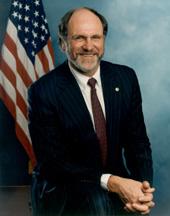
Mr. President, I rise today to introduce legislation to ensure that managed care plans and other private health insurers pay health care claims in a timely fashion. I thank my colleagues Senators…
Mr. President, I rise today to introduce legislation to ensure that managed care plans and other private health insurers pay health care claims in a timely fashion. I thank my colleagues Senators Lautenberg, Reed, Bingaman and Cantwell for joining me in introducing this bill.
This legislation seeks to address the very serious backlog of HMO payments that hospitals and physicians are facing in my State of New Jersey and across the country. Specifically, the legislation requires private health plans to pay manually filed claims within 30 days and electronically filed claims within 14 days. Insurers that fail to meet these time frames would be required to pay interest for every day the claims went unpaid. Insurers that knowingly violate these prompt payment requirements would be subject to monetary penalties.
A Federal prompt pay law is critical to ensuring that our health care providers maintain adequate cash flows and are able to continue functioning. The need for such a law cannot be understated. In my State of New Jersey, almost half of all hospitals are operating in the red, and that number is growing. Physicians and hospitals are experiencing a severe medical malpractice crisis, which is further limiting their resources. Untimely payment of claims has only compounded this problem.
According to a survey of 50 New Jersey hospitals, only 39 percent of manually-filed clean claims are paid within 40 days. These institutions cannot afford to wait indefinitely for reimbursement for services they have provided. Each year, hundreds of millions of dollars in HMO payments to hospitals are held up for months at a time, worsening provider fiscal woes.
The problem of late payments has reached such a crisis that 47 States, including New Jersey, have enacted ``prompt pay'' laws to require insurers to pay their bills within a specific time frame. Unfortunately, New Jersey's law, like most similar State laws, is largely ineffective because it lacks strong enforcement provisions and offers no incentives for private insurers to comply. Furthermore, State prompt-pay laws only apply to non-ERISA regulated plans, which only cover approximately 50 percent of New Jersey insureds.
Shouldn't we hold private insurers to the same standards that regular citizens must adhere to? If you don't pay your health insurance premium when it's due, the company will simply cancel your policy. If you're late making your credit care payments, your credit care company charges you interest. Why shouldn't private health insurers also be penalized for making late payments?
In my view, it only makes sense to hold insurance companies to the same type of standards to which we hold Medicare. Medicare must pay claims within thirty days of receiving them. Why should private insurers be immune from any such time limits?
The bottom line is that patients, hospitals and other health care providers should not have to shoulder the burden of unpaid claims. My legislation will ensure that private insurers assume the financial responsibilities for the health coverage they are being paid to provide.
I ask unanimous consent that the text of the legislation be printed in the Record.
Show 4 more
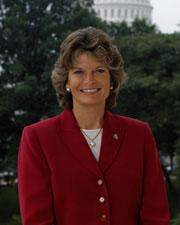
Mr. President, today I am pleased to introduce legislation along with Senator Landrieu to help bring adoption within reach for more Americans. Today in the United States there are literally thousands…
Mr. President, today I am pleased to introduce legislation along with Senator Landrieu to help bring adoption within reach for more Americans. Today in the United States there are literally thousands of children waiting to be adopted. The average child has been waiting in foster care for about four years.
One of the major barriers to adoption for many Americans is cost. I'm not sure that people understand that adopting a child can sometimes cost more than $50,000. That's just the adoption process itself!
The $10,000 per child adoption tax credit does help some, but it helps after the fact when you have the receipts. The problem is that many times the money for adoption has to be given beforehand--it requires up-front money. The tax credit doesn't help out there.
The legislation we are introducing today is one way the Federal Government can help with the initial costs of adoption. Many Americans place money for their retirement in IRA accounts, but you generally can't touch this money until you're 59\1/2\ years old, and if you do, you'll pay not only your marginal tax rate on the withdrawal, you'll also be forced to pay an additional 10 percent penalty to the IRS.
There are exceptions to this, however. Under current law, you can make penalty-free early withdrawals from your IRA to help you buy your first home, pay for excessive medical costs, or for qualifying education expenses. The idea is certainly to encourage savings for retirement, but also to allow you to use your own money--penalty free-- if there's a compelling need.
I would make the case on behalf of the thousands of children who desperately want a loving family, and on behalf of the thousands of parents who dream of becoming parents, that adoption is a compelling need. And, the majority of Americans agree. Fully 78 percent of Americans said in a poll that they believe the government should be doing more to promote adoption.
Our bill would prohibit the IRS from penalizing Americans who want to use a portion of their retirement savings to adopt a child. It would allow Americans to withdraw up to $10,000 penalty-free from their IRA to help with adoption expenses. This is money that can be used up-front to pay for travel, court costs, attorney fees and all of the little surprises that add up to make adoption unaffordable for many.
We need to continue to promote adoption in America to the extent that we can. We owe it to these children and to families across our country to break down the barriers that keep kids from becoming a part of a permanent loving family. I urge my colleagues' support.
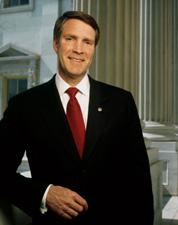
Mr. President, I ask unanimous consent that the Commerce Committee be discharged from further consideration of S. 2315 and that the Senate proceed to its immediate consideration. Mr. President, I ask…
Mr. President, I ask unanimous consent that the Commerce Committee be discharged from further consideration of S. 2315 and that the Senate proceed to its immediate consideration.
Mr. President, I ask unanimous consent that the bill be read a third time and passed, and the motion to reconsider be laid upon the table.

Mr. Speaker, I ask unanimous consent that the Committee on Energy and Commerce be discharged from further consideration of the Senate bill (S. 2315) to amend the Communications Satellite Act of 1962…
Mr. Speaker, I ask unanimous consent that the Committee on Energy and Commerce be discharged from further consideration of the Senate bill (S. 2315) to amend the Communications Satellite Act of 1962 to extend the deadline for the INTELSAT initial public offering, and ask for its immediate consideration in the House.
Mr. Speaker, I ask unanimous consent that all Members may have 5 legislative days within which to revise and extend their remarks on S. 2315, the Senate bill just passed.
Mr. Speaker, I ask unanimous consent that all Members may have 5 legislative days within which to revise and extend their remarks on S. 2315, the Senate bill just passed.
Bill Text
5 versions available
        [Congressional Bills 108th Congress]
[From the U.S. Government Publishing Office]
[S. 2315 Enrolled Bill (ENR)]

S.2315

One Hundred Eighth Congress

of the

United States of America

AT THE SECOND SESSION

Begun and held at the City of Washington on Tuesday,
the twentieth day of January, two thousand and four

An Act

To amend the Communications Satellite Act of 1962 to extend the deadline
for the INTELSAT initial public offering.

Be it enacted by the Senate and House of Representatives of the
United States of America in Congress assembled,

SECTION 1. EXTENSION OF IPO DEADLINE.

Section 621(5)(A)(i) of the Communications Satellite Act of 1962
(47 U.S.C. 763(5)(A)(i)) is amended--
(1) by striking ``December 31, 2003,'' and inserting ``June 30,
2005,''; and
(2) by striking ``June 30, 2004;'' and inserting ``December 31,
2005;''.

Speaker of the House of Representatives.

Vice President of the United States and
President of the Senate.