Aviation Security Advancement Act
 Sen. John D. Rockefeller IV (D-WV)
Legislative Activity
Stay on top of the latest movement without scrolling through every action
Placed on Senate Legislative Calendar under General Orders. Calendar No. 808.
November 19, 2004
View full timeline
Introduced in Senate
May 6, 2004
Sponsor introductory remarks on measure. (CR S5000-5001)
May 6, 2004
Read twice and referred to the Committee on Commerce, Science, and Transportation. (text of measure as introduced: CR S5001-5002)
May 6, 2004
Committee on Commerce, Science, and Transportation. Ordered to be reported with an amendment favorably.
September 22, 2004
Sponsor introductory remarks on measure. (CR S10323)
October 4, 2004
Committee on Commerce, Science, and Transportation. Reported by Senator McCain with amendments. With written report No. 108-417.
November 19, 2004
Placed on Senate Legislative Calendar under General Orders. Calendar No. 808.
November 19, 2004
Floor Debate
21 membersWhat members said about S. 2393 on the floor


 +16
+16
Floor Debate
21 membersWhat members said about S. 2393 on the floor
Mr. President, I ask unanimous consent that following the conclusion of the vote I be recognized to speak in opposition to the Specter amendment for 10 minutes. Mr. President, I rise in opposition to…
Mr. President, I ask unanimous consent the order for the quorum call be rescinded. Mr. President, I call up amendment No. 3706 on behalf of Senator Shelby, Senator Roberts, Senator Bond, Senator…
Mr. President, it is my understanding that Senator Stevens no longer needs to use his time at this time. I believe he will be speaking later. So I ask unanimous consent to vitiate the order that…
Mr. President, I rise to support the amendment which I cosponsored with Senator McCain. This is the first of several he and I will be introducing, along with other Members, which would implement…
Mr. President, I would like to pose a question to the Chamber today. What would you call it if Americans were paying up to 300 percent more for the same product as consumers from other countries were…
Show 8 more
Madam President, I rise today, along with my friend and colleague from Nebraska, Senator Hagel, to introduce the Greater Middle East and Central Asia Development Act of 2004. This would be a Marshall…

Mr. President, I call up amendment No. 3711, which is at the desk. Mr. President, I ask unanimous consent that reading of the amendment be dispensed with. Mr. President, I ask unanimous consent that…
Mr. President, today, joined by Senator Sununu, I am introducing legislation to fundamentally reform our Nation's intercity rail passenger program. The proposal adopts the core concepts for reform…

Mr. President, I am pleased to join Senator Graham in introducing the ``Restore Elector Confidence in Our Representative Democracy Act of 2004'' (``RECORD'' Act) because there is no civic action more…
Mr. President, I rise today to introduce the ``Political Candidate Personal Responsibility Act,'' together with my colleague from South Carolina, Lindsey Graham. This bill would extend the successful…
Mr. President, I am pleased to support my colleague's amendment to implement the 9/11 Commission's recommendations on improving aviation security. Senator McCain and I have worked closely over the…

Mr. President, I rise today, along with Senators Feinstein, Bingaman, and Cantwell, to introduce the Efficient Energy through Certified Technologies and Electricity Reliability Act, or EFFECTER Act…

Mr. President, I rise today to introduce legislation to address one of the critical security issues in the post 9/11 world: the existence of hundreds of vulnerable facilities around the world with…
Show 11 more
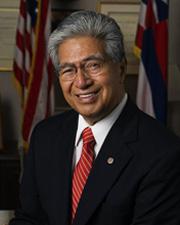
Mr. President, I rise today to introduce the Homeland Security Geospatial Information Act of 2004 which would create a Geospatial Management Office within the Department of Homeland Security (DHS).…
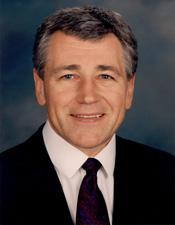
Mr. President, I rise today to introduce The Greater Middle East and Central Asia Development Act of 2004 with my colleague, Senator Lieberman. This bill supports economic and private sector…
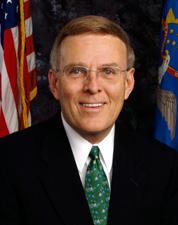
Mr. President, I rise today to introduce legislation to provide a financial safety net for the families of our young men and women who proudly serve in the Nation's military Reserve and National…
Mr. President, I rise today to introduce legislation that is intended to help the Transportation Security Administration (TSA) improve our Nation's aviation security system. All of us continue to…
Mr. President, I rise today to introduce legislation that is intended to help the Transportation Security Administration (TSA) improve our Nation's aviation security system. All of us continue to…

Mr. President, the people of the United States learned many things from the election of 2000. I believe the most important lesson was that voting equipment should produce a clear paper record of each…
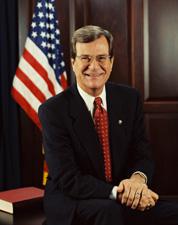
Mr. President, I congratulate the Senator from Texas for her determination in this area. It is one of the places where there was a gap in our aviation security. It is one that she has been working…

Mr. President, I ask unanimous consent that the order for the quorum call be rescinded. Mr. President, we are making very good progress on this significant bill that does focus on the safety and…

Mr. President, I rise to introduce a bill that would make a technical change to the ORBIT Act's IPO provision. As you may recall, I sponsored the ORBIT Act in 1999 with strong bipartisan support.…

Mr. President, I rise to introduce the Better Future for American Families Act. Today's legislation will strengthen progressive tax credits to help middle-class families save, invest, and get ahead.…
Mr. President, I rise today to introduce legislation to ensure that managed care plans and other private health insurers pay health care claims in a timely fashion. I thank my colleagues Senators…
Bill Text
2 versions available
        [Congressional Bills 108th Congress]
[From the U.S. Government Publishing Office]
[S. 2393 Reported in Senate (RS)]

Calendar No. 808
108th CONGRESS
2d Session
S. 2393

[Report No. 108-417]

To improve aviation security.

_______________________________________________________________________

IN THE SENATE OF THE UNITED STATES

May 6, 2004

Mr. Rockefeller (for himself, Mr. McCain, Mr. Hollings, Mr. Lautenberg,
Mr. Nelson of Florida, and Ms. Snowe) introduced the following bill;
which was read twice and referred to the Committee on Commerce,
Science, and Transportation

November 19, 2004

Reported by Mr. McCain, with amendments
[Omit the part struck through and insert the part printed in italic]

_______________________________________________________________________

A BILL

To improve aviation security.

Be it enacted by the Senate and House of Representatives of the
United States of America in Congress assembled,

SECTION 1. SHORT TITLE.

This Act may be cited as the ``Aviation Security Advancement Act''.

<DELETED>SEC. 2. AVIATION SECURITY STAFFING. D23/</DELETED>

SEC. 2. IMPROVED PILOT LICENSES.

(a) In General.--Within 90 days after the date of enactment of this
Act, the Federal Aviation Administrator shall develop a system for the
issuance of any pilot's license issued more than 180 days after the
date of enactment of this Act that--
(1) are resistant to tampering, alteration, and
counterfeiting;
(2) include a photograph of the individual to whom the
license is issued; and
(3) are capable of accommodating a digital photograph, a
biometric measure, or other unique identifier that provides a
means of--
(A) ensuring its validity; and
(B) revealing whether any component or security
feature of the license has been compromised.
(b) Use of Designees.--The Administrator of the Federal Aviation
Administration shall use designees to carry out subsection (a) to the
extent feasible in order to minimize the burden of such requirements on
pilots.
(c) Authorization of Appropriations.--There are authorized to be
appropriated to the Administrator for fiscal year 2005, $50,000,000 to
carry out subsection (a).

SEC. 3. AIRCRAFT CHARTER CUSTOMER SCREENING.

(a) In General.--Within 90 days after the date of enactment of this
Act, the Secretary of Homeland Security shall implement a procedure
under which--
(1) any person engaged in the business of chartering fixed
wing or rotary aircraft to the public may contact the
Transportation Security Administration before permitting
passengers to board the aircraft for the first time;
(2) the Transportation Security Administration immediately
will compare information about the individual seeking to
charter an aircraft and any passengers proposed to be
transported onboard the aircraft with a comprehensive,
consolidated database containing information about known or
suspected terrorists and their associates; and
(3) control of the aircraft will not be relinquished if the
Transportation Security Agency determines that such individual,
pilot, or passenger is identified as a flight security or
terrorism risk.
(b) Privacy Safeguards.--Under the procedure, the Secretary shall
ensure that--
(1) the person required to compare the information will not
be given any information about the individual whose name is
being checked other than whether permission to charter the
aircraft is granted or denied; and
(2) an individual denied access to an aircraft under the
procedure is given an opportunity to consult the Transportation
Security Agency immediately, or as expeditiously as
practicable, for the purpose of correcting mis-identification
errors, resolving confusion resulting from names that are the
same as or similar to names on the list, or addressing other
erroneous information that may have resulted in the denial.
(c) Authorization of Appropriations.--There are authorized to be
appropriated to the Secretary of Homeland Security such sums as may be
necessary to carry out the provisions of this section.

SEC. 4. AIRCRAFT RENTAL CUSTOMER SCREENING.

(a) In General.--Within 90 days after the date of enactment of this
Act, the Secretary of Homeland Security shall implement a procedure
under which--
(1) any person engaged in the business of renting fixed
wing or rotary aircraft to the public may contact the
Transportation Security Administration before permitting an
individual seeking to rent an aircraft to have access to the
aircraft for the first time;
(2) the Transportation Security Administration immediately
will compare information about the individual seeking to rent
the aircraft with a comprehensive, consolidated database
containing information about known or suspected terrorists and
their associates; and
(3) the individual will not be permitted to take control of
the aircraft if the Transportation Security Agency determines
that the individual is a flight security or terrorism risk.
(b) Pilot Program.--Before fully implementing the program under
subsection (a), the Secretary shall test the program through a
demonstration project.
(c) Privacy Safeguards.--Under the procedure, the Secretary shall
ensure that--
(1) the person required to compare the information will not
be given any information about the individual whose name is
being checked other than whether permission to rent the
aircraft is granted or denied; and
(2) an individual denied access to an aircraft under the
procedure is given an opportunity to consult the Transportation
Security Agency immediately, or as expeditiously as
practicable, for the purpose of correcting mis-identification
errors, resolving confusion resulting from names that are the
same as or similar to names on the list, or addressing other
erroneous information that may have resulted in the denial.
(d) Authorization of Appropriations.--There are authorized to be
appropriated to the Secretary of Homeland Security such sums as may be
necessary to carry out the provisions of this section.

SEC. 5. AVIATION SECURITY STAFFING.

(a) Staffing Level Standards.--
(1) Development of standards.--Within 90 days after the
date of enactment of this Act, the Secretary of Homeland
Security, in consultation with the Secretary of Transportation
and Federal Security Directors, shall develop standards for
determining the appropriate aviation security staffing
standards for all commercial airports in the United States
necessary--
(A) to provide necessary levels of aviation
security; and
(B) to ensure that the average aviation security-
related delay experienced by airline passengers
<DELETED>does not exceed 10 minutes. </DELETED>is
minimized.
(2) GAO analysis.--The Comptroller General shall, as soon
as practicable after the date on which the Secretary of
Homeland Security has developed standards under paragraph (1),
conduct an expedited analysis of the standards for
effectiveness, administrability, ease of compliance, and
consistency with the requirements of existing law.
(3) Report to congress.--Within 120 days after the date of
enactment of this Act, the Secretary of Homeland Security and
the Comptroller General shall transmit a report to the Senate
Committee on Commerce, Science, and Transportation and the
House of Representatives Committee on Transportation and
Infrastructure on the standards developed under paragraph (1),
together with recommendations for further improving the
efficiency and effectiveness of the screening process.
(b) Integration of Federal Airport Workforce and Aviation
Security.--The Secretary of Homeland Security shall conduct a study of
the feasibility of combining operations of Federal employees involved
in screening at commercial airports and aviation security related
functions under the aegis of the Department of Homeland Security in
order to coordinate security-related activities, increase the
efficiency and effectiveness of those activities, and increase
commercial air transportation security.

<DELETED>SEC. 3. IMPROVED AIR CARGO AND AIRPORT SECURITY.</DELETED>

SEC. 6. IMPROVED AIR CARGO AND AIRPORT SECURITY.

(a) In General.--There are authorized to be appropriated to the
Secretary of Homeland Security for the use of the Transportation
Security Administration, in addition to any amounts otherwise
authorized by law, for the purpose of improving aviation security
related to the transportation of cargo on both passenger aircraft and
all-cargo aircraft--
(1) $200,000,000 for fiscal year 2005;
(2) $200,000,000 for fiscal year 2006; and
(3) $200,000,000 for fiscal year 2007.
(b) Next-Generation Cargo Security Grant Program.--
(1) In general.--The Secretary shall establish and carry
out a grant program to facilitate the development, testing,
purchase, and deployment of next-generation air cargo security
technology. The Secretary shall establish such eligibility
criteria, establish such application and administrative
procedures, and provide for such matching funding requirements,
if any, as may be necessary and appropriate to ensure that the
technology is deployed as fully and as rapidly as practicable.
(2) Research and development; deployment.--To carry out
paragraph (1), there are authorized to be appropriated to the
Secretary for research and development related to next-
generation air cargo security technology as well as for
deployment and installation of next-generation air cargo
security technology, such sums are to remain available until
expended--
(A) $100,000,000 for fiscal year 2005;
(B) $100,000,000 for fiscal year 2006; and
(C) $100,000,000 for fiscal year 2007.
<DELETED>    (c) Authorization for Expiring and New LOIs.--There are
authorized to be appropriated to the Secretary $150,000,000 for each of
fiscal years 2005 through 2007 to fund projects and activities for
which letters of intent are issued under section 44923 of title 49,
United States Code, after the date of enactment of this Act.</DELETED>
(c) Authorization for Expiring and New LOIs.--
(1) In general.--There are authorized to be appropriated to
the Secretary $150,000,000 for each of fiscal years 2005
through 2007 to fund projects and activities for which letters
of intent are issued under section 44923 of title 49, United
States Code, after the date of enactment of this Act.
(2) Period of reimbursement.--Notwithstanding any other
provision of law, the Secretary may provide that the period of
reimbursement under any letter of intent may extend for a
period not to exceed 10 years after the date that the Secretary
issues such letter, subject to the availability of
appropriations. This paragraph applies to letters of intent
issued under section 44923 of title 49, United States Code, or
section 367 of the Department of Transportation and Related
Agencies Appropriation Act, 2003 (49 U.S.C. 47110 note).
(d) Reports.--The Secretary shall transmit <DELETED>periodic
reports no less frequently than every 6 months </DELETED>an annual
report to the Senate Committee on Commerce, Science, and Transportation
and the House of Representatives Committee on Transportation and
Infrastructure on--
(1) the progress being made toward, and the status of,
deployment and installation of next-generation air cargo
security technology under subsection (b); and
(2) the amount and purpose of grants under subsection (b)
and the locations of projects funded by such grants.

<DELETED>SEC. 4. AIR CARGO SECURITY MEASURES.</DELETED>

SEC. 7. AIR CARGO SECURITY MEASURES.

(a) Enhancement of Air Cargo Security.--The Secretary of Homeland
Security, in consultation with the Secretary of Transportation, shall
develop and implement a plan to enhance air cargo security at airports
for commercial passenger and cargo aircraft that incorporates the
recommendations made by the Cargo Security Working Group of the
Aviation Security Advisory Committee.
(b) Supply Chain Security.--The Administrator of the Transportation
Security Administration shall--
(1) promulgate regulations requiring the evaluation of
indirect air carriers and ground handling agents, including
background checks and checks against all Administration watch
lists; and
(2) evaluate the potential efficacy of increased use of
canine detection teams to inspect air cargo on passenger and
all-cargo aircraft.
(c) Increased Cargo Inspections.--Within 1 year after the date of
enactment of this Act, the Secretary of Homeland Security shall require
that the volume of property screened or inspected is at least two-fold
the volume that is screened or inspected on the date of enactment of
this Act. For purposes of the preceding sentence, the term ``property''
means mail, cargo, and other articles carried aboard a passenger
aircraft operated by an air carrier or foreign air carrier in air
transportation.
<DELETED>(c) </DELETED>(d) All-Cargo Aircraft Security.--Subchapter
I of chapter 449, United States Code, is amended by adding at the end
the following:
``Sec. 44925. All-cargo aircraft security
``(a) Access to Flight Deck.--Within 180 days after the date of
enactment of this Act, the Administrator of the Transportation Security
Administration, in coordination with the Federal Aviation
Administrator, shall--
``(1) issue an order (without regard to the provisions of
chapter 5 of title 5)--
``(A) requiring, to the extent consistent with
engineering and safety standards, that all-cargo
aircraft operators engaged in air transportation or
intrastate air transportation maintain a barrier, which
may include the use of a hardened cockpit door, between
the aircraft flight deck and the aircraft cargo
compartment sufficient to prevent unauthorized access
to the flight deck from the cargo compartment, in
accordance with the terms of a plan presented to and
accepted by the Administrator of the Transportation
Security Administration in consultation with the
Federal Aviation Administrator; and
``(B) prohibiting the possession of a key to a
flight deck door by any member of the flight crew who
is not assigned to the flight deck; and
``(2) take such other action, including modification of
safety and security procedures and flight deck redesign, as may
be necessary to ensure the safety and security of the flight
deck.
``(b) Screening and Other Measures.--Within 1 year after the date
of enactment of this Act, the Administrator of the Transportation
Security Administration, in coordination with the Federal Aviation
Administrator, shall issue an order (without regard to the provisions
of chapter 5 of title 5) requiring--
``(1) all-cargo aircraft operators engaged in air
transportation or intrastate air transportation to physically
screen each person, and that person's baggage and personal
effects, to be transported on an all-cargo aircraft engaged in
air transportation or intrastate air transportation;
``(2) each such aircraft to be physically searched before
the first leg of the first flight of the aircraft each day, or,
for inbound international operations, at aircraft operator's
option prior to the departure of any such flight for a point in
the United States; and
``(3) each such aircraft that is unattended overnight to be
secured or sealed or to have access stairs, if any, removed
from the aircraft.
``(c) Alternative Measures.--The Administrator of the
Transportation Security Administration, in coordination with the
Federal Aviation Administrator, may authorize alternative means of
compliance with any requirement imposed under this section.''.
<DELETED>(d) </DELETED>(e) Conforming Amendment.--The subchapter
analysis for subchapter I of chapter 449, United States Code, is
amended by adding at the end the following:

``44925. All-cargo aircraft security.''.

<DELETED>SEC. 5. EXPLOSIVE DETECTION SYSTEMS.</DELETED>

SEC. 8. EXPLOSIVE DETECTION SYSTEMS.

(a) In-Line Placement of Explosive-Detection Equipment.--Within 180
days after the date of enactment of this Act, the Secretary of Homeland
Security shall establish a schedule for replacing trace-detection
equipment used for in-line baggage screening purposes as soon as
practicable where appropriate with explosive detection system
equipment. The Secretary shall notify the Senate Committee on Commerce,
Science, and Transportation and the House of Representatives Committee
on Transportation and Infrastructure of the schedule and provide an
estimate of the impact of replacing such equipment, facility
modification and baggage conveyor placement, on aviation security-
related staffing needs and levels.
(b) Next Generation EDS.--There are authorized to be appropriated
to the Secretary of Homeland Security for the use of the Transportation
Security Administration $100,000,000, in addition to any amounts
otherwise authorized by law, for the purpose of research and
development of next generation explosive detection systems for aviation
security under section 44913 of title 49, United States Code. The
Secretary shall develop a plan and guidelines for implementing improved
explosive detection system equipment.
(c) Portal Detection Systems.--There are authorized to be
appropriated to the Secretary of Homeland Security for the use of the
Transportation Security Administration $250,000,000, in addition to any
amounts otherwise authorized by law, for research and development and
installation of portal detection systems or similar devices for the
detection of biological, radiological, and explosive materials. The
Secretary of Homeland <DELETED>Security, in consultation with the
Secretary of Transportation, </DELETED>Security shall establish a pilot
program at not more than 10 commercial service airports to evaluate the
use of such systems.
(d) Reports.--The Secretary shall transmit <DELETED>periodic
reports no less frequently than every 6 months </DELETED>an annual
report to the Senate Committee on Commerce, Science, and Transportation
and the House of Representatives Committee on Transportation and
Infrastructure on research and development projects funded under
subsection (b) or (c), and the pilot program established under
subsection (c), including cost estimates for each phase of such
projects and total project costs.

<DELETED>SEC. 6. AIR MARSHAL PROGRAM.</DELETED>

SEC. 9. AIR MARSHAL PROGRAM.

(a) Cross-Training.--The Secretary of Homeland Security shall
transmit to the Senate Committee on Commerce, Science, and
Transportation and the House of Representatives Committee on
Transportation and Infrastructure a report on the potential for cross-
training of individuals who serve as air marshals and on the need for
providing contingency funding for air marshal operations.
(b) Authorization of Additional Appropriations.--There are
authorized to be appropriated to the Secretary of Homeland Security for
the use of the Transportation Security Administration, in addition to
any amounts otherwise authorized by law, for the deployment of Federal
Air Marshals under section 44917 of title 49, United States Code,
$83,000,000 for the 3 fiscal year period beginning with fiscal year
2005, such sums to remain available until expended.

<DELETED>SEC. 7. TSA-RELATED BAGGAGE CLAIM ISSUES STUDY.</DELETED>

SEC. 10. TSA-RELATED BAGGAGE CLAIM ISSUES STUDY.

Within 90 days after the date of enactment of this Act, the
Secretary of Homeland Security, in consultation with the Secretary of
Transportation, shall transmit to the Senate Committee on Commerce,
Science, and Transportation and the House of Representatives Committee
on Transportation and Infrastructure a report on the present system for
addressing lost, stolen, damaged, or pilfered baggage claims relating
to air transportation security screening procedures. The report shall
include--
(1) information concerning the time it takes to settle such
claims under the present system;
(2) a comparison and analysis of the number, frequency, and
nature of such claims before and after enactment of the
Aviation and Transportation Security Act using data provided by
the major United States airlines; and
(3) recommendations on how to improve the involvement and
participation of the airlines in the baggage screening and
handling processes and better coordinate the activities of
Federal baggage screeners with airline operations.

<DELETED>SEC. 8. REPORT ON IMPLEMENTATION OF GAO HOMELAND SECURITY
INFORMATION SHARING RECOMMENDATIONS.</DELETED>

SEC. 11. REPORT ON IMPLEMENTATION OF GAO HOMELAND SECURITY INFORMATION
SHARING RECOMMENDATIONS.

Within 30 days after the date of enactment of this Act, the
Secretary of Homeland Security, after consultation with the heads of
Federal departments and agencies concerned, shall transmit to the
Senate Committee on Commerce, Science, and Transportation and the House
of Representatives Committee on Transportation and Infrastructure a
report on implementation of recommendations contained in the General
Accounting Office's report titled ``Homeland Security: Efforts To
Improve Information Sharing Need To Be Strengthened'' (GAO-03-760),
August, 2003.

<DELETED>SEC. 9. AVIATION SECURITY RESEARCH AND DEVELOPMENT.</DELETED>

SEC. 12. AVIATION SECURITY RESEARCH AND DEVELOPMENT.

(a) Biometrics.--There are authorized to be appropriated to the
Secretary of Homeland Security for the use of the Transportation
Security Administration $20,000,000, in addition to any amounts
otherwise authorized by law, for research and development of biometric
technology applications to aviation security.
(b) Biometrics Centers of Excellence.--There are authorized to be
appropriated to the Secretary of Homeland Security for the use of the
Transportation Security Administration $1,000,000, in addition to any
amounts otherwise authorized by law, for the establishment of
competitive centers of excellence at the national laboratories.

<DELETED>SEC. 10. PERIMETER ACCESS TECHNOLOGY.</DELETED>

SEC. 13. PERIMETER ACCESS TECHNOLOGY.

There are authorized to be appropriated to the Secretary of
Homeland Security $100,000,000 for airport perimeter security
technology, fencing, security contracts, vehicle tagging, and other
perimeter security related operations, facilities, and equipment, such
sums to remain available until expended.

SEC. 14. BEREAVEMENT FARES.

(a) In General.--Chapter 415 of title 49, United States Code, is
amended by adding at the end the following:
``Sec. 41512. Bereavement fares
``Air carriers shall offer, with appropriate documentation,
bereavement fares to the public for air transportation in connection
with the death of a relative or other relationship (as determined by
the air carrier) and shall make such fares available, to the greatest
extent practicable, at the lowest fare offered by the air carrier for
the flight for which the bereavement fare is requested.''.
(b) Conforming Amendment.--The chapter analysis for chapter 415 is
amended by inserting after the item relating to section 41511 the
following:

``41512. Bereavement fares.''.

SEC. 15. REVIEW AND REVISION OF PROHIBITED ITEMS LIST.

Not later than 60 days after the date of enactment of this Act, the
Transportation Security Administration shall complete a review of its
Prohibited Items List, set forth in 49 CFR 1540, and release a revised
rule that--
(1) prohibits passengers from carrying butane lighters
onboard passenger aircraft; and
(2) modifies the Prohibited Items List in such other ways
as the agency may deem appropriate.

SEC. 16. REPORT ON PROTECTING COMMERCIAL AIRCRAFT FROM THE THREAT OF
MAN-PORTABLE AIR DEFENSE SYSTEMS.

(a) Requirement.--The Secretary of Homeland Security, in
coordination with the head of the Transportation Security
Administration and the Under Secretary for Science and Technology,
shall prepare a report on protecting commercial aircraft from the
threat of man-portable air defense systems (referred to in this section
as ``MANPADS'').
(b) Content.--The report required by subsection (a) shall include
the following:
(1) An estimate of the number of organizations, including
terrorist organizations, that have access to MANPADS and a
description of the risk posed by each organization.
(2) A description of the programs carried out by the
Secretary of Homeland Security to protect commercial aircraft
from the threat posed by MANPADS.
(3) An assessment of the effectiveness and feasibility of
the systems to protect commercial aircraft under consideration
by the Under Secretary for Science and Technology for use in
phase II of the counter-MANPADS development and demonstration
program.
(4) A justification for the schedule of the implementation
of phase II of the counter-MANPADS development and
demonstration program.
(5) An assessment of the effectiveness of other technology
that could be employed on commercial aircraft to address the
threat posed by MANPADS, including such technology that is--
(A) either active or passive;
(B) employed by the Armed Forces; or
(C) being assessed or employed by other countries.
(6) An assessment of alternate technological approaches to
address such threat, including ground-based systems.
(7) A discussion of issues related to any contractor
liability associated with the installation or use of technology
or systems on commercial aircraft to address such threat.
(8) A description of the strategies that the Secretary may
employ to acquire any technology or systems selected for use on
commercial aircraft at the conclusion of phase II of the
counter-MANPADS development and demonstration program,
including--
(A) a schedule for purchasing and installing such
technology or systems on commercial aircraft; and
(B) a description of--
(i) the priority in which commercial
aircraft will be equipped with such technology
or systems;
(ii) any efforts to coordinate the
schedules for installing such technology or
system with private airlines;
(iii) any efforts to ensure that aircraft
manufacturers integrate such technology or
systems into new aircraft; and
(iv) the cost to operate and support such
technology or systems on a commercial aircraft.
(9) A description of the plan to expedite the use of
technology or systems on commercial aircraft to address the
threat posed by MANPADS if intelligence or events indicate that
the schedule for the use of such technology or systems,
including the schedule for carrying out development and
demonstration programs by the Secretary, should be expedited.
(10) A description of the efforts of the Secretary to
survey and identify the areas at domestic and foreign airports
where commercial aircraft are most vulnerable to attack by
MANPADS.
(11) A description of the cooperation between the Secretary
and the Administrator of the Federal Aviation Administration to
certify the airworthiness and safety of technology and systems
to protect commercial aircraft from the risk posed by MANPADS
in an expeditious manner.
(c) Transmission to Congress.--The report required by subsection
(a) shall be transmitted to Congress along with the budget for fiscal
year 2006 submitted by the President pursuant to section 1105(a) of
title 31, United States Code.D23/

SEC. 17. SCREENING DEVICES TO DETECT CHEMICAL AND PLASTIC EXPLOSIVES.

Not later than 90 days after the date of enactment of this Act, the
Secretary of Homeland Security shall provide to the Senate Committee on
Commerce, Science, and Transportation a report on the current status of
efforts, and the additional needs, regarding passenger and carry-on
baggage screening equipment at United States airports to detect
chemical and plastic explosives. The report shall include the cost of
and timetable for installing such equipment and any recommended
legislative actions.

SEC. 18. REPORTS ON THE FEDERAL AIR MARSHALS PROGRAM.

Not later than 90 days after the date of enactment of this Act, and
every 90 days thereafter, the Secretary of Homeland Security shall
provide to the Senate Committee on Commerce, Science, and
Transportation a classified report on the number of individuals serving
as Federal air marshals. Such report shall include the number of
Federal air marshals who are women, minorities, or employees of
departments or agencies of the United States Government other than the
Department of Homeland Security, the percentage of domestic and
international flights that have a Federal air marshal aboard, and the
rate at which individuals are leaving service as Federal air marshals.

SEC. 19. SECURITY OF AIR MARSHAL IDENTITY.

(a) In General.--The Secretary of the Department of Homeland
Security shall designate individuals and parties to whom Federal air
marshals shall be required to identify themselves.
(b) Prohibition.--Notwithstanding any other provision of law, no
procedure, guideline, rule, regulation, or other policy shall expose
the identity of an air marshal to anyone other than those designated by
the Secretary under subsection (a).

SEC. 20. SECURITY MONITORING CAMERAS FOR AIRPORT BAGGAGE HANDLING
AREAS.

(a) In General.--The Under Secretary of Homeland Security for
Border Transportation and Security shall provide assistance to public
airports that have baggage handling areas that are not open to public
view in the acquisition and installation of security monitoring cameras
for surveillance of such areas in order to deter theft from checked
baggage and to aid in the speedy resolution of liability claims against
the Transportation Security Administration.
(b) Authorization of Appropriations.--There are authorized to be
appropriated to the Secretary of Homeland Security for fiscal year 2005
such sums as may be necessary to carry out this section, such sums to
remain available until expended.
Calendar No. 808

108th CONGRESS

2d Session

S. 2393

[Report No. 108-417]

_______________________________________________________________________

A BILL

To improve aviation security.

_______________________________________________________________________

November 19, 2004

Reported with amendments