Fritz Hollings National Ocean Policy and Leadership Act
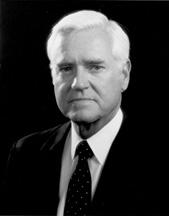 Sen. Ernest F. Hollings (D-SC)
Legislative Activity
Stay on top of the latest movement without scrolling through every action
Placed on Senate Legislative Calendar under General Orders. Calendar No. 799.
November 10, 2004
View full timeline
Introduced in Senate
July 13, 2004
Sponsor introductory remarks on measure. (CR S8038-8039)
July 13, 2004
Read twice and referred to the Committee on Commerce, Science, and Transportation. (text of measure as introduced: CR S8039-8045)
July 13, 2004
Committee on Commerce, Science, and Transportation. Ordered to be reported with an amendment in the nature of a substitute favorably.
September 22, 2004
Committee on Commerce, Science, and Transportation. Reported by Senator McCain under authority of the order of the Senate of 10/11/04 with an amendment in the nature of a substitute. With written report No. 108-407.
November 10, 2004
Placed on Senate Legislative Calendar under General Orders. Calendar No. 799.
November 10, 2004
Floor Debate
17 membersWhat members said about S. 2647 on the floor



 +12
+12
Floor Debate
17 membersWhat members said about S. 2647 on the floor
Mr. President, I rise today to pay tribute to a legend of a man who has spent his career dedicated to working for the great people of South Carolina. There is nothing small about Senator Hollings.…
Mr. President, I would like to take a moment to honor my good friend and colleague, Senator Ben Nighthorse Campbell of Colorado. Ben is my best friend in the Senate. I know every one of my Senate…
Mr. President, I want to spend a few minutes talking about the Senators who will not be here when the Senate starts over again this January. The first I ever heard about Senator Fritz Hollings was…
Mr. President, today I rise to introduce the National Ocean Policy and Leadership Act, which is co-sponsored by my colleagues Senators Stevens and Inouye. The passage of this bill would mark a brand…
Mr. President, nearly 26 years ago, I arrived in Washington as a newly elected Congressman with an urgent desire to help the people of my State but not nearly as much knowledge as I wanted about…
Show 8 more

Mr. President, I rise to discuss the FY 2005 omnibus appropriations bill, which the Senate passed late last month and the President signed into law earlier today. When this legislation was considered…
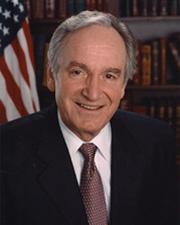
Mr. President, with the close of the 108th Congress, the Senate will lose to retirement one of our most respected and admired Members, Senator Bob Graham of Florida. I remember how impressed we were…
Mr. President, today I rise to introduce the National Ocean Policy and Leadership Act, which is co-sponsored by my colleagues Senators Stevens and Inouye. The passage of this bill would mark a brand…

Mr. President, I rise to join my colleagues today in paying tribute to a man who, in the President's words, ``has left his mark on virtually every major issue'' during his service in this body, the…
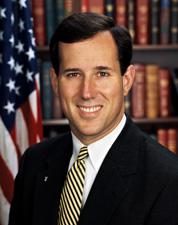
Mr. President, I rise today to pay tribute to departing Senators for their service and devotion to the United States Senate. They are not only my colleagues but my friends as well. The reality of…

Mr. President, today I want to take a moment to pay tribute to my friend and my colleague, Senator Ben Nighthorse Campbell. Long before I arrived in the Senate, Ben had proven to be a trusted friend.…

Mr. President, today I join with my friend and colleague from the State of Colorado to introduce the Bison Nickel Restoration Act of 2004 to bring the image of the American bison back to the 5-cent…

Mr. President, I rise today to introduce the Cigarette Fire Safety Act of 2004. Joe Moakley started his effort to require less fire-prone cigarettes in 1979 and championed this issue until his death…
Show 6 more

Mr. President, I rise to join my colleagues in tribute to Senator Ernest ``Fritz'' Hollings. I will miss my good friend from South Carolina who in 2003, at the age of 81, finally became his State's…
Mr. President, I rise to join my colleagues in tribute to Senator Ernest ``Fritz'' Hollings. I will miss my good friend from South Carolina, who in 2003, at the age of 81, finally became his State's…

Mr. President, I rise today to introduce The Public Broadcasting Reauthorization Act of 2004. This legislation is designed to reauthorize the Corporation for Public Broadcasting (CPB or ``the…

Mr. President, Don Nickles first came to the Senate in 1980 as a young man of 31 with a vision. He now leaves us, 24 years later, with a record we all can envy and a reputation we all should emulate.…
Mr. President, I ask unanimous consent that the Committee on Banking, Housing, and Urban Affairs be authorized to meet during the session of the Senate on September 22, 2004, at 2 p.m., to conduct a…

Mr. President, today I am introducing the Smuggled Tobacco Prevention Act of 2004, and Representative Doggett of Texas is introducing identical legislation in the House of Representatives. As many of…
Bill Text
2 versions available
        [Congressional Bills 108th Congress]
[From the U.S. Government Publishing Office]
[S. 2647 Reported in Senate (RS)]

Calendar No. 799
108th CONGRESS
2d Session
S. 2647

[Report No. 108-407]

To establish a national ocean policy, to set forth the missions of the
National Oceanic and Atmospheric Administration, to ensure effective
interagency coordination, and for other purposes.

_______________________________________________________________________

IN THE SENATE OF THE UNITED STATES

July 13, 2004

Mr. Hollings (for himself, Mr. Stevens, Mr. Inouye,  Mr. Gregg, Mr.
Breaux, Mrs. Boxer, Mr. Lautenberg, and Mr. Akaka) introduced the
following bill; which was read twice and referred to the Committee on
Commerce, Science, and Transportation

November 10, 2004

Reported under authority of the order of the Senate of October 11,
2004, by Mr. McCain,  with an amendment
[Strike out all after the enacting clause and insert the part printed
in italic]

_______________________________________________________________________

A BILL

To establish a national ocean policy, to set forth the missions of the
National Oceanic and Atmospheric Administration, to ensure effective
interagency coordination, and for other purposes.

Be it enacted by the Senate and House of Representatives of the
United States of America in Congress assembled,

<DELETED>SECTION 1. SHORT TITLE.</DELETED>

<DELETED>    This Act may be cited as the ``National Ocean Policy and
Leadership Act''.</DELETED>

<DELETED>SEC. 2. TABLE OF CONTENTS.</DELETED>

<DELETED>    The table of contents for this Act is as
follows:</DELETED>

<DELETED>Sec. 1. Short title.
<DELETED>Sec. 2. Table of contents.
<DELETED>Sec. 3. Definitions.
<DELETED>TITLE I--NATIONAL OCEAN POLICY

<DELETED>Sec. 101. Findings.
<DELETED>Sec. 102. Purposes.
<DELETED>Sec. 103. Policy.
<DELETED>TITLE II--NATIONAL OCEANIC AND ATMOSPHERIC ADMINISTRATION

<DELETED>Sec. 201. Establishment.
<DELETED>Sec. 202. Functions and Purposes.
<DELETED>Sec. 203. National Oceanic and Atmospheric Administration.
<DELETED>Sec. 204. Responsibilities of the Administrator.
<DELETED>Sec. 205. Powers of the Administrator.
<DELETED>Sec. 206. Enforcement.
<DELETED>Sec. 207. Regional capabilities.
<DELETED>Sec. 208. Intergovernmental coordination.
<DELETED>Sec. 209. International consultation and coordination.
<DELETED>Sec. 210. Report on oceanic and atmospheric conditions and
trends.
<DELETED>Sec. 211. Conforming amendments and appeals.
<DELETED>Sec. 212. Savings provision.
<DELETED>Sec. 213. Transition.
<DELETED>TITLE III--FEDERAL COORDINATION AND ADVICE

<DELETED>Sec. 301. Council on Ocean Stewardship.
<DELETED>Sec. 302. Membership.
<DELETED>Sec. 303. Functions of Council.
<DELETED>Sec. 304. National priorities for coordination.
<DELETED>Sec. 305. Employees.
<DELETED>Sec. 306. Biennial report to Congress.
<DELETED>Sec. 307. Presidential panel of advisors on oceans and
climate.
<DELETED>Sec. 308. Federal program recommendations.
<DELETED>Sec. 309. Implementation.
<DELETED>Sec. 310. No effect on other authorities.

<DELETED>SEC. 3. DEFINITIONS.</DELETED>

<DELETED>    In this Act:</DELETED>
<DELETED>    (1) Administrator.--The term ``Administrator''
means the Administrator of NOAA.</DELETED>
<DELETED>    (2) Coastal Region.--The term ``coastal region''
means the coastal zone as defined in section 304 of the Coastal
Zone Management Act of 1972 (16 U.S.C. 1453) and coastal
watershed areas that have significant impact on such coastal
zones.</DELETED>
<DELETED>    (3) NOAA.--The term ``NOAA'' means the National
Oceanic and Atmospheric Administration.</DELETED>
<DELETED>    (4) Oceans.--The term ``ocean'' includes coastal
areas, the Great Lakes, the seabed, subsoil, and waters of the
territorial sea of the United States, the waters of the
exclusive economic zone of the United States; the waters of the
high seas; and the seabed and subsoil of and beyond the Outer
Continental Shelf marine environment, and the natural resources
therein.</DELETED>
<DELETED>    (5) Person.--The term ``person'' has the meaning
given that term by section 1 of title 1, United States Code,
but also means any State, political subdivision of a State, or
agency or officer thereof.</DELETED>
<DELETED>    (6) State.--The term ``State'' means any State of
the United States, the District of Columbia, the Commonwealth
of Puerto Rico, the Virgin Islands, Guam, American Samoa, or
any other Commonwealth, territory, or possession of the United
States.</DELETED>

<DELETED>TITLE I--NATIONAL OCEAN POLICY</DELETED>

<DELETED>SEC. 101. FINDINGS.</DELETED>

<DELETED>    The Congress finds the following:</DELETED>
<DELETED>    (1) Covering more than two-thirds of the Earth's
surface, the oceans play a critical role in the global water
cycle and in regulating climate, sustain a large part of
Earth's biodiversity, provide an important source of food and a
wealth of other natural products, act as a frontier for
scientific exploration, are critical to national and economic
security, and provide a vital means of transportation. The
coastal regions of the United States have remarkably high
biological productivity and contribute approximately 50 percent
of the gross domestic product of the United States.</DELETED>
<DELETED>    (2) The oceans and the atmosphere are susceptible
to change as a direct and indirect result of human activities,
and such changes can significantly impact the ability of the
oceans and atmosphere to provide the benefits upon which the
Nation depends. Changes in ocean and atmospheric processes
could affect global climate patterns, ecosystem productivity,
health, and biodiversity, environmental quality, national
security, economic competitiveness, availability of energy,
vulnerability to natural hazards, and transportation safety and
efficiency.</DELETED>
<DELETED>    (3) Ocean resources are not infinite, and human
pressure on them is increasing. One half of the Nation's
population lives within 50 miles of the coast. If population
trends continue as expected, coastal development and
urbanization impacts, which can be substantially greater than
population impacts alone, will present serious environmental,
energy, and water challenges and increase our vulnerability to
coastal hazards.</DELETED>
<DELETED>    (4) Emissions of greenhouse gases and aerosols due
to human activities continue to alter the oceans and atmosphere
in ways that are expected to affect the climate, with adverse
impacts on human health and the Nation's economic and
environmental security. In some coastal regions, air deposition
contributes between 30-50 percent of pollutant loadings to such
areas. Improved understanding of such factors and ideas for
mitigating any adverse impacts are urgently needed.</DELETED>
<DELETED>    (5) There are enormous opportunities for science
and technology to uncover new sources of energy, food, and
pharmaceuticals from the oceans, and to increase general
understanding of the planet including its atmosphere and
climate. Realization of such benefits is jeopardized by a
variety of activities and practices that have reduced the
health and productivity of ocean and atmospheric systems,
including pollution, unsustainable harvesting practices,
increasing coastal development, and proliferation of harmful
and invasive marine species.</DELETED>
<DELETED>    (6) Threats to the oceans and atmosphere are
exacerbated by the legal and geographic fragmentation of
authority within the Federal government. Over half of the
existing 15 departments and several independent agencies
conduct activities and programs relating to ocean and
atmosphere, including climate change activities. Efforts to
understand and effectively address emerging ocean and
atmospheric problems, including through existing coordination
mechanisms, have not been adequate.</DELETED>
<DELETED>    (7) Improving and coordinating Federal governance
will require close partnerships with States, taking into
account their public trust responsibilities, economic and
ecological interests in ocean resources, and the role of State
and local governments in implementation of ocean policies, and
managing use of coastal lands and ocean resources.</DELETED>
<DELETED>    (8) Effective enforcement of the laws to protect
and enhance the marine environment, coastal security, and the
Nation's natural resources, particularly through marine safety,
fisheries enforcement, aids to navigation, and hazardous
materials spill response activities is needed to ensure
achievement of management goals, and priority should be given
to increasing marine enforcement and compliance through
coordinated Federal and State actions.</DELETED>
<DELETED>    (9) It is the continuing mission of the Federal
Government to create, foster, and maintain conditions,
incentives, and programs that will further and assure the
sustainable and effective conservation, management, and
protection of the oceans and atmosphere, in order to fulfill
the responsibility of each generation as trustee in protecting,
and ensuring that, such resources will be available to meet the
needs of future generations of Americans.</DELETED>
<DELETED>    (10) This policy and mission can best be carried
out and realized by formal establishment of a strengthened and
expanded lead Federal civilian agency dedicated to ocean and
atmospheric matters, and by undertaking the functions,
programs, and activities of the Federal Government with respect
to the conservation, management, and protection of the oceans
and atmosphere, including monitoring, forecasting, and
assessment, in a coordinated manner and in accordance with a
national ocean policy.</DELETED>

<DELETED>SEC. 102. PURPOSES.</DELETED>

<DELETED>    The purposes of this Act are--</DELETED>
<DELETED>    (1) to set forth a national policy relating to
oceans and atmosphere, and, through an organic act, formally to
establish the National Oceanic and Atmospheric Administration
as the lead Federal agency concerned with ocean and atmospheric
matters;</DELETED>
<DELETED>    (2) to establish in the National Oceanic and
Atmospheric Administration, by statute, the authorities,
functions, and powers relating to the conservation, management,
and protection of the oceans and atmosphere which have
previously been established by statute or reorganization
plan;</DELETED>
<DELETED>    (3) to set forth the duties and responsibilities
of the Administration, and the principal officers of the
Administration;</DELETED>
<DELETED>    (4) to establish a mechanism for Federal
leadership and coordinated action on national ocean and
atmospheric priorities that are essential to the economic and
environmental security of the Nation; and</DELETED>
<DELETED>    (5) to enhance Federal partnerships with the State
and local governments with respect to ocean activities, include
management of ocean resources and identification of appropriate
opportunities for policy-making and decision making at the
State and local level.</DELETED>

<DELETED>SEC. 103. POLICY.</DELETED>

<DELETED>    It is the policy of the United States to establish and
maintain for the benefit of the Nation a coordinated, comprehensive,
and long-range national program of ocean and atmospheric research,
conservation, management, education, monitoring, and assessment that
will--</DELETED>
<DELETED>    (1) recognize the linkage of ocean, land, and
atmospheric systems, including the linkage of those systems
with respect to climate change;</DELETED>
<DELETED>    (2) protect life and property against natural and
manmade hazards, including protection through weather and
marine forecasts and warnings;</DELETED>
<DELETED>    (3) protect, maintain, and restore the long-term
health, productivity, and diversity of the ocean environment,
including its natural resources and to prevent pollution of the
ocean environment;</DELETED>
<DELETED>    (4) ensure responsible and sustainable use of
fishery resources and other ocean and coastal resources held in
the public trust, using ecosystem-based management and a
precautionary and adaptive approach;</DELETED>
<DELETED>    (5) assure sustainable coastal development based
on responsible State and community management and planning, and
reflecting the economic and environmental values of ocean
resources;</DELETED>
<DELETED>    (6) develop improved scientific information and
use of the best scientific information available to make
decisions concerning natural, social, and economic processes
affecting ocean and atmospheric environments;</DELETED>
<DELETED>    (7) enhance sustainable ocean-related and coastal-
dependent commerce and transportation, balancing multiple uses
of the ocean environment;</DELETED>
<DELETED>    (8) provide for continued investment in and
improvement of technologies for use in ocean and climate-
related activities, including investments and technologies
designed to promote national economic, environmental, and food
security;</DELETED>
<DELETED>    (9) expand human knowledge of marine and
atmospheric environments and ecosystems, including the role of
the oceans in climate and global environmental change, the
interrelationships of ocean health and human health, and the
advancement of education and training in fields related to
ocean, coastal, and climate-related activities;</DELETED>
<DELETED>    (10) facilitate a collaborative approach that
encourages the participation of a diverse group of stakeholders
and the public in ocean and atmospheric science and policy,
including persons from under-represented groups;</DELETED>
<DELETED>    (11) promote close cooperation among all
government agencies and departments, academia, nongovernmental
organizations, private sector and stakeholders based on this
policy to ensure coherent, accountable, and effective planning,
regulation, and management of activities affecting oceans and
atmosphere, including climate;</DELETED>
<DELETED>    (12) promote governance and management of the
nation's ocean resources through a partnership of the Federal
Government with States, territories, and Commonwealths that
reflects their public trust responsibilities and interest in
ocean environmental, cultural, historic, and economic
resources; and</DELETED>
<DELETED>    (13) preserve the role of the United States as a
global leader in ocean, atmospheric, and climate-related
activities, and the cooperation in the national interest by the
United States with other nations and international organizations in
ocean and climate-related activities.</DELETED>

<DELETED>TITLE II--NATIONAL OCEANIC AND ATMOSPHERIC
ADMINISTRATION</DELETED>

<DELETED>SEC. 201. ESTABLISHMENT.</DELETED>

<DELETED>    There is established an agency which shall be known as the
National Oceanic and Atmospheric Administration, which shall be the
civilian agency principally responsible for providing oceanic, weather,
and atmospheric services and supporting research, conservation,
management, and education to the nation. The National Oceanic and
Atmospheric Administration established under this Act shall succeed the
National Oceanic and Atmospheric Administration established on October
3, 1970, in Reorganization Plan No. 4 of 1970 and shall continue the
activities of that agency as it was in existence on the day before the
effective date of this Act.</DELETED>

<DELETED>SEC. 202. FUNCTIONS AND PURPOSES.</DELETED>

<DELETED>    (a) In General.--NOAA shall be responsible for the
following functions, through which it shall carry out the policy of
this Act in a coordinated, integrated, and ecosystem-based manner for
the benefit of the Nation:</DELETED>
<DELETED>    (1) Management, conservation, protection, and
restoration of ocean resources, including living marine
resources, habitats and ocean ecosystems.</DELETED>
<DELETED>    (2) Observation, monitoring, assessment,
forecasting, prediction, operations and exploration for ocean
and atmospheric environments including weather, climate,
navigation and marine resources.</DELETED>
<DELETED>    (3) Research, education and outreach, technical
assistance, and technology development and innovation
activities relating to ocean and atmospheric environments
including basic scientific research and activities that support
other agency functions and missions.</DELETED>
<DELETED>    (b) Transfer of Functions.--There shall be transferred to
the Administrator any authority established by law that, before the
date of enactment of this Act, was vested in the Secretary of Commerce
and pertains to the functions, responsibilities, or duties of NOAA
under subsection (a).</DELETED>

<DELETED>SEC. 203. NATIONAL OCEANIC AND ATMOSPHERIC
ADMINISTRATION.</DELETED>

<DELETED>    (a) Administrator.--</DELETED>
<DELETED>    (1) Appointment.--NOAA shall be administered by
the Administrator, who shall be appointed by the President, by
and with the advice and consent of the Senate.</DELETED>
<DELETED>    (2) Compensation.--The Administrator shall be
compensated at the rate provided for level II of the Executive
Schedule under section 5314 of title 5, United States
Code.</DELETED>
<DELETED>    (3) Qualifications.--The Administrator shall have
a broad background, professional knowledge, and substantial
experience in oceanic or atmospheric affairs, including any
field relating to marine or atmospheric science and technology,
biological sciences, engineering, as well as education,
economics, governmental affairs, planning, law, or
international affairs.</DELETED>
<DELETED>    (4) Authority.--The Administrator shall carry out
all functions transferred to the Administrator by this Act and
shall have authority and control over all personnel, programs,
and activities of NOAA.</DELETED>
<DELETED>    (b) Deputy Administrator.--There shall be a Deputy
Administrator, who shall be appointed by the President, by and with the
advice and consent of the Senate, based on the individual's
professional qualifications and without regard to political
affiliation. The Deputy Administrator shall have a broad background,
professional knowledge, and substantial experience in oceanic or
atmospheric policy or programs, including science, technology, and
education. The Deputy Administrator shall serve as an adviser to the
Administrator on program and policy issues, including crosscutting
program areas such as research, technology, and education and shall
perform such functions and exercise such powers as the Administrator
may prescribe. The Deputy Administrator shall act as Administrator
during the absence or disability of the Administrator in the event of a
vacancy in the office of Administrator. The Deputy Administrator shall
be the Administrator's first assistant for purposes of subchapter III
of chapter 33 of title 5, United States Code, and shall be compensated
at the rate provided for level IV of the Executive Schedule under
section 5315 of title 5, United States Code.</DELETED>
<DELETED>    (c) Associate Administrator for Ocean Management and
Operations.--There shall be in NOAA an Associate Administrator for
Ocean Management and Operations, who shall be appointed by the
President, by and with the advice and consent of the Senate. The
Associate Administrator for Ocean Management and Operations shall have
a broad background, professional knowledge, and substantial experience
in oceanic or atmospheric policy or programs, and shall perform such
duties and exercise such powers as the Administrator shall from time to
time designate. The Associate Administrator shall be compensated at the
rate provided for level V of the Executive Schedule under section 5315
of title 5, United States Code.</DELETED>
<DELETED>    (d) Associate Administrator for Climate and Atmosphere.--
There shall be in NOAA an Associate Administrator for Climate and
Atmosphere, who shall be appointed by the President, by and with the
advice and consent of the Senate. The Associate Administrator for
Climate and Atmosphere shall have a broad background, professional
knowledge, and substantial experience in oceanic or atmospheric policy
or programs, and shall perform such duties and exercise such powers as
the Administrator shall from time to time designate. The Associate
Administrator shall be compensated at the rate provided for level V of
the Executive Schedule under section 5315 of title 5, United States
Code.</DELETED>
<DELETED>    (e) Chief Operating Officer.--There shall be a Chief
Operating Officer of NOAA, who shall assume the responsibilities held
by the Deputy Undersecretary of Commerce prior to enactment of this
Act. The Chief Operating Officer shall be responsible for ensuring the
timely and effective implementation of NOAA's purposes and authorities
and shall provide resource, budget, and management support to the
Office of the Administrator. The Chief Operating Officer shall be
responsible for all aspects of NOAA operations and management,
including budget, financial operations, information services,
facilities, human resources, procurements, and associated services. The
Chief Operating Officer shall be a Senior Executive Service position
authorized under section 3133 of title 5, United States Code.</DELETED>
<DELETED>    (f) Assistant Administrators.--There shall be in NOAA at
least 3, but no more than 4, Assistant Administrators. The Assistant
Administrators shall perform such programmatic and policy functions as
the Administrator shall from time to time assign or delegate, and shall
have background, professional knowledge, and substantial experience in
1 or more of the following aspects of ocean and atmospheric
affairs:</DELETED>
<DELETED>    (1) Resource management, protection, and
restoration.</DELETED>
<DELETED>    (2) Operations, forecasting, and services
(including weather and climate).</DELETED>
<DELETED>    (3) Science, technology, and education.</DELETED>
<DELETED>    (g) General Counsel.--There shall be in NOAA a General
Counsel appointed by the President upon recommendation by the
Administrator. The General Counsel shall serve as the chief legal
officer for all legal matters which may arise in connection with the
conduct of the functions of NOAA.</DELETED>
<DELETED>    (h) Commissioned Officers.--</DELETED>
<DELETED>    (1) The Administrator shall designate an officer
or officers to be responsible for oversight of NOAA's vessel
and aircraft fleets and for the administration of NOAA's
commissioned officer corps under section 228 of the National
Oceanic and Atmospheric Administration Commissioned Officer
Corps Act of 2002 (33 U.S.C. 3028).</DELETED>
<DELETED>    (2) The Commissioned Officer Corps of the National
Oceanic and Atmospheric Administration established by
Reorganization Plan No. 4 of October 3, 1970, is the
Commissioned Officer Corps of NOAA established under this
Act.</DELETED>
<DELETED>    (3) All statutes that applied to officers of the
Commissioned Officers Corps of NOAA on the day before the date
of enactment of this Act apply to officers of the Corps on and
after such date.</DELETED>
<DELETED>    (4) There are authorized to be on the lineal list
of the Commissioned Officers Corps of NOAA at least 350
officers, plus any additional officers necessary to support
NOAA's missions and the operation and maintenance of NOAA's
ships and aircraft.</DELETED>
<DELETED>    (5) The President may appoint in NOAA, by and with
the advice and consent of the Senate, 2 commissioned officers
to serve at any one time as the designated heads of 2 principal
constituent organizational entities of NOAA, or the President
may designate 1 such officer as the head of such an
organizational entity and the other as the head of the
commissioned corps of NOAA. Any such designation shall create a
vacancy on the active list and the officer while serving under
this subsection shall have the rank, pay, and allowances of a
rear admiral (upper half).</DELETED>
<DELETED>    (6) Any commissioned officer of NOAA who has
served under paragraph (5) and is retired while so serving or
is retired after the completion of such service while serving
in a lower rank or grade, shall be retired with the rank, pay,
and allowances authorized by law for the highest grade and rank
held by him, but any such officer, upon termination of his
appointment in a rank above that of captain, shall, unless
appointed or assigned to some other position for which a higher
rank or grade is provided, revert to the grade and number he
would have occupied had he not served in a rank above that of
captain and such officer shall be an extra number in that
grade.</DELETED>
<DELETED>    (i) Naval Deputy.--The Secretary of the Navy may detail a
Naval Deputy to the Administrator. This position shall be filled on an
additional duty basis by the Oceanographer of the Navy. The Naval
Deputy shall--</DELETED>
<DELETED>    (1) act as a liaison between the Administrator and
the Secretary of the Navy in order to avoid duplication between
Federal oceanographic and atmospheric activities; and</DELETED>
<DELETED>    (2) ensure coordination and joint planning by NOAA
and the Navy on research, meteorological, oceanographic, and
geospatial information services and programs of mutual
organizational interest.</DELETED>

<DELETED>SEC. 204. RESPONSIBILITIES OF THE ADMINISTRATOR.</DELETED>

<DELETED>    In addition to administering and carrying out all
activities, programs, functions and duties, and exercising those
powers, that are assigned, delegated, or transferred to the
Administrator by this Act, any other statute, or the President, the
responsibilities of the Administrator include--</DELETED>
<DELETED>    (1) management, conservation, protection, and
restoration of ocean resources, including--</DELETED>
<DELETED>    (A) living marine resources (including
fisheries, vulnerable species and habitats, and marine
biodiversity);</DELETED>
<DELETED>    (B) ocean areas (including marine
sanctuaries, estuarine reserves, and other managed
areas);</DELETED>
<DELETED>    (C) marine aquaculture;</DELETED>
<DELETED>    (D) protection of ocean environments from
threats to human and ecosystem health, including
pollution and invasive species;</DELETED>
<DELETED>    (E) sustainable management, beneficial
use, protection, and development of coastal regions;
and</DELETED>
<DELETED>    (F) mitigation of impacts of natural and
man-made hazards including climate change;</DELETED>
<DELETED>    (2) partnering with and supporting State and local
communities in undertaking management, conservation,
protection, and restoration of ocean resources described in
subsection (1);</DELETED>
<DELETED>    (3) observation, analysis, processing, and
communication of comprehensive data and information concerning
the State of--</DELETED>
<DELETED>    (A) the upper and lower
atmosphere;</DELETED>
<DELETED>    (B) the oceans and resources thereof;
and</DELETED>
<DELETED>    (C) the earth and near space
environment;</DELETED>
<DELETED>    (4) collection, storage, analysis, and provision
of reliable scientific information relating to weather
(including space weather), climate, air quality, water,
navigation, marine resources, and ecosystems that can be used
as a basis for sound management, policy, and public safety
decisions;</DELETED>
<DELETED>    (5) broadly based data, observing, monitoring, and
information activities, programs and systems relating to
oceanic and atmospheric monitoring and prediction, weather
forecasting, and storm warning, including satellite-based and
in-situ data collection and associated services;</DELETED>
<DELETED>    (6) weather forecasting, storm warnings, and other
responsibilities of the Secretary of Commerce and the National
Weather Service under Reorganization Plan No. 2 of 1965,
Reorganization Plan No. 4 of 1970, sections 3 and 4 of the Act
of October 1, 1890 (15 U.S.C. 312 and 313) and the Weather
Service Modernization Act (15 U.S.C. 313 note), and all other
statutes, rules, plans, and orders in pari materia;</DELETED>
<DELETED>    (7) providing navigation and assessment operations
and services, including maps and charts for the safety of
marine and air navigation, maintaining a network of geographic
reference coordinates for geodetic control, and observing,
charting, mapping, and measuring the marine environment and
ocean resources;</DELETED>
<DELETED>    (8) developing and improving geodetic and mapping
methods and studies of geophysical phenomena such as crustal
movement, earth tides, and ocean circulation, including
estuarine areas;</DELETED>
<DELETED>    (9) collecting, disseminating, and maintaining on
a continuing basis information relating to the status, trends,
health, use, and protection of the oceans and the atmosphere,
to all interested parties, including through an integrated
ocean observing system and national and regional ecosystem-
based information management systems;</DELETED>
<DELETED>    (10) administering, operating, and maintaining
satellite and in-situ systems that can monitor global and
regional atmospheric weather conditions, climate and related
oceanic, solar, hydrological, and other environmental
conditions, collect information required for research on
weather, climate, and related environmental matters, and
monitor the extent of human-induced changes in the lower and
upper atmosphere and the related environment;</DELETED>
<DELETED>    (11) collecting, analyzing, and disseminating
environmental information, in support of environmental research
and development, including data in the fields of climatology,
atmospheric sciences, oceanography, biology, geology,
geophysics, solar-terrestrial relationships, and the
relationship among oceans, climate, and human health;</DELETED>
<DELETED>    (12) undertaking a comprehensive, integrated, and
ecosystem-based program of ocean, climate, and atmospheric
research related to, and supportive of the missions of NOAA and
which uses research products, new findings, and methodologies
to develop the most current scientific advice for ecosystem-
based management;</DELETED>
<DELETED>    (13) conducting environmental research and
development activities that are necessary to advance the
Nation's ocean, atmospheric, engineering and technology
expertise, including the development and operation of observing
platforms such as ships, aircraft, satellites, data buoys,
manned or unmanned research submersibles, underwater
laboratories or platforms, and improved instruments and
calibration methods, and the advancement of undersea diving
techniques;</DELETED>
<DELETED>    (14) conducting a continuing program of ocean
exploration, discovery and conservation of significant undersea
resources, including cultural resources, to benefit, inform,
and inspire the American people, including communication of such
knowledge to policymakers and the public;</DELETED>
<DELETED>    (15) developing and implementing, in cooperation
with other agencies and entities as appropriate, national ocean
and atmospheric education, technical assistance, extension
services, and outreach programs designed to increase literacy
concerning ocean and atmospheric issues, develop a diverse work
force, and enhance stewardship of ocean and atmospheric
resources and environments;</DELETED>
<DELETED>    (16) ensuring the execution and implementation of
national ocean, atmospheric, and environmental policy goals
through a variety of ocean and atmospheric programs;</DELETED>
<DELETED>    (17) undertaking activities involving the
integration of domestic and international policy relating to
the oceans and the atmosphere, including the provision of
technical advice to the President on international negotiations
involving ocean resources, ocean technologies, and climate
matters;</DELETED>
<DELETED>    (18) providing for, encouraging, and assisting
public participation in the development and implementation of
ocean and atmospheric policies and programs;</DELETED>
<DELETED>    (19) conducting, supporting, and coordinating
efforts to enhance public awareness of the National Oceanic and
Atmospheric Administration, its purposes, programs, activities
and the results thereof, including education and outreach to
the public, teachers, students, and ocean resource
managers;</DELETED>
<DELETED>    (20) partnering with other government agencies,
States, academia, and the private sector, via cooperative
agreements or other formal or informal arrangements, to improve
the acquisition of data and information and the implementation
of management, monitoring, research, exploration, education,
and other programs;</DELETED>
<DELETED>    (21) partnering with other Federal agencies and
with States and communities to address the issues of land-based
activities and their impact on the ocean environment;
and</DELETED>
<DELETED>    (22) coordination with other Federal agencies
having related responsibilities.</DELETED>

<DELETED>SEC. 205. POWERS OF THE ADMINISTRATOR.</DELETED>

<DELETED>    (a) Delegation.--Unless otherwise prohibited by law or
reserved by the Secretary of Commerce, the responsibilities of the
Administrator may be delegated by the Administrator to other officials
in NOAA, and may be redelegated as authorized by the
Administrator.</DELETED>
<DELETED>    (b) Regulations.--The Administrator is authorized to
issue, amend, and rescind such rules and regulations as are necessary
or appropriate to carry out the responsibilities and functions of the
Administrator. The promulgation of such rules and regulations shall be
governed by the provisions of chapter 5 of title 5, United States
Code.</DELETED>
<DELETED>    (c) Contracts.--The Administrator is authorized, without
regard to section 3324(a) and (b) of title 31, United States Code, to
enter into and perform such contracts, leases, grants, cooperative
agreements, or other transactions (without regard to chapter 63 of
title 31, United States Code), as may be necessary to carry out NOAA's
purposes and authorities, on terms the Administrator deems appropriate,
with Federal agencies, instrumentalities, and laboratories, State and
local governments, including territories or posessions, Native American
tribes and organizations, international organizations, foreign
governments, educational institutions, nonprofit organizations,
commercial organizations, and other public and private persons or
entities.</DELETED>
<DELETED>    (d) Gifts and Donations.--</DELETED>
<DELETED>    (1) In general.--Notwithstanding section 1342 of
title 31, United States Code, and subject to such conditions
and covenants the Administrator deems appropriate, the
Administrator is authorized to accept, hold, administer, and
utilize--</DELETED>
<DELETED>    (A) gifts, bequests or donations of
services, money or property, real or personal
(including patents and rights thereunder), mixed,
tangible or intangible, or any interest
therein;</DELETED>
<DELETED>    (B) contributions of funds; and</DELETED>
<DELETED>    (C) funds from Federal agencies,
instrumentalities, and laboratories, State and local
governments, Native American tribes and organizations,
international organizations, foreign governments,
educational institutions, nonprofit organizations,
commercial organizations, and other public and private
persons or entities.</DELETED>
<DELETED>    (2) Use, obligation, and expenditure.--The
Administrator may use property and services accepted by NOAA
under paragraph (1) to carry out the mission and purposes of
NOAA. Amounts accepted by NOAA under paragraph (1) shall be
available for obligation by NOAA, and be available for
expenditure by NOAA to carry out mission and purposes of
NOAA.</DELETED>
<DELETED>    (e) Facilities and Personnel.--The Administrator may use,
with their consent, and with or without reimbursement, the services,
equipment, personnel, and facilities of Federal agencies,
instrumentalities and laboratories, State and local governments, Native
American tribes and organizations, international organizations, foreign
governments, educational institutions, nonprofit organizations,
commercial organizations, and other public and private persons or
entities.</DELETED>
<DELETED>    (f) Information.--The Administrator shall provide for the
most practicable and widest appropriate dissemination of information
concerning NOAA, its purposes, programs, activities and the results
thereof, including authority to conduct education, technical assistance
and outreach to the public, teachers, students, and ocean and coastal
resource managers.</DELETED>
<DELETED>    (g) Acquisition and Construction.--The Administrator may--
</DELETED>
<DELETED>    (1) acquire (by purchase, lease, condemnation, or
otherwise), lease, sell, or convey, services, money or
property, real or personal (including patents and rights
thereunder), mixed, tangible or intangible, or any interest
therein; and</DELETED>
<DELETED>    (2) construct, improve, repair, operate, maintain
or dispose of real or personal property, including buildings,
facilities, and land.</DELETED>

<DELETED>SEC. 206. ENFORCEMENT.</DELETED>

<DELETED>    (a) Authority.--The Administrator shall have the authority
to enforce the applicable provisions of any Act, the enforcement of
which is, in whole or in part, assigned, delegated, or transferred to
the Administrator, and any term of a license, permit, regulation, or
order issued pursuant thereto. The Administrator may designate any
person, officer, or agency to exercise his authority under this
title.</DELETED>
<DELETED>    (b) Use of State Personnel.--</DELETED>
<DELETED>    (1) In general.--The Administrator may--</DELETED>
<DELETED>    (A) utilize by agreement, with or without
reimbursement, the personnel, services, and facilities
of any State agency to the extent the Administrator
deems it necessary and appropriate for effective
enforcement of any law for which the Administrator has
enforcement authority; and</DELETED>
<DELETED>    (B) designate such personnel to exercise
the enforcement authority of the Administrator under
subsection (a).</DELETED>
<DELETED>    (2) Status and powers.--Any personnel designated
by the Administrator under paragraph (1)(B)--</DELETED>
<DELETED>    (A) shall not be deemed to be Federal
employees (except as provided in subparagraph (D)) and
shall not be subject to the provisions of law relating
to Federal employment, including those relating to
hours of work, competitive examination, rates of
compensation, and Federal employee benefits, but may be
considered to be eligible for compensation for work-
related injuries under subchapter III of chapter 81 of
title 5, United States Code, sustained while acting
pursuant to such designation;</DELETED>
<DELETED>    (B) shall be considered to be
investigative or law enforcement officers of the United
States for purposes of the tort claim provisions of
title 28, United States Code;</DELETED>
<DELETED>    (C) may, to the extent specified by the
Administrator, search, seize, arrest, and exercise any
other law enforcement functions or authorities
described in this title where such authorities are made
applicable by this or other law to employees, officers,
or other persons designated or employed by the
Administrator; and</DELETED>
<DELETED>    (D) shall be considered to be officers or
employees of the Department of Commerce for purposes of
sections 111 and 1114 of title 18, United States
Code.</DELETED>
<DELETED>    (c) Cooperative Enforcement Agreements.--The Administrator
may enter into cooperative agreements with State authorities to ensure
coordinated enforcement of State and Federal laws and by such
agreements assume enforcement authority under State law when the
Administrator and State authorities deem it to be appropriate. When so
authorized, the Administrator or the Administrator's designee may
function as a State law enforcement officer within the scope of the
delegation, except that Federal law shall control the resolution of any
conflict concerning the employee status of any Federal officer while
enforcing State law.</DELETED>

<DELETED>SEC. 207. REGIONAL CAPABILITIES.</DELETED>

<DELETED>    The Administrator of The National Oceanic and Atmospheric
Administration shall--</DELETED>
<DELETED>    (1) organize agency activities and programs around
common eco-regional boundaries identified through a process
established by the Council on Ocean Stewardship, based upon
recommendations of the Report of the U.S. Commission on Ocean
Policy, so as to--</DELETED>
<DELETED>    (A) enhance inter- and intra-agency
cooperation;</DELETED>
<DELETED>    (B) maximize Federal capabilities in such
region;</DELETED>
<DELETED>    (C) develop coordinated, ecosystem-based
management and research programs;</DELETED>
<DELETED>    (D) develop research partnerships with
States and academia;</DELETED>
<DELETED>    (E) substantially improve the ability of
the public to contact and work with all relevant
federal agencies; and</DELETED>
<DELETED>    (F) maximize opportunities to work in
partnership with States in order to facilitate eco-
regional management and enhance State and local
capacity to manage issues on an eco-regional
basis.</DELETED>
<DELETED>    (2) work with other Federal agencies, including
the Environmental Protection Agency, the U.S. Fish and Wildlife
Service, U.S. Army Corps of Engineers, and State agencies to--
</DELETED>
<DELETED>    (A) encourage similar eco-regional
organization and, if appropriate, co-location of
related programs and facilities to achieve goals of
paragraph (1); and</DELETED>
<DELETED>    (B) in planning and implementing eco-
regional activities to encourage early cooperation,
coordination, and integration across the Federal
agencies and with relevant State programs, and to
assure applicable Federal and State ocean
policies.</DELETED>
<DELETED>    (3) NOAA shall in consultation with the States,
develop regional information programs as recommended by the
U.S. Commission on Ocean Policy, including--</DELETED>
<DELETED>    (A) coordinated research
strategies;</DELETED>
<DELETED>    (B) integrated ocean and atmospheric
monitoring and observation activities; and</DELETED>
<DELETED>    (C) establishment of service centers and
coordinators to support development of innovative
tools, technologies, training, and technical assistance
to facilitate the implementation of ecosystem-based
management.</DELETED>

<DELETED>SEC. 208. INTERGOVERNMENTAL COORDINATION.</DELETED>

<DELETED>    (a) Avoidance of Duplicative Requirements.--In
administering the provisions of this Act, the Administrator shall
consult and coordinate with the head of any Federal department or
agency having authority to issue any license, lease, or permit to
engage in an activity relation to the functions of the Administrator
for purposes of assuring that inconsistent or duplicative requirements
are not imposed upon any applicant for or holder of any such license,
lease, or permit.</DELETED>
<DELETED>    (b) Avoidance of Inconsistent and Conflicting Activities
and Policies.--To identify and resolve inconsistent or conflicting
Federal oceanic and atmospheric activities and policies, the
Administrator shall--</DELETED>
<DELETED>    (1) consult and coordinate with the head of any
Federal department or agency on the activities and policies of
that department or agency related to the functions of the
Administrator;</DELETED>
<DELETED>    (2) request of the head of any Federal department
or agency clarification and justification of those activities
and policies that the Administrator determines are inconsistent
or conflicting with his functions; and</DELETED>
<DELETED>    (3) issue, as the Administrator deems appropriate,
reports to the President, the Council on Ocean Stewardship, the
head of any Federal department or agency, and to Congress
concerning inconsistent or conflicting activities and policies
of any Federal department or agency relating to ocean and
atmospheric activities, including recommendations on how to
reconcile inconsistent and conflicting Federal oceanic and
atmospheric activities and policies throughout the Federal
government.</DELETED>
<DELETED>    (c) Consultation With Administrator.--The head of any
Federal department or agency and all other Federal officials having
responsibilities related to the functions of the Administrator shall
consult with the Administrator when the subject matter of action or
activities described in this Act are directly involved, to assure that
all such activities are well coordinated.</DELETED>
<DELETED>    (d) Coordination With States.-- The Administrator shall
ensure that NOAA programs work with the States (including territories
and possessions) to encourage early cooperation, coordination, and
integration of State and Federal ocean and atmospheric programs,
including planning and implementing eco-regional activities.</DELETED>
<DELETED>    (e) Office of Intergovernmental Affairs.--The
Administrator shall establish an office of intergovernmental affairs to
assist in implementing this section and to facilitate planning of joint
programs between NOAA line offices and other Federal agencies,
including the Department of Defense.</DELETED>

<DELETED>SEC. 209. INTERNATIONAL CONSULTATION AND
COOPERATION.</DELETED>

<DELETED>    (a) Cooperation With Secretary of State.--The
Administrator shall cooperate to the fullest practicable extent with
the Secretary of State in providing representation at all meetings and
conferences relating to actions or activities described in this Act in
which representatives of the United States and foreign countries
participate.</DELETED>
<DELETED>    (b) Consultation With Administrator.--The Secretary of
State and all other officials having responsibilities for agreements,
treaties, or understanding with foreign nations and international
bodies shall consult with the Administrator when the subject matter or
activities described in this Act are involved, with a view to assuring
that such interests are adequately represented.</DELETED>

<DELETED>SEC. 210. REPORT ON OCEANIC AND ATMOSPHERIC CONDITIONS AND
TRENDS.</DELETED>

<DELETED>    Beginning not later than 12 months after the date of
enactment of this Act, the Administrator shall, in consultation with
relevant Federal and State agencies, submit to the Congress a biennial
report on:</DELETED>
<DELETED>     (1) the status and condition of the Nation's
ocean and atmospheric environments (including with respect to
climate change);</DELETED>
<DELETED>     (2) current and foreseeable trends in the
quality, management and utilization of such environments;
and</DELETED>
<DELETED>     (3) the effects of those trends on the social,
economic, ecological, and other requirements of the
Nation.</DELETED>

<DELETED>SEC. 211. CONFORMING AMENDMENTS AND REPEALS.</DELETED>

<DELETED>     (a) Reorganization Plan No. 4.--Reorganization Plan No. 4
of 1970 (5 U.S.C. App.) is repealed.</DELETED>
<DELETED>    (b) References to NOAA.--Any reference to the National
Oceanic and Atmospheric Administration, the Under Secretary of Commerce
for Oceans and Atmosphere (either by that title or by the title of the
Administrator of NOAA), or any other official of the National Oceanic
and Atmospheric Administration, in any law, rule, regulation,
certificate, directive, instruction, or other official paper in force
on the effective date of this Act shall be deemed to refer and apply to
the National Oceanic and Atmospheric Administration established in this
Act, or the position of Administrator established in this Act,
respectively.</DELETED>
<DELETED>    (c) References to NOAA as Within the Department of
Commerce.--</DELETED>
<DELETED>    (1) Section 407 of Public Law 99-659 (15 U.S.C.
1503b) is repealed.</DELETED>
<DELETED>    (2) Section 12 of the Act of February 14, 1903 (15
U.S.C. 1511) is amended by striking paragraph (1) and
redesignating paragraphs (2) through (6) as paragraphs (1)
through (5), respectively.</DELETED>
<DELETED>    (d) Conforming Amendment to Title 5.--Section 5315 of
title 5, United States Code, is amended by striking ``Assistant
Secretaries of Commerce (11).'' and inserting ``Assistant Secretaries
of Commerce (10).''.</DELETED>

<DELETED>SEC. 212. SAVINGS PROVISION.</DELETED>

<DELETED>    All rules and regulations, determinations, standards,
contracts, certifications, authorizations, appointments, delegations,
results and findings of investigations, or other actions duly issued,
made, or taken by or pursuant to or under the authority of any statute
which resulted in the assignment of functions or activities to the
Secretary, the Department of Commerce, the Under Secretary, the
Administrator or any other officer of NOAA, in effect immediately
before the date of enactment of this Act shall continue in full force
and effect after the date of enactment of this Act until modified or
rescinded.</DELETED>

<DELETED>SEC. 213. TRANSITION.</DELETED>

<DELETED>    (a) Effective Date.--The provisions of title II of this
Act shall become effective 2 years from the date of enactment of this
Act.</DELETED>
<DELETED>    (b) Reorganization.--The Administrator of NOAA, in
consultation with the Assistant Administrator for Program Planning and
Integration, shall no later than 18 months after the date of enactment
of this Act, submit a plan and budget proposal to Congress setting
forth a proposal for program and agency reorganization that will--
</DELETED>
<DELETED>    (1) meet the requirements of title II;</DELETED>
<DELETED>    (2) reflect the recommendations of the U.S.
Commission on Ocean Policy, particularly with respect to
ecosystem-based science and management and additional budgetary
requirements; and</DELETED>
<DELETED>    (3) provide integrated oceanic and atmospheric
programs and services for the benefit of the Nation.</DELETED>

<DELETED>TITLE III--FEDERAL COORDINATION AND ADVICE</DELETED>

<DELETED>SEC. 301. COUNCIL ON OCEAN STEWARDSHIP.</DELETED>

<DELETED>    There is established in the Executive Office of the
President a Council on Ocean Stewardship.</DELETED>

<DELETED>SEC. 302. MEMBERSHIP.</DELETED>

<DELETED>    (a) Membership.--The Council shall be composed of at least
3 but no more than 5 members who shall be appointed by the President to
serve at the pleasure of the President, by and with the advice and
consent of the Senate.</DELETED>
<DELETED>    (b) Chairman.--The President shall designate 1 of the
members of the Council to serve as Chairman.</DELETED>
<DELETED>    (c) Qualifications.--Each member shall be a person who, as
a result of training, experience, and attachments, is exceptionally
well qualified--</DELETED>
<DELETED>    (1) to analyze and interpret ocean and atmospheric
trends and information of all kinds;</DELETED>
<DELETED>    (2) to appraise programs and activities of the
Federal Government in the light of the policy set forth in
title I;</DELETED>
<DELETED>    (3) to be conscious of and responsive to the
scientific, environmental, ecosystem, economic, social,
aesthetic and cultural needs and interests of the Nation;
and</DELETED>
<DELETED>    (4) to formulate and recommend national policies
to promote the improvement and the quality of the ocean and
atmospheric environments, including as those environments
relate to practices on land.</DELETED>

<DELETED>SEC. 303. FUNCTIONS OF COUNCIL.</DELETED>

<DELETED>    (a) Coordination and Advice.--The Council--</DELETED>
<DELETED>    (1) shall coordinate ocean and atmospheric
activities among Federal agencies and departments, particularly
focusing on the policy set forth in title I of this Act and
national priorities identified in section 304, while minimizing
duplication, including ensuring other ocean-related agencies
work together at the operation, program, and research levels in
cooperation with NOAA;</DELETED>
<DELETED>    (2) shall provide a forum for improving Federal
interagency planning, budget and program coordination,
administration, outreach, and cooperation on such programs and
activities;</DELETED>
<DELETED>    (3) shall ensure that all Federal agencies engaged
in ocean and atmospheric activities adopt and implement the
principle of ecosystem-based management and take necessary
steps to improve regional coordination and delivery of services
around common eco-regional boundaries;</DELETED>
<DELETED>    (4) shall review and evaluate the various programs
and activities of the Federal Government in light of the policy
set forth in title I of this Act and national priorities
identified in section 304 for the purpose of determining the
extent to which such programs and activities are effective and
contributing to the achievement of such policy and the overall
health of ocean and atmospheric environment, including marine
ecosystems;</DELETED>
<DELETED>    (5) shall conduct an annual review and analysis of
funding proposed for ocean and atmospheric research and
management in all Federal agency budgets, and provide budget
recommendations to the President, the agencies, and the Office
of Management and Budget that will achieve the policies set
forth in title I and address the national priorities identified
in section 304, improve coordination, cooperation, and
effectiveness of such activities, eliminate unnecessary
overlap, and identify areas of highest priority for funding and
support;</DELETED>
<DELETED>    (6) shall identify progress made by Federal ocean
and atmospheric programs toward achieving the goals of--
</DELETED>
<DELETED>    (A) providing more effective protection
and restoration of marine ecosystems;</DELETED>
<DELETED>    (B) improving predictions of climate
change and variability (weather), including their
effects on coastal communities and the
nation;</DELETED>
<DELETED>    (C) improving the safety and efficiency of
marine operations;</DELETED>
<DELETED>    (D) more effectively mitigating the
effects of natural hazards;</DELETED>
<DELETED>    (E) reducing public health risks from
ocean and atmospheric sources;</DELETED>
<DELETED>    (F) ensuring sustainable use of resources;
and</DELETED>
<DELETED>    (G) improving national and homeland
security;</DELETED>
<DELETED>    (7) shall promote efforts to increase and enhance
partnerships with coastal and Great Lakes States and other non-
federal entities to support enhanced regional research,
resource and hazards management, education and outreach, and
marine ecosystem protection, maintenance, and
restoration;</DELETED>
<DELETED>    (8) shall identify statutory and regulatory
redundancies or omissions and develop strategies to resolve
conflicts, fill gaps, and address new and emerging ocean and
atmospheric issues for national and regional benefit;</DELETED>
<DELETED>    (9) shall emphasize the development and support of
partnerships among government agencies and nongovernmental
organizations, academia, and the private sector including
regional partnerships;</DELETED>
<DELETED>    (10) shall expand research, education, and
outreach efforts by all Federal agencies undertaking ocean and
atmospheric activities; and</DELETED>
<DELETED>    (11) may establish a Federal Coordinating
Committee on Oceans, chaired by the Council chairman, to carry
out the coordination of ocean and atmospheric programs and
priorities required under this Act.</DELETED>
<DELETED>    (b) Consultation.--In exercising its powers, functions,
and duties under this Act, the Council shall--</DELETED>
<DELETED>    (1) consult with the Administrator and with the
Presidential Panel of Advisers on Oceans and Climate
established under this Act to ensure input from potentially
affected States, territories, and Commonwealths, the public and other
stakeholders;</DELETED>
<DELETED>    (2) work in close consultation and cooperation
with the Council on Environmental Quality, the Office of
Science and Technology Policy, the Council of Economic
Advisers, and other offices within the Executive Office of the
President;</DELETED>
<DELETED>    (3) utilize the expertise and coordinating
capabilities of the National Ocean Science Committee (and any
ocean-related committees formed under the Council) with respect
to ocean and atmospheric science, technology, and education
matters, including development of a national research strategy;
and</DELETED>
<DELETED>    (4) utilize, to the fullest extent possible, the
services, facilities, and information (including statistical
information) of public and private agencies and organization,
and individuals, in order that duplication of effort and
expense may be avoided, thus assuring that the Council's
activities will not unnecessarily overlap or conflict with
similar activities authorized by law and performed by NOAA and
other established agencies.</DELETED>
<DELETED>    (c) Reviews and Reports.--The Council shall--</DELETED>
<DELETED>    (1) prepare the biennial report required by
section 306 of this title; and</DELETED>
<DELETED>    (2) make and furnish such studies, reports
thereon, and recommendations with respect to matters of policy
and legislation as the President may request.</DELETED>

<DELETED>SEC. 304. NATIONAL PRIORITIES FOR COORDINATION.</DELETED>

<DELETED>    The Council, in coordination with the National Ocean
Science Committee, shall ensure that the Federal agencies conducting
ocean and atmospheric activities give the following areas priority
attention and develop coordinated Federal budgets, programs, and
operations that will minimize duplication and foster improved services
and other benefits to the Nation:</DELETED>
<DELETED>    (1) Prevention, management and control of nonpoint
source pollution including regional or watershed
strategies.</DELETED>
<DELETED>    (2) An integrated ocean and coastal observing
system and an associated earth observing system.</DELETED>
<DELETED>    (3) Ecosystem-based management, protection, and
restoration of ocean and atmospheric resources and
environments, including management-oriented research, technical
assistance and organization of programs and activities along
common eco-regional boundaries.</DELETED>
<DELETED>    (4) Ocean education and outreach.</DELETED>
<DELETED>    (5) Regionally-based coastal land protection,
conservation, maintenance, and restoration.</DELETED>
<DELETED>    (6) Enhanced research and technology development
on crosscutting areas, including--</DELETED>
<DELETED>    (A) oceans and human health;</DELETED>
<DELETED>    (B) social science and
economics;</DELETED>
<DELETED>    (C) atmospheric monitoring and climate
change;</DELETED>
<DELETED>    (D) marine ecosystems, marine
biodiversity, and ocean exploration;</DELETED>
<DELETED>    (E) marine and atmospheric hazards,
including sea level rise and geological events;
and</DELETED>
<DELETED>    (F) marine aquaculture.</DELETED>
<DELETED>    (7) Characterization and mapping of the coastal
zone, coastal State waters, the territorial sea, the Exclusive
Economic Zone and outer continental shelf, including ocean
resources.</DELETED>

<DELETED>SEC. 305. EMPLOYEES.</DELETED>

<DELETED>    (a) Assistance From Federal Agencies.--</DELETED>
<DELETED>    (1) In general.--For the purpose of carrying out
the functions of the Council, each Federal agency or department
that conducts oceanic or atmospheric activities shall furnish
any assistance requested by the Council.</DELETED>
<DELETED>    (2) Forms of assistance.--Assistance furnished by
Federal agencies and departments under paragraph (1) may
include--</DELETED>
<DELETED>    (A) detailing employees to the Council to
perform such functions, consistent with the purposes of
this section, as the Chairman of the Council may assign
to them; and</DELETED>
<DELETED>    (B) undertaking, upon request of the
Chairman of the Council, such special studies for the
Council as are necessary to carry out its
functions.</DELETED>
<DELETED>    (3) Personnel management.--The Chairman of the
Council shall have the authority to make personnel decisions
regarding any employees detailed to the Council.</DELETED>
<DELETED>    (b) Employment of Personnel, Experts, and Consultants.--
The Council may--</DELETED>
<DELETED>    (1) employ such officers and employees as may be
necessary to carry out its functions under this
title;</DELETED>
<DELETED>    (2) employ and fix the compensation of such
experts and consultants as may be necessary for the carrying
out of its functions under this chapter, in accordance with
section 3109 of title 5, United States Code, (without regard to
the last sentence thereof); and</DELETED>
<DELETED>    (3) accept and employ voluntary and uncompensated
services in furtherance of the purposes of the Council
notwithstanding section 1342 of title 31, United States
Code.</DELETED>

<DELETED>SEC. 306. BIENNIAL REPORT TO CONGRESS.</DELETED>

<DELETED>    (a) In General.--Beginning not later than 18 months after
the date of enactment of this Act, the President, through the Council,
shall submit to the Congress a biennial report on Federal ocean and
atmospheric programs, priorities, and accomplishments which shall
include--</DELETED>
<DELETED>    (1) a comprehensive description of the ocean and
atmospheric programs and accomplishments of all agencies and
departments of the United States;</DELETED>
<DELETED>    (2) an evaluation of such programs and
accomplishments in terms of the national ocean policy set forth
in this Act and the national priorities identified in section
304, specifying progress made with respect to the goals set
forth in section 303(c)(3);</DELETED>
<DELETED>    (3) a report on progress in improving Federal and
State coordination on ocean and atmospheric activities,
including coordination efforts required in this Act;</DELETED>
<DELETED>    (4) an analysis of the Federal budget allocated to
such programs including estimates of the funding requirements
of each such agency or department for such programs during the
succeeding 5-to-10 fiscal years;</DELETED>
<DELETED>    (5) recommendations for remedying deficiencies,
and for improving organization, effectiveness, and outreach of
Federal ocean and atmospheric programs and services, on a
regional and national basis, including support for State and
local efforts that leverage public, nongovernmental, and
private sector involvement; and</DELETED>
<DELETED>    (6) recommendations for legislative or other
action.</DELETED>
<DELETED>    (b) Presidential Transmittal.--The President shall
transmit the biennial report pursuant to this section to the Speaker of
the House of Representatives and the President of the Senate not later
than December 31 of the year in which it is due.</DELETED>
<DELETED>    (c) Agency Cooperation.--Each Federal agency and
department shall cooperate by providing such data and information
without cost as may be requested by the Council for the purpose of this
section. Each Federal agency and department shall provide services and
personnel on a cost reimbursable basis at the request of the Chairman
of the Council for the purpose of accomplishing the requirements of
this section.</DELETED>

<DELETED>SEC. 307. PRESIDENTIAL PANEL OF ADVISERS ON OCEANS AND
CLIMATE.</DELETED>

<DELETED>    (a) Establishment; Purpose.--The President shall establish
a Presidential Panel of Advisers on Oceans and Climate. The purpose of
the Presidential Panel shall be--</DELETED>
<DELETED>    (1) to advise and assist the President and the
Chairman of the Ocean Stewardship Council in identifying and
fostering policies to protect, manage, and restore ocean and
atmospheric environments and resources, both on a regional and
national basis; and</DELETED>
<DELETED>    (2) to undertake a continuing review, on a
selective basis, of priority issues relating to national ocean
and atmospheric policy (including climate change), conservation
and management of ocean environments and resources, and the
status of the ocean and atmospheric science and service
programs of the United States.</DELETED>
<DELETED>    (b) Membership.--</DELETED>
<DELETED>    (1) In general.--The Presidential Panel shall
consist of not more than 25 members, one of whom shall be the
Chairman of the Council on Ocean Stewardship, and 24 of whom
shall be nonfederal members appointed by the President,
including at least one representative nominated by a Governor
from each of the coastal regions identified in the Report of
the U.S. Commission on Ocean Policy and representatives of the
States and various stakeholders.</DELETED>
<DELETED>    (2) Chair.--The Chairman of the Council on Ocean
Stewardship shall co-chair the Presidential Panel with a
nonfederal member designated by the President.</DELETED>
<DELETED>    (c) Appointment and Qualifications.--The members of the
Presidential Panel shall be appointed by the President for 3-year terms
from among individuals with diverse perspectives and expertise in 1 or
more of the disciplines or fields associated with ocean and atmospheric
policy, including--</DELETED>
<DELETED>    (1) marine-related State and local government
functions;</DELETED>
<DELETED>    (2) ocean and coastal resource conservation and
management;</DELETED>
<DELETED>    (3) atmospheric or ocean science, engineering, and
technology;</DELETED>
<DELETED>    (4) the marine industry (including recreation and
tourism);</DELETED>
<DELETED>    (5) climate change;</DELETED>
<DELETED>    (6) atmospheric or coastal hazards; and</DELETED>
<DELETED>    (7) other fields appropriate for consideration of
matters of oceanic or atmospheric policy.</DELETED>
<DELETED>    (d) Vacancies.--An individual appointed to fill a vacancy
occurring before the expiration of the term for which his or her
predecessor was appointed shall be appointed only for the remainder of
such term. No individual may be reappointed to the Presidential Panel
for more than 1 additional 3-year term. A member may serve after the
date of the expiration of the term of office for which appointed until
his or her successor has taken office.</DELETED>
<DELETED>    (e) Compensation.--Each member of the Presidential Panel
shall, while serving on business of the Commission, be entitled to
receive compensation at a rate not to exceed a daily rate to be
determined by the President consistent with other Federal advisory
boards. Federal and State officials serving on the Commission and
serving in their official capacity shall not receive compensation in
addition to their Federal or State salaries for their time on the
Commission. Members of the Presidential Panel may be compensated for
reasonable travel expenses while performing their duties as
members.</DELETED>
<DELETED>    (f) Meetings.--The Presidential Panel shall meet at least
twice per year, or as prescribed by the President.</DELETED>
<DELETED>    (g) Reports.--</DELETED>
<DELETED>    (1) In general.--The Presidential Panel shall
submit an annual report to the President and to the Congress
setting forth an assessment, on a selective basis, of the
status of the Nation's ocean activities, and shall submit such
other reports as may from time to time be requested by the
President or the Congress. The Presidential Panel shall submit
its annual report on or before June 30 of each year, beginning
2 years after the date of enactment of this Act.</DELETED>
<DELETED>    (2) Comment and review by council.--Each annual
report shall also be submitted to the Chairman of the Council
on Ocean Stewardship who shall, in consultation with the
Administrator of the National Oceanic and Atmospheric
Administration within 60 days after receipt thereof, transmit
his or her comments and recommendations to the President and to
the Congress.</DELETED>

<DELETED>SEC. 308. FEDERAL PROGRAM RECOMMENDATIONS.</DELETED>

<DELETED>    Not later than 3 years after the issuance of the final
report of the Commission on Ocean Policy established by section 3 of
the Oceans Act of 2000, the President, in consultation with the
Administrator, and considering the recommendations of the Commission on
Ocean Policy, the Ocean Stewardship Council, and the Presidential Panel
of Advisers on Oceans and Coasts, shall submit to the Congress
recommendations--</DELETED>
<DELETED>    (1) for the transfer of relevant oceanic or
atmospheric programs, functions, services, and associated
resources to the National Oceanic and Atmospheric
Administration from any other Federal agency;</DELETED>
<DELETED>    (2) for consolidation or elimination of oceanic or
atmospheric programs, functions, services, or resources within
or among Federal agencies if their consolidation or elimination
would not undermine policy goals set forth in this Act;
and</DELETED>
<DELETED>    (3) regarding Federal reorganization, including
elevation of NOAA to departmental status or the establishment
of a new department that would provide increased national
attention and resources to oceanic and atmospheric needs and
priorities.</DELETED>

<DELETED>SEC. 309. IMPLEMENTATION.</DELETED>

<DELETED>    Not later than 18 months after the date of enactment of
this Act, the Administrator shall--</DELETED>
<DELETED>    (1) promulgate such regulations as may be
necessary or appropriate to implement this title; and</DELETED>
<DELETED>    (2) submit to the Congress detailed
recommendations on technical and conforming amendments to
Federal law necessary to carry out this title and the
amendments made by this title.</DELETED>

<DELETED>SEC. 310. NO EFFECT ON OTHER AUTHORITIES.</DELETED>

<DELETED>    Except as explicitly provided in this Act, nothing in this
Act or the amendments made by this Act shall be construed to modify the
authority of the Administrator under any other provision of
law.</DELETED>

SECTION 1. SHORT TITLE.

This Act may be cited as the ``Fritz Hollings National Ocean Policy
and Leadership Act''.

SEC. 2. TABLE OF CONTENTS.

The table of contents for this Act is as follows:

Sec. 1. Short title.
Sec. 2. Table of contents.
Sec. 3. Definitions.

TITLE I--NATIONAL OCEAN POLICY

Sec. 101. Findings.
Sec. 102. Purposes.
Sec. 103. Policy and implementation.

TITLE II--NATIONAL OCEANIC AND ATMOSPHERIC ADMINISTRATION

Sec. 201. Establishment.
Sec. 202. Functions and purposes.
Sec. 203. National Oceanic and Atmospheric Administration.
Sec. 204. Powers and authorities.
Sec. 205. Enforcement.
Sec. 206. Relationship to Secretary of Commerce.
Sec. 207. NOAA plan and budget.
Sec. 208. Research plan.
Sec. 209. Science Advisory Board.
Sec. 210. Conforming amendments, repeals, and transition.
Sec. 211. Report on oceanic and atmospheric conditions and trends.
Sec. 212. Implementation.
Sec. 213. Savings provision.

TITLE III--FEDERAL COORDINATION AND ADVICE

Subtitle A--Council on Ocean Stewardship

Sec. 301. Establishment of Council.
Sec. 302. Membership.
Sec. 303. Functions of the Council.
Sec. 304. Council employees.
Sec. 305. Biennial report to Congress.
Sec. 306. Presidential panel of advisers on oceans, atmosphere, and
climate change.
Sec. 307. Authorization of appropriations.

Subtitle B--Interagency Science Coordination

Sec. 321. National Ocean Science Committee.
Sec. 322. National strategy for ocean science, education, and
technology.

Subtitle C--Federal Programs

Sec. 341. Federal program recommendations.
Sec. 342. No effect on other authorities.

SEC. 3. DEFINITIONS.

In this Act:
(1) Administrator.--The term ``Administrator'' means the
Administrator of NOAA.
(2) Coastal region.--The term ``coastal region'' means the
coastal zone as defined in section 304 of the Coastal Zone
Management Act of 1972 (16 U.S.C. 1453) and coastal watershed
areas that have significant impact on such coastal zones.
(3) NOAA.--The term ``NOAA'' means the National Oceanic and
Atmospheric Administration.
(4) Ocean; oceanic.--The term ``ocean'' includes coastal
regions, the Great Lakes, the seabed, subsoil, and waters of
the territorial sea of the United States, the waters of the
exclusive economic zone of the United States, the waters of the
high seas, and the seabed and subsoil of and beyond the Outer
Continental Shelf marine environment, and the natural resources
therein; and ``oceanic'' is the adjectival form of such term.
(5) Person.--The term ``person'' has the meaning given that
term by section 1 of title 1, United States Code, but also
means any State, political subdivision of a State, or agency or
officer thereof.
(6) State.--The term ``State'' means any State of the
United States, the District of Columbia, the Commonwealth of
Puerto Rico, the Virgin Islands, Guam, American Samoa, or any
other Commonwealth, territory, or possession of the United
States.
(7) Secretary.--The term ``Secretary'' means the Secretary
of Commerce.

TITLE I--NATIONAL OCEAN POLICY

SEC. 101. FINDINGS.

The Congress finds the following:
(1) Covering more than two-thirds of the Earth's surface,
the oceans play a critical role in the global water cycle and
in regulating climate, sustain a large part of Earth's
biodiversity, provide an important source of food and a wealth
of other natural products, act as a frontier for scientific
exploration, are critical to national and economic security,
and provide a vital means of transportation. The coastal
regions of the United States have remarkably high biological
productivity and contribute approximately 50 percent of the
gross domestic product of the United States.
(2) The oceans and the atmosphere, and related earth
systems, are susceptible to change as a direct and indirect
result of human activities, and such changes can significantly
impact the ability of the oceans and atmosphere to provide the
benefits upon which the Nation depends. Changes in ocean and
atmospheric processes could affect global climate patterns,
ecosystem productivity, health, and biodiversity, environmental
quality, national security, economic competitiveness,
availability of energy, vulnerability to natural hazards, and
transportation safety and efficiency.
(3) Ocean resources are not infinite, and human pressure on
them is increasing. One half of the Nation's population lives
within 50 miles of the coast. If population trends continue as
expected, coastal development and urbanization impacts, which
can be substantially greater than population impacts alone,
will present serious environmental, energy, and water
challenges and increase our vulnerability to coastal hazards.
(4) Emissions of greenhouse gases and aerosols due to human
activities continue to alter the oceans and atmosphere in ways
that are expected to affect the climate, with adverse impacts
on human health and the Nation's economic and environmental
security. In some coastal regions, air deposition contributes
between 30 to 50 percent of pollutant loadings to such areas.
Improved understanding of such factors and ideas for mitigating
any adverse impacts are urgently needed.
(5) There are enormous opportunities for science and
technology to uncover new sources of energy, food, and
pharmaceuticals from the oceans, and to increase general
understanding of the planet including its atmosphere and
climate. Realization of such benefits is jeopardized by a
variety of activities and practices that have reduced the
health and productivity of ocean and atmospheric systems,
including pollution, unsustainable harvesting practices,
increasing coastal development, and proliferation of harmful
and invasive marine species.
(6) Threats to the oceans and the atmosphere, and related
earth systems, are exacerbated by the legal and geographic
fragmentation of authority within the Federal government. Over
half of the existing 15 departments and several independent
agencies conduct activities and programs relating to ocean and
atmosphere, including climate change activities. Efforts to
understand and effectively address emerging ocean and
atmospheric problems, including through existing coordination
mechanisms, have not been adequate.
(7) Improving and coordinating Federal governance will
require close partnerships with States, taking into account
their public trust responsibilities, economic and ecological
interests in ocean resources, and the role of State and local
governments in implementation of ocean policies, and managing
use of coastal lands and ocean resources.
(8) Effective enforcement of the laws to protect and
enhance the marine environment, coastal security, and the
Nation's natural resources, particularly through marine safety,
fisheries enforcement, aids to navigation, and hazardous
materials spill response activities is needed to ensure
achievement of management goals, and priority should be given
to increasing marine enforcement and compliance through
coordinated Federal and State actions.
(9) It is the continuing mission of the Federal Government
to create, foster, and maintain conditions, incentives, and
programs that will further and assure the sustainable and
effective conservation, management, and protection of the
oceans and atmosphere, in order to fulfill the responsibility
of each generation as trustee in protecting, and ensuring that,
such resources will be available to meet the needs of future
generations of Americans.
(10) This policy and mission can best be carried out and
realized by formal establishment of a strengthened and expanded
lead Federal civilian agency with responsibility and resources
necessary to implement the policy and mission and which is
dedicated to ocean and atmospheric matters, and by undertaking
the functions, programs, and activities of the Federal
Government with respect to the conservation, management, and
protection of the oceans and atmosphere, including monitoring,
forecasting, and assessment, in a coordinated manner and in
accordance with a national ocean policy.

SEC. 102. PURPOSES.

The purposes of this Act are--
(1) to set forth a national policy relating to oceans and
atmosphere, and, through an organic act, formally to establish
the National Oceanic and Atmospheric Administration as the lead
Federal agency concerned with ocean and atmospheric matters;
(2) to establish in the National Oceanic and Atmospheric
Administration, by statute, the authorities, functions, and
powers relating to the conservation, management, and protection of the
oceans and atmosphere, including those previously established by
statute or reorganization plan;
(3) to set forth the duties and responsibilities of the
Administration, and the principal officers of the
Administration;
(4) to establish a mechanism for Federal leadership and
coordinated action and regular consultation and coordination
with the States and other stakeholders on national ocean and
atmospheric policies and priorities that are essential to the
economic and environmental security of the Nation; and
(5) to enhance Federal partnerships with the State and
local governments and other stakeholders with respect to ocean
and atmospheric programs and activities, including management
of ocean resources and identification of appropriate
opportunities for policy-making and decision-making at the
state and local level.

SEC. 103. POLICY AND IMPLEMENTATION.

(a) Policy.--It is the policy of the United States to establish and
maintain for the benefit of the Nation a coordinated, comprehensive,
and long-range national program of ocean and atmospheric research,
conservation, management, education, monitoring, and assessment that
will--
(1) recognize the linkage of ocean, land, and atmospheric
systems, including the linkage of those systems with respect to
climate change;
(2) protect life and property against natural and manmade
hazards, including protection through weather and marine
forecasts and warnings;
(3) protect, maintain, and restore the long-term health,
productivity, and diversity of the ocean environment, including
its natural resources and to prevent pollution of the ocean
environment;
(4) ensure long-term responsible and sustainable use of
fishery resources and other ocean and coastal resources held in
the public trust, using ecosystem-based management and an
adaptive approach;
(5) assure sustainable coastal development based on
responsible State and community management and planning, and
reflecting the economic and environmental values of ocean
resources;
(6) develop improved scientific information and use of the
best scientific information available to make decisions
concerning natural, social, and economic processes affecting
ocean and atmospheric environments;
(7) enhance sustainable ocean-related and coastal-dependent
commerce and transportation, balancing multiple uses of the
ocean environment;
(8) provide for continued investment in and improvement of
technologies for use in ocean and climate-related activities,
including investments and technologies designed to promote
national economic, environmental, and food security;
(9) expand human knowledge of marine and atmospheric
environments and ecosystems, including the role of the oceans
in climate and global environmental change, the
interrelationships of ocean health and human health, and the
advancement of education and training in fields related to
ocean, coastal, and climate-related activities;
(10) facilitate a collaborative approach that encourages
the participation of a diverse group of stakeholders and the
public in ocean and atmospheric science and policy, including
persons from under-represented groups;
(11) promote close cooperation among all government
agencies and departments, academia, nongovernmental
organizations, private sector, and stakeholders based on this
policy to ensure coherent, accountable, and effective planning,
regulation, and management of activities affecting oceans and
atmosphere, including climate;
(12) promote governance and management of the nations ocean
resources through a partnership of the Federal Government with
States, territories, and Commonwealths that reflects their
sovereign and public trust responsibilities and interest in
ocean environmental, cultural, historic, and economic
resources; and
(13) preserve the role of the United States as a global
leader in ocean, atmospheric, and climate-related activities,
and promote cooperation in the national interest by the United
States with other nations and international organizations in
ocean and climate-related activities.
(b) Implementation.--The President, under guidance from the Council
on Ocean Stewardship, and acting through the Administrator of the
National Oceanic and Atmospheric Administration and other agencies with
oceanic and atmospheric responsibilities, shall implement programs and
activities that carry out the policy set forth in subsection (a).

TITLE II--NATIONAL OCEANIC AND ATMOSPHERIC ADMINISTRATION

SEC. 201. ESTABLISHMENT.

There is established an administration in the Department of
Commerce, to be known as the National Oceanic and Atmospheric
Administration, which shall be the civilian agency principally
responsible for providing oceanic, weather, atmospheric, and climate
services and supporting research, conservation, management, and
education to the nation. The National Oceanic and Atmospheric
Administration established under this Act shall succeed the National
Oceanic and Atmospheric Administration established on October 3, 1970,
in Reorganization Plan No. 4 of 1970 and shall continue the activities
of that agency as it was in existence on the day before the date of
enactment of this Act.

SEC. 202. FUNCTIONS AND PURPOSES.

(a) In General.--NOAA shall be responsible for the following
functions, through which it shall carry out the policy set forth in
section 103(a) in a coordinated, integrated, and ecosystem-based manner
for the benefit of the Nation:
(1) Management, conservation, protection, and restoration
of ocean resources, including living marine resources, habitats
and ocean ecosystems;
(2) Observation, monitoring, assessment, forecasting,
prediction, operations and exploration for ocean and
atmospheric environments including weather, climate, navigation
and marine resources; and
(3) Research, education and outreach, technical assistance,
technology development, and innovation activities relating to
ocean and atmospheric environments including basic and applied
scientific research and activities that support other agency
functions and missions.
(b) State and Federal Coordination.--The Administrator shall ensure
that NOAA programs and activities work with State and Federal programs
to encourage early cooperation, coordination, and integration of State
and Federal coastal, oceanic, and atmospheric programs, including the
planning and implementation of regional and ecosystem-based activities.
(c) International Coordination.--The Administrator shall cooperate
to the fullest extent practicable with the Secretary of State in
providing representation at all meetings and conferences relating to
actions or activities described in this Act in which representatives of
the United States and foreign countries participate. The Secretary of
State and any other officer of the United States with responsibility
for agreements, treaties, or understandings with foreign nations and
international organizations shall consult with the Administrator
whenever the subject matter or activity involved is a subject matter or
activity described in this Act with a view to assuring that the
interests of the United States are adequately represented.
(d) Partnerships.--The Administrator shall promote, support, and
enter in partnership with academia, industry, conservation groups,
educators, and other interested persons to improve the effectiveness of
NOAA programs and activities and enhance public awareness and
understanding of NOAA science, service, and stewardship missions.

SEC. 203. NATIONAL OCEANIC AND ATMOSPHERIC ADMINISTRATION.

(a) Administrator.--
(1) Appointment.--The Administrator is the head of NOAA.
The Administrator shall be appointed by the President, by and
with the advice and consent of the Senate, and shall be
compensated at the rate now or hereafter provided for Level II
of the Executive Schedule Pay Rates (5 U.S.C. 5313). The term
of office of any individual appointed after the date of
enactment of this Act to serve as Administrator is 5 years.
(2) Qualifications.--The Administrator shall--
(A) be a citizen of the United States;
(B) not be a member of the armed forces (as defined
in section 101(a)(4) of title 10, United States Code);
and
(C) have the professional qualifications and
experience necessary to carry out the missions and
purposes of the Administration.
(3) Authority.--The Administrator shall be responsible for
the exercise of all powers and the discharge of all duties of
the Administration, and shall have authority and control over
all personnel and activities thereof.
(b) Deputy Administrator.--The Administrator shall have a Deputy
Administrator, who shall perform such duties and functions as the
Administrator shall prescribe. The Deputy Administrator shall be
appointed by the President, by and with the advice and consent of the
Senate, based on the individual's professional qualifications and
without regard to political affiliation, and shall be compensated at
the rate provided for Level III of the Executive Schedule Pay Rates (5
U.S.C. 5314). The Deputy Administrator shall be the Administrator's
first assistant for purposes of subchapter III of chapter 33 of title
5, United States Code.
(c) Chief Operating Officer.--There shall be a Chief Operating
Officer of NOAA, who shall assume the responsibilities held by the
Deputy Under Secretary of Commerce for Oceans and Atmosphere prior to
enactment of this Act. The Chief Operating Officer shall be a Senior
Executive Service position authorized under section 3133 of title 5,
United States Code.
(d) Associate Administrators.--There shall be 3 Associate
Administrators, appointed by the Administrator, who shall be
responsible for each of the functions established by section 202(a).
The Associate Administrators shall have the qualifications and
experience necessary to fulfill the requirements of the position and
shall be compensated at the rate provided for Level IV of the Executive
Schedule Pay Rates (5 U.S.C. 5315).
(e) Assistant Administrators.--There shall be in NOAA Assistant
Administrators, who shall perform such duties and exercise such powers
as the Administrator may prescribe.
(f) General Counsel.--There shall be in NOAA a General Counsel
appointed by the President upon recommendation by the Administrator.
The General Counsel shall serve as the chief legal officer for all
legal matters which may arise in connection with the conduct of the
functions of NOAA.
(g) Commissioned Officers.--
(1) The Administrator shall designate an officer or
officers to be responsible for oversight of NOAA's vessel and
aircraft fleets and for the administration of NOAA's
commissioned officer corps under section 228 of the National
Oceanic and Atmospheric Administration Commissioned Officer
Corps Act of 2002 (33 U.S.C. 3028).
(2) The Commissioned Officer Corps of the National Oceanic
and Atmospheric Administration established by Reorganization
Plan No. 4 of October 3, 1970, is the Commissioned Officer
Corps of NOAA established under this Act.
(3) All statutes that applied to officers of the
Commissioned Officers Corps of NOAA on the day before the date
of enactment of this Act apply to officers of the Corps on and
after such date.
(4) There are authorized to be on the lineal list of the
Commissioned Officers Corps of NOAA at least 350 officers, plus
any additional officers necessary to support NOAA's missions
and the operation and maintenance of NOAA's ships and aircraft.
(5) The President may appoint in NOAA, by and with the
advice and consent of the Senate, 2 commissioned officers to
serve at any one time as the designated heads of 2 principal
constituent organizational entities of NOAA, or the President
may designate 1 such officer as the head of such an
organizational entity and the other as the head of the
commissioned corps of NOAA. Any such designation shall create a
vacancy on the active list and the officer while serving under
this subsection shall have the rank, pay, and allowances of a
rear admiral (upper half).
(6) Any commissioned officer of NOAA who has served under
paragraph (5) and is retired while so serving or is retired
after the completion of such service while serving in a lower
rank or grade, shall be retired with the rank, pay, and
allowances authorized by law for the highest grade and rank
held by him, but any such officer, upon termination of his
appointment in a rank above that of captain, shall, unless
appointed or assigned to some other position for which a higher
rank or grade is provided, revert to the grade and number he
would have occupied had he not served in a rank above that of
captain and such officer shall be an extra number in that
grade.
(h) Naval Deputy.--The Secretary of the Navy, through the
Oceanographer of the Navy, may detail a Naval Deputy to the
Administration on an additional duty basis.

SEC. 204. POWERS AND AUTHORITIES.

In addition to any other authority provided to the Administrator by
law or by delegation from the Secretary, the Administrator shall have
the following authorities with respect to NOAA and the implementation
of this Act:
(1) Authorities that, immediately prior to the enactment of
this Act, were vested by law in NOAA, or in the Secretary with
respect to NOAA, including under Reorganization Plan No. 2 of
1965, Reorganization Plan No. 4 of 1970 (5 U.S.C. App.), and
sections 3 and 4 of the Act of October 1, 1890 (15 U.S.C. 312
and 313).
(2) Authority to promulgate rules and regulations as
necessary or appropriate.
(3) Without regard to section 3324(a) and (b) of title 31,
United States Code, authority to enter into and perform such
contracts, leases, grants, cooperative agreements, or other
transactions (without regard to chapter 63 of that title), as
may be necessary to carry out NOAA's purposes and authorities,
on terms it deems appropriate, with Federal agencies,
instrumentalities and laboratories, State and local
governments, Native American tribes and organizations,
international organizations, foreign governments, educational
institutions, nonprofit organizations, commercial
organizations, and other public and private persons or
entities. The authority conferred on the Administrator by this
paragraph does not include the authority to contract for
services that are an inherently governmental function (as
defined in section 5 of the Federal Activities Inventory Reform
Act of 1998 (31 U.S.C. 501 note).
(4) Authority to accept from any source, hold, administer,
invest, dispose of and utilize gifts, bequests, or devises of
services, money, securities or property (whether real,
personal, intellectual or of any other kind) or any interest
therein, and the income therefrom or the proceeds upon
disposition thereof, without regard to section 1342 of title
31, United States Code, and such money, income, or proceeds
shall be available to NOAA for obligation and expenditure to
carry out the purposes of NOAA under this Act.
(5) Authority to use, with their consent, and with or
without reimbursement, the services, equipment, personnel, and
facilities of Federal agencies, instrumentalities and
laboratories, State and local governments, international
organizations, foreign governments, educational institutions,
non-profit organizations, commercial organizations, Native
American tribes and organizations, and other public and private
persons or entities.
(6) Authority to disseminate information and conduct
education, technical assistance, and outreach in direct support
of programs and authorities provided by law, and functions and
purposes described in section 202.
(7) Authority to--
(A) acquire (by purchase, lease, or otherwise),
lease, invest, sell, dispose of, or convey services,
money, securities or property (whether real, personal,
intellectual or of any other kind) or interest therein;
and
(B) construct, improve, repair, operate, maintain
and dispose of real or personal property, including but
not limited to buildings, facilities, and land.
(8) Authority to--
(A) procure the services of experts or consultants
(or of organizations of experts or consultants) as
described in and in accordance with the first two
sentences of section 3109(b) of title 5, United States
Code, and when determined necessary by the Under
Secretary, without regard to the time limitation in the
first sentence of section 3109(b), at respective daily
rates of pay for individuals which are not more than
the daily equivalent of the rate of basic pay then
currently paid for Level III of the Executive Schedule
of section 5313 of title 5, United States Code, and pay
in connection with such services travel expenses of
individuals, including transportation and per diem in
lieu of subsistence while such individuals are
traveling from their homes or places of business to
official duty stations and return as may be authorized
by law;
(B) install, repair, and maintain telephones and
telephone wiring and pay telephone service tolls or
other charges with respect to residences owned or
leased by the United States Government and, to the
extent necessary to implement this Act, other private
residences, without regard to section 1348 of title 31,
United States Code;
(C) purchase or hire passenger motor vehicles as
necessary for the implementation of this Act when
carrying out official duties; and
(D) expend appropriations for official reception
and representation.

SEC. 205. ENFORCEMENT.

(a) Authority.--The Administrator shall have the authority to
enforce the applicable provisions of any Act, the enforcement of which
is, in whole or in part, assigned, delegated, or transferred to the
Administrator, and any term of a license, permit, regulation, or order
issued pursuant thereto. The Administrator may designate any person,
officer, or agency to exercise his authority under this title.
(b) Use of State Personnel.--
(1) In general.--The Administrator may--
(A) utilize by agreement, with or without
reimbursement, the personnel, services, and facilities
of any State agency to the extent the Administrator
deems it necessary and appropriate for effective
enforcement of any law for which the Administrator has
enforcement authority; and
(B) designate such personnel to exercise the
enforcement authority of the Administrator under
subsection (a).
(2) Status and powers.--Any personnel designated by the
Administrator under paragraph (1)(B)--
(A) shall not be deemed to be Federal employees
(except as provided in subparagraph (D)) and shall not
be subject to the provisions of law relating to Federal
employment, including those relating to hours of work,
competitive examination, rates of compensation, and
Federal employee benefits, but may be considered to be
eligible for compensation for work-related injuries
under subchapter III of chapter 81 of title 5, United
States Code, sustained while acting pursuant to such
designation;
(B) shall be considered to be investigative or law
enforcement officers of the United States for purposes
of the tort claim provisions of title 28, United States
Code;
(C) may, to the extent specified by the
Administrator, search, seize, arrest, and exercise any
other law enforcement functions or authorities
described in this title where such authorities are made
applicable by this or other law to employees, officers,
or other persons designated or employed by the
Administrator; and
(D) shall be considered to be officers or employees
of the Department of Commerce for purposes of sections
111 and 1114 of title 18, United States Code.
(c) Cooperative Enforcement Agreements.--The Administrator may
enter into cooperative agreements with State authorities to ensure
coordinated enforcement of State and Federal laws and by such
agreements assume enforcement authority under State law when the
Administrator and State authorities deem it to be appropriate. When so
authorized, the Administrator or the Administrator's designee may
function as a State law enforcement officer within the scope of the
delegation, except that Federal law shall control the resolution of any
conflict concerning the employee status of any Federal officer while
enforcing State law.

SEC. 206. RELATIONSHIP TO SECRETARY OF COMMERCE.

In carrying out its functions, NOAA shall be subject to the policy
direction of the Secretary of Commerce, but otherwise shall retain
responsibility for decisions regarding the management and
administration of its operation and shall exercise independent control
of its budget allocation, formulation, and expenditures, personnel
decisions and processes, procurement, and other administrative and
management functions in accordance with this title and applicable
provisions of law. The responsibility shall include submission of
annual budget requests by NOAA to the Director of the Office of
Management and Budget, who shall provide for examination of the budget
and programs of NOAA within national resource programs.

SEC. 207. NOAA PLAN AND BUDGET.

(a) Plan and Budget.--Not later than 9 months after the date of
enactment of this Act, the Administrator shall submit to Congress a
plan and budget setting forth a proposal for program and agency
reorganization that fully considers the recommendations of the U.S.
Commission on Ocean Policy and that will provide improved services to
the Nation. The plan shall provide for--
(1) implementation of title I and this title;
(2) improved effectiveness of NOAA programs, operations,
and budget in accordance with the functions and purposes
described in section 202;
(3) a coherent, transparent, and accountable management and
budgetary structure for all agency functions and purposes;
(4) ecosystem-based science and management, including
regional information programs;
(5) organization of research, operations and services in a
manner that supports both regional and national needs;
(6) support for development of regulatory, management, and
incentive-based approaches designed to integrate multiple
statutory mandates;
(7) ensuring crosscutting activities among missions, in
cooperation with the activities of other Federal and State
agencies, and transfer of products and services among the 3
agency functions set forth in section 202(a);
(8) maximizing opportunities to work in partnership with
States and other stakeholders to promote ecosystem-based
science and management, develop effective education and
outreach efforts, and enhance capacity to manage issues on an
eco-regional basis; and
(9) the maintenance and replacement of facilities, vessels,
aircraft, and major equipment required to perform and support
NOAA missions.
(b) Consultation and Public Comment.--The plan shall be developed
in consultation with interested parties, including representatives of
the States, academia, industry, conservation organizations, and labor
organizations certified as the exclusive representatives of
Administration employees pursuant to chapter 71 of title 5, United
States Code. The draft plan shall be published in the Federal Register
for public notice and comment at least 60 days prior to final
submission to Congress.

SEC. 208. RESEARCH PLAN.

The Administrator of the National Oceanic and Atmospheric
Administration shall develop a 20-year integrated research plan for the
agency setting forth its scientific goals and priorities, as well as
programmatic actions to carry out those goals and priorities. The
research plan shall provide for exploration of the ocean environment,
development of methods and instruments to study and monitor the oceans
and atmosphere, the conduct of basis and applied ocean and atmospheric
research, including climate change, and education and training and
public outreach activities. The plan shall--
(1) articulate goals, priorities, and programmatic actions
for the agency in 5-year phases;
(2) identify linkages between Administration research
activities and missions;
(3) identify how Administration laboratories, joint
institutes, cooperative institutes, joint centers, and the
extramural research and education community will participate
and assist in achieving the goals of the plan;
(4) consider the recommendations of relevant reports
prepared by the National Research Council and international
scientific institutions and organizations;
(5) be developed in consultation with programmatic offices,
the extramural research and education community, States, and
interested members of the public; and
(6) be revised or updated every 5-to-7 years.

SEC. 209. SCIENCE ADVISORY BOARD.

(a) In General.--There shall be within the Administration a Science
Advisory Board, which shall provide such scientific advice as may be
requested by the Administrator or the Congress.
(b) Purpose.--The purpose of the Science Advisory Board is to
advise the Administrator and, upon request, the Congress on long-range
and short-range strategies for research, education, and the application
of science to resource management and environmental assessment and
prediction.
(c) Members.--
(1) In general.--The Science Advisory Board shall consist
of not more than 15 members appointed by the Administrator to
ensure a balanced representation among eminent scientists,
engineers, educators, resource managers and science and ocean
resource policy experts reflecting the full breadth of the
Administration's areas of responsibility.
(2) Terms of service.--Members shall be appointed for 3-
year terms, renewable once, and shall serve at the discretion
of the Administrator. An individual serving a term as a member
of the Science Advisory Board on the date of enactment of this
Act may complete that term, and may be reappointed once for
another term of 3 years unless the term being served on such
date of enactment is the second term served by that individual.
Vacancy appointments shall be for the remainder of the
unexpired term of the vacancy, and an individual so appointed
may subsequently be appointed for 2 full 3-year terms if the
remainder of the unexpired term is less than one year.
(3) Chairperson.--The Administrator shall designate a
chairperson from among the members of the Board.
(4) Appointment.--Members of the Science Advisory Board
shall be appointed as special Government employees, within the
meaning given such term in section 202(a) of title 18, United
States Code.
(5) Criteria for selection.--The Administrator shall
develop and apply standard criteria, in accordance with
applicable Department of Commerce guidance, for the selection
of members of the Science Advisory Board.
(d) Administrative Provisions.--
(1) Reporting.--The Science Advisory Board shall report to
the Administrator and the appropriate requesting party.
(2) Administrative support.--The Administrator shall
provide administrative support to the Science Advisory Board.
(3) Meetings.--The Science Advisory Board shall meet at
least twice each year, and at other times at the call of the
Administrator or the Chairperson.
(4) Compensation and expenses.--A member of the Science
Advisory Board shall not be compensated for service on such
board, but upon request by the member may be allowed travel
expenses, including per diem in lieu of subsistence, in
accordance with subchapter I of chapter 57 of title 5, United
States Code.
(5) Subcommittees.--The Science Advisory Board may
establish such subcommittees of its members as may be
necessary. The Science Advisory Board may establish task forces
and working groups consisting of Board members and outside
experts as may be necessary.
(e) Expiration.--Section 14 of the Federal Advisory Committee Act
(5 U.S.C. App.) shall not apply to the Science Advisory Board.

SEC. 210. CONFORMING AMENDMENTS, REPEALS, AND TRANSITION.

(a) Reorganization Plan No. 4 of 1970 (5 U.S.C. App. 1) is
repealed.
(b) Any reference, in any law, rule, regulation, directive, or
instruction, or certificate or other official document, in force
immediately prior to enactment of this Act--
(1) to the National Oceanic and Atmospheric Administration
shall be deemed to refer and apply to the National Oceanic and
Atmospheric Administration established by section 201 of this
title;
(2) to the Under Secretary of Commerce for Oceans and
Atmosphere, or to the Administrator of the National Oceanic and
Atmospheric Administration, shall be deemed to refer and apply
to the Administrator of the National Oceanic and Atmospheric
Administration to whom subsection 203(a) of this Act refers;
and
(3) to any other position in NOAA shall be deemed to refer
and apply to that same position in the National Oceanic and
Atmospheric Administration established by section 201 of this
title.
(c) Section 407 of Public Law 99-659 (100 Stat. 3739) is amended by
striking subsection (a) (15 U.S.C. 1503b) and subsection (b) (15 U.S.C.
1507c).

SEC. 211. REPORT ON OCEANIC AND ATMOSPHERIC CONDITIONS AND TRENDS.

Beginning not later than 12 months after the date of enactment of
this Act, the Administrator shall, in consultation with relevant
Federal and State agencies, submit to the Congress a biennial report,
in a consistent format, on--
(1) the status and condition of the Nation's ocean and
atmospheric environments (including with respect to climate
change);
(2) current and foreseeable trends in the quality,
management and utilization of such environments; and
(3) the effects of those trends on the social, economic,
ecological, and other requirements of the Nation.

SEC. 212. IMPLEMENTATION.

Not later than 18 months after the date of enactment of this Act,
the Administrator shall--
(1) promulgate such regulations as may be necessary or
appropriate to implement this Act; and
(2) submit to the Congress detailed recommendations on
technical and conforming amendments to Federal law necessary to
carry out this title and the amendments made by this Act.

SEC. 213. SAVINGS PROVISION.

All rules and regulations, determinations, standards, contracts,
certifications, authorizations, appointments, collective bargaining
agreements, delegations, results and findings of investigations, or
other actions duly issued, made, or taken by or pursuant to or under
the authority of any statute which resulted in the assignment of
functions or activities to the Secretary, the Department of Commerce,
the Under Secretary of Commerce for Oceans and Atmosphere, the
Administrator or any other officer of NOAA, in effect immediately
before the date of enactment of this Act shall continue in full force
and effect after the date of enactment of this Act until modified or
rescinded.

TITLE III--FEDERAL COORDINATION AND ADVICE

Subtitle A--Council on Ocean Stewardship

SEC. 301. ESTABLISHMENT OF COUNCIL.

There is established in the Executive Office of the President a
Council on Ocean Stewardship.

SEC. 302. MEMBERSHIP.

(a) Membership.--The Council shall be composed of at least 3 but no
more than 5 members who shall be appointed by the President to serve at
the pleasure of the President, by and with the advice and consent of
the Senate.
(b) Qualifications.--Each member shall be an individual who, as a
result of training, experience, and attachments, is exceptionally well-
qualified--
(1) to analyze and interpret ocean and atmospheric trends
and information of all kinds;
(2) to appraise programs and activities of the Federal
Government in light of the policy set forth in section 103 of
this Act;
(3) to be conscious of and responsive to the scientific,
environmental, ecosystem, economic, social, aesthetic, and
cultural needs and interests of the Nation; and
(4) to formulate and recommend national policies to promote
the improvement and the quality of the ocean and atmospheric
environments, including as those environments relate to
practices on land.
(c) Chairman.--The President shall designate 1 of the members of
the Council to serve as Chairman.
(d) Compensation of Members.--Members of the Council shall serve
full time. The Chairman of the Council shall be compensated at the rate
provided for Level II of the Executive Schedule Pay Rates (5 U.S.C.
5313). The other members of the Council shall be compensated at the
rate provided for Level IV of the Executive Schedule Pay Rates (5
U.S.C. 5315).

SEC. 303. FUNCTIONS OF THE COUNCIL.

(a) Coordination and Advice.--The Council shall--
(1) provide a forum for improving Federal interagency
planning, budget and program coordination, administration,
outreach, and cooperation, particularly on crosscutting
programs and activities that require coordinated Federal
action, such as nonpoint source pollution, ecosystem-based
conservation and management, ocean education, and monitoring,
research and technology development for oceans and atmosphere;
(2) gather timely and authoritative information concerning
the conditions and trends in the quality of the ocean and
atmospheric environment both current and prospective, analyze
and interpret such information for the purpose of determining
whether such conditions and trends are interfering, or are
likely to interfere, with the achievement of the policy set
forth in section 103 of this Act, and compile and submit to the
President studies relating to such conditions and trends;
(3) review and appraise the various programs and activities
of the Federal Government in the light of the policy set forth
in section 103 of this Act for the purpose of determining the
extent to which such programs and activities are effective and
contributing to the achievement of such policy, and make
recommendations to the President with respect thereto;
(4) identify statutory and regulatory redundancies or
omissions and develop strategies to resolve conflicts, fill
gaps, and address new and emerging ocean and atmospheric issues
for national and regional benefit;
(5) develop and issue recommendations and guidance for
establishing mechanisms to assure the coordination of Federal
ocean, coastal and atmospheric programs and activities at the
regional level that complement and enhance existing regional
and State initiatives, encourage early cooperation and
integration across Federal agencies and with relevant State
programs, support effective regional ecosystem management and
science at the Federal, State and local level, and further the
policy set forth in section 103 of this Act;
(6) expand research, education, and outreach efforts by all
Federal agencies undertaking ocean and atmospheric activities;
and
(7) conduct an annual review and analysis of funding
proposed for ocean and atmospheric research and management in
all Federal agency budgets, and provide budget recommendations
to the President, the agencies, and the Office of Management
and Budget that will achieve the policies set forth in section
103, improve coordination, cooperation, and effectiveness of
such activities, eliminate unnecessary overlap, and identify
areas of highest priority for funding and support.
(b) Consultation.--In exercising its powers, functions, and duties
under this Act, the Council shall--
(1) consult with the Administrator and the States, and with
such representatives of science, industry, agriculture, labor,
conservation organizations, local governments and other groups,
as it deems advisable; and
(2) utilize, to the fullest extent possible, the services,
facilities, and information (including statistical information)
of public and private agencies and organizations, and
individuals, in order that duplication of effort and expense
may be avoided, thus assuring that the Council's activities
will not unnecessarily overlap or conflict with similar
activities authorized by law and performed by established
agencies.
(c) Reviews and Reports.--The Council shall--
(1) prepare the biennial report required by section 305 of
this title; and
(2) make and furnish such studies, reports thereon, and
recommendations with respect to matters of policy and
legislation as the President may request.

SEC. 304. COUNCIL EMPLOYEES.

(a) Assistance from Federal Agencies.--
(1) In general.--For the purpose of carrying out the
functions of the Council, each Federal agency or department
that conducts oceanic or atmospheric activities shall furnish
any assistance requested by the Council.
(2) Forms of assistance.--Assistance furnished by Federal
agencies and departments under paragraph (1) may include--
(A) detailing employees to the Council to perform
such functions, consistent with the purposes of this
section, as the Chairman of the Council may assign to
them; and
(B) undertaking, upon request of the Chairman of
the Council, such special studies for the Council as
are necessary to carry out its functions.
(3) Personnel management.--The Chairman of the Council
shall have the authority to make personnel decisions regarding
any employees detailed to the Council.
(b) Employment of Personnel, Experts, and Consultants.--The Council
may--
(1) employ such officers and employees as may be necessary
to carry out its functions under this title;
(2) employ and fix the compensation of such experts and
consultants as may be necessary for the carrying out of its
functions under this chapter, in accordance with section 3109
of title 5, United States Code, (without regard to the last
sentence thereof); and
(3) accept and employ voluntary and uncompensated services
in furtherance of the purposes of the Council notwithstanding
section 1342 of title 31, United States Code.

SEC. 305. BIENNIAL REPORT TO CONGRESS.

(a) In General.--Beginning not later than 18 months after the date
of enactment of this Act, the President, through the Council, shall
submit to the Congress a biennial report on Federal ocean and
atmospheric programs, priorities, and accomplishments which shall
include--
(1) a comprehensive description of the ocean and
atmospheric programs and accomplishments of all agencies and
departments of the United States;
(2) an evaluation of such programs and accomplishments in
terms of the national ocean policy set forth in section 103 of
this Act;
(3) a report on progress in improving Federal and State
coordination on ocean and atmospheric activities, including
implementation of Mechanisms to support coordination at the
regional ecosystem level and other coordination efforts
required in this Act;
(4) an analysis of the Federal budget allocated to such
programs including estimates of the funding requirements of
each such agency or department for such programs during the
succeeding 10 fiscal years;
(5) recommendations for remedying deficiencies, and for
improving organization, effectiveness, and outreach of Federal
ocean and atmospheric programs and services, on a regional and
national basis, including support for State and local efforts
that leverage public, nongovernmental, and private sector
involvement; and
(6) recommendations for legislative or other action.
(b) Presidential Transmittal.--The President shall transmit the
biennial report pursuant to this section to the Speaker of the House of
Representatives and the President of the Senate not later than December
31 of the year in which it is due.
(c) Agency Cooperation.--Each Federal agency and department shall
cooperate by providing such data and information without cost as may be
requested by the Council for the purpose of this section. Each Federal
agency and department shall provide services and personnel on a cost
reimbursable basis at the request of the Chairman of the Council for
the purpose of accomplishing the requirements of this section.

SEC. 306. PRESIDENTIAL PANEL OF ADVISERS ON OCEANS, ATMOSPHERE, AND
CLIMATE CHANGE.

(a) Establishment.--The President may establish a Presidential
Panel of Advisers on Oceans, Atmosphere, and Climate Change. The
purpose of the Presidential Panel shall be--
(1) to advise and assist the President and the Chairman of
the Ocean Stewardship Council in identifying and fostering
policies to protect, manage, and restore ocean and atmospheric
environments and resources, both on a regional and national
basis; and
(2) to undertake a continuing review, on a selective basis,
of priority issues relating to national ocean and atmospheric
policy (including climate change), conservation and management
of ocean environments and resources, and the status of the
ocean and atmospheric science and service programs of the
United States.
(b) Membership.--
(1) In general.--The Presidential Panel shall consist of
not more than 25 members, one of whom shall be the Chairman of
the Council on Ocean Stewardship, and 24 of whom shall be
nonfederal members appointed by the President, including at
least one representative nominated by a Governor from each of
the coastal regions identified in the Report of the U.S.
Commission on Ocean Policy and representatives of the States
and various stakeholders. The President shall appoint members
to serve 3-year terms.
(2) Chair.--The Chairman of the Council on Ocean
Stewardship shall co-chair the Presidential Panel with a
nonfederal member designated by the President.

SEC. 307. AUTHORIZATION OF APPROPRIATIONS.

There are authorized to be appropriated to carry out the functions
of the Council established by section 301 not to exceed $4,000,000 for
fiscal year 2005, $4,120,000 for fiscal year 2006, $4,244,000 for
fiscal year 2007, $4,371,000 for fiscal year 2008, $4,502,000 for
fiscal year 2009, and $4,637,000 for fiscal year 2010.

Subtitle B--Interagency Science Coordination

SEC. 321. NATIONAL OCEAN SCIENCE COMMITTEE.

(a) Committee.--The Chair of the National Science and Technology
Council, in consultation with the Chair of the Council on Ocean
Stewardship, shall establish a National Ocean Science Committee.
(b) Membership.--The Committee shall be composed of the following
members:
(1) The Administrator of the National Oceanic and
Atmospheric Administration.
(2) The Secretary of the Navy.
(3) The Director of the National Science Foundation.
(4) The Administrator of the National Aeronautics and Space
Administration.
(5) The Under Secretary of Energy for Energy, Science, and
Environment.
(6) The Administrator of the Environmental Protection
Agency.
(7) The Under Secretary of Homeland Security for Science
and Technology.
(8) The Commandant of the Coast Guard.
(9) The Director of the United States Geological Survey.
(10) The Director of the Minerals Management Service.
(11) The Commanding General of the Army Corps of Engineers.
(12) The Director of the National Institutes of Health.
(13) Under Secretary of Agriculture for Research,
Education, and Economics.
(14) The Assistant Secretary of State for Oceans and
International Environmental and Scientific Affairs.
(15) The Director of the Defense Advanced Research Projects
Agency.
(16) The Director of the Office of Science and Technology
Policy.
(17) The Director of the Office of Management and Budget.
(18) The leadership of such other Federal agencies and
departments as the chair and vice chairs of the Committee deem
appropriate.
(c) Chair and Vice Chairs.--The chair and vice chairs of the
Committee shall be appointed every 2 years by a selection subcommittee
of the Committee composed of, at a minimum, the Administrator of the
National Oceanic and Atmospheric Administration, the Director of the
National Science Foundation, and the Secretary of the Navy. The term of
office of the chair and vice chairs shall be 2 years. A person who has
previously served as chair or vice chair may be reappointed.
(d) Responsibilities.--The Committee shall--
(1) serve as the primary source of advice and support on
ocean science for the National Science and Technology Council
and the Council on Ocean Stewardship and assist in carrying out
the functions of the Council as they relate to such matters,
including budgetary analyses;
(2) serve as the committee on ocean science for the Council
and carry out its functions under section 401 of the National
Science and Technology Policy, Organization, and Priorities Act
of 1976 (42 U.S.C. 6651) that relate to ocean sciences;
(3) improve cooperation among Federal departments and
agencies with respect to ocean science budgets, programs,
operations, facilities and personnel;
(4) provide a forum for development of the strategy and
oversee its implementation;
(5) suggest policies and procedures and provide support for
interagency ocean science programs;
(6) oversee the implementation of an integrated and
sustained ocean and coastal observing system;
(7) establish interagency subcommittees and working groups
as appropriate to develop comprehensive and balanced Federal
programs and approaches to ocean science needs;
(8) coordinate United States government activities with
those of other nations and with international ocean observing
efforts, research and technology and education; and
(9) carry out such other activities as the Council may
require.

SEC. 322. NATIONAL STRATEGY FOR OCEAN SCIENCE, EDUCATION, AND
TECHNOLOGY.

(a) In General.--The Chair of the National Science and Technology
Council, through the Committee, shall develop a National Strategy for
Ocean Science, Education and Technology. The Chair shall submit the
strategy to the Congress within one year after the date of enactment of
this title, and a revised strategy shall be submitted at least once
every three years thereafter. The initial strategy shall be based on
the recommendations of the United States Commission on Ocean Policy and
shall establish, for the 10-year period beginning in the year the
strategy is submitted, the scientific goals and priorities for
research, technology, education, outreach, and operations which most
effectively advance knowledge and provide usable information for ocean
policy decisions.
(b) Specific Actions.--The strategy shall--
(1) provide for a doubling of the Federal investment in
ocean science research over 5 years and for additional
investments in education and outreach, technology development,
and ocean exploration;
(2) identify and address relevant programs and activities
of the members of the Committee that contribute to the goals
and priorities, setting forth the role of and funding for each
such member in implementing the strategy;
(3) establish mechanisms for accelerating the transition
of--
(A) commercial or military technologies and data to
civilian research, education, and operations
applications; and
(B) technologies and tools developed by government
and university scientists to operations, including both
governmental and non-governmental uses;
(4) consider and use, as appropriate, reports and studies
conducted by Federal agencies and departments, the National
Research Council, or other entities; and
(5) make recommendations for the coordination of Federal
ocean science activities with those of States, regional
entities, other nations, and international organizations.
(c) Elements.--The strategy shall include the following elements:
(1) Global measurements on all relevant spatial and time
scales.
(2) Partnerships among Federal agencies, states, academia,
industries, and other members of the ocean science community.
(3) Oceanographic facility support, including the
procurement, maintenance and operation of observing and
research platforms, such as ships and aircraft, laboratories,
and related infrastructure.
(4) Focused research initiatives and competitive research
grants.
(5) Technology and sensor development, including the
transition of such technologies to operations.
(6) Workforce and professional development including
traineeships, scholarships, fellowships and internships.
(7) Ocean science education coordination and establishment
of mechanisms to improve ocean literacy and contribute to
public awareness of the condition and importance of the oceans.
(8) Information management systems that allow analysis of
data from varied sources to produce information readily usable
by policymakers and stakeholders.
(d) Public Participation.--In developing the strategy, the
Committee shall consult with the Advisory Panel, academic, State,
industry, and conservation groups and representatives. Not later than
90 days before the Chair of the Council submits the strategy, or any
revision thereof, to the Congress, a summary of the proposed strategy
or revision shall be published in the Federal Register for a public
comment period of not less than 60 days.

Subtitle C--Federal Programs

SEC. 341. FEDERAL PROGRAM RECOMMENDATIONS.

Not later than 2 years after the issuance of the final report of
the Commission on Ocean Policy established by section 3 of the Oceans
Act of 2000, the President, in consultation with the Administrator and
the Ocean Stewardship Council, shall submit to the Congress
recommendations on, and a plan and proposed schedule for--
(1) the transfer of relevant oceanic or atmospheric
programs, functions, services, and associated resources to the
National Oceanic and Atmospheric Administration from any other
Federal agency;
(2) consolidation or elimination of oceanic or atmospheric
programs, functions, services, or resources within or among
Federal agencies if their consolidation or elimination would
not undermine policy goals set forth in this Act; and
(3) reorganization, including establishment of NOAA as an
independant agency, elevation of NOAA to departmental status,
or the establishment of a new department that would provide
increased national attention and resources to oceanic and
atmospheric needs and priorities and promote an integrated
ecosystem and watershed-based approach.

SEC. 342. NO EFFECT ON OTHER AUTHORITIES.

Except as explicitly provided in this Act, nothing in this Act or
the amendments made by this Act shall be construed to modify the
authority of the Administrator or the National Weather Service under
any other provision of law.

Calendar No. 799

108th CONGRESS

2d Session

S. 2647

[Report No. 108-407]

_______________________________________________________________________

A BILL

To establish a national ocean policy, to set forth the missions of the
National Oceanic and Atmospheric Administration, to ensure effective
interagency coordination, and for other purposes.

_______________________________________________________________________

November 10, 2004

Reported with an amendment