Medicare Prescription Drug Savings and Choice Act of 2004

Legislative Activity
Stay on top of the latest movement without scrolling through every action
Read the second time. Placed on Senate Legislative Calendar under General Orders. Calendar No. 639.
July 15, 2004
View full timeline
Introduced in Senate
July 14, 2004
Sponsor introductory remarks on measure. (CR S8119-8122)
July 14, 2004
Introduced in the Senate. Read the first time. Placed on Senate Legislative Calendar under Read the First Time.
July 14, 2004
Read the second time. Placed on Senate Legislative Calendar under General Orders. Calendar No. 639.
July 15, 2004
Floor Debate
21 membersWhat members said about S. 2652 on the floor
 PJLRJD
 NC
NC JC
JC JG+16
JG+16
Floor Debate
21 membersWhat members said about S. 2652 on the floor
Mr. President, I am privileged to represent a State that values families and the tradition of this country as much or more than any State in our Nation. We are the 14th State in the Union. We are a…
Mr. President, I am privileged to represent a State that values families and the tradition of this country as much or more than any State in our Nation. We are the 14th State in the Union. We are a State that values and respects not only our families, but our duties to the rest of the country. In fact, during the current war in Iraq, Vermont has lost on a per capita basis more soldiers than any other State in the country. We are a very special State.
We also have a wonderful constitution, the shortest constitution, I believe, of any State in the Nation. We hold to it as we do the U.S. Constitution. We have provisions in our Vermont State Constitution which
make it very difficult to change, for a reason. It has guided us for well over 200 years, just as our U.S. Constitution has guided the nation as a whole.
When you change the fundamental role of the Federal Government to have it intrude into the lives of our people and into our separate religious institutions, that is wrong. Doing so preemptively, based on the false premise that the U.S. Supreme Court, the Supreme Court of Chief Justice Rehnquist and Justice O'Connor, is going to reach out and require States to approve same-sex marriages, is ill founded. Doing so in order to write discrimination into the Constitution is abhorrent.
Instead of a respectful and deliberative process with respect to the U.S. Constitution, we have something else going on here, something that Senator Durbin and Senator Feingold and others spoke of yesterday. None of the various proposed constitutional amendments have gone through the traditional process to help the Senate determine whether a proposed amendment is ``necessary,'' as, of course, the Constitution requires. Changing the fundamental charter of our Nation should not be proposed in this haphazard manner.
Everybody here knows that this is a political exercise being carried out on the fly. It shows little respect for the Constitution or the priorities of the American people.
Instead of taking action against terrorism, providing access to prescription drugs at lower prices, improving the criminal justice system, engaging in oversight to get to the bottom of the Iraq prison abuse scandal, providing a real Patients' Bill of Rights against the HMOs, or just fulfilling the basic requirements of the Senate by passing a budget and determining the 12 remaining appropriations bills on which the Senate has yet to act, the Republican leadership in the Senate has frittered away another week, with only 5 weeks left in the session. We have lost another week, but they know on the vote they will not win.
The American people have felt the need to amend the Constitution only 17 times since the adoption of the Bill of Rights. You would not recognize that tradition of restraint in looking at this Congress, in which dozens of proposed amendments to the Constitution have been introduced. The Senate has voted to increase the democratic rights of our citizens on several occasions, but we have only voted once to limit the rights of the American people. That was prohibition. We know that failed, and we had to come back in an embarrassed way and vote to repeal it.
This is a motion to proceed to the third version of the Federal Marriage Amendment that has been introduced in this Congress. Senator Daschle and the Democratic leadership offered a fair up-or-down vote on this amendment, but the Republican leaders refused. Instead, they want to have a constitutional convention on the Senate floor, with multiple votes on a variety of versions of constitutional amendments.
Yesterday, the distinguished Senator from Oregon, Mr. Smith, indicated he was not insisting on a vote on his version of a constitutional amendment. I have not heard the distinguished senior Senator from Utah insist on a separate vote on an alternative version. I really do not understand why the Republican leadership wouldn't agree to an up-or-down vote at a certain time on this amendment, as Senator Daschle offered. It almost seems as if the Republican leadership can't take yes for an answer on this procedural matter.
Are we facing crises here in the United States? I suppose that we are, but they are not constitutional crises. They are real-world problems. They have more to do with international terrorism and difficult economic times for America's working families than how the people of the State of Massachusetts will determine how to work out a State constitutional amendment or other approaches to the question of marriage in their State.
No constitutional crisis exists demanding constitutional changes. Look at two of our largest States, California and New York. They have Republican Governors. Their Republican Governors are not asking us to change the Constitution. Many of the Republican Senators in this Chamber know there is not a constitutional crisis, and I commend their courage in opposing this amendment.
I compliment the Log Cabin Republicans for their forthrightness and courage. They are right that marriage is an issue for the States and for our religious institutions within their separate spheres. In fact, they are right that Vice President Cheney and I agree on this, even though the Vice President is uncharacteristically silent at this moment.
I began this debate last Friday by urging that our Constitution not be politicized. I am saddened to see the proponents of this amendment and those trying to make this an election year issue see nothing as off limits or out of bounds, not even the Constitution. They propose turning the Constitution of the United States from the fundamental charter preserving our freedoms into a kiosk for political bumper stickers. They would reduce it to a device--in their words--to ``stand up against the culture.''
The real conservatives, the conservatives of Vermont and other States--know that conserving the Constitution is among the most important responsibilities we have. Our oath as Senators--an oath I have taken five times, and I can remember each one of them as though it was yesterday--is to ``support and defend the Constitution of the United States.''
Where is the respect for our States here? The Republican-appointed judges in Massachusetts changed their rules on marriage. But Massachusetts can decide for Massachusetts. They can change their constitution. But, of course, what we do here is going to force other States to ignore their own constitution or their own laws. Whether they like it or not, we will tell them what they have to do.
I hear many say Republicans and others on the Massachusetts Supreme Court endangered marriages. If I may be personal for a moment, I have been married for 42 years, to the most wonderful person I have ever known. In my mind, she is the most wonderful wife anyone could have. I sometimes ask myself why she has put up with me for 42 years, but she has. We have three beautiful children, two wonderful daughters-in-law, a wonderful son-in-law, all of whom we love. We were blessed this past weekend with our third grandchild. How wonderful it was to hold her literally minutes after she was born.
Like the former senior Senator from my State, Senator Stafford, I could say that everything I have accomplished in my life that has been worthwhile has been with the help of my wife Marcelle. We do not find our marriage endangered.
I do find a Constitution endangered if we start using it for bumper sticker slogans. That is what we are doing, and we must stop. The Constitution is too great a part of our heritage and our freedoms and our diversity and the democracy we love to tarnish it in this fashion.
When we vote today, we will not be voting to preserve the 42-year marriage of Patrick and Marcelle Leahy. She and I will not be affected by this vote, but millions of Americans will be. Remember those gay and lesbian Americans across the Nation who are looking to the Senate today to see whether this body is going to brand them as inferiors in our society. Those who vote against cloture recognize the fullness of their worth and their citizenship. I will not vote to diminish other Americans in the Constitution. I urge all Senators to vote ``no.''
I have to wonder what Americans are thinking as they watch the Senate devote its limited time to debate the Federal marriage amendment. Do they think the Nation is in a midst of a crisis that only a constitutional amendment can resolve? Are they pleased that the Senate has turned away from legislation that could improve their daily lives to engage in this debate? I doubt it.
Let me review the current legal landscape in America. Massachusetts is the only State in the Union providing marriage licenses to same-sex couples, and its citizens are in the midst of the State constitutional process to overturn that policy. In addition, Massachusetts has limited same-sex marriage to couples who reside or intend to reside there. Meanwhile, none of the other 49 States has moved to legalize gay marriage during the many months
that have followed the Goodridge decision in Massachusetts.
I think most Americans would agree with me that the sky has not fallen during the 2 months during which same-sex couples have married in Massachusetts. They may support gay marriage, or like me, they may believe that civil unions are the appropriate way to recognize the seriousness of gay and lesbian relationships. Or they may oppose any recognition at all for same-sex couples. But at a fundamental level, they understand that States should have the authority to decide who can marry, and that the relationships being formed between consenting adults in Massachusetts have not harmed their own marriages or their own families.
The Rutland Herald, a Pulitzer Prize-winning newspaper in my State, wrote the following in an editorial last month:
[A] remarkable thing has happened since gay marriages began
legally in Massachusetts last month: nothing. Gay and lesbian
couples who have trooped to their town clerks or church
altars have joined in the most significant relationship of
their lives, and it has not been nothing to them. But no
cataclysmic shock to society has occurred. Marriages happen
as a matter of course, and though they are one of the most
significant events in the life of the individual, they are a
routine matter in the life of a community. Now gay marriage,
too, has become routine, at least in Massachusetts.
As The Rutland Herald suggests, most Americans have not felt any effects from developments in Massachusetts, and many are surely mystified and dismayed by the Senate's fascination with the topic.
So why are we here today? We are certainly not here to legislate. Everyone in this chamber knows the Senate will not adopt this amendment. If you listen to Senator Santorum or Senator Hatch, you know they say we are here to ``put people on record,'' apparently including the many Republicans who have expressed reservations about the FMA or oppose it outright.
Obviously, the Senate leadership has decided that forcing a vote in relation to the FMA will benefit the Republican Party politically, from the race for the White House to the Senate races that will determine which party controls the agenda for the 109th Congress.
Ever since President Bush publicly embraced amending the Constitution to ban same-sex marriage, it has been obvious that he considered the issue of gay marriage crucial to his re-election campaign. The President's plan was clear: his right-wing base may have been alienated by his calls for immigration reform or a mission to Mars, but he would win them back by aggressively promoting a marriage amendment. And since the President's opponent is a Member of this body, it was only a matter of time before this amendment reached the floor, regardless of what procedural traditions had to be sidestepped to do it.
Of course, the President has never said what words he wants to be included in the Constitution. His Department of Justice has never testified before the Judiciary Committee of the House or Senate, and has never said what words it believes would be appropriate to include in the Constitution. The President and his administration want the benefit of supporting this discriminatory amendment without getting their hands dirty by delving into the specific and ugly words. This lack of concern about the language of the amendment is of course not limited to the White House. As I stressed in my opening statement, the language of this amendment is rather beside the point for its congressional supporters, too.
The President addressed the issue of gay marriage in his State of the Union address in January. He said, ``If judges insist on forcing their arbitrary will upon the people, the only alternative left to the people would be the constitutional process.'' Yet, on February 24--barely a month after the State of the Union address--and without any additional court anywhere in the country ruling on gay marriage, the President flip-flopped and endorsed putting a ban on gay marriage in the Constitution. I can only assume that something turned up in the White House's polling to prompt such a dramatic about-face. Or perhaps Karl Rove's phone simply would not stop ringing with calls from the hard- right groups that compose the core of the President's support.
In any event, the day after the President endorsed the concept of a constitutional amendment, I wrote him and asked what specific language he wanted us to add to the Constitution. After all, we have only amended the Constitution 17 times since the Bill of Rights. If the President was calling on Congress to amend it for an 18th time, I thought the least he could do is make clear what language he seeks. I have waited in vain for a response.
I am not surprised by the President's conduct in this matter. He has proven himself willing over the last 3\1/2\ years to take whatever measures he finds politically expedient. He has also shown that he is more than willing to play political games with the Constitution, as we see with today's debate and we will see again in the upcoming debate on a constitutional amendment to ban flag desecration an issue that Vice President Cheney has been campaigning on recently. The President, the Vice President, and the rest of the administration have withheld information from Congress and the public whenever it suits them. And facts have proven to be awfully malleable things when they have stood in the way of the President's political priorities. For this administration, it is all politics all the time regardless of the truth or the consequences. Let me provide three of the many possible examples.
When the facts got in the way of the President's prewar statements about Iraq, and Joseph Wilson pointed out the flaws in the President's 2003 State of the Union address concerning Iraq's alleged efforts to obtain uranium in Niger, someone in the Administration apparently told the press that Wilson's wife was an undercover agent at the CIA. The President promised that the perpetrator would be discovered and punished. But if he has made any efforts to discover the leaker's identity, we are unaware of them. Instead, he has retained counsel and allowed the investigation to grind on, perhaps in the hope that the issue will not be resolved until after election day.
When the facts got in the way of the President's proposal to expand Medicare to provide prescription drug benefits, his Department of Health and Human Services simply withheld those facts from Congress. When Congress considered the prescription drugs bill last fall, it received an estimate from the Congressional Budget Office that the cost of implementing the new program would be about $395 billion. It has since come to light that Richard Foster, the chief Medicare actuary, completed a cost estimate for the Bush administration last fall that showed the new prescription drug benefit would cost $550 billion, drastically more than the CBO estimate. In testimony before Congress, Mr. Foster explained that he was told that if he made his cost analysis public, he would be fired. The Congressional Research Service recently reported that it believes the Bush administration violated the law by withholding Mr. Foster's report and stated that it is clear that Congress has the right to receive truthful information from Federal agencies to assist in its legislative functions. It was a breach of trust with this Congress and with the American people.
And in today's papers we learn that there are administration estimates that when the purported prescription drug benefits are supposed to finally kick in around 2006, what is likely to happen is that almost 4 million retirees will, in fact, lose prescription drug benefits. That means that the Bush administration is now withholding its own estimates that one-third of all retirees with employer- sponsored drug coverage will, in fact, suffer more rather than be helped by the bill they forced through the Congress to benefit large insurance and pharmaceutical companies at the expense of our seniors.
Finally, when we in Congress raised legitimate concerns about the administration's policies on the abuse of prisoners abroad and requested documents that would shed light on the administration's policies regarding the treatment and interrogation of detainees, the White House released a small number of self-serving documents and chose to hide the rest. Then it ``disavowed'' the Office of Legal Counsel memo that laid out a strategy for evading the limits of the Torture Convention as if that document, which is legally binding on
the Executive Branch, had been nothing more than the doodling of an overly imaginative young lawyer at the Department of Justice. The administration obviously does not want the Congress or the American people to know the facts about its actions abroad or its slippery commitment to upholding American values.
Let there be no mistake: We are here today because the President wants to distract the American people from the facts of the weakened economy and reduced standing abroad that his administration has produced. He and the Senate Republican leadership prefer a political circus and seek to whip the American people into a frenzy based on the actions of a single State.
I am not so sure their political calculations are correct. I believe the American people regardless of their position on gay marriage--will be disappointed by the majority's overreaching. They will see this debate for what it is--a show produced to benefit Republicans politically while doing nothing to enhance or protect the sanctity of marriage. Senator Chafee predicted months ago that his leadership might bring the amendment up ``just for political posturing.'' He has proved prescient.
As I said at the fourth and final hearing the Judiciary Committee held on gay marriage, this debate is not about preserving the sanctity of marriage. It is about preserving a Republican White House and Senate and about doing so by scapegoating gay and lesbian Americans. I oppose this amendment, and I again urge my colleagues to oppose it as well.
This debate perfectly illustrates the Senate's priorities. We are spending days on a Federal marriage amendment that we all know does not have the votes to pass the Senate and that the House may never even put to a vote. I have spoken before about the divisiveness of this debate and the contempt that it shows for our constitutional traditions. This debate, however, also demonstrates the Senate Republican leadership's disregard for the needs of the American people and the institutional responsibilities of this body.
The Senate has been unable to get its own house in order. It is mid- July and we have still not passed a budget. The Senate has passed only one of 13 appropriations bills, and the leadership has suggested they may not be able to find the time to pass the others as individual bills. I do not believe we have ever passed only one appropriations bill in the Senate before the August recess, but we certainly seem to be headed in that direction.
A July 7 editorial in Roll Call lamented what it called the ``Big Mess Ahead.'' We are now stuck in that big mess. Roll Call noted that ``July should be appropriations month in the Senate.'' I agree. July has traditionally been when we got our work done and made sure that funding for the various functions of the Federal Government would be appropriated by the Congress as it exercised its responsibilities and the power of the purse. Not this year.
We have not done our part to help American employers create jobs. We have not completed work on a highway bill that could create 830,000 jobs, or on the FSC-ETI bill, subjecting American businesses to retaliatory tariffs that are increasing monthly. At the same time we have dallied on measures to expand the economy, and we have refused to extend unemployment benefits, even as 2 million Americans have exhausted their unemployment insurance.
We have not addressed the health care needs of our citizens. The majority has refused to take up either a drug reimportation bill that has the support of a majority of Senators, or mental health parity legislation that has 68 sponsors. Meanwhile, the Senate has done nothing to address the fact that 43 million Americans have not had health insurance for more than a year.
We have failed those hardworking Americans who struggle every day to make ends meet on wages that barely reach the poverty line. We have not increased a minimum wage that has remained unchanged since 1996. As inflation has risen and the economy has worsened, the working poor must struggle to live on the same wage Congress passed 8 years ago. The core inflation rate rose 2 percent in the first quarter of this year alone. In addition to allowing the minimum wage to stagnate, the majority has abandoned efforts to reauthorize the welfare reform law, leaving thousands of families in desperate need of quality childcare behind.
We have also failed our veterans. This failure begins at the top. The President has consistently proposed underfunding veterans' programs. His budget request for this year failed to maintain even the current level of services. Secretary of Veterans Affairs Principi recently testified that his department asked the White House for an additional $1.2 billion, but that request was denied. Forced to choose between our veterans and the President, the majority has sided against our veterans.
During consideration of this year's budget resolution, Senator Daschle offered an amendment to fund veterans programs at the level recommended by veterans' groups in the Independent Budget. Unfortunately, only one Republican voted in favor of this amendment, and it was defeated. A second amendment, offered by Senator Bill Nelson, would have increased funding for veterans by $1.8 billion. It too was defeated. Not a single Republican supported the Nelson amendment. My friends on the other side of the aisle then offered a ``smoke and mirrors'' amendment on veterans' care. Although this amendment made it seem that the Senate was voting to provide more money for veterans, we all know that this amendment did not add one red cent. The main purpose of this amendment was to provide political cover for the November election.
While the administration is shortchanging VA funding, out-of-pocket expenses for veterans are skyrocketing. Under the Bush administration, these expenses are projected to rise by an incredible 478 percent. Certain Priority 8 veterans are blocked from VA health care altogether, while others cannot receive treatment unless they pay a ridiculously high co-payment. Instead of debating polarizing issues like the Federal marriage amendment, we should be acting to provide real resources for the men and women who served this country with honor.
Unlike in 2000, the Republican majority has not even made the pretense of addressing the priorities of our Nation's immigrants. The majority leader engaged in parliamentary tricks last week to avoid a vote on Senator Craig's immigration reform bill and has found no time for the bipartisan DREAM Act, which would help thousands of immigrant students in our Nation. The prospect of comprehensive immigration reform is even more remote.
Sadly, the list of what we are not accomplishing goes on and on. Roll Call observed in its editorial last week that ``the second session of the 108th Congress is poised to accomplish nothing.'' The way things are going, under Republican leadership this session will make the ``do nothing'' Congress against which President Harry Truman ran seem like a legislative juggernaut.
The days we spend on this amendment could be spent more productively on any of the matters I just mentioned, but instead we are debating the FMA. We have followed this course even though there are only 6 weeks remaining in the Senate's scheduled work year.
I fear that at this point in an election year, floor time is only available for matters that advance the majority's narrow political agenda. This is a sad contrast from 1996, when we passed a minimum wage increase, a welfare reform bill, and other matters in a productive summer during which we occasionally put the election aside and took care of business for the American people. I supported some of those initiatives and opposed others, but I believed they were important matters that deserved the Senate's extended attention.
This summer, the Senate seems content to act as an extension of the President's reelection campaign. Why else would we be considering an amendment prompted by gay marriages in Massachusetts, 2 weeks before Democrats convene in Boston for their national convention? In light of all the talk about potential terrorist activity at the political conventions, we should be spending time passing appropriations bills for the Departments of Justice and Homeland Security. Instead,
this Senate will grind to a halt and ignore its pressing duties to conduct a debate whose outcome we all know.
I am not naive. I know that politics has always influenced Congress. It could not be otherwise. I fear, however, that the Republican leadership has taken the politicization of the Senate to new heights. Have we ever taken up a constitutional amendment that did not have the support even of a firm majority of this body, over the objection of the minority party, without even having the Judiciary Committee consider it?
We should reject this amendment and move on to the matters that make a difference in the daily lives of our constituents.
Mr. President, those who are following the business of the Senate understand that just a few moments ago, we had a vote on the floor of the Senate on the proposed constitutional amendment dealing…
Mr. President, those who are following the business of the Senate understand that just a few moments ago, we had a vote on the floor of the Senate on the proposed constitutional amendment dealing with same-sex marriage. The final vote, I think, was indicative of the feeling of this body. There were 48 who supported going forward with the debate on this amendment and 50 Senators who opposed it. Of course, 48 Senators does not meet the threshold requirement for approving a constitutional amendment, which is 67 Senators. So that gap of 19 Senators suggests this Senate does not believe it is appropriate for us to move forward on that type of constitutional amendment.
Many of the colleagues on both sides of the aisle spoke to this issue over the last several days and expressed their heartfelt feelings of the underlying issue of same-sex marriage and about the question of whether we should amend the Constitution. The vote today is, I think, a good indication that this is an issue whose time has not come. There is no issue in controversy which requires us to amend the Constitution of the United States of America.
One might ask, if this issue fell so far short, 19 votes short, of what it needed, why did we consider it? For obvious reasons. This debate was not about changing the Constitution. This debate was about changing the subject in the Presidential campaign.
It is understood that if you ask most American families what is important to them the politicians are worried about, they will talk about the obvious things: My job, the fact that my paycheck does not cover the necessities of my family, the cost of health insurance, the availability of quality health care, whether my retirement savings are going to be protected; I am concerned as well about the situation in Iraq; I would like to know when we will stop losing our soldiers, and what do we have ahead of us in terms of Iraq and the $1.5 billion which American
taxpayers spend each week in Iraq, how long will that go on? What could we do with $1.5 billion every week in the United States of America for our schools, for providing health care for our children, immunizations.
These are the obvious questions with which most families identify. But if the Presidential election campaign is waged on those issues, the White House and the Republican Party believe they are at a disadvantage because many people, in fact, an amazingly large percentage of Americans, say when asked, they feel our country is going in the wrong direction in terms of its economics to help working families, in terms of creating jobs, keeping good-paying jobs in America, dealing with the fact we still continue to be dependent on the Middle East and Saudi Arabia for our oil which draws us into a terrible situation of dependency, a terrible situation which taxes our resources.
That is what most Americans will identify as the major issues, and those are not issues on which this administration wants to campaign. So they attempted today to change the subject. They wanted to change the subject by changing the Constitution to deal with same-sex marriages, an issue which has not reached a level where it should even be addressed by our Constitution.
I will not go over that whole debate again, but the vote tells the story. The Republican Party in the majority in the Senate was unable to get a majority of votes to support the President's constitutional amendment. The rollcall tells the story. But there are other issues which, frankly, we should now move to, issues about which families across America do care.
I know as I travel around my State of Illinois and talk with families, businesses, labor union leaders, time and again the issue on their minds is the cost of health care in America.
I met 2 days ago in Chicago with a good friend of mine who heads up one of the major labor unions. It is a labor union which represents people who work at grocery stores, United Food and Commercial Workers. I talked with him about his problems.
He said: Senator, virtually every strike we have, virtually every contract negotiation is over the cost of health insurance. We get our workers 50 cents more an hour, and they don't see a penny of it. It all goes into health insurance, and there is less coverage this year than last year. They are upset with their labor leaders and upset with their employers.
Then you talk with businesspeople, businesses small and large, and I hear the same story, businesses which say: We are mom and pop, and we can no longer afford health insurance for the people who work for us; it is just too expensive.
There is another element in this whole equation which we cannot overlook, and that is the cost of prescription drugs. The cost of prescription drugs is not only driving the cost of health insurance to record levels, but it is also pushing a lot of people of limited family means into terrible choices: whether they can afford to buy the prescription drugs that will keep them healthy and, if they do, whether they will have to sacrifice the necessities of life. That is a real issue. That is an issue this campaign ought to be about. Would it not be refreshing if the debate of the week was not over same-sex marriage and its impact on families but the cost of health care and the cost of prescription drugs and their impact on families? I think that is what the voters are waiting for.
If they have any frustration with those of us in public office, it is the fact we talk past them, over them, and around them and never direct to the issues about which they care.
Today I am joining Senator Levin of Michigan and Senator Dayton of Minnesota in introducing S. 2652.
We are going to work to put this bill on the Senate calendar under rule XIV so that Senator Frist can call it up for debate. In other words, what I am trying to do is to accelerate consideration of this bill to blow past all the political issues and the political rhetoric to get into this legislation. The Democratic leader in the other body is working to discharge a companion bill so they can consider it in an expedited manner.
This bill is called the Medicare Prescription Drug Savings Act. We need to expedite this bill. We need to put it on the calendar. We need to stop wasting time on issues going nowhere because seniors and low- income individuals are facing escalating prescription drug prices that are really hurting them personally and diminishing their Medicare drug benefits. Instead of considering bills that do not have the votes to pass, like the one we just finished, we should consider something that is an urgent priority for Americans. Whether one lives in a blue State, a red State, or a purple State, whether one is in a battleground State or it is a State that is decided, they are going to find seniors concerned about the cost of prescription drugs. This is an issue that is bipartisan. It is an issue that affects virtually every family. Over the past 5 years, prescription drug prices have risen between 14 and 19 percent every single year, 5 times the rate of inflation.
One particularly egregious example of drug price inflation in the United States is Novir, an essential ingredient in the HIV cocktail to deal with the HIV/AIDS crisis. The price of an average dose of Novir went up 400 percent this year from $1,600 a year to more than $7,800. That is more than 10 times the cost of the same drug in Canada or in Europe. Americans are paying 10 times the cost of Novir for HIV patients in the United States as the price that is being paid in Canada and Europe.
Last month, the AARP released a study examining prescription drug prices for the 12-month period ending in March 2004. The study revealed that the prices charged by pharmaceutical companies to wholesalers for the top brand-name drugs used by seniors increased at a rate of 7.2 percent. That is faster than the 2 previous years, which is troubling given that inflation actually fell during that same period of time.
Drug discount cards have been suggested as the answer for this problem, but they are not. A fact sheet sent out by the Department of Health and Human Services to 40 million Medicare beneficiaries said that a discount card with Medicare's seal of approval can help save 10 to 25 percent on prescription drugs.
Now, this is the administration plan, a discount card under Medicare for prescription drugs that could save 10 to 25 percent. Well, after the same Department published the drug card prices in May, the Chicago Tribune newspaper looked at what these cards would mean in a suburb of Chicago, the city of Evanston. The Tribune compared the prices at pharmacies in Evanston with what seniors will save with drug discount cards. Take a look at it.
In some cases, the people in Evanston, IL, will actually save less without the card. The drug Lipitor, with the discount card, is $67.07. The lowest retail price, $68.99. Savings, $1.92, or 3-percent savings. Celebrex, 2 percent. Norvasc, in fact, costs more under the discounted card. So this so-called discount card seems to be of little value with drugs that are very popular and well used and prescribed to, such as Lipitor, Celebrex, and Norvasc.
The lack of significant savings from the discount cards that are being touted by the administration is not unique to Illinois or the city of Evanston. Since President Bush announced the idea of a drug discount card in July of 2001, top selling prescription drugs have experienced double-digit increases, eroding any savings that might come from the card.
Remember when the Bush administration said their discount cards would save seniors 10 to 25 percent? Well, price increases are eroding savings. Take a look at what happened to these drugs: Celebrex for arthritis pain went up 23 percent; Coumadin, a blood thinner, 22 percent; Lipitor, 19 percent; Zoloft, 19 percent; Zyprexa, 16 percent; Prevacid, 15 percent; and Zocor, 15 percent.
The prescription drug discount card is not even really keeping up with the inflation built into prescription drug prices.
Some of my colleagues may say it is not important that the drug card is not producing much savings because the real benefit will start in January of 2006. Unfortunately, rising drug prices will erode that benefit, too.
I will tell my colleagues about one of my constituents. Alois Kessler of Skokie, IL, has $3,200 in drug costs, and his income, which is fixed, is $28,500. Assuming prescription drug prices continue to rise as we have seen them rise
and Mr. Kessler stays with the same medication he is currently taking, his drug costs will be approximately $4,800 by 2006, the first year of the new Part D benefit. His income will rise about 3 percent a year. So he will have drug prices at $4,800 and an income of $31,000 a year.
The new program reduces his cost by $1,080 in the first year, so he will still have to pay out-of-pocket $2,120. By 2015, assuming he is still taking the same medication, his drug costs will reach $17,000, and his income will only have risen to around $40,400. One just cannot keep up with an inflation protection in their Medicare or retirement income against drug price increases of this kind.
What can we do about it? What we can do about it is something this bill proposes, and it is something very basic. There is a lot of talk in Congress today about bringing drugs in from Canada and other places. I am open to that conversation, anything to provide relief to seniors and people on limited incomes trying to buy lifesaving drugs.
Look to the north. Canada selling American drugs made in America, inspected in America, approved in America, with research in America, for sale in Canada turn out to be a fraction of the cost of what they are in the United States. With just 2 percent of the worldwide pharmaceutical market, Canada cannot supply the United States no matter how many busloads of seniors we send there.
The United States has 53 percent of the worldwide prescription drug market. Half of it is made up of Medicare beneficiaries. Think about this for a moment. If Medicare, the program that covers seniors, were to sit down with major pharmaceutical companies and bargain for the prices of the drugs, think about their bargaining power. They have the ability to bring prices down for Americans for drugs sold in America rather than reimported in the United States.
The prescription drug benefit bill we passed expressly prohibits Medicare from negotiating for lower prices. That is something the pharmaceutical companies wanted, and they won. They won it at the expense of American consumers.
Today, the Veterans' Administration and the Department of Defense negotiate for VA drug prices and cut down the cost of drugs by almost 50 percent. Take a look at some of these popular drugs and the difference between what is paid in the drugstores of America and what the Federal Government pays for the same drug: Xalatan eyedrops, $41 under the negotiated price of the VA, and $101 is what is paid in the drugstore; Celebrex, the drug we talked about earlier for arthritis, $108 on the Federal Supply Schedule and $173 at the drugstore; Lipitor for cholesterol, $215 in the Federal system, $446 over the counter; Plavix, $257 negotiated, and over-the-counter, $593.
Once you put the bargaining power of the Federal Government behind price negotiations, the prices come down. People can afford the drugs. Families can afford them. The cost of health insurance comes down, but the profits for the drug companies come down, too. That is why this Congress, under the thrall of that special interest group, has refused to give Medicare the power to negotiate.
I will give one specific example we have lived through on Capitol Hill. Many people rail about what happened with the anthrax scare a few years ago. There was a suggestion that the drug Cipro would be used as an antidote to any ill-effects caused by anthrax. We found out Cipro was an expensive drug, and Secretary Tommy Thompson said he would negotiate with the Bayer Company, the company that makes Cipro, to lower prices.
Look what happened when Secretary Thompson tried to do that. He said:
Everyone said I wouldn't be able to reduce the price of
Cipro. I am a tough negotiator.
What was the market price when he went into it? It was $4.67 per pill for Cipro. When it was all said and done, we were paying 75 cents. When someone sits down with the drug companies and says, You are overcharging us, we won't pay it, look what happens. Yet when the seniors of America look for the same kind of hard-nosed negotiating to bring down costs for them, this Congress says no; we don't want to give Medicare the ability to negotiate to do the same thing Secretary Thompson achieved when it came to these Cipro tablets. Through negotiation, Secretary Thompson brought down the price of Cipro by 490 percent. Good news for the people who needed Cipro; bad news for the people who need Medicare. But we can't even ask him to stand up for senior citizens in America. Out of the question. Drug companies don't want to lose their profitability.
Incidentally, they are very profitable. Let me show you some charts. This indicates the profitability of Fortune 500 drug companies versus the profits for all Fortune 500 companies in the year 2002. Look at what drug companies on the red bars have done on profitability: 17 percent as opposed to 3.1 percent; in this chart, 27.6 percent to 10.2 percent. They are making money hand over fist. They are charging seniors and families across America record high prices for drugs. They are increasing the cost of those drugs every single year and passing them along directly, raising health insurance costs, making it more difficult for seniors to keep up with the drugs they need to stay healthy.
I think the bill I have introduced with Senators Levin and Dayton answers the need. I believe the bill which we will attempt to put on the Senate calendar today, so we can vote it before we leave for anybody's convention, is going to go a long way toward helping America's seniors. The Medicare Prescription Drug Savings Act instructs the Secretary of Health and Human Services to offer a nationwide Medicare-delivered prescription drug benefit in addition to the PDP and PPO plans available in the 10 regions. We keep in place what is in the Medicare bill passed last year, we just add a new player. The new player is Medicare providing prescription drugs with negotiated prices. We set a uniform national premium of $35 for the first year for this prescription drug benefit, and we negotiate group purchasing agreements on behalf of beneficiaries who choose to receive their drugs through the Medicare-administered benefit. It is voluntary. Those who choose to receive their drugs will have negotiated lower prices. Those who enroll can stay enrolled as long as they want.
Not only will this bill provide seniors with lower cost drugs, it will give them a choice to enroll in a Medicare-delivered plan, cutting down on the confusion the privately delivered system has already created. Critics and the pharmaceutical industry would say my bill is about price controls and big government. How do you explain the Veterans' Administration? Aren't we saying for our veterans we want to bring down the cost of pharmaceutical drugs? Have you spoken to a veteran lately who has gone to the VA hospital to sign up for the monthly drug benefit because it is so attractive for him and his family? That tells me government can play an important role and have a voice in buying in bulk and bringing down costs.
Who supports this bill we are trying to bring to the calendar? The Alliance for Retired Americans, AFL-CIO, American Nurses Association, Campaign for America's Future, USAction, Consumers Union, the Service Employees International Union, AFSCME, the American Federation of Teachers, Families USA, the Center for Medicare Advocacy, and the National Committee to Preserve Social Security and Medicare.
If you don't think this is a timely issue, pick up this morning's New York Times and take a look at the front-page story. The bill we passed, signed by President Bush, has America running in the wrong direction. Front-page headline:
Drug Law [signed by President Bush] Is Seen Leading To Cuts
in Retiree Plans.
Let me read one or two paragraphs:
New government estimates suggest that employers will reduce
or eliminate prescription drug benefits for 3.8 million
retirees when Medicare offers its coverage in 2006.
That is the plan we referred to earlier passed by Congress.
That represents one-third of all retirees with employer-
sponsored drug coverage, according to documents from the
Department of Health and Human Services.
No aspect of the new law causes more concern among retirees
than the possibility they might lose benefits they already
have.
That is what the administration offers us: discount cards which don't offer a real discount, the loss of prescription drug coverage already available for 3.8 million retirees, and, finally, a plan that is offered to seniors
that is almost impossible to describe and follow because it is so complicated in its minutiae and detail, and it does not include a provision that allows Medicare to bargain for the best prices, the same bargaining power which we use over and over again to help veterans and many other Americans.
Before the end of the day, we are going to ask that this bill be brought to the calendar. I don't know what else we will consider today, but if my colleagues in the Senate will go home and ask a random sample of anybody on the street corner, or in the shopping center, about the cost of prescription drugs and what it means, they will understand that whatever the next item of business might be in the Senate, it cannot really match in importance what this issue means to families across the United States of America.
I yield the floor.
Mr. President, those who are following the business of the Senate understand that just a few moments ago, we had a vote on the floor of the Senate on the proposed constitutional amendment dealing…
Mr. President, those who are following the business of the Senate understand that just a few moments ago, we had a vote on the floor of the Senate on the proposed constitutional amendment dealing with same-sex marriage. The final vote, I think, was indicative of the feeling of this body. There were 48 who supported going forward with the debate on this amendment and 50 Senators who opposed it. Of course, 48 Senators does not meet the threshold requirement for approving a constitutional amendment, which is 67 Senators. So that gap of 19 Senators suggests this Senate does not believe it is appropriate for us to move forward on that type of constitutional amendment.
Many of the colleagues on both sides of the aisle spoke to this issue over the last several days and expressed their heartfelt feelings of the underlying issue of same-sex marriage and about the question of whether we should amend the Constitution. The vote today is, I think, a good indication that this is an issue whose time has not come. There is no issue in controversy which requires us to amend the Constitution of the United States of America.
One might ask, if this issue fell so far short, 19 votes short, of what it needed, why did we consider it? For obvious reasons. This debate was not about changing the Constitution. This debate was about changing the subject in the Presidential campaign.
It is understood that if you ask most American families what is important to them the politicians are worried about, they will talk about the obvious things: My job, the fact that my paycheck does not cover the necessities of my family, the cost of health insurance, the availability of quality health care, whether my retirement savings are going to be protected; I am concerned as well about the situation in Iraq; I would like to know when we will stop losing our soldiers, and what do we have ahead of us in terms of Iraq and the $1.5 billion which American
taxpayers spend each week in Iraq, how long will that go on? What could we do with $1.5 billion every week in the United States of America for our schools, for providing health care for our children, immunizations.
These are the obvious questions with which most families identify. But if the Presidential election campaign is waged on those issues, the White House and the Republican Party believe they are at a disadvantage because many people, in fact, an amazingly large percentage of Americans, say when asked, they feel our country is going in the wrong direction in terms of its economics to help working families, in terms of creating jobs, keeping good-paying jobs in America, dealing with the fact we still continue to be dependent on the Middle East and Saudi Arabia for our oil which draws us into a terrible situation of dependency, a terrible situation which taxes our resources.
That is what most Americans will identify as the major issues, and those are not issues on which this administration wants to campaign. So they attempted today to change the subject. They wanted to change the subject by changing the Constitution to deal with same-sex marriages, an issue which has not reached a level where it should even be addressed by our Constitution.
I will not go over that whole debate again, but the vote tells the story. The Republican Party in the majority in the Senate was unable to get a majority of votes to support the President's constitutional amendment. The rollcall tells the story. But there are other issues which, frankly, we should now move to, issues about which families across America do care.
I know as I travel around my State of Illinois and talk with families, businesses, labor union leaders, time and again the issue on their minds is the cost of health care in America.
I met 2 days ago in Chicago with a good friend of mine who heads up one of the major labor unions. It is a labor union which represents people who work at grocery stores, United Food and Commercial Workers. I talked with him about his problems.
He said: Senator, virtually every strike we have, virtually every contract negotiation is over the cost of health insurance. We get our workers 50 cents more an hour, and they don't see a penny of it. It all goes into health insurance, and there is less coverage this year than last year. They are upset with their labor leaders and upset with their employers.
Then you talk with businesspeople, businesses small and large, and I hear the same story, businesses which say: We are mom and pop, and we can no longer afford health insurance for the people who work for us; it is just too expensive.
There is another element in this whole equation which we cannot overlook, and that is the cost of prescription drugs. The cost of prescription drugs is not only driving the cost of health insurance to record levels, but it is also pushing a lot of people of limited family means into terrible choices: whether they can afford to buy the prescription drugs that will keep them healthy and, if they do, whether they will have to sacrifice the necessities of life. That is a real issue. That is an issue this campaign ought to be about. Would it not be refreshing if the debate of the week was not over same-sex marriage and its impact on families but the cost of health care and the cost of prescription drugs and their impact on families? I think that is what the voters are waiting for.
If they have any frustration with those of us in public office, it is the fact we talk past them, over them, and around them and never direct to the issues about which they care.
Today I am joining Senator Levin of Michigan and Senator Dayton of Minnesota in introducing S. 2652.
We are going to work to put this bill on the Senate calendar under rule XIV so that Senator Frist can call it up for debate. In other words, what I am trying to do is to accelerate consideration of this bill to blow past all the political issues and the political rhetoric to get into this legislation. The Democratic leader in the other body is working to discharge a companion bill so they can consider it in an expedited manner.
This bill is called the Medicare Prescription Drug Savings Act. We need to expedite this bill. We need to put it on the calendar. We need to stop wasting time on issues going nowhere because seniors and low- income individuals are facing escalating prescription drug prices that are really hurting them personally and diminishing their Medicare drug benefits. Instead of considering bills that do not have the votes to pass, like the one we just finished, we should consider something that is an urgent priority for Americans. Whether one lives in a blue State, a red State, or a purple State, whether one is in a battleground State or it is a State that is decided, they are going to find seniors concerned about the cost of prescription drugs. This is an issue that is bipartisan. It is an issue that affects virtually every family. Over the past 5 years, prescription drug prices have risen between 14 and 19 percent every single year, 5 times the rate of inflation.
One particularly egregious example of drug price inflation in the United States is Novir, an essential ingredient in the HIV cocktail to deal with the HIV/AIDS crisis. The price of an average dose of Novir went up 400 percent this year from $1,600 a year to more than $7,800. That is more than 10 times the cost of the same drug in Canada or in Europe. Americans are paying 10 times the cost of Novir for HIV patients in the United States as the price that is being paid in Canada and Europe.
Last month, the AARP released a study examining prescription drug prices for the 12-month period ending in March 2004. The study revealed that the prices charged by pharmaceutical companies to wholesalers for the top brand-name drugs used by seniors increased at a rate of 7.2 percent. That is faster than the 2 previous years, which is troubling given that inflation actually fell during that same period of time.
Drug discount cards have been suggested as the answer for this problem, but they are not. A fact sheet sent out by the Department of Health and Human Services to 40 million Medicare beneficiaries said that a discount card with Medicare's seal of approval can help save 10 to 25 percent on prescription drugs.
Now, this is the administration plan, a discount card under Medicare for prescription drugs that could save 10 to 25 percent. Well, after the same Department published the drug card prices in May, the Chicago Tribune newspaper looked at what these cards would mean in a suburb of Chicago, the city of Evanston. The Tribune compared the prices at pharmacies in Evanston with what seniors will save with drug discount cards. Take a look at it.
In some cases, the people in Evanston, IL, will actually save less without the card. The drug Lipitor, with the discount card, is $67.07. The lowest retail price, $68.99. Savings, $1.92, or 3-percent savings. Celebrex, 2 percent. Norvasc, in fact, costs more under the discounted card. So this so-called discount card seems to be of little value with drugs that are very popular and well used and prescribed to, such as Lipitor, Celebrex, and Norvasc.
The lack of significant savings from the discount cards that are being touted by the administration is not unique to Illinois or the city of Evanston. Since President Bush announced the idea of a drug discount card in July of 2001, top selling prescription drugs have experienced double-digit increases, eroding any savings that might come from the card.
Remember when the Bush administration said their discount cards would save seniors 10 to 25 percent? Well, price increases are eroding savings. Take a look at what happened to these drugs: Celebrex for arthritis pain went up 23 percent; Coumadin, a blood thinner, 22 percent; Lipitor, 19 percent; Zoloft, 19 percent; Zyprexa, 16 percent; Prevacid, 15 percent; and Zocor, 15 percent.
The prescription drug discount card is not even really keeping up with the inflation built into prescription drug prices.
Some of my colleagues may say it is not important that the drug card is not producing much savings because the real benefit will start in January of 2006. Unfortunately, rising drug prices will erode that benefit, too.
I will tell my colleagues about one of my constituents. Alois Kessler of Skokie, IL, has $3,200 in drug costs, and his income, which is fixed, is $28,500. Assuming prescription drug prices continue to rise as we have seen them rise
and Mr. Kessler stays with the same medication he is currently taking, his drug costs will be approximately $4,800 by 2006, the first year of the new Part D benefit. His income will rise about 3 percent a year. So he will have drug prices at $4,800 and an income of $31,000 a year.
The new program reduces his cost by $1,080 in the first year, so he will still have to pay out-of-pocket $2,120. By 2015, assuming he is still taking the same medication, his drug costs will reach $17,000, and his income will only have risen to around $40,400. One just cannot keep up with an inflation protection in their Medicare or retirement income against drug price increases of this kind.
What can we do about it? What we can do about it is something this bill proposes, and it is something very basic. There is a lot of talk in Congress today about bringing drugs in from Canada and other places. I am open to that conversation, anything to provide relief to seniors and people on limited incomes trying to buy lifesaving drugs.
Look to the north. Canada selling American drugs made in America, inspected in America, approved in America, with research in America, for sale in Canada turn out to be a fraction of the cost of what they are in the United States. With just 2 percent of the worldwide pharmaceutical market, Canada cannot supply the United States no matter how many busloads of seniors we send there.
The United States has 53 percent of the worldwide prescription drug market. Half of it is made up of Medicare beneficiaries. Think about this for a moment. If Medicare, the program that covers seniors, were to sit down with major pharmaceutical companies and bargain for the prices of the drugs, think about their bargaining power. They have the ability to bring prices down for Americans for drugs sold in America rather than reimported in the United States.
The prescription drug benefit bill we passed expressly prohibits Medicare from negotiating for lower prices. That is something the pharmaceutical companies wanted, and they won. They won it at the expense of American consumers.
Today, the Veterans' Administration and the Department of Defense negotiate for VA drug prices and cut down the cost of drugs by almost 50 percent. Take a look at some of these popular drugs and the difference between what is paid in the drugstores of America and what the Federal Government pays for the same drug: Xalatan eyedrops, $41 under the negotiated price of the VA, and $101 is what is paid in the drugstore; Celebrex, the drug we talked about earlier for arthritis, $108 on the Federal Supply Schedule and $173 at the drugstore; Lipitor for cholesterol, $215 in the Federal system, $446 over the counter; Plavix, $257 negotiated, and over-the-counter, $593.
Once you put the bargaining power of the Federal Government behind price negotiations, the prices come down. People can afford the drugs. Families can afford them. The cost of health insurance comes down, but the profits for the drug companies come down, too. That is why this Congress, under the thrall of that special interest group, has refused to give Medicare the power to negotiate.
I will give one specific example we have lived through on Capitol Hill. Many people rail about what happened with the anthrax scare a few years ago. There was a suggestion that the drug Cipro would be used as an antidote to any ill-effects caused by anthrax. We found out Cipro was an expensive drug, and Secretary Tommy Thompson said he would negotiate with the Bayer Company, the company that makes Cipro, to lower prices.
Look what happened when Secretary Thompson tried to do that. He said:
Everyone said I wouldn't be able to reduce the price of
Cipro. I am a tough negotiator.
What was the market price when he went into it? It was $4.67 per pill for Cipro. When it was all said and done, we were paying 75 cents. When someone sits down with the drug companies and says, You are overcharging us, we won't pay it, look what happens. Yet when the seniors of America look for the same kind of hard-nosed negotiating to bring down costs for them, this Congress says no; we don't want to give Medicare the ability to negotiate to do the same thing Secretary Thompson achieved when it came to these Cipro tablets. Through negotiation, Secretary Thompson brought down the price of Cipro by 490 percent. Good news for the people who needed Cipro; bad news for the people who need Medicare. But we can't even ask him to stand up for senior citizens in America. Out of the question. Drug companies don't want to lose their profitability.
Incidentally, they are very profitable. Let me show you some charts. This indicates the profitability of Fortune 500 drug companies versus the profits for all Fortune 500 companies in the year 2002. Look at what drug companies on the red bars have done on profitability: 17 percent as opposed to 3.1 percent; in this chart, 27.6 percent to 10.2 percent. They are making money hand over fist. They are charging seniors and families across America record high prices for drugs. They are increasing the cost of those drugs every single year and passing them along directly, raising health insurance costs, making it more difficult for seniors to keep up with the drugs they need to stay healthy.
I think the bill I have introduced with Senators Levin and Dayton answers the need. I believe the bill which we will attempt to put on the Senate calendar today, so we can vote it before we leave for anybody's convention, is going to go a long way toward helping America's seniors. The Medicare Prescription Drug Savings Act instructs the Secretary of Health and Human Services to offer a nationwide Medicare-delivered prescription drug benefit in addition to the PDP and PPO plans available in the 10 regions. We keep in place what is in the Medicare bill passed last year, we just add a new player. The new player is Medicare providing prescription drugs with negotiated prices. We set a uniform national premium of $35 for the first year for this prescription drug benefit, and we negotiate group purchasing agreements on behalf of beneficiaries who choose to receive their drugs through the Medicare-administered benefit. It is voluntary. Those who choose to receive their drugs will have negotiated lower prices. Those who enroll can stay enrolled as long as they want.
Not only will this bill provide seniors with lower cost drugs, it will give them a choice to enroll in a Medicare-delivered plan, cutting down on the confusion the privately delivered system has already created. Critics and the pharmaceutical industry would say my bill is about price controls and big government. How do you explain the Veterans' Administration? Aren't we saying for our veterans we want to bring down the cost of pharmaceutical drugs? Have you spoken to a veteran lately who has gone to the VA hospital to sign up for the monthly drug benefit because it is so attractive for him and his family? That tells me government can play an important role and have a voice in buying in bulk and bringing down costs.
Who supports this bill we are trying to bring to the calendar? The Alliance for Retired Americans, AFL-CIO, American Nurses Association, Campaign for America's Future, USAction, Consumers Union, the Service Employees International Union, AFSCME, the American Federation of Teachers, Families USA, the Center for Medicare Advocacy, and the National Committee to Preserve Social Security and Medicare.
If you don't think this is a timely issue, pick up this morning's New York Times and take a look at the front-page story. The bill we passed, signed by President Bush, has America running in the wrong direction. Front-page headline:
Drug Law [signed by President Bush] Is Seen Leading To Cuts
in Retiree Plans.
Let me read one or two paragraphs:
New government estimates suggest that employers will reduce
or eliminate prescription drug benefits for 3.8 million
retirees when Medicare offers its coverage in 2006.
That is the plan we referred to earlier passed by Congress.
That represents one-third of all retirees with employer-
sponsored drug coverage, according to documents from the
Department of Health and Human Services.
No aspect of the new law causes more concern among retirees
than the possibility they might lose benefits they already
have.
That is what the administration offers us: discount cards which don't offer a real discount, the loss of prescription drug coverage already available for 3.8 million retirees, and, finally, a plan that is offered to seniors
that is almost impossible to describe and follow because it is so complicated in its minutiae and detail, and it does not include a provision that allows Medicare to bargain for the best prices, the same bargaining power which we use over and over again to help veterans and many other Americans.
Before the end of the day, we are going to ask that this bill be brought to the calendar. I don't know what else we will consider today, but if my colleagues in the Senate will go home and ask a random sample of anybody on the street corner, or in the shopping center, about the cost of prescription drugs and what it means, they will understand that whatever the next item of business might be in the Senate, it cannot really match in importance what this issue means to families across the United States of America.
I yield the floor.
Mr. President, I rise in support of the United States- Australia Free Trade Agreement. I support the agreement because 8,000 Minnesotan manufacturers, which employ some 350,000 families in my State,…
Mr. President, I rise in support of the United States- Australia Free Trade Agreement. I support the agreement because 8,000 Minnesotan manufacturers, which employ some 350,000 families in my State, list the United States-Australia Free Trade Agreement as a top priority in maintaining good-paying Minnesota jobs, and that is important.
Like the JOBS bill, the highway bill, the Energy bill, as well as class action, medical malpractice, and asbestos reform litigation, the Australia Free Trade Agreement is about jobs. I was always fond of saying, when I was a mayor--and I am fond of repeating as a Senator--it is about jobs. The best welfare program is a job. The best housing program is a job. Access to health care comes with a job. Jobs are important.
While we have seen the hopes of our Nation's manufacturers dashed time and again on these other top priorities--we are still waiting for the JOBS bill to get done; we are still waiting for asbestos reform legislation to get through; we are still waiting for class action reform legislation to get through a filibuster--the reality is, we still have an opportunity to salvage the hopes of millions of working men and women in this country, men and women who could not care less about who gets the credit for keeping the economic recovery going, just as long as it keeps going.
We have grown over 1.5 million jobs in the past 10 months and in part because of the policies of this administration: the tax cuts that put money in the pockets of moms and dads, the tax cuts that allowed businesses to invest and to reinvest, the increasing expensing operations, the bonus depreciation, those things that lowered capital gains, those things that allowed businesses to say: We are going to invest, we are going to put it back in the business.
In the end, when business grows, when moms and dads have more money in their pockets, they spend that money on a good or a service, and the person who produces that good or service has a job. And that is a good thing.
So we have seen more than 1.5 million jobs in the past 10 months, but we cannot afford to rest on our laurels or wait out the results of a Presidential election. The time to act on the jobs agenda, as laid out by President Bush, is now. It is now.
The Australia Free Trade Agreement is just one component of the President's jobs agenda. This agreement builds on the $12 billion in manufactured U.S. exports to Australia and the 160,000 American jobs owing to our trade with that very important friend and ally in the global war on terror.
According to the National Association of Manufacturers, by tearing down Australian tariffs imposed against 99 percent of U.S. manufactured exports--which accounts for 93 percent of everything we sell to that country--our Nation's manufacturers stand to gain $2 billion a year in increased exports to Australia, giving us a leg up on Europe, Japan, and China.
This is not pie-in-the-sky stuff. This is very real to Minnesotans. I have 6,700 exporting companies in my State. In fact, 1 out of every 5 manufacturing jobs in Minnesota is owed to exports, and Australia is our 10th largest export market.
Let me give you some real-life examples because I think the problem most often with trade is that we vividly see jobs lost or businesses shut down, sometimes due to trade, and we need to understand that, we need to see that, we need to know the impact, and then we need to do those things to lessen that impact. But rarely do we see or hear about the jobs created or the businesses born as a direct result of our trade policy.
It is kind of like talking about tax cuts. We talk about them in abstract. We sound like accountants. We talk about trade and sound like economists. But the reality is, there is a mom or a dad who has a job opportunity because of the trade opportunities we create.
Polaris is a good example. It is a Minnesota company of which I am extremely proud. It is located way up in the northwest part of the State, about 10 minutes from Canada in a town called Roseau. Roseau has about 2,756 people at last count, the most famous being the former Secretary of Agriculture under President Carter, Bob Berglund, who is a very good friend of mine. They also grow a lot of hockey players, really talented hockey players in Roseau, MN.
Talking about former Secretary of Agriculture Berglund, lots of folks, when they get through being a Congressman or a Senator or a Secretary of this department or that department, retire to some beach in Florida, but not Bob Berglund. He went home to give back to the people of Roseau all the support he had received through his years of distinguished service.
Roseau suffered from some terrible floods not too long ago, and there was former Secretary of Agriculture Bob Berglund leading a group of folks in the town, figuring out how to deal with the flooding issue on a long-term basis. So we were not literally sticking our fingers in the dike, but we were looking beyond that. That is Bob Berglund.
In any case, Roseau would not be the town it is if it were not for guys like Bob Berglund, an indomitable spirit that pervades that place and everyone I have ever met there, and a company called Polaris.
I will go back to the flooding. When the flooding happened, the folks from Polaris did not abandon them. They were there working in the community, seeking to make a difference. They have had serious flooding over the years, and we have had to work to rebuild that town. We are still at it, and so is Secretary Berglund and so is Polaris, which is celebrating, just this year, 50 years of business. Here is what the president of Polaris, Tom Tiller, had to say about the Australia Free Trade Agreement:
In 2004, Polaris will do over $10 million in sales to
Australia. While the majority of those sales will be
conducted by Polaris Sales Australia, all of the machinery
sold in that distribution network is manufactured in
Minnesota . . . so increased sales in Australia means more
jobs in Minnesota.
Polaris is especially excited about the opportunity to sell all- terrain vehicles to the Australians under the new access granted under this agreement.
I cannot mention Polaris without mentioning another very important manufacturer in the State of which I am so proud, Arctic Cat. Arctic Cat is also located in northwest Minnesota, maybe about an hour away from Canada, in a town called Thief River Falls. Chris Twomey, with Arctic Cat, points out that:
Due to high tariffs, Arctic Cat sells less than $5 million
in products to Australia. The Australia Free Trade Agreement
makes it a lot easier for us to increase our sales there and
increase our production here at home.
This is another top-of-the-line all-terrain vehicle coming from another top-of-the-line all-Minnesota company. I am proud of those companies. I am proud of the people they employ. And I am proud of the expanded opportunity they will have to sell, to grow jobs, to make profit, to strengthen the lives of their employees and the lives of their communities--all of which are enhanced by the Australia Free Trade Agreement.
My paper and wood products industry is also very important to my State, starting a little west of where Polaris and Arctic Cat call home and extending all the way over to northeastern Minnesota. But for this industry and all the jobs it has provided over the years, northern Minnesota--which has seen some tough times--would have been in dire straits. Minnesota's International Paper and Blandin United Paper Mill are strong supporters of the Australia Free Trade Agreement because it will open the doors of Australia and the Pacific Rim to our paper and wood products industries. Again, those industries are part of the economic lifeblood of those communities. I want them to prosper. I want them to grow. I want them to have expanded opportunity. And they will get that from this agreement.
But it is not just northern Minnesota with a stake in the passage of this agreement. Eagan, MN, a growing suburb just south of St. Paul, also has a stake, as do communities all over my State. The Lockheed Martin manufacturing facility in Eagan had $40 million in international sales last year alone, with a part of that figure owing to the construction and sale of the P-3 Maritime Patroller to Australia. Currently, Eagan is in the running for another contract with Australia worth over $30 million to that community, and, according to Lockheed Martin, passage of the Australia Free Trade Agreement puts us one step closer to securing that contract.
And 3M, which not everyone knows stands for Minnesota Mining and Manufacturing, a great St. Paul company--in the neighborhoods of St. Paul they call it ``the mining,'' but it is Minnesota Mining and Manufacturing--notes that Minnesota companies alone will save some $5 million in Australian tariffs when they come down under this agreement.
This is not an abstract topic for Minnesota. It is very real. The Australian Free Trade Agreement has the potential to sustain and grow real, good-paying Minnesota jobs. For me, that is decisive because jobs are what it is all about. I don't want to oversell this agreement because that has been done too often with respect to trade agreements. That is important to repeat. Far too often on both sides we look at a trade agreement and we oversell it. And then if we don't reach those high expectations, people say: Well, it didn't work; it is no good.
We are talking about moving the ball forward. We are talking about moving the economy. We are talking about more progress, more economic growth, and more opportunity. We are talking about more jobs. I am not going to sell. A lot is promised under these agreements and, frankly, they usually fall somewhat short of the mark.
Let me say what I have heard from my manufacturers, what I have heard from Polaris, Arctic Cat, International Paper, and Lockheed. They have said the Australian agreement means opportunity, give us that opportunity. So today in the United States we have a chance to do just that. We ought to and, fortunately, I expect that we will. We will give them the opportunity when we consider the Australia Free Trade Agreement and get it passed.
Having said that, I would be remiss if I did not take this opportunity to underscore a very important point that I hope is not missed by my colleagues, particularly by those who are in charge of negotiating this agreement or any other trade agreement; that is, the importance of U.S. agriculture to trade. Their success is mutually and inextricably linked. I do not believe U.S. agriculture can succeed without moving forward on trade, nor do I believe that trade can move forward without U.S. agriculture.
With Minnesota in the top 10 among States for the production of nearly every commodity that can be produced in our climate, the success of my farm families is extremely important to mainstream Minnesota. It is important to me.
Let me begin with sugar. Few folks realize Minnesota is the No. 1 sugar-producing and processing State in the country. Folks sometimes think about Florida, Louisiana, and other places, but it is sugar beets which makes the same kind of sugar you buy in your local store. And more sugar is produced from sugar beets than from cane sugar. Minnesota farm families own both the production and processing sides of our
State's sugar beet industry, an industry that is directly or indirectly responsible for $2 billion in economic activity and about 30,000 jobs. The exclusion of sugar from the Australian agreement has been much maligned by folks inside and outside the Chamber, but not by this Senator. Let me tell you why.
The fact is, the reason we are able to stand here now on the cusp of passing the Australia Free Trade Agreement is in part or in whole owing to how this administration wisely handled sugar. Today, the Australia Free Trade Agreement is on the move. The sad reality is that CAFTA is up on the blocks. CAFTA is another great opportunity. We need to work to strengthen our trade opportunities with our friends in Central America. We have seen the flourishing of democracy there. Our Central American friends and allies deserve the benefit of expanded trade opportunity. CAFTA is up on the blocks. We have to figure a way to move it forward and to deal with the sugar problem in CAFTA.
When I say ``deal with,'' this is not about parochialism or protectionism. It is about common sense and equity. Common sense says if you have a world problem, as the distortion in the sugar market most certainly is, you handle the problem in a global context. In other words, the right place to deal with sugar is in the World Trade Organization, not in these bilateral and regional agreements. Equity requires that when our trade team rightly decided that discussions concerning the farm bill's safety net for other commodities, such as corn and soybeans, should be reserved for the WTO and excluded from bilateral or regional agreements, the same should hold true for sugar: Common sense and equity.
In regard to the farm bill, I would point out that this legislation is to our farm families in rural America what the JOBS bill we just overwhelmingly passed is to our Nation's manufacturers. To anyone who has gone to see the new World War II Memorial, you will notice all the wreaths that represent the two pillars of industry and agriculture. Those responsible for both are critical to this country. We must not unilaterally disarm against either in global competition, which today is not always free and not always fair.
As for my State's sugar farmers, they are among the most competitive in the world. In fact, America's sugar farmers are among the top one- third in the world in overall efficiency, as measured by the cost of production. But what they face is a dump market where the average world cost of production per pound is 16 cents while the average selling price per pound is only 6 cents. As the saying goes, something is rotten in Denmark. I don't want to blame the Danes on that, just an expression.
Meanwhile, the U.S. sugar policy has been good to taxpayers and consumers alike. The U.S. sugar policy costs taxpayers nothing and, in fact, the two times in recent history where the U.S. had no sugar policy, consumer prices received the brunt of it when prices spiked to record highs. So my deepest thanks and appreciation go out to the Bush administration and its trade team for doing what is right by America's sugar farmers, right by Minnesota, and right by this Senator. You have a good model now on sugar, one that moves the trade agenda forward. We ought to stick with it.
Dairy is another important industry in Minnesota--we are fifth in the Nation--and here again our trade team deserves thanks for working with me and other interested Senators, as well as our Nation's dairy farm families, in arriving at a more workable although not perfect solution. Maintaining the second tier tariff for Minnesota dairy farmers is an absolutely essential part of this agreement. I am pleased that we have worked with our trade team on this issue. I don't want to get into discussions of the complexity of dairy policy on the floor of this body, but this issue of a second-tier tariff was important to my dairy farmers and dairy farmers throughout America. We managed to make sure that we maintained that second-tier tariff. That was a good thing.
Under the agreement, in-quota dairy imports are estimated to equal only 0.17 percent of the annual value of U.S. dairy production, and only about 2 percent of the current value of imports. Finally, assurances by our trade team that imports will not affect the operation of the milk price support program are extremely important to me and to America's dairy farmers.
Today I have 6,000 hard-working dairy farm families who milk about half a million cows every morning and night, who can breathe a little easier, thanks to the efforts of our trade team. I stress, less than 10 years ago we had about 14,000 Minnesota families. So we have lost over half the dairy farmers in our State. I presume that pattern has been shown in other parts of the country. But those 6,000 hard-working dairy farm families can sleep a little easier tonight thanks to the efforts of our trade team.
Again, it is not a slam dunk. This agreement is not perfect, but it is more workable to my dairy farmers and cooperatives at home because second-tier tariffs were maintained and in-quota imports are expected to be low.
My cattlemen are about where my dairymen are. They are relieved, but I would say our trade team had to overcome a very difficult issue. On the whole, they worked very hard to address the concerns of Minnesota's cattlemen. They phase down U.S. tariffs over an 18-year period and phase up the amount of in-quota access, all the while providing safeguards to protect against import surges that would disrupt U.S. markets. And at the end of the 18-year period, another safeguard is put in place to protect against import surges that would otherwise depress U.S. beef prices.
As a Senator representing nearly 16,000 cattlemen and a State that ranks sixth in beef production, my support for this agreement is couched in part on my reliance that these safeguards for U.S. beef will, in fact, be allowed to work as intended and that any waiver would be undertaken only in the rarest of circumstances, circumstances that I, frankly, can't conceive of now as I speak.
Steve Brake, a good friend of mine, is president of the cattlemen. Whenever I get to cattle country, I touch base with him to where things are. He understands. It is extremely important to him and his fellow cattlemen that we strictly enforce these safeguards. I know I will hear from Steve if we don't. If I hear about it from Steve, our trade team is going to hear about it, too. The safeguards are in place. I have great respect for what has been done, and I think our cattlemen can sleep easier tonight.
I am pleased that the sanitary and phytosanitary issues that stood in the way of our pork producers' access to the Australian market have been favorably resolved, leading to the endorsement of the agreement by more than 6,000 Minnesota pork producers. I will repeat that. These issues have been resolved and have led to the endorsement of the agreement by my more than 6,000 Minnesota pork producers.
I also appreciate the work of our trade team in pressing the issue of the Australian Wheat Board, a monopolistic state trading enterprise whose time has passed. While I am disappointed we were unable to do away with the board under this agreement, I am pleased the Australians have agreed to discuss this issue in the Doha Round of the WTO.
Overall, I believe this administration had a tough job to do and it did it reasonably well--job well done--something evidenced by the likely passage of this agreement. The Australia Free Trade Agreement is a good precursor to the WTO discussions that will take place in Geneva yet this month because it underscores a point: You don't have to give away the farm to negotiate a good agreement, and you may not pass one if you do.
So the Australia Free Trade Agreement that President Bush has sent to Congress is about sustaining and growing American jobs. It is about bolstering support in the economic opportunity of our rural families, our rural communities, and the incredible work they do to produce the safest, most affordable food supply in the world.
So to the President and our trade team, I say: Job well done. To our Members and colleagues in this body, I say: Let us move forward and pass the Australia Free Trade Agreement.
I yield the floor.
Mr. President, when I came to the Senate I learned a new aphorism, referring to the debates and sometimes repetitive arguments you tend to hear by Members of Congress. Someone told me: ``Well,…
Mr. President, when I came to the Senate I learned a new aphorism, referring to the debates and sometimes repetitive arguments you tend to hear by Members of Congress. Someone told me: ``Well, everything has been said; it is just not that everyone has had an opportunity to say it yet.''
Sometimes I wonder if that reflects the fact when we are debating important issues like this, people aren't listening or maybe they made up their minds and they are not open to the facts or persuasion or perhaps some preconceived notion they have about the motivation for legislation is flat wrong, but they have already locked in, they have already gone public, they have taken a position and then it becomes two contending adversaries across some demilitarized zone and we try to fight it out the best we can and then count the votes.
But I think two things are most important about this debate. Despite some of the repetition of erroneous arguments, we have had an important debate. I think two things will come out of this that have been very positive, regardless of what happens in the vote today.
First, we have had a debate on the importance of traditional marriage, the importance of the American family and steps we should be taking in order to preserve the traditional marriage and American family and to work in the best interests of children. That is a debate that has been long overdue. I am told it has been perhaps at least 8 years, since the passage of the Defense of Marriage Act, since this body has even talked about the most basic building block in our society. I think that has been very positive.
I also think it has been positive that we have been able to direct the American people's attention to the erosion of our most fundamental institutions by judges who seek to enforce their personal political agendas under the guise of interpreting the Constitution.
Now I come to the Senate and hear some of my colleagues, including the Senator from Massachusetts, say this is all part of a right-wing conspiracy, or words to that effect. Surely, when the Defense of Marriage Act passed in 1996 by a vote of 85 Senators, an overwhelming bipartisan consensus which defined marriage as a union of a man and a woman, that was not the product of a vast right-wing conspiracy. Indeed, that was the Senate and Congress functioning at its best, coming together to protect the fundamental institution, one we have fought hard and should continue to fight hard to preserve and protect against all challenges.
We have heard and I have read in the press that this side of the aisle has been castigated for not accepting the Democratic leader's offer to go to an up-or-down vote on this amendment. The problem is, of course, that they only tell half of the offer. The other part of the offer was banning consideration of any further amendments that might be offered in the Senate--in other words, constraining the debate, stifling the debate, and limiting the right of any Senator on any piece of legislation, whether it is a constitutional amendment or an ordinary bill, to offer alternatives for the body to consider as a means of advancing the debate.
My understanding is the majority leader countered by saying, okay, we will go to an up-or-down vote, but we are not going to limit our right to offer amendments. The amendment most talked about is the so-called Smith amendment, which is, lo and behold, the first sentence of the amendment offered by Senator Allard hardly a surprise to anybody--which merely defines marriage as a union between one man and one woman. Our colleagues on the other side of the aisle were apparently afraid to allow the Senate to consider alternatives as a way of advancing the debate because they were afraid an alternative, perhaps along the lines of Senator Smith's amendment, the one-sentence amendment, would garner more votes. I am advised it would garner perhaps as many as ten new votes.
I will gladly yield after I complete my remarks.
It is a bogus offer. It is a bogus argument that somehow by refusing their attempt to stifle the debate and stifle the amendment process that this has somehow become nothing but bare partisan politics.
There are those who would raise their voices, those who would call Members names, Members who believe it is important to defend the traditional institution of marriage, in hopes we would lose the courage of our convictions. In hopes that we would simply be silent while we see the ongoing march of litigation as part of a national strategy to undermine the traditional institution of marriage that we know is the most important stabilizing influence in our society and one that functions in the best interests of our children. But we are not going to lose the courage of our convictions. We are not doing to sit on the sidelines. We are not going to be quiet. We are not going to give up. In fact, regardless of how this vote turns out at noon today, I know of no important piece of legislation considered by Congress that has been successful the first time it has been introduced into the Senate.
What I have learned is probably the most important characteristic of a Member of the Senate is someone who is willing to persevere over weeks and months and even years until ultimately they are able to see the fruit of their labor and the legislation they have sponsored be accepted by the Senate. It is part of a building process, it is part of an awareness process that is very important.
Part of the awareness process is also to knock down some of the unfounded statements that are made during the course of the debate. It was, I believe, the Senator from Massachusetts who said that no court has called the Defense of Marriage Act into question. Perhaps he was not able to listen yesterday when I read a paragraph out of the Massachusetts Supreme Court decision in Goodridge, relying on the case of Lawrence v. Texas, that plainly calls the constitutionality of the Federal Defense of Marriage Act into question. As a matter of fact, you cannot really believe, as the court did, that the marriage laws of Massachusetts were unconstitutional and believe that the Defense of Marriage Act is constitutional as well.
To be fair, the unconstitutionality of the Defense of Marriage Act is an argument the Senator from Massachusetts made back in 1996 when he voted against the Defense of Marriage Act, as did the other Senator from Massachusetts, Senator Kerry, who voted against the Defense of Marriage Act then and who stated that if passed, it would be unconstitutional. This has been a consistent theme, although they have some of their facts wrong. I hope that helps clarify.
The question before the Senate today is simple: Do you believe traditional marriage is important enough that it deserves full legal protection? As I said, an overwhelming bipartisan consensus in 1996 voted that it did by passing that statute. President Clinton said as much by signing that legislation into law in 1996.
This debate is important. It is long overdue because we have, in essence, a stealth operation going on today. It is an effort where a handful of courts around the country, as well as those who have engaged in a nationwide litigation strategy, are basically operating off the radar screen of most Americans. The only time the American people know very much about it is when a blockbuster decision is handed down, such as the Massachusetts Supreme Court in May of this year, or when they happen to see local officials engaged in civil disobedience, for example, in San Francisco, issuing same-sex marriage licenses and same- sex marriages in that location.
This is not, despite the wishes of some of the people who are opposed to this amendment, something that can be solved at the State level. I believe in the principle of federalism. I believe people at the local level, closest to the problem, are best prepared and are in the best position to try to address that problem. But we have seen how, with one State recognizing same-sex marriage, people have moved now, we know, to 46 different States and how there are lawsuits pending in at least 10 of those States--and no one knows how many there will be in the future--seeking to compel those States, in violation of their current State law, to recognize those same-sex marriages.
Some people have said, don't worry. The Senator from New York, Senator Clinton said, don't worry, we do not have to amend right now, we can wait until after the Federal Defense of Marriage Act is held unconstitutional. In fact, she said no one had challenged it, and I have attempted to clarify that by my earlier statements.
In the interest of completeness, let me ask unanimous consent to have printed in the Record the cover sheet from a lengthy petition in both cases, one filed in the Western District of Washington, in re Lee Kandu and Ann C. Kandu, and another complaint, Sullivan v. Bush, filed in Federal court, the Southern District of Florida, Miami Division, seeking to hold the Federal Defense of Marriage Act unconstitutional as a matter of Federal law.
Some have said there are more important issues to debate. Certainly, the Senate has debated and I hope and trust we have passed legislation that has done a lot of good on behalf of the people who sent us here. If we haven't, we have not been doing our job. I believe we have a record we can be proud of when it comes to defending America and the war on terrorism, when it comes to rejuvenating our economy to see it come roaring back the way it has, indeed, providing a prescription drug benefit to senior citizens.
We have done a lot of which we can be very proud. And for someone to stand up and say that preservation of traditional marriage is not important enough for us to talk about, to me, is breathtaking in its audacity and its sense of obliviousness to what the concerns are of moms and dads and families all across this country.
We know for years, for a variety of reasons, the American family has been increasingly marginalized. We know we have a crisis in this country of too many children being born outside of wedlock, too many marriages ending in divorce, and too many children being raised in less than optimal circumstances, putting them at risk for a whole host of social ills for which ultimately the American taxpayer has to pick up the tab. And I have not even mentioned the human tragedy involved, as some child fails to live up to their God-given potential.
I do not believe that we can remain neutral or to remain merely spectators in this further marginalization of the American family. We cannot allow for a process that puts more and more children at risk through a radical social experiment. And if we want to look for the only evidence that we know is available, we can look to Scandinavia, where less people get married, more children are born out of wedlock, and more children become, thereby, the responsibility of the State.
It is not good for them, it is not good for us, and we should not, without letting the American people have a voice in the process, merely sit back while judges radically redefine our most basic societal institution.
Now, let me click through a number of other arguments that have been made.
I know Senator Durbin has said we should not talk about constitutional amendments during an election year. My question to him is: Isn't Congress still in session? Aren't the American taxpayers still paying us to do our job? As a matter of fact, six times Congress has successfully proposed amendments in an election year.
Some have claimed that the text that is before us--Senator Allard's amendment--prevents States from enacting civil unions if they should wish to do so through their elected representatives. Yet the Democrats' own legal expert, Professor Cass Sunstein, answered this very question: Of course not. This amendment does not prevent the States from enacting civil unions should they decide to do so.
Some have even gone so far as to claim that the Allard text would regulate private corporations, churches, and other private organizations. As the Presiding Officer well knows, and as virtually everybody in this body should know, the Constitution regulates State actors, not private actors. These arguments do not hold water. But they do not have to work for our opponents on this issue to say them because that is not the point. The point is, if you cannot convince them, confuse them. Their aim is to distract the American people away from the real question, which is, as I said at the outset: Do you believe that traditional marriage is important enough that it deserves full protection under law?
I would ask the opponents of this amendment, if you believe in traditional marriage--as some of you but certainly not all of you have said you do--but you do not support this amendment, what is your plan? What do you think the American people should do when courts run red lights and act in excess of their authority by legislating from the bench, redefining our most basic institutions? What are you going to do to stand up on behalf of the American family to prevent the increasing marginalization of the American family?
But I am confused by the arguments that are made by some on the other side of this issue. When some of their very own leaders say the Defense of Marriage Act is unconstitutional--such as Senator Kennedy, Senator Kerry--when your very own leaders say, as the senior Senator from Massachusetts did yesterday, that traditional marriage is a ``stain on our laws''--repeating the language of the Massachusetts Supreme Court in saying that traditional marriage is a ``stain that must be eradicated'' because it, in essence, represented discrimination--what do the opponents of this amendment think we should do? Do you want the courts to strike down traditional marriage? What you are saying is that you do not want the American people to know about it, much less have a voice in correcting this radical social experiment.
Of course, everyone has a right to file lawsuits. But the American people have rights, too, rights preserved by Article V of the U.S. Constitution, which provides a process of amendment, particularly when courts engage in a radical redefinition of our most basic institution under the guise of interpreting the Constitution. Indeed, the only way the American people have of responding is through a constitutional amendment. So we have no choice but to offer this amendment by way of response.
I think no one should be fooled into thinking that on this side of the aisle we are afraid of a full and fair debate and a vote on the various proposals that may come to the floor. But, indeed, under the offer made by the Democratic leader last Friday, it would have cut off any amendments, would have stifled a full debate, which I think has been on the whole very positive.
I appreciate my colleague for letting me finish my prepared remarks. I do not know if he still has a question, but I would be glad to respond if he does.
Mr. President, I would be glad to respond to my colleague's question, but I first ask unanimous consent that the time engaged in question and answer be charged to the other side, in fairness.
I thank the Senator.
I would be glad to respond to that because I think that is an important issue. No one has suggested we should not make this discussion about preserving traditional marriage. I would say there was no attempt to try to limit any debate, any amendments that might be offered--for example, the single-sentence amendment, which is the first sentence of Senator Allard's amendment--to amendments that are germane to the preservation of traditional marriage.
So I must say that while I respect my colleague--and he knows that, and, as he said, there are many things we agree on--I simply disagree that our refusal to take the offer that would allow no amendments, whether or not they are germane to the issue of traditional marriage, in no way opens this matter up to non-germane or extraneous amendments.
I would be pleased--at least speaking personally; of course, any Senator could lodge an objection to the unanimous consent request--for us to stay on the subject because I think this has been a very helpful debate.
I would also ask unanimous consent that a letter to Ms. Margaret A. Gallagher dated July 11, 2004, and a letter from the Liberty Counsel dated July 10, 2004, be printed into the Record.
At this point, I yield the floor.
Could I ask for a brief unanimous consent request?
I believe we have been going back and forth to each side. I certainly want to accommodate the Senator so everyone will be able to be heard, but we also have some folks on our side.
I ask unanimous consent that Senator Allard be recognized for 5 minutes out of the 25 minutes remaining on our side until the chairman comes to the floor and the leadership time is reserved under a previous consent, and then Senator Santorum be recognized as our next Republican speaker for 10 minutes on our side, and then finally the last 5 minutes of that 25-minute segment, that Senator Sessions be recognized.
Mr. President, we have additional speakers on our side who are ready, but the practice has been to go back and forth, so we would be glad to allow time for our Democratic colleagues.
Show 8 more
Mr. President, I rise today to talk about some of the issues which are pending before this Senate which are not being considered because the other side of the aisle refuses to take them up. I am…
Mr. President, I rise today to talk about some of the issues which are pending before this Senate which are not being considered because the other side of the aisle refuses to take them up. I am going to stay on narrow issues which have not received a lot of public attention.
Obviously, there have been a lot of issues such as medical malpractice, such as the just recent decision not to go forward with the debate on the constitutional amendment, that have received a fair amount of visibility as a result of the obstruction coming from the other side and the other side deciding it does not wish to address those issues, which are quite often critical to the American people. There have, however, been four items reported out of the committee which I have the good fortune to chair, the Health, Education, Labor and Pension Committee. It is a committee of fairly disparate views--to be kind. I chair it. I have as my honorable colleague on the other side of the aisle, Senator Kennedy from Massachusetts. To say that we have a philosophical identity would be an imaginative view.
As we go down the membership of the committee, the differences of opinions relative to philosophy of governance are rather significant. We have some of the best Members of the Senate--obviously, there are many good Members there--but we have some of our most aggressive and constructive Members serving as members of the committee, and I enjoy that. It makes the committee an interesting and challenging place in which to work. But the views are different within that committee, the views of how we approach governance.
Therefore, when we as a committee reach an agreement on something, it means it is a pretty good work product. It means there has been a consensus reached the way consensus should be reached within the Congress, which is that the different parties have sat down, they have recognized the problem, they have brought to bear their philosophies on that problem, their ideologies on that problem, and the practical nature of the way that you can resolve that problem, and they have reached what is, in most instances, a pretty good, commonsense solution to how we should move forward.
In four areas right now pending before this Senate, the committee has reached consensus. It has had a unanimous vote on a piece of legislation. Some of those have even come to the floor. We have had a unanimous vote, for example, on how we should reauthorize and restructure the special education laws of this country. It was called IDEA. It is a very complex issue, a very important issue, especially to children or parents of children who have special needs.
I can't think of anything more important than a parent who has a child who has some unfortunate issues relative to their ability to learn. For that parent and for that child, the most important event of each day is going to school and making sure that child's schooling experience is a positive one, and that it moves that child forward as that child tries to deal with the issues of learning and especially issues of life.
So the special education bill is a critical piece of legislation. It went through our committee with unanimous support. It came to the floor of the Senate. It was debated, debated aggressively, and passed. But it simply sits.
A second bill has been stopped because the other side of the aisle has refused to allow us to appoint conferees. The second bill which falls in the same area is the Work Investment Act. This is basically a bill which came out of our committee again in a unanimous way, worked on primarily by Senator Enzi of Wyoming. He did a great job on it and worked across the aisle with a number of Senators. As a result, it was unanimously passed out of our committee, came across the floor of the Senate, and again this bill has been stopped because conferees have not been appointed.
Then reported out of our committee as another very important piece of legislation relative to education is the Head Start bill. Head Start affects a lot of kids in this country today. It gives low-income kids in our country a nurturing environment during those very formative years and allows them an environment where they get decent health care and they get decent custodial care during the daytime. They have daycare services, and it teaches them socialization patterns. We have taken that concept and we have added to it an education, academic component so the kids going to Head Start will now also come out of the Head Start program after they are 3 or 4 years old moving into kindergarten and preschool. They will hopefully be up to par with their peers academically so they know their alphabet and are ready to learn.
This is an important initiative. This bill is structured to put that new component into Head Start and make that part of that initiative.
Again, this bill came out of our committee unanimously. It came to the Senate and has stopped--stopped. We negotiated to try to get it brought up in reasonable ways, one of which would allow us to give both sides amendments if they wanted them and then move it to conference. No, it hasn't happened, so that bill has been stopped.
The fourth bill which I want to talk about is the Patients Savings Act. We know that there is a problem, unfortunately, in our health care community with mistakes--unintended mistakes, but mistakes--that end up causing people harm because health care is delivered inappropriately or incorrectly to people. In fact, the estimate is that literally tens of thousands--potentially more than 100,000 people--die each year as a result of that type of situation.
One of the ways to address that is to allow the medical community to communicate with each other as to what these problems are so they can learn from each other and so we can set up a regime where if somebody has a system in place which avoids a problem, a mistake or an error occurring, they can share that with other medical providers. If there is, on the other hand, a mistake that has occurred or error that has occurred, the information relative to the investigation of that and how it can be mitigated can be shared with other providers. This sharing of information is absolutely critical if we are going to get control over the issue of how we deliver better health care in this country. Unfortunately, there are antitrust and other laws which limit the ability of that information to be shared. So we have set up this Patients Safety Act which is essentially an attempt to give patients more protection when they are in a health care facility.
This bill again was worked on effectively and aggressively by both sides of the aisle. The thoughts and initiatives were brought together. It was passed out of committee unanimously. This is a very important piece of legislation. We need to get this piece of legislation in place. Unlike the other pieces of legislation which I mentioned--the WIA bill, the IDEA bill, and the Head Start
bill, which already have programs up and running, which are effective, but can be improved significantly by those bills--in the case of patient safety there is nothing out there today which allows these medical providers to take advantage of what this law is going to bring to bear and thus reduce injuries to people. Literally, the longer this bill is kept from passing and becoming law, the more people are harmed. There is a direct numerical relationship, direct formula, direct factor relationship where if this bill were passed today, fewer people would be harmed tomorrow. It is that simple.
This bill needs to be taken up. It needs to be passed. Yet although it came out of committee unanimously, it has disappeared into the opposition on the other side of the aisle which says we are not going to listen to that. We are not going to bring that up. If you want to pass something such as that, you will have to throw on everything else and the kitchen sink that has no relationship to it. You are not going to be allowed to pass a bill that was unanimously passed out of committee.
A couple of days ago, I was reading a pamphlet which was sent to me by an ever inquisitive and creative and very unique individual in his energy level, which is much higher than mine, the President pro tempore, Senator Stevens. He had go to some lecture or some meeting where they had been talking about quantum physics. He sent us a booklet on quantum physics. I have never understood even the term ``quantum physics.'' I opened it to the first page and read the first paragraph. I quickly got lost in the theory. But the basic statement about quantum physics was that the universe is 96 percent anti-matter. Maybe it is 98 percent. The universe--and this is a shock. This is a new theory. The universe is 98 percent anti-matter or, in other words, a black hole.
I have to tell you, under the Democratic leadership in this Senate, the Senate is becoming 98 percent anti-matter, or a black hole. When bills come out of committee, they are unanimously passed by a committee which has such a diverse viewpoint philosophically, ideologically, and regionally as our committee has, when those bills come out of that committee unanimously and will significantly improve kids going to elementary school, getting ready for school, kids in their early years, kids who have problems and who have significant issues, special-needs kids going through their school systems, people who need to be retrained in a workplace that requires constant retraining or, as in the case of the patients safety bill, will actually save lives because it will allow us to do a better job of delivering medical care--when they come out of committee and are unanimously supported by the full committee, they are unanimously supported to the extent they went through the subcommittee, to the full committee, unanimously supported, come to the floor of the Senate, and the other side of the aisle says that bill is going to be assigned to the black hole.
That bill disappears into what you might call ``Daschle Land'' where nothing comes back. Send the bill out and it is gone. Where did it go? I do not know. It went to ``Daschle Land.'' This can't continue. These pieces of legislation have to be taken up. We should consider them. We should pass them. After all, if they have unanimous approval from the committee of jurisdiction when that committee has some divergent views on it, they have to be pretty well worked out as a piece of law.
I have asked that we get the IDEA bill and the special education bill to conference. It hasn't happened. I have asked that we be able to bring up the Head Start bill. It hasn't happened. I have asked that we be able to go to the WIA bill and send it to conference. It hasn't happened.
Today I would like to ask that we be able to bring up the Patients Safety Act and pass it out of this Senate under a reasonable plan, under a reasonable set of options where we will essentially say people get a right to amend it on the substance of the bill and then move to conference.
I would like to present the following unanimous consent request relative to the Patients Safety Act.
Unanimous Consent Request--H.R. 663
I ask unanimous consent that at a time to be determined by the majority leader, in consultation with the Democratic leader, the HELP Committee be discharged from further consideration of H.R. 663, the Patients Safety bill, and the Senate proceed to its consideration; provided that upon reporting of the bill Senator Gregg be recognized to offer a substitute amendment, the text of which is at the desk; provided further that there be one first-degree germane amendment in order to be offered by Senator Kennedy or his designee and that that amendment be subject to a germane second-degree amendment to be offered by Senator Gregg or his designee, with no further amendments in order.
I further ask unanimous consent that there be a total of 2 hours for debate, and following the use or yielding back of the time the Senate proceed to a vote on or in relationship to the second-degree amendment, to be immediately followed by a vote on or in relationship to the first-degree amendment, as amended; provided that following disposition of the amendments, the substitute amendment, as amended, if amended, be agreed to; the bill, as amended, be read the third time, and the Senate proceed to a vote on the passage of H.R. 633, as amended, with no intervening action or debate.
Finally, I ask unanimous consent that following passage, the Senate insist upon its amendment, request a conference with the House of Representatives on the disagreeing votes of the two Houses, and the Chair be authorized to appoint conferees on behalf of the Senate with a ratio of 5 to 4.
Reserving the right to object, I simply note that I don't know whether we took the 5-foot jump shot, but I state right now, if we take up this bill, it will be a 2-foot slam dunk.
That is all we need to do. This bill came out of our committee. It came out of a Senate committee unanimously. It is reasonable that the Senate should insist on hearing its bill on the floor and that the Senate should pass its bill on the floor. That is all we are asking.
That is why I must object to the Senator's proposal to modify my amendment. I would presume that the Senator, having come from the House and knowing the vagaries of the House--which is why he came to the Senate because he so much more appreciated the intelligence and thoughtfulness of the Senate--would want to hear the Senate bill on the floor rather than to simply accept the House bill in its present form.
Therefore, although I greatly admire the Senator's attempt to be constructive in his initiative, because it is a constructive step, I am forced to object. I believe we should take up the
Senate bill under the context of what we have proposed, which would be a bill that was unanimously approved by a Senate committee of jurisdiction subject to the amendment process which is outlined.
In fact, should the Senator from Massachusetts agree with the Senator from Nevada that the House bill is better than the Senate bill--which I would find interesting since he supported the Senate bill as it came out of committee--he may offer that as his germane amendment.
Mr. President, I appreciate the assistant Democratic leader's constructive suggestion in an attempt to move this process along relative to offering the House amendment.
However, there really is no reason we should just take the House language as it stands. The two bodies have both propounded bills which are substantive. This proposal which I have put forward requires only 2 hours in order to put it across the floor and we can go into conference. As a result of that, we can meet in conference and, obviously, reach a conclusion--I think, fairly quickly--which will make a very good bill. There is no reason in this instance we should not have a very good bill.
I do regret we cannot move forward at this time on this bill in the regular course under regular order as it would be presented in the unanimous consent request which I presented.
I thank the Senator from Nevada. As in the past, his courtesy is always very generous. He is obviously a very effective spokesman for the Democratic membership of this Senate, and I admire his work.
I yield the floor.
United States-Australia Free Trade Agreement

Mr. President, I seek recognition today to discuss my vote and views on the Federal marriage amendment. I am voting in favor of cloture on the motion to proceed to this amendment. I do so primarily…
Mr. President, I seek recognition today to discuss my vote and views on the Federal marriage amendment. I am voting in favor of cloture on the motion to proceed to this amendment. I do so primarily to ensure that our debate on this mater be concluded and that we return our attention to the other pressing issues of the day, including the announcement by Homeland Security Secretary Tom Ridge that it is anticipated that al-Qaida will attack the U.S. again before the next election. We in this Chamber must grapple with many very serious issues including national security, terrorism, the economy, and our appropriations bills. It is time to return to this important work.
Voting for cloture to cut off debate means only that we take up the substance of the amendment to conclude the Senate's consideration of the matter. While the cloture vote is only procedural, I do want to address the merits of the amendment.
When the Supreme Judicial Court of Massachusetts upheld same-sex marriage earlier this year, I stated that I believed marriage was a sacred institution between a man and a woman, as evidenced by my vote in favor of the Defense of Marriage Act in 1996. At that time, I further stated that I thought that Massachusetts would amend its State constitution, which was the basis for the Massachusetts decision, that the full faith and credit clause did not apply, and that the Federal Defense of Marriage Act trumped State court decisions. I added that if the States could not uphold the sanctity of marriage between a man and a woman, I would consider a U.S. constitutional amendment. That continues to be my position today.
Both the Federal Defense of Marriage Act and the Federal marriage amendment seek to preserve the traditional definition of marriage as the union between one man and one woman. Yet amending the Constitution raises a number of issues that were not raised by legislation. All of us in this body must pause and ask ourselves whether the problem before us necessitates this extra and most serious step.
As a matter of traditional and sound constitutional doctrine, an amendment to the Constitution should be the last resort when all other measures have proved inadequate. In Federalist No. 43, James Madison warned ``against the extreme facility'' of constitutional amendment ``which would render the Constitution too mutable.'' In Federalist No. 49, Madison returned to this theme, noting that amendments to the Constitution should be reserved for ``certain great and extraordinary occasions.''
Madison's caution has been carefully followed throughout American history. To date, 11,212 resolutions to amend the Constitution have been introduced in Congress. Yet the Constitution has been amended only 27 times.
In testimony before the Senate Judiciary Committee last March, Professor Cass Sunstein of the University of Chicago Law School noted that all but two of these 27 amendments fall into two traditional categories. Most amendments to the Constitution have expanded individual rights. In this category fall the first 10 amendments--the Bill of Rights--as well as the post-Civil War amendments and the amendments extending the right to vote to women and lowering the voting age to 18. The rest of the amendments have remedied problems in the structure of government itself, such as clarifying the functioning of the Electoral College, establishing the popular election of Senators, creating the income tax, and placing term limits on our Presidents.
To date, only two amendments have fallen outside of these two categories of expanding individual rights and fixing structural problems. The first such amendment was the eighteenth amendment, which prohibited the manufacture or sale of ``intoxicating liquors'' in America. The second amendment to fall outside of the two traditional categories was the twenty-first amendment, which repealed the eighteenth amendment and ended prohibition.
As this history illustrates, when the Constitution is amended to incorporate the majority's position on the controversial issues of the day--and not to expand rights or fix a structural problem--the results do not withstand the test of time. We all must bear this in mind whenever we contemplate amending our Constitution. The Senate, after all, is intended to be the saucer that cools the tea, the necessary fence between the passions of the day and our Constitution and laws. We must pause where others would rush in.
We are having this debate on the Federal marriage amendment today because on November 18, 2003, Massachusetts' Supreme Judicial Court decided in the case of Goodridge v. Department of Public Health that same sex couples have the right to marry. In determining whether this court's recognition of same-sex marriage is one of the ``great and extraordinary occasions'' that warrants an amendment to our Constitution, we must at the outset consider whether there are other, lesser alternatives to deal with the issue. If lesser alternatives will work, then we clearly should not tinker with our Constitution. If, however, we cannot preserve the sanctity of marriage between a man and a woman by other means, then an amendment to the U.S. Constitution may very well be necessary.
Before we even look to the Federal Government for a solution, we must first evaluate whether the States themselves have the power to stop same-sex marriages. The fact is that those States in which there have been same-sex marriages have already mobilized to stop them. The Massachusetts legislature has already passed an amendment to the Massachusetts State Constitution prohibiting same-sex marriage. This amendment must be passed a second time in 2006, and then approved by the voters, before it is finally ratified. But few doubt the eventual outcome.
Some may argue that waiting until 2006 to stop same-sex marriage in Massachusetts is simply too long. Yet it is clearly simpler, more direct, and faster to deal with this issue by amending one State constitution than by amending the U.S. Constitution. To enact an amendment to the U.S. Constitution, three-quarters of the States--38 States--must ratify the amendment after two-thirds passage by the Senate and the House of Representatives. The average time of ratification is approximately 2 years, with some amendments taking as long as 3 years until ratification.
When a couple of cities outside of Massachusetts recently sought to recognize same-sex marriages, the State courts have moved in quickly and effectively to stop them. In February, 2004, Gavin Newsom, the mayor of San Francisco, permitted his city to issue marriage licenses to same-sex couples. The California Supreme Court issued an injunction ordering San Francisco to stop issuing these marriage licenses. Also in February, 2004, Jason West, the mayor of New Paltz, NY, conducted a number of same-sex marriages without licenses. The New York State Supreme Court issued an injunction ordering Mayor West to stop performing these ceremonies.
The fact is that most States in the Union have already taken some action to prevent same-sex marriage. Even before the Goodridge decision in Massachusetts, 38 States had passed laws similar to DOMA which define marriage as a union between a man and a woman and refuse to honor same-sex marriages from other States. Three States--Alaska, Nebraska and Nevada-- had ratified constitutional amendments banning same-sex marriage.
Since the Goodridge decision, 21 States have taken additional action to prohibit same-sex marriage, by strengthening prior prohibitions or enacting new ones: Seven State legislatures have adopted legislation that, if approved by the people in a referendum, would amend the State constitution to prohibit same-sex marriages; three State legislatures have adopted similar constitutional language which must be re-approved in a subsequent legislative session before being placed on the ballot; six States have citizen-initiated ballot measures to change the State constitution to prohibit same-sex marriage; and five States have adopted legislation that declares or reaffirms that same-sex marriages will not be honored in the State.
Thus the States are moving effectively to preclude same-sex marriages. Even if a state fails to stop same-sex marriage, however, it is important to remember that there is a second line of defense: the remaining States of the Union would not have to recognize such marriages. In 1996, Congress enacted, and President Clinton signed, the Defense of Marriage Act, DOMA. DOMA defines marriage as a legal union between one man and one woman and specifically provides that:
No State. . . shall be required to give effect to any
public act, record or judicial proceeding of any other State.
. . respecting a relationship between persons of the same sex
that is treated as a marriage under the laws of such other
State. . . or a right or claim arising from such
relationship.
DOMA is good law. In fact, to date no significant challenge to the constitutionality of DOMA has been filed. No civil rights group or national advocate of same-sex marriage has sought to challenge this law in court. Those challenges that have been filed to date have been localized, individual efforts. It has been reported that a private practitioner in Florida has recently filed a case challenging the constitutionality of DOMA in the District Court in Miami. It has also been reported that DOMA has been challenged in connection with a case in bankruptcy court in Washington State where the defendant is representing herself.
Thus DOMA appears poised to remain the law of the land. Even if DOMA were one day found to be unconstitutional, however, the full faith and credit clause would not obligate States to recognize out-of-State same- sex marriages. The full faith and credit clause applies to ``public Acts, Records, and judicial Proceedings.'' 28 USC 1738, which elaborates on the items to be accorded full faith and credit, specifies ``acts of the legislature,'' and ``the records and judicial proceedings of any court.'' Marriage is neither an act of the legislature nor a ``judicial proceeding.''
Traditionally, States have not been bound to recognize marriages if, a, they have a significant relationship with the people being married, and, b, the marriage at issue violates a strongly held public policy. For example, section 283 of the Second Restatement of Conflict of Laws provides that a marriage will be valid everywhere so long as it is valid in the State where it was performed, ``unless it violates the strong public policy of another State which had the most significant relationship to the spouses and the marriage at the time of the marriage.''
On this basis, States have refused to recognize the marriage of a person who has recently divorced without an intervening waiting period when such marriage violates their public policy. Other States have refused to recognize marriages between certain types of relatives, even though they were legal in the State in which they were preformed. There is no Supreme Court ruling to the effect that the refusal to recognize marriages from other States on public policy grounds violates the full faith and credit clause.
On this state of the record, it is premature to consider altering the Constitution, the most successful organic document in history which has preserved and enshrined the values of our Nation. If the States cannot preserve the sanctity of marriage between a man and a woman, I would consider an amendment to the U.S. Constitution.
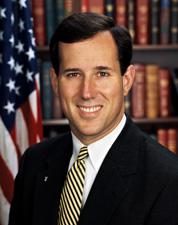
Mr. President, there is no problem. We are just here because we are playing politics. We are alarmists. There is no problem out there. The Massachusetts Supreme Court didn't rule that the legislature…
Mr. President, there is no problem. We are just here because we are playing politics. We are alarmists. There is no problem out there. The Massachusetts Supreme Court didn't rule that the legislature had to change the definition of marriage. The Supreme Court didn't rule last year, for the first time, that we have fundamentally changed how we are going to construe rights with respect to homosexuals and lesbians. No, there is no problem. America, look somewhere else. Don't pay attention to what is going on. Everything will be fine. Just leave it up to us.
Us? Judges. Just leave it up to the judges. The Constitution should not be amended, said the Senator from Connecticut, on the passions and whims of the moment. That is right. What would others like to see happen? They would like to see it amended on the passions and whims of judges because that is what does happen. That is what is happening.
What has changed? The courts have changed. The courts have decided it is now their role to take over the responsibility of passing laws. What has changed? What has changed is that they now create rights and change the Constitution without having to go through this rather cumbersome process known as article V. We actually have to amend it, have to get two-thirds votes, have to get three-quarters of the States. That is what has changed.
We can sit back and deny it. No, everything is fine, zero, zero, zero--I say one, Massachusetts; two courts right now considering whether to overturn the Defense of Marriage Act. None have done it, but the cases were just filed. Why were they just filed? Because the decision was just last year.
Oh, we can wait. We can wait until more and more people enter into these unions in more and more States, after they become adopted. Then we can wait. Then, when we wait long enough, we say: Now we can't take these rights away from people. How can we be discriminatory? People have already invested in these rights.
Let's wait. Let the courts do it for us. Let's go out here and protest that we are for traditional marriage, and then do absolutely nothing, absolutely nothing to make sure it is preserved.
In fact, all but one--Senator Kennedy said he is for the Massachusetts decision, but I don't know of any other Senator who has come out here and said they are against the traditional definition of marriage. Every other Senator to my knowledge has said they are for the traditional definition of marriage. Yet those of us who are proposing this amendment have been
called divisive, mean-spirited, gay bashing, shameful, notorious, intolerant--I could go on. Wait a minute, don't we all agree on this? Don't we all agree on the definition of marriage? If we all agree on the definition of marriage, and we just have different approaches to solving it, then why, if we all agree on the substance, are those of us proposing the marriage amendment divisive, mean-spirited, gay bashing, et cetera? Why?
Maybe we have to question whether there really is a desire to protect traditional marriage and whether we are just sort of laying back, hoping this issue is taken from us, that the courts will do our dirty work, that the courts will go about the process, which they have been now for the past couple of decades, and simply change the Constitution without the public being heard. That is what this amendment is all about.
Article V says Congress shall propose. We are proposing. We are not passing anything. We are not forcing anything on the States. As to this idea that somehow or another this is against States rights, 38 State legislatures have to approve this amendment for it to become part of the Constitution. This is not forcing anything on the States. This is not an abdication of States rights. This is allowing the States a fighting chance to preserve what every State in the Union says they would like to preserve, and that is the institution of marriage.
The idea, somehow or another, and I know others have talked about this, that James Madison would be against this because ``this is not a great or extraordinary occasion''--I would say the fundamental building block of any society is marriage and the family, and the destruction of that building block is a fairly extraordinary occasion. But even if some do not believe it is, let me refer you to the last amendment to the Constitution, the 27th amendment, which states:
No law varying the compensation for the services of the
Senators and Representatives shall take effect until an
election of Representatives shall have intervened.
Members of the Senate and House cannot get pay raises until their election. That was the 27th amendment. That was the great and extraordinary occasion that we amended the Constitution.
By the way, for those who say Madison would surely have opposed that because it is not a great and extraordinary occasion, what was the name of this amendment? The Madison amendment. James Madison proposed this amendment. This is a great and extraordinary occasion.
I would argue, the future of our country hangs in the balance because the future of the American family hangs in the balance. What we are about today is to try to protect something that civilizations for 5,000 years have understood to be the public good. It is a good not just for the men and women involved in the relationship and the forming of that union, which is certainly a positive thing for both men and women, as the Senator from Alabama laid out, but even more important to provide moms and dads for the next generation of our children. Isn't that important? Isn't that the ultimate homeland security, standing up and defending marriage, defending the right for children to have moms and dads, to be raised in a nurturing and loving environment? That is what this debate is all about.
I ask my colleagues who come here and rail against those of us who would simply like to protect children, those of us who would simply like to give them the best chance to survive in a very ugly, hostile, polluted world that we live in--with respect to culture--I would ask them this question: What harm would this amendment do? What harm would it do?
We don't need it; it is not ripe; it is not ready; it is divisive. What harm would an amendment which simply restates the law of every State in the country and protects them from judicial tyranny, what harm would it do? What harm will it do to do something that we know will actually protect the family? This idea that it is not ripe, this idea that it is unnecessary, this idea that it is divisive when all but at least one Member, that I am aware of, only one Member disagrees with the substance of the amendment, that is divisive? I can't think of very many things that happen around here that pass 99 to 1. It is not divisive. It is simply a restatement of what we have held true in this country since its inception and in every civilization in the history of man. What is the reluctance? Is it because this Constitution is so great and so lofty that we dare not amend it? Obviously not.
Then, what is it? Why do we hold back? Why aren't we willing to stand up and say children deserve moms and dads? The people have a right to define for themselves what the family is in America. Let the people speak. Let the people participate in this document. This is the Constitution, and judges should not be rewriting it without the people's consent. That is what article V is all about. That is what this amendment is all about. It is not about hate. It is not about gay bashing. It is not about any of those things. It is simply about doing the right thing for the basic glue that holds society together.
I plead with my colleagues. I know they have given speeches. I know there are lots of pressures out there. Certainly, the popular culture is not supporting those of us who have stood and supported this amendment. But just think about what America will look like, as we have seen in other countries around the world that have changed the definition of marriage, what America will look like with growing numbers of people simply not getting married; growing numbers of children growing up in nonmarried households.
I suggest you look at the neighbors of America where marriage is no longer a social convention, where marriage is no longer something that is expected, particularly of males, and see what the result is in those subcultures, see what the result is, see the role that government and community organizations have to play to save the lives of children, to give them some shred of hope because mom and dad aren't there.
That is the world we are looking at. That is the world that is simply around the corner if we choose to do nothing.
I said last night and I will repeat today--I ask for an additional 1 minute.
Mr. President, how much time do I have remaining?
Christopher Lasch says we get up every morning and we tell ourselves little lies so we can live. Today, we have gotten up and we have told ourselves a little lie. Oh, the family is OK. Oh, this isn't right. Oh, whatever the lie is--but sometime or another we are just not going to come around to doing what we say we believe. Somehow or another we will deny what we know is true. We know that marriage between a man and a woman is true and right. It is not discriminatory and divisive. It is simply a fact. It is common sense. Yet somehow, just so we can move on to homeland security or to the next bill, we are going to deceive ourselves into believing that everything will be OK if we just do nothing. Nothing doesn't cut it. Let the people speak.

Mr. President, I will share a few thoughts on the subject matter at hand. We are shortly going to vote, I believe, on the motion to proceed on the constitutional amendment banning same-sex marriage.…
Mr. President, I will share a few thoughts on the subject matter at hand. We are shortly going to vote, I believe, on the motion to proceed on the constitutional amendment banning same-sex marriage. I intend to oppose the cloture motion and oppose the underlying constitutional amendment, and I will lay out the reasons why.
First, I believe this constitutional amendment has no place in our founding document because it runs counter to our most sacred constitutional traditions. According to University of Chicago law professor Cass Sunstein, who testified before the Judiciary Committee:
Our constitutional traditions demonstrate that change in
the founding document is appropriate on only the most rare
occasions--most notably, to correct problems in governmental
structure or to expand the category of individual rights. The
proposed amendment does not fall into either of these
categories.
For example, the first 10 amendments of the Bill of Rights guaranteed such liberties as freedom of speech, assembly, and religion, the protection of private property, and freedom from cruel and unusual punishment.
Other amendments corrected problems in the structure of Government such as limiting the number of terms a President could serve or providing for the direct election of Senators.
In fact, the only time the Federal Constitution was amended not to expand an individual right or to respond to structural concerns was to establish prohibition and then repeal it. That is the only example in the last 228 years.
If the proposed Federal marriage amendment is adopted and we are to deny rather than confer rights upon individuals, I believe it will be a step backward for all Americans concerned with the Constitution and the intended purpose of it. It would be difficult to imagine what our Federal Constitution would look like today if we had adopted constitutional amendments at the rate they are being currently proposed.
I point out that as of June 15, 2004, 61 constitutional amendments have been introduced in this Congress alone. In the last decade, 460 constitutional amendments have been offered. Even more startling is that 11,000 have been offered since the first Congress convened in 1789. That is the bad news. The good news is only 27 of those constitutional amendments have actually been adopted since 1789.
Some of these proposed constitutional amendments were controversial and divisive when proposed, and clearly discredited when viewed through the prism of historical perspective. There have been constitutional amendments to divide the country into four Presidential districts with a President elected from each, renaming the country ``the United States of the World,'' and even allow for the continuance of slavery.
If all of the proposed constitutional amendments were adopted, our founding document would resemble a Christmas tree--a civil and criminal code rather than a constitution--and the United States would be a very different nation indeed.
The Framers therefore had it right when they made the Constitution extremely difficult to amend. It is a process that ought to be very well thought out and extremely deliberate. That is why of the more than 11,000 proposals to amend the Constitution, only 27 have been adopted.
The Constitution was not intended to be subject to the passions and whims of
the moment. It dilutes the meaning of having a constitution in the first place if it is easy to amend, not to mention the fact that a lengthy constitution would be exceedingly difficult to interpret and enforce.
The Federal Constitution was construed to withstand incessant meddling and provide a stable framework of Government in the future. Certainly there must be a major crisis at hand. At the very least, the hurdle must be passed that we face a crisis.
Certainly I am willing to listen to those who say the crisis we face on this issue of same-sex marriage is so compelling that we must do something about it, and the only way we can address this crisis is by amending the Constitution of the United States. In my view, however, there is no crisis. It is a sham argument.
First, there has been no successful challenge to the Defense of Marriage Act, or DOMA. I want to direct the attention of my colleagues to this chart. Courts that have upheld Federal right to same-sex marriage, zero; States forced to recognize out-of-state same-sex marriages, zero; churches forced to perform same-sex marriages, zero; discriminatory amendments to the U.S. Constitution, zero.
Where is the crisis? There is no crisis. This is merely a political issue for some in the majority party who want to raise a question where frankly the problem is nonexistent.
Therefore, I think the issue of a Federal Marriage Amendment is certainly not ripe at all, nor is there a ``crisis'' as some of my colleagues would have us believe.
It is unfortunate that the majority party of the Senate does not share James Madison's view that the Constitution is to be amended ``only for certain great and extraordinary occasions.'' What is ``the great and extraordinary occasion'' that warrants taking this radical action today? The majority party has scheduled votes on two constitutional amendments prior to the August recess. Neither of these amendments, which concern same-sex marriage and the burning of the American flag, falls within our constitutional traditions. They have absolutely nothing to do with expanding individual rights or responding to structural concerns. They have absolutely everything to do with scoring political points before an election.
In addition, there has not been a markup or any consideration of these amendments by the full Judiciary Committee. It is extraordinary that the entire Senate would be considering amending the Constitution without the amendments having gone through the normal legislative process. In fact, of the 19 constitutional amendments considered by the Senate Judiciary Committee since 1978, all but two have been fully debated by the Judiciary Committee. The Senate considered the two that did not go through the Judiciary Committee only by unanimous consent.
Here we are taking the exceptional route of avoiding that process. Most surprisingly, the majority party is paying lip service to its cherished principle of federalism. Since the founding of our Nation, marriage has been the province of the States, and in my view it should continue to be a State issue. Yet the Federal Marriage Amendment would deprive States of their traditional power to define marriage and impose a national definition of marriage on the entire country.
According to Yale professor Lea Brilmayer, States now have wide latitude to refuse recognition of marriages entered into in other States without offending the Full Faith and Credit Clause of the Constitution. She argues that ``entering into a marriage is legally more akin to signing a marriage contract or taking out a driver's license'' as opposed to a judicial judgment, the latter of which is entitled to Full Faith and Credit. Courts have therefore not hesitated to apply local public policy to refuse to recognize marriages entered into in other States.
In addition, 49 out of 50 States allow marriage only between a man and a woman. The one holdout, Massachusetts, is currently working its way through this contentious issue in its State constitutional amendment process. For Congress to step in and dictate to 49 States how they ought to proceed in this matter runs counter to the States rights principles that many hold so dear.
I am hopeful cooler heads will prevail on this issue and the Senate will turn its attention to more pressing concerns. Having been through the process last week of trying to reform the class action system, which we spent only some 48 hours on, we have some 8.2 million out-of- work Americans; 4.5 million Americans working part time because they cannot find a full-time; almost 2 million private sector jobs lost since January of 2001; 35 million Americans living in poverty; 12 million children living in poverty; 25 million Americans who are hungry or on the verge of hunger; 43 million Americans without health insurance.
How about spending a couple of days trying to address one of these issues? And yet here we are consuming the remaining days of this session of Congress on an issue where there is absolutely no crisis.
As I pointed out earlier, looking at this chart once again very quickly, there have been no successful challenges to the Defense of Marriage Act. No court has upheld the Federal right to same-sex marriage. No state is forced to recognize out-of-state same-sex marriages. And no church is forced to perform same-sex marriages.
This issue is not ripe. It is not needed. It is a waste of our time. We ought to be dealing with far more serious issues.
My hope is that my colleagues, when a vote occurs in a few short minutes on cloture, will vote no on cloture. Let's get back to the business of what the Senate ought to be dealing with--namely, the pressing issues that our country needs to address on a daily basis. This is not one of them.
I yield the floor.

Mr. President. I wish to discuss, regrettably, the so- called Federal marriage amendment. Regret is a key word when it comes to this amendment, for several reasons. It is regrettable that, in this…
Mr. President. I wish to discuss, regrettably, the so- called Federal marriage amendment.
Regret is a key word when it comes to this amendment, for several reasons.
It is regrettable that, in this case, the United States Senate is debating an amendment that intends to turn a revered, sacred document into a political weapon.
It is unfortunate that a misinformation campaign about the consequences of this amendment has been waged upon the American public by organizations that want to play politics at the expense of gay and lesbian Americans.
Furthermore, it is regrettable that at a time of challenge and difficulty for our country--when soldiers are at risk abroad, we face threats to face our domestic security, and middle class families continue to get squeezed financially--the United States Senate is not discussing the issues that really affect American families.
The American people are a diverse lot. As I have traveled around this country, I have come to notice the vast differences that mark our Union of States.
I have always seen this diversity as one of our country's strongest points. The Constitution recognizes this as well. The political system in this country has survived for well over 200 years, because it appreciates diversity, and in fact celebrates the variety of cultures, ethnicities and lifestyles that make up America.
Our Constitution guarantees the right to celebrate and vocalize those differences. It enumerates, protects and expands the inalienable rights to life, liberty and pursuit of happiness that Thomas Jefferson had in mind when he penned the Declaration of Independence.
However, the spirit of the Constitution is threatened today by the amendment that is before the United States Senate.
As you know, some people are portraying what is happening on this issue in Massachusetts as a crisis. This is a blatantly political tactic that is used to energize political bases. In an election year, we find such a tactic being used far too often.
Unfortunately, when politics is at play--as it is in this case--good public policy often suffers. That is what we are witnessing today.
Many are trying to set off the crisis alarm by falsely claiming that the entire country will have to recognize gay marriages conducted in Massachusetts. Let me be clear, this assertion is wholly untrue.
The Defense of Marriage Act, passed by Congress in 1996, clearly affirms the individual states' rights to their particular definition of marriage.
Unfortunately, many of my colleagues have come to the floor to ``predict'' that this law will be overturned on constitutional grounds.
This is a hypothetical argument--and a disingenuous one at that-- because several of the individuals who are now claiming that DOMA will be found unconstitutional are some of the same people who actively supported the passage of DOMA, and endorsed its constitutionality, almost a decade ago.
The exaggeration of the situation in Massachusetts and empty predictions about DOMA being overturned, are all part of a misinformation campaign being waged on behalf of this amendment.
Another example of this misinformation campaign is the argument that this amendment does not threaten states' rights to recognize gay and lesbian couples through other legal mechanisms, such as civil unions and domestic partnerships.
In reality, it is far from clear that this amendment will not restrict gay and lesbian couples' rights as its supporters claim.
In fact, according to the National League of Cities, the plain language of this amendment will result in the elimination of several rights and benefits that are guaranteed by states and municipalities across the country.
The second sentence of this amendment, as it sits in front of me, reads ``Neither this Constitution nor the constitution of any state, nor state or federal law, shall be construed to require that the marital status or legal incidents thereof be conferred upon unmarried couples or groups.''
What, precisely, is a ``legal incident?'' It doesn't take a legal scholar to understand that this sentence threatens gays' and lesbians' rights to visit each other in the hospital, share health insurance, or inherit each other's property.
To this amendment's drafters, ``legal incident'' may just be empty words. However, we know that every word in the Constitution has meaning.
I am reminded of a couple from New Jersey, to whom a so-called ``legal incident'' is more than just empty words.
This couple was together for 6\1/2\ devoted years.
However, their partnership came to a tragic end 6 years ago when one woman, who was pregnant, was killed by a drunk driver.
As their relationship was not legal, the hospital did not contact her partner. They instead contacted the injured woman's parents. However, the injured woman's parents did not approve of the relationship, so they did not call her partner to tell her that her companion was critically injured.
It took a long time before anyone finally called to inform her of her partner's failing condition. She finally arrived at the hospital fifteen minutes before her partner passed away. Because her visitation rights were not protected by law, however, she had no right to see her partner.
This woman was not allowed to see her partner before her untimely death. In fact, she was prevented from moving past the waiting area.
In addition, the injured woman's parents did not inform the doctor that their daughter wanted to be an organ donor, something their daughter had shared with her partner.
They also took all her belongings from the couple's house, some of which had been accumulated together by the couple.
This couple had done all they could under current law to formalize their relationship. They had formalized health care proxies and powers of attorney, but the hospital chose instead to recognize the injured woman's parents and ignore the couple's long term partnership.
These are ``legal incidents'' that are under threat: the right to see one's dying partner in the hospital, the right to make medical decisions for one another, the right to inherit property.
I am proud to note that in my home State of New Jersey, the Governor signed a domestic partnership bill that went into effect this past weekend.
The new law in New Jersey will make sure that such a situation never happens again.
It will ensure that committed gay and lesbian couples will never be stopped from spending their last moments together.
It will ensure that committed couples can make joint financial and health decisions. And committed couples will be able to own and inherit joint property.
However, the constitutional amendment we are considering this week can and will take away the rights protected by New Jersey's domestic partnership laws. Any statements to the contrary represent a fundamental misunderstanding of the vote that members of this body will be making.
If the Senate is to consider the legal status of gay and lesbian Americans, let's have that debate. This body should consider the unique challenges faced by gay and lesbian Americans, rather than toss them around like a political football.
If we are going to talk about strengthening American families, let's have that debate as well. While I have heard a lot of posturing about how this amendment strengthens families, I don't understand how beating up on gay couples accomplishes that.
I do know that families are stronger when our homeland is secure, health
care is affordable and well-paying jobs are plentiful.
New homeland security threats are becoming clearer by the day. Just last week, all Americans were reminded that we are still squarely in the crosshairs of a hidden enemy. A sobering statement from the Department of Homeland Security acknowledged that members of al-Qaida have the intention and capability to carry out a devastating attack within the borders of the United States.
All the while, the homeland security appropriations bill sits and waits. A bill I drafted that would bolster security at chemical plants sits and waits. The assault weapons ban sits and waits.
Health care and tuition costs are going through the roof, but we are not considering meaningful legislation to address these pressing needs for middle class families.
These are the priorities of the American people. Unfortunately, they do not seem to be the priorities of the United States Senate.
Why are we considering this amendment when we all know it is destined to fail? Why are America's economic and security priorities being shelved in favor of empty rhetoric on this amendment?
I wish I had a better response. However, it seems the answer is rooted in the politics of an election year.
This amendment undermines the Constitution, discriminates against gay and lesbian Americans, tramples States' rights, and is distracting this body from the important priorities that our country should be addressing.
I encourage all my colleagues to join me in voting against this amendment so that we may put the United States Senate on the record as resoundingly opposed to using our Nation's constitution as a political weapon.
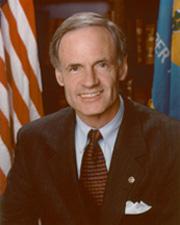
Will the Senator yield? I do. I thank my colleague for yielding. There is a question I want to ask. But let my just say, first of all, I think you know how much I respect you and the high regard I…
Will the Senator yield?
I do. I thank my colleague for yielding. There is a question I want to ask. But let my just say, first of all, I think you know how much I respect you and the high regard I have for you and how much I enjoy working with you. We agree on a lot of things. And there are one or two things we do not agree on, and that is, I think, to be expected.
The issue that you raised early in your remarks is one I want to come back to; and that is, the question of whether we should in some way have an up-or-down vote on the amendment that is before us, or if there should be opportunities for other colleagues, Republicans and Democrats, to offer their own amendments to this underlying amendment.
I think the concern for our side is that we are mindful of the possibility of this not being just a debate, an opportunity to address whether there should be a constitutional amendment as marriage being between a man and a woman, but an opportunity to consider other issues of a constitutional nature.
There are people on our side interested in amendments that deal with campaign finance, in restricting money spent on campaigns. That is one example.
As a Member of the House, when I served with Senator Santorum over there, we were great proponents of something called a balanced budget amendment to the Constitution, not one that mandated a balanced budget, but one that said: Shouldn't the President be required to propose a balanced
budget? And shouldn't we make it a little more difficult for the Congress to unbalance that budget?
There are a number of constitutional amendments that are floating out there on your side and on our side. Here is my question.
I will not object.
I just ask that the response come out of your time.
Mr. President, on the Fourth of July, as many of my colleagues, I covered my State, and, as I have done for many years on the Fourth of July, I ended up in Dover, DE. Dover, DE, on the evening of July 4 is a politician's dream. People have had a full day of parades and family gatherings, community gatherings. We are there to await the fireworks when dusk finally comes. Roughly 10,000 people gathered in front of Legislative Hall, a huge American flag that almost masked Legislative Hall in its majesty, a C-5 aircraft soon to fly overhead, and then the fireworks themselves.
I work the crowd at that gathering, and it is a lot of fun. People are in a good mood, a lot of good-natured kidding going on: Are you running for anything this year? No, I am not, I am just here because I love being in Dover on the evening of the Fourth of July.
There was one serious question, at least one that was raised to me that evening. The question was: How are you going to vote on that amendment on gay marriage? In responding to that question, I pointed to Legislative Hall and I said to the questioner: When I was Governor of this State in 1996, I signed into law our own Defense of Marriage Act that said marriage is between a man and a woman. I believed that then. I believe it now.
Later that evening I addressed the crowd, and I alluded to the Declaration of Independence. But I spoke more about the Constitution, a copy of which I hold. The Constitution of the United States was first ratified in Delaware. I told the crowd that night that the Constitution was ratified in the Golden Fleece Tavern about 300 or 400 yards from where we gathered.
We all know the Constitution does a number of things. It establishes a framework of government. It says, this is how our Government is going to work. We will have three branches of Government: a legislative, executive, and a judicial branch. It says, there are certain things the Federal Government should be doing and certain responsibilities that are left to the States.
Among the responsibilities left to the States in this Constitution are matters of family law: Who can marry, how do we divorce, how do we end those marriages, who gains custody of the children, how about visitation rights, matters of alimony, property settlement, and the like. Those are matters that we have left to the States for over 200 years.
Senator Cornyn mentioned the concern he has over the state of marriage. I share it. Half the marriages in our country today end in divorce. Too many kids grow up in families where nobody ever marries, and families are not invested enough in their children.
I also acknowledge the concern over efforts in some parts to recognize same-sex marriage. That concern has led many States to enact laws such as my State's Defense of Marriage Act and to enact here in this Congress the Defense of Marriage Act as well. That concern over proposals for same-sex marriage has led some States to actually consider constitutional amendments.
With respect to same-sex marriages, let me offer this: There are a lot of views, but two of those views are basic when you cut to the chase. View No. 1: marriage is between a man and a woman. The alternative view is marriage is between two people. I think the
view of most Americans today--not all but most Americans today--is that marriage is between a man and a woman.
The question for us to consider here today is this: Is there a clear need to amend the Constitution of our country to ensure that the view I have just stated, the majority view, prevails in States such as Delaware and others? It is a legitimate question. As we seek to answer it, let's consider a couple of examples of State laws spelling out how marriage is supposed to operate and whether those laws have been sustained over the years. Let me mention three examples.
A number of States have prohibitions against first cousins marrying. If two people live in a State where you have a man and woman who are first cousins and they want to get married, they go to another State to get married and return to their State. Their State does not have to acknowledge the validity of the marriage.
Some States have restrictions with respect to divorce. If you get a divorce, you have to wait a while before you can remarry. If you live in a State with that restriction and you go to another State that doesn't have those restrictions, you return to your State, your State does not have to recognize that marriage.
We have all seen movies about May-December marriages and how they can be interesting and entertaining, but a lot of States have a law that says a 57-year-old man can't marry a 13-year-old girl, and if you try to do that in a State where maybe you could get away with it, and you move back to your State, that marriage will not be recognized. Those State laws have been sustained whether we have a constitutional amendment.
I believe that my law in Delaware will also be sustained without a constitutional amendment. If it isn't, then this is an issue that we can revisit, and I think we will.
This Constitution that I hold in my hand is the work of man. I think it was divinely inspired. The folks who met at the Golden Fleece Tavern and the people in Constitution Hall in Philadelphia a long time ago largely got it right the first time--not entirely, but they largely got it right. This Constitution has been rarely changed. It is not easy to do. That is purposeful. Over 11,000 amendments have been proposed to this Constitution. To date, since the adoption of the Bill of Rights, 17 have actually been incorporated as amendments to this Constitution.
On the issue of marriage and divorce alone, 129 amendments have been proposed to the Constitution. None have come close to passage. All of us today and all of us who will vote today realize this proposed constitutional amendment is not going to be enacted either.
It is an important issue that has been raised. As some have said, it is one that, frankly, divides us and divides us deeply.
When the last speech is given today, when the final vote is cast around 12:15 or 12:30, my fervent hope is that we will turn to some issues that unite us and, frankly, need to be addressed. They are closely related to what we are talking about today. We need to look no further than the 1996 Welfare Act that was adopted in this Chamber which has expired and been continued with short-term extensions time and again. It needs to be reauthorized. We need a vote on it and, frankly, to improve it. It is not perfect. We can make it better. We can strengthen marriage through the provisions of that law. We can strengthen families. We can increase the likelihood that more of America's children are going to grow up in homes where both parents are deeply committed to them and to their future, that they have decent childcare. We can do that.
I hope when we finish today and this issue is behind us for a while, that we will turn to another closely related issue that will truly strengthen America's families. That is, to return to the issue of welfare reform and pass the legislation out of committee and send it to the House. Let's get on with the Nation's business.
I yield the floor.
Mr. President, I rise today to introduce legislation with my colleagues Senator Kennedy and Senator Bingaman to jump-start school success for low-income children. Today we are introducing the Sandy…
Mr. President, I rise today to introduce legislation with my colleagues Senator Kennedy and Senator Bingaman to jump-start school success for low-income children. Today we are introducing the Sandy Feldman Kindergarten Plus Act of 2004.
Sandy Feldman, the President of the American Federation of Teachers, stepped down today after decades of public service. If there is one goal to which Sandy has dedicated herself over the years, it is the education of our Nation's children.
Sandy is the product of New York City's public schools. She knows what great promise public education holds for our Nation. But, she also knows that all too often, we don't give our schools the resources they need to be able to live up to that promise.
While I've worked with Sandy for many years, I've been particularly privileged to work with her in the area of early childhood education. It was Sandy who developed the concept for this Kindergarten Plus legislation and Sandy who spent countless hours developing the details to ensure that the initiative would work in a diverse array of communities.
Although Sandy is leaving the AFT, I know she will continue fighting for our Nation's children, and for mothers, fathers, and teachers across this Nation. I look forward to her continued counsel and advice on education issues and other issues of importance to families.
The Kindergarten Plus legislation we are introducing today will offer competitive grants to States to provide children below 185 percent of the poverty line with a transitional kindergarten during the summer before kindergarten formally begins and a transitional first grade during the summer between kindergarten and first grade.
Why an extra four months of kindergarten for these children? The answer is simple. Because too many low income children today enter kindergarten unprepared for the year ahead, far behind their wealthier peers in both academic and social skills.
According to a recent survey, 46 percent of kindergarten teachers report that at least half of their class or more has specific problems with entry into kindergarten. Yet, kindergarten is critical in preparing children to succeed in elementary school, especially for children at-risk of academic failure.
There is no panacea, no magic wand to erase the deficiencies that too many low income children have in entering kindergarten on par with their more economically well-off peers. It is simply not possible in a two month period before kindergarten begins or in a nine-month half day pre-kindergarten program to wipe away the advantages that wealthier children have had in their first five years of life that result in the skill set with which they enter kindergarten.
We can, however, do a better job of preparing less fortunate children for school. We can expose them to classroom practices and routines and the expectations for kindergarten behavior and protocol. We can introduce them to concepts and help them understand that classrooms have rules. We can expose them to literature, story time or circle time. We can help them understand that books are made up of printed words and that words are made up of individual letters. We can ask them questions to help develop their critical thinking skills, like what do you think will happen next in the story? Why? We can offer them ``show and tell'' to develop their oral language skills and ability to speak out loud in sequential sentences.
Many children enter kindergarten with these skills. But, many do not. During the school year before a child is eligible to enter kindergarten, about 75 percent of children in families with more than $75,000 in income participate in some type of center-based program, compared to 51 percent of children in families with incomes between $10,000 and $20,000.
The numbers are much more stark when looking at the children of mothers who dropped out of high school. Recent data shows that about 74 percent of 3, 4, and 5 year old children whose mothers graduated from college were enrolled in a center-based program compared to only 42 percent of 3, 4, and 5 year old children whose mothers did not complete high school.
How does this translate to children? Some children know how to follow directions and some children do not. Some children transition well between activities as part of a daily routine, some children do not. About 85 percent of high income children, compared to 39 percent of low income children, can recognize letters of the alphabet upon arrival in kindergarten. About half the children of college graduates can identify the beginning sounds of words, but only 9 percent of the children whose parents didn't complete high school can recognize the beginning sounds of words.
Of equal concern, kindergarten teachers report that about 80 percent of children whose mothers graduated from college persist at a task and are eager to learn whereas only about 60 percent of the children whose mothers have not graduated from high school persist at a task and are eager to learn.
What we know from the research is that children can enter kindergarten better prepared to learn. We may not be able to close the gap between low income children and their wealthier peers, but we can certainly narrow it considerably.
Our bill would provide states with resources to offer a transitional kindergarten during the summer before kindergarten begins. This would enable local school districts to offer a jumpstart on kindergarten with smaller class sizes during the summer. Before all kindergarten eligible children arrive, K+ children would have an introduction to kindergarten. The same opportunity would be part of the program for the summer between kindergarten and first grade.
The introductory period would enable school districts to target low income children who may never before have participated in a center- based program such as Head Start or state pre-k, or nursery school. They could target low income English language learners or low income children who participated in Head Start or state pre-k who could continue their progress during the summer.
About 65 percent of mothers with children under age 6 are in the workforce today. Every day, about 13 million preschoolers, including 6 million infants and toddlers, are in some type of child care arrangement. What we are trying to do with this bill is to pull out low income children who would be eligible to enter kindergarten in the fall and offer them a summer enrichment period as an introduction to kindergarten. It might be that a local Head Start or community-based organization's preschool would continue to operate their programs during the summer. However, these are local decisions made by school districts that apply for and receive K+ funding.
It should be clear that the K+ program would operate as a supplement to existing programs, most of which follow the school calendar. In fact, children who participate in a high quality early learning program during the summer before kindergarten are not eligible to participate in K+ to avoid duplication of efforts and scarce resources.
In the National Academy of Sciences report, ``From Neurons to Neighborhoods: the Science of Early Childhood Development'', numerous recommendations are made to improve the foundation with which children enter school. The report points out that with so many parents working today, the burden of poor quality and limited choice in child care rests most heavily on low income working families whose financial resources are too high to qualify for subsidies or Head Start yet too low to afford market prices for quality child care.
It is the children of the working poor who are very much at risk of beginning kindergarten behind their wealthier and poorer peers. Yet, it is these children in addition to poor children who are most likely to enter kindergarten behind their wealthier peers, unprepared for the year ahead.
Supporting the K+ program is the American Federation of Teachers, AFT, the Parent-Teacher Association, PTA, the Council of Great City Schools, the Society for Research in Child Development, SRCD, the Children's Defense Fund, and Easter Seals.
We urge you to join us as cosponsors of this legislation and help give low income children a jump-start on school success.
Mr. President, I ask unanimous consent that a brief summary of the bill and the text of the bill be printed in the Record.
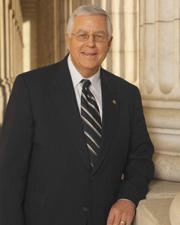
Mr. President, when the Supreme Court in Massachusetts issued its ruling on marriage it did what no court ought to do. It set itself apart from and above the State and Federal legislatures, and went…
Mr. President, when the Supreme Court in Massachusetts issued its ruling on marriage it did what no court ought to do. It set itself apart from and above the State and Federal legislatures, and went so far as to order the Massachusetts Legislature to produce a remedy in a time period it knew was unworkable and unfair. Even if the legislature is able to draft a change in the law that is acceptable to the court it will be impossible to bring the issue before the voters to obtain their consent and approval of the legislature's intrusion on the important tradition of marriage.
Regardless of what we may believe about the institution of marriage, the process of amending the Constitution, or the rights of same-sex couples to marry, there is no question that this is not what the Founding Fathers intended when they originally drafted the Constitution and established the principles of separation of powers and the right of the governed to have a voice in the laws that are written to govern them. The amendment we have before us is an attempt to remedy that situation and provide guidance and direction from the people of the States to the courts on this matter.
As we begin our consideration of this issue, we cannot help but frame the argument in terms of our own experience of marriage and our memories of the marriage of our own mother and father.
I was fortunate to have a pair of remarkable parents who worked hard and did everything they could to raise their family with a strong awareness of the principles and values of the time. One of those principles was undoubtedly the bonds that tied them together as man and wife. I know I am not the only one with such memories of growing up, or later, repeating much of the same modeling when we had families of our own. Now, as a grandfather, I am watching the traditions repeat themselves as my son and his wife raise the next generation of our family.
Simply put, that is what this legislation means to me--providing the generations to come with the same kind of advantages I had in my own life. It is not about denying rights to any group--it is about ensuring marriage, and its importance in our society continues to be encouraged and promoted.
As I have listened to the debate, I have heard it said that this is an issue that the States, not Congress, ought to be deciding. I could not agree more that the States need to be heard on this issue. That is why we are pursuing the remedy of a constitutional amendment in this matter. Even if we were to pass this legislation, however, it would still require the consent of three-fourths of the States.
In other words, the debate we begin here will be finished by the States. That way we will ensure that such a radical departure from our traditions and the norm of the institution of marriage will not be changed by the ruling of a court, but by the will of the people who will make their will known through their State legislatures.
One argument that has been raised in opposition to the legislation before us has to do with the rights of same-sex unions as defined by those States that have established civil unions. This bill will do nothing to change or alter that process. The States can continue to establish these programs as determined by the will of the people of the States that produce them.
This line of reasoning tries to obscure the point that a marriage is quite different from a civil union. Marriage is the union of a man and a woman in a partnership aimed at producing children and nurturing their growth and development. It is not about social acceptance, or about economic benefits, or an exercise in civil rights, as some would try to lead us to believe. A civil union, on the other hand, is a legal agreement that establishes a partnership between two people of the same sex to ensure their rights as ``partners'' are preserved in the eyes of the law. A civil union is concerned with matters like the right to an inheritance, retirement, death benefits, health insurance and the like. Marriage is concerned with matters involving the birth and raising of children. That is the main difference between the two. Simply put, life comes from the marriage of a man and a woman. No life can come from a civil union.
Society clearly has an interest in promoting and encouraging marriage
and the life it produces because it is the cornerstone upon which all our institutions are based. The family is also the main building block that helps form the very structure of our society. If all politics is local, you cannot get any more local than protecting and preserving the institution of marriage and the family unit it creates. The family is the basic unit from which neighborhoods are developed and strong communities are created. That is why society must continue to promote marriage and to afford it all the protections it can. Again, marriage is more than just a bond between a man and a woman, it is the basis from which life is created and children become a part of our world.
I have often heard it said that if we do not do a good job of raising our children, nothing else we accomplish during our lives will matter very much. Studies have shown that a child is better prepared for life if that child is raised in a loving, caring environment, with a father and a mother. The bonds that are formed, and the lessons learned about life from mom and dad help a child to understand his or her role in the world. It also helps a child begin to develop relationships with members of the opposite sex. A mother and father serve as role models for a child that help children understand their own role in the world as it shapes their relationships with their peers as they grow up and become adults.
Some may try to respond to those points by promoting the cause of same-sex parents. That argument tries to change the subject because that is not what this legislation is about. It is about protecting the definition of marriage as it was developed and handed down to us for more generations than any of us could count.
If we abandon marriage, we abandon the family. And when we convert marriage into a civil right for the sole purpose of indulging a perceived ``protected sphere of individual sexual autonomy,'' as some courts have tried to do, we abandon hope, not just for ourselves, but especially for future generations. If we lose our connection across the generations that have held marriage dear for so long and, as a result, the hearts of fathers and mothers are no longer turned to their children, and the hearts of children are no longer turned to their fathers and mothers, we will have suffered a great and terrible loss, indeed.
It was just over 10 months ago that I came to the Senate floor to announce the birth of my latest hope for the future, my grandson Trey. I shared my dream of his future and welcomed him into this world of promise and hope and love.
A number of my colleagues, from both sides of the aisle, came to me after that speech and shared with me their own hopes for the future as seen in the pictures of their grandchildren. My conclusion from those conversations is that all moms and dads, grampas and grammas know what it means to have that connection--the ties that bind each generation of each family together.
From where did that connection come? It was taught to us as we learned about families from our own parents and grandparents who took us under their wing and taught us what it means to be a part of a family. Simply put, they led the best way, by example, and what they taught us continues to guide us and direct us today. As I look back on those days I can see that I was their hope for the future, and they were willing to sacrifice today so that I might have a better tomorrow. It would be a tragedy for the courts to take that same opportunity away from me and my grandchildren.
The legislation we are considering today has one goal in mind--to protect the definition of marriage as it was developed and handed down to us from generation to generation. The enactment of this amendment will ensure that we pass that gift on to our children and our children's children, just as we received it.
Show 11 more
Mr. President, I support S.J. Res. 40, the Federal marriage amendment. The Constitution provides the basic framework under which our society will function. With its profound implications for the…
Mr. President, I support S.J. Res. 40, the Federal marriage amendment. The Constitution provides the basic framework under which our society will function. With its profound implications for the ordering of society, and especially the upbringing of children, the proper meaning of marriage is no less important and deserving of protection than other basic principles protected by the Constitution.
Two decades of modern social science have arrived at the conclusion borne out by at least two millennia of human experience: that family structure matters for children and hence for society, and the family structure that helps children the most is a family headed by a mom and a dad. There is thus value for children in promoting strong, stable marriages between biological parents.
A bare majority of judges in one State, however, recently ignored the sincere and well-formed beliefs of their fellow citizens on this issue and have redefined the ages-old meaning of marriage for their State. In the process, these judges gave short shrift to the State's rational interest in wanting to encourage traditional marriage to ensure the optimum environment for children, terming the people's belief in traditional marriage as ``rooted in persistent prejudices.''
In our highly mobile and inter-connected society, these judges' redefinition of marriage risks the reordering of that institution for the rest of us. And these judges are not alone. There are currently more than 35 lawsuits in 11 States challenging State and Federal Defense of Marriage Acts and State constitutional provisions that protect the institution of marriage as it has always been known. By comparison, just a year ago, there were only five such cases.
The question, then, is whether the American people, through the democratic process, will be allowed to continue to encourage and formally sanction this ideal family structure--the union of one man and one woman--to the exclusion of other relationships that adults may choose to enter into. The issue of whether our Nation will continue under this time-tested societal order is thus before us. It is an issue not of our own making, and its timing is not of our choosing.
Just a few years ago, it was beyond dispute that the American people had both the right and the capacity to define marriage. Our constitutional structure does not leave all the important questions to the courts with the people and their elected representatives relegated to dealing with the mundane and the trivial.
Nor is this question--``What is marriage?''--something only judges are smart enough to decide. As lawyers, jurists are not experts in theology or religion or sociology. While they are entitled to express their wishes on matters like the meaning of marriage, they should do so at the ballot box, just like everyone else. Their failure to do so shows both a disdain and a distrust for the views of the people.
Opponents of this measure show a similar distrust, although they articulate other reasons for opposing it. First, they say the issue of marriage does not rise to a level of importance worthy of amending the Constitution. Really? We last amended the Constitution in 1992 with the 27th amendment, which had to do with pay raises for Members of Congress. Are we saying that pay raises for Representatives and Senators is more important than our most basic societal institution?
The experience of the countries that have departed from the marriage tradition, like Sweden, Norway, and Denmark, demonstrates the risks in failing to protect traditional marriage. According to Stanley Kurtz, a research fellow at the Hoover Institution, the onset of gay marriage in these countries has not simply accelerated a decline in the number of traditional marriages; rather, it has accelerated an abandonment of the institution itself, with the attendant problems of increased family dissolution rates and out-of-wedlock births.
Norway and Sweden instituted de facto gay marriage in 1993 and 1994, respectively. Between 1990 and 2000, Norway's out-of-wedlock birthrate rose from 39 to 50 percent, while Sweden's rose from 47 to 55 percent. Thus, most children in Norway and Sweden are now born out-of-wedlock. In addition, Denmark has seen a 25 percent increase in cohabiting couples with children since the advent of de facto gay marriage in 1989. In fact, 60 percent of first-born children in Denmark now have unmarried parents. Mr. Kurtz reports that the Netherlands has also had a steady increase in out-of-wedlock births since its adoption of registered partnerships and then gay marriage within the last 7 years.
If these statistics were not troubling enough, studies show that cohabiting couples with children break up at two to three times the rate of married parents. Thus, since the marital union is a bulwark against family dissolution, an increase in cohabitation and unmarried parenting will result in increased family dissolution.
The ultimate victims when that occurs are children, who suffer deep emotional pain, ill health, depression, anxiety, even shortened life spans. More of these children drop out of school, less go to college, and they earn less income, develop more addictions to alcohol and drugs, and engage in increased violence--or suffer it--within their homes.
The problems posed by a reordering of marriage are grave. So opponents of this measure are sorely mistaken when they assert that preserving traditional marriage is a subject that is not worthy of our time.
Second, opponents of the proposal contend that this issue is not ripe for our consideration. But the amendment process takes time, and with the onset of gay marriage in Massachusetts and the flurry of legal challenges to traditional marriage laws across the country, those who seek to protect the institution need not wait until the last possible moment to do so.
Lastly, opponents of S.J. Res. 40 argue that the meaning of marriage is a matter left to the several States. But if the past predilections of judges on important social issues are any guide, the people of the States won't be given this chance, just as they were denied it in Massachusetts. And even if they were allowed to decide, would we really want a country with a patchwork of meanings on so fundamental an institution as marriage?
The best process for answering this question is the constitutional amendment process. It is the closest thing we have to a national referendum, as any proposed amendment ultimately must be approved by three-fourths of State legislatures--the democratic institutions that are closest to the people.
In closing, Mr. President, to let four lawyers on the Massachusetts Supreme Court decide the meaning of marriage for the rest of the Nation is profoundly undemocratic. The Allard amendment allows the people to decide if they want to continue with our long-standing understanding of marriage, while allowing the States, as they often are, to be the laboratories of experiment in deciding whether and how to officially sanction other relationships. I believe the lessons from Scandinavia counsel against experimenting with marriage though. I believe the American people will agree with me. But if nothing else, they deserve a chance to be heard.
I yield the floor.

Mr. President, I rise today, along with Senators Biden, Specter, Kyl, Hollings and Allen, to introduce the Reducing Crime and Terrorism at America's Seaports Act of 2004--legislation designed to…
Mr. President, I rise today, along with Senators Biden, Specter, Kyl, Hollings and Allen, to introduce the Reducing Crime and Terrorism at America's Seaports Act of 2004--legislation designed to deter, prevent and punish a terrorist attack at or through one of our Nation's seaports.
I would like to thank Senator Kyl for joining me in sponsoring this bill, as well as Senators Biden, Specter, Hollings and Allen for their leadership and hard work on this critical matter.
Last year, Senator Kyl and I introduced the Anti-Terrorism and Port Security Act of 2003. That bill contained a set of comprehensive measures to enhance the security of our ports. At the same time, Senators Biden and Specter were working on legislation largely focused on the criminal law aspect of Port Security.
Since that time we have joined together to craft the bill now before us. The legislation is narrow in focus, limited primarily to criminal law provisions. It is my hope that it will enjoy strong bipartisan support.
I also hope we can continue to work towards a more comprehensive approach to seaport security in the coming months.
Our nation's seaports represent the soft underbelly of our Nation's homeland security. Our adversaries, including al-Qaida and other terrorist groups, have the plans and capabilities to launch a maritime attack. In fact, just last week six al-Qaida associates were charged with planning the 2000 attack on the U.S.S. Cole. in Yemen that left 19 American sailors dead.
Millions of shipping containers pass through our ports each month. A single container has room for as much as 60,000 pounds of explosives-- 10 to 15 times the amount in the Ryder truck used to blow up the Murrah Federal Building in Oklahoma City. When you consider that a single ship can carry as many as 8,000 containers at one time, the vulnerability of our seaports is alarming.
Worse, a suitcase-sized nuclear device or radiological ``dirty bomb'' could also be placed in a container and shipped into the country. With the current monitoring system, the odds are that the container would never be inspected. And, even if the container was inspected, it would be too late.
In addition to the danger such attacks present to human lives, an attack on or through a seaport could have devastating economic consequences. Excluding trade with Mexico and Canada, America's ports handle 95 percent of goods imported and exported from the U.S. That means 800 million tons of cargo valued at approximately $600 billion. A terrorist attack would bring our port operations
to a complete standstill. To give you even a small glimpse of what such a disruption could mean, last year's West Coast labor dispute cost the U.S. economy somewhere between $1 and $2 billion per day--a total of $10 to $20 billion.
In its December 2002 report, the Hart-Rudman Terrorism Task Force described what a terrorist attack at or through one of our ports might mean in economic terms: ``If an explosive device were loaded in a container and set off in a port, it would almost automatically raise concern about the integrity of the 21,000 containers that arrive in U.S. ports each day and the many thousands more that arrive by truck and rail across U.S. land borders. A three-to-four-week closure of U.S. ports would bring the global container industry to its knees. Megaports such as Rotterdam and Singapore would have to close their gates to prevent boxes from piling up on their limited pier space. Trucks, trains, and barges would be stranded outside the terminals with no way to unload their boxes. Boxes bound for the United States would have to be unloaded from their outbound ships. Service contracts would need to be renegotiated. As the system became gridlocked, so would much of global commerce.''
This is a national issue, but one of particular concern to my home state because more than half of all goods imported into the U.S. pass through my home State of California.
Last year, 6.5 million imported containers--52 percent of the containers entering the United States--traveled through California. Six million of these came through two ports alone: the Port of Los Angeles and the Port of Long Beach.
That means that, if terrorists succeeded in putting a weapon of mass destruction into a container undetected, there is a one in two chance that this weapon would arrive and/or be detonated in Southern California.
And the problem is not just with containers. Nearly one-quarter of California's imported crude oil is offloaded in one area. A suicide attack on a tanker at an offloading facility could leave Southern California without refined fuels within a few days.
Since September 11, we have made significant steps in enhancing port security, but clearly, there is more to be done. This bill addresses some of those needed enhancements, particularly in the area of criminal law.
The Reducing Crime and Terrorism at America's Seaports Act of 2004 does the following: Clarifies existing law to make clear that those who would try to access our ports under false pretenses are committing a crime; makes it a crime to refuse to stop when the Coast Guard orders a ship to standby for inspection; sets clear criminal penalties for the use of a dangerous weapon or explosive on a passenger vessel such as a cruise ship; imposes criminal penalties for those who tamper with navigational aids, such as buoys and transponders, intentionally place destructive devices in navigable waters, or intentionally dump hazardous materials in waterways; establishes a specific crime for knowingly and willfully transporting aboard any vessel an explosive, biological agent, chemical weapon, or radioactive or nuclear materials intended to be used to commit a terrorist act; the bill also makes it a crime to knowingly and willfully transport a person aboard any vessel who intends to commit, or has committed, a terrorist act; makes it a crime to damage or destroy a vessel or a maritime facility, to commit an act of violence against any individual on a vessel or near a port facility, or to knowingly communicate false information that endangers the safety of a vessel; provides sanctions to deter criminal or civil violations related to a range of offenses, including theft of interstate or foreign shipments; amends existing law to increase penalties for noncompliance with certain reporting and recordkeeping requirements for incoming ships, including information regarding the content of cargo containers and the country from which the shipments originated; and finally, the bill toughens anti-stowaway laws and laws governing bribery of port security officials.
Strengthening criminal penalties is one way we can make our Nation's ports less vulnerable. The Coast Guard, the FBI, Customs and Immigration authorities--all need the appropriate crime-fighting tools to prevent a terrorist attack. Today, we are introducing legislation to provide the crime-fighting tools that will do just that.
I ask unanimous consent that an analysis of the bill be printed in the Record.

Mr. President. There is no more important or essential substance to us than water. It is the source from which life springs. It also has the potential to be the source of incredible conflict ranging…
Mr. President. There is no more important or essential substance to us than water. It is the source from which life springs. It also has the potential to be the source of incredible conflict ranging from local to international levels. Fresh water supplies are coming under pressure all over the globe. By mid-century, over half of the world's population will face severe water shortages. These shortages go beyond drinking water; particularly important is the nexus of water and energy production--another flash point in global affairs. Seriously confronting this problem before it leads to tremendous burdens on this nation and the world is an endeavor as worthwhile as any I can contemplate.
Research and development in this area has long been without concerted national attention. Water and water rights have traditionally been under the purview of the States, and rightly so. But few States have the capacity and funding to adequately address this problem. Users of water resources are highly risk averse and can ill afford to take chances on unproven technology. At the Federal level, at least seventeen agencies do water research, however only three currently engage in water supply augmentation research--the Department of Agriculture, the Bureau of Reclamation, and the Department of Energy. According to the National Research Council's June 17, 2004 report entitled ``Confronting the Nation's Water Problems: The Role of Research,'' the total Federal investment in water resources research in 2000 dollars has been level at $700m since 1967. The Federal investment in 2000 was 5 percent less than the investment in 1973 in indexed dollars. The total Federal water research investment of $700m represents about 0.5 percent of the Federal research budget--for the most fundamental resource need. Investment in Water supply augmentation research funding has declined from $160m in 1970 to $14m in 2000.
These circumstances have led to neglect in long-term, cutting edge, commercially viable research and development. This is ultimately untenable. We know what is possible, we have acted successfully before. Federal investment in the 1960's and 1970's is the basis for existing desalination technology that substantially expanded U.S. and world wide water supplies. We know that a similar investment can again achieve such results. Thus, the lack of Federal investment is unacceptable given our prior experiences and our complete and utter dependence on this resource.
Our nation's efforts to address these problems must be fought on multiple fronts. We must provide for development and maintenance of water infrastructure, particularly in rural areas. This is the infrastructure that sustains our lives and livelihoods. We must make our management of this precious resource more rational. We must make a concerted effort to more fully understand and extend the limits of our fresh and lower quality water. We must coordinate and enhance our technology to address both water quality and quantity. We cannot fight all these fronts with one effort, but we can begin to address aspects of the problem.
To that end, I introduce today the Department of Energy National Laboratories Water Research and Development Act of 2004. This admittedly ambitious bill authorizes a substantial Federal investment of up to $200 million per year for basic and applied research and development in water supply technologies. The emphasis of this program is developing and deploying new and affordable technology to improve water quantity and quality. Its primary goal is to facilitate and guide research, development, and deployment of affordable and cutting edge technology that increases the quantity and quality of water available for multiple uses. This will be done across the Nation, in a wide range of hydrogeographies and water situations.
The effort combines the expertise and resources of our great National Laboratories and universities across the country. The Program builds on the immense investment in new technology and basic science within the labs and universities and directs it toward this critical human need. It will also compliment and strengthen the many programs and efforts underway at Federal agencies and non-governmental organizations.
The Act authorizes the Department of Energy, through the National Laboratories, to partner with universities in specified regions to work on technology for particularized areas of research. Each region will be tasked with addressing a given range of issues. These include brine removal and inland desalination to re-use and conservation technology. Furthermore, the water and energy nexus will be fully explored. Pressures created by water needed to supply energy and energy necessary to produce usable water have not, to date, been sufficiently addressed.
A grant program will be created to augment existing efforts by non- program members. Many Federal agencies and non-governmental entities have ongoing projects in this arena including the Bureau of Reclamation (``BOR''), the Department of Agriculture (``USDA''), the Department of Defense (``DOD'') (through the Office of Naval Research), the Environmental Protection Agency (``EPA''), and NASA. Additionally, the Program fully incorporates public-private partnerships such as those already working with the American Water Resources Research Foundation, the WateReuse Foundation and many others.
Finally, this bill creates a National Water Supply Law and Policy Institute. The Policy Center's responsibilities include identifying intervention points where technological development may help alleviate real and potential water supply problems. The Policy Institute will act as a clearinghouse for relevant information on regulations, laws and codes--from municipal to national scales focused on helping to overcome obstacles of new technology that can expand water supplies.
The Program will be administered by a Program Coordinator appointed by the Secretary of Energy. The Coordinator will administer the program from facilities located at Sandia National Laboratory, our Nation's best applied engineering lab. Acting as the coordinating institution, Sandia is responsible for technology development road-mapping and assisting the Regional Centers in transferring their creations from bench-scale to commercialization. Sandia is also charged with guiding the Policy Center.
The conditions are present to necessitate the Federal government taking a lead role. We must act now. The costs of inaction will be borne by all of us. The market is skewed against development. It is a matter of personal and national security. It is a matter of human necessity. It is a matter of time.
The need is great. The goal is good. Let us begin.
I ask unanimous consent that the text of the bill be printed in the Record.

Mr. President, the Constitution is a document that should only be amended with great caution. This is one of those moments when we would be wise to submit the strong feelings on this issue to careful…
Mr. President, the Constitution is a document that should only be amended with great caution. This is one of those moments when we would be wise to submit the strong feelings on this issue to careful deliberation.
Unfortunately, proponents have chosen to do otherwise. The language we are debating was introduced less than 4 months ago. It is not clear what text we would even be voting on. The proposed language changes almost daily, like the weather. The amendment was not voted on by the committee of jurisdiction and we do not have the benefit of a committee report laying out the pros and cons of the amendment.
For purposes of comparison, the Congressional Research Service looked at constitutional amendments originating in the Senate over the last 40 years. Since 1963, 691 constitutional amendments have originated in the Senate. Including cloture votes, only 19 of these measures were voted on in the Senate. According to CRS, only four times in those 40 years has a constitutional amendment that originated in the Senate been debated in the Senate without first being reported by the Judiciary Committee. And of those four times, only the amendment providing Congress the power to limit campaign expenditures, versions of which were considered by the full Senate in the 100th, 105th, and 107th Congresses, came to the floor without earlier amendments on the same subject having been reported by the Senate Judiciary Committee. And that amendment was not adopted. The amendment we are currently debating has received less consideration than any constitutional amendment originating in and voted on in the Senate in at least the last 40 years, with the possible exception of one which was defeated.
In 1979, a constitutional amendment providing for the direct election of the President and Vice President was brought directly to the Senate floor. Senator Thurmond, then ranking member of the Judiciary Committee, protested the tactic, saying ``The Judiciary Committee is the proper machinery for referral of this resolution. It is set up under our rules for considering a measure of this kind. It should be utilized and should not be sidestepped as it attempted to do here with this procedure.'' He was joined by the then ranking member of the Subcommittee on the Constitution, Senator Hatch, who said ``To bypass the committee is, I think, to denigrate the committee process, especially when an amendment to the Constitution of the United States of America, the most important document in the history of the Nation, is involved.''
Senators Thurmond and Hatch's efforts to encourage thoughtful consideration were successful and the amendment was referred with unanimous consent to the Judiciary Committee for its consideration. Our consideration of the pending amendment would also benefit from such a process.
One purpose of the pending amendment is stated to be to protect one State from imposing its view of marriage on other States. But this debate is taking place before the courts have even had the chance to determine the constitutionality of the Defense of Marriage Act, which almost all of us voted for, which says that ``No State . . . shall be required to give effect to any public act, record, or judicial proceeding or any other State . . . respecting a relationship between persons of the same sex that is treated as a marriage under the laws of such other State . . . or a right or claim arising from such relationship.'' Defense of Marriage Act defines ``marriage'' as ``only a legal union between one man and one woman as husband and wife.''
Even though the Defense of Marriage Act has yet to be tested in court, some proponents of the pending amendment have claimed the act will be ruled unconstitutional and that the full faith and credit clause of the Constitution will force States opposed to same-sex marriages to recognize same-sex marriages established in other States. However, many experts disagree.
In her testimony before the Senate Judiciary Committee in March, Professor R. Lea Brilmayer, a Yale Law School expert on the full faith and credit clause, cited the Supreme Court in Pacific Employers Insurance Company v. Industrial Accident Commission, 1939: ``We think the conclusion is unavoidable that the full faith and credit clause does not require one state to substitute for its own statute, applicable to persons and events within it, the conflicting statute of another state, even though that statute is of controlling force in the courts of the state of its enactment . . .'' Professor Brilmayer testified that less formal legal instruments, such as marriage licenses, have been ``entitled to less recognition even than legislation'' and that ``marriages entered into in one state have never been constitutionally entitled to automatic recognition in other states.''
Amending the Constitution should be a measure of last resort. The Defense of Marriage Act should be tested in court before a constitutional amendment is considered, the purpose of which is to achieve the purpose of the statute.
In addition, the language of S.J. Res. 40 itself contains a host of problems. The amendment reads, ``Marriage in the United States shall consist only of the union of a man and a woman. Neither this Constitution, nor the constitution of any State, shall be construed to require that marriage or the legal incidents thereof be conferred upon any union other than the union of a man and a woman.''
Not surprisingly, given the lack of deliberation, there appear to be differences of opinion on what the amendment provides.
Some have argued that the amendment's language relative to ``legal incidents'' of marriage does not ban civil unions or the extension of other rights to same-sex couples. But here is what Professor Cass Sunstein, a leading constitutional scholar at the University of Chicago Law School, has to say:
What is meant by ``the legal incidents thereof''? Does this
provision ban civil unions? Does it forbid States from
allowing people in same-sex relationships to have the
(spousal) right to visit their partners in hospitals? Does it
bear on rules governing insurance? At first glance, the term
``legal incidents thereof'' appears to forbid States from
making cautious steps in the direction of permitting civil
unions. And does the word ``require'' include ``permit''? Or
consider the recent Allard amendment, which says that neither
the federal Constitution nor any state Constitution shall be
construed to require that marriage or ``the legal incidents
thereof'' must be ``conferred'' on same-sex marriages. The
most serious difficulty is that the words ``legal incidents
thereof'' raise the same questions about civil unions and
spousal benefits and privileges.
For all these reasons, I will vote no.

I yield to the Senator for a request. Go right ahead. Mr. President, I rise to express my opposition to the Federal marriage amendment because I believe this effort to amend the Constitution is…
I yield to the Senator for a request.
Go right ahead.
Mr. President, I rise to express my opposition to the Federal marriage amendment because I believe this effort to amend the Constitution is premature, unnecessarily divisive, and denies our States rights that they have long had.
My opposition to this constitutional amendment is, in effect, quite similar to the views stated by Vice President Dick Cheney in our debate during the 2000 campaign. Mr. Cheney said then, when it comes to gay marriage:
I think different States are likely to come to different
conclusions, and that is appropriate. I don't think there
should necessarily be a Federal policy in this area. I try to
be open minded about it as much as I can and tolerant of
those relationships.
He was widely applauded for those remarks, and rightly so. His wife Lynne Cheney said this just this past Sunday:
The formulation he used in 2000 was very good.
She is right.
Marriage is an issue best left to the States in our
constitutional and legal frameworks.
Unfortunately, in its pursuit of this amendment, the administration has abandoned the openminded and tolerant position Vice President Cheney took in 2000 and, apparently, he, too, has done so. That is unfortunate and it is divisive.
The Constitution is, after all, our Nation's most sacred secular document. That is a combination of words that may surprise some, to call something secular sacred. But we all know intuitively that is what the Constitution is.
In a literal way, the Constitution was adopted by its own words, to ``secure the blessings'' of liberty, which the Declaration of Independence says are the people's endowment from their Creator.
For well over 200 years, this document has provided our Government with its guiding hand, its blueprint for governing, and, equally important, a clear and enforceable articulation of the limits of Federal Government power.
Part of the genius of the Constitution lies in the fact that, as it unites us, it also stands above us and our elected representatives, articulating enduring governing principles, rather than providing a quick answer for every new day's question. The brilliance of our Nation's Founders was that they drafted a Constitution but left it to succeeding generations of legislators, both in Washington and in the States, to decide the issues of the day, with the recognition that statutes can be changed with relative ease, while a Constitution endures for the long term.
Those who wish to elevate an issue to the constitutional level, therefore, in my opinion, bear a heavy burden of showing it is absolutely necessary to do so. That is not just my view; it is the clear consensus of our Nation throughout its history. Only 27 times over the past 217 years has the Constitution been amended, and the first 10 of those amendments constitute our revered Bill of Rights, passed almost as part of the Constitution itself.
So I have concluded that we should accept the proposed amendment before us today only if we are absolutely convinced not just of its rightness but of its necessity. After looking at the laws of the land today regarding marriage and closely examining the text of the proposed amendment before us, I conclude that burden has not been met.
Let me be clear. I believe marriage is a legal status that should be granted only to the union of one man and one woman. I believe that because I also believe the marriage of a man and a woman is the best way to sustain the human race, through the procreation and rearing of children. Therefore, it is in the interest of our society to attach special benefits to the relationship of a man and a woman joined together in marriage. That is why I voted for DOMA, the Defense of Marriage Act, in 1996, and that is why I still support that law today.
DOMA makes absolutely clear that marriage, under Federal law, which is our area of jurisdiction, is a status that should be attainable only by one man and one woman, and that any State's decision to define marriage otherwise has no effect on marriage under Federal law or the laws of other States.
In other words, we already have a Federal law on the books that precludes any couple other than an opposite-sex one from claiming Federal marriage benefits and that prevents one State from seeking to impose its view of marriage on its sister States. A constitutional amendment to that effect is therefore unnecessary at this time.
There is a contemporary reality, however, that this amendment does not allow us the flexibility to recognize. Gay and lesbian couples exist. They are not going away. They also enjoy the rights promised in the Declaration as the endowment of their Creator. To say these couples and their children should be denied any legal protections or relieved of all legal responsibilities would, in my opinion, be unfair and inconsistent with the principles that were at the basis of the founding of our country.
I presume most all of us would agree, for example, that someone should not be excluded from his dying life-partner's hospital room on the ground that their decades-long relationship has no legal status. Probably many of us who have thought about it would not want to see someone who raised her partner's biological children as her own and provided the family's principal means of support be able to simply walk away without any financial obligations to the child if the couple ends their relationship.
I do not profess to know exactly how and in what form these rights and responsibilities should be extended to gay and lesbian couples. Different States are already providing different answers to those difficult and important questions. But I do know this is a discussion and a debate that will and should continue to the benefit of our country.
I understand that some argue that the Constitution's full faith and credit clause makes inevitable that one State's decision to allow gay marriage will lead to gay marriage across the Nation. I respectfully disagree. I believe that DOMA is constitutional, a view I hope is shared by the overwhelming majority of my colleagues who voted for it. If DOMA is declared unconstitutional in the future and the full faith and credit clause found to mandate national recognition of one State's definition of marriage, there will be enough time for those of us who oppose gay marriage to act statutorily or constitutionally.
In sum, this is an unnecessary amendment that wrongly and certainly prematurely deprives States of their traditional ability to define marriage. I plan to cast my vote against it and urge my colleagues to do the same.
I thank the Chair, and I yield the floor.
Mr. President, I rise today to introduce the Reducing Crime and Terrorism at America's Seaports Act, along with Senators Specter, Feinstein, Kyl, Hollings, and Allen. Today's bill is a revised…
Mr. President, I rise today to introduce the Reducing Crime and Terrorism at America's Seaports Act, along with Senators Specter, Feinstein, Kyl, Hollings, and Allen. Today's bill is a revised version of legislation Senator Specter and I introduced last year, S. 1587. The bill benefits from the expertise of the Chairman and Ranking Member of the Judiciary Subcommittee on Terrorism, Senators Kyl and Feinstein. My colleagues have their own bill on this subject, S. 746, and I am grateful that they are original cosponsors of today's measure. The Ranking Member of the Commerce Committee, my good friend Senator Hollings, has also been a leader in this area and today's bill incorporates suggestions made by him and his able staff. Senator Specter and I have worked long and hard on this issue, and it is my sincere hope and expectation that the bill we introduce today is a consensus measure that will swiftly pass the Senate this year.
Today, almost three years after the devastating attacks of September 11, our Nation's transportation infrastructure remains vulnerable to terrorist activity. American ports are critical to the nation's commercial well-being, and we must do all that we can to ensure that our laws keep pace with the threats that they face.
Recently, Homeland Security Secretary Ridge traveled to the Port of Los Angeles/Long Beach to announce that the Untied States was in full compliance with the International Ship and Port Facility Security Code, and that his department was working to meet the requirements of the Maritime Transportation Security Act. I welcome those announcements, but there is more we should be doing to protect our ports and close existing gaps in our criminal code. The bill Senator Specter and I introduce today starts to close those gaps.
Our bill will double the maximum term of imprisonment for anyone who fraudulently gains access to a seaport or waterfront. The Interagency Commission on Crime and Security at U.S. Seaports concluded that ``control of access to the seaport or sensitive areas within the seaports'' poses one of the greatest potential threats to port security. Such unauthorized access continues and exposes the nation's seaports, and the communities that surround them, to acts of terrorism, sabotage or theft. Our bill will help deter those who seek unauthorized access to our ports by imposing stiffer penalties.
Our bill would also increase penalties for noncompliance with certain manifest reporting and record-keeping requirements, including information regarding the content of cargo containers and the country from which the shipments originated. An estimated 95 percent of the cargo shipped to the U.S. from foreign countries, other than Canada and Mexico, arrives throughout seaports. Accordingly, the Interagency Commission found that this enormous flow of goods through U.S. ports provides a tempting target for terrorists and others to smuggle illicit cargo into the country, while also making ``our ports potential targets for terrorist attacks.'' In addition, the smuggling of non-dangerous, but illicit, cargo may be used to finance terrorism. Despite the gravity of the threat, we continue to operate in an environment in which terrorists and criminals can evade detection by underreporting and misreporting the content of cargo. Increased penalties can help here.
The legislation we introduce today would also make it a crime for a vessel operator to fail to slow or stop a ship once ordered to do so by a federal law enforcement officer; for any person on board a vessel to impede boarding or other law enforcement action authorized by federal law; or for any person on board a vessel to provide false information to a federal law enforcement officer. The Coast Guard is the main federal agency responsible for law enforcement at sea. Yet, its ability to force a vessel to stop or be boarded is limited. While the Coast Guard has the authority to use whatever force is reasonably necessary, a vessel operator's refusal to stop is not currently a crime. This bill would create that offense.
In addition, the Coast Guard maintains over 50,000 navigational aids on more than 25,000 miles of waterways. These aids, which are relied upon by all commercial, military and recreational mariners, are critical for safe navigation by commercial and military vessels. They could be inviting targets for terrorists. Our legislation would make it a crime to endanger the safe navigation of a ship by damaging any maritime navigational aid maintained by the Coast Guard; place in the waters anything which is likely to damage a vessel or its cargo, interfere with a vessel's safe navigation, or interfere with maritime commerce; or dump a hazardous substance into U.S. waters, with the intent to endanger human life or welfare.
Each year, thousands of ships enter and leave the U.S. through seaports. Smugglers and terrorists exploit this massive flow of maritime traffic to transport dangerous materials and dangerous people into this country. This legislation would make it a crime to use a vessel to smuggle into the United States either a terrorist or any explosive or other dangerous material for use in committing a terrorist act. The bill would also make it a crime to damage or destroy any part of a ship, a maritime facility, or anything used to load or unload cargo and passengers; commit a violent assault on anyone at a maritime facility; or knowingly communicate a hoax in a way which endangers the safety of a vessel. In addition, the Interagency Commission concluded that existing laws are not stiff enough to stop certain crimes, including cargo theft, at seaports. Our legislation would increase the maximum term of imprisonment for low-level thefts of interstate or foreign shipments from 1 year to 3 years and expand the statute to outlaw theft of goods from trailers, cargo containers, warehouses, and similar venues.
I thank my colleagues for their support of this measure, and I look forward to its prompt consideration by the full Senate.
I ask unanimous consent that the text of the bill be printed in the Record.

Mr. President. I am pleased today to introduce legislation with my friend and colleague, Senator Akaka, that would give Federal employees, retirees, and their families greater access to comprehensive…
Mr. President. I am pleased today to introduce legislation with my friend and colleague, Senator Akaka, that would give Federal employees, retirees, and their families greater access to comprehensive dental and vision insurance coverage. The Federal Employee Dental and Vision Benefits Enhancement Act of 2004 would establish a voluntary program under which Federal employees and annuitants may purchase dental and vision coverage. The legislation grants the Office of Personnel Management (OPM) the authority to select the appropriate combination of nationwide and regional companies and a variety of benefit packages to meet the diverse needs of our Federal employee and annuitant population.
The National Institute of Dental and Craniofacial Research estimates that for every dollar spent on dental disease prevention, $4 is saved in subsequent treatment costs. Improved access to dental and vision care is an essential component of any comprehensive health care strategy. Federal employees need and deserve increased access to dental and vision benefits.
Today, the Federal community has access to excellent medical coverage through the Federal Employees Health Benefits Program (FEHB). Unfortunately, the program provides reimbursement for only a small fraction of dental care. Customer surveys indicate that FEHB enrollees want more comprehensive dental and vision benefits than those that are currently being provided in the FEHB program. The increasing demand for dental and vision benefits has prompted Senator Akaka and me to pursue legislation that would offer separate and improved coverage for Federal employees, retirees, and their families.
The stand-alone model contained in my legislation preserves the integrity of the FEHB while encouraging the purchase of additional dental and vision coverage. It is important to note that nothing in my legislation prevents the existing medical carriers from continuing to offer dental and vision coverage under the FEHBP. Further, nothing in the legislation precludes current FEHBP carriers from participating in the competitive process to offer benefits under the new voluntary dental and vision programs. The legislation simply provides a mechanism for dental and vision companies to participate in the Federal employee benefits arena.
In recognition of the enormous fiscal pressures faced by the Federal Government, the legislation is designed to provide an employee-paid dental and vision benefit, patterned after the Federal Employees Long- Term Care Insurance Program. By leveraging the purchasing power of the Federal Government, combined with market-driven competition, OPM would have the ability to provide access to more comprehensive dental and vision coverage to employees and retirees at no cost to the Federal Government. Federal employees would have the confidence that OPM has given its seal of approval to the benefit packages provided under the voluntary programs.
The legislation recognizes the geographic dispersion of the Federal workforce and the need for greater access to care through local dental and eye health professionals by requiring companies to provide coverage in under-served areas. For example, companies selected to provide coverage to a particular region would be required to develop and maintain provider networks in all States, including States where access to care may be less available.
While the legislation lists general categories of benefits that may be offered under the new programs, the statutory model is flexible to ensure that the benefit packages can be modified over time to incorporate future advances in dental and vision products, therapies, and technologies.
Employees look to their employer to provide education about their benefits. For this reason, the legislation requires OPM to make available the educational tools necessary so that Federal employees have a clear understanding of the choices available to them. Employees will have access to information on how the voluntary plans can supplement the existing, though limited, coverage offered by their medical plan under the FEHBP, to meet their individual needs for care. OPM would also educate employees about the value of their existing Flexible Spending Accounts to help cover out-of-pocket dental and vision expenses. These options can help Federal employees and annuitants get the best value for their premium dollar.
Administration by OPM would ensure that each contract is awarded on the basis of quality and price, and that the companies understand and adapt to the needs of Federal employees, retirees, and their families. Additionally, OPM would provide participants access to a process to appeal adverse benefit determinations. Premiums can be made through payroll or annuity deductions, direct payments to the participating companies, or both. The plans would be open to all Federal civilian employees and annuitants, regardless of whether they currently participate in the FEHBP.
As with the Long-Term Care Insurance Program, our measure for the success of the dental and vision programs would be the extent to which Federal employees purchase these benefits.
My colleagues and I have recognized, through our support of legislation to assist the Federal Government with its recruitment and retention efforts, that the Federal Government's most important asset is its human capital. Employees of 48 State governments offer or provide access to dental benefit plans to employees. Surveys indicate that 95 percent of employers with 500 or more employees provide dental insurance. The opportunity to purchase enhanced dental and vision coverage will help the government with its ongoing efforts to recruit and retain a highly qualified workforce.
The legislation is supported by the American Federation of Government Employees, the National Treasury Employees Union, the National Association of Dental Plans, and the American Optometric Association. I hope my colleagues will join me in providing our
Federal employee community with greater access to dental and vision coverage.
Mr. President, I rise to speak on S.J. Res. 40, the Federal Marriage Amendment to the Constitution. Let me begin my remarks by plainly stating my position on the issues raised by this amendment.…
Mr. President, I rise to speak on S.J. Res. 40, the Federal Marriage Amendment to the Constitution. Let me begin my remarks by plainly stating my position on the issues raised by this amendment.
First, it is my strong personal belief that marriage is between a man and a woman. Second, principles of federalism dictate that the right and the responsibility to define marriage belong to the States. Third, the proper role of the Federal Government is to ensure that each State can exercise that right and responsibility by preventing, as the Defense of Marriage Act does, one State from imposing its view on others.
The amendment under consideration would potentially affect two types of relationships that are fundamental to our society. The first is the union between a man and a woman. The second is the compact between the States and the Federal Government. In our zeal to protect the former, we must not do unnecessary violence to the latter, as it is the bedrock of our country's unique and highly successful Federal system.
We also must not overreact to the decision of a single court in a single State by rushing to amend the Constitution and stripping away from our states a power they have exercised, wisely for the most part, for more than 200 years. Let us remember that no State legislature has sanctioned same-sex marriage. Nor has there been a popular referendum to that effect in any State. Indeed, this amendment is a response to a single court decision--and a 4-3 decision at that. If just one judge on the Massachusetts court had a different view of this issue, we would not be contemplating the dramatic action of amending the Constitution.
Put differently, where is the evidence that we cannot trust the States in this area? More than 40 States have enacted laws or Constitutional amendments that expressly limit marriage to the union of one man and one woman. Maine law explicitly states that ``[p]ersons of the same sex may not contract marriage,'' and further provides that Maine will not recognize marriages performed in other jurisdictions that would violate the legal requirements in Maine. Thus, even if lawfully performed in another State, a same-sex marriage will not be valid in Maine.
In short, I respect the right of the people of Maine and the citizens of other States to define marriage within their boundaries. Were I a member of the Maine legislature, I would vote in favor of a law limiting marriage to the union of one man and one woman.
This does not mean that Congress can play no role in this area. To the contrary, Congress has two very important roles. The first is to protect the right of each State to define marriage within its own borders, and the second is to define marriage for Federal purposes.
To its credit, Congress did both of these when it enacted the Defense of Marriage Act, or DOMA, in 1996. Signed into law by President Clinton, DOMA enjoyed broad, bipartisan support in both chambers of Congress, passing by a margin of 85-14 in the Senate and 342-67 in the House. The statute grants individual states autonomy in deciding how to recognize marriages and other unions within their borders, and ensures that no State can compel another to recognize marriages of same-sex couples. Of equal importance, DOMA defines marriage for Federal purposes as ``the legal union between one man and one woman as husband and wife.'' I strongly endorse both of the principles codified by DOMA, and should legislation come before the Senate reaffirming DOMA, I would vote without reservation to support it.
Even though DOMA has not been successfully challenged during the 8 years since its enactment, many supporters of the Federal marriage amendment point to the Supreme Court's recent decision in Lawrence v. Texas as presaging DOMA's ultimate demise on Constitutional grounds. They argue that DOMA's vulnerability necessitates approving the amendment under consideration.
I reject that argument for two reasons. First, the conclusion that DOMA is inevitably destined to die a Constitutional death is inconsistent with language in the Lawrence decision. In striking down a Texas statute criminalizing certain private sexual acts between consenting adult homosexuals, the majority opinion written by Justice Kennedy was careful to note that the case before the Court:
. . . does not involve whether the government must give
formal recognition to any relationship that homosexual
persons seek to enter.
In her concurring opinion, Justice O'Connor was even more explicit when she observed that the invalidation of the Texas statute:
. . . does not mean that other laws distinguishing between
heterosexuals and homosexuals would similarly fail. . .
.Unlike the moral disapproval of same-sex relations--the
asserted state interest in this case--other reasons exist to
promote the institution of marriage beyond mere moral
disapproval of an excluded group.
These statements persuade me that the Supreme Court is, in fact, unlikely to strike down DOMA.
Second, even if DOMA is eventually invalidated, the answer is not to abandon our principles of federalism but rather to enshrine them in the Constitution. Thus, if we ultimately have to address this matter as a Constitutional issue, and we should do so only as a last resort, it should not be to strip the States of the right to define marriage but rather to expressly validate a role they have been playing for more than 2 centuries.
Let me end where I began. This amendment is not just about relationships between men and women but also about the relationship between the States and the Federal Government. I would not let a one- vote majority opinion of a single state court lead us to ascribe to Washington a power that rightfully belongs to the states. To the contrary, our role should be to safeguard the ability of each State to exercise that power within its own borders.

Mr. President, that will be taken off the Republican time; is that correct? Mr. President, Senator Dodd has time remaining--5 or 6 minutes. We yield that to Senator Leahy. I announce that the Senator…
Mr. President, that will be taken off the Republican time; is that correct?
Mr. President, Senator Dodd has time remaining--5 or 6 minutes. We yield that to Senator Leahy.
I announce that the Senator from North Carolina (Mr. Edwards) and the Senator from Massachusetts (Mr. Kerry) are necessarily absent.
I suggest the absence of a quorum.
Mr. President, I ask unanimous consent that the order for the quorum call be rescinded.
Mr. President, on the last vote, as I recall, there was no motion to reconsider.
I move to reconsider the vote, and I move to lay that motion on the table.
The motion to lay on the table was agreed to.
Reserving the right to object, first, I understand the frustration of the distinguished senior Senator from New Hampshire. We have spent a lot of time doing nothing. This afternoon is a good example. The Senator can add up the days as well as I can on this marriage amendment.
Prior to that, we wasted a week on class action. I have said before, the Republicans had a 5-foot jump shot. Not only were they afraid to take the shot, they walked away from it.
I understand the frustration. But also understand our frustration. The schedule is set by the majority. I make a counterproposal to my friend, for whom I have the greatest admiration.
I ask unanimous consent that the request by the Senator from New Hampshire be modified, modified to have the matter, the Patients Safety Act, H.R. 663--that the HELP Committee be discharged from further consideration of H.R. 663, the patients safety bill, and the Senate proceed to its consideration, the bill be read the third time, the Senate proceed to vote on passage of H.R. 633, with no intervening action or debate.
Before my friend responds, we think the bill we got from the House is a good bill. We don't think there needs to be any amendments. We are willing to complete that right now. It would take no further action. We would not need a conference committee. Then any other matters the Senator thinks should be tied up that are at loose ends, maybe we can add to one of the appropriations bills or something like that.
I ask consent the request by my friend from New Hampshire's; Senator Gregg's request be modified as indicated by my previous statement.
Mr. President, in this legislative body we rarely deal with anything that is perfect. Legislation is the art of compromise.
While the distinguished Senator from New Hampshire may have some good ideas on how to improve the bill we got from the House, we should look at what we will have if we could agree to do the House-passed bill.
Basically on our side, the bill was prepared by Senator Jeffords and others. As I understand it, it is S. 720 over here. It is a bill to provide for the improvement of patient safety and to reduce the incidence of events that adversely affect patient safety.
I have no doubt, with the experience my distinguished colleague from New Hampshire has had as a Member of the House, as a Governor of the State of New Hampshire, and certainly a senior Senator over, that he can figure out ways to improve what the House has done. I have no doubt that is true.
But in the interim, knowing we are not going to be able to arrive at that point, I think we would be well advised to move forward with the work the House has done. As imperfect as it may be, it is still much better than nothing. Then I would be happy to work with my friend from New Hampshire on what he thinks can be done to improve this legislation that the House passed.
I met with the distinguished President pro tempore of the Senate this afternoon. He thinks there is a program that he and Senator Byrd have come up with that we can do all the appropriations bills before we adjourn in this session. If that is the case, there would be ample opportunity--and I would be happy to work with my friend from New Hampshire on even the appropriations bills to see if we could work something out. If not, there are other matters we could go through here.
We cannot let the perfect be the enemy of the good in this instance. We would be well advised to accept what my friend from New Hampshire said we need improvement in, and accept what the 435 Members of the House of Representatives have done.
A few minutes ago there were four former House Members on the floor: Senator Carper walked off, the distinguished Member from New Hampshire, and the Senator from Nevada have all served in the House. They are good legislators.
I learned when I first came to the House of Representatives, House Members are usually better legislators than Senators. Why? The reason being, their jurisdiction is narrow compared to ours. We are a jack of all trades and master of none. In the House, they have a few masters. We should accept that.
As to this bill, with the considered experience we have had over here, we could probably improve what they have done. What they have come up with is certainly not that bad. In fact, it is good. It is a lot better than nothing. I hope my friend would reconsider the offer I made.
Let's pass right now this House-passed bill. It would be a step forward. Today we would have accomplished something. We would have accomplished making patients safer in America today--not as safe as my friend from New Hampshire thinks they should be but a lot safer.
I hope he will reconsider. I have always found him to be a very reasonable person, someone for whom I have great respect and admiration. I say it publicly all the time.
In this instance, I repeat, we should not let the perfect be the enemy of the good.
Yes.
Mr. President, we are less than 2 weeks away from our summer recess, and we will soon attend our respective parties' conventions. It is important to ask what we have accomplished so far this year.…
Mr. President, we are less than 2 weeks away from our summer recess, and we will soon attend our respective parties' conventions. It is important to ask what we have accomplished so far this year. Very little.
We have hundreds of thousands of troops getting shot at in Iraq with no plan in place to stabilize that country.
We have sky-rocketing healthcare costs with no plan in place to help Americans get the healthcare they deserve.
And we have not done our work around the Senate: we have no budget, we have not done our appropriations, and instead of dealing with these real threats to the American people we are taking up the Senate's time on an issue that is not going to create one job, bring one soldier home, educate another child, or get a senior affordable prescription drugs.
So what are we doing? A constitutional amendment to ban States and local governments from extending legal marriage rights, responsibilities and obligations to same-sex couples.
With all the challenges we as a country currently face, this is one of the last things on which the Senate should be working. This is election-year politics pure and simple, in its crassest and worst form.
The proponents of this amendment are trying to rally those who adamantly oppose gay marriage before the fall elections and distract from an inability to deliver on the priorities of the American people.
It takes 67 votes in favor of a constitutional amendment for it to pass the Senate.
There is no expectation it will pass, yet they are stealing valuable work time from the Senate to play election-year politics.
Since this side of the aisle is not in control, we have to take what the majority brings to this floor, so we should address the basic question in this debate, which is, Should we amend the Constitution on this matter?
I say we should not. Our Founding fathers made the constitutional amendment process a difficult one. Two-thirds of both Houses of Congress, along with three-quarters of the State legislatures, must approve an amendment. Although it has never occurred, a convention can also be called by the States to amend the Constitution.
Since adoption of the Bill of Rights in 1791, the Constitution has only been amended 17 times. Our Founders wanted to use this process only in pressing matters that were serious crises impacting our Republic. As a result, in the 203 years since the passage of the Bill of Rights, amending the Constitution has always been used to protect and expand rights, not limit them. One exception was prohibition, but we repealed that amendment 14 years after it was ratified.
So we have used the constitutional amendment process to address real concerns: to establish our Bill of Rights; to end slavery; to grant women the right to vote; and to establish Presidential succession. These were real-world problems. These were issues that needed to be addressed.
The amendment we have in front of us would break with tradition--215 years worth of it--and would restrict liberties and would actually write discrimination into the Constitution. This amendment would restrict the rights not of all Americans but of one specific group. A group to whom this Senate 3 weeks ago extended hate crimes protection to as part of the Department of Defense Authorization bill.
Furthermore, unlike the pressing reasons why we have amended the Constitution in the past, invoking the process in this case is based on a hypothetical. One State--Massachusetts--had a State judicial ruling that their State constitution must allow same-sex marriage.
Again, despite the rhetoric on the other side, these are State judges interpreting state law.
Currently 38 States, including Washington State, prohibit marriage between people of the same sex.
Congress passed, and President Clinton also signed, the Defense of Marriage Act, DOMA, in 1996, which made it clear that on the Federal level marriage is defined between a man and a woman.
At least seven States will also decide this year whether to approve State constitutional amendments banning same-sex marriage.
The national conversation on this issue is still evolving, and we should not move forward with a constitutional change that would stop this discussion dead in its tracks. This is an issue that should be left to the States to decide.
States can choose how they want to define marriage, something they have traditionally done, and DOMA allows one State to reject another State's recognition of same-sex marriage.
There is a law on the books that allows States to do as they see fit. Marriage has always been within a State's jurisdiction. There is no good reason, other than politics, to try to change that.
I thought the proponents of this amendment claim to be strong State's rights advocates.
The hypothetical they have invoked in this process, the supposed constitutional crisis, is that the Supreme Court or a Federal court may rule these State laws or DOMA unconstitutional. That has not happened, nor is there any indication it will happen in the near future.
So here we are, using precious floor time, on a hypothetical. Something on which we have never used the amendment process.
This is no crisis. There is no constitutional problem. So I reject this amendment. We should not be using the amendment process on this issue. We should not be using the Constitution to restrict rights.
What we should be doing is addressing the real issues that impact the lives of Americans.
I urge my colleagues to not support this amendment.

Mr. President, I believe under the unanimous consent agreement Senator Santorum is to be recognized next. We discussed that. I ask unanimous consent that I be allowed to speak at this time for 5…
Mr. President, I believe under the unanimous consent agreement Senator Santorum is to be recognized next. We discussed that. I ask unanimous consent that I be allowed to speak at this time for 5 minutes.
Mr. President, I ask the question: Why are we here? The reason we are here is because of court rulings. The Massachusetts decision took effect May 17, just a few weeks ago. That is why we are here today. This is not a matter I had any intention of being engaged in 2 years ago or 6 years ago when I came to the Senate. We are here to protect the rights of legislative bodies in all 50 States to define marriage as they always have. I believe that is appropriate.
Some suggest there is not a real threat to marriage and the courts will
not strike down the traditional definition of marriage. I do not think that is something we can say. As a matter of fact, marriage, as we have traditionally known it, is without any doubt in great jeopardy by the rulings of the courts in America. It has already occurred in Massachusetts.
I would like to show the language of one of the opinions that is relevant in this situation. In the Lawrence v. Texas case, just last year, the U.S. Supreme Court ruled and said this:
In Planned Parenthood of Southeastern Pennsylvania v.
Casey, the court reaffirmed the substantive force of the
liberty protected by the Due Process Clause.
That is vague language but dangerous language, in my view. They go on to say:
The Casey decision again confirmed that our laws and
tradition afford constitutional protection to personal
decisions relating to marriage. . . .
And then a little further on in the opinion, they say:
Persons in a homosexual relationship may seek autonomy for
these purposes, just as heterosexual persons do.
``For these purposes'' clearly refers back to marriage in the above paragraph.
That is the U.S. Supreme Court. That decision was cited by the Massachusetts Supreme Judicial Court to justify their decision under the equal protection clause. Justice Scalia, in his comments in dissent in this case, said about Lawrence:
Today's opinion dismantles the structure of constitutional
law that has permitted a distinction to be made between
heterosexual and homosexual unions, insofar as formal
recognition in marriage is concerned. . . .
He made clear his view of what that opinion was, and he was in the conference when the judges discussed the opinion when it was decided 6 to 3. They can even lose one judge on the issue and still come down against traditional marriage when a challenge comes before them.
Second, marriage is good, Mr. President. I had a hearing in the Health, Education, Labor, and Pensions Committee. We had a host of excellent witnesses who testified about the strength and importance of marriage. The numbers and science are indisputable.
Barbara Dafoe Whitehead, who wrote one of the most important articles in the second half of the 20th century called ``Dan Quayle was Right,'' testified. She has become an expert on the subject. She said she was at first criticized, and now everybody agrees with her statistics. She gathered them from independent studies around the country. She found this:
On average, married people are happier, healthier,
wealthier, enjoy longer lives, and report greater sexual
satisfaction than single, divorced or cohabitating
individuals.
Married people are less likely to take moral or mortal risks, and are even less inclined to risk-taking when they have children. They have better health habits and receive more regular health care. They are less likely to attempt or to commit suicide. They are also more likely to enjoy close and supportive relationships with their close relatives and to have a wide social support network. They are better equipped to cope with major life crises, such as severe illness, job loss, and extraordinary care needs of sick children or aging parents.
Children experience an estimated 70 percent drop in their
household income in the immediate aftermath of divorce and,
unless there is a remarriage, their income is still 40 to 45
percent lower 6 years later than for children in intact
families.
She goes on and on to discuss those issues.
No reputable scientist today would dispute the fact that although single parents do heroic jobs, and many of them overcome all the statistical numbers.
Mr. President, I ask unanimous consent for 1 additional minute.
Mr. President, I think it is important for us to know that marriage is good, that it is in jeopardy by the courts. The American people have a right to a legitimate constitutional amendment process--not the illegitimate process of courts amending the Constitution--but a legitimate process to amend this Constitution by allowing the States to vote. A constitutional amendment will not become law unless the States vote on it. Why is that not empowering States? Three-fourths of them must do so. I believe this is the right thing.
It has been a good debate, a good discussion. It is not going away. We will be back again and again. This issue will be discussed more. It will become law. We will protect marriage because it is critical to the culture of this country.
I thank the President and yield the floor.
Bill Text
Latest available legislative text
        [Congressional Bills 108th Congress]
[From the U.S. Government Publishing Office]
[S. 2652 Placed on Calendar Senate (PCS)]

Calendar No. 639
108th CONGRESS
2d Session
S. 2652

To amend title XVIII of the Social Security Act to deliver a meaningful
benefit and lower prescription drug prices under the medicare program.

_______________________________________________________________________

IN THE SENATE OF THE UNITED STATES

July 14, 2004

Mr. Durbin (for himself, Mr. Dayton, and Mr. Levin) introduced the
following bill; which was read the first time

July 15, 2004

Read the second time and placed on the calendar

_______________________________________________________________________

A BILL

To amend title XVIII of the Social Security Act to deliver a meaningful
benefit and lower prescription drug prices under the medicare program.

Be it enacted by the Senate and House of Representatives of the
United States of America in Congress assembled,

SECTION 1. SHORT TITLE.

This Act may be cited as the ``Medicare Prescription Drug Savings
and Choice Act of 2004''.

SEC. 2. ESTABLISHMENT OF MEDICARE OPERATED PRESCRIPTION DRUG PLAN
OPTION.

(a) In General.--Subpart 2 of part D of the Social Security Act, as
added by section 101 of the Medicare Prescription Drug, Improvement,
and Modernization Act of 2003 (Public Law 108-173, 117 Stat. 2071), is
amended by inserting after section 1860D-11 the following new section:

``medicare operated prescription drug plan option

``Sec. 1860D-11A. (a) In General.--Notwithstanding any other
provision of this part, for each year (beginning with 2006), in
addition to any plans offered under section 1860D-11, the Secretary
shall offer one or more medicare operated prescription drug plans (as
defined in subsection (c)) with a service area that consists of the
entire United States and shall enter into negotiations with
pharmaceutical manufacturers to reduce the purchase cost of covered
part D drugs for eligible part D individuals in accordance with
subsection (b).
``(b) Negotiations.--Notwithstanding section 1860D-11(i), for
purposes of offering a medicare operated prescription drug plan under
this section, the Secretary shall negotiate with pharmaceutical
manufacturers with respect to the purchase price of covered part D
drugs and shall encourage the use of more affordable therapeutic
equivalents to the extent such practices do not override medical
necessity as determined by the prescribing physician. To the extent
practicable and consistent with the previous sentence, the Secretary
shall implement strategies similar to those used by other Federal
purchasers of prescription drugs, and other strategies, to reduce the
purchase cost of covered part D drugs.
``(c) Medicare Operated Prescription Drug Plan Defined.--For
purposes of this part, the term `medicare operated prescription drug
plan' means a prescription drug plan that offers qualified prescription
drug coverage and access to negotiated prices described in section
1860D-2(a)(1)(A). Such a plan may offer supplemental prescription drug
coverage in the same manner as other qualified prescription drug
coverage offered by other prescription drug plans.
``(d) Monthly Beneficiary Premium.--
``(1) Qualified prescription drug coverage.--The monthly
beneficiary premium for qualified prescription drug coverage
and access to negotiated prices described in section 1860D-
2(a)(1)(A) to be charged under a medicare operated prescription
drug plan shall be uniform nationally. Such premium for months
in 2006 shall be $35 and for months in succeeding years shall
be based on the average monthly per capita actuarial cost of
offering the medicare operated prescription drug plan for the
year involved, including administrative expenses.
``(2) Supplemental prescription drug coverage.--Insofar as
a medicare operated prescription drug plan offers supplemental
prescription drug coverage, the Secretary may adjust the amount
of the premium charged under paragraph (1).
``(3) Requirement for at least one plan with a $35 premium
in 2006.--The Secretary shall ensure that at least one medicare
operated prescription drug plan offered in 2006 has a monthly
premium of $35.''.
(b) Conforming Amendments.--
(1) Section 1860D-3(a) of the Social Security Act (42
U.S.C. 1395w-103(a)) is amended by adding at the end the
following new paragraph:
``(4) Availability of the medicare operated prescription
drug plan.--
``(A) In general.--A medicare operated prescription
drug plan (as defined in section 1860D-11A(c)) shall be
offered nationally in accordance with section 1860D-
11A.
``(B) Relationship to other plans.--
``(i) In general.--Subject to clause (ii),
a medicare operated prescription drug plan
shall be offered in addition to any qualifying
plan or fallback prescription drug plan offered
in a PDP region and shall not be considered to
be such a plan for purposes of meeting the
requirements of this subsection.
``(ii) Designation as a fallback plan.--
Notwithstanding any other provision of this
part, the Secretary may designate the medicare
operated prescription drug plan as the fallback
prescription drug plan for any fallback service
area (as defined in section 1860D-11(g)(3))
determined to be appropriate by the
Secretary.''.
(2) Section 1860D-13(c)(3) of such Act (42 U.S.C. 1395w-
113(c)(3)) is amended--
(A) in the heading, by inserting ``and medicare
operated prescription drug plans'' after ``Fallback
plans''; and
(B) by inserting ``or a medicare operated
prescription drug plan'' after ``a fallback
prescription drug plan''.
(3) Section 1860D-16(b)(1) of such Act (42 U.S.C. 1395w-
116(b)(1)) is amended--
(A) in subparagraph (C), by striking ``and'' after
the semicolon at the end;
(B) in subparagraph (D), by striking the period at
the end and inserting ``; and''; and
``(E) payments for expenses incurred with respect
to the operation of medicare operated prescription drug
plans under section 1860D-11A.''.
(4) Section 1860D-41(a) of such Act (42 U.S.C. 141(a)) is
amended by adding at the end the following new paragraph:
``(19) Medicare operated prescription drug plan.--The term
`medicare operated prescription drug plan' has the meaning
given such term in section 1860D-11A(c).''.
(c) Effective Date.--The amendments made by this section shall take
effect as if included in the enactment of section 101 of the Medicare
Prescription Drug, Improvement, and Modernization Act of 2003 (Public
Law 108-173; 117 Stat. 2071).

Calendar No. 639

108th CONGRESS

2d Session

S. 2652

_______________________________________________________________________

A BILL

To amend title XVIII of the Social Security Act to deliver a meaningful
benefit and lower prescription drug prices under the medicare program.

_______________________________________________________________________

July 15, 2004

Read the second time and placed on the calendar