Kindergarten Plus Act of 2004
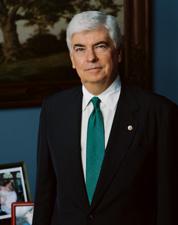 Sen. Christopher J. Dodd (D-CT)
Legislative Activity
Stay on top of the latest movement without scrolling through every action
Read twice and referred to the Committee on Health, Education, Labor, and Pensions. (text of measure as introduced: CR S8128-8131)
July 14, 2004
View full timeline
Introduced in Senate
July 14, 2004
Sponsor introductory remarks on measure. (CR S8127-8128)
July 14, 2004
Read twice and referred to the Committee on Health, Education, Labor, and Pensions. (text of measure as introduced: CR S8128-8131)
July 14, 2004
Floor Debate
8 membersWhat members said about S. 2654 on the floor



 +3
+3
Floor Debate
8 membersWhat members said about S. 2654 on the floor
Mr. President, those who are following the business of the Senate understand that just a few moments ago, we had a vote on the floor of the Senate on the proposed constitutional amendment dealing…
Mr. President, I rise today to introduce legislation with my colleagues Senator Kennedy and Senator Bingaman to jump-start school success for low-income children. Today we are introducing the Sandy…
Mr. President, I rise today to introduce legislation with my colleagues Senator Kennedy and Senator Bingaman to jump-start school success for low-income children. Today we are introducing the Sandy…
Mr. President, I rise today, along with Senators Biden, Specter, Kyl, Hollings and Allen, to introduce the Reducing Crime and Terrorism at America's Seaports Act of 2004--legislation designed to…
Mr. President. There is no more important or essential substance to us than water. It is the source from which life springs. It also has the potential to be the source of incredible conflict ranging…
Show 4 more
Mr. President, I rise today to introduce the Reducing Crime and Terrorism at America's Seaports Act, along with Senators Specter, Feinstein, Kyl, Hollings, and Allen. Today's bill is a revised…

Mr. President. I am pleased today to introduce legislation with my friend and colleague, Senator Akaka, that would give Federal employees, retirees, and their families greater access to comprehensive…
Mr. President, water is a precious resource that we must begin to manage as efficiently as possible. In several parts of the country, development is constrained by the lack of good quality water and…

Mr. President, in 2013, our nation will celebrate the 500th anniversary of Ponce de Leon's landing on the east coast of Florida. I am pleased to introduce a bill today that establishes a commission…
Bill Text
Latest available legislative text
        [Congressional Bills 108th Congress]
[From the U.S. Government Publishing Office]
[S. 2654 Introduced in Senate (IS)]

108th CONGRESS
2d Session
S. 2654

To provide for Kindergarten Plus programs.

_______________________________________________________________________

IN THE SENATE OF THE UNITED STATES

July 14, 2004

Mr. Dodd introduced the following bill; which was read twice and
referred to the Committee on Health, Education, Labor, and Pensions

_______________________________________________________________________

A BILL

To provide for Kindergarten Plus programs.

Be it enacted by the Senate and House of Representatives of the
United States of America in Congress assembled,

SECTION 1. SHORT TITLE.

This Act may be cited as the ``Kindergarten Plus Act of 2004''.

SEC. 2. FINDINGS.

Congress makes the following findings:
(1) Kindergarten has proven to be a beneficial experience
for children, putting children on a path that positively
influences their learning and development in later school
years.
(2) Kindergarten and the years leading up to kindergarten
are critical in preparing children to succeed in elementary
school, especially if the children are from low-income families
or have other risks of difficulty in school.
(3) Disadvantaged children, on average, lag behind other
children in literacy, numeracy, and social skills, even before
formal schooling begins.
(4) For many children entering kindergarten, the
achievement gap between children from low-income households
compared to children from high-income households is already
evident.
(5) 85 percent of beginning kindergartners in the highest
socioeconomic group, compared to 39 percent in the lowest
socioeconomic group, can recognize letters of the alphabet.
Similarly, 98 percent of beginning kindergartners in the
highest socioeconomic group, compared to 84 percent of their
peers in the lowest socioeconomic group, can recognize numbers
and shapes.
(6) Once disadvantaged children are in school, they learn
at the same rate as other children. Therefore, providing
disadvantaged children with additional time in kindergarten, in
the summer before such children ordinarily enter kindergarten
and in the summer before first grade, will help schools close
achievement gaps and accelerate the academic progress of their
disadvantaged students.
(7) High quality, extended-year kindergarten that provides
children with enriched learning experiences is an important
factor in helping to close achievement gaps, rather than having
the gaps continue to widen.

SEC. 3. DEFINITIONS.

In this Act:
(1) Eligible student.--The term ``eligible student'' means
a child who--
(A) is a 5-year old, or will be eligible to attend
kindergarten at the beginning of the next school year;
(B) comes from a family with an income at or below
185 percent of the poverty line; and
(C) is not already served by a high-quality program
in the summer before or the summer after the child
enters kindergarten.
(2) Kindergarten plus.--The term ``Kindergarten Plus''
means a voluntary full day of kindergarten, during the summer
before and during the summer after, the traditional
kindergarten school year (as determined by the State).
(3) Local educational agency.--The term ``local educational
agency'' has the meaning given the term in section 9101 of the
Elementary and Secondary Education Act of 1965 (20 U.S.C.
7801).
(4) Parent.--The term ``parent'' includes a legal guardian
or other person standing in loco parentis (such as a
grandparent or stepparent with whom the child lives, or a
person who is legally responsible for the child's welfare).
(5) Parental involvement.--The term ``parental
involvement'' means the participation of parents in regular, 2-
way, and meaningful communication with school personnel
involving student academic learning and other school
activities, including ensuring that parents--
(A) play an integral role in assisting their
child's learning;
(B) are encouraged to be actively involved in their
child's education at school; and
(C) are full partners in their child's education
and are included, as appropriate, in decisionmaking and
on advisory committees to assist in the education of
their child.
(6) Poverty line.--The term ``poverty line'' means the
poverty line (as defined by the Office of Management and
Budget, and revised annually in accordance with section 673(2)
of the Community Services Block Grant Act (42 U.S.C. 9902(2)))
applicable to a family of the size involved.
(7) Eligible provider.--The term ``eligible provider''
means a local educational agency or a private not-for-profit
agency or organization, with a demonstrated record in the
delivery of early childhood education services to preschool-age
children, that provides high-quality early learning and
development experiences that--
(A) are aligned with the expectations for what
children should know and be able to do when the
children enter kindergarten and grade 1, as established
by the State educational agency; or
(B) in the case of an entity that is not a local
educational agency and that serves children who have
not entered kindergarten, meet the performance
standards and performance measures described in
subparagraphs (A) and (B) of subsection (a)(1), and
subsection (b), of section 641A of the Head Start Act
(42 U.S.C. 9836a) or the prekindergarten standards of
the State where the entity is located.
(8) School readiness.--The term ``school readiness'' means
the cognitive, social, emotional, approaches to learning, and
physical development of a child, including early literacy and
early mathematics skills, that prepares the child to learn and
succeed in elementary school.
(9) Secretary.--The term ``Secretary'' means the Secretary
of Education.
(10) State educational agency.--The term ``State
educational agency'' has the meaning given the term in section
9101 of the Elementary and Secondary Education Act of 1965 (20
U.S.C. 7801).

SEC. 4. GRANTS TO STATE EDUCATIONAL AGENCIES AUTHORIZED.

(a) In General.--The Secretary is authorized to award grants, on a
competitive basis, to State educational agencies to enable the State
educational agencies to provide Kindergarten Plus within the State.
(b) Sufficient Size.--To the extent possible, the Secretary shall
ensure that each grant awarded under this section is of sufficient size
to enable the State educational agency receiving the grant to provide
Kindergarten Plus to all eligible students served by the local
educational agencies within the State with the highest concentrations
of eligible students.
(c) Minimum Amount.--The Secretary shall not award a grant to a
State educational agency under this section in an amount that is less
than $500,000.
(d) State Use of Funds.--A State educational agency shall use--
(1) not more than 3 percent of the grant funds received
under this Act for administration of the Kindergarten Plus
programs supported under this Act;
(2) not more than 5 percent of the grant funds received
under this Act to develop professional development activities
and curricula for teachers and staff of Kindergarten Plus
programs in order to develop a continuum of developmentally
appropriate curricula and practices for preschool,
kindergarten, and grade 1 that ensures--
(A) an effective transition to kindergarten and to
grade 1 for students; and
(B) appropriate expectations for the students'
learning and development as the students make the
transition to kindergarten and to grade 1; and
(3) the remainder of the grant funds to award subgrants to
local educational agencies.
(e) Priority.--In awarding grants under this Act the Secretary
shall give priority to State educational agencies that--
(1) on their own or in combination with other government
agencies, provide full day kindergarten to all kindergarten-age
children who are from families with incomes below 185 percent
of the poverty line within the State; or
(2) demonstrate progress toward providing full day
kindergarten to all kindergarten-age children who are from
families with incomes below 185 percent of the poverty line
within the State by submitting a plan that shows how the State
educational agency will, at a minimum, double the number of
such children that were served by a full day kindergarten
program in the school year preceding the school year for which
assistance is first sought.

SEC. 5. SUBGRANTS TO LOCAL EDUCATIONAL AGENCIES.

(a) In General.--Each State educational agency that receives a
grant under this Act--
(1) shall reserve an amount sufficient to continue to fund
multiyear subgrants awarded under this section; and
(2) shall award subgrants to local educational agencies
within the State to enable the local educational agencies to
pay the Federal share of the costs of carrying out Kindergarten
Plus programs for eligible students.
(b) Priority.--In awarding subgrants under this section the State
educational agency shall give priority to local educational agencies--
(1) serving the greatest number or percentage of
kindergarten-age children who are from families with incomes
below 185 percent of the poverty line, based on data from the
most recent school year; and
(2) that propose to significantly reduce the class size and
student-to-teacher ratio of the classes in their Kindergarten
Plus programs below the average class size and student-to-
teacher ratios of kindergarten classes served by the local
educational agencies.
(c) Federal Share.--The Federal share of the costs of carrying out
a Kindergarten Plus program shall be--
(1) 100 percent for the first, second, and third years of
the program;
(2) 85 percent for the fourth year of the program; and
(3) 75 percent for the fifth year of the program.
(d) In-Kind Contributions.--The non-Federal share of the costs of
carrying out a Kindergarten Plus program may be in the form of in-kind
contributions.

SEC. 6. STATE APPLICATION.

(a) In General.--In order to receive a grant under this Act, a
State educational agency shall submit an application to the Secretary
at such time and containing such information as the Secretary
determines appropriate.
(b) Consultation.--The application shall be developed by the State
educational agency in consultation with representatives of early
childhood education programs, early childhood education teachers,
principals, pupil services personnel, administrators,
paraprofessionals, other school staff, early childhood education
providers (including Head Start agencies, State prekindergarten program
staff, and child care providers), teacher organizations, parents, and
parent organizations.
(c) Contents.--At a minimum, the application shall include--
(1) a description of developmentally appropriate teaching
practices and curricula for children that will be put in place
to be used by local educational agencies and eligible providers
offering Kindergarten Plus programs to carry out this Act;
(2) a general description of the nature of the Kindergarten
Plus programs to be conducted with funds received under this
Act, including--
(A) the number of hours each day and the number of
days each week that children in each Kindergarten Plus
program will attend the program; and
(B) if a Kindergarten Plus program meets for less
than 9 hours a day, how the needs of full-time working
families will be addressed;
(3) goals and objectives to ensure that high-quality
Kindergarten Plus programs are provided;
(4) an assurance that students enrolled in Kindergarten
Plus programs funded under this Act will receive additional
comprehensive services (such as nutritional services, health
care, and mental health care), as needed; and
(5) a description of how--
(A) the State educational agency will coordinate
and integrate services provided under this Act with
other educational programs, such as Even Start, Head
Start, Reading First, Early Reading First, State-funded
preschool programs, preschool programs funded under
section 619 or other provisions of part B of the
Individuals with Disabilities Education Act (20 U.S.C.
1419, 1411 et seq.), and kindergarten programs;
(B) the State will provide professional development
for teachers and staff of local educational agencies
and eligible providers that receive subgrants under
this Act regarding how to address the school readiness
needs of children (including early literacy, early
mathematics, and positive behavior) before the children
enter kindergarten, throughout the school year, and
into the summer after kindergarten;
(C) the State will assist Kindergarten Plus
programs to provide exemplary parent education and
parental involvement activities such as training and
materials to assist parents in being their children's
first teachers at home or home visiting;
(D) the State will conduct outreach to parents with
eligible students, including parents whose native
language is not English, parents of children with
disabilities, and parents of migratory children; and
(E) the State educational agency will ensure that
each Kindergarten Plus program uses developmentally
appropriate practices, including practices and
materials that are culturally and linguistically
appropriate for the population of children being served
in the program.

SEC. 7. LOCAL APPLICATION.

(a) In General.--In order to receive a subgrant under this Act, a
local educational agency shall submit an application to the State
educational agency at such time and containing such information as the
State educational agency determines appropriate.
(b) Consultation.--The application shall be developed by the local
educational agency in consultation with early childhood education
teachers, principals, pupil services personnel, administrators,
paraprofessionals, other school staff, early childhood education
providers (including Head Start agencies, State prekindergarten program
staff, and child care providers), teacher organizations, parents, and
parent organizations.
(c) Contents.--At a minimum, the application shall include a
description of--
(1) the standards, research-based and developmentally
appropriate curricula, teaching practices, and ongoing
assessments for the purposes of improving instruction and
services, to be used by the local educational agency that--
(A) are aligned with the State expectations for
what children should know and be able to do when the
children enter kindergarten and grade 1, as set by the
State educational agency; and
(B) include--
(i) language skills, including an expanded
use of vocabulary;
(ii) interest in and appreciation of books,
reading, writing alone or with others, and
phonological and phonemic awareness;
(iii) premathematics knowledge and skills,
including aspects of classification, seriation,
number sense, spatial relations, and time;
(iv) other cognitive abilities related to
academic achievement;
(v) social and emotional development,
including self-regulation skills;
(vi) physical development, including gross
and fine motor development skills;
(vii) in the case of limited English
proficiency, progress toward the acquisition of
the English language; and
(viii) approaches to learning;
(2) how the local educational agency will ensure that the
Kindergarten Plus program uses curricula and practices that--
(A) are developmentally, culturally, and
linguistically appropriate for the population of
children served in the program; and
(B) are aligned with the State learning standards
and expectations for children in kindergarten and grade
1;
(3) how the Kindergarten Plus program will improve the
school readiness of children served by the local educational
agency under this Act, especially in mathematics and reading;
(4) how the Kindergarten Plus program will provide
continuity of services and learning for children who were
previously served by a different program;
(5) how the local educational agency will ensure that the
Kindergarten Plus program has appropriate services and
accommodations in place to serve children with disabilities and
children who are limited English proficient;
(6) how the local educational agency will perform a needs
assessment to avoid duplication with other programs within the
geographic area served by the local educational agency;
(7) how the local educational agency will--
(A) transition Kindergarten Plus participants into
local elementary school programs and services;
(B) ensure the development and use of systematic,
coordinated records on the educational development of
each child participating in the Kindergarten Plus
program through periodic meetings and communications
among--
(i) Kindergarten Plus program teachers;
(ii) elementary school staff; and
(iii) local early childhood education
program providers, including Head Start
agencies, State prekindergarten program staff,
and center-based and family child care
providers;
(C) provide parent and child orientation sessions
conducted by teachers and staff; and
(D) provide a qualified staff person to be in
charge of coordinating the transition services;
(8) how the local educational agency will provide
instructional and environmental accommodations in the
Kindergarten Plus program for children who are limited English
proficient, children with disabilities, migratory children,
neglected or delinquent youth, Indian children served under
part A of title VII of the Elementary and Secondary Education
Act of 1965 (20 U.S.C. 7401 et seq.), homeless children, and
immigrant children;
(9) how the local educational agency will conduct outreach
to parents of eligible students, including parents whose native
language is not English, parents of children with disabilities,
and parents of migratory children, which may include--
(A) activities to provide parents early exposure to
the school environment, including meetings with
teachers and staff;
(B) activities to better engage and inform parents
on the benefits of Kindergarten Plus and other
programs; and
(C) other efforts to ensure that parents have a
level of comfort with the Kindergarten Plus program and
the school environment;
(10) how the local educational agency will assist the
Kindergarten Plus program to provide exemplary parent education
and parental involvement activities such as training and
materials to assist parents in being their children's first
teachers at home or home visiting; and
(11) how the local educational agency will work with local
center-based and family child care providers and Head Start
agencies to ensure--
(A) the nonduplication of programs and services;
and
(B) that the needs of working families are met
through child care provided before and after the
Kindergarten Plus program.

SEC. 8. LOCAL REQUIREMENTS AND PROVISIONS.

(a) Local Uses of Funds.--A local educational agency that receives
a subgrant under this Act shall use the subgrant funds for the
following:
(1) The operational and program costs associated with the
Kindergarten Plus program as described in the application to
the State educational agency.
(2) Personnel services, including teachers,
paraprofessionals, and other staff as needed.
(3) Additional services, as needed, including snacks and
meals, mental health care, health care, linguistic assistance,
special education and related services, and transportation
services associated with the needs of the children in the
program.
(4) Transition services to ensure children make a smooth
transition into first grade and proper communication is made
with the elementary school on the educational development of
each child.
(5) Outreach and recruitment activities, including
community forums and public service announcements in local
media in various languages if necessary to ensure that all
individuals in the community are aware of the availability of
such program.
(6) Parental involvement programs, including materials and
resources to help parents become more involved in their child's
learning at home.
(7) Extended day services for the eligible students of
working families, including working with existing programs in
the community to coordinate services if possible.
(8) Child care services, provided through coordination with
local center-based child care and family child care providers,
and Head Start agencies, before and after the Kindergarten Plus
program for the children participating in the program, to
accommodate the schedules of working families.
(9) Enrichment activities, such as--
(A) art, music, and other creative arts;
(B) outings and field trips; and
(C) other experiences that support children's
curiosity, motivation to learn, knowledge, and skills.
(b) Eligible Provider Grants and Applications.--The local
educational agency may use subgrant funds received under this Act to
award a grant to an eligible provider to enable the eligible provider
to carry out a Kindergarten Plus program for the local educational
agency. Each eligible provider desiring a grant under this subsection
shall submit an application to the local educational agency that
contains the descriptions set forth in section 7 as applied to the
eligible provider.
(c) Continuity.--In carrying out a Kindergarten Plus program under
this Act, a local educational agency is encouraged to explore ways to
develop continuity in the education of children, for instance by
keeping, if possible, the same teachers and personnel from the summer
before kindergarten, through the kindergarten year, and during the
summer after kindergarten.
(d) Coordination.--In carrying out a Kindergarten Plus program
under this Act, a local educational agency shall coordinate with
existing programs in the community to provide extended care and
comprehensive services for children and their families in need of such
care or services.

SEC. 9. TEACHER AND PERSONNEL QUALITY STANDARDS.

To be eligible for a subgrant under this Act, each local
educational agency shall ensure that--
(1) each Kindergarten Plus classroom has--
(A) a highly qualified teacher, as defined in
section 9101 of the Elementary and Secondary Education
Act of 1965 (20 U.S.C. 7801); or
(B) if an eligible provider who is not a local
educational agency is providing the Kindergarten Plus
program in accordance with section 8(b), a teacher
that, at a minimum, has a bachelor's degree in early
childhood education or a related field and experience
in teaching children of this age;
(2) a qualified paraprofessional that meets the
requirements for paraprofessionals under section 1119 of the
Elementary and Secondary Education Act of 1965 (20 U.S.C.
6319), is in each Kindergarten Plus classroom;
(3) Kindergarten Plus teachers and paraprofessionals are
compensated on a salary scale comparable to kindergarten
through grade 3 teachers and paraprofessionals in public
schools served by the local educational agency; and
(4) Kindergarten Plus class sizes do not exceed the class
size and ratio parameters set at the State or local level for
the traditional kindergarten program.

SEC. 10. DIRECT GRANTS TO LOCAL EDUCATIONAL AGENCIES.

(a) Grants Authorized.--If a State educational agency does not
apply for a grant under this Act or does not have an application
approved under section 6, then the Secretary is authorized to award a
grant to a local educational agency within the State to enable the
local educational agency to pay the Federal share of the costs of
carrying out a Kindergarten Plus program.
(b) Eligibility.--A local educational agency shall be eligible to
receive a grant under this section if the local educational agency
operates a full day kindergarten program that, at a minimum, is
targeted to kindergarten-age children who are from families with
incomes below 185 percent of the poverty line within the State.
(c) Application.--In order to receive a grant under subsection (a),
a local educational agency shall submit to the Secretary an application
that--
(1) contains the descriptions set forth in section 7; and
(2) includes an assurance that the Kindergarten Plus
program funded under such grant will serve eligible students.
(d) Applicability.--Sections 8 and 9 shall apply to a local
educational agency receiving a grant under this section in the same
manner as the sections apply to a local educational agency receiving a
subgrant under section 5(a).

SEC. 11. EVALUATION, COLLECTION, AND DISSEMINATION OF INFORMATION.

(a) In General.--Each State educational agency that receives a
grant under this Act, in cooperation with the local educational
agencies in the State that receive a subgrant under this Act, shall
create an evaluation mechanism to determine the effectiveness of the
Kindergarten Plus programs in the State, taking into account--
(1) information from the local needs assessment, conducted
in accordance with section 7(c)(6), including--
(A) the number of eligible students in the
geographic area;
(B) the number of children served by Kindergarten
Plus programs, disaggregated by family income, race,
ethnicity, native language, and prior enrollment in an
early childhood education program; and
(C) the number of children with disabilities served
by Kindergarten Plus programs;
(2) the recruitment of teachers and staff for Kindergarten
Plus programs, and the retention of such personnel in the
programs for more than 1 year;
(3) the provision of services for children and families
served by Kindergarten Plus programs, including parent
education, home visits, and comprehensive services for families
who need such services;
(4) the opportunities for professional development for
teachers and staff; and
(5) the curricula used in Kindergarten Plus programs.
(b) Comparison.--The evaluation process may include comparison
groups of similar children who do not participate in a Kindergarten
Plus program.
(c) Information Collection and Reporting.--The information
necessary for the evaluation shall be collected yearly by the State and
reported every 2 years by the State to the Secretary.
(d) Analysis of Effectiveness.--The Secretary shall conduct an
analysis of the overall effectiveness of the programs assisted under
this Act and make the analysis available to Congress, and the public,
biannually.

SEC. 12. SUPPLEMENT NOT SUPPLANT.

Funds made available under this Act shall be used to supplement,
not supplant, other Federal, State, or local funds available to carry
out activities under this Act.

SEC. 13. AUTHORIZATION OF APPROPRIATIONS.

For the purpose of carrying out this Act, there are authorized to
be appropriated $1,500,000,000 for fiscal year 2005 and such sums as
may be necessary for each of the fiscal years 2006 through 2010.
<all>