S. 2717Senate108th Congress (2003-2005)In Committee
Rural Community Arsenic Relief Act
Sponsored by 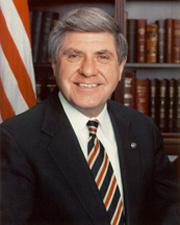 Sen. Ben Nelson (D-NE)
Sen. Ben Nelson (D-NE)Introduced July 22, 2004
Legislative Activity
Stay on top of the latest movement without scrolling through every action
SenateIntro Referral
Latest Action
Read twice and referred to the Committee on Environment and Public Works.
July 22, 2004
View full timeline
SenateIntro Referral
Introduced in Senate
July 22, 2004
SenateIntro Referral
Read twice and referred to the Committee on Environment and Public Works.
July 22, 2004
Floor Debate
1 memberWhat members said about S. 2717 on the floor
Floor Debate
1 memberWhat members said about S. 2717 on the floor
1 Democrat
Sen. Joseph R. Biden Jr.D-DE · Apr 11, 2003
Madam President, I rise today to offer the following section-by-section analysis of Title IX of the ``Sarbanes-Oxley Act of 2002,'' P.L. 107-204, of which I was the primary author along with my good…
Bill Text
Latest available legislative text
Introduced in SenateIssued July 22, 2004
        [Congressional Bills 108th Congress]
[From the U.S. Government Publishing Office]
[S. 2717 Introduced in Senate (IS)]

108th CONGRESS
2d Session
S. 2717

To amend the Safe Drinking Water Act to exempt nonprofit small public
water systems from certain drinking water standards relating to
naturally occurring contaminants.

_______________________________________________________________________

IN THE SENATE OF THE UNITED STATES

July 22, 2004

Mr. Nelson of Nebraska (for himself, Mr. Craig, and Mr. Domenici)
introduced the following bill; which was read twice and referred to the
Committee on Environment and Public Works

_______________________________________________________________________

A BILL

To amend the Safe Drinking Water Act to exempt nonprofit small public
water systems from certain drinking water standards relating to
naturally occurring contaminants.

Be it enacted by the Senate and House of Representatives of the
United States of America in Congress assembled,

SECTION 1. SHORT TITLE.

This Act may be cited as the ``Rural Community Arsenic Relief
Act''.

SEC. 2. EXEMPTION FOR NONPROFIT SMALL PUBLIC WATER SYSTEMS FROM
STANDARDS RELATING TO NATURALLY OCCURRING CONTAMINANTS.

The Safe Drinking Water Act is amended by inserting after section
1416 (42 U.S.C. 300g-5) the following:

``SEC. 1416A. EXEMPTION FOR NONPROFIT SMALL PUBLIC WATER SYSTEMS FROM
STANDARDS RELATING TO NATURALLY OCCURRING CONTAMINANTS.

``(a) Definitions.--In this section:
``(1) Low-income family.--The term `low-income family'
means a family the total annual income of which does not exceed
the poverty line.
``(2) Naturally occurring contaminant.--The term `naturally
occurring contaminant' includes--
``(A) arsenic;
``(B) radon;
``(C) radium; and
``(D) uranium.
``(3) Nonprofit small public water system.--The term
`nonprofit small public water system' means a nonprofit public
water system (including a local government) that serves 10,000
or fewer individuals.
``(4) Poverty line.--The term `poverty line' has the
meaning given the term in section 673 of the Community Services
Block Grant Act (42 U.S.C. 9902).
``(b) Exemption.--A State exercising primary enforcement
responsibility for public water systems under section 1413 (or the
Administrator, with respect to any nonprimacy State) shall exempt any
nonprofit small public water system that submits a request in
accordance with subsection (c) from the requirements of any national
primary drinking water regulation for a naturally occurring
contaminant.
``(c) Application.--To be eligible for an exemption from a national
primary drinking water regulation under this section, a nonprofit small
public water system shall submit a written application to the State
exercising primary enforcement responsibility with respect to the
system (or the Administrator, with respect to any nonprimacy State)
demonstrating that compliance by the nonprofit small public water
system with the national drinking water regulation--
``(1) is not economically feasible;
``(2) has a disproportionate and adverse impact on low-
income families;
``(3) is substantially impeded by limited access of the
nonprofit small public water system to innovative and
affordable technology; or
``(4) is not necessary, based on the fact that drinking
water provided by the nonprofit small public water system does
not pose an unreasonable health risk.
``(d) Alternative Requirement.--A nonprofit small public water
system that receives an exemption for arsenic under this section shall
comply with a standard of arsenic in drinking water provided by the
nonprofit small public water system of--
``(1) not later than January 1, 2006, not more than 50
parts per billion;
``(2) not later than January 1, 2009, not more than 35
parts per billion;
``(3) not later than January 1, 2011, not more than 30
parts per billion;
``(4) not later than January 1, 2013, not more than 20
parts per billion; and
``(5) not later than January 1, 2015, not more than 10
parts per billion.''.

SEC. 3. UNIVERSITY-BASED ARSENIC RESEARCH CONSORTIUM.

(a) Definitions.--In this section:
(1) Administrator.--The term ``Administrator'' means the
Administrator of the Environmental Protection Agency.
(2) Consortium.--The term ``Consortium'' means the
university-based arsenic research consortium established under
subsection (b)(1).
(b) Consortium.--
(1) Establishment.--The Administrator shall establish a
university-based arsenic research consortium.
(2) Membership.--The Consortium shall be comprised of the
following members:
(A) The University of Nebraska at Lincoln.
(B) The University of Nebraska Medical Center.
(C) The University of New Mexico.
(D) The University of Texas.
(E) Johns Hopkins University School of Public
Health.
(F) Georgetown University Medical School.
(c) Duties of the Consortium.--The Consortium shall--
(1) conduct reviews and analyses, and carry out health
effects studies, using United States morbidity data relating to
low levels of arsenic commonly found in States;
(2) assess studies on arsenic in drinking water, as
adjusted by the Administrator, carried out in--
(A) Millard County, Utah;
(B) Inner Mongolia, China; and
(C) southwest Taiwan;
(3) develop recommendations on which levels of arsenic in
drinking water constitute unreasonable risks to public health,
and which levels should be considered to be protective of
public health, under the Safe Drinking Water Act (42 U.S.C.
300f et seq.); and
(4) conduct reviews and analyses of, and carry out health
effects studies on, all forms of cancer, cardiovascular
disease, diabetes, and vascular toxicity.
(d) Grant Program.--
(1) In general.--The Administrator may provide grants to
the Consortium for use in carrying out the duties of the
Consortium under subsection (c).
(2) Authorization of appropriations.--There is authorized
to be appropriated to carry out this subsection $4,000,000 for
fiscal year 2005.
(e) Report of Administrator.--Not later than 1 year after the date
of enactment of this Act, and annually thereafter, the Administrator
shall submit to Congress a report that describes the findings and
recommendations of the Consortium for the year covered by the report.
<all>