Emergency Flu Response Act of 2004
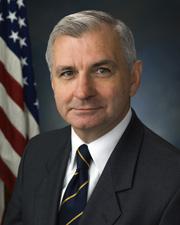 Sen. Jack Reed (D-RI)
Legislative Activity
Stay on top of the latest movement without scrolling through every action
Read twice and referred to the Committee on Health, Education, Labor, and Pensions. (text of measure as introduced: CR S10861-10863)
October 8, 2004
View full timeline
Introduced in Senate
October 8, 2004
Read twice and referred to the Committee on Health, Education, Labor, and Pensions. (text of measure as introduced: CR S10861-10863)
October 8, 2004
Floor Debate
13 membersWhat members said about S. 2968 on the floor

 +8
+8
Floor Debate
13 membersWhat members said about S. 2968 on the floor
Mr. President, I rise today to introduce legislation that calls for a small Federal commitment that would make a huge impact on the daily lives of all Americans. This legislation, the Rush Hour…
Mr. President, I rise today to introduce the Paiute Land Adjustments Act. This bill would authorize the Secretary of the Interior to convey or transfer four small Paiute trust land parcels totaling…
Mr. President, I rise today, along with Senator Lautenberg, to introduce legislation to help ensure that convicted felons are not permitted to legally possess dangerous weapons. The bill would…
Mr. President, I rise to introduce the Taxpayer Abuse Prevention Act. Earned income tax credit (EITC) benefits intended for working families are increasingly being reduced by the growing use of…
Mr. President, it is a privilege to join Senator Jack Reed in introducing the ``Emergency Flu Response Act of 2004.'' I commend him for his leadership on this important issue. I also commend our…
Show 8 more
Mr. President, it is a privilege to join Senator Jack Reed in introducing the ``Emergency Flu Response Act of 2004.'' I commend him for his leadership on this important issue. I also commend our…
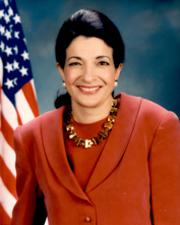
Mr. President, I rise today to introduce bipartisan legislation, ``The Green Chemistry Research and Development Act,'' with Senator Rockefeller. Green chemistry is a science-based approach to…

Mr. President, I rise to introduce today a bill to authorize the development of the Coordinated Environmental Health Network. I am pleased to have Senators Chafee and Reid as cosponsors.…

Mr. President, I rise today to introduce a bill of great importance to our most severely injured troops who are carrying the battle to the terrorists. This legislation will assist the Department of…

Mr. President, as in years past, I am offering today two pieces of legislation that would close a loophole in the 1996 Telecommunications Act, and as in years past I am pleased that I am joined by…
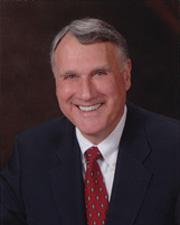
Mr. President, I rise today to introduce legislation, the Ukraine Democracy and Fair Elections Act of 2004, designed to promote free, fair and transparent elections in Ukraine. Like the United…
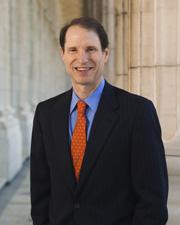
Mr. President, today I am introducing legislation regarding the way the trade policies of the United States affect the ability of developing countries to access to generic drugs. The bill addresses…

Mr. President, I rise to introduce the Child Safety and Home Protection Act of 2004, to provide a limited tax credit for individuals who purchase a gun safe to store firearms in their homes. Under…
Show 2 more
I ask unanimous consent that the text of the bill be printed in the Record.
I ask unanimous consent that the text of the bill be printed in the Record.
Bill Text
Latest available legislative text
        [Congressional Bills 108th Congress]
[From the U.S. Government Publishing Office]
[S. 2968 Introduced in Senate (IS)]

108th CONGRESS
2d Session
S. 2968

To amend the Public Health Service Act to address the shortage of
influenza vaccine, and for other purposes.

_______________________________________________________________________

IN THE SENATE OF THE UNITED STATES

October 8, 2004

Mr. Reed (for himself, Mr. Kennedy, Mr. Warner, Mr. Daschle, Ms. Snowe,
Mr. Dodd, Mrs. Clinton, Mr. Dorgan, Mr. Bayh, Mr. Schumer, Mr. Johnson,
and Mr. Dayton) introduced the following bill; which was read twice and
referred to the Committee on Health, Education, Labor, and Pensions

_______________________________________________________________________

A BILL

To amend the Public Health Service Act to address the shortage of
influenza vaccine, and for other purposes.

Be it enacted by the Senate and House of Representatives of the
United States of America in Congress assembled,

SECTION 1. SHORT TITLE.

This Act may be cited as the ``Emergency Flu Response Act of
2004''.

SEC. 2. EMERGENCY FLU RESPONSE.

Title XXI of the Public Health Service Act (42 U.S.C. 300aa-1 et
seq.) is amended by adding at the end the following:

``Subtitle 3--Influenza Vaccine

``SEC. 2141. DEFINITION.

``In this subtitle, the term `priority group' means a group
described as a priority group for vaccination with influenza vaccine in
recommendations entitled `Interim Influenza Vaccination
Recommendations--2004-2005 Influenza Season', dated October 5, 2004, or
any successor to such recommendations issued by the Secretary.

``SEC. 2142. EMERGENCY ACCESS TO INFLUENZA VACCINE.

``(a) Declaration of Emergency.--
``(1) In general.--Under section 564(b)(1)(C) of the
Federal Food, Drug, and Cosmetic Act (21 U.S.C. 360bbb-
3(b)(1)(C)), the Secretary shall immediately declare the
shortage of influenza vaccine in the United States for the
2004-2005 influenza season to be an emergency justifying an
authorization for a product under section 564 of such Act (21
U.S.C. 360bbb).
``(2) Determination.--For the purpose of making
determinations under section 564(b)(1)(C) of such Act to carry
out paragraph (1), the Secretary--
``(A) shall deem the shortage to be a public health
emergency described in such section; and
``(B) shall deem influenza virus to be a biological
agent.
``(3) Construction.--Nothing in this subsection shall be
considered to invoke the authorities described in section 319,
or to limit the ability of the Secretary to invoke such
authorities.
``(b) Seeking Influenza Vaccine.--The Secretary shall promptly
consult with the health ministries of Canada, countries that are
members of the European Union as of January 1, 2003, Japan, and
Switzerland to assess the availability of influenza vaccine for the
2004-2005 influenza season that--
``(1) has been approved, licensed, or otherwise cleared for
marketing by the relevant regulatory agency in such a country;
and
``(2) is in excess of the needs in such country for the
vaccination of persons at high risk for complications from
influenza.
``(c) Issuance of Authorization.--
``(1) In general.--The Secretary shall promptly evaluate
available influenza vaccine (as identified under subsection
(b)) to determine whether the vaccine meets the criteria for
issuance of an authorization under section 564(c) of the
Federal Food, Drug, and Cosmetic Act (21 U.S.C. 360bbb-3(c)).
``(2) Criteria.--For the purpose of making determinations
under section 564(c) of such Act to carry out paragraph (1),
the Secretary--
``(A) shall deem influenza virus to be an agent
that can cause a serious or life-threatening disease or
condition; and
``(B) shall deem the shortage described in
subsection (a)(1) to be sufficient evidence that there
is no alternative described in section 564(c)(3).
``(d) Vaccine Purchase.--Not later than 30 days after the date of
enactment of the Emergency Flu Response Act of 2004, the Secretary
shall purchase, at a reasonable price, available influenza vaccine
identified under subsection (b) for which the Secretary has issued an
authorization under section 564(c) of the Federal Food, Drug, and
Cosmetic Act (21 U.S.C. 360bbb-3(c)).
``(e) Vaccine Distribution.--Notwithstanding any other provision of
law, the Secretary shall promptly import and distribute any influenza
vaccine purchased under subsection (d), giving first priority to
persons in priority groups.
``(f) Authorization of Appropriations.--There are authorized to be
appropriated to carry out this section such sums as may be necessary
for fiscal year 2005.

``SEC. 2143. EFFECTIVE RESPONSES TO VACCINE SHORTAGES.

``(a) In General.--The Secretary shall award a grant to each State
to allow such State to develop and implement a plan to respond to the
shortage of influenza vaccine in the United States for the 2004-2005
influenza season.
``(b) Use of Funds.--A State that receives a grant under this
section shall use the funds made available through a grant under
subsection (a) to develop--
``(1) a voluntary plan to ensure that the influenza vaccine
is, to the maximum extent possible, administered to priority
groups;
``(2) a system to notify health care providers about
revisions in guidelines for administering influenza vaccine;
``(3) an awareness campaign to inform the public about
recommendations concerning groups that are priority groups for
vaccination with influenza vaccine; and
``(4) procedures to allow for the voluntary donation of
vaccine as described in section 2145.
``(c) Amount.--The amount of a grant under subsection (a) shall be
proportional to the population of the State and the severity of the
shortage of influenza vaccine in such State, as determined by the
Secretary.
``(d) Authorization of Appropriations.--There are authorized to be
appropriated to carry out this section such sums as may be necessary
for fiscal year 2005.

``SEC. 2144. EFFECTIVE MONITORING OF THE NATION'S INFLUENZA VACCINE
SUPPLY.

``(a) Manufacturers.--Not later than 15 days after the date of
enactment of the Emergency Flu Response Act of 2004 and every 30 days
thereafter, any person who manufactures influenza vaccine for
introduction into interstate commerce shall prepare and submit to the
Secretary a summary report that lists--
``(1) each client, both public and private, who purchased
influenza vaccine from the manufacturer during the period
covered by the report; and
``(2) the number of doses of influenza vaccine sold to each
client during the period.
``(b) State Public Health Agencies.--To be eligible to receive a
grant under section 2143(a), a State through its public health agency
shall, not later than 15 days after the date of enactment of the
Emergency Flu Response Act of 2004 and every 30 days thereafter,
prepare and submit to the Secretary a summary report describing--
``(1) the number of doses of influenza vaccine available in
the State during the period covered by the report;
``(2) the number of such doses that were given to each
priority group during that period; and
``(3) to the extent that such information is readily
obtainable by the State, the manner in which such doses were
distributed to consumers during such period, such as by
distribution through public health agencies or private health
care providers.

``SEC. 2145. CLEARINGHOUSES FOR VOLUNTARY DONATION OF INFLUENZA
VACCINE.

``The Centers for Disease Control and Prevention, and each State
public health agency described in section 2144(b), shall establish a
clearinghouse to--
``(1) enable persons to voluntarily donate influenza
vaccine doses; and
``(2) distribute the doses for administration to
individuals in priority groups.

``SEC. 2146. PURCHASES OF INFLUENZA VACCINE.

``(a) In General.--The Secretary shall establish a program through
which the Secretary may--
``(1) purchase from private employers, vaccine wholesalers,
and other appropriate individuals and entities, doses of
influenza vaccine that are not needed for the vaccination of
priority groups; and
``(2) distribute the doses purchased under paragraph (1)
for administration to individuals in priority areas.
``(b) Authorization of Appropriations.--There are authorized to be
appropriated to carry out this section such sums as may be necessary
for fiscal year 2005.

``SEC. 2147. USE OF INFLUENZA VACCINE.

``(a) Executive Branch.--The head of each Executive agency (as
defined in section 105 of title 5, United States Code) shall ensure
that any influenza vaccine in the possession of the head of the agency
shall--
``(1) be administered only to employees of the agency who
are in priority groups; and
``(2) provide to the Secretary any doses of the vaccine
that are not needed for the vaccination of individuals in
priority groups, so that the Secretary can distribute the doses
for administration to individuals in the priority groups.
``(b) Legislative Branch.--The Attending Physician of the Capitol
shall ensure that any influenza vaccine in the possession of the
Attending Physician shall--
``(1) be administered only to employees of the legislative
branch of the Federal Government who are in priority groups;
and
``(2) provide to the Secretary any doses of the vaccine
that are not needed for the vaccination of individuals in
priority groups, so that the Secretary can distribute the doses
for administration to individuals in the priority groups.

``SEC. 2148. ENHANCING EXISTING COUNTERMEASURES AGAINST INFLUENZA.

``(a) Authorization to Purchase.--The Secretary may, subject to
amounts appropriated under subsection (d), purchase at a reasonable
negotiated price, such additional amounts of any drug approved by the
Commissioner of Food and Drugs to treat influenza as are determined
necessary by the Secretary.
``(b) Addition to Stockpile.--The Secretary shall include any drug
purchased under subsection (a) in the stockpile established under
section 121 of the Public Health Security and Bioterrorism Preparedness
and Response Act of 2002.
``(c) Increasing the Effectiveness of Existing Vaccine Supplies.--
The Secretary, acting through the Director of the National Institutes
of Health, shall conduct a clinical trial or trials to determine
whether influenza vaccine can be diluted and continue to retain its
effectiveness in preventing influenza in individuals in priority
groups.
``(d) Authorization of Appropriations.--There are authorized to be
appropriated to carry out this section such sums as may be necessary
for fiscal year 2005.

``SEC. 2149. NATIONAL QUARANTINE COMPENSATION PROGRAM.

``(a) In General.--There is established the National Quarantine
Compensation Program to be administered by the Secretary under which
compensation shall be paid to individuals who are subjected to an order
of quarantine issued by a Federal or State health agency.
``(b) Amount.--An individual's compensation under the National
Quarantine Compensation Program shall be equal to wages lost as a
result of such individual being subjected to the quarantine.
``(c) Appropriations.--There are authorized to be appropriated and
there are hereby appropriated to carry out subsections (a) and (b) such
sums as may be necessary.

``SEC. 2150. EMPLOYMENT RIGHTS AND PROTECTIONS RELATING TO FEDERALLY
MANDATED HEALTH-RELATED QUARANTINE.

``(a) Definitions.--In this section:
``(1) Employer.--The term `employer'--
``(A) means any person engaged in commerce or in
any industry or activity affecting commerce; and
``(B) includes--
``(i)(I) any person who acts, directly or
indirectly, in the interest of a person
described in subparagraph (A) to any of the
employees of such person; or
``(II) any successor in interest of a
person described in subparagraph (A);
``(ii) any public agency, as defined in
section 3(x) of the Fair Labor Standards Act of
1938 (29 U.S.C. 203(x));
``(iii) the Government Accountability
Office, the Government Printing Office, and the
Library of Congress; and
``(iv) all other legislative branch
entities identified as employing offices in the
Congressional Accountability Act of 1995 (2
U.S.C. 1301 et seq.).
``(2) Employment benefits.--The term `employment benefits'
means all benefits provided or made available to employees by
an employer, including group life insurance, health insurance,
disability insurance, sick leave, annual leave, educational
benefits, and pensions, regardless of whether such benefits are
provided by a practice or written policy of an employer or
through an employee benefit plan, as defined in section 3 of
the Employee Retirement Income Security Act of 1974 (29 U.S.C.
1002).
``(3) Secretary.--
``(A) In general.--Except as otherwise provided in
subparagraph (B), the term `Secretary' means the
Secretary of Labor.
``(B) Exceptions.--In the case of actions brought
regarding employees--
``(i) of the Government Accountability
Office, the term `Secretary' means the
Comptroller General of the United States;
``(ii) of the Government Printing Office,
the term `Secretary' means the Public Printer;
``(iii) of the Library of Congress, the
term `Secretary' means the Librarian of
Congress; and
``(iv) of any other legislative branch
employer, the term `Secretary' means the Office
of Compliance.
``(b) Employment Rights, Benefits, and Protection From
Discrimination.--
``(1) Restoration to position.--Any individual subjected to
an order of quarantine issued by a Federal or State health
agency shall be entitled, on return from such quarantine--
``(A) to be restored by the employer of such
individual to the position of employment held by the
individual when the quarantine of such individual
commenced; or
``(B) to be restored to an equivalent position with
equivalent employment benefits, pay, and other terms
and conditions of employment.
``(2) Benefits.--An individual restored to such
individual's position, or equivalent position, pursuant to
paragraph (1) shall be entitled to the seniority and other
rights and benefits that the individual had on the date when
the quarantine of such individual commenced, plus the
additional seniority and rights and benefits that the
individual would have attained had the individual not been
subjected to a federally mandated health-related quarantine.
``(3) Protection from discrimination.--It shall be unlawful
for an employer to discharge or in any other manner
discriminate against any individual on the basis of such
individual's being, or having been, subjected to a federally
mandated health-related quarantine.
``(c) Investigative Authority; Enforcement.--
``(1) In general.--The Secretary shall ensure compliance
with the provisions of subsection (b) and enforce violations of
subsection (b).
``(2) Same authorities.--In order to carry out paragraph
(1), the Secretary shall have the same authorities as provided
to the Secretary under sections 106 and 107 of the Family and
Medical Leave Act of 1993 (29 U.S.C. 209 and 210) to ensure
compliance with and enforce violations of the Family and
Medical Leave Act of 1993.
``(d) State and Local Laws.--Nothing in this section shall be
construed to supersede any provision of any State or local law that
provides greater rights than the rights established under this
section.''.

``SEC. 2151. ASSURING THAT INDIVIDUALS IN PRIORITY GROUPS RECEIVE
VACCINES.

``(a) Determinations.--Not later than 30 days after the date of
enactment of the Emergency Flu Response Act of 2004, and every 30 days
thereafter, the Secretary shall review the effectiveness of measures
taken under sections 2142 through 2147 and determine whether the
measures have ensured the distribution of influenza vaccine for
administration to individuals in priority groups. If the Secretary
determines that the measures have not ensured that distribution, the
Secretary--
``(1) may take the actions described in subsection (b) if
the Secretary determines that such actions are needed to
protect the public health; and
``(2) shall notify the appropriate committees of Congress
of such determination.
``(b) Assuring the Individuals in Priority Groups Receive
Vaccines.--On making the determination described in subsection (a), the
Secretary may require that a person, not including a person that is a
manufacturer of influenza vaccine, who possesses influenza vaccine sell
such person's supply of the influenza vaccine to the Federal
Government, as an exercise of the Federal Government's power to take
private property for public use, for just compensation.
``(c) Prioritization.--The Secretary shall distribute the doses of
influenza vaccine obtained under subsection (b) in a manner determined
appropriate by the Secretary to ensure that such vaccine is
administered to individuals in priority groups.''.
<all>