Truth in Trials Act

Legislative Activity
Stay on top of the latest movement without scrolling through every action
Read twice and referred to the Committee on the Judiciary.
November 17, 2004
View full timeline
Introduced in Senate
November 17, 2004
Sponsor introductory remarks on measure. (CR S11430-11431)
November 17, 2004
Read twice and referred to the Committee on the Judiciary.
November 17, 2004
Floor Debate
8 membersWhat members said about S. 2989 on the floor
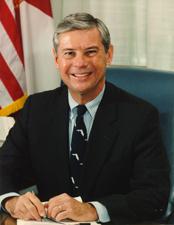 BGRJD
BGRJD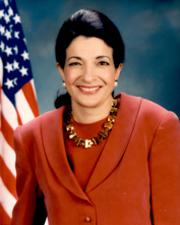 OJS
OJS CG
CG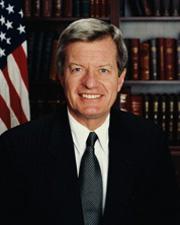 MB+3
MB+3
Floor Debate
8 membersWhat members said about S. 2989 on the floor
Mr. President, I rise to introduce the National Infrastructure Improvement Act of 2004. For the past year, both bodies of Congress and the Administration have been in a numbers debate--disagreeing…
Mr. President, I rise to introduce the National Infrastructure Improvement Act of 2004. For the past year, both bodies of Congress and the Administration have been in a numbers debate--disagreeing over the appropriate level of Federal expenditures for surface transportation, highways and public transit, for the next six years.
What this dispute misses are the real issues: 1. What is the state of our surface transportation systems and other public infrastructure? 2. What will the expenditure levels in the bills under consideration do to affect that state? 3. What do the American people want in terms of maintenance, access, congestion, and serviceability of our highways, bridges, public transit, schools, water and sewer systems, and other infrastructure sectors?
Now, we have passed an 8 month surface transportation extension because the White House and both bodies of Congress could not even agree on a $318 billion funding level--$57 billion lower than what was recommended by the United States Department of Transportation to maintain our surface transportation. These inadequate levels of funding that were being discussed proves that surface transportation and infrastructure is not a priority of this Congress. This is the precise reason we must establish an infrastructure commission to assess the problems of our nation's infrastructure and recommend solutions. This Congress must understand that a component of America's economic competitiveness lies within our infrastructure.
The reality is that our Nation is in the midst of an infrastructure crisis. In almost every one of these areas, America is losing ground at an alarming pace and inadequate funding on the part of the federal government is the leading cause.
The infrastructure deficit interferes with our personal lives on a daily basis. Increased congestion means longer commutes to and from work. Unrepaired potholes means greater wear and tear on our vehicles. Deteriorating water lines means greater exposure to lead in our drinking water.
Crumbling schools means our children do not receive the quality education they deserve. We cannot expect our children to be productive if their schools' basic amenities do not meet the fundamental standards needed for effective learning. A 2003 report by the American Society of Civil Engineers, who I am happy to say support this piece of legislation, in addition to the Associated General Contractors of America and the American Public Works Association, had schools rated as a D- and estimated that 75% of school buildings are inadequate to meet the needs of school children.
An even greater threat is over the horizon. This infrastructure deficit will erode our economic productivity advantage, the principle hope for Americans to maintain our standard of living in the face of fierce global competition. U.S. productivity, and the high standard of living that results, is dependent upon efficient transportation systems and healthy workers.
We are not efficient if our goods are shipped on trucks that are stuck in congested traffic. We are not efficient if our harbors are unable to accommodate the newest generation of freighters. And our workers cannot be productive if our sewer and water lines are in such disrepair that it affects their health.
In 1984, Congress established the National Council on Public Works Improvement to report on the state of the Nation's infrastructure. They found that investment in America's infrastructure was barely keeping up with yearly depreciation and that the system would not be able to adequately respond to increased demand. Their 1988 final report warned that without increased investment, America would be faced with an ``infrastructure crisis.''
Sixteen years later and after the major economic boom of the 1990's, we have failed to maintain, let alone improve, America's infrastructure. The consequences of our inaction are apparent. In the 1988 report, the national infrastructure grade was a ``C.'' The ASCE 2003 Report Card for America's Infrastructure demoted the overall grade to a ``D+.'' It is evident that there has been a deterioration in several aspects of our infrastructure since the 1988 report.
In 1988, roads received a grade of a C+. In 2003, roads were downgraded to a D+.
In 1988, water resources and water supply was given a B and B- respectively. In 2003, drinking water received a D and navigable waterways received a D+.
This deterioration has a ripple effect throughout the entire economy. Public dollars invested in infrastructure increases the productivity of private investment, which keeps the U.S. competitive in the global economy.
What should we do? In the short run, any infrastructure bill passed prior to the development of a long-term plan should be for 3 years or less in duration. This is the only way to keep the political heat on the White House and the Congress. Our recent experience with 6-year authorization bills, such as the highway bill, demonstrates the Jekyll and Hyde approach we have taken toward infrastructure. There is a moderate peak of attention when the legislation is up for reauthorization, then, more than a half a decade of disinterest.
Also in the short run, Congress must restrain itself from using the surface transportation act and other infrastructure legislation as a field of turkeys with the gobblers to be brought home to voters. The ability of Congress to restrain itself would be enormously enhanced if the relevant federal agencies would immediately get to the task of developing nation-wide standards of need, so that the Congress would have a standard against which to allocate resources. Like the United States Department of Transportation, other agencies need to assess their needs and report back to the Congress and the White House one year prior to the expiration of the current laws.
In the long run, we must come to grips with this burgeoning infrastructure deficit. One model could be the National Highway Act of the 1950s, when under the leadership of President Eisenhower, the states and the federal government came together to jointly finance and construct an interstate highway system, a system which has transformed our nation. President Eisenhower recognized that the highway system would benefit the entire nation, and called on Congress to support his vision. In his words, ``. . . the uniting forces of our communication and transportation systems are dynamic elements in the very name we bear--United States.'' Today, his words still resonate. Improving infrastructure should be a cause around which we can all unite. If we act, the entire country benefits; if we fail to act, the entire country suffers.
This new infrastructure initiative could use many of Eisenhower's same principles and apply them to rebuild America and protect and advance our nation's social and economic future. The establishment of this national commission on infrastructure to report to the President and the Congress in 2\1/2\ years would be a step in the right direction.
I urge my colleagues to support this vital legislation to ensure that the nation's infrastructure will one day meet current and future demands and more importantly, facilitate economic growth.
Mr. President, I ask unanimous consent that the text of the bill be printed in the Record.
Mr. President, I rise today with Senators Leahy and Jeffords to introduce the Truth in Trials Act. This is a narrowly tailored bill that would allow defendants in Federal criminal trials regarding…
Mr. President, I rise today with Senators Leahy and Jeffords to introduce the Truth in Trials Act. This is a narrowly tailored bill that would allow defendants in Federal criminal trials regarding medicinal marijuana to introduce evidence that their marijuana-related activity was performed in compliance with State law regarding the medical use of marijuana. It also would provide defendants in such trials with an affirmative defense if they establish, by a preponderance of the evidence, that their activities complied with State law.
Let me be clear. This legislation does not legalize marijuana. It does not even legalize marijuana for medicinal purposes. It only is meant to address the conflict between State and Federal law with regard to medical marijuana. Under this legislation, defendants in the ten States with medicinal marijuana laws could be found not guilty of violating Federal law if their actions are done in compliance with State law.
Why is this legislation necessary?
Over the past 8 years, ten States have passed referendums or enacted laws authorizing medical marijuana in those States. The first of these states was California. In 1996, voters in California passed the California Compassionate Use Act, also known as Proposition 215, to allow seriously ill people who have a doctor's recommendation to cultivate and use marijuana as a form of treatment.
However, in 2001, the Drug Enforcement Administration began aggressively targeting medical marijuana providers in California and these other States--regardless of the fact that these individuals were complying with State law.
Consider who these so-called criminals are that the DEA is targeting and arresting.
The city of Oakland enacted a medicinal marijuana ordinance, as permitted by California law, and Ed Rosenthal grew marijuana to be sold for medicinal uses under the auspices of this ordinance. Even though Mr. Rosenthal was acting as an officer of the city, in February 2002, DEA agents raided his facility and arrested him of marijuana cultivation and conspiracy.
Since Federal law does not recognize ``medical necessity'' as a defense, Mr. Rosenthal was not allowed to tell the jury that he was growing the marijuana for medicinal purposes. The prosecutors took this opportunity to present Mr. Rosenthal as a big-time drug dealer, and the jury had no choice but to convict Mr. Rosenthal.
After the trial, the jurors learned that Mr. Rosenthal was growing medical marijuana and complained that they had been misled by the court. Five jurors immediately issued a public apology to him and demanded a new trial. Their statement said, ``In this trial, the prosecution was allowed to put all of the evidence and testimony on one of the scales, while the defense was not allowed to put its evidence and testimony on the other side. Therefore we were not allowed as a jury to properly weight the case.''
During the sentencing phase of the trial, nine of the twelve jurors asked that Mr. Rosenthal not be imprisoned because they had convicted him ``without having all the evidence.'' Due to these unique circumstances, the judge sentenced Mr. Rosenthal to one day in prison and a $1,000 fine, the most lenient sentence allowed under the law. Yet, the prosecutor, who had asked for a six-and-a-half-year sentence, has appealed this sentence.
Another example is the Wo/men's Alliance for Medical Marijuana, a nonprofit collective of patients and their caregivers, 85 percent of whom are terminally ill with cancer or AIDS. One member of this organization is Suzanne Pfeil, who suffers from post-polio syndrome and experiences extreme pain and muscle spasticity. She is allergic to opiates and does not tolerate many pharmaceutical drugs, so her physician recommended medicinal marijuana, in accordance with California State law. Here, in her own words, is what happened to her in 2002:
At dawn on September 5th, 2002, I awoke to five federal
agents pointing assault rifles at my head, I did not hear
them come in because my respirator is rather loud. They
yelled at me to put my hands in the air and to stand up
``NOW.'' I tried to explain to them that I needed to put my
hands down on the bed in order to sit up because I am
paralyzed. They again shouted at me to stand up. I pointed to
my crutches and braces beside the bed and said, ``I'm sorry,
I can't stand up without my crutches and braces and I
normally use a wheelchair.'' At that point they ripped the
covers off the bed and finally realized what I was trying to
explain amid their shouts and guns. They handcuffed me behind
my back and left me on the bed. The DEA then proceeded to
confiscate medication recommended to me by my physician under
California State Law Proposition 215. My crime? I am a member
of the WAMM, the Wo/men's Alliance for Medical Marijuana, a
nonprofit collective of patients and their caregivers working
together to provide free medication and hospice services to
approximately 250 seriously ill and dying members. The DEA
then destroyed our collective garden and arrested our
Director Valerie Corral, who is an epileptic, and her
caregiver and husband Michael Corral.
This conflict between State and Federal law is a serious one, and one that will be addressed by the Supreme Court later this year in the case of Ashcroft v. Raich. Last year, the Ninth Circuit Court of Appeals rule in this case that is unconstitutional to prosecute medicinal marijuana users under federal law in states with medicinal marijuana laws, as long as the marijuana is not sold or transported across state lines.
The Truth in Trials Act is consistent with this Circuit Court ruling, which I hope the Supreme Court will uphold, and I urge my colleagues to support this bill.
Mr. President, I rise today with Senators Leahy and Jeffords to introduce the Truth in Trials Act. This is a narrowly tailored bill that would allow defendants in Federal criminal trials regarding…
Mr. President, I rise today with Senators Leahy and Jeffords to introduce the Truth in Trials Act. This is a narrowly tailored bill that would allow defendants in Federal criminal trials regarding medicinal marijuana to introduce evidence that their marijuana-related activity was performed in compliance with State law regarding the medical use of marijuana. It also would provide defendants in such trials with an affirmative defense if they establish, by a preponderance of the evidence, that their activities complied with State law.
Let me be clear. This legislation does not legalize marijuana. It does not even legalize marijuana for medicinal purposes. It only is meant to address the conflict between State and Federal law with regard to medical marijuana. Under this legislation, defendants in the ten States with medicinal marijuana laws could be found not guilty of violating Federal law if their actions are done in compliance with State law.
Why is this legislation necessary?
Over the past 8 years, ten States have passed referendums or enacted laws authorizing medical marijuana in those States. The first of these states was California. In 1996, voters in California passed the California Compassionate Use Act, also known as Proposition 215, to allow seriously ill people who have a doctor's recommendation to cultivate and use marijuana as a form of treatment.
However, in 2001, the Drug Enforcement Administration began aggressively targeting medical marijuana providers in California and these other States--regardless of the fact that these individuals were complying with State law.
Consider who these so-called criminals are that the DEA is targeting and arresting.
The city of Oakland enacted a medicinal marijuana ordinance, as permitted by California law, and Ed Rosenthal grew marijuana to be sold for medicinal uses under the auspices of this ordinance. Even though Mr. Rosenthal was acting as an officer of the city, in February 2002, DEA agents raided his facility and arrested him of marijuana cultivation and conspiracy.
Since Federal law does not recognize ``medical necessity'' as a defense, Mr. Rosenthal was not allowed to tell the jury that he was growing the marijuana for medicinal purposes. The prosecutors took this opportunity to present Mr. Rosenthal as a big-time drug dealer, and the jury had no choice but to convict Mr. Rosenthal.
After the trial, the jurors learned that Mr. Rosenthal was growing medical marijuana and complained that they had been misled by the court. Five jurors immediately issued a public apology to him and demanded a new trial. Their statement said, ``In this trial, the prosecution was allowed to put all of the evidence and testimony on one of the scales, while the defense was not allowed to put its evidence and testimony on the other side. Therefore we were not allowed as a jury to properly weight the case.''
During the sentencing phase of the trial, nine of the twelve jurors asked that Mr. Rosenthal not be imprisoned because they had convicted him ``without having all the evidence.'' Due to these unique circumstances, the judge sentenced Mr. Rosenthal to one day in prison and a $1,000 fine, the most lenient sentence allowed under the law. Yet, the prosecutor, who had asked for a six-and-a-half-year sentence, has appealed this sentence.
Another example is the Wo/men's Alliance for Medical Marijuana, a nonprofit collective of patients and their caregivers, 85 percent of whom are terminally ill with cancer or AIDS. One member of this organization is Suzanne Pfeil, who suffers from post-polio syndrome and experiences extreme pain and muscle spasticity. She is allergic to opiates and does not tolerate many pharmaceutical drugs, so her physician recommended medicinal marijuana, in accordance with California State law. Here, in her own words, is what happened to her in 2002:
At dawn on September 5th, 2002, I awoke to five federal
agents pointing assault rifles at my head, I did not hear
them come in because my respirator is rather loud. They
yelled at me to put my hands in the air and to stand up
``NOW.'' I tried to explain to them that I needed to put my
hands down on the bed in order to sit up because I am
paralyzed. They again shouted at me to stand up. I pointed to
my crutches and braces beside the bed and said, ``I'm sorry,
I can't stand up without my crutches and braces and I
normally use a wheelchair.'' At that point they ripped the
covers off the bed and finally realized what I was trying to
explain amid their shouts and guns. They handcuffed me behind
my back and left me on the bed. The DEA then proceeded to
confiscate medication recommended to me by my physician under
California State Law Proposition 215. My crime? I am a member
of the WAMM, the Wo/men's Alliance for Medical Marijuana, a
nonprofit collective of patients and their caregivers working
together to provide free medication and hospice services to
approximately 250 seriously ill and dying members. The DEA
then destroyed our collective garden and arrested our
Director Valerie Corral, who is an epileptic, and her
caregiver and husband Michael Corral.
This conflict between State and Federal law is a serious one, and one that will be addressed by the Supreme Court later this year in the case of Ashcroft v. Raich. Last year, the Ninth Circuit Court of Appeals rule in this case that is unconstitutional to prosecute medicinal marijuana users under federal law in states with medicinal marijuana laws, as long as the marijuana is not sold or transported across state lines.
The Truth in Trials Act is consistent with this Circuit Court ruling, which I hope the Supreme Court will uphold, and I urge my colleagues to support this bill.
Mr. President, I rise today with the support of many of my colleagues on the Committee on Commerce, Science, and Transportation to introduce legislation to help keep Americans' telephone bills from…
Mr. President, I rise today with the support of many of my colleagues on the Committee on Commerce, Science, and Transportation to introduce legislation to help keep Americans' telephone bills from rising and to prevent future disruption to the Universal Service Fund. The Universal Service Fund helps keep telephone rates at a reasonable level for millions of American consumers and businesses located in rural parts of our country, areas where phone service would otherwise be prohibitively expensive. The USF also provides discounts to schools and libraries on their Internet service through the E-Rate program, which I and Senator Rockefeller worked to establish in 1996. Finally the USF makes basic ``life line'' phone service available to low-income Americans, and gives assistance to rural health care providers.
The bill I introduce today is a corrective measure that addresses problems recently encountered by the Universal Service Administration Company, or ``USAC,'' the private, nonprofit corporation that Congress created to administer the USF. Specifically, this bill deals with a decision by the FCC that ordered USAC to adhere to a special set of accounting rules that applies to government agencies. As a private company, USAC had utilized the same accounting rules as used by the private sector, but was told last year that it was subject to the Anti- Deficiency Act, a law that prevents government agencies from incurring financial obligations beyond the amount that has been appropriated to them by Congress. Adherence to government accounting rules is one of the Anti-Deficiency Act's requirements.
However, the switch to government accounting rules has caused an unforseen disruption in the operation of the USF. In July 2004, USAC was notified that its method for accounting for funding commitments made to schools and libraries under the E-Rate program was illegal under the new government accounting rules, even though the method was perfectly proper under Generally Accepted Accounting Principles. As a result, USAC was forced to place an enormous amount of cash on its books by the close of the fiscal year, September 30; to freeze the program on August 3, preventing any action on applications for E-Rate discounts right before the start of the school year; and to liquidate all of its assets, resulting in $4.6 million in penalties and an estimated loss of $30 million in expected interest income.
While USAC believes it can resume acting upon applications for E-Rate discount later this month, it notified the FCC on November 1 that, in order to continue compliance with the new government accounting rules, the USF contribution factor must be raised. The contribution factor is the portion of each customer's phone bill that is paid into the USF. Currently the charge is 8.9 percent of a customer's interstate calls made, but it will likely rise to 13 percent or more. Of course, this increase would be passed right on to consumers and businesses. Worse yet, this accounting change is likely to affect the other components of the USF as well, since they by and large operate in the same manner. If the USF as a whole is forced to make the same accounting changes that were imposed on E-Rate, the USF contribution factor may rise to 25 percent or more by January 1, 2005.
As a result of a seemingly innocuous accounting rule change, schools and libraries across the country have been unable to obtain much-needed discounts on their Internet connections, leading many to shut off their Internet service altogether. A similar strain may be encountered by the USF as a whole, jeopardizing price supports for rural- and low-income Americans on their phone service. And if no immediate action is taken, the telephone bills of American consumers and businesses are slated to rise significantly come the beginning of the new year.
My colleagues and I have examined this issue and worked closely with the FCC and our counterparts on the House Energy and Commerce Committee. We have determined that, given the pending phone bill increases on January 1, the only way to address this problem is to pass a law exempting the Universal Service Fund from the Anti-Deficiency Act through December 31, 2005. During this exemption period, USAC can continue to operate its programs in an orderly manner, phone bills can remain stable, and both Congress and the Executive Branch can work on a permanent solution to this problem. There is ample precedent for an exemption; indeed, many government programs are permanently exempted from the Anti-Deficiency Act, such as the National Park Service and the Conservation Trust.
This is a bipartisan effort among those Members who deal with telecommunications issues regularly. We have worked closely with the FCC and the House, and we have the support of the telecom industry, educators, and state and local governments. A permanent solution might require legislation, or it might not, but either way we will require sufficient time to craft that fix. This bill ensures that, in the
meantime, the status quo is preserve, schools and libraries receive their Internet funding, the USF continues to operate soundly, and consumers' telephone bills do not rise.
Mr. President, the Federal Government has a long- standing obligation to monitor the purity, safety, and effectiveness of the medicines that are available to the public. For this reason, I would like…
Mr. President, the Federal Government has a long- standing obligation to monitor the purity, safety, and effectiveness of the medicines that are available to the public. For this reason, I would like to express my opposition to S. 2989, the Truth in Trials Act. This legislation reverses almost 100 years of progress that we have made by undermining any scientific evidence about medicine and replacing it with popular referendums passed by slick ad campaigns.
There was a time in this country when individuals and businesses could market anything as a medicine and make any claim for its effectiveness. Because of this, a flood of narcotics and stimulants were freely marketed as nostrums sold over the counter and through the mail. Often these ``miracle cures'' were miscellaneous concoctions made from unknown ingredients. In addition, these nostrums were often accompanied by endless testimonials from satisfied customers on how well these products performed.
Thankfully, our grandparents and great-grandparents, who had to deal with these practices, woke up to the fraud that was being perpetrated on the public by these ``snake-oil salesmen.'' These dangerous drugs were creating a major addiction problem, and the unknown ingredients in these cures were actually doing a great deal of harm. In response to demands from the public, truth in labeling was born.
Consumers in the early 1900s took steps to ban dangerous drugs to determine what drugs had medical uses that could be demonstrated to be safe and effective. Based on this experience, the Pure Food, Drug, and Cosmetic Act, FDCA, of 1906 was passed, which required food and medicines be pure, and the contents of medicines be labeled. In 1938, the FDCA was amended to add the requirement that all medicines be safe, and the Food and Drug Administration was created to regulate this. In 1962, the FDCA was further amended by the Harris-Kefauver amendment, which added an additional requirement that any medicine must also be effective, and further required the FDA to establish efficacy standards.
Furthermore, a variety of laws were passed to deal with the distribution of dangerous drugs. The first of these was the Harrison Narcotics Control Act of 1914. The next major piece of legislation on drug control was the Marijuana Tax Act of 1937. These and other laws covering various types of drugs were replaced in 1970 when the Controlled Substances Act was signed into law. This Act further defined the process that a substance had to go through to become an acceptable medicine. In addition, a five-tier scheduling system for all pharmacological substances was established, allowing for the categorizing of all medicines and other pharmacological substances based on their abuse potential and accepted use as a medicine.
Unfortunately, this does not mean that we will no longer have unscrupulous business enterprises that promise salvation through snake- oil products. Over the past 60 years, the FDA has developed a careful, proven method for testing and approving drugs. This process is the standard by which the rest of the world measures the safety and effectiveness of their drug approval system.
Americans today have the world's safest, most effective system of medical practice, built on a process of scientific research, testing, and oversight that is unequaled. Every drug prescribed as medicine in this country must be tested according to scientifically rigorous protocols to ensure that it is safe and effective before it can be sold.
To this date, over 15,000 scientific, peer-reviewed studies into the medicinal value of marijuana have been published, and not one demonstrates that smoking marijuana has any medicinal value for any condition. In fact, there is medical evidence to suggest that marijuana may actually aggravate some of the conditions it is supposed treat.
On top of all that, there are legal, effective medicines that are already currently available and meet all of the guidelines that have been established by the FDA. This includes Marinol, which is a legally available, FDA-approved form of a marijuana extract that is currently being used as a treatment for nausea and AIDS wasting syndrome. In addition, there are many other medicines that have been developed and received FDA approval that do not have the hallucinogenic side effects that come with smoking marijuana. These are medicines that meet scientific standards and do not rely on anecdotes and testimony for validation.
Certainly, we all want to provide relief for people who are sick and dying, but smoking marijuana has not been scientifically proven to have any medicinal value. By allowing patients and caregivers to use and provide marijuana through the political process, we clearly bypass the safeguards established by the FDA to protect the public from dangerous or ineffective drugs.
I urge my colleagues to join me in opposing this bill and other efforts to legalize marijuana.
Show 4 more
Mr. President, I rise today in disappointment, but also with resolve. After more than 2 years of negotiations between the United States and Canada, there is still no agreement on how to manage…
Mr. President, I rise today in disappointment, but also with resolve.
After more than 2 years of negotiations between the United States and Canada, there is still no agreement on how to manage softwood lumber trade between our two countries. This is disappointing, particularly given the importance of the issue. Perhaps what is most disappointing, though, is that the negotiations appear to have fallen off, despite the fact that parties last year seemed close to an agreement.
There might be some who think that the recent NAFTA decisions signal an imminent conclusion of the litigation, and that deposits collected by U.S. Customs will be returned soon. As one who has seen this dispute wax and wane for nearly 30 years, this seems to me a naive expectation. The fact is that the recent NAFTA decisions had more to do with a bitter disagreement between the NAFTA panelists and the U.S. International Trade Commission about investigative methodologies than whether or not the Canadian timber policies are consistent with NAFTA obligations. The bottom line--and this is the issue at the root of this dispute--is that the Canadian policies are deeply inconsistent with the notion of a free and integrated North American market. The timber subsidies provide Canadian mills with a significant, artificial advantage. Until this basic issue is resolved, this dispute--including this litigation and the duties imposed on importers--will continue.
In my judgment, the most effective, durable, and fair resolution to this decades-old problem will be found only through a negotiated settlement. This means both parties sitting down at the table and finding a mutually acceptable solution that provides for timber policies that are consistent and compatible. However, pulling away from the negotiating table and relying on litigation isn't going to get us there.
Under current U.S. law, the deposits sitting in escrow are eligible for liquidation. As I have said, I would prefer a negotiated settlement--one that resolves all matters of disagreement, including the disposition of these deposits. but some involved in the negotiation appear to have decided upon litigation as their preferred method of resolution. If it is necessary for more and my colleagues to assert the legal rights available to the U.S. industry as a way of reminding the parties of the stakes that are still very much on the table, then that is what we will do.
Today, my good friend, Larry Craig and I have introduced a bill that would order the Commerce Department to begin the process of liquidating the approximately $3 billion sitting in escrow, as a result of the antidumping and countervailing duties imposed upon imports of Canadian softwood lumber since March 2002. Further, these deposits are to be distributed to the U.S. lumber industry, which have been seriously injured by Canada's timber policies and which petitioned for these duties in the first place. This measure is consistent with current U.S. law and, if enacted, I expect the U.S. government to defend it to the hilt.
I hope that our action today will spark a return--by both sides--to the negotiating table. However, if it does not, and if a settlement is not reached, I will not hesitate to push forcefully for enactment of this legislation.

Mr. President, I rise today with a heavy heart because it has been more than four years since the expiration of the Canadian Softwood Lumber Agreement and we have very little to show for it except a…
Mr. President, I rise today with a heavy heart because it has been more than four years since the expiration of the Canadian Softwood Lumber Agreement and we have very little to show for it except a U.S. industry that is still a victim of the situation.
This is an issue that I have been involved with since I came to Congress and in that time we have seen three separate disputes resulting in two negotiated agreements that have also come and gone. We are now in the middle of our fourth dispute with no settlement agreement in sight.
While the two countries were close to reaching an agreement last year, little has happened since to reach a resolution. Meanwhile, with each log truck that comes across the border from Canada, another light at a U.S. timber company goes out permanently.
In order to ensure a future for U.S. timber companies, I am joining Senator Baucus, in introducing the Softwood Lumber Duties Liquidation Act.
Under current U.S. law, the deposits sitting in escrow are eligible for liquidation. The duties were first imposed in May 2002, when the U.S. slapped antidumping and countervailing tariffs amounting to more than 27 percent on Canada imports. The Commerce Department had determined that Canadian timber policies amounted to an unfair subsidy and led to the dumping of artificially cheap softwood lumber into the U.S. market. Meanwhile, the U.S. International Trade Commission ruled that the subsidies and dumped imports injured the U.S. lumber industry, warranting the imposition of tariffs.
That being said, it is time that all parties come together in honest faith and work towards establishing a settlement that is free and fair in its framework. Anything less would be unjust to producers and consumers on both sides of the border.
I am hopeful for a resolution. However, in the meantime, I, along with Senator Baucus, will continue to uphold U.S. laws and the determinations of our trade agencies to help ensure fair trade and protect our industries from illegally subsidized products.

Mr. President, I rise to discuss a bill I am introducing today, the Long Term Care Quality and Consumer Information Act. I hope that this bill will spark a serious debate about how we pay for quality…
Mr. President, I rise to discuss a bill I am introducing today, the Long Term Care Quality and Consumer Information Act.
I hope that this bill will spark a serious debate about how we pay for quality care. This proposal establishes a voluntary system under which nursing homes providing better quality of care would receive higher payment and in turn would provide more information about the quality of care provided. Information would include nurse staffing ratios and would be made public to consumers and their families.
Historically, Americans have been paying the same for quality health care as for mediocre care. Efforts have been made by some in the private sector to better recognize and incentivize those providers who consistently provide higher level of care. The Institute of Medicine (IOM), in its report ``Leading by Example,'' declared the government should take the lead in improving health care by giving financial rewards to hospitals and doctors who improve care for beneficiaries in six Federal programs, including Medicare and Medicaid and the Veterans Health Administration. The IOM report also said the government should collect and make available to the public data comparing the quality of care among providers. The Centers for Medicare and Medicaid Services has begun pilot programs. I think nursing homes should also be an area in which we explore payment policies that regard those providing a higher quality of care.
I look forward to continuing the discussion with all stakeholders about these concepts so we can assure a high level of care and find ways to help providers improve the level of care they provide.
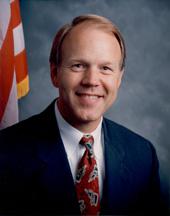
Madam President, I rise in support of S. 2989, the Transportation, Treasury, and Independent Agencies Act for FY 2004, as reported by the Senate Committee on Appropriations. I commend the…
Madam President, I rise in support of S. 2989, the Transportation, Treasury, and Independent Agencies Act for FY 2004, as reported by the Senate Committee on Appropriations.
I commend the distinguished Chairman and the Ranking Member for bringing to the Senate a carefully crafted spending bill within the Subcommittee's 302(b) allocation.
The pending bill provides $26.0 billion in general purpose discretionary budget authority, an $810 million decrease from FY2003. Including outlays from previously enacted legislation, the bill provides $33.4 billion in outlays, which represents a $1.9 billion increase from FY2003. These levels are at or below the subcommittee's 302(b) allocation.
For highways, including outlays from previously enacted legislation, $31.6 billion in discretionary outlays is provided, which is equal to the subcommittee's 302(b) allocation.
For transit, the bill provides $1.461 billion in BA and $6.632 billion in outlays including outlays from previously enacted legislation. Both BA and outlays are equal to or below the subcommittee's 302(b) allocation.
The pending bill provides $17.5 billion in mandatory budget authority and outlays, equal to the subcommittee's 302(b) allocation.
Mr. President, I ask unanimous consent that a table displaying the Budget Committee scoring of the bill be printed in the Record.
Bill Text
Latest available legislative text
        [Congressional Bills 108th Congress]
[From the U.S. Government Publishing Office]
[S. 2989 Introduced in Senate (IS)]

108th CONGRESS
2d Session
S. 2989

To amend the Controlled Substances Act to provide an affirmative
defense for the medical use of marijuana in accordance with the laws of
the various States, and for other purposes.

_______________________________________________________________________

IN THE SENATE OF THE UNITED STATES

November 17, 2004

Mr. Durbin (for himself, Mr. Leahy, and Mr. Jeffords) introduced the
following bill; which was read twice and referred to the Committee on
the Judiciary

_______________________________________________________________________

A BILL

To amend the Controlled Substances Act to provide an affirmative
defense for the medical use of marijuana in accordance with the laws of
the various States, and for other purposes.

Be it enacted by the Senate and House of Representatives of the
United States of America in Congress assembled,

SECTION 1. SHORT TITLE.

This Act may be cited as the ``Truth in Trials Act''.

SEC. 2. PROVIDING AN AFFIRMATIVE DEFENSE FOR THE MEDICAL USE OF
MARIJUANA.

The Controlled Substances Act (21 U.S.C. 801 et seq.) is amended by
inserting after section 423 the following:

``affirmative defense for conduct regarding the medical use of
marijuana

``Sec. 424. (a) Permissible Evidence.--Any person facing
prosecution or a proceeding for any marijuana-related offense under
this title shall have the right to introduce evidence demonstrating
that the marijuana-related activities for which the person stands
accused were performed in compliance with State law regarding the
medical use of marijuana, or that the property which is subject to a
proceeding was possessed in compliance with State law regarding the
medical use of marijuana.
``(b) Defense.--It is an affirmative defense, to a prosecution or
proceeding under this title for marijuana-related activities, if the
proponent establishes by a preponderance of the evidence, that such
activities comply with State law regarding the medical use of
marijuana.''.
<all>